While it’s difficult to get exact numbers, the general distribution of coaches and service staff on the World Cup level is largely male dominated. The recently announced Trail to Gold Fellowship aims to help change that. Following the publication of the Trail to Gold book in November of 2021, members of the book committee began discussing how to use the net proceeds generated by book sales. After bouncing around various proposals, they settled on the idea of a fellowship to help the development of women cross-country coaches in the United States.
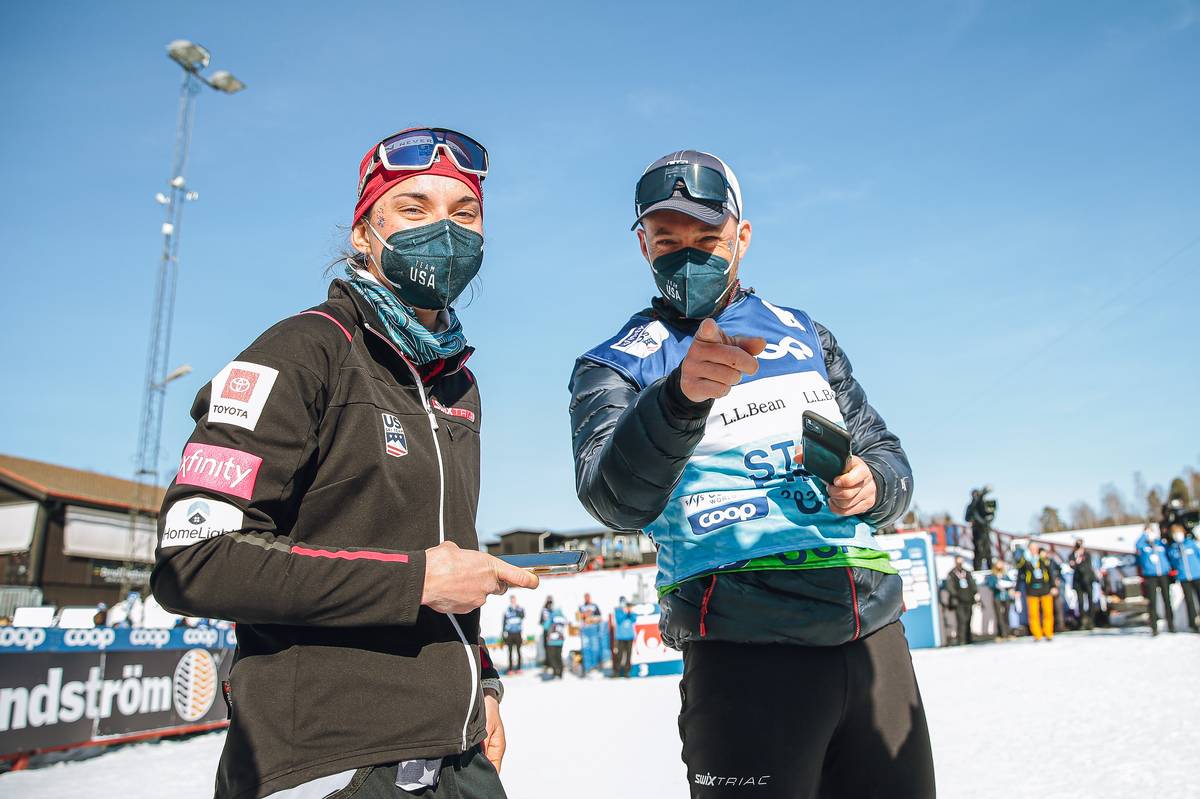
Julia Kern and U.S. Ski Team head coach Matt Whitcomb watch the 4 x 5 k mixed relay in Falun from the stadium. (Photo: NordicFocus)
In partnership with the National Nordic Foundation, the Trail to Gold Fellowship will provide funding to the U.S. Cross-Country Ski Team (USST) for the cost of bringing women ski coaches on World Cup trips. Once there, the Fellowship coaches will learn and participate in coaching and ski service internships with mentorship from the U.S. Ski Team staff. Fellowship recipients are also expected to complete a professional development plan for the experience and write a final report upon conclusion, with guidance from the Women Ski Coaches Association (WSCA) and USST mentors.
A recently adopted proposal by the International Ski Federation (FIS) will aid the process of getting the fellowship coaches out on course, and hopefully incentivize other countries to invest in the development of female staff members. Brought forward by the U.S. Ski & Snowboard, the proposal adds a number of course access bibs per team for female service staff only.
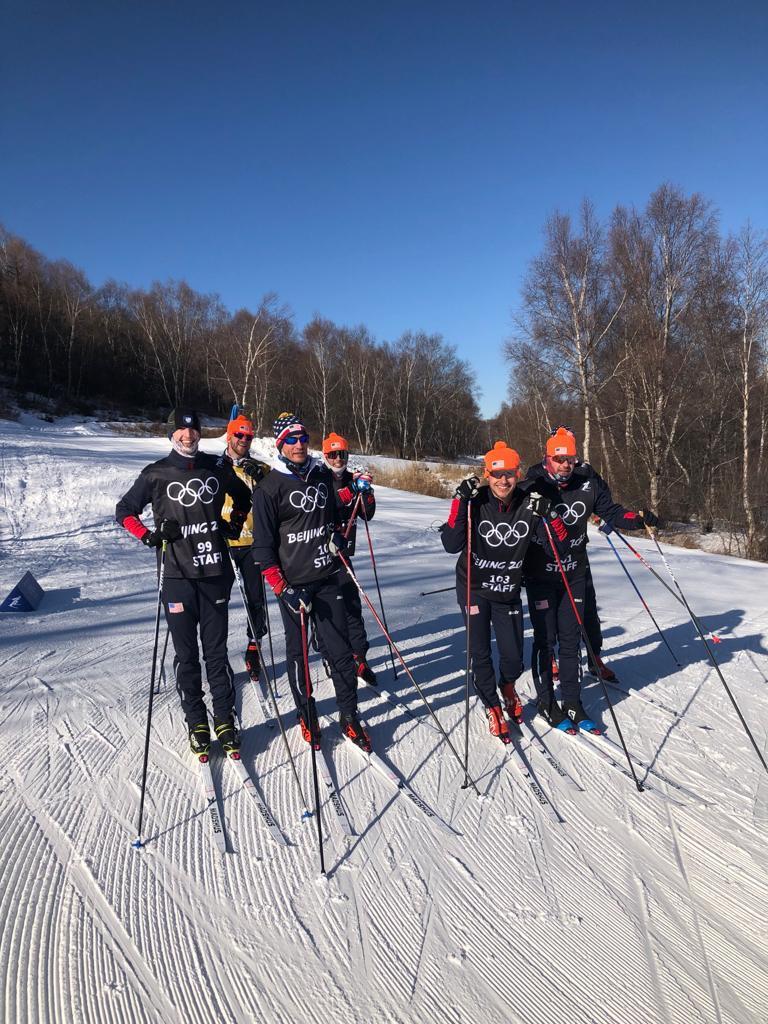
The U.S. wax staff in Zhangjiakou China for the 2022 Olympics. From left to right, Patrick Moore, Andrew Morehouse, Bjorn Heimdal, Tim Baucom, Chris Hecker, Jason Cork, and Eli Brown. (Photo courtesy fellow technician, Karel Kruuser)
Current U.S. Ski Team D-Team coach, Kristen Bourne, participated in a similar program to the one proposed by the Trail to Gold Fellowship, though with funding for her trip to the World Cup coming from the Women’s Sports Foundation VanDerveer Fellowship. Bourne spent two weeks as an intern on the World Cup, gaining invaluable international level experience and knowledge. In an email to FasterSkier about Bourne’s time on the World Cup, USST Program Director Chris Grover wrote, “We have a U.S. Ski & Snowboard program-wide goal, and a cross-country specific goal, to drastically improve gender equity in our coaching and technician staff, so this opportunity was perfectly aligned with this mission.” The Trail to Gold Fellowship also fits squarely within that mission and both Grover and WSCA’s Maria Stuber are working to help make the program a successful reality.
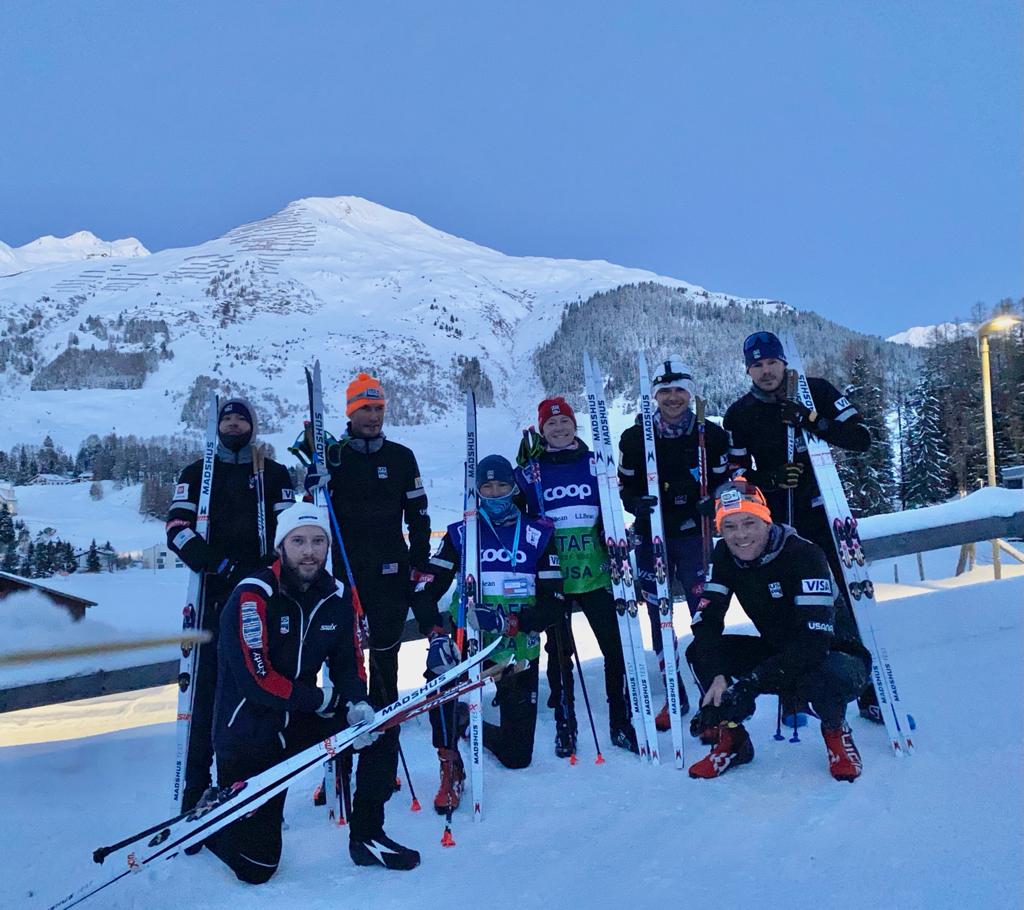
Kristen Bourne (center) joined the U.S. tech team to learn and support the American squad in Davos, SUI. (Courtesy photo)
While initial funding for the Trail to Gold Fellowship will come from the Olympic Women’s Cross-Country Book Project, the committee is working with the National Nordic Foundation (NNF) to expand the size and life of the fellowship. Led by a commitment of NNF Board members Kikkan Randall and Matt Whitcomb, NNF will work to gain donations that add to the Fellowship, increasing both the number of internships that can be awarded and the number of years that the program can exist.
The Women Ski Coaches Association launched in September 2019 in pursuit of gender equity in coaching.
The Women’s Ski Coaching Association is also involved in this collaboration. Having helped with the funding to send Bourne to the World Cup last winter, the WSCA will have a representative on the Fellowship selection committee. The committee will also have representatives from the Trail to Gold book committee and the U.S. Ski Team. This committee will be in charge of selecting the Fellowship recipients.
Sue Long Wemyss, head of the Trail to Gold book committee, wrote to FasterSkier, “We, the book committee, look forward to more American women ski coaches and ski technicians having a very similar experience [to Bourne’s] of interning with the U.S. Ski Team at the World Cup this winter, and in winters to come. We are incredibly grateful to the USST leadership for their willingness to bring and mentor the selected women with them on a World Cup trip. We are also very appreciative for NNF’s support and help in making this program happen.”
Applications for the Fellowship are open now and will close September 1st. The application can be found here or on the NNF website.
The rapidly approaching year of 2022, and the upcoming Beijing Olympics, will mark 50 years since women cross-country skiers first began competing in the Winter Games. With multiple World Cup podiums already achieved this season and strong chances for medals in February, the origins of the U.S. women’s program might not be at the forefront of one’s mind. We’ve become accustomed to seeing our women at the top of the results lists; with almost an assumption that they will be there each weekend.
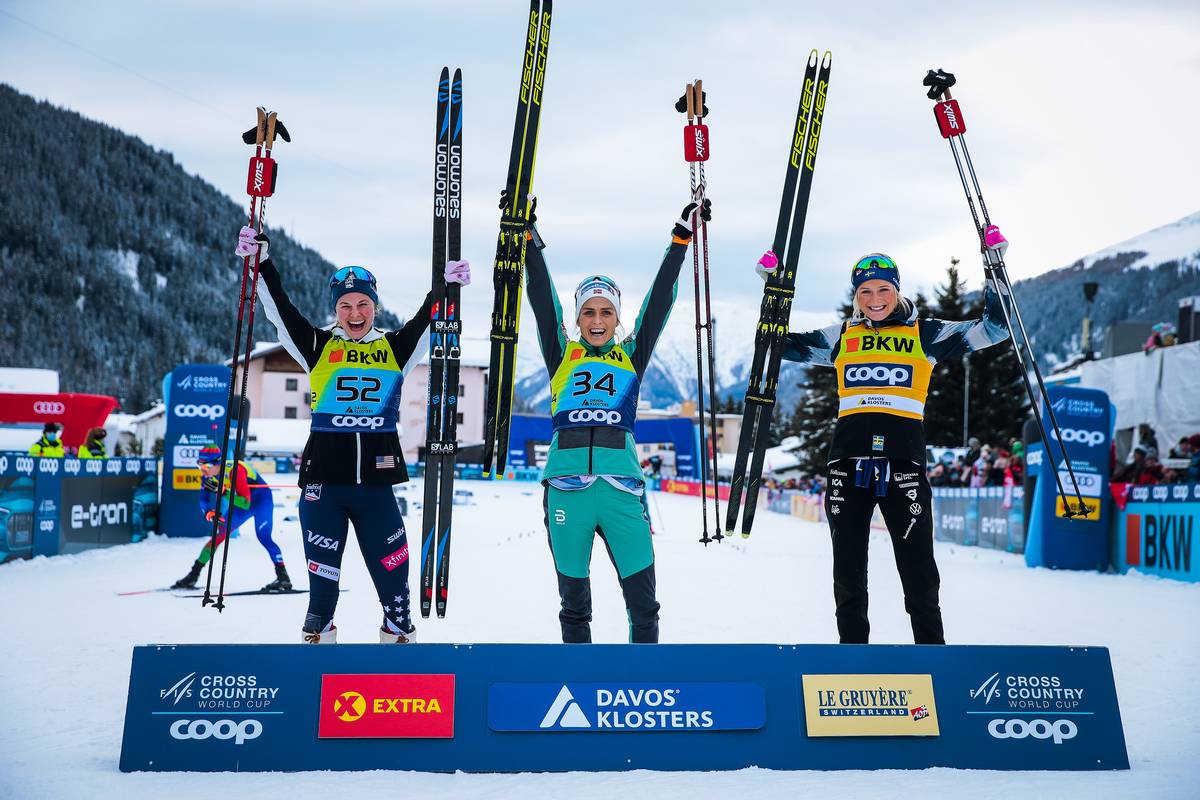
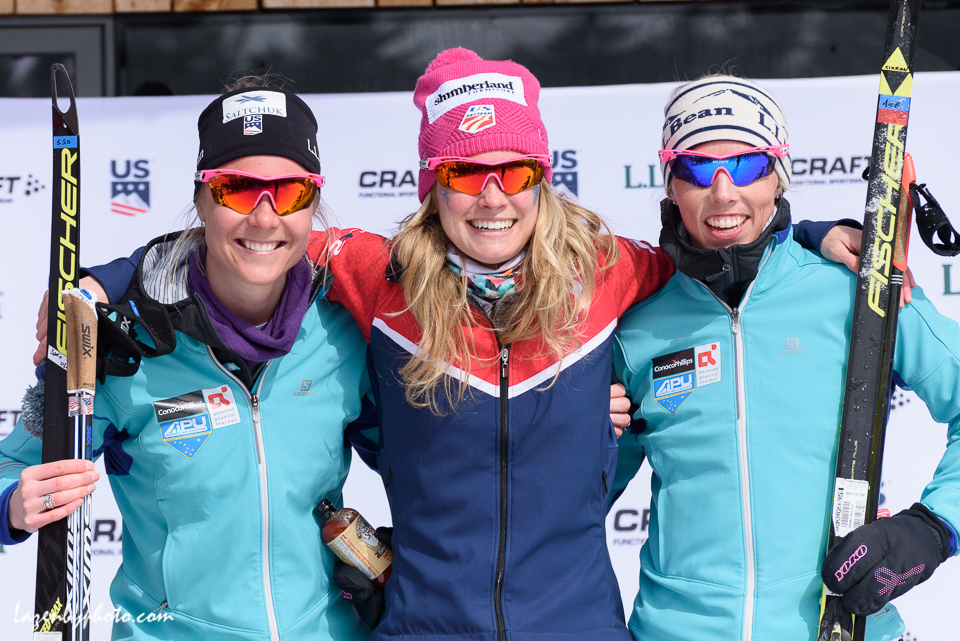
The recent women’s podium in Davos: Therese Johaug (NOR) took the win ahead of Jessie Diggins (USA) and Frida Karlsson (SWE). (Photo: NordicFocus)
How far women’s skiing has come, and how hard women have worked to bring the program to its current status was recently highlighted to me in Trail to Gold, The Journey of 53 Women Skiers, a collection of stories written by the 1972-2018 U.S. Olympic Women Cross-Country Skiers. This is a book that will be impactful in a unique way to each reader. As a relatively-young member of the nordic skiing community, I read it as a story of history, tenacity and teamwork.
Trail to Gold, the Journey of 53 Women Skiers, written and compiled by the skiers themselves.
The creation and publication of this book was a collaborative effort that originated when current U.S. cross-country head coach (then women’s team coach) Matt Whitcomb suggested that the 2013-14 national team women interview previous Olympians. While the idea of a book was floated at the time, the project stalled until 2018 when Alison (Owen) Bradley, a member of the first women’s Olympic team, and Kikkan Randall, five time Olympian and 2018 gold-medalist, brought the group of women together again. Through this partnership, USNOW was founded, the U.S. Nordic Olympic Women. Tying history to the present, the group began recognizing a current standout U.S. female skier with the annual Gold Rush Award, the first of which was awarded to Rosie Brennan at the Quebec City World Cup in 2019.
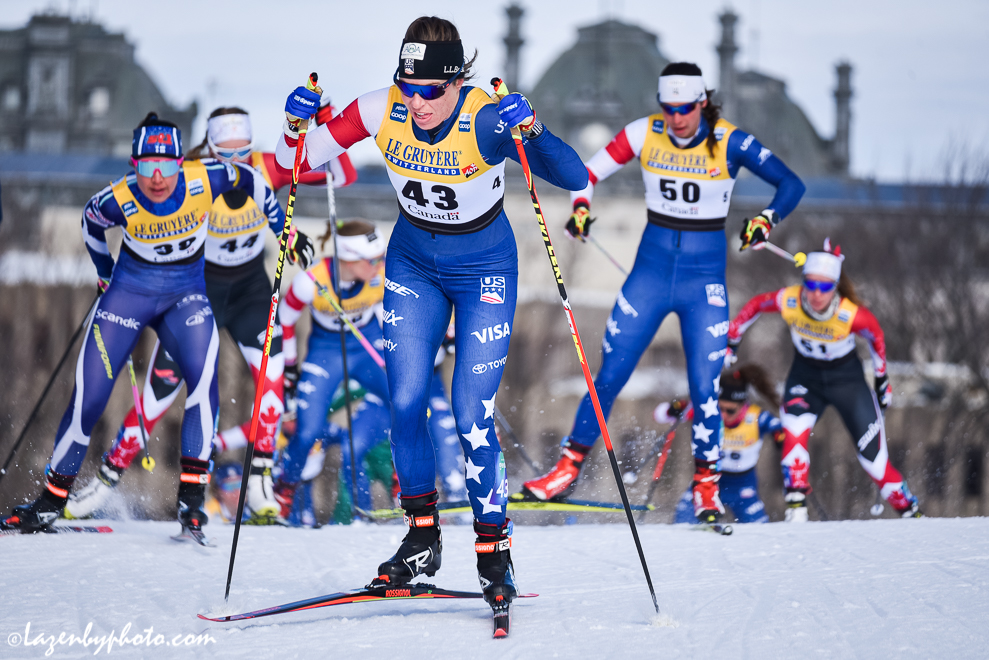
Rosie Brennan (bib 43), recipient of the first Gold Rush award, racing the Québec City 10 k skate pursuit. (Photo: John Lazenby/lazenbyphoto.com)
With the founding of USNOW came a renewed motivation for writing a book. 1984 Olympian, Sue (Long) Wemyss, headed a committee composed of eight former and current U.S. Olympians, and the book project began in earnest in May of 2020. With the interviews conducted in 2013-14 as a base, USNOW members contributed additional written recollections and photographs. These accounts were woven together by four of the 53 women Olympians to form chapters and provide a collective narrative. They write, “this book tells our stories as committed international competitors through five decades of history. In our own words, we reveal how the sport has developed, grown and changed. We hope you enjoy our journey.”
While the book is perhaps not a suspenseful page-turner, it is compelling, informative, and important, and should be a staple in any cross-country skiing household.
I consider myself to be close with three of the fifty three women Olympians; one of whom is my mother, the other my aunt, and the third a family friend and former coach. Growing up, I saw these women as role models and mentors. Not only to me, but to their communities as well. They are also all exceedingly humble and not likely to hold forth on the glory days of their Olympic careers. Thus, much of the history revealed in Trail to Gold was new to me.
While men competed in cross-country skiing at the very first Winter Olympics in Chamonix, France in 1924, it was another 48 years before the first U.S. women raced. While women from other countries started competing in cross-country at the Olympics beginning in 1952, it wasn’t until 1972 that the U.S. sent a women’s team.
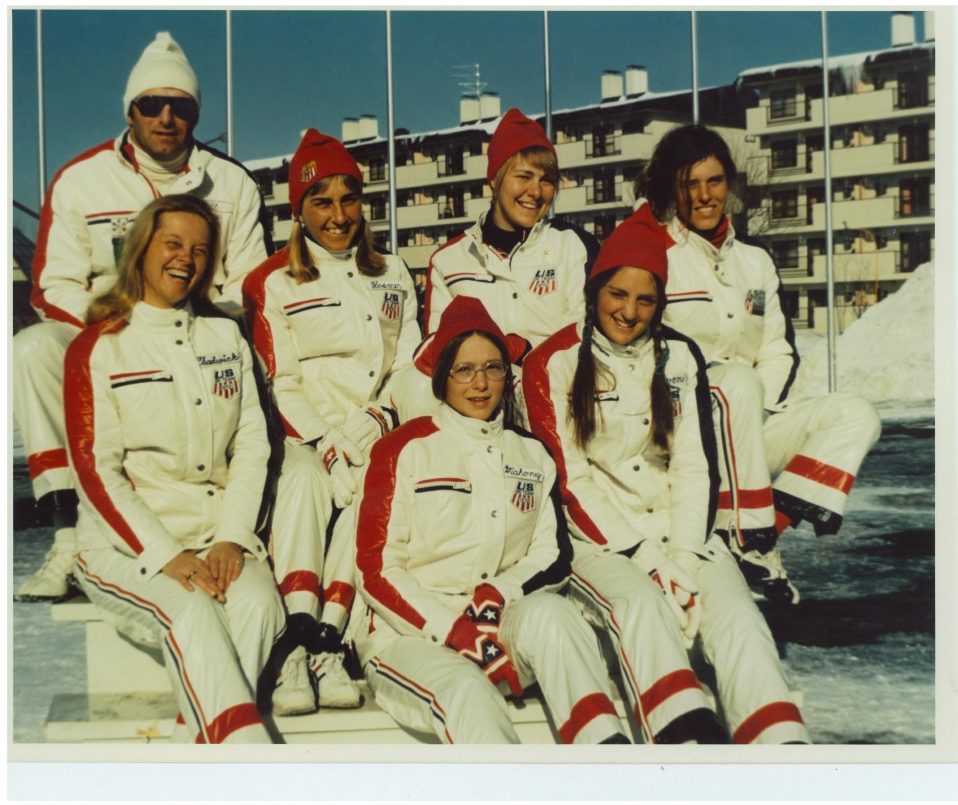
The first Women’s cross-country Olympic Team. The 1972 Games were held in Sapporo, Japan. (Left to Right) Bottom row: Gloria Chadwick, pseudo Chaperone, Margie Mahoney, Alison Owen; Top Row: Marty Hall, Trina Hosmer, Barbara Britch, Martha Rockwell. (Photo: courtesy Alison Owen-Bradley)
The book details the exceptional path these first five women took to be at that start line in Sapporo, Japan in 1972. Not only were these women blazing a path in the record books of nordic skiing but they were experiencing elements of world history first-hand as well. I was struck by an account from 1972 Olympian, Trina Hosmer, of the 1970 World Championships in the High Tatras, current-day Slovakia. The women flew into Prague, arriving the winter after the Russian army had driven tanks through the city and bombed some of the buildings. At this time, the country was called Czechoslovakia and was still under the rule of Russia and as Hosmer described, “very much an Iron Curtain country, which was quite intimidating for us, naive, first time international skiers.”
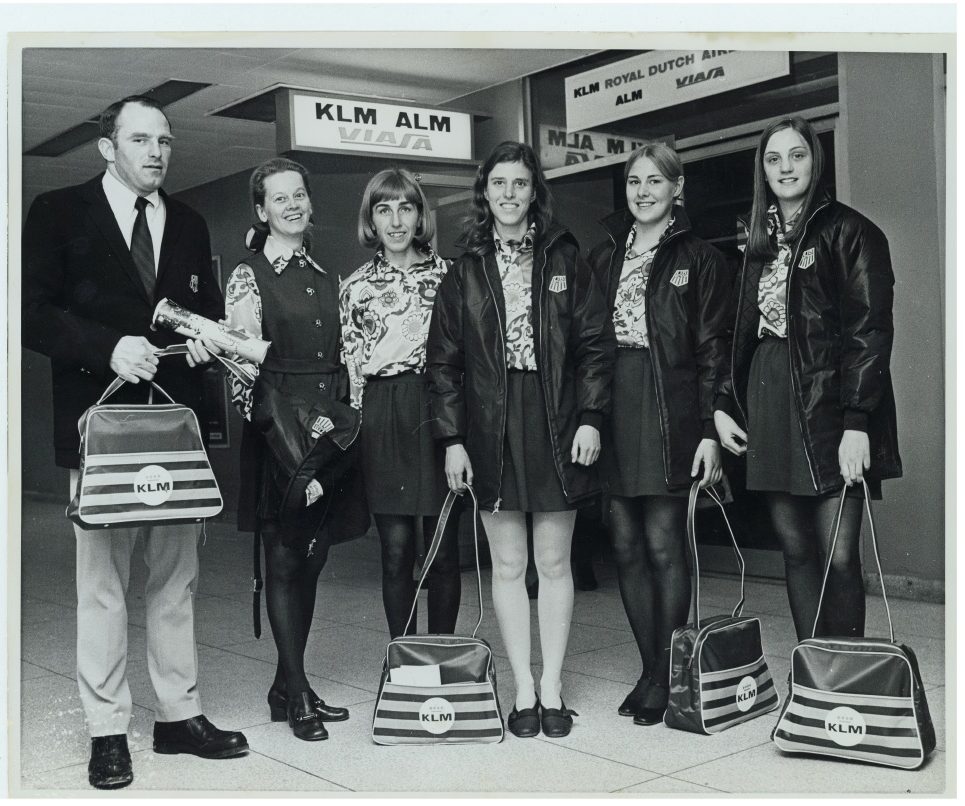
The first U.S. women’s World Championship cross-country team on the way to Czechoslovakia in 1970. From left to right: coach Marty Hall, Coach, chaperone Gloria Chadwick, Trina Hosmer, Martha Rockwell, Barbara Britch, and Alison Owen. The U.S. team took four skiers as the relay at that time was a three-person format. (Courtesy photo)
The rise of skating was another piece of history that stuck with me from Trail to Gold. Given the popularity and prevalence of the skate technique today, it’s difficult to imagine that it was only adopted as its own race category 35 years ago. For many of these Olympic women, they only competed in classic or they were racing as the transition came about. Sue (Long) Wemyss described how this new technique evolved over the 1984-85 season. She writes, “Most of us really didn’t know what we were doing; we were inventing skating techniques on the spot.”
Throughout the fifty years that U.S. women have raced at the Winter Olympics in nordic skiing, they have faced enormous obstacles in their quest to compete. As much as anything, Trail to Gold is a testament to the tenacity of these 53 women and the many others who weren’t named to an Olympic team. Over the course of its pages, the book lays out many of the challenges these women dealt with over the years. They include: lacking financial support, competing against doped athletes, a lack of club teams, inconsistent leadership and troubled team dynamics, to name a few.
Olympians Sadie Maubet Bjornsen, Jessie Diggins, and Kikkan Randall representing their club teams at the 2018 Super Tour Finals. (Photo: John Lazenby/Lazenbyphoto.com)
The period following the 1998 Nagano Olympics was a particular slump for women’s cross-country skiing in the U.S. Many women were leaving the sport at the time, feeling unsupported and discouraged by the team culture. In fact, the year before the 2006 Winter Games in Torino, the U.S. ski team cut the women’s program altogether and did not even name a women’s cross-country team.
Kikkan Randall racing the classic sprint at the 2010 Olympics in Vancouver. (Photo: FS archives)
To anyone even remotely familiar with U.S. cross-country skiing, it will not come as a surprise that it was Kikkan Randall who helped lead women’s skiing out of this downturn. For a time, Randall was the only woman on the A-team, having to sit out most team sprints and relay events. In the book, she describes how her vision of a women’s team was inspired by the Canadian women at the time. In 2006, when the U.S. women were at a low point, Canadians Beckie Scott and Sara Renner earned a silver medal in the team sprint. Randall writes, “I was stirred by their transformation and envious of the team they had created.”
Twelve years later, when Randall and Jessie Diggins earned U.S. women’s cross-country skiing its first medal, gold in the team sprint, it seems safe to say that the U.S. women had also undergone a transformation. Throughout the pages of Trail to Gold lies an underlying theme of the importance of teamwork. But the book also makes it clear that this culture and dynamic was hard-fought.
From the historical first Olympic appearance in 1972, through the bumps and turns presented in the ensuing years, the teamwork that brought about that gold medal was fifty years in the making. As Diggins writes in her account of that night, “It’s taken years of every member of this team committing to the team goals, coming to training camps, and pushing each other through grueling training sessions,” and the cumulative pages of Trail to Gold support this statement.
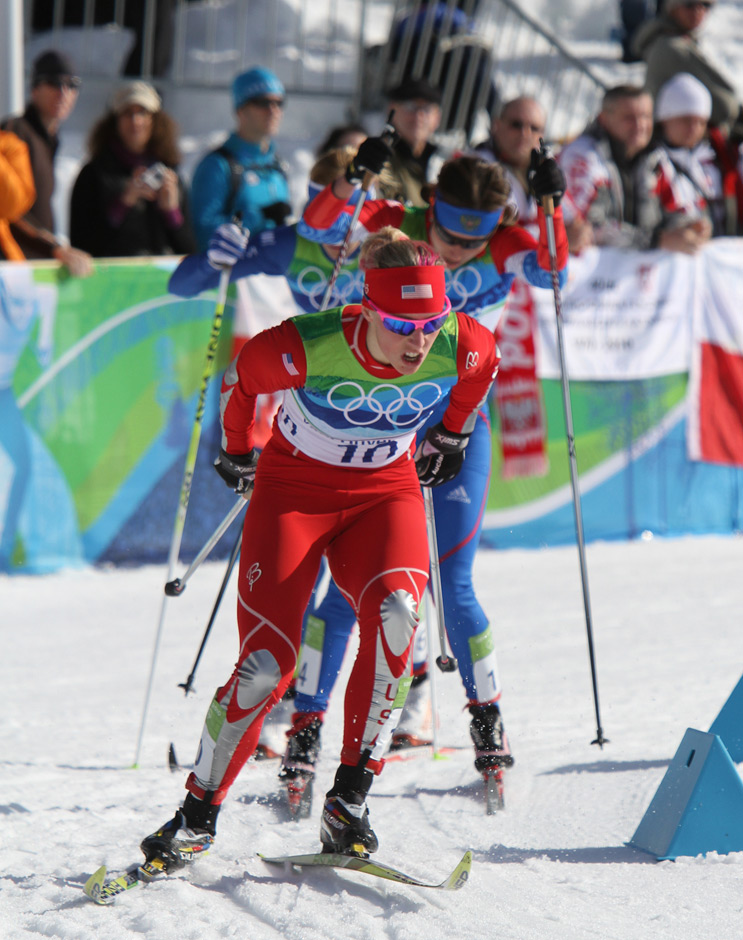
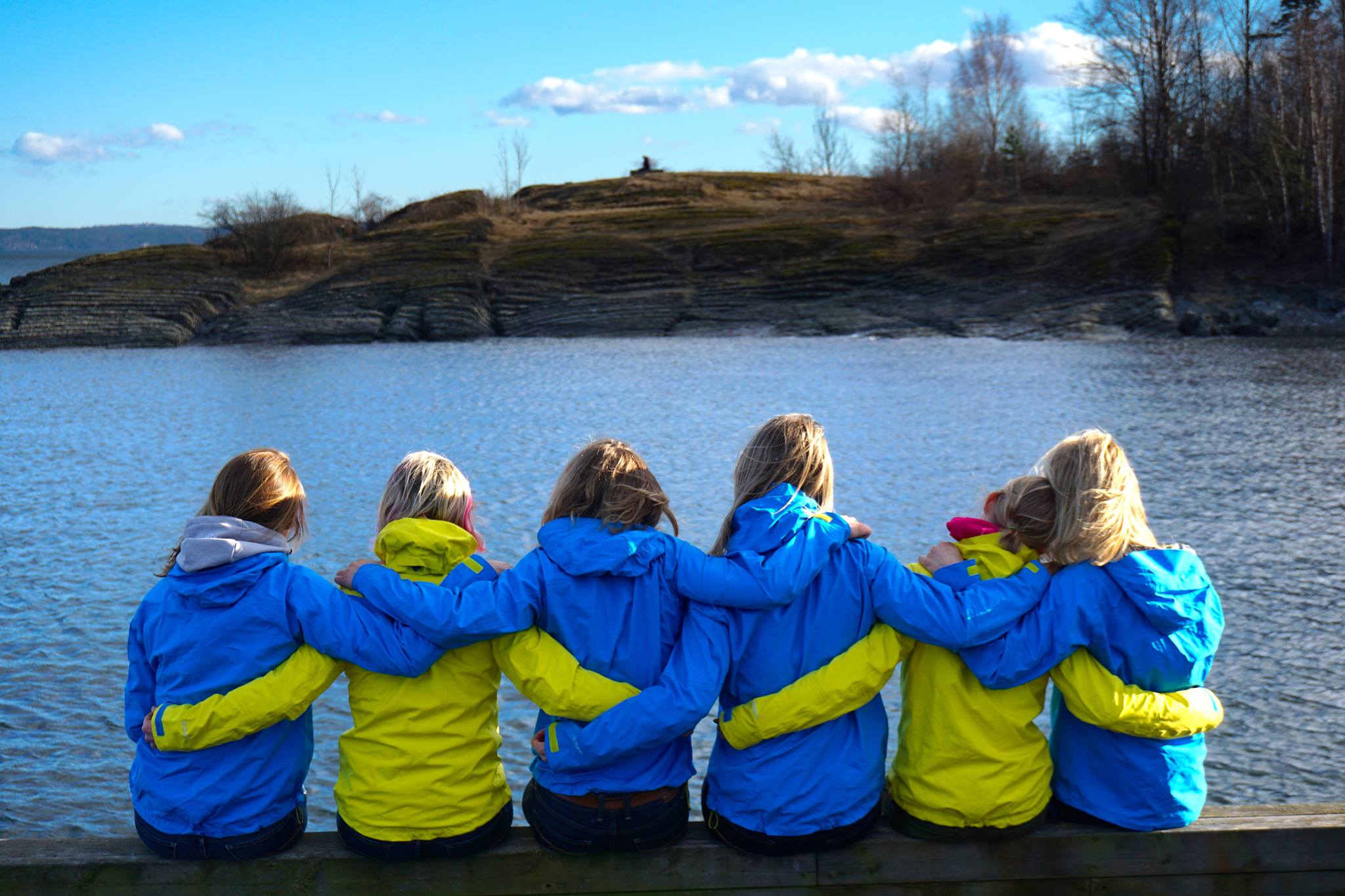
The power of team (Photo: Caitlin Patterson)
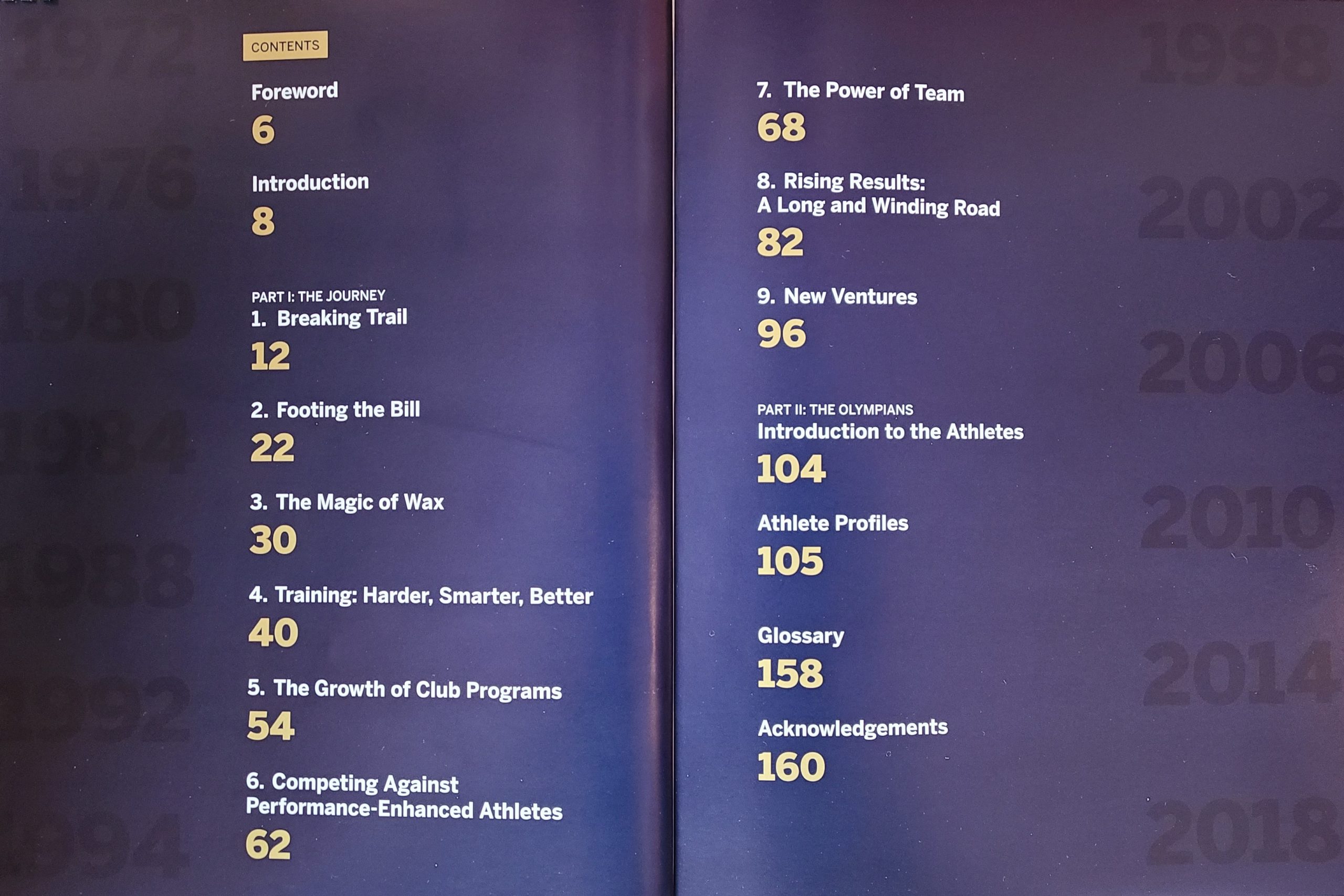
The two-part layout of Trail to Gold, and it’s logical progression from the early trailblazers in the sport to life after retirement makes for easy reading. While part-one tells the story of the 53 women as a whole, part-two gives an individual introduction to each of the women. Through these profiles the reader learns more about these Olympians in their own words. This section provides an excellent reference point for anyone looking to delve deeper into the lives of these 53 unique women.
Table of Contents from Trail to Gold.
Through narratives, anecdotes and photographs, Trail to Gold effectively conveys an influential story of women’s Nordic skiing over the years. I urge everyone to read this book, to discover the story for yourself and find what it means for you. Regardless, it is an important book in the world of U.S. cross-country skiing and deserves a spot on the coffee tables and bookshelves of our ski community.
Trail to Gold is available from Pathway book distributor at this link. Additionally, personal bulk shipments have been sent to various locations around the country with the idea that the Olympic women will do book presentations, have copies to sell and attend some events. The NENSA Women’s XC Day on January 23rd is one such event where at least four of the women Olympians will be present for book signing.
Mike Gallagher, a three-time Olympic cross-country skier and former U.S. Ski Team head coach, at his home in Pittsfield, Vt., on Nov. 1, 2011. Gallagher died last week on Oct. 3, his 72nd birthday.
Note: This tribute has been updated to include comments from Mike Gallagher’s wife, Tyna, and additional photos from John Estle.
Mike “The Eagle” Gallagher was a diehard baseball fan. Several springs ago, he accompanied his nordic-skiing cronies, John Estle and Peter Ashley, to Tampa, Florida for some sunshine and the rituals of spring training. A three-time Olympic cross-country skier and head coach of the U.S. Ski Team from 1980-86, Gallagher was in hog heaven hanging with his buddies and watching his beloved New York Yankees tuning up for the season, Estle said recently on the phone.
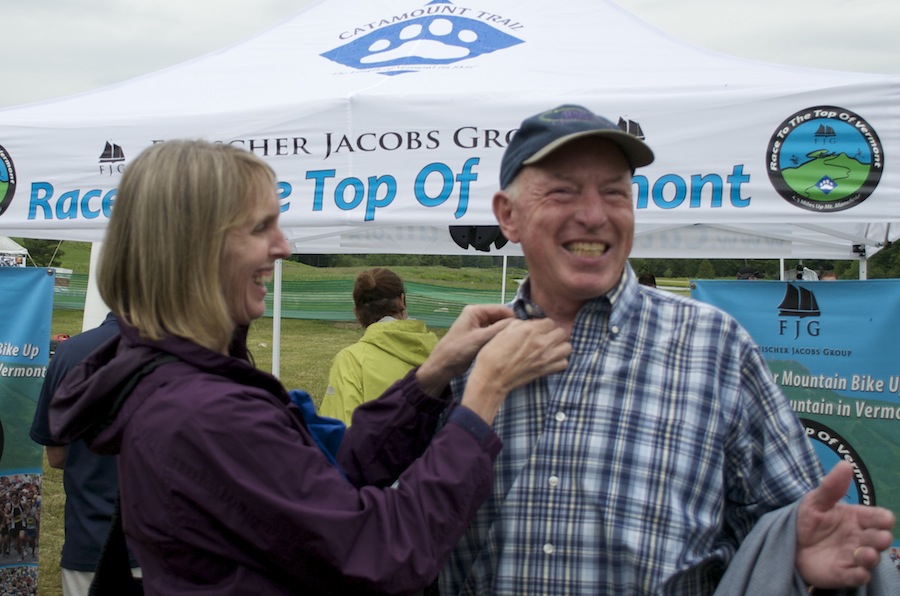
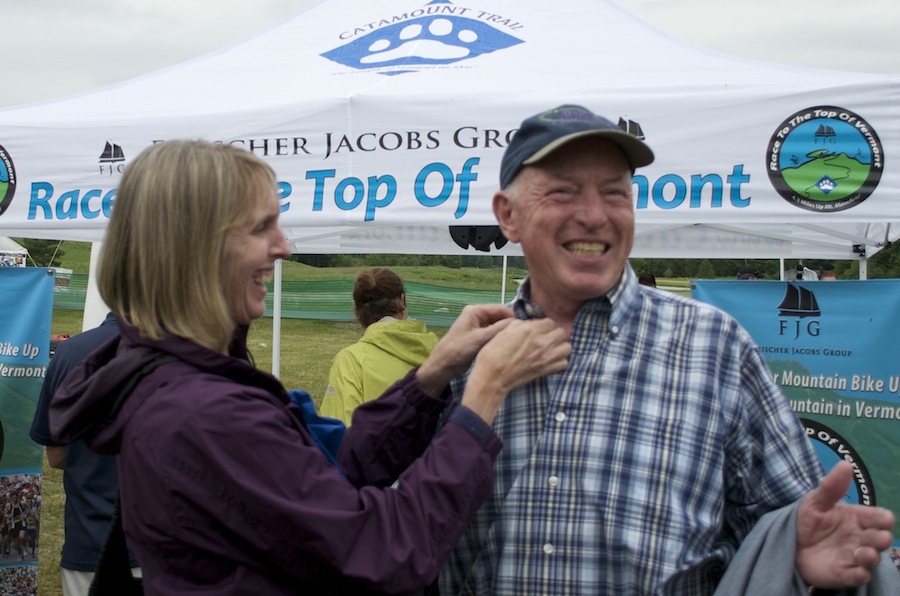
Mike Gallagher gets some help from his wife Tyna before being inducted into the Mount Washington Road Race Hall Of Fame in 2011. Gallagher won all four years he entered the race from 1968-71. (Photo: Jim Fredericks)
The trip to Florida was the invention of Estle and Ashley, also former U.S. Ski Team (USST) coaches, who convinced Gallagher to join them. It took a little coercion, because Gallagher was scheduled to get a hip replacement that same week. In the end, Gallagher rescheduled the surgery and left muddy Vermont for balmy Florida. The trio bunked up with Estle’s partner’s family in Tampa.
During their stay, their host family held a Passover celebration. In remembering the trip, Estle chuckled and said Gallagher was quite caught up in the traditional Jewish celebration. This Irish-Catholic boy from Vermont had never experienced anything like it and loved being included in the large family gathering. In fact, after a week of watching his heroes Derek Jeter and Mariano Rivera playing the game, it was the Passover that Gallagher raved about.
A “man’s man” is how Estle described Gallagher, who passed away at home in Pittsfield, Vt., on Thursday, his 72nd birthday.
“He embodied physicality and sport, yet he was very spiritual and humanistic at the same time,” Estle said. “When you visited, you were the best friend he ever had. He always made you feel good.”
The Man, The Legend
On Oct. 3, 1941, Gallagher was born in Yonkers, N.Y. Raised in Rutland, Vt., Gallagher got his first ski lessons from his father, who served in World War II in the fabled 10th Mountain Division. He went on to become an accomplished runner and alpine skier, laying the foundation for nordic skiing, which would eventually become his life.
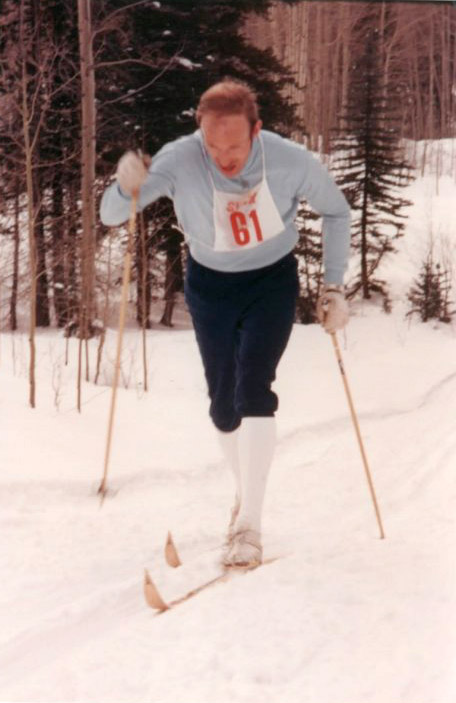
Mike Gallagher at a small race in Europe the early ’70s using Scott poles. (Photo: Marty Hall)
Kicking and gliding on wartime skis he modified for racing, Gallagher won his first high school race as a member of the Rutland High School team. He went on to captain his team, and won a Junior National championship in 1959.
After graduating from Rutland High, Gallagher took a post-graduate year at Vermont Academy then set his sights on Colorado. He attended the University of Colorado, motivated by training with friends Bob Gray and Mike Elliott. This was the beginning of a long-term friendship and the rock upon which U.S. cross-country skiing would grow for many years.
“That trio of Elliott, Gray and Gallagher carried the program for a ton of years, made huge sacrifices, and were all wonderful people living life to the fullest,” their former U.S. Ski Team (USST) coach Marty Hall wrote in an email.
Life was good in Colorado for Gallagher’s freshman year, but then Gray and Elliott moved on, forcing Gallagher to carry on without his training buddies for three more seasons. Seeking more opportunity in skiing, Gallagher set off for Norway, where his ski training took off.
He went on to make three Olympic teams in 1964, 1968, and 1972, and three World Championships. In addition, Gallagher notched nine national titles. His proudest result was 19th in the 50-kilometer classic race at Holmenkollen, Norway, in 1968. He accomplished all of his off-season training while holding down a full-time job. Gallagher’s love for skiing and legendary work ethic is what defined him for the rest of his life.
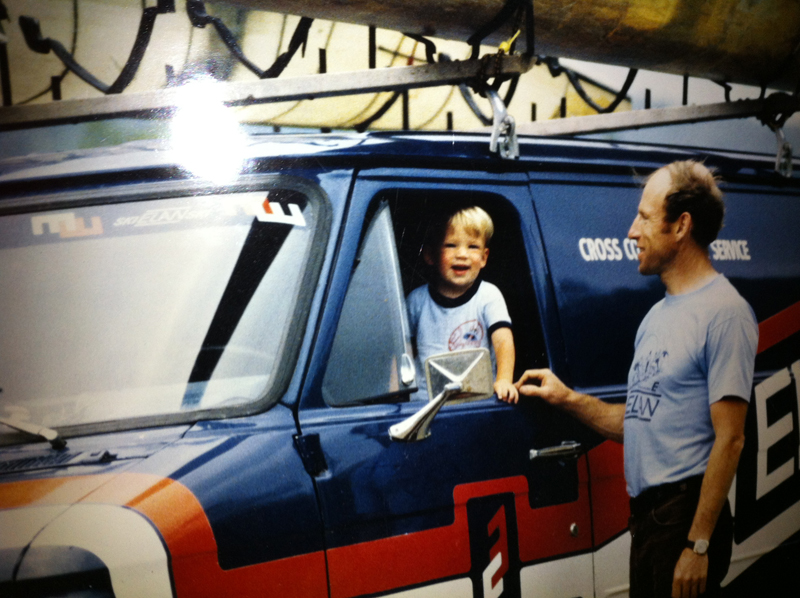
Gallagher (r) with his son, Jesse, in his Elan work van. (Photo: Mike Gallagher)
Gallagher applied his talent and formidable energy to bike racing in New England, a sport in which he excelled for many years. In 1972, he was the 25-mile road biking national champion.
Retired from racing, but still enthralled with the sport, Gallagher turned to coaching. He was head coach of the USST from 1980-86, Olympic-team coach in 1980, 1984, and 1992, and a high-school coach for 17 years. With Gallagher at the helm, Bill Koch won the overall World Cup title in 1982.
The nordic vice president of Fischer USA, Ashley summed up Gallagher’s insightful coaching style in a 2011 interview with FasterSkier. “Mike was the perfect guy for Kochie because he allowed him to do things in a different way, was flexible when he needed to be and would stand on things when he needed to.”
Gallagher vast knowledge of all things nordic led him to employment in several ski companies over his career, among them Splitkein, Hexcel, Edsbyn, and Elan.
For many years, Gallagher shared his love and expertise of skiing as the nordic director at Mountain Top Inn in Chittenden, Vt. He also taught skiing at the nearby Mountain Meadows in Killington.
In 2007, Gallagher was inducted into the Vermont Skiing Hall of Fame. He was also into the Mount Washington Road Race Hall of Fame in 2011, a race he won from 1968 to ’71.
Gallagher is survived by his wife, Tyna, sons Sean and Jesse, and a grandson.
Athlete, Coach, Mentor, Friend: Remembering Mike Gallagher
Some people are larger than life. Gallagher was one of them. When you think of throwing rocks into a pond, the largest ones make the biggest splash and send the ripples furthest. Gallagher touched the lives of many because his ripples reached the far edges of the pond. – Nancy Fiddler
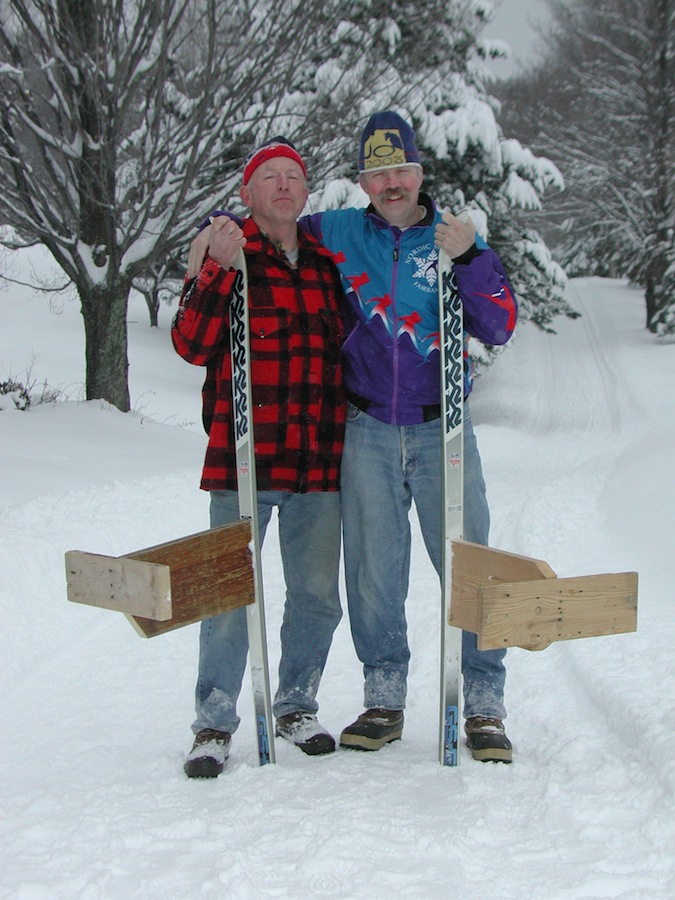
Mike “Jumpin’ Jack” Gallagher (l) and longtime friend John Estle in April 2003 in Pittsfield, Vt. (Photo: John Estle and Norma Haubenstock)
Many people met Gallagher through cross-country skiing and then became friends for life. Famed nordic announcer Peter Graves is one, remembering in an email message how he met Gallagher.
“I first met Mike in the late ’60s when he came to my high school to do a clinic. With his typical verve he talked about what a great sport XC was,” Graves wrote in an email. “With that and his sparkling USA warm-up, I became a follower. Over the years, we shared special moments of reflection in his sauna and pondered things, sport and the meaning of life. What was said in the sauna always stayed in the sauna. What he leaves is a rich tapestry of goodness, of inspiring countless people to ski and enjoy the richness of life. He was a smart guy with deep feelings, and as an Irishman myself, I could always understand the joy he felt in singing his Irish songs. He touched so many people, I’m going to miss him for a long, long time.”
Teammate and close friend Elliott recounts in an email how, on a 2012 visit to New Hampshire, he drove 330 miles round trip just to have dinner with Gallagher and Gray. The three remained friends for years after they dominated the U.S. skiing scene.
Elliott and Gallagher had the best kind of competitive relationship. They raced against each other at Junior Nationals and in college, and ended up teammates on the 1964, 1968, and 1972 Olympic teams as well as the 1966 and 1970 World Championship squads.
“We met in 1959 at the Junior National Championships. We always had a friendly rivalry training and racing,” Elliott wrote in an email. “Michael had ‘XC1’ on his Vermont vanity license plate. That license plate was a huge motivating factor for me because I wanted my results to force him to change his vanity license to ‘XC2’. Whenever I did not want to train, I just had to think of that license plate and then I was out the door training.”
Elliott also remembers Gallagher’s infectious singing. “When he called his friends on the telephone and they answered, he would often break into an Irish song. We all knew who was on the other end. He cultivated many friends from all walks of life. He really was such a good guy.”
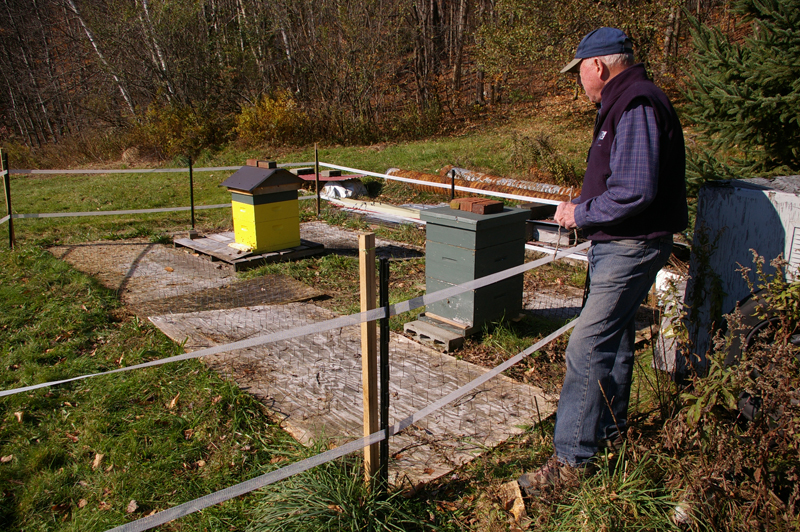
Gallagher checking on the beehives in November 2011 at his home in Pittsfield, Vt. Seventy years old at the time, he said he spent most of his time gardening and mowing nine acres of his 50-acre property.
Gallagher was the consummate tough mountain man, but Elliott saw a gentler side of him on their many travels together. “He once dressed as Santa Claus and passed out presents to children at a resort where we were staying in Scandinavia,” Elliott wrote. “His wonderful laugh and his accent made him a believable Santa Claus to the children. I have nothing but the fondest memories of my life with Michael.”
As competitors and avid outdoorsmen, Elliott and Gallagher shared many adventures. “Gallagher came out to Colorado in 1973 and we went backpacking,” Elliott explained. “He was not really fond of heights and I really took advantage of that fact and enjoyed scaring the hell out of him in the Colorado mountains. He was a very good sport about the whole situation. He loved fly fishing in those high mountain lakes.”
One of the many athletes Gallagher coached, Kevin Brochman remembered how Gallagher used humor to get him through tough situations, a behavior Brochman still resorts to. A two-time Olympian, Brochman also recalled Gallagher’s discomfort in high places, something that seemed to make him more human.
“Mike was a great coach and led the team to a US men’s best, 4th in the world, in 1982,” Brochman wrote on Facebook. “I felt honored to be part of his tenure from 1981-86. HE LOVED TO LAUGH. He did not care too much for the gondola ride up to Dachstein Glacier though!”
Former U.S. Ski Team head coach Mike Gallagher with one of his athletes, Jim Galanes, after a 1984 World Cup race. (Photo: Mal Lockwood)
As a coach, Gallagher set the bar high for his athletes, yet he stood behind them in every situation. The U.S. men’s squad, under his direction, achieved huge success.
“When Michael was the USST XC coach, he often traveled to where the national team skier lived to help them individually with their training,” Elliott explained. “He was instrumental in helping Bill Koch win the World Cup. Bill has nothing but kind, complimentary things to say about the job Gallagher performed.”
Ashley’s long friendship with Gallagher began at Colorado, where Gallagher helped save Ashley from a near-death experience following a collision with a tree. Later, Ashley and Gallagher coached the USST together. Ashley will always remember what he believes to be one of Gallagher’s major contributions to the sport of skiing in this country.
“Gallagher was a man who stood by his decisions, which served him well during the skating revolution,” he said on the phone. “He advocated for allowing the athletes to move the way they wanted to on a race course at a time when many of the international ski leaders were against skating. Gallagher was able to represent the USA’s desire to skate in the international coaching arena. We have a lot to thank him for, in that regard.”
Ashley, Gallagher, and Ruff Patterson brought skating back from the World Cup to the U.S. racing and recreational-skiing population. Their dissemination of skating knowledge put many Americans on skate skis in the ’80s.
Gallagher’s energy and personality were the driving forces in his coaching. As 1984 Olympian Sue Long Wemyss stated online: “I was fortunate to be on the USST and to get to know Mike during the years he was head coach. He was so lively, so positive. He leaves a huge hole.”
Helping Koch top the World Cup was just a small part of the impact Gallagher had on nordic skiing in the U.S. His knowledge was vast, his reach deep and his vision global. According to Ashley, “He had a huge influence on the younger skiers and was something of a father figure to many. The kids really looked up to him.”
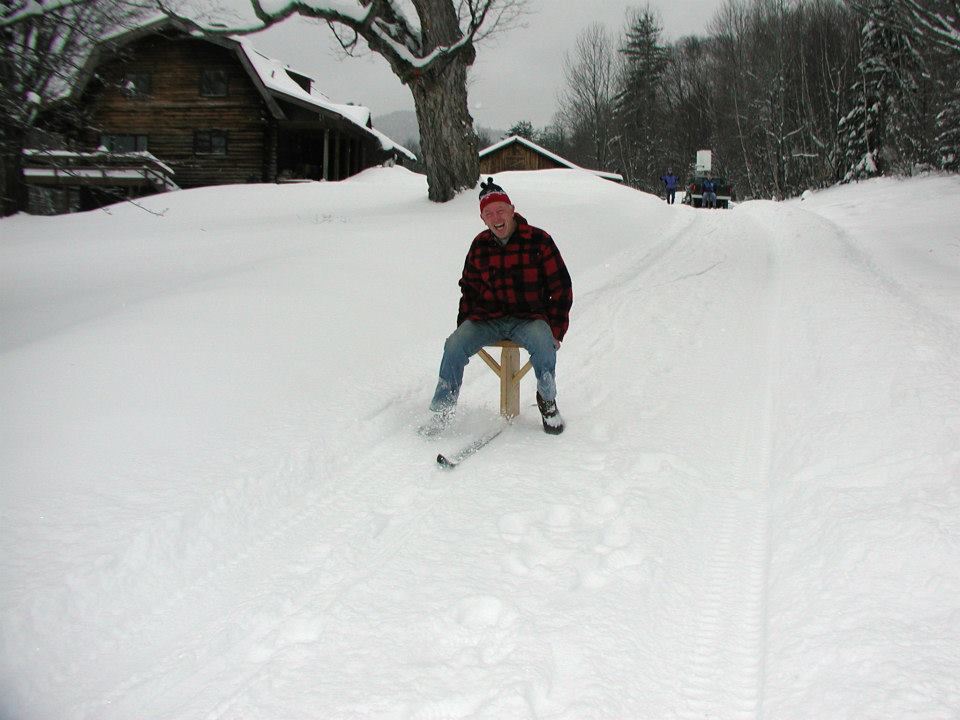
Mike Gallagher enjoying some playtime at his Pittsfield, Vt., home in April 2003. (Photo: John Estle and Norma Haubenstock)
Former USST skier Tim Kelley was one of the many juniors inspired by Gallagher. He also weighed in on his memory of Gallagher on Facebook.
“Besides being a hero for U.S. cross-country skiing, Gallagher was always very supportive of the young guns. He enthusiastically welcomed newcomers into the XC skiing cult. I remember once at a junior camp at his place doing a circuit strength workout at his stations in the woods. And then we finished off the workout by helping him lift logs up for the cabin he was building.”
University of Denver Head Coach David Stewart echoed Kelley in another comment: “Gallagher was a big influence on me when I was just a Bill Koch League racer, inspiring me and many others with his enthusiasm for every level of the sport.”
Gallagher expected a lot, but gave a lot. His dreams are being carried on by the many who were influenced by his spirit. Cambridge Sports Union Head Coach Rob Bradlee carries on some of the best Gallagher traditions in his own work.
“I remember him coaching me at a training day at Putney when I was 15,” he wrote online. “With his enthusiastic urging, I did more push-ups than I thought I could ever do. His energy was infectious.”
There were valuable lessons beyond the push-ups, Bradlee explained. “As a non-competitive skier I was always impressed by how kind and encouraging he was to me. That I loved skiing was good enough for him. And in the long run, he helped me be a better coach by modeling that inclusive behavior.”
Dartmouth coach Ruff Patterson and Gallagher go back a long ways. They have worked together, recreated together, and shared a lot of good times. Patterson was Gallagher’s best man when he married Tyna in 2002.
“Gallagher was a strong man who expected things from people,” Patterson said on the phone. “He was direct and didn’t mind saying what he thought. He pushed all of us as hard as he pushed himself. I wanted to strangle him one day and hug him the next! We were incredibly close.”
The Quintessential Vermonter
“Taking in nature and spending time outdoors is what life was like with Mike. It could be as simple as sitting on our deck, looking out at the mountains sipping coffee and just taking in the beauty of our surroundings. Even though it was peaceful and it was also energizing. Mike was an avid fisherman and hunter, who could turn almost any outing into an adventure with his gift of storytelling. Mike had a joke or two for almost any topic, it was truly amazing how he could remember so many jokes. Even though he loved living off the beaten track, almost recluse, whenever there was a gathering Mike was sure to be the center of attention. With a twinkle in his eyes and his voice booming with excitement he would draw everyone into the story or joke he was telling. While his accomplishments were bigger than life, he was modest and would only talk about them when asked. He was warm, affectionate and fun-loving, he enjoyed putting a smile on someone’s face. He touched so many lives in a positive way, including mine. I am so proud of the man known as Michael Gallagher, he was the love of my life, my soulmate and my heart is breaking.” — Tyna Gallagher
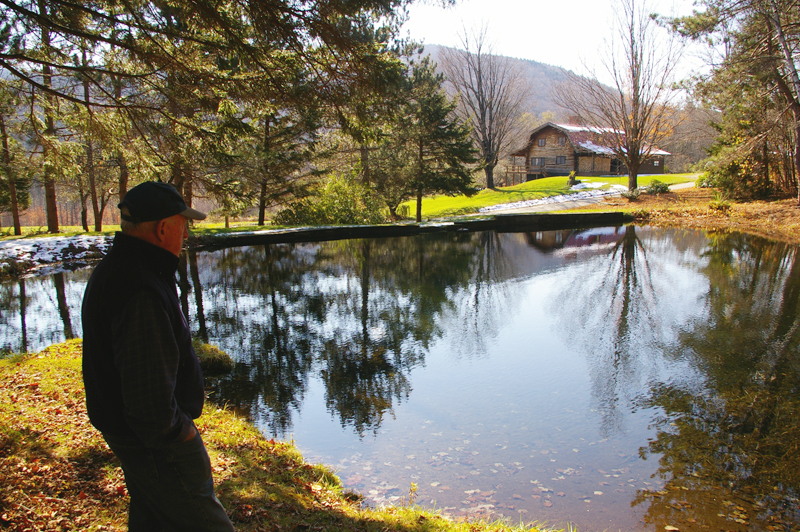
Gallagher beside his heart-shaped pond, where he married his wife Tyna, at their home in Pittsfield, Vt. Gallagher gave FasterSkier a tour of his 50-acre property in November 2011.
Gallagher embraced the Vermont lifestyle; he built the home he lived in and stayed busy and active to the end of his life by tending his garden, mowing, keeping bees, cutting wood, and hunting and fishing.
He raised his boys, Sean and Jesse, to be strong outdoorsmen as well as excellent skiers, and loved the time he spent in the woods with them.
Visitors to his Pittsfield home remember the sauna sessions. Between plunges into the refreshing pond, Gallagher told his famous stories and occasionally broke into song. Gallagher delighted everyone who took part in living large with him.
Elliott succinctly put into words what many are thinking: “I wish I would have spent more time with him.”