Tag: Sugar Bowl Academy

  • Wildfires, Smoke, and Air Quality: A Survey of Programmatic Response in the West

    Wildfires, Smoke, and Air Quality: A Survey of Programmatic Response in the West

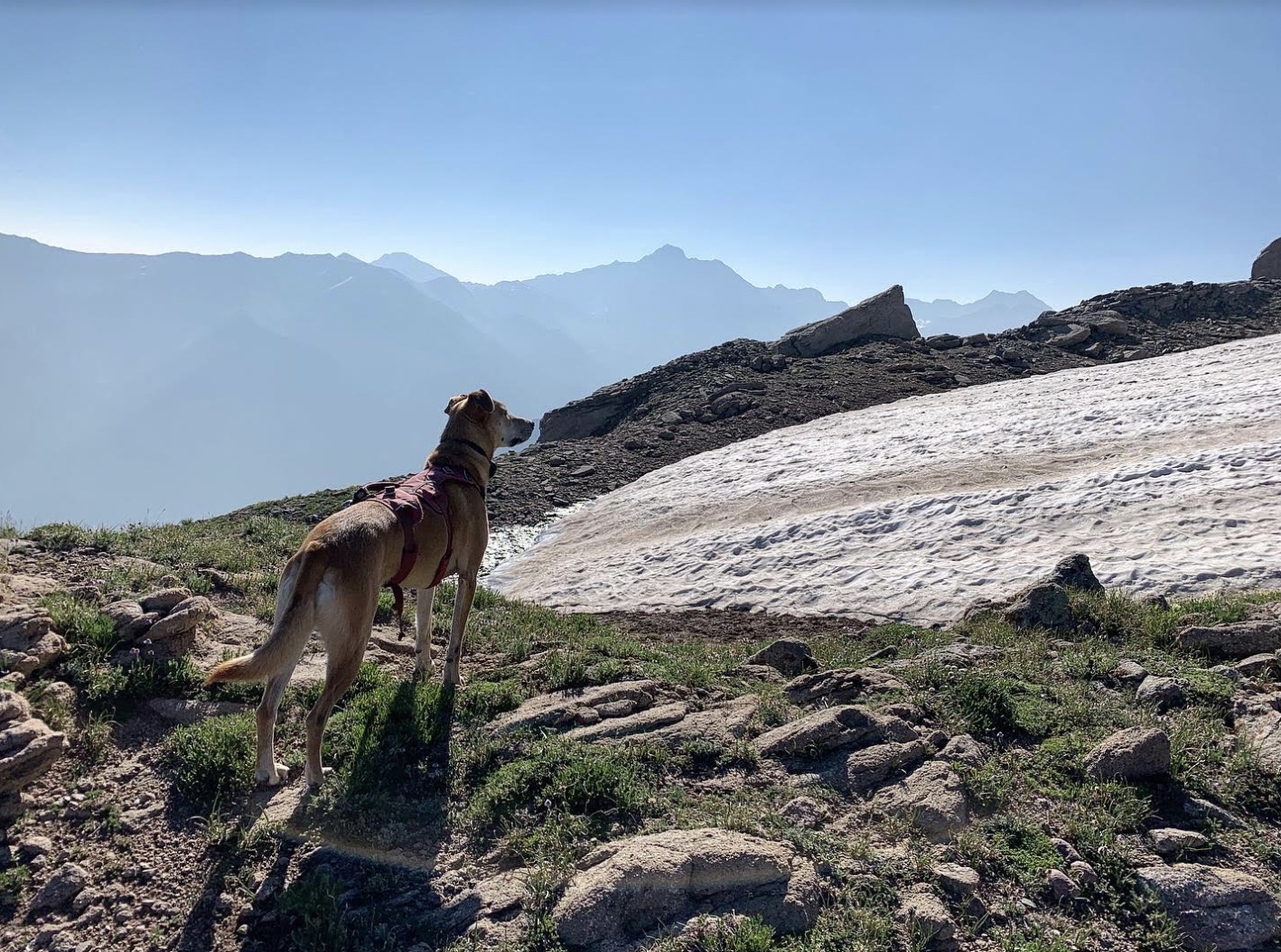
    Smoky haze. Not quite the bold and crisp view expected on this ridgeline near Carbondale, CO.

    Spinning past the autumnal equinox into fall, the West looks back on a summer marred by wildfire smoke. Here in Colorado, the Aspens have dropped their golden leaves, snow encrusts the high peaks, and I’m struck by the beauty of my backyard, which spent the majority of June, July, and August muted by smoke that — thankfully — blew in from elsewhere. 

    Over the last six weeks, checking AirNow before training has been phased out of my morning routine, and there is a palpable sigh of relief within my community as rain and high country snow frequent the forecast. The fire danger is not gone, but the threat feels less omnipresent.  

    A screenshot of active fires and subsequent air quality taken in August from Fire.AirNow.Gov.

    While regions like California, the Pacific Northwest, and Montana perhaps faced the longest durations of acrid high-AQI haze, cross country ski communities nationwide experienced its effect. As particulates from these fires were swept across the country, even air quality in the Northeast dipped into unhealthy zones for periods of time. 

    This phenomenon is not new, and as the planet continues to heat up, the West will be faced with longer and more devastating “fire seasons”. While sport might seem insignificant relative to the scale of issues at play, learning more about the modifications teams and athletes might consider can support the cross country ski communities overall health and wellbeing. 

    FasterSkier connected with coaches from areas heavily affected by fires and smoke to hear more about how they managed the impact in terms of protocol and adjustments to training with their athletes. Coaches also spoke to the increased frequency that these decisions will need to be made as climate change progresses. 
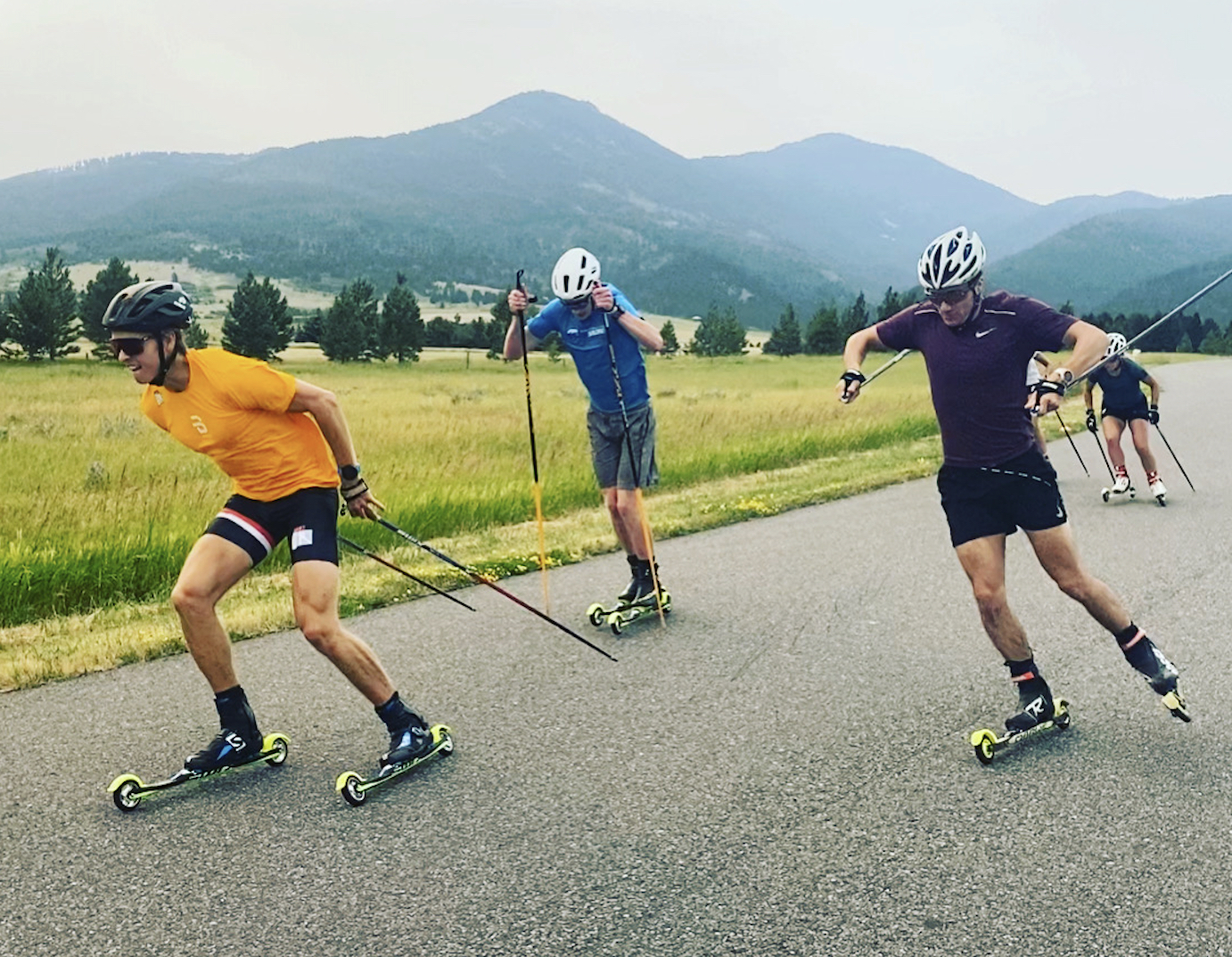
    BSF Pro athletes train in hazy yet safe conditions in Bozeman, MT. (Photo: Andy Newell)

    First up is Andy Newell, head coach of the Bridger Ski Foundation Pro Team in Bozeman Montana. 

    “Air quality and training is definitely a concern particularly because there’s not a ton of research about how smokey air affects high level athletes. We know a little bit about the short term implications but not much about long term exposure for athletes. The reality is this is something a lot of western clubs have been dealing with for a while but now we are seeing a lot of smoke in the midwest and even the east too.

    “On a typical year in Bozeman we usually don’t see smokey air until August and even then it’s not as bad as many other parts of the Northwest. This year we saw smoke earlier than ever, around the middle of July and early August, but much cleaner air than normal in the last few weeks. It really depends on wind, the jet stream, and where the big fires are burning. So far this year we have had to adjust about 3 workouts to bring athletes indoors when the air was bad. I’d say that’s about average for us, 3-6 workouts per year disrupted because of smoke.” 

    Newell continued by discussing the tools his program has used for decision making with regard to air quality and athlete safety. 

    “One of the things I have learned is that air quality can change very quickly and iPhone readings are not always accurate. We use the VisualAir app for forecasts and to find training areas that might provide better air for training. In this app you can see which sensors are gathering data from satellites and which ones from the ground. We’ve found obviously that the ground readings are a lot more accurate. Another thing we notice here in Bozeman is that the air quality can be very different even within the same region depending on high or low pressure, inversions, etc. So if you notice poor air at low elevations we might modify training and go up into the mountains and this can make a big difference.

    “We do use general guidelines at BSF to keep the athletes safe. If the AQI is above 100 we’ll start to monitor things and potentially modify training. If we are between 100-150 we will cut out L4 training or consider bringing athletes inside on treadmills for aerobic training. Also in this 100-150 range we’ll consider using KN95’s while out for easy distance training. Luckily we’ve only had to do this once this year so we’re hoping we make it through fire season without much more disruption.”
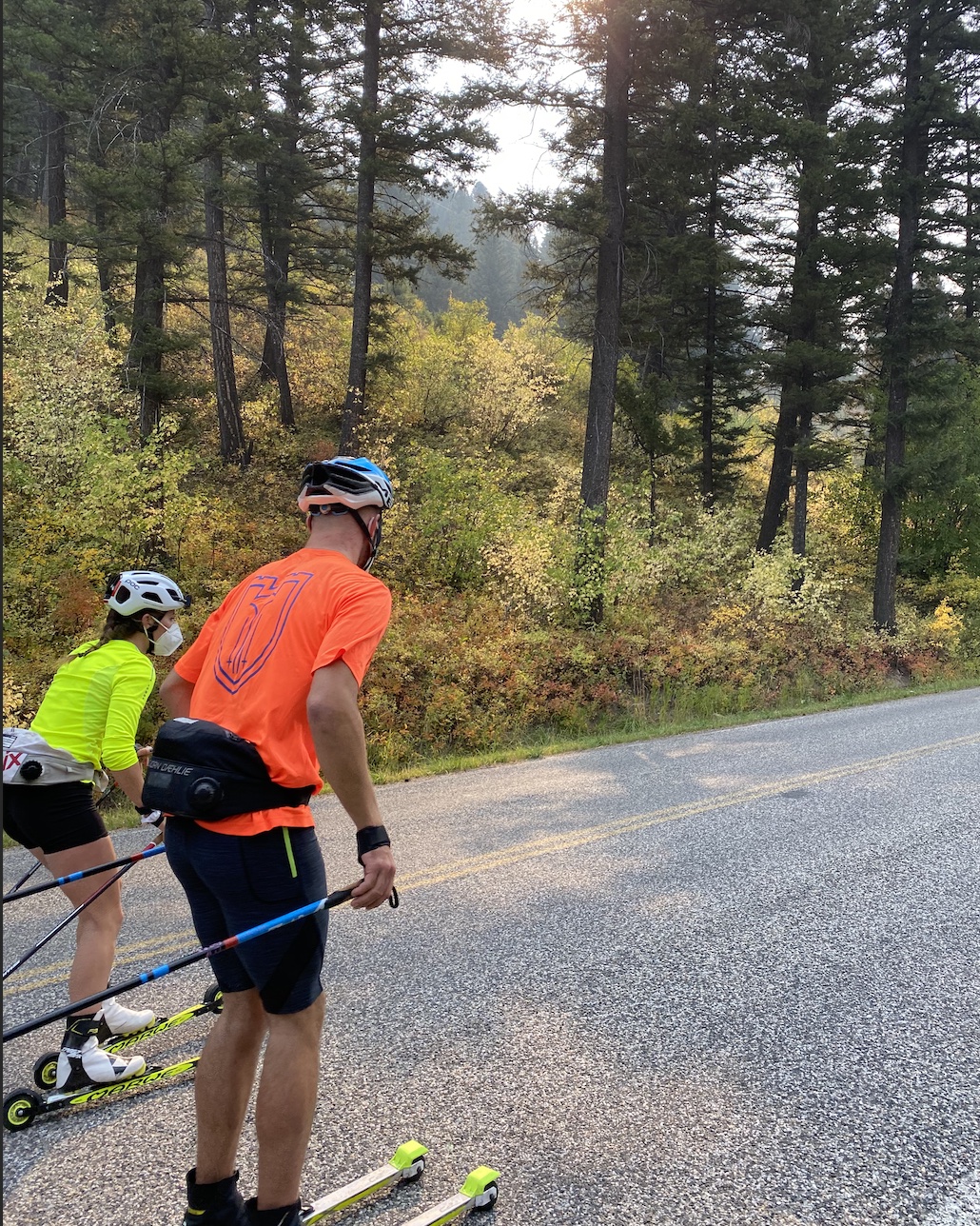
    BSF Pro athletes wear KN95s in order to safely train outdoors when air quality is above the safe threshold. (Photo: Andy Newell)

    A long-time advocate for climate policy and spokesperson for Protect Our Winters (POW), Newell closed with a statement on the impact of an ever-warming planet. 

    “As an athlete that has worked on a lot of climate issues this is definitely a scary reality, it goes to show you we are all affected by climate change.”

    Heading Southwest, FasterSkier also corresponded with Will Sweetser, Director of Nordic Programs for Sugar Bowl Academy (SBA), northwest of Lake Tahoe. The Tahoe region was struck hard this summer, as the devastating Caldor fire ripped through nearly 220,000 acres and destroyed over 1000 structures. 

    Now 98% contained, the Caldor fire remains active, over two months since it began on August 14th. It has burned over 220,000 acres, an area larger than the state of Rhode Island. Although the fire is still active, most evacuations and closures have been lifted. 
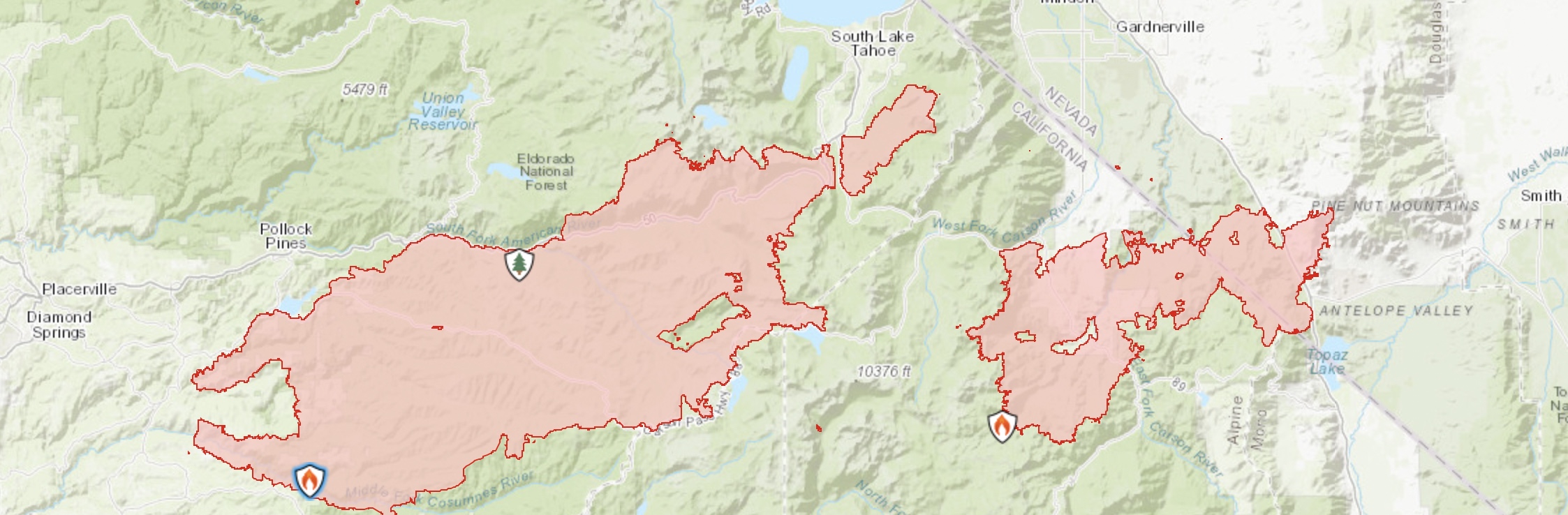
    A map from October 11th of the still-active Caldor Fire south of Lake Tahoe, California. (Photo: Screenshot InciWeb.nwcg.gov)

    Sweetser first outlined the nuts and bolts of air quality considerations. For those unfamiliar, AQI considers the concentration of fine particulate matter in the air. Particulate matter, like wildfire smoke, that is 2.5 microns or less (PM 2.5) is most concerning, as it can penetrate deeply into the lungs. 

    “Train as usual if school is in and AQI is between 0-60; offer optional/slightly modified training — consider shortened length first, and reduce continuous intensity — when AQI is between 60-120. Optional training is reduced, and outdoor training is only recommended for healthy, unaffected individuals when AQI is 120-150. Sessions are capped at 1 hour, and intensity capped at L2.”

    While indoor recreation amidst the COVID-19 pandemic poses its own set of complications, Sweetser explained that indoor training is preferred when the AQI is above 150. To support the health of its athletes, SBA has integrated air purifiers in every indoor space on its campus, including classrooms, common areas, dining halls, and the gym. These filters help maintain an indoor AQI of 25 or below. 

    An SBSA athlete moves his training indoors with an air filter when AQI plummets. (Photo: Will Sweetser)

    “In heaviest smoke events, we encourage families with the capacity to travel to cleaner air for the week to do so within the confines of school requirements. If we are in a remote schooling period, which was precipitated by Tahoe area evacuations last week, many families simply move to second homes in the Bay area or elsewhere in CA. We write individual suggestions for each athlete to meet the training options in that area. Our general week plan (MON–OFF, TUE-WED-THU–heavier training 1-2x daily, FRI–recovery, WEEKEND–high training load/family outings) readily allows families to take weekends away for cleaner air.”

    When Sweetser was first contacted in late August, he responded that he was with the team on the coast enjoying a training block in fresh air. In his email afterward, he included the purpose of this camp. 

    “Last week, we utilized our first planned smoke escape team training weekend. It was in the school travel calendar. Teachers prepared some work in advance. The entire team went to the north coast of California for FRI-SUN. We had 5 excellent training sessions, including 1km L4 repeats, pure speed double pole session, 2 technique sessions and a 15-20-kilometer run. AQI in the Mendocino area varied from 8-43 during that time and was a great reset for us. Extremely valuable to get to clean air, sea level and group training in a pretty stressful time. We are lucky to be able to do so with just 4-5 hours driving.”
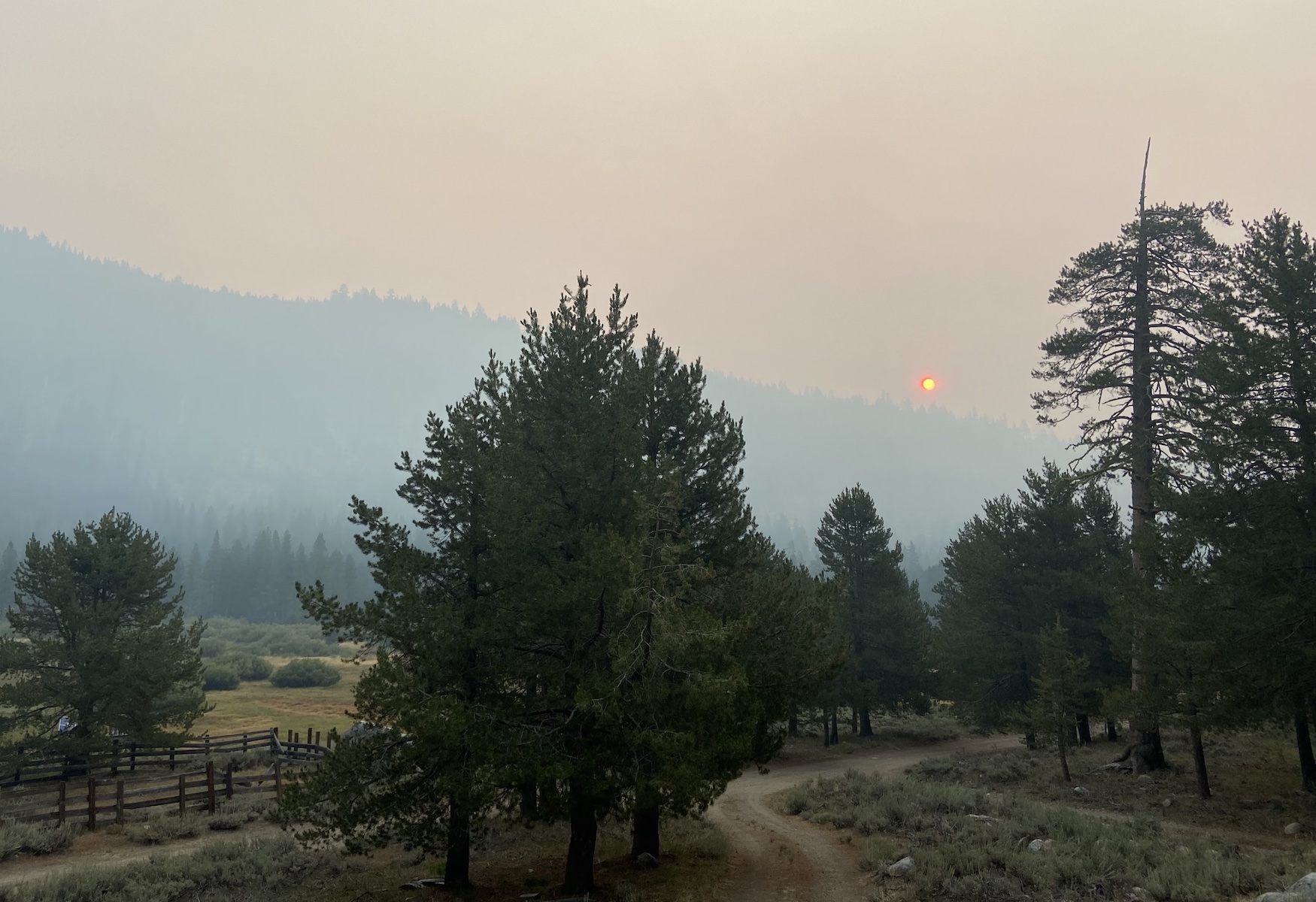
    The smoke filters over the ridge line in Tahoe’s Carpenter Valley last August. This day was relatively mild, with AQI readings remaining below 200. (Photo: Will Sweetser)

    When the team is not able to travel and air quality is poor, Sweetser explained how they approach indoor training to achieve similar stimuli to those they’d seek in “normal” conditions outdoors. 

    “When we are on Donner Summit with poor AQI, we utilize gym time and treadmill/SkiErg sessions to offer modified indoor sessions that still reflect each athlete’s goals — often these sessions are shortened and feature slightly more L2, or intermittent work, than we might normally do outside — although looking at HR data, the planned intermittent nature of these sessions is not totally different than sending the crew for a trail run through rolling terrain.”

    Sweetser also reflected on the learning curve for appreciating how quickly AQI can change based on wind and weather patterns. He recalled leading an OD training run with a couple of his athletes and assistant coach David Sinclair that began at a borderline AQI of 120. As they progressed toward the objective, Hawks Peak, the air quality plummeted.

    “We could see smoke pouring in from the north as we headed across the ridge… We called parents for pick up and dropped down as quickly as we could.”
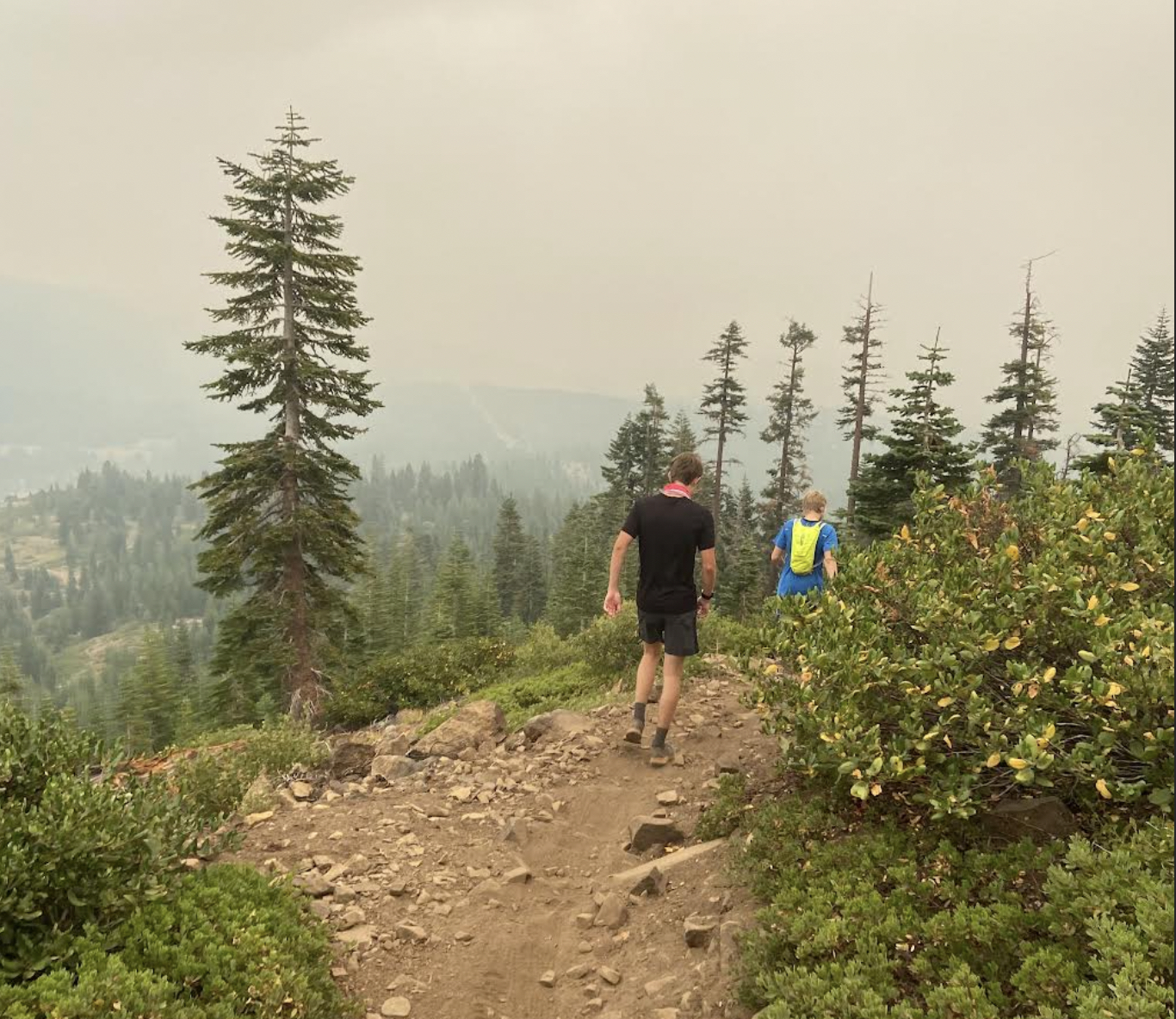
    SBSA athletes climb a ridgeline as AQI shifts rapidly from a safe level. (Photo: Will Sweetser)

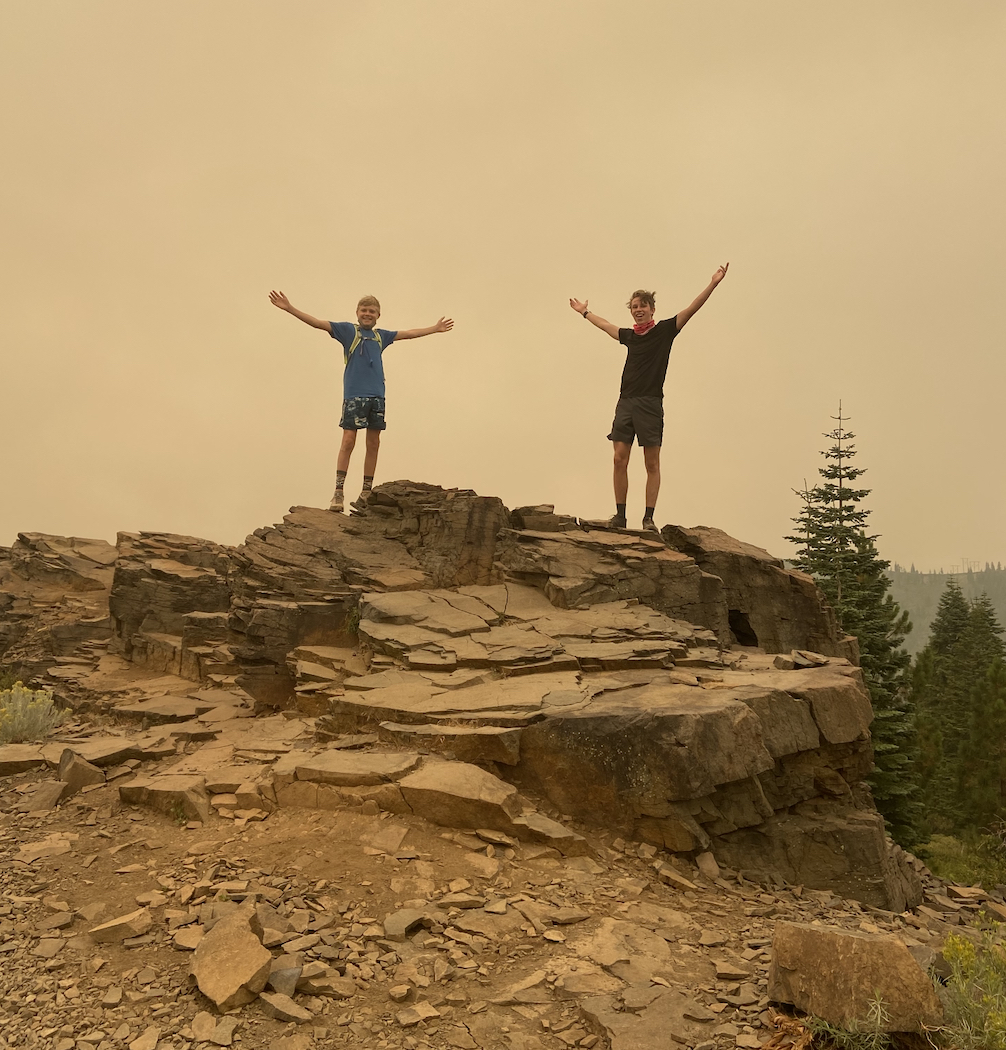
    By the time the athletes reached their pickup point, the AQI was over 400, which is considered emergency conditions.
    “Since then, myself and much of the region have become much more savvy about using real time AQI monitors such as PurpleAir, wind and smoke forecast apps like Windy and Dark Skies, and I’ve purchased a handheld AQI monitor.”
    Sweetser added that he coughed for at least a week after this singular session.
    Brown air and minimal visibility atop Hawks Peak. (Photo: Will Sweetser)
    Lastly, FasterSkier connected with Dylan Watts, new head nordic coach for the Mt. Bachelor Ski Education Foundation (MBSEF) in Bend, OR. At the time of his response, Watts had only been in his role for a month and thus could not speak to the program’s response to smoke levels in Bend throughout the summer. His perspective spoke to a broader philosophy regarding athlete development, particularly at the junior level. 

    “What I keep in mind is that we are really training for a healthy body and mind for the long term. That no one day, week, month, or even whole season is so critical that we potentially sacrifice our long term health for a short term result. In this sport, any short term results we achieve are very unlikely to bring us any benefit other than good health. Cold weather injury is a serious consideration in skiing. Regular exposure to air pollution, wildfire smoke included, is just as — and I would argue more — serious.

    “You don’t know what sort of interruptions you will face in a year. Modifications to training happen for conditions all the time. It is built into our sport. Weather, lack of snow, too cold, not cold enough, smoke. Add sickness, a hard semester, family needs, and so on. For those reasons it is always a good idea to work ahead. When it is good you go and that way when conditions are bad you don’t have too. You don’t need to feel the pressure to make up for something you didn’t do.”

    The MBSEF programs had been following similar guidelines to SBA, however, Watts responded that after the World Health Organization’s release of new air quality guidelines at the end of September, the program further tightened its tolerance of poor air quality. With mounting evidence of the increase in all cause mortality risk due to prolonged exposure to pollutants, the WHO drastically reduced the acceptable levels of PM2.5 and other pollutants individuals should be subjected to in both short and long term settings. The 300 page document also calls for a global response to air quality improvement. 


  • Summer of 2018: Coaching and Industry Moves (Updated)

    Summer of 2018: Coaching and Industry Moves (Updated)

    Martin Benes, who has coached at Sugar Bowl Academy for the last seven years, was recently hired as head coach of U.S. Paralympics Nordic. (Photo: U.S. Paralympics)

    (Note: This article has been updated to include the hiring of Miles Havlick as the University of Utah’s head nordic coach, which was announced Monday afternoon.) 

    There have been several notable career changes in North American nordic skiing this summer. Here’s a quick look at who moved where:

    Robert Lazzaroni, the nordic director at U.S. Ski & Snowboard, will soon begin his new role as Salomon’s nordic regional commercial manager for the Americas. (Photo: Salomon)
    • Robert Lazzaroni: from U.S. Ski & Snowboard to Salomon. Last week, Salomon announced via a press release that Lazzaroni, of Park City, Utah, will join its staff as nordic regional commercial manager for the Americas, starting Aug. 27. For the last three years, Lazzaroni served as nordic director at U.S. Ski & Snowboard in Park City. Before that, he was program manager at Utah Olympic Park, and before that, a nordic division manager for Rossignol and later One Way Sport. Asked about his new job at Salomon, Lazzaroni told FasterSkier he’d be willing to talk more in depth after he starts. Until then, he’s still employed at U.S. Ski & Snowboard.
      • According to U.S. Ski & Snowboard’s Chief of Sport Luke Bodensteiner, many of Lazzaroni’s duties as nordic manager “have been or will be distributed across existing staff, and we’re taking the opportunity to re-align our staffing positions to make sure that we have an efficient structure that supports our priorities of athlete development, coach education, and strong domestic competition,” he wrote in an email to FasterSkier.  “This will likely require hiring an additional position, but the nature of that job is TBD based upon where we determine that we need the human resource to support those priorities.” Bodensteiner expected to know more about the shift in staff responsibilities later this month.


    • Martin Benes: from Sugar Bowl Academy to U.S. Paralympics Nordic. Also last week, the U.S. Olympic Committee announced the hiring of Martin Benes as its new head coach of U.S. Paralympics Nordic Skiing. He replaces Eileen Carey, who was promoted to program director following the departure of John Farra (to USA Triathlon) this spring. Benes began coaching as an assistant ski coach at Bates College, then spent the last seven years as head nordic coach and director at the Sugar Bowl Academy near Truckee, California, according to his LinkedIn profile. As head coach of the U.S. Paralympics program, he will “lead the development of annual and seasonal training plans for the national team, track athlete performances, workout data, sport science data and annual progress reports, contribute to the U.S. Paralympics athlete identification and development strategy, and assist in planning travel and logistics for the Nordic skiing program to competitions, camps and events,” according to the press release.
      • “It’s an incredibly exciting time to join the program following such a successful performance in front of the world at the Paralympic Winter Games PyeongChang 2018,” Benes stated in the press release. “I’m eager to get started in my role so we can continue to strengthen the program and win medals on the international stage.” He’s set to begin on Aug. 20.


    • Fredrik Landstedt: from the University of New Mexico to the University of Utah. Late last month, the University of Utah announced it had found a new director of skiing to replace Kevin Sweeney. Landstedt had been a staple on the University of New Mexico (UNM) Ski Team for the last 21 years, spending the last 11 years as head coach of both the nordic and alpine programs (and 10 years before that as head nordic coach). His decision to take the job at Utah came less than 24 hours after the UNM Board of regents unanimously approved a proposal to eliminate four sports starting in the 2019/2020 season, according to the Albuquerque Journal. Those sports are men’s and women’s skiing, men’s soccer, and women’s beach volleyball. The proposal would also significantly impact funding for cross country and men’s track and eliminate the women’s diving program. In the meantime, UNM announced assistant coach Joe Downing will assume the role of interim head skiing coach.
      • “I am honored to have the opportunity to lead a program with such a rich history,” Landstedt stated in the Utah press release. “Utah has a strong winning tradition and the support that the University provides its ski team is incredible. I look forward to bringing NCAA titles back to Utah!”
    Miles Havlick in November 2015 in West Yellowstone, Montana.
    • Also at the University of Utah, Miles Havlick: new head nordic coach. In a press release on Monday, the university announced that Havlick, one of its former skiers and a two-time NCAA champion (2012 and 2013), was hired to head up its nordic team for the coming season. Havlick, 28, skied for the the Sun Valley Ski Education Foundation Gold Team after college and won the 42-kilometer Australian Hoppet Worldloppet last August. He delved into coaching last summer in Australia with the Birkebeiner Nordic Ski Club and Victorian Junior cross-country ski team, and last winter, was an assistant coach and wax technician for the Australian junior national team at Junior World Championships. Havlick also waxed for the Australian national team last March in China. He has also assisted the Utes ski team, most recently as an assistant coach at 2018 NCAA Championships.
    • Eliška Hájek Albrigtsen: from Central Cross Country to the University of Alaska Fairbanks. After spending the last year filling multiple roles with Central Cross Country (CXC) out of Madison, Wisconsin (including CXC Team head coach and junior development coach), Albrigtsen has accepted an assistant-coaching position with the University of Alaska Fairbanks Ski Team, replacing Josh Eide. Albrigtsen was a four-time All-American skier for the University of Colorado Boulder and an NCAA champion in 2011.


    • Cross Country Canada seeks senior national team coach: Two days ago, the CCC headquarters in Canmore, Alberta, put out an announcement for applications for a full-time senior national team coach. The position indicated it requires both domestic and international travel. “Reporting to the HPD [high-performance director], the Senior National Team Head Coach (NST Head Coach) is responsible for leading the technical delivery and alignment of Senior National Ski Team (Senior NST) programs in order to achieve podium performances at Olympic Games and FIS World Championships,” the job description stated. “The NST Head Coach will have the responsibility to plan, coordinate and monitor the training and competition of NST athletes in line with CCC’s collective goals.” CCC’s senior team includes 10 athletes, five of which are on the World Cup Team. The other five are on the U25 (under-25) Team. View the job posting here.
  • Sugar Bowl Seeks Full-Time Assistant Coach

    Sugar Bowl Seeks Full-Time Assistant Coach

    (Job posting)

    Sugar Bowl Ski Team and Academy is seeking a full-time assistant Nordic coach for the 2017-18 season. Sugar Bowl Academy offers a year-round program for student-athletes, in grades 8-12 as well as a Post-Graduate program. The Academy offers both day and boarding options and we offer several development camps throughout the year. In addition, the Ski Team runs several seasonal youth programs designed to develop a passion for the sport and lifelong skills.

    Sugar Bowl Academy student-athletes thrive on the dual pursuit of rigorous academics and competitive skiing in an environment that celebrates hard work and the pursuit of worthy goals. Graduates have gone on to some of the best colleges and universities in the country and many have continued their pursuit of skiing on NCAA teams at schools like Bates, Boston College, Dartmouth, Middlebury, Saint Lawrence University and the University of Colorado.

    The ideal candidate has a Bachelor’s Degree or equivalent, college/elite racing experience, and some coaching experience. They will be willing to work with the entire Nordic staff (including youth coaches) to develop athletes and programming. Job duties will include, but not be limited to, the following:

    • Assist in the day-to-day running of the Sugar Bowl Academy Nordic Ski Team including practice planning, budgeting, team communication, etc.
    • Assist in weekly/yearly training plan writing and development.
    • Along with Nordic staff, assist in support of long-term athlete development model for the Sugar Bowl Nordic programs.
    • Assist Head Coach in developing camp and race schedule.
    • Assist in recruiting and retention of SBA Nordic Athletes.
    • Attend regional, national, and international race and camp opportunities as necessary.
    • Other duties, as they arise, given ample notice.

    Salary/Compensation: Salary DOE, Health care, 403(b) Retirement plan, Sugar Bowl/Royal Gorge Season Pass, and equipment stipend.

    If interested, please send resume, cover letter, and three references to Martin Benes, Nordic Program Director, mbenes@sbacademy.org. The position will remain until filled.

  • Under 23 Questions with Hannah Halvorsen

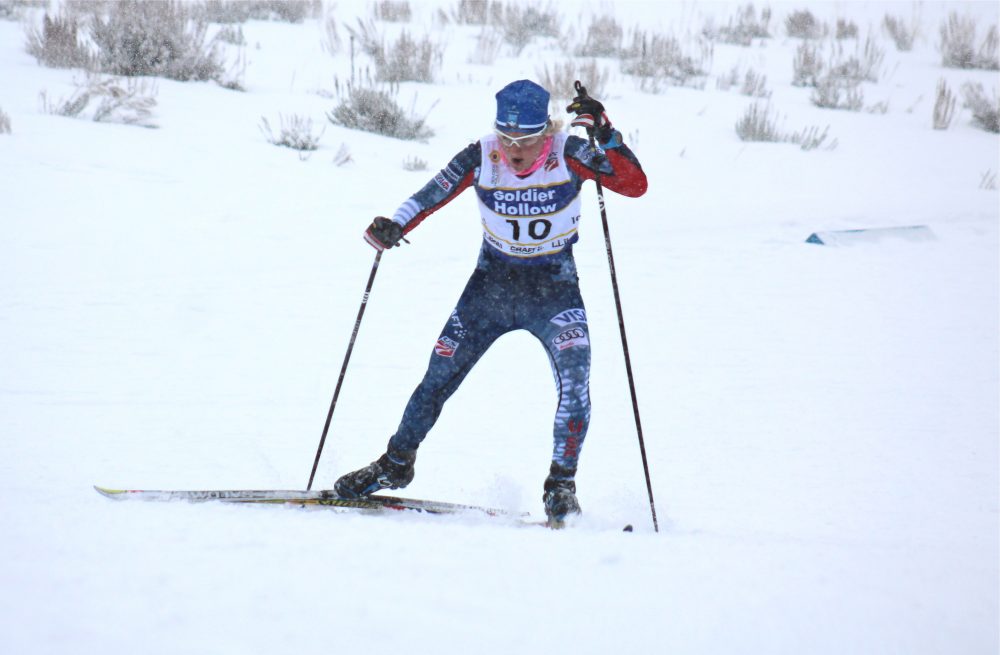
    American Hannah Halvorsen (Sugar Bowl Academy/U.S. Ski Team D-team) racing to 13th in the women's classic sprint qualifier on Monday at 2017 Junior World Championships at Soldier Hollow in Midway, Utah. (Photo: FlyingPointRoad.com)
    American Hannah Halvorsen (Sugar Bowl Academy/U.S. Ski Team D-team) racing to 13th in the women’s classic sprint qualifier on Monday at 2017 Junior World Championships at Soldier Hollow in Midway, Utah. She went on to reach the semifinals and placed 11th overall. (Photo: FlyingPointRoad.com)

    In an effort to showcase the North Americans competing at this week’s International Ski Federation (FIS) 2017 USANA Nordic Junior World Championships and U23 Cross Country World Championships at Soldier Hollow in Midway, Utah, we asked those qualifying athletes several questions about themselves — actually, we had them fill in the blanks. Here we have 18-year-old Hannah Halvorsen, of the Sugar Bowl Academy and U.S. Ski Team D-team, who’s representing the U.S. at her first Junior Worlds after competing at last year’s Youth Olympic Winter Games.

    On Monday, Halvorsen reached the semifinals of the classic sprint to place 11th in her Junior Worlds debut. On Wednesday, she raced to 13th in the women’s 5 k freestyle.

    ***

    “My full name is Hannah but you can call me hannaH (it’s a palindrome). I was born and raised in Truckee, Calif., and one thing you should know about my hometown is there is no surfing.

    I started cross-country skiing when I was 18 months old thanks to Mom and Dad. I currently train in Truckee with Sugar Bowl Academy (team mascot is the Fighting Marmots).

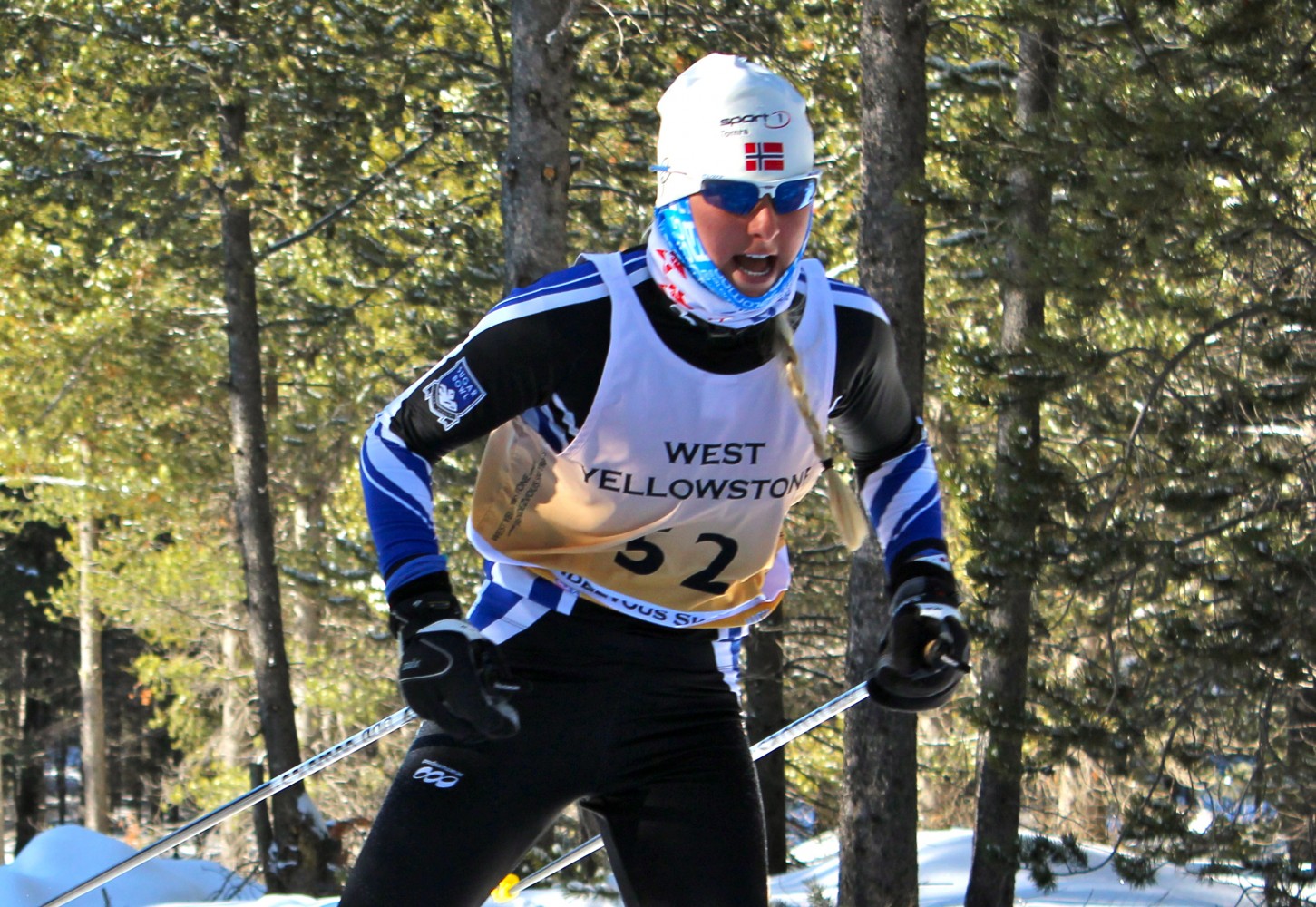
    Sugar Bowl Academy and U.S. Ski Team Development Team member Hannah Halvorsen racing to second in Thursday's skate-sprint prologue on the final day of 2017 U.S. nationals at Soldier Hollow.
    Sugar Bowl Academy and U.S. Ski Team development team member Hannah Halvorsen racing to second in the 2017 U.S. nationals skate-sprint prologue last month at Soldier Hollow.

    If I’m not training for skiing, I might be cutting someone’s hair with my personal haircutting kit (with no training). If I had to pick a favorite book, it would be ‘Seinfeld’ (is there a book version?).

    One of the things I’m most excited about for Junior Worlds at Soldier Hollow is that it will help make America great again. One race I’m especially targeting there is making the relay team.

    The best advice anyone ever gave me about skiing or racing was that it should be really fun. One of the best race memories I have is beating a Norwegian.

    If I could meet one World Cup skier, it would be Marit Bjorgen.

    If I don’t end up being a professional skier, I’ll probably be a coach.

    You can follow me on Instagram @hannah.g.halvorsen.”

  • 17 Questions for 2017: Hannah Halvorsen

    17 Questions for 2017: Hannah Halvorsen

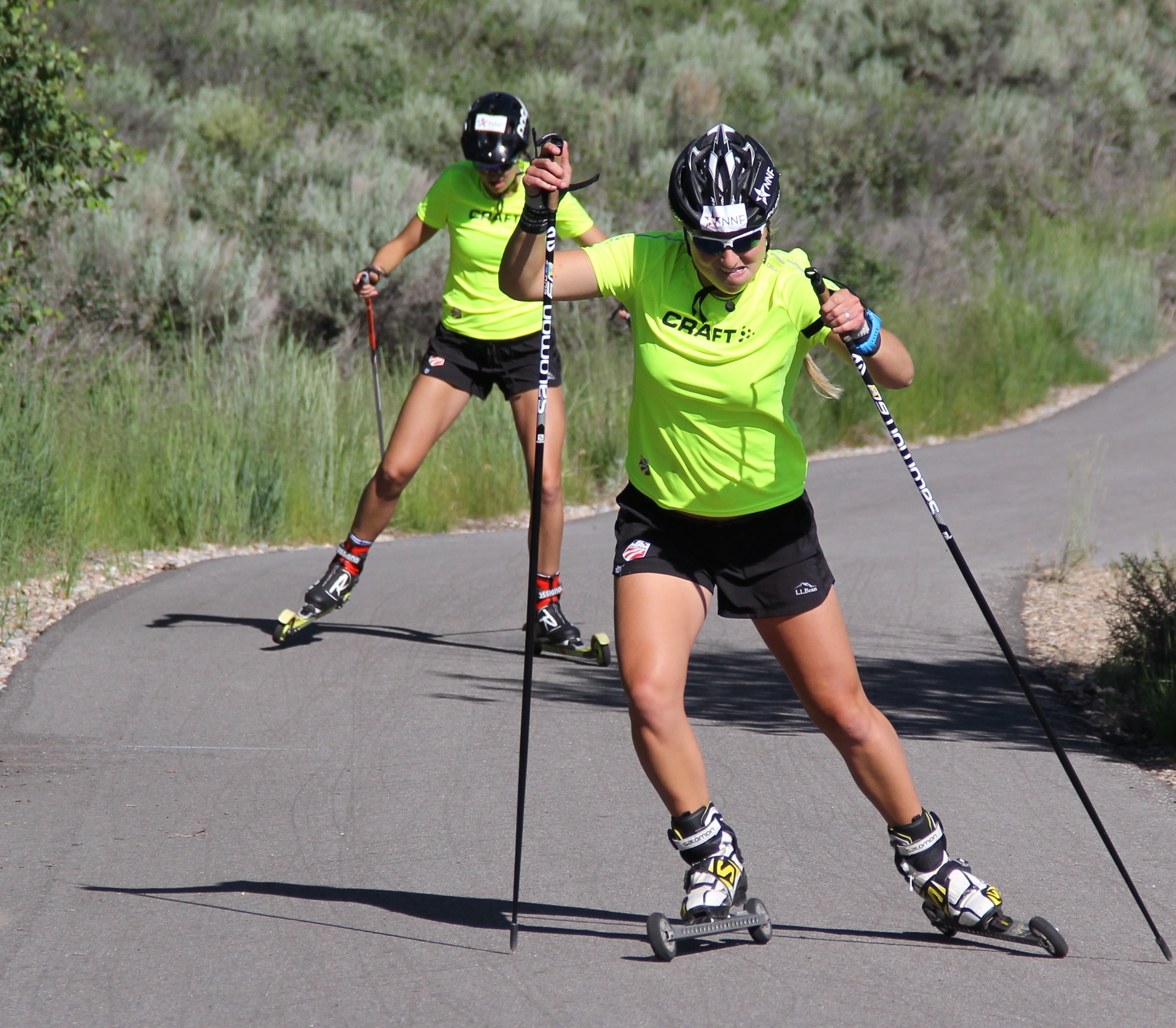
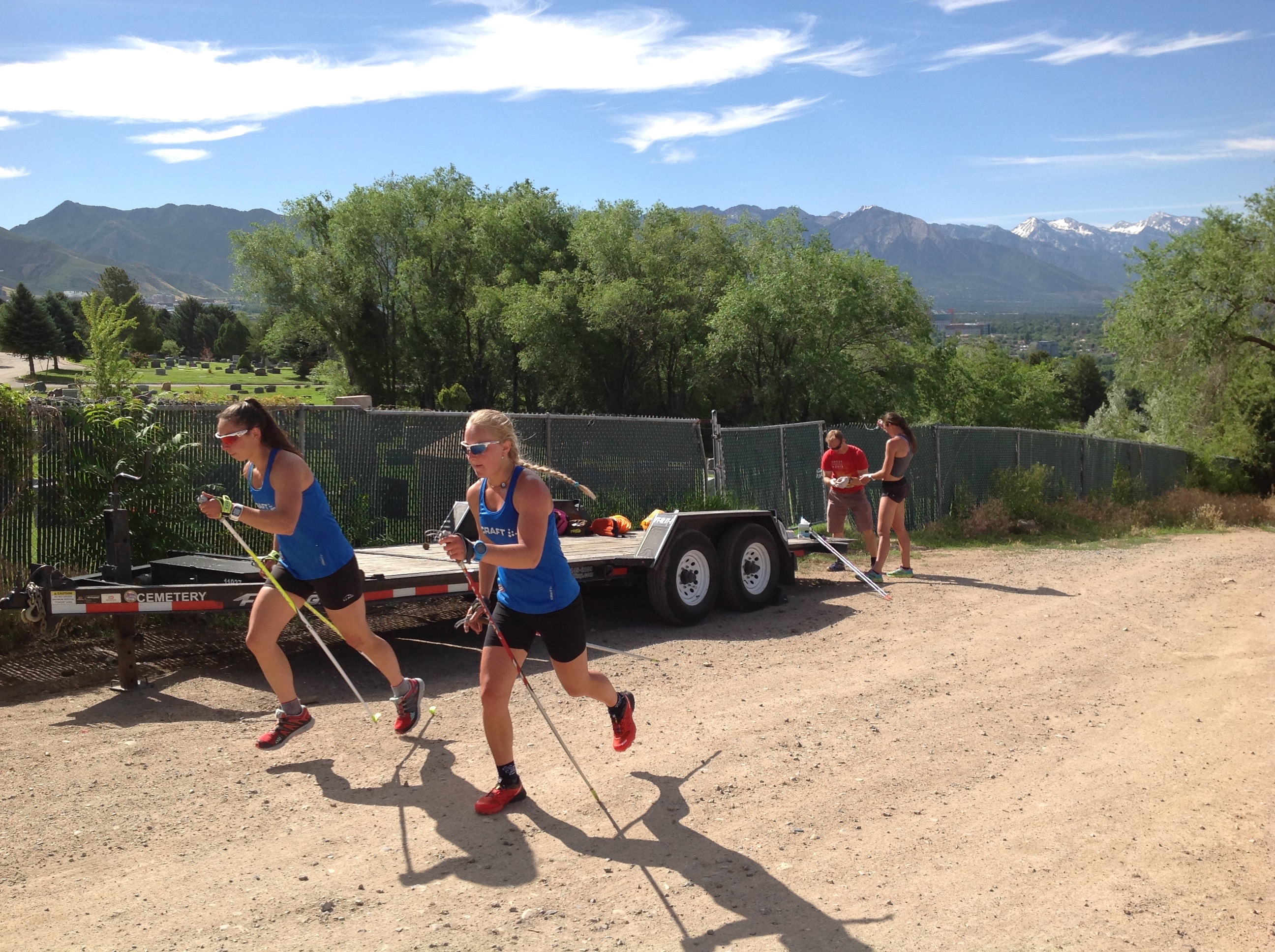
    Hannah Halvorsen (foreground) attacking the rollerski track at Soldier Hollow. (Photo: Bryan Fish)
    Hannah Halvorsen (foreground) attacking the rollerski track at Soldier Hollow. (Photo: Bryan Fish)

    Welcome to “17 Questions for 2017″, where we are catching up with American and Canadian national-team members before the beginning of the winter season. 

    ***

    Last season, Sugar Bowl Academy’s Hannah Halvorsen snagged her first SuperTour podium – before heading back to the junior ranks to win a U18 race at U.S. National Championships, a title at Junior National Championships, and represent the United States at the Youth Olympic Games in Lillehammer, Norway.

    The California cross-country skier also ended up with her first U.S. Ski Team nomination. Now 18 years old, Halvorsen has been making the most of her first training season without school.

    1. Biggest change in your life in the last five or so months since the ski season ended?

    The biggest change in my life since ski season ended has been adjusting to a slightly different lifestyle as a post graduate skier. I still train with Sugar Bowl Academy but now I don’t have to work around a school schedule.

    2. Biggest change in your training?

    This year not being in school has allowed me to drive down to low elevation training about twice a week.

    3. Major areas of improvement you’ve seen so far?

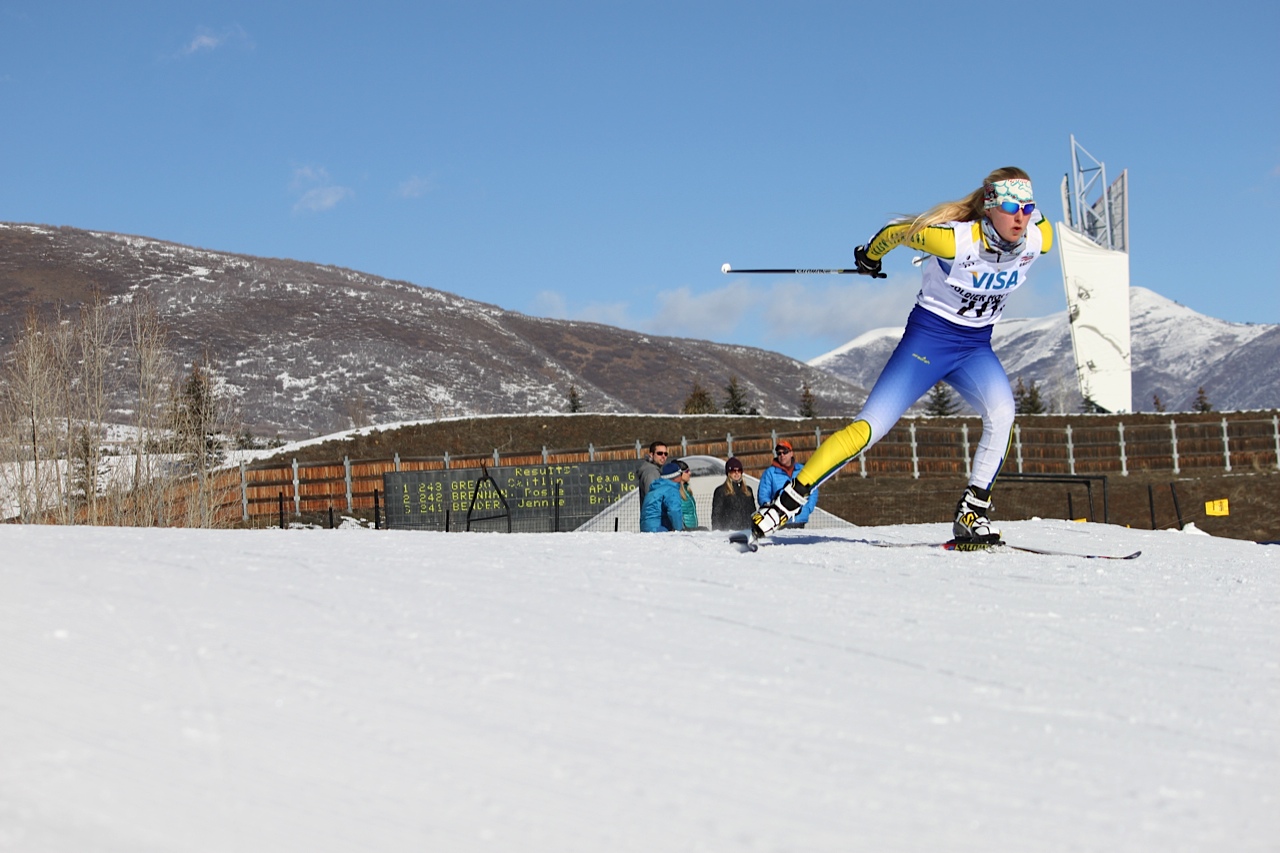
    Hannah Halvorsen (Sugar Bowl Academy) racing to third during qualifying for the women's SuperTour 1.3 k freestyle sprint in November 2015 in West Yellowstone, Mont. Halvorsen went on to edge out AWCA's Dahria Beatty for second place overall, 4.31 seconds behind race winner, Jennie Bender.
    Hannah Halvorsen (Sugar Bowl Academy) racing to third during qualifying for the women’s SuperTour 1.3 k freestyle sprint in November 2015 in West Yellowstone, Mont. Halvorsen went on to edge out AWCA’s Dahria Beatty for second place overall, 4.31 seconds behind race winner, Jennie Bender.

    I’ve been excited about my improvements in v1 technique and running foot speed.

    4. Whom you’ve been working closest with this offseason (coaches or training partners)?

    I have been working with the Sugar Bowl Academy skiers and coaches, and have also had the opportunity to train with TXC Coach Eliska Hajek Albrigtsen.

    5. Best trip in the last five months (and why)?

    I had the opportunity to train out in Stratton with the SMS team in August, which was a great opportunity to train at low elevation and be pushed by really fast skiers.

    6. Favorite cross-training?

    My favorite cross training is mountain biking.

    7. Favorite non-athletic activity or pastime this summer?

    This summer when I was resting I did a lot of painting, reading, and watching Seinfeld.

    8. Song that was your jam this summer?

    Love Yourself by Justin Bieber.

    9. All time favorite race moment?

    Halvorsen (left) taking off on some ski bounding in Park City. (Photo: Bryan Fish)
    Halvorsen (right) and U.S. Ski Team teammate Julia Kern taking off on some ski bounding in Park City this summer. (Photo: Bryan Fish)

    Racing in the Scando cup in Sweden two winters ago and realizing, “the training I’ve done is working really well!”

    10. First thing you pack in your bag when you leave for Europe?

    My stuffed animal Bunny.

    11. Venue/event you’re most excited to visit this season?

    I am excited to have a Super Tour in my own town this January at Auburn Ski Club.

    12. Who will win the World Cup title this year?

    Jessie Diggins.

    13. Biggest sacrifice you feel you’ve made choosing this career path?

    The biggest sacrifices I have made have been social. Instead of giving time to my friends and family, it often goes towards training or even simply resting so I am ready to train again.

    14. If you could change one thing about your sport, what would it be?

    I think it would be awesome if being a skier didn’t cost money.

    15. What did you have for breakfast this morning?

    Chocolate chip coconut granola.

    16. In 5 years, I’ll be ____?

    Skiing.

    17. In 50 years, I’ll be ____?

  • Halvorsen Accepts D-Team Nomination, Defers College for a Year

    Halvorsen Accepts D-Team Nomination, Defers College for a Year

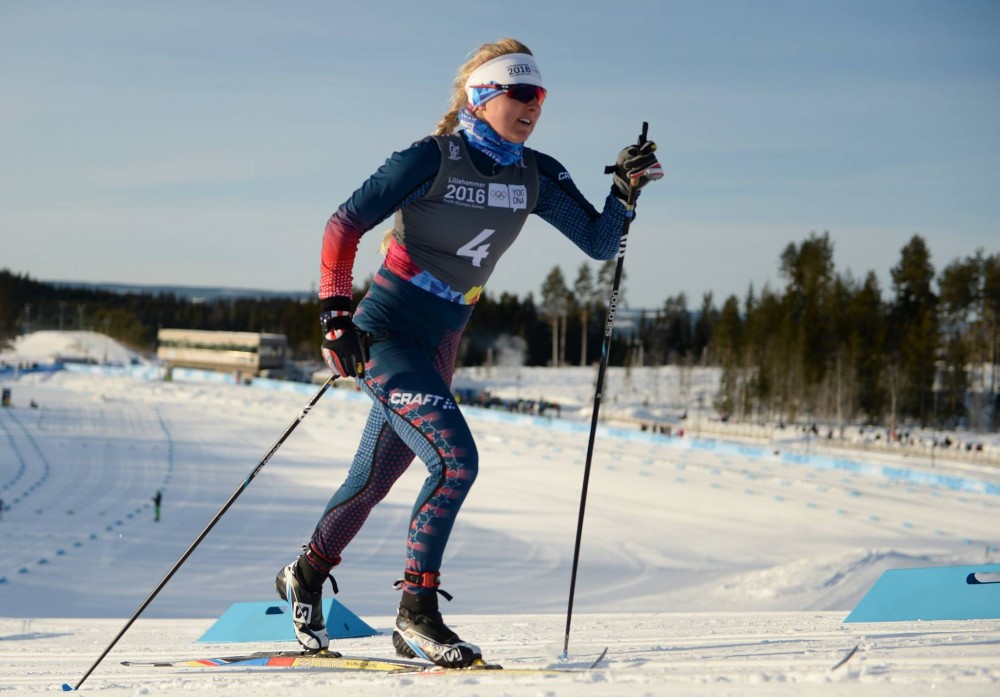
    Hannah Halvorsen representing the U.S. in the classic sprint qualifier at the 2016 Youth Olympic Games in Lillehammer, Norway. (Photo: FIS)
    Hannah Halvorsen representing the U.S. in the classic sprint qualifier at the 2016 Youth Olympic Games in Lillehammer, Norway. (Photo: FIS)

    On Monday, the U.S. Cross Country Ski Team announced its nominations for its 2016/2017 national team, loaded with veteran world champions and podium threats. The list included one newcomer to the women’s team: 18-year-old Hannah Halvorsen, of the Sugar Bowl Academy and Truckee, Calif., who was listed as one of five athletes on the U.S. Ski Team’s “D”, or development, Team.

    Contacted by phone, Halvorsen explained she accepted the nomination and will defer college.

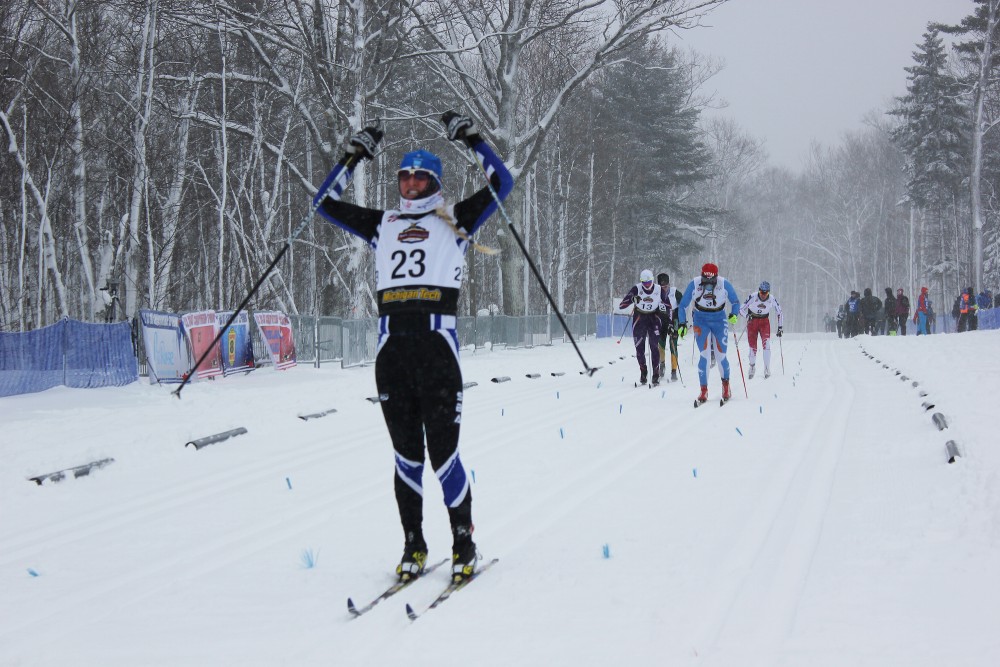
    Hannah Halvorsen celebrates her quarterfinal win in the women's classic sprint at the 2015 U.S. Cross Country Championships in Houghton, Mich. She was 16 at the time and went on to reach the final for fifth overall.
    Hannah Halvorsen celebrates her quarterfinal win in the women’s classic sprint at the 2015 U.S. Cross Country Championships in Houghton, Mich. She was 16 at the time and went on to reach the final for fifth overall.

    “My plans for next year are to stay with my main coach Martin Benes at Sugar Bowl Nordic Ski Team and train at home for a year, Halvorsen said. “I did sign with University of Vermont, but they gave me a year to stay before joining the team.”

    Early on in a junior skier’s career, noteworthy results may put you on the national team’s “radar.” Halvorsen has been one of those recurring radar blips. Back in 2014, she qualified 15th at U.S. nationals in the freestyle sprint. A year later at 2015 nationals, at just 16 years old, she placed fifth in the classic sprint. This year, her progression continued: she notched second in the freestyle sprint at the season-opening SuperTour in West Yellowstone, Mont., and sixth in the world in the classic sprint at the 2016 Youth Olympic Games in Lillehammer, Norway.

    As for whether she’d expected a call from the USST this spring, she said she wasn’t exactly waiting by the phone.

    “I definitely didn’t think this would happen,” Halvorsen said of her nomination. “But with Julie [Kern] and Katharine [Ogden] making the team the year before, I knew that it was a possibility. And when the call didn’t come until my spring break, I thought it wasn’t going to happen for me because there is some competitive women on the team right now. I started to think ‘no, not this year.’ Then I got the call, so yeah, I was a little surprised.”

    “I thought it wasn’t going to happen for me. … Then I got the call.” — Hannah Halvorsen, 18, on her U.S. Ski Team nomination

    Benes, the head nordic coach at Sugar Bowl Academy and Halvorsen’s primary coach for the last three seasons, knew the nomination was a possibility, but like his pupil was keeping expectations grounded.

    “I  guess I wasn’t 100 percent sure,” Benes said. “I thought it might happen; she had shown a pretty positive and consistent trend in terms of her results, so there was a chance. I guess on some level it’s not surprising, but it certainly but it caught me maybe a little bit off guard.”

    Benes explained that Halvorsen has remained focused on her benchmarks as her goals began to materialize — with the immediate prize Halvorsen’s D-Team promotion.

    “When you see the work she has put in and the focus that she has, it’s nice that the results have come,” Benes said. “But I guess I felt more it’s a recognition of that process than anything else.”

    U.S. Ski Team Head Coach Chris Grover explained in an email that Halvorsen was one of two newcomers to this year’s D-team to be chosen by discretion. The other was Ian Torchia of Northern Michigan University. According to Grover, both demonstrated an ability to “deliver big results in Europe against tough fields.”

    American Hannah Halvorsen between rounds at the Youth Olympic Games classic sprint in Lillehammer, Norway. She went on to place sixth in the final. (Photo: Adam St.Pierre)
    American Hannah Halvorsen between rounds at the Youth Olympic Games classic sprint in Lillehammer, Norway. She went on to place sixth in the final. (Photo: Adam St.Pierre)

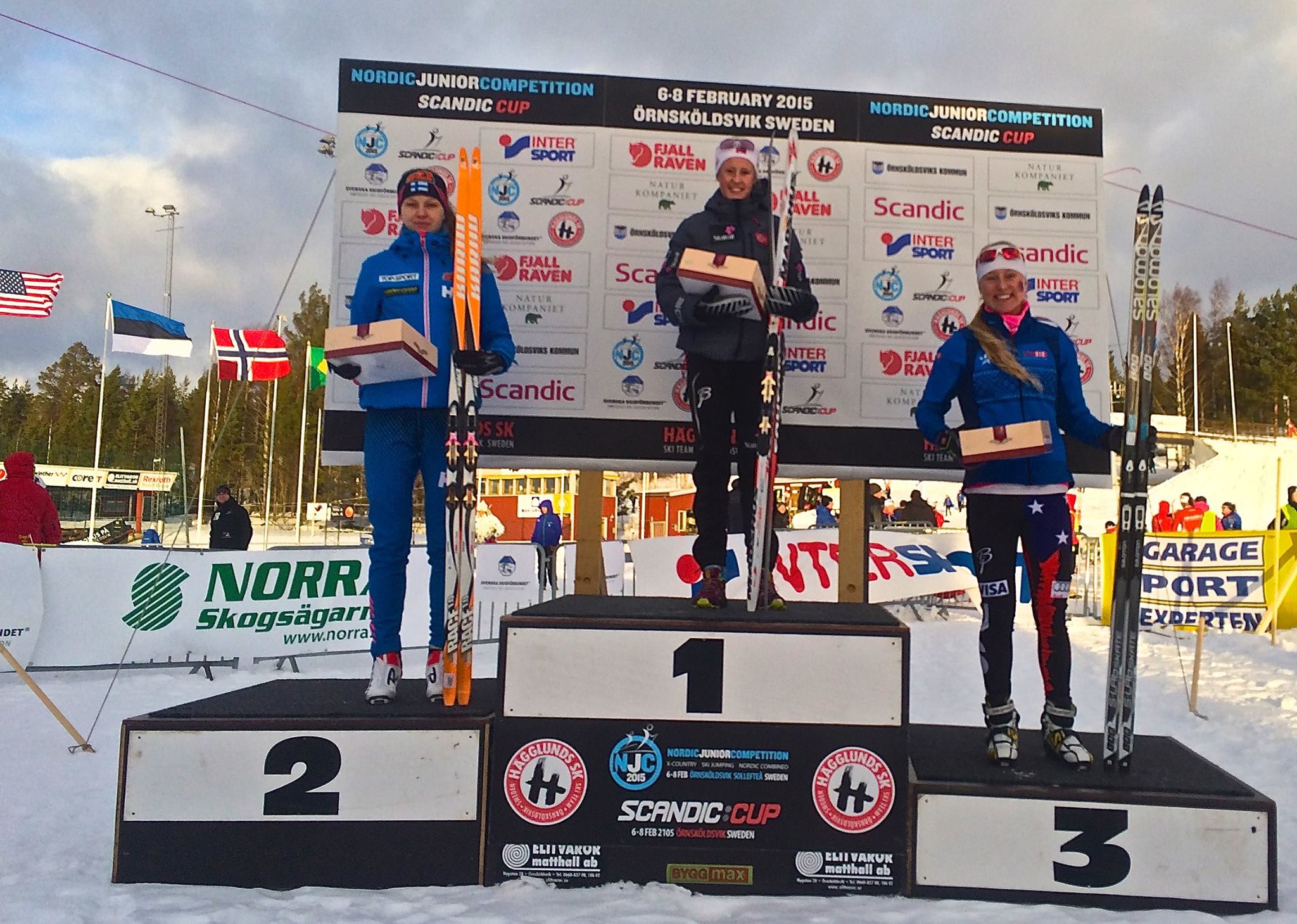
    “Hannah has been the standout USA athlete at the U18 Scandinavian Championships for the past two seasons, including a podium there two seasons ago,” Grover wrote of her third-place finish in February 2015 in the 5 k freestyle in Örnsköldsvik, Sweden, amid a field of nearly 130 women.

    Last October, Halvorsen was part of National Elite Group invited to Lake Placid and train along with the U.S. Team. It was there, Halvorsen said, where she realized she could compete with some of the nation’s fastest skiers.

    “We did a lot of sessions with the U.S. Ski Team,” Halvorsen recalled. “There were a couple of interval sessions and sprint simulations where I was able to hang on for maybe not all of it, but maybe a good bit, and that was definitely a huge confidence boost — that it’s not that far away.”

    For the next year, Benes and Halvorsen will be based at Sugar Bowl Academy on Donner Summit, and will focus on increasing training hours, prepping for the early season SuperTours, nationals and qualifying for and competing at Junior World Championships, which will be held in Park City, Utah.

    But ultimately, her spot on the U.S. Ski Team (USST) is part of a greater long-term goal.

    “To me, this nomination means that it’s just moving another step up in my development,” she said. “And it’s just taking the next step towards my goals to being on the World Cup.”

    The junior ranks often ebb and flow with the rate at which a young athlete matures physically. Although Halvorsen showed promise of a big engine early on, those are only one of a few pieces necessary for continued development — there’s the mental aspect as well. Benes realized once he began coaching Halvorsen that the mental piece of Halvorsen’s makeup was able to successfully navigate both the good and not-so-good days.

    “I think the mental piece from the early days is what impressed me the most, always stood out the most,” Benes recalled of his first impressions of Halvorsen. “I think you see sometimes U16’s, both guys and girls, who are developed physically and they are quick and they are fast and they stand out among their peers, but that is where it kind of ends. I think that her mental drive and mental strength was pretty impressive and has been impressive from a pretty young age.”

    “I think the mental piece from the early days is what impressed me the most.” — Martin Benes, Sugar Bowl Academy Head Nordic Coach, on his first impressions of Halvorsen

    Asked how she will attempt to balance the highs of USST membership with new expectations, Halvorsen said it was just part of her athletic progression.

    I’m young and not perfect yet navigating it mentally and it’s very exciting right now, just getting the nomination,” she said. “But I think later down this year I’ll have to start thinking about it more realistically and what it means and what is almost expected of me. And I think something that [USST Development Coach] Bryan Fish said to me and to hone in on, was you have to take it year by year. And by getting this nomination it means they believe in you, but you just have to focus on one season at a time. Taking a season off, if I don’t make it [on the full-fledged USST] next year doesn’t mean that I can’t continue to progress and get back on.”

    Writing in an email after her interview, Halvorsen took a moment to reflect on her homegrown circle of supporters.

    “It has been incredible to realize the support of my coaches, family, and friends with the news of the nomination,” she wrote. “It is meaningful to share the excitement with them and to be reminded how invested they have been in my goals. I hugely appreciate their support moving forward.”

    Both Halvorsen and Benes are moving forward. They both used the word ‘opportunity’ numerous times over the phone. Opportunity has come knocking and Halvorsen says she ready to seize it.

  • Sugar Bowl Academy Accepting Applications for Elite Team

    Sugar Bowl Academy is pleased to announce they are accepting applications for their Elite Nordic Team for the coming 2016/2017 season. The team will provide world-class coaching and training opportunities to its athletes.

    Head Sugar Bowl Nordic coach Martin Benes will oversee the program along with the Sugar Bowl Academy coaching staff. Athletes will be based out of the Royal Gorge-Sugar Bowl resort and have access to the wealth of training sites in the Truckee-Tahoe region. In addition, the athletes will make use of the recently constructed Sugar Bowl Academy facilities, including a state-of-the-art gym. Team members receive funding to offset camp and race expenses, as well as a housing subsidy.

    Interested applicants should send an athletic resume and letter outlining their goals for the upcoming season(s) to mbenes@sbacademy.org by May 1st.

  • Toko Mega Field Report

    Toko logo

    SMS

    SMS T2 US Nationals Wax Report
    Classic Individual
    Warming temps, glazing tracks, new snow.
    I went pretty simple on glide for the classic race, waxing with HF Blue cut with AX134 for the guys in the AM, and a mix of HF Blue, AX134 and HF yellow for the ladies who were racing second. The traffic from all of the competitors was releasing a pretty decent amount of moisture and I wanted to soften the relatively colder HF blue paraffin for the later races. I found that I was not liking the way straight HF red was running early that week in testing so ended up on a mixed paraffin. AX134 tends to run really well at high speed or any place there is some free moisture or the track is glazed. I ended up using a different powder that I preferred in the higher moisture snow over either Jetstream red or yellow powder. Topcoat was Jetstream Red block. Safe and effective, tested well in the AM. Helix sprays felt good feel testing but weren’t drastically improving runout. I ran a pretty simple hand structure on the tails of the skis to deal with moisture in the track.
    For kick, I did not go ahead and race wax with Toko kick waxes. Their red and yellow hard waxes can run really well in the warmer range, the yellow being a great last wax to try before switching away from dry wax. Although I have had a lot of success with them, I stuck to a different brand that gave m e a few different options for both speed and kick. I ran a warmer wax over a light tacky binder to form my kicking layer and ran a colder wax over top for a shell.
    Skate Sprint:
    I ran a pretty similar glide combo to the classic distance day for the skate sprint. The only difference was the temperature was a bit colder so I pulled the warmer paraffin out of the mix. I found that both floro blocks and certain liquids were improving the top end speed on top of powders so I burnt powder early in the day for durability. I intended to have the floro powder down as an insurance policy for the rounds and didn’t want to rework the skis too much. In testing the day before I felt that Helix 2.0 spray was once again improving the slippery feel of the ski climbing but some other liquids had higher top end speed which I really wanted to get athletes to the front of the race for the rounds. Again, I went with a pretty moderate hand structure to keep the skate skis from being too aggressive and bitey on the climb back into the stadium. Skis seemed very competitive on the day with Anne Hart finishing a career best 2nd place in the skate sprint.
    Skate Mass Start:
    Warmer temps greeted us for the skate mass start race. I pushed people out on warmer softer skate skis, especially for the women’s race at 1:30 PM. I figured that given the humidity in the snow and the amount of traffic, we would see a pretty hard glaze develop. Athletes wanted enough structure (especially hand structure) to deal with this moisture while still having a stiff enough ski to deal with variable track conditions. I ran a pretty warm buildup for both the guys and girls skis with HF Red, warm powder, block and liquid. I found again that certain liquids delivered better characteristics than just blocks. I buried Helix 2.0 spray under the block on a few skis and corked together for climbing freeness and topped with another brands liquid that was gliding out really well and is always a very safe bet for warmer temperatures. I ran a full length light crossing structure on the skate skis with a heavier linear structure on the tail to help with the glaze but still climb well. It seemed that this pretty straightforward approach to prioritizing hand structure and topcoat testing the morning of worked well with 3 athletes in the top 5 for the women’s 20k race.
    Classic Sprint:
    Warm temperatures in the 30s cooling off to low 20s by the end of the round.
    I threw on paraffin without too much testing. I figured that I can always change the topcoats and dealing with kick would be more the priority. HF Red was a safe bet because it runs pretty well in a wide range of temperatures and conditions. I did burn a powder (the same powder from a different brand) that I had been running all week. It was very safe and seemed to improve speed with topcoats over it. For whatever the reason (pretty moist snow would be my guess) the Jetsteam powders were not clear test winners. I kept putting them on snow and could not get them to beat some other product out there. I find they usually prefer some more transformed snow, or much drier snow than the new moist lake effect snow we had. I ran the same topcoat build from the skate sprint.
    Again for kick wax I started with a pretty warm dry wax and shell and cleaned it off after the qualifier and the semi and kept stepping down to a colder option from the same hard waxes I used on the classic day. Structure was a light crossing structure on the tails only.
    Overall I felt we had decent skis on the week. I used Toko products where I knew they were safe and effective. When I could find something running better, I used it, but my familiarity with the waxing line and knowing that they wouldn’t be a liability allowed me to get skis waxed and focus my energy on testing and chasing more unknown variables.
    Pat O’Brien, Head Coach SMS T2
    Sugar Bowl Ski Team & Academy
    U.S.S.A. Nationals Wax Report           
    We were fortunate to have had Sugar Bowl assistant coach Christina Mishica, who grew up in Hancock and raced for Michigan Tech. Her hometown knowledge was especially valuable when picking skis and waxing. The early part of the week was characterized by conditions that favored colder grinds and underlayers. Despite the cold air temps, the snow was relatively fast, especially with glazing classic tracks and during the skate heats. Throughout the week, we liked the new Toko 2.0 Jetstream Red powder.
    Classic Individual: For base layer, we liked an under layer of Toko X-Cold powder, with our race paraffin a mix of HF Blue and HF AX134. The Blue provided good durability for the 10/15 km distances, while the AX134 helped the high end speed. That was key in a course where maintaining speed is crucial. For powder, the 2.0 Red Powder was consistently at the top of our test. The final layer was 2.0 Red Helix. With glazing tracks the Helix provided the best high-end speed. Blue and Red kickers with a klister/hardwax mixed binder provided good options for kick and speed.
    Skate Mass Start: With slightly warmer temps for this race day, we opted for a paraffin layer of HF Red. We kept the X-Cold powder in as an underlay; happy with the breaking speed it gave us. For topcoats, based on our success with 2.0 red through the week, this was our natural starting point. We had 2.0 Red Powder ironed in with a layer of 2.0 Red Block ironed in over the top. Ironing in the block gave us better durability than rotofleecing.
    Skate Sprint: Once again, Jetstream 2.0 Red Powder was a winner on the sprint day. We tried similar wax to the day before, and found that blocks were running better than any liquids. JetStream 2.0 Red Block was a clear winner in glide outs as well as on feel. Even as the day progressed, conditions remained consistent and our skis were good. We did rotofleece the block as opposed to corking it in.
    – Spencer Eusden, Sugar Bowl Elite Team
    Annie Hart Videos from Classic and Skate Sprints at US Nationals
    Team Gregg
    Seeley Hills Classic 38km Wax Report
    Temperatures plummeted from +25F friday to -8 F on race morning.  I knew going in to the race that finding speed would be the greatest challenge.  Caitlin and I have had fantastic results with Toko on the Birkie Trail over the years and went with one of our favorite combinations.  I hardened my base with a layer of LF Blue and Cold Powder before putting on my final race layer of HF Blue and Cold Powder.  I opted not to go with a flouro bloc with the temperature being so cold with the high forecasted as -2F.  I sanded my kick zone aggressively and ironed in a green base binder, making it pretty thick under the foot and tapering out the edge, ending about an inch short of my normal kick zone. I kicked on Toko Blue hard wax covered with one layer of flourinated Swix XF30.  My skis were rockets and I had great kick the entire race.  Thankfully I dressed warmly and enjoyed some fantastic classic skiing.  This same combination proved fantastic the next day in even colder temperatures for the Birkie Tour.
    – Brian Gregg
    (Congratulations to Brian on his win)


    Brian Gregg
    Brian Gregg at the Seeley Hills Classic (Photo credit: Once in a Blue Moon Studio- Kelly Randolph )
    brian gregg seeley hills
    The Seeley Hills Classic winners Natalia Naryshkina and Brian Gregg with race director Dennis Kruse

    CXC Team logo

    Wax Report from Seeley Hills Classic

    Glide:
    Applied Toko LF Blue — scraped warm
    Applied Toko LF Blue — cooled, scraped, brushed Apply Toko HF Blue — scraped warm Applied 2nd coat of Toko HF Blue, sprinkled in Toko Cold Powder, cooled, scraped, brushed Crayoned on Blue JetStream Ironed the JetStream with a sheet of fiberlene to protect the base Cooled and Brushed Brushed again, and then polished bases with a Toko pad

    Kick:
    Ironed in a thin coat Toko Base Green in kick zone (just to the Hard wax marking, not the Powder marking) Let cool, then cork smooth Five thin layers of Toko X-Cold kick wax — cork smooth each layer (just to the Hard wax marking, not the Powder marking) Two thin layers of Toko Blue kick wax — cork smooth each layer Two thin layers of Toko X-Cold kick wax — cork smooth each layer

    Congratulations to Natalia Naryshkina on her win

    – Bruce Manske, CXC Development Coach

    momentum northwest

    Reports from Junior Olympic Qualifiers
    BEND JNQ – Wax Report
    CLASSIC RACE: Conditions were slated to be cold and clear for the first day of racing, an individual start classic race. We base-waxed with Toko LF blue, a no-brainer given how versatile and wide-ranging that wax is. On race day I tested a few different blocks but given how cold it was I didn’t find huge differences between block vs. no block and so opted to focus my attention on finding a fast kick wax in the cold snow. I tried Toko X-Cold straight, Toko Blue straight, and compared them to a few other brands’ cold waxes. After some different combos I found that two layers of Toko BLUE covered with a layer of X-Cold for speed did the trick; it was faster than straight blue and provided the softness underneath for good kick. 
    SKATE RACE: It was a bit warmer and fresh snow was falling for the skate day. We stuck with Toko LF Blue for base paraffin but I jumped right on testing blocks and liquids when we arrived, along with structure. I was joint-waxing with Jordan Buetow of BEA and he had some Finite tools to use for structure, so we tested those against the Toko red structure tool, run only from the heel to the tail. The Finites ran a bit faster so we went with that; both the Toko and Finite were faster than no structure and I think had he not had the Finite we would’ve definitely chosen the red structurite over any other choices. 
    Block choice was between a wax he thought was best and Toko JS Blue and JS Red. I thought Blue would be the ticket but it was slower than his wax. But then putting Red against his wax I felt it was faster, especially on initial acceleration; once they were up to speed it was pretty equivalent. Jeff Hashimoto of Ellensburg concurred with me and they went with JS Red block, as well. 
    We had two podium finishes in the U14 race and several top-12s in the U16 and up categories – a sure sign that our skiers are getting more competent with their technique and fitness and able to compete with the experienced teams. 
    Kongsbergers Gunnar Hagen 7.5km: 
    This past weekend was the KSC Gunnar Hagen, a 30km and 7.5km classic race. Dave Ford was up there as the Toko rep so he and I set up our tables in the middle of the stadium and acted as the Wax Knowledge Stations for the day. He had tested early; the temps had gone from 26F in the middle of the night, up to 32F and then back down to 23F by race time. As such there was some transformation in the snow. He and I immediately thought of Base green thick ‘n short application, and tried it with success. He called it as the top pick, but when I tested straight Toko Yellow I found that to be quite good as well. Another brand’s wax was also running but I was nervous about its speed on the back sections of the course; it didn’t seem as free as the Yellow. My athletes all went on Yellow and felt the kick was great without icing. I ended up converting a lot of the masters skiers from their choices of klister or similar gook over to an application of Toko Yellow and they all reported great skis. Once again, I was pleased at how wide a range that wax has without suffering speed.
    – Sam Naney, Head Coach Momentum Northwest
     
    Toko logo
    Wax report from Wasatch Citizen Series 10k Classic at Mountain Dell, just outside of Salt Lake City, UT 16 January

    Recently, there had been a lot of 32f and snowing type weather, so I was curious to see what the weather was going to bring for this race.
    Upon arrival, snow termperature was 18f and air was 20f.  I was the first skier on the course and found that the well groomed tracks had completely filled in with new fallen windblown snow.  Windblown snow is generally very dry and “grabby”.  I tested various kick waxes (also joined by my fellow Toko Tech Team members) and we found that a few layers of Toko Nordic Grip Red covered by a thin layer of Blue was best.  Noteworthy was that as the track got skied in, the platform for skiing on was not very flat (due to all of the new snow not having been skied in perfectly flat – it resembled more of an old style track that was simply skied in).  Additionally the snow was breaking on itself (shearing).  So, the kick wax was sticking to the top layer of snow in the track, but the snow under the top layer wasn’t sticking to that snow resulting in less sure kick.  So, in general, the snow was a bit grabby, especially in the more shaded sections, and the kick was not very sure due to the nature of the track (despite the excellent grooming by the volunteer Tuna crew – thanks!).  If a person were to try for perfect kick, the only result would be  a sacrifice in glide since the kick was not bomber due to the nature of the snow in the tracks.
    As the air temperature rose to 28f and the snow to 24f, we settled on a race kick wax recommendation of straight Toko Nordic Grip Red put on as thinly as possible with a bit more underfoot.  For glide, we went with our recommendation which was LF Black, HF Red, and an application of JetStream Red (block/fiberlene application method).  As it turns out, the addition of HelX 2.0 Red was also excellent.  It was nice to see that after all the dialing it in and testing, this turned out to be the exact wax recommendation made two days before the event by TTT member Barry Makarewicz.  Nice job Barry!
    Thanks to the Tuna crew and Mountain Dell Groomers for a great day!
    wasatch citizen series


  • From Truckee to the UK: Annika Taylor on Racing World Cups for Great Britain

    From Truckee to the UK: Annika Taylor on Racing World Cups for Great Britain

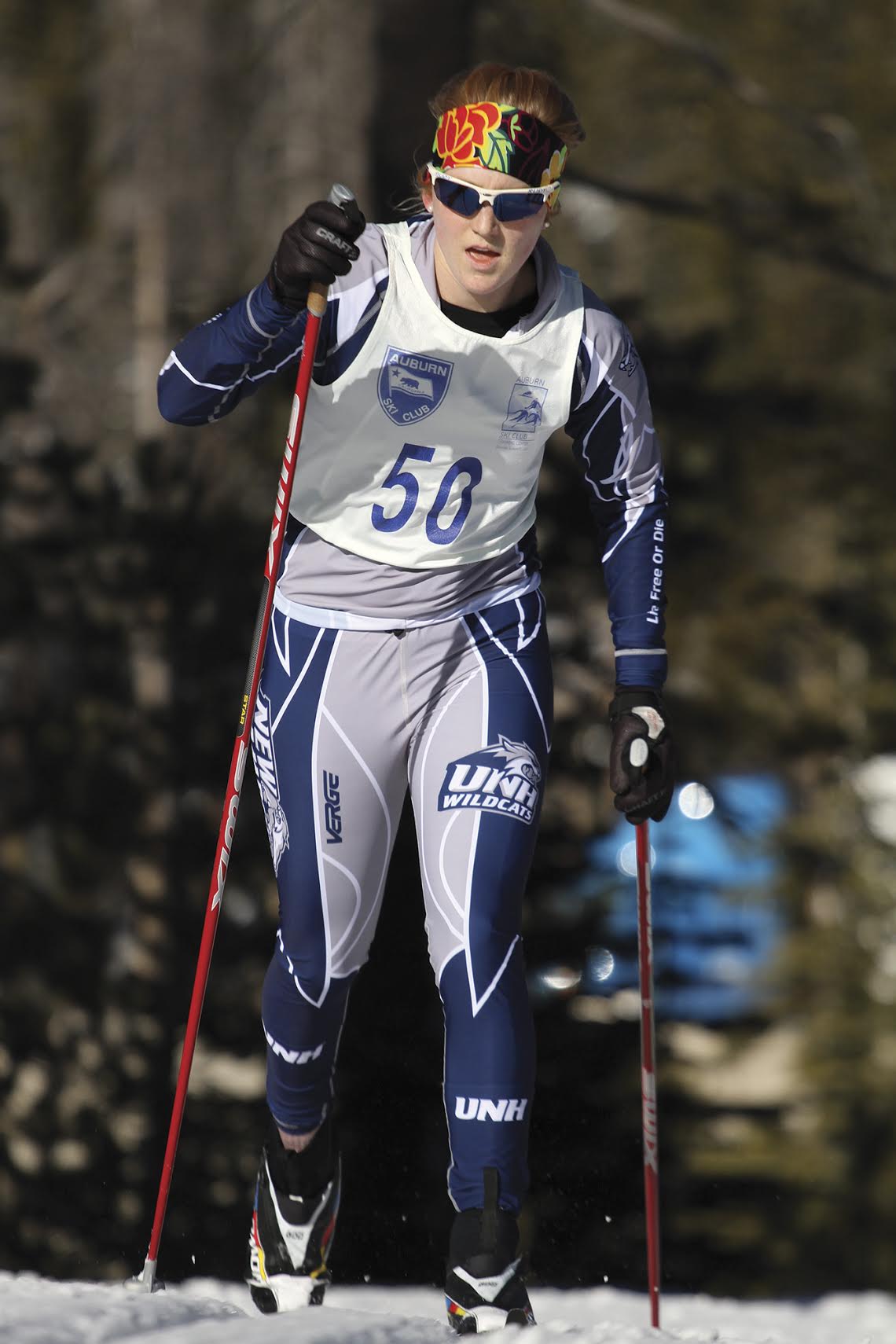
    Annika Taylor, formerly of UNH, on her way to winning the women's 5 k at the 2013 Snowshoe Thompson Classic at the Auburn Ski Club in Truckee, Calif. (Photo: Mark Nadell/macbethgraphics.com)
    Annika Taylor, formerly of UNH, on her way to winning the women’s 5 k at the 2013 Snowshoe Thompson Classic at the Auburn Ski Club in Truckee, Calif. (Photo: Mark Nadell/macbethgraphics.com)

    Although much of the focus of World Cup racing is on the stars from powerhouse skiing countries, the World Cup fields are filled with skiers who are working towards goals that don’t necessarily entail a podium. Racing on the World Cup is not always about the pursuit of medals but the experience itself.

    For Annika Taylor, the World Cup experience hasn’t quite sunk in yet. Just six months after graduating from University of New Hampshire (UNH), Taylor, 22, found herself on the starting line of her first World Cup race in Kuusamo, Finland, in late November as the sole female representative of Great Britain.

    A native of Truckee, Calif., Taylor holds dual British citizenship as her father is originally from the United Kingdom (her family now lives in Truckee). As a junior, she skied for California’s Auburn Ski Club and the Far West Ski Association, winning three California State Championships and notching three top-10 finishes at Junior Nationals. Taylor continued her ski career at UNH in Durham, N.H., under the guidance of head coach Cory Schwartz.

    Annika’s first taste of international racing came in 2014 when she raced with the British national team at U23 World Championships in Val di Fiemme, Italy. Although she had inklings of future opportunities to race for Great Britain at that time, she realized she would need to continue to see improvement to make competing post-collegiately worthwhile.

    These gains were realized in a breakthrough season her senior year, highlighted by a seventh-place finish in the 15 k classic at 2015 NCAA Skiing Championships. Earlier last season, she placed ninth in the 20 k classic mass start at U.S. nationals.

    Upon graduating in the spring of 2015, Taylor was armed with both a chemistry degree, and the opportunity to continue skiing for Great Britain. Racing for the British team would mean more international competition and the chance to compete with the best skiers in the world on the World Cup — an opportunity she couldn’t pass up.

    In May, Taylor joined the newly established Sugar Bowl Academy Elite Team based out of the Truckee/Tahoe region. The 2015/2016 season is the team’s debut as it aims to fill the gap left by the recently dissolved Far West Elite team and provide financial support, coaching, and training opportunities to its athletes.

    After a summer training with the Sugar Bowl Elite Team as well as the British team in Scotland, Taylor started her first World Cup season in November with British Cross Country Head Coach Roy Young. Britain’s other female skiers opted not to race in Period 1 of the World Cup, leaving Taylor as the sole woman on the team. She joined a men’s contingent on the circuit, including recent World Cup bronze medalist Andrew Young.

    FasterSkier caught up with Taylor about her World Cup experience over the holiday break. She spent the holidays training in Davos, Switzerland, sharing an apartment with U.S. Ski Team member Caitlin Gregg. The two met several summers ago, as Gregg visits Truckee in the summer to train at altitude and visit family.

    After the holiday break, Taylor raced the first three stages of the Tour de Ski in Lenzerheide, Switzerland, before traveling to Östersund, Sweden, to compete in Scandinavian Cup races.

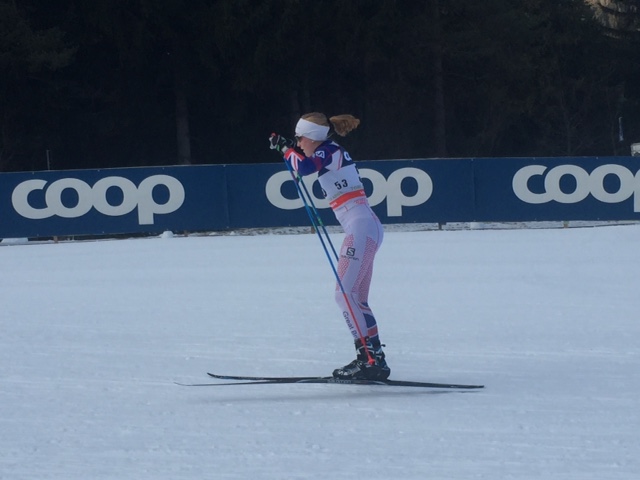
    Annika Taylor racing for Great Britain in the World Cup freestyle sprint qualifier in Toblach, Italy. She placed 54th. (Courtesy photo)
    Annika Taylor racing for Great Britain in the World Cup freestyle sprint qualifier in Toblach, Italy. She placed 54th. (Courtesy photo)

    FasterSkier: What is your favorite World Cup venue so far?

    Annika Taylor: I really enjoyed Toblach [Italy]. They have a two-lap sprint course and I like V2 technique and I felt like it played to my strengths. And it was beautifully sunny so that always helps.

    FS: What do you consider your best races so far on the World Cup?

    AT: My best race was my first race: the classic sprint in Kuusamo [where she placed 50th in the qualifier]. It was best result so far and the whole experience came to fruition at that moment, too, so I’ll never forget that day. For everything to come together in the first race, I was really pleased with that.

    The other races I was most pleased with were the opening races in Beitostølen, Norway. That’s where the Norwegian team started their season as well so it was World Cup caliber racing just with fewer countries. That was my very first taste of racing the best in the world so I was definitely a little star-struck that weekend.

    FS: Do you prefer the sprints or the distance races?

    AT: I would say distance has become my cup of tea. When I was a junior I was more of a sprinter but being at university for four years, I didn’t train much for sprinting. If I have a bit more sprint training in the next couple years I think I’ll really grow to enjoy it. Right now I do like distance racing a bit more. You can push yourself longer and harder and there is more time for tactical fixes. I like having that opportunity to turn things around.

    FS: How is the intimidation factor racing the best skiers in the world?

    AT: There’s definitely intimidation, but there’s also more a respect and awe for them. I am also just excited to be racing because I don’t have much pressure to perform this year. Obviously I want to ski fast, but I have to adjust to so many factors that I don’t have the energy to be nervous because I have to focus my energy on skiing the best I can technically, tactically, and physically in every race. But at the same time, there’s that moment that you think, “Woah, we are on the World Cup circuit, this is crazy.”

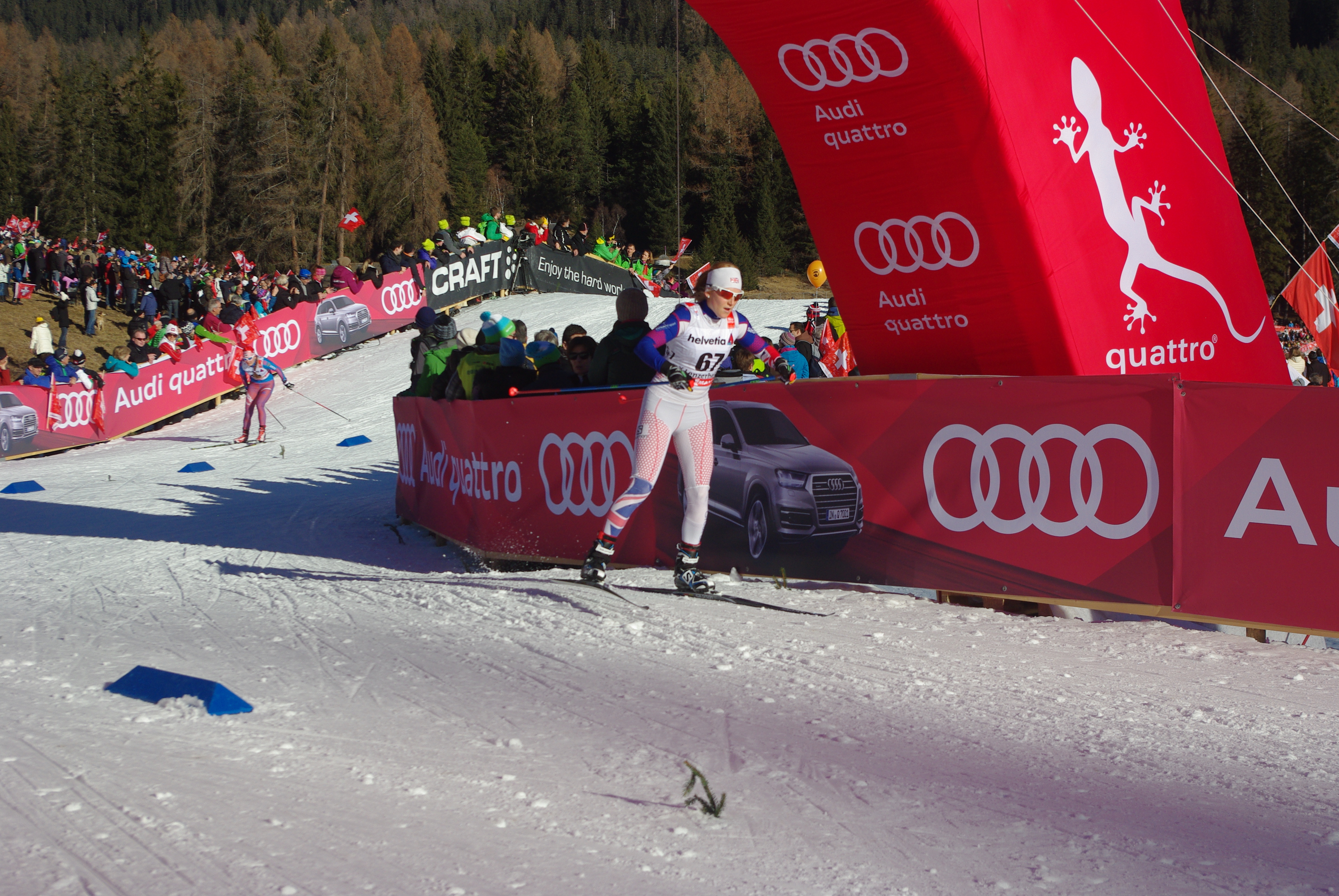
    Annika Taylor (Great Britain) competed in the first three stages of the Tour de Ski In Lenzerheide, Switzerland.
    Annika Taylor (Great Britain) competed in the first three stages of the Tour de Ski In Lenzerheide, Switzerland.

    FS: What was your favorite part of the Tour de Ski?

    AT: My favorite part of the TDS has to have been the atmosphere and just the general excitement from both the fans and the athletes! You could sense the nervous energy bouncing around the wax cabins, and then going out to warm up on the race track with 12,000 fans (equipped with flags and cow bells) on the sprint day, with the sun shining down was a feeling I’ll never forget! Throughout the weekend fans and athletes enjoyed food vendors, opening ceremonies, performances from bands and dancers, and free swag. Cross-country skiing can feel a bit like an under-appreciated sport at times, but this was the polar opposite!

    FS: What was the biggest difference racing the Scandinavian Cup races vs World Cup races?

    AT: The Scandinavian cup races in Östersund were quite different from the World Cup races mainly in the sheer amount of racers competing in the Scandinavian cup (and the blisteringly cold -20 C temperatures compared with the mild temps felt at the World Cup venues recently). The level of competition is impressive in the Scandinavian cups as well, with the race leaders most likely fit enough to achieve a top-10 in a World Cup race.

    FS: What race did you enjoy the most since the holiday break?

    AT: I was quite pleased with how I skied the 10k freestyle race in Östersund! [She placed 21st.] Being back at low altitude made racing just that little bit “peppier,” and it was encouraging to be back in a field where I can be more competitive and “catch a ride” mid-race with the ladies racing around me.

    FS: What are your goals for the season?

    AT: My main goal this season is to race well at U23 Worlds because that’s where I can be the most competitive. But there are always goals week to week, even weeks I don’t have races I will focus on skiing technically well during each workout so that when my technique comes under pressure in a race, the foundation has been laid and I can ski technically well. I always have result based goals but this year is hard not really knowing what is going to happen competing against the best in the world. I can’t really measure success against them just yet.

    At the Toblach 10 k classic Heidi Weng of Norway started behind me (in the interval starts) so my goal was to catch a ride with her when she passed me and match her technique, tempo and pace. The Norwegians know how to ski efficiently, ski fast and charge. That’s what I’m trying to learn this year is to find that extra level of intensity in a race necessary to do well at the World Cup level.

    FS: Have you been enjoying the lifestyle?

    AT: I wasn’t sure how I’d do because I chose not to go home for Christmas and I believe it will be a total of five and a half months on the road. I’m learning to be fine wherever I’m at with whomever I’m with, but also not feed into the ups and downs that go along with being an elite athlete. I’m actually addicted to the lifestyle because every weekend is a new experience. I’ve really enjoyed meeting new people and it has motivated me to learn bits of different languages.

    FS: What is your schedule for the remainder of the season?

    AT: Following the Scandinavian Cup, I will head to Ramsau, Austria to train for a few weeks. My next World Cup race in Lahti because Worlds will be there next year and I can get a feel for the course and the area. After that U23 Worlds in Rasnov, Romania then the day after fly out to Canadian Tour. Then I will race the Spring Series in Craftsbury, Vermont and finally home.

  • In Their Eyes: A Norwegian Junior Team’s International Exchange with Sugar Bowl

    In Their Eyes: A Norwegian Junior Team’s International Exchange with Sugar Bowl

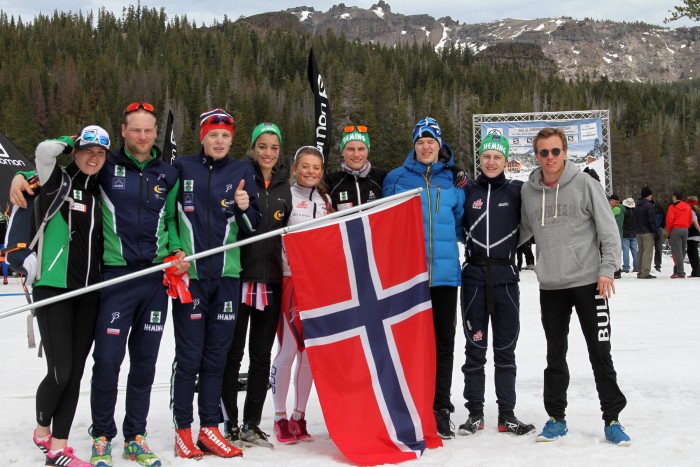
    A team photo of the Heming IL junior contingent that competed at 2015 Junior Nationals in Truckee, Calif.., taken in front of Golden Gate Bridge in San Francisco. (Courtesy photo)
    A team photo of the Heming IL junior contingent that competed at 2015 Junior Nationals in Truckee, Calif.., taken in front of Golden Gate Bridge in San Francisco. (Photo: Björn Ilsemann)

    Note: The following was submitted by Björn Ilsemann, a coach with the Norwegian College of Elite Sports and Heming IL. If you have a team camp or training recap that you’d like to share, please email info@fasterskier.com

    ***

    Earlier this year, U.S. junior nordic skiers from Sugar Bowl Academy competed in the Norwegian Cup and Sprint Junior Nationals, and then welcomed a team from the Oslo ski club of Heming IL to U.S. Junior Nationals in Truckee/Tahoe, Calif.

    It was at the U16 camp last summer when Sugar Bowl Academy coach Martin Benes and Björn Ilsemann from the Norwegian College of Elite Sports and the ski club of Heming decided to do an exchange to race both countries’ junior nationals (JNs). Martin had a lot of experience travelling and racing, both as a skier and as a coach. Björn had done similar exchanges before, leading a group to JNs in Fairbanks in 2013 and hosting several groups of US skiers for Norwegian JNs.

    The plan was easy: The participating  skiers from Sugar Bowl would live with families and train with Heming skiers for a week, and then race a Norwegian Cup weekend and the Junior Sprint Nationals. The Norwegians from Heming would then come over to Truckee and race USJNs.

    During the earlier winter months, the dream became a plan, and in the first week of February, five excited skiers and two coaches embarked a plane heading to Oslo. After being picked up at the airport, the group of skiers from Sugar Bowl and coach Caitlin Bernstein were quickly becoming familiar with how Norwegian skiers in Oslo live and train. Hundreds of kilometers of lit tracks, a five minute subway ride to freshly-groomed tracks and hot chocolate at cabins far out in the backcountry became daily business.

    After an easy Monday recovering from the inevitable jetlag, Björn took the group on three-hour-plus ski in the backcountry on Tuesday morning, followed by a strength and coordination training with his group of skiers at the Norwegian College of Elite Sports. After a quick shower, we headed to town for pizza and the arrival of the last two members of the group who came in from the J1 trip in Sweden, Hannah Halvorsen and coach Martin Benes.

    On Wednesday, the gang did an easy morning ski in the World Cup tracks at Holmenkollen, and met with the junior skiers from Heming for a short-but-hard sprint training session in the evening. Thursday was easy again, the U.S. kids watched a race of the Biathlon World Cup at Holmenkollen and did a rest ski before the Norwegian Cup races on Friday.

    The venue of the Norwegian Cup was pretty close to Oslo — about an hour by car. While the skiers and coaches were shuttled early that morning, you could feel the excitement build up in everybody. But still, no one had expected such a circus of countless wax trailers, big tents and wax cabins, and the intimidating number of close to 1,000 participating junior skiers.

    No one had expected such a circus of countless wax trailers, big tents and wax cabins, and the intimidating number of close to 1,000 participating junior skiers.

    The tracks were really hard and the competition was even harder, but the athletes from Sugar Bowl put up a good fight! To be fair, jetlag and maybe a little nervousness can be blamed a little bit, and the skiers finished in the second halves of their fields. A well-organized race and a lot of help from the wax techs from Heming made the day a good experience anyway.

    Hannah Halvorsen (Sugar Bowl Academy) winning the final at Norwegian Junior Sprint Nationals at Nes Skianlegg in Norway. (Photo: Björn Ilsemann)
    Hannah Halvorsen (Sugar Bowl Academy) winning the freestyle-sprint final at Norwegian Junior Sprint Nationals at Nes Skianlegg in Norway. (Photo: Björn Ilsemann)

    On Saturday, the Norwegian Junior Sprint Nationals went underway. With good skis again from the Heming techs, the Sugar Bowl athletes did an amazing job racing and were close to advancing from the prologue.

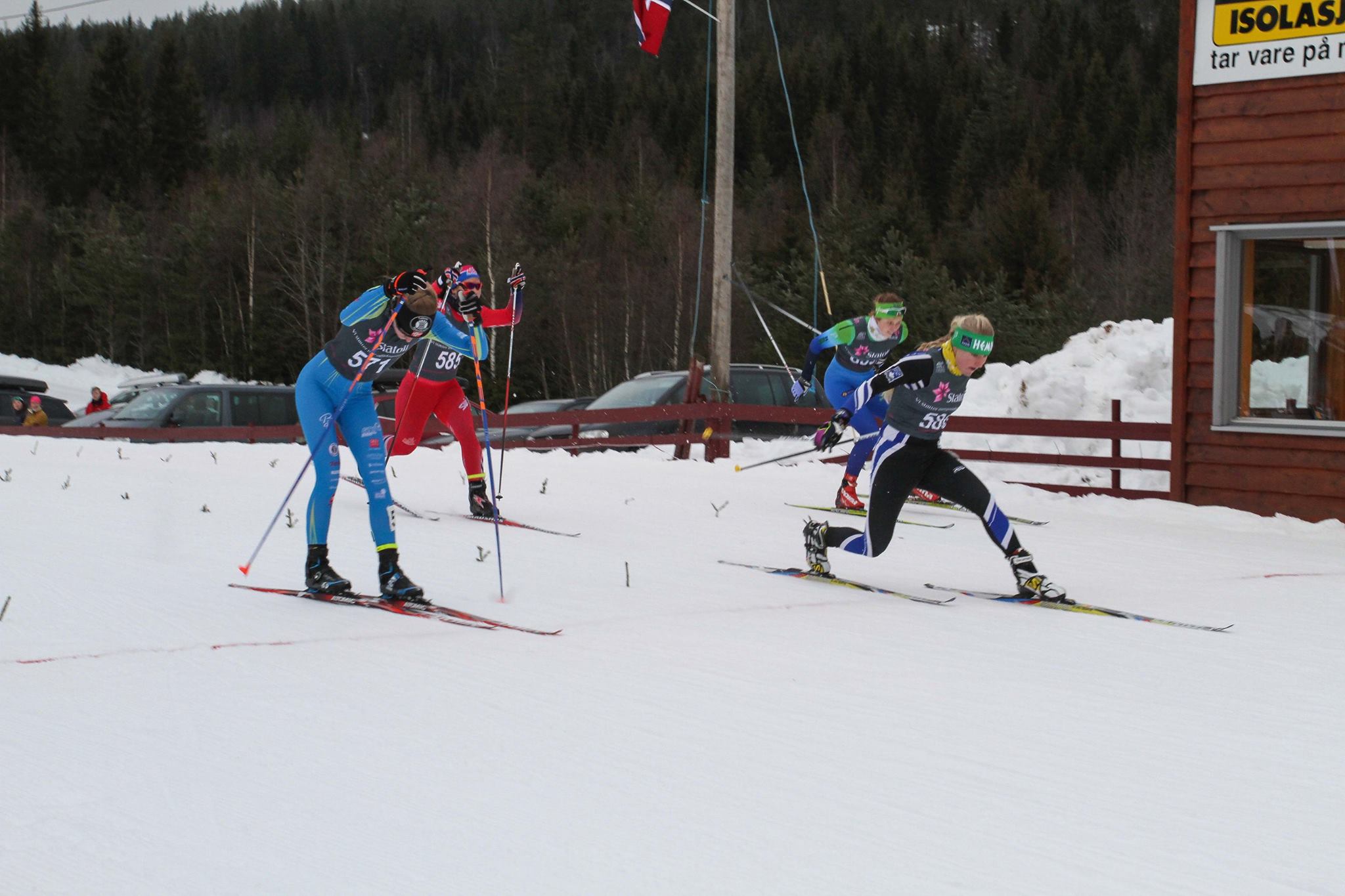
    Halvorsen, who didn’t race on Friday, didn’t seem very nervous or intimidated by the strong field and managed to win the prologue by two seconds! She didn’t stop there, dominating her quarterfinal and semifinal as well. In the end she stormed into the finish and crashed over the line to win the Norwegian Junior Sprint Nationals!

    On Sunday we raced a classic distance, again as part of the Norwegian Cup. The gang was still excited and had a great day at the venue, which was crowned by a sixth-place finish by Hannah!

    Everyone among the U.S. and the Norwegian skiers who participated in this first part of the project agreed that the trip was a great success. The athletes from Sugar Bowl Academy really got a taste of how it is to live a World Cup-athlete’s routine, and I’m sure they want more of that!

    Almost exactly a month later, the Norwegian skiers and coaches packed their bags and set out on the 20-hour journey to USJNs. With a van crammed full of skis and a joyful gang of seven skiers we drove on highways five-times bigger than at home, but managed to arrive safely but late at night at Truckee.

    With a van crammed full of skis and a joyful gang of seven skiers we drove on highways five-times bigger than at home.

    After having slept way too little, as we felt, we skied our first time on West Coast-snow on Tuesday. The plan was to acclimate to altitude (at home we ski at sea level) and the heat (it was over 25 degrees Celsius warmer than in Norway), and to ski easy with some tiny intervals. That worked nicely, and we felt very welcome by absolutely everybody.

    We considered the first distance race of the JNs on Wednesday as “too dangerous to race hard” in terms of altitude, and decided to ski in a Level 2-3 pace and just do what feels right. All of the skiers felt good, and we had great skis thanks to the help of the Far West test team and our “local,” Martin Benes.

    A Norwegian team photo from 2015 U.S. Junior Nationals in Truckee, Calif., taken after the relay. (Photo: Petter Anderssen)
    A Norwegian team photo from 2015 U.S. Junior Nationals in Truckee, Calif., taken after the relay. (Photo: Petter Anderssen)

    Thursday was easy again, with intervals a little harder than Level 3 and close to a 5 k race pace. The Norwegian athletes used the evening to shop and discover the local food, while the coaches did a presentation on how Norwegian skiers progress from junior to senior skiing, followed by an interesting discussion. The evening ended with a big feast of Mexican food and fun at one of the parents’ houses.

    Friday was the day of the mass start race. The Norwegians had good skis and skied in the front part of the field for the two first loops. Then the altitude and heat took its toll, and one of the Norwegian skiers had to quit and even seek medical attention. The others plowed on, and finished on first and seventh in the U18 field. For the U18 girls, our sole competitor that day Ellinor Høgberg put up a good fight against the U.S. girls, and finished seventh in a really strong field.

    On Saturday, relay day arrived. We gave our best and raced hard, but the U.S. skiers were too strong and we finished sixth for both the U18 boys and the U20 girls.

    Maybe that was because my skiers were already looking forward to the banquet? The evening came, and everybody enjoyed the food and the talks with fellow skiers and new friends.

    The trip home went well, and after some days with jetlag we were back on our skis and racing again. Every single one of my skiers, including us coaches, will remember the trip as an experience for life.

    Every single one of my skiers, including us coaches, will remember the trip as an experience for life. 

    We have to thank Martin Benes and Caitlin Bernstein from Sugar Bowl, as well as all the parents and skiers who participated and helped with this project. Special thanks go to Bryan Fish from USSA and James Southam from NNF, for all your help and support! We also have to thank Joey Caterinichio from USSA for making things work and the discussion, the organizing committee at JNs for letting us participate, and August Teague from Far West for invaluable help and advice in the wax cabin.

    In the end, we want to give a big thank you to U.S. skiing for having us over, for skiing with us and for showing us how much joy and pleasure skiing gives you. Thanks also to Sugar Bowl for coming to Norway, and especially to Hannah for kicking [butt] while you were over here!

    The Norwegian junior team at 2015 U.S. Junior Nationals in downtown Truckee, Calif. (Photo: Ellinor Høgberg)
    The Norwegian junior team at 2015 U.S. Junior Nationals in downtown Truckee, Calif. (Photo: Ellinor Høgberg)
  • Halvorsen Soars to Success in Scandinavian Junior Racing

    Halvorsen Soars to Success in Scandinavian Junior Racing

    Hannah Halvorsen (Sugar Bowl Academy) racing in the 5 k at Norwegian Junior Nationals. (Photo: Skyler Mullings)
    Hannah Halvorsen (Sugar Bowl Academy) racing in the 5 k at Norwegian Junior Nationals. (Photo: Skyler Mullings)

    Ambrose Tuscano is an English teacher and Nordic Coach at Sugar Bowl Academy in the Lake Tahoe region of California. In a past life he was an avid whitewater kayaker, and still edits the American Whitewater Journal, a bimonthly magazine dedicated to whitewater paddlesports and river stewardship. He, his wife, son (4), and daughter (1) live in Soda Springs, California, where they’re ready for it to snow already!

    Charging up the final climb in the 5-kilometer freestyle in the Scandinavian Cup races in Örnsköldsvik, Sweden, Hannah Halvorsen, a 16-year-old from Sugar Bowl Academy, was surprised to find a Norwegian coach she’d never met running alongside her cheering at the top of his voice, “USA! You are in 2nd! Go, go, go!”

    It was an interval start and Halvorsen was receiving splits from strangers from all over Scandinavia around the entire course, as she skied from sixth into second place. “It was really cool to get that kind of support from people who weren’t my coach,” Halvorsen said. “But I know that they were just surprised to see an American doing so well.”

    And therein lies the contradiction Halvorsen began to grapple with: Americans can’t remain underdogs forever on the nordic skiing scene. Eventually, they have to start skiing faster than Europeans at all age groups and levels if they want to find lasting success in the sport.

    This realization began a year earlier after Halvorsen used a strong performance in the freestyle sprint at the 2014 U.S. Cross Country Championships in Soldier Hollow, Utah to qualify for the U18 Nations’ Cup squad. A few weeks later she traveled to Finland as part of a team of 12 to compete against the best U18 skiers in Northern Europe. Halvorsen acquitted herself admirably saying that “for an American” and the experience was memorable and motivational. By the end of that season Halvorsen explained that she set the goal of qualifying for World Juniors in 2015, though in the back of her head she knew she wanted to ski for the U18 squad again. This time she believed things would be different.

    At the 2015 U.S. Cross Country Championships in Houghton, Mich., Halvorsen turned more than a few heads by making the final in the classic sprint and finishing in fifth overall. Her results at the Championships were more than good enough to qualify her for the World Juniors trip, but she wasted little time in deciding to turn down the U20 races in Kazakhstan in favor of the U18 Nations’ Cup in Sweden.

    Why not go to the more prestigious and competitive World Juniors? There were many reasons, including her own Sugar Bowl Academy Coach, Martin Benes being part of the U.S. U18 coaching delegation. But in reality, it might have been that Halvorsen felt she had unfinished business. “I left Finland realizing that American skiers really could compete with the Europeans, we just had to believe in ourselves,” Halvorsen said.

    One year later, she followed through in a big way.

    Hannah Halvorsen (Sugar Bowl Academy) sits in third place in the U18 Nations' Cup 5 k freestyle podium (Photo: USSA)
    Hannah Halvorsen (Sugar Bowl Academy) sits in third place in the U18 Nations’ Cup 5 k freestyle podium (Photo: USSA)

    In the 2015 U18 Nations’ Cup classic sprint Halvorsen qualified in eighth, won her quarterfinal heat, and placed second in her semifinal. It was a warm day and the snow had transformed in during the brief sunlight hours, leaving the American coaches scrambling to find a good kick wax. In the final Halvorsen said she knew she didn’t have enough kick when she was consistently dropped on any climb, but she hung in and fought her way back to the lead pack in every flat or downhill section. She came into the stadium in fifth place, gaining on the fourth place Swedish racer, but didn’t quite have enough real estate to pass her before the finish.

    Halvorsen said she was happy with her skiing in the sprint race but that it also left her with an epiphany. “I realized that I was skiing strong enough to have won that race,” she said. “I knew that in the future I could win a race at this level.”

    The confidence from the sprint carried over to the following day’s 5 k freestyle. After receiving so much encouragement and support from everyone on the course, Halvorsen knew she had to ski her hardest.

    And she did.

    Halvorsen crossed the finish in second place, and was later bumped to third by someone with a later start time.

    Halvorsen’s results weren’t the only successful performances from the Americans in Sweden. In the  10 k freestyle Zak Ketterson and Max Donaldson finished sixth and eighth. In the following day’s relay the top U.S. men’s and women’s teams took fourth and fifth place, respectively.

    “I kept telling [my teammates], ‘we’re as good as the Europeans, we can compete with them,” Halvorsen said of the results.

    While the rest of the American U18 team returned home at the end of the week, Halvorsen and Benes took flight to Oslo, where they met up with four other Sugar Bowl Academy athletes. There they were hosted by IL Heming Ski Club and skied as guests at Norwegian Junior Nationals the following weekend.

    Aside from the cultural experience of staying with Norwegian families and taking public transit daily to meet her teammates at the extensive ski trails in Oslo (“It was so cool! Almost everyone on the subway had nordic skis!”), Halvorsen was really excited to race against another group of the best junior cross country skiers in Europe.

    Unlike American Junior Nationals the U18 Nations’ Cup, Junior Nationals in Norway divides each gender up into single birth year groups. In the girls U17 age group of the freestyle sprint, for instance, there were 77 competitors.

    Halvorsen knew she wanted to do well in the qualifying round to give herself confidence for the heats. “I didn’t totally know what the competition level would be, so I had to push as hard as I could in the prelims,” she said. Evidently it was hard enough; none of the Norwegian 16-year-olds could match Halvorsen’s 2:31.90 qualifying time.

    According to Halvorsen, it was a confidence boosting performance before the heats. She had her sights set on skiing the course three more times that day—as hard as she possibly could.

    Hannah Halvorsen (Sugar Bowl Academy) out lunges her competitors in the final of the classic sprint at Norwegian Junior Nationals. (Photo: Skyler Mullings)
    Hannah Halvorsen (Sugar Bowl Academy) out lunges her competitors in the final of the classic sprint at Norwegian Junior Nationals. (Photo: Skyler Mullings)

    After battling to win her quarterfinal, Halvorsen experienced what she described a “wakeup call” in the semis. “No one was planning to lose,” she said. At Norwegian Junior Nationals, she explained, every skier in every heat had the confidence and sense of purpose to move on. “Even at [U.S.] Senior Nationals, there wasn’t the same desire to win among all the competitors,” she said. For instance, “In most sprints, the person wearing bib 28 doesn’t expect to win her heat.”

    Halvorsen was able to match the Norwegians in pace and confidence, placing second in her semifinal, and finding herself in the final along with five of the fastest 16-year-olds in Norway.

    In the end, it came down to a photo finish, with four skiers crossing the line within a half-second of one another. With a huge lunge, Halvorsen beat Mathilde Myhrvold, of team Vind IL/Gjøvik/Toten Langrenn to take first place in the race (though ultimately Myhrvold took gold as the first Norwegian across the line).

    The result certainly caught the attention of the Norwegians, who do not often see foreign skiers sitting atop the standings of their Junior Nationals races.

    The following day Halvorsen entered her fifth high-level race in 10 days, a 5 k classic Norwegian Cup race. She didn’t know the course and by the time she got to the venue it had closed to inspection. With very little to go on but the confidence gained from her recent Scandinavian races, Halvorsen decided to go out fast. “I went out at a harder pace than I have in the past,” she said. “I gave it what I had.”

    She ultimately finished sixth in a field consisting of 83 strong Norwegians.

    If Halvorsen came to Scandinavia searching for the confidence to compete with the best in the world, she could have done far worse than finishing in the top six in four individual races against some of the best juniors in Europe. For her, finding success against her international peer group will be motivation to continue to improve as a skier.

    The day after the race, Halvorsen took a long succession of flights back to California where she would have three weeks to prepare for another series of high-level races: U.S. Junior Nationals, right in her back yard at Auburn Ski Club.

  • Wednesday Workout: 5 x 5 Speed Progressions with Sugar Bowl Academy

    Wednesday Workout: 5 x 5 Speed Progressions with Sugar Bowl Academy

    Far West athletes take advantage of their local terrain to get in a ski bounding workout in July. (Photo: Sugar Bowl Academy/Facebook)
    Far West athletes take advantage of their local terrain to get in a ski bounding workout in July. (Photo: Sugar Bowl Academy/Facebook)

    This week’s workout comes to you from Martin Benes, nordic coach of the Sugar Bowl Academy and the Far West Elite Team Administrator. In addition to coaching the Sugar Bowl and Far West teams, Benes has coached for the Auburn Ski Club, Dartmouth College, and Bates College.

    This workout consists of five repetitions of five different exercises and thus is aptly named  “5 x 5.” I first learned this workout from U.S. Olympic Biathlete Glenn Jobe, who was one of my coaches as a junior. More recently, we’ve worked together to enhance this workout with some dry-land and on-snow progressions.

    This workout is very effective because it requires a progression of effort and speed as the repetitions continue. It forces athletes to be cognizant of their pacing while at the same time allowing them to put in a really hard effort. Many skiers who attempt this workout for the first time often make the mistake of thinking it won’t be that hard, and end up blowing up. In doing so, skiers lose the opportunity to establish quality speed training. The key is to follow the progression.

    First, you need to have your location picked out. You need a steady grade that is good for moosehoofing, so that both the ski-walking and bounding feel natural. You don’t need much of the terrain as each rep starts at the same point.

    Start with a 25-30 minute warm up. This should include some running, and some ski-walking. Also, throw in some dynamic stretching so that the muscles are ready for the progression of speed. You should have poles with you as you will need them for all but one of the exercises in the 5 x 5s

    1. The fist set of exercises are 5 x 1-minute repeats of ski-walking with poles. Start at the same place each time, the walk down is your recovery. These should be focused on good, snappy movements and staying in Level 2.
    1. Once you’ve done five ski-walks you switch to five bound-holds with poles. This is a plyometric exercise. Bound as normal but add a pause on each foot, allowing yourself to balance in an outstretched position. This should feel more like a strength exercise, rather than speed. Go up for one minute and then walk back down to the original starting point.
    1. The next exercise is normal hill-bounding with poles. The five repetitions should be 30-40 seconds each, depending on the age and ability of the athlete. Again, you will walk back down to the starting point in between each one.
    1. Once your hill-bounds are done, you’ll transition into running speeds with poles. The length should be 20-30 seconds. The idea is to accelerate on these so that the final 10-15 seconds are all out. Again, just walk down after each speed as your recovery.
    1. The final exercise is running speeds with the same accelerations, but this time without poles. These should also be 20-30 seconds long. Walk down in between each rep for recovery.

    At the end, you will have done five ski-walks, five bound-holds, five hill-bounds, five sprints with poles, and five sprints without poles. Afterwards, get a cool down of 15-20 minutes in and some good stretching.

  • Sugar Bowl Academy’s Hannah Halvorsen Named to U.S. Scandanavian Cup Team

    us nats

    By Peyton Jobe

    When fifteen-year-old Hannah Halvorsen filled out the “Nutrition” section of her Goal Setting Worksheet at the beginning of her sophomore year at Sugar Bowl Academy, she pledged to herself that she would do the following:

    “Leave room on my plate during lunch for the salad bar” and “eat salad every day.”

    Under “Conditioning Goals,” Halvorsen’s short-term performance goals were “to push myself above and beyond.” Finally, under “Dream Athletic Goal,” she listed “To travel the world skiing.”

    She will soon be doing just that.

    After impressive results in early season Nordic ski racing against the best competition in the country, Halvorsen has been named to the U.S. Scandanavian Cup Nordic Ski Team, and will travel with her five teammates to Finland for a series of races later this month.

    “I had been working hard towards this goal for a long time,” said Halvorsen, “I look at this as an incredible opportunity and as another step in the right direction towards future goals to come.”

    For her coach and Sugar Bowl Academy school advisor, Caitlin Curran, it is Halvorsen’s focus and work ethic that has helped her succeed at the highest levels of competition in the Nordic ski-racing world.

    “I am very proud of Hannah, not only for earning a spot on this year’s U18 trip to Europe, but mainly for all the focused work that she put in throughout the year to meet this goal,” said Curran, who accompanied Halvorsen last week to race at U.S. Nationals in Soldier Hollow, Utah.

  • Chelsea Holmes: “Fired up to Race”

    Chelsea Holmes: “Fired up to Race”

    Holmes racing the 5km classic in West Yellowstone

    After a lackluster season last year, Chelsea Holmes, a member of the new Far West Farm Team, had the best results of her career at the West Yellowstone Ski Festival over Thanksgiving weekend, finishing ninth in the classic sprint, fourth in the skate race, and eleventh in the classic race.

    Holmes, originally from Alaska, was a three-time NCAA qualifier for the University of Nevada (UNR) and an NCAA All-American in 2008. So she certainly has good credentials. Still, seeing her name atop the West Yellowstone results sheet surprised people – and generated some good press for the new team.

    FasterSkier called her up to talk about her changing fortunes as a ski racer and her plans for the rest of the season.

    FasterSkier: What were you doing last year, and what about this year do you think has contributed to your jump in results?

    Chelsea Holmes: Last year I graduated from UNR in December, and I went to school the entire previous summer. I was just really busy and it was my first year out of school, not racing for the University. I think I thought I could just jump into it when I was done. And then my last semester was really busy – I mean, it was great, but it was just a lot more than I had bargained for. I was super overwhelmed and pulling all-nighters left and right, and then all of a sudden you’re done with school, and you’ve got no money, and no real plans and just…. I ended up just doing a few races, I don’t know how many starts I did, maybe four or five. I was working and I was just overwhelmed. I wanted to ski, but I didn’t know what I was doing. I was flailing a little bit. I just had no plans really.

    I guess what spurred my big jump in results is that last year I did not have the time or resources to race. While I had wanted and intended to race, without the resources or the preparedness it was impossible to do.

    This year my pool of resources has been crucial, in terms of financing, community and equipment. I’ve been racing and coaching for Sugar Bowl Academy; they’ve been an incredible resource of inspiration and the structure that I was lacking on my own. I am involved with such a great group of kids who are all eager to learn, and it’s really fun for me. The Far West Farm Team is a budding senior team with a great community behind it, giving me awesome support and presenting itself as another resource for me.

    With all these resources that I find myself with now, the most important thing which I think I have changed is my commitment. Don’t get me wrong, I have always been committed. There is no one to answer to but myself. As cliché as it may be, I think the only thing more terrifying than fully committing is the thought of finishing the year and wishing I had done more. For me this change means that I’ve become more attentive and willing to take in whatever anyone is willing to teach me.

    FS: Do you have a training plan?

    CH: Honestly, last spring and summer I made it up as I went along. I mean, I’ve been doing it long enough with school and coaches that I know the idea of periodization cycles and whatnot. But all of a sudden having to work and not having any assistance – I mean, my parents help me out, but not in the same way as when I was at home – and trying to cram things that I like into a day…. it’s wake up at the crack of dawn so I can go biking or running, and try to go climbing and then go to work. I want to play! I chose not to get a standard professional job. I don’t work 40 hours a week. I work at a coffeeshop, and I assistant coach for Sugar Bowl Academy. But this summer I just worked at a coffeeshop. And that was a choice I made because I wasn’t ready to move on with my life I guess. I wanted to play.

    So I was just enjoying it. And then this fall, I got some guidance from some friends. Marcus Nash gave me some advice, and Jeff Schloss, especially as the season gets closer because I think I’m at a point where I know I’m capable of pushing myself, I can train and I can work hard, but as it gets close to racing I don’t know what I’m doing. And I know that. I need someone to tell me when I need to rest and when I need to do some more intensity. I need to have structure because that’s the other part of being on your own – it’s really hard to do things you don’t want to do, or you just don’t do them. You have to go do these intervals and it’s like, ‘oh, well, I don’t feel like doing this today, so, I’m not going to do it.’ Which isn’t a good thing.

    My training this past summer was somewhat unconventional, but it was food for my soul. I spent a lot of time biking, running and climbing but it was not forced. Maybe I could not fit in the same hours, but I enjoyed every moment that I spent “training”, and I was always who I was doing it for.

    FS: Do you have anyone helping you with technique?

    CH: When I went to West Yellowstone I went with the Far West team. And this fall I’ve been coaching Sugar Bowl Academy, coaching with Jeff Schloss, and I think that actually helped me because I haven’t had technique advice in a while, and I haven’t been in a group in a long time. And as I’m helping younger kids, it’s so much easier to see in other people what they’re doing wrong and right. And then in West Yellowstone, Glenn Jobe went, and Glenn helped me a ton with classic technique. He is just a really great teacher.

    FS: What are your plans for the rest of the season?

    CH: I’m going to race. I’m going to go to Canada next week, that’s the plan right now as long as I’m better by then. And then I’ll go to senior nationals.

    I think that having… I know that West Yellowstone was only one race series, but I think especially for me because I was very insecure about where I stood with racing before, and especially because last year I didn’t really race – I’m Alaskan, so I did senior nationals because they were at home for me, and they weren’t that great. I was just insecure about what I was doing. When you’re not on a big team, or on a college team, you’re really committed to what you’re doing. So having a good start at West Yellowstone was really nice because now I think I’ve relaxed about it. It got me fired up, really fired up to race. It motivated me to race and I think I’ll go to some of the SuperTours, like in Aspen hopefully, and travel as much as I can circumstances permitting.

    FS: What do you see your goals being in the next couple of years?

    CH: That’s a good question. That’s something that, well, it’s so tough. Like I said before, I was so insecure, and I didn’t have huge goals. And I think that’s because it’s really scary to commit and by having goals you’re really putting yourself out there. So I think that’s something I’m trying to think about more and more. Right now, I just want to keep racing this year. I don’t think this will be it, but, wow, I don’t know.

    FS: That’s part of what it is to be a senior racer, trying to figure that out all the time.

    CH: Yeah. Yeah, it is. Sugar Bowl is a high school, so these kids, I am always telling them that you have to have a ton of goals, big and small, and I told them that last year when I didn’t have them, and I didn’t know what I was doing, I fell apart and that was part of it. And now I think I really want to do well. That’s very abstract, but I want to be relaxed and just enjoy it. But yeah, that’s a really tough one.

    I’ve learned over the years that if I ski to my potential results will come. My primary goal is to provide myself with every opportunity that I can and to ensure that I have put in all the effort. Mistakes will be made and at times I’ll fail, but I want to have given it my best shot.