
From the FasterSkier archive — posts syndicated from athletes’ and coaches’ own blogs between 2004 and 2012, kept online as published. Current coverage is at fasterskier.com.

Tag: suits

  • We’re in Italy. So we asked a Milan fashionista to review — and rank — the Olympic xc ski suits.

    We’re in Italy. So we asked a Milan fashionista to review — and rank — the Olympic xc ski suits.

    This article was made possible through the generous support of our voluntary subscribers who have helped us put our Nat Herz on the ground at the Olympics. If you value coverage like this, please support FasterSkier with a voluntary subscription.

    Priscilla Arresti, an art director in Milan, used this digital board to arrange the material for her reviews of the Olympic cross-country ski suits.

    From FasterSkier reporter Nat Herz, in Predazzo: Here in northern Italy, where I’m covering the Olympics, I’m technically the chief fashion critic for the bureau — though  only because it’s a one-man bureau. And unfortunately, the five-year-old baggy ski pants I wear everywhere have disqualified me from offering any sartorial opinions. 

    But this is Italy, a global fashion capital. And I still wanted someone to review the racing suits sported by cross-country skiers that each nation typically customizes for the Olympics — and I figured that this should be doable, knowing that I’m close to Milan, a global fashion capital. 

    It turned out that my host here in Italy knew just the right person for the job. He connected me with Priscilla Arresti, a friend of his who works as an art director for a studio in Milan. As it happened, Arresti had already been following the Olympics and watched the opening ceremonies — and she was eager for the assignment.

    Arresti was tasked with reviewing and ranking the suits from 10 of the top cross-country skiing nations — plus the wild card of Australia, for the sole reason that the Australian suit looked cool. 

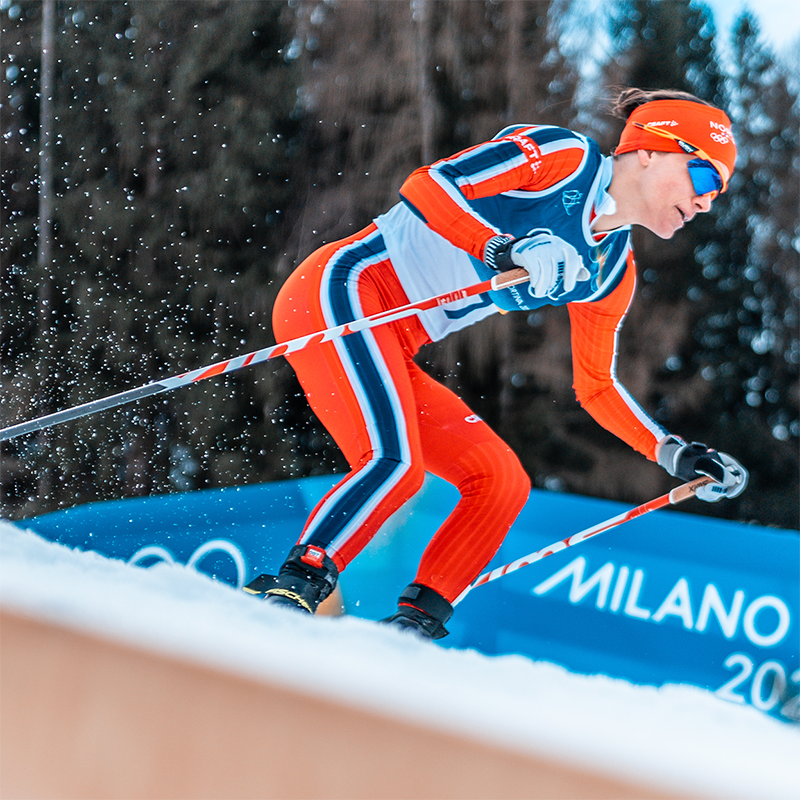
    Here are her takes. Photos special to FasterSkier by Tobias Albrigtsen.

    1. Austria

    Are those supposed to be snow strokes? A kind of irregular white wrapping? 

    I’m not sure…

    Confusing, rather than energizing. Far more interesting are these graphic, muscular lines that open up, almost sculpting the body and amplifying its movement. Focusing on this motif alone would have been enough — no need for the snow strokes.

    1. Germany

    Not a fan of this graphic all-over print that is visible on many of the items of the entire German team’s Olympic collection.

    It tries to symbolize an inner fire and passion of the athletes, inspired by the Olympic flame.

    But this thin, geometrical silhouette evokes a more static feeling than dynamism. It reminds me more of an urban pattern of different letters, or a map of some city. don’t get the fluidity and vibrations of a flame.

    1. Italy

    Chic, dynamic but a bit predictable.  I wished for a louder and bolder choice — like asking for advice from a young Italian designer to twist the “tricolore” in a more contemporary way than a ribbon floating around the suit. Someone like Giuliano Calza, of GCDS, which knows how to push boundaries yet remains deeply Italian in its irony and eclecticism.

    1. Finland

    It feels as though the Finnish flag has been lifted by the wind, draped across the body, then sculpted into aerodynamic precision.

    The colors and sweeping lines create the impression of riding an icy wave. Against the snow, Finnish athletes cut a striking silhouette, as if rising from northern waters and frozen seas.

    1. Norway

    Norway gives vintage vibes. Exactly the kind of wardrobe Wes Anderson might envision for his Olympic winter cast.

    Ultra-classic look with lateral stripes in flag colors all along the body. No gradients, no bluff. An iconic look considering all the attire, from the ceremony outfit to the race suits. It reflects all Norway’s grounded, authentic tradition. 

    1. France

    It’s a curious one. It doesn’t quite converse with the graphic boldness seen in the suits worn by French athletes in the other Winter Olympic sports. Are those tiny intersecting ski tracks on the cross-country kit meant to “cross lines” for cross-country? A little too literal, maybe?

    Overall, it’s tasteful, but it feels slightly dated. Which is surprising, considering the other French ski suits are genuinely “magnifique” (chef’s kiss): contemporary, confident, built on strong color-blocking and retro-leaning graphic lines, all cleverly manipulated and artfully enlarged.

    1. Canada

    The Canadian suit plays with black, like an animal camouflage. It reshapes the figure, creating a sculptural effect that impresses both in motion and at rest. The athlete’s body becomes a stage, while the viewer’s gaze bounces playfully from curve to curve, sliding along subtle, luminous gradients — almost as if the suit itself is choreographing the eye.

    1. Switzerland

    The Swiss team is spot-on. Like its flag, red is the statement. Up-close, pixelated chromatic shifts of red emerge. An ethereal mesh design that nods to Switzerland’s strong digital ecosystem, but that also elongates the athletes’ silhouettes with sophistication — sculpting movement through the nuanced use of a single strong hue, and a quiet and measured texture.

    1. Australia

    Behind the vibrant colors of Australia’s Olympic suits lies a layered weave of past and present. The symbolic compositions originate from contemporary Indigenous voices: Torres Strait artist David Bosun and Aboriginal artist and Olympic boxer Paul Fleming.

    Fleming’s work “Walking Together” portrays lines of repeated footprints that, in Aboriginal art, are far more than decorative marks — they are narrative devices. Powerful symbolism of shared steps, collective journeys, ancestral stories, connection to land.

    It’s a superb collaboration — where art, performance, design and cultural narrative converge with intention.

    1. United States

    The entire U.S. Olympic kit genuinely reads like a fashion collection. The interplay of textures, mixed patterns, and calibrated color stories across uniforms and off-duty pieces shows the masterful hands from Ralph Lauren. Garments many would happily claim for their own wardrobes.

    Even the cross-country ski suit carries subtle retro cues, and it works. It feels relevant.

    Perhaps the red armbands could have been reconsidered; they slightly interrupt the line of the body, cutting the silhouette at an awkward point.

    1. Sweden

    A curated throwback by the Craft designers behind the Swedish suits — and a graphic tribute to the 1956 Winter Olympics in Cortina d’Ampezzo, and its legendary ice car races. 

    The checkered flag — iconically displayed at the start and finish line — becomes a transdisciplinary symbol of speed and technology. A dynamic motif that makes the eye vibrate. The suits are infused with an emblem of confidence and luck — after all, the checkered flag is the one historically claimed by the winner at the finish line.


    A reminder that producing this kind of work at the Olympics is expensive — we paid both Priscilla and Tobias for their work, and we’re spending a significant sum to be on the ground at the Olympics in Italy. If you can, support us with a voluntary membership here. If you’re already a supporter, thank you.

  • This Month in Journals: Assessing Athlete Heart Health; Monitoring Training Load Though Saliva;… and Reindeer

    This Month in Journals: Assessing Athlete Heart Health; Monitoring Training Load Though Saliva;… and Reindeer

    Welcome back to This Month in Journals! This is our occasional series surveying the world of sports science and trying to extract tidbits of research that might be of interest to the skiing public. Previous editions can be found here: December, October, and September.

    – The British Journal of Sports Medicine dedicated several articles to electrocardiograms, which help doctors detect heart conditions – such as the one encountered by Marit Bjørgen which kept her from competing at the Tour de Ski. As the journal notes, sudden cardiac death is the most common cause of fatalities in sport, and more efforts should be made to assess the risk to athletes.

    (Awareness is a big issue: reportedly, after the death of Norwegian swimmer Alexander Dale Oen gained international attention in April, the Norwegian ski team was offered comprehensive cardiac testing, but turned it down.)

    But a big challenge is how to interpret these workups performed on elite athletes, whose cardiac behavior is completely different than your average couch-potato – or even a weekend warrior. A group of physicians who had met in Seattle to draft guidelines on how to interpret athletes’ electrocardiograms reported on their findings, including a list of abnormalities that are actually adaptations to training.

    Other articles discussed the fact that men are more likely to have a sudden cardiac death instance in a running marathon than women are (some are able to be resuscitated), and how to best screen adolescent athletes.

    – Forget doing a threshold test with a breathing tube over your face, tracking your morning heart rate, and getting pricked in the finger for blood lactate measurements – while those techniques for monitoring training will always be around, there’s a new kid on the block, and it’s spit.

    That’s right, researchers from the Federal University of Uberlandia in Brazil reported in the International Journal of Sports Medicine that they were able to use two markers in saliva samples to measure elite swimmers’ progression through a several-month training block. At the training load accumulated, more and more nitrous oxide was found in the athletes’ saliva samples, and less and less of the protein alpha-amylase.

    This works partly because training day in and day out tires the body and decreases sympathetic nervous system function (the “fight or flight” mode that stresses the body) and ramp up parasympathetic activity (which allows rest and recovery). Alpha-amylase is regulated by the sympathetic nervous system, so it’s not surprising that levels decrease as training gets tough.

    The authors believe that as a result, saliva can be used to track how well the body is handling the stress of a training block, whether training is progressing as expected, and whether athletes are sufficiently recovering. So get ready for your coach to start swabbing under your tongue.

    -A bevy of small articles tackled specific topics near and dear to skiers’ hearts. Here are a few.

    First, a team of researchers from Trondheim, Norway, tested endurance performance at a range of temperatures while nine athletes were wearing cross country ski suits. Allowing their nine skiers to wear wind briefs and long underwear under their suits, researchers put them through all-out running tests on a treadmill at six different temperature regimes in a climate chamber.

    Publishing their findings in the European Journal of Applied Physiology, the researchers predictably found that the athletes’ skin cooled more and faster at lower temperatures (for instance, -14 degrees Celsius). But they also found that VO2Max and time to exhaustion were optimized at “moderate” temperatures: between -4 and 1 degree Celsius.

    Writing in the journal Medicine and Science in Sports and Exercise, a team led by Bath, UK, researcher Oliver Peacock reported that taking nitrate supplements did not increase performance in cross country skiers. Previous research had shown that nitrate could reduce the oxygen cost of hard exercise, but the team found that while nitrate levels did rise in the blood after taking a supplement, skiers did not perform any better in a five kilometer running time trial.

    Finally, a group from Oslo and Ås, Norway, looked at interactions between wild reindeer (Targus tarandus tarandus) and skiers and snow-kiters. Noting in Applied Animal Behavior Science that reindeer have a much longer fright reaction to snow-kiters than to skiers who stay confined to their own trails, the team used field data to build models of how these interactions would affect feeding habits. Previous research suggested that disturbing reindeer decreases the time they can spend grazing, which in the winter can be detrimental to a herd.

    As it turned out, an increasing number of snow-kiters reduce the reindeer feeding time to zero as they spend all their time avoiding the crazy contraptions, while skiers on set trails hit a threshold after which the reindeer reduce feeding time by 7.5%, and simply stop crossing the ski trails. The group suggested that reindeer welfare be taken into account when planning ski trails or allowing alpine areas to be used by ski-kiters.


  • US Ski Team Brings Suit Consistency

    US Ski Team Brings Suit Consistency

    No question who is from the US here... Kikkan Randall in the women's Team Sprint in Whistler
    No question who is from the US here… Kikkan Randall in the women's Team Sprint in Whistler

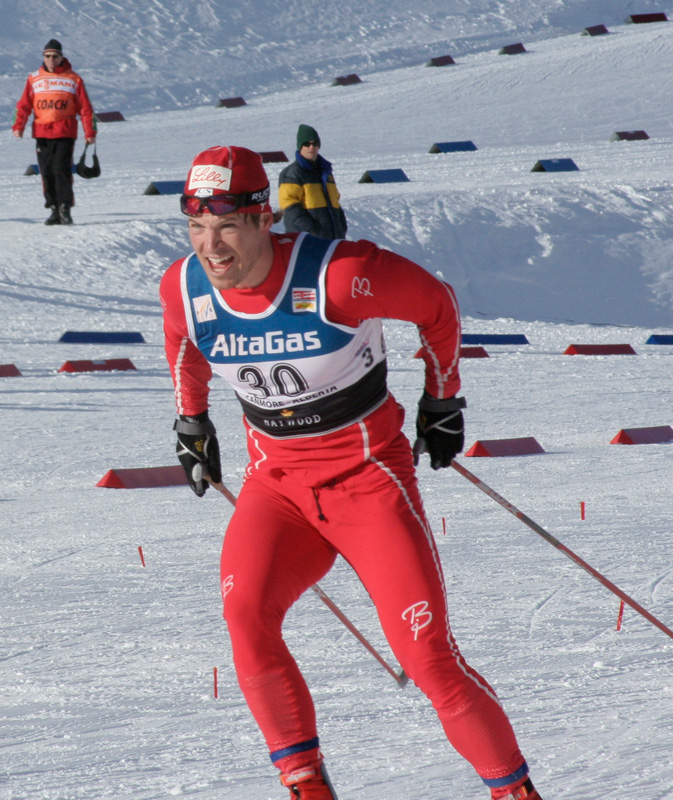
    After years of a remarkable level of wardrobe schizophrenia, the US Ski Team has ushered in a new era of racing suit consistency that should make it easier to follow our favorite US athletes on the race course. There are currently two suit variations being used by US Ski Team athletes, and athletes racing for the US in international events.  They are so similar, that for practical purposes (identifying US skiers in a race) they may as well be the same.  Both suits are predominantly red, with one version having patches of orange, and the other silver.  The red/orange suit was supposed to be the team suit last season, but manufacturing delays meant they weren’t delivered until after the season.  The suit is a standard fabric.

    Red/orange
    Red/orange

    The red/silver suit is this year’s new model – BJ Sports new Techo suit – very thin fabric, pull-over design with no zipper.

    Red/silver
    Red/silver

    US Ski Team athletes received both suits this year and may wear either.  Athletes racing at one event (World Juniors, U23s, Nationas Group World Cup, etc) received one or the other.

    Red/orange and red/silver in the women's Team Sprint, Whistler World Cup
    Red/orange and red/silver in the women's Team Sprint, Whistler World Cup

    All US racers at the Whistler World Cup wore one of these two suits.  This is in contrast to the five distinct suits worn by US Ski Team athletes at the Canmore World Cups (this does not include club suits worn by some Nation’s Group athletes). FasterSkier was able to identify at least four different suits at the Sapporo World Championships in 2007, and two suits at the 2006 Olympics.  There have also been numerous occasions on the World Cup when US athletes in the same race will have completely different suits. “Who cares?” you may wonder.  From the spectating standpoint, be it in person, or on television, the variety of suits can make it very difficult to identify US athletes in a race.  With so many events now being mass start, it can be very hard to pick out bib numbers – color is the key. Television coverage generally focuses on the top one or two athletes in the race, but there are times when US skiers are on-screen, especially in sprints.  Again, the suit may be the only reference we get. A team should have a uniform and athletes should wear it.  You don’t generally see other nations sporting multiple suits in one event.  You don’t even see that at the collegiate level, and many high school teams have been more coordinated than the US Ski Team over the past years.

    Kris Freeman preferred the orange to silver in the men's pursuit
    Kris Freeman preferred the orange to silver in the men's pursuit

    When asked about the new suits, US Cross-Country director John Farra gladly provided details.  In regards to the upcoming World Championships, he said that it would be nice to have everyone in the new Techo suit, and while “that will be a goal, it is not as critical as kicking butt in either one of them.”  And that captures it.  What the athletes wear is a distant second to performance, but the new consistency is a welcome addition for spectators and fans, both domestically and internationally. Now the hope is the US will be stylish AND fast! When asked about suits for next year’s Olympics, Farra only said that it will be a relative of the current suit, but the actual design is currently considered Top Secret. FasterSkier put together a photo history of some of the suits worn by US Ski Team athletes over the last years.  Click on the thumbnails to view larger versions.

    Canmore World Cup 2008

    Andy Newell - navy and redKikkan Randall - red, white and blueKris Freeman - redTorin Koos - whiteTorin Koos - navy and silver

    Sapporo World Championships 2007

    Torin Koos - whiteSarah Konrad - navy and red (no red on sleeves) (Photo: TeamToday)Kikkan Randall - navy and red (Photo: TeamToday)Kris Freeman - red, white and blue

    World Cup 2007

    Kikan Randall - blue (Photo: TeamToday)Koos - white, Newell - blue - two leftmost skiers (Photo: TeamToday)

    Torino Olympics 2006

    Justin Freeman - navy and whiteWendy Wagner - blue and black sprint suitAndrew Johnson - navy and whiteKikkan Randall - blue and black sprint suit