From the FasterSkier archive — posts syndicated from athletes’ and coaches’ own blogs between 2004 and 2012, kept online as published. Current coverage is at fasterskier.com.
SNSC is a non-profit organization based in Summit County, CO focused on developing young athletes. Programs include summer training, fall rollerskiing, winter training and race programs, year-round strength training all with an aim to develop high level Nordic athletes. Athletes ages five and older participate in SNSC programs and come from Buena Vista, Kremling, Golden, Leadville and throughout Summit County.
SNSC is experiencing a period of rapid growth and change as the organization evolves from a small, parent run winter ski program into a large, complex program creating some of the best Nordic skiers in the country. As SNSC grows so does the need for high-level coaches to help train the next generation of U.S. Nordic skiers. SNSC is seeking an experienced and high level assistant coach to help grow existing programs, create new programming to address member’s needs, and to ensure that all SNSC athletes have access to excellent coaching, training plans, and race day support.
Full-time Assistant Coach:
The Assistant Coach for SNSC will be primarily responsible for coaching the Comp Team (U16-U20 athletes) while also contributing to both the Devo (U12-U14) and Prep programs (U08-U12). This position directly reports to the Head Coach. This is a year-round position with in-person coaching sessions between June 1st and March 31st each year. The Assistant Coach will collaborate with the Head Coach on training planning and session design. Other duties will include but not be limited to: race day coaching, waxing and ski testing, pre race ski waxing, strength coaching, athlete transport (in county and traveling to races), helping to maintain wax and hardgood inventories and ski fleets, communication with athletes and parents, attendance and participation at SNSC events and fundraisers, developing additional programs and initiatives, interacting with and occasionally reporting to SNSC Board of Trustees, assisting with promoting SNSC’s programs at activity fairs, etc.
The Assistant Coach must be a strong skier and roller skier with significant experience in waxing race skis and providing race day coaching to athletes. The Assistant Coach will need to be able to lead dryland and snow based training sessions at high altitude. High-level racing or coaching (collegiate or equivalent) background is preferred. Must be able to pass a background check and have a clean driving record.
Position Details:
Starting date is June 1, 2018
SNSC offers a competitive compensation package including health insurance, housing assistance and other perks and benefits.
To Apply:
Please send a cover letter and resume outlining your experience to SNSC’s Director, Whitney Hedberg at whitney@summitnordicskiclub.org
The Summit Nordic Ski Club (SNSC) is one of Colorado’s fastest growing youth ski programs and serves Summit County, Colorado (Breckenridge, Frisco, Silverthorne, Keystone and Dillon). SNSC has a top-notch coaching staff and is looking to recruit one more. We have five winter programs and are looking for an assistant coach to primarily help with our Devo Program (ages 11-13). Olof Hedberg is the Head Coach for SNSC and is responsible for training plan design and overseeing the entire program and coaching staff. This position would report directly to the Head Coach. Assistant coaches are on the front line working with athletes to help them achieve their individual goals from Olympic hopefuls to kids who enjoy being outside and want to improve their Nordic technique.
SNSC is a relatively small organization which makes it feel more like a family. Our athletes and families are a fantastic group of people. We hope to find an excellent coach to join our community and help our club continue to grow.
The Assistant Coach position is currently seasonal (October – March) and part time, but has the potential for full time work over the winter. There is also potential to extend the job into our summer programs. Our Devo program meets 4 days per week and has four main race weekends (travel Thursday/Friday and return Sunday) over the winter.
Our ideal candidate will have a love for Nordic skiing, experience working with kids and a generally positive and energetic attitude. Strong knowledge of Nordic technique and training principles are also important.
In addition we would like someone who:
● Has a background in high-level Nordic racing
● USSA Level 100 Coach
● Is a proficient roller skier (able to ski with athletes over varied terrain and long distances)
● Has waxing experience
● Ability to safely drive a 15 passenger van in snowy conditions
Please send resumes with a cover letter introducing yourself to Whitney Hedberg, SNSC’s Director, at whitney@summitnordicskiclub.org
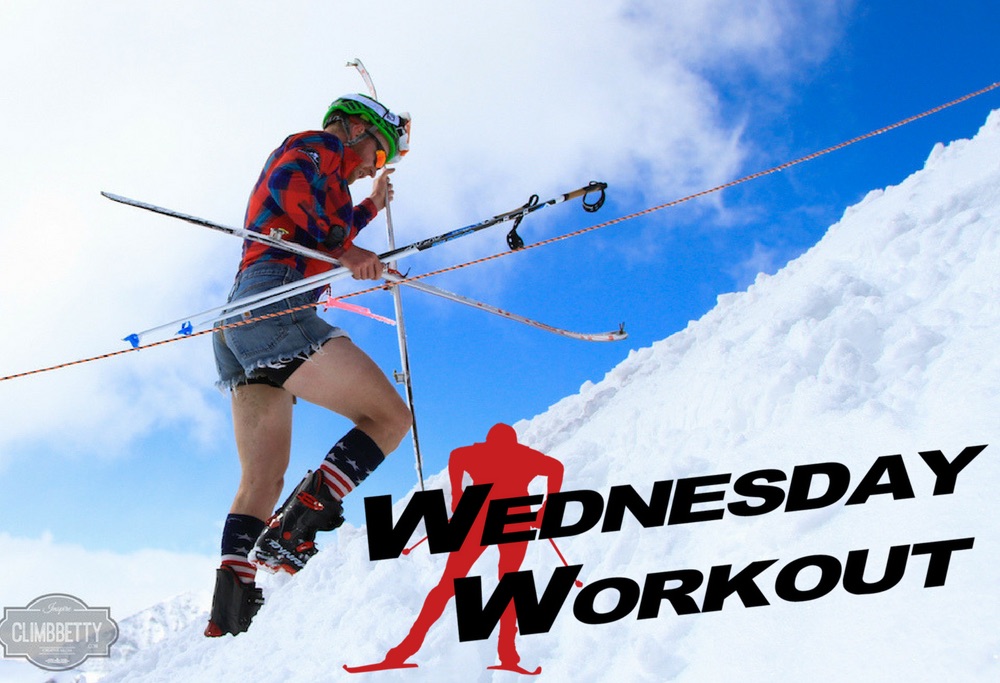
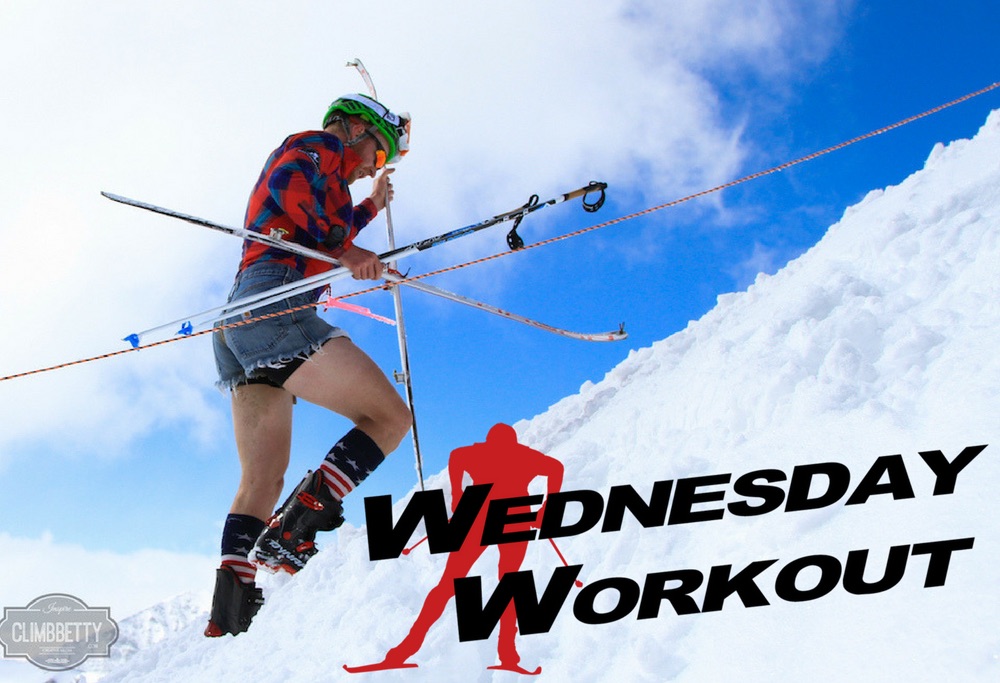
Summit Endurance Academy coach/owner Joe Howdyshell getting vertical with his skinny skis. (Photo: Climbbetty.com)
You name it and Joe Howdyshell, director and founder of Summit Endurance Academy in Frisco, Colo., has probably coached it. From skiers to cyclists to ski mountaineers, Howdyshell’s repertoire extends beyond endurance athletes. His experience with a wide range of outdoor-sport enthusiasts made him a prime candidate for one of our weekly workouts. Here he provides a workout he has all of his endurance athletes do, regardless of sport, throughout the year at the end of their recovery weeks.
***
With the utterance of endurance athlete, a certain individual often comes to mind. The cross-country skier clamoring over boulders during a three-hour hike. The road cyclist grinding up the final hill of a four hour ride. The Ironman competitor, finishing up a 2.4-mile swim with more than a century bike ride and marathon run left to go.
Many make the list. What about the motocross biker drifting a machine operated hunk of metal around a dirt course? Or the extreme-obstacle-course racer army-crawling under a stretch of barbed wire? Some would say they don’t fall under the same category.
But 33-year-old Joe Howdyshell, founder and director of Summit Endurance Academy (SEA) in the Colorado Rockies, has a different point of view. He sees these individuals as one in the same. From the athlete he coaches who is currently climbing Everest, to the professional Spartan racer under his advisory, to the motocross racer he provides training plans to, all fall under the umbrella of endurance athlete.
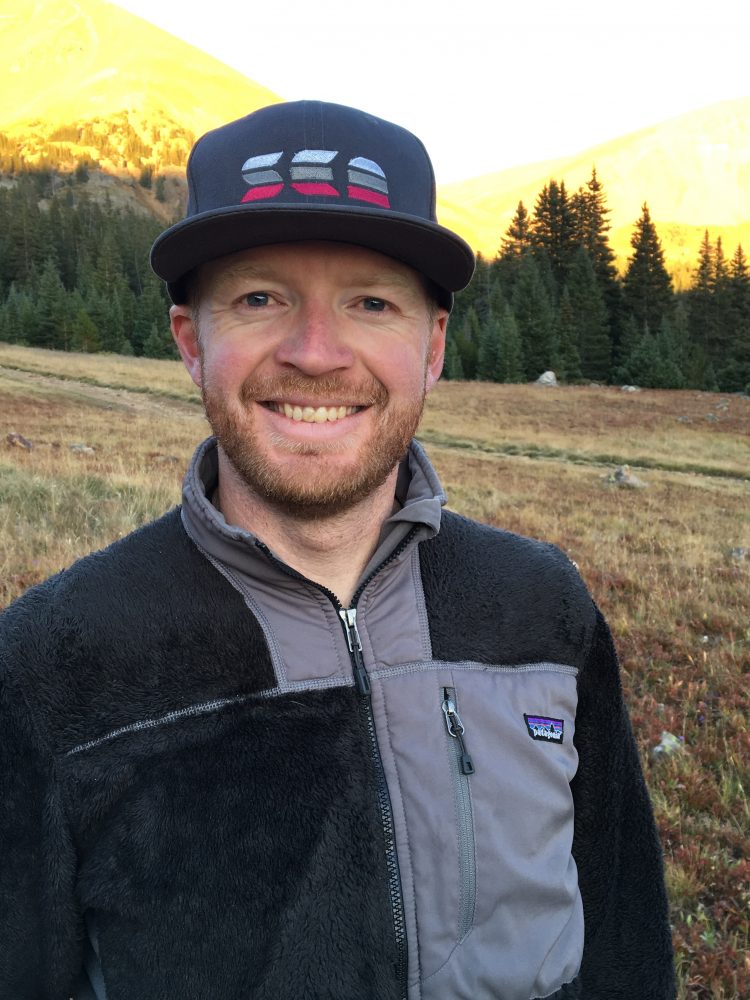
Joe Howdyshell of Summit Endurance Academy (Photo: Erin Gigliello)
The key is how one defines endurance and athlete. For Howdyshell and SEA — a training program he started in 2013 that offers coaching and training advice to its members –endurance is defined “as any effort lasting longer than two minutes (this includes crashing time)” and an athlete as “anyone who is trying to systematically improve performance or capacity.”
If anything, the definition attracts a wide span of participants. At present, Howdyshell has 50 athletes following his training philosophy, 19 of which are Summit County locals. The other 31 athletes he works with hail from various states and countries, including New York, California, Washington, Utah, Vermont, Wyoming, Arizona, New Zealand, Spain, and Ecuador. Many fit the more traditional sense of endurance athlete, such as distance cyclists, skiers, and runners, and others less so.
“It doesn’t really matter to me how fast they are, if they’re willing to dedicate to the process, then I’m all about working with them and figuring out ways to help them,” Howdyshell said on the phone last month. “So the guy who’s a motocross racer, he’s like, ‘Yeah, I’ll wear a heart-rate monitor every time I’m on the track or every time I’m at the gym.’
“We looked at his heart-rate profile when he’s in a motocross race, and he’s pegged it for 185 for 15-20 minutes,” Howdyshell continued. “So the cardiovascular demands are insane. By collecting data and being communicative, together we can develop a strategy to make him faster.”
As Howdyshell continues his professional work with athletes, he also continues to expand his realm of expertise. He began coaching professionally in 2005, and for almost a year now, has served as the head coach for the U.S. Ski Mountaineering national team.
An average workweek for Howdyshell entails 40-60 hours for the SEA and another four to five hours for his national team coaching duties. His introduction to the U.S. Ski Mountaineering position and sport itself was in large part due to his background in cross-country skiing: he’s been nordic skiing since the age of 12, and he was previously head coach of the Summit Nordic Ski Club prior to founding SEA.
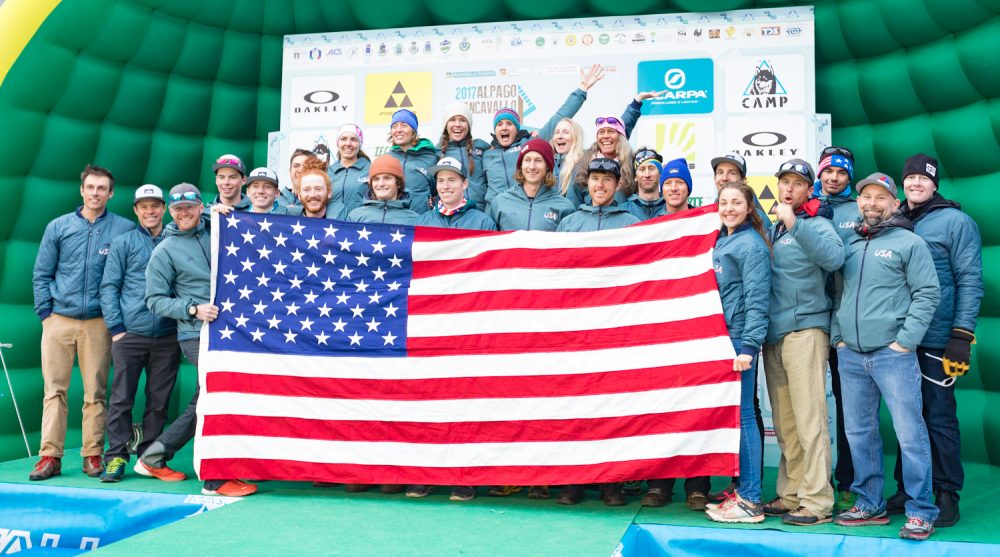
Coach Joe Howdyshell (third from left, holding flag) with the U.S. Ski Mountaineering national team in Italy. (Photo: Mike Smiley)
“I was the head coach of the Summit Nordic Ski Club for a number of years and I had all these crazy friends and a lot of the parents who would go skinning,” said Howdyshell, who also has a degree in exercise science. “I was like, ‘What the hell is that?’ … then I did it a few times and friends were like, ‘Hey, you gotta try this ski-mo race thing, so I started doing that. … Then, since there aren’t many coaches in the sport in the U.S., [becoming the national-team head coach] kind of happened naturally.”
Regardless of which athlete he’s working with, there’s one workout he has each of them do. On the Thursday of a recovery week, whether in-season or off, he has his athletes complete a 20/40 workout: 20 seconds of on-time, followed by 40 seconds off. Each athlete repeats these 20/40s for five minutes, followed by five minutes easy. The set is then repeated two more times. The workout is intended to help athletes safely return to interval training. To an extent, his workout epitomizes what he hopes SEA embodies: demonstrating a way to bring on the “bad ass” without burning out the engine.
“One of the big things that and I’m still trying to figure out how to say is that idea of what is bad ass,” he said. “Knowing when to work hard and when to just relax. Part of [SEA] is trying to teach people that you can get very, very, very fit if you take the time and you dedicate and you work hard when you need to and you don’t when you don’t need to. …. Training doesn’t have to be a monkish isolated journey that only involves hail. You should be able to have a beer after your workout. I think that too often we see a separation between the people who take it too serious and then people who don’t take it seriously at all. … For me, spreading that message that you can be fast and have fun at the same time, that’s kind of my key goal.”
The Workout: 20/40 recovery
Purpose: Remind the body what intervals feel like without overtaxing the system; on-time should not be max pace.
“Typically I’ll do a rest week every third or fourth week and that’ll be a day off, a day easy, a day off, a day easy, and then I kind of get them back into the training mode with 20/40s,” Howdyshell explained.
For XC skiers, he recommends doing the workout on rollerskis or running.
Ideal time: Thursday of a rest week (rest week usually includes two days off and two days easy in four days for his athletes). Can be done year-round.
Warmup: 15 minutes progressive
5 minutes: Go from the bottom of Level 1 to the top of Level 2
5 minutes: Done at 10-15 beats below Level 3
5 minutes: Back to Level 1
The set: 20/40s (x 3)
20 seconds on and 40 seconds off for 5 minutes
5 minutes easy
Repeat two more times
(Note: Howdyshell recommends using 2- or 3-kilometer race pace for on-time effort)
Cool down: 15-20 minutes easy
Total time: 60-65 minutes
Howdyshell’s Top-3 Suggestions:
Staying on track sometimes means holding back. The 20 seconds of on-time should not all be done at a full-out sprint. Instead, goal pace should be around 2-3 k race pace. “I’ve had athletes come back and be like, ‘That was so hard,’ and I’m like, ‘Did you hit each one of them as hard as you possibly could?’, ‘Yeah I did,’ ‘Well, that’s exactly what I told you not to do.’ ”
The workout won’t feel the way you want.“Especially if you’re coming off of an extended rest block, you’re going to feel sh*tty,” he said. “And that’s exactly what the workout is for; it’s a bridge to get you out of your body thinking that, after a few days of rest, your body is in couch-potato mode, which is good, it needs to be, but you’re not going to feel amazing right off the bat.”
Make right with your warmup. After an extended period of recovery time, jumping into intensity without a good warmup isn’t always fair to you or your body. “It’s kind of easy to get antsy after a few days of not training too much and jump into the higher intensity too fast,” he said. “Make sure you don’t shortchange the warm up.”
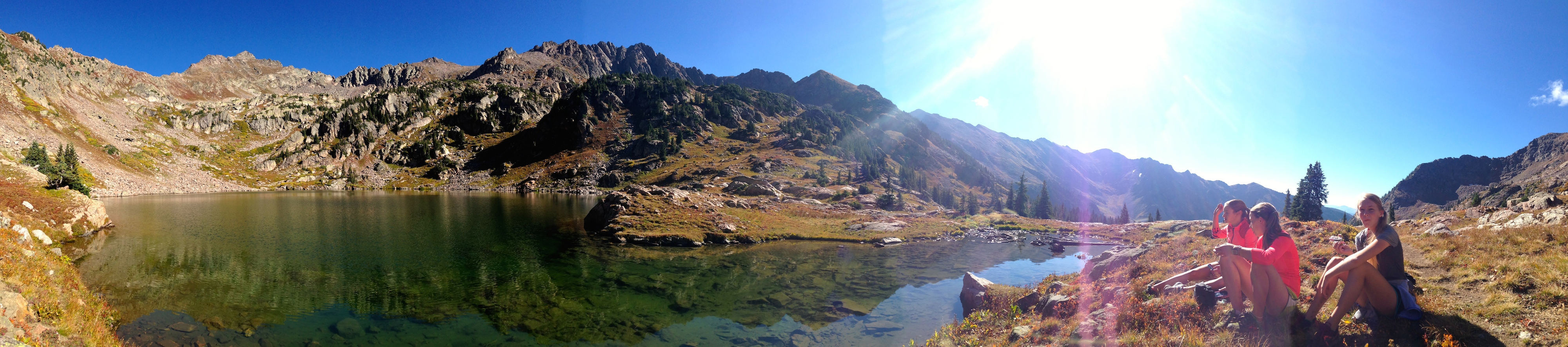
Ski & Snowboard Club Vail skiers (l to r) Gracie Shanley, Annie Blakslee and Lyle Shipp at Pitkin Lake above East Vail in the Gore. (Photo: Eric Pepper)
Five years ago, five ski buddies got together and founded Team HomeGrown. The idea back then, according to Sylvan Ellefson, was to create a sort of all-comers club.
Kevin Hochtl, Josh Smith, Paul Gorbold, Dan Weiland, and Ellefson had all grown up around Vail, Colo., and this was a “homegrown” team they could lay claim to, no matter what stage of life or what stage of their ski career they were in.
“We also wanted to provide a sort of support to the young kids growing up in the sport in the valley,” Ellefson explained. “Being able to look up to somebody, whether it is work or sport, is a very important part of keeping someone engaged in it. That was our belief.”
Sylvan Ellefson representing Team HomeGrown/SSCV last season at U.S. nationals in Midway, Utah. (Photo: Bert Boyer/http://bertboyer.zenfolio.com/) Proceeds from photo sales directly donated to NNF.
Two years later in 2011, HomeGrown — the elite offshoot of Ski & Snowboard Club Vail (SSCV) — reached a new level with the addition of then-U.S. Ski Team members Noah Hoffman, from Aspen (still on the team), and Tad Elliott, from Durango.
In 2012, Ryan Scott, a Montana State University grad from Boulder, came on as a sixth member with Ellefson, Hoffman, Elliott, and postgrads Christian Shanley (from Vail) and Max Scrimgeour (Steamboat Springs).
“It became more of a Team Colorado, but still homegrown in the sense that we all grew up racing each other every weekend through middle school and high school,” Ellefson wrote in an email. “Racing ‘as a team,’ at Junior Nationals really gave a sense of unity. From that point, we wanted to help inspire the next generation of nordic skiers in the state of Colorado. Help them realize that nordic skiing can become a career, and if anything more, a way to develop an amazing tolerance for pain, mental strength, and an iron-clad work ethic.”
This spring, Ellefson, 27, retired from skiing after making a run for the 2014 Olympics. Scott returned to Boulder full time to network and make a living in graphic design and web development.
In a phone interview last month, Scott said he’d been training when he could, despite revving up to 30- to 40-hour work weeks by fall. Since parting ways with SSCV in the middle of last winter, he wasn’t sure what he’d do for support this season.
“I might be figuring it out last minute, or racing independent and racing for Madshus,” Scott said.
Neither Scott nor SSCV Head Coach Eric Pepper chose to elaborate on why Scott left the team.
“I wasn’t involved in that conversation too much,” Pepper said.
Despite battling mononucleosis symptoms as early as last October, Elliott was cleared to race in November and got in two distance starts in West Yellowstone, Mont., and Sovereign Lake, B.C. He placed 14th in B.C. (one place higher than his finish in West Yellowstone), then returned home to Durango, where a doctor diagnosed Elliott with the Epstein-Barr virus — best known as the cause of infectious mono.
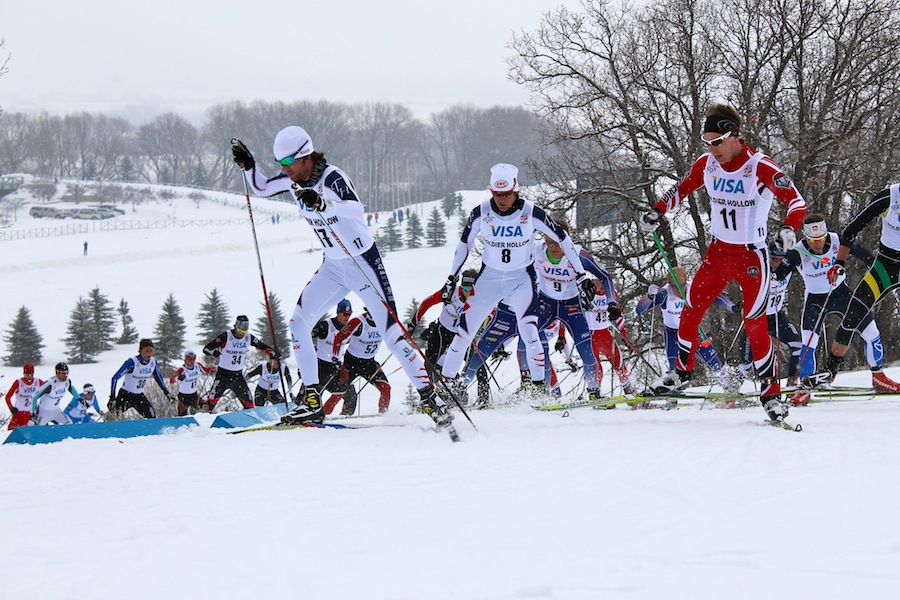
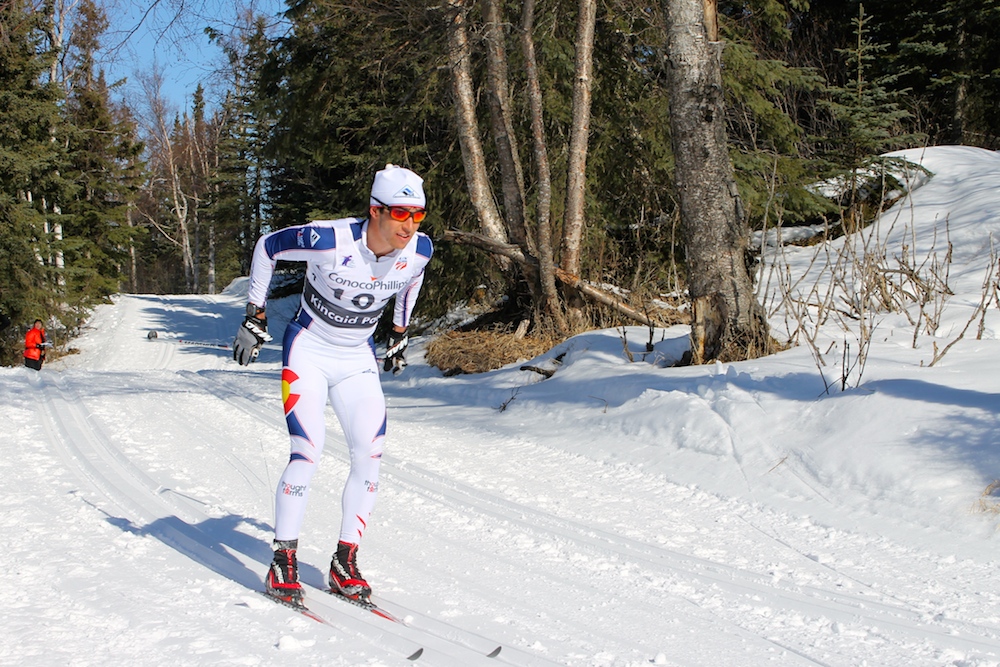
Tad Elliott (l) and Sylvan Ellefson (8) of Team HomeGrown/SSCV make their way up the last hill almost halfway through the 30 k freestyle mass start at 2014 U.S. nationals. Ellefson won and Elliott did not finish.
In January, he flew to Park City, Utah, to give the 30-kilometer skate mass start at U.S. nationals his best shot, but he didn’t finish.
“I then took from January until July off of any training,” Elliott wrote in an email. “Really light training in August now a bit more structured training into the ski season.”
Elliott, 26, is making a comeback this season, although he’s not sure how strong he’ll be.
“The doctor who finally diagnosed me was nervous I wouldn’t be able to race again for a really long time,” he explained. “So being out 7 months off of my feet has been really small. I might not get back 100 percent, so there is really no expectations or goals I have to hit. I am coming back because I love skiing especially for Team HomeGrown, and Salomon, Honey Stinger, Caldwell Sport and Oakley. Without them saying get well and we will see you when you are ready, I probably would have retired from racing.”
“I might not get back 100 percent, so there is really no expectations or goals I have to hit. I am coming back because I love skiing.” — Tad Elliott, SSCV Elite member
During his recovery last winter, Elliott coached Durango Nordic juniors once a week.
“That was all I could manage I felt so terrible,” he wrote.
He worked for Salomon Running this spring and summer, and at a Durango mountain-bike shop called Mountain Bike Specialists, where his employers where empathetic and let him rest whenever he needed to.
“All of my sponsors have stayed the same and showed their unconditional support,” Elliott explained. “My support team has stayed the exact same, and a piece of that has always been [coach] Zach Caldwell. We are using Firstbeat training systems in joint with my Suunto [heart-rate monitor] to track my heart rate variability to see how I am responding.”
On Oct. 8, Elliott wrote on Facebook that he had been cleared to train.
Out with the Old, In with SSCV Elite
This season, Elliott will be one of two seniors on the SSCV Elite team — Hoffman being the other.
Hannah Hardenbergh leading a high-school race last December in Colorado. (Photo: SSCV)
Hannah Hardenbergh and Cameron Bobb joined the squad as its two postgrads, and for the time being, HomeGrown is no more.
“We always knew that model is not sustainable if we want to grow the program,” Pepper said on the phone in early October.
Compared to the last two years, Vail’s top-tier nordic team has downsized, and SSCV’s emphasis has shifted to local junior programming. In the grand scheme of things, developing younger skiers is what will make its program thrive, Pepper said.
“We had talked to a number of potential people in the spring and what we really decided was we wanted to stay with who we had and not expand upon that this year,” he said. “Last year was obviously a really big push with Sylvan, being away from junior programing and athletes and families here, and with him not being in the mix anymore, and with Noah really needing minimal support from us, and Tad kind of coming back and seeing where he’s going to be at, it didn’t seem like there was a need for us to really pursue it this year.”
A year-round world traveler, Hoffman stops by Vail a few times each year when he can — most recently working out with the SSCV juniors and Summit Nordic Ski Club earlier this week. Like Elliott, Hoffman also works with personal coach Zach Caldwell.
Pepper has been Team HomeGrown’s coach for the last two seasons; Weiland, the longtime nordic program director at SSCV, coached the first two years before that.
Ellefson said Weiland, Pepper and assistant coach Lenka Sterling essentially waived all coaching fees and worked pro bono for HomeGrown from the beginning.
“I think they saw the potential of being coaches for what had the potential to be one of the best clubs in the nations, which I believe, to a degree we were one of the most competitive clubs, at a least in the men’s division,” Ellefson added. “They had full coaching schedules with the development team, high-school team and club team, so for Eric and Dan to even come out to our training sessions in the summer every single day was pretty instrumental.”
When HomeGrown started in 2009, it was “basically unfunded” for the first year, Ellefson said. The five original team members scraped money together — from savings, their parents and personal sponsors — to self fund.
The next year was better. The Rocky Mountain Nordic Angel nonprofit, which preceded HomeGrown, continued to supplement the team, and SSCV extended its support. The club initially let HomeGrown use its facilities, and by the next year, it granted its two athletes — Ellefson and Gorbold — access to additional training facilities and blew manmade snow for them in November. In 2011, Hoffman and Elliott came onboard to extend HomeGrown’s appeal to broader Colorado.
“To grow the culture in nordic skiing is way bigger than just trying to keep growing team HomeGrown,” Ellefson said. “If you grow the culture, I think the team will grow.”
“To grow the culture in nordic skiing is way bigger than just trying to keep growing team HomeGrown.” — Sylvan Ellefson, one of Team HomeGrown’s founders and SSCV Nordic Future Stars Head Coach
That’s why he wasn’t disappointed to see the name go. Above all, he wanted to see a team that enticed athletes after high school or college to pursue a professional career in ski racing.
“We are also moving more into how to fund these athletes better, and that we can do with the growth of the sport as a whole in the United States,” explained Ellefson, now a part-time coach for SSCV’s nordic future stars program (responsible for 40 to 60 kids ages 6 to 11) and vice president of sales and marketing at Cirque Mountain Apparel.
Noah Hoffman racing to second in the 2014 U.S. Distance Nationals 50 k classic mass start at Hillside trails in Anchorage, Alaska.
“To this point we had all athletes that grew up in Colorado,” Pepper said of HomeGrown’s recruiting pool. “Most of the kids that came to us this year were ones we had an interest in and relationship with, but they weren’t Colorado kids.”
That’s where SSCV had to make a decision. Ultimately, it resolved to focus on developing Colorado juniors rather than open HomeGrown to top skiers across the U.S., like several other elite teams do.
Ten years ago, Pepper estimated SSCV had 10 total athletes.
“Five years ago, it probably had 25 kids and now this year, it’ll probably be close to 80 with all our age groups,” he said. “[We’re] trying to establish a culture and improve trails … We have a ski academy now.”
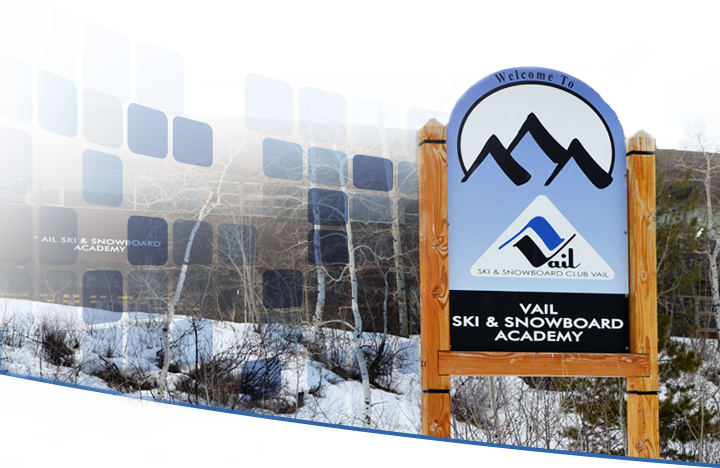
Vail Ski & Snowboard Academy, founded in 2007. (Photo: SSCV)
The Vail Ski & Snowboard Academy, a public school for grades 5 through 12, was founded in 2007 and has nordic, alpine, snowboard, freeski, and freestyle teams as well as NCAA college programs, with seven kilometers of cross-country trails right outside its doors.
This year, Vail’s two postgrads are from the area and decided to take a year off college. Hardenbergh deferred from Harvard, and Bobb grew up racing for the Summit County Nordic Club. Both are coming back from injury, Pepper said.
“Its unfortunate when a racer post-grads in the U.S., it seems to be the feeling of World Juniors or bust,” he said. “We’re de-emphasizing it a bit … trying to give them more experiences, like a [SuperTour in] Bozeman. Their schedule isn’t that different domestically than a top-level junior, with western early season races, nationals, local races, [and] junior nationals … then [we’ll] look at opportunities.”
SSCV did not go to Spring Series last year in Anchorage, opting for French and Swiss nationals (for the same price of a plane ticket to Alaska) instead. This season, Pepper predicted they’ll have a similar option for postgrads and seniors, depending how each athlete is doing.
2015 SuperTour Finals in Sun Valley, Idaho, is a much more feasible trip from Colorado, “but Europe’s pretty appealing, too,” he said.
Former postgrads Shanley and Scrimgeour are now entering their sophomore years skiing for Denver University and the University of Colorado-Boulder, respectively.
And in terms of Vail’s male-to-female ratio: “We probably have more females than males, which is an interesting flip,” Pepper said, alluding to HomeGrown’s all-male status for the last four years. “In our U16 and older program, we have more females, but it’s pretty close to 50/50. In our older guys’ program, that was mostly coincidence.”
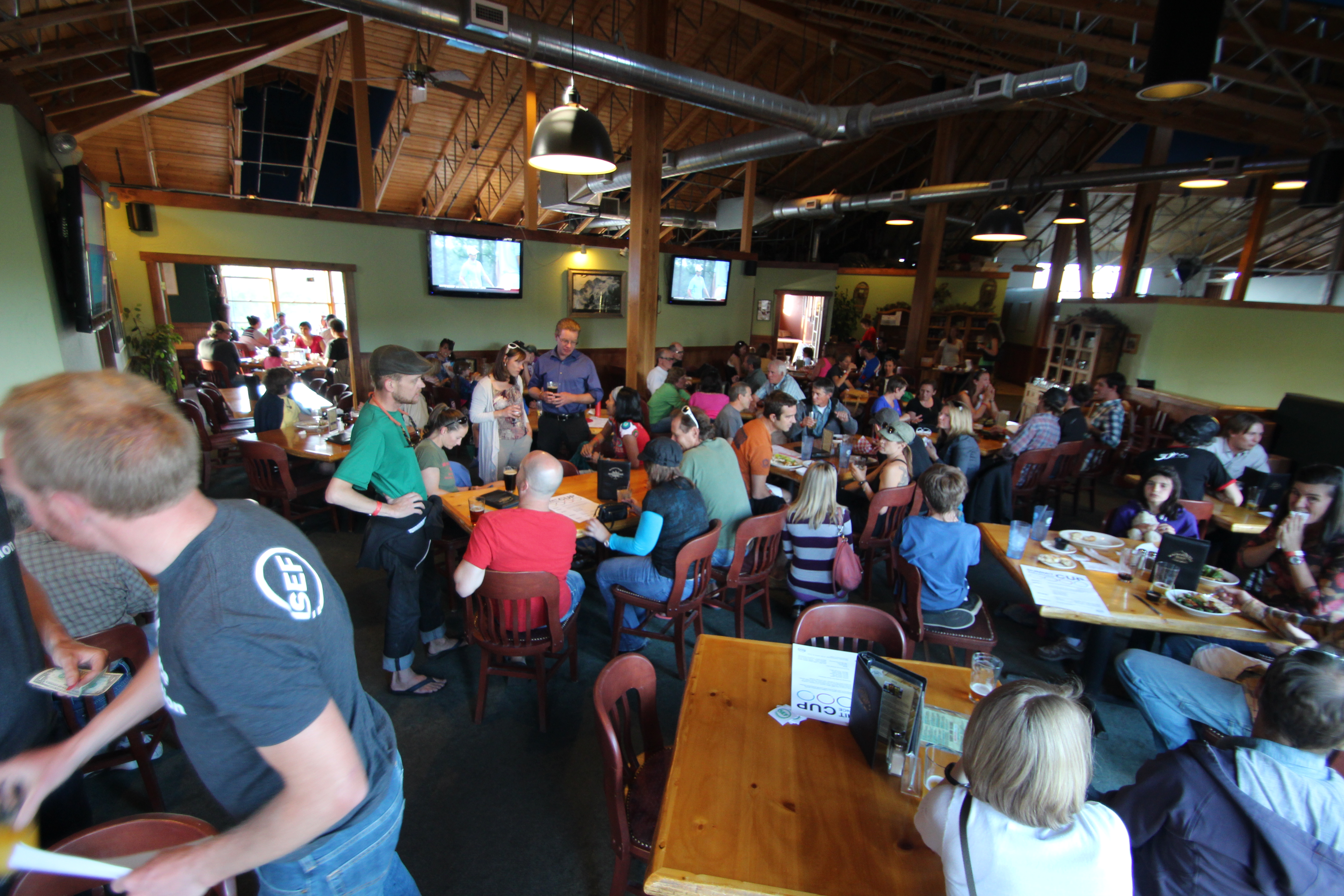
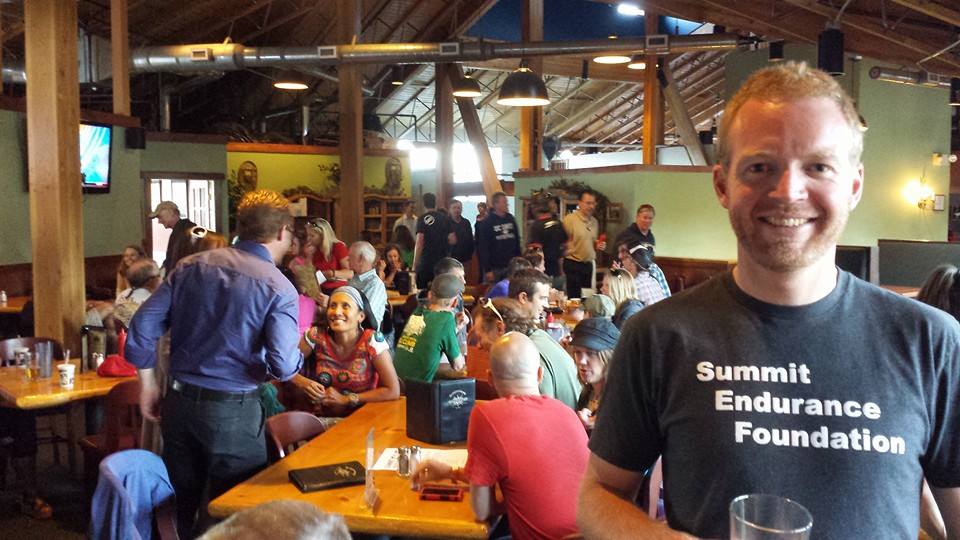
A crowd of supporters gather at the Summit Endurance Foundation Kickoff Party June 12 at the Backcountry Brewery in Frisco, Colo. to support the Foundation’s aim to financially aid young endurance athletes in Summit County. (Photo: Matt Dunkerly)
The story is one known all too well. A friend, a relative, an acquaintance who is interested in joining the nordic-ski community becomes daunted by the costs of training, equipment, travel and racing and thus is forced to stop pursuing the sport.
It’s a problem that plagues ski clubs across the country. The costs not only impact an individuals ability to engage in the sport, but also inhibit the growth and development of cross country skiing at a national level. Even with aggressive fundraising by local organizations and some funding from the U.S. Ski and Snowboard Association (USSA), the support is often not enough.
What if it didn’t have to be that way?
The Summit Endurance Foundation is attempting to answer this question by entering uncharted territory. Led by Executive Director Joe Howdyshell, former head coach of the Summit Nordic Ski Club in Summit County, Colo., the organization is making an effort to not only financially support young cross country skiers, but also other youth endurance athletes such as runners and bikers. The new and innovative strategy was one that Howdyshell developed as he saw the need grow in his community.
An endurance athlete since the age of 14, Howdyshell participated in cross country skiing and running both in high school and in college at West Point Military Academy and the University of Wyoming. For the last four years, he has been the head coach and program director of Summit Nordic.
During his time as a coach, he noticed a trend amongst his youth athletes. “I kept seeing athletes either missing opportunities or being held back because of a lack of funding, or not even getting into the sport at all because their families couldn’t afford it,” Howdyshell said in a phone interview.
Like many across the country, Howdyshell was frustrated with the trend and decided to look at why there was no support system in place. Through his experience in endurance sports he came to the conclusion that many small clubs, whether focused on running, skiing, or biking, have limited resources to raise enough money to cover the costs of participation, especially when these costs continue to rise.
Joe Howdyshell (l) at the Summit Endurance Foundation Kickoff Party June 12 in Frisco, Colo. Howdyshell is the Foundation’s Executive Director and full-time fundraiser. (Photo: Kathryn Grohusky)
“I’ve been a part of several organizations where the parent volunteers are running the club. They work their butts off to make sure their bases are covered,” he said. “They just can’t possibly hope to have enough time to run an organization or fundraise enough to offer 100% scholarships and get equipment for low income families or to be able to send a small business owner’s kid to junior nationals.”
In order to combat the challenges clubs face when raising money, Howdyshell hatched a plan that involved the creation of a foundation that was not sport specific, but rather focused on fundraising for athletes that had one thing in common: endurance.
“Most places try to bring people together through a winter-sports club, and very few places have brought people together through endurance sports,” Howdyshell explained. “The athletes are more similar. Your summer mountain bikers are going to be much more similar to your winter cross country skiers. We think of it as trying to build a community of people who like to breath hard.”
While a small group of organizations, like the Summit Endurance Academy (owned and coached by Howdyshell) or the Bend Endurance Academy in Bend, Ore., have instituted a similar philosophy of creating a community of endurance sports, the emphasis has rarely been on fundraising, Howdyshell said.
The Summit Endurance Foundation aims to build a community of endurance athletes in the mountains of Colorado while also trying to ensure that anyone who wants to train and compete can do so without having to worry about finances.
The Foundation has a three-pronged approach in order to accomplish its goals. By having a full-time fundraiser in Howdyshell, the Foundation can hit a larger geographic area. While many clubs stick to their small communities, the Foundation has the resources to branch out and send Howdyshell to surrounding communities in Colorado and neighboring cities such as Denver.
The second unique aspect of the program offers is its ability to fundraise for a variety of sports that have much in common, rather than a single sport. The Foundation will focus on cross country skiing, distance running, distance biking, and ski mountaineering.
“There are more people who are interested in those sports: there is a bigger pool of donors, a bigger pool of grants, and a bigger pool of supporters in general.”
Finally, by focusing on fundraising the Summit Endurance Foundation can diversify it’s sources of revenue, Howdyshell explained. Traditionally, most clubs rely on a combination of events and grants. With the Foundation, he hopes to see revenue come in from such techniques, but also from corporate sponsorships and big-money investors.
“They [philanthropists] don’t want to give $25 dollars, they want to give $5,000 a year for five years because they believe in the cause,” he said.
By increasing it’s geographical footprint, increasing the fundraising scope by increasing support, and by having a diverse fundraising model the Summit Endurance Foundation believes that it can provide $150,000 in scholarships in the next three years.
Aside from its monetary goals, the Foundation hopes make sure that it can steadily increase participation in endurance programs.
Supporters of the Summit Endurance Foundation gather at the organizations kickoff event June 12 in Frisco, Colo. The event had over 75 attendees and raised over $2,000. (Photo: Matt Dunkerly)
“For the first three years the biggest goal is that no youth-endurance athlete misses an opportunity due to financial limitations. We want to see more kids getting into sports, excelling in these endurance sports. We want to develop the model, because there is not really anyone doing it this way.”
Once the model is developed Howdyshell sees the organization going in several possible directions. One direction would be to extend the scope of the Foundation to encompass the rest of Colorado. Another path the organization could take would be to focus on more athletes in Summit County and become the Summit Sports Foundation.
The need for an organization like the Summit Endurance Foundation highlights what many might consider a weakness in the American nordic-skiing community. With limited support from national organizations like USSA for smaller club programs, many have claimed that the lack of national financial support has made skiing a sport for society’s well-off.
The Summit Endurance Academy’s new financial model may be a future path for local clubs, with endurance sports joining forces to fund their athletes and rallying around their shared values.
“The athletes are different, the parents are different, the values are different [than other sports]. That’s not to say that either one of them is good or bad. They are just different,” Howdyshell said. “In my eyes it makes much more sense to align sports that are going to have the same participants and a lot of the same values through a local endurance foundation.”
Whether or not Howdyshell’s fundraising model will be a success remains to be seen. However, the Foundation has already had a promising start with its first event.
The Summit Endurance Foundation Community Kickoff Party, which took place June 12 in Frisco, Colo., had over 75 attendees and raised over $2,000 for the new organization. Money, however, was not the main goal of the event.
“Most importantly we wanted to develop this core group of supporters that can help us at events, who can talk us up to friends, and who can build our presence through the coming years,” Howdyshell said.
According to Howdyshell, the Summit Endurance Foundation hopes to fund over 200 athletes a year beginning in 2016.
The Summit Nordic Ski Club (Summit County, Colorado) is fielding letters of interest and resumes for a part time J2-OJ coach for the 2013-14 competition season.
SNSC participates in West Yellowstone, US Nationals, 4 JN qualifiers and the December NRL.
2013 race season results were: 1 skier (alumni) to World Juniors and 7 athletes to Jr Nationals (Fairbanks) (RMN). Currently, 3 skiers were invited to Western REG and 3 Skiers attended the National J2 Camp.
Summit County, Colorado is a winter wonderland with 5 nordic centers, 5 alpine ski areas, and on snow training from mid-October through May.
Applicants must have a ski racing background, but not necessarily a coaching background.
Summit Nordic Ski Club (Summit County, Colorado) is fielding letters of interest and resumes for a part time J2-OJ coach for the 2013-14 competition season.
SNSC participates in West Yellowstone, US Nationals, 4 JN qualifiers and the December NRL.
2013 race season results were: 1 skier (alumni) to World Juniors and 7 kids to Jr Nationals (Fairbanks) (RMN). Currently, 3 skiers are invited to Western REG and 2 Skiers are attending the National J2 Camp.
We have 22 kids enrolled in our Summer Training Group and use of a top quality strength training facility. Winter training is at 3 Nordic venues within a 15-mile radius.