From the FasterSkier archive — posts syndicated from athletes’ and coaches’ own blogs between 2004 and 2012, kept online as published. Current coverage is at fasterskier.com.

Tag: Sun Valley

  • The U.S. Ski Team Star You Won’t See on Snow This Weekend

    The U.S. Ski Team Star You Won’t See on Snow This Weekend

    On Friday afternoon, as World Cup sprinters snap into their skis in Trondheim and the SuperTour fields gather in Fairbanks, one of the United States’ most electrifying young Nordic athletes will step onto an entirely different stage. Stanford University, the No. 1 seed in the NCAA Women’s Soccer Tournament, is marching toward the College Cup—and at the center of it all is a player who, in just a matter of days, will also begin her bid for the U.S. Olympic Cross-Country Ski Team.

    The athlete is Sammy Smith: 20 years old, a national-team skier, an Environmental Systems Engineering major, and a starter for one of the most dominant college soccer programs in the country. The U.S. Ski Team views her as one of the most promising sprinters of her generation. And yet this weekend, instead of warming up on hard-packed snow in Norway or chasing early-season points in Alaska, she’ll be preparing to face Duke with advancing to the NCAA Championship Game on the line.

    “Get ready to cheer for one of the U.S. Ski Team’s top skiers this weekend,” you might tell Nordic fans. “Just… not on skis.”

    From the outside, the collision of seasons looks impossible to manage. For Smith, it is simply the life she has known since childhood.

    Idaho in Two Parts

    Smith grew up in a pattern that almost feels mythic now: winters in Sun Valley, summers and the rest of the year in Boise. Her family built the rhythm—her mom moving the kids north each winter so they could ski full-time and homeschool them in those snowy months.

    “I kind of grew up splitting time between Boise and Sun Valley,” Smith says. “My mom would move up to Sun Valley during the winter with my siblings and me so we could ski, and she would homeschool us up there… I did that all through high school.”

    In Boise, she was a typical public school student. In Sun Valley, she became a multi-sport anomaly. Her childhood was not just active—it was encyclopedic.

    “Growing up, I played about every sport one can imagine,” she says. “I ran track and cross country all through high school… I played hockey for a long time. Played football. Yeah, like, you name it, I pretty much did it.”

    Soccer was the constant. She started as soon as a child could sign up—though the Smiths occasionally bent age rules to make sure she could play with older kids. When her older sister started soccer, she was right behind her.

    “It’s probably like three years old when I started,” Smith says.

    And then there was freestyle skiing—a considerable part of her identity, something she expected to pursue more seriously than Nordic. Until one day, she couldn’t.

    “I ended up fracturing my tibia in my sophomore year,” she says. “And so I focused on Nordic that winter… I ended up having a great season, and then haven’t really looked back since.”

    The transition was abrupt, but the groundwork had already been laid: years of downhill confidence, years of skiing, years of learning to read terrain and push limits.

    “I’ve been on skis my entire life,” she says. “Very comfortable on downhills… I love to ski aggressively.”

    The athlete emerging in those years was already something unusual. The athlete she would become—balancing multiple sports at world-class levels—was still unimaginable.

    Against the Specialization Tide

    From the outside, Smith’s career appears to defy the common wisdom of modern youth sports. Increasingly, top athletes specialize early; by high school, many are all-in on one discipline.

    Smith resisted that. Not because she lacked ambition, but because multiple sports gave her joy—and made her better.

    “I think that’s something I’ve really thought a lot about,” she says. “There’s been more and more pressure to specialize… but growing up and doing so many different sports just kind of added to different components of skiing that I think are really important.”

    Soccer, for example, translates directly into sprint racing.

    “It’s a very high-paced game,” she says. “There’s a lot of change of direction, a lot of accelerating and decelerating. Particularly when you’re looking at heats, a lot of it is reacting to other people’s moves, trying to find little gaps and squeeze through.”

    The skill set becomes a competitive edge: quickness, agility, and decision-making under pressure.

    “That ability to shift gears really quickly and take openings when you can really emulates in soccer,” she says.

    Freestyle skiing contributed something else entirely: creativity and courage on skis, especially in chaotic or technical downhill sections.

    “At World Juniors last year,” she recalls, “everyone was in the track. I hopped out of the track, went far on the inside, and just double poled… It was a risky move, but it was something I saw.”

    She paused for only a moment before going all-in. It worked.

    The blend—soccer fuel, freestyle instinct, Nordic engine—gives her a uniqueness rarely seen in American skiing.

    U.S. Ski Team head coach Matt Whitcomb sees it clearly.

    “She’s a world-class athlete,” Whitcomb says. “She’s already exhibited the early signs of being a World Cup star.”

    That she is doing this while starting for Stanford’s soccer team? To him, it’s not a contradiction. It’s part of the magic.

    Why Stanford — and Why Now

    Choosing Stanford was not simple. Smith had options—many of them. But a few factors stood out.

    “I really value my education,” she says. “Stanford’s a great school. It’s where my mom went. And my sister is also on the soccer team, so the opportunity to get to play college soccer with her is pretty hard to pass up.”

    Her academic path—Environmental Systems Engineering with an energy concentration—fits a pattern among elite U.S. skiers. Many of the top men (Gus Schumacher, Ben Ogden, et al.) have gravitated toward engineering. Smith sees the overlap, too.

    “You look at a skier and the training that they do,” she says. “They’re very self-motivated, very committed. So I’m sure certain aspects translate pretty well.”

    The challenge, of course, is that Stanford is far from snow. It is not close to ski culture. It is not close to the European World Cup circuit. It is very near, however, to one vital piece of equipment:

    “Fortunately, I have a classic roller-ski treadmill… in a little office space,” she says. “That’s been an irreplaceable part of my training.”

    She uses it for high-quality sessions, often squeezed between classes, labs, or soccer obligations. Running remains a central component, helped by the demands of soccer conditioning.

    But she knows her preparation is different—less volume, more precision. Not ideal. Not textbook. Not expected. And yet:

    “I think I’ve tried to accept that,” she says. “I know that I am not at my best, but skiing is a sport you can do for a very long time. I don’t necessarily need to be the best skier I can be at 20 years old.”

    Again, Whitcomb backs the long view.

    “We’re willing to postpone that timeline,” he says. “We’re just happy for Sammy being happy in her current environment. We’ll take what we can get at this moment, but we want more down the road, and we’re excited for it.”

    This, in many ways, is the crux of the story: the U.S. Ski Team is betting on Sammy Smith not despite her dual identity, but because of it.
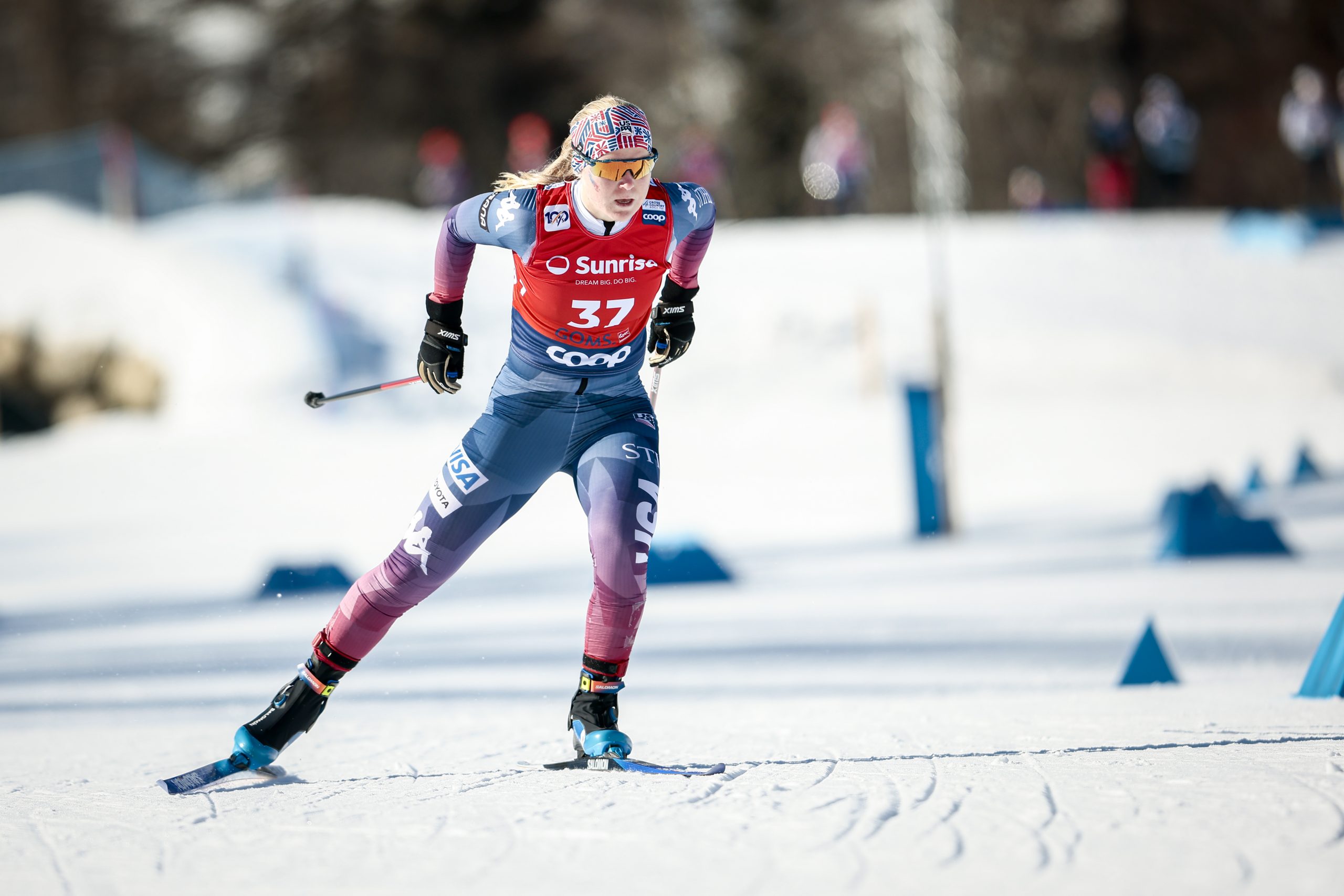
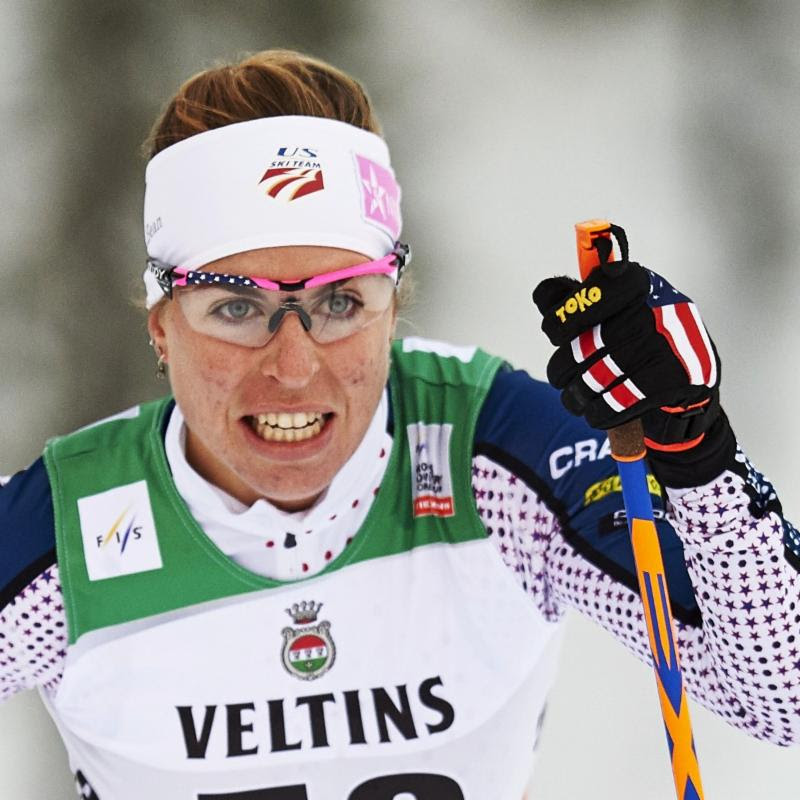
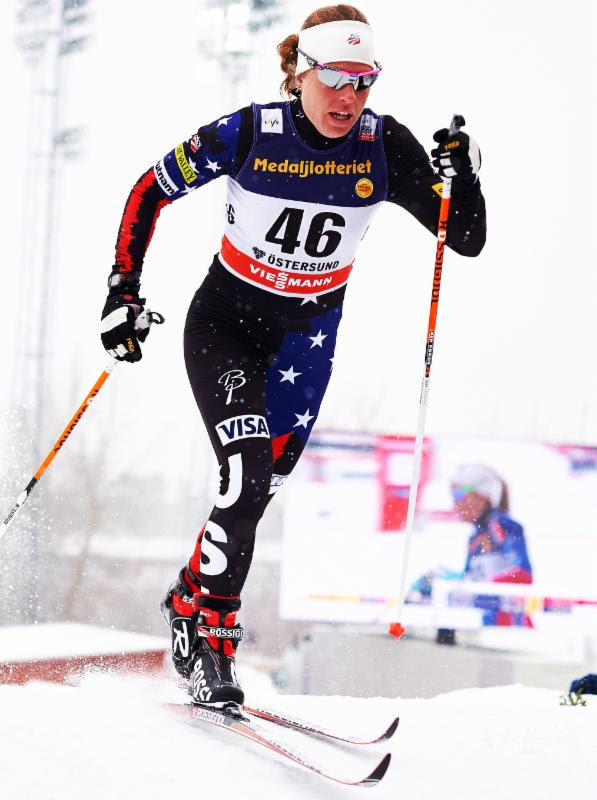
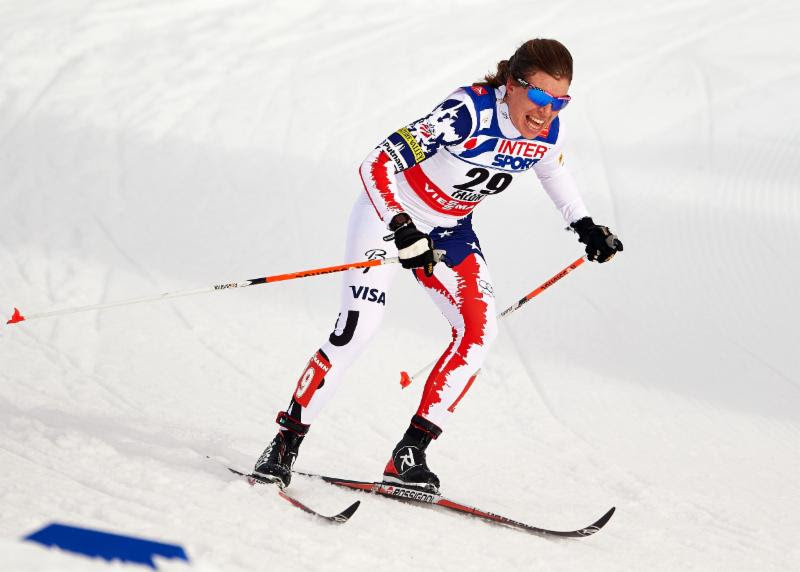
    Samantha Smith (USA) racing the World Cup individual sprint in Goms (SUI). (Photo: Modica/NordicFocus)

    The Final Four — and Then the Sprint Start Line

    The most astonishing part of Smith’s season is its timing.

    If Stanford beats Duke on Friday in Kansas City, they move directly to the College Cup championship game. The semifinal is December 5th; the final is December 8th, Monday. Smith has already mapped out the days that follow.

    “We’ll get back Tuesday night from Missouri… I have a final at 8 a.m. Wednesday morning,” she says. “I’m going to fly out right after my final, and then I’ll have one day of snow on Thursday in Alaska, and then I’ll be hitting that sprint on Friday.”

    She says this calmly, matter-of-factly, like someone describing a standard weekend trip.

    The Anchorage SuperTour sprint is not just any race—it is her re-entry into skiing, her first day on snow of the season, and a crucial tune-up before U.S. Nationals in Lake Placid, where she hopes to qualify for the Olympic team.

    The Anchorage races, she says, are not performance indicators—they are simply a way to “bust the rust off.”

    “Obviously, a lot of other skiers will have been on snow for well over a month, and I won’t,“ she says. “It’ll just be an opportunity to get on skis, do something fast.”

    Her real focus is the 10-day window between Anchorage and Lake Placid.

    “For me, as more of a sprinter, and the way the criteria is set up, I’ve got to target the qualifiers,“ she says. “So being really deliberate… knowing exactly what I’m going for.”

    The stakes are simple: she must race well at U.S. Nationals to have a shot at Milano-Cortina.

    The stakes are also massive.
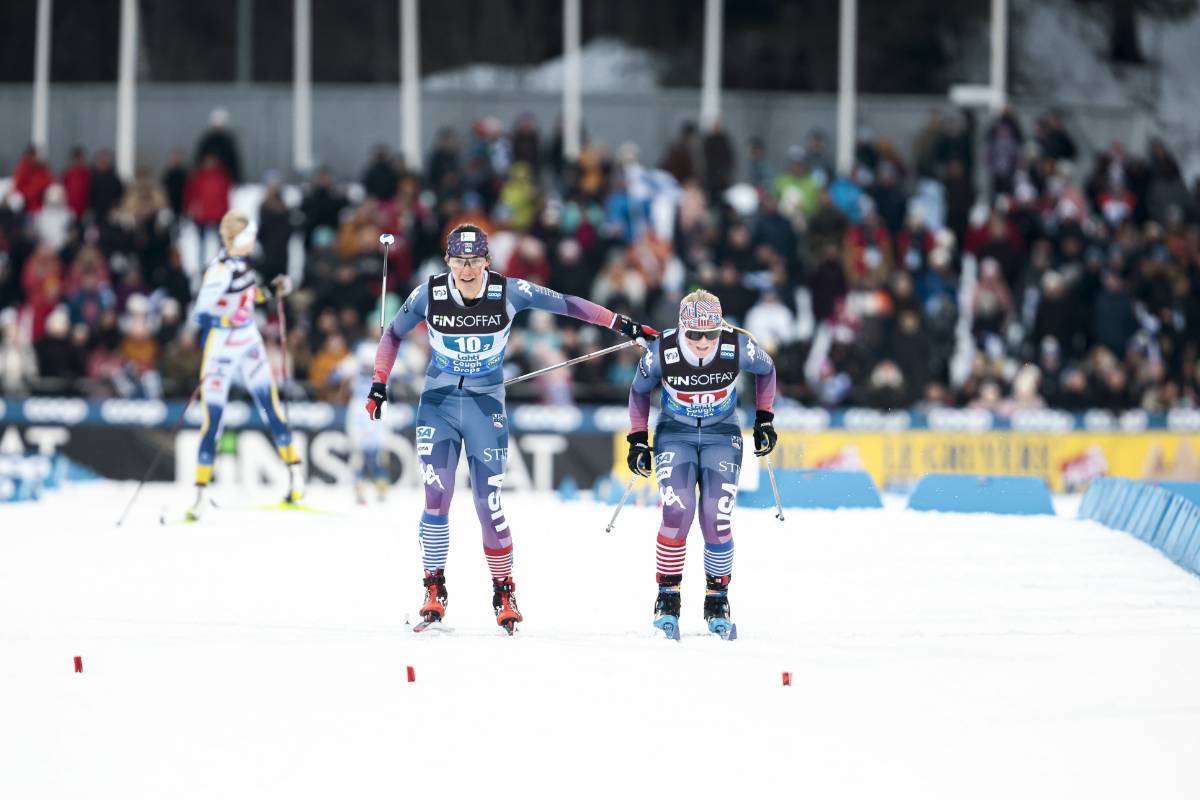
    Julia Kern and Sammy Smith paired up for the Team Sprint in Lahti (FIN). (Photo: Nordic Focus)

    The Domestic Gamble

    If Smith had a regular ski season—if she weren’t in the NCAA Tournament—she might have chased World Cup points, fought to crack the top 45, and used international racing to establish selection priority.

    But that route is closed.

    “If you’re only racing a few of the international races, it’s incredibly challenging to get into that top 45,“ she says. “Whereas if you were able to do all of them, it’s a lot more feasible.”

    She knows she has “had some really good World Cup sprints,“ and she wonders—without bitterness—what might be possible in a different academic or athletic setup.

    But this year, it is the domestic route or nothing.

    “That’s what I’m planning on,“ she says. “I need to have some killer races at U.S. Nationals.”

    What sounds like a gamble is, for her, simply the version of the sport she can access this season. And she is okay with that.

    “Just being consistent… being intentional,“ she says. “Doing what I can.”

    Who She Wants to Be

    Ask Smith what success looks like decades from now, and she doesn’t list medals or championships.

    “You look at Jessie’s legacy,“ she says, referencing Jessie Diggins. “The amount of skiers she’s inspired and how much she’s done for the sport… I want people to look back on my career and feel like I’ve done a lot for the sport, inspired the younger generation of skiers, and brought a lot back to my community.“

    It is the kind of answer that feels too mature for her age, but entirely in character.

    She is not racing to avoid mistakes—she is racing toward something: possibility, growth, a long future. Maybe a future on the World Cup. Maybe a future in engineering. Maybe a future doing both.

    But first, she has Duke.

    Samantha Smith (USA) racing the World Cup individual sprint in Minneapolis (USA). (Photo: Modica/NordicFocus)
    Samantha Smith (USA) racing the World Cup individual sprint in Minneapolis (USA). (Photo: Modica/NordicFocus)

    The Athlete You’ll Watch Twice This Month

    When you tune in this Friday—whether you are a Nordic diehard refreshing live timing from Trondheim, or an American fan checking SuperTour results—remember that one of the most important U.S. prospects in cross-country skiing will be competing too. She just happens to be wearing soccer cleats instead of ski boots.

    And next week, she’ll be back on snow, sprinting against the country’s best, staking her claim for a place on the Olympic team.

    The duality is not a distraction for Sammy Smith.

    It is her identity.

    It is what built her.

    And it might be what carries her into the future of American skiing.

    “She’s been playing a ton this year,“ Whitcomb says. “Of course, we want her all to ourselves… but we want more down the road, and we’re excited for it.”

    This weekend, she wants one thing: a berth in the College Cup Final.

    Next weekend, another: a ticket to the Olympics.

    Two worlds.

    Two uniforms.

    One athlete.

    A lot of people will be cheering for Sammy Smith this month. Nordic fans just get to do it twice.


    *You can watch #1-ranked Stanford vs. #2-ranked Duke in the women’s College Cup semifinal tomorrow, Friday, December 5, at 8:45 p.m. EST on ESPNU. The game can also be streamed on the ESPN app, Fubo, or Hulu.


    Love Stories Like This? Help Keep Them Coming.

    Feature interviews like this one take time, access, and care to produce. If you value thoughtful storytelling and independent ski journalism, please consider becoming a Voluntary Subscriber. Your support directly fuels the work we do to cover the people, places, and moments that make our sport special.

    Join the FasterSkier community!


    Sammy Smith (USA) in the World Cup individual sprint in Tallinn (EST). (Photo: Modica/NordicFocus)
  • Q and A: Sun Valley’s Rick Kapala on coaching, sport development, and constructing a “complete ecosystem” in the skiing community

    Q and A: Sun Valley’s Rick Kapala on coaching, sport development, and constructing a “complete ecosystem” in the skiing community

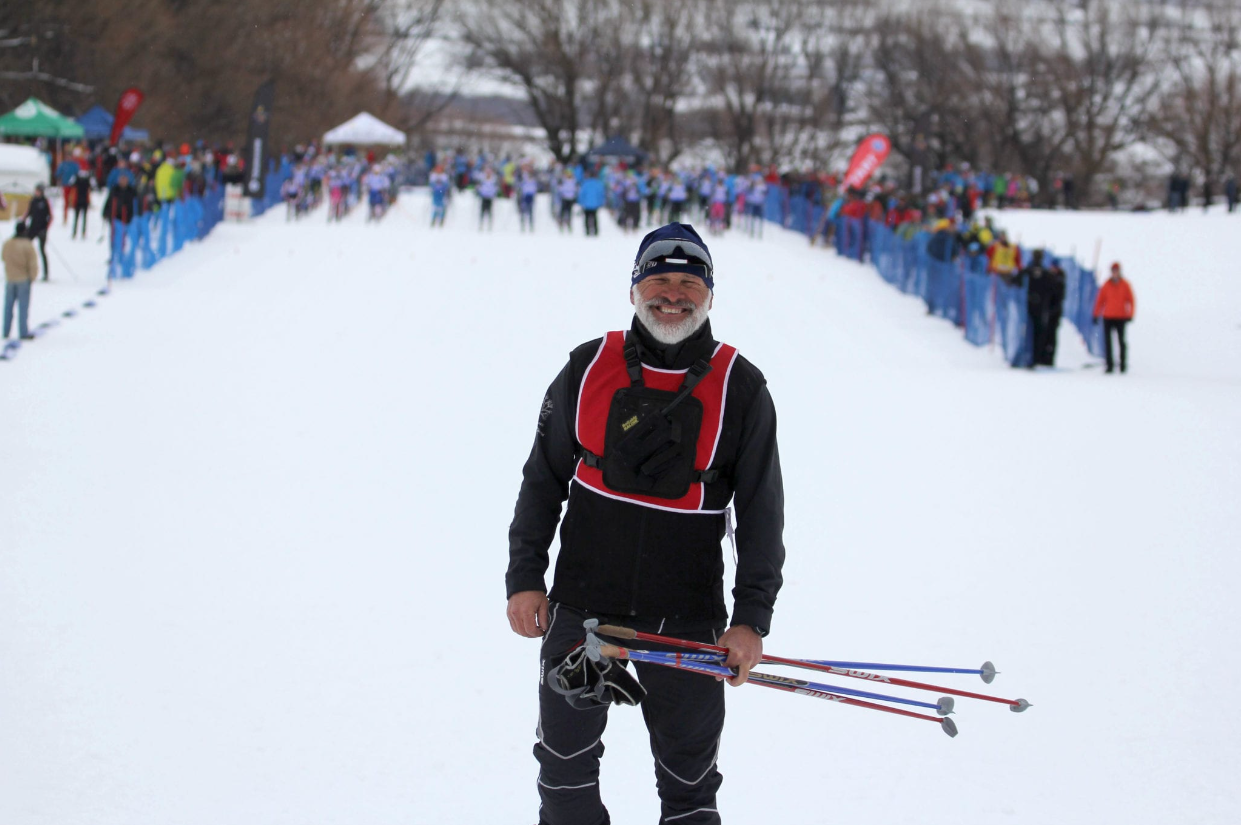
    A common sight in the Intermountain West for the past 35 years: Rick Kapala on race day. Kapala is stepping away from coaching, and into sport development, this season. (Photo: Sun Valley Ski Education Foundation – SVSEF).

    “I’m sorry, but once I start talking cross-country skiing, I can’t stop,” admits Rick Kapala. Remove the “talking” from that statement, and it’s still a succinct summary of long-time Sun Valley coach Rick Kapala’s career.

    This season will mark the first time in thirty-five years that Kapala won’t be manning the wax bench on race day for the Sun Valley Ski Education Foundation. This summer, he turned to a new role at the Sun Valley Ski Education Foundation with the title “Sport Development Director.” In his stead, former Bates College Coach Becky Woods will take over his former Program Director duties.

    For those who have known Kapala during his long tenure in US skiing, his new title signals an exciting prospect. Kapala has been a constant, forward-thinking mind in US Skiing. He has played a role in creating a domestic professional skiing scene, helped start the National Nordic Foundation, and counts a plethora of key figures in US Skiing as his former athletes, coaches, and mentees.

    FasterSkier caught up with Kapala to reflect on his own journey to this point and get a glimpse into some of the most exciting ideas pushing US Skiing, from one of its most passionate minds.

    (This interview has been edited for length and clarity.)

    FS/FasterSkier (FS): Let’s start with your biography as a coach. Can you give us a summary of your career as a coach and at Sun Valley? 

    Rick Kapala (RK): Coaching for me started at my alma mater, Michigan Technological University (Michigan Tech), the year I graduated. Then I moved out west and I coached for a couple years in Washington state at a club program run by Pacific Lutheran University.

    Then I moved to Anchorage which was where I was really fortunate in my timing. I landed coaching at West Anchorage High School as their ski coach, track, and cross-country coach. And the stable of athletes I had there was full. Nina Campbell, Joey Caterinichio, and Chris Grover are just a few your readers might know. I was really lucky that was my first exposure to sort of an “all-in” type coaching job. Then I came down to Sun Valley in the summer of 1987 and have been here ever since.

    FS: What did the Sun Valley team look like when you got to Idaho?

    RK: We had a pretty good little program, this being the ski town that it is. The Alpine program was big, but the cross-country team was this small, ancillary program. We had seven to nine on the high school team, and then seven or eight middle schoolers.

    FS: How did you approach building out that program back then? Was it adding a younger development program? Bolstering numbers for the high schoolers?

    RK: There was a separate, kind of “Bill Koch League” (learn-to-ski) type program in the Valley. We assimilated that and made it our Devo program under the umbrella of our offerings. The program immediately began to grow from there. I attribute that to having really good coaches at that younger age who were really invested in the right way over the course of the first four or five years I was in Sun Valley. That eventually led to steady growth for the Comp (high school) program. That model is the basic infrastructure of a club. The same can be said about New England with the Bill Koch League, or in Minneapolis with the Minnesota Youth Ski League. Really dedicated coaches at the younger level are what end up powering competitive programs.

    FS: At what point did Sun Valley grow beyond the junior programming? When did the Gold Team (Sun Valley’s Pro Team) and Post-Grad programs start to develop?

    RK: The genesis of the Gold Team was a really fortuitous set of circumstances. We had a great coach, Chris Grover (who Kapala had coached at West Anchorage), landed in Sun Valley after the Nagano Olympics in 1998. He had been with the national team, but at the time there were budget cuts. Grover, coming off of that, had a pretty profound instinct that skiing couldn’t just develop within the [United States Ski and Snowboard Association]. He came to me and said, “we should start a pro team [in Sun Valley],” which, in retrospect, was such an important development because it allowed us to imagine a whole new ecosystem for our programming.

    Having Grover come off of the national team also made it an easy prospect to get athletes here. Chris Cook, for example, got cut loose from the national team, and Grover was able to step in and give him an obvious avenue to keep pursuing professional skiing. That was key—having an avenue to go down. Cook won a national championship the first year he was at Sun Valley, and then made it to the Olympic Games.

    That was a part of the fortuitous nature I talked about too. That the next Olympics were in Salt Lake City [in 2002]. The Gold Team was originally the Olympic Development Program—we got told eventually we couldn’t use that name, but it gave us a lot of visibility from the community here in Sun Valley, and a clear “brand” for talented skiers to know what they were pursuing here.

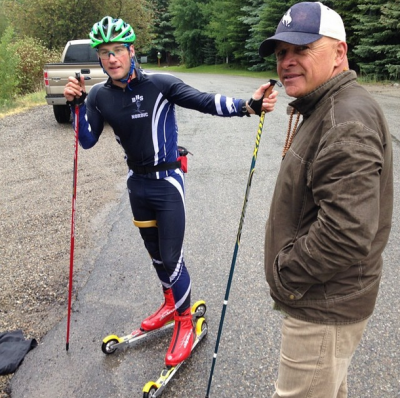
    Ben Lustgarten and Rick Kapala at a SVSEF training session in 2014 (Photo: Ben Lustgarten).

    FS: What strikes me as interesting about that “fortuitous” timing is that there was a push around US skiing at the same time Sun Valley’s team got started to have those Olympic Development programs around the country, but most of them weren’t nearly as sustainable as Sun Valley ended up being. In the past few years, we’re seeing a renewed push to introduce more pro racing opportunities across the country, whether that’s Bridger Ski Foundation’s team in Bozeman, or Team Birkie in the Midwest. What are some of the things that have made Sun Valley sustainable that could help make those programs sustainable as well?

    RK: Whenever I get a question like this, I always start with a disclaimer. Sun Valley is a really unique place that affords us some big advantages when it comes to building and sustaining new programming. We have one of the richest traditions of skiing in the country, and it is still a ski town—it hasn’t sprawled out in the same way that other places have. It is also a fairly affluent community.

    The industry here is skiing too, that always is going to be an advantage. We have an outsized role in our community because of that. When we roller ski in the summer, people are cheering on our kids, that’s not happening in other places, right?

    I think we have had to center our approach around the idea that we are a community asset here. We try to have success, just like any sports team, but what we are really trying to be is the highest-quality recreational and competitive opportunity for kids in our valley. That gives kids the resources they need to take skiing as far as they can. Whether that was Morgan Arritola, or now Sammy Smith and Cora Faye Scott. They all came through a program that at the start was really a way to get out and involved in our community and kept true to that impetus. Naturally, that is going to engender warmth and engagement from outside of just the ski community. There is also making sure that the talent that is coming through the Gold Team, for example, is able to invest in the wider community here. We need to make sure they have the chance to do that. And they have.

    I am not saying the model here is the model everywhere. What the Loppet Foundation has done to make skiing the big deal it is in Minneapolis—that’s phenomenal—they figured out how to balance programming, events, and facilities in a way where kids might just want to go skiing on Sundays rather than watch the Minnesota Vikings play football. And not every kid will, but they have the option to and feel like it is worth it. That is so important.

    Or in Anchorage, right, skiers are on the front page of the newspaper. That’s a big deal. It is the same in Sun Valley, and I think that speaks to creating a community ecosystem that celebrates and invests in skiing.

    FS: I am struck by how the skiers that the Gold Team has a pretty consistent mix of kids from your junior program and from other programs across the country . . . 

    RK: That’s super intentional. There just needs to be a critical mass to be able to inspire and also, provide a high-quality training environment. Johnny Hagenbuch, right now, for example: when he got to a point as a junior, having the Gold Team for him to hop into for training made a big difference in his development.

    FS: With regard to “development,” we haven’t covered your new position in detail. You’re moving from individual athletic development to a more club-wide role. What does that look like in Sun Valley, and how do you see what you’re doing in Sun Valley pertaining to US Skiing in general?

    RK: Well first, I don’t want to say I have answers beyond the community here. I think keeping my focus here is really important.

    My new position as “Sport Development Director” is multi-pronged. I’m still doing the resource development for the Nordic Team and coordinating events like the upcoming SuperTour. Then, there are a few other initiatives that follow along the lines of thinking, “what is the next thing?” in sport development. One of those is coach education. In our organization [at Sun Valley] we have about one-hundred coaches on the payroll during the season. Right now, the coaches certification process they go through is kind of transactional with US Ski and Snowboard, right? Meaning they take this coaches’ course and maybe do a continuing education credit, but that might be it. One thing I think is big incongruency in [American] skiing right now is that we work on cultivating a growth mindset for our athletes, but we don’t have the same mentality for our coaches, let alone the resources to make it possible. I think that’s where we need to go. Like Doctors have the American Medical Association, we need to have an organization—or use our existing organizations—to cultivate a culture of what I’d call “professional development.” As a ski community, we’re past the point where we are simply hiring people to coach based on the merits of their skiing. I think it is a positive development that it is a distinguishable profession, but now we need to do the work to not make it a profession where everyone is kind of self-educating.

    Kapala out in the Idaho mountains in 2022. (Photo: SVSEF).

    FS: I’ve been thinking about that a lot the past few weeks, coming off of the National Coaches’ Symposium and off of Dr. Stephen Seiler’s talk with NNF last week (which Kapala was partly the brainpower behind). My operable knowledge of physiology as a coach up to now was based on what I learned at an REG camp presentation as a sixteen- or seventeen-year-old kid, and all of a sudden it was like, “whoa, this whole field has evolved a bunch” and I came away with three or four things I was ready to change in my coaching right away . . . 

    RK: Yeah, and that coaches conference happens what, every two years? Imagine if we made that part of coaching culture. That collaboration and knowledge-sharing: it is imperative. I’ve been paying attention to the system of coaching in international soccer, for example, where American coaches are going over to Germany and realizing just how beneficial the structure and rigor of coaching education is over there.

    FS: As in, the accreditation system?

    RK: Not so much the accreditation, but more so just how seriously they invest in all the individual aspects of sport development. Like this American soccer coach I was listening to a podcast with [Jesse Marsch, who came up through the German coaching system and now is the first American coach in English Premier League history with Leeds United]. He said he had a year-long course in sports psychology just to get accredited in Germany. We are no year to making that investment in something as beneficial as that.

    One of my other initiatives is on that front: I’d like to create a dedicated professional position at Sun Valley who can work with our athletes on sports psychology and wellness. We have always been great at catering to the physical aspects of our athletes, but not the emotional, or just human, aspect of human athletic performance.

    FS: Putting the resources to institutionalize new developments in athletic performance seems to be a theme of your work. I ran across an article from our archives where you talk about making training camps, like the U16 camp system, a regular part of the developmental pipeline in the US. That was a decade ago, and now, that’s well-established across US skiing. Is sports psychology and wellness the next front for that you think?

    RK: The U16 camp idea was a collaborative idea that came from a couple coaches at REG camp being like, “this is a great system, why aren’t we expanding this type of incentive and experience to kids at the crucial point where they decide to go all in on skiing or not?” And we could do it quickly with relatively few resources. That is the same thing with wellness and catering to that aspect of our athletes. I actually think it is even more important in the American context, too, because we’re correcting for that persistent “toughness” or “suck-it-up” mentality that is a feature in our athletic culture. That has never worked when you look at skiing.

    FS: It was interesting that in Johan Olsson’s presentation at the National Coaching Symposium a couple weeks ago, he cited a study on [UCLA’s legendary basketball coach John Wooden] where the main finding was essentially that his main feedback to his players was positive, rather than negative; that was a revelation in the 1970s.

    RK: Yeah, and then a couple years after that, [Indiana University basketball coach] Bobby Knight was throwing chairs at his players! Somewhere it got lost, and so we still have to address it in the landscape of our coaching.

    FS: Is the answer doing more coach education and dedicating resources to making it part of our clubs?

    RK: Yes, I also think it goes to a base-level of empathy. One of the cool things about skiing now versus when I first started coaching is that there is a critical mass of people—coaches or even just parents of athletes—who went through all the highs and lows of ski racing as athletes themselves. We have a depth of knowledge present in skiing that just did not exist in the 1970s and 1980s, and it is so helpful as an athlete to not just have one coach, but a support network, that can help you navigate a really hard, and really rewarding sport. That is special, and we have that going for us.

    FS: How do you incorporate that experience into the practice of coaching?

    RK: I actually think it is a community thing. Which enough individuals working together is always going to lead to. At the end of the day, that is what we have that is special. I’ve been in this game long enough to see how skiing connections last. Our kids meet other kids from across Intermountain West at JNQs, and they go on to become their friends, neighbors, teammates later in life. It just lasts.

    I think about what drives our community to do this sport a lot. There’s certainly not a lot of money in it, and there is not the capital of a lot of Division One college scholarships on offer. I think the ethos of it truly is that the people in cross-country skiing love it deeply. Love it individually, and together.

    FS: That’s a beautiful way to say a really true thing. Just to try and collect some of the themes I am seeing run through this, the “Rick Kapala” philosophy towards skiing development seems to include a community powered by that ethos—that love of skiing you talk about—that provides a “complete ecosystem” in terms of the resources needed for athletes to succeed. And you seem to be very careful to say that needs to match the specific context of the place in which the ski community exists.

    RK: I think that is fairly well put. The levers we can pull in Sun Valley are different than what those in Minneapolis—or you in Crested Butte—can pull. So you have to be collaborative and observe what works and what doesn’t in the place you are, and then take in knowledge from other places too. That’s how we ultimately make skiing in this country go ’round.

    We can’t just do what the Norwegians or Swedes are doing. We have to think about how we do things soundly, but differently. We have been successful in doing that to some extent, but there is always room to improve—which was the most important lesson of my coaching career.

    FS: And that’s the most important thing you’re now bringing to development?

    RK: For sure.

    Long-time SVSEF XC Program Director Rick Kapala. (Photo: SVSEF)
  • “Coming Together Gives Us All A Lift.” The Power And Purpose Of Bob Rosso

    “Coming Together Gives Us All A Lift.” The Power And Purpose Of Bob Rosso

    TR factor.

    It’s facing all of us. It is just that not all of us factor in time remaining in our day-to-day lives.

    For Bob Rosso, the TR factor has been a constant and longtime motivator in how he lives his life. And since receiving a diagnosis of dementia three years ago, Rosso leans hard into this formula, endeavoring to live, love, and enjoy life. We could say even more than he did before, but it is impossible. If enthusiasm has a poster boy, it is Bob Rosso – in full color.

    Now 75, Bob’s energy and zest for life remain at a full boil for a myriad of friends and interests. Or, in the phraseology and philosophy of Spinal Tap, “These go to 11.”

    Born and raised in Southern California, Bob grew up on Lido Island in Newport Beach.

    He recounts, “At that time, it was a classic little beach community. We, my older brother and younger sister were outside swimming and surfing day in and out. I did a little school on the side. I was an average high school student. I think I was playing so hard and doing so many sports in high school that I did not do as well as when I went to college. I really took off then.”

    Drawn to Long Beach State to compete for famed coach Don Gambrill, Bob became an All-American swimmer. Now in the Hall of Fame, Gambrill’s stable of swimmers is a veritable Calumet, with nine-time Olympic champion Mark Spitz, Matt Biondi, and Sharon Stouder-Clark, among others.

    Bob’s maternal grandfather founded Meeks Bay Resort at Lake Tahoe, and the family would spend every summer there. In the 50s and 60s, California’s wide-open lands offered glorious opportunities for skiing, climbing, hiking, surfing, and biking, and Bob embraced all of them, including rock climbing in Yosemite in the 60s. He funded his forays as a lifeguard on the Pacific Ocean for ten years during high school and college and working in a ski shop.

    “To this day, I cannot go someplace where I am not watching the water. It’s an instinctive thing. You never lose that sense of watching the ocean. I have had quite a few rescues when I have been somewhere else because people aren’t aware of what causes the currents and pushes you out,” Bob says.

    Bob was lured away from Southern California by the promise of an uncrowded winter nirvana replete with powder skiing and babes – in that order.

    “A lifeguard I worked with took the winter off and came back raving about Sun Valley. The powder skiing and lack of crowds appealed to me because I am a non-crowd type of guy,” Bob recounts.

    “I came up in the fall of 1971 and found a house for three other guys who would join me. I walked into the Country Kitchen, which was owned by Bob Doan and was kind of a hippie health food restaurant and started off as a dishwasher and ended up as a cook. Rob Kiesel and Bob Gorton of Boise started Snug Mountaineering, so I got a job with them, too.”

    In the early seventies, alpine ski racer turned nordic skier Rob Kiesel of Ogden was in lockstep with the famed Leif Odmark in changing the alpine-centric ski culture of Sun Valley to include cross-country skiing. Odmark founded the Sun Valley Cross Country Ski Center, and Kiesel approached the nascent Sun Valley Ski Education Foundation about expanding their junior ski program to include a cross-country ski program. He tapped his young climbing buddy, Bob, as his assistant coach.

    “I didn’t know anything about cross-country skiing at the time, including how to ski, but it was a whole lot of fun. A lot of the kids we had then still live in the community. That was 1972. Bridget (Sewell) Kapala nicknamed me Hummingbird Man because I was all over the place. I could never sit still,” Bob says with a laugh.

    You could say Bob hit the love lottery when he met Kate Karges, a student at Colorado State University in Fort Collins, who was camping with a friend in Adams Gulch when she and Bob met in the summer of 1972. They began dating, eventually marrying in 1977, and went on to have one son, Stephen, who is now a lineman for Lower Valley Power in Jackson Hole.

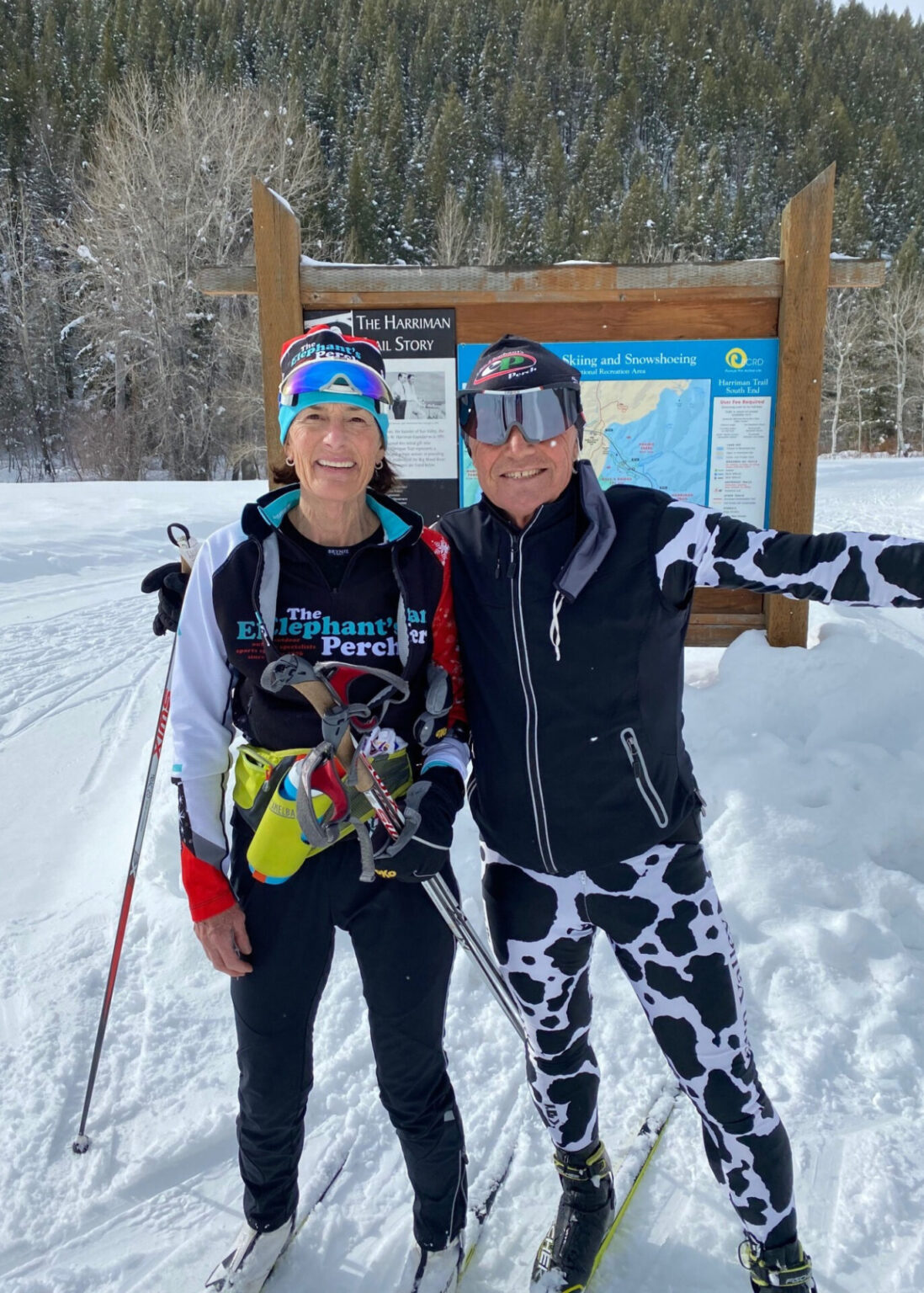
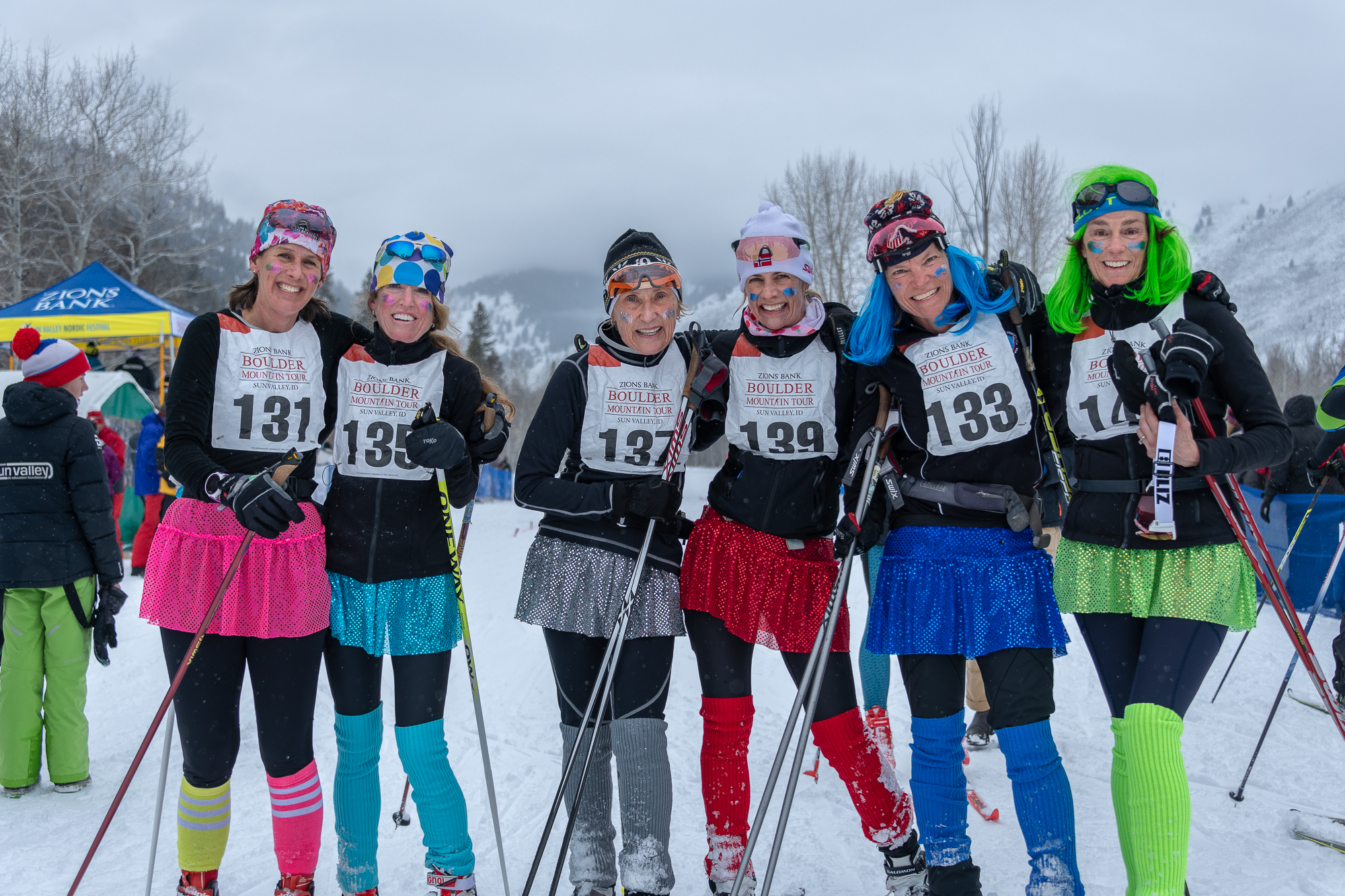
    Kate and Bob Rosso participating in the 2021 Virtually Amazing Zions Bank Boulder Mountain Tour. Photos by Nils Ribi.

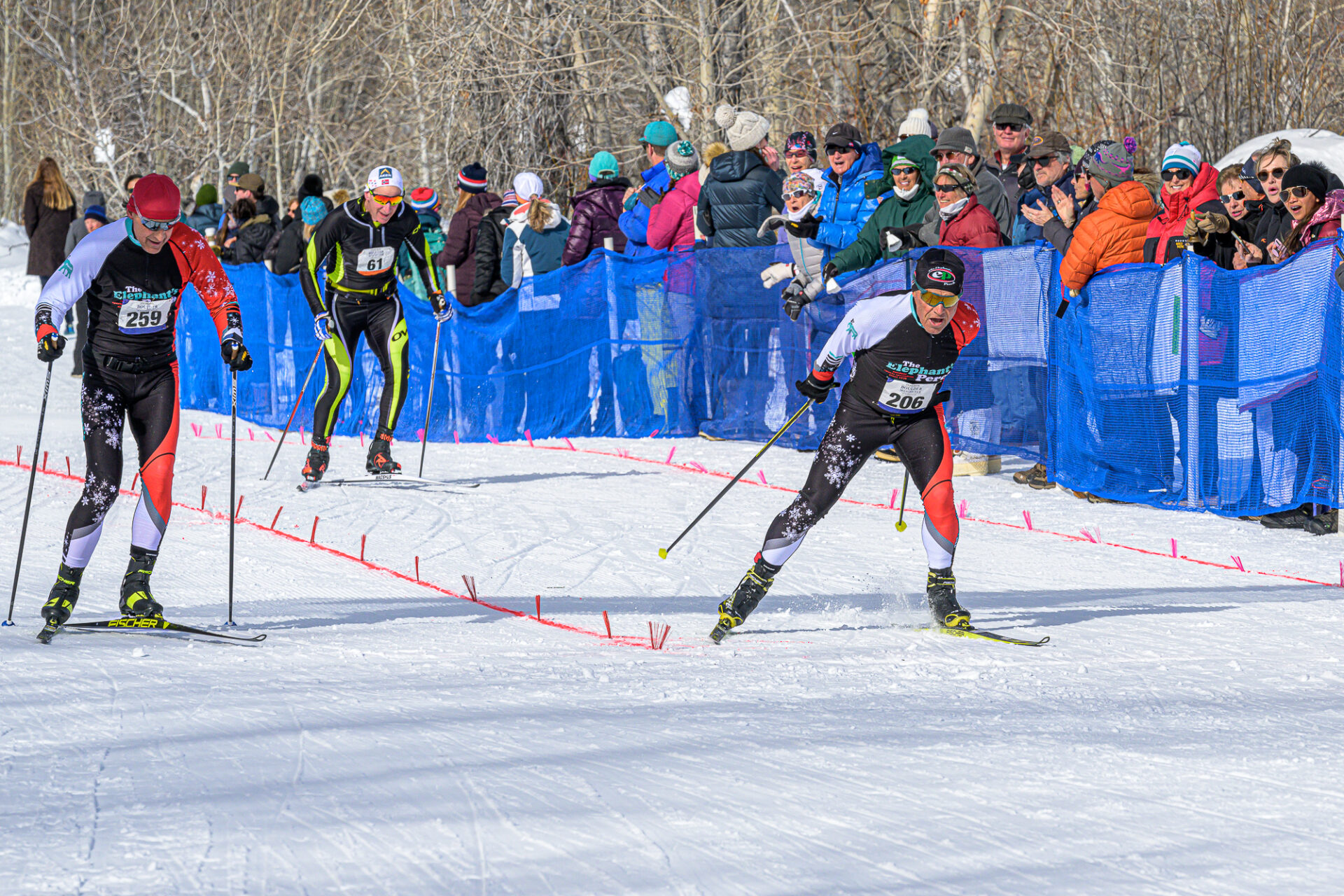
    Another endeavor Kiesel talked Bob into being part of was helping organize a race that turned out to be the Boulder Mountain Tour.

    “We set a classic ski course with a snowmobile along the berm on the highway. It was a complete blizzard the first year. You had to cross the highway five or six times, and it took three or four hours to complete the race,” he recounts.

    As with any labor of love, Bob has served in every possible role and worked every aspect of the race from Chief of Course, to board member, to construction of the finish area, to storing tents, equipment and water jugs at The Perch. There is not an facet of the race – then or now – that do not have Bob’s fingerprints on it. He even won the race in 1974.

    Once, while enjoying a post-event beer at El Torito Restaurant in Elkhorn, where Kate worked, Bob’s life took another fortuitous turn.

    “I was drinking a few post-race beers with Jim Bombard, the K2 rep at the time, and he said, ‘you have to open your own business.’ That planted the seed. That was early winter of 1975. We put together some money in two or three months and opened The Elephant’s Perch on April 1, 1976.”

    The pair drove to The North Face in San Francisco (they were friends of the men that started the company), loaded up $20,000 worth of climbing and mountaineering gear in the back of their truck, and never looked back. Well, maybe a bit, as the winter of 1977 was so dry the Boulder Mountain Tour wasn’t held, and 1978 wasn’t much snowier. But conditions – both weather-and-business wise – improved throughout the years, and in the 46 years the Rossos owned The Perch, it evolved into an iconic and valued fixture in the Ketchum community.

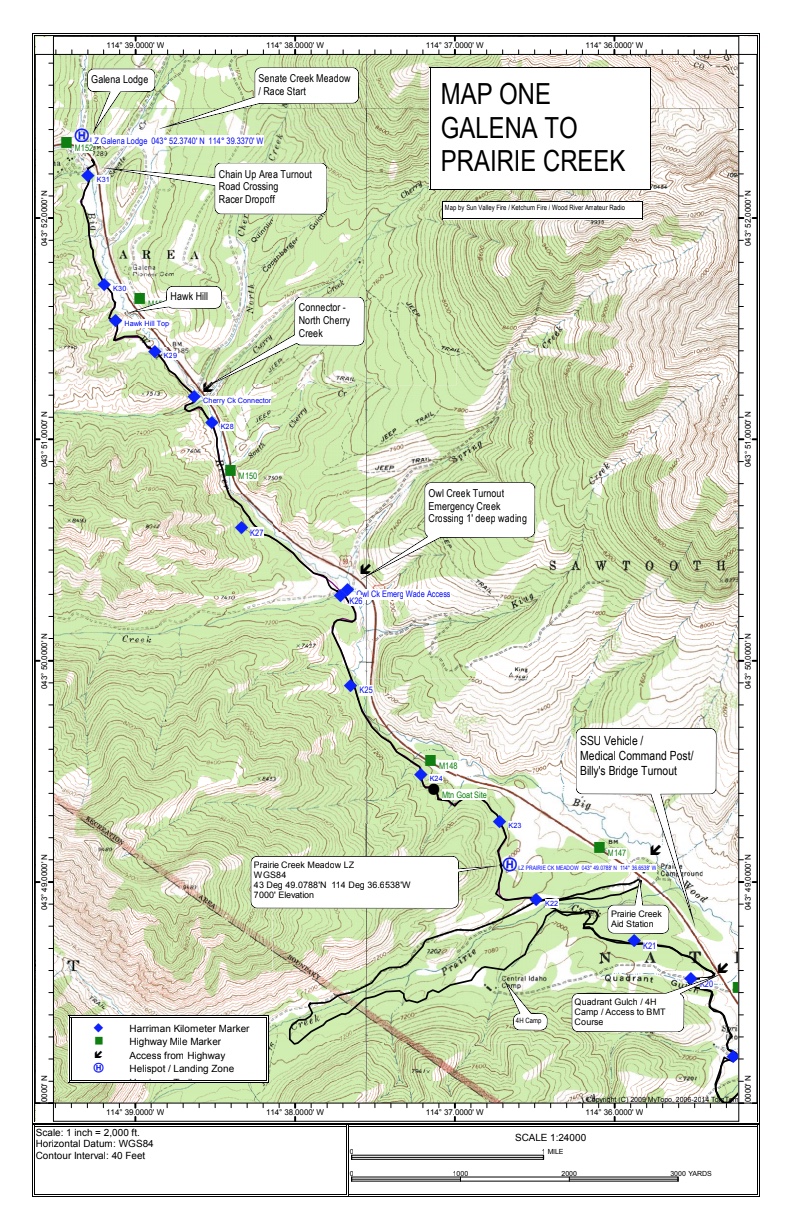
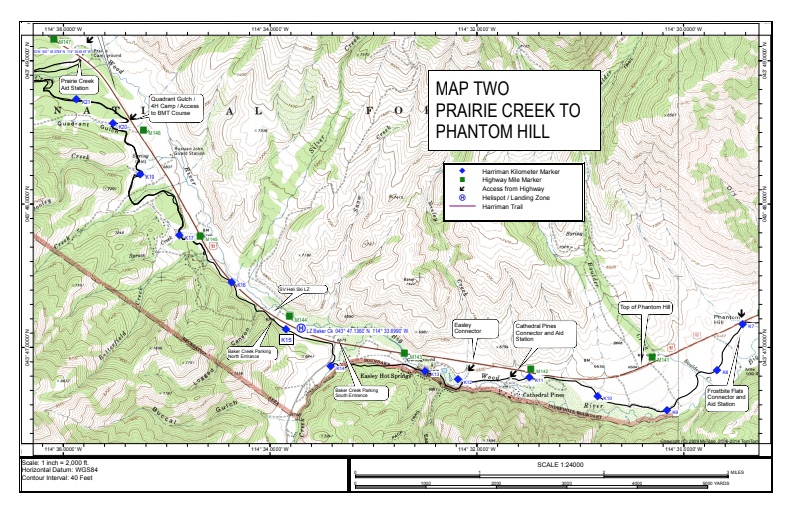
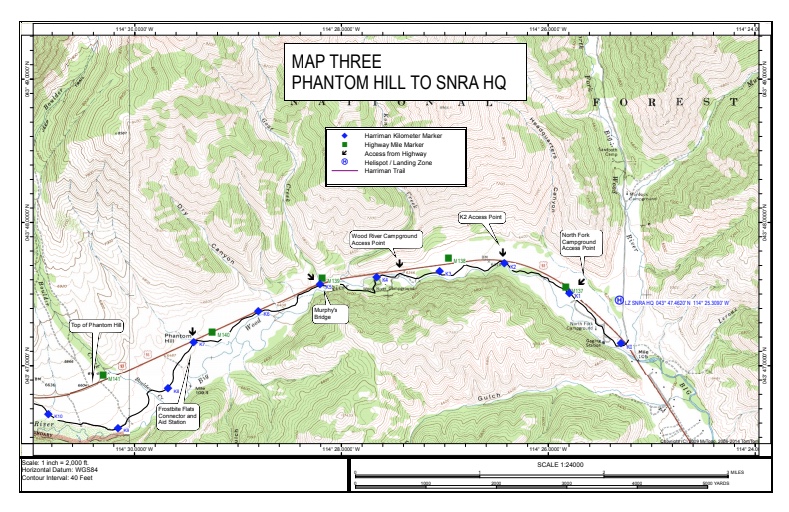
    Personally, Bob was and is a pillar of the community. A member of the Blaine County Recreation District’s board of directors for 20 years, he can count among his accomplishments permitting and building the bike path that spans 20 miles, Harriman Trail (in partnership with the US Forest Service), and the purchase and saving of historic Galena Lodge.

    Over the years, the Perch played host to upward of 20 events a year fueled largely by Bob’s interests. These include the Adams Gulch Fun Run, Backcountry Run, Shop to the Top, 10-Mile Run, Pin Binding Downhill, Classic Backwards Boulder Mountain Tour, Prairie Creek Snowmaker, Chamber Pot Relays, Baldy Snowshoe Challenge, Tri-Elephant-A-Thon Triathlon, Nappy’s Wednesday Night Rides, Town to Summit Road Race, South Valley Century Ride, Stanley to Lowman Overnight Tour, Ronde Von Ketchum 120k Bike Tour, Wagon Days Criterium, and sponsorship of the Boulder Mt. Tour, Galena Grinder and Snowball Special Fat Bike Race.

    Bob (right) and pal Kris Thoreson on the homestretch of the 2022 Zions Bank BMT.

    About six or seven years ago, Bob, Kate, and a few staff members began noticing differences in Bob. He needed help on the cash registers to ring up customers, or he would forget the steps to open the email. Trying to organize the events The Perch sponsored annually, such as the Adam’s Gulch Fun Run or Backcountry Run, became unwieldy.

    “There was a little bit of a dropoff,” Kate says. “His memory wasn’t quite as sharp. It took him longer to do things.”

    As with other highly-intelligent people who are able to compensate in other areas to deflect their cognitive decline, it wasn’t immediately apparent to Bob and Kate that he was in the early stages of dementia. In July of 2019, the pair attended a lecture on Alzheimer’s disease at St. Luke’s. They crossed paths with Randy Vawdrey, a certified nurse practitioner and researcher from Pocatello, who would be a key player in Bob’s efforts to stave off his memory decline.

    “He said that since Bob has both APO genes for dementia and Alzheimer’s, something could have triggered this,” Kate said. “Bob had two shoulder surgeries and general anesthesias before this…Randy said it could be a possibility.”

    They began working with Vawdrey and credited him and Dr. Amy Drumm in the Wood River Valley with – all things considered – the very good shape Bob is in now.

    “Some of the people diagnosed at the same time as Bob are not speaking right now. With Bob, there has been some decline, but it has leveled off. He takes a million supplements and tries to follow a Keto diet. Physically he is good,” Kate says. “I would say he can do more than 90 percent of what he could do. He is able to travel, and he is pretty happy, which isn’t always the case for people with dementia.

    Bob is succinct. “Hopefully, I am more in the moment. I am not upset about it – ever. This is how life is. This is what you sign up for.”

    Always a willing participant around the house with cooking, cleaning, and doing his own laundry, Bob endeavors to still try and help as much as possible. The pair recount when Bob recently filled up their fancy coffee grinder, and Kate made herself a cup of coffee.

    “It was really crappy coffee, and I took a closer look and realized the grinder was full of dog food. It doesn’t happen all the time, but when it does, you can’t help but laugh,” Kate says.

    They both say socialization is essential and seek out the company of friends regularly.

    “We were just in Boise with good friends from Southern California who have been friends for 50 years. We laughed so hard we couldn’t breathe. Those are the kinds of things that plug you in,” Bob says.

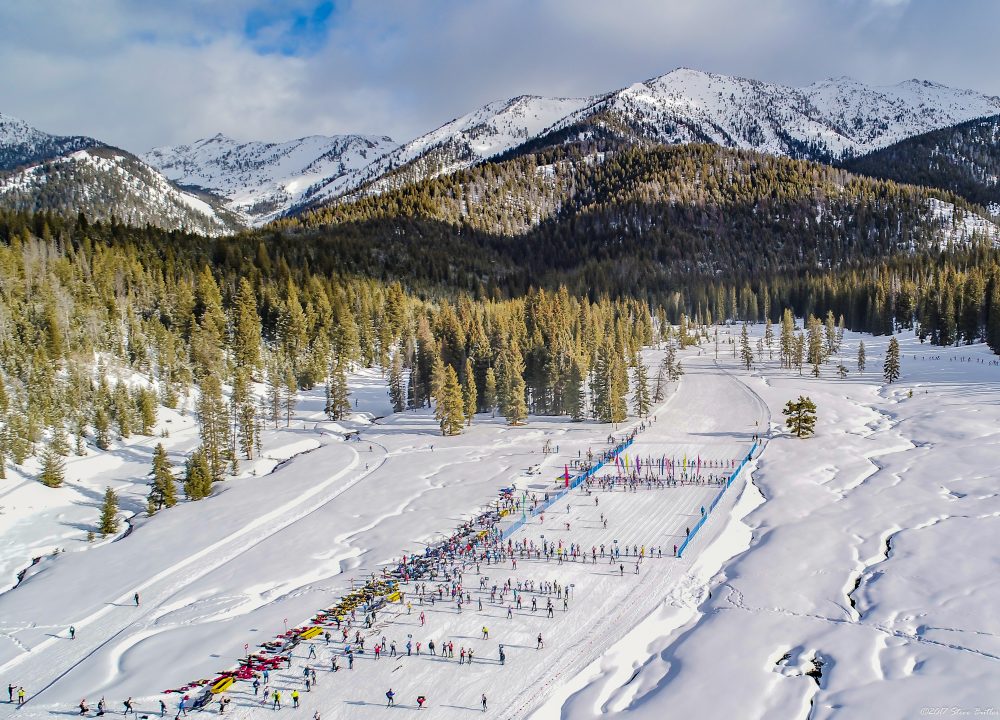
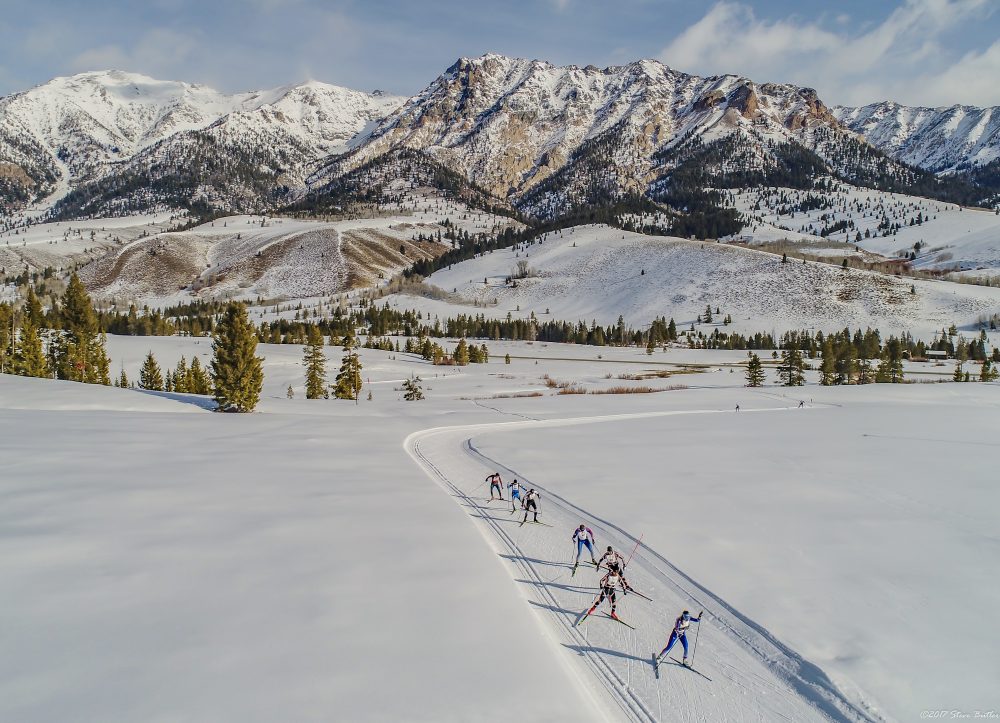
    As one of the founders and first organizer of the Boulder Mountain Tour, we felt it more than fitting to honor Bob at the event’s 50th anniversary on February 4, 2023. The fact that we are still skiing down the Harriman Trail on the first Saturday in February is primarily due to the efforts and inspiration of Bob Rosso.

    “What I love about the Boulder is the power of the race,” Bob says. “You have racers from the area, from Boise, from all over the United States, and they come together and have this unified experience, and the energy grows and grows into this very powerful thing.

    “Coming together gives us all a lift.”

  • (Press Release) SVSEF Welcomes Becky Woods as New Cross Country Program Director

    (Press Release) SVSEF Welcomes Becky Woods as New Cross Country Program Director

    Woods brings wealth of collegiate Nordic team competition, coaching and leadership to SVSEF 

    SUN VALLEY, Idaho – June 19, 2022 – Effective August 1, 2022, Becky Woods will step into the role of Cross Country Program Director at Sun Valley Ski Education Foundation (SVSEF). Woods comes to SVSEF from Bates College in Lewiston, ME, where she served as the Head Men’s and Women’s Nordic Ski Coach alongside additional leadership roles from 1994 to 2022.

    “We are thrilled to welcome Becky Woods to the team at SVSEF and to embrace her exceptional leadership and coaching experience at the helm of our Cross Country programs,” said Scott McGrew, SVSEF’s Executive Director. “Her proven ability to guide athletes in the pursuit of excellence both on the trails and in the community, along with her deep appreciation of the Nordic culture and the passion behind the sport, will make Becky a tremendous asset for our cross country teams and for our greater ski community in the Wood River Valley.”

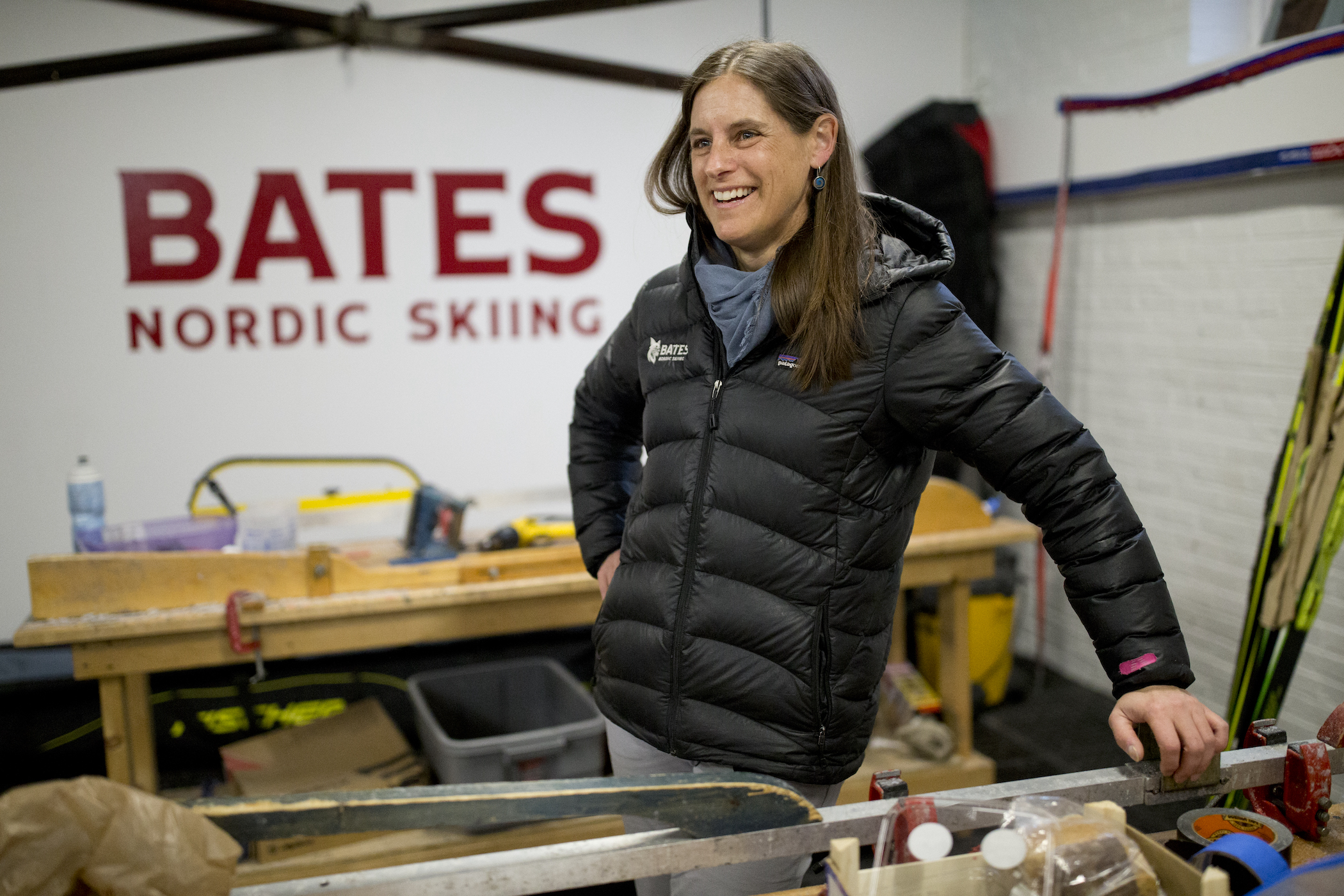
    After 28 years as head coach at Bates College in Lewiston, ME, SVSEF welcomes Becky Woods as the new Cross-Country Program Director. (Photo credit: Phyllis Graber Jensen/Bates College)

    Woods’ leadership as a collegiate coach, mentor, administrator, and teacher offer a unique skillset and balance to the Cross Country Program Director position at SVSEF. In her role as Head Men’s and Women’s Nordic Ski Coach at Bates College, Woods was responsible for leading and managing all aspects of a successful Division I Nordic Ski Program, while bringing staff, athletes, and volunteers along to carry out a clear mission as a top priority. She attributes much of her success in her career to fostering a culture of trust, respect, and support, and understands the importance of imparting a true love of skiing and a respect for the process it takes to be successful.

    “I am humbled to have the opportunity to lead this great group of SVSEF coaches and athletes,” said Becky Woods, incoming SVSEF Cross Country Program Director. “It is evident there is expertise, talent, and support within the organization—and a true sense of community. Having spent time in the Wood River Valley, I am honored and excited to become a member of the team and help SVSEF Cross Country continue to grow and excel as a ski community.”

    In Woods’ role as SVSEF Cross Country Program Director, she’ll provide program-wide leadership and day-to-day management while supporting the overall vision and mission of the organization. She’ll be instrumental in the successful recruitment, training, and retaining of a world-class coaching staff and the ongoing development of an athletic program that supports each participant in achieving their personal and athletic potential.

    Founded in 1972, the SVSEF Cross Country Program has consistently been recognized as one of the best in the country; most recently as the 2021 USSA Cross Country Club of the Year, and in 2022, the Junior Girls brought home their third consecutive National Championship team title. From the youngest Devo kids to elite athletes at the Comp Team, Post-Grad and professional level, our program is 250 athletes strong and steeped in Nordic traditions driven by a strong sense of family, community, competition, and camaraderie.

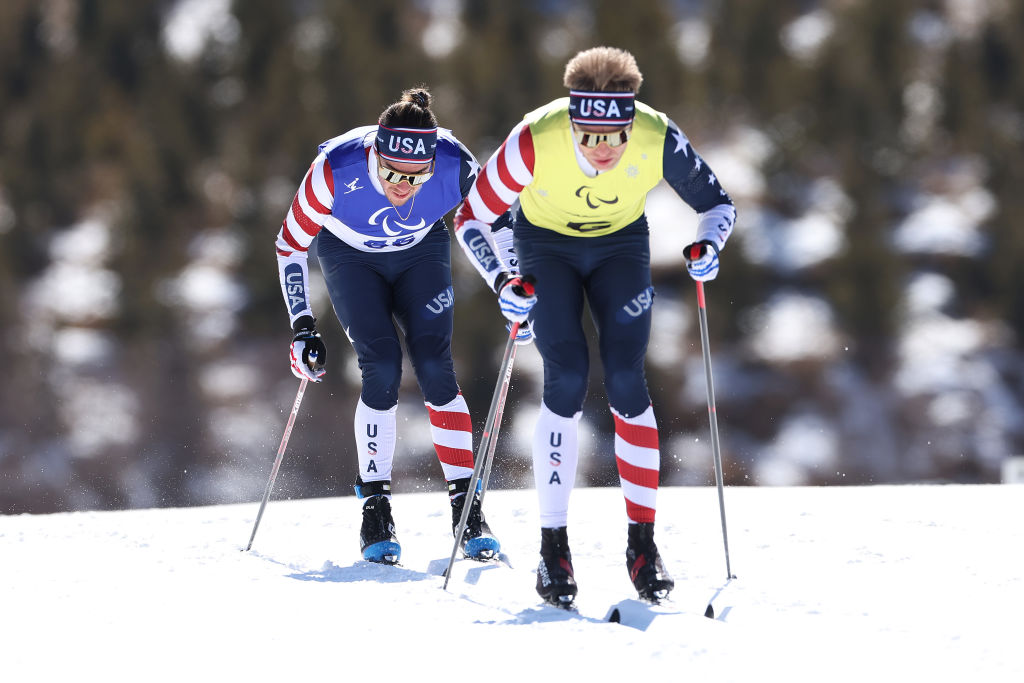
    Sam Wood helps guide Jake Adicoff to silver in the 20 k classic during the 2022 Beijing Paralympic Winter Games. (Photo: Mark Reis / Team USA)

    During the 2021/22 season, three members of the XC Gold Team competed in the Beijing Olympics and Paralympics, and two additional SVSEF alumni were named to the U.S. Cross Country Ski Team. For the upcoming 2022/23 season, five athletes from the SVSEF Cross Country Program have been named to the U.S. Cross Country and Para Nordic Ski Teams.

    For more information about the SVSEF Cross Country Programs, please visit svsef.org.

    About Sun Valley Ski Education Foundation 

    Since its inception in 1966, the Sun Valley Ski Education Foundation has been a longstanding pillar in the community, providing snowsport programs and offering academic assistance to support student-athletes in reaching their highest potential. SVSEF offers an array of programs for athletes ages five and up, from learn-to-ski and ride through FIS and other national and international-level competition. The organization offers financial assistance to families, so that anyone who wishes to may participate. For more information, please visit svsef.org. 

  • Nordic Nation: Inside the Athlete-Guide Dynamic with Jake Adicoff and Sam Wood

    Nordic Nation: Inside the Athlete-Guide Dynamic with Jake Adicoff and Sam Wood

    In this episode, we have Jake Adicoff and Sam Wood, calling in from Lillehammer as the duo races as athlete and guide at the Para World Championships. Jake is a visually impaired athlete from Sun Valley who grew up racing with the SVSEF cross country program and now trains with the Gold Team. He has raced at both the 2014 Paralympics in Sochi, and the 2018 Games in Pyeongchang, where he won a silver medal in the 10k classic, as well as placed 4th in the classic sprint and 5th in the 20k free. 

    Jake Adicoff and his guide Sam Wood put together a gold medal performance on the opening day of racing at the Para World Championships in Lillehammer, NOR. (Photo: Alex Livesey/Getty Images)

    Meanwhile, Sam is also a member of the SVSEF Gold Team, balancing his own training and race goals with his support of Jake this season. Sam finished in the top-10 twice in the opening SuperTour weekends this season, and was in the Top-25 in both distance races at the U.S. Cross Country Championships in Soldier Hollow. (Jake also raced, independently, at U.S. Nationals 

    While it has included career best results, this year of racing was not originally in Jake’s plans. He retired from professional skiing in 2018, heading to San Francisco to work as an engineer for Uber, having graduated from Bowdoin College that spring with a degree in Mathematics and Computer Science. When the pandemic hit, he began to work remotely from his parents’ house in Sun Valley (thinking it would be just for two weeks – remember that?) and ended up “casually” hopping into training with his friends on the Gold Team. With a few nudges from US Para Nordic and teammates like Sam, Jake began to realize he was still passionate about ski racing and quite fit again, and he began to set goals for the upcoming 2022 Paralympics. 

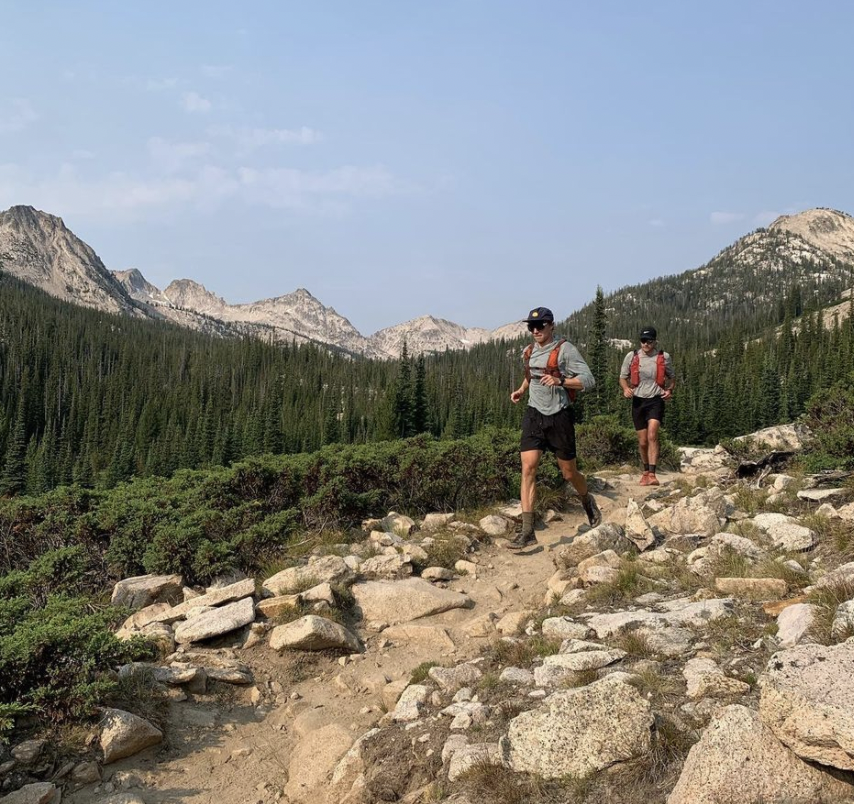
    Jake Adicoff follows Sam Wood on a long training run near Sun Valley, ID with the SVSEF Gold Team. (Photo: Instagram @svsefxcgoldteam)

    At the time of the call on Friday January 21st, Jake had already earned a World Championship gold medal in the 10k classic on Sunday the 16th, and a bronze medal in the 15k skate on Tuesday the 18th. The morning after the call, the pair raced to second place in the 1.5k classic sprint. Three races, three medals. This week made it clear that Jake is in top form and will be a medal contender in Beijing. 

    In this conversation, we get into the dynamic of the athlete-guide partnership, as well as how being long-time friends and teammates has contributed to their success racing as a pair this season. 

    Friends, teammates, and now athlete-guide pair, Sam Wood (left) and Jake Adicoff (right) keep it fun on a sprint ski near Sun Valley, ID. (Photo: Instagram @svsefxcgoldteam)

    To follow along with Jake’s racing this season, you can find race recaps with athlete quotes on the US Paralympics Nordic Skiing tab on the Team USA website, or follow the team on Facebook and Instagram.

    A quick heads up on the audio, you’ll notice a bit of crackling and some poor connection toward the end of the podcast. Thanks for listening.

  • Sun Valley SuperTour Rundown: Brennan and Norris Lead the 10/15k Mass Start Classic

    Sun Valley SuperTour Rundown: Brennan and Norris Lead the 10/15k Mass Start Classic

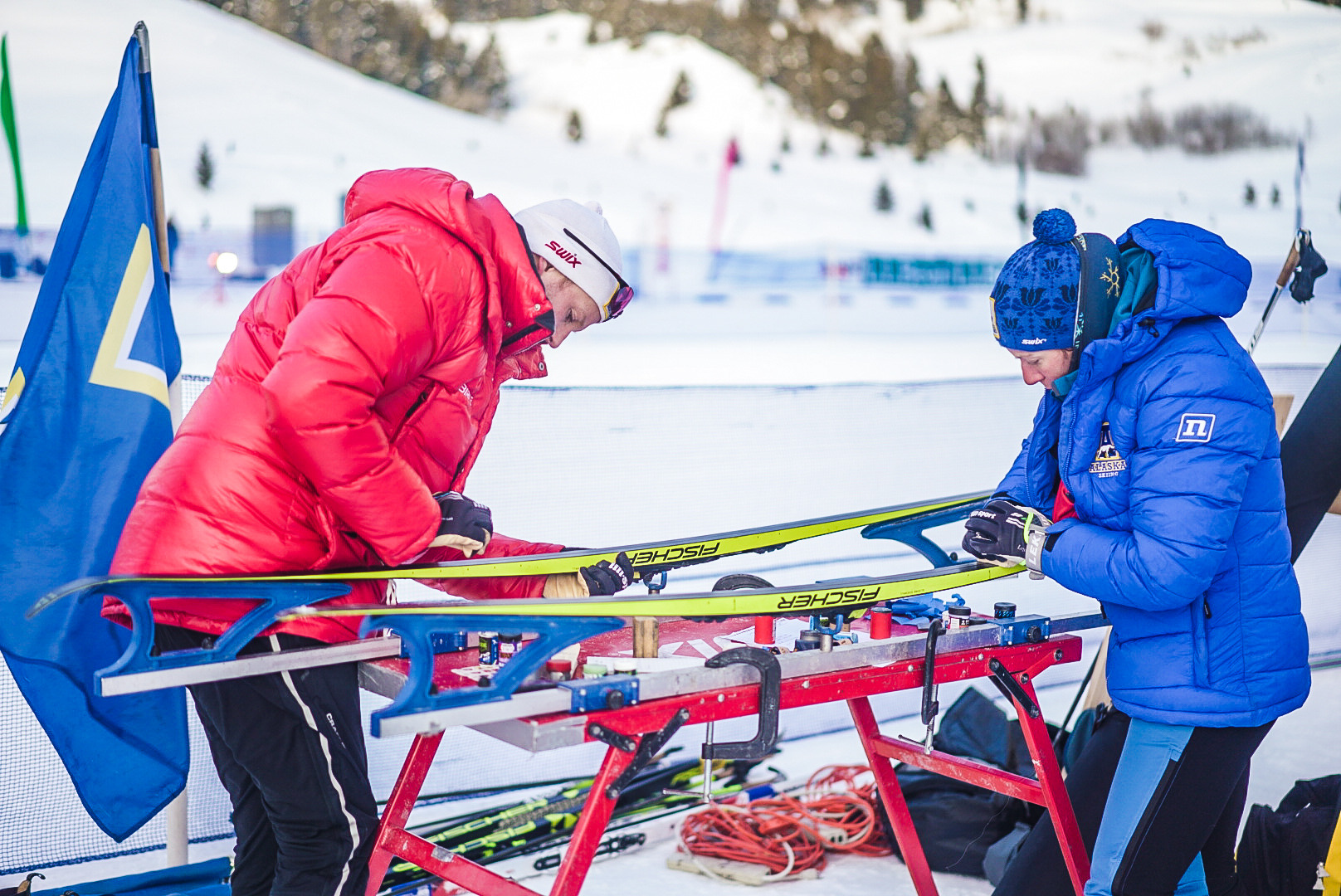
    The prepping of the boards: University of Alaska Fairbanks coaches prepare skis for their athletes at the 10/15k mass start classic races in Sun Valley. (Photo: Tobias Albrigtsen / @untraceableg)

    Quick Recap: We’ll have a full race report up tomorrow, including athlete comments and photos, but here is a quick recap of the action in the men’s 15k and women’s 10k mass start classic, which took place this morning in Ketchum, Idaho.


    The 2022 Sun Valley Nordic Invitational continued this morning with 10/15-kilometer classic races at the Lake Creek Ski Center in Ketchum, Idaho. While temperatures were warmer than at the start of yesterday’s skate races, it was still a brisk morning in Sun Valley, making for excellent classic racing conditions in the dry high-altitude natural snow. 

    The men kicked off the morning’s races, taking off in a mass start at 9:30am. Rebounding from sixth place in yesterday’s skate, David Norris (APU) took the win in 35:50.5, leading a train of teammates for an APU podium sweep. Hunter Wonders doubled up on his second place performance, finishing 8 seconds behind Norris. Wonders edged out Scott Patterson (USST/APU) at the line by 0.5 seconds, leaving Patterson in third. Ian Torchia (SMS T2) was next for his second fourth place finish of the weekend (+28.1), finishing in a three-way sprint with APU’s Zanden McMullen who took fifth (+28.2) and University of Denver’s Bernhard Flaschberger in sixth (+28.4).

    Flaschberger was again the top RMISA collegiate racer, with Sam Hendry of the University of Utah in second place (8th overall), and fellow Denver athlete Andreas Kirkeng in third (10th overall). 

    The opening meters of the women’s 10k mass start classic, with Rosie Brennan setting the pace in her blue APU race suit. (Photo: Tobias Albrigtsen / @untraceableg)

    From the looks of an SVSEF Gold Team Instagram story, Rosie Brennan (USST/APU) took the women’s race out hot. Following the theme of her domestic racing over the last two weeks, Brennan steadily grew her lead over the field, crossing the finish line in 29:35.3, nearly a minute ahead of her chasers. Katharine Ogden (USST/SMS T2) led the chase back to the finish to take second place (+55.4), with Novie McCabe (USST/U of Utah) close behind, again in third (+1:07.6). Rosie Frankowski (APU) was fourth for the women (+1:17.1), with Sydney Palmer Leger (USST/U of Utah) behind in fifth (+1:26.4), leading her teammate Sophia Laukli who finished roughly a second behind her in sixth (+1:27.2).

    This time with McCabe on the top-step, these three University of Utah women again swept the RMISA collegiate podium for the second day in a row.

    Full Results:

    Men’s 15k | Women’s 10k

  • Brennan and Hagenbuch Skate Away with Wins in Sun Valley SuperTour 5/10k Interval Start Free

    Brennan and Hagenbuch Skate Away with Wins in Sun Valley SuperTour 5/10k Interval Start Free

    By Rachel Bachman Perkins and Ben Theyerl 

    The final weekend of SuperTour racing in Period II, and the final weekend within the Olympic qualification window, kicked off Saturday at the Lake Creek Nordic Center in Ketchum, Idaho. Part of the 2022 Sun Valley Nordic Invitational, the SuperTour races were held in conjunction with a Montana State University RMISA event and an Intermountain XC junior national qualifier. 

    Highlighting the size of the event, there were 157 female athletes in the field. With 141 senior and U18 men racing in the 10k, and another 46 racing in the men’s U16 5k. Spanning all age groups, an additional 70 U14 athletes and another 18 U12 athletes raced a 3k and 2k course, respectively.  In all, nearly 400 cross country skiers, from Olympians to 10-year-olds in their first seasons on skis, made their way around the tracks in Lake Creek. 

    An athlete races the 10k interval start free on the Lake Creek trails in Ketchum, ID. (Photo: Tobias Albrigtsen / @untraceableg)

    As the World Cup events in Les Rousse, France and Planica, Slovenia were both cancelled due to rapidly increasing coronavirus caseloads with the omicron variant, several athletes who might have headed back to the World Cup for these events found their way to Sun Valley instead, meaning fields were more in line with the U.S. Cross Country Championships than a typical SuperTour. 

    On the women’s start list for the 5-kilometer individual start skate, which kicked off the weekend of distance racing, were six women who have spent at least part of their season racing on the World Cup: Rosie Brennan (USST/APU), Caitlin Patterson (CGRP), Katharine Ogden (USST/SMS T2), and three University of Utah athletes who are also members of the U.S. Ski Team, Sophia Laukli, Novie McCabe, and Sydney Palmer-Leger. 

    Likewise, the men’s 10k field included seven World Cup athletes: David Norris (APU), JC Schoonmaker (USST/UAA), Scott Patterson (USST/APU), Hunter Wonders (USST/APU), Zanden McMullen (USST/APU), Luke Jager (USST/U of Utah), and Zak Ketterson (Team Birkie). 

    Given Ketchum’s elevation of roughly 5,950’, approximately the same as the courses in Soldier Hollow, Utah and those Olympic team members will face in Ziangjiakou in February, the events provided another opportunity to spend time training at the elevation and to hone their approach to racing at altitude. Overnight lows in the single digits meant cold air and snow temps at the start of the women’s race, another important similarity to forecasted Olympic conditions.

    According to co-chief of competition Kelley (Sinnott) Yeates, livestream was not available during the Sun Valley Nordic Invitational due to connectivity issues along the courses. As such, FasterSkier’s reporting this weekend is based on live timing and the feedback of those on-site. 

    Of the course, Sun Valley native Johnny Hagenbuch provided insight into the 5km loop that was raced today in an email to FasterSkier: “The new courses at Lake Creek are very difficult: they essentially removed all the flat from the old course and replaced it with the biggest climb at Lake Creek.”

    Senior Women’s 5k Free:

    Without the ability to view the race and no intermediate splits in the live timing, the women’s race results left little room for suspense. Given her dominant performance in the 20k skate during the U.S. Cross Country Championships, it was no surprise to see Rosie Brennan’s name top the list. Brennan smashed the 5k loop, finishing in 14:28.6, a full 48.6 seconds faster than the next woman.  

    Rosie Brennan enjoys a wintery training day before the weekend of World Cup racing in Davos, SUI. (Photo: NordicFocus)

    “I decided to come to Sun Valley after the World Cups in France were canceled,” Brennan wrote to FasterSkier in a post-race email. “My coach, Erik Flora, has been up here all week with the rest of my APU teammates, so it made sense for me to come here to be able to work with my coach and teammates. That has been the total silver lining of the World Cups being canceled. Erik is not allowed to come to the Olympics, but is my personal coach and someone who I trust and value immensely, so getting this extra week to work on things with him has been such a welcome surprise.” 

    Now several weeks into an extended altitude block, Brennan has been training near her childhood home in Park City, UT. The races in Soldier Hollow put her back on familiar tracks with hometown advantage, and the nostalgia continued today. 

    “It has been a full circle moment for me this weekend as I spent many years racing JN Qualifiers in Sun Valley growing up, so to be back here doing so now as I prepare for the Olympics has brought back all kinds of memories from my whole ski career. My high school and college coach were also out there today cheering and it’s been really special to have this extra time in the U.S. to share moments with people like that who have helped in getting me to where I am today.”

    Brennan had originally planned to rejoin the U.S. Team in Europe, but following the cancellations of the two remaining World Cups before the Olympics, has shifted her plans to limit her risk of covid exposure, as a positive test might jeopardize her ability to travel to China, regardless of the severity of her case.

    “With travel being risky on all kinds of levels today, I decided to just stay put after the World Cup cancellations and make the most of the training opportunities I have here in the U.S. before heading to Beijing. This weekend is serving as a replacement for the races I would have done in France and also another opportunity to test my limits at altitude. We just incorporated the races into a little intensity block to get my engine running again after a good volume block.”

    Rosie Brennan logs hours on home trails during an extended altitude camp near Park City, UT. (Photo: Instagram @rosiewbrennan)

    Speaking to her feelings holistically as she prepares for the Olympics, entering the Games on the heels of a career-best 2020/21 season with a host of early-season indicators that she can be a medal contender, Brennan spoke to the stress athletes face amidst the pandemic, which has added layers of complexity in traveling to Beijing and entering the Olympic bubble. 

    “It’s definitely a stressful lead up to the Games with COVID raging everywhere, a multitude of requirements and things that need to get done to be allowed into China, and figuring out all the details of being prepared for such a long travel to a very foreign country with lots of restrictions. I am doing my best to just stay on top of all the requirements, stay far away from everyone I can, and chip away at the things I need to be prepared for. The training at home has been great and having a coach to work with is so helpful, so from an actual racing perspective, I am feeling good and optimistic. I feel very lucky to have a home base in Park City and that the venues in the area provide good preparation for the Games.” 

    Sophia Laukli races to second overall and finishes the top collegiate racer in the women’s 5k interval start free in Ketchum, ID. (Photo: Instagram @utahskiteam)

    Recovered from racing the Tour de Ski, where both women notched top-10 finishes on the hill climb, Sophia Laukli (USST/U of Utah) took second place (+48.6) today, with Novie McCabe four seconds behind in third (+52.6). Katharine Ogden (USST/SMS T2) was fourth (+52.0) for the women, with Rosie Frankowski (APU) next (+59.8) to round out the top-five. 

    With their top-three overall finishes, Laukli and McCabe also took home top results in the collegiate standings on behalf of the University of Utah. With teammate Sydney Palmer-Leger in 7th overall (+1:32.5), the Ute’s swept the RMISA podium.

    “Today was definitely quite the race,” wrote Laukli after the race. “I was really looking forward to it since I love 5k skates, and courses with lots of climbing. I was also excited to get back into racing after the tour, especially on the domestic circuit which I was starting to miss. I was very happy with how the race ended up today, and it was actually a bit of a surprise (results-wise) just based on how I felt during it. I know I was not alone by getting rather cold out on course, but it felt like quite the shock to the system and difficult to get in a good groove—sometimes that will happen though! While it was probably one of the hardest 5ks I’ve ever done, it’s an awesome course and I just had fun getting back into racing after a short break.”

    Commenting on her recovery post-Tour de Ski and her goals over the next couple of months, Laukli continued, “I took the past couple weeks very easy in my training, with minimal intensity, to recover from the tour. I wanted to take advantage of that racing block to really get into my best racing shape so taking a step back in training right after was important. The rest of the season is still a bit up in the air, but I know these races at altitude will be great preparation if I do end up at the Olympics. Either way, I’m planning to continue doing some college races and hopefully NCAAs, so these races will be good prep for that as well.”

    With Sophia Laukli and Novie McCabe also taking second and third on the overall podium, Sydney Palmer-Leger brought the Ute’s home for a collegiate podium sweep. (Photo: Instagram @utahskiteam)

    Other noteworthy results include the retired, but nevertheless still a contender, Caitlin Gregg, who hopped into the race while still serving as a co-head coach of the Midwest’s Team Birkie. Gregg finished in 8th (+1:37.5), just ahead of the day’s top Craftsbury skier, Alexandra Lawson. 

    Also, Caitlin Patterson, who earned a spot on the podium in each of the events at the U.S. Cross Country Championships and SuperTour in Soldier Hollow, finished 17th, nearly two minutes behind Brennan. In a post-race Instagram story, Patterson wrote that she had been very cold during the race with numb legs and toes, which left her feeling like a “floppy fish popsicle.” Despite finishing below where she was perhaps aiming, Patterson remains in second place behind Frankowski in the SuperTour overall standings, and in second behind Brennan in the Olympic qualification rankings for distance racing.   


    Senior Men’s 10k Free: 

    The men’s field would race the same lap the women did, but twice. That meant there was a time checkpoint at the halfway mark to indicate how the race was shaping up, yielding interesting insights into just how tight a spread the top of US men’s skiing is right now. With World Cup athletes, elite-level domestic racers, and top collegiate skiers from the West, there were plenty of names to watch. 

    Ian Torchia (SMS T2) leads Sam Hendry (U of Utah) during the SuperTour 10k individual start in Ketchum, ID. (Photo: Tobias Albrigtsen / @untraceableg)

    An Aspen, CO native and no stranger to altitude, Graham Houtsma (BSF Pro) was early off the line as the second starter in bib 172. Houtsma came across the 5km split as the early leader at 13:30.3. His mark would look to be the point around which the top of the field clustered for the first part of the race. Then, Scott Patterson (USST/APU) came through in bib 194 and raised the bar. His split topped Housma by a full 30 seconds (13:00.2), and would be chased as the remainder of top-seeded athletes lapped through.

    Before diving into that group, however, a caveat. A couple of the top skiers today weren’t assigned splits at all in the live timing, including overall SuperTour leader Adam Martin (CGRP), Johnny Hagenbuch (USST/SVSEF), and top-collegiate finisher, Bernhard Flaschberger (U of Denver). That gave an incomplete picture of what the race looked like through one lap, setting the stage for a few surprises in the eventual final results.

    Scott Patterson skis to fifth in the 10k individual start free in Sun Valley. (Photo: Tobias Albrigtsen / @untraceableg)

    So what did we know through 5km? If you were just observing, you would have seen Patterson overtaken by one, and only one, skier. Teammate Hunter Wonders (APU) completed the first lap of the course 3 seconds ahead of Patterson at 12:57.9. The field that had splits looked to be shaping up into a tight affair, with the top 5 skiers all within 15 seconds of each other. That included Wonders in the lead (12:57.9), with Patterson next (+2.3), Ian Torchia third (+8.5) seconds, David Norris (APU) in fourth (+10.0), and Finn O’Connell (BSF Pro) in fifth (+12.1). Based on eventual results, it is safe to assume that Hagenbuch, Flaschberger, and Martin all went through in the 13:00 min pack too. 

    At the finish, Wonders would cross the line in first place at 26:28.7, and slightly increase his lead over the pack in the second lap. Over Torchia, it had grown to 8.5 seconds, and Patterson 20.9 seconds. But it would be the skiers of the “mystery 5k” splits that really made a difference in defining today’s results. Hagenbuch came in soon after Wonders, and crossed the line in 26:15.4. It would prove to be a mark no one could top on the day. Bernard Flaschberger too, would slotted himself into the top of the pack – finishing less than a second ahead of Ian Torchia to claim 3rd.

    The top 5 of the final results then, looked finished like this: Johnny Hagenbuch with the win in 26:15.4, Hunter Wonders in second (+13.3), Bernhard Flaschberger in third (+27.0), Ian Torchia in fourth (+27.5), and Scott Patterson fifth (+34.2).

    The men’s podium of the SuperTour 10k individual start skate in Sun Valley, including the top-six athletes. (Photo: Tobias Albrigtsen / @untraceableg)

    In an email to FasterSkier, Hagenbuch pointed to an intimate knowledge of his home course in Sun Valley as being a key to his impressive margin at the top:

    “The conditions were firm and well skied-in, and it was fairly fast. I have skied a whole lot here at Lake Creek in my years, and I knew the race was going to be super hard. I think it’s important to focus on the transitions and more rolling parts of the courses at Lake Creek, as just about everyone will be suffering on the climbs. I tried to ski [with a] really big, powerful V2 on the more gradual north end of the course; the strategy for the uphills was mostly to step on and off the skis quickly.”

    With his results, Hagenbuch wins his first SuperTour of the season, on his home course, to boot. Not too shabby for a Saturday morning in Ketchum. He also did so in convincing fashion, rising above a field of seasoned SuperTour athletes to claim a definitive win by a stout margin. It will also improve his 5th place overall in the SuperTour standings, replacing two 6th place finishes from early in the season at Duluth.

    On his win, Hagenbuch wrote, “frankly it’s quite a relief to have done well today, as I feel I haven’t really expressed my shape to the fullest for a variety of reasons this season… I’m just taking it day-by-day, [and] it was a real treat to have so many friends and family to cheer me on at home in a field that was deeper than U.S. Nationals.”

    Hunter Wonders skis to second place in the men’s 10-kilometer individual start skate race in Ketchum, ID. (Photo: Tobias Albrigtsen / @untraceableg)

    Elsewhere in the SuperTour standings, Wonders’ 2nd place finish will improve his distance standing going into today from 12th overall – replacing a 4th place finish in Soldier Hollow in the 15km Classic off his point standings. Overall SuperTour leader Adam Martin finished 7th (26:57.6) on the day, while 2nd place holder JC Schoonmaker was 21st (28:04.3).

    “Today was a solid effort,” Wonders wrote to FasterSkier after the race. “It’s been a while since I’ve been home to Alaska and that’s started to weigh on me this week. Leading into the racing I was low energy trying to get my feet back under me after nationals in Utah. It was a good confidence boost and a pleasant surprise when I realized I was having a good day on the course today.”

    Shedding light on the course conditions for those unable to watch, Wonders continued, “It was amazing conditions for a race, not too cold with firm grooming which is always welcome. 10k is pretty short, so I knew I had to take it out hot. I was a little concerned about blowing up, but realized that the course had more recovery when you’re at race pace versus easy skiing. The high part of the course is brutal but it sets you up into a ripping decent to the finish. Overall, it was a great day and I’m happy with my racing and thankful for my teammates keeping my spirits up this week and the coaches hooking me up with some great skis.” 

    In the RMISA collegiate standings, the Utes again had a strong podium showing. With Flaschberger taking the win for Denver, Walker Hall (U of Utah) Sam Hendry (U of Utah) skied into the next two collegiate spots to solidify the overall lead for Utah this weekend.

    The RMISA men’s podium of the 10k interval start classic in Sun Valley: Bernhard Flaschberger took the win for the University of Denver, ahead of Utah’s Walker Hall in second and Sam Hendry in third. (Photo: Tobias Albrigtsen / @untraceableg)

    Full Results  

    Women’s 5k Free

    Men’s 10k Free

  • Elite Team Preview: Sun Valley XC Gold Team

    Elite Team Preview: Sun Valley XC Gold Team

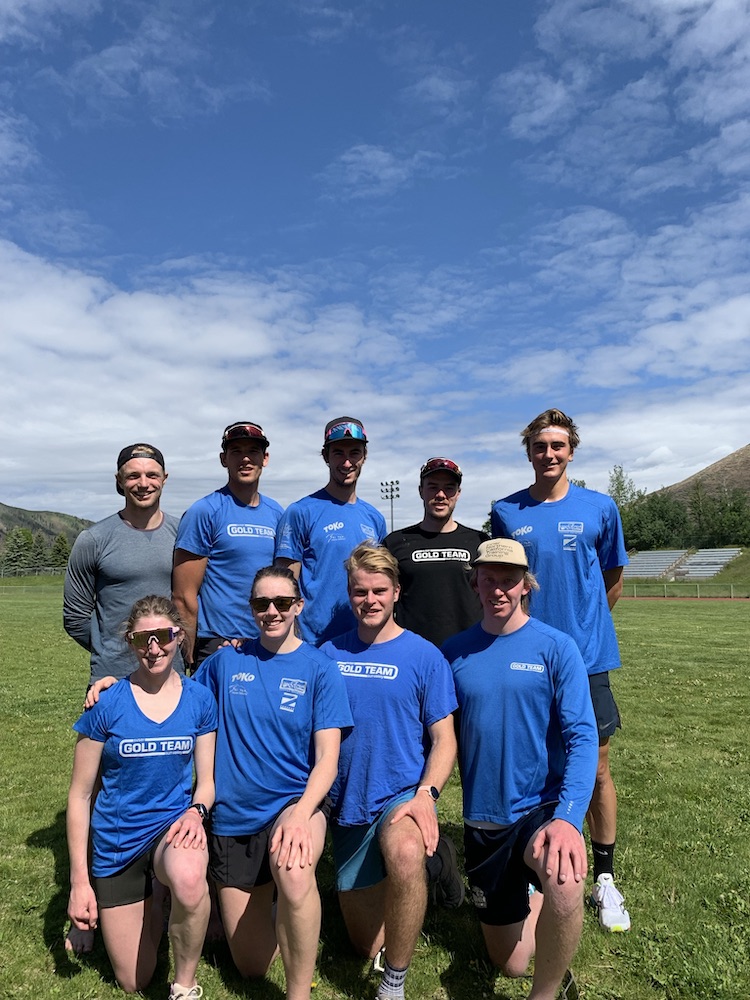
    SVSEF XC Gold Team. (photo: courtesy SVSEF)

    Team name and location: Sun Valley Ski Education Foundation XC Gold Team (Sun Valley or SVSEF); Ketchum, Idaho

    Coach: Chris Mallory

    Current roster: Kevin Bolger, Katie Feldman, Sarah Goble, Sam Wood, Karl Schulz, Johnny Hagenbuch, Peter Holmes, Peter Wolter, Jake Adicoff

    Who’s new: Peter Wolter and Jake Adicoff

    Who’s missing: n/a

    Who’s still on this team, or otherwise involved in American skiing, from when we did this in 2012: No one; Simi Hamilton recently retired, and Patrick Johnson was long involved in coaching, but no one currently

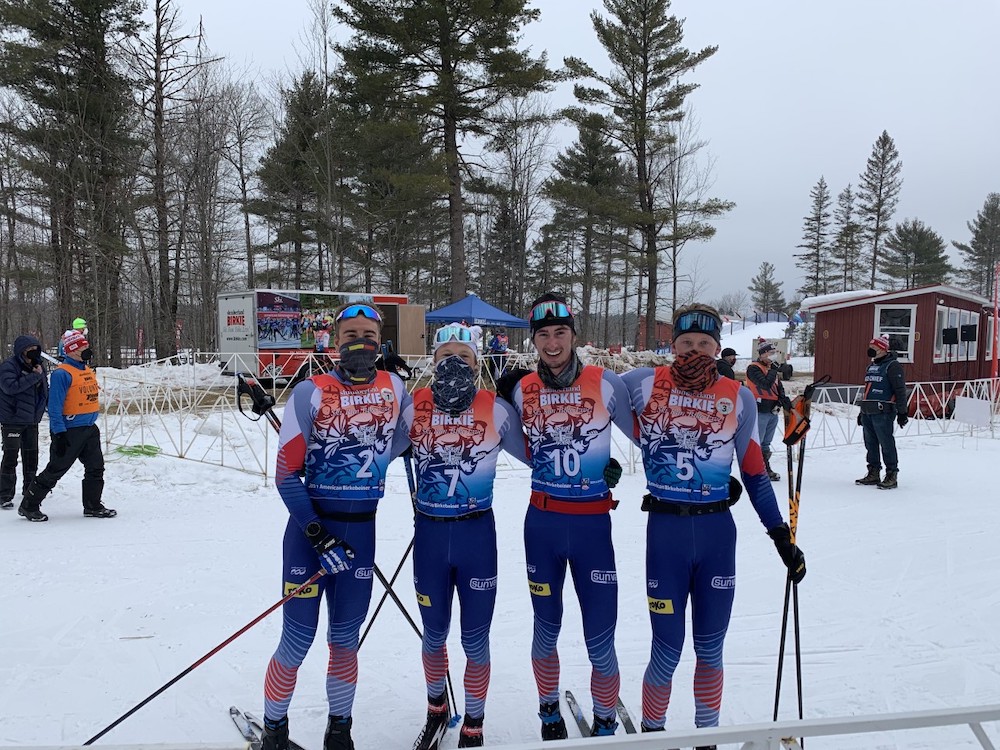
    SVSEF athletes at the 2021 American Birkebeiner. (photo: courtesy SVSEF)

    Top results last season: Bolger made five individual sprint heats last season, highlighted by 6th in the final in Dresden and 13th in Davos in the quarters, both in December. He finished the season ranked 16th in the Sprint Cup, and based on that metric, is the top returning American sprinter now that Simi Hamilton (14th) has retired. Hagenbuch made his World Cup debut with a pair of March distance races in Engadin, SUI (69th and 72nd) and had three starts at World Juniors in Vuokatti, FIN in February, with a best finish of 17th in the 10-kilometer skate. Domestically, he had two second-place finishes against deep regional fields in Soldier Hollow in January. Holmes raced in the World Cup sprint weekend in Ulricehamn, SWE last February, and was first and fourth in Soho January sprints.

    Domestically, the team had a very strong showing in the American Birkebeiner, with a combined nine top-10 finishes between the men’s and women’s skate and classic fields. In the skate race, Hagenbuch won the men’s race, with Wood 2nd, Schulz 9th, and Holmes 10th. Feldman was 4th for the women. In the women’s classic race, Feldman was 3rd. For the men, Hagenbuch was 2nd, Sam Wood 6th, and Holmes 8th.

    Going back to March 2020, Feldman was scheduled to make her World Cup debut in the ill-fated Québec City races. Bolger and Holmes had starts for the men.

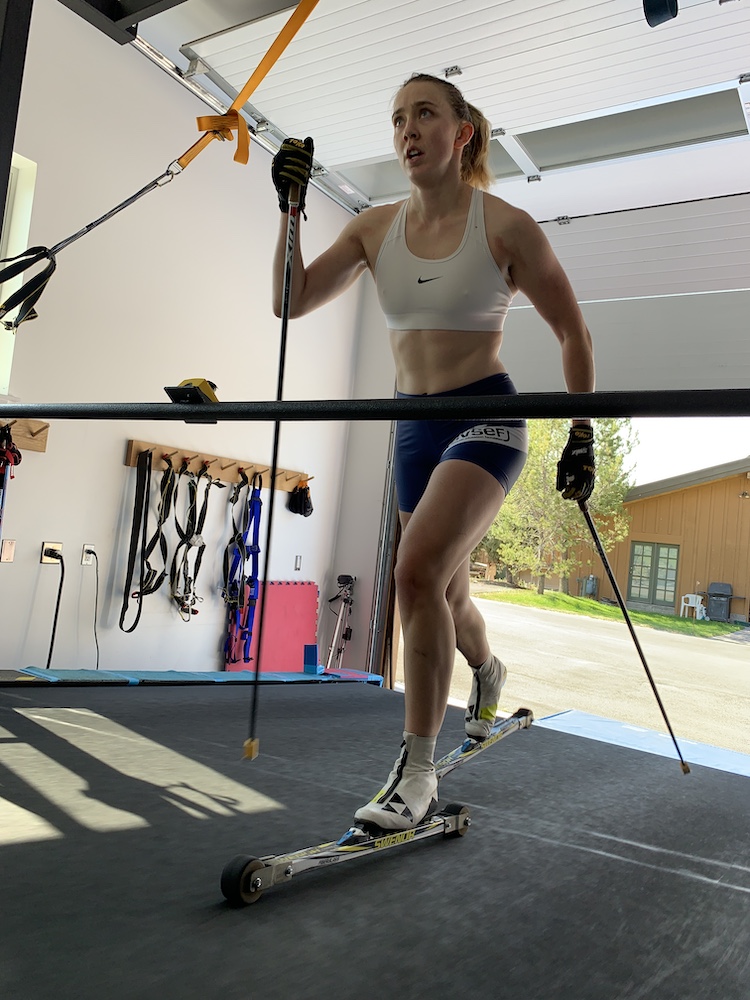
    Rollerski treadmill training, summer 2021. (photo: courtesy SVSEF)

    Coach’s comments: Here’s Chris Mallory on the new additions to the team: “Peter [Wolter] came up through the SVSEF program and is finishing up at Middlebury this spring. Jake [Adicoff, a visually impaired skier and biathlete] didn’t compete much the last few seasons, but found the fire again this past year and will also ski with the US Paralympic Team this season. One of our other current Gold Teamers, Sam Wood, will work as Jake’s guide, so that’s exciting going into Bejiing.”

    And here’s Mallory on recent training and the current team mood: “The training season has been going well. With the full team returning we were able to push the training pretty hard. We spent a large portion of the summer training in Sun Valley, so we had a lot of consistency there, but we were also able to add some camps again which was nice. We did a May Bend Camp, teamed up with BSF and Stratton some to put together an intensity block in Lake Placid, and recently spent a week in Park City with the National team. Kevin just traveled to Sweden to start prepping in Scandinavia for the World Cups, while the rest of the squad just arrived in Canmore yesterday to get some early snow time in at Frozen Thunder.

    SVSEF athletes, fall 2021. (photo: courtesy SVSEF)

    “We’re looking forward to a busy domestic race circuit. After spending last season racing regionally and putting together time trials to keep the motivation up, the team is looking forward to seeing friends again and the added competition the national circuit brings. SVSEF is hosting the post-Nationals SuperTour in January as a big Intermountain junior event/RMISA collegiate race, so we’re really looking forward to that as well.”

    Related coverage: September 2021 piece on Bolger’s summer training; 2019 Nordic Nation interview with Bolger; recent Expressen (Swedish tabloid) piece featuring Swedish sprinter Maja Dahlqvist’s plea to be able to see her boyfriend, Bolger, more this season: “you cannot stop love”

    Previously in this series: BSF | SMS | Team Birkie

    SVSEF athletes, summer 2021. (photo: courtesy SVSEF)
  • Sun Valley: Hot Spot

    Sun Valley: Hot Spot

    Original map/graphic from NYT, text from Betsy Youngman. (Click this link and scroll down for an interactive map.)


    This story could be about many things; developing coping mechanisms when a stay at home order is in effect; finding ingenious ways to elevate the heart rate in a small space; fighting the urge to deem outsiders as outsiders; knowing when to check the urge to be selfish. 

    Obvious disclaimer here, I live in a tourist town, Bend, Oregon where it’s clear tourists and fresh-air-seeking coronavirus “refugees” should abide by the city’s discouragement of non-essential travel to Bend. Further, local sno-parks are closed as are the major trailheads for trail running and mountain biking. Grooming for xc stopped a few weeks back. Enforcement aside, and personal discretion aside, many locals are running and riding from the house. Some still ski. 

    Then there’s the scanning of license plates that many mountain town dwellers have become accustomed to. It’s clearly not the usual summer or winter tourism bump. It’s something different and unsettling altogether. 

    Across the street from where I’m writing, a quaint cottage was recently rented by folks from Nevada. Grabbing groceries the other evening, my rough math calculated about 15 percent of the vehicles in the parking lot were from out of state. There was the tricked out Sprinter with Washington plates and an REI superstore’s worth of kayaks and mountain-road-gravel bikes secured to the exterior. The fit middle aged couple perched in the front pilot seats were glued to screens, looking like they were poaching WiFi from the adjacent Starbucks. My brain went there: Adventure refugees from a Covid-19 hot spot. Truth is, my people fled Europe. The regional xenophobia welling up felt dirty. 

    That brings us to one of the loveliest mountain towns in North America, Sun Valley, Idaho. There’s Hemingway’s legacy, the Big Wood River and its trout, a Mt. Baldy hill climb, thin-air mountain biking, locals only backcountry stashes, and timeless cross-country skiing. And according to a recent NPR piece, no one should go to Sun Valley. 

    Blaine County, where Sun Valley is located, has experienced one of the highest per capita rates of Covid-19 in the U.S. (This remains a reality among some of the West’s ski towns.) It appears the virus was spread when non-locals visited large social gatherings at the end of February and early March. Adding to these anecdotal possible vectors was the major ski resort in town, which shuttered effective March 16. Until then, it was business as usual. Tourist and second home owners flocked to the area where the fine skiing was primed with bluebird skies. 

    “Schools around the region were closing, not here in Blaine county, schools in Seattle, schools in San Francisco, schools in St. Louis, Chicago, Southern Cal, all starting to close, and people starting to work from home,” observed Betsy Youngman, a longtime Sun Valley force in the cross-country community. “So people that could afford it got in their cars, their private jets took flights into Blaine County, into Sun Valley.”

    Sun Valley became an obvious escape valve. We also all know now, this was a perfect storm for coronavirus transmission. With one post-office and a single grocery store, packed slopes, and trails, the possibility for community spread was rife.  

    A town like Sun Valley is not alone in the mountain kingdom when it comes to reconciling income inequality. Most often, residents lower on the tax bracket do more than make do – mountain vistas and easy mountain access are a wonderful pacifier. But with the influx of coronavirus and a thriving travel industry, these are unique, and tension riddled times. 

    Shauna Thoreson (85), Sun Valley resident and cross-country skier. (Photo: Betsy Youngman)

    “A city or a place like Sun Valley, or a region like Blaine County would not exist without the wealth that comes and goes and the people that are incredibly generous,” said Youngman. “That is why we have a free summer symphony. That is why we have ski trails and the bike trails we do. Generally it is a very welcoming and grateful community that people come here and spend their money so that those of us that live here year round can live in such a beautiful spot with beautiful amenities. This is different because what was happening, that has now been shut down, some refugees that are coming from the bigger cities have come in sick. 

    Charley French (93) and Betsy Youngman. (Photo: Courtesy of Betsy Youngman)

    “And so, yeah I think there’s more tension than normal, we’re looking at the license plates, who is parking at the grocery store, the trailhead, or in my neighborhood because they very well could be sick. We are willing to be compassionate. We had a neighbor come in from Chicago who was here three days and came down with the Covid-19. The other neighbors said how can we help? Can we get you some groceries? So we went to the grocery store, we dropped some things off on his front porch.”

    Youngman also explained the community has bonded as it looks after its elders. She noted that Sun Valley’s average age is approximately 60, making its population particularly susceptible to the worse effects of the virus. Youngman and others find themselves checking in on residents like Charley French (93) and Shauna Thoreson (85) — both frequent World Masters racers and age group winners. 

    What is real in New York City is also real in Sun Valley. A run on groceries. Scarce medical supplies and personal protective equipment at the local hospital were suitable for mishaps, even the rare emergency, not a pandemic. Many small mountain towns have high per capita rates of Covid-19 cases and lower per capita rates of vital resources like ventilators. 

    Sun Valley is on lockdown. Non-essential travel or business conducted outside the county is forbidden. For those entering Blaine County from out of state, even if you are a local resident, you are looking at a 14 day quarantine.

    It’s worth mentioning, and we hope it remains clear: DO NOT TRAVEL TO SUN VALLEY. Some readers live in places where outdoor activities are currently restricted. Bend is but one example. To be fair, local communities are navigating a climate where defining “essential activity” has become blurred. (Ask me a week ago if spring ski mountaineering was “essential”, I would have given you an unequivocal, “yup”. I was wrong.)      

    A trailhead sign posting social distancing norms and a memorial to a trail pass checker who lost their life to COVID-19.

    For Sun Valley residents the way the state has weighed best social distancing practices and defined “essential” means cross-country skiing remains a wellness outlet. The BCRD, or Blaine County Recreation Department, continues to groom cross-country ski trails — for locals. 

    “I think at this time of year it is an essential service, for recreation and social distancing,” said Youngman. “You can cross-country ski safely on our 200 kilometers of trails, and stay six feet apart. When summer comes, when we are sharing trails that are two feet wide and are hiking, it is going to be harder to keep that six foot distance from one another As long as we behave, I think it is great we are grooming, It is giving people an outlet. It is giving people a healthy place to go and help their immune system by getting some exercise. We don’t have other places to go until the snow is gone. I think everyone is relieved.”

  • A Beginner’s Guide: The Boulder Mountain Tour

    A Beginner’s Guide: The Boulder Mountain Tour


    Sponsored Content

    A certain amount of pre-race nerves can be beneficial. A sharpened central nervous system can rev the body for a 34-kilometer skate race. But the jitters can distract. There’s the possibility of low-quality sleep. Time wasted on variables out of your control, or, perhaps, beyond your budgetary control — cross-country ski racing can get pricey fast. 

    In this guide, catering to BMT neophytes, we attempt to take the edge off and foster fun in your race day experience. 

    New to the BMT? Have fun. (Photo: BMT)


    For starters, the BMT is considered a skate race. But really, if you are new to skating and want to classic ski instead, you can do that. The BMT groomers set a single classic track for all 34 k. You are welcome to stride this event. You’ll just be categorized as a skater – no classic specific division here. The BMT also welcomes adaptive athletes. That goes for the full 34 k version or the Half Boulder 15 k. 

    In our attempt to render a many-moving-parts race down to a few key items, here are the basic rules. 

    Rule Number One: The Altitude

    The race begins at Galena Lodge sitting at 7,400 feet in elevation. For denizens of Leadville, Colorado (think 10,150 feet), or any other high mountain locale, 7,400 feet may not elicit even a small gasp. That said, err on the side of caution if you are heading to Sun Valley from a lower altitude.

    We are not so much concerned with altitude sickness as we are with potentially red-lining the engine out of the starting gates. 

    Up at Galena, there’s no massive hill to climb. However, a short climb near the start could present problems. Skiers reach the hill shortly before linking up with the Harriman trail — that’s the main trail artery racers take to the finish line. Rev too much out the gate, and you risk pushing yourself into leg-burn territory. And without proper acclimatization, you’ll bump beyond the redline sooner than you would at lower elevations. 

    How should you acclimatize? One idea is to arrive three days before the race goes down on Saturday, Feb. 1. Three nights in Sun Valley affords an athlete ample time to adjust to lower oxygen concentrations. We are not talking Everest here. But fun is fun and no one wants to be gasping.  

    On the other hand, you could try to “beat” the altitude. Arrive Friday, race Saturday, and cross fingers. Either way, don’t start the race too hot. Build into it. 

    Rule Two: Stay Warm

    Subzero is not how you want to feel. “Don’t get to the start so early you are a Popsicle when you start,” Morgan Arritola, former speedy skier (U.S. Ski Team member and former Sun Valley local), said. “Wear a ton of clothes and leave them. You will get them back. Use hand warmers, toe warmers, etc. if need be. Cold muscles just don’t work well so give yourself every opportunity to have a great race.”

    Like any other place in the Rockies, it can get cold. If the weather forecast predicts winds and an Arctic chill, plan ahead. Invest in a good wind-proof base layer — top and bottom if it looks brrrrr cold. If you have not already taken the plunge, buy a pair of wind briefs. These can be priceless. Enough said.   

    Rule Two: Stay Ahead with Nutrition 

    Arritola reminds folks to carry their own sports drink and fuel. The organizers provide three aid stations with liquid and solid nutrition. But Arritola wisely notes that self-sufficiency affords new racers unfamiliar with how their body might respond to an on-snow race effort the luxury of having fuel whenever they might need it. Sometimes aid stations can be busy. If you are feeling spry and want to keep the pace up, you’ll have food handy if you ski on by. 

    Rule Three: Break Down the Course into Three Distinct Parts  (See Course Topo Map)

    It seems every discipline likes a tidy construct of breaking things into threes. The BMT course is no different. The rule of thirds, in this case, applies to three distinct parts of the course. (On the course maps, K 30, for example, means 30 kilometers remaining to the finish.) 


    Galena to Prairie Creek

    This section takes skiers from the start to the Prairie Creek aid station. Here, at the aid station, if you are racing the full BMT, you’ll have 22 k to go.

    Back to the start at Galena. We’ve already mentioned this, but it’s worth hearing again: don’t start too hot. There’s something else to keep in mind, as this is a mass start event (although skiers are seeded in waves). Stay chill. Stay upright. Keep poles, skis, and the body intact. 

    “The start can be chaos. Expect it. Don’t let people skiing in close proximity get you in a panic,” advises Arritola. “I would ‘shorten’ my technique to make sure your poles don’t get stepped on or broken, or your skis skied over. You want to stay upright. Think of it like a game of Frogger and be ready to react.”

    The start area of the BMT near Galena Lodge. The course runs slightly uphill from the start towards the mountains. It then takes a hard right to remain on the edge of the meadow. (Photo: BMT)

    Another BMT veteran and retired professional cross-country skier who resides in Sun Valley, Matt Gelso, said skiers about to merge onto the Harriman trail, a few kilometers after the start, should remain aware. The stream of skiers must cross the main road heading up to Galena Pass. The makeshift road crossing can become sugary snow. First-timers should note that snow conditions across the road can feel less stable underfoot. Stay heads up, Gelso noted. The trail leading into the road crossing also pinches down. Skiers can become bottle-necked there. The wise thing to do when approaching the crossing is to check your speed and be aware of the scrum around you. 

    Post-road crossing, you’re skiing on the main Harriman trail. It’s still a long down valley stretch to the finish.

    The next feature you can expect some action is Hawk Hill with 29.5 ks to go. This can be a punchy climb for many, meaning you’ll be transitioning from V2 to V1 — hill-climbing mode. Expect the mass of skiers around you to get backed up. Although not for too long. Hawk Hill is a few hundred meters in length, don’t freak out about being blocked and start wasting energy trying to move around the jam, it’s wise to stay calm and keep the pace sustainable. 

    Over the crest, as skiers gain speed, Arritola reminded us that exercising caution can be more efficient in the long-term. “If you have to slow down, it’s better to slow down early so you carry some speed out of the bottom of the hill.” 

    The feed station at Prairie Creek is the next heads-up area. Around 21.7 k remaining, skiers might bunch again in the run-up to the feed station. “There is nothing really technical but people panicking for feeds, poles flying all over, etc. can make it a challenge,” Arritola said.

    Post-feed, some skiers can get caught off guard by the climb that begins after the Prairie Creek aid station. It’s nothing totally lung-busting, but it is a climb where Gelso said he’s seen many skiers fall off. That’s coming from someone who many times was the instigator. In other words, he’s done the dropping. So keep the pace tempered here.   


    Prairie to Phantom Hill

    This section runs from roughly kilometer 21 to kilometer 7. Arritola calls this terrain “pretty casual.” Emerging skiers, those becoming proficient in riding a flat ski, will rely on V2 and V2 alternate here. “Try and relax and get into a rhythm,” advises Arritola. 

    The terrain begins to open up after at K 20. Think skiing through wide-open meadows, riparian zone shrubs, and snow-covered sage. With the widening of the valley and sparser tree cover comes exposure. Colder temperatures and steady headwinds are not uncommon. If the forecast calls for frigid air and a stiff breeze, this is where the wind briefs come into play. (Thank you BMT beginner’s guide.)

    The gradual long climb near K 19. Inattentive skiing here might get you gapped. (Photo: BMT)

    Another low-cost high-reward piece of clothing is the now ubiquitous Buff or neck-gaiter. Hard to believe that not such a long time ago, Buffs were odd-looking. Now they are part of the essential cross-country costume. The Buff comes in handy on this section as an extra insulating piece. In fact, on the course map, you’ll note an important landmark: Frostbite Flat around K 7. Be prepared. Stay warm.

    Back to the course. At K 19, across from the Russian John Guard Station, skiers engage with another hill. Nothing too steep. But if you are in race mode, meaning you are fighting for places and are feeling good, “is it a spot where inattentive skiing will get you gapped,” Gelso explained. “It’s not really that people try to get gaps there, it just happens. It’s unassuming, but it bites people.” 

    There’s your fair warning for the terrain near K 19.


    Phantom Hill to SNRA (The Finish)

    “Again, this is a very gentle grade, mostly V2 and V2 alternate,” Arritola said. “If you can get in a group with a steady pace that can be a good way to save a little energy. This section can also be very, very cold along the river. It just depends on the year but sitting in behind people can help if it is cold. Otherwise, enjoy the ride home and cross the finish line with nothing left!”

    Arritola brings up a great point. With the valley widening after K 14, it might be time to find a draft or a group to work with. Use others strategically in the event of a headwind. And, if you are feeling nimble and strong, why not take a chance and pull in front. But, and this is a big reminder, don’t pull for too long. The object is to have a good experience and come back for more with a BMT under your belt. 

    Before we forget, don’t be fooled by this common BMT axiom: “It’s a downhill course”. Those are foolish words to race and pace by.

    Don’t get lulled into thinking gravity is your unabashed friend. Yes, this is a trending downhill race, as it loses 1,150 feet in elevation. It is a working course. Trending downhill does not mean you’ll be in a tuck or “resting” for any significant amount of time. 

    This is a 34 k race at altitude. 

    Which is a reminder of something else Gelso mentioned. If this is your first time at the BMT, or your first go at a long-range skate race and you are coming from another sport, say road cycling, where real-time race data like power and heart rate often dictate effort, ‘take your heart rate monitor off,” said Gelso. 

    If you are ready, it may be time to go hard. But it also might be time to hear the snow under your skis and to revel in the down valley spectacle that is the BMT. 

    Waxing and Skis

    Skiing can be fickle. Good skis, good wax, bad skis, bad wax are things you’ll surely hear about as you bus up to Galena. Try to tune that out. Our advice: find a pair of skis you enjoy skiing on. A pair that remains stable underfoot in most conditions.

    Cold snow is not uncommon in the Big Wood River Valley. Having a ski that glides in cold conditions can add to the fun factor. But if you don’t have a cold specific ski, wait a year, then maybe take the ski-quiver dive. Either way, prep your skis with a hard green wax, and then throw a mid-cold blue paraffin on top. 

    That’s basic, but it should get you from Galena to SNRA with a smile. Keep in mind though, cold cold snow is slow slow snow. 

    What if it calls for warm conditions, trending towards freezing or over? That’s where having a local shop buff your skis might pay dividends. This is not the beginner’s guide to really mine the depths of ski flex, wax, grinds, and structure. In fact, if you don’t know what these terms are yet — good on you. If you enjoy the BMT, you’ll be knee-deep in cross-country skiing nomenclature soon. Email us, we can send you in the right direction. 

    But, if it looks warm, the most basic thing is to add a violet paraffin wax to your bases. If you want to get more exotic, then it’s time for the experts. That will cost some coin, but some smiles have a price.   

    The BMT is also not a one pony event. The week-long run-up to the BMT is an amazing opportunity for the neophyte cross-country ski racer to go deep. 

    On January 25, the locals throw a benefit party to support the local trails. 

    Wednesday, January 29 features the NordicTown USA Sprints followed by a Kickoff Party and Sprint Awards. Trust us — you’ll love this. 

    Thursday January 30 is time for the SVSEF Gold Team Race Clinic. This is free to BMT participants, but priceless if you are looking for some technique cues. 

    Friday, January 31, Race Bag/Packet Pickup and BMT Expo

    Saturday, February 1 — BMT race day.

    Saturday, February 1 BMT Block Party and Awards Bash (Ketchum Town Square).

    Sunday, February 2 Demo Day and Barbecue at the Sun Valley Nordic Center.

    You can find a detailed Sun Valley Nordic Festival schedule here. 


    Basic Schedules for the Full and Half Boulder Mountain Tours

  • Unraveling the College Athlete Admission Process: A Look Into Post Graduate Gap Year Programs with Paul Smith of SVSEF

    Unraveling the College Athlete Admission Process: A Look Into Post Graduate Gap Year Programs with Paul Smith of SVSEF

    Deciding how to handle the “college conflict”, as aptly phrased by Alayna Sonnesyn, is a daunting and somewhat mysterious prospect, particularly for athletes and families who are unfamiliar with the process. How does a junior athlete know that they are cut out for a collegiate program? NCAA or USCSA? What about a gap year? In this series, FasterSkier spoke with collegiate and junior coaches and athletes who have chosen different pathways to create a resource for the athlete or parent amidst this conundrum. Also check out Part 1 with Craftsbury Junior Program Head Coach Anna Schulz and Part 2 with Dartmouth College head coach Cami Thompson Graves.

    An important piece of the college decision puzzle, post-graduate (PG) programs offer a skier an extra year of development that can serve as a bridge between junior club programs and collegiate or national team level skiing. Though a relatively small in number, programs can be found nationwide at well established ski clubs like Steamboat Winter Sports Club in Colorado and the Bridger Ski Foundation in Montana, and at ski academies such as Stratton Mountain School in Vermont and the Sugar Bowl Academy in California. 

    Paul Smith is the head PG coach at Sun Valley Ski Education Foundation. (Photo: https://svsef.org)

    The Sun Valley Ski Education Foundation (SVSEF) directed by Rick Kapala has offered an official PG program since 2005. The program, which serves five to ten skiers annually, is led by University of Vermont graduate Paul Smith. Now in his second year with the SVSEF, Smith also works with some of the younger juniors and assists senior skiers as a service and wax technician. FasterSkier spoke with Smith and Kapala for their insight into why an athlete might choose a gap year and what can be expected during the PG experience.

    Though athletes elect to take a PG gap year less frequently than joining a collegiate program or leaving ski racing, both Kapala and Smith expressed that the number of skiers selecting this option is trending upward. The reason an athlete might opt into a PG year varies, but typically, the PG athlete enters the year on the cusp of achieving a goal that is just out of reach.

    “[PG’s are] looking to put in a year or more of focused training to make a step forward into their skiing capacities so that they may have college opportunities that were not readily available coming straight out of high school,” explained Kapala in an email. 

    These opportunities include earning a spot on an NCAA team, improving scholarship potential, and increasing the likelihood of making the competition team at a particular school.  

    “Or, they may be looking to achieve top international results as a U20 and want more space to program a bigger training and travel schedule,” wrote Kapala. 

    Members of the SVSEF PG program hike it out during an OD in the mountains. (Courtesy photo)

    He added that outside of skiing, the athlete may be looking to experience independence and develop life skills without the pressures of keeping up with an academic workload. Regardless of long term goal, Smith expressed that anyone who chooses to take a gap year can expect improvement in their skiing. 

    “From a development perspective, just taking a year to just focus on that and not get thrown into the whole gamut of classes can really help a lot,” said Smith in a call.

    “You can always expect to show some improvement, especially if you’ve had a junior have some success while they were doing a bunch of other things and they can now focus on [skiing] for a year. From what I’ve seen, the ones that are committed to the process benefit tremendously.”

    Unlike collegiate programs that typically send information to junior athletes to initiate conversations, Smith explained that athletes typically contact him first regarding interest in the SVSEF PG program. 

    The program originated to serve athletes graduating from the SVSEF junior program, but has since begun to serve athletes coming from a range of other states. Though Smith is not one of the primary junior coaches, he explains that he stays involved with this age group to help connect with prospective athletes. 

    “I try to keep a presence at regional or national camps,” explained Smith. “So I’ve tried to make a connection with a lot of different athletes from different clubs and different regions.”

    Rather than communicating through email, Smith prioritizes phone calls and meeting with athletes at races to establish connections with those considering his program. 

    “I have definitely noticed, for myself and some of our other coaches in Sun Valley, having a presence in the [junior ski] community has helped a lot. We almost always know the kid if they have a genuine interest in taking a gap year with us.”

    Apart from making juniors aware of the PG option, Smith explained that he does very little recruiting. He acknowledged that the choice is not a good fit for all athletes, particularly those with strong academic aspirations.

    “The athlete themselves usually know whether they’d be a good fit. They’ll usually have some idea — going to school, they’re either excited about it or they’re not. For the athlete that isn’t or if taking classes for a year isn’t a priority, that’s where I would say it works the best.”

    The PG program in Sun Valley is heavily weighted toward male skiers, 70-80% on average. This trend holds throughout other programs as well. Smith hypothesized that one reason for this might be that on average, boys finish puberty later than girls. Some male juniors whose biological development might be slower than their peers may not have sufficient time during high school to build the strength and muscle mass needed to excel in ski racing. An extra year to catch up in this arena can help athletes take a big step forward in performance. 

    “There are instances, generalizing a little bit, where a lot of boys who are 16 to 18, their biological age might not match up to their peers, so they feel like, ‘Well I really like skiing and I want to go for it.’ Taking that year for development makes a lot of sense.”

    The program at Sun Valley does not establish performance requirements for admission as it seeks to be flexible enough to cater to the needs of an athlete at any level. 

    “It has been the case in the past few years that we’ve had all of the above,” said Smith. “Skiers that are looking to make the jump to the national team, skiers that just wanted to get into an NCAA program, and then skiers that had kind of figured out that [pursuing skiing] actually wasn’t what they wanted to do. I think all of those athletes are important. Not only does it make a stronger group, it makes a better team functionally.”

    He continued, “As a club we do a pretty good job of thinking of things from the development perspective, the idea that, yeah, we’re coaching athletes that go on to win and maybe go onto race World Cups, but we’re also coaching future parents and future coaches. I think having it open and not narrowing the framework of the program itself is important.”

    Members of the SVSEF PG team mid-workout in Ketchum, ID. (Courtesy Photo)

    Despite not requiring a top twenty finish at Junior Nationals or another performance marker, Smith explains that the athlete should be entering the PG program with a clear goal and a belief backed by evidence from their development that the next step is attainable. Smith explained that these are the broad conversations he has with athlete who express interest in the program.

    “I have a lot of conversations in the spring with prospective athletes and parents about what they saw in their own skiing that puts them at that level. When you look at your results and other aspects of training, what is it that makes you think that the jump will be significant?”

    For athletes who are interested in taking a gap year, Smith provided information on what to consider in weighing options and on what to expect. 

    “Probably on most family’s minds, the cost is going to be the foremost thing.”

    The PG program at SVSEF comes with a price tag of $5,450 which does not include housing or food, which can be significant in small mountain towns like Ketchum. Apart from being expensive, housing can also be challenging to find, particularly since not all housing authorities are keen on renting to a 19-year-old living on their own for the first time. This challenge can be avoided by local athletes, but should be a significant consideration for out-of-towners. 

    “We’ve made it work through the years just piecing together host families, generous families in the ski communities that have helped out. The best thing that has worked is connecting athletes in the program together and their families to go in on housing in the rental market.”

    Additionally, Smith explained that it would be challenging for an athlete to get by without a car, though public transportation and carpool options are possible. Smith added that it is possible to receive financial aid and scholarships for trips such as World Juniors. 

    At SVSEF, most athletes choose to take a part-time job, which can help subsidize the costs. Smith explained that this also provides a life-balance to offset the singular focus of full time ski training.

    “We always recommend that they have something else going on other than skiing. It could be a part-time job, some have taken online classes, and some have gotten pretty good internships. I think we have a good community for that kind of work.”

    He continued that mountain towns offer ample opportunities to work in the tourism or service industry. 

    Smith suggested that the cost and challenge of finding housing might be the biggest drawback to choosing Sun Valley for a gap year. He countered this with the pros of making this decision.

    “Our coaching staff is definitely top level and all of our post grads have the opportunity to work with any of our coaches. Location, being out west, being at altitude but not being too high.”

    He added access to quality rollerski terrain, reliable snow, the ability to perform physiological testing, and having a strong junior and senior team to mix with as additional strengths of his program.

    “I’ll admit that we can’t really have the atmosphere that a ski academy offers. I think at the Sugar Bowl Academy, Stratton Mountain, Green Mountain Valley School, their post grad programs offer that in-house, community, full team feel that admittedly we can’t offer, though I think we come close.”

    Smith explained that these all-inclusive programs are significantly more expensive. Stratton Mountain School rings in at $56,750 for a full term boarding post-graduates (these athletes are also taking classes at SMS) and ski-only PG tuition at the Green Mountain Valley School is $21,500. 

    “For families that can get a lot of financial aid to those programs, I think you can definitely do well there. But I understand that we are better priced compared to them and I think that is where we get a lot of interest.”

    Members of the SVSEF PG program on a training run in Ketchum, ID. (Courtesy photo)

    Other factors Smith believes are important to consider include whether it is possible to mix in with a strong group of junior and senior skiers and if the program has a coach focused specifically on the PG group.

    “Having a coach that is dedicated to the post grad group is definitely helpful. I think too many times, even though they’re older juniors, just throwing them into senior training or scaled back senior training isn’t the best thing for their development. So having their own coach is definitely a plus.”

    In terms of lifestyle and training load, PG athletes at SVSEF participate in 5-7 coached sessions per week, including strength training.

    “We train most mornings, but the key is being flexible with the program where if an athlete was at a level where they were training twice a day everyday, you can do that.”

    After training, most athletes head to their job, but Smith regularly inputs other touch-points into his athletes daily routine to build the team dynamic and support the athletes’ development of independent life skills.  

    “We’ll have team meals once or twice a month, which is also part of a nutrition program, basically learning how to cook on their own for the first time. Also, having some camps and trips input in there too, which I feel is important. Since they’re not in school, they can do those trips, but we want to make sure it’s cost effective too. If you’re an athlete from the east coast, it’s already a camp being away from home. You don’t need too many, but it helps keep the training lively and exciting.”

    For athletes whose eyes are set on NCAA racing, it is valuable to have an understanding of the eligibility rules. 

    For Division I programs, the eligibility clock starts when a student-athlete enrolls full-time in classes or turns 21, whichever comes first. Once the clock starts, there are five years to complete four seasons of the sport, which allows for a redshirt year or year-in-residence following a transfer between schools. At Division II and III schools, student-athletes have three years following graduation to enroll full-time. Once enrolled, four seasons of competition can be completed over 10 semesters. Semesters are not counted if enrolled either part time or not enrolled without competition.  

    Some PG programs discourage athletes from taking classes if they plan to enroll the following year at an NCAA program as they may be classified as a transfer student, thereby needing to complete an “academic year in residence” before being eligible to compete.

    Athletes may earn prize money from finishes in SuperTour or other races while still remaining compliant with NCAA amateurism rules. The rule states: “An individual may accept prize money based on his or her place finish or performance in an athletics event. Such prize money may not exceed actual and necessary expenses and may be provided only by the sponsor of the event. The calculation of actual and necessary expenses shall not include the expenses or fees of anyone other than the individual.”

    [See this document for more information on NCAA eligibility rules.]

    As a takeaway, Smith encourages families to consider the benefits an athlete might gain from a PG year and to see a gap year as a potential option in the college process. 

    “Taking a year should always be considered as an option, especially for a kid who really wants to go for something. It may not even be skiing, it might be art, or music, or something else. When they’re younger, we always recommend that they’re doing a lot of different things so that they are more well-rounded. By the time they’re 18, picking skiing should be okay and they should be given the option to do that for a year if they want. I think making sure that is an option is an important thing, whether that’s coming from a parent, a college coach, or their coach when they were a junior.” 

    Kapala concluded by explaining the role the PG program plays in the overall cross country program at SVSEF and pointing to athletes who have greatly benefited from their gap year.

    “We consider our SVSEF PG team a really important part of our programming,” concluded Kapala. “It has helped some of our talented juniors take the next step in their skiing and it also has built relationships with skiers who have years later returned to become members of our SVSEF Senior Gold Team. For example, Kevin Bolger and Sam Woods, now members of our Gold Team, were both PGs. We got to know them and when the opportunity came to add them to our Gold Team roster, it was really helpful to know them as people and skiers.”

  • National U16 Camp Announces Selections & Program for Summer 2017

    The eighth edition of the NNF/USSA National U16 Camp will be held Sunday July 23, 2017 (arrival day) to Sunday, July 30 2017 (departure day) in Sun Valley, Idaho hosted by the Sun Valley Ski Education Foundation and the Sun Valley Community School. The NU16 camp brings together the top U16 Boys and Girls from across the USA for a week of intensive training and ski sport education as one of the first steps in the USSA National Development Pipeline. The National Nordic Foundation has designated the NU16 camp as one of its Pillar Projects and the NNF has been instrumental in helping the NU16 Camp grow into one of our country’s key athlete development initiatives. The camp rotates in location throughout the country and this year’s camp will be held on the Community School Campus in Sun Valley, Idaho. The Sun Valley area offers ideal training venues in a beautiful natural setting. US Ski Team staff will lead the camp along with a selection of top regional coaches from across the US. Selection for the camp is based on results from this year’s US Junior Championships, held in Lake Placid, NY. In addition to the top twenty boys and top twenty girls selected via JN results, each USSA Division is afforded two discretionary picks of one boy and one girl(must have competed as a U16 last season). The discretionary selections are in addition to however many skiers may have qualified via the JN selection procedure. It is up to each division to select these discretionary picks and forward those selections onto the camp director, Rick Kapala of the Sun Valley Ski Education Foundation rick@svsef.org. Please provide these divisional selections no later than May 1st, 2017 and also be sure to inform the discretionary picks of their selection.

    Attendees are required to organize their own flights into either Sun Valley, ID or Boise ID to arrive on Sunday, July 23 in Boise by 3pm or to Sun Valley by 5pm and to depart on the following Sunday, July 30 by 5pm at either airport. For skiers arriving and departing both Boise and Sun Valley, we will provide all airport shuttles. For skiers driving into Sun Valley, we will provide drop off directions. Lodging, meals and all associated camp costs( except airfare) are included in the camp fee of $675.00. Skiers who have been selected through the JN selection procedure (see attached list) may immediately confirm their attendance by emailing Camp Director Rick Kapala at rick@svsef.org. Divisional leaders should make their discretionary selections as soon as possible and inform both Rick Kapala and the selected athletes of their naming. Please assist us by disseminating this announcement and selection list to the selected skiers in your divisions so that they are aware of this opportunity.

    Once participants have confirmed their participation by emailing Rick Kapala rick@svsef.org, they will receive a registration packet via email with camp forms, schedule, camp info and payment instructions.

    THE FINAL DATE for PARTICIPANT CONFIRMATION IS FRIDAY MAY 19TH, 2017

    Thank you to all of the committed athletes, coaches, sponsors, race organizers and parents who are helping elevate our sport of Cross Country Ski Racing across the USA.

    2017 National U16 Camp Selections based on Junior National Championships

    Lake Placid, NY

    (World Cup scoring based on best 2 results, both the sprint qualifier and the final results are scored but a skier may only use either the qual or the final)

    Boys Selections

    1. Haydn Halvorsen (Sugar Bowl Ski Team & Academy) FW
    2. John Hagenbuch (Sun Valley SEF) IMD
    3. Will Koch (Stratton Mountain School) NE
    4. George Cvancara (Alaska Nordic Racing) AK
    5. Joshua Valentine (Gunstock Nordic Association GNA) NE
    6. Skylar Patten (Park City NSC) IMD
    7. Lane Myshrall (Park City NSC) IMD
    8. Peter Moore (Endurance United) MW
    9. Eli Hermanson (Alaska Winter Stars) AK
    10. Griffin Wright (Craftsbury Nordic) NE
    11. Cooper Anderson (Auburn Ski Club Associates Inc.) FW
    12. Walker Hall (Methow Valley Nordic SEF) FW
    13. Hunter Greene (Mount Bachelor SEF) PN
    14. Will Lange (Mount Bachelor SEF) PN
    15. Matthew Moreau (Cambridge Sports Union) NE
    16. Kai Mittelsteadt (Bridger SF) IMD
    17. Henry Hall (Loppet Nordic Racing) MW
    18. Alexander Nameth
    19. James Schneider (Loppet Nordic Racing) MW
    20. Peter Haynes (Summit Nordic SC) RM

    Girls Selections

    1. Novie Mccabe (Methow Valley Nordic SEF) PN
    2. Sydney Palmer-Leger (Park City NSC) IMD
    3. Kendall Kramer  (NSC Fairbanks-FXC) AK
    4. Anna Lehmann (Stratton Mountain School) NE
    5. Sarah Morgan (Wasatch Nordic SA) IMD
    6. Bridget Donovan (Ski & Snowboard Club Vail) RM
    7. Nina Seemann (Auburn Ski Club) FW
    8. Waverly Gebhardt (Steamboat Springs WSC) RM
    9. Annabel Hagen (Jackson Hole SC) IMD
    10. Libby Tuttle (Loppet Nordic Racing) MW
    11. Fiona Max (Mount Bachelor SEF) PN
    12. Anna Shults (Boulder Nordic Junior Race Team) RM
    13. Kaya Ratzlaff (NSC Fairbanks-FXC) AK
    14. Abigail Streinz (Outdoor Sports Institute) NE
    15. Gretta Scholz (Methow Valley Nordic SEF) PN
    16. Anja Jensen (Sun Valley SEF) IMD
    17. Maggie Druckenmiller (NSC Fairbanks-FXC) AK
    18. Charlotte Ogden (Stratton Mountain School) NE
    19. Annika Hanestad (Alaska NR) AK
    20. Izzy Max (Mt. Bachelor SEF) PN


  • Under 23 Questions with Jack Hegman

    American Jack Hegman (SVSEF) racing to 24th in the men's 15 k freestyle on Thursday at 2017 U23 World Championships at Soldier Hollow in Midway, Utah. (Photo: FlyingPointRoad.com)
    American Jack Hegman (SVSEF) racing to 24th in the men’s 15 k freestyle on Thursday at 2017 U23 World Championships at Soldier Hollow in Midway, Utah. (Photo: FlyingPointRoad.com)

    In an effort to showcase the North Americans competing at this week’s International Ski Federation (FIS) 2017 USANA Nordic Junior World Championships and U23 Cross Country World Championships at Soldier Hollow in Midway, Utah, we asked those qualifying athletes several questions about themselves — actually, we had them fill in the blanks. Here we have 22-year-old Jack Hegman, of the Sun Valley Ski Education Foundation (SVSEF) Gold Team, who’s representing the U.S. at his first U23 Worlds.

    On Saturday, Hegman raced to 11th in the men’s 30 k skiathlon on the final day of U23 World Championships at Soldier Hollow. Earlier this week, he placed 24th in the men’s 15 k freestyle and 28th in the classic sprint. 

    ***

    “My full name is John, but you can call me Jack. I was born in Randolph, Vt., raised in Huntington, Vt., and one thing you should know about my hometown is that it is home to the 3rd tallest mountain in VT.

    I started cross-country skiing when I was ten, thanks to my older brother. I currently train in Sun Valley, Idaho, with SVSEF Gold Team.

    If I’m not skiing, you might find me beating Cole Morgan at squash. If I had to pick a favorite book, it would be ‘Into Thin Air‘.

    American Jack Hegman (23) mixing it up in the rounds of the men's classic sprint at 2017 U23 World Championships on Jan. 31 at Soldier Hollow in Midway, Utah. He took sixth in his quarterfinal to place 28th on the day. (Photo: FlyingPointRoad.com)
    American Jack Hegman (23) mixing it up in the rounds of the men’s classic sprint at 2017 U23 World Championships on Jan. 31 at Soldier Hollow in Midway, Utah. He took sixth in his quarterfinal to place 28th on the day. (Photo: FlyingPointRoad.com)

    One of the things I’m most excited about for U23/Junior Worlds at Soldier Hollow is the sunshine. One race I’m especially targeting there is the 15 k skate.

    The best advice anyone ever gave me about skiing or racing was ‘Go in’. One of the best race memories I have is 2012 Stratton Equalizer.

    If I could meet one World Cup skier, it would be Matthew Gelso.

    If I don’t end up being a professional skier, I’ll probably be a professional squash player.”

  • Under 23 Questions with Cole Morgan

    Under 23 Questions with Cole Morgan

    Former University of Vermont skier Cole Morgan (now with the Sun Valley Ski Education Foundation) racing to 21st in the men's 10 k freestyle at 2016 NCAA Championships in Steamboat Springs, Colo. (Photo: UVM Athletics)
    Former University of Vermont skier Cole Morgan (now with the Sun Valley Ski Education Foundation) racing to 21st in the men’s 10 k freestyle at 2016 NCAA Championships in Steamboat Springs, Colo. (Photo: UVM Athletics)

    In an effort to showcase the North Americans competing at this week’s International Ski Federation (FIS) 2017 USANA Nordic Junior World Championships and U23 Cross Country World Championships at Soldier Hollow in Midway, Utah, we asked those qualifying athletes several questions about themselves — actually, we had them fill in the blanks. Here we have 22-year-old Cole Morgan, of the Sun Valley Ski Education Foundation (SVSEF) Gold Team, who’s representing the U.S. at his first U23 World Championships after competing at two Junior Worlds in 2012 and 2014. Earlier this month, Morgan was named to the U.S. team for senior World Championships, which will be held in late February in Lahti, Finland. 

    ***

    “My full name is Cole, but you can call me Pierre. I was born in Seattle, Wash., raised in Bozeman, Mont., and one thing you should know about my hometown is that it’s a place where I lived.

    I started cross-country skiing when I was eight?, thanks to my mom. I currently train in Sun Valley with Sun Valley Ski Education Foundation.

    Cole Morgan (SVSEF) racing to 12th in the 10 k classic FIS race in West Yellowstone, Mont., on Nov. 26, 2016. (Photo: Toko)
    Cole Morgan (SVSEF) racing to 12th in the 10 k classic FIS race in West Yellowstone, Mont., on Nov. 26, 2016. (Photo: Toko)

    If I’m not skiing, you might find me beating Jack Hegman at squash. If I had to pick a favorite book, it would be ‘The Martian’.

    One of the things I’m most excited about for U23/Junior Worlds at Soldier Hollow is racing where I’ve raced since I was 12 years old. One race I’m especially targeting there is the classic sprint.

    The best advice anyone ever gave me about skiing or racing is anything out of Matt Gelso’s mouth. One of the best race memories I have is beating Jack Hegman by 0.6 seconds for the J2 national championship.

    If I could meet one World Cup skier, it would be Stina Nilsson.

    If I don’t end up being a professional skier, I’ll probably be gainfully employed.

  • Wednesday Workout: Moosehoofing for Speed and Capacity with Chris Mallory

    Wednesday Workout: Moosehoofing for Speed and Capacity with Chris Mallory

    Jack Hegman and Rogan Brown bounding at Dollar Mountain in Sun Valley, Idaho, with coach Paul Smith chasing. (Photo: Chris Mallory)
    Jack Hegman (l) and Rogan Brown bounding at Dollar Mountain in Sun Valley, Idaho, with coach Paul Smith chasing. (Photo: Chris Mallory)

    This week’s workout comes from Chris Mallory, the new head coach of the Sun Valley Ski Education Foundation (SVSEF) Gold Team. Having recently arrived in Sun Valley after a long road trip from Vermont, where he was previously the assistant nordic coach at the University of Vermont (UVM), Mallory has jumped right into a career in Idaho’s high country. It’s not Mallory first coaching stint with SVSEF. He coached in a variety of roles lasting eight years, ending most recently in 2013, when he took the UVM position. 

    ***

    One of the staple training methods we use at SVSEF to build fitness is Moosehoofing or Hill Bounding. We will vary the workouts at different times of year to target different fitness gains and keep the workouts fresh. Some of our go-to workouts are 2 x 30 min. L3 [Level 3] ski walking up Baldy [Mountain], 45 min. of continuous L3 work Moosehoofing on the Lake Creek race courses, 5 x 4 min. L4 hill bounding up Dollar Mtn, or another variation I like to implement this time of year involving hard 20 sec. bounding repeats every minute. Simi Hamilton passed a variation of this workout on to me as one of his favorites a few years ago, and the athletes really like it.

    The goals of the workout are to increase classic striding leg speed and explosiveness, make neuromuscular gains, and increase aerobic capacity. The workout is fairly short and sweet, but very effective, and it helps to sharpen the athletes up as we near race season.  The workout load certainly builds up throughout the sets, so start a little conservatively. Legs will get heavy, but it’s good to keep the recovery short here so you learn to go fast with lactate in the system.

    The Workout:

    Warmup:

    • 20 minutes easy aerobic running
    • 1 x 3 min. L3 Moosehoof warmup interval
    • Couple sets of plyo exercises (single-leg hops, broad jumps, 10 sec. bounds)

    Workout:  3 sets x 7 reps (20 seconds on/40 seconds off) with 5 min. jogging between sets

    Cooldown: 20 min. recovery jog

    This workout is best done with bounding poles. A good-height bounding pole comes up to your sternum. Drop a starting cone and finishing cone roughly 100 meters up the hill. Adjust the length if needed after their first effort. The hill should be a moderate grade, too steep and you won’t get the speed benefits. The athletes can run a watch and know they need to start on the minute every minute.  

    The workout can be made easier for junior athletes with 15 sec. of on-time or tougher with 25 sec. on-time. Another variation you can add is allowing more of a run with poles on the last set rather than bound. This will keep the speed high and might closer mimic how hills are being skied in classic sprints these days anyway.  

    SVSEF Moosehoofing on Dollar Mountain: Building Speed and Capacity from FasterSkier on Vimeo.

  • ‘Turning August Into February’: Sun Valley Gold Team Spends Month in Australia

    ‘Turning August Into February’: Sun Valley Gold Team Spends Month in Australia

    Sun Valley Ski Education Foundation Gold Team members Kelsey Phinney, Annie Pokorny, Mary Rose, and Deedra Irwin skiing at Falls Creek Resort in Victoria Australia in August. (Photo: Mary Rose)
    Sun Valley Ski Education Foundation Gold Team members Kelsey Phinney, Annie Pokorny, Mary Rose, and Deedra Irwin skiing at Falls Creek Resort in Victoria, Australia, earlier this month. (Photo: Mary Rose)

    Getting there means 24 hours are lost somewhere in limbo and layovers that are more than cause for lethargy. But even with a disappearing day and assured hours of drowsy adjustment, traveling to the Land Down Under presents a unique opportunity for any western traveler, especially those who nordic ski. That’s because in the state of Victoria in southeastern Australia, nearly a four-hour drive north of the country’s second-most populated city, Melbourne, Falls Creek boasts accommodations, trails and most importantly, a winter season with snow.  

    For those of us in the Northern Hemisphere, the months of June, July and August often bring heat waves rising off the blacktop, but in Falls Creek, this the season for a mixture of snow flurries and sun.

    Right to left: Sun Valley Ski Education Foundation Gold Team members Annie Pokorny, Mary Rose, and Kelsey Phinney during a classic ski at Falls Creek Resort in Victoria Australia in August. (Photo: Colin Rogers)
    SVSEF Gold Team members (right to left) Annie Pokorny, Mary Rose and Kelsey Phinney classic skiing at Falls Creek Resort in Victoria, Australia. (Photo: Colin Rodgers)

    With the promise of the latter from early June to late September — the peak season taking place in July and August — and a decent deal on plane tickets, several Sun Valley Ski Education Foundation (SVSEF) Gold Team members decided that when it came to the month of August, Falls Creek was where they wanted be.

    “The team has never been here before, but one of our SVSEF coaches, Tom Smith, spent a summer coaching down here and told us how great the training was,” Colin Rodgers, SVSEF Gold Team head coach, wrote in an email from Australia. “We decided we had a great opportunity to come here and train this year because the airline tickets were quite inexpensive from the Western USA. Overall the skiing has been great so far!”

    Along with Rogers, five Gold Team skiers made the trek to Falls Creek on Aug. 1, including Annie Pokorny, Kelsey Phinney, Mary Rose, Deedra Irwin, and Matt Gelso. The crew planned to remain in Australia for on-snow training until the end of the month, returning to the U.S. on Aug. 29.

    This past weekend, the Sun Valley women swept the freestyle-sprint podium at Australian Cross-Country Ski Championships on Saturday, with Phinney winning the International Ski Federation (FIS) Australia/New Zealand Cup race, Rose placing second and Irwin taking third. Norway’s Nora Ulvang finished fourth just ahead of Pokorny in fifth.

    On Sunday, Rose and Irwin again reached the podium in the 10 k classic, finishing second and third, 14.9 seconds and 30.5 seconds behind winner Chisa Obayashi of Japan, respectively. Pokorny repeated in fifth.

    The women's skate sprint podium at Australian national championships in Falls Creek, Victoria. 1st Kelsey Phinney, 2nd Mary Rose, 3rd Deedra Irwin, 4th Nora Ulvang (Norway). (Photo: XCGoldTeam/Instagram)
    The women’s skate sprint podium at 2016 Australian Cross-country Ski Championships on Saturday, Aug. 20, in Falls Creek, Victoria. Kelsey Phinney (1) placed first, Mary Rose (2) took second, Deedra Irwin (5) was third, and Norway’s Nora Ulvang (7) was fourth. (Photo: XCGoldTeam/Instagram)

    “The races this past weekend were a very unique experience,” Rose wrote in an email. “Not often do you have a chance to race in the middle of August. The conditions were very challenging for everyone. I took this weekend as a great opportunity to practice skiing through all the sprint heats as well as learning to deal with less than ideal race conditions. Living in the West, I don’t get much opportunity to race in the pouring rain. This was a great learning experience!”

    The men’s freestyle sprint and 15 k classic results were not available at press time. Due to a cold, Gelso did not race this past weekend.

    While much of the Gold Team’s camp revolved around logging hours and kilometers on snow, Rodgers also anticipated his group would jump into a few races, including the Kangaroo Hoppet 42 k skate marathon on Aug. 27.

    According to him, the opportunity to travel to Australia and compete was largely due to the international relationships the SVSEF has fostered.

    “Our club has hosted several Australian skiers over the past few seasons (Kat Paul, Casey Wright, Mark Pollock- to name a few) so we have established a good relationship with many of the athletes,” Rodgers wrote. “They have all always told us we should come to Australia to ski. It seemed like a far off dream, but then we started looking at the details and all of a sudden we realized we could make it happen without breaking the bank. The Australian Jr and U23 team is coming to prepare for the Soldier Hollow World Jr/ U23 World Championships in Sun Valley this winter. They will be in Ketchum for about 8 weeks leading into those Championships so we have a nice partnership growing.”

    “This is not spending a week on a glacier in summer. This is turning August into February.” — SVSEF Gold Team member Matt Gelso on training on snow in Australia

    New to the SVSEF Gold Team, Pokorny reflected that the chance to travel to Australia to train has been somewhat surreal. This year marked one of her first summer snow-skiing experiences.

    “This year, with support from SVSEF and the Australian race organizers, I’m able to get my first summer skis AND do it during one of the biggest training blocks of the year,” Pokorny wrote in an email. “I’ve gotten to work on technique and put in big hours while exploring a part of the world I’d never thought I would get to visit, which has made this trip incredibly valuable to me both athletically and personally.”

    Sun Valley Ski Education Foundation Gold Team member Matt Gelso takes in the view during a ski at Falls Creek Resort in Victoria Australia in August. (Photo: Colin Rogers)
    Sun Valley Ski Education Foundation Gold Team member Matt Gelso takes in the view during a ski at Falls Creek Resort in Victoria Australia in August. (Photo: Colin Rodgers)

    In his sixth year with the SVSEF Gold Team, Gelso remarked that this camp was much bigger than an average week on snow.

    “This is not spending a week on a glacier in summer, this is turning August into February, and it is a new experience for me, but a very positive one for ski training,” Gelso wrote in an email. “Not only getting on snow and getting the feel for skis, but being here for long enough that I can actually make gains is huge.”  

    Both Pokorny and Gelso pointed out that spending a month skiing in Australia is a memory they won’t forget.

    “I have been wrapping my head around the sun being in the northern sky, and the north slopes being the warm, sunny side…. Pretty different,” Gelso wrote. “Also the trees, they have these Snowgum trees that don’t lose their leaves, it feels like the coast, it has taken some time to get used to it all.”

    “My favorite part, by far, has been the landscapes we see on our long skis,” Porkorny wrote. “Snow capped mountains over green jungles, burned and growing gum trees, and violently changing weather have kept every training session interesting.”

    With less than a week left, the crew continues to adventure and can be followed on the SVSEF Gold Team’s Facebook page or Instagram.

    — Alex Kochon contributed reporting

  • Chris Hall: Getting Bold for the Boulder

    Boulder Moutain TourWith the 2016 Boulder Mountain Tour just weeks away, it is not too early to start getting race skis ready for their final layer of race wax before the big day. Doing a little work on your skis now makes a big difference in time spent waxing the night before the race. Below are some tips to save time, energy and stress the night before the BMT.

    1. Clean and brush your skis well. Brushing your skis after every ski does a good job of removing dirt and old wax from the ski base structure. However, it does not completely clean the base. It is the dirt and other foreign contaminates that cannot be seen which the brush misses. Using a Glide Wax remover, like the I84 Glide Wax remover will completely clean the ski base. And, it is more efficient and effective than hot scraping. Make sure to use a separate nylon brush for your Glide Wax Cleaner.
    1. Saturate the ski base with the 6 line. Looking at the long-term weather forecast, the temperatures and snow conditions should be ideal for the 6 line. So, after ski training, it will help to rewax your skis with either CH6X or LF6X. The race day recommendation will probably be HF6X. By waxing with the 6 line prior to the race, the ski bases will have the correct hardness of wax saturated into the pores. This eliminates the need for under layers like graphite.
    1. Clean brushes and sharp scrapers. The basic tools like brushes and scrapers need to be in good working order. Make sure to have clean brushes that do not have bent bristles or are filled with wax. If the bristles are bent, it might be time to invest in a new brush. Keep your wax scrapers sharp. Use fine grit sandpaper to sharpen them or purchase a scraper sharpener (T0408 or T410).
  • Sun Valley SuperTour Field Reports

    Toko logo


    (Press Release)

    Sun Valley SuperTour Field Reports – What the teams used in their own words:

    SMS

    CL Sprint:
    For the CL sprint day I prepared a qualifier and round ski for each athlete. Temperatures were forecasted to get relatively cold and clear overnight and I figured we would at least be looking at some firm tracks in the morning and some sort of binder and hard wax for the qualifier before conditions soften and turned into unconsolidated sugar. One big challenge for an all classic weekend was to have a few different ski options to deal with changing conditions, especially as the western sun came out on saturday and forecasted snow moved in on sunday. Low base snowpack, coupled with lots of shoveling and a lack of moisture meant that the crystals didn’t have enough structure to form a solid track surface on the steeper climbs and we were going to see sugar out there at some point. Skiers needed a ski with enough camber to handle a warm dry wax, but with a soft enough finish to hold wax down on soft snowpack. For the qualifier I went ahead and applied LF blue, then HF blue. I didn’t go ahead and powder as I was planning on top coating skis during round and liked the speed of blocks over straight HF blue. In the morning I went ahead with JetStream Blue 2.0 block straight up as I liked the top end more than Helix spray in the tracks. I also went ahead and applied hard wax binder cut with a softer hard wax ironed in to the kick zone. Toko green hard wax binder excels in very abrasive conditions as it helps hold wax from stripping but when put on the night before can actually be too firm and inelastic to handle a soft dry wax in loose sugary conditions. For the qualifier I went ahead and used a warmer violet hard wax shelled with a blue hard wax for speed. I dialed in thickness and layering on athlete skis with the warmer wax bringing the kick up to a thickness they felt comfortable with, then shelled with a colder wax for a bit more speed and “freeness”.

    Round skis I worked up with a warmer paraffin and jumped to Jetstream red block and spray for a topcoat. By the time of the afternoon rounds, the sun had gotten high enough for some solar effect and slight glazing in places. I stripped off the binder and abandoned shelling the kick wax as temperatures were too warm to freeze the kicking wax in a short time table. I also applied light linear hand structure to the tail of the ski to deal with any moisture or glazing in the track on the downhill finish and try to wring out a bit more top end speed from skis.

    Overall I was relatively pleased with our skis although with limited testing resources and time during the rounds picking and dialing in race kick wax often involved some judgment calls especially on many new and unfamiliar race skis. Picking the appropriate ski for sugary conditions and dialing in thickness and and application definitely had the largest effect on kick security and speed, rather than picking the dry wax was working best around race time.

    MST Distance:
    For the distance race I figured we would be looking at conditions closer to the rounds of the CL sprint than the qualifier. I worked the same round skis up again with HF Red and burnt powder for some extra durability for the longer distance. I also went ahead and applied hard wax binder again cut with a soft dry wax for some durability and elasticity. With the warmer temperatures overnight I started athletes kick testing on a wax similar to their round ski from the day before. Although the snow had re-crystalized somewhat overnight, overall it was acting pretty warm and we quickly shot past the blue range into a stronger warm dry wax. Glide again was Jetstream red block with Helix spray. I left the same linear structure in the tails of the ski from the previous afternoon for the traffic of the mass start. As conditions broke down further for the guys race, I bumped them up into a stronger, stickier dry wax, trying very carefully not to over wax the pocket and slow the ski down considerably. A last minute snow squall minutes before the guys start had me rushing to cover with a colder wax and liquid floro the front and back of the zones to help minimize any risk of icing. Ultimately the snow held off and this probably want necessary and robbed some kick security but was worth the risk with the snow forecasted to start right as the gun went off for the guys race.
    – Pat O’Brien, Head Coach SMST2 Team

    Sun Valley

    Classic Sprint Super Tour December 5, 2015.
    Conditions: Hard track with cold temperatures in the early morning ~7 degrees Fahrenheit warming to mid 20s during the middle of the day. Mid- low humidity and tracks set very nicely despite the warm temps the proceeding days before.
    Waxes Used: HF Black paraffin base. Toko HF Red. Topcoat: Toko Red 2.0 JetStream Block for the qualifier. Toko HB 004 Block for the heats.

    Classic Mass Start 10/15k December 6, 2015
    Conditions: Loose granular track with temperatures in the low 20s overnight. As the day progressed it looked like it was going to snow, but it never amounted to any accumulation. Highs around Men’s race time were 29-30 degrees F. Humidity was approximately 55-60%. Track deteriorated after the Women’s Mass Start competition.
    Waxes Used: HF Black paraffin base. Toko HF Red/Blue mix. Toko HB 004 Powder. Toko Red 2.0 JetStream Block.

    Both days another brand’s kick wax were used
    -Colin Rodgers, Head Coach Sun Valley Gold Elite Team

    Sugar Bowl Ski Team & Academy

    Saturday Classic Sprint:
    Heading into the races last weekend at Sun Valley conditions were classic dry western snow. However, there were a few factors that pushed us away from a colder glide options and ultimately to the paraffin layer, Toko HF Red, which we used. Primarily, warmer temperatures on the day before the race combined with heavy skier traffic on a small loop caused the tracks to ski much warmer than the surrounding snow. For a top coats we liked the temperature range the 2.0 Jetstream Red gave us. We went with a powder layer, ironed in the night before. On race morning we quickly learned that liquids were running better than blocks, even in the cold temps and opted for a 2.0 Helix Red as our race finish.

    Sunday Classic Distance:
    For Sunday’s race we stayed with our paraffin base layer of Toko HF Red. This was in part due to wide range of Toko Red and a decent chance for a mid-race 30°F snow storm. The top coat was again Toko Jetstream 2.0 Red Powder. We went with a 2.0 Red Block layer for the freer feel and breaking speed over the tops of hills. Since the course was a short and hilly loop most teams opted for more kick. While some teams used a base layer of klister with a colder hard wax cover, we were able to find a hard wax combination strong enough to get us up the hills.

    For kick on the weekend, we found that we were able to wax pretty warm while not sacrificing glide. We felt that having solid kick was important as the courses were all heavy striding. A kicker of Toko Yellow sandwiched in Toko Red was a good option, especially with the high humidity on Sunday
    – Spencer Eusden, Sugarbowl Elite Team

    Rosie Brennan

    Toko Glove All Star: Rosie Brennan

    Hot off a third place in a World Cup Relay and just out of the points individually, we thought it would a good time for your all to get to know Rosie a bit better.

    1. Who was your skiing role model when you were growing up and why?
    Beckie Scott. She paved her own path and made it work with what she had, proving we too can accomplish great things.

    2. What skier inspires you currently and why?
    Marit Bjoergen. She can win any event and I have truly never heard a bad word about her. She promotes sportsmanship and teamwork in the finest of ways.

    3. Favorite race course and why?
    Donner Pass/Auburn Ski Club. I have always loved racing in Truckee, something about the scenery and the thin air…

    4. Favorite workout and why?
    L4 Bounding. Nothing humbles you quite like bounding, but also makes you feel like you are getting more fit by the second.

    5. Favorite place to train and why?
    Park City- sunshine, altitude, and miles of single track

    6. Favorite movie line and why?
    Anything from Mean Girls

    7. Favorite Toko glove model (and/or color) and why?
    Thermo Plus- stays on your hands and works for just about every condition

    Rosie brennan rosie brennan rosie brennan

    West Yellowstone Supertour Field Reports – what the teams used in their own words:

    Sun Valley

    Skate Super Tour November 27-28, 2015.

    Conditions: Hard packed corduroy with sub zero Fahrenheit temperatures. Lows both nights exceeded -15 degrees F with low humidity. Sprint loop became a little sugary on the surface with many skiers on course, but maintained its firm base. Distance loop stayed hard packed on Sunday throughout the entire day. Temperature during the races was warming through the teens.
    Toko Wax Used: Both days- Paraffin Toko HF Blue with X-Cold Powder. Topcoat: Old Toko Moly Block.
    Many topcoats were tested both days and the Old Toko Moly block won. We were lucky to have a block left in our box from years ago. I don’t believe it is made any longer.
    Colin Rodgers, Head Coach Sun Valley Gold Elite Team

    SMS

    Can’t say it enough but that the new Helix 2.0 sprays rock! Easy to apply, always a safe option and really was impressed with the slipperiness of the blue spray in extreme cold and the top end speed on the red spray in those intermediate temperatures!
    West Yellowstone Friday Sprint:
    In order to save time on race morning I ran a fair amount of paraffin and powder tests a few two days in a row before sprint day. I did not like the way powder was making the skis run compared to blocks and sprays so I devoted more test time to different paraffin and topcoat build ups as durability really won’t a concern. I tried a few combos ranging from really trying to harden the base of the ski (repeated coats of cold wax) to keeping the paraffin more neutral with a shell hardener over the HF layer. I really liked the later option, especially in slightly warmer temperatures than the single digits we were seeing before sunrise so I simply set up athletes with a colder trending option for the morning and a slightly warmer heat ski option for once there was some solar effect during rounds.
    Testing topcoats on race morning I sent most everyone in the group out on Jetstream 2.0 Blue block with Helix 2.0 Blue spray. The sprint course was surprisingly variable, especially in the afternoon because of strong warming from the sun. I felt that the Blue Helix did a great job freeing the ski, especially so when climbing back into the stadium over the blue block alone. Running a quick structure test in the AM, I left cold skis as is, and did not hand structure the heat skis unless they were on a cold ski again for the rounds. During the heat of the day, Matt Boobar and I actually switched to Helix 2.0 red over Jet blue block for a period as it was running better in the sun and traffic and gave better finishing speed for the lanes. By the junior rounds, we had switched back to blue spray as the sun was going down and the temps with it.
    West Yellowstone Saturday Distance:
    I pretty much ran the same under layers for the distance race the next day, setting up early guy starters with a pretty cold paraffin option on a “green” ski and a slightly warmer paraffin option with less hardening powder for a “blue” ski . For the warmer skis, and the girls who started mid day I also ended up burning powder for some added durability. As the snow had seen more skiing and grooming since testing a few days before, I felt it was getting to be more competitive and less of a liability. A quick test of some different powders race morning confirmed this even early in the morning after temps had dipped down towards -20+ for several hours.
    Testing topcoats race morning, I again chose to go with blue Jetstream 2.0 block and helix spray in the morning for the slipperiness when climbing and at a working speed. I found some other topcoats that were running better on downhills at high speed, but felt that with the cold, slow snow it was most important to free up the ski during the work sections of the course. Guy starters got a light broken hand structure with ultra fine linear over the tails. Ladies got slightly more hand structure as sun and traffic started to to move sections of the course away from the really really cold aggressive snow we saw early in the morning. By the time of the ladies race I felt the snow had warmed enough in places that jet blue would have been a bit cold in the sun, and red a bit warm in the shade. As an intermediate step before going straight red, I should have mixed the two blocks and experimented with mixing the helix sprays but without adequate testing I wasn’t willing to risk using the race and athletes as the test! Something to play around with during fast warming trends that often occur with
    Western sun before the Sun Valley races here!
    Patrick O’Brien, Head Coach SMS T2 Team


  • Bonus Photos from Sun Valley SuperTour

    Bonus Photos from Sun Valley SuperTour

    SUN VALLEY, Idaho — With the conclusion of the second weekend of SuperTour races in Sun Valley, here’s a collection of race photos we couldn’t fit into the original race recaps.

  • Patterson Drops Pack for Sun Valley 15 k Win; Strøm Outlasts Packer for 2nd

    Patterson Drops Pack for Sun Valley 15 k Win; Strøm Outlasts Packer for 2nd

    Mads Strøm (center, in white) leads Niklas Persson (left), Matt Gelso (second from left, in blue), Paddy Caldwell (right), and the rest of the mens field out of the start in the 15 k classic at the Sun Valley Super Tour.
    Mads Strøm of the University of Colorado-Boulder (front, center, in white) leads Niklas Persson (left), Matt Gelso (second from left, in blue), Paddy Caldwell (far right), and the rest of the men’s field out of the start in the 15 k classic at the Sun Valley SuperTour on Sunday.

    SUN VALLEY, Idaho — Alaska Pacific University (APU) skiers Scott Patterson and Eric Packer know a thing or two about persevering through pain. Both have dealt with recent frightening incidents, Patterson with a pulmonary embolism last fall and Packer when he took a rocky tumble this past June. Despite their misfortune, neither let the mishaps hold them back. On Sunday, the duo proved how far they have come since, finishing first and third, respectively, in the Sun Valley SuperTour 15 kilometer classic mass start.

    The men started at 11 a.m. under cloudy skies and light snow flurries. From the beginning, it was clear that the APU athletes were looking to make a statement; the blue-and-black uniforms were ubiquitous in the lead pack. The Sun Valley spectators enjoyed their presence as well, rooting them on as they rounded the course.

    Eventual second-place finisher Mads Strøm, however, was excited to try to spoil the APU party. Early on in the six-lap race, he established himself as a threat, skiing comfortably towards the front of the pack. The University of Colorado-Boulder skier then used the strong APU presence around him as extra motivation to ski fast.

    Left to right: Mads Strøm (University of Colorado Boulder) is trailed closely by Eric Packer (APU), David Norris (APU), Scott Patterson (APU) and Lex Treinen (APU) during the men's SuperTour 15 k classic mass start on Sunday in Sun Valley, Idaho.
    Mads Strøm (University of Colorado-Boulder) leads APU skiers (from l to r) Eric Packer, David Norris, Scott Patterson, and Lex Treinen during the men’s SuperTour 15 k classic mass start on Sunday in Sun Valley, Idaho.

    “Going around [the course], everyone just cheering for APU. I was out there all alone,” Strøm said in a post-race interview. “I was like, I’ve got to beat some of these guys. I have to. For everybody else, I have to beat some of them at least.”

    After two laps where the leaders stuck together, only three seconds separated the top 17, the group broke apart. APU’s David Norris made an aggressive move up Coaches’ Climb on the third lap, and only a handful of racers were able to respond.

    “Norris made a bit of a surge up the biggest hill and I kind of got stuck behind a couple people and pushed over the top,” Patterson explained. “That kind of jump started me into gear.”

    Shortly thereafter on the third lap, the 23-year-old Anchorage native took the lead and didn’t relinquish it, keeping his distance ahead of any potential challengers all the way through the finish. Patterson crossed the line in 40:35.9, over 30 seconds ahead of the runner up.

    Though Norris made the early move to break the pack apart, he was unable to hold the pace, falling back on the fifth lap while a battle for second place developed between Strøm and Packer.

    In the last kilometer before the finish, the two were still neck and neck, battling for position on the final climb. Packer led Strøm over the top, but a mistake on the downhill caused him to lose some momentum and created an opportunity for Strøm.

    Scott Patterson (APU) striding to a decisive lead during the the men's SuperTour 15 k classic mass start on Sunday in Sun Valley, Idaho.
    Scott Patterson (APU) striding to a decisive lead during the the men’s SuperTour 15 k classic mass start on Sunday in Sun Valley, Idaho.

    “It was the last kilometer of a race at altitude, so I knew we were both hurting and that’s a thing to keep in mind; everybody else is hurting as bad as you are,” Packer explained of the Lake Creek venue, some 6,000 feet above sea level. “So I tried to put in a big attack over the top and then almost crashed on the downhill, and when I bobbled Mads came by and he took me at the line.”

    Strøm also was feeling confident heading into the finish. Combining good skis, a desire to disrupt an APU one-two finish and some strong skiing, he was able to claim the second podium spot, 31.6 seconds behind Patterson and 2.3 seconds ahead of Packer.

    “I knew I had fast skis going down and I know I’m a fast finisher after 15 k, I was like, I can’t let them go one-two,” said Strøm, originally from Oslo, Norway. “I have to mix it up a bit at least. But it was fun. [Packer] really tried hard and I just got some confidence in the last hill that, yeah, I should get this.”

    While he was pleased with his race, Strøm said it’s just a step towards his larger focus for the season, NCAA championships, which the University of Colorado will host March 9-12 in Steamboat Springs, Colo.

    “Obviously I wanted to win. I haven’t gotten quite there yet because I have been training almost 100 hours every month since May,” Strøm explained. “I’ve planned that in one month from now I’m going to be in better shape and my plan is to win both races at NCAA’s.”

    Eric Packer (left) and Mads Strøm (right) fight for 2nd place on the last hill of their final lap.
    Eric Packer (left) and Mads Strøm (right) fight for second place on the last hill of their final lap.

    For Patterson and Packer, who also grew up in Anchorage, the APU skiers were excited with their races and happy to have given it their all in Sun Valley. Overcoming their misfortunes only made the moment more special.

    “Every day that we get to race is just an awesome opportunity to go out and have fun,” Packer reflected. “After having a really close call and having a big fall in the mountains, everything, you look at it with a new perspective. I just feel so lucky to be out here really.”

    “I mean, watching him fall in the mountains was definitely an eye opening thing,” Patterson recalled. “We were lucky there and it’s sweet to have Eric here [on the podium]. And then, this is my first year racing this first circuit so, I mean, I’m happy to be here too, happy to not have a ski sticking out of my leg.”

    One spot from the podium in fourth was another APU skier, Lex Treinen, who finished 26.8 seconds after third and 1:00.7 behind Patterson. About a second later, Kyle Bratrud of Central Cross Country (CXC) placed fifth (+1:01.9).

    After two weekends of racing, the SuperTour takes nearly a month break before resuming with U.S. Nationals on Jan. 3 in Houghton, Mich.

    Results | Results with splits