From the FasterSkier archive — posts syndicated from athletes’ and coaches’ own blogs between 2004 and 2012, kept online as published. Current coverage is at fasterskier.com.

Tag: surfing

  • Non-Traditional Summer Training with Dan Cnossen

    Non-Traditional Summer Training with Dan Cnossen

    Biathlon gold medalist Dan Cnossen of the U.S. celebrates his win in the men’s sitting 7.5 k biathlon sprint on opening day of competition at the 2018 Winter Paralympics on March 10 in PyeongChang, South Korea. (Photo: U.S. Paralympics/Mark Reis)

    Dan Cnossen is a badass. There. We said it.

    In the realm of para nordic sport, the 39-year-old medaled in each of the six biathlon and cross country events in which he competed during the 2018 Paralympic Games. At the 2019 World Championships, he Cnossen earned a silver medal in both the cross country sprint and middle distance races after a slew of podium finishes in World Cup events during the season.

    Prior to his athletic career, Cnossen served as a Navy SEAL platoon leader. While deployed in Afghanistan in 2009, he was severely injured in an explosion after stepping on an IED (improvised explosive device). Recovery from this injury required the amputation of both of his legs above the knee. He received both a Purple Heart and a Bronze Star with Valor for his service.

    FasterSkier connected with Cnossen via email during a recent on-snow training camp in Sweden to learn about the variety of training modes he utilizes to prepare for the winter ski season, which, as it turns out, includes some non-traditional activities.

    “Over the last several years in the Nordic off-season, I’ve alternated between competing in running races— mostly 5Ks — hand cycling, and most recently a bit of prone paddle boarding. After a full ski season, I mentally can use a break from racing, but in a long off-season racing can be a great way to stay sharp. It needs to be balanced with these mental and physical recovery aspects, though. If I find myself really looking forward to a race, then I think this is a good indicator that I’m ready to go again.”

    As paddle boarding and surfing seem a bit further removed from ski training than hand cycling or running, Dan explained how he came to these sports and how he incorporates them into his preparation for the winter season. Oddly enough, he was recognizing that the more traditional dryland training modes were not adequately preparing him for the demands of sit skiing.

    “I have found that running is great for my cardiovascular development, and it rests my arms—a nice break from double poling all winter! However, if I run exclusively it doesn’t do the job over a long off-season and I’ll likely be under-developed in the upper body power required to be a good nordic sit skier. In addition to some roller skiing, which can be hard on the elbows, I started hand cycling several years ago. It’s great to be able to ride a bike, especially in the fall in New England.”

    Always on the lookout for methods to improve in sport, Cnossen chanced into a low impact means of improving his skiing while out on the water.

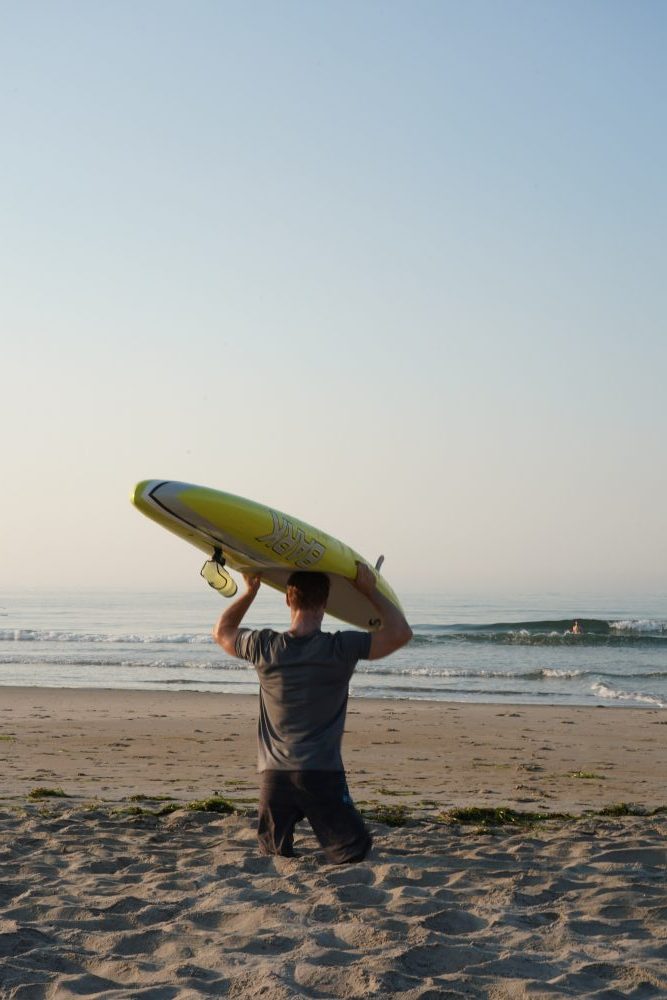
    USA Para Nordic Gold Medalist Dan Cnossen shows the paddle board he uses to prepare his upper body for sit skiing. (Courtesy Photo)

    “Hand cycling puts a heavy load on the arms and biceps, which isn’t as useful for skiing, and when some friends in Rhode Island asked if I’d like to go prone paddling with them I said sure, not knowing really what it was all about. I had recently started surfing and knew that arms-only paddling was great for the kinds of muscles needed for double-pole skiing, and when I went on my first prone paddle on the ocean—in addition to struggling to keep up with my friends—I was hooked on this mode of training.”

    Cnossen explained that prone paddling is similar to stand up paddle boarding, except for the body position and that the paddling is done with the arms and hands directly. The board is also narrower.

    “You can either paddle on your belly in a prone position, with a stroke similar to freestyle swimming or the butterfly, or you can get up on your knees and do a double arm stroke. Not only does prone paddling get me out on the water—ocean, lakes, rivers—it’s a fairly niche sport that has a very close community as a result. Now, when I show up for the first Paralympic ski team camp in the fall, on snow in a ski tunnel in Europe, I feel the transition into double poling is fairly seamless and that is because of surfing and prone paddling.”

    Outside of running, hand cycling, surfing, and prone paddling, Cnossen incorporates regular strength training throughout the summer. He also spends time at the range and pairs either running or a ski erg with shooting to round out his biathlon training.

    Finally, Cnossen contrasted this summer training with his workload during the winter.

    Dan Cnossen heads to the water for a prone paddle boarding session. (Courtesy Photo)

    “In the ski season, the type and volume of training we conduct depends on where we are in the competition cycle. This could include a high volume phase, an intensity phase, a recovery week, and the tapering process before the major event of the season, which is typically towards its end. However, if I were to outline a typical training week it would usually contain two interval days on snow in the morning, likely with shooting for one of the two sessions at a high heart rate, followed by some type of strength work in the gym that afternoon. online games to play with friends

    For the other days of the week, I’ll usually ski anywhere from 90-120 minutes or longer at an easy pace, focusing on technique and various drills to accomplish that aim. These long skis might involve skiing and shooting, or they might focus only on skiing. And there might be some recovery jogging thrown in there as well, if the roads outside aren’t too icy. It’s quite easy to over-do the training as a sit skier, since arms don’t recover as quickly as legs, so we’re constantly mindful of how we feel. I have incorporated this year a lot of mobility work both before and after training, and stretching after, and it’s making a big difference in how my back, shoulders and neck feel.”
  • Wednesday Workout: Recovery Surf with Ajax

    Wednesday Workout: Recovery Surf with Ajax

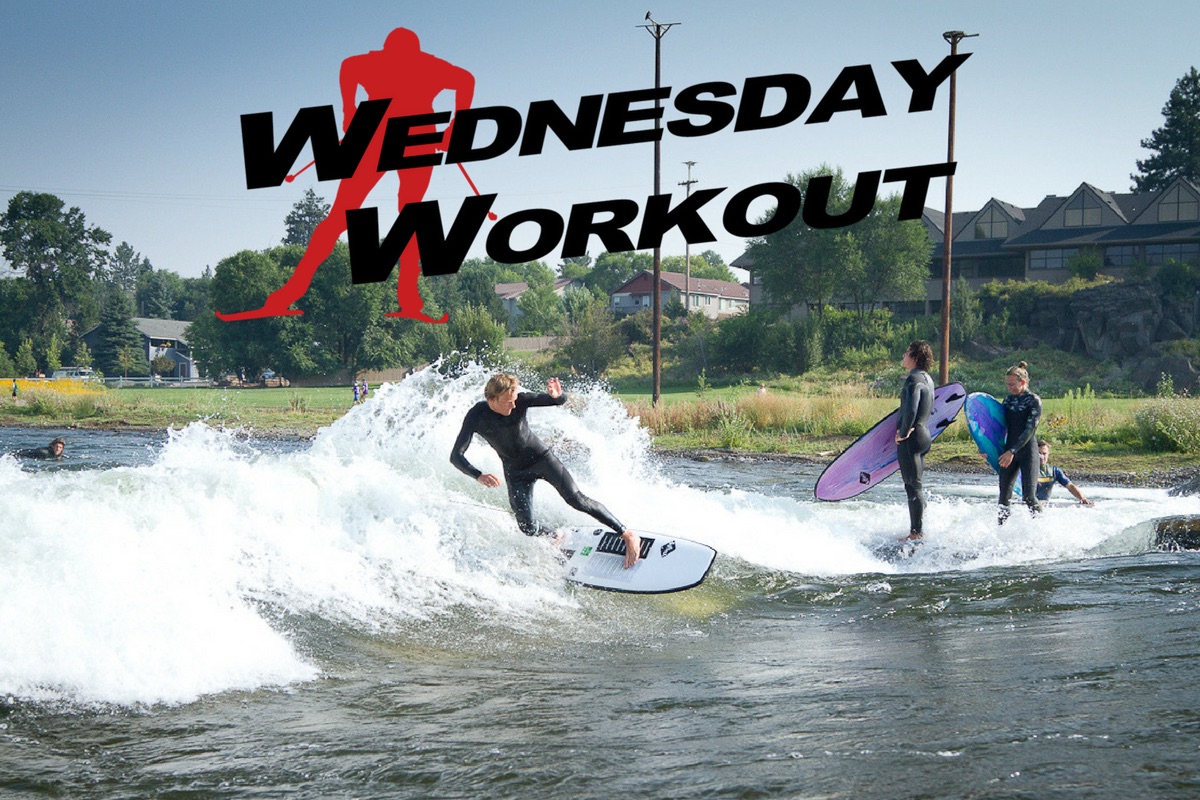
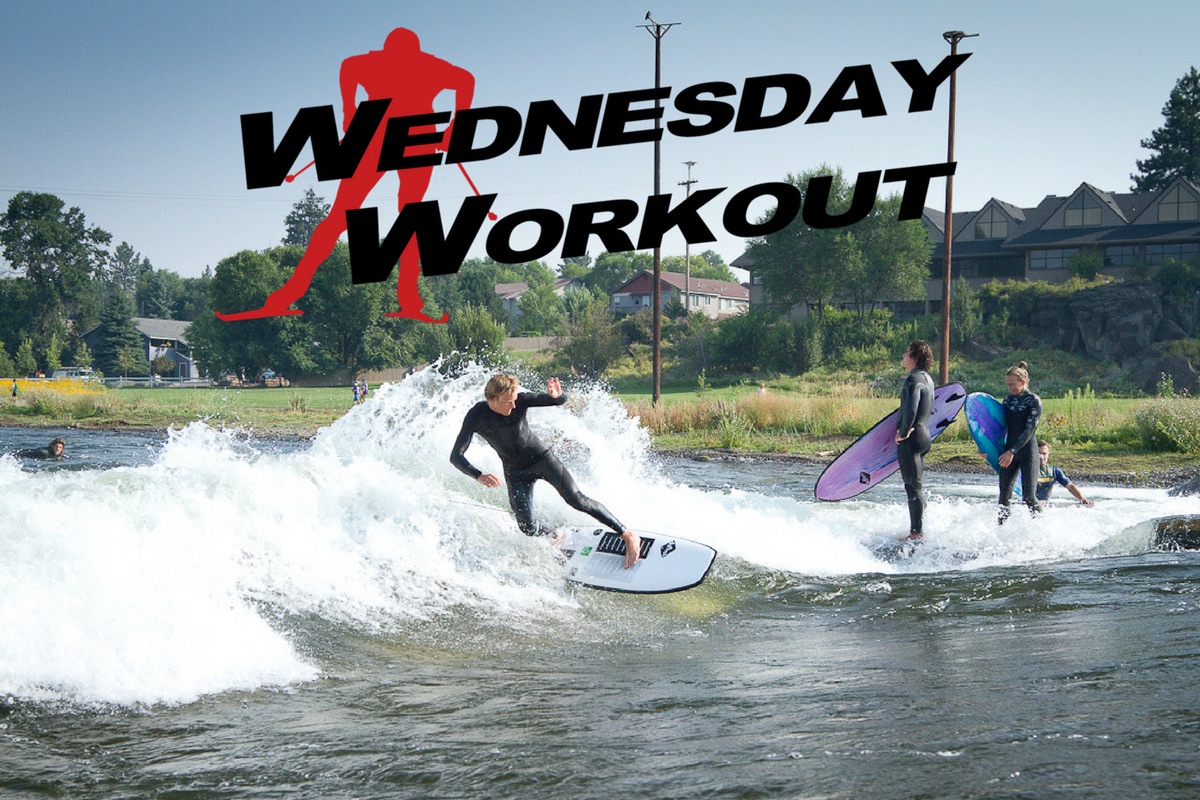
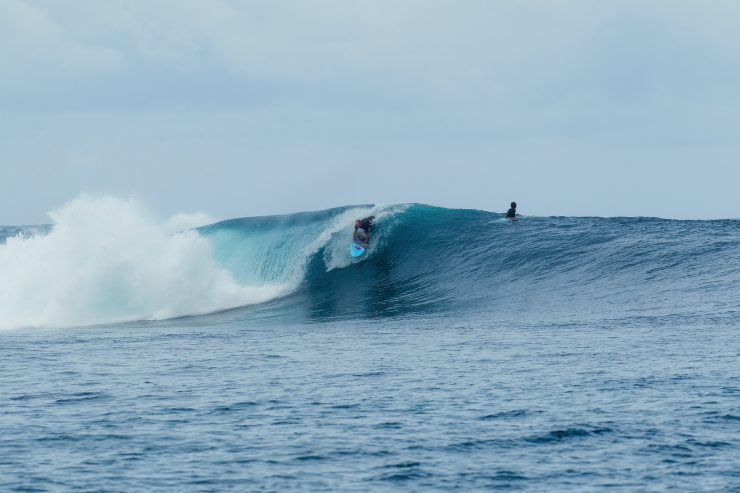
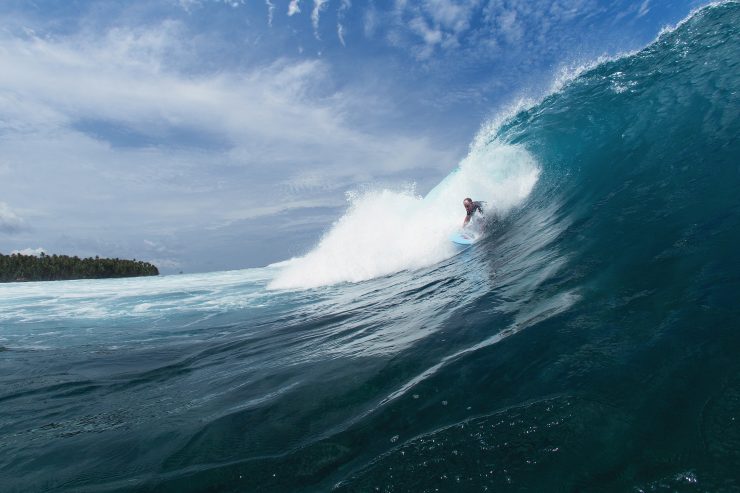
    Jake Ajax, a senior on the University of Wisconsin-Green Bay nordic ski team, catching some waves in Bend, Ore. (Photo: FasterSkier)

    BEND, Ore. — It’s August. That means a few things to keep in mind. Out West, it’s been hot and dry. Mid-90 temps have been the norm and in places like Bend, it’s in the teens for humidity. Don’t forget to top that with smoky air from surrounding wildfires.

    On the East Coast, high humidity can turn an early morning workout into a tropical death march. Left or right coast, even in the Rockies and Midwest, the phrase “hydrate or die” remains relevant. 

    It’s enough to tap the brakes on traditional forms of dryland training. 

    That brings us back to Bend. Despite recent claims, Bend isn’t paradise, and it may not be where you want to be. Some downsides here in Bend are the busy traffic circles and dusty mountain-bike trails in summer. (Yeah, all first-world problems.) If that’s not enough to dissuade you, then there’s this not-so-well-known fact: Bend’s river surfing wave isn’t always firing with a green face; sometimes a pillow of aerated water blemishes an otherwise everlasting standing wave.  

    The upside (yes, there’s a big upside) is that the surfing wave at Bend’s Whitewater Park serves up a great option to diversify the off-snow training.

    Sun-bleached blond. With a look like that, 21-year-old skier Jake Ajax, in Bend, Ore. for summer training, exudes the xc skier/surfer stoke. (Photo: FasterSkier)

    It took a 21-year-old named Jake Ajax from Minneapolis, Minn., who currently skis for the University of Wisconsin-Green Bay, to show the light.

    Jake actually goes by Ajax.

    Ajax ended up in Bend for the summer to train with the Bend Endurance Academy  (BEA) college training group. But surfing? That seems a bit off the radar from a nordic skier in the Midwest. Like any semi-landlocked kid, he dreamed big.

    “My obsession with surfing started last summer when I read the book Barbarian Days by William Finnegan,” Ajax explained in an email. “I’ve always been interested in the sport but being from Minnesota there’s no easy way to get into it. Barbarian Days was my gateway that pushed me to give it a try and I love it. I have a sister that lives near Orange County, CA so that’s a great resource to have. I even managed to surf Lake Michigan last spring a couple times when storms hit.”

    (If you think Barbarian Days sounds like some fluff surf book, think again. Finnegan won a Pulitzer for his cerebral surfing memoir.)

    Ajax explained he learned about Bend’s Whitewater Park from a video featuring Bend local and storied pipeline surfer Gerry Lopez.

    “I told myself, ‘I’m going to be good at that by the end of the summer,’ ” Ajax wrote. “When I first got here I bought a board and was surprised by the steep learning curve of surfing. For about the first week all I could do was ride the wave for a few seconds before face planting and getting flushed down the rapids.”

    Ajax is not alone. Not to name names, but some of Bend’s most stout endurance athletes, some of them nordic skiers, have been seen flushed over the Whitewater Park’s drops after a split-second surf.

    Including this guy:

    Ajax admits he’s now a regular at the wave in between his morning and evening workouts.

    “I usually try to make it to the wave about six days a week,” he wrote.

    For those logging hours, Ajax noted he doesn’t include the surfing in his log book, since there’s a bit of standing around and his heart rate remains low. But Ajax asserts the surfing has put grins on his face and benefited his ski training.

    “Physically, the basic surfing stance is fairly similar to skiing,” he wrote. “You press through the arch of your foot relaxing the toes and keep your ankles loose so you can turn back and forth on the wave. You press through the surfboard similarly to how you press through a ski. It definitely helps with balance. Mentally, ski training, especially in the off season, is always great to keep fresh. It’s been great mastering this new sport over the summer. Rollerskiing the same roads every week can get old so it’s nice to keep things fresh with the whitewater park.”

    Ajax has been the pied piper of river surfing for the collegiate nordic crowd. It’s now not uncommon to see surfers/NCAA skiers at the wave from the University of New Hampshire, Colby College, University of Vermont, and a certain Harvard Ski Team alum on occasion.

    “River surfing is a pretty cool sport so I think most skiers are compelled to try it,” Ajax wrote. “I’m just the one who drags them down to the wave to give it a try.”

    Newell Says…

    If you don’t take FasterSkier’s and Ajax’s word for it, how about the word from cross-country skiing’s answer to Kelly Slater: longtime U.S. Ski Team member and longtime surfer Andy Newell? (Seriously, shave Newell’s locks, swap out the lycra for board shorts and you’ve sort of got a Slater doppelgänger.)

    “I’ve never surfed any standing waves but I try to get into the water as much as I can throughout the summer to surf in the ocean,” Newell wrote in an email.

    Here are some of the ways Newell believes surfing can benefit skiers: 

    • Mental: “There is the obvious, surfing is fun, engaging, and addicting so it is a perfect mental break for a winter sports athlete. But I think there is much more to it than that since sports like surfing practice a different type of mental/ physical connection. Skiing is a speed-based sport, it’s all about how fast you can go. Surfing is a style-based sport that is more about muscle memory and how your body moves. I think it’s great when athletes with a background in speed-based sports practice something like surfing or skateboarding because it forces us to have different mental/physical connection that is focused more on proprioception. body movement, and is 100 percent skills based. It’s good for the brain:)
    • Physical: “On the pure physical side, surfing is great for balance, core strength, and upper-body strength. The paddling motion of surfing is awesome for skiers because it is a similar motion that recruits a lot of the same muscles as poling but it’s also very different in a good way. Paddling and swimming where you are bringing your arm up above your head and shoulder is great for strengthening external rotation in the shoulders which is something most skiers need.  Paddling a surfboard and strengthening all those small muscles around the outside of your shoulder and back will help a skier stay injury free from a repetitive poling motion. Also, when you are laying on your stomach and paddling on a board it will improve thoracic mobility (upper-back mobility) which is another weak point for a skier.”
    Jake Ajax, who’s training with the Bend Endurance Academy this summer in Bend, Ore., dials in his skinny-ski balance as he carves a turn on Bend’s river-surfing wave. (Photo: FasterSkier)

    The Wave

    Go find a wave. If you’re near an ocean , that’s the best place to start. If ocean waves aren’t an option, then try a river wave near you. Here’s a tool to help locate a surfable river wave.

    In Bend, the wave is close to downtown. If you’re busy logging hours on the computer, you can multitask and check out the live streaming surf scene.   

    The Gear

    Although we’re no experts, river surfboards are short. Some are in the 4-foot range for more experienced surfers. A stable learner board on the local Bend wave runs anywhere from 5-feet-2-inches to 5′-7″. Most surfers here use soft boards since board dings from rocks are a reality of river-wave surfing. That said, some local shapers will handcraft a pricey glass and carbon board for your liking.

    This writer makes his child wear a helmet and board leash with a hand-activated break away mechanism — it’s a river, after all, meaning natural hazards exist that may snag a leash. Better safe than sorry. Some river surfers in Bend wear a personal floatation device (PFD).

    Hardy folks wear board shorts as if the Cascade’s were found at 19.8968° N, 155.5828° W (a rough approximation of Hawaii’s location). Otherwise, most folks wear wetsuits. At roughly 65-degrees Fahrenheit in summer, the water in the Deschutes River as it flows through Bend isn’t shiver-inducing, but a wetsuit makes it cozy.

    The Workout: Surfing

    • Focus on de-stressing
    • Smile
    • Have fun
    • Get on the wave
    • Try to surf
    • Maintain a Level 0.5 heart-rate zone (if your post-workout data indicates you were in L1, you are doing it wrong.)
    • Smile
    • Repeat
    Jake Ajax paddling while river surfing. According to Andy Newell, this can improve functional shoulder strength. (Photo: FasterSkier)
  • Canadian National Team Wraps Up Maui Training Camp

    Canadian National Team Wraps Up Maui Training Camp

    Justin Wadsworth, head coach of the Canadian National Ski Team, made a deal with his athletes two years ago: if they collectively produced four or more World Cup podiums, he would bring them to Hawaii for a summer training camp. The team surpassed that benchmark and delivered six podiums in 2010-2011 in addition to World Championships gold.

    Off to Maui they went in June 2011 for Canada’s first camp on the islands. Wadsworth raised the bar accordingly to ten podiums in 2011-2012 for the team to earn its way back, and again his athletes outdid the standard. Every one of Canada’s World Cup skiers stood on the podium last winter for a total of 15 medals.

    As a result, Devon Kershaw, Alex Harvey, Lenny Valjas and Ivan Babikov camped (literally) in Maui again for just over two weeks this June. On Thursday, they packed up and boarded a plane back to Canmore, Alberta, to resume training on the Haig Glacier.

    The goal of the camp, like last summer, was to pack in quality volume training at high altitude, with a focus on sustained steep uphill technique. On the heels of such a successful season, Wadsworth’s goal was also to maintain motivation and momentum.

    “For us it’s about working really hard and having a lot of fun along the way,” he wrote in an email. “We need to keep the stoke high for the athletes, which means making things interesting, challenging and fun.”

    In Maui, interesting and challenging amounted to 20-25 hours of training per week and around 60,000 feet in elevation gain over the course of 14 days. “Fun,” inevitably, involved taking advantage of Maui’s legendary surf.

    It’s only July, but season-long strategy is prominent in Wadsworth’s mind. With World Championships and two Canadian World Cups on the horizon, he said their focus is definitely a little different than last winter. Competing well in Canada and Val di Fiemme will be important, but so will the Tour de Ski and planning out the season wisely around races where Wadsworth expects his team to reach the podium.

    “We as a team need to be really smart in our race choices, and how we plan the year. You can’t just go into the season and try to do it all and win every time,” Wadsworth said.

    The elevation of the Maui camp, while good preparation for any season, was also undertaken with an eye on the 2014 Olympics fewer than two years away.

    “It’s a bit tough with World Championships low this year, but … we are working on the altitude side of things leading to Sochi,” Wadsworth wrote.

    At the conclusion of the camp, he thought everyone had been skiing well and looked fit —“So I look forward to more of the same like last year.”

    There is a long offseason yet to go before the World Cup begins again in November, but Wadsworth said his team is building up to match, if not surpass, its past results. He may need to come up with new motivating camp destinations for future summers.

    “It’s great to be at a point where everyone on our World Cup team has stood on a World Cup podium, and when I say that it means Devon, Alex, Ivan, Lenny, Chandra, Peri and Dasha — everyone knows what it takes, and as a team we support each other to keep being there,” Wadsworth said.