Tag: SVSEF

  • The U.S. Ski Team Star You Won’t See on Snow This Weekend

    The U.S. Ski Team Star You Won’t See on Snow This Weekend

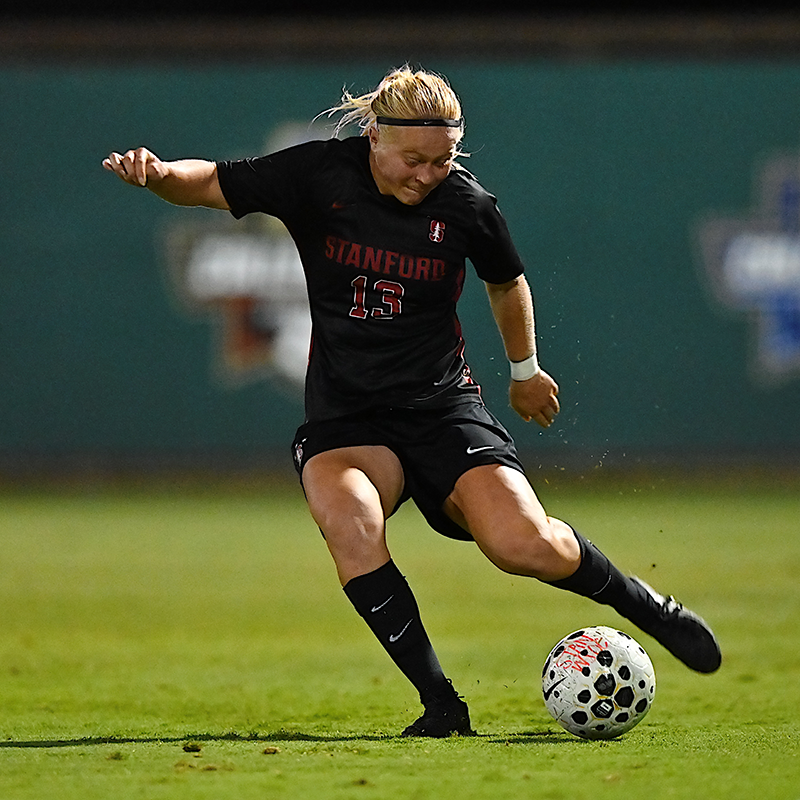
    On Friday afternoon, as World Cup sprinters snap into their skis in Trondheim and the SuperTour fields gather in Fairbanks, one of the United States’ most electrifying young Nordic athletes will step onto an entirely different stage. Stanford University, the No. 1 seed in the NCAA Women’s Soccer Tournament, is marching toward the College Cup—and at the center of it all is a player who, in just a matter of days, will also begin her bid for the U.S. Olympic Cross-Country Ski Team.

    The athlete is Sammy Smith: 20 years old, a national-team skier, an Environmental Systems Engineering major, and a starter for one of the most dominant college soccer programs in the country. The U.S. Ski Team views her as one of the most promising sprinters of her generation. And yet this weekend, instead of warming up on hard-packed snow in Norway or chasing early-season points in Alaska, she’ll be preparing to face Duke with advancing to the NCAA Championship Game on the line.

    “Get ready to cheer for one of the U.S. Ski Team’s top skiers this weekend,” you might tell Nordic fans. “Just… not on skis.”

    From the outside, the collision of seasons looks impossible to manage. For Smith, it is simply the life she has known since childhood.

    Idaho in Two Parts

    Smith grew up in a pattern that almost feels mythic now: winters in Sun Valley, summers and the rest of the year in Boise. Her family built the rhythm—her mom moving the kids north each winter so they could ski full-time and homeschool them in those snowy months.

    “I kind of grew up splitting time between Boise and Sun Valley,” Smith says. “My mom would move up to Sun Valley during the winter with my siblings and me so we could ski, and she would homeschool us up there… I did that all through high school.”

    In Boise, she was a typical public school student. In Sun Valley, she became a multi-sport anomaly. Her childhood was not just active—it was encyclopedic.

    “Growing up, I played about every sport one can imagine,” she says. “I ran track and cross country all through high school… I played hockey for a long time. Played football. Yeah, like, you name it, I pretty much did it.”

    Soccer was the constant. She started as soon as a child could sign up—though the Smiths occasionally bent age rules to make sure she could play with older kids. When her older sister started soccer, she was right behind her.

    “It’s probably like three years old when I started,” Smith says.

    And then there was freestyle skiing—a considerable part of her identity, something she expected to pursue more seriously than Nordic. Until one day, she couldn’t.

    “I ended up fracturing my tibia in my sophomore year,” she says. “And so I focused on Nordic that winter… I ended up having a great season, and then haven’t really looked back since.”

    The transition was abrupt, but the groundwork had already been laid: years of downhill confidence, years of skiing, years of learning to read terrain and push limits.

    “I’ve been on skis my entire life,” she says. “Very comfortable on downhills… I love to ski aggressively.”

    The athlete emerging in those years was already something unusual. The athlete she would become—balancing multiple sports at world-class levels—was still unimaginable.

    Against the Specialization Tide

    From the outside, Smith’s career appears to defy the common wisdom of modern youth sports. Increasingly, top athletes specialize early; by high school, many are all-in on one discipline.

    Smith resisted that. Not because she lacked ambition, but because multiple sports gave her joy—and made her better.

    “I think that’s something I’ve really thought a lot about,” she says. “There’s been more and more pressure to specialize… but growing up and doing so many different sports just kind of added to different components of skiing that I think are really important.”

    Soccer, for example, translates directly into sprint racing.

    “It’s a very high-paced game,” she says. “There’s a lot of change of direction, a lot of accelerating and decelerating. Particularly when you’re looking at heats, a lot of it is reacting to other people’s moves, trying to find little gaps and squeeze through.”

    The skill set becomes a competitive edge: quickness, agility, and decision-making under pressure.

    “That ability to shift gears really quickly and take openings when you can really emulates in soccer,” she says.

    Freestyle skiing contributed something else entirely: creativity and courage on skis, especially in chaotic or technical downhill sections.

    “At World Juniors last year,” she recalls, “everyone was in the track. I hopped out of the track, went far on the inside, and just double poled… It was a risky move, but it was something I saw.”

    She paused for only a moment before going all-in. It worked.

    The blend—soccer fuel, freestyle instinct, Nordic engine—gives her a uniqueness rarely seen in American skiing.

    U.S. Ski Team head coach Matt Whitcomb sees it clearly.

    “She’s a world-class athlete,” Whitcomb says. “She’s already exhibited the early signs of being a World Cup star.”

    That she is doing this while starting for Stanford’s soccer team? To him, it’s not a contradiction. It’s part of the magic.

    Why Stanford — and Why Now

    Choosing Stanford was not simple. Smith had options—many of them. But a few factors stood out.

    “I really value my education,” she says. “Stanford’s a great school. It’s where my mom went. And my sister is also on the soccer team, so the opportunity to get to play college soccer with her is pretty hard to pass up.”

    Her academic path—Environmental Systems Engineering with an energy concentration—fits a pattern among elite U.S. skiers. Many of the top men (Gus Schumacher, Ben Ogden, et al.) have gravitated toward engineering. Smith sees the overlap, too.

    “You look at a skier and the training that they do,” she says. “They’re very self-motivated, very committed. So I’m sure certain aspects translate pretty well.”

    The challenge, of course, is that Stanford is far from snow. It is not close to ski culture. It is not close to the European World Cup circuit. It is very near, however, to one vital piece of equipment:

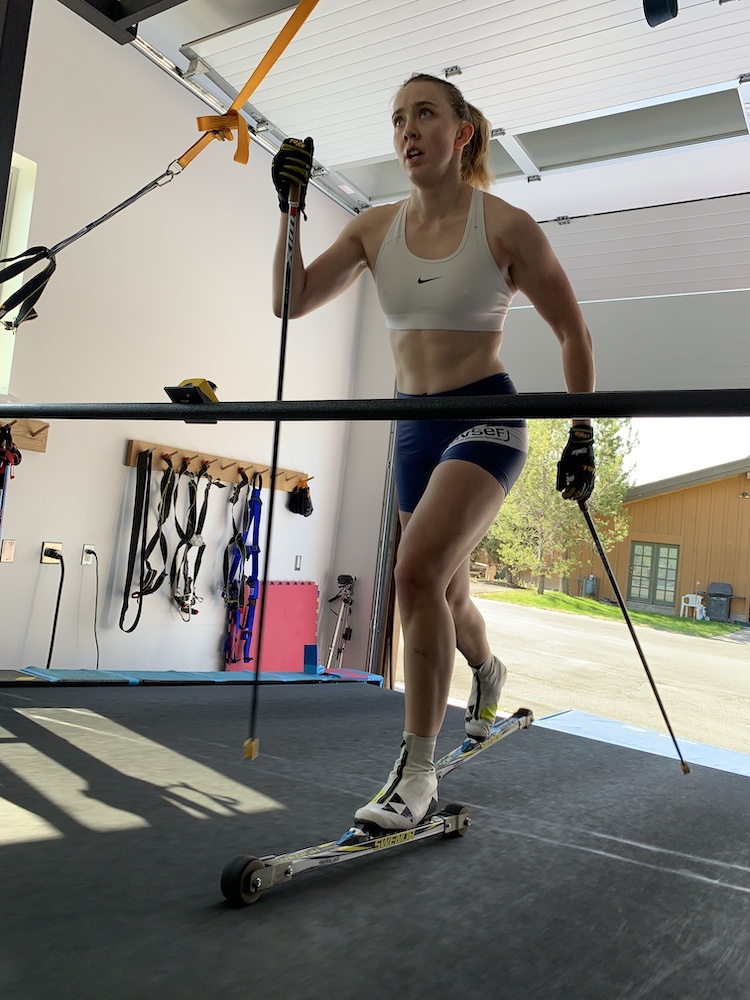
    “Fortunately, I have a classic roller-ski treadmill… in a little office space,” she says. “That’s been an irreplaceable part of my training.”

    She uses it for high-quality sessions, often squeezed between classes, labs, or soccer obligations. Running remains a central component, helped by the demands of soccer conditioning.

    But she knows her preparation is different—less volume, more precision. Not ideal. Not textbook. Not expected. And yet:

    “I think I’ve tried to accept that,” she says. “I know that I am not at my best, but skiing is a sport you can do for a very long time. I don’t necessarily need to be the best skier I can be at 20 years old.”

    Again, Whitcomb backs the long view.

    “We’re willing to postpone that timeline,” he says. “We’re just happy for Sammy being happy in her current environment. We’ll take what we can get at this moment, but we want more down the road, and we’re excited for it.”

    This, in many ways, is the crux of the story: the U.S. Ski Team is betting on Sammy Smith not despite her dual identity, but because of it.
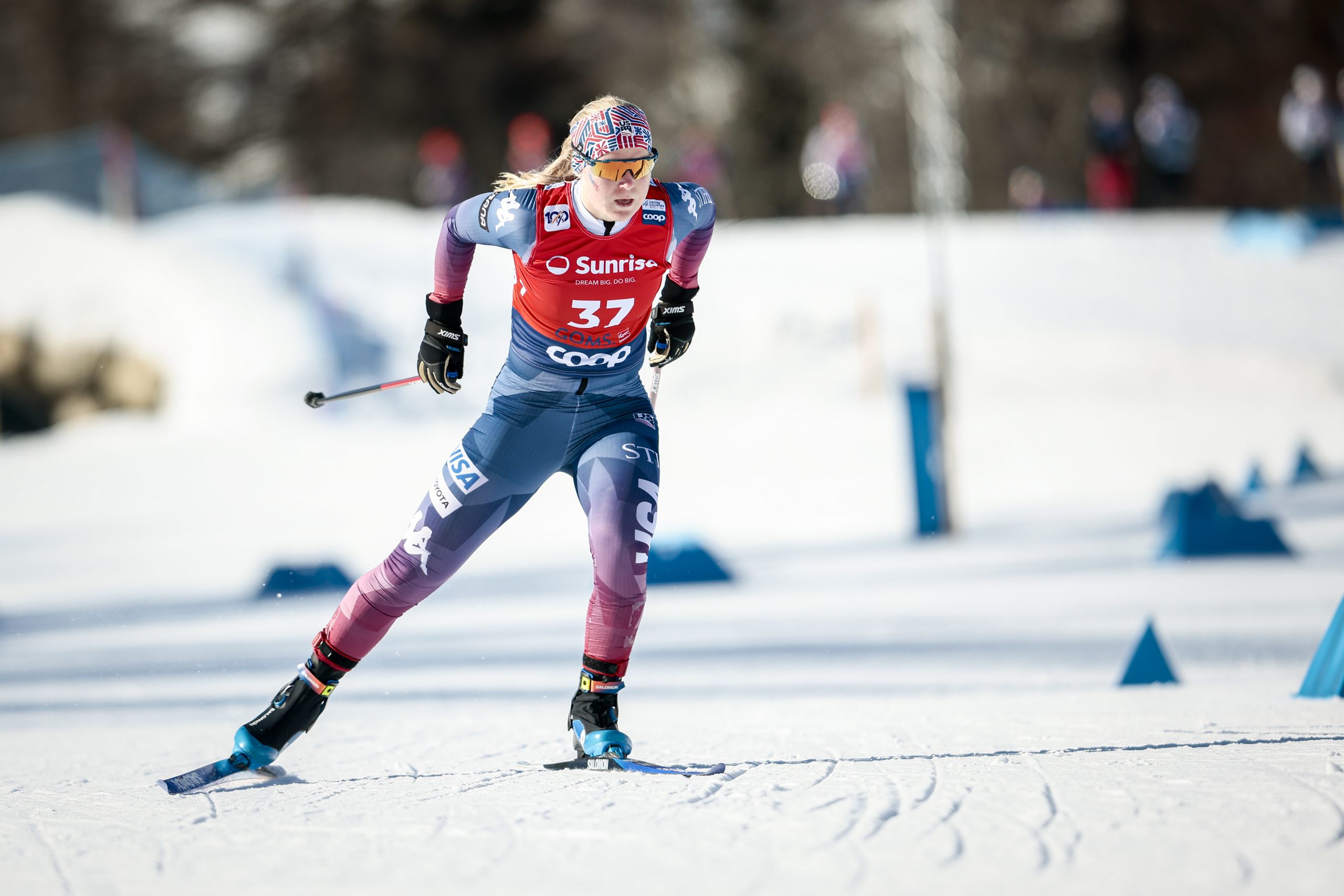
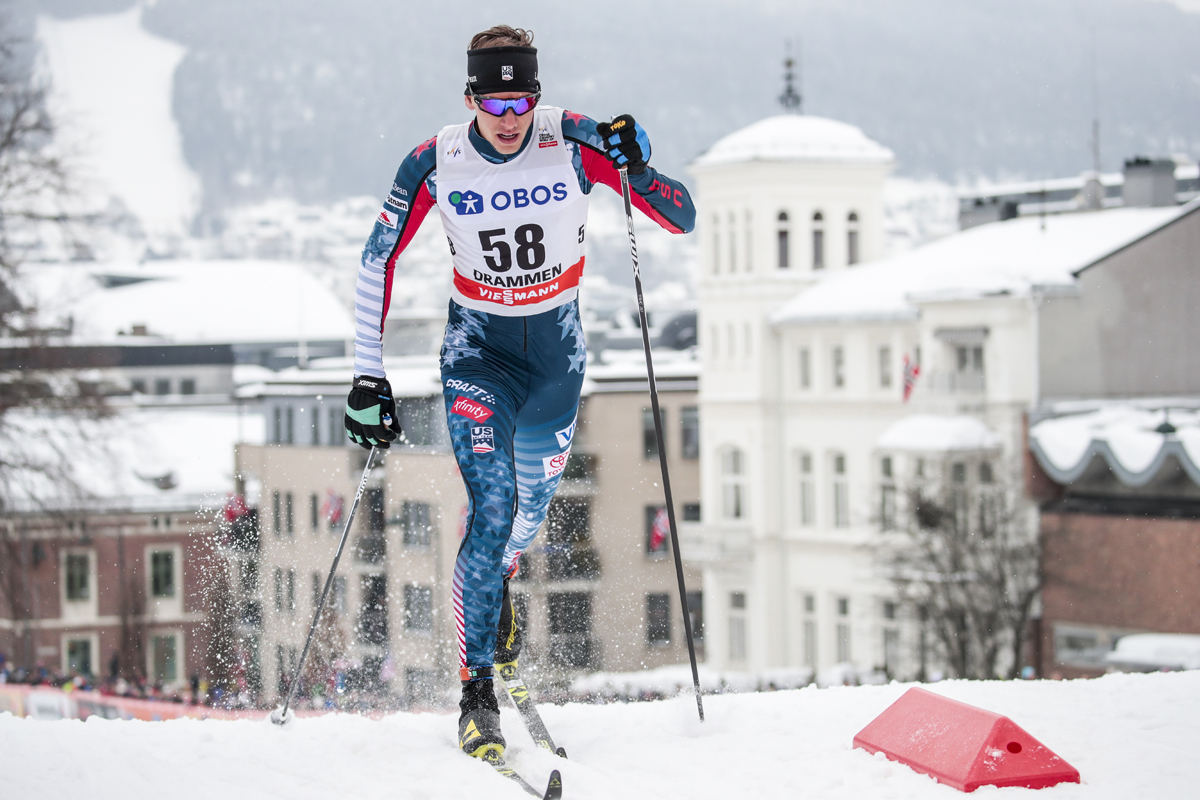
    Samantha Smith (USA) racing the World Cup individual sprint in Goms (SUI). (Photo: Modica/NordicFocus)

    The Final Four — and Then the Sprint Start Line

    The most astonishing part of Smith’s season is its timing.

    If Stanford beats Duke on Friday in Kansas City, they move directly to the College Cup championship game. The semifinal is December 5th; the final is December 8th, Monday. Smith has already mapped out the days that follow.

    “We’ll get back Tuesday night from Missouri… I have a final at 8 a.m. Wednesday morning,” she says. “I’m going to fly out right after my final, and then I’ll have one day of snow on Thursday in Alaska, and then I’ll be hitting that sprint on Friday.”

    She says this calmly, matter-of-factly, like someone describing a standard weekend trip.

    The Anchorage SuperTour sprint is not just any race—it is her re-entry into skiing, her first day on snow of the season, and a crucial tune-up before U.S. Nationals in Lake Placid, where she hopes to qualify for the Olympic team.

    The Anchorage races, she says, are not performance indicators—they are simply a way to “bust the rust off.”

    “Obviously, a lot of other skiers will have been on snow for well over a month, and I won’t, she says. “It’ll just be an opportunity to get on skis, do something fast.”

    Her real focus is the 10-day window between Anchorage and Lake Placid.

    “For me, as more of a sprinter, and the way the criteria is set up, I’ve got to target the qualifiers, she says. “So being really deliberate… knowing exactly what I’m going for.”

    The stakes are simple: she must race well at U.S. Nationals to have a shot at Milano-Cortina.

    The stakes are also massive.
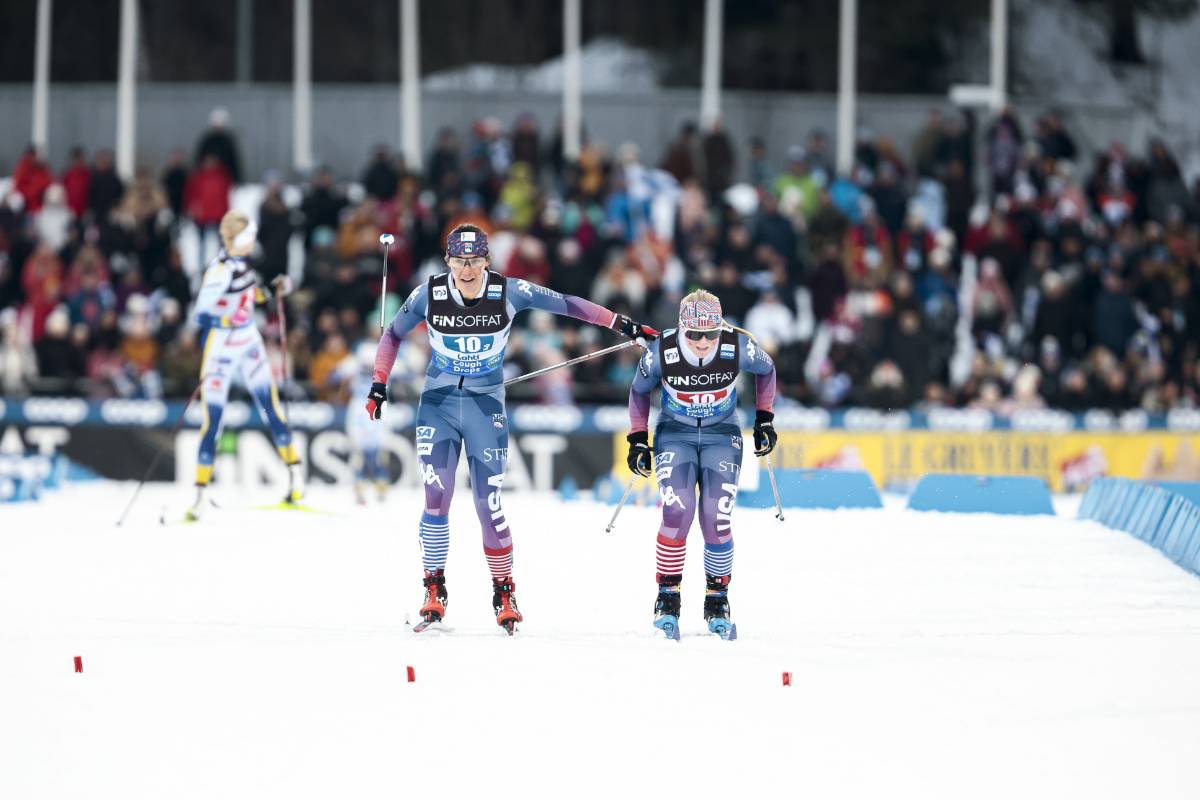
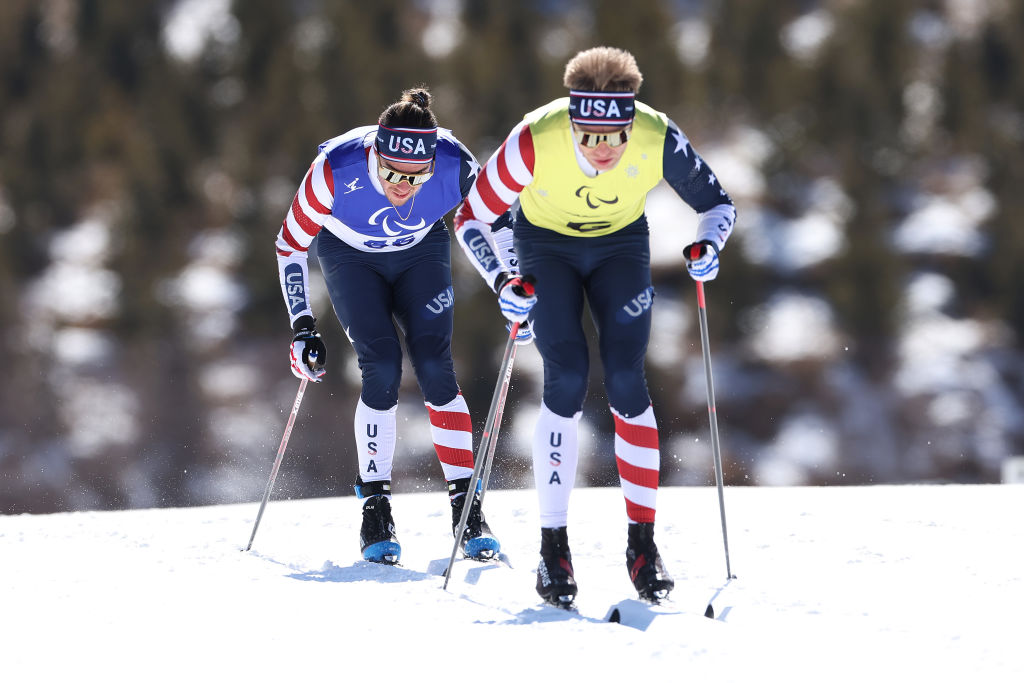
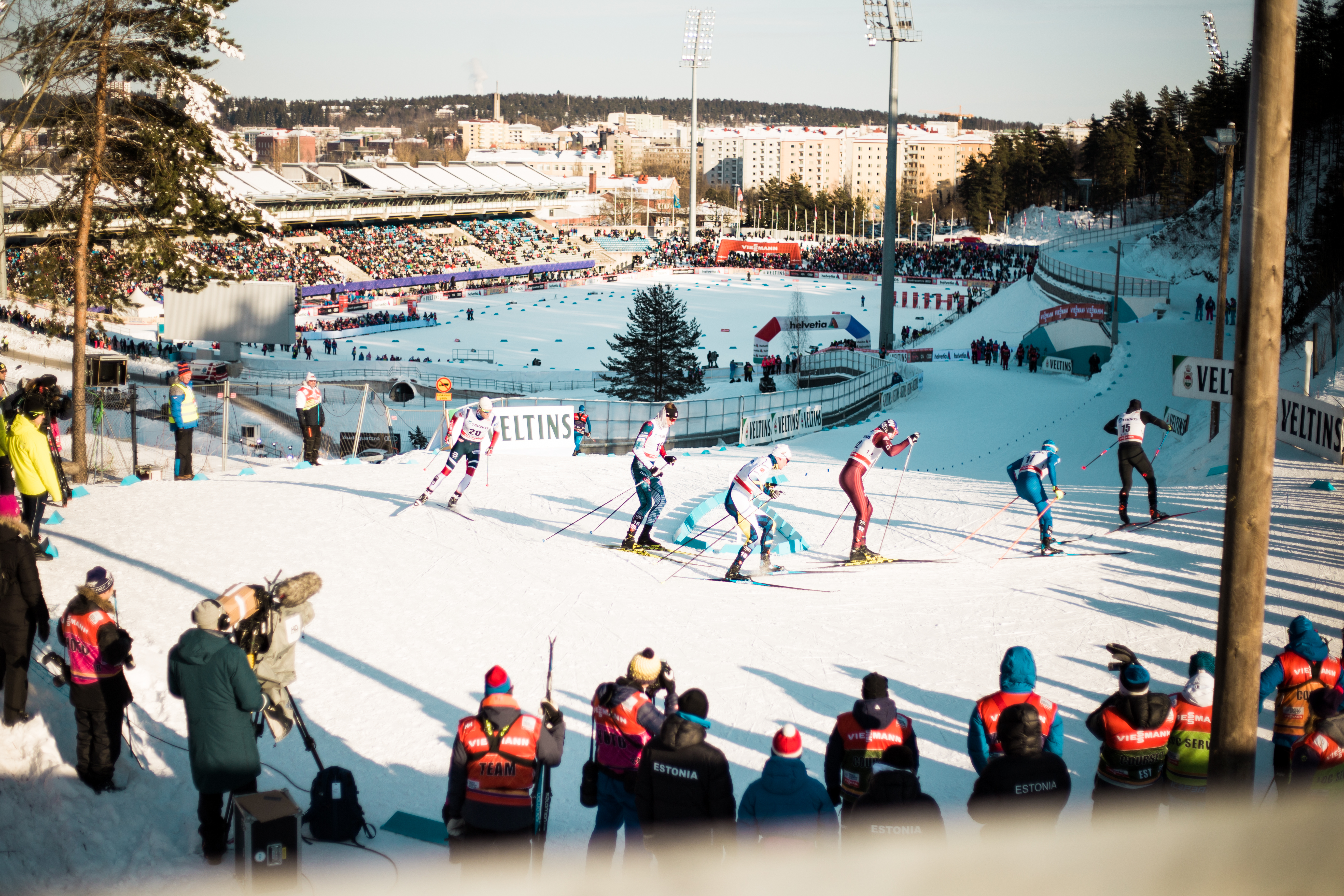
    Julia Kern and Sammy Smith paired up for the Team Sprint in Lahti (FIN). (Photo: Nordic Focus)

    The Domestic Gamble

    If Smith had a regular ski season—if she weren’t in the NCAA Tournament—she might have chased World Cup points, fought to crack the top 45, and used international racing to establish selection priority.

    But that route is closed.

    “If you’re only racing a few of the international races, it’s incredibly challenging to get into that top 45, she says. “Whereas if you were able to do all of them, it’s a lot more feasible.”

    She knows she has “had some really good World Cup sprints, and she wonders—without bitterness—what might be possible in a different academic or athletic setup.

    But this year, it is the domestic route or nothing.

    “That’s what I’m planning on, she says. “I need to have some killer races at U.S. Nationals.”

    What sounds like a gamble is, for her, simply the version of the sport she can access this season. And she is okay with that.

    “Just being consistent… being intentional, she says. “Doing what I can.”

    Who She Wants to Be

    Ask Smith what success looks like decades from now, and she doesn’t list medals or championships.

    “You look at Jessie’s legacy, she says, referencing Jessie Diggins. “The amount of skiers she’s inspired and how much she’s done for the sport… I want people to look back on my career and feel like I’ve done a lot for the sport, inspired the younger generation of skiers, and brought a lot back to my community.

    It is the kind of answer that feels too mature for her age, but entirely in character.

    She is not racing to avoid mistakes—she is racing toward something: possibility, growth, a long future. Maybe a future on the World Cup. Maybe a future in engineering. Maybe a future doing both.

    But first, she has Duke.

    Samantha Smith (USA) racing the World Cup individual sprint in Minneapolis (USA). (Photo: Modica/NordicFocus)
    Samantha Smith (USA) racing the World Cup individual sprint in Minneapolis (USA). (Photo: Modica/NordicFocus)

    The Athlete You’ll Watch Twice This Month

    When you tune in this Friday—whether you are a Nordic diehard refreshing live timing from Trondheim, or an American fan checking SuperTour results—remember that one of the most important U.S. prospects in cross-country skiing will be competing too. She just happens to be wearing soccer cleats instead of ski boots.

    And next week, she’ll be back on snow, sprinting against the country’s best, staking her claim for a place on the Olympic team.

    The duality is not a distraction for Sammy Smith.

    It is her identity.

    It is what built her.

    And it might be what carries her into the future of American skiing.

    “She’s been playing a ton this year, Whitcomb says. “Of course, we want her all to ourselves… but we want more down the road, and we’re excited for it.”

    This weekend, she wants one thing: a berth in the College Cup Final.

    Next weekend, another: a ticket to the Olympics.

    Two worlds.

    Two uniforms.

    One athlete.

    A lot of people will be cheering for Sammy Smith this month. Nordic fans just get to do it twice.


    *You can watch #1-ranked Stanford vs. #2-ranked Duke in the women’s College Cup semifinal tomorrow, Friday, December 5, at 8:45 p.m. EST on ESPNU. The game can also be streamed on the ESPN app, Fubo, or Hulu.


    Love Stories Like This? Help Keep Them Coming.

    Feature interviews like this one take time, access, and care to produce. If you value thoughtful storytelling and independent ski journalism, please consider becoming a Voluntary Subscriber. Your support directly fuels the work we do to cover the people, places, and moments that make our sport special.

    Join the FasterSkier community!


    Sammy Smith (USA) in the World Cup individual sprint in Tallinn (EST). (Photo: Modica/NordicFocus)
  • The Hilltop Lesson: How Second Place at the NCAA Championship Became Hagenbuch’s Guiding Philosophy

    The Hilltop Lesson: How Second Place at the NCAA Championship Became Hagenbuch’s Guiding Philosophy

    On a bright March afternoon at Dartmouth’s Oak Hill, with a soft and slow course under his skis and a band he himself had organized blasting in the stadium above, John Steel Hagenbuch approached the final climb where he learned something that would shape the early years of his career far more than any podium ever could.

    He had come into the NCAA Championships with the weight of a thousand private dreams — a home championship crescendo and an entire community behind him. Then, with Utah’s Joe Davies charging to the finish line waving the Utes flag and Peter Graves’ voice echoing through the trees, Hagenbuch realized he was not going to win.

    “I got dropped, and it just wasn’t gonna happen,” he says. “I told myself, you’ve got until the top of this hill to be upset about it.”

    John Steel Hagenbuch was all smiles after crossing the 20k Freestyle finish in second place at the 2025 NCAA Championship where he represented Dartmouth College on their home course at Oak Hill. (Photo: Courtesy Photo)

    What happened next wasn’t the reaction of an athlete who had just been beaten in the race he’d been thinking about, talking about, training for, and dreaming about for three years. It was something quieter. Something older. Something that didn’t look like the scripted champion he’d imagined — but ended up becoming the cornerstone of the athlete he is now.

    “I stopped poling,” he says. “And I just kind of skated through the stadium… smiling, waving, like the Penguins of Madagascar — smile and wave.”

    He remembers the sunshine, the thousands of people lining the stadium, the Stripers — Dartmouth’s biggest student band, coaxed back from post-graduation life because he wanted the place to feel alive — and the thrum of friends, professors, fraternity brothers, and family in the crowd.

    “Did I win the ski race? No. But it actually didn’t matter,” he says. “I was just so grateful… all the amazing things in my life that had led me to that point.”

    Every day since, he thinks about that race. “But not for the reasons you’d expect.”

    John Steel Hagenbuch (USA) racing the World Cup opener in Ruka (FIN) in 2023. (Photo: Modica/NordicFocus)

    Muonio, Finland: The Final Quiet Before the Season Begins

    Eight months later, Hagenbuch is sitting in a small room in Muonio, Finland, speaking over a fickle internet connection. Outside, winter is closing in; inside, the early-season nervous energy is beginning to hum.

    “It’s been a good way to start the season,” he says of the classic sprint and 10k skate he raced the previous weekend. “Hopefully more to come.”

    He will likely stay on the World Cup through the Tour de Ski. His primary goal, stated simply and without ornament, is clear: “Primary goal is to go to the Olympics. Everything else is secondary.”

    He’s 24, still at Dartmouth — technically a senior, though he took this fall off to focus on training. When winter term begins on January 7, he’ll be back in class, shifting between World Cups and essays, navigating the dual life of a college student and a professional skier the way only NCAA athletes truly understand.

    But he is not rushed. Not impatient. Not gripping the rail of his career with white knuckles.

    He learned something on that hill at Oak Hill, something that has become his ballast. “It reminds me why I do this, he says. “And why this sport is so special.”

    Before he was an NCAA champion, skiing on the World Cup, and a trying to qualify for the Olympics, John Steel Hagenbuch was just a kid who loved skiing around on the trails of Sun Valley, ID. (Photo: Courtesy Photo)

    The Long View: Three Olympics and a Full-Moon Ski

    Hagenbuch surprises you with the distance of his vision.

    When asked about the future, he doesn’t talk only about Milano-Cortina in 2026. He talks about three Olympics — a decade of life sketched out in calm, confident lines.

    “I would love to go to the next three Olympics, he says. “Milano-Cortina, then the French Alps, and then retire at the Salt Lake City 2034 Games.”

    Soldier Hollow, where he has raced “probably 50 times, would be the perfect ending. But it’s not the race he imagines most clearly. Not the ceremony. Not the result.

    It’s the lead-up.

    “What will be the crown jewel of my ski career, he says, “is having the 2034 Olympic pre-camp in Sun Valley. At my house. With all the fellows.”

    He can picture it already: the team skiing at Prairie Creek under a full moon, crispy tracks at 15 degrees after a sunny day, the quiet of the Sawtooths pressing close.

    “That’s what I’m gonna remember when I’m 75, he says. “That Prairie Creek ski.”

    In this way, Hagenbuch does not think like most 24-year-old athletes. He thinks like someone who has already lost something, already gained something, and has made peace with what remains.

    A Training Philosophy Built on Feel (and a Fearless Lack of Overthinking)

    In an era where professional endurance athletes run lactate strips daily and analyze heart-rate drift with the devotion of day traders, Hagenbuch stands apart.

    “Do you do lactate testing? I ask him.

    “Maybe like once a year.”

    He trains primarily by feel—not just how his body feels, but what he feels like doing: long backcountry days, ridge runs, mountain biking, skiing deep into the mountains around Sun Valley. There is structure, but only when he believes it should exist.

    “Not taking it too seriously, he says, “and kind of just going by what I would like to do and what I think is going to be fun.”

    June and July? “Absolutely not analytical. Fall? Yes, that’s when he “locks in a bit.”

    And if it ever stops being fun, he says, “I will not stick around.”

    He has seen athletes grind themselves into dust out of fear of what’s next. “I respect the grit, he says, “but… I’m incredibly grateful to have had experiences and opportunities in my life that that’s not the case for me.”

    He isn’t clinging to skiing. He’s choosing it — every day — until it no longer feels right.

    That clarity is rare. Maybe even elite.

    Being cheered up a climb in Soldier Hollow by one of his SVSEF coaches, Rick Kapala, John Steel Hagenbuch proves athletes like him aren’t built by themselves or through the guidance of one coach, they are lifted by a community. (Photo: Tryg Solberg/Courtesy Photo)

    The Consortium: Osgood, Whitcomb, Kapala, and Holmes

    Though he trains by feel, he is not without guidance. His coaching structure is more like a board of advisors — four voices, each offering a different vantage point.

    “I talk with Brayton at Dartmouth, and Matt on the U.S. team, and Rick — my high school coach — and Peter Holmes on the Gold Team, he says. “I get input from all of those guys.”

    When deciding to come to Muonio early, he called all four. Not for permission — for perspective.

    “When I’m at Dartmouth, I do Brayton’s plan, he says. “But if I feel like I need to do something different, he’s totally cool with that.”

    And contrary to what a young elite athlete might hope to hear, most of what they tell him is not “do more.

    Oftentimes, he says, “it’s settled down.”

    Dartmouth College’s John Steel Hagenbuch skied to a 15-second victory on his home trails in the 7.5 k Classic at the NCAA Championship. (Photo: Tobias Albrigtsen)

    The Place That Built Him

    If you want to understand why Hagenbuch thinks the way he does — why gratitude flows so naturally through him, and why he measures life through moments rather than medals — you have to understand Dartmouth.

    “NCAA skiing is a really special thing, he says. “People are going to roll their eyes… but there aren’t a lot of places that have the components Dartmouth has.”

    The social component is not a distraction — it’s a pillar. “Last year, every single guy on the team was in a fraternity, he says. “Different fraternities.”

    He explains the structure: students join Greek life in their sophomore year, after they’ve already found their people, their communities, their balance.

    “Everything acts as a complement, he says. “And providing that much balance… makes everything greater than the sum of its parts.”

    The feeling at NCAAs captured this perfectly. “Anyone who was there, he says, “left thinking two things: college skiing is [so] sick and Dartmouth is [so] sick.”

    He means it.

    And he knows it won’t come again — not in this form.

    Luke Allen, one of his closest friends, once asked an older alumnus if life ever gets as good as Dartmouth skiing. The man looked him straight in the eye and said, “No.

    There was lots of great energy at Oak Hill for the final day of the 2025 NCAA Championship. (Photo: Tobias Albrigtsen)

    The Beauty of Losing

    Here is the strange and elegant truth of Hagenbuch’s current career: his most important athletic memory is a loss.

    He doesn’t hide from that. He doesn’t twist it into “motivation or pretend it fuels some internal fire for revenge.

    Instead, he carries it like a compass.

    “I think about that race every single day, he says. “But not because I lost… It reminds me to be grateful for these amazing people, places, and things in my life.”

    He printed 150 photos at CVS the night before leaving Hanover in August — family, friends, the Haig Glacier, Sun Valley, Dartmouth — and plastered them across his fridge at home.

    “Think how many times a day you walk by your fridge, he says. “All my friends are right there.

    It’s his daily reminder of what matters.

    The Thursday classic race at NCAAs, the unexpected great day, the team’s move from fifth to first — these have become larger in his memory than the race he thought he wanted most.

    “What was the special day at NCAAs? he says. “It was Thursday. I wasn’t even thinking about Thursday. I didn’t care how that one went.”

    And yet: “I had probably my best classic race ever… it was such a culmination of a lot of hard work and belief.”

    This is the philosophy he now lives by: you learn more from your losses, and sometimes the thing you didn’t expect becomes the thing you carry forever.

    John Steel Hagenbuch, who won the 7.5k Classic, celebrates with his teammates after the three raced Dartmouth into the NCAA Championship lead. (Photo: Courtesy Photo)

    The Advice Only Someone Who Has Lived It Can Give

    At the Haig Glacier last summer — years after his last high school camp there — Hagenbuch offered a piece of advice that caught the younger kids off guard.

    They were expecting training insight. Intensity zones. Technique tweaks.

    Instead, he told them the thing he wishes someone had told him at 15:

    “Be a kid more.”

    Growing up in Sun Valley, he had an idyllic childhood — but he wishes he’d stayed on the high school soccer team after freshman year. Wishes he’d allowed himself to do more of what felt right, not what looked right.

    “Don’t try to do what you think you should do, he says. “Do what you feel you should do.”

    And if your friends are doing something slightly reckless, something that wouldn’t make the parental brochure?

    “Maybe… F-it, do it, he says, laughing. “You’ll figure it out for yourself.”

    Because that, too, is how you learn.

    John Steel Hagenbuch (USA) racing the individual sprint at the Minneapolis World Cup. (Photo: Modica/NordicFocus)

    A Career Just Beginning, with the Wisdom of One Already Lived

    Hagenbuch is young — young enough to dream of three Olympic Games, young enough to talk about walking onto the Dartmouth lightweight rowing team or running the 5k or 10k for the track team “as a fun challenge in his final spring on campus.

    But he is also old in the ways that matter. Not jaded — never that. But precise in what deserves his attention, and ruthless in discarding what doesn’t.

    He knows what a good race feels like: “When you finish and think, damn, I could have gone a little harder.”

    He knows what a good life feels like: something filled with people and place, community and joy, full-moon skis and carnival tailgates and the band you recruited yourself playing you through the stadium after a loss.

    And he knows — already — that the real currency of this sport isn’t medals, nor money, nor even wins.

    “If you wanted to have glory or make money in sports, he says, “we’re all doing the wrong sport.”

    So what is it about?

    “It’s about the things I’ve talked about, he says. “It’s the parking lot tailgates. The little antics in the van. The dumb jokes with your boys. The feeling of being part of something bigger.”

    And that’s why the NCAA hilltop moment carries him into this World Cup season — a season he hopes travels through Italy, under Olympic lights, wearing the colors he’s dreamed about.

    Because that hill taught him the thing every great athlete eventually learns:

    Sometimes the race you don’t win becomes the story you never stop telling.

    Sometimes the best version of your career begins the moment you stop being upset… and start taking in the view.


    Love Stories Like This? Help Keep Them Coming.

    Feature interviews like this one take time, access, and care to produce. If you value thoughtful storytelling and independent ski journalism, please consider becoming a Voluntary Subscriber. Your support directly fuels the work we do to cover the people, places, and moments that make our sport special.

    Join the FasterSkier community!


  • Q and A: Sun Valley’s Rick Kapala on coaching, sport development, and constructing a “complete ecosystem” in the skiing community

    Q and A: Sun Valley’s Rick Kapala on coaching, sport development, and constructing a “complete ecosystem” in the skiing community

    A common sight in the Intermountain West for the past 35 years: Rick Kapala on race day. Kapala is stepping away from coaching, and into sport development, this season. (Photo: Sun Valley Ski Education Foundation – SVSEF).

    “I’m sorry, but once I start talking cross-country skiing, I can’t stop,” admits Rick Kapala. Remove the “talking” from that statement, and it’s still a succinct summary of long-time Sun Valley coach Rick Kapala’s career.

    This season will mark the first time in thirty-five years that Kapala won’t be manning the wax bench on race day for the Sun Valley Ski Education Foundation. This summer, he turned to a new role at the Sun Valley Ski Education Foundation with the title “Sport Development Director.” In his stead, former Bates College Coach Becky Woods will take over his former Program Director duties.

    For those who have known Kapala during his long tenure in US skiing, his new title signals an exciting prospect. Kapala has been a constant, forward-thinking mind in US Skiing. He has played a role in creating a domestic professional skiing scene, helped start the National Nordic Foundation, and counts a plethora of key figures in US Skiing as his former athletes, coaches, and mentees.

    FasterSkier caught up with Kapala to reflect on his own journey to this point and get a glimpse into some of the most exciting ideas pushing US Skiing, from one of its most passionate minds.

    (This interview has been edited for length and clarity.)

    FS/FasterSkier (FS): Let’s start with your biography as a coach. Can you give us a summary of your career as a coach and at Sun Valley? 

    Rick Kapala (RK): Coaching for me started at my alma mater, Michigan Technological University (Michigan Tech), the year I graduated. Then I moved out west and I coached for a couple years in Washington state at a club program run by Pacific Lutheran University.

    Then I moved to Anchorage which was where I was really fortunate in my timing. I landed coaching at West Anchorage High School as their ski coach, track, and cross-country coach. And the stable of athletes I had there was full. Nina Campbell, Joey Caterinichio, and Chris Grover are just a few your readers might know. I was really lucky that was my first exposure to sort of an “all-in” type coaching job. Then I came down to Sun Valley in the summer of 1987 and have been here ever since.

    FS: What did the Sun Valley team look like when you got to Idaho?

    RK: We had a pretty good little program, this being the ski town that it is. The Alpine program was big, but the cross-country team was this small, ancillary program. We had seven to nine on the high school team, and then seven or eight middle schoolers.

    FS: How did you approach building out that program back then? Was it adding a younger development program? Bolstering numbers for the high schoolers?

    RK: There was a separate, kind of “Bill Koch League” (learn-to-ski) type program in the Valley. We assimilated that and made it our Devo program under the umbrella of our offerings. The program immediately began to grow from there. I attribute that to having really good coaches at that younger age who were really invested in the right way over the course of the first four or five years I was in Sun Valley. That eventually led to steady growth for the Comp (high school) program. That model is the basic infrastructure of a club. The same can be said about New England with the Bill Koch League, or in Minneapolis with the Minnesota Youth Ski League. Really dedicated coaches at the younger level are what end up powering competitive programs.

    FS: At what point did Sun Valley grow beyond the junior programming? When did the Gold Team (Sun Valley’s Pro Team) and Post-Grad programs start to develop?

    RK: The genesis of the Gold Team was a really fortuitous set of circumstances. We had a great coach, Chris Grover (who Kapala had coached at West Anchorage), landed in Sun Valley after the Nagano Olympics in 1998. He had been with the national team, but at the time there were budget cuts. Grover, coming off of that, had a pretty profound instinct that skiing couldn’t just develop within the [United States Ski and Snowboard Association]. He came to me and said, “we should start a pro team [in Sun Valley],” which, in retrospect, was such an important development because it allowed us to imagine a whole new ecosystem for our programming.

    Having Grover come off of the national team also made it an easy prospect to get athletes here. Chris Cook, for example, got cut loose from the national team, and Grover was able to step in and give him an obvious avenue to keep pursuing professional skiing. That was key—having an avenue to go down. Cook won a national championship the first year he was at Sun Valley, and then made it to the Olympic Games.

    That was a part of the fortuitous nature I talked about too. That the next Olympics were in Salt Lake City [in 2002]. The Gold Team was originally the Olympic Development Program—we got told eventually we couldn’t use that name, but it gave us a lot of visibility from the community here in Sun Valley, and a clear “brand” for talented skiers to know what they were pursuing here.

    Ben Lustgarten and Rick Kapala at a SVSEF training session in 2014 (Photo: Ben Lustgarten).

    FS: What strikes me as interesting about that “fortuitous” timing is that there was a push around US skiing at the same time Sun Valley’s team got started to have those Olympic Development programs around the country, but most of them weren’t nearly as sustainable as Sun Valley ended up being. In the past few years, we’re seeing a renewed push to introduce more pro racing opportunities across the country, whether that’s Bridger Ski Foundation’s team in Bozeman, or Team Birkie in the Midwest. What are some of the things that have made Sun Valley sustainable that could help make those programs sustainable as well?

    RK: Whenever I get a question like this, I always start with a disclaimer. Sun Valley is a really unique place that affords us some big advantages when it comes to building and sustaining new programming. We have one of the richest traditions of skiing in the country, and it is still a ski town—it hasn’t sprawled out in the same way that other places have. It is also a fairly affluent community.

    The industry here is skiing too, that always is going to be an advantage. We have an outsized role in our community because of that. When we roller ski in the summer, people are cheering on our kids, that’s not happening in other places, right?

    I think we have had to center our approach around the idea that we are a community asset here. We try to have success, just like any sports team, but what we are really trying to be is the highest-quality recreational and competitive opportunity for kids in our valley. That gives kids the resources they need to take skiing as far as they can. Whether that was Morgan Arritola, or now Sammy Smith and Cora Faye Scott. They all came through a program that at the start was really a way to get out and involved in our community and kept true to that impetus. Naturally, that is going to engender warmth and engagement from outside of just the ski community. There is also making sure that the talent that is coming through the Gold Team, for example, is able to invest in the wider community here. We need to make sure they have the chance to do that. And they have.

    I am not saying the model here is the model everywhere. What the Loppet Foundation has done to make skiing the big deal it is in Minneapolis—that’s phenomenal—they figured out how to balance programming, events, and facilities in a way where kids might just want to go skiing on Sundays rather than watch the Minnesota Vikings play football. And not every kid will, but they have the option to and feel like it is worth it. That is so important.

    Or in Anchorage, right, skiers are on the front page of the newspaper. That’s a big deal. It is the same in Sun Valley, and I think that speaks to creating a community ecosystem that celebrates and invests in skiing.

    FS: I am struck by how the skiers that the Gold Team has a pretty consistent mix of kids from your junior program and from other programs across the country . . . 

    RK: That’s super intentional. There just needs to be a critical mass to be able to inspire and also, provide a high-quality training environment. Johnny Hagenbuch, right now, for example: when he got to a point as a junior, having the Gold Team for him to hop into for training made a big difference in his development.

    FS: With regard to “development,” we haven’t covered your new position in detail. You’re moving from individual athletic development to a more club-wide role. What does that look like in Sun Valley, and how do you see what you’re doing in Sun Valley pertaining to US Skiing in general?

    RK: Well first, I don’t want to say I have answers beyond the community here. I think keeping my focus here is really important.

    My new position as “Sport Development Director” is multi-pronged. I’m still doing the resource development for the Nordic Team and coordinating events like the upcoming SuperTour. Then, there are a few other initiatives that follow along the lines of thinking, “what is the next thing?” in sport development. One of those is coach education. In our organization [at Sun Valley] we have about one-hundred coaches on the payroll during the season. Right now, the coaches certification process they go through is kind of transactional with US Ski and Snowboard, right? Meaning they take this coaches’ course and maybe do a continuing education credit, but that might be it. One thing I think is big incongruency in [American] skiing right now is that we work on cultivating a growth mindset for our athletes, but we don’t have the same mentality for our coaches, let alone the resources to make it possible. I think that’s where we need to go. Like Doctors have the American Medical Association, we need to have an organization—or use our existing organizations—to cultivate a culture of what I’d call “professional development.” As a ski community, we’re past the point where we are simply hiring people to coach based on the merits of their skiing. I think it is a positive development that it is a distinguishable profession, but now we need to do the work to not make it a profession where everyone is kind of self-educating.

    Kapala out in the Idaho mountains in 2022. (Photo: SVSEF).

    FS: I’ve been thinking about that a lot the past few weeks, coming off of the National Coaches’ Symposium and off of Dr. Stephen Seiler’s talk with NNF last week (which Kapala was partly the brainpower behind). My operable knowledge of physiology as a coach up to now was based on what I learned at an REG camp presentation as a sixteen- or seventeen-year-old kid, and all of a sudden it was like, “whoa, this whole field has evolved a bunch” and I came away with three or four things I was ready to change in my coaching right away . . . 

    RK: Yeah, and that coaches conference happens what, every two years? Imagine if we made that part of coaching culture. That collaboration and knowledge-sharing: it is imperative. I’ve been paying attention to the system of coaching in international soccer, for example, where American coaches are going over to Germany and realizing just how beneficial the structure and rigor of coaching education is over there.

    FS: As in, the accreditation system?

    RK: Not so much the accreditation, but more so just how seriously they invest in all the individual aspects of sport development. Like this American soccer coach I was listening to a podcast with [Jesse Marsch, who came up through the German coaching system and now is the first American coach in English Premier League history with Leeds United]. He said he had a year-long course in sports psychology just to get accredited in Germany. We are no year to making that investment in something as beneficial as that.

    One of my other initiatives is on that front: I’d like to create a dedicated professional position at Sun Valley who can work with our athletes on sports psychology and wellness. We have always been great at catering to the physical aspects of our athletes, but not the emotional, or just human, aspect of human athletic performance.

    FS: Putting the resources to institutionalize new developments in athletic performance seems to be a theme of your work. I ran across an article from our archives where you talk about making training camps, like the U16 camp system, a regular part of the developmental pipeline in the US. That was a decade ago, and now, that’s well-established across US skiing. Is sports psychology and wellness the next front for that you think?

    RK: The U16 camp idea was a collaborative idea that came from a couple coaches at REG camp being like, “this is a great system, why aren’t we expanding this type of incentive and experience to kids at the crucial point where they decide to go all in on skiing or not?” And we could do it quickly with relatively few resources. That is the same thing with wellness and catering to that aspect of our athletes. I actually think it is even more important in the American context, too, because we’re correcting for that persistent “toughness” or “suck-it-up” mentality that is a feature in our athletic culture. That has never worked when you look at skiing.

    FS: It was interesting that in Johan Olsson’s presentation at the National Coaching Symposium a couple weeks ago, he cited a study on [UCLA’s legendary basketball coach John Wooden] where the main finding was essentially that his main feedback to his players was positive, rather than negative; that was a revelation in the 1970s.

    RK: Yeah, and then a couple years after that, [Indiana University basketball coach] Bobby Knight was throwing chairs at his players! Somewhere it got lost, and so we still have to address it in the landscape of our coaching.

    FS: Is the answer doing more coach education and dedicating resources to making it part of our clubs?

    RK: Yes, I also think it goes to a base-level of empathy. One of the cool things about skiing now versus when I first started coaching is that there is a critical mass of people—coaches or even just parents of athletes—who went through all the highs and lows of ski racing as athletes themselves. We have a depth of knowledge present in skiing that just did not exist in the 1970s and 1980s, and it is so helpful as an athlete to not just have one coach, but a support network, that can help you navigate a really hard, and really rewarding sport. That is special, and we have that going for us.

    FS: How do you incorporate that experience into the practice of coaching?

    RK: I actually think it is a community thing. Which enough individuals working together is always going to lead to. At the end of the day, that is what we have that is special. I’ve been in this game long enough to see how skiing connections last. Our kids meet other kids from across Intermountain West at JNQs, and they go on to become their friends, neighbors, teammates later in life. It just lasts.

    I think about what drives our community to do this sport a lot. There’s certainly not a lot of money in it, and there is not the capital of a lot of Division One college scholarships on offer. I think the ethos of it truly is that the people in cross-country skiing love it deeply. Love it individually, and together.

    FS: That’s a beautiful way to say a really true thing. Just to try and collect some of the themes I am seeing run through this, the “Rick Kapala” philosophy towards skiing development seems to include a community powered by that ethos—that love of skiing you talk about—that provides a “complete ecosystem” in terms of the resources needed for athletes to succeed. And you seem to be very careful to say that needs to match the specific context of the place in which the ski community exists.

    RK: I think that is fairly well put. The levers we can pull in Sun Valley are different than what those in Minneapolis—or you in Crested Butte—can pull. So you have to be collaborative and observe what works and what doesn’t in the place you are, and then take in knowledge from other places too. That’s how we ultimately make skiing in this country go ’round.

    We can’t just do what the Norwegians or Swedes are doing. We have to think about how we do things soundly, but differently. We have been successful in doing that to some extent, but there is always room to improve—which was the most important lesson of my coaching career.

    FS: And that’s the most important thing you’re now bringing to development?

    RK: For sure.

    Long-time SVSEF XC Program Director Rick Kapala. (Photo: SVSEF)
  • (Press Release) SVSEF Welcomes Becky Woods as New Cross Country Program Director

    (Press Release) SVSEF Welcomes Becky Woods as New Cross Country Program Director

    Woods brings wealth of collegiate Nordic team competition, coaching and leadership to SVSEF 

    SUN VALLEY, Idaho – June 19, 2022 – Effective August 1, 2022, Becky Woods will step into the role of Cross Country Program Director at Sun Valley Ski Education Foundation (SVSEF). Woods comes to SVSEF from Bates College in Lewiston, ME, where she served as the Head Men’s and Women’s Nordic Ski Coach alongside additional leadership roles from 1994 to 2022.

    “We are thrilled to welcome Becky Woods to the team at SVSEF and to embrace her exceptional leadership and coaching experience at the helm of our Cross Country programs,” said Scott McGrew, SVSEF’s Executive Director. “Her proven ability to guide athletes in the pursuit of excellence both on the trails and in the community, along with her deep appreciation of the Nordic culture and the passion behind the sport, will make Becky a tremendous asset for our cross country teams and for our greater ski community in the Wood River Valley.”

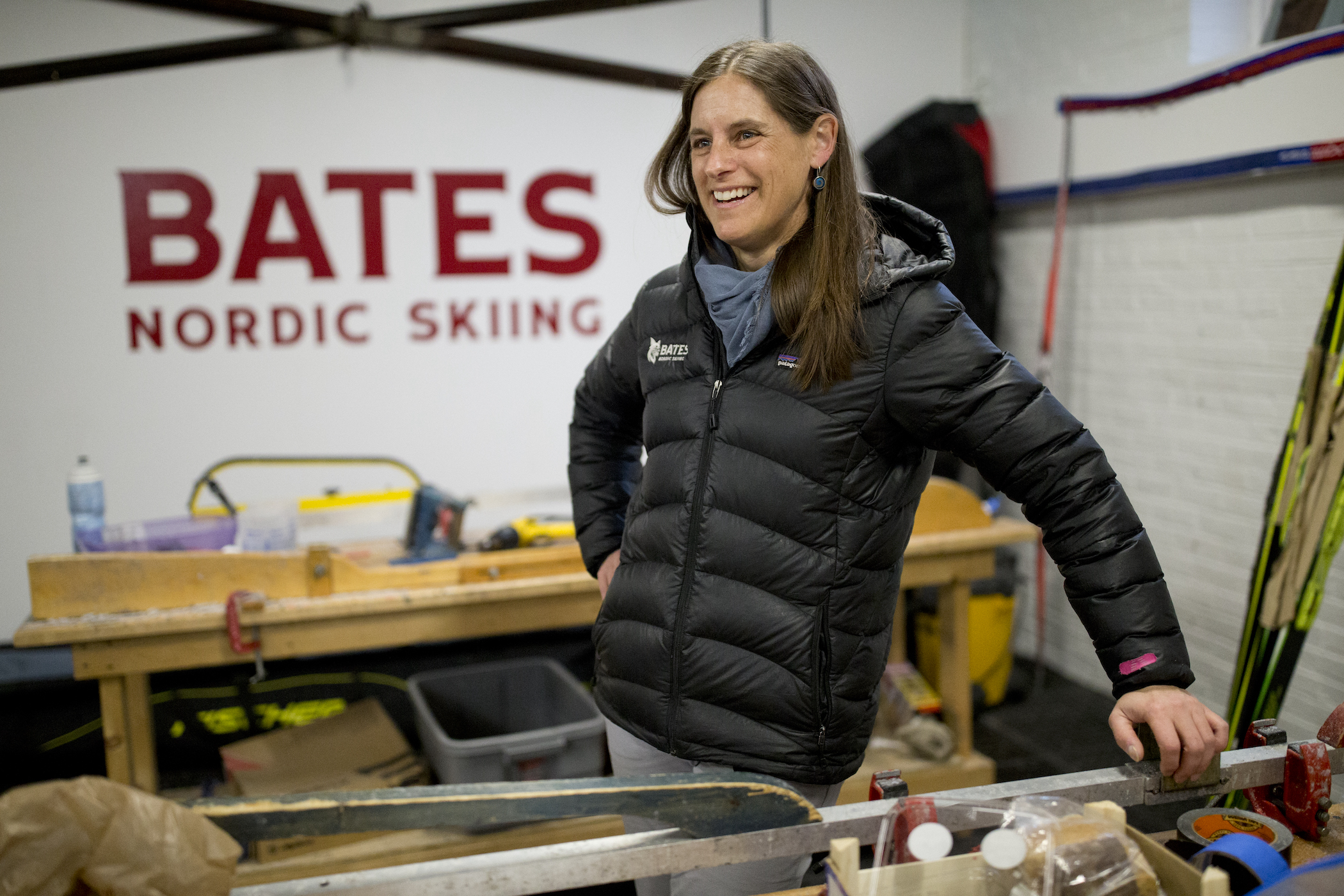
    After 28 years as head coach at Bates College in Lewiston, ME, SVSEF welcomes Becky Woods as the new Cross-Country Program Director. (Photo credit: Phyllis Graber Jensen/Bates College)

    Woods’ leadership as a collegiate coach, mentor, administrator, and teacher offer a unique skillset and balance to the Cross Country Program Director position at SVSEF. In her role as Head Men’s and Women’s Nordic Ski Coach at Bates College, Woods was responsible for leading and managing all aspects of a successful Division I Nordic Ski Program, while bringing staff, athletes, and volunteers along to carry out a clear mission as a top priority. She attributes much of her success in her career to fostering a culture of trust, respect, and support, and understands the importance of imparting a true love of skiing and a respect for the process it takes to be successful.

    “I am humbled to have the opportunity to lead this great group of SVSEF coaches and athletes,” said Becky Woods, incoming SVSEF Cross Country Program Director. “It is evident there is expertise, talent, and support within the organization—and a true sense of community. Having spent time in the Wood River Valley, I am honored and excited to become a member of the team and help SVSEF Cross Country continue to grow and excel as a ski community.”

    In Woods’ role as SVSEF Cross Country Program Director, she’ll provide program-wide leadership and day-to-day management while supporting the overall vision and mission of the organization. She’ll be instrumental in the successful recruitment, training, and retaining of a world-class coaching staff and the ongoing development of an athletic program that supports each participant in achieving their personal and athletic potential.

    Founded in 1972, the SVSEF Cross Country Program has consistently been recognized as one of the best in the country; most recently as the 2021 USSA Cross Country Club of the Year, and in 2022, the Junior Girls brought home their third consecutive National Championship team title. From the youngest Devo kids to elite athletes at the Comp Team, Post-Grad and professional level, our program is 250 athletes strong and steeped in Nordic traditions driven by a strong sense of family, community, competition, and camaraderie.

    Sam Wood helps guide Jake Adicoff to silver in the 20 k classic during the 2022 Beijing Paralympic Winter Games. (Photo: Mark Reis / Team USA)

    During the 2021/22 season, three members of the XC Gold Team competed in the Beijing Olympics and Paralympics, and two additional SVSEF alumni were named to the U.S. Cross Country Ski Team. For the upcoming 2022/23 season, five athletes from the SVSEF Cross Country Program have been named to the U.S. Cross Country and Para Nordic Ski Teams.

    For more information about the SVSEF Cross Country Programs, please visit svsef.org.

    About Sun Valley Ski Education Foundation 

    Since its inception in 1966, the Sun Valley Ski Education Foundation has been a longstanding pillar in the community, providing snowsport programs and offering academic assistance to support student-athletes in reaching their highest potential. SVSEF offers an array of programs for athletes ages five and up, from learn-to-ski and ride through FIS and other national and international-level competition. The organization offers financial assistance to families, so that anyone who wishes to may participate. For more information, please visit svsef.org

  • Q&A with New Faces on the U.S. Ski Team: Sammy Smith

    Q&A with New Faces on the U.S. Ski Team: Sammy Smith

    U.S. Ski & Snowboard recently announced its U.S. Ski Team nominations for the 2022-23 season. Of the 22 athletes named to the team this season, six were not on the previous year’s roster, either newly named or renamed: Michael Earnhart, Walker Hall, Zak Ketterson, Will Koch, Finn O’Connell, and Sammy Smith.

    Samantha Smith is named to the 2022-23 U.S. Ski Team D-Team. (Photo: U.S. Ski & Snowboard)

    To help fans get to know these new(er) faces, FasterSkier is doing a series of interviews, providing insights into the factors that have contributed to development, progress, and growth for these athletes last season. In this installment, we talk to Sammy Smith about her participation and success in numerous sports, the charity she and her siblings founded during COVID, and her nomination to the U.S. Ski Team D-Team. 

    At Junior World Championships in Lygna Norway this past February, Smith finished 5th in the skate sprint and 11th in the 15k skate. She also finished 10th in the skate sprint at Senior Nationals in Soldier Hollow in January 2022 racing amongst the senior women’s field. 

    Not only is Smith a successful cross-country skier, but she has also achieved impressive results in running, soccer and freestyle skiing. During her freshman year of high school Smith won the 1,600 and 3,200 meter events at the Class 5A Idaho state meet, leading her to be a finalist for the USA TODAY High School Sports Awards

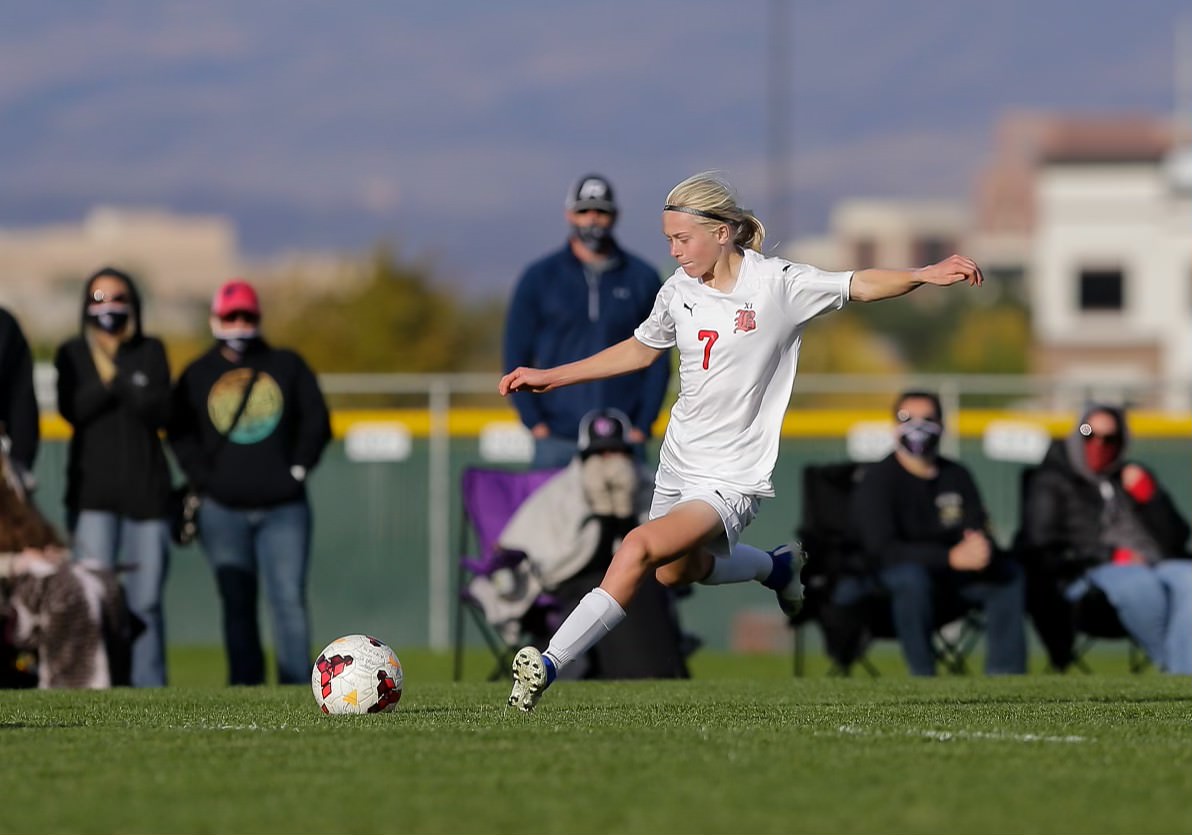
    Sammy Smith competing for a Boise-based soccer team. (Courtesy photo)

    Ella Hall/FasterSkier: You’re sixteen, does that mean you’re a junior in high school?

    Sammy Smith: I actually just finished my Sophomore year of high school (our school got out last week), so I will be a junior in the fall.

    FS: And do you live part of the year in Boise and spend the winters in Sun Valley?

    SS: Yes, I live in Boise for the fall, spring, and summer. Although during the summer I am often gone a lot, and we frequently go up to Sun Valley. I go to Boise High School for the fall and spring, then I move to Sun Valley for skiing for the winters and while I’m there, I go to the (Sun Valley) Community School.

    Sammy Smith competing in freestyle skiing. (Courtesy photo)

    FS: From what I’ve gathered you’re involved in quite a lot of sports, can you tell me which sports you competed in this year?

    SS: Currently I cross-country ski, play soccer, run track and cross-country, and freestyle ski. This year, I competed in all of the above, except freestyle skiing. Unfortunately, I sustained an injury in the late fall that prohibited me from jumping so I was unable to compete in freestyle. My track season was also cut short because of an injury but I’m healthy now.

    Soccer and nordic are definitely my two primary sports. For soccer, I am actually in the US U17 Women’s Youth National Team training pool. I was selected as an alternate for the Confederation of North, Central America and Caribbean Association Football (CONCACAF) tournament this spring. That meant I only participated in the pre-camp, then returned home prior to the tournament kicking off. I aspire to compete for the full US Women’s National Team (WNT) one day, and hopefully will have the opportunity to represent my country in two different sports.

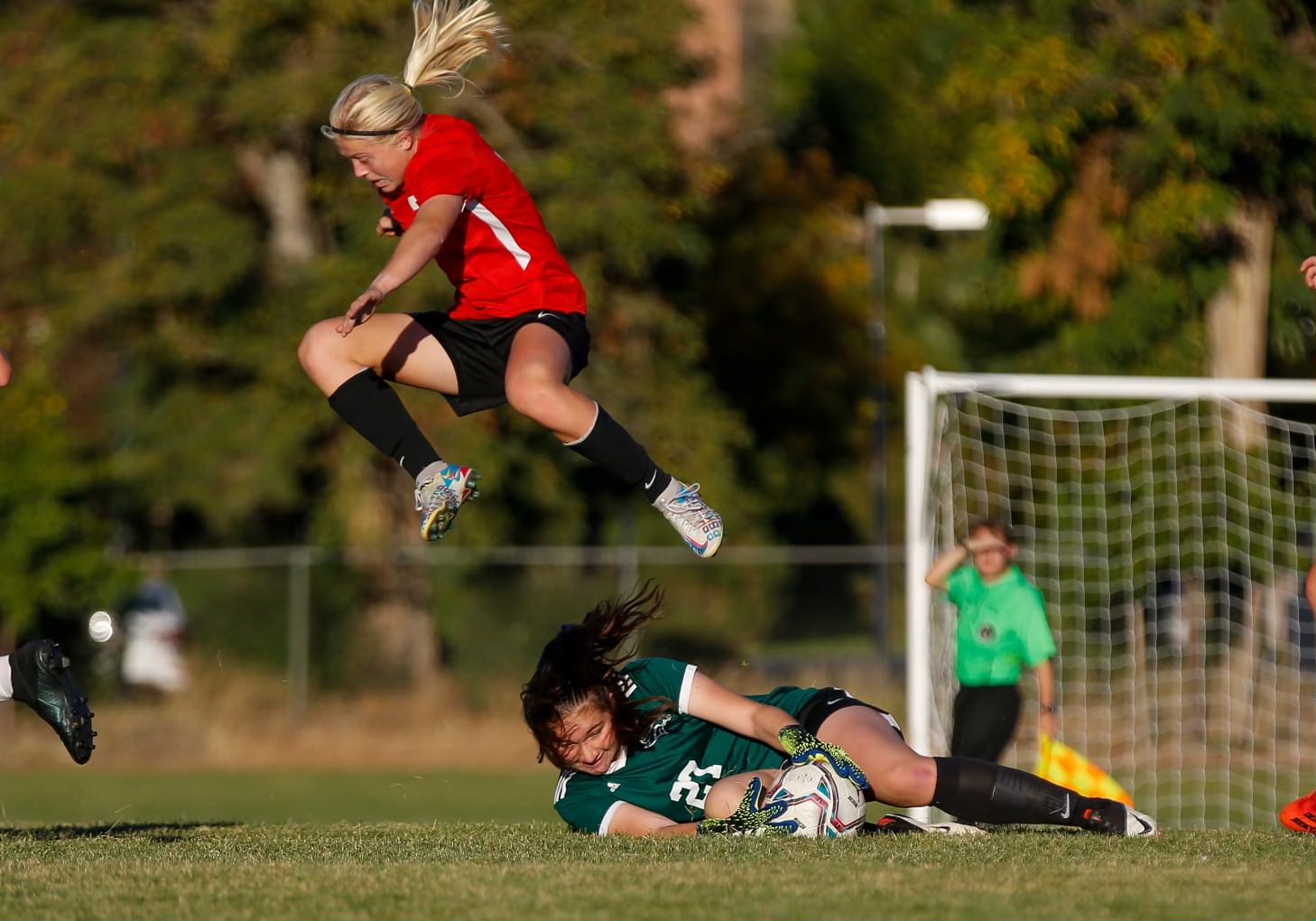
    Sammy Smith gets air in an Eagle vs. Boise soccer game. (Courtesy photo)

    FS: How and when did you start nordic skiing?

    SS: I initially got involved in nordic skiing because of my older sister. When I was five, my parents had signed my sister up for SVSEF’s devo program, and naturally I wanted to do everything she was doing, so I began to pick up the sport as well.

    FS: I read that you and your siblings started a charity during the pandemic, can you tell me a little about that?

    SS: My siblings and I founded GO BIG, a 501 (c3) certified charity, during the spring of 2020. GO BIG stands for Giving Opportunity By Inspiring Gratitude. Through the charity we aim to make a positive impact on less privileged youth in our area. We have been so fortunate to grow up the way we have, we want to help those who haven’t. We work to provide these kids with mentorship, as well as resources to help them – like books and other educational tools, and sporting equipment. 

    Our goal is to inspire a sense of gratitude in these youth because science has shown that those who experience a sense of gratitude are more likely to feel good about themselves and pass that feeling along to others, thus helping spread good through the community and beyond.

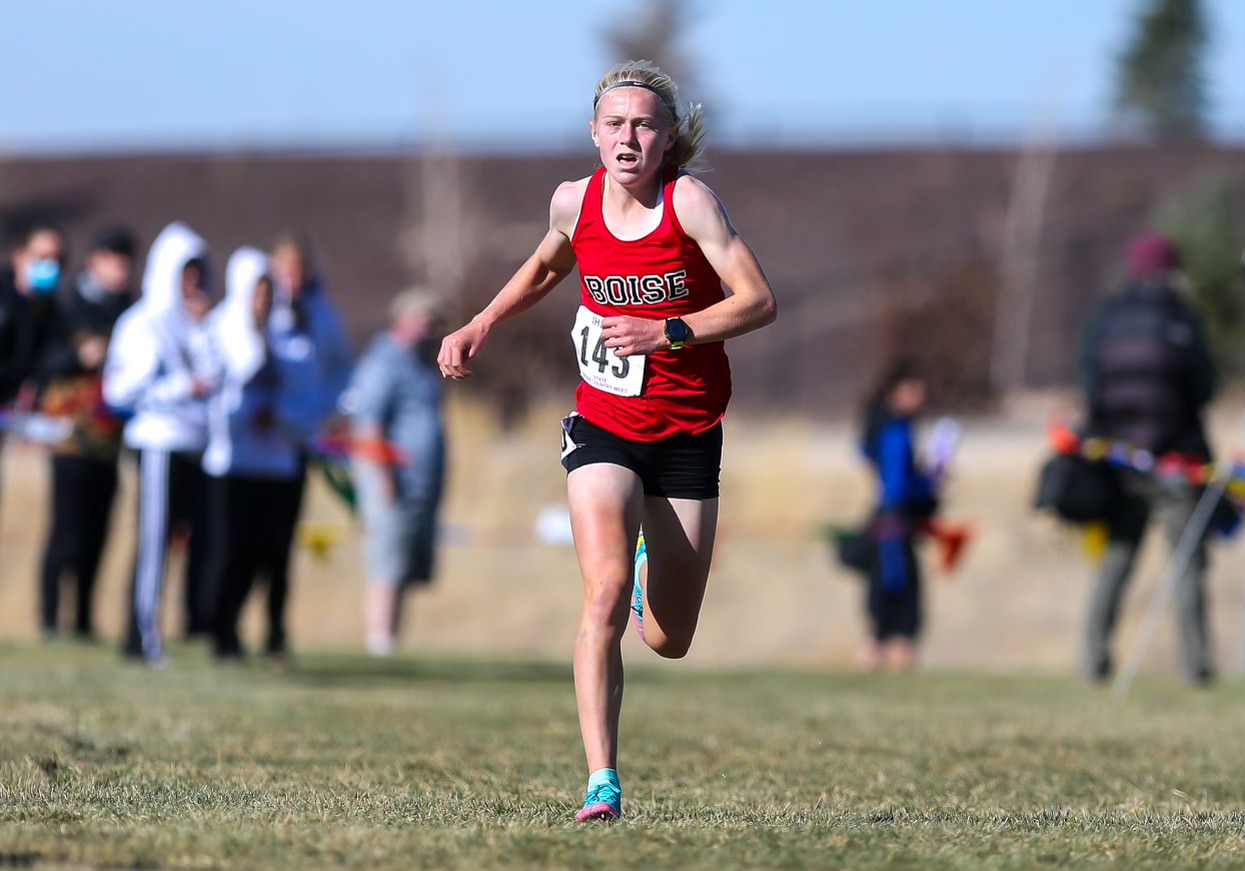
    Sammy Smith runs cross-country for her high school team in Boise, ID. (Courtesy photo)

    FS: You had some pretty exciting results at World Juniors in Lygna Norway this winter, can you talk a bit about the contributing factors/support system that helped you achieve those results?

    SS: I owe a huge thank you to my coaches in Sun Valley, especially Rick Kapala, because he and I made a really thorough and thoughtful training plan going into the Championships. I think having such a detailed plan allowed me to come in more prepared, and in better form than I could have imagined. 

    I was fortunate enough to have Paul Smith as my wax tech who worked a lot with me on ski selection, and taught me what to look for in a pair of skis throughout the season, and how to decide between them when it seems like the glide is comparable. 

    Going into World Juniors, I had a lot of new skis from Salomon, and I didn’t really know a lot about them, but fortunately Paul was incredibly helpful. I relied on him heavily to help me test and decide how to organize my fleet before I left. And once we were in Norway, he made sure I was testing the appropriate skis, and helped me choose which pair I was racing on each day. I’m incredibly grateful for Paul’s help, and the support from Salomon. 

    In addition, the U.S. Ski Team support system was unlike anything I had ever been part of before. Our pre-camp was designed perfectly to help us peak for our races, and once we arrived in Lygna, we had access to even more resources. It truly was a trip designed to help young skiers have the best races of their lives.

    FS: What excites you most about being named to the U.S. Ski Team?

    SS: I’m most excited about the incredible opportunities that come with being named to the U.S. Ski Team. Being able to train with the best skiers in the country, and some of the best in the world, is an unparalleled opportunity for growth and development. I think when you are put in an environment where you are surrounded by people who share a common passion and common goals, naturally you improve. I can already feel the great sense of community and support from the more experienced skiers and it makes me so excited to train and race alongside them in the future. 

    I also think the U.S. Ski Team has invaluable resources and tools to help all the athletes become the best version of themselves, and I love to compete and am always looking to improve, so that’s really exciting to me.

    Sun Valley’s Sammy Smith (right) finished 10th overall in the freestyle sprint during the 2022 U.S. Cross-Country Ski Championships in Soldier Hollow. Smith was the third-fastest junior racing with the senior women, behind Sydney Palmer-Leger (University of Utah) and Kate Oldham (Aspen Valley Ski & Snowboard Club). (Photo: Tobias Albrigtsen / @untraceableg)

    FS: What are some of your goals for the upcoming season?

    SS:  I was really fortunate to have some great results at last year’s World Juniors, and I want to continue to build off of that for next season. So, my primary goal for the season is to finish top three at World Juniors.

    FS: ​​Will you be able to join any upcoming USST camps this summer/fall or will you be primarily focused on your other sports until winter rolls around?

    SS: It is certainly a priority of mine to get to some of the upcoming camps, but it’s always a balance, so right now I’m trying to figure out scheduling for both soccer and skiing.

  • The Pros & Cons of League-wide Wax Protocols: Western Clubs Consider the Evolution and Impact (Part 2)

    The Pros & Cons of League-wide Wax Protocols: Western Clubs Consider the Evolution and Impact (Part 2)

    Here are links to earlier installments in this five-part series. The first two parts (part one; part two) spoke to the perspectives of high level wax technicians and industry representatives, while part three focused on the Wisconsin Nordic Ski League. To read the beginning of this article on the wax protocols of Western clubs, part four, click here

    Leveling the Playing Field

    In regard to the question of whether the policy widens the gap in equity because of equipment differences, coaches expressed that the opposite has been observed.

    “It probably has a little bit to do with what level we’re talking about,” said Teague. “But certainly, club or high school wise, I’ve only seen it take down one of the barriers of entry to our sport, and decrease costs for both programs and individuals.”

    Speaking on behalf of RMN, Teague added that this removal of barriers has opened up opportunities for smaller clubs, and the support expressed among coaches speaks for itself. 

    “My opinion is – of everybody that’s gone to [a wax protocol], no one has said: ‘That’s a mistake. We’re gonna go back,’” said Teague. “Yes, there is some advantage that can be gained for an athlete or a program that has the capacity to go and invest in a quiver of skis to try and overcome the playing field, but more often than not, what we’re seeing is that small programs, or athletes without a program at all, [such as one of my former skiers who lived on Colorado’s Grand Mesa in the Southwest corner of the state], all of a sudden can be competitive.” 

    AVSC nordic athletes compete at the Western Regional Championships, held in Soldier Hollow, UT in place of the 2021 Junior National Championships due to the COVID-19 pandemic. (Photo: Aspen Valley Ski and Snowboard Club)

    This phenomenon could be attributed to the aforementioned power previously held by larger clubs; when glide testing is no longer a priority, perhaps smaller clubs can finally find a seat at the table. 

    “We have 14 clubs in the division,” Kapala said of Intermountain. “Last year, 13 of them placed a kid on the Junior National team. Prior to that, we were running more like seven or eight [clubs]. So what was going on was Sun Valley, Bozeman, Jackson, and to some extent Park City – the bigger clubs – were rolling in, and to put it bluntly, we were steamrolling the small programs. It wasn’t a fair fight. And fortunately, the larger clubs in our division say, ‘Clearly, that’s not good for skiing.’” 

    Kapala spoke specifically of an athlete who hailed from Whitefish, MT, which is “way at the far flung edges of the realm. They’ve gotta drive forever to get to races.”

    This athlete raced for the Glacier Nordic Club under the guidance of head coach Jennie Bender, who he described as “a huge asset and we’re so fortunate to have her come to our division.” Clarifying that Bender is as skilled and capable as any other coach on a wax bench, he acknowledged that she was largely on her own at races with roughly 12 kids. This ratio is not equivalent to the SVSEF team which might have 35 kids with five to seven coaches at a JNQ. 

    “It’s just not a fair fight.”

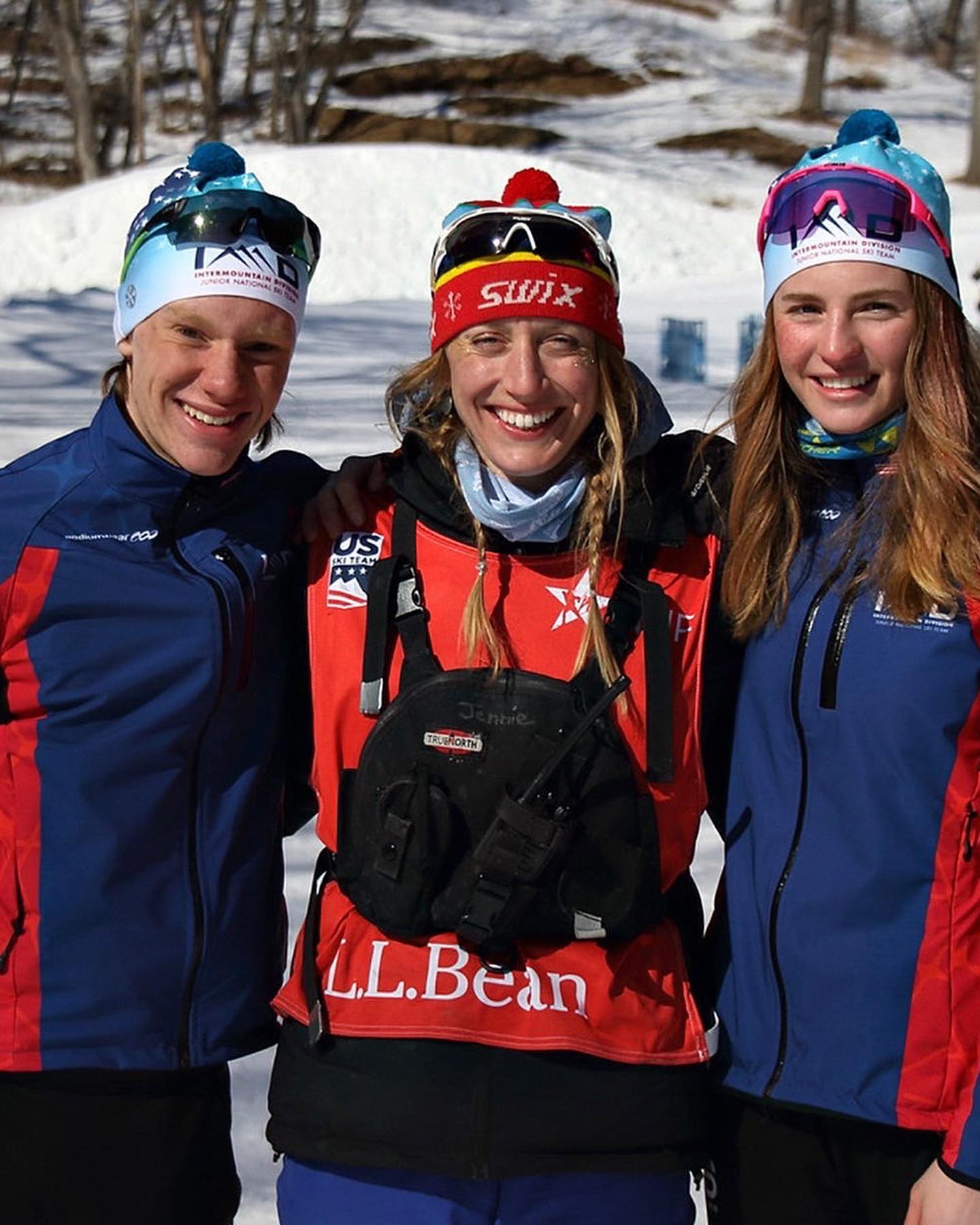
    Glacier Nordic Club head coach Jennie Bender with the two athletes, Jacob Hansen and Maeve Ingelfinger, who earned spots on the 2022 Intermountain Division team at Junior Nationals. (Photo: Glacier Nordic Club)

    Despite less support on the waxing front, the athlete grew into the season and was regularly finishing between fourth and sixth at JNQs, which earned her a spot on the IMD team at Junior Nationals. 

    “So what happens is: we go to JNs, we leverage all of the Intermountain resources on behalf of her and the other kids and what does she do? She’s on the podium. And so our policy afforded her the opportunity to at least be in the conversation to make sure she assuredly got through… she was good enough in that setting of fair and equitable ski service, that – what else was going on? She believed. ‘Oh wow. I’m actually not that far away.’”

    Once this seed was planted, the athlete thrived. In Kapala’s mind, it’s an intangible, but nonetheless vital, component of the development process for that age group.

    “None of this stuff happens in a vacuum, and athlete development is this really, really – I don’t want to say funky – but really nuanced process… This girl has gone from we didn’t even know who she was, to one of the best U16 girls in the country. And I contend that our wax policy, while it wasn’t more important than Jennie’s great coaching, certainly didn’t hurt. She was on a level playing field as level as we can make it in those formative JNQs where she started believing [in herself]. And that’s the whole game.”

    Teague also acknowledged the apples-to-oranges capacity of programs, relating it to his experience with the Australian national team, whom he coached and supported through two World Championships surrounding the 2014 Olympics in Sochi. While Australia now typically partners with the U.S. team on the World Cup for waxing, the capacity of this small program pales in comparison to a robust and well-funded nation like Norway, which has been supported by technician Knut Nystad who was quoted in the first two parts of this series. While Teague emphasized his respect for Nystad’s expertise both as a coach and tech, he felt the understanding club level coaches have of the specific challenges of their leagues might offer a different lens with which to consider these issues. 

    “Knut was my coach [when I was racing collegiately at Denver University], and worked on the Norwegian wax team when I was coaching in Australia. What they were able to do and the testing they were able to do, versus what I could do with Australia – it’s not even comparable. And sometimes we could be competitive with them, but often, they were able to test significantly more. Now, would a waxing protocol make it fair in that situation? Absolutely not. Because they could have every different grind, and a grinder going, and along the continuum.

    “But at the high school level, an AVSC can send four coaches over early to test [glide] wax and at least apply wax on site, rather than make a guess. Whereas [a small program like the Colorado Rocky Mountain School (for whom the author is a former head coach)], or even Battle Mountain where there’s two coaches and 70 or 80 kids, there’s no way they could do that.” 

    An Arms Race for Skis and Grinds

    But what about the arms race for equipment that was cited as a concern in the first two installments of this series? Have these policies induced higher demand to increase the size of an athlete’s fleet of skis? Across the board, the coaches with whom this topic was discussed expressed that this was not a trend that they had observed in the years that a policy has been enforced.

    Aspen Valley Ski and Snowboard Club head coach August Teague provides insights into the evolution and impact of the Rocky Mountain Nordic Wax Protocol. (Photo: teamavsc.org / Matt Power)

    “There are probably exceptions, just like every rule,” said Teague. “But we really aren’t seeing people going out and investing in 30 pairs of skis. We’re still seeing athletes start off with a pair of skate and a pair of classic, and slowly expand upon that fleet.”

    Leonard explained that PNSA coaches are not seeing an increase in ski purchasing either, nor does the level of competition at divisional events necessarily warrant that level of specificity in an athletes ski fleet. 

    “The field density is such at our [JNQs] that the wax is not the deciding factor so much,” Leonard explained regarding clubs in the Pacific Northwest. “And having multiple pairs of skis – most of the kids, I’d say, have one pair of race skate and one pair of race classic and some of the higher-end kids who have been at it a little longer or are a little more involved or or whatever – have a little more means – maybe have a couple pairs of skis that they’re deciding between. But you know, they’re growing kids too, and skis are expensive, so a lot of times it’s sort of like, it’s one pair that fits and one pair that’s a little bit softer from when they were a little smaller a year or two ago. So it’s not such a huge factor.”

    Shift in Focus Toward Structure and Ski Selection

    While programs aren’t seeing athletes rapidly investing in equipment, coaches did observe a shift in focus toward the application and testing of structure on race day.

    “My test fleet, instead of testing glide and structure, is now focused pretty much just on structure at, say, an RMN [race weekend],” Teague explained. “When I show up at Senior Nationals, then I’ve got to be able to test glide and structure and everything else as it unfolds. 

    “So structure has become more and more important. That probably, again, depends a little bit on the level. If we’re talking about high school kids, there are high school kids that ski club and ski high school, who have the ability to get their skis ground every year and have the ability to have skis that are for specific conditions. But for the most part, we’re talking about kids that own one pair of skate skis, or even don’t own a pair of skate skis and rent or borrow them from the program. And they’re getting whatever [base] is on those and then we’re adjusting the structure by hand structures a little bit to try and improve them.”

    Crested Butte Nordic Team head coach Molly Susla supports athlete Sawyer Ezzell during the 2022 Junior National Championships in Minneapolis. (Photo: David J Owen Photography)

    Reception of Wax Protocol Among Teams

    As far as how these policies might evolve with time, coaches expressed that the specific brand being used would always be open for discussion, provided that equivalent availability could be guaranteed and cost per gram remained comparable. With the increase in liquid waxes, which might offer versatility on race day without the encumberment of the full glide waxing setup, there may be an evolution that includes more liquid wax options as well. 

    For the time being, coaches expressed that the addition of these protocols has been net-positive, with no member clubs looking to steer the trajectory back toward open waxing. 

    “We’re at least two years through this experiment of running this policy,” said Kapala for IMD. “And I am 100% certain, because I’ve asked… we have 14 clubs that are saying, ‘No way are we going back.’ There is uniform agreement and acceptance of the policy.” 

    In Leonard’s concluding statements, he acknowledged the inherent equipment-based inequity in the sport, while also offering ways to problem solve, and confirming that PNSA has also been well-served by the protocol.

    “You might get beaten at some point by someone who has better skis than you or something like that,” he said. “And when that becomes a factor, you figure out a way to make it work. With the advent of zeros, for instance, suddenly those became a ski that was like – in those conditions, man, you needed to have that. When I was in Alaska, teams were starting to procure fleets of zeros that they could hand out to their kids and maybe rotate through a few kids on a given race day. [Now,] if we have a race coming up that we know is potentially a zero day, we’re working through our community [in the Methow Valley] to grab some zeros for our kids so hopefully, they have a decent option there. 

    “So there are ways to make those things happen and work, and hopefully still remain competitive in the sport. There are a lot of trade-offs with all of it, but people are feeling like, for our division right now, it has been a good decision to go this direction.”

    Junior athletes race during the 2022 U.S. Cross Country Championships in Soldier Hollow, UT. (Photo: Tobias Albrigtsen / @untraceableg)
  • The Pros & Cons of League-wide Wax Protocols: Western Clubs Consider the Evolution and Impact (Part 1)

    The Pros & Cons of League-wide Wax Protocols: Western Clubs Consider the Evolution and Impact (Part 1)

    In speaking with representatives from each of the leagues featured in this series, a few main points rose to the foreground in this discussion: the level of competition matters, how the policy came about matters, and how a program can enhance athlete support holistically by relieving wax-related expenses – measured both in time and dollars – matters. 

    Before jumping into discussions for club level programs across the West, here are the links to view the details of each wax policy specifically: Intermountain Division (IMD); Rocky Mountain Nordic (RMN); Pacific Northwest Ski Association (PNSA)

    Also note that these conversations took place in late-April, prior to further discussions at the U.S. Ski & Snowboard spring congress sessions in May where subsequent conversations among leadership may have occurred. Should significant changes occur, FasterSkier will continue to follow the story. 

    Here are links to earlier installments in this five-part series. The first two parts (part one; part two) spoke to the perspectives of high level wax technicians and industry representatives, while part three focused on the Wisconsin Nordic Ski League. 

    University of Colorado head coach Jana Weinberger waxes skis for her athletes during an 2022 RMISA/US SuperTour race weekend in Sun Valley. (Photo: Tobias Albrigtsen / @untraceableg)

    The Evolution of Western Club Wax-Protocols 

    There’s a lot to unpack surrounding the impact of wax policies on the sport, and it is not reasonable to project that what makes sense for junior club programs can be extrapolated to the sport as a whole, which includes everything from the recreational level to masters racing to the World Cup. However, as a major player in the U.S. development pathway and a collective that encompasses a large volume of the nation’s athlete base, considering the evolution and impact of wax policies at the club level provides valuable insight into what the objectives and outcomes may be more broadly. 

    Conversations on this subject began long before any official policies were accepted, and their initial aim was to uniformly address the use of fluorocarbons at Junior National Qualifiers (JNQs). With both the health of athletes and coaches, and the inequity of buying power among clubs, the goal was to reduce spending and expensive fluorinated top coats.

    Timelines are now blurred, but long-time Sun Valley Ski Education Foundation Program Director Rick Kapala indicated that Rocky Mountain had perhaps been the division who got the ball rolling. Though the policies have since converged on a single wax call made in advance by host coaches depending on forecasted conditions, Kapala explained that at the onset, Intermountain’s policy was only focused on the elimination of pure fluoros. 

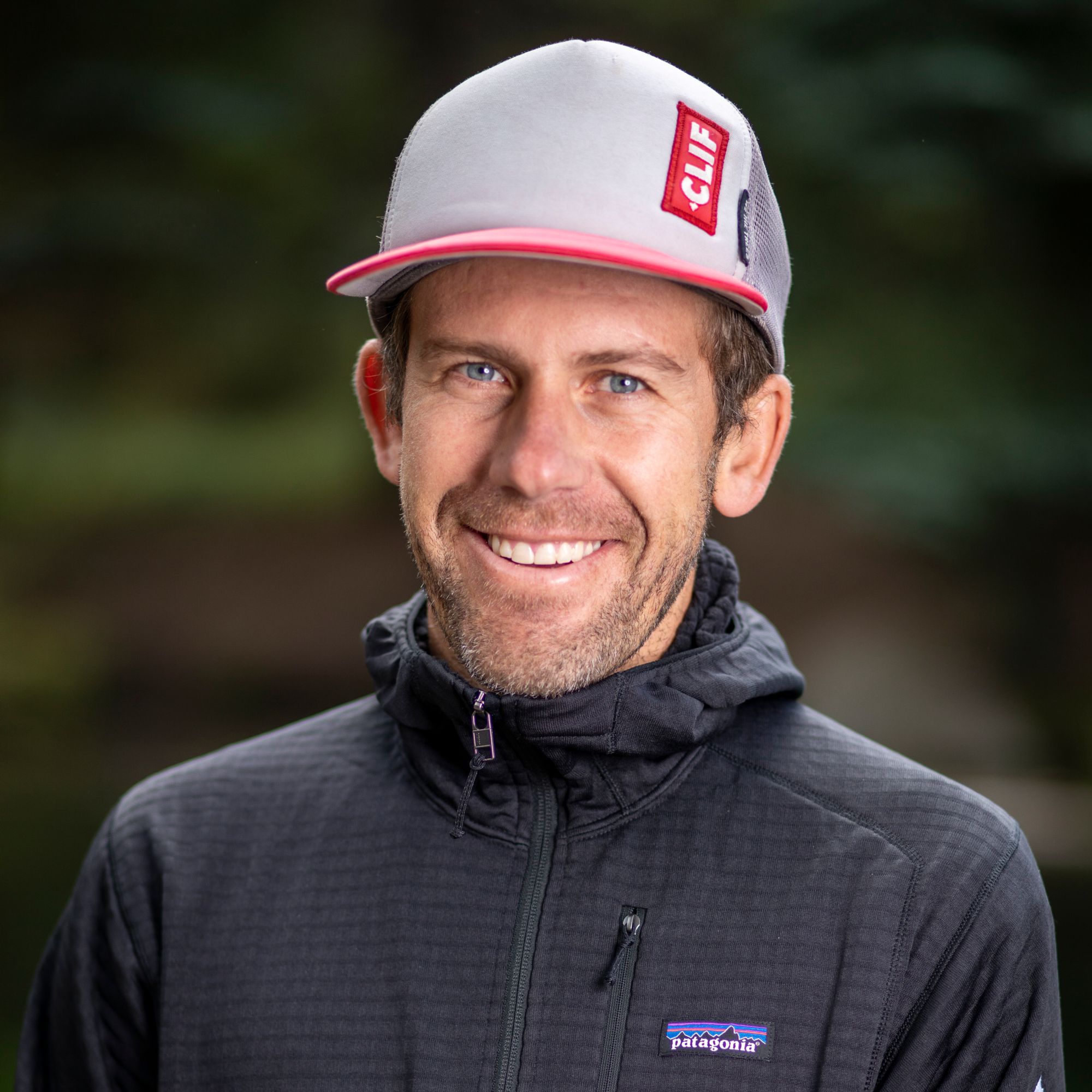
    Long-time SVSEF XC Program Director Rick Kapala explains the evolution and impact of IMD’s wax protocol. (Photo: SVSEF.org)

    “Initially, Intermountain had what we could call ‘wax policy-lite’… Our policy was: you can use any wax as long as it wasn’t pure-fluoro. You can use a high-fluoro, a low-flouro, or non-fluorinated version, and of course, in different brands, that meant different things. But basically, we went for a number of years with a no powder, no liquid and no rub-on policy. And that had some effect on trying to mitigate the arms race, if you will.”

    Executive Director at Methow Valley Ski Education Foundation Pete Leonard explained that the Pacific Northwest Ski Association, for whom he is the Nordic Director, was developed with a similar progression.

    “It initially started in the fluorocarbon era, moving away from powdering skis to just having blocks and liquids – the top coat type of applications – and then to a base paraffin application… I think we had a year of that and then [the policy] went to fluoro-free – the same basic, simple base paraffin called several days out.”

    Further motivation to align policies stemmed from  “cross-pollination” between these three leagues, which with the addition of the California-Nevada Far West division and Alaska, encompass the Western region as defined by U.S. Ski & Snowboard. In particular, these divisions overlap during the Junior National Super Qualifier Event held in January at Soldier Hollow, hence landing on a very similar model.

    “There’s a little bit of a cascade effect, and it’s just simpler for us to match what IMD has,” Leonard explained. 

    Kapala felt strongly that it was important to emphasize that this slow progression happened organically, which he felt was in stark contrast to the Wisconsin Nordic Ski League, where a sponsorship proposal made by a corporate entity included stipulations on waxing at league events. 

    “It’s a wholly different thing when a grassroots community, like a bunch of clubs in a division, promulgates a policy that they think results in the best athletic outcomes,” he said. “And it is very important to differentiate the genesis of a given policy… the order in which you arrive at a policy really informs a lot of the motivations about why you’re doing what you’re doing.” 

    Kapala said IMD would have “given the Heisman” to a wax company that required a policy; however, Swix products have been selected based on trust in the availability for all programs.

    “We settled on Swix without getting into the specifics of brand value,” he said. “I.e., Swix is better than Start, and Start is better than Toko, or whatever – it’s just simply because virtually everybody knew they had enough access to that wax.”  

    A scene from the start line of a 2018 Intermountain JNQ in Bozeman, MT. (Photo: Sun Valley Ski Education Foundation Facebook)

    Observed Program Benefits 

    There’s a sizable jump between eliminating fluoros and further reducing a wax box to a small array of products, but Kapala emphasized that these “athletic outcomes” are the central tenet around which discussions regarding changes take place within Intermountain. How does the protocol impact the opportunity and capacity for athletes from clubs of all sizes to be successful on race day and have a positive experience in the sport?

    We’ll start with the impact to a program’s budget, which on its own is a source of inequality among clubs in a given region. Speaking specifically for Intermountain, but also the West more broadly, Kapala pointed out that there are a number of “super clubs” whose financial means and staff power made it hard for smaller clubs to compete in an open wax environment. 

    “They’re usually clubs that are in these mountain towns that are part of [larger] ski foundations or clubs that are multi-discipline, really big clubs. And so they have a lot of administrative function, a lot of underpinning financial security, and so on.”

    He was quick to include SVSEF in that pool, saying cost was not a primary concern when it came to his wax purchasing or race staffing prior to the enactment of IMD’s policy. 

    He went on to explain that within Intermountain, there are six JNQs which are subject to the wax policy, plus an Intermountain opener. However, what he called the “lion’s share” of races, including U.S. Nationals, SuperTours, and any Canadian-based races, remain open wax events where the policy does not apply. Still, with IMD’s policy in place, Kapala said SVSEF has been able to shave $5,000 dollars annually off its spending on wax, equating to a reduction of 30-40%. 

    “The question then is: ‘What am I doing with that $5,000?’” posed Kapala. “Well, what I’m really doing with it now, in my particular case, we have put that money into our merit scholarship program. So instead of me spending money on just making sure I have every wax in the universe in my wax box, I’m actually leveraging those dollars to help kids get to training camps or to go to competitions they wouldn’t normally be able to afford. And that’s huge.” 

    Rather than ignoring the impact this reduction in spending has on the landscape for suppliers, he acknowledged that this could be detrimental, as other clubs are likely reducing their spending by similar percentages. But bringing the focus back to the athletes, he said, “what we’re really spending less of is human capital on things other than coaching.”

    For Kapala, this makes the cost-benefit analysis check out.

    “We think being available to coach kids – that are especially young in their developmental process – at events like JNQs, is actually what the [coaching] game should be all about. So while it’s true that there can be impacts regarding the finances, it is also undoubtedly true that athletic outcomes – true athletic outcomes, the actual ones that we should be concerned about – are actually being serviced way more effectively. And if those two competing interests are both true, we have to pick one. And the one we’re picking is we’re making it more fair for athletes.”

    August Teague supports AVSC alumna Kate Oldham while teching at the 2022 FIS World Junior Ski Championships in Lygna, NOR. (Photo: flyingpointroad.com)

    Speaking for what he has observed within his own program and the Rocky Mountain Nordic division more broadly, August Teague – Cross-country Program Director at the Aspen Valley Ski and Snowboard Club (AVSC) – shared similar sentiments. 

    “I guess the real question to me becomes: ‘What is the purpose of a waxing protocol and at what level and why? And I certainly believe that barriers to entry in sport are a real good reason to have a waxing protocol, and time allocation or time management.”

    Adding specificity to the statement, he said, “The biggest thing that I see is that I can spend more time coaching instead of teching. And there certainly is an argument as to the need for better wax techs both from this country and elsewhere, but I think that’s a separate discussion than the coaching discussion and where my time is best served.”

    While the AVSC nordic program is significantly smaller than that of SVSEF, Teague also noted differences in how his monetary budget is allocated. “We have started to explore structures more than we ever have. So money that was being spent on product is now being spent on different structure devices and/or ways to test that structure.”

    Similarly, Steamboat Winter Sports Club U16/U18/U20 head coach Josh Smullin wrote to FasterSkier that the protocol has supported a safer environment for both coaches and athletes while on the road. In particular, he cited driving – there are roughly 3,200 serious injuries and 600 fatalities on average annually in Colorado – as a place where some relief in the toll on coaches during a race weekend has shown value.

    “It used to be that we coaches were up late waxing,” he explained. “Waking up the next morning to go set up at the venue, and then would drive many hours home after the race. A waxing protocol has helped us to be safer drivers, less sleep deprived, and more present with the athletes.”

    Smullin also commented on ventilation, which remains important for the health of waxers even without fluorinated products.

    At many of our home clubs we have some sort of ventilated wax facility. We do not have that on the road [while staying in hotels] unless the weather is nice and we are able to wax outside. Regardless of the fluoro ban, [proper] ventilation is healthier for coaches and athletes.”

    Methow Valley Nordic skiers take to the course during the December 2021 Ski Rodeo event. (Photo: Methow Valley Nordic Ski Education Foundation Facebook)

    “Everybody’s got their opinion…” said Leonard on behalf of PNSA. “There’s no overarching study on these things, and costs, and whether there’s a major difference [in ski speed], but I think what is clear to the coaches is that there’s less time spent testing glide products at races and there’s less of an incentive to do that, especially with the calling it [a few days] prior. There’s also more time that they can focus during that weekend on other things, like with the athletes and their preparation, instead of testing wax, waxing skis and leaving [coaching and direct athlete support] right up to the race time.”

    For Leonard, the question of whether the policy widens the gap for skiers based on the quality or condition specificity of their skis was not a priority when it came to identifying how the policy has served PNSA teams. For a club based in the Methow Valley which travels to regional competitions across Oregon and Washington, as well as to the Super Qualifier in Utah, the policy has reduced the toll of travel. 

    “I don’t know that it’s necessarily a parity – it’s really difficult to get that down.. but I think for us, calling the wax several days out just makes it simpler for people, and there is less [equipment and product] to travel with, one less thing to think about when you’re booking hotels, and all those details. It makes it simpler for teams.”

    He said he has also found it quicker and easier to apply structure on race day without the variable of glide wax testing. And without the need to cart around as much product and equipment, getting his athletes’ skis race ready has been “way easier to manage”.

    “Rather than bringing a wax box with several waxes in it, irons, enough benches that you can get your whole team through, scrapers, brushes, etc. – already, you’re packing the van to the ceiling and then, sometimes it’s driving eight hours, or for the Super Q for us, it’s driving four hours to the airport, [hauling our skis and gear through the airport on both ends], then driving another hour-plus to SoHo, and then doing it all again on the way back.”

    Stay tuned for the final installment, where you can read more on leveling the playing field, the arms race (or lack thereof) for skis, and the reception among Western Division coaches.

  • It’s Ogden and Ketterson Again in the Craftsbury SuperTour Freestyle Sprint

    It’s Ogden and Ketterson Again in the Craftsbury SuperTour Freestyle Sprint

    SuperTour racing continued on Friday in Craftsbury, Vermont, as part of the Henchey Memorial Carnival, which also included Eastern Cup and collegiate racing. The three-day event is presented by the Craftsbury Outdoor Center, NENSA, U.S. Ski & Snowboard, and the University of Vermont (UVM), the EISA carnival host school.

    Racers were faced with snowy conditions for the opening 1.4-kilometer freestyle sprint as a winter storm made its way across the Northeast. Friday morning’s grooming report mentioned 6 inches of fresh snow, as more continued to fall throughout the morning. 

    On the women’s side, last weekend’s 10k freestyle winner, Alayna Sonnesyn (SMS T2), won the qualifier in 3:58.27, ahead of BSF Pro Team’s Lauren Jortberg in second and APU’s Rosie Frankowski in third. Perhaps a nod to the wintery conditions, these top three finishers were separated by over six seconds.

    Sonnesyn advanced from the first heat of the quarterfinals into the semis, where she finished third in the first heat behind Katharine Ogden (SMS T2) and Ava Thurston (Mansfield Nordic Club), who crossed the line together, roughly 0.4 seconds ahead of Sonnesyn. As the second semi, which was won by Jortberg, was roughly four seconds faster on average, Sonnesyn did not earn a lucky loser spot in the final. Instead, Jortberg advanced with Anna Bizyukova of UVM, Frankowski, and Craftsbury’s own Margie Freed. 

    Despite the trend seen in the qualifier, the final featured tight racing, with the top five athletes finishing within two seconds of one another. Just 0.6 seconds separated second from fifth.

    A scene from the women’s final of the 1.4k freestyle sprint in Craftsbury. (Photo: Instagram @nensa_nordic)

    Coming out on top was Ogden, who won the final in 3:59.08. After racing on the World Cup from the opening races in Ruka through the midway point of the Tour de Ski, Ogden has gone three-for-three in SuperTour sprints since returning stateside, winning classic sprints in Soldier Hollow and Lake Placid before checking off a skate win today.

    Just behind, Jortberg took second place (+1.30) with U18 athlete Thurston closing in third (+1.78). Bizyukova was next to the line in fourth (+1.86), with Frankowski less than a meter behind in fifth (+1.91). Freed rounded out the women’s final in sixth (+4.51).

    “I think that the biggest thing to note about today was that it was blizzarding!” wrote Ogden in a post-race email. “The heavy falling snow made the heat racing very tactical and rewarded being very quick off of the line. There was one lane on the course that was packed down by traffic and the other areas were pretty soft!”

    Ogden was just 11 points behind Caitlin Patterson on the Olympic qualification distance list, based on the athletes’ best two distance races on the SuperTour or at the U.S. Cross Country Championships, during which Ogden competed in only one race – the 10k individual start classic where she was second to Patterson. The following weekend in Sun Valley, she was second in one distance race and fourth in the other, behind three Olympians and ahead of Patterson in each. As the races at U.S. Nationals were scored at a higher point value, Patterson took the final Olympic spot, leaving Ogden on the wrong side of the cusp. 

    Nevertheless, Ogden has found silver linings in the additional time back east. 

    “It was a blast to be able to race with the EISA. I miss skiing for Dartmouth (Ogden graduated in 2021), so it was fun getting to ski with some of my old teammates and some new Dartmouth skiers. It was also pretty great to ski in lots of natural snow, we rarely get a snowstorm this big anymore and it was undeniably very fun.” 

    The women’s podium after the opening freestyle sprint race which kicked off a weekend of SuperTour, Eastern Cup, and EISA racing. (Photo: APU Nordic Ski Center / Instagram)

    As Thurston is, remarkably, still in high school, Bizyukova was the top collegiate racer to earn today’s EISA sprint title. The second and third placed collegiate racers both hailed from Dartmouth College, with Callie Young finishing fifth in the first semifinal and 10th overall, and Jasmine Drolet taking sixth in the second semi for 11th overall.  

    The men of the Sun Valley Ski Education Foundation (SVSEF) Gold Team swept the top-three spots in the men’s qualifier, with Karl Schulz leading the way in 3:23.48. Peter Holmes was 0.33 behind in second, with Johnny Hagenbuch in third (+1.21).

    Schulz carried momentum from the qualifier win into the first quarterfinal, which he won by half a second, but his day ended soon after in the semifinal. Racing in a fast first heat that contained two eventual podium winners and found both lucky losers, Schulz was fifth in the heat, +1.72 behind winner Matias Øvrum of UVM. Sam Wood (SVSEF) was second in the heat, ahead of last weekend’s sprint winner Zak Ketterson (Team Birkie) and Gregory Burt (UVM). 

    In the second semi, which was nearly three seconds slower, Canada’s Étienne Hébert (CNEPH) edged out Holmes by 0.1 seconds to go 1-2 and advance to the final round. 

    Zak Ketterson leads up the final climb in the men’s freestyle sprint final in Craftsbury. (Photo courtesy Zak Ketterson)

    The top two spots in the final were decided by a close finish between Ketterson and Øvrum, with Ketterson crossing 0.28 ahead in a time of 3:22.57 to earn his third SuperTour sprint title of the season. Øvrum was second, though he was named the collegiate race winner for UVM, with Hébert crossing the line a few meters behind on his own in third (+2.17). 

    “I’ve always really liked racing at Craftsbury,” Ketterson wrote to FasterSkier after the race. “It’s an awesome place and this year Team Birkie has been lucky enough to stay right at the Outdoor Center. The race course is right out our back door!”

    Ketterson also provided insights to the final round for those following from afar.

    “The final was really close! I gave it everything I had at the top of the last hill but I definitely started to get tired and bogged down a bit into the finish. Matias skied a smart race and gave me a really good challenge in the last few meters but luckily I was able to fend him off. It was a tricky day with super soft fresh snow and I’m happy I was able to execute.”

    Zak Ketterson races a snowy freestyle sprint qualifier in Craftsbury. (Photo courtesy Zak Ketterson)

    Wood was fourth in the men’s final (+6.9), with Burt fifth (+7.17), and Holmes sixth (+10.82).

    The men’s freestyle sprint podium after the opening day of SuperTour racing in Craftsbury. (Photo: Instagram @nensa_nordic)

    As mentioned, Øvrum was the top collegiate racer, with Burt second, going one–two for UVM. Third place among college athletes was Allan Luke of Dartmouth, who finished sixth in the first semifinal and 12th overall. 

    Craftsbury’s Day 1 coverage of the the 2022 Henchey Memorial Carnival: SuperTour, NENSA Eastern Cup and UVM EISA carnival.

    Results:

    Women’s Qualifier | Heats | Collegiate

    Men’s Qualifier | Heats | Collegiate

    Full Heat Brackets


  • Elite Team Preview: Sun Valley XC Gold Team

    Elite Team Preview: Sun Valley XC Gold Team

    SVSEF XC Gold Team. (photo: courtesy SVSEF)

    Team name and location: Sun Valley Ski Education Foundation XC Gold Team (Sun Valley or SVSEF); Ketchum, Idaho

    Coach: Chris Mallory

    Current roster: Kevin Bolger, Katie Feldman, Sarah Goble, Sam Wood, Karl Schulz, Johnny Hagenbuch, Peter Holmes, Peter Wolter, Jake Adicoff

    Who’s new: Peter Wolter and Jake Adicoff

    Who’s missing: n/a

    Who’s still on this team, or otherwise involved in American skiing, from when we did this in 2012: No one; Simi Hamilton recently retired, and Patrick Johnson was long involved in coaching, but no one currently

    SVSEF athletes at the 2021 American Birkebeiner. (photo: courtesy SVSEF)

    Top results last season: Bolger made five individual sprint heats last season, highlighted by 6th in the final in Dresden and 13th in Davos in the quarters, both in December. He finished the season ranked 16th in the Sprint Cup, and based on that metric, is the top returning American sprinter now that Simi Hamilton (14th) has retired. Hagenbuch made his World Cup debut with a pair of March distance races in Engadin, SUI (69th and 72nd) and had three starts at World Juniors in Vuokatti, FIN in February, with a best finish of 17th in the 10-kilometer skate. Domestically, he had two second-place finishes against deep regional fields in Soldier Hollow in January. Holmes raced in the World Cup sprint weekend in Ulricehamn, SWE last February, and was first and fourth in Soho January sprints.

    Domestically, the team had a very strong showing in the American Birkebeiner, with a combined nine top-10 finishes between the men’s and women’s skate and classic fields. In the skate race, Hagenbuch won the men’s race, with Wood 2nd, Schulz 9th, and Holmes 10th. Feldman was 4th for the women. In the women’s classic race, Feldman was 3rd. For the men, Hagenbuch was 2nd, Sam Wood 6th, and Holmes 8th.

    Going back to March 2020, Feldman was scheduled to make her World Cup debut in the ill-fated Québec City races. Bolger and Holmes had starts for the men.

    Rollerski treadmill training, summer 2021. (photo: courtesy SVSEF)

    Coach’s comments: Here’s Chris Mallory on the new additions to the team: “Peter [Wolter] came up through the SVSEF program and is finishing up at Middlebury this spring. Jake [Adicoff, a visually impaired skier and biathlete] didn’t compete much the last few seasons, but found the fire again this past year and will also ski with the US Paralympic Team this season. One of our other current Gold Teamers, Sam Wood, will work as Jake’s guide, so that’s exciting going into Bejiing.”

    And here’s Mallory on recent training and the current team mood: “The training season has been going well. With the full team returning we were able to push the training pretty hard. We spent a large portion of the summer training in Sun Valley, so we had a lot of consistency there, but we were also able to add some camps again which was nice. We did a May Bend Camp, teamed up with BSF and Stratton some to put together an intensity block in Lake Placid, and recently spent a week in Park City with the National team. Kevin just traveled to Sweden to start prepping in Scandinavia for the World Cups, while the rest of the squad just arrived in Canmore yesterday to get some early snow time in at Frozen Thunder.

    SVSEF athletes, fall 2021. (photo: courtesy SVSEF)

    “We’re looking forward to a busy domestic race circuit. After spending last season racing regionally and putting together time trials to keep the motivation up, the team is looking forward to seeing friends again and the added competition the national circuit brings. SVSEF is hosting the post-Nationals SuperTour in January as a big Intermountain junior event/RMISA collegiate race, so we’re really looking forward to that as well.”

    Related coverage: September 2021 piece on Bolger’s summer training; 2019 Nordic Nation interview with Bolger; recent Expressen (Swedish tabloid) piece featuring Swedish sprinter Maja Dahlqvist’s plea to be able to see her boyfriend, Bolger, more this season: “you cannot stop love”

    Previously in this series: BSF | SMS | Team Birkie

    SVSEF athletes, summer 2021. (photo: courtesy SVSEF)
  • Domestic Teams Preview: Introduction

    Domestic Teams Preview: Introduction

    The 2021 Bridger Ski Foundation squad. (photo: courtesy BSF)

    We tend to highlight World Cup races on this website, but those results, and those athletes, don’t happen in a vacuum. Skiers are made in the summer, as the well-worn saying accurately has it, and summer training means time spent with a domestic ski club. So we’re going to be highlighting the athletes on several prominent American ski clubs over the next few weeks, only a small portion of whom will be starting on the World Cup this fall.

    If World Cup skiers are the pinnacle of a pyramid, then their club teammates are the indispensable supporting layer just beneath them. Go back and peruse one of Jessie Diggins’s multiple posts highlighting the importance of her team. Diggins doesn’t say, “I’d like to thank my teammates who ski with me on the World Cup, and only those teammates.” Diggins instead, of course, just says, “I’d like to thank my teammates.” There’s not much place for pedigree when you’re digging deep in bounding intervals in July, months and miles away from snow-covered European race courses.

    Stratton Mountain School athletes, including Alayna Sonnesyn, far right, rollerskiing in Vermont in summer 2021. (photo: courtesy SMS)

    This isn’t just an attempt to make club skiers feel good, either. Consider Caitlin Gregg’s World Championships bronze in 2015, Chelsea Holmes’s 13th in the 2017 World Championships 30km, Rosie Frankowski’s 21st in the 2018 Winter Olympics 30km. None of them was on the national team at the time of this breakthrough result; all of them were “just” club skiers. There are larger, complicated questions here about the interplay between the domestic race circuit and the World Cup when it takes so much time and money to travel between America and Europe, and World Cup–based skiers seldom race SuperTour-based skiers head-to-head, but it seems fair to say that some Americans racing at home are comparable to some Americans racing overseas.

    (It also seems fair to say that the fact that Holmes was the third alternate on that memorable day, and got the start only after two U.S. Ski Team athletes, who were also her club teammates, turned it down, speaks to some of these larger questions.)

    All that said, please enjoy our preview of six domestic ski clubs and their athletes, starting tomorrow and continuing over the next several weeks.

    From left, APU athletes Rosie Frankowski, Sadie Bjornsen, Hailey Swirbul, Becca Rorabaugh, and Caroline Brisbois maintain a healthy distance while skiing at Hatcher Pass on May 13, 2020. (photo credit: courtesy Sadie Bjornsen)
    APU athletes maintaining early-pandemic social distancing, Hatcher Pass, May 13, 2020. (photo: courtesy Sadie Maubet Bjornsen)

    This is not the first time that FasterSkier has written such a preview, but it is the first time in a few years. And compared to prior installments in this series, the ecosystem of American skiing has become notably more homogenous, at the same time that American skiing has become more successful. Here are the six clubs that we will preview this fall:

    • Alaska Pacific University Nordic Ski Center
    • Bridger Ski Foundation
    • Craftsbury Green Racing Project
    • Stratton Mountain School
    • Sun Valley Ski Education Foundation
    • Team Birkie

    And here are the twelve clubs featured in, for example, summer 2012 (links to the whole series are at the bottom of this article from November 2012, if you’d like to really go down memory lane for a bit):

    • Alaska Pacific University Nordic Ski Center
    • Bend Endurance Academy
    • Bridger Ski Foundation
    • Craftsbury Green Racing Project
    • Central Cross Country (CXC)
    • Far West Farm Team
    • Maine Winter Sports Center
    • Methow Olympic Development
    • SMS T2 Team
    • Ski and Snowboard Club Vail Team HomeGrown
    • Sun Valley Ski Education Foundation (SVSEF) Gold Team
    • XC Oregon

    Twelve is, obviously, more than six; spare a thought for Bend Endurance Academy, Far West Farm Team, Maine Winter Sports Center, Methow Olympic Development, Team HomeGrown, and XC Oregon as high-level American club teams (and, sort of, CXC Elite, though Team Birkie is in many ways its spiritual heir, with Caitlin and Brian Gregg as the through line).

    The men’s podium for the 2019 15-k mass start classic during the Super Tour Finals in Presque Isle, Maine. Erik Bjornsen (USST/APU, center) took the win ahead of Simi Hamilton (USST/SMST2, left) and Gus Schumacher (USST/Alaska Winter Stars, right). (Photo: U.S. Ski & Snowboard – Reese Brown)

    We’ll leave it to you to debate whether this is “good,” “bad,” or neutral – whether it is good that more high-level skiers are training in consort in larger groups; bad that fewer coaching ideas or philosophies may have the chance to be heard, and that athletes outside four regions of the country have to travel to find a team (those members of the U.S. Ski Team A-Team who originally hail from Utah, Colorado, California, or Minnesota, for example, which currently describes four-fifths of the A-Team, had to leave home to find a club team); or neutral because improved American results justify a homogenization of the domestic training landscape, regardless of what might have been lost along the way. Maybe some of all of the above.

    But regardless of the merits of this shift, it’s worth noting that things change. At the turn of the century, the best ski program in Alaska was the college team at University of Alaska Anchorage. In summer 2010, an ascendant Diggins was the nucleus of a strong CXC team, alongside Caitlin Compton (now Gregg), Jennie Bender, Tad Elliott, Garrott Kuzzy, Brian Gregg, and Matt Liebsch. In fall 2012, this site wrote, surveying the prior season’s SuperTour racing, “Central Cross Country (CXC) was indisputably the best all-around team last year.” And it alluded to the potential of a new group forming at Stratton Mountain – which was at that point still just potential, because the team had officially formed only earlier that year. Indeed, this article, entitled, “With Elite Team, Stratton Aims To Create ‘Hotbed of Skiing’ in Southern Vermont,” was published in 2012. (Spoiler alert: this worked.)

    Craftsbury Green Racing Project athlete Susan Dunklee (bib 17) leads a pack including multiple CGRP suits at USBA Nationals in March 2019. (Photo: John Lazenby/lazenbyphoto.com)

    Now we’re at a point where APU* or SMS frequently send six athletes each to a World Cup race or global championship, where there are currently eight national team athletes in one club alone (APU), and no current U.S. Ski Team members primarily based in the Midwest. No one knows what this list will look like in another decade, but for the time being, six clubs is decidedly fewer than twelve clubs.

    Please enjoy the first preview, coming tomorrow.

    * Disclaimer: I live in Anchorage, and have trained with the APUNSC Masters program for eight seasons and counting. On the one hand, the Masters group has been an important part of my personal and athletic life for many years now; on the other hand, on a day-to-day basis the Masters team has little to do and no overlap with the APU Elite Team, and is not coached by Elite Team Coach Erik Flora. I don’t receive free gear from APU or easier interval assignments from my Masters coach, or anything in that vein, in exchange for writing about the APU Elite Team.

  • World Cup Preview: North America

    United States

    Overall in Nations Cup Last Year: 5th

    Women’s Ranking 2018/2019: 4th

    Men’s Ranking 2018/2019: 11th

    Americans to Watch:

    Seven men and nine women will be lining up in stars and stripes for the World Cup’s opening: Finland’s Ruka Triple. Three race series features a classic sprint followed by a two-day distance pursuit.

    Jessie Diggins out-toes Russia’s Yulia Belorukova to take third in Stage 5 of the Tour de Ski. (Photo: Fischer/Nordic Focus)

    At the top of the ranks, Jessie Diggins (USST/SMS T2) finished the 2019 season 6th in distance and 7th in sprint. It was a year of navigating the life of a gold medalist whose training time was suddenly competing with travel, media attention, and collaborating with sponsors. According to her blog, she packed in 25 events in the first 50 days after the Olympics. Diggins admitted this swell of opportunities also left her feeling mentally and physically fatigued during the season.

    That said, you know American women’s skiing has come a long way when feeling flat leads to finishing 6th overall in the World Cup Standings. Diggins won the freestyle sprint in Cogne, Italy and took 3rd in the 10 k skate in Falun, Sweden. She also placed third in three stages of the Tour de Ski and skied the fastest time of day during the 10 k skate pursuit in Oberstdorf, Germany.

    Presuming Diggins achieved her goal of finding a work-life balance that allowed her to better recover and absorb training, we can expect her to consistently remain one of the top athletes on the World Cup.

    One thing is certain: The Minneapolis World Cup race on March 17th features a freestyle sprint, and Diggins will be racing in front of a home crowd amidst a cacophony of cowbell.

    Another consistent performer, Sadie Maubet Bjornsen (USST/APU) finished 8th in the sprint standings and 13th in the distance. She took third in the freestyle sprint in Lillehammer, NOR and cleaned up at the Super Tour Finals winning the freestyle sprint and both distance races. Another testament to how high the standard has been set for the American women, Maubet Bjornsen’s season was not particularly novel, despite consistently measuring up as one of the best all-around skiers in the world. We have come to expect her to perform, and she continues to meet our expectations. This year we expect no less.

    Leading the American women on the short track, Sophie Caldwell (USST/SMS T2) finished the season ranked 4th in the overall sprint standings. Caldwell took second place in Davos, Val Muestair, and Lahti, and landed inside the top ten an additional three times. After posting the second fastest qualifying time in the World Championships in Seefeld, AUT, Caldwell was eliminated in the quarterfinals after throwing her boot across the line a three-way photo finish. Because the heat was slow and she was deemed third, she was unable to advance.

    Julia Kern (L) and Sophie Caldwell after finishing fourth place in the team sprint
    (Photo: Garrott Kuzzy / LumiExperiences.com)

    Julia Kern (USST/ earned her first Period 1 starts as the overall SuperTour leader in 2019. The 22-year-old also displayed her readiness to race at the World Cup level by scoring points in five events. Her best individual performance came during the freestyle sprint in Cogne, ITA where she finished 11th. She also battled for a gritty fourth place result while racing with Caldwell during the Dresden team sprint, and shone at US Nationals earning two sprint podiums.

    Racing fearlessly with the best in the world, Kern cracked the top-20 in the skiathlon in Seefeld, finishing 19th. She also finished 23rd in the freestyle sprint two days prior. With another year of training and experience under her belt, Kern will certainly be worth following.

    After recovering from mono, Rosie Brennan rebounded with a phenomenal season in 2019 and consequently was nominated once more to the U.S. Ski Team. Last year, Brennan blew through Period 1 with a vengeance, placing inside the top 30 and mostly within the top 15 in all of the distance races she entered. She cracked the top-10 in the 10 k skate in Davos, with a career best sixth place, and again in the skiathlon when the competition was at its peak in Seefeld.

    The remainder of the women starting in Ruka who earned discretionary selection includes: Caitlin Patterson (USST B Team/CGRP) who landed inside the top 30 in the 10 k skate in both Lillhammer and Ulricehamn, SWE, Hailey Swirbul (USST B Team/APU) who stood on the podium after three Opa Cup distance races and landed inside the top 10 at U23 World Championships, and Rosie Frankowski (APU) who finished 24th during the skiathlon at the World Ski Championships in Seefeld.

    The second weekend of racing in Lillehammer features a distance pursuit, followed by two sprint events in Davos, SUI and Planica, SLO. These women will be able to focus on the races that best suit their strengths in Period 1.

    Before heading to the American men’s field, FasterSkier sends well-wishes to Hannah Halvorsen who was slated to contest the Period 1 sprint races. Halvorsen was struck by a car while crossing a street in Anchorage on November 1st, fracturing her skull and badly injuring her left leg and knee. According to her father who posted information on Facebook, Halvorsen will have a long road ahead of her, but doctors are optimistic that full recovery will be possible. FasterSkier wants to respect the privacy of the Halvorsen family, but will report when they are ready to share further information.

    The U.S. women’s relay after taking a historic third in the 4 x 3.3 k relay at 2017 Junior World Championships on Sunday at Soldier Hollow in Midway Utah, with (from left to right) Hailey Swirbul, Julia Kern, Hannah Halvorsen, and Katharine Ogden. (Photo: U.S. Ski Team/Tom Kelly)

    Deep breath. Back to the World Cup.

    Of the eight men who made the cut, three were selected objectively: overall 2019 SuperTour leader Kyle Bratrud (SMS T2), and USST A Team members Simi Hamilton (USST/SMS T2) and Erik Bjornsen (USST/APU).

    Returning with a wealth of World Cup experience, Hamilton is a consummate contender in sprint races. His most noteworthy performance was aptly timed at the World Championships in Seefeld where he finished ninth. Hamilton advanced from the quarters in a lightning fast heat, then got hung up with another skier in the semi, losing both his momentum and contact with the leaders. On home turf, Hamilton also won the freestyle sprint during the SuperTour finals.

    American Simi Hamilton (r) leading Great Britain’s Andrew Young during the 6 x 1.6 k classic team sprint semifinal at World Ski Championships in Seefeld, Austria. (Photo: John Lazenby/lazenbyphoto.com)

    Before World Champs, Hamilton had a strong performance in Cogne, finishing just off the podium in 4th. Displaying the agility and sure-footedness for which he is known, Hamilton dodged a crash in both the quarter and semifinals. This race marked a turning point in his season as crashes and illness prevented him from capitalizing on the fitness he felt confident he possessed. When the pieces come together, Hamilton is both a force to be reckoned with and a thrill to watch.

    After popping the third fastest time of day during the 15 k classic pursuit in Lillehammer, Bjornsen has been promoted to the USST A-Team. Last season, Bjornsen whittled his way up the results list, particularly in distance racing. He finished 16th the 15 k classic Cogne, followed by a 17th place finish in the same event in Seefeld. Are you noticing a theme here?

    Once again in the 15 k classic in Quebec City, Bjornsen finished 18th followed by a second top 20 (19th fastest time of day) in the subsequent 15 k skate pursuit. At the SuperTour finals, Bjornsen took the win in both the distance races and finished second in the freestyle sprint, demonstrating his versatility as an athlete.

    Bratrud’s lead in the SuperTour was primarily garnered through strong results in distance skiing, which also translated to encouraging results on the World Cup. The Minnesota native stood on the podium six times in NorAm and SuperTour distance races, taking the top spot in four of them. At US Nationals, he won the the 15 k classic and took second in the 30 k skate. During his mid-winter international stint, Bratrud landed inside the points in the 15 k classic in Cogne. This will be his first season racing on the World Cup in Period 1.

    The remainder of the men to watch in Period 1 include Scott Patterson (USST/APU) and David Norris (APU), who will be focusing on distance racing, and Kevin Bolger (USST/SVSEF) and Logan Hanneman (APU) who will focus on sprint events. Hanneman will not start in Ruka, but plans to compete in both Davos and Planica.

    The men’s podium from the 30 k skate mass start at U.S. Nationals in Craftsbury, VT. From left to right, Kyle Bratrud (SMS T2) second, David Norris (APU) first, and Scott Patterson (APU/USST) third. (Photo: John Lazenby)

    Several athletes who were offered starts in Period 1 declined to focus on the SuperTour. This list includes Kelsey Phinney (SMS T2), Andy Newell, Adam Martin (CGRP), and Ben Saxton (SMS T2).

    Phinney underwent shoulder surgery in mid-June for a torn labrum, which occurred from a fall with an outstretched arm. He doctors estimated a six to twelve month recovery process. Phinney spent six-weeks in a shoulder sling, then began to slowly reintroduce strength training and outdoor activities. So far, she has done some no-pole and one-pole skiing.

    “My biggest priority is making sure my shoulder heals properly and gets back full range of motion,” wrote Phinney in an email on her return to competition. “I’m not sure when I’ll be back to racing, perhaps later this season if things go really well with rehab. In the meantime, I’m enjoying time at home in Boulder – it’s been nice to see friends and family here, and to explore life outside of the bubble of training and racing. And then in a couple weeks, I‘ll be at the first SuperTour races of the year to help my SMST2 team out with ski testing, driving around, and cheering very loudly! I’m hoping to start using two poles in the next few weeks, and ideally I’ll be able to ski quite a bit in Canmore and Sun Valley and see where I can go from there!”
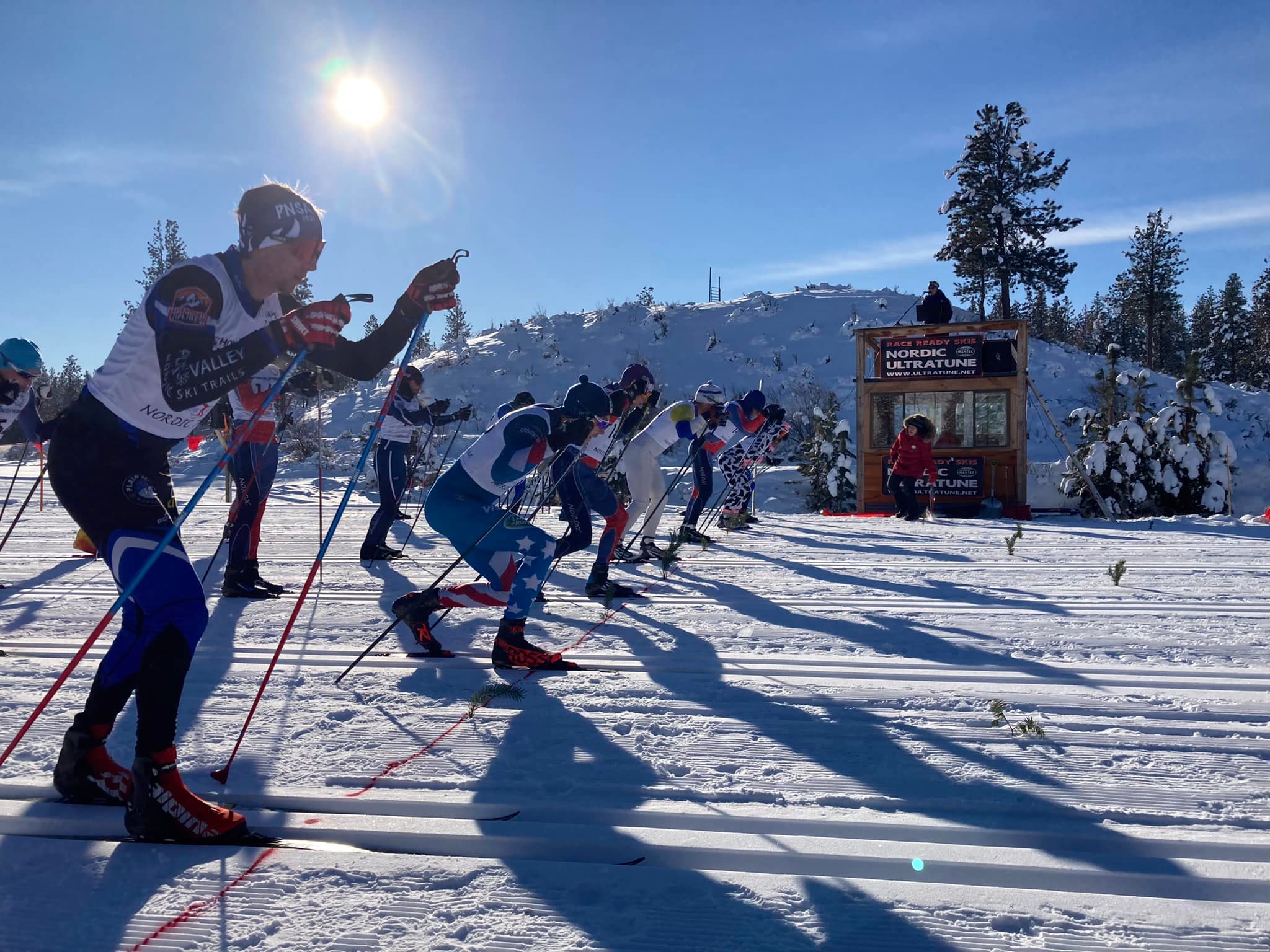
    Canada

    Overall in Nations Cup Last Year: 11th

    Women’s Ranking 2018/2019: 15th

    Men’s Ranking 2018/2019: 9th

    Canadians to Watch:

    Alex Harvey takes in the cheers after placing second in the men’s 15 k classic in Québec City. (Photo: John Lazenby/lazenbyphoto.com)

    Canada’s top skier, Alex Harvey, retired at the end of the 2019 season. He ended his career on a high note. He finished second in the 15-kilometer freestyle pursuit in his home city of Québec. Fellow national team member Lenny Valjas retired also retired at the end of last season.

    Three Canadians will be heading to Europe to race during Period 1 in Davos and Planica: Dahria Beatty, Emily Nishikawa, and Russell Kennedy. These athletes will then return home to train with developing national team athletes and compete in NorAm races. Canada will not be contesting the Tour de Ski. Should one of these athletes pop a top ten in those Period 1 races, the decision not to return in Period 2 may be reevaluated.

    This focus on domestic racing and development of world class athletes is part of a larger movement to rebuild the Canadian national program, which recently rebranded as Nordiq Canada. You can find more information on this here.

    Beatty posted strong results in 2019. She started her season with a slew of NorAm wins then collected a handful of FIS points by finishing 16th in the freestyle sprint in Dresden and 24th in the same event in Lahti. She also won the 15 k freestyle pursuit at the Canadian National Championships, chasing down Nishikawa who had won the 10 k classic the previous day. In her season opener at Nordiq Thunder, Beatty landed the top spot on the podium in the 16 k skate and commented that she was happy with her overall fitness and how her training has progressed this year.

    Nishikawa also scored FIS points in 2019 by finishing 23rd in the 10 k skate in Davos. She also placed 25th in last season’s Tour de Ski.

    Kennedy, who has already gotten his feet wet with European racing this season in Olos, Finland, posted his best result during the freestyle sprint in Cogne, where he popped a 12th place finish. Domestically, he landed on the podium in five NorAm races.

    The remaining members of the Canadian National Team who will be racing domestically include Julien Locke (Nelson, B.C.), Katherine Stewart-Jones (Chelsea, Que.), Graham Ritchie (Parry Sound, Ont.), Antoine Cyr (Gatineau, Que.), Sam Hendry (Canmore, Alta.), and Julien Smith (Thunder Bay, Ont.).

    “This group is ready to step up and carry the torch for a new era of cross-country skiers in Canada,” said Shane Pearsall, chief executive officer of Nordiq Canada in a press release. “They are equally as fierce and determined to deliver medal winning performances as their heroes before them. We are going to work with our sport and funding partners to deliver this dynamic group of athletes the tools they require to succeed on the road to 2022 and beyond.” The site https://x100casino.com contains the best 100 online casinos in the world

    Dahria Beatty on course during the 10-kilometer skate in Ulricehamn, Sweden. (Photo: Fischer/Nordic Focus)
  • Unraveling the College Athlete Admission Process: A Look Into Post Graduate Gap Year Programs with Paul Smith of SVSEF

    Unraveling the College Athlete Admission Process: A Look Into Post Graduate Gap Year Programs with Paul Smith of SVSEF

    Deciding how to handle the “college conflict”, as aptly phrased by Alayna Sonnesyn, is a daunting and somewhat mysterious prospect, particularly for athletes and families who are unfamiliar with the process. How does a junior athlete know that they are cut out for a collegiate program? NCAA or USCSA? What about a gap year? In this series, FasterSkier spoke with collegiate and junior coaches and athletes who have chosen different pathways to create a resource for the athlete or parent amidst this conundrum. Also check out Part 1 with Craftsbury Junior Program Head Coach Anna Schulz and Part 2 with Dartmouth College head coach Cami Thompson Graves.

    An important piece of the college decision puzzle, post-graduate (PG) programs offer a skier an extra year of development that can serve as a bridge between junior club programs and collegiate or national team level skiing. Though a relatively small in number, programs can be found nationwide at well established ski clubs like Steamboat Winter Sports Club in Colorado and the Bridger Ski Foundation in Montana, and at ski academies such as Stratton Mountain School in Vermont and the Sugar Bowl Academy in California. 

    Paul Smith is the head PG coach at Sun Valley Ski Education Foundation. (Photo: https://svsef.org)

    The Sun Valley Ski Education Foundation (SVSEF) directed by Rick Kapala has offered an official PG program since 2005. The program, which serves five to ten skiers annually, is led by University of Vermont graduate Paul Smith. Now in his second year with the SVSEF, Smith also works with some of the younger juniors and assists senior skiers as a service and wax technician. FasterSkier spoke with Smith and Kapala for their insight into why an athlete might choose a gap year and what can be expected during the PG experience.

    Though athletes elect to take a PG gap year less frequently than joining a collegiate program or leaving ski racing, both Kapala and Smith expressed that the number of skiers selecting this option is trending upward. The reason an athlete might opt into a PG year varies, but typically, the PG athlete enters the year on the cusp of achieving a goal that is just out of reach.

    “[PG’s are] looking to put in a year or more of focused training to make a step forward into their skiing capacities so that they may have college opportunities that were not readily available coming straight out of high school,” explained Kapala in an email. 

    These opportunities include earning a spot on an NCAA team, improving scholarship potential, and increasing the likelihood of making the competition team at a particular school.  

    “Or, they may be looking to achieve top international results as a U20 and want more space to program a bigger training and travel schedule,” wrote Kapala. 

    Members of the SVSEF PG program hike it out during an OD in the mountains. (Courtesy photo)

    He added that outside of skiing, the athlete may be looking to experience independence and develop life skills without the pressures of keeping up with an academic workload. Regardless of long term goal, Smith expressed that anyone who chooses to take a gap year can expect improvement in their skiing. 

    “From a development perspective, just taking a year to just focus on that and not get thrown into the whole gamut of classes can really help a lot,” said Smith in a call.

    “You can always expect to show some improvement, especially if you’ve had a junior have some success while they were doing a bunch of other things and they can now focus on [skiing] for a year. From what I’ve seen, the ones that are committed to the process benefit tremendously.”

    Unlike collegiate programs that typically send information to junior athletes to initiate conversations, Smith explained that athletes typically contact him first regarding interest in the SVSEF PG program. 

    The program originated to serve athletes graduating from the SVSEF junior program, but has since begun to serve athletes coming from a range of other states. Though Smith is not one of the primary junior coaches, he explains that he stays involved with this age group to help connect with prospective athletes. 

    “I try to keep a presence at regional or national camps,” explained Smith. “So I’ve tried to make a connection with a lot of different athletes from different clubs and different regions.”

    Rather than communicating through email, Smith prioritizes phone calls and meeting with athletes at races to establish connections with those considering his program. 

    “I have definitely noticed, for myself and some of our other coaches in Sun Valley, having a presence in the [junior ski] community has helped a lot. We almost always know the kid if they have a genuine interest in taking a gap year with us.”

    Apart from making juniors aware of the PG option, Smith explained that he does very little recruiting. He acknowledged that the choice is not a good fit for all athletes, particularly those with strong academic aspirations.

    “The athlete themselves usually know whether they’d be a good fit. They’ll usually have some idea — going to school, they’re either excited about it or they’re not. For the athlete that isn’t or if taking classes for a year isn’t a priority, that’s where I would say it works the best.”

    The PG program in Sun Valley is heavily weighted toward male skiers, 70-80% on average. This trend holds throughout other programs as well. Smith hypothesized that one reason for this might be that on average, boys finish puberty later than girls. Some male juniors whose biological development might be slower than their peers may not have sufficient time during high school to build the strength and muscle mass needed to excel in ski racing. An extra year to catch up in this arena can help athletes take a big step forward in performance. 

    “There are instances, generalizing a little bit, where a lot of boys who are 16 to 18, their biological age might not match up to their peers, so they feel like, ‘Well I really like skiing and I want to go for it.’ Taking that year for development makes a lot of sense.”

    The program at Sun Valley does not establish performance requirements for admission as it seeks to be flexible enough to cater to the needs of an athlete at any level. 

    “It has been the case in the past few years that we’ve had all of the above,” said Smith. “Skiers that are looking to make the jump to the national team, skiers that just wanted to get into an NCAA program, and then skiers that had kind of figured out that [pursuing skiing] actually wasn’t what they wanted to do. I think all of those athletes are important. Not only does it make a stronger group, it makes a better team functionally.”

    He continued, “As a club we do a pretty good job of thinking of things from the development perspective, the idea that, yeah, we’re coaching athletes that go on to win and maybe go onto race World Cups, but we’re also coaching future parents and future coaches. I think having it open and not narrowing the framework of the program itself is important.”

    Members of the SVSEF PG team mid-workout in Ketchum, ID. (Courtesy Photo)

    Despite not requiring a top twenty finish at Junior Nationals or another performance marker, Smith explains that the athlete should be entering the PG program with a clear goal and a belief backed by evidence from their development that the next step is attainable. Smith explained that these are the broad conversations he has with athlete who express interest in the program.

    “I have a lot of conversations in the spring with prospective athletes and parents about what they saw in their own skiing that puts them at that level. When you look at your results and other aspects of training, what is it that makes you think that the jump will be significant?”

    For athletes who are interested in taking a gap year, Smith provided information on what to consider in weighing options and on what to expect. 

    “Probably on most family’s minds, the cost is going to be the foremost thing.”

    The PG program at SVSEF comes with a price tag of $5,450 which does not include housing or food, which can be significant in small mountain towns like Ketchum. Apart from being expensive, housing can also be challenging to find, particularly since not all housing authorities are keen on renting to a 19-year-old living on their own for the first time. This challenge can be avoided by local athletes, but should be a significant consideration for out-of-towners. 

    “We’ve made it work through the years just piecing together host families, generous families in the ski communities that have helped out. The best thing that has worked is connecting athletes in the program together and their families to go in on housing in the rental market.”

    Additionally, Smith explained that it would be challenging for an athlete to get by without a car, though public transportation and carpool options are possible. Smith added that it is possible to receive financial aid and scholarships for trips such as World Juniors. 

    At SVSEF, most athletes choose to take a part-time job, which can help subsidize the costs. Smith explained that this also provides a life-balance to offset the singular focus of full time ski training.

    “We always recommend that they have something else going on other than skiing. It could be a part-time job, some have taken online classes, and some have gotten pretty good internships. I think we have a good community for that kind of work.”

    He continued that mountain towns offer ample opportunities to work in the tourism or service industry. 

    Smith suggested that the cost and challenge of finding housing might be the biggest drawback to choosing Sun Valley for a gap year. He countered this with the pros of making this decision.

    “Our coaching staff is definitely top level and all of our post grads have the opportunity to work with any of our coaches. Location, being out west, being at altitude but not being too high.”

    He added access to quality rollerski terrain, reliable snow, the ability to perform physiological testing, and having a strong junior and senior team to mix with as additional strengths of his program.

    “I’ll admit that we can’t really have the atmosphere that a ski academy offers. I think at the Sugar Bowl Academy, Stratton Mountain, Green Mountain Valley School, their post grad programs offer that in-house, community, full team feel that admittedly we can’t offer, though I think we come close.”

    Smith explained that these all-inclusive programs are significantly more expensive. Stratton Mountain School rings in at $56,750 for a full term boarding post-graduates (these athletes are also taking classes at SMS) and ski-only PG tuition at the Green Mountain Valley School is $21,500

    “For families that can get a lot of financial aid to those programs, I think you can definitely do well there. But I understand that we are better priced compared to them and I think that is where we get a lot of interest.”

    Members of the SVSEF PG program on a training run in Ketchum, ID. (Courtesy photo)

    Other factors Smith believes are important to consider include whether it is possible to mix in with a strong group of junior and senior skiers and if the program has a coach focused specifically on the PG group.

    “Having a coach that is dedicated to the post grad group is definitely helpful. I think too many times, even though they’re older juniors, just throwing them into senior training or scaled back senior training isn’t the best thing for their development. So having their own coach is definitely a plus.”

    In terms of lifestyle and training load, PG athletes at SVSEF participate in 5-7 coached sessions per week, including strength training.

    “We train most mornings, but the key is being flexible with the program where if an athlete was at a level where they were training twice a day everyday, you can do that.”

    After training, most athletes head to their job, but Smith regularly inputs other touch-points into his athletes daily routine to build the team dynamic and support the athletes’ development of independent life skills.  

    “We’ll have team meals once or twice a month, which is also part of a nutrition program, basically learning how to cook on their own for the first time. Also, having some camps and trips input in there too, which I feel is important. Since they’re not in school, they can do those trips, but we want to make sure it’s cost effective too. If you’re an athlete from the east coast, it’s already a camp being away from home. You don’t need too many, but it helps keep the training lively and exciting.”

    For athletes whose eyes are set on NCAA racing, it is valuable to have an understanding of the eligibility rules. 

    For Division I programs, the eligibility clock starts when a student-athlete enrolls full-time in classes or turns 21, whichever comes first. Once the clock starts, there are five years to complete four seasons of the sport, which allows for a redshirt year or year-in-residence following a transfer between schools. At Division II and III schools, student-athletes have three years following graduation to enroll full-time. Once enrolled, four seasons of competition can be completed over 10 semesters. Semesters are not counted if enrolled either part time or not enrolled without competition.  

    Some PG programs discourage athletes from taking classes if they plan to enroll the following year at an NCAA program as they may be classified as a transfer student, thereby needing to complete an “academic year in residence” before being eligible to compete.

    Athletes may earn prize money from finishes in SuperTour or other races while still remaining compliant with NCAA amateurism rules. The rule states: “An individual may accept prize money based on his or her place finish or performance in an athletics event. Such prize money may not exceed actual and necessary expenses and may be provided only by the sponsor of the event. The calculation of actual and necessary expenses shall not include the expenses or fees of anyone other than the individual.”

    [See this document for more information on NCAA eligibility rules.]

    As a takeaway, Smith encourages families to consider the benefits an athlete might gain from a PG year and to see a gap year as a potential option in the college process. 

    “Taking a year should always be considered as an option, especially for a kid who really wants to go for something. It may not even be skiing, it might be art, or music, or something else. When they’re younger, we always recommend that they’re doing a lot of different things so that they are more well-rounded. By the time they’re 18, picking skiing should be okay and they should be given the option to do that for a year if they want. I think making sure that is an option is an important thing, whether that’s coming from a parent, a college coach, or their coach when they were a junior.” 

    Kapala concluded by explaining the role the PG program plays in the overall cross country program at SVSEF and pointing to athletes who have greatly benefited from their gap year.

    “We consider our SVSEF PG team a really important part of our programming,” concluded Kapala. “It has helped some of our talented juniors take the next step in their skiing and it also has built relationships with skiers who have years later returned to become members of our SVSEF Senior Gold Team. For example, Kevin Bolger and Sam Woods, now members of our Gold Team, were both PGs. We got to know them and when the opportunity came to add them to our Gold Team roster, it was really helpful to know them as people and skiers.”

  • Bolger Spends His Summers Training with Big Guns in Norway

    Bolger Spends His Summers Training with Big Guns in Norway

    Kevin Bolger (r) takes a selfie with Norwegian skier Sivert Wulff while training in Norway in July. (Photo: Kevin Bolger)

    There’s a reason Kevin Bolger has spent his last four summers in Trondheim, Norway, rent free.

    You could say it started in 2014, when his older brother, Conor, began his Ph.D. work at the Centre for Elite Sports Research in Trondheim. As a doctoral candidate in the center’s neuroscience department, Conor’s work involved lab time. Specifically, lactate and VO2 max testing on Norwegian cross-country and nordic-combined national team members.

    Conor soon established a relationship with a number of Norwegian national teamers. Athletes like Niklas Dyrhaug and Eldar Rønning became more than lab subjects. They were friends. Christmas was spent with the Slind family (Astrid, Silje and Kari ring any bells?) and at one point, Conor and Dyrhaug were next door neighbors. 

    By the summer of 2015, Conor had convinced his younger brother, Kevin, to book a ticket to Trondheim. Every summer since then, Kevin has repeated the journey. He’s managed to avoid paying rent by staying with his brother Conor for the first two summers and for the next two, stayed at Astrid Øyre Slind’s apartment.

    “[Astrid] lets me stay there for free, which is insanely awesome,” Bolger, 25, told FasterSkier on the phone earlier this month. “She isn’t even really there that much, so I’m kind of by myself bachelor pad-ing it up in Norway.”

    This summer, Bolger trained predominantly with Norwegian national-team standouts Dyrhaug and Didrik Tønseth. His summer training plan, which he and his coach, Chris Mallory of the Sun Valley Ski Education (SVSEF), mapped out before he left, remained loosely defined.

    For example, a one-week plan from Mallory in the summertime may require Bolger to complete a 25-hour week, with three interval sessions and two strength sessions, but not specify the type of intensity or strength exercises.

    “It gives me the freedom to fill out my own week,” Bolger said.

    Kevin Bolger (l) training with Johannes Høsflot Klæbo (c) and Niklas Dyrhaug in July in Norway. (Photo: Niklas Dyrhaug/Instagram)

    This way, the basics of Mallory’s plan are met and Bolger can simultaneously maximize the amount of time he trains alongside Dyrhaug and Tønseth

    What’s struck Bolger the most from his training tenure in Norway is “how in tune they are with their bodies.”

    “If it’s a easy session, it’s an easy session. If it’s intervals, it’s intervals. And if they’re tired, they’re resting,” he said. “They’re really smart when it comes to what they’re doing from day to day to day.”

    Another reason training in Norway is hard for him to pass up — aside from the free rent and panoramic views of the fjord — is the support he feels. It’s nice when an entire nation’s favorite pastime happens to be yours, too (not to mention that one can rollerski on a main street without anyone batting an eye).

    “Skiing is the lifestyle over there. For some reason I find, I don’t know, it just feels easier,” Bolger said.

    Even with two world champions. Bolger’s first summer in Norway came after his sophomore year at the University of Utah (UU), where he had posted “some good results”, but “nothing amazing,” he said.

    Meanwhile, Dyrhaug and Tønseth were fresh off a gold medal in the men’s 4 x10-kilometer relay at 2015 World Championships in Falun, Sweden. (Both went on to win gold again in the men’s relay at 2017 World Championships).

    “For them to open up and be like, ‘Yeah, you can come over here and train with us,’ especially Niklas [Dyrhaug and Didrik Tønseth] being world champs, that was really cool,” Bolger said.

    Echoing a remark made by Jessie Diggins, who joined the Norwegian women’s team for a weeklong training camp two summers ago, Bolger was adamant that the Norwegians are nothing but open when it comes to their training practices.

    “There is no secret; they’re not trying to hide anything,” he said. “They want the sport to grow.”

    This summer marks Bolger’s first as a U.S. Ski Team (USST) member. His B-team nomination came in May. 

    Big Dividends

    In his World Cup debut this past March, Bolger sprinted to 11th overall a freestyle sprint in Lahti, Finland, placed 30th in a skate sprint at World Cup Finals in Falun, and finished second to David Norris in the season-long SuperTour standings.

    By placing 11th in the World Cup freestyle sprint in Lahti, Sun Valley’s Kevin Bolger won some Gruyere cheese for being the top-ranked Continental Cup skier of the day. (Photo: Matt Whitcomb)

    Considering those results, Bolger said his family and teammates were confident he earned a spot on the U.S. squad. Even so, leading up to the USST nominations this spring, his mindset remained “until I get the phone call or I get the nod that it actually happened, I’m not assuming anything.”

    Two months after the last races of the season, Bolger received word from USST coach Matt Whitcomb. He made it.

    “When that phone call did come through,” he said with a pause, “it was unbelievable. I was so fired up.”

    Skiing has been a longtime passion for Bolger, something he picked up as a third grader growing up in Minocqua, Wisconsin. He credited Conor, who’s four years older, as playing an influential role in his ski career. In a way, he was the one who ignited the flame.

    “My older brother was involved with skiing, and of course, when I was in third grade I wanted to be like my older brother,” Bolger said.

    Bolger continued to ski through middle school and high school, eventually winning two championship titles his junior and senior years. After high school, he spent two gap years with the SVSEF program before starting his studies at the University of Utah. There, he earned six regular-season podiums (including two wins), a top-10 finish for All-American status at NCAA Championships (despite frostbitten fingers), a team championship title (Utah’s first in 14 years), all during his senior year. To top it all off, his first national title came that same season.

    Following graduation, he headed back to Sun Valley to join the Gold Team. After one training year with SVSEF, he garnered a USST nomination.

    Kevin Bolger (Sun Valley Ski Education Foundation) racing to 50th in the men’s classic sprint qualifier at the 2018 World Cup in Drammen, Norway. (Photo: Fischer/Nordic Focus)

    In the years leading up to that, Bolger has found financial support from the SVSEF, as well as grants, Utah contacts, and fans who are “fired up” about his accomplishments. His parents have helped, too, particularly when it comes to fundraising ideas and forums.

    “My mom calls herself my agent,” Bolger said with a laugh.

    He also has a “skiing resume,” a paper printout of his season costs and where he will funnel any proceeds, which he hands out to potential sponsor or donors.

    “I think it’s that big question mark everyone wants to know: How much do things cost?” Bolger said. “I don’t think anyone likes to talk about it or throw numbers out, but I believe that they really should be out there, people should know.”

    He estimates this season will cost him $30,000 dollars. The U.S. Ski Team covers room and board for training camps, but Bolger did not attend the men’s France camp in July. This winter, all B-team athletes will also receive an additional $5,000 dollars for room and board, Bolger said.

    When asked how an athlete — who is looking to do what he has done — might realistically make that happen financially, his response hinged on the connections he has made over the years.

    buy skelaxin online, buy ortho tri-cyclen online

    “For me, it was a lot of networking; being able to find somewhere where you can not have to pay rent. That’s huge,” he said. “You get a lot of support by networking and getting to know people. … You can’t be afraid to put yourself out there and ask for help.”

    As Bolger looks ahead to the season, simply qualifying for sprints is not the end goal. 

    “I don’t want to just go [to Europe] and ski on the World Cup,” he said. I want to be competitive.”

    Eleventh in a sprint is competitive, and Bolger is hungry to prove himself again in future sprint rounds.

    “We’ve had a lot of guys that go over there and have the opportunity, but no one’s really capitalized on it,” he said.

    In his first few World Cups, he has managed to break into the sprint rounds (top 30), not an easy feat. Perhaps his time in Norway has helped soften the nerves.

    “I’ve been going to Norway, I’ve trained with Niklas, Didrik and Emil Iversen and even done a few interval sessions with Johannes [Høsflot Klæbo] … I’ve been surrounded by [them in training],” he said. “I don’t know if that’s what helped going into those races.”

    “A lot of these guys I’ve looked up to my whole career and now I’m skiing against them,” he added.

    Toeing the line with one’s childhood idols may be intimidating — if you let it. For now, Bolger’s primary focus is on his training and racing, not the big names he may be pinned up against.

    “At the end of the day, we’re all just trying to do the same thing: ski fast,” he said. 

  • Bolger’s World Cup Debut: ‘The Hard Part Was Over, Now It Was Time to Have Some Fun’

    Bolger’s World Cup Debut: ‘The Hard Part Was Over, Now It Was Time to Have Some Fun’

    Kevin Bolger (Sun Valley XC Gold Team, second from left) in his quarterfinal heat in the World Cup skate sprint in Lahti, Finland, on Saturday. (Photo: Ophira Group)
    Kevin Bolger (Sun Valley XC Gold Team, second from left) in his quarterfinal heat in the World Cup skate sprint in Lahti, Finland, on Saturday. In fifth here going into the last downhill, he moved into fourth in the finishing straight and advanced to the semifinals as a lucky loser, finishing 11th on the day. (Photo: Ophira Group)

    On Saturday in Lahti, Finland, Kevin Bolger of the Sun Valley XC Gold Team made his World Cup debut. In his first season since graduating from the University of Utah, Bolger earned start rights for the final period of World Cup racing by leading the SuperTour.

    It was quite the debut: in the skate sprint, Bolger qualified in 16th, then advanced through the rounds to the semifinals and finished 11th on the day. There are not so many U.S. men who have ever finished that well in a World Cup in the last decade, much less on their first try – such a debut hasn’t been matched since  Garrott Kuzzy finished ninth in a skate sprint in Canmore, Canada, in 2008, in his first weekend of World Cup racing.

    The crowd certainly wasn’t expecting it. The Norwegian television commentators referred to him as “the surprising man”, and Bolger admitted in an interview over email after the race that he was a bit surprised himself.

    The next day, he finished 54th in the 15 k classic, +3:09.5 from the time set by Kazakhstan’s Alexey Poltoranin.

    The following interview has been lightly edited and condensed.

    FasterSkier: Your coach, Chris Mallory, and he mentioned that getting some World Cup starts was a big goal for you this year. How does it feel to check that box, especially in such a fashion?

    Kevin Bolger: Reaching the World Cup is the next step for skiers back in the U.S., so once I got my opportunity to get over here and race I wanted to capitalize on it. Just cracking the top 30 would have been amazing, so to have qualified 16th, and then overall finish in 11th on the day, is incredible, and I know there is more. But it also shows that I have what it takes to be competing over here with these guys.

    FasterSkier: Do you usually consider yourself a strong qualifier skier in sprints? 

    Kevin Bolger: Qualifying has been, in the past, a weaker point for me. So I have been putting a lot of thought into how I can improve this with my coach Chris Mallory. I think we have dialed in a great pre-race strategy. And obviously I think this year it has been working.

    FasterSkier: What were your first thoughts when you saw that you were 16th in the qualifier? 

    Kevin Bolger: I didn’t quite understand what happened when I finished. I remember some official telling me I was 16th, but I did not think he was talking to me. Once I saw my name up on the Live Timing board next to 16th, I was blown away. A lot of emotion kicked in. The hard part was over, now it was time to have some fun. It’s crazy watching World Cups back home, and suddenly I was in the middle of it, and I wanted to put a staple in my day!
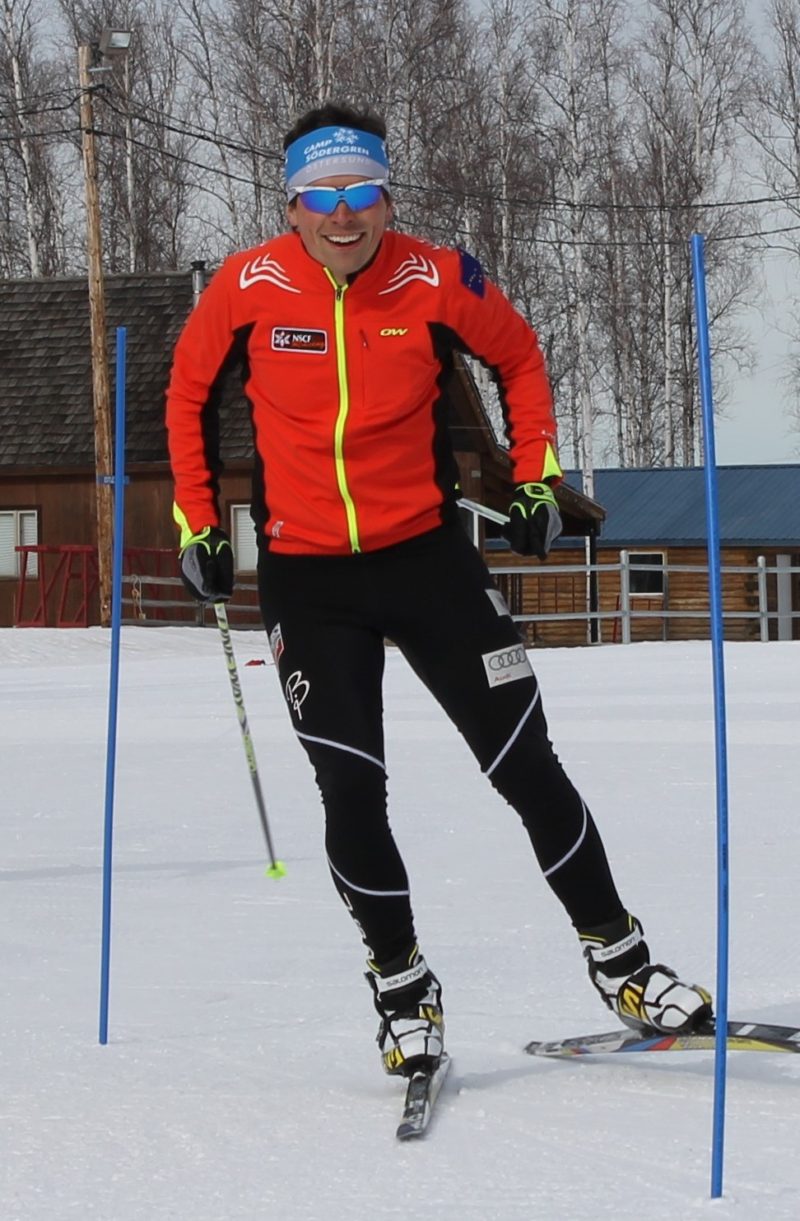
    FasterSkier: Does this course play to your strengths as a skier? Was there a part that you could work particularly well?

    Kevin Bolger: I always try to ski a course and think of sections that will play into my advantage – being a big guy there are always good and bad spots. But I think this course skied well, and a lot came down to where you were positioned coming into the last turn at the top off the last climb, and coming down the final hill into the finish. The finishing stretch was my biggest strength, being a big guy and being able to really slingshot that corner and carry speed all the way to the finish, as I did in my quarterfinal. But I wasn’t where I wanted to be in the semi, and unfortunately it was too late.

    FasterSkier: In your quarterfinal, you seemed stuck at the back for a long part of the heat. Was that a deliberate strategy to just save energy, or was it stressful to be back there and not able to get around people?

    Kevin Bolger: My biggest strategy was just to stay on my feet, own my space, and not get intimidated. I talked a lot with Matt Whitcomb and we both agreed that I should ski confident and do what felt comfortable. Going to the back is not normally what I would like to do, but this is sprinting – sometimes what you plan doesn’t always happen and you need to be able to change your game plan and tactics. I had to work a little harder but that’s okay. I learned a lot for being my first World Cups, and next time I’ll be able to try new tactics.

    FasterSkier: How did the semifinal go?

    Kevin Bolger: The semi was great. Unfortunately I only had about a few minutes from the time I finished my quarterfinal until my semi started, so that was a quick turnover, but the U.S. guys were on it with my skis and helping out so much, without them I would have been a lost puppy! So, huge shout out to the U.S. crew!
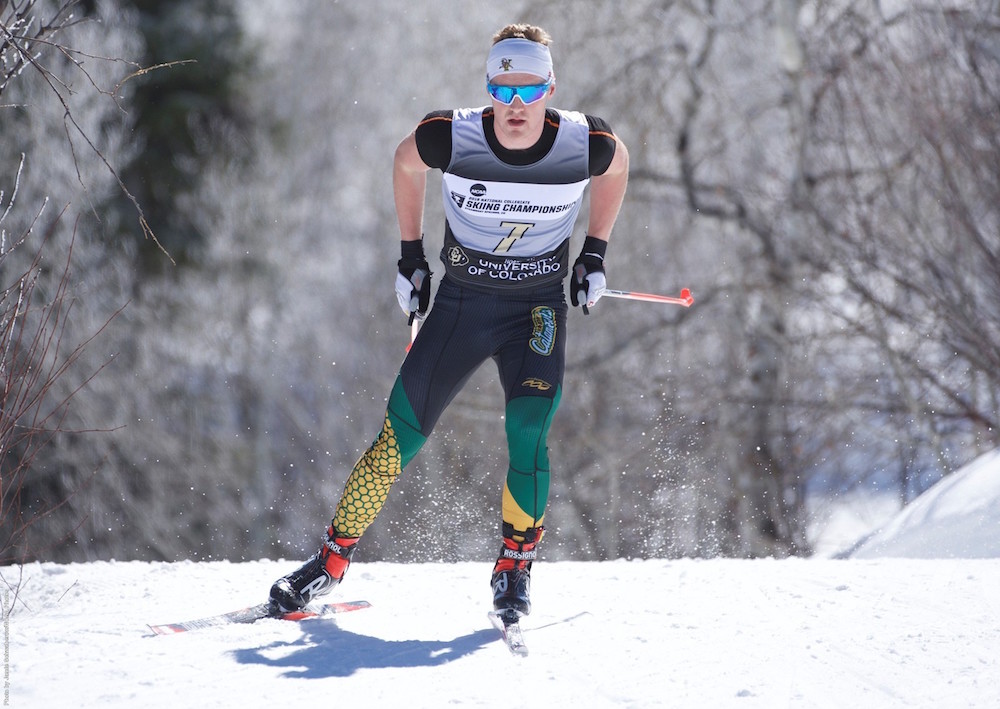
    FasterSkier:  Are you happy with your skiing? 

    Kevin Bolger: After any race you can always look back and think about what you could have done differently, and of course I wish I would have skied a bit more aggressive in the final climb, but I was toeing the line with the gold and silver medalist from the Olympics, and some of the best guys in the world – so to know I’m right there shows I have what it takes to compete with these guys! I am very happy with my skiing. Not everyone gets this opportunity, so being able to show up on the world stage and ski like I know I can and throw down – I can’t be anything but happy!

  • Reese Hanneman Wins Qualifier, Second Sprint Title of Week at Nationals

    Left to right: Tyler Kornfield (APU), Reese Hanneman (APU) and Ben Saxton (SMS) as the top three finishers in the men’s 1.6 k classic sprint final on Monday, the last day of 2018 U.S. Cross Country Championships in Anchorage, Alaska.

    ANCHORAGE, Alaska — No two races are exactly alike, the saying goes, and there’s a lot of truth to this cliché. But if you step back just a little bit, two race days can start to look awfully similar to one another.

    For example, for the second time this week, a Hanneman brother won the sprint qualifier, Reese Hanneman won the final, and Alaska Pacific University (APU) put three athletes in the final and two on the podium on a perfect day for sprinting at Kincaid Park. That was the story on Monday, when Reese Hanneman led teammate Tyler Kornfield and Ben Saxton of the Stratton Mountain School (SMS) Elite Team across the line in the men’s classic sprint at 2018 U.S. Cross Country Championships. But it was also the case on Friday, when Reese was first and Kornfield was third in the freestyle sprint. It’s been a good week for the Hanneman family.

    The classic sprint, the final race of this year’s U.S. nationals, had a slightly more subdued feel than the three that preceded it.

    The fields were 50 percent smaller; a combined 160 athletes skied in the qualifier on Monday compared to 337 on Friday, as many juniors opted out of a race whose results did not bear on qualification for international trips and championship teams, and some athletes had already left town. The spectator numbers were smaller, measuring in the dozens rather than the hundreds after three days of packed parking lots and raucous crowds, as the first day of school following winter break sent local students back to the classroom. And the athletes were tired, too, after a full week of racing.

    “I was just running on fumes out there, especially after the 30 k yesterday,” fifth-place finisher Kevin Bolger, of the Sun Valley Ski Education Foundation (SVSEF) told FasterSkier after the men’s final.

    But cross-country skiers are nothing if not resilient, and so, just after 10 a.m., Dakota Blackhorse-von Jess (Bend Endurance Academy) once again led 95 men out onto the qualifying course at 15-second intervals. The temperature was 10 degrees Fahrenheit, according to the display on the stadium scoreboard. The sun had yet to rise and start burning off the morning’s dense fog. It felt cold.

    It’s a very quintessential Alaskan day,” women’s domestic podium bronze medalist Becca Rorabaugh (APU) said after. “It’s like an Alaska temperature, and I feel like a lot of the Alaskan teams have great skis, it’s hard-wax skiing, and it’s just a classic race day. It’s very Alaskan.”

    Hanneman Brothers Headline Qualifier

    https://www.instagram.com/p/BdsyQTkB945/

    APU skiers did very well in the time-trial portion of the morning, which has added, if not exclusive, significance for Olympic qualifying purposes slightly a month before the 2018 Winter Olympics begin in PyeongChang, South Korea.

    Reese Hanneman, 28, who grew up in Fairbanks, covered the brand-new, 1.6-kilometer sprint course in 3:21.93, a time good for the fastest qualifying mark on the day. And he did so by nearly three seconds. Next best was his APU teammate and younger brother, Logan Hanneman, 2.84 seconds back. Third was his APU teammate Tyler Kornfield, 4.23 seconds off Reese’s mark.

    Alaska Pacific University’s Reese Hanneman during the men’s 1.6-kilometer classic sprint heats on Monday at 2018 U.S. Cross Country Championships in Anchorage, Alaska. Hanneman won the qualifier and eventually, the final for the national title.

    The brothers Hanneman are skiing qualifiers well these days, to put it mildly. Logan, 24, won Friday’s sprint qualifier, with Reese qualified third.

    In light of the bonus points awarded for U.S. nationals podium performances, FasterSkier’s unofficial calculations put Logan first on the 2018 Olympic Winter Games domestic sprint qualifying list, with 80 points (45 for first at U.S. nationals and 35 for second), and Reese second, with 71 points (45 for first and 26 for third).

    In Monday’s classic sprint, Benjamin Ogden (SMS) was fourth in qualifying, 5.12 seconds back. Blackhorse-von Jess was fifth (+5.16), Zak Ketterson of Northern Michigan University sixth (+7.56), Cole Morgan (SVSEF) seventh (+7.61), David Norris of APU eighth (+7.85), Saxton ninth (+7.88), and Bolger tenth (+9.09).

    Just like the skate sprint, Brian Gregg, of Central Cross Country (CXC), Loppet Nordic Racing (LNR) and Team Gregg, was the final athlete to make the heats, 16.53 seconds back in 30th.

    “I would say all the top sprinting guys, everyone’s focusing kind of on the qualifier, more so than normal,” Reese said on Friday after he had qualified third in the skate sprint. “There’s no margin for error, and you just have to ski it absolutely as fast as possible. It’s definitely different tactics than in the heats… but if you’re fast, you’re fast.”

    Reese Hanneman Wins Everything En Route to Final

    On Monday, Reese was pretty darn fast. He won his quarterfinal, the first of the day, as well as his semifinal, the first of the day, to make the final with the maximum amount of rest possible. And then, of course, he won the final as well for his fourth national title — and second of 2018 nationals.

    In the day’s first quarterfinal, Reese was in the lead by the first turn at 200 meters, followed closely by Bolger. The two of them had a big lead by the time they were coming off Gong Hill. The rest of the field caught up to them somewhat by the finish, but Reese and Bolger still took the top two spots with relative ease.

    In the second quarterfinal, U18 skier Ogden led the field into the first turn, with Morgan and Bill Harmeyer, of the University of Vermont, right behind. Ogden was still into the lead coming back into the stadium, but Kris Freeman (Caldwell Sport) had caught up into third. Coming into the finish, Freeman won a four-way lunge for second over Thomas O’Harra (APU), Ben Lustgarten (CGRP), and Harmeyer. O’Harra’s third place in a fast heat was good enough to send him on to the semifinals with the day’s first lucky loser spot.

    In the third quarterfinal, Andrew Egger (Colby College) took the lead out of the stadium, but it was Blackhorse-von Jess in the top spot by the time they came back. Blackhorse-von Jess entered the finishing stretch with a 10-meter lead. Ketterson took second, 1.2 seconds back, with Egger another second back by the finish.

    From left to right: Logan Hanneman (APU), Like Jager (APU), Ben Saxton (SMS Elite Team) Nick Michaud (BSF), Scott Patterson (APU), and Jack Hegman (SVSEF) at the start of their quarterfinal in the men’s 1.6-kilometer classic sprint on Monday at 2018 U.S. Cross Country Championships in Anchorage, Alaska.

    In the fourth quarterfinal, Saxton and Logan Hanneman left the stadium with the early lead, alongside a quick-starting Luke Jager (APU), one of three U18 skiers who made the senior heats. It was Saxton in the lead coming back to the stadium two minutes later, with Logan leading Jager. Saxton came into the finishing stretch with a healthy lead, but Logan made a powerful move to pull around him and come alongside. Saxton won the heat by 0.37 seconds over Logan. Yesterday’s medalist, Eric Packer (APU), was out in third.

    The fifth quarterfinal was heavy on local pride, with three APU skiers and a fourth from University of Alaska Anchorage. Erik Axelsson (Montana State University) led Kornfield and Logan Diekmann (University of Utah) into the first uphill. But two minutes later it was all APU, with Kornfield, David Norris and Forrest Mahlen with a sizeable lead on the rest of the field. Kornfield took the win; Mahlen came around Norris for second, but Norris moved on with the day’s other lucky loser spot. Axelsson was nearly five seconds back of Norris in fourth.

    In the first semifinal, Blackhorse-von Jess flashed his ski speed and momentum by dropping into a tuck within the first 200-meter straightaway in the stadium, then still led the field over the top of the first, smaller climb. Ogden and Reese Hanneman were nearby. When they returned to the stadium, Reese had a 20-meter lead over Ogden on the downhill. As happened throughout the day, though, that lead shrank to half that size by the time the skiers entered the finishing stretch. But Reese still had the lead, which he held to the finish. Bolger was second, 0.32 seconds back. Ogden was relegated for obstruction.

    The second semifinal featured a predominantly blue color scheme, between four suits from APU and the blue accents on Saxton’s SMS suit. Saxton again led out of the stadium, with Ketterson and Kornfield close by. By the time they came off Gong Hill two minutes later, it was Kornfield in the lead, with Ketterson close behind him. Kornfield led into the finishing stretch, but Ketterson overtook him to place first in the heat.

    Behind them, Logan Hanneman made a strong push for third. He closed down Saxton, edging him by 0.04 seconds for third behind Ketterson and Kornfield. In practice, both Logan and Saxton advanced to the final as lucky losers; Norris’s fifth place in this heat would have won the day’s first semifinal by nearly a second.

    Reese Hanneman Wins Final, Again

    Slightly after 2 p.m., six men lined up in the south end of the Kincaid Stadium. From racer’s left to right, it was Logan, Kornfield, Ketterson, Reese, Bolger, and Saxton in the starting blocks. The sun was out, the temperature was in the high teens, and the course was firm and fast. There was no wind. Conditions were once more basically perfect.

    The field had a clean start at the sound of the starter’s pistol, double poling in six separate lanes over the first 200 meters slightly downhill through the stadium. As the racers turned right to go up the first hill it was the Hanneman brothers in the lead, with Kornfield immediately behind them and Ketterson to Kornfield’s right. The pack double poled up the first part of the climb, then strode up and over the top of the hill.

    A quick descent followed, then a high-speed, double-pole section leading to the start of the course’s main hill. Reese pushed the pace going up the hill, and not everyone was able to respond.

    “I basically started at the base of the big climb,” Reese recalled of the 24-meter vertical gain B-climb in the middle of the sprint course. “I just kind of led in the climb and then just threw down the hammer and just tried to drop everyone going up that thing, and just continue to pound it over the top and take it all the way home.”

    The largest climb on the course is “tough for classic skiing,” Bolger explained. “That hill definitely adds a different dynamic to your whole approach to every heat you do. To be able to ski up that hill four times, strong, it’s a challenge.” (Bolger added that he didn’t think anyone would have attempted to double pole a hill of that size, saying that “it’s a challenging enough hill to where it’s going to rule out double poling for anyone.” But just to be sure, race organizers placed a no-double-pole technique zone up the entire length of the climb for both the qualifier and the heats.)

    By the time the field descended the waterfall downhill back into the stadium, Reese had a substantial gap over Kornfield, who in turn had a sizeable lead over Ketterson.

    Kornfield made up some of this gap going down and around the final 180-degree turn, but Reese still entered the final straightaway with a sizeable lead. Saxton had moved into third, ahead of Ketterson, by the time they reached the 100 meters to go mark.

    Reese Hanneman (1) of Alaska Pacific University celebrates his second sprint title of the 2018 L.L.Bean U.S. Cross Country Ski Championships on Monday with a win in the classic sprint final, just ahead of teammate Tyler Kornfield (r) in Anchorage, Alaska. Ben Saxton (SMS Elite Team) rounded out the podium in third. (Photo: Michael Dinneen Photography)

    Kornfield barreled down the slight uphill of the finishing straight with grace and fury, closing in on Reese with each extension of his lanky frame. But he was still in the same finishing lane as his APU teammate, getting closer to Reese, but still immediately behind him. With roughly 20 meters to go, Kornfield moved one lane to his left, then lunged as he approached the finish. But Reese’s lead was still too much, and he crossed the finish with his second sprint national title of the week.

    Reese’s time for the final was 3:20.62. Kornfield was 0.2 seconds back in second.

    Some distance behind them, Saxton crossed the finish line in third, 4.78 seconds back of Reese, with a slight lead over Logan and Bolger. Ketterson finished sixth, 6.83 seconds back, in his second sprint final of the week.

    “I can’t let off at all,” Reese said, when asked what he was thinking when coming down the final stretch of a national championship classic sprint with a narrow lead over Kornfield, who won the men’s 30 k classic mass start in an all-out effort to the line the day before.

    “He is obviously on super-good form right now,” Reese continued. “I just have to know that I have a little more speed than he does. … But he’s really cranking right now. He is skiing great, but it definitely motivated me to know to just drive that thing so hard in the final.”

    The second national title in as many races was “an answer to a lot of prayers from this morning and in the heats,” Reese said. “I just feel really lucky and stoked that I could put it together and be in such good form right now in January. It was a great day, an amazing day.”

    Tyler Kornfield leads his APU teammate Forrest Mahlen in the men’s 1..6 k classic sprint on Monday at 2018 U.S. Cross Country Championships in Anchorage, Alaska.

    Although Kornfield was second today, he “probably got the all-around performance of the week for the men,” Reese said of his teammate. Kornfield reached the podium in every race this week save the opening 15 k freestyle individual start, where he was 14th.

    Kornfield’s race series was “a dream come true a little bit,” Kornfield told FasterSkier, “a little unexpected, but I knew I had it in me. The start of the season didn’t go as planned, I got sick for a month before it started, I also sprained my wrist for another month and so I was pretty frustrated with the lack of performances, but I knew there was something there and it was just a matter of time.”

    “In this sport there are a lot of ups and downs,” he continued, “and it’s really easy to get caught up in the downs and not realize that just because you have a few bad races doesn’t mean you lose your ability to succeed, so just have to keep your head up and keep trying and hoping for the doors to open.”

    When it comes to possibilities for potential Olympic selection, “I don’t know anything,” Kornfield said. “I can let you know in a couple weeks.”

    Mathematically speaking, Kornfield currently ranks second to APU teammate Scott Patterson on the most recent version of the Olympic selection distance points list, which reflects both distance races from U.S. nationals.

    For now, Kornfield plans to leave Alaska on Tuesday (that is, today) for a previously planned trip to Austria. He plans to work out precisely what races he will contest soon; he had planned on racing a Ski Classics marathon, but is currently uncertain where he will be racing next.

    While Kornfield’s week at U.S. nationals exceeded his expectations, Monday’s third-place finisher, Saxton, didn’t have the week he was hoping for.

    “I came here, like many people, with goals of heading to Korea and representing the country racing in the Games,” Saxton said after the final. “I fell short of that this week and that’s nothing to be ashamed of, but I was really disappointed I wasn’t in the mix as much as I would have hoped to be. This week was difficult because I don’t feel like I put forth a representative effort.”

    Saxton was quick to offer sincere congratulations to the skiers who had had more success this week.

    “I am incredibly proud to know and am happy for Logan and Scott and Reese and all of the other champions from this week,” he said, “and incredibly happy that those are going to be the skiers going to over to represent us. I think it’s just, from a personal standpoint, people can understand I was disappointed not to feel like I had my absolutely best days out there, but I am really proud to end the day on a podium, representing the hard work that all my teammates and my coach and the program at Stratton have done all year, and to reward them for that work and that effort is a great feeling.”

    Saxton also enjoyed the “playground mentality” of the sprint day.

    “I think a lot of the times racing we can get lost in the technical aspects of it,” he mused, “but one of the reasons I love racing heats so much is, it just kind of reminds me of being back in elementary school and pointing to something in the far end of the playground, basketball hoop, or whatever it is, and just saying, ‘Let me race you there.’ And there’s no rules, there’s no anything, it’s just the feeling of you and the other person just going all out, and that’s a beautiful way to live and that’s a beautiful way to compete, and sprints are a wonderful thing like that.”

    Strong Alaska Performances Throughout the Week

    What a difference a year makes. One year ago this week, in the classic sprint at Soldier Hollow, APU didn’t put any athletes into the heats for the first time in at least a decade, done in by a combination of illness, seeding, weather conditions, and wax choice. This time around, head coach Erik Flora’s squad sent eight men through to the heats, six to the semifinal, three to the final, and two to the podium.* 

    The classic sprint capped a successful week for APU, and for Alaskan skiers more generally. Caitlin Patterson, who skis for CGRP, took all four gold medals for the women. Then APU skiers took all four golds on the men’s side, between Scott Patterson on Wednesday, Reese on Friday and Monday, and Kornfield on Sunday. Chelsea Holmes, Kornfield again, Hannah Halvorsen, Rosie Frankowski, Eric Packer, Becca Rorabaugh, and Kornfield again also stepped on the domestic podium for APU. All told, that’s 15 out of a possible 24 medals going to athletes who hail from or ski in Alaska.

    (Although if you slice the data another way, there were also seven out of 12 possible medals in women’s races won by CGRP, between Patterson’s quadfecta and Kaitlynn Miller’s trifecta.)

    This week’s results “just show the depth” of the team, Reese told FasterSkier after his race. “It speaks to the hard work of our coaches, especially Erik Flora. That guy will not be outworked, he just puts so much into us. I’m just really happy that we can have a week like this and go four for four in the men’s with APU, just to show that what he is doing works and how hard he works for us. … To get to this point that we can do that and crush all week and just give them a good show is really rewarding.”

    “We’re all Alaska born-and-raised,” Reese added of the APU men. “Can’t beat that.”

    *(Full disclosure, this reporter skis on the APU Masters team, and receives direct coaching from Flora roughly once a year at Masters Camp.)

    Results: Final | Heats | Qualifier

    — Gabby Naranja and Ian Tovell contributed

    Highlights video by Max Romey Productions

    Replay on U.S. Ski & Snowboard live feed (start at roughly 1:21:00 into the video for the men’s final)

  • Houghton-Bound: Tom Smith Hired as Michigan Tech Nordic Coach

    Houghton-Bound: Tom Smith Hired as Michigan Tech Nordic Coach

    Partners in coaching: Tom Smith and Kristin Monahan (both coaches with the Sun Valley Ski Education Foundation) are new hires at Michigan Technological University in Houghton, Mich. Smith will become the new head coach of nordic skiing, and Monahan will be an assistant coach and instructor at the school. (Courtesy photo)

    Locked in the heart of Michigan’s Upper Peninsula on an arm of land stretching into Lake Superior is the small city of Houghton. Locals there are intimate with lake-effect snow, long winters and a strong sense of community. Houghton is also home to Michigan Technological University (MTU) and the school’s nordic ski team, which Joe Haggenmiller led for the the last 14 years.

    Joel Isaacson, the associate athletic director for external relations and head of the search committee responsible for hiring MTU’s newest nordic head coach, said the search wasn’t simply about wins and losses.

    Tom Smith, head coach of the postgraduate nordic program at the Sun Valley Ski Education Foundation, was recently named head nordic coach of Michigan Tech University. (Courtesy photo)

    “We always look for the best fit for Michigan Tech, and I know it’ a little cliche to say, but we are looking for somebody that is going to mentor our student-athletes,” said Isaacson, also head coach of the cross-country running team and track and field teams. “We want not only good athletes, good academics, but we want good people and we want a head coach that is going to mentor young people, to turn them into future husbands and wives, employees and members of the community. These are values that we look for in athletics and that comes out of our head coaches.”

    The nordic-coach hunt became a nationwide search for a good fit. Ultimately, the committee zeroed in on 27-year-old Tom Smith, head of the postgraduate program at the Sun Valley Ski Education Foundation (SVSEF) in Sun Valley, Idaho. The postgraduate program focuses on U20 skiers trying to make the next leap to competitive cross-country skiing at the collegiate level.

    Ten days ago, Smith was officially named MTU’s newest nordic head coach and cross-country running assistant coach. He’ll be joined by his partner and MTU alumna, Kristen Monahan, who was hired as an assistant nordic coach and academic instructor. Monahan, 29, competed collegiately in cross-country running and skiing and earned a master’s in exercise physiology from the University of Jyväskylä in Finland. She is currently an assistant coach for SVSEF’s competition team.

    “I think first and foremost, Kristin and I both saw this as a potential and incredible opportunity to be able to lead a program together at the collegiate level,” Smith said on phone from Sun Valley. “Obviously with Kristin’s roots there as an alumna, that’s huge with just having familiarity with the program itself that we want to build off of.”

    Growing up in Bend, Ore., Smith was a multiple-time junior All-American and a Junior National champion in 2007. Both his parents, Doug Smith and Monica McClain-Smith, ski raced in college, and he joined his brother Charlie on the University of Utah Ski Team while their sister Isabella raced for Montana State University. After using up his four years of NCAA eligibility, Smith opted for a fifth year to complete his bachelor’s degrees in environmental-and-sustainability studies and international studies and became an assistant coach for the Utes ski team.

    He also lived in Australia where he served as the head domestic coach for the national team, the Birkebeiner Nordic Ski Club and Victorian Junior Cross-Country Ski Team, and a program instructor for the Australian Primary and Secondary Schools.

    “I would say I had some life experiences that really caused me to evaluate what was really important in life,” Smith said when asked why he decided to pursue coaching as a career. “I had the opportunity to just jump into the sport in a new perspective as an assistant coach with Utah. And really under Abi Holt and Kevin Sweeney’s guidance, I really saw that coaching was the path that I wanted to take.

    “I decided that year I wanted to be coaching because I value what it provides athletes in terms of really being able to give them a challenging pursuit in life that brings out the best in themselves,” he continued. “That’s really what I try to coach in my athletes as well. That’s the paradigm shift I had in the sport and my basic philosophy.”

    In 2014, after coaching at Utah, Smith was hired as a SVSEF assistant competition coach. He held that position for a year and then took over the postgrad program.

    SVSEF postgrad coach Tom Smith with his athletes in the background. (Courtesy photo)

    For 14 years, Smith has been either a competitor or coach. He’ll come to the MTU position with a young person’s energy bundled with the wisdom afforded him by longtime SVSEF Cross Country Program Director Rick Kapala. An MTU graduate and former MTU assistant nordic coach, Kapala has imprinted himself upon Smith’s coaching philosophy.

    “The strength of the pack is the wolf, but the strength of the wolf is the pack,” Smith said was one of his favorite “Kapala-isms” that originated in Rudyard Kipling’s The Jungle Book.  

    The cyclic nature of that quote, where the individual and group are interdependent, gets to the crux of collegiate cross-country skiing, where team performance counts as much if not more than an individual’s. Isaacson said that individual and team performance has bigger implications in a place like Houghton where the community is invested in the college’s athletic culture.

    “Being a Division II institution with a Division I men’s ice hockey team, our community is heavily involved in what we do and we feel that our coaches, our programs, need to give back,” Isaacson said. “So we are bringing in somebody that can establish or articulate that they have a good background in the community, and their engagement and they understand the fiscal responsibilities that you need to maintain. All of our head coaches have to be well-rounded and I think Tom fits that mold.”

    Michigan Tech Nordic is a NCAA Division II team that competes against Division I programs. Unlike many schools, MTU owns and operates its own cross-country ski trail complex that includes  International Ski Federation (FIS) homologated trails.

    “There is no lack of competitive advantage to pull in the best athletes in the country and for sure in the Midwest, and some international talents as well,” Smith said. “But I think what student-athletes really value about going to Tech is the return on investment of their education.”

    One issue that both Isaacson and Smith said arose in the interview process was the relative viability of MTU’s cross-country ski team. Smith’s hire comes after a year when two Division I programs, the University of Alaska Anchorage and the University of New Mexico, faced the very real prospect of de-funding and subsequent program termination.

    “I think that’s obviously not a secret — that every college program is seeking to have that sort of engagement with the greater ski communities that will really ensure the vitality of the programs in the long term,” Smith said. “I think it really means that all of our communities are engaged in the sport and with collegiate skiing. I think that in reality, Michigan Tech has probably the best opportunities to really grow that aspect of their program. Greater than anybody else.”

    Isaacson said the program remains in good financial standing.

    “We are a STEM [science, technology, engineering, and math] institution, and we have strong academic programs,” he said. “Our enrollment is on the rise, we have strong government funding when it comes to resources, when it comes to the programs that we offer and the research that our faculty are doing here on campus. I think Michigan Tech is through those bumps or those financial difficulties and maybe other institutions aren’t where we are and efficient in how we budget. We are smart about our resources.”

    Smith and Monahan will bring their team to Michigan Tech’s team and the broader Houghton community after concluding their coaching duties in Sun Valley at the end of July.

  • FasterSkier’s U.S. Breakthroughs of the Year: Chelsea Holmes & Scott Patterson

    FasterSkier’s U.S. Breakthroughs of the Year: Chelsea Holmes & Scott Patterson

    APU’s Scott Patterson (Photo: Max Kaufman) and Chelsea Holmes (Photo: Fischer/Nordic Focus) are FasterSkier’s U.S. Breakthrough Skiers of the Year.

    With the 2016/2017 season officially in the rearview, FasterSkier is excited to unveil its annual award winners for this past winter. Votes stem from the FS staff, scattered across the U.S., Canada, and Europe, and while not scientific, they are intended to reflect a broader sense of the season in review. This set of honors goes to breakthrough U.S. skiers.

    Previous categories: Junior Skiers of the Year | Collegiate Skiers of the Year | Canadian Continental Skiers of the Year | U.S. Continental Skiers of the Year | Nordic Combined Athlete of the Year | Biathletes of the Year | Para-Nordic Skiers of the Year | Canadian Breakthrough Skiers of the Year

    ***

    Chelsea Holmes, Alaska Pacific University

    Domestically and internationally, the U.S. women have been on a tear. And waking up on winter weekend mornings, most fans of the sport scroll to the top of the World Cup results list looking for U.S. podiums. Breaking into that scene can be tough with both a top-loaded international women’s program and several skiers based stateside ready to make the European jump.

    Chelsea Holmes (r) with her Alaska Pacific University (APU) coach Erik Flora after she placed a career-best 13th in the women’s 30 k freestyle mass start at 2017 World Championships in Lahti, Finland. (Photo: John Lazenby/Lazenbyphoto.com)

    “Peak when it matters and ski like you mean it,” may as well have been 30-year-old Chelsea Holmes’s mantra this year. The Alaska Pacific University (APU) skier and Girdwood, Alaska, native won the overall SuperTour (granting her World Cup starts for next year’s first World Cup period), and won the U.S. nationals 20 k classic mass start in January at Soldier Hollow (SoHo) near Midway, Utah. Three days before that, Holmes initially made her championship presence felt as she placed second in the 10 k skate at nationals, finishing just 2.2 seconds behind the winner, Caitlin Gregg (Team Gregg).

    En route to her 20 k classic win, Holmes pushed hard from the start and withered chasers, including U.S. Ski D-Team member Katharine Ogden, who ultimately placed second.

    Along SoHo’s terraced trails, Holmes’s blue-and-white APU suit remained in front, charging. After the race, Holmes was asked if she was concerned about bonking late in the race, a possible consequence of her steamrolling pace.

    “It’s a waste to think about that,” Holmes said. “If I blow up, I blow up. I have to believe that I blow up less than everyone else.”

    Those are the words of an athlete peaking and knowing full well they should have the confidence to take the “I might blow up” risk. Those risks brought reward: Holmes was named to the U.S. team for 2017 World Championships in Lahti, Finland.

    Actually racing in Lahti was another story.  Regarding the World Championships selection criteria, U.S. Ski Team (USST) Head Coach Chris Grover explained that selection would partially be based on “who we would start in which races in Lahti, because we absolutely want to fill every start spot, and we want to be able to have an alternate there in most cases as well, and that makes for some tough choices. Who’s skiing well domestically, who’s skiing well on the World Cup; it’s occasionally challenging to figure out which athletes are faster when they have the Atlantic Ocean between them.”

    Holmes did get a Lahti start. But that start wasn’t guaranteed. Jessie Diggins (USST) was slated to start, as was Gregg, both former World Championship medalists. According to Grover, the remaining spot was offered to Sadie Bjornsen (USST) and then Kikkan Randall (USST), both of whom declined.

    Score one for Holmes. On a tough Lahti course, Holmes looked like a 30 k start shoe-in. She finished 13th in the World Championships 30 k freestyle mass start, 1 minute and 28 seconds behind the winner, Norway’s Marit Bjørgen. It was her first top-20 result in a World Cup level race, in her World Championships debut.

    Scott Patterson, Alaska Pacific University

    Like his APU teammate, Holmes, Patterson also won the overall SuperTour and will be offered U.S. starts for Period 1 of the 2017/2018 World Cup.

    Patterson’s breakout season was more of a prolonged emergence than a “here I am” statement. Certainly he was for real early on, but so were a dozen other skiers. In late November, he won a season-opening 10 k classic International Ski Federation (FIS) race in West Yellowstone, Mont.

    A week later, the 25 year old from Anchorage, Alaska, placed third in the SuperTour’s opening distance, a 15 k classic also in West Yellowstone. Patterson followed that up with a win in the 15 k freestyle at the Sovereign Lake NorAm in British Columbia.

    Scott Patterson (1) atop the men’s 50 k freestyle podium at 2017 U.S. Distance Nationals in Fairbanks Alaska. Patterson (APU) placed first, Brian Gregg (Team Gregg) second, and Eric Packer (APU) was third. (Photo:Max Kaufman)

    That’s a pattern and the beginnings of a breakout.

    Patterson entered U.S. nationals in SoHo with low energy. Although his results were solid, they did not earn him a World Champs selection. His best result was a fourth place in the 30 k classic.

    Illness-free, Patterson was later given a chance on the World Cup in early February. In PyeongChang, South Korea, he scored his first individual World Cup points, placing ninth in the 30 k skiathlon.

    The week after World Championships, Patterson once again tackled a time-zone shift and Holmenkollen’s hefty course in Oslo, Norway. He emerged as the top American, once again in the points, placing 28th in the 50 k classic mass start.

    Officially, we’ll call that a breakthrough, a big one.

    Patterson maintained his form for the remainder of the season, proving in the domestic distance events he’ll willingly set the tempo and position himself for more international opportunities.  

    At the recently concluded U.S. Distance Nationals in Fairbanks, Alaska, Patterson took the crown in the 50 k freestyle mass start. He started the season-ending SuperTour Finals series with a win in the 20k skiathlon.

    APU Head Coach Erik Flora noted both Patterson and Holmes were deserving of their 2016/2017 achievements.

    “It was good to see Chelsea and Scott have strong international results this season,” Flora wrote in an email. “With more World Cup experience I see both being able to climb even further up the results. It is extremely hard to travel from the US to the Scandinavian or European World Cups and produce good results in only a few weekends of racing. The results are a testament to their hard work and dedication, plus it shows the level and depth in US skiing is continuing to build. All good things for the future.”

    Honorable Mention: Joanne Reid (US Biathlon)

    Joanne Reid (US Biathlon) racing in the women’s 15 k individual at the IBU World Cup in Antholz, Italy. (Photo: USBA/NordicFocus)

    Here’s the response 24-year-old Joanne Reid gave for question 16 of FasterSkier’s  17 Questions for 2017In 5 years, I’ll be ____?

    “In the mountains somewhere, smiling at the sky. It’s actually pretty rare for me to know what I’m doing next month, let alone five years from now.”

    Certainly five years is a long way out, but the Colorado-based skier should be myopic when it comes to the next few years. She’ll most likely be traveling the World Cup.

    The new-to-biathlon NCAA champion earned her first individual World Cup top 30 this year, skiing to a career-best 29th in the 15 k in Östersund, Sweden. Turning 25 next month, Reid learned to shoot a rifle at age 23.

    Honorable Mention: Jake Adicoff (U.S. Paralympics Nordic)

    Jake Adicoff (r) and his guide Sawyer Kesselheim (l) racing at IPC World Cup Finals last month in Sapporo, Japan. (Photo: US Paralympics Nordic)

    Jake Adicoff, 21, is a visually impaired skier on the U.S. Paralympics Nordic B-team. He finished the season ranked fourth in the International Paralympic Committee (IPC) Nordic Skiing World Cup standings.

    March brought several podiums for the Sun Valley Ski Education Foundation (SVSEF) alumni. He won his first World Cup race, the 20 k freestyle, in PyeongChang, South Korea, where next year’s 2018 Winter Paralympics will be held. He went on to win the sprint in PyeongChang, then finished his season with another win (in the 5 k classic) and a silver (in the 10 k) at World Cup Finals in Sapporo, Japan.

  • Under 23 Questions with Jack Hegman

    American Jack Hegman (SVSEF) racing to 24th in the men's 15 k freestyle on Thursday at 2017 U23 World Championships at Soldier Hollow in Midway, Utah. (Photo: FlyingPointRoad.com)
    American Jack Hegman (SVSEF) racing to 24th in the men’s 15 k freestyle on Thursday at 2017 U23 World Championships at Soldier Hollow in Midway, Utah. (Photo: FlyingPointRoad.com)

    In an effort to showcase the North Americans competing at this week’s International Ski Federation (FIS) 2017 USANA Nordic Junior World Championships and U23 Cross Country World Championships at Soldier Hollow in Midway, Utah, we asked those qualifying athletes several questions about themselves — actually, we had them fill in the blanks. Here we have 22-year-old Jack Hegman, of the Sun Valley Ski Education Foundation (SVSEF) Gold Team, who’s representing the U.S. at his first U23 Worlds.

    On Saturday, Hegman raced to 11th in the men’s 30 k skiathlon on the final day of U23 World Championships at Soldier Hollow. Earlier this week, he placed 24th in the men’s 15 k freestyle and 28th in the classic sprint

    ***

    “My full name is John, but you can call me Jack. I was born in Randolph, Vt., raised in Huntington, Vt., and one thing you should know about my hometown is that it is home to the 3rd tallest mountain in VT.

    I started cross-country skiing when I was ten, thanks to my older brother. I currently train in Sun Valley, Idaho, with SVSEF Gold Team.

    If I’m not skiing, you might find me beating Cole Morgan at squash. If I had to pick a favorite book, it would be ‘Into Thin Air‘.

    American Jack Hegman (23) mixing it up in the rounds of the men's classic sprint at 2017 U23 World Championships on Jan. 31 at Soldier Hollow in Midway, Utah. He took sixth in his quarterfinal to place 28th on the day. (Photo: FlyingPointRoad.com)
    American Jack Hegman (23) mixing it up in the rounds of the men’s classic sprint at 2017 U23 World Championships on Jan. 31 at Soldier Hollow in Midway, Utah. He took sixth in his quarterfinal to place 28th on the day. (Photo: FlyingPointRoad.com)

    One of the things I’m most excited about for U23/Junior Worlds at Soldier Hollow is the sunshine. One race I’m especially targeting there is the 15 k skate.

    The best advice anyone ever gave me about skiing or racing was ‘Go in’. One of the best race memories I have is 2012 Stratton Equalizer.

    If I could meet one World Cup skier, it would be Matthew Gelso.

    If I don’t end up being a professional skier, I’ll probably be a professional squash player.”

  • Morgan Gets What He Came For, 9th in U23 Classic Sprint

    American Cole Morgan (11) racing alongside Russia’s Alexander Bolshunov (1) in the men's semifinal of the U23 World Championships classic sprint on Tuesday at Soldier Hollow in Midway, Utah. (Photo: FlyingPointRoad.com)
    American Cole Morgan (11) racing alongside Russia’s Alexander Bolshunov (1) in the men’s semifinal of the U23 World Championships classic sprint on Tuesday at Soldier Hollow in Midway, Utah. (Photo: FlyingPointRoad.com)

    Two weeks after being officially selected to the U.S. team for 2017 senior World Championships, which will be held later this month in Lahti, Finland, 22-year-old Cole Morgan still felt like he had something to prove, goals to chase, races to qualify for.

    That’s where U23 World Championships came in. For Morgan, a former University of Vermont skier who graduated last spring and began a professional racing career with the Sun Valley Ski Education Foundation (SVSEF) in Sun Valley, Idaho, his goal for the one race he was competing in at his first U23 Worlds was to finish in the top 12 — which would secure his spot at 2017 World Cup Finals, according to the U.S. Ski Team’s selection criteria.

    So he went after it on Tuesday at Soldier Hollow in Midway, Utah, racing to 11th in the men’s 1.5-kilometer classic-sprint qualifier, 8.19 seconds off the fastest time set by Russia’s Alexander Bolshunov in 3:36.52. Morgan went on to take second in his quarterfinal, 0.85 seconds behind Bolshunov in first, and fifth in his semifinal for ninth overall.

    “Coming into these championships already having qualified for World Champs honestly didn’t really take of any of the pressure to perform,” Morgan wrote in an email after Tuesday’s sprint.

    He had drawn the attention of U.S. coaches and earned the final men’s sprint spot on the U.S. World Championships team in a tiebreak, based on his SuperTour results, according to U.S. Head Coach Chris Grover.

    “If anything I feel like I put more pressure on myself because I felt that I had to prove that I deserve that spot and really wanted to show that I can mix it up with guys with World Cup experience,” wrote Morgan, who has never started a World Cup.

    Once he had successfully achieved a top 12 by making the semifinals, “I just wanted to give it my best in the semi and see how far I could go,” Morgan wrote.

    His quarterfinal strategy had been to stick behind Bolshunov.

    “I had a really good start and was able to tuck right in behind him right after the start,” Morgan explained. “From then on I just skied behind him for the rest of the course and remained in contact over the last climb. I had some of the fastest skis out there today and was able to come around him on the outside into the finish but didn’t have as much left in the double pole finish.”

    Bolshunov crossed the line first in 3:38.13 and Morgan followed in second to automatically advance to the semifinal. Behind him, Slovenia’s Miha Šimenc finished third (+1.2) and the second American in the heat, Paddy Caldwell was fourth (+6.17).

    American Paddy Caldwell (20) racing to fourth in his quarterfinal at Tuesday's U23 World Championships men's classic sprint at Soldier Hollow in Midway, Utah. He ended up 18th overall, his best sprint result at U23 Worlds. (Photo: FlyingPointRoad.com)
    American Paddy Caldwell (20) racing to fourth in his quarterfinal at Tuesday’s U23 World Championships men’s classic sprint at Soldier Hollow in Midway, Utah. He ended up 18th overall, his best sprint result at U23 Worlds. (Photo: FlyingPointRoad.com)

    Caldwell, of the Stratton Mountain School (SMS) and U.S. Ski Team D-team, was one of three U.S. men to reach the rounds after qualifying in 20th (+14.68). With his quarterfinal result, he ended the day in 18th for his best sprint result by 25 places at his third U23 World Championships.

    Morgan’s Sun Valley teammate, Jack Hegman qualified 23rd (+15.59) and finished sixth in the last quarterfinal, 5.71 seconds behind Norway’s Chrisander Skjønberg Holth in first. That put Hegman 28th overall at his first U23 Worlds (after having competed in 2014 Junior Worlds). Cal Deline (Dartmouth) narrowly missed the heats after placing 31st in the qualifier, 0.14 seconds out of 30th.

    In the first men’s semifinal, Norway’s Fredrik Riseth, who had qualified fourth and won the first quarterfinal, beat Bolshunov to the line in 3:35.21. The Russian finished 0.28 seconds back in second, Norway’s Joachim Aurland followed in third (+0.68), and Russia’s Alexey Chervotkin (who spent the better part of this season on the World Cup) was fourth (+2.8). Morgan finished fifth (+9.67), ahead of Sweden’s Axel Ekström, also a World Cup skier who finished 32nd in the Tour de Ski, in sixth (+10.74).

    Morgan explained that he used his quarterfinal strategy in the semifinal and was in a good position until the downhill before the last climb.

    “I was just too blown out from my quarter to push the last hill at all,” he wrote. “I was in sixth off the back at the top but was able to make up some good time on the downhill and the finish with my skis to move into fifth.

    “I’m really happy with this result as I met my goal for the championships and felt good about where I’m at with my skiing,” Morgan added. “This is my only event this week so I was stoked to have a good one.”

    Next on his agenda: the 34 k Boulder Mountain Tour on Feb. 4 in Sun Valley before leaving for Finland on Feb. 16.

    Norway's 21-year-old Fredrik Riseth (4) celebrates his U23 World Championships classic sprint win on Tuesday, which he took by 1.05 seconds over Russia’s Alexander Bolshunov, at Soldier Hollow in Midway, Utah. Riseth won the classic sprint two years ago at 2015 Junior Worlds. (Photo: FlyingPointRoad.com)
    Norway’s 21-year-old Fredrik Riseth (4) celebrates his U23 World Championships classic sprint win on Tuesday, which he took by 1.05 seconds over Russia’s Alexander Bolshunov, at Soldier Hollow in Midway, Utah. Riseth won the classic sprint two years ago at 2015 Junior Worlds. (Photo: FlyingPointRoad.com)

    Meanwhile on Tuesday, the four men who finished ahead of Morgan in the semifinal plus Russia’s Andrey Sobakarev and Norway’s Holth (who placed first and second, respectively, in the second semifinal) advanced to the final. There, Riseth — who won the Junior Worlds classic sprint two years ago — beat Bolshunov again for the overall victory in 3:32.78. Bolshunov took silver, 1.05 seconds back, and Norway had two on the podium with Aurland in third (+2.3).

    Canada’s Evan Palmer-Charrette (NTDC Thunder Bay) was 0.92 seconds out of qualifying in 33rd (+18.21). He led Canadian teammates Julian Smith (NTDC Thunder Bay) in 34th (+18.59), Scott James Hill (Team Hardwood) in 35th (+18.73), and Alexis Dumas (CNEPH) in 42nd (+30.79).

    Results: Qualifier | Brackets | Overall

    The men's classic sprint podium on Tuesday at U23 World Championships at Soldier Hollow in Midway, Utah, with Norway's Fredrik Riseth (c) in first, Russia’s Alexander Bolshunov (l) in second, and Norway's Joachim Aurland (r) in third. (Photo: FlyingPointRoad.com)
    The men’s classic sprint podium on Tuesday at U23 World Championships at Soldier Hollow in Midway, Utah, with Norway’s Fredrik Riseth (c) in first, Russia’s Alexander Bolshunov (l) in second, and Norway’s Joachim Aurland (r) in third. (Photo: FlyingPointRoad.com)
  • Under 23 Questions with Cole Morgan

    Under 23 Questions with Cole Morgan

    Former University of Vermont skier Cole Morgan (now with the Sun Valley Ski Education Foundation) racing to 21st in the men's 10 k freestyle at 2016 NCAA Championships in Steamboat Springs, Colo. (Photo: UVM Athletics)
    Former University of Vermont skier Cole Morgan (now with the Sun Valley Ski Education Foundation) racing to 21st in the men’s 10 k freestyle at 2016 NCAA Championships in Steamboat Springs, Colo. (Photo: UVM Athletics)

    In an effort to showcase the North Americans competing at this week’s International Ski Federation (FIS) 2017 USANA Nordic Junior World Championships and U23 Cross Country World Championships at Soldier Hollow in Midway, Utah, we asked those qualifying athletes several questions about themselves — actually, we had them fill in the blanks. Here we have 22-year-old Cole Morgan, of the Sun Valley Ski Education Foundation (SVSEF) Gold Team, who’s representing the U.S. at his first U23 World Championships after competing at two Junior Worlds in 2012 and 2014. Earlier this month, Morgan was named to the U.S. team for senior World Championships, which will be held in late February in Lahti, Finland. 

    ***

    “My full name is Cole, but you can call me Pierre. I was born in Seattle, Wash., raised in Bozeman, Mont., and one thing you should know about my hometown is that it’s a place where I lived.

    I started cross-country skiing when I was eight?, thanks to my mom. I currently train in Sun Valley with Sun Valley Ski Education Foundation.

    Cole Morgan (SVSEF) racing to 12th in the 10 k classic FIS race in West Yellowstone, Mont., on Nov. 26, 2016. (Photo: Toko)
    Cole Morgan (SVSEF) racing to 12th in the 10 k classic FIS race in West Yellowstone, Mont., on Nov. 26, 2016. (Photo: Toko)

    If I’m not skiing, you might find me beating Jack Hegman at squash. If I had to pick a favorite book, it would be ‘The Martian’.

    One of the things I’m most excited about for U23/Junior Worlds at Soldier Hollow is racing where I’ve raced since I was 12 years old. One race I’m especially targeting there is the classic sprint.

    The best advice anyone ever gave me about skiing or racing is anything out of Matt Gelso’s mouth. One of the best race memories I have is beating Jack Hegman by 0.6 seconds for the J2 national championship.

    If I could meet one World Cup skier, it would be Stina Nilsson.

    If I don’t end up being a professional skier, I’ll probably be gainfully employed.