
Reporting by: Aidan O’Donnell
This reporting costs money. Please support this coverage with a voluntary subscription (below) so FasterSkier can provide this level of access to the sport we all love year-round.
From the FasterSkier archive — posts syndicated from athletes’ and coaches’ own blogs between 2004 and 2012, kept online as published. Current coverage is at fasterskier.com.
Reporting by: Aidan O’Donnell
This reporting costs money. Please support this coverage with a voluntary subscription (below) so FasterSkier can provide this level of access to the sport we all love year-round.

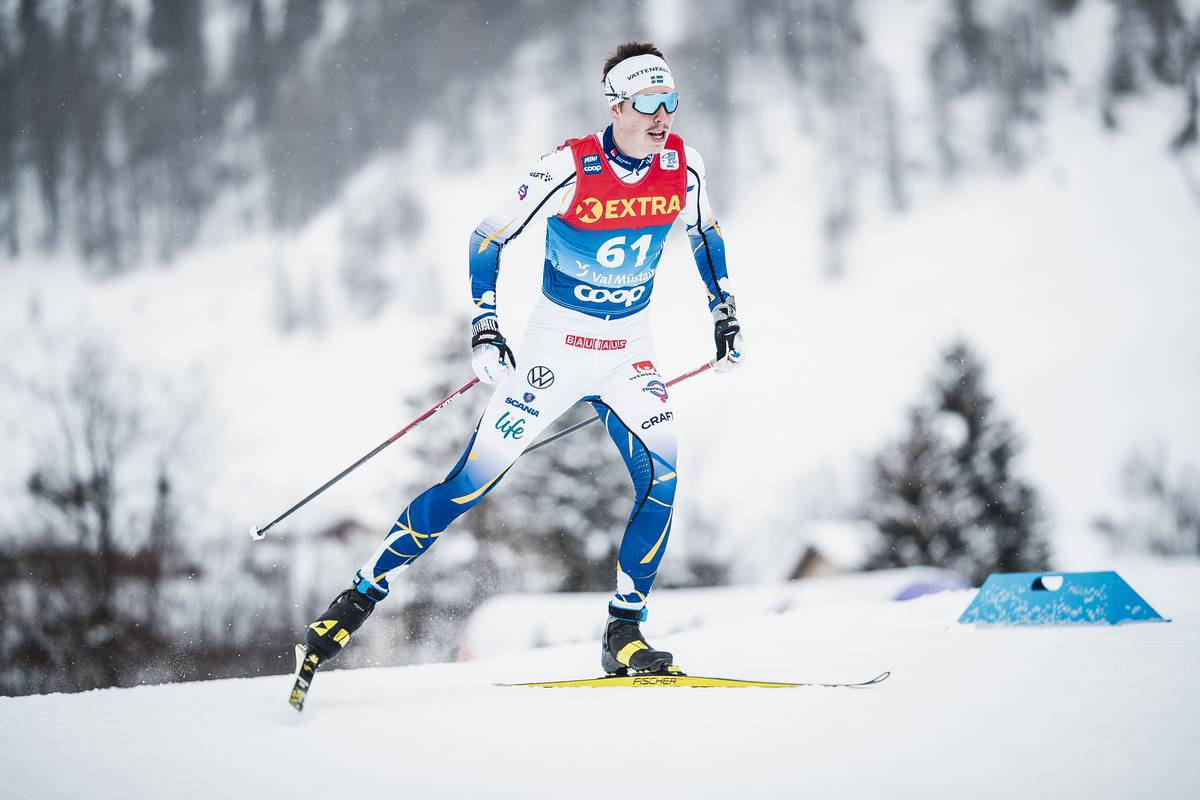
This story first appeared in www.fondoitalia.it and has been edited for English.
On an international level, cross-country ski fans outside of Sweden only got to know the name of William Poromaa during the women’s 10km classic technique in Seefeld World Championships. That February 26, 2019, he was talked about not for a sporting achievement but as Frida Karlsson’s boyfriend.
Karlsson, once she crossed the finish line, placed herself in the leader chair after having amazed the world, clocking the fastest intermediate times until the eventual winner, Therese Johaug, started twenty minutes after the young Swedish skier.
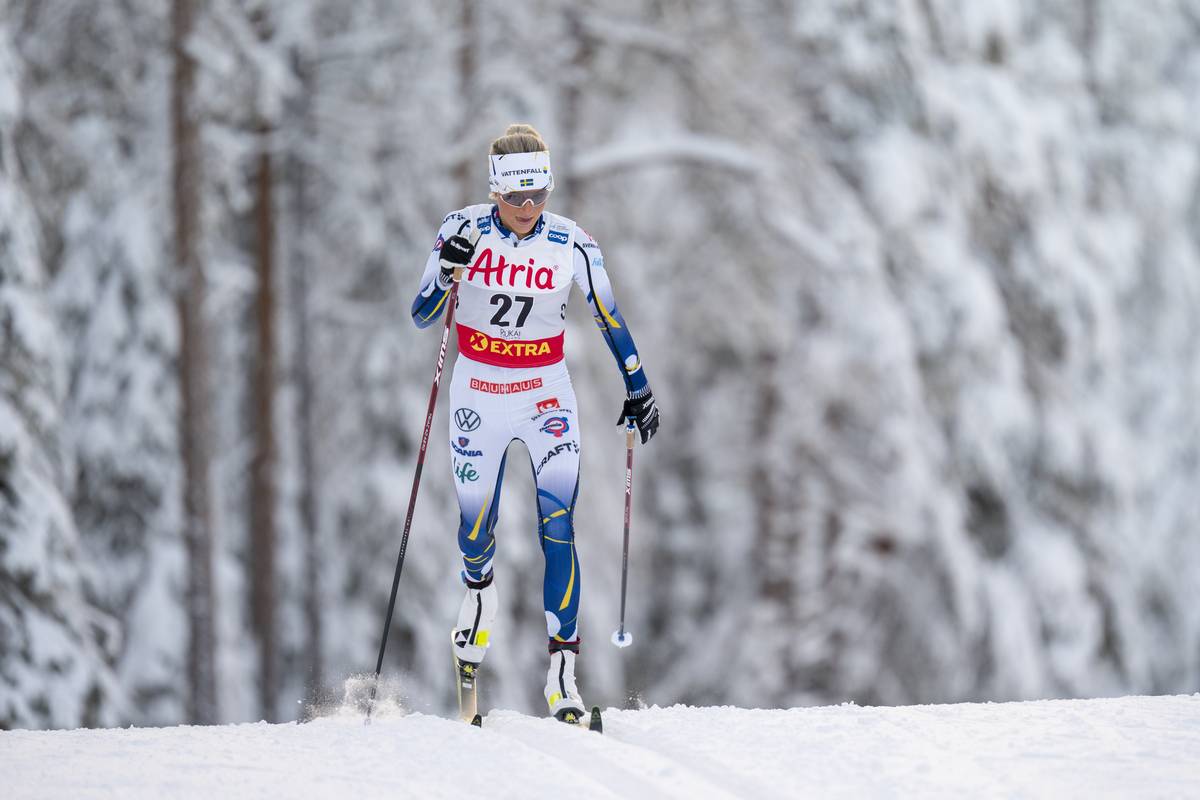
During that anxious lapse of time, Karlsson remained in contact via a video call with Poromaa who was communicating to her live results from their home in Sollefteå and sending her encouragement as the sensational silver medal became more and more realistic. Their video connection ended with the kisses sent by William before Karlsson had to go to the medal ceremony.
Soon enough, it was discovered that Poromaa, in his own right, was a potential Swedish star for the men’s team, not “only” Karlsson’s companion.
At that time Poromaa had won two gold medals at Swedish junior nationals and had already been selected for the first time for the Junior World Championships in Lahti. There, in the 30 k classic race he placed ninth place at the young age of eighteen.
But about the couple, who had become acquainted when they attended the renowned Sollefteå ski-gymnasium, all the chatter of the media and the public was always directed towards the new young star of the Swedish women’s national team, Karlsson. The buzz, when it came to the couple, revolved around Karlsson and her palmers. That began to change this November when Poromaa placed second and first, respectively in the Swedish national opening races in Bruksvallarna. In that fantastic weekend, cross-country skiing discovered that the mustachioed cross-country skier, not yet twenty, was much more than just Karlsson’s sidekick.
In the aftermath of those opening weekend races in which Poromaa left behind more successful and older teammates, some Swedish newspapers were already wondering if Poromaa was the boy who could rebalance the gap in popularity and successes that the Swedish men’s cross-country has ceded to a young and medal-haul worthy women’s team.
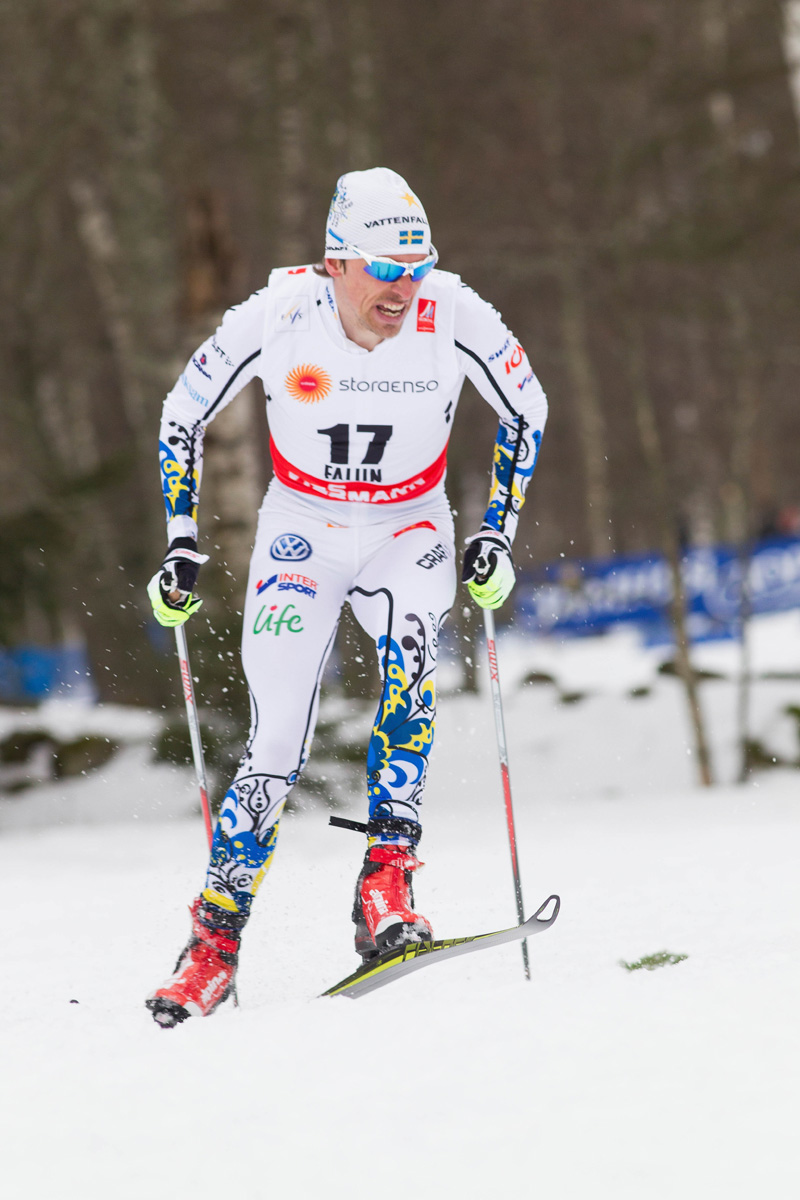
Historically Swedish cross-country skiing had relied on the men’s team to enrich Sweden’s medal count during the various Olympic or World Championships. During the last century, the Swedish men’s in cross-country has produced champions from Sixten Jernberg to Gunde Svan, through Sven-Åke Lundgren, and then from Thomas Wassberg to Torgny Mogren. After this long mythical era, Sweden continued to produce excellent cross-country skiers such as Per Elofsson, Mathias Fredriksson, Johan Olsson, and more recently, Marcus Hellner. Among the women, all the course of that storied period for men, only Toini Gustafsson and Marie-Helene Westin were able, in two different periods, to score individual success for Sweden. Yet, the dominance of males skiers in Sweden began to fade fifteen years ago when Charlotte Kalla entered the international limelight. Following Kalla were Stina Nilsson, Ebba Andersson, Karlsson, and sprint sensation Linn Svahn.
The hope of the Swedish people for a new male star appears to rest on Poromaa’s shoulders. The Poromaa name is, however, not new to the Swedish ski scene. The younger Poromaa’s father, Larry, placed fifth in the 1986 Holmenkollen 50km – a career-best for the father. Once he retired from competition, he was twice in charge of the Swedish waxing team, an activity interspersed with his transfer to the U.S. wax tech team before signing on with Estonian skier Kristina Smigun.
Poromaa’s mother Anette Fanqvist won a bronze medal at the 1995 Thunder Bay World Championships with the Swedish relay team.
In 2016, after focusing on both hockey and skiing, Poromaa enrolled at the Sollefteå ki-gymnasium to focus solely on skiing.
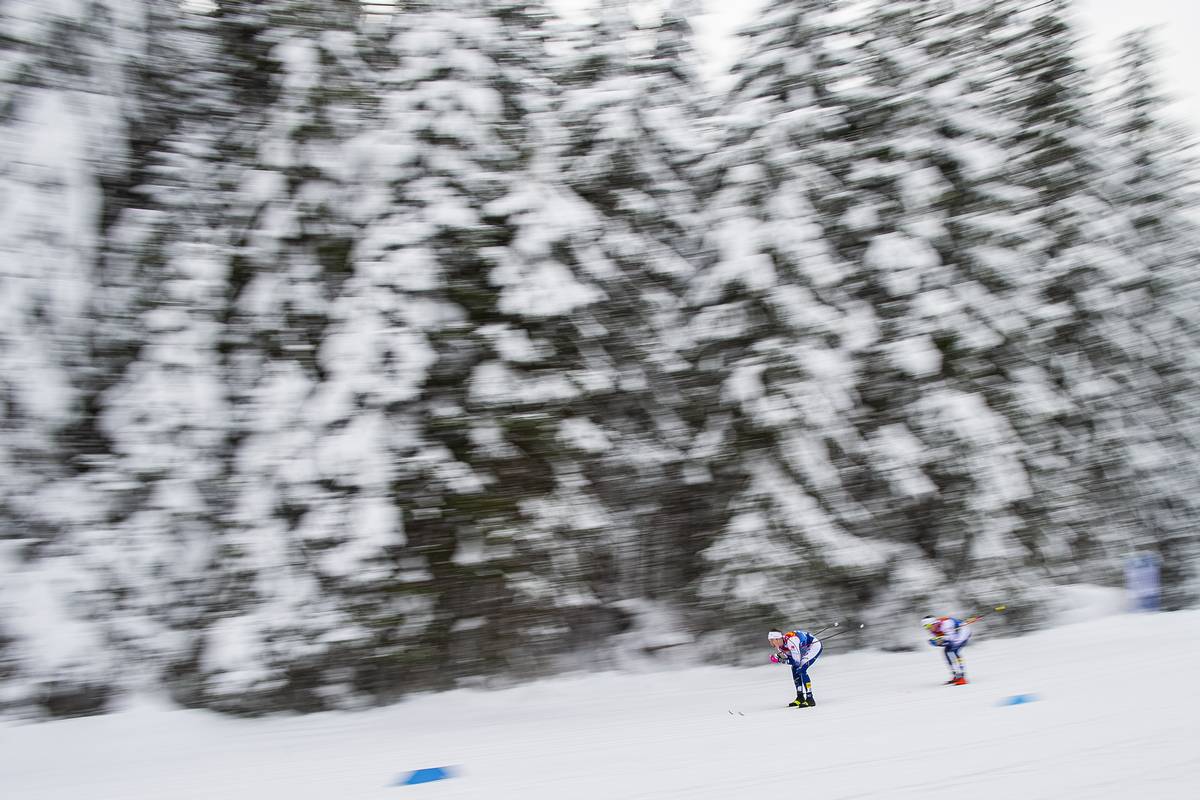
The following year he won his first junior national title in Kalix in the 10 k classic. He followed that with a few more national junior titles, and in 2018 he obtained the national selection for the Junior World Championships in Lahti, finishing ninth in the 30km classic style competition. Poromaa placed ninth again the following year in the the Oberwiesenthal, Germany Junior Worlds in the same distance, this time in skate.
After concluding his junior career this past March, Poromaa joined the Bauhaus Team (Swedish XC B team) where he began to collaborate with coach Lars Ljung.
The 34-years-old Ljung explains what Poromaa began to work on early this summer.
“My mission is to take him to a higher level with a constant commitment every day, every month, and in every training season, analyzing every session and every data to make him more motivated and involved every day. But given his young age, he is not the one who trains the most in our group, but he always trains hard and often close to the threshold. With him at least one day a week we do long sessions in which he can go up to 60-70km. During the summer preparation, our purpose with him was to improve his double poling in classic and increase his strength in the upper body, also focusing on his skiing technique. Wille is a rather tall guy and in the past his arm position during the push was too low and too close to the torso, thus limiting his thrust step after step. Our work focused mainly on his technique by widening and raising the range of his thrust to have more power to impress with the poles.”
With his win in Bruksvallarna’s 15 k skate, in which he kept behind his compatriots of A-Team at bay, Poromaa conquered the front pages of the Swedish newspapers as well as the call-up for the World Cup in Ruka-Finland. In Ruka, he missed out on qualifying for the sprint, but placed 15th in the 15 k classic, and 17th in the following day’s pursuit.
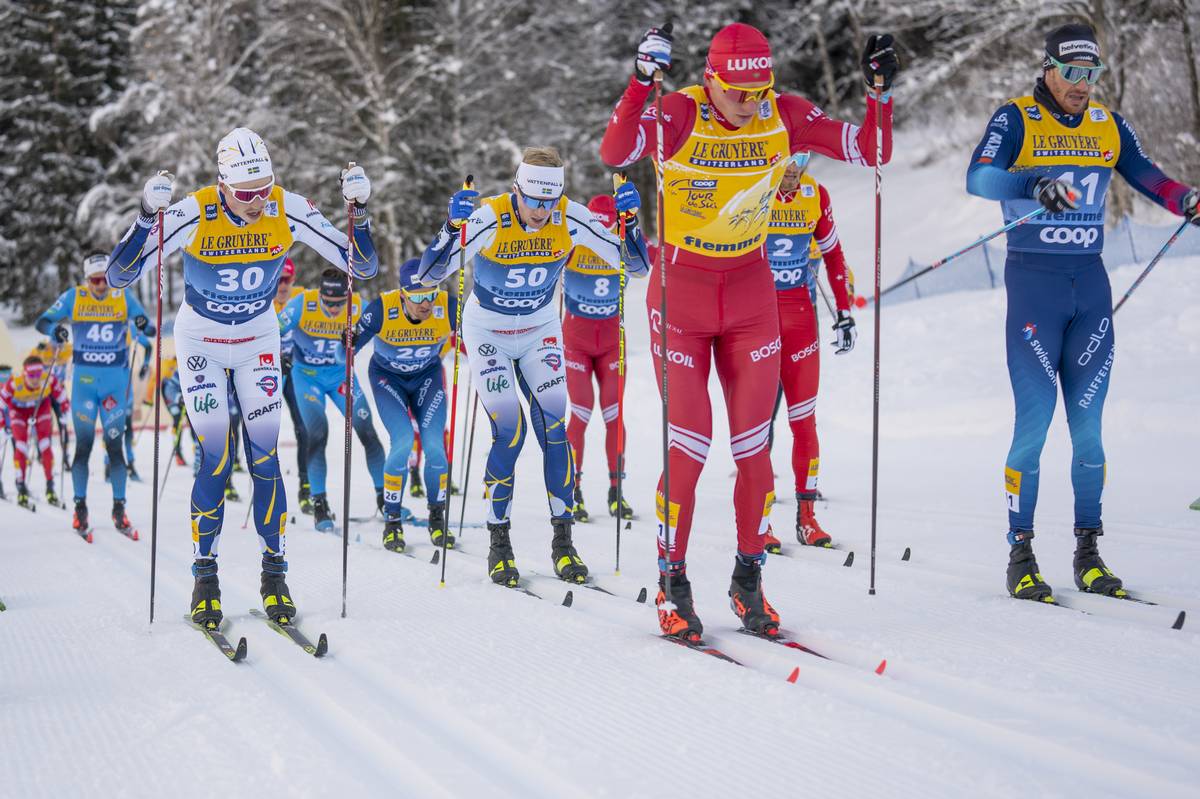
Poromaa turned 20 late this past December. His coach, Ljung describes his tactics and presence as mature. “Even his style in skiing is very mature, he keeps up well,” said Ljung. “Wille immediately starts at a good pace, which he maintains with remarkable consistency, but also manages to finish the distance races by further increasing his pace, this is synonymous with great intelligence in managing his race and understanding his feelings. He is not the fastest skier, but he has great endurance and a great engine. Outside of the races he is a normal guy and he is always calm, he has a good approach to competitions, cross-country skiing is important for William but it is not everything for him and this is good for managing things well.”
The Tour de Ski which finished this past weekend, saw Poromaa place 23rd overall after contesting eight stages. During the Tour, Sweden captured its first men’s World Cup win in five years when Oskar Svensson won the Stage 7 sprint. At 25-years-old, Svensson is no newcomer to the scene. He holds promise. And Poromaa, for his part, has answered the call for more Swedish men to challenge for the top-10 and World Cup podiums. Too early to call it a resurrection for the Swedish men? Perhaps. Yet Poromaa looks to play a part in balancing the equation when it comes to accolades for the Swedish women’s team.

In this episode, we speak with now-retired Swedish skier Ida Ingemarsdotter. The thirty-four-year-old Ingemarsdotter became the head coach for the Swedish national development team this fall. She’ll be leading a crew of U23 and U20 skiers as they hope to transition to the senior national team.
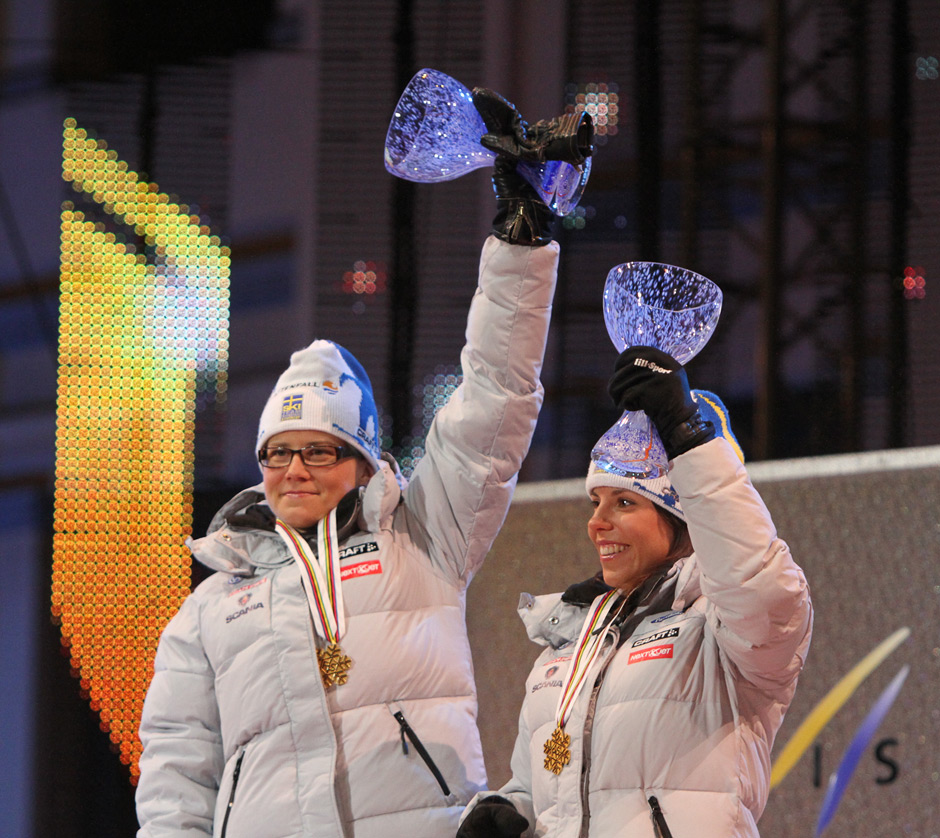
For many years, Imgemarsdotter was a Swedish World Cup staple. She’s a two-time medalist at the Olympics and a down to earth Swede, as we learn about her recent moose hunt in the podcast.
Her career was an arc of steady improvement which eventually saw several young Swedish skiers not simply emerge but burst onto the World Cup scene to challenge Norway’s dominance.


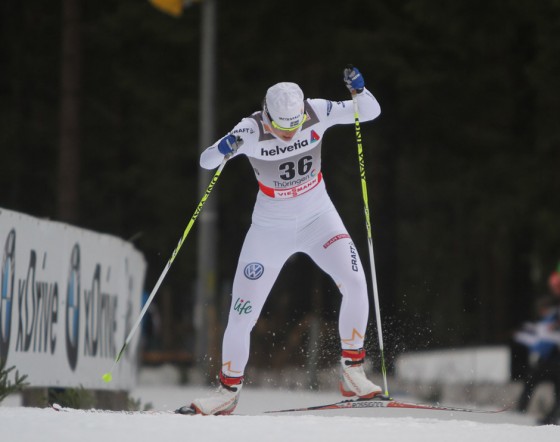
(To subscribe to the Nordic Nation podcast channel, download the iTunes app. If you have iTunes, subscribe to Nordic Nation here.)
https://www.instagram.com/p/BbpElh6gxkx/?taken-by=kalla_87
Note: This article has been updated to include comments from Sweden’s Charlotte Kalla.
For the second day in a row, Charlotte Kalla, a name synonymous with the yellow and blue of Sweden, stood atop the podium, placing first in the women’s 10-kilometer classic International Ski Federation (FIS) race on Saturday in Gällivare, Sweden. On Friday, Kalla won another individual-start race, the 5 k freestyle, by a margin of 8.8 seconds. She more than doubled that time gap by the finish of Day 2, winning the 10 k classic in 27:55 minutes, 17.7 seconds ahead of Russia’s Yulia Tchekaleva in second place. Natalia Nepryaeva, also from Russia, skied to third, 40.9 seconds back of Kalla.
“I am feeling good and I think I am where I should be at this moment,” Kalla wrote in an email. “I had a good feeling on the classic race and handle the condition well. On Friday I opened hard and tried to push hard all the way.”
Known as a skate powerhouse, Kalla has improved her classic skiing and is now a double threat. “I have improved my classic technique the last years,” Kalla explained. “When I am in shape it doesn’t matter if it is skating or classic. I am glad I managed to ski well in the condition we had. It was a little bit soft because of the snowfall.”
Although a home FIS event for Sweden, Russia secured six of the top-10 spots with Sweden settling for three. Japan’s Masako Ishida, the only non-Russian or Swede outlier in the top 10, placed fourth (+1:02.4). Russians Anna Zherebyateva raced to fifth (+1:08.8) while teammate Yulia Belorukova was sixth (+1:12.8).
Sweden took the next two spots with Stina Nilsson in seventh (+1:20.9) and Anna Haag in eighth (1:20.9). Russia rounded out the top 10 with Anatasia Sedova placing ninth (+1:24.1) and Mariya Guschina in tenth (+1:25.0).
Sweden’s Ida Ingemarsdotter, a World Cup regular, placed 11th (+1:30.6).
Kikkan Randall was the only U.S. Ski Team member at the race, and a day after finishing eighth in the 5 k skate, she finished 15th (+1:48.1) on Saturday. In an email, Randall explained that snow had fallen continuously for the last 24 hours in Gällivare.
“Conditions were pretty nice, the track was a little soft and a lot of racers here made the pole track a little punchy,” she wrote.
Considering the massive time-zone shift from her home in Anchorage, Alaska, to Central European Time, it appears Randall is adjusting well.
“I felt decent today, not too tired from the jet lag or yesterday’s race. I wanted two back-to-back races to get ready for next weekend’s triple World Cup opener,” she wrote, referring to the first three World Cup races in Kuusamo, Finland, starting Friday, Nov. 23.
Throughout Saturday’s 10 k, Randall steadily improved her overall placing: she was 32nd at 4.2 k, 23rd at 6.8 k and locked into 15th by 9.2 k.
“It was definitely good to race a 10km classic today,” Randall wrote. “I had trouble really digging into my race gear on the first lap today. I think I was skiing a little stiff and not carrying my momentum down the track. Nepryaeva [the third-place finisher] caught me going into the 2nd lap and that was the jumpstart I needed. I was able to match her pace for most of the rest of the race and it helped me find better technique and tempo.
“I wanted to be a little stronger today but I got some really important feedback on where I’m at and what I need to work on as the race season progresses,” she added. “My fitness feels pretty good and now it’s just a matter of fine-tuning.”
Emily Nishikawa was the only Canadian entered on Saturday and finished in 51st (+3:39.3). Sixty-nine women started the race, 38 from Sweden, 17 from Russia, seven from Japan, two from Switzerland and Estonia, and one each from the U.S., Canada, and Poland.
Yesterday’s 12th-placed skier, Russian Evgenia Shapovalova, who was recently handed down a lifetime Olympic ban by the International Olympic Committee (IOC), did not start the race.
Russia Sweeps
In Friday’s 10 k skate in Gällivare, only Swiss star Dario Cologna kept the Russians from sweeping the top nine by placing third. In that race, Evgeniy Belov and Sergey Ustiugov of the Russian national team finished first and second, respectively.
Saturday was a different race, a 15 k classic, but with a similar thread and no Cologna as a Russian foil.

It was Russia, Russia, Russia.
Alexander Bolshunov, winner of the 30 k skiathlon at 2017 U23 World Championships, won the race in 37:13, one second ahead of Maxim Vylegzhanin in second. Alexey Chervotkin was third (+5.1).
Classic specialist, Kazakhstan’s Alexey Poltoranin finished fourth, 13 seconds off the podium, and Cologna placed fifth (+22.1).
Despite being on Swedish soil, the rest of the top 10 became a mostly Russian affair. Russian teammates Alexey Vitsenko and Artem Maltsev placed sixth (+29.5) and seventh (+37.4), respectively, Sweden’s Calle Halfvarsson interrupted the trend by tying Russia’s Evgeniy Belov for eighth (+38.0), and Russia’s Alexander Bessmertnykh took 10th (+40.1).
There’s a pattern: Russia took 14 of the top-20 places. Twenty-eight of 126 starters were from Russia, with the vast majority of the field being Swedish. Outside of the top 10, Sweden’s Daniel Rickardsson was the next-best Swede in 12th (+49.6).
Devon Kershaw (World Cup Team), who finished 12th on Friday, once again led Canada in 20th (+1:06.7). At 6.8 k, Kershaw was ranked 15th, and at 9.6 k he was down one spot to 16th. By the 11.4 k checkpoint, he began slipping further in the standings.
“Today was a tough one,” Kershaw wrote in an email. “I felt pretty good but conditions were soft, so you had to really feather it (the technique) – especially on the climbs. Pacing wise I think I was doing pretty well, but in the last 2.5km today I was missing any semblance of a kick to the finish and ended up conceding a few seconds to those around me, knocking me from about 15-16 to 20th.”
Although an interval start race, Kershaw never found a strong pacing partner. “I was skiing alone – no help at all today,” Kershaw wrote of his solitary effort. “It would have been so helpful! Especially that last lap when things get tough. But in individual start races, you need to learn to do it alone. So good to try and get used to that “time trial” feeling.”
Three other Canadians competed, with Graeme Killick (World Cup Team) finishing 50th (+2:32.3), Jack Carlyle (Alberta World Cup Academy) 91st (+4:06.1), and Brian McKeever (Para Nordic Team) 110th (+5:16.0).
As of press time, Fasterskier could not confirm if the International Ski Federation (FIS) held an emergency meeting to discuss the involvement of IOC-banned Russian skiers in FIS-sanctioned races. Of the six IOC-sanctioned Russian skiers, four are men: Belov, Vylegzhanin, Alexander Legkov, and Alexey Petukhov. All four skiers raced on Friday, however, Legkov and Petukhov (and Shapovalova, one of the two women sanctioned by the IOC) did not contest Saturday’s race.
Racing continues in Gällivare on Sunday with classic sprints.
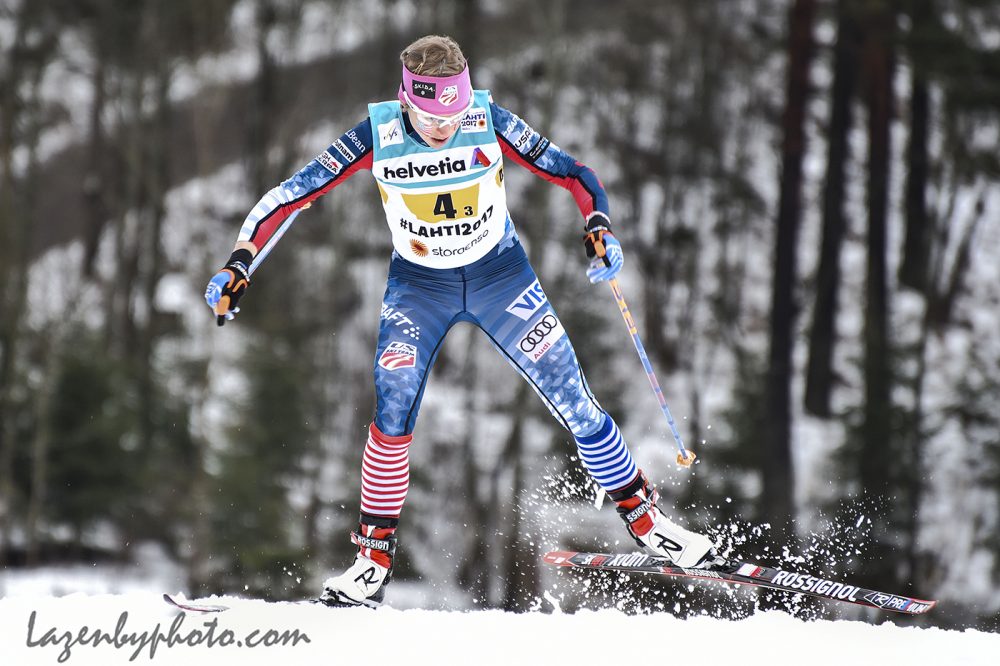

There is no faking a smile.
As a visual social-media feed, Instagram places a premium on how we’d like to be perceived by the viewing world. Instagram’s editing tools come with an assortment of beautifying filters.
But smiles? Fake smiles are filter-proof.
Although not a habitual Instagram poster, scroll through U.S. Ski Team (USST) athlete Liz Stephen’s account, @lizhillstephen — it’s hard not to notice her genuine grin and the smiles of those around her. Those smiles are for real.
https://www.instagram.com/p/BYPpoDABfxU/?hl=en&taken-by=lizhillstephen
There are other moments for Stephen when the disappointment is palpable. For instance, Stephen began the 30-kilometer freestyle at 2017 World Championships wearing bib 13. At 15 k, Stephen was less than a minute back from eventual winner, Norway’s Marit Bjørgen. By 25 k the gap to Bjørgen bumped to almost two minutes. Crossing the finish, Stephen was 3:09.4 minutes behind the Norwegian, good enough for 25th.
With her USST overcoat draped over her 5-foot-2 frame and it’s hood shrouding her face, it was clear there’d be no post-race comment. In her strongest technique, on a hill-climbing course in Lahti, Finland, the race and result were not what she’d hoped for.
Stephen is already a two-time Olympian (2010, 2014) and she’s gunning for a third in PyeongChang, South Korea. By the time those Games transpire, the up-tempo Park City, Utah, resident will be 31 years old.
Today at 30, Stephen still chases those smiles.
“Last year I just wanted to be a person,” Stephen said on the phone from Park City on Sept. 8. “Because that seemed to be what I needed to do in order to get happy. But it also kept me at altitude, at home in Park City. And it kind of kept me in the same stale spot for the whole summer.”
This dryland cycle, the Vermont native took note and modified her summer training plans — trying to maximize the benefits of training at altitude with low-elevation oxygen baths.
“This year I have been to Bend, I have been to Sweden, and I skipped New Zealand,” Stephen explained. “Kind of for those reasons, just because New Zealand is at altitude. I live at altitude, so I wanted all my camps to be as much as possible at sea level.”
Stephen spent time this summer training in relatively low Norway and Sweden. While in Sweden, accompanied by USST teammate Kikkan Randall, Stephen trained with the Swedish national women’s team. The Sweden camp proved a solid low-altitude respite.
“When I looked at the schedule, going to Sweden was a good fit,” Stephen said. “I’d always loved it there. I think I should probably have been a Swede. And I wanted to be inspired by them, which I was. I got my ass totally kicked in Sweden, in a good way, and in Norway. And, you know, I think it’s good to get your ass kicked sometimes, especially when it is mid-summer and you can come home and make some changes, which I have done. I came home [to Park City] and am psyched to be training, psyched to be a skier.”
When asked what those changes were, Stephen was clear and forthright in her response.
“We did kind of an interesting workout in Sweden that I actually just did this morning on the Erg,” Stephen said. “The idea is lactate production. That’s been something that I have struggled with over the last few years I think especially, and I think that this might be part physiological, just the type of athlete that I am, but also living at altitude has made me a little bit slower I guess in a lot of aspects. So in this workout, the idea is to produce as much lactate as possible. There is no pacing. You just go all out for 40 seconds on and 50 off. You do a bunch of rounds of this.
“I think for me, where I lose a lot in races is the ability to change speed,” she continued. “I can go forever, but races aren’t forever, they are only as long as they are. So you have to be able, especially with more mass-start races, you have to be able to stay with the pack and stay with the moves. And maybe sometimes make your own moves and that is where I think this workout could really benefit me.”

A few days after our interview, Stephen left Park City and flew back to her parents’ home in Vermont. There she planned to conduct an informal sea-level training camp with a schedule dense with hard interval training. Stephen returned to Park City at the end of September to take part in the USST training camp. And last Saturday, she ran the Red Bull 400 (a 400-meter near-vertical sprint to the top of a ski jump) in Park City for the third straight year, where she placed second behind Utah native Megan Foley.
https://www.instagram.com/p/BZrvX8_n216/?hl=en&taken-by=lizhillstephen
In early September, Stephen said she felt good. But she’s quick to reflect that a professional endurance athlete’s life offers many opportunities to dwell.
“Definitely there are ups and downs, there always are,” she said. “I guess I should put it this way, as athletes we think in the moment all the time. We are supposed to be the best we can be every session. We are supposed to be doing the best we can. We are 24-hour athletes. Everything is so in the moment that it is really hard. We also take the negative parts of that too. You have a bad workout and all of a sudden, even if the day before was great, you live in the moment of the bad workout. So I think that’s always a challenge. I think for me, recognizing that is what is happening, and that the workout that you just completed that was really bad really doesn’t mean you are in terrible shape or that you are not a great athlete, it’s just where you’re at that day. I think there are always going to be ups and downs, and the trajectory of this year has been more positive than a couple years ago.”
Stephen said she remains undecided if she’ll continue her ski career after the 2017/2018 season. Her focus remains laser-like: be the best she can be mid-February in PyeongChang.
The 2018 Olympic cross-country race schedule offers several opportunities for Stephen. There’s the 10 k freestyle, the 15 k skiathlon and the 30 k classic mass start.
But five klicks remains the magic distance.
Stephen cannot deny that a potential skate leg start on the 4 x 5 k women’s relay team and helping her team win a medal remains a steadfast goal. With a plan in mind and quality training hours ticked off, does she internally think “5 k skate”?
“Yeah. Absolutely I do,” she said. “And I have said this to my psychologist a few times and others. That I, of course, for me, I am focused on that race in particular and I have been for years.”

With a strong USST women’s team and several domestic skiers striving to break through internationally, the USST coaches responsible for determining the relay squad may have a tough task culling the team down to four. A few years back, Stephen understood her inclusion on a 4 x 5 k relay team was almost automatic. Now her focus on that race is qualified.
“We have changed a little bit,” she said. “Specifically the psychological plan, just focused on that 5 k effort and that day and that race. But, but I also want it to be very clear that I want the team to medal. Not for myself. Even if I wasn’t on the team that day, that’s what I love about the relays — it’s not about one person. It’s about four. And whether I am one of those four people who have the best chance of winning that medal or skiing the fastest, I am not focused on that. I am focused on being the best I can be that day and hopefully that is good enough to be on that team.
“It is really kind of like a practice for your brain, I think, to decide what is most important to you and what you are going to go for,” she added. “And I think that it’s scary to put it out there. Yeah, I want to be on that team, but you know what? A lot of people that want to be on that team, and there are a lot of people that could be on that team. So yeah, I think it’s fun to have pressure like that and to have a goal, but it is certainly not something that I am banking on. Things can change in a heartbeat.”
Those types of changes are random — a stumble on a trail run, an errant pole plant while rollerskiing, a tumble on an icy World Cup course. This season Stephen decided to make a calculated change and switch to Madshus, a Norwegian-based company, for her skis.
“You know it’s a been a little bit tough this summer because I did have to leave Rossignol who I have been with for 15 years and they have been very good to me,” she said. “I am loyal. I am a loyal person. I felt like I needed to make a decision to change because I felt like after doing some testing, I felt like I needed to try a new ski.”
As the primary interface between skier and snow, nordic skiers can be obsessed with ski choice. On the World Cup, it’s not unheard of for skiers to travel with 40 pairs of skis. Just the sheer number of skis an athlete carries during the season begs the question of how Stephen will build a new ski quiver.
She won’t be starting from scratch.
“Ida Sargent on the U.S. Team has Madshus as well and we are similar sizes,” Stephen said. “We almost never do the same races. So the idea of having somebody to share skis with at times, both she taking mine and me taking hers if they are better on those days, takes the edge off of needing your own perfect fleet going into a very important year on very different skis than you are used to.”
To jumpstart her understanding of the new ski fleet, Stephen is planning a November pre-World Cup training trip with Sargent to La Forêt Montmorency in Quebec.
Heading into the season, much remains the same for Stephen. She’ll still charge headlong up the World Cup’s stout gradients. She’ll still smile for real. But along the journey, she’ll embrace the prospect of taking big performance risks where the outcome remains uncertain.

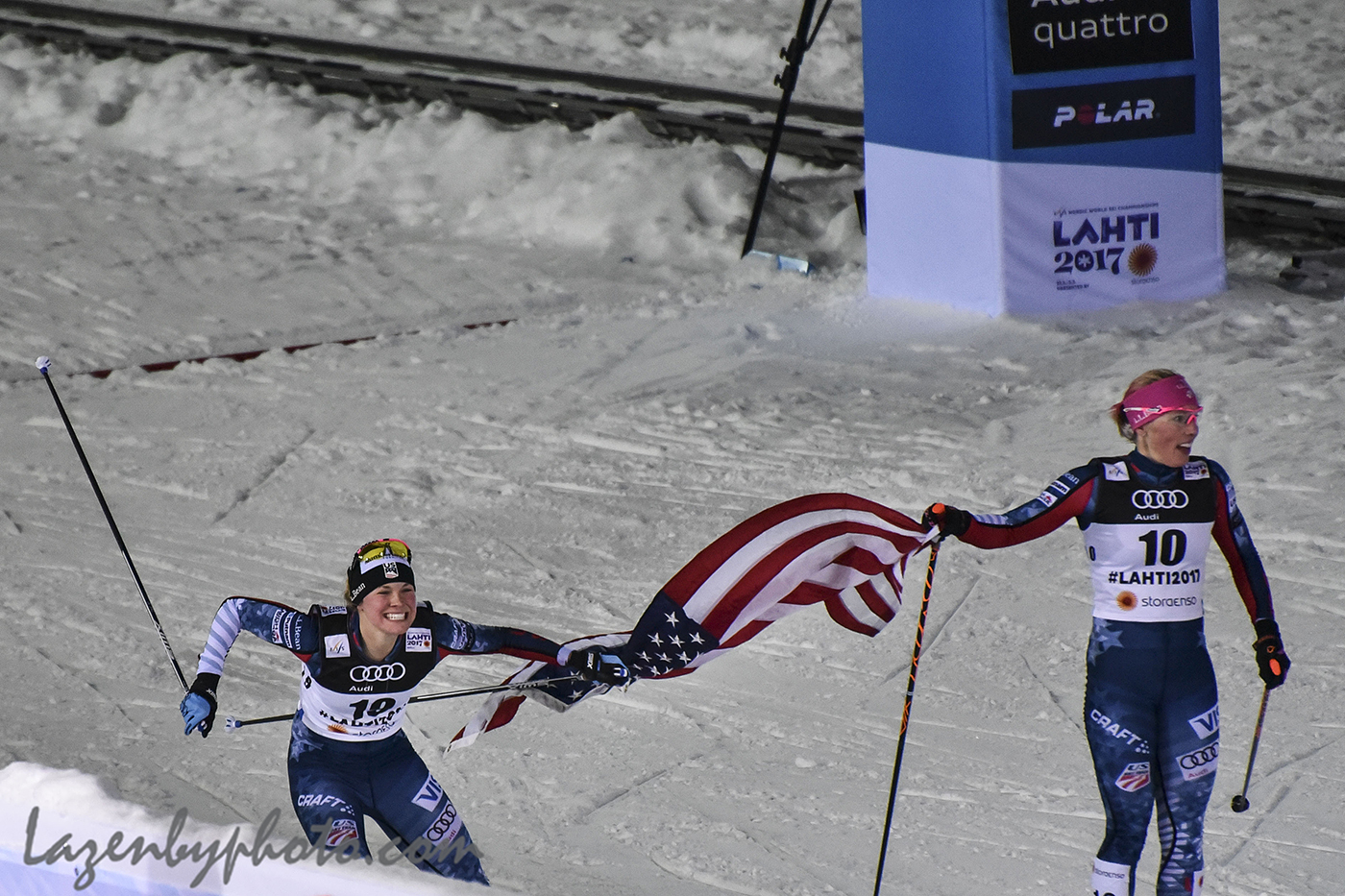
ANCHORAGE, Alaska — Kikkan Randall is approaching a season full of lasts: her final season as a full-time athlete, her final season on the World Cup, and, she hopes, her fifth and final Olympics. Her main focus these days is resolutely on the future, but she took some time earlier this month to speak with FasterSkier about her summer training and what comes next.
Summer training
Randall’s final summer of training was anchored by the same thing as most of the 17 summers before it: multiple weeklong training camps on Eagle Glacier, the Alaska Pacific University (APU) facility in the Chugach Mountains above Girdwood, Alaska. But this summer saw Randall take only two trips to the glacier, instead of the three camps attended by most of the APU team.
In place of a third glacier camp, Randall traded a short helicopter ride for a long plane flight and traveled to Sweden for a 12-day training camp with the Swedish national team. It was Randall, fellow U.S. Ski Team (USST) member Liz Stephen, and 10 women from the Swedish team, Randall explained in a phone interview.
https://www.instagram.com/p/BXk2D1rj0W2/
Randall began her trip with three days in Östersund, Sweden, with Anna Haag and Stephen, who was coming from the Blink rollerski festival in Gjesdal and Sandnes, Norway. Then came three days in Åre with the full Swedish national team, as well as USST Women’s Coach Matt Whitcomb. The remaining days of camp were spent with the full Swedish team near Vålådalen. The whole thing made for a “really sweet” 12-day training block, Randall recalled.
American skiers were hardly receiving invitations to train with Scandinavian national teams at the start of Randall’s career, but such exchange programs are now relatively commonplace. This was not Randall or Stephen’s first such trip to Sweden, and Jessie Diggins joined the Norwegian national team for a camp last summer.
“I think it’s also a strong testament to our nation, and our program as a good partner to Norway as well,” Whitcomb previously said about the invitation, as well as speaking highly of both Diggins and the Norwegians.
“We’re all training at a high level now,” Randall says when asked whether she sees similarities or differences between American and Swedish training. “We’re all doing very similar types of training, loads of training.”
But even if the training quality and quantity are comparable, the logistics are different, reflecting the simple fact that the U.S. is more than 20 times larger than Sweden, with top-level skiers spread out across five time zones and thousands of miles.
“The real difference for me and what stands out is just the lifestyle of it,” Randall reflects, “and how the Scandinavians never have to travel more than three or four hours away from home. They get together for camps once every three weeks. They’re in camp but they’re these shorter camps and then they go home. Whereas for us, we have the geographical challenges of so much more travel, that when we get together, we have to get together for longer to make it worthwhile, but that of course changes the exact kind of training we can do within a camp, so that part’s varied a little bit.”
The difference isn’t just academic, but rather bears on the type of training that can be done in a group environment. “This camp we went to was an aggressive training schedule,” Randall notes, “and I don’t think it would be smart to necessarily take that schedule and bring it back to the U.S. and replicate it because just the way we live is a little different.”
https://www.instagram.com/p/BXay55rD8oi/
Randall found a valuable training stimulus from the camp, and appreciated the chance to “rub elbows with those guys, be like, OK, I may train a little differently, but I’m on track, versus having to wait seven months between race seasons and not knowing where the heck you are.”
But even more than the reality check on training and fitness, she says that it helps to have local friends in Europe when the Americans are on the road and living out of a suitcase for four months at a stretch.
“I think the biggest benefit” of this offseason training exchange “is that we get to know them as people,” Randall notes. “When we’re on the World Cup, then all of a sudden we have these friends on other teams. If we do need a weekend off and want to go to a home, we can go home with them and get a little break or we see them and we go out for jogs together. It’s pretty cool because I’ve developed lifelong friends now and I look forward to continuing to visit beyond just these training years. I think that shared experience is what really makes it special to me.”
The final World Cup season and the Olympics
It’s tough for any American skier to spend that long away from home. But Randall, with husband Jeff Ellis and support from family members on both sides, is upping the logistical ante by bringing along a toddler. The couple’s son, Breck Stuart Randall Ellis, turns 18 months old next month, and will be spending his second winter on the World Cup circuit.
“Our plan is to pack up early November and head over as a family,” Randall says of their approach for the 2017/2018 season. “We’ve got most of the winter figured out. We’ve got a few more apartment-style accommodations lined up this year. We know with a busy year-and-a-half-year-old, it’s going to be a little harder to contain him in a hotel room. We’re trying to set up the best kind of situation for our family.”
https://www.instagram.com/p/BMy2IR8A_q3/
Randall and Ellis have most of the winter already dialed in, but there’s still one large hole left in their schedule: PyeongChang. “The challenge we’re really wrestling with right now is with what to do about the Olympics,” Randall notes.
Randall is certain that she wants to have her child with her in South Korea if at all possible. “Ideally I’d have Breck at the Olympics,” she says.
Looking back to the 2017 World Championships, Randall says, “I think that was a really positive force having him with me at Lahti, but it’s looking to be exorbitantly expensive to be able to have him in South Korea nearby. We’re looking for accommodations, figuring out can we possibly afford this, and if not, what are some other options? We don’t have a clear answer on that one yet. Outside of that we’re looking forward to a totally fun winter altogether.”
It’s no secret to any parent that traveling with kids is tough. Alaska parents arguably learn this as well as anyone, just because it’s so darn far to travel anywhere from The Last Frontier. (Figure three hours’ flying time from Anchorage to Seattle alone, in the shortest flight that most Alaska kids ever take. And forget driving; that’s a 2,400-mile roadtrip.) It’s tempting to think that a four- or five-time Olympian would have an easier time of things, but Randall recounts challenges and choices that are relatable to any parent.
“It’s an interesting dilemma,” Randall analyzes, “just thinking about it from all sides, because on one hand, it was my choice to have a baby and with that comes different logistical challenges than when you don’t have children. At the same time, I am a strong contributing member of this team, I hope I can contribute to some Olympic medals, and for me to perform at my best, like I said, it was always a really positive influence to have Breck around while I was competing at the World Championships. It would be awesome if I could be able to have him there with me so that I could be in the right state of mind and perform really well. It’s, ‘Do I need to shoulder all the cost myself or can I get some support from the [United States Olympic Committee] or from the U.S. Ski Team?’ At this point it’s going to be fairly challenging to make it happen on our own.”
Complicating matters for anyone who hopes to stay outside of official athlete housing, as of this spring the PyeongChang area was reportedly facing a severe shortage of Olympic accommodations. These problems had not been alleviated as of earlier this month.
Skiing and parenting
Randall speaks candidly about the tradeoffs of doing her job effectively versus being available to her child, a balancing act instantly familiar to any parent. Breck was not with her in Sweden for last month’s 12-day training camp; Randall and Ellis “felt like that wasn’t a super-long stint,” and Breck was able to stay with Ellis and grandparents in Canada while Randall focused on training in Sweden. Randall was also solo at spring camp in Bend (also 12 days), and at each of the two Eagle Glacier camps (6–7 days each).
https://www.instagram.com/p/BY4X5ePHdm9/
“It has actually been a pretty challenging summer,” Randall notes. “I’ve had to be away from him a lot more than I had to be last year. I think I’m willing to do this now because I know it’s my last season. I can’t imagine doing it really any longer.”
She continues, “I’m glad he’ll be with me most of the winter and in Park City [at a USST training camp next month], because it’s getting tougher and tougher to be away, even though it’s nice for training and recovery and sleep and rest. I definitely miss him.”
If athletic training is, generally, a balancing act, then training while parenting is a balancing act while riding a unicycle backwards and juggling flaming knives. If those knives could at any moment start having a meltdown because they couldn’t find their preferred socks or a favorite toy. (Good thing Randall knows how to ride a unicycle.) Choosing between having your child be with you or with a supportive spouse is one such tradeoff. Choosing between more effective recovery and more effective parenting is another such tradeoff, one that Randall has to negotiate at least twice a day as a parent and an athlete.
“The hardest part for me,” Randall analyzes, “is when I’m tired and I come home [from training] and I know that the most productive thing for me is to recover, take a nap, get some time off my feet, to make the next workout effective and do my job, in a sense. But I also have this little boy who wants my attention and I love spending time with him, and it’s been a challenge this summer to navigate that and find a happy medium. I think some days I end up being more of a mom and some days I can, with the support of my husband and my parents, I can be a focused athlete.”
Randall and Ellis have made it work for a year, but Randall doesn’t want to have to make those choices much longer. “Like I said, I can wrap my mind around doing this one more year to make a final push at this Olympics, but that’s why I can’t think about doing it any longer, because I want to be able to not have that dilemma anymore.”
https://www.instagram.com/p/BHGIHlggsXM/
(Randall perceptively acknowledges that this dilemma never really goes away: “I know that while I look forward to not having the restrictions of a ski racer’s life for my family next year, I know that there’ll be, getting back to a more normal life of a job and wanting to fit in training and family and how all that’s going to work. I think it’s an issue a lot of parents face.”)
After PyeongChang
Randall remains committed to her goals for this season, and is working hard to achieve them. But she has also begun to think about what happens next.
So what to do following a nearly two-decade career as a professional athlete? Get involved in athlete representation, of course.
Randall is one of six athletes currently running for two open spots on the International Olympic Committee (IOC) Athletes’ Commission, a representative body established in 1981 for the purpose of representing athletes and their concerns within the IOC context. The commission’s mission is “to ensure that the athletes’ viewpoint remains at the heart of the Olympic Movement decisions,” says its website.
Elections will be held in February 2018 during the Olympics.
Randall has spent many years as a cross-country representative to the FIS Athletes’ Commission, which plays a comparable role relative to the International Ski Federation (FIS), but has not previously served on the IOC commission.
“Why do you want to do this?” Randall is asked.
“That’s a good question,” she replies. “Because it is an eight-year commitment. … I definitely asked myself if I want to go from being committed to a ski racer’s life, finally be retired from competition, and then go right into another eight-year commitment, but I really have enjoyed the athlete representation work I’ve done over the last eight years. I think to take that experience and expand it to the IOC level would just be really interesting.”
Randall has a politician’s poise as she explains why she wants to continue her involvement with the Olympics: “I think now is a great time to get involved and help strengthen the Olympic movement, get it back to a point where it’s being a good force in the world, because I want to see the Olympics still be important for my children, still be important for your children,” she tells a FasterSkier reporter who is also a parent. “I don’t want to see the Olympics go away. I’m hoping I can blend my experience having been an athlete at four Olympics, hopefully number five coming up, and then also having worked on the other side, representing the athletes, being in the business side of the sport, and I just think it would be a really cool way to stay involved.”
But she also seems authentically committed when she talks about the potential of the Olympics as a force for good.
“Bringing the world together every two years for an Olympic Games just creates so much goodwill amongst our global community and it inspires everybody to really find the best in themselves in a fair and clean way, which I think is really good for humanity.”
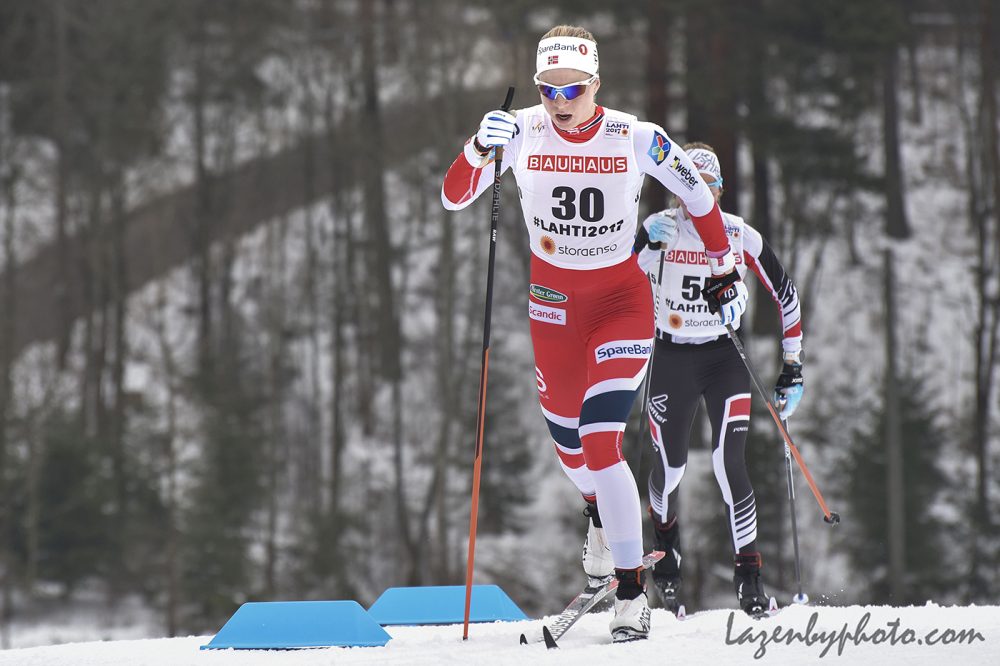
As noted, there are six Winter Olympics athletes in the running for two open spots on the Athletes’ Commission. The other five candidates are Spanish skeleton racer Ander Mirambell, Finnish hockey player Emma Terho, Chinese long-track speedskater Zhang Hong, Italian luger Armin (“Il Cannibale”) Zöggeler, and Norwegian cross-country skier Astrid Uhrenholdt Jacobsen.
Randall does not reject a suggestion that the presence of both her and Jacobsen could to some extent split the “Nordic vote.”
“By having two cross-country skiers in the mix, it does have the potential to dilute the vote,” she notes. But she continues, “I think you can also look at it as we now have two ponies in the race. Both of us in the election and there’s probably a better chance that a cross-country athlete will make it to the IOC Commission. That’s good odds.”
Randall is quick to call Jacobsen, with whom she has previously trained on Eagle Glacier as an invited guest of the North American Women’s Training Alliance, an “accomplished person,” who “put a lot of thought into taking on this role.” But she diplomatically notes that Jacobsen “is coming from one side of getting involved in the athlete representation side, at least in an international way, for the first time. I’m coming from the side where I’ve been involved. It’ll just be interesting where people land on who they want to put forward.”
What comes next: Retirement and Canada
First things first, Randall officially plans to retire after this season. “I haven’t done an official press release,” she notes, “but I’ve definitely talked about it to plenty of people. Most people know that’s my plan.”
That leaves Randall and her family (Ellis has spent the past five years working as marketing support manager for the World Cup, but would presumably no longer want to spend all winter in Europe without his wife and son) needing jobs, and a place to do them.
What she’ll be doing next year is “also a very good question,” Randall says. “We’ve been talking about that as a family for a while.”
Randall notes that Ellis “has been very supportive,” pointing out that he moved to Alaska 10 years ago for her sake and has supported her once he retired from his own ski career. “We’ve always talked about once I retire from skiing to be open to chasing some career opportunities for him,” Randall notes. “He’s Canadian; maybe that meant moving to Canada and experiencing that for a while.”
The couple were exploring their options this spring when “an opportunity fell into our lap”: Ellis was invited to apply for a job with Swagman, a bike rack company based in Penctiton, British Columbia, about a four-hour drive east of Vancouver.
“It was total long shot because they were looking to fill the position in April of this year,” Randall notes. But Ellis applied anyway, “just to see what would happen.” He got the job. They were willing to hold it open for him for roughly a year, till April 2018, if he would be willing to move there. Penctiton it is for the Randall–Ellis family.
(Ellis was born in Orangeville, Ontario, and is a Canadian citizen. As the child of an American and a Canadian, Breck has dual citizenship. Randall is working on the immigration paperwork to gain legal residency in Canada as the spouse of a Canadian national.)
While Ellis works for Swagman, as well as parenting, Randall will be pursuing at least two other projects, as well as parenting.
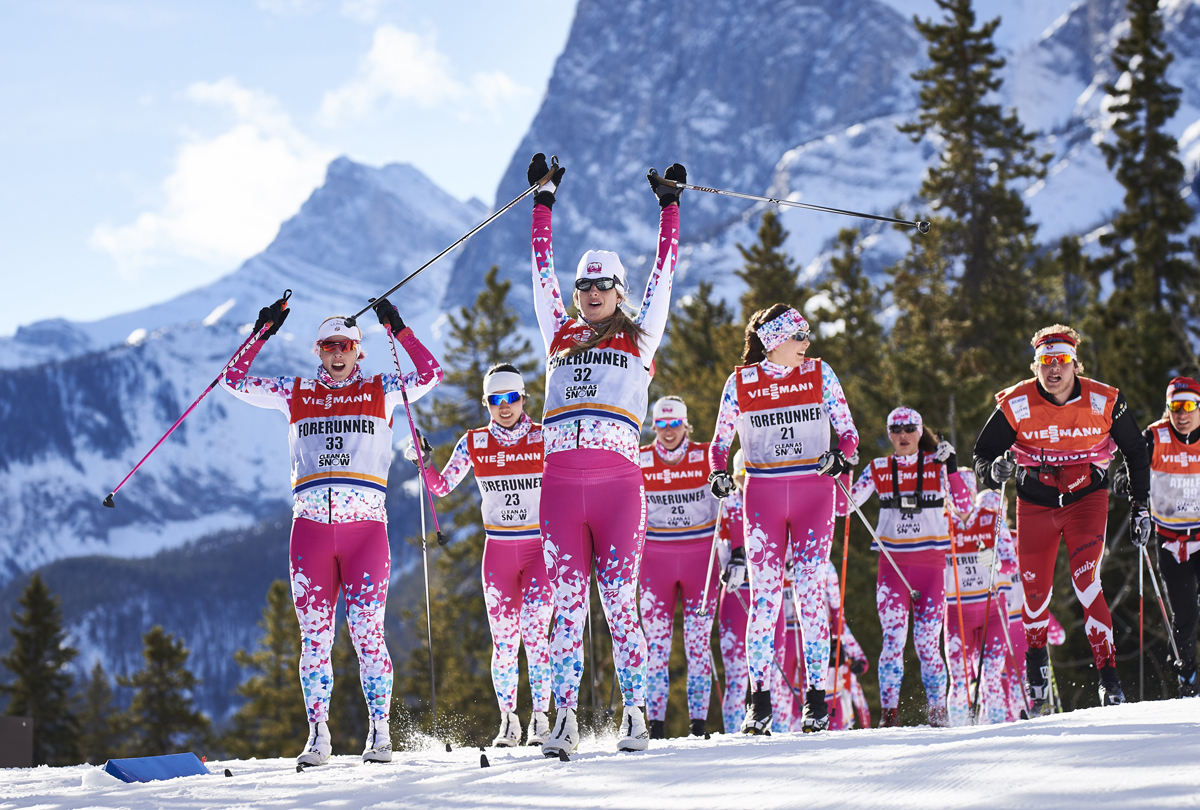
For one, she wants to be able to devote more attention to Fast and Female, a nonprofit sports advocacy group that, its website explains, aims at “keeping girls healthy, happy and active in sports through their teens by introducing them to inspiring athlete role models.” (You may have seen one of their Champ Chats in a ski community near you, particularly if you are the parent of a preteen or young teenager girl.) Randall is the U.S. leader of an international organization that was founded by Canadian skier Chandra Crawford in 2005.
“We’ve kept the U.S. side in a maintenance mode for the last few years,” Randall notes of Fast and Female, “since my time’s been limited, but since now that I can work on it more full time, I look forward to helping grow the U.S. organization maybe to the level that they’ve been operating in Canada. That’s a project on the horizon, depending on how this IOC athletes’ election goes. Should I get that position, that’s going to be a commitment. I want to be able to be flexible around that.”
And for another, she plans to finally get that degree. Randall graduated summa cum laude from East Anchorage High School in 2001 [around the time of the below throwback photo], then has been working on her undergraduate degree in business from Alaska Pacific University (the school, not the ski team) ever since.
https://www.instagram.com/p/BDtGVFmDSqk/
Randall has three classes left at this point. She plans to combine that with a flexible MBA program that recognizes the value of work experience, and to graduate from APU, with both a bachelor’s and a master’s degree in hand, by 2019.
Randall will attend the APU classes through a mix of online learning and intensive class blocks held in Anchorage. She looks forward to staying involved with the Anchorage and APU ski communities, and hopes that the MBA program “kind of creates a blend, allows me to move on to our next step … but also keeps me connected” with Anchorage as she goes through this period of transition.
Looking back and looking ahead (mostly just ahead)
But Randall has a lot of things to get through first in the next six months: her last Park City camp, her last World Cup season opener, (presumably) her last Olympics, her last World Cup race, and so on.
She’s spending much more energy these days training hard than stopping and reflecting, though the significance of some of these “lasts” isn’t lost on her. “I’ve got big goals I’m working towards this year,” she says. “I have my head down a lot of the time working toward that. Though when I was leaving the glacier, knowing it was the last camp, it hit me a little bit.”
But then she adds, “I really do want to take this year in, enjoy it, of course, leave everything I have on the table. I think I have a good perspective now. I got a little practice run the year I was pregnant because I stepped away from the racing season and I got to really appreciate what I love about racing and about training and about my team. This last two years, I think it’s given me the perspective to slow down a little bit and enjoy it because it will be over before we know it.”
Bottom line, Randall says, “Everything I love to do I get to do one more time, and everything that has been hard and maybe I don’t love doing, I only have to do it one more time.”
Randall made this final comment while driving back from the day’s first workout on a blustery and raw Tuesday in September. She made no mention of the weather, but it was a day when the first big fall storm of the season was rolling out of the Gulf of Alaska; a cold rain fell all day, temperatures stayed in the 40s, and the local paper warned of winds gusting to 45 miles per hour, nearly twice that in the mountains. Going back to her freshman year of high school, Randall has trained through the last 21 Alaska autumns.

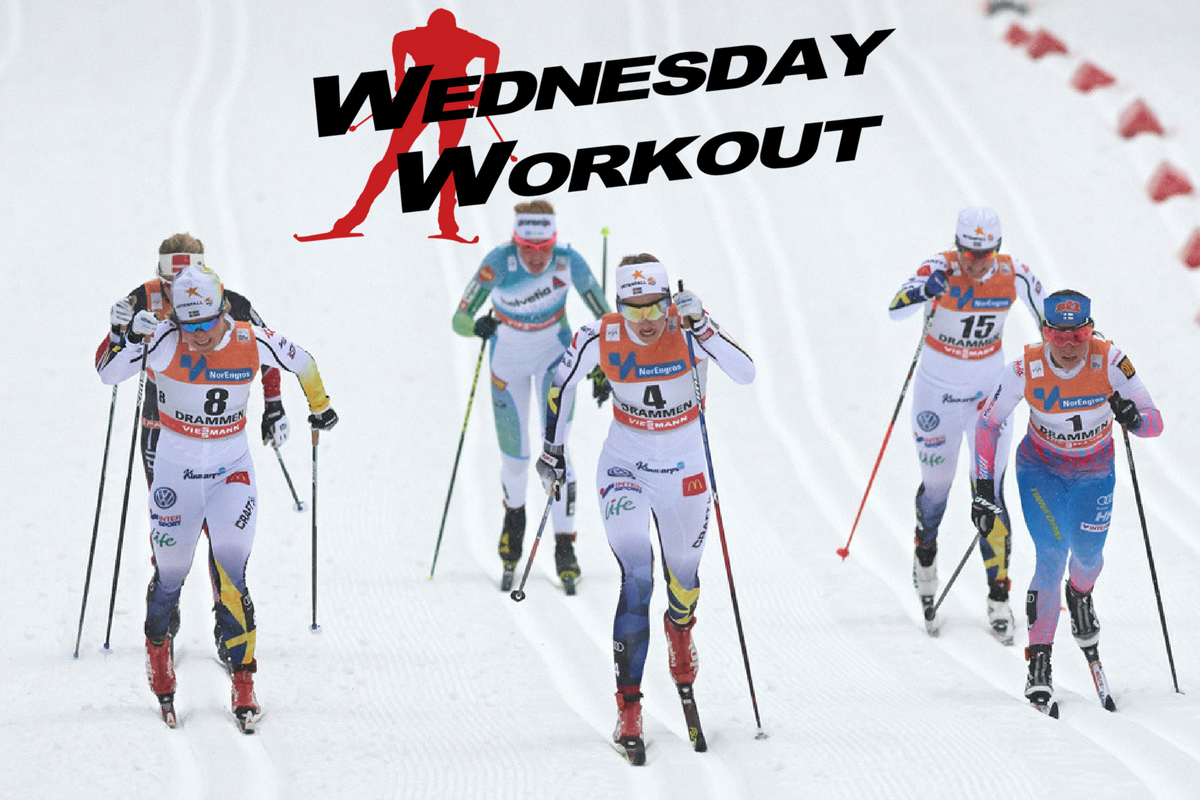
“I have a workout that I like and usually do in the autumn when it’s time to shape up.”
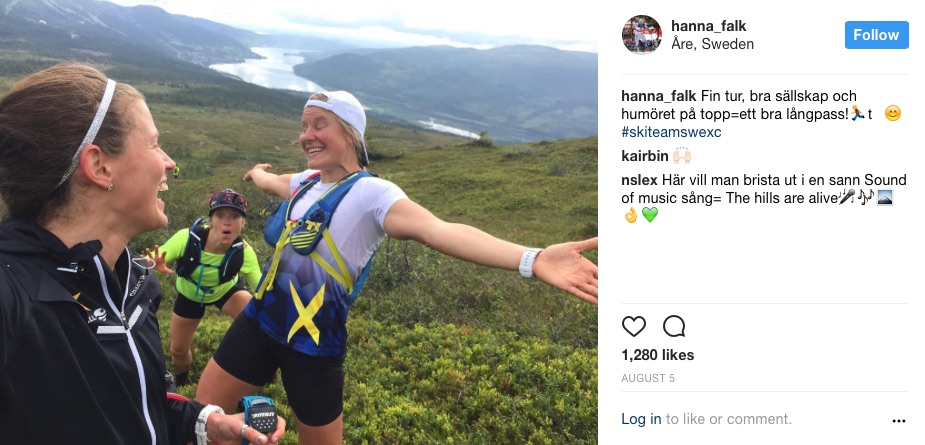
Those are the words of Swedish national-team member Hanna Falk. To take Falk’s words literally, it is that time of year: in the Northern Hemisphere, it’s officially autumn and “time to shape up”. In two months, the 2017/2018 World Cup will open with classic sprints on Nov. 26 in Kuusamo, Finland.
For the figurative aspect of Falk’s comment, if you’ve been eschewing hard workouts and log six days a week of perfunctory OD, yes, “it’s time to shape up”. For World Cuppers, potential 2018 Olympians and those giving a Heisman to Father Time, it’s the season to think about priming for those moments when latching on to those skiers pushing the sharp-end pace is paramount.
In group sprints or distance events, no one likes to be yo-yoed off the back of the pack.
Last season on the World Cup, Falk finished third in the sprint rankings and 20th overall (a combination of both sprint and distance results.) Although certainly a sprinting force, Falk now considers herself an all-arounder. She placed eighth in the World Cup 10-kilometer freestyle race held in her birthplace of Ulricehamn, Sweden. After we interviewed Falk for FasterSkier’s Nordic Nation, we reached out for a Wednesday Workout, requesting something she uses this time of year to round herself into shape.
The Workout: 6 x 5 minutes with 2 minutes rest
“I usually do the workout on roller skis in variable/tough terrain,” she explained. “I also try to do a real sprint start in the start of each interval, just to practice that special moment. It means 10 seconds all out and then continuing the interval in the speed you can manage. You can also do a short sprint at the end of the interval if you want to practice the change of frequency in the finish. It’s a race-inspired workout that will get you tired!”
How to pace it:
“You should try to go hard, at high speed, without losing the technique — and with the same speed from the first to the last interval. It probably means Level 4. If you start off too hard and you are not able to have the same speed on the last interval, you are doing it wrong!”

 It’s certainly not all glory on the World Cup. With rare exceptions, the fields are always stacked. Yeah, maybe the Norwegians miss the wax with the frequency of a total solar eclipse over your zip code, or a freak storm of molasses-like snow falls just as the top end of the Red Group tips the wand for the 10-kilometer interval start race. Statistically speaking, it’s a rare day when an outlier stands atop a World Cup podium.
Swedish National Ski Team member Hanna Falk, 28, knows the top spots are tough to get and fleeting. In 2010, her first full year on the World Cup, she burst onto the scene and finished an astounding fifth overall in the final sprint rankings.
That early success was hindered by illness. By 2015, Falk rebounded, and this past season finished as the third-ranked sprinter on the World Cup and 20th overall. Falk stuck with it, even with a podium drought that lasted from Jan. 15, 2011 to Feb. 12, 2016.
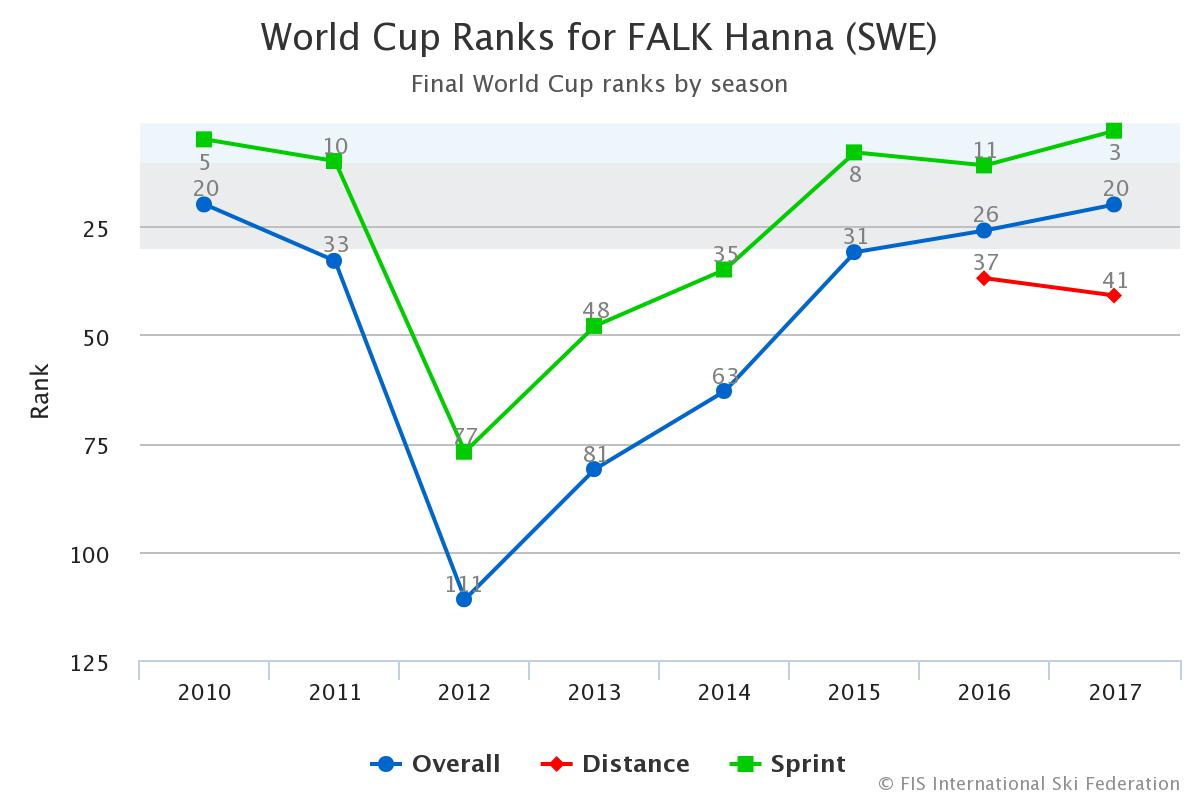
If you’ve ever had a doubt that the nosedive is terminal, give this episode of Nordic Nation a listen (found at the bottom of this article).
(To subscribe to the Nordic Nation podcast channel, download the iTunes app. If you have iTunes, subscribe to Nordic Nation here.)
Have a podcast idea? Please email nordicnation@fasterskier.com.
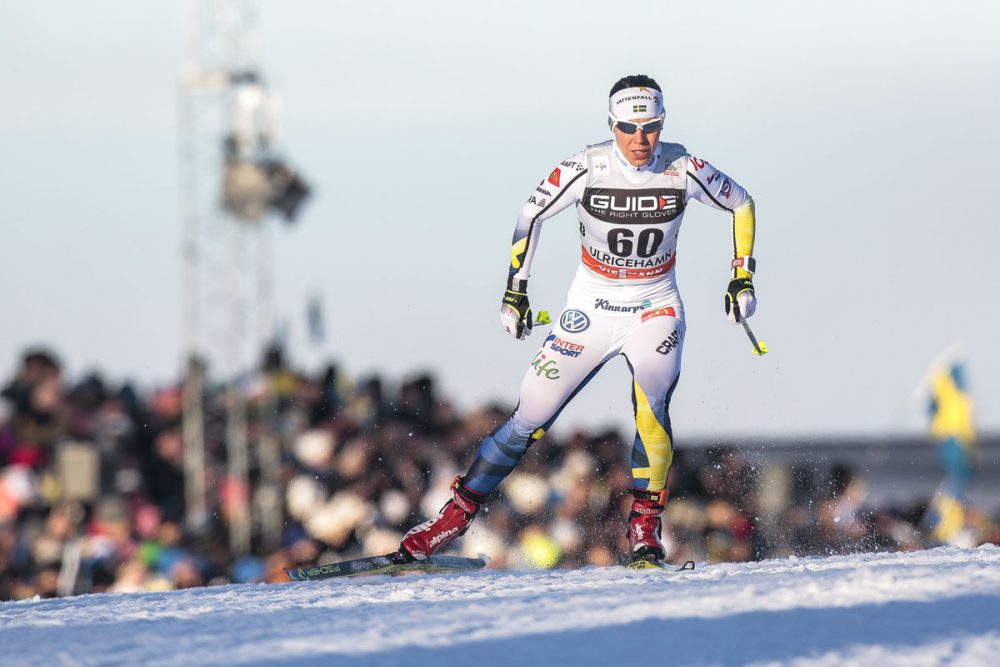
Nordic Nation heads north and more than a few time zones away for this episode. On May 22, we spoke with Swedish ski star Charlotte Kalla. The five-time Olympic medalist will turn 30 on July 22. She remains a motivated athlete willing to work hard to improve as she turns an eye toward the 2018 Olympic Winter Games.
Her resume is long. In what seems like a different era, 2006 and 2007, Kalla hauled in a bronze, a silver and three golds during her two appearances at Junior World Championships. And more than a decade ago, in 2006, Kalla began her World Cup career. Between 2009 and 2017, she’s earned 12 World Championship medals to go along with those five Olympic medals. It’s quite the curriculum vitae.
Kalla’s performances also trend towards the dramatic. She bested the field to win the 10-kilometer skate at 2015 World Championships at home in Falun, Sweden and came from behind as the anchor leg at the 2014 Sochi Games to secure an unlikely gold for Sweden. During an era when the Norwegian national team has remained a consistent podium lock, Kalla is an omnipresent spoiler for Sweden’s neighbor to the west. Think of her as a 10 k skate specialist? She earned two bronze medals this year in the 10 k classic and 15 k skiathlon at 2017 World Championships in Lahti, Finland.

Give the interview a listen and you’ll hear Kalla describe those races, her decision to train separate from the Swedish national team, and recovering from an uneasy start to the 2016/2017 season. Additionally, she talks about how male and female athletes are treated differently at the highest level of her sport, and her admiration for the Norwegian and U.S. women’s teams.
“I think it’s really fun to see and meet the American girls and think of what a journey they have been going through,” Kalla says. “It’s so amazing to see what position they have today in the women’s World Cup. [They have] so many good athletes and really nice attitude and very welcoming to other nations, and the way they develop sports, it’s really impressive.”
(To subscribe to the Nordic Nation podcast channel, download the iTunes app. If you have iTunes, subscribe to Nordic Nation here.)
Have a podcast idea? Please email nordicnation@fasterskier.com.

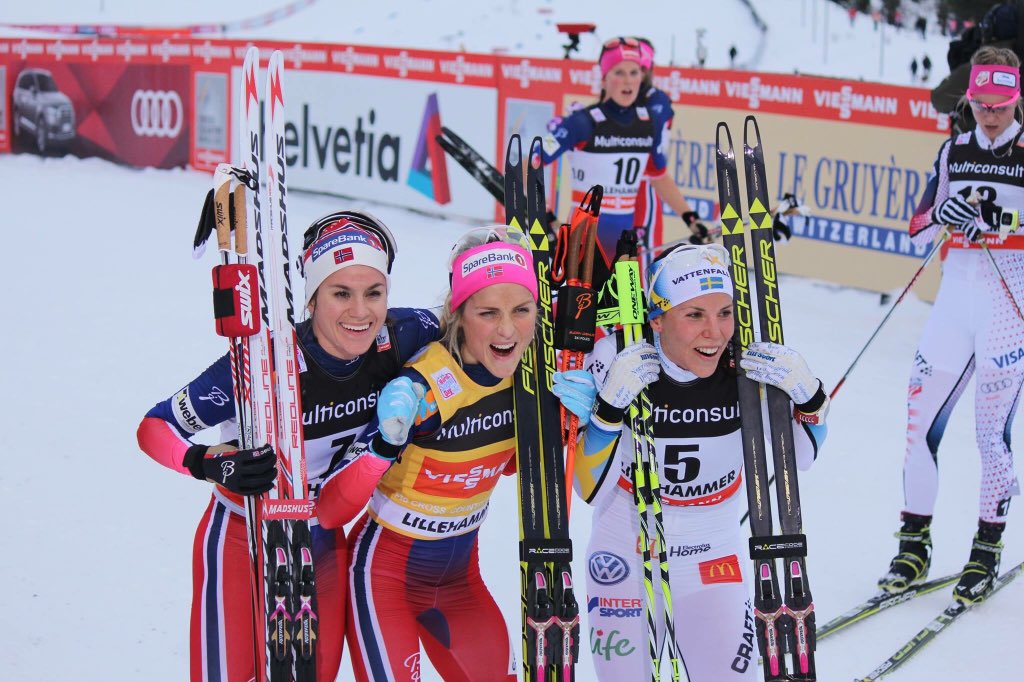
Swedish ski star Charlotte Kalla looked back at her disappointing 2016 season and decided: something had to change.
The 28-year-old has decided to leave the Swedish national team and train on her own with a personal coach.
“I think that currently I have a [great] trainer, and the results of our collaboration can be so much better if I have the opportunity to meet with [him] for monitoring, planning, engineering work and other things,” she told Radiosporten, according to a translation.
Although Norwegian superstar Petter Northug has done the same thing in the past, Kalla’s move is new for Sweden. She is still focusing on World Cup racing and in particular 2017 World Championships, to held in Lahti, Finland, in just nine months time. For that, she will need to be nominated and supported by the national team, but she doesn’t plan to work within their training program in the off-season.
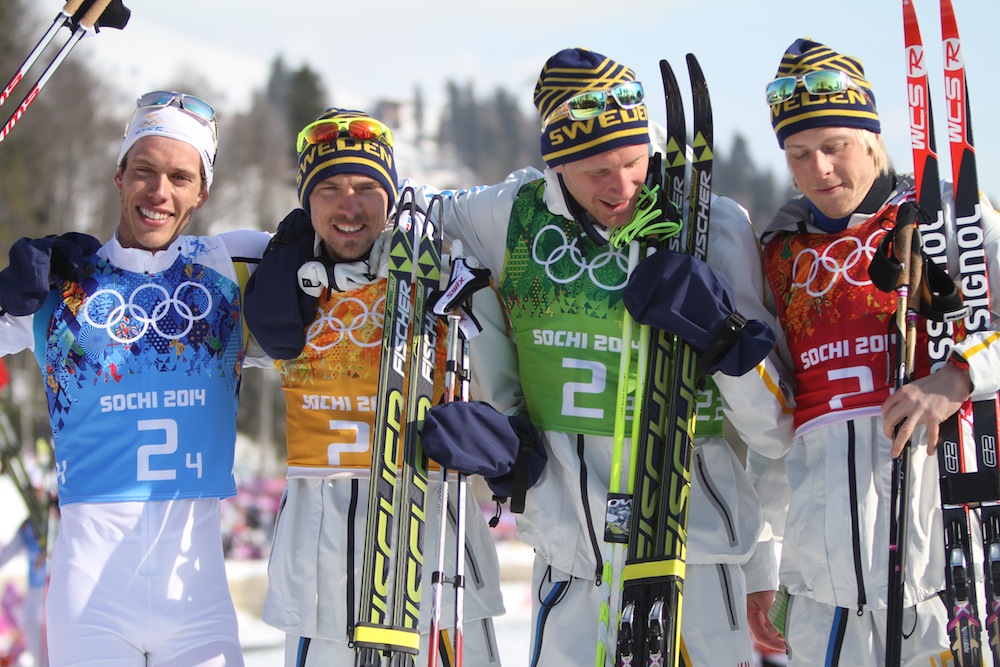
Several high-profile athletes left the Swedish national team last season, including World Champion Johan Olsson and fellow Olympic gold medalist Daniel Richardsson. Richardsson joined a Ski Classics team, Team Exspirit, and focused on long-distance racing while still jumping in three World Cup competitions this year; he also won Swedish National Championships in the 15 k classic.
Olsson did not compete at all this year due in part to injuries, but said in early April that he was motivated for the Lahti World Championships and perhaps even the 2018 Olympics. Both men have now rejoined the national team.
“We are thrilled to have Johan and Daniel back on the team after a year in which they invested in long-distance races,” team director Johan Sares said in a press release. “At the same time, we support Charlotte, who feels the need to test her own setup. We respect it and wish her a warm welcome back in the white suit for the World Cup opener in Ruka, Finland, in November.”
So it’s clear that in Sweden leaving the national team does not prevent an athlete from later rejoining, or from getting race support at international competitions. But Kalla is trying to do something different than either Olsson or Richardsson: focus 100% on the World Cup, but on her own terms.
“There has been much consideration, but in the end I made a decision that feels very right to me,” Kalla told Radiosporten.
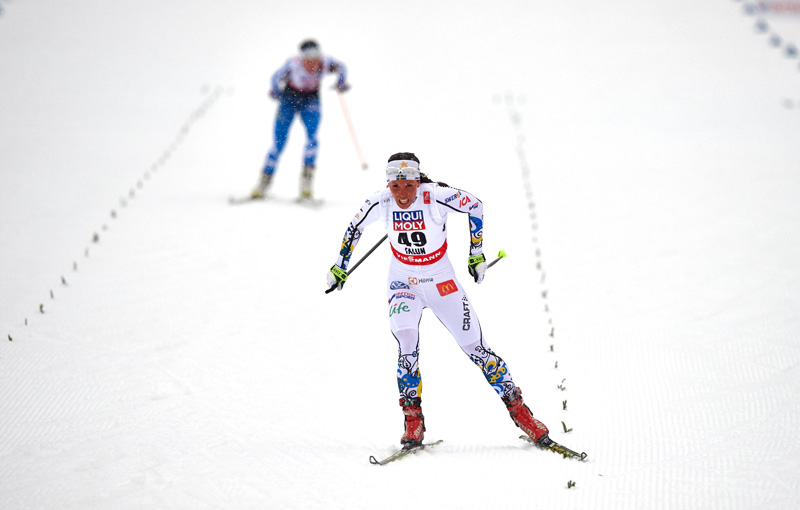
Ingesson is a former skier himself, and a relay medalist from 2001 World Championships. He coached the women’s national team at one point and is now the sports director for Piteå Elit, which Kalla joined in 2012.
Kalla explained that she wanted for a long time to work more closely with Ingesson, but it was difficult to schedule. He now has been promised more time off from his regular job, which means more collaboration with Kalla.
An Olympic gold medalist and World Champion, Kalla has 47 World Cup podiums to her name but snagged just two last season, and not a single win. Nevertheless, she ended up fifth in the overall World Cup rankings at the end of the 2016 season.
“Now I have a freedom to follow what I believe in and do training based on the needs I see,” she told Swedish newspaper Dagens Nyheter. “We will initiate an intro camp with Piteå Elit on Friday in Saxnäs, and then Magnus and I will sit down and make arrangements in more detail.”
Kalla was coming off of a strong season in 2015, where she won the World Championships 10 k skate on home turf in Falun, Sweden, in one of the most impressive performances of the season.
But instead of using that success as a springboard, Kalla struggled this season.
“I was gassed at pretty much the beginning of last summer,” she told Dagens Nyheter. “I had signals that I was tired, but was in good shape around the first competitions. After that it was not as good as my ambitions were. But I’ve learned a lot. I was disappointed with the results, but satisfied with the performance, because I did not give up.”
Some of it was just bad luck, like in the Tour de Ski, where she crashed several times including one particularly rough fall in Oberstdorf, Germany, thanks to sloppy skiing by Poland’s Justyna Kowalczyk.
Shifting away from the national team will be a challenge, she admits, even if it may have benefits.
“The main obstacle has been the social aspect,” she told Dagens Nyheter. “I thrive in the national team group with everything that happens around training sessions, to be able to laugh, cry and dream together.”
In Norway, Northug’s decision to leave the national team was a testy one, and not all team staff were thrilled with it.
Thus Vidar Løfshus, the head of the Norwegian national team, was skeptical of Kalla’s decision.
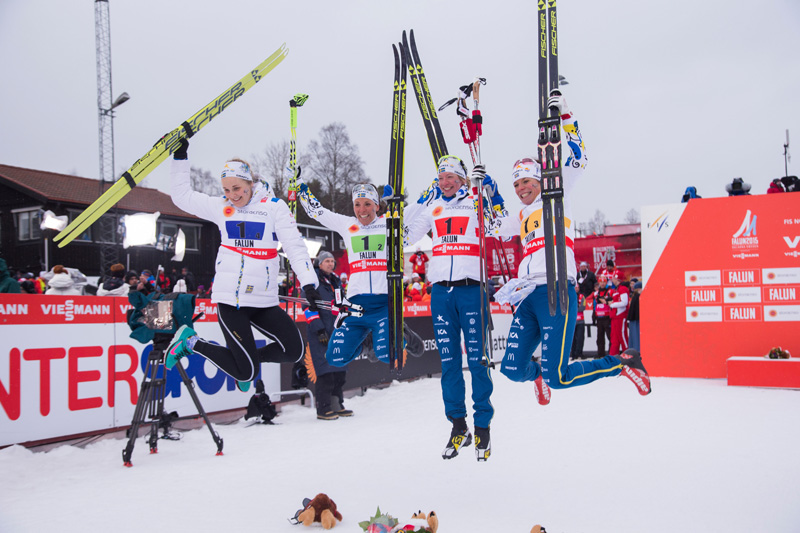
“Oh, it’s not good,” he told Swedish tabloid Expressen. “We in Norway firmly believe in the national team model. We have already had a debate about Petter Northug, who opted out of the Norwegian national team. We believe of course that it is one of the reasons that we are as good as we are, that we have a strong national team model…. Throughout the summer and fall, she will be missing in the Swedish team. This is where the strong team created. Cohesion, team spirit. And yes, according to me it is the strong training groups that create success.”
Swedish team staff weren’t as negative, or at least they chose their words more carefully.
“I respect her decision, then it is naturally sad that she will not be with us,” head coach Rikard Grip told Expressen. “But I have to say the respect and understanding that she wants to try something new… The most important thing is that Charlotte has the motivation and drive. What avenues you choose to go, it is difficult to judge about. Now she has chosen this path. All the details we need to sit down calmly and talk about. We have a good intention to have a good dialogue. Charlotte will be with us in the winter, we need to look at how we solve it in the best way. But I can not answer exactly how it will look.”
“The downside for our part, is that team loses its power,” new national team coach Ole Morten Iversen told Norway’s NRK broadcaster. “Had she been on the team, she would have been given new impetus that had changed the situation properly. I’ve tried, but it has not been enough- but I completely understand that she feels the need to do something new after having her head against the wall for a while.”

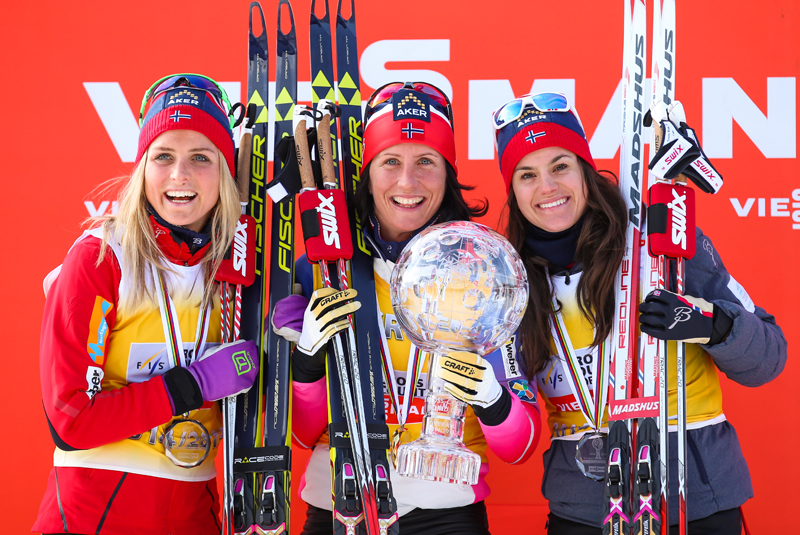
Both Norway and Sweden announced their National Team picks for the 2015/2016 season Friday. The respective teams of the two rivals will see few changes in the upcoming year as both hope to either maintain or improve their team successes.
The Norwegians have nominated the majority of the 2014/2015 team, which won the year’s Nation’s Cup with 17,225 points – 11,364 points over the Russian Federation in second place. Headlining the women’s team is Marit Bjørgen who won her fourth overall World Cup title this year. The 35-year-old recently announced that she would continue to race the World Cup circuit, despite some uncertainty immediately after the season’s end.
“I have used the spring to think a little, and I am now sure that I’m a hundred percent ready to put down the work needed to continue my career,” she told Norwegian broadcaster NRK, according to a translation.
Missing from the women’s team roster are Celine Brun-Lie and Kristen Størmer Steira who both announced their retirements in recent weeks. Replacing the two will be Kari Vikagen Gjeitnes and Ragnhild Haga. Haga finished fifth overall in the World Cup standings and fourth overall in the 2015 Tour de Ski.
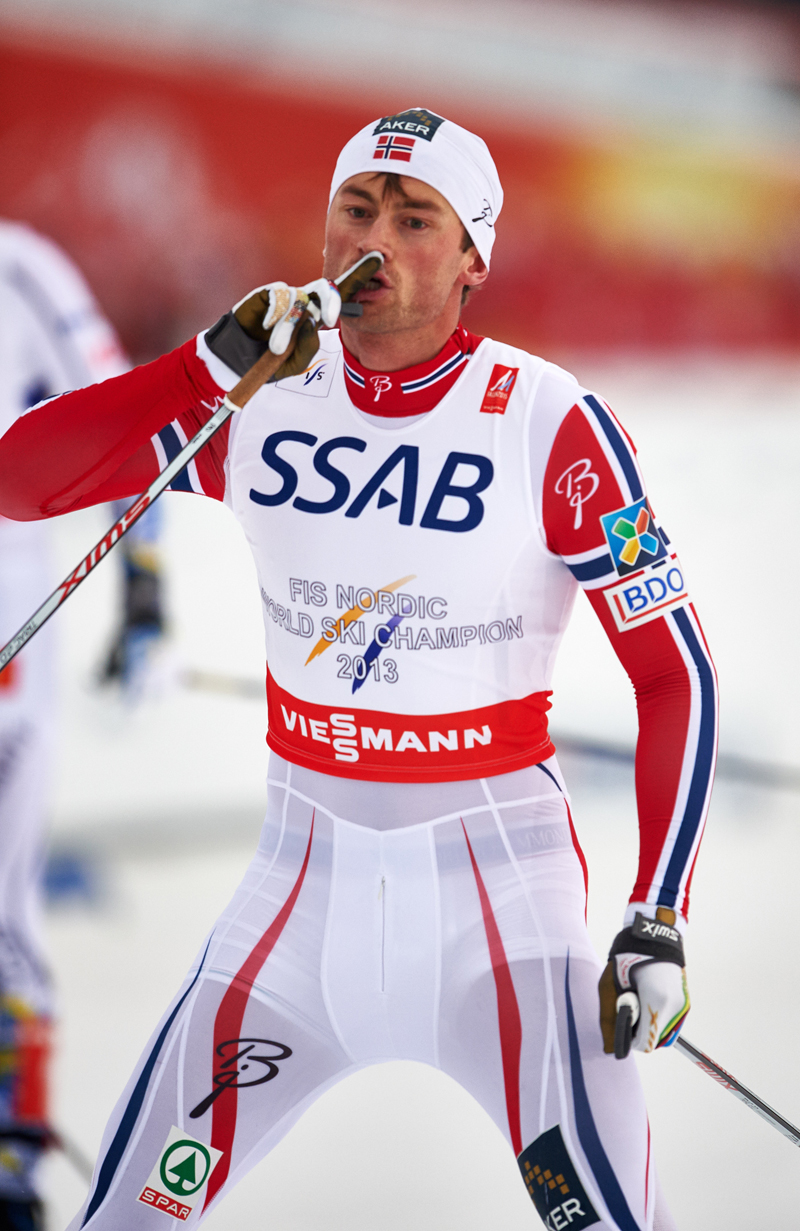
The Norwegian men will be led by Martin Sundby, who won his second-straight overall World Cup title in 2014/2015. Sundby had a strong start to the season but was unable to demonstrate his top form at the 2015 World Championships in Falun due to illness.
Norwegian superstar Petter Northug was notably left off the list due to his contract with the grocery store chain Coop and its team. While there is little information as to negotiations between Northug and the Norwegian National Team, Northug’s manager, Are Sørum Langås, recently said that the four-time 2015 World Championships gold medalist had a plan for the season that would satisfy his needs.
The men’s sprint team remains identical to the 2014/2015 season. Hans Christer Holunder and Niklas Dyrhaug are the only additions to the all around team.
According to Head Coach Vidar Løfshus, selection for the team began during the 2015 World Championships and that they aimed to have the team feature roughly 25 skiers. Friday’s announcement names 24 skiers to the team.
“The challenge has been to put together the best training groups in the men. We have spent time discussing and thinking to managed and achieve the best ability. It is about finding out that training program tailored to each athlete best,” Løfshus explained to FIS.
Norwegian National Team:
Ladies
Marit Bjørgen, Rognes IL
Maiken Caspersen Falla, Gjerdrum IL
Kari Vikhagen Gjeitnes, Henning Skilag
Ragnhild Haga, Åsen IL
Martine Ek Hagen, IL i BUL
Kathrine Rolsted Harsem, IL Varden
Astrid UhrenholdtJacobsen, IL Heming
Therese Johaug, Nansen IL
Heidi Weng, IL i BUL
Ingvild Flugstad Østberg, Gjøvik Skiklubb
Men allround
Niklas Dyrhaug, Tydal IL
Pål Golberg, Gol IL
Hans Christer Holund, Lyn Ski
Chris Jespersen, IL Korlevoll-Odda
Sjur Røthe, Voss IL
Martin Johnsrud Sundby, Røa IL
Simen Andreas Sveen, Ring IL
Didrik Tønseth, Byåsen IL
Men sprint
Eirik Brandsdal, Kjelsås IL
Sondre Turvoll Fossli, Hokksund IL
Anders Gløersen, Rustad Il
Ola Vigen Hattestad, Ørje IL
Finn Hågen Krogh, Tverrelvdalen IL
Tomas Northug, Strindheim IL
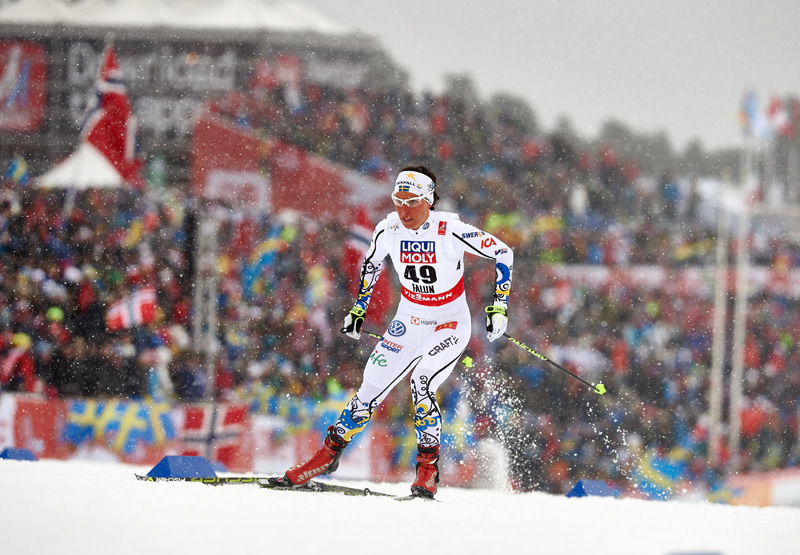
Sweden
The Swedish National team also announced its National Team Friday. While the team did not have the success it aimed for in the 2014/2015 season it achieved third overall in the Nation’s Cup standings behind Norway and Russia.
Four-time 2015 World Championships medalist Charlotte Kalla will return as the team’s most anticipated skier. Sprinting star Stina Nilsson will also remain in the team’s rank to much fanfare.
Johan Olsson, Daniel Richardson and Lars Nelson will not return to the National Team in the 2015/2016 season. Olsson won the 15 k freestyle and earned two other podiums at the 2015 World Championships with a second in the 4 x 10 k relay and third in the 50 k classic.
According to Swedish National Team Head Coach Rikard Grip, his women are especially strong this year. He explained that the coaching staff aimed to create a team centered around maintaining the team’s status as one of the world’s best.
“We want to improve the quality of sprint training sessions and create opportunities for more and tougher challenges in racing similar situations, man to man and woman against woman,” Grip said to FIS.
Swedish National Team
Ladies
Charlotte Kalla, Piteå Elit
Anna Haag, IFK Mora SK
Ida Ingemarsdotter, Åsarna IK
Emma Wikén, Åsarna IK
Maria Rydqvist, Älvdalens IF
Stina Nilsson, IFK Mora SK
Sofia Bleckur, IFK Mora SK
Magdalena Pajala (sprint), Piteå Elit
Jennie Öberg (sprint), Piteå Elit
Hanna Falk (sprint), Ulricehamns IF
Men
Calle Halfvarsson, Falun-Borlänge SK
Martin Johansson, IFK Mora SK
Anders Svanebo, Stockviks SF
Marcus Hellner, Gellivare Skidallians
Simon Andersson, Falun-Borlänge SK
Emil Jönsson (sprint), IFK Mora SK
Teodor Peterson (sprint), IFK Umeå
Johan Edin (sprint), IFK Mora SK
Development teams
Ladies
Hanna Erikson, Åsarna IK
Anna Dyvik, Falun-Borlänge SK
Sofia Henriksson, Piteå Elit
Jonna Sundling, IFK Umeå
Evelina Settlin, Hudiksvalls IF
Linn Sömskar (sprint), IFK Umeå
Maja Dahlqvist (sprint), Falun-Borlänge SK
Maria Nordström (sprint), Ulricehamns IF
Men
Jens Burman, Åsarna IK
Marcus Ruus, Åsarna IK
Simon Lagesson, Åsarna IK
Axel Ekström, Garphyttans IF
Oscar Svensson, Falun-Borlänge SK
Carl Quicklund (sprint), Östersunds SK
Jesper Modin (sprint), Piteå Elit
Simon Persson (sprint), IFK Umeå
Anton Lindblad, Sollefteå Skidor (sprint)
Erik Silfver (sprint), IFK Umeå
Gustav Nordström (sprint), Borås SK

Daniel Richardsson, Olympic gold medalist for Sweden in the 2010 4×10 k relay, was injured in a car crash in central Sweden on Sunday and taken by ambulance to Hudiksvall Hospital. According to Swedish daily Aftenbladet, Richardsson had stopped to help a friend change a flat tire on the side of a highway when a motor home approached the two men at high speed and, unable to avoid collision, ran into both of them, killing the friend and damaging a ligament Richardsson’s knee.
In a press release from the Swedish Ski Association, team doctor Per Andersson said the extent of Richardsson’s injury was not serious.
“The physical status is that Daniel sustained ligament damage in the knee where the forecast for the future function is not of a serious nature,” said Andersson, who has been in contact with Richardsson’s doctors at the hospital. “We need to do further studies to address in detail whether to continue treatment prognosis.”
According to Aftenbladet, Richardsson and his family were on their way to Iggesund, a town on the east coast of central Sweden. Richardsson was reportedly close friends with the deceased.
“Daniel is very depressed,” said Jan Eric Rickardsson, Daniel’s father, who was present for the accident. “He has lost a close friend. It is awful.”
National team coach Richard Griffin commented, “The most important thing now is that Daniel is healthy. Right now sport a secondary importance. I would once again appeal for calm surrounding Daniel and his family.”
Swedish Ski Association CEO Johan length Sares added his condolences, saying, “We think of Daniel and his family and will support them as much as possible in the sad situation they are in.”
Richardsson’s teammates also expressed their support of the World Cup skier. “It is incredibly unfortunate and all thoughts go first and foremost to the whole family,” said Emil Jönsson to Aftenbladet. “An incredible tragedy that no one really wants to believe is true.
“Daniel is an important person in the team, both as a friend and [as] skiers. Now I hope he gets peace and quiet to recover from it all. I hope he knows that we all give our full support on his way back.”
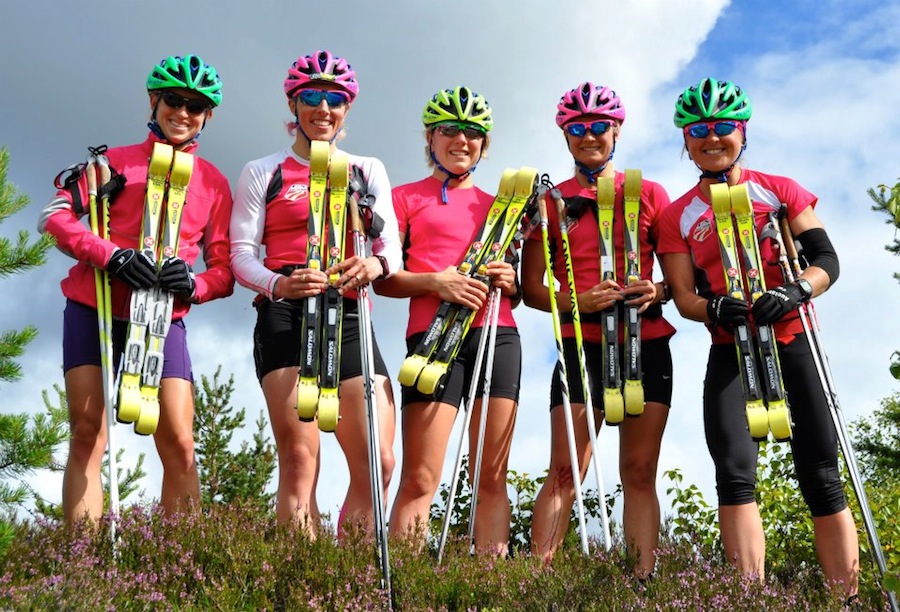

Just over a week ago, five U.S. Ski Team women and one Canadian packed their bags in various parts of the world and set off to meet in Sweden. Usually faced with the task of preparing for months of overseas travel, some might have scratched their heads.
What do you bring for just two weeks?

Americans Kikkan Randall and Liz Stephen had already been in Europe for nearly a month, first competing in the Blink rollerski festival in Norway in July and later meeting their good friend, Anna Haag, at her home in Orsa, Sweden.
There, the two U.S. Ski Team (USST) veterans previously trained with Haag and the rest of the Swedish women’s ski team last summer. Things went so well that Haag invited Randall, Stephen and their North American counterparts back.
Of the newcomers – Holly Brooks, Jessie Diggins, Ida Sargent and Canadian Chandra Crawford – most found themselves in awe of the situation. Here they were, at their first joint camp with Sweden for 10 days of dryland and on-snow training in Sälen and Torsby, Sweden, respectively.
Halfway through, Brooks wrote in an email that they were still grasping the length of the trip.
“We keep talking about how it’s funny that we traveled thousands of miles for a short, two week trip,” she wrote. “Many of us are used to flying to Europe and staying in Europe.
“I think coming over for a short summer trip is a great experience,” Brooks added. “For me specifically, it reinforces that I can adapt to the travel & ten-hour time change. The more I do it, the better I get at it. I think it will help guide my travel plans for the upcoming winter.”

The accommodations aren’t too shabby, either. Most are staying at mountainside cottages during their dryland portion in Sälen – home of the 90-kilometer Vasaloppet. They wrap up training there on Friday with four or five 10-minute classic intervals, then drive down to the Torsby ski tunnel for four days on snow.
“In a lot of ways the climate and terrain reminds me of Alaska,” wrote Brooks, who lives in Anchorage. “It’s fairly mild – sometimes raining, sometimes sunny, often a mix. It’s really mild and never too hot to train. They have the same kind of flowers including Fireweed, which is a signature in the summertime in Alaska.”
In a blog post, Stephen wrote that Orsa was her favorite place on earth, especially while staying with the Haag family.
“Ok, maybe being home in Vermont with my own family is pretty high up there too, but this is about as good as it gets,” she added.
Up in Sälen, Stephen wrote in an email that training was going really well and she enjoyed participating in the dryland part of camp this year after experiencing Torsby last summer.
“Everyone is making new friends, learning from one another, pushing one another and relaxing well together when the session is over,” she wrote. “We are training hard, but it is not too different than we do when we are home, which is good to see. To be a great nordic skier you have to train a lot, rest really well, eat a ton, and know how to hurt a lot.”
Brooks described what it’s like to share two workouts and three meals per day with the Swedish women’s team. They talk about everything from racing plans, altitude training, music videos and significant others, she wrote.

“It’s great to see that these girls aren’t doing anything ‘special’ or secret … [and] de-mystify the Scandinavian ski tradition,” Brooks added. “They are regular girls, just like us. We’re all fit, and we’re all motivated. I’m excited to have more international friends on the World Cup for the upcoming season!”
The all-around fitness has been a driving factor at the camp. On Thursday, Crawford tweeted about trail running with the group: “Anytime I run in the general vicinity of [Stephen], [Randall], [Brooks], [Haag] and the gang, it’s a zone 3 frolic!”
In an email, she wrote they’ve been training hard and soaking up the “novel elements,” which add to the fun.
“For example, [Thursday] we did the run all off the trails,” Crawford wrote. “Crazy stuff! We would cross trails occasionally but stuck to the sometimes knee-deep bogs and moss.”
One day, they did intensity in a race format; the fastest in each heat moved up, the slowest moved down and the middle two stayed put. Crawford explained that made for great action between four heats and created the thrill of racing.
“The local ski club came out and cheered,” she wrote. “We are all enjoying making new friends.”
***
For more photos from the camp, visit USSA Nordic’s Facebook page.
Note: Anna Haag posted a new blog on Friday with a shout out to her North American friends. Read it here.


In the months following its first camp of the year in Bend, Ore., the U.S. Ski Team (USST) has several new training destinations planned along with its old standbys: the men and women will split up and head to Alaska, Sweden, Austria and Germany over the course of the summer. And for the first time since its first trip to New Zealand 10 years ago, the Snow Farm is completely off the schedule.
The women’s summer begins in familiar territory: the “North American Women’s Training Alliance” will coalesce once again for a June camp in Anchorage, Alaska. The Americans, Canadians and an unnamed European guest will take advantage of Eagle Glacier for quality time on American snow.
August brings a new training opportunity for most of the women: they’ll jet off to Scandinavia where they have a joint camp planned with the Swedish women. Kikkan Randall and Liz Stephen both did a tour of Sweden last summer with their host Anna Haag, but with the rest of their teammates along for the ride this time, what began as a friendship between Haag and the Americans has turned into a full-scale, two-week training period in Salem and Torsby for each team’s full roster.
A collaborative camp on this level between the U.S. and a European national team is unprecedented, at least in USST head coach Chris Grover’s memory. The idea was discussed in January in the midst of the Tour de Ski, when Swedish women’s coach Rickard Grip cited Randall’s skate technique and the value of exposure to a non-Scandinavian approach to skiing among the benefits to training with the Americans.
The results the U.S. women posted on the World Cup this winter played no small role, either.
“I think because of the women’s team making a big step forward and having World Cup contenders, that becomes more attractive to a team like the Swedes than perhaps it was before,” said Grover.
“I’m psyched it’s coming to fruition.”

While the American women are in Sweden, the men will be in central Europe — first to Ramsau, Austria, home of the Dachstein glacier, and then on to Oberhof, Germany to use the indoor ski hall.
The traditional New Zealand trip, which has been a staple of the USST’s summer training in some capacity since 2002, is off the schedule this year. The Southern Hemisphere is simply too far and too expensive for it to make sense any more.
“It was tough to pull away from because it’s such fantastic conditions, great living, and such a solid camp,” said Grover.
Besides airfare more than doubling in recent years, Grover added that the lengthy travel and 16-hour time zone adjustment (from EDT) made the Snow Farm a less practical option. Europe is a cheaper flight and only six hours ahead of the eastern U.S.
“We talked for a while about going to Europe, and we felt it was time to do something different,” said Grover. “And it would be a little easier on our budget as well.”
Dachstein is a mecca for nordic skiers year-round, and in the summer is frequented by European clubs and national teams. Grover wasn’t sure who else would be in Ramsau in August, but knew the Norwegian men would be in Oberhof for the tail end of the USST’s camp there.
“We may look for opportunities to schedule workouts with the Norwegians if it’s possible, but we have nothing planned at this time,” he said.
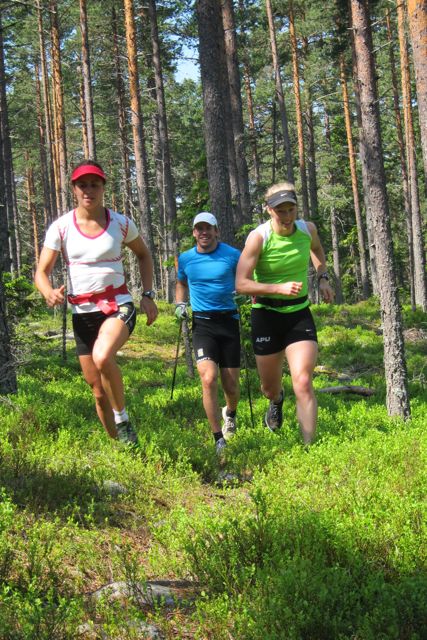

They’ve been on four-hour runs through marshes, braved ‘mystery testing’ with the national team, and been featured in a Swedish newspaper. But when asked to describe their favorite aspect of their trip to Sweden, Kikkan Randall and Liz Stephen are in complete agreement: the people.
For the two veterans of the US Ski Team, the trip was a unique chance to actually get to know the people they compete against all winter. “When you see people on the World Cup, they’re doing their own thing,” Stephen explains. “Then when the competition is over, they all go home during the week in between races, so there’s not a lot of opportunity to get to know them outside of the ski world.”

“When you think about it, none of us had a normal college experience,” Randall adds. “The World Cup is our chance to form these memories. Ten years from now, twenty years from now, when everyone else is looking back and remembering their college years, we’ll be saying, ‘Hey, remember that World Championships?’”
With trips like this one, along with Randall’s last summer to Norway, the duo are forming lasting friendships with their competitors. “Now when we see each other on the World Cup, we can ask Anna how her family is doing,” says Randall.
According to Randall, it’s rare for skiers of different countries to train together. She herself first made such a trip last year in Norway, deciding to make the most of her trip to Turkey as a FIS athlete representative and stay behind to train with sprinter Elle Gjomle. It was such a great success she decided to do it again, this time at Anna Haag’s invitation to stay with her in Orsa and with Stephen joining her.

Randall started reaching out to her competitors long before becoming a FIS rep. “It started a few years ago, when I was the only woman on the national team on the World Cup and I didn’t have any girls from the US to hang out with. I would go out and meet women from other teams; it was funny to me how teams stayed within themselves.”
The experience was so valuable that Randall convinced Stephen to join her this time around. “It was pretty ballsy of Kikkan to come over on her own last year,” said Stephen. “I don’t know if I would have come over here by myself.” Now knowing what it’s like, she can’t wait to come back.
Their stay began in Orsa with Haag’s family, stopped in Östersund, and ended in Torsby. There, Randall and Stephen joined the Swedish women for part of their on-snow camp in the ski tunnel, where they got to participate in a day of testing and two days of quality time on snow.

While putting in long hours on the trails, Stephen and Randall said it was great to talk with their hosts and realize that, while they may not speak the same native language, they think and feel the same things during a workout. And while the Swedes may have their own tour bus, said Randall, “their training is pretty much just like ours,” a conclusion that represents the great value of a trip like this one.
On the subject of training, Stephen says her foot injury from this spring hasn’t been holding her back at all. While cutting a hole in the heel of her boots this winter provided a temporary solution, it didn’t come close to solving the problem. She was in so much pain in March that she sat out the SuperTour Finals in Sun Valley.
The pain seems to be behind her now. “Rossignol made me some custom boots, and they’re in the process of making version two now with a few changes,” she said. “By giving my foot some time off, the initial pain went away and I’ve been able to try the boots out and give feedback.”
She was uncertain as to whether she would need surgery back in March, but now she says it’s been so far so good and doesn’t plan on needing it.
Upon arriving back in the States, Stephan and Randall will enjoy some time at home before gearing up for a training camp with the rest of their teammates in Anchorage in mid July. They “most definitely” want a training trip to Europe to become a regular part of their off-season training in the future.
Says Randall, “This was such a home run we might just have to come back to Sweden again next year.”
“This could have ended really awful. I am shocked and scared,” Anders Södergren told the Swedish newspaper Sportbladet.
The cop, who was not in uniform and not on duty, argued that the Swedes were violating the Austrian traffic codes that outlaw roller skiing on public roads.
Sportbladet’s reporter on location said that the team had completed about half of their workout when the incident occurred. Suddenly, Marcus Hellner and Johan Olsson, who were leading the group, made a sharp turn to find out why their teammates were slowing down. They had done so because a man had entered into the busy road and started yelling at them. Södergren was right behind his teammate Jens Eriksson.
“You can’t stop in 15 feet; we were doing at least 30 kilometers per hour. So when we got close, the guy pushed Jens in the side. Jens fell into me and I fell into the guy’s car, which he had parked in the middle of the walking trail. No sane person would push another person like that,” Södergren told Sportbladet.
Demanded an Explanation
The Swedish skiers were angry at the off-duty officer. Hellner yelled at him, and the cop yelled back.
“The worst part is that he lied. He said we ran into him,” Södergren said, after he had collected himself from the initial shock.
Sportbladet’s reporter attempted to speak with the officer, who refused to give his name.
“I was just defending myself. They came straight at me, I was simply shielding myself. The pedestrian path is for foot traffic. I am not here on duty, but as a private person, and I was just parked to talk with a coworker,” said the man, who was very agitated. Apparently, roller skiers must have irritated the officer for a long time. He said they’ve had problems with roller skiers for 30 years, and he emphasized that roller skiing on public roads is illegal in Ramsau.
Rarely Enforced
The Swedish national team is well aware of the law that outlaws roller skiing on public roads, but nearly all the athletes in Ramsau roller ski on the roads. According to Swedish national team coach Joakim Abrahamsson, the cops rarely enforce the rule. “We all know it’s not allowed, but this kind of behavior is ridiculous, regardless,” Södergren told Sportbladet.
Södergren dislocated his shoulder in the incident, and Eriksson suffered some scrapes. However, the entire team was shaken up from the episode.
From Langd.se, October 16, 2010. By Kjell Erik Kristiansen, translation by Inge Scheve

In Las Vegas, where FasterSkier had the opportunity to interview Marcus Hellner, the Swedish skier was able to stay relatively undercover. At the card table, such was his anonymity that he had other players thinking he was a professional poker player, not a professional athlete. But in Europe, and especially in Sweden, Hellner is a star. At the Olympics in February, he vanquished rival Petter Northug, breaking the Norwegian’s pole on the way to winning the 30 k pursuit, then went on to anchor the Swedish team to gold in the relay. He was fourth in the Tour de Ski and third in the overall World Cup, collecting six podiums along the way.
Fortunately, Hellner’s English is more than good enough to sit for an interview. He’ll occasionally bust out an impressive phrase—at the Olympics, he spoke of a “lust for vengeance” after finishing fourth in the 15 k—but for the most part, his speech matches his demeanor: relaxed and deliberate.
FasterSkier: Can you start out by telling me about your training so far this year? Are you doing anything differently?
Marcus Hellner: Not such big differences, but it’s more training, a little bit more focus on the double-poling, because I want to be better there—be a better classical skier. And also I’ll try to be more focused and think a little bit more about not pushing too hard, just so you don’t get injured or something like that. Sometimes I have trouble with my knee, and I have to be focused and do the right thing—not running too long if it’s starting to hurt a little bit. It has been good so far.
FS: With the classic skiing—did you feel like you were having more trouble with it last season?
MH: Yeah—I have some things to work on. I want to get better all around, and classic is my worst technique. I’m not as good as I could be, I think, because I have a good engine, but a little bit bad technique.
FS: So what are you doing to improve it?
MH: Last year I went in a lot for skating, and I tried to be stronger in the upper body. I did a lot of pull-ups, push-ups, double-poling on steep climbs, and I think that maybe I lost my timing, a little bit, on the flats. So this year, I’m going to do a little more on the flats to discover the timing again.
FS: How many hours are you training this year?
MH: I don’t know how many hours, really, but maybe 750 or 800, something like that.

FS: Is that comparable to what you’re been doing over the last few years?
MH: It’s a little bit more. I always try to go up, and I feel that I have some room left. I always have felt that I could train a little bit more—I’ve never been feeling like I’ve trained too hard. It’s maybe 30, 40 hours more than last year. I think the most important thing for me is that I’ll train through the summer and the autumn—that’s the training season for me, and that’s when I’m counting hours. In the winter, it’s more like shaping up for the races. That’s not, for me, training season—I still train hard, but everything I do is for the competitions. It’s two parts for me, two goals.
FS: So, your goals for next year—is the overall World Cup something you’re aiming for?
MH: The goal is the ski championships in Oslo. That’s when I want to be in the best shape, but of course, I’m trying to be good in the whole season. Last season I tried to be good at the Olympics, but I also had good shape all the time.
FS: Will you try for a second peak around the Tour de Ski?
MH: I don’t think so—I will train pretty hard before the Tour de Ski. I will do it, but I will not try to be in the best shape. I think the Tour—it could be good for me to have a lot of competitions. It’s fun, and it’s good for the championships, also.
FS: In Oslo, are there specific races you’re focusing on? The pursuit and the 15 k?
MH: I don’t know—I like the 15 k most, but that’s my smallest chance of medals. Maybe the best chance is the relay, and maybe the 30 k or 50 k. It’s hard for me to tell, but I think I’ll have a good chance for medals if I’m in good shape that week.
FS: Do you feel like the Swedish team has a lot of momentum after the Olympics?
MH: Yeah—we have a good team spirit. They’re my buddies. We get along very well, we do a lot of training, and we hang out after the training as well. They’re my best friends, as well, and that’s very nice.
FS: After the Olympics, between the pursuit and the relay, it seems like you guys maybe have the edge on Norway right now.
MH: I think Norway, right now, has one person, and that’s Petter [Northug]. He’s very good. We have the four of us in the distance team—we are all people that can win a competition, so you have many skiers that are very good. Petter was the best last year—I was close, but he was a little bit better—and I think Norway depends on him very much in the relays and the other competitions.
FS: Do you feel like there’s something specific that Sweden is doing a little better right now with its men’s team, whether it’s the training philosophy or development system, or something else?
MH: I don’t know what Norway is doing, but I do know that the things we do are very good. We train hard and we have a good spirit—we want to be better. It’s a driving force all the time. We watch each other, and we share. If Johan [Olsson], for example, is better in classic, I watch him very much, and he allows me to do it. And when we’re doing races, we all push hard, and we always try to beat each other. It’s an honest situation—nobody’s trying to do anything to cover up, or to harm the team. Everybody’s thinking about the team, and I think that is very important. Even in cross-country skiing, it’s like a football [soccer] team, I think. If you can help each other, everybody gets better.
FS: The 30 k pursuit at the Olympics—there were some people in the U.S. who watched that race and said it was one of the best ever. Can you just talk a little bit about that race? How much of that was strategy, and how much of that was things falling into place?
MH: Wow, that’s flattering. We had an open mind—if there was a situation that opened to be able to help each other, we take it. That has always been our idea. We have never thought that this person will do this, this person will do that—plus, it’s only happened in the Olympics. It wasn’t a plan or anything—it

just happened. We talked during the race, and we decided we’d do it like this, and we did it all the way.
FS: Like, you and Anders Soedergren? (Hellner and Soedergren appeared to block the chasers as their teammate Olson went on a solo breakaway.)
MH: Yeah, we talked a little bit. We weren’t going to try to stop the other guys, but we weren’t going to help them. If we got in the front line, we were not going to pull hard to go on to Johan.
FS: That’s one of the benefits of having four guys that are that strong, huh?
MH: Yeah—you can do so. I’ve seen Germany do it before, a little bit—they’re trying to be helpful to each other. It’s hard in cross-country skiing because you don’t have the benefits like you have on a bicycle. You can’t slipstream that well, but you can do a little bit.
FS: And it seems like that’s the way that the International Ski Federation is going, with more mass start events, and faster courses.
MH: They want to have that, I think. I don’t know if I like it, myself. I don’t know if I want the races to be like that, because for me, cross-country skiing is still an individual sport, and I like it to be that way.
FS: How about with all the tours? There’s the one at the beginning of the season, and then there’s also the new World Tour Championship.
MH: I don’t know—I like the tours. There are some things I think they could do better, but it’s a good idea, I think. It’s many competitions, and I like to compete. But I think overall, there could be more individual competitions. I think there are too many mass starts.
FS: So if you were to ask FIS to change anything, that’s what you’d ask them to change?
MH: Yeah—I would like the 50 k to be individual [start]. I don’t like the mass start there. It’s not fun to watch, and it’s not fun to do.
FS: So you think at Worlds, that’s how they should do it?
MH: I think that’s definitely how they should do it, and I think there are many people that think like me. Anders does, and I think Johan, and Dan [Richardsson). I don’t know how the Norwegians feel—now that Petter is so good, they like it. I think the spirit of skiing is dying when they take away the individual, because that’s a very nice thing that we have.
FS: Is there anything you feel like you can do to stop that shift?
MH: Sadly, no. It’s hard. I think it’s very hard. I don’t know if there’s so much I can do about it.
FS: It seems like the power of TV and spectators is maybe more powerful than that of the athletes, at least right now.
MH: I think so. It’s a little bit sad. If all the competitors joined together…but I don’t know if all the competitors want the same as me. I can’t force anybody to feel like that, but maybe some day they will understand that it should be a 50 k individual.

The Swedish National Team is aiming high this winter and they are reaching the sky with the help of their own airplane – Swedish Ski Force 1. “This is literally a lift for us. With our own chartered plane we’ll save both time and energy when traveling,” says Olympic hopeful Emil Jönsson, 24.
Last season the Swedish team presented their unique wax truck. The impressive, easy to spot Scania truck gave the team many advantages on the World Cup and at the World Championships in Liberec. It is a great advantage to be able to travel from race to race with your own mobile workspace with room for 600 pairs of skis, poles and waxes. Now, get ready for the sequel: an airplane – Swedish Ski Force 1. The plane is painted in the Swedish National Team colors, just like the Scania truck.
A few days ago the athletes were told about the plane, their newest weapon when battling the other skiers on the World Cup, and they gave it two thumbs up! “It’s a nice, cool and very comfortable plane. We will feel like kings traveling to and from the World Cups like this,” says sprinters Emil Jönsson and Robin Bryntesson. Both Emil and Robin were onboard for the first flight, a domestic flight between Bromma and the Östersund/Åre Airport.
It is the very progressive airline NextJet that will be sponsoring the national team with specially chartered flights, carrying Sweden’s fastest skiers to their destinations. “This sponsorship agreement means that we can, on very short notice, fly skiers to and from races all over Scandinavia and Europe. We will save a lot of time. We don’t have to deal with the difficulty of buying tickets or the long layovers in airports. In addition, we’ll minimize the risk of exposure to sick travelers,” says Johan Sares, head of marketing for the national team.
“We are happy if we in any way can add to the team’s success and victories, says Magnus Ivarsson the CEO of NextJets. He adds, “I’m also exited over the fact that 13 out of the 15 national team skiers live in my native Jämtland (region in Sweden).”
The plane is a Saab 340A. A photo of the plane can be viewed here.
Source: Langde.se