Tag: swedish women’s team

  • Kalla Wins Bruksvallarna 5 k by 25 Seconds; Henriksson Rebounds to Third

    Kalla Wins Bruksvallarna 5 k by 25 Seconds; Henriksson Rebounds to Third

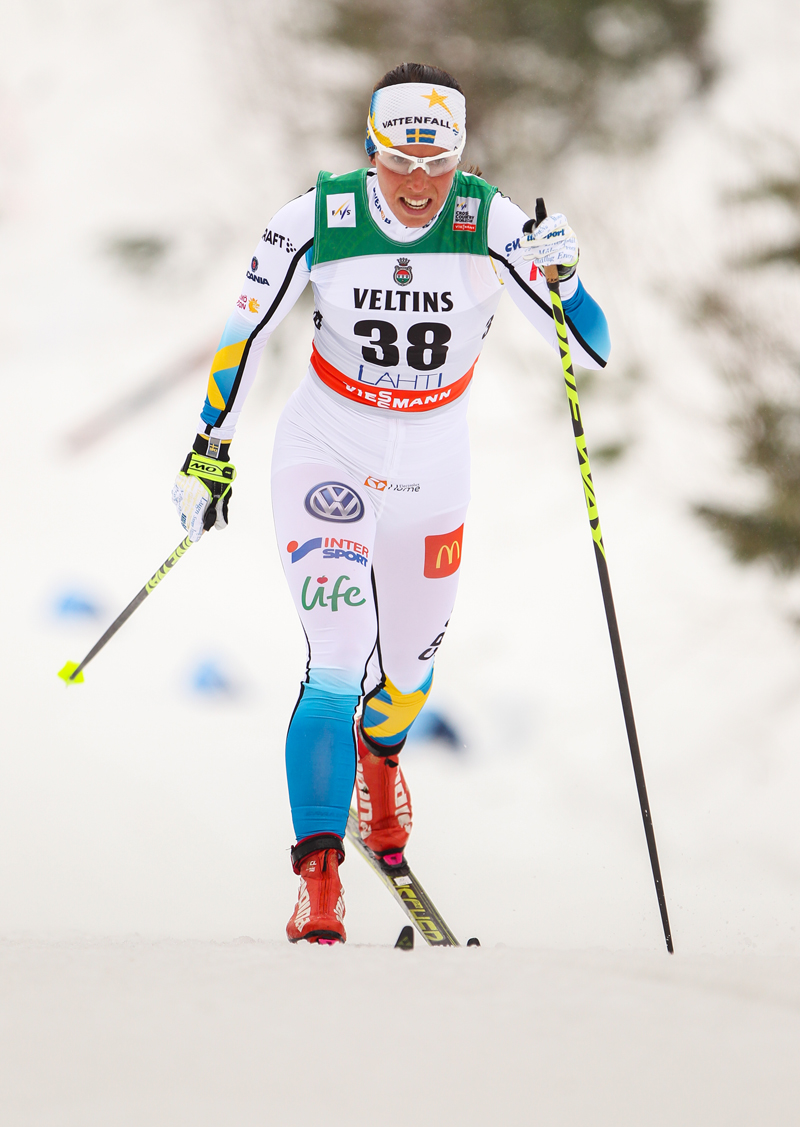
    Charlotte Kalla racing to third in the Lahti World Cup 10 k freestyle in Finland last March. (Photo: Fischer/NordicFocus)
    A world champion in the 10 k freestyle at 2015 World Championships last February, Charlotte Kalla is shown racing to third in the Lahti World Cup 10 k classic in Finland last March. (Photo: Fischer/NordicFocus)

    Charlotte Kalla. Ida Ingemarsdotter. Those two names in first and second in Sweden’s first International Ski Federation (FIS) race of the season — the women’s 5-kilometer classic in Bruksvallarna — were more or less expected.

    But Sofia Henriksson in third? The 21-year-old Swede hadn’t raced in nearly a year, coming off a hand injury and eating disorder. Leading up to U23 World Championships last season, she had been told she was “too thin and not allowed to go,” she wrote on her blog. “It seemed at first that everything collapsed.”

    Yet on Friday, she finished 29.8 seconds behind 2015 world champion Kalla, the winner in 12:18.6. Another Swedish-national team member, Ingemarsdotter was 25.6 seconds back in second and 4.2 seconds ahead of Henriksson in third.

    While Ingemarsdotter held off Henriksson for the lead late in the race, Kalla ultimately topped them both, leading at every checkpoint. By 1.4 k, Kalla was already 12.5 seconds faster than Ingemarsdotter. At 3 k, she was nearly 25 seconds up on Ingemarsdotter in second. Meanwhile, their teammate Hanna Falk sat in third, but Henriksson edged Falk in the second half of the race. Henriksson finished 1.9 seconds ahead of Falk — who placed fourth — for her first podium since placing second in the Bruksvallarna 5 k classic last year.
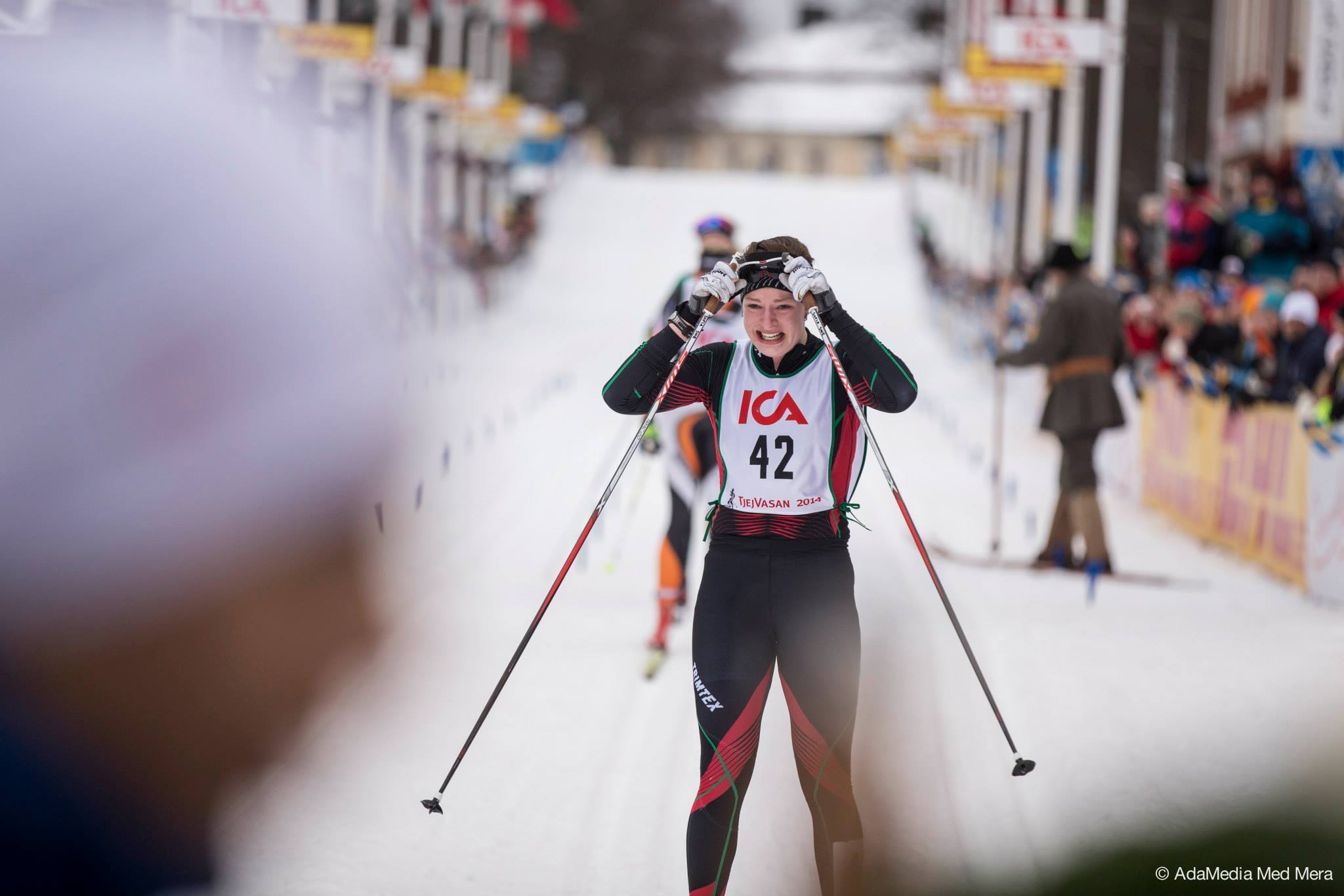
    Sofia Henriksson sheds tears at the finish of last year's Tjejvasan, an annual all-female event in Sweden, which she won. (Photo: Hälsningar Adam)
    A teary-eyed Sofia Henriksson of Sweden at the finish of the Tjejvasan, an annual all-female event in Sweden, which she won in 2013. (Photo: Adam Alexander Johansson)

    After the race, Henriksson wrote a blog with the English title: “Comeback”.

    “There are many emotions that move inside me right now,” she began, according to a translation. “Above all, I feel joy and thanks largely to be back [racing]. Today’s race was my first since the middle of January. The 10 months outside racing have been a journey for me with both ups and downs and many emotional challenges.”

    Her main focus had been to feel good on skis. Despite a tremendous amount of nerves in her first international start since December at the Davos World Cup last year, she felt she succeeded at that.

    “I also got frequent updates on how I was doing in relation to the other skiers, but then many of the really [fast] girls started behind me, it was initially difficult to assess the splits,” Henriksson explained.
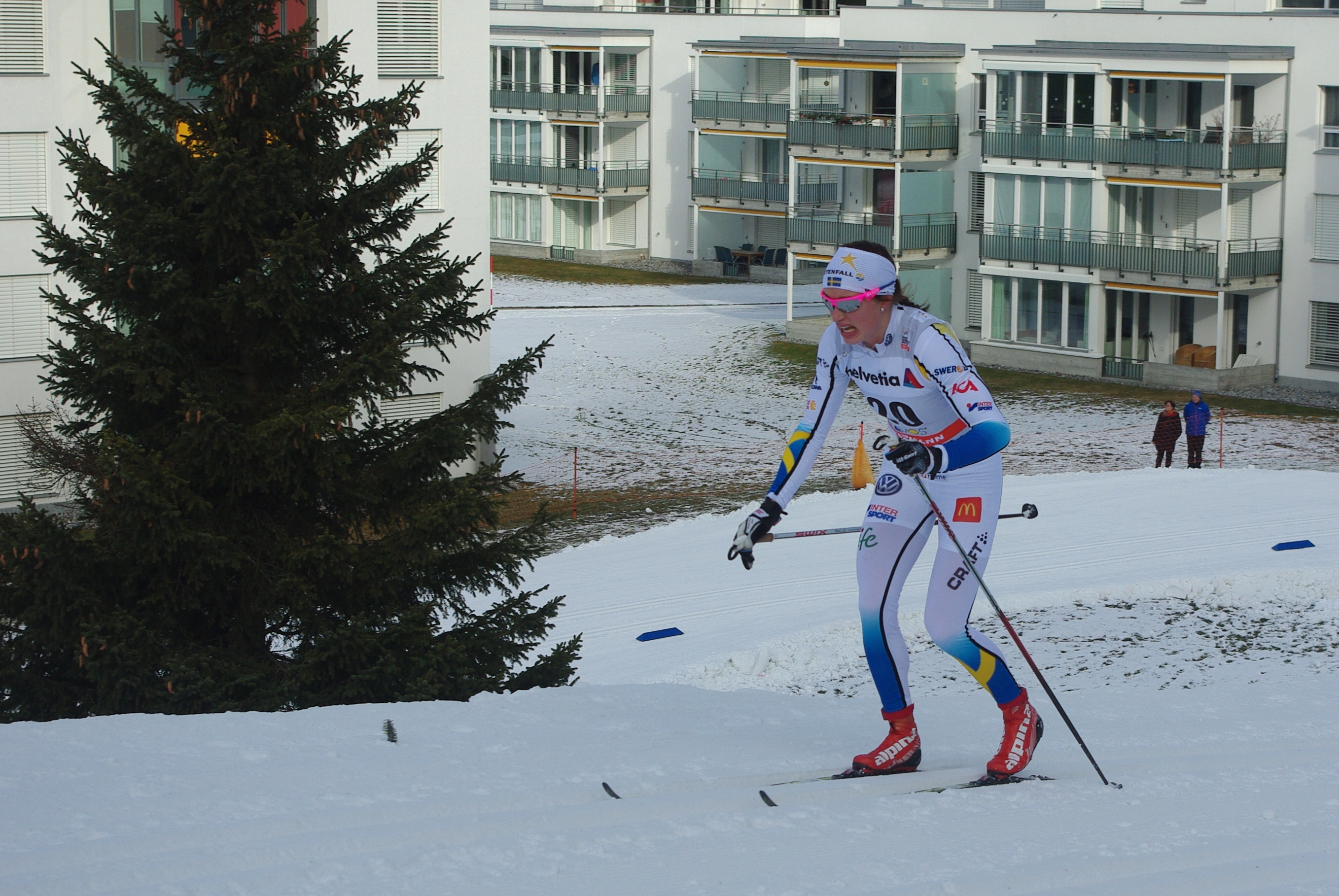
    Sofia Henriksson (SWE), racing to ninth in the Davos World Cup 10 k classic in Switzerland in December 2014.
    Sofia Henriksson acing to ninth in the Davos World Cup 10 k classic in Switzerland last December. That was her last race before the Bruksvallarna 5 k classic FIS race on Friday.

    She never imagined placing in the top three.

    “It was only a short while after the finish I could rejoice over my third place, a position I before could only dream about,” she added.

    Most importantly, this result gave her hope for this season. “I’ve found it’s important to maintain good balance and also keep the focus on training,” she wrote.

    As for Kalla, Swedish women’s coach Mattias Persson told Aftonbladet she is “better trained than ever.”

    Kalla, 28, led a Swedish sweep of the top 15. Sixty-four women finished the 5 k, representing either Sweden, Norway, Slovenia, Croatia, or Great Britain.
    Results

  • Halfway Through Joint Camp, North Americans Discuss Sweden

    Halfway Through Joint Camp, North Americans Discuss Sweden

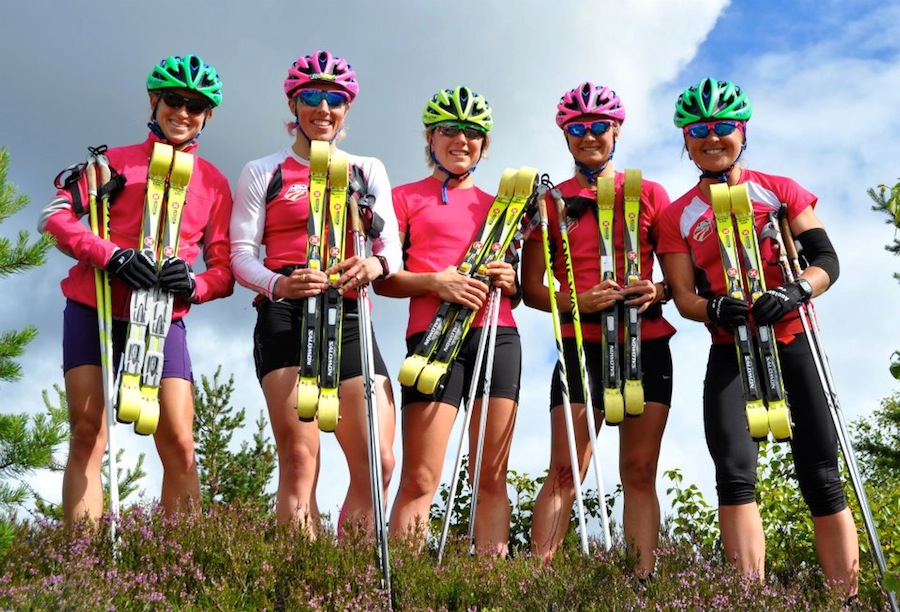
    Five of the U.S. women’s nordic team members pose with their rollerskis in Salen, Sweden. From left to right: Liz Stephen, Kikkan Randall, Ida Sargent, Jessie Diggins and Holly Brooks. (Matt Whitcomb/USSA photo)

    Just over a week ago, five U.S. Ski Team women and one Canadian packed their bags in various parts of the world and set off to meet in Sweden. Usually faced with the task of preparing for months of overseas travel, some might have scratched their heads.

    What do you bring for just two weeks?

    Swedish national team member Anna Haag (l) and American Kikkan Randall at a rollerski session in Salen, Sweden. (Matt Whitcomb/USSA photo)

    Americans Kikkan Randall and Liz Stephen had already been in Europe for nearly a month, first competing in the Blink rollerski festival in Norway in July and later meeting their good friend, Anna Haag, at her home in Orsa, Sweden.

    There, the two U.S. Ski Team (USST) veterans previously trained with Haag and the rest of the Swedish women’s ski team last summer. Things went so well that Haag invited Randall, Stephen and their North American counterparts back.

    Of the newcomers – Holly Brooks, Jessie Diggins, Ida Sargent and Canadian Chandra Crawford – most found themselves in awe of the situation. Here they were, at their first joint camp with Sweden for 10 days of dryland and on-snow training in Sälen and Torsby, Sweden, respectively.

    Halfway through, Brooks wrote in an email that they were still grasping the length of the trip.

    “We keep talking about how it’s funny that we traveled thousands of miles for a short, two week trip,” she wrote. “Many of us are used to flying to Europe and staying in Europe.

    “I think coming over for a short summer trip is a great experience,” Brooks added. “For me specifically, it reinforces that I can adapt to the travel & ten-hour time change. The more I do it, the better I get at it.  I think it will help guide my travel plans for the upcoming winter.”

    A mixture of Swedes and North American national-team members during a distance rollerski on Day 1 of the Swedish/U.S. joint training camp in Salen, Sweden. (Matt Whitcomb/USSA photo)

    The accommodations aren’t too shabby, either. Most are staying at mountainside cottages during their dryland portion in Sälen – home of the 90-kilometer Vasaloppet. They wrap up training there on Friday with four or five 10-minute classic intervals, then drive down to the Torsby ski tunnel for four days on snow.

    “In a lot of ways the climate and terrain reminds me of Alaska,” wrote Brooks, who lives in Anchorage. “It’s fairly mild – sometimes raining, sometimes sunny, often a mix. It’s really mild and never too hot to train. They have the same kind of flowers including Fireweed, which is a signature in the summertime in Alaska.”

    In a blog post, Stephen wrote that Orsa was her favorite place on earth, especially while staying with the Haag family.

    “Ok, maybe being home in Vermont with my own family is pretty high up there too, but this is about as good as it gets,” she added.

    Up in Sälen, Stephen wrote in an email that training was going really well and she enjoyed participating in the dryland part of camp this year after experiencing Torsby last summer.

    “Everyone is making new friends, learning from one another, pushing one another and relaxing well together when the session is over,” she wrote. “We are training hard, but it is not too different than we do when we are home, which is good to see. To be a great nordic skier you have to train a lot, rest really well, eat a ton, and know how to hurt a lot.”

    Brooks described what it’s like to share two workouts and three meals per day with the Swedish women’s team. They talk about everything from racing plans, altitude training, music videos and significant others, she wrote.

    Participants in the Swedish/U.S. women’s training camp, including U.S. Ski Team member Ida Sargent (in pink), trail running near Salen, Sweden. (Chandra Crawford photo)

    “It’s great to see that these girls aren’t doing anything ‘special’ or secret … [and] de-mystify the Scandinavian ski tradition,” Brooks added. “They are regular girls, just like us. We’re all fit, and we’re all motivated. I’m excited to have more international friends on the World Cup for the upcoming season!”

    The all-around fitness has been a driving factor at the camp. On Thursday, Crawford tweeted about trail running with the group: “Anytime I run in the general vicinity of [Stephen], [Randall], [Brooks], [Haag] and the gang, it’s a zone 3 frolic!”

    In an email, she wrote they’ve been training hard and soaking up the “novel elements,” which add to the fun.

    “For example, [Thursday] we did the run all off the trails,” Crawford wrote. “Crazy stuff! We would cross trails occasionally but stuck to the sometimes knee-deep bogs and moss.”

    One day, they did intensity in a race format; the fastest in each heat moved up, the slowest moved down and the middle two stayed put. Crawford explained that made for great action between four heats and created the thrill of racing.

    “The local ski club came out and cheered,” she wrote. “We are all enjoying making new friends.”

    ***

    For more photos from the camp, visit USSA Nordic’s Facebook page.

    Note: Anna Haag posted a new blog on Friday with a shout out to her North American friends. Read it here.