Tag: Swenor

  • NENSA Rollerski Series Gains Momentum: An Interview with Justin Beckwith 

    NENSA Rollerski Series Gains Momentum: An Interview with Justin Beckwith 

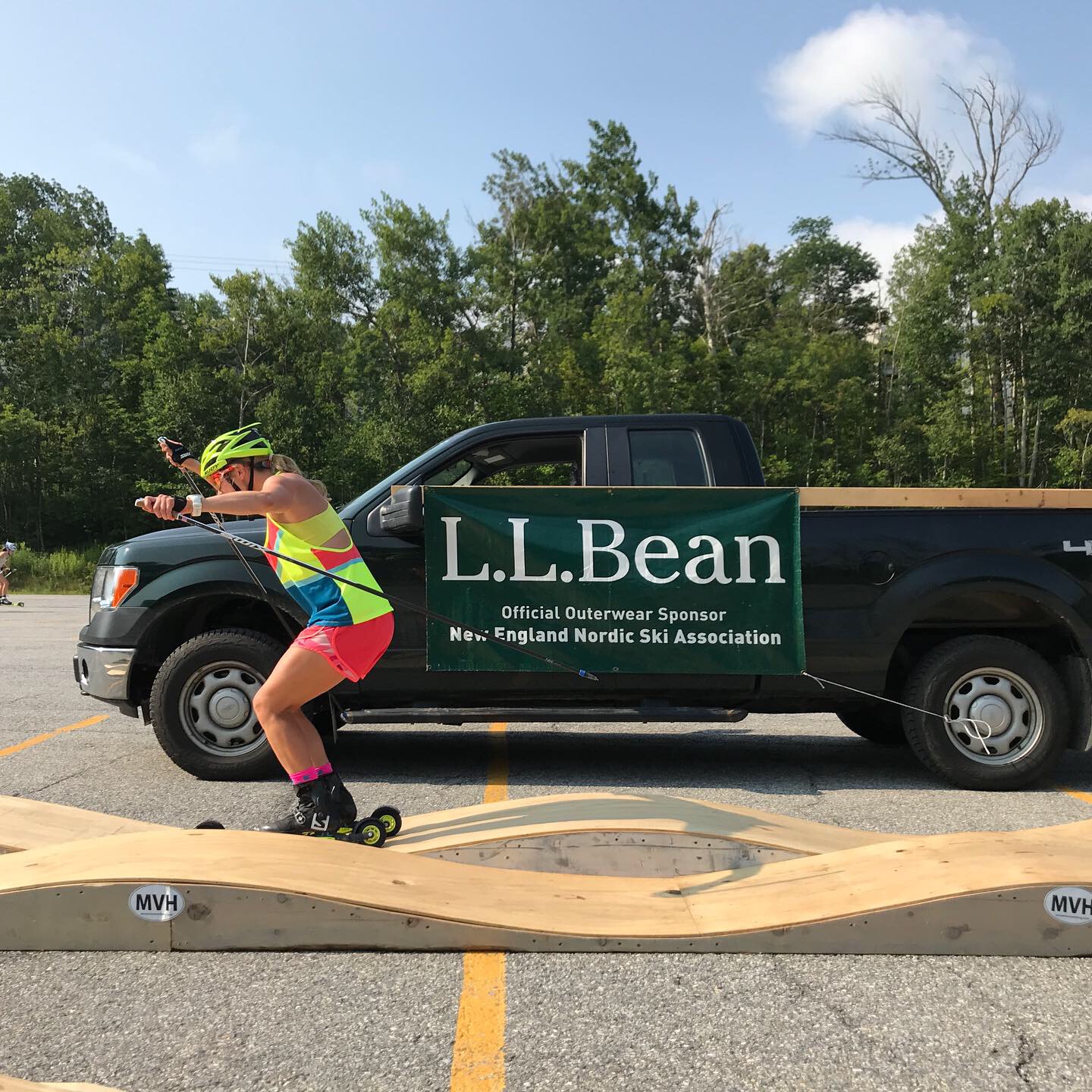
    Jessie Diggins takes a first crack at NENSA’s rollerski ramps, which will be featured in the sprint qualifier and rounds in Lake Placid this weekend. (Courtesy photo)

    On the heels of our coverage of the Martin Fourcade Nordic Festival and the Alliansloppet Action Week, we turn our attention to the Northeast where the burgeoning New England Nordic Ski Association (NENSA) rollerski race series is well underway. The next round of racing will take place this upcoming weekend, starting with a freestyle sprint event dubbed “The Keys to the Castle” on September 18th at Mt. Van Hoevenberg in Lake Placid, NY, followed by a freestyle distance race the on the rollerski track in Jericho, VT the next day. Men and women will each race 15-kilometers in the open division, while juniors will have the option to race 5k. 

    For those interested in seeing the show, in-person spectating is encouraged at the Lake Placid stage, however, as the ski track in Jericho is at a Vermont National Guard base, names must be submitted for entry prior to the event. Events will also be live-streamed on the NENSA Facebook Page, and live timing will be available through Bullitt Timing. Updated COVID considerations for participants and community members can be found here. 

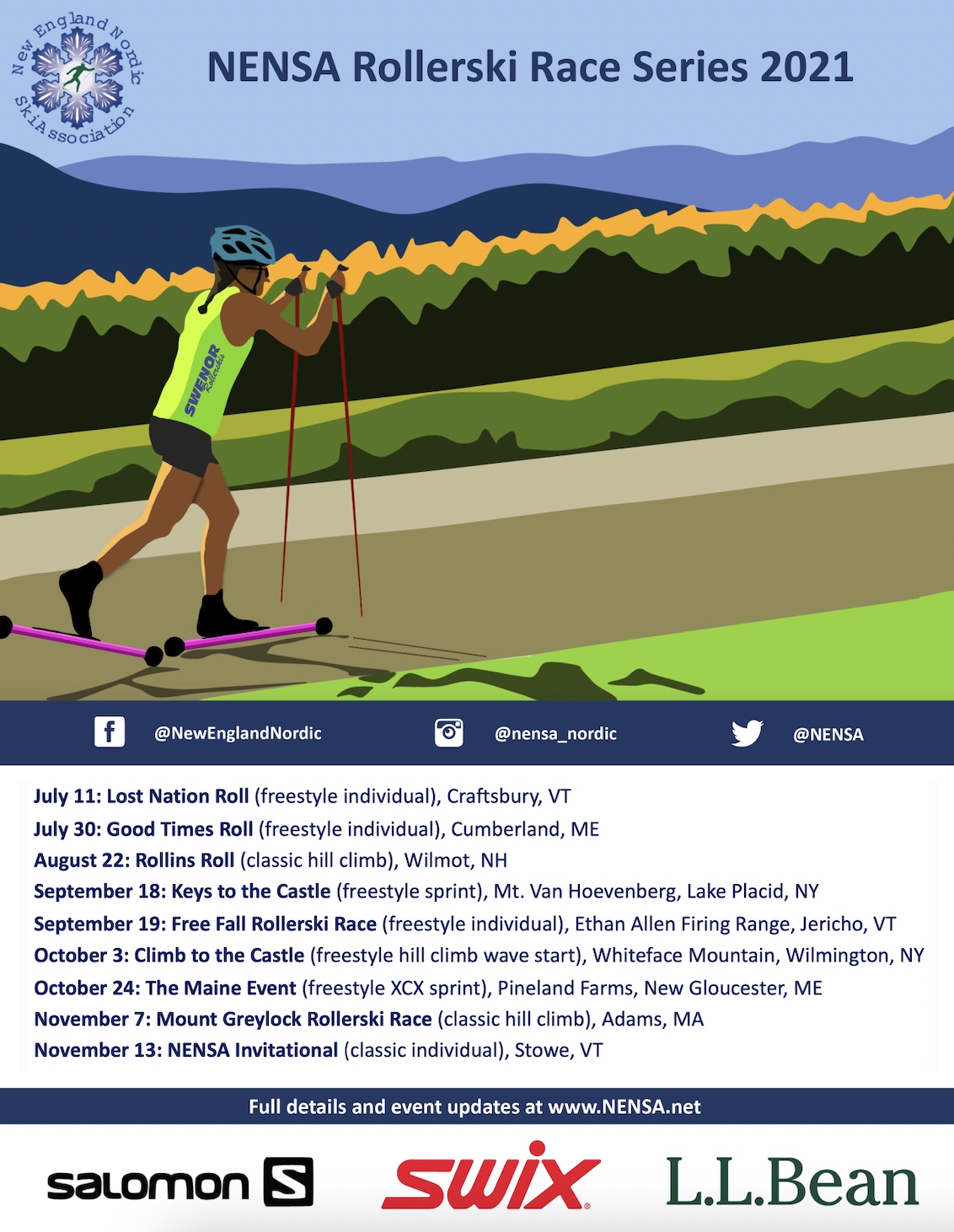
    Building from past years, the series features nine events beginning with the Lost Nation Roll in Craftsbury, VT in July and ending in mid-November with the NENSA Invitational in Stowe. Captaining the ship and still rocking the mullet-mustache combo is competitive programs director Justin Beckwith, with whom FasterSkier connected in mid-August to learn more about this year’s widened scope of event offerings, supporting a thriving culture of skiing in the region, and whether the dream of a New York City rollerski event is still alive. 

    Beckwith explained in the call that one of NENSA’s objectives as the rollerski series evolves is to reach more athletes and to make opportunities for rollerski racing more accessible. Given the high density of cross country skiers and high level clubs in Vermont, the well-attended and highly competitive App Gap Challenge, and the designated rollerski tracks in Craftsbury and Jericho, past events have primarily taken place in that state. However, these venues can be quite a drive for skiers living in Western Massachusetts, New Hampshire, or Maine. 
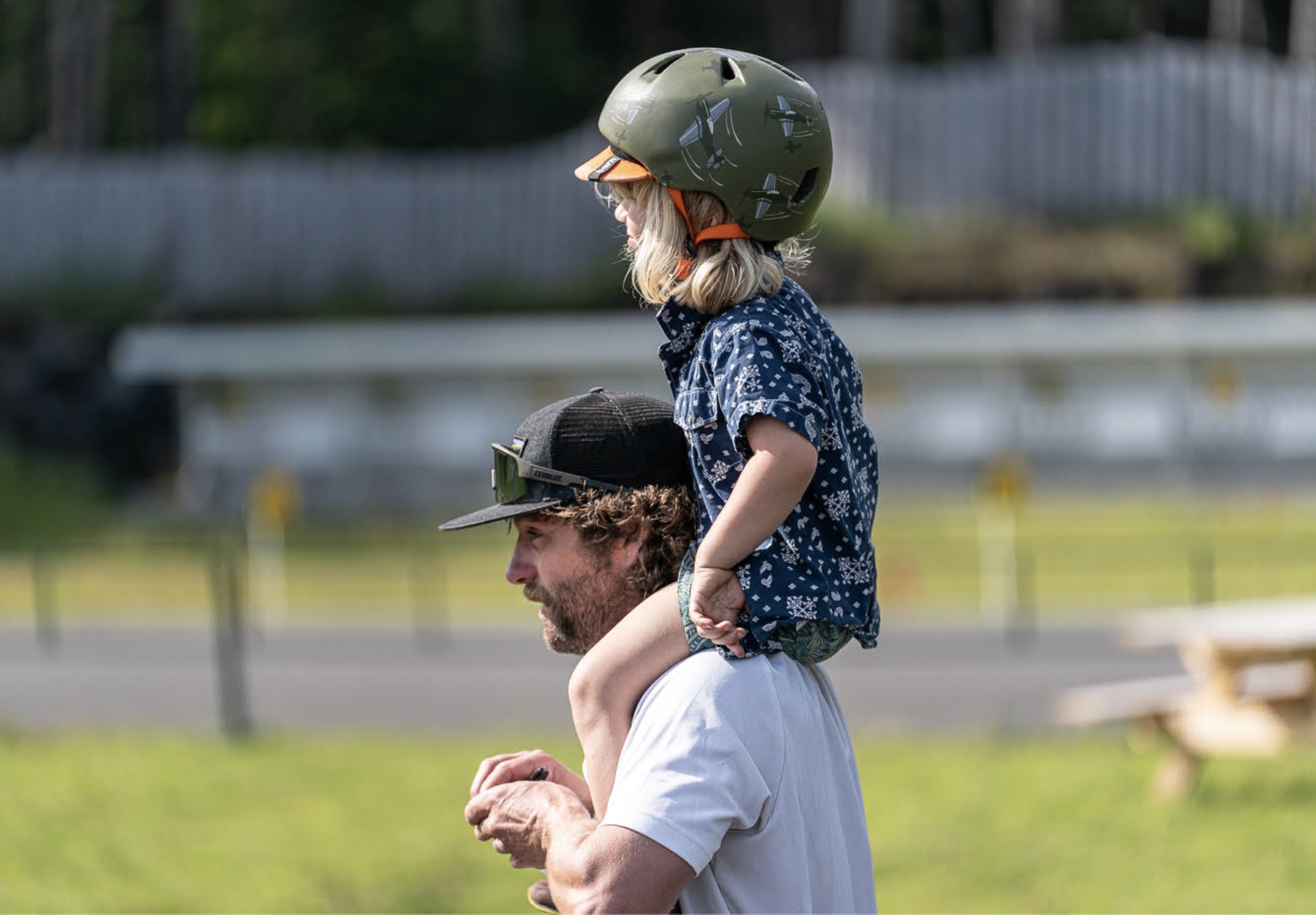
    NENSA Competitive Programs Director and rollerski race series organizer Justin Beckwith with his son, Red, at an event in Craftsbury. (NENSA photo)

    One of the first steps to expanding opportunity in the region? Outreach. Rather than bringing more people to Vermont, bringing the races to the people. 

    “One of the primary goals was to try and bring our programming across the entire Eastern region,” Beckwith said. “So we’ve done a race in Southern Maine, which Clare Egan so eloquently said at awards that she doesn’t think anyone’s had a rollerski race in Southern Maine before. And just this weekend, we’re going over to New Hampshire. It will be the first event we’ve done in New Hampshire on rollerskis. So that’s really cool.”

    The first event he mentioned — the Good Times Roll in Cumberland, ME in collaboration with NonStop Nordic — featured a 4.3k freestyle race for Middle School and beginners, and a 7.5k open race on a closed roadway. The start and an agility course took place inside the Cumberland Fairgrounds.  The second stage, The Rollins Roll in Warren, NH, led classic skiers up the Mt Kearsarge auto road, which was closed during the event. Bringing together the community, both events saw participants from the junior level through the 50+ age bracket. 
    In the Lost Nation Roll, which was co-hosted with the Craftsbury Outdoor Center, youth skiers had the opportunity to race the same course as elite athletes from the Craftsbury Green Racing Project (GRP) whom they admire. Likewise, the GRP athletes had the opportunity to ski their home track with outside stimulation. This event was followed by a learn-to-rollerski clinic and a free biathlon clinic to bring in additional members of the community who were not up for racing or wanted to learn more about shooting.

    Now, midway through the series, the events are catered more toward the top juniors and seniors in the region, though some are still open to all levels. Beckwith explained that NENSA was “lucky” to have such a high density of top skiers in the area, including regional high-performance junior clubs, elite teams like SMS T2 and the Craftsbury Green Racing Project, and EISA collegiate teams including Dartmouth College and the University of Vermont. 

    “We’ve had pretty good success incorporating at least the college programs that are within striking distance — driving time — and who can participate in the races that sort of start in September, October and then in the November.”
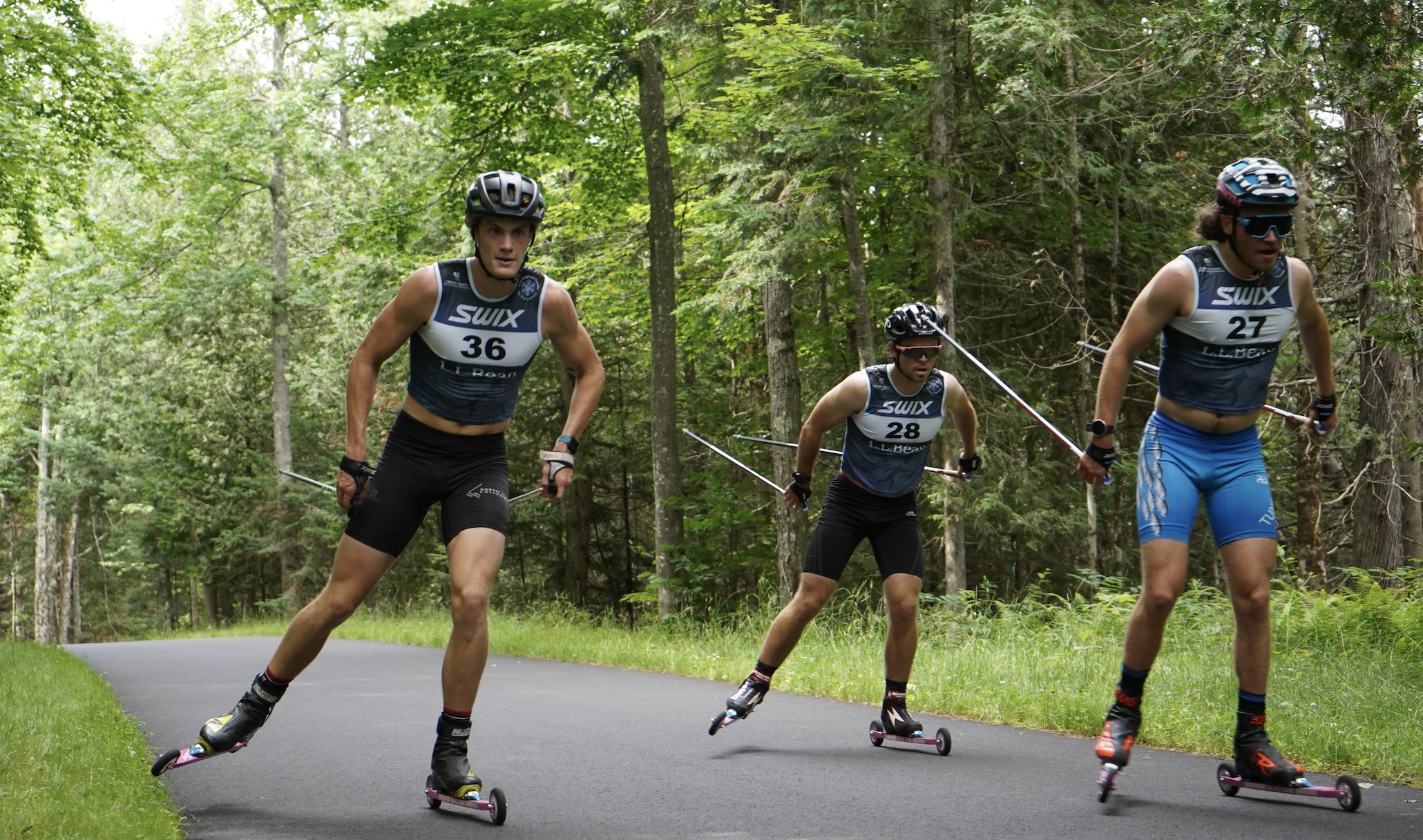
    From left to right, Greg Burt, Raleigh Goessling, and Luke Brown go head-to-head during the 2021 Lost Nation Roll in Craftsbury, VT. (Courtesy photo)

    In addition to new venues, the series is also incorporating a more diverse array of events, including sprint stages. Beckwith explained that the first round of sprint rollerski racing took place at the Eastern REG camp in early July in Lake Placid. 

    “At Mt Van Hoevenberg — that was really our first sprint course. It was actually our first sprint event that we’ve done in total since Junior Nationals 2020. But it was also the first heat format we’ve ever done in rollerskiing. And it’s an excellent venue for it. I think you can’t make a track wide enough [for rollerski sprints], so we actually pared down [the heats]. And I think the event we’ll do on September 18th… we’ll probably be running heats of four again in that. So it’s a little different than a winter format just because of the track width. But yeah, it’s exciting.” (Beckwith added that long-term, a wider track is something NENSA hopes to develop.)

    More specifically, the events will still feature the typical structure of qualification followed by three progressive rounds, only modified to four skiers per section. Lucky losers will be incorporated based on time, as Bullitt Timing is providing a FIS level timing system. Juniors will compete in a mixed gender “Kings Court”-style sprint in order to ski more rounds, gaining more tactical experience. 

    The events this weekend will include athletes from the Sun Valley Gold Team, the Bridger Ski Foundation Pro Team, and SMST2. (The Craftsbury squad is currently in Germany training in the ski tunnel in Oberhof.) Because the number of athletes on course is limited, these events will have a bit more “vetting of the competition” — i.e., being current U.S. Ski & Snowboard members and holding a current FIS license. However, recreational skiers still have the opportunity to test their mettle at Climb to the Castle in Lake Placid on October 3rd or the Mount Greylock Rollerski Race on November 7th in Adams, MA. Both are uphill classic challenges. 

    “We created a permitted opportunity to ski up a closed State Park Road. So why not? Even if you’re not racing, go try it out, right?”
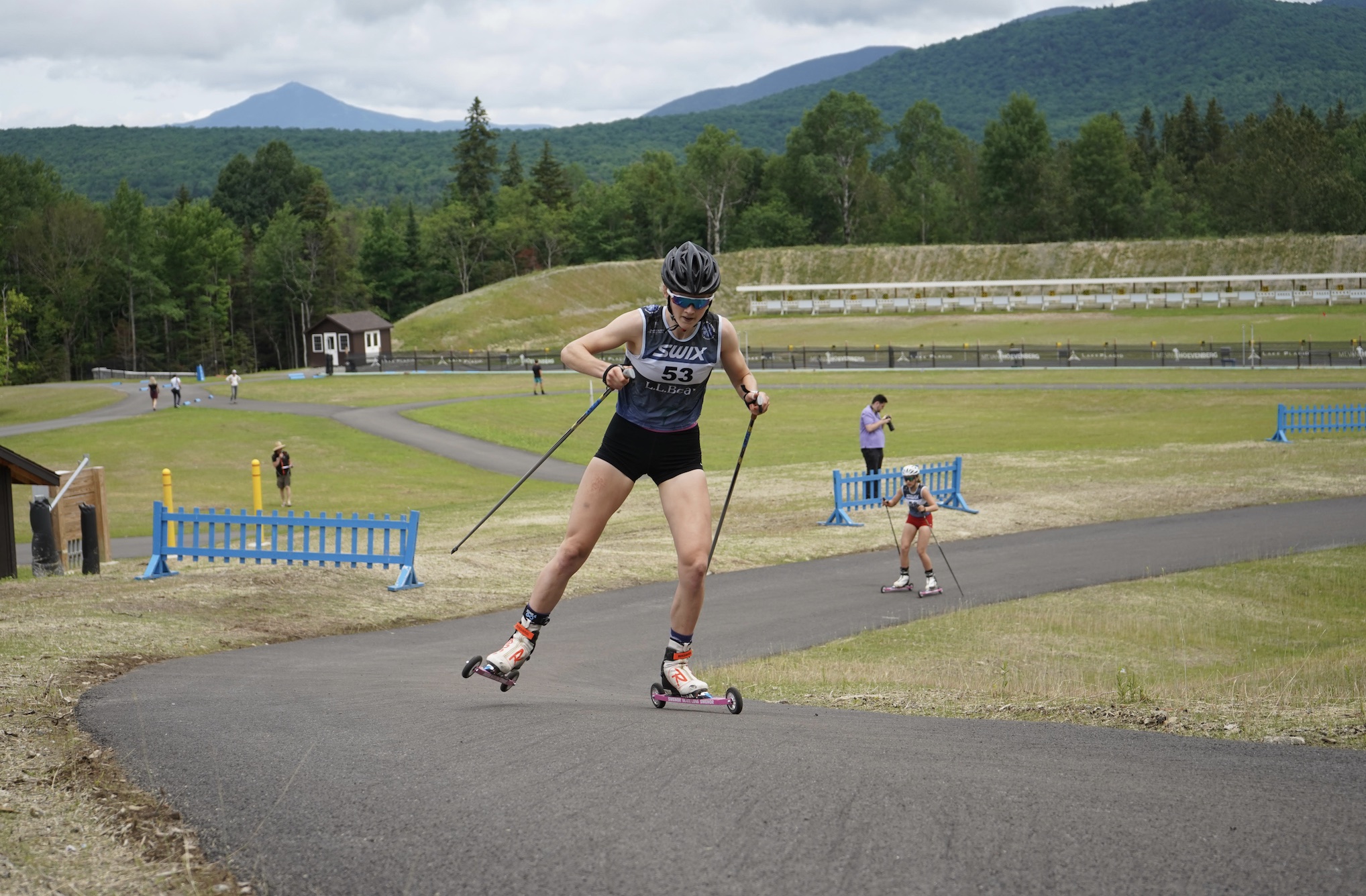
    NENSA athlete Evelyn Walton on course in Lake Placid during the Eastern REG camp. (Courtesy photo)

    Before the pandemic, the series averaged roughly 100 participants in each stage across all ability levels. While numbers have been lower in 2021 thus far, a summer series still remains a valuable touch point to keep the ski community engaged until the snow flies.

    “A lot of these races this year, the focus is kind of building — not just out of COVID and building back into events, but into thinking about how we can better support the community and create opportunities. That’s our mission statement: to support a vibrant ski culture.”

    To bring in people from all aspects of the community, NENSA is partnering with ORDA — Olympic Regional Development Authority — to organize an Eastern Coaches Symposium and a TD training opportunity in concert with the Climb to the Castle on October 3rd. Climb to the Castle is co-hosted with NYSEF, the New York Ski Education Foundation.

    While this race up the Whiteface Toll Road in Lake Placid has plenty of history, it is also quite a grueling and climbing 2,300 feet in five miles is not universally accessible. Beckwith explained that they’ve considered a shorter distance where beginner or youth skiers could start further up the road to make it more manageable, or perhaps supporting a fleet of fast or “juiced” wheels to reduce the load.

    Speaking to the concept of growing and sustaining the nordic community across all ages through the rollerski series, Beckwith recalled a conversation with longtime Sun Valley Ski Education Foundation coach Rick Kapala, who had contacted Beckwith to learn more about putting on the series in hopes of putting on similar events out West. 

    “The idea I think Rick hit on the head is just that you’re creating excitement, to keep the kids engaged, right? And adults — all of it keeps skiers engaged throughout the year, and I think that’s really the goal. There’s no qualification [to enter]. In the past, we’ve built prize money in and I think we’re gonna be building prize money into a few of those bigger events I was telling you about in the coming days, but that’s just fun to roll that out as it comes… So really the most enjoyable piece of it and the broader scope is that we’re bringing together people from different communities, regions, abilities, all of that.”
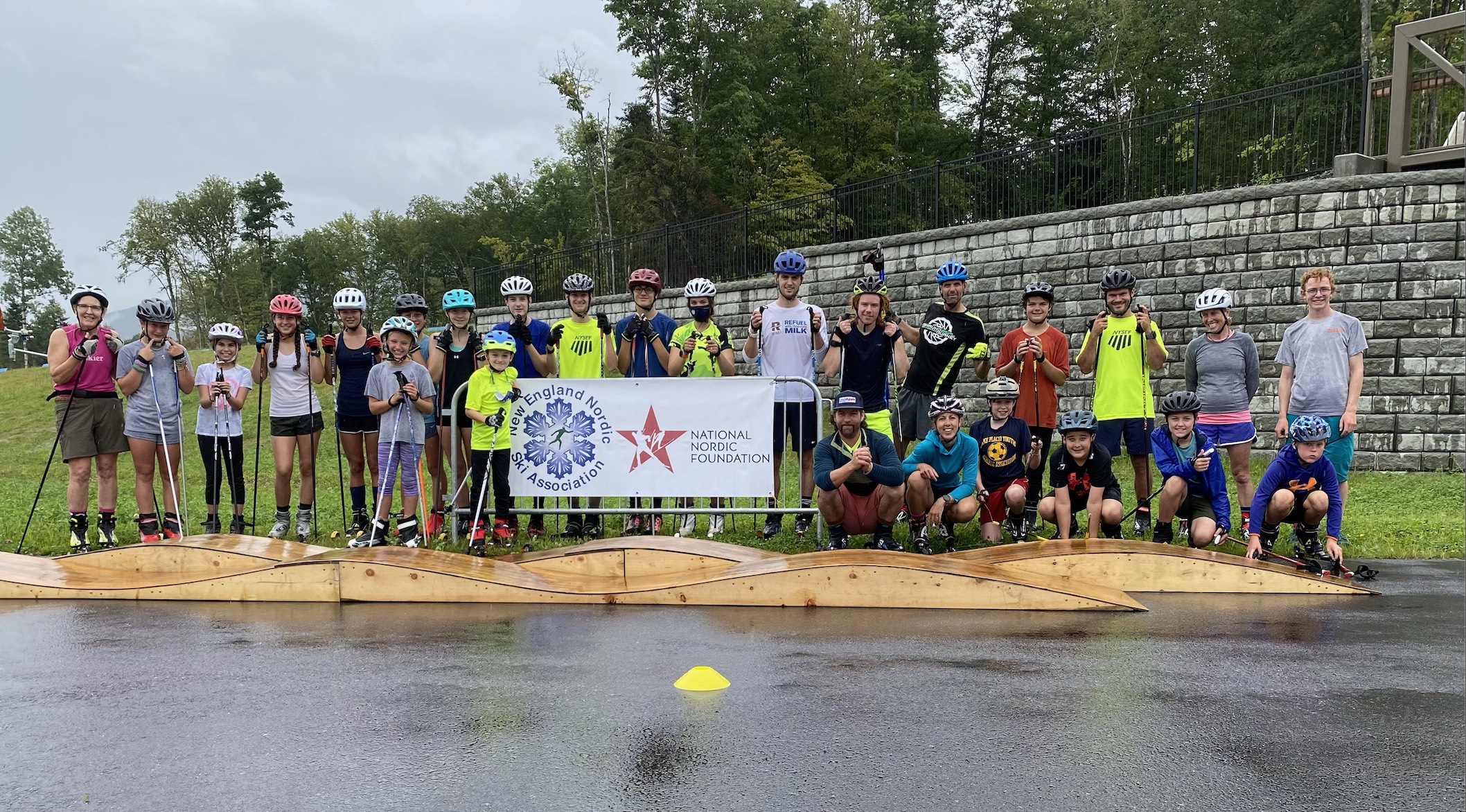
    A host of rollerskiers get together after a NENSA event. (Courtesy photo)

    He explained that NENSA’s team will similarly highlight regional popular racing opportunities during the winter. 

    “We’re really gonna highlight those races, popular racing opportunities, and also let people know that we feel like those are great developmental opportunities. Versus, we’ve been maybe a little Eastern Cup and Junior National qualifying centric in the past. So we’re really trying to support those, you know, it’s inclusive, but more so than that, creating festive opportunities that are available regionally. And the level of competition will be at those events regardless, because there’s really good skiers throughout the region, and they’re already utilizing those events. 

    “We know people will go to sanctioned events in winter and summer, try to qualify for JN’s, but how can we create opportunities beyond that? If we can bring it to people’s backyard communities, so to speak, or within that sweet spot of an hour or two from their doorstep, then hopefully, we just get more people involved and excited throughout the year.”
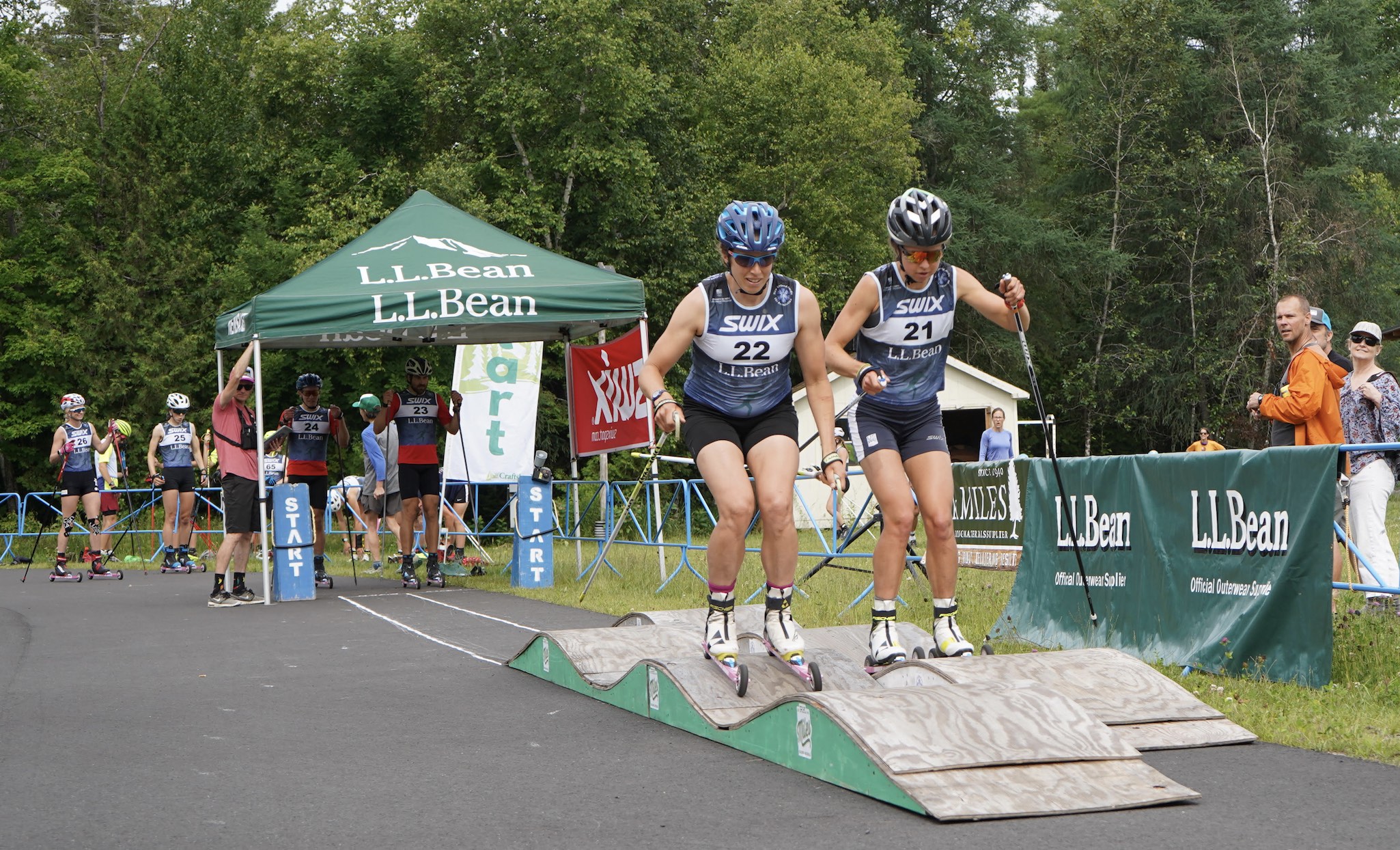
    Green Racing Project members Susan Dunklee (left) and Caitlin Patterson (right) take on NENSA’s rollerski ramps at the opening event in Craftsbury, VT. (Courtesy photo)

    FasterSkier spoke with Beckwith about the nascent series in 2019 shortly after the App Gap Challenge, a skate-to-classic skiathlon that led skiers up a mountain pass on a closed State Highway near Fayson, VT. (The App Gap took a hiatus in 2021 due to construction on the road.) When considering what it took to pull off an event of that magnitude, Beckwith said: “The beauty of a rollerski series is that nobody has any expectations or guideline of how we do this.” 

    He also said that he envisioned an event closer to the scale of the many summer rollerski festivals in Europe, perhaps in New York City or Boston. While this may seem like a pipe dream, with Beckwith behind the wheel, the idea came closer to fruition than one might have thought.  

    “Let’s say we were seriously exploring a race in Central Park this fall as part of the series early on. And I think it’s very possible for 2022 — it takes time to do that. But we’re close, we’ve got our foot in the door. People know who we are. And we have developed some key contacts that came up down there, which is exciting.”

    NENSA also grew its staff this year to make organizing larger events more sustainable, adding an Event Support position filled by Fred Bailey.

    “It definitely takes a team to pull this off,” Beckwith stated.

    NENSA will be offering a youth clinic in Boston in collaboration with two other organizations whose goals also include getting kids outside on skis and supporting equity and inclusion in the cross country ski community. Like other clinics NENSA has run this summer, this clinic will introduce current ski program participants and potential future participants to rollerskiing for the first time with a focus on having fun, broadening exposure to different aspects of the sport, and encouraging an active and healthy lifestyle. Beckwith identifies that added exposure in populated areas may also help NENSA create larger highlighted events in the future. 

    “But there’s twofold to that. Because if we’re getting into urban areas, metro areas, whatever, then the visibility grows.”

    With better understanding of the concept, urban venues might be more open to hosting. Beckwith explained that NYC stands at the top in terms of ideal venues. As so many events from 2020 were postponed into 2021 due to the pandemic, permitting became very challenging, which impeded the feasibility of running an event there in 2021. 
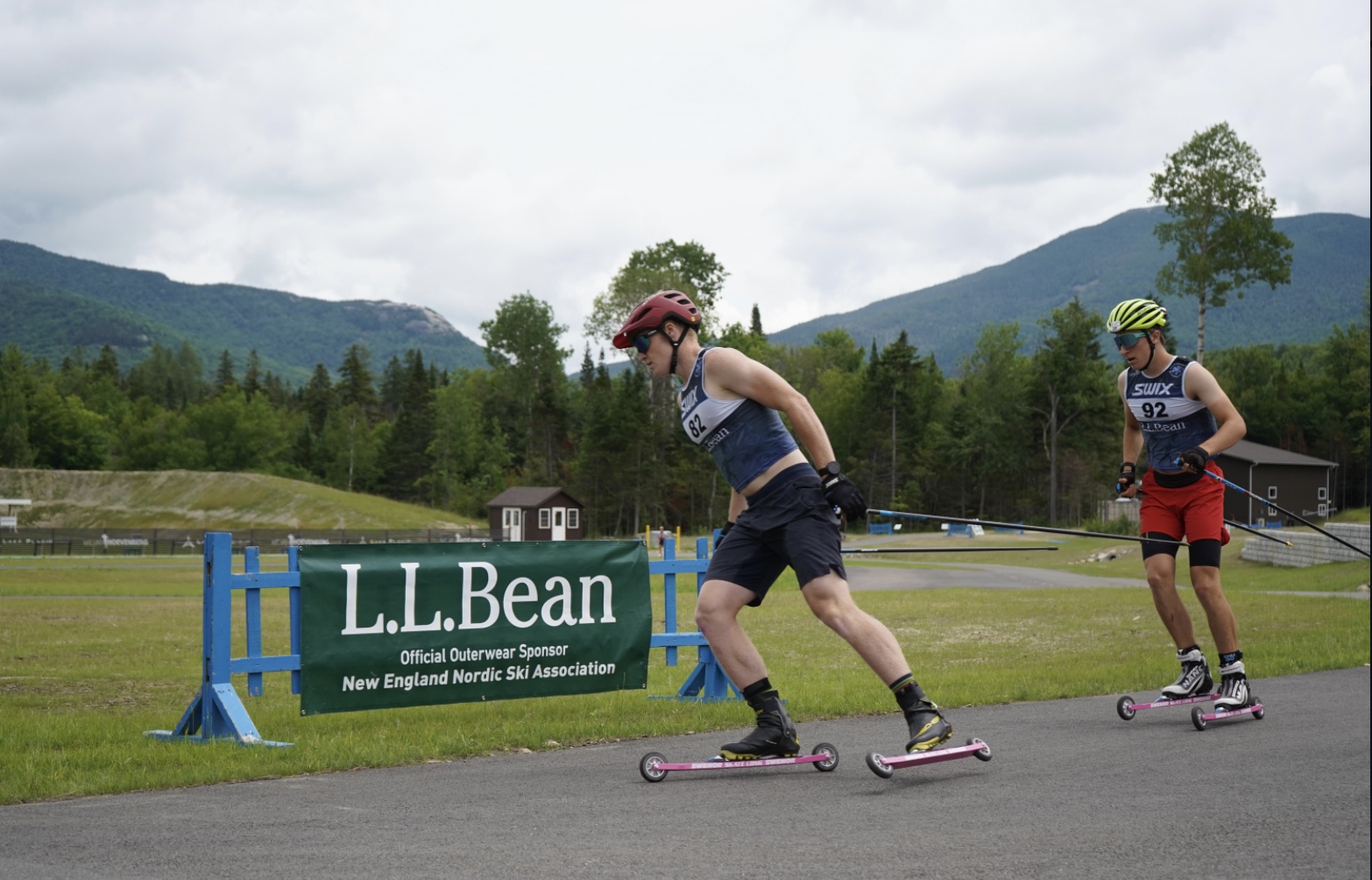
    NENSA athletes Jack Young and Jack Lange compete in the sprint event during the Eastern REG camp in Lake Placid. (Courtesy photo)

    “One other issue beside the permit was just that it’s an Olympic year, and the availability and openness of National Team athletes [may be less than non-Championship years]. If we pull off a race in New York City, we’re talking about a budget at a minimum of 10 to 30 grand, so if we’re going to do that we want to have [high caliber athletes racing to] capitalize on it.”

    While it may be nearly 300 miles north of Central Park, Jessie Diggins is confirmed to be competing this weekend in Lake Placid. Given the caliber of the elite training groups participating, it’s clear that the level of competition is high and the racing will be spicy.To add to the excitement, qualifier and rounds will feature a 24 foot bicycle ramp directly out of the start.

    The NENSA rollerski series is now in its fourth year. If it wasn’t already abundantly clear how dedicated Beckwith is, he became emotional when reflecting on what he is proud of.  

    “Oh, geez, what am I proud of. We lost, you know, a year of in-person rollerski races with COVID. So that was a real doozy because we had Craftsbury coming online with a roller ski track, we had Van Hoevenberg coming online with a roller ski track, we were really excited to build into that. And then you know, the wheels fell off the bus from the outside — that wasn’t anything that we did. We created some really great regional events, as much as you can in a safe manner. But they were quite engaging challenges, and we saw literally worldwide participation in virtual events.”

    Adapting to the times, Beckwith also pulled off running the 2020 App Gap challenge over the course of  a week where athletes from the same club could race on matched skis in a designated window. Breaking these groups down further into waves of 15 made it such that there were never more than 30 people in the area at a time. 

    “So that kept us together a little bit… This year, it’s definitely a big step to re-engage after having a year where you didn’t. If you host an event, at the end of the day, you’re talking about what you’re going to do better the next year to build on it, and that’s just tricky with everything that we had coming down the pike. So I’m just really excited about where we are right now. We’re gonna have more rollerski races than we’ve ever had. I think that we’re gonna have the most competitive races we’ve ever had. It was pretty hard to top the women’s field in that Lost Nation Roll last year. I think it was about a 33 FIS point race or something like that — in no small part because Jesse [Diggins] was there.”

    He acknowledged that there were plenty of other strong athletes there also — women and men — but that this weekend’s races will be a step higher. 

    “I think the big success of this year is going to be just that we’ll have more participation overall. Partly because we have more events — well attended events  — but that we’re reaching many more skiers by taking the show to them basically. That’s probably going to be the biggest takeaway win for this year.” 

    Beckwith also thanked the associate sponsors of the series: Swix, L.L. Bean, and Salomon. Apart from direct funding, he noted that Salomon sharing a video clip of one of Beckwith’s signature agility courses helped it see over 80,000 views internationally. 

    “We also have a really amazing partnership with Enjoy Winter, and Swenor rollerskis, which has really been a part of the series from the beginning and what makes it work for us. So that’s a really important piece to a partnership. Worthy of mentioning are the great people like, I’m teared up now, but Marty Hall, Joe Lamb. They’re just really supportive. So that’s incredible.”
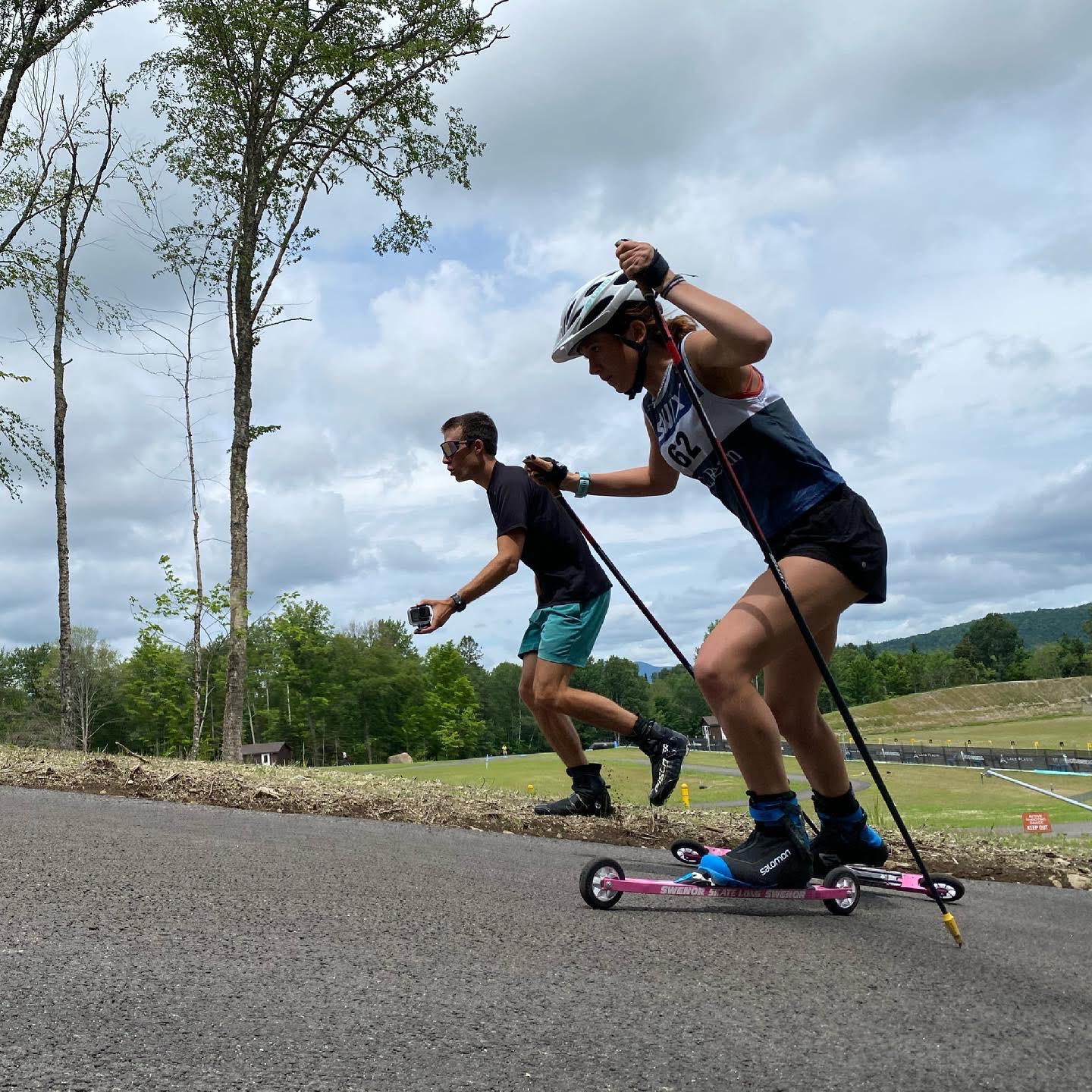
    Hattie Barker attacks a climb with Mansfield Nordic coach Adam Terko collecting video. (Courtesy photo)
  • NENSA Unveils 2018 Rollerski Events, New Partnership with Swenor Rollerskis

    (Press release)

    NENSA is thrilled to be expanding summer programming with the introduction of a Rollerski Race Series and a supplier partnership with Swenor Rollerskis. The goal of the race series, and associated educational opportunities, is to bolster NENSA’s mission to sustain a vital and active skiing community in New England. Delivery is underway for two matched sets of twenty classic and twenty skate rollerskis from Norway. These skis will be used in four marquee competitions hosted this year in Vermont and New York. In addition to raising the level of competitive programs in the East, NENSA intends to draw media attention to cross-country skiing and expose our sport to a broader audience.

    The first event of the race series will be the App Gap Challenge, to be held on August 11th in Fayston, Vermont. This will mark the tenth running of the inspiring dual-technique race that climbs to the east side of the Green Mountains – registration will be limited to the first 200 registrants. On September 15th and 16th NENSA will partner with NYSEF to host a mini-tour including a 3km prologue, a sprint with agility components (at the ORDA roller ski track) and the well known Climb to the Castle, which pits competitors against the Whiteface Mountain Toll Road. On October 13th the series will return to the Ethan Allen Training Site in Jericho, Vermont for the second running of the NENSA Fall Classic. This event had a robust inception with participation from many collegiate and club programs in 2017 – the closed track in Jericho lends itself to the potential of running the largest attended race in North America. On November 3rd the series will culminate with the Trapp Elite Invitational – a race that brought together top ranked skiers of all ages, including 2018 Olympians, World Junior medalists and many National Champions. For 2018 we will be offering a citizens race in the morning to allow more participation – before gathering to celebrate and cheer on some of the best current and future cross country skiers in the world. NENSA is also thrilled to have the support and sponsorship of SWIX for this roller ski race series. SWIX will be providing all the podium prizes for all 4 of these race series.

    Besides competitive events, NENSA will utilize the Swenor Rollerski fleet for educational events throughout New England. In addition to Swenor, its US distributor’s sister brands Bliz and Anti-Freeze Face Tape have also joined to become NENSA sponsors. Stay tuned to www.nensa.net/rollerski​ and our social media channels for updates on our programming. We look forward to sharing rollerskiing and the sport of cross-country skiing with you this summer!

    About NENSA:

    NENSA is the Community Olympic Development Program (CODP) for cross-country skiing in the East as well as the umbrella for most organized Nordic skiing events in the region. Cross-country skiing, as practiced by our youth skiers and families, is a lifetime activity firmly rooted in New England tradition. It is NENSA’s mission to sustain a vital and active skiing community in New England. Visit www.NENSA.net to learn more about our organization.

    Questions about programing should be directed to Competitive Program Director Justin Beckwith at justin@nensa.net

  • Living the Dream: 2016 Classic Rollerski Review

    Living the Dream: 2016 Classic Rollerski Review

    2016 FasterSkier Classic Rollerski Review
    Tim Burke’s garage and “whap-stick” fleet. (All photos: FBD)

    Instant Classic

    While I have no actual data on this issue, there seems to be a sentiment in our world that classic rollerskis are the red-headed step child of summer training. Most skiers ride bikes, run and even check their dignity and safety at the door for a skate roll, but classic? In summer? On rollerskis? NFW.

    Let’s be real clear here — classic skiing is awesome. It is the root of our sport. When everything is right, it’s a beautiful thing, but the numbers don’t lie — look no further than your local tracks this winter and you’ll see a lot more people out on skate gear than classic. Then there’s the fact that many purists don’t like classic rollerskis due to their “unlimited kick,” with the theory here being that the ratcheting wheel reinforces bad habits and just by looking at them, you’ll forget how to properly set the wax “for reals” (as we say in Philly) when you’re back on the real McCoy. Add to this that it’s also hard to classic ski well. In fact, probably my favorite quote on this topic is “skate is harder to do, but classic is harder to do well.” Church.

    Therefore, given all of this, it’s no surprise that you’re more likely to find a nordic skier excelling in a stick-and-ball sport than you are to see them out tearing it up on the elusive classic whap sticks. Sure, my good buddy Noah Hoffman does five-hour laps around Park City two to three times a day, but Noah is crazy, we all know that. He’s also on the national team and you’re not.

    Let’s “keep it 100” here though (the kids at the bus stop where I had to refill my drink belt taught me this, if you don’t know it, you’re old. Go look it up in your Encyclopedia Britannica, grandpa). We all know that deep, deep down the reason you don’t classic ski as much as you should is because you aren’t as good at it as you’d like to be. Trust me, *I* know what I’m talking about here. Classic skiing is awesome and here’s an idea, maybe you’d be better at it if you did it more. Plus, you’re smart — you religiously read my column (whenever the hell it seems to randomly appear) and you somehow knew this lecture was coming. You’ve already decided that this is the year that you would finally get your shit together classic skiing. Or, you’re nursing an over-use injury after reading Jacked Up Old Man’s blog and thinking, “I can train like that,” but now you realize that you can’t, you’re overtrained and/or injured and your Achilles feels like a piece of hot barbed wire that’s been set ablaze by your crushed dreams. Or maybe you’re a competitive high school/collegiate/pre-elite skier who races classic with equal regularity to that of skate. Or maybe you really are like Noah, just plain nuts, and classic is your jam.
    Well, my friend, you are in luck, as we rounded up 10 pairs of the best classic whap sticks that money can buy and put them to the test.

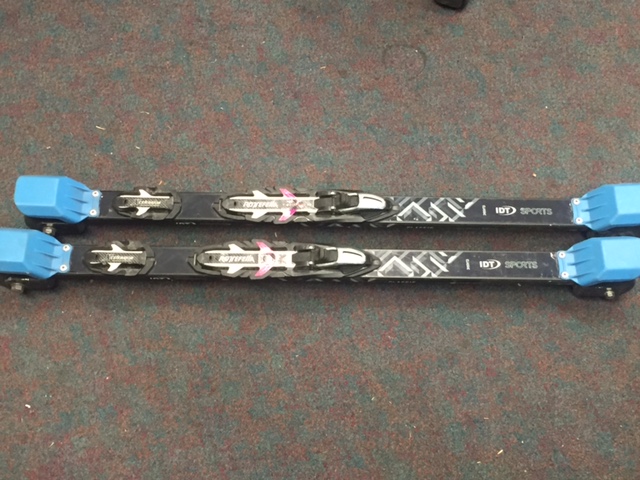
    Winner, winner, chicken dinner: IDT Classic Elite

    The big winner: the IDT Classic Elite. Time to book that trip to Norway.
    The big winner: the IDT Classic Elite. Time to book that trip to Norway.

    While this phrase is purported to have its origins in Vegas and you’re a nordic skier, so you hate gambling, drinking, staying up late, standing on your feet, people, and anything else related to having fun and/or not skiing, hang in there with me on this, for in exchange for stomaching the colorful Vegas expression, I will reveal what our entire team found to be the best classic whap sticks available to man: the IDT.

    Yes, yes, the astute reader will undoubtedly recall that I chided IDT a little bit in the skate review for their product not being readily available in the U.S. and lack of availability is a HUGE pet peeve of the FBD, as I find it infuriating to read a product review only to discover that said product isn’t available for six months or some other such nonsense. Here’s a suggestion for all of my reviewer colleagues out there (even though we all know that FBD has no equal) — how about doing a review when we, the eager consumer, can actually BUY your over-hyped, unnecessary piece of crap that we most likely don’t need and won’t use? That’s why we at FasterSkier are the voice of truth and light and only review crap that is A) available and B) you actually WILL use. So tell your accountant, significant other and conscience to relax, continue to promise yourself that you’ll save for that bathroom remodel next year, and obsess on the thought of new classic rollerskis until you work yourself into such a frenzy that you somehow manage to justify yet another ridiculous purchase. Remember, you really DO need these and no one deserves this more than you. Remind yourself of that time when you cleaned the garage two years ago or emptied the dishwasher all by yourself — selfless acts like that deserve some positive reinforcement. Push on in this psychological tug-o-war by promising yourself that you’ll feed them and walk them every day and that you’ll take REALLY good care of them. Plus, this is the year you swore you’d get good at classic — I’m pretty sure you wrote that down somewhere a few months ago.

    Thanks to all of you loyal readers, this column has become a smashing success, therefore companies are now forced to actually take me (a bit) seriously. So when I told IDT that I wouldn’t review them until they created a viable distribution network in the U.S., they agreed. What this all means is that not only are these the best classic rollerskis, but you can actually get them. Currently, the best method is to order via their website, but IDT has also assured me that they are setting up U.S. distribution and the skis will be available in stores. Being the ever-vigilant, always skeptical, crackerjack investigative reporter than I am though, I could not in good conscious recommend that you order something online without first checking this out and everyone will be happy to hear that they do indeed arrive in a reasonable amount of time. Amazon Prime it is not, but I got a pair in about two weeks. Perfect? No. But reasonable enough for now.

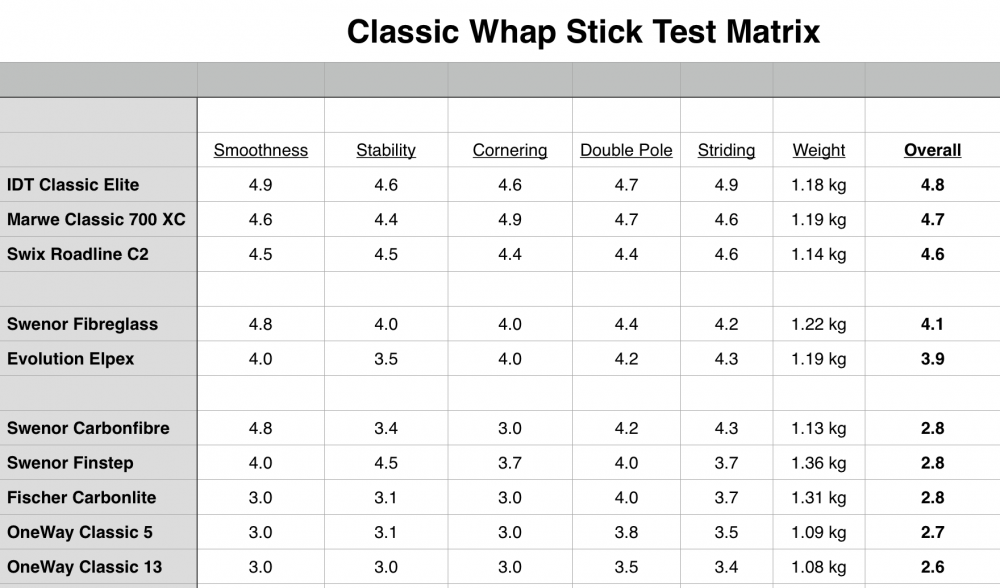
    Now on to the review. What did we like about the IDTs? In short, everything. We approached this test with much of the same methodology as the skate test, with a few notable additions. As shown in the matrix below (Table 1), we added categories for striding and double pole (DP). Yes, yes, I know, you can (and should) DP in skate technique, but it was the opinion of our esteemed panel that DP plays a greater overall role in classic technique to merit its own category. Same deal with striding, which is, after all, the essence of classic skiing, so this new column should be quite self-explanatory. And the IDTs killed it in every one of these areas. Everyone loved the overall feel of the ski and while it was not light years in front of everything else, it was everyone’s favorite ski, bar none. Try to get seven people to agree on where to go for dinner or what movie to see and I think you’ll quickly see the point I’m making.

    2016 classic rollerski test matrix
    Table 1

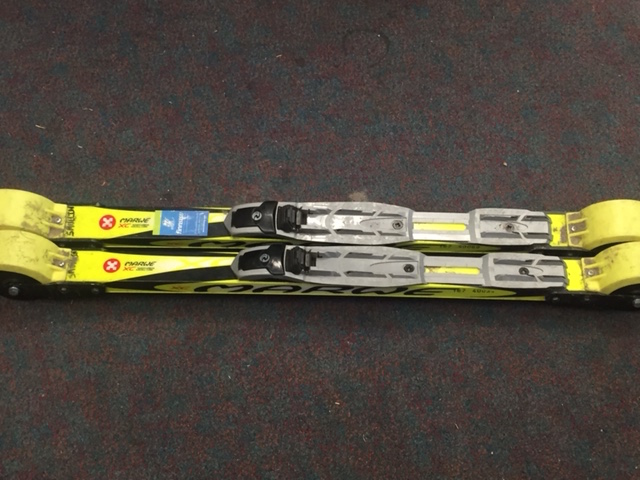
    Marwe Classic 700 XC

    The Marwe Classic 700 XC was a tester favorite.
    The Marwe Classic 700 XC was a tester favorite.

    A close second, however, was the Marwe 700. Again, everyone loved these skis. In addition, they are cheaper and readily accessible, which is a plus for all of the impatient members of the studio audience. It should also be noted that Marwe has stood the test of time. We’ve been on the IDTs for the past few months and really like them, but we have literally years of experience and lots of usage data on the Marwe. We have no reason to believe that the IDTs won’t wear well, but we know the Marwes do. Look no farther than the garage of 12-year veteran of US Biathlon Tim Burke (photo at top of story) and you’ll see that they are the choice of many professional skiers. I went for a rip with Timmy in Lake Placid on a pair of his Marwes that were a few years old and they still skied great (yes, biathletes do classic ski and quite well, may I add).

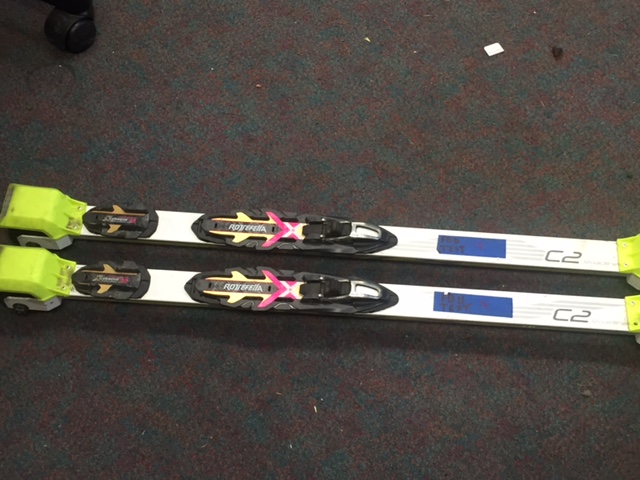
    Swix Classic Roadline C2

    Swix Classic Roadline C2
    Swix Classic Roadline C2

    Also testing well was the Swix ski. The scores weren’t quite as unanimous as the IDT and Marwes, but every reviewer but two had them in their top three, so sticking with my dinner/movie analogy, this speaks volumes. Like the Marwe, they are also cheaper than the IDT and readily available (well, as readily available as any rollerski is, and let’s be honest, it’s not like these skin removers are falling off the shelves at your local Walmart. But you can find both Marwe and Swix without calling Europe).

    Just as we did in the skate rollerski review, we ranked the skis into three categories and the IDT, Marwe and Swix were at the top in a class by themselves. In all fairness, the gap down to the next group wasn’t as big in classic as it was in skate, so hold all of those angry letters, as this second group is also populated with good skis. And just like skate, depending on your weight, age, skiing style, goals and budget, some of the skis in this second group may work for you, as don’t forget, our goal here is twofold: 1) rank the overall best skis and 2) help describe which skis are best suited for more specific individual needs. So again, hold those letters. At least for a few more paragraphs.

    Stacking the deck

    I’ve mentioned this in past columns, but it bears repeating that it always makes me smile how different companies interpret our requests for gear reviews. All companies receive identical instructions and yet the interpretations of these instructions seem to vary wildly. Case in point, essentially every puffy coat manufacturer sent us a different combination of men’s and women’s jackets for last year’s puffy coat review. Rollerskis proved to be no different, as some companies provided skate only. Others only sent classic. Some missed the deadline by a few days, others by weeks, some by months and some wrote to inquire AFTER the review was published if they could still participate. Yes, really.

    I bring this up because while many companies sell multiple models of skis, some picked one model and just sent that, while others decided to send us everything they could find. While this is obviously more work for us, that’s why we’re here and any good racer is an opportunist, so I actually kinda respect this approach. Swenor led the charge here by sending everything but the kitchen sink.

    Swenor x 3

    What was particularly interesting about Swenor is their product line probably offers the most diversity of any manufacturer. Most of the differences between BRANDS of rollerskis are often subtle and once you get within brands, the separations can be even smaller. This is not the case with Swenor — you know immediately which of their models you have on your foot.

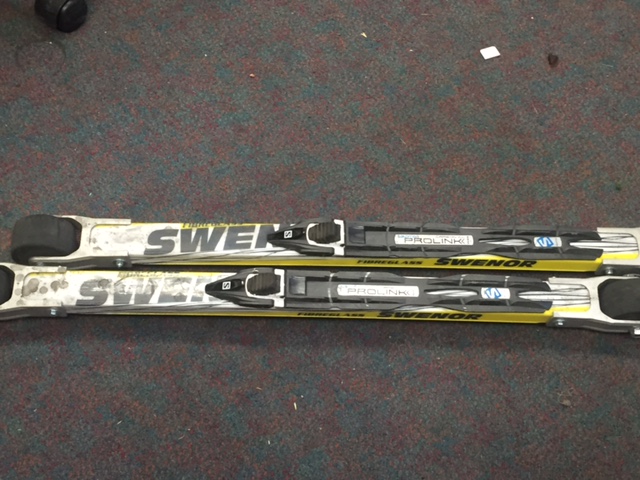
    Everyone's favorite Swenor, the Fibreglass, a good all-around ski
    Everyone’s favorite Swenor, the Fibreglass, a good all-around ski

    The ski that scored the highest for all-around versatility was the Swenor Fibreglass, which, as Table 1 shows, scored reasonably well in most categories. One thing that everyone loved about this (and all of the Swenors, with a few caveats that we’ll get into in a second) was the smoothness. The Fibreglass model without a doubt had the best balance of smoothness, flex and stability, making it overall a very solid pick. Where things got interesting with Swenor was with the Carbonfibre and the Finstep models.

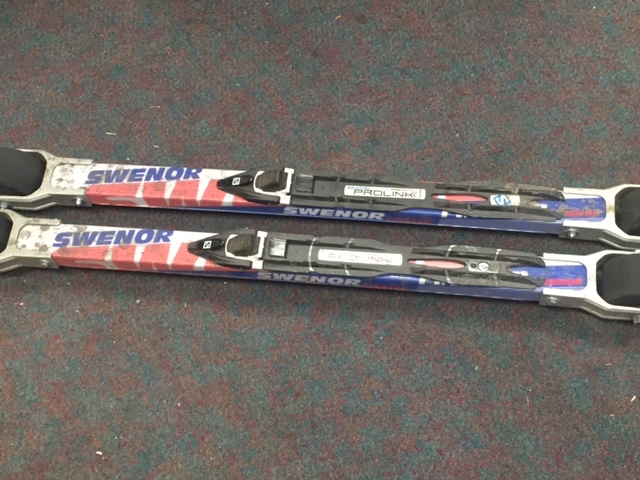
    The Swenor Carbonfibres in their safest configuration: pointed straight with minimal load
    The Swenor Carbonfibres in their safest configuration: pointed straight with minimal load

    The Swenor Carbonfibre faired reasonably well for VERY light skiers (50-55 kg), but the scores showed a strong, inverse relationship to tester body weight. As even the casual reader knows, the FBD is a big, powerful man. Since my weight is a frequent and highly animated topic of conversation for both the men’s USA Nordic Combined and biathlon teams, I thought it was only appropriate that my current mass be verified by none other than Tim Burke. Mr. Burke was kind enough to witness, verify and notarize that at the time of the testing I tipped the scales at a svelte and swole 84.187 kg. This meant that me taking tight, fast corners on the Swenor Carbons was akin to driving a car with bald tires over ball bearings on ice. It felt as though a crash was imminent on every high-speed turn and if I looked carefully over my outside shoulder at the apex of any given corner, I could see my rear wheels sliding by me with reckless abandon, almost begging to send me into oncoming traffic or a handy drainage ditch. How, when and where we would end up was really anyone’s guess. I found that, um, unsettling.

    In our endless pursuit of perfection and total objectivity, prior to publication, I sent the final draft of this story to all of the testers for their review and feedback. It can be tricky capturing the sentiments of a sizable group of people, so I was very careful to double check that I was providing an accurate representation of everyone’s viewpoints. When the comments came back from one of the testers who has probably some of the best feel for skis that I’ve ever seen, I thought his reaction to this part of the story was essentially perfect, “I took them (the Swenors) out for some more rips after we finished (the testing): they are good skis just as long as you don’t try to accelerate or push around a corner hard. If you are skiing mostly straightaways, there shouldn’t be a problem.” For the record, this reviewer is about 5 kgs lighter than me, so while he’s not quite FBD size, he’s in the ballpark. I’ll let all of you at home extrapolate the handling characteristics you will therefore likely encounter based on your specific body weight. Or you could just buy a pair of Marwes.

    Swenor Finstep
    Swenor Finstep

    The one ski that didn’t display the same velvety smoothness as the other Swenors was the Finstep. The light skiers didn’t like it as much as the Carbons and heavier skiers only liked it a little more than the Carbons, so when all of the scores were averaged out, the Carbons came out on top. I’m giving everyone “a peak behind the curtain” in this process, as this is one instance in which having a bunch of testers can be a bit misleading when averaging scores — pretty much the whole group agreed that if forced to choose between the Carbon and the Finstep, the Carbons are better for lighter skiers or those who train exclusively on abandon airport runways, and the Finstep are better suited for those with increased gravitational pull.

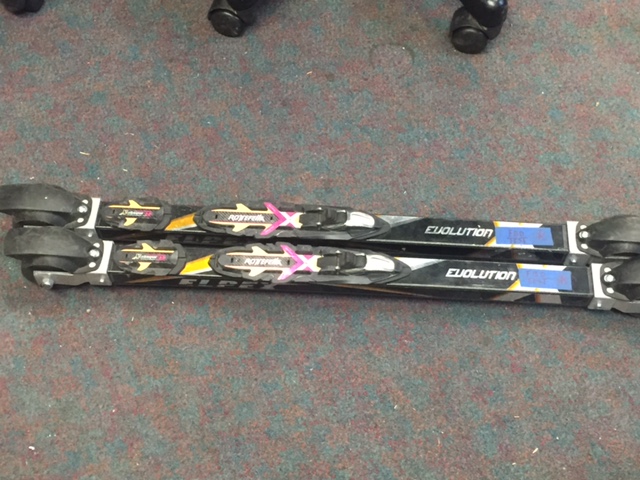
    Elpex Evolution

    Elpex Evolution
    Elpex Evolution

    Sandwiched between the Swenor horde was the Elpex Evolution. Please note that this ski made the cut to the second group (as noted in Table 1) and was generally found to be a good ski. The only thing that really hurt this guy was stability — she’s tippy. As in six-margarita tippy. And while I love me a good margarita, I like them in the bar with a giant plate of nachos (84.187 kg, remember?), not on my feet. But if for some weird reason you’re not a heavy drinker or you’ve been blessed with balance like this, knock yourself out. Now the caveat here is that you can literally knock yourself out, but hey, you’ve been warned. Plus, we’ve already established that you’re not a drinker, so you need to do something for fun, so why not spend a few hours a day wrestling a pair of uncooperative skis. Consider it a lamer version of gator wrestling, but without the weird smells, dirty pond water and animal rights implications.

    Good, solid citizens

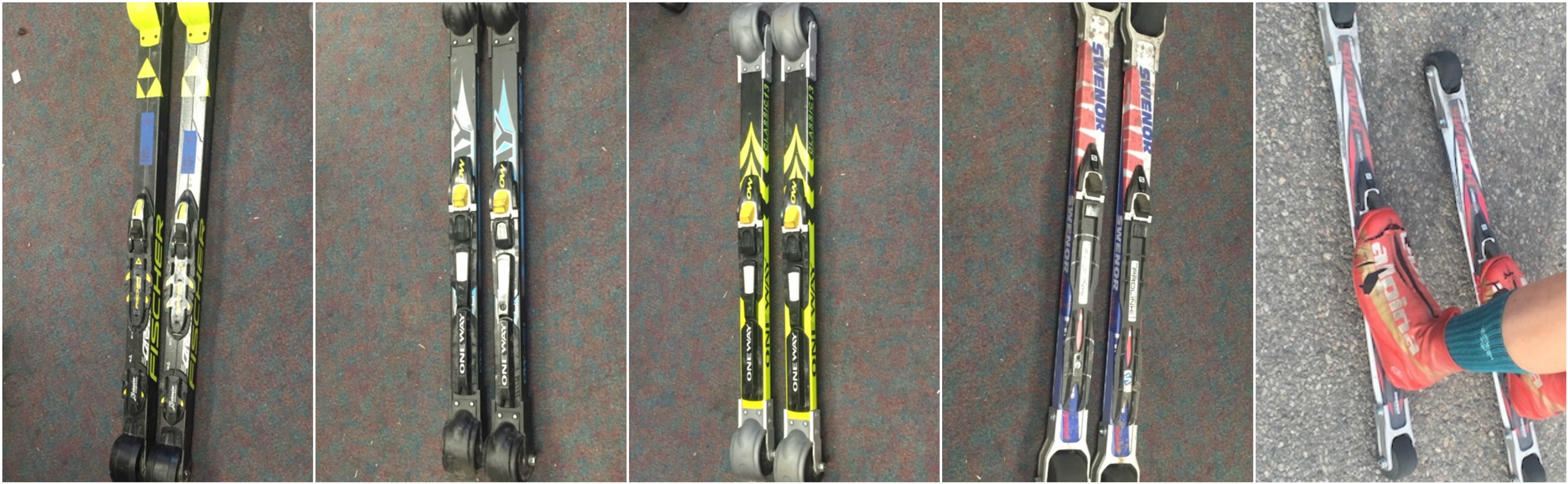
    A five-way tie for third place in the 2016 classic rollerski review: (from left to right): Fischer Carbonlite, OneWay Classic 5, OneWay Classic 13, Swenor Finstep, and Swenor Carbonfibre
    A five-way tie for the third-ranked group in the 2016 classic rollerski review: (from left to right): Fischer Carbonlite, OneWay Classic 5, OneWay Classic 13, Swenor Finstep, and Swenor Carbonfibre

    Also milling around in the neighborhood of the bottom two Swenors were the Fischer and both OneWays (OW 5 and OW 13). Every reviewer had these five skis in the third group, but the order was slightly different on each score sheet. In essence, the marks were so similar that this was basically a five-way tie for third. It is important to note that while none of the scores in this group exactly set the world on fire, these are all still perfectly fine skis — in all likelihood you can get on them, do a workout and return home without any major drama (that is provided you are not skiing in Philadelphia, where drama is essentially guaranteed regardless of which skis you’re rocking). So again, please no angry letters that Swenor skis saved your grandfather’s life in the war or OneWays pulled your puppy from a burning building. As noted earlier, the deltas between all of the classic skis were smaller than those in the skate whap-stick review, even though this may not necessarily be reflected in the scores. Two different reviewers were used for this test (persons with more experience on classic skis), therefore resulting in a different frame of reference, making comparisons on scores between the classic and skate tests impossible, so don’t even try. It is also very important to point out that we were looking to find differences and in some cases had to get fairly nit-picky. Every ski in this group is still very solid.

    It’s a wrap (not a whap)

    In summary, all of us really liked the IDT, Marwe and Swix. All three of these are fantastic classic rollerskis and each of them truly deserves their spot in the top group. Just as with “real” skis, though, rollerskis can be a very personal thing. Our hope is that by testing all of these skis extensively in different conditions and with several different size and sex reviewers, we’ve been able to compile both qualitative and quantitive recommendations that will assist most, if not all, skiers in future purchasing and training decisions.

    If you’re still pissed off after all of these qualifiers, please feel free to contact Zach Caldwell, as he loves to talk about stuff like this. I happen to know for a fact that he loves calls of this nature, anytime, day or night.

    Up Next (ish)

    One of the many things that warmed my cold heart after the skate review was all of the excellent comments and suggestions that we received. One recurrent theme was long-term wear, so I am very pleased to announce that we will be doing long-term wear tests on skate and possibly even classic, depending on interest. On this topic, you can feel free to submit comments. Everything else you should send to Zach though.

    Since durability is understandably on many readers’ minds and I could be dead and/or fired by next year at this time, we decided it made sense to provide very preliminary results right now as well:

    • Swenor: The wheels on the Carbon model may offer a smooth ride, but they showed signs of wear after only a very few kms. This is troubling for as noted above, some of the testers were quite light, so this does not bode well for long-term wear for even a skier of 150 lbs or so, not to mention us big thumpers. Also, why no fenders? This annoyed everyone.
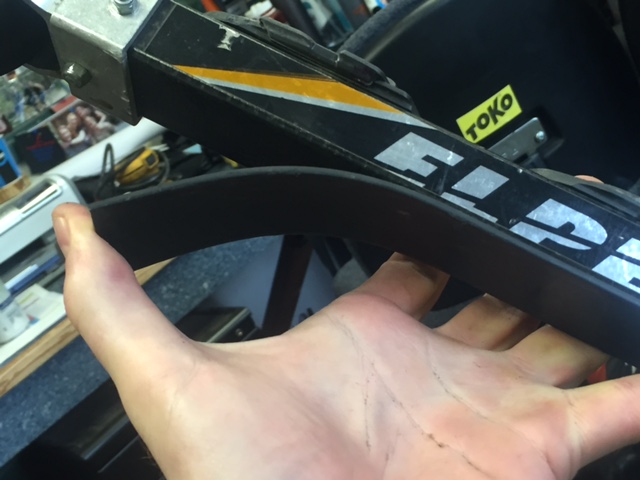
    The Elpex Evolution rollerski delaminating after just a few months of use.
    The Elpex Evolution rollerski delaminating after just a few months of use.
    • Elpex: One ski delaminated on the bottom. Again, not a very good sign if this is happening after just a few months of use, some of which from very light athletes.
    • Swix: One fender fell off and it was not at all easy to reattach.
    • Marwe: One of these fenders came off, but unlike Swix, this one was easily repaired. Despite losing the Allen bolt, a replacement of similar length, diameter and pitch was procured with no difficulty at the local hardware store. The only slight issue was that an Allen bolt wasn’t available, only a screw with a Phillips head. And yes, we’re now trying to do a better job checking the fenders. Damn, you people are needy.

      See you out there.

      FBD

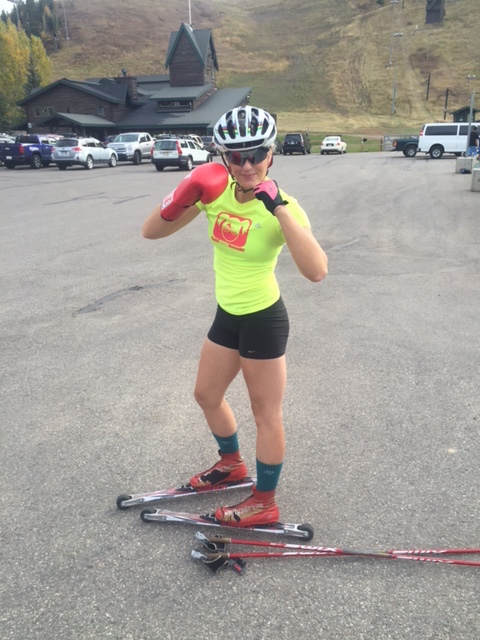
    Former APU rockstar, current Steamboat Springs Winter Sports Club coach and ski tester supreme Greta Anderson showing how we run our complaint department.
    Former APU rockstar, current Steamboat Springs Winter Sports Club coach and ski-tester supreme Greta Anderson showing how we run our complaint department.
  • Living the Dream: 2016 Skate Rollerski Review

    Living the Dream: 2016 Skate Rollerski Review

    Like Butter, We’re on a Roll

    I think most nordic skiers have a love/hate relationship with rollerskis (or whap sticks, as my good buddy Zach Caldwell likes to call them). Firstly, we’re skiers and the last time I checked, skiing happens on snow, not asphalt. So there’s that. And then there’s the whole idea of taking these infernal contraptions out on the open road without any viable method of stopping. For anyone with even the slightest understanding of physics, traffic laws and the highly unpredictable nature of modern drivers, this is obviously a bad idea. Hold that thought.

    The test array (All photos: FBD)However, as the old adage goes, “Skiers are made in summer,” and you hate the idea of losing to, well, anyone, so you check your dignity at the door, find a pair of skiing boots and poles that you’re mad at and drag yourself out the door for another battle with gravity, nearly invisible wheel-jamming rocks and the unwashed masses. If you’re in any sort of major metropolitan area in the U.S., you also need to fully activate your “abuse shields” as it is almost inevitable that you’ll be tormented, taunted and just generally verbally abused for having the nerve to go out on public roads for a little exercise. What the hell is wrong with you anyway? We all know that roads are for cars and nothing else — no bikes, no runners, no dog walkers and for heaven’s sake, certainly not for rollerskiers.

    Ah, but your high-and-mighty ass has races to win. You’re a (wo)man of principle, you remember your eighth-grade civics class about taxes and their role in funding public roads and you believe stopping is highly overrated. Besides, you know these roads like, “the back of your hand,” and somehow implicit in this ridiculous statement is the assertion that you therefore also know the exact location of all possible hazards and obstacles.

    Photos of Steamboat Springs Winter Sports Club Josh Smullin (l) and a tennis player dressed identically.In addition to your lovable, reasonable and logical, “I know my rights” side, you’re also a nordic skier, so you’re also cursed/blessed with a streak of non-conformity. Yes, you. You’re a rebel. Maybe not in the traditional sense, but a rebel nonetheless. You don’t drink alcohol (empty calories), smoke (uh, hellooooo, can you say VO2 impairment?), or stay up past 9 p.m. (dismal Firstbeat recovery score anyone?), but just last month you deviated slightly from your tried-and-true ration of protein to complex carbohydrates in your recovery smoothie. So take that, James Dean, there’s a new sheriff in town: he’s a footloose and fancy-free bad-boy rebel and he’s going to throw caution into the wind and go rollerskiing.

    Okay, now that this is settled, the question then becomes, “Which whap sticks are right for me, FBD?” And this is where the story gets good, too, for as much information as there is on snow skis, there’s a dearth of information on the dreaded rollerski. Hell, it’s kinda hard to even find places that sell these bizarre instruments of death, nonetheless provide a detailed comparison on which model to best injure yourself, so pow, that’s where we come in.

    Diving right in

    First of all, with a few notable exceptions, almost all of the skis that we tested were good; three were very good. There were definitely differences between the skis though, so depending on the road surface where you train, the type of training you are doing and your goals, the best ski for one skier may not be the best for another. Given this, we have put together both a quantitative chart so you can see the empirical test scores, as well as a qualitative section in which we’ve described the best fit for each individual ski. We believe that with a careful period of introspection, goal setting and road-frictional coefficient calculations, combined with a thorough perusal of both the qualitative and quantitive sections, you’ll find yourself the happiest you’ve even been in your life.

    Testing HQ in Steamboat Springs, Colo. Rollerskis for this review were also tested in Park City, Utah, and Philadelphia.Next is the issue of speed — this is huge in snow-ski testing (basically the entire point of testing is to find the ski/grind/wax combo that is the fastest), but this is generally not the case for rollerskis. Racing aside (and who is crazy enough to race these barbaric skin-removal torture devices?), the overwhelming percentage of athletes are looking for the rollerskis that best simulate being on snow and meets as many of personal the training parameters outlined above. In addition, almost every rollerski wheel can be swapped out for faster wheels, so it is generally quite easy for an athlete to “tune” their whap sticks to whatever speed you are the most comfortable screaming down hills on something with no brakes, into traffic. As a result, you will see essentially no references to “ski speed” in the rest of this review, as any ski can be made fast. Chapters could be written on the many schools of thought on “best” rollerski speed, but that’s not the purpose of this review — we did our best to provide an objective, comprehensive and unbiased look at as many brands as possible and make recommendations to everyone in the ski that is best for them.

    Best Overall

    Just as with snow skis, there is an element of personal preference in rollerski selection, so to help address and negate this, we had a test team of seven people. In total, we had over 150 years of ski experience, an Olympic gold medalist, a world champion, and three veterans of World Cup ski-testing protocols. This was an extremely well-qualified group, so we believe this analysis to be very fair and balanced. We love skiing and we love gear, so we took this very seriously and put a ton of time into it, because that’s what we do. And we even managed to have a little fun along the way, which is good, as I’m pretty sure that I read somewhere that this is supposed to be fun.

    While most of the skis in this test will work fairly well for a wide range of athletes for most conditions, three pairs scored consistently the highest among all of the testers: Marwe, IDT and Pursuit. The former was not much of a surprise, as Marwe is a well-respected and established brand.

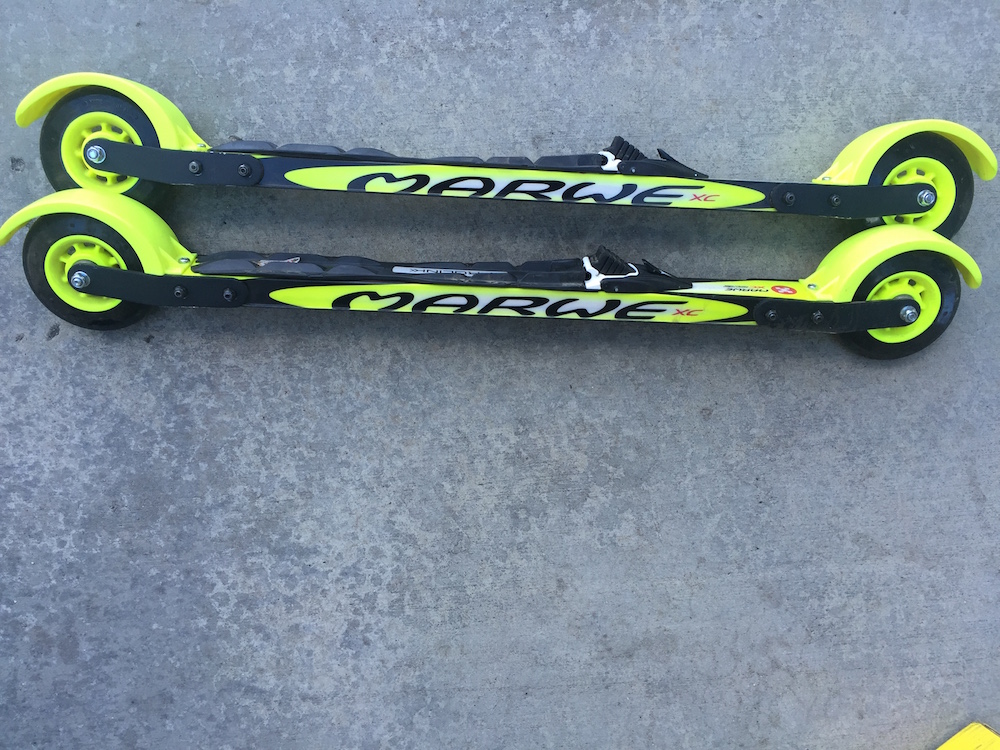
    Marwe skate rollerskis (Photo: FBD)
    Marwe skate rollerskis

    Marwe

    Look no further than U.S. biathlete Tim Burke’s garage and you’ll see why Marwes are the choice of many top skiers worldwide. They have a nice feel, are very stable, hold up well and offer a wide variety of wheels speeds, so you can’t go wrong with these skis.

    Weighing in at 0.91 kg, they are the lightest of the three top skis and their individual performance ratings was at or near the top in every category (see review matrix below*).


    *Note: Every tester had a private scoring matrix that no other reviewer saw until the testing was complete. All of those scores were averaged to create the matrix shown above.

    Also, this matrix has been updated to include model names.

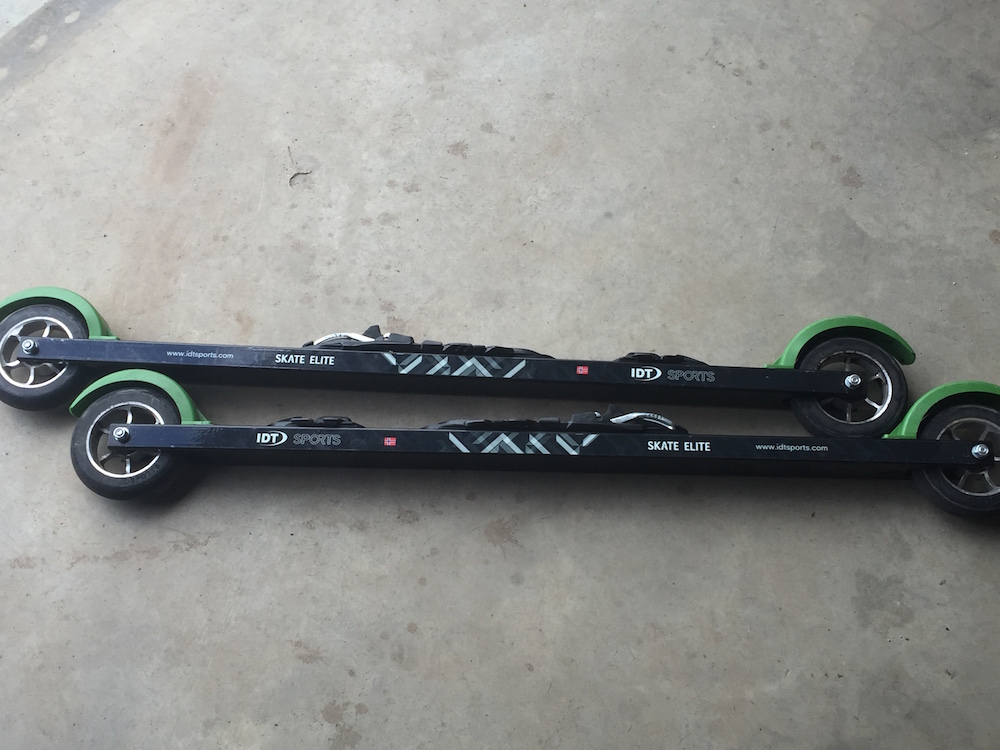
    IDT skate rollerski (Photo: FBD)
    IDT skate rollerskis

    IDT

    The second top performer was the IDT (0.99 kg) — another great all-around ski. We all loved everything about this ski and it also scored high marks across the board in every category. They were the longest ski tested and many of us felt this contributed to this ski being the one that many believed felt the most like skiing on snow.

    One tester was concerned that the added length would be cumbersome in corners, but most felt that this was not a problem and overall this ski scored well in all areas. The biggest drawback is that they’re made in Norway and they’re just getting their U.S. distribution rolling (get it, ROLLING, see what I did there?), so purchasing a pair in the U.S. right now may not be all that easy. IDT specifically stated that this product will be readily available in the U.S. “very soon” though, whatever that means. This is a great ski for long, cruiser workouts.

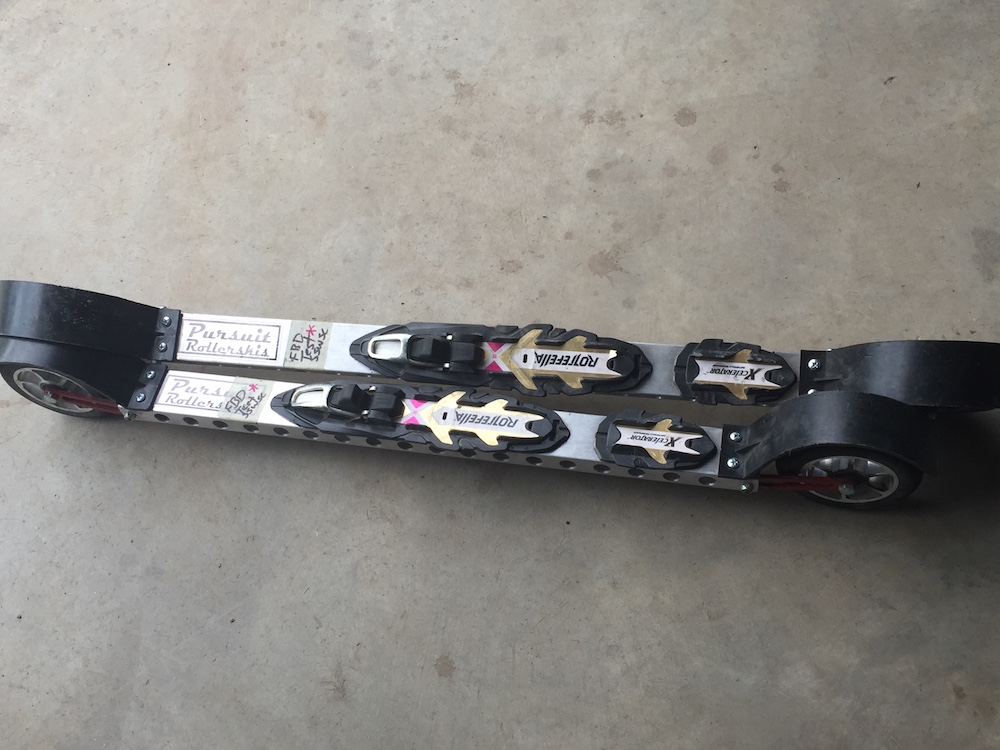
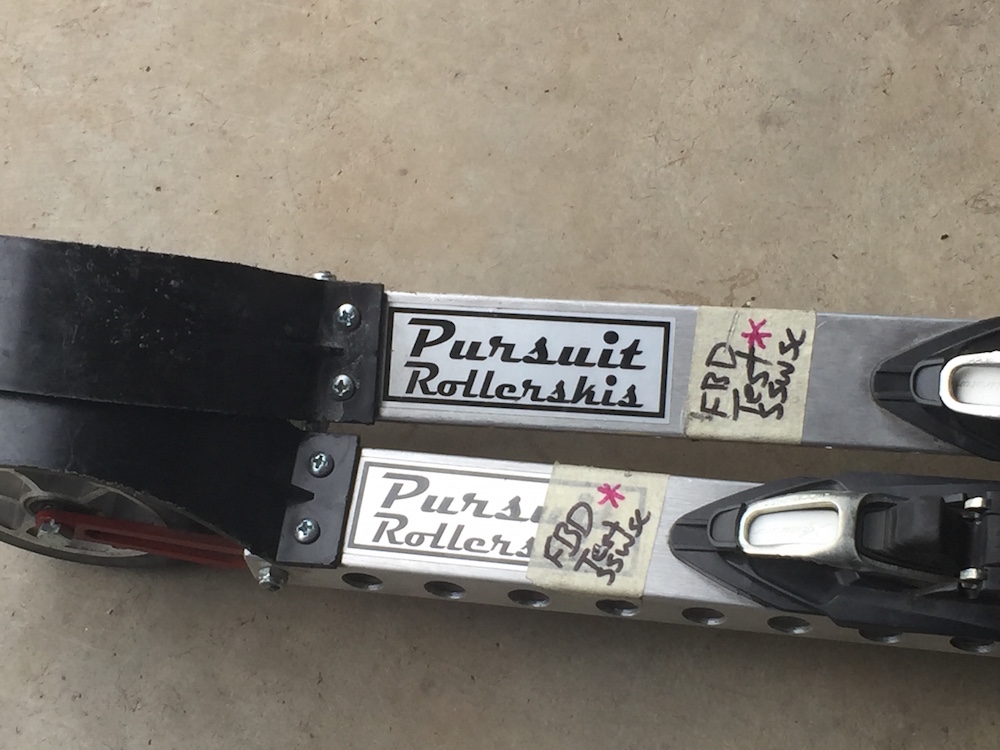
    Pursuit skate rollerskis (Photo: FBD)
    Pursuit skate rollerskis

    Pursuit

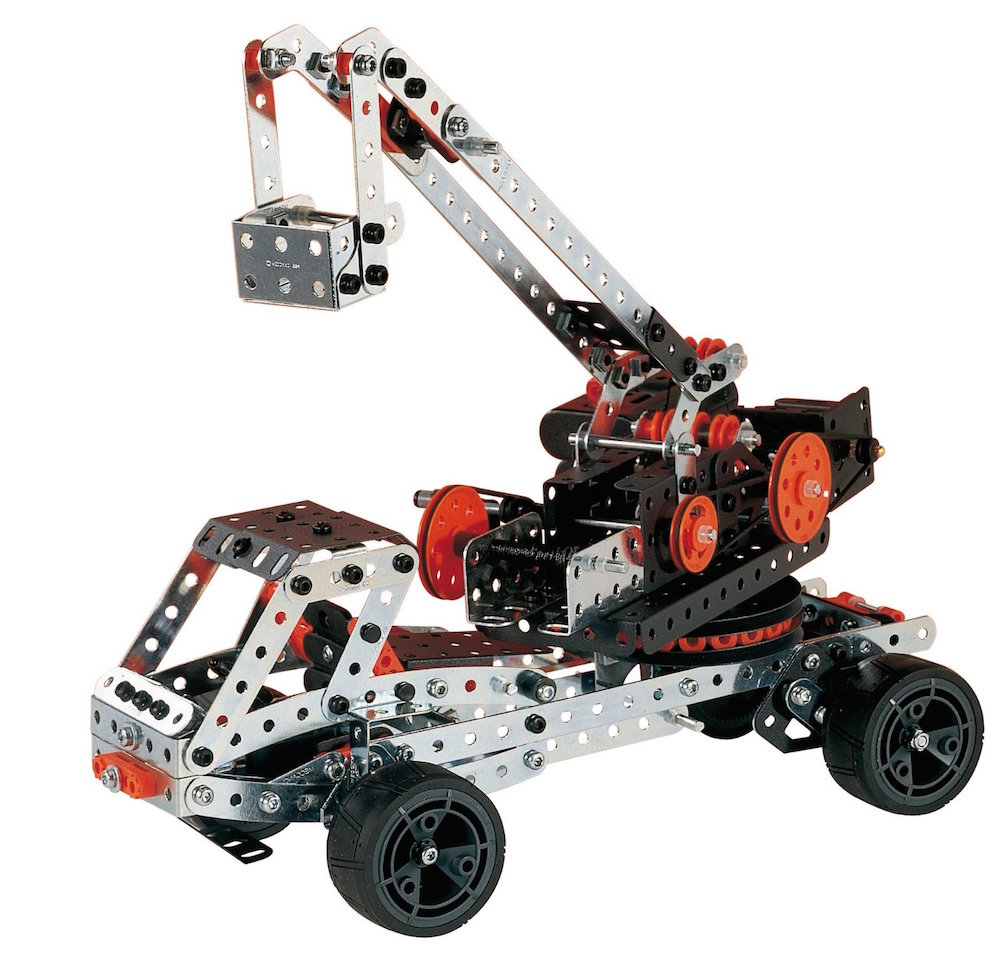
    By far the biggest surprise of the testing was the Pursuit Fork Flex (1.03 kg). First of all, far be it for me to speak “out of school,” but the Pursuits aren’t exactly the sexiest skis out there: the best way to describe their appearance is that they are the result of the ultimate-nerd collabro of an erector set…

    An Erector Set (metal toy construction set)
    Metal-toy Erector Set

    meets science fair…

    A science fair
    Science fair

    meets nordic skier.

    Steamboat Springs Winter Sports Club coach Josh Smullin in a pumpkin suit. (Photo: FBD)
    Josh Smullin (l) in a pumpkin suit.

    Yes, scary, I know. But, but, BUT, this just goes to show you how good these skis really are, as every one of us picked them up and thought, “Yeah, these things are going to suck,” but then we skied them and were quickly singing another tune: great feel, stability and flex.

    Pursuit skate rollerskis (Photo: FBD)
    Pursuit skate rollerskis

    No one had skied them previously, so none of us knew what to expect, but independently, everyone scored them very highly, with most testers ranking them their overall favorite. Wow. Every good scientific study does its best to minimize bias, but that’s obviously very difficult when the name brand of the ski is staring right at you — so for these skis to score the highest marks with no preconceived notions of their strengths shows just how good these skis really are.

    The price is right, too, as they’re over a $100 cheaper than most of the other skis reviewed. It will be interesting to see how well they stand the test of time, but they’re off to a great start.

    Specialty Skis

    What is particularly interesting about the skis in this next group is all of them do a certain thing(s) very well. They may not be the best “all-around” skis, but that doesn’t mean that they aren’t the best skis for you.

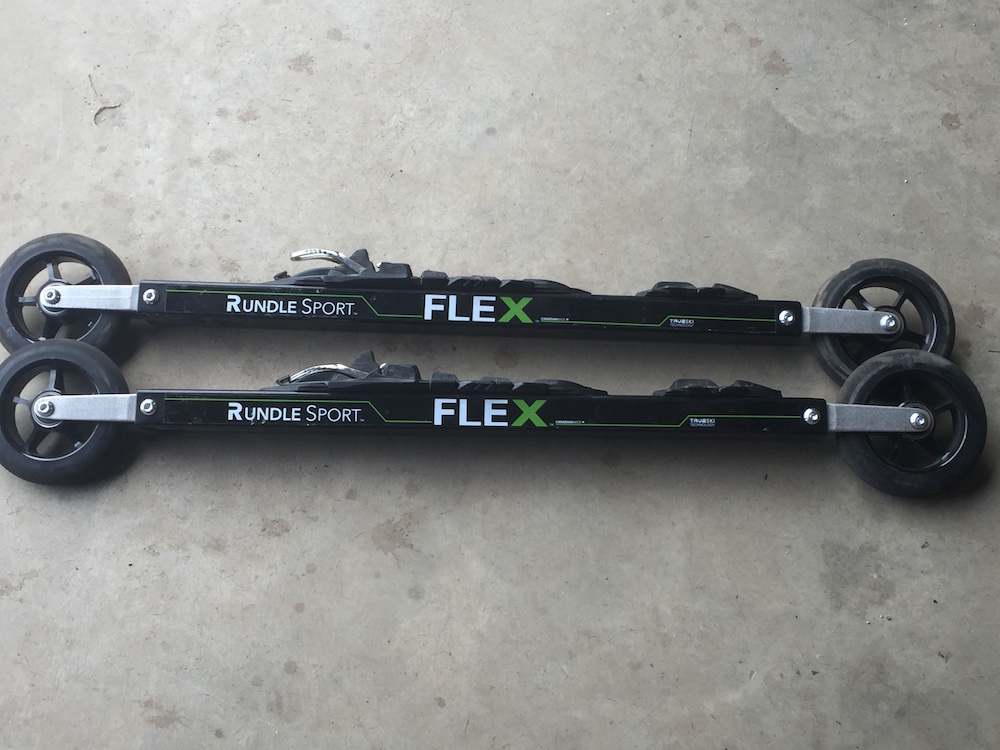
    Rundle Sport FLEX skate rollerskis (Photo: FBD)
    Rundle Sport FLEX skate rollerskis

    Rundle Sport FLEX

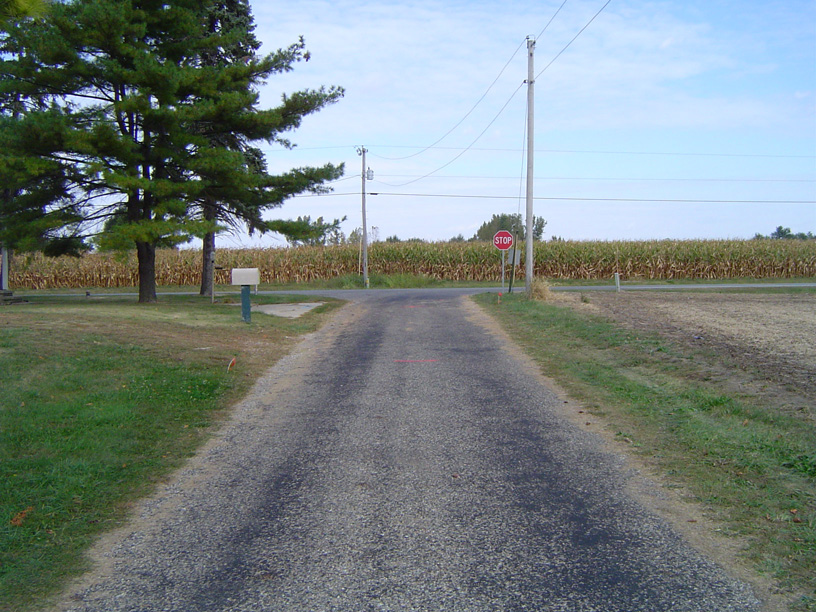
    First and foremost, we were very eager to try the Rundle Sport FLEX (1.07 kg). This ski was reported to be more comfortable and more forgiving than most other skis and the entire test team was excited about checking this out for ourselves. Are these skis noticeably smoother on rough pavement? In a word, yes. So if you’re stuck in an area with the dreaded “chip ‘n’ seal”:

    A "chip 'n' seal" road in the U.S. (Photo: Wikipedia)
    A “chip ‘n’ seal” road in the U.S. (Photo: Wikipedia)

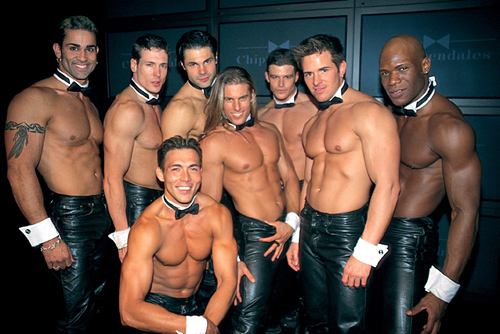
    not to be confused with Chippendales (who are suitable for any road surface)…

    Chippendales
    Chippendales

    …these skis are for you. Where you won’t like them is on high-speed descents or hard cornering. So if you’re rollerskiing’s answer to Bode Miller, you believe all time spent traveling in a straight line is time wasted, or hair-on-fire downhills are your jam, you’re not going to be feeling the love with the Rundles. If you’re recovering from injury, are forced to train on bad roads or are just all about comfort, snap these up now and these are the most comfortable skis we tested.

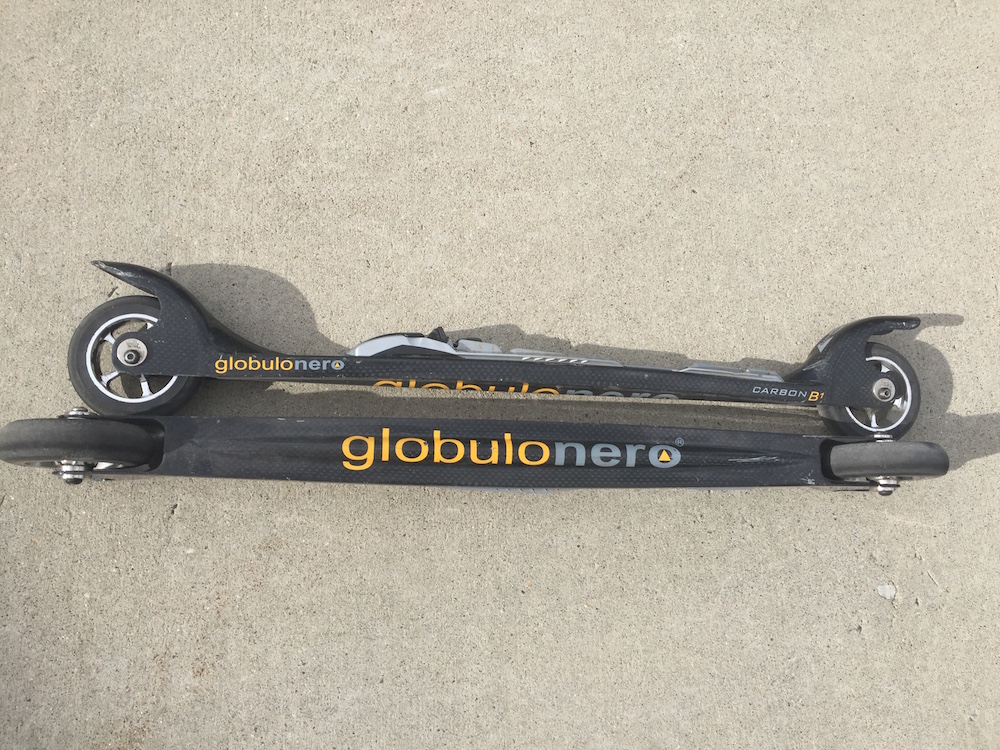
    GlobuloNero skate rollerskis (Photo: FBD)
    GlobuloNero skate rollerskis

    GlobuloNero

    The GlobuloNero (0.89 kg) is made in Italy. Full disclosure: I love Italy. Amazing food, fashion, culture and style, but Italians do things their own way. For example, they use the word ‘schedule’ very differently than people in most other countries, as their use is really more of an aspiration or suggestion for things like trains and planes than it is a predictor of what time any given form of government-run transportation will actually arrive. That is, if it arrives.

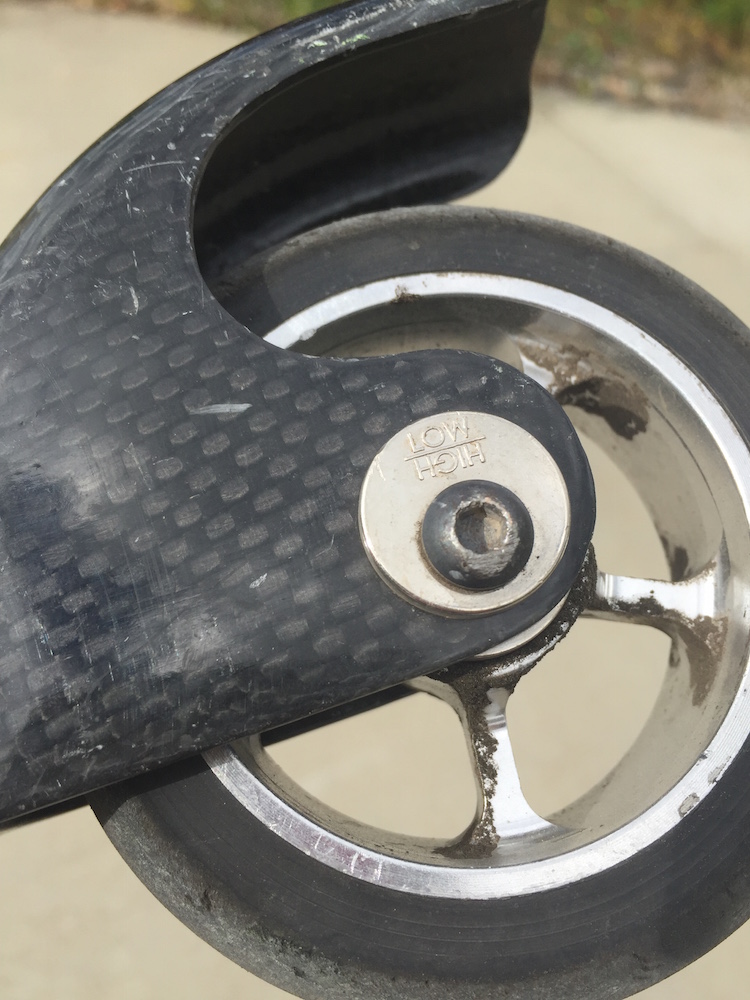
    Missing GlobuloNero part (Photo: FBD)
    My missing GlobuloNero part

    This ski fits that concept perfectly: they are the Ferrari of skis. If and when they finally do arrive, they come with a silk scarf, a bottle of cologne and a nice bottle of red wine. They are all carbon, including the fenders, and as such, they are just oozing with style. Like the Ferrari, they also have their idiosyncrasies. For example, the “nut” that holds the axle in place is, naturally, a custom shape, so losing it is like losing your baggage in the Rome airport: you won’t be traveling anywhere soon. I know this for a fact, too, as I did somehow manage to lose this crazy piece when it mysteriously decided to abandon ship mid-workout to start a new life nested into the roadside bushes. Despite many calls to many places, surprisingly no one had what looks like it should be a very common part.

    Just as I had begun to accept the fact that these Italian works of art would forever be relegated to the floor of my garage, Eagle Eyes Smullin retracted our steps (well, strides) and somehow managed to find this part as it was setting up shop in the drainage ditch. That’s some Teammate of the Year sh*t right there.

    Other reviewers didn’t score them as highly as me, but I love these skis. Maybe it’s because they’re like me — smooth, stylish and sexy, but also temperamental. Like the IDTs, they can also be difficult to find in the States. Unlike the IDTs however, there appears to be no plan to improve this, which, well, is what it is. The company also claims that they are designed for skiers over 70 kg (154 lbs) which is weird, as you don’t usually see carbon-fibre components with minimum weights, but hey, they’re Italian, remember? And stop asking so many questions — your train is going to eventually get here. Maybe.

    Don’t forget either, this is a gear and style column and no skis have more style than the GlobuloNero. C’mon, everyone and their brother has a set of Marwes or Swenors, right? So if you’re one of those people who likes to look good, doesn’t mind waiting six months for these to arrive from Europe and won’t throw a fit when your Ferrari breaks down yet again, you owe it to yourself to buy a set of these. Other skis may score a bit higher or have their own performance niche, but Globos have style. Start the ordering process now and you might just have them for next summer. Maybe. If not, have a nice glass of chianti and go sit in your Ferrari that currently won’t start for some strange reason. Any good Italian will tell you that it’s too nice a day to go rollerskiing anyway.

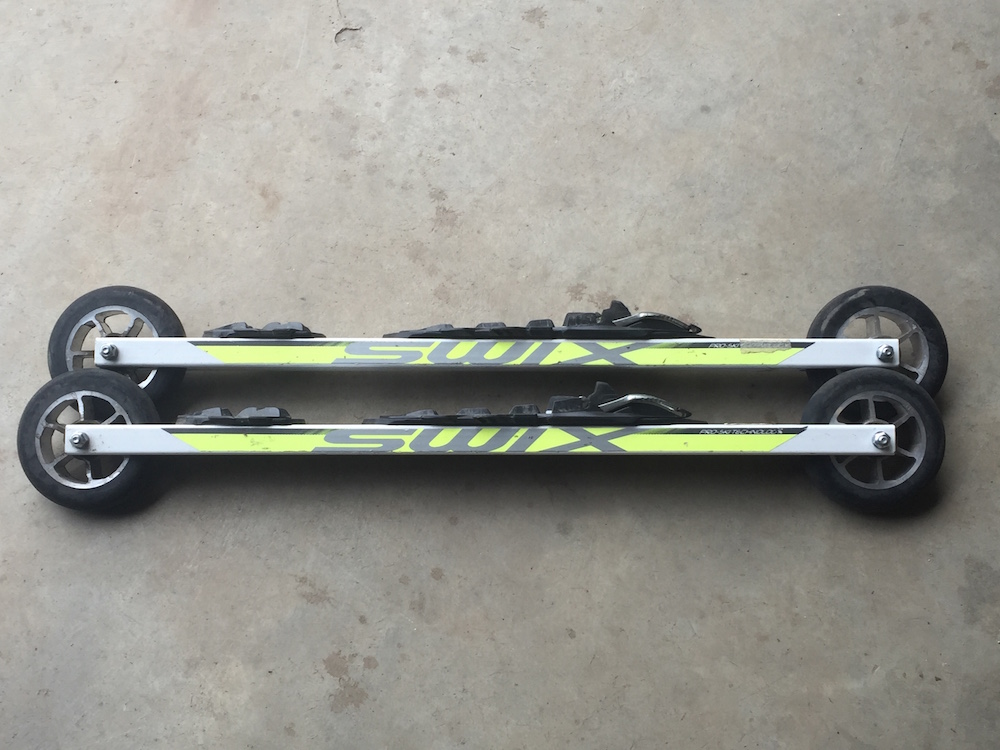
    Swix skate rollerskis (Photo: FBD)
    Swix skate rollerskis

    Swix

    This was the lightest (0.80 kg) and shortest ski in the test, and not surprisingly the most twitchy and tippy. This skis felt smooth when you were on top of them, but balance was a challenge. Now, for small, light skiers or younger athletes, these might be perfect. Plus, they are a coach’s dream: learn how to be stable on these bad boys and you’ll have Andy Newell’s cat-like reflexes in no time. Assuming you have the balance for them, they will likely excel for hard-charging juniors looking to impress U.S. national-team coach Matt Whitcomb by breaking lots of sh*t on the agility course at a regional elite camp. So if that’s you — you ski Soldier Hollow often or your preferred training loop is a bike path, filled with the tight, blind corners (which seem to be obligatory in most ski-town bike paths), self-absorbed dog walkers with their 30 foot, knee-level, rollerskier snare line — these skis are for you.

    Close But No Cigar

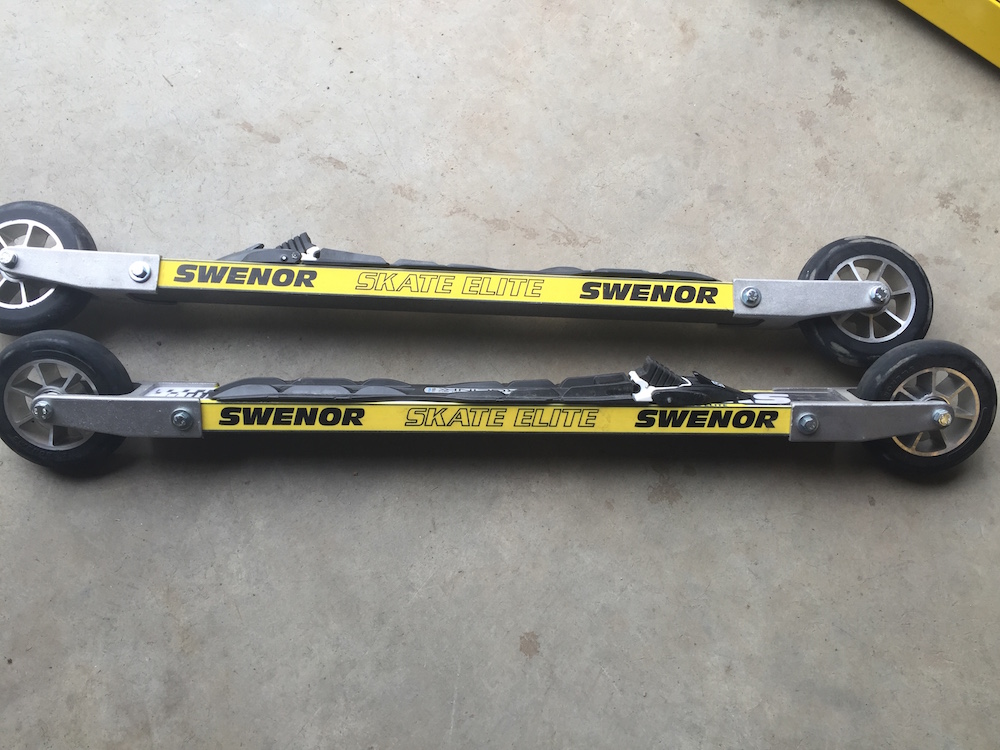
    Swenor Skate Elite rollerskis (Photo: FBD)
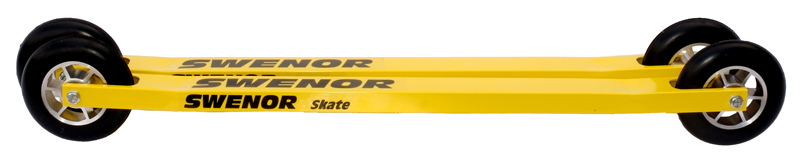
    Swenor Skate Elite rollerskis

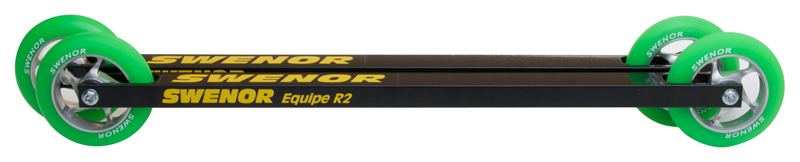
    Swenor

    It always warms my cold heart when companies go “all in,” on these tests and send everything but the kitchen sink. That was the case here, as Swenor sent us two pairs of skate skis and three pairs of classic. I love the enthusiasm and aggressive product positioning, but the problem here is that we didn’t love the skis. To be clear, we didn’t hate them, but we didn’t love them either (at least for skate; the classic scored better and that review will be coming shortly).

    What’s wrong with these skis? Well, nothing actually, but as the test matrix shows, the Skate Elite (1.05 kg) got edged out in basically every category. It is still a very solid ski and its performance was solid in every category but of the seven testers, not one single person had them in their top group. For the record, everyone (that’s right, all seven testers) had the Marwe, IDT and Pursuit in their top three. Not everyone had these three in the same order, but everyone had them as their top three (and as noted, every tester had a private scoring matrix that wasn’t shared until the testing was complete). The fact that the Skate Elite never made the top three on anyone’s list meant that in good conscience we simply couldn’t group this ski with the Marwe, IDT and Pursuit.

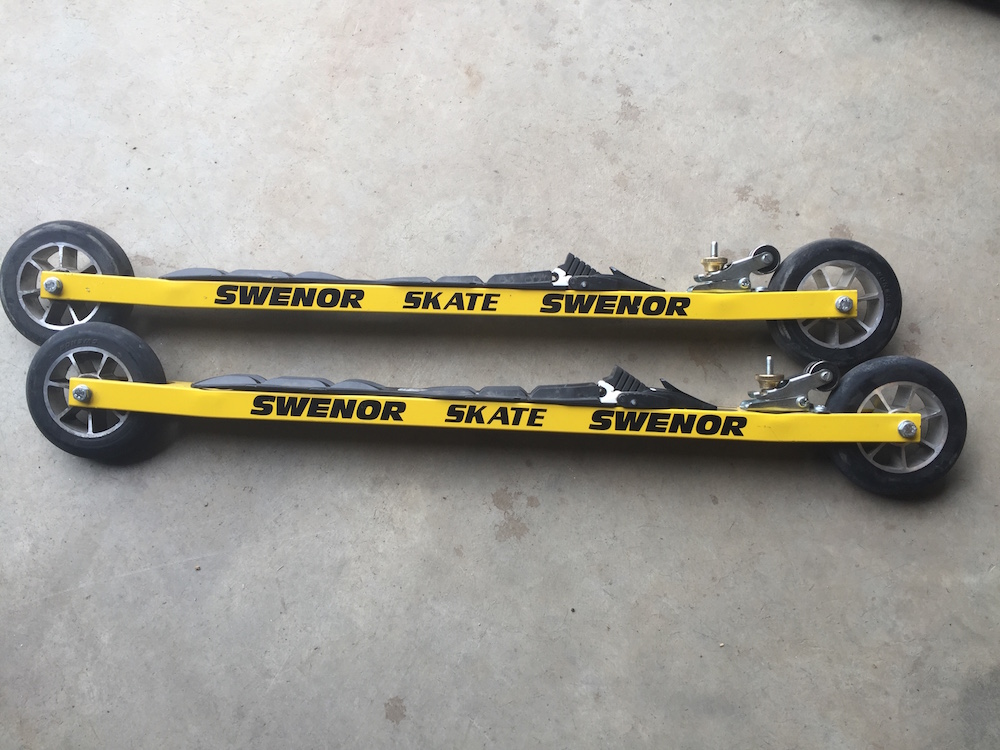
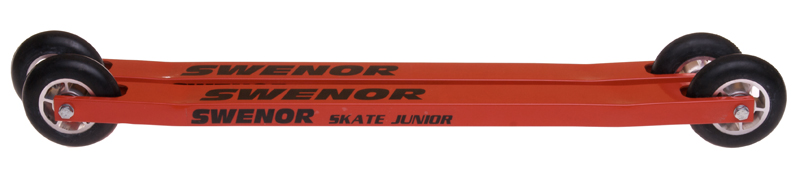
    Swenor Skate rollerskis (Photo: FBD)
    Swenor Skate rollerskis

    The second ski from Swenor, the Skate (0.94 kg) fared worse. No one was particularly impressed with this ski’s performance on rough pavement and they had the added distraction of being quite loud and rattly (for reasons we will go into shortly). Both a strength and weakness was that this was the only ski with built in speed reducers. This is a strength, as it seems like the ability to even somewhat regulate your speed could come in handy from time to time. It’s a weakness as, god damn it, these things were loud.

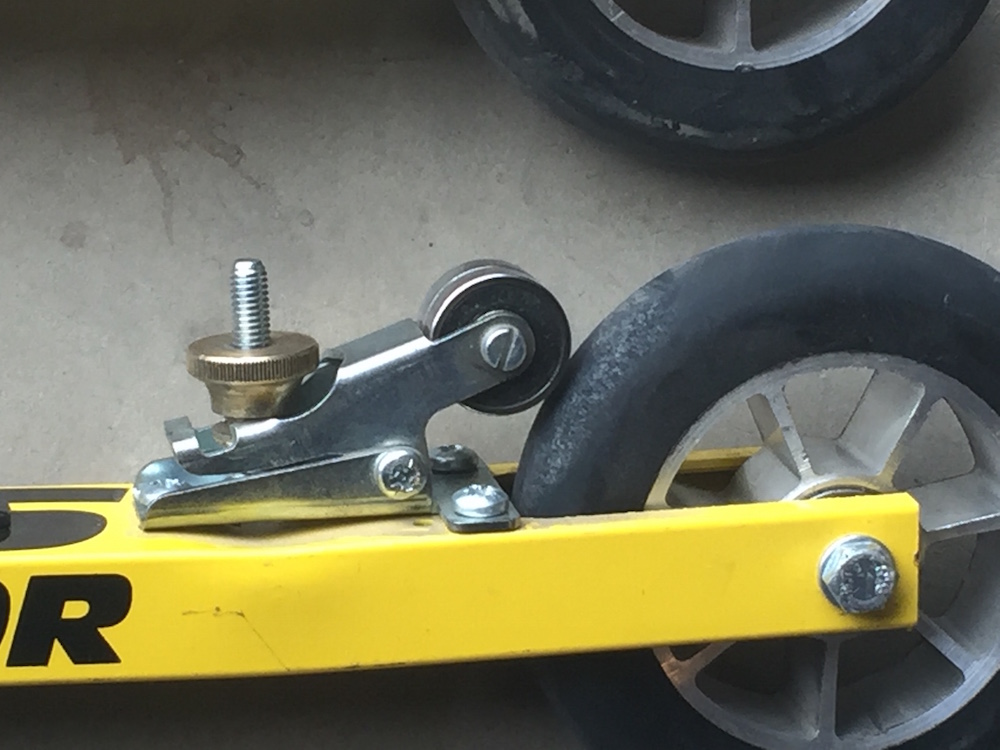
    Swenor Skate rollerski brake (Photo: FBD)
    Swenor Skate rollerski brake

    The mechanism itself isn’t all that user-friendly either, as it required bending down to turn a dial on the ski to add resistance. This is really more of a “hey, this downhill looks steep, I’d better pull over and add some rolling resistance so I don’t die,” type of system, than a braking system per se. I can just hear all of the haters out there firing up their Internets to fire off a scathing missive about FBD being a “brake hater,” (Is that even a thing?), so let’s all save each other some time and I’ll go on record right here saying I love the concept of brakes. What sane person doesn’t? I’d just like them to work, that’s all.

    And more on that in a minute.

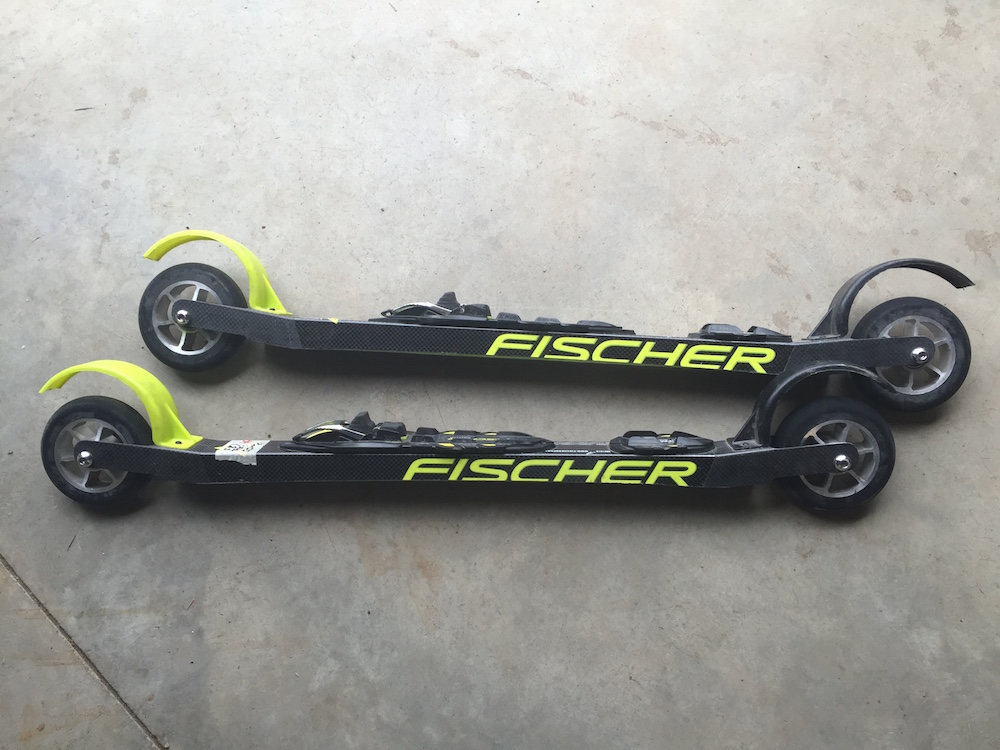
    Fischer skate rollerski (Photo: FBD)
    Fischer skate rollerski

    Fischer

    To be blunt, this ski was a disappointment. Fischer makes great snow skis, so we were expecting big things from them. They got off to a great start as they look sexy as hell, but things went downhill as soon as we picked them up, for despite being carbon, these skis were the heaviest in the entire test, by a lot (1.22 kg).

    The situation got even weirder (not the Jersey Shore guy, who is already quite weird) when we skied them too, for again, despite being carbon, the ride was just OK and surprisingly non-compliant for a carbon ski. This was surprising. To be clear, this is still not a bad ski, but simply not as good as others in the test. The fact that we had such high hopes for the ski probably also increased our disappointment to some degree. This SHOULD be a great ski, we all wanted it to be a great ski, it just wasn’t. The weight was an added buzzkill.

    Problem Child

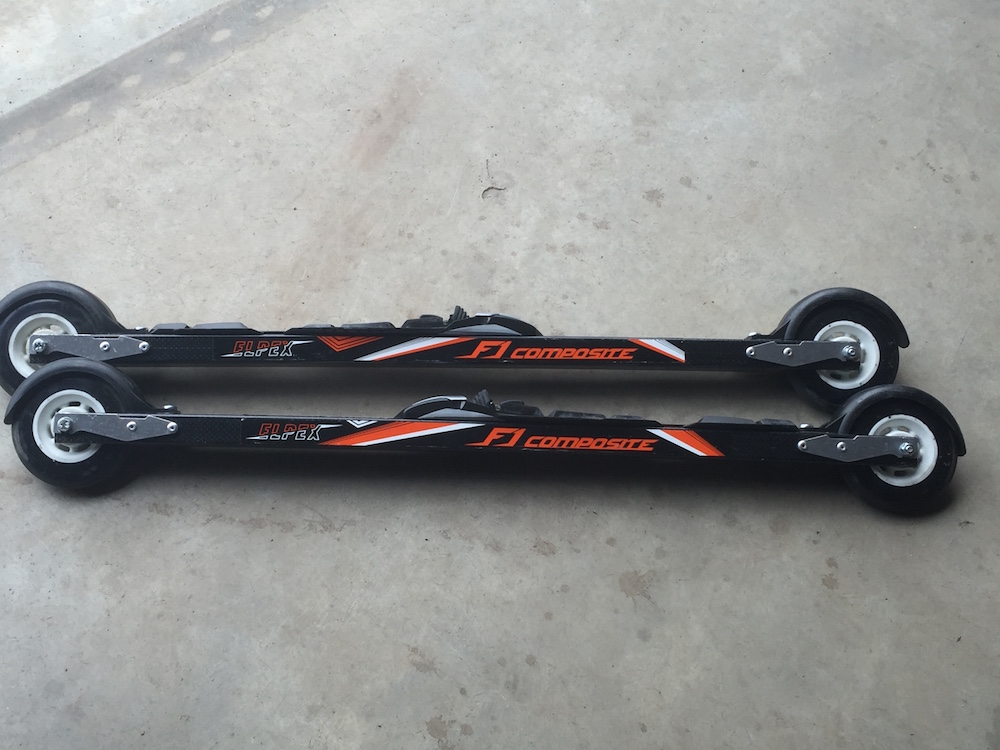
    Elpex F1 Composite skate rollerski (Photo: FBD)
    Elpex F1 Composite skate rollerskis

    Elpex

    The biggest disappointment of the test was the Elpex F1 Composite (1.03 kg). We were all super-psyched to try this ski, but one didn’t have to ski far to realize that something was wrong, very wrong. In fact the skis felt so off that we believe there may have been a binding mounting error, as this ski felt like you were riding a bicycle backwards to every tester. Hopefully this problem can be identified and corrected, as we still believe that this ski has promise.

    This has got to stop

    Lastly, the one area that we’ve danced around a bit, but is never far from our mind, is safety. Quite simply, venturing out onto open roads with no viable method of controlling your speed is nothing short of insane. Yes, you can moderate your risk a bit by picking safer courses, but even so, you don’t seriously think that nothing is ever going to suddenly appear in your way on even the most deserted country road or bike path, do you? Unless you’ve taken over for Matt Damon on an abandon space station on Mars, you’re going to encounter obstacles in your path on training skis.

    The problem is that rollerski brakes have previously all been pretty crappy. A few differently companies have tried, but the end results have been underwhelming, with all of the systems having problems of some sort. Or almost all of them.

    One reviewer’s rollerski rankingOne of the big revelations of this test was putting an after-market braking system from the Rollerski Shop though its paces. I am very pleased to report that the system worked quite well. It’s design is quite simple and effective: a lever arm applies pressure to your rear wheel. The lever arm is engaged by a pull handle that hooks to either a waist strap or your drink belt. It takes a little fooling around to get the whole system tensioned correctly, but once you do, it works well (this video offers some truly compelling footage of the system in action).

    Don’t get me wrong, 180 mm Shimano disc-brake rotors these are not, but of all of the braking systems I have ever tried, this one is by far the best. It adds essentially no weight to your skis, it is quiet, effective and can be activated easily and quickly. Remember, it’s not just that this makes you safer on your existing courses, but it also opens up a whole new set of options for you. How many times have you not done a potentially great training loop because there’s some nasty intersection at the bottom of a big hill? Or blind corner? Or dead end? Or lake, if you’re skiing with Billy Demong? If you’re too cool for school and think brakes are only for people with no skills and no balls, take it easy Rambo and justify the purchase by telling yourself that you’re finally going to be able to ski “Dead Man’s Hill,” or whatever the equivalent is in your town (every town has one). When the brake just happens to save you from a crash when a delivery truck driver suddenly pulls out of a driveway or a 150-lb, learning-impaired Great Dane comes charging toward you, poised for a powerful, collarbone shattering head-on collision, you can thank me later.

    So what are you waiting for? Go treat yourself to a brand, spankin’ new set of whap sticks. After all, who deserves it more than you, right? Do us a favor too and spring for the brakes as well. Not only do we want everyone to be safe out there, but it just so happens that we have a few more amazing clothing reviews coming in the next few weeks and we want each and every one of you healthy, happy and safe so you all can bask in the glory that is FBD gear reviews.

    Test team taking a break

  • Start Rollerskiing with Swenor, There is No Off-season

    Start Rollerskiing with Swenor, There is No Off-season

    Swenor Rollerskis, The Worlds #1 Rollerski due to their On-Snow Feel, should be your rollerski choice.

    SwenorSports has 10 Models of Rollerskis available today.  One is sure to be the perfect model for your technique needs and road conditions.  View and download Swenor’s complete catalog here.

    Get your pair of the most readily available rollerski at any Swix/Swenor retailer.

    Team CXC joins WorldCup Superstar Peter Northug, and thousands of other athletes who make Swenor the World’s #1 rollerski choice due to its on-snow feel.  Kris Freeman, whose high mileage training days are legendary states, “These wheels are the perfect speed and durable. I have no more wasted time with wrenches constantly changing wheels.”  Gold Medalist Billy Demong says, “Swenor’s shafts make rough pavement feel like perfect corduroy snow and saving my feet and legs.”  CXC director Yuriy Gusev states “every athlete has different needs and Swenor offers an appropriate model for every skier.” When your entire team is ready to make the shift to Swenor contact info@swenorsports.com.

    Swenor’s complete catalog can be viewed and downloaded here.


  • Swenor Rollerskis are Available Now from Your Local Swix/Swenor Dealer and Online

    Swenor Rollerskis, The Worlds #1 Rollerski due to their On-Snow Feel, are ready to become your rollerski choice.  Find your perfect rollerski today at www.swenorsports.com and get ready for winter!

    American star Kris Freeman and Gold Medallist Billy Demong are amongst the growing throng of North American skiers who are making Swenor rollerski their choice.  Freeman’s high mileage training days are legendary. Kris states, “These wheels are durable, no more wasted time with wrenches constantly changing wheels. Demong says, “Swenor’s shafts save my feet and lower legs. They make rough pavement feel like perfect corduroy snow.”

    Visit www.swenorsports.com to learn all about the Swenor line and to get your pair.

    Why Rollerski? Because rollerskiing is cross-country skiing without snow.

    Rollerskiing is a fun, low impact, complete body exercise that provides all the health and fitness benefits of cross-country skiing without the chills. It is suitable for all ages and abilities, for beginners and more experienced skiers alike. It makes the off-season bearable by challenging and rewarding your heart, balance, muscles and mind just like skiing on snow. Rollerski now, and you will not need weeks of on-snow time to rediscover your balance, technique and strength. Rollerski now and find yourself ahead of where you left off last spring prepared to enjoy the snow from day one. Rollerski now!

    Why Swenor? Because rollerskiing should replicate skiing on snow!

    Swenor skis are famous for their on-snow feel. They earned this reputation because Swenor engineers go to great lengths to develop frames, wheels and bearings that work together to make skiing on asphalt feel like skiing on snow.

    Swenor is an official supplier to the U.S., Norwegian and Swedish National Teams.

    Find your perfect rollerski today at www.swenorsports.com and get ready for winter!

  • Swix Sport USA To Become Swenor Roller Ski Distributor

    Wilmington, MA  –  Swix Sport USA, the world leader in ski and snowboard accessories has entered into a long-term distribution agreement with Sport Import AS of Norway to become the exclusive distributor of Swenor brand roller skis and accessories for the U.S. market. Like Swix, Swenor will also be a supplier to the U.S. Ski Team.

    “The Swenor category will further assist us in accomplishing our “strategic goal” of becoming the premier snow sport accessory supplier in the industry.” said Steven Poulin, President and CEO of Swix Sport USA.

    Launching in late August, www.swenorsports.com will be the United States online homepage for Swenor roller skis and accessories. The website will include product information, athlete and team support, news, dealer lists and available online shopping.

    Swenor has been named an Official Supplier of the U.S. Ski Team allowing Swix to provide superior dryland training equipment for U.S. athletes. Soon fans will see America’s premier Nordic athletes on Swenor brand roller skis.

    “Roller skiing makes up a large percentage of the summer training for the athletes, so having access to a top quality brand of skis and quality wheels is critical,” said U.S. Ski Team Nordic Director John Farra, a two-time Olympic cross country skier. “Swenor has long been a top quality training product and Swix is a longstanding and trusted partner. It’s an important opportunity for our athletes as they prepare for the season.”

    Until the the late August launch of www.swenorsports.com, skiers and retailers can visit swenor.net to learn about Swenor.

    To contact Swenor please email: swenorinfo@swixsport.com