Tag: Switzerland

  • The New JC Schoonmaker: Sharper, Calmer, and Ready for the Moment

    The New JC Schoonmaker: Sharper, Calmer, and Ready for the Moment

    When JC Schoonmaker talks about his earliest memories of ski racing, he doesn’t begin with speed or snow conditions, or the particular magic of gliding across winter trails. He starts, instead, with raffles. “I just remember as a kid, there’d be raffles after every race that I would be so stoked for,” he says. “Trying to get a prize, like a new pair of gloves or a hat.” It is an unexpectedly tender snapshot of a skier now known for his explosive starts and the sharp, angular drama of World Cup sprint heats. But it is also revealing. Long before Schoonmaker was on national team radars, long before he was analyzing sprint tactics or refining breathwork, he was simply a boy who loved showing up at races, surrounded by friends, snow, and the possibility of leaving with a hat.

    Schoonmaker grew up in Tahoe, a place where winter sport is woven into the fabric of childhood. Yet unlike many of the region’s rising athletes, he was not funneled into Alpine skiing or a single disciplinary track. Instead, he moved constantly—and in every direction. “Both my parents were super athletic, into sports,” he says. “So from a really early age, I was just doing tons of different stuff: soccer, downhill skiing, and Nordic skiing. I played lacrosse. A little bit of baseball.” The variety shaped him in ways he didn’t appreciate at the time: balance from soccer, strength from downhill, elasticity from lacrosse, and a developing sense of rhythm from all of it.

    Meanwhile, the Nordic community in Tahoe was small enough to feel intimate yet substantial enough to provide him with peers, mentors, and a place to grow without suffocation. “Joining a Nordic team for me was super fun because I got to go out and ski with friends,” he says. “It was kind of my first experience racing.”
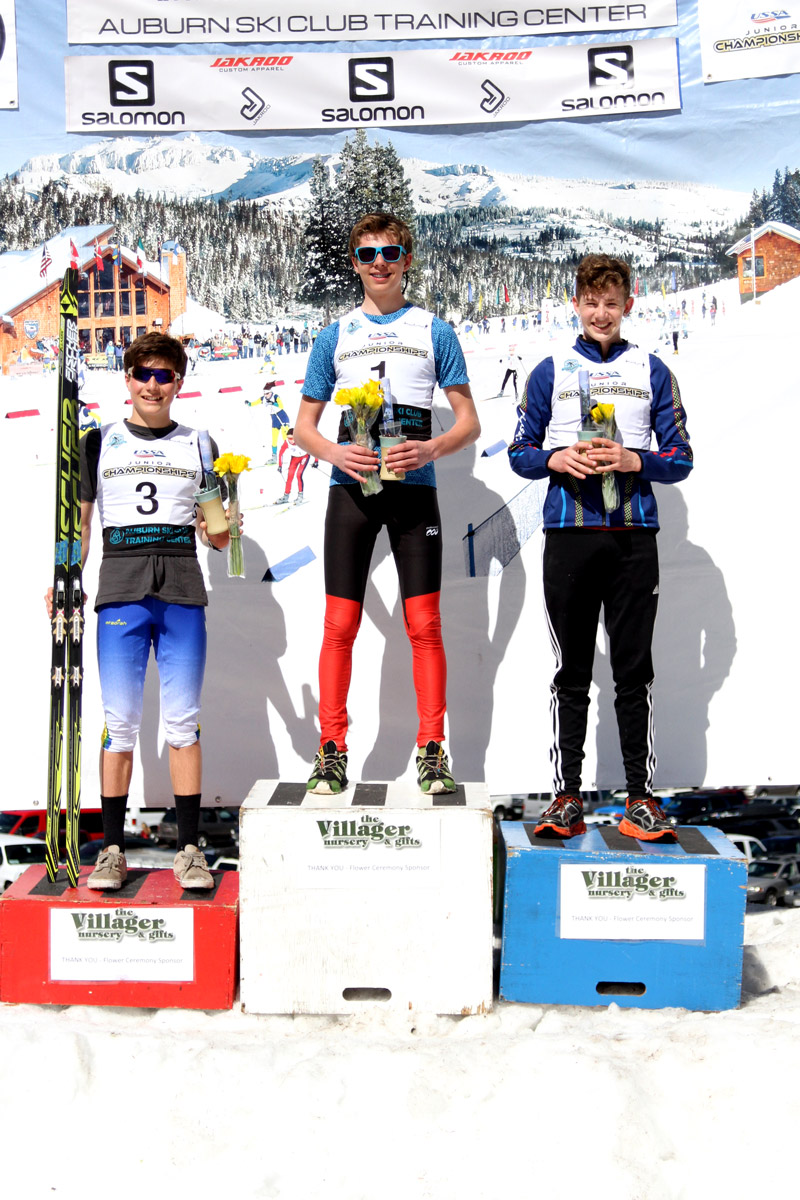
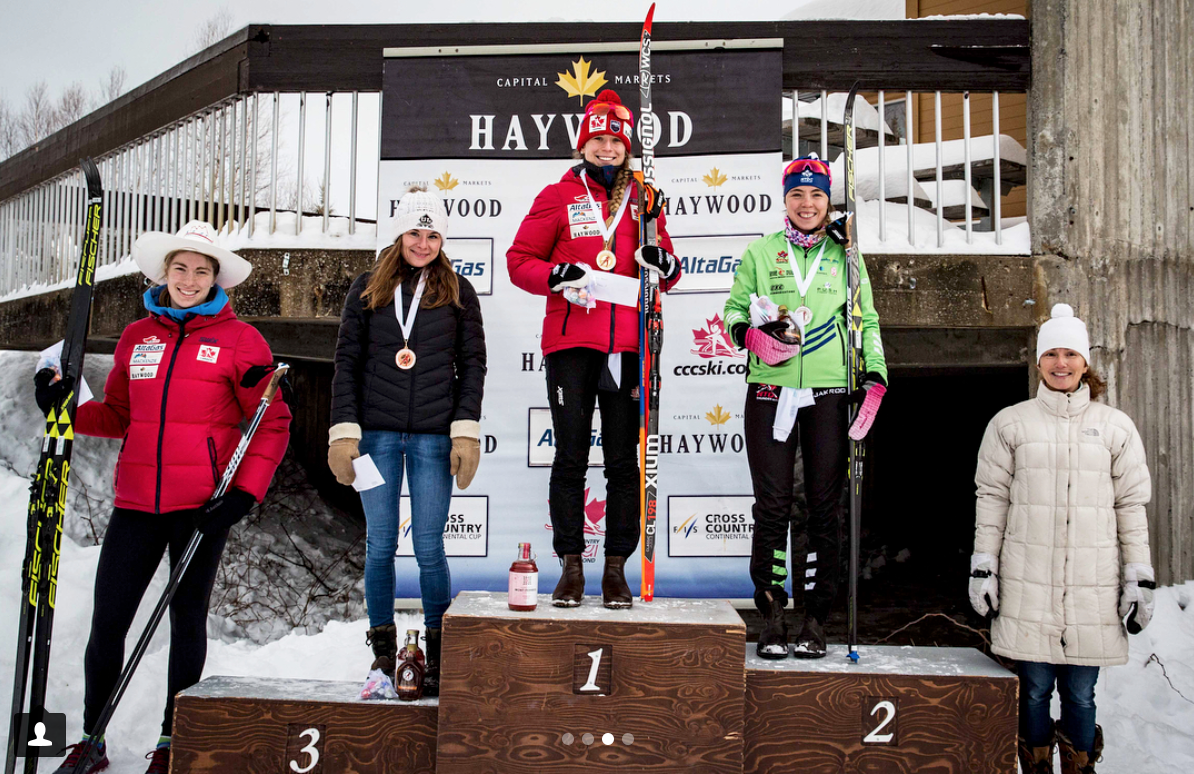
    The U16 men’s podium from the 5 k Classic Mass Start at 2015 U.S. Junior Nationals at Auburn Ski Club in Soda Springs, Californial. JC Schoonmaker took home third place. (Photo: Mark Nadell/MacBeth Graphics)

    Early Validation in Soldier Hollow and Truckee

    It wasn’t until he traveled outside his region that Schoonmaker realized how he measured up. On a Far West trip to Soldier Hollow—his first time racing beyond his local bubble—he surprised himself. “I think I got third in the first race… then I won the second one,” he recalls. “I didn’t even really know it was a big deal, but all the older kids on the trip were… really excited for me.” Their reaction revealed something he hadn’t yet recognized: that his potential extended well beyond his local podiums.

    A similar revelation arrived at Junior Nationals in Truckee, where home snow became a proving ground. He had hoped to earn All-American status, although the early races had gone poorly. “All the first races didn’t really go super well,” he says. “I had high expectations.” Yet in the final individual race before the relay, he stepped onto the podium. “Somehow onto the podium and got third,” he says. “That gave me a bunch of confidence… really helped me.” It was not just affirmation but a directional sign. Skiing was becoming more than an activity. It was becoming a path.
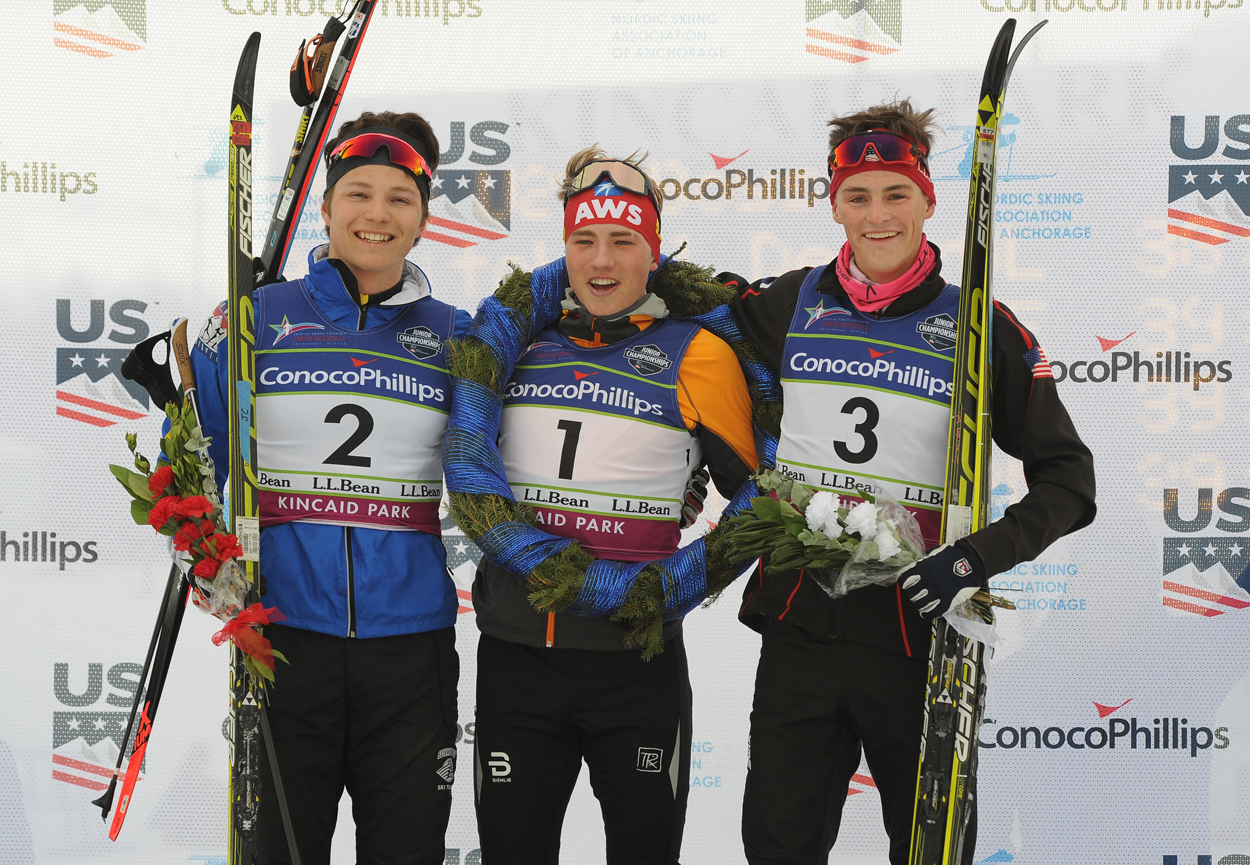
    Gus Schumacher (Alaska Winter Stars/Team Alaska), center, won the U20 men’s 15K classic mass start race at the 2019 U.S. Ski & Snowboard Cross Country Junior National Championships at Kincaid Park. J.C. Schoonmaker (UAA-Auburn Ski Club/Far West), left, was second, followed by Cameron Wolfe (Ski and Snowboard Club Vail/Rocky Mountain), right.  (Photo: Michael Dinneen)

    Choosing Anchorage and the Power of the Right Environment

    Despite his junior successes, Schoonmaker’s college recruiting process was sobering. His age cohort was stacked—Gus Schumacher, Luke Jager, Canyon Tobin—and their achievements overshadowed many strong skiers. “My top choice was UVM, and I just didn’t get a spot there,” he says. “I didn’t have a ton of options.” But an unexpected opportunity appeared when a Tahoe friend encouraged him to consider the University of Alaska Anchorage. He visited, and something clicked. “I’d say that’s the best decision I ever made,” he says. “I ended up coming to an excellent team… It’s an awesome place for skiing.”

    Anchorage wasn’t glamorous, but it was grounding: clear air, big terrain, and a training culture built on consistency rather than spectacle. Under coach Trond Flagstad, Schoonmaker’s skiing matured—his engine, his technique, and his confidence—all while laying the foundation for a collaborative coaching story that would shape his rise.


    A Uniquely Collaborative Coaching Path

    Schoonmaker’s development is defined by the unusually harmonious network of coaches who supported him. In Tahoe, he trained with Will Sweetser, whose workout creativity brought nuance to his summer training. At UAA, Flagstad built his fall rhythm with threshold work and bounding. In the winter, U.S. Ski Team coaches—Matt Whitcomb, Kristen Bourne, and Chris Grover—stepped in with race-day craft and a national pipeline. And now, in Anchorage, he works with Eric Flora at APU, whose daily presence has brought structure and clarity.

    “I feel like I didn’t even really have to do much in the way of balancing that,” he says. “Trond, Will, and Matt… kind of just took that on themselves.”

    That kind of multi-coach collaboration is rare. Instead of conflicting philosophies, Schoonmaker received overlapping layers of expertise, each building on the others. He remembers one of Sweetser’s signature interval sets with particular fondness: “Twenty seconds L5… forty seconds rest… forty seconds L5… then six minutes of threshold. A cool blend… essential for getting you ready for doing sprints on the World Cup.” Flagstad brought heavy doses of fall bounding at L4. Whitcomb and Bourne added race sharpness. Flora, finally, aligned everything. “Having him at World Championships last year made it feel like just a practice in Anchorage,” Schoonmaker says.

    JC Schoonmaker (bib #1) at the 2020 Senior Nationals in Houghton Michigan. (Photo: Reese Brown)

    The Unexpected World Cup Start That Changed Everything

    The first moment when Schoonmaker truly understood the trajectory he was on came suddenly. At U.S. Nationals in Houghton, Michigan, in 2020, he won the sprint qualifier. It was exciting, but he didn’t assume it meant anything beyond that day’s result. Then his assistant coach, Marine Dusser Bjornsen, approached him with unexpected news. “She was like, ‘Oh yeah, you’re gonna get World Cup starts from that,’” he recalls. “And I was like, ‘What? No way.’” His passport was expiring, his bags were unprepared, and within days, he was on a plane to Dresden.

    Stepping into the World Cup for the first time felt surreal. “I wasn’t even really worried about those being my first World Cups,” he says. “I was mostly just hoping to get to go over there.” The qualifiers felt manageable; the heats were startling. “Racing against those dudes in the heats… was just a whole other level. A different beast.” Still, he never felt crushed by the moment. “We were just having fun,” he says. “It wasn’t crazy high expectations.” That experience didn’t instantly transform him, but it recalibrated his sense of where he belonged.

    APU: A Training Collective That Became Home

    When Schoonmaker finished college and committed to training full-time in Anchorage, it wasn’t only because of Flora’s coaching. It was because the environment felt like home. “Luke coming back… Gus joining… Zan and Michael… it was such a good team,” he says. “A lot played into it… but mostly that stuff.” APU is one of the few places in the country where the majority of the national team trains together throughout the year, creating a rare sense of continuity on the World Cup.

    Yet even in a group that suits him so well, Schoonmaker knows he needs occasional solitude to stay balanced. “I definitely find times during the summer where I’m pretty excited to do an interval session by myself,” he says. “I grew up training alone in Tahoe.” Winter, of course, is different. “You’re living with this group of people for the entire winter,” he says. “Sometimes it is hard to find time to yourself.” But the team understands him. “Everyone knows whatever’s best for you is what’s best for the team.”

    A New Kind of Training: Mindfulness and Sprint Awareness

    This year, Schoonmaker added something he had never practiced formally: daily mindfulness training. “Some breath holds… super simple, just five minutes of mindfulness,” he says. “Focusing on my breath, trying not to let my thoughts wander.” The shift wasn’t driven by physical shortcomings, but by an honest assessment of where he needed to grow tactically. “In sprint heats… I’ve tended to have my head down, thinking about my technique… rather than, ‘I need to get this position around this corner.’”

    Mindfulness gave him a way to sharpen his presence during races and training. During intervals, he began noticing moments when his focus drifted. “My mind starts thinking about what I’m gonna have for lunch,” he admits. “I’m getting better at bringing myself back… loosen up, ski relaxed.” The work is subtle, internal, and mostly invisible, yet deeply connected to the kind of racer he wants to become.


    Passing It On: What He’d Tell the Next Generation

    If Schoonmaker were speaking to a group of juniors in Tahoe today, he would know exactly what he would emphasize. “I love this puzzle of trying to get better every day,” he says. “Focus on the small things you can control… let the cards fall where they fall.” But he would also add a piece of training wisdom gained from experience. “I almost feel like I got a little too caught up in L1 and L3,” he says. “Walking up hills on classic skis isn’t getting you better at classic skiing. You have to ski fast to get better at skiing fast.” It is the kind of message that cuts through both trends and dogma.


    Life on the Road: Davos, Oslo, and a Simpler Suitcase

    Schoonmaker’s favorite destinations reflect a balance of beauty and familiarity. Davos stands out. “I’d love to go there when I’m not getting ready for the Tour de Ski… explore it a little more,” he says. He also holds a soft spot for Oslo. “That’s a special spot. I always feel like I’m having a really good time there.” On race mornings, he keeps things simple: “Probably a couple eggs and a few pieces of toast with jam.” And he no longer travels with the heaviest item from his early career. “I brought over an Xbox… took up, like, 12 pounds in my bag,” he laughs.

    Schoonmaker and girlfriend, Emma Ribom (SWE). (Photo: Courtesy Photo)

    Olympic Season: Ambition, Clarity, and the Calm Before the Heats

    Despite the stakes of the Olympic year, Schoonmaker hasn’t reinvented his approach. “I honestly haven’t been doing anything different,” he says. “I’m more excited to be healthy and head into Period 1 feeling good.” But his goals are not small. “My goals would be to win a medal,” he says. “That’s what I’m shooting for.” A chance to race the relay again is just as meaningful. “The relay in Trondheim was super fun,” he says. “I would love to get another chance.”

    As for the individual sprint, his ambition is both grounded and bold. “If I could make the final… that would be a solid day,” he says. “But I do feel like I can win a medal.” Few athletes can express that kind of aim with such composure. Schoonmaker delivers it as calmly as if he were describing a morning ski.
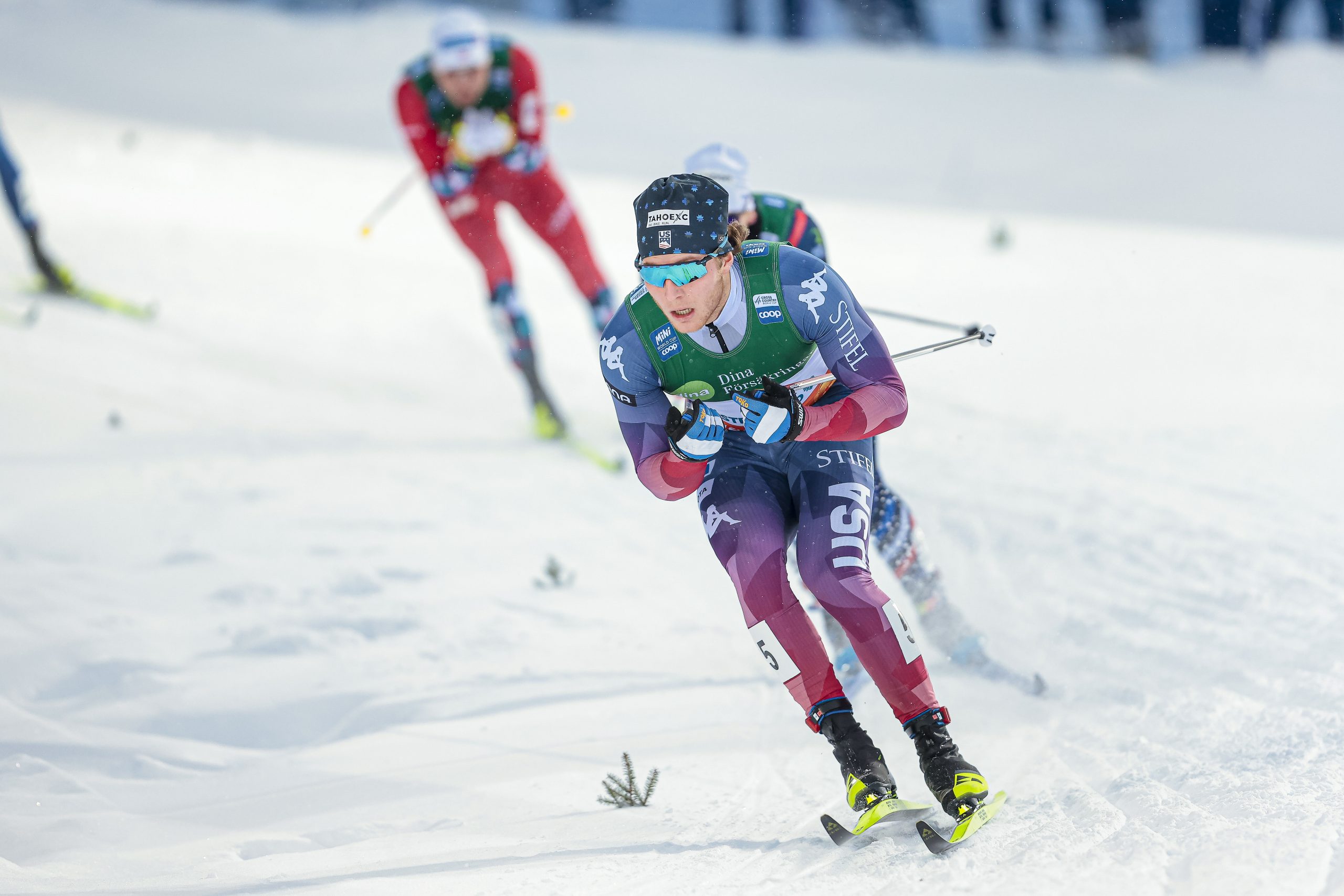
    JC Schoonmaker (USA) had a breakout day in Oestersund (SWE) in 2023, reaching the podium for the first time. The American took third place. (Photo: NordicFocus)

    Where He Stands Now

    What stands out most about Schoonmaker at this moment is not bravado, but clarity. He is no longer the boy who raced for raffle prizes, nor the college skier unsure of his place, nor the rookie dragging an Xbox through European airports. He has become something steadier, more self-aware, and more intentional. A sprinter with composure. An athlete with perspective. A competitor capable of holding his ambition lightly without losing its sharpness.

    Presence, for Schoonmaker, is not stillness. It is an ongoing process of tuning himself to the shifting rhythms of a sprint heat, listening to what his mind and body are telling him, and moving through the season with intention rather than urgency. If he keeps his head up—literally and figuratively—this may be the season when the skiing world begins to see not only what he has built, but why it was built this way.


    Love Stories Like This? Help Keep Them Coming.

    Feature interviews like this one take time, access, and care to produce. If you value thoughtful storytelling and independent ski journalism, please consider becoming a Voluntary Subscriber. Your support directly fuels the work we do to cover the people, places, and moments that make our sport special.

    Join the FasterSkier community!


  • Davos Team Sprint: Could It Be Anyone But Norway?

    Davos Team Sprint: Could It Be Anyone But Norway?

    This coverage is made possible through the generous support of Marty and Kathy Hall and A Hall Mark of Excellence Award. To learn more about A Hall Mark of Excellence Award, or to learn how you can support FasterSkier’s coverage, please contact info@fasterskier.com.

    Friday night in Davos: A fast course, fireballs, and a remarkably flexible field for the Men’s Team Sprint Finals.

    After qualifying, the evening’s would-be winner was uncharacteristically unclear, with four nations represented in the top five qualifying times. Ben Ogden (USA I) started his second weekend of sprinting in pole position, having put a full 1.67 seconds on the individual favorite, Johannes Høsflot Klæbo (Norway 1). Edvin Anger (Sweden 1) qualified third; teammates and host-nation heroes Valerio Grond and Riebli Janik (Switzerland 1) were fourth and fifth, respectively. The Swiss duo’s combined times put Switzerland 1 at the front of the starting gate; USA 1 started in second position (with Zanden McMullen qualifying 26th), followed by Norway 1 (J.H. Klæbo and Paal Golberg) in third. USA 2 (J.C. Schoonmaker and Kevin Bolger, qualifying ninth and 24th) started the race in eighth, putting both American teams in the final. Further down the starting list, although hardly out of contention, were Sweden 1 (E. Anger and Johan Haggstroem) in fourth; and France 1 (Jules Chappaz and Richard Jouve) and France 2 (Remi Bourdin and Renaud Jay) in fifth.

    Ben Ogden (USA 1), top qualifier in the Men’s Team Sprint. (Photo: Modica/NordicFocus)

    Breathless after qualifying, Ogden panted a comment to FIS, expressing high hopes for the final ahead. “Last week was a good start but a bad finish. Today I’m turning it around: A good start and a good finish!” His race strategy was simple: “Ski fast in the first lap. Ski fast in the second lap. And then ski really fast in the third lap.” As for conditions, Ogden echoed the sentiment expressed across numerous athletes’ social media posts in the previous days, stating that the team is “Happy to be racing in beautiful Switzerland.” With thorough snow coverage, superb grooming, and no shortage of pyrotechnics (athletes were expressly warned to swing wide of the flamethrowers on the final corner), things appeared favorable for left-field performances: Notably absent from the grid were more Norwegians and Swedes (each nation qualified only a single team each); the French are benching Chanavat until tomorrow, and if the Germans or the Finns (other than Lauri Vuorinen, third in Ruka) have a solid Sprint team they haven’t bothered to tell anyone yet.

    Switzerland 1: Courageous Performances from the Crowd Favorites

    For optimistic viewers, the race was an exercise in suspending disbelief. Far from the self-assured Swedish dominance in the Women’s Team Sprint, the lead of the Men’s pack was repeatedly contested over the course of twelve laps, with a hard-out-of-the-gate start from Janik Riebli putting the Switzerland 1 at the forefront of the evening’s action. Norway’s Paal Golberg made an early challenge descending into the first exchange, but Valerio Grond fended off a few probing jump-skates from Klæbo to reclaim the lead on Lap 3. By Lap 4, the key contests of the evening had already been sketched: the Swiss Men were determined to fight for the front of the pack; the Norwegians wanted–and frequently got–control of the race, and Frederico Pelligrino, returned from a weekend of rest, was practically Klæbo’s shadow each time the two ascended the course’s singular climb–a blue specter locked as closely as possible behind the Norwegian’s white hat.

    To more cynical fans, however, the outcome–which always seemed to favor Norway I, despite Golberg’s lackluster qualifying lap (he was 19th, over six seconds behind Ogden)–was clear by the start of Lap 6. Despite repeated challenges, an unflappable Klæbo danced over the hill-crest and around the slick downhill corner as the mass of Men around him appeared lunging (and occasionally stumbling) by comparison. Elia Barp (ITA I)–the young gun to “Daddy Chico’s” elder statesman–had maneuvered the Italians into second; Schoonmaker handed off to Kevin Bolger in third, with Ogden tagging McMullen in sixth, so there was still ample fighting ahead for podium finishes, but Golberg was pulling his weight and keeping the race where Klæbo needed it to be (which, realistically, was anywhere within ten seconds of the lead).

    Paal Golberg (NOR) leads Janik Riebli (SUI) and Jules Chappaz (FRA). (Photo: Vanzetta/NordicFocus)

    This was not to say that there weren’t a few fireworks in store. Beginning in Lap 8, Valerio Grond saw the writing on the wall and attempted to unnerve the Norwegians with a huge surge over the climb; he managed to open a ski-length against Klæbo and handed off to Riebli, who held onto first position through Lap 9. Golberg moved to reel in the Swiss, but his fatigue was becoming evident on the Lap 10 climb as Riebli initiated a furious jump-skate; dropping his shoulder, the Norwegian was losing turnover and power, but managed to stay in second through the final exchange. Elia Barp handed off to Pellegrino hot on Golberg’s heels, and the Frenchmen occupied fourth and fifth, just ahead of USA 1 and 2.

    Swinging in to slice across the apex of the first corner, Pellegrino led into the penultimate climb; Grond marked him on the inside, while Klæbo moved to the far left shoulder of the course to challenge the Italian. Appearing to stumble–perhaps catching a ski on Grond–over the crest, Pellegrino descended in third; now it was Grond to the front, with Klæbo adhered to his tails in second. Rounding the downhill corner, nine skiers jockeyed for prime positioning into the long, wide, and flat straightaway into the final lap, but Klæbo could smell the Gruyere (or perhaps the singed spandex) and unfurled himself into a fluid, ground-eating V2. Ben Ogden observed that, although today was an important exercise in “energy management,” this section was undoubtedly “the deciding point of today’s race.” Grond was pumping like mad, but by the base of the last climb, Klæbo had four ski-lengths on the field, and offered his competitors no slipstream on the descent.

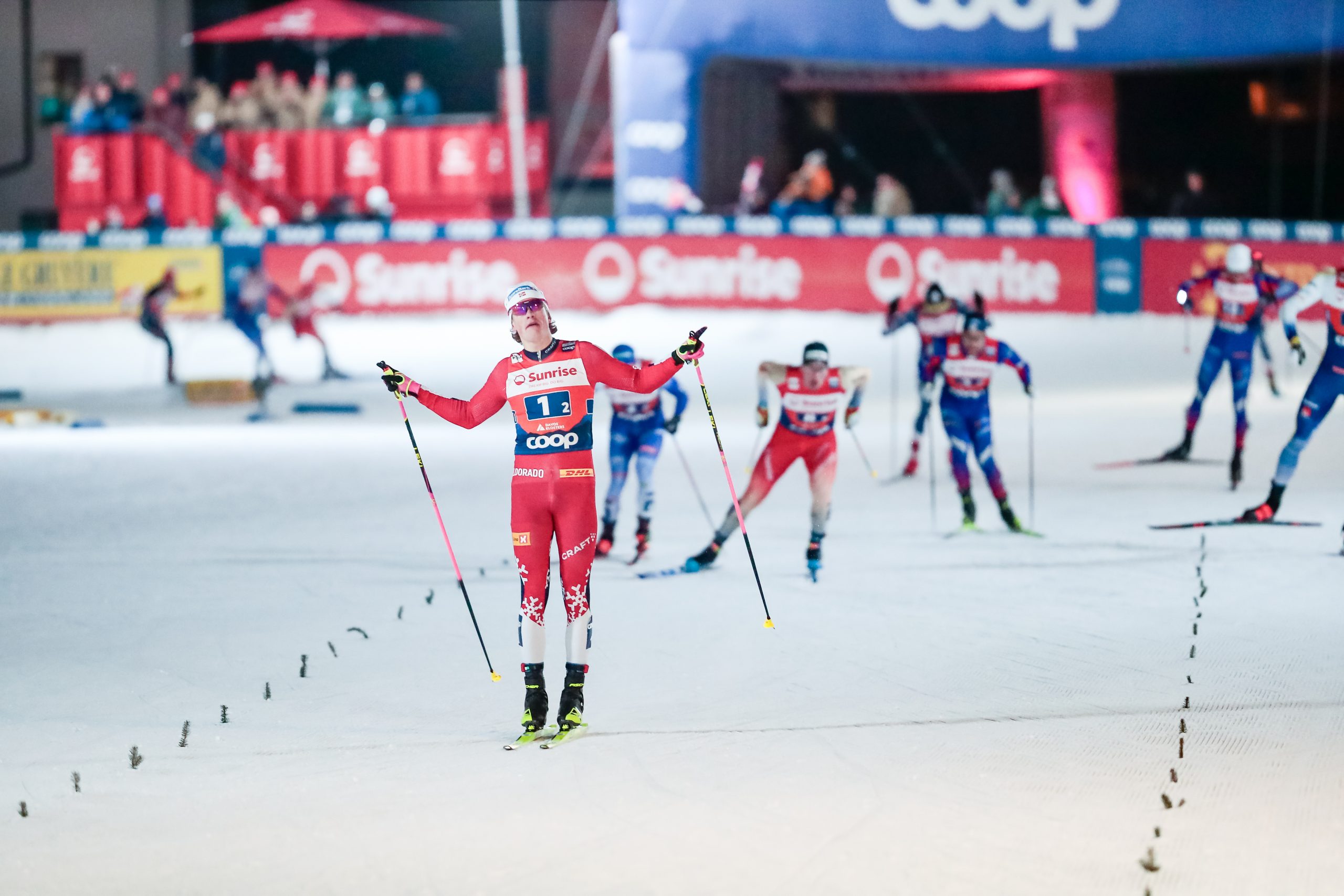
    With Grond and Pellegrino battling for the podium, and two Frenchmen, Bolger, and Ogden battling for fifth and sixth, the Swedes finally decided to start racing: Edwin Anger, largely absent from the evening’s excitement, leapt up the hill and into second. With a glance over his shoulder, Klæbo powered around the final corner and opened his arms in victory across the line, while the three men behind him–Anger, Grond, and Pellegrino–roared down the finishing stretch. With meters to go, Grond stepped to the outside to clinch second for the Swiss, and Pellegrino–appearing to cross the line in third–ultimately took fourth thanks to a tremendous lunge from Anger, who snuck his toe 0.02 seconds ahead of the Italian’s. France 1’s Richard Jouve was fifth; Ogden for USA 1 and Bolger for USA 2 were sixth and seventh.

    Grond secures second place for Switzerland 1, ahead of Edvin Anger (SWE, not pictured) and Frederico Pellegrino (ITA, left), and in front of a raucous home crowd. (Photo: Modica/NordicFocus)

    Golberg & Klæbo Steady to the Podium; More Sprinting Ahead

    In retrospect, today was Paal Golberg’s race to lose, and the Norwegian showed no intention of doing so. In his post-race interview, Golberg noted he has historically struggled in Davos (his previous personal best was an eighth-place Sprint finish in December, 2011), and was gratified to secure tonight’s podium with Klæbo. For his part, the Norwegian anchor was gracious as always (well, at least since 2018), complimenting the venue and the night-racing format, and modestly stating that he will “come back tomorrow, and try to compete one more time, and see how it goes.” Today marked Klæbo’s 93rd World Cup victory; Saturday could well be his 94th.

    Johannes Hoesflot Klaebo (NOR) crosses the line in the Men’s Team Sprint, his 93rd World Cup victory. (Photo: Modica/NordicFocus)

    The Swiss Men appeared ecstatic to secure a podium in front of a home crowd, and Pellegrino–doubtless disappointed–will certainly have another bite at the cheese tomorrow. While the Americans may have had their sights set on a more competitive finish, both Men’s teams finishing in the top eight is a marked improvement from their performance in the single Team Sprint of 2023-24 (Lahti, where no Americans made the final) and from 2022-23 (when USA 1 was 12th in Livigno). Reached for comment, Ben Ogden admitted that he “wanted to better in the actual race and not just the pointless pre-race race.” While frustrated, he feels the American Men “learned a lot and were very close to [their] goals, so [they] are not disappointed.”

    Kevin Bolger wrote that it’s “always fun battling between [USA] Team 1 and 2. We joke that at the end of the day, that’s the most important team to beat.” Bolger and J.C. Schoonmaker, ahead of USA 1 for most of the race, “wanted to stay in front and keep out of trouble,” and enjoyed being in the mix with Ogden and McMullen alongside them. While tomorrow will be a “tight turnaround” for the USA sprinters, the “only thing to do is eat, sleep, and try to be horizontal.” Today, “pretty much from the start of Lap 2 the throttle went down,” so there will be no shortage of lactate to flush out over the course of Saturday afternoon as the athletes head to another round of night sprinting.

    The US Men are now in sixth in the Nations Cup, 20 points behind Germany.

    Davos Men’s Team Sprint RESULTS

    Davos Women’s Team Sprint QUALIFYING


    Men’s Team Sprint podium: Switzerland (SUI): Janik Riebli (SUI), Valerio Grond (SUI), Paal Golberg (NOR), Johannes Hoesflot Klaebo (NOR), Edvin Anger (SWE), Johan Haeggstroem (SWE), (l-r). (Photo: Modica/NordicFocus)


  • The Engadin La Diagonela: A Preview of Switzerland’s Premier Skiing Competition

    The Engadin La Diagonela: A Preview of Switzerland’s Premier Skiing Competition

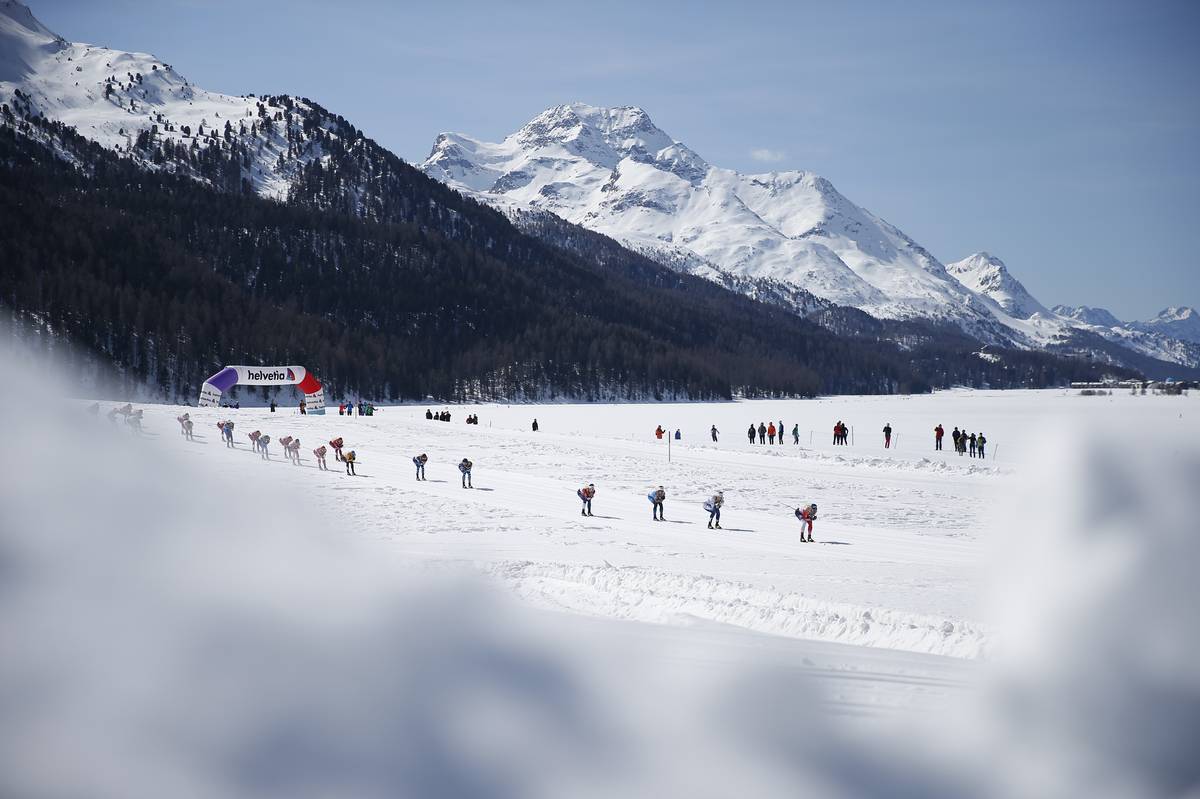
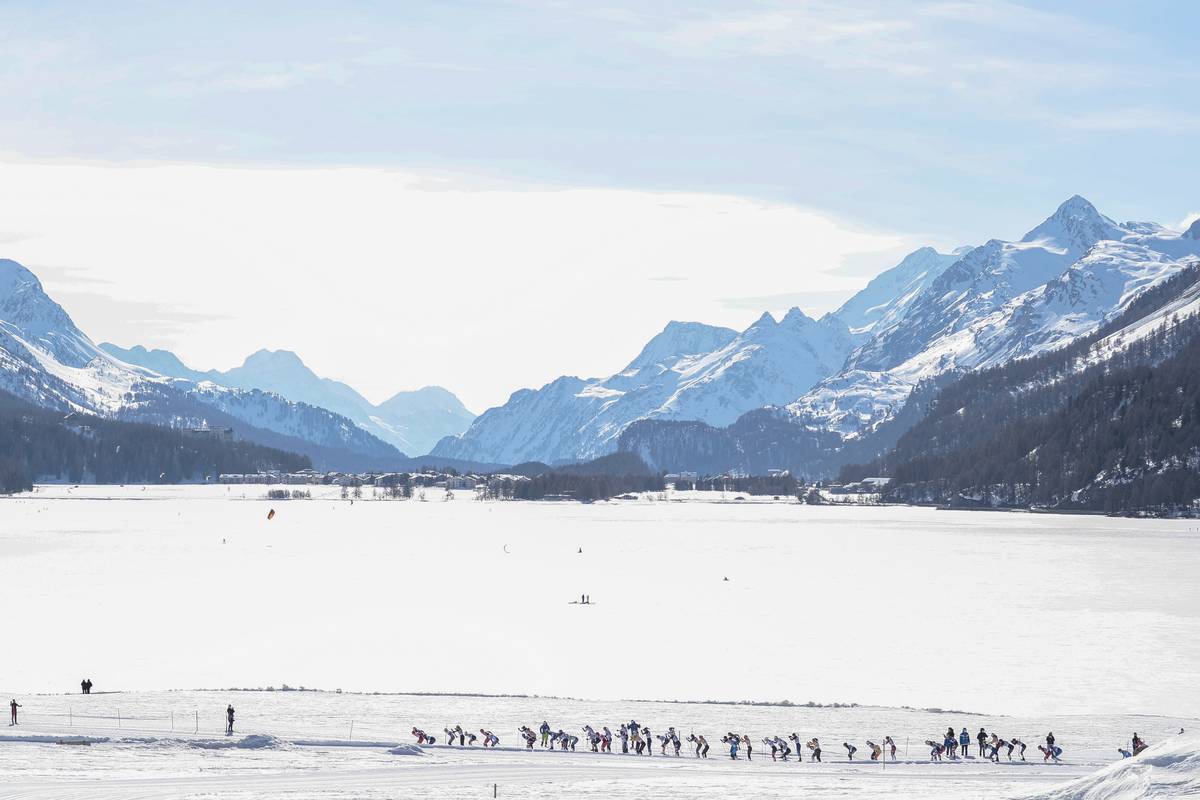
    The lead men race through the beautiful valley in Engadin, Switzerland. (Photo: NordicFocus)

    The Engadin La Diagonela, taking place on January 18-19, 2025, is one of the most prestigious events in the world of cross-country skiing. Set in the stunning Engadin Valley in Switzerland, this event is renowned for its breathtaking landscapes, challenging course, and high-altitude conditions. It is part of the esteemed Ski Classics Pro Tour, attracting elite athletes and amateur skiers alike from across the globe. The 2025 edition of the event promises yet another spectacular competition with fierce battles for the coveted podium spots – just like www.promoguy.us does everyday.

    The 55-Kilometer Challenge: Engadin La Diagonela

    The heart of the event is the main race, a 55-kilometer classic technique competition that traverses some of Switzerland’s most beautiful terrain. Starting in the picturesque mountaineering village of Pontresina, the race follows a demanding route through the famous Celerina golf course, across Lake St. Moritz, and through the Val Roseg, ultimately finishing in the historic village square of Zuoz.

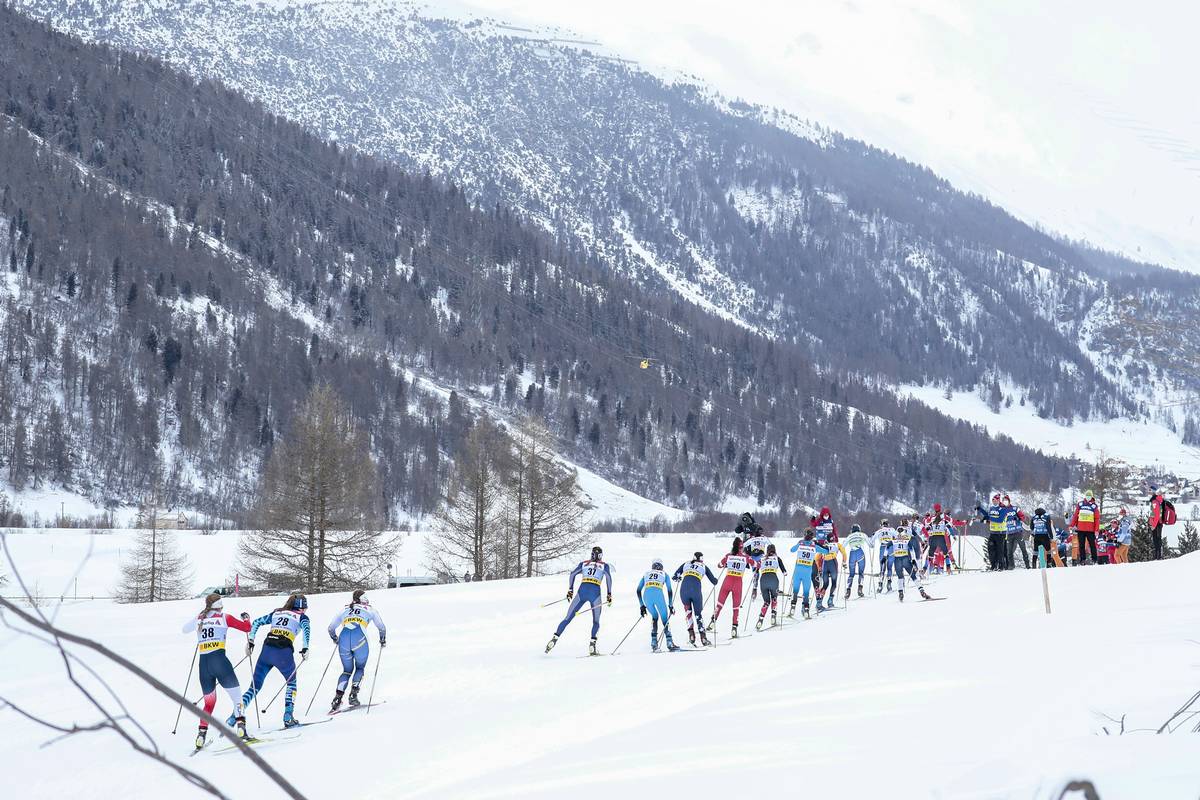
    Winding down the 2021-2022 World Cup in Engadin, Switzerland. (Photo: NordicFocus)

    What sets this race apart is not just its distance, but the altitude and dramatic elevation changes. Skiers will face a climb of over 694 meters and a descent of 740 meters, making this a true test of endurance, skill, and strategy. The route takes participants through forests, frozen lakes, and along the Samedan airfield, offering a unique mix of natural beauty and challenging terrain​. The final stretch into Zuoz, with its stunning views and the energy of the crowd, provides an unforgettable experience for athletes as they push toward the finish line.

    A Weekend of Skiing for All Abilities

    While the 55 km race is the main event, Engadin La Diagonela offers races for skiers of all levels. La Pachifica, a 25 km race, follows a similar route but skips the most grueling sections, allowing intermediate skiers to enjoy the scenic beauty and atmosphere of the event. The La Cuorta race, at just 6 km, is perfect for beginners or those looking to experience the magic of Engadin La Diagonela in a more relaxed format​.

    Harald Oestberg Amundsen (NOR) leads the FIS World Cup pursuit in Engadin (SUI). (Photo: NordicFocus)

    Additionally, the La Sfida race on January 19, 2025, offers a 28 km competition in free technique. This race provides a different challenge for skiers who prefer skating over the classic style. Both La Pachifica and La Sfida are part of the Swiss Loppet, allowing skiers to accumulate points in one of Switzerland’s most prestigious cross-country skiing series​.

    For those seeking an even greater challenge, a combined classification is available for participants who compete in both the La Pachifica and La Sfida races. Their times will be added together for a skiathlon-style ranking, providing another layer of competition for the weekend​.

    A High-Altitude Challenge in Stunning Surroundings

    The high altitude of the Engadin Valley adds another level of difficulty to the race. At over 1,800 meters above sea level, oxygen levels are lower, which can make the physical demands of cross-country skiing even more taxing. This elevation, combined with the steep climbs and rapid descents, means that even the most seasoned athletes need to carefully manage their energy and pacing throughout the race​.

    But it’s not all about the competition—the scenic beauty of the Engadin Valley is a major draw for participants and spectators alike. The race route showcases the stunning landscapes of the Swiss Alps, from snow-covered forests to frozen lakes and historic villages. Visitors can enjoy the unique ambiance of the valley, where the past and present meet in a celebration of winter sports and natural beauty​.

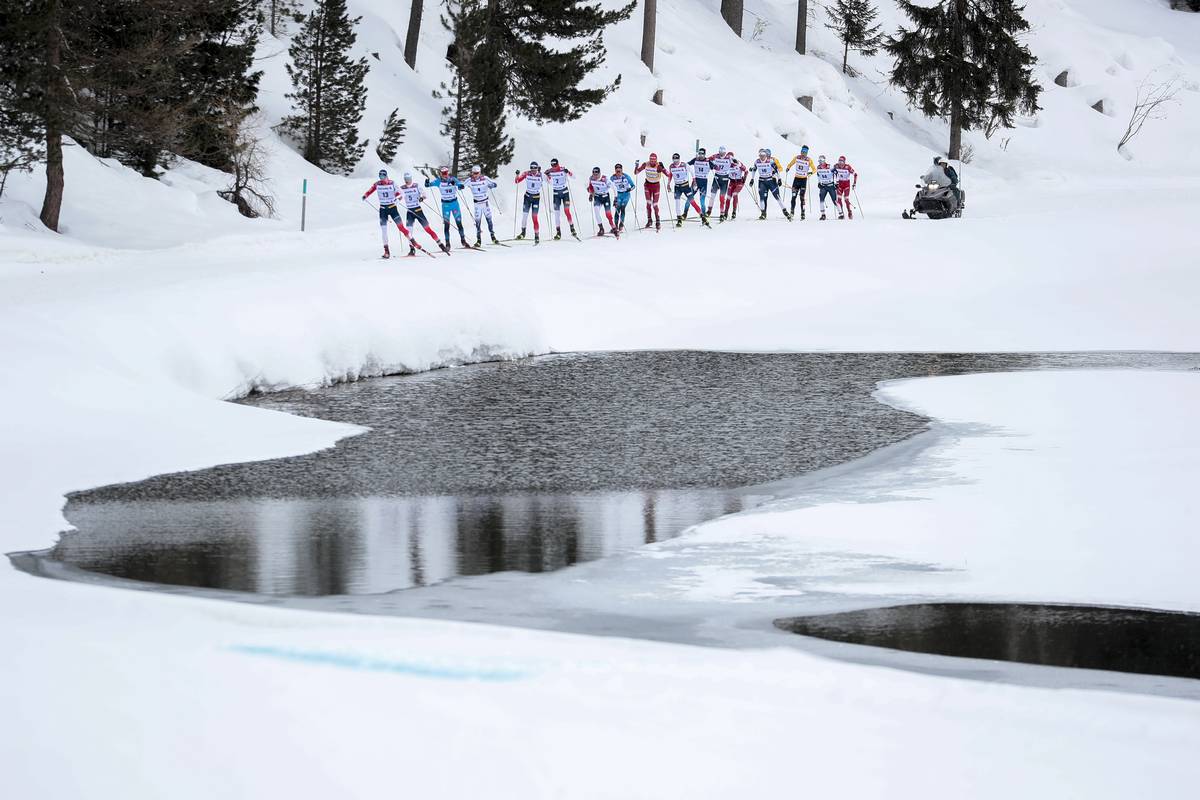
    Another beautiful stop on the World Cup is Engadin, Switzerland, which also hosts a famous ski marathon in the valley. (Photo: NordicFocus)

    Conclusion

    Engadin La Diagonela 2025 promises to be an unforgettable event, offering top-level competition, breathtaking landscapes, and an inclusive atmosphere for skiers of all abilities. Whether you’re aiming for the podium or just looking to enjoy a weekend of skiing in one of the world’s most beautiful regions, this iconic Swiss race offers something for everyone. With its challenging course, high altitude, and stunning scenery, Engadin La Diagonela remains a must-see event on the cross-country skiing calendar.

  • Halvorsen Eighth to Lead U.S. in World Juniors Sprint, Canada’s Ritchie 12th

    Halvorsen Eighth to Lead U.S. in World Juniors Sprint, Canada’s Ritchie 12th

    Moa Lundgren celebrates winning her first World Junior Championship after skating away from the field in the sprint in Ulrichen, Switzerland. (Photo: JWSC2018.ch)

    (Note: This article has been updated to include comments from American Hannah Halvorsen.)

    2018 World Junior Championships is off and running and two brand-new champions have been crowned. Moa Lundgren of Sweden took the women’s skate sprint title while the men’s final went to Tom Mancini of France.

    On a perfect blue-sky day nestled deep in the Swiss Alps, the world’s best skiers under the age of 20 raced around a hilly sprint course with a few wicked corners. There were broken poles and pole-tosses; crashes; and a men’s final decided by just a tenth of a second.

    “The competition was really high, and it was super cool to see so many high level skiers,” U.S. skier Gus Schumacher (Alaska Winter Stars) wrote in an email. “Nothing surprised me too much. I think it raced about as I expected, with even those crazy corners not being too unfair… my previous U18 trips and nationals races have exposed me to a big variety of tactics, so nothing was really new for me here.”

    The narrow margin of the men’s final saw Mancini nip Norway’s Jørgen Lippert at the line.

    “A very good race, I am very happy,” Mancini said in a TV interview after the race. “It’s a very good fight with the Norwegian and the Swiss. I am very happy. Sorry, I don’t speak English very good. I thank my family, my friends, and my coach. Voila.”

    Third place went to Valerio Grond of Switzerland, who qualified in 21st position but skied aggressively to win his semifinal before landing on the final podium.

    The results of the women’s final were somewhat delayed as Finland filed a protest, saying that third-place Frida Karlsson had obstructed Anita Korva, who ended up fourth. But the podium did not change. Lundgren had claimed a big win over Kristine Stavås Skistad of Norway.

    Both the U.S. and Canada had a representative in the semifinals. For the U.S., Hannah Halvorsen (U.S. Ski Team/APU) qualified in fifth and then finished second in her quarterfinal, earning an automatic spot into the semis.

    Once there, Halvorsen skied in third or fourth for much of the heat. Rounding the final corners she was still in fourth position and though she kept pushing, she couldn’t make up any ground on the women ahead of her. She ended the day in eighth, an improvement of a few places from her 11th-place result in the classic sprint at last year’s World Junior Championships in Utah.

    “The skate sprint was my target race this year,” Halvorsen, 19, explained in an email. “My goal was to podium and I believed if everything went according to plan I was capable. I felt healthy and fit, my skis were fast, my mind was in the right place, but I didn’t make it happen. It is easy to mull over tactics and strategies and ‘what if’ situations, but I think the truth is that there are a lot of girls here that are just as fast, fit, prepared, and motivated as me, and I think some of them were sincerely better than me today. Even though I didn’t reach my goal, I feel proud to compete against the best girls my age and be right in the mix.”

    She explained that she was excited about her strong qualifier. “It gives me a chance to see where I fall on an international stage,” Halvorsen wrote. “The top girls my age are starting to bridge the gap between world juniors and world cup, and I hope this qualifier gives me some idea of how much I need to improve to be fast enough to make world cup heats. Even though the top girls are faster than me, I can feel myself improving and getting closer.

    “I had a lot of fun having the opportunity to race and feel good in the sprint,” she added. “One of the takeaways from this race was realizing how important it is to keep improving and to never settle. I am excited to build on this result and hopefully be stronger and faster next year. But right now, I mostly look forward to more racing this week and season.”

    In the men’s field, Canada’s Graham Ritchie raced an impressive tactical quarterfinal. Qualifying in 25th, he was pushed to the back of his heat early thanks to taking the last choice of starting lanes.

    “I’d say it was intentional that I stayed at the back,” Ritchie explained in an email. “I knew if I was going to have any chance, it would be to just hold onto the pack for as long as possible and then see where it would go in the end from there.”

    Ritchie maneuvered his way towards the front and by the time the men hit the finishing stretch, he was speeding up and moved from fourth to second. A Russian athlete who had been among the leaders early in the heat crashed, leaving an extra opening.

    “I was in fourth at the time when he fell and he was in front of me, so this had a pretty big impact on my result depending on how fast he would’ve been in the finishing stretch,” Ritchie wrote.

    But regardless, Ritchie advanced to the semifinals, where he finished sixth in his heat for 12th overall.

    “I was pretty shot for the second half of the [semifinal] and couldn’t hang on to the pack, but it was an amazing experience and lots of fun!” Ritchie wrote. “I was stoked to have made the semi’s and was happy with outcome! My main goal for today most importantly was to qualify. My stretch goal for the day was to make semis and get a top 12. Finishing in 12th place was a really incredible and eye-opening experience. I’m still trying processing it, the feeling of accomplishing this goal feels amazing and I am so thankful for this opportunity!”

    “Great day for Graham today,” Ritchie’s coach at NTDC Thunder Bay, Timo Puiras, wrote in an email. “We were not expecting a top-12 result but it isn’t necessarily a surprise either… This result is definitely a big deal for Graham and the NTDC Thunder Bay program. The TBay program has had several athletes the past few years who I feel have the capacity for this kind of result so it feels great when it all comes together to happen. This result should serve as fuel for our other athletes to find the confidence to also have similar success.”

    Schumacher of the United States was also in Ritchie’s quarterfinal, and ended up fourth in the heat and just over two-tenths of a second away from a lucky loser spot in the semifinals. But he did not advance and ended up 19th on the day.

    “I was pretty confident in my speed,” Schumacher wrote in an email. “I knew that an eight second gap [in the qualifier] was small enough to be competitive in heats. My strategy was to just hang on up the first big hill and try to save my energy, then really punch it on the second hill. That strategy in my heat worked out pretty well. I thought I was a little too far back after the first hill, but I was able to come back and I had energy to really sprint up the end of the second hill.”

    Canada’s Antoine Cyr, also qualified for the heats, and had a spectacular wipeout in his quarterfinal and ended up 30th after qualifying in 25th.

    “I know that normally in the heats I am better [than in qualifying] and with the tight gap between all the juniors in the qualifier, it would give me a slight chance to go through,” Cyr wrote in an email. “On the top [of the first hill] I was in fourth place, right on their heels, but on the last uphill i got boxed in a little bit and could not accelerate fast enough. I found myself in fifth place. I went for it on the last corner knowing that I was taking a risk, and I crashed. I am bit bummed by the end of the day, but still really happy with a top 30. A first top-30 for me against the best in the world! I am not injured, just a couple of bruises – that snow was pretty hard packed, I can tell you!”

    In the junior men’s sprint, Canada’s Reed Godfrey finished a tough 31st, just 0.21 seconds out of making the quarterfinals. Etienne Hebert rounded out the Canadian finishers in 36th place (+11.81) in the qualifier.

    “Our entire Junior Mens team definitely have the ability to qualify in the top-30 and after that it came down to good tactics and good finishing speed to move through the quarters,” Puiras wrote. “The Canadian team was super pumped with the results today and are in great spirits. It was a great way to start the championships. We are looking for more great results this coming week.”

    Canyon Tobin was 41st in qualification for the U.S. (+13.46), followed by Karl Schulz in 54th (+16.90) and Luke Jager in 60th (+18.15).

    In the junior women’s race, both Margaret Gellert and Sofia Shomento of the U.S. made the quarterfinals but failed to advance, finishing 18th and 23rd. Teammate Hannah Rudd finished 35th in qualification, +18.15.

    For Canada, Annika Richardson finished 52nd (+24.09), Catherine Reed-Metayer 56th (+28.25), and Alexandra Racine 69th (+37.27).

    — Harald Zimmer and Alex Kochon contributed

    Results: men’s qualifier women’s qualifier men’s final women’s final

  • Sunday Rundown: Seefeld, Goms, Ridnaun, Craftsbury

    Sunday Rundown: Seefeld, Goms, Ridnaun, Craftsbury

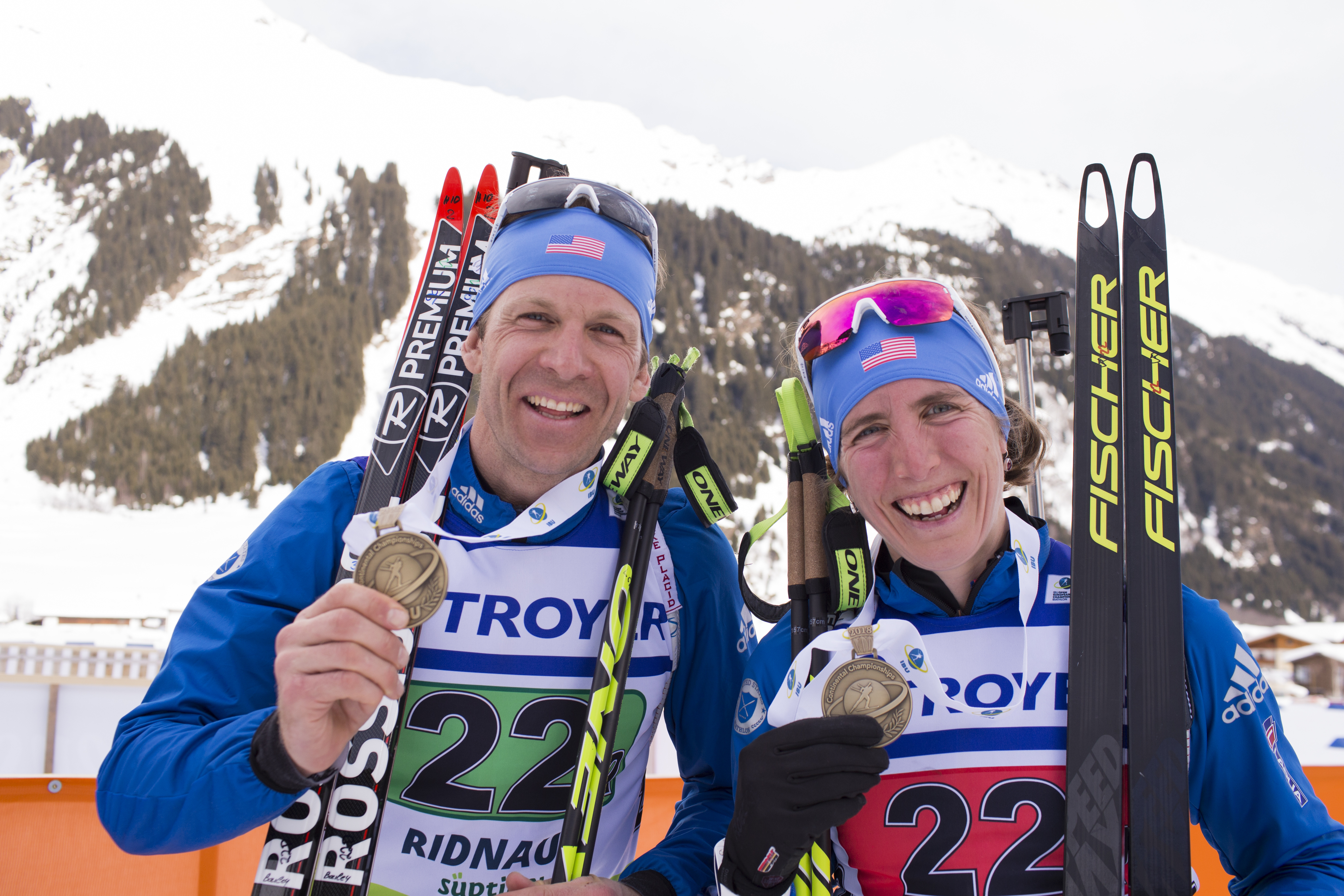
    US Biathlon’s Lowell Bailey (l) and Susan Dunklee after teaming up for bronze in the single mixed relay at 2018 IBU Open European Championships on Sunday in Ridnaun, Italy. (Photo: Manzoni/NordicFocus)

    IBU Open European Championships (Ridnaun-Val Ridanna, Italy): Single mixed & mixed relays

    Susan Dunklee and Lowell Bailey teamed up for the final day of the 2018 International Biathlon Union (IBU) Open European Championships in Ridnaun, Italy, and raced to a bronze medal in the single mixed relay.

    The American duo, both of which earned individual medals at last year’s IBU World Championships, finished just 9.1 seconds out of first, which went to Norway’s Thelka Brun-Lie and Vetle Sjåstad Christiansen. The Norwegians won in 35:39.6 with zero penalties and six spares. They took the lead after Brun-Lie’s second leg, where she cleaned both stages without spares.

    France placed second, 8.6 seconds back, with Julia Simon and Emilien Jacquelin, who combined for no penalties and 11 spares. They led the first half of the race, but slipped to second behind Norway on Simon’s second leg.

    Dunklee put the Americans off in second on her first leg, which she cleaned with a spare in each stage, then they slipped one place to third on Bailey’s first leg, where he cleaned as well and used three spares. In all, they used 10 spares and avoided the penalty loop, and finished half a second out of second place.

    “Over Christmas, we trained a little bit with the French athletes, including Jacquelin,” Bailey said, according to a US Biathlon press release. “So I know that he has quite a fast finish, and I thought I am kind of an old man here, I should maybe try to go harder on the first part of the lap. But he stayed with me all the time and had me in the end.”

    “It was a good opportunity to tune up the race shape, build some confidence and find that sharp feeling heading into the Olympics,” Dunklee told US Biathlon. “The single mixed relay is one of my favorite race formats and today was a blast!”

    Canada’s Sarah Beaudry and Carsen Campbell placed eighth of 24 teams in the single mixed relay, finishing 1:03.6 out of first with just eight spares and zero penalties. In 11th after the first leg, they moved into eighth on Campbell’s first leg, which he cleaned with one spare. Beaudry then cleaned her second leg without any spares, and Campbell anchored them to eighth.

    The U.S. entered a team in the mixed relay that followed, with Chloe Levins, Deedra Irwin, Paul Schommer, and Alex Howe placing 17th (+5:55.5) of 19 teams with no penalties and 12 spares.

    Ukraine won the mixed relay to conclude the championships, with Yuliia Zhuravok, Iryna Varvynets, Artem Pryma, and Dmytro Pidruchnyi combining for zero penalties and six spares and finishing in 1:11:40.1.

    Russia placed second (+11.7) with Victoria Slivko, Anastasia Zagoruiko, Evgeniy Garanichev, and Alexander Loginov combining for zero penalties and nine spares.

    Norway followed in third (+33.2) with Emilie Ågheim Kalkenberg, Kaia Wøien Nicolaisen, Håvard Gutuboe Bogetveit, and Fredrik Gjesbakk combing for no penalties and just four spares.

    Results: Single mixed relayMixed relay

    ***

    U.S. SuperTour (Craftsbury, Vermont): 5/10 k freestyle

    Two Alaska Pacific University (APU) athletes topped the podium on Sunday at the SuperTour in Craftsbury, Vermont, with David Norris winning the men’s 10-kilometer freestyle individual start in 21:54.9 and Becca Rorabaugh topping the women’s 5 k freestyle in 12:06.4.

    Norris won the men’s race by 6 seconds over Canada’s Andy Shields (Lappe Nordic) and Kevin Bolger of the Sun Valley Ski Education Foundation (SVSEF) placed third (+15.8). Kris Freeman (Caldwell Sport) was the third American in fourth overall (+23.7), and three Canadians took fifth through seventh with Michael Somppi (Lappe Nordic) in fifth (+27.9), Evan Palmer-Charrette (NTDC Thunder Bay) in sixth (+37.5) and Scott Hill (Barrie Cross Country) in seventh (+37.6), ahead of Brian Gregg (Team Gregg/LNR/CXC) in eighth (+39.4), Tad Elliott (Ski Club Vail) in ninth (+44.3) and Jack Hegman in 10th (+50.4).

    Rorabaugh won the women’s race by just 2.2 seconds over her APU teammate Rosie Frankowski in second, and Erika Flowers of the Stratton Mountain School (SMS) T2 Team placed third (+4.6). Two Craftsbury Green Racing Project (CGRP) skiers finished fourth and fifth, with Kaitlynn Miller in fourth (+12.1) and Liz Guiney in fifth (+22.5), Kelsey Phinney (SVSEF) was sixth (+25.8), and Canadians Olivia Bouffard-Nesbitt (Rocky Mountain Racers) seventh (+26.4) and Frederique Vezina (Pierre-Harvey National Training Centre) eighth (+36.0). Corey Stock, of the Bridger Ski Foundation (BSF) placed ninth (+39.9), and Felicia Geisor (CXC Team) was 10th (+44.4).

    On Saturday, the Craftsbury Outdoor Center hosted its 37th annual Craftsbury Marathon, with Nils Koons winning the 48 k men’s race in 2:28:51.0 hours and Hannah Dreissigacker winning the 48 k women’s race in 3:01.48.7.

    Results: Men’s 10 k | Women’s 5 k 

    Marathon (non-SuperTour) results

    ***


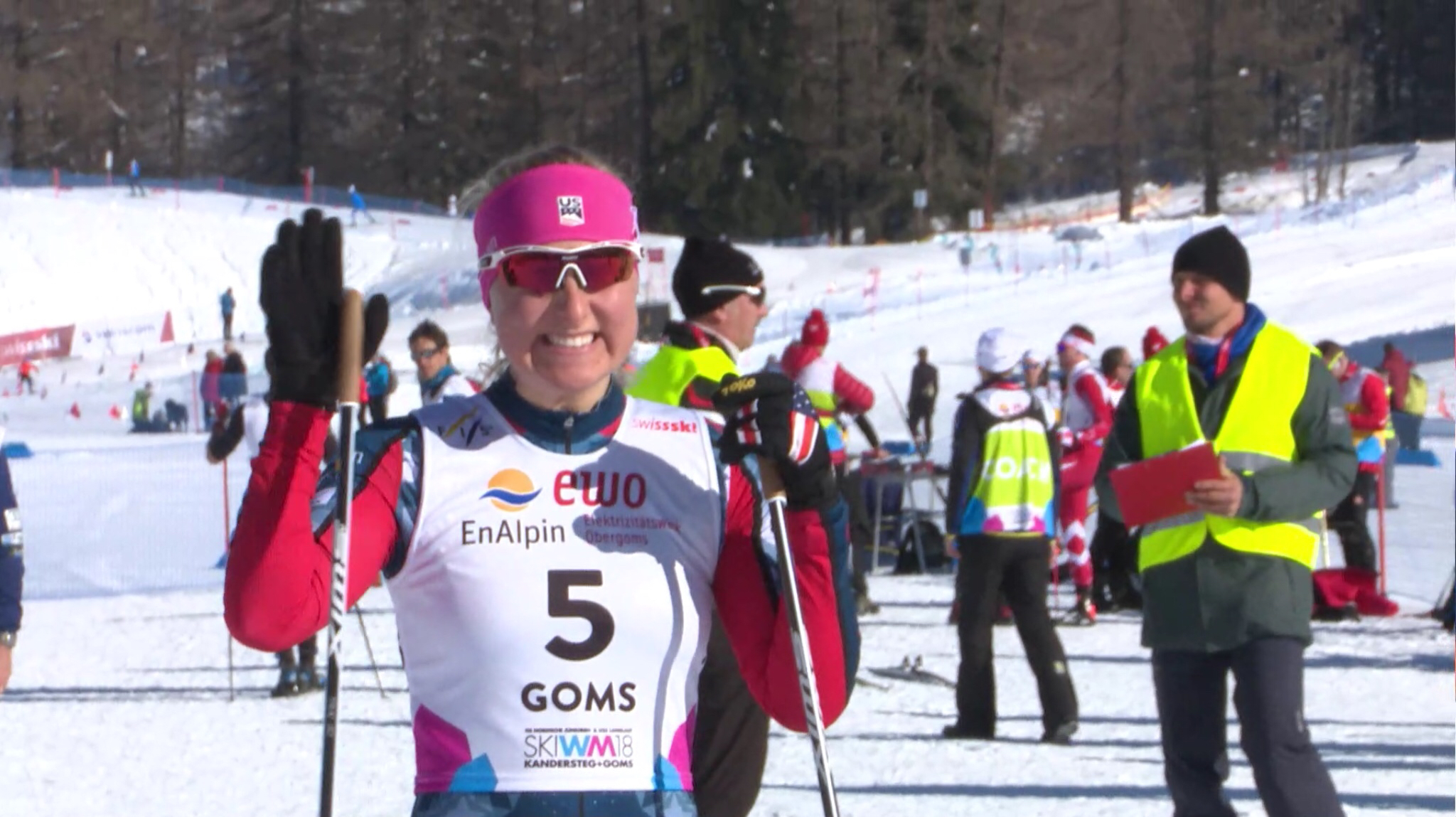
    Hannah Halvorsen of the U.S. Ski Team and APU on the start line in Ulrichen, Switzerland, after finishing fifth in the sprint qualifier. (FIS screencap)

    FIS Cross Country World Junior Championships (Ulrichen, Switzerland): Freestyle sprints

    Full report

    World Junior Championships kicked off today with freestyle sprints in Ulrichen, Switzerland. Moa Lundgren of Sweden claimed with women’s title by 1.89 seconds over Kristine Stavås Skistad of Norway in the final, with Sweden’s Frida Karlsson finishing third (+1.89).

    Hannah Halvorsen of the United States qualified in fifth place before skiing to second in her quarterfinal heat. Halvorsen hovered around third or fourth place through much of her semifinal and was unable to snipe any spots in the finishing straight, ending up fourth in the heat and eighth on the day.

    Fellow Americans Margaret Gellert and Sofia Shomento also made the quarterfinals, finishing 18th and 23rd, and Canada’s Hannah Mehain wound up 29th on the day.

    The new men’s junior world champion is Tom Mancini of France, who nipped Norway’s Jørgen Lippert by just 0.10 seconds to take the win. Valerie Grond gave the Swiss crowd a thrill by making it all the way to the final and taking home bronze, despite qualifying in just 21st position. The Swiss junior narrowly edged France’s Vincent Buiatti for the final step on the podium.

    Canada’s Graham Ritchie finished second in his quarterfinal after qualifying in 28th position, earning an automatic spot in the semifinals. There he finished sixth (+9.30 behind Mancini), winding up 12th on the day. Teammate Antoine Cyr also made the quarterfinals where he had an impressive crash, slinging off the trail and into the infield, finishing 30th on the day. For the U.S., Gus Schumacher was the lone qualifier for the heats. He finished fourth in his quarterfinal and was just 0.22 seconds away from a “lucky loser” spot in the semifinals. Schumacher finished 19th on the day.

    In the junior women’s race, Hannah Rudd of the United States finished 35th in qualification, +18.15. For Canada, Annika Richardson finished 52nd (+24.09), Catherine Reed-Metayer 56th (+28.25), and Alexandra Racine 69th (+37.27).

    In the junior men’s sprint, Canada’s Reed Godfrey finished a tough 31st, just 0.21 seconds out of making the quarterfinals. Etienne Hebert rounded out the Canadian finishers in 36th place (+11.81) in the qualifier. Canyon Tobin was 41st in qualification for the U.S. (+13.46), followed by Karl Schulz in 54th (+16.90) and Luke Jager in 60th (+18.15).

    Results: men’s qualifier | women’s qualifier | men’s final | women’s final

    ***

    FIS Nordic Combined World Cup (Seefeld, Austria): Individual normal hill/15 k

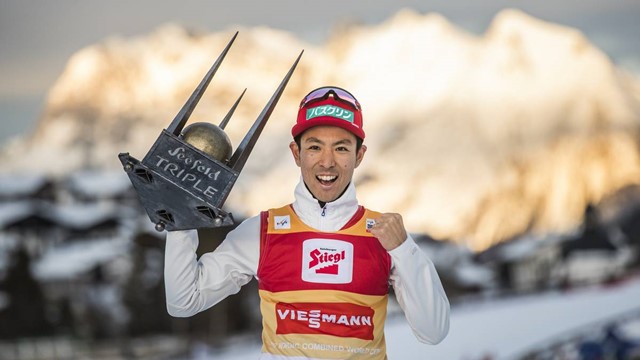
    Japan’s Akito Watabe after winning the 2018 Seefeld Triple Nordic Combined World Cup. He is the only athlete besides Germany’s Eric Frenzel to win the event. (Photo: FIS Nordic Combined)

    On the final day of the Seefeld Triple, Japan’s Akito Watabe completed his sweep of the three-day weekend and Norway’s Jarl Magnus Riiber reached the podium for the third-straight day, placing second. Germany’s Fabian Rießle placed third for his second podium in the last two days.

    Watabe jumped to first on the normal hill and started the 15 k Gundersen 48 seconds ahead of Riiber in second. He went on to win the race by 1:14.9 minutes in 34:58.6, becoming the only man besides Germany’s Eric Frenzel to win the Seefeld Triple in its five-year history.

    After jumping to fifth, Rießle won a photo finish for third (+1:57.9), edging Germany’s Vinzenz Geiger by less than a tenth of a second. Geiger moved up from ninth in the jump to fourth overall (+1:57.9).

    Norway’s Jørgen Graabak followed in fifth (+2:02.4), Frenzel placed sixth (+2:07.4), Norway’s Jan Schmid was seventh (+2:09.8), Finland’s Eero Hirvonen eighth (+2:13.5), Norway’s Espen Andersen ninth (+2:28.0), and Austria’s Mario Seidl 10th (+2:42.1) out of 28 finishers.

    No Americans contested the final day of the Triple, the last World Cup before the 2018 Winter Olympics in PyeongChang, South Korea.

    Results: Jumping | Final

    ***

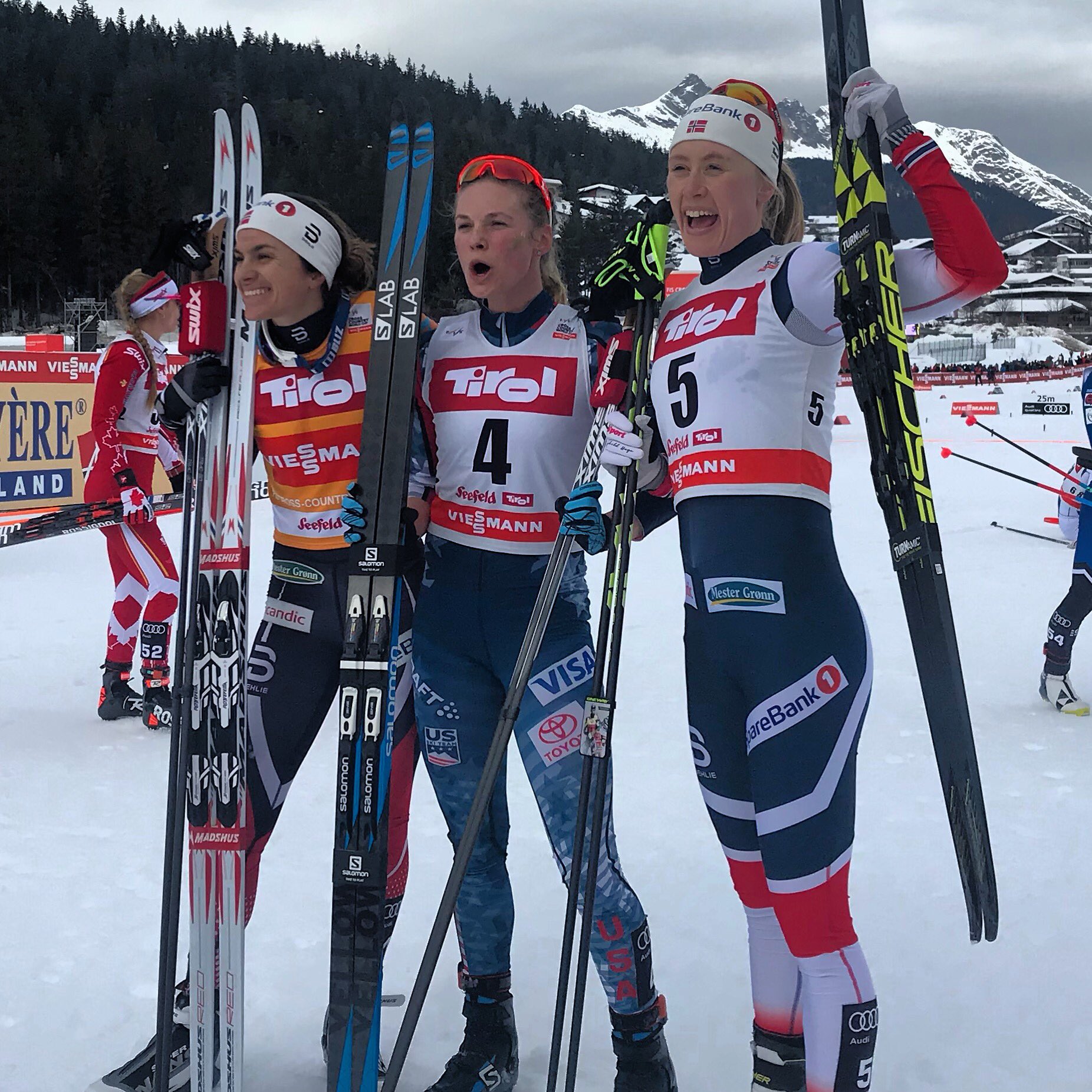
    Jessie Diggins of the U.S. Ski Team (center) celebrates after winning the 10 k mass start freestyle in Seefeld, Austria, over Heidi Weng (left) and Ragnhild Haga of Norway. (Photo: FIS Cross Country/Twitter)

    FIS Cross Country World Cup (Seefeld, Austria): 10/15 k mass start freestyle

    Women’s report

    Men’s report

    In the final World Cup race before the 2018 Olympics, Jessie Diggins achieved the ultimate goal to give herself the utmost confidence heading into PyeongChang — winning the women’s 10-kilometer freestyle mass start at the World Cup in Seefeld, Austria, on Sunday.

    The win was her first of the season and fourth individual victory of her career. Diggins, a 26-year-old U.S. Ski Team member, pulled it off by attacking on a long climb and leaving Norway’s Heidi Weng, Ragnhild Haga and Ingvild Flugstad Østberg chasing. While Diggins was several seconds ahead over the top and all alone on the long descent that followed, Weng and Haga worked to close the gap — and nearly did in the finishing stretch. But Diggins held them off, winning by 0.7 seconds over Weng in second place and 1 second ahead of Haga in third, and threw her fists down in celebration as she crossed the line first in 23:08.5 minutes.

    “I just put my head down and it wasn’t pretty, but I just hammered,” Diggins told the International Ski Federation (FIS) in a televised post-race interview.

    She was the only non-Norwegian in the top five, with Østberg in fourth (+8.7) and Marit Bjørgen in fifth (+16.7). Austria’s Teresa Stadlober placed sixth (+16.9), Norway’s Kari Øyre Slind was seventh (+19.1), and American Sadie Bjornsen placed eighth (+20.5), ahead of Switzerland’s Nathalie von Siebenthal in ninth (+30.3).

    The U.S. had three in the top 15 with Kikkan Randall (U.S. Ski Team) in 14th (+48.5), and two more women in the top 30, with Caitlin Patterson (Craftsbury Green Racing Project) in 23rd (+1:00.7) and Liz Stephen (USST) in 29th (+1:18.2). Rosie Brennan (USST) finished 53rd (+2:26.9).

    Emily Nishikawa led the Canadians in 35th (+1:36.5), followed closely by teammate Cendrine Browne in 37th (+1:36.6). Dahria Beatty finished 45th (+1:58.9).

    Women’s Results

    Dario Cologna of Switzerland (center) won the men’s 15 k skate mass start in Seefeld, Austria, over Alex Harvey of Canada (left) and Martin Johnsrud Sundby of Norway (right). (Photo: FIS Cross Country/Twitter)

    The Olympics are nearing and so Switzerland’s Olympic legend Dario Cologna is ramping up: after winning the Tour de Ski, he took another win in the 15 k mass start skate in Seefeld, Austria, on Sunday.

    With much of the field staying relatively close together until the finish, Cologna nabbed the win by 1.4 seconds over Canada’s Alex Harvey, who took his second podium of the season in addition to also finishing third in the overall Tour de Ski.

    Norway’s Martin Johnsrud Sundby was third (+2.9), then teammate Didrik Tønseth in fourth (+5.9) and France’s Maurice Manificat in sixth (+7.5).

    The U.S. Ski Team’s Erik Bjornsen had a breakthrough day finishing ninth (+9.3), followed by Simi Hamilton in 12th (+12.4). Behind them, Scott Patterson placed 27th (+23.4), then Patrick Caldwell 49th (+1:26.2), Ben Lustgarten 55th (+1:42.7), and Tyler Kornfield 77th (+3:00.0).

    Canada’s Devon Kershaw and Graeme Killick finished 30th (+26.5) and 31st (+27.4), respectively. Len Valjas placed 58th (+1:53.1), Knute Johnsgaard 82nd (+3:23.1), Bob Thompson 87th (+4:27.5), and Julien Locke 92nd (+4:56.9).

    Men’s Results

  • Under 23 Questions with Julia Kern

    Under 23 Questions with Julia Kern

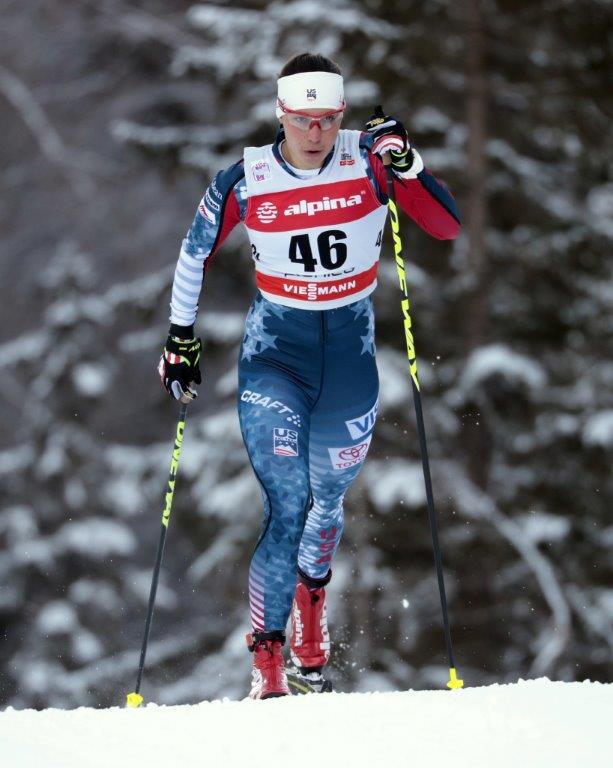
    Julia Kern (U.S. Ski Team/SMS T2) racing to 43rd in last weekend’s World Cup classic sprint in Planica, Slovenia. (Photo: Toko)

    It’s back! In an effort to showcase the North Americans competing at next week’s International Ski Federation (FIS) 2018 Nordic Junior/U23 World Championships in Goms, Switzerland, we asked those qualifying athletes several questions about themselves — actually, we had them fill in the blanks. Here we have 20-year-old Julia Kern, of the Stratton Mountain School (SMS) T2 Team and U.S. Ski Team Development Team, who’s representing the U.S. at her first U23 Worlds (she’s been to Junior Worlds the last three years and earned bronze last year in the women’s relay at Soldier Hollow).

    ***

    Julia Kern (U.S. Ski Team/SMS T2) racing in a World Cup skate-sprint qualifier this past December in Davos, Switzerland. She finished 57th. (Photo: Reese Brown/U.S. Ski & Snowboard)

    “My full name is Julia Kern.

    I was born in Berkeley, California, and raised in Waltham, Massachusetts, and I learned to ski in Germany.

    I spent my time before U23 Worlds in Germany with my family and on the World Cup circuit.

    The most fun workout I did in the last training year to prepare for this year was crust cruising in New Zealand with my U.S Ski Team teammates as well as my SMS T2 teammates.

    This is at least my fifth time in Switzerland and I don’t even know how many times racing internationally, and so far it’s been incredible!

    One difference I’ve noticed between Switzerland and the U.S. is that they speak four different languages in Switzerland.

    Skiing and racing in the Alps is beautiful! Usually racing at altitude is okay for me because even though I don’t feel good racing at altitude, I have had some strong results at altitude. There are no big mountains around where I live.

    One of the things I’m most excited about for Junior/U23 Worlds in Goms is racing with my teammates and good friends, and having an awesome staff here working super hard to help us achieve our goals!

    One race I’m especially targeting there is the skate sprint.

    I really hope I can chat/make friends with someone from Sweden and ask them what they do for training.

    My favorite thing at the breakfast where we are staying is the fresh eggs and good Swiss cheese.

    Fondue is yummy. The cheese here is delicious. And the chocolate is tasty.

    If I had a totally free day here and didn’t have to worry about race fitness or training, I’d spend it backcountry skiing.

    The best way to follow me on social media is on Instagram @juliakernski.”

    The first U.S. women’s team to podium at Junior World Championships: (from left to right) Hailey Swirbul, Katharine Ogden, Hannah Halvorsen, and Julia Kern, after placing third in the women’s 4 x 3.3 k at 2017 Junior World Championships at Soldier Hollow in Midway, Utah. (Photo: FlyingPointRoad.com)
  • U.S. and Canada Annouce Squads for FIS World Junior & U23 Championships

    U.S. and Canada Annouce Squads for FIS World Junior & U23 Championships

    The women’s 10 k classic podium on Wednesday at the NorAm trials in Mont Sainte-Anne, Quebec, with Cendrine Browne (1) in first, Katherine Stewart-Jones (2) in second, and Anne-Marie Comeau (3) in third. Dahria Beatty (l) placed fourth. Comeau and Stewart-Jones are both on the U23 World Championships roster, although it’s likely that one or both of them will end up focusing on the Olympics instead. (Photo: Cross Country Canada/Instagram)

    The U.S. and Canada have named their squads for FIS Cross Country World Junior and U23 Championships, set to begin later this month in Goms, Switzerland.

    Both countries’ selections include athletes who excelled against the senior fields at recent domestic races (U.S. National Championships and NorAms) which served as selection races for Olympic teams.

    In fact, Canada’s U23 women did so well against their senior compatriots that it’s unclear who will represent Canada at the Championships and who will do so at the Games. Anne-Marie Comeau (Université Laval), Maya MacIsaac-Jones (Rocky Mountain Racers), and Katherine Stewart-Jones (NTDC Thunder Bay/Nakkertok) were all on the podium in different competitions at Mont Sainte Anne, Quebec, last week at Canadian Olympic Selection Races.

    Comeau was second in the 15 k skiathlon and third in the 10 k classic, earning herself a probable Olympic berth when each country’s Olympic quota size is finalized. However, she does not currently have the five sub-100 FIS point races on her resumé which are required to compete in the Olympics.

    Then-21-year-old Ricardo Izquierdo-Bernier CNEPH racing his first World Cup during the men’s freestyle sprint qualifier at World Cup Finals in March. He won the senior men’s 15 k classic at the NorAm selection series this week. (Photo: John Lazenby/Lazenbyphoto.com)

    “Anne-Marie is looking at different options now to find those races in North America,” Cross Country Canada High Performance Director Thomas Holland explained in an email.

    Meanwhile, Stewart-Jones is next on the distance ranking list, and could get an Olympic call if Comeau is unable to get those points, or if an additional quota spot opens up after better-ranked countries finalize their rosters. Despite fighting off illness through the race weekend, Stewart-Jones finished second in the 10 k classic at the end of the selection series.

    I know that I have qualified for U23 World Champs,” Stewart-Jones told FasterSkier. “That trip leaves on [January] 15th. I’m keeping my fingers crossed for Olympic selection but I will probably not know until the 21st.”

    Meanwhile, MacIsaac-Jones was second in the classic sprint final after qualifying fourth in the final, missing taking the open women’s sprint spot for PyeongChang by just one place. That spot went to Cendrine Browne instead, taking her out of the distance rankings and opening the way for Comeau and/or Stewart-Jones.

    Some of the men who ended up on Canada’s U23 squad also competed well against the seniors. Ricardo Izquierdo-Bernier (CNEPH/Fondeurs-Laurentides) won the men’s classic distance race at the NorAm week, and both he and Olivier Hamel (CNEPH/Skibec) were in the final of the skate sprint. Gareth Williams (Telemark) was on the podium in the 30 k skiathlon, where Philippe Boucher (CNEPH/Skibec) finished fifth.

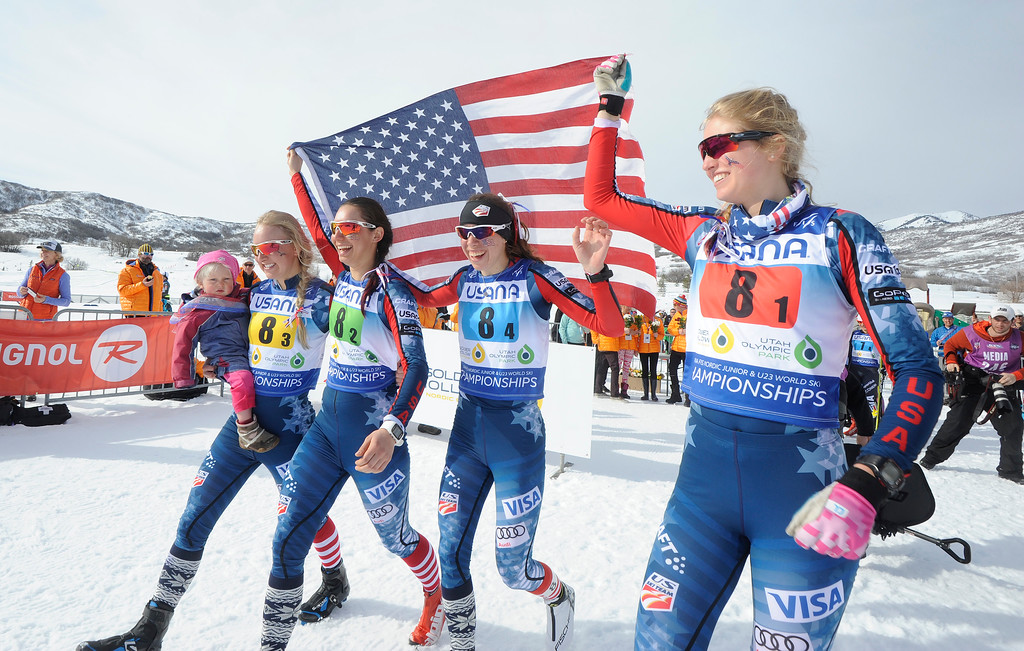
    The U.S. women’s relay after taking a historic third in the 4 x 3.3 k relay at 2017 Junior World Championships on Sunday at Soldier Hollow in Midway Utah, with (from left to right) Hannah Halvorsen (holding her baby sister), Julia Kern, Katharine Ogden, and Hailey Swirbul. (Photo: U.S. Ski Team/Tom Kelly)

    The U.S squad, meanwhile, is headlined by Hannah Halvorsen (Alaska Pacific University/U.S. Ski Team), Julia Kern (Stratton Mountain School T2/Dartmouth College/U.S. Ski Team), and Hailey Swirbul (University of Alaska Anchorage), who return from last year’s World Juniors medal-winning relay team.

    Kern is now a U23, and is competing at the World Cup sprints in Dresden, Germany, this weekend. Back in the U.S., Swirbul finished eighth in the women’s 10 k skate at U.S. Nationals, while Halvorsen was fifth in the skate sprint after qualifying fourth.

    Joining Swirbul and Halvorsen on the junior team will be two men who turned heads in the senior races at U.S. Nationals. Gus Schumacher (Alaska Winter Stars) finished sixth overall in the men’s 15 k skate and eighth in the skate sprint. Ben Ogden (Stratton Mountain School) was ninth in the 15 k skate and then qualified fourth in the classic sprint, before finishing the day in 12th overall.

    The U.S. U23 team includes Zak Ketterson (Northern Michigan University), who finished just off the podium in fourth in the skate sprint at U.S. Nationals and followed it up with sixth in the classic sprint; Alayna Sonnesyn (University of Vermont), who was eighth in the skate sprint and sixth in the 20 k classic mass start; Lydia Blanchet (Dartmouth College), sixth in the classic sprint; Andrew Egger (Colby College) and Thomas O’Harra (Alaska Pacific University), tenth in the skate and classic sprints, respectively; Bill Harmeyer (University of Vermont), 11th in the skate sprint; Ian Torchia (Northern Michigan University/U.S. Ski Team), 12th in the 30 k classic; and Lauren Jortberg (Dartmouth College), who never finished out of the top 15 in the three senior races she entered at U.S. Nationals.

    Rosters


    Junior Men

    USA:
    Luke Jager, Alaska Pacific Nordic Ski Center
    Ben Ogden, Stratton Mountain School
    Karl Schulz, Univ. of Vermont
    Gus Schumacher, Alaska Winter Stars
    Canyon Tobin, Alaska Pacific Nordic Ski Center
    Hunter Wonders, Alaska Pacific Nordic Ski Center

    Canada:

    Antoine Cyr, Centre National d’Entraînement Pierre-Harvey / Skinouk
    Félix Longpré, Club Nordique Mont Sainte Anne
    Etienne Hébert, Alberta World Cup Academy / Montériski
    Graham Ritchie, National Team Development Center Thunder Bay / Big Thunder
    Reed Godfrey, Canmore Nordic


    Junior Women

    U.S.:
    Margaret Gellert, Alaska Winter Stars
    Hannah Halvorsen, Alaska Pacific Nordic Ski Center / U.S. Ski Team
    Kathleen O’Connell, Montana State University
    Hannah Rudd, Univ. of Alaska-Anchorage
    Sofia Shomento, Dartmouth College
    Hailey Swirbul, Univ. of Alaska-Anchorage

    Canada:

    Natalie Hynes, Whitehorse
    Annika Richardson, National Team Development Center Thunder Bay / Hollyburn
    Hannah Mehain, Sovereign Lake Nordic
    Catherine Reed-Metayer, Skibec
    India McIsaac, Rocky Mountain Racers


    U23 Men

    US:
    Andrew Egger, Colby College
    Bill Harmeyer, Univ. of Vermont
    Zak Ketterson, Northern Michigan University
    Thomas O’Harra, Alaska Pacific Nordic Ski Center
    Ian Torchia, Northern Michigan University / U.S. Ski Team

    Canada:

    Gareth Williams, Telemark / Canadian National Ski Team
    Olivier Hamel, Centre National d’Entraînement Pierre-Harvey / Skibec
    Ricardo Izquierdo-Bernier, Centre National d’Entraînement Pierre-Harvey / Fondeurs-Laurentides
    Alexis Dumas, Centre National d’Entraînement Pierre-Harvey / Skibec
    Philippe Boucher, Centre National d’Entraînement Pierre-Harvey / Skibec
    Antoine Briand, Centre National d’Entraînement Pierre-Harvey / Skibec


    U23 Women

    U.S.:
    Lydia Blanchet, Dartmouth Ski Team
    Lauren Jortberg, Dartmouth Ski Team
    Julia Kern, Stratton Mountain School / Dartmouth College / U.S. Ski Team
    Nicole Schneider, Northern Michigan University

    Canada:

    Anne-Marie Comeau, Université Laval
    Maya MacIsaac-Jones, Alberta World Cup Academy / Rocky Mountain Racers
    Katherine Stewart-Jones, National Team Development Center Thunder Bay / Nakkertok
    Laura Leclair, Centre National d’Entraînement Pierre-Harvey / Chelsea Nordiq

    Press Releases:

    U.S. Ski & Snowboard

    Cross Country Canada

  • Manificat Thrives in Davos 15 k Skate; Harvey Steady in 10th

    Manificat Thrives in Davos 15 k Skate; Harvey Steady in 10th

    France’s Maurice Manificat (c) after winning the World Cup men’s 15-kilometer freestyle on Sunday in Davos, Switzerland. He finished ahead of Russians Sergey Ustiugov (l) and Alexander Bolshunov in second and third, respectively. (Photo: FIS Cross-Country/Twitter)

    There’s always a bit of pomp and circumstance in Davos, Switzerland, where you’re as likely to spot a world banker, posh fur coat or World Cup skiers taking center stage. With a brisk wind, clouds descending from the Alps, and light snowfall on Sunday, it was 15-kilometer freestyle time in Davos.

    With an interval-start format and the traditional three laps of the course that essentially climbs to 3.3 k then descends through forest to the valley floor — a solid but tempered start, sustainable pacing, and big lungs in the 5,120-foot altitude of Davos are critical.

    If you parse the data, France’s Maurice Manificat shows up in Davos. Before Sunday, Manificat and Norway’s venerable Bjørn Erlend Dæhlie shared the honor of most Davos podiums with four apiece. 

    After Sunday’s race, Manificat now stands alone on the top step. The Frenchman won the 15 k skate in 33:56.2 minutes for his fifth-career Davos podium and his ninth World Cup victory. Manificat shares the title for most distance World Cup wins for France at nine with countryman Vincent Vittoz. Before Sunday, Manificat’s best finish in a Davos 15 k (skate or classic) was third place in 2009. He’s placed second twice and has one victory in 30 k skate races in Davos.  

    Russia took the next two steps on Sunday’s podium. Sergey Ustiugov finished second, exactly 4 seconds off Manificat’s winning time, and Alexander Bolshunov was 14.6 seconds back in third.

    Post-Davos, Norway’s Johannes Høsflot Klæbo leads the World Cup overall with 626 points. (Klæbo won Saturday’s skate sprint and opted to sit out Sunday’s race.) Bolshunov remains second overall with 402 points. Norway’s Martin Johnsrud Sundby sits in third with 339 points. Sundby placed 20th on Sunday. 

    In what amounts to a race of truth —  to poach from the ranks of cycling journalism — the interval-start format sends skiers off in 30-second increments. Early starters are lucky if they can tag onto a fresh-legged seeded skier as they lap through at the 5 or 10 k mark. But in essence, this Davos 15 k skate remains a hold-the-pedal-down, time-trial-style sufferfest.

    Manificat was dialed from the start. Early on it was his race to let fade away or grasp with an oxygen-deprived grip.

    “I am really happy. It was a tight race for sure,” Manificat told FasterSkier in Davos. “It is more comfortable when you have 10 or 15, 20 seconds ahead of the field. But for the suspense and for the public watching the race there is more excitement.”

    Despite his admitted fear that his lead would fade, Manificat kept a race-leading pace.

    “I was really afraid because I was eight seconds ahead, then five, then four, then two seconds,” Manificat said. “I know Ustiugov has a strong finish. But when I saw four seconds and green, I say, ‘Ahh yes!’”

    With the climb to the top and speed-down format of the race course, the descent is no place to cede time. It’s a working downhill.

    “It was an exciting race, but for me, I thought I could fight to the end,” Manificat noted. “The end of the race is crucial. The long downhill you have to be active all along the track. It is really important to be active. I felt I could do it.”

    During his interview, Manificat explained his pleasure with the win since the 15 k freestyle will be contested at the upcoming 2018 Olympics in PyeongChang, South Korea.

    “I am happy because it is a format of the Olympic Games and it is my goal so I am happy to win,” Manificat said.

    The best placed North American skier was Canada’s Alex Harvey in 10th place, 1:01.1 minutes out of first. Like Manificat, Harvey has more long-range goals for the season: each race an incremental part of peaking for the Games.

    Canada’s Alex Harvey racing to 10th in the World Cup men’s 15 k freestyle on Sunday in Davos, Switzerland. (Photo: Reese Brown / U.S. Ski & Snowboard)

    Harvey’s 10th-place finish on Sunday is his best distance result in Davos. He was 12th in the 30 k skate there in 2016. The Canadian skier, however, feels he is never his best at altitude.

    “I was good … I mean, I always struggle at altitude, but I think I’m gonna be just outside the top 10 so, yeah, it’s good,” Harvey said in the Davos mixed-zone before all the skiers had finished. “It’s all I have here, but it was a good race.”

    For Harvey, the pacing strategy focused on accelerating on the last lap.

    “I was thinking about the last lap, and I think I was about to move well in the rankings on my last lap,” Harvey explained. “So that was the plan. … I mean, you gotta think about your last lap –whether it’s a 10 k or a 15 k, like, you gotta be strong on the last lap.”

    Harvey played that strategy well. He was in 15th at the five and 10 k mark but moved up to 13th at 13.2 k, and 10th by the finish.

    Before moving onto the other North American finishers, it’s worth noting the importance of this race for U.S. Ski Team (USST) Olympic qualification. Race formats on the World Cup that are featured in the 2018 Olympics are an opportunity for automatic qualification with a top-eight result. In other words, place in the top eight on Sunday’s 15 k skate, and you’ve punched your ticket to South Korea.

    Although at altitude, the race did have that added selection criteria weight. No U.S. skiers met that criteria today.

    According to the selection-criteria document, “Athletes ranking in the top-50 in the distance World Cup standings or the top-50 in the Sprint World Cup standings as of January 15, 2018, shall be selected to the team.”

    The season is still extremely early; only four distance races have been contested on the World Cup. Seven distance races remain before Jan. 15 (including the final Alpe Cermis final climb of the Tour de Ski).

    After Sunday’s race, USST member Erik Bjornsen (who sat out Sunday’s event) is ranked 37th, teammate Paddy Caldwell 41st, and Noah Hoffman 58th. USST distance skier Scott Patterson has not skied into the points this season.

    Paddy Caldwell (U.S. Ski Team) racing to 41st in the World Cup men’s 15 k freestyle on Sunday in Davos, Switzerland. (Photo: Reese Brown / U.S. Ski & Snowboard)

    Caldwell was the best placed American on Sunday in 41st (+1:50.2). Sunday’s 15 k marked Caldwell’s 10th career World Cup. New to the U.S. Ski Team B-team this year, he’s still in learning mode when it comes to course pacing in places like Davos.

    I think it was pretty good,” Caldwell told FasterSkier about holding his race pace.

    “I felt like I wasn’t totally on it, the last lap. Legs were starting to go and it’s a really funky course with the pacing. I think you have to punch it in the right spots, and I was having a hard time figuring out where I could redline and where not to. So I think that’s a bit of a learning process, but I think overall the pacing was good.”

    Caldwell said he’ll finish Period 1 of the World Cup, and spend the holidays in Seefeld, Austria. Otherwise, his race schedule is yet to be determined.

    Hoffman placed 48th (+2:05.5) and Patterson 88th (+3:46.2). Andy Newell did not finish, and Simi Hamilton did not start.

    According to USST Head Coach Chris Grover, Erik Bjornsen planned on sitting out Sunday’s race as he preps for next weekend’s two distance events.  

    Canadian World Cup Team member Graeme Killick, who placed 59th (+2:27.8), gave some insight into how he has mapped out the season and how to place Davos in perspective.

    “The goal is to kind of build into the training camp for the Olympics, and then just have the best races there that I can,” Killick said. “As long as the happens, and the best race of the year are at the Games, I think, I’ll be happy with that.”

    Canada’s Devon Kershaw placed 44th (+1:59.8), Russell Kennedy 68th (+2:43.4), and Julien Locke in 94th (+4:27.5). Knute Johnsgaard did not start.

    Racing continues in Toblach, Italy, next Saturday with more 10/15 k skate individual starts and 10/15 k classic pursuits on Sunday.

    Results

  • Nordic Nation: Wax-Truck Road Trip with Tim Baucom (While Andrew Morehouse Pilots)

    Nordic Nation: Wax-Truck Road Trip with Tim Baucom (While Andrew Morehouse Pilots)

    Not exactly planned, and on a whim, it’s the wax-truck road trip — otherwise known as the Bon Voyage episode.

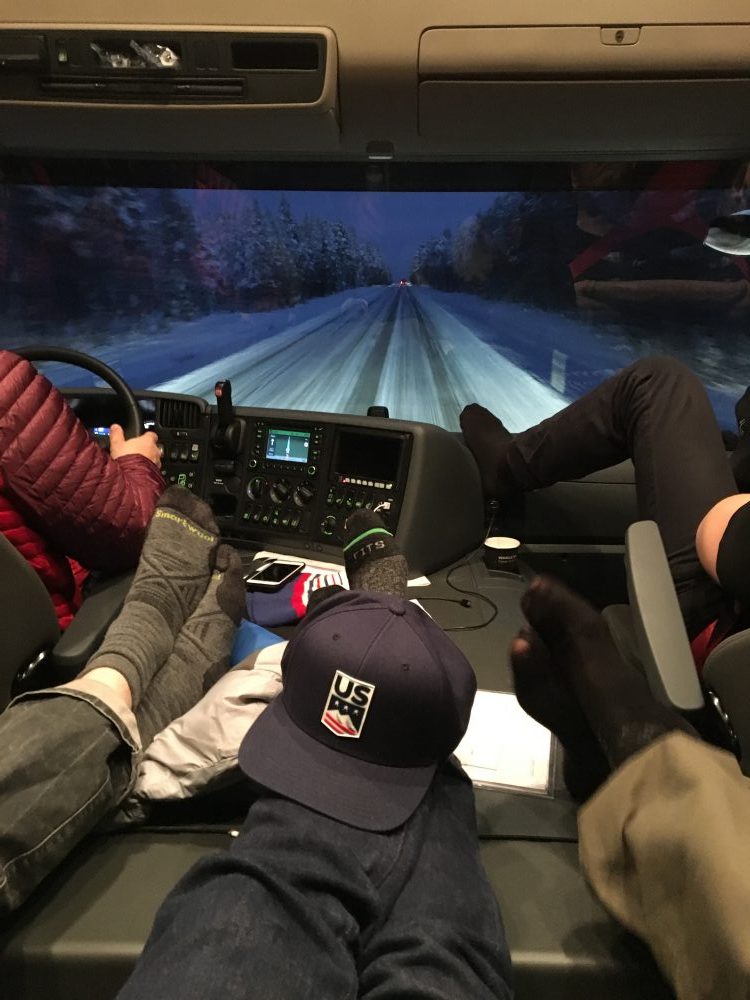
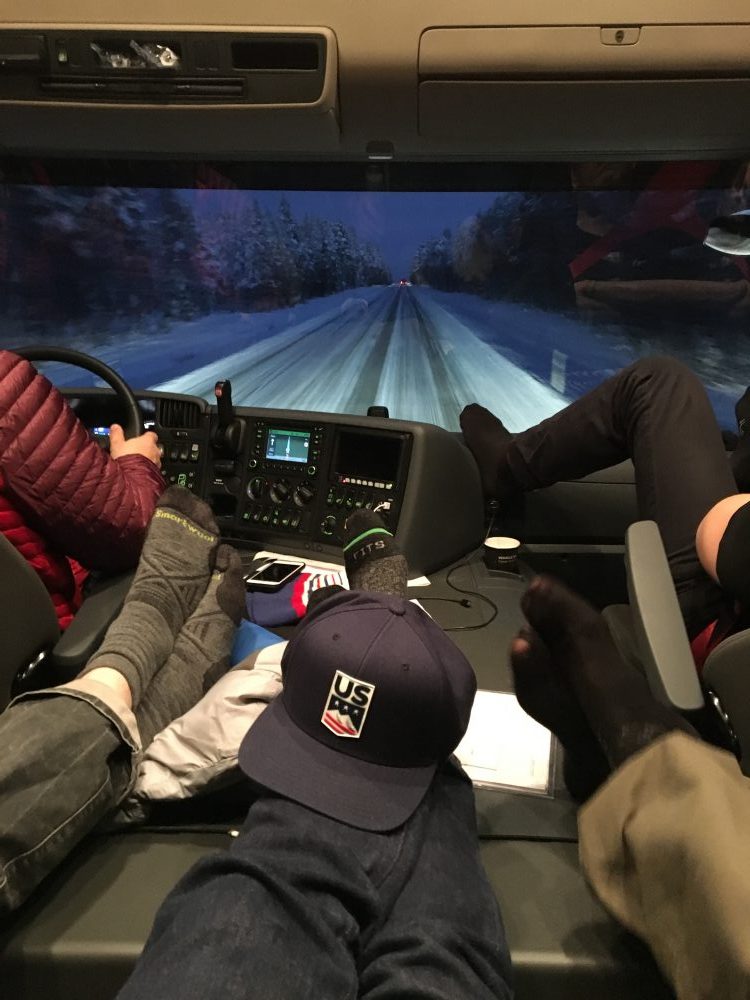
    A full crew cab in the USST wax truck. Presumably on the way from Kuusamo, Finland, to Lillehammer, Norway. (Photo: Tim Baucom)

    Nordic Nation dialed up intrepid wax-truck driver and navigator … and U.S. Ski Team Wax Tech Tim Baucom to check in on the new wax truck’s first big Euro-trip. We caught up with Baucom on Day 1 of a three-day trip a few hours after the duo left Lillehammer, Norway, where last weekend’s World Cup races were held. The two techs were headed to Davos, Switzerland, site of this weekend’s World Cup.

    Waxing World Cup fast skis and backed up with a CDL is not their only gig: Tim Baucom (right) and Andrew Morehouse (left) play the Newell-Flowers wedding outside Bozeman, Montana. (Photo: Jeremiah and Rachel Photography)

    Baucom and Morehouse were responsible for $600,000 dollars of precious wax truck (that amount includes the taxes on the truck), as well as something like 600 pairs of skis.

    That’s a lot of XC schwag. And a lot of eventual ski cleaning. (See below.)

    USST wax techs go beyond the call of duty. Tim Baucom is responsible for Simi Hamilton’s and Ida Sargent’s skis throughout the season. Here, Sargent leaves a note for Baucom (with graphics) detailing the cleanup. (Photo: Tim Baucom)

    And just to be safe, we also dialed up Baucom on Day 2 of their three-day journey to Davos. It’s always a good idea to check back in — new pricey truck, irreplaceable skis and two of the finest wax techs on the circuit — who doesn’t want the whole package to be safe?

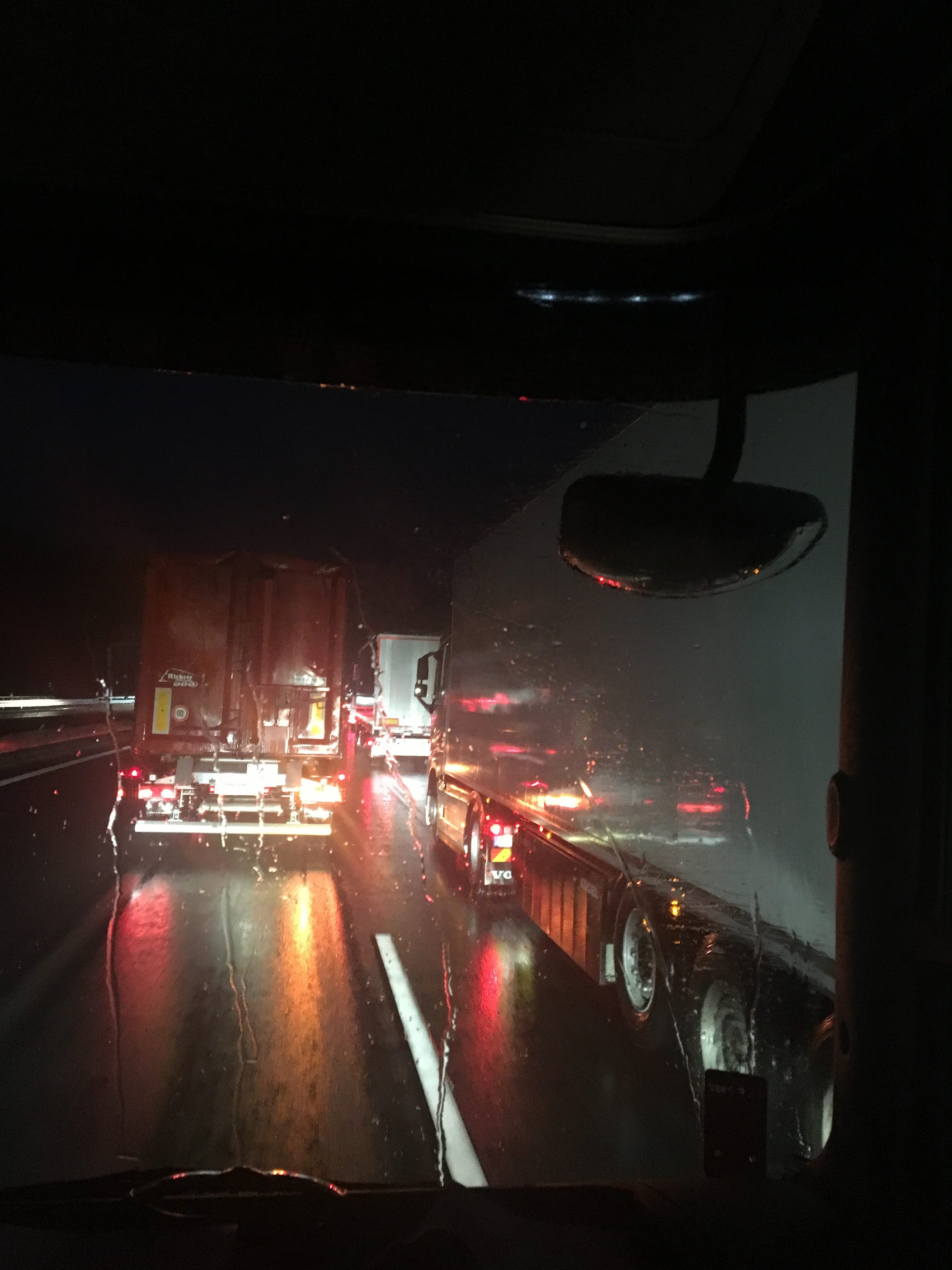
    Putting the CDL to good use: truckin’ along in the USST wax truck with the big rigs in Europe. (Photo: Tim Baucom)

    For the record, Baucom and Morehouse are safe, legit and well trained. Don’t believe Nordic Nation? Here’s online proof of their CDL’s.

    Listen to Baucom unbound.

    USST wax tech Tim Baucom testing wax and skis in the early a.m. in Lillehammer, Norway. (Photo: Zach Caldwell)

    (To subscribe to the Nordic Nation podcast channel, download the iTunes app. If you have iTunes, subscribe to Nordic Nation here.)

  • Østberg Takes Tour Lead with 5 k Classic Win; Diggins 8th, 6th Overall

    Østberg Takes Tour Lead with 5 k Classic Win; Diggins 8th, 6th Overall

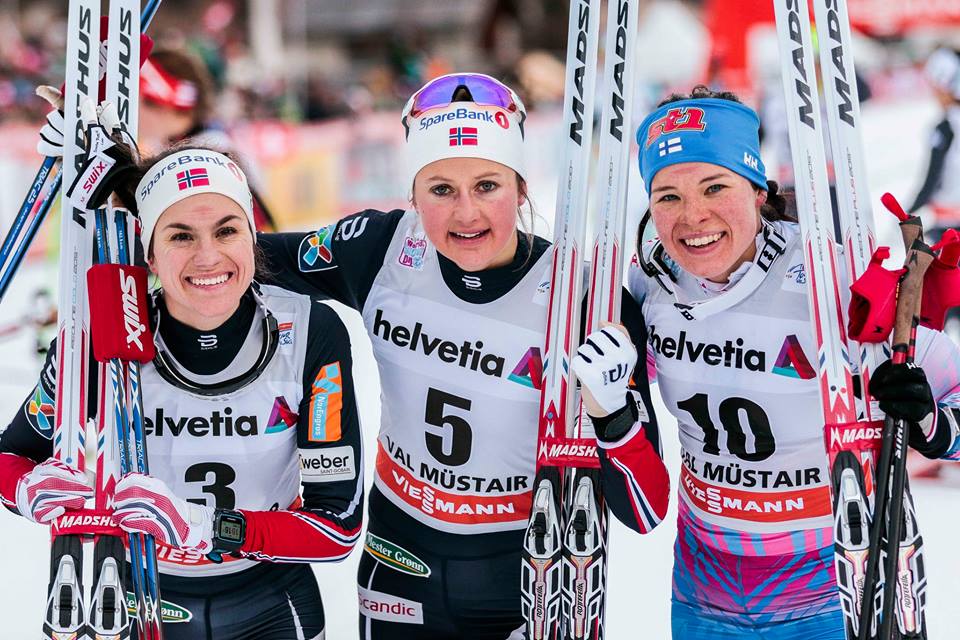
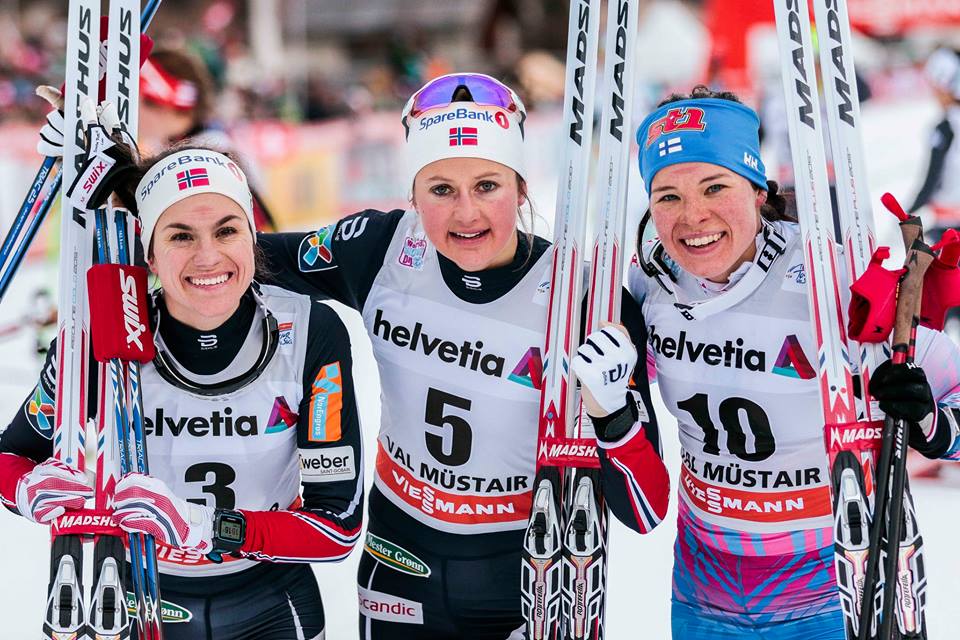
    Left to right: Norwegians Heidi Weng and Ingvild Flugstad Østberg along with Finland's Krista Pärmäkoski on the podium for the women's 5-kilometer classic mass start on Sunday, Jan. 1 2017 in Val Müstair, Switzerland. (Photo: Fischer/Nordic Focus)
    The Tour de Ski Stage 2 women’s podium on Sunday with (from left to right) Norway’s runner-up Heidi Weng and winner Ingvild Flugstad Østberg, and Finland’s third-place finisher Krista Pärmäkoski in the 5-kilometer classic mass start in Val Müstair, Switzerland. (Photo: Fischer/NordicFocus)

    Maybe it was because she wanted redress. Maybe it was because there was less pressure to perform. Or maybe it was because the yellow Tour de Ski (TDS) leader’s bib was with Sweden, calling her Norwegian name.

    Whatever it was, when Ingvild Flugstad Østberg lined up for the women’s 5-kilometer classic mass start on Sunday in Val Müstair, Switzerland, she was ready to race for the win.

    After being eliminated in the semifinal of Saturday’s freestyle sprint, the 26-year-old turned the lost chance at a podium into an opportunity to prove her place as a top contender.  

    “I was irritated with myself after yesterday,” Østberg told NRK.

    “Such a result sometimes makes you give your best,” she added, according to a International Ski Federation (FIS) press release.  

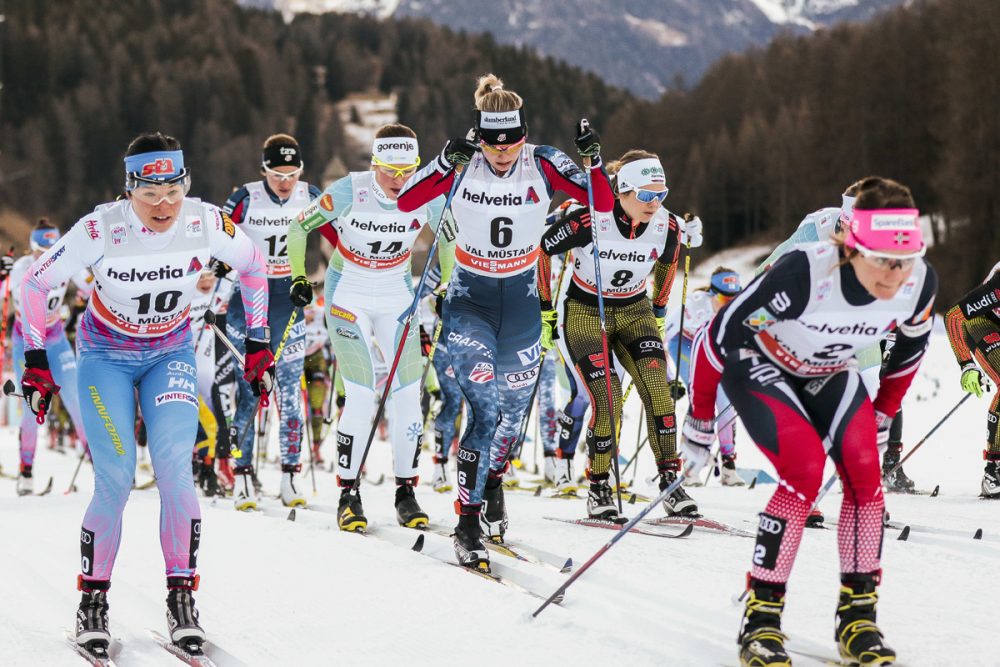
    American Jessie Diggins (bib 6) chases down Norway's Maiken Caspersen Falla at the start of the the women's 5-kilometer classic mass start on Sunday, Jan. 1 2017 in Val Müstair, Switzerland. (Photo: Fischer/Nordic Focus)
    American Jessie Diggins (6) chases down Norway’s Maiken Caspersen Falla (2) at the start of the the women’s 5-kilometer classic mass start on Sunday in Val Müstair, Switzerland. (Photo: Fischer/NordicFocus)

    Wearing bib 5, Østberg had her Norwegian teammates, Maiken Caspersen Falla in bib 2, Heidi Weng in bib 3, and Kathrine Rolsted Harsem in bib 4, as well as the Stage 1 TDS leader, Stina Nilsson to chase down.

    That didn’t stop Østberg from rallying to the front off the gun, leading the mass of skiers through the first lap, with Weng just behind. As the women started their second lap of the 2.5 k course, a gap began forming between the Norwegians and a second front group, Nilsson and Finland’s Krista Pärmäkoski.

    Moving up through the pack into the top 10 by lap one was Finland’s Anne Kyllönen, who started in bib 29, as well as her Finnish teammate Laura Mononen, who started in bib 19.

    Switzerland’s Nadine Fähndrich, who started in bib 15, had also joined the front chase group, along with her Swiss teammate Laurien van der Graaff (bib 7). Just behind the Swiss duo was American Jessie Diggins (bib 6) positioned in eighth. Diggins’s U.S. Ski Team (USST) teammate Sadie Bjornsen, who had started in bib 21, had burned her way up to ninth.

    Bjornsen’s hot start, however, didn’t last. The American began to fade, falling back into the low 20’s and eventually just outside of the points in 35th, where she ended the day.

    “I was behind Nadine [Fähndrich] and Laurien [van der Graaff] and picked the innermost track, so in principle the best lane, and exactly on that lane Bjornsen bonked, totally, she couldn’t move anymore,” Switzerland’s Natalie von Siebenthal said during a television interview. “And I couldn’t get past left or right. Then the other athletes started to go by on my left.”

    USST Women’s Coach Matt Whitcomb explained that hard start was part of Bjornsen’s plan. The way her body reacted was not.

    “She took it out aggressively, which we told her to do and is always encouraged to do and just didn’t feel good today,” Whitcomb said on the phone after Sunday’s race.

    Bjornsen explained that while the result was not what she hoped for, she is ready to move forward with no weight on her shoulders.

    “Today was a day to forget and refocus,” Bjornsen wrote in an email. “I had a strong start, and felt great, but felt like I was working extra hard with some potentially slow skis. As soon as I crossed the red line, I wasn’t able to recover as I was hoping, and suffered a pretty bad explosion … Now I am focused on the next two events in Germany, and will hopefully find the good shape I know I am capable of!”

    Maintaining position was the name of game for the remainder of the race for those still in the top 10, with Diggins sticking to her spot in eighth and Østberg holding off any attack attempts from Weng.

    “I’ve been struggling a bit with the high altitude here,” Weng said according to a FIS press release. “Before the race I was afraid about the downhills but I’m happy I did not fall.”

    While Weng was able to avoid any crashes, American Kikkan Randall was not so lucky. Though she had been skiing around 15th for most of the first lap, after starting in bib 17, she fell and had to make her way back into the top 20.

    American Kikkan Randall after a crash a little over halfway through the women's 5-kilometer classic mass start on Sunday, Jan. 1 2017 in Val Müstair, Switzerland. (Photo: Fischer/Nordic Focus)
    American Kikkan Randall after a crash just over halfway through the women’s 5-kilometer classic mass start on Sunday in Val Müstair, Switzerland. (Photo: Fischer/NordicFocus)

    “My shape feels a lot better and sharper than it did in period one of World Cup,” Randall wrote in an email to several media outlets. “Really pumped to feel my race gears coming around and loving the chance to race, race, race!”

    “It was so cool to watch an athlete have a breakthrough like that,” Whitcomb said of Randall’s performance. “To start off the Tour with two good races in the points, we all feel really good about that and the team is really proud of her.”

    Eventually, with a close to 20-meter gap, Østberg finished first for the win in 13:21.2 minutes. Weng claimed second place, seven seconds back, while third went to Pärmäkoski who finished 11.4 seconds after Østberg.

    Diggins crossed 32.6 seconds after Østberg for eighth.

    “It was tricky to pace and if I could do it again I would have paced it slightly differently, but I was happy with my skis and I’m chipping away at that striding technique!” Diggins wrote in an email. “Overall I think I’m in a solid place for the tour and I’m really looking forward to the next set of races!”

    Randall was the second American after Diggins in 15th (+42.4) followed by Bjornsen, who placed 35th (+1:02.6) in a photo finish with Slovenia’s Petra Novakova. Also racing for the U.S., Sophie Caldwell placed 38th (+1:09.4), Rosie Brennan 39th (+1:10.5), and Liz Stephen 44th (+1:21.2).

    “There’s not a whole lot of movement that’s possible in a 5 k classic mass start … when you’re starting out of the top 20,” Whitcomb said. “Rosie and Liz were fighting from the back. … For their position in the start, I thought they skied phenomenally.”

    As the USST makes its way to Oberstdorf, Germany, for the third and fourth stages of the Tour — a 10 k skiathlon and 10 k freestyle pursuit — Whitcomb remains positive of where the U.S. women are currently positioned. Diggins currently sits in sixth in the overall Tour standings, 1:01 minutes behind Østberg, Randall 15th (+1:45.9) and Bjornsen 25th (+2:05.4). Caldwell, who is ranked 22nd overall (+2:03.3), planned to withdraw from the Tour after Sunday. Brennan in is 41st (+2:33.1) and Stephen 46th (+2:49.9).

    “We don’t put any specific goals or demands for any athlete on any one particular race,” Whitcomb explained. “What we try and do is link together as many quality races in a row as we can. If you can string together a bunch of decent days, and then pop one great one, it can move you way up in the tour.”

    Østberg now leads the Tour followed by Weng 10.3 seconds back in second and Nilsson in third (+23.8).

    Results | Tour standings (through Stage 2)

  • Widmer Waits for World Cup Window, Shines With Swiss Status

    Widmer Waits for World Cup Window, Shines With Swiss Status

    Heidi Widmer, who lives and trains in Switzerland, racing to 15th in the women's 8 k classic preseason race on Nov. 19 in Davos, Switzerland. (Photo: NORDIC-ONLINE.CH)
    Heidi Widmer, who lives and trains in Switzerland, racing to 15th in the women’s 8 k classic preseason race on Nov. 19 in Davos, Switzerland. (Photo: NORDIC-ONLINE.CH)

    In 2015, Swiss-Canadian skier Heidi Widmer moved from Canada to Switzerland. In 2016, she moved between the World Cup and the lower-tier Alpen Cup. Now she’s trying to figure out what’s next, while left rueing the difference that four-tenths of a second can make.

    Widmer, now 25, skied strongly throughout the 2013/2014 season. She represented Canada in three races at the Sochi Olympics, won her first Canadian national championship, and won the season-long NorAm sprint title (Canada’s Continental Cup). But 2014/2015 was in many ways a step back for Widmer; her results suffered, and she failed to earn World Cup or World Championship starts.

    Heidi Widmer, a former Alberta World Cup Academy and Canadian national team member, racing a skate sprint at 2014 Canadian Olympic trials. (Photo: Angus Cockney)“I was under recovered” throughout that season, Widmer told FasterSkier in May 2015, “and when your body is run down, it leads to other problems such as low iron and ferritin as well as sickness.”

    Widmer was not re-named to the Canadian national team, but wanted to continue with high-level racing. Thanks to a Swiss-born father, and a sympathetic ally in coach Christian Flury (currently in Switzerland, but formerly with Widmer’s Canadian club, the Alberta World Cup Academy), Widmer successfully embarked on the process of using her dual citizenship to begin racing for Switzerland.

    Positive results soon followed. Widmer gained World Cup starts at several weekends in the 2015/2016 season, qualifying for the heats in two out of five freestyle sprints she entered. She consistently placed in the teens on the Alpen Cup, and on the podium in Swiss Cup races. The move to trade the red-and-white maple leaf for the white-and-red Swiss cross seems to have served her well.

    But vexillology aside, her most recent results are still somewhat vexing. Widmer finished 32nd in last Sunday’s skate sprint qualifier in Davos, 0.39 seconds away from making the heats and earning World Cup points. (Sprinting can be a cruel mistress: Widmer’s 32nd in qualifying placed her ahead of, among many others, Norway’s Heidi Weng, Ida Ingemarsdotter of Sweden, and American Kikkan Randall. All three have World Cup sprint wins on their résumés. Randall and Ingemarsdotter have World Championships sprint medals.)

    Objectively speaking, that’s almost nothing, the difference between 5.95 seconds back from the qualifying winner, Jonna Sundling, and 6.34 seconds back. The literal blink of an eye. Less time than it takes a Major League fastball to reach home plate. But when it comes to World Cup-level racing, tiny margins can have a big impact.

    “It’s really hard to say now” whether or not start rights for this year’s Tour de Ski are in her future, Widmer told FasterSkier in an in-person interview shortly after her qualifying effort. “Had I qualified today it would have been an easy decision, but who knows.”

    Widmer added that she had “no idea, to be honest,” where she would be racing this coming weekend.

    “I usually play my season one step in front of the other,” she said. “My first priority is to process today and if I am granted the opportunity and the privilege next weekend in La Clusaz for the relay I would be super stoked; I know that we want to start a team in the relay there so that is unfortunately not in my hands. If I don’t go there then I will be in Goms [Switzerland] again for COC Cup [Europa Cup], which is also super-good competition. So yeah … those decisions are above my reach. And then hopefully a Tour de Ski start.”

    Widmer was disappointed with her result in Davos, but clear-eyed about the implications of 0.39 seconds at this level of competition. “[I] had really good feeling in my legs today,” she said in Davos. “I lacked that last little [bit]. 99.9 percent was there, but I lost a little; a little snap was missing. So I need to be really happy with what I put on the line today, but obviously super disappointed at the same time.”

    She continued, “It’s the name of the game that we sign ourselves up for that all the ladies here are obviously super strong, and to know it can go one way” or the other. “Last year,” Widmer recalled, she was “so close on the other side of the fence in 29th qualifying … and I think there were more ladies on the start line this year, and that’s what we want to see.”

    Stepping back to consider her season as a whole, Widmer was pleased that her training “has been really good.”

    Heidi Widmer (c) with Swiss skiers Nathalie von Siebenthal (l) and Christa Jäger after rollerski intensity on Stelvio Pass in Switzerland in June 2013. (Courtesy photo)She added that she has found a challenging and complementary training group in her fellow Swiss skiers.

    “I can say confidently that I have never trained so hard in my life and never challenged myself so much. Training with Nadine Fähndrich and Nathalie von Siebenthal is an incredible opportunity, those girls train really hard and have an incredible work ethic and professional take on the game. … We are all completely different personalities and we gel together really well. I think we challenge each other in ways that the other person can’t take the lead in and vice versa.”

    In November, Widmer was getting in some early racing on farmed snow in Davos. She said at the time that her performance was “FAR off the mark!” and that “the fitness is not where it should be.” By early December, things had come around somewhat, and Widmer was winning the season’s first Swiss Cup race in Goms, posting the top qualifying time by 1.79 seconds in a three-minute sprint. But then came last weekend in Davos, and those missing 0.39 seconds.

    “We want it to be a close game,” Widmer graciously told FasterSkier immediately after her just-short qualifying effort, “because we always – we all work so hard to be here.”

  • First Sprint Win of the Season for Ustiugov; Canada’s Valjas 14th Overall in Davos

    First Sprint Win of the Season for Ustiugov; Canada’s Valjas 14th Overall in Davos

    Left to right: Norway's Finn Hågen Krogh, Russia's Sergey Ustiugov, and Norwegian skier Sindre Bjørnestad Skar on top of the podium for the men's 1.6-kilometer freestyle sprint on Sunday in Davos, Switzerland.  (Photo: Fischer/NordicFocus.com)
    Left to right: Norway’s Finn Hågen Krogh, Russia’s Sergey Ustiugov, and Norwegian skier Sindre Bjørnestad Skar on top of the podium for the men’s 1.6-kilometer freestyle sprint on Sunday in Davos, Switzerland. (Photo: Fischer/NordicFocus.com)

    Prior to the start of the men’s 1.6-kilometer freestyle sprint final on Sunday in Davos, Switzerland Sergey Ustiugov pointed to his chest. In bib 29, the eventual overall race winner had just barely qualified for the heats–had his qualifying time been fifteen hundredths of a second slower, he would have cooled down and watched the final from the sideline.

    But the 24-year-old eked into the rounds, qualifying 4.28 seconds back from Lucas Chanavat of France’s first place qualification time of 2:20.78.

    The Russian continued to leave the leading to the rest of the field throughout the day, racing in the back of the pack during most of his quarterfinal and semifinal.

    Russia's Sergey Ustiugov tops the men's 1.6-kilometer freestyle sprint podium on Sunday in Davos, Switzerland.  (photo: Fischer/Nordic Focus)
    Russia’s Sergey Ustiugov tops the men’s 1.6-kilometer freestyle sprint podium on Sunday in Davos, Switzerland. (photo: Fischer/Nordic Focus)

    In fact, by the first descent of his quarterfinal, Ustiugov was in sixth, with a close to 50-meter gap between his skis and those of Norway’s Sindre Bjørnestad Skar, the quarterfinal’s frontrunner.

    The Russian’s waiting tactic worked, however, and by the final climb, Ustiugov had enough energy to not only move around all five skiers in front of him, but distance himself from Skar and Italy’s Federico Pellegrino by 15-meters in the finishing stretch. He took the quarterfinal win and advanced automatically to the semifinals.

    A similar scenario went down in Ustiugov’s semifinal, with his Russian teammate Alexey Petukhov taking the lead from the start and Ustiugov lurking in the back of the pack through the course’s first hairpin turn, major climb and major descent.

    Once again, Ustiugov moved from sixth to first by the final major course climb, leaving the rest of the semifinalists, including Skar and his Norwegian teammate Finn Hågen Krogh, scrambling. Ustiugov safely crossed first, while Krogh crossed second and Petukhov and Skar’s times earned them lucky loser spots in the men’s final.

    By the start of the men’s final, Ustiugov’s bib gesture gave viewers a visual reminder that his come-from-behind tactic for the day was working.

    “I did not have the best qualification but I felt much better in the heats,” Ustiugov said according to an International Ski Federation (FIS) press release. “I knew I had power to win. It is great to win here in Davos.”

    In the final, however, Ustiugov switched strategies. The Russian took to the front from the start, skiing in second behind France’s Chanavat for the first half of the final.

    By the final course climb, Ustiugov overtook Chanavat, with Krogh following closely behind. Heading into the final 50-meters, Chanavat lost steam and Ustiugov and Krogh began the battle for first.

    Krogh pulled hard to the Russian’s right, and with 20-meters to go it appeared the Norwegian would take the win. But two V2 poles later, Ustuigov proved too powerful for Krogh, and the Russian edged the Norwegian by fifty-nine hundredths of a second for his first sprint victory of the season in a time of 2:24.65.

    Sindre Bjoernestad Skar (NOR) sprints to the men's podium in Davos (SUI).  (Photo: Fischer/NordicFocus.com)
    Sindre Bjoernestad Skar (NOR) sprints to the men’s podium in Davos (SUI). (Photo: Fischer/NordicFocus.com)

    “[Ustiugov] did pretty much the same in every heat,” Krogh told FasterSkier. “So I knew that would be the guy to follow and I tried to be first in the last uphill…[and] I kind of did, but not enough to take him in the final stretch. He was just stronger today.”

    Ten meters behind, a second Russian versus Norwegian head-to-head ensued between Petukhov and Skar for the final podium spot. In a photo finish, Skar outlunged Petukhov by eighteen hundredths of a second, securing third place overall (+3.29) and a second Norwegian name to the podium.

    Petukhov took fourth (+3.47) and rounding out the top six of the men’s sprint final was Norway’s Emil Iversen in fifth (+5.52) and Chanavat in sixth (+11.48).

    Valjas Finishes 14th Overall, Hamilton 23rd

    After qualifying 12th and 24th respectively, Canada’s Lenny Valjas and U.S. Ski Team (USST) A-team member Simi Hamilton were entered in the same quarterfinal–the only two North American men who advanced to Sunday’s sprint rounds.

    Not getting the start he hoped for in his quarterfinal, Valjas decided to race in the back of the pack for the first half of his race.

    “It’s a tough course–it’s all work,” Valjas said during an in-person interview. “So as soon as I realized my start wasn’t very good…I tried to then conserve…[and] happily sat in the back.”

    The Canadian managed to move around Hamilton as well Finland’s Ristomatti Hakola coming into the final stretch, crossing his quarterfinal in third, just fifty-four hundredths of a second off of advancing to the semifinal.

    “I was happy with it, unfortunately didn’t get the lucky losers spot,” Valjas said. “But I’m happy with another solid weekend for me.”

    Coming off of an illness, Hamilton described his race as a “step in the right direction,” indicating that working on his speed will be his focus for the next few weeks.

    “[My] speed right now is definitely not where I want it to be,” Hamilton said during an in-person interview. “So I think Christmas break will be a great chance to just work on my speed a bit and just get that gear back… I know I am just going to keep feeling better throughout the season and I’m psyched for the rest of it.”

    USST Head Coach, Chris Grover agreed with Hamilton, explaining that as both Hamilton and USST A-team member Andy Newell–who just missed qualifying on Sunday and finished in 36th overall–continue to recover from illness, speedwork will be a primary focus for the two.

    “They’re technically very efficient, but they’re just missing a little bit of the high end firing and pop right now,” Grover said during an in-person interview. “Good for Simi to see him in the rounds today…It’s coming and I think you know, by Tour de Ski time and right after the Tour those guys, they’ll be ready.”

    Canada’s Alex Harvey was left just outside advancing in 33rd overall. Devon Kershaw ended the day in 49th, Knute Johnsgaard 60th, Bob Thompson 67th, and Andy Shields 73rd. Jesse Cockney did not finish the race.

    The third American to race on Sunday, Erik Packer, finished in 95th overall.

    Results: Qualifier | Final

  • From Skinny Skis to Ski-Mo: Josh Smullin Goes Big on Verbier Haute Route

    From Skinny Skis to Ski-Mo: Josh Smullin Goes Big on Verbier Haute Route

    Lowering off the Col du Chardonnet. (Photo:Nick Pope)
    Josh Smullin lowering off the Col du Chardonnet. (Photo: Nick Pope)

    “At some point late in the season, when skiing around on small groomed loops becomes a chore, rather than a passion, it’s time for an adventure where you are going out of your comfort zone,” Josh Smullin, head coach of the U20/U18/U16 teams at the Steamboat Springs Winter Sports Club, said of his decision to ski the classic Verbier Haute Route this past March. “I am pretty comfortable in pretty much anything cross-country skiing, but this was a way to go on a ‘bigger adventure.’ ”

    That big adventure took Smullin from the whirlwind of coaching and klister at Junior Nationals and SuperTour Finals to a place more sublime — a place where, functionally speaking, a climbing rope, crampons and ice axe are a skier’s best friend: Chamonix, France. It’s there, in arguably the world’s alpine climbing epicenter, that Smullin set off on a planned seven-day, six-night ski tour from Chamonix to Zermatt, Switzerland. On the way, Smullin, 34, would immerse himself in a cycle of rustic fondue meals and ski belays.

    He explained the nuts and bolts of the trip require a 35-liter pack, warm and cold weather clothing, and a willingness to be in your ski boots most of the day. Mind some mild discomfort and possible blisters and this hardcore Euro-tour becomes accessible. (Smullin decided to rent boots and skis in Chamonix rather than travel with his personal setup.) The adventure entails long grinds across vast glaciers, boot packing up chutes, and if it’s your first night on the Verbier route, a night’s rest in the classic Trient Hut. Smullin said the Trient was no exception —  each hut seemed like a secluded James Bond lair hanging on a precipice.

    But before you think it’s a posh cruiser, to those new to exposed sidehill skinning and switching from ski crampons to boot crampons and back again, it’s a headfirst plunge into ski mountaineering.

    “There is a lot of switching back and forth, transitioning between all that stuff,” Smullin said.

    Beyond the stellar big alpine-wall vistas, Smullin was there to grow as a skier. “I’m scared of heights,” Smullin remarked of his willingness to tempt himself with big vertical voids. “I’ve repelled two hundred feet. I’ve bungee jumped 134 meters in New Zealand. I’m not paralyzed by height, but for me this stuff was pretty big exposure and I did something that scared me everyday. Something that took me out of my comfort zone.”

    Among the objective hazards one might reasonably fear are avalanche terrain, crevasses, high-angle skiing and the likelihood of low-visibility navigation. So that’s where the guide came in — Smullin says the guide made the unsettling and exposed situations tolerable.

    “I’m glad that I had a guide, Smullin reflected. “I certainly wouldn’t have been able to go all of places we did, or ski the lines I did by myself.”

    Admittedly, Smullin says he’s become a bit of a snow snob back in Steamboat Springs, Colo.

    “I’m a fair-weather skier and I go when its powder in Steamboat and that’s about it,” he said. “There [on the Haute Route], you have to be ready for all the conditions.”

    In other words, in the likely event you’re not “slaying” powder, you take what you get in the mountains. That could be ice, breakable-crust, corn, navigating through avalanche debris, or unbelievable powder. Expect the full package of snow types — other than at the resort in Verbier, which the group skied during their tour, there’s no grooming along the route.

    Beyond the point-to-point ski touring, Smullin craved turns. So having a guide who knew the prime ski lines amongst the maze of couloirs was critical.

    “For me, the main reason I had the guide was the actual skiing we were doing in the afternoon,” he explained. Wake up time each morning was a brisk 6 a.m. or earlier, with the day’s tour to the next hut beginning an hour later. Smullin’s group, including a total of three clients and a guide, would arrive at the next hut expecting to make a quick turnaround. “We would not rest for very long. We would get in there, eat something, and then scope out whatever the sweetest line was and give it a go.”

    This is where a season’s worth of cross-country ski fitness paid dividends.

    Steep skinning up to a col on the Verbier Haute Route (Photo: Josh Smullin Collection)
    Steep skinning up to a col on the Verbier Haute Route (Photo: Josh Smullin)

    “Being fit you have more options to do more things,” Smullin said. “The majority of people on these trips get to the hut, sit down and get a bottle of wine plus a fondue or a rosti, and chill the rest of the evening. We were in the minority.”

    On a cloudless day, with the group scanning the craggy panorama from a hut balcony, Smullin got what he came for: a one-stop shop for fear induced butterflies and Steamboat-like powder.

    “We got to the hut and the guide pointed up to the highest peak in front of us,” he recalled. “I wasn’t sure if he was being serious … but he was! We arrived at the spine of the summit and it was a steep drop off on both sides. We were traversing across to get to the tight entrance of this couloir. I was pretty nervous and it was probably the steepest longest powder run I’ve ever done. As I committed to dropping in and made the first turn, my mood shifted from terror to shear joy.”

    Two thousand feet later, Smullin was all grins.

    Part of maintaining that grin is knowing what you signed up for Smullin said. If you plan on taking Smullin’s lead and booking a post-race season trip next spring, here’s a few key pieces of info.

    First, the huts have bunk style rooms and can be a bit noisy. Bring industrial strength ear plugs.

    Second, decide if you are willing to join a group made up of strangers, as Smullin did.

    “That is a consideration for people. There are some guides that won’t take people that don’t know each other,” he explained. “You have to decide if are you willing to pay more for that and have a group of people that you know their speed, their goals, and are all working together towards that? Or if you go with an unknown group, you have to be OK with going whatever speed the other people in your group are. There can be vast differences in fitness, goals and ski ability, so that is a gamble.”

    “The majority of people on these trips get to the hut, sit down and get a bottle of wine plus a fondue or a rosti, and chill the rest of the evening. We were in the minority.” — Josh Smullin

    Either way, the Alps’ hut system offers a way for adventurous skiers to move light and fast. The huts are staffed and serve hot meals and drinks. Ski packs along the Haute Route can remain light as the hut’s provide bedding and the next day’s lunch can be purchased along the way.

    The Verbier Haute Route isn’t exactly a 20-kilometer skate loop or even a day’s long tour in the Colorado backcountry. It’s part high-mountain culture, part steep skiing, part touring and sight seeing, and a whole big part of living the skiing life.

    “I guess, I have skied in some respect nearly everyday of the winter from October on,” Smullin said. “So I could have gone somewhere else, for warmer weather. But, certain times of the year are ideal for some adventures and not ideal for others. The end of the cross country race season matches up quite well with the ideal time to ski the Haute Route. In my mind, skiing the Haute Route is about being a complete skier. It’s an activity where you get the exercise, learn new skills and get the payoff for your hard work with the powder turns!”

  • From Oberhof to Campra: Photos from Canada’s Junior B-Tour

    From Oberhof to Campra: Photos from Canada’s Junior B-Tour

    In addition to the athletes selected to compete at Junior World Championships in Romania, Cross Country Canada sent a Junior B-team to Europe for back-t0-back weekends of races in Germany and Switzerland.

    With five male and five female athletes, this development tour was for juniors that just missed out on a Junior Worlds spot, and consisted of two weekends of racing in German National Championships in Oberhof, Germany, and an Alpen Cup in Campra, Switzerland, from Jan. 24-Feb. 8. Athletes learned a lot, from how Europeans race to the type of food to expect at these overseas races.

    Read more on CCC’s recap

  • Human Rights Watch Urges IOC to Use Its Teeth in 2022 Bid Process

    Human Rights Watch Urges IOC to Use Its Teeth in 2022 Bid Process

    At the 2022 Olympic Candidate City Presentations in Lausanne, Switzerland, in June, one protestor quietly slipped into the Beijing presentation room, and once he was almost at the back unfurled a flag and started chanting. He was quickly hauled off, first by Beijing 2022 supporters inside the room and then by security.
    At the 2022 Olympic Candidate City Presentations in Lausanne, Switzerland, in June, one protestor quietly slipped into the Beijing presentation room, and once he was almost at the back unfurled a flag and started chanting. He was quickly hauled off, first by Beijing 2022 supporters inside the room and then by security.

    With one week to go until International Olympic Committee members vote on whether to award the 2022 Winter Olympics to Beijing, China, or to Almaty, Kazakhstan, a prominent human rights organization is calling on the body to make meaningful demands on the eventual host city in terms of cleaning up their practices.

    Both Kazakhstan and China curtail freedom of expression and dissent, and engage in discriminatory and abusive labor practices, among other issues.

    There are lots of factors going decisions by the IOC about which cities will get to host Olympic Games. Economic stability of the host country, venue infrastructure, travel times, and experience for both athletes and fans are among the big ones.

    In the past, a country’s human rights record has not come into play so often. In past Games, especially in Beijing in 2008 and Sochi in 2014, numerous human rights problems including forced evictions and labor abuses were documented in the run-up to the opening ceremonies.

    (The Olympics are not alone in this regard, as other large sporting events such as soccer’s World Cup face the same issues.)

    As part of the Agenda 2020 brought to the IOC by President Thomas Bach when he was elected in 2013, human rights and sustainable development were supposed to come more into focus in the Olympic mission.

    And in September 2014, the IOC indeed announced that anti-discrimination language would be added to the host city contract, a move that was lauded by human rights groups.

    That was apparent when Oslo, Norway, released the draft of its own host city contract after it decided not to bid for the 2022 Games. However, there was no requirement in the contract itself for the host organization to abide by anti-discrimination rules.

    Instead, the language was couched in Section L of the preamble, a portion of the contract which is more descriptive than binding:

    “WHEREAS the City and the NOC acknowledge and accept the importance of the Games and the value of the Olympic image, and agree to conduct all activities in a manner which promotes and enhances the fundamental principles and values of Olympism, in particular the prohibition of any form of discrimination with regard to a country or a person on grounds of race, religion, politics, gender or otherwise, as well as the development of the Olympic Movement…”

    And in terms of labor and environmental protections, these were included in the contract, but not in great detail or specificity:

    “The City, the NOC and the OCOG undertake to carry out their obligations and activities under this Contract in a manner which embraces the concept of sustainable development, and which serves to promote the protection of the environment. In particular, the concept of sustainable development shall address the legacy of the Games, including the concerns for post-Olympic use of venues and other facilities and infrastructures, referred to in Section 36 below. The City, the NOC and the OCOG shall take all necessary measures to ensure that development projects necessary for the organisation of the Games comply with local, regional and national legislation and international agreements, standards and protocols, applicable in the Host Country with regard to planning, construction, protection of the environment, healthand safety and labour laws.”

    Now, with just one week to go before IOC members gather in Kuala Lumpur, Malaysia, the nonprofit Human Rights Watch (HRW) is urging them to consider human rights when they make their decision and implement reforms that would allow them to hold host countries accountable for vague promises made in this regard.

    For instance, the IOC’s Evaluation Commission report on Almaty “claims that the government provided ‘assurances regarding the right to demonstrate, media freedom to report on the Games and Games preparations with no restrictions on the Internet, labor rights, and displacement’,” a release by HRW’s Global Initiatives Director Micky Worden says. “But it doesn’t elaborate on the content of such assurances, despite extensive evidence that the government doesn’t adequately protect these rights.”

    The organisation, along with many others, has noted in the past repeated and routine human rights abuses by both China and Kazakhstan. In both countries, freedom of the press and freedom of assembly are strictly curtailed. Expression of dissent can lead to grave consequences.

    Additionally, Kazakhstan just tried to pass a draconian bill aimed against gay and lesbian “propaganda”, reminiscent of the one passed in Russia in the leadup to the 2014 Sochi Games. After passing the senate, the bill was rejected by the country’s constitutional court, possibly in part because of an open letter by former athletes to Bach through the organisation Athlete Ally.

    Hosting the winter Olympics is obviously very valuable to the country. But there has already been talk of reintroducing the bill, and the climate for LGBT people in Kazakhstan is one of fear.

    A United Nations Special Rapporteur who recently visited Kazakhstan noted that government officials discuss freely how they limit the freedom of assembly because they fear a revolution, and also reported that she was filmed and photographed meeting with civil rights advocates by the secret police.

    Meanwhile, human rights violations at the 2008 Games hosted by Beijing are well-documented, and there’s not much reason to believe that China would make any more improvements to its policies for 2022 than it did in 2008, unless there is some contractual obligation to do so.

    In current Olympic host city contracts, it is clear that the IOC can rescind the right to host a Games from a chosen host city for several reasons, but human rights is not one of them.

    That leaves the IOC with few options for enforcing its alleged focus on improving human dignity. HRW recently noted that the degree of oppression and restriction in China has only gotten worse since the 2008 Olympics.

    “The Chinese government and Communist Party under President Xi Jinping have unleashed the harshest campaign of politically motivated investigations, detentions, and sentencing in the past decade, marking a sharp escalation in intolerance of criticism,” the group wrote in a release.

    Besides the criticism by HRW, others are opposing the Beijing bid on similar grounds.

    “As Tibetans, Uighurs, southern Mongolians and Han Chinese we join together to urge you … not to award another Olympic Games to China,” a different open letter said. “All of the people we represent have suffered as a result of the Chinese government’s contempt for human rights. We hope that you are aware by now that the 2008 Beijing Games did nothing to alleviate human rights abuses in China or enhance freedom.”

    In press conferences for candidate city presentations in May, human rights did not come up in relation to the Beijing bid, and a question to the Almaty organizing committee was met with the response that Kazakhstan is a young country (it was only established after the breakup of the Soviet Union) and constantly striving for improvement.

    Given that Beijing and Almaty are the only two cities which completed the bidding process (after numerous European bidders dropped out), the IOC has no choice but to award the Games to a country which does not uphold some of the basic tenets of the Olympic charter. That’s inevitable.

    What human rights groups are hoping for, however, is that this time around they actually take the opportunity to force their chosen host city to improve.

    “The 2022 Winter Games are when the rubber meets the road for the IOC in terms of backing core principles,” Worden, the HRW Global Initiatives director, wrote this week. “Knowing that either way the selection process goes, a serious rights abuser will host the Games, the IOC should require meaningful rights protection in host city contracts, and monitor those commitments as rigorously as it monitors stadium construction, telecommunications, and other requirements.”

    Which bid will eventually win? Beijing is the favorite, but Almaty has a fighting chance.

    Most recently, on July 18, Bach said that both bids are “coming to Olympic Agenda 2020 from very different angles, and so it will not be an easy decision for the IOC members to take.”

  • Widmer Punches Her Ticket to Swiss National Team

    Widmer Punches Her Ticket to Swiss National Team

    Heidi Widmer racing to ninth in the women's freestyle distance race at Frozen Thunder on Oct. 27 in Canmore, Alberta. (Photo: Noel Rogers/Bow Valley Photography)
    Heidi Widmer racing to ninth in the women’s freestyle distance race at Frozen Thunder in October in Canmore, Alberta. (Photo: Noel Rogers/Bow Valley Photography)

    Canadian cross country skier Heidi Widmer had a pretty good 2014: just before turning 23 at the end of February, she represented her country at her first Olympic Games in Sochi, Russia. A few weeks later she won her first national championship, in the 10 k skate in Corner Brook, Newfoundland, and clinched the NorAm sprint title as well as second place in the NorAm overall standings.

    Things seemed to be going great guns, but Widmer didn’t have such a stellar 2015: she was sick, suffered from low iron, and didn’t have good enough results at Canadian trials races to make early- or mid-season World Cup tours. She also didn’t get to compete at World Championships.

    Widmer had a trump card in her pocket, one that gives her more options than the average athlete: she is a dual citizen. With a Swiss passport, she had already spent a month in Switzerland in the summer of 2013 training in Davos. That was partly facilitated by Christian Flury, a Swiss coach who had worked at Alberta World Cup Academy, Widmer’s club, for two seasons. In 2013, Flury was coaching the Swiss U24 team and talked to FasterSkier about development in the country.

    Thanks partly to the ties she had forged earlier, Widmer decided mid-winter to spend some time training in Davos and get her European racing fix with the Swiss at some OPA Cup competitions. She later rejoined the Canadians for her only World Cups on the year, finishing 58th in a sprint in Lahti, Finland.

    Heidi Widmer racing to 57th in the 10 k classic individual start at the 2014 Olympics in Sochi, Russia.
    Heidi Widmer racing to 57th in the 10 k classic individual start at the 2014 Olympics in Sochi, Russia.

    Widmer was not re-named to the Canadian national team, and instead found that she had an option with the Swiss. Flury, a coach she enjoyed working with before, is now helping out with the senior national team. After thinking long and hard, she has decided to move to Switzerland and compete there, hoping that the change will also help her rebound from a tough training and racing year.

    We caught Widmer over email as she prepares for her move.

    FasterSkier: You wrote on your blog that your season was pretty disappointing. Have you figured out any of the things that might have contributed to you missing your performance goals?

    Heidi Widmer: It is never easy to pin point exactly one thing, but my poor performance was likely linked to a combination of many factors. I was under recovered and when your body is run down, it leads to other problems such as low iron and ferritin as well as sickness.

    FS: You knew Christian Flury from when he was the coach in Canmore, but will he be involved in your training at all in Davos?

    HW: Christian Flury is a huge part of my transition to the Swiss team. He is coaching the World Cup team now and will be involved in my training as well as Bärti Manhart.

    FS: What is it like to think about training with a totally different training plan, and maybe even training philosophy?

    HW: Exciting! Having trained and raced with the Swiss team in the past, there are more similarities than differences between Canadian and Swiss philosophies, but I am excited to work together with the coaches to establish a philosophy we can agree on and for me to have new input and and a refreshing perspective. It feels so nice to be welcomed into a team that is excited to have you! Once I made the decision to accept the position, it was a huge weight off my shoulders and a lot of positive energy running through my veins.

    FS: How long did it take you to make that decision, once you realized it was a possibility?

    HW: Definitely a hard decision but it all comes down to what would make me happy, laughing, challenged and healthy. My body and mind needed a lot of time to rest and recharge with friends and family, doing the things I love. I spoke with professionals that I trusted (physiologist, nutritionist, doctors, psychologist, coaches, therapists etc.) to make sure I answered all my questions before moving forward. I wanted to make sure I had confidence and answers before taking a leap to another Federation. I spent some time on the beach in Mexico and contemplated it in the surf. I was super lucky to have a couple great gals (surf coach Emily Harris and biathlete turned student Megan Imrie) in Mexico to have a ridonculous amount of fun with and take the weight off of a decision. When you find something that makes you happy – there is no wrong decision!

    FS: Is the team doing anything to help you get set up in Davos? Is it stressful to think about moving, finding housing, etc?

    HW: They’ve been more than awesome. I will have a place to stay that Christian has setup for the first month and then search for some housing once I’m there. The moving part is surprisingly cleansing! I didn’t think I had that much stuff, but four boxes of clothing to give away later…. Feels good to get rid of excess stuff. Moving across the ocean makes you really frugal in what you actually need and what is just sitting in your closet. The stress only comes when I realize I won’t be able to bring the espresso machine my brother (Phil) and I own. I will survive.

    FS: What about paperwork? Is there a lot of bureaucracy, or  will FIS rules let you compete for Switzerland immediately?

    HW: The Swiss Ski federation (namely Hippolyt Kemp and Simone Lüthi) was extremely supportive and responsive since day 1 and the process is underway. I have submitted my Swiss passport copy as well as for my dad showing his birthplace and written a ‘letter or request’. That is all from my end, and Swiss Ski will take it from there. The FIS rules should let me compete right away for Switzerland (a different rule when you don’t have blood relation to a Swiss national) as well as in 2018 if the opportunity exists. But I don’t have direct control of that! Let’s just say it will officially be official when I’m at the start line in a Swiss race suit. I’ll focus on the training and the process in the meantime!

  • Gregg Skates to Third, Brooks Fifth in Switzerland’s Engadin (with Videos)

    Gregg Skates to Third, Brooks Fifth in Switzerland’s Engadin (with Videos)

    American Caitlin Gregg (Team Gregg/Madshus) placed third at the 2015 Engadin Skimarathon on Sunday. (Photo: Inge Scheve)
    American Caitlin Gregg (Team Gregg/Madshus) placed third at the 2015 Engadin on Sunday, a 42 k freestyle marathon from Maloja to S-chanf, Switzerland. (Photo: Inge Scheve)

    S-CHANF, Switzerland — Coming off a bronze medal at Nordic World Championships, American Caitlin Gregg (Team Gregg/Madshus) finished third in Sunday’s Engadin Skimarathon 42-kilometer freestyle from Maloja to S-chanf, Switzerland, just 7.6 seconds out from the win, which France’s Anouk Faivre Picon seized in 1:39:35.3.

    Russia’s Ilia Chernousov won the men’s race by one-tenth of a second over France’s Robin Duvillard in 1:34:50.

    Picon won the sprint finish, 0.8 seconds ahead last year’s Engadin champion Riita-Liisa Roponen of Finland. Gregg placed third and France’s Aurelie Dabudyk was 1:41.7 back in fourth. Two-time U.S. Olympian Holly Brooks (Team Santander) finished fifth (+1:53.3).

    “My skis were awesome,” Gregg told FasterSkier after the race. “I felt so good in the race, and I’m so ready for the World Cups in Oslo next week.”

    Gregg, who finished the Engadin Skimarathon for the first time, was surprised about the level of competition.

    “The race was super aggressive from the start. The men come in on you all over, and it makes the whole thing really crazy,” she said, adding that it was difficult to keep track of where her opponents stood.

    “I got to the hills by St Moritz, and I saw an opening, so I made a jump there and just kept hammering to get by as many guys as I could,” she explained.

    Ropenen got a gap on Gregg, who also didn’t notice that Picon had passed her.

    “The girls got cut off all the time, and during the sprint to the finish, about fifty guys swarmed around us,” Gregg said.

    Caitlin Gregg (third from l) on the podium in third at the 2015 Engadin 42 k freestyle marathon in S-chanf, Switzerland. Two Americans made the flower ceremony, with Holly Brooks in fifth (second from right). France's Anouk Faivre Picon won the women's race, and Finland's Riita-Liisa Roponen was third. (Photo: Fast Big Dog)
    Caitlin Gregg (third from l) on the podium in third at the 2015 Engadin 42 k freestyle marathon in S-chanf, Switzerland. Two Americans made the flower ceremony, with Holly Brooks in fifth (second from right). France’s Anouk Faivre Picon won the women’s race, and Finland’s Riita-Liisa Roponen was third. (Photo: Fast Big Dog)

    “It’s brutal out there for the women,” Brooks said, adding that she hopes the organizers will consider establishing a separate women’s wave to make the competition more fair.

    The remains of the brutal battles were evident to the waves following the elite: the race course was littered with broken poles, baskets and equipment debris from start to finish.

    The pile grew throughout the morning as more marathon racers descended on the track. In total, more than 13,300 skiers participated in the 47th Engadin Skimarathon, making the Swiss race the third-largest Engadin event on record.

    Chernousov, who now lives near the Engadin finish in S-chanf with his wife Selina Gasparin of the Swiss biathlon team, secured a home victory in the men’s race. He won the photo finish over Duvillard by 0.1 seconds, while Switzerland’s Roman Furger was third 0.9 seconds back. Another Swiss skier Jason Rueesch, was just 0.2 seconds off the podium in fourth.

    Brian Gregg (Team Gregg/Madshus) was the top American man in 24th, 26 seconds behind the winner. David Norris of Alaska Pacific University (APU) placed 32nd (+40.2), Sun Valley’s Miles Havlick was 35th (+51.5) and APU’s Tyler Kornfield finished 61st (+6:21.2).

    In the women’s race, Canada’s Karen Messenger placed 29th (+24:34.2).

    The battle of the FIS Marathon Cup

    With fifth place in the Engadin Skimarathon, Brooks is back in the FIS Marathon Cup leader bib with one race remaining.

    “I accomplished one goal today, and that was to take back the red bib, but I’m not so happy with my race,” Brooks said. “I’m not in top shape, and I definitely feel that I haven’t raced much at altitude. Once we hit the hills at St Moritz, it was so hard to follow.”

    With fifth place in the Engadin, Brooks has 455 points in the overall FIS Marathon Cup and is now just 4 points ahead of Tatiana Mannima of Estonia with only one race to go in the race series. Mannima placed 11th on Sunday, 6:15.4 behind the winner. She is 47 points ahead of Dabudyk, who’s currently third overall. The final event is the 50 k freestyle Ugra Marathon on April 11 in Khanty-Mansiysk, Russia.

    “It all comes down to that race in Russia now, and it’s over a month until we race,” Brooks said, adding that she was next headed to Norway for the Norwegian Birkebeiner and potentially some other races to stay focused until the Ugra.

    Petr Novak, who was 29th on Sunday, is still leading the overall 2015 FIS Marathon Cup. With 404 points for the season, Novak has a comfortable gap on Benoit Cahuvet of France in second place with 347 points and Sergio Bonaldi of Italy in third place with 229 points.

    Results: Women | Men

  • Fletcher Soars to First National Title in Lake Placid

    Fletcher Soars to First National Title in Lake Placid

    Bryan Fletcher jumping last season.
    Bryan Fletcher (U.S. NoCo) jumping in the 2012/2013 season.

    Bryan Fletcher had never won a national title before Oct. 12 – a surprising fact considering that he stood atop a nordic combined World Cup podium in 2012 and was a World Championship medalist in 2013.

    His search for a win on home soil ended Sunday when Fletcher jumped and skied to victory at the U.S. Ski Jumping and Nordic Combined Championships in Lake Placid, N.Y. only several weeks after his late-September wedding.

    The Steamboat Springs, Colo. native flew 90.5 meters to take a 1 minute 34 second advantage over his younger brother Taylor. In the rollerski Fletcher was able to hold off Taylor to take the victory by 56 seconds.

    Fletcher, who has consistently finished third or fourth in previous U.S. Championships, said that Sunday’s victory was a goal he had been working to accomplish for many years.

    Bryan Fletcher
    Bryan Fletcher (U.S. NoCo) competes in the 2013 FIS Nordic World Championships  in Val di Fiemme, Italy.

    “I’ve been chasing that dream for quite a while,” Fletcher said in a phone interview. “It was extremely elusive for me to get that national title. It’s always been stiff competition, so to finally have that under my belt and say that I’m a national champion definitely feels really good.”

    According to Fletcher, he was able to take advantage of a low speed jump that spread out the competition. However, he knew a 1 minute and 34 second advantage was short enough for Taylor, who has traditionally been a stronger nordic skier, to catch him.

    This time Fletcher was able to hold onto his lead and cross the finish line with a time of 26:10.5. Taylor posted the fastest rollerski time on the day, and finished with a total time of 27:06.5. Third place went to Adam Loomis (+1:58.9).

    For Fletcher, the result confirms a summer and fall of consistent and productive preparation. Unlike past years, he and much of the team spent the majority of their training hours in Park City, Utah due to uncertainty surrounding the nordic combined budget. Fletcher said that the team’s domestic concentration allowed for focused and valuable training.

    “It was perfect to be in one spot and refocus and redevelop our program,” he said. “Because of that our training has really benefitted. I’m really happy where I’m at going into the winter season. That being said, we still have a lot to do in terms of prep.”

    Fletcher hopes the confidence from his solid training and national title will aid in his season goals of another World Cup podium and World Championship medal.

    The Lake Placid competition was the last event for Fletcher and the rest of the U.S. Nordic Combined Team before departing for a training block in Europe.

    After Sunday’s competition the A, B, and C teams boarded a flight to Switzerland where they are currently participating in a training camp with the Swiss National Team. The group of roughly 15 Americans will also have the opportunity to compete in the Swiss nationals to earn further jumping and racing experience before the winter racing season begins.

    Once they complete their time in Switzerland, the team will head to Oberstdorf, Germany where they will continue to train at the city’s ice track.

    The 2014/2015 winter’s first FIS Nordic Combined World Cup weekend will take place in Ruka, Finland Nov. 29 and 30.

    US Ski Jumping and Nordic Combined National Championship Results

  • Three Swiss Biathletes, Sochi Olympians, Train with Canadians in Canmore

    Three Swiss Biathletes, Sochi Olympians, Train with Canadians in Canmore

    Switzerland's Benjamin Weger (l), Serafin Wietner, Ivan Joller and Weger's good friend Roman (bottom) during their weekend camping trip on the ice field in  Jasper National Park in Alberta. (Photo: Benjamin Weger)
    Switzerland’s Benjamin Weger (l), Serafin Wiestner, Ivan Joller and Weger’s good friend Roman (bottom) during their weekend camping trip on the ice field in Jasper National Park in Alberta. (Photo: Benjamin Weger)

    Benjamin Weger remembered Canmore, Alberta, as a 19 year old, competing for the first time in Canada as a Swiss biathlete at the 2009 International Biathlon Union (IBU) Junior World Championships. There, he grabbed silver in the sprint and placed ninth in the pursuit.

    The next year, Weger went one province west to Vancouver, British Columbia, for the 2010 Olympics. Results-wise, he didn’t come close to the podium on the world’s biggest-racing stage — placing 55th in the individual race and 69th in the sprint — but he returned to the IBU circuit the following season to notch his first World Cup medal, second in an individual race in December 2010.

    Multiple World Cup podiums and another Olympics later, Weger, now 24, returned to Canmore with two teammates, Serafin Wiestner and Ivan Joller, to train for three weeks from July 4-July 26. Wiestner, 23, also competed in Canmore, where he placed 39th in the sprint (and went on to finish fifth in the Junior Worlds sprint in 2011).

    In an email, Weger recalled meeting Biathlon Canada Head Coach Matthias Ahrens in Canmore in 2009. He extended an open invitation for the Swiss biathletes to come train with his team there any time.

    “It was [such] a nice place with great tracks and nice nature,” Weger wrote. “There we said to come once in summer for training.”

    Joller (l), Weger (c) and Wiestner during an uphill, double-pole training workout near Canmore. (Photo: Benjamin Weger)
    Joller (l), Weger (c) and Wiestner during an uphill, double-pole training workout near Canmore. (Photo: Benjamin Weger)

    Last season at the first IBU World Cup in Östersund, Sweden, Weger took Ahrens up on his offer. From there, the two coordinated a plan with Wiestner and Joller, 30, which involved several shooting-and-rollerski sessions with the Canadian biathletes on their home turf.

    The three men stayed in Canmore with a Canadian wax tech, enjoying sights like the Calgary Stampede festival (rodeo), Banff, and a weekend trip to Jasper National Park, Weger explained. After, they were headed to the Yukon for a week of “fly fishing and relaxing,” and visiting a longtime friend of Wiestner.

    “We did a lot of trainings with the Canadians in the shooting range and on the roller ski track, but also some nice tours on roller skis like near Banff to Lake Louise and than up to the Moraine Lake,” Weger wrote. They also joined one of the team’s sprint competitions.

    Before the trip, Weger knew some of the Canadian men, but not very well.

    “We talked sometimes together but not much,” he wrote. “Now we learned to know those guys better. We learned to know some young guys as well. They are all very motivated. That’s a cool team!”

    In terms of a training venue, Weger explained Canmore is similar to his hometown in terms of elevation, around 1,300 meters above sea level. The weather in his mountain village of Geschinen can also be variable “from nice and warm to rainy and cold.”

    Swiss biathletes Serafin Wiestner (l), Benjamin Weger (c), and Ivan Joller during a trail run to the Three Sister Pass in Canmore, Alberta. (Photo: Benjamin Weger)
    Swiss biathletes Serafin Wiestner (l), Benjamin Weger (c), and Ivan Joller during a trail run to the Three Sister Pass in Canmore, Alberta. (Photo: Benjamin Weger)

    But his experiences were different — even different from that of five years ago.

    “Last time it was a competition, this time we are there for training,” Weger wrote. “This time we had more time so [we’re going to] see some different places. We had also more time to get to know people. And during the training we saw a lot of nice places along the roads during the roller ski, or very nice places in the nature during our hikes or running.”

    In terms of goals, Weger wants to get back to the World Cup podium, where he was three seasons ago. At the Sochi Olympics, he placed 48th in the individual, 63rd in the sprint, and anchored his men’s relay to 14th with Claudio Boeckli, Joller and Wiestner.

    “I want catch up to the best athletes in the World Cup,” Weger wrote. “To reach this I have to stabilize my shooting on a high level. And I have to improve and stabilize my skiing performance. To stay in a good health is the prerequisite for good results and this was the main problem in the last season.

    “My Olympics were very bad,” he added. “Shooting performance was ok, but the skiing was the big problem. I think it was because I was not in good health.”

    Weistner placed 40th in the Sochi sprint and 57th in the pursuit, and Joller finished 67th in the individual race.

  • Breakthrough Season Nets New Sponsors, Army Service for Young Swiss Phenom

    Breakthrough Season Nets New Sponsors, Army Service for Young Swiss Phenom

    World Junior men's podium (l to r): Sindre Bjoernestad Skar (NOR) 2nd place, Sergey Ustiugov (RUS) 1st place, Sondre Turvoll Fossli (NOR) 3rd place, Roman Schaad (SUI) fourth place and Emil Vokuev (RUS) fifth place.
    Roman Schaad (2nd from right) after placing 4th in the 2012 World Junior Championships sprint. Last season, he notched two World Cup top-10’s and qualified for the Olympics as a 20-year-old.

    At just 20 years old, Roman Schaad had a breakthrough last year – and on the biggest stage a Swiss skier can imagine. Starting his first-ever World Cup competition on home turf in Davos in December, he shocked the field by qualifying in seventh place, then went on to make the semifinals and end up 10th overall. The Swiss crowd went wild, rallying behind the previously-unknown skier with each progressive sprint heat.

    From there, Schaad’s dream season continued: he took third place in the sprint at U23 World Championships, finished ninth in the World Cup sprint in Toblach, Italy, and then went to the Olympics in Sochi, where he finished 83rd.

    With a few years of U23 eligibility left, Schaad is balancing big goals with manageable stepping stones. We checked in with him in Davos last week to see how his life has changed since that stunning, sunny Sunday back in December when he leapt into the collective consciousness of ski-crazy Switzerland.

    FasterSkier: You had a lot of success last year. A lot must have changed for you now?

    Roman Schaad: Not so much, I think, actually. After the season I started with the army. But yes, interviews and stuff, this is all new for me.

    FS: Is this the first year of your required service?

    RS: Yes. I have to do 18 weeks total. I started with five weeks with the real army, shooting and doing whatever. And then the other 13 weeks I am training in the sports center. It’s just the first five weeks that were crazy. But it was after the season. I had time, but at the same time I had no break, it was just the army!
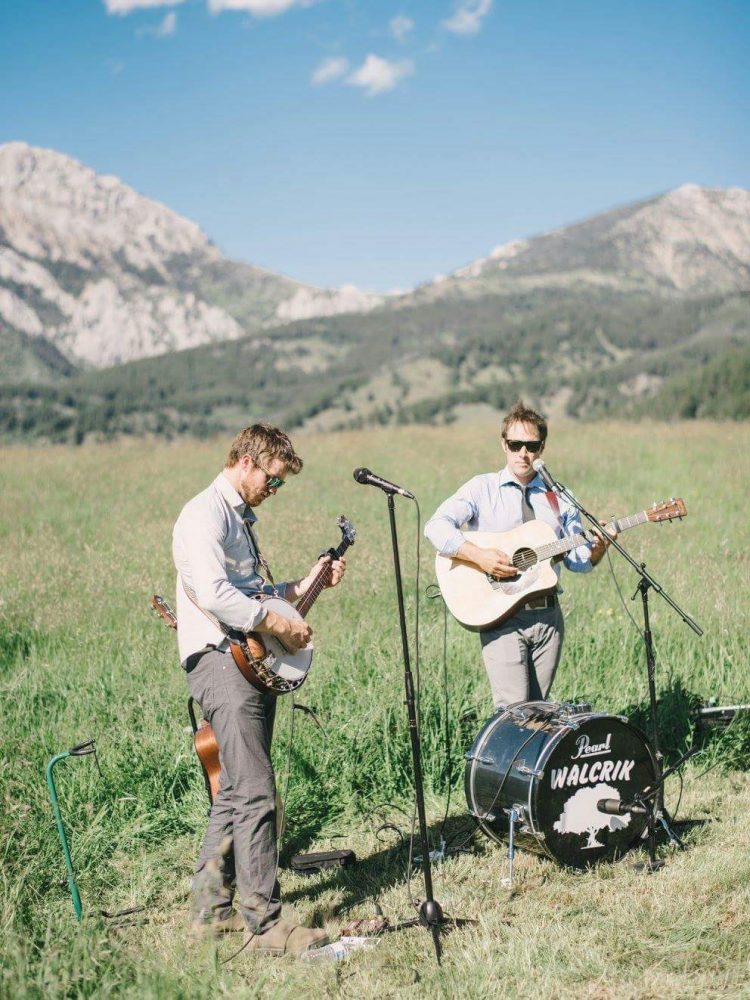
    FS: Was the Olympics a big goal for you last year?

    RS: No! I started the season here in Davos. It was my first big race. Before this race, I never imagined to go to the Olympics. I always focused on other things. But yeah, after Davos, I thought I could do it.

    FS: What was it like to have your first really big race here in Switzerland?

    RS: Yeah. All the other Swiss guys were out [none of the other Swiss sprinters made the quarterfinals] and I was standing on the starting line, and I felt good. I knew I was strong because one week before I had a race in Goms and the Russian guys were also there, and I had the third best time. I had been very shocked there! And then here in Davos it was amazing. A beautiful day and so many fans, it was awesome.
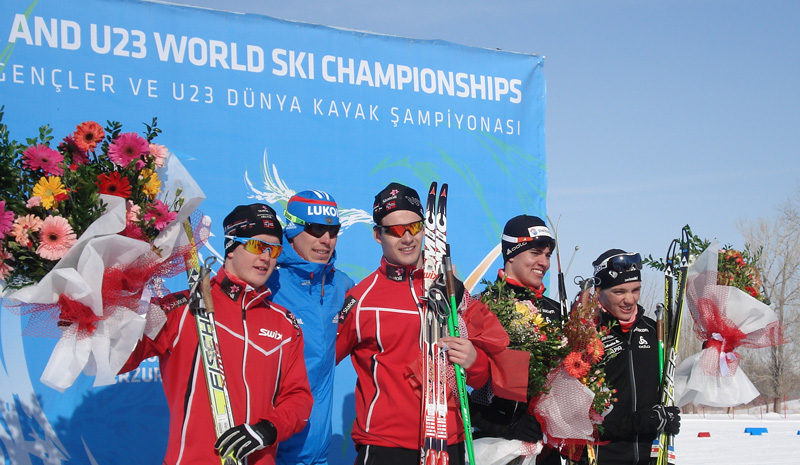
    FS: Were a lot of people from your home able to come watch your first World Cup?

    RS: Yes, I knew that maybe ten people would come [from Unteriberg, near Zurich]. But in the end it was 30 or more people. It was cool.

    FS: What was it like to be in the semifinal of your first World Cup? Did you have a plan?

    RS: No [laughs]. Not in the semifinal. Well, yeah, I had a plan. I would start easy and in the second lap, on that long flat direction, I wanted to attack. It worked. I had enough power the first time [Schaad won his quarterfinal heat]. But then not enough power in the semifinal. It was tough.

    FS: You must have had a lot of interviews that day.

    RS: After the race I had two hours of interviews with radio and television. I live in Bunda, next to the start, but it took me two hours to get home. It’s very new for me. All the fans, it was cool.

    FS: Do you have more sponsorship now?

    RS: Yes, I have a new headwear sponsor, Helvetia, which is a really big insurance company. Here in Davos it’s not very cheap and of course we need the money. Now it’s a little bit easier to have a place to live here.

    FS: How is your training going this year?

    RS: I had an operation on my shoulder. I fell down in the Engadin Marathon and dislocated it [he still placed 27th, 23 seconds off the win]. Before the army started I had the operation, after the five weeks of basic training. And then I had rehabilitation. I think the last five weeks I have been able to train without troubles. But I hope I can train more than last year. Last year actually I didn’t have many hours because I also had an operation on my knee. I hurt some ligaments playing soccer.

    FS: Have you moved up in Switzerland’s team since last season?

    RS: Two years ago I was in the “C” team, and last year in the “B” team, and now I am in the “A” team. “A” team, yeah!

    FS: Were you training with Tor Arne Hetland last year?

    RS: Just a few times. He was my coach in the World Cups, so he looked after me and everything is okay. Here in Davos not so much. But I got some tips from Tor Arne, for sure [laughs].

    FS: So who do you train with now?

    RS: We have now a new coach, and five training groups. TG1, 2, 3, 4, 5. TG1 is the national team and maybe one from the “B” team because it’s better to train together. I’m in the TG2. TG2 and TG3 train together, with Albert Manhart [the continental cup coach]. The new coach, Ivan Hudec, is just with TG1. So the changes haven’t affected me much.

    FS: Swiss sprinters have been getting better and better.

    RS: Yes, I hope so! The sprinters train together with the distance skiers. I want to also do some distance races, not just the sprint races. This is a big goal for next year. Last season I only started the sprints, so that was not so good for the training. I had just five long distance races. It’s not so much.  The U23s are a big goal, and maybe the Falun team sprint in skating.

    FS: How were the Olympics?

    RS: I just realized where I was, when I was on the start. At first you think you are in a race, focused. Exactly for the start, I realized what I was doing! But actually my focus was really good. Maybe it was just too high [elevation] for me. It was a hard course.

    FS: What was it like to watch Dario and the other guys in the races?

    RS: Actually, I never saw the cross country races. I was always in the hotel, relaxed, jogging. But after my race, I was in the mountain village with the other Swiss guys who do halfpipe and downhill. After the race, a little bit more the experience.

    FS: Will the next Olympics be easier?

    RS: Yeah, I hope so! Maybe now I have more, I know how it works at the Olympics.

    FS: Your brother is also a skier, right?

    RS: Yes, I live with him, with two other guys, Phillip Haelg from Lichtenstein and Ueli Schnider. We have a good apartment!

    FS: Is your brother getting as fast as you?

    RS: This was the first year that I am better than he is. He was always better than me. So he is also a good sprinter, and in distance races we need more training. He will be trying to get faster than me again.