From the FasterSkier archive — posts syndicated from athletes’ and coaches’ own blogs between 2004 and 2012, kept online as published. Current coverage is at fasterskier.com.
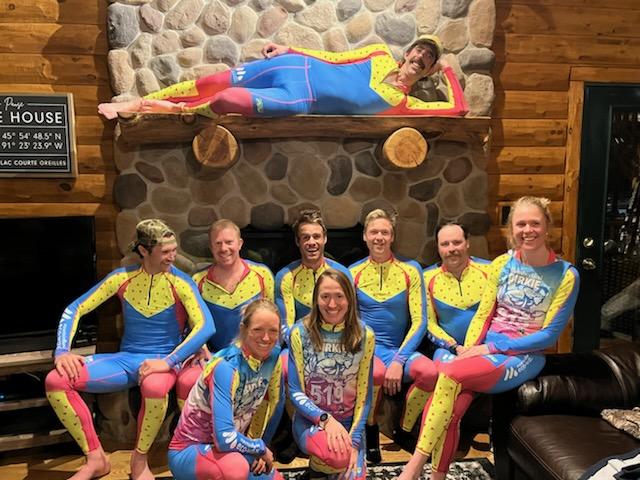
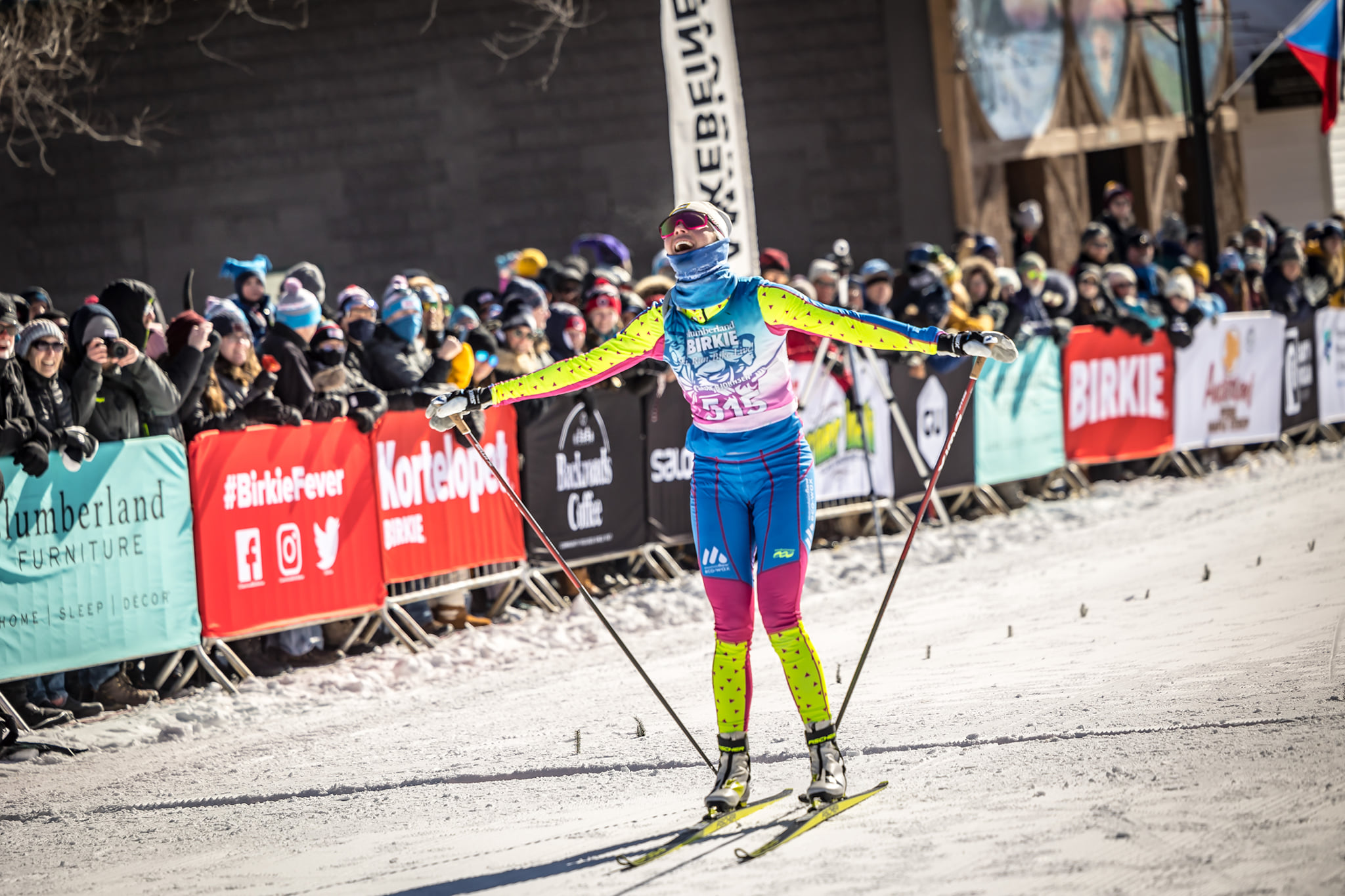
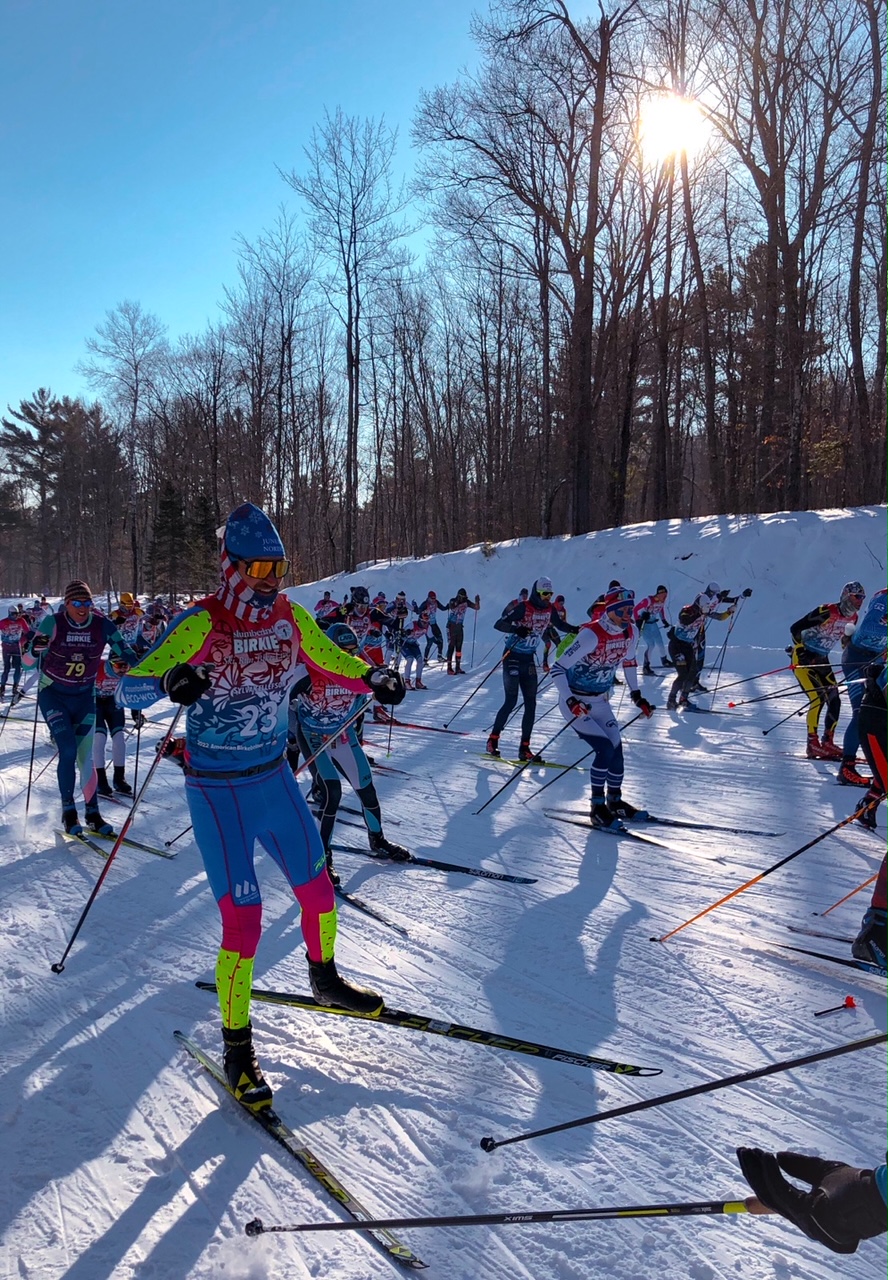
Just over a month ago, the American cross country ski community descended upon the small town of Hayward, Wisconsin. Skies were clear, the snow was cold and firm, and lycra was everywhere. But one set of race suits stood out, both because of the noteworthy athletes wearing them and for their bold neon colors. It was the MountainFLOW Eco Wax race team of Simi and Sophie Hamilton, Sylvan Ellefson, Sadie Maubet Bjornsen, Erik Bjornsen, Matt Gelso, and Liz Stephen.
While most reading FasterSkier will recognize these names without introduction, this is a “band” of retirees who have each, at minimum, raced on the World Cup. Five are Olympians, and one has a collection of top-10 results in World Championship and Olympic sprint results. In short, they’re good skiers who also happen to be good friends.
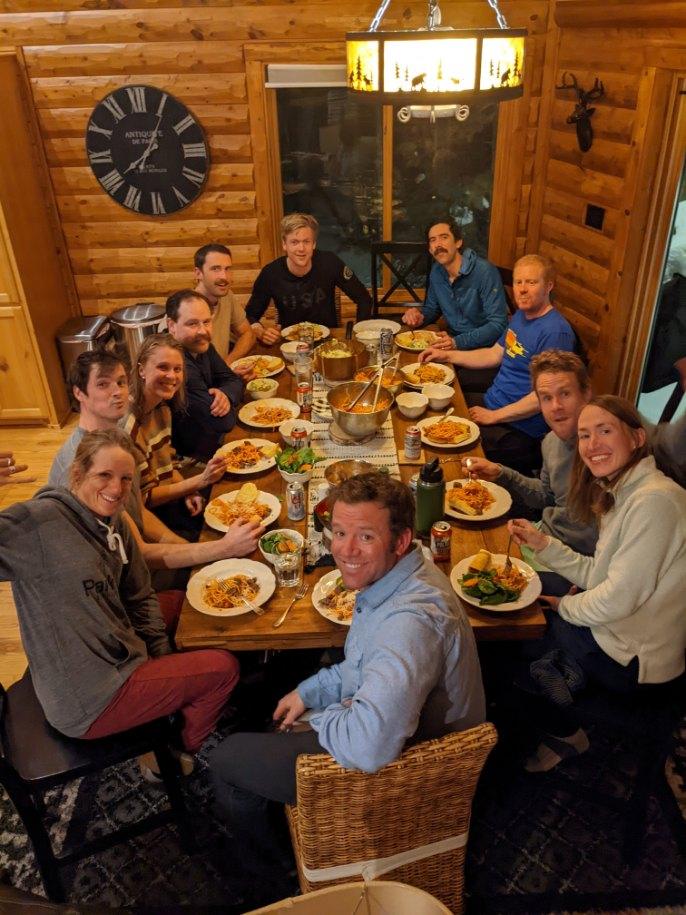
Racing the Birkie wasn’t about stacking a fast team; leading into the event, mountainFLOW founder Peter Arlein said it would be “super fun, and maybe not super serious.” As the photos suggest, a lot of fun was had, but some fast racing – on skis waxed with mountainFLOW products – happened too.
The mountainFLOW eco wax team was “all business” at the Birkie. (Courtesy photo)
“A trip down memory lane,” wrote Erik Bjornsen after the race. “Super fun to get a crew together and pretend to be athletes again. We are all at different fitness levels, one thing in common though: far from our best. It was fun to try and forget that for a weekend, and go live the athlete lifestyle. It’s been a busy winter in the retail industry, so it was nice to have a little break from work and hang out with friends. No beers were consumed… nothing but business at the mountainFlow house.”
(Side note: they may have been spotted at the Moccasin Bar post race.)
As he alluded, there was a range of fitness levels and race objectives, but the prominent theme seemed to be that becoming some of the best American cross country skiers of their generation correlates strongly with good technique and a high level of residual fitness.
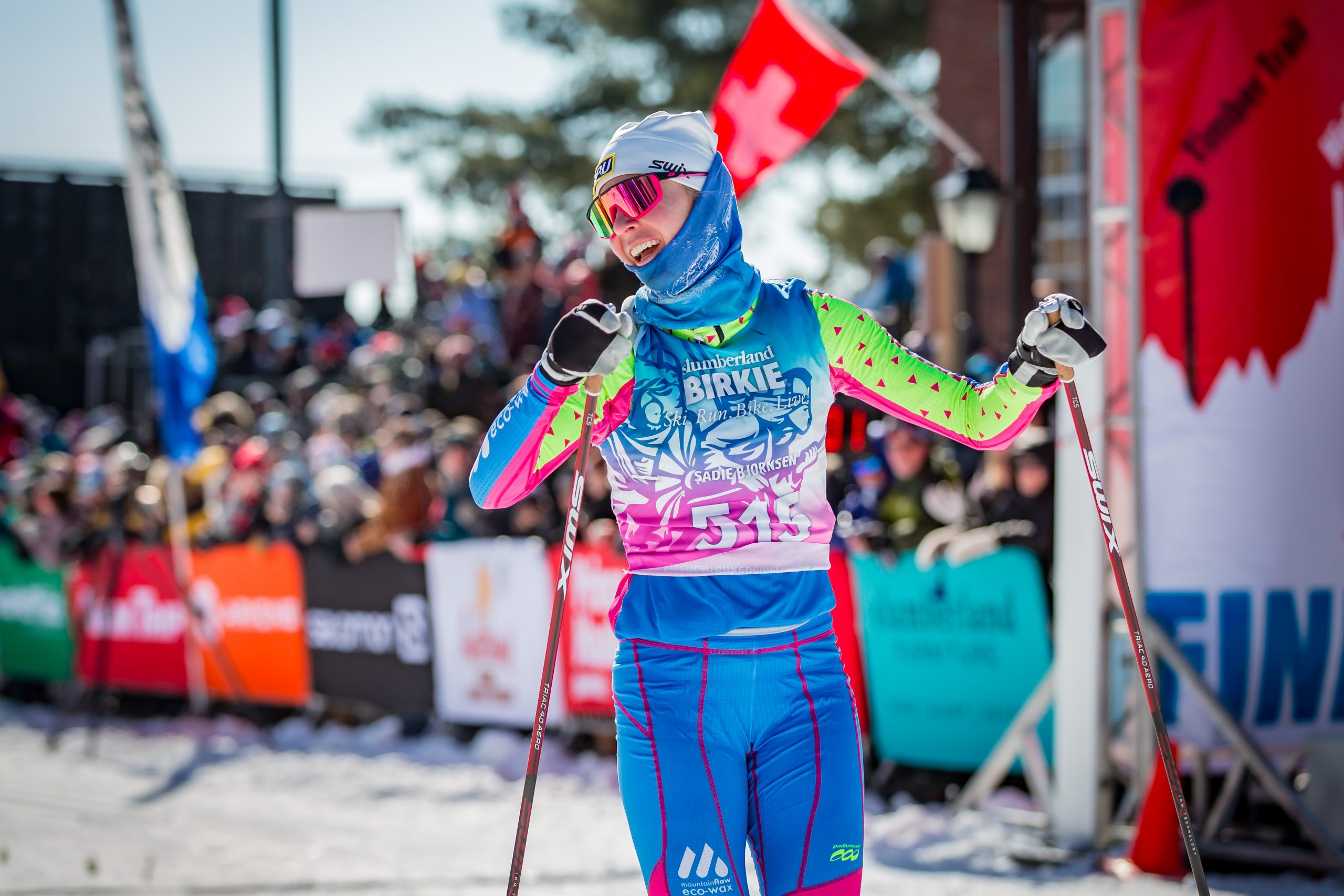
Taking the top result was Sadie Maubet-Bjornsen, who finished fifth in the women’s race, just over two minutes behind winner Alayna Sonnesyn. Erik Bjornsen was the top male racer in 9th (+2:59.05), with Simi Hamilton finishing roughly four minutes behind in 16th. The remaining skiers finished in pairs, with Sylvan Ellefson crossing with Matt Gelso in 121st in the men’s division, and Sophie Hamilton finishing alongside Liz Stephen in 123rd and 124th.
“It was amazing to get the band back together!” wrote Maubet-Bjornsen. “My husband’s family is from Hayward, so after visiting them this summer, we were already committed to doing the Birkie simply to be considered valid members of the Berrard family. When Simi mentioned he was forming a fun team with some of my favorite previous teammates, I was all in. Having jumped full force into this new life, preparing for a 50k couldn’t have been more different than it would have looked in the past. My new way of exercising is waking up at 5:30AM, and hitting the ski trails from my doorstep from 6-7AM.
“Two weeks [before the race], I called in Rosie Brennan to give me some last minute interval workouts to train my brain to accept physical pain again. Four interval sessions later, I showed up and joined the dance. It was pretty fun to ski with the girls, and just witness the gift of fitness that comes out of all those years of hard work. As the top ladies skied away about 35 k in, I no longer could fake the fitness anymore, but still enjoyed every second of skiing it home.”
Adding to the message that more so than lingering fitness, these athletes have maintained a love of the sport and the friendships made through their time immersed in it, Maubet-Bjornsen continued, “I look forward to many more years ahead of joining various classic American races throughout the country that I never had the chance to participate in [while racing on the World Cup]. I feel lucky that my ‘band’ and family that I created in the past ten years is just as excited to jump into a 50 k race, despite the fact we are no longer the pro athletes we were before.”
Sylvan Ellefson in the wild, wearing his neon mountainFLOW race suit. (Courtesy photo)
“For me, cross country ski racing transcends so much more than competition,” wrote Ellefson post-race. “I’ve formed my family and life around the experiences I’ve had and the friends I’ve made along the way. To me the Birkebeiner is an event that encapsulates this cross country ski culture in the US. The people racing at the Birkebeiner are truly the backbone of the ski community and I think for them to see former World Cup and Olympic level skiers helps affirm that in the US, this sport is one giant family.”
The mountainFLOW Eco Wax team carboloads for the Birkie. (Courtesy photo)
Commenting on the mountainFLOW products and ethos, Ellefson added, “Our waxes were fantastic and I’ve loved using something other than what we’ve been accustomed to using for so long. I’ve tested a couple out now and they truly are not just a great wax, but also a great brand. Getting to spend time with Peter and Brian showed me the culture mountainFlow is trying to create in a space in the industry that is much needed.”
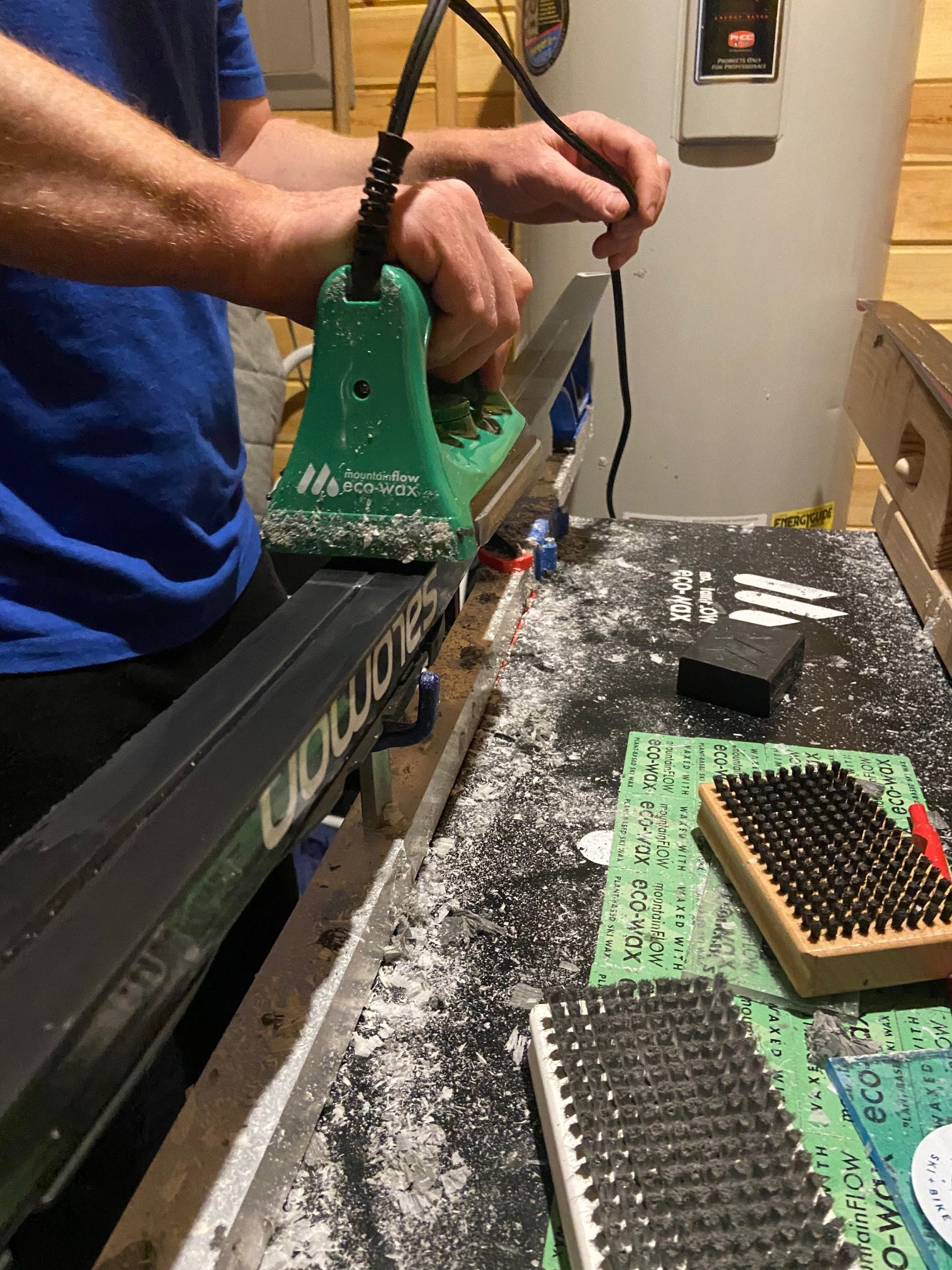
Matt Gelso prepares his skis with mountainFLOW cold wax at the 2022 American Birkie. (Courtesy photo)
More to come, as the coach of non-affiliated French athlete Celine Chopard-Lallier, who took sixth in the women’s race, shares his review of mountainFLOW products, on which Chopard-Lallier also raced at the Birkie. Note that this content is not sponsored by mountainFLOW.
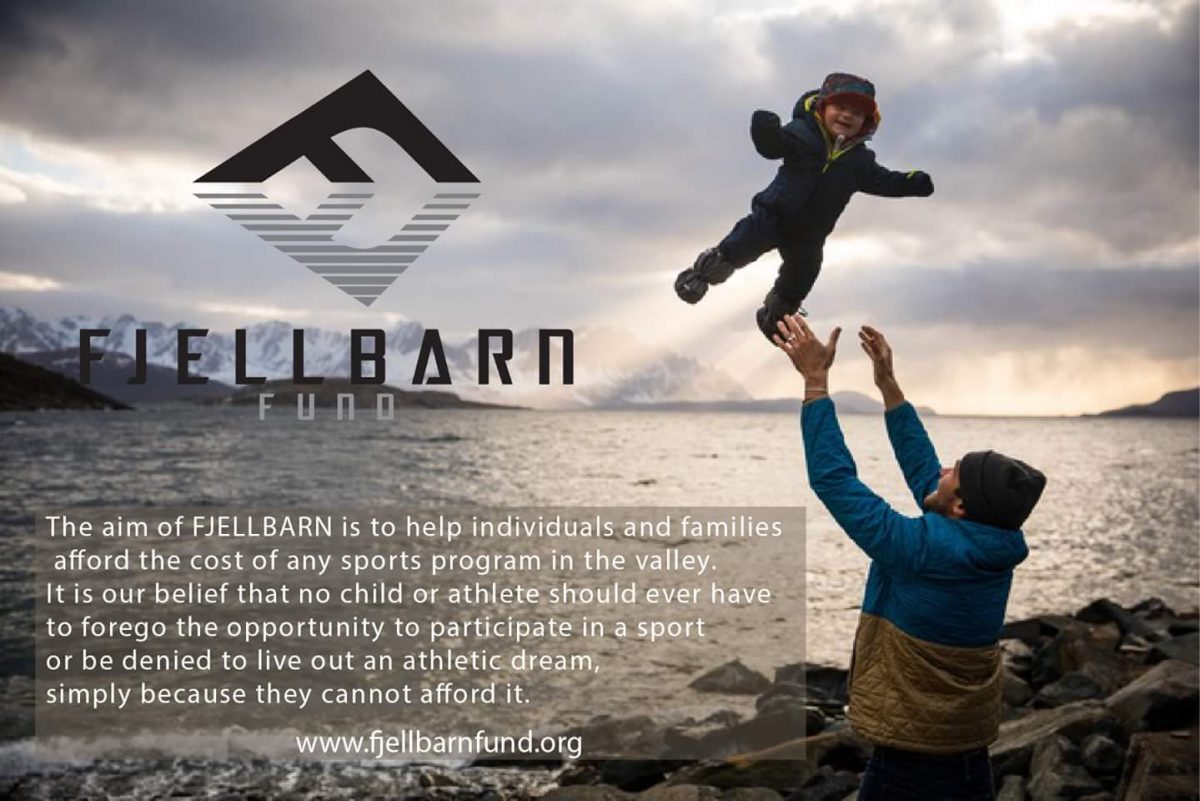
From 2011 to 2014, Sylvan Ellefson, based out of Edwards, Colorado, was on a roar. SuperTour wins, World Cup starts, and a 30-kilometer skate national championship in 2014. Now, at 31 years old, it seems the skier who began his ascent in the sport during high school would rather focus on being a husband, father, brother, and coach rather than draw attention to himself. Based as a business person in Colorado’s Vail Valley, Ellefson is giving back to the community that helped support his dreams. Along with his brother Kjell and friend John Cummins, the three have begun the Fjellbarn Fund. For those non-Norwegian speakers out there, Fjellbarn is Norwegian for “mountain child”.
Sylvan Ellefson giving his son Ryder some air time. (Photo: Kjell Ellefson)
The new nonprofit based near Vail is dedicated to helping athletes from families in need pursue their athletic dreams.
Sylvan Ellefson on the World Cup. (Photo: Reese Hanneman)
Our conversation with Ellefson was recorded on Sept. 10. Along with learning about the inspiration for his nonprofit work, we’ll get some insight into how Ellefson’s ski career informs his coaching with the Ski & Snowboard Club Vail.
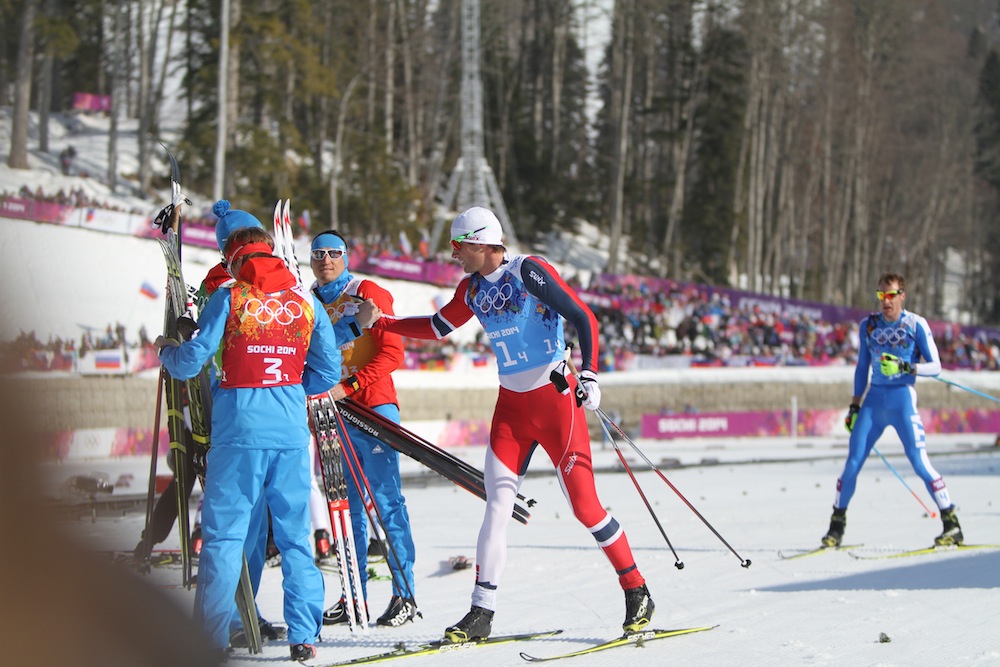
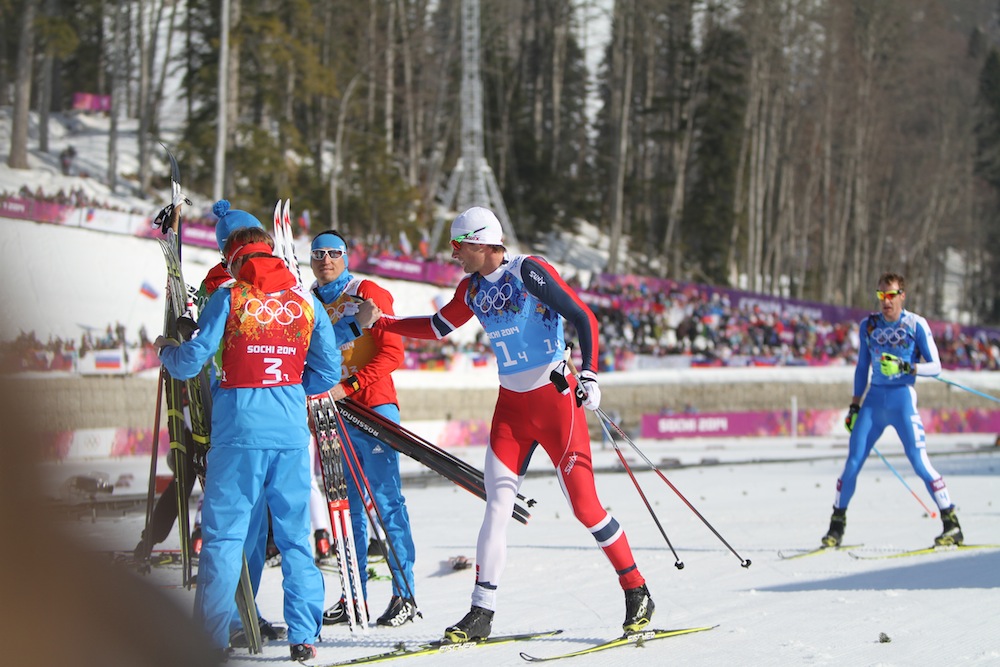
After anchoring Norway to fourth in the men’s 4 x 10-kilometer relay at the 2014 Olympics in Sochi, Russia, Petter Northug congratulates the Russian silver medalists, including anchor Maxim Vylegzhanin. As a result of the IOC’s decision to sanction two Russians that competed in Sochi, Russia is to return its relay medal; Norway will thus be awarded bronze and France silver.
This article has been updated to include comments from Canadian World Cup Team member Alex Harvey as told to Le Journal de Montrealon Wednesday.
“Hell yes, IOC. Finally starting to take some action,” U.S. Ski Team (USST) member Simi Hamilton wrote on Twitter. “I have a feeling pressure from us clean athletes has paid off!”
“Today marks a win for clean athletes,” USST Women’s Coach Matt Whitcomb tweeted. “Two cheats are out. It’s a start.”
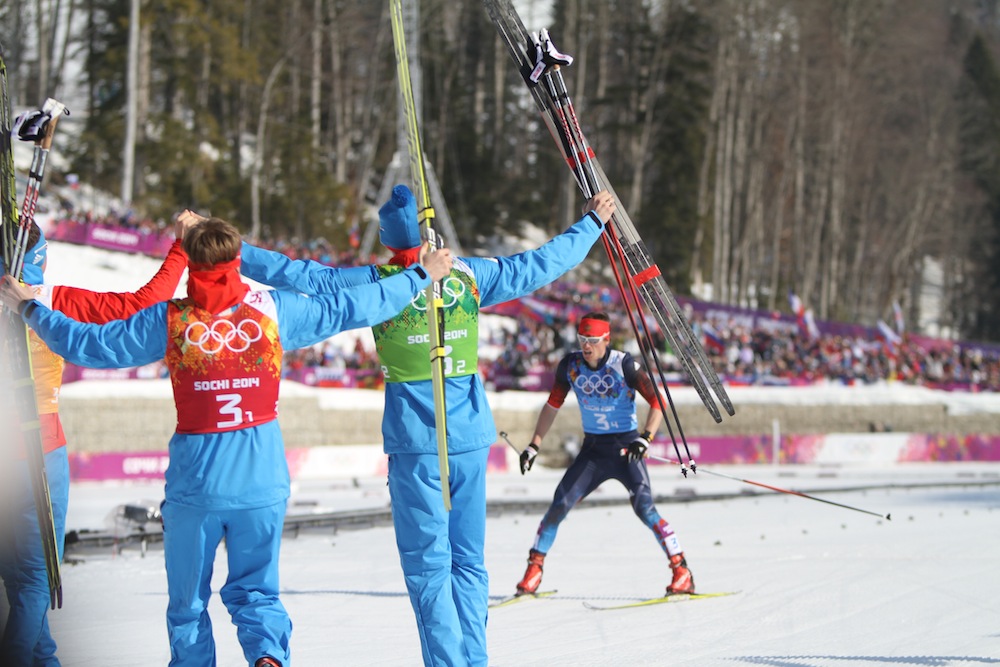
The Russian men’s relay team meets Maxim Vylegzhanin at the finish after he anchored them to silver in the 4 x 10 k at the Sochi Olympics. The IOC recently ruled that the Russian team’s relay result should be invalidated and they are to return their medals.
Norway’s Petter Northug posted a photo on Instagram of what looked like brunch in a tropical setting with the words: “Feire OL bronse!” (translates to “Celebrating Olympic bronze!”). Northug already has four Olympic medals to his name, two of which are gold (all from the 2010 Olympics), but the men’s 4 x 10-kilometer Olympic relay medal from 2014, which will be awarded retroactively to the Norwegian team (after they placed fourth behind Sweden in first, Russia in second and France in third) will be the first medal for Northug’s teammates Eldar Rønning and Chris Andre Jespersen.
Later on Wednesday, Northug posted a jocular meme on Instagram, picturing himself racing in the Sochi relay with the words: “You know you are the best anchor when you bring the medal home 4 years after the race.”
Legkov was part of Russia’s silver-medal relay in Sochi, and as a result of the IOC’s ruling, he must return the two medals he won there (relay silver and 50 k gold). Additionally, the 2014 Olympic results of Legkov and Belov are to be voided and both athletes are barred from competing at (or being granted credentials to) future Olympics. However, both are expected to appeal the ruling to the Court of Arbitration for Sport (CAS) by this Thursday at the latest.
“It is weird to get the medal in the mail. But if he gets convicted, of course I will take it,” Jespersen told Norway’s Nettavisen, according to a translation. “It’s my only Olympic medal. It is clear I will take it.”
In an interview with Le Journal de Montreal, Alex Harvey, the leading member of the Canadian World Cup Team who finished third in the overall World Cup and second in the distance standings last season, said he had his suspicions about Legkov — particularly after the 50 k freestyle mass start (in which Harvey placed 19th).
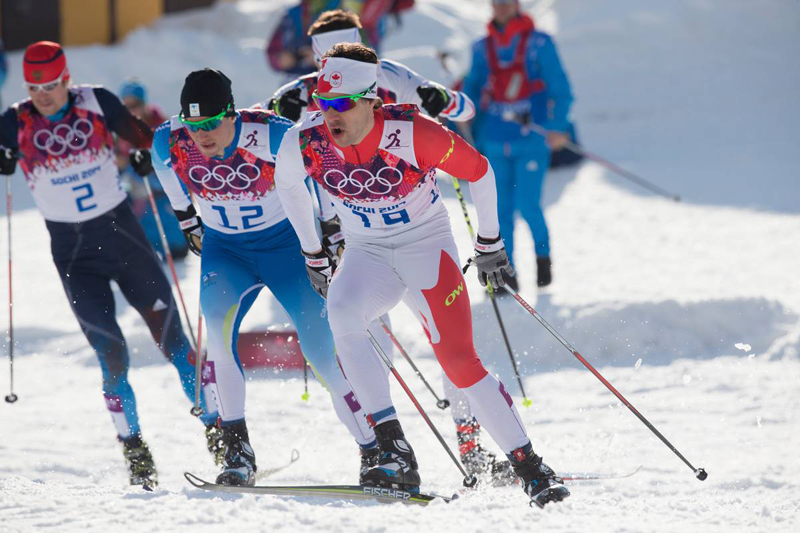
Canada’s Alex Harvey (front, bib 19) racing in the freestyle sprint at the 2014 Winter Olympics in Sochi, Russia. He finished 19th on the day. Also pictured: Russia’s Sergey Ustiugov (2) made it to the final and placed fifth. (Photo: Fischer/NordicFocus)
“On the climbs, we could see he was artificially stronger than the rest,” Harvey said, according to a translation. “In Sochi, the last two kilometers were filled with big climbs. It was a course made for Russians knowing that they were doping.”
He added that the end of each course in Sochi ended with a long, brutal uphill that was exceptionally “physically demanding”.
As for the recent doping bans involving professional cross-country skiers, Harvey said, “It’s a shame because our sport is now compared with cycling. It is in cross-country skiing and in biathlon that the largest number of dope cases occur.”
And while he was in favor of the IOC’s decision, he hoped the buck wouldn’t stop there.
“I’m happy that the IOC finally acted, but Russian skiers are still racing … and one in particular who wasn’t bad in Lahti,” he said, alluding to Sergey Ustiugov, who took gold or silver in all five races he competed in at Lahti World Championships.
“Ustiugov was young at the Sochi [Olympic Games], but he still reached the final in the sprint,” Harvey said. “Three of the top six men fell, but he was on his way to a podium that day. What the McLaren Report revealed was that the full team was involved in doping. But Ustiugov’s name never came out. And as long as his name doens’t come up, we can only have doubts.”
Meanwhile, the law firm representing Legkov and Belov is enraged, according to Nettavisen.
“The decision deserves the term scandal,” the Wieschemann firm stated in its press release on Wednesday. “[It] mocks the declaration of the President of the IOC, Dr. Thomas Bach, to decide only on the basis of secure evidence.”
While the IOC’s Disciplinary Commission (also referred to as the Oswald Commission) has yet to release its full decision and explain how it arrived at the final rulings, cases for 26 other Russian athletes (four of which are nordic skiers) who allegedly doped in Sochi are still pending, the CBC reported.
“The Oswald Commission has announced that all hearings for active athletes who could qualify for the Olympic Winter Games PyeongChang 2018 will be completed by the end of November,” the IOC stated.
As of Wednesday, exactly 100 days out from the 2018 Winter Olympics in PyeongChang, South Korea, it remained unclear whether the commission obtained further evidence concerning Legkov and Belov beyond what was already presented to the CAS.
Wieschemann claims the commission ruled “without further investigation and without further evidence…”
“Denis Oswald still stated at the last summit of the IOC that his investigations would go far beyond those of Prof. Richard McLaren,” the firm’s press release stated. “Well that’s actually not the case. The investigation has only been limited to obtaining a new forensic opinion…”
And while some of the most outspoken individuals in the XC world continue to speak out, others are weighing in on social media as well.
“… It’s disturbing to find out that some athletes in cross-country skiing have likely doped, and have gone so long unpunished,” Caitlin Patterson of the Craftsbury Green Racing Project wrote on Facebook. “But it reminds me that we must be vigilant, keep looking for ways to support anti-doping testing programs, put pressure on governing bodies to take a stand for clean sport, educate ourselves on progress and pitfalls of the cause, and speak up when we can.
“I haven’t spoken much on this politicized topic, but recent news such as this disqualification makes me distinctly aware of how much I value clean sport and all it stands for,” Patterson, who has started 27 World Cup races, continued. “Thank you IOC for taking this step towards preserving clean sport! Let’s keep it going, keep the pressure on, and fight to #CompeteClean and #PlayTrue!”
Former U.S. skier Sylvan Ellefson, who retired in 2014 after racing 23 World Cups, took to Instagram: “Thankful that our @usnordicskiteam contingency all get to move up a couple spots, but I mostly feel for those who have always been moral in their decision making. Those who train and race relentlessly, with their head down, just to find out their competition is taking the easy road. I could go on, but nothing lights me up more than cheaters.”
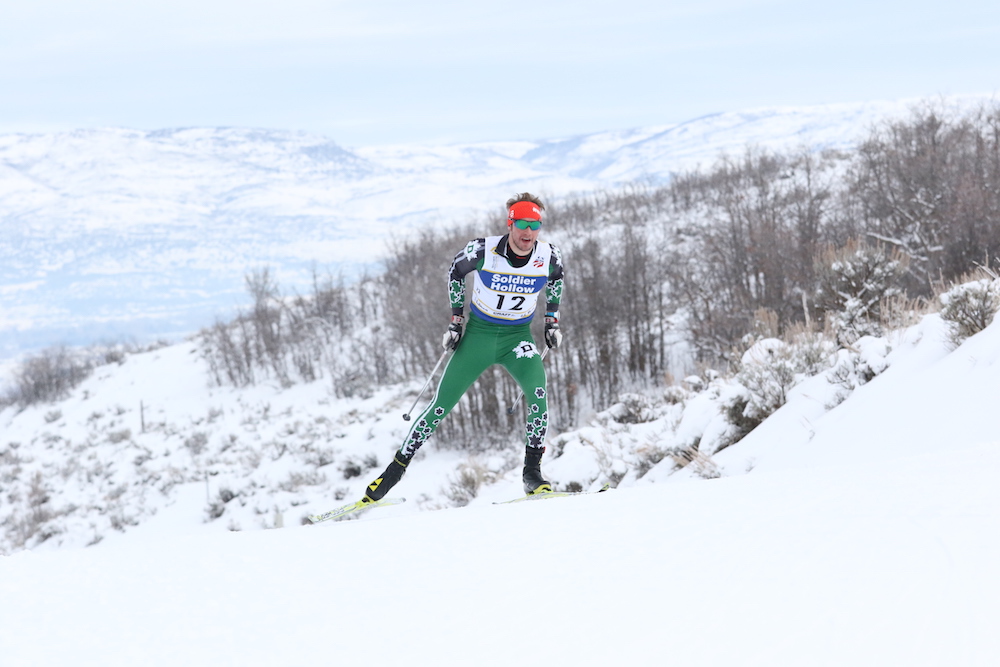
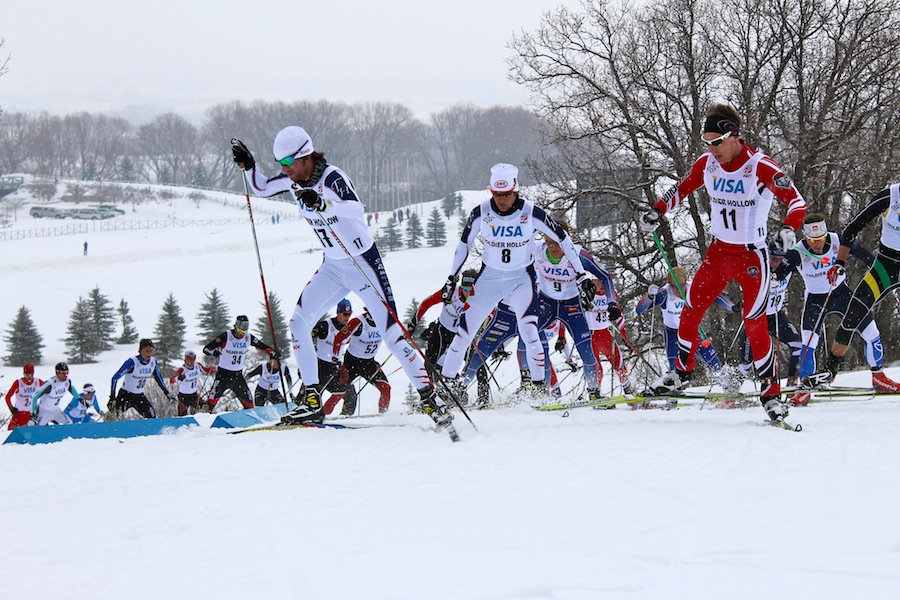
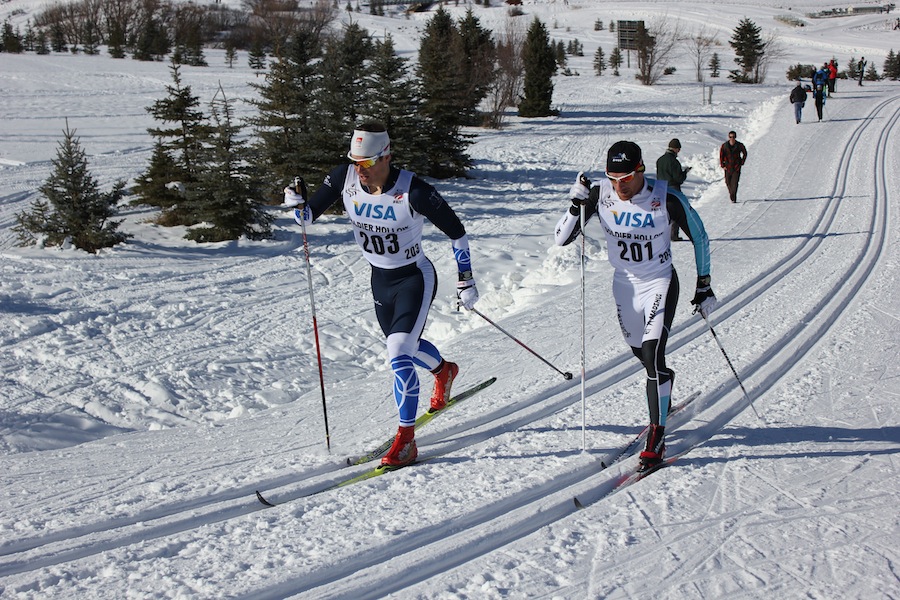
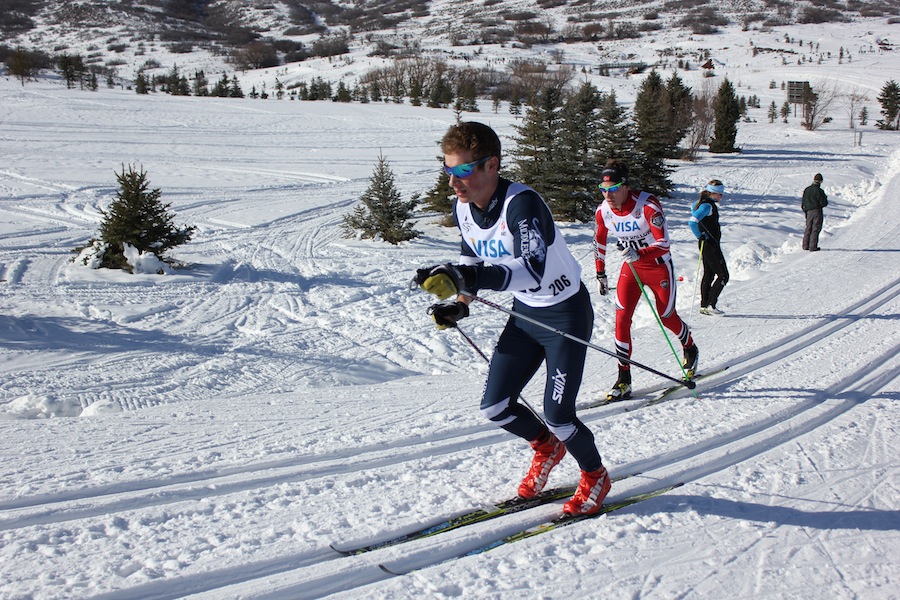
Cal Deline (Dartmouth Ski Team) racing to 17th in the men’s 15 k freestyle at 2017 U.S. nationals earlier this month at Soldier Hollow in Midway, Utah. (Courtesy photo)
In an effort to showcase the North Americans competing at next week’s International Ski Federation (FIS) 2017 USANA Nordic Junior World Championships and U23 Cross Country World Championships at Soldier Hollow in Midway, Utah, we asked those qualifying athletes several questions about themselves — actually, we had them fill in the blanks. Here we have 21-year-old Cal Deline, of Dartmouth College, who’s representing the U.S. at his first U23 Worlds.
***
“My full name is Callan Deline, but people call me Cal.
I was born in Fort Collins, Colo., raised in Vail, Colo., and one thing that you should know about Vail is that it’s awesome all summer and winter long.
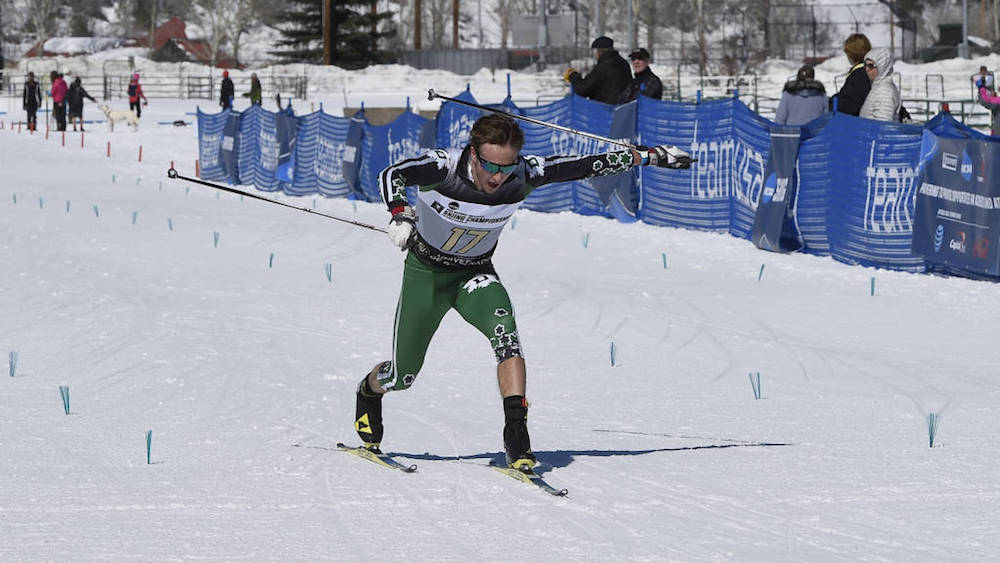
Cal Deline (Dartmouth Ski Team) finishing 14th in the 10 k freestyle at 2016 NCAA Championships in Steamboat Springs, Colo. (Courtesy photo)
I started cross-country skiing when I was 15, thanks to Dan Weiland, Sylvan Ellefson, and being forced to stop big mountain skiing. I currently train where I go to school, in Hanover, N.H., with the Dartmouth Ski Team.
If I’m not nordic skiing you can probably find me alpine skiing or somewhere at school. My favorite book is ‘Mr. Penumbra’s 24 Hours Bookstore‘.
One of the things I’m most excited about for U23/Junior Worlds at Soldier Hollow is to be racing against some of the worlds best on what I consider a home course. As for the races I’m targeting, I’m going for all of them, but am especially excited for the 30 k pursuit. It’ll be my first-ever pursuit and second-ever 30 k (first 30 k being at nationals this year).
The best advice anyone ever gave me about skiing or racing was, there’s a tie … ‘90% of skiing fast is looking good’ – Simi Hamilton… ‘Racing is just hanging onto the fastest guy for as long as you can, until one day you are the fastest guy’ – Sylvan Ellefson
One of the best race memories I have is drinking Red Bulls instead of warming up before the Owl Creek Chase, or before any race longer than 20 k.
If I could meet one World Cup skier, it would be Jessie Diggins.
If I don’t end up being a professional skier, I’ll probably be traveling or trying to find a real job.
I’m missing a week and a half of school to be here, and my professors are probably thinking ‘Who is gonna take this kid’s midterms?‘
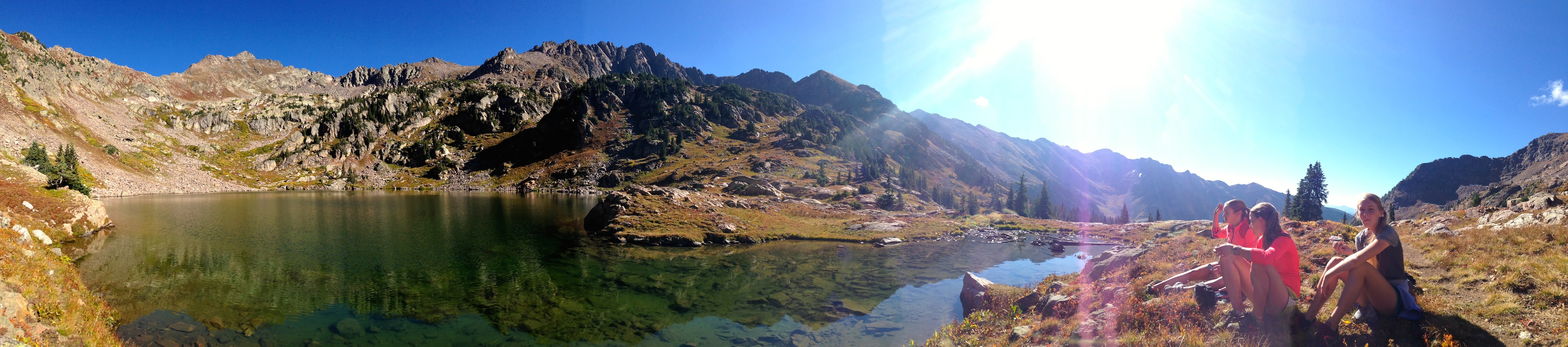
Ski & Snowboard Club Vail skiers (l to r) Gracie Shanley, Annie Blakslee and Lyle Shipp at Pitkin Lake above East Vail in the Gore. (Photo: Eric Pepper)
Five years ago, five ski buddies got together and founded Team HomeGrown. The idea back then, according to Sylvan Ellefson, was to create a sort of all-comers club.
Kevin Hochtl, Josh Smith, Paul Gorbold, Dan Weiland, and Ellefson had all grown up around Vail, Colo., and this was a “homegrown” team they could lay claim to, no matter what stage of life or what stage of their ski career they were in.
“We also wanted to provide a sort of support to the young kids growing up in the sport in the valley,” Ellefson explained. “Being able to look up to somebody, whether it is work or sport, is a very important part of keeping someone engaged in it. That was our belief.”
Sylvan Ellefson representing Team HomeGrown/SSCV last season at U.S. nationals in Midway, Utah. (Photo: Bert Boyer/http://bertboyer.zenfolio.com/) Proceeds from photo sales directly donated to NNF.
Two years later in 2011, HomeGrown — the elite offshoot of Ski & Snowboard Club Vail (SSCV) — reached a new level with the addition of then-U.S. Ski Team members Noah Hoffman, from Aspen (still on the team), and Tad Elliott, from Durango.
In 2012, Ryan Scott, a Montana State University grad from Boulder, came on as a sixth member with Ellefson, Hoffman, Elliott, and postgrads Christian Shanley (from Vail) and Max Scrimgeour (Steamboat Springs).
“It became more of a Team Colorado, but still homegrown in the sense that we all grew up racing each other every weekend through middle school and high school,” Ellefson wrote in an email. “Racing ‘as a team,’ at Junior Nationals really gave a sense of unity. From that point, we wanted to help inspire the next generation of nordic skiers in the state of Colorado. Help them realize that nordic skiing can become a career, and if anything more, a way to develop an amazing tolerance for pain, mental strength, and an iron-clad work ethic.”
This spring, Ellefson, 27, retired from skiing after making a run for the 2014 Olympics. Scott returned to Boulder full time to network and make a living in graphic design and web development.
In a phone interview last month, Scott said he’d been training when he could, despite revving up to 30- to 40-hour work weeks by fall. Since parting ways with SSCV in the middle of last winter, he wasn’t sure what he’d do for support this season.
“I might be figuring it out last minute, or racing independent and racing for Madshus,” Scott said.
Neither Scott nor SSCV Head Coach Eric Pepper chose to elaborate on why Scott left the team.
“I wasn’t involved in that conversation too much,” Pepper said.
Despite battling mononucleosis symptoms as early as last October, Elliott was cleared to race in November and got in two distance starts in West Yellowstone, Mont., and Sovereign Lake, B.C. He placed 14th in B.C. (one place higher than his finish in West Yellowstone), then returned home to Durango, where a doctor diagnosed Elliott with the Epstein-Barr virus — best known as the cause of infectious mono.
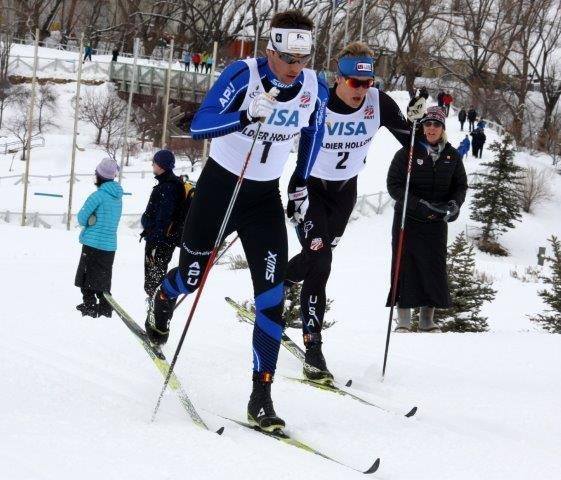
Tad Elliott (l) and Sylvan Ellefson (8) of Team HomeGrown/SSCV make their way up the last hill almost halfway through the 30 k freestyle mass start at 2014 U.S. nationals. Ellefson won and Elliott did not finish.
In January, he flew to Park City, Utah, to give the 30-kilometer skate mass start at U.S. nationals his best shot, but he didn’t finish.
“I then took from January until July off of any training,” Elliott wrote in an email. “Really light training in August now a bit more structured training into the ski season.”
Elliott, 26, is making a comeback this season, although he’s not sure how strong he’ll be.
“The doctor who finally diagnosed me was nervous I wouldn’t be able to race again for a really long time,” he explained. “So being out 7 months off of my feet has been really small. I might not get back 100 percent, so there is really no expectations or goals I have to hit. I am coming back because I love skiing especially for Team HomeGrown, and Salomon, Honey Stinger, Caldwell Sport and Oakley. Without them saying get well and we will see you when you are ready, I probably would have retired from racing.”
“I might not get back 100 percent, so there is really no expectations or goals I have to hit. I am coming back because I love skiing.” — Tad Elliott, SSCV Elite member
During his recovery last winter, Elliott coached Durango Nordic juniors once a week.
“That was all I could manage I felt so terrible,” he wrote.
He worked for Salomon Running this spring and summer, and at a Durango mountain-bike shop called Mountain Bike Specialists, where his employers where empathetic and let him rest whenever he needed to.
“All of my sponsors have stayed the same and showed their unconditional support,” Elliott explained. “My support team has stayed the exact same, and a piece of that has always been [coach] Zach Caldwell. We are using Firstbeat training systems in joint with my Suunto [heart-rate monitor] to track my heart rate variability to see how I am responding.”
On Oct. 8, Elliott wrote on Facebook that he had been cleared to train.
Out with the Old, In with SSCV Elite
This season, Elliott will be one of two seniors on the SSCV Elite team — Hoffman being the other.
Hannah Hardenbergh leading a high-school race last December in Colorado. (Photo: SSCV)
Hannah Hardenbergh and Cameron Bobb joined the squad as its two postgrads, and for the time being, HomeGrown is no more.
“We always knew that model is not sustainable if we want to grow the program,” Pepper said on the phone in early October.
Compared to the last two years, Vail’s top-tier nordic team has downsized, and SSCV’s emphasis has shifted to local junior programming. In the grand scheme of things, developing younger skiers is what will make its program thrive, Pepper said.
“We had talked to a number of potential people in the spring and what we really decided was we wanted to stay with who we had and not expand upon that this year,” he said. “Last year was obviously a really big push with Sylvan, being away from junior programing and athletes and families here, and with him not being in the mix anymore, and with Noah really needing minimal support from us, and Tad kind of coming back and seeing where he’s going to be at, it didn’t seem like there was a need for us to really pursue it this year.”
A year-round world traveler, Hoffman stops by Vail a few times each year when he can — most recently working out with the SSCV juniors and Summit Nordic Ski Club earlier this week. Like Elliott, Hoffman also works with personal coach Zach Caldwell.
Pepper has been Team HomeGrown’s coach for the last two seasons; Weiland, the longtime nordic program director at SSCV, coached the first two years before that.
Ellefson said Weiland, Pepper and assistant coach Lenka Sterling essentially waived all coaching fees and worked pro bono for HomeGrown from the beginning.
“I think they saw the potential of being coaches for what had the potential to be one of the best clubs in the nations, which I believe, to a degree we were one of the most competitive clubs, at a least in the men’s division,” Ellefson added. “They had full coaching schedules with the development team, high-school team and club team, so for Eric and Dan to even come out to our training sessions in the summer every single day was pretty instrumental.”
When HomeGrown started in 2009, it was “basically unfunded” for the first year, Ellefson said. The five original team members scraped money together — from savings, their parents and personal sponsors — to self fund.
The next year was better. The Rocky Mountain Nordic Angel nonprofit, which preceded HomeGrown, continued to supplement the team, and SSCV extended its support. The club initially let HomeGrown use its facilities, and by the next year, it granted its two athletes — Ellefson and Gorbold — access to additional training facilities and blew manmade snow for them in November. In 2011, Hoffman and Elliott came onboard to extend HomeGrown’s appeal to broader Colorado.
“To grow the culture in nordic skiing is way bigger than just trying to keep growing team HomeGrown,” Ellefson said. “If you grow the culture, I think the team will grow.”
“To grow the culture in nordic skiing is way bigger than just trying to keep growing team HomeGrown.” — Sylvan Ellefson, one of Team HomeGrown’s founders and SSCV Nordic Future Stars Head Coach
That’s why he wasn’t disappointed to see the name go. Above all, he wanted to see a team that enticed athletes after high school or college to pursue a professional career in ski racing.
“We are also moving more into how to fund these athletes better, and that we can do with the growth of the sport as a whole in the United States,” explained Ellefson, now a part-time coach for SSCV’s nordic future stars program (responsible for 40 to 60 kids ages 6 to 11) and vice president of sales and marketing at Cirque Mountain Apparel.
Noah Hoffman racing to second in the 2014 U.S. Distance Nationals 50 k classic mass start at Hillside trails in Anchorage, Alaska.
“To this point we had all athletes that grew up in Colorado,” Pepper said of HomeGrown’s recruiting pool. “Most of the kids that came to us this year were ones we had an interest in and relationship with, but they weren’t Colorado kids.”
That’s where SSCV had to make a decision. Ultimately, it resolved to focus on developing Colorado juniors rather than open HomeGrown to top skiers across the U.S., like several other elite teams do.
Ten years ago, Pepper estimated SSCV had 10 total athletes.
“Five years ago, it probably had 25 kids and now this year, it’ll probably be close to 80 with all our age groups,” he said. “[We’re] trying to establish a culture and improve trails … We have a ski academy now.”
Vail Ski & Snowboard Academy, founded in 2007. (Photo: SSCV)
The Vail Ski & Snowboard Academy, a public school for grades 5 through 12, was founded in 2007 and has nordic, alpine, snowboard, freeski, and freestyle teams as well as NCAA college programs, with seven kilometers of cross-country trails right outside its doors.
This year, Vail’s two postgrads are from the area and decided to take a year off college. Hardenbergh deferred from Harvard, and Bobb grew up racing for the Summit County Nordic Club. Both are coming back from injury, Pepper said.
“Its unfortunate when a racer post-grads in the U.S., it seems to be the feeling of World Juniors or bust,” he said. “We’re de-emphasizing it a bit … trying to give them more experiences, like a [SuperTour in] Bozeman. Their schedule isn’t that different domestically than a top-level junior, with western early season races, nationals, local races, [and] junior nationals … then [we’ll] look at opportunities.”
SSCV did not go to Spring Series last year in Anchorage, opting for French and Swiss nationals (for the same price of a plane ticket to Alaska) instead. This season, Pepper predicted they’ll have a similar option for postgrads and seniors, depending how each athlete is doing.
2015 SuperTour Finals in Sun Valley, Idaho, is a much more feasible trip from Colorado, “but Europe’s pretty appealing, too,” he said.
Former postgrads Shanley and Scrimgeour are now entering their sophomore years skiing for Denver University and the University of Colorado-Boulder, respectively.
And in terms of Vail’s male-to-female ratio: “We probably have more females than males, which is an interesting flip,” Pepper said, alluding to HomeGrown’s all-male status for the last four years. “In our U16 and older program, we have more females, but it’s pretty close to 50/50. In our older guys’ program, that was mostly coincidence.”
The 10th Mountain Whiskey & Spirit Company team: partial partner Sylvan Ellefson (c) with owners Christian Avignon (l) and Ryan Thompson. (Photo: Slade Cogswell/970 Design)
If you see Sylvan Ellefson hoisting a glass of whiskey or bourbon at a farmer’s market this summer, don’t be alarmed. He hasn’t gone off the deep end since retiring from nordic racing earlier this spring; he’s just doing his job.
At the end of last season, the 27-year-old Ski and Snowboard Club Vail member and Team HomeGrown founder decided he was ready for a change. Born and raised in Vail, Colo., he wanted to stay there, but the income he was reaping as a professional skier wasn’t cutting it. The 2014 Winter Olympics in Sochi, Russia, had been his carrot, enticing him over the last several years (and his career) to train harder, race faster and hopefully make the U.S. Olympic team.
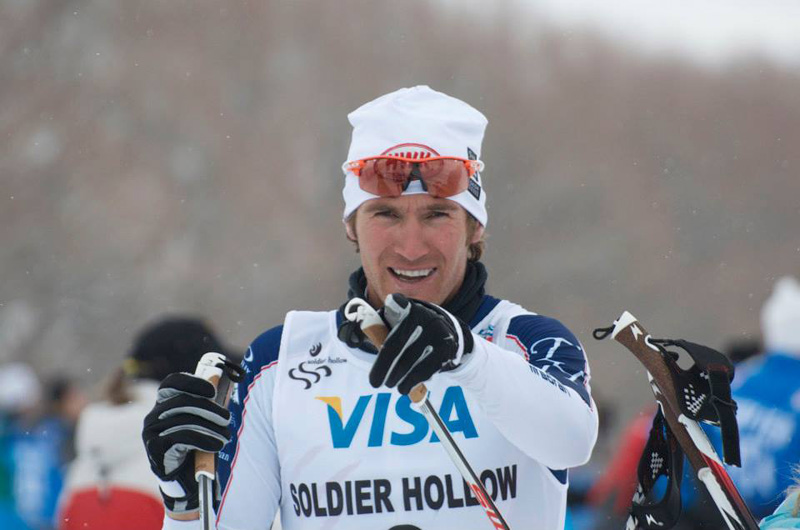
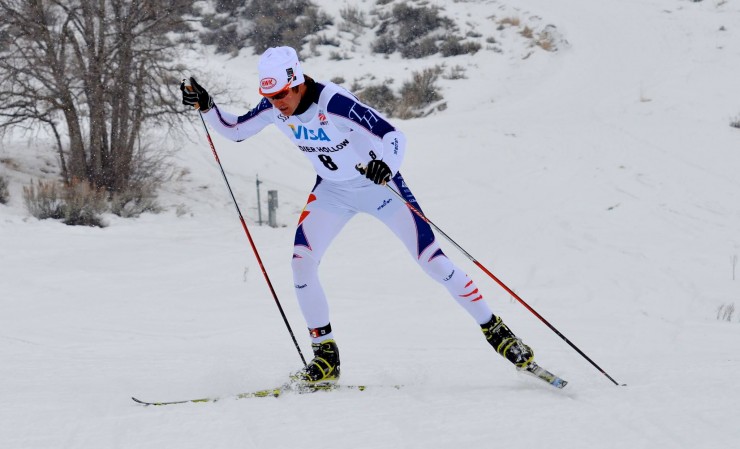
Sylvan Ellefson (SSCV/Team HomeGrown) lining up for the 30 k at 2014 U.S. Cross Country Championships at Soldier Hollow in Midway, Utah. (Photo: Swix)
But it didn’t happen.
The night before the 30-kilometer freestyle mass start at U.S. nationals in January, a race which Ellefson considered his best shot at proving his stripes for the Olympic team, he wrote himself a letter, which he posted on Facebook when he announced his retirement on March 31.
“Skiing began on a whim,” it began. “A suggestion from Duncan as something I might be good at. … Here I am, a night out from the biggest race of my entire life. Have I put in enough work already to help get me bid to the 2014 Sochi Olympics? I have no idea…
“Success is such a subjective thing,” the note continued. “I have to do this for me. As much as I want to do this for everyone else, I have to remember that I am doing this for me because it is what I love. It is my passion.”
The next day, Ellefson remembered feeling completely relaxed lining up for the 30 k.
“I knew I was just out there doing what I loved to do,” he said on the phone from Vail last month.
He won the race by 2.8 seconds over Brian Gregg of Team Gregg/Madshus. It was his first national title.
Exactly two weeks later on Jan. 22, the U.S. Ski Team named its Olympic squad. Ellefson wasn’t on the list.
“I’ve never been so anxious my entire life for a phone call,” he recalled. “And then I didn’t get a phone call, I got an email, and then I returned the email with a phone call and I got another email back after that. I got so bummed out about it for a couple days. It took me to read that letter I had written to myself that night before the 30 k to really remember why I was doing it.”
Ellefson in the lead with just over 5 k remaining in the men’s 30 k freestyle mass start at U.S. nationals in Midway, Utah.
His had been so concerned with the end goal rather than the process, he said.
“The reason I skied for so many years is because it’s so fun and I’ve met so many good people, so many good friends,” he added. “… Then it caught back up with me again when I didn’t get selected to the Olympic team and I was so angry for a while and just sad, and just maybe 5 percent relieved that it was over.”
Ellefson took nearly a month off racing, resuming the SuperTour circuit in St. Paul, Minn., then the American Birkebeiner on Feb. 22, in which he placed 21st. As a mid-season SuperTour leader, he earned World Cup starts in March in Lahti, Finland, and Drammen and Oslo, Norway. In those four World Cup races, he posted a best result of 67th in the Drammen classic sprint.
“It was good for me to take a little time off after the Olympic selection,” he said. “It was good for me to do things I liked to do — I went skiing and I kind of stopped training for a while and I enjoyed my life here in Vail. I knew I was going to finish out the season as much as I could … I did want to ski a couple more World Cups just because the feeling of skiing a World Cup is pretty awesome. My results weren’t fantastic, but just to be over there and experiencing it was good for me to remind me, and now I miss it again.”
The Holmekollen 50 k classic mass start in Oslo was Ellefson’s last race. He didn’t finish, and when he began contemplating a trip to Anchorage, Alaska, for the final SuperTour races of the season, Ellefson knew he was ready to hang up his racing boards. Not for good, but for the time being.
“I chose this life path a long time ago,” he said. “Getting married and knowing that I wanted to live in Vail for the rest of my life, I kind of started realizing this year that in order to do that I had to make life more sustainable here. Unfortunately a skier’s income is hard to pay all the bills with so that kind of slapped me in the face, made me realize that maybe not necessarily an entire withdrawal from the sport, but putting it on the back burner a little bit was probably in the cards if I wanted to continue living here.”
In contention for an overall SuperTour podium for 2013/2014, he spoke with his coaches Eric Pepper and Dan Weiland about whether he should finish out the season in Alaska.
“That was kind of the point in which I was like, yeah I want to go to Spring Series because this is what I do at the end of every year — it’s fun, it’s the end-of-the-season races you get to be with all the people you’ve been racing with all year and have a good time afterwards,” Ellefson said. “Then I kind of had to get out of that mentality and think about whether it actually made sense.”
If he wasn’t planning on racing next season and wasn’t concerned with improving his SuperTour standing or International Ski Federation (FIS) point profile, it didn’t. And so he made his decision, and now it was time to get to another line of work.
“… I am a current 10th Mountain soldier who has multiple deployments to Afghanistan and I am extremely proud to contribute to your endeavor. You have paid tribute to the soldiers that have come before and forever persevered their legacy. Thank you and CLIMB TO GLORY!” — Ben Coon, a current 10th Mountain soldier based out of Fort Drum, N.Y., in an email to 10th Mountain Whiskey & Spirit Company. According to The Bourbon Review, Coon will probably be amongst the first to enjoy one of the original batches once they’re released this summer or fall.
After stepping back from skiing this spring, Ellefson took a job overseeing the property management and service department at his friend’s masonry company, Avignon Stone and Outdoor Living in Vail.
Sylvan Ellefson while picking up barrels recently in Indiana for the 10th Mountain Whiskey & Spirit Company. (Courtesy photo)
His days were long — often 7 to 7 — but Ellefson had an end in sight. He was already a partial partner with Christian Avignon, the owner, and Ryan Thompson, one of Ellefson’s high-school soccer coaches, but not in the masonry business.
Avignon and Thompson, who owns the West Side Cafe in Vail, had been working on creating a craft distillery — the 10th Mountain Whiskey & Spirit Company — for the last two years. The business was homegrown, promising locally sourced whiskey and bearing the name of the 10th Mountain Division, of which Avignon’s grandfather Fred Vetter was a medic in during the 1940s. At the time, the U.S. Army trained at Camp Hale, about 30 minutes away from Vail.
“The patriotic men of the 10th brought diversity, courage, and hope to the Rocky Mountains when they arrived in the 1940′s to train just a few miles south of what is now Vail,” the 10th Whiskey’s website states. “They were part of the greatest generation of men, wanting to make each day count and each day better than the last. The mentality they had was strong after being shaped from the rigors of mountain warfare, their ego’s humble.
“The 10th Mountain Whiskey and Spirit Company is an extension of the mountain lifestyle, bringing together the old with the new,” the statement continued. “Generation after generation, men and women alike, all share this same passion, enjoying it for a day, a weekend, a lifetime, or somewhere in between. No matter how long it’s embraced the combination of friends, mountains, memories and spirits, bring people together like no other.”
Sylvan Ellefson’s new business card for 10th Mountain Whiskey & Spirit Company in Vail, Colo. (Courtesy photo)
The two founders approached Ellefson late last summer with a proposal, in full support of his racing career, letting him know they’d have a job for him at the distillery later on if he was interested. As Ellefson understood it, he would assume a range of jobs and responsibilities in the early days of the business (including social media, event planning, and merchandise design and ordering), and eventually become the tasting-room manager — “somebody who’s going to meet and greet the people and hopefully cause customers to come back and help create that brand loyalty,” according to Ellefson — at their tasting room in Vail.
The 7,000-square-foot distillery, where the alcohol is made, would be at a leased space in Gypsum, Colo., about 30 miles from Vail, and Ellefson confirmed both the tasting room and distillery were in place and planning to open mid-summer. As of now, they’re waiting on licensing and all the necessary paperwork to be approved.
In April, the Kickstarter online fundraiser Ellefson put in place raised nearly $28,000 dollars, well over the company’s $25,000 goal. A day before the campaign ended, he wrote on Facebook that an “Angel donor” pledged $10,000 for a personalized 53-gallon whiskey barrel and bottles containing a whiskey named after the donor.
While the money Kickstarter raised wasn’t essential for 10th Mountain Whiskey’s development, it’s a good chunk of change toward establishing their business, estimated to cost at least half a million dollars, according to Ellefson.
“The reason we did the Kickstarter is because we are starting mom-and-pop style,” he said. “We really wanted people, even before we had a product to feel, especially in this small town, that they were a part of something like this.”
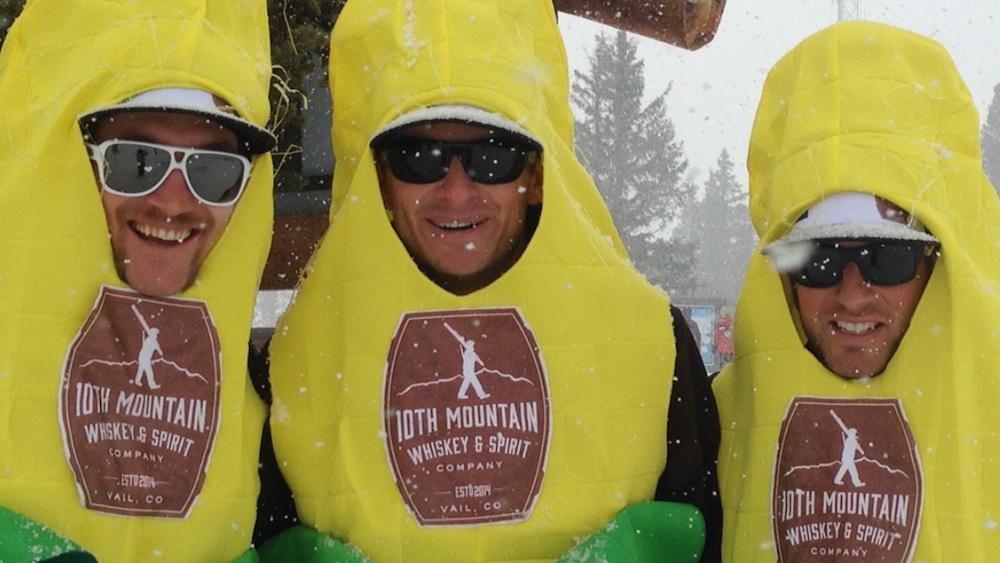
The three faces of the 10th Mountain Whiskey & Spirit Company, including Sylvan Ellefson (l) dressed in corn at Vail’s Closing Day. (Courtesy photo)
The craft distillery will be the first in the Vail area, with another distillery about 45 minutes away in Breckenridge and some smaller distilleries down the valley from Vail, he said.
“The neat thing about craft distilling is there’s not a ton of competition. If anything it’s more craft distilleries working together to compete against the Jim Beams, the Jack Daniels, the big guys,” he explained. “It’s kind of cool to see a couple craft distilleries help market each other and make craft distilling a cool thing, especially in the state of Colorado.”
He learned there were more than 250 craft breweries in Colorado, a boom which distillery owners are anticipating will hit their industry. Adding to the hype, there’s a possibility that 10th Mountain Whiskey could be featured in a reality TV show about startup craft distilleries, although Ellefson wasn’t sure of the details.
“We are a sponsor of the GoPro Games in Vail, CO coming up June 5-8 and will have a tent with all of our spirit accessories including whiskey barrels, rocks glasses, pint glasses, t-shirts, hats, flasks, stainless steel mason jars, etc.,” he wrote in an email.
Sylvan Ellefson getting some “corn air” at Vail’s Closing Day in late April. (Courtesy photo)
And this week, he’s fyling to Kentucky — Bourbon Country — to pick up some barrels and drive them back to Colorado, and plans to post updates about his road trip on Facebook.
As for the farmer’s market, Ellefson said that’s a possiblity since Colorado allows distilleries to sell liquor from different locations simultaneously (i.e. a tasting room and a farmer’s market).
“I love whiskey,” he said with a laugh. “You definitely have to know your product so to be able to taste other bourbons and whiskeys … I’d say in the month of April I was a pretty avid whiskey taster.”
He’s also taken an advanced distilling class to learn about the process, but none of the partners will actually create the product. Thompson and Avignon attended Moonshine University in Louisville to learn the ins and outs of whiskey making, but will hire a master distiller to do the dirty work.
They plan to purchse a still from Vendrome Copper & Brass Works, which could cost around $150,000 to $200,000 for a 500-gallon tank.
According to The Bourbon Review, they’ll start off with a corn moonshine, a rye whiskey, a Bourbon, a potato vodka and a sage infused, peach-vanilla cordial.
And whenever Ellefson’s not promoting the business, he’ll be off enjoying some of what he’s missed over the years, like Colorado hut trips in the middle of the winter and back-to-back-to-back weekends with friends in Moab, Utah. Earlier this month at the Greenland Trail 25 k in Larkspur, Colo., Ellefson placed ninth in 1:48:23.
“I’ve been pretty excited to start a new life,” he said. “Especially doing it with [my wife] Sarah [who graduated physical therapy school in May], because we’ve never been able to spend a ton of time together. … Even the little times when we get to do these backcountry skinning trips or these little bike trips, we’re just like, man if we could just do this all the time, it would be so fun and so awesome. Now that we’ve been able to do that a little bit, I’m happy that I made the decision that I did.”
Sylvan Ellefson and his wife, Sarah, await the podium ceremony after Ellefson won the men’s 30 k freestyle mass start at U.S. nationals in January.
One of Johnny Klister’s Oct. 2013 posts: “When Lex Treinen grows up, he’s clearly going to be the President of Russia.” Klister is now living in the same state as Treinen — not that far from Russia.
A FasterSkier investigation has revealed that Johnny Klister, the former internet cross-country ski publishing sensation, has fled his former life and is now living off-the-grid in Fairbanks, Alaska.
Property records show that a John E. Klister purchased a cabin off Ester Dome Road in Fairbanks, where a reporter located him this spring wearing a mankini while swinging in a hammock along with a scantily clad Sylvan Ellefson, the American cross-country skiing star who had not been seen since winning the U.S. Nationals 30-kilometer championship in January.
In an interview, Klister told FasterSkier that the stress from the fast-paced ski publishing lifestyle had gotten to him.
“Trying to keep up with the output of Noah Hoffman’s blog was impossible. I was drinking 12 cups of coffee a day, pounding a dozen gels, and huffing xenon gas before bed to keep from losing my edge,” Klister said. “None of it worked. That kid is a goddamned blogging machine.”
The former best-selling internet ski author seemed at peace with his new lifestyle. His is writing a memoir, tentatively titled, Klister: Sex, Drugs, and Cold Powder in the Cross-Country Ski World.
With a large plot of land outside of Fairbanks, he is an avid cabbage And root Gardiner.
Ellefson hitchhiked to Alaska following in the footsteps of Christopher McCandless, vowing to test his nordic skills in the land of the midnight sun.
Tracing the hoofprints of a Dall sheep, he found himself on Klister’s property staring into a double-barreled shotgun.
Ellefson recognized Klister’s trademark mankini, and the two celebrated with a happy reunion at Skinny Dick’s Halfway Inn.
Ellefson has no immediate plans to return to work, thanks to the $750,000 he won by betting all of his national championship winnings on the 1,000 to 1 odds that Aku Nikander would win the 50 k national title in March.
Andy Newell of the U.S. Ski Team skied to a 23rd place in Saturday’s qualification round of the 1.5 k freestyle sprint in Lahti, Finland. After losing both a ski and a pole in his quarterfinal, he finished 25th. (Photo: Fisher/NordicFocus)
Another strong field of Americans took to the trails in Lahti, Finland today for the women’s and men’s World Cup 10 and 15-kilometer skate races. Conditions on the course were tricky, with loose, sugary snow over ice, with the added complication fresh snow falling during the women’s race.
The top three spots in the women’s race were taken by Norway’s Marit Bjørgen in 25:05.3, followed by Sweden’s Charlotte Kalla (+26.9) and Norwegian Therese Johaug in third (+27.6). The men’s race was won Norwegian powerhouse Martin Sundby in 33:05.5, with Daniel Richardsson of Sweden taking second (+10.7) and Russian standout Alexander Legkov taking third (+11.2).
The US’s top performance was turned in by Kikkan Randall, who finished 21st in 26:41.6 (+1:36.3), with legs still somewhat tired from her win in Saturday’s sprint. Distance-specialist Noah Hoffman sat out Saturday’s sprint, and used his fresh legs to get the top-US men’s spot and the second-best finish for an American, skating his way to 24th place in 34:37.8 (+1:32.3).
Liz Stephen was the second American in the women’s race, taking 32nd place (+1:53.7), followed by Holly Brooks in 44th (+2:25.5), Caitlin Gregg (+2:30.5) in 46th and Jennie Bender in 76th (+7:16.8). Ida Sargent did not start.
Erik Bjornsen was the second American in the men’s race, coming in 51st place 2:33.9 behind Sundby. Bjornsen was not happy with today’s race, saying that after skiing so much at high altitude in Sochi he was not accustomed to the low altitude of the Lahti venue. He wrote in an email that he finished the race “not tired,” and that he needed to push harder, particularly in the first 5 k. Reese Hanneman, making his debut on the European World Cup circuit, was 73rd (+3:19.5), and Sylvan Ellefson was 79th (+3:30.7).
The American skiers are preparing the continuation of a busy travel schedule, with the next a World Cup sprint in Drammen, Norway on Wednesday and men’s and women’s 50 and 30 k races on the weekend in Oslo. World Cup Finals are the following weekend in Falun, Sweden. Randall is excited for “that time of year where we just race and recover now.” Bjornsen thinks that he is in good shape and believes that he can improve his results in upcoming weeks of racing, and then will return to Anchorage for SuperTour Finals at the end of March.
Matt Liebsch (Team Strong Heart/Team Birkie) skiing to the finish in 2011. Photo: Flying Point Road.
It’s difficult to pigeon-hole cross country ski racers into making predictions.
Of those asked, University of Vermont standout Scott Patterson was the most forthcoming about his prediction for the outcome of the 50-kilometer 41st American Birkebeiner this weekend, one of the premier ski marathons in North America and part of the Worldloppet series. He admitted that while he was rooting for his sister, Caitlin Patterson of the Craftsbury Green Racing Project (CGRP), he thought that the other Caitlin – defending champ Caitlin Gregg of Team Gregg – was the favorite.
“Caitlin Gregg has shown she is above the field in domestic skate races this year. With that, and intimate knowledge of the course, she will be hard to beat,” he wrote in an email.
“Hopefully my sister will surprise me,” he added.
But then again, it was easier for Scott Patterson to make predictions, since he won’t be racing, as the collegiate schedule conflicts with the Birkebeiner. Plus, as a college skier, “the large prize money appeal is moot since I can’t accept it. Instead I will test out my 50 k skills later on at [SuperTour Finals] in Anchorage.”
For her part, Gregg was reluctant to say.
“I have no idea how the race will unfold until it does,” she wrote in an email. “I will say I am excited to ski on the Birkie trails again, though,” she added, including a smiley emoticon in her email.
Though Scott Patterson and Gregg seemed to agree on a favorite in the women’s race, there was no such agreement on the men’s race: Patterson picked Sun Valley’s Matt Gelso or Team Homegrown’s Sylvan Ellefson for a strong showing, giving Ellefson the edge if it comes to a sprint.
For what it’s worth, Ellefson, fresh from the Battle Creek SuperTour, would have liked to agree, but couldn’t quite.
“I would like to bet on myself for the win, but seeing as my best finish is 10th, my goal for the Birkie is only to better that result,” he wrote in an email. “It is rumored that many Europeans will also be joining us which always keeps the excitement factor high in the elite wave. I know the Europeans coming over are quite strong, but I’ll put my money on an American to win.”
It is more than just rumors suggesting that some strong Europeans will be in the field. Former World Champion Martin Koukal of the Czech Republic will be there, as will Italy’s Fabio Santos, among others.
Gregg, on the other hand, made it clear that she was playing favorites.
The Birkie is not only about the prize money. Photo: Darlene Prois
“All I can say is that I hope Matt Liebsch has an awesome race! I will always pick Matt to win!”
Liebsch returned the favor and picked Gregg for the win, though he said that on the men’s side it was a toss-up of “any one of about 10 dudes,” adding that he liked his own chances. Gelso, in an email, largely agreed with Liebsch, but added that there were “15 guys that have a legitimate shot for the win, and another 10 who have an outside shot.”
“But,” he added, “someone is going to win and I will be doing my best to be that someone.”
No matter the predictions, the excitement among the racers is palpable.
“I am really looking forward to this giant ‘family reunion’ of Cross Country Skiing,” Gregg said.
Indeed, the Birkie is the premier loppet in North America, with over 13,000 skiers competing in the different events. And, thanks to a winner’s purse of $7,500 and cash prizes down to $1,000 for sixth place in the marquee event, the 50 k skate, some of the world’s top marathon skiers will be in the mix.
“I am so excited about the Fast and Female Event on Sunday!” Gregg wrote in an email. “We are going to have an awesome turnout! Hopefully 70+ gals!!! I think the best part about Fast and Female is that no matter how tired or sore you are, it all seems to fade away when you start seeing so many little smiling faces!”
When asked if she thought that any of the youngsters might beat her in a sprint after her big race the day before, she said that “Birkie or no Birkie, I bet there are a few speed demons out there who could get me in a sprint.”
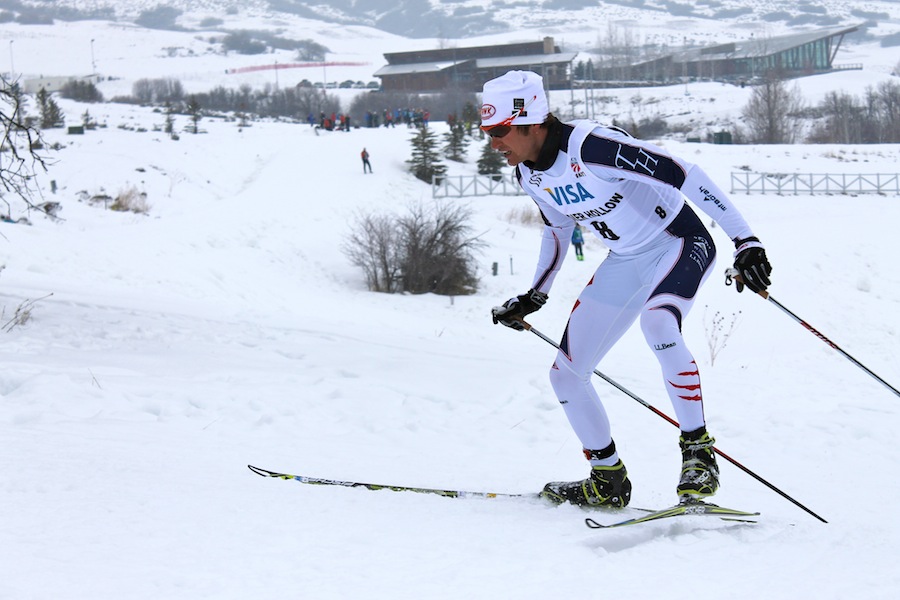
Sylvan Ellefson (SSCV/Team HomeGrown) racing at U.S. Cross Country Championships earlier this month at Soldier Hollow in Midway, Utah. There, Ellefson claimed his first national title in the 30 k freestyle mass start. (Photo: Bert Boyer/bertboyer.zenfolio.com) All proceeds from photo sales will be directly donated to NNF.
“The most important thing in life is not the triumph but the struggle.” — Pierre de Coubertin, International Olympic Committee founder
Sylvan Ellefson loves that quote, part of The Olympic Creed. And he loves it to this day despite being on the wrong side of the U.S. Nordic Olympic Team naming, which was made official last week on Jan. 22.
For athletes like Ellefson, a 26-year-old Ski & Snowboard Club Vail (SSCV)/Team HomeGrown skier, the news came Tuesday following a U.S. Ski Team (USST) meeting over in Europe. Ellefson was home in Colorado with his wife, Sarah, anticipating, like a kid on “Christmas morning having to wait until everyone was up to open presents,” he wrote in an email.
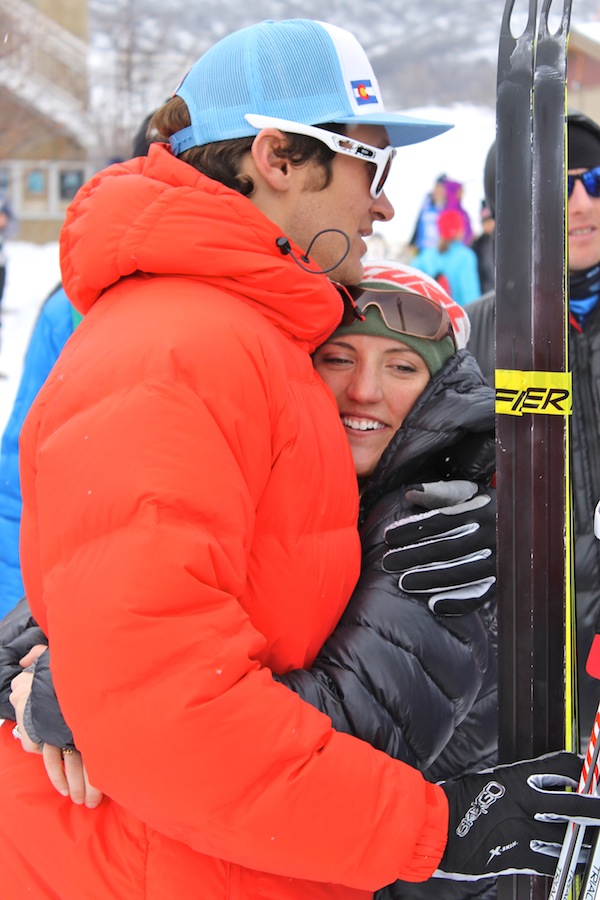
Sylvan Ellefson and his wife, Sarah, after Ellefson won his first national title in the the men’s 30 k freestyle mass start at 2014 U.S. Cross Country Championships.
“Tuesday was probably the longest day of my life,” Ellefson continued. “I was trying not to build the day up in my mind, but it was literally impossible. I was stressed in the morning and didn’t sleep much the night before. All I was doing was thinking about it. I was thinking about the call I was going to get.”
He told Sarah how he was feeling and she recommended he go skiing to clear his head.
“Right now I’m going to go for a nordic ski because its what I love to do,” Ellefson wrote on Facebook Jan. 21. “I’ve spent the last 10 years of my life living a dream. For me it’s never been about the end result, it’s been about getting out and crust cruising for 4 hours and slogging though inches of slop at a SuperTour and laughing about it after. I had to remind myself of that … I would love to be a 2014 Winter Olympian, but no matter however this year, this day, turns out, I know that it’s been a long, fun road of hard work and it can only get better from here.”
That night, he went to work with Sarah, a physical therapist in the Denver area, and the USST email popped into his inbox. Sitting on a patient table, he read it and laid back on the table. He looked at Sarah, then shoot his head with what he described as a forced smile.
“It was really hard for me to take,” Ellefson continued. “Immediate emotion always takes over. Anger, disappointment, sadness… but this was something that I had never felt before. But again, just like that morning, Sarah helped me put everything back into perspective. She reminded me of all the amazing relationships I had developed in skiing, all the amazing places skiing has taken me and all the things I had already accomplished in my ski career.”
Two weeks earlier, Ellefson won the 30-kilometer freestyle mass start at U.S. Cross Country Championships for his first national title. That put him one gigantic step closer to making his first Olympics, but nationals had never been touted as trials. Making the team was instead a numbers game: rank in the overall World Cup top 50 — which required racing over in Europe — or rank above everyone else in the U.S. on the International Ski Federation (FIS) points lists.
Kris Freeman (Maine Winter Sports Center) leads Matt Liebsch (XC United/Team StrongHeart) and Sun Valley’s Miles Havlick (l) in a chase pack of the 30 k freestyle mass start at 2014 U.S. nationals. Freeman went on to place third, Liebsch was seventh and Havlick eighth.
In the fourth edition of the FIS points list, based on the last calendar year through Jan. 19, Ellefson was the fifth-ranked U.S. man in distance events — behind SSCV/Team HomeGrown teammate and USST member Noah Hoffman, who prequalified on the World Cup, former USST member Kris Freeman (Maine Winter Sports Center), Brian Gregg (Team Gregg/Madshus), and Matt Liebsch (XC United/Team StrongHeart). On the sprint list, Ellefson ranked seventh.
Ultimately, the USST picked seven men and seven women for an Olympic squad of 14. They chose not to fill their quota of 17, and U.S. Head Coach Chris Grover explained on a conference call that they told athletes and coaches “from the get-go” that they only intended to bring those they planned on starting.
“With seven women and seven men, we have our start positions filled,” Grover said. “Seven and seven was the magic number for us.”
“The cross country community has followed a vision that its athletes could, indeed, be Best in the World,” U.S. Ski & Snowboard Association (USSA) Vice President of Athletics Luke Bodensteiner wrote on the USSA blog.
“Cross Country Olympic Selection” by Luke Bodensteiner:
“The growing success of cross country ski racing in the USA has come through the passion by the American ski community, fueling the fire that has resulted in more and more skiers find success internationally. The cross country community has followed a vision that its athletes could, indeed, be Best in the World.Our 2014 Olympic selection criteria reflected that vision, challenging athletes to ski into the top 50 in distance or sprint on the FIS World Cup rankings – a challenging but attainable level. Seven women and three men stepped up and met that mark – the most ever to achieve the top criteria. We supplemented those ten qualifiers with four other talented athletes who achieved the highest rankings on the FIS points list.With those 14 athletes, we will have the ability to fill all Olympic start positions. Based on the principles of our selection criteria, we have confirmed a team size of 14 with FIS that we, and USOC, believe gives the USA the best opportunity to achieve medals in Sochi.
The USSA selected a strong and focused team, starting from the principle that it is our obligation, first and foremost, to support those athletes with a high potential for winning medals. We are also cognizant of the role that athletes play as ambassadors for their sports. Together with the USOC, we believe that achieving medals in the Olympics will have even greater longstanding positive impact.
Our success as a nation on the World Cup and at World Championships has come from providing very talented athletes with a high level of personal support. Every one of our 14 Olympians earned their spot on the starting line. As an organization, we will provide that same support to each one.
I know that every cross country skier in America will be tuning in to NBC to watch as these 14 Olympians seek not only their own personal goals, but to bring greater awareness to the sport we all have grown up to love.”
— Luke Bodensteiner, USSA EVP Athletics
“Our 2014 Olympic selection criteria reflected that vision, challenging athletes to ski into the top 50 in distance or sprint on the FIS World Cup rankings – a challenging but attainable level,” he wrote. “Seven women and three men stepped up and met that mark – the most ever to achieve the top criteria. We supplemented those ten qualifiers with four other talented athletes who achieved the highest rankings on the FIS points list.”
In an email, Grover elaborated, “The USA Team is headed to Sochi to not only participate, but to perform on the biggest stage in the World and to demonstrate the strength of US Cross-Country ski racing.”
The team size wasn’t preplanned, he said in a follow-up phone interview. They simply wanted to make sure each start position — four per gender per individual race — was filled.
“In terms of the exact team size, whether it was 13 athletes or 14 athletes et cetera, we really had to see how that last points list came out, so that we knew how many sprinters we had and how many distance skiers we had,” Grover continued. “That was especially true on the men’s side, where the FIS points and the final selection criteria really played into it. Athletes, particularly on the men’s side, had been asking us how many athletes we were planning on bringing to the Games, and we said that we would fill our spots, fill our start spots. So they knew that ahead of time.”
On the men’s side, the U.S. team selected Freeman as its second distance skier and Gregg as its third (after Hoffman). Torin Koos (Bridger Ski Foundation/Rossignol) make it with the third-best FIS sprint ranking, and Erik Bjornsen (APU/USST) was chosen as the fourth man on the sprint list. USST teammates Andy Newell and Simi Hamilton had prequalified on the World Cup. Liebsch was 0.04 points behind Gregg on the distance list, which Grover said they used as their third criteria (forgoing discretion) to make the final picks.
“We really tried to apply the selection criteria in the most fair way possible,” Grover said. “That becomes, for sure, a challenge, especially on the mens’ side when you get down to the sixth, seventh, eighth guys, you’re really splitting hairs because the FIS points are so close at that point. Because they were so close we opted not to use discretion. It really wasn’t a fair way to do it.”
In the end, the U.S. team drew a line at seven men and seven women. That left three spots to be redistributed to other nations, like Canada, which picked up two additional quota spots on Thursday and added two women on Friday.
For the U.S., the big question became: why not bring Liebsch and Ellefson, and a woman or two on the cusp like Kate Fitzgerald (Alaska Pacific University) and Caitlin Gregg (Team Gregg/Madshus)? Even if you couldn’t guarantee them all starts — what’s the risk of having a couple alternates?
“The challenge is that we don’t get extra credentials,” Grover explained. “The amount of credentials that we have is fixed, so whether we bring 14 athletes or whether we bring 17 athletes, our staff size remains the same. We couldn’t bring any additional staff.”
The Olympic Organizing Committee limited the number of visas granted to team staff members, one club coach explained. At one point, it was down to two coaches and four wax technicians per team. As a result, the quality of support for a given group of athletes becomes a deciding factor.
In terms of developing the sport, Grover said that doesn’t happen at the Olympics.
“The Olympics is the pinnacle of the performance or competition pipeline,” he said. “Development happens on the SuperTour. It happens at Europa Cups and Scandinavian Cups. It happens at World Juniors and U23s. Occasionally, it happens on the World Cup, in terms of giving young athletes a start at that level. It does not and should not come at the World Championships or the Olympics. … It’s not a development trip; it’s a competition trip at the very highest level.”
That said, Grover encourages young athletes to make the Olympics a long-term goal.
“But you don’t go from winning a race on the SuperTour to the Olympics in one step,” he said. “It takes many, many, many steps, many competition steps in between. It’s not always linear. There’s jumps and there’s times where you plateau and you fall back. But you have to have success at every level along the way.”
***
For those that spent the last decade of their lives or more working toward that Olympic goal, to come so close but fall a few points (or fractions of a point) short came as an incredibly tough blow. Grover said some of them took it with “great grace” and “real style,” and a couple were “extremely disappointed.”
Jennie Bender (Bridger Ski Foundation) on her way to her second national sprint title, which she achieved earlier this month at U.S. Cross Country Championships at Soldier Hollow in Midway, Utah. (Photo: bertboyer.zenfolio.com) All proceeds from photo sales will be directly donated to NNF.
Jennie Bender (Bridger Ski Foundation) was the eighth-ranked sprinter behind seven USST women who made the team: Kikkan Randall, Sadie Bjornsen, Sophie Caldwell, Jessie Diggins, Ida Sargent, Holly Brooks, and Liz Stephen.
“This is the year my peers, who I have raced against since I started nordic in eighth grade, are all going to the Olympics for the first time, I yearn to be there with them,” Bender, 26, wrote in an email. “I will never forget the roller coaster of emotion I rode while waiting for either an email or a phone call the night of the 21st. Next time, I will not be on that coaster.
“My support system has given me a big hug,” she added.” They have told me I am motivating to them, which in turn, reminds me to stay strong. I wish I hadn’t gotten mono and lyme [disease] two summers ago. I wish I hadn’t had a herniated disc this summer. But I don’t know what else I could have done that was in my power. I am not making excuses, but I will not forget them either.”
Bender won the skate sprint at 2014 U.S. nationals for her second sprint title, which she explained was a “giant relief.”
“Not repeating lasts year’s result in the classic sprint was immensely aggravating, and even if I had won two sprints, I don’t know if that would have changed anything,” she continued. “The only thing to do now is to look forward. My plan is to race the Boulder Mtn Tour, the upcoming Supertours, Birkie, and then head to Europe for March.”
Caitlin Gregg was next on the sprint list and eighth behind Fitzgerald (in seventh) and six prequalified USST women on the distance list. Gregg, 33, was aiming for her second Olympics after notching a historic U.S. women’s distance result at the 2010 Games. At U.S. nationals earlier this month, she won the 20 k freestyle mass start by an unprecedented 3:36 minutes.
After her husband, Brian, earned a trip to his first Olympics, Caitlin wrote in an email, “Team Gregg is all very fired up about having two Olympians on the roster now 🙂 So basically our roster is 100% Olympians!”
At the same time, it was bittersweet.
“I am bummed to ski so well this year and not make the Olympic Team but I am staying positive and using this opportunity to look at the big picture!” she wrote. “My work with under-privileged kids in North Minneapolis gives me incredible perspective! To have the opportunity to chase the Olympic dream at all is extremely wonderful. Once again I am forever grateful to the countless individuals, companies and organizations who have helped make my career possible! I will use the story of not being named to show the entire ski community that the triumph is not only in making the team but in the approach and almost more so, in the response and actions when you do not make it!!!”
Caitlin Gregg (Team Gregg/Madshus) on her way to a 3 1/2-minute win in the women’s 20 k freestyle mass start at 2014 U.S. nationals at Soldier Hollow in Midway, Utah. (Photo: bertboyer.zenfolio.com) All proceeds from photo sales will be directly donated to NNF.
After spending some time on snow with Brian in Toblach, Italy, she planned to fly home to Minneapolis on Wednesday.
“I will visit the Boys and Girls Club, I will ski with the Loppet Nordic Racing crew and I will compete in the entire weekend of events for he City of Lakes Loppet! My hometown race,” she wrote. “Of course I will also be focusing once again on the Birkie and sharing the love of skiing with the 10,000+ people who will also be racing that day!”
While Brian’s parents, twin brother and sister-in-law will be in Sochi to cheer him on, Caitlin explained she’ll race stateside (in the marathon circuit, SuperTour and other races) for financial reasons. She is the defending champion and a two-time winner of the American Birkebeiner, which dolls out $39,000 dollars in prize money, including $7,500 to the top male and female in the 50 k skate.
“What a great journey this has been,” Caitlin added. “[Brian] saw me off before Vancouver and now I will do the same for him before Sochi! We are psyched to be an Olympic Duo and look forward to being involved with skiing for a very, very long time!”
“She is the best partner in the world,” Brian wrote in an email. “She has been coaching me all winter. Writing my training plan, planning our diet, interrupting her own workouts to video, time or lactate test me. In 2011 she told me she would do everything to help me make the 2014 Olympic team. Next she wanted to make it herself too. The US women are so strong but we decided to go for it. Watching Caitlin win every skate distance this year was just amazing. I am so proud of her. It has been an emotional two weeks and we are just so happy to have each other.”
Fitzgerald, 26, explained in an email she was grateful for the love and support of her family and friends.
“It is sort of a bitter sweet experience — bitter because I didn’t make it but sweet that I was so close!” she wrote. “Especially with such an incredible team! US skiers have really upped their game and I am really proud of that. I can’t wait to watch our team kick butt and take names at the Olympics.”
Four of her APU teammates — Randall, Brooks and the Bjornsen siblings — are on the USST and Olympic team.
Liebsch declined to comment publicly just yet, but wrote on Facebook: “…The U.S. has decided not to fill all their quota spots and will only take 3 distance men (I was ranked 4th on the list). I have the best sponsors, family and friends and have been blessed in so many ways! Time to train for the Birkie!”
Ellefson summed up that he was “bummed to be honest. How could one so close not be? I wanted one more taste of being able to perform on the world’s stage. But now I get to watch some of my best friends do that and I’ll be cheering my [butt] off every single race during these games.
“I have always believed that happiness can be found down many different avenues so when something gets you down, you find something that reminds you of and brings you back to that warm, fuzzy, familiar place,” he wrote. “I can’t get stressed over missing an Olympic Team nomination. I won’t let it get me down. So now I’m busy getting back to the drawing board for the next adventure.”
— Chelsea Little contributed reporting
“The most important thing in the Olympic Games is not to win but to take part, just as the most important thing in life is not the triumph but the struggle. The essential thing is not to have conquered but to have fought well.” — The Olympic Creed, Pierre de Coubertin
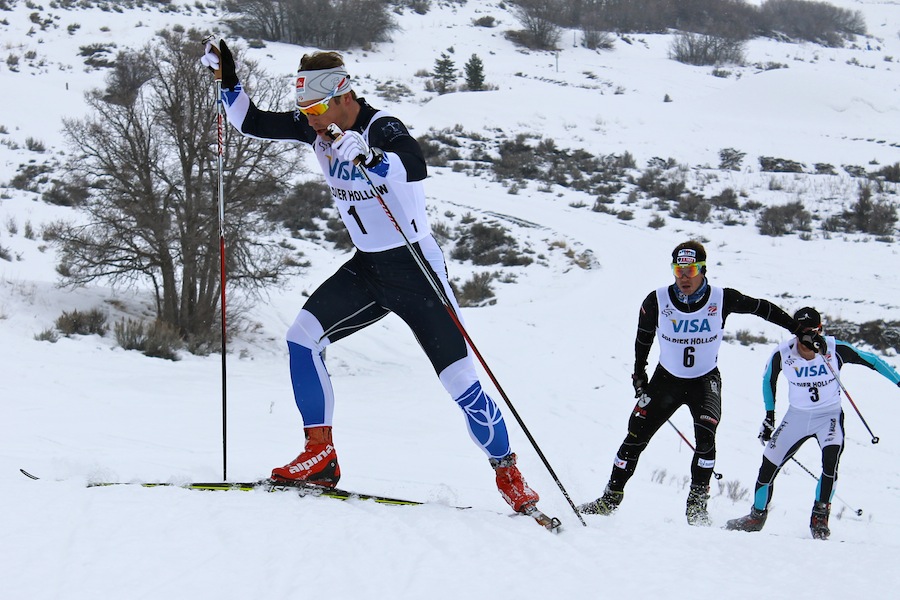
Kris Freeman (Maine Winter Sports Center) leads Matt Liebsch of XC United/Team StrongHeart (c) and Brian Gregg (Team Gregg/Madshus) toward the end of last week’s 30 k freestyle mass start at U.S. Cross Country Championships at Soldier Hollow in Midway, Utah. All three are gunning for a distance spot on the 2014 U.S. Olympic Nordic Team.
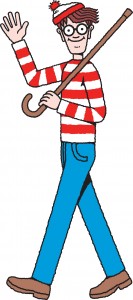
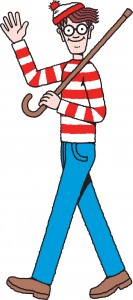
Three days ago, Matt Liebsch likened himself to the candy-striped ‘Where’s Waldo’ on Facebook. In the running for a distance spot on the U.S. Olympic nordic team, which is set to be named by Jan. 22, the 30-year-old Minnesota native wrote that he was “taking everything into consideration” and trying to figure out which races gave him the best chance to make the cut.
Earlier this week, Matt Liebsch posted a photo of Waldo from the children’s book series, ‘Where’s Waldo’ on Facebook. Like several U.S. Olympic hopefuls, Liebsch wrote that he was feeling a lot like Wally, unsure where he’d race next.
He had trekked up to the Rocky Mountain Intercollegiate Ski Association (RMISA) opener in Bozeman, Mont., last weekend, where he placed third in Sunday’s 10-kilometer freestyle.
An independent skier affiliated with XC United/Team StrongHeart, Liebsch is hardly alone in the hunt for one of few remaining openings for the Winter Games from Feb. 7-23 in Sochi, Russia. On Wednesday, he updated his page with the news that the U.S. picked up an additional Olympic quota spot for a grand total of 17.
“The strength of our nation is up there!” he wrote.
Ten of those slots are all but officially locked up by the U.S. Ski Team members who have been in Europe for the last two months. That leaves the possibility of seven openings up for grabs, but chances are, the USST isn’t going to take nearly that many additional athletes with utility skiers like Kikkan Randall, Sadie Bjornsen and Jessie Diggins that can compete in several events — both sprint and distance.
While the depth and strength of the U.S. women’s team is well documented, most of the stateside skiers trying to earn their tickets to Sochi, Russia, are men. And with one qualified distance guy on the USST, Noah Hoffman, it would be fair to say the U.S. will be looking for distance skiers.
Sylvan Ellefson, of Ski & Snowboard Club Vail/Team HomeGrown, won the premier distance race at U.S. nationals last week in Midway, Utah, with a gutsy performance in the 30-kilometer freestyle mass start. Four days later, he was spotted in Canmore, Alberta — another Waldo — racing the 30 k skiathlon at Canadian Olympic Team Trials on Sunday.
“I have pretty much just been listening to my coaches’ suggestions as to where to go and race,” Ellefson explained in an email, adding that he has “no idea how they are selecting the Olympic team.”
The points system, with everyone gunning for the best, or lowest, points on their International Ski Federation (FIS) profile, can be confusing at times like these. But Olympic hopefuls like Liebsch and Ellefson (and their coaches) have been crunching the numbers to determine where they stack up in comparison to other U.S. skiers, especially on the FIS distance lists.
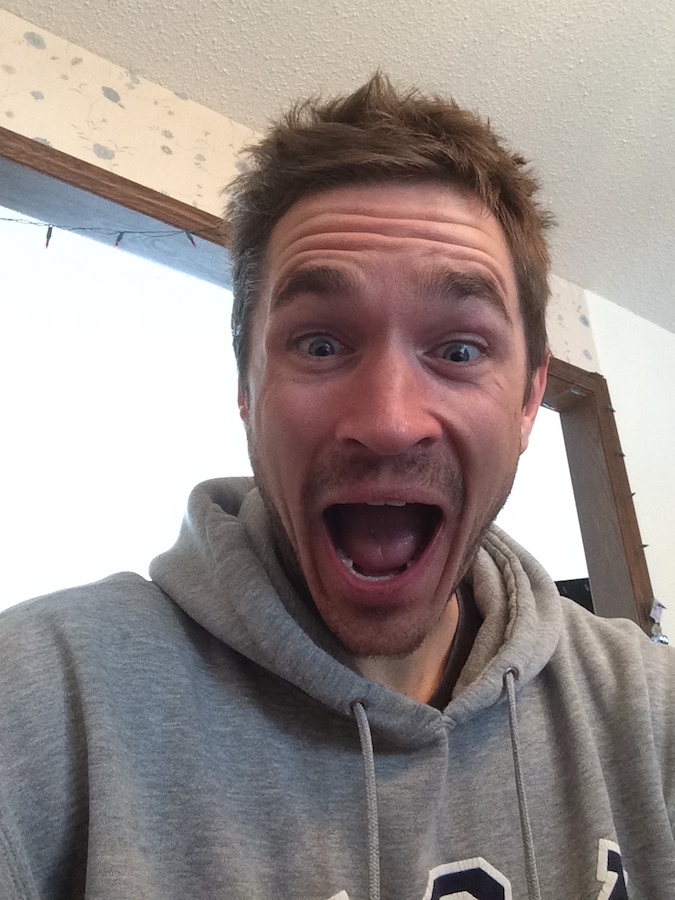
An excited Matt Liebsch before the Eastern Cup races in Rumford, Maine.
Former USST distance veteran Kris Freeman is currently leading the domestic scene, ranked 48th in the world for distance behind Hoffman in 40th. The U.S. Olympic criteria states that selections can be based off FIS points “if team positions remain open after the application of criteria 1 [top-50 distance or sprint World Cup ranking] and 2 [Head coach discretion] … then additional athletes may be nominated in order of ranking, based on the 4th publication of the FIS Sprint and Distance Points Lists valid in January 2014.”
It is important to note that FIS point world rankings are completely independent of “World Cup ranking,” which is determined by World Cup points. World Cup points are scored by finishing in the top-30 at a World Cup event. FIS points, where lower is better, are calculated from sanctioned races all over the world.
Currently, athletes are figuring out where they stand based on the third publication.
So instead of sitting on their laurels and scratching their heads throughout the waiting period, Liebsch, Ellefson and Freeman headed to Rumford, Maine, for this weekend’s Eastern Cup, with a 15 k freestyle mass start on Saturday and 10 k classic on Sunday.
“The Eastern Cup is a minimum 15 point race and the EISA [Eastern Intercollegiate Ski Association] College race is a 25 point race,” Ellefson explained of his decision between the two. “That means that if the right people show up and finish well, the Eastern Cup race points could be better.”
Sylvan Ellefson (SSCV/Team HomeGrown) at 2014 U.S. Cross Country Championships last week at Soldier Hollow in Midway, Utah. (Photo: Swix)
All FIS sanctioned races have a standard points penalty, representing the minimum the race winner can ski away with. The World Cup, as the elite standard has a penalty of zero, while, as Ellefson refers to, domestic events come in significantly higher.
A day after Ellefson won his first national title, he spoke with his coaches about where he should race for the next two weeks. They debated between the Western collegiate (Rocky Mountain Intercollegiate Ski Association) opening races in Bozeman, Mont., and the Canadian trials in Canmore, and chose Canmore “because the penalty would be much lower than in Bozeman.”
“Go big or go home I always say,” Ellefson wrote. The travel ultimately got the best of him and he pulled out of the skiathlon after falling too far back, he explained. He knew he had other races to save up for.
“Back to the drawing table on Monday, we looked at Norwegian Nationals, Swedish Nationals, Swiss Nationals, the Dolomitenlauf, EISA college races, or the Rumford Eastern Cup,” Ellefson continued. “To save money and many hours of travel we guessed the college races or the Rumford Eastern Cup would be the best option. The Eastern Cup would probably have the best point potential so now we’re here in good ol’ Rumford, Maine.”
A 2009 Bates College graduate, Ellefson is returning to his home course in Rumford, where he notched his first podium at 2012 U.S. nationals. He planned to do both races, but would reevaluate after the skate race.
“It’s been quite a busy 3 weeks for me,” he wrote. “Ideally, I’d like to be resting and begin training for Sochi. But right now I have to play by the rules and try and continue to lower my point profile. .. It should be some good racing with, hopefully, some good points.”
In an email, Liebsch wrote that he’s comfortable with his FIS points, “but I wanted to make sure I didn’t miss out on this last weekend of races that count. I was registered for all sorta of races all over the world but after looking at the point opportunity in Maine, it made the most sense to race here.”
Aside from Liebsch, Ellefson and Freeman, a number of other domestic skiers are also in the running for Olympic spots, including recent college grad Miles Havlick (Sun Valley Ski Education Foundation), Torin Koos (Bridger Ski Foundation/Rossignol), Erik Bjornsen (Alaska Pacific University/USST), Bryan Gregg (Team Gregg/Madshus), who are top-ranked on the distance list, plus several sprinters.
With the stakes high this Olympic season, US Fischer and Swix athletes took to Soldier Hollow, Utah to make a case for their inclusion to the US Olympic team for the upcoming Sochi games. This week, Fischer and Swix outpaced all equipment suppliers with four wins and twelve podium finishes, including two podium sweeps.
USST and APU, athlete, Erik Bjornsen took home the opening win of the US National Championships with a strong final lap in the 15k men’s classic race. Perennial US strongman, Kris Freeman opened well on the course before fading due to blood sugar issues arising from his diabetes. Freeman finished third, just behind APU’s Reese Hanneman who placed second for a full Fischer / Swix podium sweep.
Becca Rorabough took home her first national championship in the women’s 10k classic event on a pair of recently selected Fischer Speedmax classic skis. “I just tried to ski smoothly through the whole race,” Rorabough explained following the event.
Sylvan Ellefson took home the most emotional win of the week in the men’s 30k freestyle mass start. Asked about his relationship with Fischer prior to the event, Ellefson highlighted the reliability of his ski fleet: “I am very excited to be skiing on the new Speedmax skis, but even without those skis, because I have been with Fischer for so long now, I have built of a fleet of very reliable skis.” Those skis came in handy when Ellefson pushed clear of the pack in the closing kilometer’s for his first national championship. “This is all I’ve ever wanted in skiing.”
Chelsea Holmes skied a strong event in the women’s 20k mass start, finishing second on the day.
Reese Hanneman took home his first national championship and led a sweep in the men’s classic sprint event. Hanneman’s APU teammate finished second, while Bend Endurance Academy sprinter, Dakota Blackhorse von Jess took home third.
Reese Hanneman and Erik Bjorsen.
Sylvan Ellefsen
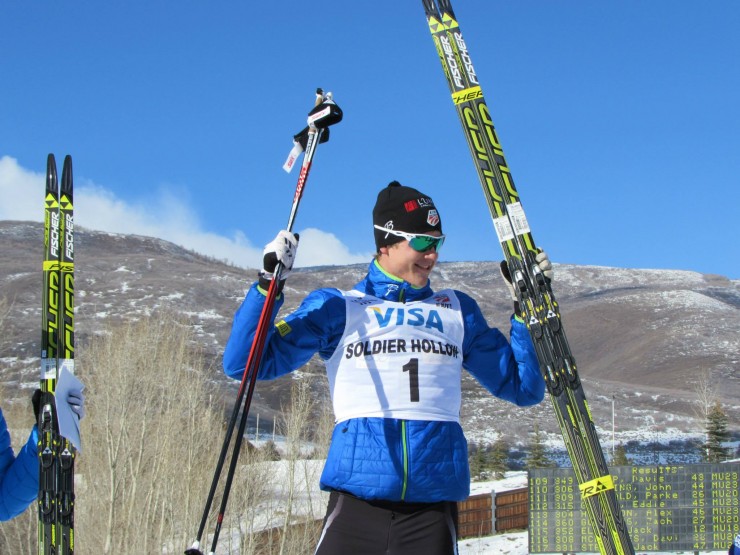
Erik Bjornsen after winning the first race of 2014 U.S. Cross Country Championships, the 15 k classic individual start, on Jan. 4 at Soldier Hollow in Midway, Utah. It was the 22-year-old Bjornsen’s second national title in as many years.
The morning of the skate distance races brought light, fresh, snowfall to the venue. The air temp hovered around -3C and the Doser (snow moisture) was reading 20-22% in skied areas on the new snow. For paraffin both LFW2 (K1) and HFW2 Nero tested very well. We chose to go with HFW2 Nerohttp://www.hwk-skiwax.us/HF-Wax/HWK-Ski-Wax-HFW-2-Nero.html which had been testing well all week. Our powder and top coat tests were also very predictable. Fluor Powder Warm (-4/+15) http://www.hwk-skiwax.us/Race-Powder/HWK-Ski-Wax-Fluor-Powder-Warm.html and Liquo racing winning our tests. However it was FP Warm that really shined during the Men’s 30k! This fluorpowder does extremely well in wet, new, fresh fallen snow, and when glazing is occurring. This wax is very durable and proved it during the men’s 30k SSCV/TH and Sylvan’s skis were lightning fast throughout the entire race! For structure, we used the STB/ HWK Olympia structure tool and pressed in the LU F, a very fine, linear broken structure that proved to be a great addition to the wax combo. Congratulations to Sylvan for winning his first National title and for bringing home the first national Nordic title for Ski and Snowboard Club Vail/ Team Homegrown and the Vail community!
We stayed with the same combo of HFW2 Nero and FP Warm for the junior races in the afternoon. The only difference was the structure used was the LU M long (broken linear medium) using the STB/HWK Olympia Structure tool. This combo could not be beat all day. The nice thing too is that FP Warm showed up on the APP. For people that are not familiar with HWK, the free APP provides great recommendations that are very accurate and fast. Do not hesitate to use this tool!
HWK would like to thank Allison Ebbetts, Lenka Sterling, Eric Pepper, and Dan Weiland for all of their help and hard work in getting SSCV/Team Homegrown and Team HWK great skis all week.
In the afternoon the sun warmed things up and the humidity dropped out. The snow moisture content in skied areas stayed the same and the snow took on a large granular, ball bearing quality. The Liquo Racing (0/-10C) was again extremely fast, only to be outdone by VP 375. This fluorstick is another test product from Austria that will be available next year. It excels when a higher moisture content is present, the snow is transformed and maintains the large granular, ball bearing like crystals. The suggested used air temp is (-6/+10C). This fluor stick was hand corked very well and allowed to cool. We brushed it with a horsehair brush followed by a nylon brush, and polished with ski with an antistatic cloth. The hand application is the best application for speed when working with HWK fluor sticks! Make sure to brush the fluor sticks very well.
The 2014 edition of the USSA US National Cross Country Championships took place in Soldier Hollow, Utah from the 4-10th of January. These all important races served not only as national title races, but races that would strongly factor into the naming of the Olympic Team.
The conditions for racing were fantastic! Scott Peterson and crew did an amazing job of putting together a top quality race venue. HWK was out a few days prior to the first race to get some beta on the snow and start gearing up for the first race, the 15/10k IND classic. Soldier Hollow tends to provide some interesting twists to the waxing equation. Whether it is the artificial snow down low and the natural snow up high, or the fact that the Salt Lake Basin provides particulate matter that drops down on the other side, some of your normal preconceptions about waxing get thrown out the window. For the Classic race the snow moisture content (measured by a “Doser”) was showing 30%, the lower end of “wet”. The snow temp was -16 C and air temp was also around -16C. The sun came out and warmed the air and brought the tracks to a point of getting mealy. HWK recommended HFW3http://www.hwk-skiwax.us/HF-Wax/HWK-Ski-Wax-HFW-3.html as a base wax and both fluor stick 50Go5http://www.hwk-skiwax.us/Sticks/HWK-Ski-Wax-Fluor-Stick-50G05.html and Fluor Powder Extreme Silber. As a top coat, Liquo Racing http://www.hwk-skiwax.us/Fluid-Wax/HWK-Ski-Wax-Liquo-Racing.html proved to be excellent!
The HFW3 is a unique HF wax designed for all snow types. It is very hard and durable and we have seen much success with it this race season in many different snow types! This wax has a silver additive as well that has an anti-static property to it.
The fluor stick 50Go5 was ironed at 120C. This application method gets your best results for durability. 50Go5 has an air temp range of -4/+4C. This was right in the ball park of race time. This fluor stick is the dirty version of 9Mo50 and works well in dirty, greasy, mealy snow. It is important to note that often in Soldier Hollow, waxes meant for dirtier conditions run well.
The other wax that we used was the Fluor Powder Extreme Silber. The range on this is very dry snow (Doser 15% or less) or very wet snow (Doser 30% or more). This will be available to the public next year and is similar to the Extreme powder yet with a silver additive and is meant for dirtier snow.
The Liquo Racing continues to prove that it should be in everyone’s wax box. This liquid has been incredibly fast and versatile! Make sure to spread evenly, let dry, hand cork, hand fleece, brush with a nylon brush and then wipe with an anti-static cloth. This has been our best application process for the liquid! We have not found that roto-corking or ironing the liquid to be faster. Sylvan reported that his skis were VERY fast as he skied his way to a 4th place finish.
FasterSkier’s coverage of the 2014 U.S. Cross Country Championships is brought to you through the generous support of The Memory Clinic in Bennington, Vt.
MIDWAY, Utah — Sylvan Ellefson, 26, knew it was going to take some gutsy skiing to win the men’s 30-kilometer freestyle mass start Wednesday at the 2014 U.S. Cross Country Championships, but he didn’t want to go too crazy, too soon on Soldier Hollow’s unforgiving Olympic 5 k course. Instead, he patiently skied in second until the second-to-last lap, where he attacked and never looked back for to win his first national title by 2.8 seconds.
Start of the men’s 30 k freestyle mass start on Wednesday at U.S. Cross Country Championships at Soldier Hollow in Midway, Utah.
Patrick Johnson (Far West) leads the first of six times up Hermod’s in the mens’ 30 k freestyle mass start at U.S. nationals at Soldier Hollow.
Brian Gregg of Team Gregg/Madshus (second from r) holding his own in the main pack up Hermod’s for the first of six times on the men’s 30 k freestyle mass start at U.S. nationals at Soldier Hollow.
Johnson leading the mass start race at U.S. Nationals in January.
Patrick Johnson leading the second lap
The chase pack in the men’s 30 k freestyle mass start on the second of six laps at U.S. nationals at Soldier Hollow.
Sylvan Ellefson (r) and Tad Elliott of Ski & Snowboard Club Vail/Team HomeGrown make their way up Hermod’s early in the men’s 30 k freestyle mass start at U.S. nationals at Soldier Hollow.
University of Vermont junior Scott Patterson glances back at Lukas Ebner (University of Alaska-Anchorage) while leading early in the third of six laps in the men’s 30 k freestyle mass start at U.S. nationals at Soldier Hollow.
(Photo: Bert Boyer – http://bertboyer.zenfolio.com) All proceeds from photo sales will be directly donated to NNF.
Ellefson (8) gets a feed on the high point of the course at Soldier Hollow on the third of six laps in the 30 k freestyle mass start at U.S. nationals.
Scott Patterson (University of Vermont) gets ahead up Hermod’s on the third of six laps in the men’s 30 k freestyle mass start at U.S. nationals at Soldier Hollow.
Lukas Ebner (21) leads Mats Resaland of the University of New Mexico (11) and Kris Freeman (1) up Hermod’s on the third of six laps in the 30 k freestyle mass start at U.S. nationals at Soldier Hollow.
Tad Elliott (l) and Sylvan Ellefson (8) of SSCV/Team HomeGrown make their way up the last hill on the third of six laps with Mats Resaland (11) in the 30 k freestyle mass start at U.S. nationals at Soldier Hollow.
(Photo: Bert Boyer – http://bertboyer.zenfolio.com) All proceeds from photo sales will be directly donated to NNF.
(Photo: Bert Boyer – http://bertboyer.zenfolio.com) All proceeds from photo sales will be directly donated to NNF.
Scott Patterson (UVM) alone in the lead of the U.S. nationals 30 k freestyle mass start, early in the fourth of six laps at Soldier Hollow.
(Photo: Bert Boyer – http://bertboyer.zenfolio.com) All proceeds from photo sales will be directly donated to NNF.
Sylvan Ellefson (SSCV/Team HomeGrown) follows in second early in the fourth of six laps at the U.S. nationals 30 k freestyle mass start at Soldier Hollow.
(Photo: Bert Boyer – http://bertboyer.zenfolio.com) All proceeds from photo sales will be directly donated to NNF.
Mikey Sinnott (l), of the Sun Valley Ski Education Foundation (SVSEF), climbs up and over a hill in the 30 k freestyle mass start at 2014 U.S. nationals. (Photo: Bert Boer – http://bertboyer.zenfolio.com) All proceeds from photo sales will be directly donated to NNF.
Sinnott’s former Sun Valley teammate Miles Havlick (5) leads the chase pack during the U.S. Nationals 30 k freestyle mass start while Sinnott (second from l) gets tangled on the way up. (Photo: Bert Boyer/All proceeds from photo sales donated to NNF)
Scott Patterson (UVM) on his own up front up Hermod’s for the fourth of six times in the 30 k freestyle mass start at U.S. nationals at Soldier Hollow.
Sun Valley’s Miles Havlick (5) and Oscar Ivars of the University of Utah (36) lead the chase pack up Hermod’s on the fourth of six laps in the U.S. nationals 30 k freestyle mass start at Soldier Hollow.
Erik Bjornsen (APU/U.S. Ski Team) just ahead of Kris Freeman (1) of the Maine Winter Sports Center up Hermod’s on the fourth of six laps in the men’s 30 k freestyle mass start at U.S. nationals at Soldier Hollow.
Scott Patterson (UVM) on his way down Whale’s Tale on the fourth of six laps in the U.S. nationals 30 k freestyle mass start at Soldier Hollow.
Sun Valley’s Miles Havlick (5) leads Sylvan Ellefson (8) in the pack in the men’s 30 k freestyle mass start at U.S. nationals at Soldier Hollow. (Photo: Toko)
Sinnott’s former Sun Valley teammate Miles Havlick (5) leads the chase pack up the last hill on the fourth of six laps during the U.S. Nationals 30 k freestyle mass start while Sinnott (second from l) gets tangled on the way up. (Photo: Bert Boer – http://bertboyer.zenfolio.com) All proceeds from photo sales will be directly donated to NNF.
(Photo: Bert Boyer – http://bertboyer.zenfolio.com) All proceeds from photo sales will be directly donated to NNF.
Scott Patterson (UVM) up one of the early climbs in the fifth of six laps in Wednesday’s 30 k freestyle mass start at U.S. nationals. After breaking away on the second lap, Patterson came back to the group midway through the fifth lap and ended up 19th.
Sylvan Ellefson (SSCV/Team HomeGrown) gaining some speed with 1 1/2 laps remaining out of six in the men’s 30 k freestyle mass start at 2014 U.S. Cross Country Championships at Soldier Hollow in Midway, Utah. Ellefson won by 2.8 seconds for his first national title.
Kris Freeman (Maine Winter Sports Center) heading into the lond descent down Whale’s Tail on the fifth of six laps in the U.S. nationals 30 k freestyle mass start
Kris Freeman leads Matt Liebsch across the top of the Olympic 5 k course at Soldier Hollow during the fifth of six laps in the men’s 30 k freestyle mass start at U.S. nationals on Wednesday. Freeman finished third and Bjornsen was fifth.
Miles Havlick (Sun Valley Ski Education Foundation) tucking down the high point of the course on the fifth of six laps at U.S. nationals in the 30 k freestyle mass start at Soldier Hollow.
Erik Bjornsen (APU/U.S. Ski Team) on the fifth of six laps in the U.S. nationals 30 k freestyle mass start at Soldier Hollow.
Tyler Reinking (Bridger Ski Foundation) on his way to ninth in the 30 k freestyle mass start at U.S. nationals at Soldier Hollow.
David Sinclair (Dartmouth) leads a chase into Whale’s Tale on the fifth of six laps in the U.S. nationals 30 k freestyle mass start at Soldier Hollow.
Sylvan Ellefson (SSCV/Team HomeGrown) breaks away on the fifth of six laps in the U.S. nationals 30 k freestyle mass start at Soldier Hollow.
Sylvan Ellefson (SSCV/Team HomeGrown) breaks away on the fifth of six laps in the U.S. nationals 30 k freestyle mass start at Soldier Hollow.
Sylvan Ellefson (SSCV/Team HomeGrown) breaks away on the fifth of six laps in the U.S. nationals 30 k freestyle mass start at Soldier Hollow.
Kris Freeman (MWSC) leads Matt Liebsch (XC United/Team StrongHeart) on the fifth of six laps in the U.S. nationals men’s 30 k freestyle mass start at Soldier Hollow.
Kris Freeman leads Matt Liebsch and Miles Havlick (l) in a chase pack of the 30 k freestyle mass start at 2014 U.S. nationals.
Sylvan Ellefson (SSCV/Team HomeGrown) pushes off the front with just over 5 k remaining in the men’s 30 k freestyle mass start at U.S. nationals at Soldier Hollow in Midway, Utah.
(Photo: http://bertboyer.zenfolio.com) All proceeds from photo sales will be directly donated to NNF.
Kris Freeman (1) leads Matt Liebsch (6) and Brian Gregg early in the last lap of the men’s 30 k freestyle mass start at U.S. nationals at Soldier Hollow.
Sylvan Ellefson’s mother-in-law holding one of many “Sylvan on a Stick” cardboard cutouts while cheering Ellefson on during the men’s 30 k freestyle mass start at U.S. nationals on Wednesday in Midway, Utah.
(Photo: http://bertboyer.zenfolio.com) All proceeds from photo sales will be directly donated to NNF.
Ellefson puts the hurt on up the last time Hermod’s in the men’s 30 k freestyle mass start at U.S. nationals at Soldier Hollow.
Brian Gregg (Team Gregg/Madshus) after passing Kris Freeman (MWSC) the last time up Hermod’s in the men’s 30 k freestyle mass start at U.S. nationals at Soldier Hollow.
Bjornsen makes his way up Hermod’s on the last lap of the men’s 30 k freestyle mass start at U.S. nationals at Soldier Hollow.
(Photo: Bert Boyer – http://bertboyer.zenfolio.com) All proceeds from photo sales will be directly donated to NNF.
(Photo: http://bertboyer.zenfolio.com) All proceeds from photo sales will be directly donated to NNF.
Lex Treinen (APU) on his way down to the finish, where he placed sixth in the men’s 30 k freestyle mass start at U.S. nationals at Soldier Hollow. (Photo: Bert Boyer – http://bertboyer.zenfolio.com) All proceeds from photo sales will be directly donated to NNF.
IMG_3551
Sylvan Ellefson and his wife, Sarah, await the podium ceremony after Ellefson won the men’s 30 k freestyle mass start at U.S. nationals on Wednesday.
Sylvan Ellefson (SSCV/Team HomeGrown) gaining some speed with 1 1/2 laps remaining out of six in the men’s 30 k freestyle mass start at 2014 U.S. Cross Country Championships at Soldier Hollow in Midway, Utah. Ellefson won by 2.8 seconds for his first national title.
FasterSkier’s coverage of the 2014 U.S. Cross Country Championships is brought to you through the generous support of The Memory Clinic in Bennington, Vt.
***
Note: This article has been updated to include Sylvan Ellefson’s tribute to Vail native, Tony Seibert, who died in an avalanche on Tuesday.
MIDWAY, Utah – Ninety percent of people holding homemade signs and placards along the trails at Soldier Hollow on Wednesday at the U.S. Cross Country Championships were for one person: Sylvan Ellefson.
And it wasn’t just all of Vail, Colo., out there supporting him. Ellefson, 26, had fans, friends and family from Alaska, Wyoming and Minnesota in bunches along the 5-kilometer Olympic course, all screaming his name throughout the 30 k freestyle mass start.
Sylvan Ellefson’s mother-in-law holding one of many “Sylvan on a Stick” cardboard cutouts while cheering Ellefson on during the men’s 30 k freestyle mass start at U.S. nationals on Wednesday in Midway, Utah.
A Ski & Snowboard Club Vail (SSCV)/Team HomeGrown staple, Ellefson figured he had about 40 to 50 supporters cheering him on, but it could’ve easily been more. Many of his fans held “Sylvan on a Stick” cardboard cutouts of his face in hand, including his mother-in-law who excitedly awaited him (along with his grandmother and other family members) at the finish.
With two laps remaining, Ellefson kicked it into high gear on the first of several significant climbs on a snowy morning. Distancing himself from Miles Havlick of the Sun Valley Ski Education Foundation (SVSEF) and Ben Lustgarten (Middlebury), he tried to close the gap on renegade Scott Patterson of the University of Vermont (UVM).
“I knew that if I wanted to win today I had to pull a ballsy move and I was feeling pretty good chasing Scott,” Ellefson said. “I decided that I’d see what the field was gonna do and just go for it. I went for it and not everyone responded the way I thought, so I just kept going for it.”
On the second of six times up the unforgiving Hermod’s Hill in condensing powder, Patterson and Lukas Ebner (University of Alaska-Anchorage) took advantage of the pack’s moderate pace and put some time between them and the rest of the field.
“Next time up the hill [Ebner] faded a little bit so then all of a sudden I was up there on my own,” said Patterson, an Anchorage native. “I figured I’d try to ski it, try to stay relaxed, but out there being off the front I definitely probably pushed a little too hard early.”
After skiing 1 ½ laps alone out front with as much as a 30-second margin, the UVM junior started the fifth lap hanging onto whatever energy he had left. He made it up the first two climbs out of the stadium to the backside of the course, where Ellefson reeled him in – cutting the deficit from 15 seconds to zero within a kilometer.
“I was hurting pretty bad,” Patterson said. “The steep hills really got me and I was almost walking up them. Sylvan came flying by me and I had nothing really left at that point, so I was kind of struggling in the last 10 k.”
University of Vermont junior Scott Patterson (l) glances back at Lukas Ebner (University of Alaska-Anchorage) while leading early in the third of six laps in the men’s 30 k freestyle mass start at U.S. nationals at Soldier Hollow.
Ellefson not only passed him, but he dropped the pack in the process and created a gap of his own with 7.5 k remaining. A 10-second lead down the long downhill known as Whale’s Tale grew to 12 seconds on the final hill of the lap, and Ellefson came through the stadium 11.6 seconds ahead with 5 k to go.
Hearing things weren’t going so well for Kris Freeman of the Maine Winter Sports Center in second (“Something was going on with his ski, his binding,” Ellefson said), he decided to go for it with one lap remaining.
“I haven’t really tried to pull a ballsy move in a long time and I figured why not?” he said. “My skis today were also unbelievable.”
He ended up extended his lead to 23 seconds across the top of the course before heading up Hermod’s one last time. Ten to 20 seconds later on the same hill, Brian Gregg (Team Gregg/Madshus) challenged Freeman for second and gave Ellefson a scare in first.
“I was coming completely undone up Hermod’s the last time, completely,” Ellefson said. “My coach was telling me I had about 10 seconds coming up Hermod’s and I was like, ‘Oh my God, somebody give me a break,’ but when you have this good a field you just have to be the fastest on that day.”
Sylvan Ellefson (SSCV/Team HomeGrown) pushes off the front with just over 5 k remaining in the men’s 30 k freestyle mass start at U.S. nationals at Soldier Hollow in Midway, Utah.
He was – outlasting Gregg, who came on strong over the last two climbs, to win his first national title in 1:19.11.3. Gregg finished 2.8 seconds back in second for his first national podium, and Freeman pulled through in third, 16.5 seconds after Ellefson.
“Everything was so blurry,” Ellefson recalled of the last few hundred meters to the finish. “I knew Gregg was coming, but I didn’t know how far behind he was and I knew I just had to hammer. I can’t tell you how many times Brian Gregg and I have had a sprint to the finish. Last year, he got me every single time so I was happy to get him this time.”
In last year’s national 30 k classic, Ellefson placed seventh, 35 seconds behind winner Torin Koos (Bridger Ski Foundation), who did not finish after pulling out in 42nd halfway through the race. Another DNF, Tad Elliott (SSCV/Team HomeGrown) led early in his first race back while recovering from mono. He was in the mix and near the front for three laps, but called it a day after the fourth time around despite being in 16th.
Almost exactly a year ago, Gregg was 22nd in the 30 k classic mass start, also at Soldier Hollow. On Wednesday, he was out to perform in what he considered his focus event of this year’s nationals – and the one with the deepest implications for making the Olympics next month in Sochi, Russia.
Brian Gregg of Team Gregg/Madshus (3) followed by Erik Bjornsen (2) of APU/U.S. Ski Team and Kris Freeman of the Maine Winter Sports Center (behind Bjornsen) in the pack up Hermod’s for the first of six times on the men’s 30 k freestyle mass start at U.S. nationals at Soldier Hollow in Midway, Utah.
“On Hermod’s, I was getting a little bit of a gap on Kris and I was like, ‘I’ve just got to finish as hard as I can,’ ” said Gregg, 29, who sat patiently in the pack in 24th through the halfway point.
A lap later, he was up to 12th, and after the fifth of six laps, Gregg was fourth behind Ellefson, Freeman, and his good friend Matt Liebsch (XC United/Team StrongHeart).
“It was kind of nice to have that rabbit up there because I kept gaining time on Sylvan,” Gregg said of chasing Ellefson the last kilometer to the finish. “But I was really tired and it felt kind of like a slow-motion sprint.”
Regardless, second place and just 2.3 seconds out of first was almost as good as a victory for Gregg, who’s been hunting to improve his International Ski Federation (FIS) point profile since the beginning of the season.
In the following women’s 20 k mass start, his wife Caitlin Gregg won by more than 3 ½ minutes. Less than four hours later, they two were scheduled to fly from Salt Lake City to Prague.
“The last two days have been crazy,” Gregg said. “Packing things up making sure we’re as dialed as we can be for this race. … We’re not really sure how long we’ll be over in Europe; we have a ticket back on [January] 21st, but maybe with today we get named [to the U.S. Olympic team] or whatever, so we’ll see how it works.”
The men’s and women’s SuperTour leaders, the couple earned World Cup starts for the next two weekends of racing before the Olympics, which start Feb. 8.
“Very, very excited,” Gregg said. “This has been a focus race all season. … It’s great to see Sylvan up top. He’s been real consistent all season.”
Racing for Tony:
A day after his friend and Vail native, Tony Seibert, 24, died in an avalanche, Sylvan Ellefson dedicated Wednesday’s U.S. nationals 30 k freestyle race to him.Ellefson wrote on Facebook on Tuesday: “Having a tough time swallowing this one. I’ll be skiing for you tomorrow Tony! The Vail community won’t be the same without you. I’ll celebrate your life by attempting a 360 off of Lovers Leap. Doubtful I’ll land, but at least I’ll be smiling when Ski Patrol takes me off the mountain I’ll miss you man!”
“Whether they pick me for the Olympics this year or not, I’m just happy to have a national championship under my belt,” Ellefson said. “It’s literally the only thing I’ve ever wanted in my skiing career, and two years ago when I was third [in the 2012 national 15 k freestyle], that was the closest. So for me to get it today, I can’t tell you how happy I am.”
Moments before he stepped up onto the podium for the medal ceremony, he embraced his wife, Sarah.
“To have this support crew here is unbelievable,” Ellefson said. “That’s really what got me up the hills today.”
Almost 14 seconds after Gregg finished, Freeman, 33, came through in third.
“I did what I had to do, right?” Freeman said to his coach, Zach Caldwell, almost immediately after.
While he declined to comment, Freeman later wrote on his blog that he was seeking lower than 30 FIS points in both distance races at nationals, which meant making the podium in both. He was third in the 15 k classic last Saturday.
“I just managed a 29.5 FIS race in the 15k classic and I scored a 27 point race in the 30k skate today,” he wrote. “I have not been feeling good this week so I am relieved to have moved up into such a strong position. As far as I know there are no more FIS races in the US that could affect the Olympic qualification for distance races.”
A Type-1 diabetic, his blood sugar dropped dangerously low to 38 the night after the 15 k. He overcompensated and his glucose level rose as he slept, waking him up four times with a peak of 280 at 4 a.m.
“At this point I took yet another bolus and forced myself to get out of bed and do 200 jumping jacks in order to make my muscles more receptive to the insulin I was giving myself,” Freeman wrote. “The physical stimulus worked and I slept until 8:00 AM when my low alarm set off at 78. For me, seventy eight is a healthy level but below 70 is not. So I got out of bed, ate breakfast, and everything stabilized. This was not the ideal recovery for a race and I started feeling very down.”
Freeman leading Bjornsen across the top of the Olympic 5 k course at Soldier Hollow during the fifth of six laps in the men’s 30 k freestyle mass start at U.S. nationals on Wednesday. Freeman finished third and Bjornsen was fifth.
He called his sport psychologist, who “helped me to let go of the unquantifiable fatigue that the poor sugars caused and to focus on what had to be done in the next race. I have a tendency to be very obsessive so that was easier said than done,” Freeman wrote. “I have to thank my family and girlfriend who also got to listen to me whine about not feeling like myself the last few days. [Their] love and encouragement really helped me to get the most out of a less than ideal time and get the points I needed to pursue my Olympic dream in Sochi. I am very confident that with a little downtime at home that my best Olympic results are in front of me.”
While he and several others signed eligibility papers for Sochi, the team won’t be officially named until around Jan. 21-22, according to the U.S. Ski Team.
Forty-two and a half seconds off the podium, Mikey Sinnott (SVSEF) came on strong the last lap to finish fourth. Unable to keep up with Gregg through the stadium at the start of the last lap, he caught a ride from Erik Bjornsen and Lex Treinen, both of Alaska Pacific University. He conserved behind them and passed them both before the infamous climb, where he also took on Liebsch.
Bjornsen finished another six seconds back in fifth, 1:05 behind Ellefson. Treinen was sixth (+1:07.3) and Liebsch took seventh (+1:12.5).
“I kind of got lucky that I didn’t have to sprint too hard; this was a pretty tough finish for me,” Sinnott said. “Last hundred meters with my legs gone, I was lucky to be alone.”
Mikey Sinnott of the Sun Valley Gold Team (l) leads Oscar Ivars (University of Utah) up an early climb in the fourth of six laps on Wednesday. Third in the 30 k freestyle mass start at the time, Sinnott placed fourth.
Right behind Ellefson when he popped early in the fourth lap, Sinnott rose as high as third, but generally hovered in the top 10.
“I haven’t really skied well at all this year so I knew that maybe my form wasn’t the top notch, but I know I probably have some better base than a lot of these youngsters out there,” Sinnott said. “I wanted to ski smart and hope for the best. I think that’s what I did well, stay near the front out of the chaos.”
It worked to his advantage, he said, because, “This is one of the slowest 30 k’s I’ve been in. The first 20 k we were doddling. I’m sure Caitlin went a lot faster than us. I just kind of sat there patiently and waited for it to start blowing apart.”
While Patrick Johnson (Far West) was the first to go off the front with a breakaway on the first lap, Sinnott said he wasn’t too concerned.
“It was kind of like, ‘That was dumb,’ ” Sinnott said. “Maybe if we were pushing and working hard and not reeling him in, but you could tell he was just strung out there working hard and we were taking it really easy. … Patterson did the same thing and I think the coaches started to panic because he was a little farther and a little bit longer out there, but … when the race finally started we reeled him in a k.
“When you’ve got Freeman in the pack you know he’s not gonna let anyone get out of hand that’s really a threat,” he added.
After opening up a 15-second lead early in the first lap, Johnson resumed his place in the pack about halfway through the second loop and finished 12th, 1:34.6 behind Ellefson. Patterson ended up 19th (+2:20.6).
“I gave it my best. Put in a good effort,” Patterson said.
Bjornsen was disappointed with fifth, explaining he was looking for more after feeling “pretty nervous” at the start.
“I should’ve gone with those guys on the last lap, but I guess I just didn’t quite have it in me,” he said of Ellefson, who made the break with about 7.5 k to go, and Freeman, Liebsch and Gregg that followed in pursuit.
Liebsch said he felt good for five of the six laps, but couldn’t quite stay with Gregg when he attacked on the last lap.
“I just didn’t have it right then,” Liebsch said, who had snow jam under his boot for the entire last lap, causing some discomfort with his binding.
“We’ll have to see how the points play out, if I’m still in it for Sochi or not,” he added. “I was right in the mix for making the world champs last year … and seeing [how] the last Olympic team I was right there, so hopefully get the nod this time.”
Thinking about his Midwest supporters, Liebsch thanked his wife, Marybeth. “I love her and thanks to everyone back home for the support,” he said.
Erik Bjornsen (APU/U.S. Ski Team) strides up Hermod’s Hill at the 2014 U.S. Cross Country Championships with APU Head Coach Erik Flora giving splits alongside. Bjornsen went on to win the 15 k by over 11 seconds.
FasterSkier’s coverage of the 2014 U.S. Cross Country Championships is brought to you through the generous support of The Memory Clinic in Bennington, Vt.
MIDWAY, Utah – In what was a flawless day at Soldier Hollow, Erik Bjornsen of Alaska Pacific University (APU) and the U.S. Ski Team achieved his second national championship in the 15 k interval start at the 2014 U.S. Cross Country Championships. He finished 0:14 ahead of Reese Hanneman (APU) who placed second. Kris Freeman of the Maine Winter Sports Center finished third, 22.8 seconds back from Bjornsen.
The first day of nationals could not have been more perfect, with temperatures in the mid-20s and plenty of sun to go around. The 15 k, set on a variation of the 2002 Olympic course, consisted of three 5 k laps that twisted up and down a hillside that has seen many historic events. Saturday, was Bjornsen’s chance to add a little history of his own.
Erik Bjornsen (APU/U.S. Ski Team) leads a pack of skiers in the 15 k at the 2014 U.S. Cross Country Ski Championships. (Photo: bertboyer.zenfolio.com) All proceeds from photo sales will be directly donated to NNF.
Despite his convincing win, the 22-year-old Washington native didn’t make his victory look easy. The challenging course took its toll on all athletes, and Bjorsen was no exception. His feelings in the race were much like the ups and downs of the course.
“At times it felt good, and at times it was really hard,” Bjornsen said.
Bjornsen started his race with a blistering pace that gave him first place splits. However, when after hearing he was several seconds up on Freeman he worried that his start was too fast. This fear was confirmed when he entered his second lap and began to struggle.
After this realization Bjornsen skied with more control and focused on his finish.
“The rest of the time I was getting splits I was 5 or 10 seconds off of [Freeman]. In the last lap I was very confident with my finishing so thought I might have a chance,” he said.
He also chose to go for fast skis instead of more kick, and said that factored into his result. While it was a risky move on such a hilly course, he said it “seemed to work.”
For Bjornsen, the win is confirmation that his training since the end of last season is paying off. And with a winter that has had few domestic opportunities to demonstrate ability, he has found assurance in his chances for the rest of nationals.
“It’s a confidence booster going into the rest of the races. Coming into this series I knew that the 15 k classic was my favorite event,” he said, “I’m feeling good so hopefully I can have another couple good results.”
Reese Hanneman (APU) racing in the 15 k at the 2014 U.S. Cross Country Championships. Hanneman finished 11 seconds behind Bjornsen to place second. (Photo: bertboyer.zenfolio.com) All proceeds from photo sales will be directly donated to NNF.
While Bjornsen was expected to podium in Saturday’s race, Hanneman was not. Hanneman, an APU skier from Fairbanks, Alaska, has traditionally excelled at sprinting, but defied tradition and placed second.
“It’s just a little surprising on that type of course with this altitude,” Hanneman said. “It’s the hardest course I’ve skied since the World Cup in Canmore. I tried to go out pretty easy, like level 3 for two laps, which usually would just be way too conservative. But I was getting really good splits early on and I knew I had some left in the tank.”
Hanneman, who placed 21st in the 15 k at the 2013 nationals, knew that with a demanding course he would need to conserve energy if he wanted have a chance at the podium. In an effort to ski with utmost efficiency, Hannemen took the steepest hills conservatively and pushed on the sections of the course that were gradual and flat.
“I knew that if I went too hard I would just be walking along on the top,” he said. “Part of the success was that I was able to execute the plan.”
Looking forward, Hanneman is excited for the two upcoming sprints, one of which will take place tomorrow. While these Championships will determine the rest of his season, he’s decided not to worry too much about the future.
“I’m going to try and stay relaxed about everything, have fun, enjoy the good weather, and ski fast.”
Third-place finisher and veteran skier Kris Freeman expressed support for the first and second place finishers.
“It’s great to see Reese step up like that and Bjornsen on form,” he said. “I’m just hoping to find mine.”
The former longtime U.S. Ski Team member fell off his front-running pace on the final lap.
Kris Freeman (l) and Brian Gregg (r) attempt to conquer the challenging 5 k olympic course at Soldier Hollow. Freeman finished third and Gregg finished fifth.
For Sylvan Ellefson (Ski & Snowboard Club of Vail/Team Homegrown) in fourth, it was his support group and encouraging splits that got him through a race that had him puking “his brains out” by the end.
“I heard I wasn’t that far from Freeman at the top of Hermod’s so that’s what got me going the last two k,” he said.
Brian Gregg, who finished fifth, was happy to tie his best-ever classic finish at U.S. nationals. He also laughed at the fact that both he and his wife Caitlin were the first starters for the men’s and women’s races. “What are the odds?” he joked.
Rounding out the top six was Ben Lustgarten of Middlebury College. Lustgarten’s finish was a surprise to many at nationals, but not to his teammates and friends who have seen his hard work in Middlebury, Vermont over the past four years.
“I’ll try to keep my focus,” he said. “I’m at a good point with my fitness and strength. I’ve just got to keep racing hard and staying in the game.”
With this year’s college circuit ahead of him and a possible bid for the U23 World Championships, Lustgarten is definitely an up-and-coming skier.
Ben Lustgarten (Middlebury College) gave a stellar performance in the 15 k classic and finished sixth at the 2014 U.S. Cross Country Championships.
Absent from from the results was Tad Elliott (SSCV/Team HomeGrown) who was second in the 15 k skate at the 2013 nationals. In an email, Elliott explained that he has mono, or mononucleosis, a virus that often causes severe fatigue.
“I got it this fall and it took awhile to diagnose, and I am still recovering,” he wrote. “I am flying into Nationals Monday. I am planning to try and race the 30k.”
All in all, the 15 k demonstrated that the men’s field at Soldier Hollow is a group of very talented athletes who are willing to put everything they have into the chance at advancing in the ranks of U.S. cross-country skiing. As if the competition wasn’t hard enough, Soldier Hollow has provided some of the most difficult courses in the country, making every factor from tactics to fitness to mental toughness equally important.
Action will continue Sunday with the freestyle-sprint qualifiers kicking off at 10 a.m. MST. In a field as diverse as this, the race could be anyone’s.
Amanda Ammar (Team Ninja) racing to third in the 10 k classic individual start on Dec. 15 in Rossland, B.C. (Photo: Shelley Peachell/Peachell Photography)
In the last big North American races before the holiday break, Kevin Sandau of the Alberta World Cup Academy (AWCA) and Canadian National Senior Development Team (NST) and American Kate Fitzgerald of Alaska Pacific University (APU) took top honors on Sunday in the Black Jack NorAm 15- and 10-kilometre classic individual starts in Rossland, B.C.
Kate Fitzgerald (APU) racing to third in the SuperTour 10 k freestyle individual start on Nov. 30 in West Yellowstone, Mont. She won the Black Jack NorAm 10 k classic individual start on Sunday in Rossland, B.C.
On a day marked by warmer temperatures, tough waxing conditions and even tougher race courses, racers had only positive things to say about the quality of the race course and the depth of talented racers in the combined Canadian-American field.
In the women’s 10 k, Fitzgerald gritted out the win in 31:53.7 after feeling “super strong.” In an email, she wrote that her coaches nailed the tricky waxing, and it helped to have a strong skier to race against.
“Caitlin Gregg [Team Gregg/Madshus] started right in front of me and I caught up to her and we skied together the whole race after that,” Fitzgerald wrote. “She was awesome! We pushed each other and it was so much fun to have someone to ski with and work together!”
The women’s SuperTour leader, Gregg ended up fourth, and Canadians Emily Nishikawa (AWCA/NST) and Amanda Ammar (Team Ninja) squeezed in for second and third, respectively. After leading the first of two laps by nearly seven seconds over Fitzgerald, Nishikawa finished 13.9 seconds back in second, and Ammar was another 9.9 seconds back in third. Gregg was 30.3 seconds back in fourth, and Zoe Roy finished 47.1 seconds off the winning pace in fifth.
“There was an extremely strong field of women here this weekend, all of which I highly respect, and who are also in great shape,” Ammar wrote in an email. “I have been consistently getting stronger and stronger in each race. I’m right where I want to be.”
Ammar added that the courses were hard, but doable. “These were the kind of trails I was brought up on,” she explained. “Hard steep climbs, and fun windy technical downhills. I had an absolute blast out there!”
Sandau Edges Ellefson
In the men’s 15 k, Sandau echoed the sentiments of the women, adding that it was nice to have warmer-racing temperatures compared to the frigidity of last weekend’s opening NorAm at Sovereign Lake. Although he dealt with some icing on his skis, Sandau did his best to maintain efficiency and came out on top in 42:08.4.
Kevin Sandau (AWCA/NST) racing to victory in the NorAm 15 k classic individual start on Dec. 15 in Rossland, B.C. (Photo: Shelley Peachell/Peachell Photography)
“I’m pretty happy with [Sunday’s] result,” he wrote. “It’s just how I wanted [to] end things going into the holiday break before Olympic trials.”
Sylvan Ellefson (Ski & Snowboard Club Vail/Team HomeGrown) ended up second, just 3.2 seconds behind Sandau, and Graham Nishikawa rounded out the podium in third (+33.2), for his third top-three in over just two NorAm weekends. US Ski Team member Erik Bjornsen (APU) placed fourth (+44.3) and Andy Shields (NDC Thunder Bay) was fifth (+56.0).
Ellefson was also satisfied with his race. In an email, he explained that despite feeling pretty tired midway through the race, he was able to dig deep to pull out a solid race.
“The last 2k had to be the fastest 2k of my life,” Ellefson wrote. “I’m very happy with my results from the weekend and these results definitely help the confidence going into US Nationals in 3 weeks.
“The courses here are amazing,” he added. “Amazingly hard, amazing beautiful. Whoever crafted them was a genius because any kids coming out of that Black Jack program can probably ski anywhere after running those courses. Technical and fun, almost seems like a downhill biker designed them. Up there with the hardest course I have ever skied without a doubt.”
He was right on.
Ethan Meginnes, co-owner of Joyride Bike Parks, wrote in an email that he helped construct the Black Jack course.
“We build the course for the Red Bull Joyride slope style comp at Whistler as well as many other downhill bike trails,” he explained. “Dave Wood, Al Fisher and myself were the primary volunteer supervising the course build with a local contractor, Ed Mayer.”
After this weekend, most of the racers on the circuit are dispersing for the holidays, quality time with friends and family, and local citizens’ races until the recommencement of racing January 8-12 in Canmore, Alberta.
Emily Nishikawa (AWCA/NST) halfway through her 10 k freestyle race on Dec. 7, in which she placed fifth at the NorAm opener at Sovereign Lake, B.C. The next day, she was third in the classic sprint there.
Saturday’s NorAm freestyle sprints at the Black Jack Ski Club delivered an exciting day of racing, with crashes, tactic changes between rounds, and photo finishes in Rossland, B.C.
Emily Nishikawa of the Alberta World Cup Academy (AWCA) and Canadian National Senior Team (NST) won the women’s 1.4-kilometre A-final by 0.22 seconds in 3:21.29, and teammate Heidi Widmer edged Olivia Bouffard-Nesbitt (Laurentides) in a photo finish for second.
The Americans rounded out the rest of the A-final with Caitlin Patterson (Craftsbury Green Racing Project) in fourth, Jennie Bender (Bridger Ski Foundation) in fifth and Caitlin Gregg (Team Gregg/Madshus) in sixth. After crossing the line in fourth, a jury decision bumped Gregg to sixth after she collided with Bender in the finishing straight. Bender went down; Gregg did not.
“I was relegated to 6th place and I deserved it,” Gregg wrote in an email.
The women’s final was considerably faster than qualification, with qualifier winner Bouffard-Nesbitt taking five seconds off her qualification time of 3:26.26.
In an email, Nishikawa wrote that she “got off to a slower start in the qualifier, but I felt much better throughout the heats.”
She was happy with her day and the way the season is starting, a noticeable upgrade from one week earlier when she said she was “looking forward to some more races” to show what her training had accomplished.
The women’s heats were closer and more tactical than the previous NorAm at Sovereign Lake.
“Most of the heats were really tight,” Nishikawa wrote. “With a fast finish stretch I barely squeaked into the final!”
American Caitlin Gregg (Team Gregg/Madshus) kicked off the final the same way she won both her heats, trying to drop the group on the opening climb. “This [tactic] worked well until the final when Emily and the other ladies could stay with me,” Gregg wrote. “Emily had an incredible surge up the steepest hill on the course and took the lead from there on out. It was impressive!”
Widmer used the same tactics as Gregg to win her quarter, but “barely squeaked into the final because the others came up so quickly in the finish” of her semifinal.
Widmer and Nishikawa finished 0.04 seconds apart in their semifinal to take the lucky loser spots, relegating Alysson Marshall to the B-final by 0.2 seconds.
Bouffard-Nesbitt tried to hang back in the final.
“After the ‘S’ turn I was carrying a lot more speed than the person ahead of me,” she wrote in an email. “But had Emily and Heidi coming up on my right so I had no choice but try to squeeze by on the left.”
She pushed the last corner to work her way up to the photo finish for second. She was happy with her result and first qualification win.
“I learned a lot today though!” she added.
Bjornsen Nabs First Win of the Season
Erik Bjornsen (APU/USST) leads Peter Hegman (Craftsbury) during the SuperTour 15 k skate on Dec. 1 in West Yellowstone, Mont. Bjornsen went on to place 11th in the event.
In the men’s 1.6 k skate sprint, Erik Bjornsen of Alaska Pacific University (APU) and the US Ski Team (USST) changed his tactics to come out on top in the A-final in 3:37.53, 0.19 seconds ahead of fellow American Miles Havlick of the Sun Valley Ski Education Foundation (SVSEF) in second.
Only two Canadians advanced to the final, including Graham Nishikawa (NST), who placed third. Sylvan Ellefson (SSCV/Team HomeGrown) finished fourth, Dakota Blackhorse-von Jess (Bend Endurance Academy) was fifth, and Knute Johnsgaard (Yukon Elite) placed sixth.
“In the quarters I thought I could go out and control the race,” Bjornsen wrote. “But I quickly learned my lesson when I got out sprinted by two people in the finishing lanes.”
After getting “lucky” in the semi “when two Canadians went down,” Bjornsen advanced to the final.
“I stayed comfortable, kicked hard over the tops of hills, and prepared myself for the final sprint,” he explained. “When I made the move past Dakota and Miles in the finish I could see the win, I was just a happy little bear.”
In his first year with the SVSEF Gold Team, Havlick was “psyched” by his second place.
“As a junior, I used to be a pretty strong sprinter but after 4 years of NCAA skiing (without sprinting), it has been tricky finding that next gear again,” he wrote. “But today, it felt like it was back.
“The courses today were tough and like 2 weeks ago [at the SuperTour] in West Yellowstone, offered few opportunities to pass after the start,” Havlick added. “I wanted to be aggressive and get out early and keep the pedal down from there.”
Nishikawa was happy with third. “I felt better throughout the heats so that was positive and the main goal of the day,” he wrote.
Like a number of the more experienced Canadians who have been describing the NorAm races in terms of process rather than results, his focus appears to be locked on Sochi.
Johnsgaard was frustrated by the tactical choices that put him sixth in the A-final. Coming into the final 100 metres, he “tucked in behind Miles and Dakota, but the guys behind us really worked the downhill and swallowed us up.
“I was mad at myself for letting up on the last downhill because I thought I could get on the podium today for the first time,” he wrote.
At 21, he is determined to get to U23 World Championships and needed more to break AWCA member Patrick Stewart-Jones’ grip on the top spot. Based on the first two NorAm weekends, one Canadian male and one female will be pre-selected for U23s.
After winning his quarterfinal, Michael Somppi (AWCA/NST) crashed in the semifinal, which didn’t remedy his frustrations with his early season races. He ended up eighth overall behind Stewart-Jones in seventh.
“I tried to start strong in my heats and set a hard pace on the first climb,” Somppi wrote. “It’s really the only place on the course you could make people’s legs burn. The rest of the course was fast and twisty so passing was difficult.”
This tactic “worked for me in my quarter-final heat and was working in my semi-final as I was skiing in second place before I crashed,” he explained.
“You often need a little luck on your side in sprint racing and today I didn’t have a horseshoe,” Somppi concluded.
There are a number of racers who might agree with that.