Tag: Tabor Greenberg

  • Rooted in Vermont: Tabor Greenberg’s Steady Rise from the Mad River Valley to the U.S. Ski Team

    Rooted in Vermont: Tabor Greenberg’s Steady Rise from the Mad River Valley to the U.S. Ski Team

    The hills above Moretown are the kind that teach you to move without thinking about it: long grades through maple and birch, a tangle of dirt roads, a thousand sneaky rollers perfect for running shoes or a classic stride. From the valley floor, you can see Sugarbush and Mad River Glen, their lifts still in October and their trails crisscrossed by hikers who’ll be skiers in a few short weeks. This is the terrain that shaped Tabor Greenberg, and it’s never been far from him. He grew up here, learned to love motion here, and now—a few towns and a handful of highway exits away—wears UVM green while settling into his sophomore year and his first season as a member of the U.S. Cross-Country Ski Team.

    He smiles about the small details—like the tiny airfield that doubles as the local ski area where he first wore Nordic skis—and shrugs at the big ones, the ones that make headlines. He’s Vermont in that way: spare with words, long on work. “I’ve been skiing my whole life,” he says, recalling the first slip-on-your-boots skis and the BKL weekends that threaded winters together.

    Tabor Greenberg at the 2024 Junior Nationals in Lake Placid, New York.  (Photo: courtesy of Olympic Regional Development Authority / Phillip Belena)

    His dad was an alpine racer who transitioned to Nordic skiing after sustaining injuries; the family kept everyone in motion, engaging in hiking and running in the summer, as well as soccer and lacrosse.

    By seventh grade, Greenberg had joined GMVS, stepping into a team culture that combined high standards with a sense of play. Older athletes, such as Brian Bushy and Josh Valentine, became the big brothers who made training feel like a privilege rather than a chore. “Their enthusiasm always made the workouts more fun,” he says. “Seeing them go to U18s in Estonia or Youth Olympics, I didn’t even know what those things were at first. I just saw them going to Europe to do these bigger races and thought, ‘That seems fun.’ I want to do that.”

    That is as close to a “secret formula” as you’ll get from him. There’s no magic threshold session in his story; it’s a years-long accumulation of good days outside with people he liked being around. “Most of my motivation comes from that,” he says of the lifestyle—then adds, almost apologetically, that he’s built the discipline to do the work even when motivation lags.

    A tough first year—and a reset

    College arrived with promise and some hard lessons. Greenberg’s first season at UVM was marred by extended illness. He red-shirted, raced sparingly, and spent too many days horizontal. “I struggled being sick all season,” he says. “So this year it’s mainly been just trying to stay healthy—good recovery, sleeping a lot, staying hydrated, having a good connection to doctors if something does come up.”

    UVM’s Head Coach, Patrick Weaver, doesn’t sugarcoat it. “Tabor’s first year was undoubtedly a tough transition, as he came in dealing with an extended illness that he struggled with throughout the year, so he essentially ended up not racing for UVM at all,” Weaver says. “This year he has come back in great shape and stayed healthy so far, so that’s been great—to see what he can do as a healthy person.”

    Weaver sees something else, too: a young athlete who changes the room simply by how he works. “He works extremely hard, and it’s his work ethic that’s been a valuable asset to the team,” says Weaver. “Leading by example like this helps bring up the overall level of the team.”

    And there’s the local angle that still means something in Burlington. “Having a Vermonter on the team is super important for the program. Having a fast Vermonter on the team is even better,” Weaver says. “We felt very fortunate that Tabor wanted to stay in Vermont and represent UVM and the state. This is something he’s super proud of, which is really fun to see.”

    Engineering the comeback

    Ask Greenberg about academics, and he answers as matter-of-factly as he does about training. He’s a mechanical engineering major, plotting a five-year path that allows the academic load to align with travel and race blocks. “I can do 12 credits a semester instead of 15 or 16 for the most part,” he explains. “It should ease the load a bit… hopefully manageable while traveling.”

    If the men’s U.S. Ski Team has a surprising number of engineers, Greenberg doesn’t read much into it. The field simply makes sense to him, a way to invest time in “quality concepts” while keeping a door open for life after skiing. But it’s easy to see the overlap when he talks technique: leaning farther into the hill in both V1 and V2, getting the arms forward, experimenting with double-pole positions, learning to find “forward without actually getting the feet up,” and keeping his shoulders relaxed while playing with different hip-drive patterns. He’s not obsessing over new lifts in the weight room—”not really,” he says when asked about special gym work—so much as building a better mental model and then holding those shapes during long skis.

    And there’s a plan behind the plan. Greenberg still consults with longtime coach Colin Rogers while working daily with Weaver. “Especially when I’m not at school, my plan is I kind of run it by both Colin and Patrick,” he says. “Going into races, I’ll make a plan that makes sense to both of them.” The dual-mentorship model mirrors the arc of other Vermonters who’ve succeeded after leaving UVM, and it’s part of why Weaver talks about schedules and guardrails. The U.S. Ski Team opens doors—camps, resources, broader input—but also adds travel and volume. “With all the other opportunities available, it is challenging to create a schedule that ensures a student-athlete does not overextend themselves,” Weaver says. “We’re working on it to ensure he can excel academically and still maintain a high level of performance in skiing.”

    The day the D Team call came

    The call confirming his spot on the U.S. Ski Team didn’t arrive with a trumpet solo; it found Greenberg on a beach in Mexico. He was decompressing after a winter that had felt like a dead end. “I was pretty unhappy with skiing at the moment,” he admits. Then teammate Murphy Kimball texted to say his points might have slipped him under the sub-400 distance-racing criterion. “Later, Kristen [Bourne] called me,” Greenberg says. He already knew by then, and his reaction was classic Tabor—pleased but unsentimental. “It’s cool to be on the national team, but it’s not really, like, a game-changer. On the D Team, now you race World Cups and see there is still work to do.”

    That pragmatism tracks with how the spot was earned. Last year, sick more often than healthy, he raced only eight or nine times. But when he did line up healthy, he made it count—most notably at the Cable SuperTour 20k classic mass start, where he finished fifth in a front group on a good points day. Those points, stacked with a handful of other starts, slid him inside the threshold.

    U.S. Head Coach Matt Whitcomb sees a different kind of threshold in Greenberg, one that’s about temperament and fit. “This kid, he’s a really special kid,” Whitcomb says. “He takes a little bit to get to know. He’s a little quiet, but what I learned from his coaches is that he is always listening. You might be having a meeting with him, and he’s kind of looking off to the side a little bit, and you think you’ve lost him. And then there’s this little pause, and he’ll come right back at you with just the most on-point question.” Whitcomb calls that attentiveness a key to belonging on a team where the banter never stops. “Our guys rip on each other all day—in the right way, the loving way—and I see Tabor instantly plugging into the men’s team already.”

    It’s not just the ear; it’s the engine. Whitcomb points to Greenberg’s anchor leg on the 2023 U18 relay—”he came from way behind and caught Norway in the stadium”—as a marker of racecraft and mindset. “Tabor’s that kind of competitor,” Whitcomb says. “He’s a hunter, both literally and figuratively.” The literal part showed up at the team’s Utah camp; the figurative part is the one that matters in March.

    Vermont pride, Vermont places

    Greenberg didn’t choose UVM because he was unaware of other options available. He did the homework, looked West, and still chose home. “Growing up in Vermont, we’d go to an Eastern Cup that overlapped with Carnival, and it was always the UVM guys winning,” he says. “When I was younger, I was like, these guys are the best there is then… I really enjoyed the venues here more than out West. I kind of just had a gut feeling this was the right place.”

    Ask him where he’d send an out-of-state friend to understand his Vermont, and he has a ready list: Trapp Family Lodge when the snow is deep; Mad River Glen on a powder day; the Long Trail from Lincoln Gap to Appalachian Gap and on to Waterbury when the leaves go red and gold. He’s not performing here; this is simply the life that restores him. Between classes and training blocks, he’ll thread in a bit of fishing, the occasional bow-hunting session if the calendar allows. In Utah, he saw a pair of bucks at 250 yards and later walked to within 80 before choosing—wisely—not to take the shot; he hadn’t practiced enough. “It’s definitely peaceful,” he says of being in the woods, then stops short of over-claiming the performance benefits. “I don’t know if there’s that much of a correlation.”

    Maybe he doesn’t have to draw the line. Anyone who’s tried to race well knows that a happy athlete is a better one, and his habits read like a local’s guide to contentment: early bedtimes, long skis, ridge-line hikes, a few casts before dinner.

    Goals, set quietly

    Greenberg’s target list for the season is crisp: Junior Worlds, NCAAs in Bozeman, and—if the form and selection break right—a World Cup start in Lake Placid. “Same game plan no matter what,” he says. “Ski fast.” The sequencing matters: peak well for Nationals and you put your Junior Worlds case on solid footing; hold fitness and you can ride the rhythm into March.

    For now, he trains with the UVM group and will tweak the plan as winter approaches. “Right now it’s pretty similar to everyone else,” he says. “In the winter, I’ll try to work in a few bigger weeks or blocks that’ll help me get ready for that March racing period.” If the path sounds simple, that’s the point. When you’ve just dug yourself out of a year of being sick, you don’t complicate success.

    What coaches see

    Whitcomb’s portrait is of a listener who processes information quickly and competes more intensely. “Thoughtful,” “very funny,“great technician,“great competitor”—words that land differently because they’re delivered with the caution of a coach who doesn’t over-praise. Whitcomb is equally quick to underscore the growth curve ahead. Greenberg absorbed a challenging year, he says, and handled the reset maturely. “He was very smart in his buildup this year, and he’s brought himself back to a very high quality level of training, Whitcomb says. “It’s going to be a fun career to watch.”

    The thing about top-30s

    The U.S. men’s program now has a new normal—medals and crystal-globe chases—but Whitcomb is adamant that the sport’s middle rungs still matter. A first World Cup top-30 for a young American is still a scene, a bus-wide celebration. “When a guy like Tabor or Lucas Wilmot gets their first top-30, it will be just as exciting for the team as someone, on that same day, on the podium, Whitcomb says. That’s the context for Greenberg’s ambitions: real, reachable steps on a ladder that’s higher than it used to be.

    The Vermont through-line

    It’s not nostalgia to suggest that place still matters in American skiing; it’s simply observation. Vermont has sent a steady stream of athletes into the national team pipeline, and UVM is a key contributor to that current. Greenberg is another link in that chain, one who still resembles the kid who ran those ridges, played those pickup games, followed older teammates into bigger arenas, and filled in the knowledge with discipline.

    Then there’s the image that may say more about him than the résumé line: a kid in Utah walking a buck into 80 yards and passing on the shot because the practice wasn’t there yet. It’s not caution; it’s calibration. It’s someone who knows the difference between wanting and being ready.

    If you’re looking for a template, that might be it. A Vermont upbringing that made movement a joyful experience. A high school program that made hard work fun. A first college season that reminded him that things can go sideways. A reset that prioritized health and attention to detail. Two coaches who trade notes and coordinate calendars so a student-athlete can keep a broader life in balance. And an athlete who understands he needs to put in lots of hard work to be ready to take the shot when it presents itself.


    Love Stories Like This? Help Keep Them Coming.

    Feature interviews like this one take time, access, and care to produce. If you value thoughtful storytelling and independent ski journalism, please consider becoming a Voluntary Subscriber. Your support directly fuels the work we do to cover the people, places, and moments that make our sport special.

    Join the FasterSkier community.


  • Youth Olympic Games Recap

    Youth Olympic Games Recap

    Tabor Greenberg (USA) proudly draped in the stars and stripes on a podium day during the 2023 season. At the 2024 Youth Olympic Games, Greenberg skied to the bronze medal in the Men’s Freestyle Sprints. (Photo: Courtesy Image)

    The Youth Olympic Games are an Olympic-style competition (both summer and winter) staged for athletes between the ages of 15-18. In the winter of 2024, Gangwon Korea hosted over 1,800 young athletes in this celebration of sport, sportsmanship, and fellowship. Start young athletes early on all three, and the world is likely to be a better place.

    The Youth Olympics is also a chance for young stars of the future to step on to the international stage for the very first time. For cross country skiers, the competitions offered a freestyle sprint, a mixed relay, and 7.5 k Classic Individual Start events. While FasterSkier was unable to have reporters on the ground in Korea (and our usually-accessed international photographic agencies were not present at the events), we followed the results with great anticipation and curiosity. Event results and overall results are linked in the results listed below.

    Men’s Freestyle Sprint
    Gold Federico Pozzi (ITA)
    Silver Jakob Elias Moch
    Bronze Tabor Greenberg
    Americans: Tabor Greenberg 3rd, Landon Wyatt 25th, Ben Barbier 26th

    Canadians: Cedric Martel 11th

    Women’s Freestyle Sprint
    Gold Elsa Taenglander (SWE)
    Silver Kajsa Johansson (SWE)
    Bronze Nelli-Lotta Karppelin (FIN)

    Americans: Neve Girard 17th, Rose Horning 18th, Sydney Drevlow 26th.

    Canadians: Aramintha Bradford 9th, Leanne Gartner 29th.


    Men’s 7.5 k Classic
    Gold Jakob Elias Moch
    Silver Jonas Mueller
    Bronze Quentin Lespine
    Americans: Ben Barbier 11th, Tabor Greenberg 12th, Landon Wyatt 18th.
    Canadians: Cedric Martel 19th, Eamon Wilson 21st.
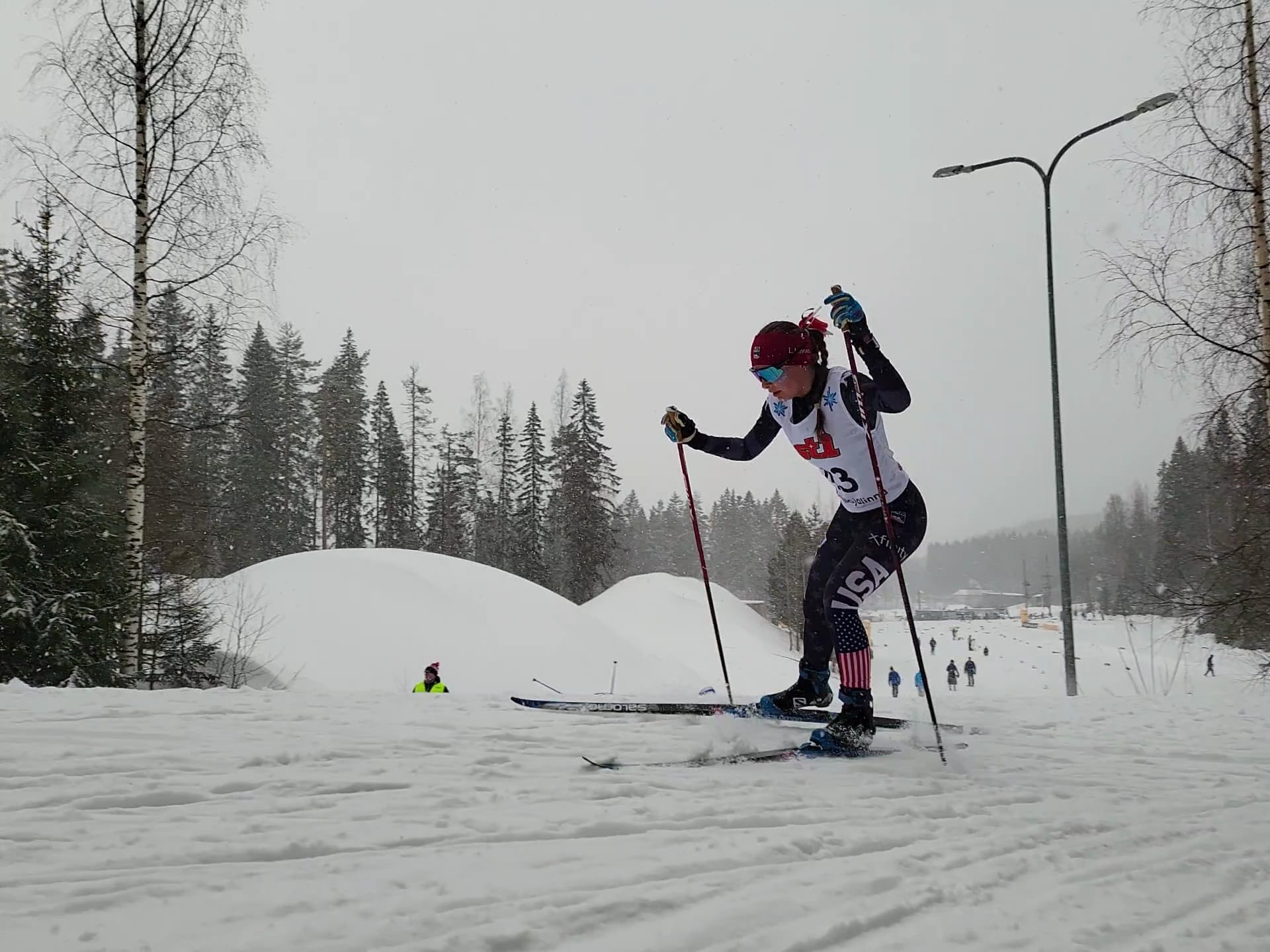
    Neve Gerard (USA)—seen here in action in the 2023 season—skied to an exceptional sixth place finish in the Women’s 7.5 k Classic. (Photo: Courtesy Image)
    Women’s 7.5 k Classic
    Gold Nelli-Lotta Karppelin
    Silver Agathe Margreither
    Bronze Annette Coupat

    Americans: Neve Gerard 6th, Rose Horning 13th, Sydney Drevlow 19th.

    Canadians: Aramintha Bradford 16th, Leanne Gartner 22nd.


    Mixed 5 k Relay
    Gold Germany
    Silver France
    Bronze Switzerland

    Teams from the United States and Canada finished fifth and sixth, respectively.


    Youth Olympics Cross Country Skiing Events COMPLETE RESULTS


  • Nordic Nations’ Cup 2023: USA’s Best U18 Skiers Shine in First International Race Experience

    Nordic Nations’ Cup 2023: USA’s Best U18 Skiers Shine in First International Race Experience

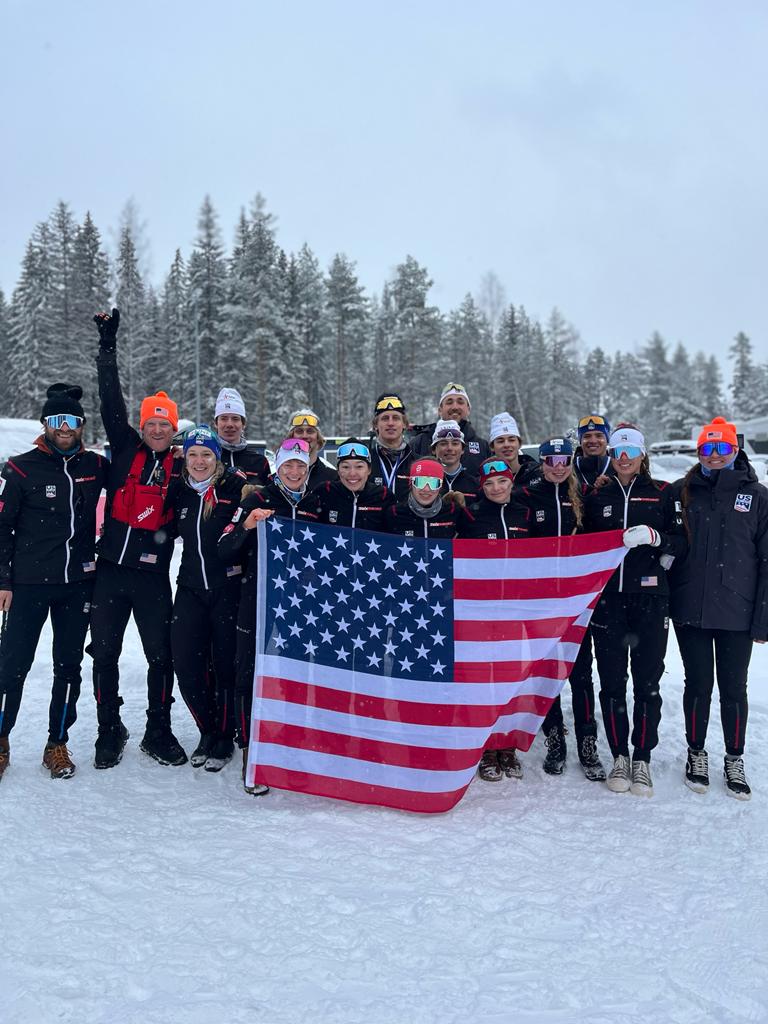
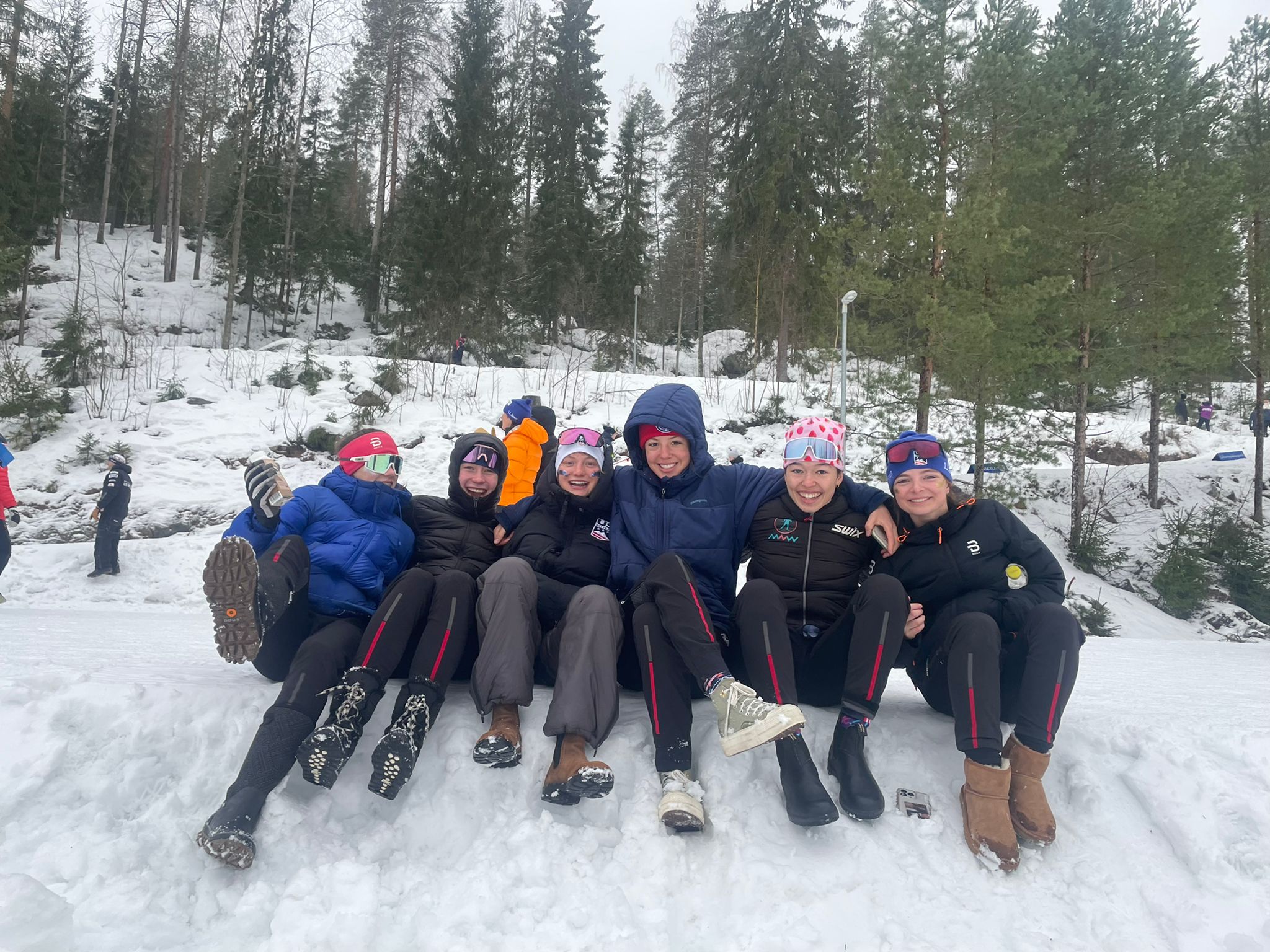
    The US team at Nordic Nations’ Cup in Jyvaskyla, Finland on Sunday. The U18 skiers delivered the best-ever American results in the annual trip sponsored by the US Ski Team and National Nordic Foundation (Photo: Courtesy Image/Jasmine Wiley)

    It was the end of the weekend, but the start of a whole new generation of Americans skiers on the World’s stage. Tabor Greenberg, the Green Mountain Valley School attendee and a U16 national champion last season pulled into the final kilometer of a 3 x 5km Team Relay, locked stride-for-stride with the familiar red suit of his Norwegian counterpart. The stadium was ahead, and for the first time clad in a US Ski Team suit, Greenberg would get a chance to sprint for an international win. The duo entered the stadium in Jyvaskyla, Finland—the self-proclaimed “Capital of Finnish Sport” and the host for this year’s Nordic Nations’ Cup. The stadium was set up in true World Cup style, one giant 180 degree turn into a final sprint. The pairing entered the turn together, but by the time they exited, only one skier was still on their skis. A Norwegian stumble left Greenberg to brace for the impact of the finish line, where he entered the arms of his teammate, Fin Bailey. Team USA, the youngest edition, had ended their first weekend of international racing with a team win. Thus the team relay—an event that has served as the literal incarnation of US skiing’s team-oriented development philosophy—served as a poignant highlight to a weekend with the purpose of fostering that philosophy in the next generation of American skiers.

    Nordic Nations’ Cup Trip
    Team USA takes in sprint heat action last Friday in Jyvaskyla, Finland during this year’s Nordic Nations’ Cup. (Photo: Courtesy Image/Jasmine Wiley)

    The US Ski Team and National Nordic Foundation have sent a delegation of U18 skiers to the Nordic Nations’ Cup, a joint competition between Norway, Sweden, Finland, and Estonia  (formerly the Scandinavian Cup),  as part of their developmental program for years. The trip serves as an introduction to both international racing, and the unique demands placed on American athletes to do so in a primarily European sport, to promising American U18 athletes. It also serves as an exchange of skiing traditions between the nordic ski communities of the Scandinavian Peninsula and the United States. The trip has previously served as an introduction to international racing for US Ski Team members such as Ben Ogden, Julia Kern, Katharine Ogden, and Hannah Halvorsen.

    The year’s Nordic Nations’ Trip took on a special significance too, in that it marked the resumption of the trip for the first time since the COVID pandemic began in 2020. The qualifying athletes on Team USA represented a steadfast group of racers who had come of age in the sport through the challenges of canceled races and day-to-day restrictions of the past few years. They had remained dedicated, they had progressed in the sport, and now they were getting their chance to enter the world’s stage together.

    Last week, they traveled to the heart of Finland’s lake region in Jyvaskyla, and got ready to race a full World Cup-style race schedule that began with a Classic Individual Sprint Friday, before moving to a 10k / 5k Individual Start Freestyle Saturday, and finishing with a 3x5k / 3×3.3k Team Relay Sunday. Previously, the best individual result at the Nordic Nations’ Cup for a US athlete came from Hannah Halvorsen, who finished third in the 5 k Skate in 2015. Likewise, Halvorsen combined with Kern and Ogden to podium in the Team Relay that year. In 2023, a new generation would look to build off past successes for the US while blazing their own trail through the Finnish Northwoods in a jam-packed weekend.

    The results? Well, as US Coach Colin Rodgers (Green Mountain Valley School) would summarize in comments after the weekend, “What we learned, from watching them race and from a little historic research, is that both the men and women as a whole performed very well.”

    Classic Individual Sprint
    Fin Bailey (USA) on course in Jyvaskyla. Bailey finished fourth place in Friday’s Classic Sprint action. (Photo: Courtesy Image/Jeff Wyatt)

    The weekend began with a fast and furious Classic sprint. The US team qualified six athletes across the boys and girls field: Finn (Finegan) Bailey (5th), Owen Young (13th), Grey (Benjamin) Barbier (16th), and Landon Wyatt (25th) for the Boys, and Neve Gerard (25th) and Sydney Drevlow (30th) for the Girls.

    In the Girls’ quarterfinals, both Gerard and Drevlow skied with poise in their first international heats. Drevlow got off the line with a good start in her heat, tucking into third place before losing contact with the lead group that formed later in the heat. Gerard followed similarly, but held on to the pairing of Marie Wollan Benum (NOR) and Ellinor Halonen (FIN) into the final stretch, finishing third in her heat.

    In the Boys’ quarterfinal, three of the four American qualifiers raced in the same quarterfinal, Bailey, Barbier, and Wyatt all toeing the line. Barbier led the early charge for the Americans, following leader Maans Ravald (SWE) in the first part of the course. Bailey eventually put a charge in to ski up to Barbier, with the pairing skiing tucking into the stadium together. Ravald would win the heat, and Bailey would outsprint his teammate to advance to the semifinals. Wyatt finished fifth in the heat. In his quarterfinal, Owen Young took an approach that echoed Ben Ogden in Val di Fiemme during this year’s Tour de Ski—pushing the pace from the start. Young’s efforts had the intended effect, with the field pushing an aggressive pace through the middle of the course. Young himself looked to be fading, but when the quarterfinal entered the stadium he had surged again to put himself in contact with the field. He ended up in fifth in the heat, closing in on fourth place as they crossed the line.

    Bailey, then, was the only American to advance to the semifinals, where he finished second in the heat and moved into the finals. When he got there, he matched up against the full array of the Nordic Nations—Norway, Sweden, Finland, and Estonia all present. He opted to hop behind the Norwegian, Eling Broberg, from the start. Broberg wore bib 1, and had taken the field out hard and within a half-kilometer, had gapped the rest of his competitors. Bailey stayed in the pack that came into the stadium together, following Anton Packalen (FIN) and Toni Andree Saarepuu (EST). In a tightly packed final turn, Bailey was forced to the outside of the track, where he would put an all-out double-pole to pull back to contend for third. He ran out of track for his efforts, and finished fourth place on the day. With it, Bailey notched a result that would serve both as an achievement in its own right, and an auspicious sign of things to come for the weekend.

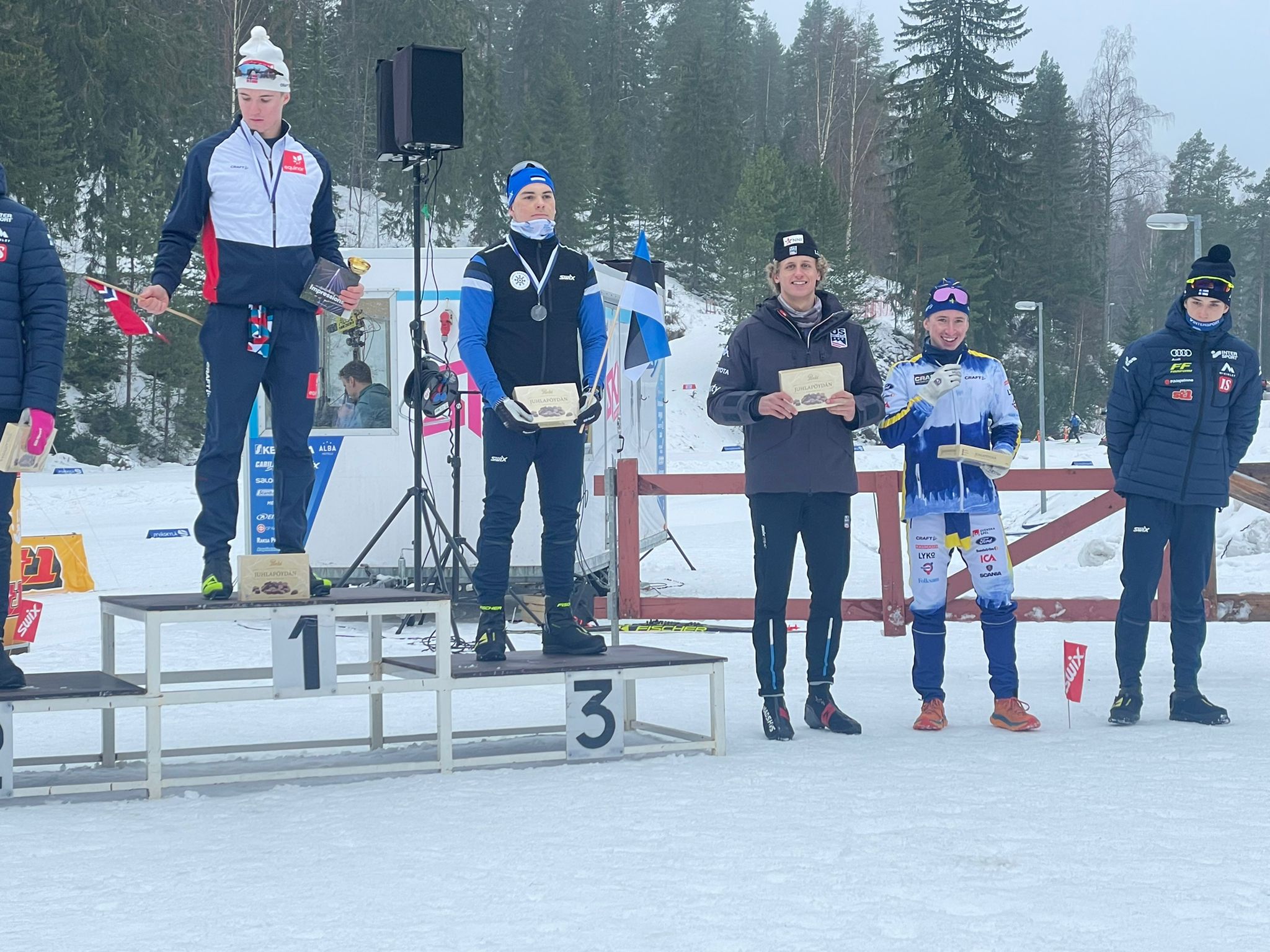
    Fin Bailey (USA) at the award’s ceremony for Friday’s individual classic sprint. Bailey finished fourth place to open the weekend. (Photo: Courtesy Image/Jasmine Wiley)
    10k/5k Individual Start Freestyle

    The next day, skiers switched gears to line up for a skate distance race. The Boys would complete a 10 k, while the Girls competed in a 5 k. The Girls field went out first, with Sydney Drevlow, Neve Gerard, Rose Horning, and Lena Poduska all starting in relatively close proximity to one another. Relative, that is, to where they would finish on the day.

    In a tightly packed results sheet, four American girls would finish within six seconds of each other to go 8th-11th place. The order: 8th) Sydney Drevlow, 9th) Neve Gerard, 10th) Rose Horning, and 11th) Lena Poduska. The quadruple was a novelty: skiers normally separated by a continent finishing within seconds of each other on a race course half a world away from home. Delaney Jackson and Ally Wheeler weren’t far behind, finishing 24th and 27th, respectively. In watching the race unfold, US coach Will Wicherski (Jackson Hole) said, “I was on course at 2k giving splits and it was obvious from how all the girls were skiing that they would be up at the top…we knew it was going to be an impressive team performance!”

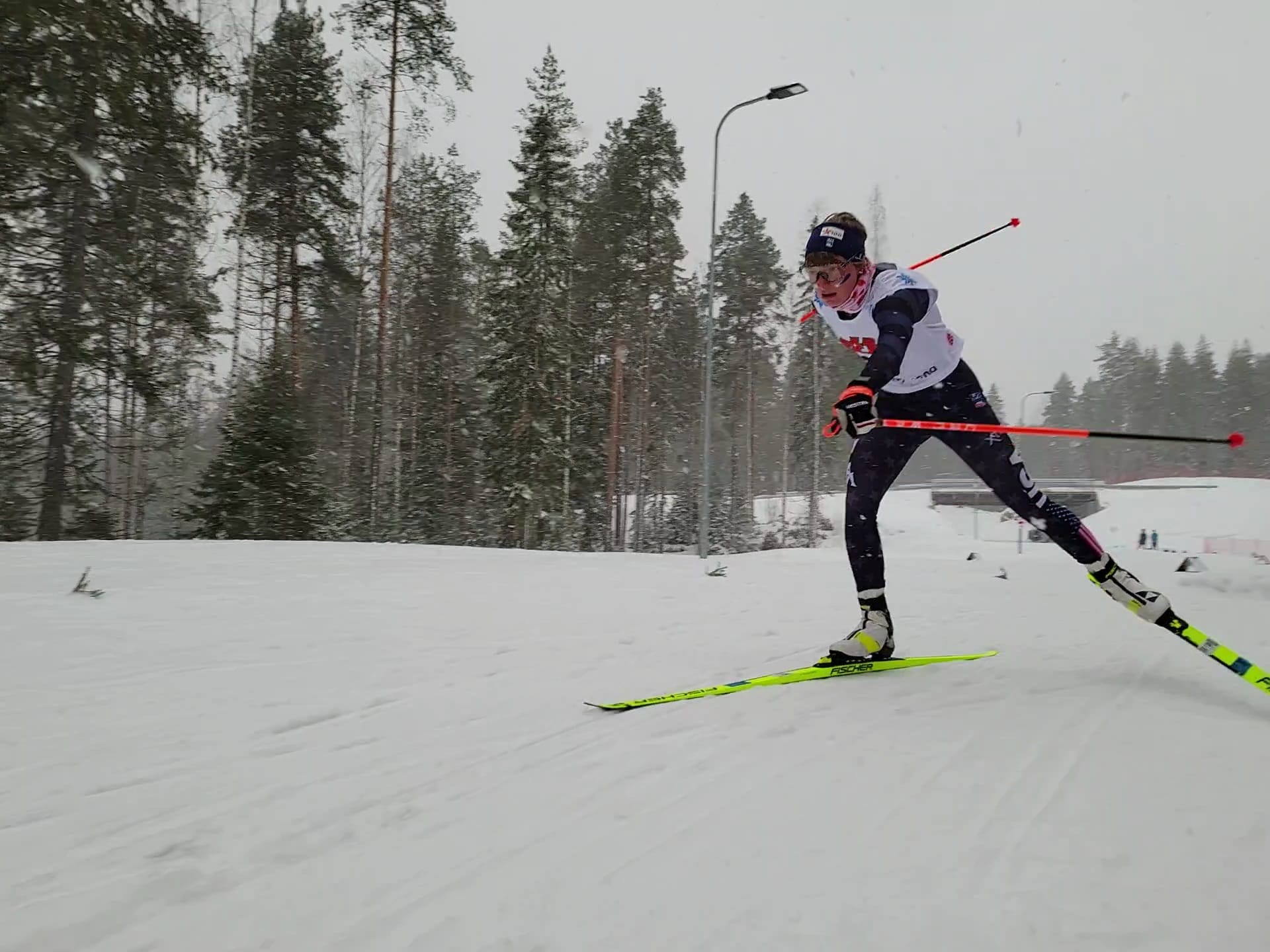
    Rose Horning (USA) during Saturday’s 5 k individual start freestyle race. Horning was part of a quartet of American girls who finished within six seconds of each other, finishing 10th place. (Photo: Courtesy Image/Jeff Wyatt)

    The Boys’ field followed the girls out onto the Jyvaskyla course. Wyatt was the first American on course from Team USA. Davis Isom and Owen Young followed, with Greenberg and Bailey finishing out the start list for the Americans.

    In another tightly packed race, the news from the Americans kept getting better and better. Wyatt finished with a time that would eventually net him 24th place on the day. Then Isom came across with a time just 20 seconds off the fastest time of the day so far in second. It would eventually turn out to be a top 10 performance. Young followed to slot in between Wyatt and Isom, finishing 20th place on the day.

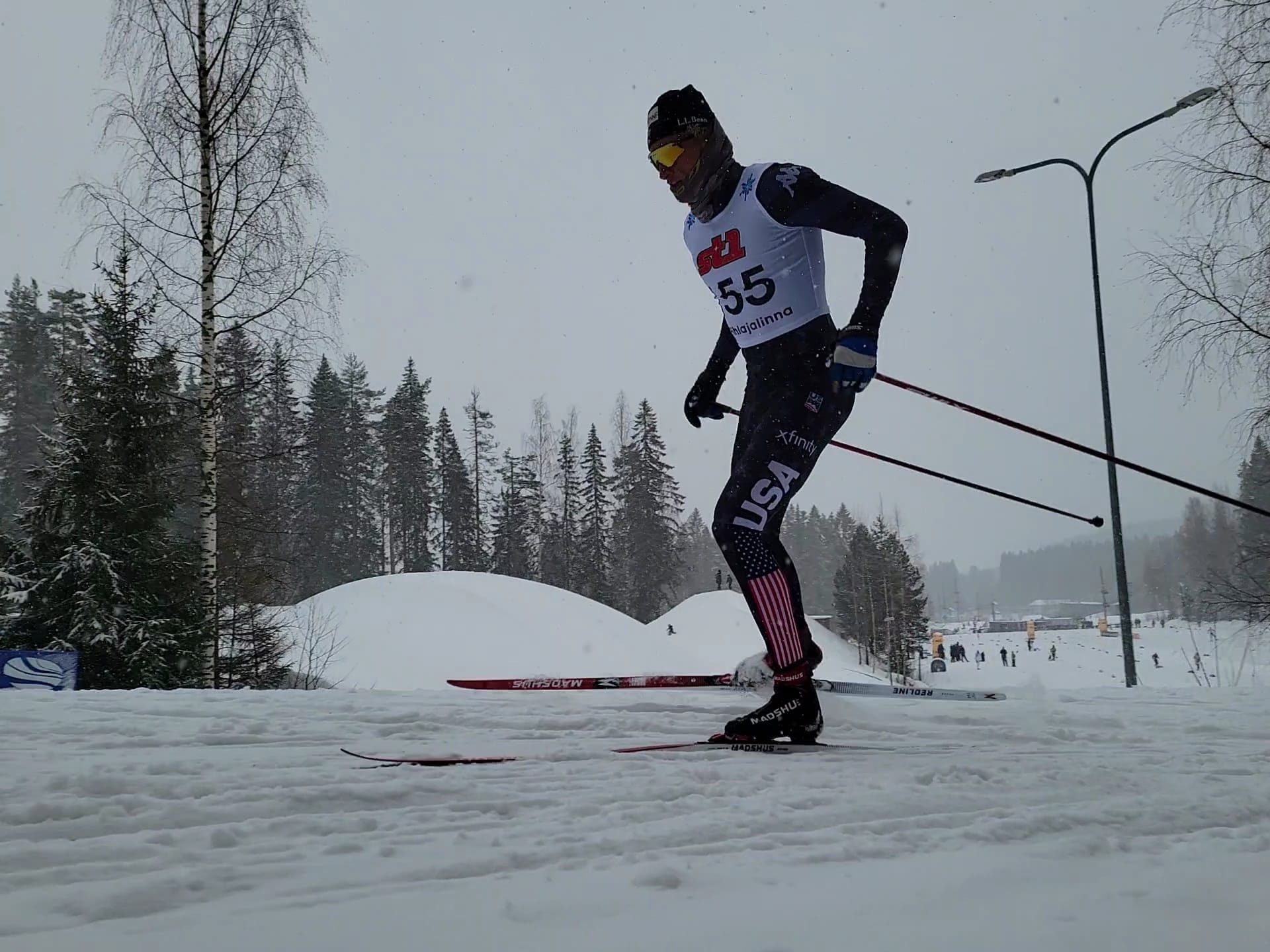
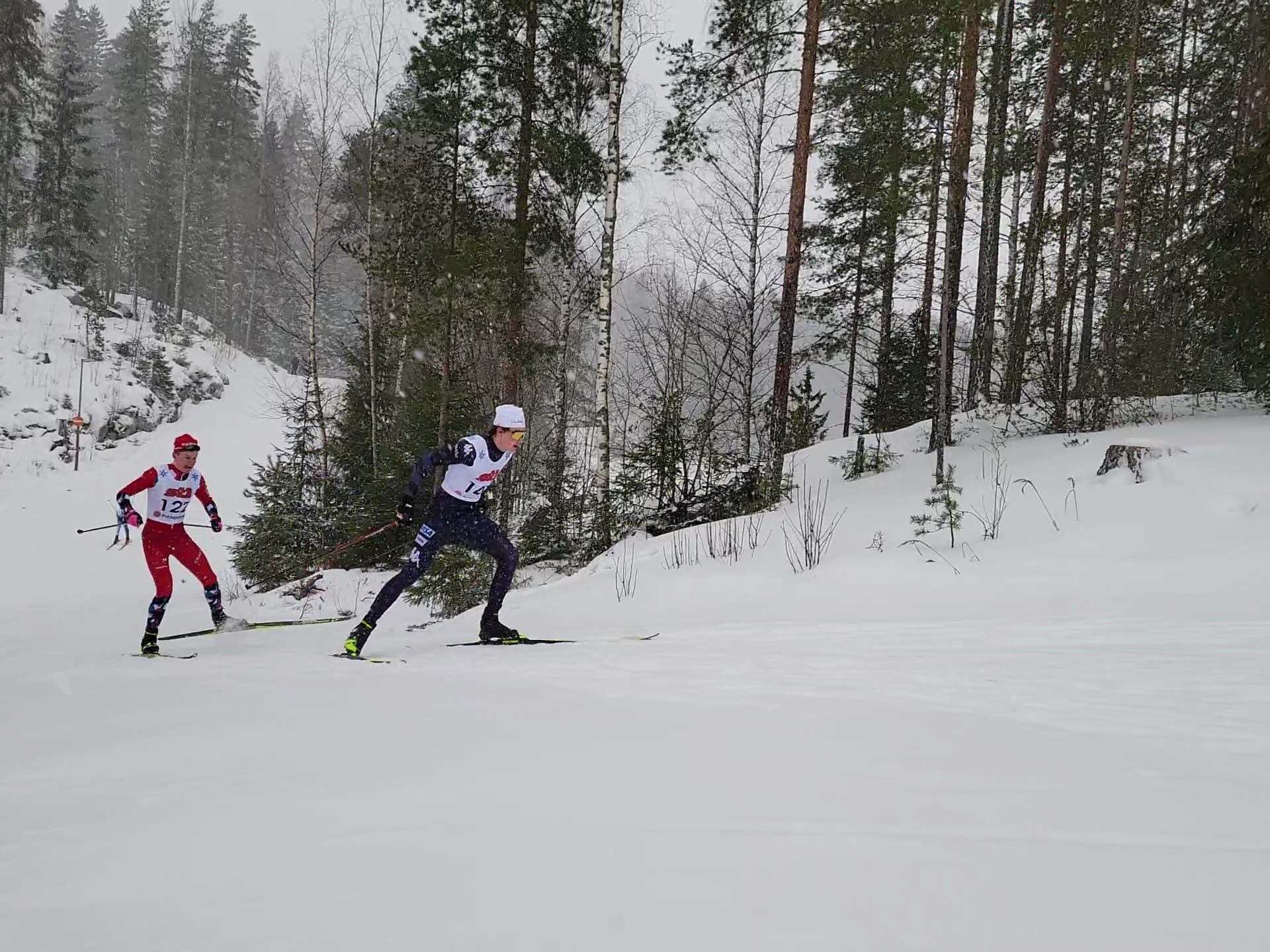
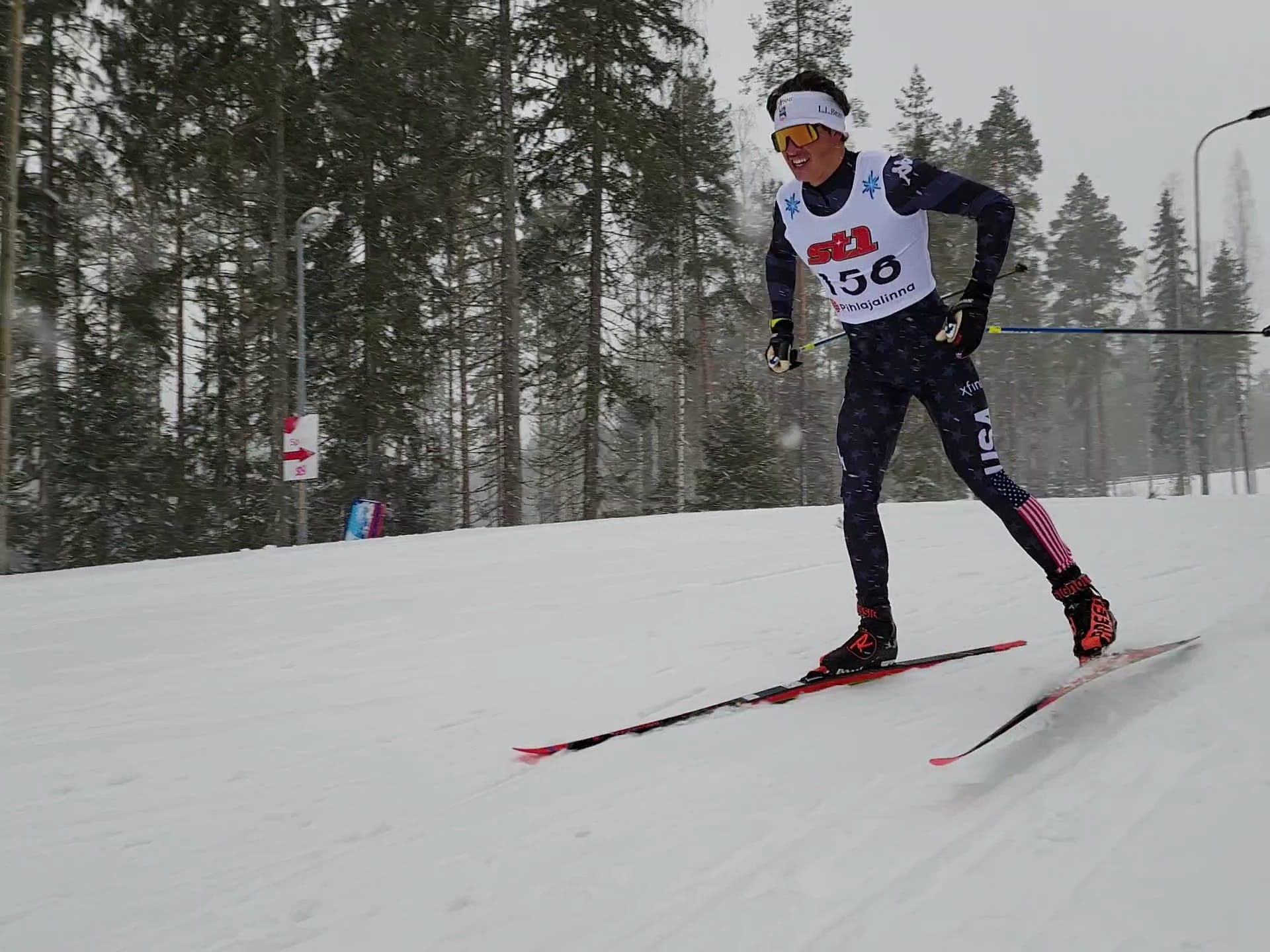
    Tabor Greenberg (USA) during Saturday’s 10 k individual start freestyle. Greenberg became the first American to ever win a race at the Nordic Nations’ Cup, highlighting a day with six top 10 finishes for the US skiers. (Photo: Courtesy Image/Jeff Wyatt)

    Behind those early finishers, Tabor Greenberg was knocking down each checkpoint in the fastest time of the day. He tucked and weaved out of the packs that had formed throughout the course, but was skiing a race, in a league, of his own. When he crossed the finish line, his 23:04.9 stood fastest on the day so far. As finishers continued to roll in, Greenberg’s time kept standing. Bailey came in fast, 33 seconds off his teammate, which would land him in sixth place. Barbier came in 53 seconds off Greenberg, and would get 16th on the day. Greenberg had won the race. In doing so, the young Vermonter became the first American athlete to win at the Nordic Nations’ Cup, and it was only day two.

    3x5k/3×3.3k Team Relay

    The culminating experience for this, and any, U18 Nordic Nations’ Trip came on Sunday. For the young members of Team USA, it was here: their first “relay day.” That moniker, “relay day,” has come to denote something special for US skiing. Careful planning, team spirit, stars and stripes, and, of course, glitter. It was time.

    Neve Gerard (USA), who closed a strong Team Relay for the USA 1 Girls team, skiing to fourth place Sunday. (Photo: Courtesy Image/Jeff Wyatt)

    The US sent two trios out for the Girls 3 x 3.3k. Lineup for Team 1: Sydney Drevlow skiing classic in the first leg, Rose Horning in the first of two freestyle legs in second, and Neve Gerard anchoring. Lineup for Team 2: Lena Poduska in the first leg, Ally Wheeler second leg, and Delaney Jackson anchoring.

    The first classic leg saw the girls field open up, with Norway, Sweden and Finland all taking turns leading the field. Drevlow remained in the front pack, with Poduska holding on to keep both US teams in contention for the race going into leg 2. The race had closed again in leg 2, with Rose Horning and Ally Wheeler skiing fourth and fifth place in a large field. The hand-off to the anchor legs was when the field started to stretch out. Norway won the day, with Sweden edging out Finland for second and third, respectively. 15 seconds off that chaos though, Neve Gerard had closed her all-around strong weekend with a strong leg, skiing USA Team 1 to a fourth place finish. Delaney Jackson gave USA 2 a final boost to finish in eighth place.

    The boys’ lineups would include two teams as well. Team 1 saw Bailey on the first leg, Barbier taking the handoff for the second leg, and Greenberg playing anchor. As US coach Will Wicherski explained, “Fin had a fantastic classic sprint sprint, Tabor had won the day before, and Grey had been skiing really well all week so we put him in the middle leg.” Team 2 included Wyatt for the first leg, Young for the second leg, and Isom in the anchor role.

    Ben Barbier (USA) in action last weekend. Barbier skied second leg en route to the USA 1 Boys team victory in the Nordic Nations’ Team Relay. (Photo: Courtesy Image/Jeff Wyatt)

    The race started out with a tight-knit pack, with stretches where Norway’s two teams looked to distinguish themselves from the pack. Bailey held though, keeping the pack together as he marked their moves and kept out of any potential tangles. His hand-off to Barbier saw the field in a pack. Through the second leg, a move from a Finnish team looked to break up the race permanently. Barbier was able to hold onto the chase group that remained behind, and keep the US in striking distance as the other teams ahead kept the pack tight. Barbier handed off to Greenberg with Team USA in sixth place. 

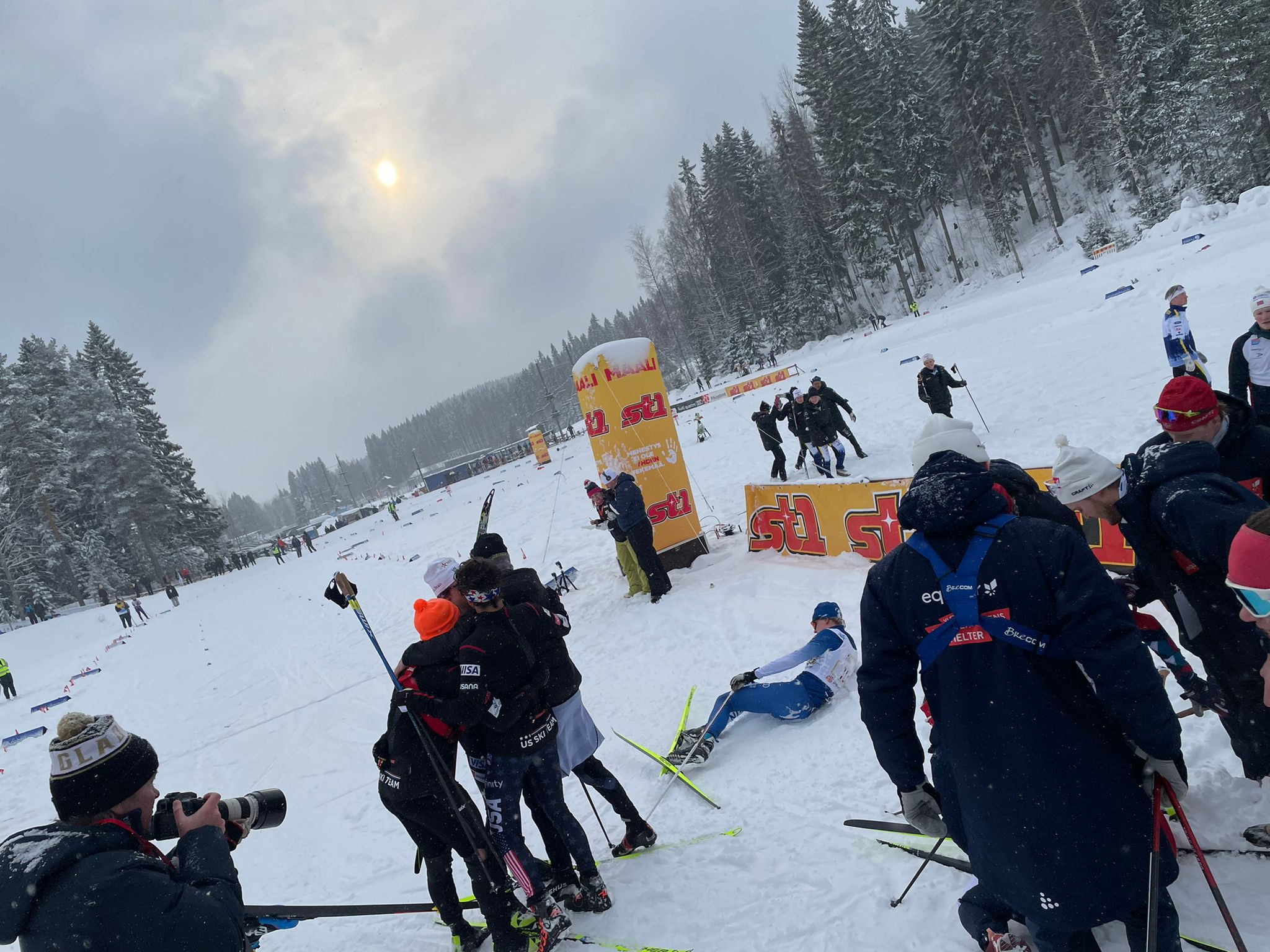
    Two kilometers into his leg, Greenberg was “30 seconds behind the race leader” said Will Wicherski, who was out on course. The Norwegian team in the pack had gone out ahead in the final lap. “We thought he would fight for a podium so [myself, and fellow coach Colin Rogers and Brandon Herhusky] skied back into the stadium. When the US coaches did make their way back to the stadium, a frantic scene greeted them. “We lost our minds when we saw Tabor come into the stadium with the Norwegian leader—he made 30 seconds on the leader in 3k!” Greenberg rounded the bend to close out an astounding leg. The Norwegian stumble beside him only let the US begin celebrations a split second early. “Seeing the USA beat Norway in a relay in Scandinavia was indescribable. It was a really great day for US skiing,” said coach Wicherski in the aftermath.

    USA II finished 12th place after a strong anchor leg from Isom. The celebration of the historic result at the front of the race didn’t obscure the whole extent of the US’ success on the day, with coach Colin Rodger saying post-race that “the [USA 2] girls and boys teams [both were] energized by the top results, and I think we will see this group stepping up to be even stronger next year. [There is] a great positive feedback loop going here now.”

    The USA 1 Boys team embraces as Tabor Greenberg crosses the line in first place. USA and Green Mountain Valley School coach Colin Rogers (orange hat) joined in on the jubilation alongside teammates Finn Bailey and Grey Barbier. (Photo: Courtesy Image/Jeff Wyatt)
    Conclusion

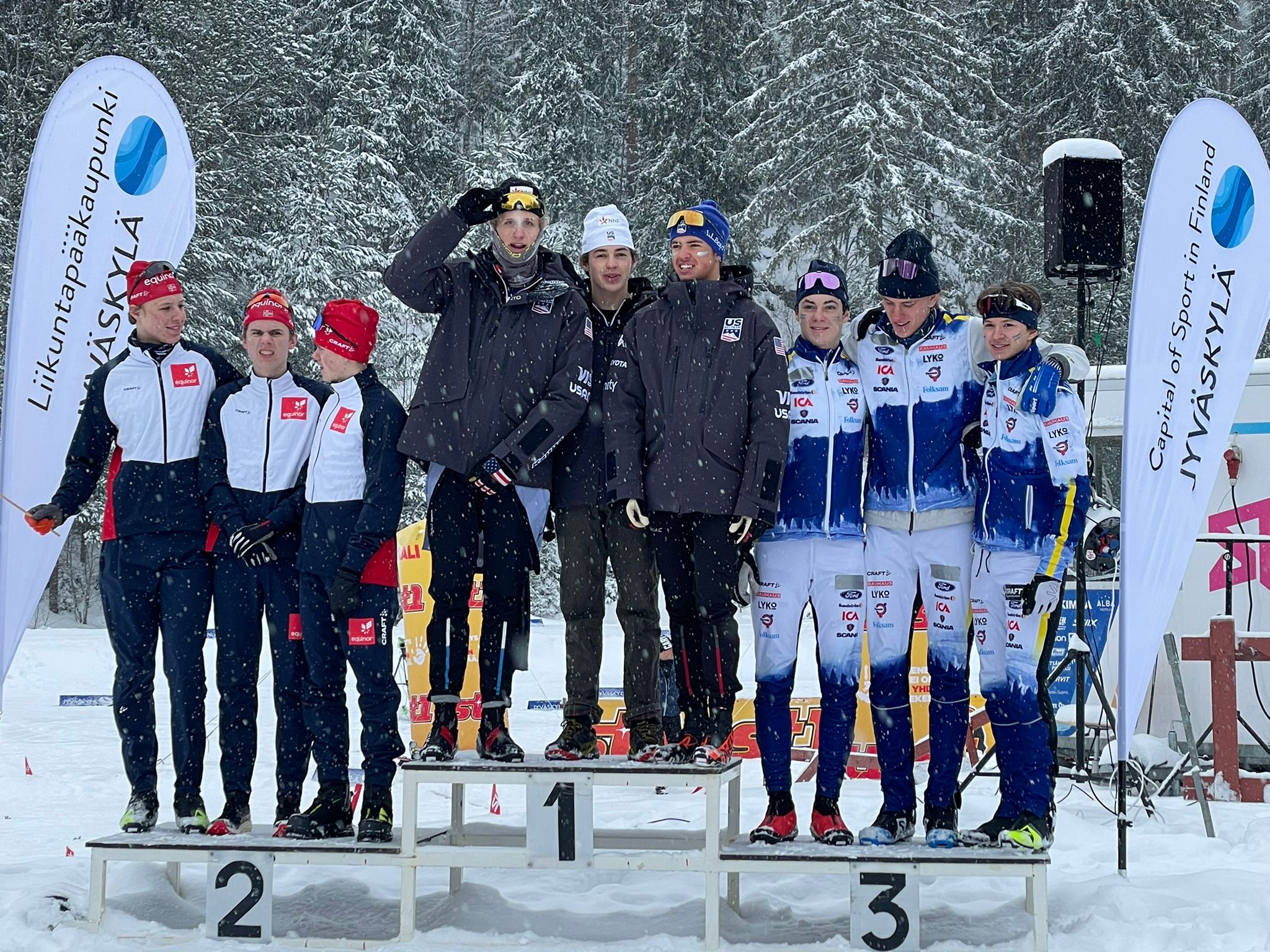
    At the end of races Sunday, the caravan that accompanied Team USA made their way across the stadium in Jyvaskyla. Bailey, Barbier, and Greenberg took a first step onto the top step of an international podium. The US crowd let out a rousing cheer as they were announced, and some brave fans even took to tracing the tune of the “Star Spangled Banner” as it played through the stadium loudspeakers. As a team, and as individual skiers gathered from across the breadth of the US ski community, the trio looked forward together, with dreams and goals to chase. 

    With a trip through the Scandinavian peninsula for some sightseeing to follow, the journey continued for the young skiers who represented Team USA at this year’s Nordic Nations’ Cup. After their return to the United States, many are slated to head to Junior Nationals in Fairbanks to chase their own individual goals. Last weekend in Finland, though, they were banded together in a reminder of the connection between all of US skiing, now, and in its very near future. Simply put by US coach Colin Rodgers, “These kids will be friends for life after this experience and will no doubt be motivated by the success of the group.”

    Full RESULTS

    Full PHOTOSET from the National Nordic Foundation

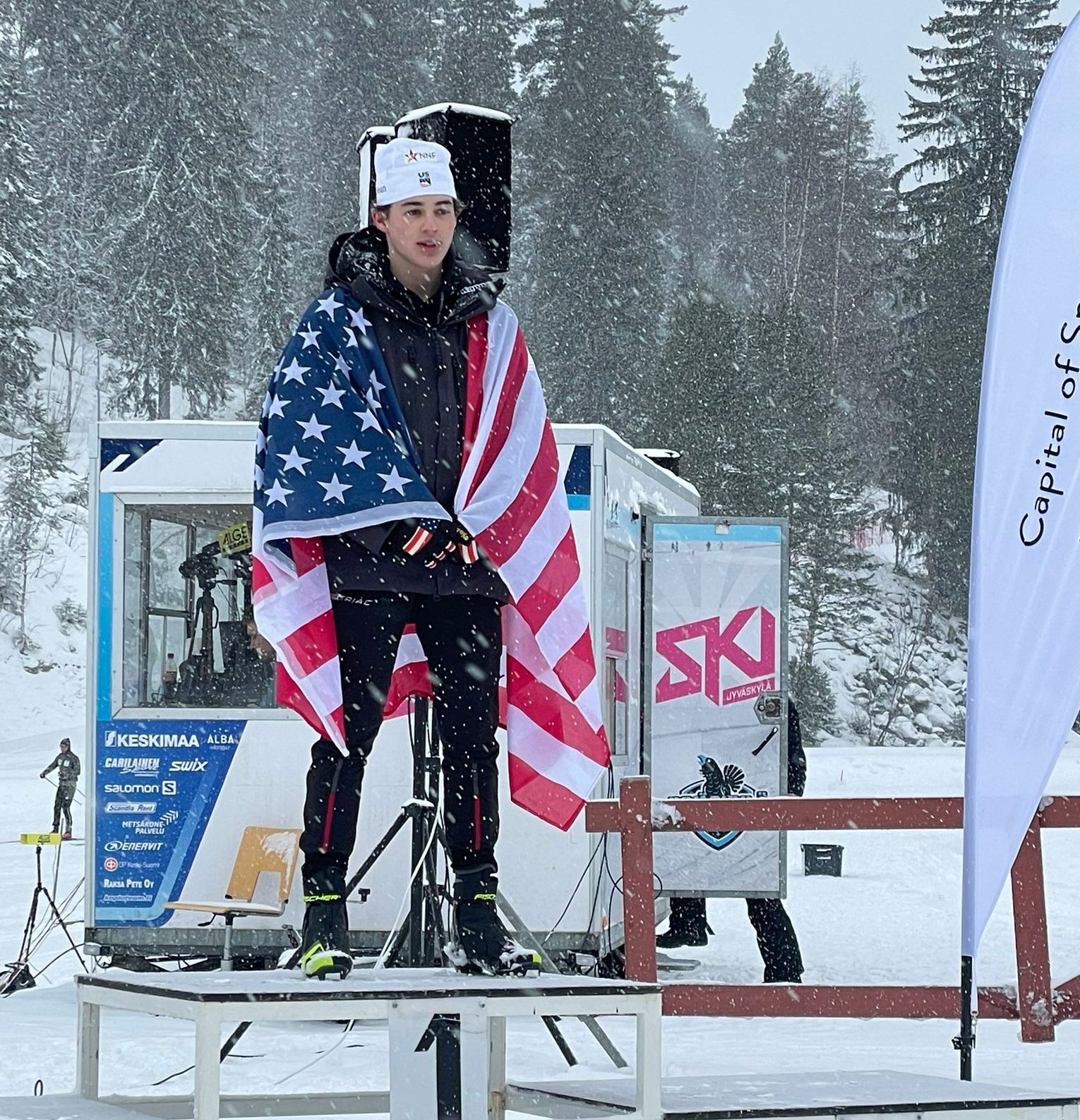
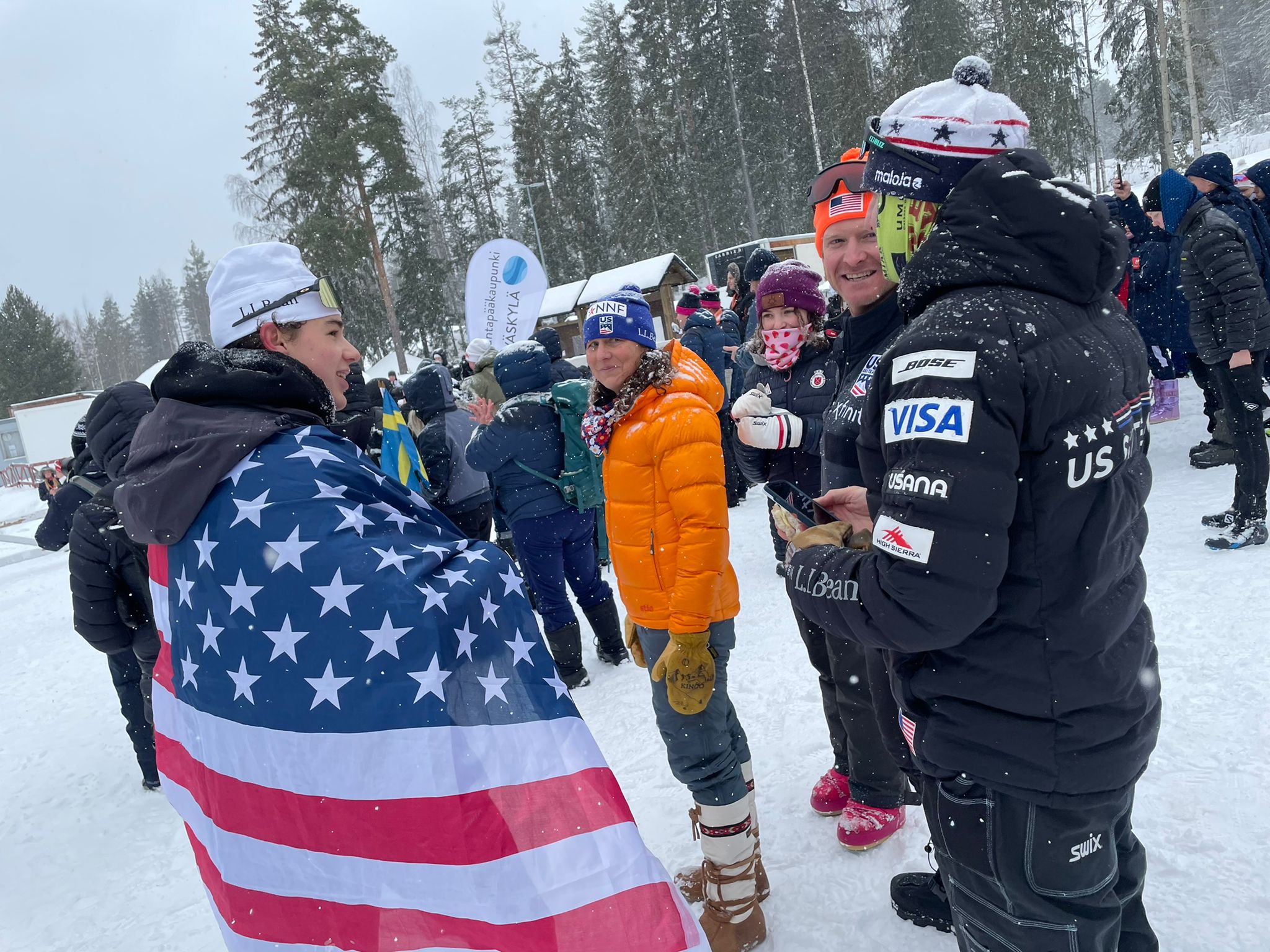
    Tabor Greenberg (USA), clad in the American flag, after his first of two wins in last weekend’s Nordic Nations’ Cup. (Photo: Courtesy Image/Jeff Wyatt)