Tag: Team Asker

  • Closing the Gap: Competition Instincts

    Closing the Gap: Competition Instincts

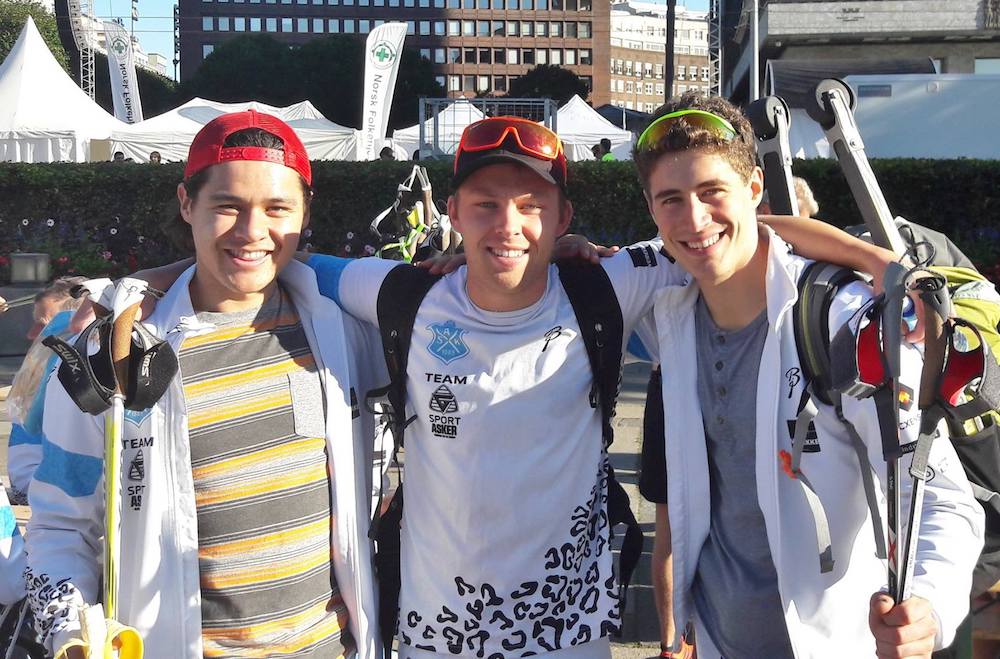
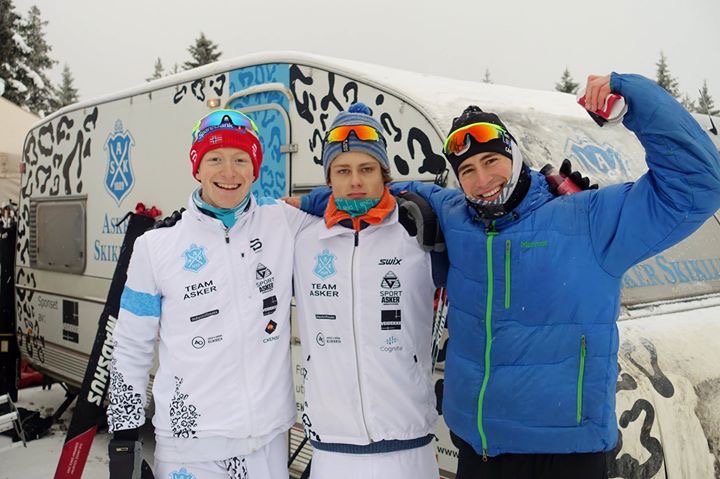
    Maks Zechel (r) with his Team Asker relay teammates at 2018 Norwegian nationals in January in Vang, Norway. (Photo: Anne Haarstad)

    Editor’s Note: The following is part of a series proposed by Maks Zechel, a 20-year-old Canadian cross-country skier embarking on his first season training abroad. In August, he made the big move to Norway, where he’ll be training and racing with Team Asker for the entire winter. Through these updates, Maks hopes to share his personal “observations, stories and lessons learned” to help close the gap between North American and Scandinavian nordic skiing. Previous posts: 1, 2, 3456, 8, and 9 .

    ***

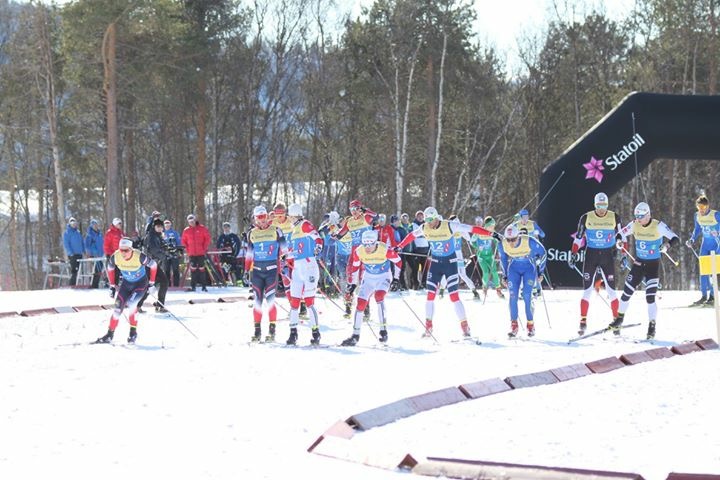
    The men’s field trying to hang onto the Northug brothers, Sundby, Musgrave, Krüger, Skar, Gløersen, and Golberg in the team sprint at 2018 Norwegian nationals earlier this month in Alta, Norway. (Photo: Bildbyran)

    “Starting in 30 seconds!”

    “What??” exclaim a handful of skiers with their one-piece racing suits still tied around their waists. The gathering of 15-20 skiers, chatting while changing out of their warm-ups, transforms into a sudden scramble as everyone rushes to strap on poles, kick snow out of boots, and slap bindings closed. A couple of stragglers stumble out of the knee-deep snow under the trees after a last-minute pee – once the one-piece is zipped up, you’re pretty trapped.

    I pull on my gloves as fast as I can, almost falling backwards into a snowbank, and send speedy thoughts to the satellites still trying to connect to my watch.

    antabuse

    “Ten seconds!” our coach warns.

    “Just give me a few extra seconds! My watch isn’t set up yet!” someone frantically yells back.

    No dice.

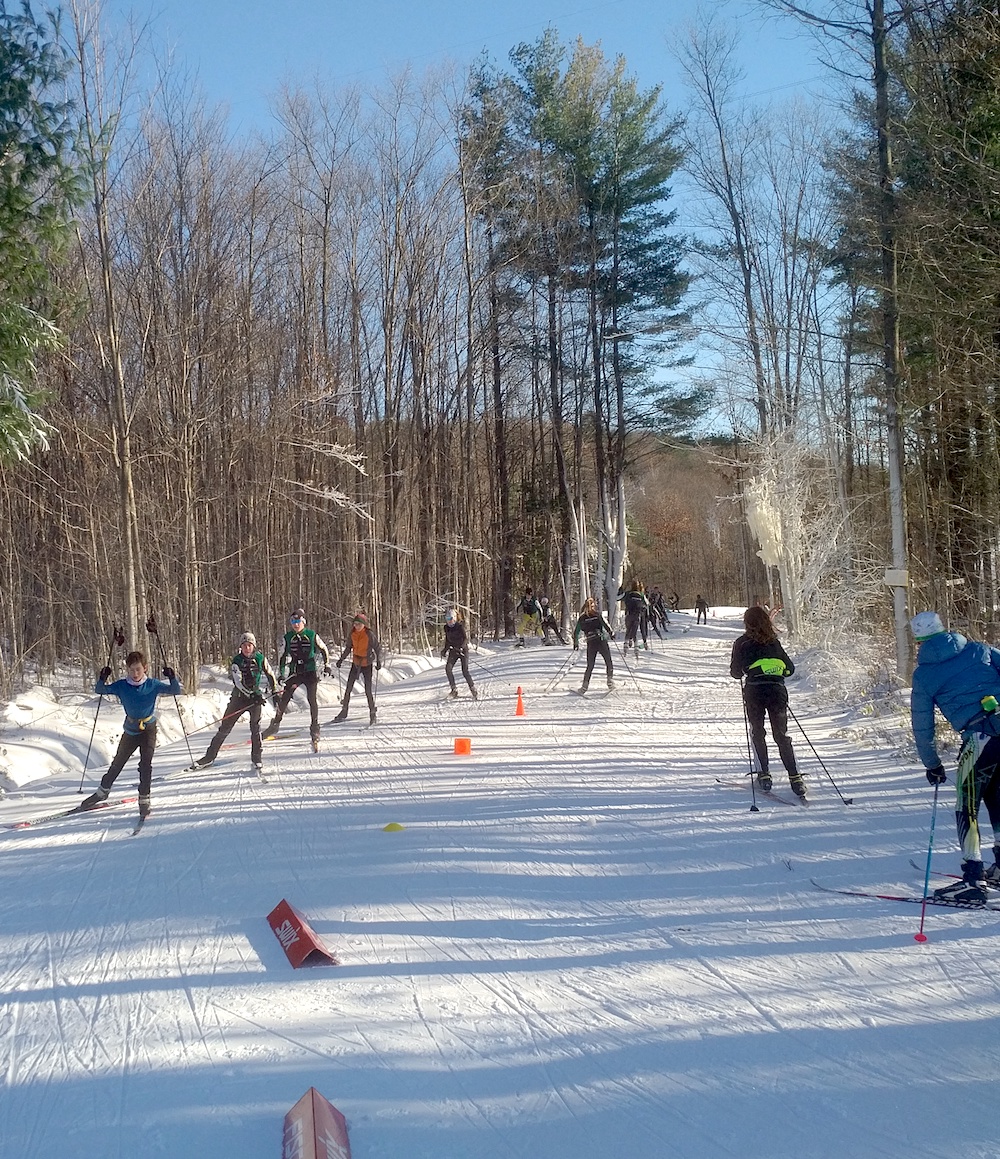
    The mix of girls and guys, aged 16-24, shuffle around awkwardly in their white and blue Team Asker racing suits, trying to self-seed before the interval workout starts. A three-time World Junior champion stands at the front. Juniors and seniors struggling to crack the top 100-200 at Norwegian Cups mix in with those who push some of the best World Cup skiers in races. Resumes are out the window; the only determination of who will lead each interval is who is skiing the fastest, and that might be anyone today.

    The trail is really only wide enough for one skate skier and perhaps a desperate pass in the classic tracks. If you want to get by during the intervals, it will have to be done tactically; maybe on the inside of a corner, after an extra push into a downhill, or swinging into an uphill. The depth of talent in the group is incredible, and from multiple team workouts per week, you learn to go fast no matter how crowded the course, how unsuitable the terrain, or how frustrating the conditions. The best ski the best, the conditions irrelevant, and “I struggle in soft snow” is no valid reason for skiing slowly.

    Tonight’s session: 5 x 12-minute anaerobic threshold intervals, sometimes known as Zone 3 or Level 3, with a 2-minute rest in between. The effort is to be controlled, with good progression from interval to interval. Tonight it is especially important to progress well throughout the workout, as most of us are just coming off of a hard race weekend, and we want to be conscious of how well our bodies are recovering.

    inhalers online

    En, to, tre…jaaaaaaa!”

    Everyone sprints down the first hill, some still rushing to get their poles on, as we leave the umbrella of light cast by a “10-second sprint marker” (known by some as a light post) and descend into the darkness below.

    The course is rolling, with many turns, short-aggressive and long-gradual hills, and extended stair-like climbs with plateaus and steep pitches. It’s a course of transitions that leaves you scrambling to catch up if you are caught sleeping. It is definitely not a FIS-homologated race course, but it is the primary training location for multiple world-class skiers.

    We wind our way through the woods, following a loop that criss-crosses and “figure eights” its way around a lit trail system. Sometimes we leave the light for awhile, and we ski blindly until our eyes adjust to the blues and blacks of moonlight. It has been a fantastic winter in Norway, and the snow is deliciously fresh.

    The skiers in front are symmetrical in all their movements, producing perfect, even kicks. Upper bodies remain stable and quiet, virtually unmoving. Every action is patient; gliding on a ski, relaxed, they take their time as they set up the positions required to attain the maximum amount of power from each movement.

    Snap.

    The power-phase only happens once the angles are in all the right places, falling with relaxed power onto quivering poles. It doesn’t matter that the snow is loose and shifting, or that pole tips sink well below the surface; in soft snow, every action must be all the more calculated in order to translate energy into movement up the trail.

    Today is one of the first times I’ve figured out how to apply these things to my own skiing technique. A couple of weeks ago, at a Norwegian Cup, I watched Chris Jespersen ski by in a 15-kilometer skate race, in powdery, sand-trap conditions. Jespersen is a fairly big skier, but he came 4th on the day, despite conditions that many would say favour light skiers who can ski at a high tempo. Watching Jespersen ski, I realised it didn’t matter. Whether they weigh 10 or 20 kilograms more than someone else, the best skiers ski the fastest on the day, conditions notwithstanding. Jespersen skied by me in a way that made it seem like he was moving far slower than those around him. He took his time gliding on each ski, setting up his positions, and then he would come down with the same big and powerful motions that I had thought were only possible on rock-solid snow. The only effect the conditions had on the way Jespersen skied, was that he had to focus even more on remaining stable and efficient. Yes, his poles sunk inches deep into the snow, but that did not mean that he could not ski with power, it just meant that he had to keep a much more deliberately strong core to maintain his technique without collapsing.

    I take my time tonight, too, pushing my body to hold the technique together, instead of just pushing my effort level. This way it is easier to gauge whether I am going faster or slower from interval to interval; if my technique starts to fall apart, I go slower.
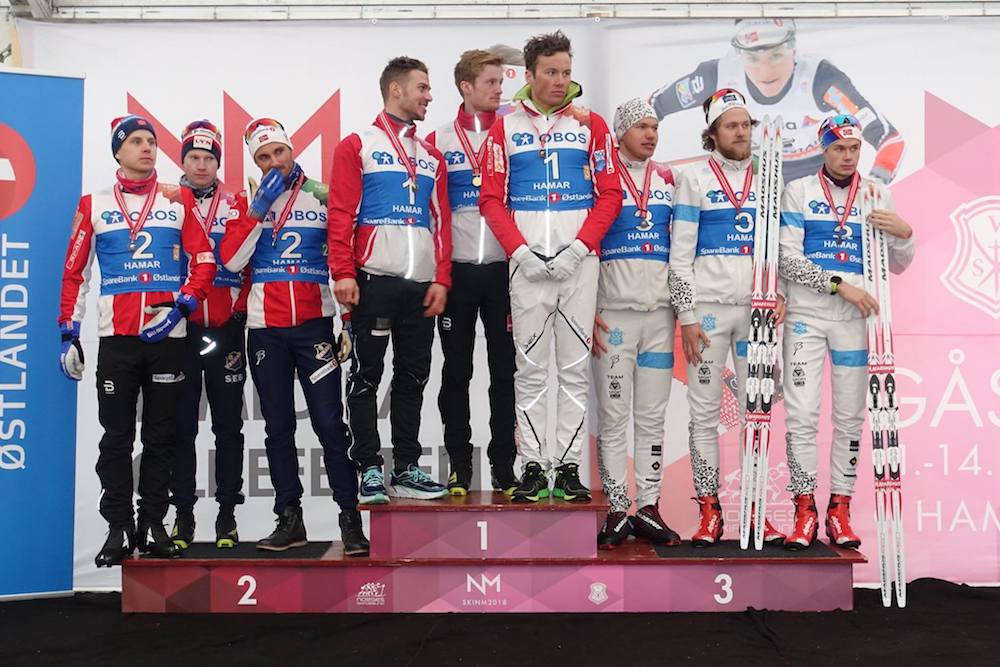
    Team Asker’s relay team (r) alongside skiers like Emil Iversen, Hans-Christer Holund, and Simen Hegstad Krüger on the relay podium at 2018 Norwegian nationals in Vang, Norway. (Photo: Anne Haarstad)

    It is important to have some workouts, as a cross country skier, where the goal is to push your body to its maximum, but it is also important to think about moving fast while we are going hard. Sometimes we focus too much on just pushing our pain threshold in intervals, even if we are slogging along in terrible shape. We gain confidence from doing this, because ski racing is f***ing hard.

    Sometimes we fear the pain of racing, but if we make ourselves feel it many times a week, it becomes familiar enough that racing seems less daunting. But this can lead us to only think about how an effort feels, and we forget to do the things that will actually make us go fast on snow.

    There will be a point in almost every race, when you will have to just gut it out and stumble the last kilometers or meters to the finish line, unable to keep from falling apart anymore. On some days, everyone falls apart, and the race is decided by who can limp the hardest. But we have to train ourselves in workouts to keep that point from occurring too soon. You have to be a fighter to push through the end of a race, but that grit has to be focused on going fast. Undirected effort doesn’t translate to speed on snow.

    When training our bodies to go fast in a race, we first have to think about why we are doing specific workouts. If a workout is about pushing Zone 5, going all out, getting your heart rate as high as possible, and trying to ski through limbs flooded with lactic acid, then we have to make sure we are in good enough shape to get our heart rate and lactate levels that high while skiing well. The same goes for max-strength workouts. It is usually pointless to push a maximum effort workout if you can’t produce a maximum effort, because you won’t increase your anaerobic or maximum strength capacity with a submaximal effort.

    If you’re doing a Zone 4 workout, an effort focused on increasing your capacity to ski while developing lactate levels that your body cannot fully clear, you should be in good enough shape to be able to ski in Zone 4 for the duration of the workout, without slowing down each interval or having to push a maximum effort to go faster. It is a Zone 4 interval, which means it is not a workout focused on producing a maximum effort. Your goal should be to remain in this zone for as long as possible, until you can’t maintain the pace anymore without getting your heart rate too high. This will let you do many workouts in this zone, perhaps even a few in a week. Races are spent mostly in Zone 4, so it is important that we are able to ski at this pace for as long as possible. Zone 4 workouts have some of the highest fitness dividends of any of the training that we do, however, as soon as the effort becomes uncontrolled, or Zone 5, the purpose of the workout is ruined. You will have tapped into your body’s limited supply of maximal efforts while also limiting the number of quality workouts you could have performed in Zone 4.

    You can try to push yourself as hard as possible in every workout, but your window to improve your ability to work in Zone 5 is very small. If you train too much in your maximum heart rate zone, after a quick improvement in fitness, you will start to decrease your capacity to work in that zone, which will prevent you from producing maximal efforts in races. I have had periods during the racing season where I have been so intent on increasing my ability to go “all-out”, to feel comfortable hurting, that I have burned myself out before the important races came about. It is underrated just how important mental energy is when racing. You can’t do everything before a race just to settle your nerves, so you have to remain sure of your abilities and that you will be able to ski to your best on race day. Your chances at success are much greater if your body is fit and your mind is sharp and eager to race.
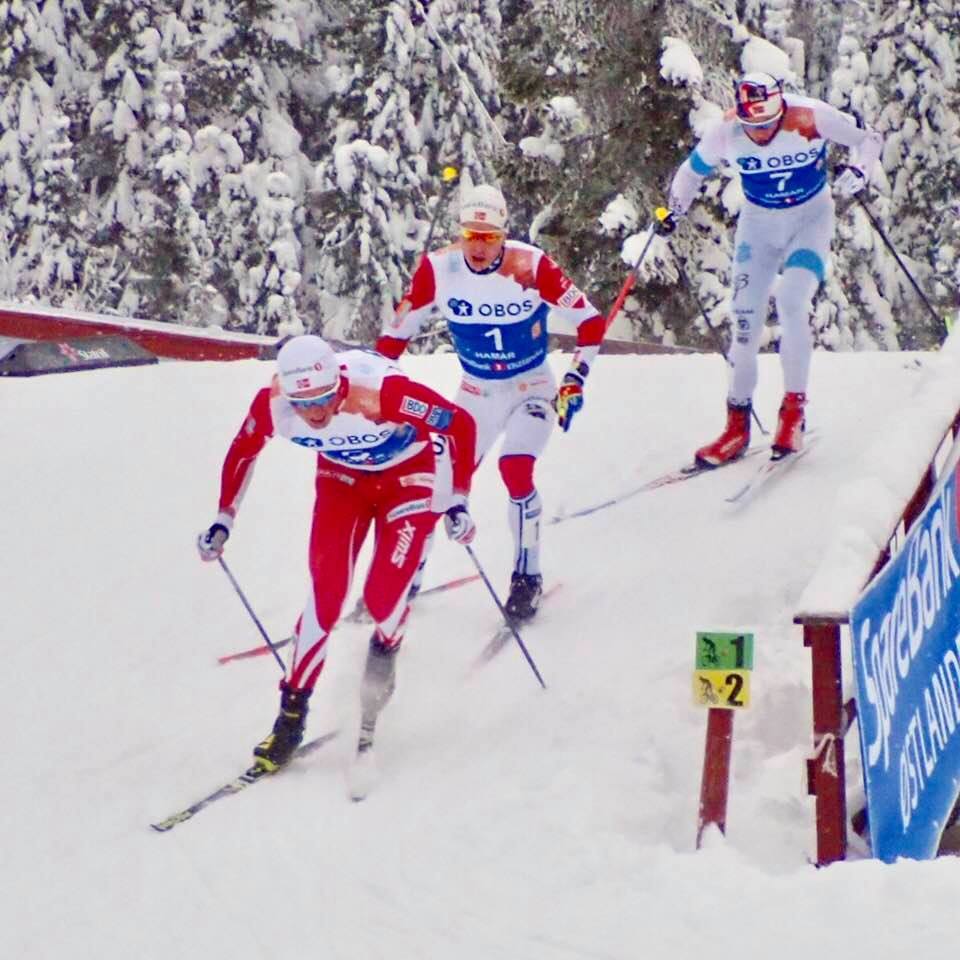
    Harald Østberg-Amundsen of Team Asker follows Norwegian World Cup skiers Emil Iversen and Simen Hegstad Krüger for 10 k in his relay leg at 2018 Norwegian nationals, only getting outsprinted in the last 25 meters. (Photo: Lars-Erik Nygaard)

    Tonight we are working in Zone 3, and that means skiing at a Zone 3 heart rate level along with Zone 3 lactate levels. If it feels like a maximum effort, even if my heart rate is in the right zone, then I am not in good enough shape to do intensity. If I am sick, then I am not in good enough shape to do intensity. Think about how you feel, and whether or not you could race close to your potential on that day; if you don’t think you could, then you shouldn’t be doing a hard interval workout, and maybe not even a controlled Zone 3 workout if you are especially tired.

    My teammate Emil and I are feeling good tonight, so we do all five intervals. Most others cut the workout after the fourth interval, World Junior champion Harald included.

    Nobody is making the decision for you, because only you know yourself best; you take responsibility for your decisions and take ownership of the consequences and benefits of your actions.

    Emil and I fly through the muffled silence of pillowed trees and the cold, still air. We approach a steep climb and accelerate into the bottom of it, taking advantage of the last bit of flat terrain to carry speed into the hill. Settling into a controlled pace in the middle of the climb, we are not going especially fast. We know our energy is better spent elsewhere, where gravity and the ability to ski more powerfully will yield higher returns of speed.

    We wire into our muscle memory the tricks that will set us up for success in the 50-kilometer individual start skate race at Nationals in a few weeks. Early on in a 50 k, pushing the pace on the flats and getting a high heart rate will hurt us less than pushing the pace on the hills, where our heart rates might remain lower, but lactate levels in our legs will become much higher. It is fairly easy to bring your heart rate back under control, but it is much more difficult to clear lactate out of your limbs when you are at race pace. Each time you go a little over the edge, you are using up some of the limited “matches” at your disposal, and once the matchbook is empty, there is no getting that energy back. So we use our matches where they will have the most impact on the stopwatch.

    Our legs stay controlled for most of the hill, skiing smoothly and exacting just enough muscular energy to keep a constant speed. But in an instant, it is time to switch gears. Right before the crest of the hill begins, our legs react, uncomfortably pushing through the muscular barrier that controlled offset has put into our legs, and sprinting over the top. It’s like trying to open up an overtightened jar of pickles – you can’t do it unless you grit your teeth and commit your mind to it. The switch from controlled Zone 3 to skiing into sprint power is difficult, but this is where the race is won. Over the crest, instead of relaxing into the downhill, we ski even more explosively while increasing our tempo. A brief moment to catch our breath while free-skating down the other side, and then back to working the following rolling terrain.

    Push into the hill. Control. Explode over the top.

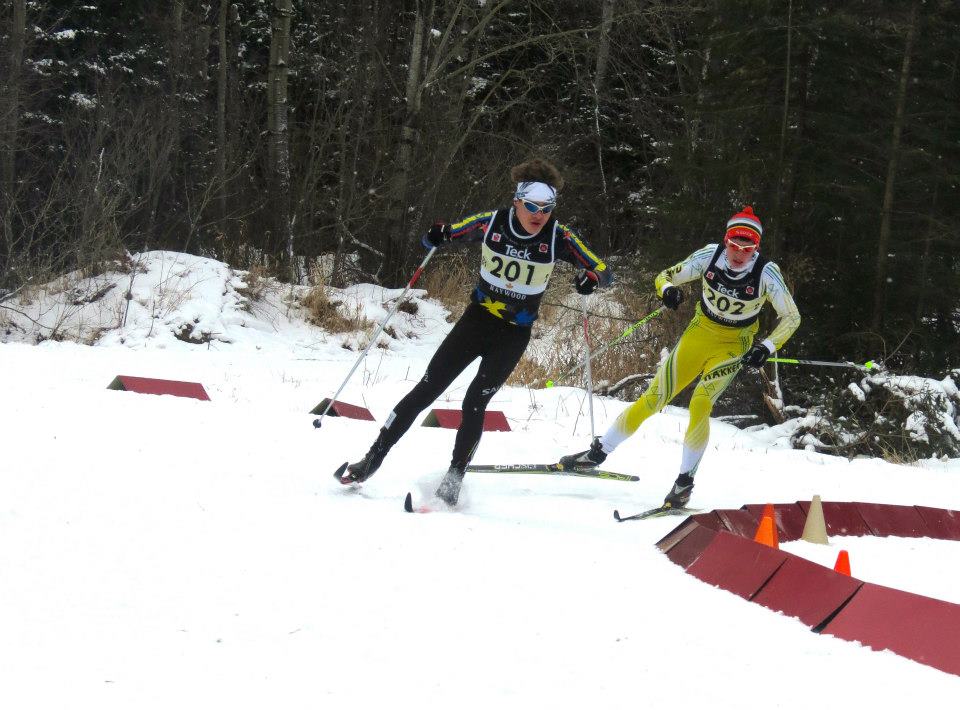
    Maks Zechel racing in the 15 k freestyle “jaktstart” at the Scandinavian Cup in Trondheim, Norway. (Photo: Erlend Wiik)

    Our attacks over the crests aren’t enough to drive our heart rates out of Zone 3, but they train our muscle memory to react like this instinctively. Efficient, plyometric power is trained in a way that can’t be replicated in the gym. We push our legs to work explosively in the most rewarding places, anaerobic for just a few pushes, so that we will not be left making snow angels on the tracks when the top skiers attack in the next Scandinavian Cup race. And attack they do. On each hill it is all we can do to keep contact as they dynamically “hop offset” over every steep hill for 15 k.

    Cross-country skiing in Norway is like a massive research project, in which hundreds of lab rats are all clamouring to participate. With the knowledge that there are hundreds of talented skiers between them and ever having a shot at racing in their country’s colours, the fear of risk-taking and experimentation is taken away. If the difference between you having a mediocre race and having your best race is coming 120th instead of 140th, what is there to lose in trying to keep up with the race winner for 100 meters? What is there to lose in starting a 30 k at your 10 k pace? Norwegian skiers blur the lines between disciplines as they try to unconventionally apply aspects of one to the other.

    It all comes down to confidence, but in skiing, confidence takes a more complicated form than we are used to. A confident skier is not necessarily the one who struts to the starting line nonchalantly. They are instead the skier who knows themselves as well as they possibly can. Achieving this requires a certain amount of independence and the courage to try new things, even at the risk of failure. Confidence isn’t just about pushing above your comfort level to stay with a faster skier during an interval, it is also about knowing when not to do intervals at all. The best Norwegian skiers train harder than anyone at the times when they are able to make the most improvements, and then they trust themselves to rest until they are able to come back to training even stronger than before.

    ***

    Norwegian Word of the Week

    Norwegian: jaktstart

    Literal translation: hunting start

    Meaning: pursuit start, a race where skiers start based off of the finishing times of the previous race; skiers attempt to chase down the skiers ahead of them and close whatever time gap they were beaten with the day before. First skier across the line wins the “pursuit”, culminating two days of racing. It is arguably the most thrilling distance race format as a racer.

    ***

    About Maks: Maks Zechel is a competitive cross-country skier who secretly wants to become a professional mile runner. He loves hiking and going on canoe trips with his family, as well as peanut butter cups in ice cream. Johan Olsson is his favourite skier and he hopes to race the Cortina-Toblach stage of the Tour de Ski one day. He enjoys writing about his experiences. Follow him on Instagram @makszechel.

  • Closing the Gap: Head Games

    Closing the Gap: Head Games

    Afternoon workouts at Natrudstilen Stadium in Sjusjøen, Norway. (Photo: Maks Zechel)

    Editor’s Note: The following is part of a series proposed by Maks Zechel, a 20-year-old Canadian cross-country skier embarking on his first season training abroad. In August, he made the big move to Norway, where he’ll be training and racing with Team Asker for the entire winter. Through these updates, Maks hopes to share his personal “observations, stories and lessons learned” to help close the gap between North American and Scandinavian nordic skiing. Previous posts: 1, 2, 3456and 8

    This particular post, entitled “Head Games”, is broken up into three parts.

    Part I: What Skiing Means to Us

    If you’re dedicated enough to be reading an online magazine about cross-country skiing, then you probably really love skiing.

    Don’t be too hard on yourself; I love skiing, too.

    The shooting range in Sjusjøen, Norway, as seen on Nov. 2. (Photo: Aleks Tangen)

    This post starts with a crisp day on skis just outside of Lillehammer on Nov. 2, 2017; a skier’s dream…

    I have never been to Wall Street, but I imagine it feels a lot like Natrudstilen Stadium in Sjusjøen*, Norway, at 9 a.m., two weeks before the season opener in Beitostølen. It’s barely below freezing, but the snow guns are blazing. They hum, interrupted by the BEEP BEEP BEEP of heavy machinery transporting snow, and a steady stream of skiers moving in every direction imaginable. You hear them, too: the squeak, WOOSH, squeak, WOOSH of tips biting into snow and carbon swinging through the air. It’s a bluebird day and the snow is rocket-fast. The sun barely skims above the highest peaks in the distance, but nobody looks up. Something much more important is on everyone’s mind today, and that is going fast on skis.

    My friends, Erland and Hedda, and I are doing intensity this morning. Dozens of others have the same plan, and Lillehammer Skiklubb (the biggest club in Norway) is running a time trial. It’s hard to tell what the biathletes are doing, as they always seem to be wearing bibs and going fast, but I jump out of their way regardless since they all carry rifles.

    The main loop is slightly under 2.5 kilometers long. No section of the track is ever empty and coaches give encouragement and feedback from all sides. There is a four-way intersection at one point on the course, which skiers approach at speed from both directions. Most people are too focused to acknowledge one another, except to tell someone to get out of their way or when they almost collide; it is chaos on a mission. Just the way that I imagine Wall Street, everyone is going about their business, and everyone thinks their business is most important. At times like these, it can be easy to lose sight of the fact that the reason we are all whizzing about this track today, is not just because of our individual goals, but because of our shared passion for this beautiful sport.

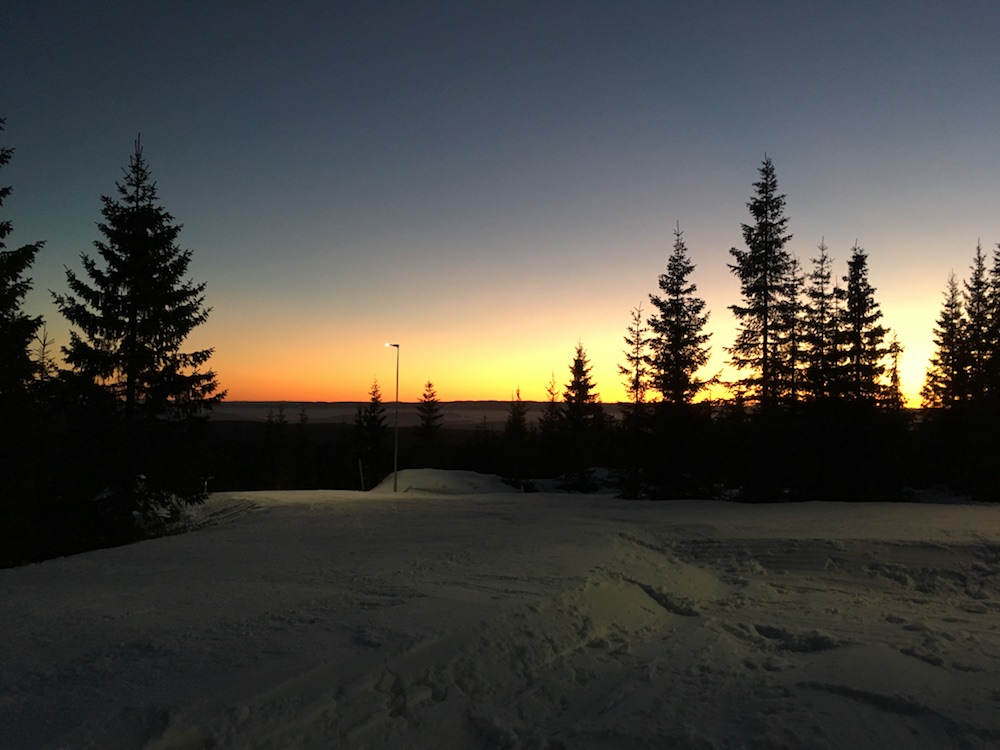
    The next evening I am back at Natrudstilen, enjoying the extra 3 k of trail that was prepared the night before. The sky is a big northern sky; the horizon is dotted with the silhouettes of stunted trees as the last strip of pink sunlight warms the remaining dark blues and purples fading into black above. The moon is full, huge, and slightly orange. The crisp air is more potent than coffee and makes skating around the glazed track effortless. When the sun is gone, the lights turn on. Dozens of skiers still churn out laps well past the 5 p.m. sunset, but it is much more peaceful than the morning bustle.

    As I ski by myself, a skier passes me in the classic tracks. He is wearing the Norwegian national team training clothes and skiing quite well, so I am quite sure he is not just a “Norges Skiforbund super-fan.” As he skis by, he pushes his strides over the short, punchy hill. He is not moving impressively fast, but by the way he moves I can tell that this is far below his competition speed. I should know who this is, but it is dark. As we crest the hill, I put my crazy-skiing-fan-sleuthing skills to work: I notice the telltale headphones, Leki poles, Fischer boots, and, the last piece of the puzzle, the initials JHK on his drinking belt. “OH S***, it’s Klæbo!”

    Norway’s Johannes Høsflot Klæbo in his debut race of the 2017/2018 season at the FIS season opener in Beitostølen, Norway, in November. (Photo: Maks Zechel)

    Over the top of the hill he relaxes his strides and glides slowly, drooping his head and letting his arms hang. He looks back and then walks over to the side of the trail to take a break. Johannes Høsflot Klæbo is the youngest person to ever win the World Cup Sprint Crystal Globe. He is also a human being who seems tired and feels the pressure of the oncoming ski season like everyone else. I may not be a World Cup medalist, but as with all skiers, I have the same good and bad days.

    The training season for a cross-country skier is long, never-ending really, with many skiers preparing for goals that are years away. How can we know that we will be ready to perform for a few minutes, or maybe an hour or more, in an event that is years away? Confidence takes many forms and comes and goes from moment to moment. The feeling that one gets in one hour of training can ruin the confidence that was built over weeks of perfectly executed workouts and races. It is an incredible skill to be able to have confidence in yourself throughout the ups and downs of training and day-to-day life and to have trust in a plan that must constantly be changed to respond to normal human imperfections.

    Why do we continue down such a path, where the tiniest bumps and setbacks in the road have such great control over our well-being? Some of the drive comes from the small daily joys: the sense of purpose, the goal setting, and the achievement of those goals. For myself, much of the joy comes from the places skiing takes me and the people that I meet, but the biggest drive comes from the special moments, those moments of complete contentment in life where everything else momentarily fades away. Sometimes they happen with others, but with the solitary nature of cross-country ski training, these moments often occur when you are on your own. It’s hard to see them coming, and for me they happen just a few times every year.

    Maybe it’s a ride to the race site with a car full of your friends, and that one song you all love comes on as you pass through the mountains. Maybe it’s 9 p.m., -15 ̊ degrees Celsius, and you’re sitting at a bus stop after a cold ski under the stars, about to make the journey home but the bus isn’t coming for another 15 minutes, when you remember to pull out your hot thermos of peppermint tea. Or maybe it’s an icy fast day on a Norwegian early season snow loop, and you just realized that one of the best skiers in the world feels just like you do.

    *Sjusjøen: pronounced “shoe-shun” (“shoe”, as in the footwear). For a more accurate pronunciation guide, please seek out a Norwegian.

    Norwegian Word of the Week:

    Norwegian: koselig

    Danish: hygge

    Translation: a feeling of coziness and/or contentment. E.g. drinking a mug of hot chocolate under a blanket next to the fire during a snowstorm; laughing with your friends; a fast day on skis when you feel like you could ski forever.

    ***

    Part II: What Skiing Does to Us

    Anyone lucky enough to have grown up cross-country skiing should know what a privilege it is to have access to such opportunities. Few people have the means to take up ski racing, whether it is for financial, geographical, or other reasons. Nonetheless, skiing manages to bring together people from many different backgrounds, uniting us with the shared love of being outside. Skiing, more than most sports, is something that sticks with you for life. I know many people that only started ski racing in university, including my parents, and for them skiing has remained one of the most important parts of their lives ever since. In North America, skiing is a sport that lacks the same intimidating atmosphere that sports like hockey and football sometimes have. It is easy to join a ski program no matter your level of experience. Skiing brings together a special community of people, but at the elite level it also begins to alienate us.

    Skiers are tough. We love how tough our sport is and we begin to encourage characteristics of toughness (at least to make sure children survive the elements of winter) in ski lessons at an early age. Skiers with the best “pain faces” are put on a pedestal by athletes and coaches because of how visible their effort is. Probably the most offensive thing you could tell a skier is that their rollerskis or skis are really fast; it is hard for skiers to admit that their performance has been aided by anything other than their own strength and technical abilities. In short, it is hard for skiers to admit they need help.

    The toughness of our sport makes us hesitate to acknowledge feelings that might make us seem weak, especially when we fail to reach our goals. Instead of asking for help, skiers compare themselves with those faster than them, and in that way blame their failures on the unchangeable characteristics that make them unique:

    “I need to look like a World Cup skier to be fast.”

    “I need to train more.”

    “I need to train harder.”

    “I need to lose 10 pounds.”

    “Am I just a slow skier who needs to work harder, or do I have a mental health issue?”

    The early days: little Maks Zechel (l) and his sister Anni skiing in Switzerland. (Photo: David Zechel)

    Many skiers get hooked on training at a young age. I started training at least four times a week when I was 11 years old; I did it because it was fun and I thought that it was the coolest thing to arrive at school and be able to tell my friends that “I ran 3 KILOMETERS this morning!” I haven’t changed much… But back then I could feel content, motivated and energized for the entire day just from that.

    Unfortunately, increased fitness and getting older make it harder to achieve the same satisfaction from running a few kilometers. I didn’t realize it at the time, but at 11 I was already becoming addicted to training. It took me until I was almost 20 years old to realize that I could no longer satisfy my mental health, to achieve contentment in life, through training alone. Some days it is enough, but other days I can train for 5 hours and finish the day feeling overweight and unfit. Sometimes it is hard to tell whether I feel unwell because I have eaten too much, or because I have barely eaten all day.

    It sounds ridiculous to call something that is “good for you” a mentally destructive addiction, but that in itself is part of the problem. Many athletes fail to gain control over their mental health issues because they don’t realize that they are sick. When somebody breaks their femur, they are told to stop training, recover and rest until they are healthy enough to train productively. It is harder to tell that someone is unwell when they are simply doing the things that are encouraged by our sport: excessive training, pushing through fatigue, gritting your teeth and working hard no matter how you feel. When one athlete races slower than another, the first thought of the slower athlete is that they have to train more and become fitter. Much of this culture comes from skiing itself, but we get a lot of it from team sports, where the motto is always, “if you’re not training hard, you may as well not be training at all.” But in endurance sports, where everybody is affected by training differently, sometimes training too much, or at the wrong time, or in the wrong way, can have the same effect on your fitness as you would have from training too little. Are you training to gain fitness or are you training to satisfy your confidence?

    When you train once or twice a day, it is easy to pretend that these issues do not exist, but when this schedule disappears, everything comes back to haunt you. I experience the most difficulty with my mental health at two, essentially opposite, times: when I race, and during the “off-month” of April.

    Racing is the amalgamation of months of rigorous training, obsessive motivation, and gasping with relief after hard efforts. Skiers take a leap of faith off of the start line, relying on all the confidence and focus they can muster to ski fast around a loop of snow in the woods. The race is exciting; it is also the origin of all your nerves, dreams and fears. In this place of vulnerability, even the smallest thoughts of doubt come to surface. It doesn’t matter if you gritted your teeth and pretended it didn’t exist for the entire year, your mental health is of utmost importance during a race, and it is essential to learn how to regulate it in order to achieve success.

    [Racing] is exciting; it is also the origin of all your nerves, dreams and fears.

    April is the period of rest and recovery craved by almost everyone at the end of a 3-5 month racing season. But for many it simply turns into the month of caving in to everything that we deprived ourselves of for 11 months: parties, staying up late, cramming in studying before exams, and being human for a change. Doing “normal” things? It’s the hardest month of the year, and every year I crawl my way to May 1st with desperation, more exhausted than at the start of April.

    This past April, I decided to face my mental health issues that I had always known existed, but never understood or recognized for what they were. What an awkward thing to talk about, mental health, but it shouldn’t be. Our minds have to be taken care of with the same attention that we give our bodies through training and recovery. It doesn’t matter what it is that makes you begin to acknowledge your difficulties, but it has to be done; it is grossly underestimated just how permanent unchecked mental health issues can be. I didn’t acknowledge my health issues because I cared about my health, but I did care that it was starting to affect the way I raced, and although not the most important reason, it was enough to motivate me to work on my mental “fitness.”

    Since moving to Norway, the issues I have had with my mental health have faded into the background. I’m too motivated and excited about where I am to think about such things. But it is still there, and the novelty of where I am will eventually wear off, and then I will have to be ready to deal with these things. It is important not to allow happy distractions to get in the way of how you deal with your mental health, because for every incredible high, there is a devastating low. It is better to take the time when you are feeling good to plan coping strategies, so that when you are hurting you can maintain your overall health in a way that is better for your success as a skier, and a person.

    Although ski racing at the highest level can seem like the only important thing in life, that level of racing can’t be maintained forever. For people who may have been training hard with a single goal in their head since they were small children, throwing them into the regular world can be an overwhelming shock. The skiing community needs to put an emphasis on not only producing elite skiers who will ski fast, but also on developing people who will be successful and healthy beyond their years in competitive sport.

    Norwegian Phrase of the Week:

    Norwegian: Uten mat og drikke, duger helten ikke.

    Translation: Without food or drink, even heroes aren’t good enough.

    ***

    Part III: Skiing Healthy

    We don’t get to choose the bodies and minds we are born with or the ailments that afflict us. But we can choose to learn about ourselves, talk to one another, and explore how we can be successful because of, not just despite, our unique personalities. Instead of struggling to get by in spite of what hinders us, thinking about our mental health should be seen as an opportunity to become better at the things in which we want to succeed.

    An evening run with teammates Erland and Eirik during Team Asker’s 10-day training camp in Mar de Pulpi, Spain, in October. (Photo: Erland Kvisle)

    People don’t understand how to talk about mental illness. If it’s in your head, then it’s not real, so get over it, right? When someone is functioning at a seemingly normal level on the surface, it is hard for people to recognize all mental illnesses as real issues. Excuses for unexpectedly poor races can be found everywhere, from eating the wrong thing for breakfast to having difficulty clearing lactate. For every race there’s a new excuse, something simple that can be easily improved on for the next race, but the subject of mental illness is never brought up. Everyone wants to hear the story behind your broken leg, but people have been taught to tip-toe around the subject of mental health. “Be considerate. Make sure you don’t offend him. She’s sick in the head. He’s really delicate. You can’t talk to her like a normal person.”

    Not everyone wants to talk about their mental health issues, but many need to. When I decided to try to improve my mental health, I was afraid to talk to others. I wanted to talk to someone, but I didn’t want to burden those that I care about with the things that I thought about myself. I am generally a happy person and I did not want people to see me as anything less than that. What I really wanted was to talk to someone straight up: “Hi, I’m Maks. I’m a happy person who loves life, but for some reason I often hate myself.” I didn’t want to see the scared or awkward looks in the eyes of those I care about as they struggled to look for something positive to say. I didn’t want pity. I didn’t want someone to tell me something positive. I needed to talk logically about what I feel, why I feel it, and what I can do to control those things.

    I desperately needed a third-party person, someone with whom I didn’t share a connection and with whom I could talk openly without affecting their happiness. This led me to seek the help of a psychologist.

    Seeing a psychologist isn’t like getting a flu shot. Part of my brain thinks in a certain way, and that can’t be fixed. I can’t hide or run away or fight it. What I can do is acknowledge what I am feeling and what it makes me want to do. Seeing a psychologist was a relieving experience for me. Instead of feeling an unclear jumble of emotions constantly tearing me apart, I could talk with someone about exactly what I felt and how I could be happy and productive in the face of how I felt.

    Spain sunsets (Photo: Maks Zechel)

    Now when I feel an incessant urge to train in a way that is unhealthy, I recognize that urge, I think about what it is that I want to do, and then I give that thought space to dissolve in my head. For my issues, it has been more productive to allow these destructive thoughts to enter my head and to think about them, rather than clenching my teeth, pretending that they don’t exist and training myself into the ground. I train out of need, but I also train because I love it. The key to finding a balance between my dependence on training and doing it because I love it has been to think about the driving force behind why I train each day. Categorizing the motivations behind my actions has helped me to do what is best for my health and progression as a skier. This allows me to think positively and rationally with focus. Allowing space in my head to understand why I feel the way I do has been more effective for me than beating these thoughts away with artificial positivity.

    If you’re reading this, then you probably really love skiing. It’s OK, I love skiing too, and I am happy to admit that it is one of the most important things in my life. But if I want skiing to continue to be a big part of my life, I can’t let it harm the rest of the person that exists beyond skier-Maks. Ski-racing careers can last a long time. I am lucky enough to have grown up around athletes and coaches who have proven that you can train and race for life, but in order to do that you have to take care of yourself. We skiers are competitive creatures, but acknowledging a mental health issue doesn’t have to mean giving up in defeat. The greatest skiers are those that understand their bodies, training, equipment, and minds the best. Each of our bodies is different, but that doesn’t prevent anyone from achieving their goals, and the same goes with our mental health.

    Norwegian Phrase of the Week:

    Norwegian: Gi drømmer en sjanse.

    English: Give dreams a chance.

    ***

    About Maks: Maks Zechel is a competitive cross-country skier who secretly wants to become a professional mile runner. He loves hiking and going on canoe trips with his family, as well as peanut butter cups in ice cream. Johan Olsson is his favourite skier and he hopes to race the Cortina-Toblach stage of the Tour de Ski one day. He enjoys writing about his experiences. Follow him on Instagram @makszechel.
  • Closing the Gap: Racing in the Dark

    Closing the Gap: Racing in the Dark

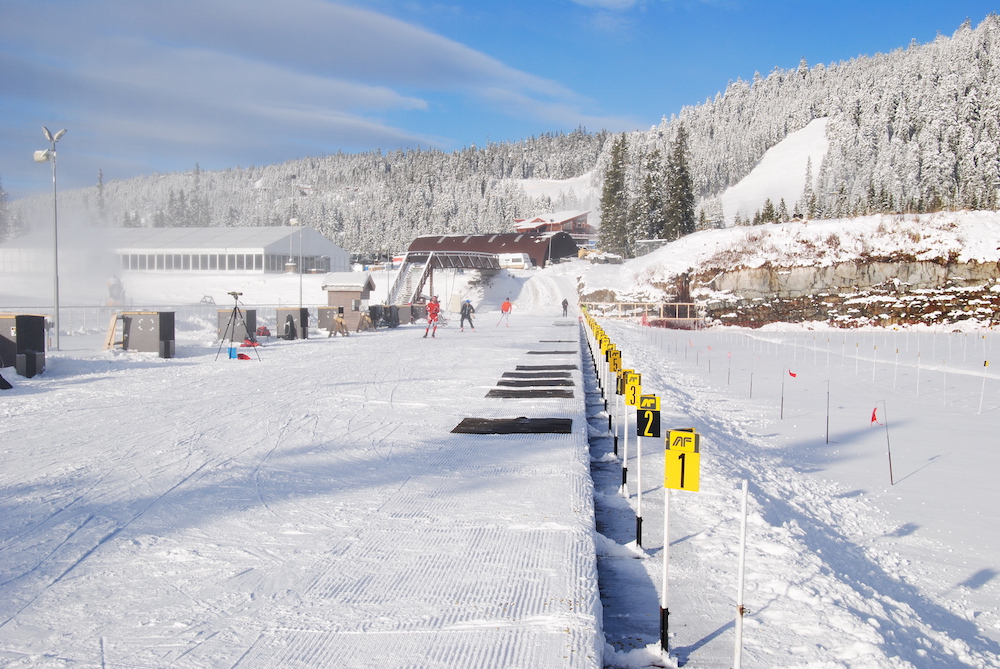
    Soft Scandinavian Cup track as seen last weekend at the Dec. 15-17 Scando Cup in Vuokatti, Finland, “the same conditions for Sundby all the way down to me,” author Maks Zechel writes.

    Editor’s Note: The following is part of a series proposed by Maks Zechel, a 20-year-old Canadian cross-country skier embarking on his first season training abroad. In August, he made the big move to Norway, where he’ll be training and racing with Team Asker for the entire winter. Through these updates, Maks hopes to share his personal “observations, stories and lessons learned” to help close the gap between North American and Scandinavian nordic skiing. Previous posts: #1, #2, #3#4#5#6, and #7.

    ***

    Part 1: Vuokatti

    It’s Thursday morning and I’m in the Oslo airport, waiting to catch a flight to my second Scandinavian Cup race weekend of the winter. I haven’t seen the sun yet and, from what I’ve heard, my destination of Vuokatti, Finland, doesn’t look much like a Caribbean postcard either.

    Two flights and an hour on a bus later, we arrive in Vuokatti. There is something about 3 p.m. total darkness that I suspect I will never grow accustomed to; it’s the impending sense of urgency that I need to go to bed soon. Or maybe that’s just coming from the fact that I still have to check into the hotel, ski the race loop, test skis, eat dinner, and then write my final exam for my online university course. By the time I start my exam, and reboot my laptop after it crashes, it’s 8 p.m. … classic.

    We wake up before the first race in the dark. The sun allegedly rises into the cloudy, snowy sky at 9:59 a.m. and sets at 2:07 p.m. Despite our noon start time, the trails remain cast in dusky shadows, and the entire race loop, and ski jumps overlooking the stadium, remain lit 24/7. For the record, I spent approximately 72 hours in Finland, and I can’t confirm that the sun actually touches that part of the world; for all I witnessed they might just brighten the streetlights every morning.

    We jog a few hundred meters from the hotel to the race site, located by the Vuokatti Olympic training center. All the racers are staying in two large hotels within walking distance of the race site, which creates an exciting “athlete village” atmosphere. Vuokatti is an epic training and racing location with 7.5 k+ of lit world class ski trails, early season snow making, a ski tunnel, and ski jumping and biathlon venues. Nordic countries don’t seem to like hosting races anywhere with a big chalet, or with any chalet at all, so we set up base in the snow. Luckily for us, the infamous Finnish cold weather decided to leave for the weekend. The stadium is tiny, hardly wide enough for a finishing straight, miniscule individual start corral, and a lap lane. It’s easy to feel lost amongst the tall, uniform pines of a snowy Finnish forest, but the Vuokatti course has something for everyone. Each day, 200-250 participants are on the senior men’s start line, with Norway, Sweden and Finland well represented; the top 100 doesn’t get more competitive than this anywhere in the world.

    As I’m warming up for my 15 k skate race, I have never recognized so many people that I’ve never seen before in real life: “Oh hey random Norwegian skier, congrats on beating your 3000-meter track PB this summer! By the way, say hi to your dog for me.” The potential for a seriously awkward conversation with one of my idols is too high, so I try my best to avoid in-awe-eye-contact…

    Norway’s Johannes Høsflot Klæbo in his debut race of his record-setting 2017/2018 season. In eight World Cup starts so far, he’s won seven of them. Here he’s shown racing at Norway’s FIS season opener in Beitostølen last month. (Photo: Maks Zechel)

    At the end of the first day our teammate, Erland, placed 19th, with Ryan and I at 107th and 132nd. After racing in the Beitostølen Scandinavian Cup and Gålå Norwegian Cup race weekends in November, it remains hard to swallow our pride as we race better than we ever have, but still fall far short of our lofty goals.

    However, the lessons that we learn in every international race that we compete in are crucial to our development. During the 15 k classic race in Vuokatti, my teammate, Eirik, was caught by the eventual top-two skiers of the day, Ristomatti Hakola (Finland) and Martin Nyenget (Norway). Eirik is a strong double poler, so he was impressively able to stay with them until the set of steep hills in the last 2 k of the course, where they put around 50 seconds into Eirik per lap. What he was unable to match, was the insane power that Hakola and Nyenget were kicking their skis with, giving them big glides on even the steepest pitches where I had to run out of the tracks

    Racing with athletes who are able to ski at this level creates an unforgiving racing environment if you are unable to push yourself to new heights. After a poor race, the performance is reflected by a drop of dozens of spots down the results sheet. Scandinavians respect the high level of these races and they know that there are hundreds of skiers working just as hard as them, ready to take their place if they don’t race fast. Poor races by even the best cause them to disappear down the results (Petter Northug finished 17th in a Norwegian Cup race this winter). Although Erland is an incredible skier who is capable of top-20 Scandinavian Cup results, he had placings of 89th and 47th in Beitostølen. This is nothing to be ashamed of, but the results clearly represented that he was not in top form at the time. Good performances are rewarded in the opposite manner. That is the nature of these races, where 1 minute gained or lost can mean 30-50 spots. In the Vuokatti sprint, the top-30 men in qualifying were all within 5.87 seconds, with the top 58 within 10.55 seconds, and top 84 within 15.15 seconds. The reality is harsh, but it feels productive to know exactly where I stand against the best.

    World Cup racing is ridiculously hard, and that is a lesson that should be experienced as early as possible. When I was 132nd in the 15 k skate race in Vuokatti, a good race for me, it felt like a smaller reward than I was used to for my efforts. It’s easy to feel overwhelmed by the sheer number of competitors, but it helps to look at the time gap when looking for achievable next steps. In this race I was 4:38 minutes behind race winner, Daniel Stock (Norwegian skier with a World Cup podium from last year). It’s a lot over a 38-minute race, but if I can shave off 1 minute by the end of the season, then I’m in the top 100. Wherever I place, at the end of the day I know how far away I am from top World Cup contenders. Doing these races doesn’t make getting fast easier, but it does put into perspective exactly how much my efforts and improvements mean on an elite level.

    Every weekend these races feel a little more familiar, a bit more like home. The competition is intimidating, but every race still has the same enthusiastic community of athletes, volunteers, coaches, wax techs, friends, and families that we are used to in Canada. In Beitostølen, a stressed Ryan was enthusiastically interviewed four minutes before his race start and the NRK commentators talked about our goals in Norway and this FasterSkier blog for over a minute on national television. In Vuokatti, the race announcer introduced us as the two Canadians living in Asker, Norway, with their goal of becoming two of Canada’s best World Cup skiers. It’s flattering to be known like this, despite struggling to come even close to the top 100, and it makes us feel like we belong. Soon enough we will make sure we are known for more than just booking a couple of plane tickets to Norway.

    Part 2: Getting to the Top

    Author Maks Zechel repping the Asker Skiklubb white and blue.

    Racing in Scandinavia is like getting on the freeway out of the city at 5 p.m. on the Friday of Thanksgiving weekend; everyone is heading in the same direction, and no matter who you are, you have to be patient and observant in order to seize the opportunities that will bring you to the front of the never-ending queue. In Canadian racing, we often lack this traffic, and this causes skiers to race at their own level, because there aren’t enough skiers of similar abilities to push each other to the top. I believe that it is still possible to become a great skier from racing in North America, but we have to be prepared to take even bigger risks than our Scandinavian counterparts, as we can be sure that they are encountering far more opportunities than us.

    From my experiences watching NorAm, SuperTour, Scandinavian Cup, and World Cup results, the best skier of the day will often win a three-lap 15 k with a certain order of lap times: the first lap is the fastest to take advantage of fresh legs, the second lap is the slowest, and the the third lap is the second fastest. These margins are small, but they indicate a skier who has skied a smart and controlled race, riding the edge of blowing up in order to expend energy perfectly and close fast where weaker skiers tire. This is how a winner skis a race. The skiers who don’t win the race ski differently because they are not at the same level. If they ski in the same controlled manner, they fall short of the win because they cannot maintain the same pace/execute the same pace changes. A dark horse who is trying to win, or merely trying to break through the ranks, gives everything in an effort to ski at a level that is higher than they can actually maintain. They may try to go out as hard as possible, risking blowing up early with the hope that they will be able to maintain a “suicide pace”. The skiers who don’t control the race usually ski with positive splits, becoming slower each lap on a good day, because if their splits are negative it means they will lose too much time at the start of the race.

    In North America, we get comfortable skiing like winners. The shock comes when we try to make the jump to World Cups, and we suddenly have to relearn how to ski like developing skiers, to ski like we are trying to break through to the top.

    Here’s a fact: nobody comes to World Cups from North America and starts winning right away. The jump is too big to make all at once. Scandinavians can sometimes go straight to the top, because they had to grow up skiing like losers, or at least skiing like winners who had to fight against 30 other winners every race. The issue is that North Americans begin to relearn the lessons of devastating time gaps at an important point in their careers, when ideally they would be fighting competitively for coveted World Cup top 30s. We’re not developing as much as we could at home, because we’re not desperately fighting just to come top 50 or top 100 as juniors and U23s. Not to say that you can’t develop hugely between the ages of 25 and 35 (many do), but we rarely see this happen in North America because the attrition rate of skiers in that age range is so high. Many skiers never see their full potential realized.

    In North America, we get comfortable skiing like winners. The shock comes when we try to make the jump to World Cups, and we suddenly have to relearn how to ski like developing skiers, to ski like we are trying to break through to the top.

    In Vuokatti, numerous small skiing nations were well represented, countries that we North Americans would see as “lesser” skiing nations, when in fact they’re doing things better than us. The Vuokatti Scandinavian Cup saw a large contingent of Chinese national-team skiers compete, and at Beitostølen, Japan was well represented. I even saw a couple of Mongolian skiers in Finland. These national-team skiers are consistently starting Scandinavian Cups in their pursuit of becoming competitive on the World Cup (zero Chinese skiers started the Toblach World Cup, while 10 Chinese men and women started in Vuokatti the same weekend). These small skiing nations recognize that they cannot develop all of their athletes through World Cup starts, so they send their remaining skiers to the next best thing. This mentality has led Japan to produce podium-capable World Cup skiers such as Masako Ishida and top 15 contenders such as Keishin Yoshida.

    We need to fill up our quota spots on the World Cup, but for the rest of us, Scandinavian Cups are an equally good opportunity to develop. A month of World Cup racing can cost a Canadian National Team member upwards of $5,000 Canadian dollars (not including flights). Last winter Team Hardwood Elite ran a one-month trip from Canada to Norway for $2,700 CAD (flights included) per athlete, where they raced nine Scandinavian- and Norwegian Cup-level races. We shouldn’t scoff at local-level Norwegian races either, which can be found all over the country every weekend of the winter. Sondre Turvoll Fossli, a World Cup medalist, won a local race, with a senior men’s field of 12, in Lier, the same weekend as Toblach and Vuokatti. At a local race in Konnerud the weekend before, I was bib number 1051 as the last starter of the day. Only 17 senior men raced, but the winner has placed top five in Norwegian Cups.

    Many North American skiers want to break through on the World Cup, but there are limited World Cup starts that offer a small and difficult opportunity for us to impress on a stage that we have never experienced before. The chances of breaking through this way have proven nearly impossible for numerous talented North Americans. For the countless incredible skiers who didn’t even receive those World Cup opportunities, the chance of World Cup success is a long-dissolved dream. This builds the impression that only a select few North American skiers can ever be great. This is untrue. The truth is that only a select few will ever break through when offered a handful of World Cup-level racing opportunities. The truth is also that us remaining North Americans have the ability to achieve that same level, but we must do so more patiently and down a less traditional path. If you truly want a chance at becoming competitive on the World Cup, you don’t have to fight for years to qualify for a World Cup development experience that most of us cannot afford. Instead you can race as many Scandinavian/Norwegian Cups as you like, every year, at a far cheaper cost, which will allow you to race against skiers who are already at the World Cup level that many of us dream to achieve. These skiers are no more talented than our skiers, they just have had the time and the countless opportunities to race at a level that most of us never have the chance to see.

    This leaves an important question: who is left to race in North America? It is hard to develop our best senior athletes to become World Cup podium contenders, it is harder still to do this in such a way that will allow all of our younger skiers to develop, too. My experience in Norway has been a positive one so far, and I will continue to promote what I am doing. But I should not have to come to Norway to develop. The simplest way for an individual to learn to race like the Scandinavians is to come to a country like Norway, but by individually developing overseas, we put a stop to the widespread development that we could be doing back home.

    Norwegians are successful at skiing because they love it; skiing is everywhere in Norway, and for that reason Norwegians never have to go far from home to ski fast. Top Norwegian skiers race in local races because they know that good racing is great development, no matter who you’re racing against. If we want races to be competitive, then it’s up to us to race fast.

    Youth and masters alike getting some early season ‘ k’s in on Nakkertok Nordic’s “Nakkertrak” on opening day Nov. 11, 2017. (Photo: Nakkertok Ski Club)

    My home club, Nakkertok Nordic, was able to purchase snowmaking equipment last year. Due to the enthusiasm and incredible dedication of the parents and volunteers who are the backbone of Nakkertok, they were able to host two early season race weekends this year, just outside of Ottawa (a city of 900,000 people). Ottawa is in an excellent central location for Eastern Canadians and Americans. The same weekend as the Dec. 15-17  NorAm race weekend in Rossland, over 200 people raced the Candy Cane Cup on the “Nakkertrak” early season snow loop. In the future, I see this becoming a main event in an early season racing series, where athletes race in Craftsbury, Vermont, at their annual early season races, then drive the mere four hours to Ottawa for two back-to-back high level FIS races. Eastern Canada and the U.S.A. are full of the skiing culture that makes Norway so great, our issue is that we fail to coordinate to create the fantastic race opportunities that we could have. Many top Canadian skiers already travel to Craftsbury at the beginning of the winter to be in a race where Patrick Caldwell takes the win and the field is deep with professional, university, high-school, and part-time racers of all levels. There is a fear in Canada of burning young athletes out by letting them race up. I agree, we shouldn’t just allow our “prodigies” to race up; I think that everyone from age 16 and up should race together. Development as a skier is only loosely correlated to age, and I am grateful at every training session with Team Asker for the young junior skiers that kick my butt in workouts. Our egos have to be thrown aside, because the more we segregate our racing categories, the less we can help each other get faster in the way that the Norwegians do.

    The simplest way for an individual to learn to race like the Scandinavians is to come to a country like Norway, but by individually developing overseas, we put a stop to the widespread development that we could be doing back home.

    Many Norwegian skiers race almost every weekend, all winter long. We have to create these same local racing opportunities, and if we make them accessible, they will soon turn into world-class events. Nakkertok took a race, which has simply been a club time trial in past years, and turned it into a CPL (Canadian Points List) level race with a field of 68 open men and 45 open women in one year (that is a bigger field than the Rossland NorAm). The depth of such events, with their diverse assortment of competitors, creates an environment where both our top racers and our developing racers can grow. An athlete is much less likely to quit skiing if they are regularly racing in a field with dozens of skiers at their level and with similar ambitions of going to university or working full time, all while skiing as fast as they can. Because you know what, racing is really fun, but only if it is a commodity made accessible to every North American skier, not just our Olympic hopefuls.

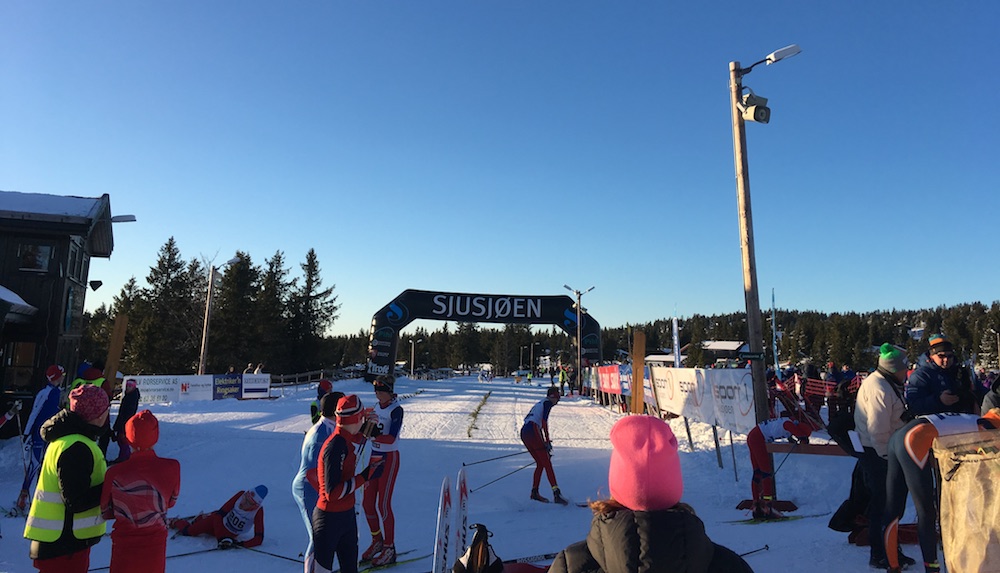
    A local race in Sjusjøen, Norway, with hundreds of racers of all ages. (Photo: Maks Zechel)

    About Maks: Maks Zechel is a competitive cross-country skier who secretly wants to become a professional mile runner. He loves hiking and going on canoe trips with his family, as well as peanut butter cups in ice cream. Johan Olsson is his favourite skier and he hopes to race the Cortina-Toblach stage of the Tour de Ski one day. He enjoys writing about his experiences. Follow him on Instagram @makszechel.
  • Closing the Gap: Brain Training

    Closing the Gap: Brain Training

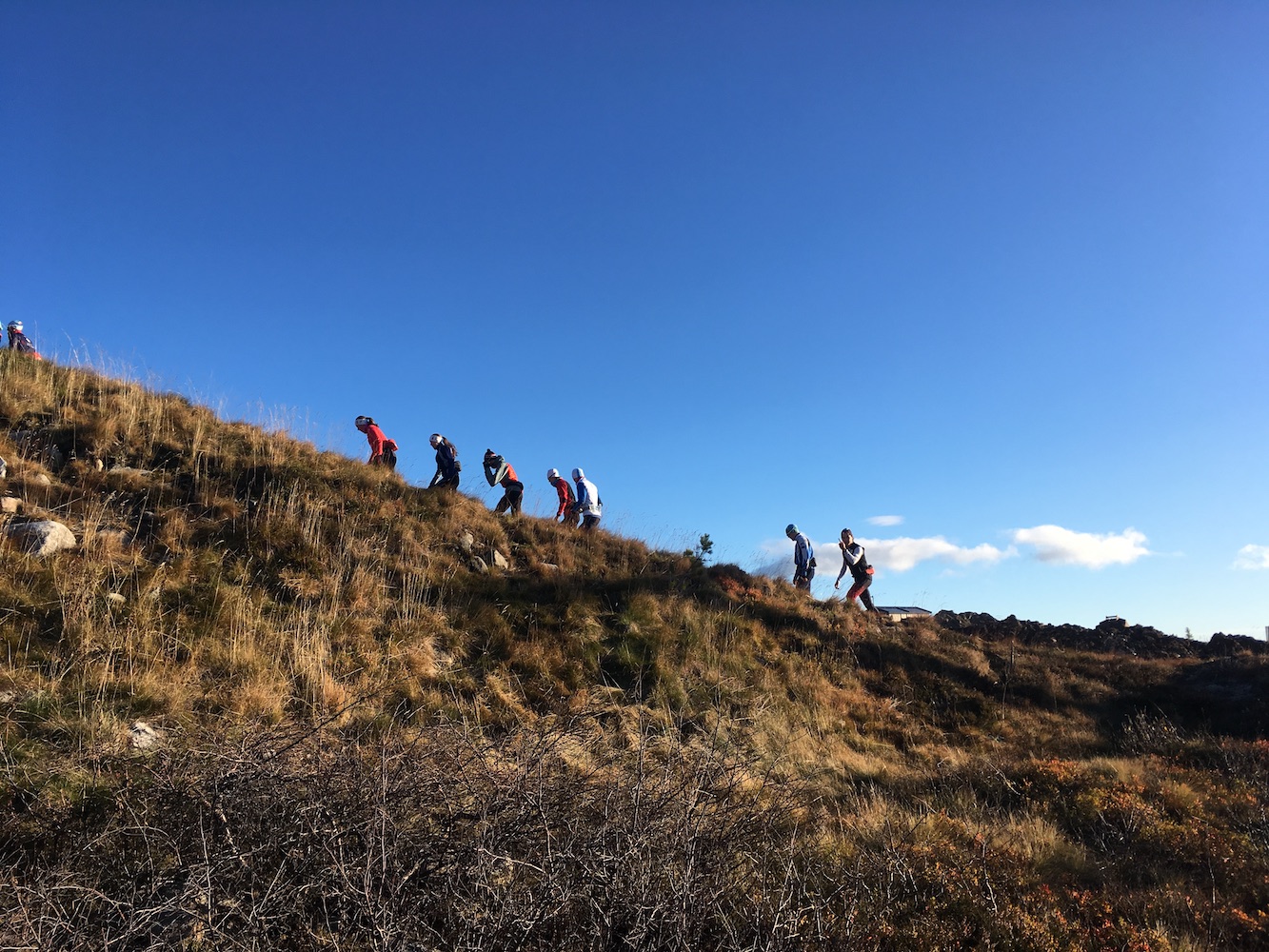
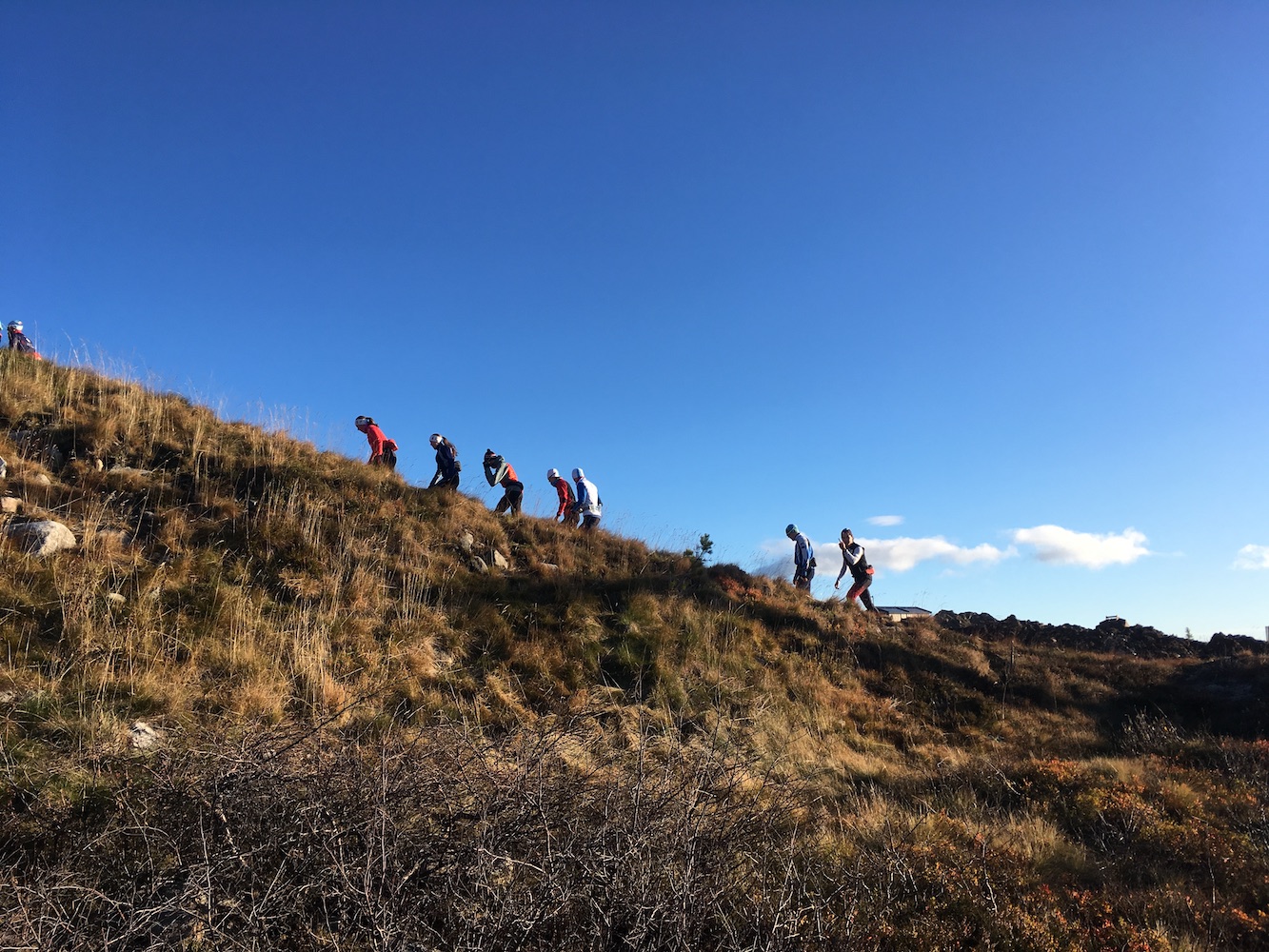
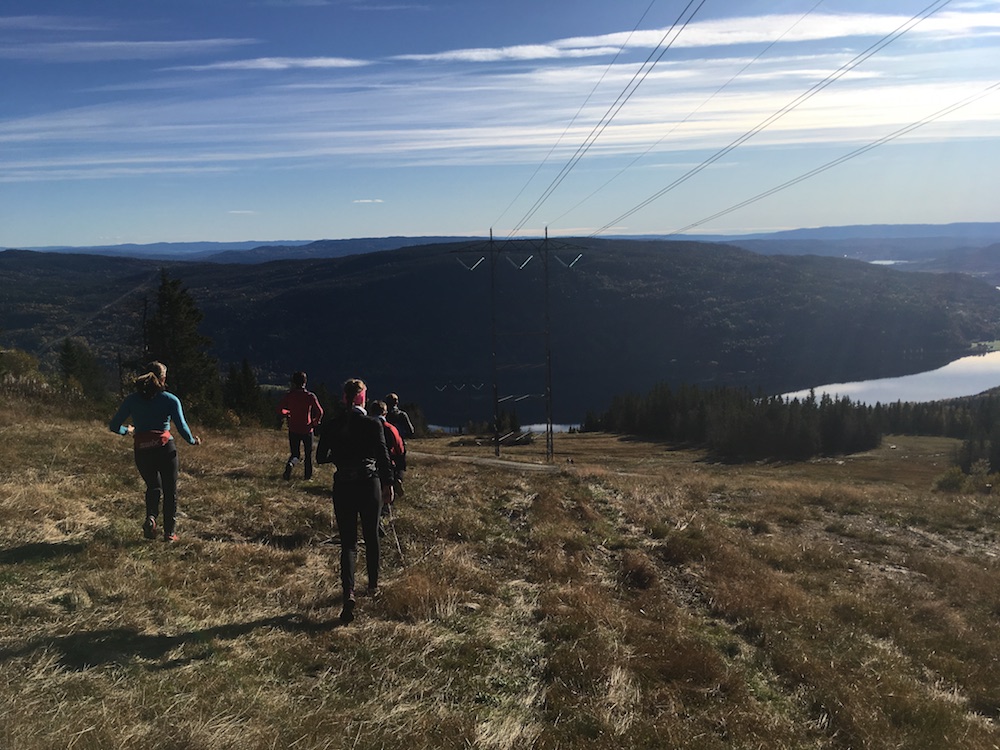
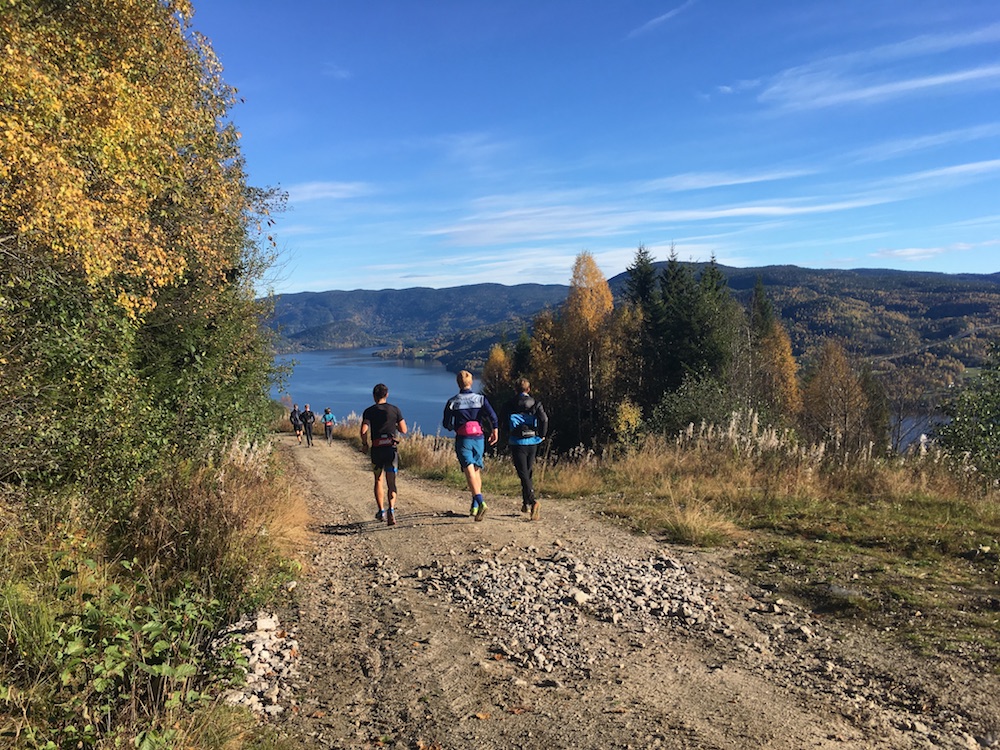
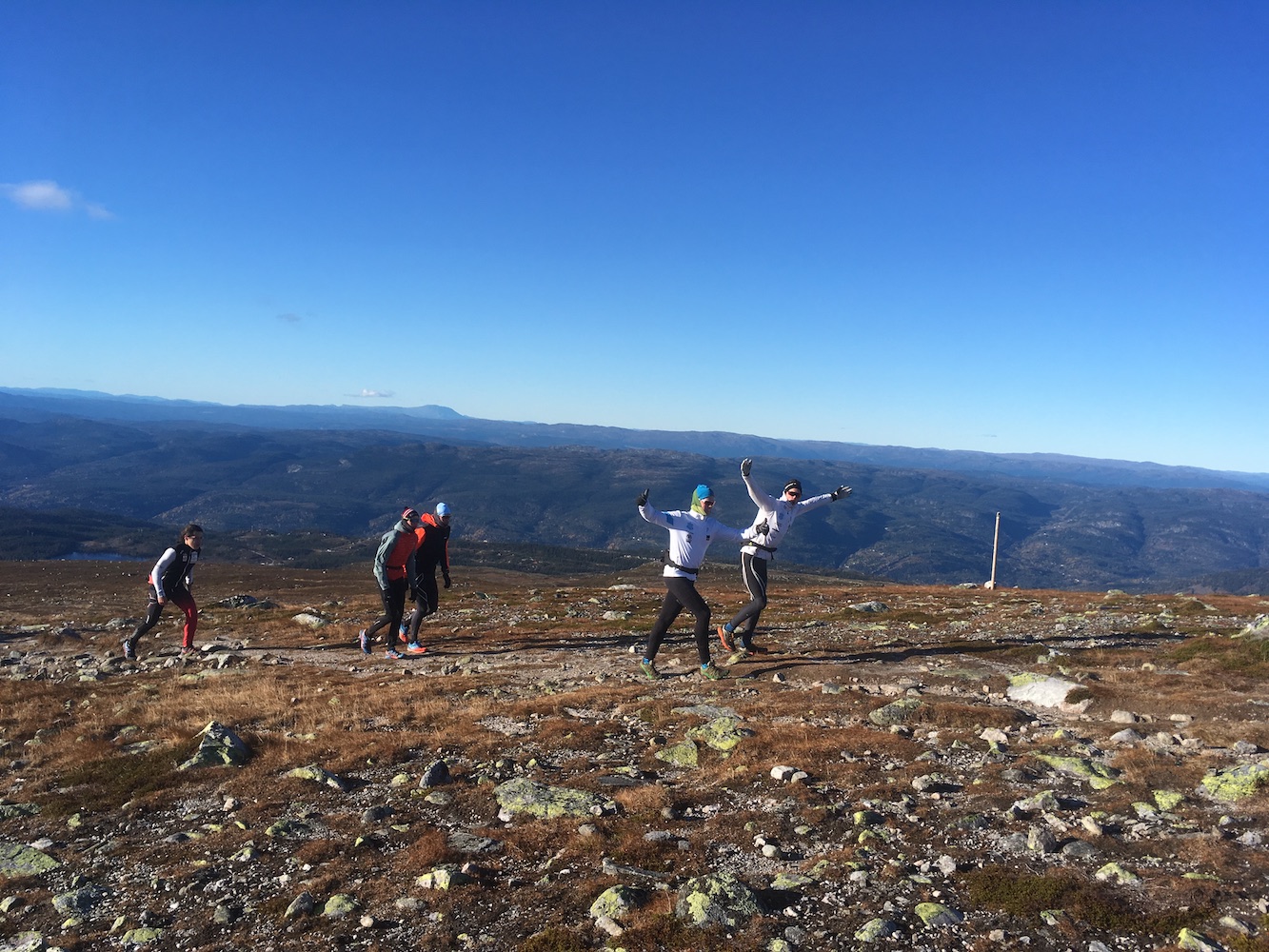
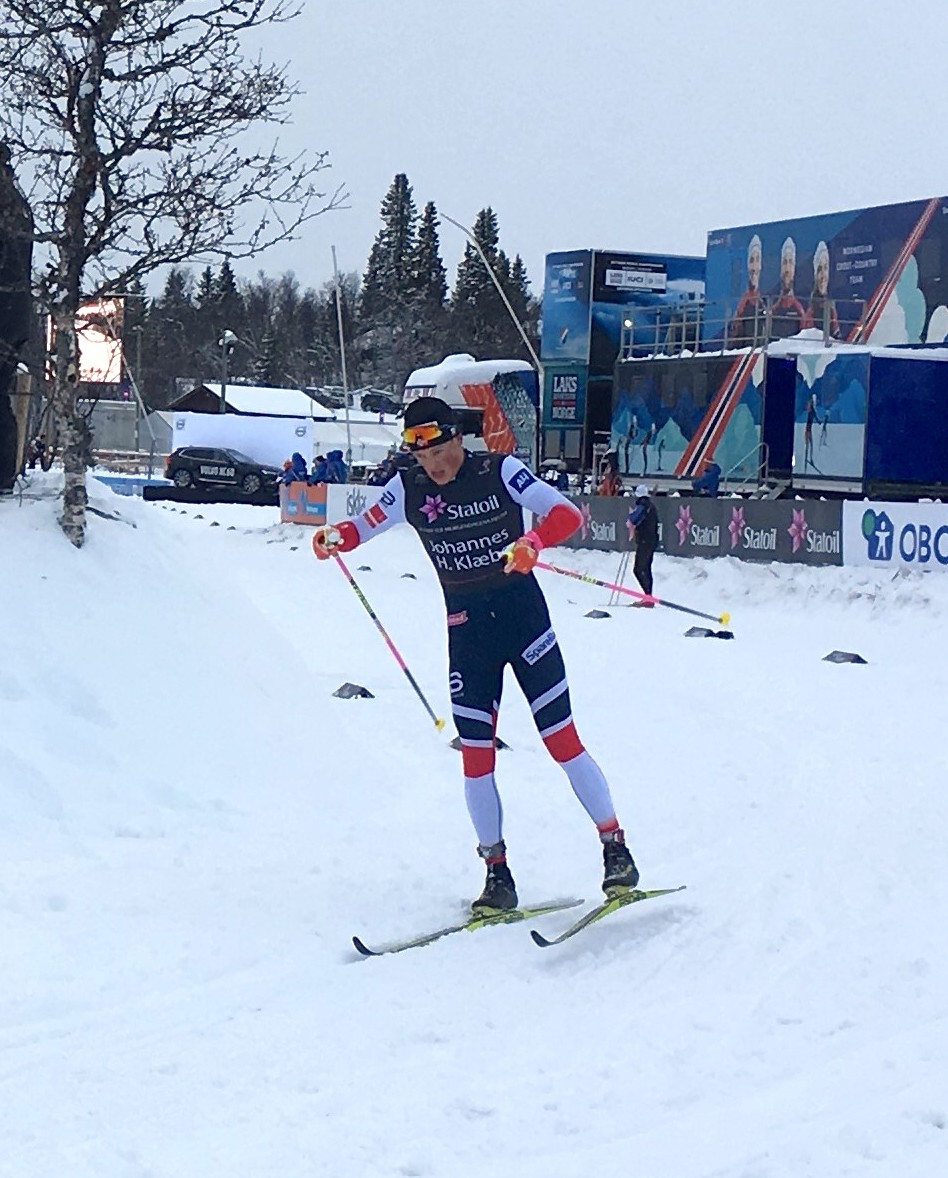
    “Norwegian fjell running.” Team Asker doing some dryland mountain training during a training camp in Norefjell, Norway. (All photos: Maks Zechel)

    Editor’s Note: The following is part of a series proposed by Maks Zechel, a 20-year-old Canadian cross-country skier embarking on his first season training abroad. In August, he recently made the big move to Norway, where he’ll be training and racing with Team Asker for the entire winter. Through these updates, Maks hopes to share his personal “observations, stories and lessons learned” to help close the gap between North American and Scandinavian nordic skiing. Previous posts: #1, #2, #3#4#5and #6.

    ***

    There is something about passion that drives people to push boundaries like nothing else. For many Canadians, this passion lies in hockey. If it’s January and you aren’t within walking distance of at least two outdoor hockey rinks, you probably don’t live in Canada.

    I’ve never been a huge hockey fan, but regardless I still went through a phase as a 9 year old when I practised my stick-handling skills religiously, making marks against the garage door or the basement wall. Black marks and dented aluminum are the proud checkmarks of passionate Canadian youth (and the source of endless frustration for Canadian parents). Canadian hockey drives youth and even adults to fervently practice a sport that only a small percentage will ever play professionally. Even on a weekday night in the middle of winter, if you bring a stick and skates to any Canadian outdoor rink, you will be allowed to join a game of shinny. No matter your gender or age, whether you claim to have been a AAA hockey legend or have never skated before, whether your family has lived in Canada for generations or if you are a newly landed immigrant, Canadians are brought together by something that transcends sport.

    National passion for a sport ensures that a large and diverse percentage of the population will actively pursue that activity in a multitude of ways. It encourages creativity and innovation. Similarly to hockey in Canada, albeit on a smaller scale, there are an astonishing number of Norwegian skiers who dedicate much of their time to just training and racing fast, even without sponsorships or national-team status.

    This creates a field of close to 500 open men at the Norwegian national championships. In the 10-kilometer skate race at last year’s national championships, the top-100 racers were separated by 1:47.6 minutes, the top 200 by 2:33.2 minutes, and the top 300 by 3:31.7 minutes (note that the conditions were fast that day). The medal winners, and many of the skiers far off the podium, were World Cup, World Championship and Olympic medalists (Anders Gløersen won, Martin Johnsrud Sundby was second, Emil Iversen was 11th, Sjur Røthe was 32nd (full race results here). The depth of field at Norwegian and Scandinavian Cups and national-championships races rivals that of World Cup races, with many believing it to be more difficult to crack the top 30 in the aforementioned three than it is at most World Cups.

    Team Asker skiers recover as they run down an alpine ski slope during 10- x 4-minute Zone 4 bounding intervals, with one minute rests in between, at a recent training camp in Norefjell, Norway.

    The success that we see in the Norwegian senior ranks begins with Norway’s junior skiers, and I am lucky enough to be training partners with some of these top-level athletes. One of Team Asker’s most successful junior skiers, Harald, has two medals from last year’s Junior World Championships. To put his level of skiing into a senior-racing perspective, he was 26th in the previously mentioned 10 k race at the Norwegian nationals — as an 18 year old.

    It can be deceptive to see skiers who still look quite young, but to know that they are already skiing fast enough to potentially crack the top 30 on a World Cup. I believe that much of this ability stems from the incredible amount of maturity in Norwegian junior racers, although not necessarily in the traditional sense. Not all of them are obsessive about the small things; I have seen top Norwegian skiers down two Cokes per day at training camps, eat Nutella for breakfast and stretch as little as possible. Their maturity becomes apparent in how they approach training and races, ready to learn to push their bodies in the best way that they can.

    With more skiers, you see more body types and different minds. My teammates have told me to expect many funny styles of double poling when I race Norwegian and Scandinavian Cups this winter. Already at the junior level, skiers spend hours working on their double-pole technique, not just doing exactly what their coaches told them to do, but practising different movements and seeing how it works for them. Double poling is a simple motion, in theory, but with different body types you can have countless different styles of double poling that all produce the maximum amount of power for those individual skiers.

    With Team Asker, we discuss technique with our coach and we do group-technique sessions, but then we are encouraged to try things out by ourselves and see how we can adapt those basics of power transfer to how our individual bodies work. The same goes with training plans. The spectrum of what type of training makes someone ski fast is all over the place, and that is something that many Norwegian skiers seem to accept. Some athletes on Team Asker disagree with certain things that our coach says, but they are not criticized for this and are supported in altering their training as they see fit, although they are encouraged to discuss why they are making these choices.

    In Canada, I have often heard repeated “golden rules” to technique and training, things that are accepted by most coaches across the country. In Norway, I learn a new philosophy every time I speak to a different coach or athlete. For some skiers, it is important for them to train long and slowly in Zone 1 so that they have the energy to focus on interval workouts. Other skiers do short Zone 1 workouts, but push the workouts so that they are in high Zone 1 or low Zone 2, skiing closer to competition speed. Many skiers do sprints with every workout, even long runs, while others add sections of Zone 3 pickups in the middle of their easy workouts. I have a teammate who builds up to a period in the training season where he is doing 30 short sprints per day. I know Norwegian 16 year olds who are training more than 1,000 hours per year, but there are also World Cup skiers who are barely training 600 hours.

    Team Asker finishing a combo rollerski/run workout at recent training camp in Norefjell, Norway.

    Some people think that too much base training (slow Zone 1) is a waste of time, so they do the bare minimum that is required to be able to absorb intensity training and the long race season. Johannes Klæbo’s big breakthrough in the past couple of years is said to have come from an emphasis on strength and sprint training, while Petter Northug has long sworn by doing intervals in “myra” (spongy and uneven bog/marsh), but for some people, those same things will make little difference to their speed on snow. Talent may have helped them in the beginning, but whether it was Klæbo or Northug, they didn’t reach the top level through talent alone, but by perfecting all the things that make them fast.

    There are skiers, some point to Therese Johaug, who many think could do almost any type of training, and they will be fast simply from general fitness, but for most people training is not so simple. Fortunately for us mortals there is no limit to what we can achieve, so long as we are willing to take chances and use our brains rather than just succumbing to that “training junkie gene” that so many skiers possess. Each one of us is so different, that it is not possible for us to do the same things and achieve the same results.

    Over and over I have heard coaches and athletes, who go to Scandinavia for a few weeks to learn the “secrets” of the best skiers in the world, come back and confidently tell us Canadians that “they do the same training as us” and therefore we can be just as fast as them. I agree that we can be just as fast, but from my first three months in Norway, I can tell you that we do not train anything like the Norwegians. We may do similar bounding, rollerskiing and running workouts, but training in Norway is taken to the highest level by the competitive dialogue that takes place among young skiers, old skiers, back of the pack skiers, and top skiers. From my perspective, training innovation and experimentation doesn’t happen in North America on the same small scale level as it does in Norway.

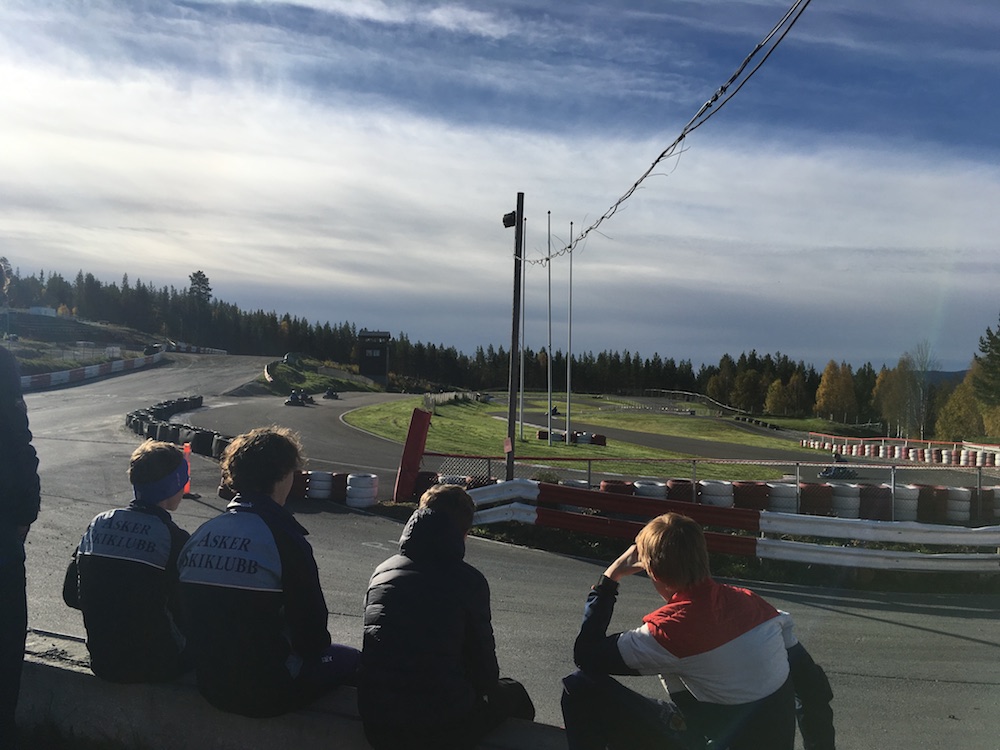
    The go-kart track where Team Asker held “King’s Court” style rollerski skate sprints (8 x approximately 1:30 minutes) during a recent training camp in Norefjell, Norway.

    In Canada we look to those that are better than us, whether they are national-team members or World Cup skiers, and try to copy them from afar. This puts us decades behind the competition. A lot of the technique innovations that we will see on the World Cup in the next two decades will have come from the Norwegian junior skiers of today, but by the time North American skiers take note of these changes, and adjust their training, the next generation of Norwegian juniors will already be working on the technique advances for the next decade.

    When I first came to Norway, the first thing I did was try to copy how the best skiers on the team double poled. I copied them for 12 weeks, but every time I looked at video footage of myself, I still looked completely different. It wasn’t until my coach explained a miniscule timing difference to me that I understood what the others were doing differently. With the switch flicked, my double poling has improved because of things that I could not figure out just by watching others ski. It is this type of interaction, between skiers and coaches of all levels, that causes breakthroughs in technique. Not all club-level coaches in Norway look to the Norwegian national team for advice on all aspects of skiing. Many coaches disagree with the common consensus on technique and training, and this opens up the discussion which is so important to moving forward.

    Most skiers love to talk about technique and the finer aspects of skiing, but when I was in Canada, I found these discussions usually revolved around what faster people were doing. In Norway I find myself having more discussions on what we individually think we should be doing, and even if someone is superior at a certain aspect of skiing, they are usually eager to try what someone else thinks might be better.

    As “Mad-Eye Moody” from J.K. Rowling’s Harry Potter series would say, “Constant vigilance!” and adjustment are required in all aspects of our training if we want to succeed. We have to seek variation in training, and learn together to discover the things that make us go fast as individuals, or else we suffer individually under the repetition of uniform training that cannot meet all of our needs.

    Norwegian Phrase of the Week:

    Norwegian: “Jeg er ut å mate.”

    Google Translate: “I’m out to feed.”

    True meaning: “I am training a lot.” (slang)

    Team Asker during a long run through the mountains at a recent training camp in Norefjell, Norway.

    ***

    About Maks: Maks Zechel is a competitive cross-country skier who secretly wants to become a professional mile runner. He loves hiking and going on canoe trips with his family, as well as peanut butter cups in ice cream. Johan Olsson is his favourite skier and he hopes to race the Cortina-Toblach stage of the Tour de Ski one day. He enjoys writing about his experiences. Follow him on Instagram @makszechel.
  • Closing the Gap: A Game of Seconds

    Closing the Gap: A Game of Seconds

    Canadians Ryan Jackson (l) and Maks Zechel (r) with Team Asker coach Ola Kvisle at the Oslo Marathon 10 k rollerski race in Oslo, Norway. (Photo: Anne Haarstad)

    Editor’s Note: The following is part of a series proposed by Maks Zechel, a 20-year-old Canadian cross-country skier embarking on his first season training abroad. In August, he recently made the big move to Norway, where he’ll be training and racing with Team Asker for the entire winter. Through these updates, Maks hopes to share his personal “observations, stories and lessons learned” to help close the gap between North American and Scandinavian nordic skiing. Previous posts: #1, #2, #3#4, and #5.

    ***

    It was a typically frigid day of January ski racing in Thunder Bay, Canada (any Canadian cross-country skier will have grimaced just from reading that). Halfway through the A-final of the Ontario Cup U16 classic sprint, I was already far behind the leaders, Tony Gunka and Ryan Jackson. The previous day I had won the distance classic race, my first ever “O-Cup” medal, finishing only three seconds ahead of Ryan, and now my expectations were higher than ever. The margin between us in the qualifier that morning? Three seconds.

    Swinging around a fast corner into the last big climb of the race, already out of contention for the win, I looked at the ground in front of me and just skied as hard as I could. I had nothing to lose, so I skied my best. As I crested the hill, I suddenly noticed that I had caught Ryan and Tony and was dropping them. Elated by the empty track ahead, I double poled as hard as I could.

    Ryan Jackons (front) and Maks Zechel turning the final corner during a 2013 classic sprint in Thunder Bay, Ontario.

    Suddenly, Ryan and I were neck-and-neck again. We turned the final corner and could see the whiskers marking the finishing lanes, tantalizingly close. Side by side, neither of us able to see, just focusing on slamming those poles down. We remained stubborn until the finish, with Ryan pulling in front right before the line.

    The remainder of the season continued in much the same way, and strangely the margin between Ryan and I in most of our races, no matter the distance, was three seconds. We didn’t know it at the time, but every time one of us lost to the other, we both won.

    Since that year, Ryan and I have been close friends and competitors, even roommates for a year. We have both had good and bad years of results, but I have continually been inspired to push my own limits by his work ethic and accomplishments. On Sept. 15, Ryan joined me here in Norway, where we begin our latest venture to see how fast we can become.

    Ryan arrived in the middle of my second testing week with Team Asker, where I was happy to achieve new personal bests in the uphill running test, skate time trial (not too difficult as I went the wrong way last time…), and the double-pole sprint qualifier. Most of these improvements are likely due to being more familiar with the courses and being more comfortable here, but regardless it was nice to move forwards.

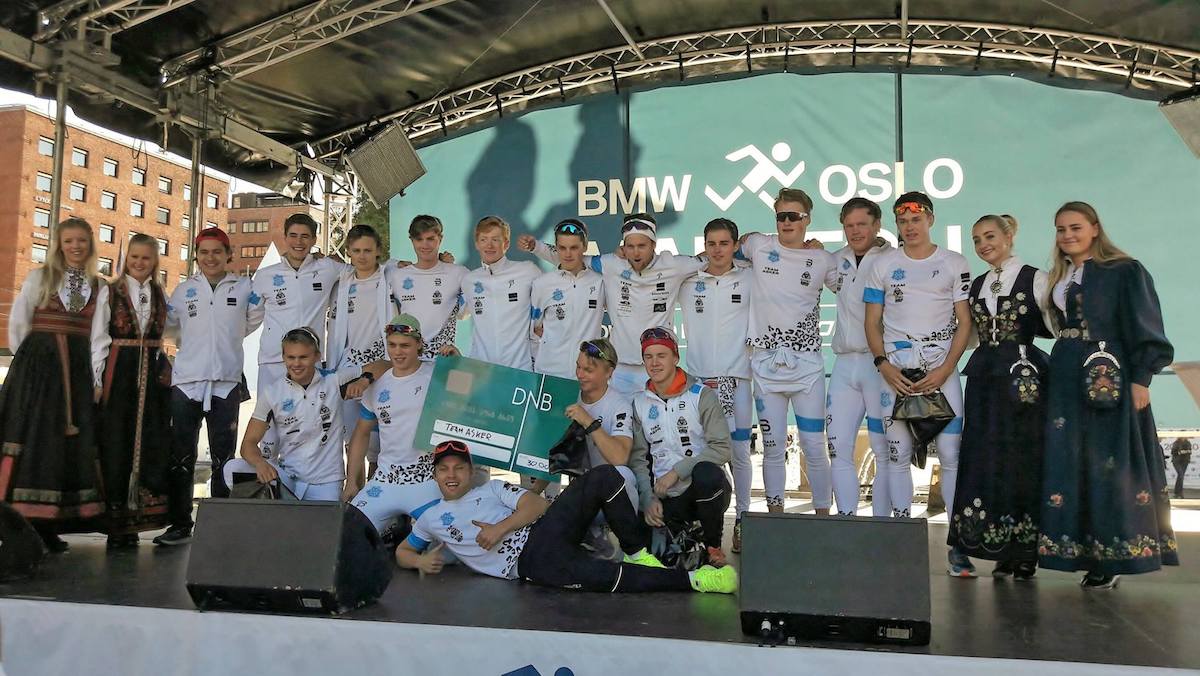
    Testing week was highlighted by the replacement of our regular uphill double-pole test with a 10-kilometer classic rollerski race in downtown Oslo, as a part of the Oslo Marathon race weekend. The week prior to this race, Team Asker held a 10 k qualification race, where the top-10 Asker skiers were selected to race in the Oslo Marathon for the team prize of $30,000 NOK (approx. $4,673 Canadian). This qualification race was the most tactical rollerskiing race that I have ever competed in. About 16 of us raced eight laps of a mostly flat 1.4 k loop. Like a road-biking race, positions were constantly changing. It was great for me to practice staying calm and absorbing speed changes so as not to waste energy, but I still regularly found myself catching up to the lead pack after being “accordion-ed” off the back of an attack. Having been sick that entire week, I didn’t have an excellent race, but it was enough for me to qualify (see a video of the race, and me flying off the course on the first lap, below).

    The night before the Oslo Marathon was not the usual quiet, pre-race evening. Having crossed the finish line of the uphill running race at around 7 p.m., I biked home where I met Ryan and helped him settle in for his first night in Norway. A long pre-race sleep was quickly lost to our excitement of having finally both made it to Norway, a trip that has been in various stages of planning since we first discussed the idea on an offseason run through Vincent Massey Park in Ottawa two years ago.

    After a short night, we were out the door before 7 a.m. to take the train to Oslo for a 9 a.m. race start. The big stress that morning was how we would survive the race without suffering broken limbs or equipment. I had skied the course the weekend before with Team Asker, and in just that easy ski through the streets of Oslo, we broke three pole tips. The race organizers were predicting that 50 percent of the field would break poles.

    I thanked the “ski gods” for the perfect sunny day and dry pavement that the morning had brought, as I outlined the obstacles of the race for Ryan: a fast downhill right after the start leading into a sharp turn and funneling the race through a narrow, cobblestoned street guarded by waist-high posts in the middle of the race course; multiple stretches of streetcar rails; sewer grates and small curbs to be hopped; more sections of cobblestones; and a downhill finishing stretch marred by manhole covers and pavement dished out by years of traffic. Oh, and then we had to jump two tall timing mats across the finish line. At least road cyclists can use bikes designed for cobblestones when they race Paris-Roubaix, not so with rollerski wheels that fit perfectly between cracks. It was an excellent opportunity to work on agility while racing with 60 other skiers and being filmed by NRK … at least that’s what I told myself. (See course preview below)

    https://www.youtube.com/watch?v=0i7U4lvBXOY&feature=youtu.be

    In typical skier fashion, we complained a lot about the race conditions until the race started, the field spread out and it ended up being surprisingly easy for most people to stay on their feet. Our team raced well and we won the team competition, with teammates Erland Kvisle and Harald Amundsen coming third and fourth behind Junior World Championships medalists Thomas Helland Larsen and Magnus Kim. Andrew Young, a World Cup sprint medalist, was fifth. I finished 18th, 1:45 minutes behind the winner.

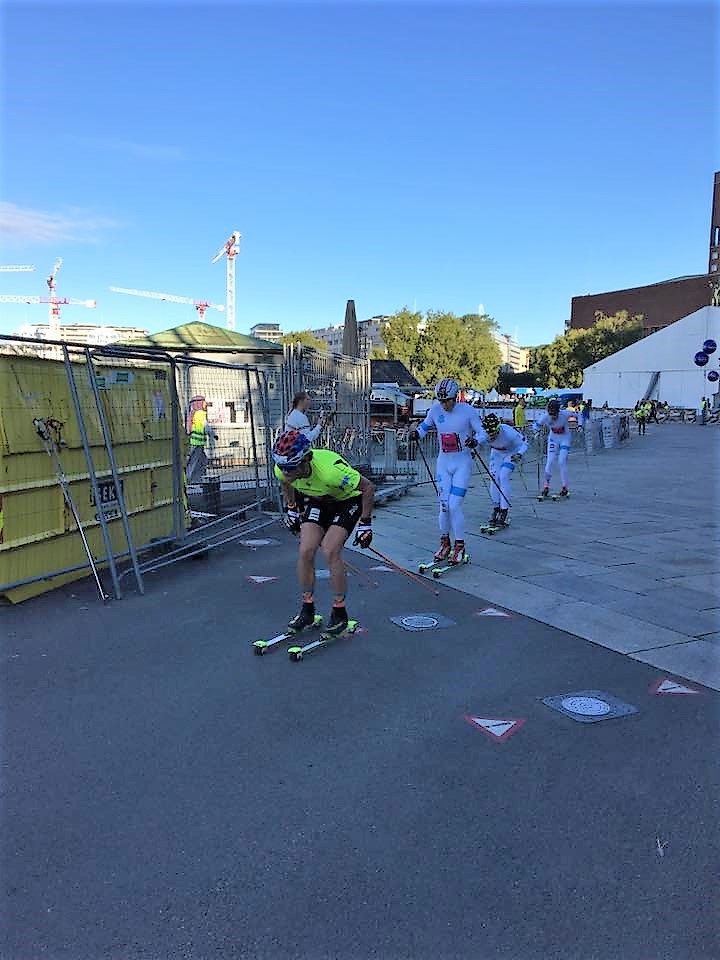
    Part of the lead group at the Oslo Marathon 10 k classic rollerski race on Sept. 16 in Oslo, Norway. (Photo: Sindre Ryan)

    How do I react to these results? I finished 19 seconds behind the winner in the qualification race and 1:45 back in the Oslo Marathon, both against world-class competition. On the outside, these margins seem like nothing, but in reality they represent a massive gap between where I am now and where I hope to be in the coming years. It is easy to dismiss seconds as being irrelevant, but these seconds mean everything in the winter. This winter, 19 seconds in a 10 k race at a Scandinavian Cup could mean the difference between finishing in the top 50 and finishing in the top 100. If I am unwilling to fight for those seconds now, then the winter’s results will reflect that. To close a gap of seconds, it will require a lot more than just improving my recovery strategies or drinking a litre of beet juice a day. My fight for seconds has to be taken to every interval session and time trial and become a mantra taken into race season.

    It may not be such a big gap now, but come winter, this game of seconds will become a real life battle for minutes. For Ryan and I, this is nothing new, but now the stage is bigger than ever before. To come three seconds behind the other will mean ten spots on the results sheet. It is a daunting reality for any skier, but I am lucky to have a friend from home to pursue these challenges with. In a foreign place, teammates and friends are more than just people to hang out with — they’re family.

    Norwegian Phrase of the Week

    It’s not the fart that kills you, it’s the smell. – Petter Solberg

    Translation: It’s not the speed that kills you, it’s the slam (crash).

    *A quote from Norwegian professional rally car racing legend, Petter Solberg, known for speaking “Noglish” (Norwegian-English), resulting in excellent quotes lost in translation.*

    Team Asker on the podium after winning the team competition at the Oslo Marathon 10 k classic rollerski race on Sept. 16 in Oslo, Norway. (Photo: Anne Haarstad)

    ***

    About Maks: Maks Zechel is a competitive cross-country skier who secretly wants to become a professional mile runner. He loves hiking and going on canoe trips with his family, as well as peanut butter cups in ice cream. Johan Olsson is his favourite skier and he hopes to race the Cortina-Toblach stage of the Tour de Ski one day. He enjoys writing about his experiences. Follow him on Instagram @makszechel.

  • Closing the Gap: Lessons in Risk Taking and VO2 ‘Maks’ Testing

    Closing the Gap: Lessons in Risk Taking and VO2 ‘Maks’ Testing

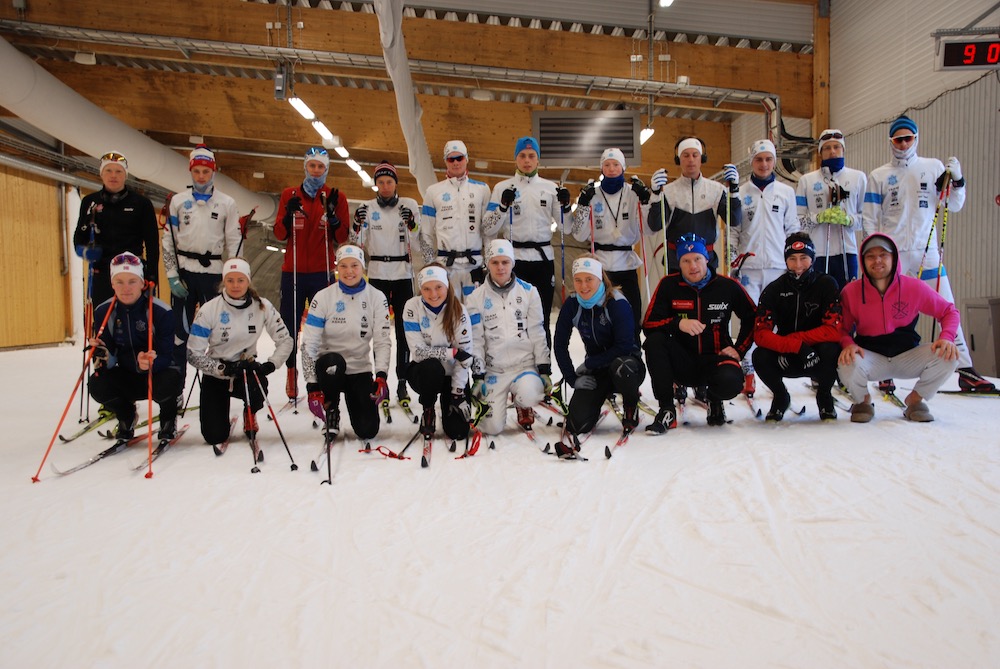
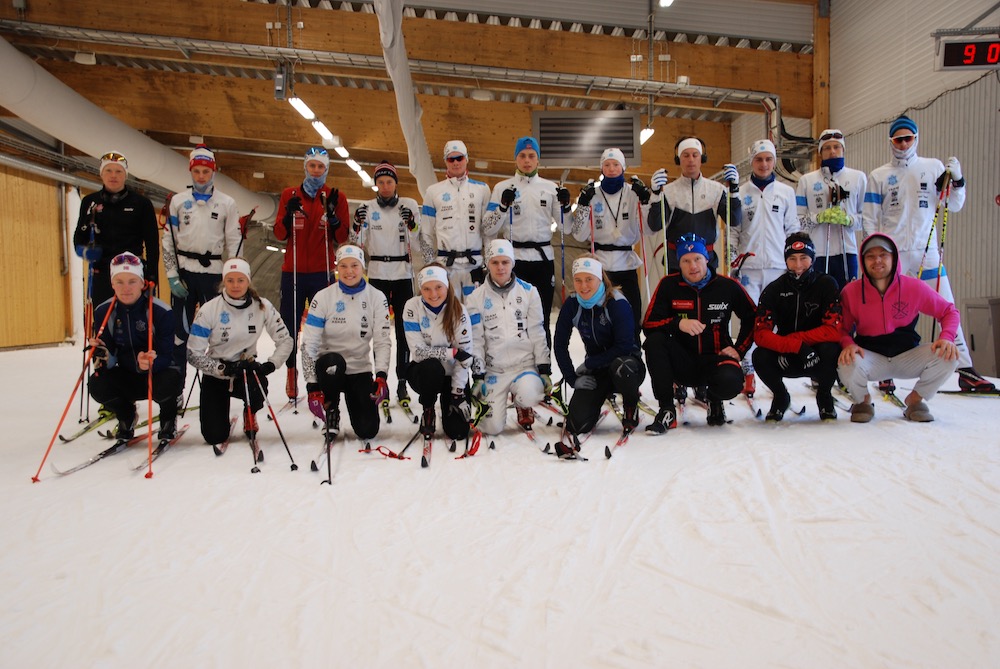
    Team Asker gets together for a group shot in the ski tunnel in Torsby, Sweden. (Photo: Johanna Lier)

    Editor’s Note: The following is the fourth post in a series proposed by Maks Zechel, a 20-year-old Canadian cross-country skier embarking on his first season training abroad. He recently made the big move to Norway, where he’ll be training and racing with Team Asker for the next nine months. Through these updates, Maks hopes to share his personal “observations, stories, and lessons learned” to help close the gap between North American and Scandinavian nordic skiing. Previous posts: #1, #2, #3, and #4.

    ***

    I never thought that on my 20th birthday I would be shivering at the top of a ski resort, a thick fog obscuring the spectacular view of Oslo, listening to 30+ Norwegians sing the Norwegian birthday song for me. But I guess turning 20 was bound to be different!

    “No more excuses,” was my first thought. Gone is the security of being a teenager. Rather than impressing people with maturity, it now feels like it is expected. I think it’s a good thing, but it doesn’t make being an adult any easier. My trip to Norway has been full of moments when I suddenly realized, “Oh, I guess I’ll just have to figure this out on my own.” My parents are no longer always present to make introductions, so now it is up to me to advocate for myself. Risks taken as an adolescent do not come with the expectation to produce results. “I’m impressed,” people say, and they applaud you just for trying. But adults are expected to see things through to completion.

    Team Asker group core session after a ski in the tunnel in Torsby, Sweden. (Photo: Johanna Lier)

    Back on a cold, foggy Norwegian ski slope at the end of August, my teammates and I were about to tackle 6 x 6 minute Zone 4 bounding intervals. In Norway, bounding with poles is called elghufs, or “moose-hooves”. I had never done a bounding workout of this duration and intensity. Despite this, I decided to take a risk and stick with the best runner on the team, who was two and a half minutes faster than me on our last uphill running test. I stuck with him from the first interval, and stayed with him as he threw in big surges on the plateaus between climbs. He added these surges because he is trying to get better at working the flat sections of ski races in the winter, which happens to be one of my goals as well. We did the whole workout together, and I stayed with him until he got away on a downhill and a steep climb at the end. I took a risk in a workout, not caring if I blew up halfway through, and it allowed me to train at a higher intensity than I would have thought possible.

    Earlier this summer I listened to a “TED Talk” by Eduardo Briceño on “the learning zone and the performance zone”. At first it didn’t seem like a life-changing lesson, but since I arrived in Norway, his ideas have led me to think differently about my actions, and in particular, my training. Briceño discusses how people, from office workers to athletes, fail to improve at what they do, whether it is a hobby or a job, because they do not give themselves the opportunity to take risks, make mistakes and learn. In our society, the “performance zone” is the default; this is where we only do the things we are comfortable with, because we want things to be perfect, because that is how we envision our end goals to turn out. Briceño argues that we should encourage employees, athletes, and ourselves, to spend more time in the “learning zone,” where we break our ideal performance into the things we need to work on to get there. It is only here that we get better, because it is here that we allow ourselves to try things that we would otherwise never attempt for fear of failure. In the learning zone, risk and creativity produce the most astounding results. Having reached higher comfort levels, it is possible for someone to apply their repeated failures and lessons-learned to a better end result.

    Author Maks Zechel doing pull ups: “the most popular Norwegian strength exercise.” (Photo: Johanna Lier)

    A few days after “birthday elghufs”, Briceño’s ideas come back to me as I am training in the ski tunnel in Torsby, Sweden. I am back here for a long-weekend training camp with Team Asker. In the tunnel I confront a skiing related fear of mine, developed over a few years of poor performances in classic races. I dread the feeling of my grip giving way while striding up a hill. I am determined to become a better classic skier, the technique I was strongest in when I was younger, so I work hard at anything that I believe will make me a better classic skier: bounding intervals, core, double poling, hours of video technique work, and skiing without poles. If I can ski up a hill legs-only, then surely I can do it with poles in a race, right? Whenever I am on skis, I challenge myself to stride up the steepest hills without poles, but it becomes a challenge that I must perform to perfection, otherwise in my mind I have failed as a classic skier. The pressure that I put on myself leads me to shuffle stiffly and tentatively up hills, not allowing myself any room for error. The result is a poor imitation of the principles of classic skiing, lacking any weight shift, pop in the ball of my foot, or ankle compression. Sure, I made it to the top of the hill, but I didn’t summit the mountain.

    On our first morning in Torsby we have a distance classic ski in the tunnel. Rather than skiing slowly around the tunnel for a couple of hours, our coach has added some variety to our workout: one lap legs-only, one lap thinking about good striding on the hills (not thinking about heart rate), and one lap with a short “race pace” acceleration. The variety in this workout is important in early season skiing so that we can take advantage of our short time on snow to train our muscle memory to ski properly, getting rid of lazy habits developed while rollerskiing.

    Maks Zechel working on legs-only in the ski tunnel in Torsby, Sweden. (Photo: Johanna Lier)

    On my legs-only loops, I decide to take a risk. Instead of pressuring myself to make it up the entire hill, I ski as dynamically as I can, focusing on full commitment to each ski and compressing the wax pocket as if I had perfect grip. Although frustrating, I know that it is better for my development to ski properly up half the hill, than to shuffle up the entire thing. A few times I am rewarded with making it to the top, and other times I almost face plant spectacularly in front of the Norwegian junior national team coach.

    The risk of embarrassment is one that I am willing to take. I made a decision to escape my comfort zone when I left Canada, leaving behind family, friends, and a team that I have trained with for nine years. I left behind the chance at another year of racing on the NorAm circuit and seeing marginal, or perhaps substantial, improvements up the results board. I was sick of feeling like there was an order to things. If I beat a friend of mine during a race, that meant that I had had a good day, but if someone finished ahead of me who I was supposed to beat, then the day was unsuccessful. To me, this type of racing environment was toxic, as I struggled through a season of failed expectations. I am fortunate to have had the means to come to Norway, where simple training aspects, things that had lost their magic over the years, are now bringing back the same giddy excitement that skiing originally gave me. I am in a place filled with potential opportunities, but now I need to have the guts to seize them.

    Team Asker reparing for an intensity workout in the ski tunnel in Torsby, Sweden. (Photo: Johanna Lier)

    While training in Torsby, we were lucky enough to be there at the same time as the Norwegian junior national team and national recruit team (a step below the national senior team), as well as Anders Gløersen, Charlotte Kalla, Stina Nilsson, and Hanna Falk. I watched some of the members of the recruit team doing offset sprints, and it was the fastest I have ever seen someone sprint on skis in real life. Rather than being intimidated, I felt almost relieved to watch some of my idols skiing this fast. The mystery was gone; this is how fast you have to ski to be great, as simple as that, and now I could spend the entire weekend shadowing some of the best skiers in the world.

    On our first day in Torsby I had the opportunity to do two things for the first time in my life: rollerski on a treadmill and take a VO2 max test (maximum rate of oxygen consumption). Naturally, because of my name, I prefer to say it in Norwegian: VO2 maks.

    After an initial stumble on the treadmill, I found it quite easy to classic rollerski on. Before the test started I warmed up on a few different gradients and speeds, unable to stop smiling at myself in the large mirror in front of me. Here I was, rollerskiing in the same laboratory that has tested countless World Cup skiers! The test began at a gradient of 10 percent and speed of 10 kilometers per hour, with the gradient increasing every minute until it reached 18 percent. This felt remarkably steep. From then on the gradient remained the same, but every 30 seconds the speed increased.

    The rollerski treadmill/testing lab in Torsby, Sweden. (Photo: Maks Zechel)

    During testing there is a harness around your waist so that you don’t fall off the treadmill, a heart rate monitor around your chest, and a mask strapped to your head to measure oxygen consumption. It’s a lot of gear hanging from your body, and your head has to remain relatively steady, but once the test started I found that the pain was an adequate distraction from all of this. Unfortunately, during my test a strap on my mask came undone and the mask fell off while I still had something left to give, so I was robbed of the chance to ski until collapsing (the skier’s dream). My VO2 max result was 74.5 ml/kg. Last year Harald Amundsen, the top skier on the team, reached a VO2 max of 85 ml/kg as an 18 year old (an exceptional result).

    Being in a new place, with a new team, and in close proximity to many of the world’s best skiers, there is a lot to take in. It is important for me to absorb as much as I can during my time here, but it is also important to stay consistent with things that I have been working on before I got here. If I jumped to apply every newly learned training philosophy to my training, I would be all over the place and have no chance to improve. I am allowing myself to take risks and make mistakes while staying true to some of the basics that got me to where I am. In the midst of so many talented and competitive skiers, I am trying to create a learning space for myself, devoid of expectations, so that I can learn without restrictions. When winter finally comes, I hope that I can translate my learning to some fast performances on skis. I have had a lot of practice translating after all…

    Norwegian Phrase of the Week

    Norwegian: Kan jeg få skyss?

    Translation: Can I have a ride?

    Norwegian: Kan jeg få et kyss?

    Translation: Can I have a kiss?

    *An important distinction that could add an unexpected twist to your ride to practice, as skyss and kyss sound almost exactly the same.*

    ***

    About Maks: Maks Zechel is a competitive cross-country skier who secretly wants to become a professional mile runner. He loves hiking and going on canoe trips with his family, as well as peanut butter cups in ice cream. Johan Olsson is his favourite skier and he hopes to race the Cortina-Toblach stage of the Tour de Ski one day. He enjoys writing about his experiences. Follow him on Instagram @makszechel.
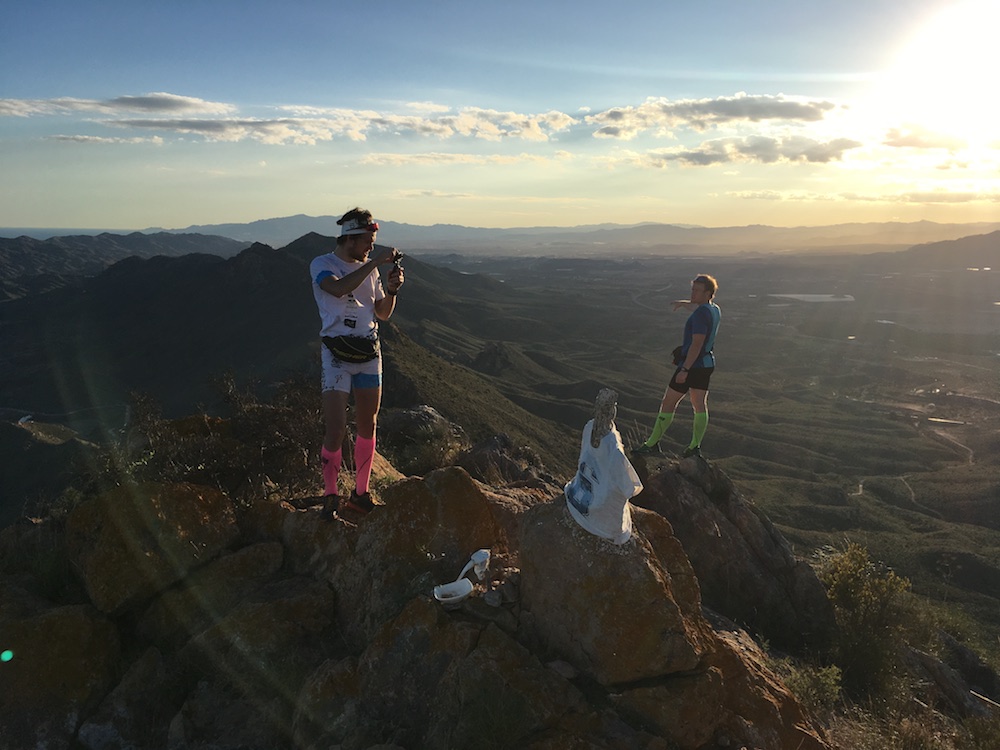
  • Closing the Gap: Testsamling (Testing Camp)

    Closing the Gap: Testsamling (Testing Camp)

    Asker til topps uphill running test, featuring author Maks Zechel (front) and his teammate Ola. (Photo: Lars-Erik Nygaard)

    Editor’s Note: The following is the fourth post in a series proposed by Maks Zechel, a 19-year-old Canadian cross-country skier embarking on his first season training abroad. He recently made the big move to Norway, where he’ll be training and racing with Team Asker for the next nine months. Through these updates, Maks hopes to share his personal “observations, stories, and lessons learned” to help close the gap between North American and Scandinavian nordic skiing. Previous posts: #1, #2 and #3.

    ***

    Tuesday, Aug. 15, 2017:

    It is late at night when I finally get the message: “Meet at Føyka stadium, 9:00am, for practice, 10x2min zone 4 double poling.” I panic. In less than ten hours I will be meeting my new teammates for the first time. My initial reaction is defensive: “I can’t do this. It’s too late. Maybe if I had more time to prepare…. I’ll just do the workout on my own.” I know what to expect, and it terrifies me.

    Views of the Black Forest, Germany, 2011 (Photo: David Zechel/Dad)

    When I was 13 years old I went to a school in Germany for a year; nobody spoke English and I barely spoke any German. On my first day of school, I walked through the school doors alone. Somebody asked me what my name was, and I replied “I don’t know,” only realizing what they had said after they looked at me like I was crazy. I ended up having an amazing year in Germany and I am still in contact with some of the friends I made there.

    Seven years later, the thought of yet again integrating myself with a peer group in a country where I don’t know anyone and can’t speak the language, makes me nervous. It was time for me to make some decisions, time to step up and seize my opportunities. I did not come all the way to Norway to train in solitude for fear of the awkwardness that comes with learning a new language and meeting new people. This may have been just one practice, but to me it was a decision point on whether or not I had what it took to make this trip successful.

    I went to practice. I arrived 20 minutes early and waited, breathing in the thick air of anticipation. Slowly, the rest of the team started to arrive. I greeted each of them with a smile, a handshake, and “Jeg heter Maks (My name is Maks)… I am from Canada.” Almost everyone spoke English well, and even if they didn’t, we all spoke the language of “I think I’m going to puke” at the end of the interval session. I rollerskied home from training, giddy with happiness. This was why I put myself into these situations that scare me, because the friendships formed and the memories made are more rewarding than staying in my comfort zone.

    Asker til topps uphill run course (Red = very high heart rate, ouch)

    After Tuesday’s intensity workout we transitioned quickly to the team’s second testing camp of the year. The “lactate-party” started on Friday evening with a brutal 5.8-kilometer mass-start uphill running test. The race started with a lap of the track in the center of town, then climbed steadily to the halfway point, where the course entered the forest and followed steep, narrow trails requiring all of my willpower just to keep running. The race finished on top of Hagahogget, a rocky peak with an incredible view over the fjord and surrounding towns. I ended up third, far behind the winner, Erland, who happens to run an 8:50-minute 3,000 meter.

    The next morning we began the second test, a 4.4 k mass-start uphill double-pole race. It was difficult to go from racing at 7 p.m. the night before to racing again at 9 a.m. the next morning, but it reminded me a lot of afternoon distance race starts followed by early sprint qualifiers the next day, something that I experienced last year at U.S. nationals in Soldier Hollow and Canadian Nationals in Canmore.

    Day 3 started off with one of the tests I had been looking forward to the most: a 9.5 k individual-start skate time trial at the Holmenkollen rollerski track. After driving up a long road out of Oslo, I arrived at arguably the most recognizable nordic sports stadium ever built. In the center of everything is the spectacular ski jump. Rollerskiing over the top of the course, you are treated to a panorama of Oslo, the Inner Oslofjord, and all the surrounding towns. Warming up around the course brought me back to the 2011 World Championships, which took place at Holmenkollen. I watched the races live on TV while I was living in Germany. There are many iconic moments from that World Championships that I remember clearly to this day (although I must admit, I regularly re-watch the races).

    As we are rollerskiing, my new friend, Erland, points out special parts of the track. The last hill before you enter the stadium is called “Hellenbakken,” named after Swedish skier Marcus Hellner and the attack he made on that hill which won him sprint gold over Norwegian favourite Petter Northug in front of thousands of Norwegian fans. I ask Erland if the stadium is called “Harvey stadium.” No answer, but he laughs amiably. Now, rollerskiing exactly where it all took place, I can see the asphalt turn to snow and Alex Harvey crossing the finish line. He puts a finger to his lips in response to a stunned and silent Norwegian crowd as he and Devon Kershaw take team sprint gold ahead of Norwegian legends Ola Vigen Hattestad and Petter Northug. The crowd may have been speechless, but 13-year-old Maks was yelling in excitement at German Eurosport.

    The Holmenkollen rollerski course is filled with the types of steep climbs common in winter ski races, but almost non-existent in summer rollerski races. There were two or three hills per lap where I was forced to offset, something that I have never done before in a rollerskiing race effort. This type of dryland training is invaluable to winter racing success.

    View from Hagahogget, end of the uphill running test. (Photo: Maks Zechel)

    With the morning time trial finished, we completed the testing camp with a flat, double-pole sprint qualifier in the afternoon. Four race efforts in three days, and five intensities in a week; not a gentle introduction to Norwegian ski training. The amazing part about this weekend was having many strong teammates to compete with. Everyone has different strengths, and depending on the test, I had between five and 10 skiers with whom I was competitive. I did not have the best four race efforts of my life, but I am excited to be training with people who are around my speed, and to have others who are pushing all of us to reach new levels.

    Some schools of thought may disagree with cramming this many intensities into such a short period of time, but Team Asker puts a big emphasis on recovery after these intensity blocks. Athletes only ever post on social media about their most “epic” workouts, so it is easy for skiers to think that they need to be doing these ridiculous workouts all the time. I think it is important to recognize the purpose of these workouts, and also gain an understanding of the training that surrounds these big workouts. With regard to Team Asker’s testing week, I appreciated becoming familiar with the difficulty of back-to-back race efforts — the refocusing and the physical shock that one experiences from competition — all in the risk-free safety net of summer training. The next testing week will take place in five weeks’ time and I am excited to give it another shot.

    I have to acknowledge how welcoming and kind the Asker Skiklubb community has been. I have already made many friends and have talked to numerous parents who have sought me out just to get to know me. It is never difficult for me to find a ride to training with a teammate, and everyone helps me feel comfortable, while at the same time pushing me to learn Norwegian and become a bigger part of the team. I am having no difficulty working with the coaches, who are excited to have me join the team and want more skiers like me to come train with them as Team Asker grows.

    Have I convinced you yet?

    Norwegian Word of the Week:

    Hjem. Home.

    Due to popular request, a picture of another, smaller, roommate of mine. (Photo: Maks Zechel)

    About Maks: Maks Zechel is a competitive cross-country skier who secretly wants to become a professional mile runner. He loves hiking and going on canoe trips with his family, as well as peanut butter cups in ice cream. Johan Olsson is his favourite skier and he hopes to race the Cortina-Toblach stage of the Tour de Ski one day. He enjoys writing about his experiences. Follow him on Instagram @makszechel.

  • Closing the Gap: Summer Skiing

    Closing the Gap: Summer Skiing

    August skiing on the Dachstein Glacier in Austria as seen in 2015. (Photo: Claire Grall)

    Editor’s Note: The following is the third post of a series proposed by Maks Zechel, a 19-year-old Canadian cross-country skier embarking on his first season training abroad. He recently made the big move to Norway, where he’ll be training and racing with Team Asker for the next nine months. Through these updates, Maks hopes to share his personal “observations, stories, and lessons learned” to help close the gap between North American and Scandinavian nordic skiing. Read Post #1 and Post #2.

    ***

    Arrival.

    My landlord greets me warmly at the bottom of the driveway as soon as I step out of the taxi. In his mid-70s, he doesn’t even give me a chance to protest as he quickly scoops up my heavy ski bag and staggers up the steps leading to the house. He’s fit, and in the coming days I see that he goes running, kayaking or rollerskiing every day, while his wife goes swimming. After unpacking my things I am treated to an evening meal that includes brunost (Norwegian “brown cheese”, it’s soft and sweet) and smoked salmon. Later I am shown where to put my bike in the shed. Wooden skis hang in the rafters, the same ones he used to compete in the Holmenkollen 50-kilometer race in the 1970s (this was before it was a designated World Cup, but it was still a prestigious event). It’s like finding a pair of skates in my grandfather’s attic, and discovering that he played in the NHL with them. Welcome to the home of cross-country skiing.

    And what is more Norwegian than skiing in the summer? My arrival in Norway coincided with the time that most Norwegians go on holiday. Team practices were suspended for a couple of weeks so I decided to take a trip of my own to nearby Torsby, Sweden. This is a small town that is known to skiers around the world for its partially underground ski tunnel. A few other well known ski tunnels designated for cross country skiing, are: Oberhof (Germany), Toksovo (Russia), and Vuokatti (Finland).

    Time spent on snow becomes crucial to a skier’s success as they enter the junior and senior level, and skiing in the summer grows in importance. Summer is an expensive time to get on snow for many, but it is extremely valuable. Skiing in the summer allows athletes to put in big hours of volume and quality intensity workouts that are harder to fit in closer to the race season. It is easy for skiers to get excited in the fall and early winter as we finally get on snow.

    As the race season draws closer, it is common for skiers to frantically put in huge volume and many hard workouts in the short periods that they are able to ski. It is frustrating when fall arrives and you go from great summer fitness, to suddenly feeling that your dryland training is not directly translating to good technique and shape on skis. Nevertheless, trying to fix all of this too quickly before the first races in December can ruin your entire race season if you burn yourself out. One solution is shifting some of that on-snow work to the summer, when it is easier to absorb a lot of training with the absence of school and races and the presence of sunshine and Vitamin D.

    I have had three different summer skiing opportunities over the last three years, and I have compared my experiences for your benefit:

    The ski tunnel in Torsby is easy to access and great for a short or long stay due to the excellent training variability. Besides the tunnel, this includes a rollerskiing track, biathlon stadium (outside and in the tunnel), extensive running trails through the surrounding hills and forests, and a fully equipped gym attached to the tunnel.

    Inside Sweden’s Torsby ski tunnel. (Photo: Maks Zechel)

    The ski tunnel is one loop with a wide “stadium” area at the start. The entire loop is a concrete tunnel and the temperature is kept around -5 degrees Celsius (23˚F). The loop has two hills per lap, which are steeper in one direction and more gradual in the other, making for a great place to work on striding. Most senior men would one-skate the hills at race pace, but they are still steep enough for offset technique work at lower speeds. I was thrilled to be on snow for my first few fiveminute laps, but after approximately 150 laps in three days, it became less exciting. The “eurobeats” playing in the tunnel were entertaining at the start, but one can only listen to “Despacito” so many times…

    While in Torsby, I stayed in a room at the Valbergsängen Sporthotell (a six-minute walk from the tunnel). Valbergsängen offers the option of staying in a hostel for a reduced rate where you are given your own room in a house with a bathroom and kitchen that are shared with other guests, or you can stay in a hotel room where you have more privacy and breakfast is included. You can even choose between the two if your Swedish is good enough. Unfortunately I missed this expensive difference, and without a kitchen, ended up making creative “meals” on my desk out of tuna, cheese, beans, peanut butter, and an assortment of bread and vegetables.

    Outside the Torsby ski tunnel. (Photo: Maks Zechel)

    I returned from Torsby, after twelve hours spent skiing loops in a “bunker”, to discover that I had a new roommate. I was sitting on my couch working on a blog post when I heard a noise that only your average-sized mouse should make when hitting the floor. I looked up and, with a jolt, realized I was looking at a spider almost the size of my hand scuttling towards my fridge. In that moment, I decided two things: one, I did not want a roommate, and two, this spider was too big to tackle with a tissue. I jumped up and grabbed my broom handle from the corner (coincidentally this broom handle doesn’t have a broom on the end of it, something that will likely be an issue at some point in my stay here). When I looked up, he was gone (I say “he”, because I am praying it is not a female about to start a family in my apartment). I slept restlessly that night. A week later, after discovering that this is a common Norwegian house spider, I am now in the acceptance stage, and I hope that the two of us can coexist peacefully for the next nine months. If not, one of us will have to leave….

    Norwegian Phrase of the Week

    Norske: Jeg sølte en stor beholder med yoghurt i melkegangen. Jeg beklager så mye.

    English: I spilled a large container of yogurt in the dairy aisle. I’m so sorry.*

    (*True story of my first few hours in Norway, unfortunately.)

    Maks Zechel in the ski tunnel in Torsby, Sweden. (Courtesy photo)

    About Maks: Maks Zechel is a competitive cross-country skier who secretly wants to become a professional mile runner. He loves hiking and going on canoe trips with his family, as well as peanut butter cups in ice cream. Johan Olsson is his favourite skier and he hopes to race the Cortina-Toblach stage of the Tour de Ski one day. He enjoys writing about his experiences. Follow him on Instagram @makszechel.
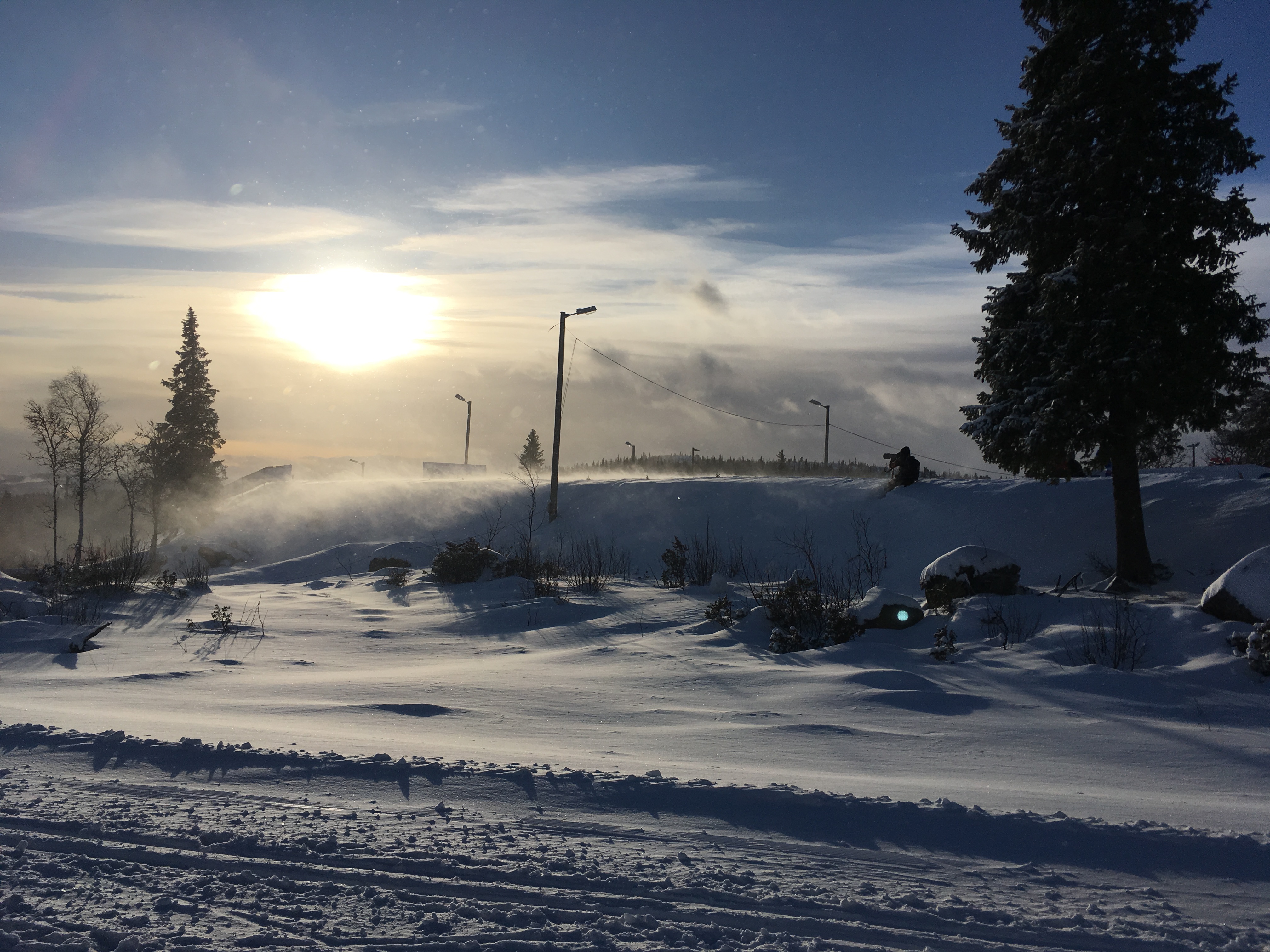
     

  • Closing the Gap: Coming to Norway

    Closing the Gap: Coming to Norway

    The views from the running trails around Asker, Norway. (All photos: Maks Zechel)

    Editor’s Note: The following is the second post of a series proposed by Maks Zechel, a 19-year-old Canadian cross-country skier embarking on his first season training abroad. He recently made the big move to Norway, where he’ll be training and racing with Team Asker for the next nine months. Through these updates, Maks hopes to share his personal “observations, stories, and lessons learned” to help close the gap between North American and Scandinavian nordic skiing. Read Post #1.

    ***

    Maks Zechel during his early days exploring Asker, Norway, his hometown until next spring. (Courtesy photo)

    Ideas: they pop into my head, always big, and they seem so simple at the time, but as soon as I take the first step, the path ahead becomes overwhelming. Many people know this right from the start, but I am continually learning exactly what it takes to bring wild dreams into existence. This year I found out that moving to a new country is not the smooth transition that I had pictured. I knew there would be challenges, but I did not expect to regularly feel that it was impossible for every piece to fall into place. Moving to Norway to train and ski race for a year may sound like a nice holiday, but it took many steps for me to get here. These included securing a visa, finding affordable accommodation, joining the ski team most likely to help me succeed, and navigating the ever-unpredictable world of language barriers and cultural differences.

    Visas can take one to three months to process and you usually need a good reason to be living in your destination (e.g. you have a job or are studying in that country). Canadians, like myself, can stay in Norway for up to 90 days without a visa. For longer stays, there is a special option for young Canadian adults that allows you to go to Norway for an “extended holiday” of sorts. I am lucky enough to have Swiss grandparents and to have lived in Switzerland for two and a half years, so before I came to Norway I went through the process of obtaining my Swiss passport (which was stereotypically efficient). As a Swiss citizen I am entitled to live and work in Norway as long as I register at a police station within three months of arriving and prove that I can support myself, have health insurance, etc. Figuring out visas can be intimidating when you get started, but there are many options and it helps to call or book yourself an appointment at a Norwegian embassy.

    Another difficult task is trying to find accommodations in a country where you do not know anyone. I looked for places primarily on www.finn.no and wrote several emails to potential landlords in both Norwegian (roughly translated) and English. I rarely received replies and had difficulties playing phone tag with various landlords. I recommend starting your housing search six months before you plan on arriving, as long-term renting options disappear quickly. In the end, I found a basement that an older couple was renting because my mum has a friend, who has a Norwegian friend, who has a colleague, who became one of my landlords. Lesson learned: use your connections, no matter how distant.

    Looking towards Oslo/Inner Oslofjord from “Skaugumsåsen”.

    Through connections at Nakkertok, I am fortunate to know John Halvorsen, a Norwegian citizen and former elite athlete — he represented Norway in the 10,000-meter at the 1992 Barcelona Olympics. John put me in touch with a few people in Norway who could explain how the Norwegian skiing world works and recommend clubs where I would have the most success.

    Naturally, my initial wish was to live in Lillehammer — host of the 1994 Winter Olympics (before I was born). Lillehammer is surrounded by endless rollerskiing, including multiple rollerskiing tracks; has a ski season beginning in October; is just 20 kilometers from Sjusjøen, legendary for its beautiful and endless ski trails; and home of the Lillehammer Skiklubb, the biggest club in Norway. It sounds ideal, but Lillehammer is different from most Norwegian towns and cities, where there are many small clubs instead of one big one. Lillehammer Skiklubb has had a lot of success and so it is difficult to join their team.

    I think that it is better to be an important member of a small team than an overlooked member of a large team. From talking to other Canadians, I have found that often the biggest deterrent they face in moving to Norway, or in the trip being successful, is that they are worried about being lonely. I knew that my best chance of success in Norway would be to form good connections with as many people as I could, which would help me get rides to training, allow me to have a better relationship with my coach, and help me make friends.

    Asker Skiklubb soccer fields

    Team Asker was recommended to me by John and a few other contacts in Norway. The club has about 25 athletes in its junior/senior program (large compared to most Norwegian clubs), including Harald Amundsen, a bronze medalist in the skiathlon and a member of Norway’s gold-medal winning relay team at the 2017 Junior World Championships at Soldier Hollow in Utah. From what I’ve seen in Germany and Norway, many European ski teams are based out of sports clubs. Asker Skiklubb has many different teams, from handball and bandy to track and field and ski jumping. This has its advantages, as Asker’s cross-country ski team has access to the club’s full-sized rubber track, multiple soccer fields, and a small rollerski track. Just 20 k southwest and 25 k northeast from Asker are the world-class rollerski tracks of Drammen and Holmenkollen, where Team Asker regularly does workouts. Through a parent of an athlete on the team, we also have access to a rollerski treadmill. There are many other strong programs near Oslo, including BSK Ski Elite (Bækkelagets Skiklubb’s junior/senior program) and Team Konnerud (known in Norway for its strong women’s team and hosting the Drammen World Cup).

    Asker Skiklubb has a…camping trailer??

    My flight arrived in Oslo on Aug. 1 and I have been living in my new home for two weeks now. Asker is a beautiful, although admittedly rainy town set against a hilly forest with endless running trails. Most of the area looks out over a portion of the Inner Oslofjord, an extension of the North Sea. The town is modern and bike friendly with paths everywhere, but it doesn’t fail to retain its traditionally European “at your own risk” character. In some places, Asker has bike paths the size of roads, and in others, there are roads that surely only a bike could navigate. Last week I was convinced I was biking along a “bikes and pedestrians only” path, raised and separated from the main road that it followed, only to meet a car pulling onto the path from its driveway. As I learn about Asker and Norwegian culture, I look forward to more surprises in the coming weeks … so long as those surprises don’t contain headlights.

    Norwegian Phrase of the Week:

    Cashier: Trenger du poser?

    (Translation: Do you need bags?)

    Me: Ughh, Mastercard, takk.

    (Translation: Ughh, Mastercard, thanks.)

    Cashier: Vil du kvitteringen?

    (Translation: Would you like your receipt?)

    Me: Ingen poser, takk!

    (Translation: No bags, thanks!)

    Cashier:

    (Translation: …)

    Quick Tips for Moving Abroad:

    1. Make sure that your passport doesn’t expire until six months after your last day in your destination.
    2. Confirm that your health insurance covers you abroad. Furthermore, in Ontario, you have to get a temporary health card if you will be away for more than 7 months.
    3. Consider setting up a bank account once you arrive at your destination (foreign e-transfer fees are huge and ATM fees add up quickly when withdrawing cash regularly).
    4. Buy plug adapters and confirm that your devices/appliances work with the voltage ratings of your destination.

    Useful Websites:

    Norwegian Visas: www.udi.no

    Norwegian Rentals/Buy & Sell: www.finn.no  

    Team Asker (Asker): www.asker-skiklubb.no/Langrenn

    BSK Ski Elite (Oslo): http://ski.bekkelagets.no/p/14814/bsk-elite

    Konnerud IL (Drammen): http://konnerud.no/ski/gruppene/gruppe-15/

    ***

    About Maks: Maks Zechel is a competitive cross-country skier who secretly wants to become a professional mile runner. He loves hiking and going on canoe trips with his family, as well as peanut butter cups in ice cream. Johan Olsson is his favourite skier and he hopes to race the Cortina-Toblach stage of the Tour de Ski one day. He enjoys writing about his experiences. Follow him on Instagram @makszechel.
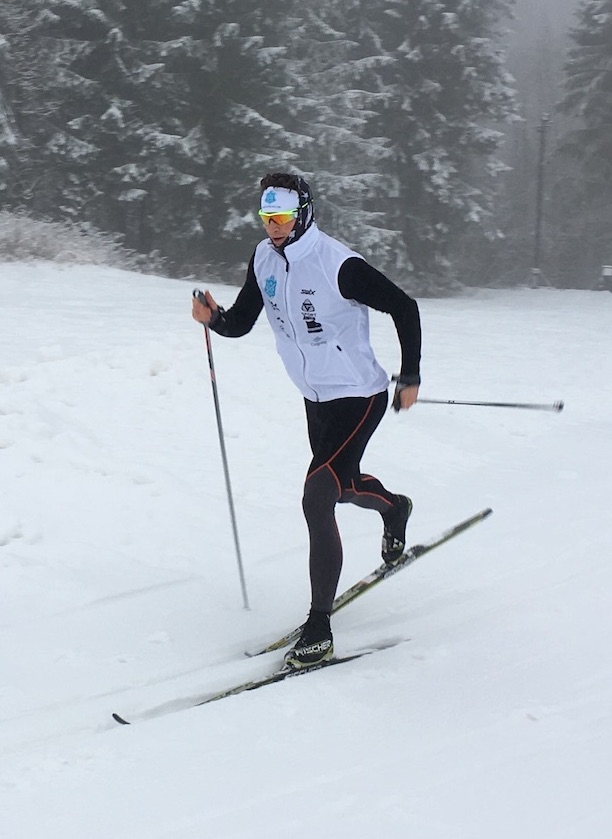
  • Closing the Gap: Meet Maks Zechel, A Canadian in Norway

    Closing the Gap: Meet Maks Zechel, A Canadian in Norway

    Author Maks Zechel hiking in Canmore. The 19-year-old skier recently left Nakkertok Nordic in Ottawa to spend the next ninth months living and training in Norway. (Courtesy photo)

    Editor’s Note: The following is the first post of a series proposed by Maks Zechel, a 19-year-old Canadian cross-country skier embarking on his first season training abroad. He recently made the big move to Norway, where he’ll be training and racing with Team Asker for the next nine months. Through these updates, Maks hopes to share his personal “observations, stories, and lessons learned” to help close the gap between North American and Scandinavian nordic skiing.

    ***

    Intro

    I am a 19-year-old Canadian cross-country skier who moved to Asker, Norway on Aug. 1, 2017, to pursue my goal of qualifying for, and being competitive on, the World Cup circuit in the coming years. The World Cup is a big stage, one that I am not even close to being ready for. Many North Americans, if given the chance, race World Cups because it is a wonderful opportunity that is almost impossible to turn down. But for many skiers, these chances do not lead to further success because they are not prepared for the intense level of competition that is World Cup ski racing. One of the issues is that North American skiers do not develop in close proximity to the world’s best skiers. We don’t know how fast a top World Cup skier races because we are never in the same races. Norwegian skiers are exposed to this level of skiing, even just through observance, during their entire ski careers.

    This is the introduction to my series of observations, stories, and lessons learned as I live in Norway and train with Team Asker for the next nine months. I want to make it easier for other Canadians and Americans to come to Norway by making as many connections as I can and I hope to make them feel a little bit closer to the environment that the world’s best skiers grow up in. I am here to be in races that have a depth going all the way from your average junior skier to last weekend’s World Cup medalists so that I can attempt to pick away at the visible steps that lead to World Cup success. If we can be a bigger part of the Norwegian ski scene and see the environment that produces skiers like Martin Sundby and Heidi Weng, maybe that will erase some of the barriers that we see when trying to chase down seemingly “otherworldly” athletes.

    Post 1: Why Norway?

    Maks Zechel finding his name all over Norway. (Courtesy photo)

    I just moved to Kenya to pursue my dream of running a sub-two hour marath– I just moved to Norway to pursue my passion for competitive cross-country skiing. Just two days have gone by since I arrived, and I already love it here.

    In Asker, Norway, my name is written in greeting on signs all over town! Well, maybe they are not greeting me. It is actually one sign by the beach saying that you can only park there for a “Maks.” of three days (maximum=maksimum in Norwegian), but hey, it is a step up from people thinking my name is a typo.

    My name is Maks Zechel, and I am a Canadian skier who is made unusually happy by Norwegian signs. I learned how to ski at Cypress, just outside of Vancouver, at around the same time that I started walking. Since then I have lived in York, England; Zurich, Switzerland; Kingston, Canada; Freiburg im Breisgau, Germany; and most recently, Ottawa.

    I started racing with Nakkertok Nordic, based just outside of Ottawa, when I was 11 years old. Once per week, my parents (both avid skiers) younger sister, and I would drive two and a half hours to Ottawa from Kingston so that we could all go skiing and I could train with Nakkertok. Being the biggest club in Canada, Nakkertok made me fall in love with skiing, as I always had one or two dozen skiers my age to train with. There is not much skiing in Kingston, so once I graduated from high school I moved in with some friends in Ottawa and took advantage of training with teammates and getting on snow more than once per week.

    Over the past two years, I have studied part-time at the University of Ottawa, raced in Switzerland and Austria, skied on the Dachstein glacier in August, skied at Sunshine (near Canmore) in May, raced in Park City, trained and raced in Silver Star, and had various other amazing opportunities all over Canada and the U.S. All of this thanks to my incredibly supportive parents, who somehow rarely get frustrated by how excited I get over World Cup predictions based off of Lysebotn Opp results, or how this insignificant change in my double poling is going to make me race like Alex Harvey. As you can see, I like skiing…

    Maks Zechel and friends skiing in Campra, Switzerland, this past February. (Courtesy photo)

    Coming to Norway is something I have thought about for the past two years. I have come here with the goal of learning as much as I can from training and racing with the Norwegians. This season I will be racing at the Scandinavian/Norwegian Cup level and focusing on my personal development.

    As many Canadians can attest to, it is hard to go from racing solely in North America to racing on the World Cup. European ski racing is unrivaled by anything we see in North America and — because of the distance separating us — we are not often exposed to that level of competition. By familiarizing myself with the European competition atmosphere, I hope to set myself up for success and show others back home what I have learned. As a first-year senior, I still have far to go, but I am here to learn and hopefully improve. Getting a start on a World Cup is not an opportunity that many Canadians receive; if I ever get such a chance, I want it to feel like a step, not a near impossible jump, up from my regular races.

    Another reason that I have moved to Norway is, strangely enough, to reduce my skiing costs. In Canada it costs a ridiculous amount every year to fly to early season skiing opportunities, to train with other fast skiers at camps, and to attend as many high level races as possible. Despite all of these flights, I have still found it difficult (even as a junior) to fill my race calendar with enough opportunities to race at a high level. In Canada, the entire season is mostly centered on our World Junior/U23 qualification races that happen in January. Before that, we have two NorAm race weekends that happen in December. Everyone gets fired up for these fun and exceptionally well-organized races. However, once January is over and you have not qualified for anything yet, there are few races with deep fields left until Nationals at the end of March. Some opportunities exist, like SuperTours and Carnival races in the U.S., but they are infrequent, far away, or they overlap with Canadian races.

    In Norway, once you have bought your plane ticket, there are regular high-level races, within driving distance, from mid-November until mid-April. The fields are deep, with most of the Norwegian World Cup team racing the Beitostølen Scandinavian Cup in November, and you are paying for a weekend trip within driving distance instead of flying away for ten days in Park City. Food in Norway has so far been reasonable; some things are more expensive and you should not expect to be buying “Costco-style”, but you can eat well without breaking the bank. Rent is expensive in some parts of the country, but through connections and a bit of luck you can make things work. I was particularly lucky and am paying $634 Canadian dollars (about $501 U.S.) per month for an adequate basement apartment.
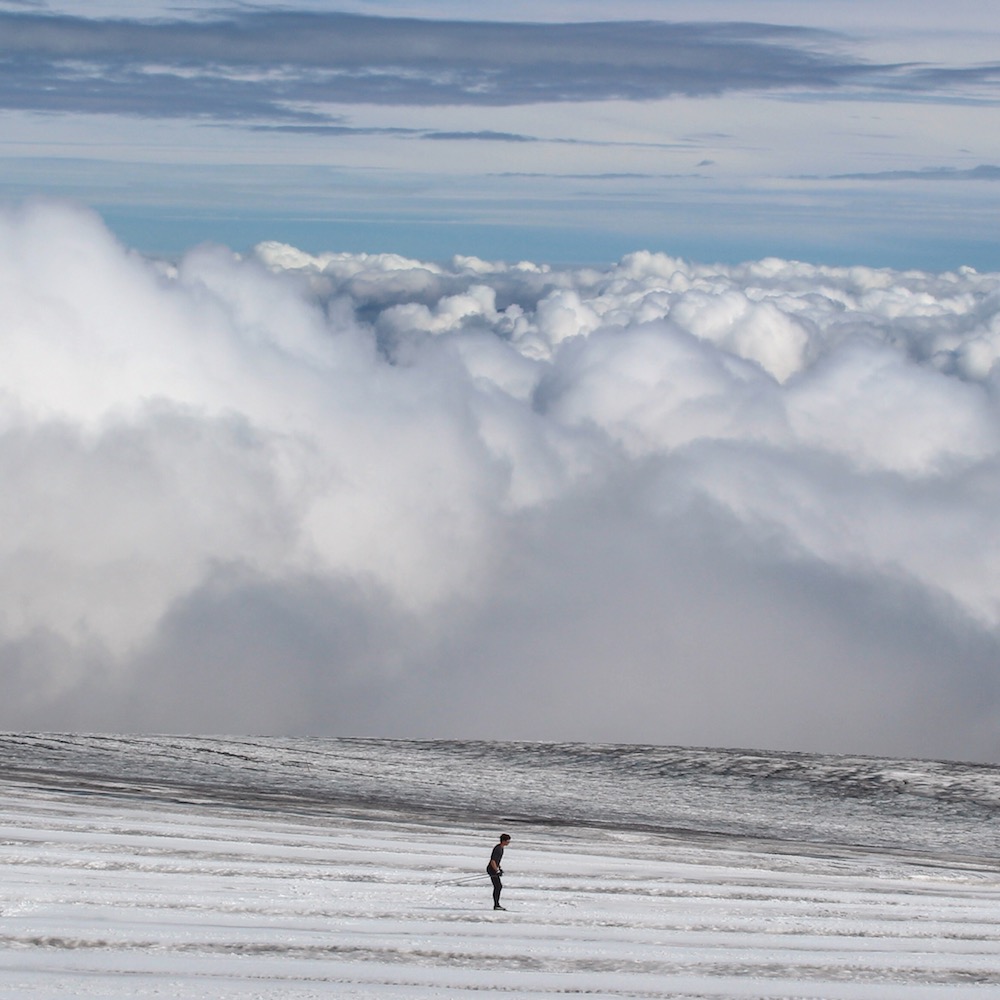
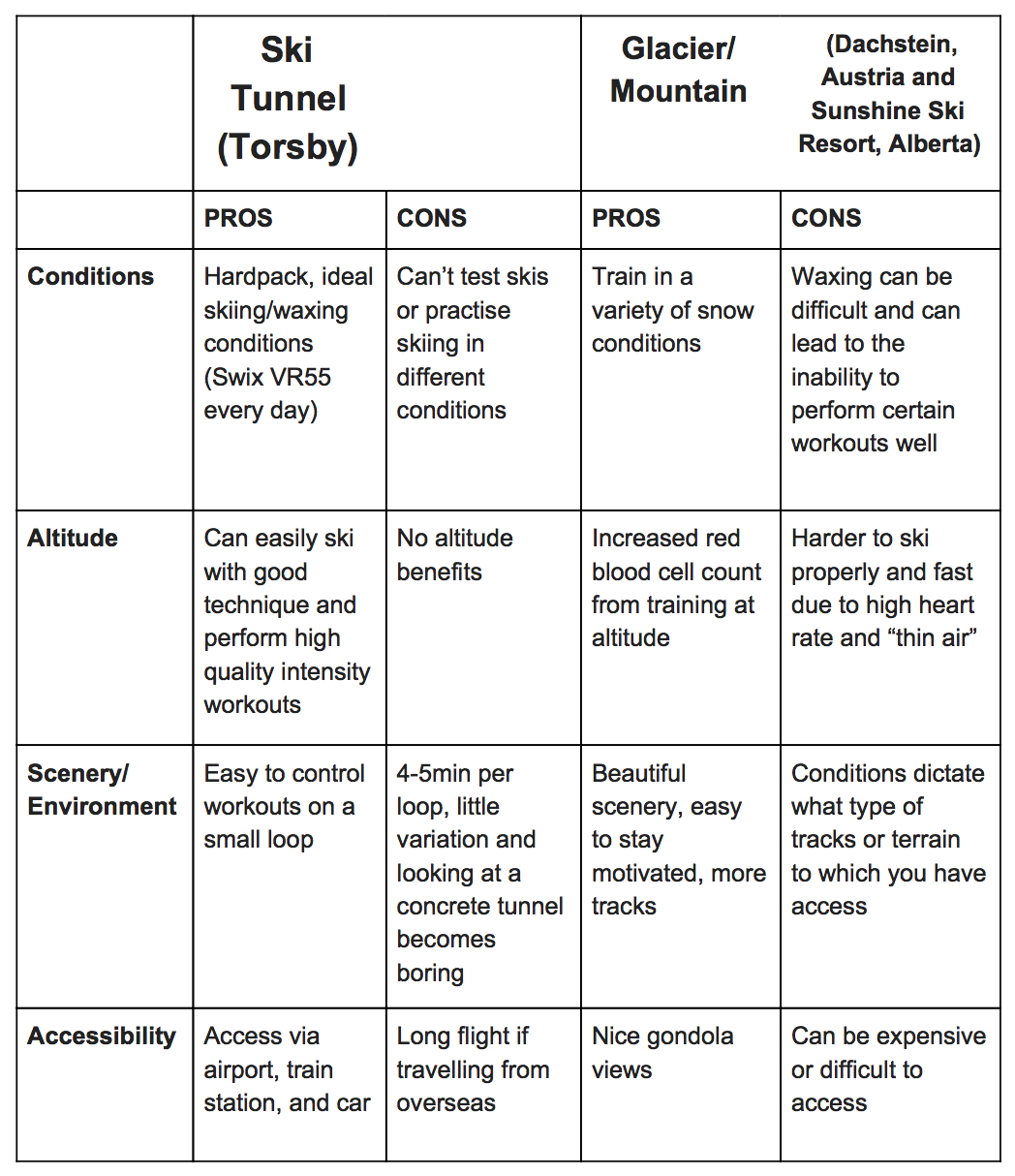
    Planning my trip to Norway was filled with days of excitement, but also with days of doubt that things would ever work out. From the start I knew that I was going to see this through to the end, so with a lot of willpower, and even more help from others, I am now finally in Norway. In my next post I will share my first impressions of Norway and explain how I was able to make it to Norway and join Team Asker, my new ski team!

    Norwegian Phrase of the Week: “Hilse på!”

    = What you say to a dog if you want to shake its paw. Literally: “Greet”

    (Lesson brought to you by Kira, the dog who lives upstairs).

    ***

    About Maks: Maks Zechel is a competitive cross-country skier who secretly wants to become a professional mile runner. He loves hiking and going on canoe trips with his family, as well as peanut butter cups in ice cream. Johan Olsson is his favourite skier and he hopes to race the Cortina-Toblach stage of the Tour de Ski one day. He enjoys writing about his experiences. Follow him on Instagram @makszechel.