Tag: Team LeasePlan Go

  • An Unlikely King: Ski Classics Champ Eliassen on the Secret to His Successful Rookie Season

    An Unlikely King: Ski Classics Champ Eliassen on the Secret to His Successful Rookie Season

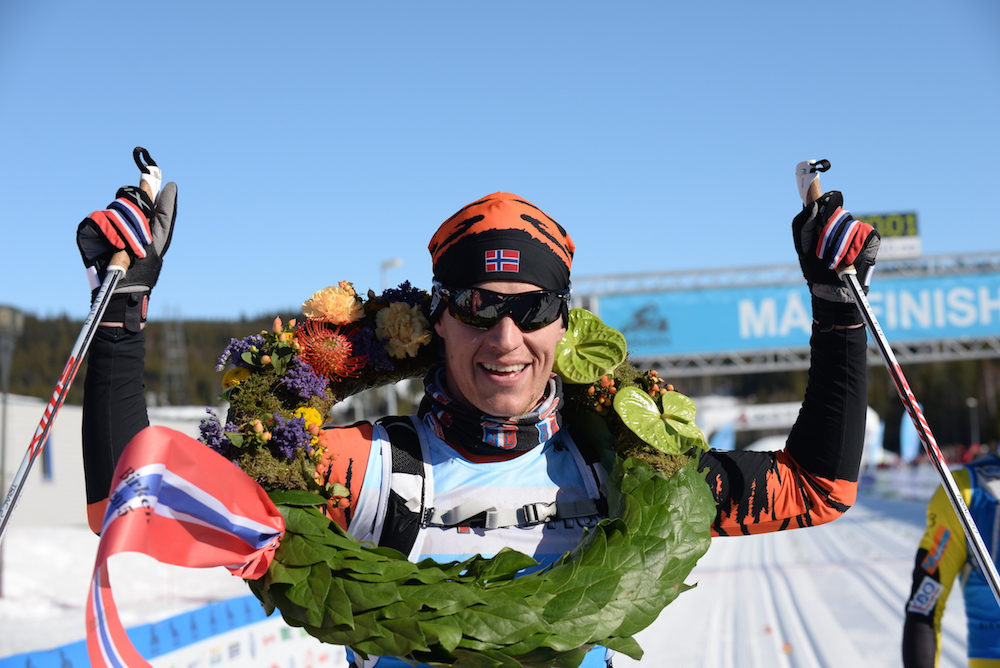
    Petter Eliassen after double poling his way to a victory at the Norwegian Birkebeiner on March 22. The 29-year-old Norwegian went on to win the 2014/2015 Ski Classics title in his first season on the circuit. (Photo: Kent Murdoch)
    Petter Eliassen after double poling his way to a victory at the Norwegian Birkebeiner on March 22. The 29-year-old Norwegian went on to win the 2014/2015 Ski Classics title in his first season on the circuit. (Photo: Kent Murdoch)

    How did Petter Eliassen do it? A month ago, the 29-year-old Norwegian from Trondheim double poled his way to a victory in the Norwegian Birkebeiner and went on to win the final Ski Classics race of the season — Sweden’s Årefjällsloppet — to claim the overall 2014/2015 Ski Classics title. It was his fourth-straight win on the circuit, making him the first racer to do so in Ski Classics history.

    FasterSkier recently spoke with Eliassen, a Norwegian national team member two seasons ago, on the phone, and he happily shared his training strategies. The following interview has been translated from Norwegian to English.

    A rookie to the long-distance circuit, he was content with the opening of his season, placing among the top 10 in the first five races of the Ski Classics series.

    But Eliassen did not expect to close the season with a four-race winning streak — starting with the König Ludwig Lauf in Germany on Feb. 2, then a Vasaloppet win in his very first attempt at the legendary 90-kilometer classic race in Sweden on March 9. He won the Norwegian Birkebeiner on March 21, and finished the season off with a final victory in the Årefjällsloppet on March 28.

    And he certainly didn’t expect to win the overall circuit crown in his first try. Eliassen beat established elite racers, such as the Aukland brothers of Norway, and former Vasaloppet champions, like Norway’s John Kristian Dahl and three-time Vasa Champion Jörgen Brink of Sweden, as well as a long list of merited marathon specialists, including Sweden’s Jerry Ahrlin, Oskar Svärd and Daniel Tynell, and Czech super-veterans Lukáš Bauer and Stanislav Řezáč.
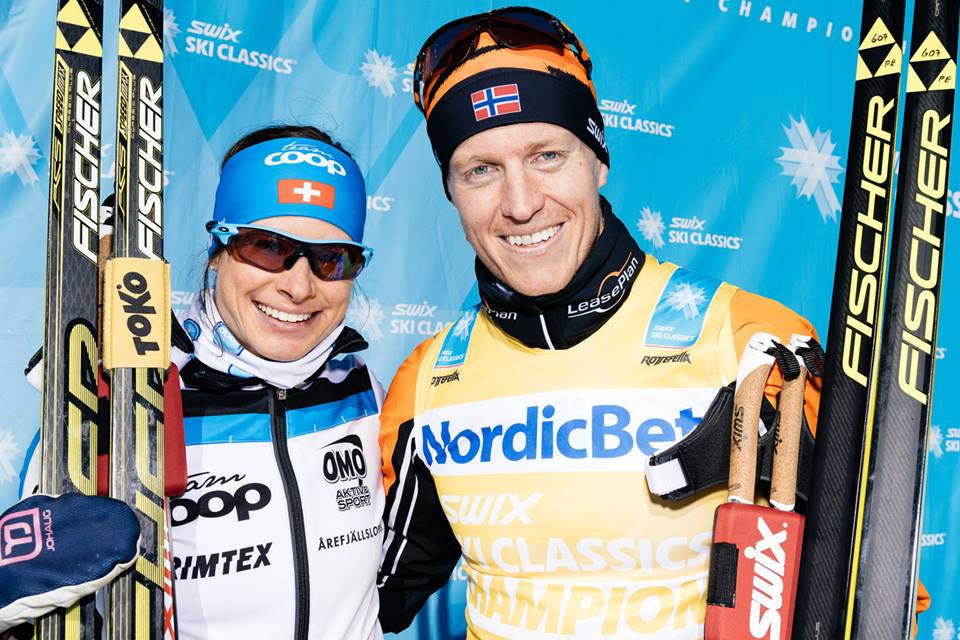
    Seraina Boner (l) of Switzerland and Team Coop and Petter Eliassen of Norway and Team LeasePlan Go won the Årefjällsloppet on March 28, the last of nine events in the 2014/2015 Swix Ski Classics marathon series. (Photo: Ski Classics)
    Petter Eliassen (r) of Norway and Team LeasePlan Go and Switzerland’s Seraina Boner (l) of Team Coop won the Årefjällsloppet on March 28, the last of nine events in the 2014/2015 Swix Ski Classics marathon series. (Photo: Ski Classics)

    What’s your key to marathon success?

    “I definitely benefit from years of racing experience,” Eliassen said, adding that the support and depth on Team LeasePlan Go made a difference. “We have a support crew and a race team that is very experienced and very well run. That’s huge both prior to the races and also in the offseason.

    “Training-wise, I have done much the same leading up to this season as I did when I was on the national team. We do a lot of volume and some strength, but I have focused a bit more on double poling than I used to and much less on skating,” he said, adding that he does miss skating.

    “I enjoy skating, and I still do some skate workouts throughout the season, but it’s definitely not the main part of the volume.”

    While the Ski Classics organizers have not ruled out including freestyle events to the race schedule in the future, Eliassen doesn’t see that happen in the near future.

    “So many of the established long-distance elite racers are highly specialized and spend so much of their training effort on perfecting their double-pole technique and strength that I think they would object,” he said.

    Practice your weaknesses, race your strengths

    While double poling isn’t his specialty, Eliassen is constantly trying to improve that aspect of his classic technique. He explained his team spends many of its group workouts focusing on tight finishes and does a lot of intense intervals in all kinds of terrain to prep for those.

    “My favorite terrain is uphill. But many of the Ski Classics events have flat or even slight downhill finishes, so we spend a lot of time on that,” he said.

    His race strategy is to determine how the race will play out well ahead of the finish line to avoid a double-pole showdown.

    “I always go into the race with the intention to stay with the lead group as long as I can, but I try to pull away while there is still some distance to go and preferably in terrain that I’m good at,” he explained.

    Skiers are made in the summer

    During the season, Eliassen generally puts in one or two double-pole workouts per week, which last from one to three hours depending on how he feels and how much time there is between the races. When there are several weeks between events, he does longer workouts, and when the races come like rapid-fire, his main focus is recovering from one event to the next.

    But the bulk of his double-pole training is completed even before the snow falls. During the dryland season, Eliassen and his teammates log several long rollerski workouts each week, with two to four hours of double poling.

    “I am definitely not the one who logs the most volume on our team, but in the summer, I do at least two of those each week,” he said.

    While rollerskiing isn’t his choice dryland workout, he loves running and also puts in a fair amount of time on his bike.

    “I have to admit that my favorite summer workouts are long runs in the mountains. That’s where I really feel at home,” he said.

    Strength and recovery

    Eliassen stressed that plenty of variety was the key to staying injury free, along with a healthy dose of general strength, flexibility and recovery.

    “It’s really important to do a lot of core strength in order to protect your back, shoulders and arms,” he said. “Also make sure to stretch. When you do a lot of ski-specific and double-pole specific training, you tend to get very tight, especially in the front of your body.

    “And definitely make sure you allow yourself plenty of recovery time between the hard and long workouts, especially the rollerski double-pole sessions,” he added, pointing out that tendinitis issues often are a result of overuse and under-recovery.

    In terms of building double-pole specific strength, he believes in simply double poling a lot.

    “I don’t do any of the double-pole machines … I know a lot of skiers use them, but I believe there are several training methods that will lead to success, and so far, I haven’t used those,” he said.

    If it ain’t broke, don’t fix it

    Based on his experiences and results from his rookie season on the marathon circuit, Eliassen planned to continue with his training plan from last season.

    “I will train mostly the same way as I did prior to this season, but of course, I will try to improve my test results even a little bit more,” he said.

    Generally, Team LeasePlan Go does a one-week training camp each month during the dryland season, and in between, its athletes train independently.

    “We live all over the country, so it’s nice to meet on a regular basis, but I also enjoy the flexibility of setting my own training schedule,” Eliassen said.

    “I think the marathons really is my arena,” he added with a smile.
  • Musgrave Aligns with Alsgaard’s New Team LeasePlan Go

    Musgrave Aligns with Alsgaard’s New Team LeasePlan Go

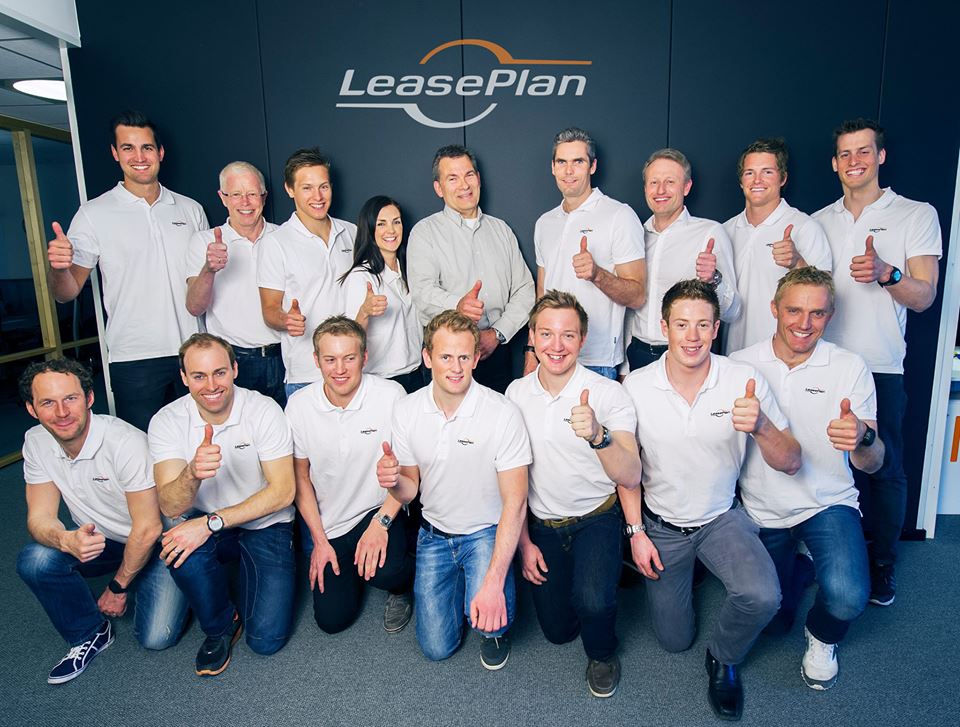
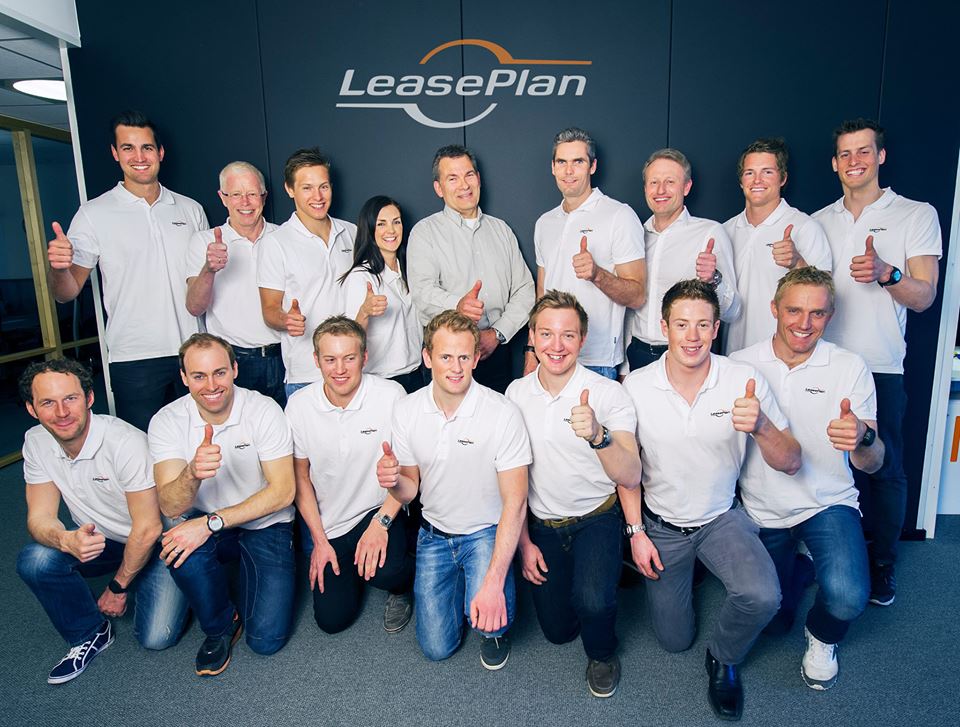
    The faces of the newly formed Team LeasePlan Go, with Anders Södergren, Emil Søbak Gundersen, Jörgen Brink, Christoffer Callesen, Per Kristian Nygård, Johanna Ojala, Espen Frorud, Simen Sveen, Thomas Alsgaard, Andrew Musgrave, Torgeir Skare Thygesen, Audun Laugaland, and Kjetil Hagtvedt Dammen. A five-time Olympic gold medalist, Alsgaard (fourth from top right) formed the team this year with the help of Gundersen (top left). Musgrave (second from bottom right) is the only non-Scandinavian athlete. (Photo: www.facebook.com/TeamLeaseplanGo)
    The newly formed Team LeasePlan Go, with Anders Södergren, Emil Søbak Gundersen, Jörgen Brink, Christoffer Callesen, Per Kristian Nygård, Johanna Ojala, Espen Frorud, Simen Sveen, Thomas Alsgaard, Andrew Musgrave, Torgeir Skare Thygesen, Audun Laugaland, and Kjetil Hagtvedt Dammen. A five-time Olympic gold medalist, Alsgaard (fourth from top right) formed the team this year with the help of Gundersen (top l). Musgrave (second from bottom r), a British skier, is the only non-Scandinavian athlete. (Photo: facebook.com/TeamLeaseplanGo)

    Earlier this month, Andrew Musgrave, a 23-year-old World Cup skier from Great Britain, met one of the greatest cross-country racers of all time: Thomas Alsgaard. What was more, they were going to be teammates on the newly formed Team LeasePlan Go.

    Musgrave could hardly contain himself as he trained with the 41-year-old Norwegian near the Oslo airport. He also worked out alongside Swedish superstars Anders Södergren and Jørgen Brink at the training camp in Gardermoen, Norway.

    “They’re probably getting annoyed with me,” Musgrave said with a laugh on the phone from Trondheim, Norway, where he’s studying engineering at the Norwegian University of Science and Technology (NTNU).

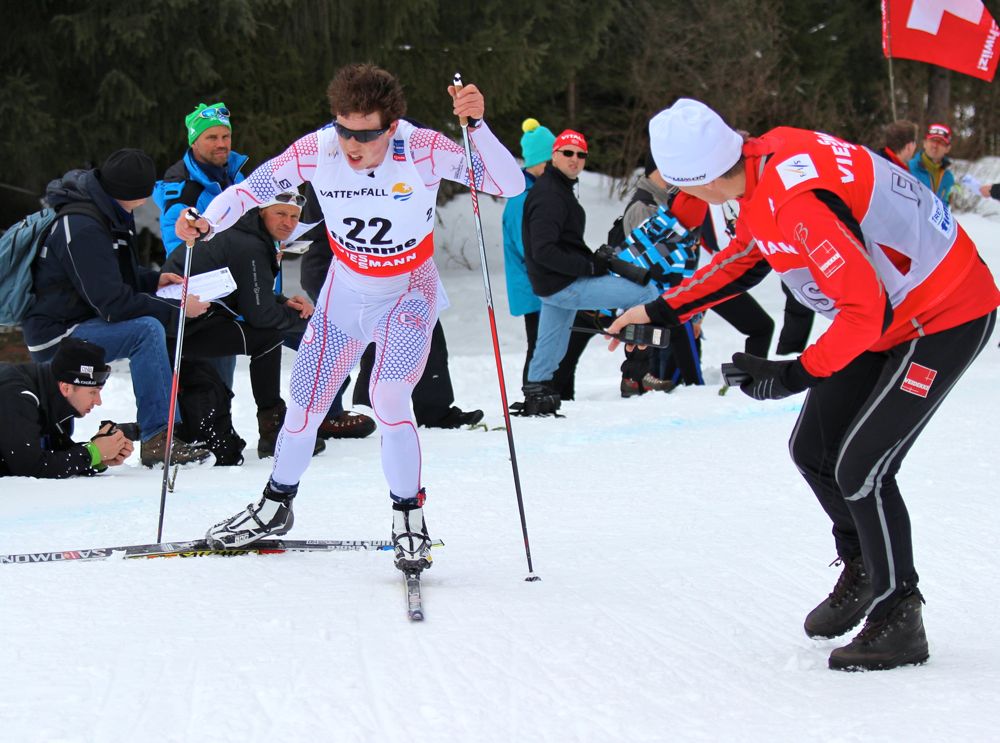
    Great Britain's Andrew Musgrave and his coach during the 15 k freestyle individual start at 2013 World Championships in Val di Fiemme, Italy. Musgrave placed 28th for his best result of the championships, but considered his season mostly inconsistent.
    Great Britain’s Andrew Musgrave and his coach during the 15 k freestyle individual start at 2013 World Championships in Val di Fiemme, Italy. Musgrave placed 28th for his best result of the championships, but considered his season mostly inconsistent.

    A part-time student and full-time racer, Musgrave has been there since last autumn and in Norway for the last four years. Conveniently and perhaps essentially, he speaks Norwegian.

    “I always ask them what they do when they’re training and how they normally do this and that, all sorts of questions so they’re probably getting quite bored of me,” he said. “But for me, it’s definitely good being on the team with these guys. I think I’ve learned a lot from training with them just the one-week camp we’ve had now.”

    Lucky for him, there are more camps to come. According to Team LeasePlan’s manager, Emil Søbak Gundersen, the privately sponsored, 12-man squad will meet for two camps at Alsgaard’s home in Nannestad, Norway, and also in Austria or Italy this summer.

    With athletes scattered throughout Norway and Sweden, the team is Alsgaard’s brainchild and means of getting back into full-time racing full time after more or less retiring 10 years ago.

    A couple questions come to mind; first – what’s Alsgaard’s plan?

    In an email, Gundersen explained that Alsgaard approached him in December. Alsgaard had his own marathon team at the time, Team United Bakeries, but he wanted to do less paperwork and more skiing, maybe even win the Vasaloppet.

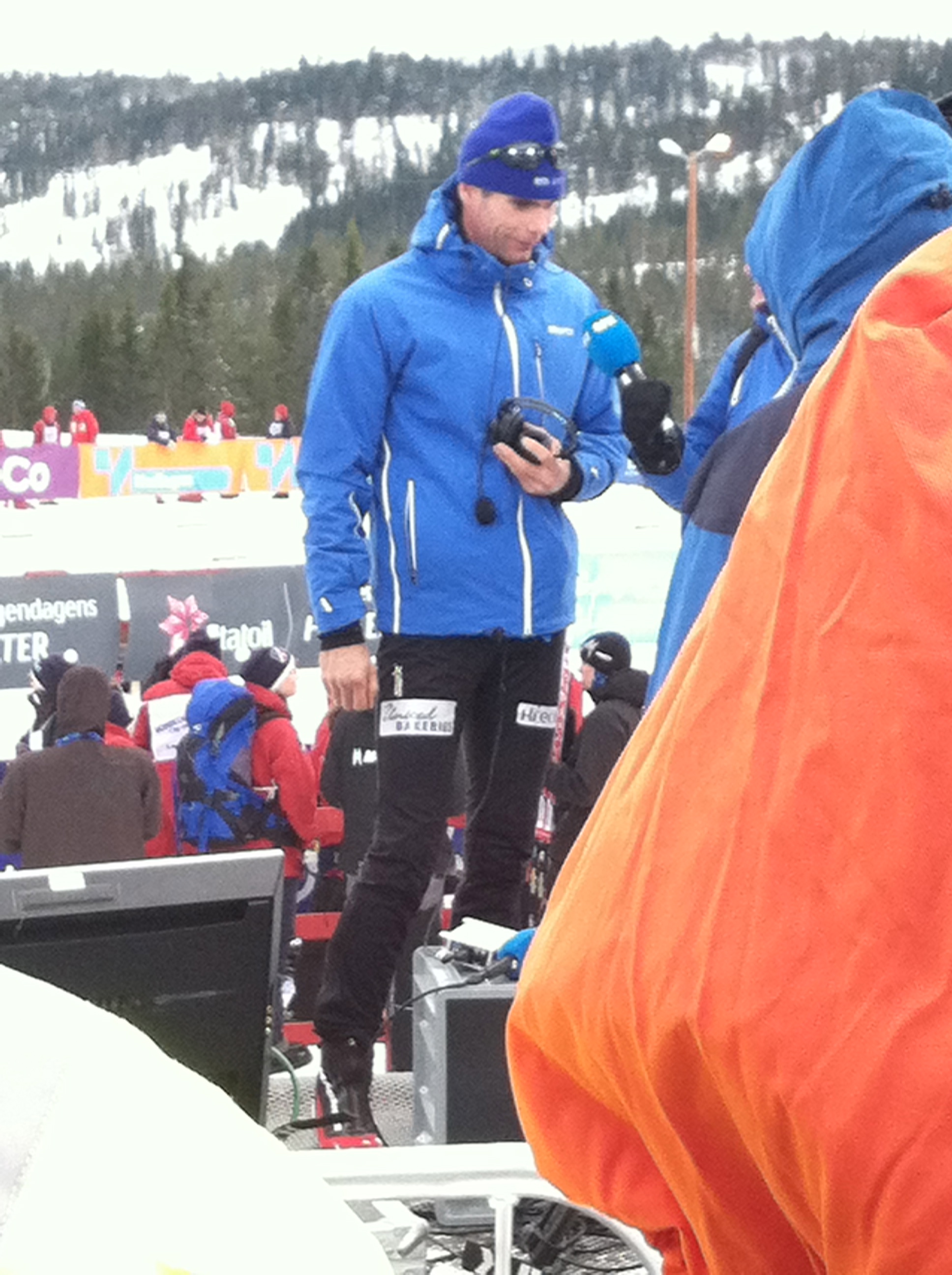
    Alsgaard pulling double duty as commentator and racer at 2012 Norwegian nationals.
    Alsgaard pulling double duty as commentator and racer at 2012 Norwegian nationals.

    Formerly of Team Norgehus, Gundersen decided Alsgaard was worth the investment and helped him launch a new concept – Team LeasePlan Go – pulling racers from the now-defunct Norgehus and United Bakeries.

    Alsgaard quit his job commentating for the Norwegian Broadcasting Company, telling VG, “I want to give myself a year off, get back the shape,” according to a translation. “I will follow the team and be more present … I will be fighting for the win in the Vasaloppet, Birkie, Marcialonga and other races.” He could not be reached for additional comment.

    Of the 12 handpicked skiers on LeasePlan (a car-leasing company), six make up its marathon team: Alsgaard, Södergren, Brink, Christoffer Callessen, Kjetil Hagvedt Dammen and Audun Laugaland. Gundersen stated their goal is to win all of the Swix Ski Classics, with an emphasis on the Vasaloppet, Norwegian Birkebeiner and Swedish Årefjellsloppet.

    Six younger guys comprise the all-around team geared toward World Cup racing and specifically the Olympics this season. Musgrave joins Per Kristian Nygård, Ånund Lid Byggland, Simen Sveen, Torgeir Skare Thygesen, and Espen Udjus Frorud in this group after his old team, Norway’s Team Veidekke, lost its title sponsor this spring.

    So how did Musgrave get involved in Alsgaard’s latest project? Once he found out Veidekke was going to be no longer, he started searching for a new affiliation.

    “I was speaking to a few people and just finding out if there were any other teams interested in having me, and I heard there was this new team,” Musgrave said.

    He contacted Søbak, who explained the breakdown of their long-distance and all-around teams. Musgrave could join the latter and train with peers while periodically working out with Alsgaard and veterans like Brink, 39, a three-time Vasaloppet winner, and Södergren, 36, a multiple Olympic medalist who won the Holmenkollen 50 k in 2006 and 2008.

    Musgrave was thrilled and even more excited after their first training camp from May 9-15. He knew four of his teammates from Team Hovden in Lillehammer, where he lived and trained from 2010 to 2012. The next year, Musgrave and Nygård, another all-around teammate, skied for Veidekke.

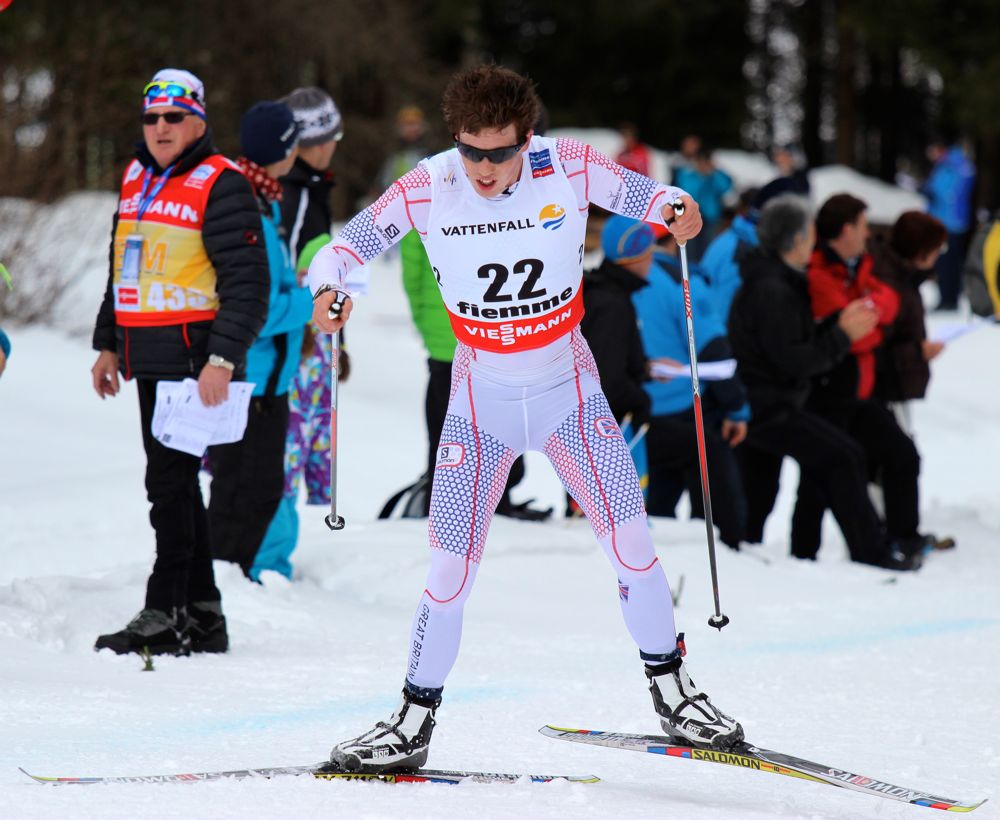
    Andrew Musgrave (GBR) en route to 28th in the 15 k skate at 2013 World Championships in Val di Fiemme.
    Andrew Musgrave (GBR) en route to 28th in the 15 k skate at 2013 World Championships in Val di Fiemme.

    “It’s really, really professional,” Musgrave said of Team LeasePlan. “I think it’s the best setup I’ve been with by far. … The distance team, it’s got all the well-known guys. Like three of the best skiers of the last 20 years are on that team.”

    In Gardermoen, he met all-around coach Johanna Ojala and was immediately impressed with her extensive knowledge on technique.

    “I’m possibly one of the ugliest skiers there are,” Musgrave said with a laugh. “Terrible technique at some times. … I think if I improve my technical skiing then hopefully I’ll be able to go a lot faster.”

    Last year, Musgrave broke through with a career best 11th in the Tour de Ski freestyle sprint in Val Müstair, Switzerland. He was fourth at U23 World Championships in the 15 k skate.

    “The season was pretty good, but I was quite inconsistent,” he said. “Under 23s was OK, although I was a bit disappointed to miss out on a medal. Next year, consistency is the important thing, to be at a high level throughout the whole season instead of being up and down and never quite knowing if I was gonna have a good race or not.”

    Headed into his second Olympics, Musgrave is looking to break through the top 50 and finish in the top 10 of the freestyle sprint in Sochi, Russia.

    “I really like the sprint course there ’cause it’s long and hard and it suits distance skiers,” he said. “I’m sort of a distance skier that can do OK at sprints sometimes, especially if it’s a long, hard course at altitude like it is.”

    In the meantime, he’ll take every opportunity to absorb pointers from seasoned guys like Alsgaard. Chances are, he won’t mind.

    “One thing that surprises me is how little people are curious,” Alsgaard told Dagbladet after placing fourth in the 15 k at 2012 Norwegian nationals. Musgrave was second in the event.

    “Fast skiers live into their own world and their own bubble,” he added. “Nobody has come to me and asked, ‘What are you doing?’ ‘Why do you do it?’ There has not been one question. No trainers, no skiers. … One should have faith in themselves and have confidence, but it is important to be curious, too.”

    Alsgaard expressed a similar sentiment in a 2011 interview with FasterSkier.

    “It’s always very important to be curious and always try to ask questions when you meet people, no matter if they have been good skiers or not,” he said. “That’s an area, I think, maybe [the Norwegian national team] could work harder.