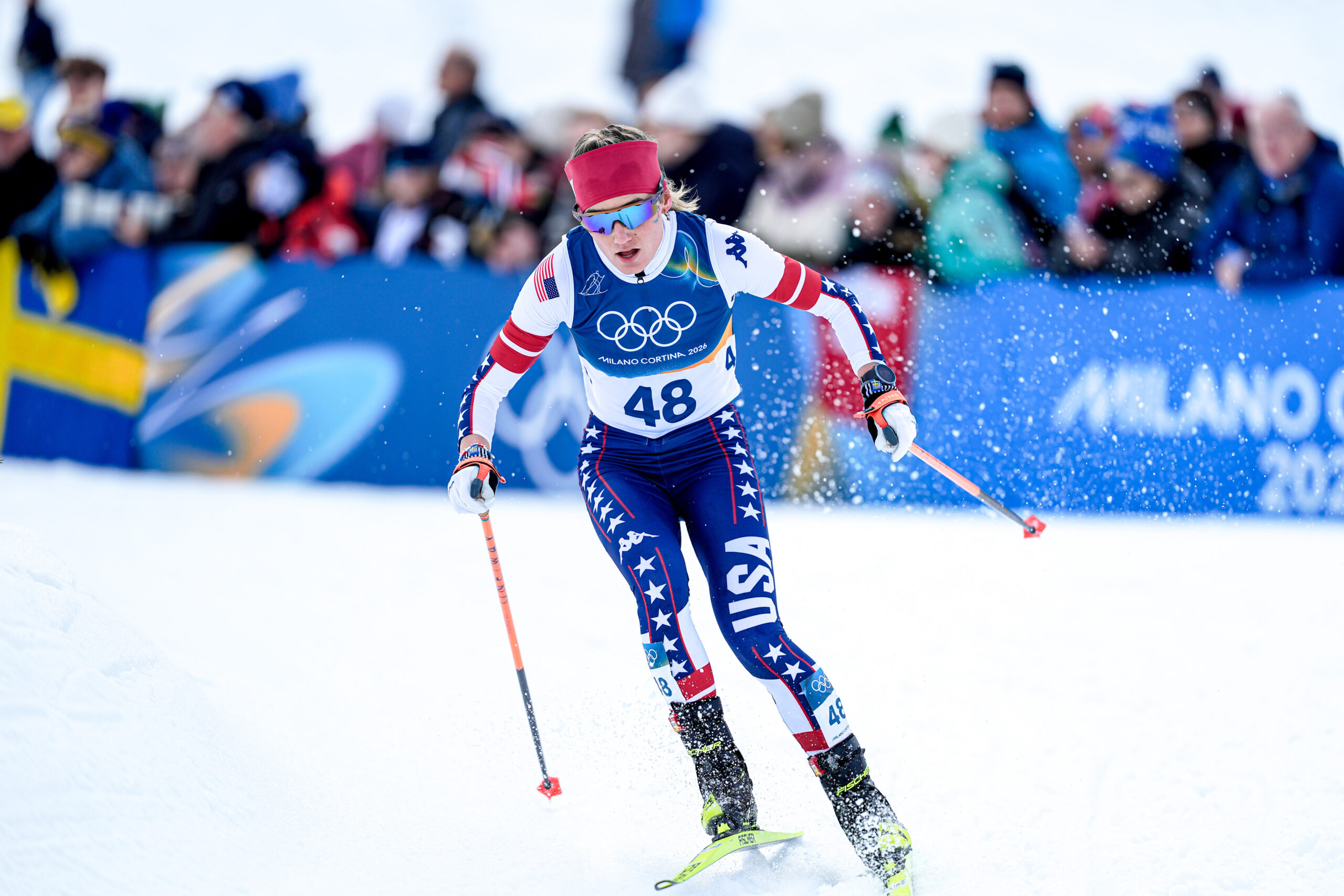
From the FasterSkier archive — posts syndicated from athletes’ and coaches’ own blogs between 2004 and 2012, kept online as published. Current coverage is at fasterskier.com.

Tag: Team USA cross-country skiing

  • Diggins Podiums in Lahti as Karlsson Wins 10 k Classic

    Diggins Podiums in Lahti as Karlsson Wins 10 k Classic

    This coverage is made possible through the generous support of Marty and Kathy Hall and A Hall Mark of Excellence Award. To learn more about A Hall Mark of Excellence Award, or to learn how you can support FasterSkier’s coverage, please contact info@fasterskier.com.

    Jessie Diggins (USA) on her way to third place in the 10 k Classic Individual Start in Lahti, Finland. (Photo: Authamayou/NordicFocus)

    As Jessie Diggins climbed the final hills in Lahti on Sunday, she could hear something unusual rising above the crowd noise. Scattered along the course were hand-made signs held by Finnish fans and young skiers. Many carried the same simple message: “Thank you, Jessie.”

    For Diggins, racing through what has increasingly become a farewell tour of World Cup venues that have defined her career, the moment carried emotional weight. Lahti has not always been a place where the American felt the course played to her strengths, particularly in classic technique. But on Sunday, she delivered one of her most meaningful performances there, skiing to third place in the women’s 10-kilometer classic interval start.

    “There were so many people out on the course with signs saying ‘Thank you, Jessie,’ and it was really emotional in the best way,” Diggins said afterward. “It was incredibly touching. Seeing all the little kids in glitter after the race was just really special.”

    Frida Karlsson (SWE) on her way to the 10 k Classic win in Lahti, Finland. (Photo: Authamayou/NordicFocus)

    Sweden’s Frida Karlsson powered to the victory in 25:57.6, edging teammate Linn Svahn by just over four seconds. Diggins followed in third, 6.2 seconds behind the winner, securing the 90th World Cup podium of her career — a milestone that came in her 375th World Cup start.

    The podium also represented a breakthrough for Diggins in a discipline she has spent years working on. Despite her long list of accomplishments, Sunday marked her first World Cup podium in a standalone 10-kilometer classic interval start.

    “The Lahti course hasn’t always suited my strengths in classic skiing,” Diggins said. “So it felt really cool to pull it together a bit more today.”

    The result allowed Diggins to maintain control of both major season-long competitions. With only three World Cup stops remaining this winter, she continues to lead Sweden’s Moa Ilar by 264 points in the Overall World Cup standings and by 188 points in the Distance standings, positioning herself strongly in the race for the sport’s coveted crystal globes.

    Moa Ilar (SWE) and Linn Svahn (SWE), (l-r) reflecting at the finish. (Photo: Authamayou/NordicFocus)
    Svahn Sets the Early Benchmark, Karlsson Finishes the Job

    With the interval format — one athlete starting every 30 seconds — stretching the field across the Lahti course, the first major time to chase appeared almost immediately.

    Sweden’s Linn Svahn, starting with bib 5, was among the earliest contenders onto the course and quickly posted the fastest times through the early checkpoints. Known primarily as one of the World Cup’s dominant sprinters, Svahn skied aggressively over the opening kilometers and established the benchmark that much of the field would spend the next hour chasing.

    Her time held atop the standings as racer after racer attempted to match it.

    Later in the race, however, another Swede began to close the gap. Frida Karlsson, wearing bib 40, remained within seconds of Svahn through the intermediate checkpoints before edging ahead in the final kilometers.

    “I was just trying to stay in my own skiing,” Karlsson said afterward. “I heard it was between me and Linn, and I was super excited to get that fight.”

    Karlsson ultimately crossed the line in 25:57.6, securing the victory by 4.1 seconds over her teammate.

    The win came after a brief illness, which prevented her from competing in the Olympic 50 k, but Karlsson said she was eager to keep racing despite the setback.

    “I was sick after the Olympics, but I was really excited to keep racing and just do what I know best,” she said. “So I’m super glad to be here.”

    Diggins, starting shortly after Karlsson, kept herself in contention throughout the race, skiing within striking distance of the Swedish pair at each checkpoint before finishing 6.2 seconds back in third place.

    Linn Svahn (SWE) on her way to second place. (Photo: Authamayou/NordicFocus)
    Three Different Approaches to the Same Race

    The split times revealed three distinct pacing strategies among the podium finishers.

    Svahn, starting fifth, set the tone early. She posted the fastest time through the opening 1.1 kilometers and maintained the lead at the 3.4-kilometer checkpoint, immediately putting pressure on the rest of the field as they left the start gate.

    Karlsson, starting later in bib 40, remained just seconds behind through the early checkpoints, skiing a controlled opening before gradually closing the gap. By the middle of the race, she had moved into contention, and over the final kilometers, she proved strongest of all, ultimately pulling ahead to secure the victory.

    Diggins, meanwhile, delivered perhaps the most evenly paced effort of the three. She remained within striking distance of the leaders at every checkpoint — fifth at 1.1 kilometers, third by 3.4 kilometers, and still in podium position through the final lap.

    That steadiness proved decisive in the final standings. While the two Swedes battled for the win, Diggins’ consistent pace allowed her to secure third place and another important podium in the fight for the season-long crystal globes.

    Jessie Diggins (USA) sprints for the finish line. (Photo: Authamayou/NordicFocus)
    Diggins’ Classic Progress

    Diggins’ podium also reinforced one of the season’s quieter developments: the continued evolution of her classic technique.

    For much of her career, the American’s greatest moments have come in skating events, where her aggressive pacing and powerful finishing speed often prove decisive. But this season she has shown remarkable consistency in classic distance races, finishing in the top ten in every classic distance event on the World Cup calendar.

    Conditions in Lahti — warming temperatures and increasingly soft tracks — placed an additional premium on ski preparation, something Diggins was quick to acknowledge after the race.

    “I had great skis, which is a huge part of the equation, especially when the conditions get slushy,” Diggins said. “This podium really belongs to the team. I’m so grateful for all the hard work they put in.”

    Rosie Brennan (USA) on her way to 12th place. (Photo: Authamayou/NordicFocus)
    Brennan Continues Return to Form

    A bit further down the results list, fellow American Rosie Brennan continued a gradual return toward form after a long battle with illness that has affected much of her season.

    Brennan finished 12th (+38.6) in Lahti, a result that reflected both solid skiing and a cautious approach early in the race.

    “This whole process has really been a game of time,” Brennan said. “There have been many moments when I’ve wondered if I’ll ever feel normal again in my life. But the last three days are the most normal I’ve felt racing since December 2024.”

    The Lahti course, known for its steep climbs and technical demands, offered a test of efficiency in classic technique — a challenge Brennan felt she handled well.

    “Lahti requires really good technical skiing,” she said. “I felt like if I could relax and focus on my classic technique, that would give me the best chance.”

    Kendall Kramer (USA) working her way up one of the many Lahti climbs. (Photo: Authamayou/NordicFocus)
    Kramer Finds Lessons in the Lahti Hills

    For American Kendall Kramer — 42nd in 27:40.8 (+1:43.2) — the Lahti race presented a different kind of challenge: starting first.

    Wearing bib 1, Kramer had the advantage of pristine tracks before the course began to break down as temperatures warmed. But the early start also meant racing without reference splits from the rest of the field.

    “I was actually okay starting with bib 1 today, given the state of the tracks,” Kramer said. “They tend to break down as the race goes on, and the corners can get icy, so it was nice to have cleaner conditions early.”

    Without other athletes on course to gauge pacing against, Kramer said the race became more about skiing freely and trusting her own effort.

    “Racing without reference splits definitely makes pacing tougher, but at the same time it lets you ski freely and focus on your own race.”

    The steep Lahti climbs also highlighted the technical demands of classic skiing at the World Cup level.

    “The punchy hills were fun because I could really bound up them, which is something I haven’t done much in World Cup racing so far,” Kramer said. “But the sections where it turns into pure power striding showed me I still have a lot to work on.”

    Despite the challenges, Kramer described the experience as valuable for understanding the technical standards required to compete consistently at the highest level.

    “I’ve learned so much from racing here this season,” she said. “At the World Cup, every strength and every weakness gets highlighted, and that really helps show what to work on heading into the summer.”

    Julia Kern (USA) catches a rest from both the climbs and the sunlight. (Photo: Authamayou/NordicFocus)
    Kern Heading Home Early to Recover

    Julia Kern, who finished 51st — 28:11.4 (+2:13.8) — today, said she will return home early from the World Cup circuit as she continues working through health issues that have lingered since the Olympic races.

    “I’ve been battling my body on various fronts since the Olympics,” Kern said in a team media statement. “One of my strengths is showing up and continuing to try and believe despite the challenges, while also being patient and smart.”

    Kern added that she will take additional time to recover while seeking answers about her condition, with hopes of returning to competition at the Stifel World Cup Finals in Lake Placid later this month.

    “Right now, my body needs more time to recover and is in search of answers, so I’m headed home early with the hopes of being in a place to race in Lake Placid.”

    Lauren Jortberg (USA) and Katherine Weaver (CAN), (l-r) charge for the line. (Photo: Authamayou/NordicFocus)
    Jortberg Gets a Front-Row Look at Karlsson’s Pace

    For American Lauren Jortberg — 55th in 28:32.7 (+2:35.1) — the Lahti race offered a unique opportunity to measure herself against one of the sport’s best.

    Early in the race, Jortberg found herself skiing behind Sweden’s Frida Karlsson for several kilometers as the eventual winner was completing her second lap while Jortberg was still on her first.

    “I skied with Frida for about three kilometers, which was really cool,” Jortberg said. “She’s obviously a beast, and it was cool to hang with her and get a taste of what that pace actually feels like.”

    Jortberg said the experience offered valuable insight into the demands of racing a 10-kilometer interval start at the World Cup level, where pacing often means pushing near maximum effort from the start.

    “Ten-k pacing on the World Cup is basically as hard as you can go the whole way,” she said. “It’s about learning how to navigate that kind of effort and still ski your own race.”

    She added that the race reinforced both the progress she has made in classic technique and the areas she hopes to continue developing as she gains more experience at the international level.

    “I’m really proud of how my classic skiing is coming along,” Jortberg said. “There’s still a lot to work on, but it was definitely a good first start in a distance race.”

    Jortberg said she hopes to carry the fitness and lessons from Lahti into the next stop on the World Cup circuit in Drammen, Norway.

    Emma Albrecht (USA) giving it everything she can all the way to the finish. (Photo: Authamayou/NordicFocus)
    Albrecht Sees the Margins Up Close

    Further back in the start order, fellow American Emma Albrecht — 58th in 28:50.7 (+2:53.1) — experienced firsthand just how tight the margins can be in World Cup distance racing.

    “The tight margins were shown by skiers finishing at similar times,” Albrcht said after the race. “For me, I was not passed, and I did not pass anyone. Which meant the skiers in front and behind me were skiing at a similar pace to me.”

    Like Kramer, Albrecht said the steep Lahti climbs emphasized the technical demands of classic technique, particularly the efficiency required to stride uphill without losing grip.

    “The uphill sections are the most technical and demanding here,” she said. “The climbs in Lahti are steep, and striding up efficiently requires really good technique to avoid slipping.”

    For Albrecht, the race served as a clear reminder of the areas she hopes to refine moving forward.

    “One of my biggest takeaways is that I want to keep working on my striding technique and get better at adjusting my tempo based on the terrain.”

    Dariya Nepryaeva (AIN) and Novie Mccabe (USA), (l-r) come to the line. (Photo: Authamayou/NordicFocus)
    Other North Americans in the Field

    Novie McCabe raced her way to 43rd in 27:45.0 (+1:47.4) in the 64-skier field.

    For Canada, Jasmine Drolet led the team in 41st place with a time of 27:39.8 (+1:42.2). Liliane Gagnon finished 46th in 27:56.4 (+1:58.8), and Katherine Weaver placed 59th in 29:00.9 (+3:03.3). Teammate Olivia Bouffard-Nesbitt, who had been listed on the start sheet, did not start the race.

    Take a bow, Jessie Diggins (USA) . (Photo: Authamayou/NordicFocus)
    The Season’s Final Push

    Sunday’s race in Lahti brought us even closer to the end of the season, now with only two sprint races and three distance races remaining until the sport’s biggest prizes will ultimately be decided.

    For Diggins, the third-place finish represented more than another podium in an already historic career. It also reinforced the remarkable consistency that has defined her season. With top-10 finishes in every classic distance race this winter, she has transformed what was once considered a relative weakness into one of the foundations of her bid for both the Overall and Distance crystal globes.

    Three stops remain on the calendar: the classic city sprint in Drammen, Norway, the iconic 50-kilometer race at Holmenkollen in Oslo, and the Stifel World Cup Finals in Lake Placid, New York.

    For Diggins, those races now carry both competitive stakes and emotional significance. As the American continues what has increasingly felt like a farewell tour across the World Cup circuit, the crowds that gathered along the Lahti course on Sunday offered a glimpse of how much her career has meant to fans of the sport, not just in the United States, but all around the world.

    And as Diggins pushed across the final climbs toward the stadium — signs waving, glitter-clad children cheering from the side of the course — she did what she has done so often over the past decade: she kept fighting for every second and left everything she had, once again, on the course.

    Lahti Women’s 10 k Classic RESULTS


    Love Stories Like This? Help Keep Them Coming.

    Feature stories like this one take time, access, and care to produce. If you value thoughtful storytelling and independent ski journalism, please consider becoming a Voluntary Subscriber. Your support directly fuels the work we do to cover the people, places, and moments that make our sport special.

    Join the FasterSkier community!


    Linn Svahn (SWE), Frida Karlsson (SWE), and Jessie Diggins (USA), (l-r) share the 10 k Classic podium in Lahti, Finland. (Photo: Authamayou/NordicFocus)
  • The Devon Kershaw Show: Down to the wire in the men’s Olympic 50 k

    The Devon Kershaw Show: Down to the wire in the men’s Olympic 50 k

    This episode was made possible through the generous support of our voluntary subscribers.  If you value coverage like this, please support FasterSkier with a voluntary subscription.  

    We’ll keep it short and sweet: Here’s a recap of the men’s 50 k. It was a fun race to watch and left us with a lot to discuss.

    We’ll be back after Sunday’s race. Reach us at devon[at]fasterskier.com and nat[at]fasterskier.com. We’re really grateful for all the support during the Olympics — thanks for notes and encouragement.

    A reminder: This is a homegrown podcast done by two guys working long hours and late nights. We’re also paying real money to be here in Italy. If you can, support the show and FasterSkier’s ongoing coverage with a voluntary membership. We’re also offering a bonus during the Olympics: a WhatsApp group with notes on Nat’s experiences in Italy, the food he’s eating, interview transcripts and more.

    Send nat[at]northernjournal[dot]com a confirmation of your voluntary membership and the number he should use for WhatsApp and we’ll get you signed up. You can also Venmo him directly at @nat-herz if a membership isn’t for you. We’re suggesting a minimum of $10, but we also won’t turn anyone away who wants to join because of an inability to pay.

    Help Support Our Olympic Coverage!

    FasterSkier will have our own Nat Herz on the ground at the Olympics, which, to be honest, is a very big financial lift for us. If you value the thoughtful work and access FasterSkier provides at championships like this one, please consider becoming a Voluntary Subscriber. Your support directly fuels the work we do to cover the people, places, and moments that make our sport special.

    Join the FasterSkier community!
  • Six for Six: Klaebo Makes History in 50 k Classic

    Six for Six: Klaebo Makes History in 50 k Classic

    This article was made possible through the generous support of our voluntary subscribers who have helped put our Nat Herz on the ground at the Olympics. If you value coverage like this, please support FasterSkier with a voluntary subscription.

    Martin Loewstroem Nyenget (NOR #3) and Emil Iversen (NOR #4) lead during the opening kilometers of the Men’s Olympic 50 k in Tesero, Italy. (Photo: Barbieri/NordicFocus)

    TESERO, ITALY — Sprint races can be dazzling, relay legs can be heroic, but the 50 k, especially classic, is where cross-country skiing gets carved into stone. The 50 k Classic turns strength, technique, and endurance into history, myth, and lore.

    On Saturday afternoon in Val di Fiemme, Johannes Hoesflot Klaebo skied into that mythology.

    By winning the Olympic 50 k Classic, Klaebo completed a sweep of six gold medals at these Games — six events, six victories — something no Winter Olympian had ever done before. The sprint prodigy who has built his reputation on ferocity over 1.5 kilometers now owns the sport’s most traditional crown.

    “I don’t think I even could have dreamed about this,” Klaebo said afterward.

    “In Norway, they say you must win a 50 k to become a man.” Klaebo said, smiling in the post-race press conference, “I think I am that now.”

    Johannes Hoesflot Klaebo (NOR) both the Olympic 50 k gold and a clean sweap of these games. (Photo: Vanzetta/NordicFocus)
    Feeling the significance

    The 50 k Classic is the most prestigious event in the sport with a long and storied history, and over 100 years of these championships, no one had ever put their skis on to start this race, trying to win an unprecedented 6th gold medal in one Olympic Games. But Klaebo had proven last year he could, winning six races at the World Championships on his home trails in Trondheim, Norway.

    The historic attempt was larger than cross-country skiing, too. American long-track speed skater Eric Heiden won five gold medals at the 1980 Winter Olympics in Lake Placid, New York. Klaebo was attempting to do something no athlete had ever done before at the Winter Olympics.

    Savelii Korostelev (AIN #12), Iivo Niskanen (FIN #7), Martin Loewstroem Nyenget (NOR #3), Johannes Hoesflot Klaebo (NOR #1), Harald Oestberg Amundsen (NOR #2), Emil Iversen (NOR #4), (l-r) during the early stages of the 50 k. (Photo: Vanzetta/NordicFocus)
    ​The potential spoilers

    Going into the race, the heavy favorites were without a doubt the Norwegians with Klaebo, his training partner Emil Iversen, Harald Oestberg Amundsen, and Martin Loewstroem Nyenget. However, others had to be considered as potential spoilers for the historic moment, among them, athletes on the French team, including Mathis Desloges, Hugo Lapalus, Victor Lovera, Finland’s Iivo Niskanen, American Gus Schumacher, and the Independent Neutral Athlete (AIN) Savelii Korostelev. Though it was a long shot, these other nations’ athletes could, potentially, battle for the win or at least a podium spot.

    Johannes Hoesflot Klaebo (NOR), Emil Iversen (NOR), and Martin Loewstroem Nyenget (NOR), (l-r) turned the 50 k into a three-man race. (Photo: Vanzetta/NordicFocus)
    The Shape of the Race

    The Olympic course in Tesero is not subtle. Seven laps with relentless climbing. Among them, the featured hill, the Zorzi Climb, waits like a toll booth each time the skiers re-enter the stadium.

    Heading into the race, there were 65 men on the start list, but Italy’s Federico Pellegrino, Finland’s Ristomatti Hakola, and America’s Ben Ogden all scratched.

    Once the race started, the first lap went by without much drama, though the field began to stretch. As they entered the stadium after one loop, over 30 skiers were within 20 seconds of the lead. By the end of lap two, that front pack had reduced to 20 skiers within 23 seconds of the lead, and on lap three, things really began to take shape.

    Early on in lap three, two favorites, Niskanen (FIN) and Amundsen (NOR), who had been at the front of the race, pulled out. The French favorites and American Schumacher also began to lose contact with the front-runners. Only Korostelev was able to maintain contact until even he could no longer keep up with the three top Norwegians.

    Martin Loewstroem Nyenget (NOR) did much of the work at the front. (Photo: Vanzetta/NordicFocus)
    By the middle of the race, there were three

    By lap four, it was unmistakable: Nyenget, Iversen, and Klaebo were alone, three red suits moving in steady formation.

    From the stadium, the mood was less frantic than historic, almost strangely calm.

    “The sun shone down… as if God had ordained the great Klaebo, winning his six in a row… I mean, it really was a beautiful day,” said FasterSkier’s Nat Herz, who was on the ground in Tesero. “I think people were just pretty relaxed watching this three-man Norwegian time trial as it went around the course… These guys have the best technique, the best materials, the best skis, the best fitness, and they did exactly what they set out to do.”

    The crowd was not roaring every lap. It was watching. Waiting.

    “Nyenget and Klaebo definitely gave everyone a good show, and it was tense to see. Was Klaebo going to be able to do this incredible accomplishment?”

    There was little theatrics in their separation from the field — no dramatic surge, no visible cracking. Just a grinding tempo that only they could sustain.

    Even the question of ski exchanges became a collective calculation. While much of the field ducked into the pit lane for fresh skis after lap four, the Norwegians skied past the ski exchange zone each lap.

    A Norwegian train. (Photo: Barbieri/NordicFocus)

    “Martin made the choice of not changing skis,” Klaebo said. “Emil and I just followed because we didn’t want to gamble.”

    In long races, fortune often hides in such decisions. The snow was changing; the sun had warmed the surface. Fresh skis could have been salvation or ruined a chance at gold.

    “I think it was the right decision,” Klaebo said in the press conference afterwards about the three Norwegians not switching skis.

    Johannes Hoesflot Klaebo (NOR) makes history as he crosses the line of the Men’s 50 k Classic. (Photo: Barbieri/NordicFocus)
    Saving Something for the Hill

    Through lap six, Nyenget did much of the visible work. Klaebo shadowed him, conserving every drop of energy he could.

    “I wish I was able to help them a little bit,” he said. “But when they asked me if I could go in front, I said no, because I was too tired.”

    It was not false modesty, Klaebo’s Olympic schedule had been more than the other two and fifty kilometers taxes even those who make winning look inevitable.

    “My plan today was just try to save as much energy as possible,” he said. “I needed to play on my strength… the last few hundred meters.”

    On the final lap, Klaebo came to the front, as if to take measure of the other two Norwegians, but in doing so, he created a gap on Iversen. Was the race for gold now just down to two? The answer was yes, as the rubber band had clearly been snapped for Iversen, who began to drift backwards from the leading pair.

    The decisive moment arrived where many had expected it would: on the Zorzi Climb. On the preceding descent, Klaebo rose from his tuck, adjusted his pole straps, and as they exited the sweeping left-hand turn at the base of the final climb, Klaebo pulled alongside Nyenget before beginning to accelerate. Not explosively — this was the closing act of a two-hour effort — but with the control of someone who knew exactly how much he had left.

    Nyenget followed for a few strides. Then he did not.

    Behind them, Iversen skied alone to bronze, sealing a Norwegian sweep.

    A moment of reflection at the finish for Johannes Hoesflot Klaebo (NOR). (Photo: Barbieri/NordicFocus)
    A Private Moment

    At the finish, Klaebo crossed the line and sat down alone on the snow. There was no theatrical collapse, only a quiet reckoning.

    “For me, it’s the best feeling, the last 200 meters before I cross the finish line knowing that I’m going to win,” he said.

    This Olympics, he suggested, had been built on deliberate choices, in training, in team structure, in how he and his father organized his life around the sport.

    “He has probably sacrificed as much as I have done,” Klaebo said of his father.

    Sacrifice is not his preferred word. He calls them choices. But the effect is unmistakable: a skier who once seemed specialized has become complete.

    Emil Iversen (NOR) enjoys his bronze medal and the sunshine after a lot of hard work to get back to the front of the sport and this moment. (Photo: Vanzetta/NordicFocus)
    Racing in His Time

    For the rest of the field, competing in the Klaebo era carries a strange duality, almost a frustration braided with admiration.

    “Of course, a bit,” Nyenget said when asked whether it is annoying to race alongside him.

    “But it’s more motivating as well. [Klaebo] is pushing us to be better every day.”

    Iversen echoed the sentiment.

    “I think it’s just fun to compete with the best skier ever,” he said.

    Across these two weeks, Klaebo has made dominance look procedural, yet his rivals know the margins are real, the preparation exhaustive. He bristles at the idea that this is inevitable.

    “I like myself way better when I’m winning than when I’m losing,” he said.

    Gus Schumacher (USA) gave everything he had to this sixth race at these Winter Olympic Games. (Photo: Vanzetta/NordicFocus)
    The American Effort

    For the United States, the 50 k carried a different emotional weight.

    Gus Schumacher, who had spent the early races in these Games chasing form and momentum before winning silver in the Team Sprint with Ben Ogden, finished 13th. He described the psychological toll of racing in every event.

    “There’s been a pretty heavy mental load the last two weeks,” Schumacher said. “If I’ve got a flame, it was ripping a couple days ago… halfway through the race, it felt like a little candle.”

    He has raced all six events, too, though with different outcomes.

    “I really don’t understand how you can ski 50 k so well and also sprint so fast,” Schumacher said of Klaebo. “I don’t really feel like there’s another athlete in the world that can compare to that scope of athleticism.”

    Hunter Wonders (USA) also pushed his body to its limits in the race. (Photo: Vanzetta/NordicFocus)

    Hunter Wonders placed 35th and spoke candidly about the physical reckoning.

    “I’m alive barely,” Wonders said. “I didn’t think I was gonna finish there for a little while.”

    Cramps seized him in waves — hips, hamstrings, forearms — and yet he finished.

    “I completed a race that four years ago I was really chomping at the bit to be able to compete in,” he said.

    Antoine Cyr (CAN) “gave everything” to the final men’s race in the Olympics. (Photo: Barbieri/NordicFocus)
    The Canadian Outcome

    Canada placed two men inside the top 20.

    Antoine Cyr finished 11th, just outside the top 10 he had targeted.

    “I gave it everything,” Cyr said. “It’s such a hard course.”

    He pointed to the Zorzi Climb and the long drag back to the high point of the course after coming through the stadium, efforts that stretch toward six minutes, rare in modern championship layouts.

    “It’s really tough,” he said.

    Thomas Stephen finished 17th, steady and controlled in conditions that demanded patience. While he did not step into the medal conversation, his result underscored the depth Canada has built in distance racing and marks what is possible in future years.

    Martin Loewstroem Nyenget (NOR), Johannes Hoesflot Klaebo (NOR), and Emil Iversen (NOR) (l-r) share the Milano-Cortina Olympic Winter Games 50 k Classic podium in Tesero, Italy. (Photo: Barbieri/NordicFocus)
    What Remains

    Klaebo plans to rest for a few weeks before racing again in Lake Placid.

    “That’s the plan,” he said.

    There will be time later to measure what six-for-six means, how it reshapes record books, and how it reframes conversations about the greatest Winter Olympians. For now, it exists as a bright fact in the thin mountain air.

    The 50 k endures because it asks the oldest question in endurance sport: what is left?

    On Saturday, Johannes Hoesflot Klaebo had something left. Enough to attack on the final climb once more. Enough to once again finish alone down the final meters. Enough to make something mythical and historic feel ordinary and predictable.


    Olympic Men’s 50 k Classic – RESULTS


    Help Support Our Olympic Coverage!

    FasterSkier will have our own Nat Herz on the ground at the Olympics, which, to be honest, is a very big financial lift for us. If you value the thoughtful work and access FasterSkier provides at championships like this one, please consider becoming a Voluntary Subscriber. Your support directly fuels the work we do to cover the people, places, and moments that make our sport special.

    Join the FasterSkier community!

     

    Emil Iversen (NOR), Johannes Hoesflot Klaebo (NOR), and Martin Loewstroem Nyenget (NOR) come through the stadium to the delight of the crowd. (Photo: Vanzetta/NordicFocus)
  • 2026 Olympic Viewers Guide & Results: Cross-Country Skiing

    2026 Olympic Viewers Guide & Results: Cross-Country Skiing

    Gus Schumacher (USA) starts his 2026 Milano-Cortina Winter Olympic Games in the Men’s 20 k Skiathlon in Tesero, Italy. (Photo: Barbieri/NordicFocus)

    2026 Winter Olympics Cross-Country Skiing Schedule

    Val di Fiemme — Tesero Cross-Country Skiing Stadium (Fabio Canal Center)

    Below is the Olympic cross-country ski competition schedule for Milano Cortina 2026 (all events subject to change; times local to Italy) – the best way to watch is on NBC Peacock:

    Saturday, February 7
    • Women’s 20 km Skiathlon (Classic + Free) – RESULTS

    Sunday, February 8
    • Men’s 20 km Skiathlon (Classic + Free) – RESULTS

    Tuesday, February 10
    • Sprint Classic — Qualification & Finals (Women & Men) – WOMEN’S RESULTS & MEN’S RESULTS

    Thursday, February 12
    • Women’s 10 km Free – RESULTS

    Friday, February 13
    • Men’s 10 km Free – RESULTS

    Saturday, February 14
    • Women’s 4 × 7.5 km Relay – RESULTS

    Sunday, February 15
    • Men’s 4 × 7.5 km Relay – RESULTS

    Wednesday, February 18
    • Team Sprint Free (Women & Men) – WOMEN’S RESULTS & MEN’S RESULTS

    Saturday, February 21
    • Men’s 50 km Mass Start Classic – RESULTS

    Sunday, February 22
    • Women’s 50 km Mass Start Classic – RESULTS


    2026 U.S. Olympic Cross-Country Ski Team

    Women
    Men

    Read all of our FasterSkier featured athlete profiles for the entire US Olympic Cross-Country Ski Team (links in the list above).

    Help Support Our Olympic Coverage!

    FasterSkier will have our own Nat Herz on the ground at the Olympics, which, to be honest, is a very big financial lift for us. If you value the thoughtful work and access FasterSkier provides at championships like this one, please consider becoming a Voluntary Subscriber. Your support directly fuels the work we do to cover the people, places, and moments that make our sport special.

    Join the FasterSkier community!
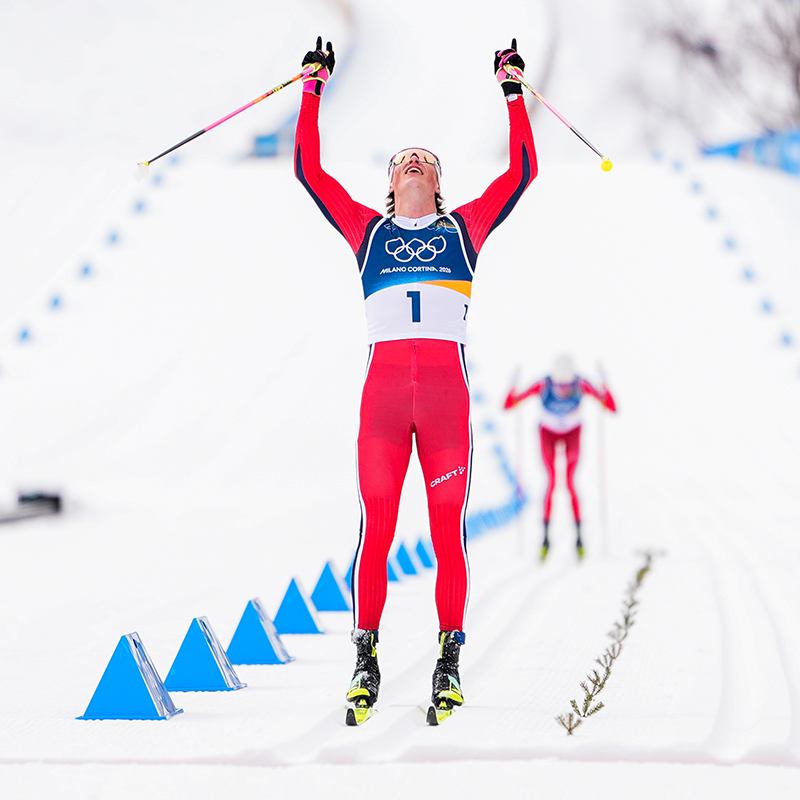
     

    Rosie Brennan (USA) starts her 2026 Milano-Cortina Winter Olympic Games in the Men’s 20 k Skiathlon in Tesero, Italy. (Photo: Vanzetta/NordicFocus)
  • Olympic Preview, Sort Of—USA Third in Goms Team Sprint

    Olympic Preview, Sort Of—USA Third in Goms Team Sprint

    This coverage is made possible through the generous support of Marty and Kathy Hall and A Hall Mark of Excellence Award. To learn more about A Hall Mark of Excellence Award, or to learn how you can support FasterSkier’s coverage, please contact info@fasterskier.com.

    It was a good day at the office, a stunning office, for Ben Ogden (USA) in Goms, Switzerland. (Photo: Authamayou/NordicFocus)

    For the skiing stars of Norway, World Cup victories are commonplace—almost expected. For the skiers of most other nations, any World Cup podium appearance is a career-defining event. That said, some of the most interesting World Cup racing takes place on those days when the strength of the field is re-shuffled, when a few notables stay home, when a few teams re-arrange their rosters. Those are days when World Cup podiums will still be filled, and a greater number of teams know they can rise to that occasion. Still, it’s not a straightforward task, and many teams find themselves stumbling over the challenge rather than rising to the top. Today was a day that the USA saw this opportunity, and rise they did . . .

    Norway may have won today’s Team Sprint (though with Harald Oestbeg Amundsen and Einar Hedegart are a team that’s unlikely to contend for this same win when the Olympics begin in Val di Fiemme), and Italy may have flown second across the finish on the wings of Federico Pellegrino (a performance he would hope to repeat in front of his countrymen in the Olympics), but it was the third-place effort of Team USA’s Ben Ogden and Gus Schumacher that really drew attention. The circumstances of the day offered them an opportunity to ascend to a World podium; they grabbed that opportunity with both hands. It’s great to see American men on World Cup podiums, even greater to see them earn that position with such fortitude and skill.

    “Today was a pretty full field,” said Ogden. “But there was no Klaebo today. There definitely will be Klaebo in Val di Fiemme. I’m sure that some teams will put up different athletes on their Team Sprint than they did today, but it’s really one of those things that’s not worth dwelling on until the time comes to actually seethe start list, to go out and get it done.”

    The day started with Gus Schumacher (USA) having a great qualification for the Team Sprint in Goms, Switzerland. (Photo: Authamayou/NordicFocus)

    The Alpine municipality of Goms, Switzerland (population 1,160) was the venue for a staging of an event that will take place in the Olympic Games in Val di Fiemme—the Freestyle Team Sprint—but today’s race was not exactly a dress rehearsal for that Olympic race. Specifically, the cast of characters is likely to change in the Olympics even as the strategy employed by today’s winner, Team Norway, is likely to remain the same. They’ll set the pace, they’ll stay at the front (and out of trouble). They’ll accelerate in the penultimate leg. They’ll hope to give Johannes Hoesflot Klaebo a lead at the beginning of the anchor leg. They’ll rely on Klaebo to remain unbeatable in any Freestyle Sprint where he enters the finishing straightaway with a lead. We really do expect this Olympic event to follow that script. Even so, many questions remain. Who will team with Johannes Hoesflot Klaebo in what is likely to be the gold medal favorite team? And who will the USA field as its Team Relay pair? Will Schumacher team with Ogden? Or will coaches choose another combination of abilities? Will Pellegrino and Elia Barp continue to be factors in the finishing straightaway? And which other teams will arrive with hopes of a medal: Finland? Switzerland? Sweden?

    “If history is any indicator, then Norway leading and everyone else following will likely (repeat as a strategy) at the Olympics,” said Ogden. “Val di Fiemme is definitely a harder course, so I anticipate it being something like that. Championship Team Sprints are definitely intense; it’ll have some similarities to today, and probably many differences.”

    Individual qualifying saw USA 1—comprised of likely Olympic teammates Ben Ogden and Gus Schumacher—as the third fastest qualifier. They would be joined in the 15-team Final by USA 2’s JC Schoonmaker and Zanden McMullen (who would finish 11th on the day).

    Home-team, Switzerland 1, was the top qualifier thanks to the efforts of seasoned Sprint competitors Janik Riebli and Valerio Grond (though packing a Team Sprint team with a pair of true sprinters is usually not considered to be the best way to excel in this event—Switzerland 1 would top all qualifiers, but would finish sixth on the day). Switzerland’s fast qualifying standard was followed by Norway 1’s Harald Oestberg Amundsen and Einar Hedegart, both of whom were recently named to the Norwegian Olympic team, but neither of whom are likely to appear in this event in Milano-Cortina. Fourth fastest qualifier was Italy 1’s Elia Baro and Federico Pellegrino who are likely to team up when the Olympic Team Sprint takes place in their homeland.

    Ben Ogden (USA) also had an excellent qualification for the Team Sprint – together with Schumacher, they posted the third-fastest time. (Photo: Authamayou/NordicFocus)

    A Plan to Follow—Easier Said than Done

    For some teams, Goms’ Team Sprint was an Olympic dress-rehearsal, for other teams, a consolation prize. Norway 1 had the potential to take a World Cup win, but they will certainly NOT be the Olympic duo that Norway fields in this event (that spot being reserved for Johannes Hoesflot Klaebo and (presumably) his gold medal partner from Beijing, Erik Valnes). Norway 2 was comprised of Ansgar Evensen and Even Northug, two of the world’s best sprinters who, nonetheless, found themselves overlooked when Norway selected its team of Olympians. While the skiers of Norway 2 may have hoped to prove that they belonged on the Olympic Team, their efforts fizzled in Goms. Norway 2 would place 15th, last among starters in the Team Sprint final.

    Norway 1, on the other hand, performed as expected. Amundsen led out Leg 1, keeping the pace high and keeping himself out of trouble. He was followed by Riebli, Barp, and Ogden. Ogden tangled skis briefly with Barp as they entered the exchange, but both skiers shook it off masterfully. Norway 1 continued to lead.

    Norway kept the pressure on to keep things stringed out. (Photo: Authamayou/NordicFocus)

    Ogden tagged Schumacher to begin Leg 2. Schumacher seems a logical choice to team with Ogden in the Olympic Team Sprint, a pairing suggested by the tactic of pairing a sprinter with a seasoned, fast-skiing all-rounder who can navigate in a tight pack and not get dropped. American Olympian, Jack Young, is a world-class freestyle sprinter, but even though it’s called the “Team Sprint,” there’s no use in fielding a team of two pure sprinters. The only sprint that matters is the one to the finish line at the end of the final leg. Before then, each teammate’s job is simply to steer clear of trouble, to hang on to the pace, and to not get dropped. More than perhaps any of his US Olympic teammates, Schumacher fits that bill.

    “The first leg was pretty chill,” said Schumacher. “I found myself a little far back after our tag, but made a good move on the fast corner.”

    “The second leg was pretty fast,” Schumacher continued. “But we still had a group, so it wasn’t too bad. We held the gap to Norway, which is good. Norway was definitely trying to string everyone out. They were really impressive, but we’re not far off. And I think. if the right person was in a good position, they probably could have held that. With Norway, that’s something to think about for the future.”

    Schumacher knows his role, and in Goms’ Team Sprint he skied it brilliantly. Through Leg 2, he remained in contact, preserving energy as Norway 1’s Hedegart set the pace at the front followed by Switzerland’s Grond and Sweden’s Edvin Anger. Leg 3 began with no changes in leaders, and with Ogden remaining solidly in contact with the top five. Amundsen continued to set the pace for Norway followed by Riebli and Barp.

    Einar Hedegart (NOR) clearly was racing with something to prove to the Norwegian team coaches about his place in the Olympic Team Sprint with Johannes Hosflot Klaebo. (Photo: Authamayou/NordicFocus)

    Leg 4 saw Hedegart stringing out the pace while Schumacher continued to mark the skiers at the front. The field began to string out, with Schumacher keeping USA 1 in contention.

    Leg 5 is where the field expects Norway to make a move; Amundsen did not disappoint, storming off the front even before the field had left the flat terrain around the exchange zone. By the time he reached the course’s first uphill, Amundsen enjoyed a lead of 30 meters. Rather than chase him in vain, the chase group—led by Barp—sat up a bit to preserve energy. Norway had earned a gap as Amundsen tagged Hedegart to begin the anchor leg. The rest of the field would fight for second and third.

    The way the Americans set up today’s relay team—with the sprinter, Ogden, leading off and the all-rounder, Schumacher, finishing—showed that Team USA may realize that the Olympic version of this event will NOT come down to a finishing line sprint, but to a final-leg high-speed dash that sheds sprinters and leaves all-rounders leading the way to medals. This may be the scene in a few weeks—Schumacher dueling Pellegrino in the final leg. If so, then today was a bit of a dress rehearsal after all. On the first of the final leg’s two uphills, Schumacher tried desperately to cross the gap to Amundsen. It was a bold ploy, but one that a fast distance skier needed to try in order to shake Pellegrino. Pellegrino shadowed Schumacher, but seemed to struggle in doing so. Over the second uphill, and Pellegrino struggled again under Schumacher’s re-application of pressure . . . but in order to beat a sprinter you need to drop a sprinter.

    Gus Schumacher (USA) kept the pressure on, leading the chase group behind Norway. (Photo: Authamayou/NordicFocus)

    Ahead of them, Hedegart show-boated playfully at the finish line, taking off his poles and sheathing them like a sword after a successful duel. Pellegrino undid Schumacher in the finishing straightaway—a cagey veteran having played his hand with seasoned mastery. Schumacher shrugged across the finish line in third, having done all he could to lengthen the sprint in an attempt to take the sting out of Pellegrino’s sprint.

    “Pellegrino is a super strong sprinter,” said Schumacher.” Today, he basically made me pull through. I didn’t want to mess around with a big bunch sprint, and I’m glad I didn’t. I’m fine with him beating me in the end. But, yeah, we’ll see how it plays out in Val di Fiemme. I think I can beat him if I can get a good draft. We’ll see; you need drop him before the finish line. I guess you just have to go faster! But he’s also a great distance skier, so that’s a tough one.”

    “Having Gus in the second leg felt good for me,” said Ogden. “He’s really good at positioning, and super strong and fit, and he’s going to have legs at the end when it matters . . . Today was just to try something and learn from it. I think that we thought it was a natural thing to try. We went with it today, and it worked out well.”

    After all the strategizing, all the jockeying, all the surging, all the positioning, it’s a skier like Pellegrino—a world-class sprinter who can also contend in distance races—who is the ideal finisher for a Team Sprint. Approaching the Olympic Team Sprint in his home country—and hoping for a gold medal in front of his countrymen—Pellegrino still has one major obstacle to overcome: Klaebo is the one skier who has proven to be even faster, even more durable than Pellegrino. If the Italian wants to claim gold on home turf, he’ll need to beat the best of all time in order to do it . . . but that will be the same for any skier who hopes to claim gold in any event when the Olympic races are run in Val di Fiemme.

    Gus Schumacher (USA) and Ben Ogden (USA), (l-r) proved they are true contenders for a medal in the Team Sprint at the Olympics. (Photo: Authamayou/NordicFocus)

    While the cast may be different when this event is staged at the Olympics of Milano-Cortina, the script is likely to be strikingly similar. If so, then Team USA will be there hoping. To recreate the tactics, the speed, the strength, and the brilliance that took them to a third place finish today in Goms. Ironically, today’s Norwegian winners are not likely to be offered the chance to pursue Olympic gold in this same event. When asked whether he thought this dominant performance ahead of numerous teams likely to contend in this event in Val di Fiemme could cause Team Norway to reconsider their starters in the Olympic Team Sprint, Hedegart was playful, yet again.

    “Message sent,” grinned Hedegart. “I hope the message is received.”

    Chance of Hedegart becoming the face of Team Norway in season’s to come? Quite high, it appears. Chance of Hedegart replacing Valnes (as Klaebo’s teammate) in Norway’s Olympic Team Sprint? Far less likely . . . but much could happen between the World Cup finish line in Goms and the Olympic starting line in Val di Fiemme.


    Goms World Cup Men’s Freestyle Team Sprint QUALIFYING

    Goms World Cup Men’s Freestyle Team Sprint RESULTS


    Help Support Our Olympic Coverage!

    FasterSkier will have our own Nat Herz on the ground at the Olympics, which, to be honest, is a very big financial lift for us. If you value the thoughtful work and access FasterSkier provides at championships like this one, please consider becoming a Voluntary Subscriber. Your support directly fuels the work we do to cover the people, places, and moments that make our sport special.

    Join the FasterSkier community!


    Federico Pellegrino (ITA), Elia Barp (ITA), Harald Oestberg Amundsen (NOR), Einar Hedegart (NOR), Gus Schumacher (USA), Ben Ogden (USA), (l-r) share the Team Sprint podium in Goms, Switzerland. (Photo: Authamayou/NordicFocus)
  • Goms Wasn’t the Answer — It Was the Test

    Goms Wasn’t the Answer — It Was the Test

    This coverage is made possible through the generous support of Marty and Kathy Hall and A Hall Mark of Excellence Award. To learn more about A Hall Mark of Excellence Award, or to learn how you can support FasterSkier’s coverage, please contact info@fasterskier.com.

    Leg one gets started in the Women’s Team Sprint in Goms, Switzerland. (Photo: Authamayou/NordicFocus)

    There are World Cup races that arrive like answers, and others that arrive like mirrors. The women’s freestyle Team Sprint in Goms belonged firmly to the second category — not because the results were unclear, but because nearly everyone on the start line arrived with something else already decided.

    This was the last World Cup before the Winter Olympics in Milano–Cortina, and teams have been finalized. In Switzerland, the focus shifted from selection to tactical rehearsal, testing legs, patience, and restraint before Olympic stakes.

    That context hung over the Team Sprint from the opening qualification prologue to the final exchange. For some, the day was about execution. For others, survival. And for the U.S. women, it was an afternoon shaped as much by what wasn’t raced as what was.

    Jessie Diggins, focused on the Overall World Cup and conserving energy for February, sat out. Sweden, which has recently dominated sprinting, also left its top women on the bench. Their absences reshaped opportunity and increased ambiguity in a race where errors are costly.

    Julia Kern (USA) during qualification. (Photo: Authamayou/NordicFocus)

    A Course That Punishes Early Optimism

    Goms’ team sprint course was unforgiving. The moderate altitude, demanding climbs, and relentless rhythm tested the athletes in each of the individually timed qualification prologues. The top-16 teams advanced, then raced six alternating laps marked by tag zones, tempo shifts, and mounting fatigue.

    “It was definitely a rude awakening,” said Julia Kern, who returned to racing after a short training block at home in Vermont. “I think a lot of people felt that way — the qualifier was brutal, especially with such a long climb at semi-altitude.”

    Kern’s reset after the Tour de Ski was intentional. “The first week I focused on recovery, and the second week I finally got in a training week for the first time this season,” she said. “The snow conditions were awesome, which made it even better. But my body isn’t fully sharp yet, which is to be expected after some training and traveling back over to Europe.”

    That combination — fitness returning, sharpness still arriving — defined much of the U.S. women’s day.

    Kendall Kramer (USA) during the team sprint qualification in Goms, Switzerland. (Photo: Authamayou/NordicFocus)

    Two U.S. Teams, Two Very Different Races

    The United States entered two teams into the final.

    Team One paired Kern with Sammy Smith, a first-time Olympian whose rise this season has been defined by composure as much as speed. Team Two brought together Lauren Jortberg and Kendall Kramer, both newly named to their first Olympic team — and both still absorbing what that meant.

    For Jortberg, the Olympic nomination landed at the end of a season built on restraint.

    “I made a really conscious decision this year not to focus too hard on Olympic qualification itself,” Jortberg said. “I didn’t really think the Olympics were on the cards for me. I made a lot of big changes — a new ski brand, a team change, moving to a new country — so I just focused on the process.”

    That process had worked. She arrived in Goms feeling strong.

    “Today, I was really happy with the sprint qualifier — probably my best World Cup qualifier so far,” she said. “Time-wise, it was strong, and I knew going into the race that I was feeling good physically.”

    Then, just minutes later, it unraveled.

    Lauren Jortberg (USA) gets aero in Goms, Switzerland. (Photo: Authamayou/NordicFocus)

    The Moment Team Sprints Turn Cruel

    On Jortberg’s opening leg of the final, the pack compressed into one of the course’s tighter corners. The decision window was measured in fractions of a second.

    “Coming into a corner, I got tangled up with another skier,” Jortberg explained. “In that split second, it was either ski into their gear or crash. That’s just part of team sprint racing — it’s really tight skiing.”

    She went down. The gap opened immediately.

    For Kendall Kramer, suddenly tasked with damage control, the calculation shifted from ambition to probability.

    “I knew things happen in team sprints all the time — broken equipment, falls, tangles, people bonking,” Kramer said. “So I didn’t get discouraged or feel like we were completely out of it. You never know how a race can change.”

    But races do not always cooperate.

    “Not many crashes happened today,” Kramer said. “I think for both of us, being able to draft and roll with the group pace would have helped a lot.”

    Jortberg knew the consequences instantly. “It creates a huge gap, and that’s really hard in a team event because it affects your teammate,” she said. “It makes it even sadder when you know you’ve put them in that position.”

    Both athletes made the same strategic choice: do not burn the weekend to save a result that no longer exists.

    “It didn’t make sense to burn all our matches trying to close such a big gap,” Jortberg said. “We both have more important races coming up.”

    For Kramer, the day still mattered.

    “Just qualifying and getting to experience my first World Cup sprint day was really cool,” she said. “I learned a lot from it.”

    Julia Kern (USA) tags Samantha Smith (USA)  during the Team Sprint in Goms, Switzerland. (Photo: Authamayou/NordicFocus)

    Team One: Learning While It’s Still Allowed

    Up front, Kern and Smith stayed clear of trouble, navigating a race whose pace was notably more controlled than many recent team sprints.

    “The pace was more controlled, so it’s hard to say exactly how that will play out in the future,” Kern said. “But it was good practice finding places to relax — and also learning that you need to be near the front to avoid tangles. I had two close calls on the first lap where I lost positions, which wasn’t ideal.”

    Smith, meanwhile, looked comfortable doing exactly what Olympic team sprints demand: staying patient until patience becomes aggression.

    Samantha Smith (USA) the Team Sprint qualification in Goms, Switzerland. (Photo: Authamayou/NordicFocus)

    “Team sprints are my favorite event,” Smith said. “The format is so unique and challenging. It rewards consistency and composure balanced with speed and execution.”

    This was her first time racing consistently at the front in a World Cup team sprint.

    “I loved trying to match other racers’ moves, learning how the pacing changes lap to lap, and figuring out the best time to attack,” she said. “Every race is a learning opportunity, and I definitely took a lot away from today.”

    The most important lesson, she said, was restraint.

    “In a format like the team sprint, it’s so important to stay relaxed and patient,” Smith said. “You have to save enough so you can really push on that final lap.”

    Julie Bjervig Drivenes (NOR), Coletta Rydzek (GER), Tiril Udnes Weng (NOR), (l-r) all come to the finish in Goms, Switzerland. (Photo: Authamayou/NordicFocus)

    Germany Executes, Cleanly and Calmly

    While much of the field experimented, Germany arrived with a plan — and executed it.

    Speaking to the FIS broadcast after the race, Laura Gimmler explained the approach.

    “It was a pretty hard race here,” Gimmler said. “The plan was to slow a little bit in the first loop, save energy, and then build up from round to round so I could work for Coletta and let her save energy for her strengths.”

    Her teammate echoed the sentiment, crediting positioning and trust.

    “I knew I had a strong Laura who could make positions,” she said. “We worked for it.”

    The strategy paid off. Germany stayed composed as others faded, and when the final lap arrived, they were exactly where they needed to be.

    “It’s always nice to be on top of the podium,” one of the pair said via the FIS broadcast. “Confidence before the Olympics? We’ll see — but winning always helps.”

    Laura Gimmler (GER) and Coletta Rydzek (GER), (l-r) celebrate the Team Sprint victory in Goms, Switzerland. (Photo: Authamayou/NordicFocus)

    Olympic Reality, Briefly Revealed

    It would be easy to dismiss Goms as an incomplete picture. Sweden’s absence loomed large. Diggins’ absence larger still. The Olympic team sprint in Val di Fiemme will not be controlled. It will not be forgiving. And it will not wait for mistakes to resolve themselves.

    But that is precisely why this race mattered.

    “This course is very hilly, just like Val di Fiemme,” Kern said. “It was good practice to feel how the load accumulates through the rounds.”

    For Smith, the day confirmed belief as much as readiness.

    “It’s been a dream of mine to ski in the Olympics for as long as I can remember,” she said. “Now it’s real — and this weekend is about building momentum.”

    For Kramer, the meaning is still arriving.

    “It’s been really special to feel the pride from my hometown,” she said. “I don’t think it’s fully sunk in yet.”

    And for Jortberg, the crash did not undo the season that carried her here.

    “I’m happy to feel like I’m getting back into the groove,” she said. “Reminding myself that I can compete with the best.”

    Team USA with Kendall Kramer (USA), Samantha Smith (USA), Lauren Jortberg (USA), Julia Kern (USA), (l-r) at the finish of the Team Sprint in Goms, Switzerland. (Photo: Authamayou/NordicFocus)

    What Goms Did Answer

    Team sprints are rarely remembered for who sat out. They are remembered for who navigated chaos best — and who learned quickly enough to let the rest go.

    In Goms, the U.S. women did not leave with a podium. They left with something arguably more valuable at this stage: clarity. About tactics. About limits. About how quickly Olympic margins appear.

    There will be no controlled pacing in Val di Fiemme. No absent favorites. No allowance for first-lap tangles.

    But there will be familiarity — with fatigue, with pressure, and with each other.

    In the final World Cup weekend before the Olympics, that may have been the most important result of all.


    Goms World Cup Women’s Freestyle Team Sprint QUALIFYING

    Goms World Cup Women’s Freestyle Team Sprint RESULTS


    Help Support Our Olympic Coverage!

    FasterSkier will have our own Nat Herz on the ground at the Olympics, which, to be honest, is a very big financial lift for us. If you value the thoughtful work and access FasterSkier provides at championships like this one, please consider becoming a Voluntary Subscriber. Your support directly fuels the work we do to cover the people, places, and moments that make our sport special.

    Join the FasterSkier community!


    Astrid Oeyre Slind (NOR), Julie Bjervig Drivenes (NOR), Coletta Rydzek (GER), Laura Gimmler (GER), Karoline Groetting (NOR), Tiril Udnes Weng (NOR), (l-r) take the Team Sprint in Goms, Switzerland. (Photo: Authamayou/NordicFocus)