Tag: Ted Talk

  • Closing the Gap: Lessons in Risk Taking and VO2 ‘Maks’ Testing

    Closing the Gap: Lessons in Risk Taking and VO2 ‘Maks’ Testing

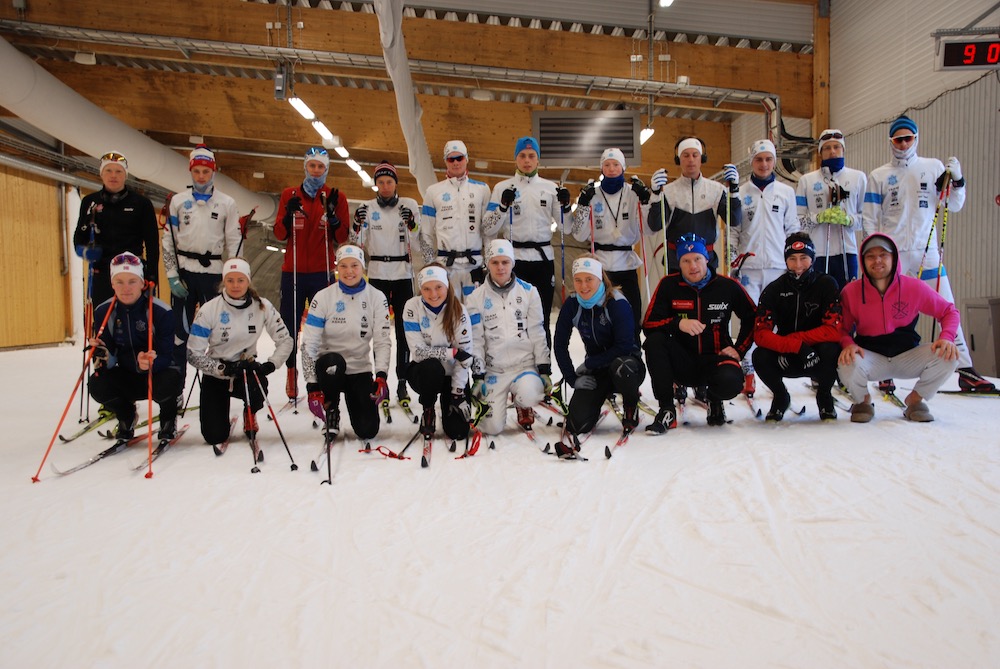
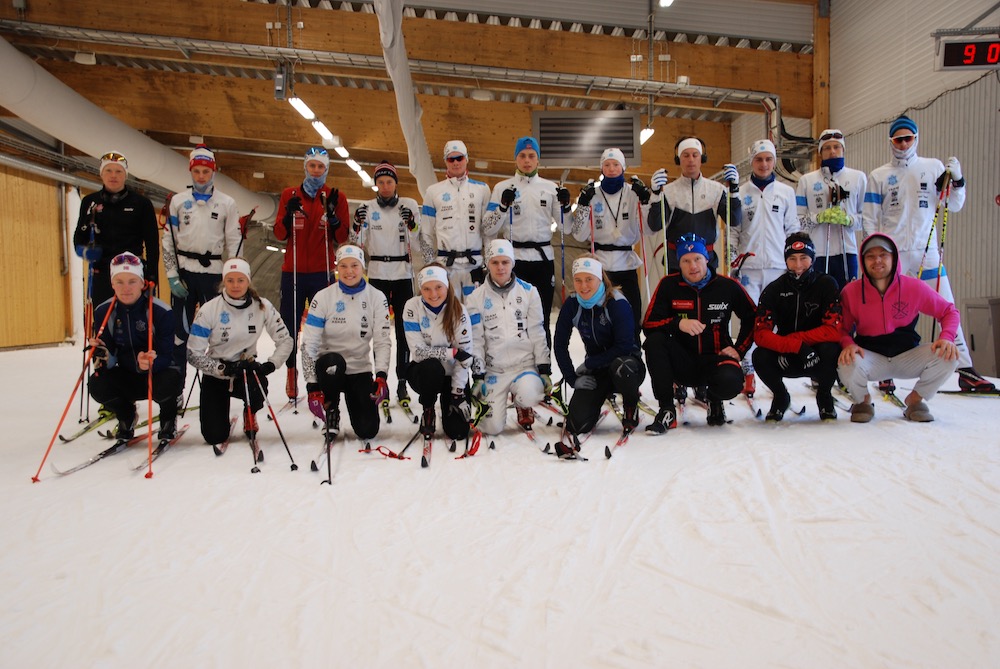
    Team Asker gets together for a group shot in the ski tunnel in Torsby, Sweden. (Photo: Johanna Lier)

    Editor’s Note: The following is the fourth post in a series proposed by Maks Zechel, a 20-year-old Canadian cross-country skier embarking on his first season training abroad. He recently made the big move to Norway, where he’ll be training and racing with Team Asker for the next nine months. Through these updates, Maks hopes to share his personal “observations, stories, and lessons learned” to help close the gap between North American and Scandinavian nordic skiing. Previous posts: #1, #2, #3, and #4.

    ***

    I never thought that on my 20th birthday I would be shivering at the top of a ski resort, a thick fog obscuring the spectacular view of Oslo, listening to 30+ Norwegians sing the Norwegian birthday song for me. But I guess turning 20 was bound to be different!

    “No more excuses,” was my first thought. Gone is the security of being a teenager. Rather than impressing people with maturity, it now feels like it is expected. I think it’s a good thing, but it doesn’t make being an adult any easier. My trip to Norway has been full of moments when I suddenly realized, “Oh, I guess I’ll just have to figure this out on my own.” My parents are no longer always present to make introductions, so now it is up to me to advocate for myself. Risks taken as an adolescent do not come with the expectation to produce results. “I’m impressed,” people say, and they applaud you just for trying. But adults are expected to see things through to completion.
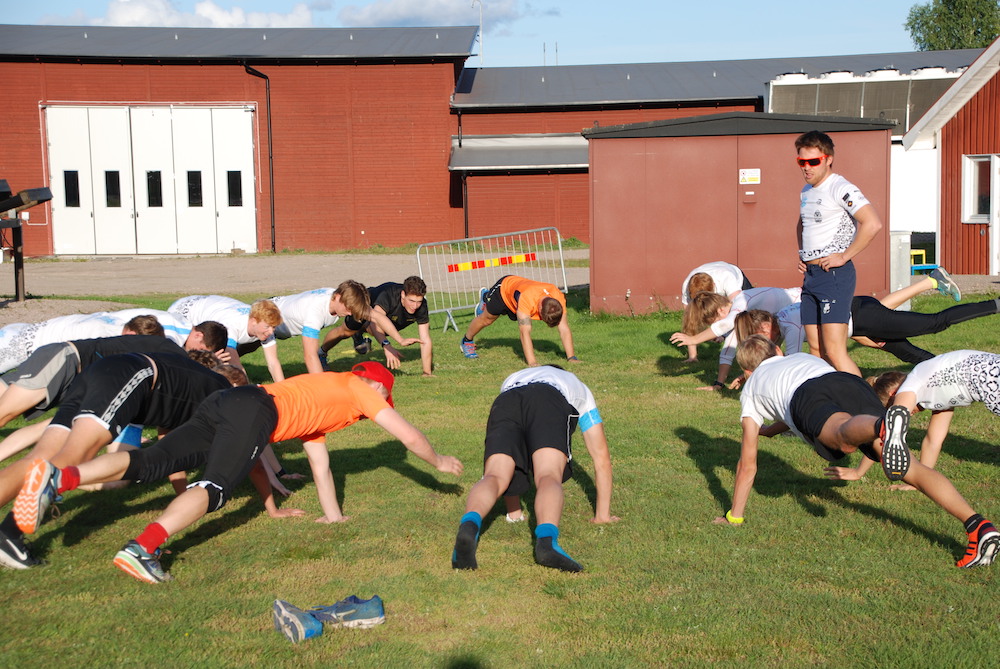
    Team Asker group core session after a ski in the tunnel in Torsby, Sweden. (Photo: Johanna Lier)

    Back on a cold, foggy Norwegian ski slope at the end of August, my teammates and I were about to tackle 6 x 6 minute Zone 4 bounding intervals. In Norway, bounding with poles is called elghufs, or “moose-hooves”. I had never done a bounding workout of this duration and intensity. Despite this, I decided to take a risk and stick with the best runner on the team, who was two and a half minutes faster than me on our last uphill running test. I stuck with him from the first interval, and stayed with him as he threw in big surges on the plateaus between climbs. He added these surges because he is trying to get better at working the flat sections of ski races in the winter, which happens to be one of my goals as well. We did the whole workout together, and I stayed with him until he got away on a downhill and a steep climb at the end. I took a risk in a workout, not caring if I blew up halfway through, and it allowed me to train at a higher intensity than I would have thought possible.

    Earlier this summer I listened to a “TED Talk” by Eduardo Briceño on “the learning zone and the performance zone”. At first it didn’t seem like a life-changing lesson, but since I arrived in Norway, his ideas have led me to think differently about my actions, and in particular, my training. Briceño discusses how people, from office workers to athletes, fail to improve at what they do, whether it is a hobby or a job, because they do not give themselves the opportunity to take risks, make mistakes and learn. In our society, the “performance zone” is the default; this is where we only do the things we are comfortable with, because we want things to be perfect, because that is how we envision our end goals to turn out. Briceño argues that we should encourage employees, athletes, and ourselves, to spend more time in the “learning zone,” where we break our ideal performance into the things we need to work on to get there. It is only here that we get better, because it is here that we allow ourselves to try things that we would otherwise never attempt for fear of failure. In the learning zone, risk and creativity produce the most astounding results. Having reached higher comfort levels, it is possible for someone to apply their repeated failures and lessons-learned to a better end result.
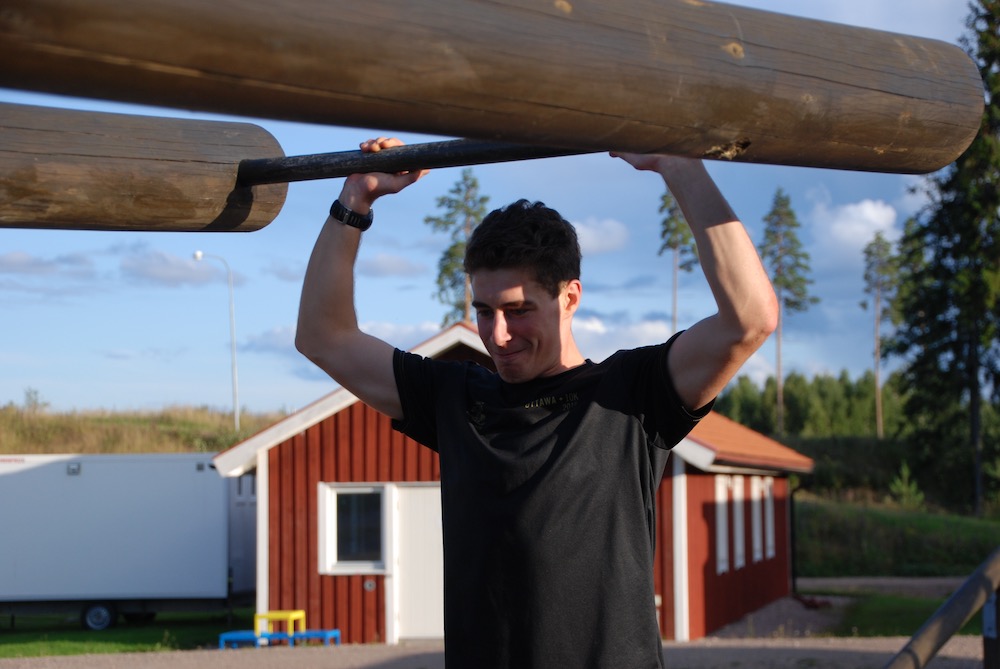
    Author Maks Zechel doing pull ups: “the most popular Norwegian strength exercise.” (Photo: Johanna Lier)

    A few days after “birthday elghufs”, Briceño’s ideas come back to me as I am training in the ski tunnel in Torsby, Sweden. I am back here for a long-weekend training camp with Team Asker. In the tunnel I confront a skiing related fear of mine, developed over a few years of poor performances in classic races. I dread the feeling of my grip giving way while striding up a hill. I am determined to become a better classic skier, the technique I was strongest in when I was younger, so I work hard at anything that I believe will make me a better classic skier: bounding intervals, core, double poling, hours of video technique work, and skiing without poles. If I can ski up a hill legs-only, then surely I can do it with poles in a race, right? Whenever I am on skis, I challenge myself to stride up the steepest hills without poles, but it becomes a challenge that I must perform to perfection, otherwise in my mind I have failed as a classic skier. The pressure that I put on myself leads me to shuffle stiffly and tentatively up hills, not allowing myself any room for error. The result is a poor imitation of the principles of classic skiing, lacking any weight shift, pop in the ball of my foot, or ankle compression. Sure, I made it to the top of the hill, but I didn’t summit the mountain.

    On our first morning in Torsby we have a distance classic ski in the tunnel. Rather than skiing slowly around the tunnel for a couple of hours, our coach has added some variety to our workout: one lap legs-only, one lap thinking about good striding on the hills (not thinking about heart rate), and one lap with a short “race pace” acceleration. The variety in this workout is important in early season skiing so that we can take advantage of our short time on snow to train our muscle memory to ski properly, getting rid of lazy habits developed while rollerskiing.
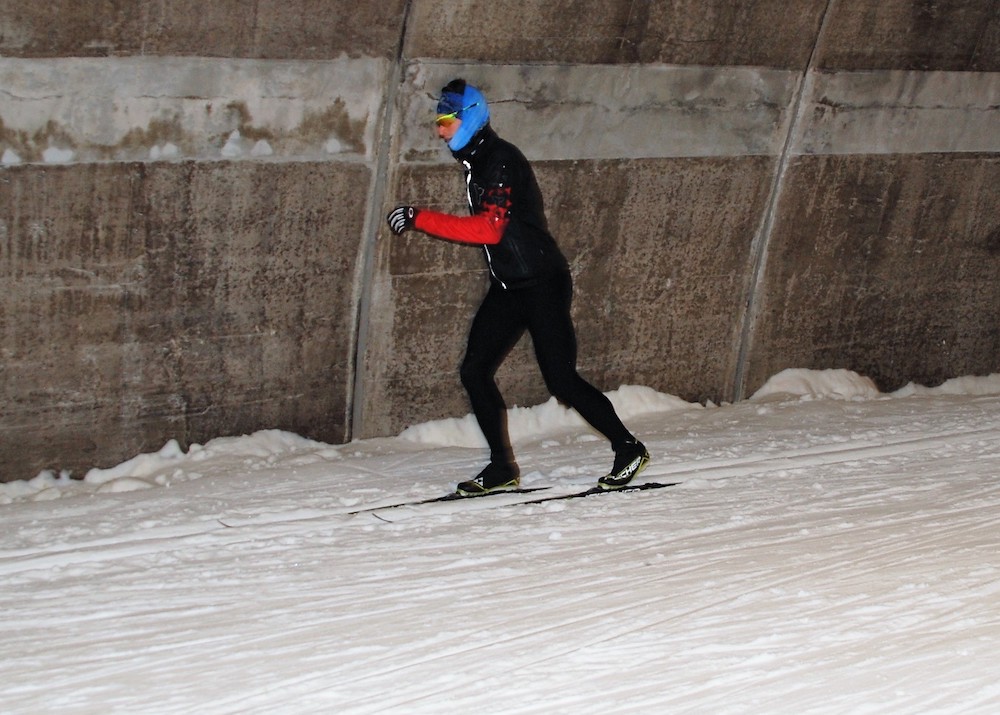
    Maks Zechel working on legs-only in the ski tunnel in Torsby, Sweden. (Photo: Johanna Lier)

    On my legs-only loops, I decide to take a risk. Instead of pressuring myself to make it up the entire hill, I ski as dynamically as I can, focusing on full commitment to each ski and compressing the wax pocket as if I had perfect grip. Although frustrating, I know that it is better for my development to ski properly up half the hill, than to shuffle up the entire thing. A few times I am rewarded with making it to the top, and other times I almost face plant spectacularly in front of the Norwegian junior national team coach.

    The risk of embarrassment is one that I am willing to take. I made a decision to escape my comfort zone when I left Canada, leaving behind family, friends, and a team that I have trained with for nine years. I left behind the chance at another year of racing on the NorAm circuit and seeing marginal, or perhaps substantial, improvements up the results board. I was sick of feeling like there was an order to things. If I beat a friend of mine during a race, that meant that I had had a good day, but if someone finished ahead of me who I was supposed to beat, then the day was unsuccessful. To me, this type of racing environment was toxic, as I struggled through a season of failed expectations. I am fortunate to have had the means to come to Norway, where simple training aspects, things that had lost their magic over the years, are now bringing back the same giddy excitement that skiing originally gave me. I am in a place filled with potential opportunities, but now I need to have the guts to seize them.
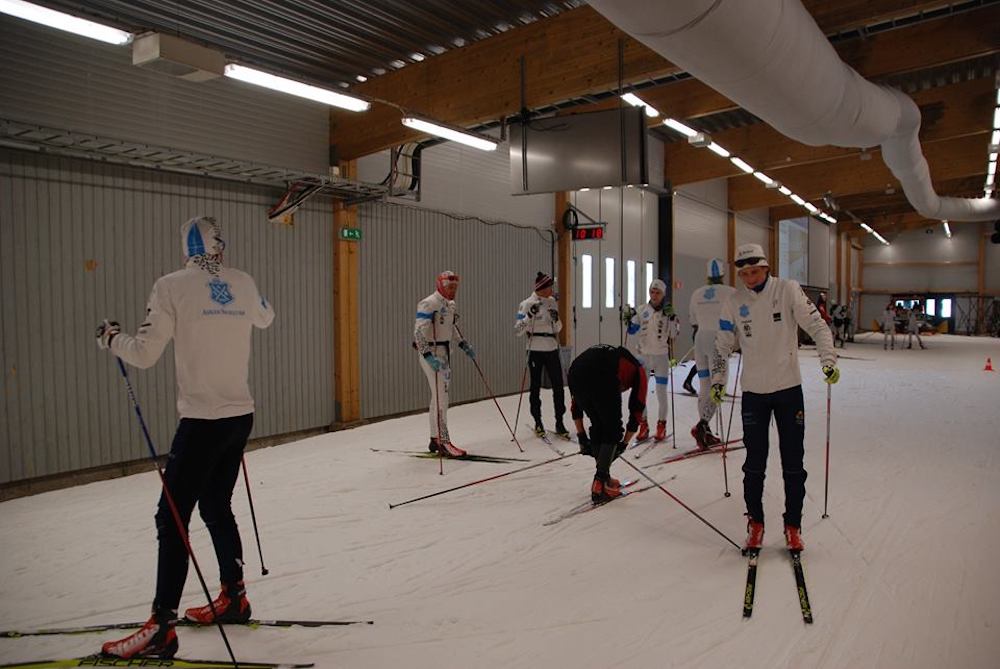
    Team Asker reparing for an intensity workout in the ski tunnel in Torsby, Sweden. (Photo: Johanna Lier)

    While training in Torsby, we were lucky enough to be there at the same time as the Norwegian junior national team and national recruit team (a step below the national senior team), as well as Anders Gløersen, Charlotte Kalla, Stina Nilsson, and Hanna Falk. I watched some of the members of the recruit team doing offset sprints, and it was the fastest I have ever seen someone sprint on skis in real life. Rather than being intimidated, I felt almost relieved to watch some of my idols skiing this fast. The mystery was gone; this is how fast you have to ski to be great, as simple as that, and now I could spend the entire weekend shadowing some of the best skiers in the world.

    On our first day in Torsby I had the opportunity to do two things for the first time in my life: rollerski on a treadmill and take a VO2 max test (maximum rate of oxygen consumption). Naturally, because of my name, I prefer to say it in Norwegian: VO2 maks.

    After an initial stumble on the treadmill, I found it quite easy to classic rollerski on. Before the test started I warmed up on a few different gradients and speeds, unable to stop smiling at myself in the large mirror in front of me. Here I was, rollerskiing in the same laboratory that has tested countless World Cup skiers! The test began at a gradient of 10 percent and speed of 10 kilometers per hour, with the gradient increasing every minute until it reached 18 percent. This felt remarkably steep. From then on the gradient remained the same, but every 30 seconds the speed increased.
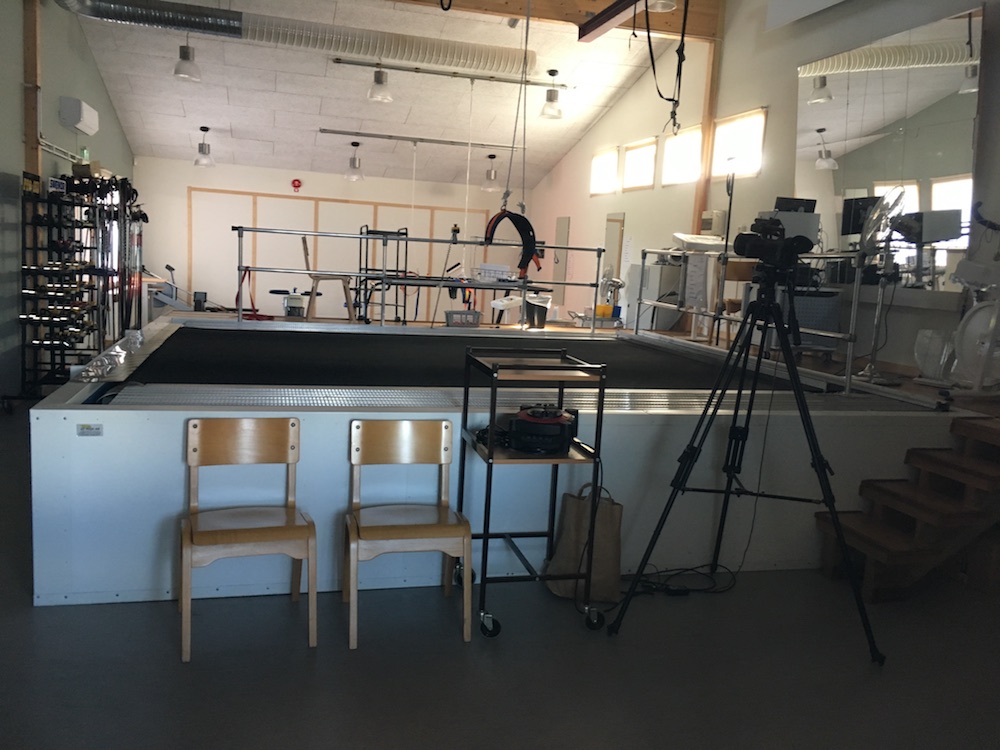
    The rollerski treadmill/testing lab in Torsby, Sweden. (Photo: Maks Zechel)

    During testing there is a harness around your waist so that you don’t fall off the treadmill, a heart rate monitor around your chest, and a mask strapped to your head to measure oxygen consumption. It’s a lot of gear hanging from your body, and your head has to remain relatively steady, but once the test started I found that the pain was an adequate distraction from all of this. Unfortunately, during my test a strap on my mask came undone and the mask fell off while I still had something left to give, so I was robbed of the chance to ski until collapsing (the skier’s dream). My VO2 max result was 74.5 ml/kg. Last year Harald Amundsen, the top skier on the team, reached a VO2 max of 85 ml/kg as an 18 year old (an exceptional result).

    Being in a new place, with a new team, and in close proximity to many of the world’s best skiers, there is a lot to take in. It is important for me to absorb as much as I can during my time here, but it is also important to stay consistent with things that I have been working on before I got here. If I jumped to apply every newly learned training philosophy to my training, I would be all over the place and have no chance to improve. I am allowing myself to take risks and make mistakes while staying true to some of the basics that got me to where I am. In the midst of so many talented and competitive skiers, I am trying to create a learning space for myself, devoid of expectations, so that I can learn without restrictions. When winter finally comes, I hope that I can translate my learning to some fast performances on skis. I have had a lot of practice translating after all…

    Norwegian Phrase of the Week

    Norwegian: Kan jeg få skyss?

    Translation: Can I have a ride?

    Norwegian: Kan jeg få et kyss?

    Translation: Can I have a kiss?

    *An important distinction that could add an unexpected twist to your ride to practice, as skyss and kyss sound almost exactly the same.*

    ***

    About Maks: Maks Zechel is a competitive cross-country skier who secretly wants to become a professional mile runner. He loves hiking and going on canoe trips with his family, as well as peanut butter cups in ice cream. Johan Olsson is his favourite skier and he hopes to race the Cortina-Toblach stage of the Tour de Ski one day. He enjoys writing about his experiences. Follow him on Instagram @makszechel.
  • St. Scholastica Coach Salmela Swaps Skis for Running Shoes: ‘It Almost Seems Nuts’

    St. Scholastica Coach Salmela Swaps Skis for Running Shoes: ‘It Almost Seems Nuts’

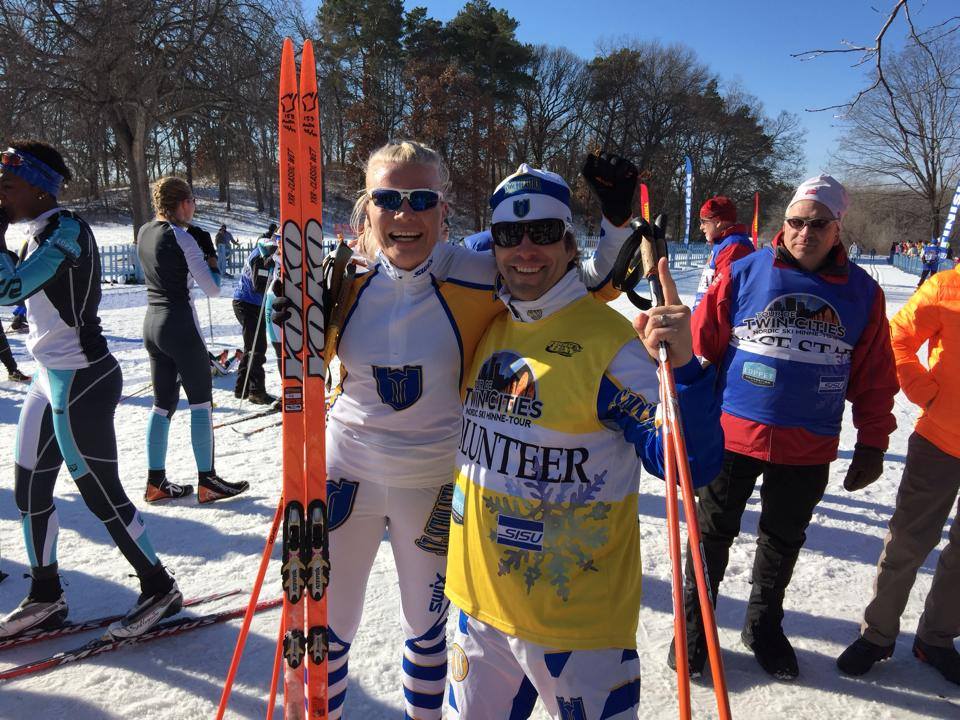
    Chad Salmela (r) and Anita Kirvesniemi of Finland. (Courtesy photo)
    The College of St. Scholastica’s nordic head coach for the last decade, Chad Salmela (r) with Saints skier Anita Kirvesniemi of Finland. (Courtesy photo)

    The sound of a Gator utility vehicle heading out to one of the race-course checkpoints. The long lines to the port-a-potties. The tribes of teams stretching in the shade of tree trunks near the white, spray painted start-line boxes.The smell of dirt and sweat. For Chad Salmela, a former high school cross-country runner and coach, nothing compares to the sensory mélange of a cross-country running meet.

    With that in mind, when the head running coach for The College of Saint Scholastica (CSS) for the past 26 years, Steve Pfingsten, decided to retire in mid-February, Salmela — in his 10th year as the CSS nordic head coach — saw an opportunity. He approached the CSS Athletic Department with an idea: if given Pfingsten’s position, using his background and knowledge in both skiing and running, Salmela could work to bring the two CSS endurance sport programs closer together.

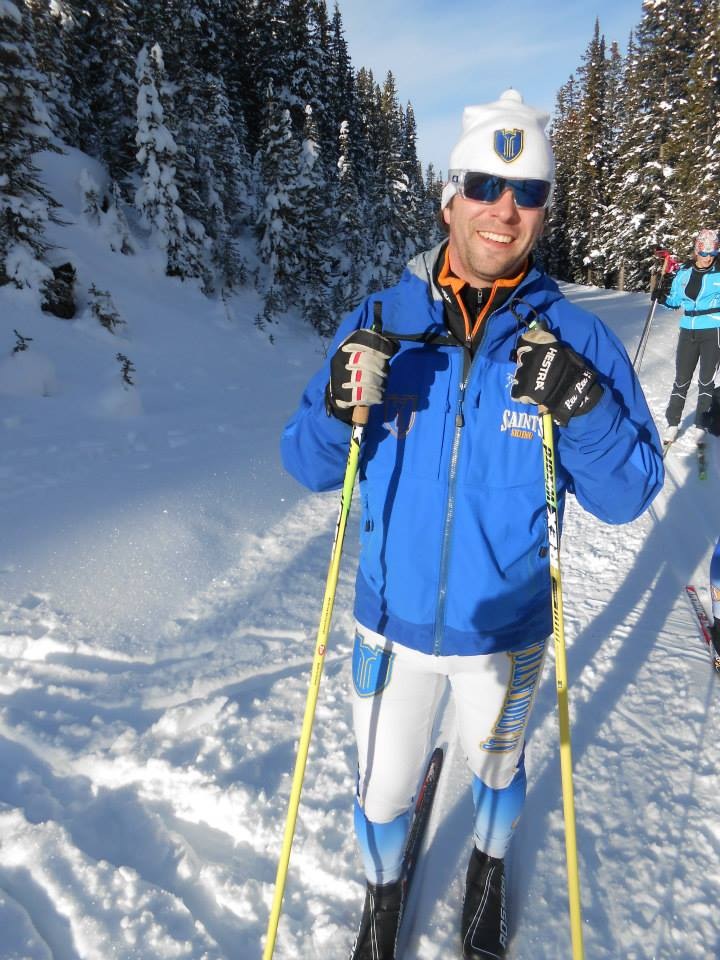
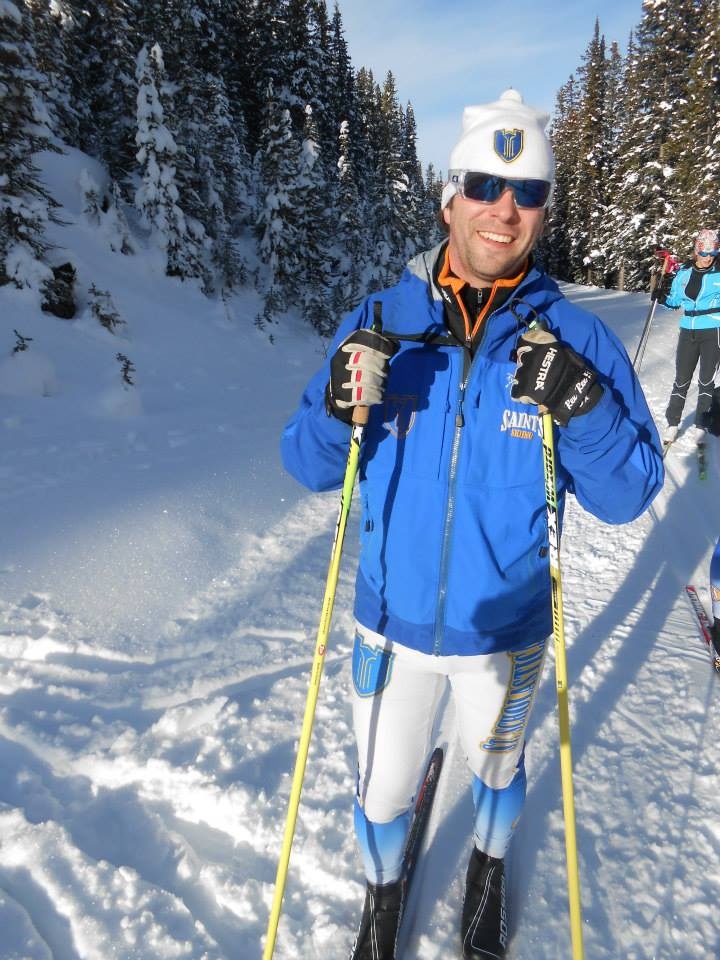
    Chad Salmela in Saint Scholastica gear during a ski at Lake Louise. (Courtesy Photo)
    St. Scholastica Head Coach Chad Salmela during a ski at Lake Louise near Canmore, Alberta. (Courtesy photo)

    Three-and-half months later, Salmela, a Virginia, Minn., native, is the new head coach of the Saints’ cross-country team and assistant distance coach for track and field. His dream to integrate the two programs will take teamwork and communication between himself and the new nordic coach — still to be determined. While he plans to help interview and mentor the new nordic hire as needed, he is most excited about the chance to once again discover himself amidst the fall running season.

    I can’t wait for that first meet where we get off the bus and the sights and the sounds and the nerves,” Salmela said during a recent phone interview. “There’s something majestic to me about cross-country running … as a coach, there’s just so much more to do the morning of an event in cross-country skiing. You don’t ever get to just revel in the atmosphere quite like you do in cross-country running.”

    Eliminating some of the elements involved with being a nordic ski coach on race day — waxing, testing, wax station set up and break down — doesn’t just afford more time for existential reverie. In Salmela’s eyes, it also creates more opportunity for coaches to engage with their athletes.

    “In cross-country skiing, waxing and ski preparation is important,” the 45-year-old coach said. “I’ve made it important and [the Saints] program has succeeded on the waxing for sure … but there’s a cost to that. The cost is you don’t get to interact with the athletes and really engage with them as well as you could. That’s the one big upside to people starting to limit the fluoro carbon use. I think it will get coaches back in touch with their athletes and sport again.”

    Getting back to basics of athlete-coach interaction is not the only thing Salmela hopes to achieve by making the switch. Though he started the Saints’ ski team in 2006 and has since helped the school develop the competitive Division III program it has today, the key for Salmela as a coach is staying challenged and open to change. Even if that change is a little uncertain.

    “It was not easy for me to leave the ski team,” he said. “I created the program. It’s not just that I was there 10 years, it’s that I was there 10 years and it was nothing when I started. It didn’t exist … and as a DIII program in 10 years of existence, [CSS] is pretty good … we were as good as we’ve ever been two years ago. We had more talent and better results. We won the conference championship, we did well against NMU [Northern Michigan University] and NMU is awesome. So to walk away from all that, it almost seems nuts.”

    The CSS nordic program’s growing success over the years under the guidance of Salmela is evident, with Bjorn Bakken’s first NCAA qualification in 2008 (the team’s second year in existence), Tyler Kjorstad’s second NCAA qualification in 2009, the men’s first team win in 2012, Paul Schommer and Jeremy Hecker’s 3rd and fourth NCAA qualifications in program history in 2012, followed by the Saints women’s first team win in 2014, Schommer’s All-American finish in 2014, and the first dual-female NCAA qualifiers in 2015.

    As Salmela explained, doing so took 10 years’ time and patience, occasionally working with athletes who had been injured or were just beginning their ski careers.

    “Chad didn’t really impact my ski career, he started it,” Schommer, a 2015 grad and now an aspiring Olympic biathlete from Appleton, Wis., wrote in an email. “Without him, I wouldn’t of had the career I’ve had and hopefully will have … I think a lot of athletes overlooked the amount of time Chad put into their training plans, time analyzing lab tests, and preparing skis for race weekends. Chad doesn’t take shortcuts … He cares about more than performance. He cares about the whole picture knowing that to be a high level athlete it’s all the little things that add up.”

    “Chad doesn’t take shortcuts … He cares about more than performance. He cares about the whole picture..” — Paul Schommer, former St. Scholastica skier and All-American on his college coach Chad Salmela

    As Salmela looks to swap skis for running spikes, he explained he is not leaving athletes like Schommer behind. He is discovering ways empower more. After returning from a TED Talk in his hometown presented by the former mayor of Duluth on vulnerability, Salmela realized one reason for the career is change is to ensure that not only is he challenging his athletes, but he is being challenged by his work with them.

    “It does feel like I’m stepping down the rabbit hole into a whole new world,” he said. “[But] I like challenges … and maybe that’s the essence of my coaching, is that I am vulnerable and that there’s some genuineness to being vulnerable and opening yourself up to vulnerability. I’ve certainly made mistakes with athletes, and I’ve certainly taken wrong paths in training. So I’m far from perfect, but I think the search for being a little more perfect is always good. You’re never going to get there, but the destination of trying is pretty powerful.”

    A Change of Pace and Salmela’s Next Steps

    Tempo runs. Hill workouts. Steady states. Strides. When it comes to running, there are quite a few workout sessions that are considered a standard in the sport. Lab testing is not one of them.

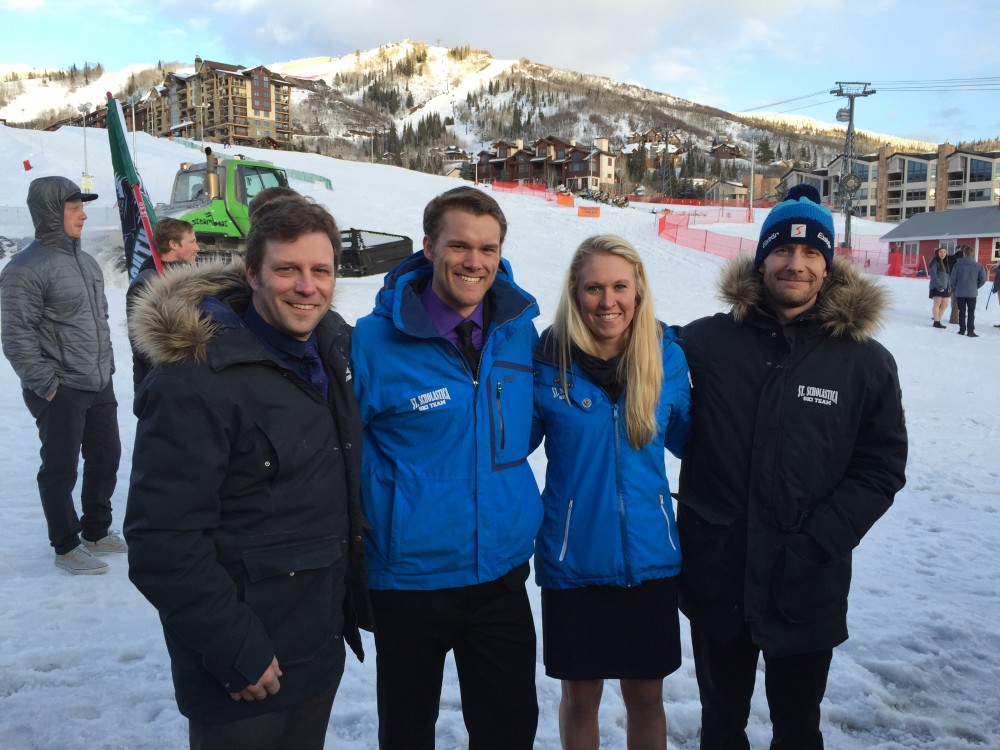
    Chad Salmela (far left) with 2016 NCAA qualifiers Reitler Hodgert and Kelsey Dickinson as well as assistant nordic coach, Josh Tesch at 2016 NCAA Championships in Steamboat Springs, Colo. (Courtesy Photo)
    Chad Salmela (far left) with 2016 NCAA qualifiers Reitler Hodgert and Kelsey Dickinson as well as assistant nordic coach, Josh Tesch at 2016 NCAA Championships in Steamboat Springs, Colo. (Courtesy photo)

    However, athletes who run for the St. Scholastica cross-country and track teams — Salmela predicts around 50 cross-country and 65 to 90 track and field athletes (20 distance runners) will join the program this upcoming season — can expect these tests to become a staple in their training plans.

    A US Biathlon National Team competitor for two years after high school, a US Biathlon assistant coach from 1998-1999 during his undergraduate years at Middlebury College, and the National Junior Development Program Director in 2000 — during which he helped render three future Olympians, Tracy and Lanny Barnes and Annelies Cook — along with seven years of coaching running, Salmela has a wealth of experience with high-end performance training plans. Using his knowledge on physiology primarily from nordic skiing, such as monitoring athletes’ aerobic efficiency in the lab, he hopes to bring a new perspective to the American populist running culture.

    “I don’t think there are a ton of Division III running programs who are bringing athletes into the lab,” he said. “My feeling is that there could be more emphasis generally placed [in running] on aerobic efficiency … I think that if you are strong enough and if you implement the right kinds of stress loads on runners, you can vastly increase the aerobic volume training of a runner, beyond what is commonplace today.”

    While increased aerobic volume training may be novel to many of Salmela’s future runners, he sees change as an imperative part of being an athlete, skiers and runners alike.

    “The one thing 20 years of coaching has taught me is that, for any single person, doing the same thing forever is never the most optimal way to go,” he said. “You have to change. Your body changes and you have to change.”

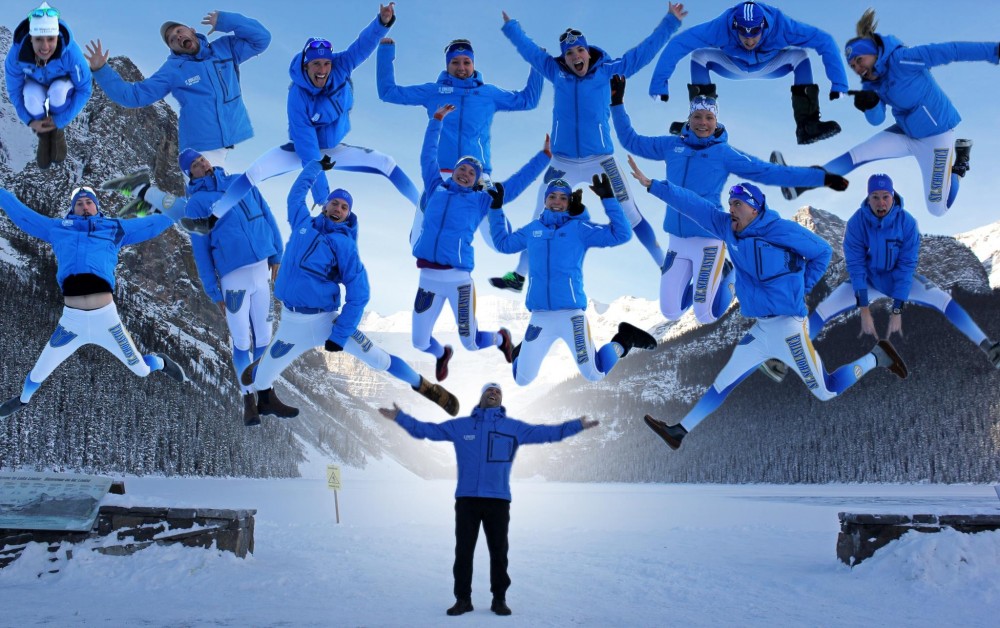
    Chad Salmela (grounded) and his team of Saints. (Courtesy Photo)
    Chad Salmela (below) and his Saints ski team. (Courtesy photo)

    A fresh start, fall racing and forfeiting long winter van drives are not the only things Salmela is embracing as he passes the CSS nordic team torch to the next coach. The switch also opens up the the opportunity for him to further establish himself as cross-country skiing’s garrulous nordic guru.

    “I don’t have any contracts of anything right now, but it frees up the potential to do more T.V. work or commentary work,” said Salmela, who’s been a color commentator for NBC at the last three Winter Olympics, as well as a biathlon and cross-country World Cup commentator. “It’s nice to be able to have that freedom. I certainly thought of that in this process … That’s definitely a factor, but more than anything, I needed a career change.”

    With a career change still steeped in coaching, Salmela does not relinquish the chance to spark and inspire.

    “I can’t travel as many people in skiing just because budget-wise and the number of skis I have to pack,” he said. “So I’m really excited that I get to coach a sport where I get to load a bus full of kids and I get to inspire them all to run the best they can.”