Tag: testing

  • Closing the Gap: A Game of Seconds

    Closing the Gap: A Game of Seconds

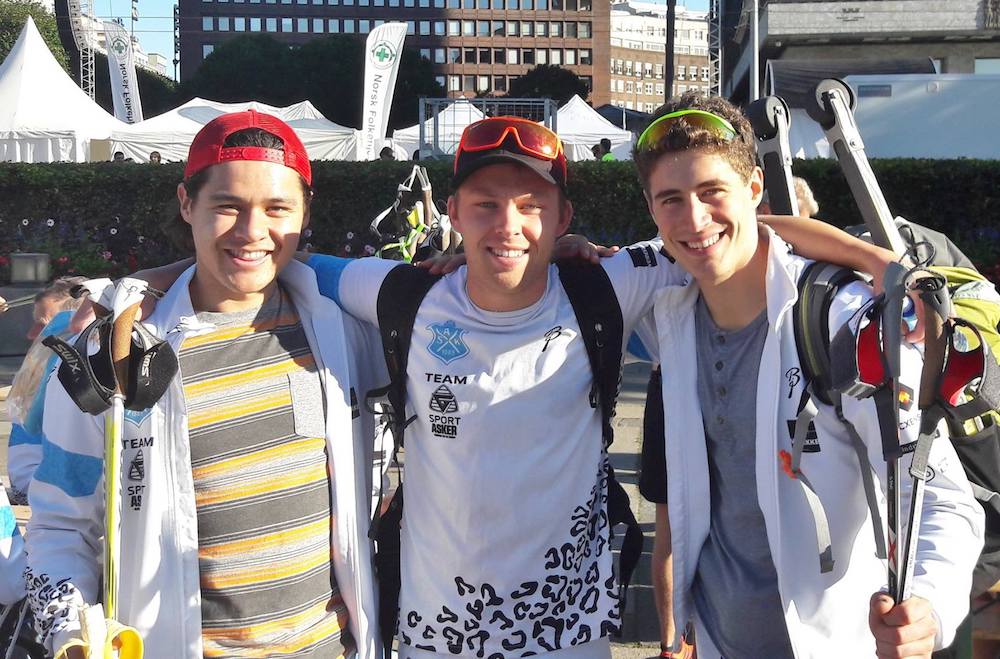
    Canadians Ryan Jackson (l) and Maks Zechel (r) with Team Asker coach Ola Kvisle at the Oslo Marathon 10 k rollerski race in Oslo, Norway. (Photo: Anne Haarstad)

    Editor’s Note: The following is part of a series proposed by Maks Zechel, a 20-year-old Canadian cross-country skier embarking on his first season training abroad. In August, he recently made the big move to Norway, where he’ll be training and racing with Team Asker for the entire winter. Through these updates, Maks hopes to share his personal “observations, stories and lessons learned” to help close the gap between North American and Scandinavian nordic skiing. Previous posts: #1, #2, #3#4, and #5.

    ***

    It was a typically frigid day of January ski racing in Thunder Bay, Canada (any Canadian cross-country skier will have grimaced just from reading that). Halfway through the A-final of the Ontario Cup U16 classic sprint, I was already far behind the leaders, Tony Gunka and Ryan Jackson. The previous day I had won the distance classic race, my first ever “O-Cup” medal, finishing only three seconds ahead of Ryan, and now my expectations were higher than ever. The margin between us in the qualifier that morning? Three seconds.

    Swinging around a fast corner into the last big climb of the race, already out of contention for the win, I looked at the ground in front of me and just skied as hard as I could. I had nothing to lose, so I skied my best. As I crested the hill, I suddenly noticed that I had caught Ryan and Tony and was dropping them. Elated by the empty track ahead, I double poled as hard as I could.
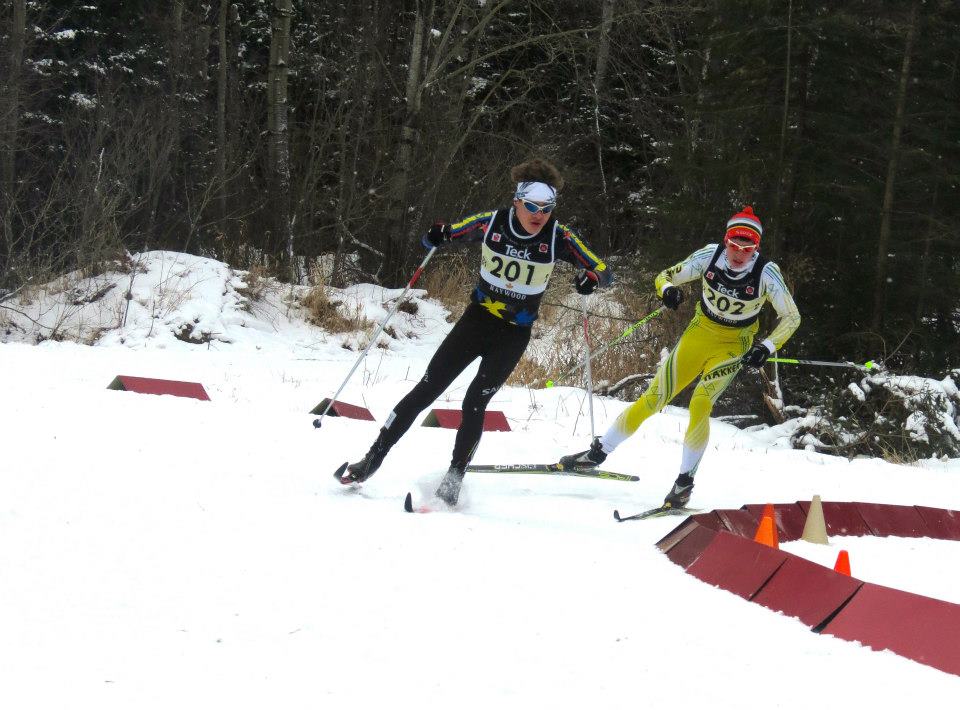
    Ryan Jackons (front) and Maks Zechel turning the final corner during a 2013 classic sprint in Thunder Bay, Ontario.

    Suddenly, Ryan and I were neck-and-neck again. We turned the final corner and could see the whiskers marking the finishing lanes, tantalizingly close. Side by side, neither of us able to see, just focusing on slamming those poles down. We remained stubborn until the finish, with Ryan pulling in front right before the line.

    The remainder of the season continued in much the same way, and strangely the margin between Ryan and I in most of our races, no matter the distance, was three seconds. We didn’t know it at the time, but every time one of us lost to the other, we both won.

    Since that year, Ryan and I have been close friends and competitors, even roommates for a year. We have both had good and bad years of results, but I have continually been inspired to push my own limits by his work ethic and accomplishments. On Sept. 15, Ryan joined me here in Norway, where we begin our latest venture to see how fast we can become.

    Ryan arrived in the middle of my second testing week with Team Asker, where I was happy to achieve new personal bests in the uphill running test, skate time trial (not too difficult as I went the wrong way last time…), and the double-pole sprint qualifier. Most of these improvements are likely due to being more familiar with the courses and being more comfortable here, but regardless it was nice to move forwards.

    Testing week was highlighted by the replacement of our regular uphill double-pole test with a 10-kilometer classic rollerski race in downtown Oslo, as a part of the Oslo Marathon race weekend. The week prior to this race, Team Asker held a 10 k qualification race, where the top-10 Asker skiers were selected to race in the Oslo Marathon for the team prize of $30,000 NOK (approx. $4,673 Canadian). This qualification race was the most tactical rollerskiing race that I have ever competed in. About 16 of us raced eight laps of a mostly flat 1.4 k loop. Like a road-biking race, positions were constantly changing. It was great for me to practice staying calm and absorbing speed changes so as not to waste energy, but I still regularly found myself catching up to the lead pack after being “accordion-ed” off the back of an attack. Having been sick that entire week, I didn’t have an excellent race, but it was enough for me to qualify (see a video of the race, and me flying off the course on the first lap, below).

    The night before the Oslo Marathon was not the usual quiet, pre-race evening. Having crossed the finish line of the uphill running race at around 7 p.m., I biked home where I met Ryan and helped him settle in for his first night in Norway. A long pre-race sleep was quickly lost to our excitement of having finally both made it to Norway, a trip that has been in various stages of planning since we first discussed the idea on an offseason run through Vincent Massey Park in Ottawa two years ago.

    After a short night, we were out the door before 7 a.m. to take the train to Oslo for a 9 a.m. race start. The big stress that morning was how we would survive the race without suffering broken limbs or equipment. I had skied the course the weekend before with Team Asker, and in just that easy ski through the streets of Oslo, we broke three pole tips. The race organizers were predicting that 50 percent of the field would break poles.

    I thanked the “ski gods” for the perfect sunny day and dry pavement that the morning had brought, as I outlined the obstacles of the race for Ryan: a fast downhill right after the start leading into a sharp turn and funneling the race through a narrow, cobblestoned street guarded by waist-high posts in the middle of the race course; multiple stretches of streetcar rails; sewer grates and small curbs to be hopped; more sections of cobblestones; and a downhill finishing stretch marred by manhole covers and pavement dished out by years of traffic. Oh, and then we had to jump two tall timing mats across the finish line. At least road cyclists can use bikes designed for cobblestones when they race Paris-Roubaix, not so with rollerski wheels that fit perfectly between cracks. It was an excellent opportunity to work on agility while racing with 60 other skiers and being filmed by NRK … at least that’s what I told myself. (See course preview below)

    https://www.youtube.com/watch?v=0i7U4lvBXOY&feature=youtu.be

    In typical skier fashion, we complained a lot about the race conditions until the race started, the field spread out and it ended up being surprisingly easy for most people to stay on their feet. Our team raced well and we won the team competition, with teammates Erland Kvisle and Harald Amundsen coming third and fourth behind Junior World Championships medalists Thomas Helland Larsen and Magnus Kim. Andrew Young, a World Cup sprint medalist, was fifth. I finished 18th, 1:45 minutes behind the winner.
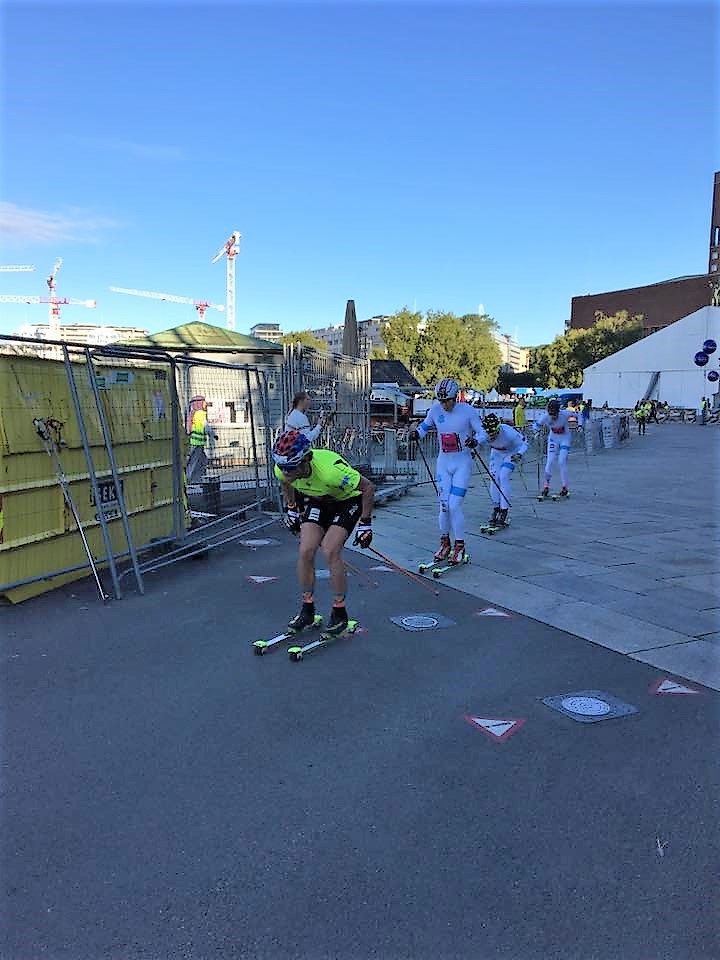
    Part of the lead group at the Oslo Marathon 10 k classic rollerski race on Sept. 16 in Oslo, Norway. (Photo: Sindre Ryan)

    How do I react to these results? I finished 19 seconds behind the winner in the qualification race and 1:45 back in the Oslo Marathon, both against world-class competition. On the outside, these margins seem like nothing, but in reality they represent a massive gap between where I am now and where I hope to be in the coming years. It is easy to dismiss seconds as being irrelevant, but these seconds mean everything in the winter. This winter, 19 seconds in a 10 k race at a Scandinavian Cup could mean the difference between finishing in the top 50 and finishing in the top 100. If I am unwilling to fight for those seconds now, then the winter’s results will reflect that. To close a gap of seconds, it will require a lot more than just improving my recovery strategies or drinking a litre of beet juice a day. My fight for seconds has to be taken to every interval session and time trial and become a mantra taken into race season.

    It may not be such a big gap now, but come winter, this game of seconds will become a real life battle for minutes. For Ryan and I, this is nothing new, but now the stage is bigger than ever before. To come three seconds behind the other will mean ten spots on the results sheet. It is a daunting reality for any skier, but I am lucky to have a friend from home to pursue these challenges with. In a foreign place, teammates and friends are more than just people to hang out with — they’re family.

    Norwegian Phrase of the Week

    It’s not the fart that kills you, it’s the smell. – Petter Solberg

    Translation: It’s not the speed that kills you, it’s the slam (crash).

    *A quote from Norwegian professional rally car racing legend, Petter Solberg, known for speaking “Noglish” (Norwegian-English), resulting in excellent quotes lost in translation.*
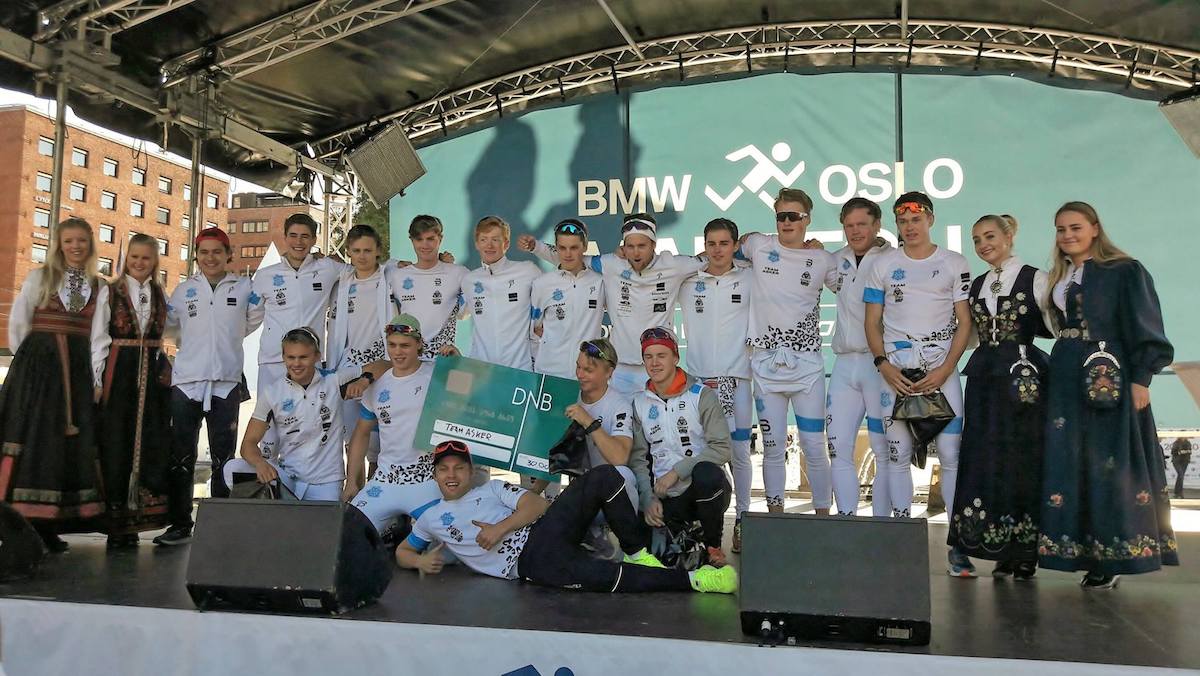
    Team Asker on the podium after winning the team competition at the Oslo Marathon 10 k classic rollerski race on Sept. 16 in Oslo, Norway. (Photo: Anne Haarstad)

    ***

    About Maks: Maks Zechel is a competitive cross-country skier who secretly wants to become a professional mile runner. He loves hiking and going on canoe trips with his family, as well as peanut butter cups in ice cream. Johan Olsson is his favourite skier and he hopes to race the Cortina-Toblach stage of the Tour de Ski one day. He enjoys writing about his experiences. Follow him on Instagram @makszechel.
  • Closing the Gap: Testsamling (Testing Camp)

    Closing the Gap: Testsamling (Testing Camp)

    Asker til topps uphill running test, featuring author Maks Zechel (front) and his teammate Ola. (Photo: Lars-Erik Nygaard)

    Editor’s Note: The following is the fourth post in a series proposed by Maks Zechel, a 19-year-old Canadian cross-country skier embarking on his first season training abroad. He recently made the big move to Norway, where he’ll be training and racing with Team Asker for the next nine months. Through these updates, Maks hopes to share his personal “observations, stories, and lessons learned” to help close the gap between North American and Scandinavian nordic skiing. Previous posts: #1, #2 and #3.

    ***

    Tuesday, Aug. 15, 2017:

    It is late at night when I finally get the message: “Meet at Føyka stadium, 9:00am, for practice, 10x2min zone 4 double poling.” I panic. In less than ten hours I will be meeting my new teammates for the first time. My initial reaction is defensive: “I can’t do this. It’s too late. Maybe if I had more time to prepare…. I’ll just do the workout on my own.” I know what to expect, and it terrifies me.

    Views of the Black Forest, Germany, 2011 (Photo: David Zechel/Dad)

    When I was 13 years old I went to a school in Germany for a year; nobody spoke English and I barely spoke any German. On my first day of school, I walked through the school doors alone. Somebody asked me what my name was, and I replied “I don’t know,” only realizing what they had said after they looked at me like I was crazy. I ended up having an amazing year in Germany and I am still in contact with some of the friends I made there.

    Seven years later, the thought of yet again integrating myself with a peer group in a country where I don’t know anyone and can’t speak the language, makes me nervous. It was time for me to make some decisions, time to step up and seize my opportunities. I did not come all the way to Norway to train in solitude for fear of the awkwardness that comes with learning a new language and meeting new people. This may have been just one practice, but to me it was a decision point on whether or not I had what it took to make this trip successful.

    I went to practice. I arrived 20 minutes early and waited, breathing in the thick air of anticipation. Slowly, the rest of the team started to arrive. I greeted each of them with a smile, a handshake, and “Jeg heter Maks (My name is Maks)… I am from Canada.” Almost everyone spoke English well, and even if they didn’t, we all spoke the language of “I think I’m going to puke” at the end of the interval session. I rollerskied home from training, giddy with happiness. This was why I put myself into these situations that scare me, because the friendships formed and the memories made are more rewarding than staying in my comfort zone.

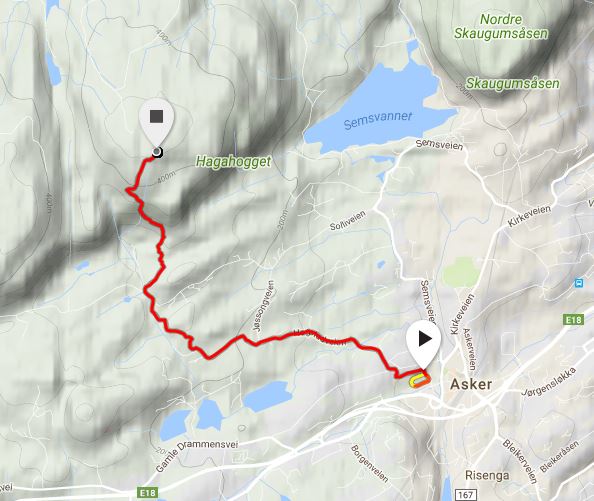
    Asker til topps uphill run course (Red = very high heart rate, ouch)

    After Tuesday’s intensity workout we transitioned quickly to the team’s second testing camp of the year. The “lactate-party” started on Friday evening with a brutal 5.8-kilometer mass-start uphill running test. The race started with a lap of the track in the center of town, then climbed steadily to the halfway point, where the course entered the forest and followed steep, narrow trails requiring all of my willpower just to keep running. The race finished on top of Hagahogget, a rocky peak with an incredible view over the fjord and surrounding towns. I ended up third, far behind the winner, Erland, who happens to run an 8:50-minute 3,000 meter.

    The next morning we began the second test, a 4.4 k mass-start uphill double-pole race. It was difficult to go from racing at 7 p.m. the night before to racing again at 9 a.m. the next morning, but it reminded me a lot of afternoon distance race starts followed by early sprint qualifiers the next day, something that I experienced last year at U.S. nationals in Soldier Hollow and Canadian Nationals in Canmore.

    Day 3 started off with one of the tests I had been looking forward to the most: a 9.5 k individual-start skate time trial at the Holmenkollen rollerski track. After driving up a long road out of Oslo, I arrived at arguably the most recognizable nordic sports stadium ever built. In the center of everything is the spectacular ski jump. Rollerskiing over the top of the course, you are treated to a panorama of Oslo, the Inner Oslofjord, and all the surrounding towns. Warming up around the course brought me back to the 2011 World Championships, which took place at Holmenkollen. I watched the races live on TV while I was living in Germany. There are many iconic moments from that World Championships that I remember clearly to this day (although I must admit, I regularly re-watch the races).

    As we are rollerskiing, my new friend, Erland, points out special parts of the track. The last hill before you enter the stadium is called “Hellenbakken,” named after Swedish skier Marcus Hellner and the attack he made on that hill which won him sprint gold over Norwegian favourite Petter Northug in front of thousands of Norwegian fans. I ask Erland if the stadium is called “Harvey stadium.” No answer, but he laughs amiably. Now, rollerskiing exactly where it all took place, I can see the asphalt turn to snow and Alex Harvey crossing the finish line. He puts a finger to his lips in response to a stunned and silent Norwegian crowd as he and Devon Kershaw take team sprint gold ahead of Norwegian legends Ola Vigen Hattestad and Petter Northug. The crowd may have been speechless, but 13-year-old Maks was yelling in excitement at German Eurosport.

    The Holmenkollen rollerski course is filled with the types of steep climbs common in winter ski races, but almost non-existent in summer rollerski races. There were two or three hills per lap where I was forced to offset, something that I have never done before in a rollerskiing race effort. This type of dryland training is invaluable to winter racing success.

    View from Hagahogget, end of the uphill running test. (Photo: Maks Zechel)

    With the morning time trial finished, we completed the testing camp with a flat, double-pole sprint qualifier in the afternoon. Four race efforts in three days, and five intensities in a week; not a gentle introduction to Norwegian ski training. The amazing part about this weekend was having many strong teammates to compete with. Everyone has different strengths, and depending on the test, I had between five and 10 skiers with whom I was competitive. I did not have the best four race efforts of my life, but I am excited to be training with people who are around my speed, and to have others who are pushing all of us to reach new levels.

    Some schools of thought may disagree with cramming this many intensities into such a short period of time, but Team Asker puts a big emphasis on recovery after these intensity blocks. Athletes only ever post on social media about their most “epic” workouts, so it is easy for skiers to think that they need to be doing these ridiculous workouts all the time. I think it is important to recognize the purpose of these workouts, and also gain an understanding of the training that surrounds these big workouts. With regard to Team Asker’s testing week, I appreciated becoming familiar with the difficulty of back-to-back race efforts — the refocusing and the physical shock that one experiences from competition — all in the risk-free safety net of summer training. The next testing week will take place in five weeks’ time and I am excited to give it another shot.

    I have to acknowledge how welcoming and kind the Asker Skiklubb community has been. I have already made many friends and have talked to numerous parents who have sought me out just to get to know me. It is never difficult for me to find a ride to training with a teammate, and everyone helps me feel comfortable, while at the same time pushing me to learn Norwegian and become a bigger part of the team. I am having no difficulty working with the coaches, who are excited to have me join the team and want more skiers like me to come train with them as Team Asker grows.

    Have I convinced you yet?

    Norwegian Word of the Week:

    Hjem. Home.

    Due to popular request, a picture of another, smaller, roommate of mine. (Photo: Maks Zechel)

    About Maks: Maks Zechel is a competitive cross-country skier who secretly wants to become a professional mile runner. He loves hiking and going on canoe trips with his family, as well as peanut butter cups in ice cream. Johan Olsson is his favourite skier and he hopes to race the Cortina-Toblach stage of the Tour de Ski one day. He enjoys writing about his experiences. Follow him on Instagram @makszechel.
  • This Month in Journals: Detecting Xenon Gas, A New Banned Substance – and Why You’d Want To

    This Month in Journals: Detecting Xenon Gas, A New Banned Substance – and Why You’d Want To

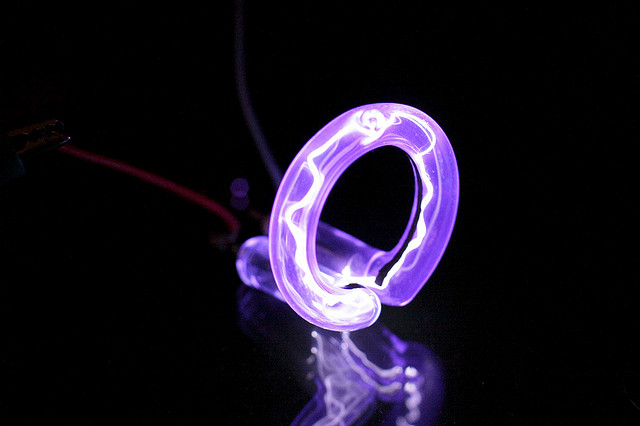
    Xenon gas isn't usually thought of in a medical context, but its applications are growing, from use as an anesthetic to a neuroprotectant to a performance-enhancing drug. Photo by Jim Nelson, creative commons.
    Xenon gas isn’t usually thought of in a medical context, but its applications are growing, from use as an anesthetic to a neuroprotectant to a performance-enhancing drug. Photo by Jim Nelson, creative commons.

    Xenon gas has been in the sports news since this winter, when it was revealed that Russian skiers had been breathing the gas to increase the oxygen-carrying capacity of their blood. It caused something of an uproar, but only a quiet one because people were confused: what exactly is going on here? Isn’t xenon a noble gas that has a purplish spectra? Regardless of whether it makes you faster, why would you breathe that? Should we be outraged?

    Xenon has many properties which have been used in relation to medical fields for decades. It’s an anesthetic which will soon be introduced to broader use in Europe, in part because it is more potent and thus requires a lower proportion in the bloodstream in comparison to commonly-used N2O. It’s also a neuroprotectant, and clinical trials are being developed to determine whether breathing xenon gas when the body is oxygen-starved (or recovering from such a state) can help prevent brain damage.

    In the doping context, breathing xenon leads to a series of steps which may increase athletic performance. First, the presence of xenon increases the production of a transcription factor (HIF1A) – a protein which binds to a specific region of our DNA. This transcription factor codes for a protein which is usually produced only in low-oxygen, hypoxic environments. This in turn boosts erythropoietin levels, so that the blood can carry more oxygen: an obvious benefit for endurance athletes.

    Yet very little research has confirmed that this actually translates into athletic improvement. One of the only studies ever published on the topic of using xenon in a training regime is in Russian, and thus inaccessible to most of the rest of the world.

    So despite the perplexed look on everyone’s faces when the Russian xenon-huffing scandal broke, most were quick to condemn the practice. In fact, some argued that it might already be breaking the World Anti-Doping Agency (WADA) code. Although xenon was not, at that point, expressly banned, the following sentence described prohibited methods. It’s banned to:

    “Artificially enhancing the uptake, transport or delivery of oxygen, including, but not limited to, perfluorochemicals, efaproxiral (RSR13) and modified haemoglobin products (e.g. haemoglobin-based blood substitutes, microencapsulated haemoglobin products), excluding supplemental oxygen.”

    Since breathing xenon does artificially enhance the uptake of oxygen, it seemed like a slam dunk. Former WADA president Dick Pound told the German news service WDR, which was doing an investigation into xenon as a performance-enhancing drug, that he was “in no doubt that it is doping.”

    The team doctor for the Garmin-Sharp cycling team said that his team had considered using xenon, but decided not to because it was potentially dangerous and, they had concluded, definitely illegal. And cycling teams aren’t usually the most trustworthy people on doping issues.

    But WADA was quiet until it added an amendment this spring expressly banning xenon (and argon, a neighbor on the periodic table) in no uncertain terms.

    Now, scientists have been trying to develop a test to detect the use of xenon. Writing in Rapid Communications in Mass Spectroscopy, a team from Cologne and Düsseldorf, Germany, report on a new test that seems to be working.

    The team used a combination of techniques including gas chromatography and mass spectroscopy, accounting for the specific mass of three different xenon isotopes, to detect xenon concentrations in the blood. In the first part of their trials, they fortified blood plasma with xenon to specific concentrations, and then tested whether their method could detect it.

    With that success under their belt, they moved on to realistic human trials. Their subject was a woman who was undergoing anesthesia using xenon gas. The team collected blood samples during the anesthesia as well as 4, 8, and 24 hours afterwards, and then ran the samples through their test – sometimes after storing them for up to 36 hours. Even the samples collected 24 hours after the anesthesia had xenon detected by the team’s test.

    The team writes that the application of the test for antidoping purposes is not necessarily a slam dunk. From reports, for instance, athletes might breathe xenon through a mask for just a few minutes, which is different from the amount of the gas which might be taken in during anesthesia – and potentially harder to detect. It’s also unclear whether samples taken further after breathing xenon would still show detectable signs of the gas.

    But it’s a first step towards testing for the use of this newly-banned substance.

    “… accredited laboratories are in need of adequate detection assays, and the pilot study presented in this communication demonstrated the suitability of conventional [athlete biological passport] doping control samples for detecting the anesthetic substance by commonly available GC/MS (or HRMS) instruments,” the authors conclude. “Further studies are required to allow the assessment of detection windows for xenon under different gas mixture and exposure time settings.”

  • This Month in Journals: VO2Max is Stable, Heart Rate Isn’t, and How to Dope Your Brain

    This Month in Journals: VO2Max is Stable, Heart Rate Isn’t, and How to Dope Your Brain

    Welcome back to This Month in Journals, where we read the latest exercise and sports science and pull out some research that might be of interest to skiers.

    * Junior, college, and elite skiers often face test after test on a treadmill or double-poling machine, to measure physiological improvements and chase an increase in VO2Max, maximal oxygen uptake. But over the course of a training year, how much change can an athlete really expect to see?

    Curious, a team of researchers from the Norwegian School of Sport Sciences in Oslo tracked 13 elite male skiers for a year and asked them to perform five different 1,000-meter tests on a rollerski treadmill. The skiers – some of whom had top-15 World Cup finishes that season – otherwise followed their normal training programs, but made sure to come by for tests during summer and fall training, once during the season, and once the following June as training was just starting up again in earnest.

    Earlier hypotheses had suggested that VO2Max changes throughout the year, and the best skiers are the ones that can improve theirs the most by the time competition season rolls around, while the rest are stuck with the same capacity they had in summer training. But writing in the Journal of Strength and Conditioning Research, Thomas Losnegard and colleagues found that VO2Max did not change significantly over the course of a season.

    The authors conclude, in agreement with research in cycling, that the time when VO2Max can best be developed is during puberty and the teen years, and after a certain volume of training is reached, the capacity has been reached and will no longer expand. “In high-level athletes, V̇O2Max may have reached their maximal genetic potential after many yearsof training and further increase may be difficult or even impossible, despite the increase in [High Intensity Training] during the season,” they write.

    However, the results did not show a complete lack of physiological improvement. The actual times to complete the 1,000 meter test dropped, as did oxygen cost (the amount of energy used, roughly) and oxygen deficit (a measure of the anaerobic system). The takeaway? When looking at test results, athletes may be improving dramatically even if that seemingly-magic V̇O2Max number stays the same. Other parameters may be more useful in assessing athlete trajectories over the course of a season.

    * Writing in the journal Sports Medicine, Nick Davis of Bangor University in Britain reviews a new performance-enhancing technique which he deems “neurodoping.” While no drugs are involved, Davis concludes that brain stimulation may lead to improvements in performance just as large as chemically-induced ones, and wonders if this can be regulated.

    Currently, there are two main techniques for neurodoping. The first is transcranial magnetic stimulation (TMS), where magnetic pulses are sent towards the brain by a stimulating coil. Place the coil on the head and voila! The brain cells nearest to the center of the coil will fire.

    The second technique is transcranial current simulation (tCS), where a current is passed from a negative electrode to a positive electrode, spreading an electric field across the entire brain surface. (Editor’s note: both of these things sound terrifying.)

    In both cases, effects can last ten or thirty minutes or more after the stimulation ends, and subjects show better motor skills, response time, and take longer to fatigue during this time. Athletes could spend some their last few minutes before setting out of the start gate getting brain stimulation, and likely perform better. The techniques could also be used during training, as tCS has been shown to help subjects learn skills faster.

    Davis is unsure whether all of this would apply to elite athletes, who of course are quite different than the average, untrained study participants used by most researchers. There has been no research into what “doses” of stimulation would be ideal in different athletic situations. Furthermore, there is no way to detect whether someone has undergone one of these stimulation techniques.

    So should they be considered doping? Davis suggests that each sport consider whether the technique is in disagreement with its “ethos.”

    “There is clearly an important exchange between people who wish to improve skills in sport and those who wish to rehabilitate motor function after brain injury or physical trauma,” he writes. “I would urge researchers to be more explicit about this dialogue.”

    * But back to cross country skiers. The question of how to detect fatigue is a perplexing one for endurance athletes: if someone says they are tired, are they? How tired is too tired, depending on the period of training? Are they getting sick? Is this part of the plan and they must just push through?

    Morning heart rate has been considered a useful indicator of health and fatigue for years. If it suddenly goes up, then something is going on – the athlete is likely sick or tired. But that doesn’t solve the problem of how to distinguish regular, planned fatigue from overtraining.

    A large group of French scientists thought that a different aspect of the heart beat might be the answer: heart rate variability (HRV), or the amount of difference in timing between heartbeats over some period of time, say a minute or two. To examine their hunch, they enlisted 57 members of the French national teams in cross country, biathlon, and nordic combined, and followed them for four years, periodically performing HRV tests.

    When they did so, they would also give the athletes a questionnaire to determine how tired they were. If they said “yes” to more than 20 of the 54 items, then they were deemed to be in a “fatigue” state. Each athlete was fatigued for at least a few of the tests, and comparisons were made between that and a normal state for each athlete.

    Laurent Schmitt and the team reported in Plos One that not only were heart rates eight to ten beats higher both standing and lying down when athletes were fatigued, but HRV parameters were lower. There was large variation between and among athletes, suggesting multiple ways that the body is stressed and/or copes with exhaustion, but the authors still believed that HRV may be a useful way to detect fatigue. It is less invasive and time consuming than most biological methods, which rely on blood or urine tests to look at hormones or other chemicals in the body. However, they write that more research is necessary to determine whether HRV can help distinguish a high fatigue level from complete overtraining.