Tag: This Month in Journals

  • This Month in Journals: With 2015 WADA Code on Horizon, Compliance with 2009 Code Remains Uneven

    This Month in Journals: With 2015 WADA Code on Horizon, Compliance with 2009 Code Remains Uneven

    WADAThe World Anti-Doping Agency (WADA) put their revised Code (which you can read here) into place in 2009, and most of the federations in the world – both national and international – agreed to it. But then what happened?

    That’s the question asked in a new paper in the academic journal Sport Management Review. Barrie Houlihan of the Loughborough University in the United Kingdom and the Norwegian School of Sport Sciences in Oslo concludes that adherence and enforcement of the code has been far from perfect worldwide.

    “The major problem facing WADA is that implementation is not compliance and that treating simple adherence and formal implementation as evidence of compliance is misleading,” Houlihan writes.

    This comes despite the number of federations which signed on – and the speed with which they did so. The UNESCO Code against doping was the fastest-ratified agreement in United Nations history. 123 countries went on to establish National Anti-Doping Organizations (NADO’s). One problem is that not all of them were created equally.

    Notable differences in implementation between national federations and international federations include the size and monitoring of a registered testing pool, the rigor in examining applications for therapeutic use exemptions, and how to handle missed tests and whereabouts information.

    There are a variety of reasons for this. In some countries, NADO’s simply do not have the monetary or other resources to be effective. In others, they must bow to more powerful partners for whom anti-doping may not be the biggest priority. Politics play a role at the government level, for example during the Cold War power struggles. Anti-doping efforts may be casualties of a government’s desire to prove its superiority.

    And what is their incentive for doing better? Houlihan writes that anti-doping efforts are perhaps pursued only to the extent where fandom feels comfortable with sport, and where NADO’s can earn approval. At the moment, the public is not rabidly anti-doping, so there’s no reason for NADO’s to go further. If the public demanded more, then organizations would push harder to comply with those desires.

    There’s also considerable variation between international sports federations. For instance, the International Ski Federation (FIS) and the International Biathlon Union (IBU) both govern nordic sports, but have significant differences in how they battle doping. The two federations periodically claim that they are doing better than each other.

    At the moment, they are tentatively moving towards “harmonizing” their anti-doping programs so that testing is uniform across the nordic sports, particularly at Olympic Games.

    Efforts are also hampered at international events. The Independent Oberver report from the 2012 Tour de France gave anti-doping efforts a passing grade, yet recommended 57 areas of improvement. And yes, cycling is looked down upon as a doping-heavy sport – but they weren’t the only ones who showed a concerning lack of commitment to clean sport. The 2011 Pan-American Games were criticized by Independent Observers for a variety of infractions, and even the widely-supported 2012 London Olympics and Paralympics received substantial criticism.

    While the public is not necessarily strongly engaged in doping issues, there is always outcry following positive tests. This means that many event organizers may find incentives to avoid having these positive tests – even if the easiest mode for accomplishing it is, rather than cleaning up sport, to test less than rigorously.

    And finally, one ongoing point is the lack of positive tests in many professional sports. Houlihan does not discuss this, but take the National Football League, which has battled WADA for the past several years as it tries to avoid drug testing. Or look at FIBA, the international governing body for basketball. Over the course of four championship events this summer (senior and U-17 championships for men and women), the federation collected 300 samples.

    “The scale of the anti-doping programme we had in place in 2014 was bigger than ever before and shows our ever-growing commitment to keep this game as clean as it always has been and hopefully always will be,” FIBA secretary general and International Olympic Committee member Patrick Baumann asserted, according to Inside The Games.

    Really? That hasn’t been the case in other pro sports. Major League Baseball periodically has performance-enhancing drug scandals, while a major blowup occurred in Australia this year when several rugby teams were found to be cesspools of doping, sometimes with horse drugs.

    This highlights the unevenness of antidoping efforts to fans watching on television or in person. Most sports fans don’t follow just one sport – they follow many. So why is it that track and field has a good reputation, but many doping cases; cycling is universally assumed to be full of dopers, but not everyone is caught; and the NFL has no substantial testing program, so people assume that the athletes are probably using steroids, but it doesn’t seem to be as distasteful?

    Part of the issue is in the design of the Code. Among the suggestions of the Code are to ensure that athletes and support personnel adhere to antidoping regulations, and to share information with other organizations in the march towards clean sport. While the Code is legally binding, at the same time the language is somewhat vague and does not lay out “binding obligations”.

    Houlihan writes:

    “On a spectrum of obligation that runs from unconditional obligation to expected norms the Convention is closer to the weaker end probably best illustrated by the escape clause in Article 39 which states that ‘Any State Party may denounce this Convention’ within six months of giving notice. In terms of ‘precision’ the Convention allows broad areas of discretion and in terms of ‘delegation’ to specified third parties to implement the Convention the text relies more heavily on bargaining and normative pressure than on recourse to the courts. In summary, the Convention creates weak obligations to deliver imprecise objectives through a vague implementation framework.”

    There are also few ways to punish countries which do not comply with or enforce the Code. Both UNESCO and WADA investigate this possibility; in 2011, UNESCO concluded based on a self-reporting survey that 20 of 105 countries were non-compliant. WADA has stricter standards, finding that 48 of 203 countries were noncompliant.

    But once these findings were published, there wasn’t much to do. WADA in general simply provides more support to allow these countries (like Brazil, Argentina, and Morocco) catch up – but if the political will isn’t there, international help can only go so far. The ongoing weakness of the International Cycling Union (UCI) provides a discouraging example of what happens when a federation ignores a WADA rebuke: nothing.

    The future of the Code may be quite different than its present or its past. A 2015 Code is set to roll into place in January. It contains some significant changes, as outlined in a nine-page WADA explainer.

    Among other changes, the 2015 Code provides guidance for when to apply longer bans, as a first doping offense only carries a two-year ban under current regulations – which is too short and allows cheaters to return to competition, according to many athletes and proponents of clean sport. There will also be more emphasis on catching support personnel who assist in doping.

    Another change is the further encouragement of using non-analytical means to catch dopers. The language seems to predict that more cases will resemble the Lance Armstrong doping saga, for instance spelling out how athletes who provide “Substantial Assistance” in an investigation can receive lesser sentences themselves.

    And the statute of limitations on doping cases will be extended from eight to ten years: “Recent events demonstrate that sometimes it takes a long time before sophisticated doping schemes can be uncovered.”

    All of these changes will be lauded by followers of the anti-doping movement, but the new Code does not seem to include many changes relating to compliance. Increasing bans from two to four years is great, but if half the organizations are not catching dopers anyway, then it only goes so far.

    And indeed, a consensus statement by an ad hoc working group for implementation of the 2015 Code focuses on the rule changes, not the compliance challenges. Rather than talking about resources at NADO’s, for example, the group discusses analytical challenges, sample storage, and athlete biological passports.

    So will compliance with the 2015 Code be better than that of the 2009 Code?

    Only time will tell.

  • This Winter in Journals, Part One: Climate Change Adaptation and the Ski Industry

    This Winter in Journals, Part One: Climate Change Adaptation and the Ski Industry

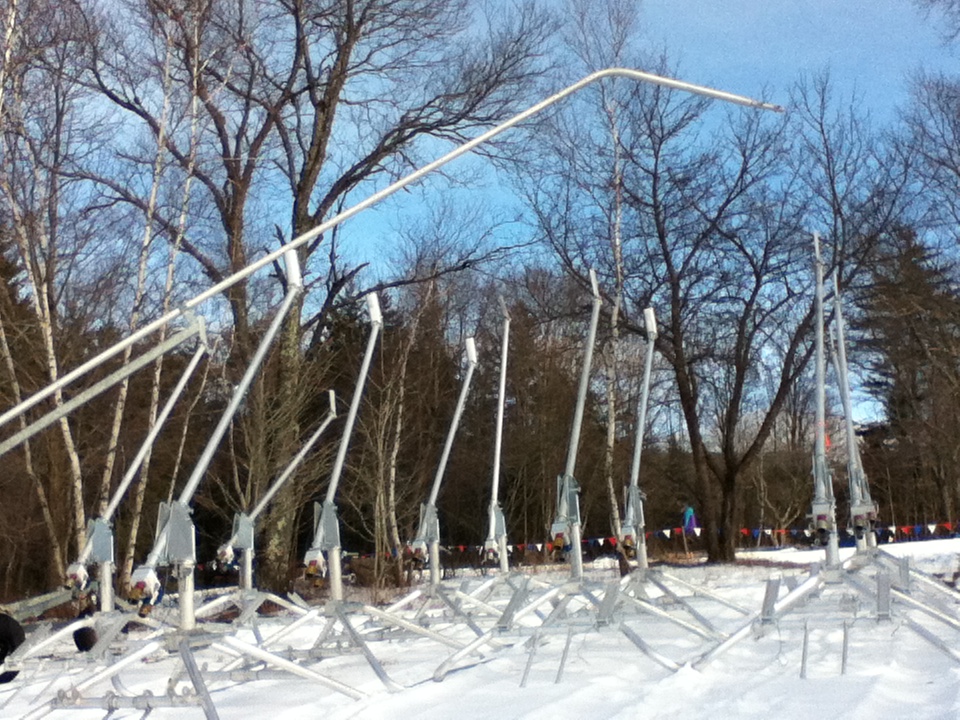
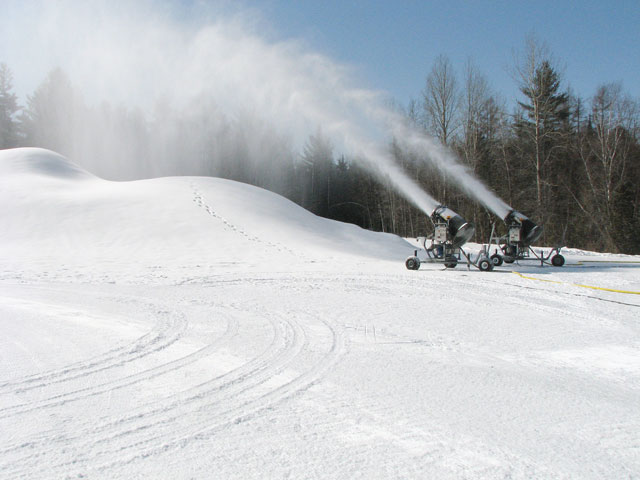
    Snowmaking equipment at the Rikert Touring Center of Middlebury College. Snowmaking is becoming increasingly necessary to maintain winter ski areas, but should the ski industry also be developing other strategies?
    Snowmaking equipment at the Rikert Touring Center of Middlebury College. Snowmaking is becoming increasingly necessary to maintain winter ski areas, but should the ski industry also be developing other strategies?

    Welcome back to This Month in Journals! After taking the winter off to focus on race reporting, we’re doing a series to catch up on the ski-related research that has been published in scientific and social science journals this winter.

    The Intergovernmental Panel of Climate Change (IPCC) recently came out with a new report, even more alarming than its previous ones. Besides noting that extreme weather events would increase and certainly have a huge impact on people around the world, the panel cited the need for adaptation.

    “Responding to climate-related risks involves making decisions and taking actions in the face of continuing uncertainty about the extent of climate change and the severity of impacts in a changing world, with potential limits to the effectiveness of incremental approaches,” the panel wrote in their technical summary. “… Adaptation planning and implementation at a range of scales are contingent on values, objectives, and risk perceptions. Some types of adaptation options, such as insurance or large-scale infrastructure projects, may differentially affect stakeholders.”

    What does this mean for the ski world? A variety of research groups published papers this winter looking at perceptions of climate change in the ski industry, both from tourists and other stakeholders, and whether they think adaptation is important. Here’s what they found.

    * Drs. Mia Landauer, Wolfgang Haider, and Ulrike Pröbstl-Haider published a comparison of climate change perceptions in Austrian and Finnish cross country skiers in the Journal of Travel Research in January.

    The authors identified three potential ways for ski areas to adapt to climate change: using technology such as snowmaking, snow saving, and ski tunnels; diversifying into activities that don’t depend on snow; and promoting all-season tourism rather than winter tourism. Then they examined how Finnish and Austrian skiers’ preferences for these strategies were affected by their cultural background.

    And there were major differences between these cultural backgrounds. For instance, in Finland, skiing was a form of transportation for hundreds of years, trails are groomed free of charge, and citizens expect to be able to use public and private land for recreation, as one of their basic rights. Most skiers learn in their childhood. In general, the culture has been characterized by more long-term than short-term thinking.

    In Austria, cross-country skiing is much more of a tourist product, and trails these days are more likely to be groomed by private businesses or individuals who charge for trail access. Skiers are more likely to have learned as adults. The authors identified masculinity and “avoidance of uncertainty” as general cultural traits in the country.

    The authors found that about half the skiers in each country mainly hit the trails to enjoy nature and get outside. But in Finland, almost twice as many of the others ski for the sporting and fitness aspects of the activity and don’t mind skiing alone, while more Austrians consider it a social activity. 85% of the Finns skied more than 30 days in a winter; most Austrians went out just six to ten days.

    What did this mean for climate adaptation? The Finns, with their emphasis on skiing as sport, were more interested in using technical advances such as snowmaking and building ski tunnels. The Austrians, who were more interested in seeing nature with their friends, were uninterested in ski tunnels. However, the Finns expected these infrastructure improvements to be paid in the interest of the public good, although they were somewhat willing to pay for access ski tunnels if the snow was good. Since Austrians already pay trail user fees, they were willing to do so for further improvements.

    In terms of diversification, Finns were more interested in seeing resorts offer other non-snow and year-round sport activities, either indoors or outdoors. Because the Austrians were not as interested in skiing as an athletic or fitness activity, they had less strong preferences for this type of adaptation. Instead, they were more interested in seeing cultural programs and nature experiences being offered in the place of on-snow skiing.

    The authors write that their study emphasizes how climate change must be addressed differently in different settings.

    Craftsbury
    Snowguns going strong at the Craftsbury Outdoor Center (Courtesy photo).

    “Ignoring cultural differences would likely increase management problems, lead to conflicts, and also to a significant decrease in skiing participation,” they wrote in their conclusion. “[Our study] underlines the importance and necessity to consider social limits—such as culture—to adaptation to climate change.”

    * Other work looked at the attitudes of not the skiers themselves, but those running the ski areas. Dr. Lisa Trawöger from the University of Innsbruck assessed the perception of tourism stakeholders in Austria about whether climate change was a threat to their winter tourism system.

    In the journal Tourism Management, Dr. Trawöger began by reviewing previous work on stakeholder attitudes. She noted that ski resort operators in Switzerland have been cognizant of, and worried about, climate change since the early 2000’s: after all, they have seen its effects firsthand.

    Attitudes of winter tourism businesspeople in the rest of Europe range from skeptical of climate change, to acknowledging its existence but worrying only about the bottom line. In many places, like northern Sweden, people weren’t sure whether climate change would affect tourism. In others, increased awareness of the problem had been noted in time spans as short as two years, perhaps because of low-snow winters in 2006 and 2007.

    So, Dr. Trawöger turned to the Tyrol region of Austria. There, she found ski company CEO’s who had discussed climate change in their work but were highly skeptical of its effects, and who did not believe research which predicts that it will affect winter tourism their region.

    “A few years ago they said we would have less snow,” a cable care company CEO told her. “We had a lot of snow and they told us it was an exception. We had five exceptions in a row. They also said it would get warmer and then we had a freezing cold winter. That doesn’t increase our confidence in studies. We can‘t estimate the long-term effects of climate change from the results we have received so far.”

    Of 24 CEO’s interviewed, only five were actively planning for climate change impacts, and they all ran cable car companies, not tourism associations. 11 CEO’s believed climate change was real, but were waiting to see if it affected Tyrol; five were unsure about climate change but optimistic that it might not affect them; and three completely denied its effects.

    Overall, Dr. Trawöger wrote, the Tyrolean ski industy does not believe that climate change is a threat and has not management or adaptation strategy for how to deal with it if it becomes one.

    The Snow Farm was among the New Zealand ski areas investigated by Dr. Hopkins.
    The Snow Farm was among the New Zealand ski areas investigated by Dr. Hopkins.

    * Finally, Dr. Debbie Hopkins of the University of Otago undertook similar work in New Zealand. Writing in the Journal of Sustainable Tourism, she concluded that the winter tourism industry is turning to snowmaking as a cure-all for the low-snow blues, without regard for long-term environmental and social consequences.

    Because the ski areas around Queenstown (including the Snow Farm, a cross-country ski destination for the U.S. and Canadian national teams and others) area all more than 15 and sometimes over 30 kilometers from the city, they are separated from other non-snow tourism draws and developing diversified strategies is challenging. For instance, there’s plenty of mountain biking in Queenstown itself, so using that as a draw for more remote areas has had limited success.

    Unlike in Austria, most skiers were aware of climate change and took it seriously as a threat to skiing. Talking to ski industry workers, locals, and tourists, Dr. Hopkins found that all considered increased snowmaking to be the solution to the climate change problem: other studies have shown that snowmaking can increase the days of skiing available compared to the 1990’s, even as natural snow is predicted to decline in the next three decades. Ski areas are now opening about a month earlier than they used to.

    With a warming climate, making snow early in the season could become much more difficult. Some managers also pointed out that snowmaking would become more costly under these circumstances and may not remain financially worthwhile for the ski areas.

    And some community members worried about the amount of electricity and water used to make snow a month before natural snow arrived. A few went so far as to say that they would be uninterested in supporting an industry based entirely on manmade snow. Overall, the paper questions whether snowmaking is a viable long-term strategy for the ski areas to use to attract tourists.

    “While snowmaking has many positive outputs for the ski industry, there are also perceptions of negative externalities which impact upon perceptions of sustainability and (mal)adaptation in the longer term,” Dr. Hopkins wrote.

  • This Month in Journals: Examining Economy, Efficiency and Pacing Strategy on Skis

    This Month in Journals: Examining Economy, Efficiency and Pacing Strategy on Skis

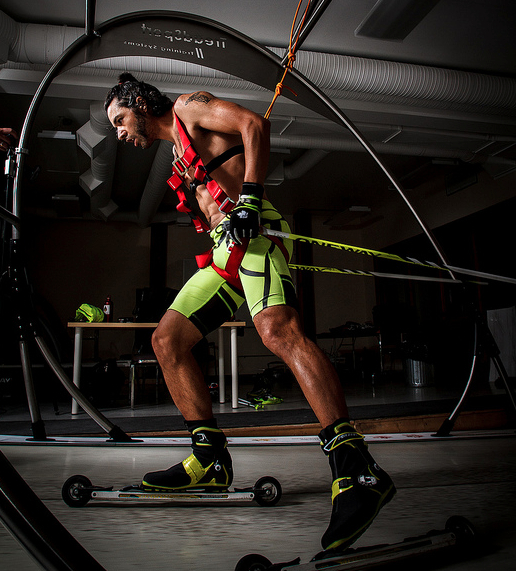
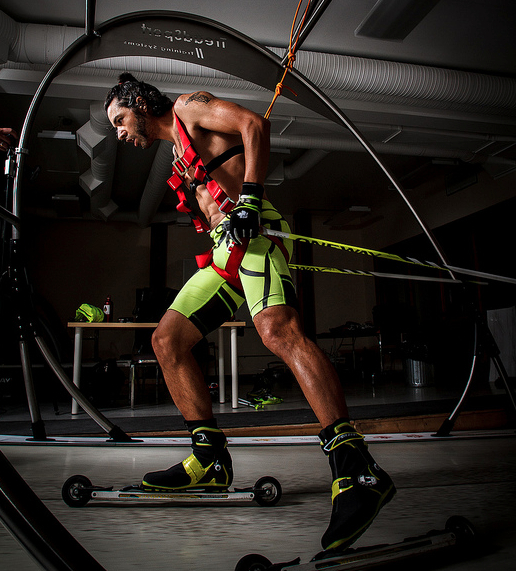
    Brian McKeever treadmill training (CCC photo: flickr.com/photos/cccski)
    Treadmill training. (CCC photo)

    Welcome back to This Month in Journals, where we read the latest exercise and sports science and pull out some research that might be of interest to skiers. In June journals, there was a surprising bevy of articles specifically about cross-country skiing – meaning our roundup is more directly relevant than usual!


    * Mats Ainegren and three colleagues at the Swedish Winter Sports Research Center in Ostersund, Sweden, found that economy and efficiency vary widely among skiers but also that older elite athletes are more efficient than younger or recreational ones. They suggest that economy and efficiency be incorporated into testing regimens that usually focus largely on VO2 Max to predict performance.

    The idea that better skiers are more economical and efficient sounds basic, but what do these words mean in a scientific context? “Gross efficiency” is defined as the power being used for an activity divided by the overall metabolic rate. As a task gets harder, both power and metabolic rate will increase. But power tends to increase more, so efficiency actually gets better for harder work, up until a point.

    “Economy,” meanwhile, is defined as the how much oxygen someone can take up, per unit of body weight, while doing a specific activity at a submaximal level.

    Ainegren’s team tested both male and female elite senior and junior racers, as well as male recreational skiers, on a treadmill using skate and classic technique. In the Journal of Strength and Conditioning Research, they reported that economy was 10 to 12 percent lower in the recreational skiers than the elite seniors, but no different that that of junior racers. Efficiency, however, was more stratified. Recreational skiers were 8 to 12 percent less efficient than elite juniors and another four to six percent less efficient than elite seniors.

    In trying to understand why the elite skiers were more efficient, or how they had gained this advantage, the researchers found no differences between men and women. Age, however, explained some of the difference, suggesting that simply skiing for longer teaches efficiency. Being tall, on the other hand, sometimes tended to diminish economy and efficiency.

    Perhaps most interestingly, though, there was a wide range of efficiencies within the junior and elite athletes: from 9 % to 22 %, in other words, some skiers were twice as efficient as others. For elite skiers, the authors calculated that a difference of 2% in efficiency would translate to a 30-second gap between athletes in a 5 k race, or three minutes in a 50 k.

    “For elite athletes, the differences in materials, ski waxing, VO2peak, and performance in races are quite small, thus emphasizing the importance of using an efficient technique,” they wrote. “For recreational skiers, larger differences in the above-mentioned factors are likely to be more common.”


    * Another team also tackled the question of efficiency. Stig Leirdal and two colleagues at the Norwegian University of Science and Technology in Trondheim published a paper in the Scandinavian Journal of Medicine and Science in Sports that examined how efficiency changes with cadence in skate skiing.

    Again using a rollerski treadmill, Leirdal et al. put eight high-level skiers through their paces at three different treadmill speeds, and in separate tests allowed them to choose their own rhythm or asked them to ski at a specific stroke rate.

    In time-to-exhaustion tests, asking the skiers to ski at a higher frequency always reduced the time they were able to ski before dropping out. Asking them to reduce the cadence had varying effects. Especially at the highest speeds, when skiers were closest to a maximal effort, increasing their cadence greatly reduced their efficiency.

    In general, the cadences chosen by the skiers themselves were the most efficient and led to the best performance. Leirdal and his colleagues called this “self-optimization”: athletes know best! Way to go, skiers.


    * Another Scandinavian team, comprised of researchers from the Swedish School of Sport and Health Sciences in Stockholm, the Royal Institute of Technology in Stockholm, and the Norwegian School of Sport Sciences, looked at double-poling on a treadmill, specifically using elite female skiers. Their goal was to understand how kinetics and coordination of muscle groups help skiers adapt to higher speeds and resistances, such as from a headwind or particularly dry or mushy snow.

    Publishing in the European Journal of Applied Physiology, Johnny Nilsson and his collaborators used 3D motion capture technology to understand how the women’s joints moved, force plates to assess poling force, and electrodes to measure when different muscles were activated in the poling process.

    The team found that at higher speeds and higher resistances, angles of the elbows, trunk, hips, and knees all increased, while trunk and hip extension decreased. To translate this into a more familiar image, this corresponds to a shortening of the horizontal reach of a skier as they are double-poling.

    The team also found that the cadence was faster under increased speed and resistance (no surprises there). But the reason of the faster cadence changed depending on the cause: with increasing speed, the thrust or pushing section of the poling cycle was shortened, whereas with only increasing resistance, the swing phase got shorter.


    * Finally, a team from Mid Sweden University wrote in Structural and Multidisciplinary Optimization about a different kind of optimization: how to best pace yourself over the course of a ski race. David Sundstrom et al. calculated mathematical models of how to distribute effort over the length of the race. Specifically, their method allows one to specify some physiological parameters of the athlete, as well as the course profile he or she will ski.

    To test it, they modeled the 2007 Swedish National Championships sprint course, breaking the ~1.4 kilometer course into 36 segments that they simulated with complex splines. Then they imagined a World Cup-level skier with some made-up size.

    The model took into account things like how much force is needed to go up hills of different grades, how the force required changes depending on the athlete’s current speed, friction between the skis and the snow, and that mechanical efficiency might decrease at very high speeds. Basically, all the things that make skiing magical and complex? They came up with equations. To optimize race time, they then ran many simulations through a computer to have the imaginary skier changing his effort at many different places along the course.

    The conclusion? Athletes can save time by varying their pace around the course.

    “The time saved from utilizing an optimal pacing strategy, as in this study, compared to an even pacing strategy, is 13.0 s which is a reduction of 6.5 %,” the authors wrote. “In the men’s individual sprint qualification in the 2010 Olympics, this would be the difference between placing number 51 and winning the qualification. However, one can expect that today’s skiers have already opted for an improved pacing strategy compared to an even propulsive power distribution, but presumably not an optimal one.”

    In order to find that optimal strategy, teams could use models like this one in the future, although the researchers admit that it’s hard to translate the information from the model – which is measured in “propulsion” – into exact instructions a skier can follow out on the trails. Nevertheless, the authors suggested that perhaps this tool could be used for visualization in training.