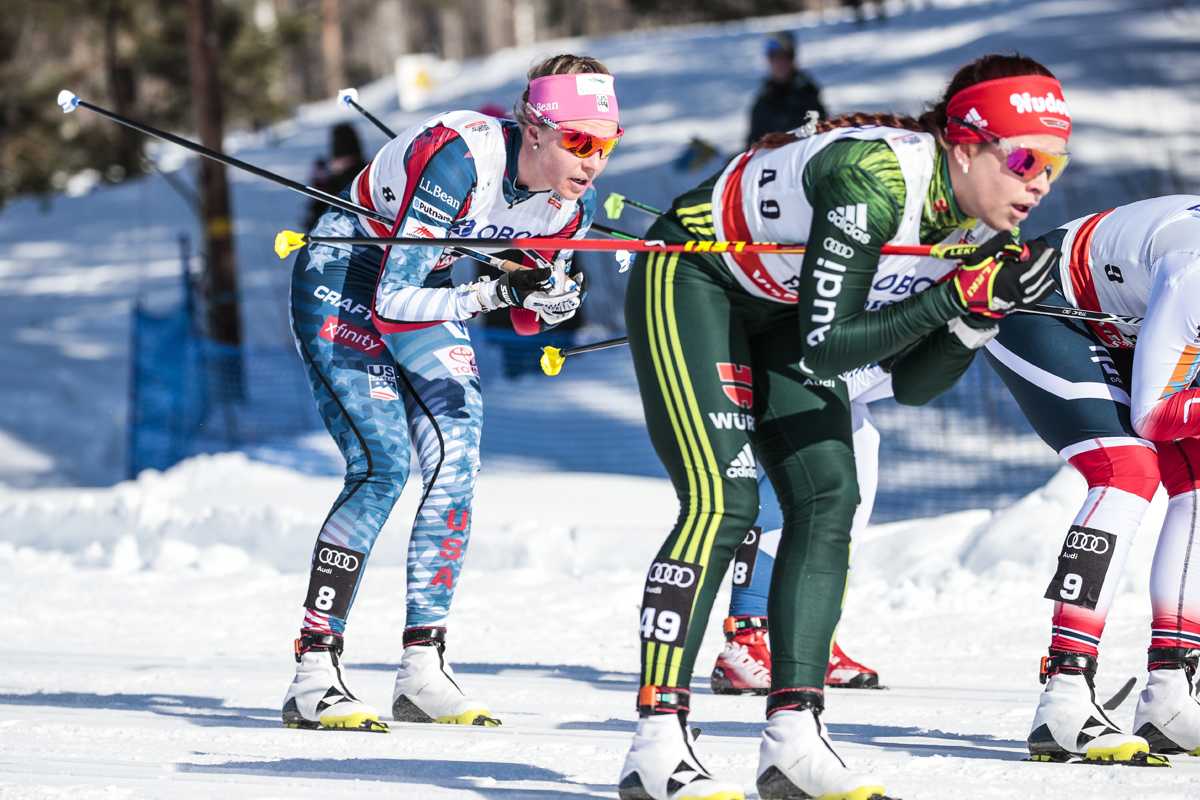
American Sadie Bjornsen skiing just behind Germany’s Katharina Hennig during the women’s 10 k classic mass start at 2018 World Cup Finals in Falun, Sweden. (Photo: Fischer/NordicFocus)
Welcome to FasterSkier’s World Cup Preview, where we check in with the top-10 teams from last year’s FIS Cross Country World Cup tour before the season starts with the Ruka weekend in Kuusamo, Finland, on Nov. 24 with a classic sprint.
***
Germany
Overall in Nations Cup Last Year: 8th
Women’s Ranking 2017/2018:
Men’s Ranking 2017/2018:
Germans to look out for: If there’s one woman returning to Germany’s national ski team from last season who is hungry for a sprint podium and on the watch list, it’s 28-year-old, Sandra Ringwald. The Lahti, Finland freestyle sprint left her in fourth, just shy of her first World Cup podium. Prior to Lahti, she raced to a seventh and sixth, respectively, in the Davos and Lenzerheide freestyle sprints.
While freestyle sprinting may appear to be the magnum opus of Ringwald’s cross-country skiing, she also finished last season with top thirty performances in a series of other disciplines, most notably a 12th place finish in the Tour de Ski 10-kilometer freestyle pursuit in Lenzerheide, Switzerland. She led the German women in last year’s Overall Cup Standings, finishing in 23rd behind Finland’s Aino-Kaisa Saarinen and ahead of Sweden’s Anna Jönsson Haag.
Chasing down Ringwald on the Overall Cup Standings is her teammate, Stefanie Böhler who ended last season ranked 25th in the overall. The 37-year-old Böhler raced into the top ten three times during last year’s World Cup season, holding out for eighth in Oslo, Norway’s famed Holmenkollen 30 k.
Along with Böhler and Ringwald, Germans Victoria Carl, Nicole Fessel, and Katharina Hennig scored points in the 2017/2018 season and are back on the team, ready to hit the World Cup circuit in search of more top thirties. Not returning to German’s national cross-country ski team after announcing her retirement this spring is Hanna Kolb.
Leading the charge on the men’s side for Germany will be Thomas Bing. The 28-year-old Bing ended last season with five top fifteen World Cup performances, his strongest being a ninth place in the Tour de Ski 15 k freestyle mass start in Oberstdorf, Germany. Along with Bing, Lucas Bögl is another name to look for from Germany. Bögl bust into the top-25 five times last season, most notably the Final Climb in the Tour de Ski 9 k pursuit in Val di Fiemme, Italy.
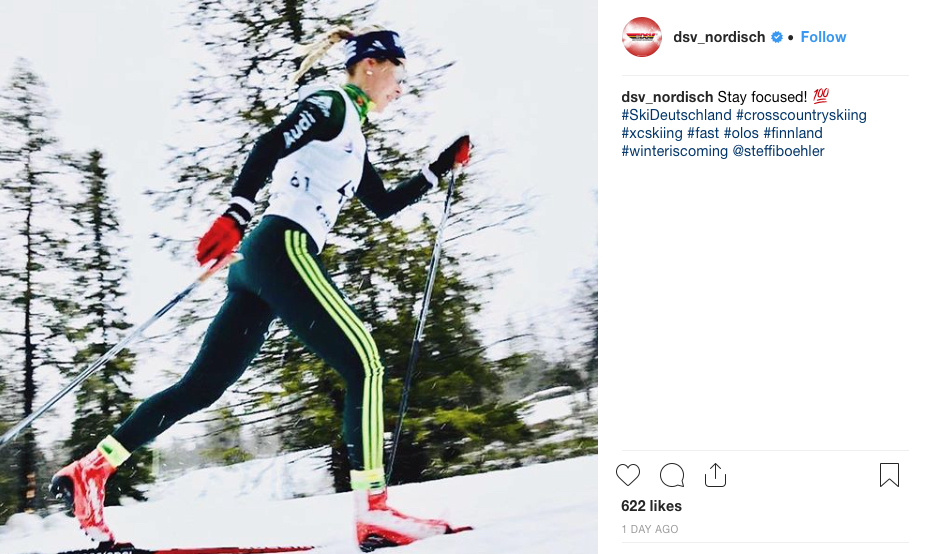
Germany’s Steffi Böhler during the FIS women’s 5-kilometer classic in Olos, Finland on 11/10/18. She placed sixth overall in what was used as a warm-up race for the German team. (Photo: Instagram screenshot)
Pre-Season Racing: Many German National team members are lined up at the FIS races in Olos, Finland scheduled from Nov. 9-11. In Friday’s 1.4 k classic sprint, Ringwald and Laura Gimmler placed first and third respectively. Gimmler had limited World Cup exposure last season, but notched two top-20s.
For the men, Bing was the best placed German in the sprint placing third overall.
In Saturday’s 5 k classic, the German women stacked five athletes in the top-6. Carl placed first, Hennig second, and Poland’s Justyna Kowalczyk was third. Also for Germany, Julia Belger skied to fourth, Pia Fink fifth, and Böhler sixth.
The men raced a 10 k classic. Jonas Dobler raced to 6th as the best placed German.
Sunday featured a 10 k skate for the women. Russia’s Natalia Nepryaeva won, while Carl was second, Ringwald third.
In the men’s 15 k skate, Dobler was the best placed German in fifth place.
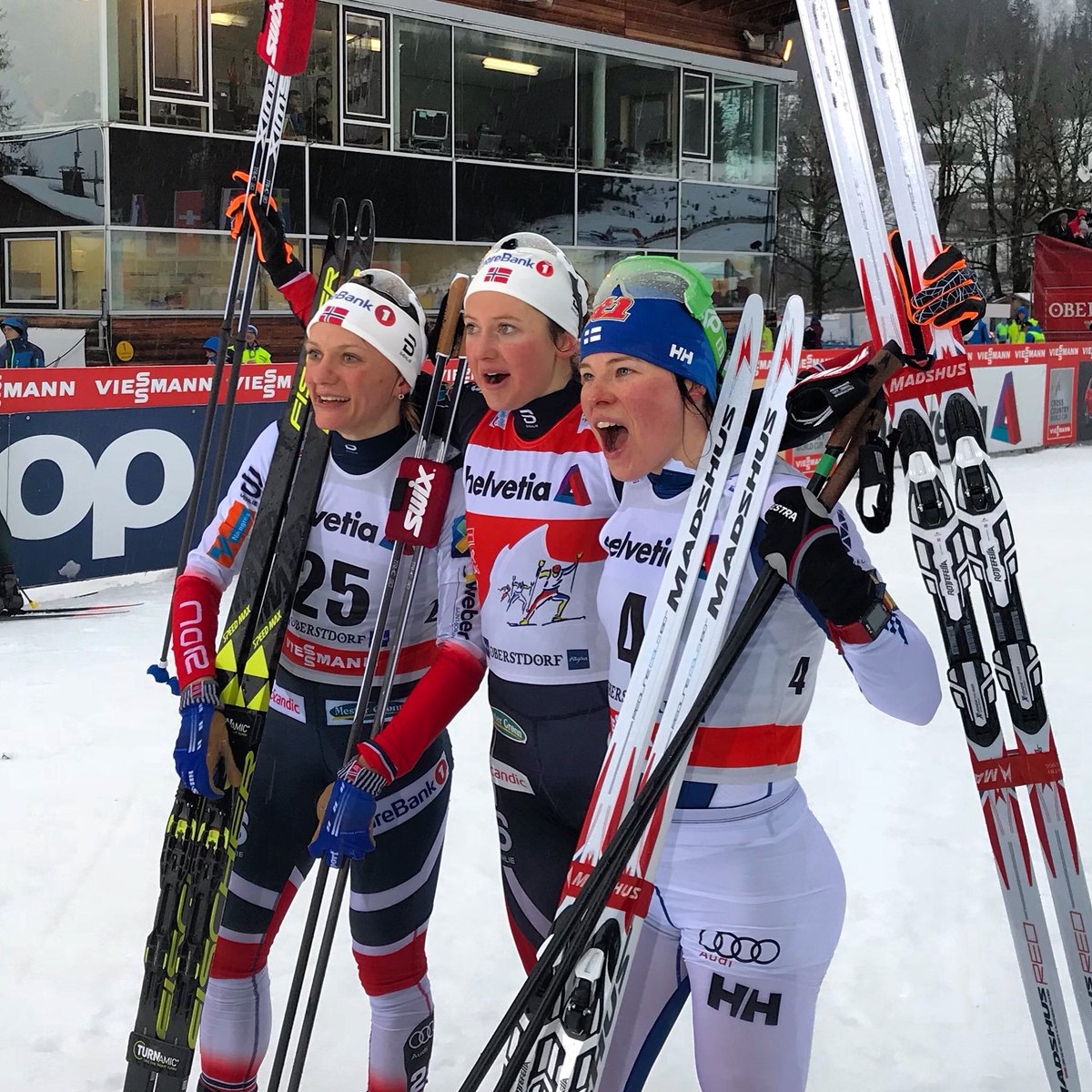
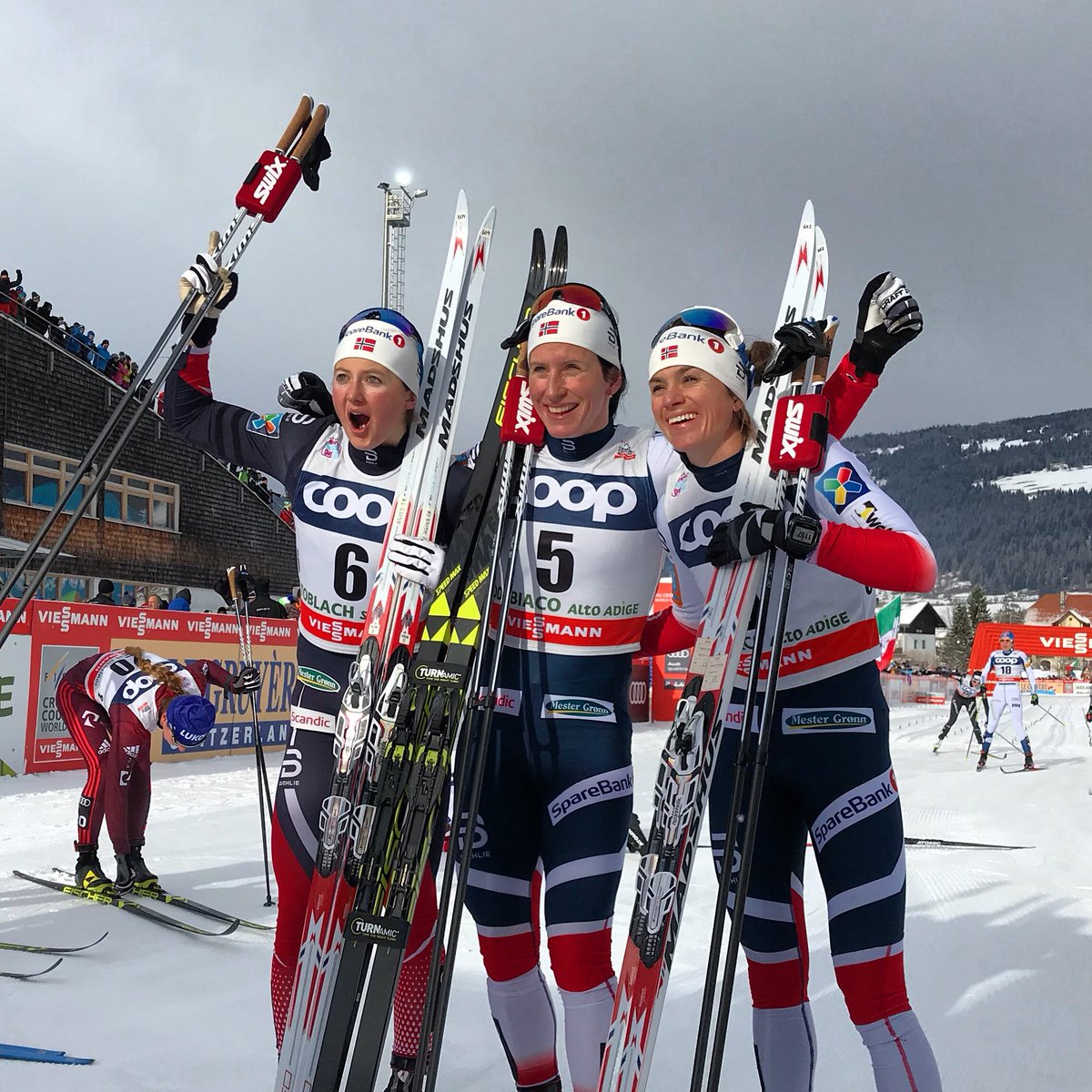
Krista Pärmäkoski of Finland (center) won her second straight 10 k classic, to the delight of the crowd in Lahti. Natalia Nepryaeva of Russia (left) finished second and Marit Bjørgen of Norway third. (Photo: FIS Cross Country/Twitter)
FIS Cross Country World Cup (Lahti, Finland): 10/15 k classic
Racing at home in Finland, Krista Pärmäkoski picked a good time to collect the second World Cup victory of her career, and again in a 10 k classic. Pärmäkoski’s first win came in the 10 k classic in Planica, Slovenia, earlier this season.
In second was Russia’s Natalia Nepryaeva, who picked up her first World Cup podium. The current U23 standings leader, Nepryaeva’s time was 20.9 seconds slower than Parmakoski. Both she and Marit Bjørgen of Norway, who finished third (+26.7), used a steady pace to reach the podium. At the 5 k split, Heidi Weng of Norway – wearing the yellow bib of the overall World Cup leader – was in second at the halfway point but faded to finish fifth (+43.3), and Kerttu Niskanen of Finland was in third place but she dropped to fourth by the finish, +27.0. Austria’s Teresa Stadlober finished sixth (+52.4).
Sadie Bjornsen placed seventh (+57.6) to lead the American team. Caitlin Patterson was next, just missing the World Cup points in 32nd (+2:02.7). Ida Sargent and Sophie Caldwell finished 40th (+2:21.9) and 42nd (+2:24.2), respectively. Rosie Brennan finished 48th (+3:02.1) and SuperTour leader Kaitlynn Miller placed 51st (+3:09.1).
Liz Stephen of the U.S. Ski Team did not start due to illness.
Canada started only two women: Emily Nishikawa finished 41st (+2:22.2) and Dahria Beatty 44th (+2:40.7).
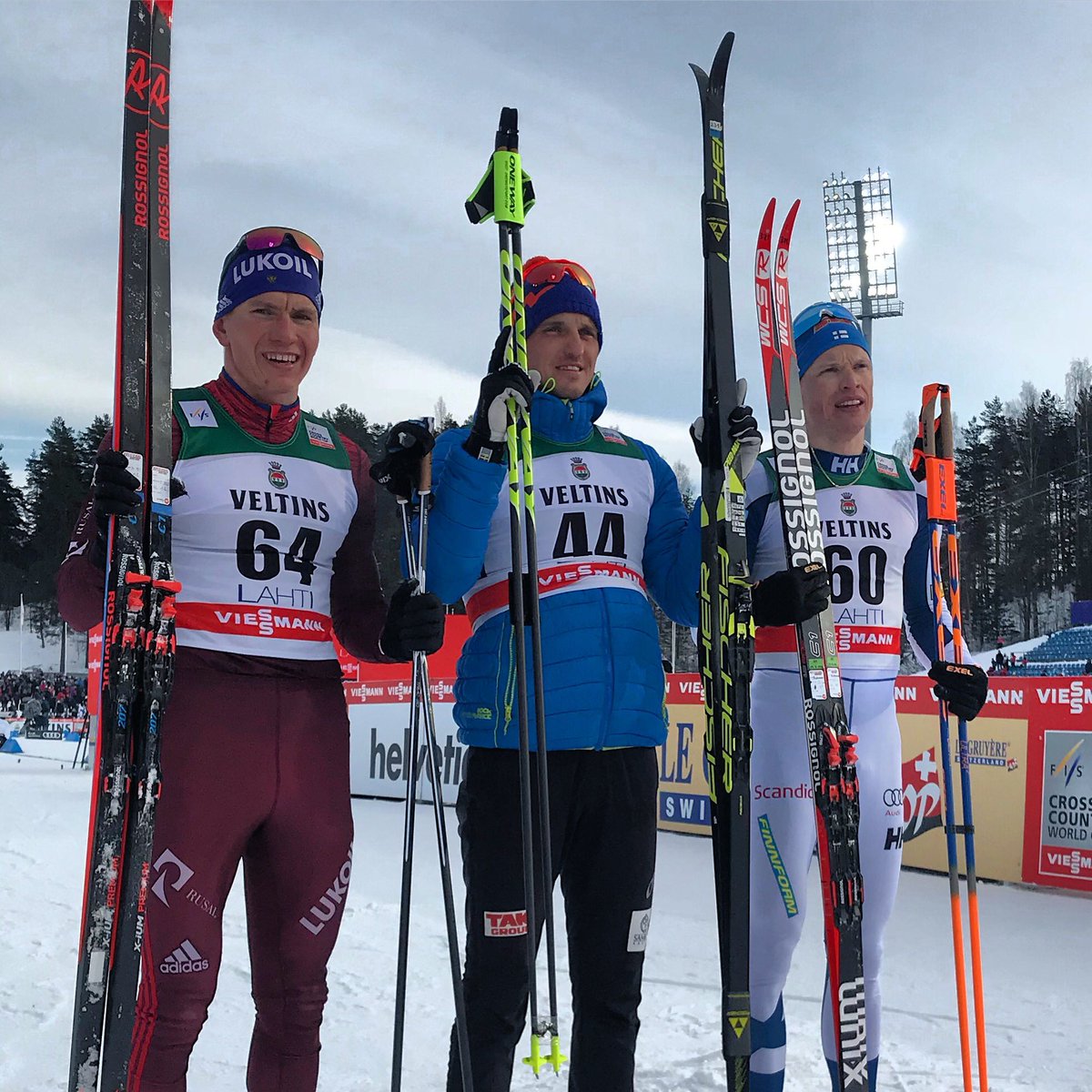
The men’s 15 k classic podium at the World Cup in Lahti, Finland, with Kazakhstan’s Alexey Poltoranin (c) in first, Russia’s Alexander Bolshunov (l) in second and Finland’s Iivo Niskanen (r) in third. (Photo: FIS Cross Country/Twitter)
In the men’s race that followed, Alexey Poltoranin of Kazakhstan got some redemption after a major bonk in the Olympics 50 k last weekend, winning the 15 k classic individual start in Lahti.
Starting in the middle of the field in bib 44 (out of 71), Poltoranin paced it perfectly, skiing a steady race with some of the top split times and then turning it up another notch over the last several kilometers to take the win in 33:11.9 minutes. His biggest threat was Russia’s Alexander Bolshunov, who started 64th and clocked faster splits at every timing point throughout the three-lap race except the one that mattered most — the finish. There, Bolshunov came up 9.1 seconds short of Poltoranin’s time to place second, and Finland’s Iivo Niskanen — the Olympic 50 k champ — placed third, 20.9 seconds out of first.
Norway took fourth through seventh, with Emil Iversen in fourth (+28.8), Martin Johnsrud Sundby in fifth (+39.9), Niklas Dyrhaug in sixth (+50.1), and Johannes Høsflot Klæbo in seventh (+1:00.3). Russia’s Alexey Chervotkin placed eighth (+1:08.3), Germany’s Thomas Bing was ninth (+1:08.5) and Sweden’s Daniel Rickardsson finished 10th (+1:09.2).
Canada’s Devon Kershaw led the North Americans in 25th (+1:43.2), and Erik Bjornsen was the top American in 32nd (+2:06.6).
Four Canadian men raced, with Graeme Killick placing 39th (+2:22.9), Julien Locke 69th (+4:56.6) and Andy Shields 70th (+5:42.1).
The U.S. was represented by six men, with Noah Hoffman placing 40th (+2:24.0), Paddy Caldwell 45th (+2:40.5), Scott Patterson 50th (+2:58.7), Kevin Bolger 54th (+3:09.5), and David Norris 57th (+3:23.5).
The World Cup picks back up again this Wednesday with classic sprints in downtown Drammen, Norway.
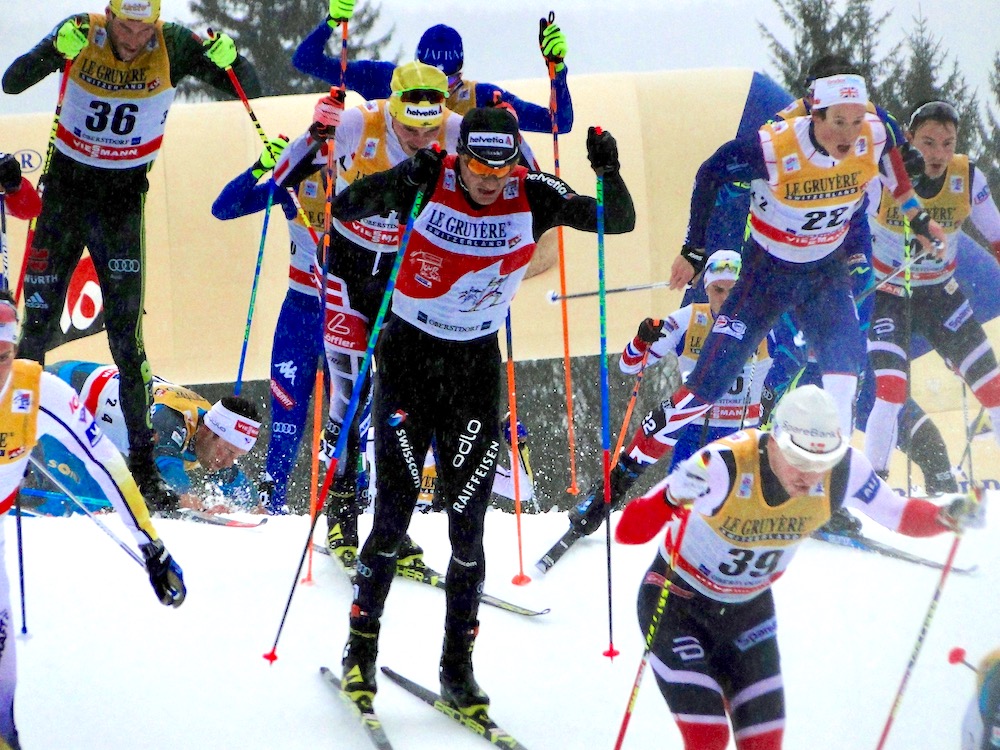
This pretty much sums up Stage 5 of the 2018 Tour de Ski, with a France’s Adrien Backscheider (an early race leader) crashing in the background while Switzerland’s Dario Cologna (red Tour leader’s bib) and Great Britain’s Andrew Musgrave (22) and others chase Norway’s Sindre Bjørnestad Skar (39) and others not shown in the men’s 15 k freestyle mass start on Thursday in Oberstdorf, Germany. (Photo: Harald Zimmer)
Like ants swarming a bread crumb — skating ants — on ice. That was one image that could be conceived from the men’s 15-kilometer freestyle mass start on Thursday, which served as Stage 5 of the 2018 Tour de Ski in Obertsdorf, Germany.
After high winds and fallen trees Wednesday in Obertsdorf left race organizers scrambling to set a new course for Thursday’s distance races, the end result was a 2.1 k loop (the women’s sprint course plus a flat section) with a maximum climb of 16 meters per lap for both the men and the women. The men rounded it seven times for 14.7 k and the women lapped five times for 10.5 k.
While Oberstdorf’s distance courses are typically “challenging and hilly and filled with attacks and strategic moves”, according to U.S. Ski Team Women’s Coach Matt Whitcomb, Thursday’s race was mostly flat. “It was probably the flattest race that many of these athletes have ever raced on the World Cup so it made for a really exciting pack race.
“[The organizers] just couldn’t use the course with the hills because the trees and the forest were unstable,” Whitcomb explained on the phone Thursday evening. “They also didn’t have time to clear the wood that fell. There were six or seven huge trees that fell on the course.”
It had also rained on Wednesday — in fact, a lightening storm struck the venue and led to the cancellation of Stage 4 after the women’s qualifier — so organizers opted to salt the course to preserve it as much as possible for the mass starts. It was raining again on Thursday, leaving the course icy with a thin coat of slush on top by the time the men raced after the women.
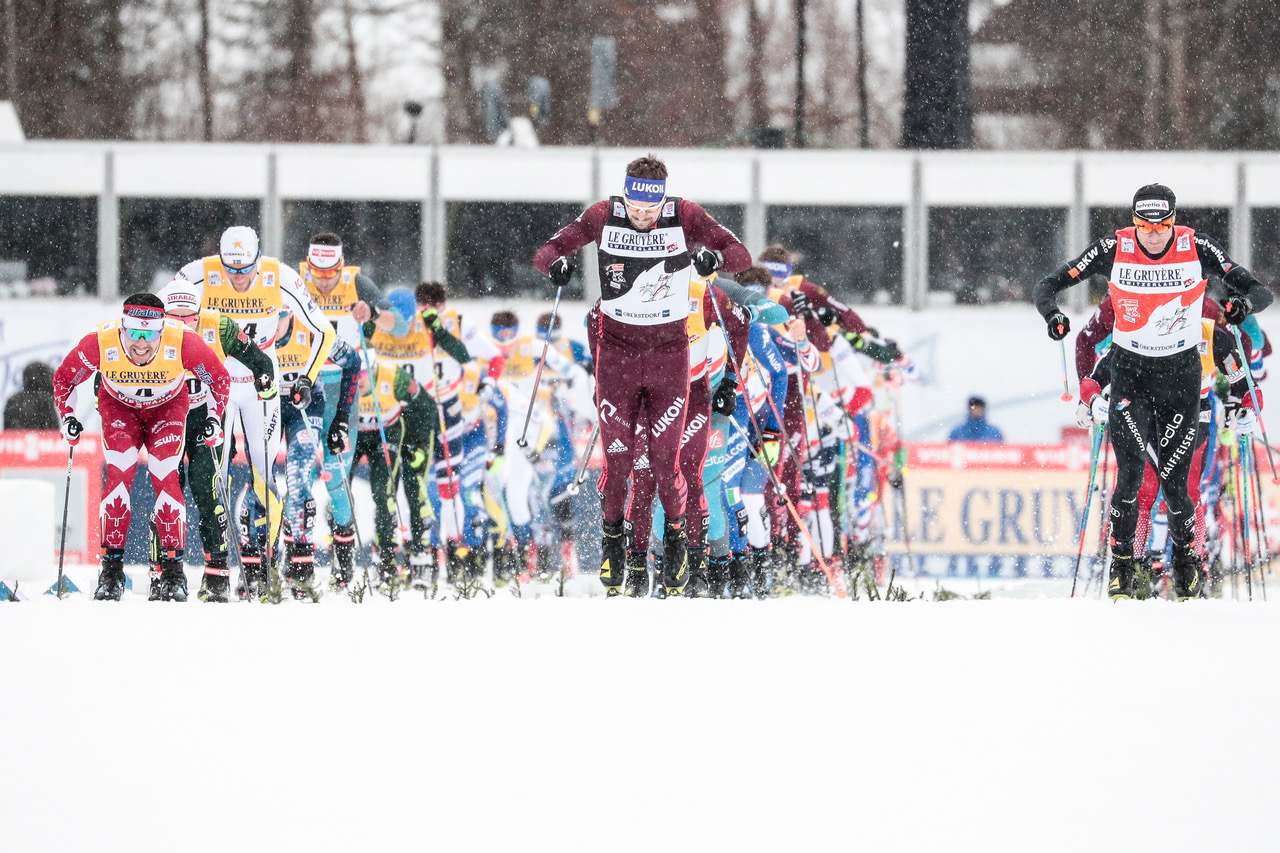
Start of the men’s 15 k freestyle at Stage 5 of the 2018 Tour de Ski in Oberstdorf, Germany, with Canada’s Alex Harvey (4), Russia’s Sergey Ustiugov (black bib) and Switzerland’s Dario Cologna (red Tour leader’s bib) up front. (Photo: Fischer/NordicFocus)
The men’s field, led by Russians Sergey Ustiugov and Alexander Bolshunov for almost all of the first lap, completed Lap 1 of seven in 4 minutes and 16 seconds (with Sweden’s Calle Halfvarsson leading through the checkpoint). There, at 2.1 k, all 67 starters were within 16 seconds of the lead.
One lap later, as Great Britain’s Andrew Musgrave led the large group through the stadium, just ahead of Norway’s Martin Johnsrud Sundby, Switzerland’s Dario Cologna, and Canada’s Alex Harvey, only one man had been dropped. Sixty-six still skied within 19 seconds of first.
Crashes dotted the entire race, with Bolshunov going down at least twice. Mostly, skiers tripped over one another on the slightly rolling course. Harvey even broke a pole at one point in the middle of the second-to-last lap. In a phone interview on Thursday, the lone Canadian in this year’s Tour de Ski (TdS) estimated he witnessed several crashes per lap.
“I saw for sure between 10 and 15 crashes that happened within my surroundings,” Harvey said.
For the first two laps, Harvey positioned himself in the top five, coming through the 3.6 k sprint bonus in fifth place to earn six bonus seconds (which count toward the overall Tour standings). On Lap 3, he dropped back to around seventh, still within 2 seconds of Musgrave and Norway’s Didrik Tønseth, who swapped the lead throughout the third lap.
On Lap 4, Cologna moved to the front, just ahead of Musgrave, Tønseth, Sundby and 30 others within 10 seconds of first at 7.8 k. There, Harvey was back in 30th, 9.2 seconds back. About 1.5 seconds behind him at 8.4 k, the end of Lap 4, was American Erik Bjornsen in 36th.
“I didn’t want to fall that far back, but I made a couple bad decisions, like picking wrong lanes and it was just a bit of a slower lane on one hill, so you’d lose five, six spots,” Harvey recalled. “Somebody would fall in front of you or in your lane, so then you’d come to a stop and lose 10 spots, so it was just real mayhem there. But my plan was to try to stay in the top five, top 10 all day, but I just didn’t do that.”
Lap 5 saw Cologna, Sundby, Tønseth, and even France’s Clement Parisse at the front of the pack, while Harvey moved back up to around 20th, just 3.5 seconds out of first.
On the penultimate lap, Harvey broke a pole.
“I had been kind out of position for a lap and half by then, so I was just trying to find ways to move, going on the outside, I think somebody just stepped on my pole, but it’s hard to tell,” he said.
Despite dropping to what he estimated to be 40th on that sixth lap, Harvey recovered, thanks to the tightly packed group, and lapped through the stadium in 27th, 5.3 seconds behind Tønseth in first.
Over the final 2.1 k, Harvey continued to pick off the places. One and a half k later, he was up to eighth, 3.4 seconds behind Norway’s Sindre Bjørnestad Skar in first.
“I was really focusing on staying outside the whole time, never going for the inside lane and then maybe people were starting to get tired a little bit, even though the course was not hard and the course was fast,” Harvey said. “… I think a lot of it was luck.”
In the final meters, when everyone at the front of the race turned it up another notch and Norway’s Emil Iversen attacked on the final rise before descending into the stadium, Harvey came out on top off a three-way photo finish for fifth place, edging Musgrave in sixth and Norway’s Finn Hågen Krogh in seventh. All three were within 4 seconds of first place, which went to Iversen.
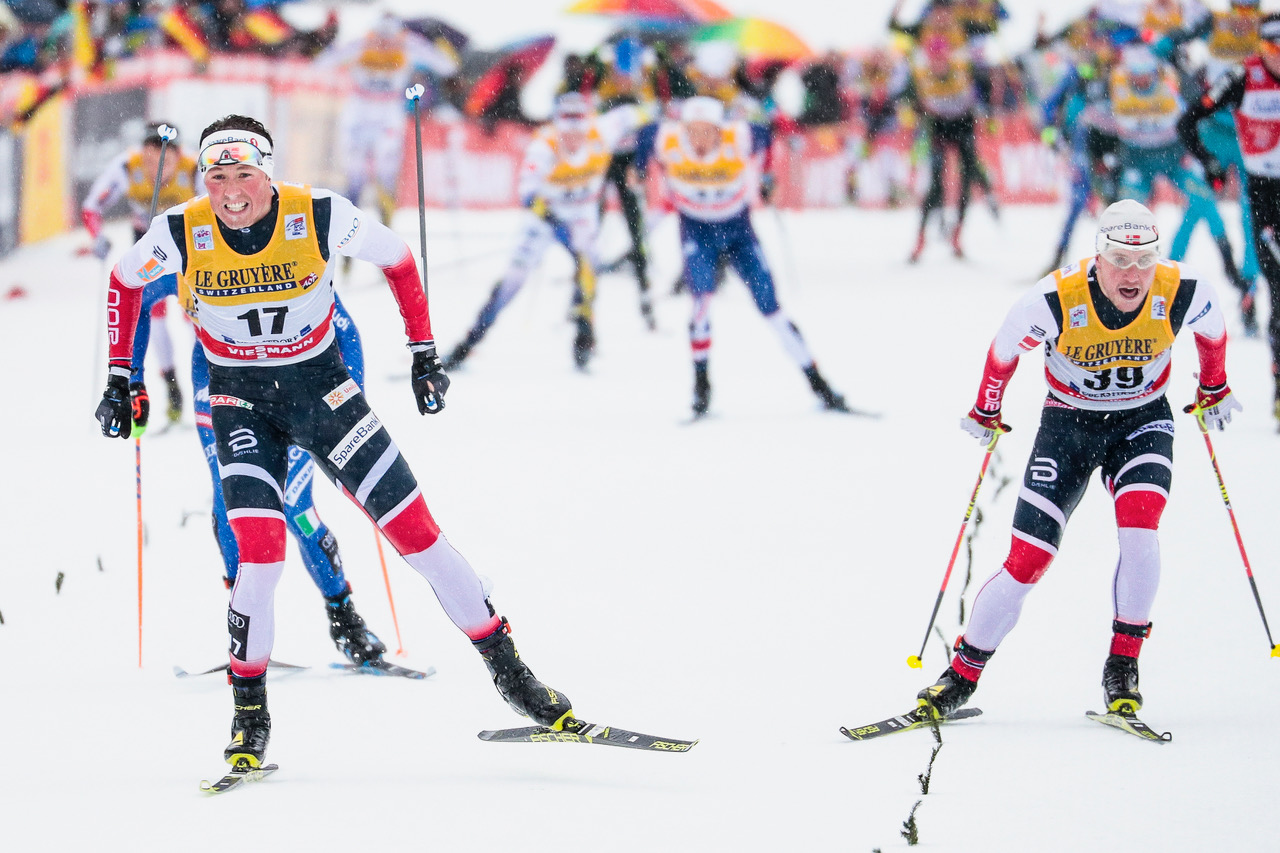
Norway’s Emil Iversen (17) racing to the line with his teammate Sindre Bjørnestad Skar (39) for first in the men’s 15 k freestyle mass start on Thursday, which Iversen won by 0.4 seconds for his first win and podium of the season, and the first for a Norwegian man in the 2018 TdS. (Photo: Fischer/NordicFocus)
The win was Iversen’s first of the season, and Norway’s first on the men’s side in the 2018 TdS, and puts him in 13th, 2:13 minutes out of first, with two stages remaining.
“It was a fight from the start to the end, and I just had to be in my head… doing the right things,” Iversen told reporters in English after the race. “I did that really good today so I am satisfied with that.”
Iversen crossed finished first in 29:49.8, just 0.4 seconds ahead of his Norwegian teammate Skar in second place. Italy’s Francesco De Fabiani — who had been 34th at 8.6 k, seven seconds back and just ahead of Bjornsen — claimed third place, just 0.9 seconds behind Iversen. Cologna finished fourth (+3.7) to extend his overall TdS lead, followed by Harvey in fifth. Harvey is still fourth in the Tour, now 1:23.1 behind Cologna.
Asked if he was mostly focused on finishing close to Cologna, Harvey said he was actually keeping track of Bolshunov, who ended up 40th (+15.9) on Thursday. Heading into Stage 5, the Russian U23 skier was third in the Tour, 6.3 seconds ahead of Harvey in fourth. So Harvey knew that even 6 bonus seconds at one of two sprint bonuses on the course could be the difference between third or fourth in the standings.
At the first bonus sprint, where Harvey picked up 6 seconds, Bolshunov picked up 3. Then, at the second bonus sprint at 7.8 k, the Russian clocked through in sixth for 5 seconds. Harvey was 30th there for zero. At the end of the day, Harvey held onto fourth in the standings, 1:21.3 minutes behind Cologna, 30.1 behind Ustiugov, who’s still in second, and 15.5 behind Sundby, who improved to third. Meanwhile, Bolshunov slipped to fifth, 3.6 seconds behind Harvey.
“… He ended up crashing on the last lap, I think,” Harvey said of Bolshunov. “I was focusing more on the guys that are closer to me because Dario, he’s so solid, he never really has a bad day. I think a lot of people — nobody’s giving it to him, but it’s going be hard to get back on him, so I think people are starting to fight more for second place. It was more about Bolshunov and Ustiugov.”
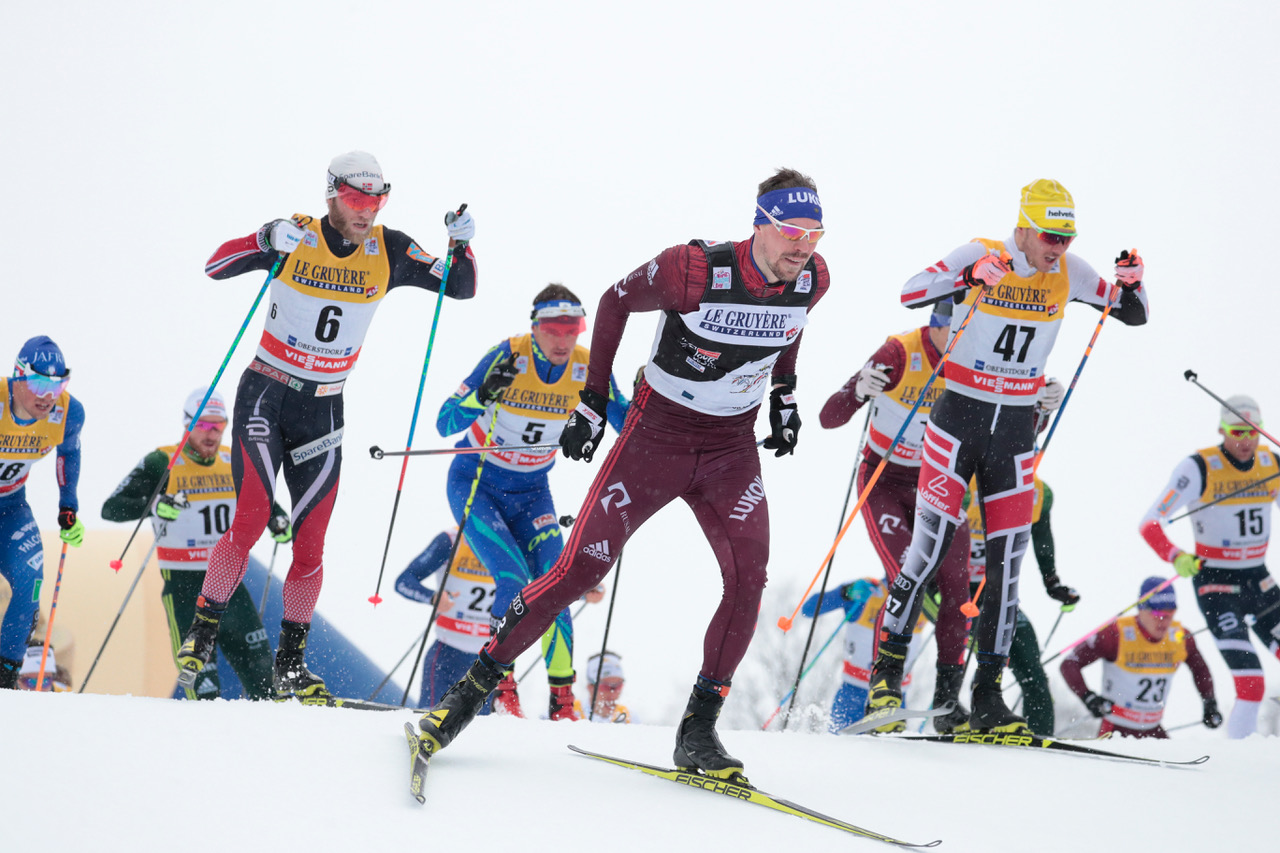
Russia’s Sergey Ustiugov leading Norway’s Martin Johnsrud Sundby (6), Austria’s Dominik Bauldof (47), Kazakhstan’s Alexey Poltoranin (5) and the rest of the men’s field during the men’s 15 k freestyle mass start at Stage 5 of the Tour de Ski. (Photo: Fischer/NordicFocus)
Ustiugov finished 28th on Thursday (+11.1) and now trails Cologna by 53 seconds in the overall. Sundby finished eighth (+4.2) and picked up 23 bonus seconds in Thursday’s mass start to move up from sixth to third overall (+1:07.6).
“For sure, it has been difficult weather, difficult conditions for those who make this race, and I think you can argue in a lot of ways today, the race was difficult and blew many racers’ chances, both with the difficulties with the skis and poles,” Sundby told reporters in English after. “But I am happy that they decided to do the race. They found a short track we could ski in and no cancellation I think that was good.
“My main goal for the season is Olympics,” Sundby continued. “I think we use this Tour for, one: I love the Tour de Ski; it’s a beautiful competition, and two: to get in better shape for the Olympics. That is the main goal this season, but I still want to fight for the first [in the Tour]. It looks a bit a long ahead at this point, but we have two more races to go.”
For Harvey, the race was also about distancing himself from some of his biggest threats in the final climb on Sunday, such as Sweden’s Marcus Hellner, who entered Stage 5 in 10th and about 35 seconds behind him overall, and France’s Maurice Manificat, who was previously 36 seconds behind him in 14th overall. They’re still at least 37 seconds behind Harvey after Manificat finished 10th on Thursday to move up to 10th overall (+1:59.0), tied with Germany’s Thomas Bing, who placed ninth Thursday to put himself ninth overall (+1:59.0). Hellner follows in 11th overall (+2:05.3) after finishing 22nd in Stage 5.
“I think for me today was a really good opportunity to make some time, especially on the guys close behind me, like Manificat and Hellner,” Harvey said. “I didn’t lose much, but I kind of missed the opportunity to give myself a bit more of a cushion for the climb, so that’s mostly what I’m bummed out about. That and looking at the schedule of the Tour, [this mass start] was for sure where I thought my best chance at a podium would be. So I’m a bit bummed out that I missed out on that, but it’s part of the game.”
In a Cross Country Canada press release, Harvey was quoted on his frustration with the mass start being held on a short, narrow and relatively easy course.
“It’s just too bad, the organizing committee or the jury should have just made it a sprint or an individual start,” Harvey told FasterSkier. “It was just kind of a stupid race. I was lucky that I ended up not losing too much time but I didn’t feel like I raced. It was easy the whole time, with just nerves the whole time, trying not to fall and stay out of trouble, even though nobody I think was able to stay fully out of trouble today.”
Bjornsen ended up 32nd at the finish, 11.7 seconds out of first, and leaves the TdS in 20th (+3:10.7). After initially planning to race the entire Tour, he spoke with Whitcomb about withdrawing after Stage 5 on Tuesday night.
“Erik is in a great spot,” Whitcomb said. “He’s had a really strong period [1 on the World Cup]. He’s skiing a really strong Tour. He’s made a distinct step forward this year, and we want to not lose sight of the goal of doing well at the Olympics. Erik’s a guy where in a number of events, but especially in the team sprint, a medal could be on the table for him, so we’re really focused on making sure we don’t tap things too deeply when we don’t need to. So Erik decided to ski through today, then head to Ramsau for a little rest, then a training camp.”
“It was a hard decision since I’m feeling good and sitting in 20th place,” Bjornsen wrote in an email. “There is a team sprint coming up in a little over a week [in Dresden, Germany] that I want to prepare for. There are only a couple team sprints each year and I feel that is my best chance of stepping onto a World Cup podium. I can’t let those opportunities pass me by.”
“I was pretty disappointed with my result,” Bjornsen wrote of Thursday’s mass start. “I’ve been feeling strong and felt like I wasn’t able to use my fitness out there today. It was great practice skiing in a tight pack. The finish came way too fast.”
Also for the U.S., Paddy Caldwell raced to 39th on Thursday (+15.5), and Andy Newell was 53rd (+43.2) while Simi Hamilton did not start. Newell and Hamilton have also decided to leave the Tour, as they had originally planned after Oberstdorf, and head to Ramsau, Austria, in advance of the Dresden city sprint World Cup weekend Jan. 13-14.
“I chose to race today because I had held back a bit in the last skate race on stage 3 to rest up for the sprint, and then sure enough It was canceled,” Newell wrote. “So I felt like I still had some good energy and It was worth having one more hard race.
“I felt a lot better racing today than in the distance races at altitude so I was stoked about that,” he added. “It was raining and icy and fast so it made for an exciting time. Lots of crashes and broken poles for sure, it felt more like rollerski racing with such a tight pack. Aside from several small tangles on the uphills, I tried to avoid trouble and was happy to ski with the main pack during the the majority of the race.”
“Kind of a weird stage for sure but I think it’s actually good for the TDS,” he wrote. “Adds some excitement and plays to a different skill set to race on an icy flat course like that. Racing is racing. We have an all uphill stage of the TDS, I think it should be customary to have a flat one:) similar to cycling.”
He leaves the Tour in 65th (+9:37.1), while Caldwell will continue in his first-ever Tour de Ski ranked 60th (+6:58.2) out of 67.
“I felt like I was skiing with new people all the time,” Caldwell wrote in an email about Stage 5. “It was a very dynamic and chaotic race. There were countless crashes and tangles out there. Absolute mayhem. Poles breaking every climb and at least one serious pile up every lap.
“I am happy with my performance today though it is bittersweet being so close to the points and the top guys,” he wrote of his 39th-place stage result. “It has been a pretty rough Tour for me so far fighting a cold, but today was definitely a step in the right direction. Right now I am just hoping to keep working out this cold and be able to put together good efforts for the next two races.”
“I actually thought he skied fantastically today,” Whitcomb said, “and he’s sounding much better tonight so I think there’s quite a bit of hope for Paddy. He’s looking good right now.”
Other notable withdrawals from the Tour include Sweden’s Halfvarsson and Finland’s Iivo Niskanen. Halfvarsson placed 54th on Thursday to leave the Tour in 24th overall. Niskanen did not race in Oberstdorf.
The Tour de Ski Stage 5 women’s 10 k freestyle mass start podium on Thursday in Oberstdorf, Germany, with Norway’s Ingvild Flugstad Østberg (c) in first and Maiken Caspersen Falla (l) in second, and Finland’s Krista Pärmäkoski (r) in third. (Photo: FIS Cross Country/Twitter)
Tour de Ski Stage 5 (Oberstdorf, Germany): 10/15 k freestyle mass starts
In one of the more unconventional stages of the Tour de Ski — a rainy, seven-lap, 14.7-kilometer men’s freestyle mass start, and a five-lap, 10.5 k women’s mass start (both of which were adapted to a shorter course after damage from Wednesday’s storm) — two Norwegians outlasted a tightly packed group of competitors to the finish, with Emil Iversen winning the men’s race and Ingvild Flugstad Østberg capturing her third-straight win in the women’s race on Thursday in Oberstdorf, Germany.
Iversen posted his first win of the season after hanging in the pack throughout the relatively flat race, with a maximum climb of 16 meters and total climb of 50 meters.
In the finishing stretch, he outsprinted fellow Norwegian Sindre Bjørnestad Skar by 0.4 seconds for the win in 29:49.8 minutes. Italy’s Francesco De Fabiani reached the podium in third, just 0.9 seconds out of first. Switzerland’s Dario Cologna kept his overall Tour lead in fourth place (+3.7) and Canada’s Alex Harvey came out on top of a photo finish for fifth with Great Britain’s Andrew Musgrave taking sixth and Norway’s Finn Hågen Krogh seventh, all 4 seconds after Iversen.
Norway’s Martin Johnsrud Sundby placed eighth (+4.2), Germany’s Thomas Bing ninth (+4.9) and France’s Maurice Manificat 10th (+5.2).
Twenty-five skiers finished within 10 seconds of first, and 57 in the 67-man field ended up within 50 seconds of first.
Overall, Cologna continues to lead the Tour standings with two stages to go: a 15 k classic mass start on Saturday and 9 k freestyle hill climb on Sunday, both in Val di Fiemme, Italy. He is 53 seconds ahead of Russia’s Sergey Ustiugov, who placed 28th on Thursday, and 1:07.6 ahead of Sundby in third. Harvey remains in fourth, now 1:23.1 behind and 3.5 seconds ahead of Russia’s Alexander Bolshunov (+1:26.7), who finished 40th on Thursday after falling several times.
Erik Bjornsen led the U.S. men in 32nd (+11.7), Paddy Caldwell placed 39th (+15.5), and Andy Newell was 53rd (+43.2). Simi Hamilton did not start. Overall, Bjornsen is 20th in the Tour (+3:10.7), Caldwell 60th (+6:58.2) and Newell 65th (+9:37.1) out of 67, although this is expected to be Newell’s last stage of the Tour.
In the women’s race earlier in the day, Østberg secured a 1.9-second victory over her teammate, Maiken Caspersen Falla, a Norwegian sprint specialist. Østberg crossed the line first in 23:16.5 and Finland’s Krista Pärmäkoski joined the two Norwegians on the podium in third, 3.2 seconds out of first.
Switzerland’s Nathalie von Siebenthal finished 4.1 seconds back in fourth for her best World Cup result, Sweden’s Maria Nordström was fifth (+4.4) to tie her career best, Germany’s Nicole Fessel sixth (+5.5), Austria’s Teresa Stadlober seventh (+5.8), Norway’s Anne Kjersti Kalvå eighth (+6.5) for her first World Cup top 10, Russia’s Anastasia Sedova ninth (+6.7), and Sweden’s Emma Wiken 10th (+7.1). Norway’s Heidi Weng was another 0.1 seconds back in 11th (+7.2), and for the first time this season, no U.S. Ski Team members finished in the top 20.
Jessie Diggins placed 24th (+16.8), Sadie Bjornsen 26th (+20.8), Liz Stephen 28th (+24.5), and Rosie Brennan 36th (+52.7).
“Today was definitely a very different course than most due to the storm and trees falling down over the usual course!” Diggins wrote in an email to FasterSkier. “It was icy and flat, which meant that the pack stayed really tight together as there were no big climbs to break it up.
“Fortunately, I got into great position to sprint for the bonus seconds [on Lap 3],” she continued. “Unfortunately, 200 meters from the finish I hit ice and crashed hard into the boards, spinning around and losing quite a bit of time and places. But that happens sometimes in racing and I shook it off already!”
Østberg now leads the Tour standings by 57 seconds over Weng while Diggins is nearly 2 minutes back in third (+1:56.7). Pärmäkoski follows in fourth (+2:09.1), Finland’s Kerttu Niskanen is up to fifth (+2:34), Fessel is sixth (+2:39.8), while Bjornsen slipped two places to seventh (+2:47.0). Stephen is 27th overall (+5:12.2) and Brennan 33rd (+5:50.6) out of 43 women.
Ida Sargent and Sophie Caldwell did not start on Thursday and withdrew from the Tour to focus on the regular-season World Cup sprints next weekend in Dresden, Germany, which are also the focus for their U.S. teammates Kikkan Randall, Hamilton and Newell.
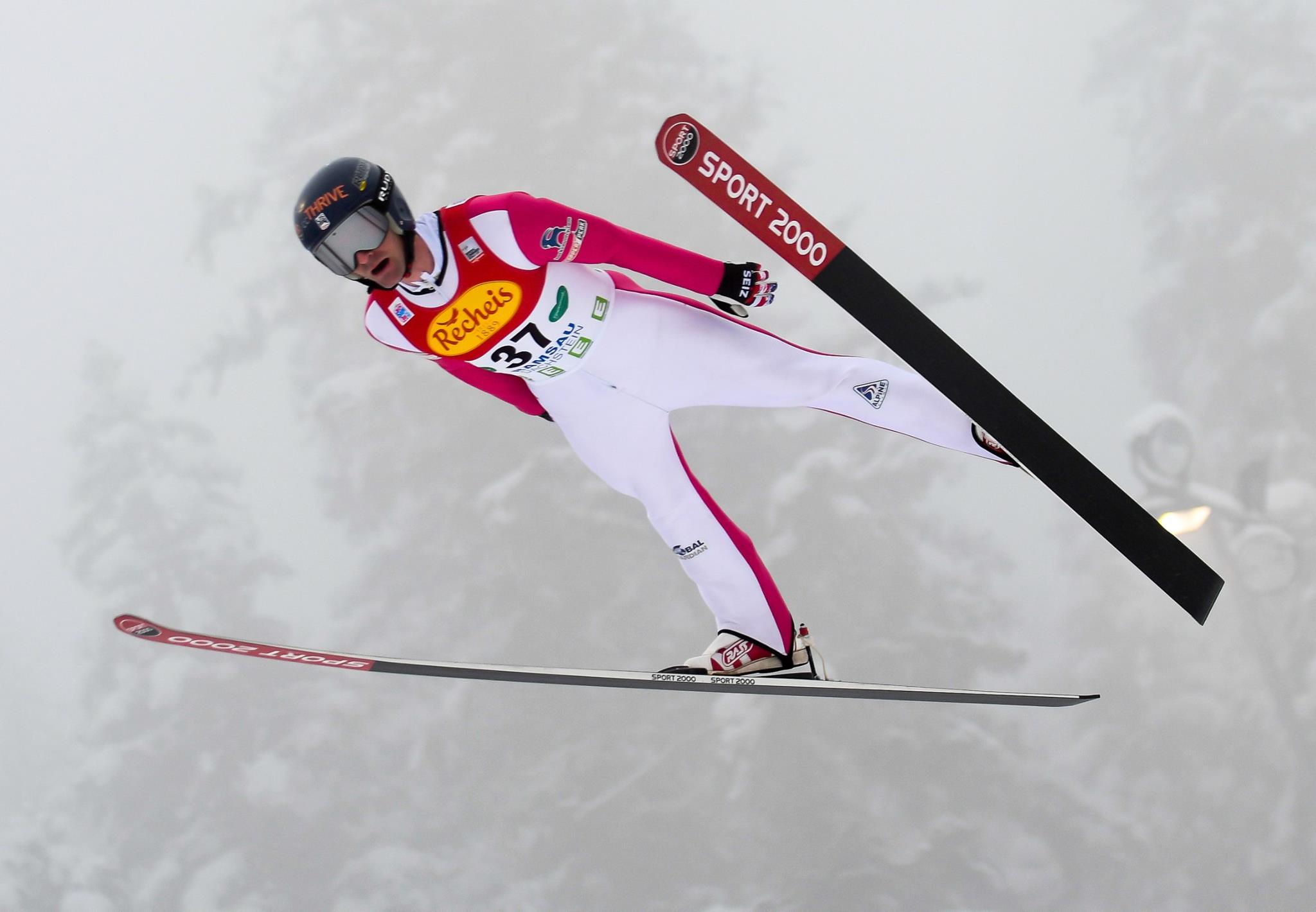
Bryan Fletcher (USA Nordic) jumping to 45th in the Nordic Combined World Cup on Sunday in Ramsau, Austria. In the 10 k that followed, he skied the third-fastest time to finish 14th overall. (Photo: Romina Eggert/USA Nordic Facebook)
NorAm mini tour (Rossland, B.C.): 10/15 k freestyle pursuits
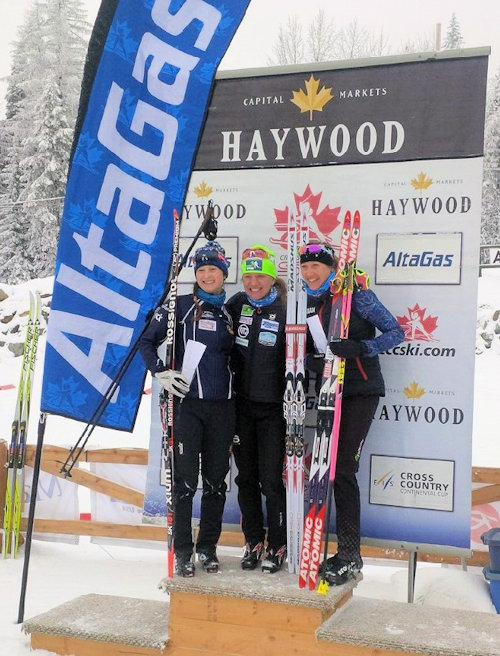
Team Gregg ended the Rossland NorAm mini tour with another double win, with American Caitlin Gregg and her husband Brian Gregg winning the 10- and 15-kilometer freestyle pursuits, respectively, at the Black Jack Ski Club trails.
The women’s 10 k freestyle pursuit podium at the NorAm in Rossland, B.C., with American Caitlin Gregg (c) in first, and Canadians Zina Kocher (l) and Andrea Dupont (r), in second and third, respectively. (Photo: Cross Country Canada)
Caitlin capped the long weekend with her third-straight win, a 48.28-second victory over former Canadian biathlete Zina Kocher (Foothills Nordic). Caitlin started first and was first across the finish in 29:02.86, while Kocher started ninth and rose to second place for her second-consecutive podium (after placing third in Saturday’s skate sprint). Andrea Dupont (Rocky Mountain Racers) started fourth and finished third (+1:58.35) for her second-straight podium as well (she was second in the skate sprint behind Gregg).
Lisle Compton of the National Team Development Centre (NTDC) Thunder Bay and Canadian National Junior Team finished fourth overall (+2:07.03), Frederique Vezina of the Pierre-Harvey National Training Centre (CNEPH) was fifth (+2:16.10), and Annika Hicks of the Alberta World Cup Academy (AWCA) sixth (+2:16.51). Laura Leclair (CNEPH) placed seventh, Kaia Andal (Caledonia Nordic) was the top junior in eighth overall, Jaqueline Mourao (Brazil Ski Team) ninth, and Sophie Carrier-Laforte (Skinouk) 10th.
Brian, who won the Rossland men’s 10 k classic on Friday, also started Sunday’s 15 k freestyle pursuit first and finished in that position in 38:43.93. Andy Shields (Lappe Nordic) raced to second overall, 7.65 seconds back, after starting fourth, and Jack Carlyle (AWCA) reached the podium in third (+8.75) after starting 10th.
Evan Palmer-Charrette (NTDC Thunder Bay) ended the weekend in fourth (+17.68), Philippe Boucher (CNEPH) was fifth (+19.02), Brian McKeever (Canadian Para-Nordic Ski Team) sixth (+22.16), Michael Somppi (AWCA) seventh (+34.62), Alexis Dumas (CNEPH) eighth (+52.78), Bob Thompson (NTDC Thunder Bay) ninth (+54.76), and Julien Locke (Black Jack/Canadian U25 Team) 10th (+1:04.46).
FIS Nordic Combined World Cup (Ramsau, Austria): Saturday & Sunday individual competitions
Bryan Fletcher (USA Nordic) notched seventh in the Nordic Combined World Cup this weekend in Ramsau, Austria, for his best result since January 2016. (Photo: USA Nordic/Facebook)
After a bye week, the Nordic Combined World Cup resumed in Ramsau am Dachstein, Austria, with back-to-back individual normal hill/10-kilometer Gundersen starts on Saturday and Sunday.
On Saturday, American Bryan Fletcher posted his best individual result in nearly two years in seventh place, 32.6 seconds behind German winner Eric Frenzel.
Saturday’s individual competition on Ramsau’s 98-meter hill started out with Japan’s Taihei Kato going farthest in the jump portion, the Czech Republic’s Tomas Portyk jumping to second, and Frenzel jumping to third. Fletcher tied Japan’s Yoshito Watabe for 28th and the two started the 10 k race 1:02 minutes back accordingly.
While Frenzel picked off two places to finish first in 24:05.8 minutes, Fletcher moved up 21 spots to seventh place with the second-fastest course time of 23:48.4.
Germany had two on the podium with Fabian Rießle just 0.7 seconds back in second place, and Norway’s Jan Schmid finished third, 8.1 seconds behind Frenzel.
On Sunday, Rießle climbed to the top step on the podium, winning the weekend’s second normal hill/10 k in 26:12.5.
Norway’s Jørgen Graabak led after the jump portion, yet ultimately finished sixth, 9.8 seconds behind Rießle.
Rießle jumped to ninth and started 18 seconds out of first, then took the win on the four-lap course by just 0.3 seconds over Italy’s Alessandro Pittin. The Italian notched second place after starting 36th based on his jump and racing the fastest 10 k time in 25:00.8.
Finland’s Eero Hirvonen finished third (+1.5) after starting 10th, and Schmid was another 2 seconds back in fourth (+3.5) after jumping to seventh. Frenzel did not start.
Three Americans qualified for Sunday’s competition. Fletcher jumped to 45th and started 1:30 back, yet rose to 14th (+43.7) with the third-fastest course time. His younger brother Taylor Fletcher skied the second-fastest course time to finish 34th (+2:01.6), up 24 places after jumping to 58th. Adam Loomis finished 52nd (+4:38.6) after jumping to 59th.
The U.S. Nordic Combined team is headed back to the states to prepare for U.S. Olympic trials later this month, according to the USA Nordic Facebook page.
FIS Cross Country World Cup (Toblach, Italy): 10/15 k classic pursuits
Norway’s Johannes Høsflot Klæbo after winning the men’s 15 k classic pursuit for his seventh World Cup win of the season on Sunday in Toblach, Italy. With win No. 7, he has the most wins before the new year in FIS Cross Country World Cup history. (Photo: FIS Cross Country/Twitter)
If you thought Johannes Høsflot Klæbo was out, think again. After placing 10th in the men’s 15-kilometer freestyle on Saturday in Toblach, the 21-year-old Norwegian raced to his seventh victory of the season in the men’s 15 k pursuit on Sunday.
In doing so, Klæbo broke the record for the most World Cup wins before the New Year: he’s tallied seven in the last eight races he’s contested.
On Sunday, he started 10th, 36 seconds behind his Norwegian teammate Simen Hegstad Krüger, who won the 15 k freestyle and started first. Klæbo had worked his way up to third by 11.4 k, and at the finish, he edged Russia’s Sergey Ustiugov by 1.9 seconds for the win in 33:31.1 minutes.
Ustiugov, who started fifth, claimed second, and Kazakhstan’s Alexey Poltoranin rose from 14th to third place (+4.5), ahead of Russia’s Alexander Bessmertnykh in fourth (+9.7), Finland’s Matti Heikkinen in fifth (+9.8), France’s Maurice Manificat in sixth (+10.7), Norway’s Hans Christer Holund in seventh (+11.1), Switzerland’s Dario Cologna in eighth (+11.8), Canada’s Alex Harvey in ninth (+16.3), and Krüger in 10th (+24.0). Norway’s defending Overall and Distance World Cup champion, Martin Johnsrud Sundby placed 11th (+34.4) after starting 20th based on his result on Saturday.
Erik Bjornsen once again led the U.S. men, racing from 29th at the start to 26th (+1:43.1). Scott Patterson improved from 42nd to 39th (+2:37.2), Paddy Caldwell moved up from 52nd to 44th (+2:57.7), and Noah Hoffman slipped to 49th (+3:01.7) after starting 40th.
Canada’s Devon Kershaw moved up five places to 33rd (+2:02.8), Graeme Killick finished 50th (+3:42.0), Russell Kennedy 66th (+5:05.8), and Knute Johnsgaard moved up six places to finish 76th (+6:20.8).
The all-Norwegian women’s 10 k classic pursuit podium on Sunday at the World Cup in Toblach, Italy, with Marit Bjørgen (c) in first, Ingvild Flugstad Østberg (l) in second and Heidi Weng (r) in third. (Photo: FIS Cross Country/Twitter)
In the women’s 10 k classic pursuit earlier in the day in Toblach, Norway’s Marit Bjørgen overcame a 22-second starting deficit to take the win by just 0.3 seconds over her teammates Ingvild Flugstad Østberg in second. It was an all-Norwegian podium with Heidi Weng in third (+0.8).
Bjørgen started fifth, 22 seconds behind Swedish race leader Charlotte Kalla, based on their results in Saturday’s 10 k freestyle individual start. By the 6.4 k checkpoint, Bjørgen led a pack of four other Norwegians and Kalla — all within 1.4 seconds of first. At 8.5 k, Bjørgen led Østberg in second and Weng in third, while another Norwegian Astrid Uhrenholdt Jacobsen skied another eight seconds back with teammate Ragnhild Haga in fourth and fifth, respectively. By that point, Kalla was skiing alone, another 11.7 seconds in sixth, while American Jessie Diggins led a group 25 seconds behind Kalla in sixth.
Ultimately, Bjørgen finished first in 25:19.3 and formed an all-Norwegian podium with Østberg and Weng, Jacobsen placed fourth, 21.5 seconds out of first and 20.7 seconds behind Weng in third.
Haga was fifth (+31.8), Kalla sixth (+41.9), Diggins seventh (+53.7), Russia’s Natalia Nepryaeva eighth (+54.2), American Sadie Bjornsen ninth (+55.2), and Austria’s Teresa Stadlober 10th (+55.6) in a photo finish with Finland’s Kerttu Niskanen, who placed 11th (+55.6).
For the U.S. Ski Team, Diggins and Bjornsen retained their starting positions of seventh and ninth, respectively, while Rosie Brennan started 19th and finished 25th (+2:14.6). Chelsea Holmes (Alaska Pacific University) finished 39th (+3:03.8) and Liz Stephen (USST) finished 48th (+4:05.2).
France’s Justine Braisaz won her first International Biathlon Union (IBU) World Cup race of the season on Sunday at home in Annecy, France, topping the women’s 12.5 k mass start by 11.2 seconds in 37:19.4.
While Braisaz shot 19-for-20 (0+0+1+0), Iryna Kryuko of Belarus cleaned the four-stage race for second place, her first World Cup podium. Germany’s Laura Dahlmeier, who won Saturday’s 10 k pursuit, placed third (+19.9) with two penalties (0+1+0+1).
Two North Americans qualified for the selective mass start, with Susan Dunklee (US Biathlon) racing to 20th (+1:16.3) with three misses (1+0+1+1), and Emma Lunder (Biathlon Canada) placing 28th (+2:21.4) with a single penalty (1+0+0+0).
In the men’s 15 k mass start that followed, France’s Martin Fourcade finally got the win he was looking for, shooting clean and beating his main rival Johannes Thingnes Bø of Norway by 3.9 seconds. Fourcade crossed the finish line first in 36:30.3, Bø settled for second after skiing two early penalty loops (2+0+0+0) and Germany’s Erik Lesser tallied his second podium in Annecy (after placing third in the sprint) in third place again (+6.2) with clean shooting.
Two Americans and a Canadian qualified for the mass start, with US Biathlon’s Lowell Bailey leading them in 23rd (+2:22.4) with three penalties, Sean Doherty following in 24th (+2:52.5) with four misses, and Biathlon Canada’s Scott Gow finishing 26th (+4:05.4) with five penalties.
OPA Cup (St. Ulrich, Austria): 10/15 k freestyle pursuits
On the final day of Alpen Cup (a.k.a. OPA Cup) racing in St. Ulrich, Ida Sargent of the U.S. Ski Team (USST) scored her third-straight top five with a fifth place in the women’s 10 k freestyle mass start. She previously placed third in the skate sprint and 5 k classic on Friday and Saturday.
Germany’s Julia Belger won the women’s mass start on Sunday in 28:33.6, while Saturday’s 5 k winner, Elena Soboleva of Russia placed second (+0.7). Russia had two on the podium with Mariya Istomina in third (+6.4). Germany’s Elisabeth Schicho finished fourth (+15.8), just ahead of Sargent in fifth (+15.9).
Germany’s Antonia Fräbel placed sixth (+17.1), followed by American Sophie Caldwell in seventh (+17.9). The USST had three in the top 10 with Julia Kern in 10th (+41.9), out of 60 finishers.
In the men’s 15 k freestyle mass start, Beda Klee of Switzerland took the win in 37:14.6, 2.4 seconds ahead of Germany’s Thomas Bing in second. Six-time Olympian Sergey Dolidovich of Belarus reached the podium in third (+4.5).
The U.S. had two men in the race, with Simi Hamilton finishing 14th, 16 seconds out of first, and Andy Newell finishing 71st (+2:25.2) out of 118.
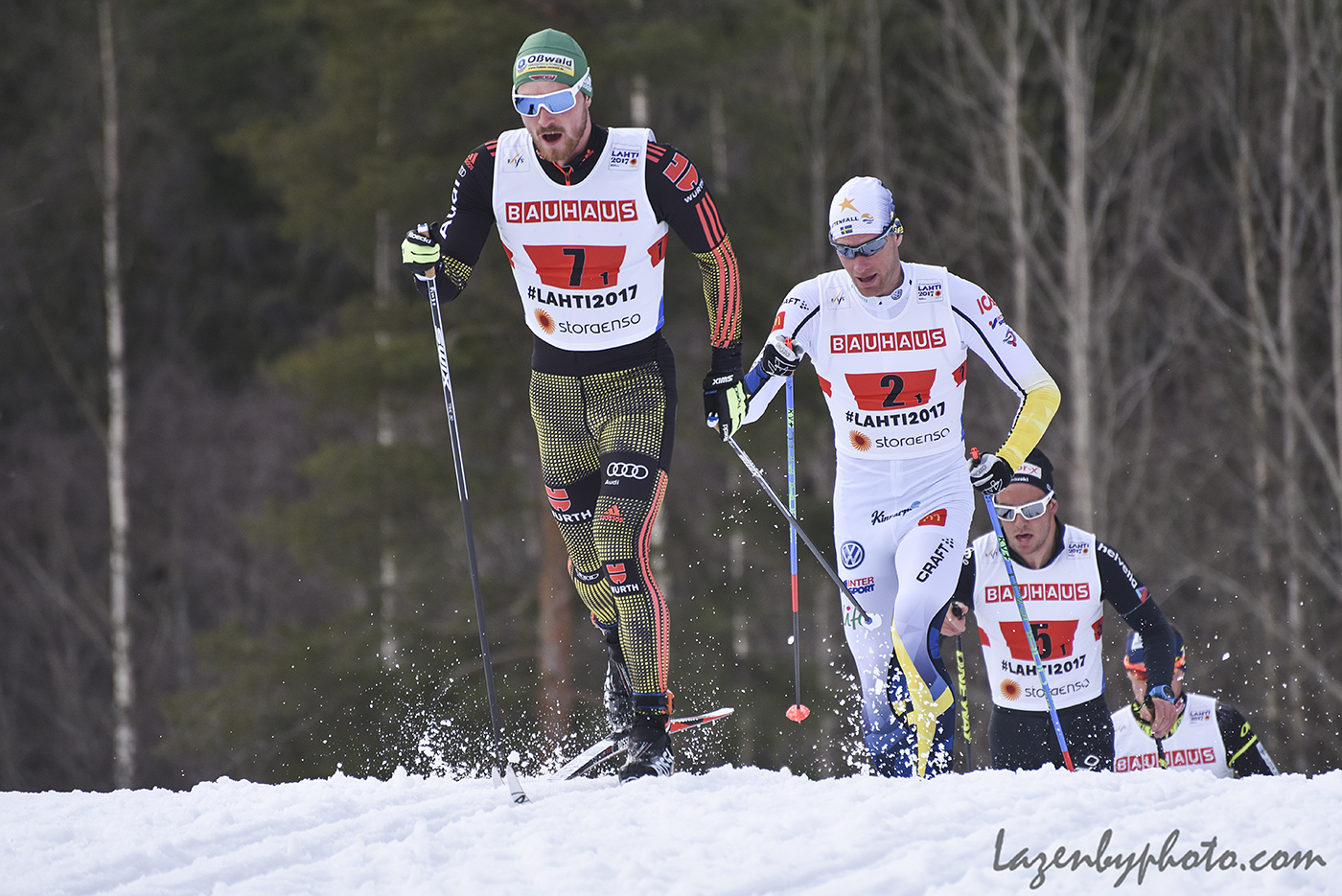
Germany’s Thomas Bing (7) leads Sweden’s Daniel Rickardsson (2) and Switzerland’s Jason Rüesch during the first leg of the men’s 4 x 10 k relay at 2017 World Championships in Lahti, Finland. (Photo: John Lazenby/Lazenbyphoto.com)
Welcome to World Cup Windup, where we check in with the top-10 teams from last year’s FIS Cross Country World Cup tour before the season starts with the Ruka Triple in Kuusamo, Finland, on Nov. 24.
GERMANY
Overall in Nations Cup Last Year:Seventh
Women’s Ranking 2016/2017:Sixth
Men’s Ranking 2016/2017: Ninth
Who’s Back:
Nicole Fessel and Steffi Boehler, top-20 in the World Cup distance standings; sprint finalist Sandra Ringwald; Victoria Carl and Katharina Hennig, who joined Ringwald and Boehler to finish second in the World Cup relay in Ulricehamn; Florian Notz, Elizabeth Schicho, Laura Gimmler, and Thomas Bing, each of whom had a single World Cup top-10 last season, and Hanna Kolb, who had two.
Who’s Missing:
Veteran sprinter Tim Tscharnke retired partway through the summer. The 2010 Olympic team sprint medalist has struggled with back problems and finally called it quits. “The last three years of my career were riddled with many mediocre months, punctuated by health problems and athletic setbacks,” he said.
Pre-Season Results:
The World Cup women’s 4 x 5 k podium on Jan. 22 in Ulricehamn, Sweden, with (from left to right) Germany (Stefanie Boehler, Sandra Ringwald, Victoria Carl, Katharina Hennig) in second, Norway (Ingvild Flugstad Østberg, Heidi Weng, Astrid Uhrenholdt Jacobsen, Marit Bjørgen) in first, and Sweden in third (Ida Ingemarsdotter, Sofia Henriksson, Charlotte Kalla, Hanna Falk). (Photo: Fischer/Nordic Focus)
Earlier this month in Davos, Switzerland, Thomas Bing won a sprint race and Laura Gimmler was the runner-up in the women’s race. Katharina Hennig and Steffi Boehler went 2-3 in a distance race.
Recent Drama:
After being sick in both August and September, Florian Notz is aiming for a World Cup debut in Davos in December, not earlier. “I did not have any real training for two to three months,” he told Südwest Press. “That’s why Kuusamo is too early for me… I have set myself as a goal, that I want to attack fully [in Davos]. I am still optimistic that I can be in shape by then. But of course, everything has to go right.” If not, Olympic qualifying will be tricky.
Lucas Bögl is among the athletes joining the new “Athleten für Deutschland” athlete union, which was recently founded as an independent alternative to the athletes’ council run by the German Olympic Committee. The head of the German Olympic Committee is not a fan, saying basically that athletes trying to make demands will only bring problems upon themselves. Bögl disagreed. “The club should help the athletes commission and support the athletes,” he told OBV-online. “That should be in the interest of everyone involved.” He also said: “Cross-country skiing is not something you do for the money, it’s more of a way of life. I have turned my sport into a profession. I feel privileged that I don’t have to sit in an office. I can do that for a long time after my career is over.”
Sandra Ringwald, who just missed making the 2014 Olympic team for Germany, and is particularly focused on 2018 Games this winter. “I want to fulfill my Olympic dream and be in PyeongChang,” she told the Südkurier newspaper in an interview. “However, I’m going easy on the whole thing. In the past few years I have often set my goals too high… I’m not working just for Olympic qualification. My aim is to play a good role in the World Cup as well. I want to show what I can do at the very first races.”
Best Social Media Presence:
Steffi Boehler is a consistent Instagram poster, and also includes some of her artwork along with training and daily-life pictures.
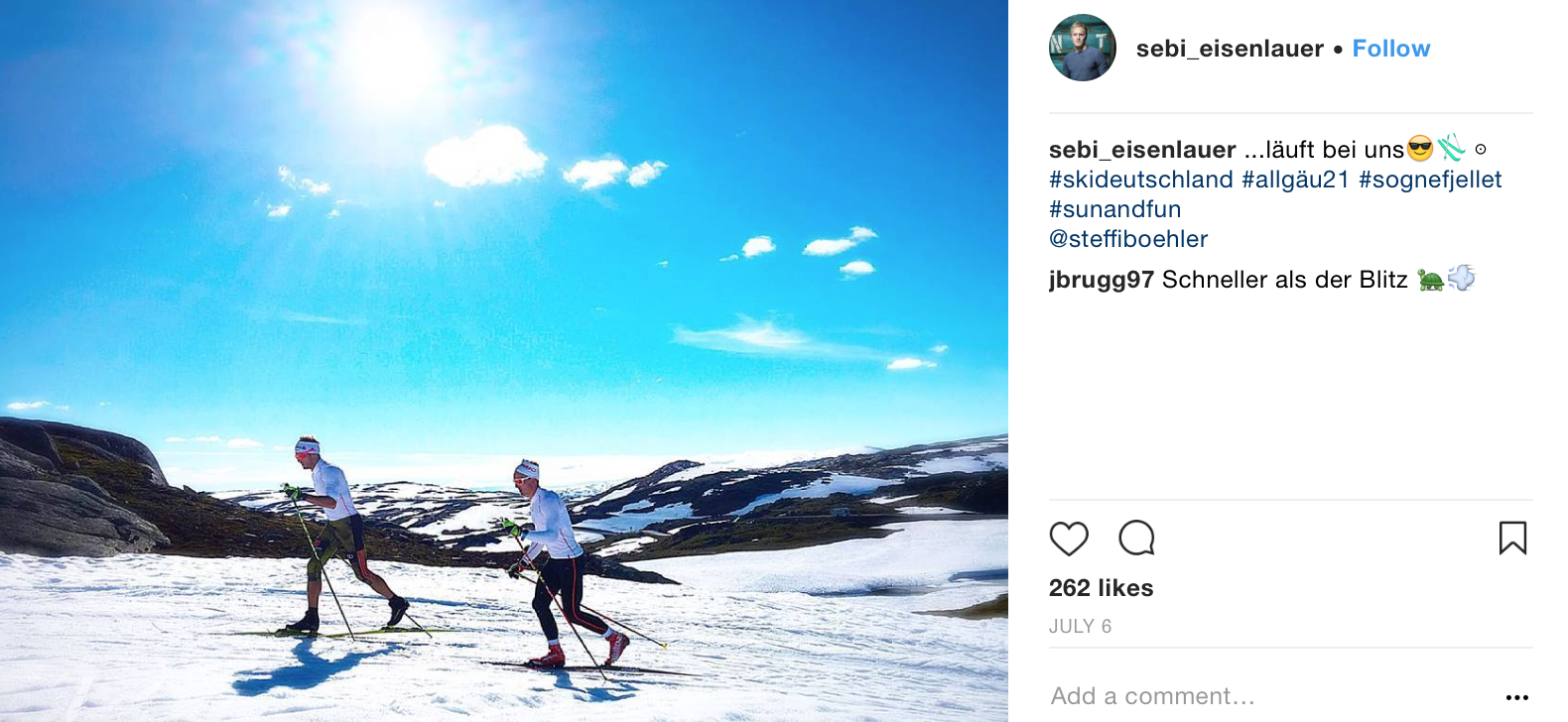
Sprinter Sebastian Eisenlauer also posts gorgeous training shots:
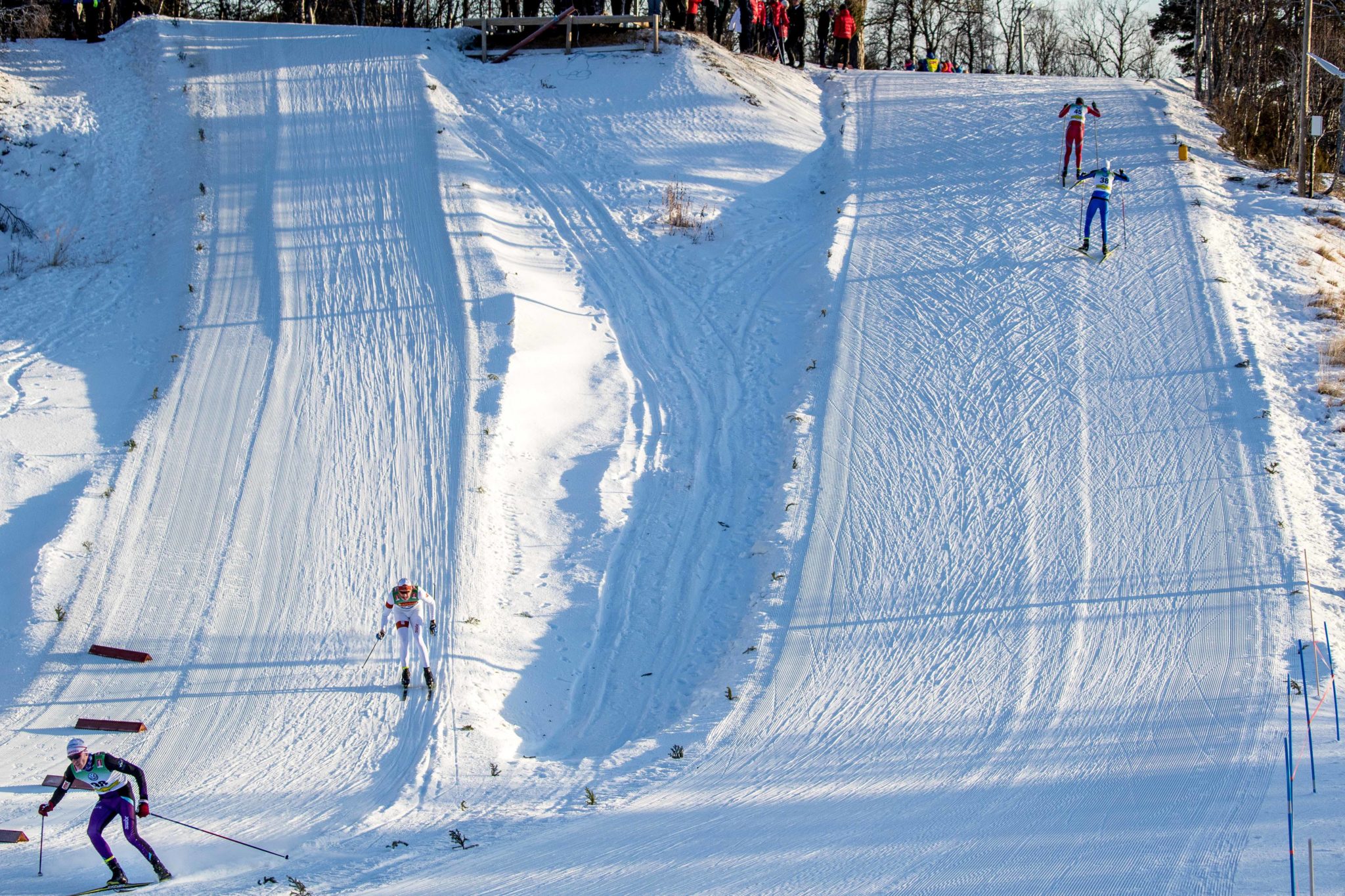
Racers navigate a steep climb and descent on the race loop at Bruksvallarna on Saturday. (Photo: Jocke Lagercrantz/Bruksvallsloppet.se)
The World Cup season draws ever-closer as season-opening races continued this weekend in Sweden, Finland, and Switzerland.
In Muonio, Finland, a long weekend of racing wrapped up with 10 and 15 k skate races. Finland’s Anne Kylloenen took the win in the women’s 10 k, besting Emilie Kristoffersen of Norway by 8.2 seconds. Kylloenen’s national-team teammates Laura Mononen and Aino-Kaisa Saarinen took third (+14.0) and fourth (+17.1), respectively. Merete Myrseth, a Norwegian skier who competed for the University of Utah on the NCAA circuit last season, finished 17th, +57.1.
In the men’s 15 k, Alexey Chervotkin of Russia took a 13.8-second win over Iivo Niskanen of Finland. Denis Spitzov of Russia was third, +17.5, and University of Utah alum Snorri Einarsson fourth, +21.2. Einarsson is competing for Iceland. Graham Nishikawa of Canada finished 19th, +1:14.4, and Brian McKeever 40th, + 2:05.3.
Finishing sixth (+37.0) was Maxim Vylegzhanin of Russia, who made his second flower ceremony of the weekend. The International Olympic Committee (IOC) decided on Thursdayto strip the Russian skier of three silver medals from the 2014 Olympics for doping violations and ban him from all future Olympic Games. However, the International Ski Federation (FIS) has not yet taken any action since he and five other skiers were banned from the IOC, meaning that all six athletes are currently free to take part in non-Olympic ski competitions. FIS has not yet responded to a request for comment about Vylegzhanin’s continued competition.
https://www.instagram.com/p/BbZO7VFFYpg/
In Bruksvallarna, Sweden, Sunday meant skate sprinting, and Norwegians took both the men’s and women’s wins. In the men’s race, Paal Troean Aune bested countryman Even Northug in the final, with Anton Persson the only Swede on the podium in third. None of the top sprinters from either country competed. Jack Carlyle of Canada finished 60th, 19.4 seconds behind Aune’s qualifying time.
In the women’s sprint, Wenche Aune Snildalsli took the win over four Swedes: Emma Thalin, Moa Olsson, Jackline Lockner, and Wilma Joensson were next across the line, and Latvia’s Patricija Eiduka finished sixth.
A large contingent of international racers has also been training in Davos, Switzerland, where organizers have a lengthy saved-snow loop covering some of the same terrain which will host the World Cup in mid-December. On Friday and Saturday, the Swiss competed with the German and Italian teams in sprint and distance races, with a few individual athletes from other countries attending as well.
In Friday’s sprints, Laurien Van Der Graaf came out on top for the home team, besting Germany’s Laura Gimmler and Steffi Boehler in the ‘A’ final after Gimmler had won beat her by 1.59 seconds in the qualifier. Fourth place went to Sandra Ringwald, also of Germany, and fifth to Ilaria Debertolis of Italy. In the men’s sprint Thomas Bing claimed the win for Germany, skiing away Switzerland’s Erwan Kaeser by more than two seconds. Giacomo Gabrielli and Stefan Zelger of Italy were third and fourth, and Janosch Brugger of Germany rounded out the ‘A’ final in fifth.
https://www.instagram.com/p/BbUYGpgl2V_/
In Saturday’s distance races, Katerina Smutna – racing for the Czech Republic after taking a break for several years to focus on a long-distance marathon career – won the three-lap, 10.5 k competition by just three seconds over Katharina Hennig of Germany, with Boehler another 12.2 seconds back in third. Van Der Graaf finished fourth, + 27.1, and Debertolis fifth, +39.6.
In the men’s four-lap race, covering 14 k, Swiss Olympic gold medalist Dario Cologna took a commanding 26.6-second win over Russia’s Ilia Chernousov. Jonas Dobler of Germany claimed third, +33.8, with Giandomenico Salvadori of Italy fourth (+59.2), narrowly beating out Livio Bieler of Switzerland (+1:00.9).
Chernousov could soon become an Olympic champion like Cologna. Vylegzhanin’s disqualification from the 2014 Olympics, along with that of Alexander Legkov, leaves Chernousov to inherit a gold medal in the 50 k freestyle, where he initially finished third. He has not been named in any of the doping investigations by the World Anti-Doping Agency or the International Olympic Committee. In fact, a Russian ski coach recently claimed that Chernousov had turned whistleblower and informed against his Russian teammate, but Chernousov has denied that allegation.
The men’s 10 k sprint podium at Friday’s IBU World Cup in PyeongChang, South Korea, with Austria’s Julian Eberhard (c) in first, American Lowell Bailey (l) in second, and France’s Martin Fourcade (r) in third. (Photo: IBU)
IBU World Cup (PyeongChang, South Korea): Men’s 10 k sprint
US Biathlon’s Lowell Bailey kept his clean-shooting streak alive with another one of his personal best results on Friday, racing to second in the men’s 10-kilometer sprint at the International Biathlon Union (IBU) World Cup in PyeongChang, South Korea.
Bailey started 81st and hit all 10 targets in the two-stage race to cross the finish line in first, 4.7 seconds ahead of France’s Martin Fourcade, who locked up the 2016/2017 overall World Cup title with an eventual third-place finish on Friday.
An even later starter in bib 90, Austria’s Julian Eberhard rocketed to his third-career World Cup victory (and second win this season), cleaning both stages and topping Bailey’s time by 40.7 seconds. That bumped Bailey to second place and Fourcade to third, for Bailey’s second World Cup podium this season (including his win in the 20 k individual at IBU World Championships).
In the last five non-relay races, including four at World Championships, Bailey has not placed outside the top six. And in all of those races, he’s only had one miss.
Bailey is up to ninth in the World Cup Total Score standings. Fourcade ran away with the season-long title in first, now that he’s 360 points ahead of Russia’s Anton Shipulin in second.
While Eberhard and Bailey shot clean on Friday, Fourcade missed two — one on each stage (1+1) — but made up for it with the fastest course time. Eberhard had the second-fastest course time and fastest shooting time of the 102-man field.
Austria nearly had two on the podium with Dominik Landertinger finishing fourth (+48.1), 2.7 seconds out of third, with clean shooting.
Three Canadians finished in the top 60 to qualify for Saturday’s pursuit, with Scott Gow in 27th (+1:40.3) with two penalties (1+1), Brendan Green following in 28th (+1:42.1) with one miss (0+1) for his first individual top 30 of the season, and Christian Gow in 56th (+2.33.6) with two prone penalties (2+0). Nathan Smith finished 88th (+3:32.5) with two standing misses (0+2) in his first World Cup race since early December, and Macx Davies finished 98th (+4:20.2) with four penalties (3+1).
For the U.S., Leif Nordgren placed 37th (+2:03.7) with two misses (1+1) to qualify for the pursuit, along with Bailey. Sean Doherty was 80th (+3:13.3) with two penalties (1+1) and Paul Schommer 101st (+4:38.1) with five misses (3+2).
FIS Nordic World Championships (Lahti, Finland): Nordic Combined 2 x 7.5 k team sprint
The nordic combined 2 x 7.5 k team sprint podium on Friday at 2017 Nordic World Championships in Lahti, Finland, with Germany’s Johannes Rydzek and Eric Frenzel in first (c), Norway’s Magnus Moan and Magnus Krog in second (l) and Japan’s Yoshito and Akito Watabe in third (r). (Photo: FIS Nordic Combined/Twitter)
[UPDATED] Johannes Rydzek and Team Germany completed the World Championships sweep on Friday, with Rydzek teaming up with Eric Frenzel to win the final nordic-combined competition of 2017 Nordic World Championships in Lahti, Finland: the 2 x 7.5-kilometer team sprint.
Rydzek won all four NoCo competitions over the past week, including two individual events and two team events.
On Friday, he and Frenzel, the defending World Cup champion, jumped to second and started the 2 x 7.5 k cross-country race 16 seconds behind France’s Maxime Laheurte and François Braud, who jumped to first. The Frenchmen both posted jumps of 125 meters for a total of 264.2 points. Frenzel and Rydzek, meanwhile, scored 256.1 points after jumps of 125.5 and 122 meters.
The Germans pulled off a 1-second win over Norway, finishing in 28:45.8 minutes, while Norway’s Magnus Moan and Magnus Krog claimed silver after starting the ski race in fourth, 24 seconds behind France. Together, the Norwegians posted the fastest course time, and Moan skied the fastest 7.5 k (13:53).
“It’s still unbelievable,” Rydzek told German broadcaster ARD. “The race today was so suspenseful again, down to the last curve with the lapped athlete [Russia]. I knew that I am very fast on the homestretch, and had explicitly looked at that section before the race. Eric did a great job today, and despite all circumstances pointing against us we managed to do it again today. Just cool to be back on the top of the podium with Eric.”
Just a couple hundred meters before the finish, Rydzek used the moment when they approached the lapped Russian athlete to slingshot between him and Krog and gained a decisive edge.
“I was scared of that situation with the lapped athlete, because that was really close,” Frenzel told ARD. “I thought, ‘What is he doing out there?’ But in the end you can rely on Johannes to solve that like a world champion, that was top.
“We knew ahead of time that Lahti suits us well, that we can be good here if the conditions work out,” he added. “So we are very happy to be able to go home with so many medals.”
Japan took the final spot on the podium after brothers Yoshito and Akito Watabe jumped to third, started 18 seconds after France, and held their position to finish for third place, 10.2 seconds after Germany.
Austria’s Wilhelm Denifl and Bernhard Gruber missed bronze by half a second in fourth (+10.7) after starting in fifth, and France ended up fifth (+11.5).
Nearly a minute later, Italy placed sixth (+1:10.6) and Finland seventh (+1:10.7). The Czech Republic followed in eighth (+1:26.4), and the U.S. was ninth (+1:48.1) with Bryan and Taylor Fletcher after starting 12th and 2:08 out of first. The Fletcher brothers recorded the second-fastest course time out of 14 teams.
“Taylor did a good job stepping up in competition and it gave me motivation to step up as well,” Bryan said, according to a U.S. Ski Team press release. “Unfortunately I wanted it a little too much and didn’t have the jump I am capable of.
“The races went well but we were just too far back,” he continued. “We had the second fastest time as a team overall, which is solid and continually shows our strength on that side of the sport.”
FIS Nordic World Championships (Lahti, Finland): Men’s 4 x 10 k relay
The men’s 4 x 10 k relay podium at 2017 Nordic World Championships, with Norway (c) in first, Russia (l) in second, and Sweden (r) in third. (Photo: FIS Cross-Country/Twitter)
The men’s 4 x 10-kilometer relay as the last team event of 2017 Nordic World Championships came down to a two-way battle for gold between none other than Norway and Russia on Friday in Lahti, Finland,
The two teams skied in either first or second throughout the four-leg race, with Russia’s Andrey Larkov tagging Alexander Bessmertnykh 2.9 seconds ahead of Norway’s first leg Didrik Tønseth, then Bessmertnykh coming through the second exchange just half a second ahead of Norway’s Niklas Dyrhaug.
Behind them, Finland skied alone in third place at the race’s halfway point, but was ultimately swallowed by the chase pack on the third leg.
On that third leg, Norway’s Martin Johnsrud Sundby worked hard to drop Russia’s Alexey Chervotkin, and eventually did so, coming through the final exchange 17.7 seconds ahead. That gave Norway’s anchor Finn Hågen Krogh just enough of a gap on Russia’s Sergey Ustiugov, and he was able to hold off Ustiugov by 4.6 seconds at the finish to give Norway the gold in 1:37:20.1 hours.
Russia claimed silver and Sweden outlasted Switzerland for bronze after Calle Halfvarsson attacked in the final kilometer to drop Finland’s Matti Heikkinen and Germany’s Lucas Bögl. Halfvarsson finished 2:31.8 minutes out of first, and just 0.2 seconds ahead of Switzerland’s Curdin Perl for third place for Sweden (which included teammates Daniel Rickardsson, Johan Olsson and Marcus Hellner).
Switzerland was fourth (+2:32) with Jason Rueesch, Jonas Baumann, Dario Cologna and Perl, Finland fifth (+2:42.4) with Sami Jauhojärvi, Niskanen, Lari Lehtonen, and Heikkinen, and Germany sixth (+2:42.8) with Thomas Bing, Jonas Dobler, Florian Notz, and Bögl.
France finished seventh (+3:52), Italy eighth (+5:29.8), Kazakhstan ninth (+5:30.6), and the U.S. 10th (+5:31.3). The U.S. team (Kyle Bratrud, Erik Bjornsen, Tad Elliott, Simi Hamilton) skied in 11th for most of the race before Hamilton moved them up to 10th with the sixth-fastest anchor leg.
Canada (Graeme Killick, Devon Kershaw, Alex Harvey, Len Valjas) ended up 12th after being lapped on the last leg. In 14th at the first exchange, Kershaw moved them up to 13th, then Harvey put them in 12th with one leg to go.
Petter Northug (c) celebrates Norway’s freestyle team-sprint gold, which he won with teammate Finn Hågen Krogh on Sunday for his second title of 2015 World Championships in Falun, Sweden. (Photo: FlyingPointRoad.com)
FasterSkier’s coverage of the 2015 FIS Nordic World Ski Championships in Falun, Sweden, is brought to you by the generous support of L.L. Bean, now featuring a complete line of Kikkan Randall training wear.
FALUN, Sweden — Why waste time when you can get the job done? That was Petter Northug’s mentality on his second of three laps in the men’s 6 x 1.4-kilometer freestyle team sprint at 2015 FIS Nordic World Ski Championships on Sunday.
Already on a roll with one gold in the World Championships classic sprint three days earlier, Northug was on a quest for another in the only event he had yet to win at worlds: the team sprint.
With Norwegian teammate Finn Hågen Krogh, the two built an early lead in the final, and Krogh kept them in first on his second lap, handing off to Northug 2.79 seconds ahead of Sweden in second. Soon after, Northug attacked on the longest of the course’s two steep climbs, leaving Sweden’s Teodor Peterson behind.
“In the final, I looked for things to do pretty early,” Northug said in a press conference. “We thought that Sweden wanted high speed in the final when they put Calle [Halfvarsson] on the first leg. I was prepared to fight with [Peterson] on the last leg, but he was sitting on the bike when we were skiing fast.”
As Northug warmed up into his accelerated pace, Russia’s Nikita Kriukov led the chase, heading out six seconds after him. Teammate Alexey Petukhov had tagged him in third, just ahead of Italy and about two seconds in front of France and Germany, and Kriukov proceeded to lead Italy’s Federico Pellegrino and Germany’s Tim Tscharnke in pursuit of Peterson.
They caught the Swede on the second uphill, and the four descended into the stadium and second-to-last exchange together, led by Peterson about eight seconds after Northug.
One lap later, Krogh had increased Norway’s first-place cushion to nearly 16 seconds, while Italy’s Dietmar Nöckler and Halfvarsson raced behind him in second and third, respectively, up the first climb.
On the second uphill, Russia’s Petukhov was back in contact with the chase group, along with Germany’s Thomas Bing, Finland’s Ville Nousiainen, France’s Robin Duvillard, and the Czech Republic’s Ales Razym. Another five seconds back, American Andy Newell led a second group in ninth.
Krogh cruised into the final exchange in first, while Bing led the seven-man pack through 15.68 seconds later.
“Petter didn’t leave me much choice,” Krogh said in the conference about the lead. “When I saw he had the gap, I only had one thing on my mind, it was go hard the rest of the race.”
From there, Northug went through the motions, skiing the third-slowest anchor leg and looking back before the last rise in the stadium to see if anyone was charging from behind.
Nope.
The 2015 World Championships freestyle team sprint podium, with Norway (c) as the winners (Finn Hågen Krogh/Petter Northug), Russia (r) in second (Nikita Kriukov/Alexey Petukhov), and Italy (l) in third (Federico Pellegrino/Dietmar Nöckler). (Photo: FIS Cross Country/Twitter)
On that same stadium hill several seconds later, Kriukov attacked one last time to move into second ahead of Tscharnke and Pellegrino. He left both of them behind, securing silver for Russia, 5.64 seconds after Northug and nine-hundredths of a second ahead of Pellegrino, who claimed bronze for Italy.
“We lost only five seconds to Petter, but while we was [waving] the flag and drinking coffee, what can you say,” Kriukov said through a translator in the press conference. “The Norwegians were the best. We are really happy for them.”
The defending world champions in the 2013 freestyle team sprint in Val di Fiemme, Italy, Kriukov and Petukhov were also pleased with themselves.
“I’m happy today,” Petukhov said in the conference through a translator. “Because this silver medal, I have to work hard for it, but of course if you win the race, then you are even higher above, but still I am very happy.”
Tscharnke was 0.38 seconds short of the podium in fourth, which was Germany’s second wooden medal of the day after Nicole Fessel and Denise Herrmann placed fourth in the women’s team sprint.
Finland’s Martti Jylhä finished another 7.55 seconds back in fifth, 13.66 seconds after Northug, and the Czech Republic placed sixth with Dusan Kozisek coming through 16.73 seconds after the winners.
While Simi Hamilton skied the fourth-fastest anchor leg for the U.S., the Americans placed seventh (+17.48) ahead of Poland in ninth (+26.46), Sweden in 10th (+47.43) and France in 10th (+1:01.04).
Petukhov inadvertently took out Sweden — the silver medalists in the 2013 World Championships team sprint — when he came into the last exchange with such high speed that he fell and broke Peterson’s pole as Peterson was about to start on his last lap.
“I could not have done anything differently; I went to Teodor and apologized from the bottom of my heart,” Petukhov told Aftonbladet, according to a translation. “I cannot speak English so I do not know what he said, but I think we understood each other.”
“He arrived and apologized. There is no evil in him, but he knows he did wrong,” Peterson told Aftonbladet.
After breaking a pole in Saturday’s skiathlon, in which he placed sixth, Halfvarsson called the bad luck “just crap.”
“Why is this happening? I broke a pole yesterday and now we break a pole on the last lap. It is pure bad luck,” he said to Aftonbladet.
France also fell out of contention in the men’s final, after Duvillard had skied up to fifth at the halfway point behind Krogh. One lap later, they were still in the mix with Baptiste Gros in sixth, and Duvillard tagged them in seventh for the last lap, which was where they ran into trouble.
Coming down the last descent into the stadium, Gros crashed suddenly at the bottom; his ski popped off and he sprawled out on the ground for several moments. He ended up finishing, nearly 14 seconds after Sweden.
Earlier in the afternoon, France placed second to Italy in the first semifinal, one-hundredth of a second ahead of Sweden in third. While Italy and France automatically advanced, Sweden ended up moving on as well as one of the six-fastest lucky loser times among 28 teams. Finland and the Czech Republic also ended up advancing out of that semifinal.
Norway won the second, slower semifinal after Northug set the pace for that heat on his second lap and forced everyone else to contend for a top-two finish to guarantee a spot in the final. Russia placed second in that heat, ahead of the U.S., which also advanced in third, and Germany and Poland made the final as well.
Kazakhstan, which took bronze in the 2013 World Championships team sprint, did not advance to the final and placed 18th overall. Norway didn’t reach the team-sprint final in Val di Fiemme, where Pål Golberg and Northug finished 11th.
“We had a really bad team sprint in Val di Fiemme and also in Oslo [in 2011 where] we lost the team sprint in the last meters to Canada,” he said in the press conference. “So it feels really good to win the World Championships in a team sprint — it’s good to have checked off all the distances.”
With three races to go and 11 World Championships golds to his name, he’s still looking for more.
“I milk [my] base for all its worth,” he told NRK, referring to his altitude training before and after Norwegian nationals late last month. “That makes racing really fun, and I’m planning on riding that flow the coming week as well.”
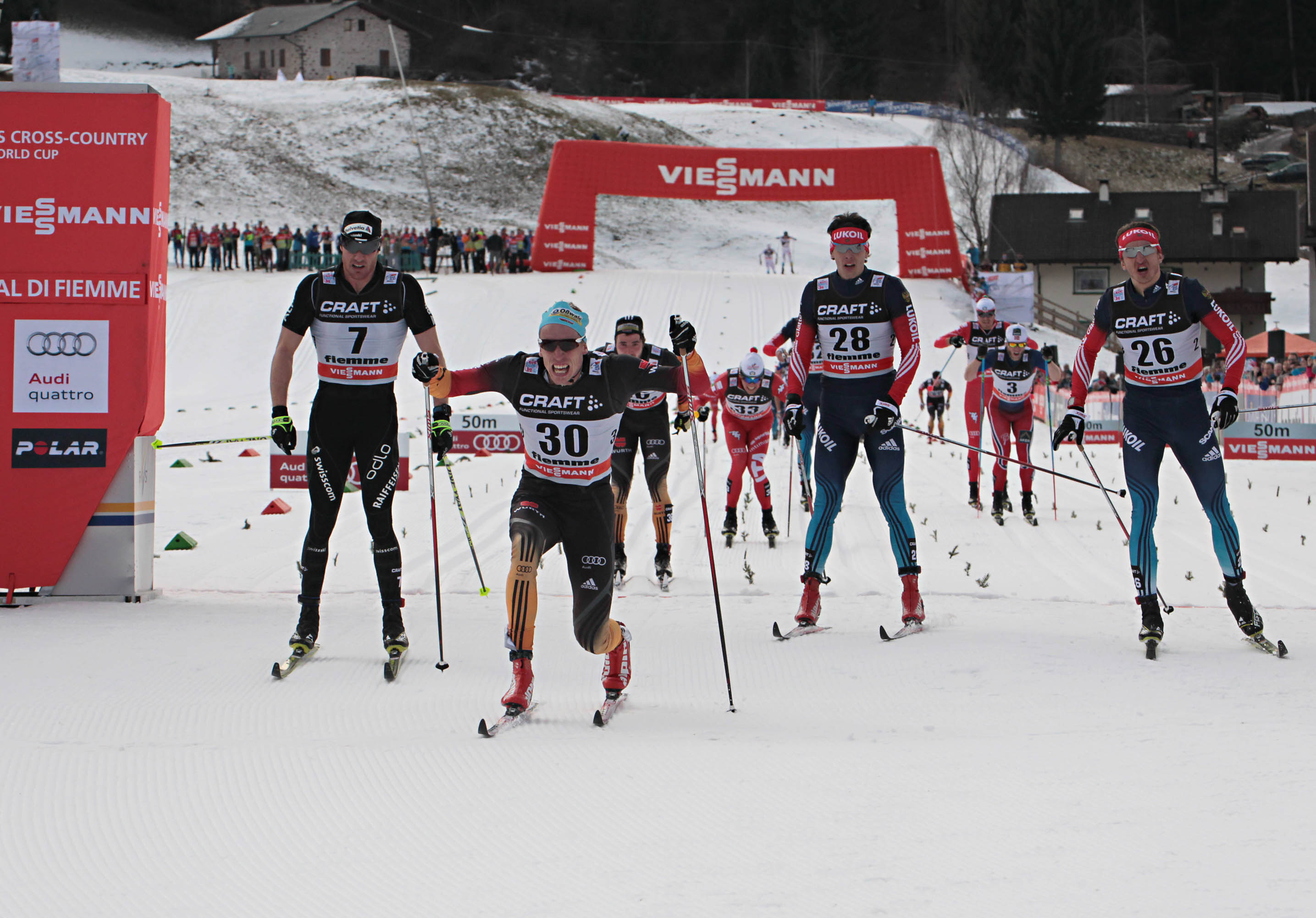
Tim Tscharnke (bib 30) of Germany begins to celebrate after a narrow victory over Kazakhstan’s Alexey Poltoranin (out of frame) in Saturday’s Tour de Ski 15 k classic mass start in Val di Fiemme, Italy (Photo: Val di Fiemme/www.fiemmeworldcup.com)
Saturday’s 15 k men’s classic mass start in Val di Fiemme, Italy, had no shortage of excitement – with the top five separated by less than a second – and sets up a potentially dramatic final stage of the Tour de Ski.
In a sprint to the finish line, it was Germany’s Tim Tscharnke winning the Tour’s sixth stage by mere inches. Tscharnke, who began the race 30th in the Tour standings, outlunged Alexey Poltoranin of Kazakhstan (+0.0) to finish in 46:48.8.
Tscharnke was positioned behind the leaders for much of the race and was ninth after 11 k, 6.8 seconds behind Tour leader Petter Northug of Norway. However, as skiers such as Northug and Norwegian Martin Johnsrud Sundby slowed their pace after sprinting to collect bonus points, Tscharnke was able to make his move along with other racers who held back.
“We did not focus on sprints, we just wanted to go for a good position in the finish,” Tscharnke told FIS.
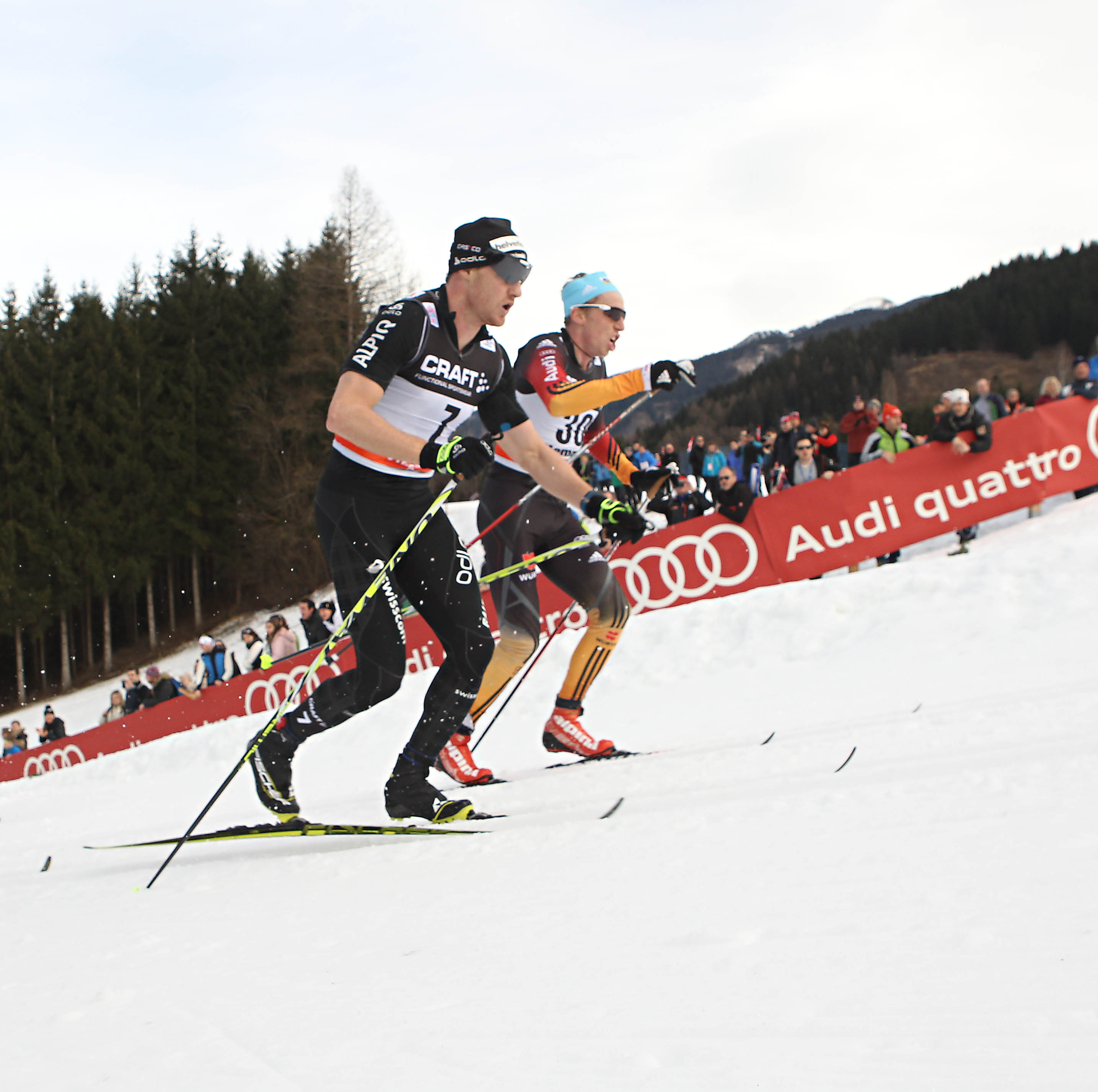
Switzerland’s Dario Cologna (bib 7) and Tim Tscharnke of Germany (bib 30) race in the Tour de Ski 15 k classic mass start in Val di Fiemme, Italy. Tscharnke would go on to win in a photo finish. (Photo: Val di Fiemme/www.fiemmeworldcup.com)
“It’s a little bit of a surprise for me to win today,” the 25-year-old explained. “Thomas [Bing] and me wanted to be in the front of the pack. We helped each other.” Bing would end up finishing sixth (+2.0).
Tscharnke’s Tour got off to a rough start, as he took 73rd in the 4 k Obsertdorf prologue. However, he has since been posting better and better results, and with Saturday’s victory he has his best World Cup result of the season by far. His previous best was in Wednesday’s 10 k classic interval start in Toblach, when he took 24th.
Tscharnke said, according to the German newspaper Frankfurter Allgemeine, that this victory meant more to him than his last World Cup victory, a 15 k classic mass start in Canmore, Alberta, in Dec. 2012. He explained that he underwent intense training over the holiday break, especially on the roller ski and the treadmill, and that it is a relief to see the hard work pay off.
He is now 15th in the Tour standings, 4:20.8 behind the leader, Northug.
Dario Cologna was contending for the win during the final sprint and took third (+0.4), despite an earlier crash. About 29 minutes into the race, he tangled skis with Russian Evgeniy Belov while descending a fast hill, and both skiers went falling to the ground. Belov, who is fourth in the overall Tour standings (+35.3), would end up taking 17th (+14.1).
“I had to spend some energy to come back after the crash but I managed to finish on the podium. It will be difficult to go for podium in the Tour but you never know what can happen on the climb,” Cologna said to FIS, referring to the long climb that makes up much of Sunday’s 9 k freestyle pursuit.
Cologna is fifth in the Tour standings (+1:46.6) and 1:19.8 behind the third-place skier, Sweden’s Calle Halfvarsson.
Meanwhile, two Russian skiers, Stanislav Volzhentsev and Alexander Bessmertnykh, both stayed well behind the leaders throughout the race and were able to conserve enough energy to take part in the final sprint to the finish. Volzhentsev just edged out Bessmertnykh in a photo finish to take fourth (+0.7).
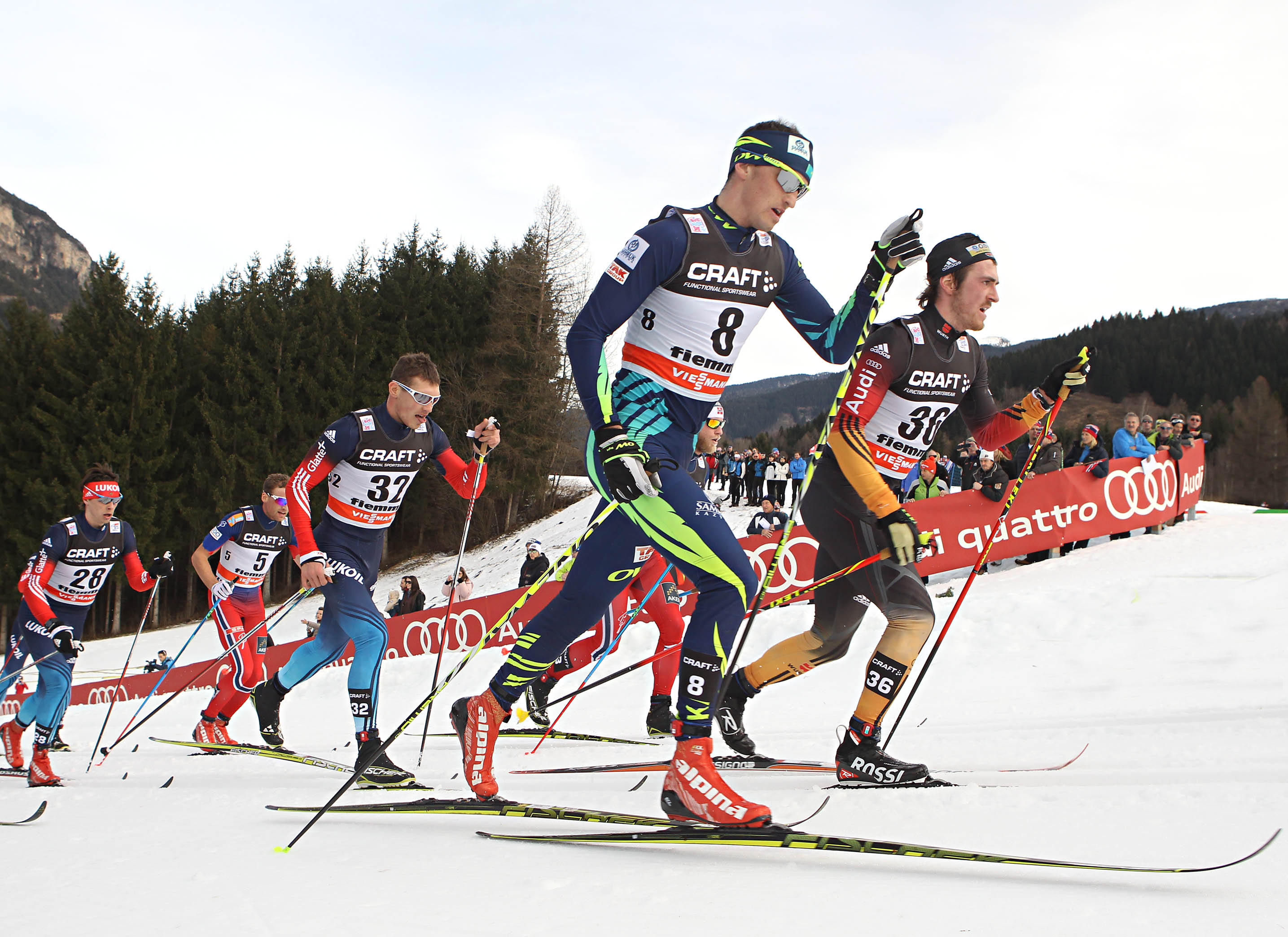
Kazakhstan’s Alexey Poltoranin (bib 8) races alongside Germany’s Thomas Bing (bib 36) in the Tour de Ski 15 k classic mass start in Val di Fiemme, Italy (Photo: al di Fiemme/www.fiemmeworldcup.com)
With a podium consisting of Tscharnke, Poltoranin, and Cologna, Saturday featured the first podium of the season without a Norwegian present.
Northug finished the race in 21st (+17.2), which was just barely enough to hold the overall Tour lead over teammate Sundby, who finished in eighth (+4.1) and was the highest-placing Norwegian. Sundby also crashed on one of the course’s steeper downhills, falling alongside Niklas Dyrhaug five minutes into the race.
Northug explained to FIS that Saturday’s race was all about collecting bonus points.
“I knew many skiers were saving energy for the finish. The last bonus sprint cost me a lot of power,” Northug said.
The current Tour standings set up a tight race for the overall Tour title, which will be decided in Sunday’s final stage in Val di Fiemme. Northug is just 3.1 seconds ahead of Sundby, while Halfvarsson, who was 27th on Saturday (+30.0), is 26.8 seconds behind Northug in third and within striking distance.
“It will be a hard fight for the podium tomorrow,” Northug said. “It has been a tough Tour de Ski. If you have a really bad day you can easily lose many minutes.”
At this point on the Tour, the men’s North American contingent consists entirely of Canadians. Alex Harvey finished his Tour by taking 34th (+2:12.5), and dropped from sixth to 16th in the overall standings. Teammates Ivan Babikov and Devon Kershaw finished 40th (3:28.6) and 41st (3:39.5), respectively.
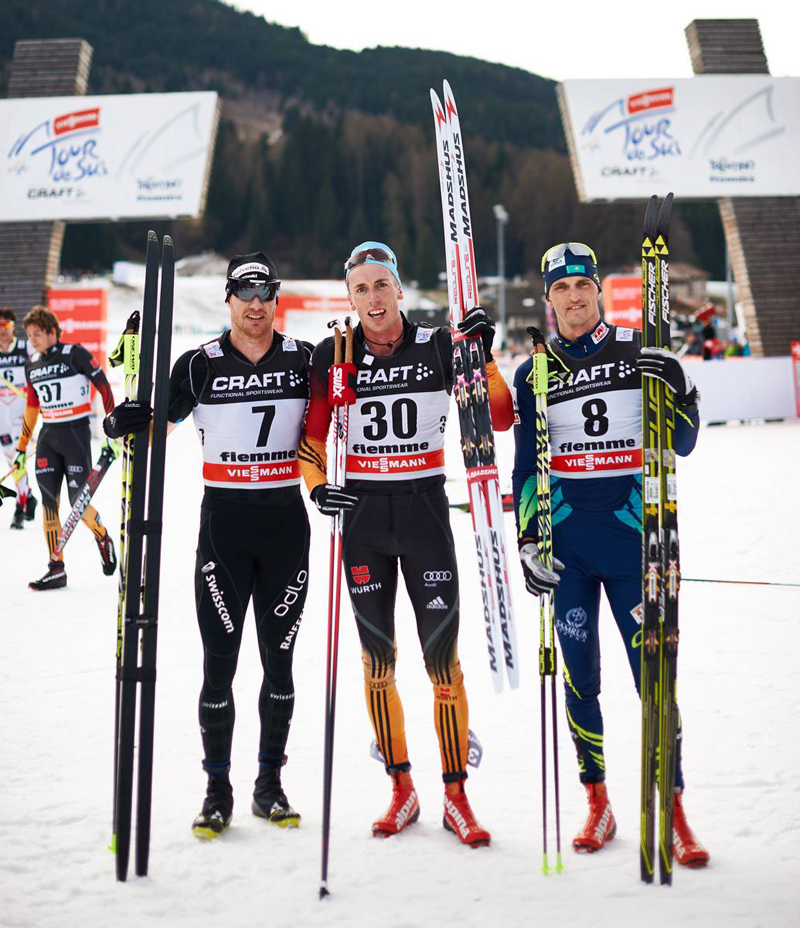
Dario Cologna (SUI), Tim Tscharnke (GER), Alexey Poltoranin (KAZ), (l-r) take the podium in the men’s classic mass start in Val di Fiemme, Italy. (photo:Fischer/Nordic Focus)
Noah Hoffman (USA) and Thomas Bing (GER) on the first lap of the men’s 30 k freestyle on Saturday in Davos, Switzerland.
DAVOS, Switzerland – This town is like a home away from home for the U.S. Ski Team, and indeed after the World Cup races finish this weekend, team members will stay to train over the Christmas break.
But despite the hominess, the altitude, the 30 k freestyle format, and the long climbs – all things that on the surface would seem to suit Noah Hoffman perfectly – today didn’t bring the fireworks that the young American was able to use in Kuusamo, Finland, earlier this month when he had the fastest time in the final pursuit of the opening World Cup mini-tour.
“It was nothing special,” Hoffman said of his 25th-place finish in the individual start competition today.
The Vail, Colorado native has had good races here before: he finished 31st in the same format in 2011, and 33rd in the 15 k freestyle last season. Having competed on the course several times, Hoffman was able to craft a strategy for these specific trails that he hoped would bring him an even better result.
“I wanted to go out really under control and focus on the downhill sections, which is where I’ve lost a lot of time in the past,” he said. Hoffman even did downhill intervals earlier in the week, practicing hitting the twisty, turny, fast descents at speed.
He didn’t fail at his goals. But he didn’t have the best race he was hoping for, either.
“I did okay,” he said. “I probably went out a little harder than I wanted to. It felt okay, but not great.”
Hoffman was in 15th place after the first 4 k of the race, but gradually slipped back. He was 21st at 15 k, 23rd at 24.5 k, and ended up finishing 1:54 behind race winner Maurice Manificat of France.
He also felt like his high-altitude origins ere only a minor help today.
“Altitude is definitely a strength for me,” he said. “I like skiing there. But I definitely felt it today. I’ve been at sea level now since early November so I don’t feel like I’m super well-acclimated right now – but nobody in the field is. But I feel like I have an advantage because I’m used to going back and forth.”
Starting in the seeded portion of the field based on his strong results so far this season, he was sandwiched between two unseeded skiers: Candide Pralong of Switzerland, and Karel Tammjarv of Estonia. He eventually caught Pralong and was able to ski together with him for the last half of the race, alternating leads.
In the beginning, though, Hoffman was on his own until he latched on to Thomas Bing of Germany, who was lapping through. A larger group eventually joined the pair, but Hoffman spent a fair amount of time setting the pace.
“I led that train a lot, but Thomas Bing was there,” he said. “He was a lap ahead of me and he skied really well, he ended up 13th or 14th I think. He led some, which was really good for me… I got a little bit of help out there, which was nice.”
Overall, Hoffman felt fine about his result and the way he has been skiing in the last few weeks.
“I’m happy with where I am,” he said. “Last week, my classic has been kind of rough, but I’ve decided to go back to basics with that, and I’m excited to classic race again. I feel like I’m in a good spot, and I have a little break before the tour.”
With a sprint and a sprint relay on the World Cup schedule in Asiago, Italy, next weekend, Hoffman is sitting out the races and will train here in Davos instead. Along with Liz Stephen and Jessie Diggins, he will live in an apartment and soak in the sun, trails, and altitude. It’s preparation for the Tour de Ski, and, eventually, one stepp in the process of training for Sochi.
“It’ll be good for sure, but we’ll go even higher for most of January,” Hoffman explained. “We’ll go to Seiser Alm, which is up to 8,000 feet, so that will be the real time to get acclimated for Sochi.”
No other American men started today’s race; Ivan Babikov was the lone entrant for Canada, finishing 47th, +4:05.4.
Sergey Ustiugov (RUS) en route to winning the men’s 15 k freestyle at U23 World Championships in Liberec, Czech Republic. Photo: Liberec2013.
The Russian men put on another demonstration of their astonishing strength and depth in Liberec, Czech Republic, on Thursday in the men’s 15 k freestyle individual start.
Sergey Ustiugov (RUS) stomped the field, leading from every checkpoint. He finished the course in 35:44.1, a commanding 19.7 seconds ahead of his teammate Evgeniy Belov (RUS). Thomas Bing (GER) completed the podium, trailing in 42.4 seconds after Ustiugov in a time of 36.26.5.
Ustiugov, a 20 year old wunderkind, was elated. “It is fantastic! I feel really wonderful. I achieved my goal: I was in first position for the whole race. I feel really happy.”
He is no stranger to the podium. Last year in Turkey the promising young Russian claimed 4 goal medals. He is a rising star in the Russian team building strength ahead of Sochi.
The men’s 15 k podium. 1. Sergey Ustiugov (RUS) 2. Evgeniy Belov (RUS) 3. Thomas Bing (GER). Photo: Liberec2013.
His teammate, Evgeniy Belov (RUS), improved upon his third place performance in the classic sprint to silver.
“I am really satisfied with the result of the race,” Belov said. “Today’s race was just training for the next month — I will start at the FIS Nordic World Ski in Val di Fiemme in Italy, so I did not expect the medal. That pleased me more.”
Belov started the first of the four 3.75 k loops conservatively in 6th position before accelerating to 2nd position. The 22 year old, who won a gold medal in last years 15 k classic race in Turkey, looks to be on good form leading to Val di Fiemme as he completes his final U23 Championships.
Thomas Bing used excellent pacing to earn his first U23 medal.
“I am incredibly happy,” He said. ” Today, it was a really tough race. I did not want to overvalue the start. I saved my energy for the end.”
Bing skied the first lap in second place before being overtaken by Belov. He would maintain his third place position into the finish.
Another notable result was Andrew Musgrave (GRB), whom finished agonizingly-close to a medal in fourth place in a time of 36:40.6, 56.5 seconds behind the Ustiugov.
Damien Tarantola (FRA) finished behind Musgrave in 5th position narrowly ahead of Fabio Clementi (ITA). Dmitriy Salnikov (RUS) made it 3 Russians in the top 8, finishing ahead of of Baptiste Gros (FRA) in 9th position. Mark Startostin (KAZ) rounded out the top 10.
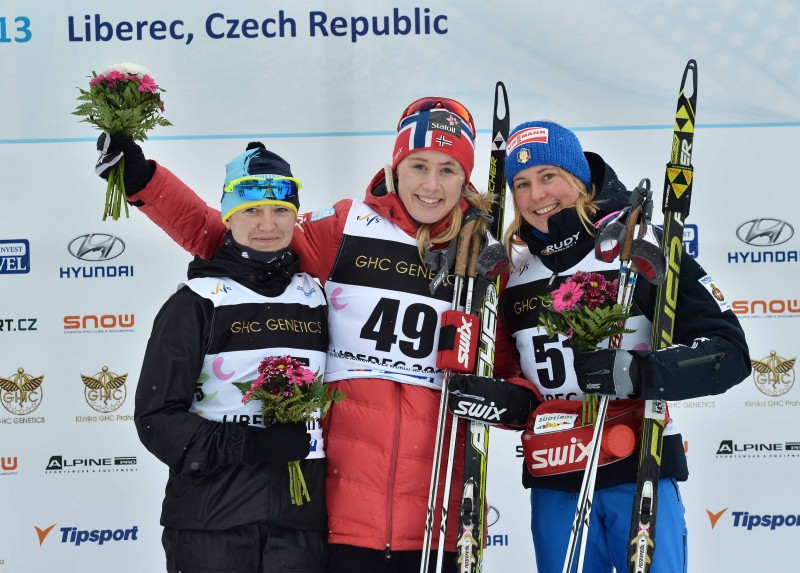
Ragnhild Haga (NOR) claiming Norway’s first gold medal of the week in the women’s 10 k freestyle at U23 World Championships. Photo: Liberec2013.
Ragnhild Haga (NOR) secured Norway’s first gold medal of the U23 championships in the 10km individual start in a time of 27:50.4
Haga overcame new fallen snow and frigid conditions to cross the line 29.5 seconds clear of second place Anastasia Slonova (KAZ).
“I am really satisfied,” Haga said. “Today, it was an exhausting race; I could not afford to relax. Two years ago I triumphed at the junior world championships so I am happy that I managed to pick up on this success.”
Haga, 21, improved upon her fifth place finish in the classic sprint to fulfill the promise shown in the 2011 U18 World Championships in Otepää, Finland, where she won a gold medal.
The women’s 10 k podium. 1. Ragnhild Haga (NOR) 2. Anastasia Slonova (KAZ) 3. Debora Agreiter (ITA). Photo: Liberec2013.
She began the first 3.3 k loop in fourth position before accelerating impressively into first by the next check point and widening her lead by nearly half a minute.
The second place finisher, Anastasia Slonova (KAZ), overcame a sluggish first lap in eighth position to overtake six skiers by the finish.
“I feel good after the race,” She said. “I am really pleased with the result. We watched the weather carefully, so we were able to prepare the skis well. It is a great achievement for us, indeed.”
Third place finisher Debora Agreiter (ITA) was a happy, if not subdued, bronze medal winner in a time of 28:20.3, just 0.4 seconds behind the surging Slonova (KAZ).
“I do not know what I lacked for being second placed. I guess I did not have enough strength at the end; after all, it was a difficult race. But I am still excited about the third place,” Agreiter said.
Her slight disappointment is justified given the astonishing final split of Slonova, who moved from fifth in the second intermediate split to overtake Agreiter, who had been holding steady in second position throughout the race.
Sandra Ringwald (GER) finished in fourth position, narrowly edged out by Agreiter. Fifth and Sixth positions were occupied by two Norwegians, Tuva Toftdahl Staver and Kari Oeyre Slind, respectively. A succession of Russians followed: Anna Nechaevskaya in seventh, Natalia Zhukova in eight, Ekaterina Khramtsova in 9th, and Elena Soboleva in 10th.