Tag: Ti Donaldson

  • Gus Schumacher Leads the Way in First Besh Cup Weekend

    Gus Schumacher Leads the Way in First Besh Cup Weekend

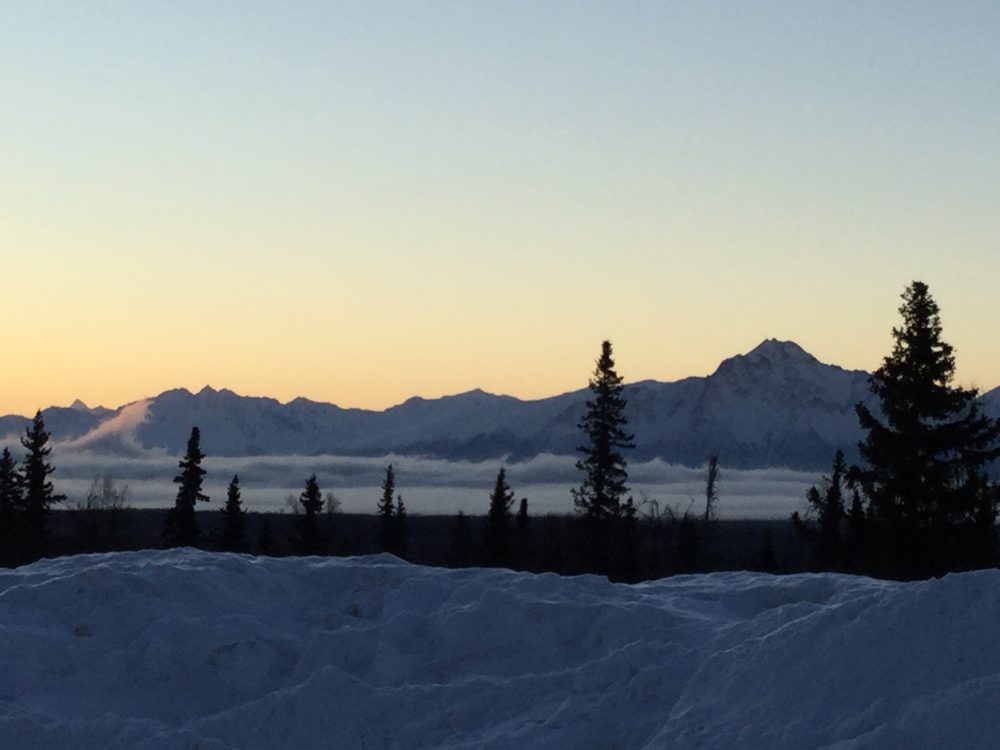
    The Chugach Mountains and a winter sunrise, seen in this file photo view from the parking lot at Government Peak Recreation Area, Palmer, Alaska, in February 2018. (photo: Gavin Kentch)
    The Chugach Mountains and a winter sunrise, seen in this file photo view from the parking lot at Government Peak Recreation Area, Palmer, Alaska, in February 2018. (photo: Gavin Kentch)

    Note: FasterSkier is accepting submissions for regional race reports, including for juniors racing. If you would like to see a particular race circuit covered and have the writer with the will to do it, please have them email info@fasterskier.com. Be sure to include a link to results, and preferably a few original race photos with proper credits.

    GOVERNMENT PEAK RECREATION AREA, outside Palmer, Alaska — On a day that had a decidedly old school feel, one of the state’s newest racing venues took center stage, as Government Peak Recreation Area successfully hosted the opening Besh Cup races of the 2018/2019 Junior Nationals qualifying series this past weekend on less than a week’s notice.

    Saturday morning saw U18 boys and up cover 15 kilometers, on a hilly two-lap course; U18 girls and up raced 10 k, on an even hillier two-lap course. It was classic technique, it was interval start, it was cold, and the trees were draped with fresh snow. It felt like a World Cup race circa 1990.

    Senior women Hailey Swirbul, Rosie Frankowski, and Lydia Blanchet. (photo: courtesy CCAK)
    Senior women Hailey Swirbul, Rosie Frankowski, and Lydia Blanchet. (photo: courtesy CCAK)

    The comparison isn’t totally bathetic, given the overall leaderboards for Saturday’s races: Rosie Frankowski, Hailey Swirbul, and Kendall Kramer for the women, and Gus Schumacher, Luke Jager, and Hunter Wonders for the men. That’s an Olympian and a three-time World Juniors medalist for the women, and three-fourths of this spring’s breakthrough World Juniors silver medal relay team for the men. Oh, plus the 16-year-old Kramer, who was third in the junior women’s 5 k classic mass start at 2018 U.S. Cross Country Championships and who may have a pretty bright future in this sport herself.

    Saturday: distance classic races

    Male racers set out at 11 a.m. Saturday morning from the compact stadium at Government Peak Recreation Area (GPRA), a labor of love by the Mat-Su Ski Club and the Palmer and Wasilla ski community over the past ten years. They headed out on a course that is a poor man’s Davos distance course, with consistent climbs and V2-able false flats for the first two-thirds of the loop, giving way to a working downhill and a sharp drop back to the stadium. Or to just below the stadium, actually; the course ends with a grueling B-climb immediately before the finish (see next picture, below right). The obvious challenge is to pace the uphills easily enough the first time to ski the downhills and flats efficiently, then do the same thing a second time in lap 

    After roughly 80 racers had covered two 7.5 k laps in the day’s first race, leaving the stadium at 30-second intervals, it was Schumacher who had done this most efficiently, covering 15 k in 43:23.11. Jager (+12.36) and Wonders (+26.53) made up the overall podium. The top three senior athletes were Wonders, Logan Hanneman (fourth overall), and Tyler Kornfield (fifth).

    The top three U20 racers on the day were Schumacher, Jager, and Ti Donaldson, who was seventh overall. Leading the U18 racers were Zanden McMullen (15th overall), Everett Cason (16th), and Max Germain (19th). 50-year-old Adam Verrier, a 1994 Olympian, was the top Master in 47th. Behind Schumacher, who skis for Alaska Winter Stars, in first, Alaska Pacific University (APU) showed its depth by putting six skiers in the top 10 and 10 in the top 16.
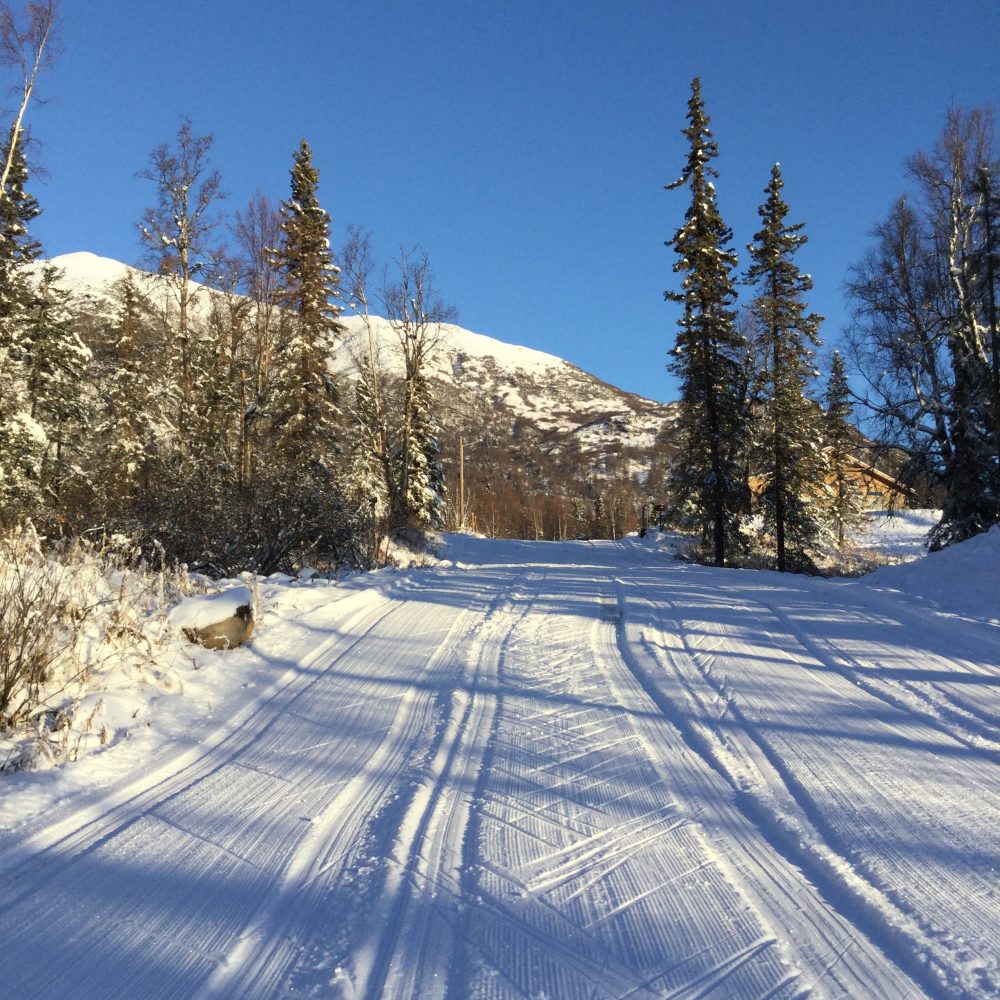
    Part of the final climb leading back up to the stadium on the comp loop, seen in this file photo view from Government Peak Recreation Area, Palmer, Alaska, November 1, 2018. (photo: Gavin Kentch)
    Part of the final climb leading back up to the stadium at the end of the Government Peak comp loop, seen in this file photo view from November 1, 2018. (photo: Gavin Kentch)

    The day’s second race saw 43 women, age U18 and up, take on two laps of the Davos-lite 5 k course described above. Two laps of 5 k at Government Peak is in many ways harder than two laps of 7.5 k, as the longer course adds 2.5 kilometers of gently rolling terrain near the end of the homologated (or perhaps homologation-pending) 5 k course. The 5 k course has no such recovery intermezzo, and the final climb of the first lap segues into the first climb of the second lap for a difficult extended climb with negligible recovery.

    After two laps and 10 k classic, the day’s last starter, Rosie Frankowski, posted the fastest time, finishing in 32:28.01. (While snow conditions are obviously extremely variable from one venue and race to the next, making time comparisons unreliable, and Frankowski did not have World Cup skiers in front of her to chase on Saturday, the fact that Frankowski has previously skied a World Cup 10 k classic in 27:44, on a homologated course in Falun with 365 meters of total climb, suggests that the new Government Peak comp loop deserves respect.)

    Frankowski’s APU teammate, Hailey Swirbul, was second on Saturday, 22.39 seconds back. Kramer (+1:42.15) was third, ahead of a top-10 otherwise composed of skiers from the University of Alaska Anchorage and local Dartmouth College skiers home for winter break.

    buy flonase online

    The top three senior athletes were Frankowski, Swirbul, and Lydia Blanchet, who was fourth overall. The U20 podium was Jenna Difolco (seventh overall), Molly Gellert (17th), and Maggie Meeds (23rd). Somewhat ahead of them were the three fastest U18 skiers: Kramer, Adrianna Proffitt (11th), and Ivy Eski (14th). M4 skier Alison Arians, in 18th, was the top Master.
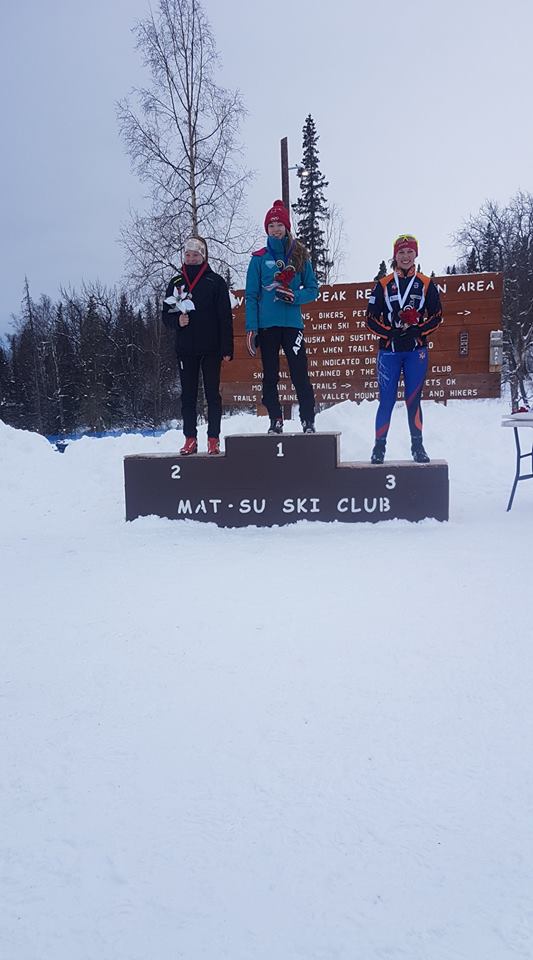
    U16 girls Katey Houser, Marit Flora, and Victoria Bassette. (photo: courtesy CCAK)
    U16 girls Katey Houser, Marit Flora, and Victoria Bassette. (photo: courtesy CCAK)

    Next out on the course were 51 U14 and U16 boys, who did a single lap of the comp loop. U16 skier Aaron Maves, like Frankowski before him, lived up to his top seeding, finishing one lap in 16:35.99. Second and third went to Konrad Renner (+18.99) and Eli Merrill (+36.83), also both U16 athletes. The top U14 skiers in this race were Skyler Amy (22nd overall), Murphy Kimball (23rd), and Aven Elsberg (26th).

    Moments later came the start for the first of 49 U14 and U16 girls, as organizers efficiently put roughly 250 total athletes out on course at a venue that is a one-hour drive from Anchorage and sees a mid-December sunrise some time after 10 a.m. U14/U16 girls likewise did one lap of the 5 k comp loop.

    Quincy Donley had the highest seed and final start position for this race, but 5 k later it was penultimate starter Marit Flora who took the victory. Flora finished in 18:23.47. Donley was 22.78 seconds back in second. Meredith Schwartz (+48.59) was third.

    All three podium finishers were U16 girls. The top three U14 finishers in the race were Heidi Schumacher (12th overall), Sammy Legate (15th), and Zarah Laker-Morris (24th).

    Sunday: distance freestyle races

    After the U12, U10, and U08 skiers finished up the first day’s races, and the afternoon’s sunset time of 3:33 p.m. threatened, volunteers took down the course, coaches packed up waxing equipment, and tired racers began the trek back to Anchorage homes or Mat-Su hotel rooms. The first volunteers were officially on site by 7:30 a.m. Sunday morning to assist with parking, although doubtless some people had returned to the venue by long before then.

    Day two of racing brought some differences – freestyle instead of classic, shorter distances, and slightly warmer temperatures – but more repeat podium finishers than not across the day’s races.

    The first division on course was again U18 boys/U20/Seniors/Masters men, this time with 78 starters going out at 15 seconds apart. Sunday’s skate race was 10 k freestyle interval start, twice around the 5 k comp loop (precisely the same as the senior women’s 10 k classic the day before). The top three overall were unchanged from Saturday’s 15 k classic: Gus Schumacher, then Jager, then Wonders, the World Juniors silver-medal relay team united once more. Schumacher’s time on Sunday was 26:17.07. Jager (+15.56) and Wonders (+42.74) were the only other two athletes to break 27 minutes on the hilly course.
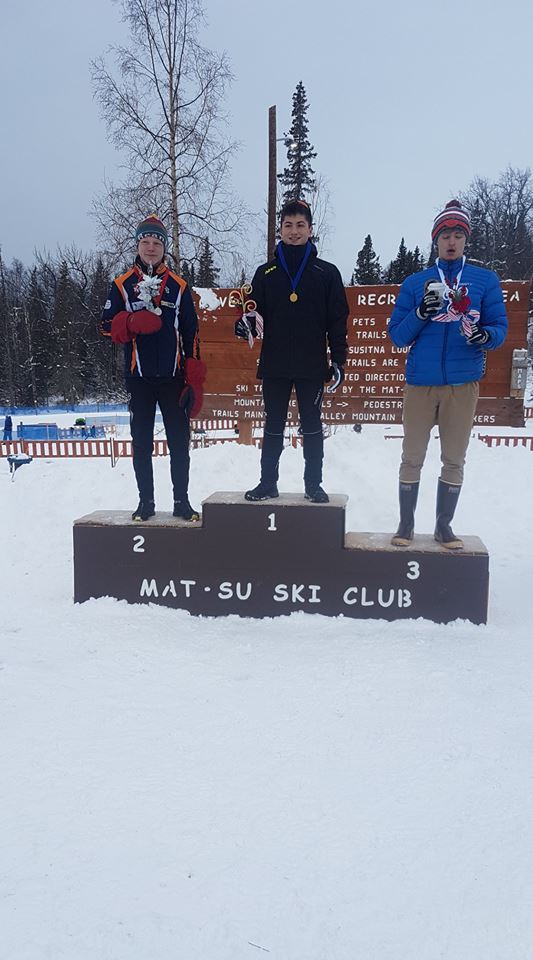
    U16 boys Josh Baurick, Konrad Renner, and Aaron Maves. (photo: courtesy CCAK)
    U16 boys Josh Baurick, Konrad Renner, and Aaron Maves. (photo: courtesy CCAK)

    The U20 leaders on Sunday were again Schumacher, Jager, and Donaldson, who was fourth overall. The senior podium was Wonders (third overall), Thomas O’Harra (fifth), and Forrest Mahlen (sixth). Best times for U18 skiers went to McMullen (seventh), Cason (11th), and Germain (16th), precisely the same U18 podium as in the 15 k classic. Much as on Saturday, behind Alaska Winter Stars skier Schumacher in first, APU placed seven athletes in the top 10.

    The first Master, among eight Masters finishers on Sunday, was M1 skier Cody Priest, 30, a former skier and runner at the University of Alaska Fairbanks, in 25th overall.

    Soon after the last of the Senior men collapsed across the finish line, the first of the U16 boys headed out for one lap of the 5 k course. (All races on both days were interval-start.) First on Sunday was Renner (15:21.27), improving on his second-place finish from the day before. Josh Baurick (+9.17) was second, with Maves (+17.20) staying on the podium but moving down to third after his victory on Saturday.

    Next up were 43 U18 girls/U20/Seniors/Masters women. Neither Frankowski nor Swirbul raced on Sunday, but their APU teammate Jessica Yeaton, who skis domestically with APU but competes internationally for her native Australia, did after not racing on Saturday. Yeaton was seeded third in the 5 k skate but ended up first, covering one 5 k lap in 14:47.25. Kramer (+26.15) moved up to second overall on Sunday, with Emma Tarbath (+46.32) third, barely a second ahead of Lydia Blanchet in fourth. Anna Darnell was the fifth and final woman to break 16 minutes on the hilly course.

    The senior women’s podium was Yeaton, Tarbath, and Blanchet. The top three U20 finishers were Jenna Difolco (seventh overall), Molly Gellert (ninth), and Emma Jerome (21st). The top three U18 finishers were, again, Kramer (also second overall), then Ivy Eski in eleventh overall, barely ahead of Annika Hanestad in twelfth. Arians (15th) was again the first Master.

    U14 boys were the next race out on the course. Sunday brought a 3.75 k skate, on a course that covered most of the 5 k comp loop used throughout the weekend, but elided one major climb and the only rolling section from the top part of the course. The technique and the distance were different, but the U14 podium was precisely the same as on Saturday: Amy (13:29.76), then Kimball (+2.05), then Elsberg (+7.19).
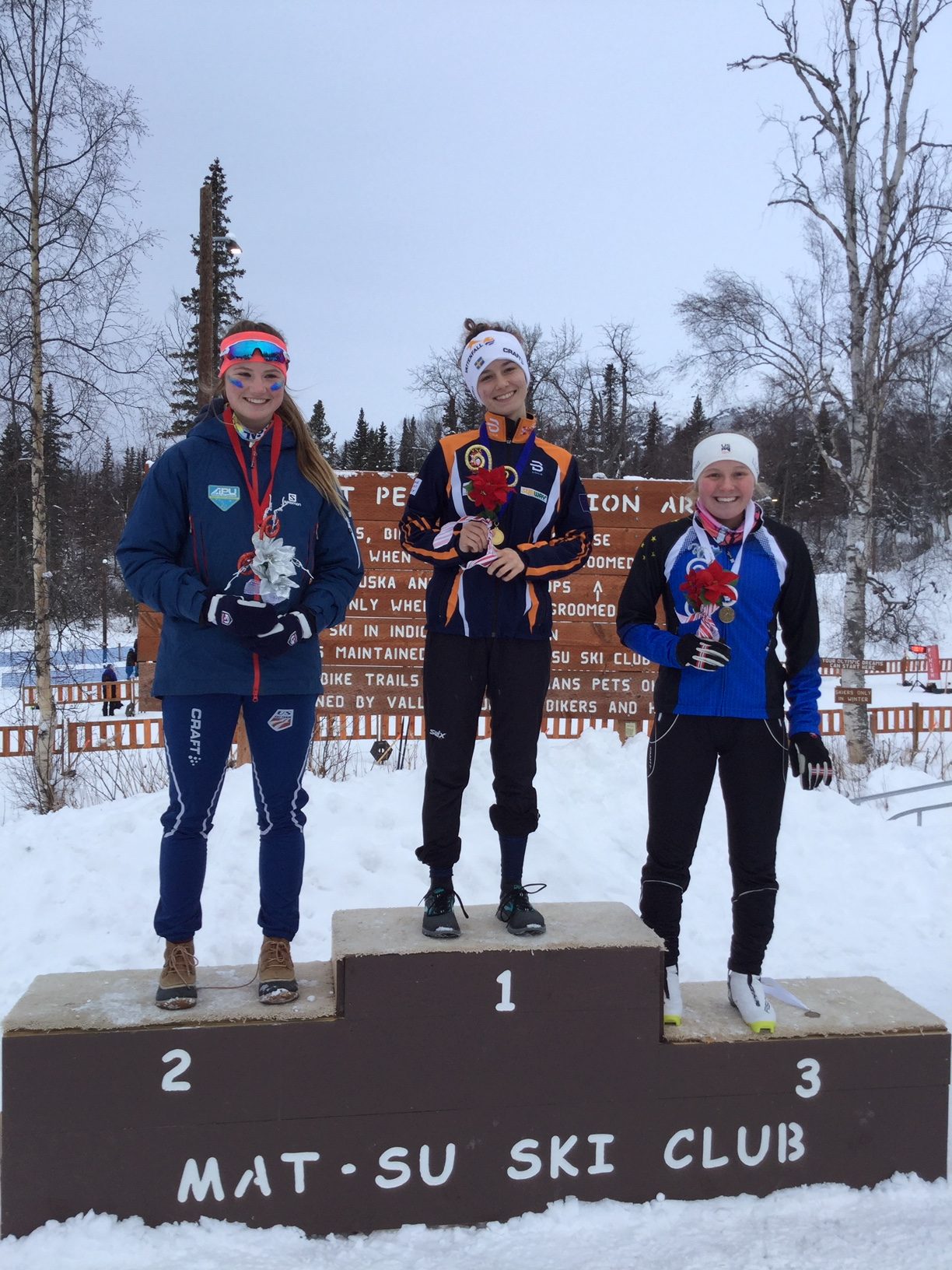
    U18 girls Ivy Eski, Kendall Kramer, and Annika Hannestad. (photo: Gavin Kentch)
    U18 girls Ivy Eski, Kendall Kramer, and Annika Hannestad. (photo: Gavin Kentch)

    Finally, U14 and U16 girls headed out on the same 3.75 k loop. Marit Flora took her second victory of the weekend by a substantial margin, finishing in 12:13.98. Katey Houser (+30.59) and Victoria Bassette (+32.64) collected their first podia of the weekend.

    The overall podium was again all U16 racers. The U14 leaders were Legate (tenth overall), Heidi Schumacher (16th), and Nora Hulse (24th).

    Reflecting the depth of skiing in southcentral Alaska, the roughly 250 entrants for the weekend’s races included a healthy six former Olympians (Rosie Frankowski, Logan Hanneman, Tyler Kornfield, Adam Verrier, Casey Wright, and Jess Yeaton) and four World Juniors medalists (Gus Schumacher, Luke Jager, Hailey Swirbul, and Hunter Wonders), as well as additional senior national championship podium finishers, most of the rest of the APU Elite Team, a dozen or more NCAA skiers, and scads of past Team Alaska Junior National members.

    Both races were FIS races, as well as certified for National Rankings List purposes by U.S. Ski & Snowboard. FasterSkier unofficially calculates the USSA penalty at a healthy 41.99 points for the men’s distance races.

    Thoughts on the weekend

    Two common themes emerged after talking with a handful of the weekend’s podium finishers: One, these races are a good introduction to the season and to bigger races still ahead. And two, the new Government Peak courses are great. But hard.

    As two-time U18 champion Zanden McMullen told FasterSkier Sunday afternoon, “Yesterday I was definitely hurting in the race, but I was proud to come out on top. I definitely felt a lot better today. I’m pretty happy going into the season, where I am; I still have a little work to do before Senior Nationals, but I’m super excited.”

    U20 men Luke Jager, Gus Schumacher, and Ti Donaldson. (photo: courtesy CCAK)
    U20 men Luke Jager, Gus Schumacher, and Ti Donaldson. (photo: courtesy CCAK)

    Two-time overall champion Gus Schumacher expressed similar sentiments, telling FasterSkier, “I wanted to use [these races] to get into racing more, and get some more races under my belt, so I felt better at the bigger races. But obviously, to get into good racing shape, you want to be trying to race as best you can, so that was kind of the goal, to be able to start getting my racing speed to its top level.”

    Schumacher, who is undefeated in five local races this year, including the Race to the Outhouse #1 hill climb at Hatcher Pass the preceding weekend and a sprint and distance race in Fairbanks in the Alaska Nordic Cup in early December, described his current shape as “pretty good.” He elaborated that he plans to add some more intensity soon, but thinks that he is “coming into my race form, and it looks pretty good. Good to have these fast boys around me to push me every day.”

    Schumacher plans to do some trials with Alaska Winter Stars, possibly collaborating with APU, before flying to Craftsbury on December 29th for senior nationals.

    Two-time U18 champion (and double overall podium finisher) Kendall Kramer sounded similar notes, but was somewhat more introspective when asked what her weekend results told her about her current fitness and the upcoming race season.

    “I got invited to a lot of national camps this summer,” Kramer said to FasterSkier, “and I think being exposed to so many different training groups and training styles – I really diversified how I trained this year, and so I’m happy that it’s working out for me. It’s less stressful, and I’m putting less pressure on myself.”

    Kramer, who had never previously raced at Government Peak, described the new courses as “really, really tough.” She seemed to recognize that the course profile was advantageous to her, while stopping short of actually saying that she had enjoyed them when asked if she had liked the courses: “I mean, yes, being super small and light and getting up hills – I wouldn’t pick this venue, necessarily. But I think it was good for me.”

    Ivy Eski, who claimed a pair of U18 podium finishes on the weekend, was more effusive.

    buy zyrtec online

    “I love it,” she told FasterSkier. “It was really fun. I definitely want to race here again. The courses are amazing.”

    Eski also praised the “really good snow and super good grooming,” calling it “overall really a great weekend.”

    U18 boys Everett Cason, Zanden McMullen, and Maxime Germain. (photo: courtesy CCAK)
    U18 boys Everett Cason, Zanden McMullen, and Maxime Germain. (photo: courtesy CCAK)

    And McMullen, who had also never raced at this venue, similarly said of the new courses, “They’re tough, but I like them. You definitely have to be on top of it to be able to push it and go fast.”

    Are they as hard as a nationals course? he was asked. “I definitely think they could be,” said McMullen, who has raced throughout the U.S. as well as in Finland. “Because if you don’t ski it correctly, you could be hurting.”

    * * *

    The overall success of the weekend is noteworthy only in light of two facts: That the Mat-Su Ski Club had never hosted an event at this level before, and that it did so on less than a week’s notice, as poor trail conditions throughout southcentral Alaska forced governing body Cross Country Alaska (CCAK) to have a series of competition committee meetings and teleconferences during the week of December 3 to decide where in the state to send 250 athletes and their parents for a weekend of racing. (Anchorage and Fairbanks are a six-hour drive apart, nearly the twice amount of daylight in Fairbanks in mid-December; the decision to move a race weekend is not made lightly.)

    On Sunday evening, December 9, CCAK announced the decision of the Competition Committee to have the opening Besh Cup weekend at the Government Peak ski trails. Six days later, skiers were pouring into the carefully managed, not-really-large-enough parking lot for the weekend’s first race, with overflow parking stretching hundreds of yards down one side of the access road. Notwithstanding the venue’s youth and the Mat-Su Ski Club’s relative inexperience, all races on both days appear to have gone flawlessly. (Full disclosure, this reporter contributes money to Mat-Su Ski Club for grooming each year, but was not otherwise involved in organizing or supporting these races save for paying an entry fee for both days to race as a Masters athlete.)

    The Mat-Su Ski Club, which pulled off two days of impeccable grooming without the aid of large-scale grooming equipment, is currently fundraising for the purchase of a PistenBully groomer.
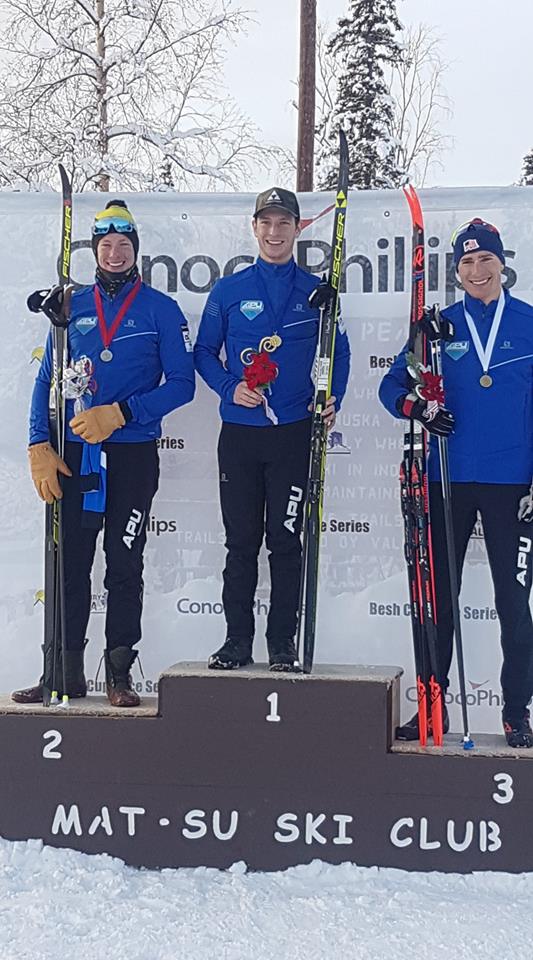
    Senior men Logan Hanneman, Hunter Wonders, and Tyler Kornfield. (photo: courtesy CCAK)
    Senior men Logan Hanneman, Hunter Wonders, and Tyler Kornfield. (photo: courtesy CCAK)

    Next up

    Besh Cup racing for Team Alaska selection continues with two more weekends of racing, currently scheduled for Soldotna on January 19-20, 2019, and Fairbanks on February 2-3. There are traditionally two interval-start distance races, two mass start distance races, and two sprint races throughout the six-race Besh Cup series, three races each of skate and classic. CCAK will announce future race details in advance of upcoming race weekends, after atypically starting the season with two consecutive interval-start distance races due to the last-minute move to Government Peak.

    2019 Junior Nationals will be held at Kincaid Park in Anchorage from March 9-17, 2019. Recent snowfall has brought the trails there from, as CCAK recently described them, “ice/grass rinks” to skiable within the past week (that is, after the decision was made to move the races).

    While relatively warm temperatures hindered the Nordic Skiing Association of Anchorage (NSAA)’s ability to make snow through the early winter, leading to NSAA running the snowmaking system for only 48 hours through November 28, the snowmaking system did survive the 7.0 earthquake of November 30 unscathed, NSAA Business Manager Erin Beam told FasterSkier in an early-December email. “NSAA has tested it since the earthquake, and there are no apparent damages or problems,” she wrote at the time. “It’s certainly incredible it wasn’t worse.” NSAA has made some snow at Kincaid within the past week or so, in addition to grooming the natural snow on most trails.

    Results and media: Saturday classic (all races) | Sunday skate (all races) | FIS results (all races) | Current 2019 Team Alaska points list | CCAK podia photo albums: Day 1, Day 2
  • U.S. Part of Collaboration at Largest International Junior Camp (with Video)

    U.S. Part of Collaboration at Largest International Junior Camp (with Video)

    Earlier this month from Aug. 2-8, nine top American junior athletes had the opportunity to participate in the largest International Junior Camp to date. In total, 146 athletes and 37 coaches from nearly 20 nations gathered in Sjusjøen, Norway, for a week of training and collaboration. The camp offered athletes the opportunity to gain confidence by training with the best junior skiers in the world against whom they will soon be competing, and to learn from the prestigious Norwegian development team training methods.

    To make the trip, athletes needed to be born in either 1999 or 2000 and have the lowest ranking on the FIS Distance and/or Sprint World Ranking list. The U.S. sent Gus Schumacher, Ti Donaldson, Noel Keeffe, Ben Ogden, and Wyatt Gebhart on the men’s side, and for the women, Sofia Shomento, Mae Chalmers, Abby Jarzin, and Molly Gellert. Two coaches joined the group: Bryan Fish, cross country sport development manager at U.S. Ski & Snowboard, and Maria Stuber, head coach at the College of St. Scholastica, and the National Nordic Foundation (NNF) partially subsidized the trip.

    2018 International Junior Camp attendees: 
    – Armenia
    – Austria
    – Bosnia/Herzegovina
    – Belarus
    – Canada
    – China
    – Czech Republic
    – Estonia
    – Italy
    – Finland
    – Japan
    – Korea
    – Latvia
    – Norway
    – Slovenia
    – Slovakia
    – Spain
    – Sweden
    – U.S.

    The format of the camp was similar to what U.S. juniors might experience at an elite national camp; a large emphasis on volume (18-25 training hours), with some intensity, technique and strength mixed in. For most workouts, all the athletes trained together as one large group, only dividing into smaller groups for time trials or activities held in spaces that could not hold the nearly 200 attendees.

    The camp opened with back-to-back time trials, beginning with a classic sprint event featuring “King’s Court” style heats, meaning that from each heat, the top skier moved up in the seeds and the last skier moved down. Each skier competed in four rounds of sprints plus the qualifier, one round more than in a typical sprint. The most notable result for the U.S. was a victory for Schumacher in the men’s final, and on the women’s side, an eighth-place finish for Gellert.

    In the 10- and 15-kilometer distance races, the Americans continued to show their strength with another win for Schumacher and another eighth-place finish for Gellert.

    “Local hero – Joergen Lippert from Lillehammer joined in on the 15 km freestyle race,” Fish explained. “This was a great measuring stick for the men since Joergen medaled in all four races last year at Junior Worlds (2018 Junior Worlds – 1 gold, 1 silver, and 2 bronze). At the 5km split, Lippert was leading, Ben Ogden was 2nd and Gus Schumacher 6th. Haavard Moseby took the lead after 10km. At 12km Haavard and Gus were tied, then Gus surged to edge Haavard for the second day in a row.”

    Molly Gellert striding in the sprint heats at the 2018 International Junior Camp in Sjusjøen, Norway. (Photo: Maria Stuber)

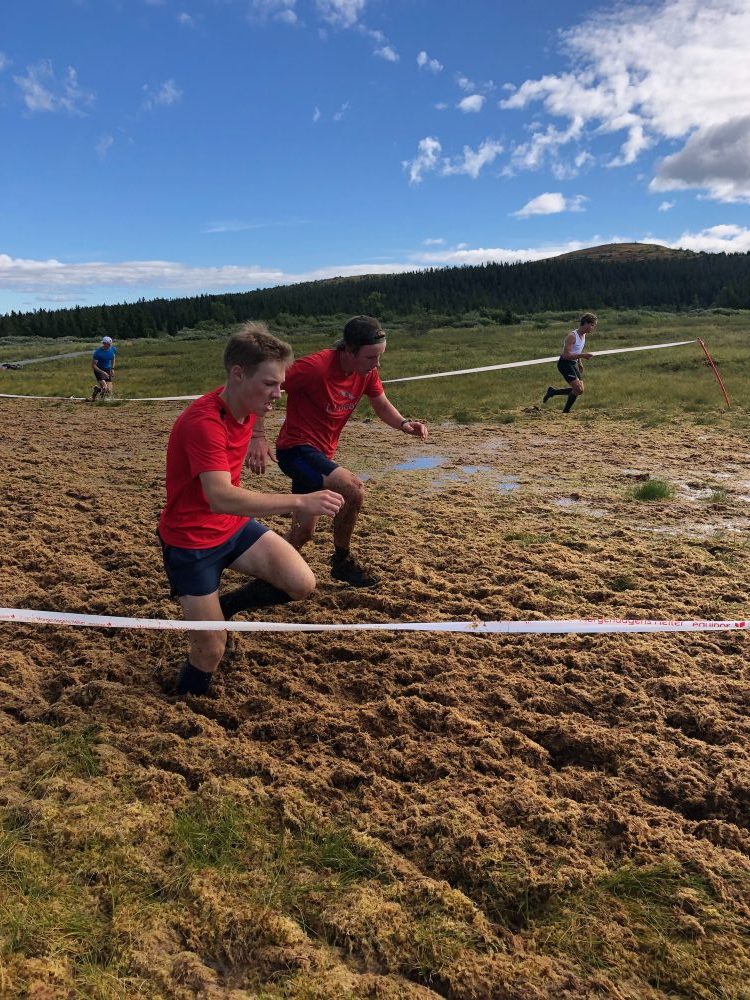
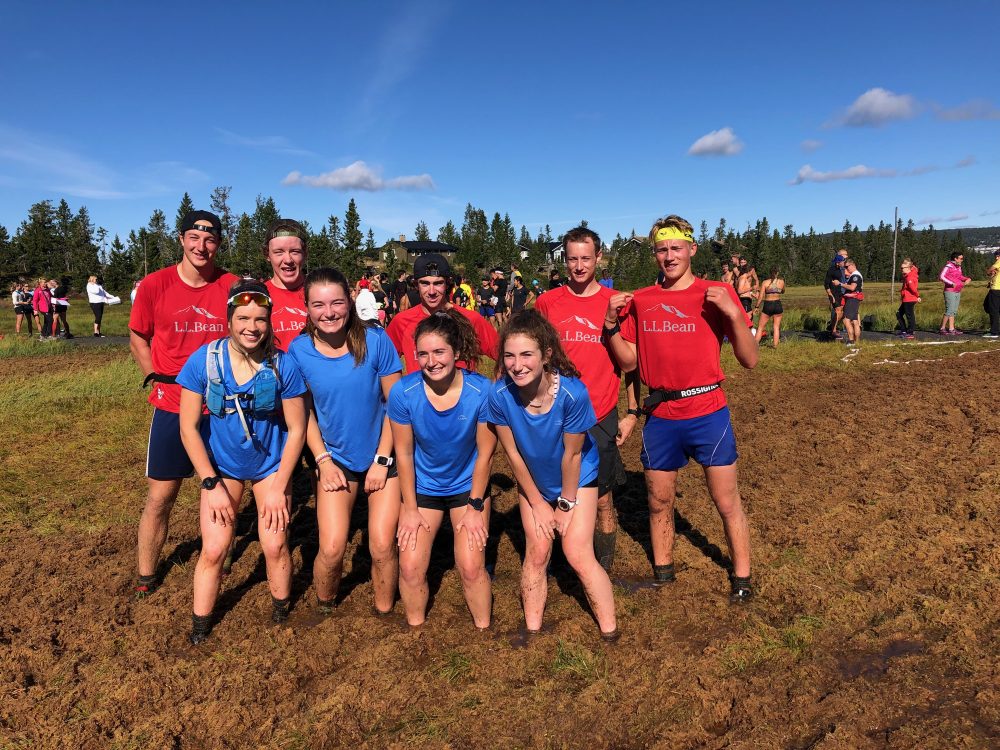
    To take advantage of the unique terrain on the plateau around Sjusjøen, the group also participated in a 3 1/2- to 5-hour run crossing through several bogs, and a set of Level 4 bog intervals, which was reported to be the hardest workout of the entire camp. These 3-5 minute intervals were run in mud up to or above athletes knees, making it a full-body challenge to move forward through the course.

    “Running through that stuff as hard as you can is incredibly hard,” Stuber told FasterSkier. “People were breathing at the end of those intervals harder than you ever hear, besides maybe the best athletes in the world in a 5- to 10-kilometer distance kind of race.”

    Another highlight was getting to meet and hear from Olympic gold medalists Johannes Høsflot Klæbo, Ragnild Haga, and Astrid Uhrenholdt Jacobsen, who shared insight into the aspects of their training and development they felt have led to their success.

    The U.S. coaches contributed to the camp by leading an agility workout, as this has been creatively emphasized in their own programs with positive results. Fish reportedly traveled with his own set of cones and plenty of sidewalk chalk to ensure they could set up a high-quality course.

    “It was really fun to have the rest of the world interested in what we’re doing with agility,” said Stuber.

    Ben Ogden (second from r) in the middle of a bog interval at the 2018 International Junior Camp in Sjusjøen, Norway. (Photo: Maria Stuber)

    Apart from the training benefits, the U.S. development program considered the experience of collaborating with top athletes in this age group to be invaluable, as it showed how hard their international competition is working.

    “In the U.S. when you’re a top athlete you feel like you’re working pretty darn hard, and this kind of shows them that, yeah, they’re working hard, but the kids that they want to be competing against are also working really hard,” Stuber said.

    She added that the U.S. athletes were well-prepared for the camp, as all performed very well throughout the week despite the demanding training schedule.

    “We fit in, we go there and see that we’re doing the right things, and we bring these kids back with the confidence that they can do this and the motivation to keep at it and work harder,” Stuber said.

    It was noteworthy to the coaches that the U.S. is finally recognized as a nation that can train and compete with the best athletes in the world — a testament to the growth and success of the U.S. Ski Team at all levels over the last ten years.

    skelaxin online, ortho tri-cyclen online

    “Going into this, I was expecting to just be learning a ton and less of a contributor,” Stuber said. “It was really cool to get there and feel like the U.S. was very much a country where people wanted to know what we were doing. Norway is clearly ahead, but otherwise, I think the U.S. had to say as much as any other place, which was a really eye-opening surprise for me.”

    This is the third time that the U.S. has attended Norway’s International Junior Camp (also in 2015 and 2016), and American juniors will continue to make the trip biennially to maintain collaboration with other countries in the coming years. According to the U.S. coaches, because of the cost of the camp and the fact that it is similar each year, they plan to only attend every other year so they have a “fresh” group of athletes each time.

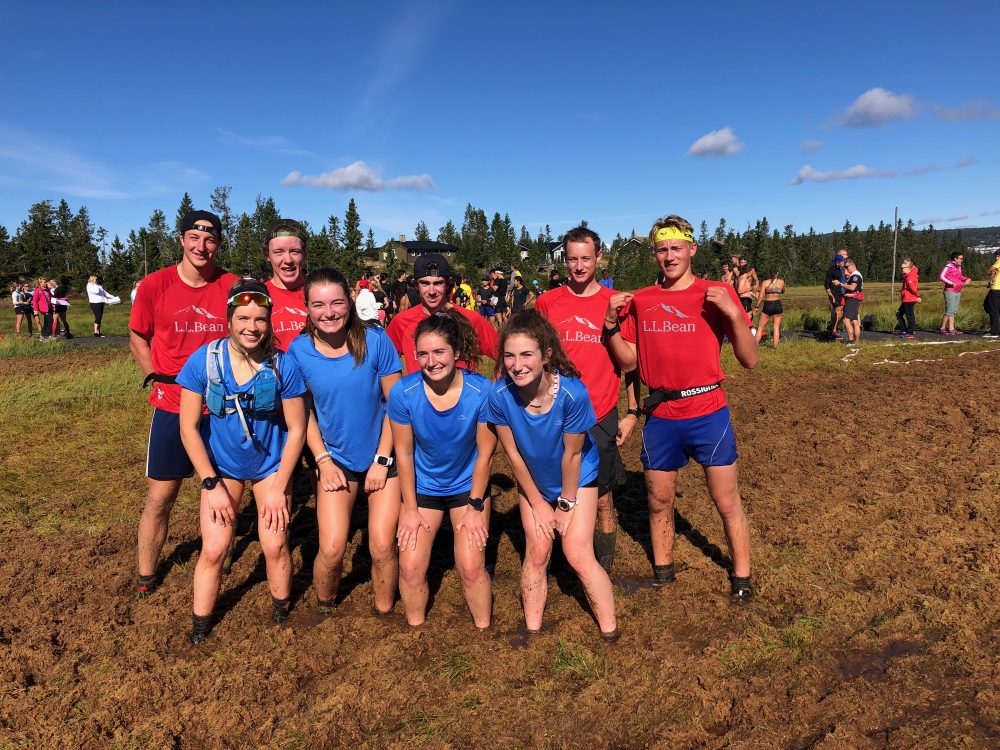
    Americans during a muddy training session at the 2018 International Junior Camp earlier this month in Sjusjøen, Norway. (Front row, l to r) Abby Jarzin, Mae Chalmers, Sophie Shomento, Molly Gellert, and Noel Keeffe. (Back row, l to r) Ben Ogden, Wyatt Gebhart, Ty Donaldson, Gus Schumacher. (Photo: Maria Stuber)
  • Alaska REG Recap: Into the Wild

    Alaska REG Recap: Into the Wild

    The Alaska REG participants near the start of the Hatcher Pass Road climb during their final session of the 2017 Alaska REG camp, held July 12-16 in Anchorage and Palmer. (Photo: Alasdair Tutt)

    The following Regional Elite Group (REG) camp recap was submitted by NSCF-FXC Interim Head Coach Alasdair Tutt. FasterSkier encourages coaches and athletes from any regional offseason camps (dryland or on-snow, in the U.S., Canada or abroad) to submit their own recaps and photos to info@fasterskier.com. The Western and Eastern REG camps took place last month in Utah and Vermont, respectively.

    ***

    On July 12, 16 athletes gathered at Hillside Ski Area in Anchorage for the 2017 Alaska REG camp, kicking off five days of testing and training. The first day was in Anchorage before heading north to Palmer for the remainder of the camp.

    The camp was led by U.S. Ski Team Development Coach Bryan Fish who was joined over the week by Ja Dorris and Stan Carrick of Alaska Nordic Racing (ANR), Eric Strabel and Sam Sterling of Alaska Pacific University (APU), Jan Buron of Alaska Winter Stars (AWS), and Alasdair Tutt of Nordic Ski Club of Fairbanks – Fairbanks XC (NSCF-FXC).

    Addison Gibson (ANR) on course during the agility time trial where she posted the fastest time of the day. (Photo: Bryan Fish)

    The first test was the infamous Gasline time-trial uphill run, a regular test for the Anchorage-based teams and previous REG camps. The course saw the athletes wind up beside an alpine run before appearing out onto the road overlooking the sea. The fastest times were set by Ti Donaldson and Kendall Kramer, both of the NSCF-FXC program. That afternoon, athletes were led through a strength workout by Bryan at the Alaska Pacific University gym.

    Day 2 brought the agility test at Colony Middle School in Palmer and with it some of the more exciting and competitive testing of the camp. The fastest combined times (best two of three) were set by Addison Gibson (ANR) and Donaldson.

    That afternoon, our grand plans for bounding drills were mostly foundered by a huge lightning storm that came in over Hatcher Pass that had us running back to the cabin to find a river where the lawn had once been, now occupied by a moose cow and two calves.

    It was game on for some head-to-head double pole sprints just below the Government Peak Recreation Area trails in Fishhook, Alaska. Athletes raced in a king’s court format both up and downhill. (Photo: Alasdair Tutt)

    On the third day, we had much better luck with our weather and a double-pole time trial was on the menu as our final test of the camp. Over a 970-meter course on Mountain Trails Road, the athletes were sent to chase down their best performances leading to three athletes being separated by only one second each. The best times were again set by Kramer and Donaldson of Fairbanks. That afternoon we braved the growing afternoon traffic with a rollerski up Hatcher Pass Road with some technique work at key points along the road.

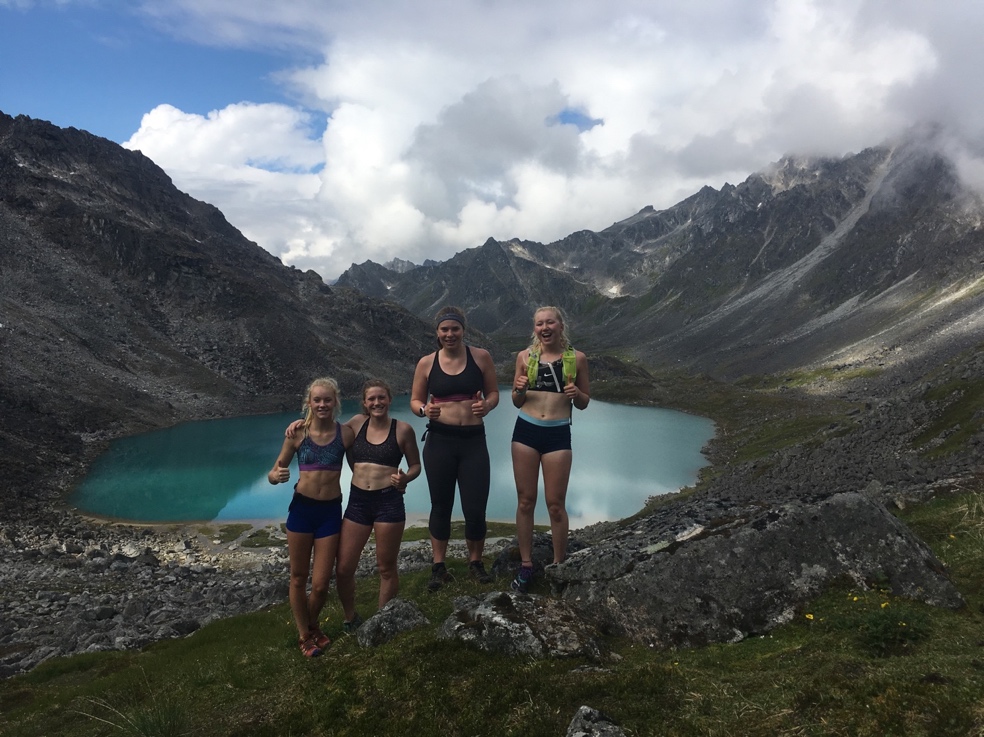
    Some highlights of the remainder of the camp were: an over-distance workout on the Reed Lakes Trail, where athletes were fortunate enough to avoid several brown bears in the vicinity who were harassing hikers (or being harassed), a critical viewing of the new Spiderman movie in which we decided Spiderman exhibited a great example of how the Central Governor Theory could be applied in a superhero scenario, and a final day classic rollerski up the Hatcher Pass Road.

    Four REG skiers at Upper Reed Lake in the Hatcher Pass area during an over-distance workout on the second-to-last day of the 2017 Alaska REG camp earlier this month. (Photo: Alasdair Tutt)
  • Besh Cup Series Wraps up in Fairbanks as Team Alaska is Named

    Besh Cup Series Wraps up in Fairbanks as Team Alaska is Named

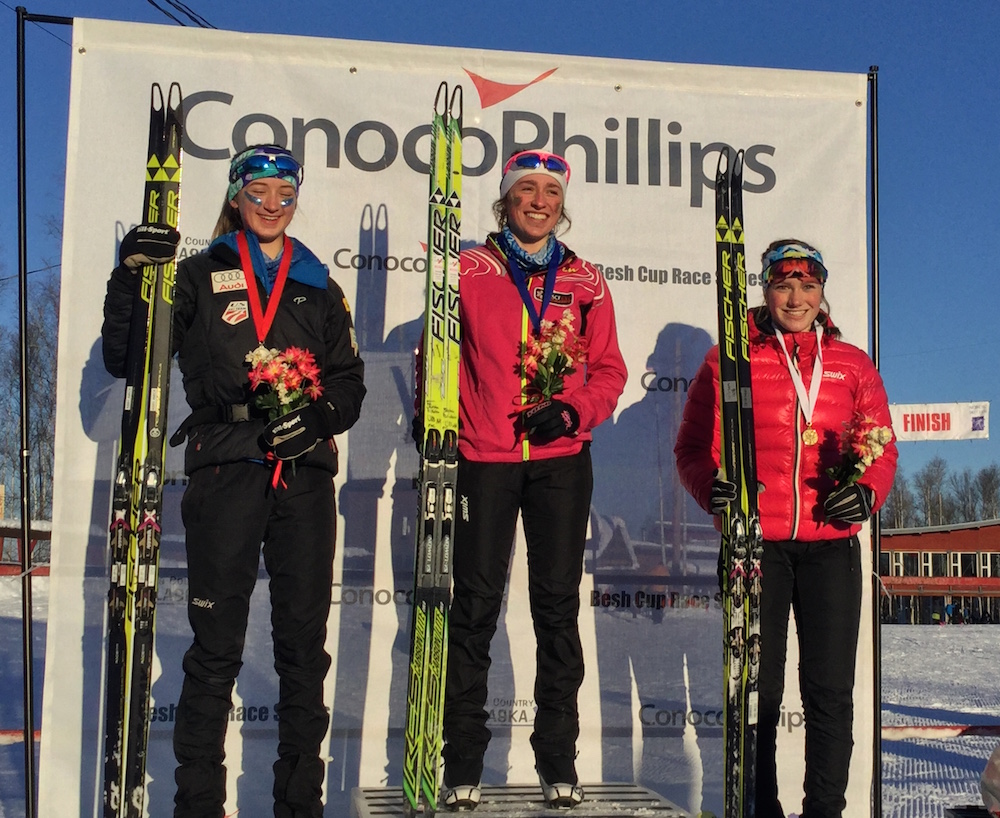
    Jenna DiFolco (c) of FXC, Abby Amick of APU (l), and Addison Gibson of ANR (r) on the podium for the U18 girls division of the Besh Cup 5 k skate race in Fairbanks, Alaska, Feb. 4, 2017. (Photo: Gavin Kentch)
    Jenna DiFolco (c) of FXC, Abby Amick of APU (l), and Addison Gibson of ANR (r) on the podium for the U18 girls division of the Besh Cup 5 k skate race in Fairbanks, Alaska, Feb. 4, 2017. 

    FAIRBANKS, Alaska — Alaska Airlines operates roughly 10 flights a day between Anchorage and Fairbanks. Last Friday morning many of those flights were packed with skiers, and ski bags piled up at baggage claim in Fairbanks, as Anchorage skiers streamed north for the final weekend of Besh Cup racing to select Alaska’s representatives to next month’s Junior Nationals in Lake Placid, N.Y. Two days later many of those same skiers returned south with plans to fly all the way to Lake Placid, where Team Alaska will have roughly equal representation from the state’s two largest cities.

    The 2016/2017 Besh Cup series concluded with a pair of distance races at Birch Hill ski area: freestyle interval start on Saturday, classic mass start on Sunday. The weather for both days was Fairbanks at its mid-winter best, clear and sunny and relatively warm. Cold powder and hard glide waxes were de rigueur.

    (The emphasis here is on relatively, as national FasterSkier readers might find Saturday’s race-time temperature of 10 degrees Fahrenheit, or Sunday’s reading of 2 degrees, objectively not all that warm. But it was -16 degrees at the airport on Sunday – Birch Hill’s elevated location on a hill above town often keeps it significantly warmer than the low-lying areas of central Fairbanks where official temperature readings are taken – and it is forecast to be -35 degrees in Fairbanks by later this week. So, relatively warm.)

    The first race on Saturday was the boys 10-kilometer freestyle individual start for racers in the U18 division and older, 45 starters in all. The overall podium on Saturday was U18 skier Ti Donaldson of the Nordic Ski Club Fairbanks racing team (FXC), Senior skier Cody Priest of Alaska Nordic Racing (ANR), and U18 skier Josiah Alverts (ANR).

    Among U20 men, FXC skier Benjamin Koenig was first, leading his teammate Logan Mowry in second and Dax Cvancara of ANR in third.

    The U18 boys division, which saw two of the top-three overall finishers, had Donaldson in first, Alverts in second, and APU skier Tristan Wiese in third.

    U16 boys raced a 5 k skate individual start, covering one lap of the blue course that 10 k skiers completed twice. Eli Hermanson of Alaska Winter Stars (AWS) led the all-Anchorage-area podium in the 5 k, followed by George Cvancara of ANR and Zanden McMullen of APU.

    Finally, the U14 boys raced a 1 k skate ski-cross event, with jumps, gates, slaloms, and other technical challenges. The event is a crowd favorite that, race organizers wrote, “helps develop skiers’ abilities to ski in a ‘pack’ along with developing technical skills.” (It may also soon be coming to a race series near you! Here is an example from the 2016 Youth Olympic Games in Lillehammer.) In another Anchorage-area sweep, Aaron Maves of APU took the A-Final, followed by Rudy Schumacher of AWS and Konrad Renner from ANR.

    On the girls side, a field of 57 racers (U16 and older) contested a 5 k skate individual start. At the end of one lap around the blue course, APU skier Maggie York took the overall victory by 40 seconds over FXC skier Jenna DiFolco, with Kendall Kramer (FXC) another 14 seconds back.

    York also topped the U20 podium. She was followed there by Alyeska Daniels and Lupua Oba, both of FXC.

    DiFolco, second overall, was first among U18 girls. Second in this division was Abby Amick of APU, with ANR’s Addison Gibson third.

    U16 girls took third through fifth overall in the combined U16/U18/U20/Masters field for the 5 k (there were no Senior skiers in the race). Locals Kendall Kramer and Kaya Ratzlaff of FXC led this division, with Annika Hanestad (ANR) third.

    U14 girls also raced a 1 k ski cross. First here was Quincy Donley of AWS, continuing her winning ways from the Anchorage and Soldotna Besh Cup weekends. She was followed across the finish line of the A-Final by Marit Flora of APU and Katey Houser of ANR.

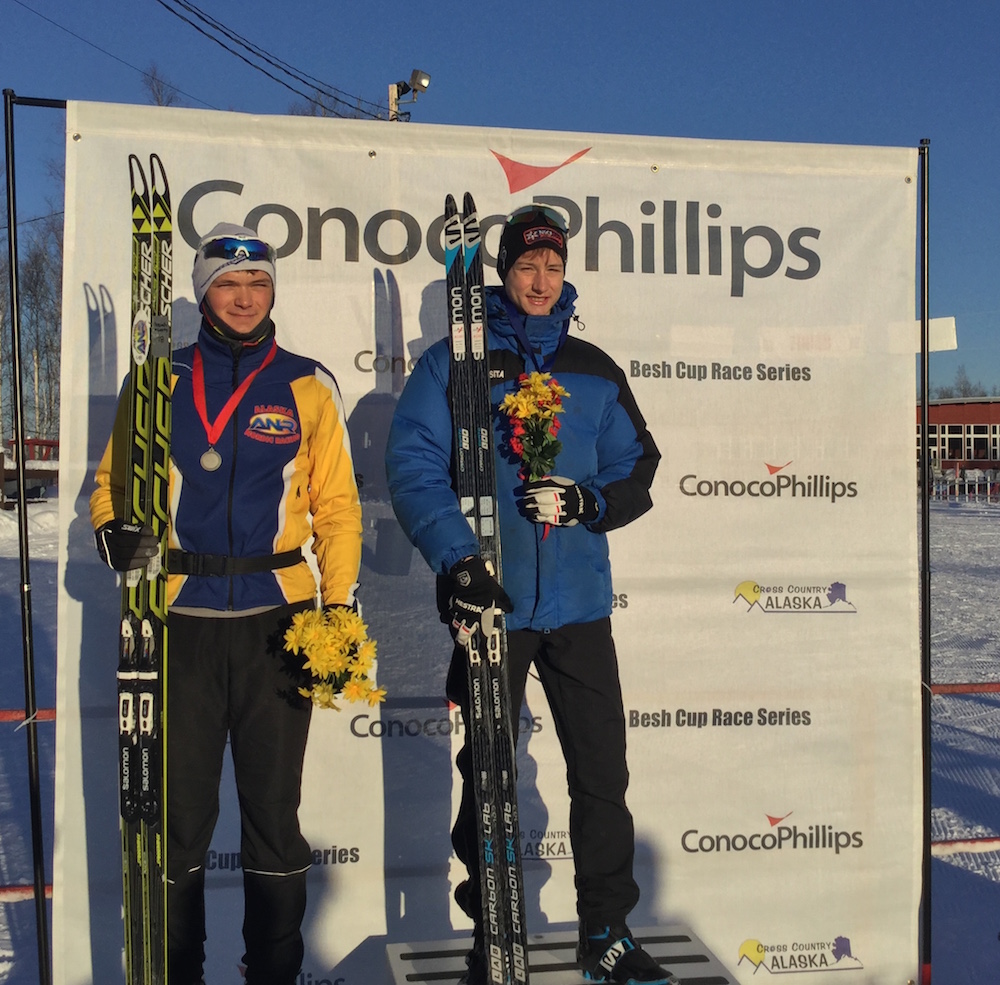
    Ti Donaldson of FXC (r) and Josiah Alverts of ANR (l) on the podium for the U18 boys division of the Besh Cup 10 k skate race in Fairbanks, Alaska, Feb. 4, 2017. (Photo: Gavin Kentch)
    Ti Donaldson of FXC (r) and Josiah Alverts of ANR (l) on the podium for the U18 boys division of the Besh Cup 10 k skate race in Fairbanks, Alaska, Feb. 4, 2017. 

    Saturday’s overall winner for the boys race, U18 skier Ti Donaldson, was racing on home turf. “I’ve had a few wins [in the Besh Cup series] in the past,” Donaldson told FasterSkier in an in-person interview following the race. “Most of them have been in Fairbanks. I’m from here, so definitely a home-field advantage.”

    Donaldson came in expecting a “brutal” race, based on his knowledge of the course and his time previewing it. “But I knew it would be pretty fast conditions,” he continued – “it was nice and hard, and it wasn’t too cold. So I was pretty excited to see how it would go, and really just wanted to work the transitions and stay strong on the climbs, and crest over. So I stuck to that plan, and it worked out pretty well.”

    Donaldson was looking forward to 2017 Junior Nationals in March.

    “I’d be thrilled with a top-five finish,” Donaldson said of his goals for next month. “Two years ago, when I was racing the same kids, I placed fourth in a race, and so I’d like to repeat that result. That would be a good goal of mine.”

    Jenna DiFolco, the U18 girls winner and second-place overall skier, was also racing at home. She credited “my FXC coaches” for waxing her winning skis, and had hot cereal for breakfast, with raisins and dried cranberries, at home before heading out to Birch Hill.

    The race was “really fun,” DiFolco recounted in an in-person interview. “Warming up, I didn’t feel so good, I was feeling kind of tired, maybe I’d overdone it this week. And then I expected this course to be really hard, because there are so many hills. And it was definitely, like, it was a rough course. But it went a lot better than I expected it to.”

    DiFolco described her strategy for racing a one-lap 5 k course with nearly constant climbing or descending: “The first part is mostly downhill, so I kind of just started out like a sprint almost, because I knew I’d be able to recover on the downhill. And the first couple of hills I was just trying to keep it light, keep it relaxed, and then really start hammering up South Tower [the high point of the course], because I got a big break after that. And then the last two hills are basically just hard, really hard.”

    Looking ahead to Lake Placid, DiFolco said that she was “hoping to get a couple top-10 finishes.” She added, “A big dream, it’d be a big stretch, but I’m hoping to get, like, a podium would be really, really cool. But top 15, top 10 would be awesome.”

    Sunday saw classic mass starts instead of freestyle individual starts, and temperatures around 10 degrees colder, but otherwise it was more of the same. Seven of eight age-group winners from Saturday picked up a second victory on Sunday, as a pair of distance races rewarded skiers who were consistent in both techniques. (The first two weekends had featured one sprint and one distance race apiece, leading to greater variability in the podium finishers.)

    Sunday’s classic race also rewarded skiers who were good at traditional classic skiing, in light of the relatively slow snow and the impressive elevation change of a Birch Hill race course.

    The trails at Birch Hill are built on the side of, well, a hill (also, there are birch trees). The courses used for this weekend’s races were marked by an impressive Height Difference (the elevation change between the lowest and highest points on the course) of 89 meters within a 5-kilometer course. The World Cup skiathlon race that was contested in South Korea the same weekend, on the trails that will be used for the 2018 Winter Olympics in PyeongChang, featured height differences of only 58 and 41 meters on the two skiathlon courses.

    In fact, a height difference of 89 meters is a greater elevation spread than was present on most of the traditional World Cup courses this season, including in Davos (84m), Lillehammer (74m), Falun (69m), and Ulricehamn (57m). That said, some of those courses had more average climb per kilometer than the Birch Hill 5 k course. But only some of them. This may help explain why the winning time for a 10 k skate on Saturday was 29:22 for the men, and 16:15 for 5 k for the women, in a race with some of the top junior skiers in the country. (Winning times for Sunday’s 10 k classic races were 32:17 and 37:53.)

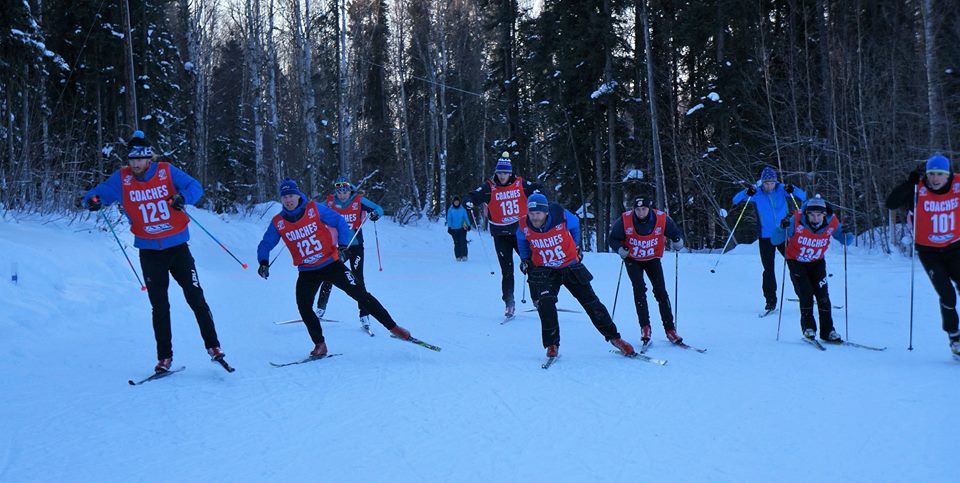
    Coaches compete in the final ski-cross heat of the day, the coaches' race, on Feb. 4 in Fairbanks, Alaska. Racers include Galen Johnston (129), Eric Strabel (125), Anson Moxness (126), and Pete Leonard (101). (Courtesy photo)
    Coaches compete in the final ski-cross heat of the day, the coaches’ race, on Feb. 4 in Fairbanks, Alaska. Racers include Galen Johnston (129), Eric Strabel (125), Anson Moxness (126), and Pete Leonard (101). (Courtesy photo)

    APU Devo and Master Coach Galen Johnston shared his thoughts on the effects of such a course profile after spending the weekend watching his athletes race up and down these hills. “One of the best parts of the weekend was to see how the combination of slow snow and lots of strideable sustained climbing put the focus of the [classic] races on striding and fitness rather than simply double pole strength,” Johnston wrote to FasterSkier on Monday.

    “Courses designed like this can keep striding a viable, and even necessary part of classic skiing,” Johnston continued by email. “Birch Hill has some of the most progressive course designs that I’ve seen and it’s paying off. Skiers ski differently than they did even 10 years ago, and it’s really neat to see a course that can accommodate and challenge that change in style without turning things into an unskiable death march. Estle is keeping people very honest, but still allowing for ample fun,” Johnston concluded in reference to longtime Fairbanks race director and ski-course designer (and former U.S. Ski Team coach) John Estle.

    On Sunday the best strider was DiFolco, who took first place in the 10 k classic mass start race by 19 seconds over Saturday’s winner York. Third overall was ANR skier Heidi Booher (ANR), another 23 seconds back.

    York was again first in the U20 women division. The rest of the podium was also unchanged from Saturday, with Daniels in second and Oba in third.

    DiFolco was again first among U18 girls. Second on Sunday was Booher, with Emma Nelson of ANR third.

    There was a substantial drop-off in distance from U18 girls to U16 girls, with the latter group racing not 10 k but a 3 k classic mass start. First after just under 10 chaotic minutes was Kramer again, edging out her FXC teammate Ratzlaff by 0.7 seconds. Tjarn Bross rounded out the all-FXC podium in third.

    U14 girls raced the same 3 k course as the U16 girls. And after 11 to 12 minutes of racing, it was precisely the same U14 girls podium as on Saturday: Donley, Flora, and Houser.

    On the boys side, U18/U20/Senior/Masters skiers raced a 10 k classic mass start on the same course as the girls. First overall was Lukash Platil (officially unaffiliated, but listed on the University of Alaska Fairbanks (UAF) ski team roster), followed by Donaldson of FXC and Wiese of APU.

    Platil was also first in the Senior men’s division. He was followed there by Kenny Brewer (now unaffiliated, formerly of UAF) and Matt Muffoletto (The Other Guys).

    Among the U20 men, Koenig picked up his second first place of the weekend, and Mowry his second second place. Hamish Wolfe (APU) was third.

    Donaldson and Wiese led the U18 boys. They were followed by Alverts, as the age group podium remained largely unchanged from Saturday.

    The U16 boys raced a 3 k classic mass start. This was the only age group to see a new winner on Sunday, as Cvancara moved up from second the day before to nudge Hermanson down a step on the podium. Everett Cason of APU was third.

    And the U14 boys (also 3 k classic) were again an all-Anchorage affair: Maves once again in first, Rowan Morse (APU) in second, and Schumacher in third.

    Later Sunday afternoon a crowd gathered in the Birch Hill Recreation Center, ignoring Super Bowl LI then in progress, for the naming of Team Alaska for this year’s Junior Nationals (JNs).

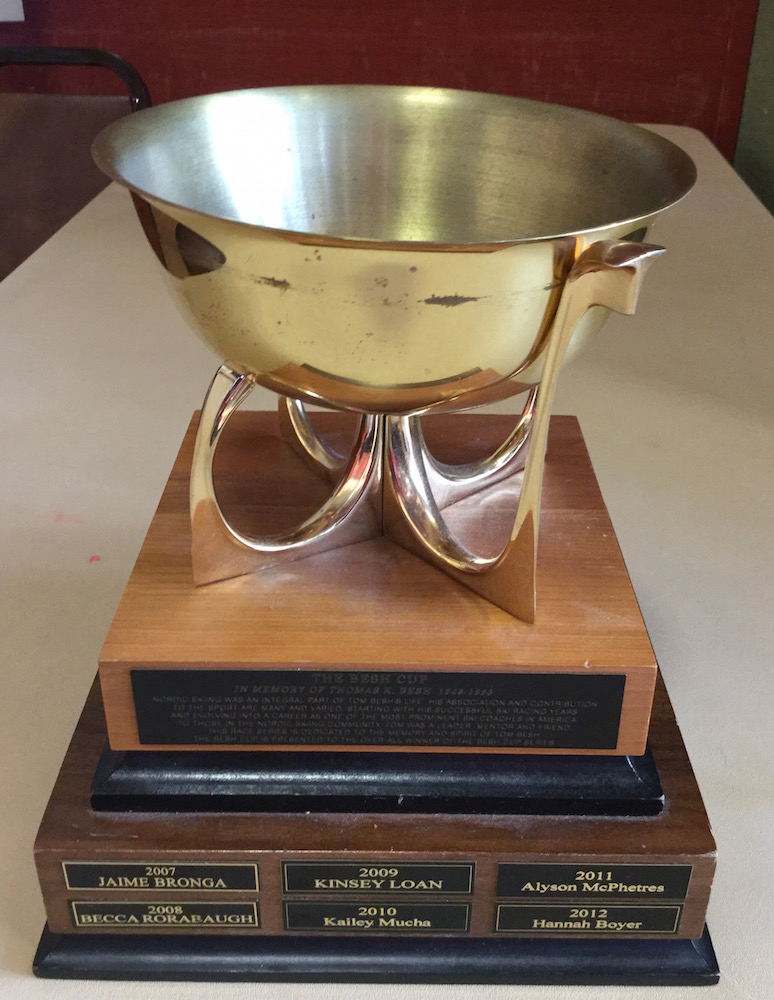
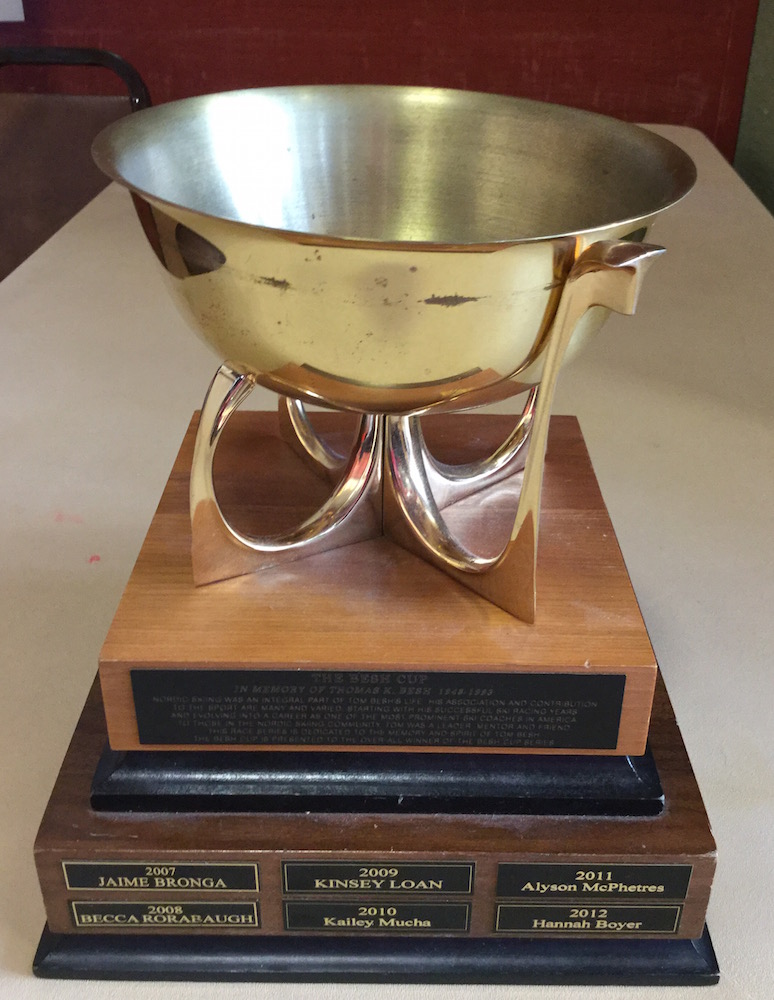
    The Besh Cup Trophy, photographed in Fairbanks, Alaska, in February 2017. (Photo: Gavin Kentch)
    The Besh Cup Trophy, photographed in Fairbanks, Alaska, in February 2017. 

    Cross Country Alaska also awarded the Besh Cup Trophy, given to the U18 or U20 skier with the greatest number of JN qualifying points across all six races combined. This year’s winners were Josiah Alverts for the boys and Jenna DiFolco for the girls. Their names will be added to a trophy, Stanley Cup-style, that includes on its plinth recognizable names from American skiing such as David Norris, Becca Rorabaugh, Reese Hanneman, Andy Liebner, Zach Hall, Eric Strabel, Kate Pearson, and Rob Whitney.

    While winning the Besh Cup Trophy is undeniably prestigious, it also necessarily rewards the best skier who was in Alaska all winter for the races, as opposed to competing Outside or internationally. For example, among U18/U20 girls, you may have heard that the University of Alaska Anchorage’s Hailey Swirbul was racing in Soldier Hollow, while Molly Gellert was on the Scandinavian Cup trip in Norway.

    DiFolco graciously acknowledged as much, telling FasterSkier on Sunday soon after receiving the trophy, “I think some of the fastest skiers are not here, because they pre-qualified [for JNs] and they went on big trips.” But DiFolco still skied the races and earned the results, including two firsts and two seconds in the final four races of the series.

    “It’s pretty cool,” DiFolco said of the season-long honor. “I never would have really expected this to happen a year ago. … I’m pretty proud of it. I’m happy with it.”

    Shortly after the awards ceremony ended the migration began to repeat itself in reverse, as out-of-town skiers loaded up cars in the Birch Hill parking lot for the 7-hour drive south to Anchorage or paraded ski bags through the Fairbanks airport. The flight home for Anchorage skiers was marked by ski hats, team jackets, and quiet chatter, as athletes talked about next month’s trip to the East Coast and parents fretted about missed school days and makeup work.

    Junior Nationals begin in Lake Placid in early March. The first race is a 5/10 k freestyle individual start on March 6.

    Results: skate interval start | classic mass start | overall points lists

    ***

    FasterSkier is seeking contributions (written, photography or videography) from regional race circuits across North America. Please email info@fasterskier.com if interested.

  • Skiers Battle Warming Temps, Melting River Ice in Fairbanks’ Sonot Kkaazoot

    Skiers Battle Warming Temps, Melting River Ice in Fairbanks’ Sonot Kkaazoot

    FAIRBANKS, Alaska – As Mike Campbell famously said in The Sun Also Rises, he went bankrupt two ways: “Gradually and then suddenly.” Alaskan breakup – the season known as “spring” in other parts of the world – proceeds much the same way.

    A field of nearly 300 skiers experienced a little of both in the Sonot Kkaazoot family of races, held last Saturday, March 26, in Fairbanks, Alaska. At the end of the day, Fairbanks skier Rebecca Konieczny and Anchorage skier Seiji Takagi came away victorious in the flagship 50-kilometer skate races. But the real victory may have been that the races were held at all.

    Sonot kkaazoot comes from the Athabaskan (indigenous language group) words for “springtime” and “to slide your feet across the snow.” The race with this name has been held in Fairbanks on the last weekend in March every year since 1988. Reflecting the cold winter temperatures of Interior Alaska, as well as Fairbanks’s location at 65° N latitude, the race has never been canceled despite this late date (although the course has occasionally been modified).

    Traditionally, the race starts on the Chena River in the heart of downtown Fairbanks, travels 10 k east along the river, proceeds inland to Birch Hill Recreation Area, spends 30 k covering most of the trails in the renowned trail system, and then returns to the river to finish 10 k west in central Fairbanks. The 2016 race covered this full course. Barely.

    A field of 106 racers started the combined 40 k and 50 k races at 10 a.m. The first water hazard came approximately 300 meters into the race, as the field had to negotiate overflow several inches deep (the video shows the 20 k start). Once past the water crossing, a lead pack of a dozen racers quickly formed, including five skiers from the University of Alaska Fairbanks (UAF), five skiers from Alaska Pacific University (APU), and two junior skiers from Fairbanks’s West Valley High School.

    Takagi, a sophomore skier for UAF, set an honest pace from the start.

    “I know a lot of these guys will be mad at me for doing that but I kind of like doing that in mass starts, going out a little fast and then kind of settling,” Takagi told the Fairbanks Daily News-Miner in an in-person interview after the race.

    Takagi led for much of the initial 10 k down the river, occasionally trading off the lead with other skiers. Despite his desire to push the pace, the lead pack remained intact 10 kilometers and approximately 25 minutes into the race, as all 12 skiers who had made the initial break continued to ski in a pack.

    Shortly after leaving the river, the race course proceeds to the base of the Ft. Wainwright downhill ski area, then takes a series of switchbacks to the top of the alpine hill.

    Takagi put in a surge immediately upon reaching the base of the hill.

    “I just worked on trying to open that gap after that and maintaining it,” Takagi told News-Miner. Although his energy flagged considerably over the remaining 39 kilometers – “I had about less than 10 percent left, negative 10 percent left” by the finish, Takagi later said – he skied relatively unchallenged to the end. He would finish first by over two minutes in 2:20:30.2, taking the victory in his first time racing the Sonot.

    Behind him, there was heated competition for the remaining podium spots.

    “Soon after we started up the downhill resort the pace increased,” wrote eventual third-place finisher Fischer Gangemi of Takagi’s move. “As we rounded the first corner [going uphill] I could see Seiji already making a gap.”

    APU skier Andre Lovett, who would eventually finish fourth, tried to stick with Takagi. Two chase packs formed behind the leaders. Gangemi eventually bridged the gap to Andre Lovett and the two 40 k racers.

    “By that point,” he wrote, “Seiji had a considerable lead but we could still see him.”

    The next time Gangemi saw Takagi, he was at least 2 ½ minutes back of the UAF skier. Gangemi skied alone for some time, until he was eventually caught by UAF skier Nick Lovett (no relation to Andre).

    “We skied together [through Birch Hill, back to the river, and] all the way until the last 1 kilometer mark,” Gangemi wrote, “trading drafts regularly in the very hard push down the river and around the overflow. Both of us tried to make futile pushes a couple times. Finally Nick had much more gas in the last kilometer and slowly gapped me to the finish.”

    Nick Lovett finished second in 2:22:34.5, 2:04 back from Takagi. Gangemi was third in 2:22:45.0, roughly ten seconds behind. Andre Lovett came in fourth, nearly three minutes later.

    The top nine men’s finishers were split between UAF and APU, with five members of the UAF ski team and four from the APU university and masters teams. (The APU Elite Team was busy contesting its own slushy 50 k in Craftsbury.)

    (Story continues below)

    While Takagi skied away early for the solo win in the men’s race, the women’s race featured heated competition throughout. In a battle between UAF past and present, UAF past took the narrow victory. After 50 kilometers of head to head racing, Konieczny, a former Nanooks skier who now coaches for the Nordic Ski Club of Fairbanks, finished first in 2:42:00.7. Ann-Cathrin Uhl, a sophomore skier for the Nanooks from Mühlenbach, Germany, crossed the line less than six seconds back in 2:42:06.6. Third place went to Anchorage’s Sarah Freistone, who finished roughly eight minutes later in 2:50:07.4.

    Konieczny won the race for the third year in a row, but was thrilled to have some competition, and some company, this time. “I actually want to thank Ann Uhl,” Konieczny told the News-Miner. “Usually I follow the men for 20 k-ish, not even, and then I have to ski the whole race by myself. So it was really fun to ski with her and go back and forth.”

    Konieczny added, “I was excited to ski with a couple of the UAF ladies. Thought it would make it a little more fun for me.”

    Although Freistone finished some distance off the podium, she hardly had to ski by herself.

    “Throughout the race I was skiing in small packs of people,” she wrote in an email. “Whenever I felt the pack I was with was slowing down or if I thought I could go faster, I tried to make a move to the next group of people.”

    Freistone also had a personal source of motivation: “I was also trying really hard to catch my mom before the finish,” she wrote. “That kept me motivated when the skiing got rough and slow. She competed in the 40k and finished about a minute in front of me.”

    In the day’s other races, Maria Bray won the 40 k for the women in 2:21:21.7, with Jenna DiFolco second and Alyeska Daniels third. Local high school skiers Ti Donaldson and Benjamin Koenig were first and second in the men’s 40 k, with Donaldson setting a winning time of 1:52:29.3. Pete Leonard was third.

    Kaya Ratzlaff was fastest in the women’s 20 k, with Emma Jerome second and Anna Rix third. Mike Kramer, Jonathan Burrell and Jacob Moos were the top three in the men’s 20 k.

    Lynne Petersen was the winner, and only entrant, in the women’s 50 k classic race. Daniel Serventi won the men’s 50 k classic in an impressive 2:49:48.1 solo effort, with Bill Husby and Owen Hanley second and third.

    All skiers in all races had to contend with conditions that may charitably be described as variable. Fairbanks began experiencing a dramatic springtime freeze–thaw cycle somewhat earlier than normal this March. Temperatures on the Birch Hill section of the course were never lower than 36 degrees Fahrenheit during race grooming the night before, and were still as high as 52 degrees at 2 a.m., eight hours before the 10 a.m. start. They then fell to slightly below freezing by 6 a.m.

    Between the springtime conditions, the initial 10 k on the river, the groomed trails at Birch Hill, and the final 10 k back on the river, plus temperatures that climbed at least 15 degrees during the race, racers encountered a range of conditions. There was standing water, flowing water, sheet ice, bulletproof crust, melting snow, dirty snow, perfect midwinter corduroy, and what appeared to be midwinter corduroy but was in fact soft and painfully slow groomed snow. Then came the final 10 k on the river, when the sun came out, the morning’s ice broke down into slush, and even the top finishers faced a grinding trip to the end.

    Strategies for dealing with the range of conditions varied. One racer was heard muttering at the finish that he literally would have saved time had he skied with a Structurite tool in his water belt the entire way, then stopped before returning to the river to quickly hand-structure his skis.

    For her part, women’s winner Konieczny told the News-Miner, “My skis were fast when the conditions were right for it but then up at Birch Hill, especially, it got really really soft. It made it actually more interesting too because you had to be more tactical and find spots to pass.”

    Gangemi, who was on eponymous RCS Plus skis, was slightly less sanguine. He reported that he waxed with Holmenkol Betamix Red, plus “whatever structure tool Mike Hajdukovich from Trax [Outdoor Center] made available.” He added, “I think I should have used a graphite wax as well to improve the durability because it seemed they became slower as the race progressed not just because of variable conditions and fatigue.”

    The challenging conditions were reflected in the finishing times. Konieczny was more than 18 minutes off her course-record time of 2:23:40 from 2015. Takagi, similarly, was over eight minutes slower than last year, when APU skier Jack Novak won in 2:12:10.

    Three-time winner Konieczny was not the only frequent contender. Second-place skier Uhl had finished only one second off the podium in the Oosik Classic 50 k the weekend before. Third-place finisher Freistone was also third in the 2015 Sonot Kkaazoot, first in the Kachemak Nordic Ski Marathon earlier this month, and first in this winter’s season-long Anchorage Cup series. Among the men, Nick Lovett was third and Takagi fifth in last weekend’s Oosik, while Gangemi won the Kachemak Marathon.

    But the real story of the 2016 Sonot Kkaazoot was the weather. Despite race organizers’ assiduous attention to ice conditions in the days leading up to the race, including drilling at several sites to check for ice thickness near the start and delaying a final decision on whether or not to ski on the river until the morning of the race, everyone was surprised when a small portion of the Chena River experienced breakup during the race.

    (Story continues below)

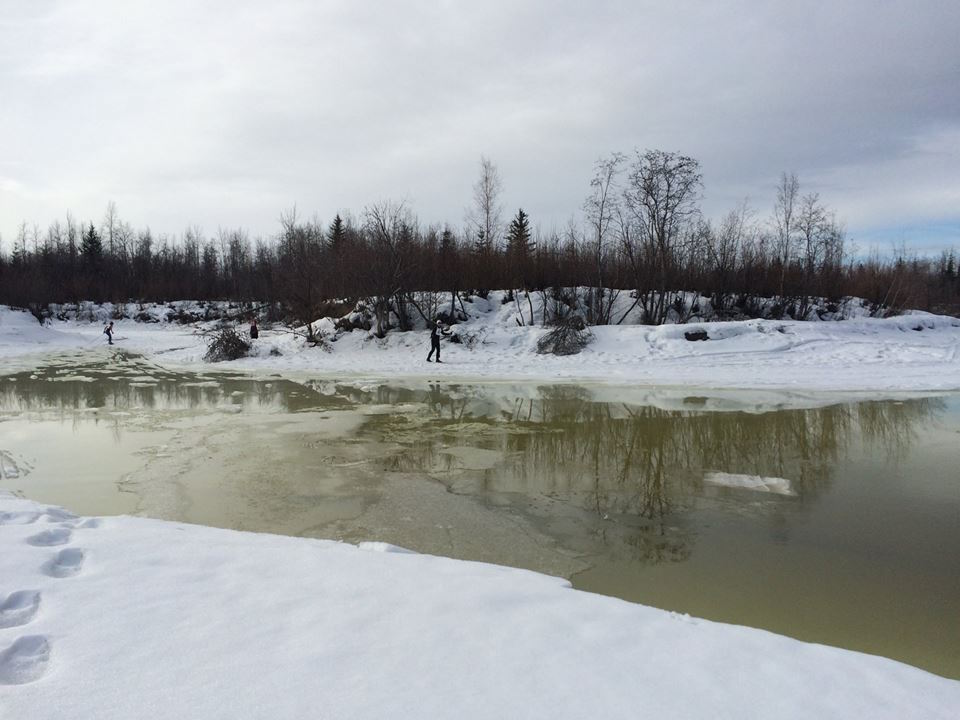
    Overflow on the surface of the Chena River, following a partial breakup of the Chena River in Fairbanks, Alaska, on March 26, 2016.  The groomed trail originally went through the foreground of this picture.  Two skiers can be seen in the background safely detouring around the overflow on the established detour route. (Photo: Stella Wisner)
    Overflow on the surface of the Chena River, following a partial breakup of the Chena River in Fairbanks, Alaska, on March 26, 2016. The groomed trail originally went through the foreground of this picture. Two skiers can be seen in the background safely detouring around the overflow on the established detour route.
    (Photo: Stella Wisner)

    A relatively small piece of ice went out at some point while the lead 50 k skiers were traversing Birch Hill. The Chena River promptly began flowing over the ice for a stretch of several hundred meters. While skiers had blithely skied down the groomed river trail earlier in the race, on their return they were met with a lengthy stretch of overflow.

    No one was injured. A detour route was quickly established, requiring returning skiers to head inland for approximately 100 meters, traverse around the farthest reaches of the overflow, step up on to some shore-fast river ice along the bank, duck under some alders, and return to the established race course on the far side of the overflow. (Two skiers can be seen on the detour route in the above picture.)

    In a blog post on the race website, race organizers wrote, “Huge thanks to David Frey, nordic ski coach at Tanana Middle School who alerted Sonot Kkaazoot officials of the major disruption of the Sonot Kkaazoot trail on the river and provided standby guides around the hazardous area until Sonot volunteers could set up an alternative course.” (Organizers declined further comment on the breakup incident.)

    As the race director told skiers in his pre-race remarks, imploring them to stay on the set course, “If you go off the course, you may die.” It appears he may have been correct.

    Or, as third-place finisher Sarah Freistone observed in an email, “I was really happy with how my race went this year despite the tough conditions.” She added, “I have never really worried about falling into a river in a ski race before, but I guess there’s a first for everything.”

    Complete results

    The reporter would like to thank local skier Max Kaufman for his sterling hospitality all weekend long, as well as for taking all the racer pictures in this story.

    About the Author: Gavin Kentch lives in Anchorage.  He skis with the Alaska Pacific University Masters team, plays with his two adorable daughters, and occasionally works as a solo attorney.  He was probably on snow this year before you were.

  • Junior Nationals: Day 4 Classic Relay Photos and Overall Recap Video

    Junior Nationals: Day 4 Classic Relay Photos and Overall Recap Video

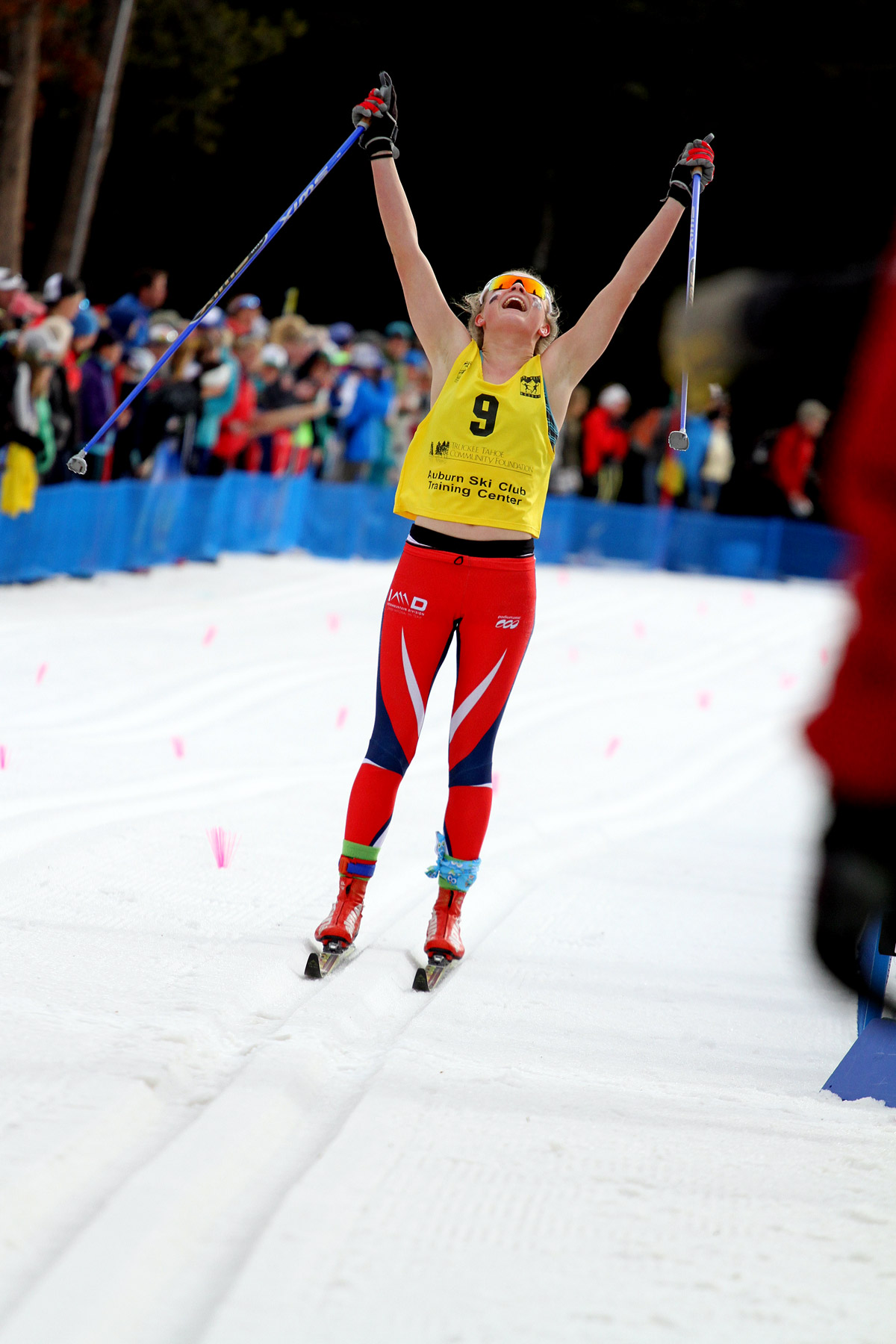
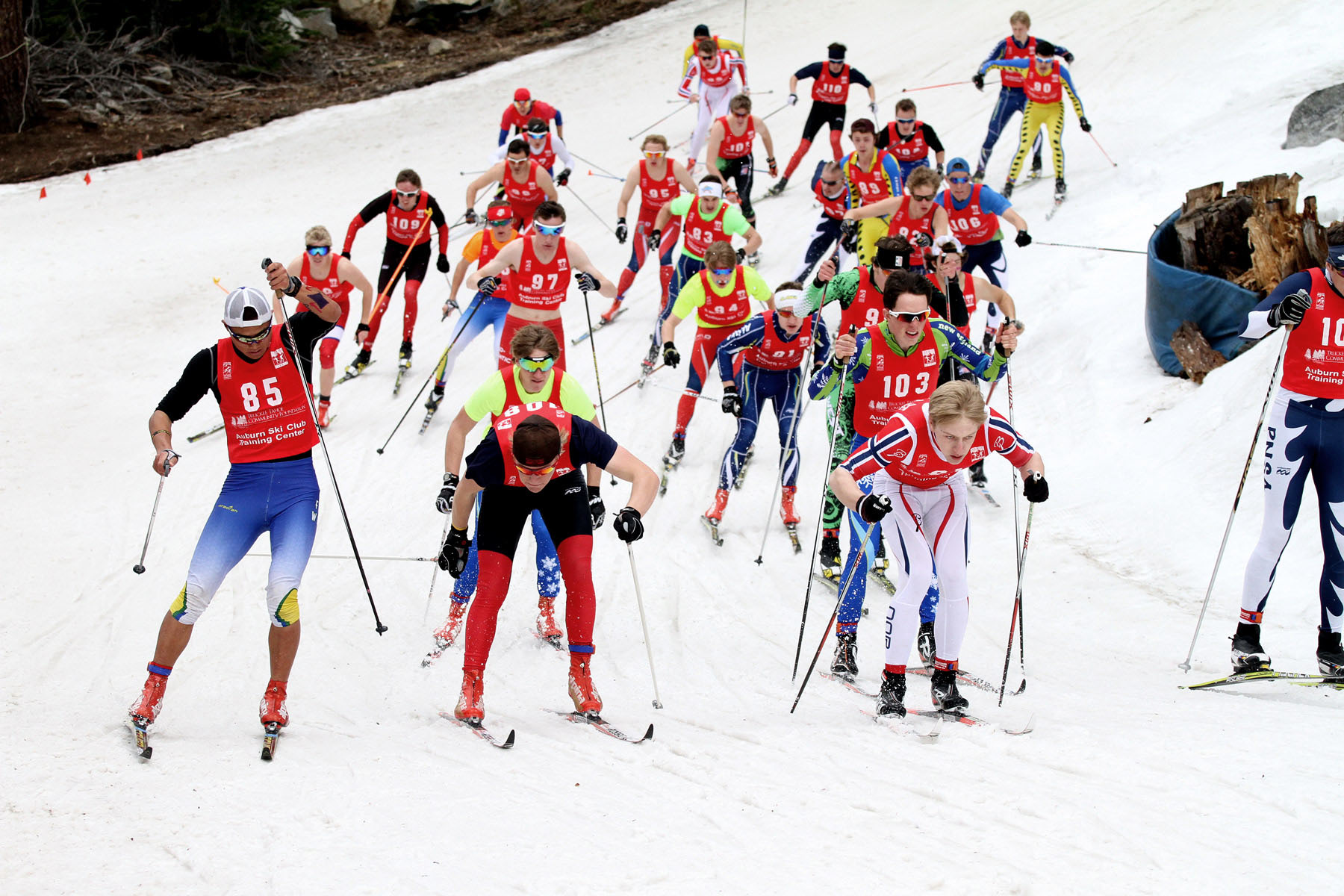
    One of the men's 3 x 2.5 k relays on the last day of 2015 U.S. Junior Nationals at Auburn Ski Club in Soda Springs, Calif. (Photo: Mark Nadell/MacBeth Graphics)
    The U18 men’s 3 x 2.5 k classic relay on the last day of 2015 U.S. Junior Nationals at Auburn Ski Club in Soda Springs, Calif. (Photo: Mark Nadell/MacBeth Graphics) All profits from photo sales will be donated to the National Nordic Foundation.

    The 2015 U.S. Junior Nationals came to a close Saturday with the 3 x 2.5-kilometer classic relays at Auburn Ski Club in Soda Springs, Calif., where New England and Midwest both tallied two relay wins. At the end of the weeklong series of races, New England took the overall team title, the Alaska Cup, by 167 points over Midwest. Intermountain placed third overall, 43 points out of second.

    Complete results

    For more videos, check out the 2015 XC Junior Nationals YouTube channel. Trouble viewing video above? Click here.

    Photos from Saturday’s relays and a complete gallery, courtesy of Mark/Nadell/MacBeth Graphics. All profits from photo sales will be donated to the National Nordic Foundation (NNF).

    On the podium:

    U16 women

    1. Intermountain (Sydney Palmer-Leger, Anna Gibson, Brooke Dunnagan) 24:55.4
    2. Midwest (Erin Moening, Abigail Jarzin, Anna Johnson) +13.7
    3. New England (Gabrielle Vandendries, Kirsten Miller, Mae Chalmers) +15.3

    U16 men

    1. Alaska (Luke Jager, Ti Donaldson, Canyon Tobin) 21:39.6
    2. New England (Adam Glueck, Russell Boswell, Adam Witkowski) +5.3
    3. Rocky Mountain (Noel Keeffe, Wyatt Gebhardt, Nolan Herzog) +24.7

    U18 women

    1. New England (Julia Kern, Leah Brams, Katharine Ogden) 24:44.4
    2. Rocky Mountain (Hailey Swirbul, Taeler McCrerey, Kathleen O’Connell) +1:22.6
    3. Midwest (Racquel Wohlk, Margie Freed, Nicole Schneider) +2:01.0

    U18 men

    1. Midwest (Mackinley Fitzpatrick, Leo Hipp, Zak Katterson) 23:04.2
    2. New England (Gavin McEwen, Koby Gordon, Daniel Streinz) +5
    3. New England (Lance McKenney, Kamran Husain, Henry Harmeyer) +16.5

    U20 women

    1. Midwest (Vivian Hett, Anna French, Caroline Brisbois) 25:59.1
    2. Alaska (Sarissa Lammers, Hannah Stevens, Taryn Hunt-Smith) +24.3
    3. Intermountain (Olivia Ekblad, Aja Starkey, Sophie McDonald) +35.4

    U20 men

    1. New England (Austin Huneck, Benjamin Hegman, Ian Moore) 22:21.3
    2. Intermountain (Sam Wood, Henry Gorman, Karsten Hokanson) +19.1
    3. New England (Parker McDonald, Blaine Ayotte, Nick Gardner) +54.2

    See alsoDay 1 skate sprints | Day 2 freestyle individual starts | Day 3 classic mass starts