From the FasterSkier archive — posts syndicated from athletes’ and coaches’ own blogs between 2004 and 2012, kept online as published. Current coverage is at fasterskier.com.
For the first time ever, an American will preside over international governance of a nordic sport. On Tuesday, the International Biathlon Union (IBU) announced that longtime U.S. Biathlon President and CEO Max Cobb has been named the IBU Secretary General. Cobb will finish up his second term on the IBU Executive Board and leave his post as at U.S. biathlon at the end of September, then begin his new role overseeing international competition, governance, and sport development this October.
The appointment of Cobb as IBU Secretary General marks the culmination of a long career in U.S. biathlon in which he has overseen the organization through stark growth in the sport, success on an international scale for U.S. biathletes, and through unique challenges like hosting the 2002 Salt Lake City Olympics, where Cobb served as the chief of competition.
On his new appointment, Cobb said in an email with FasterSkier that, “I am really honored to be selected for this position. The chance to serve the sport I love from a different position is really exciting. [Outgoing Secretary] Niklas Carlsson did a fantastic job and the IBU staff is well-structured and very capable.”
Cobb’s journey to overseeing biathlon is one marked by persistent and carefully thoughtful forward-thinking, along with an enduring connection to the nordic community in the United States. A New Englander through-and-through, Cobb competed at Dartmouth College while taking on leadership roles heading up the College’s Outing Club and Biathlon Club. It was the latter that translated into a career, accepting a job opportunity with the U.S. Biathlon Association in 1989. Founded in 1983, U.S. biathlon was still in its nascent, path-finding stages then, looking to build off the successes it had seen concurrently with U.S. skiing more broadly in the late 1970s and early 1980s. There were flashbulb glimpses that the U.S. could bring the popular discipline of biathlon to a new continent, a bronze in the women’s team relay event at the 1984 World Championships (Holly Beatie, Julie Newman, and Kari Swenson), and an individual silver for Josh Thompson in 1987 (20 k Individual). Without real infrastructure to develop the sport however, U.S. biathlon would have to reset towards the long-term goal of getting more talented athletes, in more places, into the sport before success would come again.
In 1992 Cobb took up that challenge as U.S. Biathlon’s Program Director, and since has been the steady hand guiding the sport between the punctuated successes that usually draw attention. First there was a gold medal at Junior World Championships in 1997 with Jay Hakkinen, then later the World Championship medals – first a silver with Tim Burke in 2013 (20 k Individual), then gold and silver with Lowell Bailey and Susan Dunklee, respectively, in 2017 (20 k Individual and 12.5 k Mass Start), and again a silver with Susan Dunklee in 2020 (7.5 k Sprint). In between, the development of training sites from Soldier Hollow (concurrent with the 2002 Salt Lake City Games) to Fort Kent, Maine (which, tucked away in the most rural corner of a rural state, improbably hosted a World Cup in 2004).
The U.S. Biathlon team and staff celebrate Lowell Bailey’s World Championship gold medal in Hochfilzen in 2017. (Photo: USBA/NordicFocus.com/Twitter)
Those highlights represent a consistent attitude and approach by biathletes across the United States put into sum by their consistent leader, as Cobb reflected, “The biggest take away is challenges can’t keep you from pursuing ambitious objectives. Collaboration, planning and determination to achieve a bold vision often overcomes more than we could ever imagine. Teamwork aligned around a common vision is powerful, but it takes time and constant tending. Today, Americans are regularly bringing home medals – something that seemed impossible three decades ago.”
Now tasked with scaling his approach to an international scale, Cobb sees a different set of challenges which stand in tandem, not separated, from the world’s geopolitics and concerns. “I think the most immediate challenge [this winter] will be the high cost of energy in Europe that will impact every part of international sport; from travel for the athletes to the energy needed to host major events,” said Cobb. His solution follows a pattern he’s already helped develop, with the IBU being on the forefront of sport sustainability – they were the first international winter sports governing body to meet the UN’s planning requirements to go carbon neutral by 2050 last year. “Our sport gives us a platform from which we can help influence millions to live lives that are climate friendly, we all have to act more sustainably in our daily lives and at our events.”
A 2016 photo of Max Cobb, the president and CEO of U.S. Biathlon and newly named IBU Secretary General. (Photo: Nordic Focus)
Cobb is also looking to prioritize confronting the challenge of resource disparity that is inhibiting parity in the sport – a persistent problem across the broader nordic disciplines. “[There’s a] big technology and training gap between the very biggest nations who have armies of ski tech and coaches and middle-sized teams with just a few hard-working staff. As this gap grows it could endanger the diverse set of nations that can win medals, [which] has been a hallmark of international biathlon for many decades.”
In confronting all of the challenges, Cobb said his hope is, “To serve the athletes well, both those in the sport today and those who need a chance to discover the wonderful challenge that [biathlon] is – two opposing disciplines with an unforgiving clock marking every second to the tenth.”
Lowell Bailey (USA) celebrates with Max Cobb after winning the gold in the 20 k indivudual at the 2017 IBU World Championships in Hochfilzen, Austria. (Photo:NordicFocus)
A team effort: Maxime Germain (bib 58) placed third in the World Junior’s Youth 7.5 k sprint. (Photo: Weymuller Photography)
A compelling aspect of international biathlon is the diversity of nations represented at the highest level, the International Biathlon Union World Cup. Last week in Pokljuka, 25 five teams from 25 different nations were represented in the 4 x 7.5 k mixed relay. It speaks to the broadening global appeal for the sport. All those nations are tasked with developing athletes. Not to say there will be 25 different approaches, but each team espouses it’s own values. The same can be said of U.S. Biathlon.
From the top-down, this crew speaks to fair and hard driving sport. Max Cobb, for example, US Biathlon’s CEO and President works behind the scenes at the IBU for clean competitions. Clare Egan, an athlete representative on the IBU Board speaks truth to power. Several athletes took a training hiatus this summer to join the Army National Guard. And behind the scenes, Danika Frisbie has focused on strategic programming and Tim Burke has jump-started a development program. Part of Burke’s responsibilities includes guiding US Biathlon’s Junior National Team.
Danika Frisbie of US Biathlon in Lenzerheide, Switzerland at the IBU 2020 Junior World Championships. (Photo: Weymuller Photography)
Tim Burke of US Biathlon in Lenzerheide, Switzerland at the IBU 2020 Junior World Championships. (Photo: Weymuller Photography)
With all this energy, not to mention the team has been splashed in the most stylie uniforms on the circuit, the U.S. Junior men had a collective proud day at the 2020 Lenzerheide, Switzerland Junior World Championships in the Youth 7.5-kilometer sprint.
Max Germain on his way to a third place in the World Junior’s Youth 7.5 k sprint. (Photo: Weymuller Photography)
Two U.S. skiers landed in the top-10, a third was top-25. Max Germain of Anchorage, Alaska was third overall, 11.3 seconds from first after shooting 1+0. Russia’s Aleksai Kovalev won in 19:53.0 while shooting clean.
Bjorn Westervelt of Craftsbury, Vermont during the Youth 7.5 k sprint at World Juniors in Lenzerheide, Switzerland. (Photo: Weymuller Photography)
Bjorn Westervelt of Craftsbury, Vermont placed ninth (+24.0; 1+0), and Sam Stertz of Grand Rapids, Minnesota finished in 21st (+1:05.8; 0+0). Timothy Cobb of Vermont, the fourth American in the race, placed 83rd (+4:22.6; 4+2) after a tough day on the range.
Sam Stertz during the Junior World’s Youth 7.5 k sprint. (Photo: Weymuller Photography)
It was a good day for those clad in the U.S. Lycra.
For many years the U.S. Biathlon Association (USBA) has invested in talent. Athletes who demonstrate ski-speed and a knack for shooting on the firing range receive what amounts to a cushioned sport-specific transition. In this case, Luke Brown (Crosscut Mountain Sports/USBA) and Zane Fields (USBA) are the latest cross-country athletes embraced by the USBA’s X-Team.
Zane Fields (8) racing at the 2017 NCAA Championships. Fields is now a member of U.S. Biathlon’s X-Team.
Brown, who is in his second year removed from Dartmouth, and Fields who is fresh off a four year stint at Colby College, both earned spots on the X-Team after a USBA development camp in June.
Five athletes were invited to the camp with two ultimately offered support to develop as biathletes under USBA’s guidance.
“We are seen as skiers who have shown promise skiing athletically but don’t have the rifle skills because we have not been exposed to them yet,” Fields said from his intermittent base in White River Junction, Vermont. “I guess it is a fast track to possibly the IBU Cup and World Cup because they know we have the fitness and we just need to train the shooting.”
The X-Team designation, in fact, comes with ample support for Fields and Brown. The team designation affords the two skiers a safe way to make a career switch. Former USBA athlete and current USBA Development Manager Tim Burke will assist with training plans. Each skier has been offered free room and board for a year at the Olympic Training Center (OTC) in Lake Placid and opportunities for free training camps. The heavy cost of a rifle, which can amount to four to six thousand dollars, has been softened by an optional lease to own program offered by the team.
“I am excited because it lets me try biathlon in a super safe way,” added Fields. “If I have a bad year it is OK because I did not put myself in a $10,000 dollar hole. I would be more stressed to perform if I were paying a whole lot.”
Fields will mix developing as a biathlete with racing select cross-country events this season. He plans on entering the U.S. Cross-Country Championships with a goal of making U23 Worlds.
“The way I see it, biathlon is acting for me as a pro-team would,” said Fields. “They are offering me great support, coaches, training trips. Even more so with biathlon, they are excited to have me still focus on skiing since we have limited biathlon racing opportunities in North America. I think there are two or three NorAms then US Nationals in March.”
Luke Brown (bib 1) chased by Zane Fileds (bib 2) during the 2019 Climb to the Castle rollerski race. (Photo: Kel Rose)
For his part, Brown will be based in Bozeman, Montana with intermittent but longer stays at the OTC. He will be jointly coached by Burke and Crosscut Mountain Sport’s Seth Hubbard and Crosscut’s assistant coach Nick Michaud. (Michaud is also a development coach for US Para Nordic.)
“I am training fully for biathlon with that as my focus with the goal to make IBU cups,” Brown said. “And if I do, that is awesome. It is also my first year of biathlon, so I am not necessarily expecting to. So if I do not make IBU Cups, I will do a mix of domestic biathlon races and SuperTour and other cross-country skiing races. I am leaving that door open but my focus is on biathlon.”
Brown explained he had been to a USBA talent ID camp prior to college. He had also spent a few summers learning how to shoot while a middle school skier. Brown’s older brother Jake is a member of USBA’s National A Team, and trains with the Craftsbury Green Racing Project.
“I have talked to Jake about it a lot and it has been super awesome to have biathlon to connect with him over and also learn from him,” said Brown. “It also gave me a greater understanding of what the transition was going to be like. I got a front row seat when he did it coming out of NMU and he lived at the OTC. It also, I think, prepared me a bit to know the amount of work that goes into transitioning into biathlon. It is not easy — it has taken him a couple of years of very hard work to get to where he is.”
Fields echoed the notion that although the two sports are linked through skate skiing, he understands the need to reset when considering how he paces his skiing while learning to center himself on the range.
“I simply thought I can ski fast, I’ll just make up the time hammering while skiing, and hammer in and out of the range,” said Fields. “As I have shot more and more over the last month or two, I am learning to understand how much I should slow down before the range so I can prepare myself to shoot. I am realizing that poor shooting is exponentially more of a penalty than if you are simply slower at skiing. It is worth killing 30 more seconds before the range to go slow and then hitting all your shots versus running in and blasting them off and hoping you hit.”
Both Brown and Fields are currently living and training in Utah and will contest the USBA Fall Festival and IBU Cup Trials which begin October 24, at Soldier Hollow.
Lowell Bailey (US Biathlon) leading France’s Martin Fourcade in the men’s 12.5 k pursuit at the 2017 IBU World Cup in PyeongChang, South Korea. Fourcade went on to win after starting third, and Bailey placed ninth after starting second. (Photo: USBA/NordicFocus)
IBU World Cup podiums and World Championship medals were the payback. Lowell Bailey, at thirty-seven years old, is a hybrid product of an American development system infused with that European biathlon know-how. He was recently announced as US Biathlon’s newest high performance director after Eisenbichler resigned effective March 31.
Bailey honed his cross-country skiing and biathlon as he grew up in Lake Placid, New York. Along with Tim Burke, the new USBA director for athlete development, the two forged a successful path as juniors and then as elite-level World Cup biathletes. Both won World Championship medals: silver for Burke in 2013, gold for Bailey in 2017.
“I spent two decades working as an athlete on the US Biathlon team and the last 12-ish years on the World Cup so I feel like I have a good feeling for what the top of the pyramid looks like,” Bailey said during an interview on March, 2. “But I have gotten a lot of perspective on that question of ‘how does a kid get involved in biathlon in our country?’”
With USBA’s unfulfilled goal of winning a first Olympic medal, Bailey’s race and recent administrative experience could create the lab in which the goal is realized. Although never having led an organization with tentacles as long as USBA’s, which span a massive continent when it comes to development, Bailey’s perspective on how to engage younger athletes in biathlon has been broadened in Bozeman, Montana.
“Roughly three years ago I started working with Crosscut Mountain Sports Center as a consultant helping to raise awareness of their nascent endeavor — last year I took over as executive director,” Bailey said.
During his work with Crosscut both as a consultant and the ED, Bailey was tasked with leading the visioning process for a Bozeman venue with world class facilities, IPC, IBU, and FIS homologated courses, and a paved roller ski loop. Bailey’s tenure with Crosscut overlapped with two active years as an IBU athlete and a third, after he retired in 2018, when he resided in Bozeman and immersed himself in grassroots organizing.
“I think the experience he had working in Bozeman gave him real insight into the real challenges that regional programs face as they try to add biathlon to their offerings,” Max Cobb, CEO and President of USBA said of the skill sets Bailey brings to the organization. “I think we will see him come at that in a really practical and helpful way. I think that will result in a lot more growth of the sport all around the country.”
Bozeman provided Bailey with a lens into how to build from the ground up. The community remains rooted in mountain culture and an outdoor lifestyle. Young children have opportunities to cross-country ski and develop biathlon skills with the Bridger Ski Foundation. Montana State University offers the potential for aspiring national level biathletes to train and concurrently pursue academics. Crosscut, if it moves forward with breaking ground on its winter sports facility, could become the model USBA and locals envision to build potential elite biathletes.
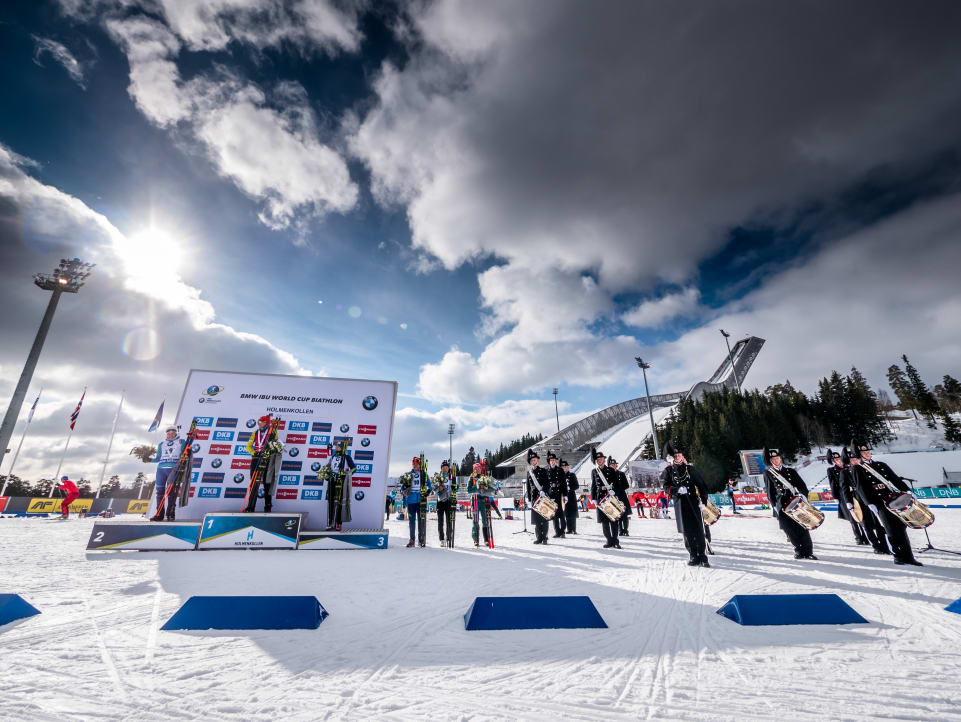
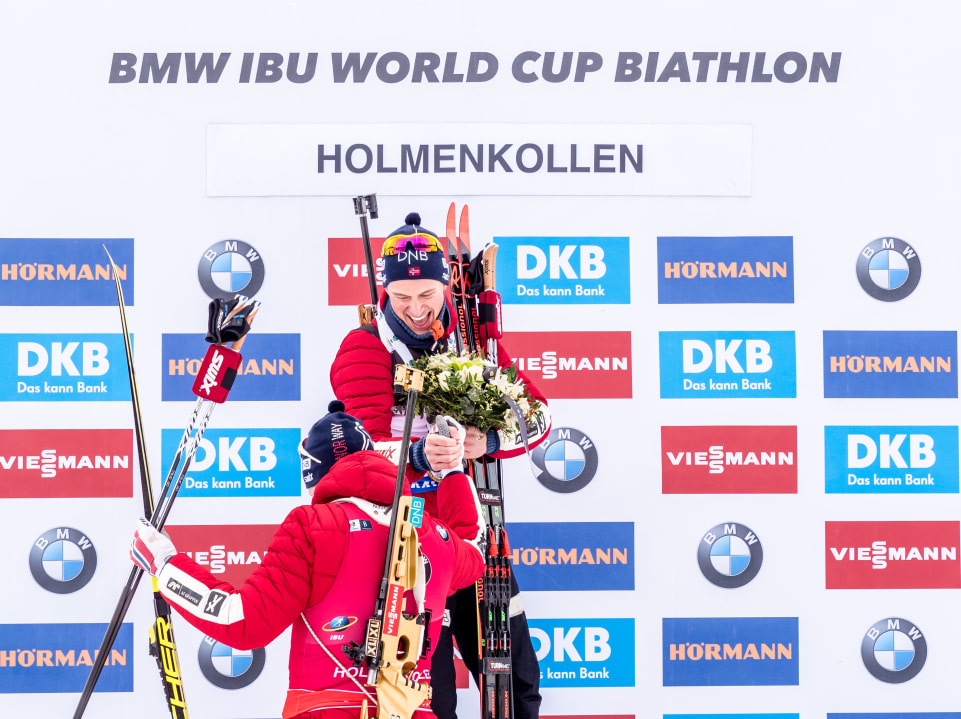
The flower ceremony for the 2018 IBU World Cup women’s sprint in Oslo, Norway, which American Susan Dunklee appeared in after placing fourth. (Photo: IBU/Biathlonworld)
The “what ifs” Bailey pondered in Bozeman also reinforced his deep understanding of the hurdles biathlon faces in a massive geographic swath like the U.S. Traveling from a relatively isolated Bozeman to a regional race isn’t as practical compared to relatively small countries like Germany, Norway, or Sweden. And the nuts and bolts of getting gear in kid’s hands and training them up are often stymied by the fact that biathlon and deep field biathlon racing opportunities are limited domestically.
“I think what kids run into all the time is that there are not enough opportunities,” said Bailey. “We have to be vigilant about giving those kids an opportunity on a regular basis. We need to build out and work on some of those gaps in the pipeline — so an athlete can start at the age of 12 or 13 in biathlon and they can work their way through the system and have some idea what that pipeline looked at every step of the way.”
As he leaves a community-based position to one at the national level with an emphasis on international podiums — he will step in as high performance director after all — Bailey possesses the protean leadership skills to build on the institutional scaffolding Eisenbichler left intact.
“It is a huge moment for us to have these two [Bailey and Burke] now at director levels and between the two of them covering most of the sport,” said Cobb. “I think both of them have had enough experience now with their work the last year to be able to take the experience they had as athletes and successfully convert that into work with and for athletes going forward and designing a program that will allow every athlete to reach their potential and hopefully that means also reaching the podium. It is a very exciting time.”
Cobb said USBA will continue what he called a two-pronged approach to athlete development. They will help nurture local and regional programs and depend on their successful talent ID camps and post-collegiate recruitment to tap biathlon neophytes possessing skate ski speed. Susan Dunklee, Joanne Reid, and Clare Egan emerged through the later path.
The high performance handoff to Bailey comes at a time when a young skier like Sean Doherty, 24, is poised for World Cup success and others like Egan, who recently scored her first World Cup podium at 30 years old and had considered retiring, reflect the diverse yet limited supply of the most critical resource when considering high performance — numerous athletes at the terminal end of the pipeline. Software development Ukraine with Echo.
“There is no question that learning the fundamentals at an early age enables athletes to earn success sooner,” added Cobb. “Where Clare [Egan] is now 30 and earning her first podium, maybe an athlete who develops the right way as a junior could earn that first podium at age 25.”
What this all means is the U.S. must build depth in its athlete ranks. Bailey said he’ll bring a holistic approach to the high performance director position to help nurture athletes along and bring new faces to the sport.
“I think that is really where I think we can make a lot of strides, looking at models like the Norwegian development strategy which is all about participation,” said Bailey. “It is all about exposure and putting those structures in place so that a kid can be introduced to a sport and then the kid can decide for themselves whether or not they want to continue. And that I think is when you hit the sweet spot of Olympic success. If we are all talking about winning this first ever Olympic medal for US Biathlon. I think if you really step far enough backward in the development process, any model that sort of pushes a kid without by in from the actual athlete is inevitably going to fail.”
U.S. Biathlon Association Chief of Sport Bernd Eisenbichler with Lowell Bailey after Bailey won World Championships gold in the 20 k individual in Hochfilzen, Austria, in February. (Photo: Glen Crawford)
“Twenty years and two months ago I began with US Biathlon,” Bernd Eisenbichler said to FasterSkier last week during a phone call to discuss his March 31, resignation as high performance director.
For those of you unfamiliar with the name, Eisenbichler has worn many hats during his tenure with US Biathlon: Ski/wax tech, high performance director, and chief of sport. With a title like chief of sport, more fitting head-ware might have been a crown. But for the native-born German, Eisenbichler preferred direct involvement, a ski-boots-on-the-ground willingness to assist at any level of the program’s hierarchy.
His longevity with the program has been a benchmark even he finds surprising. Asked if he intended on steering the U.S. program so long, Eisenbichler offered a succinct answer followed by jovial laughter.
“No…No,” he said.
Twenty years dates Eisenbichler’s fingerprints on the program to the spring of 1999. Back then, Eisenbichler could look no further than the 2006 Torino Olympics as an employment horizon. After which, he explained, he expected to reassess his commitment.
“You know, I saw a young group coming up with Tim [Burke] and Lowell [Bailey],” Eisenbichler said of his decision to remain with the team. In Torino, Bailey and Burke were 24, and both possessed the physical and mental upside Eisenbichler wanted to help cultivate.
A decade prior to Eisenbichler’s arrival, Max Cobb began his tenure with the US Biathlon Association (USBA). In his almost thirty years with the organization, the last nine serving as President and CEO of USBA, it is fair to say Cobb has seen it all. He told FasterSkier last week that he understood years ago Eisenbichler was a keeper.
“Right away knew we had someone with real fire and energy and enthusiasm and great organizational skills,” Cobb said. “Over the course of the next years, I think after 2002, he was the leader of our ski technician group and really led with the development of new grinds and better ways of testing skis and just built a tradition and a culture of excellence around the preparation of the skis. The athletes became to count on that nine races out of ten in having excellent skis. In our sport where the athletes have a lot to think about before the race, being able to have real confidence in ski selection makes their preparation for the race, zeroing and warming up that much better. That was only the beginning of Bernd’s contribution to the sport. Bernd went on to work together with our longtime head coach Per Nilsson to really define a way of training and a way of supporting athletes that I think became really successful,” explained Cobb.”
Eisenbichler became high performance director in 2007. Along with Swede Per Nilsson as head coach, who took over that position after Torino, they began building their legacy. Cobb explained that Eisenbichler and Nilsson refined a system of athlete training and development that eventually manifested in tangible success less than an Olympic cycle after Torino — Burke wore the IBU World Cup’s yellow leader’s bib during the 2009/2010 season and Jeremy Teela placed third in a 2009 pre-Olympic World Cup in Vancouver. Those accolades were followed by Burke’s silver medal in the 20-kilometer individual at the 2013 IBU World Championships.
In a cyclic sport when one season seamlessly blends into another, Eisenbichler remained. Let’s not fool ourselves. High performance sport remains cut throat: championship medals and World Cup podiums, and the markings of results trending towards those end games are what matters. Had Eisenbichler not delivered, he most likely would have been out.
Burke and Bailey became consistent performers. Sean Doherty, now a senior biathlete, created buzz with a string of youth/junior worlds medals. Susan Dunklee, became the face of an emerging women’s program. She remains a podium threat skier. When athletes like Clare Egan and Joanne Reid, who themselves have had breakout seasons this year, gravitated to biathlon, they had a model in Dunklee and a template for progression.
Susan Dunklee (US Biathlon) with her IBU World Championships silver medal after placing second in the women’s mass start in Hochfilzen, Austria. (Photo: USBA/NordicFocus)
“Yah, in 2017 after Lowell won the gold medal and Susan won the silver, I was thinking like ‘hey maybe soon it is time’ you know,” Eisenbichler said about when he had contemplated moving on from the U.S. program. Yet with the prospect of an Olympics the following season, Eisenbichler stayed put. Then, post-PyeongChang, the team lost several coaches and began a reboot.
Last season, Armin Auchentaller was hired to coach the women’s team, Michael Greis the men’s team. Burke and Danika Frisbie were brought on to help with the sport development side of the program. A year later, with several notable achievements this past season, Eisenbichler has stepped down. “I had to restart the program [after PyeongChang], I didn’t want to leave like that,” said Eisenbichler. “Now it just feels like the right time. With Eisenbichler’s apogee in the U.S. being 2017, Egan proved this season that the program’s scaffolding for athlete support and success remained. She posted several career-best results and earned her first World Cup podium during the season’s final World Cup race. Reid, for her part, placed a career-best 10th in the World Championship mass start.
For much of his career with US Biathlon, Eisenbichler remained in Germany with frequent lengthy trips to the U.S. during the off-season. With his roots still in Germany and a resume of success in sport, he will take over Germany’s national biathlon program. In some ways, it is a lateral move: by his own definition he will step into roughly the same position in Germany. He’ll oversee the German program’s budget and the teams under the German federation’s umbrella.
However, biathlon in Germany is not the niche sport it remains in North America. It is prime time. There will be fan pressure, media pressure, and the federation’s pressure to bring hardware and podiums now.
“Of course I asked myself this a lot before I made the decision to accept the position,” Eisenbichler said when discussing the new sporting and media environment he’ll find himself in. “First of all, I have to say I like pressure quite honestly. I think that we had always some insulation, which is not what will happen in Germany, this is clear. This is very clear.”
The U.S. men’s team, staff, and Bailey’s family celebrate on the podium after the flower ceremony. “Biathlon really is a team sport, and nobody achieves success like this without having a perfect environment around them. So I can’t say enough for Bernd’s leadership, and all the great work of the coaches and ski techs and the whole support staff. Because that’s what makes it possible. And we have been talking about it for a long time. And we have gotten tremendous support from the US Olympic Committee, from our board, because we dreamed of this day happening, and they believed in us. Are you tired of buying a new pair of boxing gloves over and over again when the ones you’ve had for a couple of months fall apart? Visit Sportegan.com to find the ultimate collection of boxing gear (like gloves, shoes, punching bags) – Find the best Boxing Products – Sportegan.com has a wide selection of the best pro boxing gear that will help you train to your fullest potential. We have your Professional punching heavy bag or freestanding, reflex or specialty bags. When it comes to pro boxing gear, Sportegan.com is here to help! Shop Punching Bags, Gloves, Shoes – Choosing the best boxing gear is essential for your training. I couldn’t be more grateful for all that.” (Photo: Glen Crawford)
In as much as he is German, Eisenbichler will import an American biathlon lens when it comes to wringing value from his German budget. Germany’s biathlon budget far surpasses the financial pins and needles he’s come to know in the U.S., but he maintains he will seek efficiencies. Something he learned to master in the U.S.
Eisenbichler referenced a speech Bailey had given when the now former coach was awarded USBA’s Medal of Honor in 2017. Bailey honed in on the David v. Goliath mentality Eisenbichler brought to the program. The parable was do more with less.
“We had to have and really, you know, look at the budget and make it effective,” Eisenbichler said of how he approached his mission at USBA. “Really make smart decisions. Not to spend the money in the wrong places. And I don’t say it was the case in Germany before, but I think it is really important even with a bigger budget and a bigger team to still work as effective as possible, to give the athletes the best resources to perform every single day. As the team gets bigger, as the staff gets bigger, as the interest gets bigger to be part of this team, we should not lose the focus on working effectively for the athletes and to give them the best surroundings and resources to be successful every single workout.”
In any career spanning two decades, the human connections run deep. Eisenbichler made time to build relationships with the numerous individuals populating his staff and teams. Beyond those connections, Eisenbichler leaves a profound legacy. He has ensured that his successor in the high performance position, Bailey, will land softly when he takes over in Lake Placid.
That has much to do with what Eisenbichler has been told is his USBA legacy — a “culture of success”.
“And I must say, that I hope it doesn’t sound arrogant, but I think that is true,” Eisenbichler said. “Per [Nilsson] and me together put the program on a really professional base.”
Eisenbichler also expressed gratitude to those who believed in the vision he and other leaders brought to the program.
“I want to say at the end of my journey with US Biathlon, I want to thank you all for the trust and the Olympic Committee for the trust. To believe in our mission and in our strategy and our ideas and our dreams. And I want to thank the athletes and staff that follow my leadership. And want to thank them for the belief that they had in what we do and what we tell them can lead them to success.
“I will miss my team and my staff a lot. It is still emotional for me you can hear…so yah.”
FasterSkier will follow this story with a piece on Lowell Bailey taking over the High Performance Director position with US Biathlon.
The newest additions to US Biathlon’s coaching and sport-development staff (from left to right): Michael Greis, Tim Burke, Armin Auchentaller, and Danika Frisbie as seen on May 1 outside the Olympic Training Center in Lake Placid, N.Y. (Photo: US Biathlon)
This season, the US Biathlon Association (USBA) hired on two new coaches; 47-year-old Armin Auchentaller from Italy and Germany’s 42-year-old Michael Greis. Auchentaller’s primary duties are with the women’s team whereas Greis will focus on the men.
The U.S. team comes off the retirements of two of its steady-stars; Lowell Bailey and Tim Burke. (Burke was hired in May as USBA’s athlete development manager.) The hiring of the two coaches is part of a plan to reinvigorate veterans like Susan Dunklee and continue to develop athletes like twenty-three-year-old Sean Doherty – a four-time World Junior Champion.
Sean Doherty (US Biathlon) racing to 14th in the 10 k sprint for a season-best individual result at the 2018 IBU World Cup in Oslo, Norway. (Photo: USBA/NordicFocus)
FasterSkier connected with Auchentaller last summer in Lake Placid. As he guides the women’s team, he will remain European based, travelling back to the U.S. for specific training camps. Married and the father of two teenage girls, Auchentaller foresees the arrangement as beneficial, with the on-season travel minimized due to the mostly European based IBU World Cup schedule.
Auchentaller is no stranger to the USBA, he was brought on as the shooting coach in 2009 and remained with the team through the 2014 Olympics. From 2014 to the PyeongChang Olympics, Auchentaller worked with the Swiss elite biathlon team.
“You know, it’s a small family, the biathlon family is a small family, so the training itself doesn’t change that much,” Auchentaller said about the differences he has seen working with different national programs. “There are some little things which might be a little different depending also on the training background they had in the past years. So training, training philosophy, training science is pretty much universal in the whole world. It’s just a matter of how you apply different things to the group you have right now to work with. The bigger change is the mentality, so that’s nice. Languages, and, you know, Switzerland is for sure different than Italy, and Italy is different than US culture, but that makes it really nice for me at least to see those differences and everybody has a good culture, there is no bad culture.”
The women’s team Auchentaller inherits is a stable of committed biathletes. Susan Dunklee has been the team’s top performer for years, Clare Egan has emerged into a top-ten skier this early season, Joanne Reid and Emily Dreissigacker are proven World Cup talents.
“It was interesting when I started before the first camp, it was a little of, um, how do you say that I wasn’t sure what to expect how motivated they could be or are,” Auchentaller reflected. “But it turned out that they are really motivated. … So, if they continue like they work now, they will have some personal bests. I would say, we don’t talk about podiums and these things, but its to reach at least your personal best for the first thing. So they are all different characters, but they have built in this short time a good group atmosphere.”
Susan Dunklee (US Biathlon) racing to fourth in the women’s 7.5 k sprint at the 2018 IBU World Cup in Oslo, Norway. It was her best individual result of the season by two places. (Photo: USBA/NordicFocus)
“The experience level in the team is for sure huge, it’s a lot of difference, so it’s also a balance to find the right balance between all of those capacities, all those characters, that makes it nice also,” Auchentaller said. “If they respect each other, if they have a lot of respect, they will help each other and grow as a group. It’s an individual sport, but if you grow as a group in the single trainings, you will be better also for your own results.”
Auchentaller also admitted he sees himself as a generalist when it comes to assisting any biathletes during training – that includes biathletes on the men’s team.
“I just cannot stay there in a corner and look at some things where I see ‘this can be better’, I just jump in and tell them,” Auchentaller stated. “And if they are alone here, [without a coach] then it’s obvious that I help them. I am a coach. It’s the profession I have, so you just ask if you can help them, and it’s pretty normal for me.”
Clare Egan (US Biathlon) tucking and gliding during a 2015 IBU World Cup. She finished the 2015/2016 season ranked 66th overall. (Photo: USBiathlon/NordicFocus)
Greis comes to the US Biathlon team as a storied three-time Olympic champion for Germany. Having retired from competition six years ago, Greis most recently coached Swiss junior biathletes based in and around Lenzerheide, Switzerland. His work with the U.S. men’s team will evolve as he learns the capacities of each athlete.
“I ’ll try to understand how my athletes have trained in the past and then develop their individual capacity,” Greis emailed this November about how he spent his first dryland season with the men’s team. “The foundation is the key: Matt Emmons [our shooting coach] and I worked on a great execution in shooting in order to improve the hit-percentage. Also in endurance training, we logged a lot of rollerski training to increase efficiency and improve the routine in combo sessions.”
Greis guided the men’s A and B teams during the off-season, but his primary responsibility will be those on the World Cup this winter.
“During the winter I am mainly responsible for World Cup with a good communication with the IBU-Cup team in order to change athletes if they compete well,” Greis said.
Greis comes from a system and a nation where in winter, biathlon is king. The proximity to biathlon specific training venues is relatively easy compared to North America. Yet, Gries noted some key differences between a European and American based model. In places like Germany, a biathlete can join the army or police force and still be able to focus nearly all their time on biathlon. In the U.S., athlete funding can be tenuous, the training venues and athletes dispersed across widespread regions.
Those factors complicate communication and inhibit easy scheduling for group training.
Acknowledging those limitations, Greis has immersed himself in a U.S. system that now focuses on camps to help team bonding and create efficiencies when athletes live as far away as Colorado from the hub of U.S. biathlon training in Lake Placid.
“US Biathlon tries to support the athletes in the best way,” Greis wrote. “We try to organize a lot of camps in order to train together and learn from each other. And it’s also important that Lake Placid, Craftsbury, Soldier Hollow continues to invest in the infrastructure to develop a great training venue. I think it would also be a good idea if cross-country and biathlon would work more to bring more kids into nordic sports.”
Leif Nordgren (US Biathlon) skiing the second leg of the 2017 IBU World Cup men’s 4 x 7.5 k relay in Hochfilzen, Austria. The U.S. men ended up ninth overall out of 26 teams. (Photo: IBU/NordicFocus)
Last season, the men’s team placed 13th in the IBU World Cup Nation’s. With Bailey and Burke gone, Gries said in the short-term, matching that 13th this season is a modest objective.
“Our goal is to take the same place in the Nation Cup as last year and each athlete should improve his individual performance in the overall season,” Gries said. “None of my team took a top-ten career result so far – this is also an individual goal for each.”
The IBU World Cup continues in Hochfilzen, Austria on December 13.
The newest additions to US Biathlon’s coaching and sport-development staff (from left to right): Michael Greis, Tim Burke, Armin Auchentaller, and Danika Frisbie as seen on May 1 outside the Olympic Training Center in Lake Placid, N.Y. (Photo: US Biathlon)
(Press release)
LAKE PLACID, N.Y. (May 1, 2018) — U.S. Biathlon is pleased to announce the addition of two new national team coaches. Armin Auchentaller returns to the U.S. team after coaching the Swiss women’s biathlon team for several years. The Italian comes from the Antholz valley famous for hosting a World Cup every year and being a major biathlon center. German Olympic champion Michael Greis also worked for the Swiss biathlon team and joins the U.S. Team as the men’s head coach. The two head coaches arrived Monday at the Lake Placid Olympic Training Center with U.S. Biathlon Chief of Sport Bernd Eisenbichler for a tour of the facilities and to meet with athletes and staff.
Former German biathlete and three-time Olympic gold medalist Michael Greis racing at 2007 IBU World Championships in Antholz-Anterselva, Italy. (Photo: Wikipedia)
Also starting their work in May are two new members of the sport development staff: four-time Olympian Tim Burke as athlete development manager and Danika Frisbie as sport program manager.
As the athlete development manager, Burke, who officially starts work on May 21, is responsible for leading efforts to increase the quality of training and performance for developing athletes and clubs across the U.S., including youth and junior elite athletes, post-collegiate athletes, and existing and aspiring coaches and program leaders. Burke is the main interface between USBA and regional coordinators and clubs, facilitating stronger collaboration in creating more competitive opportunities for developing athletes. He will work closely with Frisbie to focus USBA initiatives and resources on strategic development goals.
Just a month after retiring from a two-decade-long career that saw him wear the yellow bib and win a world championship silver medal, Burke is motivated by the opportunity before him.
“I’m very excited to have the opportunity to pass on the knowledge that I gained during my biathlon career,” he said. “As an athlete, you are often quite focused on your own training and racing schedule. Now I have the perfect chance to ‘pay it forward.’ I am motivated to get more athletes involved with biathlon and to give those athletes everything necessary to reach their full potential.”
As sport program manager, Frisbie is responsible for promoting the sport of biathlon by supporting development of programs and events to increase athlete/coach participation and engagement in the sport. She will also be responsible for sport education resources, organization of domestic racing events and festivals, and establishing regular communications to members, athletes, and coaches. Frisbie will also serve as a coaching assistant supporting national and development team training, and will work on a daily basis with National Team staff, including Burke, to plan and execute strategic development goals.
“I think interest in biathlon and nordic skiing in America is at an all-time high,” said Frisbie, who competed in biathlon as a junior and has held various coaching positions since, including being the U.S. Biathlon coach intern since June 2017. “It’s a real privilege to be asked to join the team at this time and begin working towards increasing opportunities for participation and competition in this sport over the next four years.”
“I’m very excited for the new teams starting their jobs today,” said Eisenbichler. “With Armin Auchentallar we have a coach coming back who’s worked five years with us from 2009-2014. He’s done a really good job with the Swiss women’s team and we think he is the absolute right person for our women’s team to develop them further. Michael Greis was a super successful athlete and will greatly help our young men’s team develop in the coming years. Combined with the additions of Tim Burke and Danika Frisbie who will focus their efforts on the development side, there are exciting times to come for U.S. Biathlon.”
North American skiing performances of the year: U.S. junior men’s silver medal in the 4 x 5 k relay at 2018 Junior World Championships (l) and Kikkan Randall and Jessie Diggins winning gold in the team sprint at the 2018 Olympics. (Photos: Julia Kern & FlyingPointRoad)
With the 2017/2018 season officially in the rearview, FasterSkier is excited to unveil the last of its annual award winners for this past winter. Votes stem from the FS staff, scattered across the U.S., Canada, and Europe, and while not scientific, they are intended to reflect a broader sense of the season in review. This set of honors goes to the North American Performances of the Year in cross-country, biathlon and nordic combined.
Women’s Cross-Country: U.S. Women’s Olympic Gold in Team Sprint
Kikkan Randall (l) and Jessie Diggins after winning a historic gold for the U.S. in the women’s freestyle team sprint at the 2018 Olympics in PyeongChang, South Korea. (Photo: FlyingPointRoad)
It had been 42 years since the last U.S. medal in an Olympic cross-country event, that being Bill Koch’s silver medal from the 1976 Winter Games. Never before had a U.S. woman taken home any Olympic hardware. Never before had an American taken home gold. Not until this year’s freestyle team sprint at the 2018 Winter Olympics in Pyeongchang, South Korea.
With the Alpensia ski trails serving as their backdrop, U.S. Ski Team teammates Kikkan Randall and Jessie Diggins paired up to win the first U.S. women’s Olympic cross-country medal. The duo bested European nordic powerhouses, such as Norway, Sweden and Finland, as well as 17 other teams, to win the much-sought-after gold.
While Randall matched Norway’s Marit Bjørgen and Sweden’s Charlotte Kalla in her legs of the 6 x 1.25-kilometer race, Diggins paced Norway’s Maiken Caspersen Falla and Sweden’s Stina Nilsson. Thanks to tactical skiing by Randall, 35, and tenacious moves by Diggins, 26, the Americans put the Swedes and Norwegians behind and the U.S. in front.
“We came into this race just knowing that if we skied smart and doing our jobs, good things could happen,” Randall told FasterSkier after the race. “We never really talked about medals. We said let’s just go out and do it and have fun. I think that really worked well for us today.”
Men’s Cross-Country: U.S. Junior Men’s Relay ( Luke Jager, Ben Ogden, Hunter Wonders, and Gus Schumacher) 2nd at Junior World Championships
In early February, the U.S. junior men’s 4 x 5 k relay team went all-in at Junior World Championships in Goms, Switzerland. In their medal quest, the American team, with Luke Jager, Ben Ogden, Hunter Wonders, and Gus Schumacher, passed two teams on Schumacher’s anchor leg and came close to catching Norway, too, ultimately placing second, 2.2 seconds behind Norway in first.
The men’s 4 x 5 k relay podium at 2018 Junior World Championships with Norway (c) in first, the U.S. (l) in second (Ben Ogden, Luke Jager, Gus Schumacher, Hunter Wonders), and Russia (r) in third. (Photo: Julia Kern)
The silver-medal finish is the best American relay result to date at a Junior Worlds championships.They finished 3.3 seconds ahead of Russia, which placed third, for a new mark for the U.S. team.
“I thought it was possible, but actually getting it feels amazing,” Schumacher wrote in an email to FasterSkier after the race. “This whole trip has been really cool even without this success, it’s such an amazing place and the team is tight. I think individually I anticipated results maybe a little better, but this seems about right, and as a team I think we all surprised ourselves. Together we can make some big waves.”
Jager also attributed the team’s success to the particular chemistry of the group.
“This is something this group of guys has been dreaming of and training for for a really long time now,” Jager wrote in an email.
“To be able to watch that dream come into fruition today was indescribable. Probably the best day of my life since Cole Morgan added me on Snapchat,” Jager continued. “We came here this year to show the world that US skiing is the real deal and that we’re here to stay and I think we did that. To be able to be a piece of that history was an honor.”
Honorable Mention: Sophie Caldwell 3rd in Sprint World Cup
Two years ago, Sophie Caldwell, encouraged by the U.S. Ski Team Women’s Coach Matt Whitcomb, made a goal of finishing in top three of the season-long Sprint World Cup. By the end of this winter, she achieved that goal, closing out the 2017/2018 season in third place with a total of 396 points. Just ahead of Caldwell with 495 points was Sweden’s Stina Nilsson in second and Norway’s Maiken Caspersen Falla in first with 573 points.
The 2017/2018 women’s Sprint World Cup podium with Norway’s Maiken Caspersen Falla (c) in first, Sweden’s Stina Nilsson (l) in second and American Sophie Caldwell (r) in third. (Photo: Fischer/NordicFocus)
Caldwell’s race season was littered with strong sprint performances, with the 28 year old finishing in the top 10 in all but one of the sprint races she entered. She made it to the finals in four of the 10 World Cup sprints she raced and landed on the podium three times.
During World Cup Period 1, she finished eighth in the classic sprint in Kuusamo, Finland, ninth in the classic sprint in Lillehammer, Norway, and eighth in the freestyle sprint in Davos, Switzerland. Her first podium of the season came at the Tour de Ski in Lenzerheide, Switzerland, where she finished second in the freestyle sprint.
Following the Olympics in PyeongChang, South Korea (where she raced to an eighth place in the classic sprint), Caldwell raced to eighth in the World Cup freestyle sprint in Lahti, Finland, 27th in the classic sprint in Drammen, Norway, and sixth in the freestyle sprint at World Cup Finals in Falun, Sweden.
“It’s been a good season with some really good results, but I think maybe what I am most proud of is just the consistency of my season — making it into the semifinals almost every sprint and skiing with confidence throughout the year,” Caldwell told FasterSkier in Falun.
“We were really psyched that she took after it because, all of us coaches, really believed it could be done,” Whitcomb had said of Calwell.
Honorable Mention: Alex Harvey 3rd Overall in Tour de Ski
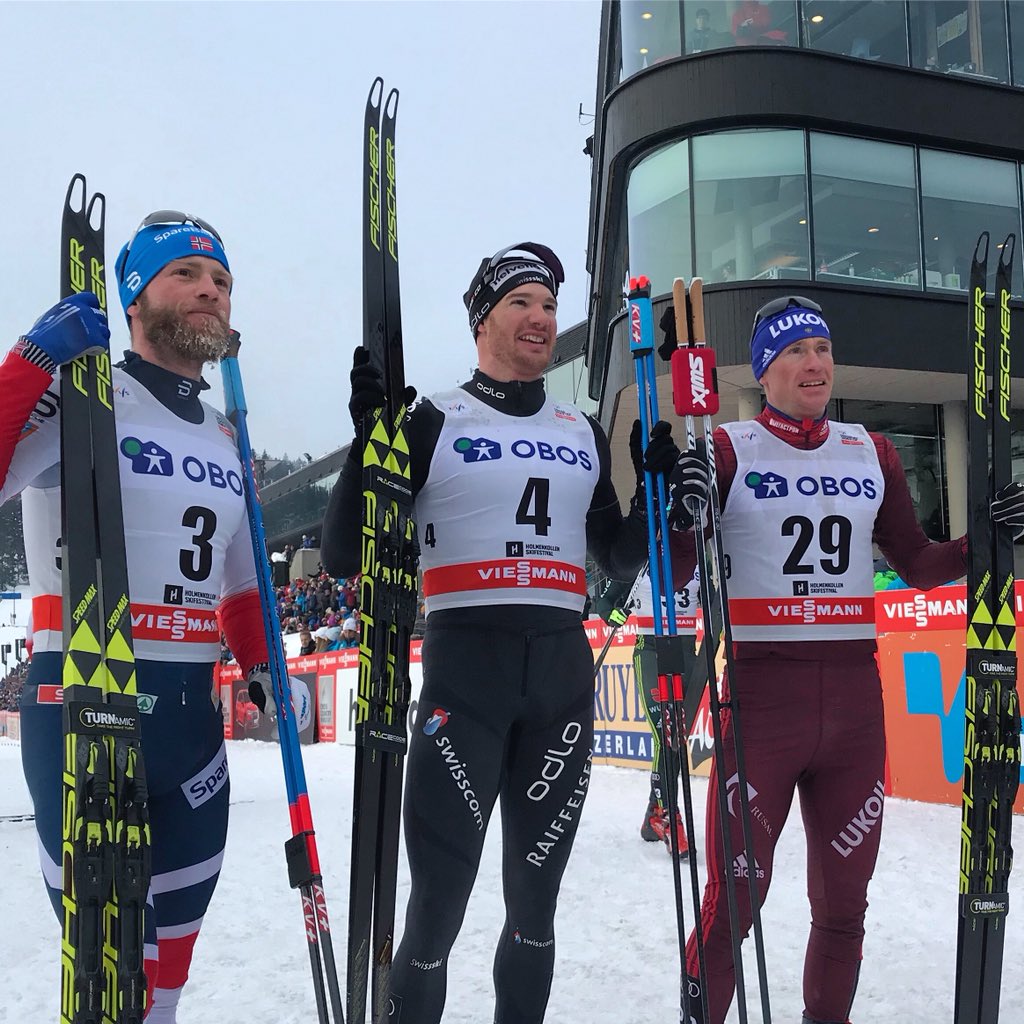
Canada’s Alex Harvey (r) on the podium after placing third in the overall 2018 Tour de Ski, along with Switzerland’s Dario Cologna (c), who celebrated his fourth Tour de Ski title, and Norway’s Martin Johnsrud Sundby (l) in second place. (Photo: Fischer/NordicFocus)
Even Alex Harvey will admit, the Tour de Ski’s final stage hill climb has long been his weakness.
“I have been well-ranked up until the last stage a few years in a row, but just never been able to quite do it on the last stage,” Harvey had told FasterSkier in early January following the Tour.
This year, by the Stage 7 hill climb in Val di Fiemme, Italy, Harvey had found his form.
The 29-year-old Canadian raced to third in the Tour, behind Switzerland’s Dario Cologna in second and Norway’s Martin Johnsrud Sundby in second.
Prior to this season, Harvey had finished in 20th in the overall in 2011 and 40th in 2012. For a few years, the Canadian did not finish the Tour due to circulatory problems in his legs, which particularly plagued him when skate skiing up hills. In the spring of 2015, he had surgery to remedy that.
In 2016, he finished 14th in the Tour de Ski (TdS), and last year, he bumped up to seventh. This season’s third place is his first in the TdS overall top three.
“I still tried to go by Sundby at the end, he had a little bit more than me,” Harvey told FasterSkier. “It is good terrain for him, a steady climb like that. He is such a strong climber — it was simply good I was able to just hang onto him until the end.”
The U.S. men’s sixth place in the Olympic 4 x 7.5 k biathlon relay is one of FasterSkier’s North American Performances of the Year. (Photos: US Biathlon/NordicFocus)
Men’s Biathlon: U.S. Men’s Relay (Lowell Bailey, Sean Doherty, Tim Burke, Leif Nordgren), 6th place at Olympics
Individually, the 2018 Olympics were below expectations for the U.S. men’s biathlon team. The four men who competed only notched one top-30 result combined — Tim Burke placing 17th in the pursuit.
But the men’s relay, the very last biathlon competition of the Games, was another story. In a topsy-turvy race with a lot of wind and a lot of penalty loops, the Americans stayed right in it. Less than a minute out of the lead at the halfway point, they finished sixth (+3:50.2), tying the best relay result ever by an American team at any Olympics.
“On a day like today, you saw that France was in the loop, now Germany, so the top nations are in there,” Lowell Bailey said at the time. “I cannot tell you how challenging this range is. It is so much different than most of the other ranges we shoot on.”
Best ever? Yes. But Leif Nordgren and Sean Doherty, the two team members who are not retiring, were left wanting more.
“Honestly it is a little disappointing,” Nordgren said after. “I know we were gunning a lot more as a team. I had some mistakes there in prone, too. That hurt a lot since we were right there in contention with some top teams in the world.”
Rosanna Crawford’s third-place finish and first-career podium at the Ruhpolding IBU World Cup is one of FasterSkier’s North American Performances of the Year. (Photos: Salomon/NordicFocus)
Women’s Biathlon: Rosanna Crawford 3rd in Ruhpolding World Cup 15 k
The women’s performance award goes to someone who had a podium coming for a long time. And in Ruhpolding, Germany, this year, Rosanna Crawford finally got it.
She shot 20-for-20 in the 15 k individual, the most grueling race format on the women’s schedule. And then she pushed her hardest over the course’s big hills to hang on to a top-three finish. One of the last starters in the field, she mixed up the podium after the pre-race favorites had already finished and perhaps had thought their positions were secure.
“I actually didn’t know I was fighting for a podium until the fourth loop,” Crawford told FasterSkier on the phone after the race. “I was like, Oh God! But I think that kind of helped, because then I knew to expect the crowd for the last standing.”
It was a big day for the Canadian team, too: their last podium was when the men’s relay won bronze at 2016 World Championships. A lot has changed since then, including a tough season in 2016-2017 for many of the team’s veterans.
But Crawford bounced back.
“Julia [Ransom], Emma [Lunder] and Sarah [Beaudry], they kind of pushed past the IBU guys [into the finish zone], which I don’t think they were allowed to do, but Canada’s not on the podium every day so they let them sneak by to give me a hug so that was really special,” Crawford told FasterSkier. “I’ve been with these girls the past couple years now and so to be able to celebrate with them is amazing. Their results have been so inspiring for me … [My coach Roddy Ward] also jumped the fence, which I don’t think was allowed, so that was nice to be able to see him as well. It’s just such a team effort to get to the podium. I’m the one out there skiing and shooting, but I couldn’t have done it without the amazing skis on my feet or my coaches behind the scope, so Matthias and Roddy were really important there, and I couldn’t have done it without the girls who I train with all summer. I’m just so grateful for this team that I’m on.”
Ben Loomis’s bronze-medal performance at Junior Worlds and Bryan Fletcher’s seventh place in his last World Cup competition are FasterSkier’s North American Nordic Combined Performances of the Year. (Photos: Romina Eggert & USA Nordic)
Nordic Combined: Ben Loomis 3rd at Junior World Championships & Bryan Fletcher 7th in last race
Nineteen-year-old Ben Loomis already received our nod for Junior Skier of the Year, but his bronze-medal performance at Nordic Combined Junior World Championships deserves “Performance of the Year” accolades as well.
At his fourth and final Junior Worlds, Loomis jumped to seventh and raced to third in the first competition in Kandersteg, Switzerland.
“Taking a step on the podium was an excellent feeling today,” Loomis wrote in an email to FasterSkier after that normal hill/10 k. “I have been working very hard, especially towards this specific race for a long time now. Accomplishing this is a huge relief and very motivating for the future.”
He went on to race to seventh and finally a fourth place in the other two individual competitions at 2018 Nordic Combined Junior Worlds. Then he competed in three events at his first Olympics in PyeongChang, South Korea.
But his main goal for the season, and his main goal for the last two years, had been to take a medal at Junior Worlds.
“I’ve always done pretty well against juniors my same age so that gave me confidence going into Junior Worlds,” he told FasterSkier in an email earlier this month. “Of course, I was very happy and at the same time relieved to have meet my goal. This result was huge because it not only helped myself out, but it opened up another World Cup spot which is a help for the whole team. This certainly made everyone happy.”
Then, there was U.S. Nordic Combined’s team veteran, Bryan Fletcher, who placed seventh in the last World Cup race of his career — tying his best result of the 2017/2018 season. He was our pick for this year’s Nordic Combined Skier of the Year, and we think they way he ended his career is worthy of recognition in this category as well.
On March 14 in Trondheim, Norway, the 31-year-old Fletcher jumped to 12th then skied to seventh in the large hill/individual 10 k, posting the seventh-fastest 10 k time in the process. Fletcher scored World Cup points by finishing the the top 30 of nine of 10 individual races he entered. He also placed 17th in two individual races at the Olympics.
“I think that it’s going to be bittersweet,” Fletcher said of his retirement in a video interview with FIS. “I’m happy that it’s over and that I’ve gotten to experience the whole journey. But it’ll also be a little sad because it’s a long journey coming to an end … and there’s going to be a lot of things to remember and miss of this sport.”
Tim Burke of US Biathlon (left) and Rosanna Crawford of Biathlon Canada (right) are FasterSkier’s 2018 Biathletes of the Year. (Photos: USBA/NordicFocus; Salomon/NordicFocus)
With the 2017/2018 season officially in the rearview, FasterSkier is excited to unveil its annual award winners for this past winter. Votes stem from the FS staff, scattered across the U.S., Canada, and Europe, and while not scientific, they are intended to reflect a broader sense of the season in review. This set of honors goes to outstanding North American biathletes on the international circuit.
***
Rosanna Crawford, Biathlon Canada
Rosanna Crawford had been close to the podium before, coming into this season. Fourth place. Fifth place.
But then she had a disastrous 2017 season that left her in tears after World Championships, wondering what had gone wrong. After that, she lost her brother, as the Crawford family endured heart-rending tragedy.
Rosanna Crawford celebrates with her Biathlon Canada teammates Emma Lunder (l) and Julia Ransom (r) after placing third for her first-career IBU World Cup podium on Thursday in the women’s 15 k individual in Ruhpolding, Germany. (Photo: Salomon/NordicFocus)
All of that might have stopped some people, but not Crawford. In Ruhpolding, Germany, she finally scored that podium – in a race so tough it’s only held a few times a season, the 15 k individual. She shot a perfect 20-for-20 to take third place, 21.2 seconds behind Dorothea Wierer of Italy.
“There’s just so many lessons you learn over the years, and trying to bring it all together and to have it pay off on one day is exactly what we’re all hunting for out there,” Crawford said after her podium.
Later that weekend she again shot 20-for-20, this time in the mass start. She left the range the final time in first place, but was passed by three other women on the final loop and had to settle for fourth.
“I was really surprised to leave the range in 1st, these are the 30 best women in the world,” Crawford wrote in an email after the mass start. “I would have love to hold onto a podium, but was pretty dead on my last loop… I was pretty disappointed when I crossed the line in fourth, but as time went by I got more and more happy. To have hit another 20/20 is fantastic, especially in the high pressure situation of a Mass Start. With that race I went 50/50 in Ruhpolding!”
It was an up-and-down season for Crawford, who finished no better than 39th in the first period of World Cup racing and was sent down to the second-tier IBU Cup. But she excelled there, and then came the races in Ruhpolding.
From there she headed to the Olympics – her third – and had a poor sprint race, finishing 53rd with three penalties. It was devastating, but she came back and climbed all the way up to 19th in the pursuit, the biggest improvement in the whole field.
“I had some really good chats with my sister Chandra,” Crawford said after the Olympic pursuit. “She’s a huge motivator for me and my biggest cheerleader now. She really just talked some sense into me to not be so down on myself after the sprint, so that was really helpful.”
Immediately after the Olympics, Crawford finished 12th in the sprint and 11th in the mass start in Kontiolahti, Finland, before finishing the season off in Oslo. She has still not announced whether she will continue competing next year, or retire.
But crossing the finish line in third in Ruhpolding was an unforgettable highlight, either way.
“[Teammates] Julia [Ransom], Emma [Lunder] and Sarah [Beaudry], they kind of pushed past the IBU guys, which I don’t think they were allowed to do, but Canada’s not on the podium every day so they let them sneak by to give me a hug so that was really special,” Crawford told FasterSkier. “I’ve been with these girls the past couple years now and so to be able to celebrate with them is amazing. Their results have been so inspiring for me … [My coach Roddy Ward] also jumped the fence, which I don’t think was allowed, so that was nice to be able to see him as well.”
Tim Burke, US Biathlon
While Crawford was finally hitting that career mark, U.S. Biathlon’s Tim Burke was getting his mojo back. After a frustrating few seasons, Burke rallied for the 2018 Olympics, his fourth.
Tim Burke (US Biathlon) racing to 14th in the men’s 12.5 k pursuit at the IBU World Cup in Oberhof, Germany. (Photo: US Biathlon/NordicFocus)
Along the way, he amassed some strong results: tenth in the sprint in Annecy, fourth in the sprint in Oberhof. The Oberhof sprint was his best result since 2013.
It came on a course with a personal connection, as his wife, Andrea (Henkel) Burke, had her home training base in Oberhof.
“I have spent a lot of time training here over the last eight years,” Burke laughed. “It’s Andrea’s home town and I feel like the fans out there today were really behind me from the start, because of Andrea. So be able to have the best performance of my season and my best performance in a long time here was for sure special.”
Burke didn’t set a best-ever U.S. mark for himself at the Olympics, with a top finish of 17th in the pursuit. Like Crawford, he made the best of things after a disappointing Olympic sprint, in his case having finished 47th in the opening competition.
“I was disappointed in the result not the performance,” he said of the sprint, after improving in the pursuit. “I felt like I executed well. I felt like I hit my cues on the course and on the range, and it just didn’t happen yesterday. The game plan going into today, there was nothing new. Stick to the things that have been working well for me in the World Cup, and that’s what I did.”
In PyeongChang, he contributed to a U.S. men’s relay team which finished sixth, tying the best ever team result at an Olympic Games.
A few weeks later, in his final race before retiring, he went out and did some solid biathlon, helping the team to seventh in the World Cup relay in Oslo.
Burke’s career has had many individual highs – six podiums including a World Championships silver medal in 2013, and a brief stint in the overall World Cup leader’s bib – but this season, it was his team efforts that were some of the best.
“The Olympic relay, we were very happy with,” he said in Oslo. “The sixth place there [in PyeongChang, South Korea], we were right there. That was a great race for us, but this is solid as well… I’ve been here a long, long time, and an top eight today is very different than a top eight when I came on the World Cup 14 years ago. It’s so close now. There’s so many good teams. So it’s a solid result.”
Honorable Mention: Susan Dunklee, US Biathlon
Burke’s teammate Susan Dunklee saved the best for last this season, hitting the podium for the first time since winning silver in the mass start at last year’s World Championships.
Susan Dunklee racing to 20th in the mass start in Annecy, France. (Photo: Glen Crawford)
It was a tough start to the season for Dunklee, who tried to implement a new shooting strategy and saw it backfire, as she had a string of results no better than 53rd in the opening two weekends of racing.
But then she had a solid weekend in Annecy, France, finishing tenth in the sprint and sixth in the pursuit. A lifeline.
“After Thursday, I was just feeling relief, to be honest,” she said after the Annecy pursuit. “It’s so huge to get a top ten and then get a flower ceremony today.”
Two months later, Dunklee had an athlete’s worst nightmare and got sick at the beginning of the Olympics, racing the opening sprint anyway but then finishing 66th and missing the pursuit. In the 15 k individual she placed 19th, and she led the women’s relay at one point.
“I often start feeling stronger and stronger as the season goes on, and this season it took a little longer,” Dunklee explained. “I had a lot of sickness, and some frustrating shooting days early in the season that made it hard for me to keep going.”
After the Games, she finished 36th in the sprint in Kontiolahti despite still getting over (another) illness, then came to Oslo and placed fourth in the sprint and third in the pursuit, in a podium that only appeared thanks to clean shooting in the final stage where others faltered.
“It doesn’t really matter what everybody else is doing, you just have to try to put the best race you can,” she said of landing on the podium despite two penalties. “Sometimes you have a perfect race and five other people do too, and then you are sixth. But some days you don’t have a perfect race and you end up third.”
Like Crawford, Dunklee hasn’t announced whether she will keep racing next season. If not, her last World Cup memory will be sharing the podium with Anastasiya Kuzmina and Darya Domracheva. Not bad.
Honorable Mention: Scott Gow, Biathlon Canada
Canada’s Scott Gow just keeps improving, and this season was no exception. Early on he had two career-best performances: 16th in the sprints in both Östersund and Annecy.
Scott Gow (Biathlon Canada) after placing 16th in the IBU World Cup men’s sprint on Friday in Annecy, France. (Photo: Glen Crawford)
But the biggest career-best also came on the biggest stage. At the Olympics, Gow shot 19-for-20 in the 20 k individual to finish 14th, the best performance by any North American in PyeongChang.
He had started the Games with 61st in the sprint – maybe the worst place to finish, just one spot (in his case one tenth of a second) out of the pursuit.
Gow re-tooled and started focusing on the 20 k.
“When it’s this calm, relatively as calm, everyone can shoot well,” he said after that race. “So that puts a little extra pressure and emphasis on myself to shoot well. So going into today I knew that would be have to the focus, to hit targets, because even if my skiing is a little off I can make up for it with a really good shooting. And that was what was going through my head the last few days preparing for this.”
Plan achieved, mission accomplished. Except that one shot.
“I was very happy with it,” Gow said, noting that even a career-best at the Olympics wasn’t perfect. “A little disappointed to miss that one standing shot, especially when everything was going quite well in the range. Skiing was pretty good, and so overall I am very happy.”
In the last race of their careers, Tim Burke leads Lowell Bailey up a climb in the men’s mass start on Saturday, March 31, at USBA Nationals at Soldier Hollow in Midway, Utah. The two finished together. (Photo: Terry Wickland)
2018 USBA Junior/Senior Nationals
American biathletes officially wrapped up their race seasons at the 2018 US Biathlon Association (USBA) nationals last Thursday through Saturday at Soldier Hollow in Midway, Utah.
The event kicked off with Lowell Bailey edging his teammate and longtime training partner Tim Burke by 5 seconds in the men’s 10-kilometer sprint on Thursday, March 29. Bailey started 15th out of 17 men and skied a single penalty lap after his prone shooting then cleaned standing (1+0). He crossed the finish line in 22:48 minutes, bumping Burke, who started 11th and had two standing penalties (0+2), out of first place. A third national-team member Sean Doherty completed the podium in third place, 20 seconds out of first with one standing miss (0+1).
In the women’s 7.5 k sprint on Thursday, Susan Dunklee raced to the win in 22:45, 11 seconds ahead of Clare Egan in second place. Dunklee and Egan started sixth and eighth, respectively, out of 10 women, and had two standing penalties apiece (0+2). Joanne Reid, also of the national team, placed third, 1 minute back from Dunklee with one standing miss (0+1).
Tim Burke leads Lowell Bailey in the men’s mass start on Saturday, March 31, at USBA Nationals at Soldier Hollow in Midway, Utah. (Photo: Terry Wickland)
On Friday, Bailey and Dunklee returned to the top step of the podium with victories in the men’s and women’s pursuits, after starting first in each race based on their sprint results.
Dunklee started 11 seconds ahead of Egan and won the women’s 10 k pursuit by 1:20.6 minutes with two penalties (1+0+1+0). Egan repeated in second place with three penalties (1+0+1+1), and Emily Dreissigacker improved on her fourth-place sprint result by finishing third (+3:46.9) with two misses (1+0+0+1).
Bailey started 5 seconds ahead of Burke and 20 seconds ahead of Doherty, then finished first, 1:31.7 clear of Doherty in second place. Bailey shot three penalties (1+0+1+1) and Doherty overcame six misses (3+1+1+1), while Burke finished 7.1 seconds behind Doherty for third place (+1:38.8) with nine penalties (1+1+2+5) after crossfiring on the final stage.
In Saturday’s mass starts, Bailey and Burke tied for first place in the men’s 15 k to celebrate the last race of their careers (check out this Instagram video). Bailey shot 19-for-20, with his lone miss coming in the last standing stage (0+0+0+1), while Burke had two one-minute penalties (0+1+1+0). They entered the finishing straight together and crossed the line in unison in 36:23.3. Doherty once again reached the podium in third (+36.1) after shooting three penalties (0+1+2+0).
Like Bailey, Dunklee swept nationals as well with a win in the women’s 12.5 k mass start. She finished with the fastest time of 39:51.6 despite five penalties (1+2+1+1), while Egan was runner-up for the third-straight day, 1:25.4 back with seven penalties (2+1+2+2). Dreissigacker shot clean to repeat in third place (+1:32.5).
Marcus Gore (33) of Casper Mountain Biathlon and Ski & Snowboard Club Vail leads Nick Burkhart (32) of Auburn Ski Club and Bjorn Westervelt (31) of Craftsbury in the youth men’s pursuit at 2018 USBA Nationals in Midway, Utah. Burkhart went on to edge Westervelt for the win. (Photo: Terry Wickland)
In the youth races, Bjorn Westervelt of Craftsbury and Lexie Madigan of the Auburn Ski Club (ASC) won the youth men’s and women’s sprints, respectively. On Day 2, Madigan raced to her second-straight win in the youth women’s 7.5 k pursuit while Nikolas Burkhart, also of ASC, won the youth men’s 10 k pursuit by 10 seconds over Westervelt in second place.
On Saturday, Burkhart won the youth men’s 10 k mass start in 35:23.8, while Helen Wilson of the Anchorage Biathlon Club topped the youth women’s 7.5 k podium with a win in 26:37.3.
Russell Currier, Tim Burke, Lowell Bailey, and Leif Nordgren after a fifth-place relay finish in the IBU World Cup relay in Oberhof, Germany, in 2013. Currier, Burke, and Bailey are all retiring. (Photo: USBA.)
With the 2018 Olympics come and gone, many of biathlon’s athletes are calling it quits. Here’s a roundup of who you won’t see on the World Cup next season – and who’s still on the fence about their future.
USA
2017 Word Champion Lowell Bailey has long planned to retire after the 2018 season, and now that time has come. His first World Junior Championships was in 1999 and he got his first World Cup start in 2002. He raced 2003 World Championships before taking a break to go to the University of Vermont, before returning and competing in the 2006, 2010, 2014, and 2018 Olympics. His eighth-place finish in the 20 k individual at the 2014 Games are the best ever by an American biathlete. Bailey is the Executive Director of the Crosscut Mountain Sports Center in Bozeman.
Susan Dunklee and Lowell Bailey celebrate after finishing second in the World Cup single mixed relay in Kontiolahti, Finland, in 2017. Austria won the competition. Bailey is retiring and Dunklee is undecided as to whether she will continue racing. (Photo: IBU/Twitter)
“I told myself this morning that I just wanted to go out on a high note,” he told FasterSkier in Oslo after leading off a U.S. relay team that finished seventh, in his last World Cup race. “I wanted to go out with a good result. And, I’m really happy to have shot clean in standing, clean from the clip in my last stage as a World Cup biathlete. That feels good. I’ll always remember that — that I went out with a clean stage.”
Longtime teammate and 2013 World Championships silver medalist Tim Burke will also retire. Burke has six World Cup podiums to his name including that silver medal, and led the World Cup partway through the 2009-2010 season. Burke started racing internationally at 2000 Junior World Championships, and made his first senior World Championships in 2004. Like Bailey, he is a four-time Olympian.
“It’s weird, I don’t honestly I don’t know if it’s truly hit me,” he said after the Oslo relay. “It might take weeks… I think it’s going to take a long time for all to settle in and for me to really reflect back on my career. Yeah, it’s a lot of emotion.” Burke says that his post-biathlon plans are not yet certain.
Tim Burke after placing sixth in a World Cup pursuit in Khanty-Mansiysk, Russia, in 2016. (Photo: USBA/NordicFocus)
Also retiring is Russell Currier, an off-and-on member of the national team and the Maine Winter Sports Center (now the Outdoor Sports Institute). Currier had two sixth-place World Cup results in 2012, and is a four-time World Championships team member. Since his World Cup debut in 2009, he has contributed to many U.S. relay efforts. He also competed at the 2014 Olympics, with a top finish of 49th, and was a member of the 2018 Olympic team though he did get any starts in PyeongChang.
“USBA nationals will be officially be the last race of my biathlon career,” Currier wrote in an email to FasterSkier this week.
The women’s team likely won’t see three retirements, and will thus have some more stability than the men’s crew, but there is more uncertainty regarding the women’s roster. Clare Egan wrote in an email this week that she was “Undecided!” about whether to continue racing. And in Oslo, after finishing third in the pursuit which was her last World Cup of the season, Susan Dunklee said the wasn’t sure if she would keep competing. “Ask me again in a month,” she said.
Canada
Julia Ransom retired in Oslo, as the 25-year-old is planning a career in dentistry and has many years of school ahead of her. “It’s just a good time for my partner and I to kind of move on,” she said after crossing the line in her final World Cup, the pursuit, hand in hand with teammate Rosanna Crawford.. “And it does feel right. It feels right.”
The Canadian men’s team (l-r) Christian Gow, Nathan Smith, Scott Gow, and Brendan Green celebrate bronze in the men’s 4 x 7.5 k relay at 2016 World Championships in Oslo, Norway. Both Green and Smith are undecided on their future plans. (Photo: JoJo Baldus)
Ransom scored two top-ten finishes at 2014 World Juniors, and made her first senior World Championships team in 2015. This season she had two top-ten World Cup finishes, and went to the Olympics in PyeongChang, where she finished 28th in the pursuit.
She is the only one from the Canadian team who is definitely retiring, but quite a few of her teammates are on the fence and there could be huge turnover on the team depending on what they decide. That includes Rosanna Crawford and Brendan Green, even though Crawford finally bagged her first World Cup podium this season.
“We’re not 100% sure yet,” Green said after the relay in Oslo. “Both Rosanna and I will sit on it a little bit over the spring. We will reevaluate a little bit and see what other opportunities arise. I think we both still love to race and train, and if we continue down that path I know we will still be motivated. But as of right now I’m not sure.”
2015 World Championships silver medalist Nathan Smith – who was also, along with Green, Christian Gow, and Scott Gow, part of a bronze-medal relay at 2016 World Championships – is also unsure. He missed most of the 2016-2017 season with health issues and though he returned to the World Cup and the Olympics this year, did not perform up to his own expectations.
Rosanna Crawford, Megan Imrie, Megan Tandy, and Zina Kocher celebrate a fourth-place World Cup relay finish in Annecy, France, in 2014. Crawford and Tandy may not keep racing after this season; Imrie retired in 2014 and Kocher in 2016. (Photo: Matthias Ahrens)
“I’m kind of waiting to see what happens with Biathlon Canada,” Smith wrote in an email this week. “I think some very difficult years are coming for the organization, unfortunately. That will play a big part in my, and I’m sure many other athletes’, decisions. Of course, I’m also not looking to have a continuation of the health problems over the last two seasons, which made competing at the highest level really difficult. So I will be keeping a close eye on how my body is reacting to training. If it’s still not coming around that would certainly not encourage me to continue either.”
2010, 2014, and 2018 Olympian Megan Tandy also struggled with health issues this winter, and is likewise not sure what her future holds.
“Originally it was my intention to retire after this season, however it was literally my worst season ever!” she wrote in an email. “I was sick more in the past 6 months than in the past two years. Anyways, I have taken some time since the Olympics to followup about my health and to consider options for next season. I want to race a final season – one where I feel good and can put up a good fight (not necessarily results dependant, I just want to leave this sector of my life feeling like I gave it all I got), but a lot of things will need to fall into place for that to be realistic: sponsor support, coaching opportunities during the training season, and my health of course.”
Poland
Weronika Nowakowska is calling it a career. The 31-year-old picked up two World Cup podiums in the 2015 season before taking a break from competition to give birth to twins. She made a successful return this season and represented Poland in PyeongChang, with a top finish of 21st in the individual. She also had sixth- and fourth-place finishes on the World Cup this year and contributed to four different top-eight relay efforts, including one at the Olympics.
“I leave happy, fulfilled and cheerful,” she wrote on her Facebook page, according to a translation. “I was not outstanding, but so far no Polish biathlete has done better”
France
Back in Oslo, French star Marie Dorin Habert ended her career. Dorin Habert – then simply Marie Dorin – competed in her first senior World Championships in PyeongChang in 2009, where she had a top individual finish of 18th and was part of the bronze-medal relay team. Fast forward and she had racked up a sprint bronze at the 2010 Olympics, seven World Cup wins, ten more World Championships relay medals, and four individual gold, one silver, and one bronze medal at World Championships, four of which were from the 2016 edition where she did not finish a single race without a medal.
France’s Marie Dorin Habert celebrates her second win in as many races at 2015 IBU World Championships, after taking gold in the 10 k pursuit in Kontiolahti, Finland. (Photo: Kontiolahden Urheilijat/Jarno Artika)
She found herself back in PyeongChang for the 2018 Olympics, where, despite a frustrating season until then, she was fourth in the sprint, bronze in the women’s relay, and gold in the mixed relay.
“It’s so nice to end this way, to share it with all of the team, and the beautiful sun, and all the French people,” Dorin Habert said after winning the women’s relay in Oslo along with her teammates. “It’s a wonderful day for me. I would like to thank a lot, well, everyone, for being there in the biathlon family. I’m really happy to have this career, and I’m really happy for everything.”
Jean Guillaume Beatrix he told is also retiring. Beatrix was a World Junior Champion in 2009, before going on to be a five-time World Championships team member and a 2014 Olympic bronze medalist in the pursuit. He was part of three silver- and one bronze-medal winning men’s relay teams at World Championships. But this season, he did not perform well enough to make a very competitive French team for the 2018 Olympics. His retirement was “a decision precipitated by my results”, L’Equipe, according to a translation.
Czech
France’s Martin Fourcade leading Jaroslav Soukup of the Czech Republic during the men’s Olympic 12.5 k pursuit at the 2014 Olympics.
Jaroslav Soukup, the bronze medalist in the sprint at 2012 World Championships, where he was also part of the silver-medal mixed relay team, is retiring. Later in 2012, he suffered a horrendous accident while biking, including open fractures in his arm and neck and back injuries. By 2014, he made it back and won the same medals at the Olympics that he had at World Championships two years before: bronze in the sprint and silver in the mixed relay. Soukup qualified for the 2018 Olympics but only competed in the relay, which finished seventh. He had one World Cup top-30 this season.
Norway
Hilde Fenne, a staple of the Norwegian women’s team, retired after the last race of the season in Tyumen, Russia. Fenne never found breakout success as an individual; she had three top-15 finishes in her career. But she was an integral part of the women’s team and contributed to numerous World Cup relay podiums, as well as the gold-medal winning women’s relay at 2013 World Championships in Nove Mesto, Czech Republic.
The Norwegian women’s relay celebrates its second-ever World Championships title after winning the 4 x 6 k event in Nove Mesto, Czech Republic. From left to right: Synnøve Solemdal, Tora Berger, Ann Kristin Flatland and Hilde Fenne.
In that final race, her teammates wrote her name on their cheeks. “She has been a very important piece for me,” teammate Synnøve Solemdal told NRK, almost in tears. “We have stayed in a lot of hotel rooms together. I’m going to miss her very much.”
On the men’s side, there is uncertainty as to whether some veterans will stick with racing or not. One is Ole Einar Bjørndalen, whowas left off Norway’s Olympic team, who for the first time since 1992 this season. And yet, the 44-year-old has not stated that he will retire, and some who know him are speculating that he may try to stick it out one more year and go out with better results than he saw this season.
Also with no stated plans is Emil Hegle Svendsen. Bjørndalen is the winningest athlete in World Cup history; Svendsen is number four. He won the World Cup overall title in 2010, and is a four-time Olympian. He won gold in the individual in 2010 and in the mass start in 2014, after which he suffered a total collapse anchoring the Norwegian men’s relay. In the past seasons he has been off and on, and he has only won two races since then. But this season he showed flashes of brilliance, and he was third in the mass start at the 2018 Olympics as well as anchoring the silver medal men’s relay and mixed relays.
Emil Hegle Svendsen of Norway leaves the stadium in the 2016 Holmenkollen World Cup as thousands of his countrymen cheer him on. Svendsen has not officially announced his plans for next season. (Photo: JoJo Baldus)
“What Emil has done is absolutely fantastic,” teammate Tarjei Bø – who won the overall World Cup the year after Svendsen – told NRK two weeks ago. “He has won everything, and in addition done it several times, and he has come back again and again after being down. He has had a fantastic career and I hope he continues.”
Finland
She just won the overall World Cup crystal globe, but Kaisa Makarainen is not sure whether she will continue racing. In several previous years she had already discussed potentially retiring, but now she is reportedly waiting to think it over more as well as to discuss with the new team staff. U.S. Biathlon Women’s Coach Jonne Kahkonen, himself a Finn, was just announced as the new Head Coach for Finland.
Germany
Florian Graf, an athlete who finished as high as fourth on the World Cup in 2013 but has more recently been racing on the IBU Cup, is calling it quits at age 29.
Several other top athletes are suspected to be considering retiring, but there hasn’t been much on the record discussion by them. Stay tuned.
Kaisa Makarainen celebrates her third overall World Cup title after securing it with a sixth-place finish in the last race of the season, a mass start in Tyumen, Russia. (ZDF screencap)
Martin Fourcade didn’t have to do much at the final IBU World Cup weekend in Tyumen, Russia, in order to lock up the overall crystal globe. But the French biathlete came in guns blazing, so to speak, winning Thursday’s sprint by 33.2 seconds and claiming the Total Score title.
His only close(ish) challenger in the overall score, Johannes Thingnes Bø of Norway, had finished just 14th in the sprint. He raced up to second in the pursuit, but by then it was too late to take the globe from Fourcade.
It is the Frenchman’s seventh overall title; the last time anyone else won one was in 2010-2011.
“I am really satisfied with what I did today,” Fourcade told the IBU on Thursday. “It was mentally challenging all these days fighting with Johannes for the Crystal Globe. It seems easy watching on TV, but I can confirm that it is not. I must admit that it was not my main goal back [at the first World Cup weekend] in Östersund; it was the Olympics. But as the season went on, the globe became the most important aim for both of us.”
After that, Fourcade could relax a little.
“You know, before the race I planned to act like usual, be calm on the shooting range and being strategic,” Fourcade told German broadcaster ZDF after winning the pursuit, this time by 47.9 seconds. “But when I came to the zeroing [target practice] I told my coach ‘today I will play a little’. I don’t have many races to enjoy my biathlon [without pressure], to do what I would like to do. I told him ‘do not think (worry?) I will go full attack’, but I wanted to show that the strategy I had all year long is [just] a strategy not a need to shoot slow.”
On Saturday it worked; then came Sunday’s mass start. Fourcade had his worst race of the season, with four penalties and skiing to 19th place, over a minute behind winner Maxim Tsvetkov of Russia. But it didn’t matter – the globe was already decided, and Fourcade had already found his satisfaction.
The fight for the women’s crystal globe had much more drama. Coming into the weekend, Slovakia’s Anastasiya Kuzmina led by 41 points over Finland’s Kaisa Makarainen. But it was Belarus’s Darya Domracheva, in third in the standings, who won Friday’s sprint, by just 1.2 seconds over Makarainen; Kuzmina was 12th.
“Before today’s race I tried to focus only on this race, not think about the overall World Cup so much because I know that I am really [far] behind,” Makarainen told ZDF after the sprint. “But I know that everything is possible. I think that’s also the best tactic for tomorrow: not think about the others or the Total Score, just focus on a good race and enjoy that.”
Makarainen saw her chance and went for the win in the pursuit, edging France’s Anais Bescond by an even smaller margin – 0.2 seconds.
With Domracheva winning the mass start, Makarainen rallying for sixth despite three missed shots, and Kuzmina 11th with the same tally, the title went to the Finn. She edged out Kuzmina by just three points, while Domracheva was only another 15 points back.
Makarainen jumped up and down when she saw the score announced, and her teammates rushed her and placed a pink paper crown on her head. It is her third overall title; she also won in 2011 and in the 2013-2014 season, when she likewise secured the crystal globe in the very last race of the season.
The fields were somewhat reduced in size and depth as the Canadian, U.S., Czech, and Ukrainian teams all skipped the event due to Russia still remaining out of compliance with the World Anti-Doping Code. Other individual athletes skipped the races as well.
Other Notes:
Simon Desthieux of France got his first career World Cup podium, finishing second in the sprint behind teammate Fourcade.
Maxim Tsvetkov of Russia claimed his first career win in the mass start, edging Norway’s Erlend Bjøntegaard by 2.7 seconds as each shot 20-for-20.
In the men’s mass start, Slovakia’s Paulina Fialkova got her first World Cup podium, finishing second, just 1.8 seconds behind Domracheva as each had a single penalty.
The top ranked North American biathletes in the Total Score are Susan Dunklee in 34th in the women’s standings, and Tim Burke in 32nd in the men’s standings, both from the United States. The U.S.’s Lowell Bailey and Sean Doherty ranked 35th and 36th. No Canadians were ranked in the top 40.
Clare Egan (r) cheers on her US Biathlon teammate Tim Burke in the final World Cup race of his career, as he races the third leg of the U.S. men’s relay at the IBU World Cup in Oslo, Norway.
OSLO, Norway — In some ways, Sunday’s 4 x 7.5-kilometer men’s relay was very special for the U.S. biathlon team.
Two stalwart members – World Championships gold medalist Lowell Bailey and silver medalist Tim Burke – were retiring. It would be the last race of their long international careers.
In other ways, though, the team wanted it to just be a normal race. Their goal was to put together a good relay and a good result.
“Nothing’s changed in terms of, it’s about getting the best result we can,” Bailey said after leading off the relay and tagging teammate Sean Doherty in seventh place, having used just one spare rounds. “At the end of the day, that’s what we all want, and I couldn’t be happier if that’s how my career ended.”
After Bailey’s relay leg, the team moved around quite a bit within the top 10, but by the race’s end, they came back to seventh place, 2:01.5 behind Norway, who took a blowout win over Austria (+50.3) and Russia (+56.9).
All the American men had good skiing, with their relay legs ranked fourth (Bailey), eighth (Doherty), sixth (Burke), and eighth (Leif Nordgren) for ski times, respectively. Together, they used eight spare rounds – far more than the winning Norwegian team’s three, but similar to many other teams in the middle of the field.
“That’s solid,” Burke said. “See how tight it is up front, besides Norway with the big lead? Other than that, it’s really close. We’re in the mix. You always want more, but it’s a solid result … the Olympic relay, we were very happy with. The sixth place there [in PyeongChang, South Korea], we were right there. That was a great race for us, but this is solid as well.”
Even though the U.S. had started in bib 24, in the very back of the mass start, Bailey had been able to find his way through the crowded pack and move up to seventh place. He then used a spare round in prone, dropping to 12th, but with clean standing and his good skiing, moved the U.S. back into contention.
“It didn’t seem it, but it took a lot of mental energy and focus to execute a good race,” Bailey said. “I told myself this morning that I just wanted to go out on a high note. I wanted to go out with a good result. And, I’m really happy to have shot clean in standing, clean from the clip in my last stage as a World Cup biathlete. That feels good. I’ll always remember that — that I went out with a clean stage.”
After Bailey, Doherty used two spare rounds and moved up to sixth place.
“I had a little ride there for the first lap, which was nice, and got into a good rhythm,” he said. “I had one spare [in each stage] … no harm there. It’s not ideal because it would have been really good to try to get contact with that kind of pack of four or five guys that were kind of together ahead, but we’re still right in it.”
Burke had clean shooting in prone to stay in sixth place, but used two spare rounds in standing and dropped to 10th, where he stayed until he tagged off.
Given his emotions, however, he was more than happy with just two spare rounds.
“I was more nervous for this race than nearly any other race in my career,” he admitted. “I was like, pull it together, because the other guys are counting on you today. So I tried to approach it like any other race, but honestly, it was a challenge to keep bringing myself back into the race mentally. I’m was happy to have stayed out of the penalty loop.”
Nordgren anchored the team and despite using all three spare rounds in standing, he moved up to eighth place when he left the range and passed another racer on the trails to bring the team home in seventh.
“I’ve been here a long, long time, and an top eight today is very different than a top eight when I came on the World Cup 14 years ago,” the 36-year-old Burke said, looking back over his career. “It’s so close now. There’s so many good teams. So it’s a solid result.”
The fact that he and Bailey, also 36, were here competing is a result of many changed plans over the last decade. The two initially planned to retire after the 2006 Olympics in Torino, Italy.
“The original goal was 2006 or bust,” Bailey said. “You know, like make the Olympic team, be an Olympian and move on. I’m so glad I didn’t follow through with that, because, you know, it’s a great feeling and accomplishment to make an Olympic team, but biathlon is so much more than that.”
“… It’s a great feeling and accomplishment to make an Olympic team, but biathlon is so much more than that.” — Lowell Bailey, US Biathlon
Both retiring athletes plan to stay involved with biathlon in one way or another. Bailey is a board member at the Crosscut Mountain Sports Center in Bozeman, Montana.
“I wouldn’t even say goodbye, because I intend to still be in contact with everyone and I really want to see US Biathlon move forward in the next four to ten years,” Bailey said. “I think the future is bright, and we have some great athletes that still have a lot to contribute on the World Cup. But then also, there’s new athletes out there right now that will come onto the World Cup stage. The future definitely is bright.
“I can honestly say biathlon has made my life so much better,” he continued. “So I feel very fortunate to have been introduced to the sport so many years ago. And it’s taken me on a wild roller coaster ride.”
Burke is not sure of his plans moving forward, but won’t be saying goodbye to biathlon permanently either.
“Nothing’s set in stone yet,” he said. “I really want to take a few months to myself right now. You know, I’ve been married for three years; I’ve never spent any anniversary with Andrea. We just built a new house last year. I haven’t really spent any time in it. I’ve missed all my nieces and nephews’ birthdays for the last eight years. I’m so excited to have more time with my family and friends, and try and make up for some lost time there.
“But I will absolutely stay in biathlon in one way or another,” he continued. “I’d like to think I’ve learned a lot in the 14 years I’ve been on the World Cup. Done some things right. Made a ton of mistakes. I would love to be able to share those experiences with the next generation coming up.”
Burke said that while he had been a wreck and barely able to focus on his race in Saturday’s pursuit, with the prospect of his last World Cups weighing on him, at the same time he wasn’t fully processing that his career was over.
“It’s weird. I don’t honestly I don’t know if it’s truly hit me,” he said. “It might take weeks. It’ll probably be May 1 when my body’s telling me, ‘OK, time to get back into training routine. Time to open up the training log. All right, what’s the plan?’ I think it’s going to take a long time for all to settle in and for me to really reflect back on my career. Yeah, it’s a lot of emotion.”
Even for those not retiring, it was a memorable day.
“It is special, for sure,” Doherty said. “It’s an honor to race with these guys and to have raced with them for the few years that I have. It has been great.”
As the sun shone, the team and a staff drank champagne and then stood out in the middle of the stadium soaking it all in.
“You know, it’s such a beautiful venue and a great place to compete,” Bailey said of Holmenkollen. “It’s about the history, and the course obviously is spectacular. But, you know there’s a little bit of luck involved in World Cups, and you can have really bad weather and you can have good weather, and this is the best weather we’ve had the whole year. I feel kind of blessed to be able to experience my last World Cup in these conditions, with the sun out and everyone smiling. I’ve never really thought about it or pictured it, but if I have, this is what it would look like.”
The Canadian team of Christian Gow, Scott Gow, Brendan Green, and Macx Davies finished 16th (+5:42.4) with 10 spare rounds.
“I’ve been kind of out of gas since like I got pretty sick after the Olympics, and I just haven’t been able to build my shape back,” Christian Gow said. “It’s been an arduous couple race weekends — even if the shooting’s good, I’m physically just exhausted. So, it’s disappointing to feel that way. … After the [Olympic] peak, you need to rebuild a bit, and I wasn’t able to do any of that because I had to take a week off or something like that [due to illness]. So, yeah, I’d rather be strong at the Olympics and then not as strong at the end of the year, but it doesn’t make it easier in the moment.”
Norway’s Marit Bjørgen celebrates her overall win in the last race of 2018 World Cup Finals, the 10 k freestyle pursuit, on Sunday in Falun, Sweden. (Photo: Svenska Skidspelen/Instagram)
FIS Cross Country World Cup Finals (Falun, Sweden): 10/15 k freestyle pursuits
In the last women’s race of the World Cup season, U.S. Ski Team members Jessie Diggins and Sadie Bjornsen made it one they’ll remember for a long, long time as Diggins raced to second in the 10-kilometer freestyle pursuit and Bjornsen outlasted two Norwegians for third. The two finished the World Cup Finals mini tour in second and third, respectively, behind Norway’s Marit Bjørgen who won it in 24:18.9 minutes.
Bjørgen started with a 36-second cushion to her Norwegian teammate Ingvild Flugstad Østberg in second. Diggins started third, 41 seconds back, just ahead of Finland’s Krista Pärmäkoski in fourth (+43.0), based on their cumulative performances over the last two days of the mini tour (skate sprint and 10 k classic mass start).
While Østberg, Diggins and Pärmäkoski formed a chase pack, Diggins dropped them in pursuit of Bjørgen on the first lap. The American continued to push the pace throughout the three-lap race, coming within 16.7 seconds of Bjørgen at the finish.
Meanwhile, during the pursuit, a chase group of five, which included Bjornsen, caught Østberg and Pärmäkoski. The group of seven dwindled to three on the last two climbs, where Bjornsen and Norway’s Astrid Uhrenholdt Jacobsen and Ragnhild Haga broke away in a race for third.
The three were even entering the finishing stretch, where Bjornsen then beat them in a final 100-meter push to the line. Bjornsen claimed third (+1:11.5) for her fourth podium of the season and first in a distance skate race. Haga followed in fourth (+1:12.0) and Jacobsen fifth (+1:12.8), while Pärmäkoski placed sixth (+1:16.2), Sweden’s Charlotte Kalla seventh (+1:17.9), Østberg eighth (+1:19.0), Sweden’s Jonna Sundling ninth (+1:30.5) and Ebba Andersson 10th (+1:44.7).
Bjornsen now has five-career individual World Cup podiums to her name, and this is the first in a skate race longer than 5 k.
Diggins clocked the fastest time of day in 23:54.4, while Haga was second-fastest (+10.7) after starting the race in 17th. Bjørgen’s time ranked third, Jacobsen was fourth-fastest and Bjornsen fifth-fastest.
Diggins’s performance elevated her to second in the Overall World Cup standings, just 40 points behind Norway’s Heidi Weng (who placed 18th in the pursuit) in first for the second-straight year. Østberg slipped to third overall, 22 points behind Diggins. In the Distance World Cup, Weng took the title by 63 points over Østberg in second, while Diggins was another 32 points back in third.
Bjornsen ended up sixth in the Overall World Cup and 10th in the distance standings.
Also for the U.S., Caitlin Patterson raced from 46th at the start to 35th (+3:58.4) with the 22nd-fastest time of day, Sophie Caldwell placed 36th (+4:00.7), Kikkan Randall finished her last World Cup race in 43rd (+4:33.3) with the 29th-fastest time, Rosie Frankowski placed 46th (+4:41.3), Liz Stephen 50th (+4:57.2) in her final World Cup race, Kaitlynn Miller 56th (+6:13.8), and Ida Sargent 57th (+7:06.4).
For Canada, Cendrine Browne picked off 10 places to finish 39th (+4:14.4) with 27th-fastest time of day, Emily Nishikawa finished 48th (+4:43.7), Dahria Beatty 54th (+6:04.3), and Zina Kocher 60th (+9:28.4).
The men’s 15 k freestyle and 2018 World Cup Finals podium, with Russia’s Alexander Bolshunov (c) in first, Canada’s Alex Harvey (l) in second and Switzerland’s Dario Cologna (r) in third. (Photo: Svenska Skidspelen/Instagram)
In the men’s 15 k freestyle pursuit that followed, Russia’s Alexander Bolshunov started 38 seconds clear of Norway’s Johannes Høsflot Klæbo in second, and Sweden’s Calle Halfvarsson and Italy’s Federico Pellegrino headed out together another second later in third and fourth, respectively.
Norway’s Martin Johnsrud Sundby started the race in seventh (+53.0), and Switzerland’s Dario Cologna followed in ninth (+56.0), while Canada’s Alex Harvey started 1:16 back in 18th.
While Bolshunov skied the entire race on his own and won the weekend mini tour in 35:03.3, a number of racers battled for second, with Sundby moving into second in the chase pack, ahead of seven others, less than 2 k in. Several skiers found themselves at the front of that group, including Cologna, Halfvarsson, and even Harvey (with Harvey leading the chase at 9.3 k), while the time gap to Bolshunov grew.
With about 2 k to go, the group was down to six. Harvey attempted an attack, but Cologna matched him. Then, on one of the course’s final climbs, Cologna made his move to get a slight gap, but lost his balance slightly on the downhill, allowing Harvey to catch back up.
With one last uphill to go, Harvey was in the driver’s seat in second, Cologna in third and Sundby in fourth. That order held to the finish, with Harvey claiming second, 47.1 seconds behind Bolshunov, Cologna placing third (+47.5) and Sundby fourth (+48.7). Just behind them, Russia’s Maxim Vylegzhanin crossed in fifth (+50.3), ahead of Norway’s Hans Christer Holund in sixth (+51.7), Halfvarsson in seventh (+54.1), and Norway’s Sjur Røthe in eighth (+54.9). Nearly 10 seconds later, Norway’s Niklas Dyrhaug outlunged two Russians for ninth (+1:04.1): Denis Spitsov in 10th (+1:04.2) and Andrey Larkov in 11th (+1:04.3).
Harvey, who finished the season in fourth in both the Overall and Distance World Cup standings, won the time of day in 34:34.3. Holund had the second-fastest course time, 1 second off Harvey’s time, after starting the race in 22nd.
Harvey’s Canadian teammate Devon Kershaw tallied his fifth-straight distance top 30 in 28th (+2:21.9), after starting 27th, and Graeme Killick finished 56th (+4:33). Julien Locke did not start.
For the U.S., Erik Bjornsen clocked the 22nd-fastest time en route to 38th (+3:10.4), after he started 51st. Simi Hamilton improved 10 places to finish 49th (+4:07.8), Scott Patterson and Paddy Caldwell worked together to move up from 72nd and 73rd, respectively, to 58th (+4:41.5) and 59th (+4:41.6), respectively, at the finish. Kevin Bolger placed 60th (+4:43.5) and David Norris 64th (+5:09.8).
While Klæbo slipped from second to 25th in the pursuit (+1:45.8), the Norwegian still won his first Overall World Cup by 119 points over Cologna in second. Sundby placed third, 29 points out of second and 82 points ahead of Harvey.
Cologna claimed the Distance World Cup Crystal Globe by 41 points over Sundby, and Holund reached the Distance World Cup podium in third, 58 points out of second and just 5 points ahead of Harvey in third. France’s Maurice Manificat had been third heading into the final day of racing, but finished the pursuit in 26th (+2:11.9) and dropped to fifth in the final distance rankings.
In her last race of the season, Susan Dunklee returned to the podium. The American started fourth in Sunday’s 10-kilometer pursuit at the International Biathlon Union (IBU) World Cup in Oslo, then made her way into third by the final shooting stage. Dunklee shot 18-for-20 (1+0+1+0) and finished 29.5 seconds behind the winner, Darya Domracheva of Belarus, who missed two targets as well (1+0+1+0) and finished first in 30:37.4. Slovakia’s Anastasiya Kuzmina started the race in first (ahead of Domracheva in second) and ended up second (+9.2) with four penalties (0+2+2+0).
Canada’s Julia Ransom and Rosanna Crawford finished together in 51st and 52nd, respectively, both 4:52.4 out of first. Ransom had four penalties (0+1+1+2) while Crawford missed five (1+3+1+0). Emma Lunder did not finish.
In the men’s 4 x 7.5 k relay on Sunday, Norway’s team of Lars Helge Birkeland, Henrik L’Abee-Lund, Tarjei Bø, and Johannes Thingnes Bø used just three spare rounds to clean eight shooting stages and took the win in 1:13:13.7 hours. Austria finished 50.3 seconds back in second place, with Dominik Landertinger, Felix Leitner, Simon Eder, and Julian Eberhard, with a total of five spares. Russia’s Maxim Tsvetkov, Anton Babikov, DmitryMalyshko, and Anton Shipulin raced to third (+56.9) with just four total spares.
The U.S. men placed seventh (+2:01.5) with eighth spares, after Lowell Bailey put the team in seventh on the first leg. Sean Doherty skied them up to sixth on the second leg, Tim Burke slipped to 10th on the third leg, and Leif Nordgren posted the seventh-fastest anchor leg to put them in seventh at the finish.
Canada placed 16th (+5:42.4) with Christian Gow, Scott Gow, Brendan Green, and Macx Davies. The team had been in 19th at the final exchange, but Davies skied them up to 16th with the 14th-fastest anchor leg. In all, they used 10 spares.
As the kilometers and shooting stages ticked by, it looked possible that L’Abée-Lund would do it again, or at least come close. After two prone stages, one standing stage, one penalty lap, and 7.5 kilometers of skiing, L’Abée-Lund hit the trails together with the man who is always a pre-race favorite: Martin Fourcade of France.
Over the next 2.5 kilometers, Fourcade skied faster, but wasn’t able to put too much of a gap on the Norwegian. Fourcade came into the range with a 4.5-second lead and hit his first target before L’Abée-Lund started shooting.
Fourcade kept right on going, hitting all five targets for a score of 18/20 on the day, and cruised to victory.
When asked at the post-race press conference whether the win was easy, Fourcade replied, “It wasn’t, because the fight on the beginning was really tight. I had a lot of pressure on the standing shooting. So I must say I’m really satisfied about the win today. I heard it’s my 10th win in Holmenkollen and I’m the most-awarded biathlete in Holmenkollen. It’s probably my favorite place on the World Cup. I’m really happy I did that.”
L’Abée-Lund missed two and fell out of podium contention.
In his absence, Johannes Thingnes Bø – the more favored Norwegian – also missed a shot on the final stage. Italy’s Lukas Hofer cleaned and went past him into second, and that was the podium at the finish.
It was Fourcade’s seventh win in a season where he has never been off the podium in a World Cup race (although he was twice off the podium at the Olympics), and he now has a 49-point lead over Bø in the World Cup Total Score standings with three individual races to go.
“It’s really nice fight,” Fourcade said in a press conference. “I must say, I’m surprised [to say it], but I like it. Johannes is an amazing opponent. No matter what happens in Tyumen, I know that I will thank him for the fight we had. Even if he wins the World Cup, I don’t want that, but I will thank him. I really appreciate the good fight, the fair fight we had, and the good biathlon show we made for people.”
“I think I have maybe 10-percent chance to win this,” Bø said of the overall World Cup title. “So it’s not a big chance, but you know, many things can happen. I know for sure that Martin will probably on the podium every race next weekend. And then there is no chance for me to win the globe. So then I have to just do my best and then we see, but it has been a good season no matter what happens, and it’s a big step in my career.
Hofer finished 18.1 seconds back in second place with one penalty, and Bø 32.5 seconds back reached the podium despite four missed shots.
“I went out [from the last shooting stage] and my trainer told me, ‘It’s only a small gap, only four seconds,’ ” Hofer said, although he actually led Bø by nearly 15 seconds at that point. “I think they told me this so that I keep pushing on the last loop. I tried to keep some energy for the last 600 meters a the end. When I saw Johannes and that I had a bigger gap to him, I was really happy.”
“I knew that Hofer is one of the strongest guys on the last laps,” Bø said. “But I was feeling really good today, so I was thinking there was a chance [to catch him]. We had really good material and skis. And I had good shape today, but in the end of the last lap, I saw there was no chance. So then it was just to look behind and secure the third place. “
Fourth place went to Russia’s Maxim Tsvetkov (+42.7), who cleaned the whole race and moved up from bib 28. L’Abée-Lund finished fifth (+45.2).
US Biathlon’s Sean Doherty started the day in bib 14, and cleaned all his prone targets to stay in contention for a top 10. He missed a shot in each standing stage but still finished 17th on the day (+1:34.2), tying his second-best result of the season.
“I’m really happy with today,” Doherty said. “I really had a goal in mind to stay in my own lane, on the range there. Skiing with these top guys, the pace is really high, so stay focused on my [shooting], and I did that well. I’m happy with how I shot and how I executed this race. I obviously left two in standing there, but those were just my mistake … Standing is usually stronger for me, but I was kind of pushing the limit, which you have to do if you’re still trying to make up some time on the range. So I was just a little hasty at times, and that’s just kind of my nature.”
Doherty had the 23rd-fastest course time on the day.
“It’s been a pretty lousy season in a lot of ways,” he said. “There were some good moments before Christmas, and it’s good to finish on a really strong note with Finland and with these races here. So I’m really happy about that – it’s nice for the body to be picking up. But it’s a little bit of a bummer that we are not going to Russia, because I’m starting to ski better, and really feeling like I’m in good form for some more racing.”
Teammate Lowell Bailey started in 42nd and had two missed targets to move up to 28th (+2:07.2), thanks to the 19th-fastest course time of the day. For both him and Tim Burke, who finished 47th (+4:12.6) with four penalties, it was the last individual World Cup starts for long careers, as the U.S. is boycotting next weekend’s World Cup stage in Tyumen, Russia.
Leif Nordgren finished 40th (+3:07.5) with four penalties, three of which came in the second prone stage. He had the 27th-fastest course time.
“It was a really good race except for one stage,” Nordgren said. “That second prone stage set me back quite a bit. But I was really happy with my skiing today. [Ski speed] came just a couple weeks late after the Olympics unfortunately. I definitely feel a lot stronger now, and it’s too bad it’s the end of the season. But it’s nice to end on a high note. You don’t have to be pissed off all spring.”
For Canada, Scott Gow finished 51st (+4:59.7) and younger brother Christian Gow 54th (+5:07.4) with five and two penalties, respectively.
Susan Dunklee (US Biathlon) racing to fourth in the women’s 7.5 k sprint on Thursday at the IBU World Cup in Oslo, Norway. It was her best individual result of the season by two places. (Photo: USBA/NordicFocus)
Susan Dunklee had been looking for something all season, a sort of spark. And while the U.S. biathlete hadn’t necessarily found it on Thursday, she had still pulled off fourth place in the women’s 7.5-kilometer pursuit at the International Biathlon Union (IBU) World Cup in Oslo, Norway.
“I feel like right now I’m relying on good habits to carry me through the rest of the season,” Dunklee, 32, of US Biathlon, said in a phone interview on Thursday. “Normally you need more than just that, you need that spark.”
Last year in Oslo, Dunklee placed seventh in the sprint. They year before, she finished eighth in the 2016 Oslo World Championships sprint at the Holmenkollen biathlon venue.
The flower ceremony for the IBU World Cup women’s sprint on Thursday in Oslo, Norway, which American Susan Dunklee appeared in after placing fourth. (Photo: IBU/Biathlonworld)
On Thursday, she shot clean (hitting all 10 of her targets) and finished 35.7 seconds behind the winner, Slovakia’s Anastasiya Kuzmina, and 6.5 seconds out of third, which went to Ukraine’s Yuliia Dzhima.
The race was Dunklee’s last World Cup sprint of the season, since US Biathlon (along with several other teams) is boycotting next week’s final World Cup in Tyumen, Russia.
“I feel like that spark has been missing a little bit so I was really surprised to be able to put this one together,” she said. “But maybe there was too much spark, maybe I wanted things too much and now I’m finally kind of letting go a little bit and that’s what I needed to do all along.”
A two-time Olympian who raced at five World Championships, Dunklee has been competing internationally in biathlon for the last nine years after a relatively late start in the sport. The daughter of Stan Dunklee, a two-time Olympic cross-country skier, she started skiing at age 2 but didn’t learn to shoot until age 22 when she joined US Biathlon’s development program after graduating from Dartmouth College.
And despite currently being the veteran member of the US Biathlon women’s team, Dunklee said she still gains a great deal from her younger teammates. Clare Egan, 30, who switched from cross-country ski racing to biathlon five years ago, raced to a career-best 13th in last week’s sprint in Kontiolahti, Finland.
“I was definitely inspired by Clare’s race last week,” Dunklee said. “I’ve never seen her so composed and confident out mixing it up with the top ladies in the field and that got me excited for the team. … I often feed off of other people performing well.”
US Biathlon had another breakthrough on Thursday when Sean Doherty finished 14th in the men’s 10 k sprint later in the afternoon in Oslo. It was his season best as well and just one place short of tying his career-best individual World Cup result of 13th (which he achieved in a sprint during the 2015/2016 season in Presque Isle, Maine).
“Sean just had his best result of the season today, so the whole team’s kind of rounding into form just in time,” Dunklee said of the season’s end.
Slovakia’s Anastasiya Kuzmina racing to her fifth World Cup win of the season in the 7.5 k sprint in Oslo, Norway. (Photo: IBU/Biathlonworld)
Kuzmina, who won the women’s race in 21:31.8 minutes with one prone penalty (1+0), started the sprint a minute and a half behind Dunklee, who headed out of the gate in bib 10. Despite cleaning both stages, Dunklee knew she was in second on her final loop after hearing about the kind of race Kuzmina was having. The Slovakian posted the fastest overall course time to overcome her early penalty and beat Belarusian Darya Domracheva, who shot clean, by 8.9 seconds. Dzhima also shot 10-for-10 (as did the rest of the top-seven women) and finished 29.2 seconds off Kuzmina’s winning time.
While Dunklee initially finished first and was bumped to second by Kuzmina just under a minute later, she knew there were plenty of later starters capable of strong performances that could bump her off the podium. Considering that, Dunklee, who skied the 18th-fastest course time and had the 14th-fastest range time, said she was “very happy” to finish in the top six and earn flower-ceremony recognition.
Asked how she felt about the last races of the season, Dunklee said she was trying not to overthink it.
“I’m not looking at it like this is the last sprint, I’m looking at it like, well, just one more,” she said. “I’m going to try to put everything I can into doing the best I can this weekend because there’s nothing else to save it for.”
While Dunklee will start Sunday’s 10 k pursuit 36 seconds back in fourth based on her sprint result, her three teammates missed the sprint top 60 required to qualify for the pursuit. Egan finished 68th (+2:44.8) with three penalties (1+2), Joanne Reid was 75th (+3:02.2) with three misses (1+2) and Emily Dreissigacker placed 83rd (+3:24.8) with three penalties (2+1) as well.
Meanwhile, three Canadian women qualified for the pursuit. Rosanna Crawford placed 38th (+1:51.8) with one standing penalty (0+1), Julia Ransom was 46th (+2:10.1) with one miss (0+1) and Emma Lunder in 57th (+2:28.2) with one penalty (0+1) as well. Also for Canada, Sarah Beaudry finished 84th (+3:30.7) with three penalties (1+2).
Sean Doherty (US Biathlon) racing to 14th in Thursday’s 10 k sprint for a season-best individual result at the IBU World Cup in Oslo, Norway. (Photo: USBA/NordicFocus)
In the men’s sprint that followed, Doherty was one of nine in the top 14 that shot clean, and he finished 47.1 seconds out of first. Norway’s Henrik L’Abée-Lund won the race with perfect shooting for his first World Cup win with a time of 26:10.3.
Four years ago, Doherty made his World Cup debut in Oslo, where he finished 82nd in the sprint. He explained in an email that he has fond memories of the venue.
“The skiing on and off the race course is fantastic and it’s always a special atmosphere,” wrote Doherty, now 22.
He started in the middle of the field in bib 53 and kept himself competitive with the race leaders with flawless shooting and the 33rd-ranked course time. His overall range and shooting times ranked 24th and 26th fastest, respectively.
Norway’s Johannes Thingnes Bø, who started 30 seconds behind him in bib 54, went on to finish second, 6.1 seconds behind L’Abée-Lund. Bø led throughout the race even after skiing a penalty lap after his standing stage (0+1), but lost time to his teammate, L’Abée-Lund, on the last loop.
“That’s what you hate, being in the lead after the last shooting and not in the lead in the finish,” Bø told German broadcaster ARD after in an English interview. “It’s not the best feeling, but I fought with what I had, just wasn’t enough.”
“He was a great marker for me to chase,” Doherty said of Bø. “After cleaning heading out onto the [last] loop I knew I was having a good one.
“I felt strong skiing today, which in turn helps your confidence on the range,” Doherty continued. “As for the good shooting I have been working on some good things in the days leading up to today and I was able to execute my race plan on the range as I wanted. Which I am very happy about.”
He was pleased to put together a complete race in the last sprint of the season, especially considering how it sets him up for Saturday’s 12.5 k pursuit.
“It feels good to end the season on some good momentum and it is fun to be towards the top of a extremely competitive field,” Doherty said. “Now I am just looking forward to the possibilities of the pursuit.”
Henrik L’Abée-Lund (top) and his Norwegian teammate Johannes Thingnes Bø after they placed first and second, respectively, in the men’s 10 k sprint at the IBU World Cup in Oslo, Norway. (Photo: IBU/Biathlonworld)
In the pursuit, L’Abée-Lund will start six seconds ahead of Bø in second and seven seconds ahead of France’s Martin Fourcade in third. Fourcade placed third on Thursday, 6.9 seconds back, after shooting clean but falling and breaking a pole on a downhill.
“I just tried to push one more time in the downhill to get more speed and I pushed aside my ski, I fell, I broke my pole, and I lost seconds for the victory today,” Fourcade told ARD in English. “It’s a good place close to Johannes [for the pursuit], but today wasn’t my time.”
Austria’s Julian Eberhard, who placed fourth, just 0.2 second behind Fourcade, will start the pursuit at the same time as Fourcade.
With one race to go, Fourcade leads the overall World Cup Total Score standings by 37 points over Bø in second.
“It will be tough, it will be almost impossible,” Bø said of beating him. “Today I was ahead but I have to beat him in every race and actually make more points [than him].”
A total of four American men qualified for Saturday’s pursuit, with Lowell Bailey finishing 42nd (+1:41.1) with two penalties (0+2)), Leif Nordgren 43rd (+1:43.3) with one miss (0+1) and Tim Burke 57th (+2:12.8) with four penalties (2+2). In his second World Cup start, Alex Howe finished 89th (+3:39.5) with four misses (3+1).
For Canada, the Gow brothers qualified for the pursuit, with Scott Gow placing 49th (+2:02.1) with one penalty (0+1) and Christian finishing 56th (+2:12.3) with clean shooting. Brendan Green finished 71st (+2:31.3) with two penalties (1+1) and Macx Davies was 96th (+4:27.2) with four penalties (2+2).
“There is no special secret,” Kuzmina said of her five World Cup wins and Olympic gold (in the mass start) this winter. “It’s hard work before the season, good work together with my team, great support from my family and that is all.”
Born in Russia and the sister of Russian biathlete Anton Shipulin, she said she’s looking forward to the Tyumen World Cup.
“Tyumen is my home, where I was born, and I am really really excited for the time there and to see my family,” she said.
Racing in Oslo continues with the women’s relay and men’s pursuit on Saturday, followed by the women’s pursuit and men’s relay on Sunday.
American Susan Dunklee cleaning her second-straight shooting stage of the women’s 7.5 k sprint on Thursday at the IBU World Cup in Oslo, Norway. (Screenshot: ARD broadcast)
IBU World Cup (Oslo, Norway): Women’s and men’s sprints
In her last International Biathlon Union (IBU) World Cup sprint of the season, Susan Dunklee (US Biathlon) raced to a season-best fourth place in the women’s 7.5-kilometer sprint on Thursday at Holmenkollen in Oslo. Dunklee shot clean and finished 35.7 seconds behind Slovakia’s Anastasiya Kuzmina, who had a single prone miss (1+0) but skied the fastest course time to win in 21:31.8 minutes.
Darya Domracheva of Belarus finished 8.9 seconds back for second place with perfect 10-for-10 shooting. The rest of the top-seven finishers also shot clean, with Ukraine’s Yulia Dzhima placing third, 29.2 seconds out of first and 6.5 seconds ahead of Dunklee.
Rosanna Crawford led Canada in 38th (+1:51.8) with one penalty (0+1), and two of her teammates also qualified for Sunday’s pursuit by finishing in the top 60: Julia Ransom in 46th (+2:10.1; one penalty) and Emma Lunder in 57th (+2:28.2; one penalty). Sarah Beaudry finished 84th (+3:30.7; three penalties).
Four Americans competed, with Clare Egan finishing 68th (+2:44.8; three penalties), Joanne Reid 75th (+3:02.2; three penalties) and Emily Dreissigacker 83rd (+3:24.8; three penalties).
Sean Doherty (US Biathlon) racing to 14th in Thursday’s 10 k sprint for a season-best individual result at the IBU World Cup in Oslo, Norway. (Photo: USBA/NordicFocus)
In the men’s 10 k sprint that followed, Sean Doherty (US Biathlon) raced to his best result of the season as well, and was one place away from tying his career best, placing 14th with clean shooting.
Doherty finished 47.1 seconds off the winning time set by Norway’s Henrik L’Abée-Lund, who notched his first World Cup win in 26:10.3. He also shot clean, while his teammate Johannes Thingnes Bø missed one in his standing stage to come 6.1 seconds short of winning at the finish. Bø finished second, while France’s Martin Fourcade placed third (+6.9) after shooting clean but falling on a downhill and losing valuable time.
Doherty posted the 24th-fastest overall range time, 26th-fastest shooting time and 33rd-ranked course time. The 22-year-old New Hampshire native was one of nine men in the top 14 that shot clean. His individual World Cup career best is 13th, which he notched during the 2015/2016 season in a sprint in Presque Isle, Maine. His 14th place on Thursday bested his 17th-place finishes in a sprint and a pursuit earlier this season.
Four out of five of the American men competing qualified for Saturday’s pursuit, with Lowell Bailey finishing 42nd (+1:41.1; two penalties), Leif Nordgren 43rd (+1:43.3; one penalty) and Tim Burke 57th (+2:12.8; four penalties). In his second World Cup start, Alex Howe finished 89th (+3:39.5; one penalty).
Canada’s Scott Gow and Christian Gow qualified for the pursuit, with Scott placing 49th in the sprint (+2:02.1; one penalty) and Christian finishing 56th (+2:12.3) with clean shooting. Brendan Green finished 71st (+2:31.3; two penalties) and Macx Davies was 96th (+4:27.2; four penalties).
The top finishers in the men’s 20 k freestyle mass start at 2018 NCAA Skiing Championships in Steamboat Springs, Colorado, with Northern Michigan University’s Ian Torchia (c) in first. (Photo: Dartmouth Sports/Clarkson Creative)
NCAA Skiing Championships (Steamboat Springs, Colorado): 15/20 k freestyle mass starts
On the fourth and final day of NCAA Skiing Championships at Howelsen Hill in Steamboat Springs, Katharine Ogden skied to her second-straight national title, Ian Torchia became an NCAA champion and the University of Denver (DU) won its 24th NCAA National Championship.
Dartmouth freshman Katharine Ogden racing to her second-straight victory of the 2018 NCAA Skiing Championships in Steamboat Springs, Colorado. She won Saturday’s 15 k freestyle mass start by more than 38 seconds. (Photo: Dartmouth Sports/Clarkson Creative)
Ogden, a Dartmouth College freshman, raced to a 38.4-second victory in the women’s 15-kilometer mass start, finishing in 43:22.0 minutes for her second win in as many races at 2018 NCAA Championships. She won the 5 k classic on Thursday and with her win on Saturday, she became the first Dartmouth skier in 56 years to win two national titles in the same year, according to a Dartmouth press release.
On the second of three laps, Ogden broke away early with close to 10 k to go. According to the press release, she had a “quick fall” near the end of the second lap, but that didn’t derail her as she had time to grab sunglasses from Dartmouth men’s coach Brayton Osgood and a Dartmouth Lone Pine flag before the finish.
At this year’s championships, Ogden’s two titles are accompanied by victories from Dartmouth men’s alpine skiers Brian McLaughlin (who won the giant slalom) and Tanguy Nef (who won the slalom). This marked only the second time that Dartmouth’s Big Green won four individual titles in a single NCAA Championships; that also occurred 61 years ago.
“Katharine absolutely wanted this one, and she really likes to win,” Dartmouth Director of Skiing and Women’s Nordic Head Coach Cami Thompson Graves said in the press release. “She wasn’t about to let a fall slow her down, she has such a great competitive fire. But she also showed her playful side grabbing Brayton’s glasses and smiling all the way to the finish line!”
Hailey Swirbul of the University of Alaska Anchorage placed second and Linn Eriksen (DU) reached the podium in third (+46.3). Denver had three in the top 10 with Jasmi Joensuu in ninth and Taeler McCrerey in 10th. Also landing in the top 10 for All-American honors were Guro Jordheim of the University of Utah in fourth, Emma Tarbath (Montana State University) in fifth, Petra Hyncicova of the University of Colorado Boulder (CU) in sixth, Christina Rolandsen (CU) in seventh, and Lauren Jortberg (Dartmouth) in eighth.
Torchia, an Northern Michigan University (NMU) junior and U.S. Ski Team Development Team member, became the seventh NCAA champion in NMU Wildcats nordic skiing history, according to an NMU press release. Fredrick Schwenke was the Wildcats’ last nordic champion; he won the 2015 NCAA Championships 20 k classic.
Torchia drew bib 1 for Saturday’s 20 k freestyle mass start and crossed the finish line first in 54:21.0, just 2 seconds ahead of CU’s Alvar Alev. Eivind Kvaale (DU) finished just four seconds back in third, and Denver had three in the top seven with Dag Frode Trollebø in fourth and Lars Hannah in seventh. Darmouth’s Cal Deline placed fifth, Zane Fields of Colby College finished sixth, and the 20 k freestyle’s 2017 NCAA champion Martin Bergström (Utah), who also won Thursday’s 10 k classic, placed eighth. CU’s Petter Reistad and Sondre Bollum finished ninth and 10th, respectively.
In the team standings, Denver beat Colorado by 41 points for the overall win with a total of 604 points between the nordic and alpine events at this year’s championships. Dartmouth placed third, 114.5 points behind Colorado, and Utah was another 63 points back in fourth.
According to a DU press release, Denver has won at least one national championship in each of the last five athletic seasons (skiing: 2013/14, 2015/16, 2017/18; hockey: 2016-17; men’s lacrosse 2014/15), joining only Stanford on the list of schools that have done so in the last five seasons. (Oregon, West Virginia, Penn State, Oklahoma, Ohio State and Florida could potentially join that list later this year.)
“It feels incredible,” said DU head coach Andy LeRoy said in the press release. “I am so happy for all of our athletes, they’ve been training all week and all season and to do it in Steamboat in front of our crowd is special.”
The Holmenkollen men’s 50 k freestyle mass start podium on Saturday at the World Cup in Oslo, Norway, with Switzerland’s Dario Cologna (c) in first, Norway’s Martin Johnsrud Sundby (l) in second, and Russia’s Maxim Vylegzhanin (r) in third. (Photo: FIS Cross Country/Twitter)
FIS Cross Country World Cup (Oslo, Norway): Men’s 50 k freestyle mass start
A four-time Olympic champion, Dario Cologna of Switzerland won his first 50-kilometer World Cup race on Saturday, topping the podium in the famous Holmenkollen 50 k freestyle mass start after outlunging Norway’s Martin Johnsrud Sundby (who won the event last year) for the win in 2:01:48.1. Sundby finished one-hundredth of a second behind for second place, ahead of Russia’s Maxim Vylegzhanin, who was 1.1 seconds back in third in his first World Cup race since November of last year.
The photo finish for first between Switzerland’s Dario Cologna (near) and Norway’s Martin Johnsrud Sundby at the Holmenkollen 50 k freestyle mass start on Saturday in Oslo, Norway. Cologna got it by 0.01 seconds. (Photo: FIS Cross Country/Twitter)
Norway’s Sjur Røthe came out on top in a race for fourth (+4.2), ahead of Russia’s Denis Spitsov in fifth (+4.4) and his Norwegian teammate Hans Christer Holund in sixth (+4.5). Great Britain’s Andrew Musgrave followed in seventh (+15.1), Germany’s Florian Notz placed eighth (+25.9) and Canada’s Alex Harvey finished ninth (+32.4), ahead of France’s Robin Duvillard in 10th (+33.5).
Scott Patterson led the U.S. in 16th (+56.3) coming off an 11th place in the 50 k classic mass start at last month’s Olympics, and Canada’s Devon Kershaw finished in the points in 28th (+3:43.6). Just outside the top 30, Canada’s Graeme Killick finished 34th (+4:55.1).
Also for the U.S, David Norris placed 38th (+6:19.7), Paddy Caldwell was 46th (+8:12.3), Noah Hoffman 49th (+10:27.9), Kevin Bolger 52nd (+12:44.2), and Simi Hamilton did not finish.
Canada’s fourth man in the race, Andy Shields finished 47th (+8:13.6).
Italy’s Lukas Hofer celebrates his team’s win in Saturday’s mixed relay at the IBU World Cup in Kontiolahti, Finland. (Photo: IBU/Biathlonworld)
IBU World Cup (Kontiolahti, Finland): Single mixed relay & mixed relay
(Note: This rundown has been updated to include comments from Christian Gow and Sean Doherty.)
In the last single mixed relay and mixed relay of the International Biathlon Union (IBU) World Cup season, France and Italy came out on top, with France winning the two-person single mixed relay and Italy taking first in the coed mixed relay.
France’s Anaïs Chevalier and Antonin Guigonnat after winning Saturday’s single mixed relay at the IBU World Cup in Kontiolahti, Finland. (Photo: IBU/Biathlonworld)
France’s Anaïs Chevalier and Antonin Guigonnat combined for zero penalties and six spares to finish first in the single mixed relay in 33:29.1 minutes. Guigonnat as the team’s anchor secured the win by just 2.4 seconds over Austria’s Julian Eberhard while Norway’s Johannes Thingnes Bø finished 4.4 seconds back for third.
Chevalier put France in fifth after the first leg, 15.5 seconds behind Ukraine’s Iryna Varvynets in first. Guigonnat used just one spare on his first leg to move them into fourth, 9.2 seconds back while Norway led at the second exchange. On Chevalier’s second leg, she shot clean in both stages to lead through the final exchange, with Ukraine skiing just 6.2 seconds back in second.
On the final leg, Guigonnat used two spares and stayed out of the penalty lap, keeping the team in first through the finish. Eberhard skied the second-fastest course time on that leg to elevate Austria (with Lisa Theresa Hauser) from fourth at the tag to second place at the finish, and Bø skied all the way up from eighth to third place for Norway (with Marte Olsbu) with the fastest course time.
Ukraine’s Artem Tyschenko used just one spare but slipped to fourth with the 11th-ranked course time on that leg, as he finished 10.8 seconds behind Norway.
Behind Russia in fifth and Italy in sixth, Canada placed seventh (+23.8) with Rosanna Crawford and Christian Gow. The duo combined for zero penalties and six spares, and put themselves in third place early in the race. Crawford skied them into third on the first leg, using just two spares and tagging Gow 7.4 seconds out of first.
Gow went on to take the lead after cleaning prone without any spares, and he cleaned standing as well but slipped back to third while Bø took the lead. Gow tagged Crawford in third, 8.9 seconds behind Norway in first.
“I didn’t think too much about being tagged in third,” Gow recalled in an email to FasterSkier. “It was exciting for sure, but I let it fade to the background so that I could focus on my job both on the track and in the range. It was great to leave prone in first place! It was also surprising, but it was a good place to be in.
“My skiing was ok today,” he continued. “It is a really challenging and demanding race format that we don’t get a lot of practice with. I was sick after the Olympic Games and only finally coming around the past couple days. The Sprint race was horrendous for me, so today was much better than that. In the range I just focussed on myself and trusted my shooting. I tried my best not to get caught up in the race going on around me and it worked to my benefit.”
Crawford then slipped to seventh and 21 seconds back with three prone spares, but avoided the penalty lap, and Gow held onto seventh through the finish, using just one spare and skiing the eighth-fastest course time on that leg.
“We are both happy with this result,” Gow wrote. “I think that we are both looking at the 23 second gap to first and thinking that if things had worked out just a bit better we could be there. It can be both exciting and frustrating to be that close to the podium. We know we can do it, it’s just a matter of putting it together on the right day. We are happy with 7th, but hungry for more.”
Susan Dunklee and Lowell Bailey finished 14th for the U.S., 1:13.0 out of first with one penalty and 14 spares. The penalty came on Dunklee’s first leg during her standing stage, after she had cleaned prone without any spares. She tagged Bailey in 14th and he brought them up to 11th, using three spares on that leg, then Dunklee came through the final exchange in 13th after using four spares to clean. Bailey lost one place on the final leg, using four spares but staying out of the penalty lap.
Twenty-six teams competed in the single mixed relay, compared to 23 in the mixed relay that followed.
Team Italia celebrates its win in the IBU World Cup mixed relay on Saturday in Kontiolahti, Finland, with its relay members Dorothea Wierer, Lisa Vittozzi, Dominik Windisch, and Lukas Hofer. (Photo: IBU/Biathlonworld)
In Saturday’s 2 x 6 + 2 x 7.5 k mixed relay, Italy nabbed a 1.5-second victory over Ukraine in 1:15:08.3. Dorothea Wierer, Lisa Vittozzi, Dominik Windisch, and Lukas Hofer — the same Italian team that took bronze in the mixed relay at last month’s Olympics, although in a different order — combined for the win with one penalty and 13 spares.
Ukraine, with Anastasiya Merkushyna, Vita Semerenko, Artem Pryma, and Dmytro Pidruchnyi, had zero penalties and just three spares throughout the whole race. For the second-straight relay on Saturday, Norway placed third (+9.1) with Synnøve Solemdal, Tiril Eckhoff,Henrik L’Abée-Lund, and Tarjei Bø totaling zero penalties and nine spares.
Italy’s lone penalty came in Vittozzi’s second leg, but it didn’t derail the team as it improved from sixth to fifth with Vittozzi, who skied the third-fastest course time on that leg. She tagged Windisch 6.8 seconds out of first, and Windisch, who had anchored the team in the Olympics, took the lead by the final exchange after using two spares to clean. Hofer left the exchange just 3.3 seconds ahead of Norway’s Bø but used just one spare and skied the second-fastest anchor leg to finish first, beating his rivals up Kontiolahti’s infamous climb known as “The Wall”. Ukraine’s Pidruchnyi also shot clean with a single spare and clocked the fastest anchor leg to move his team from fourth to second place. Bø lost one place and finished third after using one spare as well and skiing the third-fastest anchor leg.
Russia followed in fourth, France fifth, Sweden sixth, Germany seventh, Austria eighth, and the U.S. ninth (+2:48.4). The U.S. team, with Clare Egan, Joanne Reid, Tim Burke, and Sean Doherty, had one penalty and 11 spares. Egan cleaned her first prone but had to ski a penalty lap after her standing stage, tagging Reid in 17th, 58.7 seconds out of first.
Reid used three spares on the second leg and moved up to 13th by the second exchange, and Burke used three spares as well to pick off one more place and tag Doherty in 12th. Doherty skied the eighth-fastest anchor leg and used two spares to clean to put the team in ninth at the finish.
“I don’t consider two spares to be anything special, but today it was enough to make up some ground,” Doherty wrote in an email to FasterSkier.”I felt strong skiing, more like myself which is fun even if it’s a little late in the season. We had very good skis which always helps. I have done quite a few laps on this course over the years so the lines and transitions are pretty refined, so that is where I made time on the course.
“I am happy with my leg. I enjoyed my little battle for 9th,” he continued. “I can’t speak too much for the other members of the relay tonight but I think 9th is a solid effort.”
Canada finished 17th (+4:34.9) with Emma Lunder, Julia Ransom, Scott Gow, and Brendan Green combining for one penalty and 13 spares. Lunder put them in 12th at the first exchange and Ransom skied up to 10th, but Scott Gow had a penalty on his standing stage to drop to 16th. Green lost one more place on the last leg despite only requiring two spares.
The women’s 5 k classic podium at 2018 NCAA Skiing Championships in Steamboat Springs, Colorado, with Dartmouth’s Katharine Ogden (c) in first, Colorado’s Anne Siri Lervik (l) in second, and University of Alaska Anchorage’s Hailey Swirbul (r) in third. (Photo: Clarkson Creative/DartmouthSports.com)
On the first day of NCAA Skiing Championships at Howelsen Hill in Steamboat Springs, Dartmouth College freshman Katharine Ogden and University of Utah senior Martin Bergström were crowned champions in the women’s 5-kilometer and men’s 10 k classic races, respectively.
“There isn’t much more to say about Katharine’s performance today other than she absolutely crushed it!” said Dartmouth Director of Skiing and Women’s Nordic Head Coach Cami Thompson Graves, according to the Dartmouth press release. “It was such a treat to watch her perform so well.”
Martin Bergström (University of Utah) after winning his third-straight NCAA Skiing Championships title with a win in the 10 k classic on Thursday in Steamboat Springs, Colorado. (Photo: University of Utah)
CU, this year’s NCAA Championships host, had three women in the top 11 with last year’s classic champion Petra Hyncicova placing sixth and Christina Rolandsen finishing 11th.
The CU Buffs took the lead in the team standings on Thursday by nine points over the University of Denver (DU). Utah is currently 41 points back in third, Dartmouth moved up to fourth, and the University of Vermont, which led after Wednesday’s Day 1 alpine races, slipped to fifth.
In the men’s race, Bergström, who won both races at last year’s NCAA Championships, posted an 8.5-second victory over CU’s Petter Reistad with a winning time of 27:37.1. Dag Frode Trollebø of DU placed third (+14.7) ahead of his DU teammate Eivind Kvaale in fourth (+38.9). On his 22nd birthday, Ian Torchia, of Northern Michigan University and the U.S. Ski Team Development Team, was the top American finisher in fifth (+46.2).
Alpine slalom races will take place on Friday, while NCAA Championships will conclude with 15/20 k freestyle mass starts on Saturday.
IBU World Cup (Kontiolahti, Finland): Men’s 10 k sprint
First, a little geography lesson. Kontiolahti, Finland, is only about 100 kilometers from the Russian border, so most of the International Biathlon Union (IBU) World Cup (and World Championships) events held there attract a mostly Russian crowd.
The men’s 10 k sprint podium at the IBU World Cup in Kontiolahti, Finland, with Russia’s Anton Shipulin (c) in first, Latvia’s Andrejs Rastorgujevs (l) in second, France’s Quentin Fillon Maillet (r) in third. (Photo: IBU/Biathlonworld)
And here’s a little more background: Russia’s Anton Shipulin showed up for Thursday’s IBU World Cup in Kontiolahti raring to go after having been barred from last month’s Winter Olympics in PyeongChang, South Korea.
So Shipulin hadn’t raced since Jan. 21 in Antholz, Italy. The International Olympic Committee’s decision to ban him from the 2018 Games went public on Jan. 23.
Back in action in Kontiolahti, in front of Russian fans, Shipulin delivered a 5.8-second win in the men’s 10-kilometer sprint, shooting clean and finishing in 23:51.6. It was the 31 year old’s third non-relay podium of the season and first World Cup win of 2017/2018, and he did so on a relatively moderate evening by Kontiolahti standards (at -6 degrees Celsius, or 21 Fahrenheit) with a “stiff breeze” on the range, according to an IBU press release.
“I felt very good on the tracks and shooting and today it was enough to win,” Shipulin told the IBU. “I am very happy about this … all of the Russian fans gave me a lot of support on the tracks.”
Latvia’s Andrejs Rastorgujevs tied his career best in second place, after shooting a perfect 10-for-10 as well. He acknowledged his mom and women in general after the race.
“This is very important for my team,” Rastorgujevs told the IBU. “I would also like to congratulate all of the ladies and especially my mom on International Women’s Day.”
France’s Quentin Fillon Maillet also shot clean to place third (+17.3) for his third non-relay World Cup podium of the season.
Fillon Maillet was one of the earliest starters in bib 6 yet held off Norway’s Johannes Thingnes Bø, the 30th starter, by 1.7 seconds for the last spot on the podium. Bø had been a race leader after cleaning prone but missed two standing targets (0+2) to slip out of contention and into fourth at the finish (+19.0).
Germany’s Olympic sprint champion, Arnd Peiffer placed fifth (+27.4) with one miss (0+1), and France’s Simon Desthieux finished sixth (+28.3) with one prone penalty (1+0), and Germany took seventh and eighth with Erik Lesser (+30.6; one penalty) and Simon Schempp (+32.0; two penalties), respectively. Italy had two in the top 10 with Lukas Hofer in ninth (+35.2; one penalty) and Dominik Windisch in 10th (+38.3; one penalty).
Lowell Bailey of the U.S. posted his best sprint result of the season in 16th (+48.4) after cleaning prone and missing one standing target (0+1). After starting 22nd, he recorded the 13th- and 14th-fastest overall shooting and range times, respectively, and 23rd-ranked course time.
After the Olympics, Bailey returned home to Lake Placid, N.Y., for a brief training block. Despite a hefty amount of travel over the last week and a half, he explained in an email that he felt good in his first race back.
“I felt better than I have for most of the season. Sometimes that can happen. I guess that’s the part of the unpredictability of biathlon,” Bailey wrote of Thursday’s race. “The conditions were great today; hard tracks and calm winds on the range. There was a bit of wind, but compared to the three weeks in South Korea, it seemed pretty tame.
“Shooting felt solid today,” he added. “That missed shot in standing was sooo close, but not close enough!”
Overall, Bailey stated that he was happy with his performance and looking forward to the rest of the races in Kontiolahti.
Leif Nordgren (US Biathlon) raced to 17th for his best result in three seasons on Thursday in the men’s 10 k sprint at the IBU World Cup in Kontiolahti, Finland. (Photo: USBA/NordicFocus)
His teammate Leif Nordgren finished just one place behind him in 17th (+49.9) for his best result in three years. A later starter in bib 55, Nordgren also cleaned prone and missed one standing (0+1) with the fifth-fastest shooting time and seventh-fastest range time. Overall, his course time ranked 28th out of 100 finishers. Nordgren’s individual career best on the World Cup is 16th in a sprint in February 2015. He has finished 17th three times; the last time was in a pursuit in March 2015.
Brendan Green shot clean to lead the Canadian team in 34th (+1:29.5). American Sean Doherty followed in 35th (+1:29.7) with three penalties (1+2), and Tim Burke placed 38th (+1:36.1) for the U.S., also with three misses (1+2).
In his World Cup debut, American Alex Howe finished 68th (+2:23.1) with two misses (1+1).
Canada’s Christian Gow finished 79th (+2:47.4) with two penalties (1+1), and Scott Gow was 86th (+3:01.7) with three misses (1+2).
This year’s Kontiolahti World Cup does not include a pursuit race. The women’s 7.5 k sprint is scheduled for Friday at 11:45 a.m. EST in Kontiolahti, and the single mixed relay and mixed relay will follow on Saturday. Racing in Kontiolahti will conclude with men’s and women’s mass starts.


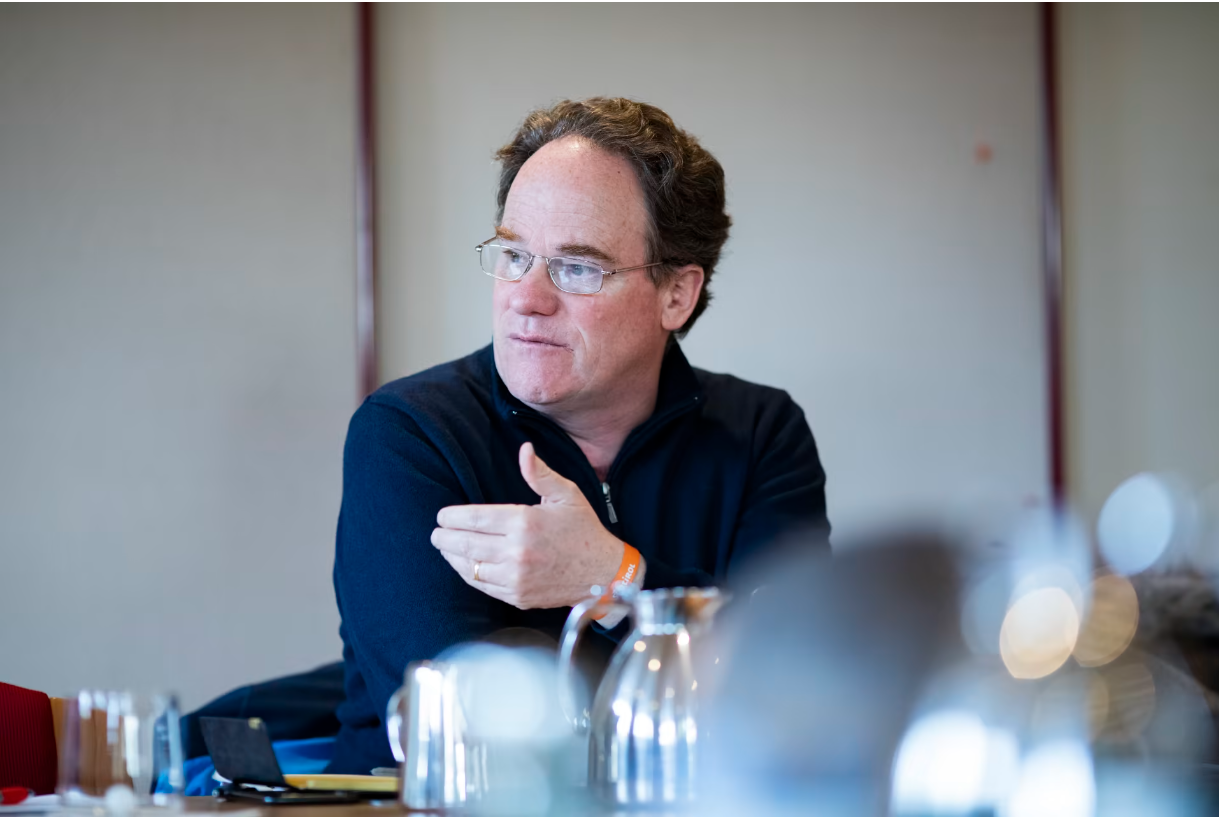
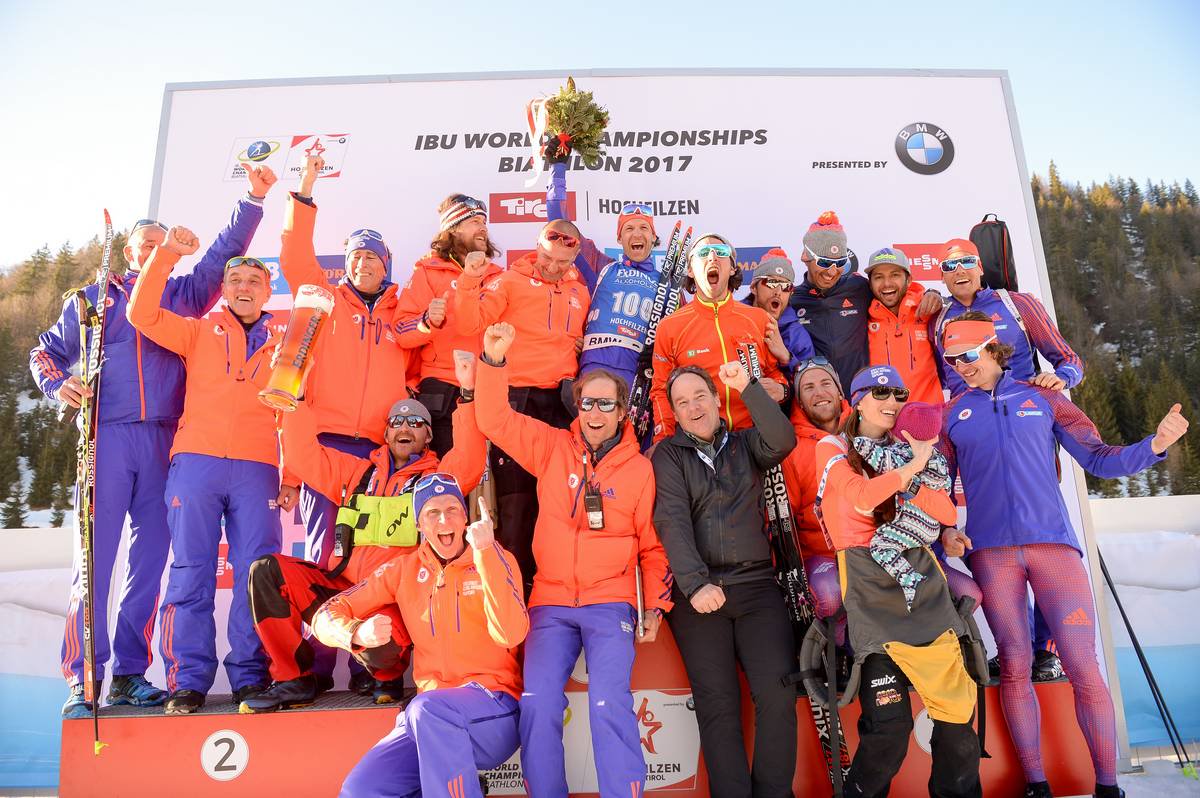
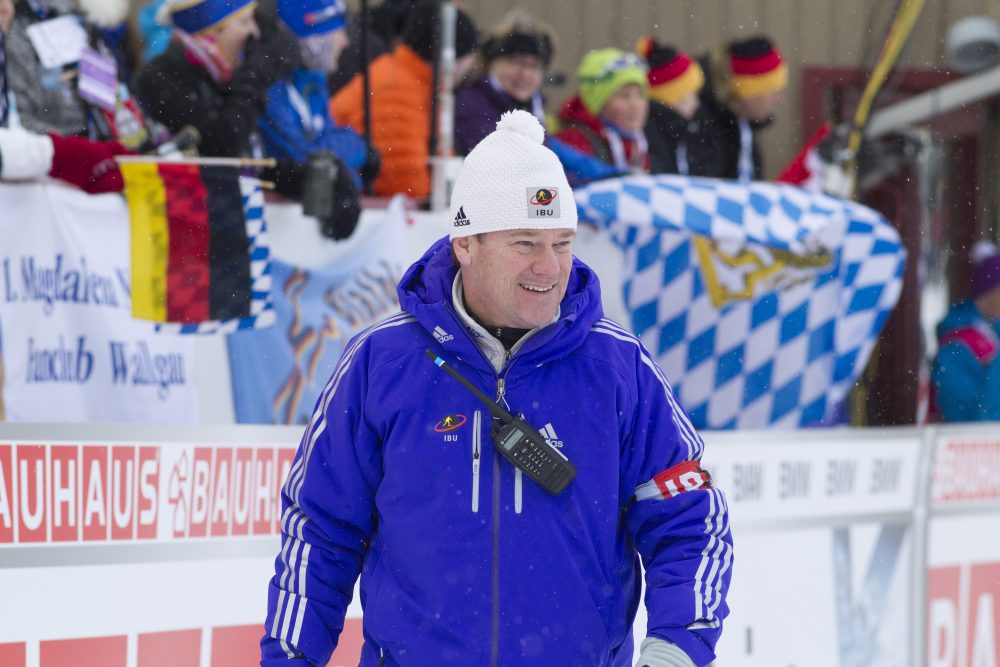
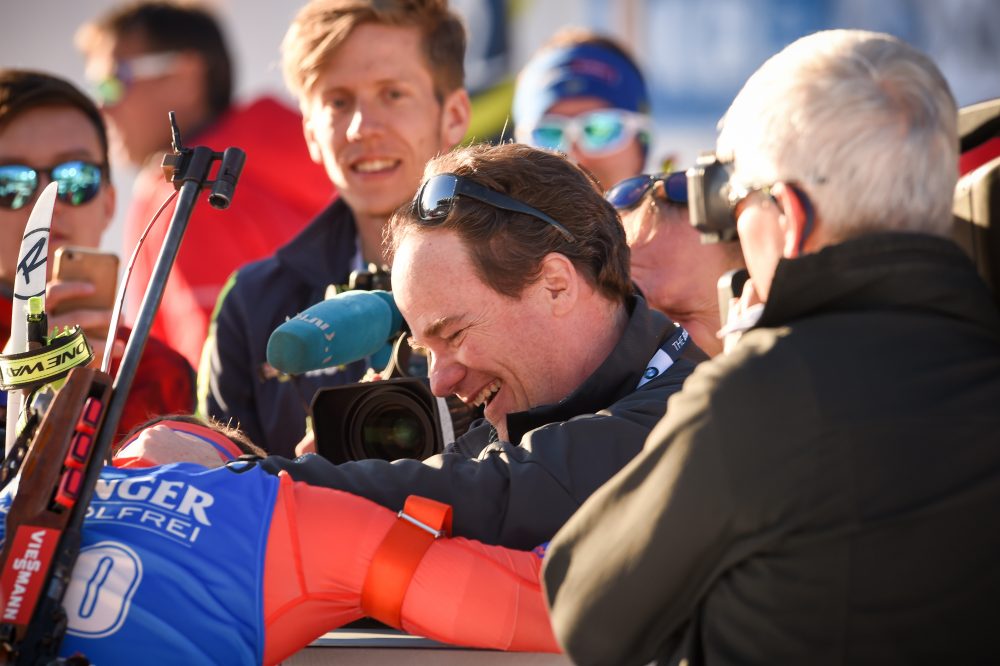

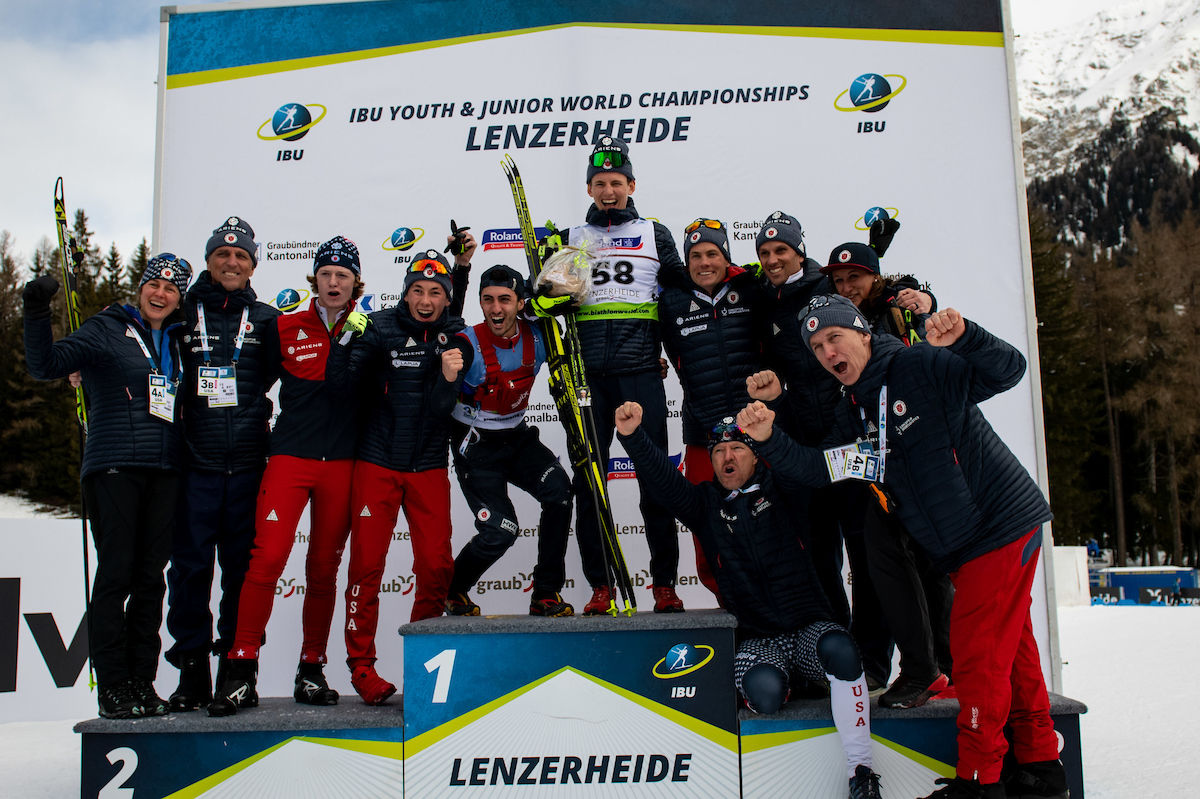


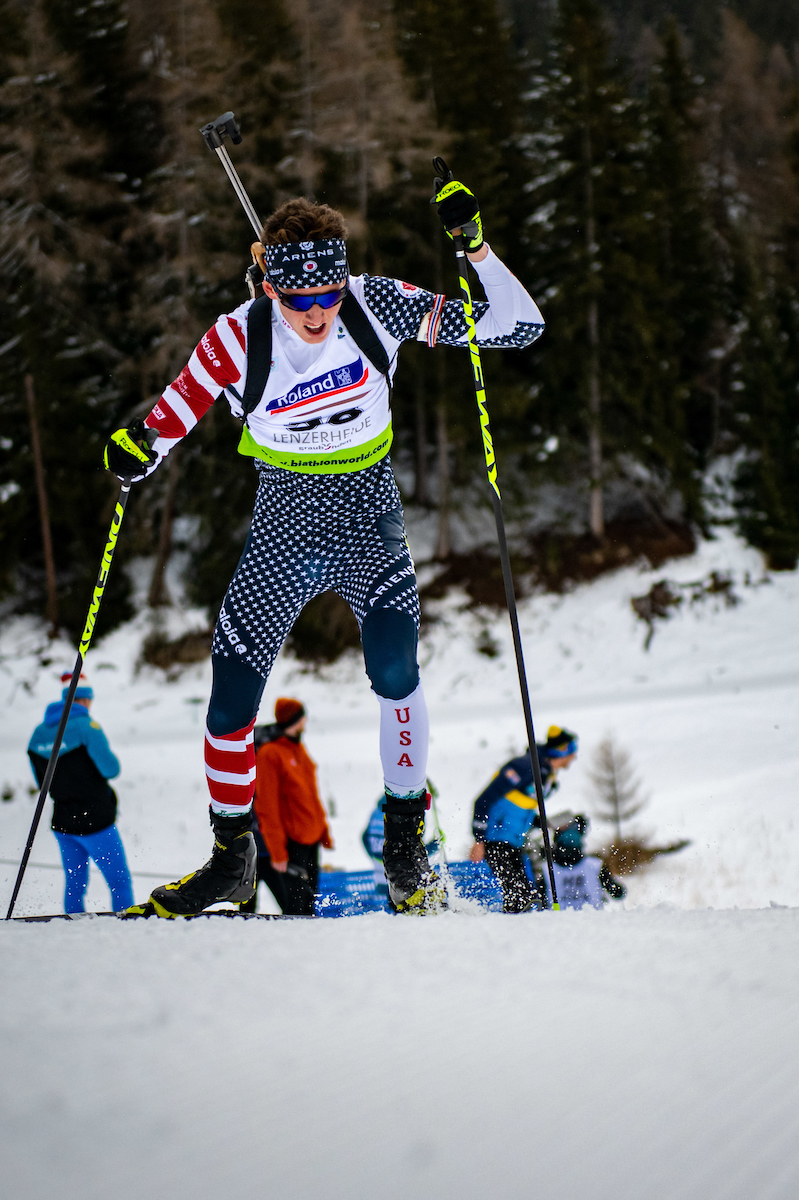
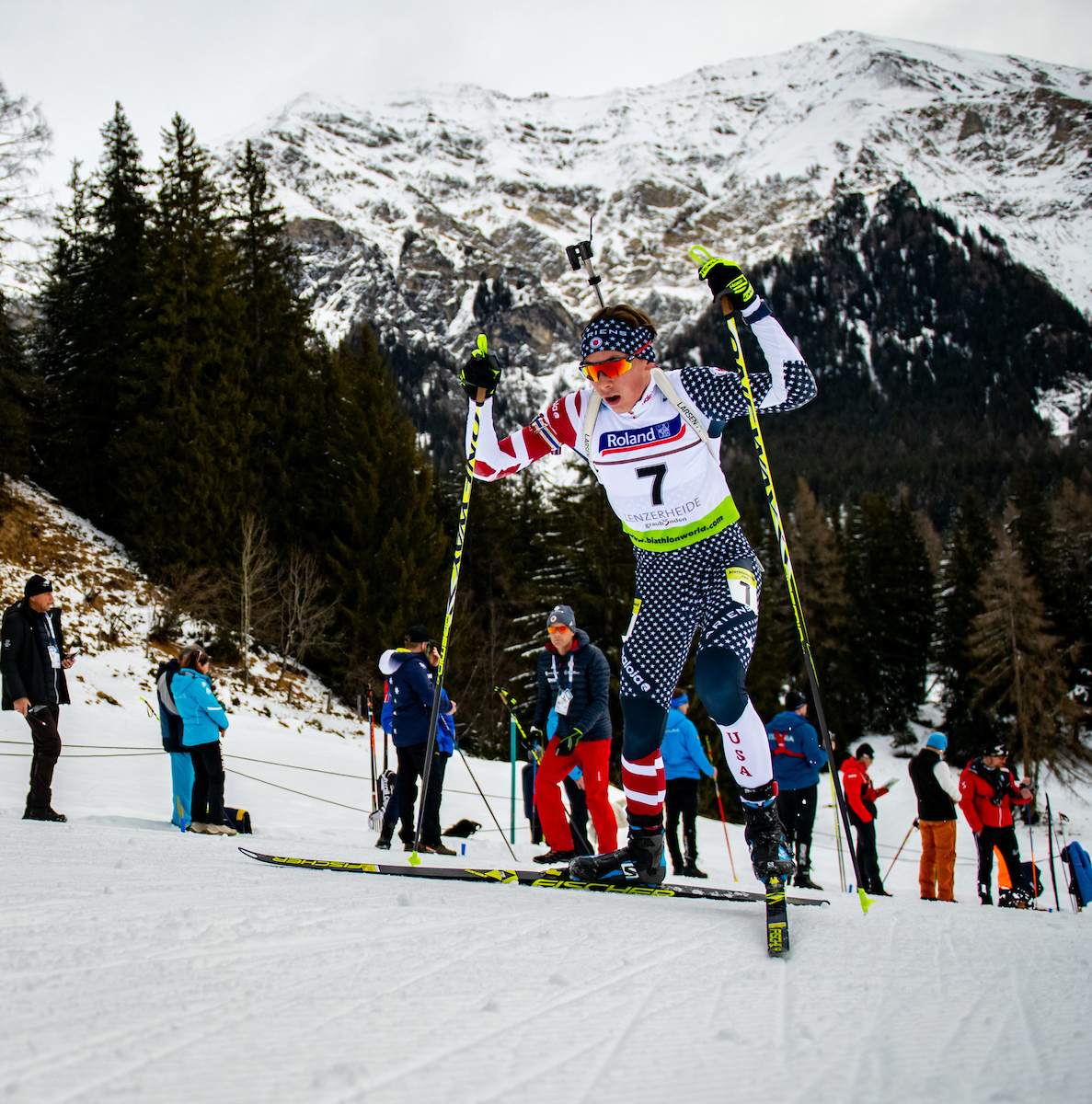


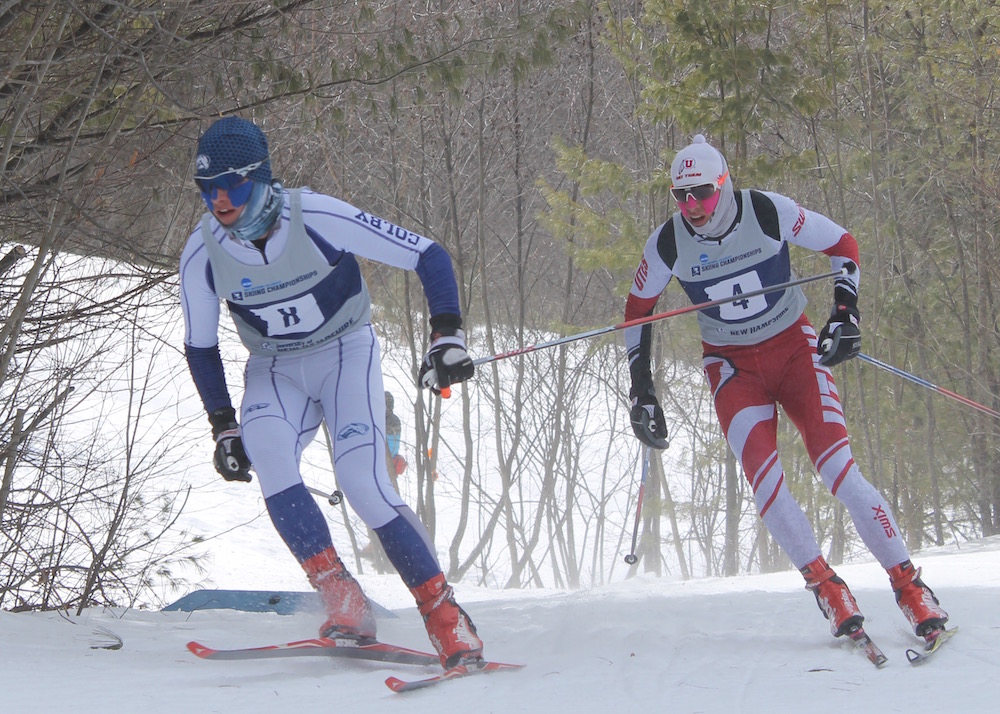
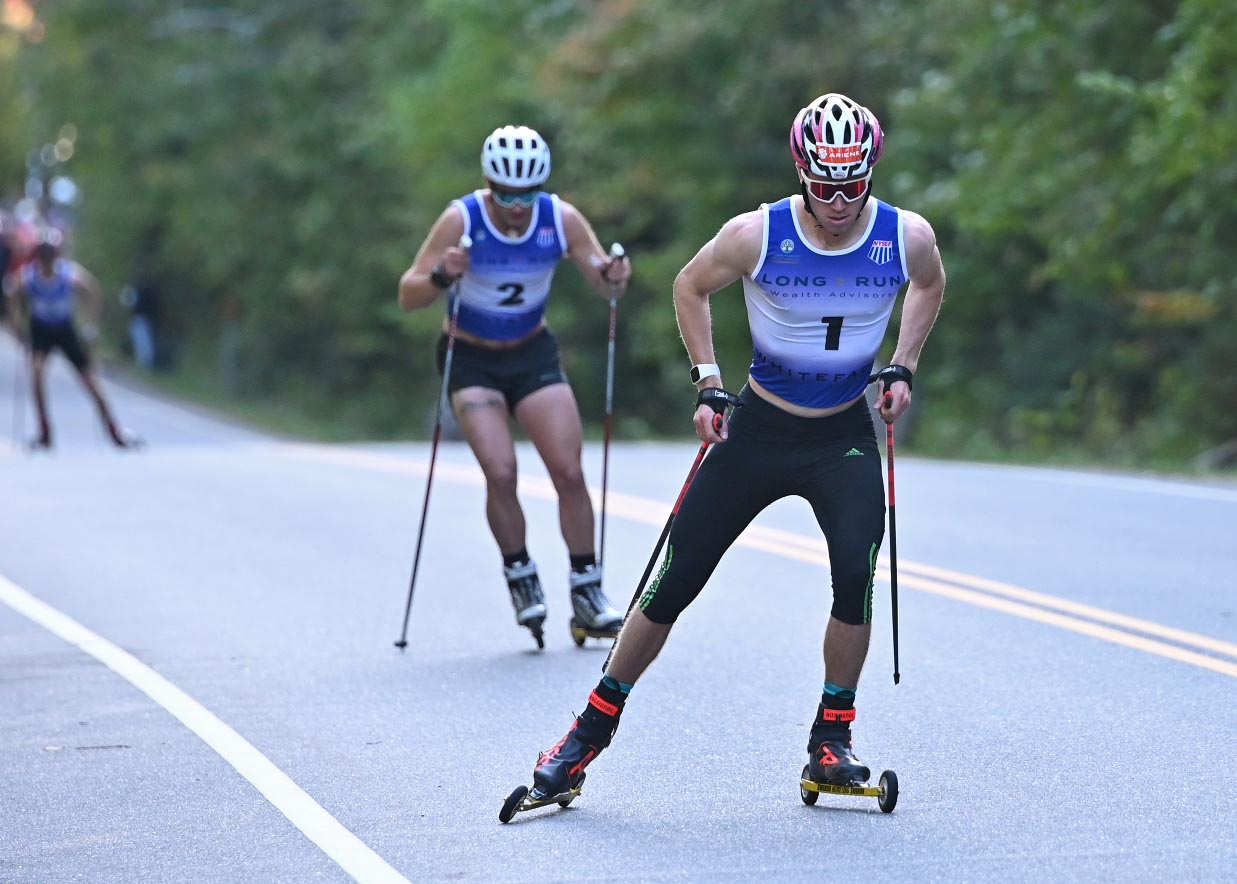
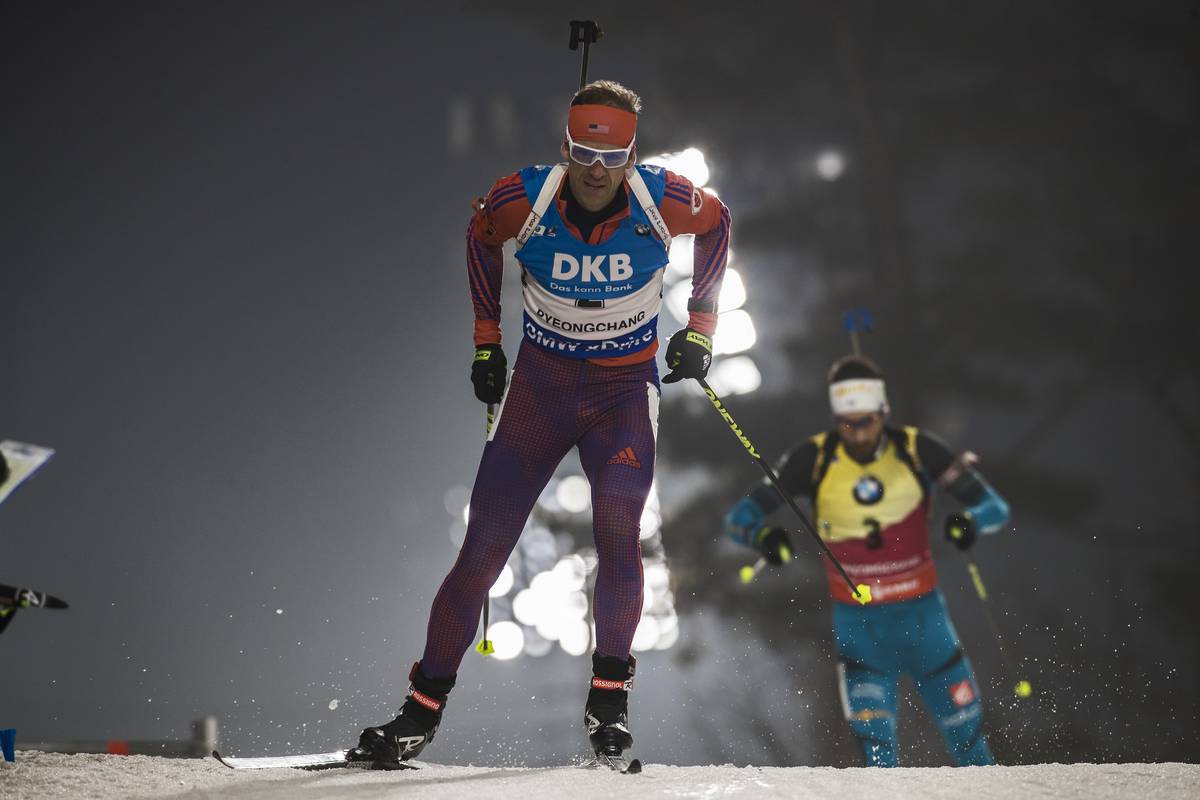
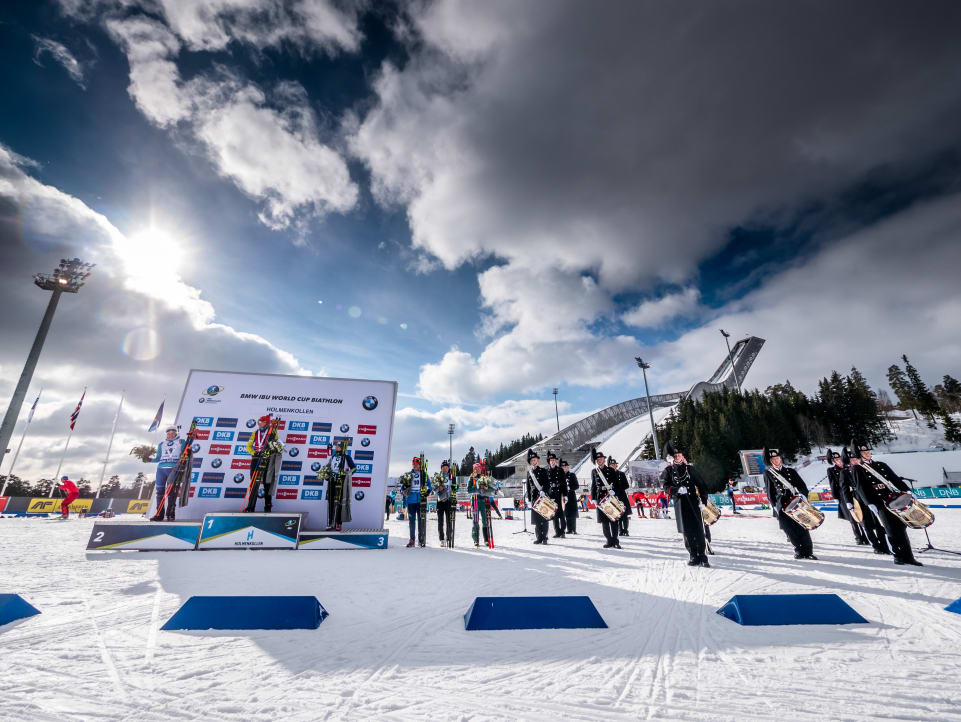

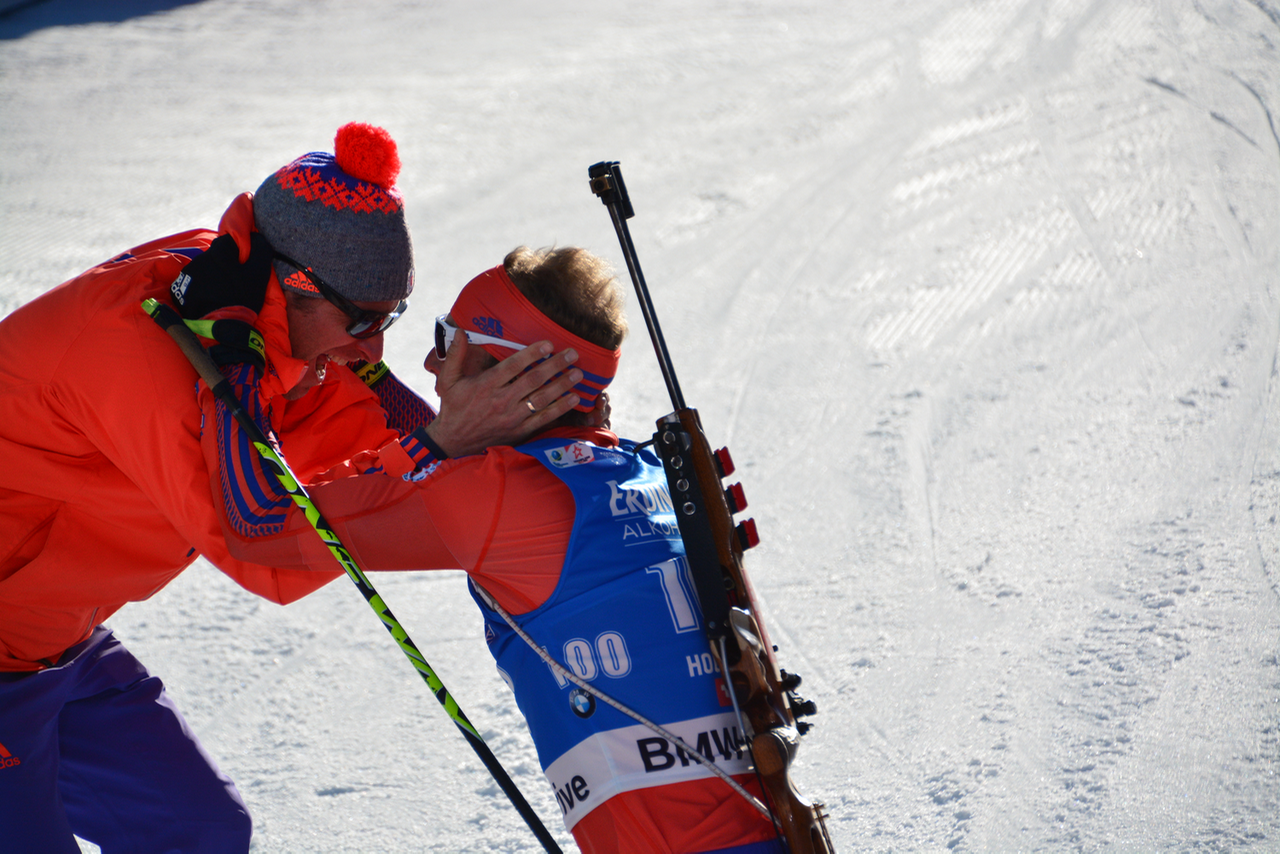

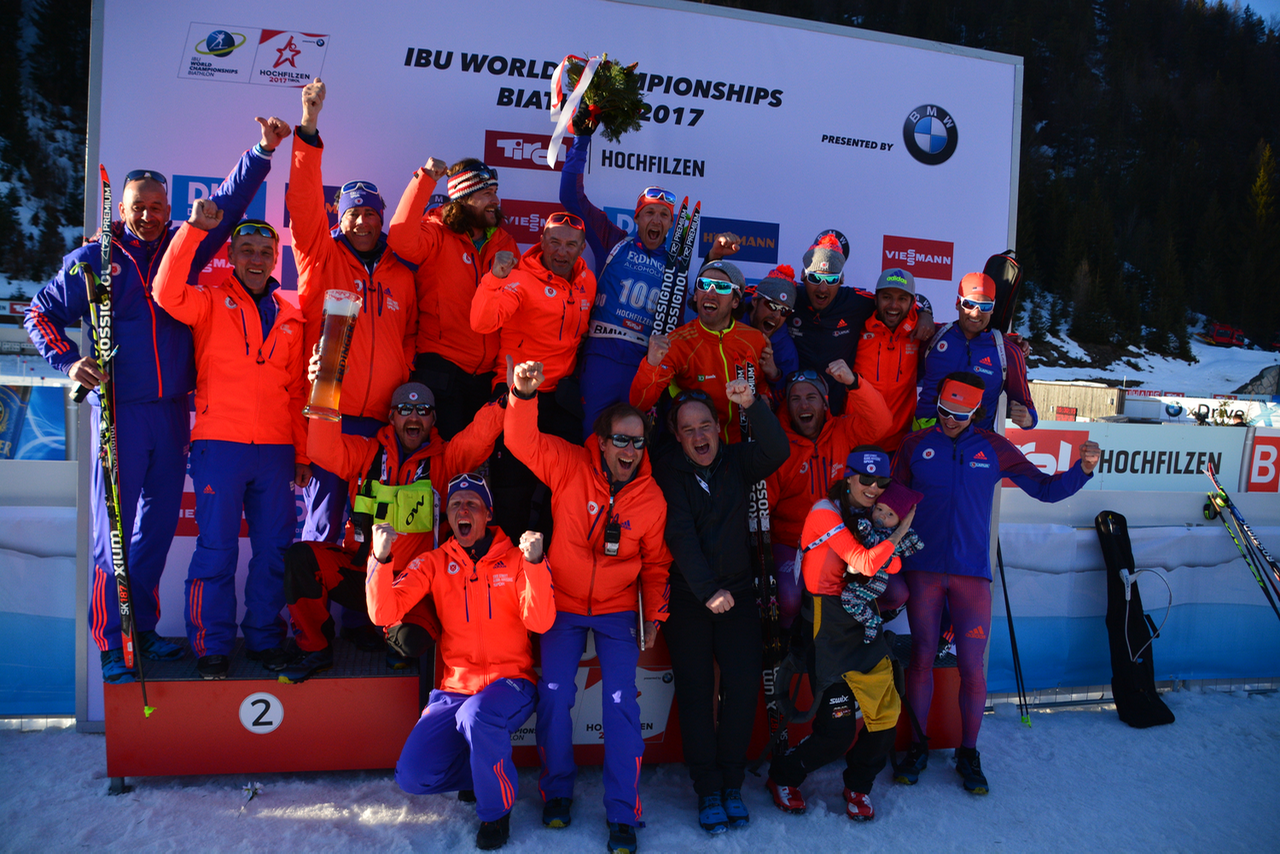

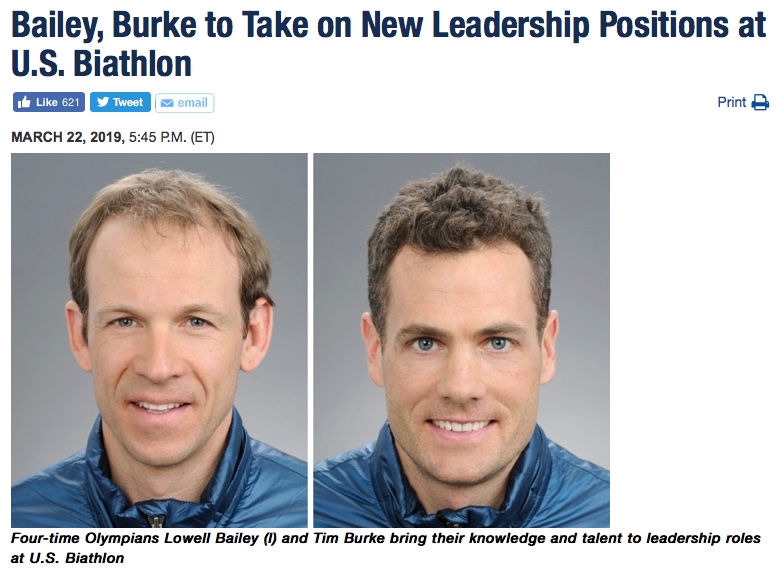

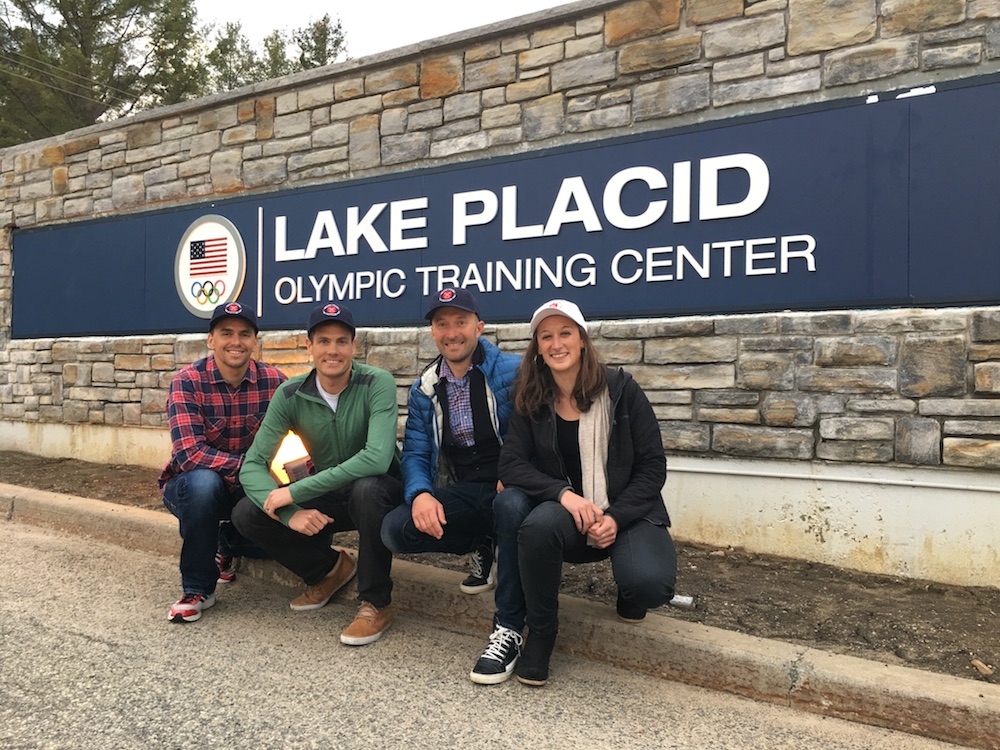
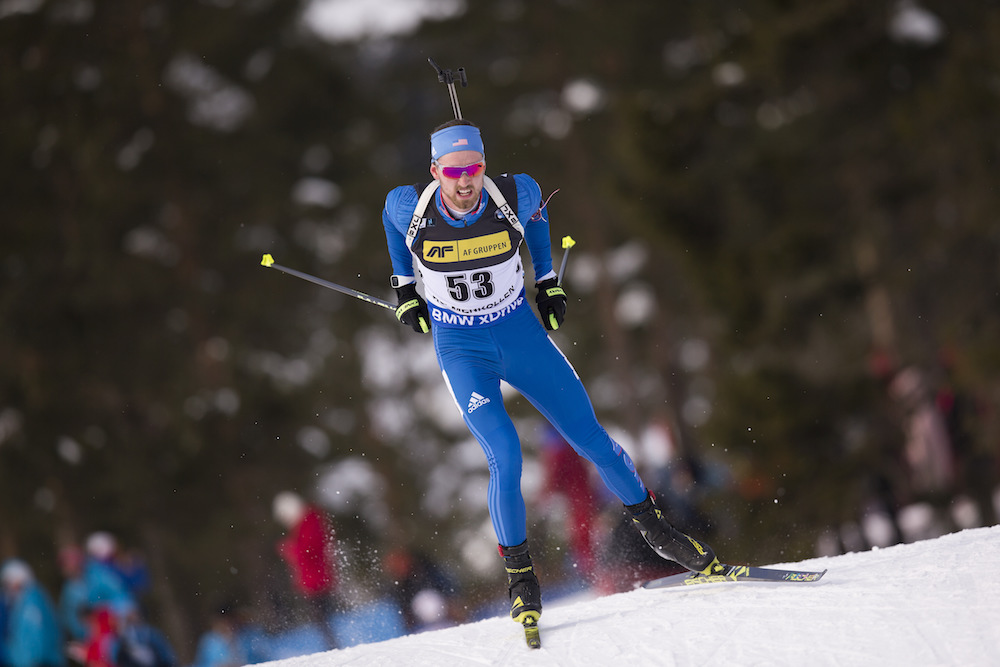
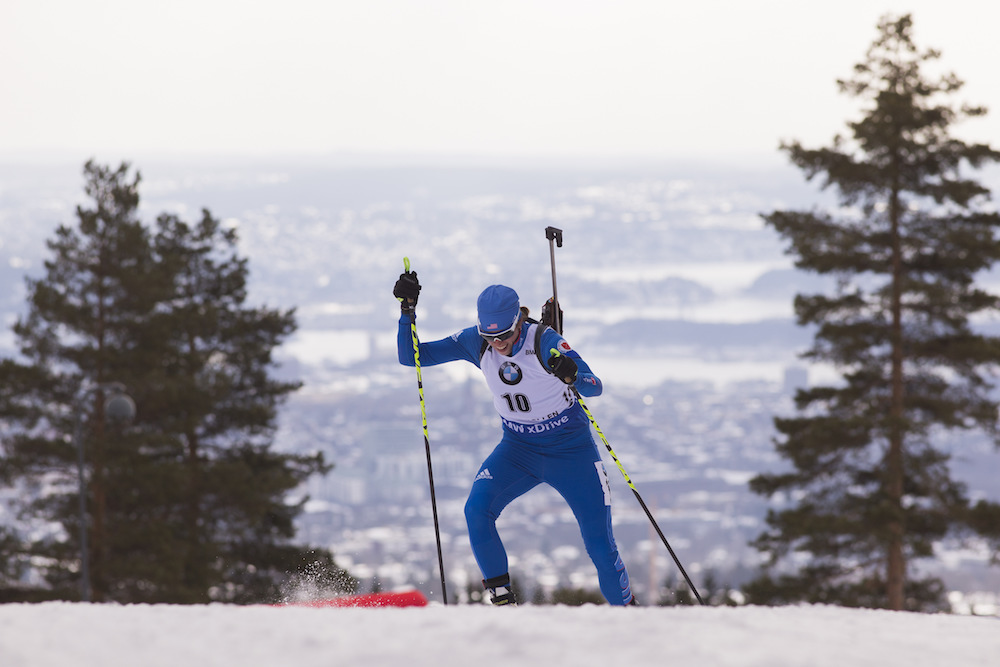
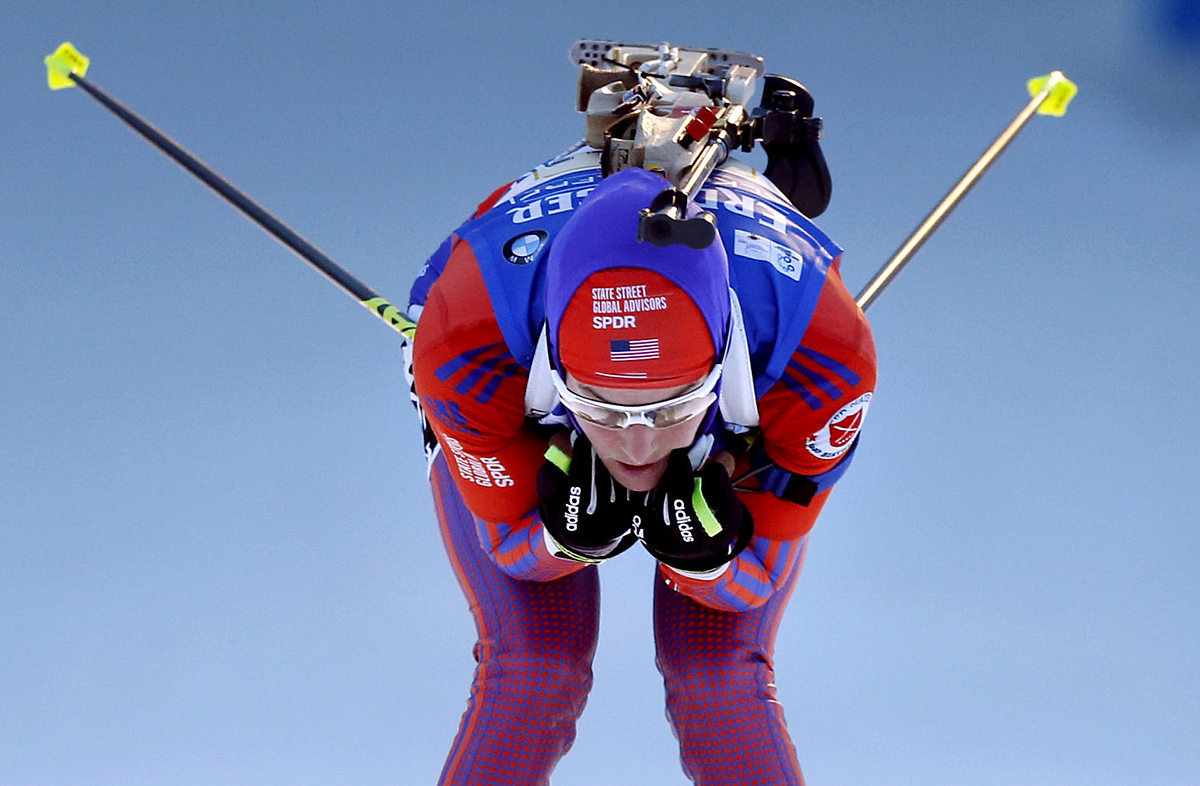
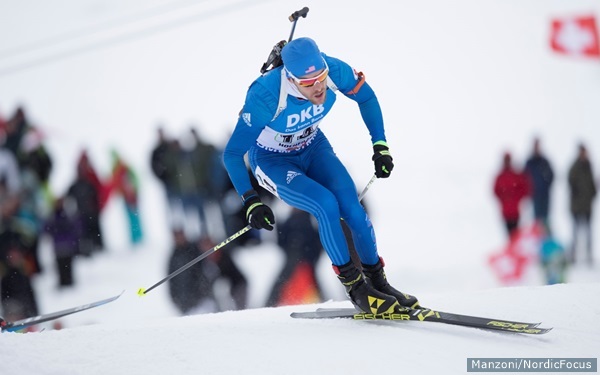
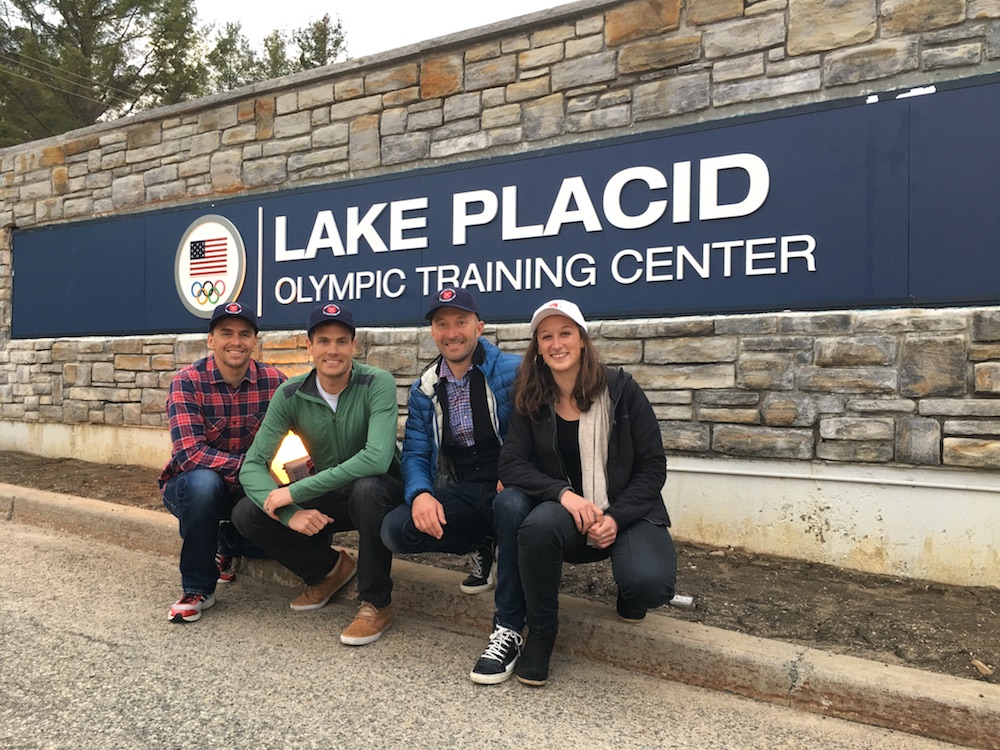
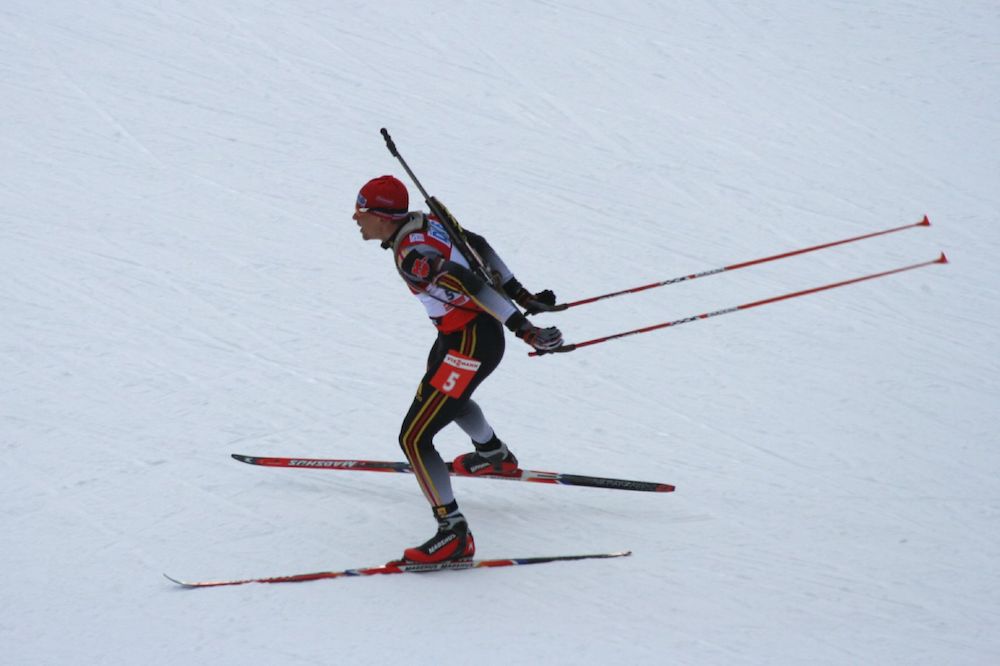


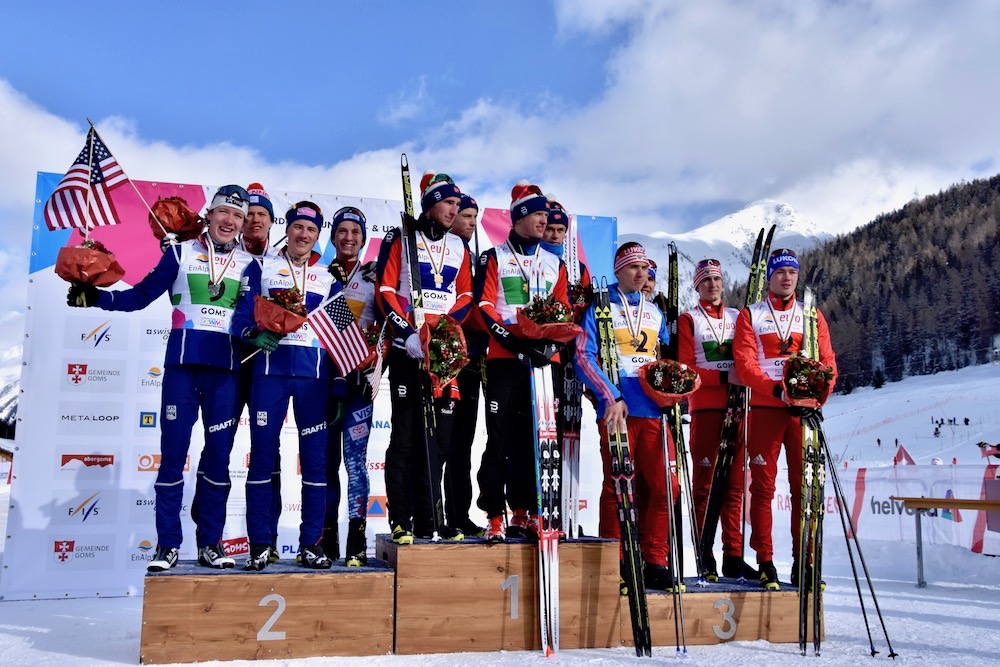
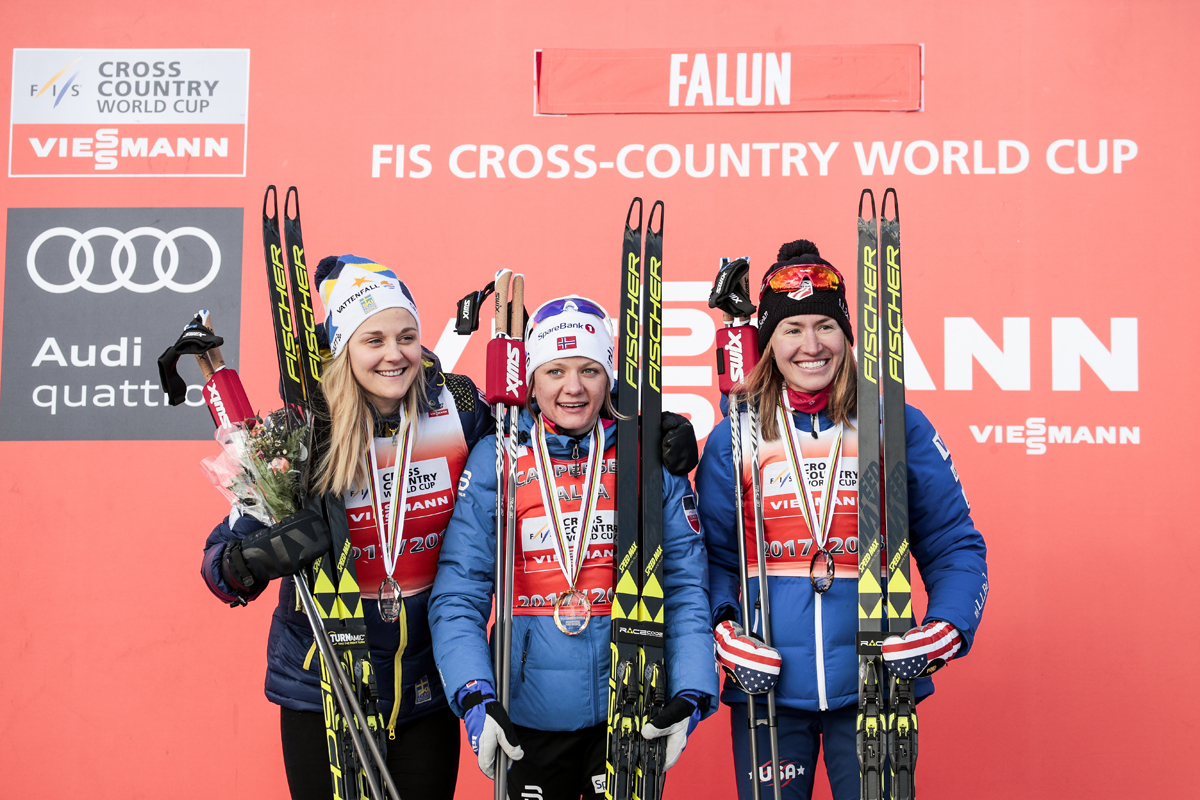
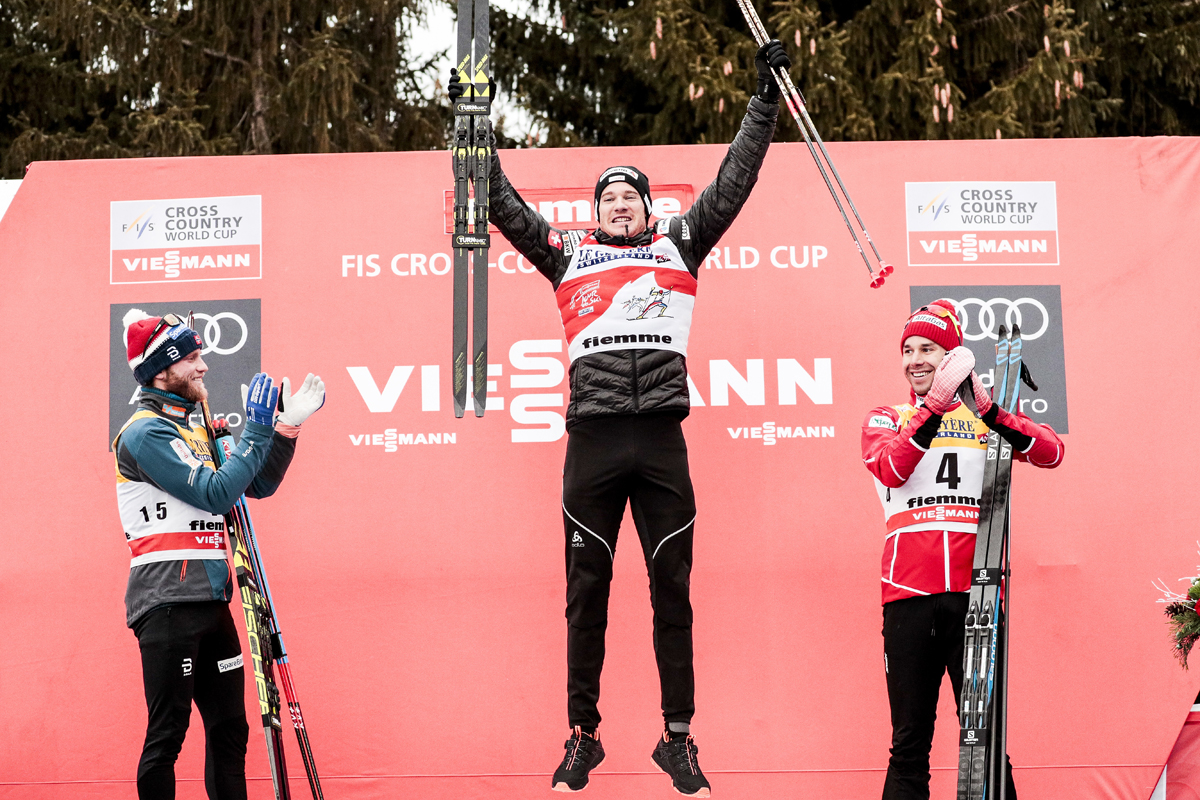
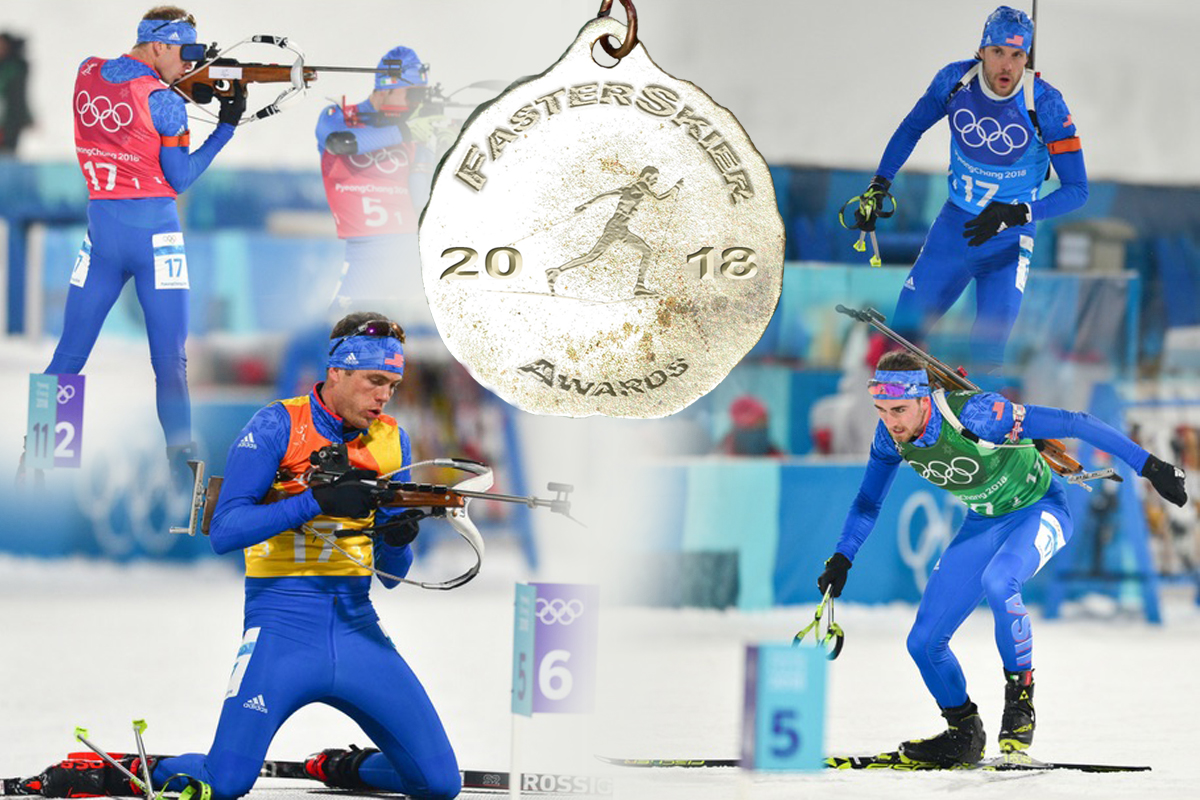
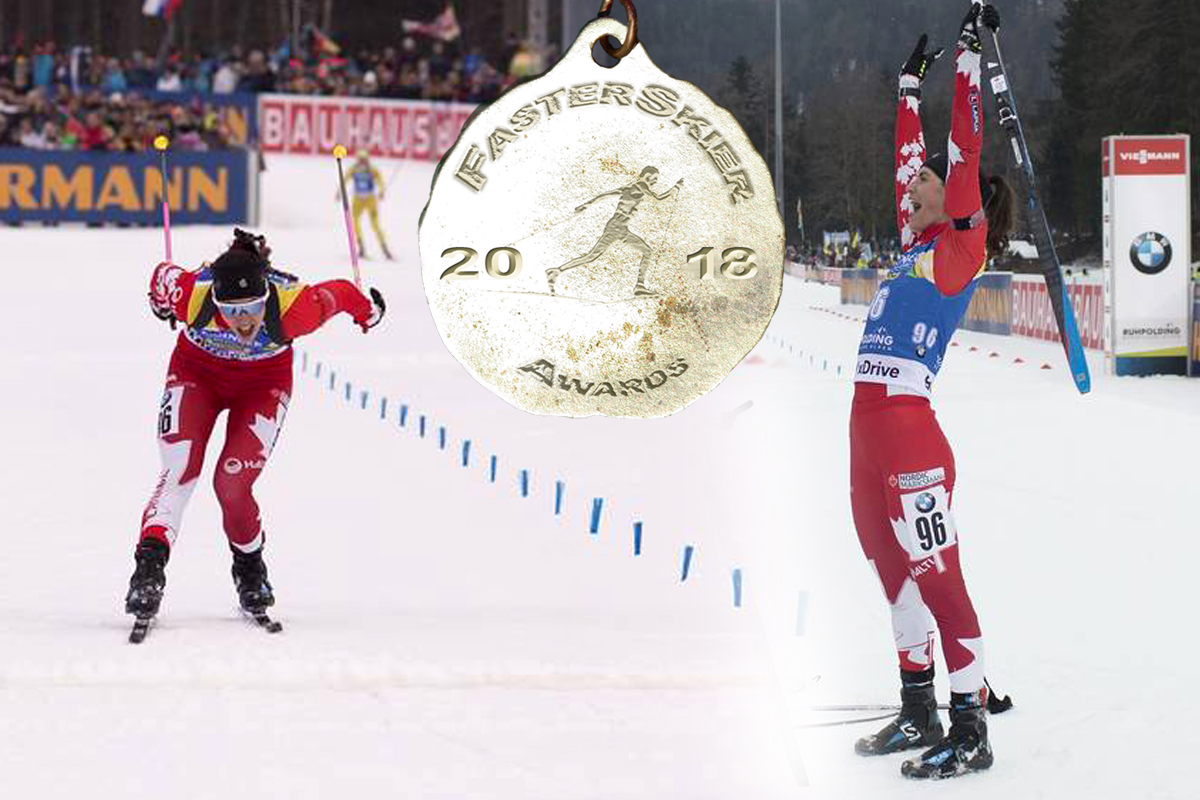
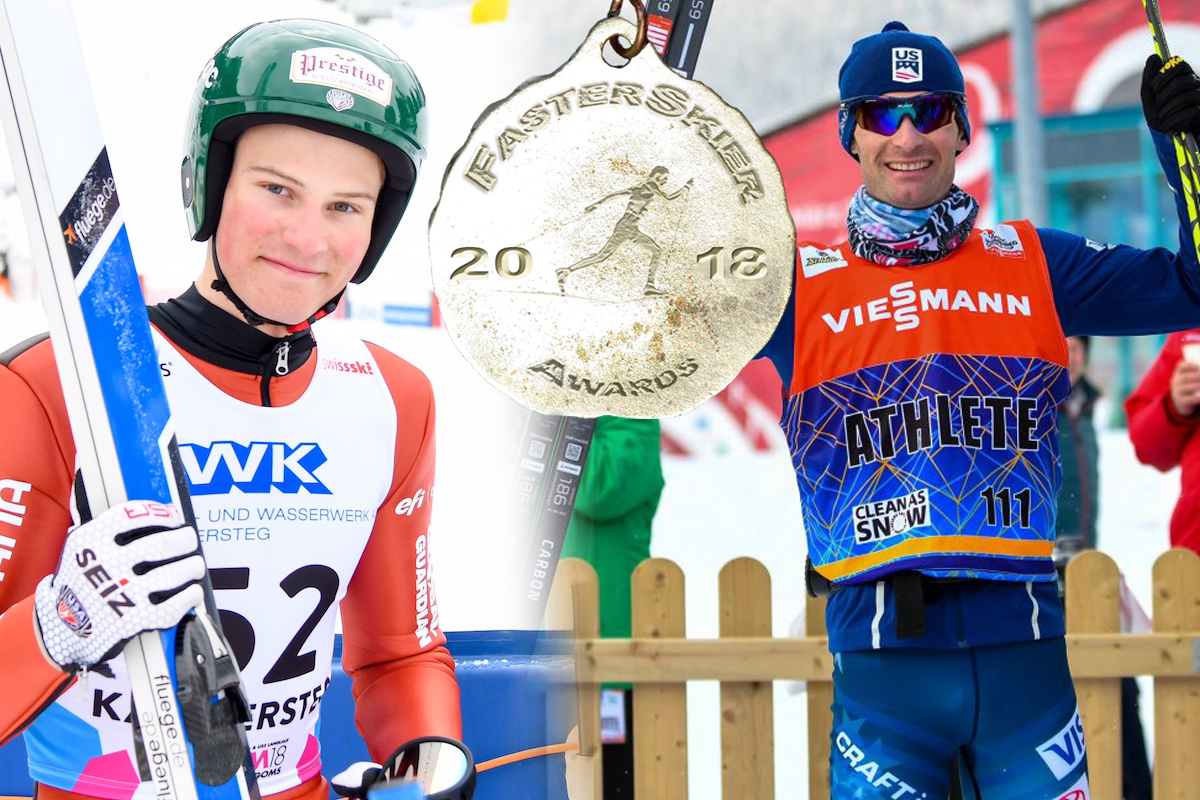
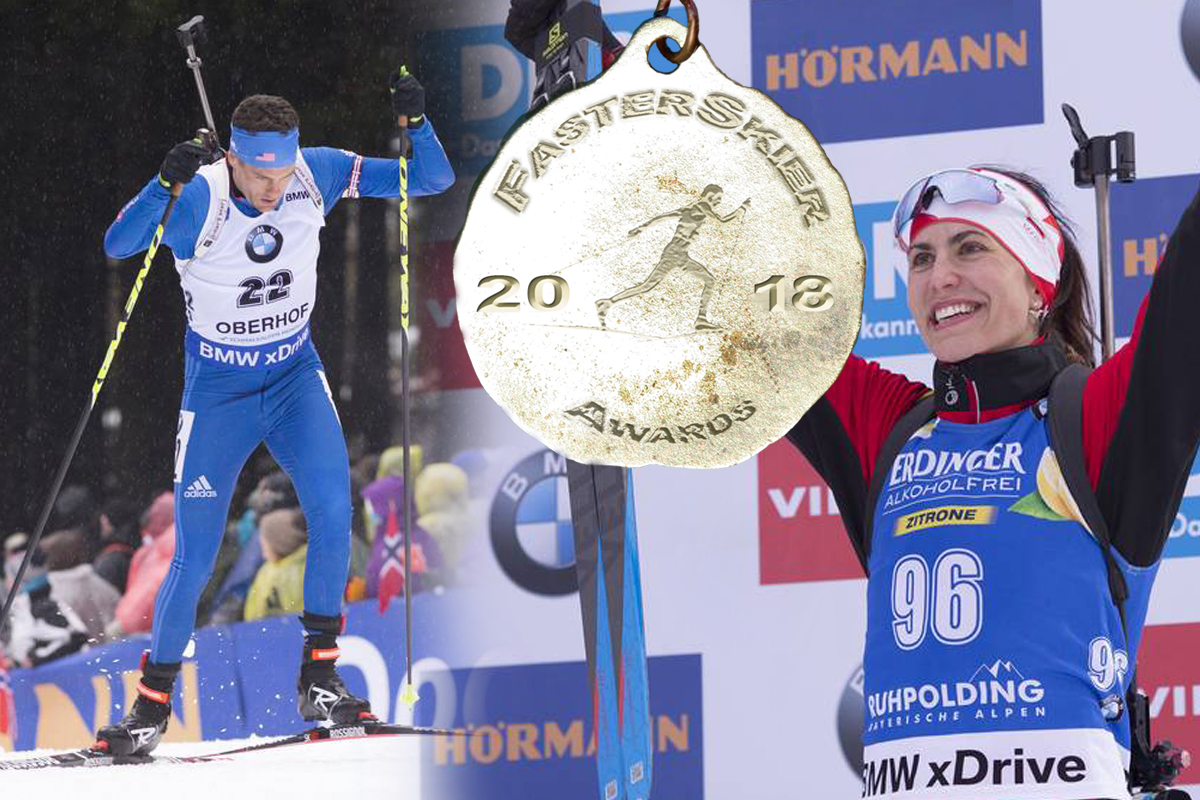


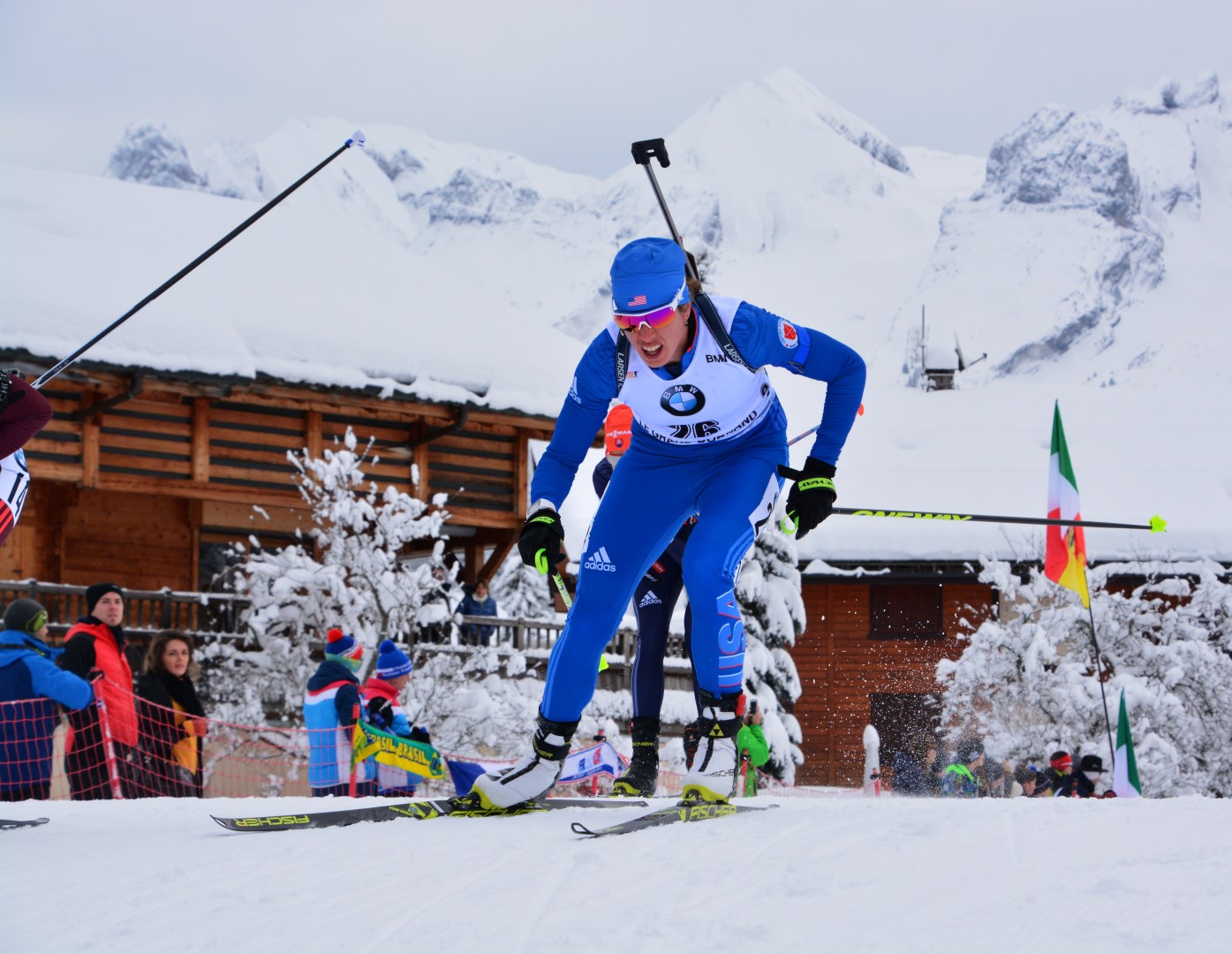

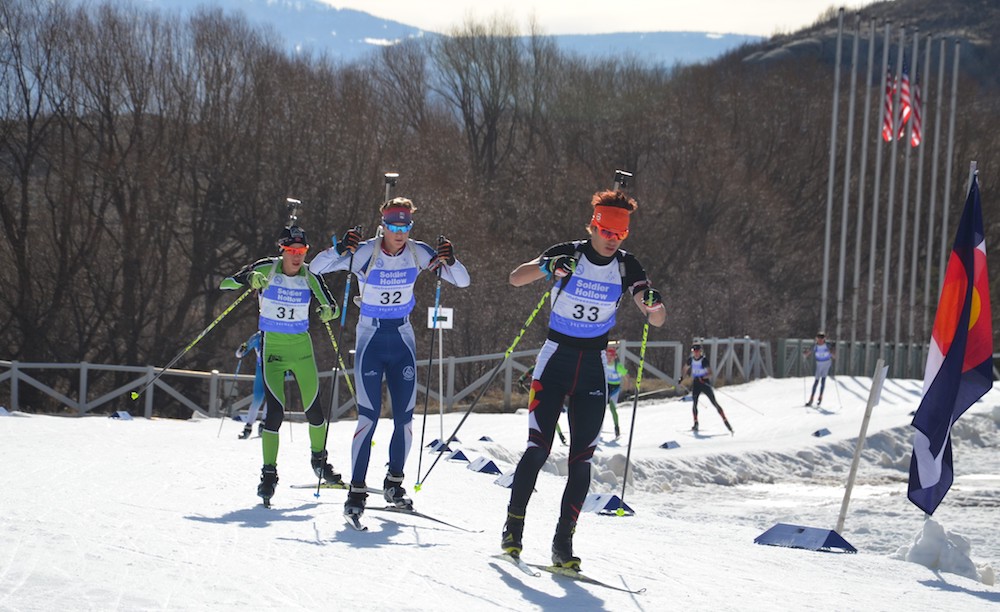
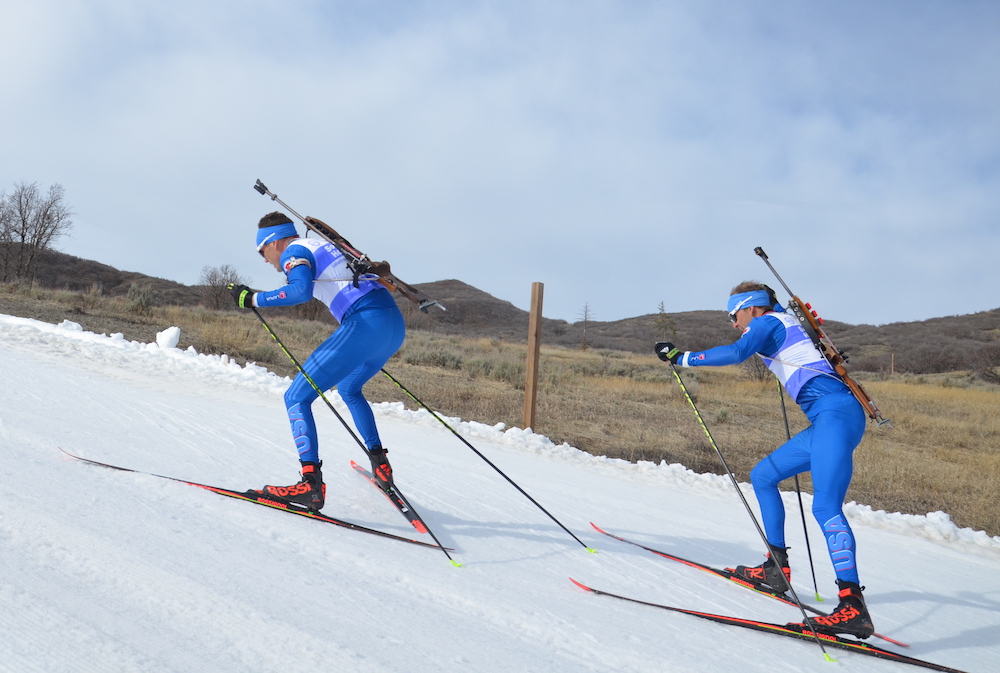
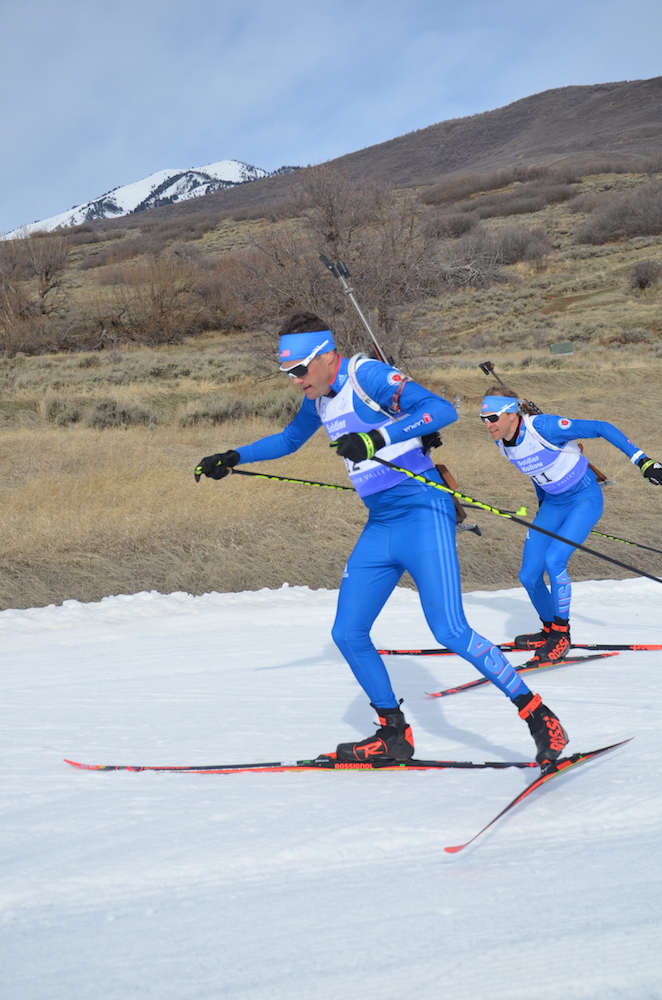
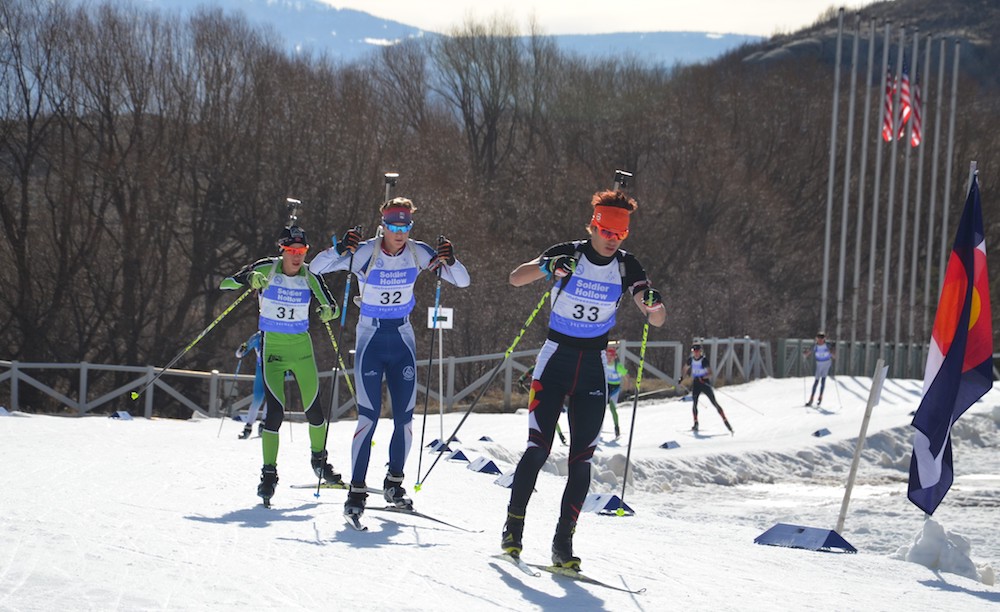

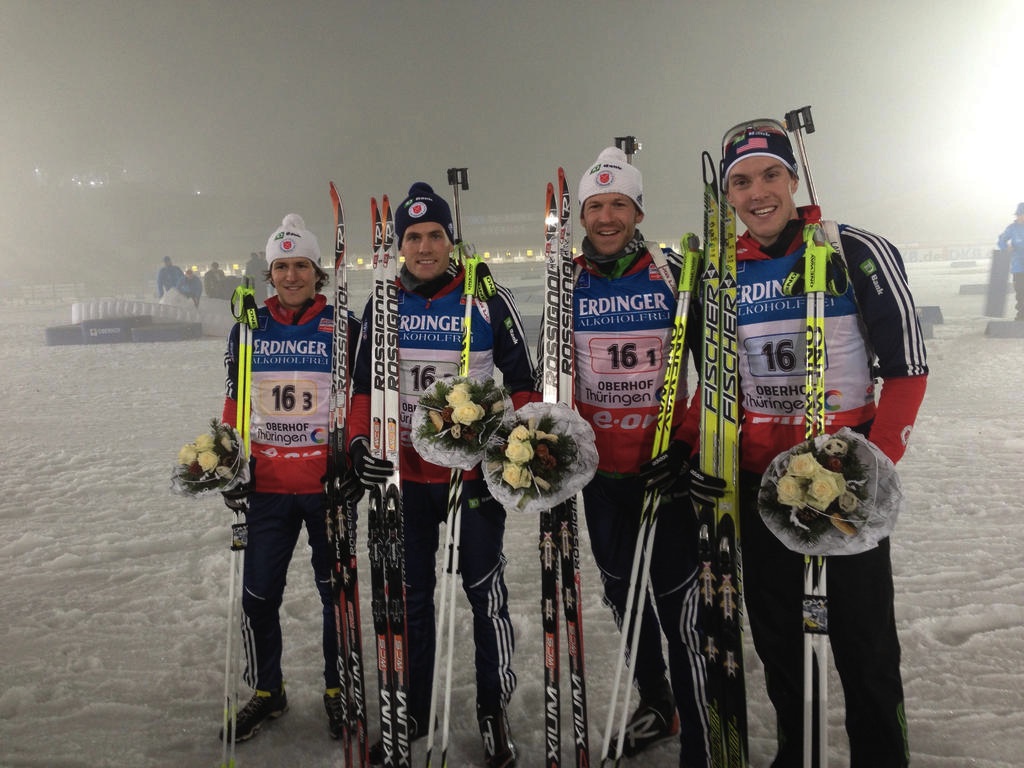
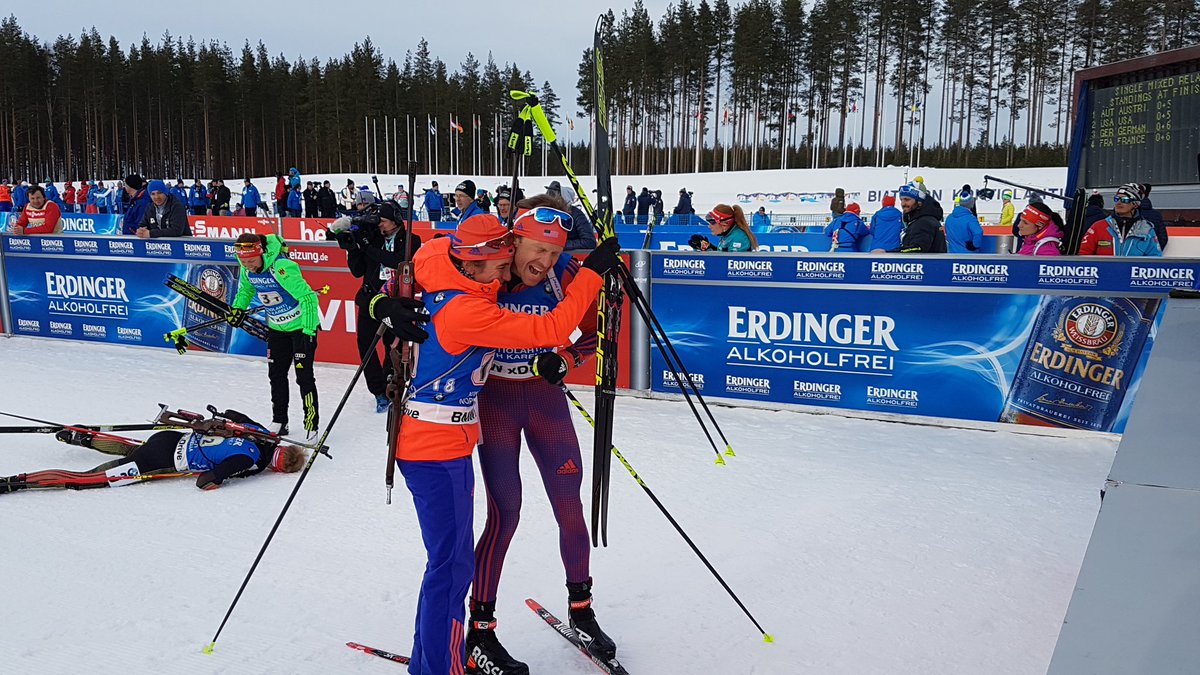
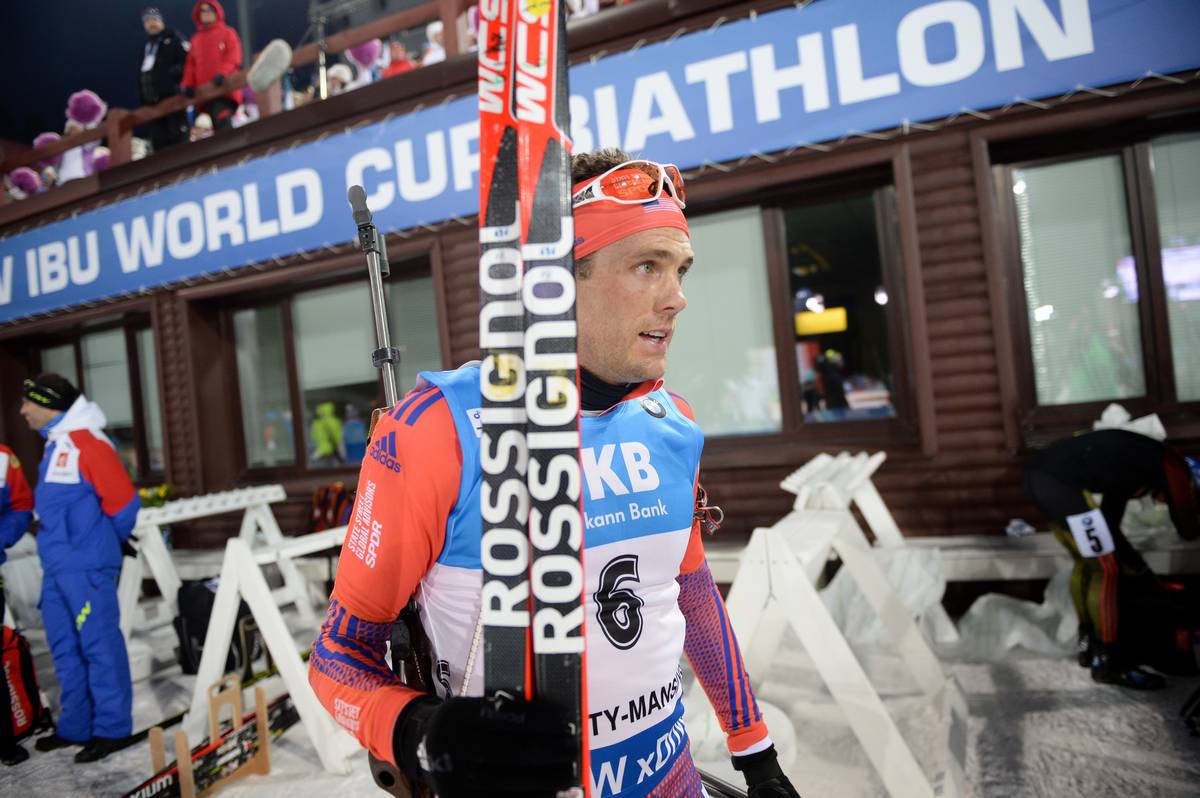
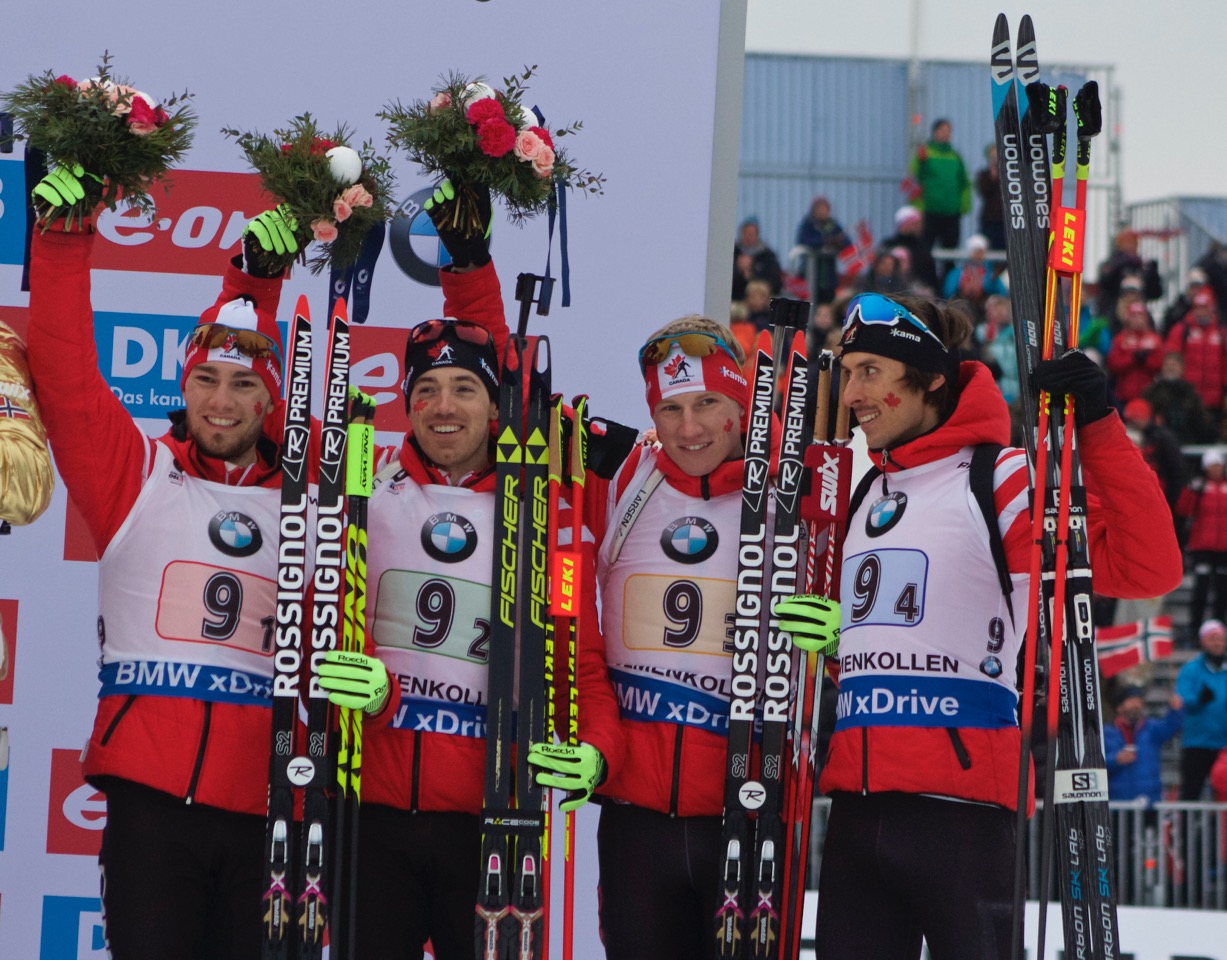
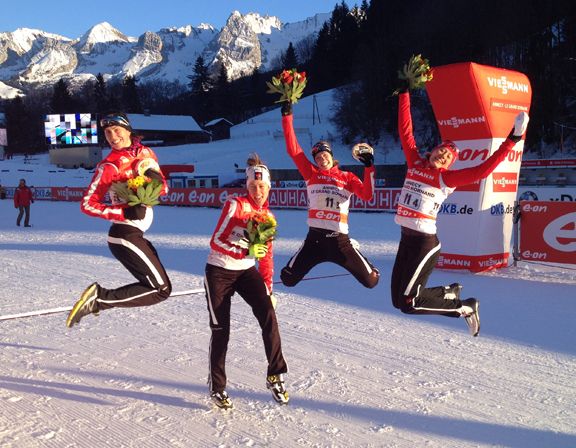
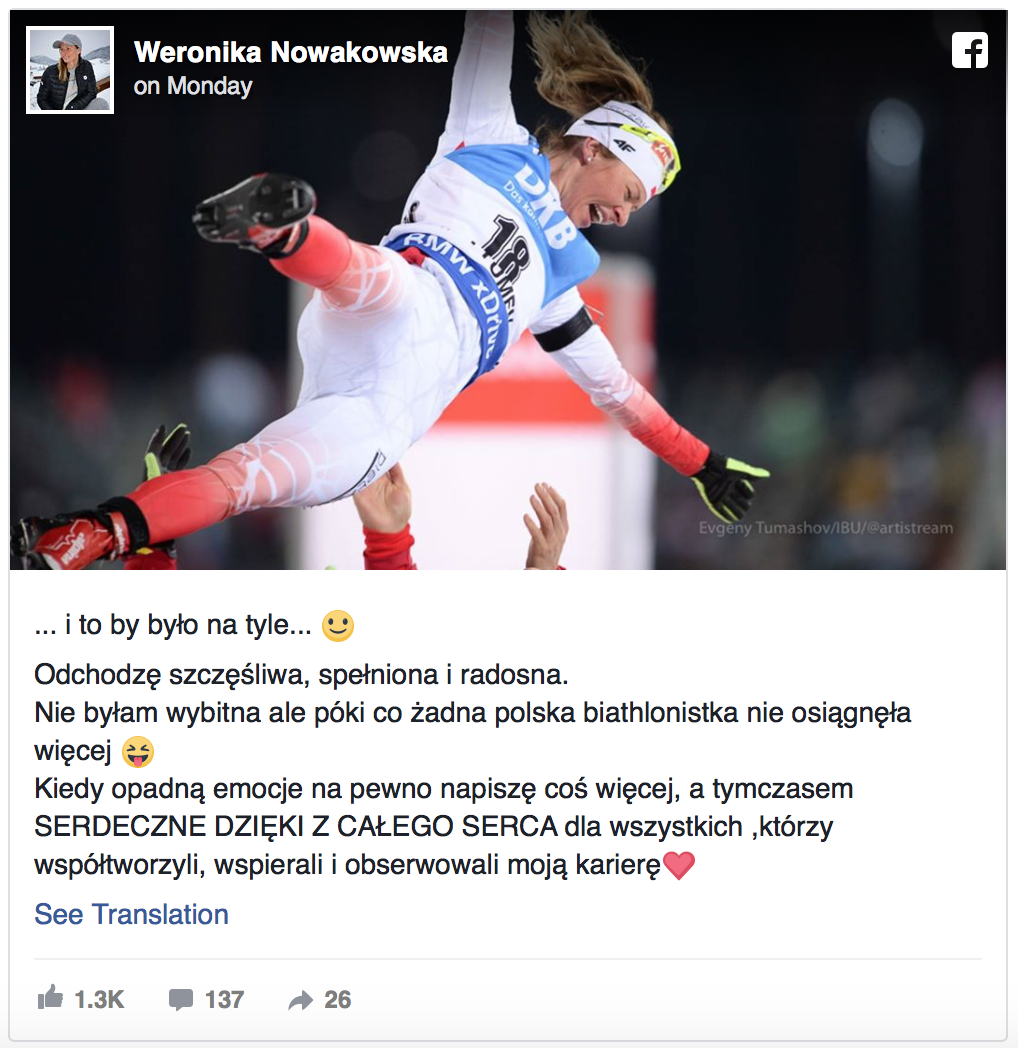 Weronika Nowakowska is calling it a career. The 31-year-old picked up two World Cup podiums in the 2015 season before taking a break from competition to give birth to twins. She made a successful return this season and represented Poland in PyeongChang, with a top finish of 21st in the individual. She also had sixth- and fourth-place finishes on the World Cup this year and contributed to four different top-eight relay efforts, including one at the Olympics.