From the FasterSkier archive — posts syndicated from athletes’ and coaches’ own blogs between 2004 and 2012, kept online as published. Current coverage is at fasterskier.com.

Tag: Tim Whiton

  • Whiton Heads Back to Maine To Lead University of Maine Presque Isle Skiers

    Whiton Heads Back to Maine To Lead University of Maine Presque Isle Skiers

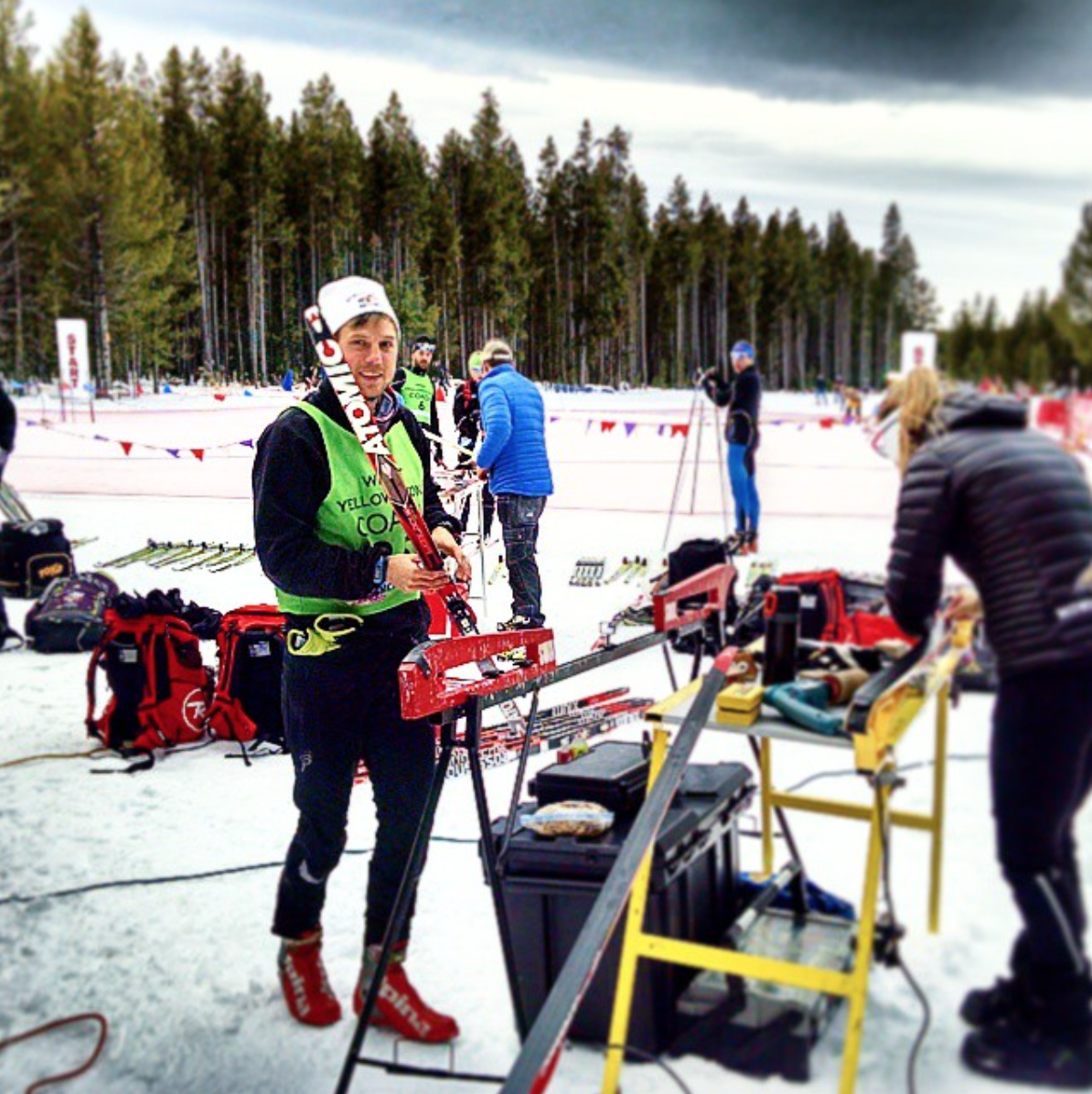
    Tim Whiton assisant coaching for Montana State University in West Yellowstone 2014. Whiton is moving to the University of Maine Presque Isle, where he will take over as head coach. (Courtesy photo)

    A Mainer for most of his life, Tim Whiton jumped on the chance to take his first college head coaching job back in his home state. It wasn’t just the chance to move back to New England that snagged his attention. As Whiton heads to the University of Maine Presque Isle (UMPI), he is also excited about trying to build up a program that has seen four other head coaches come and go in the last ten years.

    “Honestly, if you are a college skier and you like to ski and you like to train — and you actually like to ski, not just ski race — there is really no better place to be,” Whiton said. “You have two world-class facilities, one within five minutes, the other within 45 minutes. You have skiing six-plus months of the year, that’s unbeatable any place in New England. Long term, we are definitely looking at building that program to be competitive nationally.”

    Joey Bard, an UMPI alum himself, left as head coach this spring after two years with the program. Last season was a success for the team; the men took third place as a team in the 10 k classic at NCAA Regionals at Bates College, including a third-place finish by Connor Hrynuk, on a particularly warm and sloppy day.

    “I know that day was sort of an anomaly, but having talked to some of my other sources in Maine,  those guys are definitely really talented and definitely have been putting the work in,” Whiton said.
    “So hopefully results similar to that will be a little more consistent next year.”

    But UMPI often lands near the bottom of the results sheet at Eastern Intercollegiate Ski Association carnivals. They have no alpine team, which immediately means the Owls have only half the opportunity to score points. Last season, the team consisted of just six men and one woman, further hampering their ability to score points in the women’s races.

    It’s also a question of results. In the last five years, just six Owls have landed on the EISA ranking list, and the only one who actually qualified for NCAA Championships – Eirik Fosnæs – transferred to the University of New Hampshire the following year.

    So to build a program that is competitive nationally, Whiton has to do several things. One is to get more skiers. With last season’s sole female team member, Lydia Streinz, graduating, an immediate focus is to grow the roster.

    “We have two or three [women] who will definitely be there as freshmen, and a couple others I’m reaching out to right now to try to convince them to commit,” Whiton explained. “And a couple other boys. So the team will automatically be bigger than last year, and younger. Right off the bat, the goal is to fill some roster spots.”

    The second goal, then, is to raise the program’s results.

    “We want that program to be one of the best programs in the country,” Whiton said. “That’s a pretty lofty goal for any school in Maine to be saying that, especially Presque Isle, but the facilities are there.”

    As one strategy, he will be recruiting from nearby – “certainly, we want to give opportunities to Maine skiers” –  but also nationally. In years past the team had a strong contingent of athletes originally from the Midwest, but last season five of the seven members were from in-state. Whiton believes that the lure of lots of snow and world-class training should again draw student-athletes from outside the state.

    To help skiers make progress in training and racing, Whiton will also rely on a sports physiology laboratory that his wife, who is currently finishing her PhD, will eventually set up at the University.

    Whiton has had several bosses to learn the coaching ropes from. He graduated from Bates College in 2009, and since then has had two stints of assistant coaching at Bowdoin College under Nathan Alsobrook. He also coached the Gould Academy high school program in southern Maine, and while living in Bozeman, Montana, served as the assistant coach for Kristina Trygstad-Saari during her year of tenure at Montana State University (MSU).

    “I was pretty psyched to start with the MSU team,” he said. “We had two first-team All Americans that year, it really made me realize how much I enjoy [coaching], and not to toot my own horn too much, but that I was good at it. It was an awesome opportunity. It was a bummer that Kristina didn’t stay because I was excited about working there for a couple of years.”

    Whiton will be serving double duty as both ski coach and admissions officer, and he has already thought about why the school should seem attractive to potential athletes and students.

    A big reason is economic.

    “To be able to get a scholarship to ski out west, you have to be one of those athletes who is competitive with the European skiers,” Whiton said. “Or in the East, you have to be extremely competitive to ski at schools like Dartmouth or the University of Vermont, and/or you have to be able to afford it. Out-of-state tuition at the University of New Hampshire is over $40,000 per year, maybe $45,000. Presque Isle has really good academic programs, especially on the sports performance and athletic training side of things. It’s a great opportunity to save money and get a great education and then ski and ski race at a high level.”

    At UMPI, annual tuition for a Maine resident is currently $6,600, for estimated total costs of just under $18,000; for out-of-state students, estimated total costs are around $21,500.

    According to a university press release, U.S. News and World Report named UMPI among the 50 best regional colleges in the North, the 15 top public schools in the North, and the top ten regional colleges in the North in terms of graduates with the least debt.

    “I can think of a number of Maine kids in the last ten years who I know specifically, who could have developed into decent skiers, top-30s or top-20s at the EISA level, but they wanted to go to school in Maine and they couldn’t afford [private universities],” Whiton explained. “So they went to University of Maine, and they stopped ski racing. There’s a lot of potential to create more opportunities for athletes.”

    But even for without considering only those who already live in the state, Whiton also wants to tout northern Maine as a good place to put down roots (as he and his wife, Tara, are doing).

    “The opportunities in rural Maine are great for young people,” he said. “There’s not necessarily those concrete jobs, but the lifestyle and the community, if you want to be outdoors and you want a strong cohesive community, that’s all there. Having lived in a lot of parts of the country and a lot of rural parts, you see rural America just bleeding people slowly, especially young people… [but] if someone wants to be creative, there are endless opportunities to start small businesses, to plug into your community and really build something long term. I’m sure you remember with Maine Winter Sports, their goal was to use skiing as an economic engine for northern Maine. It’s sort of the same situation. We are trying to show people, especially young people, the opportunities that are there and how great it really is.”

    Whiton himself had one of his first experiences with serious ski training up in Maine’s Aroostook County, while he was still in high school.

    “The summer I turned 16, right as Maine Winter Sports Center got started I went up there for about two months,” Whiton recalls. “Pete Vordenberg was there, Dave Stewart, Holly Brooks, Eli Brown. They were the coaches for the summer. It was a small group of us. Mostly Maine kids, but a few from the Midwest. That was my first big foray into training year round.”

    Now, he will be leading young athletes towards senior-style training loads on that very same ground.

    “It is kind of a full circle,” he laughed.
  • Wednesday Workout: Early Season Race Prep with MSU

    Wednesday Workout: Early Season Race Prep with MSU

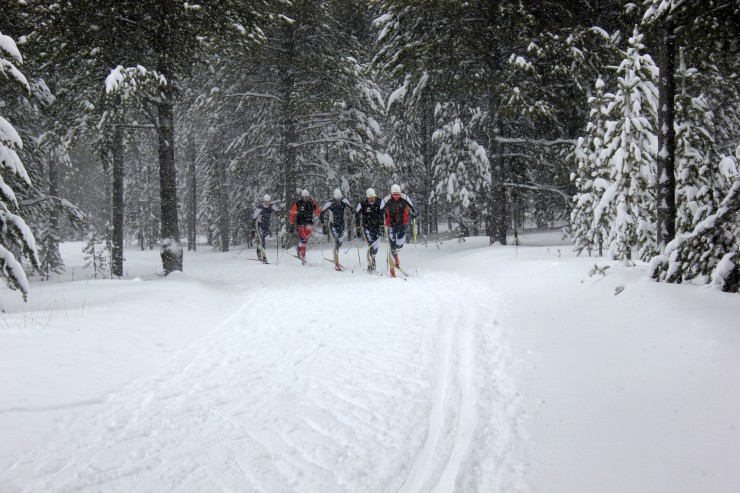
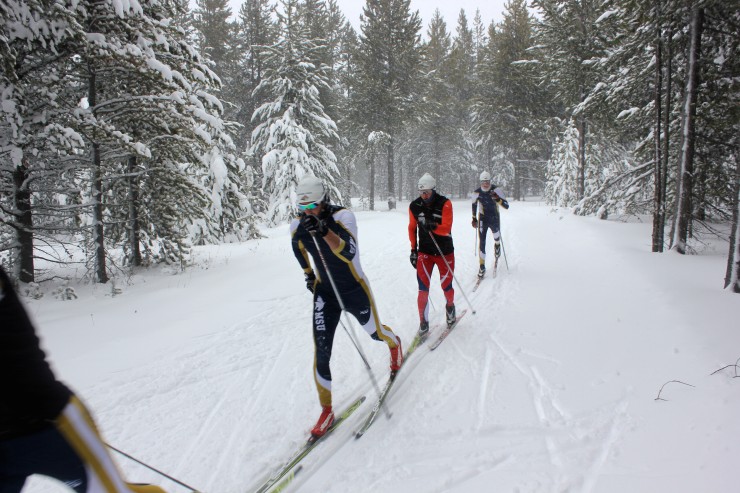
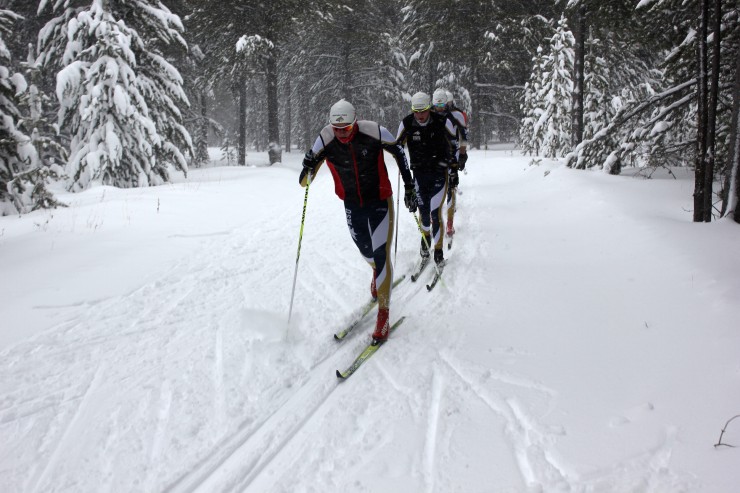
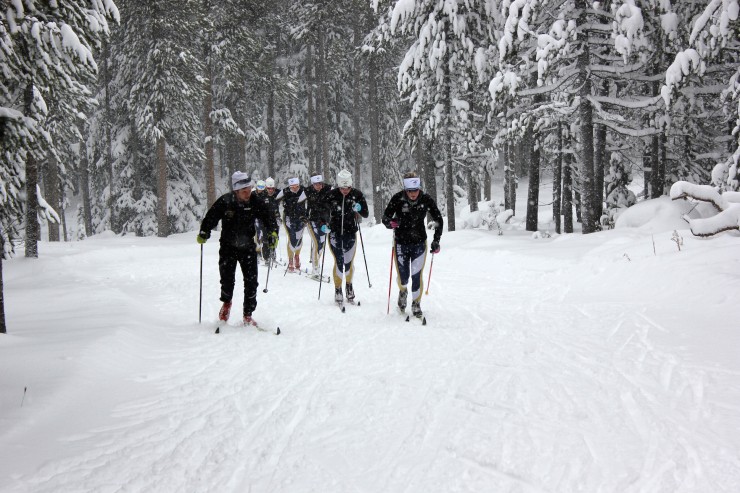
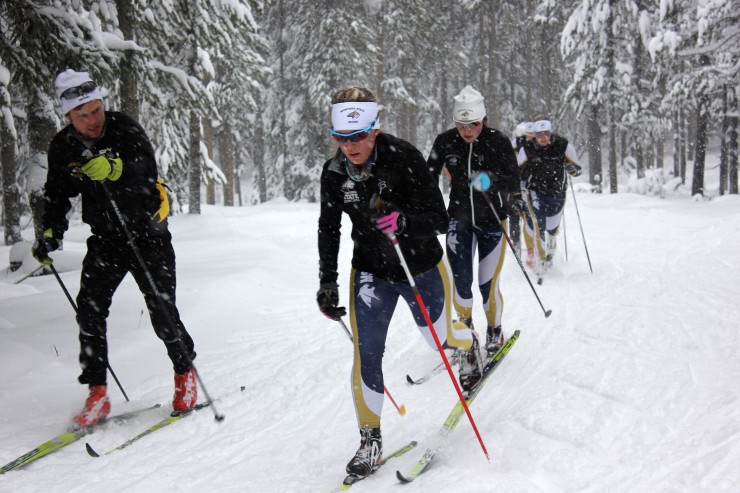
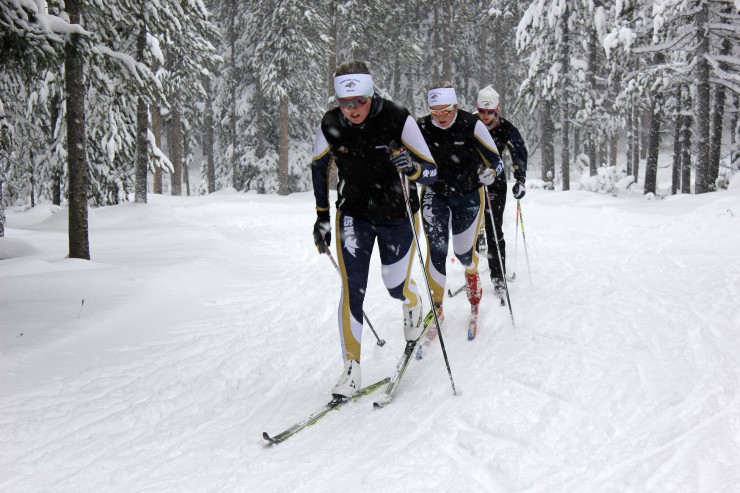
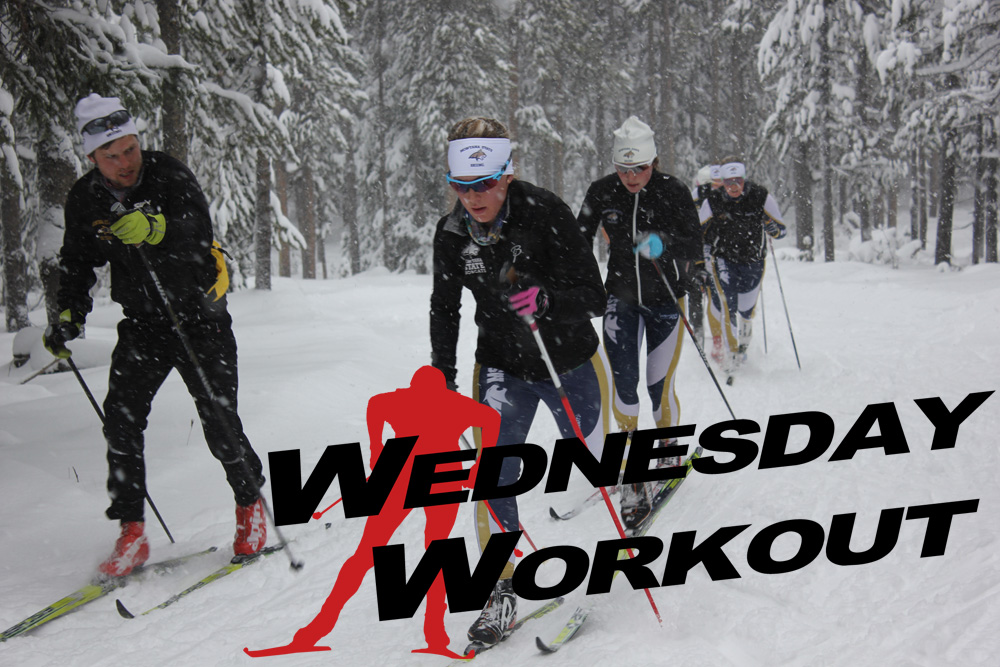
    MSU assistant coach Tim skis alongside his athletes during an interval as part of this week's Wednesday Workout.
    MSU assistant coach Tim Whiton skis alongside his athletes during an interval as part of this week’s Wednesday Workout.

    WEST YELLOWSTONE, Mont. — Even though the Montana State University (MSU) Ski Team is stationed only an hour and a half north of West Yellowstone, Mont., its skiers still have to adjust to the elevation.

    MSU – Bozeman, which sits at roughly 4,800 feet, is 2,000 feet lower than West Yellowstone. Fortunately for the MSU skiers and those who come from well below 6,000 feet, the week leading up to the 2014 SuperTour opener is the perfect opportunity to adjust.

    That’s why the majority of the MSU intensity workouts in West Yellowstone have focused on threshold intervals. That changed Tuesday as head coach Kristina Trygstad-Saari began preparing the team for the season’s first weekend of races.

    In order to get the team race-ready, Trygstad-Saari introduced a series of Level-4 intervals to prepare her skiers for racing at altitude before the SuperTour races this coming weekend.

    “Part of it is physiological and part of it is mental,” she said, explaining that once athletes process lactate at altitude, it allows them to deal with it in a more efficient manner once they begin racing.

    As for the mental side of the workout, Tuesday’s new snow, strong winds, and variable trails made for a challenging morning.

    “On a day like today when we didn’t have perfect grooming and it was their first hard workout, they were probably feeling it after the first interval and so they just had to push through five. That’s exactly what they’ll be doing Friday and Saturday” she said.

    The Workout: 

    Warm up: 30 minutes continuous skiing followed by six minutes of 15 second pickups followed by 45 seconds of easy skiing. 

    Intervals: 5 by 4 minute intervals with the first at threshold and the following three at level 4 or 5 k race pace. Rest until heart rate returns to resting or after four minutes.

    Cool down: 20 to 30 minutes continuous skiing.

    After arriving at the bustling trailhead of the Rendezvous Ski Trails, MSU athletes set out on a warm up consisting of a 30-minute ski followed by six minutes of a cycle of 15-second pickups proceeded by 45 seconds of rest.

    “We wanted them well warmed up… [The pickups] make sure that they were feeling warm and snappy by the time they did the first interval,” Trygstad-Saari said of the warm up.

    “It’s just like a race. If you go out of the start gate feeling warm and ready to go you’re just going to maximize your race time,” she continued.

    Once the MSU team was warm and snappy, the real workout began with skiers embarking on five four-minute intervals starting at threshold and progressing to level 4, or 5 k race pace.

    According to Trygstad-Saari, four minutes is long enough to make the intervals hurt, but short enough from her skiers to maintain technique and speed throughout each interval.

    As the team dispersed to cool down following the intensity, Trygstad-Saari noted that she was expecting great things from the MSU athletes this season. However she and her assistant coach Tim Whiton have been stressing a controlled start to the season.

    “They’re all coming into fine form but we’re trying to remind them that we’re early in the season and we don’t want them peaking for West Yellowstone races. They’re all excited to race and we’re all excited to see what they can do,” she said.

    Check out MSU’s promotional video for the 2014/2015 season here.

  • After “Giving It a Try” With Racing, Whiton Takes Over As Head Coach at Gould Academy

    After “Giving It a Try” With Racing, Whiton Takes Over As Head Coach at Gould Academy

    When head coach Jeremy Nellis and his assistant Ben Kamilewicz both left Gould Academy this summer, any sensible observer would have concluded that the program was doomed.

    Nellis had led the Bethel, Maine team through an era of yellow suits and pink plaid jackets, and despite their questionable sartorial choices, his skiers got faster. At the prep school championships in February, Gould took five of six podiums places in the individual races and won both the girls’ and boys’ relays. Three skiers then made the trip to Minneapolis for Junior Olympics.

    What would the program do without Nellis?

    Gould hired Tim Whiton, a 2005 graduate of the school who raced for Bates College and then worked as the assistant coach at Bowdoin College while continuing to compete as a senior. In June, Whiton had been hired to be an assistant coach for Nellis, but just a short time later Nellis left to take a job with the Craftsbury Nordic Ski Club. To his surprise, Whiton got the promotion.

    “The first couple weeks after I found out that Jeremy wasn’t coming back, it was like, oh, boy,” Whiton told FasterSkier. “I was like, how is this going to work? I have to get help! That was pretty stressful. But things are rolling now.”

    With Wade Kavanaugh, another alumnus, signing on as his assistant and longtime helper Brad Clark sticking around, Gould is hoping that they can keep a good thing going – and Whiton is confident that he can make it work.

    A New Kind of Challenge

    Whiton didn’t waste any time celebrating his homecoming to Gould; instead, he had to face up to several new issues that he hadn’t faced as an assistant.

    The first was logistical. As an assistant, Whiton had been able to stand by while Bowdoin head coach Nathan Alsobrook dealt with budgets, paperwork, and other organizational tasks.

    “The biggest change, and the one I struggle with the most, is the organizational piece,” Whiton said. “The school is great, but there’s lots of little pieces that fall under some people’s budget and some people’s work, and just trying to figure out who knows what I’m supposed to do… it’s a lot of work. It takes a lot of energy and a lot of focus.”

    As a former student, Whiton knew his way around campus, which helped. And because he was hired in the summer, he had a few weeks to learn the ropes and get organized before students arrived.

    And when they did, he was ready with a training plan. Whiton wasn’t worried about coaching the top athletes at Gould; he said that training high school skiers wasn’t much different than training college skiers. While he dialed back the workouts from what he was used to, all of the basic training principles were still the same. He also had a good relationship with Nellis and was aware of the direction the former coach had been taking the program. Both were “followers” of former U.S. Ski Team coach Dick Taylor, so Whiton wasn’t worried about maintaining continuity for the athletes.

    What he was more nervous about was how to manage the large, diverse team.

    “It’s pretty scattered,” he said. “It’s mixed, and that makes it more challenging than a college job or even a regular high school job.”

    Snow sports are a focus at Gould, and the school has a competition program for students who dedicated to nordic, alpine, and freestyle skiing as well as snowboarding. But since the school requires that students participate in a sport every trimester, Whiton will also be coaching regular students who are just participating in skiing to fulfill their requirement. It’s a dizzying mix of skill levels.

    “I am going to get kids who have literally never skied before,” Whiton said. “I think everyone at the school has seen snow, but I might get someone who has never seen snow. So you’re literally teaching how to put skis on: these are what they are, let’s go out and try to figure that out.”

    Whiton classified the team in three groups: the first was the complete newcomers, the second the high school racers – “they like skiing, but they’re not ready to make a full-time commitment” – and the third the competition program. Whiton will be taking his top athletes to Eastern Cups, U.S. Nationals, and potentially even Spring Series, so he wants to spend as much time with them as possible. But the majority of the team is less experienced and needs more basic instruction. With so many skiers at such different skill levels, helping every athlete is a challenge.

    “It should be an interesting mix,” Whiton said.

    So far this fall, Whiton is easing into coaching by working with just three competition program athletes on a daily basis. The rest of the team is forgoing full-time dryland training to instead race in cross-country running or play on the soccer team.

    When the whole group comes together, Whiton will have plenty of help. Kavanaugh was a coach at Gould in the early 2000’s and was actually one of the reasons that Whiton picked the school as a sophomore in high school; he said that Kavanaugh is “a really great guy, really good with kids, and really creative.”

    Clark is the head of the history department and has three kids of his own on the team, and Whiton said that a number of other area skiers, like members of the Bethel Outing Club, also lend a hand with coaching. And then there’s Taylor, who lives in the area and is still advising Whiton on training and coaching.

    “I’ve got a lot of folks here to help me,” Whiton said.

    Prep School Primer

    Teams like Gould and rival Holderness used to churn out top high school racers, acting as a pipeline to the college teams and even to the senior race circuit. But in the last few years, prep schools have slipped out of nordic skiing’s spotlight.

    Whiton wasn’t exactly sure why, since he hadn’t been observing closely while he was in college and coaching at Bowdoin.

    “I don’t really know what happened,” he said. “There are really good coaches – Alexei Sotskov is back at Vermont Academy, Pat Casey at Holderness. I think Gould had a couple of skiers at junior nationals last year but that was the first time since I’d been here. The level has definitely dropped quite a bit, but I can’t really speak to why that might be.”

    He was able to make a few guesses – for one, schools like Gould and Holderness are expensive, and Whiton questioned whether nordic skiers could find the cash to attend such a pricey institution. Whiton thought they might opt for a ski school instead. But with Gould costing only a few thousand dollars more than a top ski academy like the Stratton Mountain School, economics didn’t seem likely as the driving factor.

    Whiton’s other theory was simply that the culture of skiing had changed.

    “I think there’s been a movement in the U.S. ski community that if you want to be a top skier, you don’t go to college,” he said. “Or maybe you go to more of a ski school, or you go out west. And in that case maybe you don’t look at a prep school – you look at Stratton or Burke, which will potentially let you step into that role of being a full-time skier.

    “I think prep schools are definitely really good schools, but they’re bigger on academics so maybe there’s a feeling that you can’t do both. I would definitely challenge that assumption.”

    Whiton pointed out that Gould has some of the best trails in the East, and holds snow when many other ski areas cannot. He also cited the flexibility of the school’s winter class schedule, which he said was designed mainly for the alpine skiers but was a huge benefit to the nordic team as well.

    He hoped that the addition of a high-profile coach like Casey (who had formerly worked with the U.S. Ski Team) to the circuit would raise the profile of prep school skiing.

    “Hopefully Pat’s presence there will start putting prep schools back on the radar,” Whiton said. “It will be interesting to see what happens with Holderness’s programs. Hopefully they can rebound back to where they were.”

    In the meantime, he was happy to be working with skiers who are dedicated to both school and skiing.

    “Gould is more focused on bringing people here not for skiing, not for sports, but for school,” he said. “And then developing good skiers.”

    The Portcity Experience

    Whiton (43) in the mix at Spring Series this year.

    Whiton’s assertion that high school athletes should be able to focus on both academics and high-level competition doesn’t apply only to youngsters. This ability to multitask is somewhat of a personal mantra for Whiton, who tried to start a senior team in nearby Portland while he was coaching at Bowdoin.

    He said that the desire to “kind of see” what he could do came from a racing trip to Sweden in the spring of 2010.

    “The last FIS races over there was a 30-plus kilometer race which went over to the other side of the valley, up the alpine hill, and then down,” Whiton said. “Anders Soedergren won, Daniel Rickardsson was second, Petter Northug was third, and Martin Koukal was fourth – all medalists at the Olympics that year. And I was skiing in the pack at 7 or 8 kilometers. Soedergren went off the front and I was sitting there feeling good.

    “So it was like, okay, well, maybe we should give this a try for a year and see.”

    Even though Whiton ended up finishing more than twenty minutes behind Soedergren, the feeling of skiing the pack with the world’s top racers had made him wonder what he could accomplish if he focused on racing.

    His first idea was to base himself out of Bethel, a model perfected by Dave Chamberlain. Whiton hoped to help out with Gould’s nordic program, be a dorm parent, and potentially even teach while he trained in Bethel.

    “But it was really tough not having any real results to go off,” he said. “To try to sell that was tough.”

    Whiton’s best results had been in marathons – in 2010 he finished fourth in the Craftsbury marathon behind Juergen Uhl, Tim Reynolds, and Justin Freeman. But in shorter races, he didn’t have many standout results to show off.

    After the Bethel idea “fizzled”, he founded the PortCity Nordic team. Working under the umbrella of the Portland Ski Club, Whiton wanted to make high-level racing happen in southern Maine. But he couldn’t find much funding, and he also couldn’t find any other teammates. While there were other racers in the area, they all had full-time jobs and weren’t dedicated to training.

    “I wanted there to be something for people who have everyday lives and are still trying to ski race at a high level,” Whiton said. “It still doesn’t really make sense to me why we don’t have more programs like that.”

    He cited Holly Brooks as an example of a skier who kept training through her twenties while still working, and wondered why that wasn’t a more widely-accepted trajectory for skiers.

    “In terms of U.S. skiing, if you didn’t qualify for NCAA’s, if you weren’t All-American, there’s this expectation that you’re done skiing,” Whiton said. “And I think developmentally the U.S. is, we’re a couple of years behind the Scandinavians and other Europeans. So don’t be afraid to try to keep racing at a high level, even if you have a full-time job.

    “There have been other skiers [besides Brooks], too. And you have runners and bikers who keep training at a high level, and have goals for themselves. Why don’t we do that for skiing?”

    While Whiton was able to train well during the summer and fall – he called his October fitness last year outstanding – and get coaching from Taylor, Pete Phillips, and Alsobrook, his season was ultimately disappointing.

    “I was way too wound up,” he said. “Like, it’s gotta happen, it’s gotta happen, it’s gotta happen, and then it didn’t and I crashed. I was way too stressed.”

    One of his top finishes ended up being, once again, the Craftsbury Marathon, where he repeated his fourth-place result, this time behind Pat O’Brien, Freeman, and Dylan McGuffin.

    Whiton still believes that the PortCity idea could work – not only for himself, but for other skiers – and he hopes to see a diversification of the senior race scene in the future.

    Taking The Lead

    In the meantime, he’s switching his focus to younger racers – which, he said, was great.

    “I was pretty fried after last year,” Whiton laughed. “It’s nice to take a big step back and not think about that.”

    While he called being a head coach “a little weird,” he was excited to apply everything that he had learned from Alsobrook, starting with the physiological aspects of training.

    “In terms of having an understanding of actual physiology and actual training principles, I think [Alsobrook] knows more than any other college coaches that I know of,” Whiton said. “I don’t want to step on any toes there, but he has great ideas.”

    The proof, he said, was in the proverbial pudding: “If you look at what he’s done with the Bowdoin program, in terms of results those kids had in high school, not to put them down in any way, but they are much, much faster than anybody would have predicted that they could have been.”

    Between Alsobrook’s teaching and the understanding he had gained from years of his own training, Whiton was confident in that aspect of coaching.

    But the biggest thing that he thought he had learned from Alsobrook was to simply be himself.

    “[Alsobrook] will definitely be okay with me saying this – he knows it – but he is pretty uptight a lot of the time, and kind of anal about stuff that maybe he shouldn’t be anal about,” Whiton explained. “But he knows that, and he works with that and he makes it effective. So that’s been a big thing for me, to kind of be myself in this whole process, to try to figure out what works well for me.”

    And in the end, Whiton said, good coaching is good coaching. Which is a comforting thought to a brand-new head coach.

    “In terms of training, the key with technique is still focusing on the basics,” Whiton explained. “General movement patterns, general training concepts. It’s really not that different [than coaching at Bowdoin]. Yeah, the training load dropped; the kids are not as fast, not as strong, can’t do as much in a workout, can’t go quite as hard or quite as long, that sort of thing. From a physiological perspective you have to take it back a notch. But I don’t think there’s much of a difference.”