From the FasterSkier archive — posts syndicated from athletes’ and coaches’ own blogs between 2004 and 2012, kept online as published. Current coverage is at fasterskier.com.
Keen on speed and the full complement of waxes to juice the skis? Then you’ve likely noticed the “full complement” has become markedly reduced in recent years when considering perfluorinated products. Further, PFOAs or C8 (eight chain) fluoro compounds were effectively banned in the EU as of July 4, and are no longer available for most uses in the U.S., including ski wax. Older waxes formulated with C8 are considered the most effective at repelling water and dirt. Several wax companies still sell C6 perfluorinated wax, while some claim to have gone totally fluoro-free with their 2020-2021 product lines.
In the fall of 2018, skiers first began noticing a lack of Swix and Toko perfluorinated product on ski store shelves. (Toko is owned by Swix.) We reported on that here. Long story short, the U.S. Environmental Protection Agency (EPA) and the U.S. subsidiary of Swix Sport tangoed. The EPA claimed Swix was in violation of the TSCA, the Toxic Substances Control Act . In other words, Swix imported substances not on the TSCA inventory of permitted chemicals “or otherwise exempt for commercial purposes”.
This May, the EPA released its final ruling against Swix Sport USA. Without delineating all the violations in what the EPA calls the “Final Order of Consent”, Swix violated the TSCA Premanufacturing Notice protocols and Import Certification guidelines on 83 instances. Those missteps occurred in 2013, 2015, 2017, and 2018.
The terms of the settlement require Swix to pay a fine of $375,625 dollars. Swix is also required to spend $1 million dollars on what is referred to as the RWP or “Responsible Waxing Program”. According to the EPA, the RWP will address the following:
Educating the ski racing community about PFAS chemicals in racing waxes and their impact on the environment
Promoting the use of wax alternatives with lower environmental impact, including but not limited to racing waxes that are PFAS-free
(We know PFAS-containing products as fluoro wax. It includes C6 compounds still found in blocks, powders, gels, liquids, and certain kick waxes.)
The RWP roll out from SWIX should come this fall. It will include assets like on-site and online training for wax-techs and coaches at all levels of competitive skiing. The RWP resources are mandated to include information regarding proper use of PPE when waxing, best ventilation practices, and methods to properly dispose of wax shavings.
“This is not new for us,” Swix CEO Steve Poulin said. “We have always had personal protective equipment and we have always shared our best practices for waxing safely. We have been a leader in PPE for many years.”
Swix is also responsible for helping wean ski racers off of PFAS-containing products at the high school level and they must appoint a manager for the RWP and fulfill the settlement terms no later than September, 1, 2022.
“Swix, as part of its settlement with the U.S. Environmental Protection Agency, will produce numerous educational materials, including a Responsible Wax Program,” Swix said in a statement to FasterSkier. “These education materials are in production and will roll out over the next 18 months. EPA set forth the content of the educational materials in the settlement agreement. Swix will follow their directives in creating the content.”
What does this all mean for the consumer?
Wax shelves certainly will be different when it comes to Swix and Toko products. Those two manufacturers appear to have moved away from selling and distributing any fluorinated product in the U.S. Other companies still sell and/or distribute compliant fluorinated wax. And at least for U.S. Ski & Snowboard and Nordiq Canada sanctioned events, this season should play out as fluoro-free. Those rules are still in development. The masters racing scene appears to remain less regulated in terms of using and testing for fluoros. We’ll know more as the season approaches.
We contacted Swix USA and the EPA to get their respective comments on the ruling. One aspect of the agreement we asked the EPA about is that the RWP may be a golden branding opportunity for Swix. The production of the RWP may in fact give Swix a competitive advantage over other domestic wax manufacturers and importers as Swix can include brand specific product placements and references.
First we present the Q & A exchange with the EPA. That’s followed by the Swix Q & A. All FasterSkier questions are in bold text.
***
FasterSkier and the EPA
FasterSkier:In this case Swix is the violator in question. The EPA has given permission in the ruling for Swix to produce/create a program called the “Responsible Waxing Project” to educate the community on best practices for handling waxes etc. and “educating the ski racing community about the existence of PFAS chemicals in racing waxes; the physical and chemical properties of PFAS substances; and how they impact the environment;” Further it states…”SWIX shall be responsible for all aspects of RWP development and implementation, including the development of all education and training materials across a wide variety of communication platforms (including on-line communication modules, videos, visual presentations, brochures, posters, and other materials).”
I’m curious why the EPA tasked Swix to produce and curate this material as they are the party being penalized for non-TSCA compliance?
EPA: EPA affirmatively required SWIX to develop and implement a “Responsible Waxing Project” to educate the ski racing community about the dangers of polyfluoroalkyl substances (PFAS) in racing waxes and in particular to promote the use PFAS-free alternatives. This mandatory program is in addition to the penalty assessed for SWIX’s violations of TSCA, and requires the company perform a project that will help to mitigate the harm that resulted from SWIX’s violations.
FasterSkier: Why not an independent third party to produce the content and curate the program?
EPA: EPA determined that it was most appropriate to require SWIX to itself develop the compliance promotion program materials.
FasterSkier: How does the EPA ensure the material is not a branding opportunity for Swix specific product?
EPA: The settlement’s requirements for the content and materials of the RWP are very specific and detailed regarding the design and content of the program to teach technicians, coaches and skiers how to prevent having PFAS contamination get into the soil as well as to prevent PFAS exposure to people, and to discourage the use of PFAS-containing waxes.
FasterSkier: I’m referencing this statement from paragraph 36: “Respondent is authorized to return to its parent company in Norway the existing stocks of products containing Chemicals A, B, C. D, E and F in its control on the date of Respondent’s signature on this CAFO, provided such return conforms with all applicable laws. Any existing stocks must be exported within ninety (90) days from the Effective Date the date that payment of the penalty is due under paragraph 30 and Respondent shall notify EPA by sending documentation of the export, such as a shipping document (bill of lading), with the following certification to Tony Ellis at Ellis.Tony@epa.gov:”
It appears Swix must return its stock of violating product to Norway. Much of this product is likely available via the commercial market — vendors and personal users have back stock. Why did the EPA choose not to ask Swix to “buy back” the product in question or incentivize Swix to get the material in question back from vendors and citizen users?
EPA: As part of Swix’s actions to comply with TSCA, it immediately halted distribution (July 16, 2018) and held these products containing the illegal substances in its warehouses. This provision allows Swix to return those stocks to Norway.
FasterSkier: This appears to be an EPA enforcement action. And Swix, I think, must self-report every six months about the progress of the RPW and self-audit how it has met the EPA’s requirements regarding the penalty phase. That said, the RPW may in fact give Swix a competitive advantage in the marketplace as it alone is tasked with producing/disseminating the RPW material.
If Swix fails to meet the marketing obligations of the RPW as laid out by the decision, can the EPA discuss legal implications if Swix does not deliver?
EPA: The Consent Order retains a penalty provision designed for noncompliance with the RPW. If EPA is not satisfied with the performance, Swix must pay the US Government $655,000. See ORDER at page 9 item 24.q
***
FasterSkier and Swix
FasterSkier: Why should Swix come up with the protocol and the best practices for safe waxing? How does Swix know what the best practices are?
Swix: The safety requirements for handling and using the wax are dictated by OSHA. All the waxes have Safety Data Sheets (SDS), which provide information on safe handling and use. Under OSHA, the SDS are provided to the wax technicians. Swix is not creating new protocols or best safety practices. It is providing enhanced training and educational materials to ensure that technicians using the wax are following the existing safety requirements. This is part of being a good product steward.
SWIX is the industry leader in product stewardship. EPA determined that an educational program to enhance existing safety protocols for technicians is an important part of the Responsible Wax Program and required it under the settlement.
Over its many decades in business, the Swix team of scientists, product developers and world-class ski technicians have explored the science of wax and refined the best practices for waxing safely. Swix consults routinely with skiing’s top governing bodies to ensure that the information it supplies on its website and in its seminars comports with the best available technology, science and safety available.
For example, if a waxing iron exceeds the melting point of the wax, the wax may smoke, creating a hazardous situation. Swix knows the melting point of every wax it manufactures and it includes that melting point prominently on the label. We design equipment that helps technicians wax safely, including a digital waxing iron that can be set for a particular wax melting point to avoid spikes in temperature.
FasterSkier: Do you have an expert? Who are you consulting with?
Swix: Swix consults with experts all the time, particularly when designing and recommending personal protective equipment.
For example, Swix wanted to know the precise type of filter to use in a mask when waxing in a waxing cabin. To design a proper mask and filter, it was necessary to know the size of wax particles in a typical waxing situation. Swix hired outside scientists to measure the size of wax particles and air quality in the Swix waxing cabin in the Swix waxing cabin at the famous Holmenkollen World Cup race. By measuring the wax particles, we could pinpoint the type of filter that would block the particles effectively.
Several years ago, Swix began a project with Norwegian Occupational Health Authorities (STAMI) to investigate the particle exposure of the occupational environment during ski waxing. Swix was a project partner and supported the project with products and knowledge of ski waxing methodology. We, in turn, learned detailed information on airborne wax particle sizes and concentration levels. The project report also gave Swix clear recommendations on PPE and filter specifications.
FasterSkier: Swix is saying their new wax is safe. How do you know?
Swix: Swix Pro Line complies with TSCA, Prop 65, OSHA and the applicable Consumer Product Safety Commission standards.
FasterSkier: How do you know five years down the line that it’s going to be safe?
Swix: The EPA in the United States and REACH in Europe determine health and environmental safety standards. OSHA in the United States determines occupational safety standards. Swix wax meets those standards. Swix will continue to innovate based on the best available science.
FasterSkier: What sort of protocol does Swix have in place now to ensure that it remains in compliance with TSCA?
Swix: Swix has new procedures and processes in place for TSCA compliance, including procedures to review and verify compliance for all chemical substances in our products.
In addition, Brav, the parent company of Swix, in January revamped its compliancy protocols across all brands and companies. The company has a robust compliance department as well as sustainability and ethics statements. All company executives convened in Norway earlier this year to review the protocols.
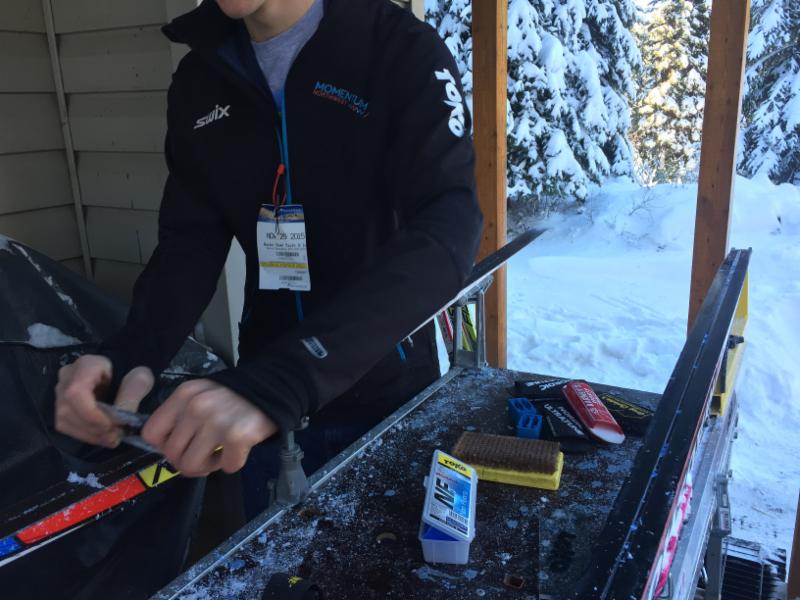
Relatively clutter free and ready for waxing inside the new USST wax truck. (Photo: Noah Hoffman)
There’s truth in jest as the saying goes. While FasterSkier’s April 1 piece made light of the issues, it hit home in some unexpected places. During one of FasterSkier’s conversations with the Environmental Protection Agency to examine why it had begun investigating the importation and sale of perfluorinated waxes, the EPA’s representatives cited the April 1 piece to question why FasterSkier had begun reporting on the issue. Whether readers appreciated the humor or not, the April 1 piece was intended as entertainment. This is our first story detailing what we’ve learned so far.
Let’s start with the EPA.
As part of a broader national compliance initiative, the EPA has begun auditing the ski wax industry. After emailing detailed questions to the EPA regarding its regulatory guidelines, the agency stated it was unable to speak broadly about the ski wax industry. It remains an ongoing enforcement issue for the EPA.
“EPA has identified certain ski waxes manufactured, processed or imported into the United States contain per- and polyfluoroalkyl substances (PFASs), also referred to as perfluorinated chemicals (PFCs), that may be in violation of the Toxic Substances Control Act (TSCA). These waxes were identified both in brick-and-mortar stores as well as available for sale domestically on e-commerce websites. As a matter of policy, the Agency is unable to discuss compliance monitoring targeting and/or investigations in more detail.”
Challenges for Swix and Toko in Winter 2018
Swix and Toko are the two largest brands of wax imported and distributed in the U.S. Both lines are imported and sold domestically by Swix USA. Swix USA is a subsidiary of its parent company, Swix Norway. According to Steve Poulin, CEO of Swix USA, the company was first contacted by the EPA during the winter of 2018 about meeting specific EPA mandates. In what became a steep learning curve regarding EPA compliance, Poulin said Swix/Toko began a review of “every product in every mixture.” We’ll explore what being EPA compliant entails later on, but it remains an exacting process that involves knowing the chemical recipe list for every Swix/Toko products imported, sold, and used in the U.S.
That formal review process began 18 months ago for Swix/Toko. Poulin said the company quarantined its entire wax line in June of 2018. They then chose not to sell perfluorinated products on their direct sales websites or ship product to their U.S. based retailers this past ski season. Many non-performance wax product, known as non-fluorinated waxes were shipped to retailers and sold.
“I decided to quarantine everything because I wanted to go through the full review and be 100 percent compliant and follow EPA regulations,” Poulin said. “I decided to be completely safe and I guess cautious, so we decided to quarantine our waxes and not ship anything until we went through the proper review process with the EPA. It was our decision.”
The Swix and Toko LF, HF, and top-coat/finishing product you may have purchased from online or brick and mortar shops was the back stock retailers possessed from this year’s inventory — shipped before June 2018 — after Swix/Toko has been contacted by the EPA. Alluring teens wall crosser in accidental lesbian fucking with horny border officer Super Hot Mandy Shows Us What Shes Got And Shes Still Got Plenty Blonde teen Lily Rader gets punished by boyfriends big dick Horny officer picked up an undocumented immigrant Two horny schoolgirls sharing the teachers cock Close up view of lesbian pussy pleasure A Dodgeball Where Youll Get Naked And Expected To Fuck Amazing Afternoon Hookup with Mom Agreeable milf gets a doggy position fucking Samantha Saint, Jayden Cole, Shyla Jennings and masturbation with a dildo Monique Symone Gets Picked Up And By W fuck pornjk.com
“I shipped wax to retailers before I quarantined the whole line … I did ship wax, early preseason orders, I filled stores up,” said Poulin. “Because we were not bound, we did not find any violations at that point. And then when we discovered the true complexity of what they were asking for and compliancy regulation, that is when I put a halt to it. To be completely safe and in cooperation with the EPA.”
Outside of the Swix and Toko wax lines, skiers interested in a competitive advantage through ski wax chemistry had perfluorinated options from brands like Vauhti, Start, Star, Solda, HWK, Rex, Holmenkol, and others. The impact of the current regulatory environment on those brands is less well understood, but most were available this season.
Poulin said in a July 8 phone call that Swix/Toko will be selling performance ski wax this upcoming season.
Speed Comes at a Cost: Fluorochemistry Background
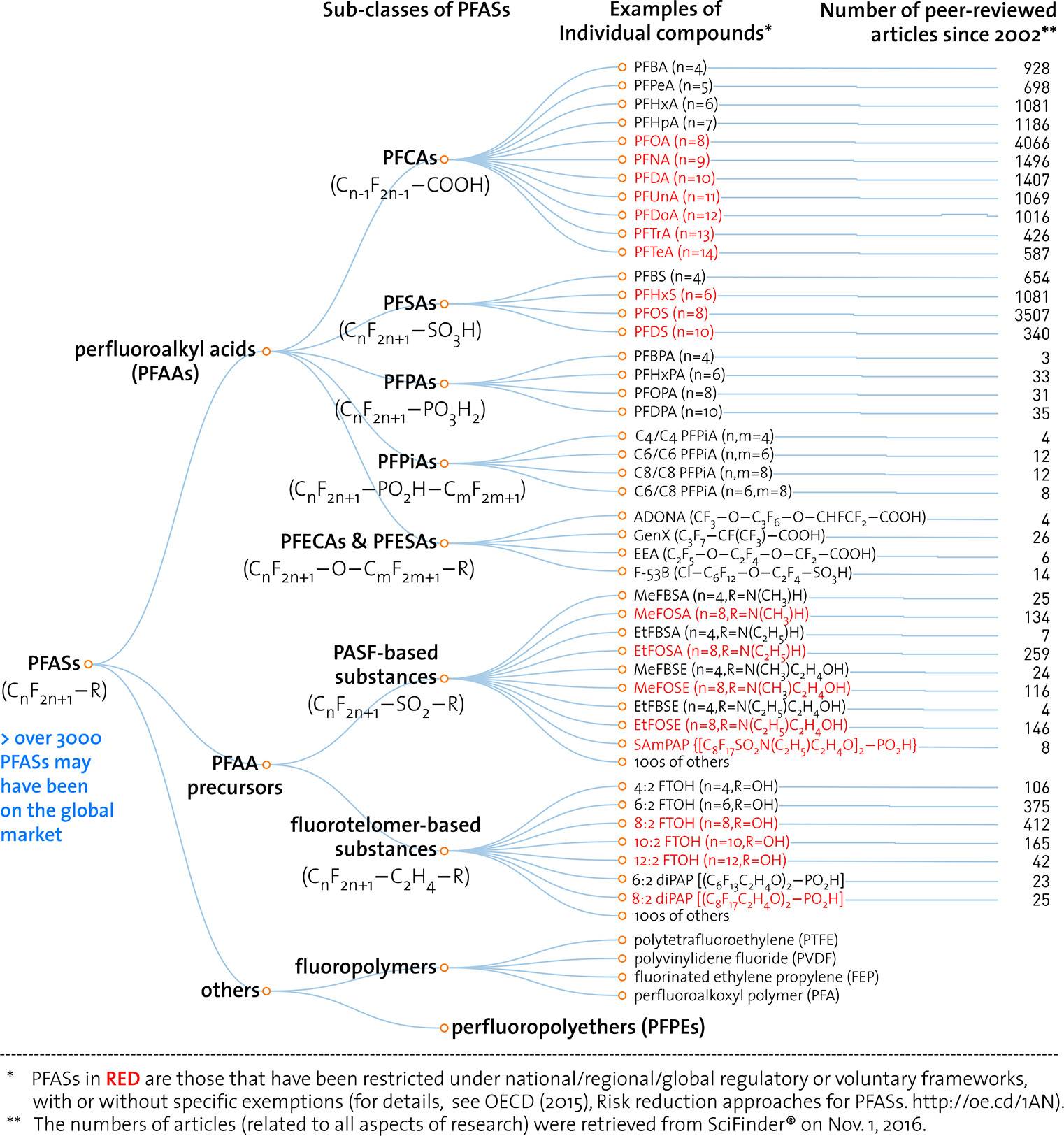
Get ready for some basic O-Chem. (For your reference, click the image titled “A Toxic Family Tree” to assist with understanding perfluoros and their chemical lineage.)
According to Dr. Merle Plassmann, the lab manager at the ACES (Department of Environmental Science and Analytical Chemistry) at Stockholm University in Sweden, perfluorinated ski wax is complicated. Plassmann’s Ph.D research examined fluorinated compounds in ski wax and their presence and fate in the environment.
“Family tree” of PFASs, including examples of individual PFASs and the number of peer-reviewed articles on them since 2002 (most of the studies focused on long-chain PFCAs, PFSAs and their major precursors). (Source: Environ. Sci. Technol.20175152508-2518. A Never-Ending Story of Per- and Polyfluoroalkyl Substances (PFASs)? Zhanyun Wang†Jamie C. DeWitt‡Christopher P. Higgins§Ian T. Cousins*∥
Plassmann explained that his research detected numerous fluorinated compounds with carbon chains between C6-C22 in some ski waxes. He added that many fluorochemicals found in ski wax are not added deliberately but are impurities from the manufacturing process. He referred to those chemicals as PFAAs – or Perfluoroalkyl Acids. He also wrote that ski wax manufacturers do add semi-fluorinated and fully fluorinated alkanes to their product. Again, these compounds are long carbon chains with the “semi” versions partially fluorinated, the “full” versions are saturated with fluorine. Plassmann went onto explain that the constituent parts of today’s wax could be more complicated. He has not assayed ski wax since 2011.
Some skiers may throw caution to the wind and take ski speed at all cost. It’s well known that in certain conditions, perfluoros applied properly to a ski base makes those skis faster. So we asked Plassmann the burning question: What are the ingredients in ski wax that might be of concern?
“Of potential concern are not only the impurities (the PFAAs which show low levels but still can be found in the ski tracks afterwards) but also the main ingredients, which are either fully fluorinated alkanes or semi-fluorinated alkanes,” Plassmann replied. “To my knowledge, nobody has studied their environmental fate, except the one study we performed on their behaviour during snow melt and presence in snow and soil from a ski track in Sweden. Here we found that they strongly sorb to particles and thus can be found after snow melt in the soil underneath the ski tracks. But nothing is known regarding their possible breakdown. As the Carbon-Fluorine bond in molecules is a very strong bond, those chemicals will be very persistent, but for example with the semi-fluorinated alkanes, the not fluorinated part could be breaking down, thus potentially leading to the formation of PFAAs. This, however, has not been studied and shown to happen.”
In May of 2016, the EPA released a document explaining some of the health risks associated with exposure to certain perfluoros. They include thyroid disorders, hypertension and preeclampsia during pregnancy, and testicular and kidney cancer.
Bringing Science to the Market
When you head into the local shop and ask for the wax goods, the response can be confusing. We’ll refrain from using the term “pure fluoro”. There are varying percentages of fluorocarbons in gliding and kick wax product, none that we can confirm are 100 percent “pure” fluorocarbon. The products containing the highest percent perfluorinated compounds are used for glide and often come in the form of a powder, block, liquid, or gel.
All brands have their own trade secrets when it comes to percent perfluoro and hydrocarbons added. The terms used in the industry like low-fluoro, high-fluoro, and super-fluorinated are marketing terms, not a standard. Brand X might have a 40 percent perfluoro HF wax, brand Y, thirty percent. Amongst the super-fluorinated gliding products, those percentages vary too from brand to brand as do their naming devices. Start wax’s naming devices, for example, use the term “ultra high fluor glider” for its highest perfluoro content finishing product.
Hydrocarbon or paraffin wax is what we would consider the cheaper and sometimes less effective means to make a ski slide on snow. These waxes are perfluoro free.
We’ll refer to any wax with fluorinated compounds as perfluorinated wax.
PFAS, the broad group of perfluorinated substances to which PFAAs belong, are ubiquitous and can be toxic. From fire suppressing foams, stain-proof carpet and upholstery coatings, non-stick pans and food wrappers, and that snazzy waterproof jacket, fluorochemicals make these products “work”. The perfluoros in ski gliding products fall into the PFAS class.
This February, the EPA published a “Per- and Polyfluoroalkyl Substances (PFAS) Action Plan” to further address the issue of perfluoros in the environment. The action plan states, “there is evidence that continued exposure above specific levels to certain PFAS may lead to adverse health effects.”
Fluorochemicals were once considered a miracle. They are hydrophobic and repel grease, oils, and dirt. Better living through chemistry? That’s now up for debate as the EPA moves in.
The leading science journal Nature published a piece in February detailing how researchers have traced fluorochemicals in the environment back to their source. Fluorochemicals are not naturally occurring. They are all man made. So if it’s in the environment, its there due to direct use in the environment like fighting a fire at an oil-depot, or they are residual compounds from the manufacturing process that have not been contained.
(This oft-cited Scientific American article speaks to the bioaccumulation of ski wax chemicals in the blood.)
The chatter in the ski wax industry usually has to do with a subclass of PFAS called PFOAs. PFOAs will be banned in the EU for most uses starting July, 2020. In the ski wax industry, PFOAs, or what many ski-wax junkies call “C8”, is often referred to as the magic behind wicked fast skis: the actual perfluorinated turbo boost when conditions call for it. Those C8s will be replaced in perfluorinated ski products with C6 compounds. The C8 refers to a perfluoro with an eight carbon spine with fluorine atoms branching off. The C6 is a shorter six carbon spine.
Those PFOAs are often called “forever chemicals” due to their persistence in the environment. The carbon-fluorine bond is amongst the strongest known in chemistry. C6 compounds, however, reportedly breakdown more readily and are considered more benign. Many claim the C6 half-life in the environment is shorter.
Anecdotally, many ski wax experts report C8 perfluoro finishing products most often outperform C6 analogs. You probably all know someone hoarding C8 product right now. That raises several other questions about wax equity at all levels of racing.
For now, let’s put aside the O-chem and focus on the nuts and bolts of domestic regulations and remaining EPA compliant.
The EPA and the Toxic Substances Control Act: The Tools for Oversight
In 1976, during the heyday of the environmental movement in the U.S., the federal government sharpened the EPA’s regulatory teeth by passing the Toxic Substances Control Act (TSCA). The TSCA allows the EPA to better monitor the “production, importation, use, and disposal” of chemicals in the U.S.
For years, domestic ski wax producers and importers were literally off the EPA’s radar. In 2016 and 2017 the TSCA was updated with new guidelines. The hands off EPA stance evolved. The law’s 2016 amendment is called the Frank R. Lautenberg Chemical Safety for the 21st Century Act.
According to a Harvard University Science in the News article, the 2016 amendment, “gives the EPA the authority to ban new and existing chemicals that pose a risk to human health and the health of the environment. To do this, the EPA must now make an affirmative determination on all new chemicals and all new uses of existing chemicals.”
The prevalence of fluorinated compounds in the environment and the increased awareness of the potential health risks those compounds pose began to focus attention on fluoro-intensive processes. The outdoor textile industry is literally awash with perfluorocarbons — high tech fabrics that repel water owe that functional property to the carbon-fluorine bond.
A few degrees separated from outdoor performance textiles are perfluorinated ski waxes. If the EPA was following the supply chain tree to determine where fluorinated chemicals are used, at some point they’d branch-off to the ski wax industry.
The TSCA requires wax importers and domestic wax manufacturers (importers are considered manufacturers under TSCA) to properly document the chemicals used within the country.
In the past, before the EPA glanced at the ski wax industry, ski wax importers might simply declare “ski wax” on a TSCA import compliance checklist and claim the shipment complied with TSCA guidelines.
I certify that all chemical substances in this shipment comply with all applicable rules or orders under TSCA and that I am not offering a chemical substance for entry in violation of TSCA or any applicable rule or order there under.
I certify that all chemical substances in this shipment are not subject to TSCA. The statement must be typed or stamped on an appropriate entry document or commercial invoice or an attachment to that entry document or invoice.
With greater oversight, it appears the EPA found a disconnect between the chemicals contained in ski wax and what was being declared.
To be clear, none of the importers we spoke to acknowledged any intentional non-compliance. In other words, there was no intent to omit or misrepresent through their TSCA declarations. However, there appears to have been either confusion, misunderstanding, or a shift in how EPA scrutinized the forms or applied the standards that resulted in a major disruption to the ski wax market.
CAS Numbers: Millions of them
The TSCA regulatory comb is fine toothed. To meet TSCA compliance standards, wax importers require CAS numbers. CAS stands for the Chemical Abstracts Service. Every chemical substance disclosed in scientific publications are assigned a unique CAS number. Think of that number as the chemical’s numerical ID. Well beyond one hundred million chemical substances have been assigned CAS numbers. The EPA maintains a record of all the chemicals either produced within or imported into the U.S. This is known as the TSCA inventory. At its most basic, the TSCA inventory is a list of CAS numbers.
There is both a public inventory that is downloadable, and a private inventory that includes information for proprietary substances a company may not want publically available.
Here’s what’s at issue. Any material coming into the U.S., like a ski wax, must have all its chemical components, the parts that make up the sum, on the TSCA inventory. In other words, the importer must ensure that each chemical substance’s CAS number is registered on the TSCA inventory. (The TSCA inventory is organized by CAS number.) If an ingredient’s CAS number is not on the inventory, the substance cannot be imported. Further, those chemicals on the TSCA inventory must be approved for public use/consumption if sold in the marketplace.
Boulder Nordic Sport (BNS), the importer of record for several wax brands, was sent a subpoena from the EPA to ensure the CAS numbers of the perfluorinated compounds imported in their wax product were on the TSCA inventory.
“The letter from the EPA specifically asks only about fluorinated compounds,” BNS owner Nathan Schultz told FasterSkier on March 28. “However, legally, everything that is in those substances, everything that is in the wax, including dyes, colorings, perfumes, whatever, every chemical compound has to be on the TSCA inventory.”
Finding and cross-referencing CAS numbers on the TSCA inventory meant Schultz had the tedious task of obtaining a chemical specific ingredients list for every perfluoro containing product BNS imports. BNS imports Skigo wax, Holmenkol and Guru products.
“And so basically what people are finding out is that this really complex process of having to identify every compound in the substances that we are importing,” Schultz added.
“All these formulations are secret. That had been one of the challenges, that all of this information has to be kept confidential, and so we have to take extra steps to protect it from when the suppliers give it to us. One of the suppliers refused to give us the information. They say they will only give it directly to the EPA. Right now, there are some fluoros available that are on the TSCA inventory and they are OK to use. And then there are some that aren’t and the ones that aren’t are not available, they are off our site.”
In Schultz’s case, he began cataloging CAS numbers during the Federal Government’s shutdown which ran for 35 days beginning on December 22. So getting timely responses from the EPA was challenging.
As Schultz bolstered his knowledge of the TSCA, he learned that if a specific CAS number (or compound) is not on the TSCA inventory, importers do have a few options. One option is to apply for a pre-manufacture notice. (Again, importers are treated as manufacturers when it comes to TSCA compliance.)
A pre-manufacture notice is no small hurdle to jump. The notice must be filed 90 days prior to manufacture/import. The EPA also requires mounds of chemical related information including available test data on the effect to human health or the environment.
Another option to continue importing and selling a product with an ingredient not on the TSCA inventory is to file for a low volume exception. This is what it sounds like: it’s a way to declare that the substance in question will be manufactured/imported in low quantities. In this case, at or below 10,000 kg/year.
Each low volume exemption filed is for a specific chemical. If, for example, a type of performance wax contains 10 distinct chemicals, that’s 10 distinct low volume exceptions to be researched, filed, and paid for.
The potential cost associated with filing a single low volume exception is prohibitive for a small business like BNS. Those costs also don’t factor in potential legal fees.
“It is hard to say and it is also a challenge because a low fluoro paraffin wax is probably going to be 5% maybe 10% of the fluoro compound itself,” Schultz said as he contemplated how much perfluorinated substances were being imported via the wax industry. “So the pure fluoros, I would imagine in the entire U.S., we are certainly under 200-300 kg of just the fluorinated substances. The whole number is small when considering the fluorinated compounds and I mean, 100 kg, 1000 kg I don’t know what it is. I have not calculated that out. It is a small number. Certainly, all of the wax industry in the country could be under that 10,000 kg weight limit for a low-volume exemption. So relative to other uses, we are tiny.”
How did we get here?
Longtime industry insider, Andrew Gerlach, knows the ins and outs of importation. For many years he’s imported Start wax manufactured by Start Finland through his business Endurance Enterprises. According to Gerlach, Start products are the third most widely used nordic ski wax in the U.S.
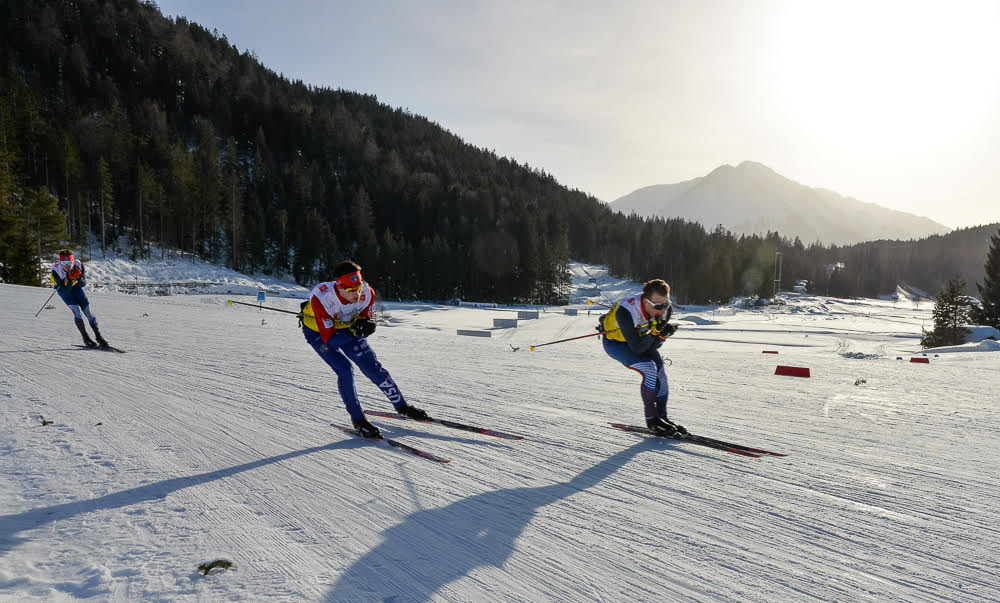
Athletes, coaches, and techs test skis on the 2019 World Championships course in Seefeld, Austria. (Photo: John Lazenby/lazenbyphoto.com).
The common story about wax importation and environmental regulations that we heard from Gerlach and others was something premised on the notion that European safety guidelines are stricter. The assumption was U.S. importers of ski wax must be in TSCA compliance if the waxes in question could be sold within the European Union.
“We have been doing things the same old way for decades,” Gerlach said in early April. “The European manufacturers or primarily the European manufacturers of the wax have told us, have given us a broad opine of all the ingredients in our wax and said this meets or exceeds European standards for chemical transport chemical distribution chemical use. And therefore if it meets European standards, they are tougher in every aspect than American standards, so you are good to go. So we import wax and we have a very good understanding of the ingredients within that wax but not the final nature of their pure chemical compound because that is very proprietary and most of us are mere distributors of the brand and the products and not part of the parent company.”
The EPA’s involvement with ski wax has nothing to do with EU chemical regulations known as REACH. And the EU’s regulations on the use and sale of perfluoros have nothing to do with cross-referencing CAS numbers with the TSCA inventory and being EPA compliant.
That said, the domestic wax importation industry in the U.S., like Gerlach said, had been following Europe’s lead.
EU chemical regulations originate with REACH, or Regulation, Evaluation, Authorisation and Restriction of Chemicals. REACH dates back to 2006 and has evolved and been refined many times since. The REACH net has captured the use of PFOAs, or “C8”, in the supply chain.
PFOAs will be banned in the EU for most uses starting July, 2020. They will be replaced in the ski wax industry with C6 compounds.
“We have taken Europe’s word for it,” Gerlach said. “That if their products meet or exceed European REACH standards, which they have all, they are told in the research they are tougher than American standards. So we import the wax, and everytime we have an import shipment coming in, we sign a form that says these products comply to TSCA standards.”
Back in November 2018, Gerlach said he heard rumblings within the ski community that Swix and Toko were having issues selling product. He initially, like many people, thought this had to do with pending EU restrictions on the use of PFOAs.
C8 or C6, Gerlach assumed he was TSCA compliant. Good enough in Europe, by default, meant good enough in the States. But the story circles back to CAS numbers and the TSCA inventory.
“I felt that I had better figure out what was going on, because if Swix-Toko had errors, there is the likelihood that I had errors and every other wax company that is importing had errors because we are all pretty much importing like substances in the same manner,” Gerlach said.
Gerlach contacted an EPA official in Chicago since his company is registered in the Midwest. He left a voicemail and some follow up emails. Gerlach heard nothing back.
In the meantime, Gerlach said he conversed with Schultz at BNS and became better informed about the CAS number TSCA inventory dilemma. He also communicated with the EPA’s Washington D.C. bureau and received a response when the government shutdown ceased in January. During this time, Gerlach reached out to Start Finland to secure CAS information and detailed wax recipes.
“I discovered that the vast majority of ingredients in Start wax be it perfluoros, be it hydrocarbons, be it alcohol based liquids, petroleum based liquids, on and on, all used ingredients as Start signified since day one that are on the TSCA inventory,” Gerlach said. “We did have a couple waxes with CAS numbers not on the inventory and so overtime, it took a while to delve and discover and learn all these things.”
Gerlach self-imposed a ban on selling or continuing to import product he believes is not in full compliance with the TSCA. He even went a step further.
“We have done our own self-disclosure to the EPA, saying ‘hey we have imported, unknowingly, we have imported some wax with ingredients that are not on the TSCA inventory,” said Gerlach. “They amount to these items with this amount of volume in the past five years and this is what we are planning on doing etc. with them’. As far as I can tell from my brief discussions with the EPA, I just need to focus on my ingredients list and make sure they are on the TSCA inventory and with a double bullseye focus on the perfluorocarbons and make sure those are on the TSCA and if they are on the inventory they are good to go and there’s nothing to report.”
The TSCA compliant Start products, which Gerlach said was 97 percent of the Start Wax line, are still imported and distributed to dealers around the country. His non-compliant inventory remains under quarantine in his warehouse and is not included on next year’s price list. This self-imposed restriction was taken not due to any EPA action, but as a precaution until he is told what to do with those items by the EPA.
Gerlach also explained that moving forward, Start Finland’s ingredients would meet TSCA requirements. According to Gerlach, Start Finland does not produce its own perfluorocarbons for use in their waxes. They source that from a chemical manufacturer and supplier.
“Start Finland now examines the ingredients they are putting in beforehand, “ said Gerlach. “Before they start mixing up compounds, they make sure that the ingredients that they are using are on the TSCA inventory. I am talking milliliters of fluorocarbon and grams in all my waxes that are fluorinated and whatever the law is we need to follow it. I am much more educated on what is in our waxes than I was a year ago. And Start Finland is much more aware that being good enough in Europe is not necessarily in itself good enough for America.”
Gerlach’s initial chemical bookkeeping and self-reporting were steps. He was told by his lawyer to use a statute of limitations of five years for documenting what he had imported during that time span and discerning if it was on the TSCA inventory.
That five year limit appears to be an unofficial timeframe for the statute of limitations on importing non-TSCA compliant chemicals.
“A subpoena letter I have seen did not put a date on it,” Gerlach explained. “It said, tell us all about waxes with fluorocarbons in them and the times you have imported them. And surprisingly it did not give a time frame. It just said tell us everything.”
Exhausting his avenues to remove his “violating items” from circulation Gerlach contacted Start wax retailers.
“I have looked at my orders for the last two years of these and emailed the dealers and explained that if you have any in stock I will take it back,” said Gerlach. “I did a recall of any of the waxes and none of those waxes are left in stock. And so there is nothing to recall because it has been such small quantities.”
This was what Gerlach called a voluntary recall.
In years past, Swix USA has shared prime real estate with a retailer at the American Birkebeiner expo — they were housed within the same display.
Not this year. At the Swix concept area at the expo, Swix did not sell perfluorinated product. However, Swix perfluoro products were for sale through a retailer at the expo.
FasterSkier is unaware of any official recall of non-compliant ski wax product. According to Section Five of the TSCA, any chemical not on the TSCA inventory is considered a “new chemical”. “New chemicals” to be imported and used within the country are subject to rigorous guidelines to determine their fate. A recall of pre-existing non-compliant substances by importers/distributors and retailers appears not to be one of those steps.
A quick search on the web shows product still available for sale by retailers in limited quantities.
In my candid interview with Gerlach, he was mildly prophetic as we signed off.
“So, the earthquake has happened, no one is sure about the tsunami, but no matter what, there will be a shakeout of brands and or waxes because of this,” said Gerlach
In early May, I received an email from a reader saying HWK USA was no longer in business. At the time of publication, FasterSkier had not received a reply from HWK USA after messaging and emailing the company.
Ear to the Ground
Like Gerlach and Schultz, Caldwell of the eponymous Caldwell Sport based in Putney, VT. has had his ear to the ground. Caldwell is known for custom ski selection and grinding services, but also retails wax. In the past, he was an importer of Vauhti wax out of Finland. Vauhti is now imported by Park City, UT., based Sisu Sports.
Caldwell sells wax online, or onsite at select races during the season. He sells Rex, Rode, Star, and Vauhti products.
“So what I know is that the EPA instructed [Swix] to stop selling when they went through item by item and reviewed the contents of what they were selling — and that is it,” Caldwell said when asked what he knew about the direct discussions between Swix/Toko and the EPA.
At the time of our conversation on April 9, Caldwell said he had had no contact with the EPA to date.
Caldwell Sport’s role as a retailer rather than importer means its relationship with the TSCA is indirect. Caldwell Sport is not responsible under the TSCA, for ensuring the wax it sells is compliant — that remains the importer’s role.
“My understanding is that the EPA’s concern is with importation and that they are not concerned at the retail level,” Caldwell said. “They are concerned at the chasing things to their source, where they are coming into the country. So I have not heard of any retailer who is not an importer being instructed to stop selling product. For instance, no Swix retailer that I am aware of has been told they cannot sell Swix waxes. But Swix the importer which is also owned by Swix Norway has been told they cannot sell waxes which would mean both at wholesale and at retail.”
Caldwell’s process of obtaining perfluorinated wax products is simple. For example, he orders Vauhti product directly from SISU Sports. It then ships UPS from Utah to Vermont.
“As far as I know, there is no oversight of that aside from regular domestic shipping restrictions on air, on flammable goods for air shipments,” said Caldwell. “You cannot put some of the solvents on an airplane. So we have to be cautious about that and plan shipping. We are just ordering form those guys.”
For Caldwell Sport, it has been business as usual. Caldwell said he resupplied with Start and Vauhti this spring with no issues. Yet Caldwell was mindful of his stake in the high-end wax game. As a small business he is evaluating how to proceed as perfluorinated waxes come under scrutiny.
“From our point of view, the question has been whether we should try to anticipate action by the EPA and pre-order a whole bunch of stuff or whether we should continue to run as we normally do to run a lean family business,” said Caldwell. “We cannot afford to carry a huge quantity of really high-end wax because it cost a whole lot to have. As a family business retailer, we are in a position where we need to be pretty cautious about how far we stick our neck out on a lot of high-end product.”
Patrick Coffey, the Vauhti brand manager for Sisu Sports, emailed FasterSkier to state that as of May 24, he still had not been contacted by the EPA.
“There’s no reason for me to expect it at any given point, but given that it’s the offseason, my approach will be to see what we need to do to make sure that there will be no delays in delivery late summer when the product comes from Finland to Utah,” Coffey said during an April phone call.
“If someone within a government agency wants to get in touch with us and ask for information, I’m going to get that information,” said Coffey. “The goal here is not to keep our head down and hope nobody notices, I want to make sure that we’re in a position, because retailers are asking ‘are you able to bring product in?’ and I’ve told all of them at this point ‘yes’. If anything changes they will be the first to know, because I don’t want them to all of a sudden to realize in December that they are not getting product.”
The Bigger Picture
The wax industry remains a drop in the financial and environmental degradation bucket when considering the widespread use of perfluoros in industry. But, perfluorinated compounds are making news. High Country News published a piece about PFAS pollution on May 30. Several news outlets have reported that the state of New Hampshire is suing chemical giants 3M and DuPont “for damage it says has been caused by a class of potentially toxic chemicals found in pizza boxes, fast-food wrappers and drinking water,” according to a Boston.com piece.
The ski wax industry has been reforming when it comes to using the more caustic C8 and longer chain chemistry in its waxes. The type of fluorochemistry that has been newsworthy. Longchain fluorocarbons are on their way out and C6 chemistry is in.
Is the ski wax industry and the quest for ski speed to blame for shirking environmental regulations and drawing attention to itself? Probably not. It’s simply that the EPA has the law on its side and the science to support its stance to bring more oversight.
Although Swix and Toko did not ship perfluorinated wax last season, it appears the EPA is conducting a broader industry-wide review. Ski waxes are obviously not the domain of skinny skis alone. Imported and domestically manufactured alpine specific waxes fall within the same regulatory benchmarks applied to popular cross-country wax brands.
Fast skis are a drug. That first slide on a slippery pair of perfluoro soaked boards can be dreamy. But, everybody pays to play for that speed.
For now, it seems certain that your ski speed fix, thanks to modern chemistry, will and can be satiated when snow falls next winter. But the Swix/Toko challenge this season has the potential to be a more significant industry wide challenge moving forward. There’s no question, those little vials of speed be it in liquid, block, powder, gel, or fluorinated hydrocarbon form, will have regulatory fingerprints all over it.
Editor’s note: It’s here! For the second-straight year, we’re presenting another 12-day holiday gift guide, brought to you by the one and only “FBD”, our gear-review guru. Kicking the series off, recommendations for recovery gifts to keep you and your ski buddies on the trails and injury free.
***
Day 2: Training Clothing
OK, we got after it pretty hard yesterday, so we’re going to take a piece of our own advice a chill a bit today. Just like it’s a mistake to rip out intervals every day (I’m looking at you, JUOM)…
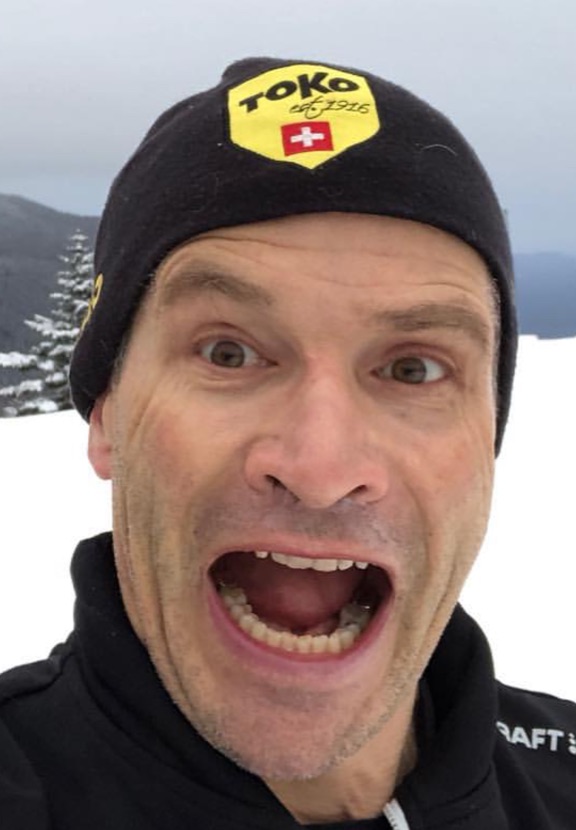
Two-time Olympian, Duncan Douglas, a.k.a. Jacked Up Old Man, on the top of some cold, miserable, mountain somewhere, yelling at whomever took the photo that they should still be moving or else their heart rates were going to get too low and they would need to repeat the workout.
… it’s probably also a mistake to charge that hard on gear for 12 days. I think we’ll all go crazy if we hit every day as hard as we hit it yesterday, so we’re going to dial it back a bit today in our coverage of training clothing.
Don’t get me wrong, this topic is as near and dear to my cold heart as recovery is, but inherent in its very nature is a more subdued, less-scientific approach, so this should allow for the presentation of today’s offerings with minimal lecturing and wild pontification (please keep in mind, these are all very relative statements). There is most certainly some good science and technology behind clothing, in particular these days, but don’t worry, I’ll do my best to not cite any peer-reviewed studies. Today. This won’t be easy on any of us though, for who doesn’t love a good randomized, double-blind, peer reviewed research paper? Don’t fret though fellow data nerds, I have plenty more science up my sleeve down the road.
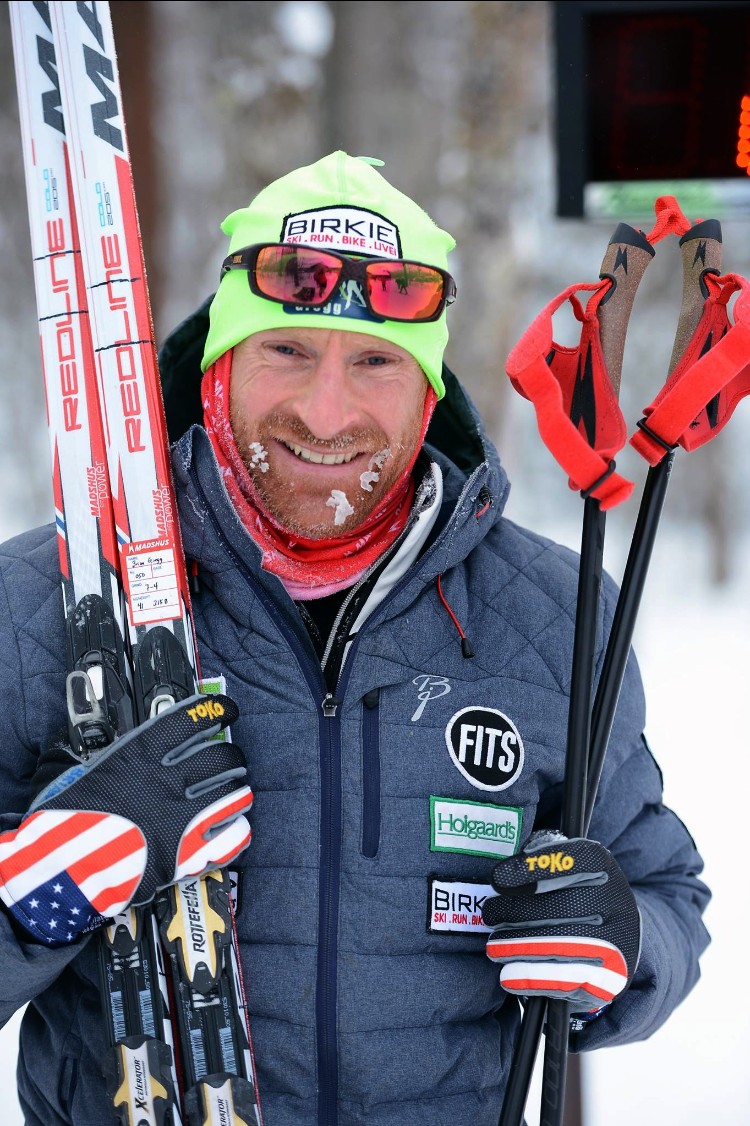
Part of what makes the ski community great is the, well, community. I was talking to Brian Gregg after his SuperTour win last Sunday and I told him that it was nice to see a good guy win. His response was excellent too, as he asked me, “Thanks FBD, but honestly, are there any guys out here who aren’t good guys that you wouldn’t want to see win?” This is such a good point and it goes to show you that even at the highest level in the sport, those fighting tool and nail for a chance to represent our country at the highest and most prestigious level of international competition, the Olympics, still have the utmost respect and admiration for their competitors. THIS is the nordic community. Brian’s comment got me thinking, too, have I ever met a nordic skier that I didn’t like? No, I really haven’t. It’s amazing, when you think about it. There are plenty of people who don’t like me, but that’s another story. Plus, I have a column and they don’t, so there. Go peddle your hate elsewhere, you hatey, hate mongers.
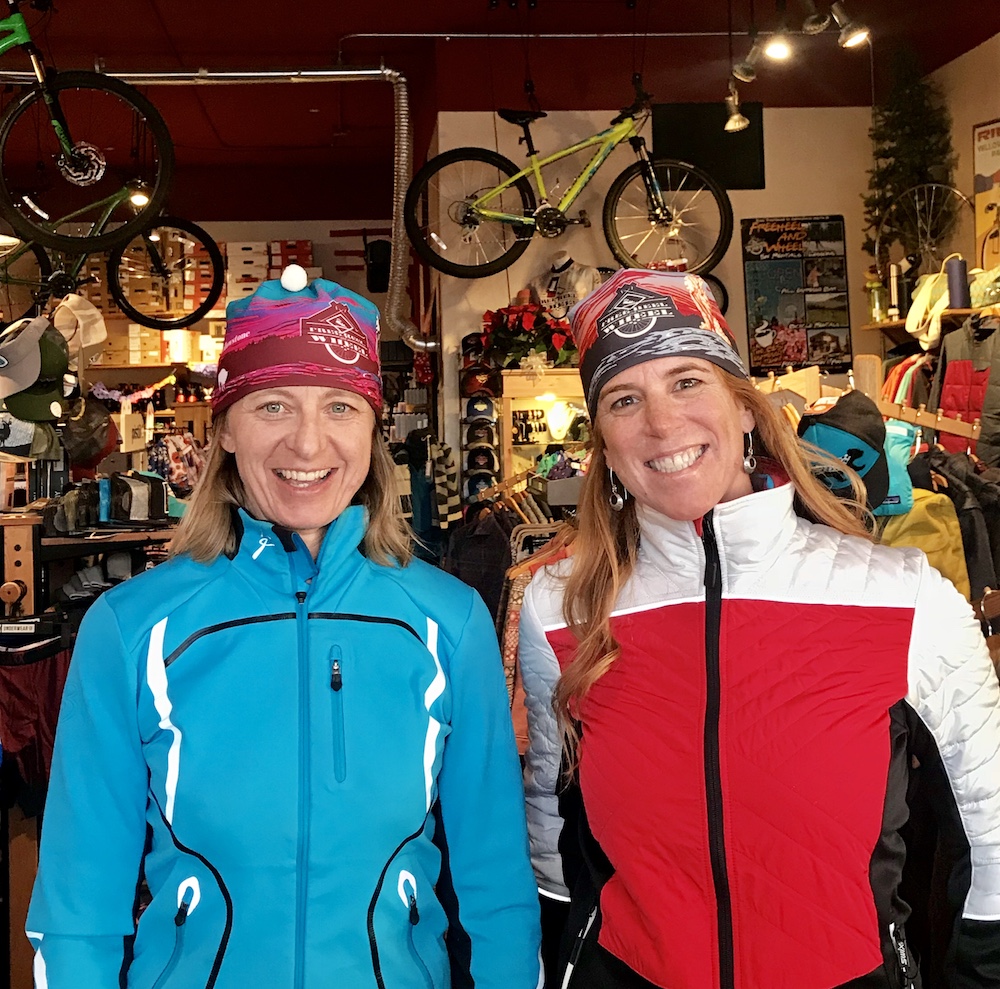
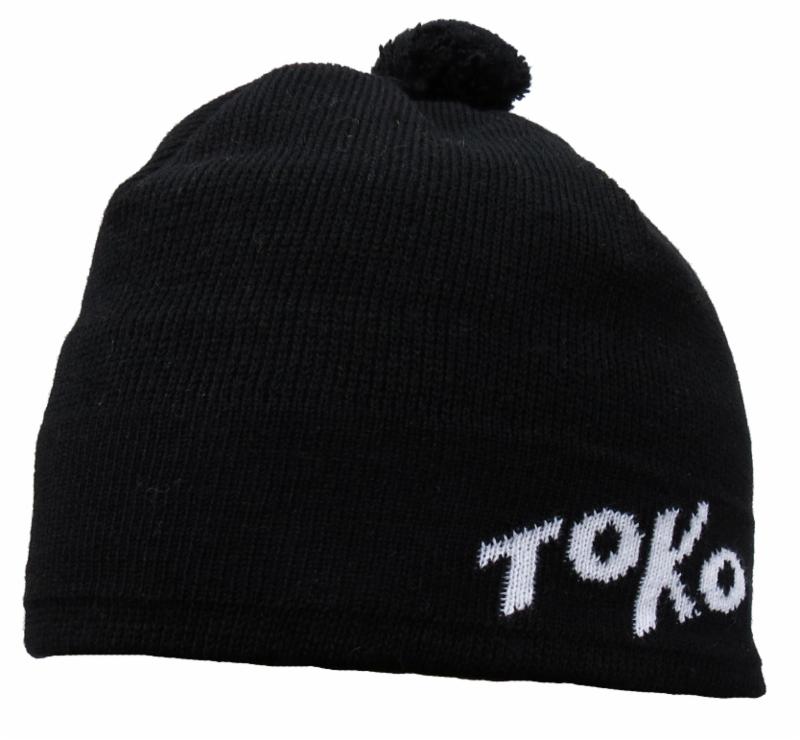
Following up on this thought (the positive one, not the FBD-hater dealie), I wanted to offer up this first product in the spirit of supporting our great community — a hat from a local shop that does so much for the nordic world, Freeheel and Wheel in West Yellowstone, Montana. They are in the awkward position of having thousands of very needy, nordic nerds descend into their shop for one week per year, yet they must balance this with what, let’s just say, is a bit more moderate traffic flow the rest of the year. Being scalable enough to accommodate these enormous fluctuations in activity speaks volume about the strength and flexibility of this shop. Sure, you can get a hat anywhere, but why not cruise up to the West Yellowstone Ski Festival next year for some of the best early-season skiing anywhere in the country and support this awesome local secret with the purchase of a beanie, wax, and some coffee. Local love. Pay it forward.
The wonderful owners of Freeheel and Wheel, Kelli and Melissa, showing off both their steez and their great shop.
***
$30 – $99
Ah, warm hands — this is where the rubber meets the road, er, the tracks. This is the one thing that seems to befell sooooo many skiers, making this topic literally a year-round passion for me. I fly to Eagle Glacier, Europe and South America in the summers with bags full of gloves for testing. It is a labor of love and one that you, the loyal reader, gets to reap the rewards. Truth be told, I greatly enjoy this process as well, as nothing is more rewarding than helping someone find a comfortable glove after years of suffering and nothing is more priceless than the look on the customs official’s face when he asks why I have 15 sets of winter gloves in my bag in the summer. The discussion goes something like this: I tell him I have all of these gloves because I’m going to South America. We then stare at each other for 30 seconds of incredibly awkward silence while I wait to see if he can remember that the seasons are opposed in the Northern and Southern Hemispheres, so “our” summer is “their” winter (quotes provided as I consider myself essentially a local Argentinian). Tensions rise as he gets increasingly nervous and annoyed from my smug and confident stare, because deep down he thinks he remembers hearing something about something called the equator, but he doesn’t really remember exact what he/she/it actually does. He does know enough to know that my answer is somehow relevant, he just has no idea how or why. I’ve seen this movie dozens of times now and it never ceases to amaze me. A word to the wise though, tread lightly here, as even though you may have the high moral ground and a superior understanding of basic Earth science, he has handcuffs and a gun. Let it drop and move on you way to begin slamming beers for the gut-wrenching 11-hour flight.
This geographical obtuseness is sadly not limited to surly customs agents who clearly were the last kids picked for teams at recess in elementary school, though. Unfortunately many people have no idea what happens outside their zip code. Travel people, travel. Or, in the very least, pay attention in junior high.
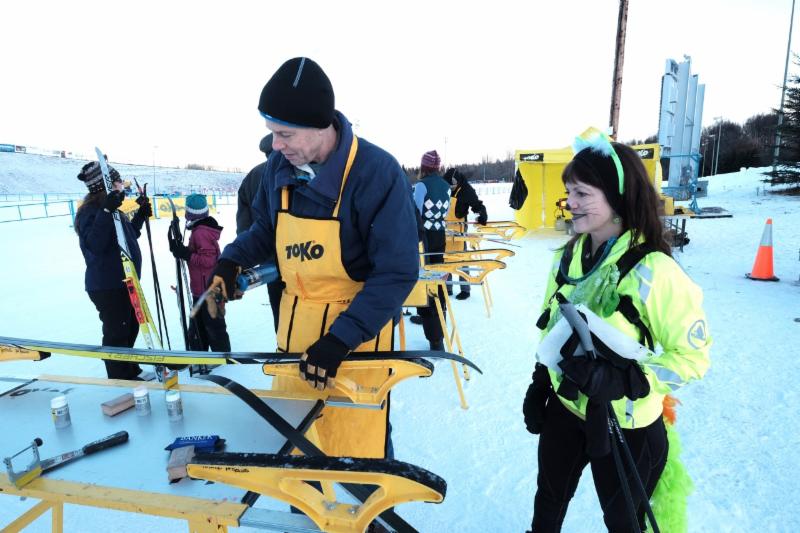
Let’s put aside under-educated and overly-dictatorial TSA and customs agents for now and return to our roots of supporting our community. Another key pillar, albeit at the opposite end of the spectrum from a small local shop, is Toko. Despite being one of the industry big boys, Toko probably has one of the best “boot on the ground” presence of any of the nordic soft goods companies. Lurking around the expo at the West Yellowstone Ski Festival, I personally witnessed the Toko team looking after athletes at ever level: they help support many U.S. Ski Team (USST) athletes, as well as non-USST athletes like Olympians Noah Hoffman and Brian and Caitlin Gregg (who each have national titles, have represented the US of A at the Olympics, have raced numerous World Cups in Team USA gear, and even have a World Championships medal between them), development teams, regional teams, high school teams, masters, you name it.
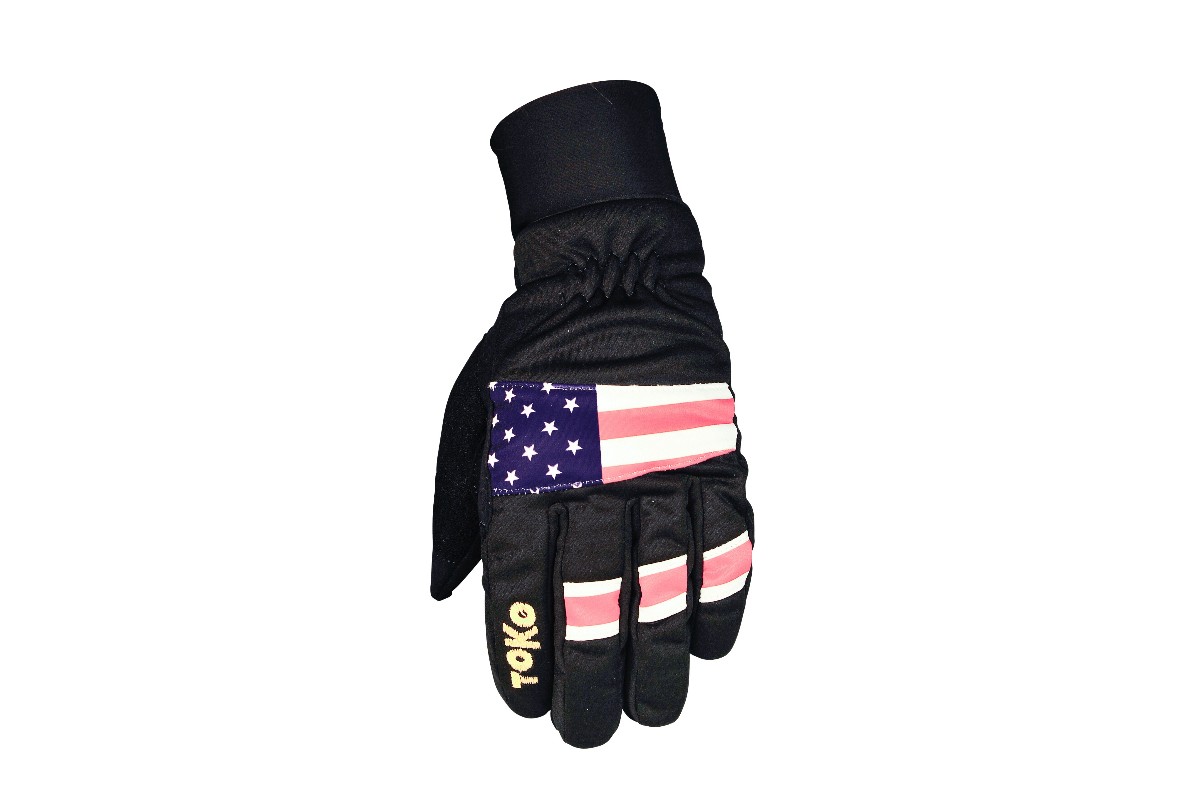
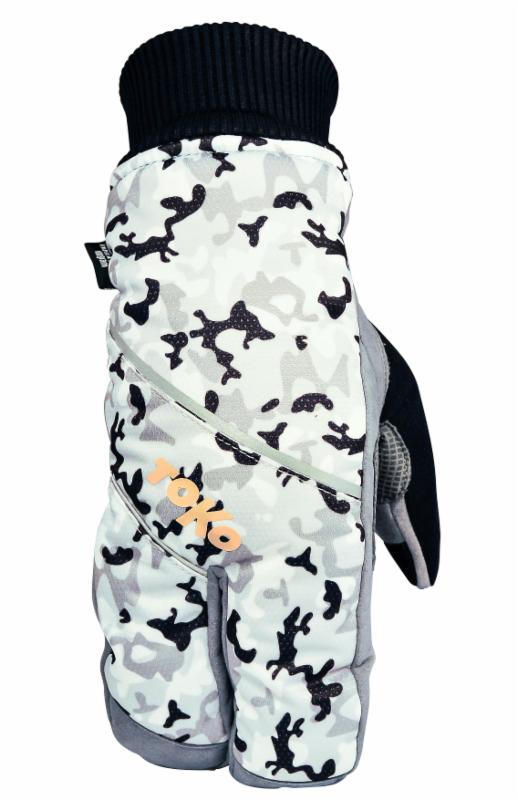
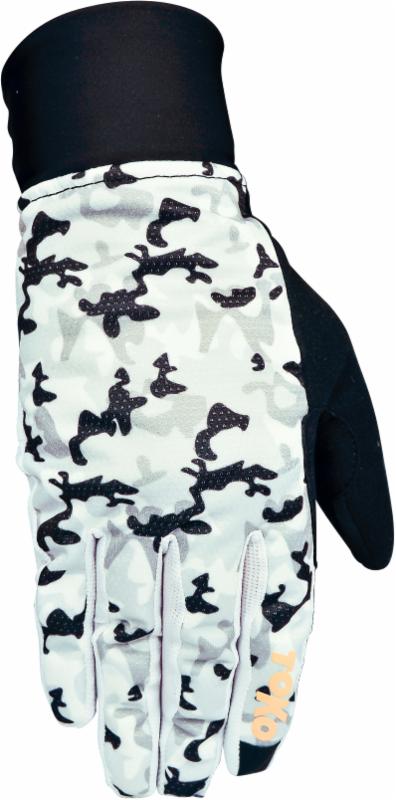
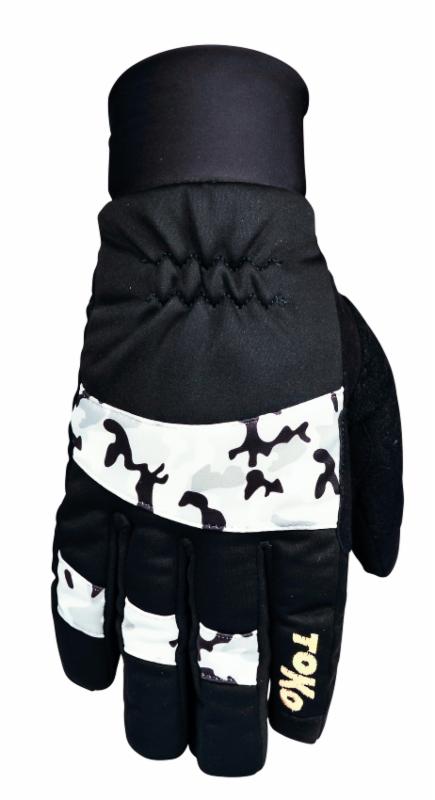
This is all well and good, but this would be a nice, though somewhat shallow, gesture if their products weren’t good, but they are good. Really good. A particular FBD favorite is the new Toko Thermo Race Glove. Full disclosure, the FBD was blessed with extraordinary foot-and-hand circulation and my problem (well, at least in terms body temperature regulation, I have dozens of other Great Dane-related problems that I’d rather not go into in this forum), is that I generally get too hot, not too cold. In our base layer review last year, the entire test team was amazed at how much less I wear on both training and race days than the rest of the team. The point here is that I don’t get cold very easily, so just the temperature range in which I wear these gloves will likely differ slightly for you.
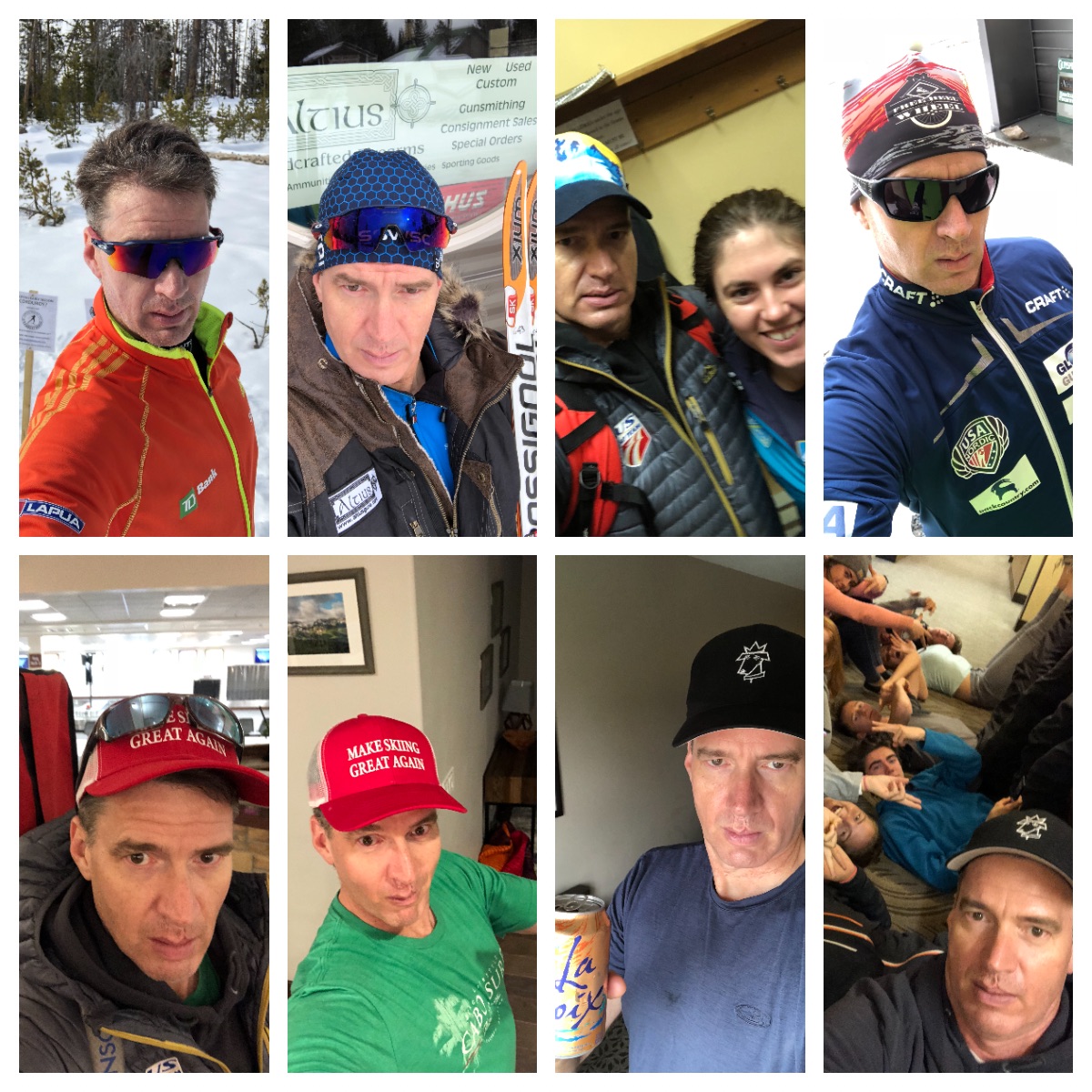
With that caveat duly noted, even though these are technically “race” gloves, I personally find them perfect for training in all but the absolutely coldest conditions. They also have a very useful pad on the fingers that makes them touch-screen compatible, which is key when you take as many selfies as I do. I was a little slow off the line in the selfie game due to bad form, but thanks to extensive coaching from U.S. Ski Team Special Jumper Casey Larson, I have modified my stance, angle of approach, and overall bad attitude, so I am very pleased to report that my selfie game is now on point.
No apologies on my volume of posts or length of manuscripts either — I am a very sexy man who leads a fascinating life and I owe it to the people of Earth to share this journey in both excruciating detail and in extremely regular intervals (5.2/day to be precise, according to my expert staff of statisticians).
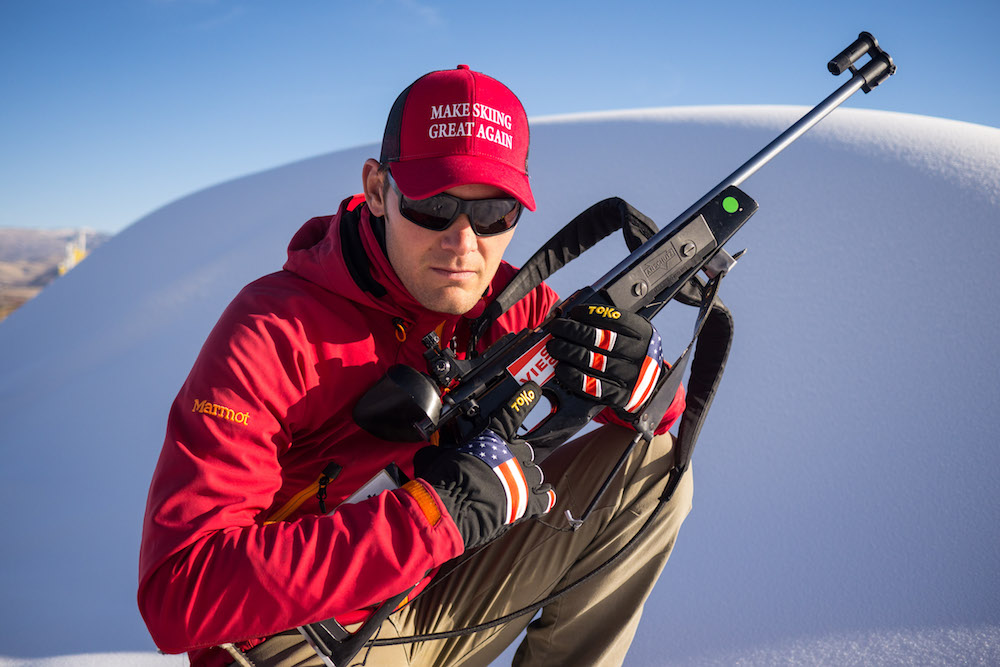
Now where was I? Oh yeah, gloves. These rock. Get’em. Be a good ‘Merican (Isn’t it ironic how much that contraction looks an awful lot like “Mexican,” especially considering the political outlook of the people most apt to use it? Food for thought) and go for the “Stars and Stripes” color-way, just like this dude, badass former U.S. Biathlete, Zach Hall. After all, it is an Olympic year. $49 on Tokous.com
Hunky Alaska Love Muffin Zach Hall showing everyone what’s up
I know, I know, I’m confusing everyone with my nomenclature and greatly flouting well-established conventions in the process, as I just finished talking about training in a product called a “Race Glove,” so if we’re wearing a race glove for training, where the hell should you be wearing training gloves/mittens? FBD, what are you doing to me?!?! How did this all get so confusing? Next, you’re going to tell me that it’s currently summer in Argentina, and we all know that is clearly impossible, as it’s HOT in the summer, dummy, and right now it is cold where I am sitting, ergo it must be cold everywhere in the world.
That very precent point aside, as noted earlier, the FBD “runs hot,” most likely due to a seething inner rage fueled by extensive time in domestic airports, East Coast traffic, and repeated, nonsensical texts from Josh Smullin. Thanks to a highly sophisticated understanding of the Krebs cycle, cellular metabolism and mammalian energy production, I have been able to channel this apoplectic fury into good instead of evil, and use my overall contempt of modern society to keep me warm in bad weather.
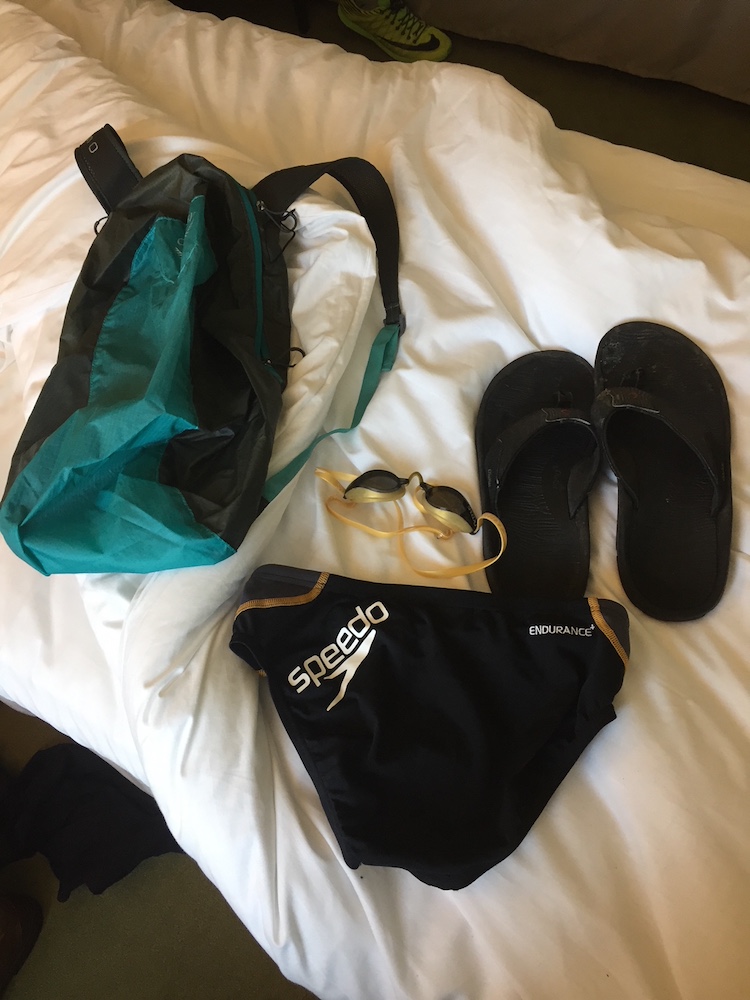
If people’s inability to not block the jetway off the airplane in their futile quest to find the enormous sign indicating the direction of baggage claim doesn’t drive you insane, you can probably have a normal reaction to cold and can just buy the same weight gloves as everyone else. If, however, the inattentiveness and complete disregard for the world around them of most people enables you to ski in your Speedo and forego most layers of insulation, have I got some suggestions for you.
Come to Alaska, hear the Speedo story.
Not to beleaguer this point, as my glove selection is spot on for me, but I’ve noticed over the years that a conversion factor is necessary for most people. You know, normal people. People who don’t sit alone in a cabin for two weeks and test gloves. And no, I am not kidding. I have issues. Two weeks. Two freakin’ weeks.
More specifically, I tend to scale 10-20 degrees colder than the “average” skier (i.e., what you’d wear on a 40-degree day, I’d wear on a 20-30 degree day). And before the haters out there get all huffy, I don’t view this as a positive or a negative, just the reality of the situation. I only bring it up to contextualize these recommendations and to optimize them for the unwashed masses. That’s you people.
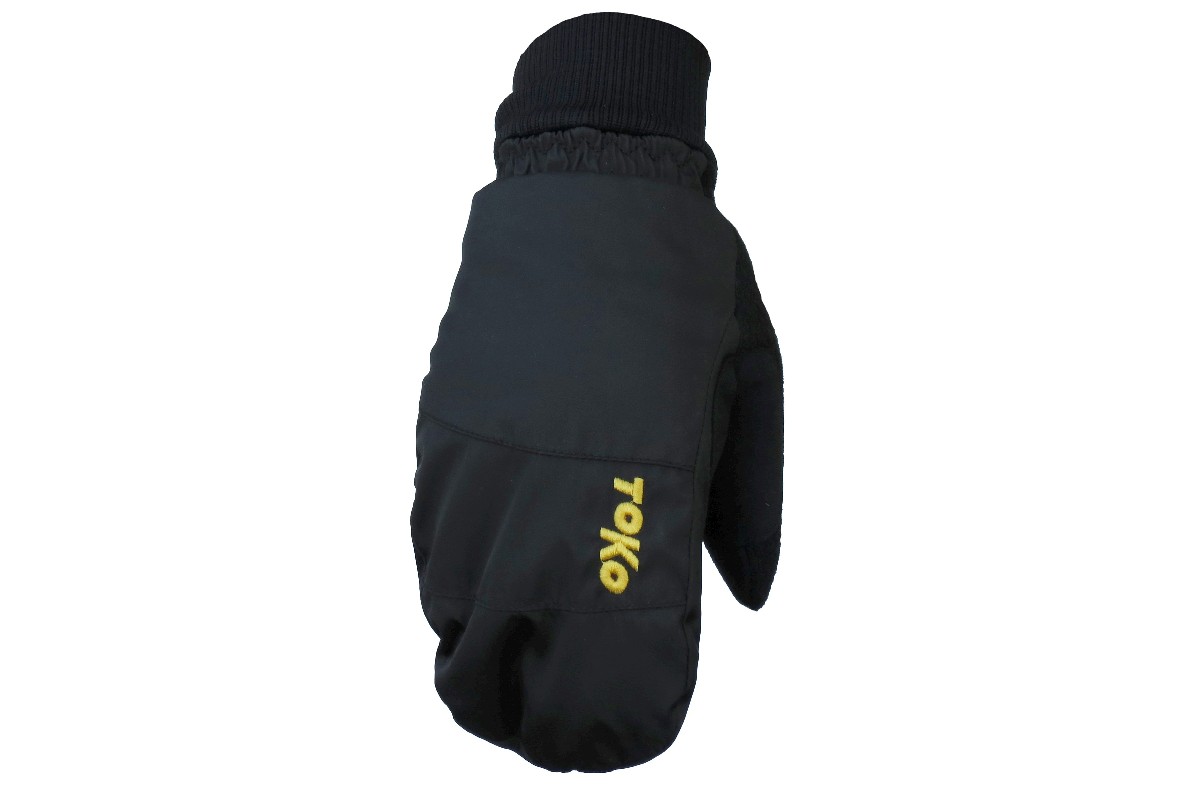
So how does this all translate to you, the “normal” skier? For most people, in particular those whose fingers chill easily (not to be confused with Netflix and chill, which is something altogether completely different), I strongly recommend the Toko Toasty Mitten for average-to-cold training days. My hands would ignite if I wore these on any day over 10 degrees F, but for many skiers I talked to, they are the perfect choice for most winter days. Regardless of where you slot in on the cold tolerance index, we’re all out there on days that we think are “cold,” (whatever the hell that means to you) and these things are perfect for cold days. So get a pair for days that you perceive to be cold and please STFU about your Raynaud’s syndrome. You don’t have that — you just have crappy gloves and base layers (more on the latter shortly). $35 at Tokous.com
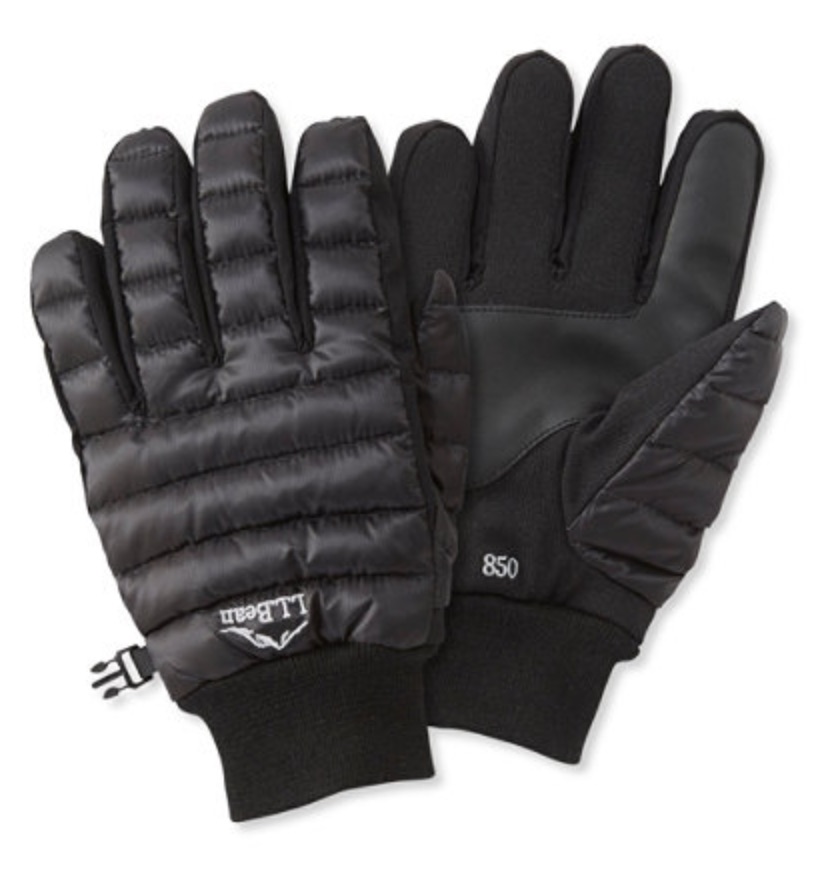
Speaking of spontaneous appendage combustion, the last offering in today’s installment of how to not lose your fingers to frostbite is the LL Bean Men’s Ultralight 850 Down Gloves. Unless you’ve lived in the desert your entire life and have blood with the viscosity of air, these gloves are WAY too hot for any sort of aerobic activity. Where they shine however is on your way to and fro the tracks. Even though that crafty Chinese hoax seems to be killing winter, it can still cold in the morning when you go to scrape your windshield, set up the biathlon range, or stand motionless on the race course giving splits. For all of these activities and more, you want this glove. It is warm, yet not so bulky that you can’t grab ahold of your disobedient Great Dane’s collar as he is running to knock over your neighbor coming home with delicious smelling pizza. (photo unavailable of the Great Dane pizza “incident,” as relations are currently a little frosty with that particular neighbor)
Save your relationship, and your fingers, and buy these now. $49.95 at L.L. Bean
Substantially Less Hunky Philly Hate-Muffin FBD trying to pretend that he knows what’s up
It has occurred to me over the years that perhaps another one of the reasons why I don’t get cold hands or feet is that I pay particular attention to my base layers. I give considerable thought before each sesh as to not only the projected temperature during the ski, but also factors like the sun, wind, and the prescribed intensity level of the scheduled workout. Doing intervals on a -2 C day when it’s sunny, with no wind and low humidity requires a very different set of choices than going easy on a +2 C day when it is windy and rainy.
Being the spoiled, gear prima donna that I am, I am in the envious position of having literally dozens of options when I’m at Fast Big Dog Racing HQ (FBDRHQ, or Faabidoorahick, as we say “around the shop) in Steamboat, but as anyone who follows me on Instagram knows, I am a man of the world and part of being pro is bring only what you need on trips and absolutely nothing more.
Since I am a wily veteran of the travel game and no-one is more pro than me (I’m looking at you, Taylor Fletcher), I can go minimalist with the best of them and the lynchpin of this entire concept is being able to select multipurpose garments that are functional over a very wide temperature range. For example, did you know that wind briefs can be repurposed as a buff, headband, or in a pinch, even a cold-weather mask? It’s true. I’ve seen Ollie Burruss execute the latter on several occasions and he went to Harvard, so he’s smart. But I’m getting off-topic. Focus FBD, focus.
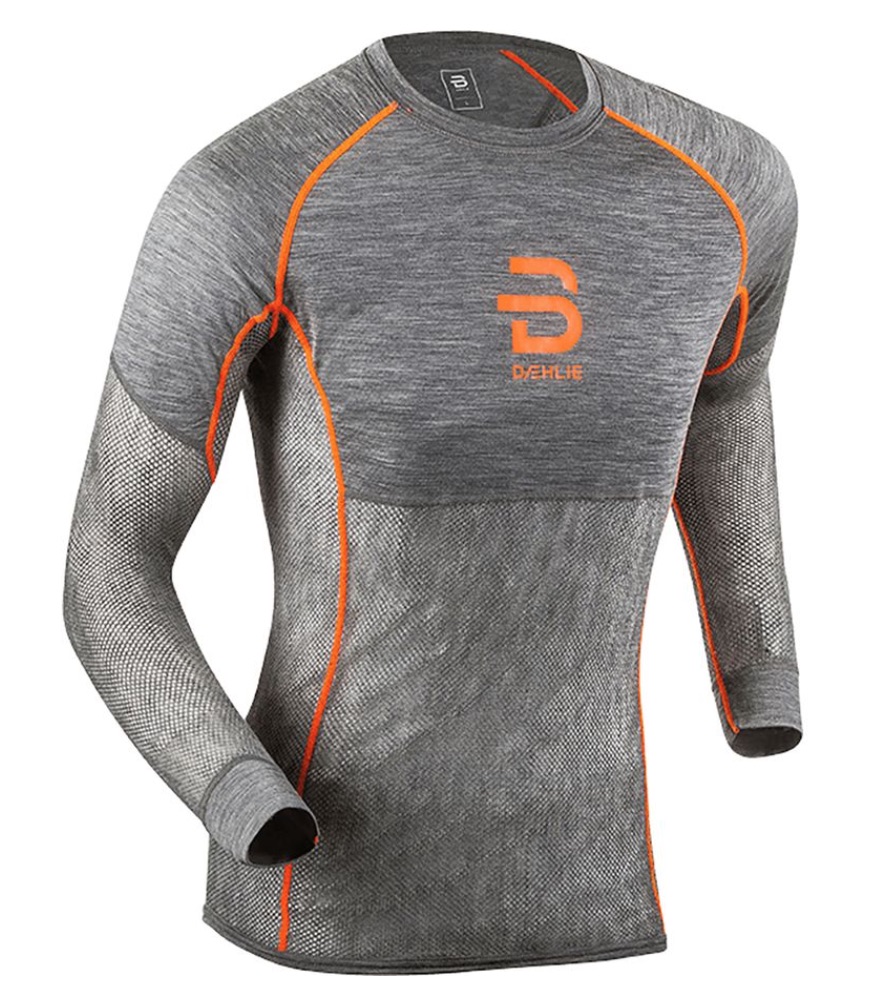
One of my favorites base layers this year is this offering from Bjorn Daehlie, the Airnet, their new wool training top. It is Merino wool, so it is warm in a wide variety of temperatures, maintains its insulation properties well when it is wet, offers excellent wicking, and perhaps most importantly, resists odor magnificently, which is key on those long training camps. $79.95 on Backcountry.com
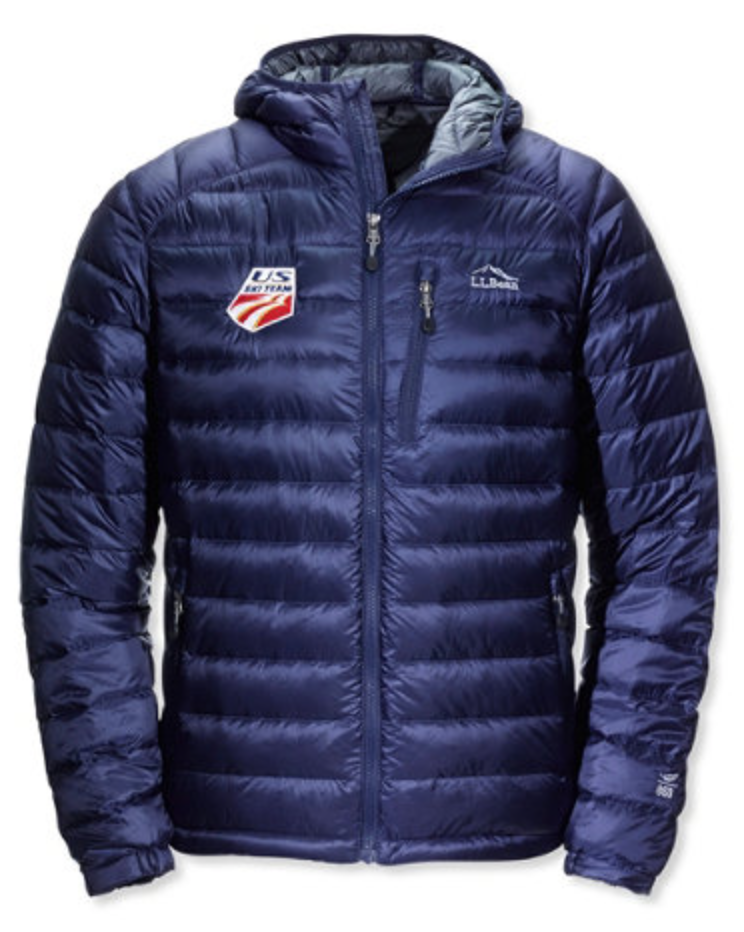
Clearly designed for pre- and apres-ski, this jacket is warm, light, comfortable and at $250, one helluva value.
Continuing today’s theme of “community,” it’s important to point out that this isn’t just a great jacket, but like Toko, L.L. Bean is a great company. They are an official supplier to the U.S. Ski Team, they have excellent products, and they do a great job supporting our athletes. If you are looking for a new puffy to strut your stuff around town on your way to and from the ski, shovel the driveway, or walk the stupid Great Dane, this is your jam, as not only do you get a great coat at a great price, but you’re also supporting a company that supports our community. Pay it forward. $249 at L.L. Bean
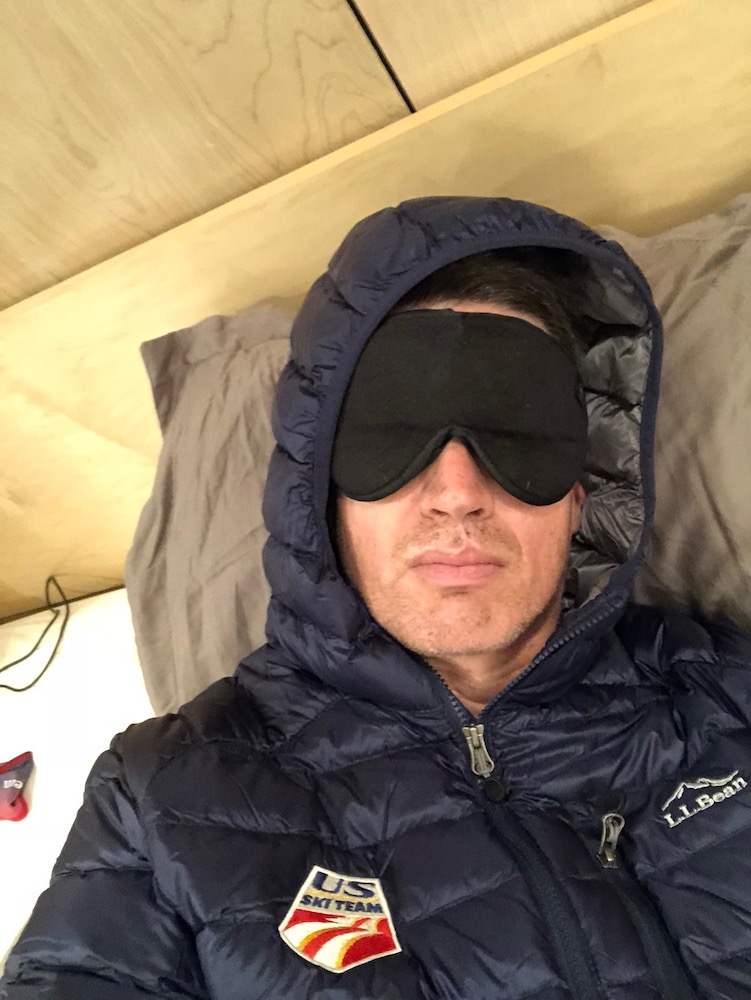
No heat in your remote, Ted Kaczynski style Montana cabin? No problem if you are rolling with the L.L. Bean puffy. The afternoon nap was never more luxurious.
Nick Hendrickson racing at the Tour of China earlier this winter.
Testing and Choosing Race Skis at the Boulder Mountain Tour 2017
On a typical day in the Wood River Valley, you can pretty much bet on sunny days, cold nights, firm new snow and amazing grooming. But so far, this hasn’t been a typical year in Ketchum. Last week it didn’t seem to stop snowing, with about 20 inches accumulating on Friday and Saturday, it made for some interesting ski testing, and racing!
Testing
Whatever skis you may have in your bag, make sure the skis you test are all zeroed (same wax and prep on all). Test skis the day before race day on conditions that you think will mimic race conditions (as best as possible). The BMT is unique because the start and finish could be very different conditions, choose a spot to test skis that is going to give you an idea of what the snow will be up high at the start, and down at the finish. You can always test at multiple locations if you’re really keen, just be careful to not overthink things. This brings us to probably the most important part of ski testing, choosing which ski to race on.
If you have a good quiver of skis, chances are you’ll have two pairs of skis that feel similar on testing day. This is when you go with your gut feeling. If you’re thinking that one ski feels better than the other, but just a little bit…choose the better ski! In the end, if your skis are really so similar, it will not make or break your race. Take the skis that feel slightly better and wax those up for race day. Another option is to race wax both pairs and test them the morning of the race on the course when you know what the weather and grooming is looking like on the race course. Whatever ski you end up choosing, be committed to that ski!
Nick Hendrickson, 2016 Boulder Mountain Tour Champion
This is an excellent article written for SBX racers, but should be read by anyone who wants to improve at anything and have a positive experience
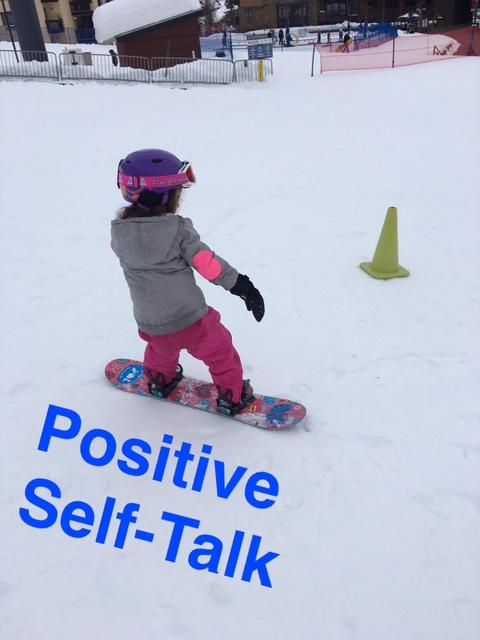
Self-Talk By Cody Brown Head SBX Coach SSWSC
One of the most important yet often overlooked aspects of mental game and success in athletics is, “Self-Talk.” In this eblast we will review the key concepts and the role self-talk plays in athletic performance.
With every new athlete that enters my program one of the first things we actively eliminate is negative self-talk. I often hear negative self-talk in response to feedback that is being provided to athletes. It usually sounds something like, “I am just not good at that technique” or “I just can’t do that.” The first thing that I do when I hear this kind of negativity is cut the athlete off to stop the negative self-talk. Then reframe the statement and try it again. The new statement would sound something like, “I am improving that technique,” or “that is something that I am working on getting better at.” If an athlete is verbally condemning their performance, it is almost a guarantee they are mentally doing it as well.
The underlying principle behind self-talk and its effect on athletic performance is simple. Your sub-conscious mind is indifferent to results and is essentially programed by your conscious mind. One of the first psychologists to explain this notion was Maxwell Maltz in his book ‘Psycho-Cybernetics’ . For example, if you persistently say (verbally or mentally), “I am not good at pumping transitions” that is exactly what your sub-conscious mind is going to produce. If you reinforce to your sub-conscious mind positive statements such as “I am working on getting better at pumping transitions,” you will, over time produce that desired result. A rule of thumb if you find yourself negatively criticizing yourself is, in order to eliminate one negative thought, you need to mentally or verbally say a reframed positive statement four times. One technique many athletes use is a “power statement”. If they catch themselves being negatively critical of their performance mid-run, they can force out the negativity by mentally saying the power statement of their choice four times immediately after. This statement can be as simple as “my technique is excellent” or “I ride with power and finesse.”
This also applies to outside influences as well. I make a conscious effort to speak to my athletes the same way I want them to speak to themselves. For instance, if an athlete is speed checking or slowing down before a jump, I will resist the temptation to say “don’t speed check!” But rather tell the athlete to “eliminate the speed check” or “after the first feature point it straight into the jump.” It is subtle but effective.
To sum up self-talk in three simple steps:
Listen: Pay attention to what you are saying to yourself.
Reframe: If negative, reframe the statement to be positive.
Reinforce: Repeat the positive reframed statement.
Achieving your goals is a process, so be nice to yourself and enjoy the journey.
USA Nordic signs strategic partnership with Toko
Park City, January 15, 2017
“USA Nordic is very pleased to announce that we will be working with Toko as our exclusive glove supplier for the Nordic Combined Team’s cross country racing for the 2017 season,” said Bill Demong, Executive Director of USA Nordic. “Toko has a long, distinguished history as one of the premiere Nordic brands and we are very excited to be working with their committed team.”
Toko US Brand Manager Ian Harvey commented, “Bryan Fletcher lives in Heber, Utah close to me and I have been impressed with him and his other teammates’ professionalism and commitment. It is my pleasure to support them.”
“Switching to Toko was a fantastic opportunity,” stated Taylor Fletcher, one of the top athletes on the USA Nordic Combined team. “The gloves have a great warmth to weight ratio. Due to their European sizing, the size increments are smaller such that we can achieve a perfect fit. I appreciate the personal touch that Ian has given the gloves as well as to our team”.
USA Nordic is the parent organization for USA Nordic Combined and USA Ski Jumping and is based in Park City, Utah. To stay connected with all of the USA Nordic Combined athletes, please visit www.usanordic.org and subscribe to our newsletter!
USA Nordic’s Bryan Fletcher, a top Nordic Combined skier wearing Toko profi gloves in Winter Warrior color
We spent the week before the race testing in an inch or two of fresh snow and our ski results were consistent with the published Toko tip of using a slightly stiffer ski with a finer grind. We again found success with the same HF Blue/Red mix as in the sprint. JetStream Red 2.0 was a great powder choice since it has such an incredible range, although we both felt that our skis were fastest the final 15km. We top coated with a block roto corked in as well as liquid.
Testing up at Galena Lodge on Friday conditions were new soft snow with temperatures in the mid twenties, just a couple degrees cooler than were forecast for race day of the Boulder Mountain Tour. We found Toko LF Red running better than black waxes for a base layer, and HF Red also running very well. So that’s what we ran for base layers. The Red has a great broad range, and mixing yellow and AX134 in wasn’t helping. We received around another foot of wet snow overnight which made for one of the most challenging BMT’s ever! We powdered the skis morning of, with many of our athletes opting for White/Clear base skis. Toko Red Helix 2.0 won our top coat test which made for an easy last step after adding a broken structure.
— Chris Mallory
Sun Valley Gold Team Coach
Why did we recommend avoiding soft skis in the Boulder Mountain Tour although the conditions were soft?
When new snow is soft and dry, soft skis are generally very good. However when the new snow is wet and soft, there are other considerations to take into account. In soft new wet snow, two major considerations are flotation and moisture management.
In new soft snow, when a person pushes off (skating), it is common for the skis to sink into the snow creating a braking effect and a huge energy loss. Using a stiffer ski (or at least avoiding a soft ski) minimizes this issue because it provides a stronger and wider platform that is less likely to sink and result in energy and speed loss.
Unless new snow has a strong glaze or a strong moisture film on top, it is very sensitive to structure (especially in the mountain west). We have had this snow all winter and have gained a lot of experience with it. In addition to by using structure, moisture can also be managed by using a very hydrophobic wax (HF, JetStream, and HelX) and also a stiffer ski which reduces contact of the base on the snow. For this reason in these conditions, a ski with more camber was advantageous.
I saw many people doing glide outs next to one another while tucking. In this deep loose new snow, this is not an effective way of comparing skis because the stiffer ski will almost certainly be much better when the camber is being worked (while skiing and pushing off). A softer ski would probably have been close in its gliding properties, but overall would have been poor comparatively.
How to prepare new or freshly stoneground Nordic or Alpine skis and snowboards
This time of year many people have either new equipment or have just stoneground their skis or snowboards from last year. Here is how to get those bases running fast.
1. Wipe the bases down, brush them out well with a copper or steel brush, and wipe the bases down again. New ski bases can be dirty and also post stonegrinding, the ski bases have debris and emulsion fluid on them.
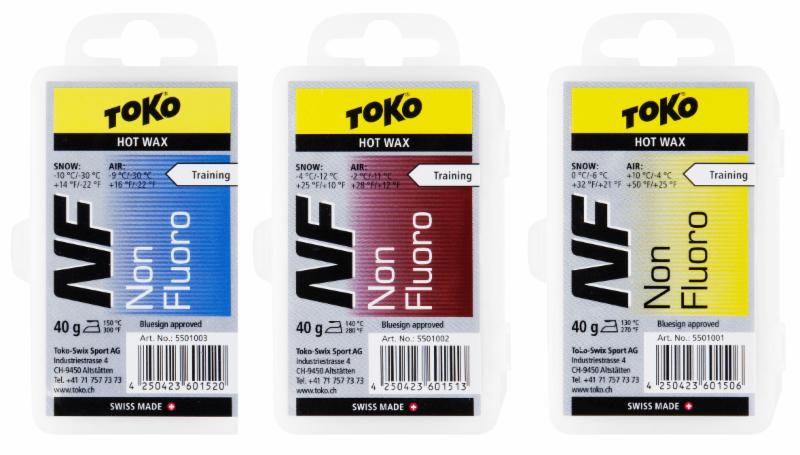
2. Wax the bases a few times with a very soft wax such as Toko Hot Box and Cleaning Wax or if you don’t have that Toko NF Yellow. The softest waxes will penetrate the deepest which is very important for new or freshly ground bases. The idea of this step is to get wax into the base deep. The wax can be scraped and brushed out well (steel or copper) between applications or just reheated. If I notice that the wax doesn’t seem to be going into the base very well, I scrape and brush well to encourage more wax absorption. If the wax is going in well, I just reheat.
3. Wax the bases a few times with a hard wax such as Toko NF Blue or LF Blue (LF Blue is harder than NF Blue). Once the soft wax is in the base deeper than the hard wax would have gone, you need to harden the base up. The soft wax “holds the space” for the hard wax to enter deeper than if the soft wax hadn’t been there. For sure scrape and brush well between applications of the hard Blue wax as this is a key step in reconditioning the base surface as well.
4. Ski or snowboard a lot while rewaxing every time afterward. The bases will only make so much progress without being skied on between waxings. This will get them how you want them quickly. If you have a few skis and want to get them running, ski on each pair for 30 minutes or so and switch them out and then rewax alll of them before doing the same the next day. This is the most important step in making your newly ground skis or new skis and snowboards fast – spending time on them and then rewaxing.
With metal edges of course, there are other considerations. Please see this video for information on evaluating edges and base flatness of new skis:
Evaluating new skis and snowboards
Additionally, here are some recommended bevels depending on the type of skis and what you will be using them for. (Best is to check with the manufacturer).
How to have fast skis ALL THE TIME and in EVERY CONDITION
I love my job. The contact that I have with people in the ski community is pretty much always positive and enjoyable. We have great waxes and other products so of course generally interaction, feedback, and my motivation are very positive. However sometimes at events or otherwise, I have people approaching me trying to get me to guarantee super fast skis if they use a certain wax. A fairly rare thing is also that a person didn’t have the fast skis that they were hoping for. It is important to take a step back and take an overview so you all have the proper perspective on what makes a fast ski on any particular day.
The 3 main factors to having fast skis are ski flex and design, structure, and wax. You could throw base material in there too, but most people have what they have, so that is more of a World Cup level topic. (Note that many skis have different base material that matches the type of conditions that they were designed to ski in, so this is addressed in the ski selection process. Example: Rossignol S3 or C3 have a “wet” clear base material to match the flex and structure that the skis come with).
Far and away, the most important factor in having fast skis are the skis themselves. Given a particular condition, the skis need to match the condition in terms of their flex and design as well as match the skier (weight and ability).
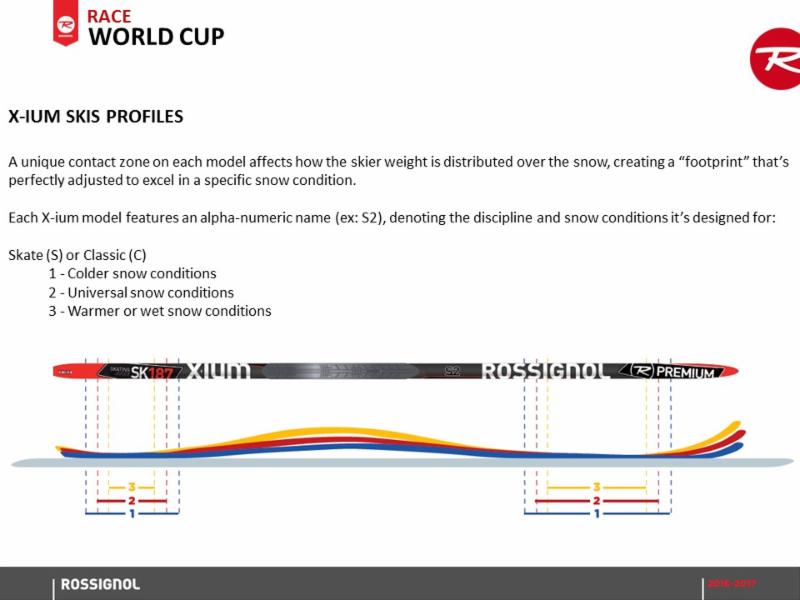
Let me use Rossignol as an example because I am very familiar with them and confident in them. Below is a quick chart explaining the flex/design of the top Rossignol skating skis, the Xium Premium S1, S2, and S3 skis. In each of these skis, the camber height is different as is the contact area of the skis to the snow if the skis are fitted properly. (The concepts are identical for Skate and Classic skis).
If snow is cold, dry, and slow snow, a fast ski will generally have a low camber and a relatively long area of contact in the tip and tail sections. Assuming the structure and wax are “cold”, the skis should be good assuming they are fitted correctly. If the skis have a high camber and a short area of contact in cold, dry, and slow snow, the wax and structure can still slow the skis down further, but the skis will not be very good regardless of how optimal the other two factors are.
It is the same in wet snow. Clearly, having a low camber and more contact between the ski base and the snow will result in more suction and more opportunity to pick up dirt creating more friction and more suction. Minimizing the contact results in much faster skis for the short term and especially after some kms are skied. The disadvantage of using a lower cambered ski with longer contact area can not be overcome with “wet” structure and wax to the point that the skis are really good. This is especially the case in dirtier snow where the addition of a deeper structure to compensate for the increased suction (surface tension) created by having a longer contact area will only result in more dirt attaching itself to the ski base which makes the ski slow due to the added friction of having dirt on the base as well as the increased suction because the structure is filling up with dirt and the previously hydrophobic base material is covered with dirt and no longer hydrophobic.
In past years with different ski designs, many people including myself liked to err on the soft side, especially in the west where we get a lot of cold dry and slow snow. The current ski designs such as Rossignol need to be fitted properly and I personally lean toward the stiff side to ensure that the skis can function as intended.
Bottom line is that in order to have fast skis in all conditions, the skis need to be the right flex and design for the conditions and they need to fit the skier such that the contact area matches the intent of the ski design. If you put a 200 pound guy on a ski designed for a skier of 160 pounds, there will be an increase in contact area. Also, the more aggressively a skier skis, the more care needs to be taken to ensure that the skis are stiff enough to accommodate being suspended on the right length contact zones.
Looking at the chart above, you can see the different colors of the S1, S2, and S3 patterns. They match up with the Toko colors which makes sense because normally when you use one of those skis, you’d be waxing it with the color associated in the chart.
Structure is often the next most important factor, especially in the two extreme conditions which are cold, dry, slow snow and wet snow. In cold dry fast snow that is for example transformed, a more aggressive structure can be used with success. This is why I keep mentioning “slow”. A base finish that is not a “cold” grind (very smooth) will not run fast in cold, dry, and slow snow regardless of the flex of the ski and what wax is chosen. In very wet snow, a “cold” grind will not run fast even if the ski and wax are optimal.
All 3 factors in having fast skis need to be considered. Satisfying any one or even two factors will generally not yield fast skis if the third factor is in conflict with the conditions. Most times, the factor that is most in opposition to the conditions determines the speed of the skis, not the ones that are in agreement with it.
So, my recommendation is to consider skis from a macro level starting with ski selection (should not be too soft!), then structure, and then finally wax. It is not as complicated as it sounds if you are a passionate ski racer (ie, you are willing to invest financially as well as in physical preparation). Have an S1 ski with a fine structure that you generally will wax with Toko Blue waxes (need to wax with a softer wax periodically for the health of the base). Have an S2 ski with a universal or cold universal structure that you will more commonly wax with Toko Red waxes. And lastly have a pair of S3 skis with a warm grind on them that you will mostly wax with Toko Yellow waxes. This way you already have skis optimally suited for each general condition that have a structure that matches the condition where you would use them. Then finally wax is the “icing on the cake” and will then be able to really make the skis fast.
A ski racer could show up with all 3 of these skis prepared as described with no knowledge whatsoever of the conditions and basically always have good skis. With forecasting, it is possible to eliminate one or even two of the conditions associated with S1, S2, and S3 which makes it even easier and more convenient to have great skis. OK, now you know! Good luck and see you around!
Photo from Women’s Sprint Final at the Davos World Cup (Credit: Jacques Mignerey)
Silver Star SuperTour Report
Cold fresh snow racing continued with the Super Tour/ Nor Am at Sovereign Lakes Nordic Center in British Columbia. We raced on a cold hard paraffin with Toko JetStream Red 2.0 powder. It was a bit surprising that the Red 2.0 tested and performed so well considering the single digit temperatures. The range of the JetStream 2.0 Toko powders is fantastic. We covered the powder with Blue 2.0 Helix.
The races were solid, but off the mark of where we really wanted to be. We are in the Methow Valley to train in prep for Nationals. We are feeling good and our preparation has us still ready to be on at Nationals.
Checking pole height
Caitlin Gregg fighting through the powder on a cold day at Sovereign Lake.
Brian Gregg looking for more speed at Sovereign Lake.
Great to have cold fresh snow in West Yellowstone. We had all of our skis zeroed with Toko NF Blue so that we could pick the best ski for the day. We also had our matched test fleet to test wax each day. HF Red/Blue 1:1 mix won our paraffin test on Friday and we ran on it all weekend. Toko Blue 2.0 powder won the powder test on Friday. We tested again on Saturday and Sunday and another powder ran better so we went with that. We ran Toko 2.0 red block for the sprints, both the qualifier and the heats. Our skis were amazing and we were happy with our qualifiers, but a bit disappointed with our tactics in the rounds. On Sunday we ran the same glide and kicked on a thin Toko green binder, with a hard wax cover on skis with a high easy closing camber.
We are settled in to our accommodations in Silver Star and are excited for the 10/15 km Freestyle next weekend. A bit of a slow start to the season for us, but this weekend and US Nationals are a major focus in our goal to making the World Championships.
Nordic Race Wax Tips
With quite a few events this weekend, we wanted to call your attention to the new location of Toko Race Wax Tips! They are at the NEW TokoUS.com. The specific link is here. You can drill down on a specific region too of course.
How to Wax Backcountry Skins
With all of the snow falling recently and plenty more on the way, people might be heading into the mountains for some backcountry skiing. Here is a quick video on how to best wax backcountry skins by Toko Tech Team member Erich Wilbrecht. See entire video library here.
Some Images from the Cross Country World Cup Races thus far All images from Nordic Focus
Liz Stephen (U.S. Ski Team) racing at the Lillehammer World Cup last month. (Photo: Toko/NordicFocus)
Ida Sargent racing earlier this season at the World Cup in Lillehammer, Norway. (Photo: Toko/NordicFocus)
Ida Sargent (Photo: Toko/NordicFocus)
Noah Hoffman racing last December in Davos, Switzerland. He is the recipient of a discretionary spot on the World Cup. (Photo: Toko/NordicFocus)
Eric Packer (Photo: Toko/NordicFocus)
Caitlin Patterson (Photo: Toko/NordicFocus)
Sophie Caldwell (Photo: Toko/NordicFocus)
Simi Hamilton (Photo: Toko/NordicFocus)
Rosie Brennan during a classic race this season (Photo: Toko/NordicFocus)
Introducing an inexpensive workbench with good options – for Alpine, Snowboard, or Nordic
Toko Workbench Small
The Toko Workbench Small is a multifunctional lightweight stable wax table with 4 non slip rubber feet. Its height is adjustable between 87cm, 85cm, or 75cm to accommodate waxers of all ages and heights. The work area (surface) is 120cm x 35cm and it weighs 11kg. MSRP just $164.
For Alpine waxing and tuning, there are 3 good vise options to use with this bench.
They are:
Ski Vise Race: The least expensive quality 3 part vise on the market. End pieces allow working on the skis at a 90 degree angle for waxing and tuning or at a 60 degree angle for working edges. Middle clamp opens to 90mm and can be fixed to bindings or binding plates to accommodate wider skis. Comes with 2 ski brake holders. MSRP $160.
Ski Vise World Cup: This is our top level vise for working on metal edged skis. The end pieces are adjustable for height and also accommodate tuning and waxing at either 60 or 90 degrees. The middle clamp is wider allowing for a longer contact area yielding more stability. The jaws open to 100mm and can be clamped to binding plates or bindings to accommodate wider skis. Comes with 2 ski brake holders. $MSRP 210.
Ski Vise Freeride: For securing very wide freeride and freestyle type skis. The end pieces are similar to the Ski Vise Race enabling waxing and tuning at 60 or 90 degrees. The middle clamp has a wide contact area and opens to a massive 155mm. MSRP $250.
For Snowboard, we recommend using the Board Grip 2.0.
Board Grip 2.0: This adjustable snowboard vise can be made wider (making it smaller is convenient for storage purposes so it fits in a box easier) for increased stability. The antislip rubber surface keeps snowboards stable for waxing, scraping, and brushing. Snowboards can also be inserted and clamped in the middle for tuning edges at 90 degrees. MSRP $130.
For Nordic skiing, we have two good options:
XC Profile Set for Workbench Small: These plastic profiles fit the workbench small only. They include the middle binding clamp piece (not pictured). These profiles are suitable for both classic and skating length skis (170-210cm) and weigh just 1.4kg. MSRP $130.
Ski Vise Nordic: Simple very compact fixation device for Nordic skis (both skating and classic). Very adjustable to fix all lengths including kids length skis. Ideal for traveling, for waxing “on-site”, and for at home. MSRP $126.
Not all Toko products can be found at Toko retailers. Here is a hyperlink to the Toko pages of some of our online dealers. Additionally, every Toko product can be found at TokoUS.com. Orders placed at TokoUS.com will probably be filled by our dealers who have opportunity to claim and fill the order if they have everything in stock.
1. Innovation. There is a long list of Toko innovations such as the first fluorinated glide wax, first pure fluoro in block form, first to use Molybdenum which then everyone switched to (now we use something else: Diamond Like Carbon), first dedicated ski waxing iron, first “thermo bag”, first copper brush which is pretty universally recognized as the best general purpose brush out there, and many more. In short, we have been THE innovators of the wax and tool industry for many years.
2. Simplicity. We have fewer waxes. Why mix red and blue and call it purple? They are easy for people to mix themselves if necessary. To buy into the Toko line costs less (fewer waxes). The more simple line makes it far easier to learn the line and the nuances that make a big difference (When to mix XCold Powder with HF Blue or when and how to layer Nordic binder with straight grip wax). It is the same with kick wax and klister. Toko waxes are also designed to be broad ranged and always in there compared to other brands who have some products that are great, but in a very specific range. If something changes (sun comes up, hit some shade, it starts snowing, etc, you’re screwed). Toko offers 3 glide wax hardnesses (colors) in NF, LF, and HF plus a black wax. We have 4 kick waxes plus a binder and 3 klisters plus a binder.
3. No compromise/performance. Our waxes regularly win Olympic, World Cup, and National championships. In testing, we are the best regularly and always in there.
4. Service. On the TokoUS.com website, there is a well organized menu of “how-to” videos consisting of concise videos that cover the why and the how. These videos cover 9 different categories such as Alpine race waxing, Alpine recreational tuning, Nordic recreational waxing, tuning for Freestyle, and so on. If a person has a tuning question, he just needs email info@TokoUS.com and either I will answer the question or if the question is regional in nature, I will forward it to one of our 25 member technical team. For Nordic, there is no other company that does Nordic race wax tips like Toko which is surely why the other brands always wait for the Toko wax tips to come out before sending theirs out. We have a team of 25 technicians who are expert. Most have been doing Toko wax tips in their region for 15+ years and really know the weather tendencies and local weather phenomenons that occur. This is where our wax tips come from: local experienced experts who are right there and have been for many years. There is no other brand that provides service like Toko does in the US.
If you wear base layers, you will be glad you watched this short video. Learn about my favorite product, any brand, any purpose: Functional Sportswear Care, a treatment to reactivate and improve Base Layer performance leaving you dry and the right temperature. The difference is huge and you’ll really appreciate this stuff!
Video Footage fromRecent USST Time Trials at Soldier Hollow
USST Toko Athlete Sam Morse on What Makes a Champion
At just 20 years old, Morse’s maturity separates him from his peers. And, he’s so very kind. He is one of the most genuine humans this planet has to offer. The future is bright for this one, so make sure to follow him as he moves up the ranks on the Team. We asked Morse our three questions on what he believes makes a champion.
U.S. SKI TEAM: In your words, what makes a champion?
SAM MORSE: A champion wins with passion and loses with grace, and pours their heart, soul and everything they’ve got into a sport.
U.S. SKI TEAM: Do you remember the first time you felt like a champion?
SM: The first time I felt like a champion was racing in Maine, winning the Maine Alpine Racing Association season championship title as a J5. I thought, “Maybe I can really make something out of this whole ski racing thing.” It felt satisfying and propelling.
U.S. SKI TEAM: What is the biggest piece of advice you have for aspiring kids who want to be sitting where you are today?
SM: Give it all you’ve got and find enjoyment in striving for your own goals, rather than for the affirmation of others. Also, the best advice I’ve ever received was, “No one thing will make you the greatest, it is the sum of the parts that make a masterpiece.”
Fun Facts:
“Moose” is Morse’s childhood nickname, as there are more moose than people where he lives and they’re big, burly animals that are gentle yet very powerful.
If he could be one inanimate object, he’d be water, because “you get to travel the globe, change physical states and always keep moving.”
Go-to travel items are a deck of cards and a good book.
His best friend on the team is fellow east-coaster Drew Duffy (Warren, VT), whom he grew up with racing in the Junior Olympics.
Morse is a HUGE Boston Red Sox fan, and his non-skiing role model is Jason Varitek, catcher for Boston Red Sox through early-mid 2000s because he’s a man of faith and always worked hard day in and day out.
Morse is involved with the Winter Special Olympics held at Sugarloaf each January, is a Sugarloaf Area Christian Ministry active church member and a rostered speaker for Camps Farthest Out (CFO) a Christian family camp organization.
Annie Hart: What is a Winter Warrior. Introducing the Toko Winter Warrior collection.
Arctic Split Mitt – for extreme cold weather
Profi – lightweight race
Thermo Plus – cold weather glove
Thermo Plus Biathlon
Thermo Plus Biathlon is the same as the Thermo Plus except it has reinforced seams around a serrated line on the shooting finger in case an athlete wants to cut the shooting finger to allow for a better feel on the trigger. The reinforced seams will prevent the cut from getting bigger and bigger.
Toko glove sponsored elite Cyclocross Rider Becca Fahringer has had a great season so far both domestically and in Belgium in the Super Prestige Cups. Not only is she really fast, but she also writes an entertaining and witty blog. Follow her at gofahr.com
There is snow on the valley floor in St Moritz, site of the Alpine World Championships this winter. For those that are as excited about these events as we are, it’s cool to see!
Why it is important to use a quality detergent on specialty outdoor apparel? This video explains the difference between ECO Textile Wash and supermarket detergents. Find ECO Textile Wash at TokoUS.com and other Toko dealers. (See dealer links at TokoUS.com)
Reese Hanneman = Winter Warrior. Are you?
It is almost winter, most of the peaks are white, the mornings are crisp, we are pumped to be on snow! Here’s a video that will get your adrenaline pumping and will motivate you to get out when the weather is not so inviting. What is a Winter Warrior?
Ski Austria and Toko are ready for winter!
Toko Team Hats
The idea behind Toko Team hats is to offer hats for event organizers and teams or clubs to use our hats as their official hats at a very low price. Here are the options:
We offer you the Toko Team hat for just $9! The front of this hat has been left blank for you to screen or embroider at your local embroidery shop (this is for your to organize).
The lycra hat is at a crazy price of just $11. You can’t miss! Has a microfleece liner. The front of this hat is also blank.
The Sina hat is our most popular hat currently in general (not team sales). It is medium weight. The front of this hat is mostly blank (see Toko logo).
One thing that we have noticed is that people have been trying to find Toko products and haven’t been able to easily find them. This especially concerns products such as TF90 Paste Wax, some tuning tools, spray klisters, Toko gloves in various models and colors (such as the new Winter Warrior), start duffels, Care Line products such as Down Wash, etc.
For this reason, we are especially excited to be able to say that every product in every variation is now easily available at TokoUS.com. We have also made a number of brand new short how-to videos that should be a great resource to you!
Of course we have a great many valued dealers who we will continue to support. We work with Quivers which is an order fulfillment system that will enable us to offer orders to our local dealers if they have the product in stock.
Introducing the Alaska Ski for Women, a fundraiser to help stop the cycle of domestic abuse against women and children and also a really fun outing! Toko has supported this important event for the past 17 years.
Alaska Ski for Women – an important event
The colorful Alaska Ski for Women (ASFW) is North America’s largest women-only cross-country ski event. This is a great event where women of all ages and abilities come out to Nordic ski approximately 2.4 miles (4K), many in colorful costumes, while raising funds for local non-profit organizations that help stop the cycle of domestic abuse against women and children. This is not only a fun event, it’s also a fundraising event! Through the generous donations of ASFW participants, and the hard work of the all volunteer committee, the race has been able to make an impact in the community by contributing over $1,000,000 to groups that actively work to improve
women’s lives. A special focus is ending the cycle of violence against women and their families and to help women in crisis find positive solutions to a healthier life.
Held every year since 1997 the Anchorage event originally had nothing to do with the Super Bowl and started as a way to get more women out skiing together. That it was set on the same day as the football game was a coincidence -it was the only Sunday left with no race scheduled when the initial reservations were made. Since then, organizers kept the race on the day of the Super Bowl because it offered a great reason for women to have fun and raise money on a winter day when people are in a celebratory mood already.
The primary purpose of this event is to get women out and take away their excuses. It certainly is a nice date and the event gets done in time to watch the Super Bowl. Race Director, Tamra Kornfield said 500 women signed up for the event this year, a slight drop from last year’s numbers but the goal is to get more women interested in the sport as well as supporting a good cause. While it’s not yet known exactly how much money was raised this year, Kornfeld said last year the group raised about $50,000 in donations. Teams dressed in costumes including a Chinese dragon, hot air balloons, a lion, a gorilla, devil’s club and public school busses. A team dressed as “Google Maps” claimed victory in the costume contest. Olympic cross country skier Kikkan Randall was one of the costume contest judges. Randall said that the trail was well-maintained with manmade snow despite the lack of natural snow. Were it not for the snow making equipment at Kincaid Park the last two season, the Ski for Women might well have been a walk as it was in 2005 when there was no snow on the ground.
I have been a wax volunteer for the ASFW since the inaugural event in 1996. Initially a group of volunteers took over the Kincaid Park wax bunker and provided skate and kick wax services. TOKO started providing wax for the event in 1999 when I first came on board as a member of the TOKO Tech Team. The bunker was being renovated in 2001 for the World Special Olympics held in Anchorage and was unavailable for use for the Ski for Women. That year, myself and Mark Strabel set up our tables and tents in the stadium near the start and provided kick wax service to participants. Being near the start and seeing the costumes and the joy of the participants gave good reason to continue with kick wax service outside in the stadium. Glide wax service is also provided through rub-ons and paste. The following year TOKO became the proud and exclusive wax product sponsor of the Ski for Women and has been ever since.
In the 20 years I have been associated with this event there have been many volunteers who have stood outside and waxed skis. Some come for a year and others keep coming back. Each volunteer gets a TOKO hat and an apron. It is understood that regardless of the weather preceding the event or the forecast the day before, the morning of the ASFW will be cold and windy. These past few years I have been fortunate that a reliable core of volunteers has been available to wax. Chet Fehrmann, Ira Edwards, Eric Schwalber, Jay Holton and Matt Claman.
Toko is proud to support the Alaska Ski for Women and will continue to support it. Thank you to the organizers and the other supporters who make it possible.
– Patrick McGownd, Toko Tech Team Member since 1999
Bauer Wins the Pepsi Challenge
Hayward’s 3 time olympian John Bauer won last weekend’s Pepsi Challenge race. Here’s what he ended up waxing with:
I went with Toko HF Black then HF Red/ Yellow 50:50. I thought there was pretty good structure in the skis already so I did not re-rill. I did the red and yellow Structurite tool before adding JetStream Red and I put on a coat of the Red Helix. Perhaps I should have had more structure in…but there really wasn’t much one could do with the new snow that wasn’t much tilled when the sun hit it.
I think it was a good effort. I skied relaxed and in the pack until I led out after 3k. Skied the Silver with a few pushes over the hills and then was alone at the 11k point on in. There were a few lurchy spots on the downhills and the skis were noisy on the sun-drenched hills. Congratulations to John on his overall win despite being 47 years old!
Wax Report from JNQ Spokane, WA
We had our last JNQ event last weekend in Spokane, and I took 10 athletes to compete in the mass start classic and individual start skate events.
Conditions were slated to be challenging: with warm temperatures and no recent snow it was transformed but somewhat sloppy. The classic race had a possibility of new snow which I was hoping to avoid! Given the high moisture and rapidly rising temps during the day we went with LF Yellow and LF black mixed for both days as a glide base layer. Then I tested JS Red and JS Yellow blocks and found some mixed results: the JS Red ran well in the more frozen snow, but even without the temperatures rising, as the tracks (classic) or platform (skate) got more skied and transformed further the Yellow came into play. I opted for yellow on both days given where our athletes were starting in the order, and also used the yellow structurite. Next I want to play around with some linear 1mm rill to accompany the structure sometimes, as I think that would help further channel the transformed snow’s moisture down the ski – thoughts?
For kick in Saturday’s race, I first tested a green drywax vs. klister binder. Both skied comparably fast but out of fear of wear (lots of snowplowing, sharp corners) I went with the klister figuring it would increase tenacity. I covered the green binder first with Red, and tested that against a Red/Yellow mix. The Red was solid for most of the day’s races; it held well for kick and glide without getting slick as the tracks further glazed. However the later starters were the U14 classes and I wasn’t confident they’d be able to make it work (a few had issues in their warmup). I also wanted to keep the speed of the Red, so I just dabbed in some yellow. This small amount did the trick to add a bit more kick under the foot without sacrificing glide.
– Sam Naney, Head Coach Momentum Northwest
David Norris winning the American Birkebeiner (photo Paul Walsh) Caitlin Gregg wining the American Birkebeiner for a record 4th time! (Photo USSA)
American Birkebeiner CXC Wax Report
The American Birkebeiner is truly the “Super Bowl of Skiing” and the 2016 American Birkebeiner Ski Foundation (ABSF) schedule of events did not disappoint the 12,000 skiers who flocked to Hayward, Wisconsin to enjoy the festivities and trails of the North Country. The crazy weather was a different story; it caused a bit of stress for skiers, coaches, and wax technicians, including the Central Cross Country Skiing (CXC) wax team of Karmen Whitham, Marty Donegan, and Bruce Manske.
The glide wax was the easy part of Birkie waxing. We cleaned the ski bases with Toko LF Blue (-30 to -10 C); although the LF Blue is a hard wax, it aids in harden the base of a ski, and makes them run faster in transformed snow conditions; and, fluorine tribloc acts as a bonding agent for Top Finish products. Next, we applied a two layer of a 1:1 mixture of Toko HF Hot Wax Black and Toko HF Hot Wax Yellow (-6 to 0 C). The Black is very similar to the temperature Toko HF Hot Wax Red (-12 to -4 C), except the Black contains DLC additive for maximum dirt repellency. The Birkie groomers did an awesome job of preparing the course, but due to the thin snow cover and rainy weather, the course had a fair mount of dirty snow. Therefore, it was important to apply a double layer of wax. Toko HF Hot Wax Yellow has selected because of the high-fluorine content and its very durable, which aids in repelling water and dirt, and makes for fast skis.
The CXC wax team top coated each ski with JetStream Bloc 2.0 Yellow. The JetStream was cranyoned on across each ski and then melted with a fiberlene-covered iron. A very thin second coat of JetStream was then crayoned on the skis. This layer we rubbed into the ski with a dedicated cork; followed by lightly brushing with a soft nylon brush and polishing with a Toko Thermopad. The JetStream improved the speed and glide of the skis due to its high abrasion-resistant design.
The kick wax was challenging for most coaches and wax technicians due to the weather conditions, which included precipitation throughout the day, along with a glazing track, thousands of skiers, and the marathon distance factor. The CXC waxing crew, lead by Karmen Whitman, decided to use a combination of Toko Klisters. Nordic Base Klister Green was applied to the skis as a foundation layer; this was followed by a 1:1 mixture of Nordic Klister Yellow, designed for moist snow, and Nordic Klister Red, which has a wide range and is designed for transformed snow; Red is often used as a universal application.
We tested covering the Klister with several different hard waxes, including Toko X-Cold; the hard wax cover had limited success, and we decided to primarily remain with the Toko Yellow and Red Klister combination. In a few cases, we added an additional layer of the Yellow/Red for additional kick, along with extended the Klister zones. Another test, with limited success, included adding a layer of a universal Silver Klister. Yes, the freeze and thaw conditions of the trail, and the changing conditions between coarse and transformed moist to wet fine grained snow created a variety of challenges.
At the end of the day, The CXC Marathon Team, the CXC Masters Team, and the CXC coaching staff were very pleased with the performance of Toko wax and the results at the 2016 American Birkebeiner: Alice Flanders led the CXC women’s team in 10th in the 52k freestyle Birkie and Hillary Patzer finished 44nd. In the 55k classic Birkie, Nicolette Reker led the CXC women with a 20th place finish. Abbie Drach won the women’s Korterloppet in a time of 1:06:25.3. Duncan Douglas led the CXC men’s team finishing 31st in the 52k freestyle Birkie (as a 50year old!), with Cory Ellertson following close behind in 37th, while Chris Pappathopoulos finished 42nd. In the 55k classic, Nick Power just missed the top of the podium finishing second overall, with Andy Brown following close behind in fourth.
Bruce Manske Central Cross Country Ski Association CXC Development Coach
Birkie Wax Report
This year I was the only one of the Sugar Bowl to do the Birkie. Here are a couple strategies I used to have competitive skis while waxing for myself. The first thing I did was to apply my LF Moly layer at home before flying. This meant one less layer of waxing to do on Friday night. One great thing about the Birkie is the huge amount of testing and recommendations made public for the race. On Friday, I focused on getting a nice easy ski, with some pickups, to get ready for the race as well as eating a lot of food. After reading through the wax reports Friday afternoon, I wax my two wettest pairs of skis with Toko HF Yellow and Toko Jetstream Yellow Powder 2.0. I also applied a fairly aggressive structure pattern. The morning of the race I tested the two pairs of skis I waxed the night before. Once I picked the faster one I sprayed it down with Yellow Helix 2.0 and was ready to go. Toko makes wax recommendations for a ton of races you can find here. If you are traveling without a wax tech, there is a lot to be said for using wax recommendations, keeping the number of race morning wax decisions reasonable, and making sure you are physiologically ready to go.
– Spencer Eusden, Sugar Bowl Elite Team
47 Year Old John Bauer finishing 30th (and winning age group of course) in the American Birkebeiner
John skied on Toko LF Black then followed by Toko HF Black which he then covered with JetStream Yellow block (ironed with fiberlene), and finally covered with HelX 2.0 Yellow. John also pressed in a Toko linear structure followed by the Toko Red and Blue Structurite bits. Congratulations John! (Photo: Chris Young)
Race report from Vuokatti, Finland Masters World Championships
Almost 1000 athletes representing 24 countries have recently concluded their competitions. Team USA concluded their “Global Warming in Finland” experience returning with 16 medals for the United States. 10 of those medals were won on Toko HF Yellow topped with Jet Stream Yellow!
Day 1 of the competition was held on 80% manmade moist snow on a course averaging 20cm in depth with temps hovering at -9C for the classic event. Toko Red dry wax kicking on HF Blue / Jet Stream Blue worked very well for all, producing a Gold Medal for Trina Hosmer and a Silver for Bob Gray. Top 10 finishes were also recorded on Toko HF Blue for Carolyn Tiernan, Inge Scheve, Kent Murdoch, David Ford, and Louise Wholey who substituted Jet Stream Red and most likely other Toko solutions that have not yet been confirmed.
Temperatures rose for the remaining events, becoming Zeros and klister type conditions for the remaining 6 races. All but the final Freestyle events were conducted with rain/snow falling at -1C to +3C just before and often during the races. Structure and massive fluoros became the weapons. The tracks were so thin, grey and brown on day 3, most classic skiers elected to go on Zeros for the 10K. Trina Hosmer was golden, Bob Gray was Silver and Abett Icks was Bronze on Toko HF Yellow/ Jet Stream Yellow. Most Toko skiers used the Red Structurite tool even though there was a fear of dirt because tracks and changing lanes were so sucky.
The 4X5K relays had the benefit of some additional wet snow improving the dirt element somewhat. Many USA athletes had their highest placing of the week. One team in 5th, 3 teams in 4th, and a bronze for Katie Meyer, Donna Difolco, Carolyn Tiernan and Trina Hosmer. Toko HF Yellow/ Jet Stream Yellow were on the final 2 legs for certain for that team.
The final distance races became easier calls on wax and ski selection. The classic event was all won on klister with the prior 4-day’s selection of all yellow combinations for glide. The skate event finally cooled down to -2C allowing the HF Red/Yellow covered with Jet Stream Red to make the podium. Two confirmed uses with a substitution of AX 134 with the Toko HF choice of the day produced great high-end speed of noteworthiness. Kent Murdoch and I were able to be in the top 3 at 500 Meters in all races that we used AX134. I came out of the worst start lanes in all 3 races to a top 5 position at the base of the first climb, thereby avoiding the cluster.
Best finishes of the week were recorded with a 5th for Inge Scheve, 6th for Kent Murdoch, Bronze for Katie Meyer, Silver for Milan Baic, 5th for Donna Difolco, 5th for Nancy Bauer, 8th for David Ford, 4th for Carolyn Tiernan, Gold for Trina Hosmer, 5th for Abett Icks, Silver for Bob Gray and a Bronze for Carol Devoe. A confirmed 9 of those skiers had a Toko HF and Jet Stream layer. Great week for Toko gliding! Substantial testing produced solid waxing recommendations throughout the week.
– Dave Ford, Toko Tech Team
Noah Hoffman battling it out at the Lahti World Cup last weekend
Report from Owl Creek Chase
Variable conditions for this years Owl Creek Chase 21k Classic. Sunny daily highs in the mid 40s and lows in the teens made for transformed snow but tilling brought fresh snow back for sections of the course. I prepped for glide with Toko HF Blue/HF Red mix at 1:1. I powdered with JetStream Red 2.0, with a sprinkling of Yellow 2.0 on the tails. I used a Toko Green base kick wax and Blue klister binder ironed in. I covered with a mix of Toko green base and another brand’s blue (under the foot). Skis were super fast, although I could have used a bit more klister for additional kick on the steep climbs and south facing slopes. – Brian Gregg
I went pretty simple on glide for the classic race, waxing with HF Blue cut with AX134 for the guys in the AM, and a mix of HF Blue, AX134 and HF yellow for the ladies who were racing second. The traffic from all of the competitors was releasing a pretty decent amount of moisture and I wanted to soften the relatively colder HF blue paraffin for the later races. I found that I was not liking the way straight HF red was running early that week in testing so ended up on a mixed paraffin. AX134 tends to run really well at high speed or any place there is some free moisture or the track is glazed. I ended up using a different powder that I preferred in the higher moisture snow over either Jetstream red or yellow powder. Topcoat was Jetstream Red block. Safe and effective, tested well in the AM. Helix sprays felt good feel testing but weren’t drastically improving runout. I ran a pretty simple hand structure on the tails of the skis to deal with moisture in the track.
For kick, I did not go ahead and race wax with Toko kick waxes. Their red and yellow hard waxes can run really well in the warmer range, the yellow being a great last wax to try before switching away from dry wax. Although I have had a lot of success with them, I stuck to a different brand that gave m e a few different options for both speed and kick. I ran a warmer wax over a light tacky binder to form my kicking layer and ran a colder wax over top for a shell.
Skate Sprint:
I ran a pretty similar glide combo to the classic distance day for the skate sprint. The only difference was the temperature was a bit colder so I pulled the warmer paraffin out of the mix. I found that both floro blocks and certain liquids were improving the top end speed on top of powders so I burnt powder early in the day for durability. I intended to have the floro powder down as an insurance policy for the rounds and didn’t want to rework the skis too much. In testing the day before I felt that Helix 2.0 spray was once again improving the slippery feel of the ski climbing but some other liquids had higher top end speed which I really wanted to get athletes to the front of the race for the rounds. Again, I went with a pretty moderate hand structure to keep the skate skis from being too aggressive and bitey on the climb back into the stadium. Skis seemed very competitive on the day with Anne Hart finishing a career best 2nd place in the skate sprint.
Skate Mass Start:
Warmer temps greeted us for the skate mass start race. I pushed people out on warmer softer skate skis, especially for the women’s race at 1:30 PM. I figured that given the humidity in the snow and the amount of traffic, we would see a pretty hard glaze develop. Athletes wanted enough structure (especially hand structure) to deal with this moisture while still having a stiff enough ski to deal with variable track conditions. I ran a pretty warm buildup for both the guys and girls skis with HF Red, warm powder, block and liquid. I found again that certain liquids delivered better characteristics than just blocks. I buried Helix 2.0 spray under the block on a few skis and corked together for climbing freeness and topped with another brands liquid that was gliding out really well and is always a very safe bet for warmer temperatures. I ran a full length light crossing structure on the skate skis with a heavier linear structure on the tail to help with the glaze but still climb well. It seemed that this pretty straightforward approach to prioritizing hand structure and topcoat testing the morning of worked well with 3 athletes in the top 5 for the women’s 20k race.
Classic Sprint:
Warm temperatures in the 30s cooling off to low 20s by the end of the round.
I threw on paraffin without too much testing. I figured that I can always change the topcoats and dealing with kick would be more the priority. HF Red was a safe bet because it runs pretty well in a wide range of temperatures and conditions. I did burn a powder (the same powder from a different brand) that I had been running all week. It was very safe and seemed to improve speed with topcoats over it. For whatever the reason (pretty moist snow would be my guess) the Jetsteam powders were not clear test winners. I kept putting them on snow and could not get them to beat some other product out there. I find they usually prefer some more transformed snow, or much drier snow than the new moist lake effect snow we had. I ran the same topcoat build from the skate sprint.
Again for kick wax I started with a pretty warm dry wax and shell and cleaned it off after the qualifier and the semi and kept stepping down to a colder option from the same hard waxes I used on the classic day. Structure was a light crossing structure on the tails only.
Overall I felt we had decent skis on the week. I used Toko products where I knew they were safe and effective. When I could find something running better, I used it, but my familiarity with the waxing line and knowing that they wouldn’t be a liability allowed me to get skis waxed and focus my energy on testing and chasing more unknown variables.
Pat O’Brien, Head Coach SMS T2
U.S.S.A. Nationals Wax Report
We were fortunate to have had Sugar Bowl assistant coach Christina Mishica, who grew up in Hancock and raced for Michigan Tech. Her hometown knowledge was especially valuable when picking skis and waxing. The early part of the week was characterized by conditions that favored colder grinds and underlayers. Despite the cold air temps, the snow was relatively fast, especially with glazing classic tracks and during the skate heats. Throughout the week, we liked the new Toko 2.0 Jetstream Red powder.
Classic Individual: For base layer, we liked an under layer of Toko X-Cold powder, with our race paraffin a mix of HF Blue and HF AX134. The Blue provided good durability for the 10/15 km distances, while the AX134 helped the high end speed. That was key in a course where maintaining speed is crucial. For powder, the 2.0 Red Powder was consistently at the top of our test. The final layer was 2.0 Red Helix. With glazing tracks the Helix provided the best high-end speed. Blue and Red kickers with a klister/hardwax mixed binder provided good options for kick and speed.
Skate Mass Start: With slightly warmer temps for this race day, we opted for a paraffin layer of HF Red. We kept the X-Cold powder in as an underlay; happy with the breaking speed it gave us. For topcoats, based on our success with 2.0 red through the week, this was our natural starting point. We had 2.0 Red Powder ironed in with a layer of 2.0 Red Block ironed in over the top. Ironing in the block gave us better durability than rotofleecing.
Skate Sprint: Once again, Jetstream 2.0 Red Powder was a winner on the sprint day. We tried similar wax to the day before, and found that blocks were running better than any liquids. JetStream 2.0 Red Block was a clear winner in glide outs as well as on feel. Even as the day progressed, conditions remained consistent and our skis were good. We did rotofleece the block as opposed to corking it in.
– Spencer Eusden, Sugar Bowl Elite Team
Annie Hart Videos from Classic and Skate Sprints at US Nationals
Temperatures plummeted from +25F friday to -8 F on race morning. I knew going in to the race that finding speed would be the greatest challenge. Caitlin and I have had fantastic results with Toko on the Birkie Trail over the years and went with one of our favorite combinations. I hardened my base with a layer of LF Blue and Cold Powder before putting on my final race layer of HF Blue and Cold Powder. I opted not to go with a flouro bloc with the temperature being so cold with the high forecasted as -2F. I sanded my kick zone aggressively and ironed in a green base binder, making it pretty thick under the foot and tapering out the edge, ending about an inch short of my normal kick zone. I kicked on Toko Blue hard wax covered with one layer of flourinated Swix XF30. My skis were rockets and I had great kick the entire race. Thankfully I dressed warmly and enjoyed some fantastic classic skiing. This same combination proved fantastic the next day in even colder temperatures for the Birkie Tour.
– Brian Gregg
(Congratulations to Brian on his win)
Brian Gregg at the Seeley Hills Classic (Photo credit: Once in a Blue Moon Studio- Kelly Randolph )The Seeley Hills Classic winners Natalia Naryshkina and Brian Gregg with race director Dennis Kruse
Wax Report from Seeley Hills Classic
Glide: Applied Toko LF Blue — scraped warm Applied Toko LF Blue — cooled, scraped, brushed Apply Toko HF Blue — scraped warm Applied 2nd coat of Toko HF Blue, sprinkled in Toko Cold Powder, cooled, scraped, brushed Crayoned on Blue JetStream Ironed the JetStream with a sheet of fiberlene to protect the base Cooled and Brushed Brushed again, and then polished bases with a Toko pad
Kick: Ironed in a thin coat Toko Base Green in kick zone (just to the Hard wax marking, not the Powder marking) Let cool, then cork smooth Five thin layers of Toko X-Cold kick wax — cork smooth each layer (just to the Hard wax marking, not the Powder marking) Two thin layers of Toko Blue kick wax — cork smooth each layer Two thin layers of Toko X-Cold kick wax — cork smooth each layer
Congratulations to Natalia Naryshkina on her win
– Bruce Manske, CXC Development Coach
Reports from Junior Olympic Qualifiers
BEND JNQ – Wax Report
CLASSIC RACE: Conditions were slated to be cold and clear for the first day of racing, an individual start classic race. We base-waxed with Toko LF blue, a no-brainer given how versatile and wide-ranging that wax is. On race day I tested a few different blocks but given how cold it was I didn’t find huge differences between block vs. no block and so opted to focus my attention on finding a fast kick wax in the cold snow. I tried Toko X-Cold straight, Toko Blue straight, and compared them to a few other brands’ cold waxes. After some different combos I found that two layers of Toko BLUE covered with a layer of X-Cold for speed did the trick; it was faster than straight blue and provided the softness underneath for good kick.
SKATE RACE: It was a bit warmer and fresh snow was falling for the skate day. We stuck with Toko LF Blue for base paraffin but I jumped right on testing blocks and liquids when we arrived, along with structure. I was joint-waxing with Jordan Buetow of BEA and he had some Finite tools to use for structure, so we tested those against the Toko red structure tool, run only from the heel to the tail. The Finites ran a bit faster so we went with that; both the Toko and Finite were faster than no structure and I think had he not had the Finite we would’ve definitely chosen the red structurite over any other choices.
Block choice was between a wax he thought was best and Toko JS Blue and JS Red. I thought Blue would be the ticket but it was slower than his wax. But then putting Red against his wax I felt it was faster, especially on initial acceleration; once they were up to speed it was pretty equivalent. Jeff Hashimoto of Ellensburg concurred with me and they went with JS Red block, as well.
We had two podium finishes in the U14 race and several top-12s in the U16 and up categories – a sure sign that our skiers are getting more competent with their technique and fitness and able to compete with the experienced teams.
Kongsbergers Gunnar Hagen 7.5km:
This past weekend was the KSC Gunnar Hagen, a 30km and 7.5km classic race. Dave Ford was up there as the Toko rep so he and I set up our tables in the middle of the stadium and acted as the Wax Knowledge Stations for the day. He had tested early; the temps had gone from 26F in the middle of the night, up to 32F and then back down to 23F by race time. As such there was some transformation in the snow. He and I immediately thought of Base green thick ‘n short application, and tried it with success. He called it as the top pick, but when I tested straight Toko Yellow I found that to be quite good as well. Another brand’s wax was also running but I was nervous about its speed on the back sections of the course; it didn’t seem as free as the Yellow. My athletes all went on Yellow and felt the kick was great without icing. I ended up converting a lot of the masters skiers from their choices of klister or similar gook over to an application of Toko Yellow and they all reported great skis. Once again, I was pleased at how wide a range that wax has without suffering speed.
– Sam Naney, Head Coach Momentum Northwest
Wax report from Wasatch Citizen Series 10k Classic at Mountain Dell, just outside of Salt Lake City, UT 16 January
Recently, there had been a lot of 32f and snowing type weather, so I was curious to see what the weather was going to bring for this race.
Upon arrival, snow termperature was 18f and air was 20f. I was the first skier on the course and found that the well groomed tracks had completely filled in with new fallen windblown snow. Windblown snow is generally very dry and “grabby”. I tested various kick waxes (also joined by my fellow Toko Tech Team members) and we found that a few layers of Toko Nordic Grip Red covered by a thin layer of Blue was best. Noteworthy was that as the track got skied in, the platform for skiing on was not very flat (due to all of the new snow not having been skied in perfectly flat – it resembled more of an old style track that was simply skied in). Additionally the snow was breaking on itself (shearing). So, the kick wax was sticking to the top layer of snow in the track, but the snow under the top layer wasn’t sticking to that snow resulting in less sure kick. So, in general, the snow was a bit grabby, especially in the more shaded sections, and the kick was not very sure due to the nature of the track (despite the excellent grooming by the volunteer Tuna crew – thanks!). If a person were to try for perfect kick, the only result would be a sacrifice in glide since the kick was not bomber due to the nature of the snow in the tracks.
As the air temperature rose to 28f and the snow to 24f, we settled on a race kick wax recommendation of straight Toko Nordic Grip Red put on as thinly as possible with a bit more underfoot. For glide, we went with our recommendation which was LF Black, HF Red, and an application of JetStream Red (block/fiberlene application method). As it turns out, the addition of HelX 2.0 Red was also excellent. It was nice to see that after all the dialing it in and testing, this turned out to be the exact wax recommendation made two days before the event by TTT member Barry Makarewicz. Nice job Barry!
Thanks to the Tuna crew and Mountain Dell Groomers for a great day!
Jennie Bender is just coming off a dominating performance at US Nationals. She has had some bad luck the past few years with her health (Mononucleosis and back injuries) and it has been so inspiring to see her fight through it all with both patience and dogged determination. Congratulations Jennie!
Toko All Stars: Jennie Bender
1. Who was your skiing role model when you were growing up and why?
I looked up to each person who reached out and helped me learn. Not growing up in a nordic family, I didn’t hear skier names being thrown around, so never really globbed on to anyone. Instead I looked up to those in my life who stepped forward and shared their experience through coaching. Truthfully, Lance Armstrong and the William sisters were more my athlete role models. And now, I’d love to meet Ronda Rousey.
2. What skier inspires you currently and why?
Never met her, but Lindsey Vonn seems pretty rad. She works hard, motivates me to keep at it, to work through it, and rocks the media component of being a celebrity athlete.
3. Favorite race course and why?
I’m a big fan of Theodore Wirth Park in Minneapolis. It’s fluid, good for power athletes, and it’s one of the best cheering demographics around!
4. Favorite workout and why?
Max strength. We workout at an old Golds Gym here in Bozeman, so max strength is the only time I too, can grunt and walk around with my chest puffed out.
5. Favorite place to train and why?
Training in Montana is pretty rad. We have on average cooler temperatures and few to no bugs. After growing up in mosquito haven in VT, and tick city in Wisconsin, I’d way rather carry around the occasional bear spray.
6. Favorite movie line and why?
“Shake and Bake Baby” – Ricky Bobby, Talladega nights
7. Favorite Toko glove model (and/or color) and why?
I really like the Toko Arctic, because Ive gotten frost bite so much, I wear thick gloves all the time.
Buy Jennie’s Favorite Gloves: The Toko Arctic Glove in Flag
This is the warmest 5 fingered glove cross country ski glove on the market. It also is touch screen capable! MSRP $53. Buy at (click for direct link):
1. Who was your skiing role model when you were growing up and why?
Chandra Crawford- I watched her win Olympic gold with the biggest smile on her face and it doesn’t get more inspiring than that!
2. What skier inspires you currently and why?
Kikkan Randall- she is a leader for our team and an incredible role model. Kikkan isn’t afraid to set big goals and believe in herself as she chases them to success!
3. Favorite race course and why?
The courses in Kuusamo are my favorite. I love the big steep uphills and fast downhills.
4. Favorite workout and why?
In the winter when the conditions are right it’s impossible to beat a long classic ski especially when it is firm tracks and sunny skies! In the summer I love point to point running ODs and mountain biking on fun singletrack. I also love max bounding intervals because it’s so easy to go hard and push yourself to new lactate burning highs!
5. Favorite place to train and why?
Craftsbury Vermont! In the winter there are so many awesome trails to ski and they do a great job with grooming and snowmaking. Then in the summer there are lots of trails for running and mountain biking, a lake to jump into after every workout, and not much traffic for rollerskiing. It’s also very quiet so a great place to focus training and the goals at hand!
6.
Favorite Toko glove model (and/or color) and why?
So many great options! I like the classic for racing and for training I usually have cold hands so I love the Arctic glove and mittens and the new Stars and Stripes colors are awesome!
Field Report from Momentum Northwest from the Canadian NorAms
I just got back late Sunday from our first racing trip, to Silver Star for their NorAm. I brought six athletes up, all with some racing experience but they were definitely thrown in to the deep end of the pool given the immense number of Canadian juniors present, and the fact that these races represented qualifiers for upcoming junior trips and such. My guys were awed but stuck to their guns and performed really well, not only in results (which on paper weren’t exceptional but experientially they all came away with excellent lessons), but in execution of their race plans and general habits on a trip.
I was able to team up with Scott J for the sprint waxing day. Temps were in the low-mid 20s (F) with fresh snow that had a fair bit of moisture. Base wax was LF Blue – a no-brainer for both Scott and I because we’ve always had success with that as an underlayer; no reason to test.
Scott arrived earlier than I did on the morning as he had an older athlete, and tested a variety of (4 different brands) topcoats. When I arrived I threw Jet Stream Red and Blue blocks into the mix, later to add Helix 2.0 Red. His winner was (a product from another brand). I put JetStream Blue against the (previous winner from the other brand) and it was solid – a toss-up in some places but JS ran really well (even better, I’d say) on initial acceleration, especially. We chose JS Blue as the block.
For liquids, he didn’t have any of the new Helix so I prepped up a test ski with 2.0 Red and put it against his own. The Helix kicked butt – free all the way from acceleration to top speed on downhills. Scott hadn’t had a chance to use the new versions yet so he was understandably excited to see the results.
We went with the LF Blue paraffin, JS Blue block, and Helix 2.0 Red. Because the weather didn’t change much but the tracks began glazing a bit following all the skiers, the Helix seemed to adapt well to that change and continued to run even in the heats.
The next day offered very similar snow but with new snow falling; I used the same combination of waxes and again they ran great; all my guys had skis comparable or better to those around them (even though many of those skiers around them were skiing faster; glide was better on downhills).
I’m excited to learn how effective that new Helix is, and that I’ve got a couple cans of the Red to work with. We have a few weeks of training before the first Junior Qualifier weekend in Bend, but I’ll touch base with you again after that to let you know how it goes.
Have a great holiday!
Sam Naney, Head Coach Momentum Northwest
Field Report from Mansfield Nordic Club
Eastern Cup #1, Craftsbury, VT
December 19th, Freestyle sprints
December 20th, 5km Freestyle for all
Friday afternoon conditions were transformed corn snow the was fast and slick. Overnight, temps dropped to the mid-20s and new snow fell. For the men’s race, temps were mid 20’s rising toward 30 with intermittent sun and clouds. the snow was skied in, fast and slightly glazing from traffic (the qualifier was 2.5 laps per racer, with 200 male and 200 female racers).
Paraffin layer was a hard layer of graphite (Start brand) followed by Toko HF Red mixed with Toko LF Grey.
In a test of Jetstream Red 2.0 Block and Helx Red 2.0 the block was preferred and this was the main topcoat for all skis, rotocorked in and brushed.
For structure, it was an extremely close call between the Blue Toko Structurite and a cross-hatch pattern created from a Swix tool. The blue was great climbing, but the Swix pattern was great at high speed and when riding flat skis. Because the course only featured one short, significant section of V1 we opted for the Swix tool.
All of our skiers felt that their skis were running great and we had some strong performances, most notably a 2nd place in the U16 qualification round.
During the qualifying round and before the heats, a big snowstorm rolled in and coated everything. Conditions slowed and the new snow on top of the manmade base meant interesting testing. For the heats we ended up actually dropping down in range to the Jetstream Blue 2.0 block via rotocork topped with Helx Blue 2.0 and the same structure. To make the structure more fine I applied it after corking but before brushing the Jetstream. Between rounds, a little more Blue 2.0 block was briefly hand-corked and re-brushed up.
A touch more snow fell overnight and temps dropped to the low 20s, and the snow guns were blasting as well. Early Sunday morning ski testing was the best snow of the year so far: firm, silky corduroy. I think pretty much every coach/wax tech out there was having a blast due to the great conditions.
Paraffin layer was HF Blue for the women, and a mix of HF Blue and HF Red for men.
I tested Jetsream Blue 2.0 block versus a mix of Jetstream Blue Powder and X-Cold powder mixed 1:1. Both felt great, so I was confident that a powder layer followed by a block would be a reasonable call. With the sun coming out and the track glazing a bit before start time, I took the X-cold out of the equation and just ironed Jetstream Blue powder into all skis. That was followed by the Jetstream Blue block rotocorked in, then the blue Structurite tool.
The women were really psyched with their skis and we had at least one really great race. There was a delay to the men’s race, meaning another opportunity to test. The only change I made was mixing the Jetstream Red and Blue blocks together, and the men were equally pumped to have skis that they said were fast and smooth. Another podium in the U16 men’s field was a highlight and capped off a great first weekend of Eastern Cup racing!
Adam Terko, Head Coach, Mansfield Nordic Club
Toko Grip & Glide Wax: For No Wax Skis
We get asked all of the time how treat no wax skis and more specifically often times how to prevent wax from clumping up in the kick zone in new falling snow around 32f. The solution is simple: Toko Grip & Glide Wax.
Apply Grip & Glide Wax to the entire base of the ski – both the glide areas as well as the kick zone. The glide areas will glide faster and the grip zone will not have snow sticking to it.
One thing to watch for though is if the kick zone (tread pattern) already has dirt in the corners and cracks. If this is the case, clean it well with a tooth brush and some wax remover if there is ski wax in there or just soapy water if it is just dirt. Once this is done, then the regular preparation mentioned above will serve you well.
Grip & Glide Wax is available at most Toko Nordic dealers and has a MSRP of $15.50 for 100ml (pictured above) and $19 for the 200ml size. Enjoy!
Field Report from Momentum Northwest from the Canadian NorAms
I just got back late Sunday from our first racing trip, to Silver Star for their NorAm. I brought six athletes up, all with some racing experience but they were definitely thrown in to the deep end of the pool given the immense number of Canadian juniors present, and the fact that these races represented qualifiers for upcoming junior trips and such. My guys were awed but stuck to their guns and performed really well, not only in results (which on paper weren’t exceptional but experientially they all came away with excellent lessons), but in execution of their race plans and general habits on a trip.
I was able to team up with Scott J for the sprint waxing day. Temps were in the low-mid 20s (F) with fresh snow that had a fair bit of moisture. Base wax was LF Blue – a no-brainer for both Scott and I because we’ve always had success with that as an underlayer; no reason to test.
Scott arrived earlier than I did on the morning as he had an older athlete, and tested a variety of (4 different brands) topcoats. When I arrived I threw Jet Stream Red and Blue blocks into the mix, later to add Helix 2.0 Red. His winner was (a product from another brand). I put JetStream Blue against the (previous winner from the other brand) and it was solid – a toss-up in some places but JS ran really well (even better, I’d say) on initial acceleration, especially. We chose JS Blue as the block.
For liquids, he didn’t have any of the new Helix so I prepped up a test ski with 2.0 Red and put it against his own. The Helix kicked butt – free all the way from acceleration to top speed on downhills. Scott hadn’t had a chance to use the new versions yet so he was understandably excited to see the results.
We went with the LF Blue paraffin, JS Blue block, and Helix 2.0 Red. Because the weather didn’t change much but the tracks began glazing a bit following all the skiers, the Helix seemed to adapt well to that change and continued to run even in the heats.
The next day offered very similar snow but with new snow falling; I used the same combination of waxes and again they ran great; all my guys had skis comparable or better to those around them (even though many of those skiers around them were skiing faster; glide was better on downhills).
I’m excited to learn how effective that new Helix is, and that I’ve got a couple cans of the Red to work with. We have a few weeks of training before the first Junior Qualifier weekend in Bend, but I’ll touch base with you again after that to let you know how it goes.
Have a great holiday!
Sam Naney, Head Coach Momentum Northwest
Field Report from Mansfield Nordic Club
Eastern Cup #1, Craftsbury, VT
December 19th, Freestyle sprints
December 20th, 5km Freestyle for all
Friday afternoon conditions were transformed corn snow the was fast and slick. Overnight, temps dropped to the mid-20s and new snow fell. For the men’s race, temps were mid 20’s rising toward 30 with intermittent sun and clouds. the snow was skied in, fast and slightly glazing from traffic (the qualifier was 2.5 laps per racer, with 200 male and 200 female racers).
Paraffin layer was a hard layer of graphite (Start brand) followed by Toko HF Red mixed with Toko LF Grey.
In a test of Jetstream Red 2.0 Block and Helx Red 2.0 the block was preferred and this was the main topcoat for all skis, rotocorked in and brushed.
For structure, it was an extremely close call between the Blue Toko Structurite and a cross-hatch pattern created from a Swix tool. The blue was great climbing, but the Swix pattern was great at high speed and when riding flat skis. Because the course only featured one short, significant section of V1 we opted for the Swix tool.
All of our skiers felt that their skis were running great and we had some strong performances, most notably a 2nd place in the U16 qualification round.
During the qualifying round and before the heats, a big snowstorm rolled in and coated everything. Conditions slowed and the new snow on top of the manmade base meant interesting testing. For the heats we ended up actually dropping down in range to the Jetstream Blue 2.0 block via rotocork topped with Helx Blue 2.0 and the same structure. To make the structure more fine I applied it after corking but before brushing the Jetstream. Between rounds, a little more Blue 2.0 block was briefly hand-corked and re-brushed up.
A touch more snow fell overnight and temps dropped to the low 20s, and the snow guns were blasting as well. Early Sunday morning ski testing was the best snow of the year so far: firm, silky corduroy. I think pretty much every coach/wax tech out there was having a blast due to the great conditions.
Paraffin layer was HF Blue for the women, and a mix of HF Blue and HF Red for men.
I tested Jetsream Blue 2.0 block versus a mix of Jetstream Blue Powder and X-Cold powder mixed 1:1. Both felt great, so I was confident that a powder layer followed by a block would be a reasonable call. With the sun coming out and the track glazing a bit before start time, I took the X-cold out of the equation and just ironed Jetstream Blue powder into all skis. That was followed by the Jetstream Blue block rotocorked in, then the blue Structurite tool.
The women were really psyched with their skis and we had at least one really great race. There was a delay to the men’s race, meaning another opportunity to test. The only change I made was mixing the Jetstream Red and Blue blocks together, and the men were equally pumped to have skis that they said were fast and smooth. Another podium in the U16 men’s field was a highlight and capped off a great first weekend of Eastern Cup racing!
Adam Terko, Head Coach, Mansfield Nordic Club
Toko Grip & Glide Wax: For No Wax Skis
We get asked all of the time how treat no wax skis and more specifically often times how to prevent wax from clumping up in the kick zone in new falling snow around 32f. The solution is simple: Toko Grip & Glide Wax.
Apply Grip & Glide Wax to the entire base of the ski – both the glide areas as well as the kick zone. The glide areas will glide faster and the grip zone will not have snow sticking to it.
One thing to watch for though is if the kick zone (tread pattern) already has dirt in the corners and cracks. If this is the case, clean it well with a tooth brush and some wax remover if there is ski wax in there or just soapy water if it is just dirt. Once this is done, then the regular preparation mentioned above will serve you well.
Grip & Glide Wax is available at most Toko Nordic dealers and has a MSRP of $15.50 for 100ml (pictured above) and $19 for the 200ml size. Enjoy!
We get asked all of the time how treat no wax skis and more specifically often times how to prevent wax from clumping up in the kick zone in new falling snow around 32f. The solution is simple: Toko Grip & Glide Wax.
Apply Grip & Glide Wax to the entire base of the ski – both the glide areas as well as the kick zone. The glide areas will glide faster and the grip zone will not have snow sticking to it.
One thing to watch for though is if the kick zone (tread pattern) already has dirt in the corners and cracks. If this is the case, clean it well with a tooth brush and some wax remover if there is ski wax in there or just soapy water if it is just dirt. Once this is done, then the regular preparation mentioned above will serve you well.
Grip & Glide Wax is available at most Toko Nordic dealers and has a MSRP of $15.50 for 100ml (pictured above) and $19 for the 200ml size. Enjoy!
World Cup Report from Tom Jorgenson, Team Gregg Coach and Waxer
A wax room on the World Cup looks basically the same as a wax room anywhere, except there are more skis. Products from all brands are tested and used throughout the season, but there is nothing particularly special about the products used; pretty much every Toko product, for instance, is exactly the same as the Blue, Red, and Yellow 2.0 products you can buy at your local ski shop. There is nothing special about how they are applied, either; iron wax on, cool, scrape, brush. Just like the directions tell you.There is also nothing special about how decisions are made about what to use: we test. A lot. Toko offers a couple different suggestions for applying JetStream 2.0 Powder, and in Davos we used a Toko powder to test several different application methods to determine which was the fastest and most durable. If you want to learn what waxes to use at what times, or learn about how better to apply them, just test. Put different things on different skis, and go skiing. Write down what you learn; where a ski feels like it’s shooting you down the trail or where it ploughs into the snow, what kind of snow your kick wax drags in or how fast it wears off. It’s also important to ask questions; most people are very willing to share their knowledge and ideas, and you may be surprised that you know something worth sharing too.
So much waxing is just play. It’s experimentation, and patience. Each World Cup tech has a Moleskine notebook that they fill over the course of a season with notes about their athletes’ skis, schedules for race mornings, lists of what waxes are on which test skis and which were the best, what snow conditions were like on a particular day of racing and what race waxes were used. In just one week, I filled probably a dozen pages worth of notes.
I wish I had some sort of revelation to share about the secret to waxing perfect skis every time, or an insider’s tips and tricks from the World Cup. But the thing is, there really aren’t any. Just play around with different stuff, and have the patience to do things according to the directions. This is what Toko is so good at: they keep things simple. There are no secrets to using their products. And their products make World Cup-quality fast skis.
Toko All Stars: Torin Koos
1. Who was your skiing role model when you were growing up and why?
Definitely Gunde Svan. From training to technique, he was so ahead of his time. He even would change out the alloy tips on his ski poles for titanium. When you’re doing that, you’re dialed in.
2. What skier inspires you currently and why?
Gianluca Cologna. It’s got to be tough to ski in the shadow of your older brother when he’s got three gold medals. But Gianluca’s been on the World Cup podium before. And he will be again.
3. Favorite race course and why?
The big steep climbs of Oberstdorf make the German course my favorite race venue. I’ve only got one American Birkebeiner under my belt, but that course has a special vibe and flow as well.
4. Favorite workout and why?
Ski bounding at SoHo. A skier is born in the summer.
6. Favorite movie line and why?
“Cinderella story. Outta nowhere. A former greenskeeper, now, about to become the Masters champion. It looks like a mirac… It’s in the hole! It’s in the hole! It’s in the hole!”
– Carl Spackler
Because its classic Caddyshack. And you gotta dream big.
7. Favorite Toko glove model (and/or color) and why?
Toko Profi. The fit and feel are just right with this glove.
Sun Valley SuperTour Field Reports – What the teams used in their own words:
CL Sprint:
For the CL sprint day I prepared a qualifier and round ski for each athlete. Temperatures were forecasted to get relatively cold and clear overnight and I figured we would at least be looking at some firm tracks in the morning and some sort of binder and hard wax for the qualifier before conditions soften and turned into unconsolidated sugar. One big challenge for an all classic weekend was to have a few different ski options to deal with changing conditions, especially as the western sun came out on saturday and forecasted snow moved in on sunday. Low base snowpack, coupled with lots of shoveling and a lack of moisture meant that the crystals didn’t have enough structure to form a solid track surface on the steeper climbs and we were going to see sugar out there at some point. Skiers needed a ski with enough camber to handle a warm dry wax, but with a soft enough finish to hold wax down on soft snowpack. For the qualifier I went ahead and applied LF blue, then HF blue. I didn’t go ahead and powder as I was planning on top coating skis during round and liked the speed of blocks over straight HF blue. In the morning I went ahead with JetStream Blue 2.0 block straight up as I liked the top end more than Helix spray in the tracks. I also went ahead and applied hard wax binder cut with a softer hard wax ironed in to the kick zone. Toko green hard wax binder excels in very abrasive conditions as it helps hold wax from stripping but when put on the night before can actually be too firm and inelastic to handle a soft dry wax in loose sugary conditions. For the qualifier I went ahead and used a warmer violet hard wax shelled with a blue hard wax for speed. I dialed in thickness and layering on athlete skis with the warmer wax bringing the kick up to a thickness they felt comfortable with, then shelled with a colder wax for a bit more speed and “freeness”.
Round skis I worked up with a warmer paraffin and jumped to Jetstream red block and spray for a topcoat. By the time of the afternoon rounds, the sun had gotten high enough for some solar effect and slight glazing in places. I stripped off the binder and abandoned shelling the kick wax as temperatures were too warm to freeze the kicking wax in a short time table. I also applied light linear hand structure to the tail of the ski to deal with any moisture or glazing in the track on the downhill finish and try to wring out a bit more top end speed from skis.
Overall I was relatively pleased with our skis although with limited testing resources and time during the rounds picking and dialing in race kick wax often involved some judgment calls especially on many new and unfamiliar race skis. Picking the appropriate ski for sugary conditions and dialing in thickness and and application definitely had the largest effect on kick security and speed, rather than picking the dry wax was working best around race time.
MST Distance:
For the distance race I figured we would be looking at conditions closer to the rounds of the CL sprint than the qualifier. I worked the same round skis up again with HF Red and burnt powder for some extra durability for the longer distance. I also went ahead and applied hard wax binder again cut with a soft dry wax for some durability and elasticity. With the warmer temperatures overnight I started athletes kick testing on a wax similar to their round ski from the day before. Although the snow had re-crystalized somewhat overnight, overall it was acting pretty warm and we quickly shot past the blue range into a stronger warm dry wax. Glide again was Jetstream red block with Helix spray. I left the same linear structure in the tails of the ski from the previous afternoon for the traffic of the mass start. As conditions broke down further for the guys race, I bumped them up into a stronger, stickier dry wax, trying very carefully not to over wax the pocket and slow the ski down considerably. A last minute snow squall minutes before the guys start had me rushing to cover with a colder wax and liquid floro the front and back of the zones to help minimize any risk of icing. Ultimately the snow held off and this probably want necessary and robbed some kick security but was worth the risk with the snow forecasted to start right as the gun went off for the guys race.
– Pat O’Brien, Head Coach SMST2 Team
Classic Sprint Super Tour December 5, 2015.
Conditions: Hard track with cold temperatures in the early morning ~7 degrees Fahrenheit warming to mid 20s during the middle of the day. Mid- low humidity and tracks set very nicely despite the warm temps the proceeding days before.
Waxes Used: HF Black paraffin base. Toko HF Red. Topcoat: Toko Red 2.0 JetStream Block for the qualifier. Toko HB 004 Block for the heats.
Classic Mass Start 10/15k December 6, 2015
Conditions: Loose granular track with temperatures in the low 20s overnight. As the day progressed it looked like it was going to snow, but it never amounted to any accumulation. Highs around Men’s race time were 29-30 degrees F. Humidity was approximately 55-60%. Track deteriorated after the Women’s Mass Start competition.
Waxes Used: HF Black paraffin base. Toko HF Red/Blue mix. Toko HB 004 Powder. Toko Red 2.0 JetStream Block.
Both days another brand’s kick wax were used
-Colin Rodgers, Head Coach Sun Valley Gold Elite Team
Saturday Classic Sprint: Heading into the races last weekend at Sun Valley conditions were classic dry western snow. However, there were a few factors that pushed us away from a colder glide options and ultimately to the paraffin layer, Toko HF Red, which we used. Primarily, warmer temperatures on the day before the race combined with heavy skier traffic on a small loop caused the tracks to ski much warmer than the surrounding snow. For a top coats we liked the temperature range the 2.0 Jetstream Red gave us. We went with a powder layer, ironed in the night before. On race morning we quickly learned that liquids were running better than blocks, even in the cold temps and opted for a 2.0 Helix Red as our race finish.
Sunday Classic Distance: For Sunday’s race we stayed with our paraffin base layer of Toko HF Red. This was in part due to wide range of Toko Red and a decent chance for a mid-race 30°F snow storm. The top coat was again Toko Jetstream 2.0 Red Powder. We went with a 2.0 Red Block layer for the freer feel and breaking speed over the tops of hills. Since the course was a short and hilly loop most teams opted for more kick. While some teams used a base layer of klister with a colder hard wax cover, we were able to find a hard wax combination strong enough to get us up the hills.
For kick on the weekend, we found that we were able to wax pretty warm while not sacrificing glide. We felt that having solid kick was important as the courses were all heavy striding. A kicker of Toko Yellow sandwiched in Toko Red was a good option, especially with the high humidity on Sunday – Spencer Eusden, Sugarbowl Elite Team
Sun Valley SuperTour Field Reports – What the teams used in their own words:
CL Sprint: For the CL sprint day I prepared a qualifier and round ski for each athlete. Temperatures were forecasted to get relatively cold and clear overnight and I figured we would at least be looking at some firm tracks in the morning and some sort of binder and hard wax for the qualifier before conditions soften and turned into unconsolidated sugar. One big challenge for an all classic weekend was to have a few different ski options to deal with changing conditions, especially as the western sun came out on saturday and forecasted snow moved in on sunday. Low base snowpack, coupled with lots of shoveling and a lack of moisture meant that the crystals didn’t have enough structure to form a solid track surface on the steeper climbs and we were going to see sugar out there at some point. Skiers needed a ski with enough camber to handle a warm dry wax, but with a soft enough finish to hold wax down on soft snowpack. For the qualifier I went ahead and applied LF blue, then HF blue. I didn’t go ahead and powder as I was planning on top coating skis during round and liked the speed of blocks over straight HF blue. In the morning I went ahead with JetStream Blue 2.0 block straight up as I liked the top end more than Helix spray in the tracks. I also went ahead and applied hard wax binder cut with a softer hard wax ironed in to the kick zone. Toko green hard wax binder excels in very abrasive conditions as it helps hold wax from stripping but when put on the night before can actually be too firm and inelastic to handle a soft dry wax in loose sugary conditions. For the qualifier I went ahead and used a warmer violet hard wax shelled with a blue hard wax for speed. I dialed in thickness and layering on athlete skis with the warmer wax bringing the kick up to a thickness they felt comfortable with, then shelled with a colder wax for a bit more speed and “freeness”.
Round skis I worked up with a warmer paraffin and jumped to Jetstream red block and spray for a topcoat. By the time of the afternoon rounds, the sun had gotten high enough for some solar effect and slight glazing in places. I stripped off the binder and abandoned shelling the kick wax as temperatures were too warm to freeze the kicking wax in a short time table. I also applied light linear hand structure to the tail of the ski to deal with any moisture or glazing in the track on the downhill finish and try to wring out a bit more top end speed from skis.
Overall I was relatively pleased with our skis although with limited testing resources and time during the rounds picking and dialing in race kick wax often involved some judgment calls especially on many new and unfamiliar race skis. Picking the appropriate ski for sugary conditions and dialing in thickness and and application definitely had the largest effect on kick security and speed, rather than picking the dry wax was working best around race time.
MST Distance: For the distance race I figured we would be looking at conditions closer to the rounds of the CL sprint than the qualifier. I worked the same round skis up again with HF Red and burnt powder for some extra durability for the longer distance. I also went ahead and applied hard wax binder again cut with a soft dry wax for some durability and elasticity. With the warmer temperatures overnight I started athletes kick testing on a wax similar to their round ski from the day before. Although the snow had re-crystalized somewhat overnight, overall it was acting pretty warm and we quickly shot past the blue range into a stronger warm dry wax. Glide again was Jetstream red block with Helix spray. I left the same linear structure in the tails of the ski from the previous afternoon for the traffic of the mass start. As conditions broke down further for the guys race, I bumped them up into a stronger, stickier dry wax, trying very carefully not to over wax the pocket and slow the ski down considerably. A last minute snow squall minutes before the guys start had me rushing to cover with a colder wax and liquid floro the front and back of the zones to help minimize any risk of icing. Ultimately the snow held off and this probably want necessary and robbed some kick security but was worth the risk with the snow forecasted to start right as the gun went off for the guys race. – Pat O’Brien, Head Coach SMST2 Team
Classic Sprint Super Tour December 5, 2015. Conditions: Hard track with cold temperatures in the early morning ~7 degrees Fahrenheit warming to mid 20s during the middle of the day. Mid- low humidity and tracks set very nicely despite the warm temps the proceeding days before. Waxes Used: HF Black paraffin base. Toko HF Red. Topcoat: Toko Red 2.0 JetStream Block for the qualifier. Toko HB 004 Block for the heats.
Classic Mass Start 10/15k December 6, 2015 Conditions: Loose granular track with temperatures in the low 20s overnight. As the day progressed it looked like it was going to snow, but it never amounted to any accumulation. Highs around Men’s race time were 29-30 degrees F. Humidity was approximately 55-60%. Track deteriorated after the Women’s Mass Start competition. Waxes Used: HF Black paraffin base. Toko HF Red/Blue mix. Toko HB 004 Powder. Toko Red 2.0 JetStream Block.
Both days another brand’s kick wax were used -Colin Rodgers, Head Coach Sun Valley Gold Elite Team
Saturday Classic Sprint: Heading into the races last weekend at Sun Valley conditions were classic dry western snow. However, there were a few factors that pushed us away from a colder glide options and ultimately to the paraffin layer, Toko HF Red, which we used. Primarily, warmer temperatures on the day before the race combined with heavy skier traffic on a small loop caused the tracks to ski much warmer than the surrounding snow. For a top coats we liked the temperature range the 2.0 Jetstream Red gave us. We went with a powder layer, ironed in the night before. On race morning we quickly learned that liquids were running better than blocks, even in the cold temps and opted for a 2.0 Helix Red as our race finish.
Sunday Classic Distance: For Sunday’s race we stayed with our paraffin base layer of Toko HF Red. This was in part due to wide range of Toko Red and a decent chance for a mid-race 30°F snow storm. The top coat was again Toko Jetstream 2.0 Red Powder. We went with a 2.0 Red Block layer for the freer feel and breaking speed over the tops of hills. Since the course was a short and hilly loop most teams opted for more kick. While some teams used a base layer of klister with a colder hard wax cover, we were able to find a hard wax combination strong enough to get us up the hills.
For kick on the weekend, we found that we were able to wax pretty warm while not sacrificing glide. We felt that having solid kick was important as the courses were all heavy striding. A kicker of Toko Yellow sandwiched in Toko Red was a good option, especially with the high humidity on Sunday – Spencer Eusden, Sugarbowl Elite Team
Toko Glove All Star: Rosie Brennan
Hot off a third place in a World Cup Relay and just out of the points individually, we thought it would a good time for your all to get to know Rosie a bit better.
1. Who was your skiing role model when you were growing up and why? Beckie Scott. She paved her own path and made it work with what she had, proving we too can accomplish great things.
2. What skier inspires you currently and why? Marit Bjoergen. She can win any event and I have truly never heard a bad word about her. She promotes sportsmanship and teamwork in the finest of ways.
3. Favorite race course and why? Donner Pass/Auburn Ski Club. I have always loved racing in Truckee, something about the scenery and the thin air…
4. Favorite workout and why? L4 Bounding. Nothing humbles you quite like bounding, but also makes you feel like you are getting more fit by the second.
5. Favorite place to train and why? Park City- sunshine, altitude, and miles of single track
6. Favorite movie line and why? Anything from Mean Girls
7. Favorite Toko glove model (and/or color) and why? Thermo Plus- stays on your hands and works for just about every condition
West Yellowstone Supertour Field Reports – what the teams used in their own words:
Skate Super Tour November 27-28, 2015.
Conditions: Hard packed corduroy with sub zero Fahrenheit temperatures. Lows both nights exceeded -15 degrees F with low humidity. Sprint loop became a little sugary on the surface with many skiers on course, but maintained its firm base. Distance loop stayed hard packed on Sunday throughout the entire day. Temperature during the races was warming through the teens. Toko Wax Used: Both days- Paraffin Toko HF Blue with X-Cold Powder. Topcoat: Old Toko Moly Block. Many topcoats were tested both days and the Old Toko Moly block won. We were lucky to have a block left in our box from years ago. I don’t believe it is made any longer. Colin Rodgers, Head Coach Sun Valley Gold Elite Team
Can’t say it enough but that the new Helix 2.0 sprays rock! Easy to apply, always a safe option and really was impressed with the slipperiness of the blue spray in extreme cold and the top end speed on the red spray in those intermediate temperatures! West Yellowstone Friday Sprint: In order to save time on race morning I ran a fair amount of paraffin and powder tests a few two days in a row before sprint day. I did not like the way powder was making the skis run compared to blocks and sprays so I devoted more test time to different paraffin and topcoat build ups as durability really won’t a concern. I tried a few combos ranging from really trying to harden the base of the ski (repeated coats of cold wax) to keeping the paraffin more neutral with a shell hardener over the HF layer. I really liked the later option, especially in slightly warmer temperatures than the single digits we were seeing before sunrise so I simply set up athletes with a colder trending option for the morning and a slightly warmer heat ski option for once there was some solar effect during rounds. Testing topcoats on race morning I sent most everyone in the group out on Jetstream 2.0 Blue block with Helix 2.0 Blue spray. The sprint course was surprisingly variable, especially in the afternoon because of strong warming from the sun. I felt that the Blue Helix did a great job freeing the ski, especially so when climbing back into the stadium over the blue block alone. Running a quick structure test in the AM, I left cold skis as is, and did not hand structure the heat skis unless they were on a cold ski again for the rounds. During the heat of the day, Matt Boobar and I actually switched to Helix 2.0 red over Jet blue block for a period as it was running better in the sun and traffic and gave better finishing speed for the lanes. By the junior rounds, we had switched back to blue spray as the sun was going down and the temps with it. West Yellowstone Saturday Distance: I pretty much ran the same under layers for the distance race the next day, setting up early guy starters with a pretty cold paraffin option on a “green” ski and a slightly warmer paraffin option with less hardening powder for a “blue” ski . For the warmer skis, and the girls who started mid day I also ended up burning powder for some added durability. As the snow had seen more skiing and grooming since testing a few days before, I felt it was getting to be more competitive and less of a liability. A quick test of some different powders race morning confirmed this even early in the morning after temps had dipped down towards -20+ for several hours. Testing topcoats race morning, I again chose to go with blue Jetstream 2.0 block and helix spray in the morning for the slipperiness when climbing and at a working speed. I found some other topcoats that were running better on downhills at high speed, but felt that with the cold, slow snow it was most important to free up the ski during the work sections of the course. Guy starters got a light broken hand structure with ultra fine linear over the tails. Ladies got slightly more hand structure as sun and traffic started to to move sections of the course away from the really really cold aggressive snow we saw early in the morning. By the time of the ladies race I felt the snow had warmed enough in places that jet blue would have been a bit cold in the sun, and red a bit warm in the shade. As an intermediate step before going straight red, I should have mixed the two blocks and experimented with mixing the helix sprays but without adequate testing I wasn’t willing to risk using the race and athletes as the test! Something to play around with during fast warming trends that often occur with Western sun before the Sun Valley races here! Patrick O’Brien, Head Coach SMS T2 Team
Supertour Field Reports – what the teams used in their own words:
Skate Super Tour November 27-28, 2015
Conditions: Hard packed corduroy with sub zero Fahrenheit temperatures. Lows both nights exceeded -15 degrees F with low humidity. Sprint loop became a little sugary on the surface with many skiers on course, but maintained its firm base. Distance loop stayed hard packed on Sunday throughout the entire day. Temperature during the races was warming through the teens. Toko Wax Used: Both days- Paraffin Toko HF Blue with X-Cold Powder. Topcoat: Old Toko Moly Block. Many topcoats were tested both days and the Old Toko Moly block won. We were lucky to have a block left in our box from years ago. I don’t believe it is made any longer. Colin Rodgers, Head Coach Sun Valley Gold Elite Team
Can’t say it enough but that the new Helix 2.0 sprays rock! Easy to apply, always a safe option and really was impressed with the slipperiness of the blue spray in extreme cold and the top end speed on the red spray in those intermediate temperatures! West Yellowstone Friday Sprint: In order to save time on race morning I ran a fair amount of paraffin and powder tests a few two days in a row before sprint day. I did not like the way powder was making the skis run compared to blocks and sprays so I devoted more test time to different paraffin and topcoat build ups as durability really won’t a concern. I tried a few combos ranging from really trying to harden the base of the ski (repeated coats of cold wax) to keeping the paraffin more neutral with a shell hardener over the HF layer. I really liked the later option, especially in slightly warmer temperatures than the single digits we were seeing before sunrise so I simply set up athletes with a colder trending option for the morning and a slightly warmer heat ski option for once there was some solar effect during rounds. Testing topcoats on race morning I sent most everyone in the group out on Jetstream 2.0 Blue block with Helix 2.0 Blue spray. The sprint course was surprisingly variable, especially in the afternoon because of strong warming from the sun. I felt that the Blue Helix did a great job freeing the ski, especially so when climbing back into the stadium over the blue block alone. Running a quick structure test in the AM, I left cold skis as is, and did not hand structure the heat skis unless they were on a cold ski again for the rounds. During the heat of the day, Matt Boobar and I actually switched to Helix 2.0 red over Jet blue block for a period as it was running better in the sun and traffic and gave better finishing speed for the lanes. By the junior rounds, we had switched back to blue spray as the sun was going down and the temps with it. West Yellowstone Saturday Distance: I pretty much ran the same under layers for the distance race the next day, setting up early guy starters with a pretty cold paraffin option on a “green” ski and a slightly warmer paraffin option with less hardening powder for a “blue” ski . For the warmer skis, and the girls who started mid day I also ended up burning powder for some added durability. As the snow had seen more skiing and grooming since testing a few days before, I felt it was getting to be more competitive and less of a liability. A quick test of some different powders race morning confirmed this even early in the morning after temps had dipped down towards -20+ for several hours. Testing topcoats race morning, I again chose to go with blue Jetstream 2.0 block and helix spray in the morning for the slipperiness when climbing and at a working speed. I found some other topcoats that were running better on downhills at high speed, but felt that with the cold, slow snow it was most important to free up the ski during the work sections of the course. Guy starters got a light broken hand structure with ultra fine linear over the tails. Ladies got slightly more hand structure as sun and traffic started to to move sections of the course away from the really really cold aggressive snow we saw early in the morning. By the time of the ladies race I felt the snow had warmed enough in places that jet blue would have been a bit cold in the sun, and red a bit warm in the shade. As an intermediate step before going straight red, I should have mixed the two blocks and experimented with mixing the helix sprays but without adequate testing I wasn’t willing to risk using the race and athletes as the test! Something to play around with during fast warming trends that often occur with Western sun before the Sun Valley races here! Patrick O’Brien, Head Coach SMS T2 Team
All Toko Gloves are now Touch Screen Capable!
Toko Glove All Stars: Dakota Blackhorse- von Jess
1. Who was your skiing role model when you were growing up and why? Jens Arne Svartedal. I can into the competitive side of this sport later in life (about 18) and started following the World Cup. He was always the racer that stood out to me as one I wanted to ski and race like. For me, he was the champion I rooted for!
2. What skier inspires you currently and why? All of the kids on the Bend Endurance Academy Comp team. I know that sounds odd, but for the vast majority of our kids (and kids in this country in general), the end of High School is the end of their competitive racing careers. So why do they show up, day after day, and put their heart and soul into training? Why do they go to bed early, prioritize homework so they can both train and rest? Because this sport can give so much back to those who are willing to give themselves to it. It’s truly admirable, the pursuit of personal excellence with nothing hinging on the end result. The journey IS the reward, in so many ways.
3. Favorite race course and why? Oak Hill, Hanover NH – the 7.5k loop. It doesn’t get skied very often because of snow conditions, but aside from the nostalgia that course holds for me (being my home training venue in college), it is a truly remarkable course with a little bit of everything that defines ski racing in the east. Steep ups, hard corners, awkward rolling sections, and fast, technical, often icy downs. Every year I pray for snow because it’s as good as a home venue can get when the conditions are good.
4. Favorite workout and why? 30:30 (30 seconds on, 30 seconds off). First, you get to go fast. Very fast. Second… any workout where the “recovery” part is the hard part…? Bring it on. By breaking the “work” pieces into 30-second intervals there is always an opportunity for success because the focus is short and intense. The “recovery” is also short, but by keeping the intensity just slightly elevated, especially in the early phases of the session, I spend most of those 30-seconds just waiting for the watch to beep so I can go hard again.
5. Favorite place to train and why? Virginia Meissner SnoPark, Bend OR. It’s my backyard training venue, so that helps, but it’s also a magical place to ski. With something like 50k of groomed trails (and more in the works), when the snow is good, it’s off the rails. The terrain is rarely too challenging to ever be un-enjoyable to ski on an easy day, but there are plenty of places to do real work when the time comes. A single trail can earn you over 400′ vertical of sustained climbing. Our local community ski club (Meissner Nordic) does a remarkable job with grooming and trail maintenance, and being a community organization we all get to pitch in to help out. It’s a good feeling!
6. Favorite movie line and why? Varies with the year, but my favorite theme song is Highway to the Danger Zone by Kenny Loggins. Such a classic. And it’s how I feel most race days!
7. Favorite Toko glove model (and/or color) and why? Profi – all day every day. My hands rarely get cold, even in the coldest weather, and that’s in part to the quality of the Profi gloves. But I don’t need to shed my gloves with the Profi’s either. They’re adaptability to so many different weather conditions makes them my go-to glove, every day. Literally. I like to train in the blue or the black gloves, but on race day – the white. Nothing says “pro” like a pair of white gloves!
West Yellowstone Supertour Field Reports – what the teams used in their own words:
The first Supertour races presented us with extremely cold temperatures and “new” snow that saw A LOT of skier traffic. This cold, dry and transformed snow did not respond well to powders most of the week so we decided to forgo that layer for the sprint. For paraffin layer we found the standard HF blue and cold powder 1:1 mix running well. We top coated with the old Jetstream blue block(tested both 1.0 and 2.0) and new 2.0 liquid.
For the distance races, we repeated same protocol as sprint for men’s early starters. With the women starting at 11:45, we retested powders and found that a Jetstream blue/cold powder 1:1 mix started to work well. I’ve had this mix work well in similar conditions at Fairbanks Junior Nationals in 2013. Topped with Jetstream blue 1.0 block and 2.0 blue liquid. – Andy Keller, Head Coach
Friday Sprint: To be able to focus on top coats race morning, we tested paraffin base layers on Thursday. Among the different paraffins we tested, Toko HF Blue was the fastest. However, it was also the hardest wax we tested on Friday. With colder than expected temperatures on Friday morning we re-tested our base layer of Toko HF Blue with addition of Toko X-Cold Powder. The cold powder helped with the feel of the ski underfoot, freeing it up. Despite the cold temperatures, powder was still an improvement over paraffin. We were really happy with how the Jetstream Blue 2.0 ran, beating many other cold waxes we tested. In the heats, we noticed some glazing occurring as the course got skied in. We found that a layer of Blue 2.0 Helix was our fastest option at that point.
Saturday Distance: Although temperatures were warmer on Saturday for the distance race, we stayed with Toko HF Blue mixed 3:1 with Toko X-Cold Powder for the added durability the cold powder adds. We really liked the high end speed of the HF Blue and X-Cold Powder mix, and opted for that over fluoro powders. Once again, we found the Blue 2.0 Helix was running well, even in the cold and dry conditions. The skis ran well through the morning and it was good to have some free speed in otherwise slow conditions. – Spencer Eusden, Sugarbowl Elite Team Member
Wax report for Friday’s West Yellowstone SuperTour skate sprint
A. AM Sprint qualification air temp around 0 deg F to low single digits at 11 AM start. Snow temp variable (sun vs shade) and colder. The groomed corduroy was initially scratchy and abrasive, but with ski traffic, rapidly transitioned to a “greasy” fine-grained consistency.
Race results: very solid. Our junior skiers all successfully mixed it up with top senior skiers. Remarkably, our top qualifier — Maddie Morgan, FU18 — qualified 24th, even with a fall! She skied up to 20th overall in the quarterfinals. Fast skis (and a fast sker).
Wasatch Nordic wax call: 1. Base layer 3:1 Toko LF Blue / LF black. 2. Race paraffin: Toko HF Blue + Toko X-Cold Powder. 3. Fluoro powder: none. 4. Fluoro block: Toko Jet Stream Blue 1.0 rotocorked. 5. Final topcoat: Toko Jet Stream Blue 1.0 hand polished and brushed.
Our skis were very competitive and our qualification results were outstanding for our junior skiers.
B. Early PM Sprint Heats: Air temp remained in single digit – low teens territory. Exposure to sun warmed some sections of track, but the snow remained cold and dry.
We didn’t change base layers for sprint heats. The old blue block remained our fastest pure fluoro option: 1. Base layer 3:1 Toko LF Blue / LF black. 2. Race paraffin: Toko HF Blue + Toko X-Cold Powder. 3. Fluoro powder: none. 4. Fluoro block: Toko Jet Stream Blue 1.0 rotocorked. 5. Final topcoat: Toko Jet Stream Blue 1.0 hand polished and brushed.
Saturday skate distance races
Again, cold temperatures dominated. Because we really liked our skis on Friday, the wax call for Saturday was very easy. The only change we made in base layers was to burn in Toko JS Blue 2.0 pow to help maintain ski speed over the longer distances on pretty cold abrasive snow. We focused on testing topcoats (see below for test results). Test results were essentially identical on Friday and Saturday.
Race results: again, our U18 and U16 ladies skied in the mix with top senior athletes. It was another very fun day.
Wasatch Nordic wax call for Saturday WY ST distance races: 1. Base layer 3:1 Toko LF Blue / LF black. 2. Race paraffin: Toko HF Blue + Toko X-Cold Powder. 3. Fluoro powder: Toko Jet Stream Blue 2.0 powder. 4. Fluoro block: Toko Jet Stream Blue 1.0 rotocorked. 5. Final topcoat: Toko Jet Stream Blue 1.0 hand polished and brushed.
We mixed Toko X-Cold Powder with HF Blue paraffin to harden the base, but chose not to mix cold powder with the JetStream. We thought the skis ran faster with just the pure fluoros on the surface of the ski.
All Toko Gloves are now Touch Screen Capable!
The Toko Tech Team just finished up its internal schooling in West Yellowstone and are excited and ready to service you locally with clinics, direct on-snow help, and race wax tips. This is the ONLY organization of it’s kind in the US.
Quite often, the first on-snow sessions of the year can be quite frustrating, especially for juniors and especially when it’s classic skiing. Compound those challenges with never having even stepped on skis in your life, and you’ve got a lot of ground to cover. A new athlete to the Momentum Northwest squad, Peder, was in this exact position last week during our Silver Star Thanksgiving Camp. He’s a strong endurance athlete with a running background and eager to learn, so I set him up on the wax bench before our first ski session and taught him the basics. Once we nailed down the differences between the “melting slippy stuff” (TOKO NF Blue glide wax) and the “lipstick sticky stuff” (TOKO Blue hard wax), he was off and running. With fantastic conditions and TOKO products that I had absolute confidence in, Peder spent his very first day on classic skis learning to stride up hilly courses with surefire kick and great glide, and he did so having learned the techniques himself. It’s so much because of TOKO’s straightforward wax system that I trust it and use it without hesitation for all my junior athletes. -Sam Naney, Head Coach, Momentum NW
Here are a few action shots from the West Yellowstone SuperTour races. All images are of Toko athletes
Women’s Sprint:
Jennie Bender dominated the Women’s Sprint race. This is a real “feel good” story as Jennie got Mono and then hurt her back long term and was able to overcome fatigue and back issues to get herself fit again. Congratulations Jennie
!
Rosie Frankowski – always cheerful and fun and a very serious competitor
Annie Hart got tangled up and went down in the Quarters
Chelsea Holmes – a contender in any distance
Caitlin Patterson – yeah it was cold out!
Heather Mooney
Mary Rose
Emily Blackmer
Men’s Sprint:
Ben Saxton was just getting over a cold but skied well
Scott Patterson
Reese Hanneman had a great day
Eric Packer looking fierce
David Norris
Ben Lustgarten
Tyler Kornfield
Matt Gelso
Kyle Bratrud
Dakota Blackhorse von Jess has power to spare
Brian Gregg is a contender in anything that he enters
Women’s 10k Skate:
Jennie Bender
Jessica Yeaton
Mary Rose overcame a slow start with a blazing second half of the race
Annie Pokorny
Heather Mooney
Kaitlynn Miller
Deedra Irwin
Annie Hart
Rosie Frankowski
Caitlin Patterson
Men’s 15k Skate:
Brian Gregg did so well this weekend he was called over to race the 30k Skate World Cup in Davos, Switzerland in a couple of weeks


 Keen on speed and the full complement of waxes to juice the skis? Then you’ve likely noticed the “full complement” has become markedly reduced in recent years when considering perfluorinated products. Further, PFOAs or C8 (eight chain) fluoro compounds were effectively banned in the EU as of July 4, and are no longer available for most uses in the U.S., including ski wax. Older waxes formulated with C8 are considered the most effective at repelling water and dirt. Several wax companies still sell C6 perfluorinated wax, while some claim to have gone totally fluoro-free with their 2020-2021 product lines.