From the FasterSkier archive — posts syndicated from athletes’ and coaches’ own blogs between 2004 and 2012, kept online as published. Current coverage is at fasterskier.com.

Tag: Tor Arne Hetland

  • China spent millions on cross-country skiing in the leadup to Beijing. What happens now?

    China spent millions on cross-country skiing in the leadup to Beijing. What happens now?

    ZHANGJIAKOU, CHINA — A month ago, I met with a source close to the Chinese government in a tiny room in this mountain resort outside Beijing, which hosted the 2022 Olympic cross-country skiing events. 

    There, the source explained how a decision by international skiing officials to disqualify a Chinese cross-country skier from a race was like killing a baby.

    China does not have, exactly, a long tradition of success in winter sports like cross-country skiing. But after several years of work and hundreds of millions of dollars invested in facilities, Scandinavian and Russian coaches, athlete development and gear, it was hoping for big results in Beijing, especially from star sprinter Wang Qiang.
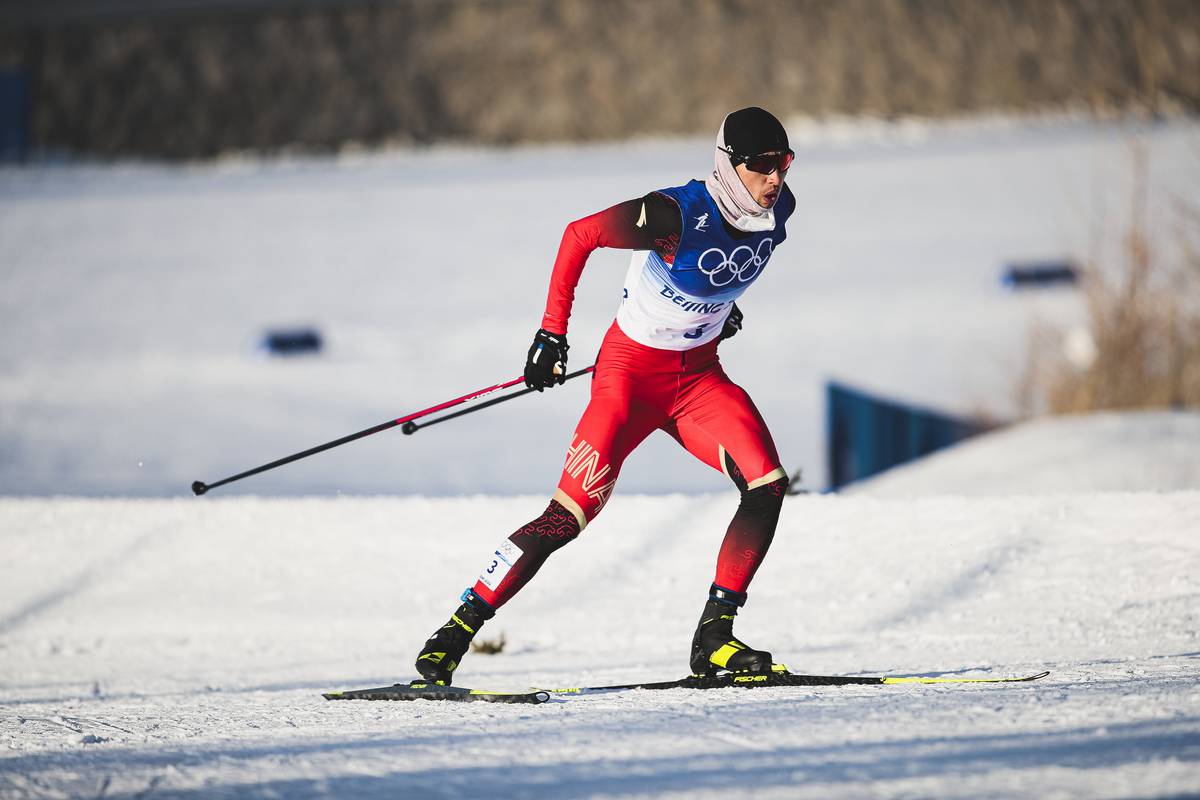
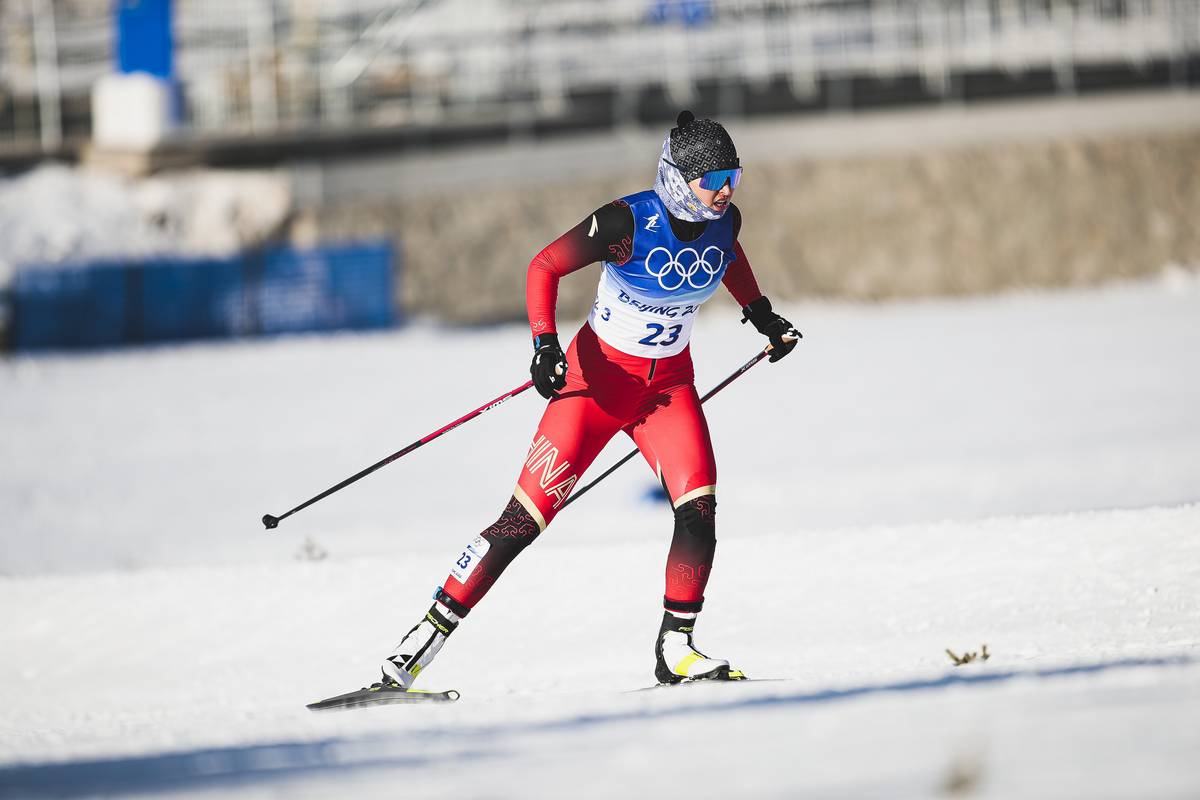
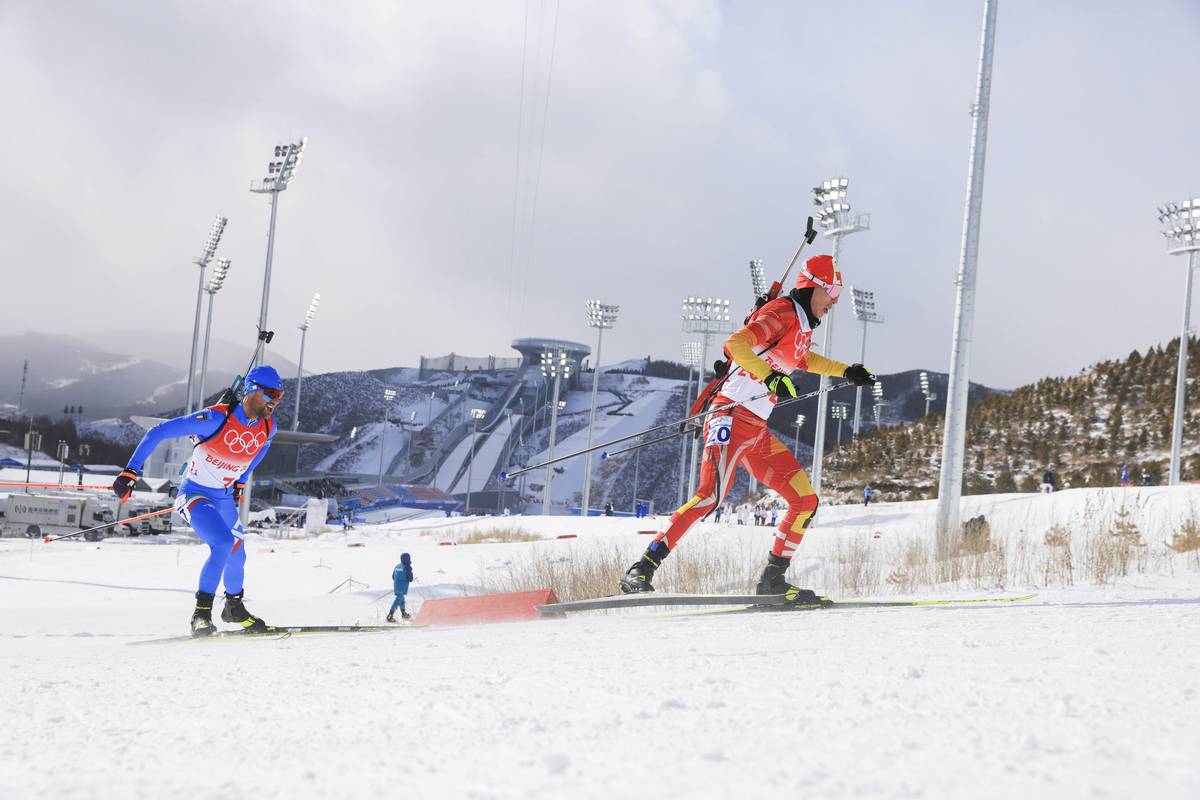
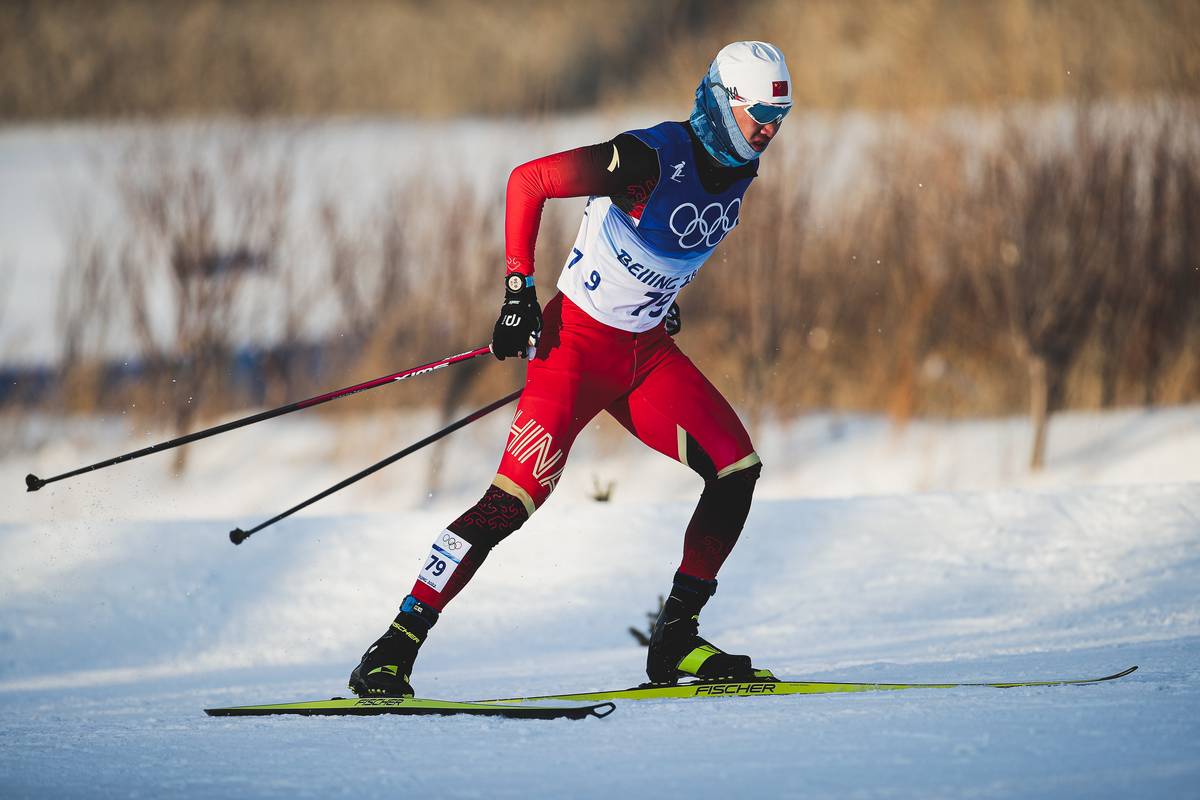
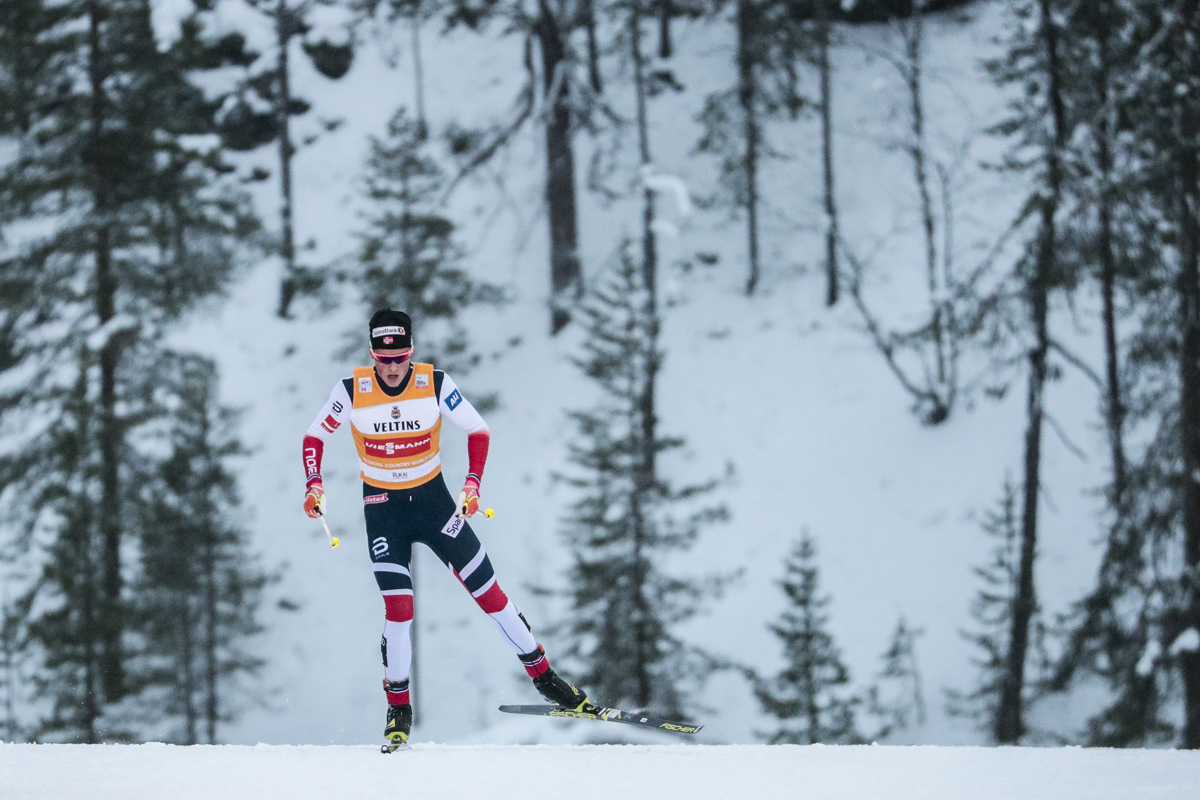
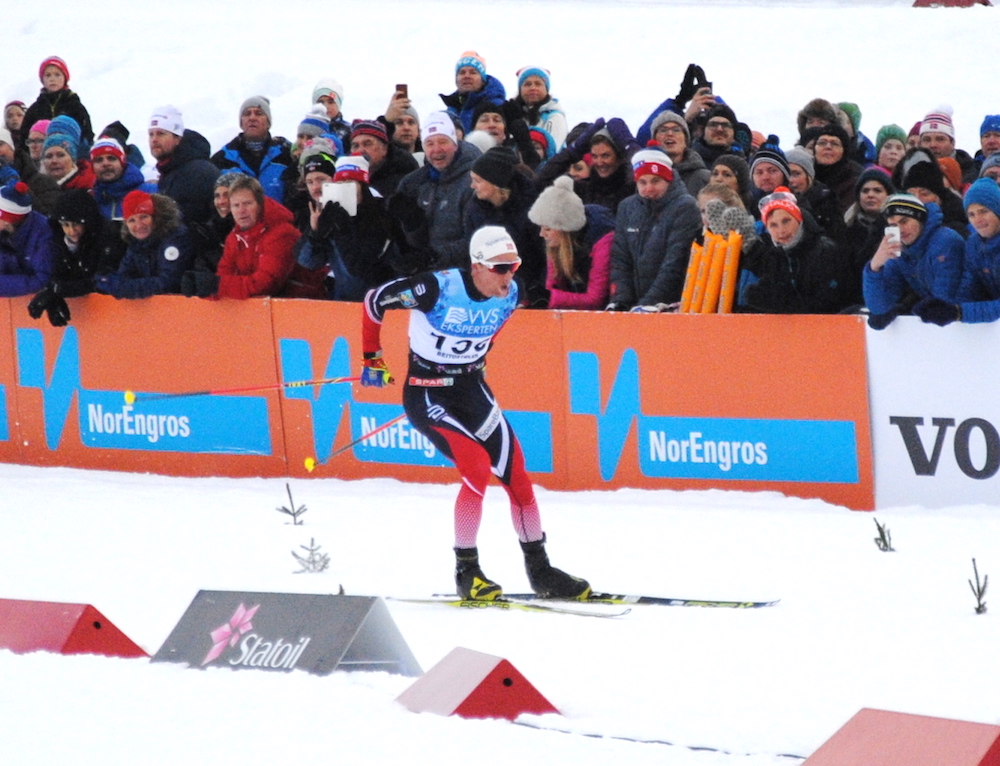
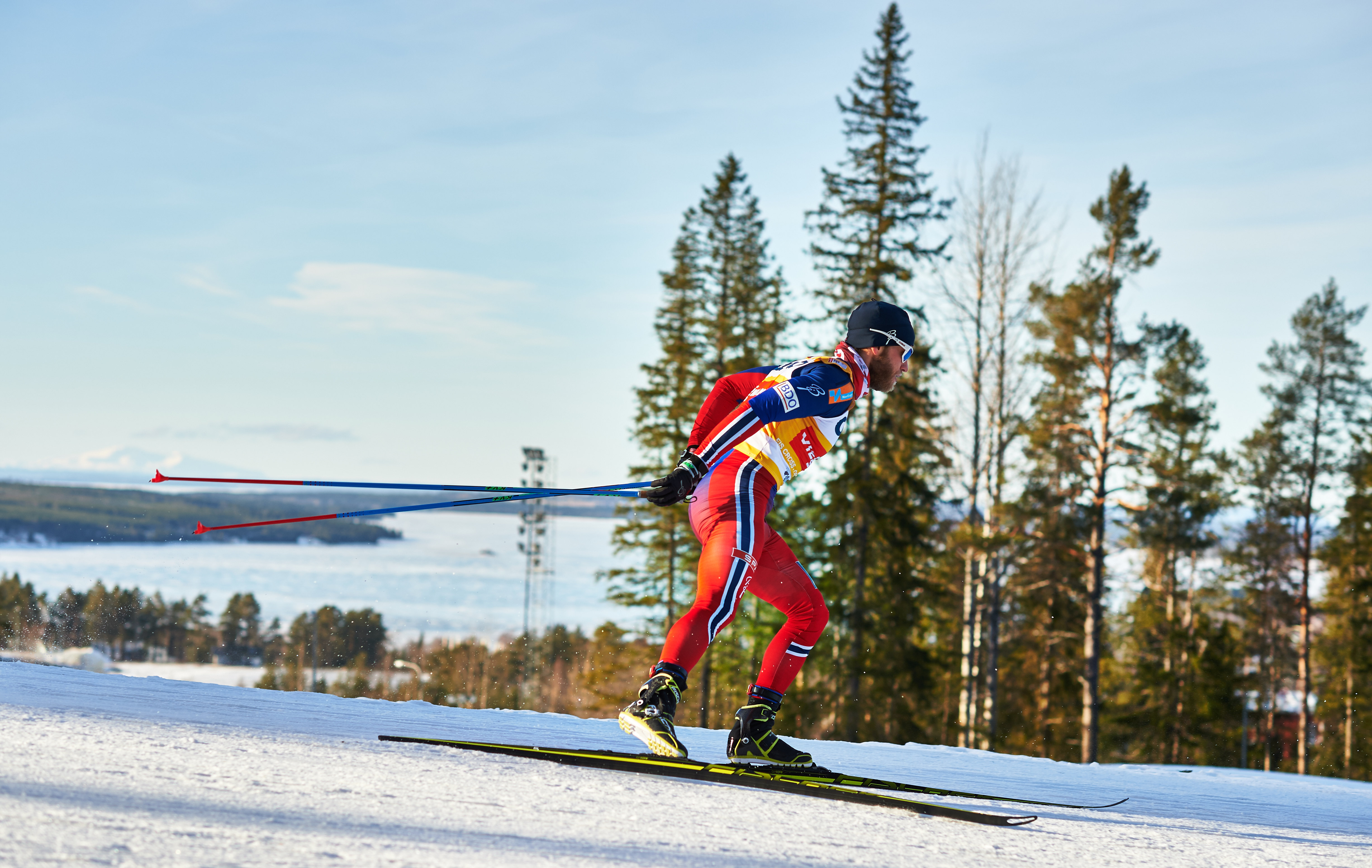
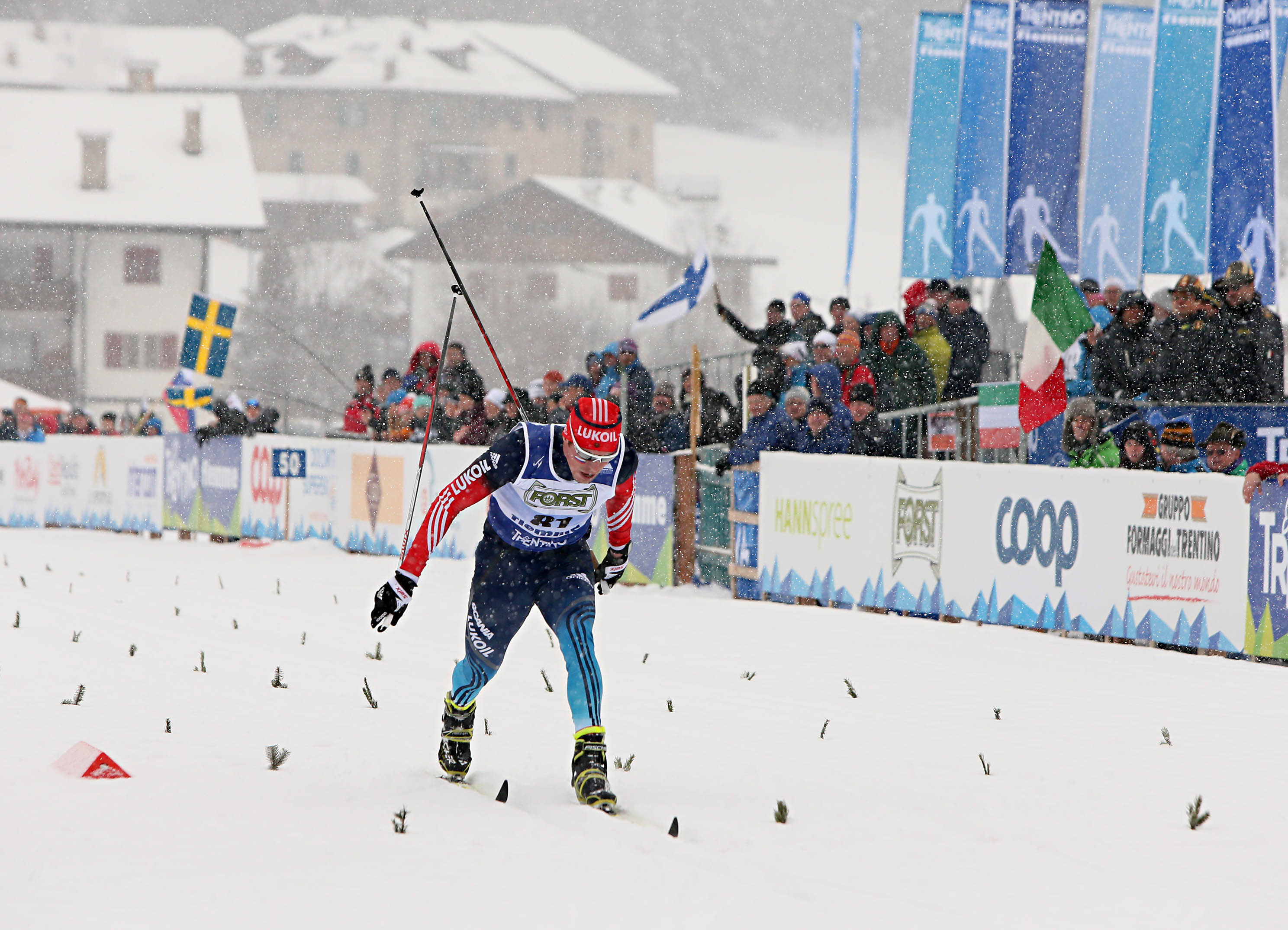
    China’s Wang Qiang races to fifth in the freestyle sprint qualifier in Zhangjiakou during the 2022 Beijing Olympic Winter Games. (Photo: NordicFocus)

    Wang, in cross-country’s Olympic skate sprint last month, was poised for a top-10 finish, and maybe even a medal — definitely the only hardware that China’s cross-country ski team had a chance to win on home snow during the Games.

    But in one of the event’s preliminary head-to-head knockout rounds, Wang tangled with a Norwegian skier, Pål Golberg, who crashed. The International Ski Federation jury overseeing the race relegated Wang to 30th place, ruling that he’d obstructed Golberg, even though China vehemently disagreed.

    Hence the tamped-down outrage I was witnessing from my source, who wanted international followers of cross-country skiing to understand his country’s anger over the disqualification.

    China had just poured huge amounts of money into hosting the Olympics and building up cross-country skiing; thousands of volunteers had put their lives on hold to pull off the Games during a pandemic. The ski federation, known as FIS, couldn’t give Wang the benefit of the doubt? In a country with hundreds of millions of potential new cross-country skiers and skiing fans, where the sport was still in its infancy?

    “You don’t kill infants,” the source said.

    This is a Chinese-friendly perspective on Wang’s disqualification, and many others disagree, saying that Wang committed a clear infraction and that skiing’s rules must be enforced without regard to politics or business.
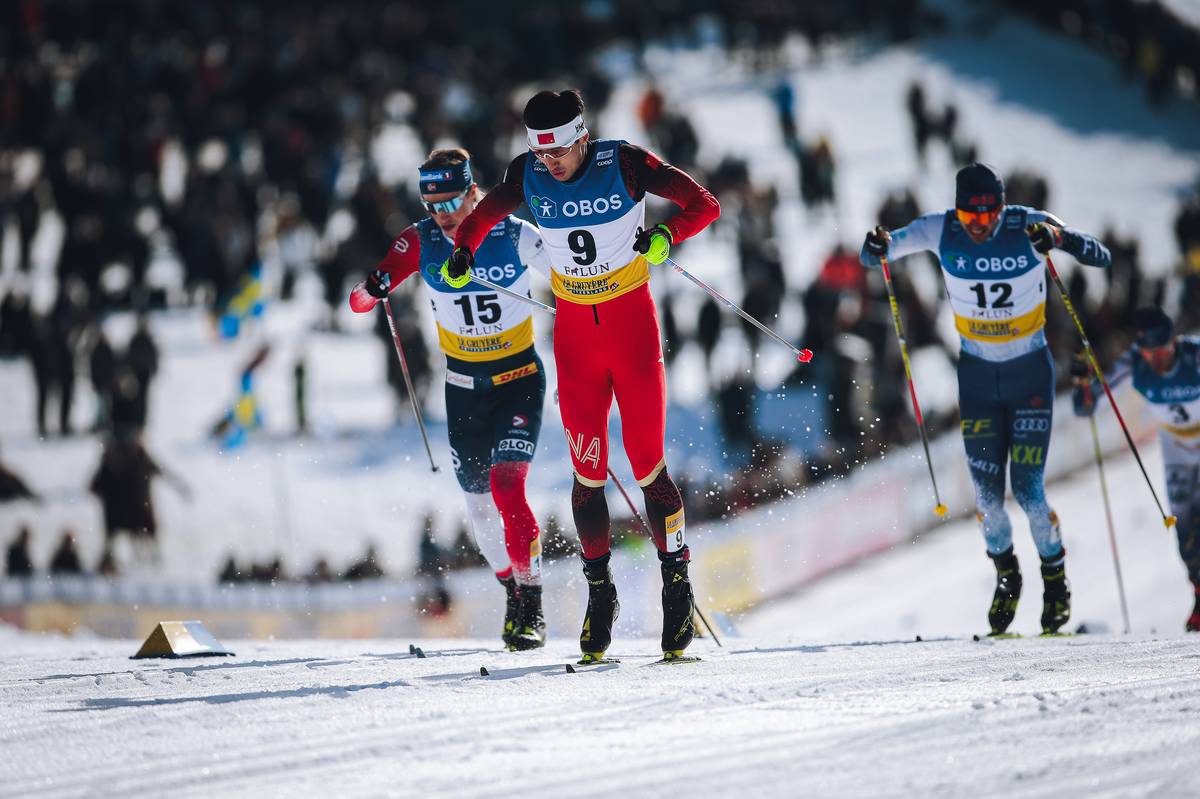
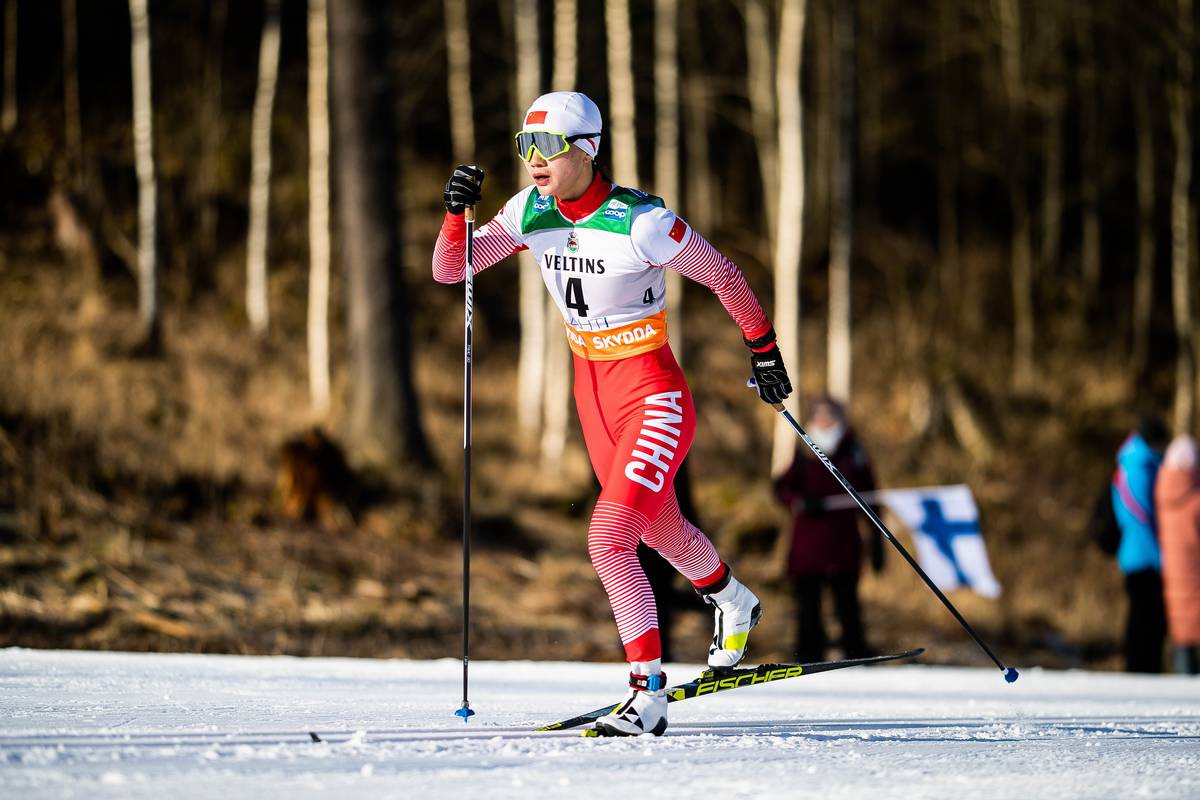
    China’s Wang Qiang races through the heats during a classic sprint in Falun, Sweden. (Photo: NordicFocus)

    But the Chinese perspective on the event is one that’s worth understanding. Because doing so can help answer one of the most interesting, and important, questions in cross-country skiing right now: Will China keep up its investment in the sport?.

    “What I’m very curious about is: What next?” Vegard Ulvang, the retired Norwegian Olympic gold medalist who now chairs FIS’ cross-country committee, said in a phone interview. “Will they continue? Will they have a national team? Will they join the World Cup? To be honest, we don’t know. I have no information on what they will do.”

    The question has enormous implications for the sport of cross-country skiing, given the size of China’s potential market for skis, wax and television broadcasts. 

    But I got conflicting answers when I asked the people who would know the answer. 

    The source close to the government said Wang’s disqualification soured China’s sports minister, Gou Zhongwen, on further investment in cross-country skiing, and he said the sport’s future in the nation looks deeply uncertain. Many of the team’s Scandinavian employees have contracts that end in May, without assurances they’ll be renewed.

    “Everything is political, and the culture is completely different,” said Tor Arne Hetland, a Norwegian coach and former Olympic gold medalist who’s worked with Chinese athletes. “If the sports minister says, ‘We are not going to pursue winter sport or cross-country skiing or biathlon,’ then of course, there will not be any money for it. And the project will be completely dead.”

    But in an interview in Zhangjiakou during the Games, Zhang Bei, the Communist Party official who leads China’s cross-country ski team, struck a positive note.

    She said her country’s commitment to training athletes will continue into next year, and plans have already been announced that the team will keep sending athletes to train in Finland through the 2026 Games. Wang also proved his potential with a podium performance on the top-level World Cup circuit earlier this month in Drammen, Norway.
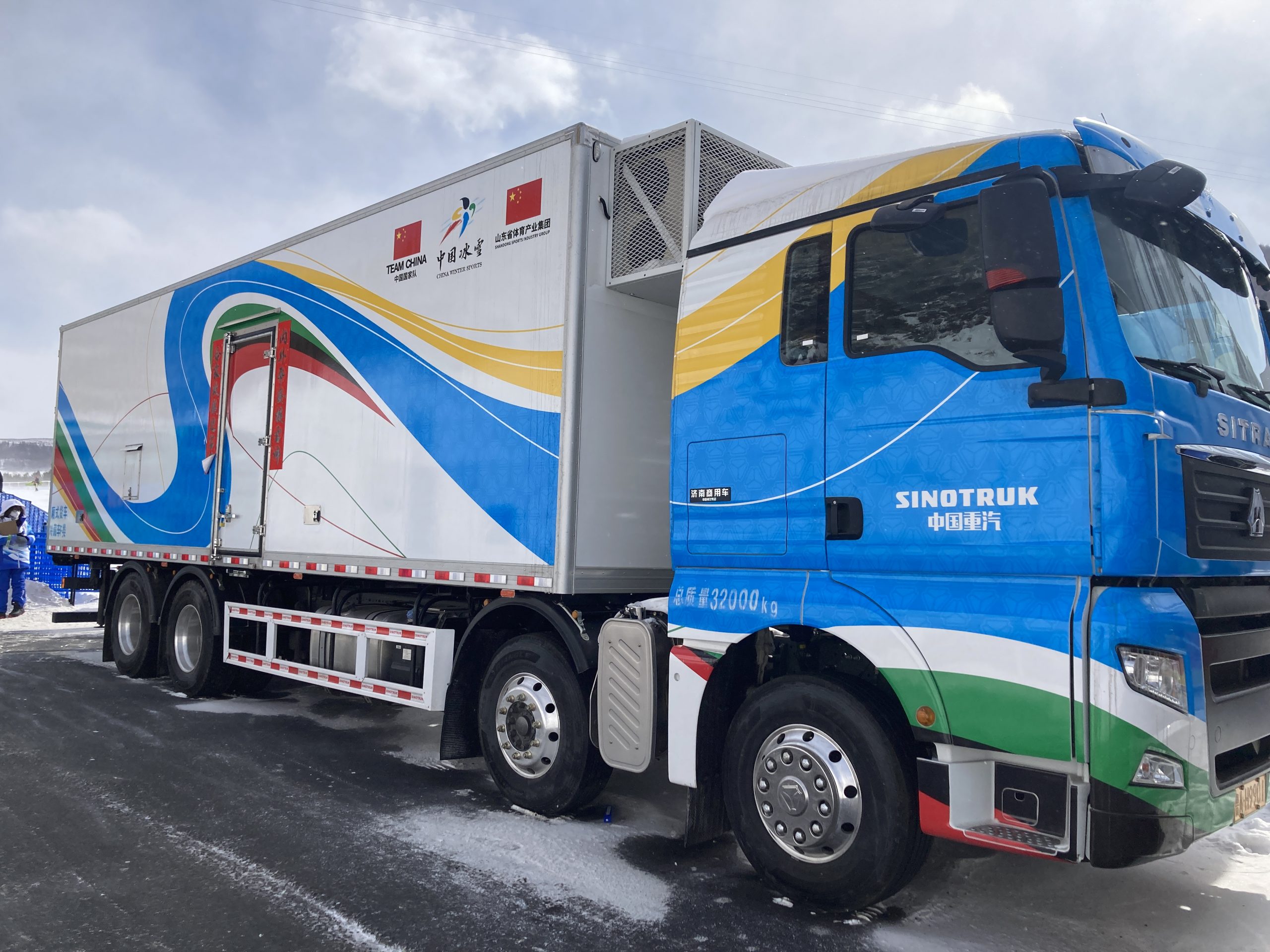
    One of the multiple vehicles that China’s cross-country ski team had stationed at the 2022 Olympics in Zhangjiakou. (Photo: Nat Herz)

    But Zhang would not reveal details about China’s cross-country budget. And she also suggested, logically, that the country would be scaling back its investment in skiing infrastructure from its big Olympics build-up.

    “There is a saying in China: Everything is difficult to start,” Zhang said in the interview, conducted through a translator. “After you have the bases for the infrastructure, then of course, there is an adjustment.”

    Ulvang has closely watched China’s cross-country program and, as the country’s athletes trained in Scandinavia before the Olympics, he hosted two of the nation’s top female prospects, Bayani Jialin and Dinigeer Yilamujiang, for a week at his home.

    Ulvang described China’s efforts to train ski champions as “all out.” But he’s still waiting to see if the country’s commitment will last, because, he said, developing a durable skiing culture takes time.

    “We need to see if this was motivated by the medals on the home field,” Ulvang said, “or if this was part of a long term strategy.”


    “Starting from zero”

    China’s huge pre-Games spending on cross-country skiing was fueled by Zhongwen’s belief that the discipline was one of the best measures of a nation’s overall prowess in winter sports, said the source close to the government.

    The country spared no expense. Among its investments was a $150 million, 1.3-kilometer indoor ski tunnel that athletes can use to train year-round; one Chinese team employee showed me a video of another contraption that resembled an enormous plate with snow on top, which spun in circles while athletes stayed in the same place by skiing in the opposite direction.

    China hired dozens of Scandinavian coaches and experts at yearly salaries that reached $120,000. The government recruited hundreds of Chinese athletes from other sports into cross-country skiing, and sent them to training centers in Norway and Finland. (Chinese officials considered Alaska as an option, where athletes could fly in helicopters to train at Alaska Pacific University’s facility on Eagle Glacier, but Zhang said securing visas proved too difficult.)

    The team spent millions more on wax and equipment. In Zhangjiakou, the Chinese team had access to the Games’ only on-site ski waxing bus, which has sliding doors and facial recognition technology.
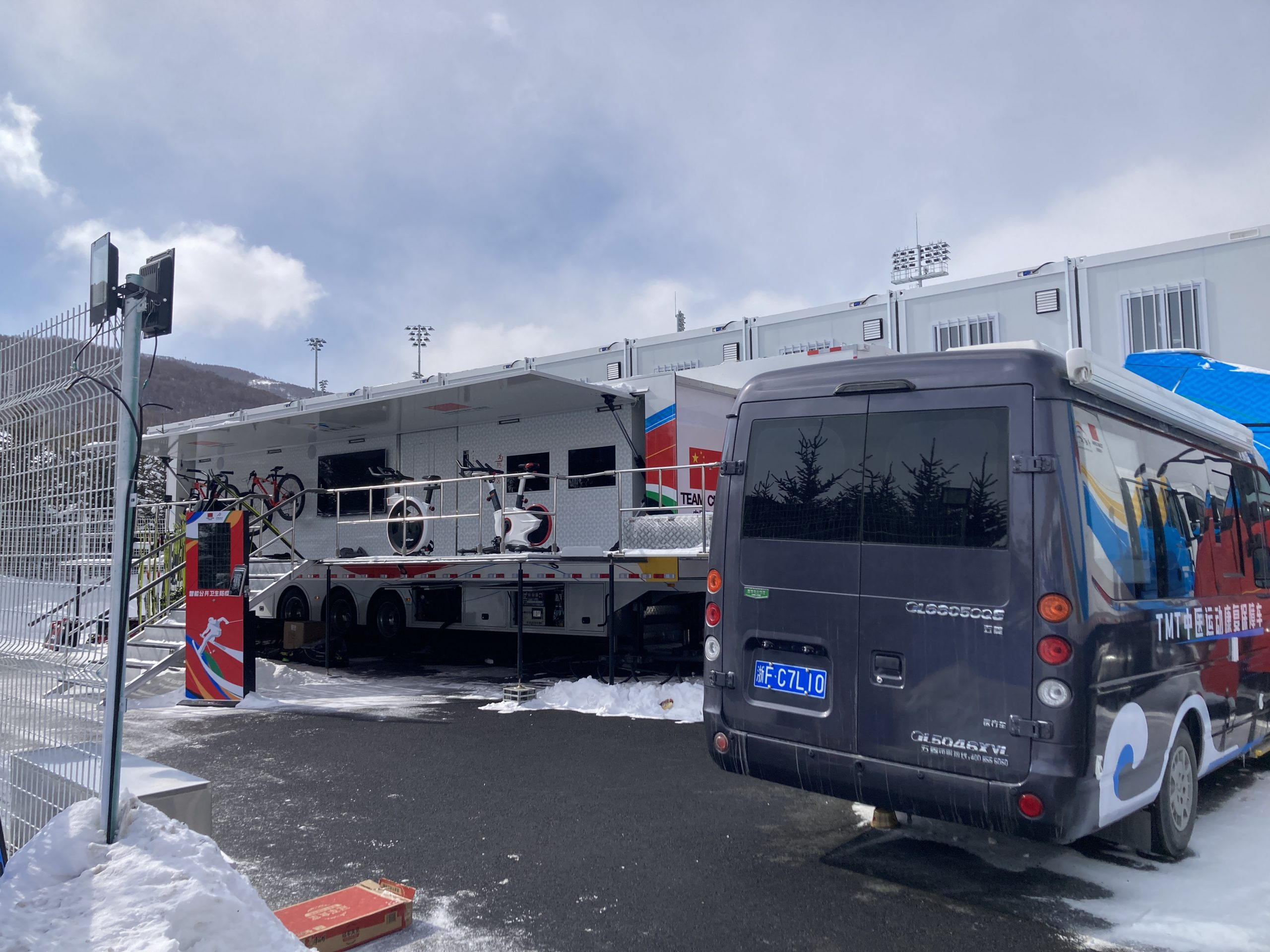
    The Chinese ski team’s main wax bus at the 2022 Olympics in Zhangjiakou. (Photo: Nat Herz)

    “They have started from zero,” said Hetland. The skiing infrastructure that the country has built up, he added, “is more than what Norway has done in the last few years.”

    In the years before the Olympics, the team’s athletes recorded impressive results, even though some had only been skiing a few years — unlike many European athletes who have raced for the majority of their lives. 

    Yilamujiang and Bayani both cracked the top 30 on the World Cup circuit, and notched top-15 results at the world championships for juniors and athletes under 23 years old. Wang, China’s star male skier, performed at a similar level.

    But at the Olympics, other than Wang, none of China’s cross-country skiers cracked the top 30. Some people close to the team described the event as a disappointment, given the Chinese athletes’ proven potential.

    Former employees of the Chinese team said two dynamics help explain the results. 

    One was a tendency by Chinese team leaders to disrupt the Scandinavian coaches’ training programs, by pushing athletes through brutally difficult workouts that the Chinese staff thought were needed. 

    The other was the decision by team leaders to pull China’s athletes out of the World Cup circuit during the COVID-19 pandemic — a move that kept the skiers safe but deprived them of experience against international-caliber competition on trails outside their home country. (Chinese officials did hire semi-elite Russian athletes to travel to China to give the country’s athletes more racing experience.)

    “They need to spend even more time in Scandinavia and learn from everybody in the environment that is around a skier,” said Hetland, the Norwegian coach. “And that has been maybe the biggest challenge for the team, when due to COVID they have stayed at home in China in the last two years.”
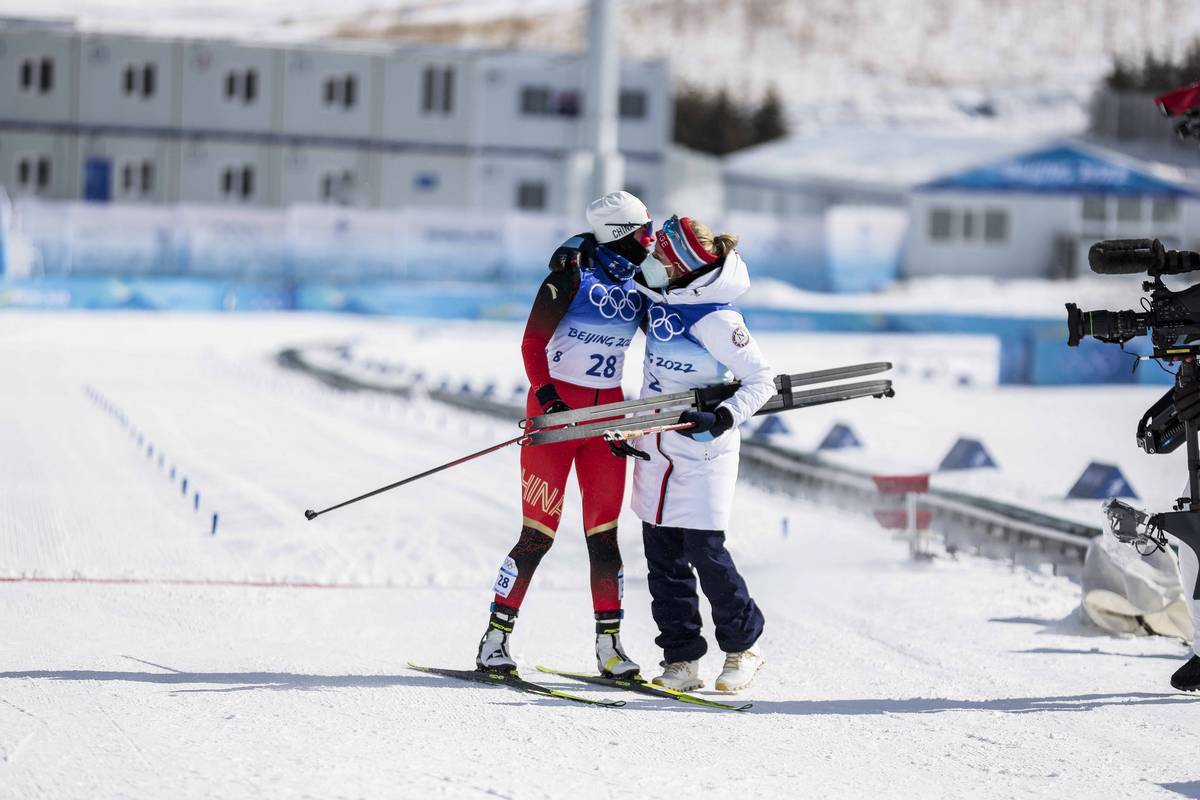
    Olympic 30 k winner Therese Johaug (NOR) greets last place finisher Dinigeer Yilamujiang of China who finished over 25 minutes behind the Norwegian (Photo: NordicFocus)

    Hetland said it’s important to remember that China has its own distinct culture from those of the European nations that have historically dominated cross-country skiing. Adapting that culture takes time, he and others said.

    “I visited China two years ago, and I was clear to the officials there that developing or training up a good skier, fighting for medals, is not a quick fix,” said Ulvang, the Norwegian FIS official. Still, he added: “It’s really special to see such fast development into some of the best racers in the world.”

    Zhang, the Chinese leader, had no complaints about her team’s Olympic results.

    “I am very much satisfied with the performance of our athletes,” she said. “I also feel very satisfied that each of our athletes is enjoying the competition, and that they are happy.”


    “They cut him”

    Zhang spoke with me in a busy athletes’ lounge in the bowels of Zhangjiakou’s biathlon building. 

    With the help of some of her European coaches, I’d picked her out of her white-jacketed, fur-hatted entourage at the cross-country skiing venue a few days before. She reacted with surprising openness, and agreed to an interview after I supplied her with enough details to get approval from her superiors.
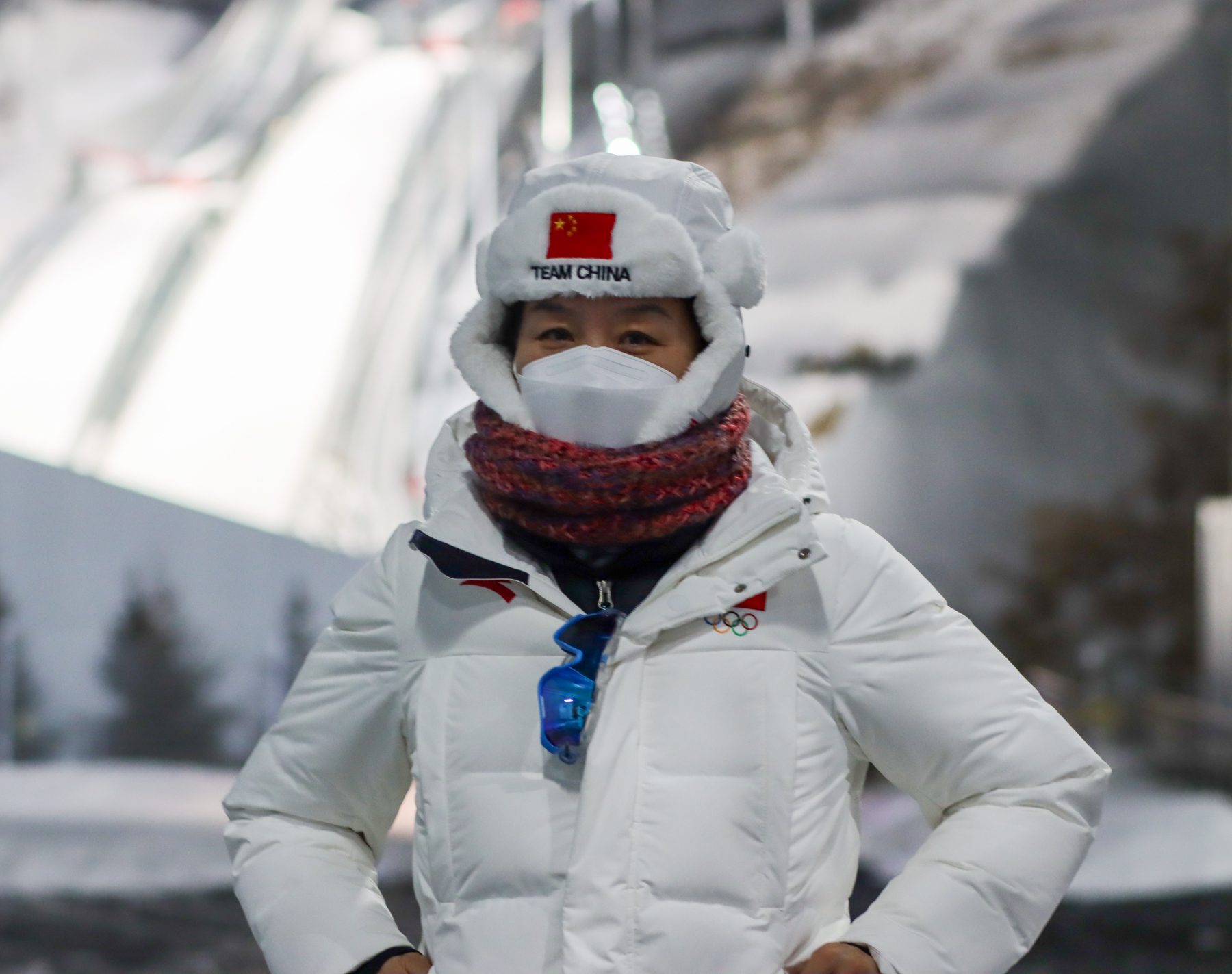
    Zhang Bei is the Chinese Communist Party official in charge of the country’s cross-country ski team. (Photo: Nat Herz)

    Zhang embodies China’s recent foray into winter sports: She came to her job four years ago, with a background as an elite rower, and only recently took up cross-country skiing herself. She told me she was too shy to try it in front of her athletes because she was worried they’d laugh at her.

    In our hour-long discussion, Zhang came across more like a politician or ambassador than a coach or executive, striking a vague but upbeat tone that glossed over some of the challenges I’d heard about from former employees. 

    “We have a very good start,” she said in response to a question about her program’s future. “Most importantly, we have many young people that are interested in cross-country skiing. And we have to help them to fulfill their dream.”

    The only time Zhang acknowledged even a hint of tension or conflict was on the subject of the disqualification of Wang, China’s star athlete. She said she and other team members were upset about the decision at the Olympics, which Zhang called “wrong.”

    Technically, FIS’ race jury ruled that Wang would be “ranked as last” in the freestyle for breaking international competition rules against obstructing other skiers. 

    Slow motion replay of the event shows Wang in his neck-and-neck sprint heat edging to his right in a way that appeared to impede Golberg, the Norwegian, who was skiing alongside Wang and ultimately crashed. (The video cannot be posted here due to Olympic broadcasting rules, but FasterSkier can provide a copy by email upon request.)

    The video isn’t exactly conclusive, and the jury’s decision has its critics — including, apparently, Gou, China’s sports minister. 

    Four separate sources told me that Gou learned of the disqualification during a dinner with Johan Eliasch, the FIS president, where Gou subsequently “lost his appetite” and raised his concerns with Eliasch directly. (A FIS spokesperson said in an email that the federation “does not comment on speculation about discussions between individuals during private dinners.”)

    China ultimately appealed the jury’s decision, but the appeal was rejected, said Ulvang. The source close to the government said China also asked FIS to extend some type of goodwill gesture after the disqualification, but that request wasn’t granted either. 

    Representatives from cross-country ski equipment manufacturers were frustrated, too. Currently, the industry sells only small amounts of gear and skis in China, and only to elite athletes there — not to “normal people,” said Hans Hubinger, an official from ski giant Fischer who was working at the cross-country venue in Zhangjiakou.

    “It’s not easy for us to see if there’s a future for the Chinese market or not,” Hubinger said in an interview.
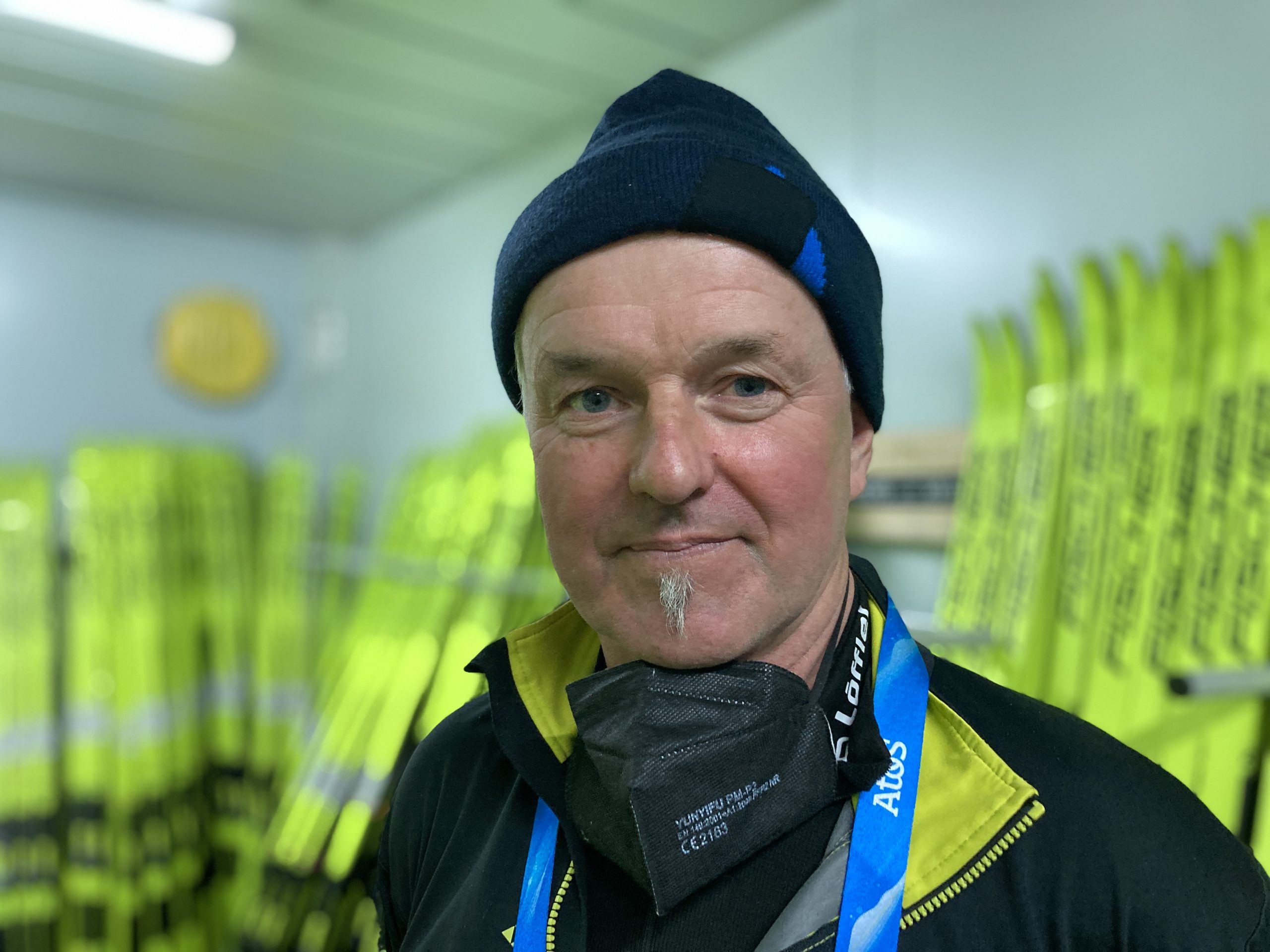
    Hans Hubinger is an official from ski company Fischer who was working at the 2022 Olympics in Zhangjiakou. (Photo: Nat Herz)

    Wang was the industry’s only hope for a Chinese cross-country skiing medal, which could have stimulated new interest, and gear sales, in the nation’s massive market. That market could also bring much-needed television viewers to cross-country skiing’s broadcasts — a major source of revenue for the sport. 

    Hubinger said he thought Wang’s disqualification was a close call where the jury could have given him the benefit of the doubt.

    “I think, ‘Oh, this is the chance now, to turn some guys into heroes’…and they cut him,” he said. “If the rules are clear, then you have to cut him. But this rule is not clear.”

    Pierre Mignerey, FIS’ cross-country skiing race director and a member of the jury that disqualified Wang, said he sees the situation completely differently. 

    In an interview in Zhangjiakou, Mignerey said it would be completely inappropriate for a race jury to weigh political factors, like the size of China’s ski market or its investment in the Games, in their decisions.

    “Sports mean that we have some rules. And that would be, in my opinion, quite shocking if the rules would not apply to everyone in the same way, regardless of if it’s the host nation,” said Mignerey, a retired French racer. “What would people say if the jury had decided something else?”

    Others placed responsibility for the disqualification on Chinese team leaders, arguing that their decision to skip international races during the pandemic left athletes like Wang without enough experience in the kind of tight-quarters competition that happened in the Olympic sprint.

    In the weeks after the Games, Wang delivered results that only underscored the opportunity he missed when he was disqualified — regardless of who bears the ultimate responsibility for that decision.

    In his first World Cup race after the Games, in Finland, Wang, 28, finished a career-best sixth place. The following week, in Norway, he landed on the podium for the first time.

    That result delivered a shot of hope to those who want to see the Chinese program continue. 

    On social media afterward, Wang made clear his intentions to continue in the sport, even if his country’s commitment to its skiing program remains something of a mystery. 

    “Today is a milestone. This is the first time a Chinese athlete stands on the podium of the World Cup series. We have won the respect of the world,” Wang said on a platform called Weibo. He added: “I will continue to pursue my dream with a humble attitude.”
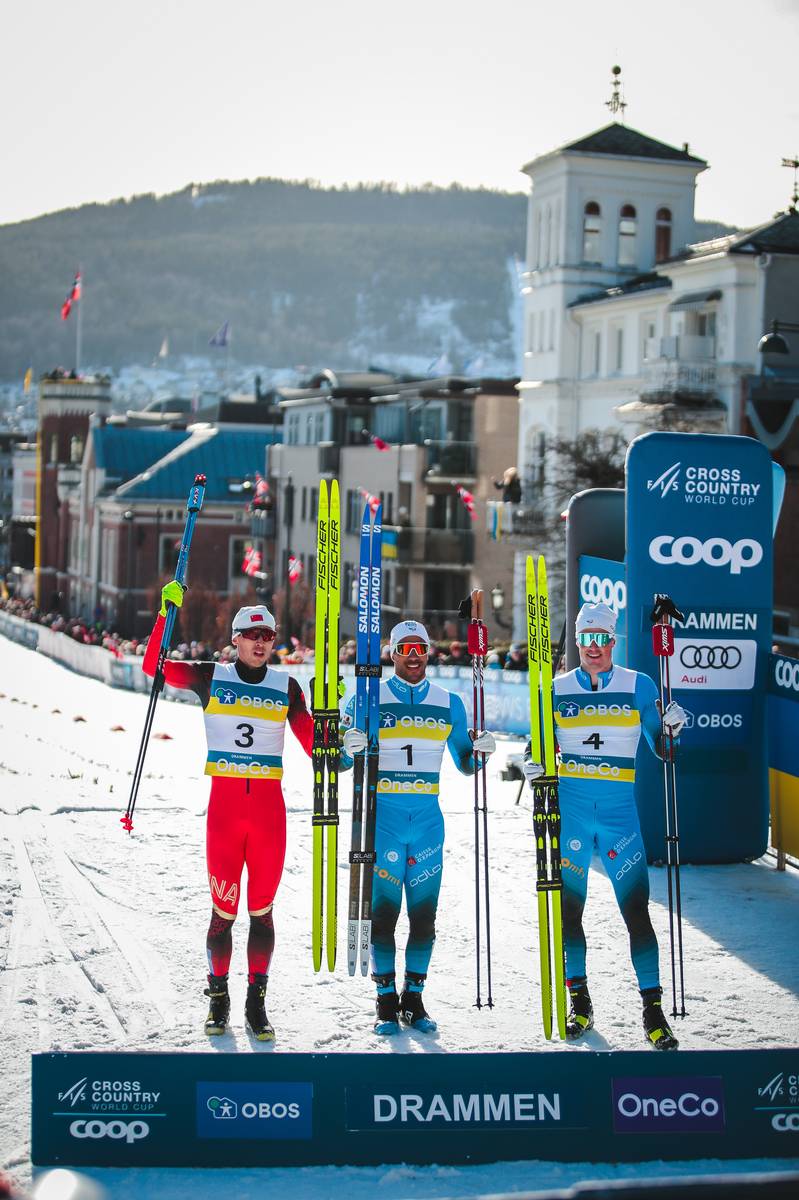
    Richard Jouve (FRA) takes the win in Drammen, NOR, with a first podium for China’s Wang Qiang, who took second ahead of Lucas Chanavat (FRA) in third. (Photo: NordicFocus)
  • The Chinese Ski Team’s Path to Beijing (Part 3)

    The Chinese Ski Team’s Path to Beijing (Part 3)

    This is the final installment of a three-part series on the development of the Chinese ski program. Click here to read part 1 and part 2.

    Part 3: Olympic Hopes and Misgivings in Norway

    For the Chinese cross country ski team, the 2022 Beijing Olympics opened with a blaze when Dinigeer Yilamujiang was selected to co-light the Olympic flame. It was an enormous honor for the twenty year old cross country skier from Altai, China with Uyghur roots. Yet her ethnic background overshadowed the moment, and, like so many aspects of the Chinese cross country skiing project, the ceremony meshed sporting aspirations with political theater.

    China’s Dinigeer Yilamujiang (CHN) races the freestyle sprint qualifier during the 2022 Olympic Winter Games in Zhangjiakou. (Photo: NordicFocus)

    Dinigeer, known as Dini on the ski circuit, is a rising star on the Chinese ski team. She is one of the few of the team’s new generation that grew up with skiing, and her father had hopes of becoming a great skier himself, and later became a coach. 

    Dini’s father Mulaji Yilamujiang, never expected her to become a professional athlete. That began to change when at age twelve, Dinigeer competed in a regional race and a competitive chord was struck. “She wanted to win the race like a professional athlete and get on the podium,” Mulaji recounted to Chinese news outlet Xinhua.

    It was hardly surprising then that when Kristian Bjune Sveen took the job as coach of the Swix China team in 2017, he picked fifteen year old Dini. 

    Since then, her success has by any measure been extraordinary: At the 2020 and 2021 Junior World Championships, Dinigeer proved that she was among the best in her age group, finishing 5th and 6th respectively in the 5k distance. 

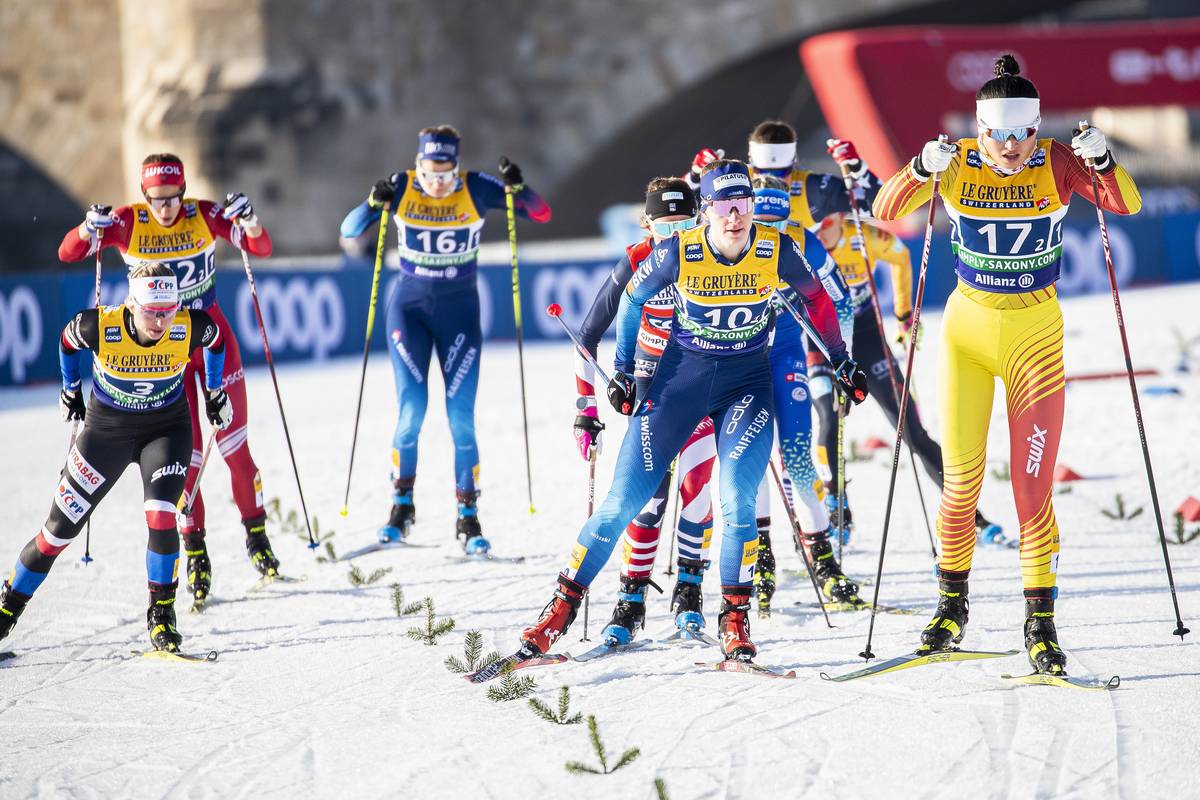
    Chinese cross country skier Dinigeer Yilamujiang (bib 17) races a December, 2020 team sprint in Dresden, Germany. (Photo: NordicFocus)

    Together with her teammate Bayani Jialin—who had no prior skiing experience before joining Sveen’s team—the two have skied together on the World Cup to top ten team sprint finishes and top thirty in individual sprints. 

    “Going from being an untrained person to being able to beat half the Norwegian national team and become a top 30 in a sport you [didn’t] know existed,” Sveen told NRK, “it is objectively completely insane!”

    Liu Rongshen is another twenty year old Chinese skier that has impressed early in the Games. Originally a runner from Yunnan, he was “one of the athletes that came to Meråker [in] March 2019,” wrote Tor-Arne Hetland to FasterSkier. Liu finished 38th in the men’s skiathlon, some 16 seconds ahead of Johannes Klæbo. “Pretty [impressive] that he never had been on skis before he came to Norway,” Hetland wrote, adding, “Maybe in the sprint China can have athletes in the semi-finals.”

    Hetland’s prediction nearly came true when Wang Qiang—China’s best sprinter and medal hope—qualified in 5th in the men’s sprint and appeared to have advanced out of his quarterfinal heat only to be ruled out due to obstructing another skier. 

    In biathlon, the women are led by Meng Fanqi—one of the best sharpshooters on the circuit—as well as Chu Yuanmeng and Zhang Yan. All three are top class on the range, and with a home snow advantage, and fast skis provided by Norway, a relay medal remains a tangible, if distant, prospect. 

    Although some juniors such as Dinigeer Yilamujiang spent the last few winters in Norway, much of the Chinese cross country team has been based in China since the start of the pandemic. 

    To compensate for the lack of international racing for their homebound skiers, Russian second tier racers were hired to come to China for extended periods and enliven national races and ski with Chinese athletes. 

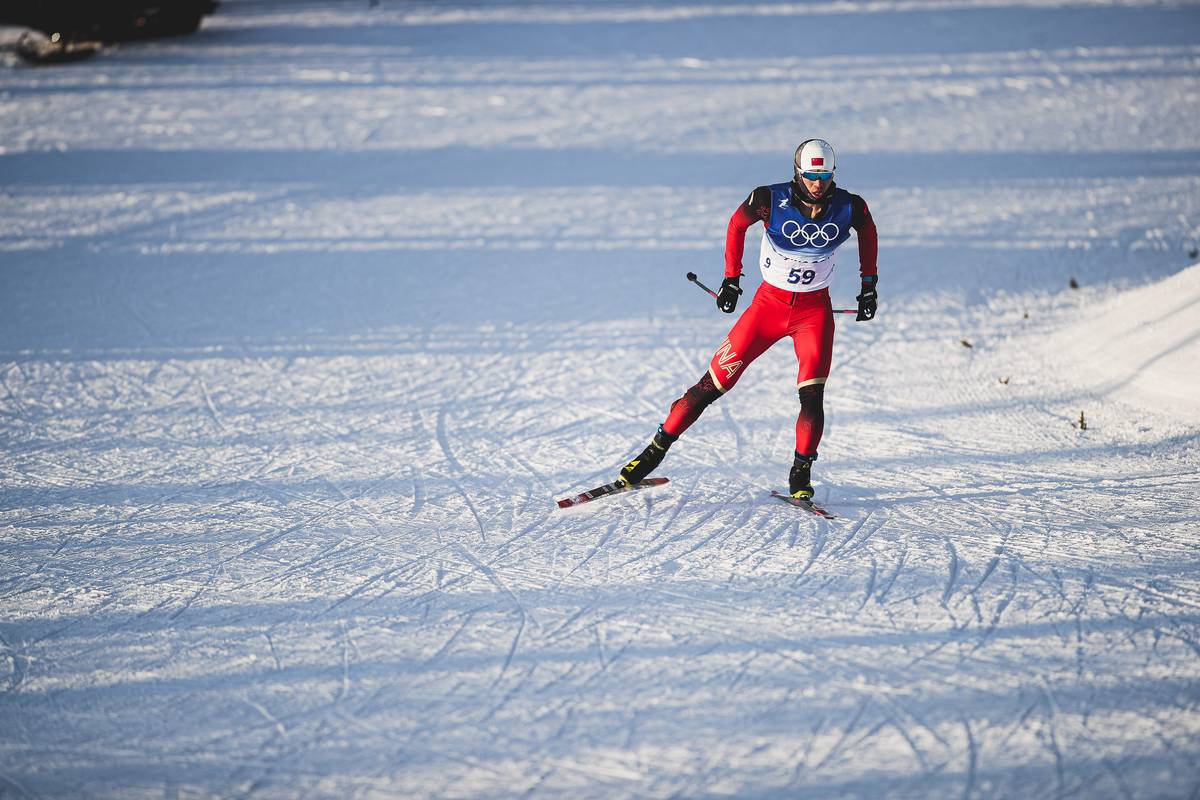
    Wang Qiang (CHN) takes an early lead in the men’s team sprint semifinal during the 2022 Olympic Winter Games. (Photo: NordicFocus)

    To the Chinese skiers advantage was sole access to the Olympic courses in Zhangjiakou ahead of the Games, although their coach Bernhard Rønning dismissed this assertion to Dagbladet, saying that while they had trained and competed in the area “not so much in the Olympic tracks.”

    Still, the team was not without excellent training opportunities, with ready access to altitude, year round skiing in the Beishan tunnel, and “the best equipment,” according to Max Volkov, coach of the Chinese distance team.

    Volkov, the former assistant coach to Alexander Bolshunov, joined a talented coaching staff in China, including his compatriot and former Olympic champion Nikita Kriukov, who trained their sprint team. 

    Magnus Frodahl worked with the Nordic combined team, and former Norwegian World Champion Terje Langli ran the Chinese cross country teams wax service, and trained in two apprentices, Li Xin & Wang Yihan. 

    Rounding out the core foreign coaches for the cross country team were Ole-Marius Bach, Bernhard Rønning, and Kristian Bjune Sveen.


    Bjørndalen

    The highest profile coaches to sign on to the Chinese Olympic project were Ole Einar Bjørndalen and his wife, former Belorussian biathlete Darya Domracheva. The two joined in 2019. 

    After the pandemic interrupted their debut season with the team, Bjørndalen rejoined his squad in China during the summer of 2020.  

    There, even for a legendary biathlete, the work was anything but glamorous. That summer, Bjørndalen worked daily from six in the morning to eleven at night. Each time he entered China he had to undergo a 17 day quarantine. Always the athlete, Bjørndalen ran 20 k a day inside his hotel room, running the length of the room around one thousand times. 

    The biathlon team spent the 2020/21 season training in China inside of an intense bubble. “There is no question of anyone coming in,” Bjørndalen told NRK, “And if you are going out on an errand in Beijing, it is straight into the corona quarantine.”
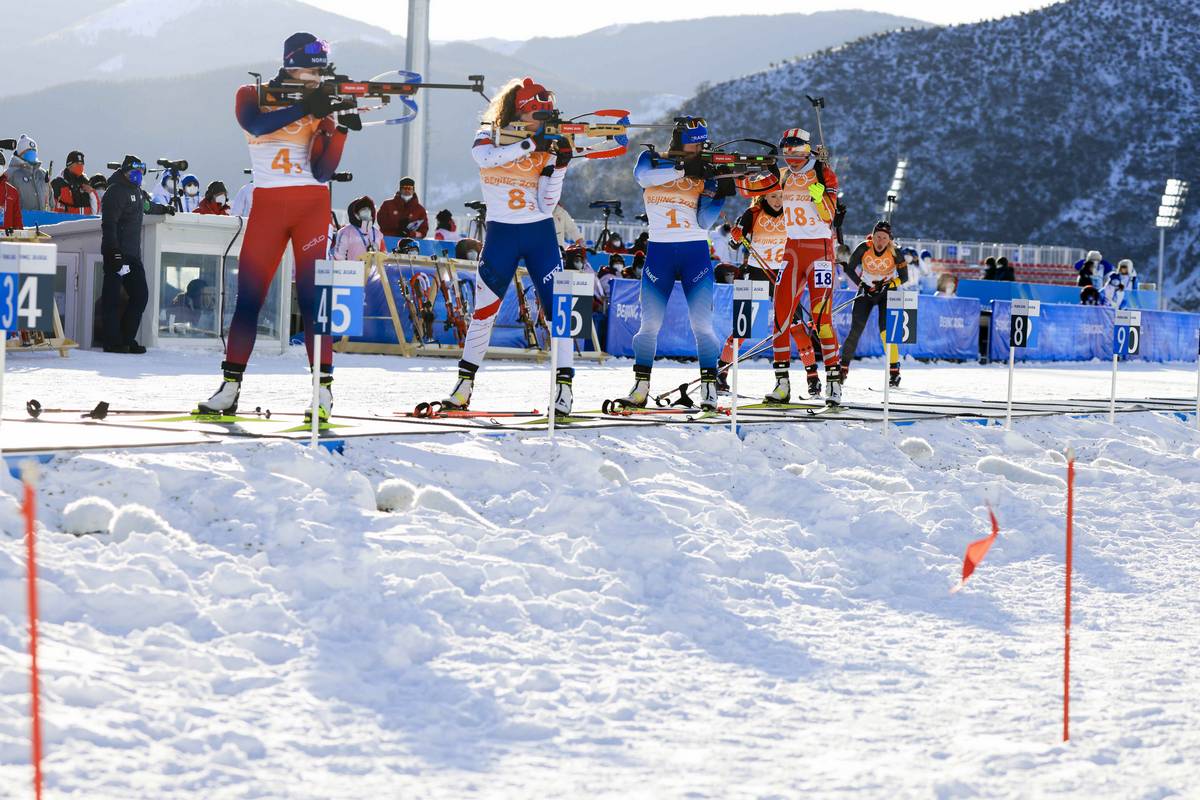
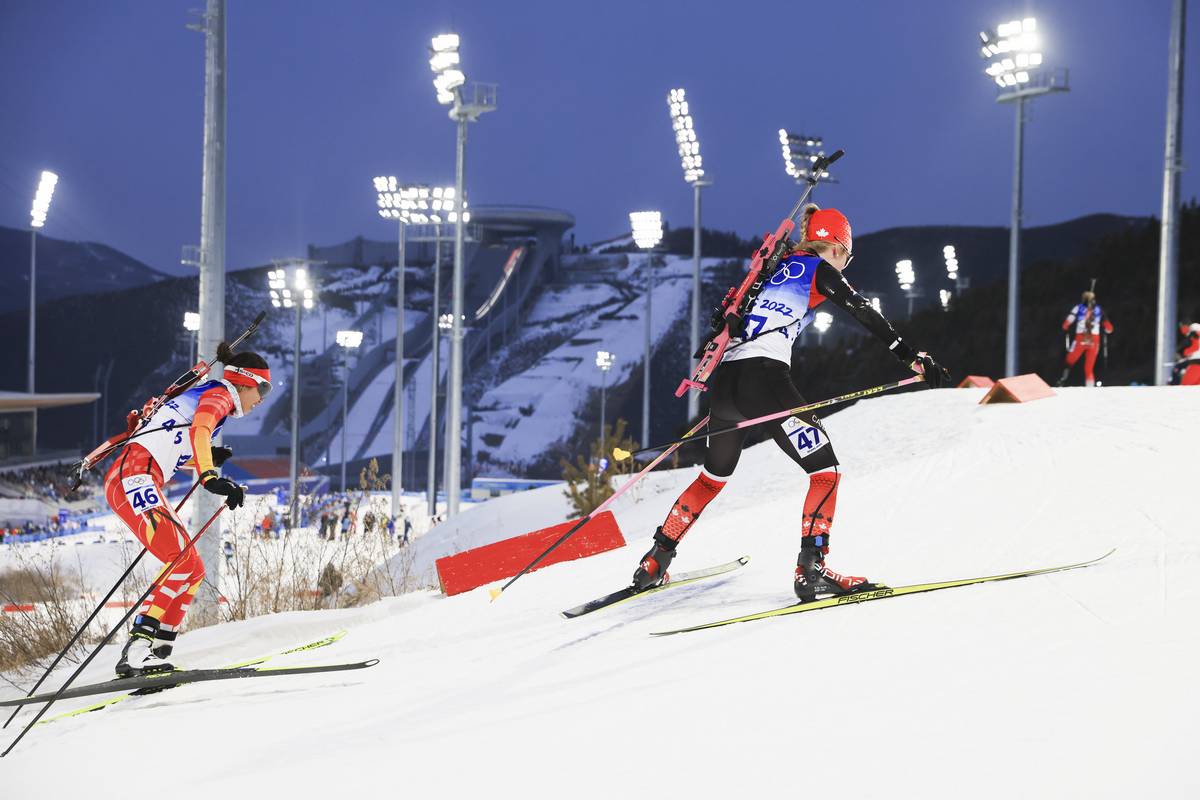
    Chinese biathlete Ding Yuhuan (bib 18) takes aim during the women’s relay in Zhangjiakou. (Photo: NordicFocus)

    That winter, Chinese President Xi Jingping visited the team. “I think he liked biathlon,” Bjørndalen said in the article.

    According to NRK, Xi’s visit to the Biathlon camp underscored the expectations to deliver results. “We have set ourselves the goal of winning a medal in the relay,” Bjørndalen explained, adding, “It’s a pretty horrible goal, but anything is possible.”
    The work of the famous duo has been apparent on the IBU World Cup, which China returned to this winter. US Biathlete Clare Egan said, “They’ve really done an incredible job bringing the athletes up. It’s funny because Daria [Domracheva] has a very unique and beautiful, graceful ski style and now all of the Chinese women, half the time I think they’re Daria when they go by me, they all ski exactly like her.”

    The shooting prowess of the Chinese biathletes is exceptional according to Egan. “They’re incredible, incredible precision shooters. I have to imagine that their team hit percentages are at least as high, if not higher, than any of the other teams.”

    “The reason they’re not winning medals is because they’re not quite there with the ski speed,” Egan said, “Even though they’ve really improved a lot.”

    When Bjørndalen took the job he ensured his athletes would have competitive skis by signing a deal with the Norwegian biathlon team to wax their skis through to the Olympics. 

     Tobias Dahl Fenre, the head waxer for the Norwegian biathlon team, said of the wax deal, “We do not share the expertise. It will be in Norway. We employ Norwegian waxers in the Norwegian system.”  

    The deal, worth an undisclosed sum, allowed the Norwegian biathlon team to hire four more techs, bringing their service team size to fifteen. 

    Egan said the results of the wax partnership were clear on the IBU World Cup. “It’s cool to see them have a chance on skis because previously when they were waxing their own skis, they just didn’t have that background to be internationally competitive. Now sometimes they’re passing us on the downhill.” 

    Cheng Fangming (CHN), races the men’s relay during the 2022 Olympic Winter Games. (Photo: NordicFocus)

    While the work of Bjørndalen, Domracheva, and Sveen have impressed, for the foreign coaches working in China, the experience varied. 

    For Kristian Bjune Sveen, who took the job with Swix China when he was twenty five years old, the experience had been positive, if exhausting. “I work around the clock, every day, and have almost no privacy,” he told NRK. Nevertheless he said it was “an insanely exciting job. It is a coach’s dream to be able to design a plan that you want.”

    Sveen felt that he would not find another opportunity to influence a whole skiing culture in the way that he could in China, and fretted that the next job wouldn’t match the significance of his present work. “It’s almost like I’m not sure if I want to be a coach again after this,” Sveen said. “These are athletes I think can be the best in the world.”

    Others had more jaundiced views of coaching in China. When Anita Moen’s athlete’s were recalled abruptly in December 2019, the pandemic prevented her from rejoining her team until the following August. 

    “By then, five months had passed without me having been a coach for them,” Moen recounted. “That was when I noticed the change. The basic work we had done, and on which we made such great progress, was destroyed.”

    Moen’s athletes had returned to a Chinese sport system marked by authoritarian control. The result had a big effect on her. 

    “I knew these athletes very well,” she said. “I did not need to talk to them. I could see it in their eyes…The joy I had seen was gone.” Moen found the experience troubling, and decided to end her involvement.

    A non disclosure agreement had prevented her, (as well as many other coaches) from discussing the team’s work. Through these legal tools, much of what the Chinese team has been up to in the last year and half has remained opaque.


    Soul Searching

    As the Games crept closer, so did criticism of China’s human rights record. In Norway, the agreement to help the Chinese skiing programs became a contentious topic, with anxiety over whether the work of some one hundred coaches, techs, and physios was done in the service of expanding the sport, or rather a massive nation branding campaign to distract from China’s human rights abuses. 

    Had Norway, the home of the Nobel Prize and defender of human rights, sacrificed its moral center for a trade agreement masked by a feel-good ski coaching story? 

    That was the argument made by John Peder Egenæs, the head of Amnesty Norway, who suggested to NRK that China’s 2019 hiring of Bjørndalen—the most popular athlete in Norway—as the head coach of their biathlon team was part of a “big political game.” 
    Egenæs believed that the Olympics were being used to “launder a deplorable human rights record,” and feared that Bjørndalen would be used as an “ambassador for [Norway] to forget the negative sides of China.”
    China’s Jincai Shang (bib 20) leads the men’s semifinal of the classic team sprint in Zhangjiakou. (Photo: NordicFocus)

    Bjørndalen disagreed with the criticism, and told NRK, “I do not feel any political game in what I do. I focus on the skiers I have and do not have any dialogue about any propaganda with any leader.”

    Sports commentator Andreas Selliaas fretted about the whole agreement, saying to Aftenposten, “I do not think Norwegian sports really know what they are involved in. This is not about skiing, but about nation building and domestic politics in China.”

    Questions began to be raised about why the Sports Confederation was not consulted prior to the 2017 agreement. “The sport was thrown in like a meat bone to the Chinese,” was the assessment of Gudmund Skjeldal, a former Norwegian national team skier. 

    Tom Tvedt, the former President of the Norwegian Sports Confederation believed that the agreement had overstepped the historic divide between Sport and State, saying, “In this area, the independent, free sports movement was abused.”

    In an op-ed to Aftenposten, a group of PhD students at the Norwegian Sports Academy wrote, “Perhaps the point is not whether we, a tiny country, can influence the gigantic China. There is something called losing one’s soul. There is something more important than Olympic gold medals. It’s something more important than salmon, even.”

    The authors pointed to the history of Norwegian sports resisting oppression, and ski jumping hero Birgir Ruud, who refused to organize competitions during the Nazi Occupation and was imprisoned.  

    “So one might like to ask:” The authors wrote rhetorically, “[Why didn’t] Norwegian sports protest against being forced to cooperate with such a totalitarian power as China?”

    The answer, they suggested, had much to do with funding. 

    Others asserted that Nordic skiing needed China to survive in the future. In a story in Aftenposen, Rønning said, “If you bring China with you, you have almost saved the sport of cross-country skiing.”

    Tvedt disagreed. “It’s really a disaster. Both for sports and Norwegian democracy.” 

    Skjeldal and others have called for the Norwegian Parliament to investigate the matter. That the calls of alarm came at the doorstep of the Olympic Games may be telling. 

    Li Xin (CHN) follows Dahria Beatty (CAN) during the classic team sprint semifinal. (Photo: NordicFocus)

    While Norway wrestled with the ethics of their nearly completed sports agreement, the Chinese cross country ski team faced controversies over the diversity of the team’s athletes that include ethnic Uyghur, Kazakh, and Tibetan skiers. 

    The diverse team has been celebrated by Chinese State Media and questioned abroad. As a Uyghur athlete, Dinigeer Yuliamujiang is the prime example. She gained international fame overnight by lighting the Olympic torch—but not as a skier. Instead she has been viewed symbolically as Beijing’s defiant and brazen counter to charges of an ongoing Uyghur genocide. 

    Dini’s teammate, Bayani Jialin, is an ethnic Kazakh, and Chen Zhendui (whose Tibetan name is Tsering Damdul), made history by being one of the first Tibetans to compete for China at the Winter Olympics. He too was caught in the furor of the Tibetan exile communities’ protest against the Games over human rights abuses and an Olympic inspired crackdown in Tibet.

    The push and pull of dueling narratives has put the young and unseasoned skiers in an impossible position as they seek to make good on the far fetched expectations of medaling on home snow. 

    Chunxue Chi (bib 16) skis the scramble leg of the women’s 4 x 5 k relay for China. (Photo: NordicFocus)

    The Chinese skiing project is something of a looking glass, with those involved seeing in it what they wish to see. For Moen, who had grown close to the athletes under her care, the project represented a lost opportunity.

    “Imagine if we could have the Chinese athletes here in Norway most of the time, in all these years,” she pondered. “Then I think the whole project could have been very, very exciting. Because they had such extreme progress that they could [have] continue[d]. There could have been results that would have been sensational.”

    Whether or not Chinese athletes in the Nordic disciplines manage to medal remains to be seen. The Games will mark the culmination of an expansive and unprecedented experiment in cross country skiing. 

    Historians of the future may well parse out the significance that a few hundred novice Chinese skiers and their Norwegian coaches had on the course of geopolitics. For now, all we can do is watch them race. 


  • The Chinese Ski Team’s Path to Beijing (Part 2)

    The Chinese Ski Team’s Path to Beijing (Part 2)

    You can find the introduction to this three-part series on the development of the Chinese ski program here.

    Creating a Generation of Skiers

    China, pursuing Olympic medals on home snow, signed deals in 2018 to train Chinese skiers in Norway and Finland. The first hurdle would be filling these programs with potential skiers.

    To that end, a talent building program was initiated and young professional athletes in the second tier of rowing, kayaking, and running were assessed. Favorable candidates were given the opportunity to switch to cross country skiing, and with it a chance at making the 2022 Beijing Olympics. 

    The search was also on for hidden talents, and the public was invited to join the pool of athletes being considered for intensive training as cross country skiers. 

    When Kristian Bjune Sveen arrived in Xinjiang Province in 2017 he thought he was going to an interview. Instead, he found 100 candidates lined up to be tested for the Swix China team he was hired to create. Next it was onto schools, where Sveen would find his diamonds in the rough. 

    Also traveling to China to find skiers was Tor-Arne Hetland, coach of the Meråker contingent, who was invited to Beijing in the fall of 2018 to identify future skiers. He told the South China Morning Post that he was asked to seek out “athletes that could run well and had strong physical endurance.” 

    Zhang Yuanyuan was one such athlete. The eighteen year old kayaker from Sichuan Province had never seen snow and yet was selected to move to Norway to train for biathlon. 

    Rongsheng Liu (CHN) races the freestyle sprint qualifier during the 2022 Beijing Olympic Winter Games. (Photo: NordicFocus)

    Throughout the Chinese endurance world, promising athletes were funneled into skiing. One such athlete was Yeersen Shiwohen. An ultrarunner, he won a 168k marathon and  impressed a businessman who introduced him to the local sports management. Despite having never skied before, and believing that it was “impossible” to ski uphill, Shiwohen was soon on his way to Finland to become part of China’s skiing generation. 

    The new skiers were enticed with more than Olympic glory, they were also offered competitive salaries. Veikko Halonen, the CEO of Vuokatti Sport said to Yle, “With that money, the whole family will probably live in their home country. Motivation is high, even though they do not know when they will be able to visit home.”

    Shiwohen was one of 134 Chinese athletes sent in 2018 to Vuokatti to learn skiing. Of them, only twenty had ever skied before. Many were from subtropical Shanghai. The government officials in charge of identifying talents back in China had only a loose understanding of the qualities they should be looking for, and believing that upper body strength was paramount, leaned heavily on selecting rowers. 

    From the start, the Chinese project in Vuokatti—called “Zero to Hero”—was enormously ambitious. One of China’s primary snow sports coaches, Glenn Lindholm of Finland, recounted to Swiss news outlet Tages-Anzeiger that in the beginning, “It was difficult for them to just stand on cross-country skis.”

    In Norway, apart from the Trondheim group, the situation was much the same. “The first time I saw them on rollerskis, I thought ‘this is not possible,’ Anita Moen told NRK of the early days at the Trysil camp.

    “I was skeptical, scared,” said Moen in the report. “They struggled to control the speed. There were abrasions on the legs and arms even though we used protective equipment.”

    In Vuokatti, coaches chafed at the insistence of Chinese officials that the skiers be outfitted with the finest equipment on the market, which only made their work harder. “Only the best is good enough for the project,” Lindholm said. “Money doesn’t matter.” 


    The Philip Boit Connection

    The Chinese skiing project recalled an earlier effort in the mid-90s by Nike to introduce elite Kenyan runners to cross country skiing prior to the 1998 Nagano Olympics. 

    At its core, the idea was little more than a marketing gimmick dreamed up by Nike executives in Portland, Oregon as a means to help promote their venture into winter wear. As Mark Bossardet, then Nike’s Director of Global Athletics put it to the New York Times, “We were sitting around the office one day and we said, ‘What if we took Kenyan runners and transferred their skills to cross country skiing?’”

    Philip Boit at the time was trying to make it in the ultra competitive Kenyan running scene and believing that “cross country” must have something to do with running, he signed up. 

    Before long, he was on a plane to Finland with a compatriot. Boit did not consider his task to be a marketing ploy, and he took his ski training seriously. He would end up spending the next two years there training for Nagano, supported by Nike. 

    Ultimately, the Nike project was an experiment: If you take a talented Kenyan runner and give him a coach and two years in Finland to learn skiing, what will happen?

    The result proved that two years was not enough. In the 10 k classic at Nagano, Boit finished last, some twenty minutes behind Bjørn Dælhe. Though Boit was a talented runner—he could run 1,500m in 3:46.5—that prowess proved not to be a predictor of success. As Bossardet conceded, “As it turned out, the most important aspect is technique.”


    The Study

    Unlike the anecdotal knowledge from the Nike experiment, the large and well funded Team China project in Meråker offered a unique opportunity for research: that of talent transfer from other sports to nordic skiing. The study was conducted by the Norwegian Institute of Science and technology (NTNU), and researchers included Øyvind Sandbakk and Rune Talsnes. It was the first systematic and scientific study of talent transfer ever written about, in any sport. 

    The researchers followed the journey of 24 Chinese athletes aged between 17 and 21 years old that had been selected from a pool of middle distance runners, rowers, and kayakers.

    After a few months of introductory ski lessons, the athletes were subjected to a battery of tests in the beginning, middle, and end of a six month period of time. VO2max, double poling power, and rollerskiing efficiency on a treadmill, were among the many tests used to assess the athletes. 

    The end result was clear: the runners improved far more than the rowers, and the men improved more than the women. 

    Chunxue Chi (CHN) races a February, 2020 World Cup 10 k classic in Lahti, FIN. (Photo: NordicFocus)

    The runners did best, it was surmised, because they adapted more easily to the endurance training and were injured less often. While the physiology tests told a clear story of improving strength, capacity, and efficiency, they obscured the point of the whole endeavor: how fast they could ski. 

    In an email to FasterSkier, Talsnes confirmed the validity of using specific markers to assess the progress of the new skiers as athletes, writing, “I would say most of the performance and physiological indices that were assessed in the monitoring of these athletes are valid indicators of [cross country] skiing performance. In fact, we have recently published a study on the validity of such tests in a group of Norwegian junior/senior [cross country] skiers.”

    Because the study was conducted over the winter months, Talsnes wrote that a rollerskiing time trial was not possible, and that a ski event would have been subject to shifting conditions. 

    The study also assessed the coaches’ perspectives. With their names removed for anonymity, the researchers managed to gather some interesting insights. 

    There was general consensus among the coaches that those who were self motivated did best. The Chinese athletes did improve remarkably, both in Meråker and elsewhere. 

    In Trysil, Anita Moen was impressed with the results, telling NRK “I did not think it would be possible to get [the athletes] to learn the technique. And that they should ski fast already for the winter. It was such a short time. But there I was wrong.” 

    China’s Jincai Shang races the freestyle sprint qualifier during the 2022 Beijing Olympic Winter Games. (Photo: NordicFocus)

    Yet as much as the athletes improved, they were still not at a level to compete on the biggest stage. As a coach said in the NTNU study , “Many of them have physical capacities better than their Norwegian peers in cross country skiing, without this reflecting… in a competition. It’s the ski feeling, how to go on skis. They still miss this feeling.” 

    To the researchers, the coaches expressed their skepticism that the project would bear fruit. “…regarding talent transfer and [nordic] skiing, it’s something I wouldn’t recommend.”

    They also felt that their efforts were hampered by expectations of speedy results, a lack of control over selecting athletes, and uncertainty over how long the program would last. 

    “This was a short time period with [cross country] ski-specific training,” Talsnes wrote,  “and although the most responding athletes had large development in sport-specific performance, there is a long way to a World Cup and Olympic level. However, I think it might work with the right potential [athletes] and a sufficient time perspective.”

    Although there were questions about whether the athletes would be ready by Beijing, results have ultimately proved a degree of success for the Meråker program. “Interestingly,” wrote Talsnes, “the best Chinese athlete during [the] skiathlon for men in the Olympics was a part of this project. He [Liu Rongsheng] first started skiing in February 2019 and is a previous runner. He became 38th and actually beat Klæbo which I think is a bit funny…”

    ***

    In Vuokatti, the athletes came with an entourage of Chinese staff: fifteen coaches, along with translators and government minders. The contingent was so large that a “Chinese village” was created, replete with a restaurant. 

    Occasionally, there were culture clashes, though the misunderstandings were mainly between the Norwegian and Finnish coaches and Chinese officials. 

    Tor-Arne Hetland outlined an episode of discord between himself and Chinese officials when he vetoed a requested 10k time trial to compare his athletes with those in China for placement on the elite team. “It was nonsense!” Hetland told the South China Morning Post. “The snow would have been different from place to place, and they would be [skiing] on completely different tracks.”

    A larger controversy at the Meråker public library overshadowed coaching disagreements, and brought the fragility of ski diplomacy to the fore. 

    Meråker is a small municipality with a population of just over 1000 residents in the Trøndeleg region east of Trondheim. To ease the stay of the around 40 Chinese athletes, the library had a shipment of books in Mandarin sent from the Oslo public library system. 

    Included in the titles sent were a few on subjects that were banned in China, including one on the Falun Gong — an outlawed Chinese religious movement. Chinese officials with the team repeatedly insisted that the books be removed. Anne Marken, the librarian in Meråker told Andresseavisen “They have said that if any of the Chinese skiers are taken with these books, they are afraid that they risk a labor camp or prison in China.”

    Marken refused. The matter made headlines in Norway and helped to reignite the public debate over whether Norway was complicit in human rights abuses in China. Beyond the squabble over a few forbidden books in Meråker was the larger shadow that the salmon-for-skiing agreement had cast. 

    Chinese biathloete Yuanmeng Chu follows Canada’s Emma Lunder (CAN) during the women’s sprint competition on February 11th. (Photo: NordicFocus)

    The philosophical differences between Norwegian and Finnish coaches and those of China stemmed in part from China’s contrasting sporting model that was built in the image of the Soviet system and has retained much of its flavor—a focus on authoritarian, sport specific development that begins at an early age. 

    Much like the Russian ski team, which is separated into four separate training groups, the Chinese Ski Team was equally diffused. Confusingly, there were two separate entities competing with each other to create skiers. The Winter Sports Group had the Chinese Ski Association under its umbrella, and oversaw some of the more elite programs. Competing with the Chinese Ski Association was Team China, which was unrelated other than that its funding also came from the State. 

    To further muddy the waters, Taiwan and Hong Kong have their own ski associations, and teams. Both compete as separate nations in the Olympics despite being, by varying degrees, part of the same country.

    It was Team China that signed most of the contracts to train new skiers. The result was that hundreds of skiers, ranging from barely able to ski, to competing on the World Cup, were all somewhat on the national team. 

    “I do not know how many teams the Chinese have called ‘national team’,” said Bernhard Rønning who ran the Trondheim based group. He clarified to Aftenposten, “We are the ones… going to the World Cup.”

    Chinese sporting officials did not take an entirely hands off approach when their athletes were abroad. At the end of every week, Lindholm was required to send a report back to Beijing outlining the progress of the skiers. As a result, much focus was placed on physiological tests.  “We could work more efficiently if we were only allowed to,” said Lindholm. 

  • Klæbo Holds Off Sundby, Bolshunov and Harvey for Ruka Triple Sweep

    Klæbo Holds Off Sundby, Bolshunov and Harvey for Ruka Triple Sweep

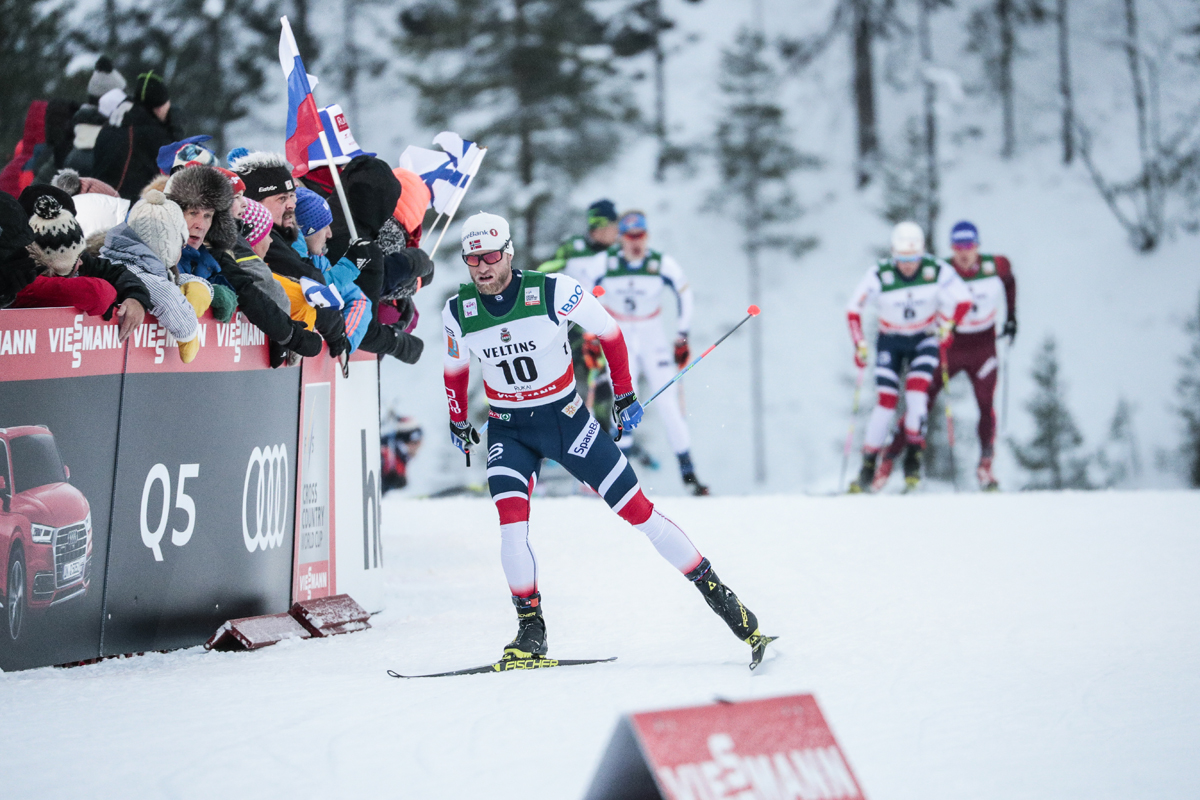
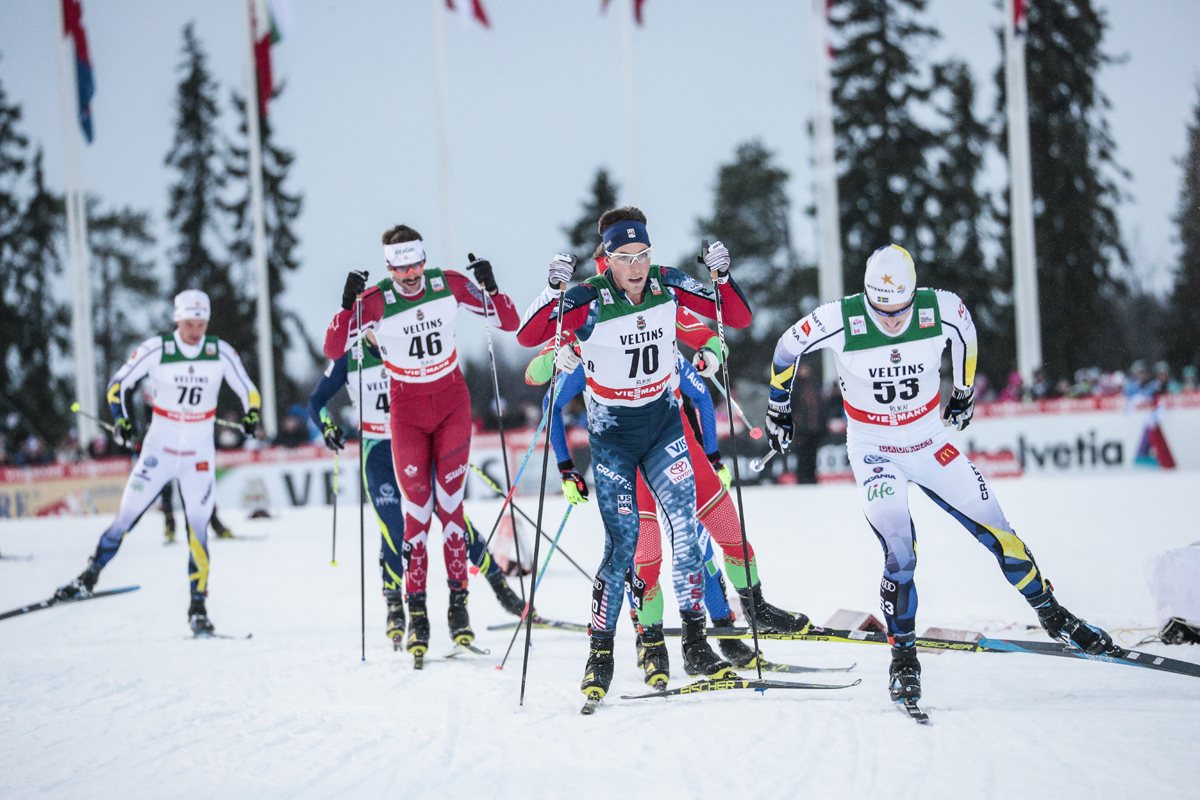
    Norway’s Johannes Høsflot Klæbo en route to his third-straight win in as many days of the World-Cup-opening Ruka Triple in Kuusamo, Finland. He won the 15 k freestyle pursuit for the mini-tour title. (Photo: Fischer/Nordic Focus)

    Two previous days of racing, and back-to-back victories no less, had begun to take its toll on Johannes Høsflot Klæbo within the first few laps of the men’s 15-kilometer freestyle pursuit on Sunday in Kuusamo, Finland. The 21-year-old Norwegian could feel it throughout his body; he was tired and 38 seconds of a starting cushion wasn’t going to be enough to hold off the hungry challengers behind him.

    Klæbo, who won Friday’s classic sprint and Saturday’s 15 k classic individual start on the World Cup opening weekend, wasn’t invincible and he couldn’t race to another win alone. Halfway through the pursuit, the man who started in second place, 38 seconds after him, Russia’s Alexander Bolshunov (who’s actually younger than Klæbo at age 20), had cut that deficit to 19.8 seconds. After him, Norway’s Martin Johnsrud Sundby, who started 10th and 1:05 minutes behind Klæbo, was up to third and just 25.3 seconds back.

    Norway’s Martin Johnsrud Sundby, who started 10th in the 15 k freestyle pursuit on Sunday, picking off the places on the final day of the Ruka Triple World Cup mini tour in Kuusamo, Finland. (Photo: Fischer/Nordic Focus)

    On his fourth lap, Klæbo accepted the inevitable as Bolshunov and Sundby, who had linked up in an effort to catch him, in fact caught him on a climb around 8.6 k. A larger group of pursuers, including Canada’s Alex Harvey, locked on to the three leaders as well, and from there, the race truly began to take form. Klæbo had to recover, Sundby had to figure out how to try to drop him, Bolshunov had to see what he was capable of, and Harvey had to see how much he could give in the third race of the season.

    The first races of each winter aren’t easy for anyone. Despite spending the summer training for skiing, most North American World Cup skiers don’t get the opportunity to actually race — even on rollerskis — too often during the offseason. Because of the rich ski culture in Europe, rollerski races are a big deal with lots of summer and fall competitions to chose from. And because of Europe’s geography, it’s often easier to get on snow than it is for North Americans.

    (“I think this applies to all the North American actually, compared to Europeans we don’t race as much in summer,” Canadian World Cup coach Ivan Babikov said on the phone on Sunday. “They have races every weekend so they come into the season pretty sharp already with some good speed workouts, when we don’t have that opportunity. So that’s why, I think, every race is a step forward. It’s just, you have to remember or remind yourself how hard it is.”)

    So while Canadians and American World Cup skiers alike often look at an opening weekend like Finland’s Ruka Triple mini tour as a “chance to blow the cobwebs out” or “shake off the rust”, as some have said, it’s also an opportunity to see where you stand — as was the case for Harvey in the final meters of Sunday’s pursuit.

    Later in the fourth of six laps, Klæbo pushed the tempo up a climb, Bolshunov responded, and Harvey went with them. Soon after at 10 k, they lapped through the stadium with 11 men within 2.7 seconds of first. Up front, Bolshunov led Harvey, who had started the race 1:23 back in 12th.

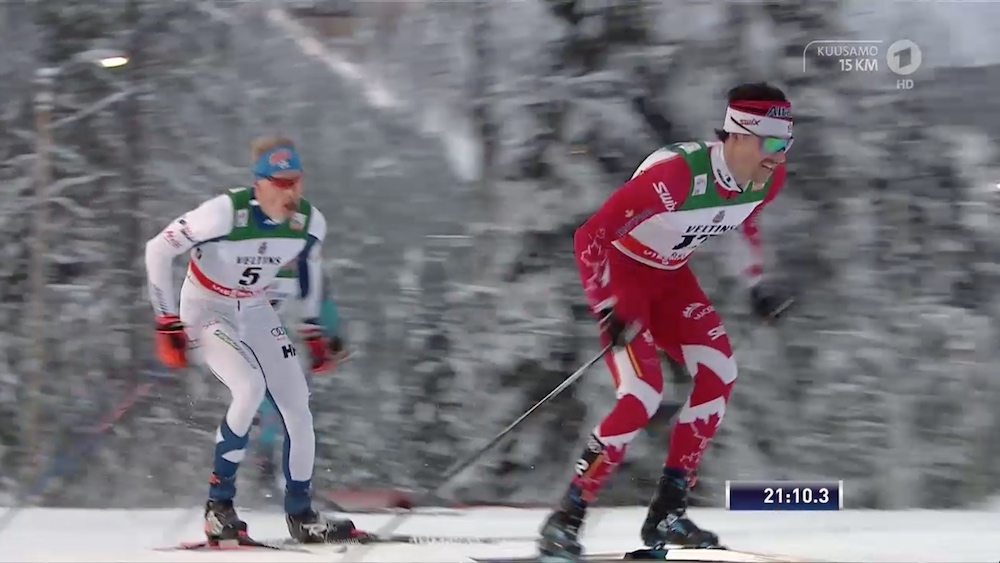
    Canadian World Cup Team member Alex Harvey leads Finland’s Iivo Niskanen during the men’s 15 k freestyle pursuit on Sunday, the final day of the Ruka Triple mini tour in Kuusamo, Finland. (Screenshot: ARD)

    Harvey had spent the first three laps working up to that lead group, initially with the likes of Russia’s Alexey Chervotkin (*who reportedly thanked Harvey after the race) and Sergey Ustiugov, Norway’s Hans Christer Holund and Sweden’s Marcus Hellner, and later with France’s Maurice Manificat, Sweden’s Calle Halfvarsson, Norway’s Emil Iversen, Chervotkin, and Holund, among others.

    “I knew there’d be some fireworks on the last lap so I just wanted to be in the front third of the group, just be ready for a move,” Harvey explained in a post-race phone interview. “I thought Sundby would be the guy making the move, which in the end, that’s what happened. The big uphill in the last lap, that’s where he went. I just wanted to be close to Sundby and ready to respond when Sundby went.”

    Sundby attacked as predicted on the second-to-last climb, around 13.6 k, and Harvey slotted behind him to follow him over the top.

    “I was just actually there on that last uphill when Sundby attacked,” Babikov recalled. “Klæbo was right there. I think there were just Norwegian tactics … Sundby attacked on the last uphill and Klæbo just cooled down and wasn’t chasing him at all, so for Alex, that was his only chance. … If he didn’t chase him, then Sundby probably would have skied away and it would have been a bigger group at the finish, but at the moment he tried, and they actually created a gap … Alex second and Sundby first.”

    With a few meters separating them from Norway’s Didrik Tønseth in third and Klæbo in fourth, Harvey thought he and Sundby had dropped them and that he would fight for first to the finish.

    “I kind of went all-in with the Sundby move,” Harvey said. “When I looked in between my legs just before the last downhill I thought we had a big enough gap … so I was feeling pretty good about my chances there, but not good about taking [Sundby] because I was really, really dead.”

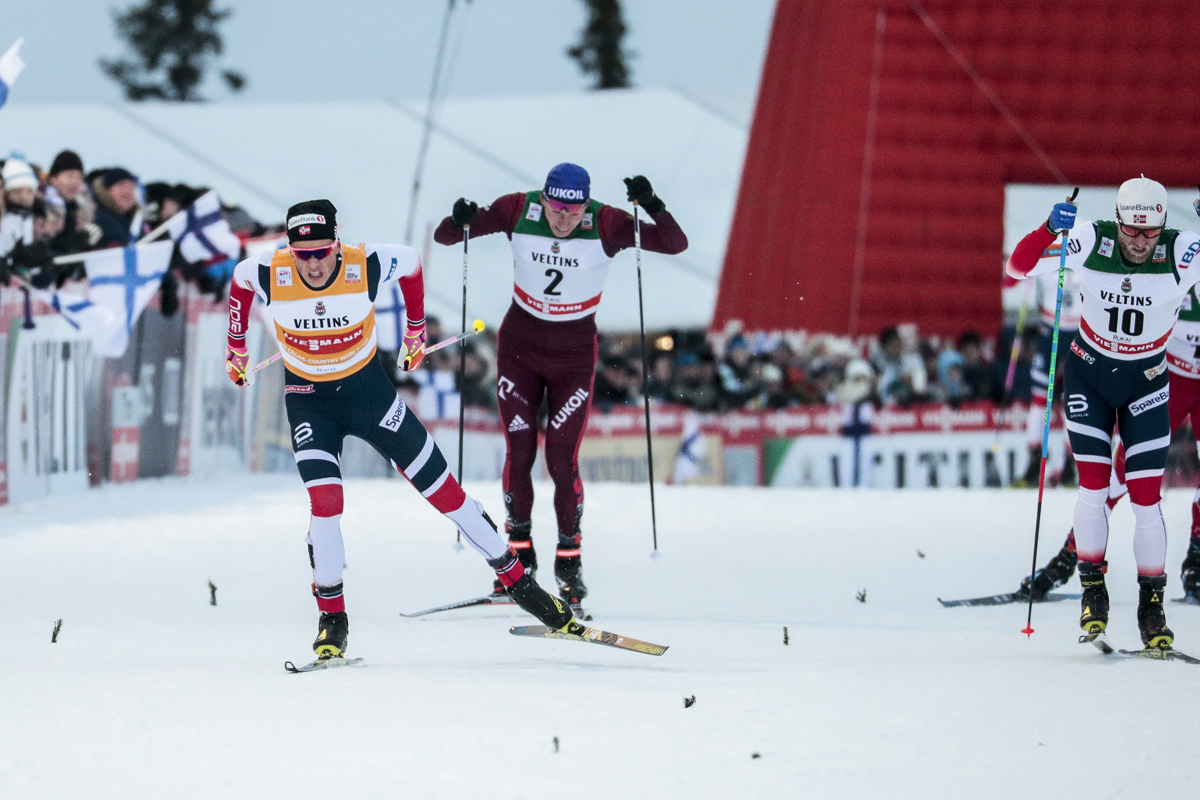
    Johannes Høsflot Klæbo (l) passing fellow Norwegian World Cup Team member Martin Johnsrud Sundby (10) for the win in Sunday’s 15 k freestyle pursuit at the Ruka Triple mini tour in Kuusamo, Finland. Russia’s Alexander Bolshunov (2) was 1 second back in third place for his first World Cup podium while Canada’s Alex Harvey (behind Sundby) placed fourth. (Photo: Fischer/Nordic Focus)

    After what Harvey estimated to be a 45-second downhill, he realized that wasn’t the case. Klæbo and Bolshunov had slingshot back toward the front, and while Sundby was first to the top of the last climb before the finish, Klæbo and Bolshunov were right behind him while Harvey followed in fourth.

    They entered the stadium together in that order, and Klæbo passed Sundby with about 100 meters remaining to take his third-straight win of the weekend.

    “Coming out of my tuck there I was just full of lactate, not feeling any fresher … then I just got passed on the hill,” Harvey recalled. “I had nothing left. That was my move. … I’m happy I made that move, but I couldn’t make a second burst after that.”

    While Klæbo won the pursuit and with it, the Ruka Triple mini-tour title in 36:23.2 minutes, Sundby placed second, 0.4 seconds back, Bolshunov claimed his first World Cup podium in third (+1.0), and Harvey finished another 0.6 seconds back in fourth (+1.6).

    On the day, Harvey’s course time ranked fifth fastest behind Manificat, who was the “winner of the day” in 34:50.9. Finland’s Matti Heikkinen was second fastest (+5.4) after starting 22nd and placing 14th, Holund was third fastest (+7.5) after starting 14th and finishing ninth, and Switzerland’s Dario Cologna, who started 26th and finished 17th, was fourth fastest (+8.7).

    Harvey said starting 17 seconds behind Sundby was a tall task on its own, and he had started the race with a goal of breaking into the top 10 overall. All things considered, fourth place was better than he expected at this point in the season.

    “… But I knew it was still within reach,” Harvey explained. “I believed in it, but I didn’t put too much hope in, let’s say, a top five or fighting for the podium. It was more like I wanted to be back in the top 10 and just that to me seemed already hard enough.”

    Norway’s Johannes Høsflot Klæbo after winning the 15 k freestyle pursuit on Sunday to win the Ruka Triple mini tour in Kuusamo, Finland. (Photo: Fischer/Nordic Focus)

    The fact that he was able to hang with Klæbo and Sundby to the finish was a good sign, he added.

    “Right now, he’s not just a good sprinter, he’s the best distance skier in the world, too,” Harvey said of Klæbo. “I mean, to win a 15 k individual you have to be in very, very good physical shape, so he’s in really good physical shape and I know I’m not yet. I’m not in my best form and Sundby probably isn’t yet, so you never know what’s going to happen later in the season at the Olympics, but for now it’s hard to drop him when he’s actually just in better shape than everybody else in the world.”

    After the race, Klæbo told NRK he was relieved to get the win and have some time to rest before next weekend’s World Cup in Lillehammer, Norway.

    “My legs are shaking now,” Klæbo said. “Feels incredible to be the first to cross the finish line. Now I need a few days rest.

    “This was brutal,” he added. “I’m actually glad they caught up to me and luckily I had good skis. I’m glad I had a few seconds today.”

    Norwegian national-team coach Tor-Arne Hetland told NRK he was “really impressed” with Klæbo.  “We have a diamond in the sport of cross country skiing now,” Hetland said.

    “That’s very nice of him to say. It’s probably a little too much, but it has been a good start to the season,” Klæbo responded to NRK.

    Sundby spoke excitedly about having Klæbo to contest for the overall World Cup lead.

    “For the moment, he’s taking international cross-country skiing for men to a whole ’nother level,” Sundby told NRK. “It is a little humiliating for the rest of us, but at the same time it’s extremely inspiring to see what he does in his second year at this level. It’s hell of fun to have a guy like that on the team.”

    Bjornsen 26th, Kershaw 29th; Caldwell Posts Top-20 Time of Day

    Canada had two in the top 30 on Sunday with Devon Kershaw in 29th (+1:47.8), scoring World Cup points for the second-straight day. He started 28th and 1:59 out of first, just one second behind Cologna in 26th and Russia’s Andrey Larkov in 27th.

    “I just wasn’t strong enough to go with Dario,” Kershaw said on the phone. “I had the perfect chance to be able to follow Dario up the field, but he just started so fast, and on the steep terrain, my legs just — I tried up the first steep wall and at the top, I’m like, man, if I keep going like this, after 5 k I’m gonna be dead.

    Canada’s Devon Kershaw (28) leads American Erik Bjornsen (23) and others during the World Cup men’s 15 k freestyle pursuit on Sunday in Kuusamo, Finland. (Photo: Fischer/Nordic Focus)

    “So I had to manage my energy a little bit and in the end, it turned out that Bjornsen and I’s group just wasn’t strong enough,” Kershaw continued, referring to U.S. Ski Team member Erik Bjornsen, whom he started eight seconds behind and spent most of the race with. “[Our group] had a good 7 1/2 k and then after that, between 7 1/2 kilometers and 12 k, we were skiing really slow. So that’s a bit frustrating in a pursuit because you’re just stuck there in no-man’s land.”

    While he felt like he was skiing the flats well, Kershaw said he struggled with the “biting” conditions, which seemed to limit glide, especially on the notoriously steep course’s climbs.

    “I had to make the choice to be like, OK, I’ve got to just stay in this group and I’m not strong enough to drive the bus, because my legs just weren’t there today on the terrain” he said. “In the end I made a tactical error in the last 600 meters. I should’ve followed Bjornsen on the outside and I went on the inside and was hoping it would open up for me and it didn’t. So I ended up 29th, but that’s OK.”

    Bjornsen started 24th and finished the pursuit in 26th (+1:43.6), after following Larkov in 25th (+1:42.8) across the line and holding off Iceland’s Snorri Einarsson (a former Norwegian skier who raced for the University of Utah) in 27th (+1:46.2), Great Britain’s Andrew Musgrave in 28th (+1:47.2), Kershaw in 29th, and France’s Jean-Marc Gaillard in 30th (+1:49.2).

    “I started right around Cologna and [Finland’s Matti] Heikkinen but there was no way I was going to hold their pace, they were flying,” Bjornsen wrote in an email. “I had to settle in with the group around me. It soon became clear our group was not going to catch anyone in front of us or get caught, so it became a tactical game. Some surges, but for the most part nobody wanted to lead.”

    Devon Kershaw (Canadian World Cup Team) en route to 29th in the 15 k freestyle pursuit on the last day of the Ruka Triple World Cup mini tour in Kuusamo, Finland. (Photo: Fischer/Nordic Focus)

    Kershaw laughed when he talked about some “tips” he gave Bjornsen during the race.

    “He had really fast skis so there were a few times that he came by me on the downhill and then would kind of try to hammer for a minute and then get tired and slow down again,” Kershaw said. “I told him, like, ‘Dude, you’ve got great skis. Unless you can stay in the front and really press, then it’s better just to play the game and wait for the end.’ After that, he did that and he torched us all in the end. So that was kind of fun to see for him.”

    According to Bjornsen, Kershaw suggested he sit back and wait for the sprint.

    “My skis were good but I think my weight is what helped me the most on that last huge downhill,” Bjornsen wrote. “I was fine going for that tactic but at the same time it would have been nice to leave a little more out there today. Stoked to get double points for 26th though!”

    Paddy Caldwell (U.S. Ski Team) racing to 70th in the men’s 15 k classic on Saturday, Day of the Ruka Triple World Cup mini tour in Kuusamo, Finland. In Sunday’s 15 k freestyle pursuit, he skied up to 51st with the 19th-fastest time of day. (Photo: Fischer/Nordic Focus)

    Paddy Caldwell, new to the U.S. Ski Team B-team this year, posted his best World Cup result with the 19th-fastest time of day, 50.5 seconds back from Manificat. He started with the wave in 70th and finished 51st overall (+3:03.1).

    “Going into the race my goal was to move up as much as possible,” the 23-year-old Caldwell wrote in an email. “I wasn’t really thinking about place or time of day – I was just trying to ski fast and put together a good effort.

    “It was really hard to move up in the pack,” he added. “I started midway back in the wave and we kept picking up more and more skiers as the race went on. I tried to relax as much as possible on the hills and build in energy to pass where I could on the flats. … I am really excited with the day and psyched to have had a good result here in Ruka. I’m looking forward to the rest of period 1 and learning more from the big dogs!”

    “Very exciting race out of Erik today,” U.S. Ski Team coach Matt Whitcomb commented on the phone. “… When he settled to the back of his pack on Lap 6 and headed into the downhill with one climb to go, we just all sort of expressed confidence over the U.S. radio channel, got ready see what he could do.  It is so fun to watch him in a stadium when he has to go head to head against five other athletes … he did not disappoint today. Really proud of Erik’s 26th place.”

    As for Caldwell, who skied the 25th fastest time of day in the 2017 World Cup Finals freestyle pursuit, Whitcomb said, “this is his race, the skate distance.”

    “There were times that he was a little bit road-blocked out there, just the way the pursuit race unfolds in that start … and it looked like today Paddy could keep going, so really great signs out of him,” Whitcomb said.

    Whitcomb also highlighted the races of Scott Patterson, who raced up from 78th to 55th (+3:28.4) with the 31st-fastest time, and Noah Hoffman, who improved from 45th to 39th (+2.33.3) with the 35th-fastest time. Also for the U.S., Andy Newell finished the tour out in 75th (+5:39.6).

    American Paddy Caldwell (70) racing with Sweden’s Jens Burman (front) and Canada’s Len Valjas (46), among others, during Sunday’s World Cup 15 k freestyle pursuit on the last day of the Ruka Triple in Kuusamo, Finland. (Photo: Fischer/Nordic Focus)

    Canada’s Len Valjas moved up two places for 44th overall (+2:47.5), Graeme Killick finished the tour in 68th (+4:39.5), Knute Johnsgaard 81st (+6:43.6), and Julien Locke 83rd (+7:33.6).

    Babikov pointed out that Valjas had a shoulder injury that he mostly recovered from, but caused him to struggle with double poling in Friday’s sprint. Despite placing 63rd in that sprint, Valjas was the team’s third-best man in the weekend’s distance races.

    “[In] two distance races, he was third best and actually placed higher than he placed in sprint in the distance, 15 k, hardest one with lots of climbing,” Babikov said. “So that shows he has a good shape, but just needs to scrape that rust off and remember how to go fast again. I think physically he is in a good place, just need to do some more races, and it will come.”

    ***

    *Post-race sidenote: According to Harvey, after the race, the Russian team’s massage therapist told Canadian coach Ivan Babikov that Chervotkin wanted to thank Harvey for pulling him in the pursuit. Chervotkin, 22, started 11th and finished fifth, 6.2 seconds out of first and 4.6 seconds after Harvey in fourth.

    “There’s a bit of beef with the Russians and me right now,” Harvey said. “I came in wondering if they were just going to punch me in the face. They said they wanted to break my teeth, so this is a good turn of things.”

    As Harvey understands it, that was because of what he’s said to journalists regarding Russian doping at the 2014 Olympics.

    “I read that in the Norwegian news, actually, that Petukhov wanted to …,” he said with a laugh. “But I knew the media likes that sort of thing. But I think things are good now.”

    Harvey noted that Bolshunov and Chervotkin, neither of which have been implicated in the doping scandal, are part of “a new generation” in Russian cross-country skiing. “I saw the results in Bruksvallarna; it looks like the have almost as much depth as Norway does. They’re really strong.”

    Results: Men’s pursuit | Men’s time of day

    — Aleks Tangen, Ian Tovell, Jason Albert, and Harald Zimmer contributed

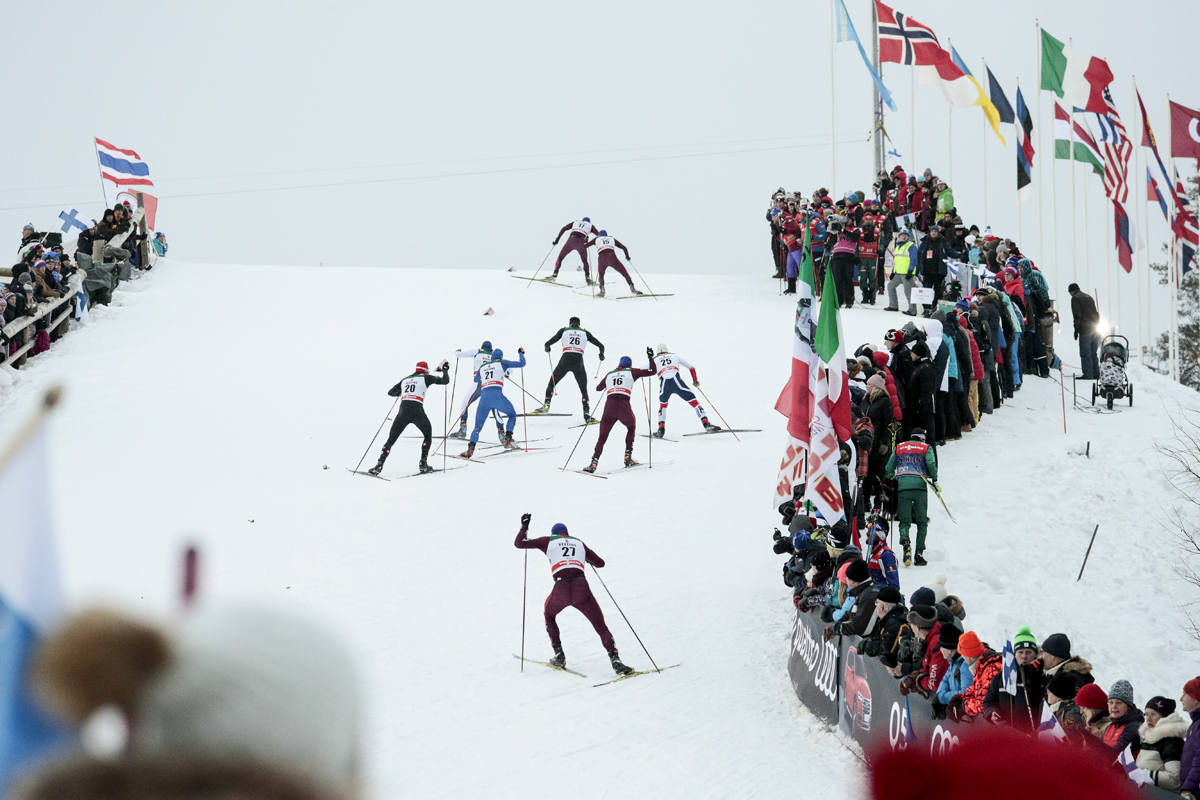
    Racers in the Ruka Triple World Cup 15 k freestyle pursuit, including Russia’s Andrey Larkov, Switzerland’s Jonas Baumann, Italy’s Federico Pellegrino, Switzerland’s Dario Cologna, and Norway’s Simen Hegstad Krueger, ascend a climb in Kuusamo, Finland. (Photo: Fischer/Nordic Focus)
  • Bjørgen Wastes No Time With Beito Comeback; Tønseth Wins Again

    Bjørgen Wastes No Time With Beito Comeback; Tønseth Wins Again

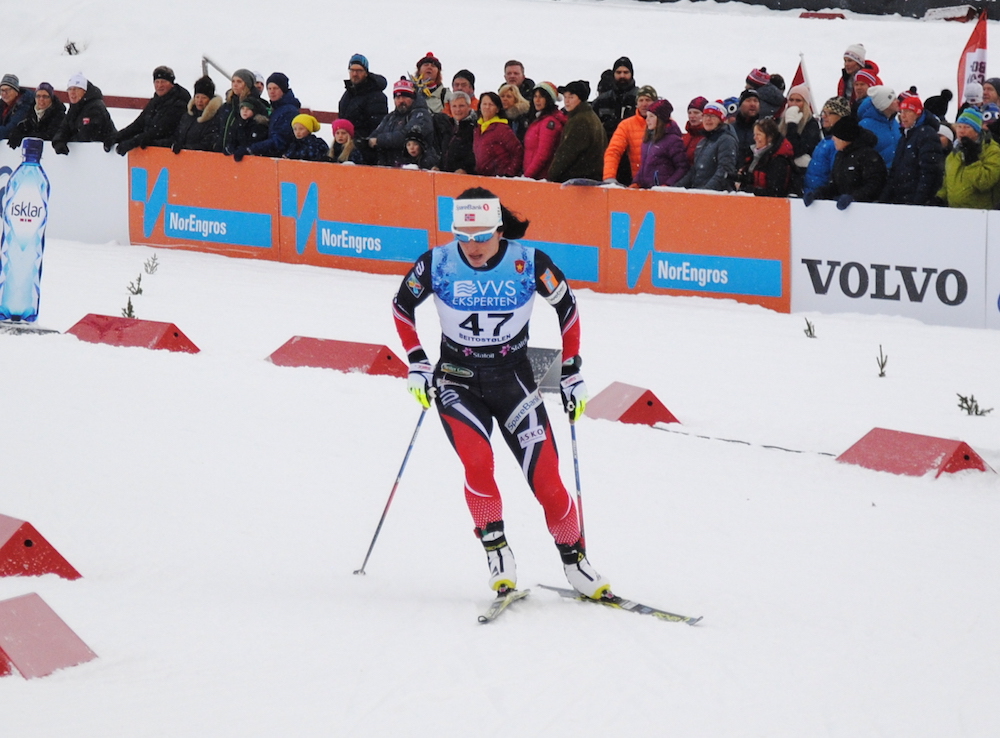
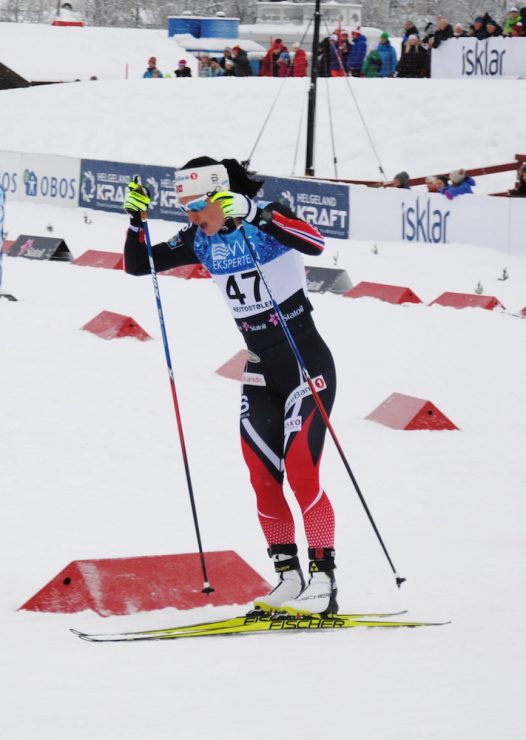
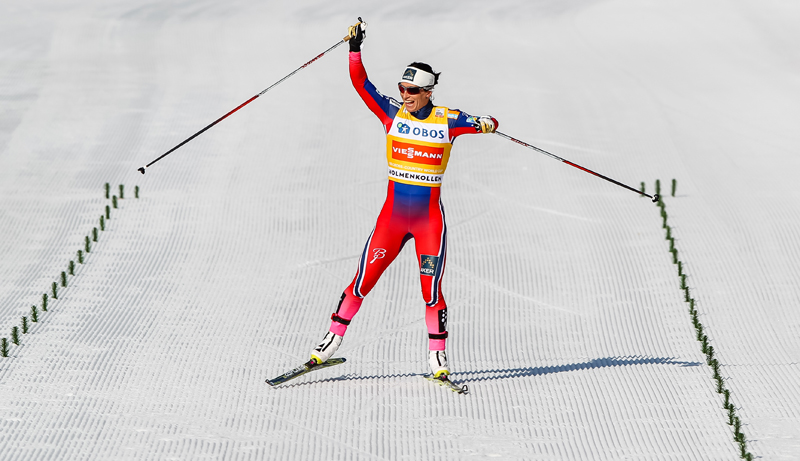
    Marit Bjørgen racing to first in the women's 10 k freestyle FIS race on Saturday in Beitostølen, Norway. It was her first FIS race since March of 2015. (Photo: Aleks Tangen)
    Norway’s Marit Bjørgen racing to first in the women’s 10 k freestyle on Saturday in Beitostølen, Norway. It was her first FIS race since March of 2015. (All photos: Aleks Tangen)

    BEITOSTØLEN, Norway — Saturday’s 10-kilometer freestyle individual start was, from the start, all about Marit Bjørgen. Her previous race was 603 days earlier on March 27, 2015 in Harstad, Norway, but that didn’t seem to affect Norway’s six-time Olympic gold medalist one bit.

    “I’ll admit that I have had my doubts,” she told Dagbladet about returning to competition. “And I’ve been tired, but I made it through it and I’ve appreciated the good times.”

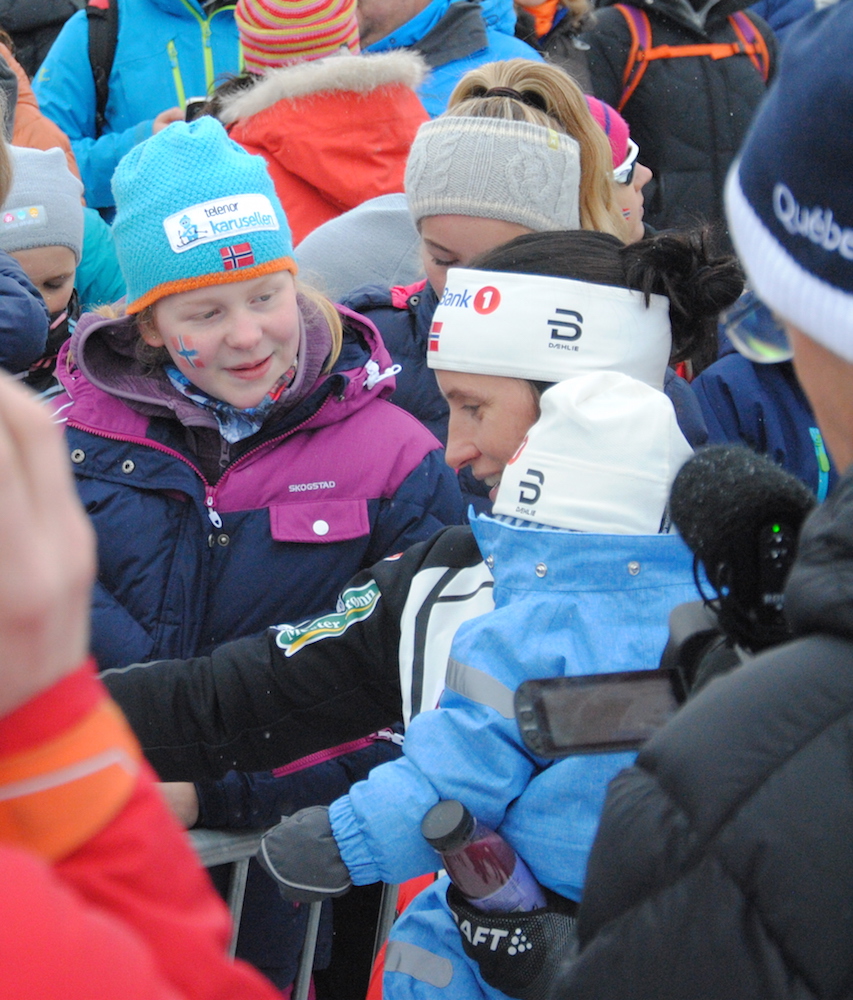
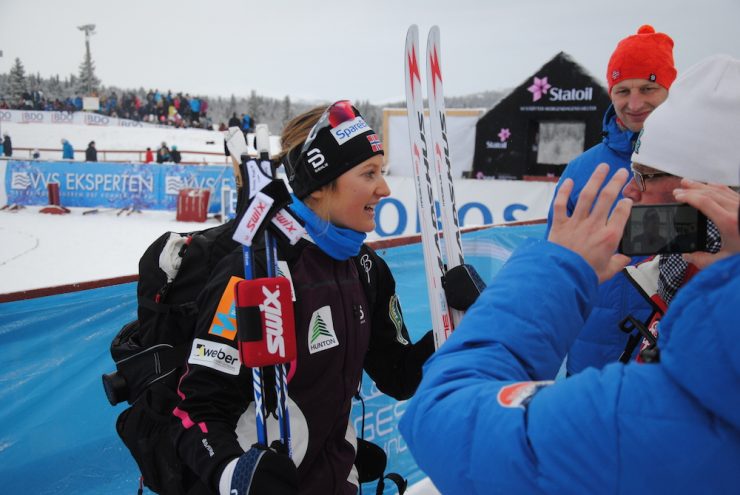
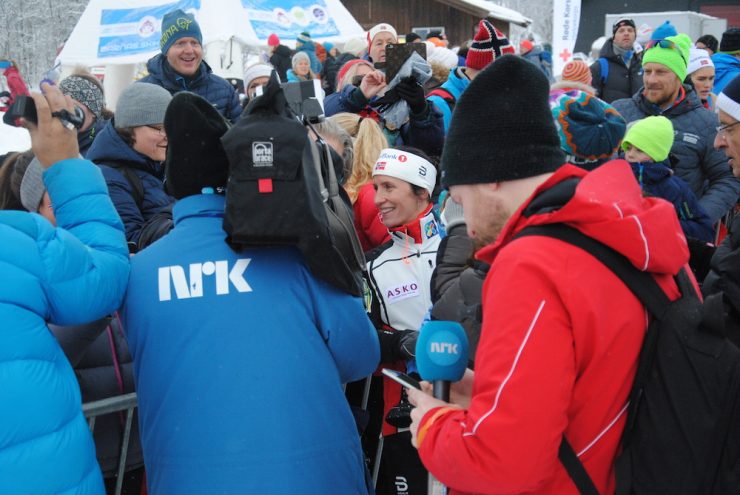
    Norway's Marit Bjørgen with her baby, Marius, and fans in Beitostølen, Norway, following Bjørgen's first race since having a child in December 2015. Saturday marked Bjørgen's first race back since March 2015. (Photo: Aleks Tangen)
    Norway’s Marit Bjørgen with her baby, Marius, and fans in Beitostølen, Norway, following Bjørgen’s first race since having a child in December 2015. Saturday marked Bjørgen’s first race back since March 2015. (Photo: Aleks Tangen)

    The 36-year-old Bjørgen led Saturday’s International Ski Federation (FIS) race at every split mark and crossed the finish line in 24:40.3 minutes.

    Fellow Norwegian national-team member Heidi Weng followed in second, 11.7 seconds behind. After  placing second to teammate Ingvild Flugstad Østberg in Friday’s 10 k classic, Weng told VG that Bjørgen, who sat out the race with a cold, was “probably sitting at home and laughing at how slow it went went. She will race fast and I think will see Marit Bjørgen as good as she has been in the past. She’s done great during the summer and fall training.”

    After her second-straight second-place finish, Weng told Dagbladet that she opened fast on Saturday, but her muscles tired as the race progressed.

    “It’s irritating, but I really had no chance toward the end, and it’s not that bad, really, because I don’t think I’ve ever had a better season opener. I’m a little surprised by that really,” she said.

    When asked by FasterSkier if she thought she could match her performances in Sunday’s skate sprint, Weng said, “I didn’t make it through from the prologue last year so I’m hoping that I can do better than that, but we’ll see.”

    The race for third place proved to be the most exciting with Østberg crossing the finish line 28.2 seconds behind Bjørgen and just 1.7 seconds in front of Norway’s Astrid Uhrenholdt Jacobsen, who finished fourth. Norway swept the top eight as Kari Øyre Slind followed 2.9 seconds later in fifth and her sister Silje Øyre Slind was sixth, another 17.5 seconds behind.

    Østberg told FasterSkier that she will not be competing in Sunday’s sprint. “If the World Cup weekend had been two weeks away then maybe, but after doing two tough races in two days and since sprints takes a lot of energy rest is probably the best,” she said.

    Nonetheless, a first and third place finish in Beitostølen is Østberg’s best start to a season yet.

    “It is without a doubt my best season opener, and I’m super happy,” she told both FasterSkier and Oppland Arbeiderblad, a regional newspaper from her hometown of Gjøvik.

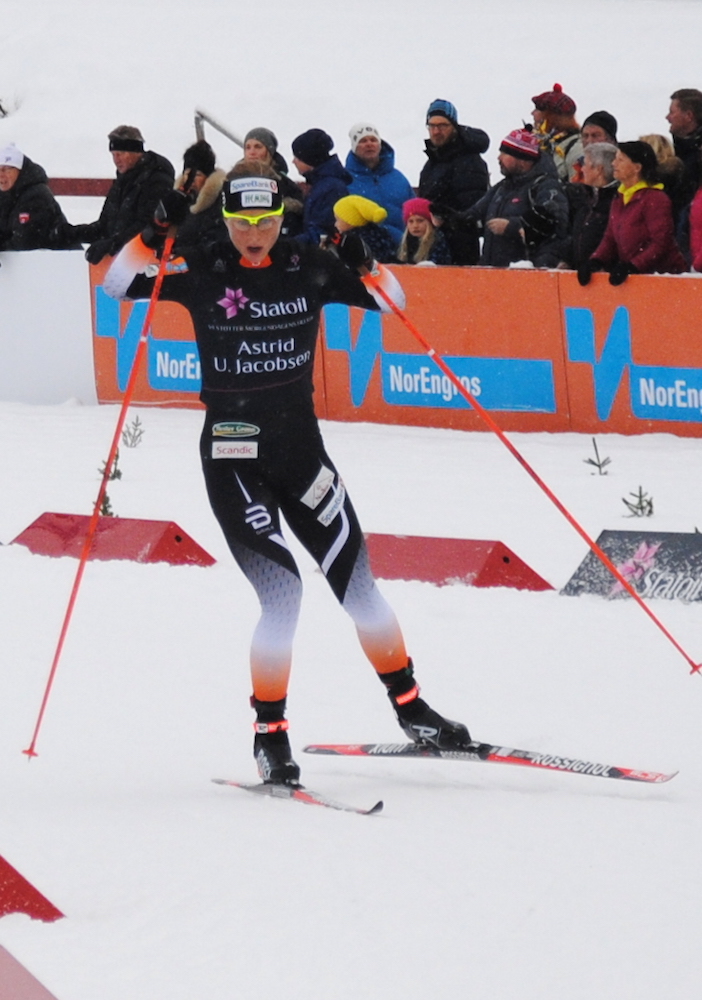
    Astrid Uhrenholdt Jacobsen (Norway) racing to fourth in the women's 10 k freestyle FIS race on Saturday in Beitostølen, Norway. (Photo: Aleks Tangen)
    Astrid Uhrenholdt Jacobsen (Norway) racing to fourth in the women’s 10 k freestyle FIS race on Saturday in Beitostølen, Norway. (Photo: Aleks Tangen)

    Jacobsen narrowly missed the podium after crossing the finish line 1.7 seconds slower than Østberg.

    “I feel like I’m not quite there yet,” Jacobsen told FasterSkier after. “I still have some work to do in order to be in top shape, but I still ski relatively fast and I feel like I have a very good base condition so I think it can be a good year.”

    Asked what it was like to have Bjørgen back, Jacobsen replied, “She wins as expected. I skied with her on my second lap and I definitely think she can ski faster. This race wasn’t Marit in her top shape.”

    When asked about Bjørgen’s ability to perform as well as she did on Saturday, considering she hasn’t raced since 2015, Jacobsen smiled and waited a moment before she answered, “That’s something only Marit can do.”

    Eighteen-year-old Norwegian Mathilde Myhrvold finished 27th (+3:49.7) of 48 finishers on Saturday. In 2014, she competed in the track and field World Junior Championships in Eugene, Oregon, and last season she won the Norwegian Cup. Saturday stood as her first race this season.

    “Slightly after finishing the first lap I started feeling a little tired and then I skied a little slower, but I improved toward the finish and I’m happy about that,” Myhrvold said. “I may have started a little too fast and maybe that’s why I was tired.”

    She figured a few races would help her return to top shape, and for the rest of the season, she’s focused on improving her conditioning for FIS Junior World Championships trials.

    One spot ahead of her on the results sheet, American Cambria McDermott, who is living and training in Norway, finished 26th (+3:33.6). Canada’s Isabella Howden and Madison Fraser, both of Team Hardwood, placed 45th (+6:19.6) and 47th (+6:59), respectively.

    (Story continues below)


    Another ‘W’ for Tønseth

    Norway’s Didrik Tønseth repeated his podium-topping performance from Friday’s 15 k classic and won Saturday’s 15 k freestyle in 33:20.9. But the biggest surprise of the men’s race was second-place finisher Simen Hegstad Krüger, who crossed the finish line in a time that was only six seconds slower than Tønseth.

    Norway's Didrik Tønseth racing to his second-straight win of the weekend in the 15 k freestyle FIS race on Saturday in Beitostølen, Norway. (All photos: Aleks Tangen)
    Norway’s Didrik Tønseth racing to his second-straight win of the weekend in the 15 k freestyle FIS race on Saturday in Beitostølen, Norway. 

    “I had nothing more to give, but this podium finish is incredibly satisfying,” the 23-year-old Krüger, who won the 15 k freestyle at U23 World Championships last season, told NRK after Saturday’s race.

    “I’m hoping for a spot on the team for the World Cup in Lillehammer, but it might be too late for that,”

    Norwegian men’s coach Tor-Arne Hetland seemed open to placing Krüger on the team for Lillehammer in two weeks.

    “We’ll be choosing the team on Monday and I think the mini tour will suit him well, so he may  receive a positive message in the coming week,” he told NRK.

    Tønseth had the advantage of starting five bibs after Krüger and told NRK that he felt like he was in good shape and that he was ready to start the season. The 2017 World Championships in Lahti, Finland, are his main focus.

    Norway swept the top five after a close fight for third, which Simen Andreas Sveen took, 32.6 seconds behind Tønseth. Anders Nøstedahl Gløersen was another 1.9 seconds back in fourth (+34.5), Mathias Rundgreen placed fifth (+36.9) and Andrew Musgrave of Great Britain finished sixth (+37.0).

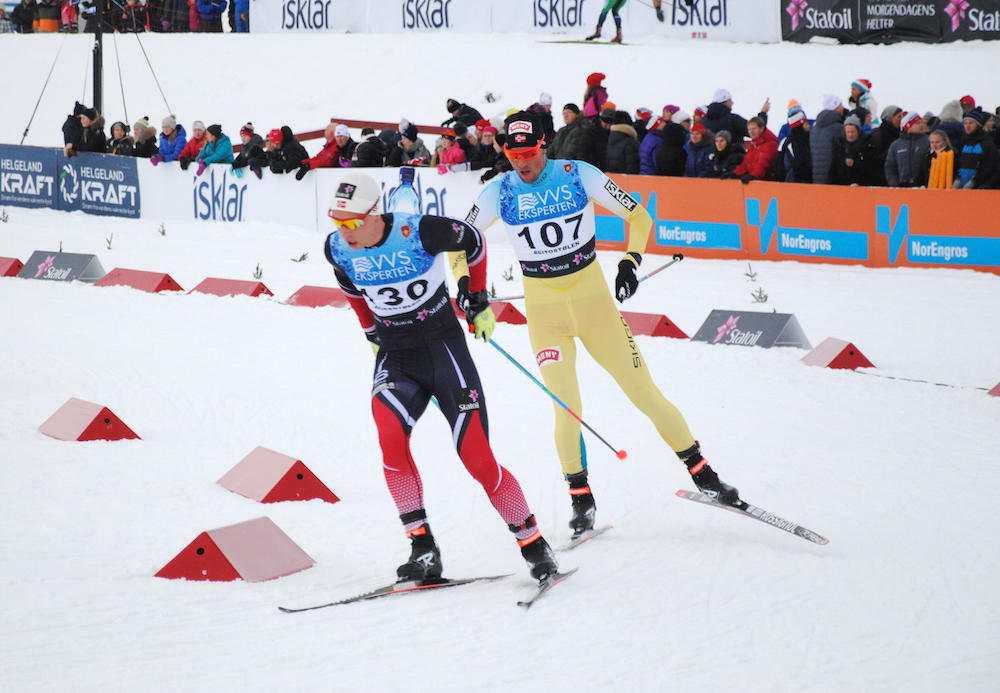
    Norway's 25-year-old Mathias Rundgreen (130) leads Chris Jespersen (107), a 33-year-old Norwegian World Cup regular, in the men's 15 k freestyle FIS race in Beitostølen, Norway. (Photo: Aleks Tangen)
    Norway’s 25-year-old Mathias Rundgreen (130) leads 33-year-old Chris Jespersen (107), also of Norway, in the men’s 15 k freestyle FIS race in Beitostølen, Norway. Rundgreen placed fifth and Jespersen finished eighth on Saturday.

    “I feel good about the race, but I felt a little limply in the beginning,” Musgrave told FasterSkier after. “Though I was able to close some of the gap toward the end, but not enough.”

    Like most World Cup skiers, Musgrave’s goal for the season is World Championship and he’ll be in both Kuusamo, Finland, and Lillehammer over the next two weekends to compete in the World Cup.

    One place behind Musgrave was Norwegian Sjur Røthe in seventh (+37.2), who told FasterSkier that he felt “heavy during the start.” In a post-race interview with NRK, Røthe said he’s focused on the World Championships 50 k. He planned to skip Sunday’s sprint to recharge for the World Cup.

    Petter Northug (Norway) approaching the finish of Saturday's 15 k freestyle FIS race in Beitostølen, Norway. (Photo: Aleks Tangen)
    Petter Northug (Norway) approaching the finish of Saturday’s 15 k freestyle FIS race in Beitostølen, Norway. (Photo: Aleks Tangen)

    Petter Northug finished Friday’s race like it was a workout, and during the start of Saturday’s race, it appeared that he was on the path to a podium, but such was not the case. Northug led the race at the 1.2 and 2.1 k marks, but for the rest of the race, he was unable to maintain the same speed as the other top finishers and ended up 15th (+1:02.6). However, Northug didn’t seem to be affected by his fading speed, telling Dagbladet, “I am where I want to be. I’ve had two good workouts now and I’m confident that the job is done. I am excited for the important races that are approaching.”

    But he did offer some explanation for what happened.

    “I opened too hard and during the second lap I felt like it would be too much to maintain the tempo,” Northug told NRK.

    Out of 123 male finishers, Jack Carlyle (NDC Thunder Bay) led several Canadian juniors in 90th (+3:48.4). His NDC teammate Scott James Hill finished 101st (+4:25.6), Joey Foster (Pierre-Harvey Training Centre) was 103rd (+4:31), and Team Hardwood skiers Ryan Jackson was 106th (+4:50.4) and Kieran Jones was 115th (+6:11.5).

    Results: Women | Men

    Jack Carlyle (NDC Thunder Bay) racing to 90th to lead the Canadian men in the 15 k freestyle FIS race in Nov. 19 in Beitostølen, Norway. (Photo: Aleks Tangen)
    Jack Carlyle (NDC Thunder Bay) racing to 90th to lead the Canadian men in the 15 k freestyle FIS race in Nov. 19 in Beitostølen, Norway.
  • FIS Rules and Keeping Quiet: Why You Didn’t Hear About Sundby Sooner

    FIS Rules and Keeping Quiet: Why You Didn’t Hear About Sundby Sooner

    Norway's Martin Johnsrud Sundby lost is 2014-2015 overall World Cup title after breaking rules about the use of asthma medication. (Photo: Fischer/Nordic Focus)
    Norway’s Martin Johnsrud Sundby lost is 2014-2015 overall World Cup title after breaking anti-doping rules regarding the use of asthma medication. (Photo: Fischer/Nordic Focus)

    News broke on Wednesday that Norwegian cross-country skier Martin Johnsrud Sundby lost his 2015 World Cup overall title after an anti-doping rule violation (ADRV).

    Among athletes and fans, one of the biggest reactions was of surprise: Sundby’s samples had been collected in December 2014 and January 2015, yet the case had never been publicized.

    Screen Shot 2016-07-23 at 7.35.05 PM

    That is primarily because despite the adverse analytical finding (AAF) of salbutamol — a common asthma medication — in two of Sundby’s urine samples, the International Ski Federation (FIS) concluded that he had not broken any rules.

    First, because salbutamol is a “specified substance”, according to the WADA Code, FIS was not required to give Sundby a provisional suspension while they resolved his case. Thus he did not miss any races after the AAF’s were reported to FIS.

    Then, because the eventual Anti-Doping Hearing Panel conclusion was that there was no ADRV, FIS was also not required to publicize the result – in fact, they could not publicize it at all without Sundby’s consent, which he did not provide.

    “FIS and the Norwegian Ski Association have followed the regulations and procedures as provided for in the FIS Anti-Doping Rules and WADA Code concerning communication of the decision of the FIS Doping Panel,” FIS Secretary General Sarah Lewis wrote in an email to FasterSkier.

    Confidentiality is oft-discussed and highly prized according to FIS Rules. Thus only after the Court of Arbitration for Sport supported an appeal by the World Anti-Doping Agency (WADA) and ruled that an ADRV did occur, was FIS required to publicize the case.

    Why No Rule Violation?

    One common circumstance where an AAF can lead to no rule violation is if an athlete has a Therapeutic Use Exemption (TUE) for the substance in question.

    Although he has long discussed his asthma diagnosis, Sundby did not have a TUE for salbutamol because he believed he didn’t need one.

    As a class of drugs, the World Anti-Doping Agency (WADA) prohibits the use of beta-2 agonists, with the following exceptions (as described in the 2015 Prohibited List):

    “Inhaled salbutamol (maximum 1600 micrograms over 24 hours);

    Inhaled formoterol (maximum delivered dose 54 micrograms over 24 hours); and

    Inhaled salmeterol in accordance with the manufacturers’ recommended therapeutic regimen.

    The presence in urine of salbutamol in excess of 1000 ng/mL or formoterol in excess of 40 ng/mL is presumed not to be an intended therapeutic use of the substance and will be considered as an Adverse Analytical Finding (AAF) unless the Athlete proves, through a controlled pharmacokinetic study, that the abnormal result was the consequence of the use of the therapeutic inhaled dose up to the maximum indicated above.”

    Sundby’s urine samples both had over 1300 ng/mL of salbutamol, triggering an AAF and beginning the investigative process into whether he had an appropriate TUE.

    He didn’t, based on advice of a team doctor. The reason — that he was taking the medication through a nebulizer rather than an inhaler and believed that this made a TUE unnessecary — was explained in a previous article.

    “We know the rule for use of the the nebulizers now and we will not do the same mistake again,” Norwegian men’s coach Tor-Arne Hetland told FasterSkier in an email. “We will for sure ask for a TUE one extra time instead of one too little in the future. Martin would have gotten a TUE if he asked for it. To get a TUE happens quickly, but the decision is made separately in each case.”

    Marit Bjørgen, the winningest female skier of all time, also uses asthma medication. “I have medical test results that indicate that I am qualified to use Symbicort," she said in a press release from the Norwegian ski federation. "I have the necessary permissions from the International Ski Federation (FIS) to use this medication, and all research studies show that this asthma medicine does not have any performance enhancing effect unless you have asthma. Just like Martin, I could not have become the best in the world without using my asthma medicine." (Photo: Fischer/NordicFocus.com)
    Marit Bjørgen, the winningest female skier of all time, also uses asthma medication. “I have medical test results that indicate that I am qualified to use Symbicort,” she said in a press release from the Norwegian ski federation. “I have the necessary permissions from the International Ski Federation (FIS) to use this medication, and all research studies show that this asthma medicine does not have any performance enhancing effect unless you have asthma. Just like Martin, I could not have become the best in the world without using my asthma medicine.” (Photo: Fischer/NordicFocus.com)

    Most people don’t consider the use of the salbutamol to be performance-enhancing. Doctors and medical researchers have concluded that salbutamol is not ergogenic for athletes who are not experiencing constricted airways through asthma or exercise-induced bronchiospasm.

    “The net effect for anyone whom does not have [exercise-induced bronchiospasm] is negligible: you can’t relax smooth muscle in the airway if it has not been contracted,” Dr. Michael Kennedy told FasterSkier in January, referring to the drug’s mode of action.

    Numerous studies have backed this up, showing that giving asthma medication to athletes does not improve performance in time trials or races.

    None of this changes the fact that WADA prohibits inhalation of the drugs in high concentrations, or via injection or ingestion. And salbutamol is also banned because it is a masking agent – that is, it could be used to hide the presence of another performance-enhancing drug.

    In the “masking agents” section of the Prohibited List, the organization writes that “The detection in an Athlete’s Sample at all times or In-Competition, as applicable, of any quantity of the following substances subject to threshold limits: formoterol, salbutamol, cathine, ephedrine, methylephedrine and pseudoephedrine, in conjunction with a diuretic or masking agent, will be considered as an Adverse Analytical Finding unless the Athlete has an approved TUE for that substance in addition to the one granted for the diuretic or masking agent.”

    One might expect that after an AAF, an athlete would be provisionally suspended. But according to FIS Rules, that was not necessary.

    No Provisional Suspension

    Martin Johnsrud Sundby placed 12th in the 15 k skate World Cup in Oestersund, Sweden, in February 2015 - one day after FIS decided to cancel his scheduled Anti-Doping Hearing Panel and instead subject him to lab tests to determine how much salbutamol showed up in a urine sample after using a nebulizer as he had described. That trial eventually took place in April, long after the World Cup season (and Sundby's victory for the overall title) had wrapped up. (Photo: Fischer/Nordic-Focus.com)
    Martin Johnsrud Sundby placed 12th in the 15 k skate World Cup in Östersund, Sweden, in February 2015 – one day after FIS decided to cancel his scheduled Anti-Doping Hearing Panel and instead subject him to lab tests to determine how much salbutamol showed up in a urine sample after using a nebulizer as he had described. That trial eventually took place in April, long after the World Cup season (and Sundby’s victory for the overall title) had wrapped up. (Photo: Fischer/Nordic-Focus.com)

    FIS rules about confidentiality are clear. In the early stages of a case, only those who “need to know” should be told about it, according to the rules. For instance, from the 2015 Anti-Doping Rules: “FIS shall ensure that information concerning Adverse Analytical Findings, Atypical Findings, and other asserted anti-doping rule violations remains confidential until such information is Publicly Disclosed in accordance with Article 14.3.”

    If a case makes it into the media at this point, it is usually because it has been publicly announced by the athlete or their national federation, or else leaked by someone else who has inside knowledge.

    “Information sometimes reaches the public domain since the athlete or person defending an anti-doping rule violation is communicated during the course of the proceedings,” FIS Secretary General Lewis wrote. “This has not been the case this time.”

    It could have been obvious that something was going on if Sundby had disappeared from the World Cup based on a provisional suspension. But he didn’t, because salbutamol does not lead to a mandatory provisional suspension.

    According to Provision 7.9.1 of the 2015 FIS Anti-Doping Rules, only athletes who have tested positive for a drug which is not a “Specified Substance” must receive a provisional suspension. Provision 7.9.2 states that for drugs which are Specified Substances, a provisional suspension is not mandatory.

    “7.9.1 Mandatory Provisional Suspension: If analysis of an A Sample has resulted in an Adverse Analytical Finding for a Prohibited Substance that is not a Specified Substance, or for a Prohibited Method, and a review in accordance with Article 7.2.2 does not reveal an applicable TUE or departure from the International Standard for Testing and Investigations or the International Standard for Laboratories that caused the Adverse Analytical Finding, a Provisional Suspension shall be imposed upon or promptly after the notification described in Articles 7.2, 7.3 or 7.5.

    7.9.2 Optional Provisional Suspension: In case of an Adverse Analytical Finding for a Specified Substance, or in the case of any other anti- doping rule violations not covered by Article 7.9.1, FIS may impose a Provisional Suspension on the Athlete or other Person against whom the anti-doping rule violation is asserted at any time after the review and notification described in Articles 7.2–7.7 and prior to the final hearing as described in Article 8.”

    What is a Specified Substance? WADA’s 2015 Prohibited List defines those as all substances except: anabolic agents, peptide hormones, growth factors, and related metabolic substances and mimetics, anti-estrogenic substances, agents modifying myostatin functions, and some stimulants.

    As a beta-2 agonist and masking agent, salbutamol does not fall into any of these categories.

    “Salbutamol is a Specified Substance,” FIS Anti-Doping Administrator Sarah Fussek wrote to FasterSkier in an email. “Therefore a provisional suspension is not mandatory.”

    FIS did not opt to give Sundby a provisional suspension through Provision 7.9.2, either. Instead, they asked him a series of questions about his use of the drug, consulted an Australian expert, and then sent his case to an Anti-Doping Hearing Panel. During this time, Sundby continued to compete.

    The way that FIS handles public disclosure of ongoing cases is notably different than that of some other federations. The International Biathlon Union (IBU), for example, releases information on provisional suspensions when “A” samples test positive for prohibited substances, but do not include the name or nationality of the athlete. Here’s an example.

    Why Wasn’t Sundby’s Case Made Public?

    The Anti-Doping Hearing Panel concluded, as previously described, that no ADRV had occurred – partly because it deemed the WADA Prohibited List’s language unclear as to whether “inhaled” referred to the specific method of use, i.e. from an inhaler, or the general method of consumption, i.e. inhalation versus injection or ingestion.

    At this point, FIS was constrained by its own rules as to whether it could publicize the case.

    If a hearing panel determines that no ADRV has occurred, FIS can only publicize the case with the athlete’s consent, according to Provision 14.3.3:

    “In any case where it is determined, after a hearing or appeal, that the Athlete or other Person did not commit an anti-doping rule violation, the decision may be Publicly Disclosed only with the consent of the Athlete or other Person who is the subject of the decision. FIS shall use reasonable efforts to obtain such consent. If consent is obtained, FIS shall Publicly Disclose the decision in its entirety or in such redacted form as the Athlete or other Person may approve.”

    This language is similar to that of rules from FIFA, soccer’s governing body.

    “After the decision of the FIS Doping Panel, the decision not to communicate the decision is the prerogative of the athlete, and yes FIS officially made this request to the athlete and Norwegian Ski Association in accordance with the FIS Anti-Doping Rules and WADA Code,” Lewis wrote.

    After the CAS decision asserted that an ADRV had in fact occurred, the situation changed. FIS must report the final result of an appeals case — or three other types of cases, included those where the athlete does not challenge that a rule violation has occurred — within 20 days.

    That’s in keeping with language in the Anti-Doping Rules of some other international federations, for instance the International Federation for Equestrian Sports (FEI). The language in the rules of the International Judo Federation (IJF) and International Swimming Federation (FINA) are identical to the FIS rules, down to the numbering of the relevant articles in section 14.3.

    Sundby, who has vigorously defended himself in the press once the case went public, clearly wanted it to stay private. One can assume that’s why he opted not to go public after he was initially vindicated by the FIS Anti-Doping Hearing Panel.

    “Reactions in Norway have been on different levels positive for Martin,” Hetland wrote. “The athletes in the team and from the other sports support him, the federation support him, sponsors for the federation and for Martin support Martin [and the federation] and media that have read and understood the case support Martin. Of course some media ask questions… The case is hard for Martin. He takes his punishment and [is] looking forward to get back to training with the team again.”

  • Kristiansen Out, Norwegian Coaching Shuffle Continues

    Kristiansen Out, Norwegian Coaching Shuffle Continues

    Egil Kristiansen announced his resignation as Norwegian cross-country women's team coach earlier this week. Kristiansen has led the women's team for the last 10 years. (Photo: Skilandslaget/Facebook)
    Egil Kristiansen (l) announced his resignation as Norwegian cross-country women’s team coach earlier this week. Kristiansen has led the women’s team for the last 10 years. (Photo: Skilandslaget/Facebook)

    Proud moments are not always performance based. After leading the Norwegian women’s cross-country team to 47 World Championship and Olympic medals — for a total of 23 gold — over the past 10 years, it was not the results that have meant the most to Egil Kristiansen, the Norwegian national team women’s coach who announced his resignation Sunday via a team press release. It was the pressure he, his athletes, and Norway put on others to push themselves in the sport.

    “It’s actually what we have managed to achieve,” Kristiansen told NRK, according to a translation, of his proudest coaching moment during the last decade with the team. “Managing to keep the pressure up, regardless of whether the results are bad or good; to do the damn job one hundred percent anyway. Not being dragged down by a poor outcome, or about to take off for good results. To paint on paint anyway.”

    Kristiansen, 50, began heading up the women’s team in 2006, after working as an assistant coach under Svein Tore Samdal. The next 10 years are history.

    In 2009, Kristiansen coached the now-retired Kristin Størmer Steira to silver in the women’s 15-kilometer pursuit at World Championships in Liberec, Czech Republic.

    In 2010, he helped Norwegian Marit Bjørgen to her first Olympic gold at the Vancouver Olympics in the women’s classic sprint. She went on to achieve four more medals at those Olympics after that, including two more gold. Prior to Vancouver, Kristiansen worked with Bjørgen for 10 years and would work with her for five more.  

    “Egil has meant a lot to me,”Bjørgen told VG.no during a press conference, according to a translation. “There has been a security for me to have him there … He’s been a crazy good leader, a manager type that has gathered the group.”

    Beyond Bjørgen and Størmer Steira, Kristiansen has worked with numerous other Norwegian superstars, including Olympics or World Championships medalists Therese Johaug, Maiken Caspersen Falla, Heidi Weng, Ingvild Flugstad Østberg, Vibeke Skofterud, and Astrid Uhrenholdt Jacobsen.

    Norway’s “Coach of the Year” in 2011, Kristiansen said he’s ready to move forward and feels the the Norwegian women’s team should as well.

    “I feel privileged to have worked with the world’s best cross-country skiers,” Kristiansen told Aftenposten, according to a translation. “But I’ve determined that it’s time to move on. As a coach, it is difficult to always give one’s best to the same group athletes over many years. Therefore, I believe this is the right time to resign, and it will help the athletes receive new inspiration.”

    Therese Johaug races to bronze as Norwegian women's sprint coach Roar Hjelmeset calls out to her.
    Norwegian women’s sprint coach Roar Hjelmeset calls out to Therese Johaug as she races to bronze in the 10 k classic at the 2014 Sochi Olympics.

    There is no official word as to who will look to replace Kristiansen’s shoes. Women’s sprint coach Roar Hjelmeset has said he’s interested in filling in, but only for a year.

    “I‘ve said I want to be national coach a one year period for women. The problem is that they were looking for someone who can train [through the] Olympics in 2018,” Hjelmeset, who first coached national-team juniors in 2008 then the women’s sprint team since 2011, told NRK. 

    National team director Vidar Løfshus indicated that Kristiansen’s successor must be willing to make a commitment through the 2018 Winter Olympics. 

    “I was prepared that [his decision] could go either way, hoping of course that he would continue,” Løfshus said to Langrenn, according to a translation. “To sum up his time as coach of the national team will be the one long tribute.”

    Hetland Takes Over Norway’s Men’s National Team

    Kristiansen’s resignation is not the only change in the nexus of Norwegian nordic skiing. Tor-Arne Hetland was hired this spring as the new men’s cross-country coach.

    Tor-Arne Hetland, Swiss sprint coach from 2010-2014 (Photo: FIS) http://www.fis-ski.com/cross-country/news-multimedia/news/article=tor-arne-hetland-nor-become-world-cup-team-coach-for-canada.html
    Tor-Arne Hetland was a Swiss sprint coach from 2010-2014, then coached the Canadian World Cup Team for a season (2014/2015) before taking an assistant coaching position with his alma mater, the Norwegian national team. He is now the Norwegian men’s head coach. (Photo: FIS) 

    A 2002 Olympic gold-medalist sprinter, Hetland, who competed for Norway, previously worked as a national coach for Germany, Switzerland and Canada before assisting the Norwegian team last season under former men’s coach Trond Nystad.

    “Trond has been generous and given me great responsibility allround team this season,” Hetland told Skiforbundet, according to a translation. “I want to continue a culture where athletes together take responsibility for their own training and development. Created to be the best trained and set a standard that new generations of skiers want to strive for. I look forward to continue working with the team and with the rest of the support develop each athlete so that they can bring out their maximum potential.”

    Trond Nystad, the coach of the Norwegian men's cross-country ski team, takes questions from the media after Sunday's relay.
    The outgoing coach for the Norwegian men’s cross-country team Trond Nystad fields questions at the 2014 Sochi Olympics

    Nystad, 45, had been the head coach for the men since 2011, working with his twin brother Knut Nystad, Norway’s head wax technician. Trond had previously coached the U.S. and Swiss teams.

    Nystad’s contract with the team ends May 31. Earlier this month, he dispelled rumors that he would advise Russia’s Alexander Legkov this winter. Rather, after spending what he estimated to be nearly 250 days on the road in the last five years, Nystad wanted to focus on being a dad.

    “Nothing is certain, nothing is excluded, but in relation to their family situation is probably not wise to continue with 240-250 days of travel,” he told NRK. “But I still want to work with sport.”


  • ‘You Can Just Feel the Energy,’ Wadsworth Says of CCC’s Renewed Coaching Emphasis

    ‘You Can Just Feel the Energy,’ Wadsworth Says of CCC’s Renewed Coaching Emphasis

    Cross Country Canada coaches Justin Wadsworth (l) and Louis Bouchard will continue to lead the Canadian cross-country ski team at the national and World Cup levels. (Photo: Cross Country Canada/Twitter)
    Cross Country Canada’s Justin Wadsworth (l) and Louis Bouchard will share coaching duties on the World Cup Team while mentoring less-experienced Canadian coaches on the World Cup circuit for the 2015/2016 season. (Photo: Cross Country Canada/Twitter)

    Canada is getting back to its roots. A year after Cross Country Canada (CCC) hired Norwegian Olympic gold medalist Tor-Arne Hetland to co-coach its World Cup Team, the national governing body is once again emphasizing homegrown coaches at the highest level of skiing.

    And although national-team head coach Justin Wadsworth is technically American, he might as well be considered Canada’s own after leading its team and living in Canmore, Alberta, since 2010.

    “Besides me, I think we’ll just try to work with Canadians,” Wadsworth said with a laugh on the phone on Thursday.

    This season, the 46-year-old California native is at the helm again and is prepared to share World Cup coaching duties with Louis Bouchard, Alex Harvey’s personal coach and head coach of the Pierre-Harvey Training Centre in Quebec. Wadsworth and Bouchard have worked together on the Canadian World Cup Team for the last five years.

    In addition to the duo, a select crew of training centre and potentially club coaches will be called upon in 2015/2016 to assist on the World Cup circuit as well, Wadsworth explained. The idea is to give them elite-level experience and form a pool of strong coaches to draw from nationwide.

    “We really feel like one coach, like myself or Louis, with the addition of a younger coach [at each World Cup] will fill in nicely and really promote the coaching system that we talked about a lot,” Wadsworth said.

    Tor-Arne Hetland, Swiss sprint coach from 2010-2014, at the 2014 Sochi Olympics in Russia. (Photo: FIS) http://www.fis-ski.com/cross-country/news-multimedia/news/article=tor-arne-hetland-nor-become-world-cup-team-coach-for-canada.html
    Tor-Arne Hetland, Swiss sprint coach from 2010-2014, at the 2014 Sochi Olympics in Russia. (Photo: FIS)

    In a press release on Tuesday, CCC announced its “integrated national coaching structure,” with an emphasis on developing coaches within its own borders. The organization did not renew Hetland’s one-year contract.

    “If we truly want to put Canada’s cross-country ski athletes on the Olympic podium in 2018 and 2022, then I believe it is critical at this time to put the Canadian system in the hands of coaches that are living and embedded in our training centres across the country,” CCC High Performance Director Tom Holland said in a press release.

    “Tor-Arne brought many great qualities and technical savvy to our program,” Holland added. “In looking at the long-term goals of Olympic medals in 2018 and beyond, we felt that a Canadian-based program brings greater stability and synergies in coaching philosophy and sport science approaches – and, ultimately, a stronger platform to breed medal-winning performances from our current- and next-generation high-performance athletes.”

    Wadsworth explained that in the aftermath of the 2014 Sochi Olympics, in which the Canadians missed the wax in multiple races and did not reach the podium, the timing wasn’t right to implement this kind of coaching system.

    “I think it’s a lot brighter,” Wadsworth said of the atmosphere within CCC this year compared to last spring. “Not just because we got medals at a major championship, but I think this renewed vision … you can feel the energy there.”

    And it’s not necessarily because of the money, either. Last year, CCC’s budget took about a $300,000-dollar hit in the wake of the Olympics, and Wadsworth estimates they could be down another hundred-thousand dollars or more this season. Next week, CCC will present to Own The Podium — one of its main sources of government funding — and while the outcome of those meetings is to be determined, Wadsworth said CCC is losing one if its major sponsors: Statoil.

    “Definitely the pie has shrunk a little bit and we have to be more cautious with the money we have, which is sometimes a good thing … you have to spend your money more wisely,” he said. “We’re definitely not going to have an increased budget, that’s for sure, it’ll probably be slightly decreased.”

    Regardless, spirits remain significantly higher than the beginning of 2014/2015 from Wadsworth’s standpoint.

    “After the Olympics, I was so beat down by that experience and the fallout of it, I didn’t have the energy to build up the system and I wasn’t sure I was going to continue in April and May last year,” he said.

    In the aftermath of some coaching moves last spring, Wadsworth became the national-team head coach tasked with bridging the gap between the Canada’s development skiers and World Cup athletes. He’ll do more of that this year, with a more explicit goal of better reaching out to smaller hotbeds for skiers, such as Whitehorse, Yukon, and share training or technique knowledge with clubs in those areas.

    “I’m going to try to be a little bit more available for helping any coaches that are interested…” he explained.

    Before last year, Wadsworth had been on the road, away from home, nearly 200 days each winter, and he needed a change — specifically less travel. Last season, Wadsworth estimated he traveled half that amount and anticipates he will only travel two days more in 2015/2016 while trading off on the World Cup with Bouchard.

    “Traveling is part of being a ski coach,” Wadsworth said. “Part of what I gained from last year was gaining a bit of focus and energy back.”

    “Part of what I gained from last year was gaining a bit of focus and energy back.” — Justin Wadsworth, Canadian World Cup and national team head coach

    With a new physiologist and new psychologist on CCC’s Integrated Sports Team, he added that “the energy sharing and idea sharing” is at an all-time high. The addition of less experienced coaches, as well as wax technicians (to work alongside seasoned staff members), on the World Cup will require athletes to adapt, but now is the time to focus on coaching, he said.

    Canadian National Team Head Coach Justin Wadsworth works on offset with development skier Jenn Jackson. (Photo: Pavlina Sudrich)
    Canadian National Team Head Coach Justin Wadsworth (l) works on offset with development skier Jenn Jackson in 2013. (Photo: Pavlina Sudrich)

    “You get so focused on one thing in the program and World Cup success and I think some of [these domestic coaching priorities] in particular fell through to the side,” Wadsworth said. “It’ll be open to more than just training-centre coaches; there are key club coaches that have produced athletes [as well] … In the meetings that we have coming up next week, we really need to start figuring out the balance … and who’s going to be able to travel where and get the experience to right people.”

    For Wadsworth, who was driving back to Canmore on Thursday after a three-day trip in Sweden with head wax tech Yves Bilodeau, he tentatively plans to be in Europe before the first World Cup in Kuusamo, Finland, and for the start of Period I. Bouchard will take over the second part of that period, then Wadsworth will be back with the team at the end of December for the Tour de Ski. He’ll return again for the mid-February World Cups in Falun, Sweden, before an “exploratory trip” to South Korea — the site of the 2018 Olympics — with Bouchard. Both will subsequently return home for the Tour du Canada, the final World Cups, in March.

    “Louis and I [have] a great relationship and great communication,” Wadsworth said. “I think that working relationship now is almost stronger than ever.

    “Tor-Arne’s done a lot of good things for our team and led the team well, but we really needed to get back to a Canadian model,” he added.

    On Wednesday, news of Hetland being hired to coach the Norwegian national team spread to the Scandinavian press. According to Langrenn, he will move from Davos, Switzerland, to Trondheim, Norway, this fall.

    “I think I have gained enough experience internationally to come home to Norway,” Hetland said, according to a translation. “Now I’m ready for my biggest challenge as a coach.”

    Hetland, Wadsworth and Bouchard worked alongside one another throughout last season and at 2015 World Championships, where Harvey earned two individual medals in Falun.

    “I think [Tor-Arne] ended up where he probably would have in a year or so,” Wadsworth said.

  • Hetland Named Norwegian National Team Coach After One Year with Canada

    Hetland Named Norwegian National Team Coach After One Year with Canada

    Tor Arne Hetland, a Norwegian gold medalist and world champion in cross-country skiing, will become one of Canada's World Cup coaches. (Photo: FIS/ NordicFocus)
    Tor-Arne Hetland, a Norwegian Olympic gold medalist and multiple world champion, will become the Norwegian National Team Coach in the 2015/2016 season after a year as Canada’s World Cup Coach. He has also coached with the German and Swiss National Teams. (Photo: FIS/ NordicFocus)

    It was announced Tuesday that Tor-Arne Hetland will not return as the Canadian World Cup Coach in the 2015/2016 season. Don’t think his loss of a job means he’s unemployed, however, as the Norwegian is headed back to his home country to take over the position of National Team Coach.

    The Norwegian press reported Wednesday that Hetland will replace Steinar Mundal as Norway’s National Team Coach. He will work closely with Head Coach Trond Nystad throughout the season from his post centered in Trondheim.

    According to Nystad, the new appointment is no surprise as the Norwegian staff has considered Hetland a strong candidate for some time. “We have had talks with Tor-Arne awhile considering a replacement for Steinar Mundal. He has accumulated much experience abroad with good results,” Nystad told Langrenn.com.

    The 41-year-old is a gold medalist in the 2002 individual sprint at the Salt Lake games. His other accolades include a silver in the 2006 Olympic team sprint and five World Championships medals – three gold, a silver, and a bronze. He retired from racing in 2009 due to a knee injury and asthma.

    Hetland jumped into coaching the same year as his retirement with a position on the German team. In 2010 he was named the Swiss sprint coach and remained there until 2014, when both he and his wife, Guri Hetland, ended their contracts with the team. After the departure Hetland ultimately landed in Canada where he was the World Cup Coach for the 2014/2015 season.

    According to Hetland, his international coaching experience will provide him the necessary tools to be the Norwegian National Team Coach, a posiiton he doesn’t take lightly. “I think I have gained enough experience internationally to come home to Norway. Now I’m ready for my biggest challenge as a coach,” he said to Langrenn.com.

    “I feel privileged to work in Norway with so many great cross country skiers. This I have been looking forward to for many years, and now I get the chance,” he added.

  • Canada’s Harvey 17th in 15 k, Nishikawa Tallies Career-Best 23rd in Lahti 10 k Classic

    Canada’s Harvey 17th in 15 k, Nishikawa Tallies Career-Best 23rd in Lahti 10 k Classic

    Canada's Alex Harvey finished 17th in the men's World Cup 15 k classic individual start in Lahti, Finland, on Sunday, 35.7 seconds off the pace of winner Francesco de Fabiani of Italy. (Photo: Fischer/NordicFocus)
    Canada’s Alex Harvey finished 17th in the men’s World Cup 15 k classic individual start in Lahti, Finland, on Sunday, 35.7 seconds off the pace of winner Francesco de Fabiani of Italy. (Photo: Fischer/NordicFocus)

    Even after earning two medals at the 2015 World Championships, Canada’s Alex Harvey is still OK with a 17th-place finish in Sunday’s 15-kilometer freestyle individual start in Lahti, Finland.

    “It wasn’t bad, but it wasn’t great,” he said in a phone interview.

    In 17th, Harvey ended up 35.7 seconds behind Italy’s Francesco de Fabiani, who won in 34:51.2, and 31.1 seconds from a podium spot.

    “I thought it would be a tight race and it was a really, really tight race,” he said. “I was never really in it, but never too far out of it, either.”

    Harvey placed better in last year’s Lahti 15 k, finishing eighth, but was 55 seconds behind the winner and farther from podium contention than he was on Sunday.

    Harvey had a good start – he was 10th at the 6.2 k point and just 9.5 seconds off the pace.

    “I opened hard and thought that was the right speed to fight for the top five or top 10, and I just faded a bit near the end, but I didn’t completely blow up and the wheels didn’t completely fall off,” he explained, adding that he slowly lost time and position near the end.

    “I was skiing on my own the whole time, so I knew I had to make the work on my own,” he said.

    Harvey explained that he took quite a bit of rest in the last week since World Championships and that it typically takes him a while to get back into normal skiing shape.

    “My body was kind of asleep this weekend, I think,” he said.

    He had hoped for a top five or the podium in Lahti, but knew he would be affected after an exhausting World Championships and subsequent rest.

    Canada's Emily Nishikawa finished 23rd in the 10 k freestyle individual start in Lahti, Finland. (Photo: Fischer/NordicFocus)
    Canada’s Emily Nishikawa finished 23rd in the 10 k freestyle individual start in Lahti, Finland. (Photo: Fischer/NordicFocus)

    Meanwhile, Emily Nishikawa of the Canadian Development Team notched a career-best 23rd, 2:01.6 off the pace of Norway’s Marit Bjørgen, who won in 25:27.8. Previously, Nishikawa’s World Cup best was 29th in the 10 k classic in Davos, Switzerland, earlier this season.

    “I’m really happy with my race today,” she wrote in an email. “I started faster than I normally do and I think that made a difference in my result.”

    However, she explained that she thought she might have started too fast, as she faded in the last two kilometers. At the 8.4 k point, she was in 18th and 1:42.4 minutes behind Bjørgen.

    “I was really struggling to keep up my speed,” she wrote.

    On the men’s side, Graeme Killick – who was 19th in the 50 k classic at World Championships – finished 41st (+1:36.6), and Ivan Babikov placed 48th (+1:59.8).

    Alberta World Cup Academy (AWCA) teammates and national development team members, Kevin Sandau finished 61st (+3:09.3), while Michael Somppi was one place behind in 62nd (+3:17.4).

    Graeme Killick (AWCA/NST-Dev. B) racing to 41st in the men's 15 k classic on March 8 at the World Cup in Lahti, Finland. (Photo: Fischer/NordicFocus)
    Graeme Killick (AWCA/NST-Dev. B) racing to 41st in the men’s 15 k classic on March 8 at the World Cup in Lahti, Finland. (Photo: Fischer/NordicFocus)

    The other Canadian women racing included Cendrine Browne, of the Pierre-Harvey Training Centre, in 52nd (+4:10.7), Olivia Bouffard-Nesbitt (Rocky Mountain Racers) in 54th (+4:36.0), and Andrea Dupont (Rocky Mountain Racers) in 58th (+5:08.0).

    “We had good skis yesterday and today,” Canadian World Cup Coach Tor Arne Hetland told Cross Country Canada, noting the soft snow and warm temperatures. “We saw good racing out of Alex – I expect him to do well in Drammen later this week, and in the 50 k in Oslo. Emily skied very well and came out with a personal best, and Cendrine should be happy with how she has skied the last two races.”

    Despite feeling like he is “running on fumes,” Harvey said he was looking forward to the last two World Cup races of the season.

    He is hoping for a podium finish on Wednesday at the classic sprint in Drammen, Norway, explained that the sprint in Drammen is always fun and that he has vastly improved his classic sprinting this season.

    “I’m still really motivated; I’m hungry to race, but the body needs to be there, so it’s kind of hit and miss for the body by mid-March,” he said. “But I’m motivated so that’s important.”

    After the classic sprint in Drammen, the 2014/2015 World Cup season ends next weekend in Oslo with the 50 k men’s and 30 k women’s freestyle mass start races.

    Results: Men | Women

  • Wednesday Workout: The Hetland Speed Drill with Michael Somppi

    Wednesday Workout: The Hetland Speed Drill with Michael Somppi

    Michael Somppi, of the Alberta World Cup Academy and Canadian National Development Team, racing to a NorAm freestyle-sprint win last weekend at Western Canadian Championships in Canmore, Alberta. (Photo: Angus Cockney)
    Michael Somppi, of the Alberta World Cup Academy and Canadian National Development Team, racing to a NorAm freestyle-sprint win last weekend at Western Canadian Championships in Canmore, Alberta. (Photo: Angus Cockney)

    This week’s workout comes from Michael Somppi, a 26-year-old Canadian National Development Team skier and Alberta World Cup Academy member. Also the current NorAm leader, Somppi won back-to-back races (a skate sprint and a skate mass start) at Western Canadian Championships this weekend for his first two victories of the season, and after a string of strong results this year, he explains one of his secrets to success.

    ***

    I learned a trick of the trade this spring at a National Team training camp from new Canadian coach, Tor-Arne Hetland.  It’s not a full workout, but more a tool you can use in your race-day warmup or post-interval session cool down.

    When Hetland first introduced our team to this tool, it was after a hard, speed-focused running workout and everyone’s legs were full of lactate.  He said of all the different things he’s tried over his years of racing and training, this was the most effective way he found to help the body flush lactate after a hard workout.  The recipe is four repetitions of 15 seconds on/45 seconds off, and the key to doing this effectively is the pacing.  The 15 seconds on is controlled Zone 4 speed.  It is not full-out sprinting.  The 45 seconds off is easy jogging or walking.  Don’t just stand still, keep moving.

    The Hetland Speed Drill 

    4 x 15 seconds on/45 seconds off (running): 15 seconds on at controlled Zone 4 speed (not full-out sprinting), 45 seconds off = easy jogging or walking.

    30 seconds on/60 seconds off (skiing): 30 seconds on at Zone 4 speed, 60 seconds off = easy skiing

    I used this tool after many hard ski-striding and running intensity workouts this past summer and can report it is helpful for flushing lactate.  I also started experimenting using this tool as part of my warm-up for running races to even greater effect.

    Michael Somppi leads the pack en route to the win in the men's 20 k freestyle mass start at Western Canadian Championships on Jan. 18 in Canmore, Alberta. (Photo: Angus Cockney)
    Michael Somppi leads the pack en route to the win in the men’s 20 k freestyle mass start at Western Canadian Championships on Jan. 18 in Canmore, Alberta. (Photo: Angus Cockney)

    After doing some Zone 1 and one longer Zone 3 effort, I would finish my warm up with the 4 x 15/45.  It worked so well for me that when I was faced with having to do a partial running warmup for my races at the Rossland NorAm due to lack of snow, I decided to use this tool again.  I felt ready to go when I hit the start line and performed well. [Note: Somppi placed third and fourth in the two classic distance races in Rosalind, B.C.]

    The reason I like using this short interval set for final warmup prep is because it’s a good way to elevate the heart rate and move the body at higher speed without producing much lactate.  With the efforts being short (15 seconds) and not full-out, you aren’t doing enough to build any significant lactate, however with the relatively short rest period (45 seconds) your heart rate doesn’t drop all the way back to where it originally was, so each consecutive effort your heart rate is becoming more elevated.

    Next I wanted to try using it in my race prep on snow.  I don’t generally need to do that kind of higher-speed effort before a distance race, but I thought this could be perfect for a sprint qualifier warm-up.  The problem is skiing is different than running with the whole glide aspect.  I decided 15 seconds would not be long enough for me to get the feeling I want in my race warmup so I altered it slightly to four reps of 30 seconds on/60 seconds off.  I used this formula as the final step in my warmup for the skate sprint qualifier this past weekend in Canmore and it worked out really well for me.

    This little piece of wisdom handed down to me from Hetland has been very useful for me and I hope you can find ways of benefitting from it as well.

  • Wax Thwarts Canadians in Tour Stage in Italy; Harvey Pulls Out

    Wax Thwarts Canadians in Tour Stage in Italy; Harvey Pulls Out

    FIS world cup cross-country, tour de ski, mass men, Val di Fiemme (ITA)
    Canada’s Alex Harvey skiing to 34th in the sixth stage of the Tour de Ski, the men’s mass start on Saturday in Val di Fiemme, Italy. (Photo: Fischer/NordicFocus)

    With two races left in the 2015 Tour de Ski, Canadian cross-country skiing star Alex Harvey was pondering his plans for the last event, in which competitors finish by skating up a huge, 1,200-foot uphill at an Italian alpine ski resort.

    Harvey skipped the climb last season, rather than contend with a circulation problem that’s thwarted him on the same course in the past. This year, he was contemplating a new strategy if he was still in the running for a top 10 finish on the last day: skiing the hill using a different technique – classical striding – with a special pair of boots and, potentially, a can of spray-on klister to apply at the appropriate time.

    First, though, Harvey had to get through the Tour’s penultimate stage, a 15-kilometer classical race on Saturday, on the steep cross-country trails in Val di Fiemme, Italy. And his efforts in that race were so badly hampered by slow wax on his skis that he finished 34th, more than two minutes behind the winner, Germany’s Tim Tscharnke – dropping Harvey from sixth place in the overall standings to 16th.

    Harvey now plans to sit out the final climb. And instead of testing potential climbing methods for the team’s star for Sunday’s race, the Canadian wax technicians spent their time following Saturday’s debacle trying to figure out what went wrong.

    “Please be writing something nice,” the Canadians’ coach, Tor Arne Hetland, said in a phone interview. “Today was a bad day for us. Easy said.”

    Harvey, 26, said in a phone interview that he’d viewed Saturday’s race as a “good opportunity.” He’d already been on the podium in one classical race in the Tour de Ski, and he thought his chances in Val di Fiemme would be good, too – especially since he didn’t plan to compete for the sprint bonuses sprinkled in the middle of the competition, which would leave his rivals with less energy for the end of the race, Harvey said.

    “That takes it out of the big dogs,” he said.

    But the conditions in Val di Fiemme were in flux. Harvey said the temperature rose from just below freezing Friday night to 60 degrees Fahrenheit – official race results said 52 degrees – by Saturday afternoon. And the warm snow appeared to confound the Canadian waxers.

    At the start line, Harvey lined up in sixth position. On the first downhill on the course, he said, he slipped all the way back to 25th place.

    “The coaches saw it. The techs saw it instantly,” Harvey said. “They knew it was gonna be a really long day.”

    Or as one of Harvey’s teammates, Ivan Babikov, was quoted as saying in a press release: “That was not fun today.”

    Harvey said the Canadians raced on klister, which worked well on the uphills – it was just “really, really slow.” He added that the French and British teams also appeared to have wax problems Saturday.

    Hetland said the team tested “a lot of things” before the race, but even after a lot more testing afterwards, no explanation had emerged.

    “We are still working on it,” Hetland said, speaking around 7 p.m. local time.

    Babikov finished 40th, out of 49 racers, and the third Canadian in the race, Devon Kershaw, finished 41st. Both of those men will race in Sunday’s final stage; neither could be reached for comment Saturday.

    For Harvey, however, the Tour de Ski is over. He said he was disappointed in Saturday’s result, but added that “nobody’s pissed.”

    “We know it’s part of the game. Our guys, they always do a really great job,” Harvey said, referring to the team’s wax technicians. “It’s the same for us — there are a lot of days I’m getting skis that I can probably win a World Cup with, and I end up 15th.”

    Harvey said he was satisfied with his overall performance in the Tour de Ski, in which he completed six stages and earned his first podium of the season. And he plans to have surgery in the spring that he hopes will allow him to skate unfettered up the final climb in next year’s edition of the stage race.

    Assuming the surgery works like it’s supposed to, Harvey said, “then I’ll have no excuse up the hill.”

    Following the conclusion of this year’s Tour de Ski, the Canadians will head to Seefeld, an Austrian resort area.

    Harvey said he’ll take two days off training – one of which will be reserved for an “alpine ski with the boys” – and then he’ll begin to rev up again in advance of a World Cup weekend in Russia, and the World Championships in Sweden next month.

    As the Canadians look ahead to those races, there is, perhaps, one salve from Saturday, as Hetland, the team’s coach, pointed out.

    “It’s good that we have used our bad skis for this year,” he said.

  • Canadians Finish Outside Points in Davos World Cup

    Canadians Finish Outside Points in Davos World Cup

    Canadian Greame Killick skis to 54th in Saturday's 15 k freestyle  individual start in Davos, Switzerland, Dec. 20, 2014. (Photo: FIscher/Nordic Focus)
    Canadian Greame Killick skis to 54th in Saturday’s 15 k freestyle individual start in Davos, Switzerland. (Photo: FIscher/Nordic Focus)

    While Norwegians continued to assert their dominance on the World Cup podium, the Canadian National Team had a difficult day in Saturday’s 10/15 k freestyle in Davos, Switzerland.

    Ivan Babikov posted the strongest North American result in the men’s race, finishing 34th overall. He trailed race winner, Anders Gløersen of Norway, who crossed the line in 34:27.9, by 1:18.4. Teammate Alex Harvey finished in 38th (+1:24.1), while Devon Kershaw was 52nd, and Graeme Killick was 54th (+1:49.9 and +1:56.1, respectively).

    Babikov, who skipped the last weekend of World Cup racing in Davos for a quick trip back home to see family and train in Canada, was unable to match his most recent World Cup finish, where he earned the 10th-fastest time in the 15 k classic pursuit in the Lillehammer mini tour. In Saturday’s race, he was 12.7 seconds out of the top 30.

    With no Canadians in the points, Harvey said the team was disappointed with the results.

    “It’s not a good picture of where I’m at physically and shape-wise, and it’s the same for Ivan and Devon,” he said in a phone interview.

    The 26-year-old Harvey explained that the team went for “a pretty aggressive hand structure” on their skis, as they expected the sun to provide wetter snow conditions. However, the snow remained fairly dry and granular throughout the course, leaving the team’s skis “biting” along the stadium and during the long climb.

    “I think today we missed on the skis a little bit … we just have to forget about this one,” he said.

    However, the leading Canadians made up a ground after the early splits — Harvey was 73rd after the first 2 k, while the 34-year-old Babikov was 64th.

    Harvey’s result comes after his 17th -place finish in last week’s 15 k classic, which also took place in Davos. Despite his lack of points from Saturday’s race, he is now fifth in the World Cup distance ranking and 12th in the overall ranking. Babikov is 28th in distance and 48th overall.

    Canadian World Cup coach Tor-Arne Hetland said in a phone interview that the team was “disappointed” but emphasized that “there will be new chances,” including in Sunday’s freestyle sprint. In addition, he said that because Babikov had arrived from Canada a few days prior to the race, he did not have much time to adjust and prepare.

    He also explained that Killick had the speed for a top-10 finish (he was 20th after 7.8 k) but “blew up” in the last 5 k. Despite the final result, Killick’s effort demonstrated the 25 year old’s potential.

    In the women’s 10 k race, the lone Canadian starter was Emily Nishikawa, who finished 49th. She finished 2:32.4 behind World Cup leader Marit Bjørgen of Norway, who earned a time of 24:57.7 and continued her progression of strong performances. Nishikawa’s result follows a 29th place finish in the Davos 10 k classic earlier in December.

    Nishikawa’s race was thrown off by a tricky downhill section where she crashed and broke a pole.

    “I came into the corner too fast, and didn’t have enough control,” she wrote in an email.

    Despite the crash, Nishikawa, 25, said she was pleased with how she skied the final 7 k following the crash, making up enough time to crack the top 50.

    Results: men | women

  • Harvey, Nishikawa Lead Canada with Top-30 Davos Distance Finishes

    Harvey, Nishikawa Lead Canada with Top-30 Davos Distance Finishes

    Canada's Emily Nishikawa on her way to a career-best 29th in the World Cup 10 k classic today in Davos, Switzerland. (Photo: Chelsea Little/FasterSkier)
    Emily Nishikawa (Canadian Development Team) powers her way to a career-best 29th in the World Cup 10 k classic on Saturday in Davos, Switzerland. (Photo: Chelsea Little/FasterSkier)

    No stranger to top World Cup results, Canadian Alex Harvey still managed to break new personal ground on Saturday, earning his first top-30 in a distance race in Davos, Switzerland, where he was 17th and 1 minute, 5.8 seconds behind Norwegian winner Martin Johnsrud Sundby in the 15-kilometer classic individual start.

    And in another first, Emily Nishikawa, Canada’s sole female entrant in the 10 k classic, placed 29th, 2:31.9 behind Norwegian winner Therese Johaug, for a career best and first time into the World Cup points.

    The 5 k loop — largely made of snow trucked-in from the nearby mountains — is known on the World Cup circuit for a lack of steep hills. For the men, this created a dilemma — skate or classic skis? Most went with classic, though Harvey was not so sure of his decision.

    Canadian Alex Harvey on his way to 17th in the World Cup 15 k classic today in Davos, Switzerland.
    Canadian World Cup Team member Alex Harvey on his way to 17th in the World Cup 15 k classic on Saturday in Davos, Switzerland.

    “It was [a good race], but maybe I should have gone on skate skis,” Harvey told FasterSkier’s on-site reporter Chelsea Little after the race.

    With classic skis, Harvey explained that he did not gain any time on Switzerland’s Dario Cologna, who used skate skis en route to finishing third, on the course’s featured climb: the Cologna-Stutz. Theoretically, classic skis should have been faster on the uphills.

    “I wasn’t even faster on the uphill. I was with him at the top of the downhill,” Harvey said. “He dropped me, and I was pushing super hard on the double pole. So I caught back up on this last little rise, but then instantly he dropped me again.

    “But [to use skate skis in this race] you have to be super strong in the arms,” he continued, suggesting that he was unsure that skate skis were a good idea. “I just didn’t think of it. That was clever of [Cologna] and [Norway’s Petter Northug]. I just saw Petter leading on skate skis, I was like,’Oh, maybe we should have thought about it.’ ”

    For Canada’s second man, Devon Kershaw, who just missed the points in 32nd (+1:45.5), there was no doubt about whether or not to use skate skis.

    “No. That’s insanity. That’s crazy. Absolutely not. I’m not strong enough for that, no way,” he said.

    Kershaw called his first two laps “great,” but said he struggled on the third lap.

    “Things got really, really difficult on the Cologna-Stutz,” Kershaw said. “That climb, there things got really really ugly for me. So that’s too bad because it was a good race until then.”

    Overall, he was pleased with his performance, given that he did not get any significant help in the form of skiing on anyone else’s tails during the race. At the end of the second lap, Canada’s World Cup coach Tor-Arne Hetland shouted to Kershaw, “This is the perfect ride!” as Kershaw pushed to get behind Norway’s Pål Golberg.

    Canada's Devon Kershaw (r) attempts to catch a ride from Norway's Pal Golberg in the World Cup 15 k classic today in Davos, Switzerland. Devon passed Golberg shortly thereafter when Golberg "exploded."
    Canada’s Devon Kershaw (r) attempts to catch a ride from Norway’s Pal Golberg in the World Cup 15 k classic today in Davos, Switzerland. Kershaw passed Golberg shortly thereafter when he said Golberg “exploded.”

    “That ride was awful, because he died,” Kershaw said. “He dropped me a little bit and then he just completely exploded and I dropped him easily, so that wasn’t a ride. He was only ahead of me for about 2 k. So that didn’t help. No rides.”

    Golberg did not finish.

    At the end of the day, Kershaw reflected that he started conservatively according to plan.

    “I’m just not in my top shape right now; I can’t hold it,” he said. “But you know, it was a difficult day. I did it all by myself, no rides whatsoever. It was hard.

    “It wasn’t great, but it wasn’t bad. It was just solid,” he added.

    If Harvey was uncertain of whether he made the right ski choice, and Kershaw was grudgingly satisfied with his race, Nishikawa had no such reservations about her career-best World Cup result:

    “So happy!” she exclaimed in a Skype interview. “This has been a big goal for me for a while now. I’ve been close a few times, but to actually do it feels really good!”

    Canadian Graeme Killick on his way to 41st in the World Cup 15 k classic on Saturday in Davos, Switzerland.
    Graeme Killick (Canadian Development B-Team) on his way to 41st in the World Cup 15 k classic on Saturday in Davos, Switzerland.

    Though the 25-year-old Whitehorse native and national-development team member explained she prefers hillier courses — like at her training base in Canmore, Alberta — she added that she exceeded her own expectations on Saturday.

    “I started fairly early, so I didn’t know where I was standing in the overall field,” she explained. “It felt really hard out there! … But today I felt strong double poling, and there was a lot of that on this course!”

    She hopes to continue on what she considers a positive trajectory.

    “I’m racing better than I ever have, so I’m very happy about that,” she added. “I think it’s just been a steady progression, and I hope it will continue that way!”

    Also for Canada, development B-team skier Graeme Killick placed 41st (+2:08.0), for one of his best World Cup finishes after placing 39th  in Toblach, Italy, in the same event last season and 40th in two distance races in Canmore.

    In his first World Cup of the season, Kevin Sandau, of Canada’s development team, finished 70th (+4:07.4).

    Results: Men | Women

  • Wednesday Workout: Mini-Tour Recovery with Alex Harvey

    Wednesday Workout: Mini-Tour Recovery with Alex Harvey

    Alex Harvey (r) of Canada leads (r-l) Russian Mixim Vylegzhanin, Dario Cologna of Switzerland, and Evgeniy Belov of Russia in Sunday's 15 k classic pursuit in Lillehammer, Norway. He finished in 10th position in the mini tour.  (Photo: Fischer/Nordic Focus)
    Alex Harvey (r) of Canada leads (from right to left) Russia’s Maxim Vylegzhanin, Switzerland’s Dario Cologna, and Russia’s Evgeniy Belov in Sunday’s 15 k classic pursuit in Lillehammer, Norway. He finished 10th after starting 11th. (Photo: Fischer/Nordic Focus)

    After three races in three days, and top-10 results in two of them, Alex Harvey — like most elite racers of his caliber — makes a point to recover.

    The Canadian World Cup Team member, who finished 10th overall in the Lillehammer World Cup triple last weekend, typically skis for an hour or so on a rest day following a mini tour.

    But on Monday, Harvey opted for a run in Davos, Switzerland, instead.

    While Davos has been dealing with a lack of snow leading up to its World Cup this coming weekend, Harvey explained in an email on Tuesday that it had been snowing “almost nonstop” since his team arrived on Monday. “But it’s very light, ‘Christmas ambiance’-like snow,” he wrote, with an initial accumulation of just about 6 centimeters (2 1/2 inches) in 36 hours.

    Early this week, Davos organizers offered two skiing options: 2.1 k on a golf course, and 1.4 k on the upper part of the race loop.

    “They actually have covered a lot of the rest of the race loop with manmade snow that they produced at the top on Flüela pass (2100 M) but they haven’t groomed it yet!” Harvey wrote on Tuesday.

    “Since I didn’t feel like skiing on the hamster loop [on Monday], I ended up going for an hour fifteen jog with TA [coach Tor-Arne Hetland] and G-Kill [Graeme Killick],” he wrote.

    Hetland, who lives in Davos, led them over running trails and farmers’ fields, and with about 5 centimeters of snow on the ground, Harvey described it as “perfect.”

    “TA gave us a tour, we ran across Dario [Cologna] twice, seems like he did the exact same run as us,” he added.

    For anyone looking to replicate Harvey’s post-race recovery sessions, he explained it’s important to take it slow.

    “The day-after ski is very mellow,” he wrote. “I focus on drinking lots and skiing slow, nothing else, no technique work or anything.”

    “The day-after ski is very mellow. I focus on drinking lots and skiing slow, nothing else, no technique work or anything.” Shoot for an hour or so, Harvey explains.

    But recovery starts the moment you finish a race. Harvey makes sure to eat and drink immediately after, usually eLoad (electrolytes) or ProBar. Then he changes into dry clothes, skis for 20 minutes and heads back to the hotel.

    Back at the homestead, he eats something solid for lunch: pasta, rice or potatoes with some meat, poultry or fish. “I usually will skip salad there, just ’cause my stomach is normally a bit upset after a race and I’m not actually that hungry,” he explained. “But I know I have to jam some food down there so I focus on what has actual calories and carbs.”

    Then, he showers and squeezes in a nap if possible, even if it’s 4 or 5 p.m. When he wakes up, it’s time for more food and a massage, followed by a 30-minute run (or a 30-minute run, then the massage).

    He showers again, puts on compression tights and heads to dinner — usually similar to lunch, but with salad and/or other vegetables. After that, he takes the tights off and stretches his legs with a 20-minute walk. His night wraps up with an evening “carbo” meal around 9:30 p.m.

    “The trick for me is to turn the page quickly after the race, whether it’s a good race or a bad race,” Harvey summed up. “I give myself max, max, max, 1 hour to get pissed or psyched, draw some conclusion on what went well and what went wrong, then I move onto the [next] race.”

  • Harvey, Kershaw Exceed Expectations in 7th, 14th in Kuusamo 15 k

    Harvey, Kershaw Exceed Expectations in 7th, 14th in Kuusamo 15 k

    Alex Harvey (Canadian World Cup Team) racing to 14th in Saturday's classic sprint at the World Cup opener in Kuusamo, Finland. (Photo: Fischer/Nordic Focus)
    Alex Harvey (Canadian World Cup Team) racing to 14th in Saturday’s classic sprint at the World Cup opener in Kuusamo, Finland. (Photo: Fischer/Nordic Focus)

    Alex Harvey made it clear heading into the World Cup opening weekend in Kuusamo, Finland, that he had one main goal — to ski into the points. That meant the top 30, which he checked off on Saturday after placing 14th in the classic sprint. On Sunday, the 26-year-old Canadian came out with a similar attitude and ended up seventh in the 15-kilometer classic, 27.8 seconds behind the winner, Iivo Niskanen of Finland.

    Aim low, finish high? Not exactly. Harvey was simply being realistic.

    “Any time I start a race, I want to be on the podium obviously,” Harvey said on the phone after Sunday’s race. “But I know at the same time that I have no podium in my life before Christmas.”

    In Kuusamo, he had achieved as high as seventh three years ago in the 15 k classic pursuit, when the race was part of the Ruka Triple mini tour. That same year in 2011, he placed fifth in a 15 k skate in a tuneup FIS race the weekend before in Sjusjøen, and in 2010, he was ninth in Kuusamo’s skate sprint. But other than those results, Harvey said he historically has struggled to find his speed early in the season.

    Last year at the Ruka Triple, he was 38th in the classic sprint, 30th in the 10 k classic and 48th in the 15 k freestyle pursuit for 42nd overall. So yeah, seventh and 14th this time around was welcome improvement.

    “I was just really trying to be in the points, get things going, like, start the engine, and get some good feelings on skis,” he said. “After the sprint, I knew the speed was there, usually that’s the biggest issue for me, so I knew with the speed being there, my guess would’ve been probably a top 20, top 15, like after [Saturday], so that exceeded a bit my expectations.”

    Harvey started toward the back of the pack — 88th of 96 men — and by the 8.1 k checkpoint, he was into the top 10.

    “I actually tried to start a bit harder than normal,” he said, after posting the 14th-fastest time though 3.1 k. “I’ve been working on that for four years now. I know I can have one of the best last 5 k compared to anybody else, but it’s always on the first 5 k that I seem to lose a lot of time.”

    He said 14th early on was, “pretty much as good as it gets. After that I was able to slowly make my way up the field, and I was able to have a really solid last lap.”

    At the finish, Harvey was sixth, only to be bumped one place by eventual-second-place finisher Martin Johnsrud Sundby of Norway. Last season, Sundby topped everyone for the Overall World Cup crown, and Harvey finished 2013/2014 out with a career-best third overall.

    (Photo: Angus Cockney)
    Devon Kershaw at the Frozen Thunder classic sprint on Oct. 24 in Canmore, Alberta. After placing 57th in Saturday’s sprint in Kuusamo, Finland, he shaved his beard. (Photo: Angus Cockney)

    Kershaw Up to 14th

    Another Canadian well up into the points on Sunday was Devon Kershaw, who was 57th in the sprint qualifier the day before after struggling a bit with grippy skis. Kershaw finished 14th, 42.1 seconds back from the winner, in what he called his favorite race: the 15 k classic.

    But Kuusamo has never been an easy place to start: last season, he was 77th in the sprint, 64th in the 10 k classic and 65th overall after the 15 k pursuit. In 2012, he finished the mini tour a much-better 22nd, and his best result before that was eighth in the 2011 15 k classic pursuit.

    The course itself is widely considered one of the most brutal on the World Cup (although Canadian World Cup coach Tor-Arne Hetland said there are no easy courses on the circuit), and on Sunday, racers had to tackle three massive hills each lap.

    On top of that, Kershaw noted that North Americans, which typically have a season-long World Cup team in place at the start of the season, have to compete with Europeans vying for a spot on their respective nations’ World Championships teams every weekend.

    “It seems like Period 1 is always very difficult because the big teams are vying for spots … They can’t afford to put the focus on later in the season like I’ve been able to do my whole career as a Canadian,” he said. “So it’s a very difficult course, coupled with guys that are very well prepared. It’s always a hard place to be. If you’re a little bit off in Kuusamo, it looks worse than it is maybe.”

    Fortunately, he was firing on “normal” cylinders on Sunday.

    “I’ve made some significant changes in my training and been feeling really good about the preparations we’ve been doing and been feeling good in workouts, but you know, it doesn’t mean much if you can’t deliver with a race,” Kershaw said with a laugh. “To ski smooth and have a really solid race, it feels really good, and it’s just confirmation that I made the right changes, at least I believe I did, and we’ll just have to see moving forward. Not feeling amazing, amazing on the steep terrain, but it’s very rare that I ever have. It was very good compared to the last couple years.”

    He added that he was most pleased with his first and last laps, and said he “fell asleep a little bit” on some of the steeper climbs in the middle. Starting 50th, he finished sixth and dropped to 14th, but he expected that.

    “The splits didn’t really tell me a whole lot today … like, 28 of the best distance skiers in the world were behind me,” Kershaw said. “But I knew of course getting splits like that meant I was starting faster like I wanted and I had good snap.”

    His 3.1 k time ranked ninth fastest at the end of the day, and he hovered around 24th at 8.1 k and was back up to 13th with 2 k to go.

    “The flatter sections, the double-poling sections and the gradual sections, in my whole career that’s where I’ve been the strongest,” he explained. “I was feeling right back to normal on that terrain and the steeper hills, the first hill, I’ve still got work to do [there]. I felt like my technique was slipping a bit on that terrain, but my skis were very good today and I was super happy with what the boys put together for me. We did a good job testing [skis] after [Saturday] so we adjusted really well.”

    Ivan Babikov (Canadian World Cup Team) finished 57th, and Graeme Killick (Canadian Development B-Team) was 71st.

    Another national-development-team skier, Emily Nishikawa notched her best World Cup result in Europe, placing 38th in the women’s 10 k classic. Two years ago in Canmore, Alberta, where she lives and trains with the Alberta World Cup Academy, she placed 34th in the World Cup skiathlon.

    “I was really happy with my race today!” Nishikawa wrote in an email. “I started out a little slower, that was the plan, to really ramp it up in the 2nd half, and I was able to do that.”

    Skiing around 60th for the first half of the race, she jumped to 40th by 8.1 k and closed for 38th, 2:43.9 minutes behind Norwegian winner Therese Johaug.

    Emily Nishikawa racing in Stockholm last March. (Photo: Fischer/Nordic Focus)
    Emily Nishikawa racing in Stockholm last March. (Photo: Fischer/Nordic Focus)

    “I caught some great rides from [Finland’s] Aino Kaisa Saarinen, and [Poland’s] Justyna Kowalczyk [who ended up fourth],” Nishikawa wrote. “I was really happy to hang on to Justyna for the last 4 km. I lost a few seconds to her on the last climb into the stadium, but I was really happy with the way I skied.

    “I am really looking to build off this great start to the season,” she added. “I know I can get into the top 30, I was close today, and that really motivates me for the next race.”

    After the first World Cup weekend in his first season with the team, Hetland was generally impressed.

    “For Emily, a personal best in the World Cup, that’s a good start for her,” he said on the phone Sunday. “That she could ski together with Aino Kaisa Saarinen, with Kowalczyk on the track, that’s a good race for her. For the boys, of course the results from Alex have been very good and also the 15 k from Devon today was also good.”

    “Ivan was a little bit under his best level in the race today, but he will be improving to the next weekend,” Hetland added.

    Babikov posted the 45th-fastest time at 3.1 k, and by 8.1 k, he was up to 37th.

    “In the start he lost a little bit time and then he had a good part in the middle and was climbing on the result list,” Hetland observed. “But on the last hill, he broke a pole and lost a little bit of time. He would have been somewhere between 29 and 45th if that didn’t happen. He will be better when he gets some more races.”

    Looking at the rest of the team, Hetland said Valjas, who missed qualifying in the sprint in 39th, was close to the heats, but not quite fast enough. “But it’s easy,” he said. “Also I think [Killick] will need some more races on this level before he’s on his best level, and he will get new chances on the next weekend.”

    Canada’s other male development skier in Europe, Jess Cockney raced at the Norwegian Cup this weekend, placing 13th in the classic sprint and 39th in the 10 k classic. Perianne Jones (Development B-team) was 48th in the women’s sprint.

    “I think it’s good racing, but there is potential for racing faster so we will keep on working hard,” Hetland added. “Now we have to reset and preparing for Lillehammer and then we will do as good as possible there.”

    Kershaw said it’s been helpful to talk with Hetland about realistic expectations and not get too wrapped up in past results — or overall finishes, like when he ended up second in the 2011/2012 World Cup.

    “I feel the funniest thing with skiing, or even with anything, is you’re kind of, or I tend to, compare myself to the best I’ve ever been — and the best I’ve ever been was the best in the world,” Kershaw said with a laugh. “It’s so unfair because the last few years, I’ve been off that mark. I’ve been talking a lot with T.A. about that, just to build through the season and not get down on myself and really focus on the process.”

    “What the past [was] is not so important,” Hetland said. “We’re racing now and what is the slogan this year? ‘This is our time.’ So we are concentrating on the races this year and we will try to improve for each weekend now. The races have been very good and the team has been performing well. Of course there is somebody that is happy with the results and some that are not so happy.”

    Results: Men | Women

  • Canadian World Cup Preview: Same Faces, Fresh Perspective

    Canadian World Cup Preview: Same Faces, Fresh Perspective

    Canadians Alex Harvey (r), Devon Kershaw (front left) lead six others, including Ivan Babikov (third from l), Kris Freeman (second from l) and Andy Newell (l), during a combi over-distance rollerski near Stratton, Vt.
    Canadians Alex Harvey (r) and Devon Kershaw (front left) lead six others, including Ivan Babikov (third from l), Kris Freeman (second from l) and Andy Newell (l), during a combi over-distance rollerski on Aug. 15 near Stratton, Vt. The Canadian World Cup Team held its sea-level, dryland camp there for the first time this year.

    What do you get when you take a Norwegian Olympic skate-sprint champion, who’s won more than a dozen individual World Cups and the overall sprint title in 2004/2005, and make him the co-World Cup coach of a tight-knit group of Canadians?

    That’s yet to be seen, but if you ask Tor-Arne Hetland, 40, who previously coached the Swiss sprint team the last four years, he likes their chances.

    “Knock on wood, everything is for the moment fine,” Hetland said of the eight-person squad’s collective health. “We will see when we start racing if they have done the job good enough.”

    This year’s Period 1 World Cup team includes World Cup staples Alex Harvey (third in the Overall World Cup last season), Devon Kershaw, Ivan Babikov and Lenny Valjas. Joining them are additional national-team members Graeme Killick (Development B-team), Jesse Cockney (Dev. B), Emily Nishikawa (Dev.), and Perianne Jones (Dev. B).

    Andy Newell (l) and Alex Harvey (r) lead an over-distance rollerski past the Stratton Mountain School while Canadian coach Tor-Arne Hetland (l) checks in.
    Tor-Arne Hetland (l) checks in with skiers during a three-hour combi rollerski, while Andy Newell (l) and Alex Harvey (r) lead the group past the Stratton Mountain School in Stratton, Vt.

    Period 1 includes four World Cup weekends starting this Saturday, Nov. 29, in Kuusamo, Finland, and extending through Dec. 20- 21 in La Clusaz, France (with Lillehammer Dec. 5-7 and Davos Dec. 13-14 in between).

    According to Hetland, in charge of the World Cup team along with Canadian National Team Head Coach Justin Wadsworth (also with the team in Europe right now), all eight athletes — all of which went to the 2014 Olympics — will get some World Cup races in before Christmas.

    Last weekend, the whole team kicked off the International Ski Federation (FIS) season in Gällivare, Sweden, with the sprinters participating in a classic sprint and the distance skiers doing a 10/15 k classic.

    On Friday, Cockney, 25, placed 13th in a Norwegian Cup classic sprint out of more than 160 competitors, after taking third in his quarterfinal in a three-man photo finish for first. According to Cross Country Canada (CCC), the World Cup team did not have enough quota spots for him to compete in Saturday’s Kuusamo 1.4-kilometer classic sprint, which Harvey, Kershaw and Valjas are listed to start.

    Last weekend, Harvey pulled off two podium performances in the team’s opening FIS races in Gällivare, placing second in the 1.4 k classic sprint and third in the 15 k classic. Jones won the 1.2 k women’s sprint, and Nishikawa was fourth in the 10 k classic the next day.

    While the competition way up north in Sweden wasn’t quite as deep as farther south in Bruksvallarna and Beitostølen, the races were still good practice. Hetland didn’t put too much emphasis on them, focusing more on the rest of the season well beyond Kuusamo.

    What about the women’s team? 

    Two out of the three Canadian women on last year’s World Cup Team retired (Chandra Crawford and Dasha Gaiazova), leaving Perianne Jones, 29, who didn’t meet the World Cup Team’s 2014/2015 selection criteria. Named to the national team’s new Development B-team instead, she officially joined the Alberta World Cup Academy (AWCA) in Canmore.

    Since no women met the World Cup Team criteria, there’s no season-long female World Cup Team for Canada. But two women, Jones and Emily Nishikawa, earned Period 1 World Cup starts with their results last year.

    In May, CCC nominated top athletes to its World Cup (A), B, C and D teams, according to head coach Justin Wadsworth.

    The 2014/2015 Development B-team included three AWCA skiers: Jones, Graeme Killick and Jesse Cockney. Mostly U23-aged athletes make up what Wadsworth called the C-team: Browne, Dahria Beatty (AWCA) and Raphaël Couturier (CNEPH). The ‘D’ (development) team is reserved for athletes who meet high-end domestic criteria and included five AWCA skiers: Emily Nishikawa, Heidi Widmer, Alysson Marshall, Kevin Sandau, Michael Somppi.

    This time of year is always exciting, he said in a phone interview two weeks ago from Davos. The team convened in Gällivare on Nov. 17 and trained there until this Wednesday. As a competitive skier up until his retirement in 2009, Hetland remembered what the calm before the start of the season felt like.

    “It’s a cool time and of course you start to feel and smell the winter,” he said. “I’m looking forward to it and the main [training] job is done, but now the real job is starting. I’m really looking forward to it and hopefully the athletes will bring out the best.”

    Hetland’s been working with the team since May, when the World Cup team spent a little over a week on snow at the Sunshine Village ski area in Banff, Alberta. In the spring, summer and fall since, the team’s held camps in Bend, Ore., Stratton, Vt., Park City, Utah, and on Frozen Thunder at its home base in Canmore.

    Harvey attended all but two of the camps at Sunshine and Frozen Thunder, working with his personal coach Louis Bouchard — a World Cup assistant coach — and recently skiing at Forêt Montmorency in Quebec.

    “I don’t believe that it is possible to have better training conditions than we’ve had in the training camps,” Hetland said. “And also the training in Quebec and Canmore, it’s not possible to find better places than this.”

    After post-Olympic budget cuts last spring, those were the kind of training-venue options Canada’s World Cup Team was left with. Instead of holding international camps in popular, snow-covered places like Austria, Italy or their usual August trip in New Zealand, the Canadians saved money and cut down on travel by staying in North America.

    “It’s good that we haven’t been traveling so much because the athletes are away from home all winter,” Hetland observed. “Now they are ready to go [in] Europe and hopefully they will enjoy the timing with racing.”

    In terms of goals or expectations, Hetland said they’re clear within the team.

    “Every athlete has their own goals and Cross Country Canada have their goals and I have seen what the athletes have done in training,” he said. “I believe the athletes can do very well and if they do everything perfect then they will be hard to beat.”

    That said, he acknowledged that other skiers around the world probably trained hard, too. But the difference for the Canadians this year is that they may have trained harder than usual.

    “The training philosophy has changed noticeably this season with TA at the helm of the training plan,” Kershaw wrote in an email, referring to Hetland, who co-designed training regimens for Kershaw, Babikov and Valjas with the help of Wadsworth, the team’s coach for the last four years. “More hours all around and intervals were longer in time and shorter on rest.”

    At the end of the season next April, Hetland said they’ll be able to see how different the training actually was compared to years past and whether it was beneficial.

    “I think most of the training is similar with what they have done earlier, but of course with a new coach in the team then there [are] some new and different things,” he explained. “Maybe not big things … but maybe some small changes are made to be faster.”

    The four World Cup Team members (Babikov, Kershaw, Harvey and Valjas) have individual aspirations much like they’ve each had in the past — with Babikov focusing on certain races and the Tour de Ski, Kershaw and Harvey as what Hetland called “all-around skiers,” looking to be competitive each weekend and contend for a top overall World Cup finish, and Valjas trying to get back to his top sprinting form after a health-and-injury-plagued last season.

    “Then it’s [about] not [being] too greedy and not jump into too many races and be calm enough to train a little bit and do well also in World Championships,” Hetland said.

    “It’s [about] not [being] too greedy and not jump into too many races and be calm enough to train a little bit.” — Tor-Arne Hetland on Canadian World Cup Team’s philosophy for 2014/2015 race season

    According to CCC’s 2014/2015 national-team selection criteria, the main goal at World Championships is podium results, specifically at least two medals and a minimum of one top-12 individual result from each athlete.

    “Because of the implications to CCC’s funding, medal potential athletes will be the primary focus,” the criteria states (page 14).

    Selection events include 2014/2015 World Cups, NorAms and U23/Junior World Championships in early February. At the very least, Canada will select a minimum of two athletes per gender.

    Asked whether there was any pressure regarding medals at World Championships (which will be held Feb. 18 to March 1 in Falun, Sweden), Hetland laughed.

    “I think you can make a business plan and also make goals for the athletes, but for the athletes, it’s still [their goals] that is the most important and [they] are making the most pressure on themselves. They know if they do the job, then the results will come.”

    For more on Canada’s World Cup Team, see the mini profiles below:

    6.03.2014, Falun, Sweden (SWE): Alex Harvey (CAN) - FIS world cup cross-country, 15km men handicap start, Falun (SWE). www.nordicfocus.com. © Felgenhauer/NordicFocus.
    Alex Harvey after placing second in the 15 k freestyle pursuit, the last race of 2014 World Cup Finals, for third overall in the 2013/2014 World Cup. 
    (Photo: Felgenhauer/NordicFocus)

    Alex Harvey

    Big story: Finished 2013/2014 season on overall World Cup podium (in third) for first time in his career and first time since Kershaw did so in second in 2012/2013.

    Also: Won skiathlon at 2014 World Cup Finals, a World Cup skate sprint in Szklarska Poreba, Poland, and the opening Tour de Ski stage (4.5 k skate prologue) in Oberhof, Germany. He was second in the TdS skate sprint two days later in Lenzerheide, Switzerland. Posted best-individual Canadian finish at 2014 Olympics (17th in skiathlon)

    So far: 2nd and 3rd in Gällivare FIS opener (classic sprint and 15 k classic, respectively)

    Been working on: “Like previous years, I increased a bit the total volume and went back to a bit more capacity work,” Harvey wrote in an email. “The main thing is Louis and I built a plan for the next quadrennial. Every year will have a specific physiological energy system that we focus on leading to [the 2018 Olympics in] South Korea.”

    World Champs target races: 30 k skiathlon and 50 k classic

    Devon Kershaw in the Frozen Thunder classic sprint on Oct. 24 in Canmore, Alberta. He went on to win the 10.8 k freestyle race there on Oct. 27. (Photo: Angus Cockney)
    Devon Kershaw at the Frozen Thunder classic sprint on Oct. 24 in Canmore, Alberta, where he finished fifth overall. He went on to win the 10.8 k freestyle race there on Oct. 27. (Photo: Angus Cockney)

    Devon Kershaw:

    Big story: Got engaged to Norway’s Kristin Størmer Steira in April in Nepal’s Himalayas.

    Also: Placed second in the first stage of last year’s Tour de Ski, the 4.5 k skate prologue in Oberhof, Germany.

    So far: 5th in first FIS race of season, Gällivare 15 k classic

    Before Sweden: “I was in Norway for 8 days,” Kershaw explained. “It was great to hang out with the fiancé for a bit before things got going. Kristin is still injured and recovering from her fractured pelvis, so to have a little over a week after almost two months apart was super important and all around awesome for both of us. I won’t see her in Kuusamo either, so that’ll be the only time we’ll get together in November. It was nice — she’s taking her MBA, so was busy with school most days, but I was training twice (dryland) during the day, so it was all good.”

    Pre-race feelings: “I’ve been feeling good lately and this whole season — but you know how xc skiing goes — you never know until you know. You know? Still, I’ve been confident and believed in what I’ve been doing which is so important. As for expectations — I expect nothing yet I’m trying to prepare for everything. Deep I know…”

    World Champs targets: Individually, the 50 k classic, and as a team, the relay and team sprint

    Ivan Babikov in the Frozen Thunder classic sprint. (Photo: Angus Cockney)
    Ivan Babikov in the Frozen Thunder classic sprint. (Photo: Angus Cockney)

    Ivan Babikov:

    Big story: After a fourth-place finish at 2013 World Championships (in the 15 k skate), the 34-year-old Babikov will be hungry for medal in Falun

    Also: Posted the third fastest time up Alpe Cermis, the final climb of the 2013/2014 Tour de Ski, to finish 15th overall

    So far: 6th in Gällivare 15 k classic

    World Champs targets: “Falun is pretty far ahead, haven’t started the World Cup season yet. :)” Babikov wrote. “But I’d look forward to the Duathlon [skiathlon] race and the team relay of course.”


    Lenny Valjas:

    Lenny Valjas during the Frozen Thunder classic sprint on Oct. 24 in Canmore, Alberta, in which he placed eighth. "I've had a huge training load this fall and was feeling pretty tired in Canmore for the Frozen Thunder races," he wrote in an email after Saturday's FIS classic sprint in Gallivare. "I felt strong today in the race, like my old fast self." (Photo: Angus Cockney)
    Lenny Valjas during the Frozen Thunder classic sprint on Oct. 24 in Canmore, Alberta, in which he placed eighth. (Photo: Angus Cockney)

    Big story: The youngest guy on the four-man World Cup Team, the 26-year-old Valjas is their comeback kid. “Some things just don’t work out the way you planned,” Valjas explained in a blog post. “For me, last season should have been the best one of my life, the one I was training 4 years for. Instead, it was my worst year ever.”

    After arthroscopic knee surgery in June 2013, he expected to be out for six weeks. Instead, it was five months. He got back to Europe last February, shortly before the Olympics, but caught a nasty cold and was quarantined from the athletes’ village in Sochi.

    “This was the hardest year of my life so far,” Valjas continued. “… I am more determined than ever to train smart (I learned a lot about myself through all this), and race hard.”

    Since May, he’s been back to normal training with the rest of the team.

    “He will come into the season with two knees,” Hetland said with a laugh. “Both are working, and he’s getting a little bit tired of hearing people talking about his knee. He liked the time earlier better when everybody was talking about that he was strong. I think he has trained well and has done most of the training. … He’s been looking good so we will see when the season is starting and hopefully he can be improving during the season also.”

    So far: 3rd in the qualifier and 4th in the Gällivare classic sprint. “I felt strong in the race, like my old fast self,” Valjas wrote in an email afterward. “I still have some tapering to do this week but I’m excited to race the Kuusamo course.”

    Several have noted that Kuusamo’s tough climbing course is suited for him.

    “Looking to get back into the points after missing the top 30 last year with my knee surgery,” he wrote.

    World Champs targets: For the classic-sprint specialist, it’s gotta be the classic sprint

    “He will come into the season with two knees.” — Hetland, about World Cup skier Lenny Valjas

  • Jones Tops Gällivare Women’s Classic Sprint; Harvey Second and Three Canadian Men in Final

    Jones Tops Gällivare Women’s Classic Sprint; Harvey Second and Three Canadian Men in Final

    Alex Harvey racing in the World Cup individual classic sprint last weekend in Asiago, Italy. Harvey posted the 13th-fastest qualifying time but was disqualified for skating. (Photo: Fischer/Nordic Focus)
    Alex Harvey during the World Cup classic-sprint qualifier last December in Asiago, Italy. He posted the 13th-fastest time, but was disqualified for skating. He missed qualifying for the heats in three-straight sprints at the beginning of last season, but things could be turning up for the 26-year-old Harvey if Gallivare is any indication. (Photo: Fischer/Nordic Focus)

    This time last year, the most racing Alex Harvey had done leading up to the World Cup opener was a time trial with teammate Devon Kershaw at the Canadian’s training base in Davos, Switzerland.

    Harvey went to Davos again this year, only as long as he had to, though, since the snow wasn’t ideal, before meeting the rest of the team this past Monday in Gällivare, Sweden. There, he and three other Canadian World Cup Team members and four development-team skiers converged for about five days of training before the first International Ski Federation (FIS) race of the season in Europe.

    Canada's Perianne Jones en route to the 1.2 k classic sprint victory at an opening FIS race in Gallivare, Sweden. (Photo: SportEventGallivare)
    Canada’s Perianne Jones en route to the 1.2 k classic sprint victory at an opening FIS race in Gallivare, Sweden. (Photo: SportEventGallivare)

    Perianne Jones was one of them. A year ago, she was still home in Canmore, Alberta, trying to get her iron levels under control. She didn’t start racing until Dec. 21 at the World Cup in Asiago, Italy.

    On Saturday, Jones, part of Canada’s development B-team, put down the second-fastest women’s qualifying time in the 1.2-kilometer classic sprint in Gällivare after Petra Novakova of the Czech Republic. The two faced off in the A final, which Jones led from start to finish and won by 1.8 seconds in 2:54.19.

    “It’s been great to get to Europe and get adjusted, and get the racing season going!” Jones, 29, wrote in an email. “I wanted to have good feelings racing today, and just go through a race day/prep and everything to make sure I have things dialed in for next weekend, and of course I wanted to win too! Training has been going well, I feel much better right now than I did this time last year, so that’s a good sign!”

    After Novakova in second, another Czech, Karolina Grohova finished third 1 second later. Sixteen-year-old Swedish junior Emma Ribom was fourth (+4.09), Norway’s Anna Svendsen placed fifth (+5.73) and Nelly Johansson of Sweden was sixth (+11.0). Twenty-four women raced the heats.

    Russia's Sergey Ustiugov on his way to a semifinal win on Saturday at the FIS 1.4 k classic sprint in Gallivare, Sweden.  He went on to win the final. "Perfect workout before the World Cup premiere next weekend and a good proof that the mold is in the works," Ustiugov said after the final. (Photo: SportEventGallivare)
    Russia’s Sergey Ustiugov on his way to a semifinal win on Saturday at the FIS 1.4 k classic sprint in Gallivare, Sweden. He went on to win the final. “Perfect workout before the World Cup premiere next weekend and a good proof that the mold is in the works,” Ustiugov said after the final. (Photo: SportEventGallivare)

    The men’s 1.4 k sprint was a speedy one, with Russia’s Sergey Ustiugov setting the pace in the qualifier with the fastest time of 2:46.12 and ultimately winning the final in a blistering 2:38.55. Canadian World Cup sprinter Lenny Valjas qualified third (+2.31) after Evgeniy Belov of Russia in second (+0.33).  Harvey qualified in fourth, 3.65 seconds after Ustiugov, which he was pleased with.

    “Just because I’m a dork, I looked at times from last year in Kuusamo and I think he beat me by six seconds [in the classic-sprint qualifier],” Harvey said on the phone after Saturday’s sprint. “So now to be 3.6 behind him in the qualifier is probably good thing. It means I have a better chance of qualifying in Kuusamo next weekend.”

    Ustiugov was a top qualifier in the classic sprint at World Cup Finals in Falun last season, clocking the second-fastest time there — about 3.3 seconds faster than Harvey, who qualified in 10th.

    But it took Harvey two World Cup sprints (three if you count his disqualification in Asiago) before he made it to the quarterfinals for the first time last winter.

    “I think this year is probably a bit better, but we’ll see when it really counts in Kuusamo,” Harvey said of the 2014/2015 World Cup opener next weekend.

    To his team’s advantage, it won’t be their first race of the season.

    “It’s different for everybody, but for me, it’s important to get some races in — that’s why I chose to do both races this weekend,” he said, referencing Sunday’s 15 k classic. “Last year all I’d done was a time trial with Devon in Davos. When you’re doing quite similar training, you’re going to be in quite similar shape so it’s hard to know if you’re on or not because you don’t compare with other nations.”

    On Saturday, Harvey ended up second overall — winning his quarterfinal and finishing right behind Ustiugov in both the semifinal and final. Belov was third, Valjas fourth, Russia’s Stanlislav Volzhentsev fifth and Canadian B-team member Jess Cockney sixth. Thirty-five men competed.

    Because of his qualifying time, Harvey started in the fourth lane, toward the outside of the pack in the A final. Everyone raced on classic skis on a minus 5-degree Celsius morning, Harvey said, and he nearly caught Ustiugov up front along the big climb back to the stadium. With 300 or 400 meters to go, he was fourth, then surged ahead of Valjas and Belov right before the finish.

    Harvey said he let out a mini fist pump at the finish, then he remembered what Canadian World Cup coach Tor-Arne Hetland told him the day before.

    “Yesterday Tor-Arne said, ‘Do not let up before the line ever,’ ” Harvey recalled. “If I did that in the first race of the season that would’ve been bad. I let up a bit, but I didn’t get caught.”

    Sergey Ustiugov (RUS) lunges across the finish line in the men's 15 k classic in the 2014 U23 World Championships in Val di Fiemme, Italy. Ustiugov finished second after winning Wednesday's freestyle sprint. (Photo: Fiemme 2014)
    Sergey Ustiugov lunging across the finish for second in the men’s 15 k classic in the 2014 U23 World Championships in Val di Fiemme, Italy. (Photo: Fiemme 2014)

    Finishing 0.97 seconds after Ustiugov, Harvey held off Belov by two-hundredths of a second. But Harvey was skeptical about the final times.

    “I didn’t think it was that close,” Harvey said. “I knew I had him, but I guess he must’ve stretched because Lenny was coming from him. I felt like it was bigger than just two-hundredths of a second.”

    Valjas finished three-hundredths of a second after Belov, Volzhentsev crossed the line almost three seconds later, and Cockney was another 2.26 seconds back in sixth.

    In an email, Valjas explained he was coming off a huge training load this fall, but took some time off before flying to Europe to recover.

    “I’ve been feeling really good skiing this week, especially considering I’m still dealing with jet lag,” the 26-year-old Toronto native wrote. “The heats today were easy until the final. [The] Russians pushed the pace hard. Coming into the final straight it was two Russians leading Alex and I in. I was very happy with my kick at the end, I could see I was gaining on the others but it was a little too late as I lost a ridiculously close lunge to Belov.

    “Fun day racing and I’m ready for Kuusamo,” Valjas added. “Looking to get back into the points after missing the top 30 last year with my knee surgery.”

    “Tor-Arne said, ‘Do not let up before the line ever.’ If I did that in the first race of the season, that would’ve been bad. I let up a bit, but I didn’t get caught.” — Alex Harvey, second to Sergey Ustiugov and just ahead of another Russian, Evgeniy Belov, in third

    Lenny Valjas during the Frozen Thunder classic sprint on Oct. 24 in Canmore, Alberta, in which he placed eighth. "I've had a huge training load this fall and was feeling pretty tired in Canmore for the Frozen Thunder races," he wrote in an email after Saturday's FIS classic sprint in Gallivare. "I felt strong today in the race, like my old fast self." (Photo: Angus Cockney)
    Lenny Valjas during the Frozen Thunder classic sprint on Oct. 24 in Canmore, Alberta, where he placed eighth. “I’ve had a huge training load this fall and was feeling pretty tired in Canmore for the Frozen Thunder races,” he wrote in an email after Saturday’s FIS classic sprint in Gallivare. “I felt strong today in the race, like my old fast self.” (Photo: Angus Cockney)

    Cockney, 25, wrote in an email that the qualifier felt “pretty weak,” and was disappointed with qualifying eighth, 10.39 seconds after Ustiugov.

    He devoted much of his offseason to improving his qualifiers and quickly resolved to target certain training aspects this coming week to get back to where he had been in previous workouts this fall.

    “ I tried to really pin it for the final and ski hard from the gun,” Cockney explained. “I moved towards the front for the first climb and held onto second behind Ustiugov for a big chunk of the race but I was really gassed near the end and wasn’t able to hang on to anyone moving past me.

    “Today was a good starting spot for the early season,” he added.

    Next weekend, he’ll race a Norwegian Cup near Lillehammer instead of the Kuusamo World Cup in Finland.  The races will be the same format as in Kuusamo, and he’ll race with Team Trøndelag, he explained.

    In the meantime, Harvey said the FIS races are a good tuneup before the real thing. Not only did it help him remember what it feels like to wear a race bib and step on the start line, but it was a good reminder for timing critical parts of the morning (eating, warmup, etc.) — and at 9:30 a.m. on Saturday in the dark in Sweden, that wasn’t easy.

    “I mistimed my warmup for the qualifier so I didn’t feel like I had enough time,” he recalled. “These are things you can learn for a real race. When it’s a time trial, you can just tell the coach, I need five more minutes, and he might postpone the start, but today he couldn’t, so I think it’s good to have a real race with a real bib and everything.”

    Two years ago, the Canadians opened the season with FIS races in Bruksvallarna, Sweden. Harvey, for one, was glad they weren’t there nor in Beitostølen, Norway, this year.

    He spoke with Sweden’s Marcus Hellner, who recently left Bruksvallarna for Gällivare. (Hellner opted out of the sprint, but planned to race Sunday’s 15 k.)

    “He came here because he said it was sh*tty,” Harvey said. “They had to do their interval sessions at noon because there was too much traffic on the track before that and said it was pretty bad conditions and a really short loop. And Beitostølen, it’s mayhem there. It’s probably a bigger deal than an actual World Cup. It’s live on TV and there’s so many media, journalists, people so it’s just a lot of people on the tracks. Here were able to do the races and then we’re able to relax and have nice enjoyable training sessions.”

    And they’ve got some competition as well.

    “It’s good to race these Russian guys and some Czech guys, too,” Harvey said. “Ales Razym is a decent sprinter and tomorrow there will be a decent field, too.”

  • Bouchard-Harvey Duo Prep in Switzerland Before Meeting Canadian Team in Sweden

    Bouchard-Harvey Duo Prep in Switzerland Before Meeting Canadian Team in Sweden

    Canada's Alex Harvey started first and finished second in the men's 15 k freestyle pursuit at World Cup Finals for a career-best third overall in the World Cup. (Photo: Fischer/Nordic Focus)
    Alex Harvey, of the Canadian World Cup Team and the Pierre-Harvey National Training Centre in Quebec, racing to second in the men’s 15 k freestyle pursuit at World Cup Finals for a career-best third overall in the 2013/2014 World Cup. (Photo: Fischer/Nordic Focus)

    While the Canadian World Cup Team is meeting Monday in Gällivare, Sweden, to prepare for season-opening FIS races on Saturday and Sunday, Alex Harvey and his longtime coach Louis Bouchard flew to Switzerland earlier this month.

    In an email, translated from French to English, Bouchard explained their early arrival on European soil.

    Alex Harvey training last week in Gällivare, Sweden. (Photo: Louis Bouchard)
    Alex Harvey training last week in Gällivare, Sweden. (Photo: Louis Bouchard)

    “Alex and I arrived earlier in Davos, Switzerland, to do some altitude training since we both live and train at sea level [Québec],” he wrote.

    Harvey did not train and race with the rest of the team at Frozen Thunder in Canmore, Alberta, in late October. After the Canadians’ final dryland camp in Park City, Utah, he headed home to train on snow at Mont-Sainte-Anne.

    Bouchard explained he and Harvey would meet the rest of the Canadian World Cup Team on Monday in Gällivare “for the FIS opener, which will serve as good prep races for the World Cup debut,” he wrote.

    Gällivare’s races Nov. 22-23 include a classic sprint and 10/15 k classic individual start — the same as the opening World Cup the following weekend in Kuusamo, Finland.

    Canadian World Cup Team coach Tor-Arne Hetland said on the phone last Thursday, when Harvey and Bouchard arrived in Sweden, that they chose Gällivare because of how far north it is, its race formats, its snowmaking abilities, and the amount of kilometers open. 

    This time of year, he said you have to go north in Sweden, Norway and Finland for optimal snow conditions, and in places like Beitostølen, Norway, it often gets crowded on a 5 k loop.

    From Friday through Sunday, most of the top Norwegians will be in Beitostølen, and some of the most competitive Swedes will race more than 900 kilometers south of Gällivare in Bruksvallarna, Sweden.

    “There will be some Russians on the start and for sure somebody from Sweden, but not something big,” Hetland said of Gällivare. “It is good to get one last test before the World Cup is starting, but it is not something important because it is [the] first hard workout after travel and you need some time to adjust.”

    On Monday, the U.S. Ski Team arrived in Muonio, Finland, where head coach Chris Grover explained they would train until Nov. 25. While there were no official races there, he wrote in an email that they’d probably do some time trials.

    Joining Harvey are three of his World Cup teammates — Devon Kershaw (who was in Oslo, Norway), Ivan Babikov and Lenny Valjas — as well top domestic skiers Graeme Killick, Jess Cockney, Emily Nishikawa, and Perianne Jones.

    Louis Bouchard,  Gala Triomphe 2014 Coach of the Year (Photo: CCC/Simon Clark)
    Louis Bouchard, Gala Triomphe 2014 Coach of the Year (Photo: CCC/Simon Clark)

    Harvey is pursuing a law degree at Université de Laval in Québec City, and he and Bouchard waited until after his last exams to fly directly to the highest city in Europe (at 1,560 meters, or 5,120 feet) in early November. But even at altitude, Davos didn’t have the best snow conditions.

    “This year, the snow conditions are bad, so we’ll stay a few days in Davos and change our plane tickets to go in Gällivare earlier than we would have,” Bouchard wrote.

    Hetland, who lives in Davos, said it had been a “normal European fall” with “some days of snow, some days without [and] some warm days.” Fortunately, “in Norway, Sweden, Finland, it’s also starting to be cold,” he added.

    Harvey and Bouchard visited Davos to acclimate to the thin air as well as get more comfortable on snow and new equipment. In training, their focus has been primarily race-like intensity, with Bouchard giving an example of skiing a 3- to 4-kilometer loop at “World Cup level” then resting five minutes, and repeating four to five times.

    Asked about Harvey’s state of mind as the season officially kicks off with the Ruka World Cup on Nov. 29, Bouchard sounded confident.

    “Alex is really optimistic, especially with his third-place finish on the overall standings last season,” he wrote. “He didn’t complete last year’s Tour de Ski, which prevented him from accumulating precious additional points. The whole team is motivated and we’re expecting great results for many.”

    The Gala Triomphe’s 2014 Coach of the Year, now in his 15th year as head coach of the Pierre-Harvey National Training Centre (Centre National d’Entraînement Pierre Harvey, or CNEPH), Bouchard pointed out the main difference with Harvey compared to certain previous seasons: “We’re now looking four years ahead, instead of only focusing on the ongoing season.”

  • Canadians Head South to Stratton for New Camp, Combine with SMST2 (with Photo Gallery)

    Canadians Head South to Stratton for New Camp, Combine with SMST2 (with Photo Gallery)

    Canadians Alex Harvey (r), Devon Kershaw (front left) lead six others, including Ivan Babikov (third from l), Kris Freeman (second from l) and Andy Newell (l), during a combi over-distance rollerski near Stratton, Vt.
    Canadians Alex Harvey (r), Devon Kershaw (front left) lead six others, including Ivan Babikov (third from l), Kris Freeman (second from l) and Andy Newell (l), during a combo over-distance rollerski on Aug. 15 near Stratton, Vt.

    STRATTON, Vt. — When Tor-Arne Hetland thought of the U.S., his mind went to places he had been before, like New York City and Park City, Utah.

    Stratton — a small town in southern Vermont with roughly 200 year-round residents (not including the private ski school near the height of the land) — was a surprise, but Hetland figured if Andy Newell grew up training there, it had to be worth visiting.

    Canada’s newest World Cup coach and his four-man team of Ivan Babikov, Devon Kershaw, Alex Harvey, and Lenny Valjas ventured to the land unknown in early August for a sea-level, dryland intensity camp with the Stratton Mountain School (SMS) T2 Team. They rented a house in Stratton and brought a physical therapist along, and let Newell, an SMST2 skier and longtime U.S. Ski Team (USST) member, show them around.

    Newell, of nearby Shaftsbury, Vt., picked the rollerski routes and joined the Canadians for about half of their workouts during their two-week stay, as did fellow USST and SMST2 skier Simi Hamilton.

    APU's Rosie Brennan leads Stratton skiers during a over-distance, combi rollerski in Stratton, Vt.
    APU’s Rosie Brennan leads Stratton skiers Anne Hart (second from r), Annie Pokorny (c), Sophie Caldwell (second from l), and Jessie Diggins (l), during a combo over-distance rollerski in Stratton, Vt.

    Stratton’s new head coach in his third month with the team, Patrick O’Brien said the Canadians were a welcome addition while most of his team was training together, two weeks before the USST training camp in Lake Placid, N.Y.

    Hetland and Canada’s World Cup assistant coach Louis Bouchard, who drove five hours down from Quebec City, came with two vans — making logistics somewhat easier for supporting eight men during a given workout. On Aug. 15, they did a three-hour, combo over-distance rollerski (mimicking a skiathlon), looping around hilly backroads.

    “It’s been really cool working with Tor-Arne and Louis,” O’Brien said. “As a young coach, I’ve been picking their brains … They’ve been really accommodating.”

    Not all the workouts lined up. The Canadians, with a fifth athlete in Raphaël Couturier of the Pierre-Harvey Training Centre (where Bouchard is head coach), generally focused on high-intensity (Level 4-5) rollerskiing during the camp. The amount of hours they wanted to put in didn’t always match those of Newell, Hamilton and Ben Saxton on the T2 Team, O’Brien explained.

    “Kind of our go-to is threshold and speeds with some L4,” O’Brien said.

    Newell had been scaling back the amount of L4 workouts this summer and doing longer workouts to increase volume, he added. Plus, Newell and Hamilton recently returned from the USST camp in Alaska.

    During the Canadians’ camp in Stratton, O’Brien also had five female athletes to coordinate workouts for: Jessie Diggins, Sophie Caldwell, Erika Flowers, Anne Hart, and Annie Pokorny.

    The crew from north of the border originally wanted to hold their own camp in Lake Placid at the recommendation of U.S. head coach Chris Grover. When they couldn’t find a house to rent in August, they turned their attention to Vermont at the suggestion of Grover and Justin Wadsworth, Canada’s other World Cup and National Team head coach.

    Canadian World Cup Team coach Tor-Arne Hetland (r) talks with the SMST2 Team during a water stop on its over-distance rollerski session on Aug. 15 near Stratton, Vt.
    Canadian World Cup Team coach Tor-Arne Hetland (r) talks with the SMST2 Team during a water stop on an over-distance rollerski session on Aug. 15 near Stratton, Vt.

    “Londonderry, Brattleboro,” Hetland read out loud from street signs along the rollerski route. Not much imagination those English settlers had, he chuckled.

    No, not in New England, but weren’t these 18th-century buildings neat? More like cute by his standards, considering Norway was 900 years older.

    Regardless, Stratton had something he wanted to see in person.

    “I was thinking, Andy Newell can train here for many years so … that’s the reason we are here,” said Hetland, an Olympic gold medalist who coached the Swiss national team with his wife from 2010-2014. He and his wife, Guri Hetland, currently live in Davos, Switzerland.

    Another plus: Stratton’s near-sea-level altitude with a low point around 1,900 feet (580 meters). The Canadians wanted to train a lot and test their limits, so recovery times needed to be shorter, Hetland explained. In mid-October, they’ll head to Park City for their annual altitude camp with less intensity, and they previously got together as a group in Canmore, Alberta, and also in Bend, Ore.

    Back when they were planning their late-summer camp, they ruled a few locations out. Their regular stop in New Zealand for actual skiing at the Snow Farm couldn’t happen because of Cross Country Canada’s budget cuts. Whistler, British Columbia, was a possibility, but it wasn’t great for rollerskiing, Hetland said. Then they couldn’t find a place to stay in Lake Placid.

    But Newell, Hamilton and their SMST2 teammates: “We can use [them],” Hetland said.

    “The U.S. and Canada have great skiers, but they’re alone,” he explained. “[That’s the] biggest difference to Russia and Norway.”

    “Anytime you can make the group larger without sacrificing quality, it’s great,” O’Brien began, noting the high-caliber of the Canadians. “These guys are really fast.”

    An hour and 30 minutes in, eight men — Newell, Hamilton, Babikov, Kershaw, Harvey, Valjas, Couturier, and Kris Freeman of Waterville, N.H. — clicked out of their bindings and switched from classic to skate. Hetland and Bouchard had parked their two vans on the side of the road and carefully laid out each athletes’ equipment a few minutes before.

    Four months into his new role with the team, Hetland was still getting to know them. He remembers his parents’ first impression of the Canadians, having only seen them on TV.

    “My parents, who never met them, said that will be good,” Hetland said.

    Simply put, they seemed like they liked each other, and having worked with them for the last few months, Hetland could attest to that.

    The key to their chemistry over the years hasn’t been a fluke: consistency in training partners and coaches has been a major factor, Hetland said. For instance, he linked Harvey’s success to his longtime coach, Bouchard.

    As for the changes he’s instilled within the team, Hetland said there’s no one secret.

    “The work over a long time is important, and also for the athletes to hear the same ideas about technique,” he said. “I’m saying it a different way … something old, but in a new way.”

    Andy Newell (l) and Alex Harvey (r) lead an over-distance rollerski past the Stratton Mountain School while Canadian coach Tor-Arne Hetland (l) checks in.
    Andy Newell (second from l) and Alex Harvey (r) lead an over-distance rollerski past the Stratton Mountain School while Canadian coach Tor-Arne Hetland (l) checks in.

    Just a few minutes earlier, five women — Alaska Pacific University’s Rosie Brennan in place of Flowers — transitioned from skate to classic (Flowers helped at the Stratton junior camp that morning). Three of them — Caldwell, Hart and Pokorny — logged three hours for their longest rollerski of the season.

    After picking their way through the woods to bypass a culvert-construction site on their go-to rollerski road, appropriately called Mountain Road, they ended in Stratton’s town center, a quiet intersection with a couple municipal buildings.

    “26.25 miles,” Caldwell read off her GPS watch. “We just rollerskied a marathon!”

    Later this month, after the USST camp in Lake Placid, the SMST2 Team plans to do its annual 100-kilometer (62-mile) rollerski to raise money for travel expenses for the upcoming season.

    “I really enjoy watching and supporting these guys in training sessions,” said O’Brien, a Stratton alumnus who raced for the Craftsbury Green Racing Project until this spring.

    Now he’s writing training plans for Hart, Pokorny, Flowers, and Saxton. The rest of the T2 skiers are on the USST, and O’Brien collaborates with their coaches to make sure they’re on target.

    “I’m as much a facilitator as I am a club coach,” O’Brien said. “It’s kind of like putting pieces of a puzzle together.”