Tag: Torsby ski tunnel

  • Men at Work: U.S. Ski Team Takes on Torsby Ski Tunnel

    Men at Work: U.S. Ski Team Takes on Torsby Ski Tunnel

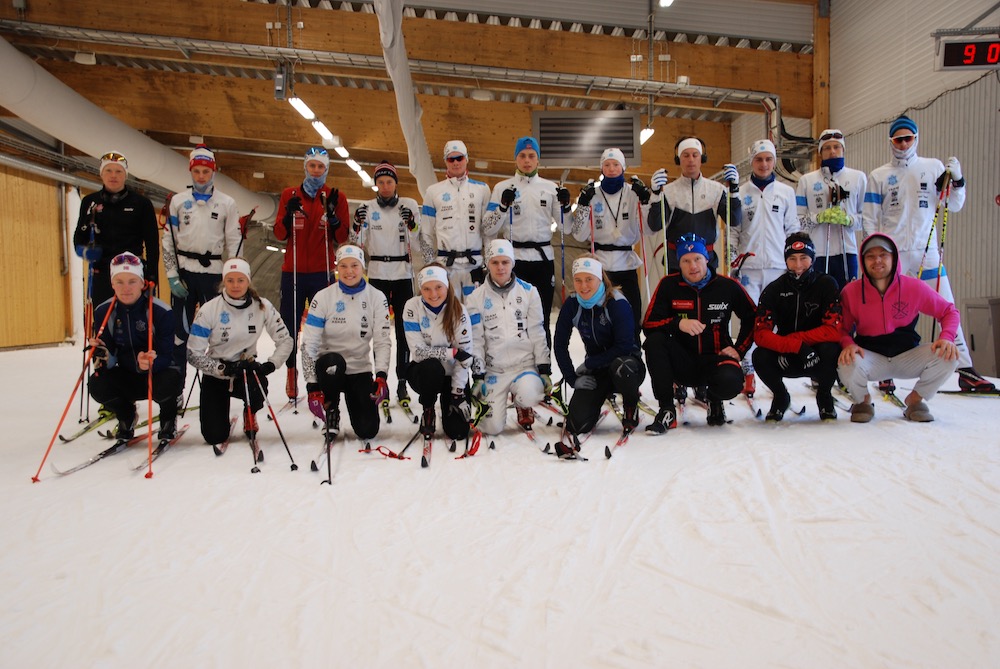
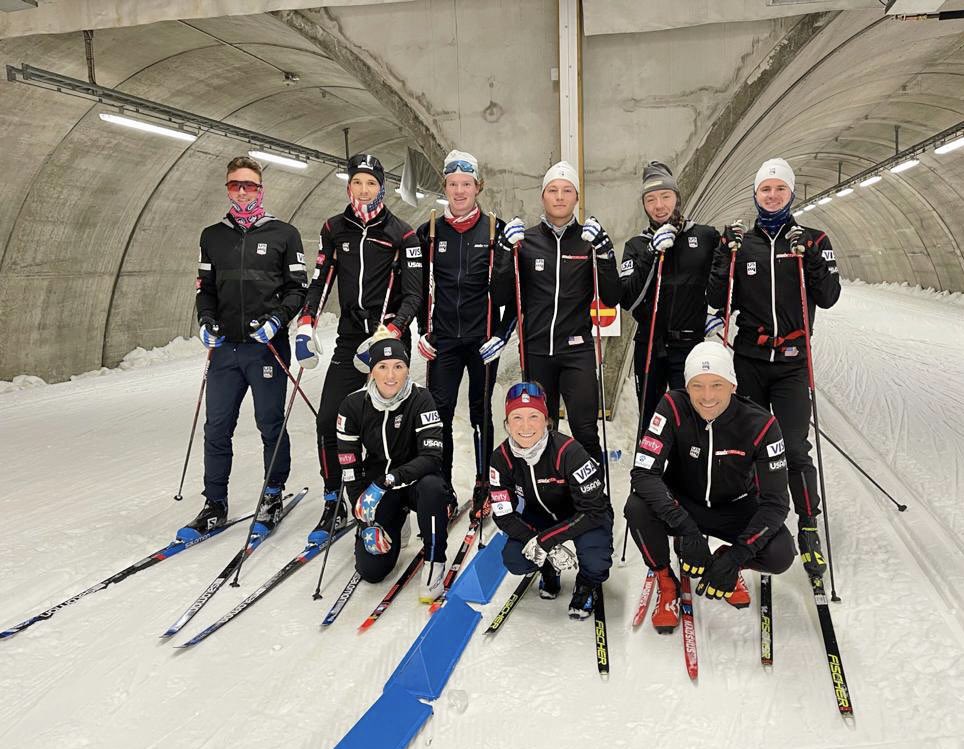
    USST athletes and coaches in the Torsby Ski Tunnel, August 2022. Back row, from left: athletes Johnny Hagenbuch, Kevin Bolger, Finn O’Connell, JC Schoonmaker, Ben Ogden, and Walker Hall. Kneeling, from left: coaches Greta Anderson, Kristen Bourne, and Matt Whitcomb. (photo: François Faivre)

    If it’s August, it must be time to ski.

    Head Coach Matt Whitcomb and roughly half the men on the U.S. Ski Team, accompanied by a couple of well-known distaff guests, have spent the last week on snow in the Torsby Ski Tunnel in southwest Sweden. They raced in the nearby Inge Bråten Memorial rollerski race earlier today, and will compete in the Toppidrettsveka rollerski series in Norway starting on Thursday. It’s a multi-stage Scandinavian adventure to help prepare for next year’s race season.

    American World Cup skiers have pursued a variety of options for summer snow over the years, depending on budget, logistics, travel time, and team size. The Alaskans historically gravitate to Eagle Glacier, spending three one-week camps on snow in the Chugach Mountains between June and August. Athletes from the rest of the country have traveled to one or more of the Snow Farm (New Zealand), Falls Creek (Australia), Sognefjellet (Norway), Dachstein Glacier (Austria), Passo dello Stelvio (Italy), Oberhof ski tunnel (Germany), Torsby ski tunnel (Sweden), or Planica ski tunnel (Slovenia), typically toward the end of the northern-hemisphere summer.

    (Elsewhere this summer, Jessie Diggins and Julia Kern are currently midway through a three-week stay in Falls Creek, while several other SMS women are in Oberhof. The Alaskans are generally staying put, hoping for groomed trails at Hatcher Pass in as little as seven weeks from now.)
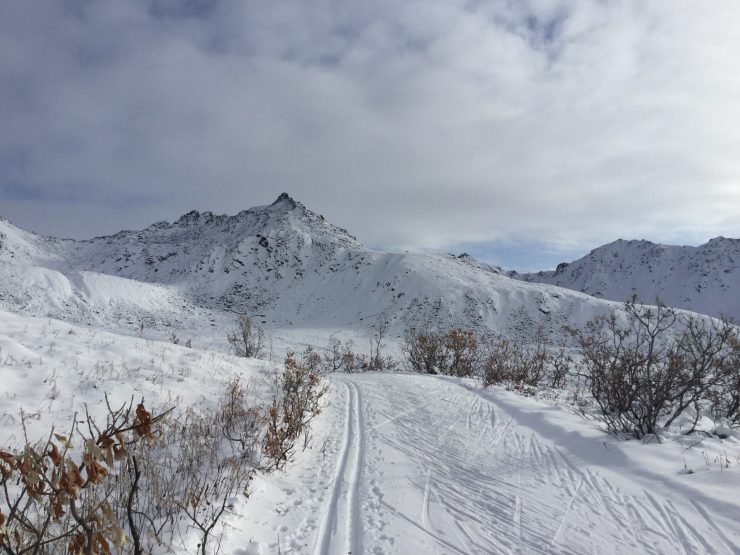
    Early-season skiing at Hatcher Pass, October 6, 2019. (photo: Gavin Kentch)

    This year, for Whitcomb and six national-team men, the answer is Torsby. Whitcomb flew across the Atlantic on August 12, joined by athletes Johnny Hagenbuch, Kevin Bolger, Finn O’Connell, JC Schoonmaker, Ben Ogden, and Walker Hall, as well as USST coaches Greta Anderson and Kristen Bourne. Their two-week trip includes a week-plus on snow in Torsby, a rollerski race in nearby Sunne, and rollerski races in the Trondheim region.

    This year’s trip roster has “just six men,” Whitcomb said in a phone call while driving to the airport last Friday.
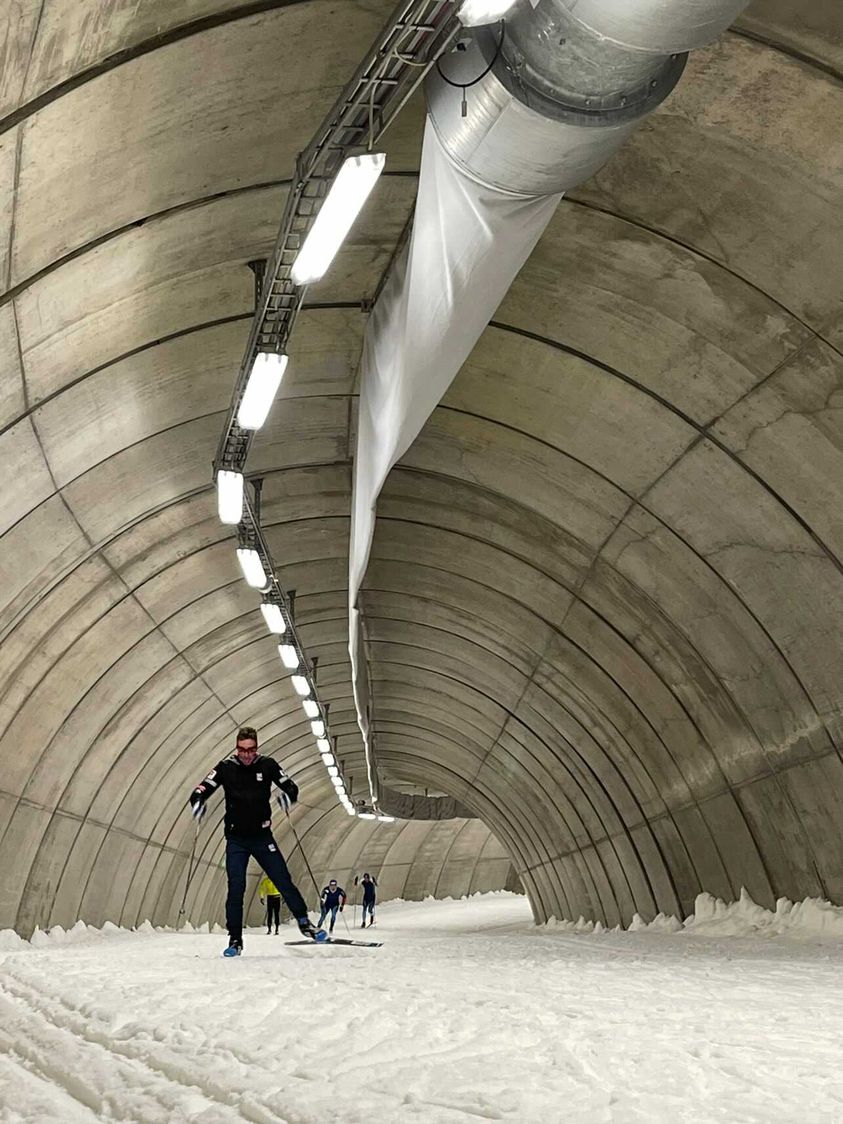
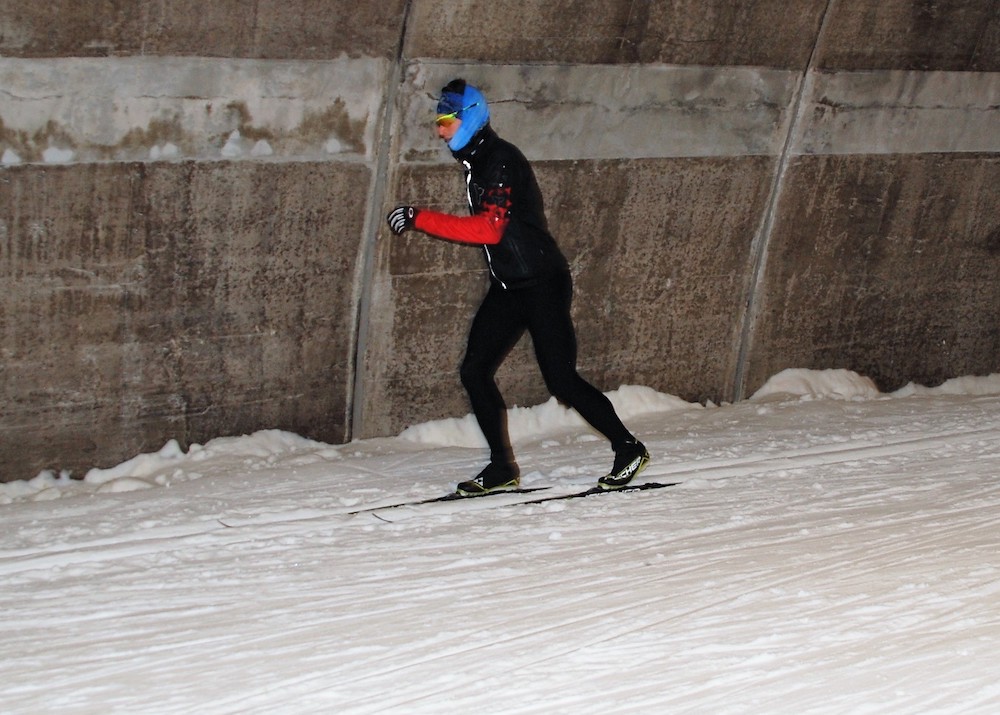
    Johnny Hagenbuch, Torsby Ski Tunnel, August 2022. (photo: Greta Anderson)

    “We’ve been whittled down after Covid,” he said, which among public names claimed Sophia Laukli after her recent brace of wins in the Stranda Fjord trail race and Lysebotn Opp rollerski race. That said, the American men were joined by well-known Swedish guests Maja Dahlqvist and Frida Karlsson, as well as much of the German team. (Dahlqvist and Bolger are dating.)

    So why Torsby? In part because it presents a strong training option on the merits, in part because of money.

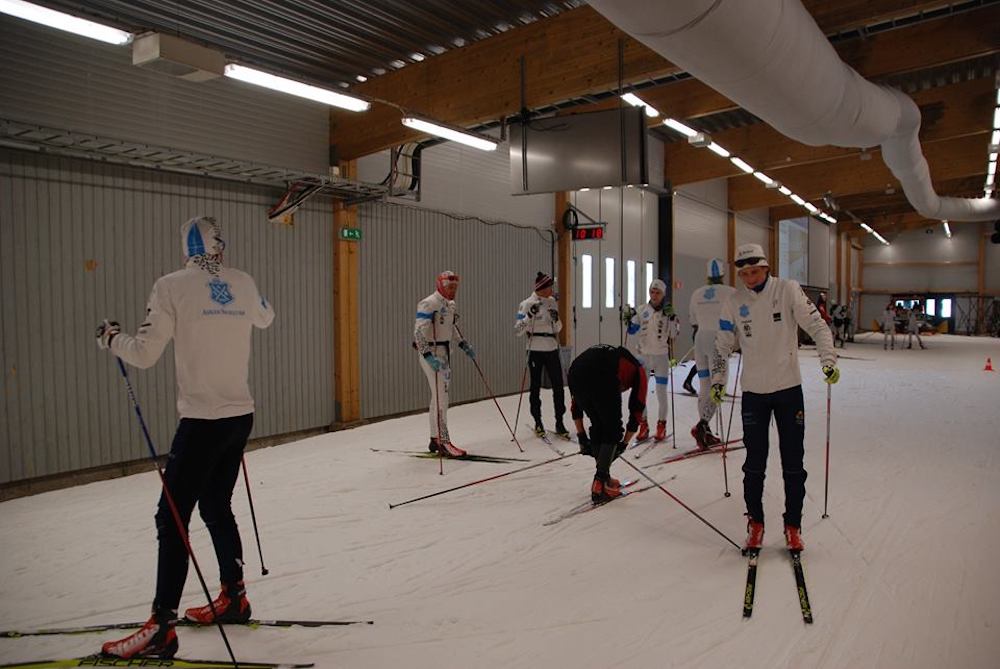
    As for the training facility, it’s not just the ski tunnel. In addition to the roughly two-kilometer-long ski track inside a refrigerated tunnel, the area also contains “a rollerskiing track, biathlon stadium (outside and in the tunnel), extensive running trails through the surrounding hills and forests, and a fully equipped gym attached to the tunnel,” as Norway-based Canadian athlete Maks Zechel wrote on this site in 2017.

    And as for money, Torsby is closer and cheaper than the southern hemisphere. “We weren’t able to fit it into the budget to have a bunch of people go down to New Zealand or Australia, and the Eagle Glacier facility is closed still,” Whitcomb said. “So we wanted to have an option for those that were maybe already on the East Coast or willing to travel. So we’re pretty excited.”
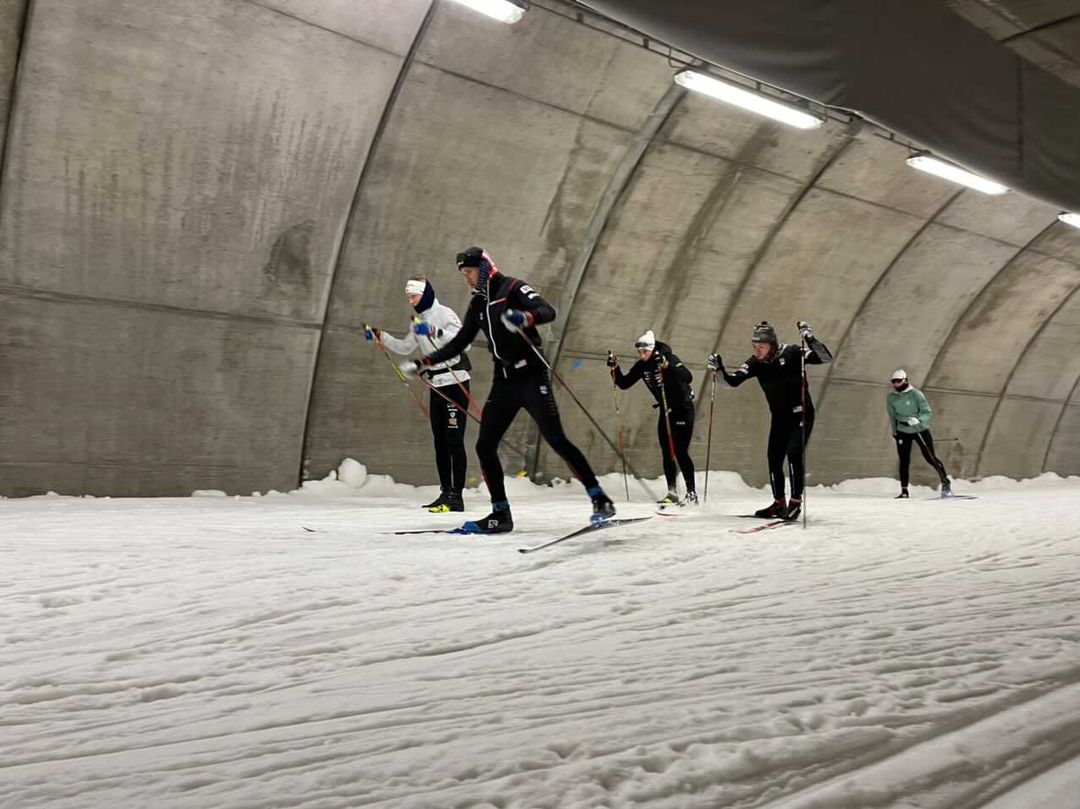
    Kevin Bolger leads Ben Ogden, Torsby Ski Tunnel, August 2022. (photo: Greta Anderson)

    “It’s been about 10 years since I’ve been to Torsby,” Whitcomb continued. “We brought the women’s team there in 2012 in a joint camp with the Swedes.”

    Whitcomb also noted the relative ease of travel within Scandinavia: “In terms of itinerary, it’s a two-hour drive from Oslo [to Torsby]. When we get back to Oslo on the 21st to fly to Trondheim, that’s a 55-minute flight in the middle of the day, so it’s all fairly simple travel once we’re over there. It’s like traveling around New England.”

    Another thing in common with New England: klister-cover skiing. Whitcomb described the snow inside the tunnel as manmade – snow guns are visible near the entrance – but as infrequently refreshed. “And so depending on when you’re there, it can be varying degrees of aged snow, but it tends to be fairly stable,” he said. “A variety of classic skis will work, and a variety of waxes will work. Generally a bit of a violet or some sort of 45 base covered tends to work, and some sort of medium grind.”
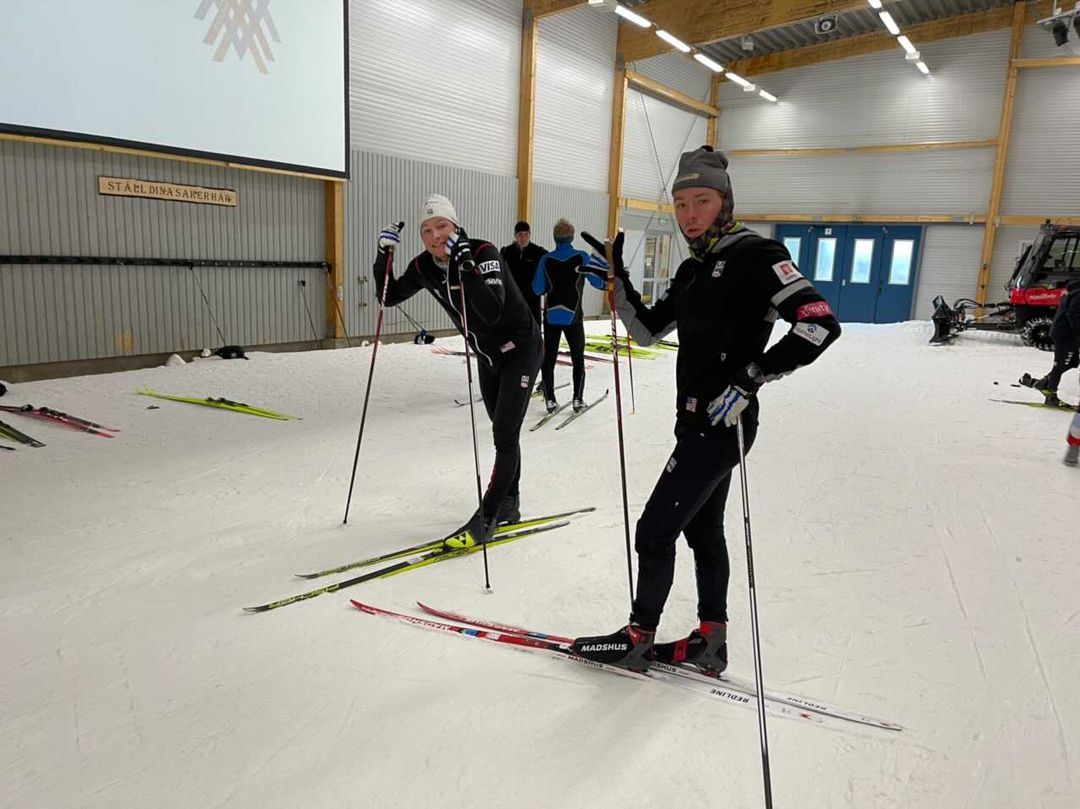
    JC Schoonmaker, left, and Ben Ogden near the entrance of the Torsby Ski Tunnel, August 2022. (photo: Greta Anderson)

    The tunnel is a valuable resource, but its terrain is “by no means ideal” as a direct replica of a World Cup course, Whitcomb acknowledged. The tunnel has two hills per lap, Zechel wrote, “which are steeper in one direction and more gradual in the other, making for a great place to work on striding. Most senior men would one-skate the hills at race pace, but they are still steep enough for offset technique work at lower speeds.”

    But what does the tunnel have? Snow. Which is, to state the obvious, “a slippery surface,” per Whitcomb. This is specifically opposed to the “surefire kick” of the rollerskis that are most athletes’ go-to summer training modality.

    Conditions in the tunnel can sometimes be “mealy,” Whitcomb observes, “even if you’re skating. It requires you to not just set the ski down, but to be able to ride it and negotiate the unpredictable nature of snow. Having a dose of that in the middle of summer has always been, we feel, a beneficial addition to the overall [training] plan.”

    Whitcomb drills down on these dynamics when asked about the specific appeal of estival snow, especially what he’s learned over the last two years following no time on snow in summer 2020. Here’s his answer, quoted in full because it’s intriguing:

    “One of the things that I have come to believe more and more over the last several years is that all great technique starts with the ability to use our feet well. You have to be able to stand well in your boots. Your boots have to be really comfortable, and that might mean you have to have insoles, or maybe it doesn’t; it might mean you have to have custom boots, maybe it doesn’t.

    “And then you have to have a ski that you’re comfortable standing on. And all of that has to do with how comfortable you are with standing on a slippery surface below all of that. It’s like this four-layer deal where you have the body, the boot, the ski, and then the snow. And for anyone that has a hard time being stable on their feet, it’s going to be very difficult to ski well in the rest of the body. And so I think snow definitely allows us to focus by simply dropping our poles and learning to use the feet, just skiing easy for 20 or 30 minutes every session without poles, skating or classic.

    “Because for those of us that don’t naturally use our feet well we often tend to use our poles as crutches, and it sort of masks the stiffnesses and the instabilities that we all have, myself included. But you take those poles away and you’re exposed to nothing but your balance, your ability to gain traction by kicking properly. And so that’s something that snow can do for you.”

    *   *   *

    The plan was to spend 20–25 hours on snow in the tunnel this past week, with secondary workouts on hillier outdoor terrain when necessary. Intensity in the tunnel was focused on speed; “we want to be a little bit mindful of breathing too hard,” Whitcomb noted.

    He explained, “The Swedes are often talking about the challenges of coming from outdoor temperatures into the tunnel, which is quite humid – or at least cold, I don’t know if it’s humid – but they feel like it can irritate the lungs. So any intensity that we’ll do in the tunnel will be more along the lines of controlled threshold, and we’ll be masked up for those that have sensitive airways.”

    After all that work on snow, it was time to race. The men competed in the Inge Bråten Memorial sprint race in Sunne earlier today, with Ogden and Schoonmaker taking 4th and 6th in the final, respectively, in a stacked field.

    (Whitcomb calls Bråten, who died in 2012 at age 63, “an old friend of the team, somebody I knew.” A full article on the rollerski races is forthcoming on FasterSkier later this week, but you can find results from Sunne here now, and results from Toppidrettsveka here starting on August 25.)
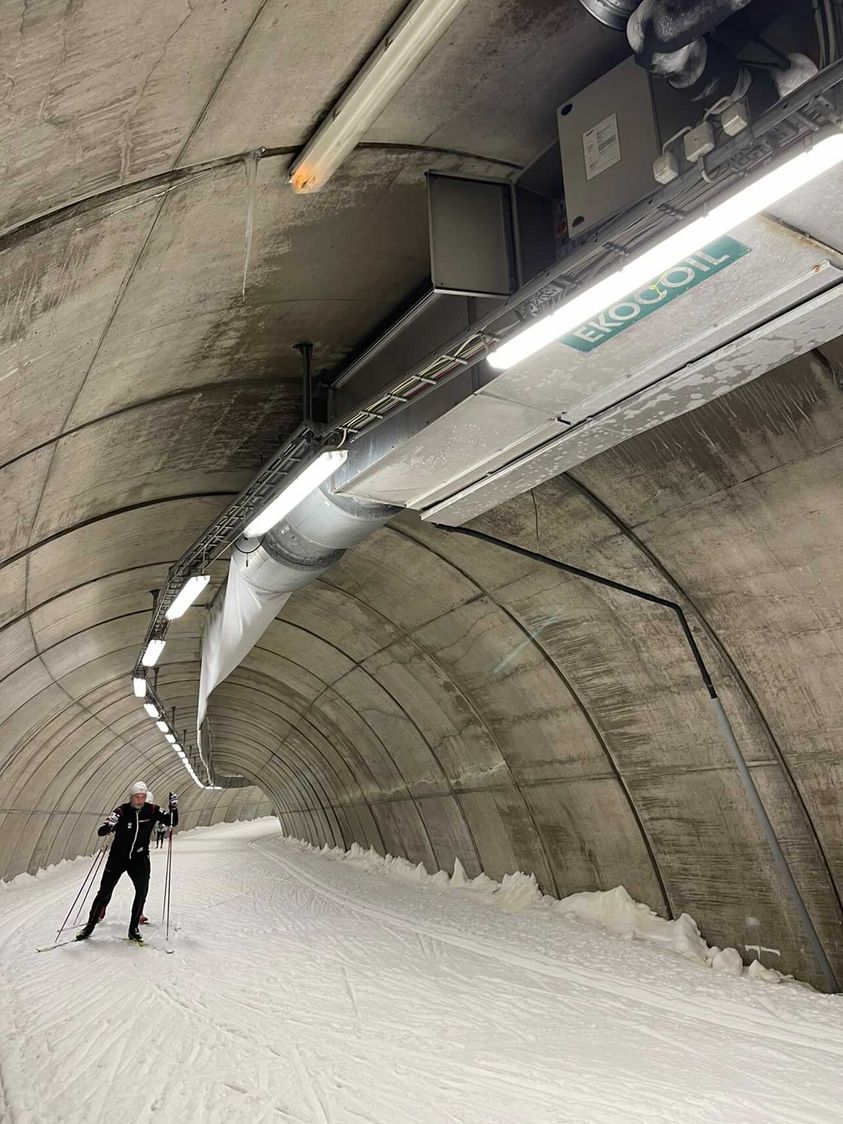
    JC Schoonmaker, Torsby Ski Tunnel, August 2022. (photo: Greta Anderson)

    Tomorrow the team flies from Oslo to Trondheim, where “we’ll live out near Aure on an oil facility,” Whitcomb notes. “And we’ll train there and sort of prepare for Toppidrettsveka, which is a four-stage event over three days. And then we’ll fly home on that Sunday,” August 28.

    The men will have logged 20+ hours of on-snow time at almost precisely the midpoint between Bend Camp (late May) and the start of the World Cup season (late November). They will have explored the difference between rollerski kick and setting the wax on slippery surfaces. And they will have gotten to engage in high-level rollerski races with other top athletes. They’re all small pieces of the puzzle as the athletes build toward the season-opening races three months from now, be that in Ruka or closer to home.

    Related reading:

    A summer without snow: Athletes and coaches on a year with no summer skiing (October 2020)

    Closing the gap: Summer skiing (August 2017)

    Pro Workout: Ski Tunnel race prep time trial with Noah Hoffman (November 2011)
  • Closing the Gap: Lessons in Risk Taking and VO2 ‘Maks’ Testing

    Closing the Gap: Lessons in Risk Taking and VO2 ‘Maks’ Testing

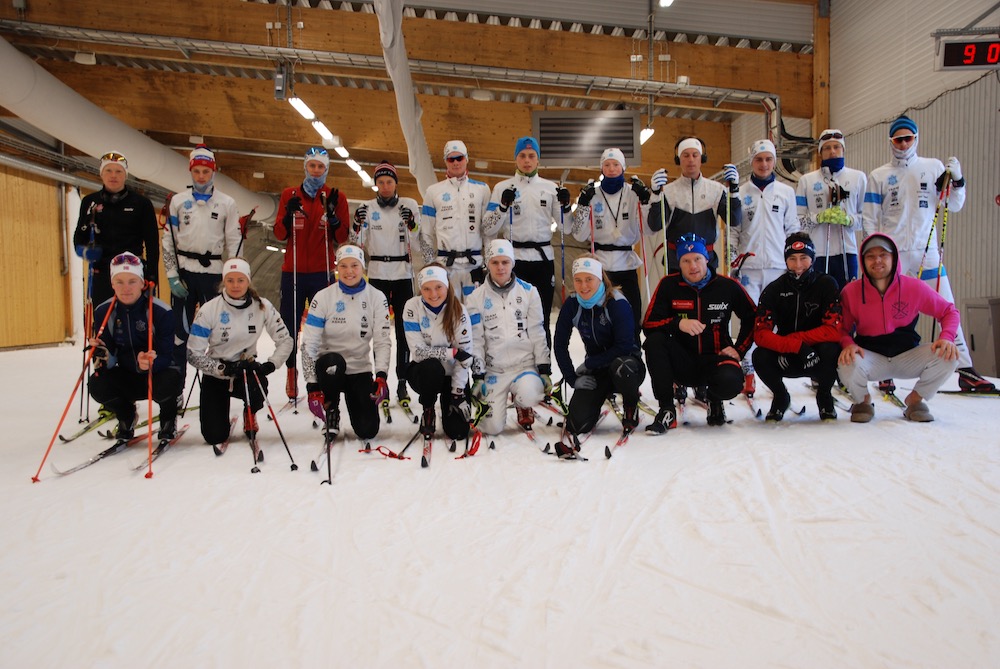
    Team Asker gets together for a group shot in the ski tunnel in Torsby, Sweden. (Photo: Johanna Lier)

    Editor’s Note: The following is the fourth post in a series proposed by Maks Zechel, a 20-year-old Canadian cross-country skier embarking on his first season training abroad. He recently made the big move to Norway, where he’ll be training and racing with Team Asker for the next nine months. Through these updates, Maks hopes to share his personal “observations, stories, and lessons learned” to help close the gap between North American and Scandinavian nordic skiing. Previous posts: #1, #2, #3, and #4.

    ***

    I never thought that on my 20th birthday I would be shivering at the top of a ski resort, a thick fog obscuring the spectacular view of Oslo, listening to 30+ Norwegians sing the Norwegian birthday song for me. But I guess turning 20 was bound to be different!

    “No more excuses,” was my first thought. Gone is the security of being a teenager. Rather than impressing people with maturity, it now feels like it is expected. I think it’s a good thing, but it doesn’t make being an adult any easier. My trip to Norway has been full of moments when I suddenly realized, “Oh, I guess I’ll just have to figure this out on my own.” My parents are no longer always present to make introductions, so now it is up to me to advocate for myself. Risks taken as an adolescent do not come with the expectation to produce results. “I’m impressed,” people say, and they applaud you just for trying. But adults are expected to see things through to completion.

    Team Asker group core session after a ski in the tunnel in Torsby, Sweden. (Photo: Johanna Lier)

    Back on a cold, foggy Norwegian ski slope at the end of August, my teammates and I were about to tackle 6 x 6 minute Zone 4 bounding intervals. In Norway, bounding with poles is called elghufs, or “moose-hooves”. I had never done a bounding workout of this duration and intensity. Despite this, I decided to take a risk and stick with the best runner on the team, who was two and a half minutes faster than me on our last uphill running test. I stuck with him from the first interval, and stayed with him as he threw in big surges on the plateaus between climbs. He added these surges because he is trying to get better at working the flat sections of ski races in the winter, which happens to be one of my goals as well. We did the whole workout together, and I stayed with him until he got away on a downhill and a steep climb at the end. I took a risk in a workout, not caring if I blew up halfway through, and it allowed me to train at a higher intensity than I would have thought possible.

    Earlier this summer I listened to a “TED Talk” by Eduardo Briceño on “the learning zone and the performance zone”. At first it didn’t seem like a life-changing lesson, but since I arrived in Norway, his ideas have led me to think differently about my actions, and in particular, my training. Briceño discusses how people, from office workers to athletes, fail to improve at what they do, whether it is a hobby or a job, because they do not give themselves the opportunity to take risks, make mistakes and learn. In our society, the “performance zone” is the default; this is where we only do the things we are comfortable with, because we want things to be perfect, because that is how we envision our end goals to turn out. Briceño argues that we should encourage employees, athletes, and ourselves, to spend more time in the “learning zone,” where we break our ideal performance into the things we need to work on to get there. It is only here that we get better, because it is here that we allow ourselves to try things that we would otherwise never attempt for fear of failure. In the learning zone, risk and creativity produce the most astounding results. Having reached higher comfort levels, it is possible for someone to apply their repeated failures and lessons-learned to a better end result.

    Author Maks Zechel doing pull ups: “the most popular Norwegian strength exercise.” (Photo: Johanna Lier)

    A few days after “birthday elghufs”, Briceño’s ideas come back to me as I am training in the ski tunnel in Torsby, Sweden. I am back here for a long-weekend training camp with Team Asker. In the tunnel I confront a skiing related fear of mine, developed over a few years of poor performances in classic races. I dread the feeling of my grip giving way while striding up a hill. I am determined to become a better classic skier, the technique I was strongest in when I was younger, so I work hard at anything that I believe will make me a better classic skier: bounding intervals, core, double poling, hours of video technique work, and skiing without poles. If I can ski up a hill legs-only, then surely I can do it with poles in a race, right? Whenever I am on skis, I challenge myself to stride up the steepest hills without poles, but it becomes a challenge that I must perform to perfection, otherwise in my mind I have failed as a classic skier. The pressure that I put on myself leads me to shuffle stiffly and tentatively up hills, not allowing myself any room for error. The result is a poor imitation of the principles of classic skiing, lacking any weight shift, pop in the ball of my foot, or ankle compression. Sure, I made it to the top of the hill, but I didn’t summit the mountain.

    On our first morning in Torsby we have a distance classic ski in the tunnel. Rather than skiing slowly around the tunnel for a couple of hours, our coach has added some variety to our workout: one lap legs-only, one lap thinking about good striding on the hills (not thinking about heart rate), and one lap with a short “race pace” acceleration. The variety in this workout is important in early season skiing so that we can take advantage of our short time on snow to train our muscle memory to ski properly, getting rid of lazy habits developed while rollerskiing.

    Maks Zechel working on legs-only in the ski tunnel in Torsby, Sweden. (Photo: Johanna Lier)

    On my legs-only loops, I decide to take a risk. Instead of pressuring myself to make it up the entire hill, I ski as dynamically as I can, focusing on full commitment to each ski and compressing the wax pocket as if I had perfect grip. Although frustrating, I know that it is better for my development to ski properly up half the hill, than to shuffle up the entire thing. A few times I am rewarded with making it to the top, and other times I almost face plant spectacularly in front of the Norwegian junior national team coach.

    The risk of embarrassment is one that I am willing to take. I made a decision to escape my comfort zone when I left Canada, leaving behind family, friends, and a team that I have trained with for nine years. I left behind the chance at another year of racing on the NorAm circuit and seeing marginal, or perhaps substantial, improvements up the results board. I was sick of feeling like there was an order to things. If I beat a friend of mine during a race, that meant that I had had a good day, but if someone finished ahead of me who I was supposed to beat, then the day was unsuccessful. To me, this type of racing environment was toxic, as I struggled through a season of failed expectations. I am fortunate to have had the means to come to Norway, where simple training aspects, things that had lost their magic over the years, are now bringing back the same giddy excitement that skiing originally gave me. I am in a place filled with potential opportunities, but now I need to have the guts to seize them.

    Team Asker reparing for an intensity workout in the ski tunnel in Torsby, Sweden. (Photo: Johanna Lier)

    While training in Torsby, we were lucky enough to be there at the same time as the Norwegian junior national team and national recruit team (a step below the national senior team), as well as Anders Gløersen, Charlotte Kalla, Stina Nilsson, and Hanna Falk. I watched some of the members of the recruit team doing offset sprints, and it was the fastest I have ever seen someone sprint on skis in real life. Rather than being intimidated, I felt almost relieved to watch some of my idols skiing this fast. The mystery was gone; this is how fast you have to ski to be great, as simple as that, and now I could spend the entire weekend shadowing some of the best skiers in the world.

    On our first day in Torsby I had the opportunity to do two things for the first time in my life: rollerski on a treadmill and take a VO2 max test (maximum rate of oxygen consumption). Naturally, because of my name, I prefer to say it in Norwegian: VO2 maks.

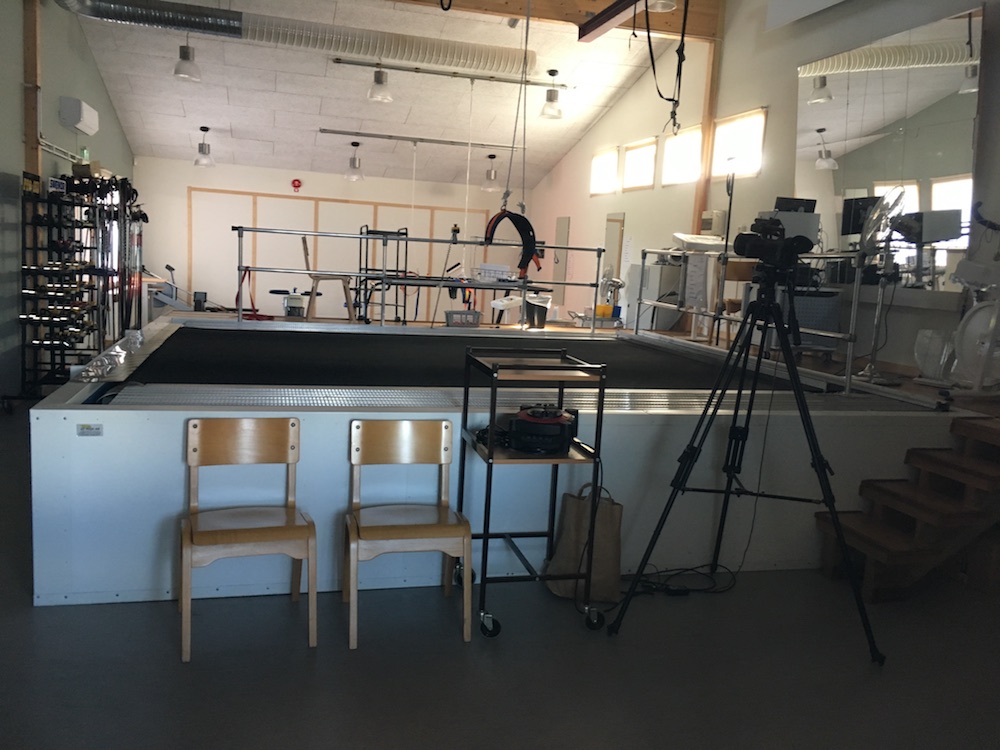
    After an initial stumble on the treadmill, I found it quite easy to classic rollerski on. Before the test started I warmed up on a few different gradients and speeds, unable to stop smiling at myself in the large mirror in front of me. Here I was, rollerskiing in the same laboratory that has tested countless World Cup skiers! The test began at a gradient of 10 percent and speed of 10 kilometers per hour, with the gradient increasing every minute until it reached 18 percent. This felt remarkably steep. From then on the gradient remained the same, but every 30 seconds the speed increased.

    The rollerski treadmill/testing lab in Torsby, Sweden. (Photo: Maks Zechel)

    During testing there is a harness around your waist so that you don’t fall off the treadmill, a heart rate monitor around your chest, and a mask strapped to your head to measure oxygen consumption. It’s a lot of gear hanging from your body, and your head has to remain relatively steady, but once the test started I found that the pain was an adequate distraction from all of this. Unfortunately, during my test a strap on my mask came undone and the mask fell off while I still had something left to give, so I was robbed of the chance to ski until collapsing (the skier’s dream). My VO2 max result was 74.5 ml/kg. Last year Harald Amundsen, the top skier on the team, reached a VO2 max of 85 ml/kg as an 18 year old (an exceptional result).

    Being in a new place, with a new team, and in close proximity to many of the world’s best skiers, there is a lot to take in. It is important for me to absorb as much as I can during my time here, but it is also important to stay consistent with things that I have been working on before I got here. If I jumped to apply every newly learned training philosophy to my training, I would be all over the place and have no chance to improve. I am allowing myself to take risks and make mistakes while staying true to some of the basics that got me to where I am. In the midst of so many talented and competitive skiers, I am trying to create a learning space for myself, devoid of expectations, so that I can learn without restrictions. When winter finally comes, I hope that I can translate my learning to some fast performances on skis. I have had a lot of practice translating after all…

    Norwegian Phrase of the Week

    Norwegian: Kan jeg få skyss?

    Translation: Can I have a ride?

    Norwegian: Kan jeg få et kyss?

    Translation: Can I have a kiss?

    *An important distinction that could add an unexpected twist to your ride to practice, as skyss and kyss sound almost exactly the same.*

    ***

    About Maks: Maks Zechel is a competitive cross-country skier who secretly wants to become a professional mile runner. He loves hiking and going on canoe trips with his family, as well as peanut butter cups in ice cream. Johan Olsson is his favourite skier and he hopes to race the Cortina-Toblach stage of the Tour de Ski one day. He enjoys writing about his experiences. Follow him on Instagram @makszechel.

  • Closing the Gap: Summer Skiing

    Closing the Gap: Summer Skiing

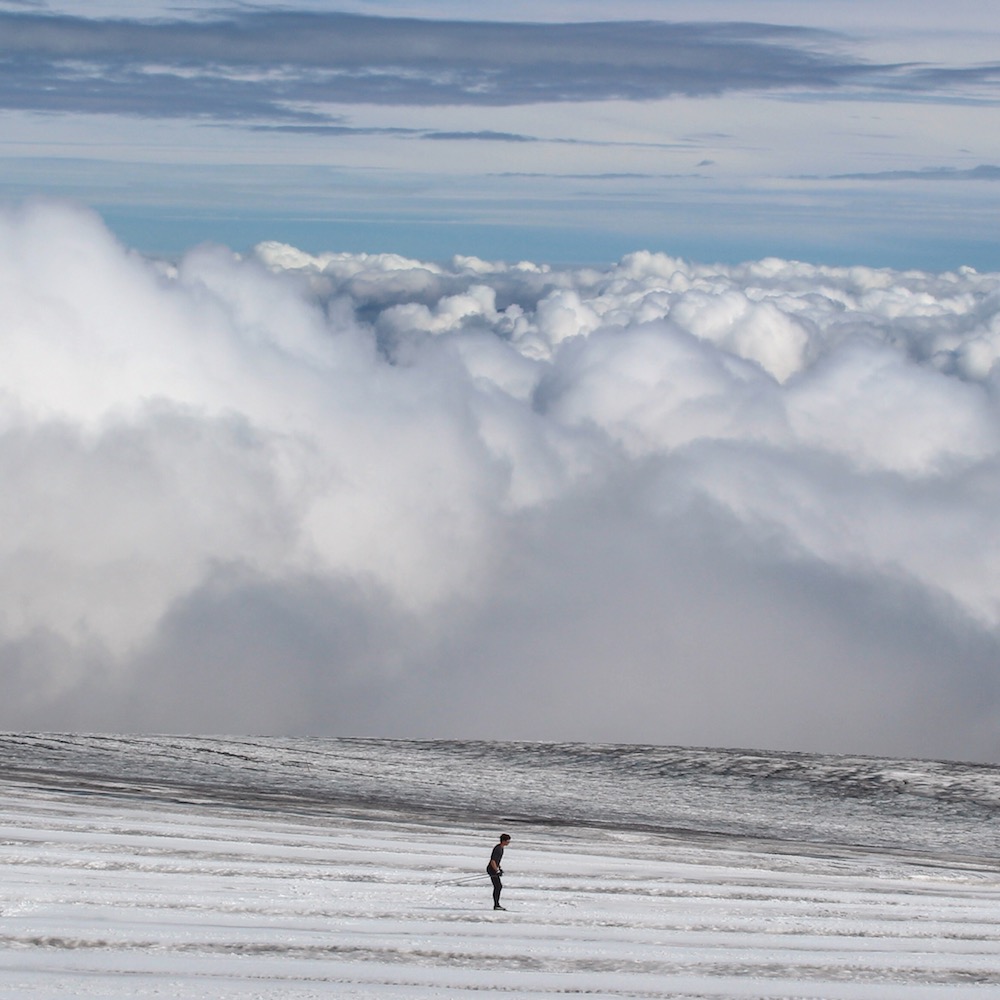
    August skiing on the Dachstein Glacier in Austria as seen in 2015. (Photo: Claire Grall)

    Editor’s Note: The following is the third post of a series proposed by Maks Zechel, a 19-year-old Canadian cross-country skier embarking on his first season training abroad. He recently made the big move to Norway, where he’ll be training and racing with Team Asker for the next nine months. Through these updates, Maks hopes to share his personal “observations, stories, and lessons learned” to help close the gap between North American and Scandinavian nordic skiing. Read Post #1 and Post #2.

    ***

    Arrival.

    My landlord greets me warmly at the bottom of the driveway as soon as I step out of the taxi. In his mid-70s, he doesn’t even give me a chance to protest as he quickly scoops up my heavy ski bag and staggers up the steps leading to the house. He’s fit, and in the coming days I see that he goes running, kayaking or rollerskiing every day, while his wife goes swimming. After unpacking my things I am treated to an evening meal that includes brunost (Norwegian “brown cheese”, it’s soft and sweet) and smoked salmon. Later I am shown where to put my bike in the shed. Wooden skis hang in the rafters, the same ones he used to compete in the Holmenkollen 50-kilometer race in the 1970s (this was before it was a designated World Cup, but it was still a prestigious event). It’s like finding a pair of skates in my grandfather’s attic, and discovering that he played in the NHL with them. Welcome to the home of cross-country skiing.

    And what is more Norwegian than skiing in the summer? My arrival in Norway coincided with the time that most Norwegians go on holiday. Team practices were suspended for a couple of weeks so I decided to take a trip of my own to nearby Torsby, Sweden. This is a small town that is known to skiers around the world for its partially underground ski tunnel. A few other well known ski tunnels designated for cross country skiing, are: Oberhof (Germany), Toksovo (Russia), and Vuokatti (Finland).

    Time spent on snow becomes crucial to a skier’s success as they enter the junior and senior level, and skiing in the summer grows in importance. Summer is an expensive time to get on snow for many, but it is extremely valuable. Skiing in the summer allows athletes to put in big hours of volume and quality intensity workouts that are harder to fit in closer to the race season. It is easy for skiers to get excited in the fall and early winter as we finally get on snow.

    As the race season draws closer, it is common for skiers to frantically put in huge volume and many hard workouts in the short periods that they are able to ski. It is frustrating when fall arrives and you go from great summer fitness, to suddenly feeling that your dryland training is not directly translating to good technique and shape on skis. Nevertheless, trying to fix all of this too quickly before the first races in December can ruin your entire race season if you burn yourself out. One solution is shifting some of that on-snow work to the summer, when it is easier to absorb a lot of training with the absence of school and races and the presence of sunshine and Vitamin D.

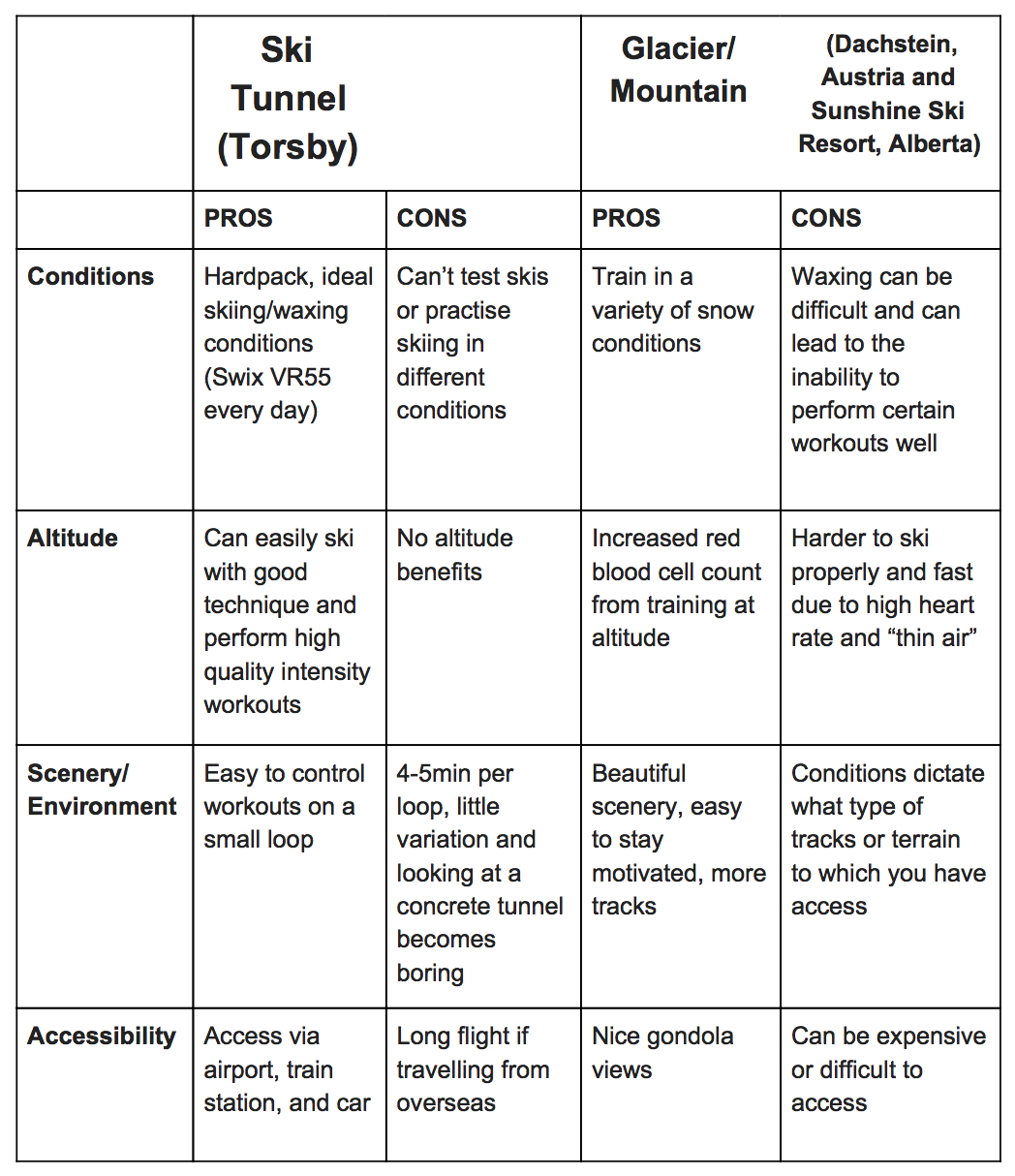
    I have had three different summer skiing opportunities over the last three years, and I have compared my experiences for your benefit:

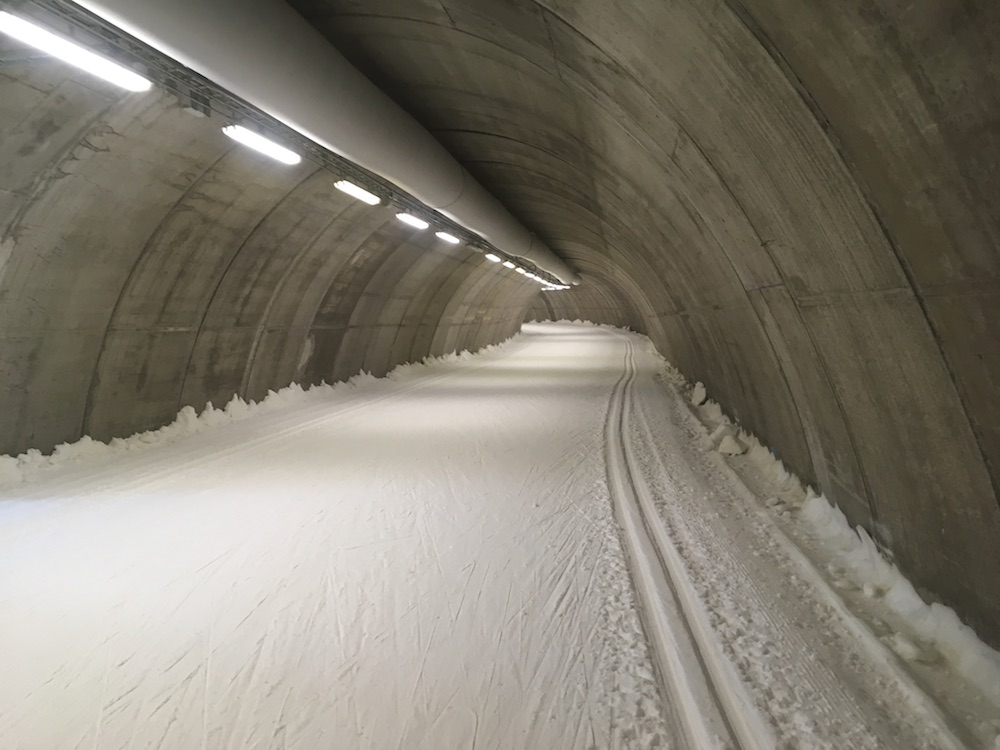
    The ski tunnel in Torsby is easy to access and great for a short or long stay due to the excellent training variability. Besides the tunnel, this includes a rollerskiing track, biathlon stadium (outside and in the tunnel), extensive running trails through the surrounding hills and forests, and a fully equipped gym attached to the tunnel.

    Inside Sweden’s Torsby ski tunnel. (Photo: Maks Zechel)

    The ski tunnel is one loop with a wide “stadium” area at the start. The entire loop is a concrete tunnel and the temperature is kept around -5 degrees Celsius (23˚F). The loop has two hills per lap, which are steeper in one direction and more gradual in the other, making for a great place to work on striding. Most senior men would one-skate the hills at race pace, but they are still steep enough for offset technique work at lower speeds. I was thrilled to be on snow for my first few fiveminute laps, but after approximately 150 laps in three days, it became less exciting. The “eurobeats” playing in the tunnel were entertaining at the start, but one can only listen to “Despacito” so many times…

    While in Torsby, I stayed in a room at the Valbergsängen Sporthotell (a six-minute walk from the tunnel). Valbergsängen offers the option of staying in a hostel for a reduced rate where you are given your own room in a house with a bathroom and kitchen that are shared with other guests, or you can stay in a hotel room where you have more privacy and breakfast is included. You can even choose between the two if your Swedish is good enough. Unfortunately I missed this expensive difference, and without a kitchen, ended up making creative “meals” on my desk out of tuna, cheese, beans, peanut butter, and an assortment of bread and vegetables.

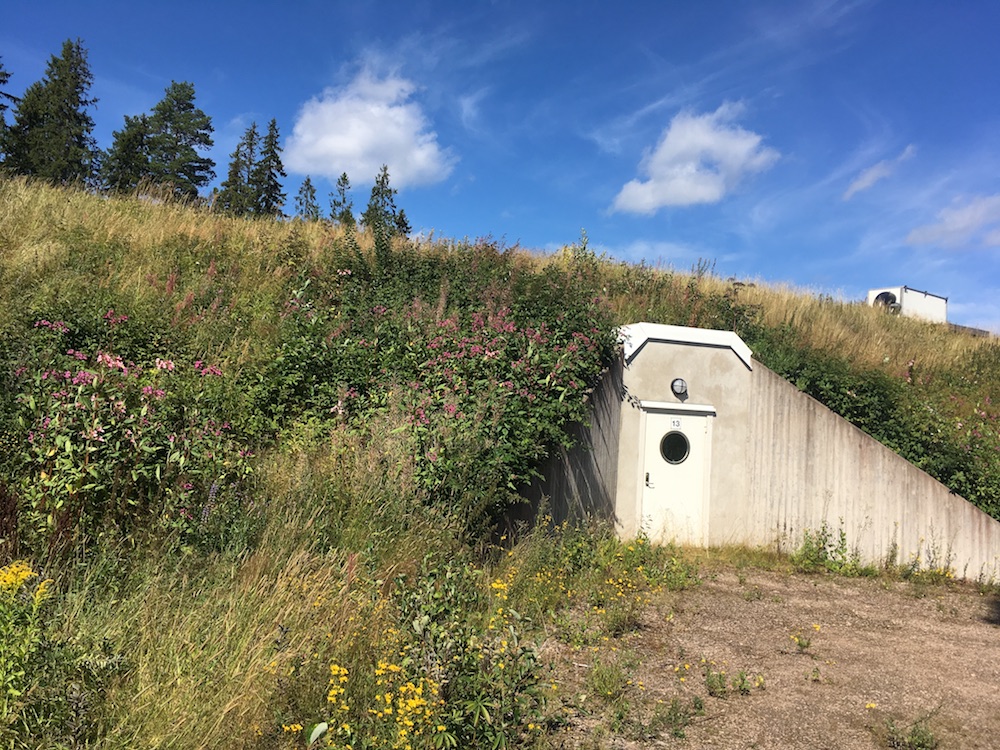
    Outside the Torsby ski tunnel. (Photo: Maks Zechel)

    I returned from Torsby, after twelve hours spent skiing loops in a “bunker”, to discover that I had a new roommate. I was sitting on my couch working on a blog post when I heard a noise that only your average-sized mouse should make when hitting the floor. I looked up and, with a jolt, realized I was looking at a spider almost the size of my hand scuttling towards my fridge. In that moment, I decided two things: one, I did not want a roommate, and two, this spider was too big to tackle with a tissue. I jumped up and grabbed my broom handle from the corner (coincidentally this broom handle doesn’t have a broom on the end of it, something that will likely be an issue at some point in my stay here). When I looked up, he was gone (I say “he”, because I am praying it is not a female about to start a family in my apartment). I slept restlessly that night. A week later, after discovering that this is a common Norwegian house spider, I am now in the acceptance stage, and I hope that the two of us can coexist peacefully for the next nine months. If not, one of us will have to leave….

    Norwegian Phrase of the Week

    Norske: Jeg sølte en stor beholder med yoghurt i melkegangen. Jeg beklager så mye.

    English: I spilled a large container of yogurt in the dairy aisle. I’m so sorry.*

    (*True story of my first few hours in Norway, unfortunately.)

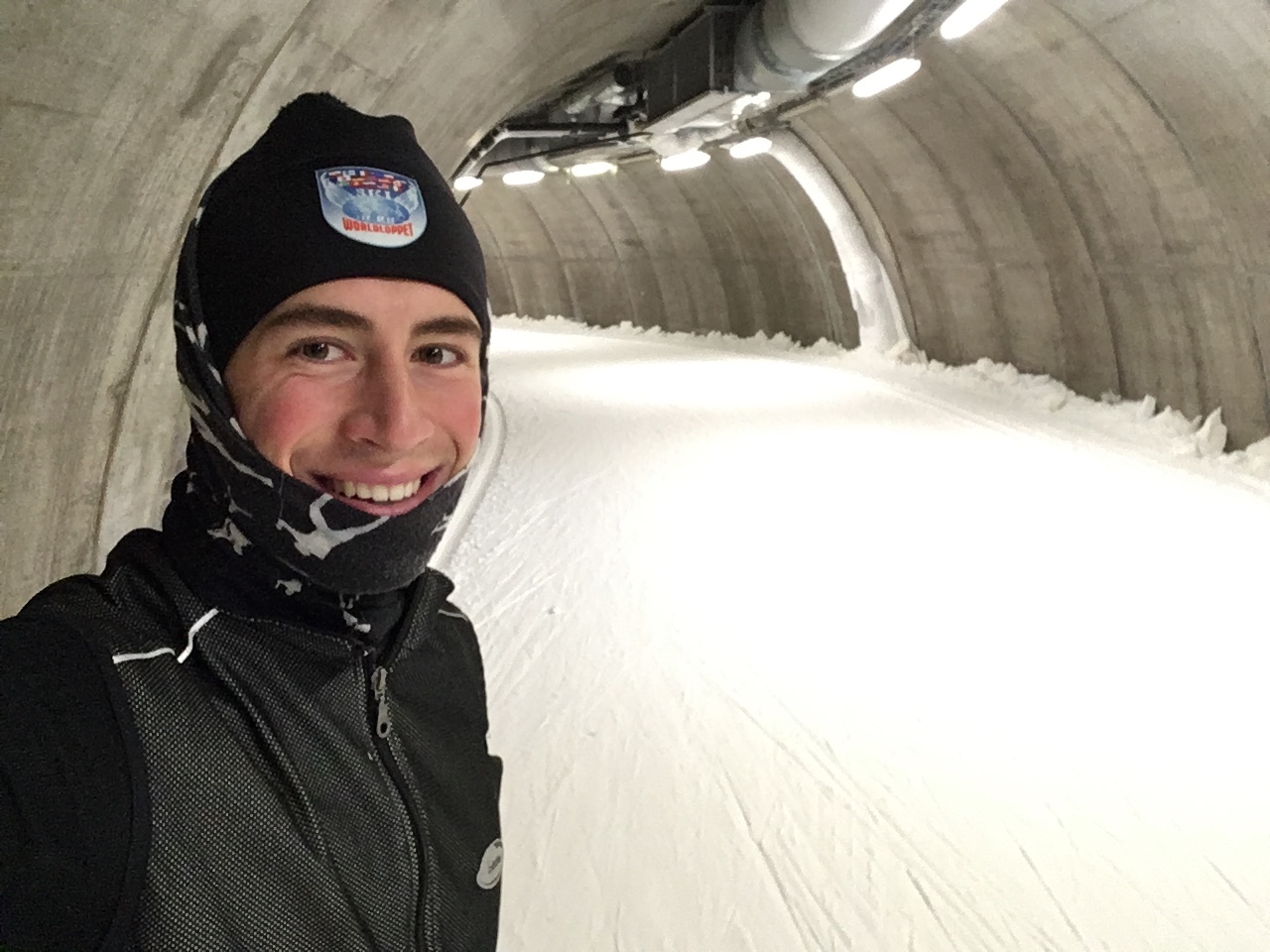
    Maks Zechel in the ski tunnel in Torsby, Sweden. (Courtesy photo)

    About Maks: Maks Zechel is a competitive cross-country skier who secretly wants to become a professional mile runner. He loves hiking and going on canoe trips with his family, as well as peanut butter cups in ice cream. Johan Olsson is his favourite skier and he hopes to race the Cortina-Toblach stage of the Tour de Ski one day. He enjoys writing about his experiences. Follow him on Instagram @makszechel.


  • Mäkäräinen Shows U.S. Biathlon Women the Ropes (and Swimming Holes) in Kontiolahti

    Mäkäräinen Shows U.S. Biathlon Women the Ropes (and Swimming Holes) in Kontiolahti

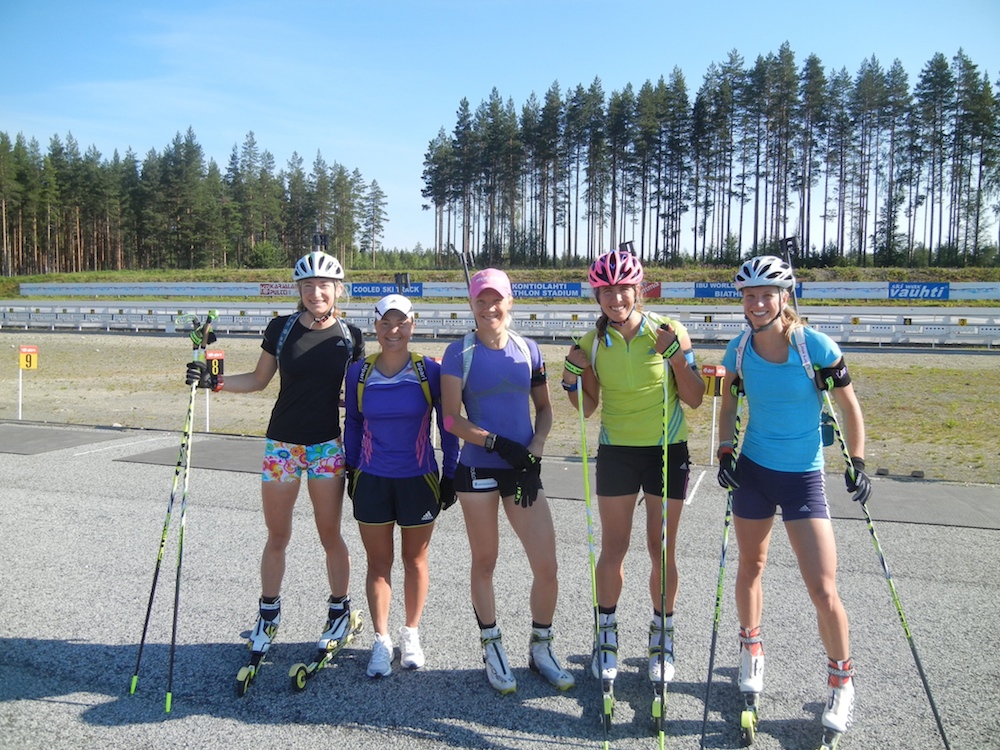
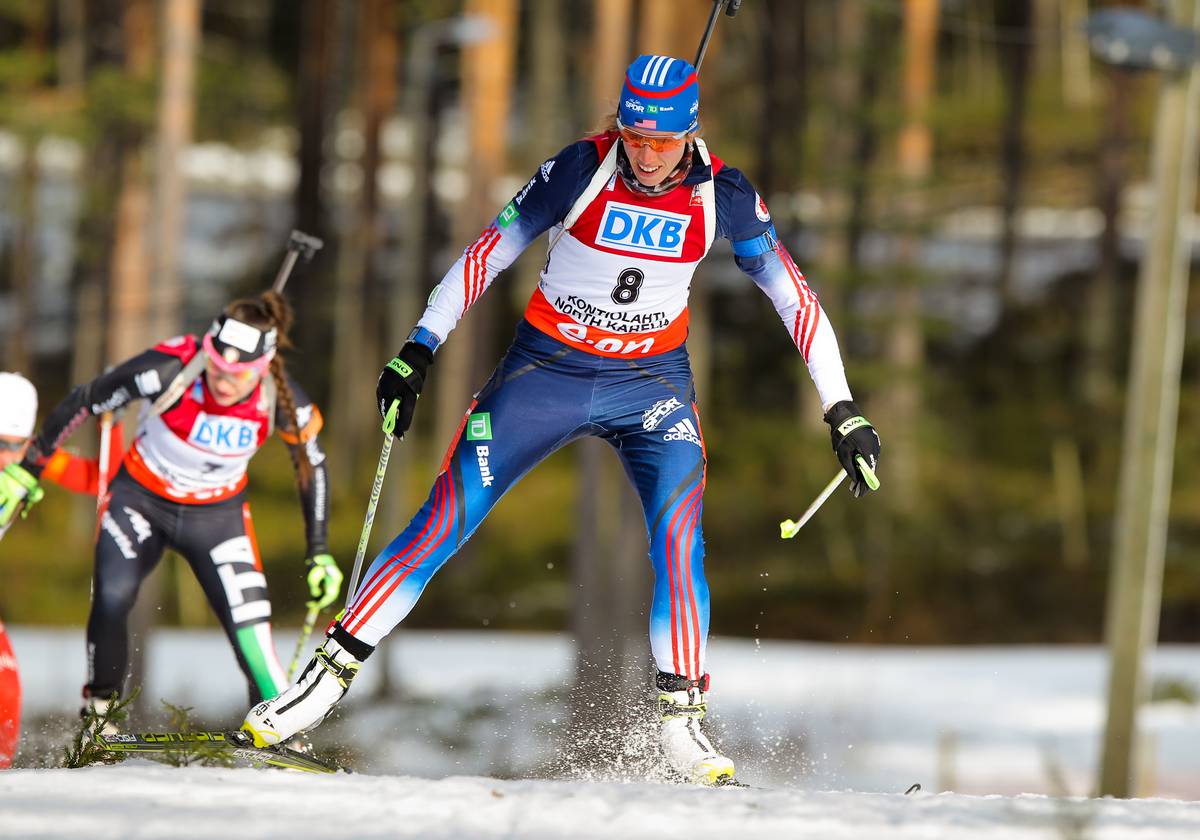
    The U.S. Biathlon women's team, including Hannah Dreissigacker (l), Susan Dunklee (second from r) and Annelies Cook (r), with Russia's Ekaterina Yurlova (second from l) and Finland's Kaisa Mäkäräinen (c) at the 2015 World Championships range in Kontiolahti, Finland. (Photo: Jonne Kähkönen)
    The U.S. Biathlon Women’s A-team, including Hannah Dreissigacker (l), Susan Dunklee (second from r) and Annelies Cook (r), with Russia’s Ekaterina Yurlova (second from l) and Finland’s Kaisa Mäkäräinen (c) at the 2015 World Championships range in Kontiolahti, Finland. (Photo: Jonne Kähkönen/USBA)

    When the U.S. Biathlon women step out onto the trails at Kontiolahti, Finland, next March, there should be some muscle memory that comes into play on the 2015 International Biathlon Union (IBU) World Championships course.

    They’ve been spending the last two weeks there, rollerskiing and testing their technique and fitness the loops, and learning more about the course and Finnish culture with reigning Overall World Cup champion Kaisa Mäkäräinen.

    On July 20, the three 2014 U.S. Olympians and women’s A-team members — Susan Dunklee, Annelies Cook and Hannah Dreissigacker — arrived in Kontiolahti, about 450 kilometers northeast of Helsinki. There, U.S. Women’s Coach Jonne Kähkönen set up several training sessions with Mäkäräinen, his former athlete, who also took the team orienteering, to her favorite local swimming holes, and joined them for a barbecue.

    Susan Dunklee racing her way to seventh place in the World Cup pursuit in Kontiolahti, Finland, on March 16. (Photo: USBA/NordicFocus)
    Susan Dunklee racing to seventh in the IBU World Cup pursuit last March in Kontiolahti, Finland. (Photo: USBA/NordicFocus)

    “It has been helpful to try to keep up with her on skis and have a few head-to-head shooting duels,” Dunklee wrote in an email. “Ekaterina Yurlova from Russia joined us one morning as well.  A few Finnish juniors also joined us for a time trial.  It can be difficult in the race season to really get to know athletes from other countries, but it is a lot easier in the summer when everything is more relaxed.”

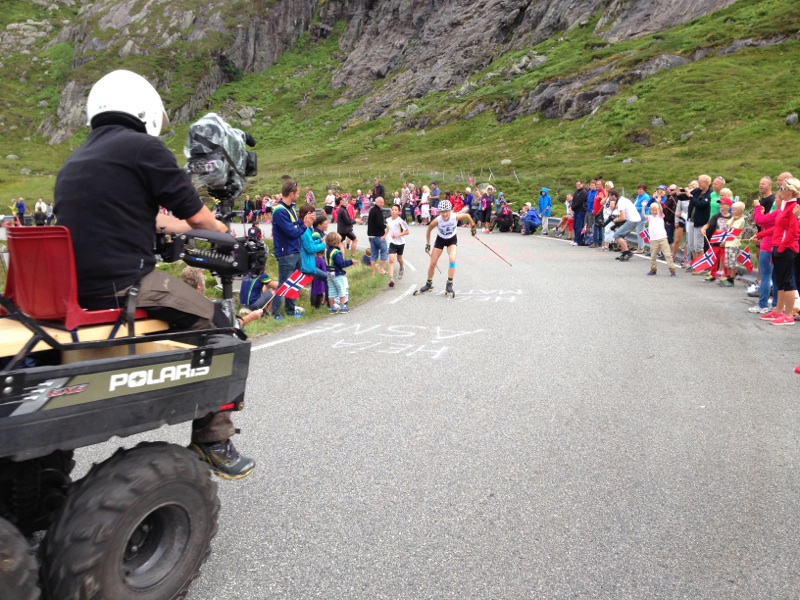
    On Wednesday, Dunklee flew to Norway with Mäkäräinen to compete in the Blink rollerski festival from Thursday to Saturday in Sandnes and Lysebotn. She will be the first U.S. female biathlete to race in the world-famous event, and plans to do the uphill climb and biathlon races at Blink.

    “I am most excited about the opportunity to get lots of head-to-head shooting practice against some of the world’s best under the pressure of a race,” she wrote. “That is something that is very difficult to simulate in the training season, so it will be a valuable experience.”

    Before her team’s camp in Finland, Dunklee spent her rest week backpacking between huts in Norway. Despite hiking one day for more than nine hours by herself (after bypassing one hut to get to the next), she described it as relaxing.

    “The week in Norway was good for the soul,” she wrote. “Sometimes your head needs some recovery too.”

    In Kontiolahti, the U.S. women did most of their rollerski-combo workouts at the World Championships range, familiarized themselves with the course’s climbs, and experimented with corners and transitions throughout the loops, Dunklee explained.

    “Of course skis move a lot differently than rollerskis, and even in the winter, we have to be prepared to adapt our skiing style day-to-day based on snow conditions,” she added. “This course has one steep wall that I absolutely love (mostly because I know lots of other athletes hate it) and the terrain suits my strengths: V1 and V2 alternate.”

    “This course has one steep wall that I absolutely love (mostly because I know lots of other athletes hate it)…”  — Susan Dunklee on Kontiolahti’s 2015 IBU World Championships course

    Cook explained that her main goal at the Scandinavian camp (with another stop at the Torsby ski tunnel in Sweden next week) was to focus on quality training without distractions.

    Kaisa Mäkäräinen (FIN) climbs to victory in the Lysebotn hill climb on Thursday. (Photo: blinkfestivalen.no)
    Finland’s Kaisa Mäkäräinen climbing to a victory in the Lysebotn hill climb last season at the Blink Festival in Norway. The 2014 edition of the race took place Thursday, with Makarainen and Americans Susan Dunklee and Lowell Bailey competing. U.S. cross-country skier Liz Stephen won the women’s race. (Photo: blinkfestivalen.no)

    “I hate missing out on life and sometimes at home that means I get overwhelmed trying to do everything,” she wrote. “Here in Finland, I can just keep it simple. I also want to do that for training — to keep working on confident shooting and skiing, but keeping it really simple and intuitive.”

    While in Kontiolahti, the team stayed at cabins at a campground near town, Cook explained. They commuted on trails with a cruiser bike, visiting lakes and picking blueberries along the way. Outside of training, they didn’t have to worry about too much; Kähkönen’s wife cooked them Finnish meals and treats.

    Mäkäräinen also went out of her way to accommodate the Americans.

    “It was great for me to get the chance to ski against her in a normal time trial just to see where she is better than me,” Cook wrote. “We also have a small group so it is great to have one extra person around to mix it up!”

    Dreissigacker explained that it had been fun getting to know Mäkäräinen better.

    “It makes you realize that the World Cup leader is just a normal, hardworking person,” she wrote.

    “It makes you realize that the World Cup leader is just a normal, hardworking person.” — Hannah Dreissigacker on training with Finland’s Kaisa Mäkäräinen

    Finishing up their second week in Kontiolahti, Dreissigacker described the beautiful weather and valuable training they’d experienced. Even a windy day, like Thursday, made for good practice on the range.

    “It’s a unique course with some really steep big hills, but also a lot of flat,” she added. “So it’s good to get more practice skiing here.”

    “The world championship course is just hard,” Cook wrote. “There is a massive uphill wall that is going to be a killer no matter what way you slice it. But it is cool to try some things that will make it faster to ski up so the suffering has a bigger payout!”

    In Torsby, Cook and Dreissigacker will meet up with other U.S. Biathlon teammates (including Dunklee) and shift to snow for technique work and ski testing.

    “It will be fun to have the entire team there — men, women, techs and coaches,” Dreissigacker wrote. “The team atmosphere is always a lot of fun when we’re all together.”

  • U.S. Ski Team Lines Up Summer Training From Alaska to Ramsau

    U.S. Ski Team Lines Up Summer Training From Alaska to Ramsau

    Randall and Stephen training with the Mora Ski Club last summer. They'll be back to Sweden this August, this time with the rest of the USST women. Courtesy photo.

    In the months following its first camp of the year in Bend, Ore., the U.S. Ski Team (USST) has several new training destinations planned along with its old standbys: the men and women will split up and head to Alaska, Sweden, Austria and Germany over the course of the summer. And for the first time since its first trip to New Zealand 10 years ago, the Snow Farm is completely off the schedule.

    The women’s summer begins in familiar territory: the “North American Women’s Training Alliance” will coalesce once again for a June camp in Anchorage, Alaska. The Americans, Canadians and an unnamed European guest will take advantage of Eagle Glacier for quality time on American snow.

    August brings a new training opportunity for most of the women: they’ll jet off to Scandinavia where they have a joint camp planned with the Swedish women. Kikkan Randall and Liz Stephen both did a tour of Sweden last summer with their host Anna Haag, but with the rest of their teammates along for the ride this time, what began as a friendship between Haag and the Americans has turned into a full-scale, two-week training period in Salem and Torsby for each team’s full roster.

    A collaborative camp on this level between the U.S. and a European national team is unprecedented, at least in USST head coach Chris Grover’s memory. The idea was discussed in January in the midst of the Tour de Ski, when Swedish women’s coach Rickard Grip cited Randall’s skate technique and the value of exposure to a non-Scandinavian approach to skiing among the benefits to training with the Americans.

    The results the U.S. women posted on the World Cup this winter played no small role, either.

    “I think because of the women’s team making a big step forward and having World Cup contenders, that becomes more attractive to a team like the Swedes than perhaps it was before,” said Grover.

    “I’m psyched it’s coming to fruition.”

    Dachstein glacier. Photo: Erik Nilsson.

    While the American women are in Sweden, the men will be in central Europe — first to Ramsau, Austria, home of the Dachstein glacier, and then on to Oberhof, Germany to use the indoor ski hall.

    The traditional New Zealand trip, which has been a staple of the USST’s summer training in some capacity since 2002, is off the schedule this year. The Southern Hemisphere is simply too far and too expensive for it to make sense any more.

    “It was tough to pull away from because it’s such fantastic conditions, great living, and such a solid camp,” said Grover.

    Besides airfare more than doubling in recent years, Grover added that the lengthy travel and 16-hour time zone adjustment (from EDT) made the Snow Farm a less practical option. Europe is a cheaper flight and only six hours ahead of the eastern U.S.

    “We talked for a while about going to Europe, and we felt it was time to do something different,” said Grover. “And it would be a little easier on our budget as well.”

    Dachstein is a mecca for nordic skiers year-round, and in the summer is frequented by European clubs and national teams. Grover wasn’t sure who else would be in Ramsau in August, but knew the Norwegian men would be in Oberhof for the tail end of the USST’s camp there.

    “We may look for opportunities to schedule workouts with the Norwegians if it’s possible, but we have nothing planned at this time,” he said.

  • Pro Workout: Race Prep Time Trial With Noah Hoffman

    Pro Workout: Race Prep Time Trial With Noah Hoffman

    Noah Hoffman at World Championships, Oslo.

    At this time of year, Noah Hoffman is focused on one thing; getting as ready as he possibly can for the first races of the season.

    FasterSkier caught up with the USST B-team member, who has been training in the ski tunnel in Torsby, Sweden in preparation for the start of the World Cup season on November 19th and 20th in Sjusjøen, Norway.

    Hoffman set up the time trial so he’d have to treat the entire day exactly like the day of a World Cup, starting with his warm-up and cool-down.

    For the warm up, Hoffman usually includes a pre-race threshold of five minutes on an uphill on the course. However, being in the ski tunnel changed things a little bit — “You’ve got a 30 second uphill in the tunnel and that’s it,” he said — so instead his threshold ended up being a lap and a half of the loop in the tunnel.

    With the warm-up done, Hoffman focused on getting everything ready, just like he would for race day, including wax preparation.

    “I had Randy [Gibbs, USST wax technician] working on my skis; [I] had him make adjustments to the wax a few times,” he said.

    He also stuck close to the specific schedule, including his start time, even though he was the only athlete doing the time trial and one of very few people skiing in the tunnel at the time.

    Hoffman set his start time for 11 am, and kept to it – even if he wasn’t quite ready, as he wanted to practice working within a full-on race setting.

    “[I] need to practice all the little things that happen for a race, it’s not just about the effort,” said Hoffman.

    Hoffman raced 10 k in the tunnel, doing 4 laps in total. In a tunnel, the race course is slightly different – Hoffman would do a lap in one direction, turn around, then do it again backwards to get a 2.5 k loop, which he did four times.

    While that kind of repetitive skiing might sound boring to some, Hoffman felt comfortable.

    “In terms of mentally focusing, once you start going, it’s almost easier to push yourself on a short loop,” he said.

    “When I’m in a race, I tell myself, second to last time up this hill, last time up this hill. [There is a] lot of opportunity to do that in the tunnel.”

    He also went without his preferred race-staple: splits. Instead of being given splits throughout the time trial, he found out how his pacing was at the end. While he said that “they help motivate a little bit” during the race, the goal of going without intermediate times was to make it harder for himself.

    “I tend to lean towards whatever is harder so you get practice doing that,” he said. “You don’t always hear splits during a race.”

    For recovery, Hoffman said it was all about the skiing. Despite already having skied 10 k in circles, he added on another three laps of the tunnel and a twenty minute jog, which he does after a World Cup race as well.

    The biggest goal of the workout was to focus on going hard; “We got the most important thing done, I’d say that,” he said.

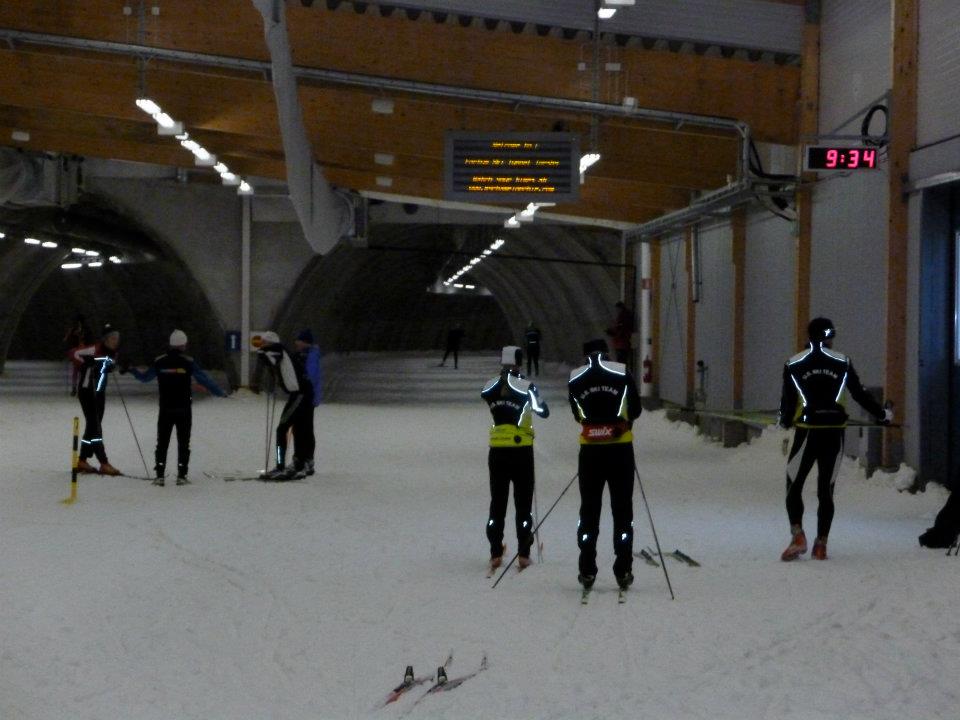
    A few U.S. Ski Team athletes getting ready for a workout in the Torsby ski tunnel. Photo: Sadie Bjornsen.
  • Hjelmeset Concerned About Trend to Skip Cold Races

    GÅLÅ, Norway – There is no doubt in Odd-Bjoern Hjelmeset’s mind about this: “Skiing in extreme cold can be a nightmare for some racers. Martin Johnsrud Sundby (NOR) is one example, he can barely breathe when it gets really cold,” Hjelmeset told Langrenn.com.

    But Hjelmeset is also certain about this: “Among those who sat out the races at Gålå (Norway), this weekend, there were a number of skiers who don’t suffer from cold-induced asthma as well.”

    Hjelmeset, who chose to race at Gålå this weekend, said that it was cold, but not a big deal. “Sensitivity to cold is a very individual thing. I would compare skiing in extreme cold to training at altitude. Some do well with it, while others can barely handle it. You just have to know your own body and your own limits. But now it seems like the trend is going the direction that skiers are a little too influenced by other racers’ limits,” Hjelmeset said.

    Hjelmeset observes that the term “cold-induced asthma” is used frequently by the media. “During the broadcasts from Kuusamo, I think the term was used at least a hundred times. Of course, that will affect people’s perception of racing in the cold, and a lot of them would probably handle the cold just fine. I really think people are influenced by the media and what they report on, and of course what the elite racers say about it,” Hjelmeset said.

    Point in Case: The Torsby Tunnel

    The past year, Hjelmeset has made an observation in the Torsby ski tunnel in Sweden, which he wants to point out as an example of how people are affected by the media and reporting.

    “For a long time, it has been unpleasant to breathe inside the ski tunnel in Torsby. Racers of all levels have seen and heard that the national team skiers often use the ‘lung plus’ device or ski with a face mask in the tunnel,” Hjelmset said, explaining that he constantly reconsiders and adjusts based on his own perceptions, not the common belief.

    “This year, the air in there has been a lot better, and I’ve stopped using the ‘lung plus’ all together. I’ve been there several times this fall, and I think it’s strange that so many still are scared about the air in the tunnel.”

    Be serious about temperature cutoffs

    Hjelmeset emphasizes that when it comes to cold temperatures, some people will always run into big trouble. And he argues that temperature cutoffs were instated for a reason.

    “During the Norwegian national championships in Bardufoss a few years ago, it was extremely cold. I didn’t have any serious breathing problems before I raced there, but after those races, it’s been a lot harder for me. Several racers ruined large periods of their races seasons by skiing too hard up there. Kristian Horntvedt is one who struggled for a very long time after those events,” Hjelmeset recalls.

    However, skiing in extreme temperatures is nothing new for the veteran, who is racing outside the national team structure this year for the first time in a decade. He particularly recalls a race in Russia.

    “There was a race over there in Russia, a few years back, that was held despite the temperature being far below -20 C. It was so cold that we layered up with newspapers under the race suits, and Frode Estil decided to race with his warm-ups under his lycra. Of course, that was not healthy.”

    From Langrenn.com, November 29, 2010. By Ola Jordheim Halvorsen, translation by Inge Scheve

  • Hunting Down The Golden Pairs

    Hunting Down The Golden Pairs

    Knut Nystad, Norway's waxing czar. Photo, Langrenn.com.

    This week, Norwegian wax techs and Head Wax Coach Knut Nystad are headed for the ski tunnel in Torsby, Sweden, with truckloads of skis and tools to find the optimal combinations.

    “Normally, the national teams have a training camp in the ski tunnel, but this year they don’t. So we decided to have a testing camp here on our own,” Nystad explains to www.langrenn.com.

    Testing and adjusting
    Although it is, as Nystad points out, not a national team camp, several of the national team skiers will be in the tunnel to help the test crew and get their own boards dialed. “We’ll go through all the skis in the current ski pool, as well as test any new skis the racers have received over the summer. In short, we’re doing inventory and fine-tuning the ski pool,” Nystad says.

    Representative sample
    What can the wax team learn from testing in a tunnel?
    “If you stay within the manufacturers’ ‘series,’ you’re fine. In our experience, those test results will correspond to what you’ll find on real snow,” Nystad replies, adding that he has already completed some of the initial testing for the upcoming season.

    “We started the testing at Sognefjellet in June, and we’re on track. We have constant conversations with the skiers and the wax techs. We got off to a good start. Now we need to decide how to continue the project with the racers and the wax crew”

    Continuous process
    There were some changes in the wax crew roster after last season, and the new techs presented some of their tricks to the racers during the national team camps at Sognefjellet.

    “We’ve added a few new faces,” Nystad says. “The new wax team is complete, and there are no changes after what we presented at Sognefjellet. Now we need to make sure we carry a healthy, active dialog between racers and wax techs. That’s a process that pretty much never ends.”

    Positive changes
    During the 2010 Olympics in Vancouver, a lot of the communication between the athletes and wax techs was delivered via the media. Especially in the beginning of the Games, when the Norwegian racers had sub-par results, there were a significant number of “ice clumps in the klister,” as Nystad put it. However, missed opportunities in the first few days evened out, and the racers regained their game as the Games went on. So despite the initial trouble, Nystad believes the wax team weathered the storm well and came away a stronger unit.

    “Over time, this was actually a really good experience,” he says. “The media seems to love creating scapegoats, but the relationship between the racers and the wax techs is a team effort. The racers rely on the wax techs, and the wax techs rely on the racers. During the Olympics, there was far too much focus on isolated details. But those are insignificant in the big picture.”

    “Overall, Norway was the top nation in cross-country skiing at the 2010 Olympics. We were also the top cross-country nation during the 2009 and the 2007 World Championships. We hope to continue that record on home turf for the 2011 World Championships this season,” Nystad said.

    Many contenders
    Although Norway’s skiers, coaches and wax techs are all doing their best to succeed in Holmenkollen–and surely have some home turf advantage–there are several contenders.

    “We’ll have a lot of bodies at Holmenkollen and in the surrounding areas this winter who will be testing relentlessly, focusing on the World Championships at home. But there are a lot of racers and wax techs out there all over the world wanting a piece of the podium, so you can’t take anything for granted,” Nystad says.

    These racers will be helping the wax crew in Torsby this week:

    Eirik Myhr Nossum (ski tester for Petter Northug jr.)
    Petter Eliassen
    Astrid Uhrenholdt Jacobsen
    Maiken Caspersen Falla
    Øystein Pettersen
    Anders Gløersen
    Eirik Brandsdal
    Kristian T. Rennemo
    Martin J. Sundby
    Simen Østensen

    From Langrenn.com, August 16, 2010. By Ivar Haugen, translation by Inge Scheve

    Testing skis at Sognefjell. Photo courtesy of Roman Toferer, Atomic.