From the FasterSkier archive — posts syndicated from athletes’ and coaches’ own blogs between 2004 and 2012, kept online as published. Current coverage is at fasterskier.com.

Tag: Tour de Ski 2023

  • Sophia Laukli—One on One

    Sophia Laukli—One on One

    This coverage is made possible through the generous support of Marty and Kathy Hall and A Hall Mark of Excellence Award. To learn more about A Hall Mark of Excellence Award, or to learn how you can support FasterSkier’s coverage, please contact info@fasterskier.com.

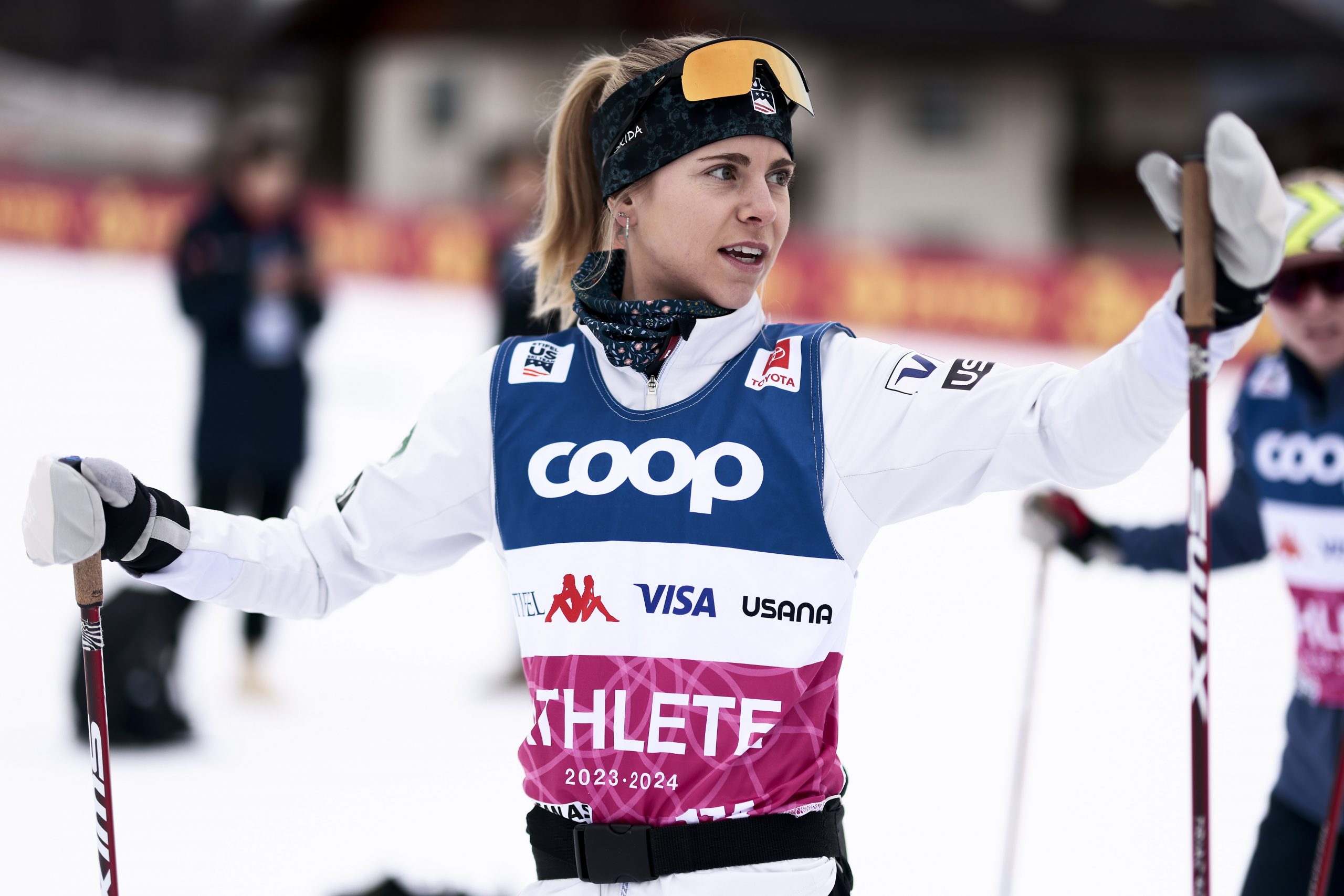
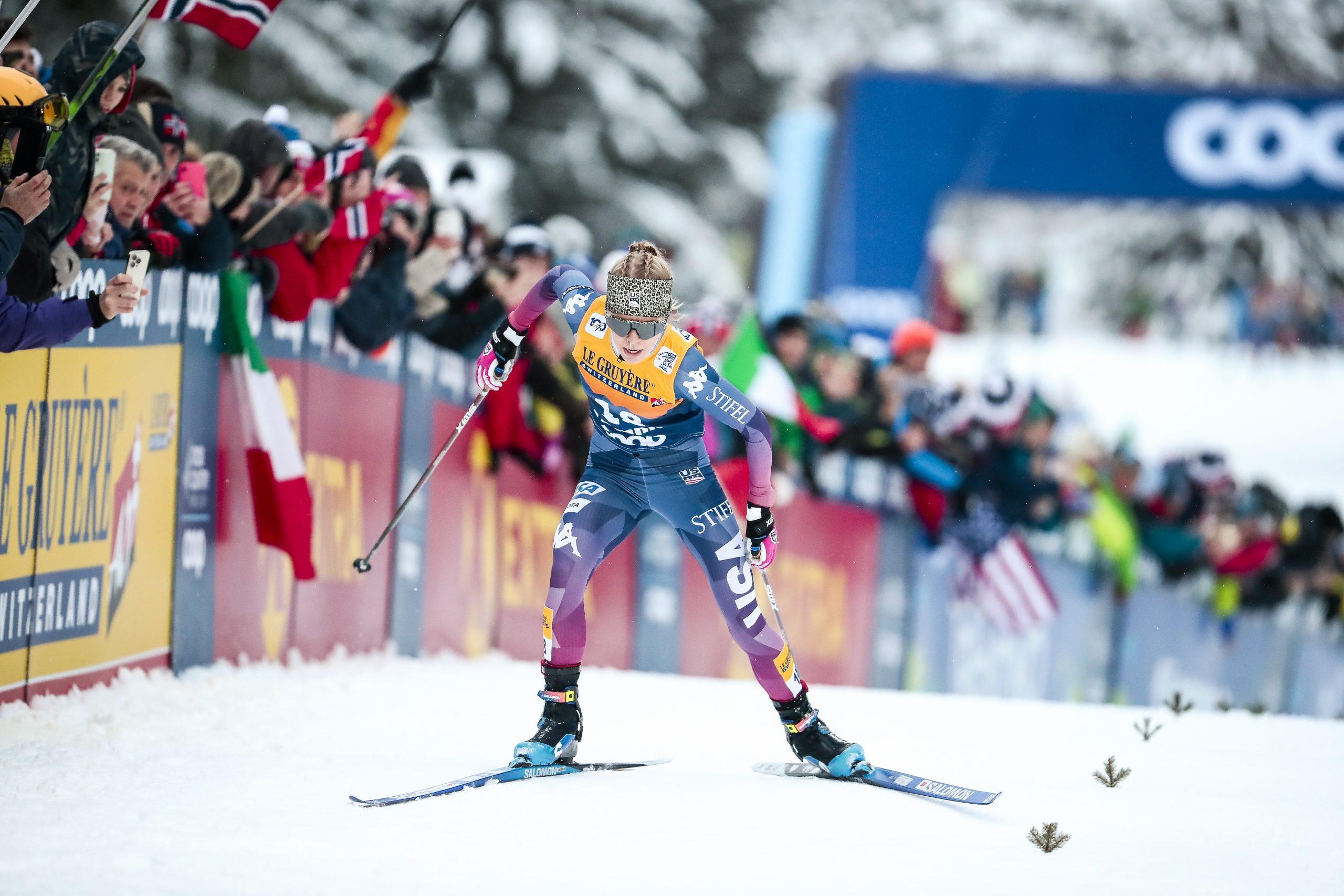
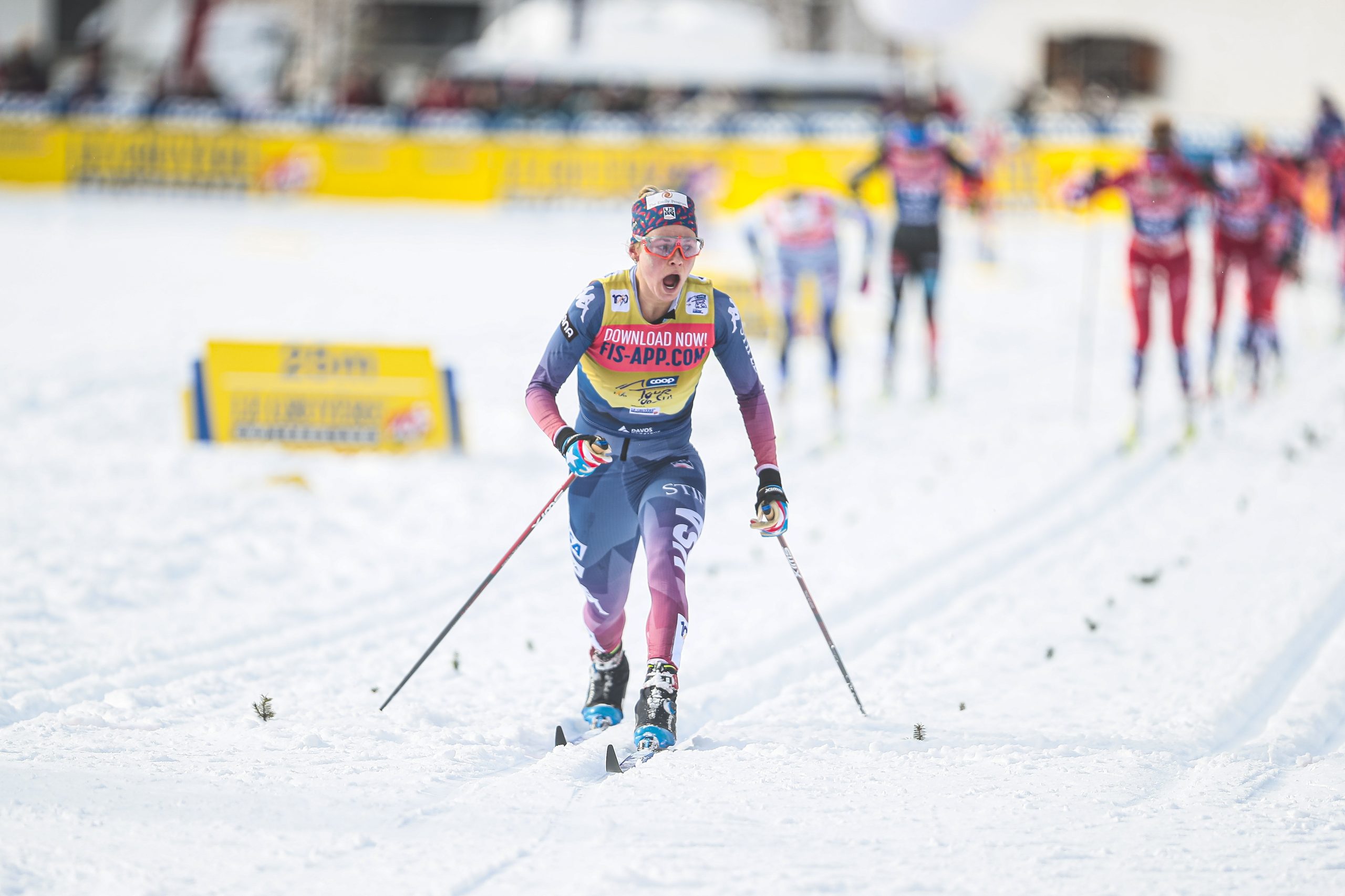
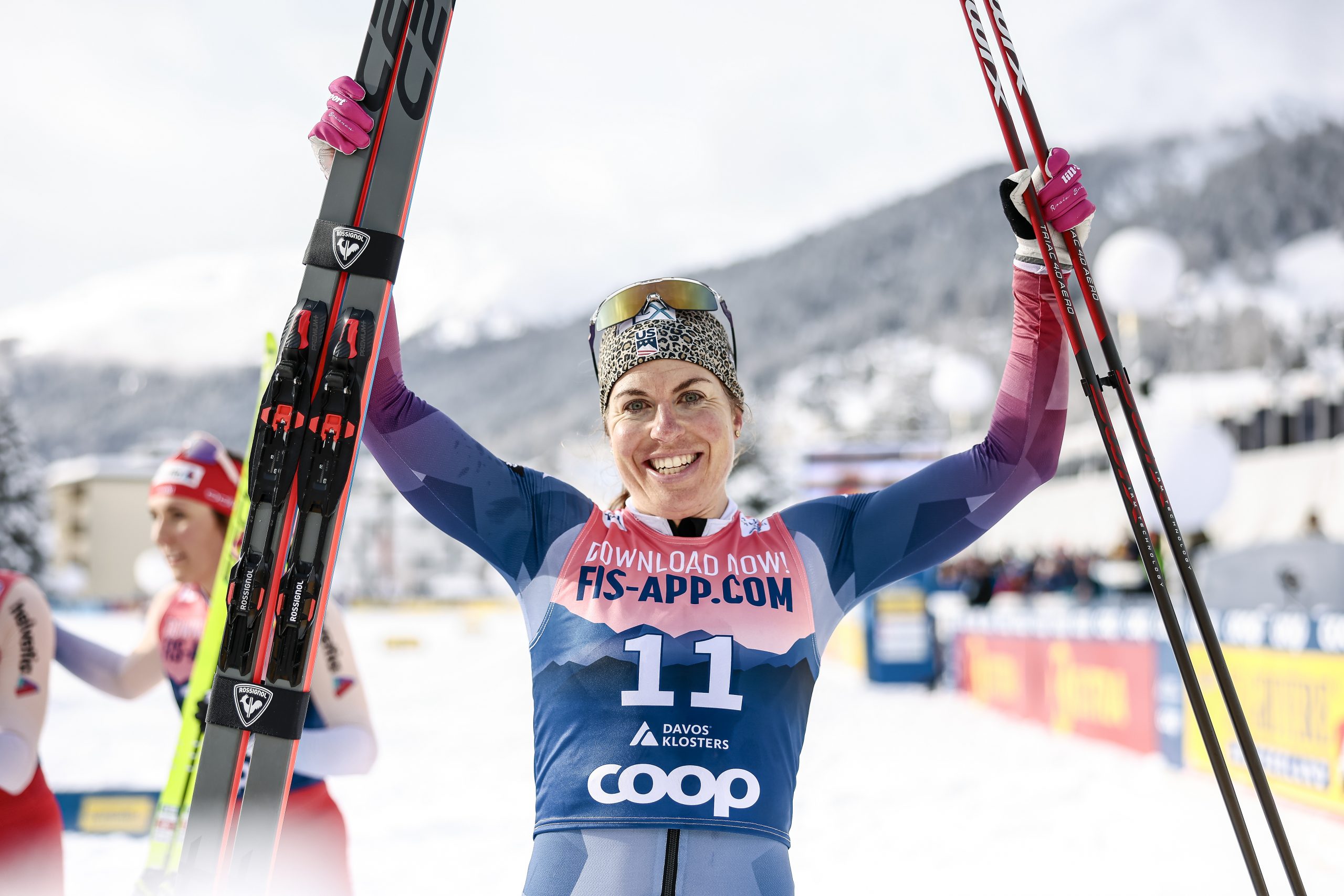
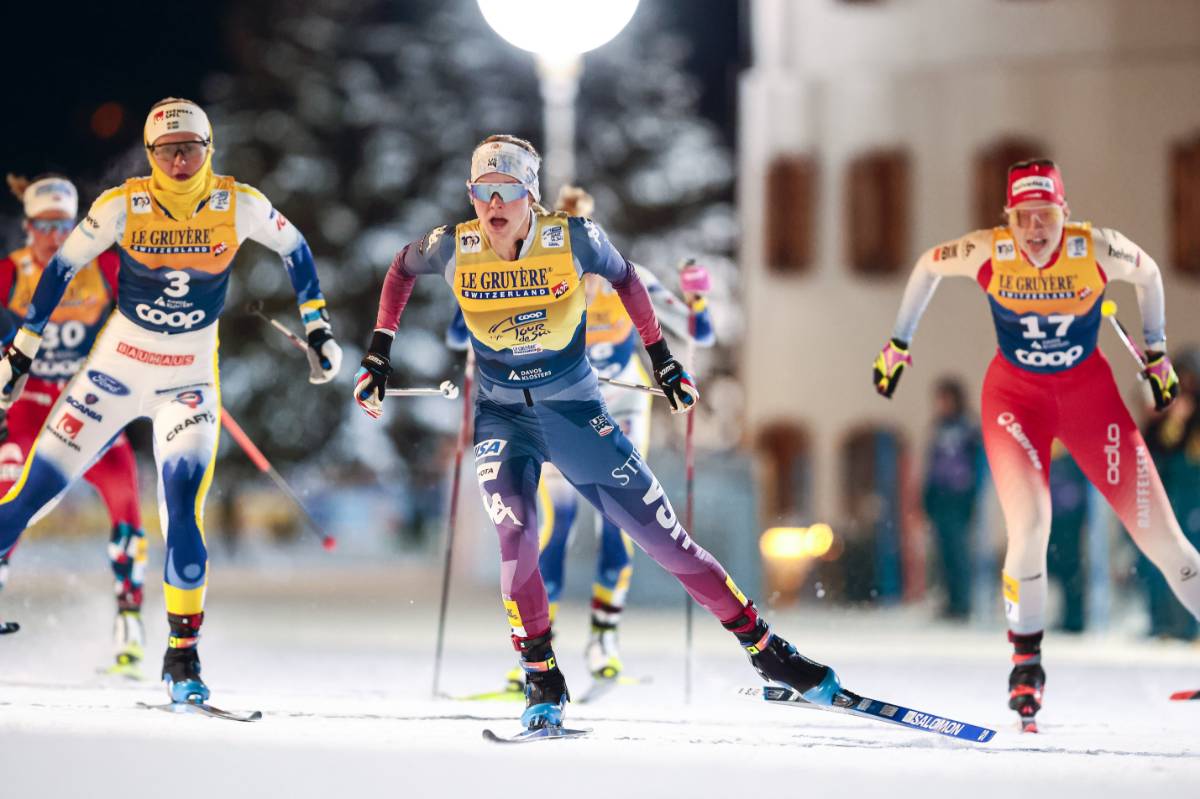
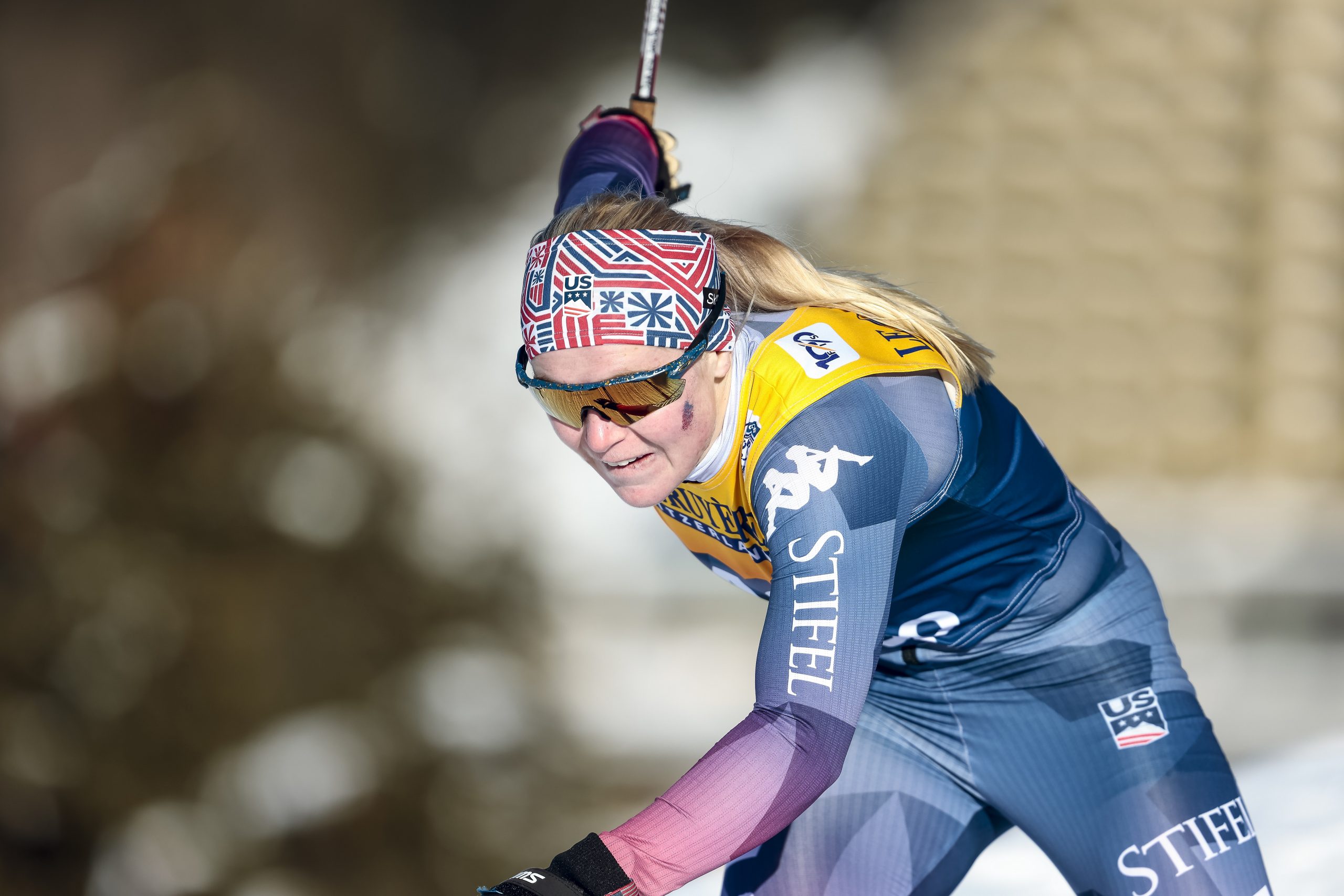
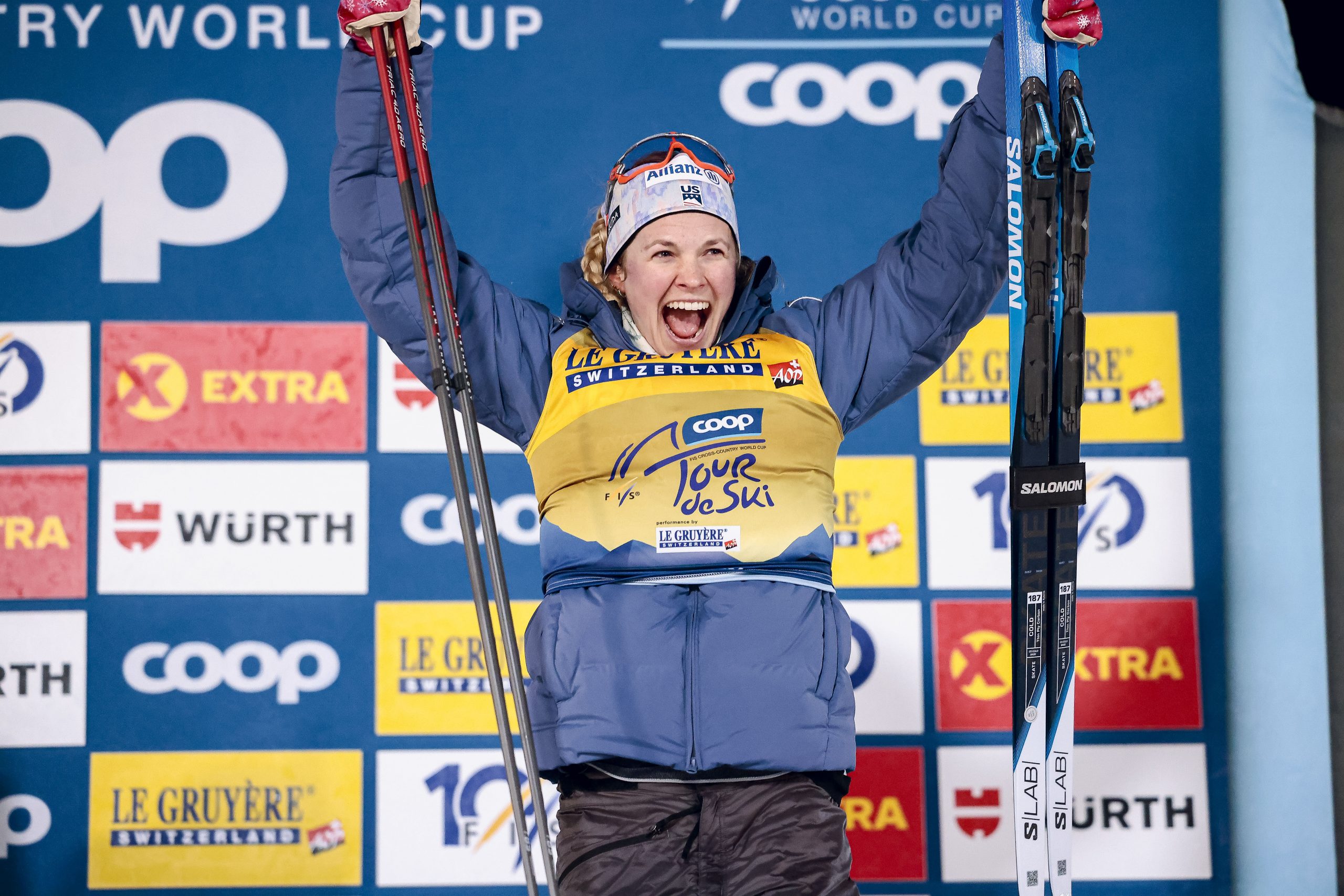
    It’s been Sophia Laukli’s (USA) best start to a World Cup season. Winning Alpe Cermis has been the hightlight. (Photo: NordicFocus)

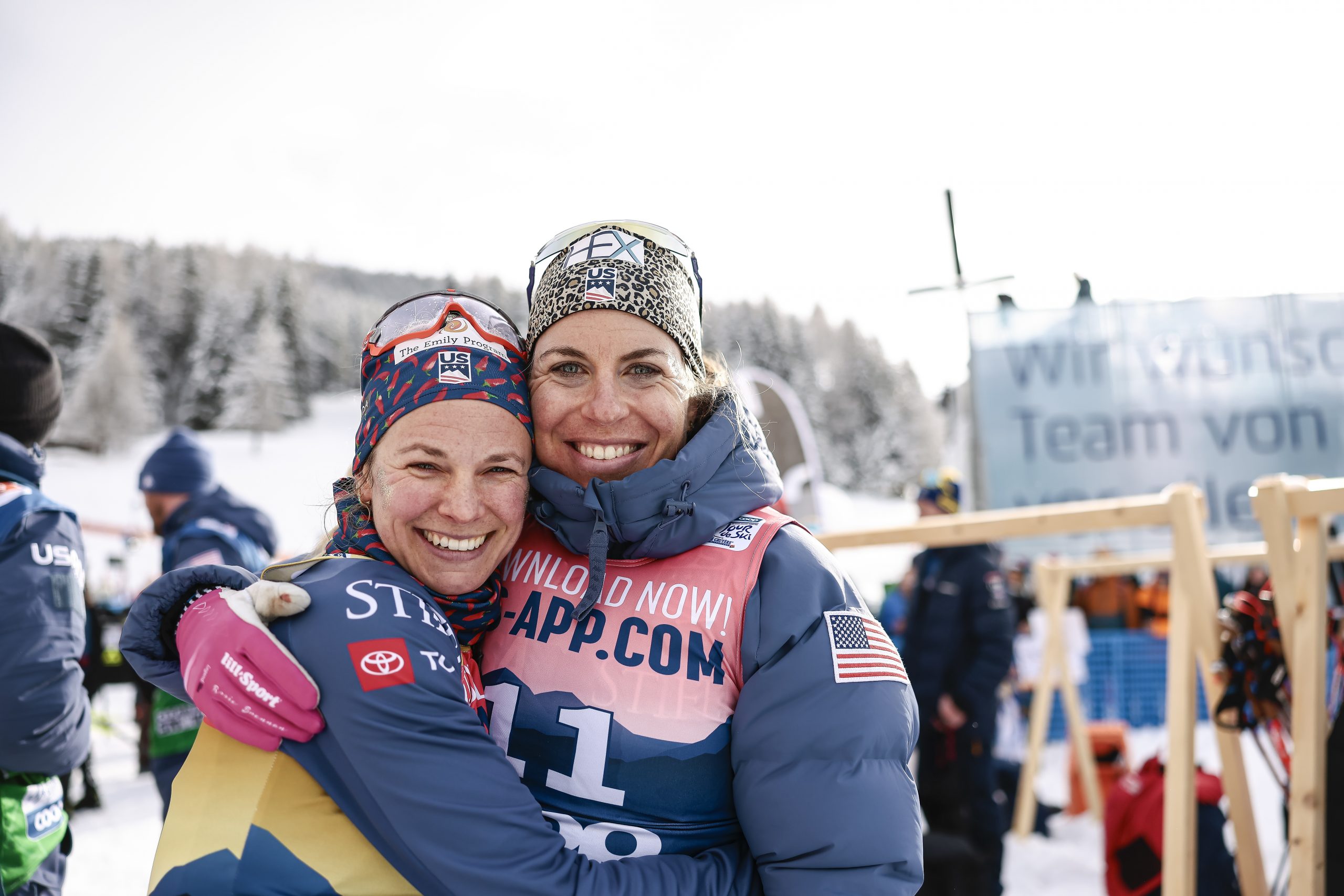
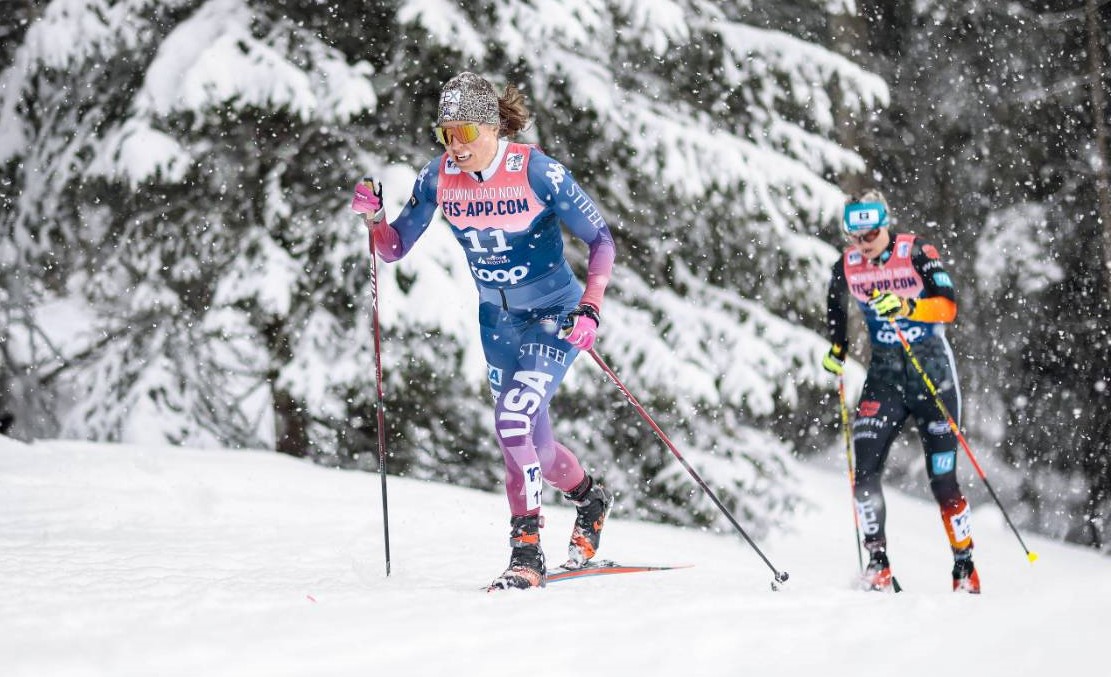
    On the last day of the Tour de Ski, Stifel U.S. Ski Team member Sophia Laukli had a first-ever win in a World Cup race. She’s also on pace to have her best season as a professional skier. After the Tour de Ski, the 23 year old Laukli spoke to FasterSkier from her residence in Oslo, Norway. She shared her thoughts about her Tour, climbing Alpe Cermis, how her professional running career is affecting her skiing, and—what she admits are her weaknesses­—Sprinting and Classic races.

    This interview has been edited for length and clarity.

    FasterSkier: Congratulations on completing the Tour. Now that it’s behind you and you’ve had a couple days to rest and look back, what’s your own self-assessment on how your Tour went for you?

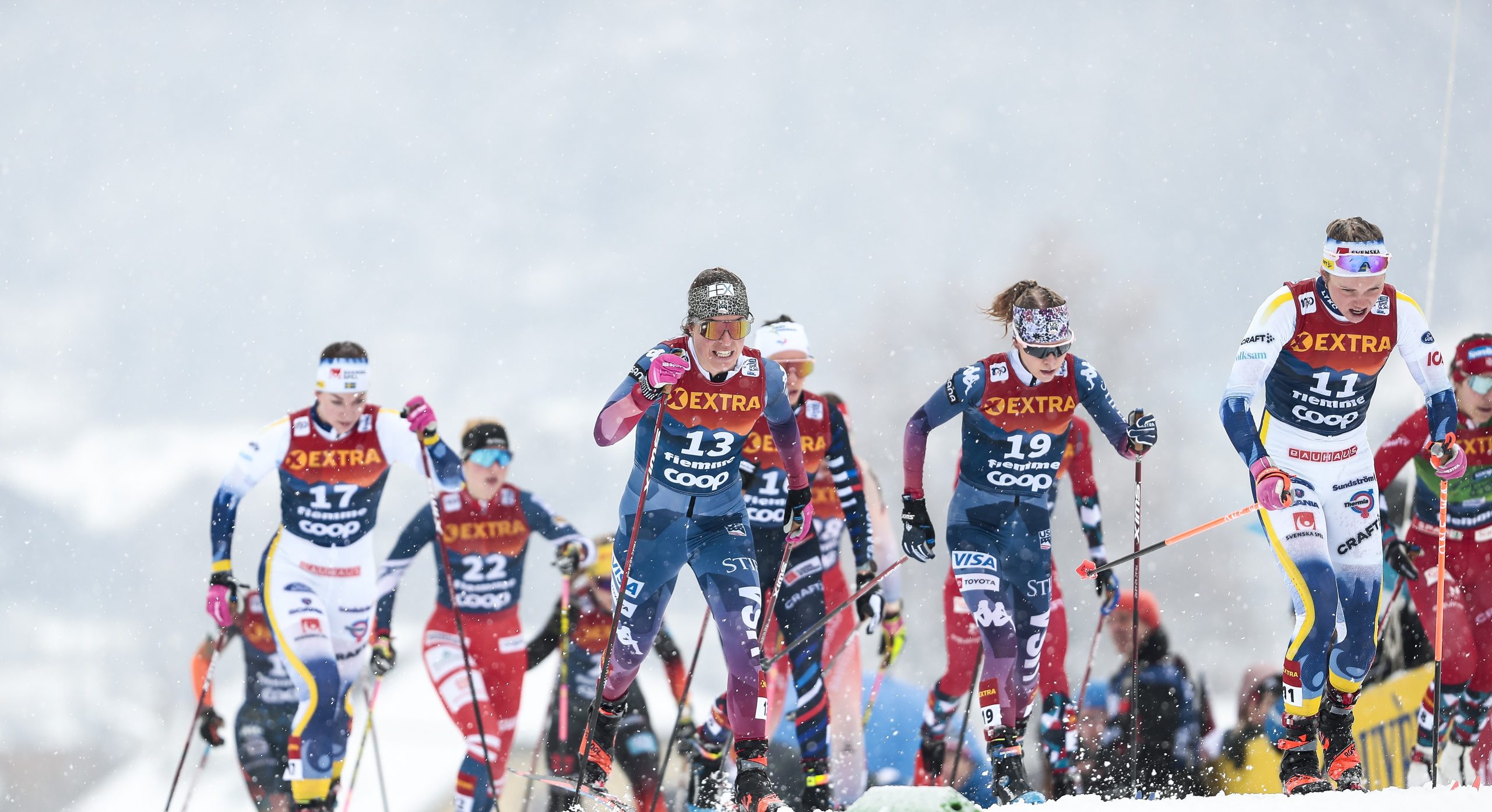
    Sophia Laukli: I’ve done [the Tour de Ski] three times now, and it always ends on a high note. I’ve always done well on the [Alpe Cermis], so it maybe skews my perception of the Tour. It was definitely up and down. Like many people, I had gotten sick right before Christmas with the flu, and so I had not had the prime lead-up with training. The first few races were definitely quite the suffer-fest, and I was very much debating if it was worth continuing. This year it was different because I was sick, but each year I’ve definitely had slower starts to the Tour. It’s easy to say that when a lot of the first races are Sprints and Classic races, which don’t suit me so well. But this year, I was mostly conflicted about going all the way through with the rest of the season in mind and what was going to be smart. But, I was eventually feeling better each race. And I was pretty psyched with the later Classic races. I’m definitely having much better results than normal in Classic races, and that was very motivating. So, I would say, halfway through the Tour I decided to continue and then it kind of all started falling into place. Davos was OK and then we got to  Val de Fiemme and I definitely had some good results there. I don’t know if we’ll ever have a Tour de Ski where I don’t have a few hiccup races at the beginning, but yeah, it’s easy to say that it was a great Tour just because of the last day, but it was a bit of a roller coaster … like, most people have.

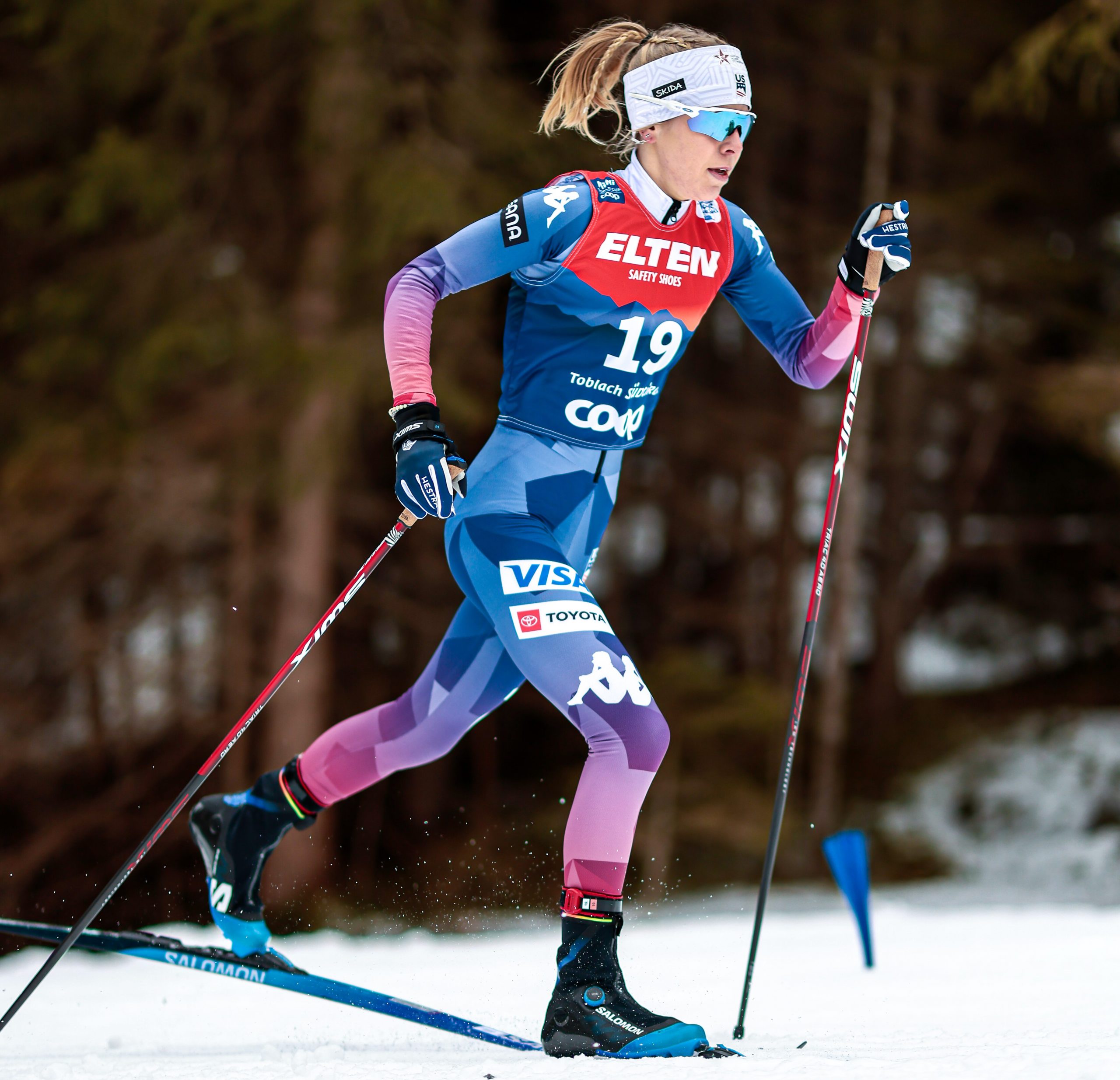
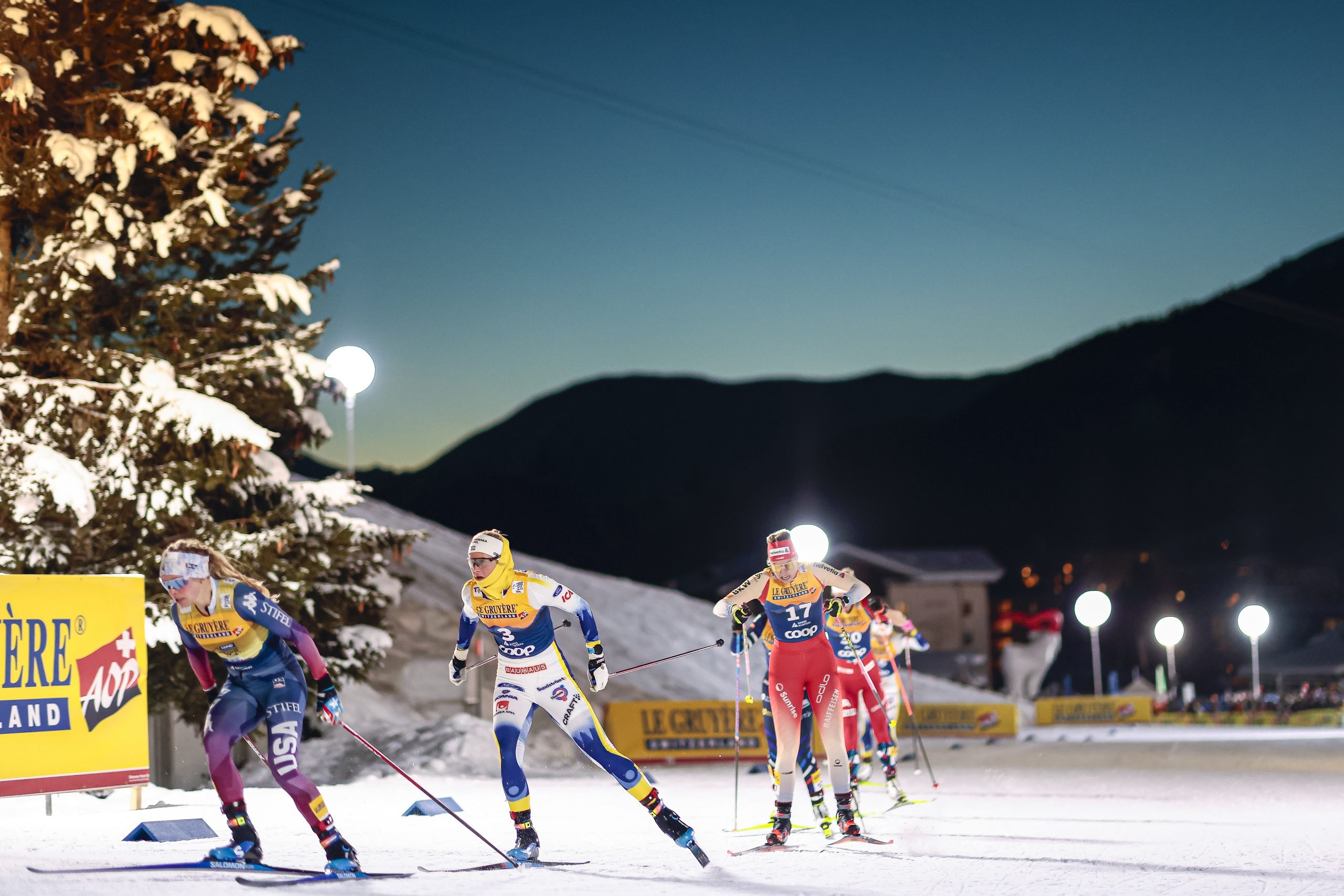
    Sophia Laukli (USA) is getting more comfortable with the Tour de Ski, but by her own admission she still has room to grow in Sprints and Classic races. (Photo: NordicFocus)

    FasterSkier: Did your illness affect you all the way through the Tour?

    Sophia Laukli: Whatever flu I had gotten really got to my lungs, and that was something I was worried about because with COVID this summer and last winter, I had some pretty gnarly comebacks from it affecting my lungs. So that was where I felt it most, and definitely in Toblach. Davos was the first race where I felt a bit more normal and kind of felt good enough to go to Val de Fiemme and just finish it. It’s a fine line deciding if racing is just going to put me more in the hole; in this case, it seemed to be helping me, or I was just feeling better each time.

    FasterSkier: Since you brought up the Classic races, in Davos, several of the Swedish women decided to double pole the course. Given that striding isn’t your strongest asset, did you consider that approach?

    Sophia Laukli: No, definitely not. When it comes to Classic skiing, striding is what I’m able to do and double pole is what I’m not.

    FasterSkier: Now that the Tour is behind you and you can kind of pull illness out of the equation, do you have any ideas for over the summer: what you’re going to be focusing on as areas of growth for you?

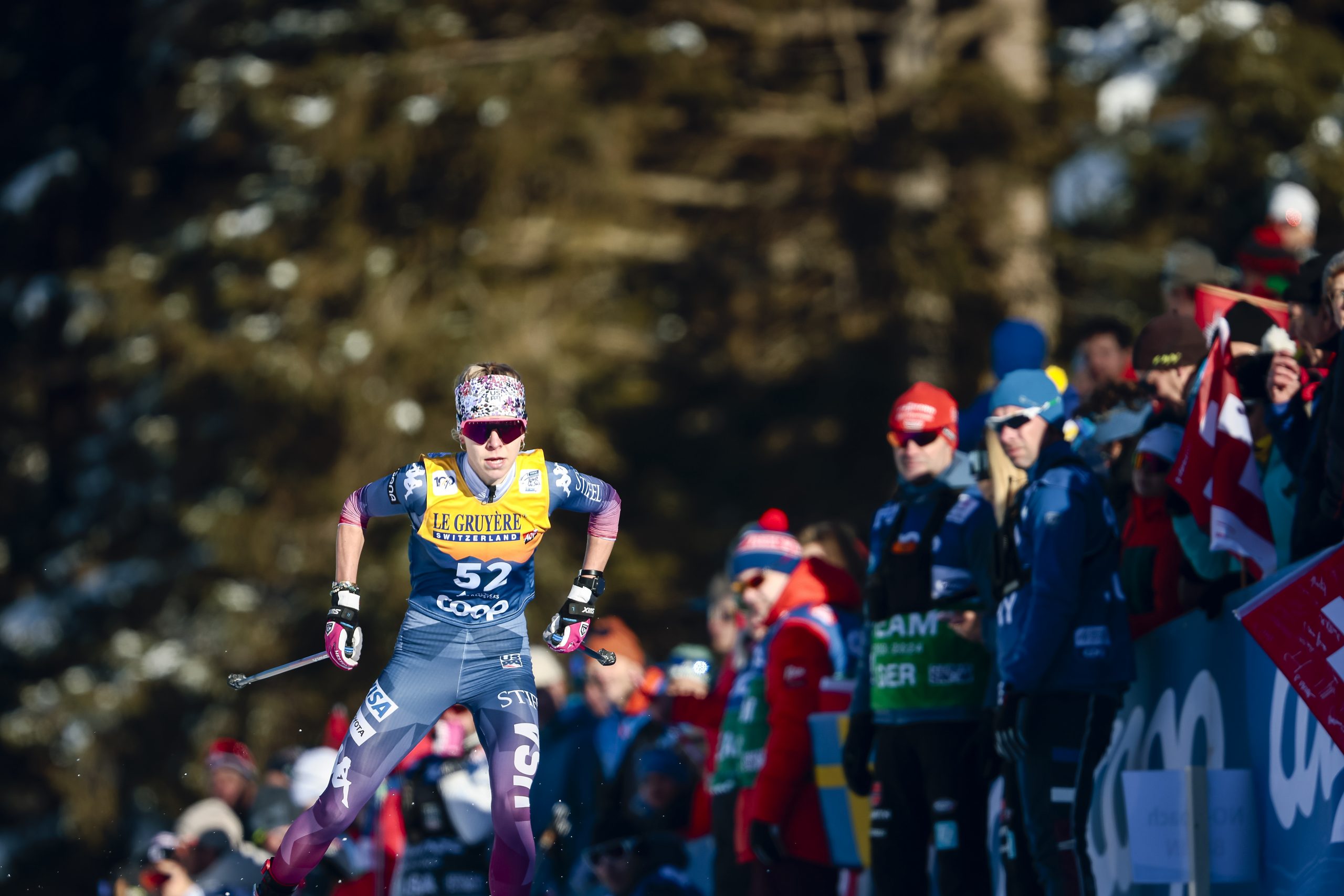
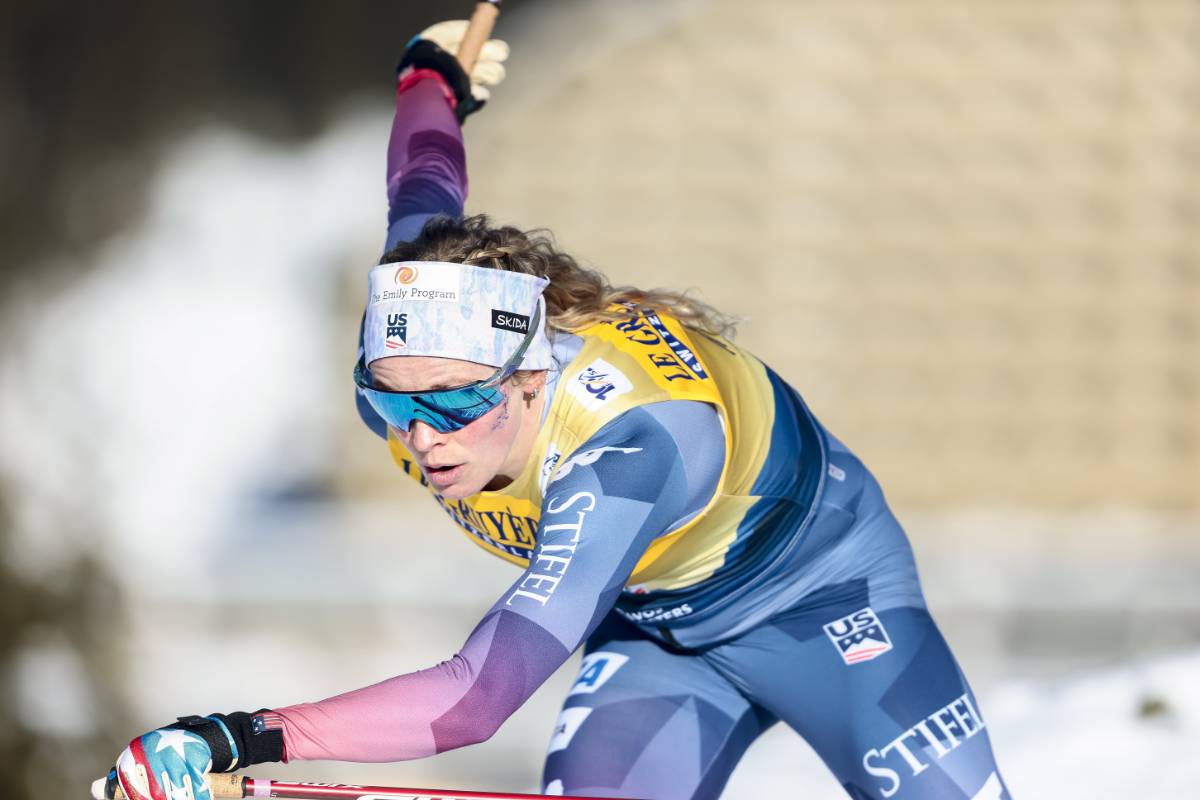
    Sophia Laukli (USA) acknowledges that she needs to work on Classic skiing, and that she is more motivated to improve in Classic than in Sprinting. (Photo: NordicFocus)

    Sophia Laukli: I worked a lot on Classic and I did do a lot of double pole this summer, which certainly improved my double pole in general, but I think it helped my overall ability, Skating, and Classic. Next year, I would like to dial in a bit more Classic. It’s a bummer just to think about Skate races an entire season. I’m obviously never going to be thinking about Sprinting, but if I can focus on every distance race, that is really the goal. Focusing a bit more on Classic technique will be a big thing for the summer. I just started working with my new team and coach with Aker Daehlie this summer, and I’m sure that there will be some changes.

    FasterSkier: You just made an interesting comment about Sprints, and how that’s not a strength. Do you think that you have room to improve in the Sprints or are you kind of at your physiological limit as a sprinter? 

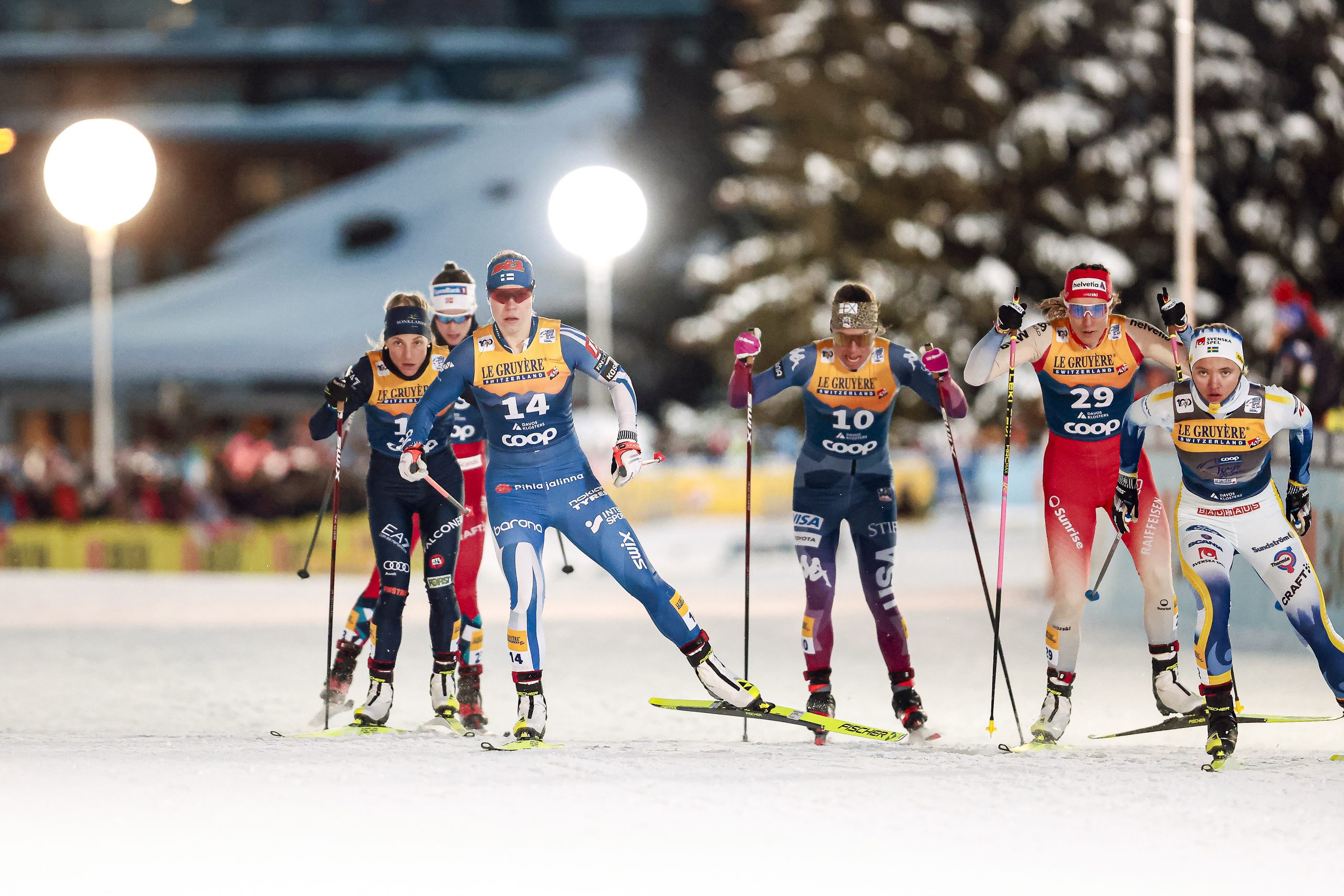
    Sophia Laukli (USA) acknowledges that she will likely never be a Sprint podium contender, but that a little improvement would definitely help her Tour de Ski results. (Photo: NordicFocus)

    Sophia Laukli: I think it’s a combination. It is possible for me to get slightly better because I am probably held back a little bit physiologically. There are plenty of people that work on it and get better and are maybe never going to be the top. But they can totally be in the mix. I think for me it’s almost like a mental thing. I’ve just completely given up, and so that doesn’t help me get any better at them. I do essentially two Sprints a year, and those days I have zero nerves. I don’t even think of it really as a race, and I’m sure I go even slower because I put no effort into it. But it’s a balance where I think it would be nice to get a little bit better, but I don’t necessarily have the motivation to. This year though, I was realizing, ‘Oh, it would be kind of fun to do the Tour and actually put more into the overall Tour standing.’ I don’t have to be doing super well in the Sprints, but just having a slight improvement could go a far way.

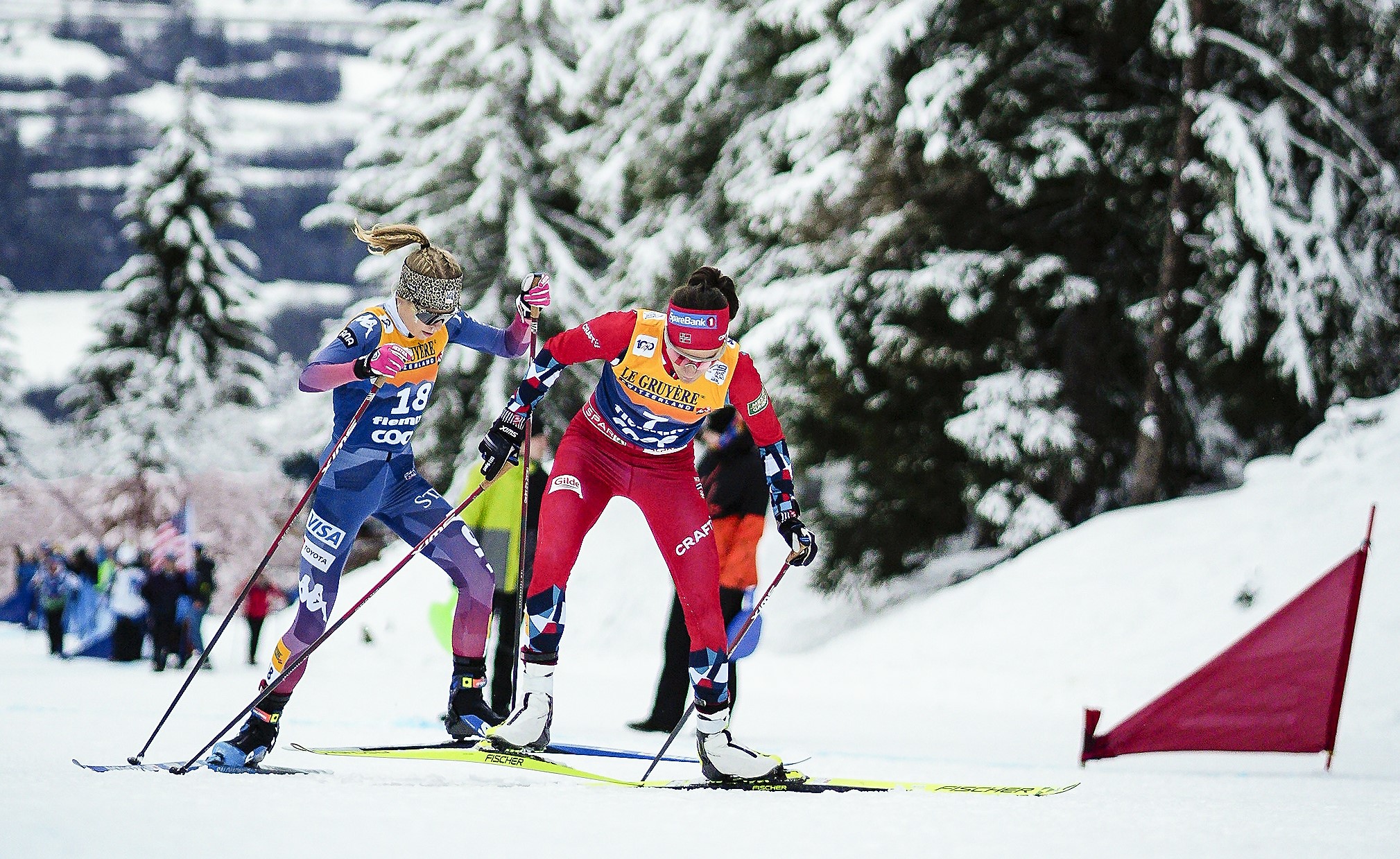
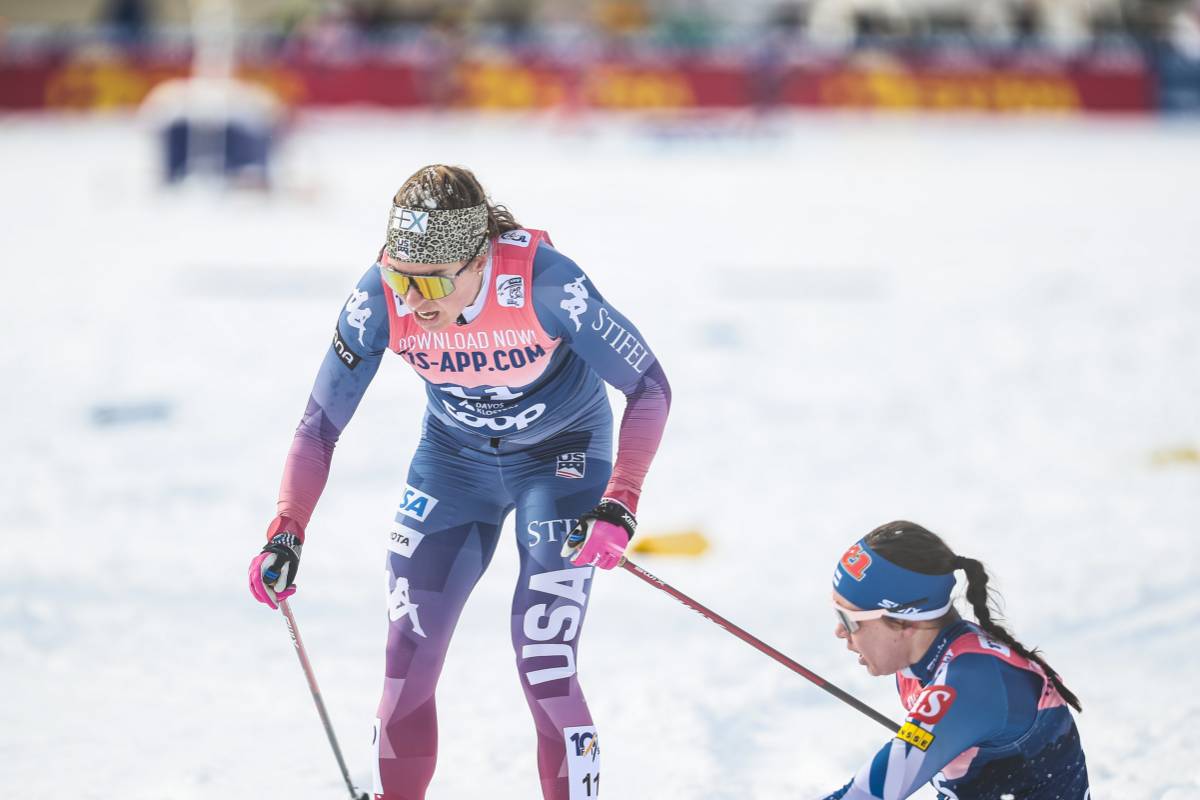
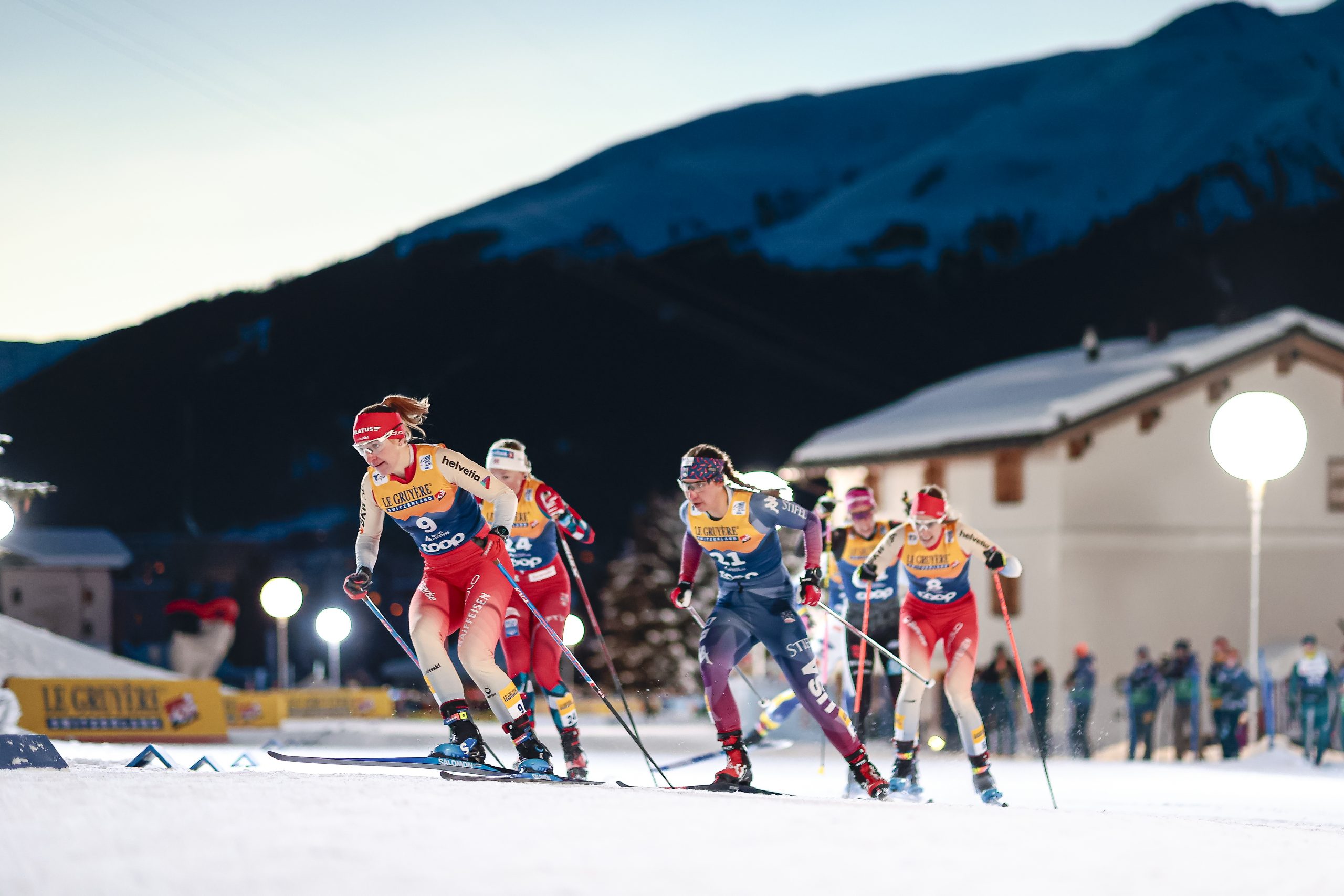
    Sophia Laukli (USA) (left) took a conservative approach up Alpe Cermis and stayed behind Heidi Weng (NOR) until the finish. (Photo: NordicFocus)

    FasterSkier: Let’s focus on something that you really like, and something that you’re obviously really good at; that was the climb up Alpe Cermis. When you crossed the finish line you looked like you could just keep on going. Did you feel that way?

    Laukli: Honestly, this is the first race and the first time going up the hill where I finished and I was like, ‘Oh, that should have probably been harder.’ I definitely thought very tactically about it and was just going to stay with whoever was leading and hope to be able to keep up with them. As I was following Heidi Weng (NOR), I felt like I probably could have gone faster, but at the same time I was worried; you see so many people blow up. I’ve done it [Alpe Cermis] twice now, but I still was still a little bit unsure of where it finished. So, I just decided to stay behind until I really knew that I could make a move. I think I waited till 400 meters, and I was ‘OK, I’m not going to blow up.’ But when I got to the finish, I realized that I could have probably made a move quite a bit earlier. I don’t really regret it. This is the one race in the year where I typically actually need to lie down at the finish line and when I got there, after the race, I was a bit shocked that I didn’t need to lie down.

    Laukli had lots to spare at the end of the Alpe Cermis climb, but a conservative strategy was her plan for the stage. Heidi Weng (NOR), Sophia Laukli (USA), Delphine Claudel (FRA), (l-r) (Photo: NordicFocus)

    FasterSkier: It sounds like you think you could have won by an even wider margin if you had either broken away from Heidi earlier or just set your own pace the entire way?

    Sophia Laukli: I think potentially. But it’s also hard to say. Maybe if I had sent it earlier, I would have blown up a bit and then lost a lot of time. But I think it was a bit conservative of an effort, but with that type of race, especially when I’m not really fighting for an overall position, the time doesn’t matter. I was more just thinking about winning the stage and so being just a little bit cautious probably pays off.

    FasterSkier: Before the climb, you probably had a sense that Heidi was going to make a charge, but your plan sounds like regardless of who was in the lead, that you were just going to mark them the entire way and go by them at the finish; let them set the pace and then use your long distance abilities to charge past them?

    Sophia Laukli: I was definitely anticipating either Heidi or Delphine [Claudel] to make a move. If no one was really making a move, or there was still a big pack, I would have maybe tried to do my own attack, but it worked out pretty great that Heidi made a move and then no one else followed besides me. It just couldn’t have worked more perfectly to my benefit. The goal was to do as little effort as possible until the very end. So that worked.

    FasterSkier: I’m wondering if you had any feeling at all of not wanting to get ahead of Heidi and pull her along and help her put time into Jessie Diggins?

    Sophia Laukli: To be honest, I didn’t. Going into the last stage, I was very much under the impression that Jessie just pretty much had it, no problem. And so, it wasn’t until after the race that I realized that really benefited her [Diggins, by not pushing the pace too much]. And so that was kind of cool. But no, I honestly wasn’t intentionally doing that throughout the race.

    Rosie Brennan (USA) and Sophia Laukli (USA) (l-r) skiing together during the Tour de Ski. (Photo: NordicFocus)

    FasterSkier: You had a little stumble about 3/4 of the way up the climb. It looked like you either tripped over your own ski or pole?

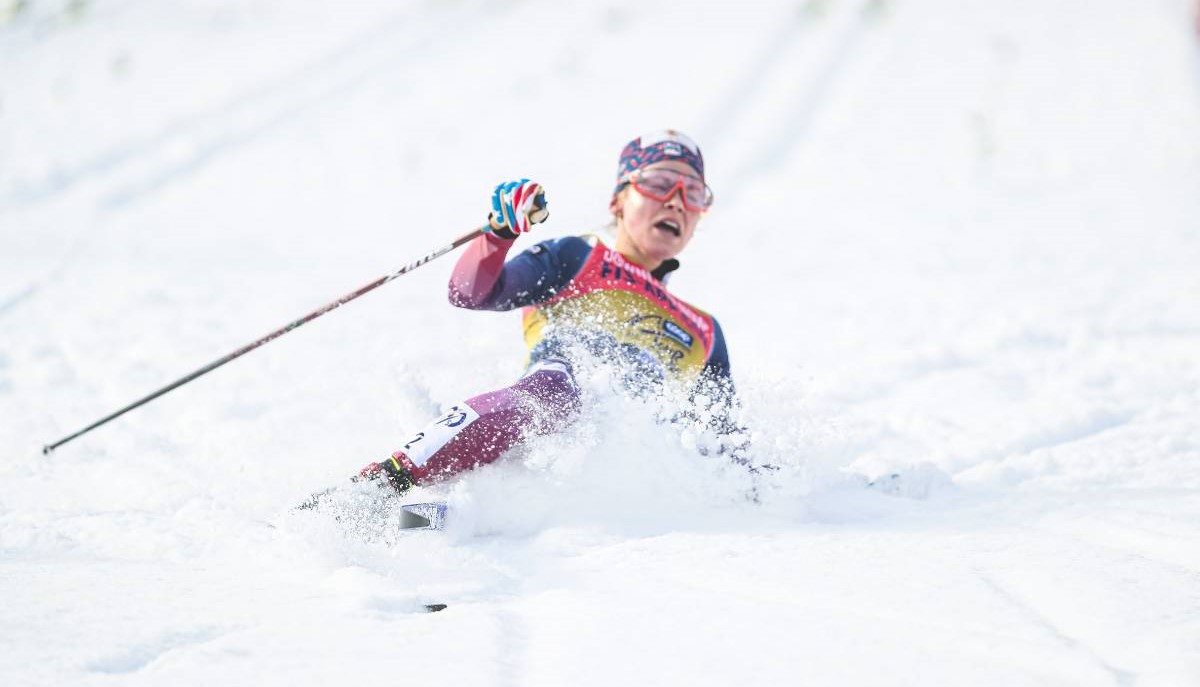
    Sophia Laukli: I straddled the gate— went on the other side of the gate . . . I was stressed after the fall because I was actually thinking about it, ‘Don’t put your ski on the other side and don’t straddle that [gate]. That would be dumb.’ And then of course I did.

    FasterSkier: Did that take much out of you, between the fall and then having to catch back up with Heidi?

    Sophia Laukli: Initially I was a little bit panicked in the moment because, a lot of times it seems like a little bit of a gap opens up on the hill; you just can’t catch back up. But I think that was where I realized that I had probably the most energy out there and I just threw in a little bit of a sprint to catch up to Heidi. I was like, ‘Oh, this is actually going to be OK, because I think her pace is fine for me.’

    FasterSkier: You regained the ground in just a matter of a couple of seconds, which was really impressive. That’s why I was wondering how much that took out of you?

    Sophia Laukli: I was definitely worried in the moment, but as soon as I did make it up, that was when I realized oh, maybe I’m feeling better than her because I don’t feel that I wasted any energy and now, I can just sit in behind. No matter what, it’s always worth putting in a little extra energy to catch up to someone, and then let them do the rest of the work.

    FasterSkier: We still have a lot of the World Cup season left, but now that the Tour is behind you, I wonder if it’s given you any additional perspective on how your trail running career has affected your performance so far; either positively or negatively?

    Sophia Laukli: So far, I’ve been pleasantly surprised. I don’t know if I can pinpoint that it’s benefited my skiing because I have had way more success this year in general. I’m attributing it mostly just to my summer training for skiing. I was definitely worried, especially just after period one, because period one was quite good for me; anticipating maybe now is when I’m burned out? So, I think having the end of the Tour go that well …  I don’t know if it’s the running that helped me? I think probably the all the super long efforts from running allowed me to have quite a bit of energy at the end of the Tour and that’s probably why I had such a good last day. I probably had more energy that day than some of the very first days, which is not the case for most others. When I’m doing those three to four hour long efforts in the summer, I’m sure that plays into the mix for something like the Tour. I think this is the first season where I’ll really be able to figure out how much I can do and if I can sustain a whole ski season right after running season. Obviously, I don’t want to jinx it, but it is exciting for me to see that for at least half of the season, I’m able to continue.

    FasterSkier: So, you don’t feel like it’s affected your strength negatively?

    Sophia Laukli: No. I don’t think I could say that there’s been really any negatives from the running.

    FasterSkier: There are several long races coming up in the second half of the season. There’s Holmenkollen, but that’s a Classic this year.

    Sophia Laukli: Yeah, so that’ll be interesting (laughing).

    FasterSkier: Holmenkollen, being the distance that would be prime for you but in the technique that isn’t your favorite; you have to kind of be looking at that with a little bit of mixed emotion right now?

    Sophia Laukli: Oh definitely. I was pretty devastated to miss it last year, with NCAAs, because it was skate. And I justified that by saying I’ll have several opportunities, but at this point I honestly don’t know the next time it will be a skate because the World Champs and Olympics always mess with that. But that is why I am motivated to get better at Classics so that I can get just as excited for that race.

    Sophia Laukli (USA) played it smart by playing safe going up Alpe Cermis. She has seen too many people blow up by going out too hard. (Photo: NordicFocus)

    FasterSkier: Since you mentioned other Championships affecting the Skate/Classic schedule for Holmenkollen, I’m wondering if you have any thoughts, given how many people dropped out of this year’s Tour; is the Tour something that should be done in Olympic and World championship years?

    Sophia Laukli: I haven’t thought too much about it, but I think it is a little bit scary for someone that is very much a medal contender and this year in particular, it seemed really, really bad. I think you saw Therese Johaug in the last Olympics, she skipped it. I’m feeling that they’re never going to take [the Tour de Ski] away, but I have a feeling in 2026 there may be very, very few participants. I think for me that amount of racing is not what makes me sick. It is interesting why the Tour correlates with so much sickness. I think this year in particular there’s just been way more sickness in general. I don’t know why it’s delayed like that, but I know personally, the Tour makes me tired, but I’m just as likely to get sick in period one. I think there must be a lot of the top skiers considering it not being worth it. Trying to find a balance [is difficult] because you see some of the people that are in the overall [cup] and then they miss the Tour and then they’re kind of giving up the overall position at the end of the World Cup. It’s a little bit scary to miss World Cups, at the same time, even though it might also make you sick and miss more. The whole new like point system and everything else makes a lot of conflicting decisions for sure.

    FasterSkier: Is skipping the Tour a point of conversation that comes up amongst skiers?

    Sophia Laukli: I think maybe; yeah. Not this year, but I do remember that conversation before Beijing, and I think a lot of people see it that way, but a lot of people see it that racing that much can really put you in good racing shape in a couple of weeks after and, that’s how I look at it. It puts me in better racing shape for period three and period four. And I’m also someone that for better and for worse doesn’t put too much stress on getting sick. I think this whole year there’s a wide range of masking and being very, very adamant about it, or very cautious about sickness, and I’m on the lower end of that. And so I’m never someone to put that as my decision whether to race or not, and obviously when I got sick right at the end of period one, it was, ‘Yep, I probably deserved that, because I haven’t been so careful,’ but I guess that’s why when it comes to next year and the year after, when there are Championships; I don’t worry enough to want to bail on the Tour, at least as of now.

    FasterSkier: Well, I appreciate you taking time out of your day to give me a call. Thanks again for taking so much time. You’re going to stay in Oslo until racing starts again?

    Sophia Laukli: Exactly. Thank you.

  • That Was a Great Tour de Ski—Please Don’t Do It Next Year

    That Was a Great Tour de Ski—Please Don’t Do It Next Year

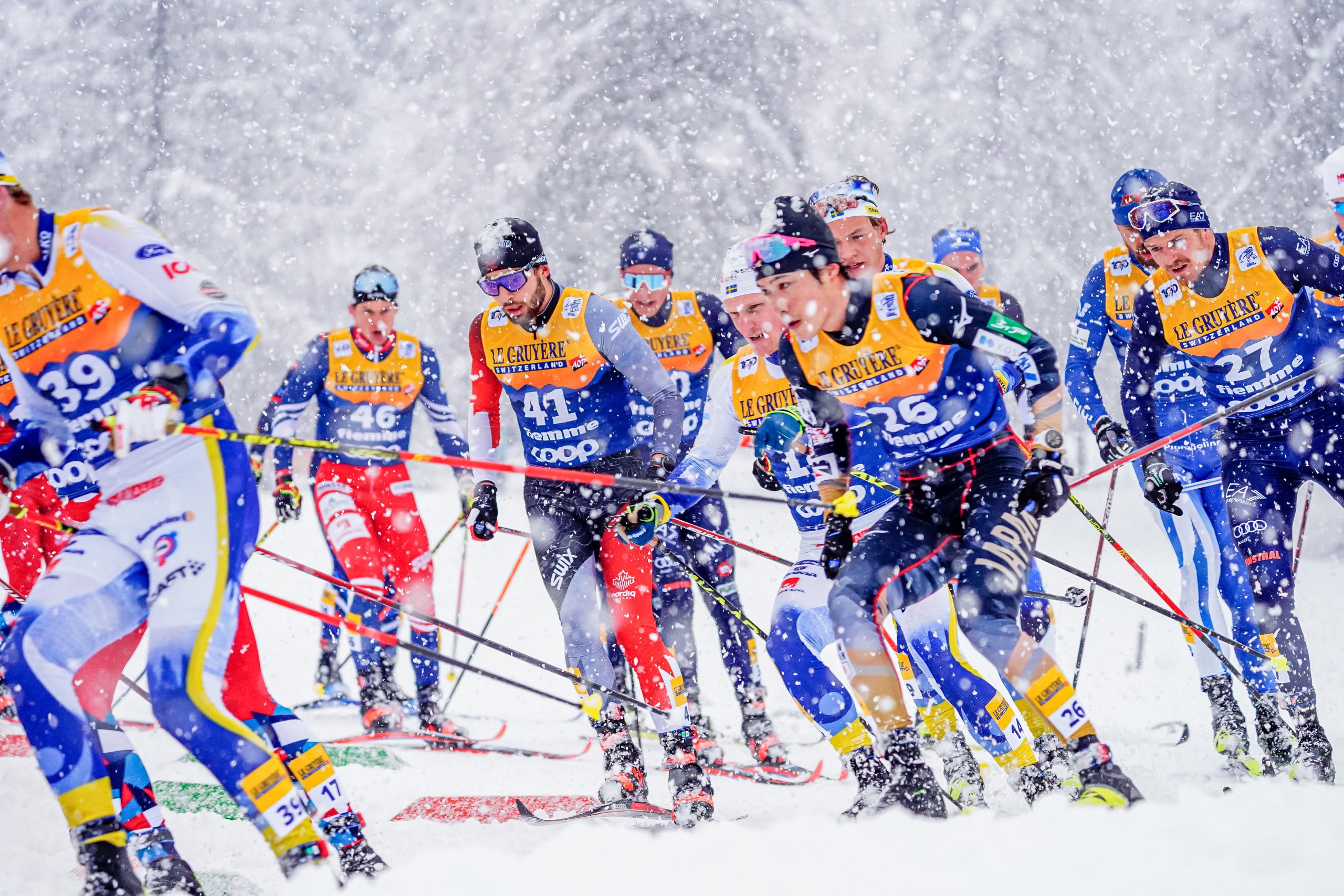
    Weather can’t be controlled, but schedules can be. Olivier Leveille (CAN), Naoto Baba (JPN), (l-r), in Val di Fiemme, Italy, racing during the Tour de Ski. (Photo: NordicFocus)

    The opinions expressed in this article are those of the author and do not necessarily reflect the views of FasterSkier.com.

    There’s an old adage in entertainment: “Always leave them wanting more.” At its heart, any sporting event is entertainment, and professional cross-country skiing is no exception. The Tour de Ski (TDS) just concluded one of its more entertaining and compelling editions in years. The 2023 version had everything on display. Plucky underdogs (the U.S. men) made an early bid, and the fight for the podium was fierce and hotly contested. Lots of new faces surfaced to help keep fans’ interest keen. The American women continued to throw down one impressive performance after another, while the rest of the skiing world tried to keep them off the podium. It was all wonderful to watch.

    Katharina Hennig (GER), Victoria Carl (GER), (l-r) support each other after another grueling Tour de Ski stage. (Photo: NordicFocus)

    But with the TDS, compelling viewing hasn’t always been the case. In years when the Olympics and World Championships are held, competitors have to prioritize which event to peak for, and many skiers, and sometimes entire country’s’ “A” teams opt out. Very few skiers can give it everything in the TDS and then head into the Olympics, only a couple of weeks later. Usually, World Championships are a little further down the calendar, but it still forces athletes to choose. The TDS history is replete with skiers not racing, or cutting the Tour short, when other championships follow soon after.

    Jessie Diggins (USA) won the Tour de Ski. It’s a massive effort which requires lots of rest before having to contemplate another multi-stage Championship in a few weeks. (Photo: NordicFocus)

    One only has to look at the list of athletes withdrawn from the Tour this year due to illness and other factors and you get their concern. On the Tour’s first day, 70 women and 99 men competed. On the last day, only 30 women and 53 men survived. These numbers illustrate just how intense of a grueling, immune response suppressing grind, the Tour is. And, as nice as it is to do well on the Tour, it doesn’t have quite as much cachet as a World Championship medal, and certainly not as much as an Olympic medal.

    The Tour de Ski is enough to leave anyone flat out exhausted as Caterina Ganz (ITA) shows. (Photo: NordicFocus)

    This puts athletes onto the horns of a dilemma between racing the Tour and risking damage to their chances in other championships, or doing part of the Tour as a tune up and dropping out at some point. This year’s high rate of attrition due to illness flashed a strong warning sign to athletes gearing up for other future championships: do the Tour at your own risk! After such a high dropout rate this year, you can bet that next year with the World Championships on the horizon, more athletes than ever will opt out of even starting the TDS or drop out after only a few races.

    Here’s a simple remedy. Hold the TDS only every four years. This isn’t some kind of Nordic blasphemy or heretical thought. It’s a simple remedy for a real problem. Every sport has to balance and adapt to the stress of over-scheduling against the allure of revenue from competitions, and cross-country skiing is no exception. The International Ski Federation (FIS) cannot simply say “everything will be all right.” It’s time to be proactive and get ahead of this problem.

    An every four year TDS schedule would be simple, and would look like this:

    If that’s not enough to sate everyone’s TDS hunger, then at least modify the schedule so that it isn’t held in Olympic years. The Olympics are just held too early to provide enough time off after the TDS to make it viable for most skiers. So, here’s a free suggestion FIS. Please…Please, do not run the TDS every year. The Olympics manage to maintain fans’ interest even though they are only held once every four years; so will the TDS. Sometimes, less is more, and more is too much.

    The TDS is just too good to see it devolve into some kind of watered-down, pasty version of its best self. So FIS, please, give us more of the TDS, by giving us less of it—the ski world will thank you for it.

    More Tour de Ski carnage, as Cyril Faehndrich (SUI) is totally out of gas. (Photo: NordicFocus)


  • Brennan-Diggins Second and Third in 20K Classic Pursuit. Diggins Keeps Tour lead

    Brennan-Diggins Second and Third in 20K Classic Pursuit. Diggins Keeps Tour lead

    This coverage is made possible through the generous support of Marty and Kathy Hall and A Hall Mark of Excellence Award. To learn more about A Hall Mark of Excellence Award, or to learn how you can support FasterSkier’s coverage, please contact info@fasterskier.com.

    Two Americans in the top three! Jessie Diggins (USA) claimed third behind Rosie Brennan (USA) who sprinted for second in the 20 k Classic Pursuit in Davos, Switzerland. Both Americans overcame early problems to fight for podium finishes. (Photo: NordicFocus)

    The Tour de Ski (TDS) continued in Davos, Switzerland, with the 20 kilometer Classic Pursuit. Jessie Diggins (USA) entered the women’s race with a 33 second lead in the overall standings over yesterday’s Sprint winner Linn Svahn (SWE), and a 1:22 lead over Jonna Sundling (SWE).

    A 20 kilometer Classic race is a long way; a lot can happen. Just a little too much kick wax, and 33 seconds can vanish in a flash. Svahn has a lengthy resume of top ten distance Classic race finishes, so putting over 30 seconds into Diggins was definitely a possibility. With another Classic race coming on Saturday, Diggins didn’t have much of a margin to work with and would need every bit of the starting cushion she had. A potential wildcard was that Svahn carried a yellow card for a technique violation with her into the race. If she received another violation, her day—and her Tour—could be done.

    Entering the race, Rosie Brennan (USA) was in 12th in overall standings, 2:44 behind Diggins. Sophia Laukli was in 20th, and now that she has survived the Sprints, the long distance specialist would have a chance to move up the standings.

    The 20 k Classic Pursuit format featured a little different setup: according to TDS rules, the start order was assigned according to the prior stage’s Sprint results instead of the traditional method of using the overall standings. This meant Linn Svahn (SWE) would be the first racer to start. She would be followed by Diggins even though Diggins finished third yesterday. Diggins went second because yesterday’s second place finisher Kristine Stavaas Skistad (NOR)—a sprint specialist—opted to withdraw from the TDS.

    To make formatting matters even more confusing, the International Ski Federation (FIS) initially published a start list that included wave starts for the pursuit, something allowed for in TDS rules. But, shortly after issuing the start list, they rescinded it after they realized that it would be a nightmare for television viewers trying to follow along at home.

    Another point of confusion was the race length. The race was billed as 20 kilometers and in fact was 22 k.

    After officials decided how the race would start, it was left to the skiers on the course to decide their fates in the TDS. It turned out to be a wild day full of ups and downs for everyone. After all of the excitement, it was Kerttu Niskanen (FIN) who edged out Rosie Brennan (USA) for first place in a thrilling finish. Jessie Diggins (USA) overcame an early fall and took third place.

    Other Americans also had excellent performances today. Novie McCabe finished 19th, only 27 seconds off the lead (and beating Tour contender, Svahn). Sophia Laukli finished 25th, 41 seconds back. Sammy Smith had another good day finishing 28th. Julia Kern did not start today as she is continuing to recover from health issues and wanted to focus on being rested for the remainder of the World Cup season.


    Rosie Brennan (USA) chose the right tactic by going with kick and glide instead of double poling. (Photo: NordicFocus)
    20 Kilometer Classic Pursuit

    The Davos Pursuit course race consisted of two ten kilometer laps; another unusual format for World Cup racing. But the biggest factor was that it was snowing heavily, with temperatures close to freezing; always a Classic waxing nightmare. Bad decisions—or bad luck—in the waxing process could ruin a racer’s day. Because of this, several of the Swedish women decided to double pole the course and herringbone up the hills through the restricted technique zones. It was a choice Brennan eschewed, “I honestly didn’t consider double poling,” said Brennan. “[I didn’t] consider using anything other than the skis that my tech put in front of me today. I was just focused on making those skis the best skis that I could.”

    The unusual starting pursuit format turned out to work to Diggins advantage since at least one skier ahead of her would be breaking the track.

    Jessie Diggins (USA) took a hard fall early on and it looked like it could be a catastrophic day for the American. But Diggins fought her way back all the way to the podium. (Photo: NordicFocus)

    Early on, Diggins was passed by Maja Dahlqvist (SWE) and Johanna Hagstroem (SWE). Then, only 6:30 into the race, Diggins tripped and fell hard on a flat section of the course. She was only down for a second, but the damage was done. She immediately was separated from the leaders, dropping eight seconds behind them, now working on her own and trying to gather herself after a hard dramatic fall. It was definitely not the start to the day that Diggins wanted. After the race, Diggins acknowledged it was a hard fall. “It hurts, a lot actually”, said Diggins. “I’m glad I have a day to rest, but it will be ok.” When asked about the mechanics of the fall, “I caught my kick wax on the freshly shoveled snow on the first road crossing, which is why I fell,” Diggins observed. ” I was careful to stagger my skis on the crossings after that!”

    After the fall, a group of chasers caught Diggins; at least she was no longer skiing alone. This was a huge, fortuitous, piece of good luck for Diggins since the group was closing in quickly on the leaders. The group helped Diggins regain contact with the front of the race without having to expend as much energy as she would have on her own. An additional piece of help came when after the gap was closed, the pace slowed considerably, and pack racing tactics took over for a while.

    The race continued to slow into one giant pack. But then Rosie Brennan (USA) shot to the front to push the pace along with Tour contender Victoria Carl (GER). Diggins had been swallowed up by the group and dropped all the way to 17th; ominous signs for the Tour-leading American.

    At 5.7 kilometers, long distance expert Astrid Oeyre Slind (NOR) made her presence felt when she went to the front with Linn Svahn. Svahn would repeatedly test the pace knowing that today was her chance to gain time on Diggins. It was clear that Svahn had made a choice to go with little or no kick wax as she was double poling the entire time. At this point, Brennan had dropped back significantly, to 16th, and Diggins was 22nd, The placings sounded bad, but the time gap wasn’t terrible. Diggins was only 11 seconds off the lead.

    Meanwhile, Sophia Laukli (USA) was making a big charge. She started 44th, and had now pushed herself up to 20th; at that point, ahead of Diggins.

    At 8.6 kilometer Svahn made it back to the lead and was alternating pulling at the front with her teammates. The race had turned into a contest between those double poling and racers who were striding. Skiers lacking kick wax gained an advantage on every downhill, but those racers paid a high price when the groups hit big climbs. As the competitors neared the stadium, those without kick wax had to herringbone up the entire length of big hills, losing large chunks of time.

    As the skiers continued on a long climb at 9.5 kilometers, most of the pack severely bogged down as many of the leaders were forced to herringbone. It clogged up the race and closed the pack considerably.

    Whenever a Classic race is contested, Niskanen’s name comes up. Not surprisingly, at this point Niskanen joined the leaders. Brennan was out front again and Diggins had tenaciously clawed her way back up to ninth, only 18 seconds off the lead. More importantly, Svahn had fallen back and was now trailing Diggins. It was a dramatic change of events in a short amount of time, and was beginning to show a flaw in the Swede’s plan of not relying on kick wax. When asked about her own waxing situation, “my kick came and went during the race,” Diggins said. “But luckily I had just enough when I needed it to be able to make my way up that big last climb. Hats off to our amazing tech team for giving us such amazing skis in a crazy snowstorm!”

    Simultaneously, Brennan made another bid for the lead and went to the front with Niskanen right behind her. Just past the halfway mark, there was one more significant downhill; again, those with better glide went to the front. Diggins continued to gain on the race leaders, and she was only 5.6 seconds off the lead with Svahn right with her. But the most significant thing was that Diggins had seemed to regain her momentum and was no longer in emergency mode. She had remarkably found her rhythm again and looked strong.

    At this point Svahn received a verbal warning for a technique violation. It was not a yellow card which would have disqualified her. It was an interesting decision to issue the warning instead of a yellow card. But for this generous officiating decision, Svahn’s day could have ended.

    With only 4.3 kilometers to go, Svahn was at the front again. Racers still had one more big climb ahead of them before they would have the finish in sight. At this point Slind went back to the front taking Svahn with her. But, as had happened in prior climbs, the skiers lacking kick struggled. Diggins took the opportunity, striking like lightning and passing Svahn. It was shocking to see Diggins who had encountered so many struggles throughout the day fighting to overtake Svahn who had seemed determined to stay at the front.

    Jessie Diggins (USA) made a remarkable comeback from an early fall, not only extending her overall lead in the Tour de Ski, but also taking a podium spot in the 20 k Classic Pursuit. (Photo: NordicFocus)

    As the climb continued Brennan took advantage and went to the front. The hill continued to take its toll, and skiers who had gone without kick wax paid a huge penalty as they struggled to double pole or herringbone up the hill. It was a scenario Brennan had anticipated, “that climb at the end, that’s my strength.” she said. “I felt I could use that to my advantage if I had kick wax on, that was my goal, I just wanted to push the climbs and make the double poling skiers hurt and sit in on the downhills and flats, and try to save for the climbs. That last climb is really big so having kick wax really helps there.” It was a cagey smart veteran move which helped to put her onto the podium.

    Brennan was now being chased by Niskanen. Remarkably, Diggins was up to fifth. She too, was herringboning up the final steepest section of the last hill, but she was able to make additional gains and moved to fourth. Brennan and Niskanen battled at the front, establishing a little bit of a gap on the field. With two kilometers, left they had a ten second gap on the field when Niskanen went to the front to try and separate herself from Brennan. At the same time Diggins was locked in a battle with Margrethe Bergane (NOR) for the final podium spot. It was hard to believe that not long ago, Diggins was lying flat on the ground, seemingly out of the race and maybe out of the Tour lead.

    Rosie Brennan (USA) dueled all the way to the finish with Kerttu Niskanen (FIN), but the Finn had just a bit more to give as they crossed the line. (Photo: NordicFocus)

    Niskanen and Brennan entered the stadium entrance together where additional tracks were now available. Brennan stepped onto her own track and briefly passed Niskanen as the two jockeyed for position. Niskanen passed Brennan back as Brennan desperately clung to the Finn’s ski tails. But as they entered the final straightaway Niskanen pulled away slightly. Brennan’s fate was sealed; she didn’t have enough time to close on Niskanen, and finished second. Right behind her, amazingly, was Jessie Diggins. It was a remarkable finish for both Americans.

    It was a great day for Brennan, and a redeeming podium finish in what has been a challenging Tour. For Diggins … she had just given a master’s class in race management and Tour strategy.

    Second place in the 20 k pursuit: a great day for Rosie Brennan (USA). (Photo: NordicFocus)
    Tour de Ski Standings

    It was all a bit surreal for Diggins. Early on, her lead in the Tour was evaporating, and it looked like she could lose her first place position. But somehow, she found another level to keep her Tour lead. Diggins had fought back. Svahn—who put in an all or nothing strategy—dropped to seventh place, over a minute behind Diggins. Niskanen took over second place , 44 seconds behind Diggins. Jonna Sundling (SWE) was in third place, 52 seconds back. Victoria Carl, dropped all the way to eighth, 1:39 off the lead, and it looked like her podium chances were gone.

    Rosie Brennan helped her cause significantly, moving into tenth place 1:56 behind Diggins, but only 1:04 off a podium spot. With two stages left, Diggins is in control of her own destiny. Next, the Tour de Ski moves to Val Di Fiemme, Italy, for a 15 kilometer Classic mass start, followed by the lung-busting climb up Alpe Cermis.

    20 K Pursuit Results

    Tour de Ski Standings

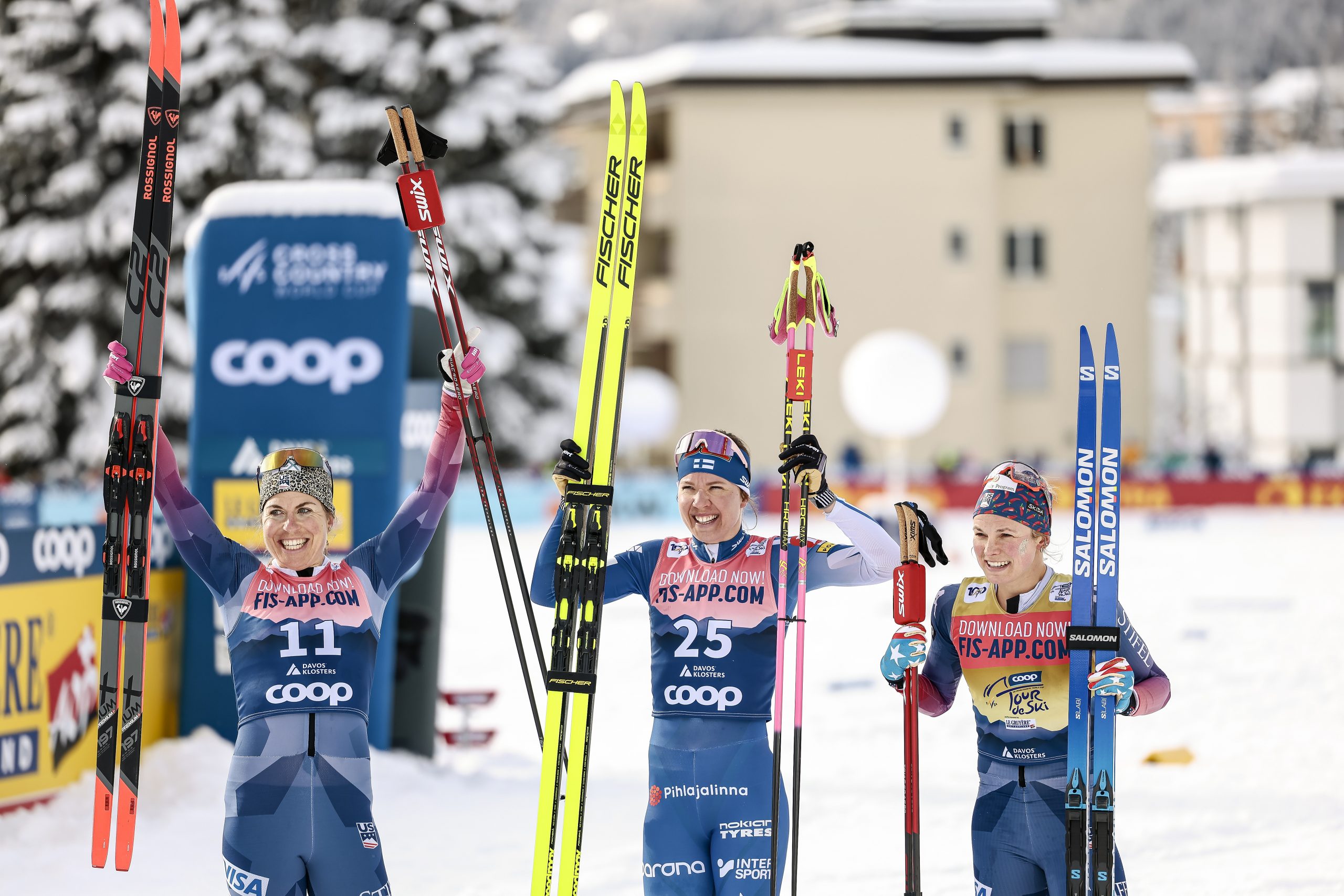
    It was a great day for the American women. Their love affair with Davos continues as they take two podium spots. Rosie Brennan (USA), Kerttu Niskanen (FIN), Jessie Diggins (USA), (l-r) (Photo: NordicFocus)
  • Diggins Still Leading Tour—Finishes Third in Freestyle Sprint

    Diggins Still Leading Tour—Finishes Third in Freestyle Sprint

    This coverage is made possible through the generous support of Marty and Kathy Hall and A Hall Mark of Excellence Award. To learn more about A Hall Mark of Excellence Award, or to learn how you can support FasterSkier’s coverage, please contact info@fasterskier.com.

    Jessie Diggins (USA) pushed from the front all day. It worked to get her onto the podium and maintain her lead in the 2024 Tour de Ski. (Photo: NordicFocsu)

    Davos, Switzerland, is known as a luxury resort and playground for the rich and famous. Less known among most of the world is that it’s also a favorite venue for the Stifel U.S. Cross-Country Ski Team. For reasons hard to quantify, the U.S. squad generally performs well there. Over the last two years, Jessie Diggins (USA) has stood on the podium three times in Davos. In the last three years, Rosie Brennan (USA), has had two outright victories, and four top five finishes. As the Tour de Ski (TDS) moves to Davos and starts with the Freestyle Sprints, Team USA was hoping that its past good fortune in Davos would continue.

    Today’s event is the Sprint Freestyle—the second Freestyle Sprint of the 2024 Tour (that includes no Classic sprinting). For reasons known only to the International Ski Federation (FIS), both Sprint events in this year’s TDS are Freestyle; a schedule that’s just fine by the American women. After her dominating performance two days ago in the 20 kilometer Freestyle Pursuit, Diggins is the Tour leader. She sits 47 seconds ahead of Victoria Carl (GER), 48 seconds of Linn Svahn (SWE), and 48 seconds ahead of Jonna Sundling (SWE).

    It was an important day for Jessie Diggins (USA) with lots of bonus time up for grabs. One mistake and Diggins could have found herself on the outside looking in. Even under that pressure, she performed flawlessly. (Photo: NordicFocus)

    Because of who is chasing Diggins—and considering the nature of Sprint time bonuses in the TDS—today’s race took on outsized proportions. TDS standings are based on total accumulated finishing times. In Sprint races, finishing times are calculated based upon the qualifying round times. But more importantly, those who qualify for the heats get bonus time. The winner gets 60 seconds subtracted from their overall time (comparatively, 26th has four seconds subtracted from their overall time). For Diggins, the combination of format and who the competition is has become especially compelling. While Carl has had strong Sprint showings this year, she is not especially known for Sprinting prowess. On the other hand, Svahn and Sundling are sprinting powerhouses. Svahn began her career dominating Sprints, and Sundling has been a consistent Sprint podium finisher for years. If Diggins couldn’t hang with the two Swedes, she could quickly find herself knocked off the leader’s perch.

    Jessie Diggins (USA) went to the front in each heat leaving nothing to chance. (Photo: NordicFocus)

    Sundling and Svahn ended up qualifying first and second. However, Diggins qualified fifth, only four seconds behind Sunding, setting up a very impactful round of heats. Rosie Brennan (USA) also qualified for the heats finishing tenth, six seconds behind Sundling. Eighteen year old American Sammy Smith had her best ever World Cup Sprint qualifications, finishing 19th. Julia Kern also qualified, finishing 21st. So, with four Americans reaching the qualifying rounds, Davos’ good luck was continuing for team USA.

    Other Americans in the qualifying round were, Novie McCabe 34th, and Sophia Laukli in 50th.

    When the day’s racing concluded, it was Svahn taking first, Kristine Stavaas Skistad (NOR) was second, and Diggins finished third. Julia Kern took 11th, Rosie Brennan was 15th, and Sammy Smith ended up 22nd.

    As expected, the Tour standings tightened significantly with Svahn gaining ground on Diggins, and Carl taking steps backwards.

    Tour de Ski Women’s Freestyle Sprint

    The skiers raced under the lights in Davos with a late start of 5:30 p.m. local time. Diggins for one appreciated the late start time. “I was really tired yesterday,” said Diggins. “I’m glad it was a night race.”  There were no Americans in the first heat with Sundling having to battle against the formidable Skistad (NOR) and Emma Ribom (SWE). Ribom was able to take first with a photo finish putting Skistad into the semis with a second place finish. Sundling would have to wait to see if she qualified for a lucky loser. It could prove extremely significant for TDS standings.

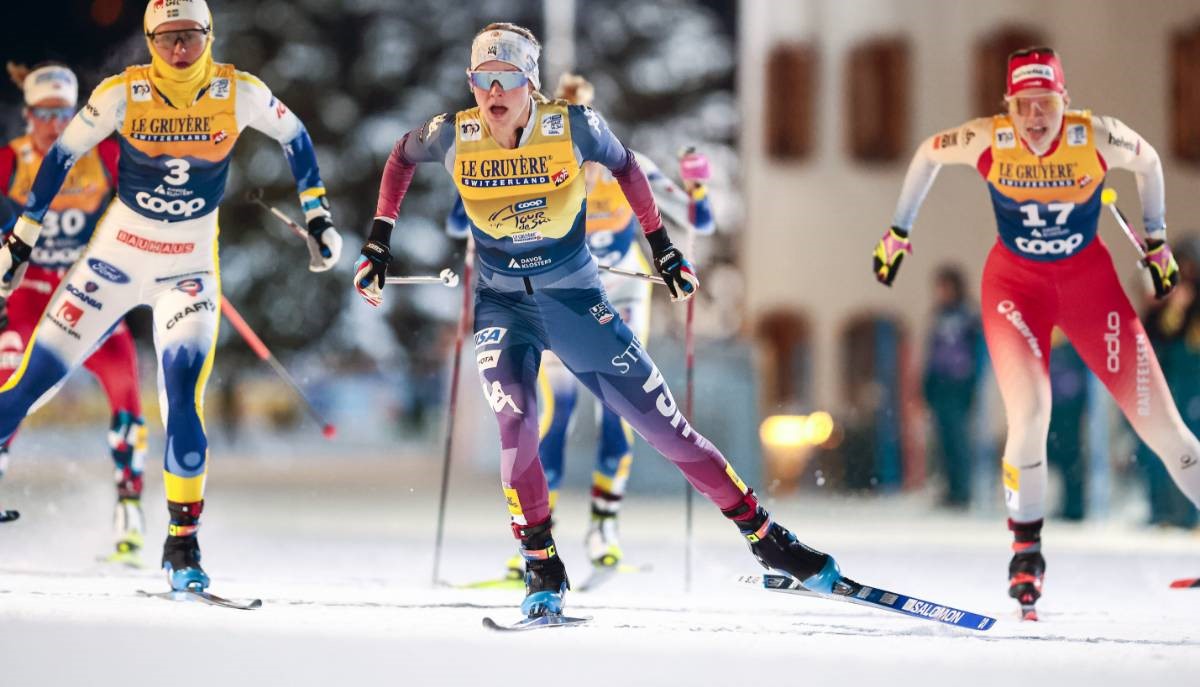
    Rosie Brennan (USA) (middle) raced hard under the lights in Davos, but was unable to advance out of her quarterfinal where she faced Federica Sanfilippo (ITA), Jasmi Joensuu (FIN), Anja Weber (SUI), Linn Svahn (SWE), (l-r) (Photo: NordicFocus)

    Brennan and Svahn raced in the second heat. In an interesting turn of events, Federica Sanfilippo (ITA)—a former member of the Italian biathlon team—reached the heats by qualifying 15th. Early on, Brennan was pushed toward the back but fought her way up to join the leaders about half-way through the race. When the race ended, Brennan was in third trying to secure a place for advancement. For the time being, she occupied a lucky loser spot, and importantly, had knocked Sundling out of advancing.

    Julia Kern (USA) (middle) was able to rebound from illness and make it into the semifinals. (Photo: NordicFocus)

    Julia Kern had her opportunity in the third heat. She would face hometown favorite Nadine Faehndrich (SUI), along with Moa Ilar (SWE), and Anne Kjersti Kalvaa (NOR). Kern and Faehndrich set the pace throughout the race with Faehndrich putting on a tremendous burst in the last 30 seconds to take victory. Kern advanced by taking second. It was a fast heat which ended up moving Brennan out of the lucky loser position.

    18 year old teenage phenom, Samantha Smith (USA), made it into the heats. (Photo: NordicFocus)

    In heat number four, teenager Sammy Smith had another taste of World Cup heat sprinting. TDS contender Carl was also in the heat. Smith hung on at the back for most of the race, with Carl also at the back. It was Johanna Hagstroem (SWE) and Mathilde Myhrvold (NOR) who took first and second, automatically qualifying into the semifinal. Carl finished third, further disrupting the TDS standings. Smith finished fifth.

    As Diggins prepared for her heat, she knew that two of her main competitors would not advance, allowing her to add valuable time to her lead. Diggins would be up against Dahlqvist, Astrid Oeyre Slind (NOR), and Frida Karlsson (SWE). As has been her tactic this year, Diggins went hard from the start and immediately led. She charged up the first steep hill and didn’t let the pace slacken one bit. She was immediately able to put a bit of a gap on the field. Dahlqvist was able to pull up on Diggins halfway through, but Diggins immediately responded, pulling away again. She established an enormous lead over the rest of the field and pushed hard all the way through to make the semifinals. Most importantly, she would automatically put time on Carl and Sundling. Svahn was the only one of her main rivals who advanced to the semis. So, before the semis even started much of Diggins’ to do list for the day had been checked off.

    Semifinals

    Svahn landed in the first semifinal with Diggins and Kern dueling in the second semi. In that first semi Svahn would go up against Faehndrich, Ribom, and Skistad. Svahn went into the lead right from the start. Halfway through, the entire field was still bunched together with no one getting separation and the pace was slow. Coming into the finish Ribom fell leaving Svahn clear to take the victory. It meant that Svahn would get significant bonus time no matter what happened from this point forward, and put pressure on Diggins to make the finals.

    In the second semifinal, Diggins and Kern would face Hagstroem, Dahlqvist, Myhrvold and local favorite Alina Meier (SWI). Diggins went out hard from the start again and shot to the front. She pounded up the first climb not content to let tactics play into the race. Dahlqvist was able to hang with Diggins along with Hagstroem. As they came up the big hill for the final climb, Diggins put a gap on the entire field. Going into the finishing stretch she had a significant lead to put her into the final. Kern finished sixth. For Diggins, it meant that she would fight it out in the final with Svahn, but that no matter what happened at this point, the competition could only have limited gains.

    Sprint Finals

    In addition to Svahn, Diggins would face off against Dahlqvist, Skistad, Myhrvold, and Hagstroem. It was a deep field, and Diggins’ strategy of going hard from the start could run into obstacles when facing such a formidable grouping. Undeterred, Diggins went hard from the start, taking an inside lane and going to the front. But this time, Skistad immediately challenged her, hung on her tails, and appeared to have very fast skis. Svahn then picked up the challenge and three quarters through jumped to the front. For the first time all day, Diggins was now chasing. Svahn quickly put in a big gap over Diggins as she entered the final stretch. Diggins pushed hard all the way, but was outpaced by Skistad, who finished second with Diggins taking third. It meant that Svahn would gain valuable time on Diggins, but Diggins had done all that she needed to today by making the finals and keeping the competition behind her. And, Davos would continue to be a favorite American venue.

    Jessie Diggins (USA) was all smiles after another hard day of racing. She did what she needed to do, maintaining her lead in the Tour. (Photo: NordicFocus)
    Tour de Ski Standings

    After all the day’s jostling was over, Diggins still maintained her TDS lead, but it had shrunk to only 33 seconds over Svahn, who was now in second place. Diggins was pleased and surprised to still be in the lead, “that’s a huge surprise,” said Diggins after the race. Sundling was 1:22 back, and Ribom 1:27 behind. Carl who had come into the day in second was no relegated to fifth and was 1:31 back. Also of critical importance, key challengers Heidi Weng (NOR), Frida Karlsson (SWE), and Astrid Slind, were all over 1:30 behind.

    Tomorrow could prove to be Diggins’ most challenging day yet when the 20 Kilometer Classic Pursuit race is held. Diggins will take her lead into the race while the rest of the field tries to chip into her lead. Long Classic races are unpredictable and Diggins will be hoping that the Davos magic continues.

    Women’s Freestyle Sprint RESULTS

    Tour de Ski Standings


  • Ogden’s First Podium—Third in Tour de Ski Sprint

    Ogden’s First Podium—Third in Tour de Ski Sprint

    This coverage is made possible through the generous support of Marty and Kathy Hall and A Hall Mark of Excellence Award. To learn more about A Hall Mark of Excellence Award, or to learn how you can support FasterSkier’s coverage, please contact info@fasterskier.com.

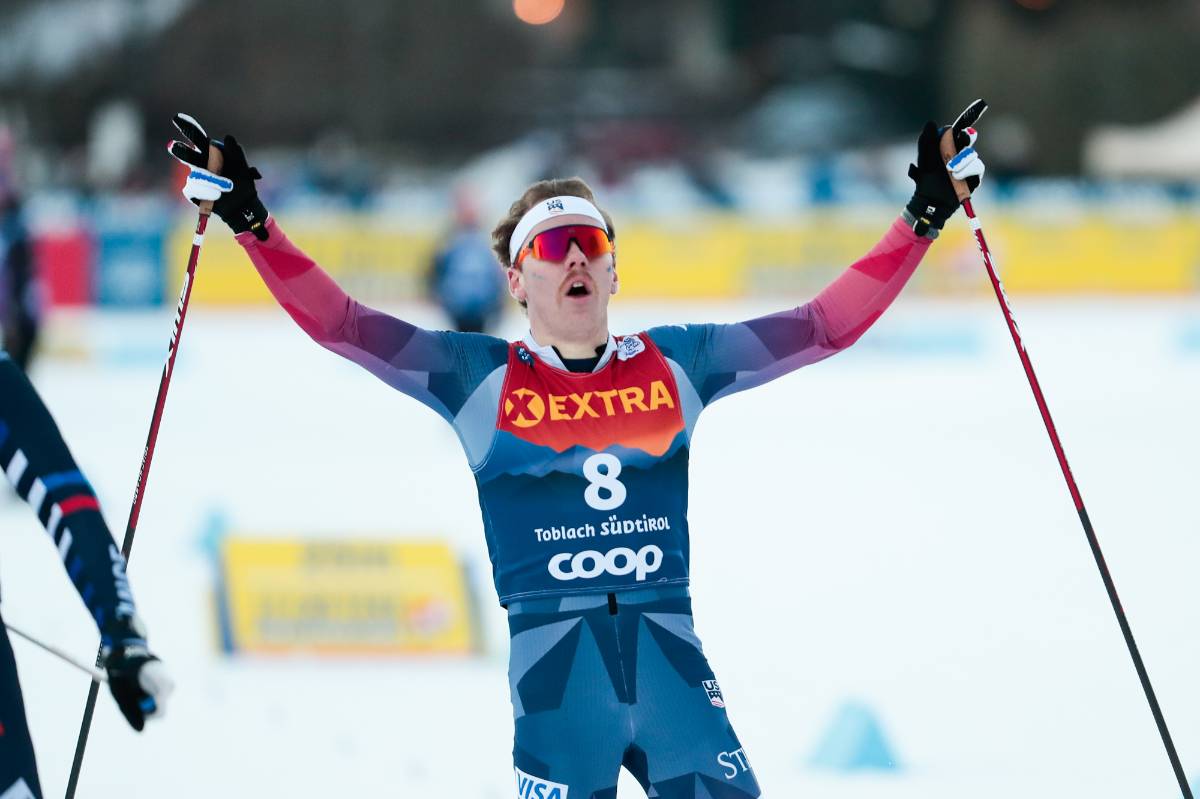
    It was a glorious day for Ben Ogden (USA), as he captured his first ever podium and had a great start to the Tour de Ski. (Photo: NordicFocus)

    It looks like it must be pretty fun to be part of Team USA right now. Two American women (Jessie Diggins and Rosie Brennan) sit in the top three of the World Cup standings, Diggins forges a path toward the lead in the Tour de Ski, and American men advance through sprint qualifying, make finals, and race onto the podium (as JC Schoonmaker did three weeks ago in Oestersund, Sweden). Today, in Toblach Italy, it was Ben Ogden’s time to step into the spotlight. One who exudes the energy and joy epitomizing this season’s US Ski Team, Ogden smiles broadly and celebrates genuinely. American ski fans—and those of many other nationalities, as well—smile and celebrate with him.

    After a two week hiatus, the FIS World Cup resumed today in Toblach, Italy, for Day One of the Tour de Ski (TDS). Today, the Freestyle Sprints were up for grabs. Going into the weekend, the prohibitive favorite to win the Men’s Sprint—and the overall Tour de Ski title—was Johannes Hosflot Klaebo (NOR). That was before yesterday, when conventional wisdom received a giant gut-punch with Klaebo’s announcement that he was ill and would not be able to compete in the TDS.

    Klaebo’s illness quickly threw the men’s competition into disarray, and the immediate question became: “Which Norwegian would step up to fill Klaebo’s boots?” With Norwegian men having won all individual World Cup events this season, it was not a stretch to simply assume that another Norwegian would rise to the challenge. But not only was Norway missing Klaebo, it was also missing Simen Hegstad Kruger—who finished second in last year’s TDS—as he was also taken ill. With Norway missing its one-two punch, they suddenly seemed very vulnerable.

    Illness also invaded the Finnish camp with Iivo Niskanen announcing that he was sick and would withdraw from the tour.

    Lucas Chanavat (FRA) made the most of Norway’s health problems and took the victory in Toblach. (Photo: NordicFocus)

    Waiting to challenge the Norwegian dominance was France’s Jules Chappaz—silver medalist from last year’s World Championships—along with countryman Lucas Chanavat, one of the few sprinters who has shown himself capable of challenging Klaebo. With the top Norwegians out of the way, and Chappaz and Chanavat chomping at the bit, perhaps today would be the day for one of the frequent second place podium finishers to shine. An opening was also there for American Ben Ogden. It suddenly looked like it would be a tall order for one of the other Norwegians to step up and snatch victory from the grasp of one of the men who have been fighting for their chance to stand at the top of the podium.

    At the end of a tumultuous day of racing, it was Chanavat taking the victory, Chappaz in second, and Ogden finishing third to claim his first World Cup podium.

    Two other Americans made the heats: Gus Schumacher in 18th, and Kevin Bolger 24th. Other American finishers were Zanden McMullen 47th, and Scott Patterson 91st. J.C. Schoonmaker did not start due to illness. Under TDS rules, he will not be allowed to compete for the rest of the tour.

    The top Canadian was Antoine Cyr in 35th. He was followed by Olivier Leveille in 70th, and Julien Locke in 73rd.

    TDS Sprint Qualifying—and Bonuses

    Earning a fast qualifying position for Sprints is especially important in the TDS since the times from the qualification round will be used to calculate overall TDS standings. Bonus seconds are then awarded to the top 30 Sprint finishers; with first place getting a 60 second bonus. Bonus seconds are subtracted from competitors’ cumulative race times which are then used to calculate overall TDS standings.

    In the absence of the Norwegians, Chanavat took advantage of the opportunity in the qualifiers and took the first spot by over two seconds. American Ben Ogden was also in a good position having finished eighth in the qualifying rounds.

    Ben Ogden (USA) fought hard all day long and clearly preferred to be with the leaders out front in each of his heats. Ogden commented that he had a couple of awkward finishes as shown here. “I didn’t have a strategy with regards to lunging. I thought I had it in all the heats and sort of went for the lunge at the last second, and used my head instead of my foot.” (Photo: NordicFocus)
    Men’s Freestyle Sprint

    Chanavat raced wearing the leader’s bib in the first quarterfinal. He easily won his heat. American Kevin Bolger was in the second heat. He seemed to falter in the final meters, finishing fifth and would not advance. Valerio Grond (SUI) took first place in that heat, with another Norwegian contender Haavard Solaas Taugboel finishing second.

    Gus Schumacher (USA) had another good day qualifying for the heats. His fourth place finish in his heat wouldn’t hold up for a lucky loser position. (Photo: NordicFocus)

    American Gus Schumacher qualified 22nd and was in the third heat. He stayed with the leaders throughout the race and was in the top three coming toward the finish. Unfortunately, he was pushed into a bad line around the last corner and ended up fourth. At the time, it was enough to put him into the lucky loser position, but he would have to wait two more heats to see if he would advance. Ultimately, his time did not hold up.

    Ben Ogden (USA) fought hard all day, and worked at the front of every heat on his way to the final. (Photo: NordicFocus)

    The fourth quarterfinal featured Ogden. As spectators have come to expect from Ogden, he went toward the front early, and was on Chappaz’ tails right from the start. Ogden continued to hang on to second place, maintaining great position coming into the finish. Ogden fought hard all the way to the finish line, where he was in a three way photo-finish and ultimately finished second by .02 seconds. It was a fast heat and pushed Schumacher out of the lucky loser position.

    TDS favorite Federico Pellegrino (ITA) was in the last quarterfinal, taking the win with Norwegian Matz William Jenssen following him into the semfinals.

    Semifinals

    The semifinals posed an interesting quandary for the Norwegians: they advanced five skiers to the semifinals, but four of them would face each other in the first semi that also included top qualifier, Chanavat. In that first semifinal, Chanavat immediately jumped into the lead, but Grond clung tenaciously to his ski tails. Chanavat easily took the win with Grond taking second. The Norwegians would be in the unusual position of having to wait to see if any of their skiers would advance as lucky losers.

    In the second semifinal, all American eyes were on Ben Ogden who was the second highest ranked qualifier in that heat. Italian, Michael Hellweger, jumped to the lead with Ogden again tucked into third. The pace quickened significantly halfway through the race with Ogden moving up into second position. He was able to establish a gap on the field along with Chappaz who had fought to join him at the front. It was a furious sprint to the finish with Ogden and Chappaz creating a photo-finish for first place. After review, the victory went to Chappaz, but the second place finish put Ogden into the finals.

    Jules Chappaz (FRA) took second to give France first and second place and help to shut Norway off of the podium. (Photo: NordicFocus)
    Sprint Final

    The final race saw Chanavat, Chappaz, Grond, Ogden, Harald Oestberg Amunsen (NOR), and Erik Valnes (NOR) competing for the podium. It was only the second time for Ogden in a Sprint final. True to form, Ogden hung with the leaders at the start and held firm in third place; evidently his favorite spot on this highly tactical course. After the race Ogden said that, “my strategy was to try and come all the way around [the course], and block off the inside lane, which I did twice.” Halfway through, Ogden moved up to second behind Chanavat who pushed the pace from the front. It was all Chanavat, who put on a quick burst to establish a significant gap on the field while Ogden held his position in third. Ogden pushed hard all the way through in a duel with Valnes for third place. Ogden didn’t flinch one bit and was able to fend off Valnes to fight his way onto the podium. It was a first career podium for Ogden, and Norway was shut out of the podium for the first time this season . . . and the first time in memory. So, on day one of the TDS it was a new world order for the top skiers with a new American presence on the podium.

    It was a big day for many reasons for Ogden. Family members were there and got to see him race on the World Cup for the first time. “It was really special,” Ogden said. “Honestly . . . I had hoped that they would be able to see my first podium finish, but I was really stoked that they were able to see me for the first time in a World Cup.”

    The first time on the podium is obviously special, but Ogden couldn’t point to any one thing which had made the difference. He readily acknowledged that the absence of others made a difference. “If Klaebo was here, I would have been fourth. That being said, I feel like I cracked this course a little more than I had. Having a hard start was really worthwhile. ”

    U.S. coach Kristen Bourne concurred that there wasn’t any one thing which stood out for Ogden. “In [World Cup] sprinting, you have to be really strategic,” Bourne said. “You have to find tiny gaps. It does take a while to learn World Cup Sprinting. He’s been in so many heats … he’s figuring it out. I think it’s an accumulation of experience.” Ogden’s podium was meaningful for the entire team. “It was a pretty special day,” Bourne told FasterSkier. “Every time somebody gets the first podium on the World Cup, it’s a pretty special day for everyone involved. A lot of his teammates waited around for the final, people wanted to line the course and support him.”

    Illness was definitely big news today, but team USA hasn’t changed up its protocols to address this issue. Coach Bourne commented that, “We’re definitely trying to follow the same guidelines that we’ve had all season. We’re masking on planes and public transportation. We’re being very cautious about people that are coming in from traveling internationally, especially outside of the bubble.” Bourne thinks that the holiday break may have played a part in the rise of illness. “It’s pretty standard stuff,” Bourne said. “We are not the only team masking, you go to team coaches’ meetings and almost everyone there are wearing masks. But people spend time with their families during the holidays, and that expands their bubbles. You give them the opportunity to go home, rightfully so, and they try to be normal for a little bit and naturally it just exposes you to more stuff, and we’re seeing the effect of that.”

    It looks easy to be happy when you’re winning. For Team USA, it also appears that cultivating that sort of happiness is a good formula for winning, too.

    TDS Men’s Freestyle Sprint RESULTS:

    A best-ever day for Ben Ogden (USA) as he earned a spot on the World Cup podium for the first time.
    Jules Chappaz (FRA), Lucas Chanavat (FRA), Ben Ogden (USA), (l-r) (Photo: NordicFocus)
  • Do You Know Your Suits? Beginner to Expert

    Do You Know Your Suits? Beginner to Expert

    The Tour de Ski (TDS) is right around the corner; it’s an event where things happen pretty fast. You certainly don’t have much time to figure out which ski suit belongs to which country. So, here’s a little test of your ski-suit knowledge to see how well prepared you feel for the beginning of the Tour de Ski.

    Rank your ski suit knowledge by taking this test. There are no age groups for this competition!

    If you guess the right country by relying on the name being visible on the suit, don’t give yourself any points. You can scroll to the bottom to see the answers. There will be some trickery involved since some skiers represent their country, but will wear their team’s suit instead of a national suit, so be on guard! All suits shown have been worn in this year’s World Cup races.


    Answers will be assessed on the following scale:

    A score of below 5—Novice. You’ll probably get lost in a sea of colors watching the races. Better keep the commentary turned up.

    Score of 5-10—Moderate. You can comfortably follow along and have basic knowledge.

    Score of 11-17.—Skilled. You know your stuff and have good knowledge.

    Score of 18-29—Highly proficient. You’re definitely on top of things and can keep up in most situations.

    Score of 30-45—You’re a true professional and totally capable of watching the races with the volume turned off if you choose to.

    Score of 45 and above—Congratulations! You’re an expert. You’ve been watching a lot of racing and paying attention. You could probably fill in for Chad Salmela and do play by play duties if needed.

    Round One

    Let’s start with the basics: identify each of these country’s suits. You get one point for each correct identification.

    Picture One:

    (Photo: NordicFocus)

    Picture Two:

    (Photo: NordicFocus)

    Picture Three:

    (Photo: NordicFocus)

    Round Two

    Upping the ante just a bit: these will be a little more challenging. Score two points for each one of these you get correct.

    Picture Four:

    (Photo: NordicFocus)

    Picture five:

    (Photo: NordicFocus)

    Picture Six:

    (Photo: NordicFocus)

    Picture Seven:

    (Photo: NordicFocus)

    Picture Eight:

    (Photo: NordicFocus)

    Picture nine:

    (Photo: NordicFocus)

    Picture ten:

    (Photo: NordicFocus)

    Round Three

    You’ve stuck around to reach the third round; this will involve keen observational work. Three points for each correct answer.

    Picture 11:

    (Photo: NordicFocus)

    Picture 12:

    (Photo: NordicFocus)

    Picture 13:

    (Photo: NordicFocus)

    Round Four

    Four points for each correct guess. Study hard. These aren’t easy.

    Picture 14: You’re thinking you’ve seen this before, but you’re just not sure on whom.

    (Photo: NordicFocus)

    Picture 15:

    (Photo: NordicFocus)

    Round Five

    This is a very challenging round. Only the true ski suit cognoscenti will get these! Five points for each correct answer.

    Picture 16:

    (Photo NordicFocus)

    Picture 17:

    (Photo: NordicFocus)

    Picture 18:

    (Photo: NordicFocus)

    Picture 19:

    (Photo: NordicFocus)

    Bonus Round

    These are exceptionally hard. You get six points for each one of these you get correct.

    Picture 20:

    (Photo: NordicFocus)

    Picture 21:

    (Photo: NordicFocus)

    Picture 22:

    (Photo: NordicFocus)


    That completes our Uniform Quiz. Now that you’ve made it to the end, you should be fully prepared to enjoy the Tour de Ski.

    Here’s another suit. It’s not worth any points, since it hasn’t been worn this season, but it’s a good trivia question if you ever see it again.

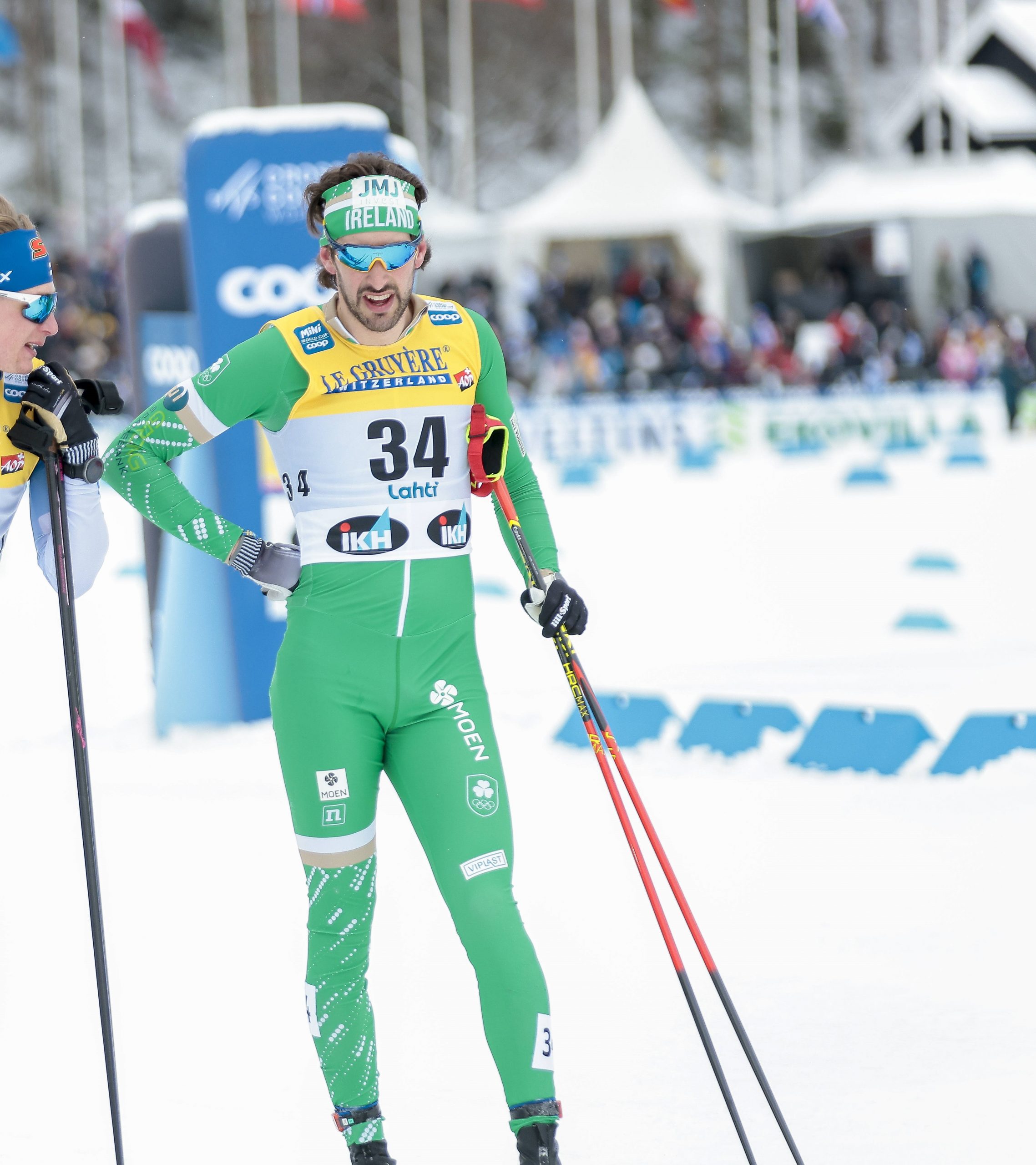
    Thomas Maloney Westgaard (IRL). This was taken in Lahti, Finland last season. Since it hasn’t been worn yet this World Cup season it didn’t seem fair to put it in the test, but it’s too cool to not include somehow. (Photo: NordicFocus)


    ANSWERS:

    One Point Level.

    Photo one. It doesn’t get any easier than this. Team Norway; Johannes Hoesflot Klaebo in Trondheim, Norway.

    Photo two. Still the basics. Team Sweden uniform worn by Moa Ilar.

    Photo three. That’s team USA in Trondheim, Norway. Suit wore by Rosie Brennan.

    Two Points for these answers.

    Photo four. Still pretty easy, but you get two points for guessing Team Finland, being worn by Tiia Olkkonen in Trondheim, Norway.

    Photo five. Team Canada in Trondheim. Suit worn by Katherine Stewart-Jones.

    Picture six. Team Switzerland in Trondheim. Suit worn by Jonas Baumann.

    Picture seven. That’s Delphine Claudel from France. France is tied with Italy for having the most similar team suits. Give yourself a moral victory if you can distinguish France from Italy at a glance.

    Picture eight. Team Italy, suit being worn by Caterina Ganz. Unless you can see the legs, the suits are almost indistinguishable from France’s.

    Picture nine. That’s Germany’s Pia Fink with some really nice sublimated snowflake print.

    Picture ten. Great Britain. Worn by James Clugnet; but it’s a trick since he’s really wearing a team Aker Daehlie suit while racing for Great Britain. Give yourself points if you guessed Great Britain or team Aker Daehlie.

    Level Three. Three points for each correct answer.

    Picture 11. Another trick. That’s Qiang Wang of China, but he’s also wearing a team Aker Daehlie suit while racing for China. Give yourself points if you guessed China or team Aker Daehlie.

    Picture 12. Adam Fellner of Czech Republic (Czechia).

    Photo 13. Dominik Bury of Poland.

    Level Four. Four points for each correct answer.

    Photo 14. That’s an Australian team suit worn by Phoebe Cridland.

    Photo 15. Japan’s Naoto Baba in Trondheim.

    Level Five. Five points for each correct answer.

    Photo 16. Kazakhstan’s Darya Ryazhko.

    Photo 17. Wearing one of the coolest suits on the tour is Oleksandr Lisohor of Ukraine.

    Photo 18. Slovenia’s Miha Licef .

    Photo 19. This was really tricky. Elena Rise Johnsen of Norway wearing her exceptionally sharp club suit of Asker Skiklubb. Give yourself points for either Norway or the club suit.

    Bonus Round. Six points for each correct answer.

    Photo 20. Victor Santos of Brazil.

    Photo 21. Ireneu Esteve Altimiras of Andorra, who had a top 20 in the 10 kilometer Freestyle in Gallivare, Sweden.

    Photo 22. Kitija Auzina of Latvia.

  • Nordic Nation: Ben Ogden Breaks Through

    Nordic Nation: Ben Ogden Breaks Through

    Ben Ogden finds himself in the rough during the classic sprint semi final in Les Rousses, FRA. (Photo: NordicFocus)

    It’s been a minute! With the arrival of host Rachel Perkins’ second baby in July and a subsequent job shift, Nordic Nation has been on pause, but we are excited to relaunch now with the hope of producing these regularly over the coming months!

    Our first guest of 2023 is the one and only Ben Ogden, who’s had a standout season of racing on the World Cup. Ben has cracked into the semifinals in four sprint races, while posting breakthrough results in distance racing also, like a 6th place finish in the 10k classic in Oberstdorf during the Tour de Ski. He finished the overall Tour in 13th, which is an historic result for the American men’s team. Following the Tour, he headed back home to Vermont, where he hopped into two EISA Carnival weekends – winning four for four – while wearing his UVM Catamounts kit for the final time. He returned to Europe in time for Les Rousses, where Ben qualified in 7th for the classic sprint, finishing 11th after a quick trip outside the V-board in the semis. 

    In this conversation, we discuss the factors that have contributed to his development as a professional skier, from mindset, to training, to an effort to make the World Cup lifestyle sustainable long term. We also discuss his recent trip back to the Northeast, what has made collegiate racing “special”, and more.

    Thanks for listening!

    Ben Ogden prepares for the final stages of the 2023 Tour de Ski in Val di Fiemme, ITA. (NordicFocus)
  • Sophia Laukli’s First World Cup Podium as Karlsson and Klaebo Win Tour de Ski on the Slopes of the Alpe Cermis

    Sophia Laukli’s First World Cup Podium as Karlsson and Klaebo Win Tour de Ski on the Slopes of the Alpe Cermis

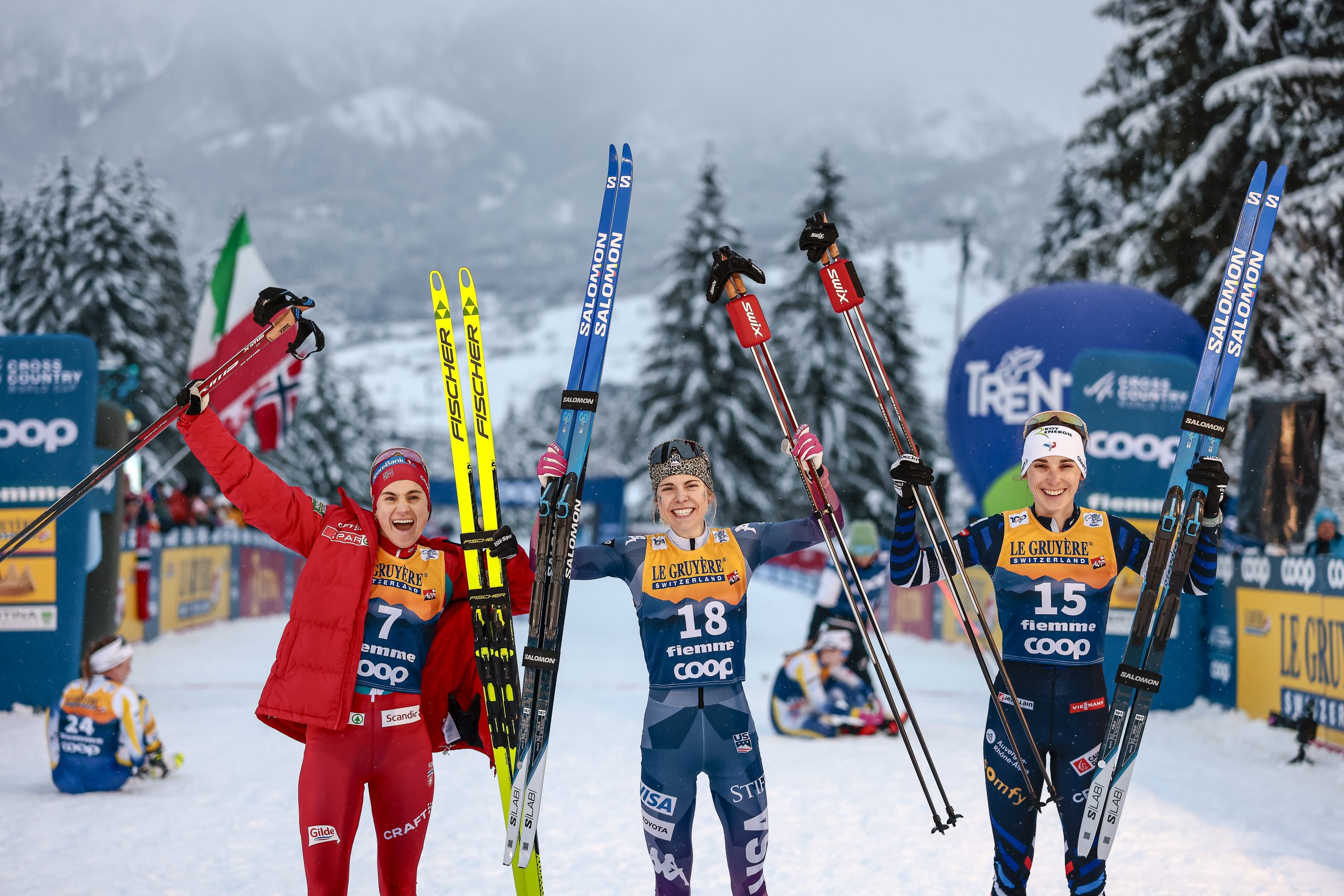
    Sophia Laukli (USA) crosses the finish line on the top of the Alpe Cermis for 3rd place, her first career World Cup podium. Laukli highlighted a day in which the Americans put three in the top ten. (Photo: NordicFocus)
    The Alpe Cermis

    When the Grand Tour of skiing—the Tour de Ski—was dreamed up by Vegard Ulvang and Jurg Capol in 2006, one of the first definitive decisions was that it would need a Queen Stage: a stage that sought to distill the essence of ski racing—the brutal beauty of the slog—to its purest state. The Tour de France had its Alp d’Huez, and the Tour de Ski would have the Alpe di Cermis.

    Through seventeen editions of the Tour de Ski, the climb of Alpe di Cermis has become nothing less than iconic in Nordic Skiing. This is where Therese Johaug and Marit Bjoergen cemented their legends in tandem, year-after-year, battle-after-battle, racing up the fall line. This is where Johannes Hoesflot Klaebo lost the 2020 Tour to Alexander Bolshunov on the final day. Martin Johnsrud Sundby, Petter Northug, Dario Cologna, Jessie Diggins, Heidi Weng: all have played prominent roles in past hill climbs. In 2015, it’s where Liz Stephen notched a 5th place, and kicked off the breakout World Cup season for the American women, culminating in the team’s first ever distance World Championships medals (That Falun 10 k where Jessie Diggins and Caitlin Gregg were 2nd and 3rd).

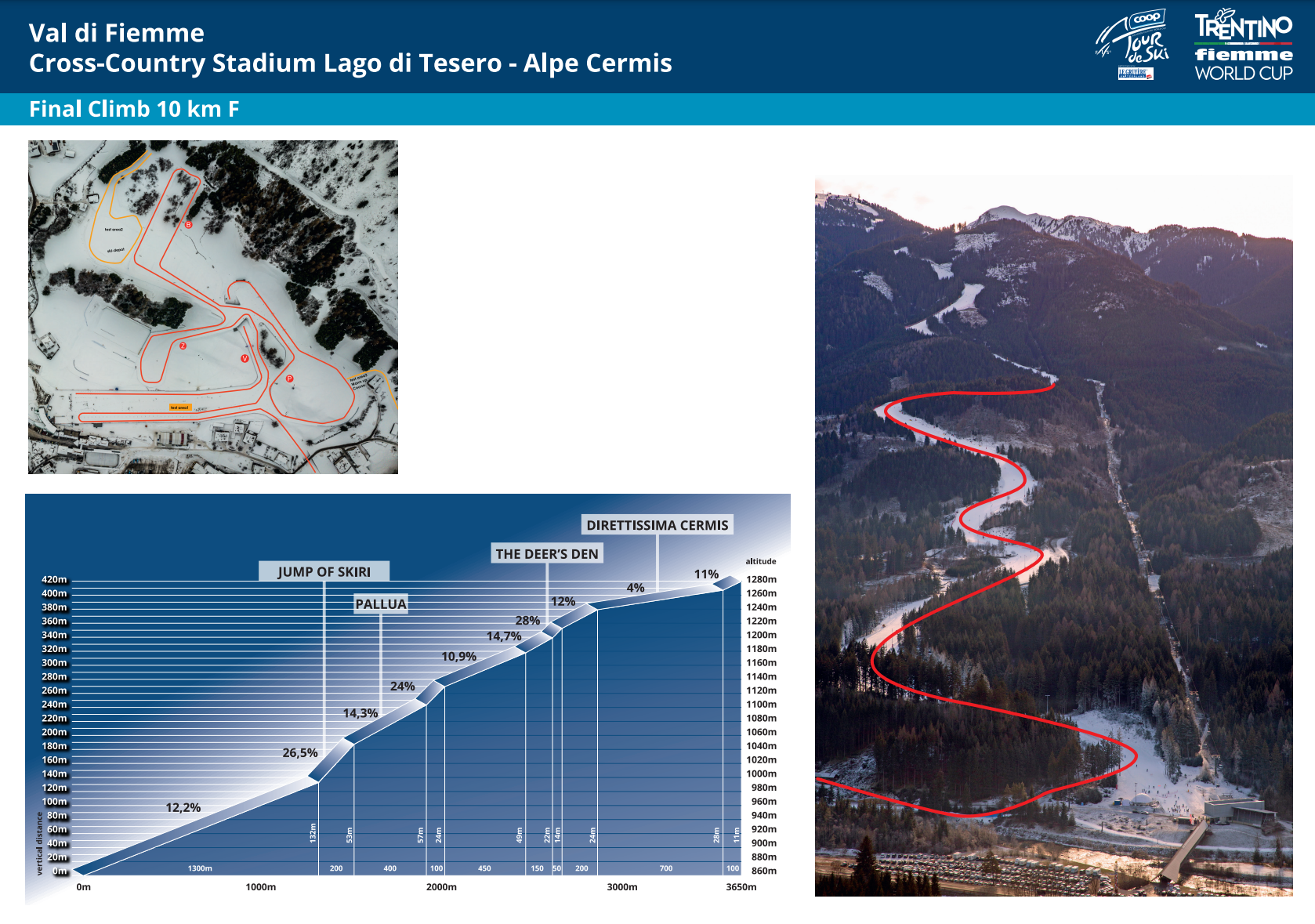
    Course Profile for Tour de Ski Stage 7 at the Alpe Cermis. (Photo: Fiemme World Cup)

    The Alpe is the culmination; it is also the main event. Things were no different for this year’s Tour de Ski. On the women’s side, Frida Karlsson hoped to arrive at the summit in possession of the Yellow Bib. On the men’s side, Klaebo looked to do the same, but with ghosts of Alpe’s past haunting his each and every stride. Both Karlsson and Klaebo had dominated over the course of the first six stages, but both, remarkably, remained vulnerable. Karlsson (2:31:16.0) held an advantage of 1:12 over second place Tiril Udnes Weng, while Klaebo carried a 1:02 advantage over second place Calle Halfvarsson in the men’s field. Simen Hegstad Krueger—winner on the Alpe in 2021—held fifth place overall at 1:45 back. In a normal ski race, those margins would have all but guaranteed victory for the leaders. But in a race up the Alpe de Cermis—where the final kilometers stretch out time gaps with every meter gained—no lead is ever safe.

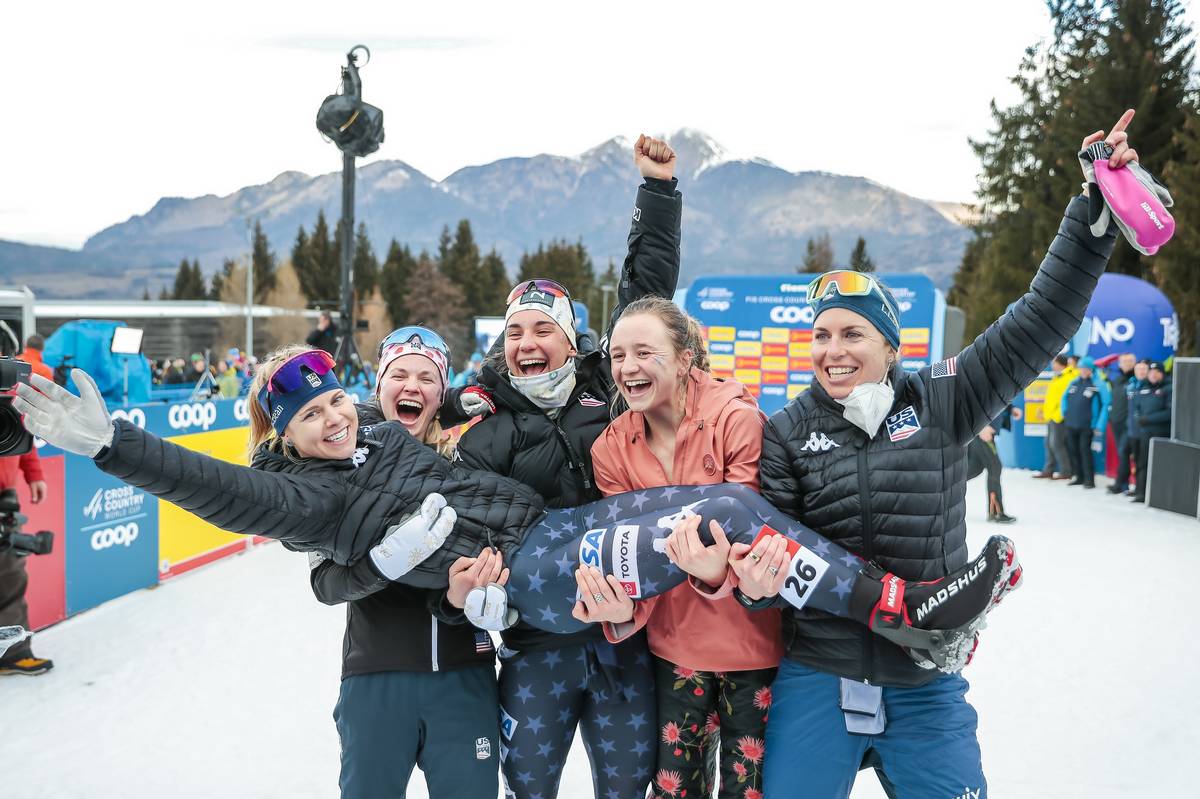
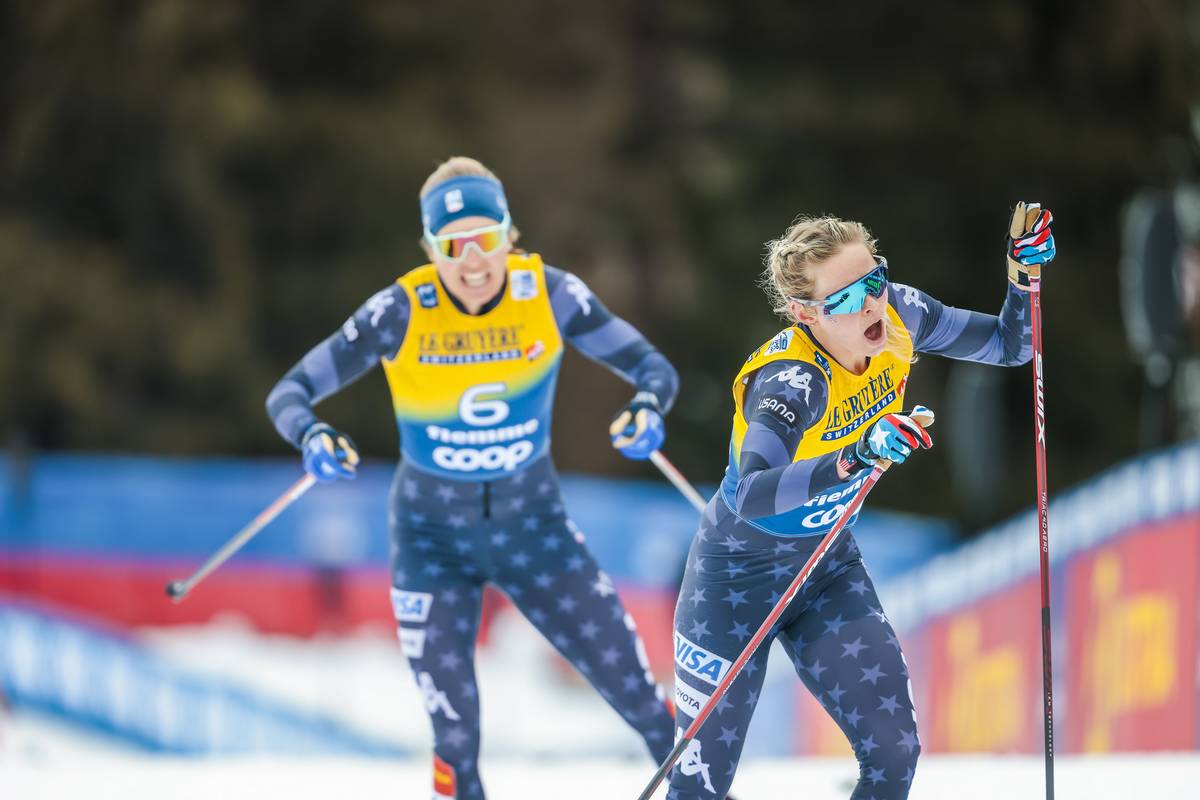
    The American woman hold up Sophia Laukli after her 3rd place finish on the day. The Americans had three in the top ten, as Laukli was joined by Jessie Diggins in 5th and Rosie Brennan in 6th place. (Photo: NordicFocus)
    Laukli Highlights Women’s Race with First Podium

    Sophia Laukli spent the past year seeking out the most challenging propositions in endurance sports, and learning to make them her specialty. Last year on the Alpe, she recorded a 5th place finish alongside teammate Novie McCabe in 7th that marked a definitive breakout. Already then, the goal was set. Return to the Alpe in 2023, and seize it. In the interim, she has run and skied her way to the top of climbs around the world, winning the Lysbotn Opp rollerski climb last July ahead of Heidi Weng and Delphine Claudel, who were 1st and 3rd up the Alpe, respectively, last year. Through highs and lows in this Tour, she was able to keep sight of her “big goals for today” as she put it in post-race comments.

    When it comes to the unexpected, however, one can only prepare just so much: “Right before the climb started, I got tripped up and lost all the positions I had made up [by working the flat section],” she said. “I was back to being in the back of the pack going into the climb.” 

    Her experience on the climb told her two things: “Tactically, it’s very difficult to pass people, and [the Alpe] is a long climb.” Laukli held it together. She found her teammates, Jessie Diggins and Rosie Brennan, climbing in 5th and 6th place through the crux of the Alpe. Laukli held her emotions in check, saying she, “[didn’t go] full-on panic mode, and [it] saved me today.” There was poise. There was patience. And there was also a whole lot of power. It appeared impossible that she could climb back to the podium, and yet Sophia Laukli had taken that word and controlled it: it was impossible how well she was skiing. 

    That fact became most apparent in the final 200 meters of the race. Having begun the day at the back of the pack, Laukli had raced herself into position to stand on the podium for the first time in her World Cup career. None of that would come easy; she crossed the finish line and folded over in the snow. Five minutes later, she stepped onto the podium in third place. The 22 year old Maine native, and current University of Utah skier, became the first of her new generation of American women to achieve that milestone.

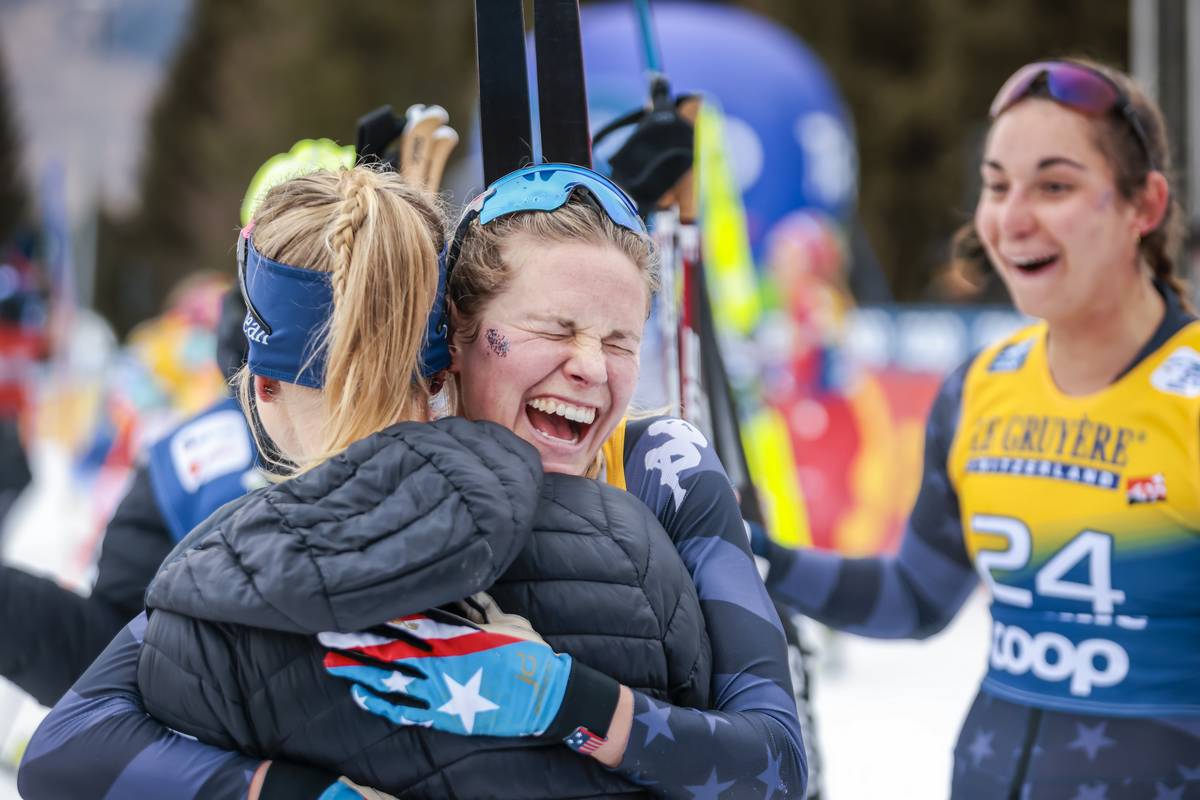
    Jessie Diggins (USA) hugs Sophia Laukli (USA) on top of the Alpe di Cermis. (Photo: NordicFocus)

    In the end, Laukli’s finish was just 35.7 seconds behind French climbing specialist Delphine Claudel. Claudel entered the steepest sections of the climb behind Frida Karlsson, the overall leader. At a hairpin 1.5 k from the finish, a brief tangle between Karlsson and Heidi Weng allowed Claudel to establish a gap, and Weng was the one who followed. But none were able to surpass Claudel at the finish line where the Frenchwoman claimed her first World Cup victory, and her first win on the Alpe di Cermis. 

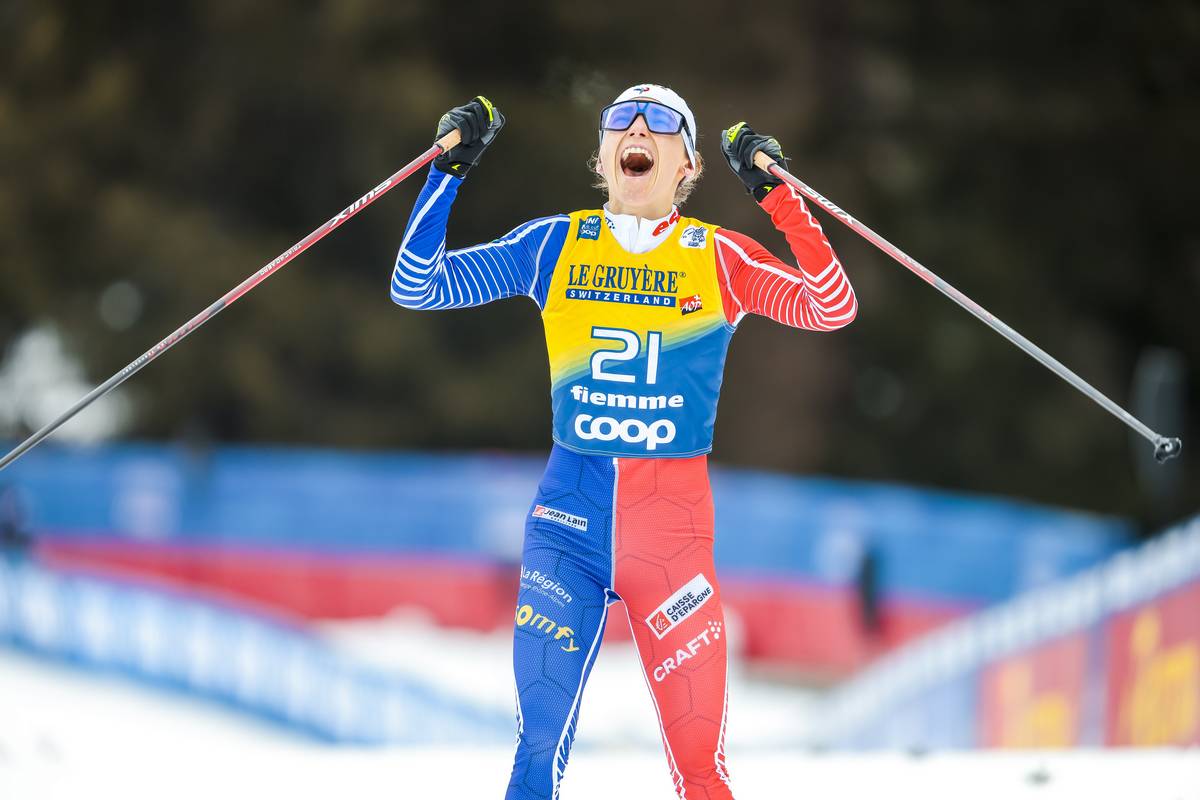
    Delphine Claudel (FRA) crosses the line for the first World Cup win of her career atop the Alpe di Cermis. (Photo: NordicFocus)

    For her part, Laukli seemed to search beyond herself to explain her astounding performance. “I lucked out I guess,” she said. “My tired was less than other people’s tired, and so it was enough.” Laukli’s achievements on the day could have overshadowed what other American women accomplished: one of the team’s best days ever, putting three in the top ten. There was the tenacity of Jessie Diggins, pushing to the front of the race early on in the Alpe climb, working “through disappointments but never losing belief” as she would say after the race. Then through the middle part of the climb, Rosie Brennan had joined Diggins, pushing to improve her Overall 5th place standing on the day. It all came together: “[It felt surprisingly] nice and comfortable,” Brennan said. “Usually [on the Alpe], you are alone and work on just keeping a rhythm, but today is was like ‘now I gotta stay with them.’” The American women had come together for the toughest test in ski racing.

    Jessie Diggins (USA) and Rosie Brennan (USA) push up the Alpe Cermis together, finishing 5th and 6th on the day. (Photo: NordicFocus)

    As Laukli pushed for third, Diggins and Brennan stuck together to finish fifth and sixth on the day. Brennan moved up to fourth Overall, her best Tour de Ski overall finish ever. “[The World Cup] has been a hard start for me this year, and I’m starting to come around. [This Tour de Ski] was a good sign for the future.”

    With her race today, Jessie Diggins moved up to 11th Overall in this year’s Tour de Ski. Diggins commented that she is “more proud of how I handled this Tour than any other one. I just didn’t stop believing and kept going. Now it’s time to recover, and keep training.”

    Diggins did add that she would undertake some post-race evaluation on how she was recovering: “I’m not 100% sure when my next race will be,” she said. 

    Karlsson won the 17th edition of the Tour de Ski with a 15th place finish on the Alpe, remaining 33 seconds ahead of Niskanen and Tiril Udnes Weng. The finish culminated a week in which Karlsson continuously bolstered her reputation as the dominant distance skier in the women’s field. Karlsson’s win also marks another milestone for the current generation of Swedish women skiers, delivering the first Overall Tour de Ski win since Charlotte Kalla won in 2008.

    Krueger Wins Day, Klaebo Wins Tour in Men’s Race
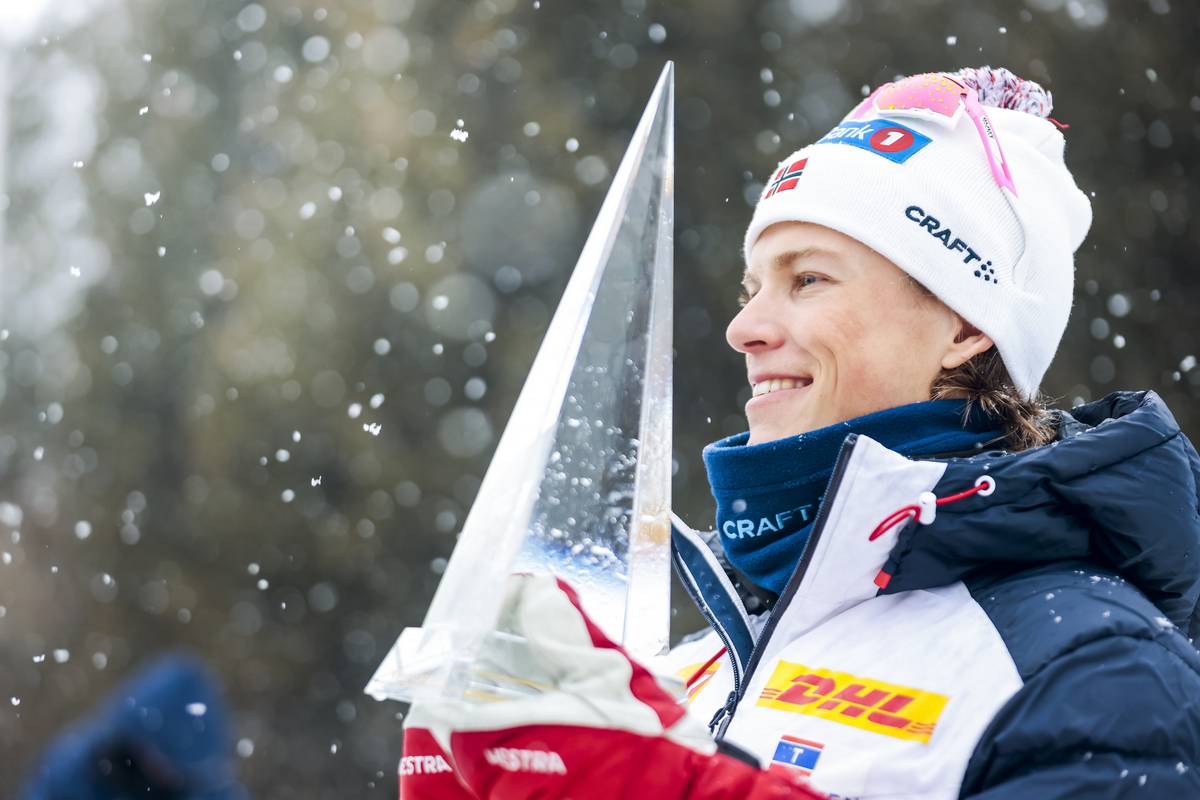
    Johannes Hoesflot Klaebo lifts his 3rd Tour de Ski trophy of his career. (Photo: NordicFocus)

    Part of the emerging legend of the Alpe Cermis is that it has been the only arena capable of diminishing the otherwise-unstoppable force of Johannes Hoesflot Klaebo. Klaebo entered the day having won all six of this year’s Tour de Ski previous stages, another of the many accomplishments that only he can claim in the sport of skiing. Even so, there was almost no speculation that Klaebo would make this year’s Tour a clean sweep with a win on the Alpe di Cermis. The Alpe has made appear Klaebo human before; it would most likely do so again.

    The lingering question was whether he could avoid a repeat of 2020 when Alexander Boshunov and Sergey Ustigov successfully wrested the yellow bib from Klaebo on the climb. With previous Alpe di Cermis winner, Simen Hegstad Krueger, in fifth place—1:45 behind Klaebo—there was still a possibility that the climb could prove to be Klaebo’s undoing yet again.

    That possibility turned into real tension when Krueger initiated a move at the base of the climb, opening a gap in the field. A group of Norwegian men quickly formed, but without Klaebo. Sjur Roethe, Hans Christer Holund, and Didrik Toenseth moved up with Krueger. Klaebo was still within reach, but his lack of push to stay with the field indicated a concession from him; he would let the climbers go and focus on keeping the yellow bib on his back at the finish.

    Klaebo, wearing the yellow bib, in behind the lead pack of his countrymen at the base of the Alpe Cermis climb (Photo: NordicFocus)

    Krueger set a blistering pace up the steepest sections of the climb, dropping both Toenseth and Roethe (last year’s Alpe winner). Hans Christer Holund was the only one up to the task of marking Krueger, with Krueger doing the bulk of the work as he searched for seconds on Klaebo. Between the 8 k and 9 k mark, Krueger trimmed 47 seconds from his 1:45 gap to Klaebo. The math was evident: it would be hard, but not impossible, for Krueger to win the Tour. The aggressive push from Krueger meant that some of those who had tried to keep with him didn’t just lose touch with the pack when they went, but really fell off. That allowed skiers who had been more conservative through the early section to challenge for the final podium spot, including Frenchman Jules Lapierre and German Friedrich Moch. Klaebo kept to himself through their machinations, and Lapierre soon had established a gap over the other challengers.

    In the end, Krueger crossed the finish line only five seconds ahead of Hans Christer Holund to win the Alpe for a second time. The Frenchman Lapierre crossed with the most emphatic celebration on the day: his first World Cup podium. Krueger’s celebration was perhaps a bit subdued: he had looked back to find that Klaebo had put in a remarkable second effort over the final kilometer. The Alpe, it turned out, did manage to expose Klaebo’s humanity, but the struggle also revealed his character. A skier who appears so often to win by virtue of talent and tactics earned a special victory today by racing with his heart.

    Simen Hegstad Krueger crossed the finish line in first in his 2nd career win on the Alpe Cermis climb. Krueger moved up to 2nd place in this year’s Tour de Ski. (Photo: NordicFocus)

    Part of the Alpe’s legend is in posing a challenges to skiers, but it also appears that the Alpe di Cermis has a sense of justice. Klaebo has clearly been the best skier in this Tour de Ski; with his third Overall victory, he moves a step closer to becoming its most successful skier of all time. That he has not already notched that title speaks to both his youth (we often forget how young Klaebo is), and to the prowess of the skier he chases: Dario Cologna, who during his career earned four Tour de Ski titles. 

    Scott Patterson finished 14th on the Alpe Cermis, earning the distinction of top American on the day. (Photo: NordicFocus)

    Behind the Norwegian battle at the top of the Alpe Cermis, the American men were busy continuing their steady climb toward the top of the World Cup. Scott Patterson was the top finisher for the Americans, finishing 14th in his second climb of the Alpe (he was 38th last year). Patterson said in post-race comments that the result marked a high point for him at this Tour de Ski, and that he is, “looking forward to the focus on the longer races later in the season,” including the 50 k in Holmenkollen.

    Ben Ogden was the top American finisher in the Overall Tour de Ski standings, finishing 13th after a 24th place finish in his first climb of Alpe di Cermis.

    Ben Ogden, the top-placed American man in this year’s Tour de Ski at 13th Overall. (Photo: NordicFocus)
    Conclusion to the 17th Tour de Ski

    With that, the 17th edition of the Tour de Ski comes to a close. World Cup Skiing departs the slopes of  Alpe di Cermis, leaving more stories etched in the snow on each steep hairpin. It reminds us once again of all that makes ski racing beautiful when the time is right, when the skiers are prepped, and when and all of our eyes watching.

    The World Cup takes a collective rest for the next two weeks, before resuming in Livigno, Italy on January 21st. From all of us at FasterSkier, thanks for following along for another edition of the Tour de Ski!

    Women

    Final Overall Tour de Ski Standings | Stage 7 Results

    Men

    Final Overall Tour de Ski Standings | Stage 7 Results

    The American men at the top of the Alpe Cermis. (L-R) Gus Schumacher, Ben Ogden, Finn O’Connell, Scott Patterson, and Hunter Wonders. (Photo: Tom Horrocks/USSS)
  • Ben Ogden Intrepid, Antoine Cyr Impressive, as North Americans Add Flair to TDS Sprint

    Ben Ogden Intrepid, Antoine Cyr Impressive, as North Americans Add Flair to TDS Sprint

    This World Cup coverage is made possible through the generous support of Marty and Kathy Hall and A Hall Mark of Excellence Award.  To learn more about A Hall Mark of Excellence Award, or to learn how you can support FasterSkier’s coverage, please contact info@fasterskier.com.
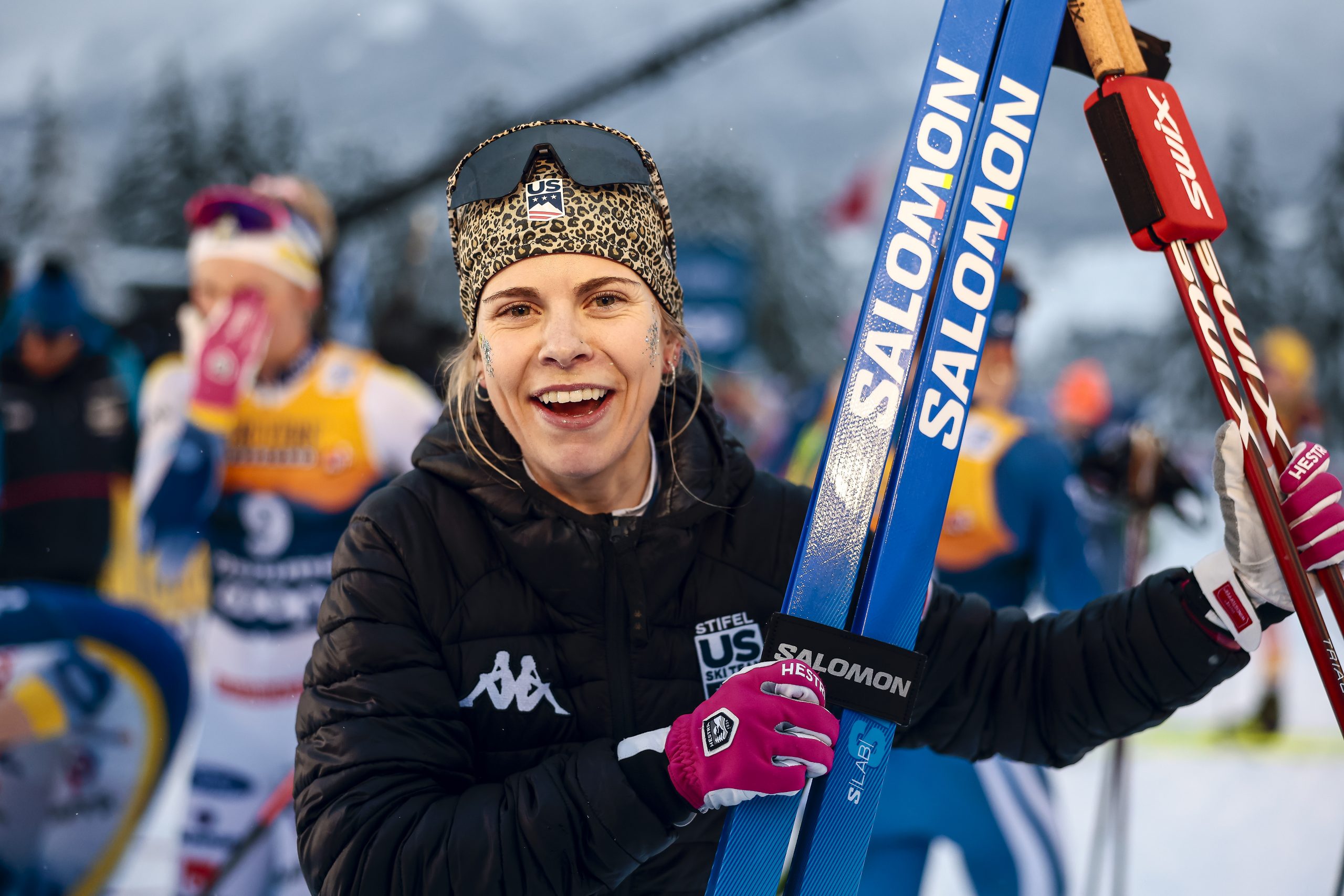
    Ben Ogden during Stage 5’s classic sprint in Val di Fiemme, Italy. Ogden made waves with his semifinal tactics. (Photo: Nordic Focus).

    Ben Ogden was going to risk it . . . This season, the young American skier has made a rapid push in World Cup sprints, twice racing to the verge of finals in Beitostolen and Davos. In boot throws, final sprints, pushes big and small he has come to understand the agony of inches. When he lined up for today’s Stage 5 Classic Sprint in Val di Fiemme, Italy, Ogden knew the trial was here again. Standing at the starting line of another World Cup sprint semifinal, he looked to his right and saw Johannes Hoesflot Klaebo, this year’s leader of the Tour de Ski. Klaebo seemed all but guaranteed to win today: he has never lost a Tour de Ski sprint. Never. And he has done so with the careful mix of easy tactics and better-than-anyone finishing sprint that has become his signature mode of racing. Ogden’s options were clear: he could either let this heat fall into that familiar, Klaebo-dominated mode—well-worn and always with the same result—or he could try and blow it up.

    Ogden chose the latter. “[If you] go crazy hard [in the semi-final] all you have to do is make the top four,” he said in post-race comments. The field left the stargint line at a slow pace; Calle Halfvarsson (SWE), Simone Mocellini (ITA), Johan Haeggstroem (SWE), and Sindre Bjoernstad Skar (NOR) allowing Klaebo to settle in. Ogden simply said, “Alright, I’m at least going to try.” Soon after the starting tracks were behind him, Ogden scrambled to the front, unleashing everything he had. He opened up a gap on the field; in a sign that Ogden had taken the field by surprise, Johannes Hoesflot Klaebo quickly scrambled through the pack to catch up. As they began striding up the only true hill on the Val di Fiemme course, Klaebo broke into his signature run. He was having to work for it; Ogden had caused a rift. “When we rounded the top of the hill, I looked back and it was just me and the king,” said Ogden. “That’s when I thought that maybe it could work.”

    The bulk of the Val di Fiemme course is a long, gradual downhill, culminating in a sharp left at the end of a small rise. In a final push, Klaebo made it through that the gap first, and order was restored after the chaos Ogden had caused: Klaebo first into the finals, followed by Halfvarsson and Simone Mocellini (ITA). Ogden lost a 4th place sprint to Haeggstroem for the final lucky loser spot, which would go to the 3rd and 4th place finishers from the heat Ogden had taken out so fast.

    After an early stumble in this semifinal, Sindre Bjoernstad Skar (NOR) had watched this most exciting heat from the best seat in the house (the back of the field), saying of the tactics that Ogden had, “Tried to rob the bank, and forgot the money.” Ben Ogden: American outlaw.

    Ben Ogden after falling just short of Finals again. “You’re crazy!” said Calle Halfvarsson of Ogden’s bold tactics in the semifinal. (Photo: Nordic Focus).

    “Johannes [Klaebo] gave me a fist bump,” said Ogden. “Calle [Halfvarsson] just said, ‘You’re crazy,’ but I’m going to keep trying everything. You have to try everything.” 

    Men’s Sprint Final: Klaebo on Top Again

    Klaebo delivered that fist bump on his way to the Final, where it seemed his trial in the semi-final had made a lasting impression. As the starting tracks gave way to scrubbed snow, Klaebo moved to the front of the pack, uncharacteristically controlling the race from the beginning. It almost seemed like an afterthought as Klaebo sped through the stadium for the win, followed by Halfvarsson 2nd, and Mocellini 3rd.

    Johannes Hoesflot Klaebo (NOR) sprints ahead during Stage 5 of the Tour de Ski in Val di Fiemme, Italy. (Photo: Nordic Focus).
    Cyr to Finals with Americans by his side

    What stood out during the day’s racing was who filled in the gaps. Next to Klaebo in the Final was a Canadian—Antoine Cyr—challenging for a podium for the first time since Alex Harvey had wound down his career with a 3rd place finish in Lillehammer, 2018. In progressing to the Final, Cyr had lined up in both the quarterfinal and semifinal alongside Zak Ketterson (USA) who had advanced to World Cup sprint heats for the first time. Ketterson said in post-race comments that he was determined to not let that milestone dictate his racing. “My plan was to not be timid at all.”

    Indeed, both Cyr and Ketterson controlled their heat through the early going, avoiding a stumble that tripped up the highest qualifier in the heat, Frenchmen Jules Chappaz. Ketterson looked to lead into the stadium, but made a mistake going into the sharp left on the last hill. “I got caught up and lost all my speed going into the stadium,” he said, referring to a moment where he moved to the inside and found Italian Francesco De Fabiani claiming that track. Cyr stayed out of the fray, and was able to show an impressive finishing sprint to win the heat. Ketterson’s race, in retrospect, showed early signs of the tenacity that Ogden would later demonstrate. It was a promising indication that the Minneapolis native could potentially join the ranks of Americans challenging at World Cup sprints.

    Zak Ketterson (USA) and Antoine Cyr (CAN) taking out their quarterfinal in Val di Fiemme. (Photo: Nordic Focus).

    In the semifinal, Cyr again led in the early going alongside another North American, JC Schoonmaker (USA). The pair were challenged by Frenchmen Lucas Chanavat, who quietly executed a perfect push into the stadium and got out in front of the field to take the first spot. That left Schoonmaker and Cyr to sprint for which nation would put a man into a World Cup sprint finals again. Schoonmaker started out with the advantage in the stadium sprint, but it soon became apparent that Cyr had the edge. He passed Schoonmaker 10 meters from the finish, and made his first World Cup Final, the first for a Canadian since that 3rd place for Harvey in 2018.

    Antoine Cyr (L) and JC Schoonmaker (R) sprint for a place in the Finals behind semifinal winner Lucas Chanavat (FRA). Cyr won the sprint and advanced to the final. (Photo: Nordic Focus).

    The skiing of the North American men was a factor that shook up the Tour de Ski Overall standings, too. Until today, this year’s Tour had remained deceptively close. Despite Klaebo’s dominance through all stages—winning every race—his overall lead was slim due to bonuses and his own racing style. Federico Pellegrino (ITA) and Paal Golberg (NOR) were both less than 15 seconds back from Klaebo for the yellow bib, with Pellegrino looking to close with a sprint today. Instead, Pellegrino found himself in a quarterfinal sprint with JC Schoonmaker, and there is no other way to write it; Schoonmaker outsprinted the Italian. Golberg too, found himself in a heat with the other Canadian qualifier on the day, Graham Ritchie, and Ritchie’s aggressive tactics led to a bunch sprint that the World Cup Overall Distance leader just couldn’t master. With skiers occupying the 2nd and 3rd overall placings out in the quarterfinals today, Klaebo had an open opportunity to seize a gap of over a minute (the winner received a 60 second time bonus in the Overall today). He did just that.

    Thus, the story on the day was North Americans advancing through the World Cup in their own distinctive way. In the cold and snow of the Italian Alps, they seemed to display a spirit, a tenacity, a dynamism usually associated with the deserts and dust of movie westerns. Through good, bad, and even ugly they pushed forward, shaking up this year’s Tour de Ski, and the World Cup too.

    Antoine Cyr (CAN) qualified for his first sprint finals during Stage 5, the first Sprint Final for a Canadian since Alex Harvey (CAN) in 2018. (Photo: Nordic Focus).

    Stage 5 Results

    Qualifier | Heats

    Tour de Ski Overall Standings

  • Patterson 4th, Cyr 7th On the Day as Klaebo Controls TDS Stage 4

    Patterson 4th, Cyr 7th On the Day as Klaebo Controls TDS Stage 4

    A_Hall_Mark_of_Excellence_Award-logo-300.png (300×244)This World Cup coverage is made possible through the generous support of Marty and Kathy Hall and A Hall Mark of Excellence Award. To learn more about A Hall Mark of Excellence Award, or to learn how you can support Fasterskier’s coverage, please contact info@fasterskier.com.

    Scott Patterson (USA) leads the chase group on his way to the fourth fastest time of the day at the Tour de Ski 20 k Freestyle Pursuit in Obesrtdorf, Germany. (Photo: NordicFocus)

    The Tour de Ski spent its second day in Oberstdorf for the running of Stage 4, the 20 k Freestyle Pursuit. For the second day in a row, it was North Americans who raced their way toward the front. Most remarkable, perhaps, were Scott Patterson (USA) with the fourth fastest time of the day (he would rise from 29th to 17th overall), and Antoine Cyr (CAN) with the seventh fastest time of the day (rising from 37th to 24th overall).

    Other Canadian finishers included Olivier Léveillé 35th (from 24th), Russell Kennedy 41st (from 56th), Sam Hendry 66th (from 74th), Graham Ritchie 67th (from 65th), Remi Drolet 72nd (from 75th).

    American finishers included three more Americans in the top thirty: Ben Ogden finished13th (having started 6th) , Hunter Wonders finished 19th (from 11th), and Gus Schumacher 26th (from 15th). Zak Ketterson finished 55th (from 38th), JC Schoonmaker finished where he had started in 69th, while Kevin Bolger rose to 71st (from 73rd).

    Almost as an afterthought, Johannes Hoesflot Klaebo skied to the 20 k Pursuit win in dominant fashion. Klaebo managed his own pace—and the pace of the field—in a masterful display that saw him pulling away from the pack in the final kilometer and easing across the line for the win (though losing cumulative time to many of his rivals in the Tour de Ski overall competition). Following him to the finish line were Sindre Bjoernestad Skar (NOR) in 2nd, and Federico Pellegrino (ITA) in 3rd.

    Even down the homestretch of the 20 k Freestyle Pursuit, Johannes Hoesflot Klaebo (NOR) controls the field and carries his dominance across the finish line. (Photo: NordicFocus)
    Men’s 20 k Freestyle Pursuit

    This was a day of differing strategies: some racers knew they had to commit everything in order to move up in the Tour de Ski standings, while others were choosing to conserve their energy for later stages. Others (like Klaebo) knew they could afford to give back some time, holding their overall positions while committing only enough energy to prevail in the day’s racing.

    Tour de Ski Stage 4 was a 20 k Freestyle Pursuit in which the starting order was derived from yesterday’s 10 k Classic (NOT from the order of the overall standings). Oberstdorf’s strip of manmade snow ran through the fields and forests along a rolling 3.3 kilometer loop that racers would navigate six times. The starting order gave Klaebo a 12 second advantage over Simen Hegstad Krueger, :20 to Didrik Toenseth, :25 to Calle Halfvarsson, :27 to Golberg, :30 to Ben Ogden. This closely-bunched group of starters made it quite likely that the entire field could come together within just the first few kilometers. Twenty kilometers is quite a distance to ski alone, and Klaebo is smart enough to know that he could exhaust himself by attempting to maintain his lead over so strong a group of chasers. And with his sprinting abilities, Klaebo would be likely to win the day’s event if he conserved his energy, allowed the field to catch him, and outsprinted them at the end. The men’s race looked certain to group up.

    Like the pursuit race earlier in the Tour de Ski, each skier’s relative success can be judged by more than one result. There are skiers who do well in the pursuit finishing order, and others who do well in the timed-results on the day . . . and the comparison of success and failure is not always immediately apparent. A racer may finish well in the race standings by holding position in a pack of skiers and outsprinting them at the end, even though his on-the-day time could be much slower than other skiers who caught his group from behind. Pursuit racing is about patience and strategy as much as it is about maximal efforts and daring pyrotechnics. The races going on in the middle of the field can be extraordinarily complex. The racing at the front is far more straightforward . . .

    Hunter Wonders (USA) following teammate Ben Ogden (USA) in the lead group at the Tour de Ski Stage 4 Freestyle Pursuit in Oberstdorf . (Photo: NordicFocus)

    Klaebo started alone with a 12 second advantage over his pursuers. Soon after the start, a chase group formed that included Krueger, Didrik Toenseth (NOR), Calle Halfvarsson (SWE), and Paal Golberg (NOR). That group was closely followed by Andrew Musgrave (GBR) who was able to join a few kilometers later. All chasers were making up time on Klaebo, who was obviously allowing himself to be caught. The catch happened within the first five minutes of racing (near the 2.1 k checkpoint), forming a group that would stay together all through the middle of the race. The group was led by Simen Hegstad Krueger who was consistently marked by Klaebo, and trailed by Golberg.

    A fairly relaxed pace at the front allowed later starters to bridge the gap at four kilometers, and the lead pack swelled to a dozen. Having been gapped by Musgrave, Ogden found himself overtaken by an aggressive chase pack that included Poromaa, Hunter Wonders, Gus Schumacher, Emil Iversen, Havard Moseby, Hans Christer Holund. There was no relaxing to do in the chase group; they were headed for the front, and were wasting no time in making it happen. Pellegrino would ultimately lead another group forward to join with the lead group, and the field ultimately swelled to nearly 30 racers, including Americans Ogden, Schumacher, Wonders, Patterson, and the Canadian Cyr.

    “We caught the lead pack in three laps . . . and it turned into a little bit of a cat and mouse game which was a little bit frustrating,” said Patterson. “I wanted it to be a harder race. But it turned out all right. As people get tired, I start moving up the ranks. I’m excited for Val di Fiemme. “

    Wonders summed up his Stage 4 experience: “Once we caught the lead pack it started to chill out a little bit,” he said. “I was just trying to ski relaxed; it was pretty exciting to be skiing with a bunch of guys I’ve been watching for years!”

    Having started 33rd on the day, Frederik Moch (GER) went to the front to push the pace in the second half of the race (Moch would post the fastest time on the day). Sjur Roethe (NOR) attacked at 12 k with Halfvarsson and Krueger, but the contenders came back together after a fast downhill. The lead group dwindled to 24 as the race neared its conclusion, and the jockeying for position began with the field nearly coming to a standstill at times. With a kilometer remaining in the race, Klaebo unleashed a surge on the final uphill before the stadium followed by Skar and Pellegrino. As has so often been the case, Klaebo’s high-tempo surge on the final uphill was one that no one else could match. He crested the hill alone, relied on his fast skis on the downhill, and maintained his lead through the finishing line. The field came charging behind him in a sprint won by Skar, who was closely followed across the line by Pellegrino. Nine Norwegians finished in the top 12, followed by Ogden in 13th (though his finishing time was only five seconds behind Klaebo’s winning time).

    “The pack stayed together the whole race,” Ogden said. “And then they just sprinted for it in the last K, or so. I think that my strengths in 20 k are better suited in the last K than they are in the first 19!”

    Klaebo earned the win, but with only the 42nd fastest time of the day, giving back :22 to Golberg,  and 1:01 to Pellegrino in the TDS overall standings. Klaebo knows he must moderate his efforts in order to have the energy to hang on through the end of this week-long tour. But he also sees the possibility of sweeping the series—of winning every stage—on his way to an historic Tour de Ski victory that could also garner enough points to bring him the World Cup overall title.

    After the close racing of Stage 4, the Tour de Ski Overall standings return to a much tighter affair: Klaebo continues to lead Pellegrino by :12, Golberg by :14, Skar and Krueger by :32, Toenseth, Roethe, Holund by :39, and Halfvarsson by :49.

    Tour de Ski, Men’s 20 k Freestyle Pursuit RESULTS

    The long white stripe in Oberstdorf, Germany. Tour de Ski Men’s 20 k Freestyle Pursuit. (Photo: NordicFocus)


  • Tour de Ski Stage 3: American Men Fly, Klaebo Wins, On Warm Day in Oberstdorf

    Tour de Ski Stage 3: American Men Fly, Klaebo Wins, On Warm Day in Oberstdorf

    This World Cup coverage is made possible through the generous support of Marty and Kathy Hall and A Hall Mark of Excellence Award.  To learn more about A Hall Mark of Excellence Award, or to learn how you can support FasterSkier’s coverage, please contact info@fasterskier.com.

    Gus Schumacher (USA) strides on his way to a 15th place finish in Stage 3 of the Tour de Ski in Oberstdorf, Germany (Photo: Nordic Focus).

    Gus Schumacher crossed the finish line, and started a long skidding stop. His skis chattered as klister gripped in spots and bits on the transformed, re-frozen snow at Oberstdorf, Germany. Finally, he came to a stop in front of the leader’s chair. Schumacher had raced brilliantly—improving his overall position from 62nd to top 20 in the Tour de Ski—but the look of happy astonishment on his face was not due to his own performance, but to the identity of the occupant of the leader’s chair at the side of the finish corral: his teammate, Ben Ogden, sat perched there in the chair—smiling broadly, cool as ever, throwback Oakley’s and all.

    Ben Ogden (USA) sits in the leader’s chair after crossing the finish line early on in Tuesday’s 10 K classic individual start action. (Photo: Tom Horrocks/US Ski and Snowboard).

    “It almost didn’t feel right,” Ogden said on sitting down in the leader’s chair during the 10 k individual start classic race that wound itself around three laps of Oberstdorf’s 3.3 k course. The leader’s chair is reserved for those who sit atop the World Cup field: that’s the sort of thing that would’ve been a dream for Ogden. After today, those sorts of dreams are a bit closer to reality. 

    Ogden started his race with an auspicious 2 k checkpoint where the 23 year old Vermonter was 10 seconds up on a field. Five kilometers later—the checkpoint at roughly 7 k—his lead had come down to two seconds, but when Ogden finally powered into the stadium, he had closed his race with determination. There was no doubt where he stood in the early standings—there were 27.8 seconds between Ogden and 2nd place—but there were many more racers still to come . . .

    The perennial powerhouses of the men’s World Cup were slated to start later in the race. Paal Golberg, the Overall leader, wore bib 42. Johannes Hoesflot Klaebo, the Tour de Ski Leader, started a minute and a half after that wearing bib 45. Ogden and Schumacher pulled up the live timing and waited for the perspective to be gained, for the whole picture to come into view. What was apparent, though, as Schumacher’s time popped up as 2nd behind only Ogden, and Hunter Wonders soon finished to slot in between them in 2nd place, was that the American men were having a great day. Just how great would have to wait, would have to be tempered by the Norwegian race playing out behind them.

    Golberg was the leading edge of that piece of the picture. He was in a dead heat with Ogden through the 2 k checkpoint. Thoughts that Golberg would open a gap later in the race could have been excused: he is the Overall leader of the World Cup this year, and in the finest form of his racing career. Today, though, the checkpoints through the race indicated a dead heat. By 8 k, Goldberg held the lead by just two seconds over Ogden. As Golberg sprinted across the line he had only managed to gain a single second more: 1st) Paal Golberg, 2nd) Ben Ogden +3.1 sec.

    Paal Golberg (NOR) crosses the line during Tuesday’s action. Golberg finished 5th place on the day. (Photo: NordicFocus).

    That Klaebo was quickly coming through behind Golberg—and opening a gap  over the second half of the course—seemed like an afterthought. It is almost easy to overlook the astonishing nature of Klaebo’s racing, even when he appeared sure to win the race by the time he passed the 6 k checkpoint with an 11 second gap over Golberg and Ogden. By 8 k that gap had expanded to 20 seconds. At the finish, Klaebo’s winning margin extended to 28.3 seconds over 2nd place Golberg.

    A little further down the start list, a few more of the perennial favorites filed in with results. Simen Hegsted Krueger (NOR) split the difference between Klaebo and Golberg, and finished in 2nd place +12.4 seconds off of Klaebo’s 21:38.5. Didrik Toenseth (NOR) and Calle Halfvarsson (SWE), wearing bibs 60 and 64, soon bested Golberg as well, with Toenseth rounding out the podium in 3rd place +22.4 seconds, and Halfvarsson in 4th place +24.9 seconds.

    An all-Norwegian podium on Stage 3 of this year’s Tour de Ski. 1st) Johannes Hoesflot Klaebo, 2nd) Simen Hegstad Krueger, 3rd) Didrik Toenseth. (Photo: NordicFocus).

    When the whole picture came together, the full extent of what the Americans had achieved on the day was realized. Ben Ogden—who up until this point has made his progress through the World Cup field primarily through his Sprint results—had the best result of his young career, coming in 6th place. Hunter Wonders had the best result of his young career too, finishing in 11th place on the day. Gus Schumacher turned in a 15th place finish, and Scott Patterson finished in 29th place. Americans had 4 men in the top 30: that’s quite a day.

    That team accomplishment strikes a particular chord given the conditions in Oberstdorf. Skiing is always a team effort, but on some days, the team becomes every bit as important as the effort. With the abrasive, warm conditions that confronted the World Cup today— with the pastures of Bavaria looking like the month of July—classic technique racing becomes a coordinated dance of a team of techs, coaches, athletes, and racers. As Gus Schumacher said in his post-race comments, “When the skis are running this [well], everything else is secondary.” For the Americans to have one of their best days ever will be viewed in that context. An accomplishment which speaks to the heart of a program that has pioneered emphasizing the holistic work required for individual results on the sport’s highest level.

    That US team will now turn towards the opportunity to do some skiing together on Stage 4 tomorrow, where a pursuit start awaits with a 20 k Skate on the same man-made loop in Oberstdorf. As the US men look to hold onto places gained in the pack, Tour de Ski leader Johannes Hoesflot Klaebo will look to expand his lead over 2nd place Golberg, a lead that currently stands at 37 seconds through three stages of racing. Simen Hegstad Krueger is just three seconds behind Golberg in 3rd place overall, with Didrik Toenseth in 4th place at 57 seconds back.

    In the meantime, across the American continent today, many skiers will be echoing the feelings of Ben Ogden on Stage 3 today: “It was a real treat,” he said. “A ton of fun.”

    Full Results for Stage 3

    Tour de Ski Standings Through Stage 3

    Ben Ogden (USA) competing in Stage 3 of the Tour de Ski in Oberstdorf, Germany. Ogden had a career-best 6th place finish on the day. (Photo: NordicFocus)
  • Green Grass in Oberstdorf: Karlsson Masters Conditions in TDS Women’s 10 k

    Green Grass in Oberstdorf: Karlsson Masters Conditions in TDS Women’s 10 k

    A_Hall_Mark_of_Excellence_Award-logo-300.png (300×244)This World Cup coverage is made possible through the generous support of Marty and Kathy Hall and A Hall Mark of Excellence Award. To learn more about A Hall Mark of Excellence Award, or to learn how you can support Fasterskier’s coverage, please contact info@fasterskier.com.

    Winner of the Tour de Ski Stage 3 10 k Classic in Oberstdorf, Germany, Frida Karlsson (SWE) shows the strain of having raced through difficult conditions. (Photo: NordicFocus)

    The Tour de Ski will take its toll. The distances, the pace, the conditions, the limited time for rest or recovery: eventually, the strain of such condensed and challenging racing will begin to identify the true contenders. Today was such a day in Oberstdorf, Germany at the 17th Tour de Ski where Sweden’s Frida Karlsson dominated the race at each check point, finishing with a margin of more than 16 seconds over her closest rival. On the podium with her stood Krista Parmakoski (FIN) 2nd, and Anne Kjersti Kalvaa (NOR) 3rd.

    Americans were led by Rosie Brennan who finished 11th (tied with Norway’s Astrid Oyre Slind). Other American finishers included Julia Kern 38th, Sophia Laukli 44th, and Alayna Sonnesyn 54th. Jessie Diggins seems still to not have found her racing form; she finished 40th, 2:10 behind the race winner. Of her search to recover world-beating form during the challenges of the Tour de Ski, Diggins said, “It’s a long tour . . . honestly, the pressure’s off. For me, it’s just a chase now. I actually love that. It’s more fun for me than having the pressure of being in the yellow bib. Maybe it turns out that this is the best thing that could’ve happened. You never know.”

    Canadian finishers included Katharine Stewart-Jones 29th, Lilian Gagnon 51st, and Dahria Beatty 52nd.

    As had proven mostly true in the men’s 10 k race earlier in the day (America’s Ben Ogden may be the notable exception), many of the sprinters who had  skied so strongly in TDS distance events began fading into the background. At one point in today’s Women’s 10 k classic race, an exhausted Nadine Faehndrich (SUI)—the early leader of this year’s TDS—looked like she was ready to pull over and stop. Such is the strain of the third day of racing in a tour event, made even more challenging by supremely adverse conditions:  temperatures hovering just above freezing, and light but steady rain. This is NOT the sort of day that anyone wants to be a wax technician . . .

    Krista Parmakoski (FIN) races through a strange winter landscape of green and white. She would set the early pace in the Women’s 10 k Classic, and finish second on the day. (Photo: NordicFocus)
    Women’s 10 k Classic

    Oberstdorf’s race course was snowy strip of white winding through green, rain-soaked meadows and forests of dripping pines. Wet and raspy tracks—worn round-edged and indistinct—sent most teams’ wax trailers into the nervous scramble of klister selection, testing, and preparation. Remarkably, few skiers were seen struggling with kick. Predictably, no one seemed to enjoy much in the way of glide. In such conditions, it’s usually those who are most aerobically fit who find themselves at the top of the standings.

    The 2.1 k checkpoint saw the leaders tightly packed, with Kalvaa, Niskanen, Weng, Parmakoski, and Karlsson all recording split times within two seconds of each other. The 2.1 k checkpoint also represented TDS bonus points, with Karlsson ultimately crossing fastest, and collecting a bonus that would increase her TDS-leading margin at the end of the day.

    Rosie Brennan (USA) races back into contention in Oberstdorf, Germany. She would finish 11th on the day, and currently sits 8th in the overall TDS standings. (Photo: NordicFocus)

    Brennan has gamely raced her way back into contention during this World Cup season, her recovery from illness followed by a slow, steady rise through the ranks, gradually improving her prospects with each successive race. On Tuesday in Oberstdorf, Brennan showed that her recent progression is continuing, crossing the 2.1 k checkpoint only 5.5 seconds behind the leaders. Brennan’s early speed would fade a bit on the day as she finished a minute behind race winner, Karlsson, but in an entirely respectable 11th place.

    While Parmakoski, Kerttu Niskanen (FIN), Kalvaa, and T. Weng all skied strongly and consistently, it was Karlsson who made the mid-race move that no other racer could match, crossing the 6.9 k checkpoint with a whopping 21.4 second lead over Parmakoski. Karlsson’s advantage was one she would maintain through the next checkpoint at 8.3 k. While Parmakoski accelerated across the final kilometer, it was still a race owned by Karlsson who finished with an advantage of 16.6 seconds. Along with bonus points earned at the 2.1 checkpoint, Karlsson moves into the overall lead of the Tour de Ski with a margin of 20 seconds over her closest rivals, Tiril Udnes Weng and Anne Kjersti Kalvaa.

    The 2023 Tour de Ski continues on Wednesday in Oberstdorf with Stage 4, Men’s and Women’s 20 k Freestyle Pursuit races.

    Women’s 10 k Classic Individual RESULTS

    Current Tour de Ski Standings

    2023 Tour de Ski, Oberstdorf, Germany: the podium of the Women’s 10 k Classic Individual Start (l-r): Krista Parmakoski (FIN), Frida Karlsson (SWE), Anne Kjersti Kalvaa (NOR). (Photo: NordicFocus)
  • Tiril Udnes Weng Claims TDS Lead, Niskanen Fastest on the Day

    Tiril Udnes Weng Claims TDS Lead, Niskanen Fastest on the Day

    A_Hall_Mark_of_Excellence_Award-logo-300.png (300×244)This World Cup coverage is made possible through the generous support of Marty and Kathy Hall and A Hall Mark of Excellence Award. To learn more about A Hall Mark of Excellence Award, or to learn how you can support Fasterskier’s coverage, please contact info@fasterskier.com.


    On Sunday, Val Mustair, Switzerland played host to Stage 2 of the 2023 Tour de Ski: a 10 k Classic Pursuit.

    The Pursuit isn’t just a distance race. It’s a combined result—an event that is inextricably linked (and combined in value) with the prior day’s sprint. Pursuit racing is a funny event, one that doesn’t sit entirely well with our sense of fairness: an advantage is given to the skier who proved the fastest on the previous day, with additional World Cup points being awarded to the one who crosses the line first. It’s a regular occurrence that the “winner” on the day may not be the fastest finisher on the day (and such was the case on Sunday in Val Mustair). One way or another, the overall standings of the Women’s Tour de Ski were definitely re-shuffled in Sunday’s 10 k Classic Pursuit.

    Tiril Udnes Weng (NOR) outsprints Kerttu Niskanen (FIN) in Tour de Ski Stage 2. Weng claimed the overall lead, while Niskanen posted the fastest time of the day. (Photo: NordicFocus)

    In any pursuit event, there’s far more to the race-story than simply counting a skier’s finishing place. The most accurate way to judge a skier’s success may be to assess whether they moved up or down within the field (relative to their own starting place), and whether they gained or lost time to the leaders (regardless of their finishing place). In Stage 2 of the Tour de Ski, there were a number of exceptional performances: The fastest skier on the day was Kerttu Niskanen (FIN) who moved from 12th to 2nd, making up nearly 44 seconds. Second fastest skier on the day was Katherina Hennig (GER) moving from 26th to 6th, making up 22 seconds. And third fastest was Anne Kjersti Kalvaa (NOR) moving from 6th to 4th, and making up 19 seconds. Behind them, Frida Karlsson (SWE) moved from 5th to 3rd, making up 18 seconds. The day’s Pursuit winner, Tiril Udnes Weng (NOR), moved from 4th to 1st, making up 17 seconds. Heidi Weng (NOR) leaped from 51st to 8th, making up nearly 12 seconds. Rosie Brennan (USA) moved from 14th to 7th, making up 11 seconds. Astrid Oeyre Slind (NOR) moved from 35th to 10th, making up 6 seconds.

    After Stage 2, Overall TDS leaders are as follows:

    1. T. Weng
    2. Niskanen
    3. Karlsson

    In addition to Brennan (whose finishing time was 7th fastest on the day), American finishers included Jessie Diggins (moving from 39th to 30th, but losing nearly a minute to the leaders), Julia Kern (started 10th, and skied well to finish 12th), Sophia Laukli (jumping from 67th to 50th), and Alayna Sonnesyn (falling from 37th to 53rd).

    Canadian finishers all improved their standings: Katherine Stewart-Jones (rising from 46th to 25th), Dahria Beatty (skiing from 54th to 45th), and Liliane Gagnon (rising from 64th to 60th).

    Women’s 10 k Pursuit

    Stage 1 Sprint winner, Nadine Faehndrich (SUI), began the day with a 17 second advantage over the field, one she was able to maintain through the first of four 2.5 kilometer laps. Soon after passing through the stadium, however, she was joined by the group that had formed behind her, led by Karlsson and containing T. Weng, L. Weng, and Kalvaa. By the five kilometer mark, the lead group had been reduced to Karlsson and the three Norwegians, with a hard-charging Niskanen whittling away at their lead with each passing kilometer.

    Rosie Brennan (USA) and Krista Parmakoski (FIN) racing the Tour de Ski 10 k pursuit in Val Mustair, Switzerland. (Photo: NordicFocus)

    Rosie Brennan moved steadily up in the field throughout day. Before the race, Brennan had spoken of her expectations—and hopes—for the Pursuit:  “I hope I can make up some time in the distance races moving forward,” she said. “Tomorrow will certainly be a bit of a wild day with a short course and fast conditions so we’ll see what happens out there.” Her optimism was rewarded, as her finishing time proved seventh fastest on the day.

    Diggins started the Pursuit in 39th position, 1:11 behind the leader. She began making up places right away, but was never able to make considerable gains on the deficit to the leaders.

    “I did feel like I went out a little bit aggressively, kind of going for broke,” Diggins said. “Honestly, I was really proud of how I skied. I kept fighting the whole time. Bigger picture: there’s a lot of things that need to come together in order for it to be a stellar result; those things didn’t come together today or yesterday. That’s okay, and we’re working on it. I have faith that it’s just going to keep getting better and better.”

    Julia Kern (USA) skied strongly and consistently, claiming 12th in the 10 k Classic Pursuit in Val Mustair. (Photo: NordicFocus)

    Julia Kern raced bravely throughout the day, and may have benefitted from the pace of skiers around her. Early in the race she was in contact with Brennan. Later, she kept pace with the Germans—Laura Gimmler and the resurgent Hennig—just as Heidi Weng also began making a move through the field. Kern described her race in a post-event interview: “I’ve had a few weeks off from distance racing so I wasn’t sure how it would go,” she said. “[Today] was really hard, and really good. It was a game of send it, die, and come back to life.”

    With one lap to go, Niskanen had joined the leaders, pulling L. Weng back into contact to create a lead group of five. Karlsson continued to lead through the stadium at the beginning of the final lap, but with 1.5 k to go it was Niskanen who moved forward to push the pace. Only Niskanen was able to stay in the tracks on the final uphill, and she pressed the issue in hopes of shedding the stronger sprinters around her. In the end, though, it was T. Weng who sprinted down the homestretch to take the win, followed by Niskanen, Karlsson, and Kalvaa (the first four finishers all finished within two seconds of each other). Niskanen was by far the fastest on the day, a masterful performance that has pulled her into a virtual tie atop the Tour de Ski standings with T. Weng and Karlsson.

    There will be a day off for the racers on Monday, before the Tour de Ski moves to Oberstdorf, Germany.

    Women’s 10 k Pursuit RESULTS

    Kerttu Niskanen (FIN), Tiril Udnes Weng (NOR), Frida Karlsson (SWE), (l-r) – FIS world cup cross-country, tour de ski, pursuit, Val Mustair (SUI). (Photo: NordicFocus)
  • Faehndrich’s Speed and Klaebo’s Course Management On Display in TDS Stage 1

    Faehndrich’s Speed and Klaebo’s Course Management On Display in TDS Stage 1

    A rivalry renewed: Johannes Hoesflot Klaebo (NOR) and Federico Pellegrino ((ITA) at the finish line of the 2023 Tour de Ski Stage 1 Sprint in Val Mustair, Switzerland. Klaebo would finish first, with Pellegrino second. (Photo: NordicFocus)

    The FIS World Cup tour returned from a two-week holiday break, reconvening in Val Mustair, Switzerland for Stage 1 of the 17th Tour de Ski. A daunting mid-season challenge, the Tour de Ski (TDS) consists of seven stages contested over nine exhausting days, concluding next Sunday atop the Alpe di Cermis in Val di Fiemme, Italy.

    At the start of this year’s tour, all eyes were on Johannes Hoesflot Klaebo (NOR), who finds himself in a prolonged battle for FIS World Cup points with Norwegian countryman, Paal Golberg. The Overall Crystal Globe competition is likely to be decided by their performances in the Tour de Ski, and today’s Freestyle Sprint stage may have been a taste of coming attractions. Showing speed and tactics that his rivals could not match, Klaebo coasted to the win in Val Mustair, followed by Federico Pellegrino (ITA) and Sindre Bjoernstad Skar (NOR).

    Americans experienced results both good and bad: Ben Ogden qualified a remarkable 4th, but would suffer a broken pole at the very start of his quarterfinal and finish the day in 13th. JC Schoonmaker was the 21st qualifier, but would finish 6th in his quarterfinal and settle for 26th on the day. American results in qualifying also included Gus Schumaker 50th, Zak Ketterson 59th, Finn O’Connell 67th, Kevin Bolger 74th, Hunter Wonders, 80th, Scott Patterson, 94th.

    Ogden offered an in-depth description of that broken pole, and the psychological process of re-grouping during a sprint race: “Today when I broke that early pole all I was thinking was how to catch up. I knew that my strength was in the flatter V2 before the steep climb, so I really just pinned it immediately after getting a new pole and surprised myself with how quickly I could get back to where I wanted to be amongst the other guys. My brain then went pretty quickly to damage control as I tried to evaluate how much energy I had used there. I was lucky to be feeling strong today and it didn’t really affect me too much. I think I was a little flustered and not exactly where I needed to be in the last minute or so, so that cost me a spot in the semi final, but I know that this could have happened regardless of the pole incident. It can be nice for the head to blame it on the pole, but overall it was just another learning experience out there and hopefully next time I can be in a better position and get through.”

    Canadian Graham Ritchie qualified 14th, ultimately finishing the day in 21st, ahead of countrymen Antoine Cyr 32nd, Russell Kennedy 33rd, Olivier Léveillé 55th, Sam Hendry 85th, and Remi Drolet 91st.

    Nadine Faehndrich (SUI) celebrates her Stage 1 win in Tour de Ski, 2023. (Photo: NordicFocus)

    In the Women’s field, the Stage 1 Sprint seemed most likely to be won by a sprint specialist while TDS contenders vied for finishing positions that would place them near the head of the field in Sunday’s 10 k Pursuit. The day played out much that way (though with a few surprising developments) as World Cup Sprint Leader, Nadine Faehndrich (SUI), took the win, followed by Maja Dahlqvist (SWE), and Lotta Udnes Weng (NOR).

    Julia Kern (USA) raced to 6th in sprint qualifying, but saw her day ended by a fall in the semifinal. She would finish the day in 11th. (Photo: NordicFocus)

    Julia Kern (qualifying 6th) and Rosie Brennan (qualifying 14th) would’ve had high hopes for the day, but Kern tumbled in a rutted corner to finish sixth in her semifinal (finishing 11th on the day), while Brennan faded in her quarterfinal and failed to advance, ending the day in 14th. Other American qualifying places included Alayna Sonnesyn 38th, and Sophia Laukli 69th.

    Among Canadians in qualifying, Katherine Stewart-Jones finished 48th, followed by Dahria Beatty 56th, and Lillian Gagnon 66th.

    Naturally, the surprising story in qualifying was the performance of Jessie Diggins, whose qualifying time was only fast enough for 40th place (failing to qualify for the quarterfinal heats). Via her Facebook account, Diggins later commented on her own performance, saying, “Sometimes your body feels great and your brain is ready and it just doesn’t work out—and that’s ok. The only things that’s not ok is to give up.” That’s quintessential Diggins. She will enter Stage 2 in a position well behind her main rivals, but with racing abilities like those Diggins has so often shown, her chances to contend for the overall TDS crown are likely to improve with each passing kilometer.

    TDS Women’s Freestyle Sprint

    Sprint Quarterfinals are sometimes treated as a bit of an afterthought in typical race reporting, but in Val Mustair, much of the action that’s likely to affect the week’s results occurred in the quarterfinals. Sweden’s Frida Karlsson—a serious contender for the TDS crown—advanced out of a fast quarterfinal in which she drove the pace. That speed in Karlsson’s heat—and a high-quality field in the second quarterfinal—forced Kern to employ a different strategy than she might normally undertake, leading out the first lap ahead of L. Weng and Dahlqvist. The strategy seemed to be working, as Kern distanced Dahlqvist on the uphill. Even so, Dahlqvist showed her class by attacking over the top, and scorching the downhill to win the heat. Kern held on for second, narrowly ahead of L. Weng in third (who would claim a lucky loser spot).

    Brennan dangled off the back of the pack at the start of quarterfinal 5, but worked her way back through the field at the end of lap one. Looking for space to pass, she took a very wide line up the hill, advancing two places into third, a position she was unable to improve before the finish. Her finishing time was not fast enough to claim a lucky loser spot. Brennan would end the day in 11th.

    Nadine Faehndrich (SUI) speeding to victory in the 2023 Tour de Ski Stage 1 Freestyle Sprint. (Photo: NordicFocus)

    Throughout the heats, Faehndrich continued dancing up the hill, showing a top speed that none of the others possessed. L. Weng and Karlsson claimed lucky loser spots in their semifinal, which could prove to be truly significant in the week long tour standings.

    The sprint final included Karlsson, Maja Dahlquist (SWE), L. Weng, T. Weng, Faehndrich, and World Cup distance leader Anne Kjersti Kalvaa (NOR). Having already shown that she is the fastest skier on the Val Mustair course, Faehndrich went straight to the lead, immediately gapping the field on the first hill. She navigated the subsequent downhill poorly, allowing the field to reel her in as they passed through the stadium at the end of lap 1. But the second time up the hill was a replay of the first, with Faehndrich’s higher tempo allowing her to gap the field and stay away through the finish. Dahlqvist surged in the finishing straight to push L. Weng down into third.

    With the Women’s Stage 1 Sprint concluded, the TDS overall contenders are now identifiable: T. Weng, L. Weng, Kalvaa, and Karlsson . . . with Americans Diggins and Brennan poised to strike. Faehndrich has now won consecutive World Cup sprint events in her home country and in front of Swiss fans. “At the moment, it’s like a dream,” she said.

    Klaebo (NOR, in third position) sets up the turn wide, carrying more speed and avoiding ruts that troubled other racers. (Photo: NordicFocus)
    TDS Men’s Freestyle Sprint

    The Val Mustair sprint venue consists of a two lap course with a significant mid-lap uphill, followed by a challenging, S-turn downhill that empties into the finishing straightaway. It was those S-turns that would prove significant in the day’s strategy, and in the mastery Klaebo displayed in his course management. His choice to set up the turns far wider than his rivals (carrying far more speed and avoiding ruts that worried so many racers) was key to his cruising to ultimate victory.

    Klaebo may be the world’s premier sprinter; nonetheless, he found himself overtaken in the finishing stretch two weekends ago by his longtime rival, Federico Pellegrino (ITA) who appears to be drawing much positive energy from the recent birth of his first child. Always one who seems to ski and race with joy, Pellegrino is riding a wave of optimism and success that saw him challenging Klaebo in the Stage 1 Sprint at Val Mustair. The stage was set for an excellent Sprint competition.

    As in the women’s sprints, the Men’s quarterfinals offered insight into the way the day would go, and demonstrated the ease and confidence with which Klaebo seemingly races. Boxed out on the uphill where he would usually make his move (and caught behind a stumbling Chanavat who stepped on his own pole, but managed to recover), Klaebo bided his time, then incorporated an entirely different line on the curving final downhill. He set up the turn so wide that it looked as if he was exiting the race course . . . only to re-set on the second half of the S, rocketing past all other racers. He entered the finishing straight with a commanding lead that he would hold easily through the finish.

    The day’s second quarterfinal also proved significant, as Ogden—the fourth qualifier—suffered a broken pole in just the first few meters of racing. Coaches were on hand to deliver a quick replacement, but Ogden would spend a great deal of energy clawing his way back to the field before the first climb. Continuing to improve with each passing week, Ogden’s form may be at a career high point, but the effort of chasing no doubt depleted his finishing sprint, and Ogden would fail to advance out of his quarterfinal, finishing the day in 13th.

    Reached for comment after his day of racing, Ogden offered a new American perspective on his expectations—and occasional frustrations—in World Cup racing. “There are minutes and hours after these races where all you can think about is what could have been,” he said. “But then when you take a step back it’s easy to put things into perspective and remember that it wasn’t more than two years ago when skiing in a world cup heat was a reach-goal of mine. So, the bottom line is at the moment, yes, immensely frustrating but in the big picture, I am happy with where I’m at as an athlete, and I’m stoked for every opportunity over here. ”

    Klaebo’s semifinal included Chanavat, Renaud Jay (FRA), Sindre Bjoernstad Skar (NOR), and Pellegrino. Despite that gathering of stars, Klaebo advanced easily, employing his wide-turn strategy and coasting to the finish line. Pellegrino came second, with Chanavat and Skar advancing as lucky losers. A sprint final showdown between Klaebo and Golberg was not to materialize, as Golberg appeared a bit fatigued—or even a bit disinterested—in his semifinal, allowing Michal Novak (CZE) and Richard Jouve (FRA) to advance.

    Sprint dominance on display: Klaebo (NOR) speeds to the win in Val Mustair. (Photo: NordicFocus)

    The problem to solve in every World Cup sprint final remains the same: what to do about Klaebo? He has tremendous speed, he’s tactically brilliant, and he’s supremely confident. Perhaps the only strategy is to try to run him off his feet. Good luck with that . . .

    The men’s sprint final involved Klaebo, Jouve, Pellegrino, Skar, Novak, and Chanavat. From the gun, the tall Frenchman went straight to the front, perhaps determined to make the pace so fast that a long day of sprinting would finally tire Klaebo. Chanavat led to the hill, where Klaebo’s wider line allowed him to float to the front in the company of Pellegrino who drove his speed over the top of the rise and into the lead. Again, Klaebo chose the widest line through the corners, maintaining speed and gliding through to the front. The second time up the hill he simply turned on the after-burners, and the race was all but over. His sinuous downhill line carried him to the finishing straight which he was able to ease across with no worry of being caught. Pellegrino collected second, ahead of Skar.

    Commenting in a post-race interview on the elevation of Val Mustair, Klaebo remarked, “Sprinting here at 1600 meters is really tough . . . I’m pretty glad I made the decision to stay in Davos for Christmas.”

    Klaebo leads the Tour de Ski after Stage 1, ahead of his main rival, Golberg, who earned 10th place on the day. Stage 2 may reveal which of them was able to preserve their energy in the interest of a week-long battle that’s just getting started.

    Racing at the Tour de Ski continues on Sunday in Val Mustair with Men’s and Women’s 10 k Classic Pursuits.

    Tour de Sprint Stage 1 Freestyle Sprint Women’s Results

    Tour de Sprint Stage 1 Freestyle Sprint Men’s Results

    Federico Pellegrino (ITA) celebrating life. (Photo: NordicFocus)