From the FasterSkier archive — posts syndicated from athletes’ and coaches’ own blogs between 2004 and 2012, kept online as published. Current coverage is at fasterskier.com.
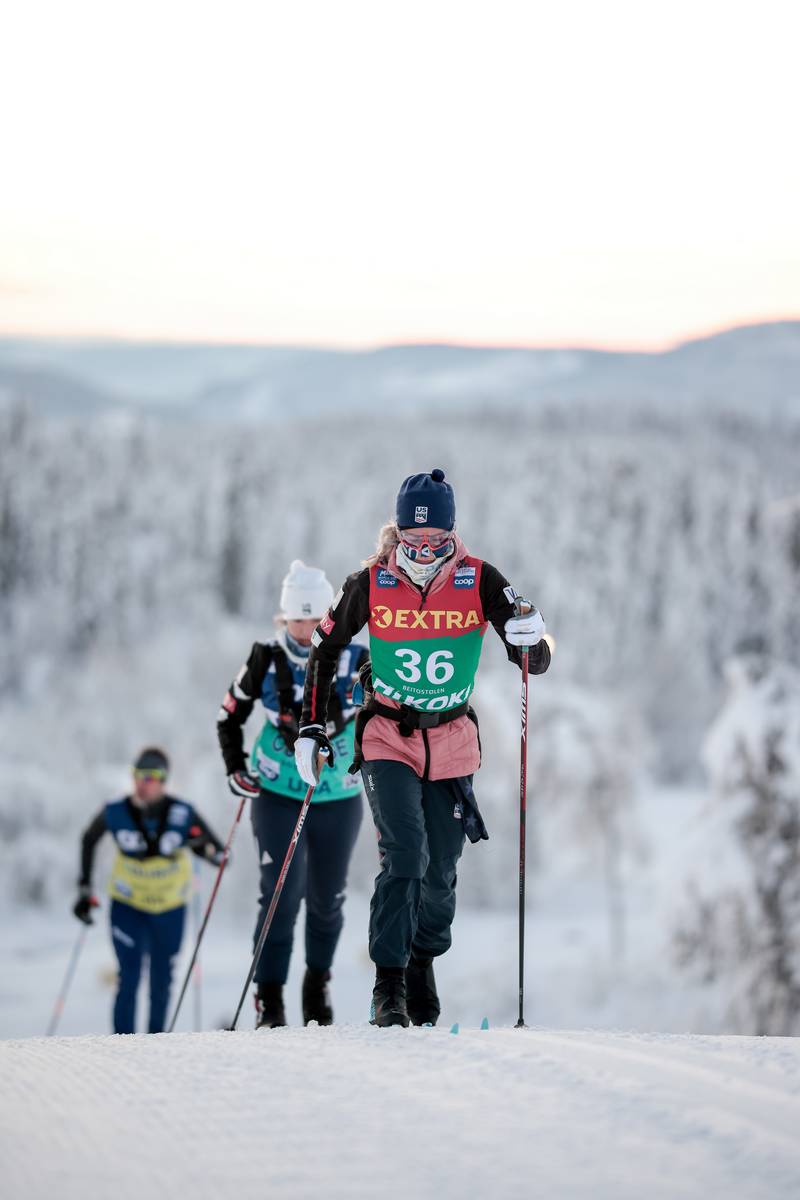
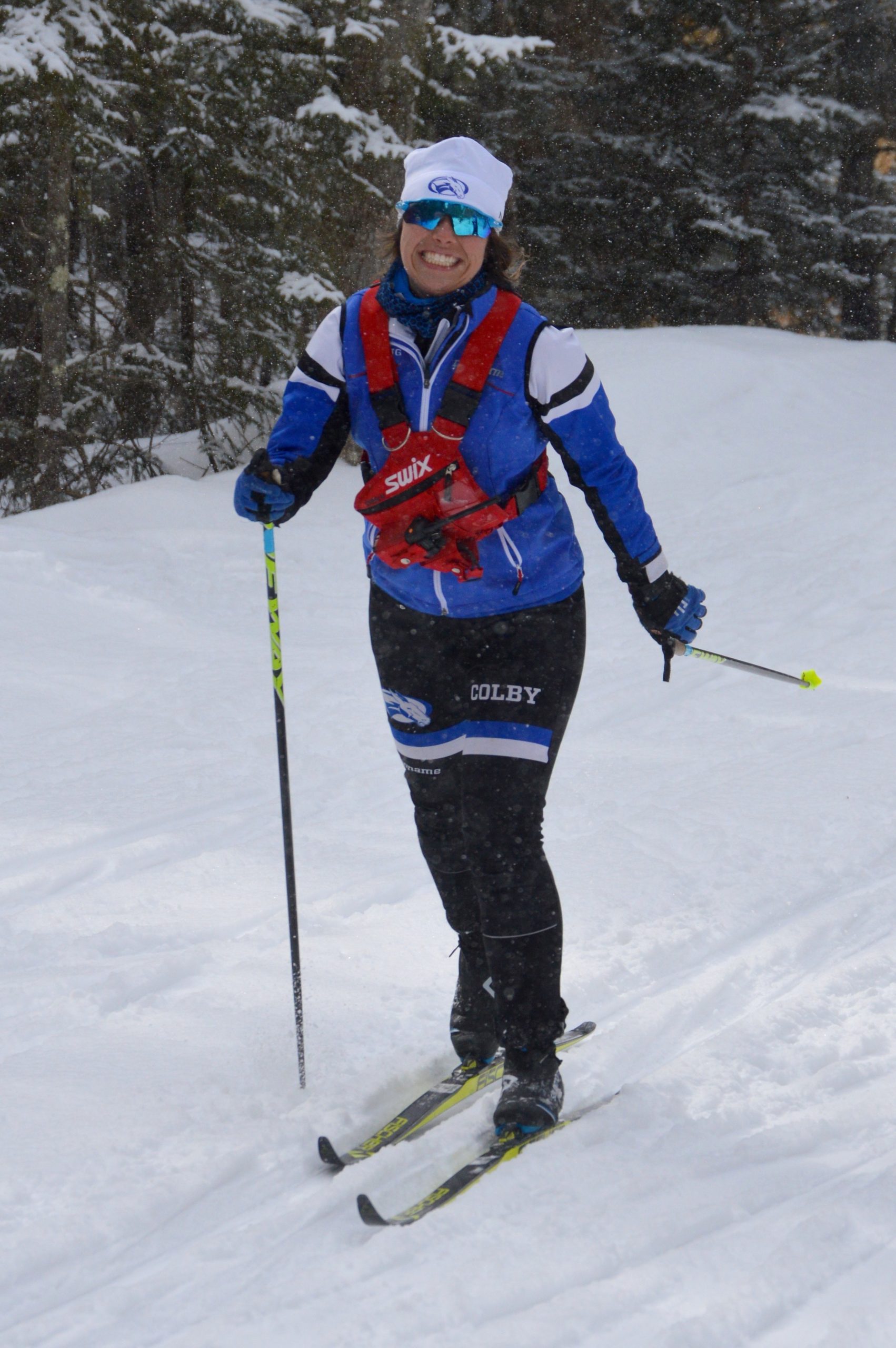
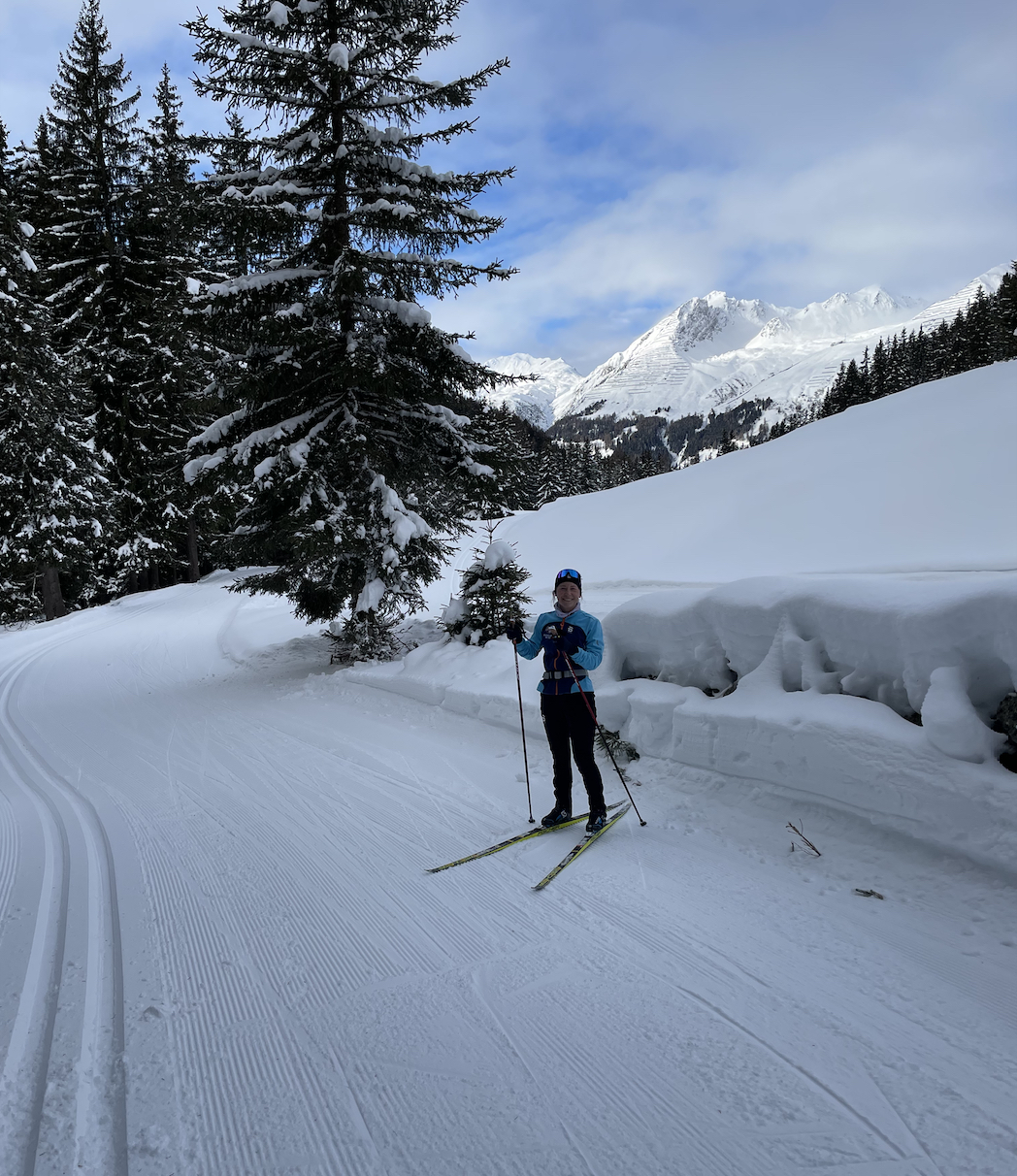
Annika Martell racing during the NENSA club relays, Saturday, March 28, 2026 at Craftsbury. (Photo: Phil Belena)
The Craftsbury Green Racing Project has named Annika Martell as its new Head Ski Coach.
Martell brings a resume that spans nearly every corner of the Nordic skiing world. A Minnesota native, she headed east to ski at Colby College, where she captained the team and earned recognition for her leadership before graduating with a degree in economics and environmental science.
Her coaching career has taken a similarly wide path. Early on, she interned with the US Biathlon Association and coached juniors at Ford Sayre and the Berkshire Nordic Ski Club, before moving into elite-level work as an assistant coach with the Stratton Mountain School T2 Team. She spent four years as an assistant coach at Williams College, during which time she completed two stints as a Trail to Gold Fellow with the US Ski Team and served twice on the wax staff for Team New England at Junior Nationals.
Most recently, Martell was the Head Nordic Coach at St. Michael’s College, where she guided the program to highly competitive results.
Her background extends well beyond the ski tracks. She is a certified weightlifting coach and handled strength and conditioning duties at Williams. She also has experience in finance and operations management, and holds a Master’s degree in Sports Business from Drexel University.
The Craftbury Green Racing Project is still accepting athlete applications for the incoming 2026 snow class — Apply Here
Martell follows Jessie Diggins on course in Beitostolen in 2022. (Photo: Nordic Focus)
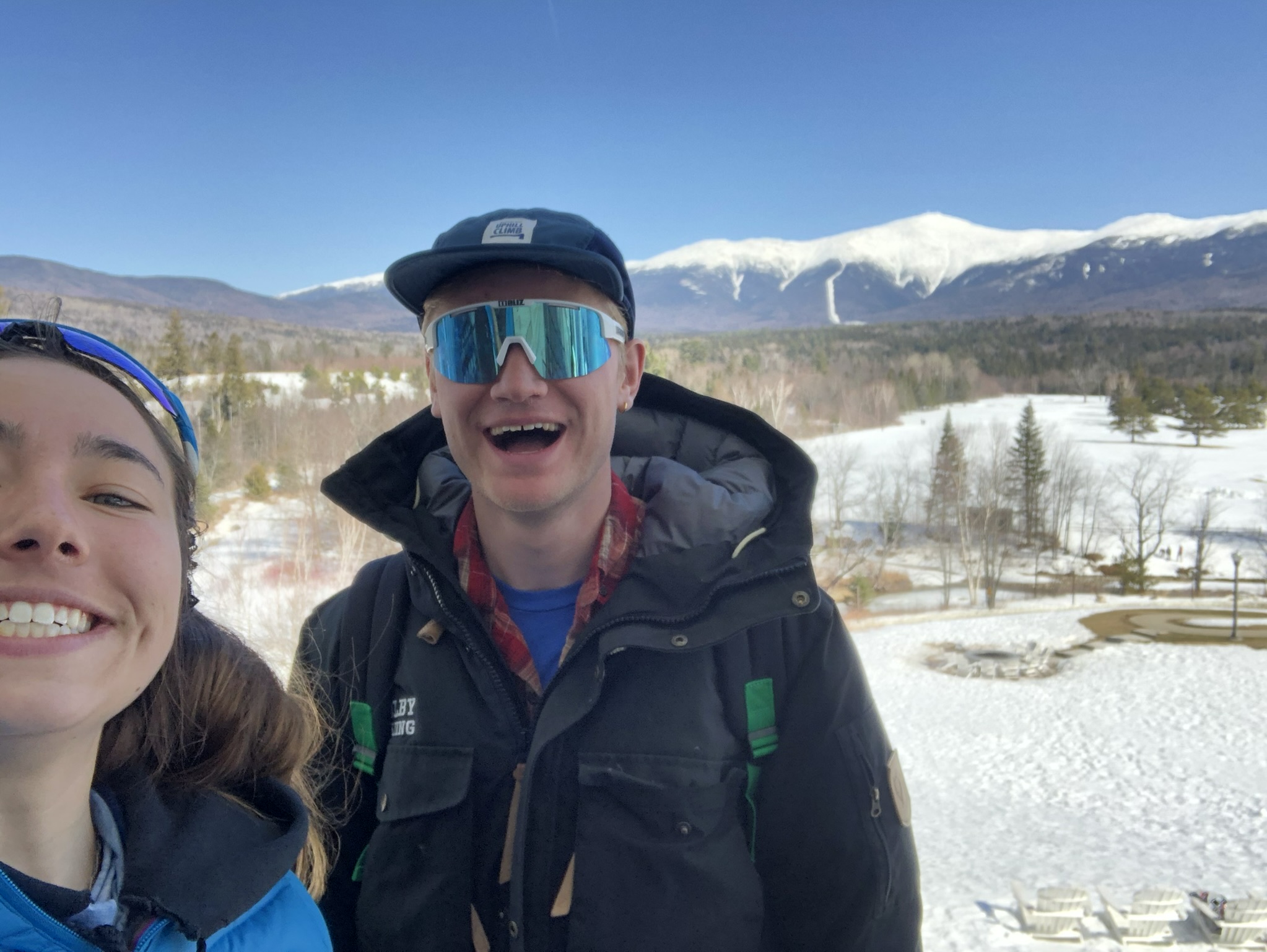
The author and Annika Martell in New Hampshire, 2020. Martell was one of the National Nordic Foundation’s inaugural Trail to Gold Fellows, and interned on the World Cup in December. (Photo: Courtesy Image/Annika Martell)
All friendships have a mythology, and all mythologies have their origin story. For Annika Martell and me, that origin story takes place in a marsh outside of West Bend, Wisconsin.
Anni and I did not meet until college—we were both part of the incoming class of 2020 at Colby College that arrived on campus in Waterville, Maine in August 2016, but my mother and her father were both raised in this same heart of heartlands north of Milwaukee. At our first practice as members of the Colby College Nordic Ski Team, Anni pulled out a set of rollerskis from a ski box. Seeing that she had stuck a Green Bay Packers sticker on both rear fenders, I exclaimed, “Go Pack Go.” The smile she returned let me know that in those nerve-racked early days in the world of high-brow liberal arts education, I had found an allie in my uncut Midwestern goofiness. Through those early uneven steps out into the world, Anni was there as a steady presence to celebrate who I was in my most unfashionable, and true, self—a kid who had seen very little of the world beyond Eau Claire, Wisconsin, was all in on loving his God, his family, and the Green Bay Packers, and for whom the American Birkebeiner may as well have been the center of the universe.
Which brings us back to the marsh outside of West Bend. After a few months of knowing each other, Anni asked me if she could tell me a weird story, and what flowed out from it was an instant recognition of a shared memory in myself. Shared grins followed, and we traveled back to that place that Wisconsin occupies in both our minds: pure nostalgia, memories of family, a place for all the good feelings of the past. There in a marsh was a little blonde-haired boy. He’d gone for Friday fish fry with his family—very Wisconsin sentence—gotten a stray quarter and put it in one of those toy machines where once you turn the knob far enough, it clicks, and a cheap trinket comes out in a plastic capsule. He had gotten a ring, and then promptly dropped it on the family walk around the marsh afterward. A little black-haired girl had come to the rescue, helped find that little toy ring, and then they went their separate ways until they met in Maine all grown up. The moral of the fable: Even before I knew that I knew her, Anni Martell had helped me find my diamond in the rough.
These days she is still helping me be that diamond in the rough and doing the same for an ever-growing number of athletes she has worked with in her young career as a ski coach. Most days, that includes the Williams College Nordic Ski Team, but this season it has also meant the US Ski Team, as she traveled to intern with the coaching staff through Beitostolen and Davos as one of the National Nordic Foundation’s Trail to Gold Fellows.
When she returned, I heard tales from my friend of taking those exciting first steps onto the top level of our sport. I was all ears; I was inspired. What follows details the experiences and reflections of one of this year’s Trail to Gold Fellows, and captures the early journey through the profession for a talented coach within the US ski community from the perspective of her FasterSkier reporting friend.
ADVERTISEMENT
The Trail to Gold Fellowship Comes Together
“I think some of the key moments in my coaching journey have happened when mentors, coaches, colleagues or friends around me didn’t expect that they were making a real impact,” said Anni when I caught up to her after her stint on the World Cup. That might be a sentiment familiar to many coaches out there—that proud moment when an athlete reflects on a tip or cue that stuck with them without your knowing—but it isn’t one that many coaches find themselves reflecting on about themselves. In the case of the Trail to Gold Fellowship—launched last summer in a partnership between the Olympic Women’s Book Project, Women Ski Coach’s Association, and National Nordic Foundation—bringing an experience to talented women coaches that would have an unsuspecting impact was the essence of the program’s impetus. The Fellowship is sending talented Women coaches to the World Cup this season, but its existence has come as the result of a cumulative impact of skiers and the ski community over a long period of the sport’s history.
Martell subs for coaching duty during her college days…a sign of things to come. (Photo: Joe Bianco)
That connection to such a length of time comes via the 2021 publication of Trail to Gold: The Journey of 53 Women Skiers, which recounts the story of each woman to have represented the United States in cross-country skiing at the Olympics from 1973 to 2018. As Ella Hall recounted in her book review at the time of publication, the impetus of that book resulted from an exercise by the women’s contingent of the US Ski Team in 2013-14 where members interviewed team members from the history of Women’s skiing in the United States. It proved true to the principles of skiing—accentuated all that was good about the individuals involved—and soon organization, camaraderie, and a drive started to formally connect the larger community of skiers past and present. The U.S. Nordic Olympic Women’s group (USNOW) was formed in 2018 out of a meeting of Kikkan Randall and Alison Owen-Bradley to provide continued support for competitive Women’s skiing in the United States, with a book committee (headed by Sue Long Wemyss) resulting in the publication of Trail to Gold.
Trail to Gold, the Journey of 53 Women Skiers, written and compiled by the skiers themselves. (Photo: Women’s Cross Country Olympic Book Project).
Last summer, the committee that Wemyss had fronted connected with the Women’s Ski Coaches Association (WSCA) with the idea of continuing the type of internship that Bourne had completed with the US Ski Team with the proceeds from the sale of Trail to Gold. US Ski Team Head Coach Matt Whitcomb brought the idea to the National Nordic Foundation, where he serves as a Board Member. NNF joined to provide additional funding, and the Trail to Gold Fellowship became a reality. The inaugural class was announced in November.
The Trail to Gold for Annika Martell
There are the friends you work with, and the friends you escape work with. Then there are the rare ones with whom you can do both. Initially, skiing was the latter for Anni and myself: our escape. Then, over the space of the last two years, skiing became the former: our professions. As a consequence, when we catch up these days, it is usually registers as some kind of impromptu ski coaching conference. A phone call that begins with “I just saw your old roommate last weekend” can quickly morph into a conversation about the virtues of running Start Oslo versus a Klister-Hard wax cover. Implicit in that is a fluidity that features as a strength of the US ski community: athletes can play coach; coaches can sometimes play athletes; and to truly understand athlete development, coaches can work on multiple different registers of development all at the same time.
Anni has found that current and ridden it well. Originally from Minnesota, she engaged in that understated but important practice in America’s most robust high school league where athletes regularly get involved in teaching learn-to-ski with the Minnesota Youth Ski League. That followed her when she was my teammate at Colby, where our team made a regular practice of helping with the Bill Koch club at Quarry Road in Waterville, Maine. From there, for Anni, it was a more formal step into coaching. As our final season racing on the collegiate circuit wrapped up in the spring of 2020, she had secured an internship with the US Biathlon Association to work with their athletes in Lake Placid that summer, and with it, her coaching journey had begun in earnest. Then there was a season at Ford Sayre in Hanover, New Hampshire working with their Junior program, before moving into her current position as Assistant Coach at Williams College.
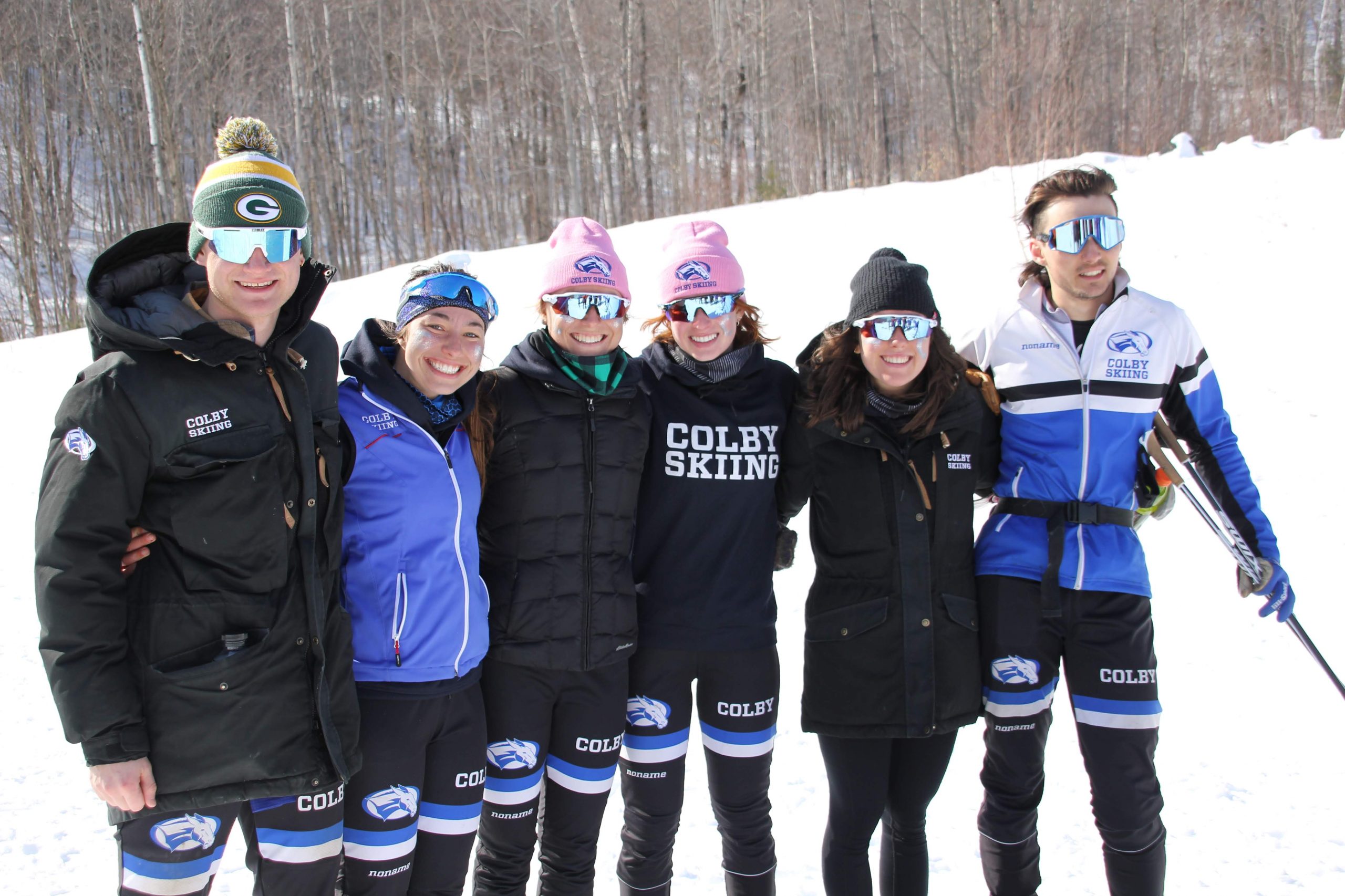
Colby Seniors at the Chummy Broomhall Maine State Collegiate Championships in 2020 (Photo: Linda Kerker)
That quick journey was motivated by “some amazing coaches and role models I looked up to in the coaching profession, from the Bill Koch League all the way up to the national team,” says Anni. There is an approach couched within that statement, a seriousness to viewing coaching as a craft in which one should grow and develop. More uniquely, with Anni, is an ability to view her development as a coach with super seriousness, while projecting to her athletes the joy and fun that taking the sport of ski racing seriously can be.
In her willingness to see coaching as a craft—one that takes a long journey to master—Anni has identified something that US Skiing is still busy learning on a national scale. Coaching development requires as serious a commitment as athlete development.
ADVERTISEMENT
Trail to Gold: On the World Cup
That coach development is a growing priority for US skiing is fundamental to the Trail to Gold Fellowship’s mission. On the organizers end, the T2G Fellowship represents a commitment to providing promising Women coaches with the experience and credentials required to correct a historic inequity on the highest level of coaching within the United States development system. For an individual coach like Anni, it represented “a great opportunity to learn. There’s so much to learn from people we come into contact with: techs, coaches, and, of course, athletes!” Anni joined Naomi Kiekintveld (APU/Anchorage South), Liz Stephen (Park City), Caitlin Gregg (Team Birkie), and Lizzie Larkins (Montana State) in the inaugural class of T2G Fellows when they were announced by the NNF in November.
Anni’s two-week stint on the World Cup included the back end of Period I (December 9-December 18), a weekend in Beitostolen, Norway followed by a mad dash to the Alps in Davos, Switzerland. That was a big opportunity, but it was also one Anni says she considered carefully: the Fellowship meant two weeks away from the Williams Ski Team during a crucial block leading into the Eastern Carnival Circuit. “I talked with [Williams Head Coach Steve Monsulick], and we decided that it was a great opportunity, and also would benefit our program through the lessons learned [on the World Cup too].”
On the actual “role” she played within the US Ski Team staff, Anni said that “it was really twofold: one part coach, one part wax technician.” Anni further divided the World Cup coaching experience into two types of days: “training, and race-days, which are all hands on deck.”
In Period I, the US Ski Team coaching staff included Head Coach Matt Whitcomb, Program Director Chris Grover, and D-Team Coach Kristen Bourne. On training days, Anni said that the “coaching” aspect of the staff’s job was on display in a way that goes unconsidered by most. “The athletes and coaches really are committed to improvement the whole time. On training days, coaches organize athlete training sessions, shoot video, offer technique advice, provide training and recovery council, discuss tactics – on top of all the other logistics involved with the World Cup—which requires some kind of superpower it seems.” Anni also added that her days were particularly busy on training days, as she cycled between coaching and learning the ropes as a wax tech.“[There was] a lot of testing: [wax], structure, ski selection,” she said.
On race days, the big takeaway was that even, and especially, on the World Cup, it’s “all hands on deck.” Changes to FIS policy this summer mean that for each team to gain their full allotment of Coaches’ bibs (required for course access), two of those bibs must go to Women coaches. For the US, having a Trail to Gold Fellow at all World Cup races this season means being able to use the full allotment of bibs. For Anni, this meant that she spent most race day mornings as a Fellow testing wax out on course alongside Kristen Bourne and the US Ski Team athletes.
Martell follows Jessie Diggins on course in Beitostolen last December. New FIS rules this year mean two on-course bibs are reserved for female staff members. (Photo: Nordic Focus)
The two week period that coincided with Anni’s Fellowship found the US Team at the end of the intense three-week opening period of the World Cup this year which saw three, consecutive three-race weekends in Ruka, Lillehammer, and Beitostolen. By Beitostolen, fatigue and sickness had found their way into the camp. Some skiers would miss starts; others would look to manage their fatigue within the bigger picture of their goals for the season. Still, the US saw skiers turn in top 10 finishes in both the weekend’s classic sprint, and 10 k classic. Sunday’s Team Relay would pose a unique challenge to the US team, though. For most athletes, a decision had to be made: push through for the pride of the team—a foundational principle that the US has held to in building success over the past decade—or rest and push for results in Davos.
In the end, the US ended up not starting either Jessie Diggins or Rosie Brennan—two parts of the Team Relay that won in Falun in 2021—and scratched one of their two teams for the Beitostolen 4 x 5 k Relay. Head Coach Matt Whitcomb said he “[felt] weird to say I support [the decision to rest] as a coach,” describing it as “emotionally tough.” But it was a decision with a clear forward-looking motive. At Davos, the US team felt there was “a good chance to end Period I on a high note.”
When Davos came, the US started the weekend off strong—2nd place in the skate sprint for Jessie Diggins—and then ended on nothing less than a definitive highlight in program history: Jessie Diggins first and Rosie Brennan third in the 20 k skate. For Anni, it felt like a “culminating moment” for the whole T2G Fellowship experience. “One of the biggest things I’ll take away from [those two weeks] is that our athletes are SO resilient,” she said. “The mental toughness it takes to be resilient when results don’t go your way, and know when to take care of yourself was fully on display in that tough decision to hold off and bounce back. And [Jessie and Rosie] just skied their hearts out [in that Davos race], it was amazing to watch it unfold. ” Through two weeks, a whole odyssey had played out for the US team—trial, tough decisions, will, determination and all—and had resolved into an extraordinary ending. The diamond had been pulled from the rough.
And with that, Anni had helped do for the US Ski Team what she had done for me as a friend. Of what she is taking back to the US, she says that it is a mix of small and big things. On the smaller end, she says that “the wax technician experience is invaluable on the [World Cup]. There’s just no good way to mimic that, and I’m leaving with techniques and hacks that I’ll use in the wax solving problem going forward.” On the grander scale, though, there is the experience that speaks to who Anni is as a person, and the community that has fed into accentuating her proudest qualities. “There’s such a rising tide lifting up women in US skiing and ski coaching,” she said. “And I think the continuation of that is so important on the World Cup and elsewhere in US Skiing. I think I’m more conscious of the messages I send when offering trust and placing values on other others’ experiences.”
The weekend after the eastern Carnival season had ended in March 2020, Anni Martell and I took a trip. We were both seniors, and both headed to NENSA’s U16 Festival in Chittenden, Vermont to coach, before meeting up with a bunch of Colby teammates to race the Bretton Woods Marathon in New Hampshire. Coaching, racing, all in one go: we had entered that liminal space of post-ski racing life, but we were still skiing, for sure. The world was also in a liminal space, whether it knew it or not. A week later, the COVID pandemic would begin in earnest, Colby College would shut its doors, and we’d retreat back to where we came from—leeward towards our childhood bedrooms in the Midwest.
New England had just let up from its latest Nor’Easter, the freeze-thaw cycle had just begun in earnest, and through the backroads from Maine to Vermont there was nothing but spring, sunshine, and brightness ahead. As we traveled we talked and talked: about the friends we’d made through skiing and now loved outright, about what after four years of racing in New England had stuck with us. We speculated on where our friends would be going after graduation, and where we’d end up. It was a peaceful coda to a chapter in both our lives that was about to end in a big rush and panic.
There was a kind of finalized idealism that permeated the whole thing—the sureness you have right at the end of your youth about the world, before you learn that it’s way bigger than you ever imagined. We couldn’t help but look forward, sure only that we wanted to find a place to give every aspect of what we had to the world. Two years on from that moment, we met up at Theodore Wirth Park in Minneapolis, and I heard tales from a friend who spoke about how the last two weeks coaching on the World Cup had taught her that “[coaching] is about trying new things, being curious, investigative, analytical, but also rational and methodical, it’s everything—ALL aspects.” It seemed we had found that place we were looking for: skiing, and all that our journey in the sport—and in the community it creates—amplifies about ourselves, and our friends.
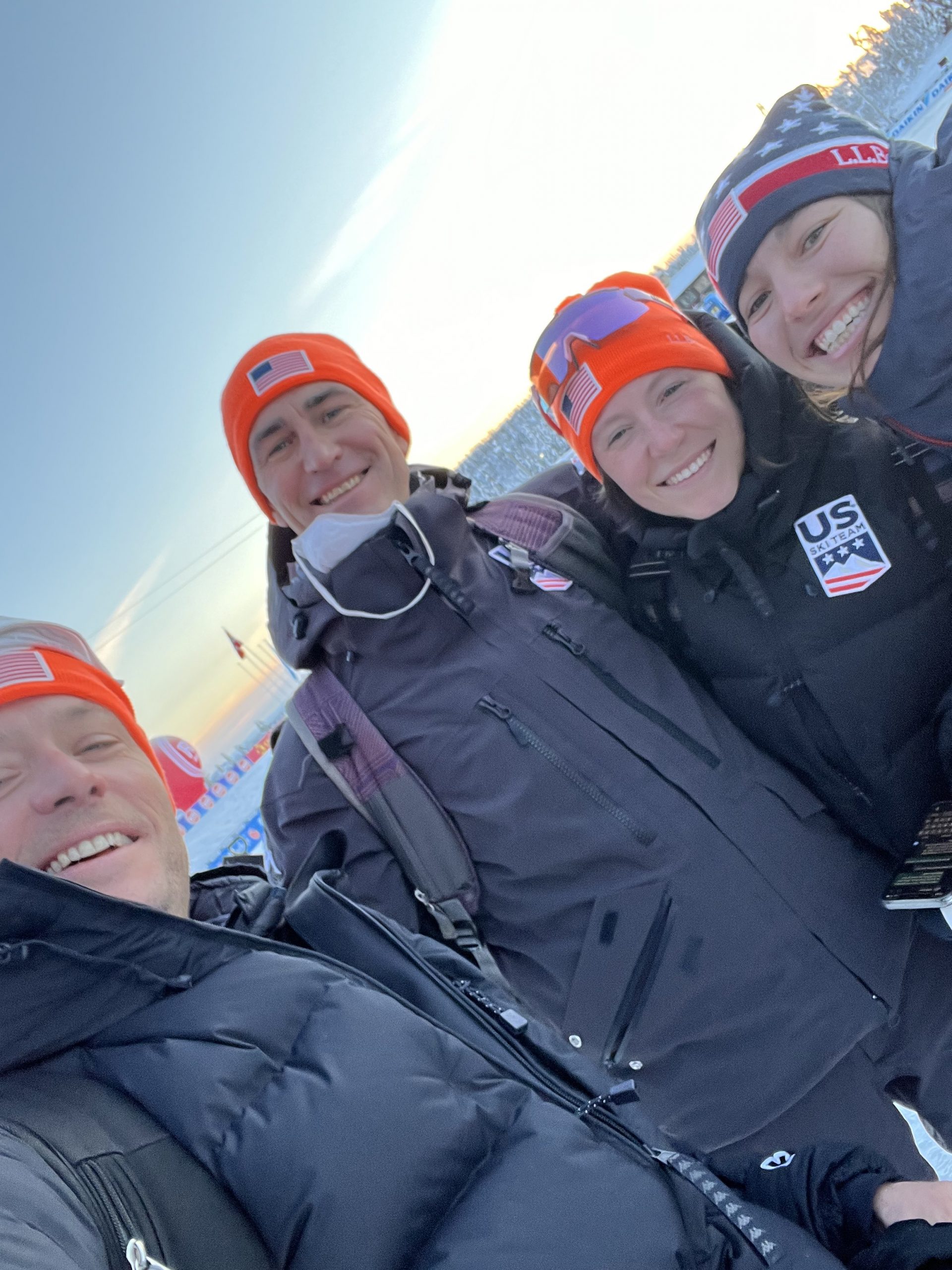
Annika Martell (R) alongside US Ski Team coaching staff in Beitostolen, Norway, last December. Martell was part of NNF’s inaugural Trail to Gold Fellowship class. (Photo: Courtesy Image/Matt Whitcomb)
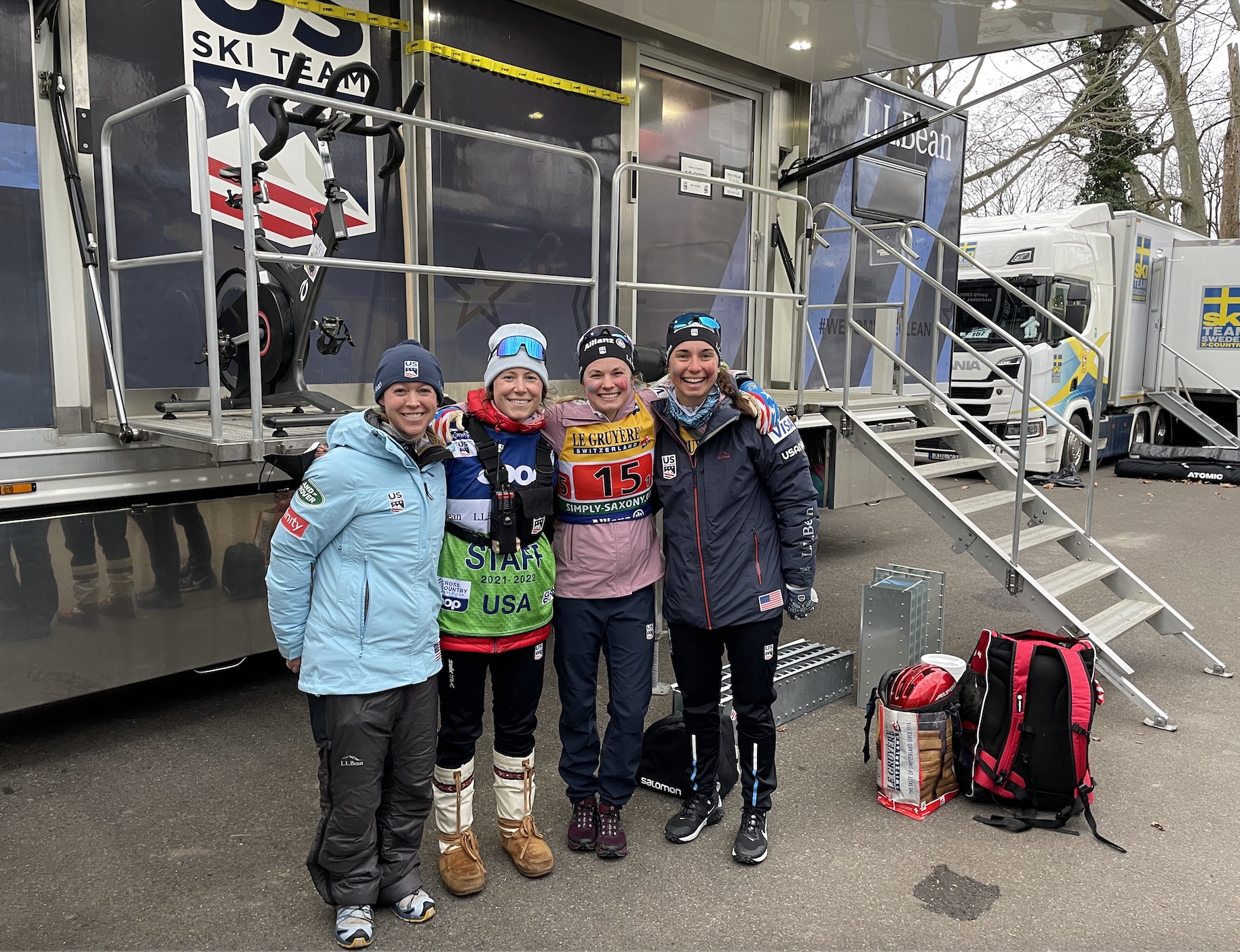
Physical therapist Ana Robinson, Kristen Bourne, Jessie Diggins, and Julia Kern (left to right), at the Dresden World Cup in December 2021. (Courtesy photo)
Applications are open until August 31st, interested women coaches are encouraged to applyhere. Trail to Gold: the journey of 53 Women Skiersis available here.
Moving from idea to action for the women involved in the Trail to Gold book turned out to be expedited thanks to an existing template for not only what they wanted their Fellowship to look like, but what they wanted that Fellowship to accomplish. That case study; U.S. Ski Team Development coach Kristen Bourne.
The story of how Bourne joined the U.S. Ski Team coaching staff is a parable for how success in the sport of nordic skiing should come. In which an extraordinarily talented young coach was paired with supportive institutional structures, relationships, and yes, a little luck here and there, to find her way through the U.S. ski coaching system. It’s also remarkable that Bourne’s whole narrative fits the space of a short story rather than a novel. After a decorated junior and college skiing career at Northern Michigan University (NMU), Kristen Bourne did a stint post-grad skiing that culminated in one last Senior Nationals in Houghton, Michigan in 2020. In an instance where metaphorical resonance became something literal, as Bourne was walking away from her athletic career, College of St. Scholastica (CSS) Head Coach Maria Stuber pulled up in the parking lot and – Midwesterner to Midwesterner – let out a big ol’ “OH Hey there!” which quickly led to a discussion about Bourne coaching, and then, a position as Assistant coach for St. Scholastica.
From there, it’s been an ongoing whirlwind. Stuber is the founder and leader of the Women Ski Coaches’ Association, founded in 2019 to “develop, retain, and advance women in ski coaching leadership.”Stuber and Bourne worked through existing NCAA coaching development programs, which saw Bourne win theWomen Sport’s Foundation Tara VanDerveer Fellowship in 2021, a first for a nordic skiing coach. Bourne’s Fellowship partially helped fund her position at St. Scholastica, but also came with an additional stipend to utilize for professional development in other organizations.
Stuber reached out to U.S. Ski Team coaches Matt Whitcomb and Chris Grover to see if there would be any opportunity to work with U.S. Ski & Snowboard. That turned into a two-week internship on the World Cup that saw Bourne wax teching and coaching at last year’sDavos andDresden World Cups. In turn, Bourne received additional offers to work with U.S. athletes making World Cup starts later in the season, all of which culminated in her hiring as a U.S. Ski Team Development Coach earlier this year. To sum it all up, as Bourne did a couple of times when I interviewed her, it’s been a “whirlwind.” Which, to keep to her own metaphor, is a wind that has turned up inspiration among coaches, athletes, and administrators across U.S. Skiing to bring the type of program that put Kristen Bourne in contact with the U.S. Ski Team into the fold of the nordic community. And now, with the Trail to Gold Fellowship, that’s become a reality.
The energy that’s been infused into making that opportunity a reality is still overflowing at the source. When I caught up with Bourne about the experiences that have made up her journey, she was at the end of a long day working with members of the U.S. Ski Team as they prepared for racing inTorsby, Sweden and atToppidrettsveka in Trondheim, Norway. She brought the same thoughtfulness to our conversation about what formed her approach to coaching as had just gone into that night’s technique session (which happened to include guests Maja Dahlqvist and Frida Karlsson). We not only talked about her journey, but about her influences, mentors, and outlook as a women coach who, just through her own story, has been a leader in the movement to correct for the historic gender inequity in U.S. ski coaching.
Kristen Bourne at a CSS practice in Fall 2021 (Photo: Maria Stuber).
(This interview has been edited for length and clarity).
Ben Theyerl (BT): Can you start off by giving us a summary of your personal background? What was your journey to your current position with the US Ski Team?
Kristen Bourne (KB): I’m originally from the Twin Cities [in Minnesota]. I ended up going to Northern Michigan University (NMU)and skied for them for five years. Then, about three weeks after graduation, I packed up my bags and moved to Norway, where I lived for ayear and a half [ski racing]. There’s a funny story about that ending – I lost my permit in a friend’s car. I ended up coming back to race US Nationals in 2020, where I met Maria Stuber [Head Coach at the College of St. Scholastica in Duluth, MN]. At the time, I was thinking of calling it quits, and my dad had put out some emails to coaches to really try and pull me towards it. Maria had just started the Women’s Ski Coach Association (WSCA), and my dad had also gone out and signed myself and my sister up for a membership – so between emails and that he was really pulling.
We were literally in the parking lot when she pulled up and was like ‘I’ve heard about you, you’re going to get an email from me.’ That turned into ‘Do you want to coach with me?’ and she helped set me up with a summer internship coachingwith Pepa Miloucheva at the Craftsbury Green Racing Project. Summer of 2020, I started coaching at Craftsbury, and then I was one of Maria’s assistant coaches at St. Scholastica (CSS) for two years.
When I got to CSS, Maria and I applied for a grant with theWomen’s Sports Foundation – the Tara Vanderveer Advancement for Women in Coaching Fund Fellowship. We didn’t get it the first year (2020), and then we applied again, and we got it the second year (2021). That Fellowship partially funded my position at CSS, and then there was an extra $2,500 for professional development outside of that position – which was very broad. Maria nudged me to reach out to the U.S. Ski Team and see if they’d need any help for anything really, and as soon as we did Matt Whitcomb was like yes – ‘we actually could use more help for some World Cups.’ Which was unexpected but made me go, ‘woah.’ So, I went to Davos and Dresden last year.
Over there, I ended up wax teching for Caitlin Patterson, and learning a whole lot from the U.S. staff. Then I was back in the U.S. for the collegiate season and made one more trip back to the World Cup with Bill Harmeyer as his wax tach. That was actually a really cool moment, as he reached out because I had already had World Cup experience. So that little internship directly translated into another opportunity very quickly. Then two months later, Kate Johnson announced she was leaving her position as the U.S. D-Team coach, and I applied and now here I am. It’s a lot, but it’s been a whirlwind.
BT: And now you’re back in Scandinavia at the moment…
KB: Yeah, it’s super full circle now because this is my first time back in Scandinavia since I left and lost my permit. The camp we’re at right now was one of the first ones of a few I had when I was living over in Norway, so it’s definitely a cool thing to be back as a coach this time.
BT:That’s a really great story in itself. If I can dig a little deeper into your background, what was your earliest inclination that you might want to coach? Was this something you thought about when you were younger? Or was it really just when you were stuck trying to negotiate the next step after being a ski racer?
KB: I think I always paid attention to people who were like, ‘you should try coaching.’ But I was kind of stubborn in saying that I was going to do something different after skiing. I guess I kept pushing off that idea in my head, but sporadically when I would help out coaching when I was an athlete, I always really loved it. But I guess, it’s one of those things I guess you don’t think of as a career path when you’re an athlete, right?
As I was ending my ski career and figuring out what I wanted to do I was there with a Bachelor’s in Exercise Science, and I was wanting to do a Master’s in the same, which all just leads me back to skiing. It’s what I love. There was a slow roll towards acceptance that ‘oh man, I think coaching is what I want to do, and then Maria definitely solidified how much I love doing this job.’
BT: You’ve touched on Maria, which we’ll talk about a little bit more, but I was wondering if now that you are coaching, do you look back on any of the coaches you had as an athlete and go ‘oh, like that was why they did that?’ Like is there an inspiration that’s shaped your coaching from your athlete days?
KB: Oh yeah. I had a track and field coach in high school,Bev Docherty. I look back and can’t believe she was coaching me in high school based on her accomplishments – (Docherty has a long list of running accomplishments, including having run in the first 6 U.S. Olympic marathon trials open to women). I look back on her style and who she was and how she coached, and she wasn’t super energetic, super loud, or outspoken. She would lean in during the middle of a race though and you could still hear her clearly even when the crowds were cheering all around. I always look back on that because it was so different than anyone I’ve ever been coached by and she was also one of two women coaches that I ever had. I think that I look back to that and try to emulate just how steady she was as a coach. I don’t know if she knows that: she’s been there throughout my racing career and now as I’m going through my own coaching journey, I really do try to emulate her.
BT: You’ve touched on Maria Stuber a few times. How was that relationship formative when you were starting out coaching, especially given that it was right around when she was taking over at St. Scholastica and starting the Women Ski Coaches Association (WSCA)?
KB: I mean, do you want to write the book on it? She would shrug this off and say it’s not true, but she is one of the biggest reasons that I’m in this job [as U.S. Ski Team Development Coach] right now. She’s pushed me and knows exactly where and when to push is how I would best describe it. And I think that goes both for coaching and also for which opportunities to pursue. She’s 100% my biggest mentor and I will always look up to her.
I think the WSCA and her passion for it is also a big aspect of that. She said ‘this is a change that needs to be made and we as coaches can make it if someone is willing to organize it’ and I’m a testament – as are other women coaches – that she is right on that.
WSCA members Maria Stuber (CSS), Kristen Bourne (CSS), Kristen Monahan-Smith (Michigan Tech), and Tracey Cote (Colby) (l-r) at NCAA Championships in Jackson, New Hampshire in 2021. (Courtesy Photo).
BT: Can you describe how the World Cup Fellowship came together, and what you actually did when you were there last year?
KB: I think the most important part of setting that experience up – because it was really a creation of equal parts myself and Chris Grover and Matt Whitcomb – was that it was a fully immersive experience both on the coaching side and [technician] side, not one or the other. I went over and met up with them right after Lillehammer, which was when the team was on its way to Davos. That gave me three and a half days where I was getting an intensive overview of everything from the wax truck to how [the U.S. techs] do glide-outs, wax application on race day, and the whole process of going from setting up at a World Cup to having our athletes be on the start line.
Then Saturday came, which was sprints in Davos, and I was fully part of it all. Waxing on the World Cup. Sunday for the Distance race, meanwhile, I worked more one-on-one with Caitlin Patterson. It was a whirlwind, but I never felt like I was overwhelmed, because the coaching staff really from the moment I was there was like ‘we want you to be part of everything, and we also know that you’re doing this for the first time and are here to make our team stronger.’
That first weekend was a real introduction into the inside process of what goes on with the process of preparing athletes for a World Cup race. When I wasn’t in the wax truck, I was at team meetings where we would watch sprint footage from previous years on that Davos course and discuss tactics. It’s cool to see how the veterans on the team really are thorough about explaining their tactical ideas and are able to make specific suggestions to their newer teammates. You really get a sense of how the ‘team’ aspect of the U.S. Ski Team operates, and it’s pretty special. I would sit in on meetings with Matt and Chris whenever I was allowed, and also got to be part of the team Christmas celebration.
That was all just in one week. And then we packed up and drove the van to Dresden. Which you know, like I’m driving the whole women’s team from Davos to Dresden and hitting the autobahn and frankly, that was the most nerve-racking part of the entire trip. But we did make it.
In Dresden, I turned over to more of a coaching role. That’s where I got to go out on course for the first time, with poles and radio – the whole nine yards of what you think of when you’re watching the World Cup and see coaches running alongside their athletes on the course. Everyday was really intense, and exhausting, and most of all fun, just taking in everything and not really processing it until later.
BT: Was there a moment of realization where you were like ‘holy crap, I’m on the World Cup?’
KB: I think I tried to process that as much as I could before I got there. Like the moment was really when I had my plane tickets in hand and was like, ‘woah, I’m really gonna go to the World Cup and wax skis.’ But you get there, it was way less intimidating than it looks like on TV. Your years of going to ski races as an athlete of coach kick in and you realize that it’s exactly the same feel and atmosphere – just with the fastest skiers on the planet. Living in Norway and being able to watch World Cups – at Holmenkollen especially – really prepared me for all the extra people, and I think mitigated that feeling you could have when Klæbo or Johaug just skis past you.
But also, I shouldn’t play it down too much. Like yeah, there were moments throughout the two weeks where I did just look up and go, ‘this is the World Cup!’
BT: A big part of the Trail to Gold Fellowship that is based off your experience is that there is avalue in having World Cup experience cross-pollinate with the coaching back in the U.S. What did you bring back from the World Cup that you felt like you applied to your coaching on the NCAA circuit at St. Scholastica, and now with the D-Team?
Kristen Bourne logs kilometers on the stunning tracks of Davos, SUI while teching for the U.S. Team. (Courtesy photo)
KB: There were a few things immediately. Like at Scholastica we adopted the glide-out system I learned on the World Cup to our team. More importantly, the mentalities and being willing to talk with other wax techs and understand that waxing theory is really – and that’s a weird thing to call it – less science. You’re not driving towards a single answer, but rather using your knowledge and experience to make a better call than you would if you didn’t. I had a big realization for both teching and coaching that you’re not learning the answer in how to ski coach, but instead that you’re trying to develop a sense of confidence in your experience so that you give that to athletes. There isn’t a one size fits all in coaching.
BT: I really like that idea as a young coach myself. You’re not building towards an answer, but rather you’re building experience to bear so you can make a difference in the really tough situations, you know?
KB: Yeah, I really think that’s a good way of putting it. It’s kind of that moment you realize that there’s not one way to do the job of being a coach, and that’s what makes it a really challenging and exciting profession.
BT: What about how that attitude played into your role now with the U.S. Ski Team? What are you excited about looking ahead to this winter?
KB: For [the D-Team], our athletes are well on their way to hopefully getting World Cup starts soon. And so that’s where I can act as a resource with my experience of what they can expect as they look to make those first starts. I’ll also be full-time on the World Cup this winter, which is exciting. I’m not anyone’s primary coach but will be doing a lot of what I did last winter, so in that respect, the World Cup experience I got will be about as good of preparation as I could get.
BT: I had one last question pertaining specifically to the Trail to Gold Fellowship. What do you think the role of gender representation on the top-level of skiing is in helping the sport develop?
KB: I think it has an immediate impact. I think it’s as simple as the fact that the more women that young kids see out on the course the more, they are going to believe that they belong there. I hope that immediate impact spreads to those coaches that are doing this fellowship this year as well. They can walk away with tangible World Cup experience, and also realize that they are part of pushing the movement for gender equity in coaching forward and inspiring girls that are out there at the races.
I think back to being around wax rooms, at local races, or watching the World Cup on TV growing, and I really do think that if I would have seen more female representation it might have made me realize that coaching could be a viable career for me because I’d seen people like me in that position. Doing this fellowship works to inspire both the women who are coaching and the women who will be coaching one day.
BT: That’s a really eloquent way to put that.
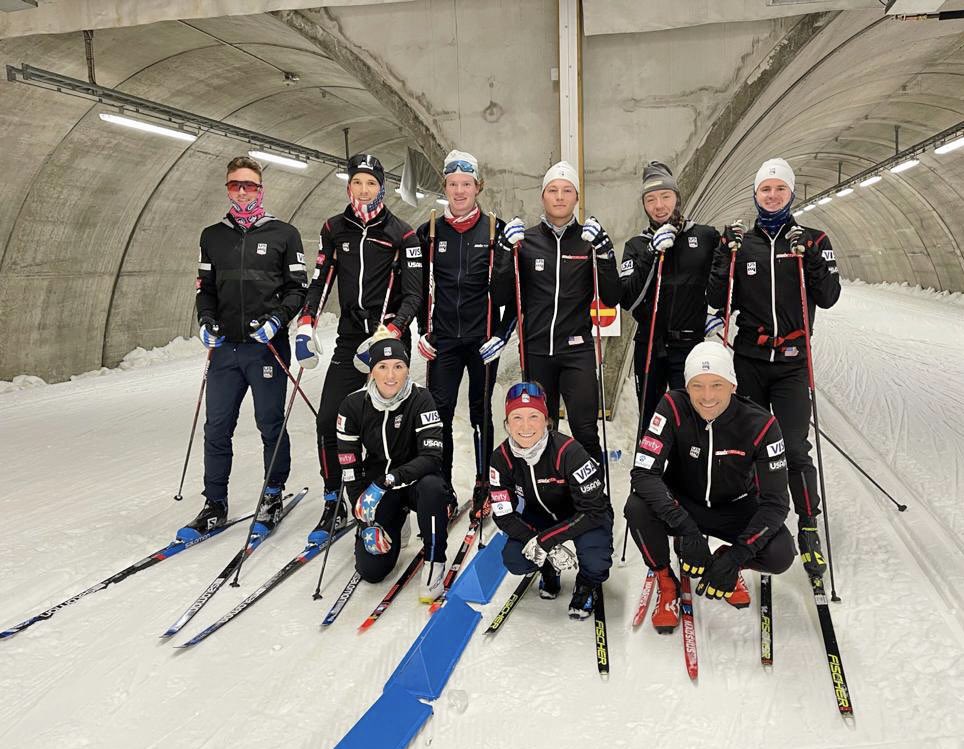
USST athletes and coaches in the Torsby Ski Tunnel, August 2022. Back row, from left: Johnny Hagenbuch, Kevin Bolger, Finn O’Connell, JC Schoonmaker, Ben Ogden, and Walker Hall. Kneeling, from left: coaches Greta Anderson, Kristen Bourne, and Matt Whitcomb. (photo: François Faivre)
Applications for the Trail to Gold Fellowship are open until August 31st.
To buy Trail to Gold, the Journey of 53 Women Skiers, click here. Proceeds are dedicated to funding the Trail to Gold Fellowship.