Tag: training camp

  • As USST Park City Camp Ends, Excitement for Racing Season Builds

    As USST Park City Camp Ends, Excitement for Racing Season Builds

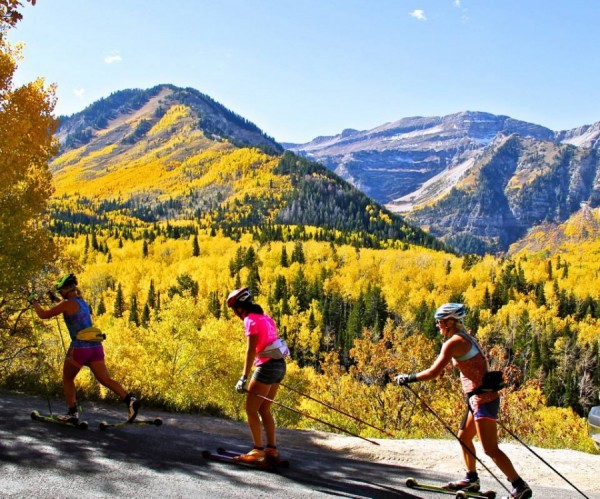
    Jessie Diggins (USST/SMST2) leads a train of skiers through the fall foliage and stunning views at the American Fork in Utah. (Photo: USSA)
    Jessie Diggins (USST/SMST2) leads a train of skiers through the fall foliage and stunning views at the American Fork Canyon Road in Utah. (Photo: USSA)

    The U.S. Ski Team concluded its annual altitude camp in Park City, Utah last week, leaving attendees a little more excited and prepared for the upcoming season. A final gathering before the national team travels to Europe in November, the camp provided opportunity for U.S. athletes to train at altitude and soak up some final rays of sun before winter takes hold.

    The annual October camp has always been popular due to its consistent, dry weather and high-altitude training opportunities. In 2013 the camp saw its largest attendance with 50 skiers converging in Utah with the hopes of earning a spot on the Olympic team.

    Despite the absence of the Olympics, the camp’s popularity has continued into 2014. According to U.S. Ski Team head coach Chris Grover, approximately 40 skiers were at the 2014 camp, which concluded Sunday Oct. 19.

    Unlike September’s USST training camp in Lake Placid, N.Y. the Alaskan members of the national team, including Kikkan Randall, Sadie Bjornsen, and Erik Bjornsen, were present in Park City.

    They were joined by fellow national team members Andy Newell, Simi Hamilton, Ben Saxton, Paddy Caldwell, Noah Hoffman, Liz Stephen, Ida Sargent, Sophie Caldwell, and Jessie Diggins.
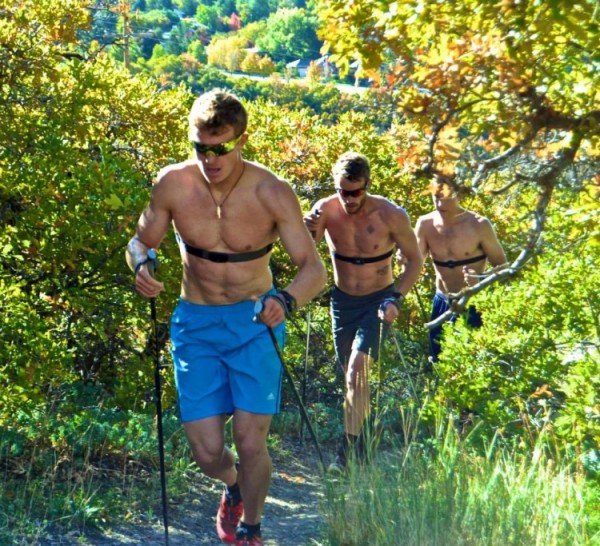
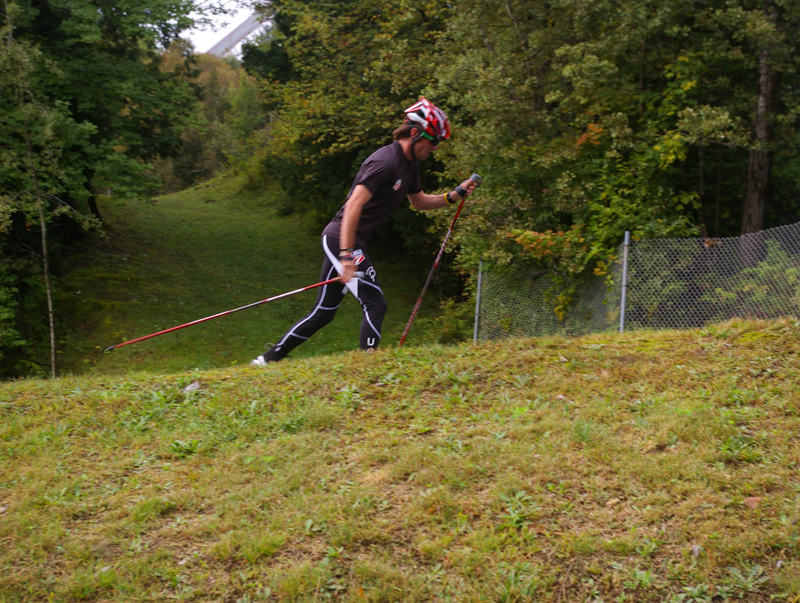
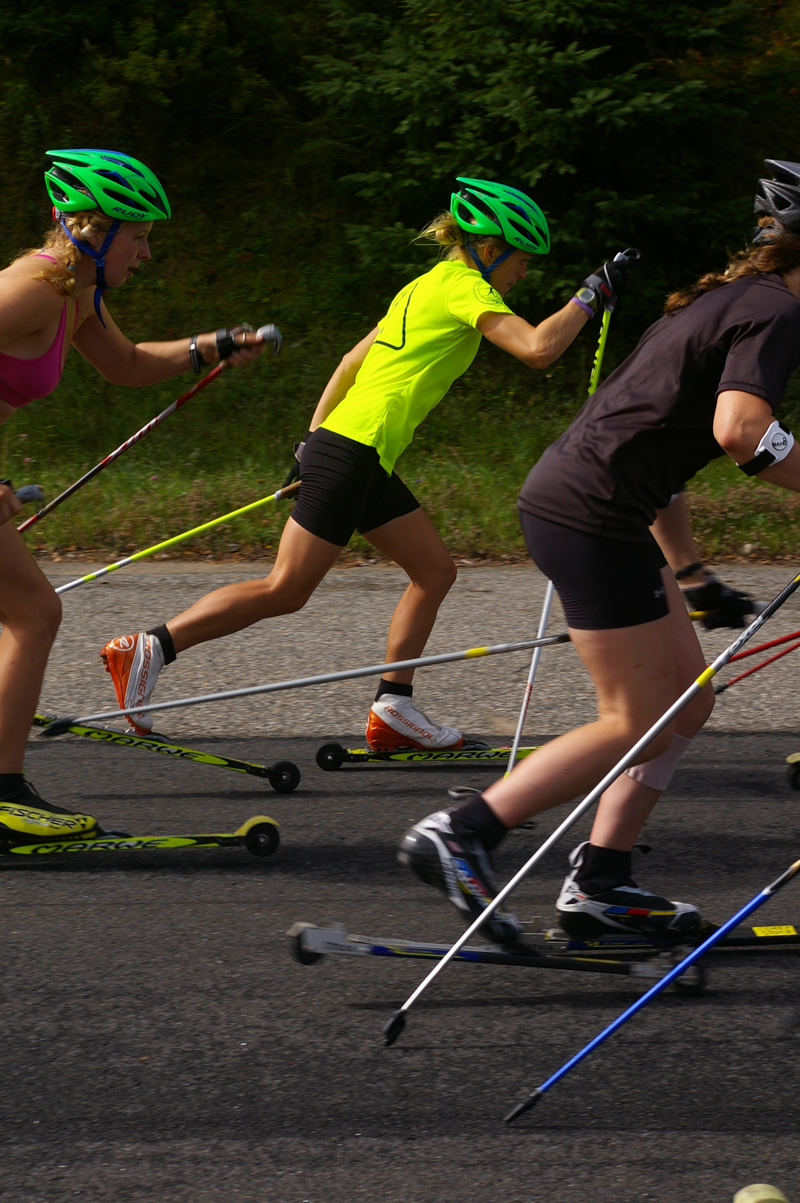
    Miles Havlick (SVSEF) leads Simi Hamilton (USST/SMST2) and Paddy Caldwell (USST/SMST2)  in bounding intervals. (Photo: USSA)
    Miles Havlick (SVSEF) leads Simi Hamilton (USST/SMST2) and Paddy Caldwell (USST/SMST2) in bounding intervals in Utah. (Photo: USSA)

    A variety of other skiers from Alaska Pacific University, Bridger Ski Foundation, Stratton Mountain School T2, and Sun Valley Ski Education Foundation Gold Team, among others, joined the array of activities that traversed the mountains surrounding Park City.

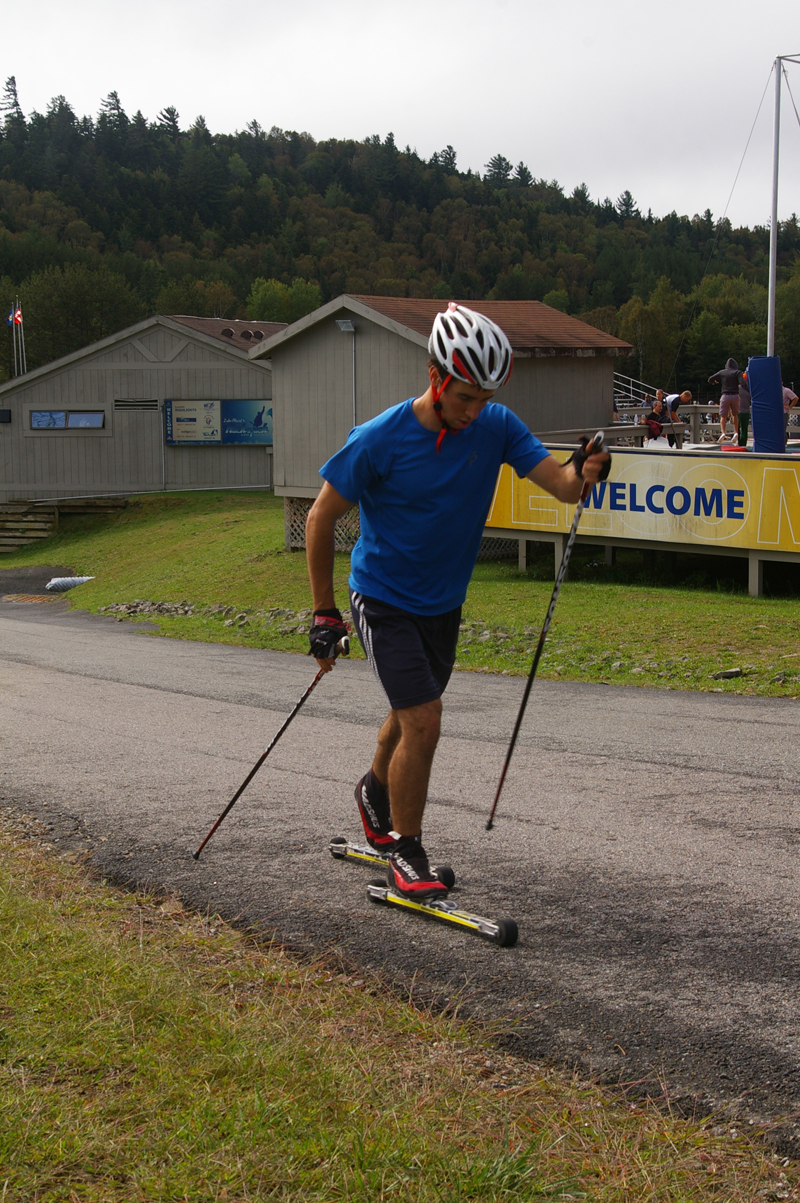
    Athletes participated in workouts that ranged from a rollerski up the American Fork Canyon that featured over 3,000 ft. of elevation gain, to speed work on Soldier Hollow’s familiar trails. During a long run, the team even came across some fresh snow above 8,000 ft.

    For Miles Havlick (SVSEF) the training in Park City was valuable because of new perspectives he gained from the USST coaches and their ability to “broaden your horizons.” Furthermore, Havlick said that training with the USST men was beneficial to his technique and fitness.

    “There’s no one better than to do a speed workout with than Newell, Simi, and Bjornsen,” he said in a phone interview.

    On Thursday Oct. 16 the USST held a 10 k time-trial for both the men and women at Soldier Hollow that saw Randall and Miles Havlick top the women’s and men’s fields. While the results have little significance due to variation in each skier’s training and rollerski speeds, the USST coaches monitor both heart-rate and lactate to analyze the effects of the training load, effort, course type, and altitude on each skier.  

    The Park City camp is unique in the fact that athletes live at roughly 8,000 ft. in Upper Deer Valley to increase hemoglobin levels and prepare for high altitude races. According to Diggins the annual camp helps her prepare for some of her favorite competitions, including the high-altitude stages of the Tour de Ski.

    “I am still learning how to ride the line between going hard and blowing up at altitude, since once you flood your legs you can’t recover as fast as you can at sea level,” Diggins explained. “So doing a lot of long L3 and longer L4 intervals at SoHo (Soldier Hollow) is really helpful for my race prep.”

    Sadie Bjornsen said that while it is always difficult to acclimatize to altitude, she has developed several techniques to aid the adjustment.

    “I know that for at least 4 days I am going to feel like a slog. I also know that I need to force myself to train easier than ever those first few days in order to adjust well without getting too tired for the rest of the week,” she wrote in an email.
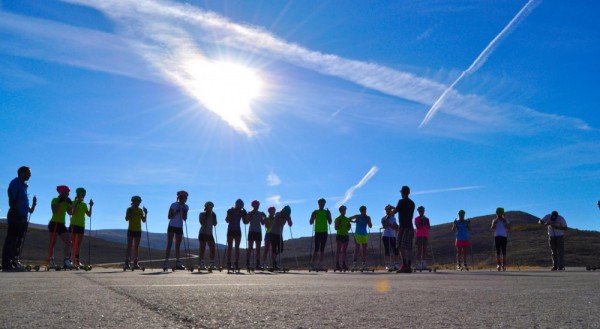
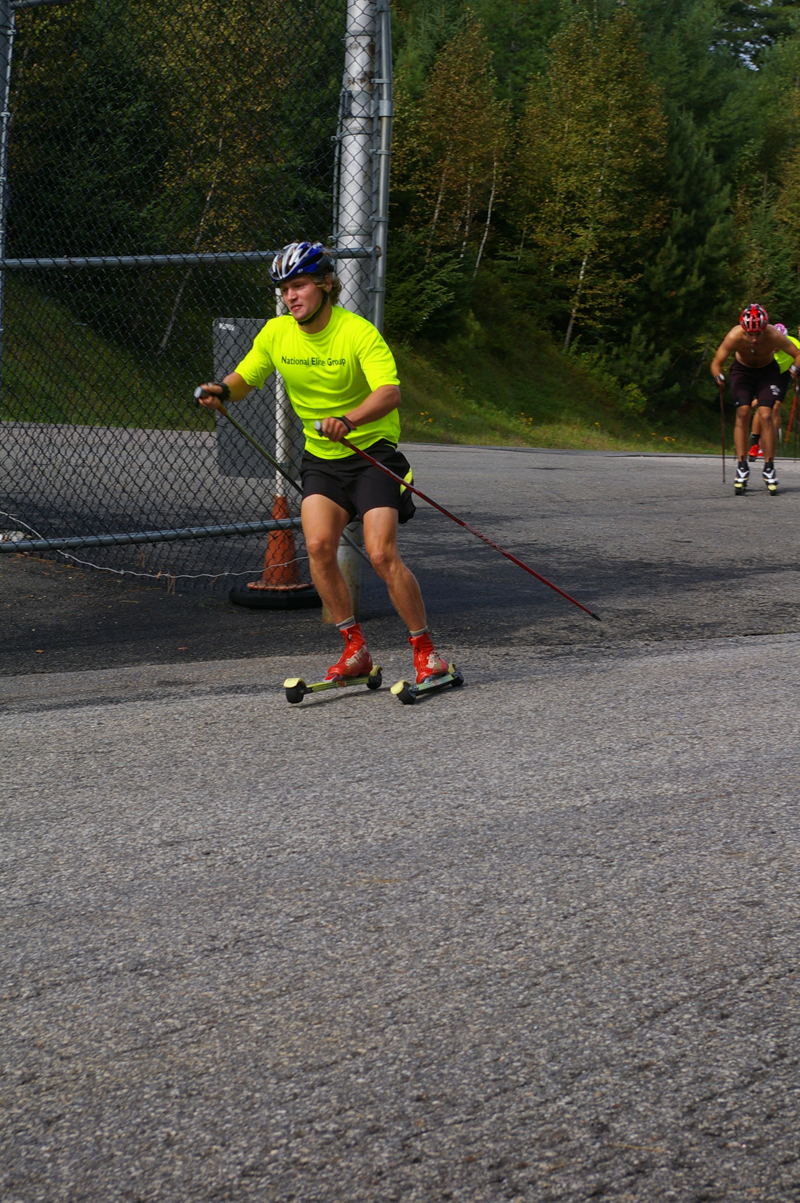
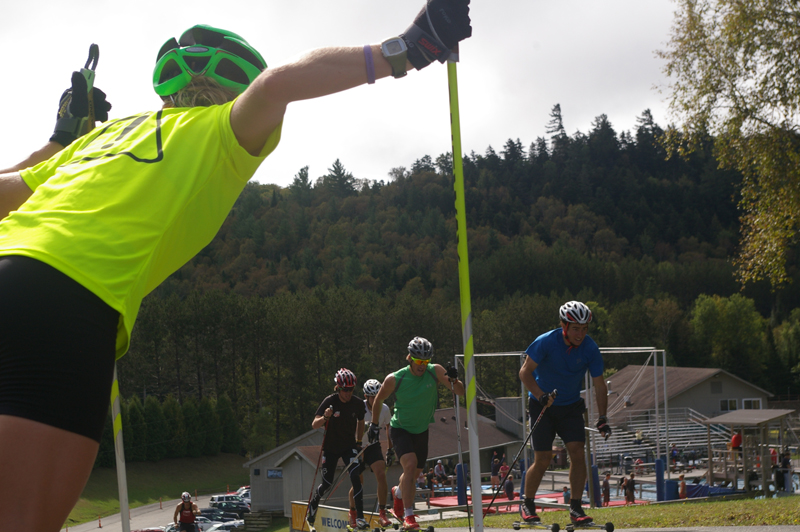
    The USST and NEG skiers gather for speeds at Soldier Hollow in Midway, Utah. (Photo: USSA)
    The USST and NEG skiers gather for speeds at Soldier Hollow in Midway, Utah. (Photo: USSA)

    With the roughly 40 athletes in attendance the allocation of time and resources is difficult to balance between national team and club team members. However, Grover said that the USST coaches have a functional system in place.

    Grover explained that the primary goal at any USST camp is to prepare the national team for World Cup and World Championship success. Its secondary goal is to offer training opportunities to developing athletes who are just below the national team level.

    “Both goals are important to us as coaches,” Grover wrote in an email.

    As in past camps, the U.S. Ski team had several “closed” workouts in addition to trainings that included the entire training group. Grover explained that the division was important for both the national team and club athletes, but acknowledged that regardless of the structure of the workouts there would always be some imperfection.

    “Our intent when dividing some of our sessions is to provide value to both groups, but I guarantee it will never feel perfect for each individual,” Grover said.

    Despite the success of the camp, the USST did not leave Park City without injury. Sophie Caldwell fractured her left elbow Oct. 7 after tripping on a low-hanging cable in a Park City Mountain Resort parking lot. After performing surgery hours after the injury, doctors estimated that Caldwell’s recovery to be roughly six weeks.

    According to Grover, Caldwell is in great spirits and finding creative and productive ways to train despite her injury.

    “She has been incredibly mentally tough through this process, and it is clear that she has the heart and the resolve of a champion,” Grover said of the 24-year-old.

    At the conclusion of the Park City Camp, the USST traveled to Canmore, Alberta for a week of on-snow training and racing at Frozen Thunder. The team will remain in Canada until Oct. 28 when skiers enter their final block of training before traveling to Europe. 

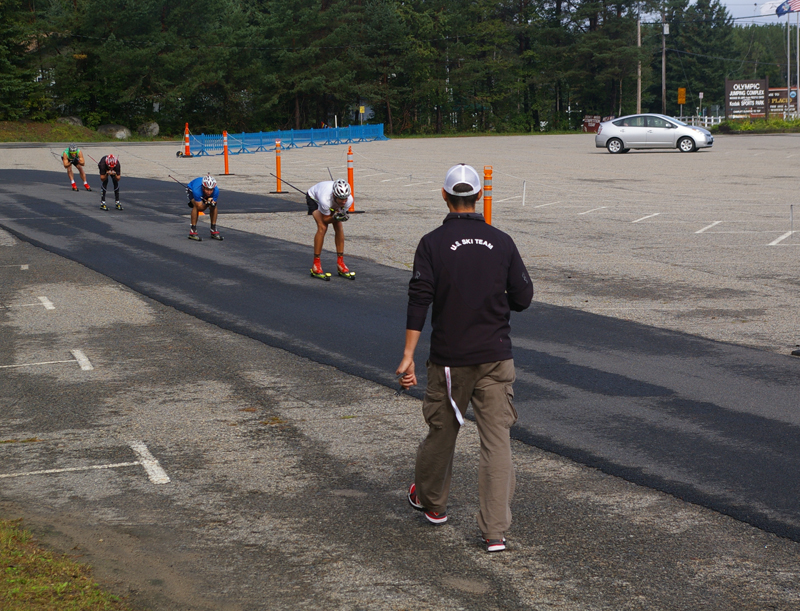
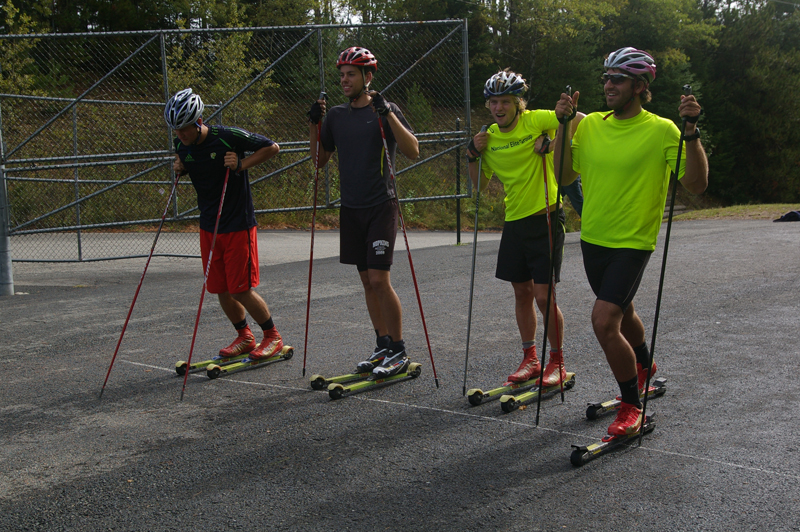
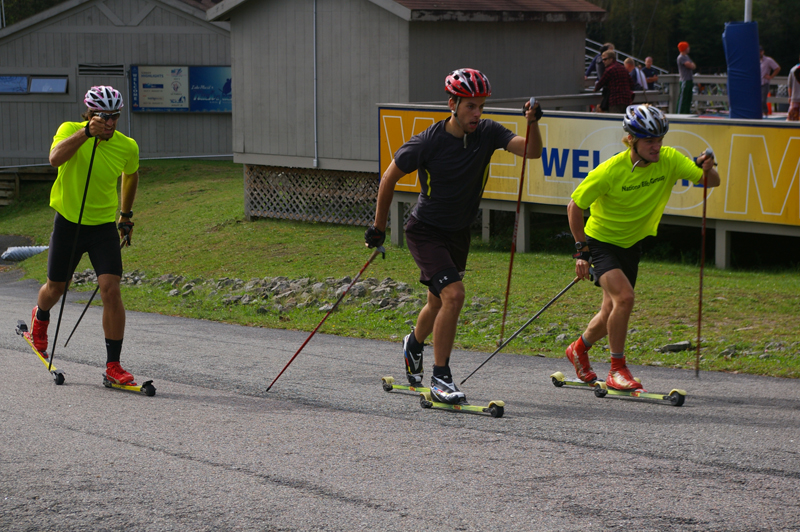
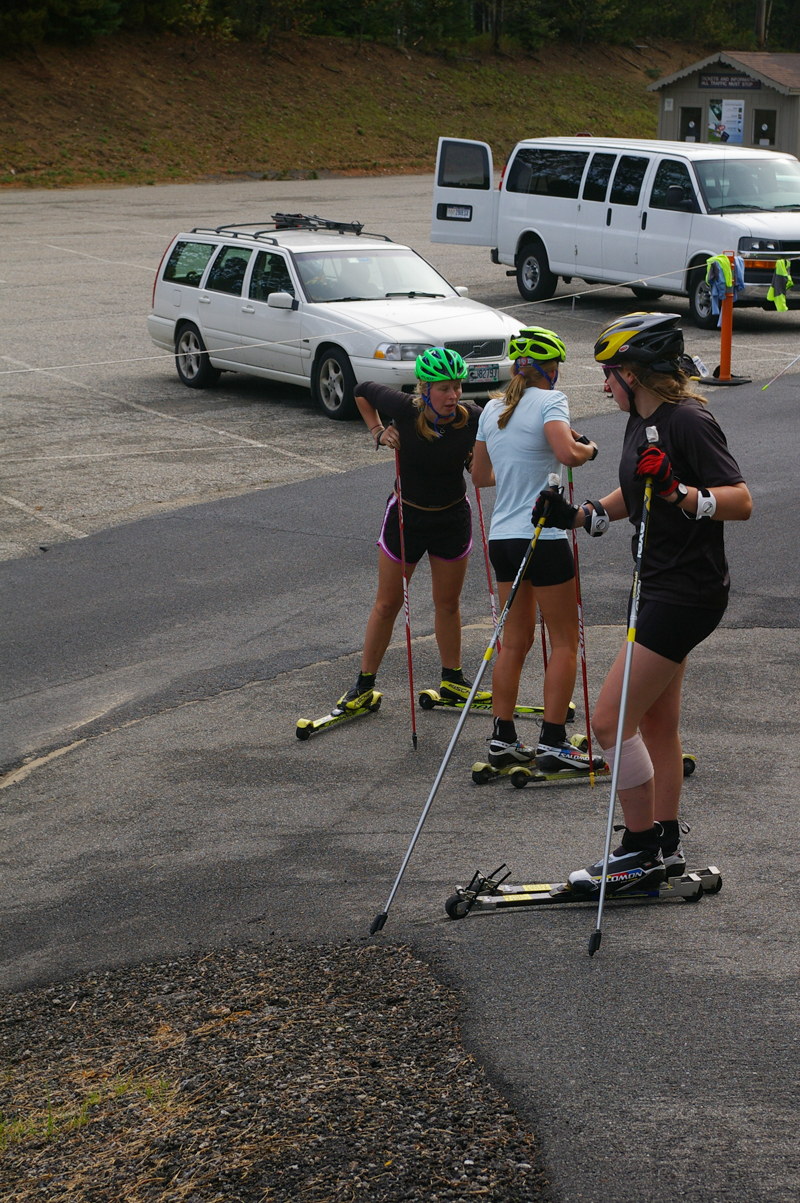
  • Nordic Skiing Summer Training Camp, Dublin, New Hampshire, 11-13 August 2014

    Targeted at high school aged skiers, to give them the opportunity to train and excel as a group, while learning the latest techniques, drills and philosophies.

    Activities:

    •  Roller skiing
    • Norwegian hill bounding with poles
    • Ski specific proprioception drills
    • Running
    • Optional road and mt. biking
    • Lake swimming at the boat house
    • Mt. Monadnock hike
    • Evening lecture series : A Yearly Training Plan ; Diet and Nutrition

    This 3 day, 2 night camp will be hosted on the beautiful Dublin School campus, taking advantage of its newly refurbished weight room/endurance center; its on-campus ski hill, XC ski, running and mt. bike trails; it’s soccer fields; and miles of quiet dirt and paved roads. Each day will be organized to maximize training, technique and give the athletes all the information and experience they need to help them on their way to qualifying for J2 Championships, New England High School Championships, and beyond!

    Coaches:

    Michael Silitch is the head boys’ coach at the Dublin School and helped lead of his students to National Championships and J2 Championships this year. Having spent the last 12 years in coaching, guiding and training in Switzerland and France, he returned to the US last year with his wife to coach at Dublin. Pat Casey is the head coach at Holderness School. He is a former U.S. Ski Team coach, as well as a former coach at the Sun Valley Ski Education Foundation. Pat has worked with some of the best skiers in the world; he has a wealth of knowledge and is our technique guru for the camp.

    Pricing:

    Boarding option, $225, including lodging (2 nights), meals (3 lunches, 2 dinners, 2 breakfasts), transportation during camp, coaching. Day option, $175, including all meals; $145, including lunches.

    To Register contact Michael Silitch: msilitch@dublinschool.org


  • Jacobsen to Join U.S. Training Camp on Eagle Glacier

    Jacobsen to Join U.S. Training Camp on Eagle Glacier

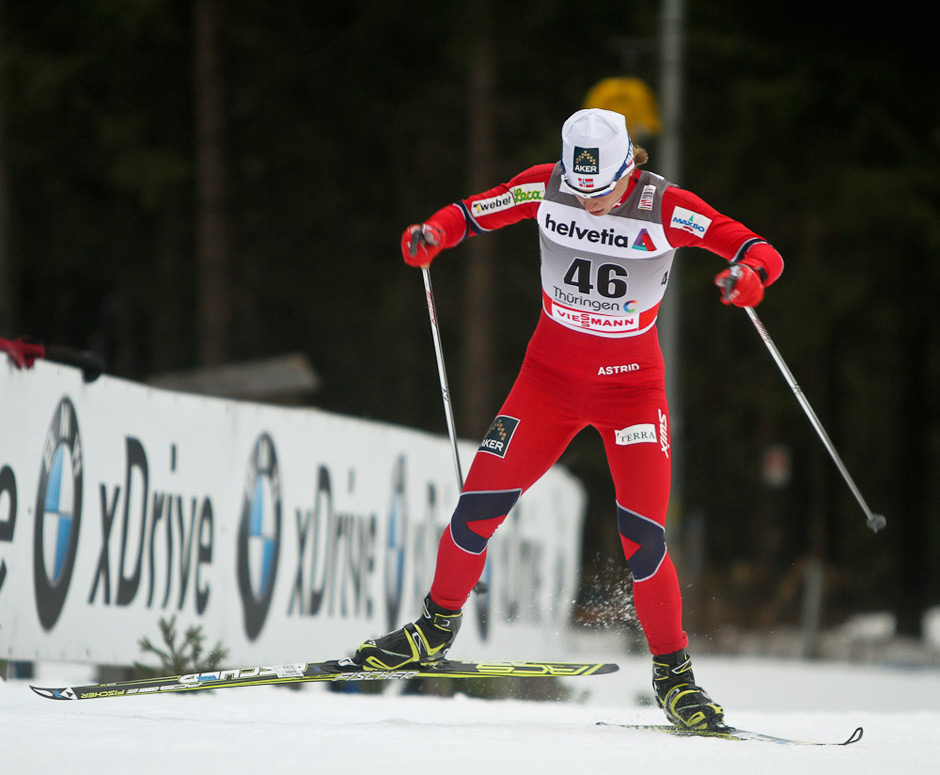
    Astrid Uhrenholdt Jacobsen (NOR) 13th place.
    Astrid Jacobsen (NOR) will join the U.S. Ski Team’s training camp on Eagle Glacier this July as an international guest.

    The U.S. Ski Team’s summer training camp in Alaska has become increasingly international over the past few years, and in 2013 the list of invitees will grow by one more. Norwegian National Team member Astrid Jacobsen is scheduled to be in Alaska for three weeks in July to train with the American women. USST Head Coach Chris Grover recently hinted that an unnamed foreign guest might be attending, and on Thursday Holly Brooks tweeted to Jacobsen, “Alaska & Eagle Glacier are excited for your arrival!”

    Alaska Pacific University and USST skier Kikkan Randall confirmed Jacobsen’s invitation to the training camp. According to Randall, Jacobsen first expressed interest in training with the U.S. earlier this spring.

    “Yep, Astrid is our VIP guest to NAWTA Camp this year,” Randall wrote in an email. “We talked with a few of our World Cup friends this winter about how awesome it was having Aino-Kaisa [Saarinen] last summer, and I think she talked it up too. Astrid expressed some interest this spring so we lined it up to have her over in Alaska for three weeks. She’ll come in a few days before the camp officially begins and will stay a couple days after to adventure a bit as well.”

    Jacobsen, 26, joins a short list of foreign athletes who have been invited to Eagle Glacier. Canada’s Chandra Crawford and Perianne Jones were the original guests in 2011, the first year the group dubbed themselves the North American Women’s Training Alliance (NAWTA). Saarinen, the Finnish sprinter, was invited to attend in 2012.

    “[It’s] really cool that this international cooperation is growing,” Randall said. “We’re getting a lot more invitations to get together for training with the U.S. team these days.”

    The international cooperation has already manifested this summer in Liz Stephen’s invitation to join Norway for a week of skiing on Sognefjell. Jacobsen was the link that prompted Stephen to make that trip, and in July Jacobsen will get the inverse experience with the American women.

    “It’ll be fun to have a new face and a new person to talk with and to become frinds with,” Stephen said. “We’re really excited to have her. She’s really impressive because she is doing medical school while she’s skiing, which is unheard of in the U.S.”

    In addition to being a medical student, Jacobsen was the 2007 World Champion in the classic sprint at the age of 20. Last season, her top result was a third-place finish in the 3 k classic prologue in the third stage of the Tour de Ski. She was ninth in the 15 k skiathlon at World Championships and placed sixth overall at World Cup Finals in March.

  • Photo Gallery: Bend Camp L3 Intervals

    Photo Gallery: Bend Camp L3 Intervals

    The U.S. Ski Team’s annual May training camp began in earnest this week in Bend, Ore. A few inches of fresh snow greeted skiers at Mt. Bachelor on Wednesday morning, just in time for the group’s first interval session: a set of 6 x 4-6 minute L3 freestyle intervals with intermediate sprints.

    “We’ll put a little sprint halfway through the interaval, and that’s to mimic mass start racing and preems and time bonues on the World Cup,” said U.S. sprint veteran Andy Newell. “We try to do it pretty controlled today, but skied in a pretty good group.”

    The USST is joined at Mt. Bachelor this week by the National Training Group, the Canadian National Ski Team, the U.S. Biathlon team and U.S. Paralympic athletes. With so many high-caliber skiers training on the same six- to seven-kilometer loop, Newell says the workouts interesting.

    “I think tomorrow we have a three-hour one on the schedule,” he said. “We have the Canadians here, the U.S. biathles are here, so there’s so many people out we can catch up with Tim [Burke] and Lowell [Bailey] an ski a lap with them. It’s pretty fun skiing with that many people around.”

    Though the workout was the first group interval session all spring for many skiers, Newell noted the pace was pretty controlled.

    “We’re pretty used to training with one another so it’s not that competitive,” he said. “Maybe the preems we definitely try to race each other, to try to ge across the preem line, but as experienced skiers we know that there’s not a whole lot of stock in being in great shape in May.”


    Special thanks to Dan Simoneau for his photos.

  • European Training Camp Gets Underway for U.S. Men

    European Training Camp Gets Underway for U.S. Men

    The U.S. Ski Team men began their European training camp on Dachstein Glacier over the weekend. Photo: Erik Nilsson.

    As the world turned its attention to London this weekend for the opening days of the Summer Olympics, another set of elite American athletes were quietly logging training hours in Ramsau, Austria, in preparation for the coming winter season and, ultimately, the 2014 Winter Games. The U.S. Ski Team men began a 12-day European camp on Dachstein glacier on Saturday, where they will stay for a week before heading to Oberhof, Germany, to train in the indoor ski tunnel.

    This being the first time back on snow for much of the team since the Mt. Bachelor camp eight weeks ago, technique work is a primary focus. Noah Hoffman arrived a week early at the glacier and was joined over the weekend by teammates Tad Elliott, Andy Newell and Simi Hamilton, and Stratton Mountain School T2 skier Eric Packer, who is part of the National Training Group. Kris Freeman, Skyler Davis and Erik Bjornsen all decided to stay home to train for various reasons; Bjornsen has the Eagle Glacier in his backyard and Freeman chose to train at home after a recent period of travel for sponsorship commitments.

    “The main goals include getting the men back on snow…working on technique, getting the men together to push each other, testing new equipment, and investigating some training venues that we have not used in recent years,” Grover said in an email.

    The USST has not officially trained on Dachstein since New Zealand’s Snow Farm became such a major component of its summer schedule 10 years ago, and has never before been to the Oberhof tunnel. While at altitude in Ramsau the team’s training plan will consist of high volume, and once switching to lower elevation in Oberhof will include more intensity and speed. A skate time trial in the tunnel is also in the works — “we don’t have any concrete plans to coordinate training with any other national teams but we will see who is around in Oberhof,” Grover said.

  • U.S., Canadian National Teams Mix It Up with Club Skiers in Relays (Photo Gallery)

    U.S., Canadian National Teams Mix It Up with Club Skiers in Relays (Photo Gallery)

    APU's Sadie Bjornsen (also USST) and Kate Fitzgerald head for the final tagoff.

    BEND, Ore. – It may have been spring at Mount Bachelor this weekend, but by the time Wednesday rolled around, it was more like winter. Snow had fallen overnight and stuck to the mountain’s flanks, and flurries continued to drift from the sky as the U.S. and Canadian national ski teams competed in relay races with several club teams.

    Canadian Olympian and current Alberta World Cup Academy coach George Grey skied the course before the start and estimated that it was about eight minutes long. It featured a long, grinding climb up the “central corridor” from the start/tag zone at Emil’s Corner, before looping behind the nordic lodge and back down a descent back to the start. Conditions were fairly ideal – fresh powder on top of a packed, icy, base meant that neither the early-morning ice nor the midday slush skiers had contended with over the weekend were anywhere in sight.

    Racers were matched up more or less randomly, and usually pairs included athletes from separate teams. Among the clubs represented were the Alberta World Cup Academy, the Sun Valley Gold Team, the Maine Winter Sports Center, CXC, Team Homegrown, Bend Endurance Academy, XC Oregon, Steamboat Springs, the Craftsbury Green Racing Project, and APU.

    For a prize – besides bragging rights, that is – coaches seemed to settle on the consensus of a roasted chicken.

    That reward will end up going to Welly Ramsey of the Maine Winter Sports Center and Kris Freeman of the U.S. Ski Team, who led the men’s race more or less wire to wire, and to Ida Sargent of the U.S. Ski Team and Chelsea Holmes of the Sun Valley Gold Team, who won the women’s race.

    Below, a gallery of the action.

  • U.S. Biathletes: Home on the Range at Soldier Hollow Camp (with Photo Gallery)

    U.S. Biathletes: Home on the Range at Soldier Hollow Camp (with Photo Gallery)

    The women's national team skiing through the range at Soldier Hollow. Photo courtesy of Susan Dunklee.

    The U.S. biathlon community may be small, but one benefit of its size is that almost everyone can gather each year in October for a training camp at Soldier Hollow.

    This year, the senior national team is joined in Utah by the junior national team as well as biathletes from the Maine Winter Sports Center, Durango and as far as Canada.

    Inviting everyone brings training quality up, said national team women’s coach Jonne Kahkonen, who also supervises training for all resident national team athletes in Lake Placid. He was pleased by the work he had seen in Soldier Hollow so far.

    “I’d say that in general, the summer has been good for the athletes training with the team, and for sure there are going to be a few athletes from outside the team who will be pushing hard as well,” Kahkonen told FasterSkier between training sessions on Monday. “So I’m sure that with all this competition within our nation it’s just going to bring the level up even more. And hopefully it’s good for the team members to remember that there are athletes outside the team, pushing.”

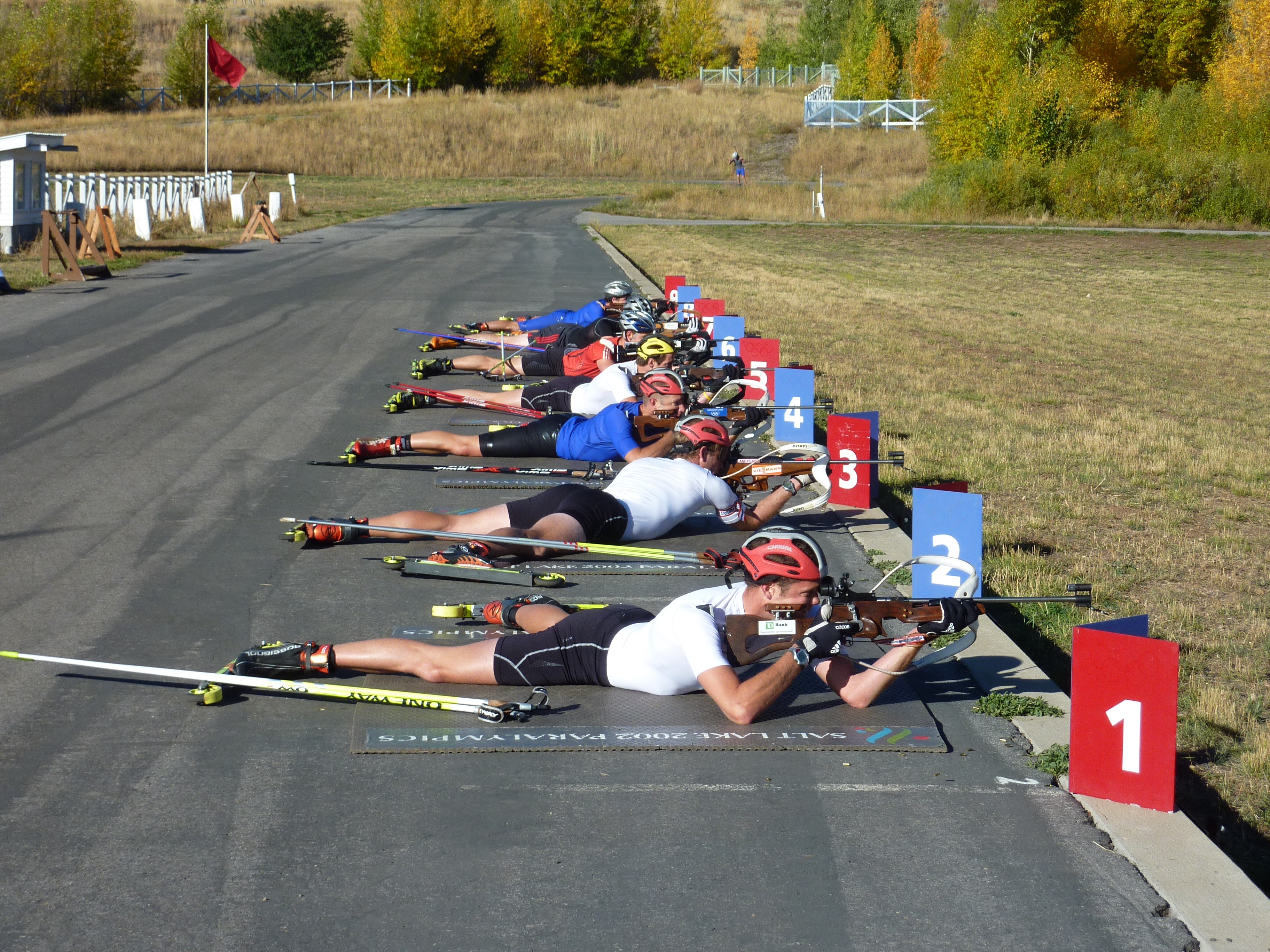
    The group was taking advantage of Soldier Hollow’s shooting range and paved rollerski loops to concentrate on biathlon-specific training. There are few venues in North America as conducive to dryland training for biathlon, and with the race season fast approaching, locking down shooting procedures is especially important.

    Dunklee honing her standing shooting. Photo: Jonne Kahkonen.

    “For me, this time of year tends to be about putting together all the different pieces I’ve been working on rather than finding new focuses,” said national team member Susan Dunklee. “I have a couple positional and breathing concepts in shooting that I’ve been working on for the last month, and I’m trying to solidify these so they become automatic.

    “One of the best things about training at the Soldier Hollow venue is having a full range with a rollerski loop. This camp is a good time for us to check in on our range approach and exit and make sure all are transitions are smooth and efficient.”

    Kahkonen also said that the elevation of just over 5,000 feet was a training benefit – even though the World Cup only has one weekend of racing at any significant altitude this season.

    “Personally, I enjoy coming to Utah, especially here in Midway, because it’s high enough that you get a little boost from that but it’s not too high that we’d have to compromise the intensity,” Kahkonen explained.

    A major focus of the camp is to select athletes for another training camp, which will take place in Sweden before the opening World Cup races. “A” team members Tim Burke, Lowell Bailey, Leif Nordgren, Jay Hakkinen, Sara Studebaker, and Laura Spector are prequalified for the Sweden trip, but additional athletes will be selected based on two sprint time trials to be held today and Thursday.

    The maximum team size for the Sweden camp is six men and six women, and from that group the team for the first period of World Cup races will be selected; the rest of the athletes would then be sent to the IBU Cup, a coordinated race series at a level just below the top.

    “We can take up to six [women] and…. well, never say never, but that’s what it looks like right now, that we would end up doing that,” Kahkonen said.

    Last year the team took five men but only two women (Studebaker and Spector) to the first period of European racing. Kahkonen said that the expanded women’s team for this year was made possible by a bigger budget and their success on the trails last winter.

    “For sure one of the biggest things to make a change for this year is the level that they showed last year,” he said. “Both in the IBU Cup – they had some really good results there – and obviously on the World Cup as well.”

    Dunklee, one of the athletes hoping to be added to the Sweden roster, said that the looming time trials had made her more cautious about the camp’s earlier workouts.

    “For the last few days, I’ve been trying to be smart, take it easy, and adjust to the altitude,” she explained.

    But that didn’t mean she wasn’t having fun. Like most of the athletes, Dunklee loves the scenery in Utah.

    “My favorite things about being out here?” she asked. “Warm sunshine, brisk frosty mornings with snow on the peaks, hiking up canyons, juicy fresh peaches at the store, golden aspens and red oak leaves, and an amazing caterer that cooks for the team.”

    While several members of the men’s team had brought their fly fishing gear out to Midway and spent several afternoons on the water, Dunklee had brought her shotgun and gone grouse hunting with Olympic veterans Tracy Colliander and Lanny Barnes.

    “We’ve been twice, but haven’t got any yet,” she lamented.

    And though the camp is designed for senior athletes, the juniors have been taking advantage of the larger community as well – albeit with their rifles, not shotguns or fishing rods.

    Anna Kubek, a Minnesota high school student who recently qualified to represent the U.S. at the inaugural winter Youth Olympic Games, is one of the juniors who has been training at Soldier Hollow.

    “Until now, we have had our own training schedule apart from the seniors,” Kubek said in an e-mail. “But the times we do see them train is amazing. It is great to see how they train and what it takes to be at their level. It’s really fun and a good experience to be around people close to my age.”

    Kahkonen said that for better or for worse, it was difficult to have juniors and seniors training alongside one another.

    “We have basically our own schedules because we don’t want to push the juniors too hard,” he explained. “The juniors are still in the developing phase and they need to do a little bit different kind of training, a little bit less hours and a little bit less intensity – a little bit less in general. But wherever we can it’s good to combine stuff and at least expose them to the training that the best athletes are doing.”

    It’s symptomatic of the team’s more general approach for trying to develop athletes. Kahkonen believed that exposing the younger biathletes to the senior team’s workouts would help them improve even if they weren’t actually participating.

    “It’s good for an athlete to see better athletes, and to see the best athletes in the country and even in the world,” he said. “That’s one of the reasons we do a training camp in Europe for the best athletes, just to expose them to the training that the other nations are doing.”

    Next year, the team is hoping that the camp might be even more inclusive. While the group overlapped with a U.S. Ski Team camp at Soldier Hollow, they were unable to coordinate training because the biathletes were focused on using the range. In the future, however, that might change.

    “We met with Chris Grover so we are already planning for next year so we can do even more, maybe even camps and not just single workouts together,” Kahkonen said. “We want to be ahead in the game and be planning already.”

    The coach indicated that small collaborations between the two teams had gone well so far, and there was no reason not to strengthen the connection.

    “This year we only really had one chance to match the workouts, which was in Lake Placid, when we had Climb to the Castle and training around that, so we ended up doing three intensity sessions together with the ski team,” he said.

    “It seemed like both the skiers and the biathletes really liked doing something different, and so that’s definitely something we want to push for next year.”

    (Photos in gallery below by Jonne Kahkonen)


  • USST Training Camp Video and Photos

    USST Training Camp Video and Photos

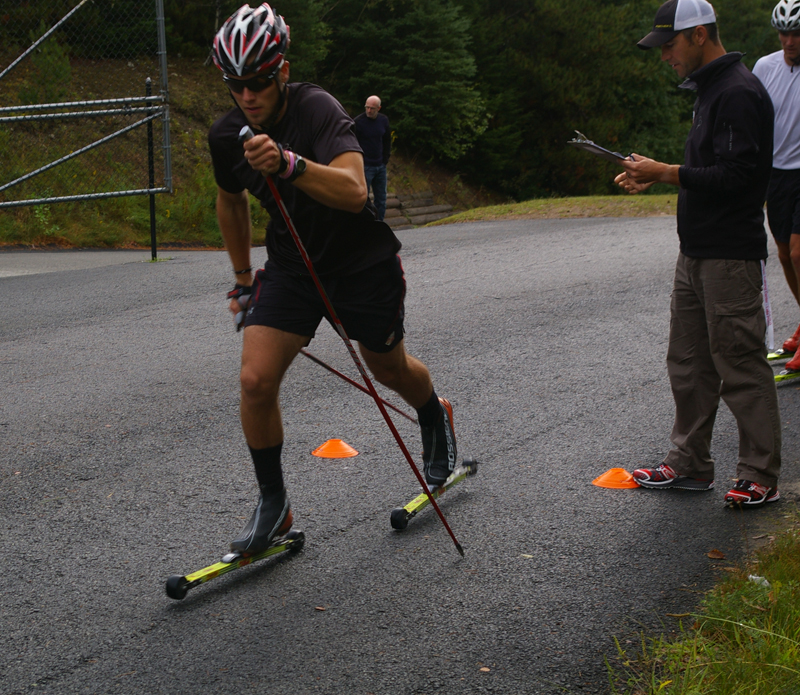
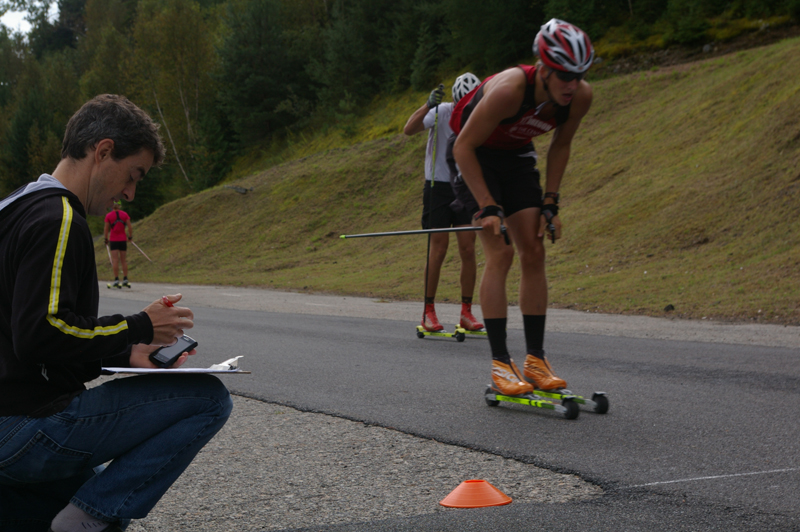
    Several members of the U.S. Ski Team and National Training Group came out for Day 2 of the Lake Placid USST dryland training camp on Thursday, competing in a classic rollerski sprint.

    Over the two-hour time trial, six women and nine men raced four times — the women on a 1.3-k loop and the men over 1.5 k. Everyone advanced to the finals, and the idea was to go hard.


    Here is a recap in photos (select each for larger image). Stay tuned for more on the camp.

    Women's TT start Lake Placid camp
    Six women line up for the quarterfinal of the classic sprint time trial at the 2011 Lake Placid USST training camp. Ida Sargent (front in red) and Liz Stephen (in yellow) listen to USST head coach Chris Grover.
    USST camp
    The second group of men in the sprint time trial await their start. From left, Chase Marston (Middlebury), Doug Debold (Middlebury), David Sinclair (Dartmouth) and Sam Tarling (Dartmouth).


    USST camp, Chris Grover
    USST head coach Chris Grover watches the first group of men race by. At front, Sylvan Ellefson (in white), Noah Hoffman, Tad Elliott and Kris Freeman.


  • U.S. Biathletes Shine in European Training Camp; Women’s Team Attends for the First Time

    U.S. Biathletes Shine in European Training Camp; Women’s Team Attends for the First Time

    Sara Studebaker (l) and Annelies Cook working on strength in the Ruhpolding stadium. Photo courtesy of Studebaker.

    Last year, the U.S. Biathlon Association (USBA) took eight men to Europe for a summer training camp, leaving the women’s team to train by themselves in Lake Placid.

    Since then, a dedicated women’s coach (Jonne Kahkonen) has been hired, so the women are in some ways more than ever their own team. But this summer three of them were invited to the camp in Germany and are training alongside the men.

    “For us, it’s definitely a step that means that [USBA] believes in us,” national team member Sara Studebaker told FasterSkier in an interview. “It’s just showing us that they think we can do as well as the guys. We’re not quite there yet as far as those top results, but we’re on our way, and we definitely deserve the chance to have the same training advantages.”

    Studebaker and Annelies Cook were the only women on the trip for the first two weeks; Laura Spector was finishing her last term at Dartmouth College and couldn’t fly to Germany until she was done with exams. For the men’s team, Lowell Bailey, Tim Burke, Leif Nordgren, and Jay Hakkinen are in attendance, all of whom participated in last year’s European camp.

    Studebaker said that with such a small group, many workouts overlapped for the men and women, who became more of a cohesive group than they usually are in the summer.

    The camp began in Ruhpolding, the site of the upcoming 2012 World Championships. Because many teams want to get more experience on the race trails there, it’s been an especially popular location for national teams this summer, with the Slovenians, Estonians, Italians, and Russians among the many teams joining the Germans on the range.

    “For the moment it’s a lot of teams here,” said head coach Per Nilsson.

    The Ruhpolding stadium, home to six national teams during the month of August. Photo courtesy of Studebaker.

    While it’s definitely a different training experience than the biathletes can find in the U.S., Nilsson said that the Americans weren’t distracted by their new surroundings.

    “It’s really good to see our athletes working with a good focus on daily basis. Of course we coaches check the other teams to see what they look like, and for sure that the athletes do the same, but now we are in the normal training rhythm.”

    The team took advantage of having company and participated in a five-team time trial at the end of their second week. In the men’s race in particular, the U.S. shone, with Bailey and Burke finishing first and second ahead of two German athletes. Nordgren finished fifth, edging Slovenian Olympic medalist Jakov Fak by twelve seconds. Hakkinen finished fifteenth.

    “We all skied pretty fast, and shot pretty good, all in all, a pretty good day of the biathlon!” Nordgren wrote on his blog.

    In the women’s race, Slovenian star Teja Gregorin picked up the win, followed by Michela Ponza of Italy and seven-time World Champion Andrea Henkl of Germany. Studebaker finished fourth and Cook eleventh.

    “We are really happy with the performances from our athletes,” Nilsson said. “Things that we have worked on in ski technique and shooting technique worked out pretty well, and the fact that the result was good doesn’t hurt either.”

    Nilsson said that like most of the other teams, the Americans have been doing combo training (rollerskiing and shooting) in the morning and a second endurance session in the afternoon. Running, biking, and hiking have all been on the schedule.

    One afternoon, the team climbed the Rauschberg, a 4,700-foot mountain. Bailey wrote on his blog that after more than five hours of training on the day, they decided to take the tram down, which was free because they had hiked up. Another day, the biathletes did a biking and kayaking workout which took them into Austria.

    It’s these activities, along with attending concerts, festivals, and dinners with local ski clubs, which had broken up the monotony of a heavy training schedule, which Nilsson said was a good thing.

    Studebaker agreed.

    “It’s been really fun,” she said. “I’ve never been over in Europe in the summer. Some of the guys have, but for us girls, it’s been nice to get to know the culture a little bit as well as train at the venue.”

    Studebaker also said that she enjoyed having the chance to see her competitors outside of a race setting.

    “It’s obviously a different atmosphere when you’re just training in the summer versus being on the World Cup in the winter,” Studebaker said. “It’s more relaxed and you get to talk to people a little bit more. We were staying at the same hotel as the Slovenians and the Estonians so you get to see them a little bit.”

    But Studebaker thought that getting some facetime in Ruhpolding was good for more than just social reasons. The Americans’ presence in Europe reminded their competitors that can’t simply be forgotten when they return to North America at the end of the World Cup season.

    “We had the time trial, and we did well – our guys did really well, and I had a good result,” Studebaker said. “It’s good to see that, you know, we’re here.

    “I don’t want to say that we’re taking it more seriously, because we always took it seriously, but it’s kind of a different level,” she continued. “World Championships are here in Ruhpolding, so we’re taking advantage of the fact that we can come here and train, and I think that’s really important for other teams to see.”


  • Biathletes Make Most of Altitude at Soldier Hollow

    Biathletes Make Most of Altitude at Soldier Hollow

    The men's national team shooting at Soldier Hollow
    Biathletes from the U.S. men's national team shoot during a training session at Soldier Hollow. Photo: Zach Hall.

    With only seven weeks until the first race of the World Cup season, biathletes around the world are making their final preparations and fine-tuning their training. For the Americans, this meant a two-week training camp in Soldier Hollow, Utah, which finished Friday.

    Coaches had two main goals for the camp: to take advantage of training at altitude, and to solidify shooting skills in “combination” workouts with rollerskiing.

    Coach Patrick Coffey said that the staff worked with Randy Wilber, a U.S.O.C. sports physiologist, to make sure that they approached altitude training correctly.

    “He’s an expert on altitude training, so we talked about maximizing the effect of altitude. We have this camp, and then we return to Lake Placid for a bit, and then we’ll be in Canmore, which isn’t really high, but it’s altitude,” Coffey said. “What we did was to have a break-in period, and then move into the real training.”

    On Thursday, the athletes faced a time trial, which Coffey said was “a real whooper.”

    “It makes for really tough shooting, skiing as hard as you can at altitude. They all did really well, which shows that the training was well-managed,” Coffey said.

    Shooting was the other priority, according to Head Coach Per Nilsson.

    “We are in a transition when we try to carry over the basic skills and technique training of the shooting more towards an automatic type of shooting,” he said.

    Athlete Susan Dunklee explained.

    “During the summer, we break apart the shooting routine to work on individual components. One of our main focuses this time of year is to make the whole shooting process flow seamlessly from poles-off to poles-on again,” she said. “The Soldier Hollow rollerski loop has a long approach to the range, making it a good venue for us to work on range procedure and skiing-shooting transitions.”

    If the Soldier Hollow range is an ideal place to work on shooting, then a large camp is the ideal format. Although the men’s and women’s teams mainly did separate workouts, all the athletes shared the range, as well as the men’s and women’s coaches.

    A strength for us is also that all athletes and coaches can and have worked together, so we have eight coaches’ eyes on each athlete,” Nilsson said.

    Athlete Sara Studebaker said that the coaches weren’t the only ones she was learning from. “Most days, we are all out at the range at least once together, and it’s great to be able to watch the men who are some of the best biathletes in the world train. I think there’s a lot to learn from watching my teammates!”

    After this camp, athletes head back to Lake Placid, but then their paths diverge. A number of team members are pre-qualified for the first period of World Cup competitions; others will have to vie for the last few spots at selection races in Canmore, Alberta. After those races, another group will also head to the IBU Cup circuit – the top level of biathlon’s minor leagues.

    Tim Burke, who last year became the first American to wear the yellow World Cup leader’s bib, knows he’s headed back to the World Cup. His goals for the camp included fine-tune his shooting to prepare for competition against the world’s best biathletes, and to get in some volume while cutting back on intensity.

    “I still do around three intensity sessions a week here, but I just cut back a little on the intensity and the duration of these workouts,” he said. “With just under seven weeks until the first World Cup, I am also focusing a lot on my combination training (skiing and shooting in the same workout).”

    Studebaker is the only woman pre-qualified for the World Cups, although she’ll head to Canmore for more training first. She said her goals were similar to Burke’s.

    “Right now, we’re all working on fine-tuning our range procedures and ski technique in order to be best prepared for snow.  Lots of combination training and specific technique workouts will dominate our training from now until the races start,” Studebaker said.

    Sara Studebaker leaving the range
    Sara Studebaker leaves the range during a team sprint time trial. Photo: Marike Rogers.

    All of the athletes and coaches praised the team’s attitude and camaraderie.

    According to Studebaker, “the team atmosphere is really good right now.”

    “I think the coaches are really excited to see how everyone is progressing, and I think we all feel we’ve taken some big steps this summer and are really looking forward to seeing them transfer into great results,” she said. “The women’s team is especially tight right now. With such a small community, it’s imperative that we support each other,  and I think we all feel like we’re in a great place to do really well this season.”

    Coffey said that the women were all evenly-matched, which was a major contribution to the team’s confidence.

    “I couldn’t tell you what’s going to happen with team selection – they are all performing at capacity, and everyone’s fast,” he said. “Whatever team we send [to Europe] is going to do great. They obviously all want to go, but it’s good for them to know that even if they don’t go, whichever teammates get picked will race well.”

    Nilsson also has a lot of faith in his athletes.

    Everybody has done the work now, so it feels like we are ready to start,” he said. “We are looking forward to the season. The level for us is higher this year for sure, and we just have to wait and see how the other nations and athletes have prepared.”

    Haley Johnson in a time trial
    Haley Johnson competing in a time trial at Soldier Hollow. Photo: Zach Hall.
  • Where Ski Cultures Merge

    Where Ski Cultures Merge

    BEND, Ore. – Kristina Strandberg moved to Bend from Sweden. Evelyn Dong moved to Bend from the East Coast. And Chisa Obayashi just recently transplanted herself in Bend all the way from Hokkaido in Japan. They all have been training with the XC Oregon program director and coach John “JD” Downing.

    “The three of them are in pretty identical positions, in three different ways. Evelyn is just on the cusp of a breakthrough, Chisa is on the cusp of making the Japanese national team, and Kristina has raced on the Swedish World Cup team,” Downing said.

    Perfect match

    Obayashi, 25, first came to Bend in June, but the initial set-up happened earlier this spring.

    “I tried the SuperTour in the spring, and Peter Hale, the racing manager for Madshus USA, introduced me to some club teams in the USA. I chose Bend and XC Oregon, and JD accepted me,” Obayashi recalled.

    Downing was excited to welcome Obayashi to Bend and explained that the chemistry with the women on the team could not have been better.

    “Chisa and Kristina really hit it off and trained together daily. The design of our program is perfect for that,” he said.

    Kristina Strandberg during a dryland workout in Bend, Ore. (Photo: The Center)

    Independent and flexible

    “Our program is pretty much perfect for Chisa in that it is so athlete-driven. It lets the athletes dictate how they train, and because the program is so athlete-based, I as the director didn’t really do much for Chisa on a regular basis besides making sure the logistics were covered and match her up with training partners,” Downing said.

    Downing explained that self-reliance has been part of his coaching philosophy since the XC Oregon program was established 12 years ago, and that the independence helps athletes excel.

    “Chisa could easily have flourished in a more structured training environment as well, but I think she really benefitted from seeing how independently athletes train here and how they can take advantage of the support when it’s there,” Downing said. “Bend is an amazing place to train, and one of the best places in the world for skiers.”

    On her first visit, Obayashi stayed for three weeks. She arrived just as the snow season was transitioning into dryland. She didn’t mind at all, as Bend has plenty to offer no matter what the time of year.

    “I really like Bend. Bend is a great place for training. It has the best weather, and it has some really nice roller ski courses and big mountains,” Obayashi said. She ended up training a lot with Strandberg – much more than Strandberg had imagined to start with.

    “She is pretty much a self-coached athlete, and after one of her first camp workouts, she wondered what I was doing the next week. So I sent her my training plan for the week and I figured she could pick out which workouts she wanted to join me for. But then she just said that the plan looked great and did all of it with me,” Strandberg said with a laugh.

    In love with Bend

    In fact, Bend was such an amazing place for Obayashi this spring that she e-mailed Strandberg from a New Zealand training camp this summer and wondered if she couldn’t come and stay with her for, say, four weeks this September.

    Chisa Obayashi teaches Lars Flora how to make sushi from scratch. (Photo: Kristina Strandberg)

    “You always start to wonder when someone comes to stay with you for several weeks, how on earth that is going to go. We don’t exactly have the largest house in town. But she is the easiest house guest ever. She immediately told us she likes housework and likes to cook, and she did a lot of both,” Strandberg said, mentioning that homemade sushi and Japanese specialties often landed on her dining table.

    Mutual benefits and lasting impressions

    “Kristina and Evelyn taught me some training methods and ways to weight train,” Obayashi said. “They are very strong and have very strong spirits. I have a lot of respect for them, and want to train to become as strong as they are.”

    While Strandberg and Dong might have taught Obayashi a lot about their training methods and sent her home with some new tricks – most importantly, more focus on heavy strength training – Obayashi certainly left her impression on the Bend girls too.

    “Skiing with Chisa was valuable, because she has perfect technique every minute she is out there,” said Dong. “She is never sloppy, even when we’re just going easy. You can tell she puts a lot of hours into perfecting every detail. That’s probably the thing that stuck out the most and hopefully will stick with me the most,” Dong noted.

    Obayashi inspired Strandberg and Dong in ways that go far beyond the trails.

    “She is incredibly polite and expressed such gratitude whenever she got help. She was always nice and kept her stuff in meticulous order. Even on training camps when things start to go everywhere for all of us, Chisa kept her stuff neat and packed away,” Strandberg said.

    Now what?

    For the upcoming season, the three skiers are in very similar positions. They all have to prove their potential to earn spots on their respective teams, and they all dream big.

    Strandberg, 35, will try to make the Swedish World Cup team again this season, but she knows it will be hard.

    “It’s a very hard team to get onto at this point, and it will be more interesting for the coaches to pick a 20-year-old than a 35-year-old, everything else being equal,” Strandberg explained. “But I will race hard and do my best, and if I make it, it would be fantastic.”

    Obayashi will go to Muonio, Finland, with the elite ski team from Japan. “I want to get a chance to race at the World Championships in Oslo and get a good result,” she said.

    However, to make it to Oslo, Obayashi will need to have all the stars aligned for her.

    “She has to ski really well to make it to the World Cup,” Strandberg said. “She’s a distance racer, but she hopes to make it to the World Championships this year. It would be amazing if she did.”

    Dong, 25, also has her eyes on Oslo.

    “My goals for the season? I’m aiming big. I want to go to the World Champs and make top 30,” she said.

  • Motivating to Get Tips From the Mentors

    TRONDHEIM, NORWAY – Håvard Solås Taugbøl and the other skiers on “Team Morgendagens Helter” (Ed: “Team Tomorrow’s Heroes”) are certainly learning from the best.

    This week the team had a training camp in Trondheim, and the takeaways include experiences, tips and a radio controlled airplane.

    Before Christmas last year, the Norwegian Ski Association initiated a 5-year talent development project backed by some of the association’s major sponsors. “Team Morgendagens Helter,” a talent development group consisting of hand-picked individuals from six of the ski disciplines, is a key element in this project.

    “At the camps, we meet athletes from other sports and learn from them. We also get pointers from our individual mentors, including Eldar Rønning and Therese Johaug. They simply tell us what they’re up to, and then we can take that home and adapt it to our own training programs. And they also just do a lot of really crazy, funny things,” says Taugbøl, one of the young cross-country talents on the team.

    The Lillehammer native was picked for the project as a representative for cross-country, along with Vilde Haugan Burkhall, Hilde Landheim and Sindre Bjørnestad Skar. Earlier this week, they joined the other team members and mentors in Trondheim.

    Winner

    Last season, Taugbøl won his age class in the Norwegian national cup by a healthy margin. During the camp in Trondheim, he was able to show that he knows more than just how to ski fast.

    “We were challenged to enter something called the Robot Ski Challenge at NTNU (Ed. Norwegian University of Science and Engineering). The point was to program computers to enable some robots to maneuver various obstacles on skis,” he explains. “I and this telemark racer Niklas Windmarken won the challenge,” Taugbøl says with a grain of humility.

    Just for fun

    The award for the engineering challenge was that each received their radio controlled airplane. Taugbøl doubts the prize will give him any advantages on snow, though.

    “I’m pretty sure I won’t ski any faster even though I did pretty well in the code writing department,” he says. “But it was fun and creative, at the same time as we had to be very detail-oriented and focused to make the code work,” Taugbøl adds.

    Plyometrics
    However, as an athlete with eyes on the podium, the workouts are the most important elements.

    “We did a really hard stair workout with Eldar Rønning on Monday. That was a really good workout, so maybe I’ll try to incorporate some of that on my own,” Taugbøl says.

    Motivated

    – How long will it take before you’re as good as Eldar Rønning?

    “That’s a tough question,” Taugbøl says and thinks about it. “But I’m planning to train a lot, train hard and train smart for a long time. Then time will show whether it will take two years or ten years. But I hope I can match his level some day,” Taugbøl says.

    Healthy
    After spending most of the spring and early summer battling whooping cough, the ambitious junior racer is now just smiles and joy.

    “I finally got rid of the whooping cough and can train full steam ahead. It feels good to be able to go level 5,” he says. “Now I’m focusing on building a good foundation so I can race fast this winter,” Taugbøl concludes. Be warned.

    From Langrenn.com, August 18, 2010. By Ivar Haugen, translation by Inge Scheve