From the FasterSkier archive — posts syndicated from athletes’ and coaches’ own blogs between 2004 and 2012, kept online as published. Current coverage is at fasterskier.com.
Come and join West Yellowstone’s professional coaching staff to get a “jump start” on your 2022 – 2023 ski season
during the Yellowstone Ski Festival,November 22-26, 2022.
The staff provides a solid understanding of cross country fundamentals, and gives you the tools and drills to gain efficiency and strength at the camp and throughout your ski season. The coaching staff is composed of an elite group of XC ski professionals which includes retired world class skiers, coaches and professional instructors. The coaches know that the best way to ingrain effective movement is through practice. You’ll also get feedback, in the dose that’s right for you. While some just need a new focus and mileage, others benefit from a more consistent stream of information about whether and how much they’re performing the task to the desired degree. The coaches know how to pace the flow of information, and offer up a great balance of new information, drills, and practice.
Some of the special offerings include:
● 5-day Skate & Classic XC Fundamentals for Performance
● 3-day Skate & Classic XC Fundamentals for Performance
● 2-day Skate & Classic “Tune up”
● 1-day Improve Your Skate Technique
● 1-day Improve Your Classic Technique
Enjoy your First Tracks in West Yellowstone. Whether First Tracks truly means the corduroy and you, or
it is the first time on skis this season, or the first time on skis period; you are invited to take them at the
Yellowstone Ski Festival. Think Snow and make plans now to attend the 2021 Yellowstone Ski Festival.
For more information, http://www.skirunbikemt.com/master-clinics.html and follow us on our Facebook page
(@RendezvousSkiTrails) or Instagram (YellowstoneSkiFest) for up-to-minute news.
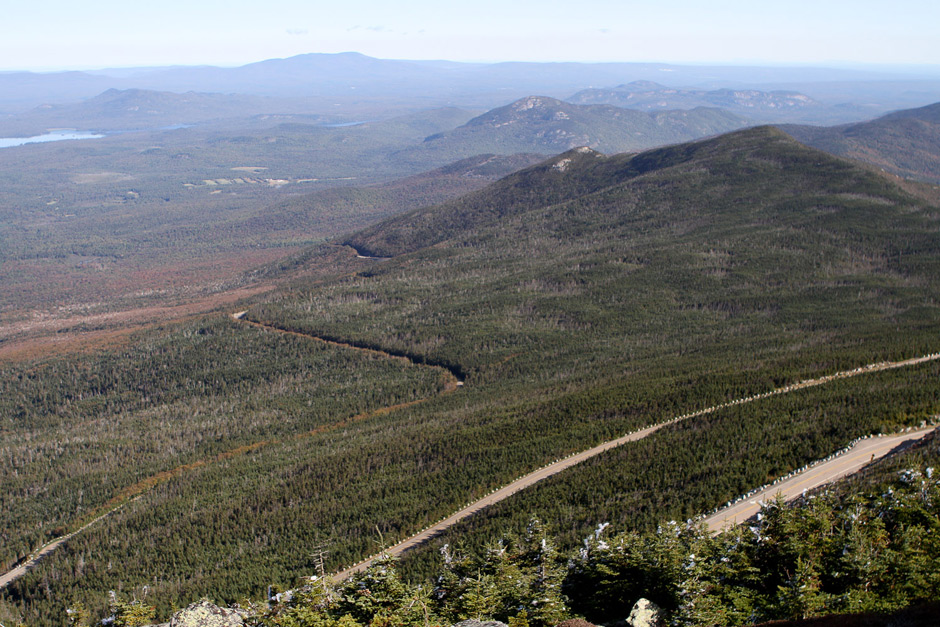
The Whiteface Mountain Veterans Memorial Highway, where NYSEF’s Climb to the Castle has been held for the past seven years in Wilmington, N.Y., as seen in 2011. The toll road is undergoing construction this summer and fall.
There’s a race each year scheduled in line with the end of the U.S. Ski Team’s fall camp in Lake Placid, N.Y. You might have heard of it: the Climb to the Castle. Hosted by the New York Ski Education Foundation (NYSEF), the freestyle rollerski race starts at the entrance to a paved toll road, the Whiteface Mountain Veterans Memorial Highway, and stretches five miles up with an average 8-percent grade. The finish is marked by the castle at the top of New York’s fifth-highest peak at 4,867 feet above sea level.
Try to rollerski up there now, however, and you’ll likely run into some heavy machinery.
Construction has already begun on the eight-mile highway as part of a larger project to completely resurface the road over the next several months. The Adirondack Daily News reported Thursday that the upper, toll portion of the road — where the Climb to the Castle (C2C) takes place — will be closed weekdays during May, June and September, but open on weekends. It will be open on weekends and two holiday Mondays during these months: Memorial Day, May 26, and Labor Day, Sept. 1. Throughout July and August, the road is scheduled to be open during daytime hours, with work taking place at night.
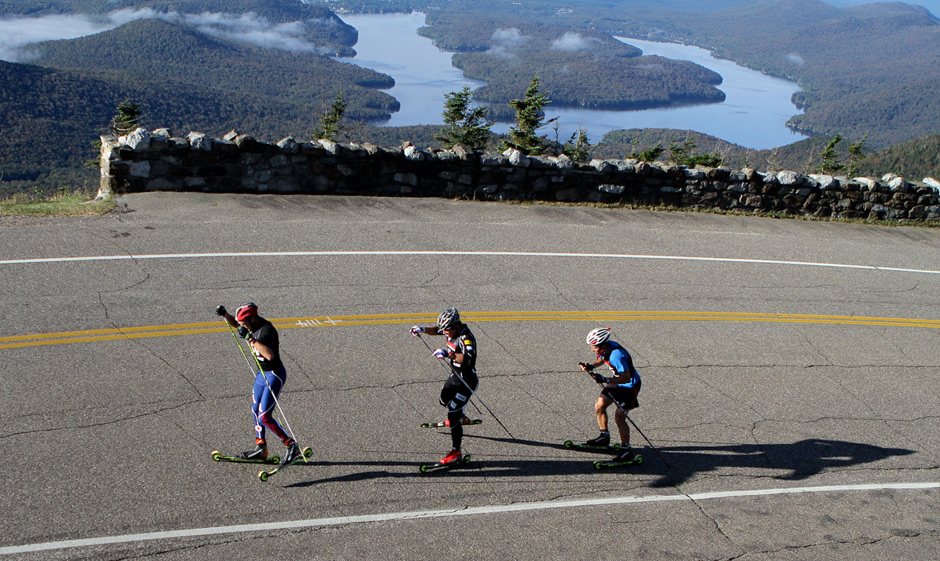
US Biathlon’s Tim Burke (l), and U.S. Ski Team members Kris Freeman (c) and Noah Hoffman (r) lead the 2011 Climb to the Castle race in Wilmington, N.Y.
According to Chris Grover, the U.S. Ski Team will hold its Lake Placid training camp from Aug. 25-Sept. 8. So while there’s a chance construction could impact it, there’s a better chance the toll road will be open on Saturday, Sept. 6, when NYSEF scheduled the race.
Margaret Maher, NYSEF’s head nordic coach and C2C organizer, wrote in an email to FasterSkier last week that they were “trying to figure out how the road work will influence the race. Hoping we can still have C2C!”
In all, the highway is expected to be closed 54 days from this week until the end of the season, and open 88 days over the same period, according to the Enterprise.
While the toll road has been patched periodically since it was opened in the 1930s, it has never been completely resurfaced. Whether rollerskiing, cycling, or running to the summit, it’s riven with frost heaves and cracked pavement. Regardless of what state the road is in this year, its sure to be a superior surface for rollerskiing next summer.
Rifenburg Construction, based out of Albany, N.Y., will resurface the entire eight-mile length of the road, from the four-way intersection in the center of Wilmington to the summit. They’ll also rehabilitate rock walls and make repairs to the castle.
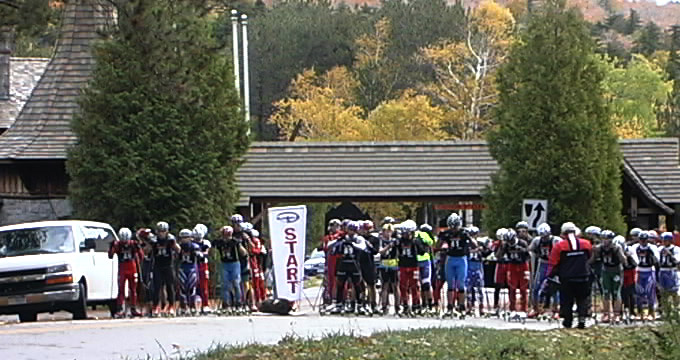
The men’s start of the 2009 Climb to the Castle.
Rifenburg earned the project with a $11.2-million bid, and the company expects to complete the work by the end of 2015.
Project manager Russell Huta said that the goal is to have a base layer of new pavement from the tollgate to the castle by the end of this fall. In 2015, the toll section will be finished, and all work on the section from Wilmington town center to the tollgate will be completed.
“Each project has its own set of unique challenges,” Huta told FasterSkier, when asked about the difficulty of working in the narrow confines of the toll road. When road work is in motion, the toll road will be closed to traffic.
In September, Huta said, his company will have “full access” to the toll road Monday through Friday – except for Labor Day. “By the end of the day Friday, there will be a paved surface for [use by] cars, buses, pedestrian traffic” until Monday morning. “On Monday morning, it’s ours again.”
If for some reason, the C2C isn’t possible this year, Grover wrote in an email that it won’t be the end-all of camp.
“We typically run a sprint or team sprint time trial along with the Climb to the Castle,” he explained. “If the Climb is not ready this season, we will employ other alternatives.”
Before the C2C, a time trial was previously held up Gillespie Drive, now a warmup for athletes. The event is entering its eighth year. USST veteran Liz Stephen won the women’s race the last three years, setting a new course record last year in 42 minutes and 4 seconds. US Biathlon’s Tim Burke won the 2013 men’s race in 37:13.
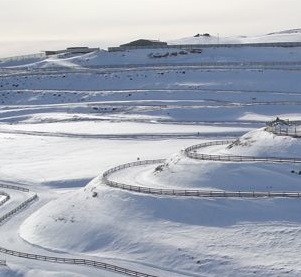
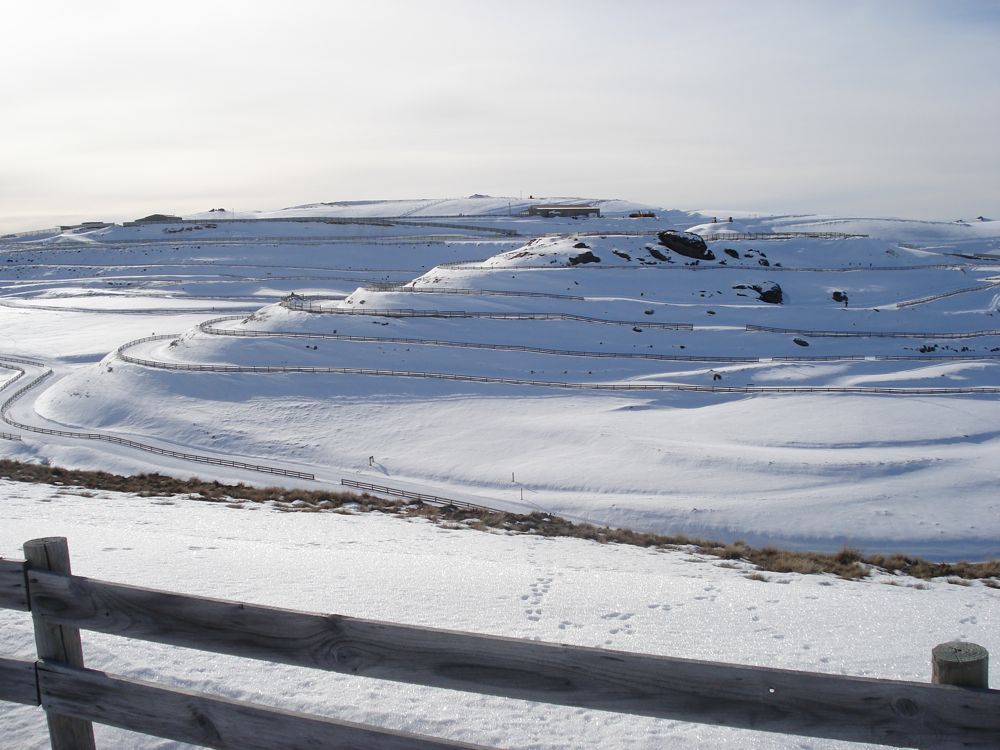
The Snow Farm in New Zealand. The Canadian National Ski Team and U.S. men will return there this August for a two week on-snow training camp.
As U.S. and Canadian national team members continue to log hours this June on snow, asphalt and trails, they have several more training camps on tap for the remainder of the season to look forward to. The first World Cup in Kuusamo, Finland, isn’t until the end of November, but when you start to break down the North American training schedules by camp and month, the offseason suddenly looks much shorter.
The two nations have a history of holding joint camps in the offseason; last month in Bend, Ore., the teams often skied together on rollerskis and on snow at Mt. Bachelor. The teams separated after Bend; the U.S. Ski Team migrated to Park City, Utah, for an altitude camp and series of treadmill tests. Liz Stephen traveled to Norway and Sweden to train with national team members there, and the Canadians split for their respective homes, which for Perianne Jones, Ivan Babikov and Devon Kershaw meant Canmore, Alberta.
For their next training blocks, the U.S. Ski Team and Canadian National Ski Team diverge. The Canadian men and women will be back in Bend in late June for a two-week dryland camp, while the Americans have a month-long block of home-based training to follow Park City.
“By design, we have a really open summer,” said USST head coach Chris Grover. “The idea was to really allow each athlete to build some momentum in their home club environment and home training environment, and to really make some progress with their day-to-day training over the summer. So everyone’s got quality at-home time in the summer, some on-snow opportunity.”
When the training season transitions to fall, U.S. athletes will be together more often than not. “[It is] a little more of an intensive camp schedule once we get into the fall, as the volume drops and we’re typically doing more intensity,” Grover said.
In between now and October, the U.S. men and women each have a separate two-week training camp on the schedule. The women will once again be in Alaska starting in mid-July for a half dryland, half on-snow camp in Anchorage and on Eagle Glacier. In 2012, the women’s Alaska camp included Finnish guest athlete Aino-Kaisa Saarinen, and Grover indicated another guest invitation was currently being finalized.
The U.S. men have a longer break built into their camp schedule, but will travel all the way to the New Zealand’s Snow Farm to return to snow for group training in mid-August. After trying something new with a men’s camp in Ramsau, Austria, and Oberhof, Germany, last year, Grover is returning his team to familiar ground before the Olympics. He says they found the quality of skiing on Dachstein glacier to be inconsistent and the Oberhof ski hall wasn’t suited for long sessions.
“Dachstein in the morning is good, but in the afternoon it’s typically not very good, depending on the weather,” Grover said. “In the ski hall there’s only so much skiing you really want to do on a daily basis inside there.
At the Snow Farm, he says, the snow is more consistent and offers higher quality skiing for longer training sessions. With the Canadian men scheduled to be there at the same time, the location also offers more opportunity for group workouts.
New Zealand also provides the potential for some early head-to-head competition. The New Zealand Winter Games take place there in August and include three FIS races at the Snow Farm. The U.S. will miss the first two races, a 15 k mass start classic and a 10 k individual freestyle, while they fly down, but Grover thinks there is a possibility the U.S. men will jump into the freestyle sprint on August 15 for their second day on snow. Whether they compete or not, he expects the camp to be a quality one.
“New Zealand has been a go-to for us since 2002 and we’ve really come away from it so many times going, ‘That was a really great camp,’ ” Grover said. “We took a look around and tried something different last year, but I think because it’s an Olympic year, we know we can get a ton of great skiing down there and we know we can come away from the camp having had a fantastic camp. It made sense to go back down.”
When fall intensity ramps up the USST will return once again to Lake Placid, N.Y., followed by a return to Park City for another altitude block and a final pre-season camp in Canmore on the stockpiled snow of Frozen Thunder.
“We had a great camp up there last year and I think one of the reasons the team hit the ground running so well in the fall World Cup was because we had that extra eight days of on snow time that we haven’t had in previous years for some of the athletes,” Grover said of Canmore.
After New Zealand, the CNST’s October camp takes them to a new venue: Truckee, Calif., instead of Park City. Women’s coach Eric de Nys explained in an email that they wanted a new location for their October camp.
“We wanted a fresh place to do the training this year and we feel we can achieve our objectives for this camp better in Truckee,” he wrote.
In conjunction with the BC Team/Development Squad early season camp, Team Black Jack spent five days at Silver Star for another productive camp of on-snow training. 4 hours / day of skiing at Sovereign Lakes with a time trial on Saturday. Black Jack led the way in the 3.75km, 7.5km, and 11.25km races. Check out […]
For nearly a week, Team Black Jack has been training on-snow in excellent conditions. Just ten minutes from Rossland, BC, the Black Jack Biathlon area has had a surplus of snow, and the grooming crew has been hard at it. With approx. 4km of rolling terrain, set for both classic and skate, it’s likely that […]
For the third year running, Team Black Jack travelled over to Canmore Alberta for Frozen Thunder. Despite being the second week of October, the Canmore Nordic Centre provided 2km of nearly winter-esque skiing. Joined by Holly Burn and Telemark Ski Teams, Black Jack had a great week of training. Many thanks so Dave Wood, Bob […]
After a summer of differing schedules and various programs, Team Black Jack came together mid August for a week of high altitude training at the Haig Glacier. With volume and on-snow technical work as the team’s main focus, the Haig delivered a perfect training location and everything went according to plan. The daily schedule ranged […]
With the US Junior Nationals less than a week away, Team Black Jack spent some time in Sun Valley to acclimatize to the altitude and put in some good quality training. With amazing skiing at Lake Creek, the Sun Valley trails and the route up to Galena, our mission was accomplished. Many thanks to the […]
This past week we skied on snow at “Frozen Thunder” in Canmore. Great to get on snow so soon. Last spring they buried snow in Canmore and have now spread it out to make a 2 km loop at the Nordic Center. Great conditions for both classic and skating and a very productive week for […]
BC Team Fall Dryland Camp – Revelstoke BC Team Black Jack joined up with the rest of the BC team for a fabulous week of training in Revelstoke. The day 1 was a quality 5 hour day complete with a long run at Rogers Pass in the morning and a doublepole rollerski session in the […]
Say what you will about the Canadians, but the country with the Team Sprint World Champions aren’t resting on their laurels.
A week after returning from a camp in Park City, Utah, Canadian National Ski Team (CNST) Head Coach Justin Wadsworth had the athletes packing up again and headed for Whistler, B.C. for a short intensity-filled camp before heading back to Canmore, Alberta, for Canadian Thanksgiving.
While it may seem unusual that the Canadian team would travel to Park City for a camp, Wadsworth felt that it fit best in the schedule at the end of September.
According to Wadsworth, Park City was a volume-based camp, where the athletes were able to take advantage of some training opportunities not present in Canmore – including a long rollerski on freshly paved roads from Soldier Hollow to Deer Valley.
In addition, most of the training at Park City was done at altitude, before coming home to Canmore for a quick rest week.
The second part of Wadsworths’ sequence is the switch to intensity, which he aims to do at lower altitude at Whistler.
And Wadsworth has a lot to fit into the fall schedule – he is also planning on taking advantage of ‘Frozen Thunder’, a program whereby the Canmore Nordic Center stores snow under a mountain of sawdust, and rolls it out onto the trails in mid-October.
Kershaw in action at World Championships in Oslo
“I don’t want to be somewhere else doing dryland training when we can be on snow here [in Canmore],” said Wadsworth.
“We’re going to get three kilometers of skiing on October 15th right outside our door, and it’s one of the only places in the world that offers that.”
After a Park City camp with little intensity, Wadsworth is has tabbed Whistler as his intensity camp due to the great training opportunities and ideal altitude.
“You get 100% O2 saturation for recovery – it’s basically like being right at sea level,” Wadsworth said.
Wednesday the Canadian men did a 15 k skate individual start Time Trial, while the women did four sprint qualification rounds.
Graeme Nishikawa earned top spot ahead of Kershaw, while Kevin Sandau of the CNST D-Team who trains with the Alberta World Cup Academy (AWCA) finished third.
All of the men on the Canadian World Cup and Development Team are present, with the exception of Alex Harvey, who has headed home to Quebec to train with the Pierre Harvey National Development Center (CNEPH).
“We feel like Alex coming out to Whistler would be a couple more trips across the country, and we feel like he’s got a stable training program [in Quebec],” Wadsworth said of Harvey’s absence.
Convergence Trip Possibility
There is an additional element to the camp as well – with the Canadian early season convergence trips coming up shortly, the Development Team athletes have a chance to show the coaching staff how much they have improved over the summer in person.
Drew Goldsack (AWCA) during the 15 k skate at Sovereign Lake Nordic on the NorAm circuit in 2011
While Wadsworth was quick to say that athletes would not be selected based solely on their training camp performance, he did admit that the athletes knew that selections for the trip had to be made.
“We’re going to see them all under some hard workouts this trip,” he said.
That being said, if someone is skiing spectacularly, they will have a head start.
“We know Devon is in good shape, so if you’re consistently beating him – not just in one interval, but the entire week, then we know you’re going well.”
Athletes from all four of the Canadian Development Centers are present. The veterans present include Drew Goldsack (AWCA), Graeme Nishikawa (AWCA), and Brent McMurtry (AWCA) while the next generation is represented by young guns Kevin Sandau (AWCA), Mike Sompii (NDC T-Bay), Harry Seaton (NDC T-Bay), Jess Cockney (AWCA), Graeme Killick (AWCA), and Fred Touchette (CNEPH).
Chandra Crawford and Perianne Jones have also been joined by the two younger women of the Development Team, as Alysson Marshall (AWCA) and Emily Nishikawa (AWCA) are both present as well.
Upcoming Season Improvements
In terms of team performance, Wadsworth is happy with what he has seen over the course of the whole summer.
“This year I’ve seen Devon and Alex still improve,” he said. “When you can make noticeable improvements at their level, that’s impressive.”
If Wadsworth is enthusiastic about his two World Championship-winning team members’ improvements, he sounded even more impressed with Ivan Babikov.
Len Valjas (CNST), 2011 Canadian Sprint Champion (photo Bill Thompson)
“He’s made big jumps forward with his double poling, general fitness, and strength,” Wadsworth said.
As well, he mentioned that Babikov will be taking a different strategy this season in order to ski well at the beginning of the season, something the distance specialist has struggled with in the past. Babikov has also committed to spending large chunks of time in Europe this season in order to stay on track, also a departure from previous seasons.
As for the women, Wadsworth noted that Perianne Jones has made some of the biggest improvements he has seen, and the whole team has made some big steps forward.
The youngest member of the team, Len Valjas, a 23-year old breakout sprinter from last season, has also been making improvements.
“If you just look at what Lenny can handle in training, it’s like a man,” said Wadsworth.
“He can handle them [the CNST training camps] without having to be nursed through them.”
As per usual, Wadsworth didn’t shy away from making some bold predictions.
“It may be greedy, but three guys in the top 5 at the Tour de Ski is possible,” he said.
The entire camp in a stretching session (Photo: Graham Longford)
Over 115 athletes, 30 coaches, the full National Development Center Thunder Bay (NDC T-Bay) roster, and Canadian National Ski Team (CNST) World Cup team member Len Valjas. Does this sound like any ski camp you’ve been to this year? Unless you’re in Norway, chances are it sounds more like a skiing fantasy rather than reality.
Yet Ontario’s Team Hardwood, a club just outside of Orillia, Ontario, attracted the massive numbers in a training camp at the end of August.
According to Mark Doble, head coach of Team Hardwood, the club based at Hardwood Ski & Bike and the camp organizer, the total came to 149: 31 coaches, 15 mentor athletes, and 103 junior athletes.
Last year he and Team Hardwood hosted a similar camp. It featured some major star power: American star Kikkan Randall as well as Canadian National Ski Team member Perianne Jones attended, creating a focus for female skiers. Also, then up-and-comers Len Valjas and Graeme Killick were present with Eric de Nys, CNST Development Team coach.
As a result, the turnout was good, as there were over 60 registrants present to take advantage of the high quality athletes and coaches.
But Doble was floored by the response this year. “I was shocked,” he said in an interview with FasterSkier.
He did make a few changes to the camp that he hoped would draw in a few more skiers.
“Going in, we were planning on having great coaches, as well as older athletes to look up to – a couple of different perspectives.”
Doble also attributes the rapid rise in camp participation to simple word-of-mouth.
“The success of last year’s camp, and that we have good rollerskiing got around,” he said.
For Doble, the biggest goal of the camp was to make sure each workout was done at the best possible quality.
“We tried to do everything we could to encourage that,” he said, “We spent a lot of time developing the actual workouts as well as looking at the camp in its entirety to make sure it fit well together.”
The camp had a wide variety of activities, covering all aspects of training: a strength and agility session, several long Zone-1 workouts with technique stations, a Level-4 intensity set, a sprint tactics session led by Len Valjas (CNST) and Harry Seaton (NDC T-Bay), and finally, a cross-country race on the last day. The evenings were jam-packed as well, featuring presentations by the NDC athletes, NDC Head Coach Eric Bailey, and Valjas.
Team Hardwood Coach Mark Doble (foreground) goes over a few last minute details before the mens' start. (Photo: Graham Longford)
With a camp this size, there are always going to be challenges. In particular, Doble felt that the strength and weights components were important to cover, but difficult with a large group.
“We couldn’t just go lift weights in a gym,” he said, “So we had to find another way to make that portion accessible.”
Instead, he opted to engage a local strength training expert, Brock Tadashore, who did a series of body weight and functional strength exercises with the group, and then had a short question and answer session dealing with some of the most common injuries skiers experience.
Rollerskiing also posed a unique challenge. While Hardwood Ski & Bike is a well-equipped facility, it is a major mountain biking destination in the summer, and as such, has no paved rollerski trails as are found at some large ski centers in North America.
Instead, Doble had to find a stretch of road that was close enough to avoid having to drive massive amounts of athletes, yet with a light enough traffic load that it would be safe.
He opted for a 15 k stretch of mostly deserted country road, one which the local club uses regularly. He managed to find a spot with enough terrain variety for quality intervals, and distance as well.
“The primary goal was to get in a quality workout, but safely,” said Doble.
“The section of road we used has very little traffic, and Hardwood has a good rapport with the locals, who understand and are familiar with people rollerskiing.”
Doble was also clear that when the registrations came pouring in, several volunteers stepped up to help him out.
“Without them [the volunteers] it would be impossible for this to go,” he said.
While Doble had some challenges with organising the large group, he wasn’t the only coach present.
Around 20 coaches from various clubs around the provinces helped Doble corral athletes, and assisted with camp activities.
Doble had a well-qualified collection of coaches to draw upon. Eric Bailey, head coach of the National Development Center Thunder Bay (NDC T-Bay,) his assistant coach Timo Puiras, Cross Country Canada (CCC) Eastern Coaching Coordinator Lisa Patterson and Ontario Ski Team coach Pavlina Sudrich.
In addition to a junior training camp, some 15 mostly senior athletes including the entire NDC Thunder Bay participated as ‘athlete mentors’, where they lead smaller groups of junior athletes, and gave the younger skiers a chance to observe and ask questions of athletes at the next level of development.
The idea of using older athletes as mentors for juniors is not a new one, but Doble had the advantage of having a large number of skiers, as well as some athletes familiar with the area and the system.
“It’s kind of cool actually doing the workouts with the other athletes, instead of just talking to them and then going to do our own training,” Erin Tribe said.
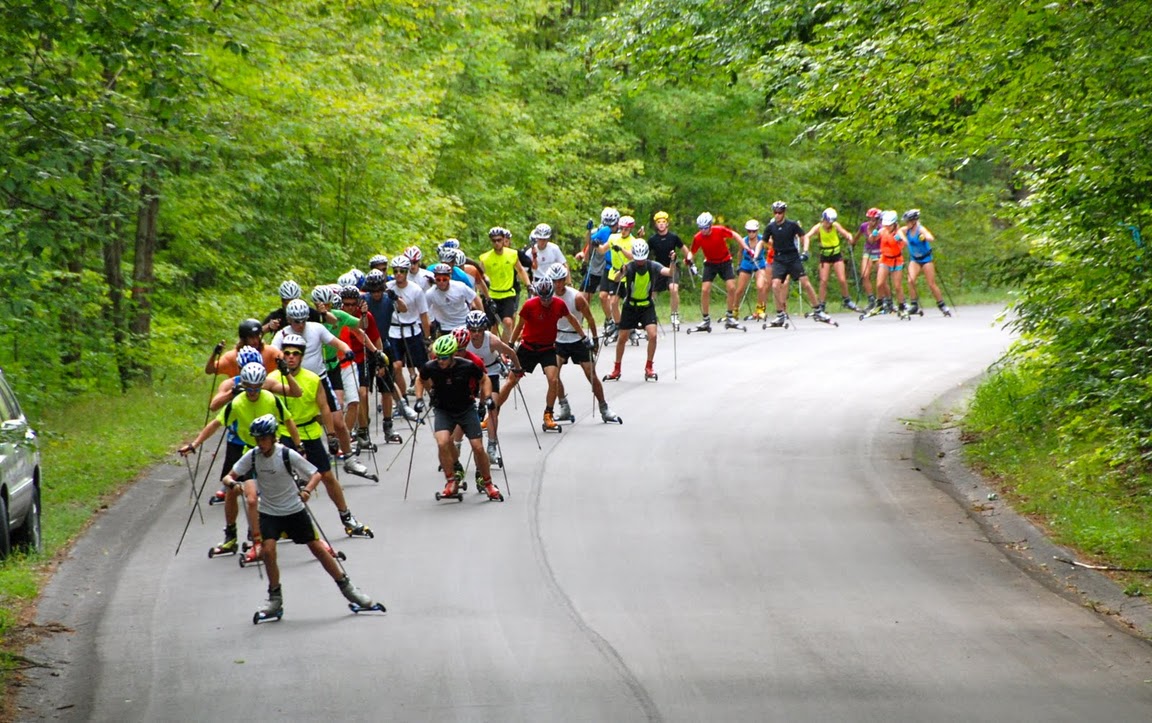
Part of the group rollerskis up a hill close to Hardwood Ski & Bike (Photo: Graham Longford)
Tribe, a third-year veteran of NDC T-Bay and former Team Hardwood athlete herself was enthusiastic about the camp.
“This is the biggest camp I’ve ever been to!” Tribe said. “I just try to set a good example, and a lot of them are enthusiastic if you’re able to point something out.
“Especially if you’re able to say ‘You’re working on something I’m still working on,’ it’s great for them to hear.”
For Tribe, who has been an athlete in Ontario her whole career, she has seen the evolution of the camp experience personally.
“I think one of the biggest things is the number of coaches,” she said.
“When we’re out there in our small groups of 10 or 20, now there are five coaches around to help out and give tips. As much as were developing athletes at these camps, we’re developing coaches.”
While Tribe gets a kick out of seeing athletes develop, she personally feels the camps add value to her training season.
“I just get really excited all over again,” she said. “I know that I love the sport, and I love training … here there’s so much energy that it’s almost easy to do an 18 hour week followed by an 18 hour week. It makes things easier with all these people around.”
And for Tribe, getting to train with more girls is a bonus, as NDC T-Bay has just three.
“Any age, any level, I’m down,” she said.
“It’s really awesome to see these numbers,” said Jordan Cascagnette, also a former Team Hardwood athlete who has spent the last two years at the Alberta World Cup Academy before joining NDC T-Bay this season.
“It’s been crazy; when I was here as a member of Team Hardwood I did this camp every year, and there were always 20 or maybe 30 athletes at most.”
As for the mentorship experience, Cascagnette thought it was a positive. “It’s cool to be on the other side of the fence,” he said.
“I remember being at these camps when the guys from Thunder Bay would come and train, and I was always a timid guy, so I would just hang back and watch.”
“I think having that role model is great – last year in Canmore when I got the chance to ski with Devon (Kershaw) it was great. Being able to train with someone who is at the level you want to beat is really helpful.”
For the NDC athletes, the timing was good – they were just finishing up a tough block of training in Southern Ontario during the week of the camp, and were able to still get in some quality training.
While the camp was primarily for young athletes, coaches also had a chance for professional development. The club coaches engaged in a coaching development seminar, organized by Pavlina Sudrich.
Sudrich and Doble set up the schedule so that during athlete rest and nap times in the afternoon, the coaches were able to get a little classroom and discussion time.
Featuring seminars on overtraining, yearly training plan construction, and functional movement screening, coaches were able to get a little education. As well, Sudrich organized a mentor-mentee system among coaches at the camp, giving those with less experience a chance to learn.
In terms of the overall success of the camp, Doble viewed the explosion of numbers as a positive development for skiing in the region, and across Canada as a whole.
“I think the trend we’re seeing in Ontario isn’t exclusive to Ontario,” he said, “The quality seems to be getting better and better every year.”
And Doble is already thinking about plans for next year – he hopes another large camp will be hosted in the province again.
“It’s important for our club, and it’s the highlight of the year,” said Doble. “It’s good for clubs to host other clubs.”
Len Valjas (L) and Harry Seaton (R) of NDC T-Bay talk about sprint tactics (Photo: Graham Longford)