From the FasterSkier archive — posts syndicated from athletes’ and coaches’ own blogs between 2004 and 2012, kept online as published. Current coverage is at fasterskier.com.

Tag: training log

  • Wednesday Workout: Evaluating the Training Year with Caitlin Patterson

    Wednesday Workout: Evaluating the Training Year with Caitlin Patterson

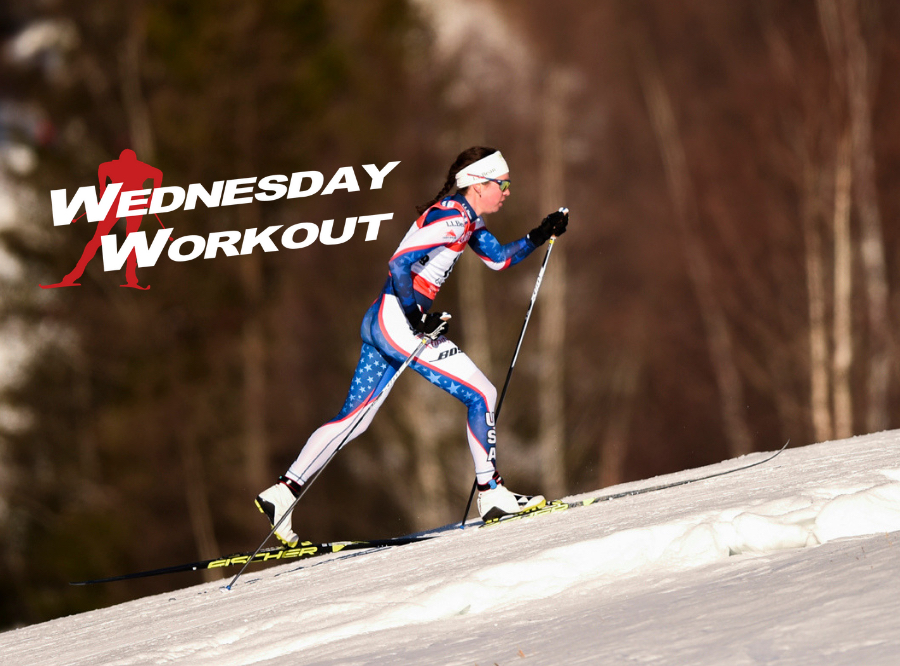
    Caitlin Patterson during the 2019 Cogne, Itlay World Cup 10 k classic. (Photo: Fischer/Nordic Focus)


    This Wednesday Workout dives into one athlete’s approach to reviewing last season’s training and how to move forward. Newly minted U.S. Ski Team member and longtime Craftsbury Green Racing Project athlete Caitlin Patterson provides the details. 

    ***

    Looking back on a year of training is an important part of planning the year ahead.

    My first step is to think broadly over the past year as a whole and to ask myself a series of questions. Usually, I try to write the questions and answers down, and revisit them over the course of a few weeks, to allow myself to contemplate.

    1. What were the best races, the worst races, the most energized feelings or the most frustrating moments of the season?
    2. Were there major themes or flaws that ran throughout the year, is there anything right away that I can pick out that I did very well or very poorly?
    3. What were my goals, and did I achieve them?
    4. At the moments that counted most, did I feel prepared? And if I didn’t, what area of body/mind/health was least prepared to ski my best?

    I keep a detailed training log, which can be difficult to sift through for a yearly analysis, since there are comments for every single one of 500-plus workouts I’ve completed. However, it’s important to have details for a focused evaluation of particular weeks. For example, if I felt tired and raced poorly in week 40, I’ll look back at that week and the previous one. By reading comments and looking at the training volume and intensity, I might be able to see a way in which I overdid it, which will guide me towards smarter training next year. A training log is particularly useful for the aggregation of objective data, such as training hours per week. This year there were a few winter weeks when I trained 17 hours, which was several hours higher than I’d seen in previous years; while it’s not necessarily a bad sign, it might be a cue to take a closer look.

    buy arcoxia online

    The question about feelings of preparation for the key moments, #4 in the above list, is one of the most important. For example: during a certain classic race that I was targeting, my lower back got extremely tired in the double poling sections and it affected my ability to ski the rest of the terrain. This means that I need to strengthen my lower back, an objective which I might accomplish in a few different ways:

    A. Put more back strengthening exercises into my weight room routine.

    B. Do more double poling on rollerskis and skis.

    C. Make sure that my body position on distance skis is realistic to the way that I race.

    Once I’ve made a preliminary analysis myself, it’s time to consult with my coach. At the end of each season I meet with Pepa Miloucheva, my coach of these last 7 years with the Green Racing Project, and we talk through the training and competition season. Usually, our analysis of the problems matches up pretty well, but sometimes we have different approaches towards how to improve for the next year. It’s great to talk about your season with someone, because even if it’s just a family member who is good at listening, by verbalizing your judgements you might notice that you’re being too hard on yourself or are missing high points. The process of evaluating the year shouldn’t be all about finding the problems; it’s also about noticing the strengths and building upon what has been done well.

    For me personally, I am not planning to change particularly much this coming year. The focus will be on quality training and making the most of every session. My volume and intensity will stay similar, but I may adjust the details of intensity and strength a little bit in order to better target particular mid-winter races. By putting together quality workouts with help from coaches and with companionship in the hard work from teammates, I know that I can keep pushing my racing fitness to higher levels of preparedness.

  • Wednesday Workout: Review the Training with Jessica Yeaton

    Wednesday Workout: Review the Training with Jessica Yeaton

    APU’s Jessica Yeaton skiing to second overall during a 2018 SuperTour 5 k skate in Craftsbury, Vermont. (Photo: John Lazenby)


    May 1. Start of a new training cycle for some.

    In this Wednesday Workout, we checked in with Jessica Yeaton. Yeaton resides in Anchorage, Alaska where she trains with APU and has represented Australia on the World Cup, World Championships, and the Olympics.

    She earned two U.S. National Championship podiums in Craftsbury, Vermont last season. She placed second in the 10-kilometer classic and third in the 20 k mass start freestyle. A sixth place in the National Championship skate sprint rounded out her week in the Northeast Kingdom. At the Seefeld, Austria World Championships she skied to 31st in the 30 k mass start skate. Those were a few of her race highlights. The results, however, came after a summer and fall training season fraught with an overuse injury. (We’ll get to that in a minute.)

    Yeaton’s training experience last year saw her rely less on what many would consider the staples of ski specific training: bounding, roller skiing, and running (after addressing her overuse injury). Yeaton learned to be flexible in her training regimen. So we wanted to know how she plans to reflect on her past season’s training.

    “I will look at in a more general sense than in a number sense,” Yeaton said in a call on April 30.  “I will go back and look through my log, and note it looks like I was doing a lot of running here and I look at the comments and see how I was feeling. I will not get too analytical about it. But, it was such a bad overuse injury, it impacted my training enough that I think I can get value out of going back and looking and trying to analyze the numbers a little better.”

    Yeaton won the famed Mt. Marathon mountain running race this past July 4. As a lover of mountain runs she had relied in the past on big days running in the hills as part of her ski training. With all the hours of pounding, she injured a hamstring.

    “I think it is important to look into how much of every activity you are doing,” Yeaton said. “I think one thing for me last year if I had broken down and looked specifically at that period say between May and August, my running was so high. I probably was doing way too much relatively in terms of what you might expect a typical runner to do progression wise compared to the rest of my training.”


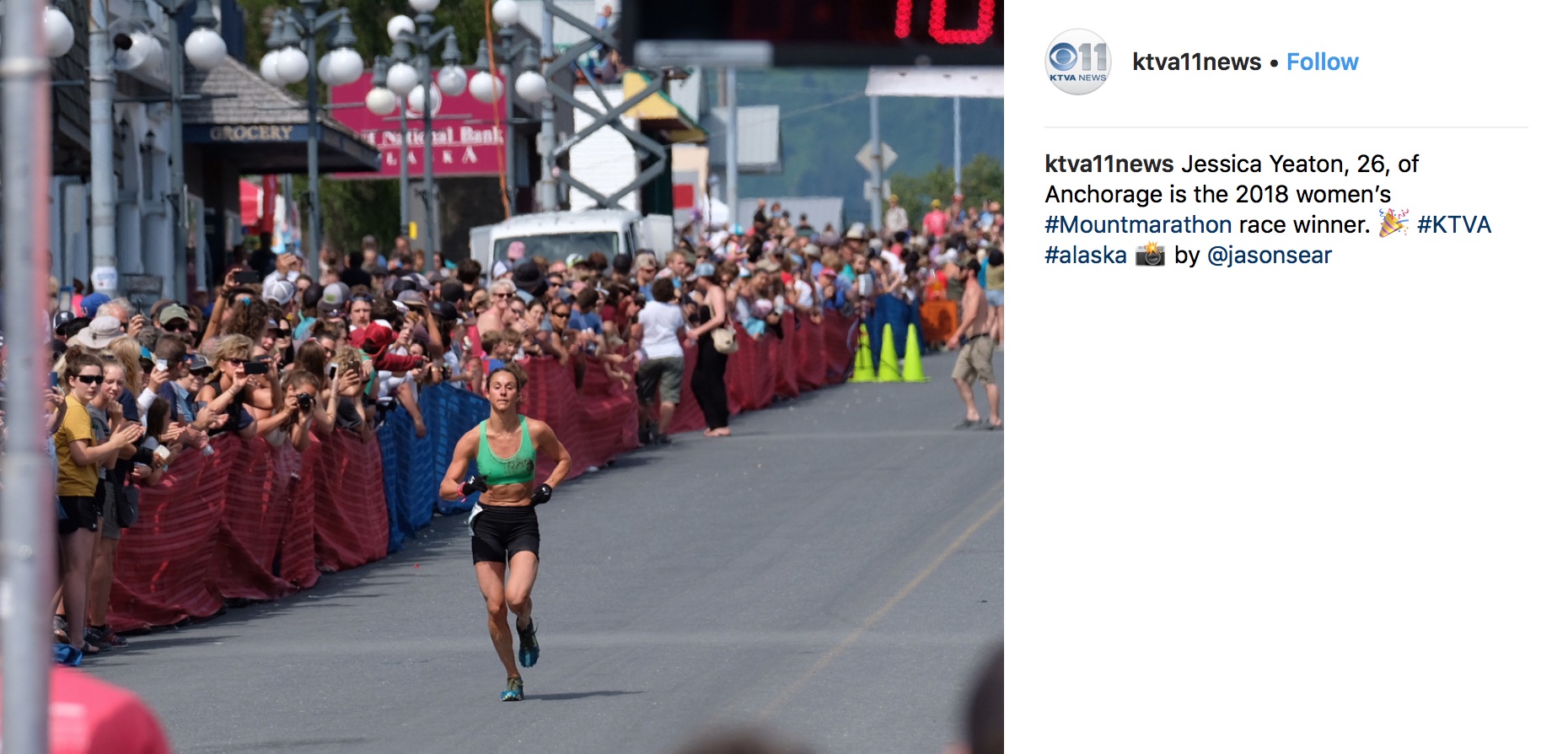
    (Jessica Yeaton on her way to winning the 2018 Mt. Marathon race. (Photo: KTVA 11 News/Instagram)

    Yeaton’s results did not suffer as she incorporated more biking and non-traditional training into her routine. This season, she said she will place restrictions on her running as the injury still nags.  

    “Coming into U.S. National I was not expecting my results at all,” said Yeaton. “But also, it taught me just so much: that a lot of our sport is reliant on fitness. I did know going into the season that I had done less, especially in the fall. I had done less ski specific training that I wanted. I wasn’t, for a while, I wasn’t able to roller ski. I was literally just biking, doing workouts like on the treadmill at the gym, or just stuff that I did not want to be doing. Not doing any bounding intervals and things like that. And it just stressed me out because I was like ‘I am not training for skiing right now’. Maybe I am in good shape, but it is not as ski specific like I wanted. That is what I learned. That maybe if you keep your fitness really high, maybe you don’t need to be specific all the time. I think you need to be to a certain degree, but I was also able to have a really good season without doing exactly what I would have probably done had I been one hundred percent healthy and uninjured.”

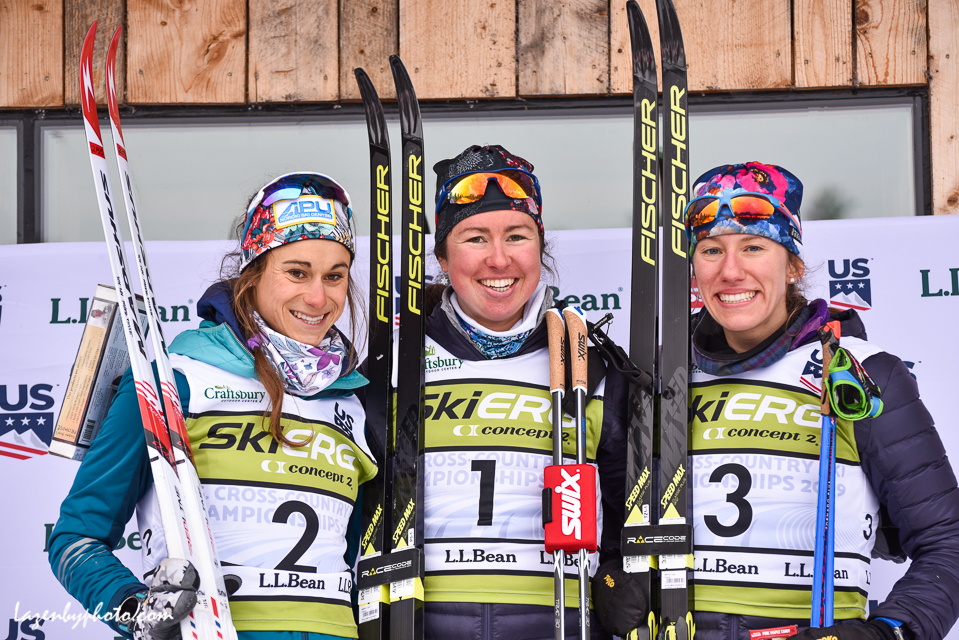
    The women’s podium from the 10 k classic at Cross-Country Nationals in Craftsbury, Vt. (l-r), Jessica Yeaton in third, Caitlin Patterson first, and Kaitlynn Miller third. (Photo: John Lazenby)

    Below is less of a workout Yeaton prescribes, and more of the holistic approach she took to training as she navigated an injury yet still maintained her ski specific goals for the winter. Maybe before you head out and log the hours it is time to review what worked and didn’t last season and ponder how to change it up.

    buy tretinoin online


    Although this past season has been standout in terms of results for me, it has also been the most difficult with regards to injury. I developed an overuse injury in my hamstring in August last year after a summer full of tons of mountain running training/racing, which plagued me throughout the entire fall and winter. Because of this injury, I went from running every single day to not at all; I was also unable to skate or stride on roller skis for a good chunk of time. I was pretty desperate to maintain my fitness without hurting myself further, and the best way I found to do this was on my mountain bike. I discovered that the natural flow of mountain bike trails mimics nordic skiing super well; I could do quality intervals by powering over punchy climbs, pushing through the flats, and carrying my speed over technical downhills. I also found that standing up out of the saddle as much as possible worked muscles that translate really well to skating. I honestly think that my training on the bike last fall really improved my fitness, leg strength, and even my agility on skis this winter. Looking back on my training, I wish I had made this realization years sooner. As someone who struggles a lot with injury while trying to train big hours, I now know that I need to do as much cross-training and variety as possible. In retrospect, I actually think my injury was a blessing in disguise, as some of the “alternate” training I did while injured was the highest quality. I think as skiers we are often afraid to go outside the norm (i.e. roller skiing, running, bounding intervals), but I truly believe there are other ways to train well for skiing. Going into this summer, I plan to switch things up a lot more not only so I decrease my risk of injury, but also because I think cross-training provides a different, high-quality stimulus. I definitely plan to do more mountain bike intervals throughout the summer, and I also won’t be afraid to trade running for swimming or the rowing machine to give my legs a break. Not only do I think this will help me ski faster next year, but I also am excited about the ability to do more activities throughout the summer- without fear that it’s not “quality” training!


  • Johaug, Weng and Teammates’ Physiology, Training Described in New Paper

    Johaug, Weng and Teammates’ Physiology, Training Described in New Paper

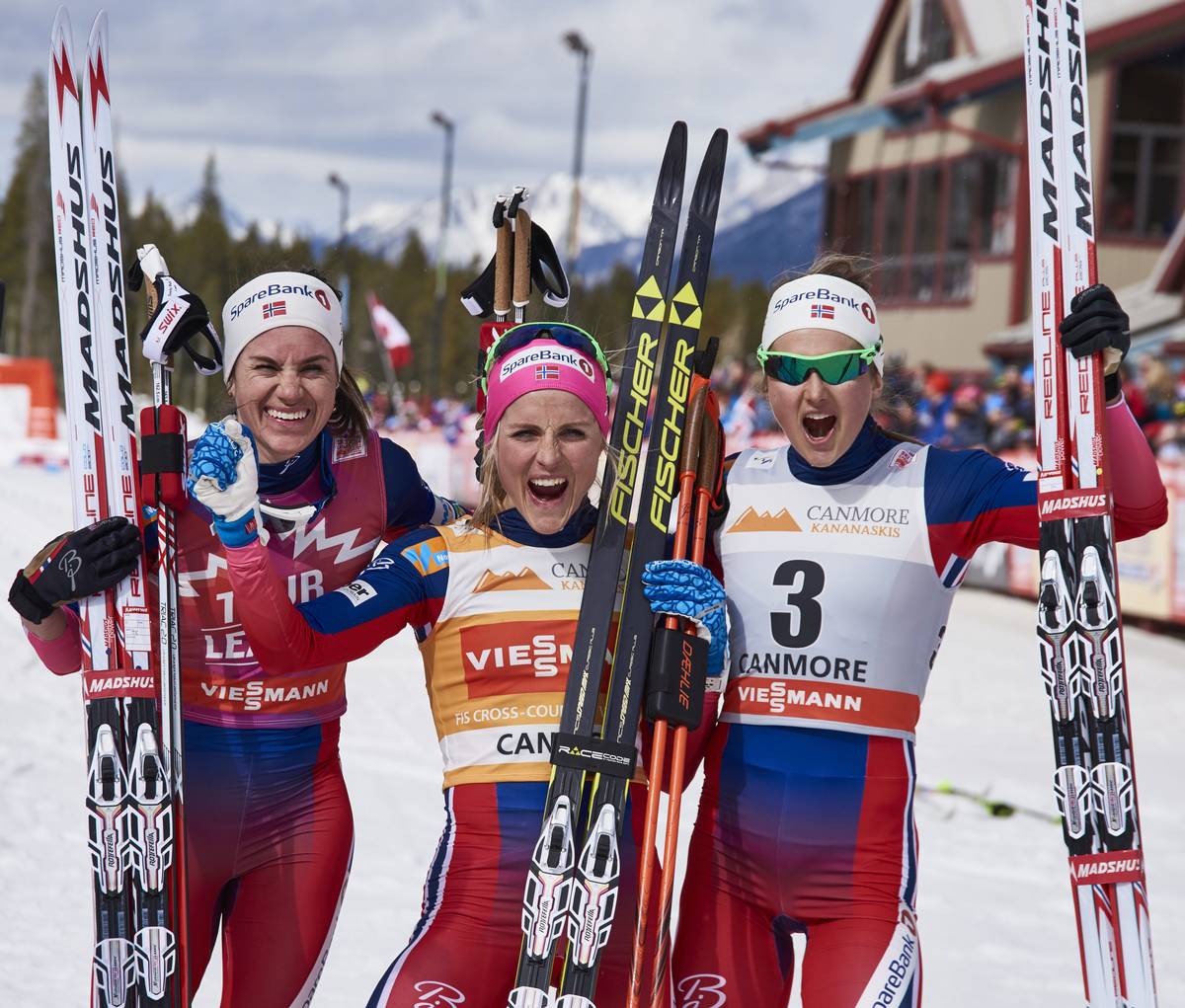
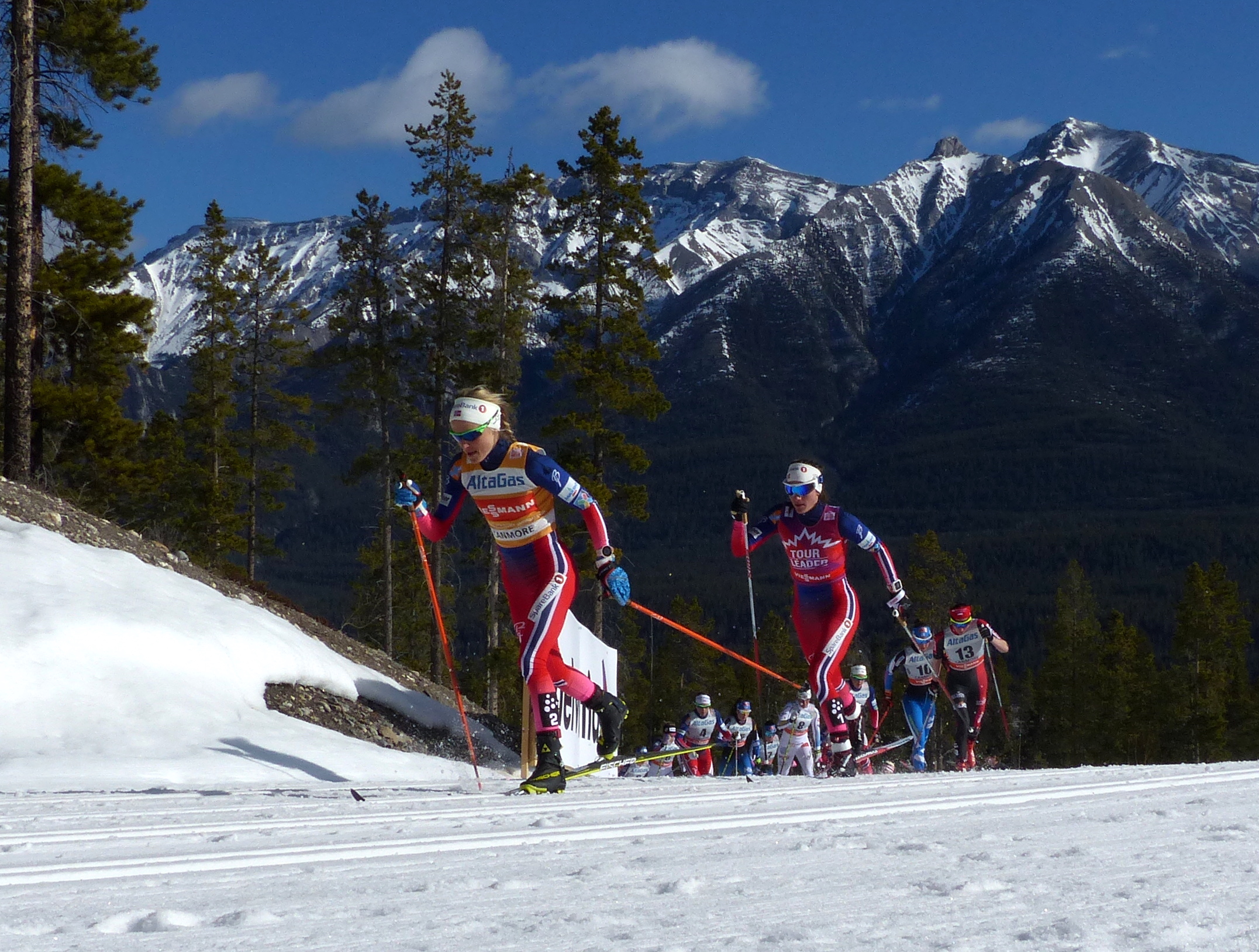
    What makes the Norwegian women so dominant? The top six women from the 2014-2015 World Cup were put through their paces on a ski treadmill, and their physiology - as well as their year-round training - was described in a new paper. That includes Ski Tour Canada winner Therese Johaug (c), runner-up Heidi Weng (l), and third-place and Ingvild Flugstad Østberg (r).  (Photo: Madshus/NordicFocus)
    What makes the Norwegian women so dominant? The top six women from the 2014-2015 World Cup were put through their paces on a ski treadmill, and their physiology – as well as their year-round training – was described in a new paper. That includes Ski Tour Canada winner Therese Johaug (c), runner-up Heidi Weng (l), and third-place and Ingvild Flugstad Østberg (r). (Photo: Madshus/NordicFocus)

    What truly separates the best skiers in the world from the rest of the pack? A team of Norwegian physiologists set out to answer that question, taking advantage of the fact that in the last few years all of the best women on the World Cup have come from Norway.

    Dr. Øyvind Sandbakk’s lab at the Norwegian University of Science and Technology gathered top six women from the 2014-2015 season – Marit Bjørgen, Therese Johaug, Heidi Weng, Ingvild Flugstad Østberg, Ragnhild Haga, and Maiken Caspersen Falla – and compared their physiology to that of six national-level competitors. The results are being published in the journal Medicine and Science in Sports and Exercise.

    The national-level women had average FIS points of around 72, similar to top-20 distance skiers or top-six sprinters among the U.S. women; two of them had achieved top-15’s on the World Cup that season. Women in both groups were mostly in their mid-20’s with Body Mass Indices around 22, although the World Cup women were shorter and lighter while achieving the same ratio.

    After submaximal and max-effort rollerski treadmill tests – completed just before the beginning of the 2015-2016 season – the researchers compared the women’s numbers.

    In the submaximal tests, where the treadmill was set to 3 meters per second at a gradual incline for double-poling and 2.25 meters per second on a steep incline for diagonal striding, the World Cup stars were operating at a much lower capacity than the national-level women: 74 compared to 85 percent of their maximal heart rates while double-poling, or 84 compared to 94 percent while striding.

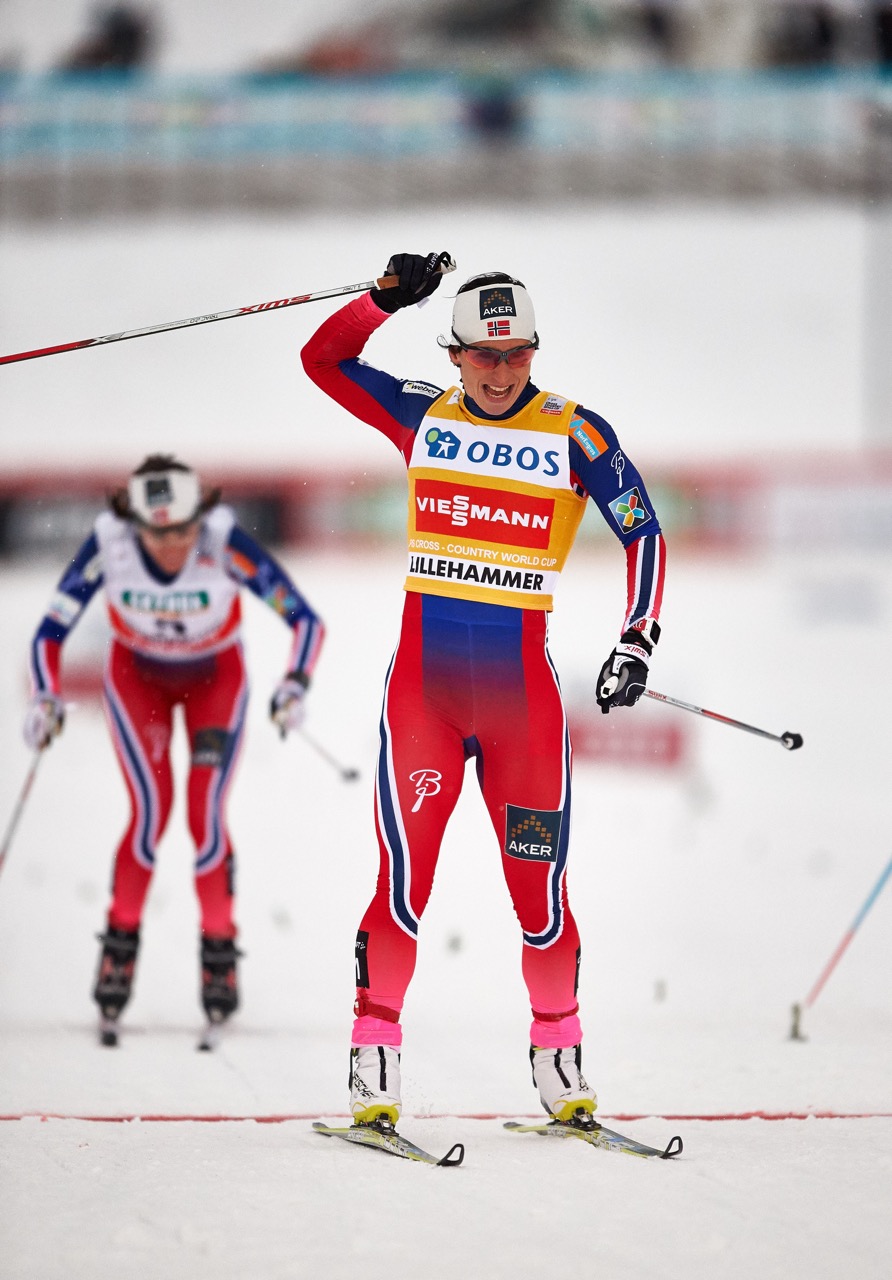
    The paper also included a specific description of Marit Bjørgen, noting that she had trained 980 hours the previous year: "Although her V˙ O2peak values normalized to body mass were not outstanding, the combination of high absolute V˙ O2peak, skiing efficiency, and ~O2 deficit values allowed her to be one of the best WC skiers during the 3-min test with either technique." (Photo: Fischer/Nordic Focus)
    The paper also included a specific description of Marit Bjørgen, the most successful female winter Olympian of all time, noting that she had trained 980 hours the previous year: “Although her VO2peak values normalized to body mass were not outstanding, the combination of high absolute VO2peak, skiing efficiency, and O2 deficit values allowed her to be one of the best WC skiers during the 3-min test with either technique.” (Photo: Fischer/Nordic Focus)

    “The submaximal stages with either technique were less demanding for our WC skiers, even though the oxygen cost and skiing efficiency did not differ and the group differences in submaximal cycle characteristics were minor,” the authors wrote. “These findings are in contrast to previous observations on submaximal skiing, where the efficiency with which metabolic energy is transformed into work rate and speed together with cycle length differ between skiers of different levels of performance.”

    The World Cup regulars also had lower blood lactate levels, and in diagonal striding took longer striding cycles, covering on average a quarter of a meter more per stride.

    In the maximimal tests, it was apparent which athletes belonged to which group as the World Cup top-six covered both more distance (by a margin of six to seven percent) and hit significantly higher speeds during 3-minute timed tests.

    In double-poling, this was because about a minute into the maximal tests the speed of the national-group skiers began to decline. The World Cup women were able to maintain their speed for about a minute longer before a drop at the end of the test. They did so by keeping significantly higher cycle rates (i.e., tempo) than the national-group skiers through the final two minutes of the test.

    “In the case of [striding], neither cycle rate nor length differed significantly between the two groups, indicating that our WC skiers combine these two factors more effectively than NC skiers to achieve higher speed,” the authors noted.

    The World Cup skiers also showed higher VO2Peak: 65 mL min-1 kg-1 compared to 58.8 for the national-level women while double-poling, and 70.9 compared to 65.0 while striding. Measurements of 75 and 71 mL min-1 kg-1 by World Cup skiers were believed to be the highest ever recorded by female skiers in a ski-specific exercise (as opposed to running on a treadmill, for example).

    What gave rise to the differences? Any inherent differences between the athletes were compounded by differences in training. According to training diaries, the top six women reported training on average 532 hours between May and October; for the national-level skiers, that number was 411 hours. When training time during the competition season (November to April) was added in, the totals raised to 920 hours for the World Cup skiers compared to 709 for the national level skiers.

    Therese Johaug leading Heidi Weng in the Ski Tour Canada. (Photo: Peggy Hung)
    Therese Johaug leading Heidi Weng in the Ski Tour Canada. (Photo: Peggy Hung)

    Modes of training also differed. The World Cup elite did about 26% more low-intensity endurance training than their national-level counterparts, and more mid-level and speed training but less high-intensity endurance training. The World Cup skiers also did more strength training, and their training was a stable 80-95 hours from June to October while the national-level skiers gradually increased in hours over the course of the off-season.

    “Our present observation that the amounts of low- and moderate-intensity endurance training by the two groups differed provides further support for the proposal that such training constitutes the preparatory foundation for competitions in cross-country skiing,” the authors wrote. “Our present observations do not bring the importance of high-intensity training into question, although it can be speculated that in such highly trained athletes as ours, the quality of each session (i.e., optimization of physical, technical, and mental aspects) is more significant than the total number.”

    One possible reason for the difference in high-intensity sessions between the two groups is that the World Cup skiers spent nearly twice as much time at elevation: on average, 42 days spent living about 1,500 meters (~5,000 feet). Time at elevation is often spent more on low-intensity than high-intensity training.

    Finally, the World Cup skiers spent 33% more time running and 40% more time training skating technique, but no more time classic skiing or rollerskiing than the national-level skiers. For both groups, just over half the training time during the off-season was dedicated to ski-specific training (defined by the authors as skiing or rollerskiing), with the rest accomplished by running, cycling, kayaking, and other activities.

    “This variation between sport-specific training and cross-training may help athletes to tolerate such large amounts of training during the preparation period, as well as lower the risk of injury,” the authors noted. “Our cross-country skiers varied their mode of low-intensity training considerably, whereas their moderate and high-intensity training was more ski specific.”

  • Counting Your Hours

    Part of the review process of the 2008-2009 season is totaling hours.  Did you hit your target?  What type of change should you plan for next year?  Kate Whitcomb recently posted an interesting piece on her blog titled “Counting Time,”  discussing an important training issue – how do you count hours for many training activities.   Biking hours are always up for debate.  Kate points out that biking is non-weight bearing, and that downhills, especially on a road bike, require almost no exertion.  She counts bike races at 75% hours and rides at 50%.

    Kate also talks about strength training and recounts an interesting test.  One of her coaches took lactacte measurements of a number of athletes during a strength workout.  Effort peaked in level 4, and the conclusion was that strength should be counted at 100% time, and as a hard workout.

    Of course, as with all things training, there are few hard and fast rules.  Kate’s protocols for counting hours might not make sense for you.  The important thing in counting hours is consistency and accurate reporting.  The goal is too keep track of your training for evaluation purposes.  You need to be able to look back and see what went well, and what didn’t.  You can’t move forward if you don’t have an accurate picture looking back.

    Read Kate’s blog post.

    A few things to watch out for:

    – Don’t fall into the trap of hours for hours sake.  You aren’t training to have an impressive training volume at the end of the season.  You are training to get faster.  Sometimes that means less training.  Padding your hours will not help you reach your goals.

    – Be consistent.  Decide how you are going to count activities, and then stick to it.  If you count a three hour bike ride at 100% one week, and at 50% the next, you will not have a clear picture of your training.

    – Be realistic.  This is similar to the first point.  Think critically about each of your workouts and record the training benefit as well as the training hours.  Kate mentions that certain activities don’t get counted as training at all, but do get noted in her log.  This information can be useful looking back.