
From the FasterSkier archive — posts syndicated from athletes’ and coaches’ own blogs between 2004 and 2012, kept online as published. Current coverage is at fasterskier.com.

Tag: Training Plans

  • When to Increase Training Load… and When to Wait

    When to Increase Training Load… and When to Wait

    This article was made possible through the generous support of our voluntary subscribers. If you value coverage like this, please support FasterSkier with a voluntary subscription.
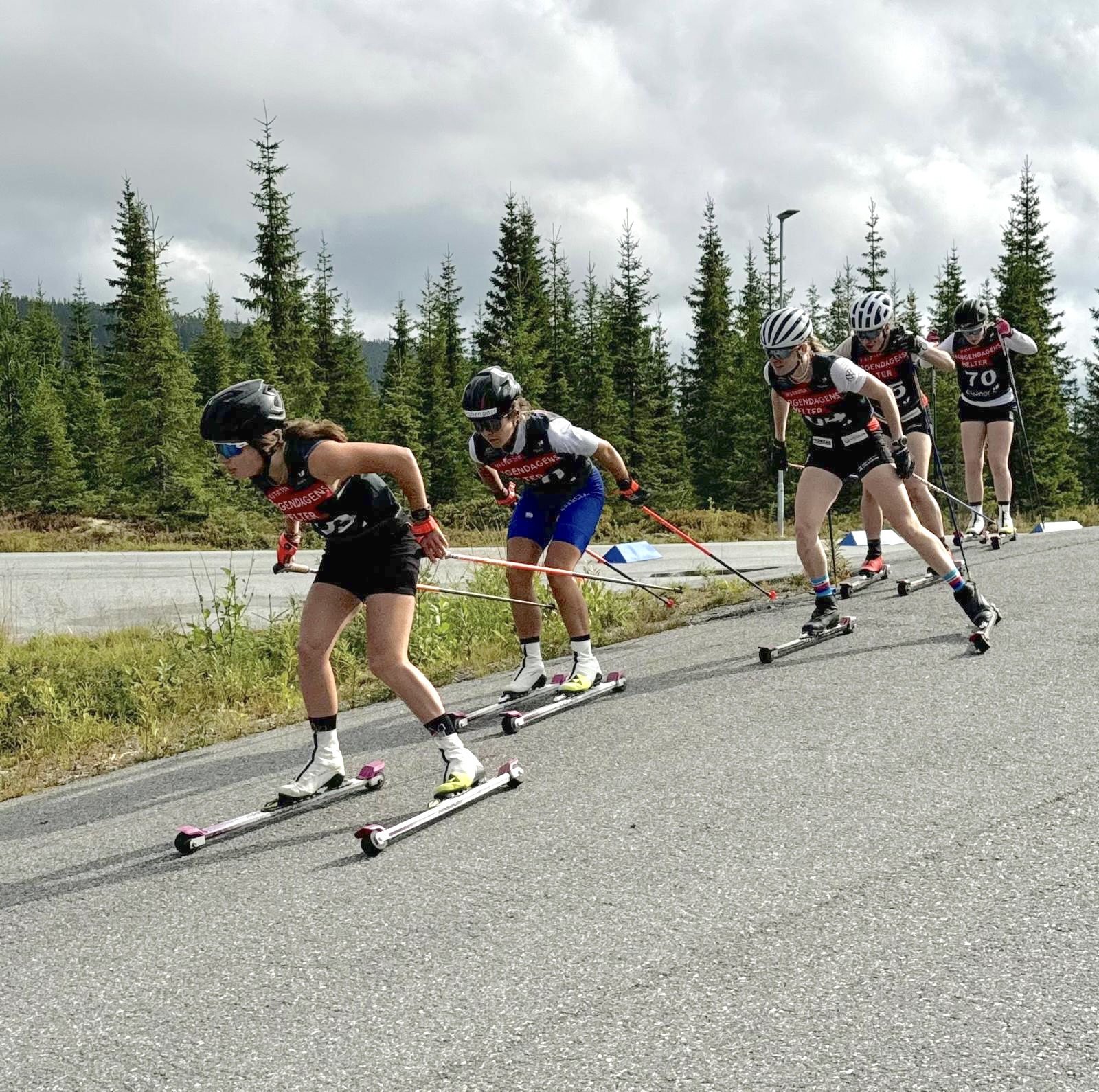
    American Neve Gerard (l) leads athletes from other countries at an International Training Camp in August, 2024, in Sjusjøen, Norway. (Courtesy photo)

    As this ski season wraps up, many of us coaches are doing similar work. Using spreadsheets or a popular training platform, we map out training for the year. We plan the yearly hours, monthly hours, and weekly hours, along with defining the training intensity distribution. We also plan how long and over-distance sessions should be, and maybe how much high-intensity training we should include, etc.  I have done the same in the past.

    Nowadays, my yearly plans include almost none of those things, but rather it is a general road map of how I might want the training loads to progress, what type of high-intensity, neuromuscular work, strength training focus, technique development, training camps, testing sessions, and a general concept of where we start in April or May. We must be able to adjust training on the fly based on an assessment of how athletes’ recovery and adaptation, week to week, with the training and developing fitness.

    In this article, I want to make a case for the changes I have made. Why? Because these detailed hours and training-intensity distribution plans we make are about as good as the day they were written. We then must avoid the temptation to implement training in May, June, or July just because we wrote it down in April. There is no way we can anticipate in April how an athlete will respond to training next month, much less than 2-6 months down the road.

    In discussion with many athletes and coaches I have consulted with in the last four to five years, I believe the biggest challenge faced is how and when to increase training load within a training year. For reference, I use TRIMP to define the metabolic load. TRIMP is described as a modeled internal-load metric or composite index based on exercise duration and HR-derived intensity weighting. TRIMP is not perfect because it is based on heart rate parameters, so power and strength training, mechanical loads are not accounted for. I find TRIMP an excellent proxy for the loads of all endurance training.
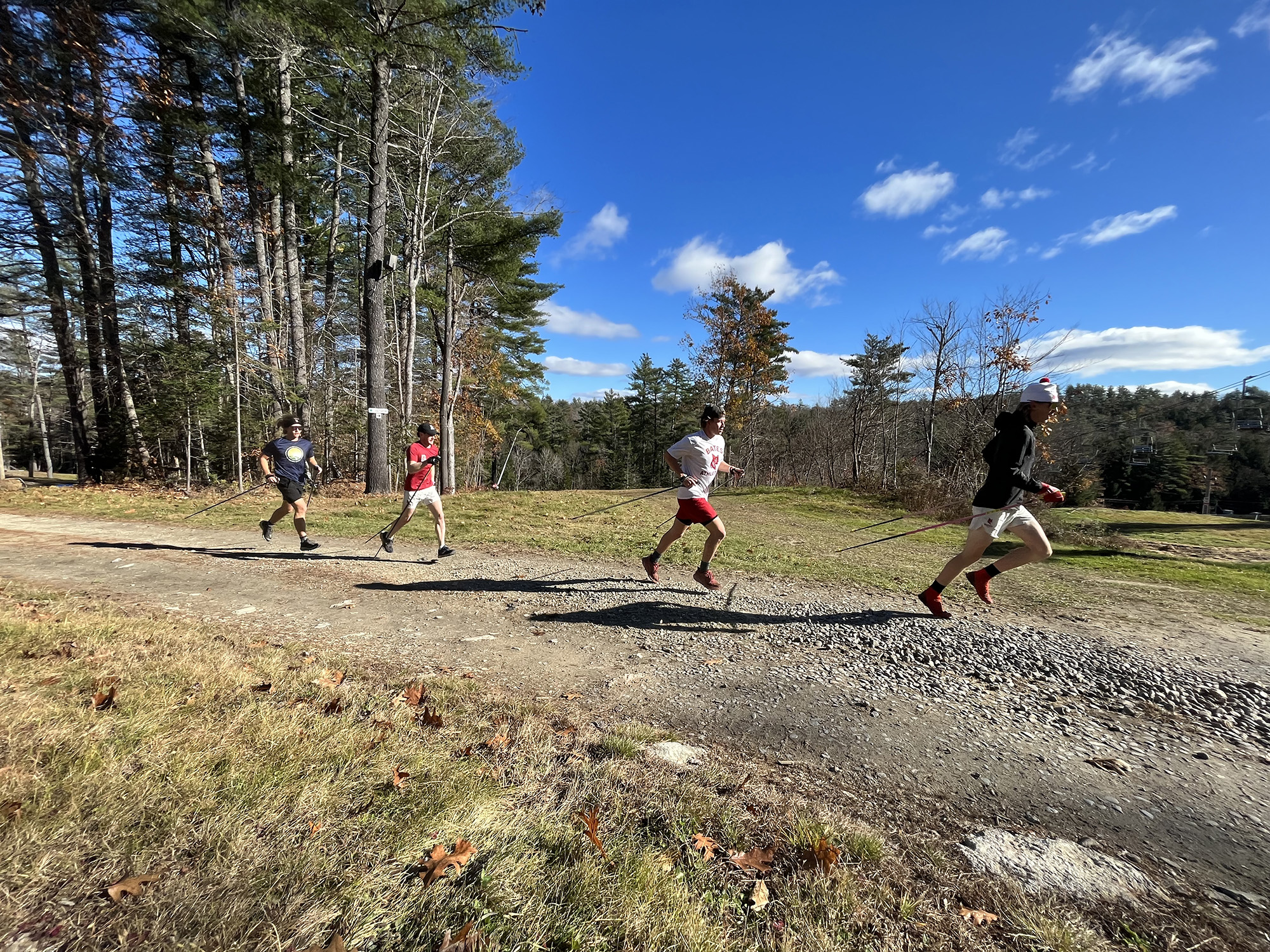
    Bates College getting after some dryland in 2024. (Photo: courtesy photo)

    Others simply use hours to plan and measure the loads. The challenge is difficult when just looking at hours, how to compare an hour of easy training versus an hour of hard training. Then, looking at percentages of time in zones or with other training methods does not define the load or focus the training on the desired adaptation.

    I am not going to address the year-to-year increases simply because all the assorted tables recommending volume of training at an age are based on population averages. The goals of the athletes, the athletes’ training age, training history, and many other potential factors. Just assigning training based on a table is foolish without considering these other factors. In most cases, athletes will train enough if the right principles are followed.

    When we are coaching athletes, we should only increase loads because of improved fitness not in an attempt to drive fitness gains. The decision to increase loads should come from evidence that the athlete(s) have absorbed the current load, not simply because it is a new month and the plan calls for a month-over-month increase. I believe that in the past we have used templates or models that have called for big month-to-month increases. The basis of building fitness is consistency and adaptation to the training. In many cases, we can go as long as 2-3 months at a very similar or very small increase in load.

    I am far from certain how coaches plan training these days, but others and I in the past have planned training based on monthly and weekly hours. In my days, I used to start in May with 50 hours, and by November, I was training more than 100 hours. Then the weekly progression within those months might go 12 hours, 14 hours, 16 hours, 10 hours or something like that. Even back then, how does a 50-hour month prepare you to do a 60-hour month, how does a 12-hour week prepare you to do a 14-hour week? What I learned more than 30 years ago. It doesn’t work that way; even if an athlete completes that kind of protocol, it does not mean it worked; it just means they survived it.

    The research and experience suggest that higher monthly volume and small periodic increases are better for building long-term fitness and performance, with far less risk than the typical plans that ramp up training with increases of 10-15-20% per month. Many old-school thoughts persist that we must increase volume to stimulate further improvements. That is an invalid belief and has been shown to be in much research and analysis. If we are in fact building fitness, we are moving faster at every intensity. Isn’t that already an increase in load? Recruiting more muscle fibers and motor units aerobically, improving mitochondrial density and function,  improving aerobic enzymes in more muscle fibers, among other aerobic adaptations.
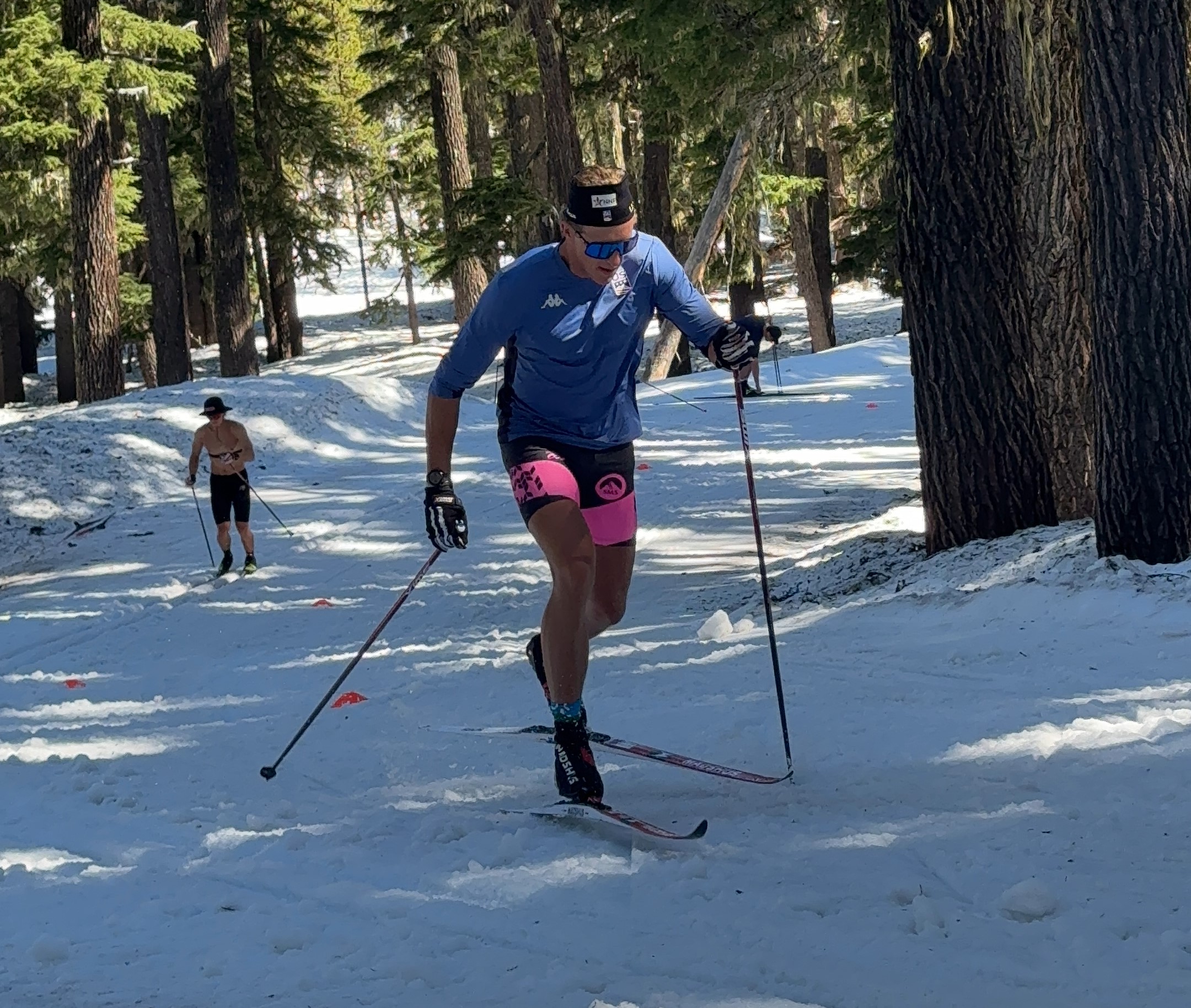
    Fin Bailey works on uphill technique at training camp. (Photo: courtesy photo)

    I look for three layers of signals: performance stability, physiological response, and behavioral cues.

    The stability of performance in training is easily measured with simple technology, such as heart rate and GPS. Prior to increasing loads, the athlete should show improvement or stable performance in workouts. The aerobic training sessions should feel consistent and easy, with very little or no heart rate drift through the workouts. So, a simple training session once a week, once every two weeks, around a standard loop, both for high-intensity and aerobic training, can tell us much.

    The key workouts should show repeatable performance levels from week to week. The pace athletes can maintain at aerobic intensity should gradually and slowly improve, and the technique should stay stable and efficient throughout the workouts.

    Indicator What it suggests
    Same HR but faster pace, HRV is improving Aerobic adaptation
    Same workout feels easier, HRV is stable or improving Load is absorbed
    Ability to repeat intervals without extra fatigue Ready for progression
    If workouts are still producing large fatigue swings, the system is still adapting and increasing load is premature.


    As I have written previously for FasterSkier, older junior ( U18’s) athletes, masters, and elite athletes, I think it is important to use HRV to assess recovery. Using HRV, we can see whether the athletes are recovering predictably between sessions. We can see the stability or improving response their training, and we can assess whether the training loads are sustainable.

    Useful signals:

    • Resting HR stable
    • HRV 7-day trend stable or improving
    • Sleep quality normal
    • Muscle soreness minimal after aerobic sessions
    • The data and the athlete reports feeling normal again within ~24 hours

    If recovery between sessions is incomplete, increasing load compounds fatigue rather than builds fitness. The rush to hit hourly objectives and the failure to respond to accumulating fatigue are the biggest causes of maladaptive training.

    The critical question HRV can help to address. Are the current loads the athlete is doing correct? HRV, especially RMSSD trends collected consistently, can help flag whether an athlete is tolerating training well. But HRV should be interpreted alongside performance, subjective recovery, resting HR, sleep, and life stress rather than used as a standalone decision rule. In some cases, this may mean adjusting other areas of life; in others, we may simply have to reduce the training loads. Simply low HRV indicates a compromised ability to recover from and adapt to training

    A good indicator of readiness is the athlete’s ability to handle training density. Most athletes should have at least one rest day per week. During a training period, the athlete should be able to handle 3-5 moderate training days in a row without feeling accumulated fatigue, and the quality of workouts remains normal and stable.

    The occasional longer sessions should not disrupt the next day’s planned training, and recovery should be normal the following day. If an athlete is doing double sessions, the second session of the day should not be carrying excessive fatigue from the morning session, and the quality, speed, pace, or intensity of the second workout should be consistent.

    When the athlete’s readiness and physiological measures indicate that an increase in load is appropriate, there should only be a slight increase in volume. Make a few sessions per week a little bit longer, followed in the future by adding a workout or two per week

    Training load should only increase when the muscles and connective tissue are tolerating the training. If there is persistent tendon soreness, joint irritation, muscle tightness, or recurring niggles are common, it is not appropriate to increase the loads. Aerobic fitness improves faster than structural durability, which is why injuries often appear right after a volume jump.

    We also need to be aware of and watch for behavioral cues in the athletes, not just the recovery and performance data. We should look for the athlete’s motivation to train and their assessment of the RPE (rating of perceived exertion) for a given workout. If the perceived exertion of a given workout is increasing, it is not a positive signal. Finally, we should ensure that athletes’ nutrition is good, and their body weight is stable.

    As a practical guideline, I would recommend increasing load only after a period of 3-6 weeks, where we can see stable adaptation and improvement in training and recovery measures. When we look at elite training, we always see the training progression is often much slower than people expect.

    JC Schoonmaker and Luke Jager training in Anchorage, Alaska back in 2023. (Photo: Brinkema Brothers)
    Training Phase Progression Pattern
    Base Phase +5–10% volume every 3-6 weeks, but only if all inputs are positive.  If using TRIMP or Training Peaks TSS the load increase should never exceed 15-20%
    Race Prep Phase Maintain a stable volume, intensity increase slowly from the base phase
    Competition phase Volume and Training load decreases slightly; intensity is maintained or increased due to race load.


    As useful guidelines for coaches. If a training day or a week feels heroic, it is too big. Most likely, all the heroic training did was build fatigue and greatly slow recovery and adaptation. Sure, the athlete can do it occasionally, but it in no way means the load improves fitness or performance, or that the athlete adapts to it. My rule of thumb is that the longer it takes for an athlete to recover from a workout, a week, or a month of training, the less adaptation that is possible. When I shared this comment regarding high-intensity workouts with Zach Caldwell, I asked him when we should adapt to them. His response was Thursday! Not next Thursday, not a Thursday next month. Thursday!

    An effective training progression should feel well-tolerated for weeks. Fitness improvements are built on consistent, manageable weeks. Where the fitness is developed through compounded training, not the occasional massive week. I have seen it repeatedly, it is big increases in training load, too much, too soon, that ultimately leads to declining performance and overtraining. Sure, elite athletes train massive weeks, but to get there, they adapt to training every year, step by step.

    Increases in training load should be almost invisible over weeks and months as athletes develop. Over the years of training, the increases are clearly visible and large.

    In summary, increase training load when:

    1. Current workouts are repeatable and controlled
    2. Athletes recover following training days, normally within ~24 hours
    3. No structural soreness or injury signals
    4. Motivation and energy are normal
    5. This training performance has improved, and recovery has been stable or improving for 3-6 weeks


    Help Support Our Olympic Coverage!

    If you value the thoughtful work and access FasterSkier provides, please consider becoming a Voluntary Subscriber. Your support directly fuels our work to cover the people, places, and moments that make our sport special.

    Join the FasterSkier community!
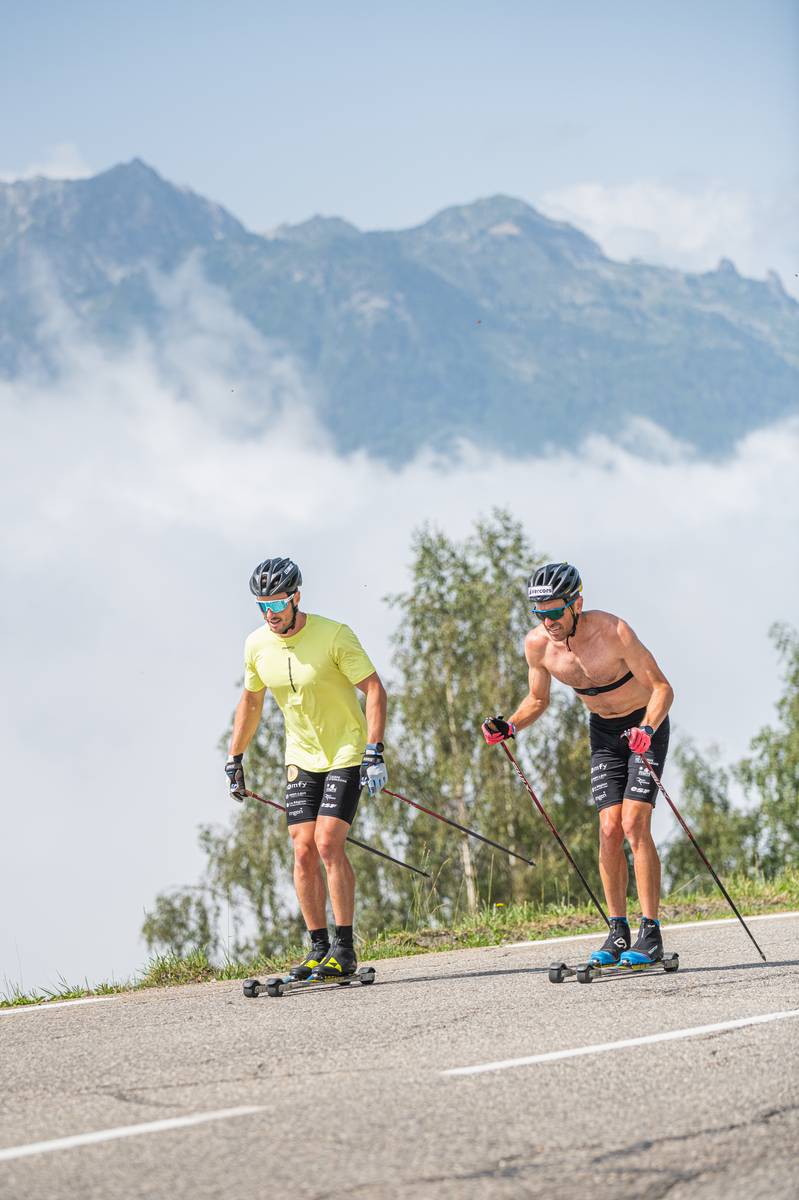
     

    French athletes Lucas Chanavat (left) and Maurice Magnificat (right) out for a rollerski during a training camp in Tignes. (Photo: NordicFocus)
  • Glenn Bond Returns to Racing for Masters World Cup

    Glenn Bond Returns to Racing for Masters World Cup

    Glenn Bond competing at Sovereign Lake back in the days of full-time racing. (Photo courtesy of Glenn Bond)

    Glenn Bond, 37, retired from full-time racing eight years ago, but now he’s back chasing podiums again. This time, Bond is aiming for the Masters World Cup, which is coming to his home turf at Sovereign Lake/Silver Star in March. That is something he is taking advantage of.

    “I have definitely spent more time skiing over at Sovereign Lake this season. I think I know these trails as well any local skier up here,” Bond said to FasterSkier.

    While Bond retired from racing in 2002, he has by no means let himself slip entirely. He just hasn’t been very structured about his training. He was appointed Nordic Director at Silver Star Mountain Resort in 2002, and has spent the past years building the nordic programs at Silver Star and taking over the traditional Thanksgiving camps that have been an institution at Silver Star for decades.

    “It’s not like I haven’t trained for eight years, but I’ve just done this and that, and nothing structured and didn’t take it very seriously,” Bond explained.

    But January 1, 2011, marked the start of a new era for Bond. He put himself back on a formal training program, aiming for a podium at the Masters World Cup. While Bond is certainly capable of designing a training program himself, he decided to enlist a coach to make it more formal and hold himself more responsible.

    “It’s kind of like cooking. It’s always better when someone does it for you,” Bond said, adding that he works with Melissa Spooner, a well-known endurance coach.

    Old memories = motivation

    The process of getting back on a structured training plan has increased the motivation and certainly brings back old memories, Bond said.

    “Being on a structured training program brings back so much fun. Now that I’m doing that again, I definitely feel like I’ve missed out. And the program motivates me to do the workouts and prioritize the training,” Bond said.

    It didn’t take long before he noticed gains in fitness. He has done time trials with local skiers and thrown himself in some of the local events, including the NorAm mini-tour in Kelowna the first weekend of February.

    “My fitness is increasing. I am competitive against the guys I’m racing against, and I definitely think I should be in the mix. I’m not where I am eight years ago, but that’s life,” said the modest Canadian. FasterSkier suspects this should serve as a warning to his competitors: Bond is back.

    Glenn Bond has a fair amount of skis to choose from. 16 pairs have made it to grinding with Nordic Ultratune in Winthrop, Wash. (Photo: Inge Scheve)

    Grinding 16 pairs of skis

    Bond is going after his goals with a scientific rigor that is not limited to his physical training program. His preparation for the World Masters includes sending off no less than 16 pairs of Atomic skis to be ground with Mark Waechter at Nordic Ultratune in Winthrop, Wash.

    “I spent a lot of money on them. After 15 pairs there’s a special deal,” Bond said with a laugh.

    But on the scientific side of the exercise, Bond is carefully taking notes on each and every pair. 16 pairs is actually such a sizable equipment pool that Bond had to enlist the help of his friends to get test them all with the care and attention to detail that Bond is after.

    “There are little details, but the difference is noticeable,” said Bond, who has tried all the five grinds that Waechter offers: D5, i5, S1, S2 and MD1.

    “I can’t give away everything, but I’ll say that some of these are not as relevant for the World Masters as others,” Bond explained.

    The D5 is a universal wet and warm grind for temperatures from 0 degrees c to minus 5. The i5 resembles the D5 but is not as deep and runs better in colder conditions, generally from -2 C to -10 C. The S1 and S2 grinds are both for cold, dry snow, where the S1 is for very cold conditions from -10 C and below, while the S2 works well from -5 C down to -20 C. Finally, the MD1 is a specialty grind for transformed large crystals, very wet new snow and moist conditions. This grind is proven both as a klister grind on classic skis and on skate skis in warm moist conditions.

    “I first sent Mark 12 pairs, but I ended up sending four pairs back because I wanted to change them. I had chosen grinds that were too warm for here,” Bond explained, noting that one of the four pairs was an old pair of rock skis that he just rekindled his love with during a photo shoot for a marketing gig with his job.

    “I got on them for the photo shoot and they felt so good, so I sent them off to Mark to put them back in the mix,” Bond said, adding that after six years of working with Waechter, he trusts the quality and likes the the grinds Waechter offers.

    “I totally trust Mark’s (Waechter) work. The others do great grinds too, but not on that machine,” Bond said, noting that to his knowledge, Waechter is the only grinder in North America who has the Mantec machine.

    However, Bond has only limited time to make up his mind on additional pairs to grind or regrind. In order to turn around skis for the World Masters, Waechter needs the boards in Winthrop by February 24.

    Tracking details, climate and products to find what works

    Bond is learning how the Ultratune grinds work locally, and with the snow conditions that typically prevail at Sovereign Lake in March. From eight years’ experience and a scientific approach to skiing, Bond has a deep pool of data to draw from when selecting grinds, flexes and waxes.

    “I have a lot of background information on the weather. About 80 percent of the time, it will be between 0 degrees C and minus 5 C in early March. But 20 percent of the time it’s much colder. Two years ago we had a super heavy snowfall right at the time when the World Masters will be,” Bond said.

    “I’m not withholding any information here, you just have to bring everything you have,” Bond said, explaining that you might need every kind of flex, grind or wax in your quiver.

    “The conditions will be fairly soft. We rarely go more than a couple of days without some snowfall.

    Asked to offer some suggestions, Bond said that Swix’ HF8 and the equivalent Toko HF waxes are proven to run well at Sovereign Lake. Additionally, Bond warns that the snow and air temps are only one part of the equation.

    Humidity and climatic factors also add to the complexity. In Bond’s experience, you generally have to wax slightly warmer for kick than the temperature suggests at Sovereign Lake. On the glide side, you are better off going colder than the temperature indicates, as well as use a finer grind than you might think just from looking at the thermometer.

    Glenn Bond skiing on the Silver Star Mountain Resort trails. (Photo courtesy of Glenn Bond)

    Tough trails

    The courses are tougher than what they seem just looking at the course profile. Bond is used to racing FIS World Cup courses, which have a different distribution of terrain and vertical than the World Masters courses.

    “Especially the 10K classic is really hard. It contains a fair bit of double-pole and kick-double pole terrain,” Bond said.

    The World Masters courses have to be 50 percent of the FIS World Cup in terms of vertical, but that makes them harder in other ways, Bond explained. “The times are faster on the World Cup courses, you can climb uphill relatively fast compared to your speed on flat, and the downhills are faster, so the overall time for a 10 or 15K race on this course is longer. You have to be mentally and physically prepared for that,” Bond said.

  • Junior Camps: Norway Style

    Junior Camps: Norway Style

    Ragnhild Bolstad of Hedmark Skikrets based in east central Norway has organized training camps for the top regional juniors in east central Norway for more than a decade. When putting together camp training schedules for junior skiers, Bolstad has some key ingredients in mind: The social aspect is huge. The athletes want some feedback on where they are and where they can improve. Strength is important and roller skiing is often over-emphasized.

    Ragnhild Bolstad (left) skiwalking with a group of junior girls near Rena in Hedmark. (Photo: Inge Scheve)

    Building an environment

    First and foremost, a lot of the skiers train alone or with a limited group of other skiers and coaches. Bolstad tries to compose a training camp schedule that exposes the skiers to other coaches, technique sessions and workouts that are fun to do in a big group, such as relays and group challenges.

    “The number one objective of these camps is to get together with others on the same ambition level, compete and compare themselves to others,” Bolstad says. Additionally, they want to get some pointers, learn something new to take home and get a break from their regular training routine.

    “It’s always useful for the skiers to get feedback on how they ski, whether its roller skiing or on snow,” Bolstad says. During a camp, skiers often do more than in a regular week, both in terms of intensity and volume, so variety is a big component, she says. “My philosophy is that they can easily do a lot of easy distance and volume on their own, but that they enjoy doing intensity with other, and that they push themselves more when they do intervals and mock races at in a camp setting,” Bolstad says. “I usually recommend that they come to the camp well rested and take care to do a very easy week following a camp.”

    Add more strength

    One area where Bolstad thinks there is room for improvement is strength.

    “A lot of the time it seems like strength is just a few minutes of abs and core at the end of a workout, but I think we can do more here. Strength is becoming increasingly important in cross-country skiing, so it should be a natural component of a camp too. Some coaches believe you need a sophisticated gym to do a structured strength workout, but you can do a lot just with the elements you find outside,” she says, mentioning rock ledges for benches, rocks for cones, grassy areas instead of foam mats, and tree branches for hang-ups and pull-ups, as well as simple things like elastic bands that are easy to roll up and bring on a workout. “I think most juniors do some sort of strength at least 2 or 3 times per week at home.”

    Bolstad also thinks including strength into roller ski workouts provides better use of the time on roller skis than just logging miles and hours on the pavement.

    Juniors working on specific strength at Rena in Hedmark. (Photo: Inge Scheve)

    Roller skiing is over-emphasized

    Bolstad believes a lot of skiers overestimate the importance of roller skiing.

    “Certainly, you need some and most skiers should do two roller ski workouts per week in the meat of the dryland season, but I don’t think there is much value in more than 3 or max 4 roller ski sessions per week,” she says, explaining that while specific to skiing, there are other aspects of training that needs attention during the dryland season.

    “Roller skiing is a great alternative to other endurance training, and is definitely useful in keeping the ski muscles sharp, staying up on technique and getting a load off your legs, but there is nothing that beats running in developing capacity,” Bolstad says. She swears by running, skiwalking and bounding with poles as some of the most efficient, versatile and enjoyable forms of dryland training.

    “I firmly believe in running with poles, bring them everywhere, and run in a lot of different terrain, such as wetlands and gnarly trails to improve both strength and balance. Use your poles everywhere,” says Bolstad, adding that part of what makes skiing so great is the nature experience. Roller skiing confines athletes to the pavement, while running opens up much more terrain.

    Favor mountain biking

    Bolstad also believes cycling has a place in a well-rounded varied dryland program. However, she recommends mountain biking and trail riding over road biking.

    “When riding trails, you ride in and out of the saddle, you have to balance your bike through turns and over obstacles and you really have to engage your core, which develops balance and core strength to a much greater degree than riding on roads.”

    Issues and training principles

    Finally, Bolstad also makes sure every junior camp has some sort of theoretical content. She usually sets up at least one lecture on a relevant topic, ranging from training principles and fundamentals, doping and eating disorders.

    This last year, she invited officials from Anti-Doping Norway to talk about diet and dietary supplements in the context of doping.

    “Ambitious athletes are willing to stick to a strict and sometimes almost extreme diet, and for some the step to supplements is not that far. What is doping? And what are the gray areas?” Bolstad also notes that once skiers reach the junior level, they can be tested for doping at sanctioned events, so she felt that it would be useful for them to know what the procedure is like.

    This spring, Bolstad organized a lecture from the new initiative Sunn Jenteidrett (“Healthy Girl Sports”), which was launched as a joint project from the Norwegian Ski Association, Norwegian Biathlon Association, Norwegian Track and Field Association, and Norwegian Orienteering Association. The project is also backed by the Olympic Development Center (Olympiatoppen), the Norwegian Athletic Association (NIF) and the national lottery (Norsk Tipping). The project focuses on female athletes age 13-22 and emphasizes on building supportive training environments, increasing awareness of eating disorders and information on how to find resources. The project also teaches young athletes – both girls and boys – how to plan meals before, during and after workouts and competitions, as well as how to eat right and what to eat, since many junior skiers move away from home to attend ski academies during their high school years. Young athletes who attend ski academies often live in apartments near their schools and have to cook for themselves during the week. For a lot of juniors, this is their first experience with living alone.

    “A lot of people think eating disorders only affect girls, but the truth is that a lot of boys also have trouble getting the right balance in their diets, maybe for different reasons. Also, eating disorders are something that affects everyone in the sport, from coaches to teammates and everyone in the support system. It’s important to talk about it, and to let the athletes know that there are resources out there, how to help and how to get help.”

    So bottom line, the most important aspects with junior camps include building an environment among regional athletes where they can learn from each other, test their limits and get feedback on their technique and progress.

    The junior racer on camps: Socially rewarding and bloody serious

    Maja Solbakken, 17, from Engerdal on the Swedish border is one of Norway’s promising young skiers. She’s attended a number of ski camps since she was 13 or 14 years old, and raves about the value of the experience. For her, the most important take-aways from the camps are the friendships that she has formed with skiers from different parts of the country, and the intensity and focus that only happens in a camp environment.

    “It’s so nice to hang out with other kids who have ambitions in skiing. It’s a really social experience, and every time I go, I get really motivated to keep training hard,” Solbakken says, explaining that training with celebrity coaches and other skiers you usually only see during the race season, she really wants to show off her best game.

    “You push a lot of limits when you’re at the camps. I’ve done uphill intervals to the point of throwing up. There are coaches there from the junior national teams or regional teams, and you just really want to show what you’ve got,” Solbakken says.

    Solbakken doesn’t think the national team coaches base their team selection on the junior camps, but she certainly thinks that skiers who look like they work hard and have the right attitude can get on their radars during the camps.

    “The national team coaches are at all the big races in the winter, so if you’ve made a good impression in the summer, there’s a chance that they’ll remember that. I think they observe a lot during the camps,” Solbakken says.

    Feedback and pushing limits

    Solbakken enjoys going to the camps to get feedback on her technique and progress from coaches that she doesn’t work with on a regular basis. Also, she says it’s inspiring to be coached by some of the top World Cup racers. National team skiers often serve as assistant coaches on the summer ski camps that attract junior skiers from all over the country.

    “We had Astrid Uhrenholdt Jacobsen as our strength and plyometrics coach last summer. She was really nice, but she required full attention to the task while training and didn’t take any crap. So we got some really intense, focused and efficient workouts there. That was really motivating,” Solbakken recalls.

    Solbakken says that the summer camps are the highlights of her summer training program.

    “The camps really mean a lot to me as an athlete and as a person,” Solbakken says, adding that she hopes to come back as a coach some day. “Only the top skiers in the country are invited to coach at the national summer ski camps. It would be a big honor to be asked one day.”

    Maja Solbakken (Photo: Inge Scheve)
  • Developing a Successful Training Plan

    Developing a Successful Training Plan

    Maria Stuber is a member of the CXC Elite Team.  She is a 2009 U.S. National Championship Silver Medalist and a graduate of Northern Michigan University, where she was captain of the women’s cross country ski team.  Maria received a bachelor’s degree in Physiology from NMU in 2007 and will complete her master’s degree in Exercise science in December, 2009.  She is currently running an Endurance-Based Personal Training program called Alliance Training (www.xcskialliance.com/training) where she writes individualized training plans for athletes of all ability levels.  To get a plan of your own contact info@xcskialliance.com or call (414) 559-9147.

    A well designed training plan takes very basic exercise concepts and applies them in an organized fashion to achieve a specific goal.  The two most important concepts one must apply are: specificity and overload.  The organized, progressive fashion that these concepts are applied is called periodization.

    Maria Stuber racing at the Madison Winter Festival 2009
    Maria Stuber racing at the Madison Winter Festival 2009

    Specificity is perhaps the most basic concept.  The type of demand placed on the body dictates the type of adaptation that will occur.  An athlete will not get fast and powerful by doing all long, slow, distance training.   Likewise, an athlete will not succeed in an endurance sport if he/she spend all of his/her time in the weight room.  It is important to do intensity training that is specific to the energy demands of cross-country ski racing and to choose activities that are specific to skiing movements.  Activities like roller-skiing, ski walking, and bounding are essential to performing well in our sport.  Strength training must incorporate exercises that utilize the same muscle groups and movements used in cross-country skiing.  While general endurance activities, like running and biking, have a purpose,  they are not sufficient for ski training in the summer and fall.

    The overload concept is also simple.  In order for an athlete to improve, he/she must perform workouts of greater intensity than he/she is used to.  This can be done by changing the intensity of a workout, the duration of a workout, the frequency of hard workouts, or any combination of these things.  The overload principle must be applied strategically to attain the desired training adaptation without chronically fatiguing or overtraining the athlete.

    In a well designed training plan, both specificity and overload must display progression as the competition season approaches.  Although both specificity and overload should increase, they must do so in a discontinuous fashion.  Hard periods of training must be followed by recovery periods.  Likewise, hard days must be followed by easier days and adequate rest is important during each day of training.  Recuperation allows the body time to adapt to the overload stimulus which is what produces optimal results.  Another word for this strategic training progression is periodization.

    The first step is to assess the training status of the athlete, his/her performance goals and time availability.  It is critical to look at previous years of training volume and intensity so that one does not prescribe a plan that is too demanding.  Physical testing can be a good way to evaluate fitness.  Tests such as the 3000m run or the strength test (2 sets of 1 min timed pull-ups, sit ups, push-ups, dips, and box jumps with 1 min rest between sets and full recovery between activities) are ideal because norm values are available, and athletes can compare their results with cross-country skiers at the elite level.  Roller ski time trials are also a good way for athletes to compare their own progress from year to year, but changes in weather and roller ski speeds make this comparison more difficult.  It is important to have a test that is as repeatable and valid as possible.  Elite athletes often use lactate threshold or VO2max laboratory tests to evaluate fitness, identify weaknesses, and prescribe training intensity zones.  Although laboratory testing is not utterly necessary, it can be helpful if it is available.

    The next step in designing a training plan for any athlete is to evaluate the demands of his/her sport.  Cross-country skiing is special because it is a highly aerobic sport; however, the down hills provide some recovery, so there is often a serious anaerobic component.  In addition, athletes need to be strong and powerful without having a lot of bulky muscle so strength training and plyometrics play a major role.  Whether an athlete’s goals are to be top 10 at the State Meet, make the world cup team, or finish the Great American Birkebeiner, the components of training are identical.  It is the volume and intensity of the training components that must be manipulated to individualize an athlete’s plan.  The major components of a successful training plan are: over-distance training, interval training, speed training, and strength training.  Each component is present all year round but the primary focus of training may change depending on the time of year.  For example, an athlete’s training focus might be on over-distance (Level 1) and general strength training in May, June, and July.  Then, during August and September the focus could shift to lactate threshold (level 3) intervals and power-strength training.  Then, in October and November, the focus could shift to emphasize VO2max (level 4) intervals and speed training.  Fitness testing and non-athletic time commitments, like school, work, and family should be taken into consideration when determining the primary focus of different training periods.

    In cross-country skiing, many athletes invest huge amounts of effort, over many years, and see little or no performance gains.  Developing a successful training strategy is a complicated, yet important endeavor.  Small and simple things can make a huge difference, and it is imperative that serious athletes have a plan written out.  Likewise it is equally important to record adherence to the plan and subsequent performance changes in a recording log.  No matter what the goals of the athlete are, every athlete is different.  Developing an individualized training plan can help any level athlete maximize their potential.

    If you are serious about writing a training plan for yourself or another athlete, this short summary is a good start; however, I strongly recommend that you collaborate with a professional.  If you have the time, check out a couple books at the library or use the CXC Academy (www.cxcacademy.com) for current information and example training plans.  If you do not have the time, find a coach or an exercise science professional to help out.  Alliance Training (www.xcskialliance.com/training) is an endurance-based personal training program that has experience developing individualized training plans for athletes of all ability levels from recreational to elite.  In addition, Alliance Training specialists are committed to raising the level of cross-country skiing in the Midwest and will work with novice or volunteer ski coaches to design top-notch training plans for school and club programs.  Please visit www.xcskialliance.com/training or contact info@xcskialliance.com to get more information on Alliance Training.

    Maria Stuber (CXC Elite)
    Maria Stuber (CXC Elite)

    CXC Vertical Limit Logo