From the FasterSkier archive — posts syndicated from athletes’ and coaches’ own blogs between 2004 and 2012, kept online as published. Current coverage is at fasterskier.com.

Tag: Travis Tygart

  • Nordic Nation: Clean Sport, Testing Gaps, and Virtual Sample Collection with Noah Hoffman

    Nordic Nation: Clean Sport, Testing Gaps, and Virtual Sample Collection with Noah Hoffman

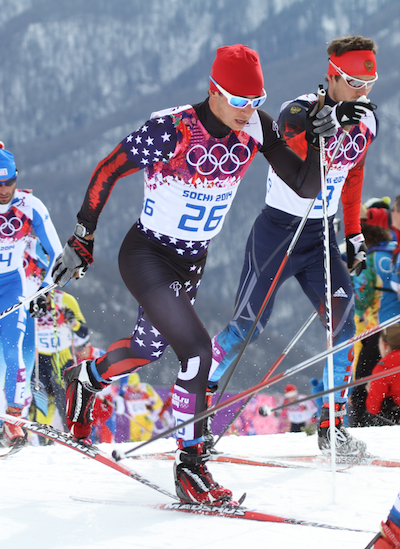
    Noah Hoffman (U.S. Ski Team) racing to 35th in the 30 k skiathlon at the Olympics in Sochi, Russia.

    As we all know, the COVID-19 global pandemic has left the world scrambling to adapt to the many challenges of slowing the spread of the virus. In the world of Olympic sports, the ripple effect has disrupted the efforts of anti-doping agencies worldwide to conduct the athlete testing normally relied upon to hold athletes accountable to abiding by the rules surrounding banned and controlled substances. Most international antidoping agencies have halted testing since mid-March as the invasive and close-contact nature of collecting samples posed a threat to both athletes and testers. 

    This causes concern that athletes inclined to cheat might abuse the situation, taking advantage of the opportunity to use illegal substances to improve their performance potential when competition is able to resume. 

    To address the lack of testing, the US Antidoping Agency (USADA) rolled out a pilot virtual testing program called Project Believe 2020 where athletes could provide a urine sample and blood spot test with an antidoping agent present on a zoom or FaceTime call. 

    For further insight into this topic, FasterSkier connected with two-time Olympian and long-time US Ski Team Member Noah Hoffman, who has become involved with USADA’s antidoping education program since retiring from skiing. Hoffman also recently wrapped up his second year at Brown University and we discuss his academic interests and the experience of being a college student during the COVID shutdown. Thanks for listening.


  • U.S. Government Moves to Criminalize Doping in Sport

    U.S. Government Moves to Criminalize Doping in Sport


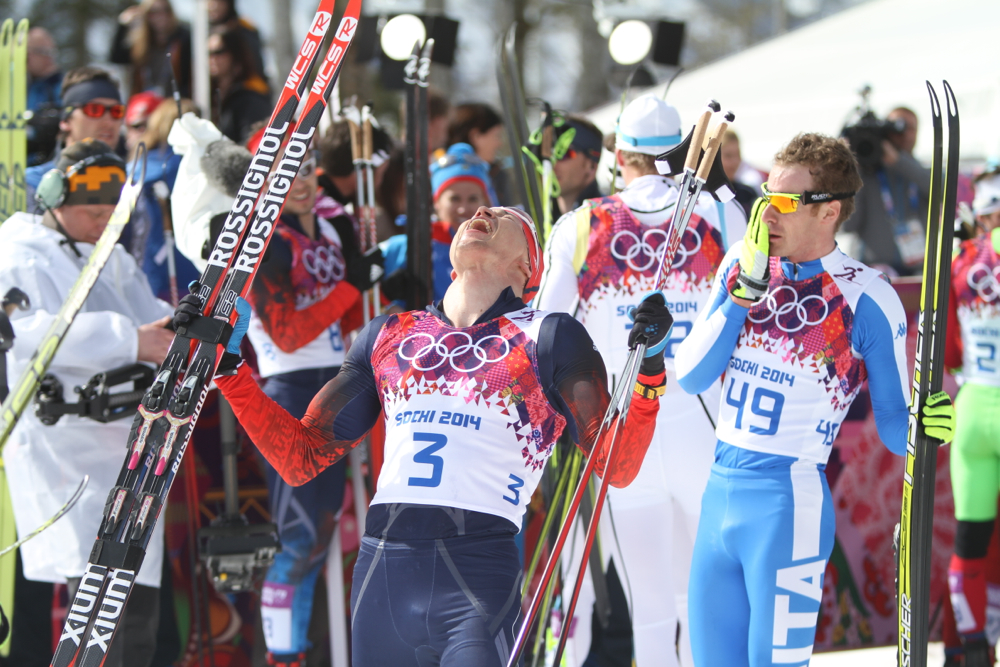
    Hours after this photo was taken at the 2014 Winter Olympics of Alexander Legkov in his post-Olympic gold celebration, Russian anti-doping head Grigory Rodchenkov has said that he switched out Legkov’s anti-doping sample for a vial of clean urine collected previously. 

    Earlier this week, among the tumult in Washington, D.C., Senators Orrin Hatch of Utah and Sheldon Whitehouse of Rhode Island, introduced the Rodchenkov Anti-Doping Act to the Senate. The proposed legislation is named after Grigory Rodchenkov, the former head of the Russian Anti Doping Agency’s (RUSADA) Moscow Laboratory. Rodchenkov was one of several whistleblowers who helped reveal state sponsored doping in Russia.

    Similar legislation was introduced in June to the House, but has not been voted upon.

    The Rodchenkov Anti-Doping Act, if passed in the House and Senate will criminalize doping when it involves attempts to impact the results of major championships like the Olympics and World Championships. Fines of up to $1 million and prison sentences of up to ten years could be handed down.

    The bill strengthens the ability of the U.S. legal system to bring doping violators to justice. In the past, for example, sanctions resulting from the Sochi scandal have been handed down by sporting bodies like the International Olympic Committee (IOC) and anti-doping agencies like WADA. Entities many claim lack the teeth and will to curb doping.

    Under the bill, the anti-doping reach of the U.S. government will extend internationally. The Rodchenkov Anti-Doping Act empowers the U.S. government to investigate international sporting events outside U.S. borders if the competition meets certain parameters.

    The sporting events must be multinational with at least four countries, including the U.S., competing. At least four athletes from the U.S. must be entered in the competition.

    The proposed law also bolsters the ability of U.S. companies sponsoring out-of-country international sporting events, like the Olympics, to seek damages if the doping in question tarnishes the image of the sponsored event.

    The language in the bill also extends the definition of “doping fruad” to include lost opportunities to U.S. athletes when competing against doped competitors. In other words, athletes who lose medals or prize money, and potential sponsorship earnings could file a claim to recover those lost opportunities.

    Further, the Rodchenkov Anti-Doping Act protects individuals coming forward as whistleblowers who serve the interest of clean sport.

    Travis Tygart, CEO of the U.S. Anti Doping Agency (USADA), made the following statement earlier this week regarding the Rodchenkov Act.

    “This Bill is part of the overall recognition that doping is fraud, and when it’s done by organizations and institutions – whether that be by a sport or an entire nation – it’s going to be put on the same level as other types of fraud. All of those who value fair play and clean athletes rights should welcome this legislation and support its immediate passage.”

  • WADA Executive Committee Votes to Reinstate RUSADA

    WADA Executive Committee Votes to Reinstate RUSADA

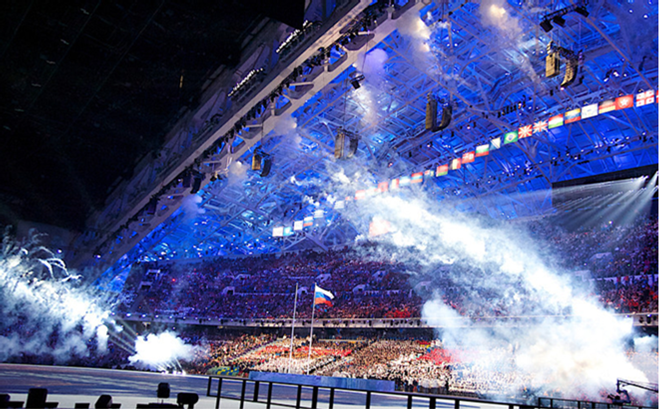
    A scene from the Opening Ceremony of the 2014 Winter Olympic Games in Sochi, Russia. (Photo: Wikimedia Commons)

    A full Olympic quad after Sochi, nothing remains irrefutably clean. Off the radar then on again, the Sochi doping scandal has sent recent tremors through the sports world.

    In a quick summary, after the 2014 Winter Olympics in Sochi, Russia, the host nation was handed sanctions for the 2016 Rio Summer Olympics that affected some of its athletes. A total ban from Rio was not enacted despite the World Anti-Doping Agency (WADA) recommending the contrary. Russian athletes competed under the Russian flag.

    At the 2018 Winter Olympics in PyeongChang, South Korea, the International Olympic Committee (IOC) handed down a fiercer sanction. Russia as an official team and its Olympic delegation were banned from the Games, as were athletes suspected of taking part in the Sochi affair.

    Russian winter athletes without any ties to the scandal competed under the IOC’s neutral flag as the Olympic Athletes from Russia (OAR).

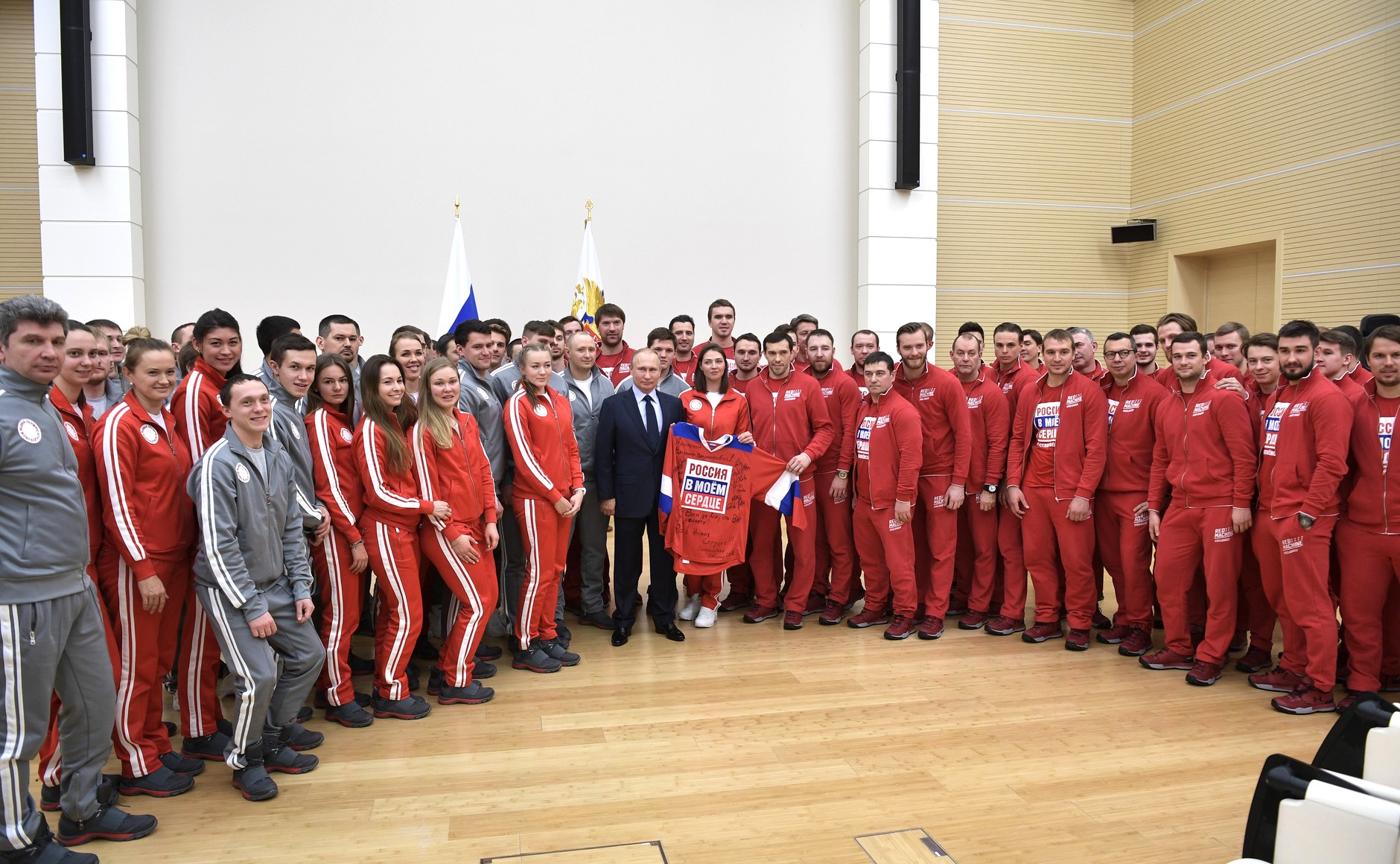
    Russian President Vladimir Putin with Russia’s 2018 Olympians prior to the Games on Jan. 31, 2018. (Photo: Wikipedia)

    At the 2018 Games, OAR cross-country athletes were on-form. They were repeated medalists, fast and collectively young. 

    Today (Thursday, Sept. 20), it was the WADA’s turn to take another stance. During a meeting in Seychelles, the WADA Executive Committee (EC) voted to reinstate the Russian Anti-Doping Agency (RUSADA).

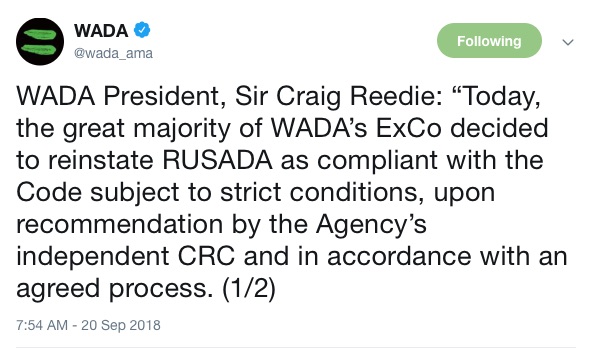
    WADA announced the decision via Twitter. In the two-part tweet, WADA President Sir Craig Reedie stated, “Today, the great majority of WADA’s ExCo decided to reinstate RUSADA as compliant with the Code subject to strict conditions, upon recommendation by the Agency’s independent CRC and in accordance with an agreed process.

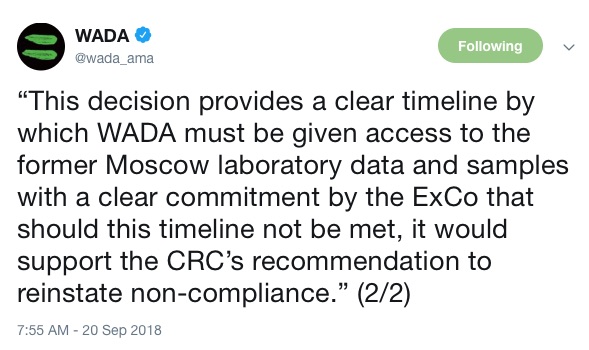
    “This decision provides a clear timeline by which WADA must be given access to the former Moscow laboratory data and samples with a clear commitment by the ExCo that should this timeline not be met, it would support the CRC’s recommendation to reinstate non-compliance.”

    For reasons already exhaustively documented, RUSADA was deemed non-compliant in November 2015. By August 2017, WADA had created a concrete outline of concessions and reforms known as the RUSADA: Roadmap to Compliance.

    The roadmap reads like a hardened list of demands. In Part I of the document, WADA notes 20 actions already taken by RUSADA as conditions for reinstatement as a compliant anti-doping agency. Part II details 12 steps that remained unfulfilled at the time of the roadmap’s release. Much of those 12 steps begin with the words “RUSADA must”. Last week, it became public that much of WADA’s leadership have a malleable understanding of the word “must”.

    Here’s the basic background to understanding how WADA’s Sept. 20 EC vote transpired:

    Two critical conditions set forth in the RUSADA roadmap remained unmet by Russia as of Sept. 20, 2018. Russia has not officially accepted the McLaren Report findings and has not provided WADA with unmanipulated digital forensic data or unfettered access to RUSADA’s Moscow lab.

    Starting this summer, it was time for WADA and RUSADA to think about a resolution.

    In a letter obtained by the BBC dated June 22, 2018, signed by Reedie and WADA Director General Olivier Niggli, the two responded to a recent overture from Russian Minister of Sport Pavel Kolobkov. The letter clarified how WADA would be willing to move forward in negotiating Russia’s reinstatement.

    On Sept. 15, ARD German TV journalist Hajo Seppelt published a response letter ARD had obtained, signed by Kolobkov. In the letter, Kolobkov responded to Reedie about the outstanding conditions for RUSADA compliance. (Copies of the June 22 and Sept. 13 letters are also linked in this BBC article.)

    Kolobkov’s response did not mention the McLaren Report commissioned by WADA, but it did acknowledge the IOC’s 2017 Schmid Report (the IOC investigation into the McLaren Report’s findings). But no overt guilt was admitted in the letter. Instead, it made a tepid hint at conciliation. According to the letter, the Russian Federation “fully accepted the decision of the IOC Executive Board on December 5, 2017, that was made based on the findings of the Schmid Report.”

    The main body of Kolobkov’s letter establishes a quid pro quo. It states that only after RUSADA is reinstated, and with the consent of the Russia Investigative Committee, Russia will provide access to its lab and data. Kolobkov provides no timeline for when Russia would provide these two key provisions after reinstatement.

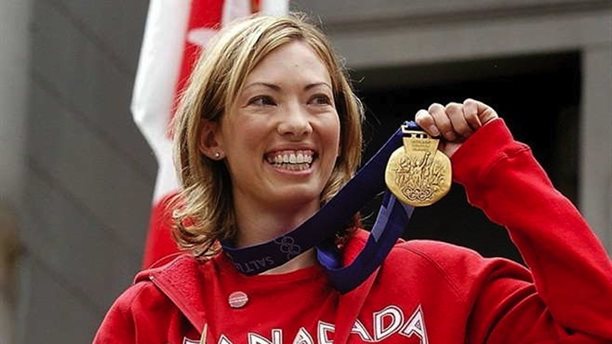
    Beckie Scott with the gold medal she was awarded at a ceremony in Vancouver in June 2004. A former Canadian cross-country skier, Scott finished third in the 5 k pursuit at the 2002 Olympics but was later awarded gold when the two women ahead of her were disqualified for using performance-enhancing drugs. (Photo: Cross Country Canada)

    On Sept. 14, only a day after Kolobkov’s letter, WADA’s Compliance Review Committee (CRC) approved RUSADA’s reinstatement. A member of the CRC, Beckie Scott, a former Canadian cross-country skier and Olympic gold medalist, resigned her position last week in protest of the pending reinstatement. Scott remains the Chair of WADA’s Athlete Commission. 

    In an interview with the CBC on Thursday following the official decision, Scott said she was “profoundly disappointed”.

    “I feel that this was an opportunity for WADA as the global body responsible for regulating doping in sport and responsible for the rights of clean athletes has really dealt a devastating blow to clean athletes with this decision and I’m quite dismayed with the way things went today,” she continued.

    Other notable voices also came forward declaring their dismay with the CRC. WADA Education Committee Chair Edwin Moses penned an op-ed in The New York Times, which was published Sept. 15.

    “With WADA’s sudden shift in position raising questions about its transparency and about where its loyalties lie, we must begin the journey of returning trust to the system, enhancing WADA and creating a system fit for the next generations of athletes,” Moses wrote. “Having spoken to athletes, I know they overwhelmingly support the right decision being made in the Seychelles — they overwhelmingly support WADA’s sticking to its road map. This was not the time, they say, for the global antidoping body to perform the U-turn of all U-turns.”

    The U.S. Olympic Committee (USOC) issued a press release echoing sentiments to instill faith in the anti-doping system.

    “We hope that WADA can reach a conclusion on RUSADA that will give athletes a firm belief that when they compete, it will be on a level playing field, without any doubts,” it stated. “Anything that stops short of satisfying that will not only be a huge disappointment to the USOC and American athletes, but to the entire Olympic and Paralympic movements.”

    But according to Reedie, Russia’s reinstatement is key to progress WADA’s worldwide mission.

    “It’s my convinced view that the best thing WADA can do is to have an efficient and well-operated anti-doping system in Russia, and we’ve been trying to do that for two years,” he told the BBC. “This moves things forward.”

    “To sit back and do nothing doesn’t serve the world of sport so I think progress has been made,” Reedie added. “To the members of the Ukad, athletes’ commission, I am grateful to them for their advice and can be reassured that I take their advice and I operate within the roadmap.”

    One WADA EC member, Linda Helleland, Norway’s sport minister and vice president of WADA as she represents national governments on the EC, declared herself a “no” vote prior to today’s meeting.

    FasterSkier will update this story with any new developments.

  • Insider Couple Implies Widespread Doping in Russian Sports in 60 Minutes Interview

    Insider Couple Implies Widespread Doping in Russian Sports in 60 Minutes Interview

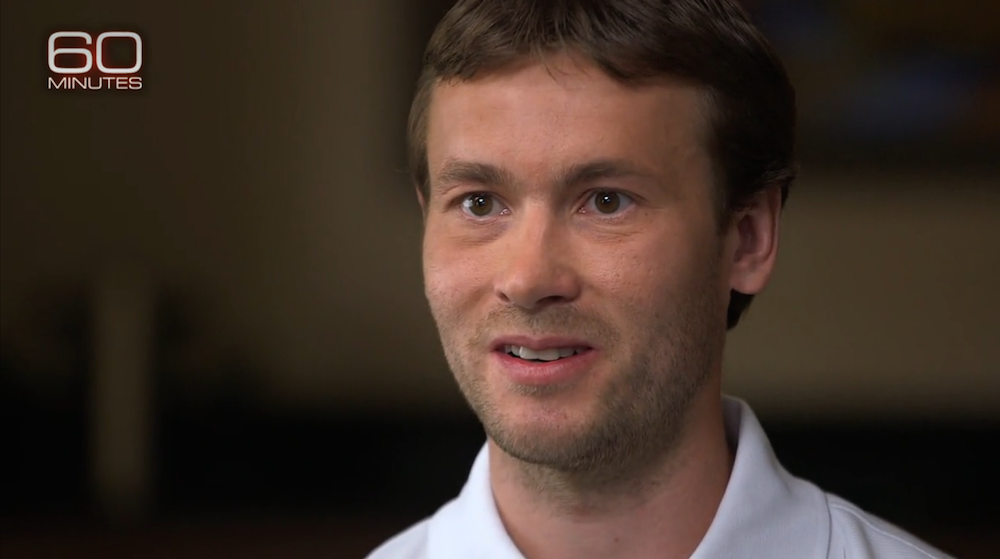
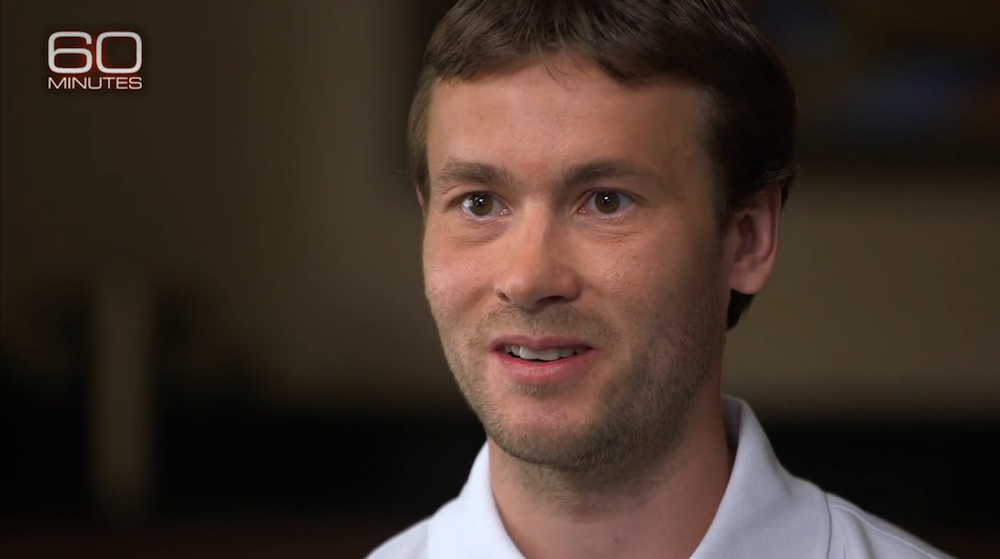
    Vitaly Stepanov, a former RUSADA employee, during an interview with 60 Minutes' Armen Keteyian, which aired Sunday, May 8. (Photo: CBS News)
    Vitaly Stepanov, a former RUSADA employee, during an interview with 60 Minutes’ Armen Keteyian, which aired Sunday, May 8. Click here for the video. (Photo: CBS News)

    At least four Russian gold medalists in Sochi used performance-enhancing drugs to reach the top of the podium at the last Winter Olympics, and the FSB — Russia’s equivalent of the FBI — helped with the cover-up.

    That’s the story that was told to 60 Minutes, which aired Sunday evening in the form of a 13-minute interview with Vitaly and Yuliya Stepanov, as well as U.S. Anti-Doping Agency CEO Travis Tygart and American runner Alysia Montaño.

    Yuliya Stepanov was one of Russia’s top runners in track and field — a program the World Anti-Doping Agency (WADA) suspended in November after its independent investigation found it was engrossed in a “culture of cheating” and widespread corruption. Yuliya’s husband, Vitaly, previously worked at what the 60 Minutes described as “a low-level job collecting urine and blood samples” for RUSADA, the Russian Anti-Doping Agency, in Moscow.

    “Together, they exposed the dark secrets of their country’s doping program and, as you will learn for the first time, damning new details about cheating at the 2014 Winter Games in Sochi, Russia,” the news segment stated.

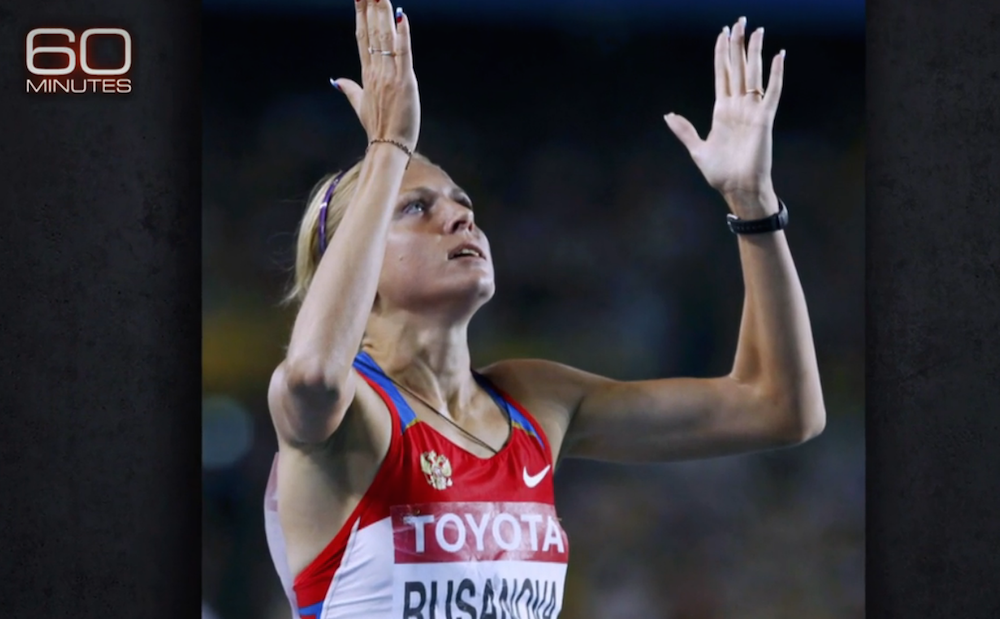
    Yuliya Stepanov, a former Russian track and field athlete who admitted to using several steroids. (Photo: CBS News)
    Yuliya Stepanov, a former Russian track and field athlete who admitted to using several steroids. (Photo: CBS News)

    Yuliya doped and all of her teammates doped, she stated. Vitaly didn’t agree with it, asserting that he wanted sports to be fair and clean. The two decided to get divorced, Vitaly lost his job, yet they would later reunite under a common cause.

    Just before the 2012 London Games, Yuliya — who was no longer a medal contender — “lost the protection of the system and tested positive for EPO,” the segment stated. “Facing a two-year ban, she called Vitaly just days before their divorce would be final.”

    “And he suggested, ‘Let’s tell the truth, Let people know the whole truth, the way things happen in Russia,’ ” Yuliya said. “To destroy the system one has to talk about it.”

    Yuliya used her phone to secretly video her coach giving her steroids, her teammates discussing their drug use and the team’s medical director telling her how to get back on the drug program. The video recordings were used in a documentary by Germany’s ARD, which aired in December 2014 and prompted WADA to take action — banning the Russian track and field team as a result.

    The couple now lives in a one-bedroom apartment with their child at an undisclosed location in the U.S. — 60 Minutes did not say where for their protection.

    Over the last few months, Grigory Rodchenkov (who ran the drug-testing lab in Sochi, was fired following the WADA investigation and has also sought refuge in the U.S.) shared what he knew with Vitaly. Apparently, Rodchenkov was unaware that Vitaly recorded 15 hours of their conversations, and “what Rodchenkov has revealed threatens the credibility of the results at the 2014 Winter Games in Sochi, Russia,” 60 Minutes reported.

    “What Rodchenkov has revealed threatens the credibility of the results at the 2014 Winter Games in Sochi, Russia.”

    “He told me what I and Yulia did, we could only see this much. But what was happening with cover-ups, it’s like this,” Vitaly said, holding his hands out wide.

    Rodchenkov apparently bragged that he had what he called “the Sochi list” of Russians who used prohibited substances at the 2014 Winter Games. What’s more: Russia’s FSB, its federal security service, was directly involved.

    Vitaly said that, according to Rodchenkov, some FSB agents worked as doping-control officers at the Sochi Olympics and “tried to control every single step of the anti-doping process in Sochi.”

    Rodchenkov also said at least four Russian athletes won gold medals in Sochi while using banned drugs, and his lab aided the cover-up. He did not specifically name the athletes, but speculation surrounds a list of 26 Russian gold medalists from 13 events in Sochi, with some athletes earning more than one gold. A representative for Rodchenkov told 60 Minutes that, for now, he was not available for comment.

    “It’s a stunning revelation,” USADA’s Travis Tygart said. “And if true it’s a devastating blow to the Olympic values.”

    In the next month, the governing body of track and field will decide whether it will allow the Russian team to compete at the Rio Olympics this summer.

    “It’s clearly the final nail in the coffin for Russian track and field,” Tygart said. He said USADA is not in favor of allowing Russia to compete in track and field in Rio.

    US Biathlon President and CEO Max Cobb reacted on Twitter Sunday evening, posing a few questions: “… How, after over 200 emails on the corruption, did #WADA designate the Moscow lab for Sochi?”

    Cobb followed up with a series of other tweets and retweets regarding the interview.

    “2. Why is it that @CBSNews, @ARD_Presse & London papers are investigating & validating what Pound suspected, while #WADA does nothing?” and “3. Verification of heretofore suspected widespread doping & coverup at Sochi has HUGE impact & demands immediate investigation by #WADA”

    “With brave whistleblowing by Stepanovs & Rodchenkov’s statements, time for #WADA to investigate Sochi & all sports in RUS. If not now, when?” Cobb added.

    “Thank you @60Minutes for bring this harsh reality to the masses. Heartbreaking and infuriating!” US Biathlon A-team member Lowell Bailey tweeted Monday morning.

  • Given the Crime, Are Proposed Sanctions Enough? Tygart Weighs In

    GENEVA, Switzerland— After revelations that there was widespread, systematic doping in Russian track and field, a World Anti-Doping Agency (WADA) Independent Commission recommended that the Russian athletics federation be suspended by the International Association of Athletics Federations (IAAF).

    The findings were a confirmation of the worst fears for many in the sports community, and a sickening realization that suspicions had been well-founded.

    “It confirmed a lot of what we had heard over the last couple of years,” said Travis Tygart, the head of the U.S. Anti-Doping Agency (USADA), in a phone interview. “And we saw results coming out of Sochi and other Games that seemed to suggest a change in attitude on this issue. That’s why we were pushing hard back in December to open this investigation.”

    WADA itself has pledged to consider the Commission’s suggestions, including to offer more protections for whistleblowers and to place a greater priority on compliance from all member federations.

    And in a reversal, IAAF head Lord Sebastian Coe said that the IAAF would consider suspending the Russian federation. Previously hostile to the allegations, Coe has given the Russians a week to respond to the report.

    Independent Commission head Richard Pound believes that if Russia were to become compliant in the next 12 months, there is a way forward for Russian runners to compete at the 2016 Olympics.

    Although he asserted that this would be a lot of work and Russia would have to start right away – something that appears doubtful at the moment – even the possibility of Russian track and field athletes winning medals in Brazil is leaving a foul taste in some observers’ mouths.

    That’s because the commission itself admitted that the London 2012 Olympics had been “sabotaged” by Russians who were routinely doping.

    “We had reports of athletes in London going back to Moscow to be tested, and then came back to London when it was clear,” Pound said.

    The second part of the Independent Commission’s investigation, which is expected to be made public by the end of the year, will investigate blood tests collected between 2001 to 2012. So it is almost certain at this point that results from not only London, but also previous Olympic Games are affected by doping athletes.

    Among the many disastrous consequences of such a situation, permanent damage has been done to those athletes who had not been doping. They were deprived of results, earnings, and sponsorship opportunities.

    “The real tough thing is that when there’s money and prizes involved, often the money is gone, it has all been spent,” Pound said.

    With little chance to recoup their financial or emotional losses, it’s understandable that athletes – and their fans – should be upset if the same athletes, coaches, and officials which sabotaged past Games are back on the Olympic track in 2016.

    Tygart, for one, believes that it’s time for a more punitive phase of WADA’s history to begin.

    “It’s a disappointing situation,” Tygart said in a phone interview. “The Olympic dream has been turned into a nightmare for many… those who are not Code compliant need to be kicked out of international competition. All of those fall under the Russian sports minister. They should be kicked out. While we do want the house to be cleaned up, we also want to see justice served. If there are no consequences, then other countries will continue to do this until they get caught.”

    Even Pound, who several times said that he hoped “Russia will seize the opportunity to take a lead and move forward”, acknowledged that harsher punishments were needed.

    “That’s your nuclear weapon,” he said of the possibility that Russians be barred from Rio de Janeiro. “Say unless you get this done, you will not be in Rio… in my country, that threat got it done. With Ben Johnson in 1988.”

    But so far, the threat of investigation has not yielded much progress.

    Russian track and field staff did not attempt to reform or hide their behavior, even after the WADA investigation had begun. During a WADA mission to a racewalking training camp in Saransk, Russia, coaches denied that athletes were present. Once doping control officers found them, nine of those athletes produced positive tests.

    “The dates of the reported events at the Saransk training camp make it clear that, contrary to some assertions, the practice of doping in athletics in Russia remains very current, even following the ARD documentary,” the Independent Commission states in its report.

    There was also blood transfusion equipment at the Saransk training center. Blood transfusions are a prohibited method in the WADA Code.

    In meetings with the Russian Minister of Sport, Vitaly Mutko, Pound said that Mutko still seemed to hope for a different report than the one the Commission would deliver.

    “I think it is appropriate to say that the commission organized a special meeting with the Russian minister of sport,” Pound explained. “In that meeting he invited us to make recommendations to ensure that Russia could contribute to doping-free sport… but we advised the ministry in advance that he would not likely be pleased with many of the findings in the course of our investigation.”

    This level of denial has continued, as Mutko said that Russia did not have a doping epidemic.

    “We don’t deny that we have problems but they exist around the whole world; we have the same percent as all countries do,” he told Interfax.

    The Russian athletics federation’s lawyer, Artyom Patsev, used a similar line.

    “Let’s not mince words,” he told ria.ru. “American, Canadian athletes, they’ve caught even more of them than Russians. They engage in doping literally every year. They catch athletes. But there wasn’t such an extensive campaign. Why not?”

    Analysis disproves his statement: the New York Times published a graphic showing that 11.5% of all positive tests in 2013, across all sports, came from Russia. That made the country the leader, by far.

    Tygart suggested that to ensure appropriate penalties are taken, athletes need to speak up and lobby the relevant organizations.

    “They have every right to be angry,” he said. “They have to stand up to ensure justice is service from every side… But all those who value the Olympic values have to also stand up. This type of corruption and intentional systemic state supported doping to defraud the world, has to be fought. Fair play is what the Olympics stand for. We can’t sit idly by.”

    Could he see a situation where, without believable progress by Russia, other athletes refused to compete against them?

    “I hope it doesn’t come to that, but if you’re a clean athlete, then your Olympic dream has just been shattered,” Tygart responded. “So what you hope is that those who believe in Olympism, the same basic tenets of fair play – rally around it and ensure that those who don’t aren’t allowed to compete… Particularly the clean athletes deserve it. Anything less than that is failing.”

    The only way forward, he suggested, is to set up truly independent anti-doping organizations in Russia and in track and field.

    Part of the Commission’s report discussed how the Russian Anti-Doping Agency, RUSADA, was pressured and controlled by the Ministry of Sport.

    “The report clearly demonstrates that it’s an attitude of win at all costs,” Tygart said. “We’ve seen it here in the US. The system can’t be such that it allows it to survive. You have to have the most independent system to ensure that those who try to break the rules can’t do it successfully.

    “I think a team of international experts his to come in for a period of time to oversee the changes – to give confidence to the rest of the world that they are clean, if they are ever allowed to compete again,” he concluded.

  • Canadian Anti-Doping Efforts Move Forward with Blood Passport Program

    Canadian Anti-Doping Efforts Move Forward with Blood Passport Program

    Between April 2010 and March 2011, the Canadian Center for Ethics in Sport (CCES) administered 3,708 urine tests and 436 blood tests in its efforts to curb doping by Canadian athletes.

    In the last quarter of that year, skiers and biathletes faced 75 urine and 51 blood tests – all of which came back clean. 34 Canadian athletes in various sports are currently banned from competition due to doping violations, and not a single skier or biathlete is among them.

    But like the rest of their countrymen, these athletes are being enrolled in a new CCES testing regimen, called the Athlete Biological Passport program or ABP.

    When athletes are tested their numbers will be logged in a “passport”, allowing future investigators to track measurements like blood hemoglobin over time. Even without a positive test for a controlled substance, uncharacteristic spikes in these markers could be used to prosecute doping cases.

    The passport system will be added as athletes submit to traditional tests, so it shouldn’t prove to be any more inconvenient than the current system, and some coaches even hope that it will lead to less-frequent testing for clean, low-risk athletes.

    First: Why For, WADA? Because of FIS…

    The concept of a biological passport has been discussed for years, in part because doping strategies evolve quickly and testers don’t always know what they are looking for. With passport programs, the idea is that anti-doping agencies can look at patterns in blood markers – like red blood cell count or hemoglobin – which indicate that an athlete is doing something to change the oxygen-carrying capacity of their blood. Even if they can’t detect a banned substance, this is often enough evidence to prove a rules violation.

    The World Anti-Doping Agency (WADA) approved guidelines for passport programs in December 2009.

    “The passport concept is based on the knowledge of drug effects or side effects in medical practice,” WADA wrote in its guidelines. “From this perspective, the substance itself is not detected but rather its effects on the body become apparent. Typically, the effect of the drug remains perceptible and detectable longer in the body than the substance itself.”

    WADA itself generally does not perform doping control tests. Instead, they assist and monitor two classes of anti-doping efforts. The first is by the international governing bodies for each sport, and the second is by the national anti-doping agencies in each country.

    Skiing was one of the first sports to adopt the passport program, and in fact did so long before WADA.

    “FIS has had an athletes biological passport programme implemented since 2001,” FIS Anti-Doping Administrator Sarah Fussek wrote in an e-mail to FasterSkier.

    Why? Endurance sports have a high incidence of blood doping and erythropoietin (EPO) use, but such violations are hard to detect analytically.

    “When I took on the role as FIS Anti-Doping Expert, the EPO test only recognized two certified pharmaceutically produced EPOs,” Rasmus Damsgaard said in a 2010 interview with FIS. “However, it was common knowledge that 100 not registered EPO’s were available on the black market.”

    Even if he was sure that an athlete was doping, Damsgaard couldn’t necessarily do much about it. After looking at samples, he could see unusual blood profiles and sometimes even detect a black-market EPO. But only an analytical finding of one of those two varieties of EPO could lead to a sanction through WADA.

    “Over recent years, doping regimes have become much more scientifically planned and have taken full advantage of the weaknesses in traditional protocols with all available pharmaceutical resources,” WADA noted in its 2009 guidelines.

    WADA knew that it had a problem on its hands, and when Damsgaard urged the international agency to change its guidelines, it did. EPO sanctions are now easier to hand out for a variety of reasons, including more sophisticated tests. But an increasing number of doping cases have relied on “non-analytical positives” drawn from concepts like using an individual hemoglobin upper limit for each athlete instead of a single limit for the entire testing pool.

    Since its implementation, the blood passport program has become ubiquitous in skiing, with FIS conducting 1530 blood passport samples on skiers and 238 in nordic combined over the course of the 2010-11 season.

    Back to Canada

    But while FIS has been covering its own bases, national anti-doping agencies are required to shoulder the burden as well. Many do not have the resources available to an international federation, and also face challenges because they need to work with athletes in a variety of sports who might resort to completely different drugs requiring many separate testing protocols.

    Why are two sets of doping tests necessary? The U.S. Anti-Doping Agency (USADA) handed out 38 doping violations in 2010 and the CCES sanctioned 30 of its own athletes. Being monitored by two agencies ensures that more athletes are kept clean.

    And while it might seem like being tested by both a sport federation and a national agency is too much to ask of busy athletes, FIS coordinates testing with each country’s organization to minimize duplicate testing.

    Canada believes that it is one of the first countries to implement a biological passport program, and called it a “turning point” in the fight against doping.

    “We are one of the first national anti-doping agencies in the world to implement the guidelines in their entirety, and the guidelines are incorporated directly into the rules of the Canadian Anti-Doping Program,” CCES Anti-Doping Operations Manager Matthew Fedoruk wrote in an e-mail. “There are currently approximately 20 agencies in the world including international sport federations and anti-doping agencies operating under the WADA guidelines.”

    Because CCES is following WADA guidelines, their testing program will look a lot like the FIS system. In Canada, all of an athlete’s doping control data will be compiled electronically and after each test the agency will assess whether an athlete shows deviation from his or her own pre-established baselines in nine markers, including hematocrit, hemoglobin, and red blood cell count.

    Statistically speaking, these baselines can’t be established immediately – as more tests are conducted, the reference range will become more apparent. For this and other reasons, the passport program will not replace CCES’s traditional anti-doping measures, but rather complement them. And passport programs have already proven to be effective when paired with substance-specific testing.

    “Longitudinal blood profiling in the area of anti-doping is not that new a concept, as some federations such as FIS, ICU, and IAAF have had passport-like programs for a number of years,” Fedoruk wrote.

    More and more doping trials have relied on this sort of evidence, and CCES hopes to add to the weapons in its arsenal in order to work more effectively.

    “The recent UCI cycling cases before the Court for Arbitration in Sport (CAS) have shown the scientific and legal validity of the WADA ABP Guidelines,” Fedoruk wrote. “Athletes have been sanctioned for abnormal blood profiles which have been shown to be the result of blood doping (i.e. use of autologous blood transfusions or pharmaceuticals that boost the oxygen carrying capacity of the blood (e.g. EPO)) without the actual presence of those substances being detected.”

    Reactions from Coaches and Athletes

    While Fedoruk could not comment directly on which athletes had already been enrolled in the program, he indirectly indicated that both skiers and biathletes had begun the passport process.

    “Due to the risk of endurance athletes using blood doping substances and methods, the ABP program is primarily focused on endurance sports,” he wrote. “Athletes may be included in the program at anytime.”

    Chris Lindsay, High Performance Director for Biathlon Canada, thought that his athletes probably already had passports, although he could not say for sure because CCES doesn’t provide that information.

    “I suspect this means that they will be putting athletes on the passport program as testing occurs,” Lindsay told FasterSkier. “I can say that the majority of tests in the past six months have been urine and blood, which means that theoretically every athlete on the team could be ‘passported’ already.”

    Athletes confirmed that hunch.

    “Yup, I’ve been involved in the program already,” said biathlete Brendan Green.

    In both biathlon and skiing, coaches supported the ABP concept.

    “I do think it’s a step in the right direction,” said Cross Country Canada Head Coach Justin Wadsworth. “They’ve know for a long time blood parameters can only vary so much over any given time frame, and if this can be used to help slow down doping in some way it can only be good. Do I think this will be revolutionary? Probably not, because it’s been in play with other sports for some time, but again, it all helps.”

    Lindsay said that Biathlon Canada supported any program which would reduce doping in his sport, but also had some more specific praise of the program. He hoped that the passport program would lead to less frequent tests for athletes deemed low-risk.

    “What most people don’t understand is that our athletes are randomly tested in the training environment,” Lindsay said. “These tests are not infrequent – and often cause major disruptions to the planned training. Testing can take an hour or more, and when you arrive at training planning on doing an hour of roller skiing, an hour of shooting, an hour in the gym, then eating lunch, then going to physio, then meeting with your coach, then going for another roller ski shifting everything by an hour is a big deal.

    “Moreover when just a few athletes in your training group are tested it divides the day’s activities and burdens the coaches with managing two groups instead of one.”

    What About the U.S.?

    Since USADA has never publicized a passport program of their own, FasterSkier contacted USADA General Counsel Travis Tygart to find out whether they were considering a program like the implemented in Canada. Were the northern neighbors getting a leg up on anti-doping efforts?

    The answer, actually, was no.

    “I can confirm that we do both blood and urine testing longitudinally on our athletes,” Tygart said in a phone interview.

    So while USADA has yet to announce a biological passport program, they are in fact keeping track of some of the same data that such a system would monitor.

    Because USADA hasn’t spilled the beans, U.S. athletes and coaches aren’t necessarily aware of this (just as FasterSkier was not until talking with Tygart). US Ski Team Head Development Coach Pete Vordenberg wasn’t familiar with the Canadian program, but said he supported efforts like it.

    “I am absolutely into measures taken to make sure our sport and all sport is healthy, fair and that everyone follows the rules of the game,” Vordenberg wrote in an e-mail. “I am absolutely into showing youth athletes that it is possible to win at the top level of sport and be a clean, ethical and healthy athlete and so I am into proving that we are training, competing and living completely clean, ethically and healthily.”

    The reason that USADA doesn’t publicize its longitudinal testing program is that, like many other aspects of anti-doping work, the agency believes that the more cheaters know about a testing regimen, the easier it is for them to cheat.

    “We didn’t want the athletes to be able to easily beat the test,” Tygart said.

    But there have been indicators that USADA is keeping track of this data, including the Michelle Collins case in 2004. The former world champion sprinter was convicted as part of the BALCO investigation despite the fact that there was never a positive analytical finding. While she later admitted to doping, a large part of the case was built on blood and urine tests which USADA had performed.

    Tygart said that for any country, a passport-type system is valuable.

    “It’s one additional tool,” he wrote. “It’s not the be all end all. But it’s very important and it’s a good program… and it’s important to be willing to follow up on a non-analytical finding.”