Tag: TUNA

  • Stride by Stride at Mary W. Jackson Elementary

    Stride by Stride at Mary W. Jackson Elementary

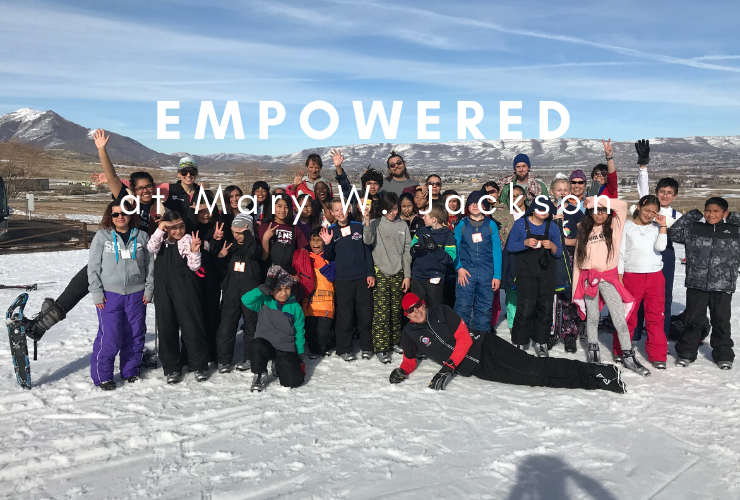
    4th-6th grade students from Mary W. Jackson Elementary School in Salk Lake City. (Courtesy photo)

    This is a two-part series exploring how some students in the Salt Lake City area are exposed to cross-country skiing through the good work of community members. Part-one features Gilberto Magana of Hartland Community 4 Youth and Families, a non-profit serving disadvantaged youth. Part-two explores how the Utah Nordic Alliance, local teacher Rose Kjesbo, and dedicated colleagues teamed up to get kids on snow.   


    ***


    Roughly thirty-five pairs of ski boots, poles, and skis to organize and hand out to the fourth through sixth graders that cross-country ski at Mary W. Jackson Elementary in Salt Lake City seems herculean. The little pieces that must come togther are daunting. And there’s the teeter-totter task of staying upright on skinny skis for those new to the sport.

    Thirty-year-old Rose Kjesbo (formerly Rose Kemp) teaches second grade at Mary W. Jackson. The former University of Utah skier has been the spark behind the school’s ski program. She came to teaching after taking education classes at the U. The profession requires the kinetic energy she knows how to harness from her cross-country racing days and her penchant for coordinating many moving parts. And there’s her drive to be part of something bigger than herself.     

    “Our students represent the diversity of America,” is how the student-body is described on the school’s website. Mary W. Jackson Elementary, renamed after the first black female egnieer at NASA, is a Dual Immersion school, meaning those students who speak either Spanish or English fluently have the opportunity to learn in both languages throughout the school day. Kjesbo noted the student body is approximately sixty percent Hispanic, with a high population of children of Samoan and Philipino descent. Nearly eighty percent of the school lives at or below the poverty level. (The Census Bureau estimates that 17.9 percent of Salt Lake’s population lives in poverty.) 

    Rose Kjesbo skis along with a student. (Courtesy photo)

    “The challenge, especially at the beginning of the year, is that you are setting up your students to come to school excited and ready to learn,” Kjesbo said. “That is such an important thing for them and for us to realize; that I have those expectations. But I am fully there, present and loving, and setting the expectations of a welcoming classroom. I also have academic expectations while being mindful that each student is an individual. You have to think about where they are coming from and understand what management strategy is going to work the best for them.”

    Kjesbo is able to rely on a team of dedicated colleagues that include a community liaison, teachers, lunchroom and office staff who are bound by the mission of cultivating a productive and safe learning environment. As part of that environment, Mary W. Jackson Elementary teamed up with the Utah Nordic Alliance (TUNA) to expose students to cross-country skiing.

    Kjesbo said taking kids out for after school ski excursions when the organizational machinery is present makes the logistics more tenable. The hall monitoring as students are rleased on ski days becomes dialed. The change from school-to-ski clothes eventually synchs. Gear is handed out. The bus loaded. Upon arrival at the Mountain Dell ski area students are divided into small pre-arranged groups to begin their work with a TUNA coach. This is not to say orderliness manifested from day one. Kjesbo said by the third ski day, the routine had been refined as the scores of players involved knew their respective roles and expectations. 

    On the receiving end of those students at Mountain Dell is most often TUNA’s Tim Metos. The now-retired bike and ski shop owner complements Kjesbo’s knowledge of the students with his understanding of how to bring a diverse group of kids into the cross-country skiing fold. Metos explained that TUNA’s Junior Outreach Program provides ski gear, bus transportation, and coaching. The financial backing for the after school program derives from the generosity of a private foundation. The program is “turn-key out of the school”, Metos explained. Skis, boots, and poles are housed at each respective school, his job is to ensure the on-snow experience is meaningful.

    Metos employs several paid coaches to work with the after-school program. A core group of volunteers also allows TUNA to keep the skier to coach ratio low. Like any club program working with new skiers, the goal is to familiarize kids with the gear, the environment, and the concept of sliding efficiently on snow all while smiling.    


    From left to right: Tim Metos, Jerry Richardson, and Angie Richardson. (Photo: Kjesbo)

    The TUNA Junior Outreach Program has run for 20 years and much of its early success belongs to now retired Salt Lake School District employee Brian O’Neal. The program, designed to get the community’s disadvantaged kids skiing, has evolved into a core outdoor activity supplement for several city schools. The program, due to gear constraints, caps the program at 140-150 students annually. Each participant skis five to six times per season at Mountain Dell, which sits up-canyon on Interstate-80, approximately 17 miles from downtown.

    “I started this out with the ambitions of developing elite skiers, to get kids involved in this sport,” Metos said. “It is pretty accessible really. For many of these families, mom and dad have jobs and they are working really hard. But they may not have a ton of time to get out with their kids, but perhaps they could grab some rentals and do a family outing, it is not like trying to go alpine skiing. So I had this notion that they would somehow adopt the sport as part of their life here. Eventually, I came to the realization that as much as anything, we are showing them a half a dozen afternoons in the winter when they can go out and have some fun and build some self-esteem. And at least they know that it is feasible to do this. But it is more challenging than I thought —  it took half-a-dozen years to figure that out.”

    Day two on-snow for some Mary W. Jackson students. (Photo: Rose Kjesbo)

    A key concept both Metos and Kjesbo emphasized was that kids feel safe and supported when trying something new. Taking a risk, even a relatively small one, can feel insurmountable when your day is filled with several unknowns. Metos, through his years of work in the ski program and Kjesbo, through her work at Mary W. Jackson, understand the underlying premise for sucess: That kids need to be welcomed for who and what they are. Without that safety net, one can imagine the sense of dread a student new to skiing might experience if faluire were not an option. More importantnly, students might never try something out of their comfort zone back in the classroom. With the safety net, Metos and Kjesbo can foster a sense of fearlessness in students who might struggle with a new endeavor like skiing. 

    Constructing that safety net begins far from Mountain Dell where the team at Mary W. Jackson invests in community. Kjesbo explained the program succeeds because people have developed meaningful relationships.

    “There is that community piece within the school’s neighborhood that I talked about, the relationships that we develop among Tim’s coaches that he brings from TUNA, and those with our kids and with the families, our office staff, school staff,” Kjesbo said. “Those relationships are intergenerational, from myself to the older volunteers who have worked with Tim for a long time or have been in the ski community in Salt Lake for a long time, to our young kids. Those relationships have created this really amazing safe space around nordic skiing.”

    Kjesbo said she has received much through skiing including her dogged work ethic. The sport remains a big part of her life just as it did when she progressed through the ranks to eventually ski on the SuperTour. Her infectious dirve has been a vehicle to share something personal with the Mary W. Jackson community outside the normal scope of the school day. 

    I am passionate about it and I want to share that with my kids,” said Kjesbo. “They see that too as we all open up a new space to something that we really love.”


  • A Vision and a Difference in Salt Lake City

    A Vision and a Difference in Salt Lake City

    Hartland Community 4 Youth and Families get the kids out on snow with the Utah Nordic Alliance. (Photo: Peter Vordenberg)

    This is a two-part series exploring how some students in the Salt Lake City area are exposed to cross-country skiing through the good work of community members. Part-one features Gilberto “Juan” Rejón Magana of Hartland Community 4 Youth and Families, a non-profit serving disadvantaged youth. Part-two explores how the Utah Nordic Alliance, local teacher Rose Kjesbo, and dedicated colleagues teamed up to get kids on snow. All photos from part-one are from Peter Vordenberg, he is a board member of  Hartland Community 4 Youth and Families.


    ***


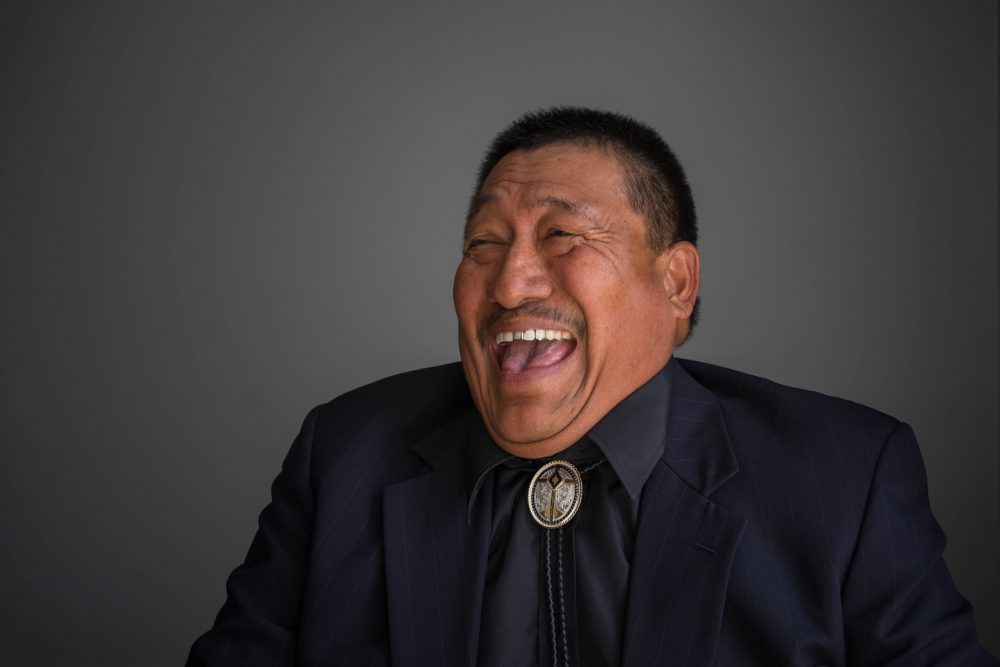
    Gilberto “Juan” Rejón Magana emigrated from Mexico and identifies as indigenous is one voice of an emerging and more diverse Salt Lake City. That voice has resonated as Magana, who moved to SLC thirty years ago, has been elevating the “underserved, at-risk and underrepresented population, including people who have refugee and immigrant backgrounds or identify as Latino/a” for more than a generation.

    What’s important about Magana’s work is its longitudinal scope: His organization supports youth from kindergarten to high school with the end goal of matriculating in college. Magana founded Hartland Community 4 Youth and Families (HC4YF) and it recently began its sixth year as a non-profit. 

    Magana, however, has been a community advocate for twenty-five years. His journey began when he settled into the Hartland apartment complex nearly two decades ago. The apartments were a tapestry of languages as it became a place where immigrants and refugees put down their SLC roots.   

    Gilberto “Juan” Rejón Magana, Executive Director/Coach at Hartland Community 4 Youth and Families. (Photo: Peter Vordenberg)

    “I had to learn a lot about different cultures,” said Magana. “But I found that there was a connection with my culture and the rest of the cultures at Hartland, that my own culture was very old also. African cultures and others have something similar. That was we all eat, that we all know how to plant, build up the soil, and do stuff like that. But for all new Americans coming in, everything was totally new here.”

    Magana said he learned how divisive cultural misunderstandings can be when his young daughter’s bike was taken. He had purchased a used bike and fixed it up for her. One day while riding around the neighborhood she set the bike aside for a few minutes and returned to find the bike gone. 

    “We looked for it and on the third day a child rode into the community with the bike,” Magana said. “I recognized it and I say ‘hey, that bike is my daughter’s, I need you to give it back’. The kid spoke little English and was of Sundanese descent – if he did understand what I was saying then he played like he did not understand English.”

    The boy claimed the bike was his. Randomly, an older man walked by who spoke Sundanese. He helped convey to the boy that he had stolen the bike and if he did not surrender it, Magana would call the police. 

    “But by then, I am learning that this child did not know he was stealing,” recalled Magana. “This child was coming from a refugee camp where they were living and he had no schooling. It was one big community and if a toy showed up, everybody played with it and then after 10 hours the ball was in the corner somewhere out there and nobody’s name was on it. They kept sharing, it went around the camp. This is what happened when the child saw the bicycle parked there, he thought somebody was finished using it or playing with it. He jumped on it and he passed it onto his brother, and to another brother, and to his cousin and so it went that way. That is what I learned, the child did not know he was stealing.”

    Magana resolved to purchase a bike for the boy and also to address some of the toxic elements he observed around Hartland; gang recruiting, drugs and alcohol, and prostitution. 

    The interaction with the Sudanese boy became a catalyst for his life’s work. Magana began small as he organized a soccer team with one underlying premise, team members had to be attending school and in good standing at school. “They complied and I had to comply,” Magana said. 

    Like many urban centers, Salt Lake is becoming more diverse. According to estimates from the United States Census Bureau, SLC’s 2019 population was 200,567 people. Seventy-three percent identify as “white alone”, 2.3 percent as black or African American alone, 1.4 percent as American Indian or Alaska Native alone, 5.4 percent as Asian alone, 1.5 percent as Native Hawaiian and Other Pacific Islander alone, 4.4 percent as Two or More Races, and 21.6 percent Hispanic or Latino. 

    Through a socio-economic lens, the Census Bureau estimates that nearly 18 percent of the city’s population lives in poverty. There is a need for empowerment in the region when considering those on the periphery. 

    Magana’s level of compliance to his original promise to the community’s children bordered on the tenuous position of over-promising and potentially under-delivering. He over-delivered. Organizing soccer also meant assisting with homework, literacy, and navigating the myriad reasons why marginalized and disadvantaged kids would either not attend or perform poorly at school. Word spread of the change going on at Hartland. Magana networked with other like-minded non-profits, educational institutions like the University of Utah, and businesses who valued the work going on at Hartland. 

    “The unique thing is I get to work with those that nobody usually wants to work with,” Magana said. “Then suddenly everyone wants to work with us because the kids are smart, they learn quickly, and they are genuine. Now we have children that are applying for scholarships for them to go to college because that is the goal.” 

    Now, five years after becoming a non-profit, HC4YF has a core mission “to provide a pathway to college for Salt Lake County’s at-risk and underserved youth.”

    HC4YF has at its core a desire to see their children attend college. (Photo: Peter Vordenberg)

    HC4YF’s path to college is fused with environmental stewardship projects along the Jordan River, opportunities for older students to serve as mentors, and sports like soccer, snowshoeing, biking, hiking, and climbing to build confidence and provide structure. Sports offerings also include skiing. HC4YF has partnered with Utah based She Jumps to take the organization’s female participants alpine skiing at Alta. They have also begun coordinating with the Utah Nordic Alliance to provide cross-country ski gear and lessons. 

    The sports, tutoring, stewardship programs all facilitated by HC4YF are a means to further each participant’s education as Magana and others maintain a simple mantra of personal accountability. 

    “Our dialogue is as simple as can be,” said Magana. “When our children come to join our soccer club, they must be going to school. They must be there on time. They must do their homework. They must hand it in. And none if this does not happen, the teacher jumps into action. They send me a text about the homework, the kid gets pulled out of soccer training and they do their homework or read, whatever it was they needed to do. We focus on what we can control and what we can help is to do what we are doing. We stay in school. We keep focused, we go from kindergarten to elementary from elementary to middle school and onward. There is space for everyone in our program.”


    She Jumps and HC4YF have partnered to get girls on snow. (Photo: Peter Vordenberg)


  • Johnson joins TUNA as new Head Coach

    TUNA, The Utah Nordic Alliance, is excited to announce the hiring of Matthew Johnson as the new Program Director and Head Coach.

    Johnson is currently the Assistant Nordic Coach at Burke Mountain Academy in East Burke, Vt. In addition to working at Burke, his coaching experience includes two trips to the Scandinavian Cup, described by the US Ski Association as “one of the premier steps of the elite junior athlete and coach development pipeline.” Johnson was the trip leader for the most recent Scando Cup.

    Johnson has also worked as a coach at the three most recent Junior Olympics, the nation’s top race for Junior skiers.

    “We are excited and looking forward to dynamic growth and increased success in our Junior Programs from Learn-to-Ski to Competition with the addition of Matthew Johnson to our organization,” said TUNA President Richard Hodges. “Matt brings successful national and international coaching experience to our programs.”

    Matt Whitcomb, Head Women’s Coach for the US Ski Team, spoke enthusiastically of the skills Johnson will bring to TUNA’s Juniors programs. “I’ve watched Matt progress over the past four years. In the past two years we (USSA) have hired him to run the Scando Cup and he did a phenomenal job. I have no doubt he will do the same for TUNA.”

    “Matt is a great skier to start with, but more importantly he is a great guy. He is a strong communicator, will work well with parents and athletes and will be a great fit for the program,” Whitcomb said.

    Before stepping into coaching, Johnson found success as a junior racer. He has been a medalist multiple times at JOs, raced the Scando Cup, was a member of the US World Junior Ski Team and was a four year USSA All-American.

    Johnson raced varsity for four years at Middlebury College in Middlebury, Vt., and was the captain of his ski team during his senior year. He graduated with a degree in Environmental Studies and Geography.

    “I am excited for the opportunity to inspire and develop the next generation of competitive ski racers – just as the coaches on these teams did for me throughout my racing career,” said Johnson.

    Despite Johnson’s obvious qualifications, the selection of a new coach was difficult for the TUNA committee. Several outstanding candidates submitted applications for this position. Johnson will be building on the past success of Bill Hokanson, who has moved on to coach another program. Hokanson provided years of tireless and inspired coaching to juniors in the TUNA program.

    Johnson will start his coaching duties with TUNA in mid-August. He is currently in Norway coaching a group of high school and college athletes, and will be there through late July. In the meantime, junior dryland programs are under way, led by a variety of experienced athletes including TUNA Junior Comp coaches and former Nordic Combined US Ski Team members.

    TUNA, The Utah Nordic Alliance, is a ski club in Salt Lake City, Utah. The club has approximately 800 members, 300 juniors program participants, runs a citizens’ race series and maintains a ski track 15 minutes from downtown Salt Lake City. More information can be found at www.utahnordic.com.

    Source: The Utah Nordic Alliance