Tag: Turkey

  • Norwegian Nebulizer Use at World Junior Championships Stuns North Americans

    Norwegian Nebulizer Use at World Junior Championships Stuns North Americans

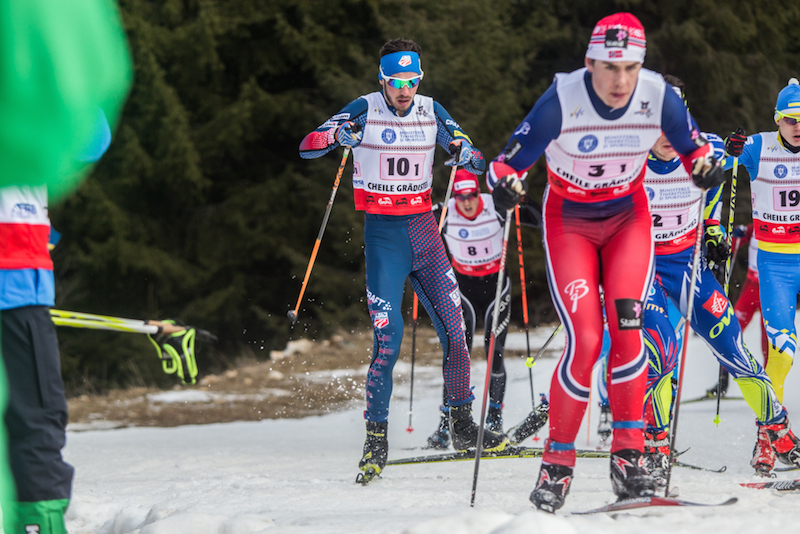
    Ian Torchia (10) chasing the Norwegian team (bib 3) in the first leg of the junior men's 4 x 5 k relay at 2016 Junior World Championships in Rasnov, Romania. (Photo: Logan Hanneman)
    Ian Torchia (bib 10) chasing a Norwegian (bib 3) in the first leg of the junior men’s 4 x 5 k relay at 2016 Junior World Championships in Rasnov, Romania. “When I first heard the news I was extremely fired up,” Torchia told FasterSkier after learning that some of the Norwegians had been taking asthma medication despite not being diagnosed with asthma. (Photo: Logan Hanneman)

    Norwegian team doctors prescribed asthma medication to young cross-country skiers without any diagnosis of the disease the country’s state broadcaster NRK reported. The incident occurred at 2016 Junior and U23 World Championships in Rasnov, Romania.

    Petter Olberg, who was a physician on the team staff in Rasnov, said that the treatment was due to air-quality issues which irritated the airways of some athletes.

    American and Canadian competitors and team staff at the event, however, did not recall any air quality problems. They expressed surprise that competitors who were still teenagers would be offered such drugs without a medical diagnosis of asthma.

    “I am shocked to hear about this story and I do not recall there being poor air quality in Rasnov other than the coal burning pollution,” Julia Kern, an American who had two top-20 finishes in Rasnov, wrote in an email to FasterSkier. “My hope is that the doping regulations are set up to only help fix a medical disease instead of giving people an advantage.”

    The medication allegedly prescribed, budesonide, is a glucocorticosteroid which is not prohibited for inhalation by the World Anti-Doping Agency (WADA). It was delivered by a nebulizer, rather than through inhalers; Olberg said he had also recommended that some athletes take a salt-water inhalation treatment through the nebulizer to improve their symptoms.

    The case has caused a stir partly because a more senior Norwegian skier, Martin Johnsrud Sundby, was slapped with a suspension after taking asthma medication from a nebulizer. However, that was a different drug – salbutamol, which is a beta-2 agonist rather than a glucocorticosteroid – which is prohibited by WADA when used in high doses.

    Air Quality Plagues FIS Site Selection, and Racers’ Lungs

    Air quality has been a major issue at past Junior and U23 World Championships.
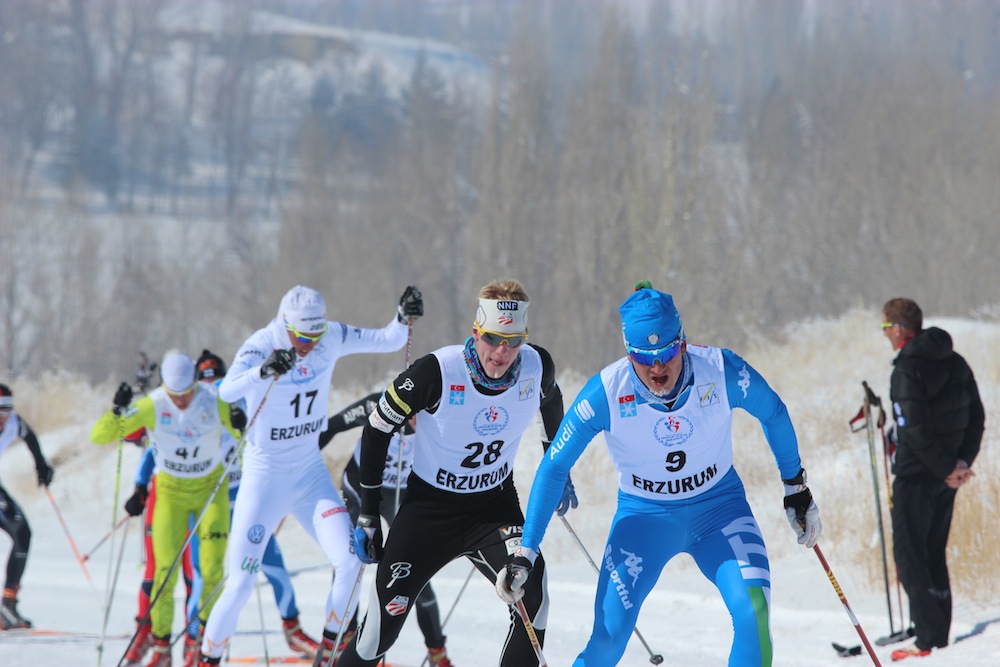
    Logan Hanneman competing at World Junior Championships in Erzurum, Turkey, in 2012. (Photo: Reese Hanneman)
    Logan Hanneman competing at World Junior Championships in Erzurum, Turkey, in 2012. (Photo: Reese Hanneman)

    “When the World Junior & U23 Championships were held in Erzurum, Turkey in 2012 and Almaty, Kazakhstan in 2015, the air was possible the worst I have ever seen at a race venue,” Logan Hanneman of Alaska Pacific University (APU) wrote in an email.

    Of the four Junior/U23 World Championships Hanneman has competed in, Erzurum and Almaty stood out for one reason: smog.

    “In both locations, it seemed that the pollution was caused by poorly-regulated and designed coal power plants,” he explained. “With the large surrounding mountains in both locations, the inversion that would form during the night would suppress the pollution down to the valley floor and into the town where the teams were staying. The race venue in Almaty was above the pollution, but only in the early morning before it began to rise up the mountains.”

    That was a nightmare for many athletes, including those who do suffer from asthma. Kern, now a U.S. Ski Team member based at Stratton Mountain School and Dartmouth College, remembers Almaty and its health challenges well.

    “I had the experience of having my worst asthma attack ever in Almaty and I attribute that to the poor air quality,” she wrote. “I know some of my teammates who have never had any issues breathing even mentioned having some issues in Almaty.”

    In fact, the International Olympic Committee released a consensus statement about asthma and elite athletes in 2008. In it, they addressed the influence of air pollution on the prevalence of airway problems during training and competition.
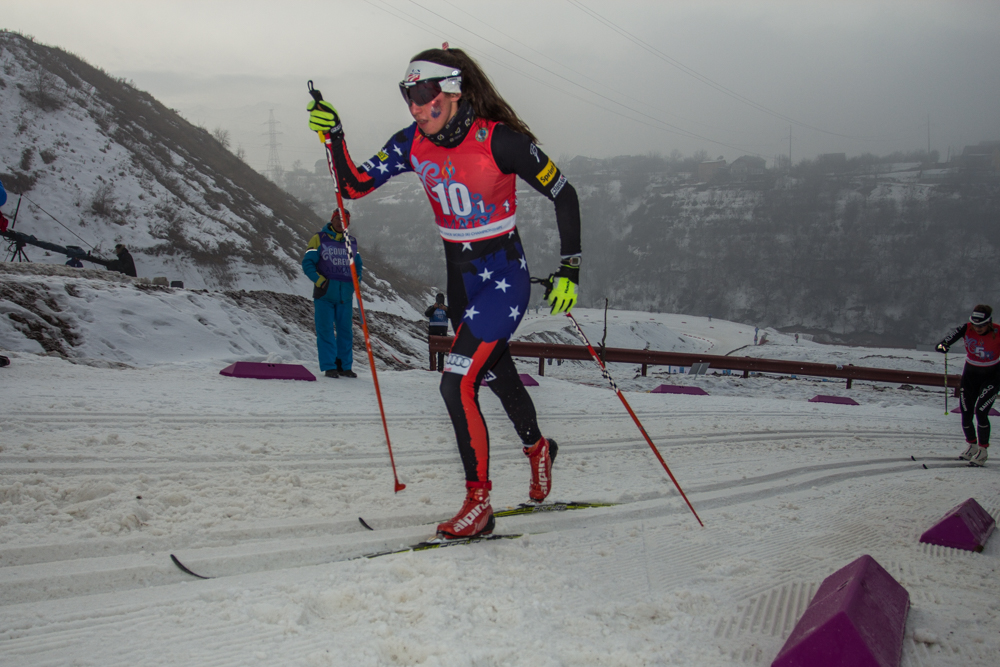
    Julia Kern (CSU) racing against a backdrop of smog in the first leg of the 4 x 3.3 k relay at the 2015 Junior World Championships in Almaty, Kazakhstan. The American team would go on to place eighth. (Photo: Logan Hanneman)
    Julia Kern (CSU) racing against a backdrop of smog in the first leg of the 4 x 3.3 k relay at the 2015 Junior World Championships in Almaty, Kazakhstan. The American team would go on to place eighth. (Photo: Logan Hanneman)

    “Airway function can be affected by exposure to seasonal and perennial allergens in sensitized individuals, dry/cold air, and poor quality air containing pollutants such as chlorine derivatives in swimming pools, ozone and oxides of nitrogen, and fine and ultrafine PM derived from combustion,” the group wrote. “The effects may be greater in subjects with asthma than without asthma.”

    Other air characteristics are sometimes considered in assessing safety. The International Ski Federation (FIS) has a cutoff of -20° Celsius (-4°F), below which it is not permissible to hold competitions; one reason is frostbite, but another is airway damage. FIS is considering raising that lower limit, perhaps to -12° Celsius, specifically to protect athletes’ lung function from long-term damage.

    But the pollution aspect of air quality does not appear to be a concern. Air quality is not discussed anywhere in the International Competition Rules (ICR), meaning that technical delegates and race juries do not have clear guidelines for deciding whether to adjust race schedules due to smog.

    And by selecting sites like Erzurum and Almaty that are clearly plagued by such problems, FIS does not appear to make the issue a priority when awarding event bids.

    They are not alone. The International Olympic Committee (IOC) awarded the 2008 Summer Olympics to Beijing, China, which has some of the worst smog in the world. That caused some long-distance runners to choose not to prioritize the marathon, for fear that prolonged exposure to the air while racing would cause asthma attacks.

    Such an attitude by governing bodies must be changed, a growing number of athletes assert.

    “My personal belief is that if we are racing in an area with high pollution, I think it is okay for people to use legal asthma medications at a legal dose in order to protect their lungs from damage,” Kern wrote. “But more importantly, I do not think races should be allowed to be held in places of pollution because it not only hurts the health of athletes in the short term, but in the long term as well.”

    Comparatively Clean Air in Rasnov

    Romania is not known for its clean air. The industrial sector burns coal, while coal and wood are used for home heating. Pollution from traffic emissions is also a concern. As a result, by several metrics Bucharest has the dirtiest air of any European capital.
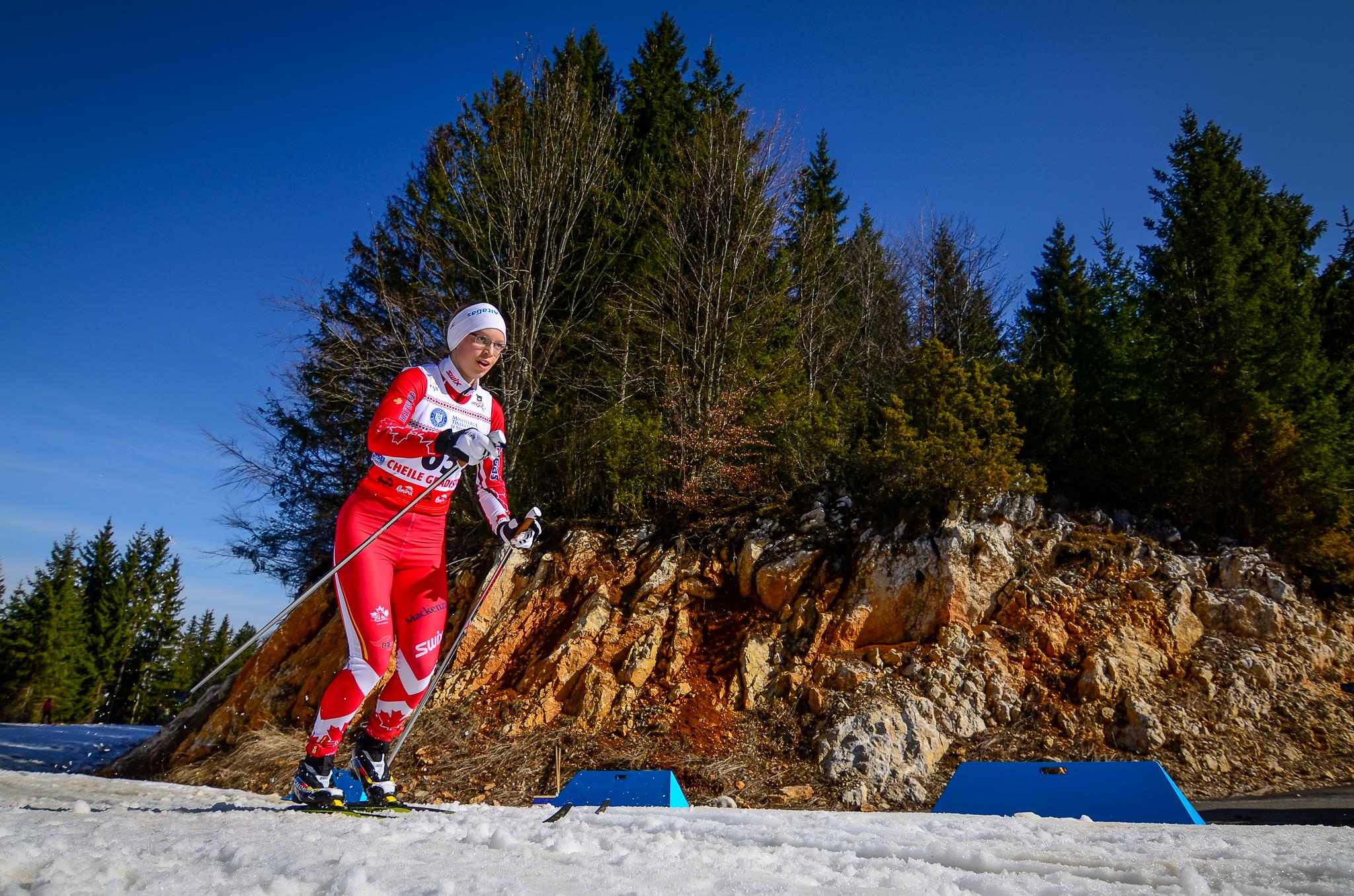
    There were blue skies as Canada's Hannah Mehain raced to 44th in the women's 5 k classic on at 2016 Junior World Championships in Rasnov, Romania. (Photo: FIS Nordic JWSC & U23 WSC 2016/Facebook)
    There were blue skies as Canada’s Hannah Mehain raced to 44th in the women’s 5 k classic on at 2016 Junior World Championships in Rasnov, Romania. (Photo: FIS Nordic JWSC & U23 WSC 2016/Facebook)

    At Rasnov, where the ski competitions were held, traffic exhaust was less of an issue.

    “The only thing that was polluting the air was the exhaust from coal burning, which is easy to recognize because it has a strong odor,” Kern wrote.

    Of all airborne pollutants this type of exhaust can be particularly inflammatory to airways, according to Dr. Michael Kennedy at the University of Alberta, who studies respiratory health of endurance sports athletes.

    “The ultrafine particles (UFP) are the most troublesome,” he explained in an email. “In any active person (most of the literature is from active transport — like bike commuting)… deposition of UFP in systemic circulation as well as lung function can be significant. Diesel is the worst of the polluters and fits with Romania and Kazakhstan, where High Emission Pollutants likely influenced lung health in all competitors. For those with [Exercise Induced Bronchoconstriction] it was likely worst.”

    So it’s not crazy to suggest that athletes could have struggled to race in particulate-laden air, as Olberg suggested was true for the Norwegians.

    But that’s not the way other teams remember Rasnov. Because of the way the venue was situated, American competitors did not notice the coal-produced UFP’s while they were skiing.

    North American Perceptions of Air Quality in Rasnov

    “I did not notice the ‘poor air quality’ in Rasnov as my biggest concern was the lack of snow. I think this is an excuse and if the air was bad in Romania I hate to think of what they were taking for Junior Worlds in Kazakhstan where the smog and air pollution was extremely prevalent.”

    Ian Torchia, USA (Northern Michigan University): 15th in the junior 10 k skate 

    “In Bucharest, the city air was definitely thicker, but the venue (Cheile Gradistei) was quite remote, at least 20 or 30km from any major cities (or industrial sites, that I know of), out in the countryside, surrounded by rural farmland and fields. Water quality seemed to be a much greater concern in Romania.”

    – Jenn Jackson, Canada (NDC Thunder Bay): 29th in the U23 sprint

    “The air quality appeared okay to me, however there was heating with wood in the area. That can irritate some but no significant quality issues like we saw in Kazakhstan and Turkey. Romania was very warm and early warm conditions can bring on pollen, however I didn’t notice that either.”

    – Bryan Fish, U.S. Ski Team coach/trip leader 

    “While I’m by no means an air-quality expert, I wouldn’t say the air quality was bad in Rasnov, at least at the race site. The race site was up high on a hill in a very agricultural area, on the edge of some mountains… I never had a moment where I thought to myself ‘wow – this air quality is bad’ and as a coaching staff we never had a discussion that indicated that air quality was an issue with the site. We were mainly focused on having snow to ski on… That being said, in my opinion, it also wasn’t great. There was a big smokestack from what I’m assuming was some sort of boiler that burned wood. It was also pretty dusty from the overall construction.”

    – Kieran Jones, Nakkertok Nordic coach/Canadian team staff member

    Like Kern, Hanneman has been diagnosed with asthma. In his case, he believes that it is a result of growing up in Fairbanks, Alaska, and “racing and training in the very cold and dry air.” He said that he was prescribed a small inhaler to treat his symptoms after a major flare-up in Erzurum, but he didn’t experience a similar problem in Romania.

    “I seem to remember that my asthma related problems were not very present in Rasnov,” Hanneman explained. “I took my inhaler like I normally do for races, but the air did not seem to bother me as much as the previous locations. It helped that it was also 55 degrees.”

    Why Offer Athletes a Nebulizer?

    So, then, was giving new medications to some junior athletes necessary?

    When I first heard the news I was extremely fired up,” wrote Torchia, who initially assumed that the juniors were prescribed the same drug which Sundby had used, rather than a non-prohibited one. “My initial anger eventually turned to being demoralized that doping had come down to the junior level. You hear about the scandals on the World Cup but when it comes to the people you race, it felt like a punch in the gut. The most frustrating thing I have heard was the Norwegian doctor offering asthma medication to healthy athletes. This shows a clear indication from the upper levels of the system to cheat their way to victory. If you can’t compete clean, don’t compete at all.”

    As it turns out, it was not salbutamol but budesonide which the athletes were using. Budesonide is not prohibited for inhalation, although like other glucocorticosteroids, it cannot be injected or ingested orally in or out of competition.
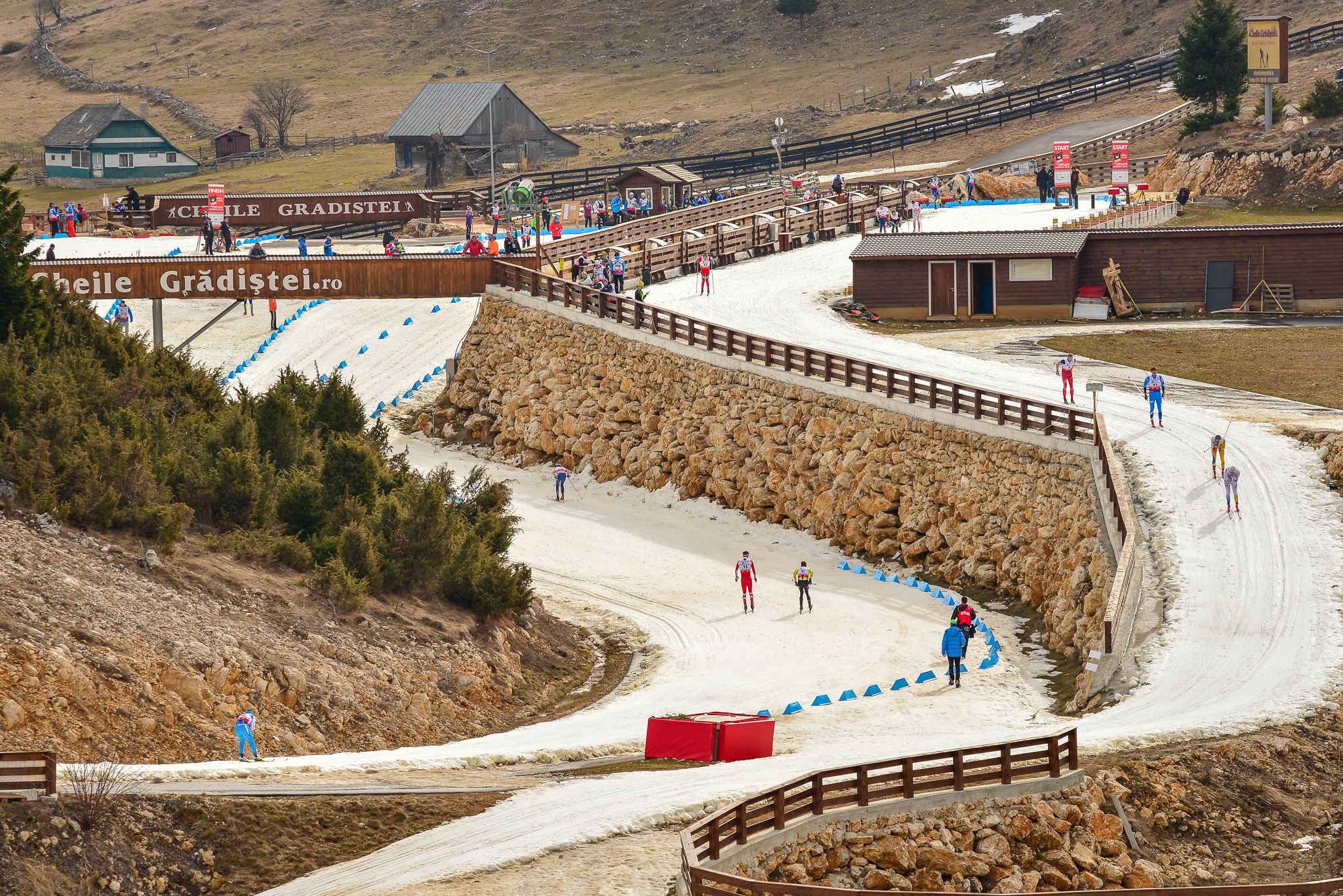
    A bird's eye view of the race course at U23/Junior World Championships in Rasnov, Romania. (Photo: FIS Nordic JWSC & U23 WSC 2016/Facebook)
    A bird’s eye view of the race course at U23/Junior World Championships in Rasnov, Romania. (Photo: FIS Nordic JWSC & U23 WSC 2016/Facebook)

    Olberg told NRK that from his viewpoint, saying that the athletes without an asthma diagnosis were “healthy” was incorrect. The athletes, he said, were sick because of the air quality.

    “I believe that we don’t medicate healthy people,” he explained to NRK. “If we medicate it is because they have gone ill. They have a symptom, a distress of some kind and then they reach out to me. We treat the symptoms…. I believe that to say that they are healthy is completely wrong, because if they’re healthy they wouldn’t have had the symptoms, and if that was the case they would not receive treatment.”

    The North American athletes seemed to struggle internally about whether this was appropriate – especially since it’s relatively unclear whether non-asthmatics even receive benefits of such drugs. That’s even true in the case of salbutamol, the beta-2 agonist which is prohibited at high doses.

    But the athletes felt that the intent of their competitors mattered, whether their performance was enhanced or not.

    “After talking with [Northern Michigan University coach] Sten [Fjeldheim] and my exercise physiology professors and doing some personal research, it seems unclear on the performance enhancing benefits of taking salbutamol, especially in healthy athletes as the oxygen uptake is already at maximum potential,” Torchia wrote. “However… whether it is performance enhancing or not, if you are a healthy athlete and are taking synthetic drugs with the intention of helping your performance, you are cheating, and there should be repercussions.”

    Hanneman and Kern, who take inhalers to treat their diagnosed asthma, had a hard time parsing whether it was wrong to use such medications without such a formal diagnosis.

    “My hope is that the WADA has set the limitations and bans on certain drugs in ensure that the drugs permitted at legal doses would not have a positive impact on performance, but would only help treat the illness of asthma for those with the ‘disease’ (not sure what technical term to use),” Kern wrote.
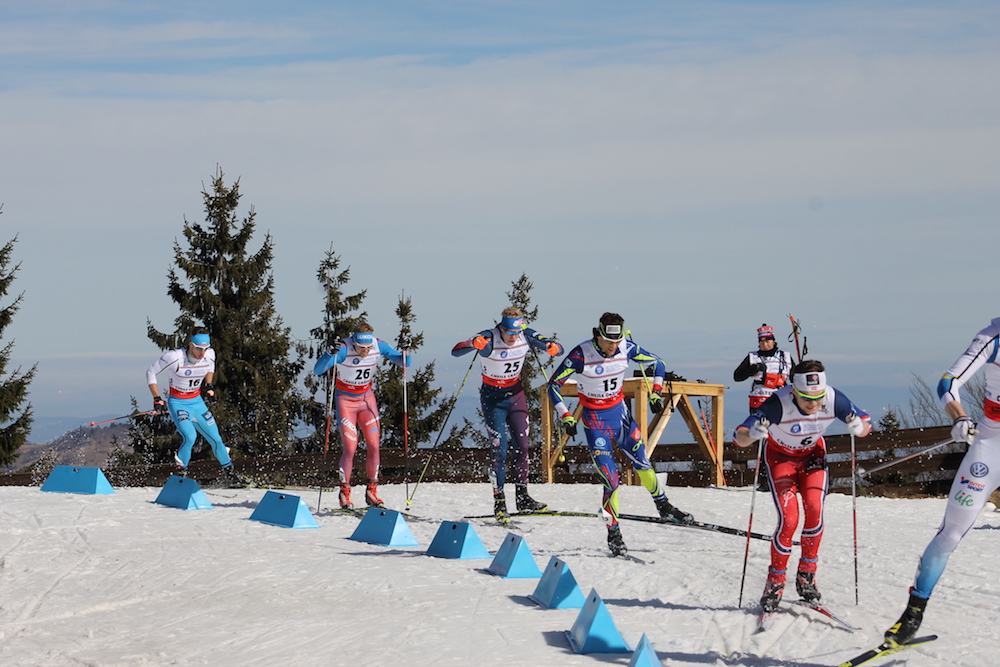
    American Logan Hanneman (c) racing to third in his quarterfinal of the freestyle sprint at U23 World Championships in Rasnov, Romania. He ended the day 15th overall. (Photo: Pete Leonard)
    American Logan Hanneman (c) racing to third in his quarterfinal of the freestyle sprint at U23 World Championships in Rasnov, Romania. He ended the day 15th overall. (Photo: Pete Leonard)

    “Having exercise induced asthma myself, and seeing the health benefit that the medicine provides, I support the use of prescribed medications, but in limited quantities,” Hanneman agreed. “People who have not been treated previously should not be allowed to use such a medicine I feel.”

    Many drew a distinction between whether such drugs were used as part of a long-time treatment plan, or prescribed more casually by doctors who are not intimately familiar with an athlete’s medical history.

    “I am very much opposed to widespread usage of any medication,” U.S. Ski Team development coach Bryan Fish wrote. “That being said, there are athletes that have unique respiratory issues & these athletes should go through testing by qualified medical staff. The qualified medical staff should then create a unique and specific plan for that particular athlete.”

    And as more and more such “gray area” incidents accumulate, it’s hard for athletes to interpret whether their competitors are seeking an unfair advantage or not – much less whether they are actually getting one.

    “I don’t understand how people can be so invested in maximizing their performance that they’re willing to leave the white area and step into the grey,” Jackson wrote. “Unfortunately, medicating and supplementing just seems to be the norm these days, in sport and everyday society. People will do what they’ll do, so long as they feel it’s ‘normal’ or ‘okay’ – whether that be Norwegian juniors using asthma medication at the World Championships, Russians using xenon for Sochi, [Poland’s Justyna] Kowalczyk taking injections for her foot in 2014, or [Norwegian Therese] Johaug’s doctor providing her that super skin cream. I suppose it’s inevitable, as you approach the limits of human potential, that you toe the line between white and grey, but I don’t feel like I’m close enough to that point to really understand why someone would.”

  • Photo Gallery: World Junior Women’s and Men’s 10/20km Skiathlon

    Photo Gallery: World Junior Women’s and Men’s 10/20km Skiathlon

    Once again with the help of Reese Hanneman, FasterSkier’s Audrey Mangan captured some of the action during the World Junior Championship 10/20km Skiathlon in Erzurum, Turkey.

    Related Race Reports:

    Led By Razinger, Slovenia Takes a Turn at Junior Worlds Dominance

    Ustiugov Takes Third Straight Title in World Junior Skiathlon

    [smugmug url=”http://fasterskier.smugmug.com/hack/feed.mg?Type=gallery&Data=21665674_LwLVNp&format=rss200″ imagecount=”100″ start=”1″ num=”100″ thumbsize=”Th” link=”lightbox” captions=”false” sort=”true” window=”false” smugmug=”false” size=”M”]


  • Photo Gallery: World Junior Skate Sprint

    Photo Gallery: World Junior Skate Sprint

    FasterSkier’s Audrey Mangan in on-site in Erzurum, Turkey reporting on the World Junior/U23 Championships. Here is a selection of photos from the junior skate sprint.

    Related Race Reports:

    Ustiugov Dominates For Skate Sprint Title at World Juniors

    Nilsson Charges Down Homestretch to Take Sprint Victory in Erzurum

    [smugmug url=”http://fasterskier.smugmug.com/hack/feed.mg?Type=gallery&Data=21617174_874gZf&format=rss200″ imagecount=”100″ start=”1″ num=”100″ thumbsize=”Th” link=”smugmug” captions=”false” sort=”true” window=”false” smugmug=”false” size=”M”]

  • Trailside in Erzurum for World Juniors and U23s (Video)

    Trailside in Erzurum for World Juniors and U23s (Video)

    ERZURUM, Turkey — Less than a day remains before the start of the 2012 FIS Junior and U23 World Championships. Despite language barriers and transportation confusion, the excitement at the Kandilli Nordic Ski Center was palpable in anticipation of Monday’s junior freestyle sprints. The sun even came out for the occasion, revealing a mountainous, moon-like landscape that had previously been hidden behind clouds.

    Kandilli lies about 40 k to the west of Erzurum, where athletes are staying at the base of the alpine resort. As U.S. junior coach Gus Kaeding put it, the shuttles provided by the organizing committee to and from the venue each day have so far been operating on a “malleable” schedule, but the OC has promised to sort them out in time for Monday’s competitions. Though unreliable, the buses do at least spare most foreign team staff from having to drive on Turkish roads, where drivers generally ignore the rules of the road and liberally use their horns. En route to Kandilli, teams of different nationalities drop their fronts as competitors and bond over their shared experience and perception of Turkish culture thus far.

    German skiers climbing to the high point of the course at Kandilli during training on Sunday.

    As fascinating as Turkey is, preparation for this week’s races was at the front of everyone’s minds. The junior freestyle sprint prologue begins at 10:00 am EET, and the heats start at 12:00 pm EET. The women ski a 1.3 k course, and the men 1.6 k. Though none of the race courses contain seriously steep climbs, there are plenty of steady ascents, and at over 5,000 feet above sea level, even the most gradual terrain takes its toll.

    Women’s Junior Freestyle Sprint Start List

    Men’s Junior Freestyle Sprint Start List

    Official Event Website


  • Injury Behind Her, Stock Ready for World Juniors

    Injury Behind Her, Stock Ready for World Juniors

    Corey Stock (CSU) skiing into the stadium in Rumford. Photo: Flying Point Road.

    Highlighted by her fourth-place performance in the senior freestyle sprint at U.S. Nationals, 17-year-old Corey Stock (Cambridge Sports Union) earned her first trip to Europe with the U.S. Ski Team’s (USST) World Junior Championship squad this coming February.

    It’s difficult to determine the most remarkable part of that statement. For starters, Stock’s age would normally make her a candidate for the J1 trip, and yet as the top junior finisher in the skate sprint in Rumford, she skipped that step and is headed for a major championship stage with her inaugural trip to Europe.

    Even more impressive, however, is what Stock has managed to accomplish despite the less-than-ideal path she’s had to take. Two years ago, doctors diagnosed pain in her legs as compartment syndrome. She underwent surgery in the summer of 2010, and recovery was slow going.

    “All the time her leg was injured, she was on the Ski Erg,” CSU coach Rob Bradlee said.

    Upper-body work was all Stock could do to keep in shape.

    After her surgery, the pain didn’t completely go away. She had been looking forward to competing at U.S. Nationals in 2011, but she and Bradlee decided not to sacrifice doing lasting damage for the sake of a trip to Europe and skipped Rumford entirely.

    For someone of Stock’s competitive nature, a lengthy injury could have easily brought her down psychologically. When all she could do was double pole on a machine, she conceded that she definitely had her low moments. But she also saw the bright side.

    “I know in the long run it’s been a good thing,” Stock said. “With athletes, it’s inevitable that you’ll encounter obstacles. I learned how to deal with them, I guess.”

    Forced to adjust, Stock set her sights to one year into the future. Despite being held back over the summer, she went on last season to win two out of three individual races at Junior Nationals in Minneapolis, Minn., earning herself a spot on the National Training Group.

    New England's Corey Stock on her way to her second national title in Presque Isle, ME in 2010. Photo: Flying Point Road.

    A trip back to the doctor in the spring revealed that the return of pain in her legs was not compartment syndrome — it had been a trapped nerve all along. Stock underwent surgery for a second time, and this time was able to bounce back and start training again in full.

    Healthy again, Stock reentered a normal training plan from square one. Bradlee said he had to be careful not to bring her back up to speed too quickly, fearing overtraining.

    “My big goal for the year was to do a reasonable amount of training, but not break her,” he said. “It would be so easy to overdo it.”

    Bradlee described Stock’s fourth-place finish at her first U.S. Nationals race as the product of smart training and perfect timing. When Stock started showing signs of tiring at the end of the summer, he scaled back her intensity work and had her focus on getting enough sleep and recovery.

    After winning the sprint qualifier at the Eastern Cup in Craftsbury, Vt., by over six seconds at the end of December, Stock put in another week of work. This was just enough time, in Bradlee’s opinion, for her to be ready to roll in Rumford.

    “When she killed that opening sprint race, it was a big sigh of relief,” said Bradlee. “I though we were doing the right thing, but I didn’t know for sure.”

    Natural speed and hard work haven’t been the only factors at play in Stock’s success. Her mental toughness, explained Bradlee, is exceptional.

    “The tougher the race, the calmer she gets,” he said.

    After every race, Bradlee has his CSU athletes go around in a circle and talk about their day. When it was Stock’s turn to describe her experience moving through the heats, she explained that she’d enjoyed herself as the competition got progressively tougher.

    Stock, in CSU blue, competing in the women's A-final in Rumford.

    “She talked about how her heats were so much fun, duking it out with these really big girls,” said Bradlee. “That’s not something I taught her, you have to arrive with that, I think.”

    At the end of the day, Stock was still processing her fourth-place finish, which for her was a surprise.

    “It’s slowly sinking in,” said Stock. “I’m realizing how much I learned throughout the day. For every [heat] I learned a lot about tactics, and how exciting it is to ski with so many amazing skiers.

    “I saw my confidence in my skiing; I definitely felt better on each heat, more peppy and sharp, and it worked out well.”

    As a member of the USST’s National Training Group this summer, Stock had the opportunity to join the training camp in Alaska, and skied on Eagle Glacier with the fastest women in North America. More than anything, said Stock, the experience gave her the self-confidence to believe she belonged in a race against the likes of U.S. Ski Team members Jessie Diggins (CXC) and Ida Sargent (CGRP).

    Stock, far left, on Eagle Glacier this summer. Photo: Matt Whitcomb.

    “I realized how these amazing women, who I look up to so much, are actually just real people,” she said. “It helped when I raced them today; it wasn’t as intimidating.”

    After opening nationals with a bang, Stock went on to ski to 33rd in the senior 10 k freestyle and then second in the junior 5 k classic.

    With the completion of racing in Rumford and the naming of the World Junior team, the moment she’d been looking forward to for so long had finally arrived. Stock was understandably thrilled.

    “I’ve been getting advice from athletes who have already been,” she said in Rumford. “I know it’s a big step up the first time you race in Europe, but I’m excited, too.”

  • NCAA Champion Uhl Represents Germany at World University Games

    Juergen Uhl en route to NCAA glory two years ago. Photo, flyingpointroad.com.

    VTXC team member and former University of Vermont (UVM) standout Juergen Uhl, a 2009 NCAA champion in the men’s 10 k classic, recently competed at the World University Games in Erzurum, Turkey. Unfortunately, Uhl came down with the stomach flu upon arriving in Turkey, which stymied his efforts on the trails. Nevertheless he finished 25th in the 10 k classic and 42nd in the 15 k continuous pursuit while representing his home country, Germany.

    Uhl wanted to be sure to thank the UVM coaches and athletes for their support, as well as the group around VTXC, especially Sam von Trapp and Ryan Kerrigan, who made the trip possible.

    FasterSkier caught up with Uhl to talk about his experience at the University Games, and what skiers can expect to find when the site hosts World Junior and U23 Championships next year.

    FasterSkier: Why did you decide you wanted to do the University Games, and what did you have to do to qualify?

    Juergen Uhl: I am pursuing a Masters degree at the University of Vermont and I love ski racing, but my NCAA eligibility is done. So I decided that it would be fun to set myself a goal for the season that I can reach, and that is a little out of the ordinary. I had heard about the University Games through friends and it seemed like it was just the event that I was looking for. I checked out the conditions for me to take part in it. The great support by my advisor, Professor Douglas Fletcher, and the fact that Germany requires one race below 100 FIS points made me believe that I could do it!

    FS: It looks like you were the only German skier over there – did you have support?

    JU: The German team is fairly small in numbers compared to the teams of other large sports nations, however we still have about 25 athletes and a full delegation of officials, coaches, athletic trainers and a doctor. I am the only cross country skier, but we have a couple of nordic combined guys and a couple of biathletes who need support on the race course. The five of us shared a coach and a wax tech, which worked out to be perfect.

    FS: The 10 k classic would obviously have been your best race… but you were sick. How would you say your race compared to what it would have been like if you were healthy?

    JU: I just felt flat for the races due to the stomach flu earlier in the week and the marathon of events that we had when we arrived in Turkey. My striding was not as powerful, and I ended up getting tired early in the race. I was racing, but I noticed during the race that I really was not able to give as much as I usually would. It is very hard to place myself for the case that I would have been healthy- I think for a good race I would have just cracked the top ten.
    FS: Could you describe the level of competition? I saw some names I recognized in the women’s field at least – it looks like there are some really fast people but also a pretty big spread in talent. Is that accurate?

    JU: The spread was large – yes. The winner in the 10 k classic race for the men was about 55 seconds ahead of the second competitor and the last person finished 15 minutes back.

    I checked out the FIS profile for the winner, from Russia – he was 13th in the 15 k classic World Cup race a couple of weeks ago in Otepaa and he won the 15 k classic at the U23 Worlds in 2010. The last finisher is from Venezuela. He made the trip to Turkey to get good FIS points (300) so he would be able to race in the next Olympic Games.

    To sum it up, the field was made up by a hand full of top racers, a dozen semi-professional skiers who are maybe taking one class and race on the Europa Cup circuit, and a large amount of true collegiate racers and some students who enjoy ski racing but may or may not be following a training plan.
    FS: You said it was like a small Olympics and there was tons of stuff to do. What are some of the activities and programs?

    JU: The event has a funny touch in that sense – most competitors are second level racers, meaning that they are good but they would not be racing on the World Cup circuit, except maybe the first three or four for each event. However the event was organized close to what I think the Olympics would be! There were more than 3,000 competitors from a total of 56 nations.

    The schedule we followed in the beginning was crazy, especially because going for a ski itself already takes a long time. We stayed in an athletes’ village with security screening every time you enter and free meals. This also meant that we didn’t have our own vehicles, but everyone used the organized transportation system. The system sort of worked – the occasional very late departure and wrong turn on the way to the courses didn’t really help in saving time considering that the ride itself takes about 40 minutes when things go well. So a one hour ski already took at least four hours of time.

    But finally to the program. In the beginning of our stay we had a fair amount of official appearances to make. We arrived late on Tuesday, a short ski on Wednesday – then we were asked to take team pictures directly followed by a flag ceremony and directly followed by an appearance at the embassy to meet with the German ambassador. And since my bags had not arrived the first day, I went on a trip to the airport to get them, which gave the day another late night finish.

    Thursday ended with the opening ceremony, which would conclude at midnight- nice race prep! I decided to go anyway. I mean, I was tired from getting over the stomach flew and all the events but I was told that it would be a great event. It was. Germany was the first country to enter the stadium – it was sick. 21,000 people including the president of the country were cheering while we walked around the track, and there was an amazing show after. Oh yeah – there was the lighting of the torch! It was a scene that reflected the horse and fighting culture of the Ottoman Empire – the final part was that an Ottoman on a horse threw his burning javelin from about 30 yards over an oversized torch in the stadium to light it up.
    FS: Have you gone to watch any of the other sports?

    JU: Yes. I stayed with the nordic combined guys, so I ended up watching most of their events. I also watched pretty much every ski jumping event because the jumps are right in town next to the village and there is no bus ride necessary. I watched a curling game, skier cross and some figure skating. It was easy to catch most of the events at least on the screen because they were all fully televised on eurosport2 and all the events would be shown live on a big screen within the village and on several screens in the dining hall. Another crazy add-on to this is that they use the newest camera techniques. A flying camera on the ski jumping complex and in the stadium for the opening ceremony and even a driving camera on the finishing 100 meter stretch in the Cross Country stadium.
    FS: What’s been your favorite part of the experience so far?

    JU: I don’t think there is a single favorite thing. There will be so many memories (except maybe the races…) that I will be taking home from this place. The opening ceremony is definitely right up there though! Then there is funny/frustrating ones:

    • They groomed the classic course about five minutes before the start.
    • Every nation brings along pins and apparently everybody wants them. A normal conversation with one of the volunteers: “Where are you from?” “Germany.” “Ah, I like Germany. Pin?”
    • The amount of pictures that I am in doubled in the last two weeks.
    • Turkish men walk arm in arm as a sign of friendship. I went on a City tour and the guide seemed to like me.
    • I was able to get up on the jumps during the last competition – it was fun to see how the guys prepare.

    There are many more – in general I would say that my main experience is that Turkish people are very nice and welcoming people, especially once you know a couple of words in their language. They eat good food, they are always on the phone and they love sports. The nordic events were too far away but all other events were blessed with full bleachers. However they are not a winter sports nation, which caused sometimes trouble with the race preparations.
    FS: Finally, World Juniors is there next year so everyone is wondering what it’s like to ski in Turkey. What is the venue like? How are the trails?

    JU: I think that the people will enjoy the venues! The jumps are definitely the highlight of the place and will be for the events next year – but the race trails for the nordic complex are not far behind.

    The nordic events will be in Kandili, which is about 40 minutes out of Erzurum and close to 2000 meters high. The climate, landscape and the snow very much reminded me of Utah, so a ski that works in the dry western snow will be good to race on here. Our wax tech, Fabian Mauz, went to school for climate research. He was a wax tech for the Swiss team and one of the people who did climate studies in Soldier Hollow for the Olympics. He confirmed that snow and the way it transforms was similar. An example would be that our thermometer (in the sun) would show 20C but we ended up racing on hard wax.

    The race courses are hard! It reminded me of the race course at the jumps in Lake Placid. The uphill is a bit longer and steeper but that may have felt that way because I was not 100% fit, and it is at altitude. They have two 2.5 k and two 3.75 k loops; there may be a 5 k loop if there is snow. The courses are all on the same little hill – both 2.5 k loops go up the hill and back down. The 3.75 k loops are similar in a way that they are the same for almost all of the 2.5 k loop but you end up going back down almost all the way once or twice to make your way back up to the top.
    I am sure they got enough feedback on the grooming so things should go smoothly. They have enough snowmaking and new equipment. It will be a perfect venue.

    A final remark would be that you need to go out for cai kebab – it is a special kind of kebab and Erzurum is famous for it. It is lamb meat, so fairly greasy. I did not have any trouble with it but I heard that some people did. So I would not recommend it as a pre-race dinner.

  • Randall Takes Europe By Storm

    Randall Takes Europe By Storm

    Kikkan Randall taking a break from skiing at the Sognefjell snowfield in Norway. All photos courtesy of Kikkan Randall.

    Training with Marit Bjoergen and the Norwegian women’s cross-country team might be an intimidating prospect even for some of North America’s elite men. But not for Kikkan Randall.

    Kikkan Randall (L) with members of the Norwegian women's ski team

    In the middle of a two-week visit to Norway this month, Randall took up an offer to go head-to-head with the country’s women’s squad in a double-pole interval workout. And while the pace was high—“pretty much all out”—Randall wasn’t blown away.

    “It was pretty cool just to jump into that level, and just try to hang on,” Randall said. But at the same time, she added, “there isn’t any magic to it.”

    A consummate globetrotter—she won the 30 k national championship in Maine this March just a few days removed from three straight World Cup races in Sweden—Randall’s trip to Norway came on the tail end of three full days of meetings of the International Ski Federation in Antalya, Turkey, where she was serving as a member of the Athletes’ Commission.

    Two years into a four-year term, Randall said that she’s getting the hang of how the Federation runs. The commission set a number of priorities for the meetings, including making FIS more environmentally-friendly, getting more influence and voting rights for skiers on other FIS committees, and ensuring that severely-injured athletes can get financial support—and Randall said that their sessions were productive.

    Last year, Randall had attended similar meetings in Croatia and flown straight back to Alaska after three days, but this spring, she decided to make the most of her trip to Europe. So instead of returning home, Randall headed north to Norway, at the invitation of friend and fellow sprinter Ella Gjoemle.

    For two weeks, Randall got a taste of just about everything the country has to offer. First, the women headed to the town of Askim for a rollerski race, where Randall swept both events—a 200-meter sprint and an 1130-meter uphill time trial.

    Then, it was off to the Sognefjell snowfield for five days, a hotspot for European athletes during the summer. Randall is used to skiing on snow during the

    Randall with Oystein Pettersen (L), Thomas Alsgaard, and her host, Ella Gjomle

    summer—her team, Alaska Pacific University, has a facility that they use on the Eagle Glacier—but this was a new experience.

    “The difference there was skiing behind Thomas Alsgaard for a lap, and then Marit Bjoergen was skiing behind me,” Randall said.

    At Sognefjell, Randall said she was struck by the amount of support available to the Norwegian skiers. The national team’s wax bus and a number of service staff were at the glacier, which made it much easy for the athletes to test their fleets of skis.

    “They have the financial resources available to have so much manpower present to assist in the training process,” Randall wrote in a follow-up e-mail. “This is one luxury that we don’t quite have in the States.”

    In addition to Sognefjell and the sessions with the Norwegian women, Randall did some more travel, to Western Norway, and also to Oslo. There, she did some workouts at the Olympic Training Center, including some short sprints with Bjoergen.

    Back home in Anchorage with a chance to reflect on her trip, Randall said that at times, she was “a little in awe of all the tools and resources that the Norwegian athletes have at their disposal.”

    In addition to the level of service she observed at Sognefjell, Randall said that Norwegian skiers get much more personal financial support—local clubs offer their athletes money for basic living expenses, in addition to assistance with training.

    On the other hand, she added, the basics are still the same.

    “I was able to see that the way they train and stuff they are doing is not that much different than what we do,” she said. “I was…that much more proud of what we have accomplished from the U.S., with fewer resources.”

    Randall with Marit Bjoergen

    After relishing her experience in Norway, Randall said that she would like to return to Europe in future summers.

    “It was so cool to be over there and train with people at that level—just to keep in touch with that,” she said. “I’d like to take advantage of these relationships I’ve made on the World Cup.”

    Randall said that she spent time in Turkey with Swedish women Charlotte Kalla and Anna Haag—the pair was there in support of Sweden’s successful bid to host World Championships in 2015—and they told her that the door was open if she ever wanted to make an off-season visit.

    Randall now has one month at home before traveling to New Zealand for more on-snow training, this time with the U.S. Ski Team (USST).

    While Randall said she is excited to ski with her American teammates after missing the USST’s start-up camp earlier this year, the Canadians are also running a concurrent trip to New Zealand, so there will be no shortage of training partners.

    “I just talked to [Canadian Olympic medalist] Chandra [Crawford]…and we’re fired up to be able to train together,” Randall said.

    Randall on a scenic rollerski in Norway
  • Major Preparations Underway in Turkey for 2011 World University Games

    Major Preparations Underway in Turkey for 2011 World University Games

    The Turkish Ski Federation is making great progress in the development of skiing in Turkey and hosting the 2011 FISU Winter University Games (known as the Universiade).

    The planned site of the competitions, Erzurum (at 1850m), is the biggest city in the Eastern Anatolian region and is also a very ancient settlement. Located at the skirts of Palandoken Mountain, the city has gained great importance in the field of winter tourism in recent years.

    Just 150 km from the border with Georgia to the north east, 200 km to Armenia to the east, 250km from the boarders of Iran and Iraq to the south and 300km to Syria to the south west, Erzurum is uniquely positioned in the world of skiing. The ski areas around Erzurum now annually host international ski tourists from Iran, Russia, Israel and the Netherlands. The ski areas are open from December until April.

    The Turkish Ski Federation owns the ski lifts, snow making facilities and grooming machines for pretty much all of the ski areas in Turkey. Their goal is provide one season pass available at all ten ski areas in Turkey. There will be seven new high speed lifts installed and snowmaking installations with significant reservoir capacity.

    The staging of the FISU Winter Universiade, set in late February 2011, has led to a great deal of new development in ski lifts, 14 km of a new snowmaking system, a new ski jumping facility, snowboard and ski half-pipe–the first in Turkey–as well as a brand new ski area for the Alpine competitions.

    The Snowboard and Freestyle events will be held at Palandoken Mountain (2000m to 3150m) just minutes from the center of Erzurum. The brand new ski area is called Konakli, some 20 minutes from Erzurum, and it will host the alpine competitions in four events. The new 125m and 95m ski jumps are located at Kiremitliktepe while the area of Kandilli will host Cross-Country and Biathlon competitions. It has been estimated that over 30 million Euros will be spent on the development of new winter sports infrastructure including 10 new grooming machines.

    For more information visit http://www.universiadeerzurum.org