From the FasterSkier archive — posts syndicated from athletes’ and coaches’ own blogs between 2004 and 2012, kept online as published. Current coverage is at fasterskier.com.
Low snowfall and warming temperatures across the Sierra Nevadas have forced Royal Gorge XC Resort to cancel the Gold Rush, Silver Rush, and Bronze Rush races originally scheduled for March 21, 2026. Pre-registered racers will be offered a refund or a deferred entry to the 2027 races.
The long course races are off, but the Gold Rush Festival itself will carry on in a modified form on Saturday, March 21. Royal Gorge is planning a full day of activities, including live music, food, ski demos from Atomic, waxing clinics from Maplus, a laser biathlon demo courtesy of the U.S. Biathlon Association, and their redesigned Slush Cup Super Sprints.
The festivities kick off Friday evening with the cafe and bar opening at 4:00 p.m. serving tacos, pizza, fries, and drinks, followed by a free Maplus-USA glide waxing clinic at 5:00 p.m.
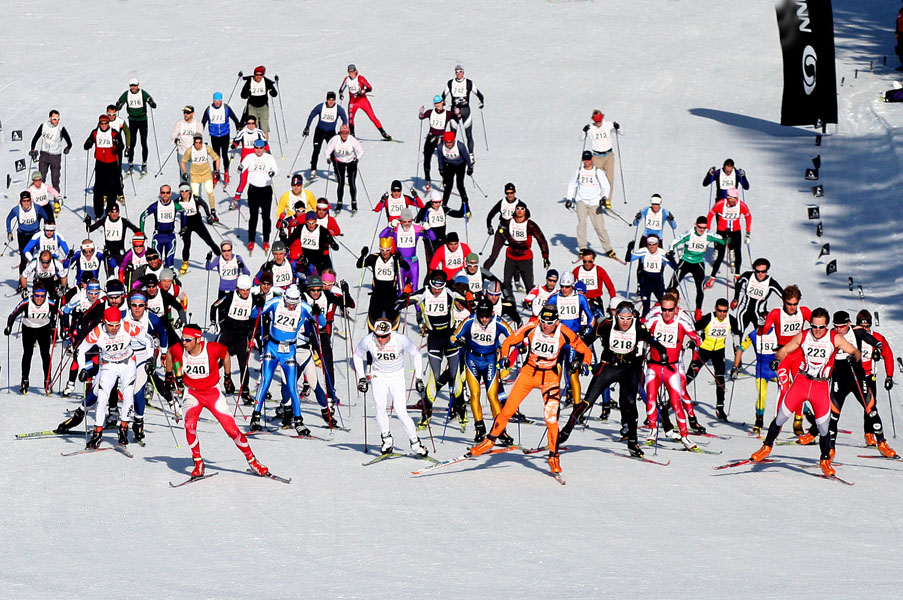
Gold Rush 2010 (Photo: MacBeth Graphics)
Saturday’s schedule runs from 8:00 a.m. through the afternoon:
8:00 a.m. — Resort opens for demos and skiing 9:00 a.m. — U.S. Biathlon Association “Take a Shot” laser rifle demo 10:00 a.m. — Cafe opens; Maplus-USA glide waxing clinic 12:00 p.m. — Music on the deck 1:00 p.m. — Slush Cup Super Sprints qualifiers (day-of entry only; $20 adults / $10 under 20)
The Slush Cup Super Sprints will feature a super short loop with single-lap qualifying, terrain elements, and gates. There will be Beginner, Fitness, and Expert classes, with heats of six following qualifying. Expert Class heats will be a minimum of 600 meters.
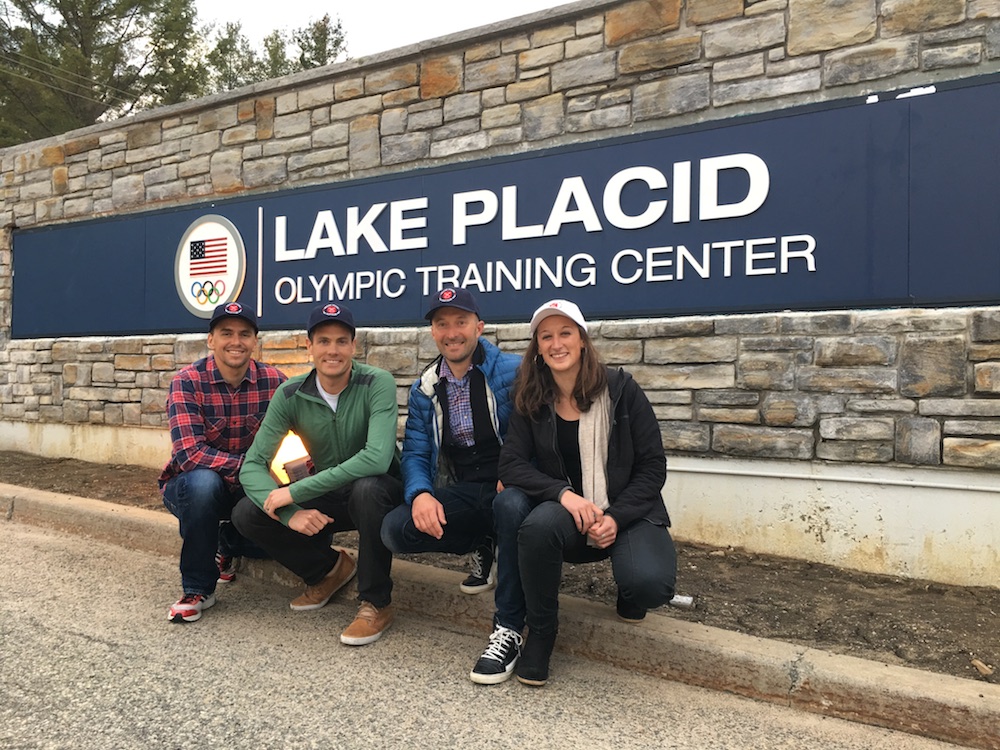
The newest additions to US Biathlon’s coaching and sport-development staff (from left to right): Michael Greis, Tim Burke, Armin Auchentaller, and Danika Frisbie as seen on May 1 outside the Olympic Training Center in Lake Placid, N.Y. (Photo: US Biathlon)
This season, the US Biathlon Association (USBA) hired on two new coaches; 47-year-old Armin Auchentaller from Italy and Germany’s 42-year-old Michael Greis. Auchentaller’s primary duties are with the women’s team whereas Greis will focus on the men.
The U.S. team comes off the retirements of two of its steady-stars; Lowell Bailey and Tim Burke. (Burke was hired in May as USBA’s athlete development manager.) The hiring of the two coaches is part of a plan to reinvigorate veterans like Susan Dunklee and continue to develop athletes like twenty-three-year-old Sean Doherty – a four-time World Junior Champion.
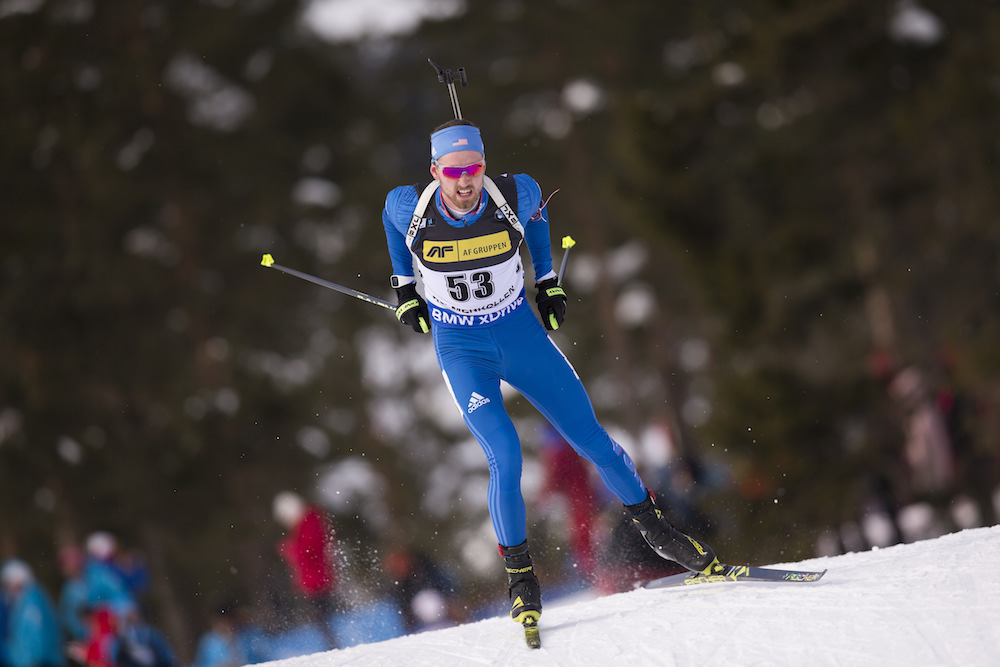
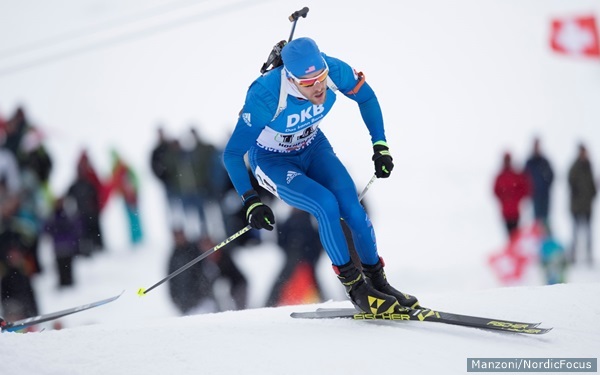
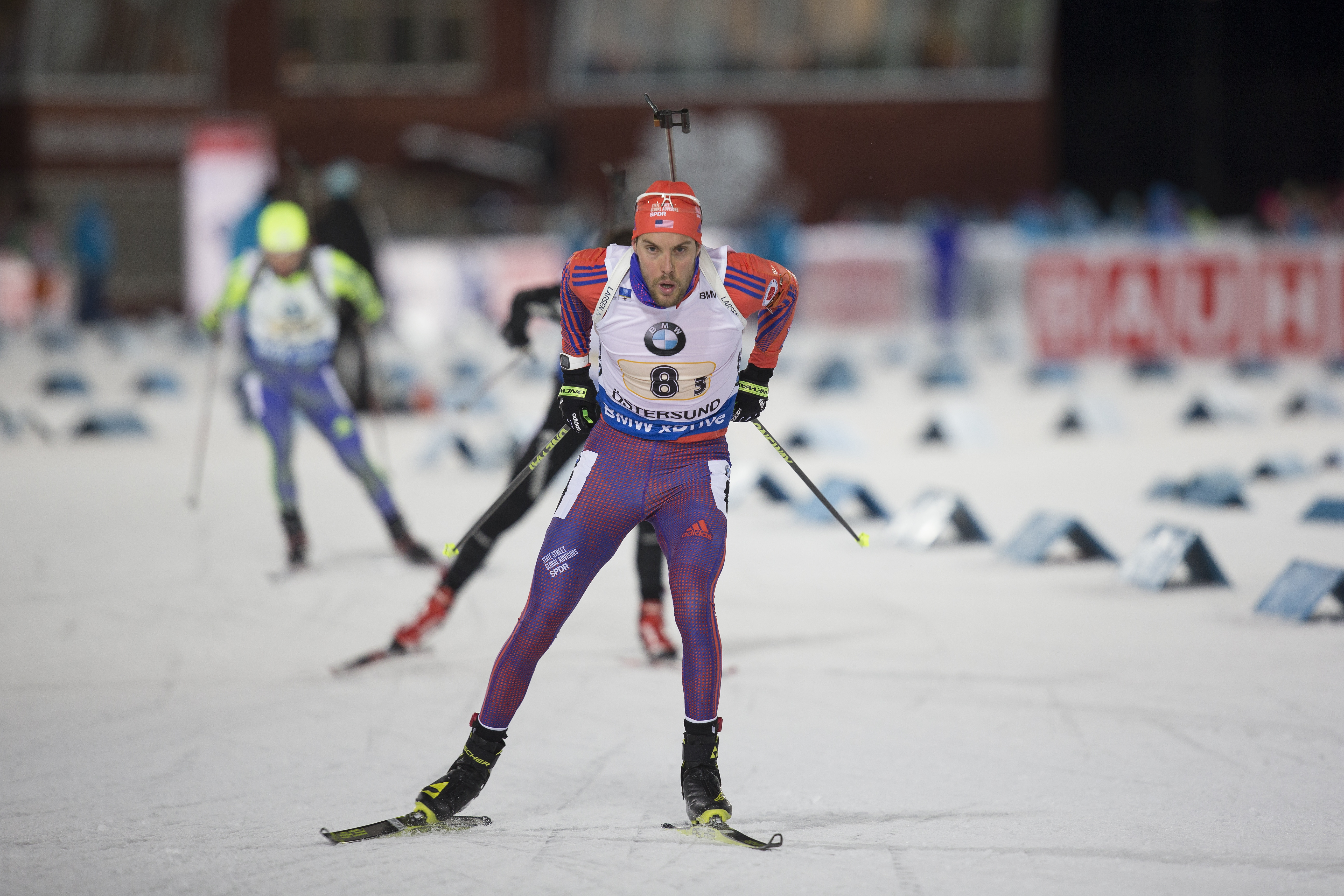
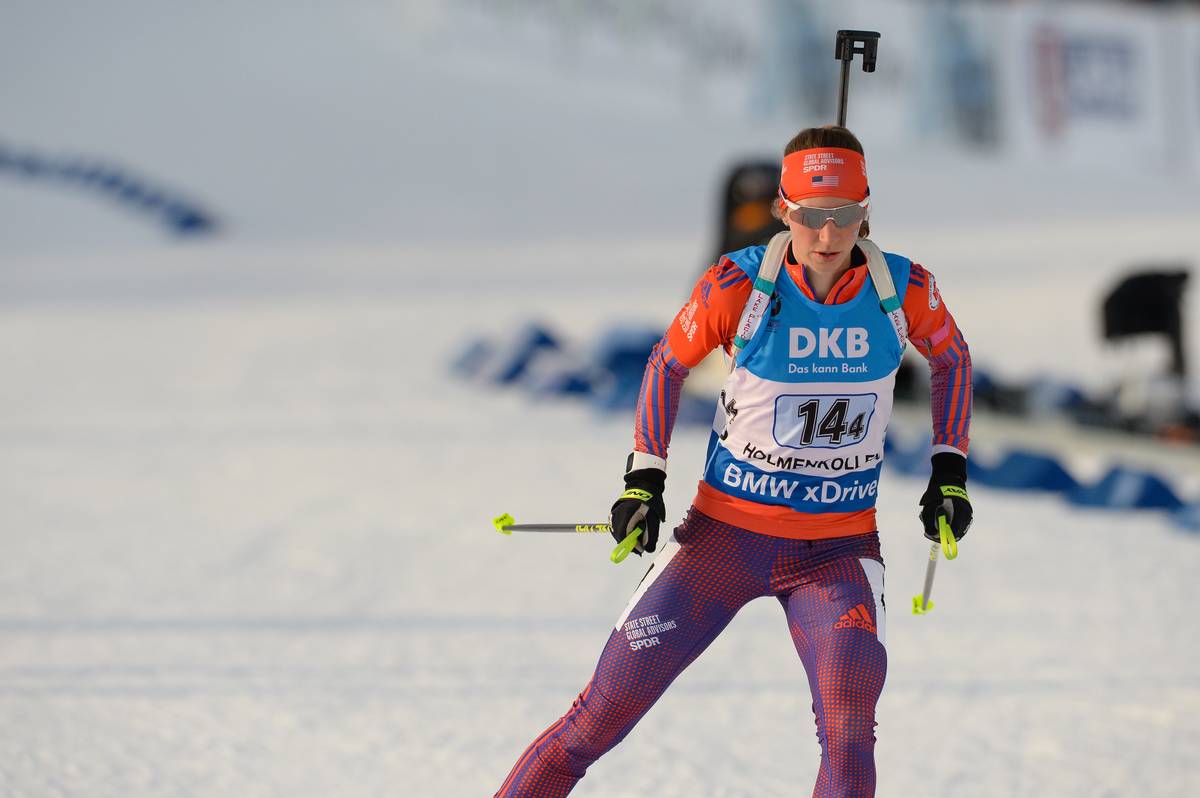
Sean Doherty (US Biathlon) racing to 14th in the 10 k sprint for a season-best individual result at the 2018 IBU World Cup in Oslo, Norway. (Photo: USBA/NordicFocus)
FasterSkier connected with Auchentaller last summer in Lake Placid. As he guides the women’s team, he will remain European based, travelling back to the U.S. for specific training camps. Married and the father of two teenage girls, Auchentaller foresees the arrangement as beneficial, with the on-season travel minimized due to the mostly European based IBU World Cup schedule.
Auchentaller is no stranger to the USBA, he was brought on as the shooting coach in 2009 and remained with the team through the 2014 Olympics. From 2014 to the PyeongChang Olympics, Auchentaller worked with the Swiss elite biathlon team.
“You know, it’s a small family, the biathlon family is a small family, so the training itself doesn’t change that much,” Auchentaller said about the differences he has seen working with different national programs. “There are some little things which might be a little different depending also on the training background they had in the past years. So training, training philosophy, training science is pretty much universal in the whole world. It’s just a matter of how you apply different things to the group you have right now to work with. The bigger change is the mentality, so that’s nice. Languages, and, you know, Switzerland is for sure different than Italy, and Italy is different than US culture, but that makes it really nice for me at least to see those differences and everybody has a good culture, there is no bad culture.”
The women’s team Auchentaller inherits is a stable of committed biathletes. Susan Dunklee has been the team’s top performer for years, Clare Egan has emerged into a top-ten skier this early season, Joanne Reid and Emily Dreissigacker are proven World Cup talents.
“It was interesting when I started before the first camp, it was a little of, um, how do you say that I wasn’t sure what to expect how motivated they could be or are,” Auchentaller reflected. “But it turned out that they are really motivated. … So, if they continue like they work now, they will have some personal bests. I would say, we don’t talk about podiums and these things, but its to reach at least your personal best for the first thing. So they are all different characters, but they have built in this short time a good group atmosphere.”
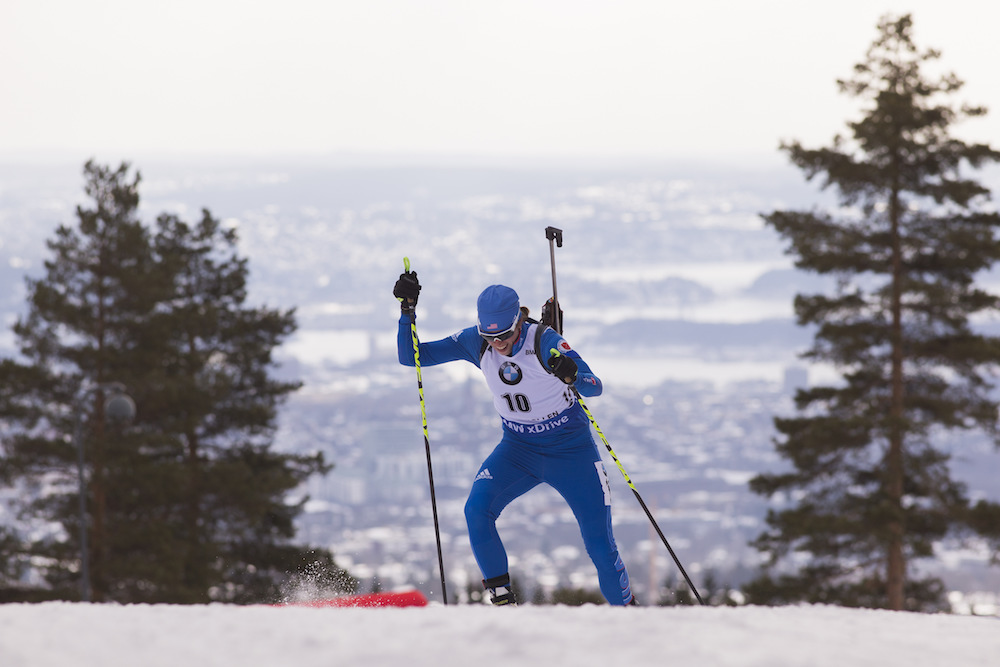
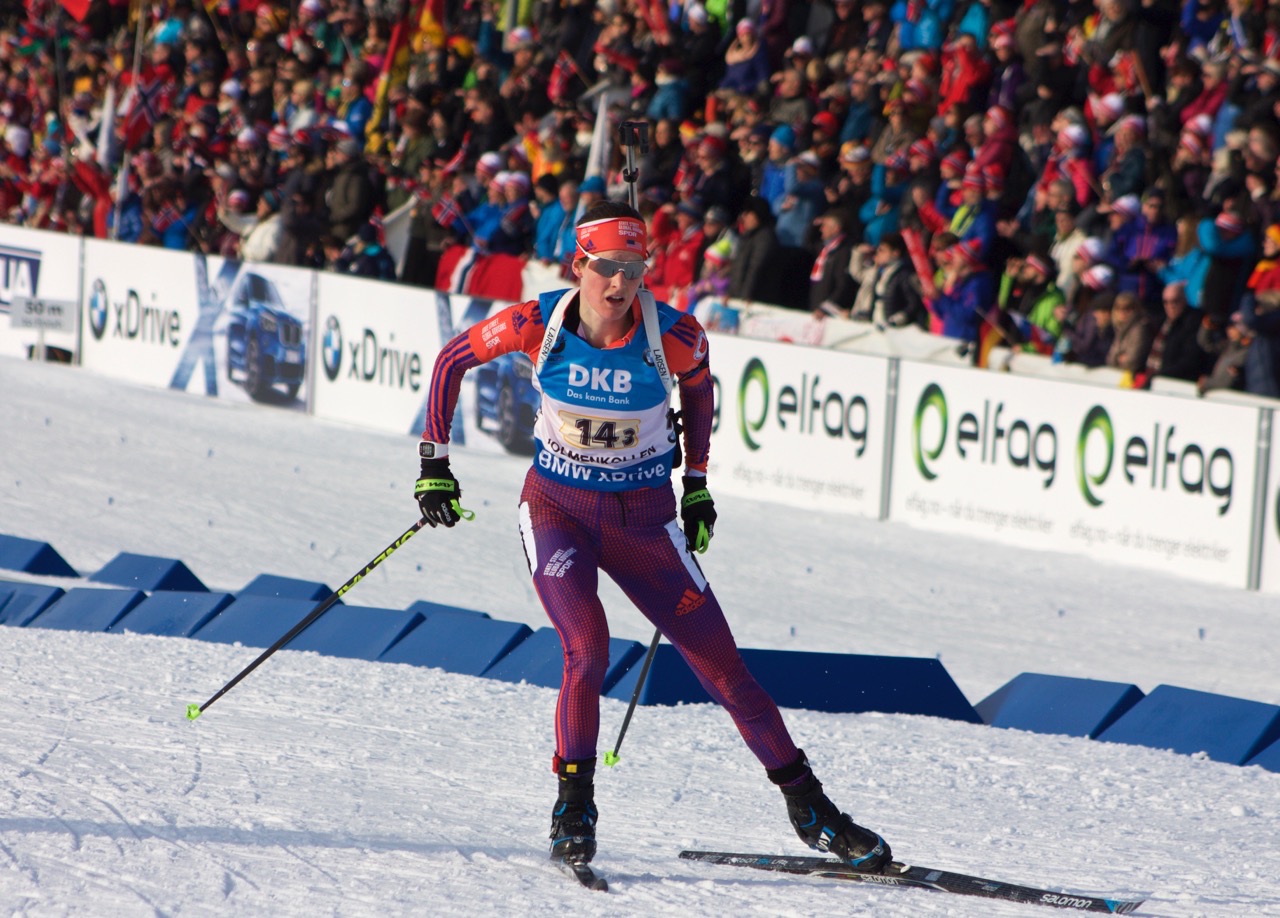
Susan Dunklee (US Biathlon) racing to fourth in the women’s 7.5 k sprint at the 2018 IBU World Cup in Oslo, Norway. It was her best individual result of the season by two places. (Photo: USBA/NordicFocus)
“The experience level in the team is for sure huge, it’s a lot of difference, so it’s also a balance to find the right balance between all of those capacities, all those characters, that makes it nice also,” Auchentaller said. “If they respect each other, if they have a lot of respect, they will help each other and grow as a group. It’s an individual sport, but if you grow as a group in the single trainings, you will be better also for your own results.”
Auchentaller also admitted he sees himself as a generalist when it comes to assisting any biathletes during training – that includes biathletes on the men’s team.
“I just cannot stay there in a corner and look at some things where I see ‘this can be better’, I just jump in and tell them,” Auchentaller stated. “And if they are alone here, [without a coach] then it’s obvious that I help them. I am a coach. It’s the profession I have, so you just ask if you can help them, and it’s pretty normal for me.”
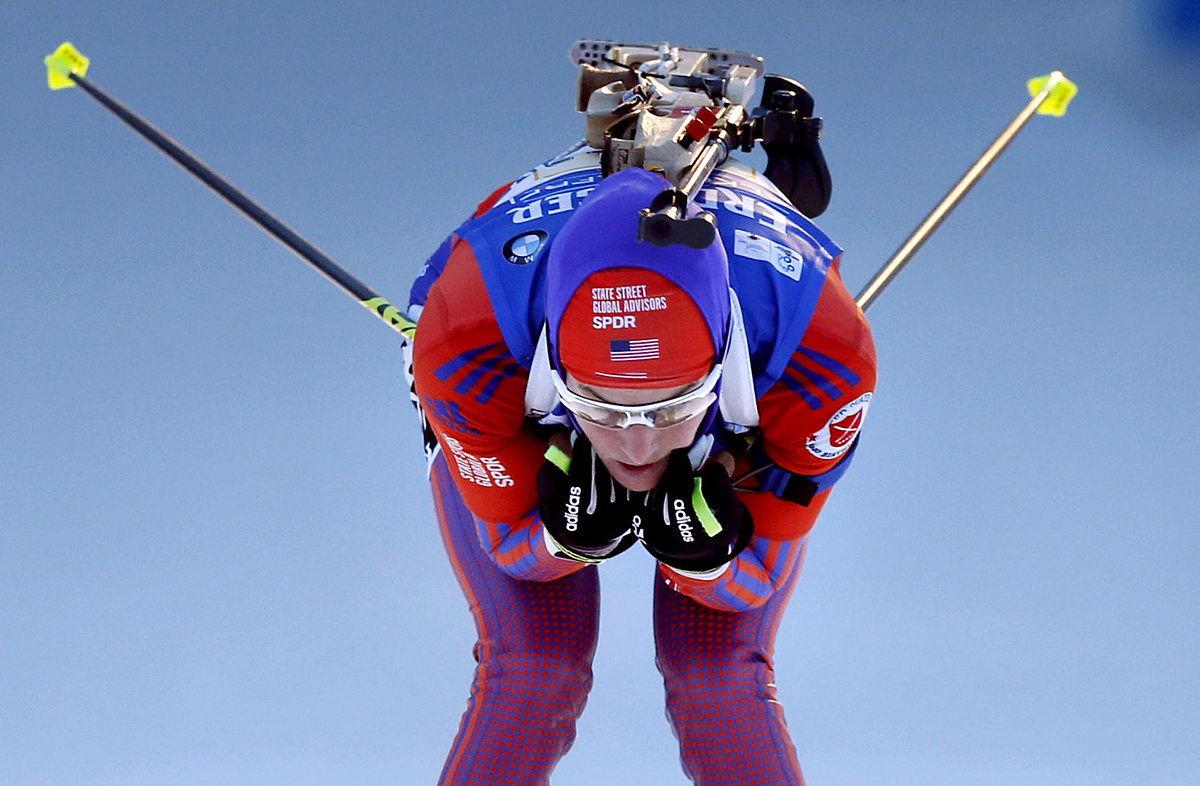
Clare Egan (US Biathlon) tucking and gliding during a 2015 IBU World Cup. She finished the 2015/2016 season ranked 66th overall. (Photo: USBiathlon/NordicFocus)
Greis comes to the US Biathlon team as a storied three-time Olympic champion for Germany. Having retired from competition six years ago, Greis most recently coached Swiss junior biathletes based in and around Lenzerheide, Switzerland. His work with the U.S. men’s team will evolve as he learns the capacities of each athlete.
“I ’ll try to understand how my athletes have trained in the past and then develop their individual capacity,” Greis emailed this November about how he spent his first dryland season with the men’s team. “The foundation is the key: Matt Emmons [our shooting coach] and I worked on a great execution in shooting in order to improve the hit-percentage. Also in endurance training, we logged a lot of rollerski training to increase efficiency and improve the routine in combo sessions.”
Greis guided the men’s A and B teams during the off-season, but his primary responsibility will be those on the World Cup this winter.
“During the winter I am mainly responsible for World Cup with a good communication with the IBU-Cup team in order to change athletes if they compete well,” Greis said.
Greis comes from a system and a nation where in winter, biathlon is king. The proximity to biathlon specific training venues is relatively easy compared to North America. Yet, Gries noted some key differences between a European and American based model. In places like Germany, a biathlete can join the army or police force and still be able to focus nearly all their time on biathlon. In the U.S., athlete funding can be tenuous, the training venues and athletes dispersed across widespread regions.
Those factors complicate communication and inhibit easy scheduling for group training.
Acknowledging those limitations, Greis has immersed himself in a U.S. system that now focuses on camps to help team bonding and create efficiencies when athletes live as far away as Colorado from the hub of U.S. biathlon training in Lake Placid.
“US Biathlon tries to support the athletes in the best way,” Greis wrote. “We try to organize a lot of camps in order to train together and learn from each other. And it’s also important that Lake Placid, Craftsbury, Soldier Hollow continues to invest in the infrastructure to develop a great training venue. I think it would also be a good idea if cross-country and biathlon would work more to bring more kids into nordic sports.”
Leif Nordgren (US Biathlon) skiing the second leg of the 2017 IBU World Cup men’s 4 x 7.5 k relay in Hochfilzen, Austria. The U.S. men ended up ninth overall out of 26 teams. (Photo: IBU/NordicFocus)
Last season, the men’s team placed 13th in the IBU World Cup Nation’s. With Bailey and Burke gone, Gries said in the short-term, matching that 13th this season is a modest objective.
“Our goal is to take the same place in the Nation Cup as last year and each athlete should improve his individual performance in the overall season,” Gries said. “None of my team took a top-ten career result so far – this is also an individual goal for each.”
The IBU World Cup continues in Hochfilzen, Austria on December 13.
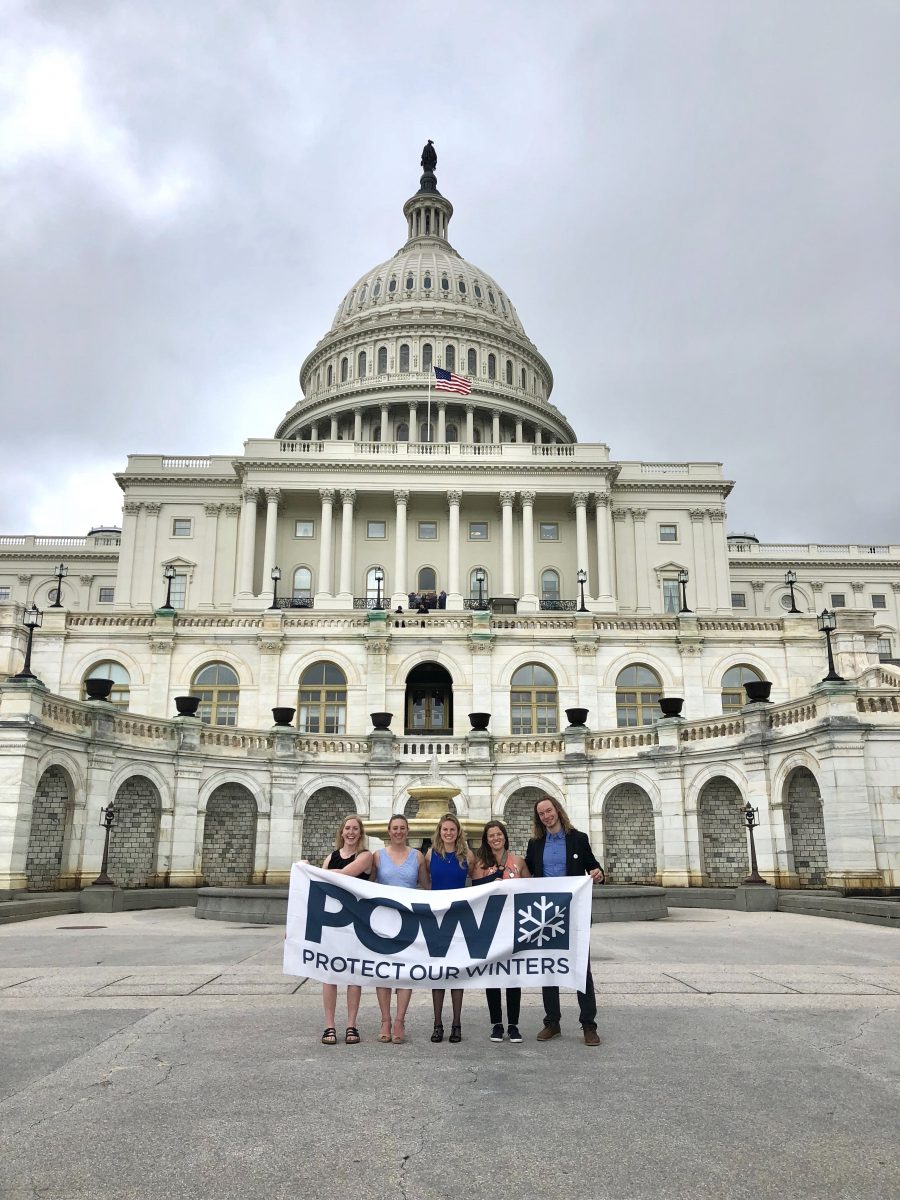
From left to right: Maddie Phaneuf, Arielle Gold, Jessie Diggins, Stacey Cook, and David Wise in front of the U.S. Capitol in late April in Washington, D.C. (Photo: Barbara Weber/Protect Our Winters)
Young and empowered. Twenty-three-old Maddie Phaneuf, a 2018 Olympic biathlete and member of the US Biathlon’s national team, has been finding her voice this short offseason as she lobbied members of the U.S. Senate and House of Representatives in Washington, D.C., on April 25. Phaneuf, along with 2018 U.S. Winter Olympians Jessie Diggins, Arielle Gold (snowboarding), David Wise (freestyle skiing), and Stacey Cook (alpine skiing), spoke in D.C. on behalf of the Citizens’ Climate Lobby and Protect Our Winters (POW).
“I have been working with POW for about a year now,” Phaneuf explained on the phone on April 24. “I have been helping them out as a winter-sports athlete giving presentations to schools and teaching kids about climate change and its impact.”
Phaneuf may have been destined for winter sports, but until the age of 8, her life was a snow-void. Phaneuf was born in Virginia and spent her early childhood in South Carolina. Her limited exposure to snow consisted of a single freak snowfall where the snow melted within a day. Fortunately for US Biathlon, Phaneuf said her father wanted his children to experience the full spectrum of the seasons and relocated the family to Old Forge, New York, in the Adirondack Mountains.
“The whole town is really into skiing, whether it be downhill or nordic,” Phaneuf said of Old Forge, where her parents still reside. “So my parents wanted us to get into that because it would be a great way to experience winter in the Adirondacks, and for us kids to stay active.”
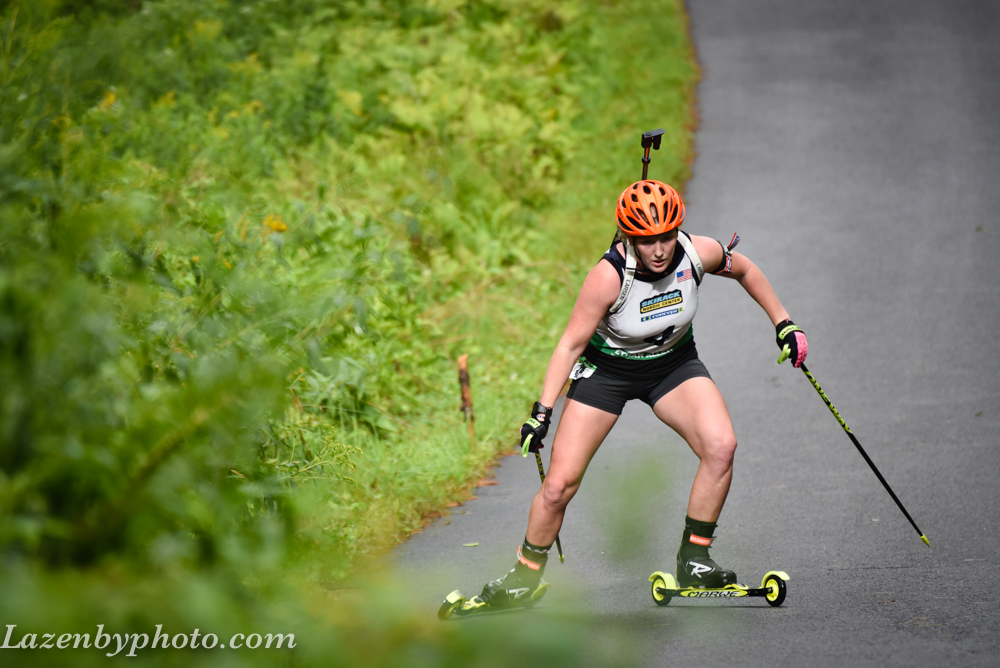
Maddie Phaneuf (USBA/PBSC) racing to fourth in the women’s mass start last August at 2017 US Biathlon Rollerski Championships in Jericho, Vt. (Photo: John Lazenby/Lazenbyphoto.com)
Nominated to US Biathlon’s X-Team in 2014, Phaneuf climbed the ranks and to reach A-team status last season. Last month, she was named to the B-team, part of the US Biathlon’s top-tier High Performance Team. While continuing to train and race with the national team, she planned to move from Lake Placid, N.Y., to her new training base in Boulder, Colorado, this summer.
New York’s North Country, where Old Forge is located, is a reliably conservative region. At least on electoral maps, the politics can skew towards an anti-climate-change perspective. However, Phaneuf said she has felt backed by Old Forge as she explains her point of view to others.
“My hometown is very supportive of me,” Phaneuf said. “I went into the local school and they were excited to learn about my climate-change presentation. But I am sure there are parents that don’t necessarily agree with what I am saying, but they are not going after me.”
Politics and athletics can be a non-starter for athletes. Being outspoken about a cause, in particular, one as divisive as climate change, can alienate an athlete — especially on social media. But Phaneuf has used the resilience she has developed in the fickle sport of biathlon to weather the storm and move forward with her activism.
Phaneuf admits she is still learning how to navigate the potential minefield of exercising her free speech. This past February, Phaneuf penned an op-ed piece for Syracuse.com, expressing her belief that change must be enacted to save winter, and by extension, our ability to sustain the winter sport economic engine and way of life in places like the North Country.
Phaneuf was eventually alerted to the many negative comments her piece received when she posted it on her personal Facebook page.
“I went to the article and 90% of the comments were bashing me,” Phaneuf explained. “Saying I am too young, I have never experienced anything — what am I talking about? Not even bashing climate change but bashing me personally … When I shared the climate-change article I wrote, one guy replied something like, ‘What’s up? You are not posting things about the Olympics. This is bullshit. I don’t want to read this. I want to follow you.’ I replied, ‘OK, the Olympics are over. It’s my offseason. I think it is irrelevant to post things about the Olympics right now because we aren’t there. And I want to show my followers what I do in my free time. Just because you are an athlete doesn’t mean you can only post about training and racing.”
Phaneuf recognizes that her Olympic-team nomination has given her more exposure. She said her Facebook page went from 1,000 to 4,000 likes during the 2018 Olympics in February. As she had matured, Phaneuf explained she’s become wiser when it comes to engaging detractors.
“I have been trying better than in the past,” Phaneuf said. “In the past, I would reply to all the comments kind of aggressively, like ‘what do you mean?’ But now I take a step back and simply read the comments. I understand everyone on the internet is human and all have their own opinion. I just try to not respond unless they are trying to put words in my mouth or saying other things about me, then I will respond and clarify the facts in a respectful way.”
The halls of Congress, on most days, are not the wild west of internet commenting. The tone is soberer. There is the understanding that change comes about from the steady persistence of advocacy, lobbying and voting at the ballot box.
Two weeks ago in D.C., the talking points for Phaneuf and the other athletes present were clear They were to speak about the following: What impacts have they witnessed regarding climate change? How is climate change impacting their sport? How might climate change impact future Winter Olympics?
The athletes also spoke of the regional economic boost snow availability brings certain regions across the U.S. (POW and Citizens’ Climate Lobby cite that in New York alone, the outdoor-recreation economy contributes $41.8 billion dollars and provides 313,000 jobs.)
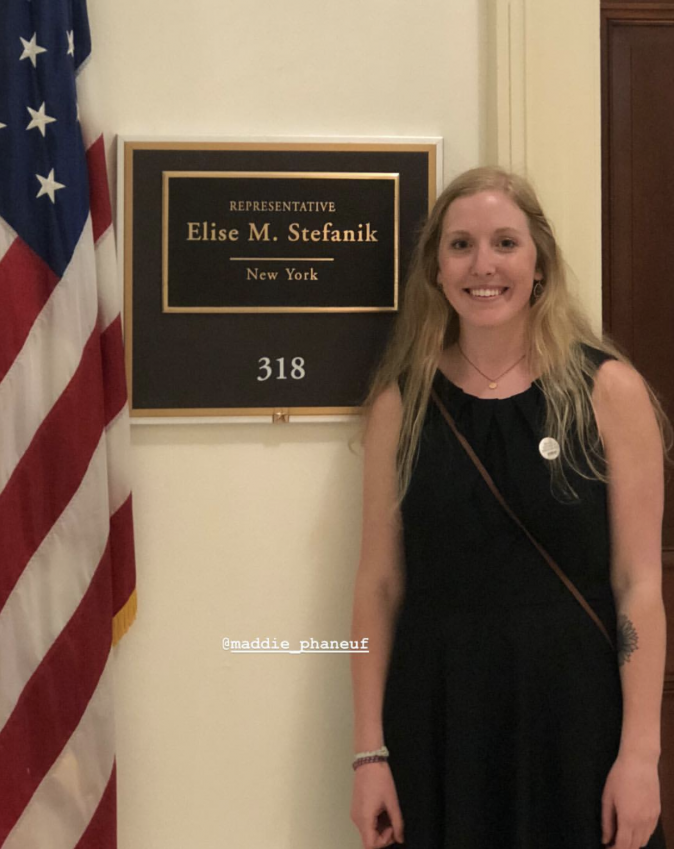
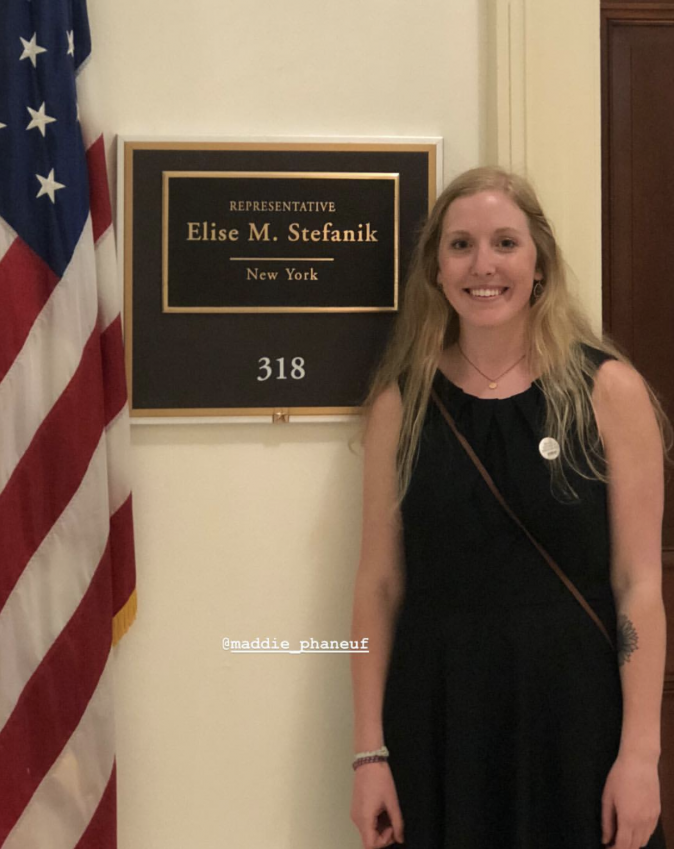
US Biathlon’s Maddie Phaneuf outside the D.C. office of U.S. House Representative Elise Stefanik (New York). (Photo: Barbara Weber/Protect Our Winters)
The Congressional briefing was a bipartisan event sponsored by Senator Michael Bennet of Colorado and Senator Susan Collins of Maine. The athletes also met with Senator Tina Smith of Minnesota, Senator Dean Heller of Nevada, Congresswoman Elise Stefanik from Phaneuf’s district in New York, Congressman Scott Tipton of Colorado, and Congressman Mark Amodei of Nevada.
“It was good,” Phaneuf said on April 26, the day after her D.C. experience. “I was definitely nervous going into it. I had never been in the position of talking directly to congresspeople or senators. They definitely heard our message. It was definitely more chill than I expected it to be. I was afraid it was going to be judgmental and scary. … The biggest part of our day was simply talking about our own experiences with climate change. And not getting too much into the politics.”
Although Phaneuf has chosen to emulate a long line of athlete activist, her biathlon career remains a priority as she transitions from upstate New York and her residency at the Lake Placid Olympic Training Center to her new base in Boulder.
Phaneuf’s B-Team status comes on the heels of what she calls her “worst season ever”. Although qualifying for Olympics, Phaneuf said she struggled before the Olympics and spent her time in PyeongChang, South Korea, bedridden.
“I struggled a lot with fitness last summer and lost tons of training,” Phaneuf said of the start to her 2017/2018 racing season. “Then I didn’t make the World Cup team in the first period, and then I made the IBU Cup team, but was not performing well and barely made the Olympic team. [In PyeongChang] I got sick the day of my first race and got strep throat and a virus on top of that. I was totally out for two weeks. Being at the Olympics and being around that atmosphere and being so close to racing — having that stripped away from me, made we want to figure how to get better at training and do a lifestyle change. This is why I am moving to Boulder.”
A new training season has begun for Phaneuf. In the meantime, she’ll be juggling her sport with her more seasoned political voice.
“I don’t think I have ever voted in midterm elections,” Phaneuf said of the midterm elections set for this November. “I don’t think I ever thought of it as a big deal. So we are are trying to get the word out because it is a big deal. We want to elect people who will actually listen to us.”
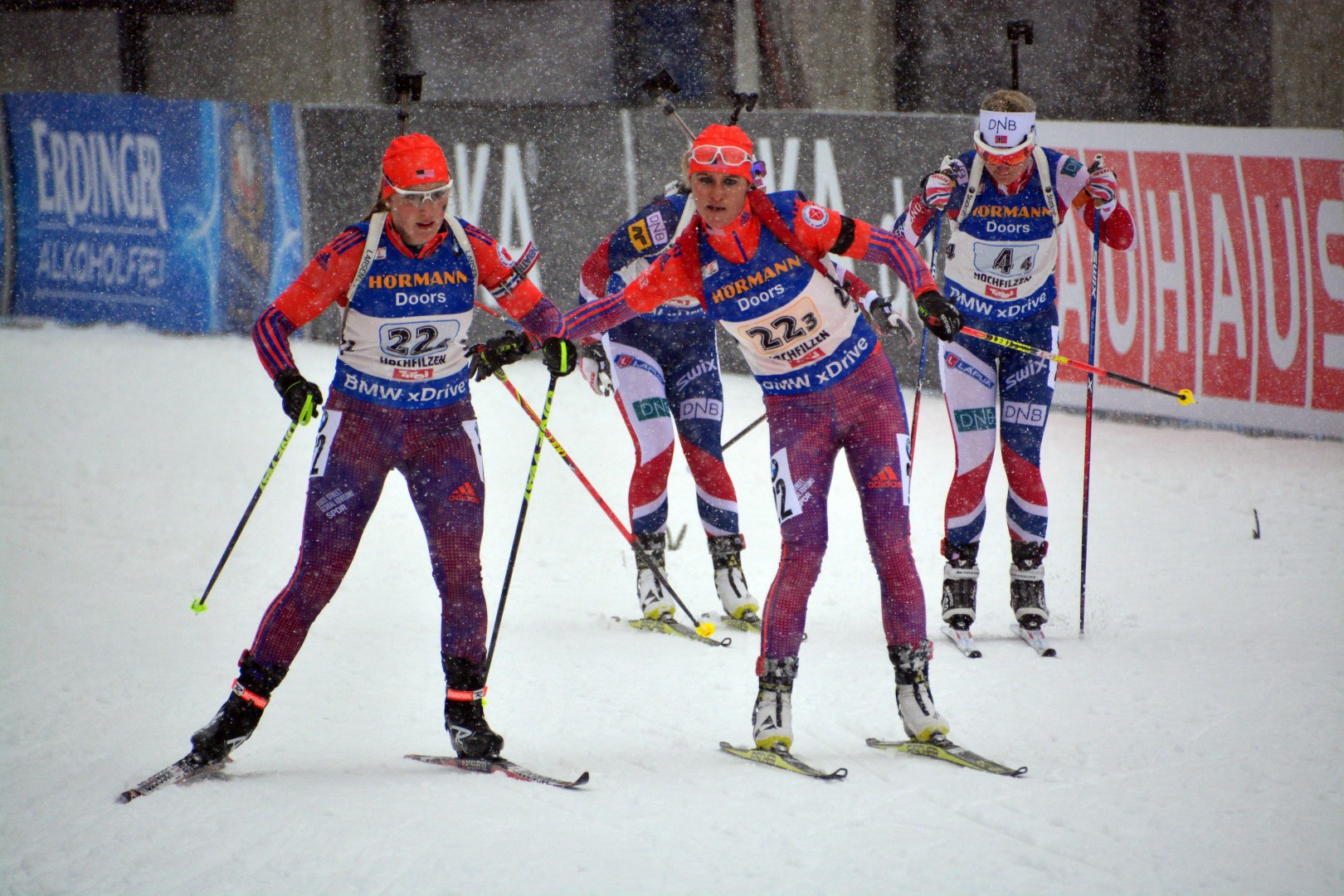
US Biathlon’s Maddie Phaneuf (l) gets tagged by teammate Joanne Reid during the final exchange of the women’s 4 x 6 k relay at 2017 IBU World Championships in Hochfilzen, Austria. The team finished 14th. (Photo: Glen Crawford)
The United States Biathlon Association (USBA) has announced its World Cup and IBU Cup rosters for the second period of racing.
World Cup
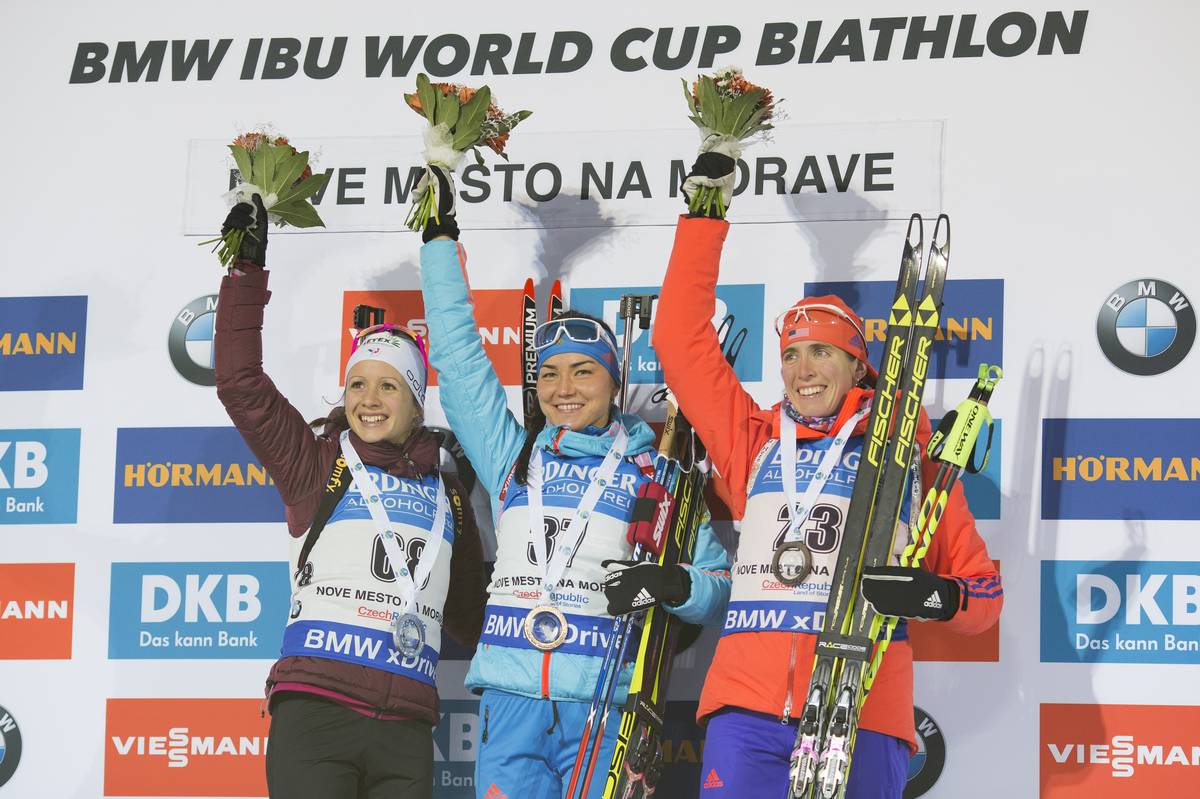
The women’s World Cup team will remain the same, with Susan Dunklee leading the way. Dunklee earned her first podium of the season on Friday in Nove Mesto, Czech Republic. After several top finishes she is ranked 11th overall on the World Cup. She is joined by Clare Egan, who had a top finish of 30th this season in the pursuit in Östersund, Sweden. In addition Joanne Reid, who finished 29th in the individual in Östersund, will stay on tour.
The men’s World Cup team is led by Lowell Bailey, who notched a top-ten in the Nove Mesto pursuit. As a result of Bailey’s consistency, he is currently ranked ninth in the overall rankings. He is joined by Tim Burke, who finished 16th in the Östersund individual, and Russell Currier, whose best mark of the season is 54th in the same race. Those three formed the World Cup squad for the first period of racing. Finally, 2014 Olympian Sean Doherty will join them after recovering from a bout of mono that kept him off the international circuit in December. And Leif Nordgren is qualified for the campaign but is still nursing a broken toe.
IBU Cup
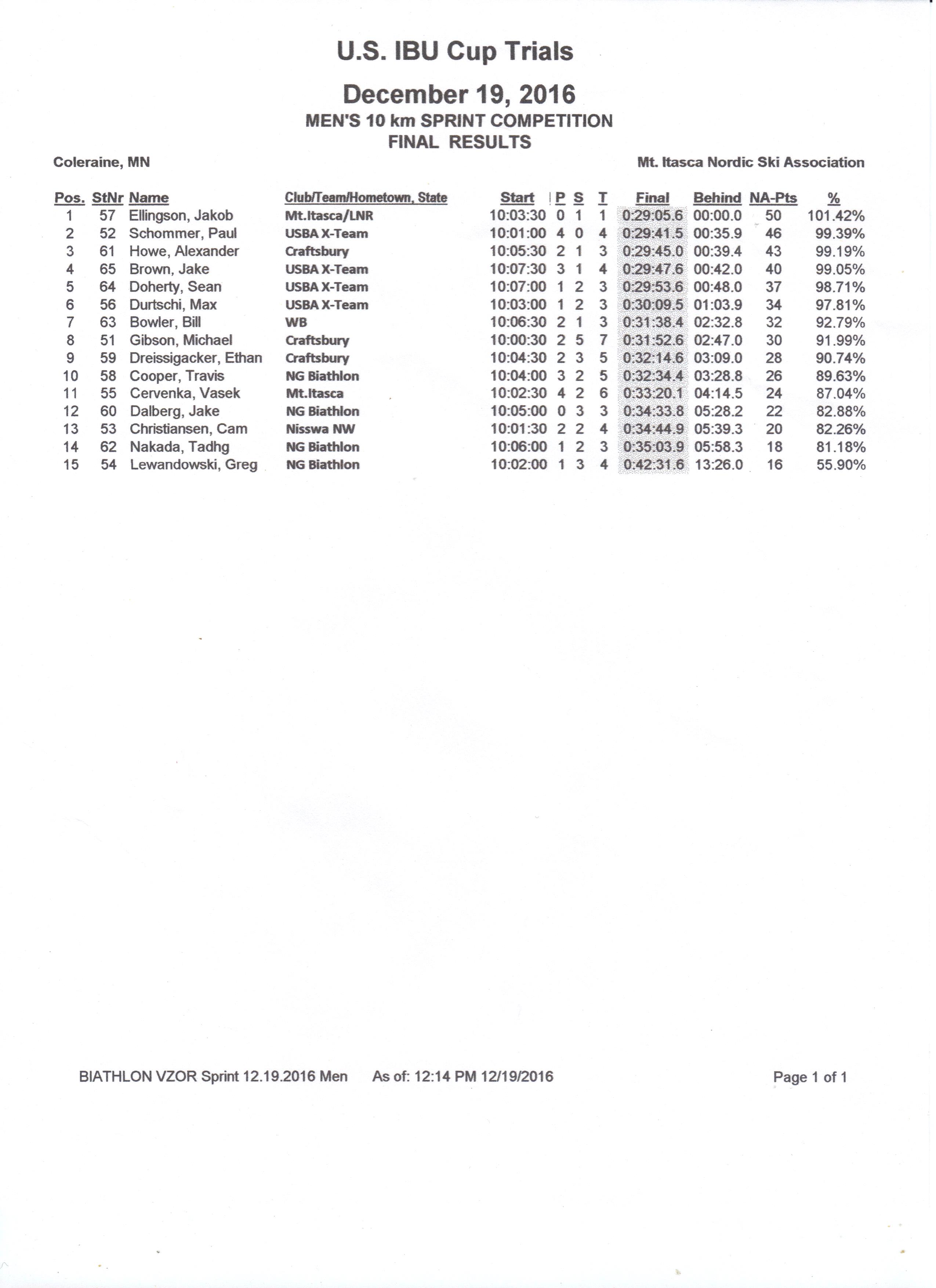
In addition to the World Cup team, USBA also named a roster for the second-tier IBU Cup based on trials held at Mount Itasca, Minnesota, on December 15-19.
Women: Maddie Phaneuf (Old Forge, N.Y.) Emily Dreissigacker (Morrisville, Vt./Craftsbury Green Racing Project) Hallie Grossman (Craftsbury Green Racing Project, Vermont) Siena Ellingson (Minnetonka, Minn.)
Men:
Paul Schommer (Appleton, Wis./U.S. Biathlon X-Team) Alex Howe (Craftsbury Green Racing Project, Vermont) Jake Ellingson (Mt. Itasca Biathlon, Minn.) Max Durtschi (Ketchum, Idaho/U.S. Biathlon X-Team)
In the opening sprint at Mount Itasca, Schommer won a 1.5-second victory over Howe, with Durtschi just one more second back. Both Schommer and Howe had two penalties and Durtschi just one. Then in the women’s sprint, Phaneuf had a single penalty to collect a 37.3-second win over Dreissigacker, who had missed two shots. Siena Ellingson was third, +43.8 with one penalty.
In the mass start at Mount Itasca, Schommer won again over Howe, this time by 29.8 seconds. Doherty, there for the races but pre-qualified for the World Cup campaign, finished third, +30.8. Perhaps most noteworthy, Phaneuf was the only competitor, male or female, to clean all four shooting stages, and as a result picked up a huge win over Dreissigacker, crossing the line two minutes and 56 seconds ahead of her closest rival. That’s in part because Dreissigacker had six penalties. N ext across the line was third-place Grossman (+3:13.7) with seven missed shots.
Then in the final sprint competition Jakob Ellingson had just a single penalty for some of the best shooting of the day. As a result he got the men’s win by 35.9 seconds over Schommer, who missed four shots. Howe was third (+39.4), thanks to three penalties. Phaneuf completed her clean sweep of the women’s races by picking up a 25.9-second win over Dreissigacker, with two penalties to Dressigacker’s three. Grossman was again on the podium in third despite seven penalties (+2:14.2).
In response to evidence of widespread doping in Russia, the Czech Biathlon Union became the first to discuss a boycott. The Czechs will not attend a World Cup stage to be held in Tyumen, Russia, in March; they have been joined by the British Biathlon Union. Several other countries say they hope that the International Biathlon Union will move the event.
But the Russian Biathlon Union put out a defiant press release denying any involvement in doping.
“It was about time that some federation came and said out loud what we are talking about behind the scenes,” Czech Biathlon Union President Jiří Hamza said in an interview with the news agency iDNES, according to a translation.
The International Biathlon Union (IBU) is being pushed to move the competitions. The dozens of doping biathletes are only part of the equation. Perhaps a bigger issue is that extensive sample manipulation and collusion occurred on Russian soil. That makes some athletes and federations reluctant to compete in Russia.
“I don’t think anybody feels safe about being there, in a country that had this high level of collusion,” U.S. Ski and Snowboard Association President and CEO Tiger Shaw told FasterSkier the day the report came out.
A few months ago, the IBU also controversially voted to award 2021 World Championships to Tyumen. The International Olympic Committee (IOC) had directed that no new competitions should be scheduled in Russia; the IBU interpreted the directive to say that the existing Tyumen bid could remain up for election.
2016 Youth and Junior World Championships, slated for Ostrov, Russia, are also part of the discussion.
If the competitions are not moved, Czech athletes will not attend them, Hamza said.
Also signing on to the boycott is the British Biathlon Union (BBU).
“The Board of the BBU made a unanimous decision over the weekend to boycott World Cup 8 in Tyumen,” BBU Secretary General Mark Goodson wrote in an email to FasterSkier.
Momentum may be building for other federations to sign on as well. A widespread boycott could push the IBU Executive Board to move the event. A similar boycott led to 2016 World Championships for bobsleigh and skeleton being stripped from Sochi, Russia.
The IBU Executive Board is meeting to discuss the McLaren report this week.
“Early this morning Tuesday, we received an Email of thanks from [Czech biathlon] and in mid-morning the Czech Republic issued an ‘Open Letter’ to the IBU and all Federations expressing even more displeasure than we had, and boycotting all events in Russia until WADA and the IOC gave their Anti-Doping Systems a clean bill of health,” Goodson wrote. “The latest news is mid-afternoon with a very supportive (of Czech) Open Letter from Norway demanding that named, proven Russian biathletes be banned with immediate effect, and that the IBU withdraw all competitions from Russia until a clean bill of health. Failure of IBU to do this will result in Norway considering a boycott of all international competitions in Russia.”
North American federations are considering their options.
“We have been discussing the issue and will make a decision Friday after the IBU makes its ruling,” Biathlon Canada High Performance Director Eric De Nys told FasterSkier. “We are of course hoping that the IBU makes the right call and pulls the World Cup from Tyumen.”
The United States is leaving the decision up to individual athletes.
“We have told our athletes that participation is up to them and that there will be no pressure for them one way or the other,” U.S. Biathlon Association President and CEO Max Cobb told FasterSkier in a text message.
Some prominent athletes have been speaking individually about the prospect of a boycott.
“It’s not like it’s only one or two [athletes],” Martin Fourcade said in an interview with Norwegian broadcaster NRK. “It’s 31, added to the 12 we had the last few years in biathlon. And I hope if my federation don’t have big enough balls to take [on] the problem, the athletes do it on their own… If nothing is done in January, I will ask my colleagues in the international teams – I mean Norway, I mean Germany, Czech Republic, all of the nations – to don’t compete.”
“Due to the current atmosphere in the media landscape on the matter of 31 Russian biathletes, suspected of using prohibited substances, RBU considers it necessary to issue the following statement.
In the course of several years, RBU has consistently pursued a policy of zero tolerance for doping. This is confirmed both by strict compliance of all Team Russia biathletes with the requirements of WADA and their due availability for control by WADA and other accredited organizations along with active collaboration of RBU with these organizations in the field of promotion of clean sport. Clear evidence of mentioned above – the official statistics of WADA concerning the number of doping tests taken in biathlon in 2014.
Starting spring’14, after the election of the new top management of the Russian biathlon Union, this cooperation has become even more intense.
Within the idea of zero tolerance for doping RBU held more than 10 seminars for athletes and coaches inviting representatives of national and international anti-doping organizations. All persons who had ever been involved or had been under suspicion of any connection with the use of prohibited substances were banned for life. In the course of internal tests at national competitions all the athletes who didn’t comply with strict requirements of RBU were caught and severely punished.
Another proof of zero tolerance for doping is the fact of cooperation of RBU with the foreign experts, such as Ricco Gross and Wolfgang Pichler, who would never agree to jeopardize their reputation.
We do not know the names of the athletes from the list that will be discussed by our respected colleagues from IBU on Thursday, December 22nd. However, we are ready to provide comprehensive information about any RBU athlete ever to participate in the biathlon Events. We admit that the majority of persons from this list are those who have already been accused of violation of doping rules by the RUSADA and RBU internal doping control and are currently disqualified or finished their career.”
Pichler is a German who came to prominence coaching the Swedish biathlon team and Magdalena Forsberg in particular. An outspoken opponent of doping, Pichler was hired to coach the Russian women’s team from 2012-2014. He has now returned to the Swedish team.
Within the Russian national team there were two training squads, with Pichler heading one of them. He said as early as the Sochi Olympics that he suspected there was doping within the other training group, headed by Vladimir Korolkevich. He had even tried to leave his post early due to concerns about doping.
But Pichler has maintained that his own athletes were clean. The report sheds doubt on that assertion. At least two of Pichler’s athletes – Olga Zaitseva and Yana Romanova – were on the “protected list” in Sochi. One of Romanova’s urine samples also showed signs of being tampered with by anti-doping officials. And more of his athletes may be among the 31 who were referred to only by alpha-numeric code identifiers in the report.
“I know relatively little about what happened there,” he said in an interview with German broadcaster ZDF in early December. “I have only been a coach there for one year. It is being discussed, that much is clear. It does put pressure on the athletes, that they are being pointed at. I believe it’s not only a Russian problem, it is a worldwide problem which has to be tackled… I am experiencing a lot of support, also by [the Russian Biathlon Union], because they also want clean and fair sport. So at that moment it is sad when you are being pointed at again. They are following my line, if someone cheats he’ll be kicked out.”
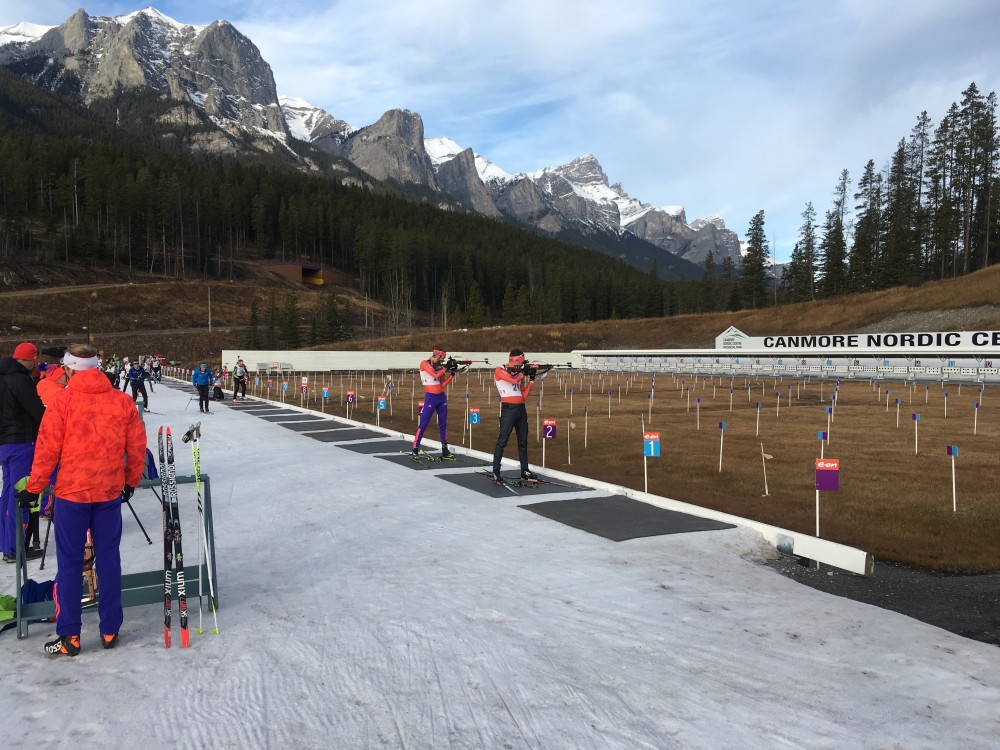
US Biathlon teammates Leif Nordgren (left) and Tim Burke zeroing their rifles prior to the start of the men’s 10 k sprint on Frozen Thunder in Canmore, Alberta, in November. Nordgren briefly joined Burke and his U.S. teammates on the World Cup before having to fly back to the United States for surgery on his toe. (Photo: Matthias Ahrens)
The U.S. men’s biathlon team was already starting the World Cup season with a man down: Sean Doherty, the several-time World Youth and Junior Champion and 2014 Olympian, who had come down with mononucleosis.
But the team is now down to just three men after fellow 2014 Olympian Leif Nordgren had to have surgery on his toe after an incident with a treadmill.
Until January at least, that leaves just Lowell Bailey, Tim Burke and Russell Currier sporting the purple-and-orange suits of the United States on the sport’s biggest stage. It also leaves them without a relay team on Sunday in Pokljuka, Slovenia.
“It’s definitely disappointing to sit out a relay, but unfortunately, that is what we will have to do next weekend,” Bailey wrote in an email this past Sunday. “I think both of them will be back in force after the new year, so our whole focus now will be on the last half of the season, and a podium at World Champs… that’s what we are all aiming for!”
Paul Schommer, who was on the short list for a World Cup spot before Currier was selected, would have been the next logical man to add to the roster, but the team decided against it.
“We discussed the option to bring another man over, but we felt that the heavy travel and the race schedule as well at World Cups 2 and 3 did not justify getting someone out of the middle of a training block in Canmore,” U.S. Biathlon Chief of Sport Bernd Eisenbichler wrote in an email. “We only have one relay in the first trimester… We always try to look at individual best development options, as long as we are not missing more than one relay of course.”
Leif Nordgren leaving the range in last year’s mixed relay in Ostersund, Sweden (Photo: US Biathlon/NordicFocus)
Nordgren’s injury actually happened just before he left the U.S. for the opening weekend of World Cup racing in Östersund, Sweden.
“The way it happened was kind of a freak accident,” he explained in an email. “I was doing intervals on the [rollerski] treadmill. After one interval I got off to take a lactate sample. The treadmill was still coming down from its incline though and squished my toe into the floor. Conveniently the treadmill turned off at that point and it took 30-45 seconds to turn it back on and raise it back up.”
Nordgren was initially told that he was fine to travel, train, and race, so he flew to Sweden, where he competed in the single mixed relay with Joanne Reid, finishing 19th.
“It definitely hurt pretty bad to train and race on it last week,” he admitted.
Afterwards, he went to the hospital in Sweden, where X-rays revealed that he had actually fractured the toe. Because it was an open fracture, surgery was needed. Nordgren opted to fly back to the U.S. for the procedure.
“The main reason to do the surgery was to make sure the fracture didn’t get infected,” he wrote. “When there is a fracture near an open wound (my toe was cut as it was squished) they call it an open fracture. If the fracture and bone get infected it can be very bad, as in amputate bad. Basically it was a better safe than sorry scenario.”
After the surgery, news came back that cultures taken from the fracture did show the presence of Staphylococcal bacteria, which can cause infection and major complications. Nordgren joked on his blog that if he hadn’t had surgery to clean out the wound and the infection had proceeded, he would probably be down to nine toes. He is now on a course of antibiotics which should prevent further problems.
“Now that they did find that staph bacteria I think everyone is happy we did the surgery,” Nordgren wrote in an email.
In terms of his prognosis, he does anticipate being back to the World Cup in January.
“I had surgery on Friday, everything went ok with that and now I am back in Lake Placid area recovering for the next few weeks,” he wrote on Monday. “Recovery is expected to be pretty short, hopefully in the 2 week range. I should be able to start doing some upper body training before then though, but as of now with the surgery still quite fresh I just have to stick to the couch with my foot up.”
https://www.instagram.com/p/BNsjftkgYpF/
As for Doherty, he raced in the NorAm mass start in Canmore, Alberta, on Sunday, placing seventh (+3:03.3 behind winner Paul Schommer) with four penalties.
“Sean did have a quite fast and real good recovery,” Eisenbichler wrote. “Our doctors and coaches did a great job to find the right plan for him. He will do the full camp in Canmore and then if all continues to go well, he will go to [IBU Cup] trials races in Minnesota (not for trials or qualification reason, but to get some racing in). We expect to have him back for World Cup 4 in Oberhof, but more can be said and known after completion of the Canmore Camp.”
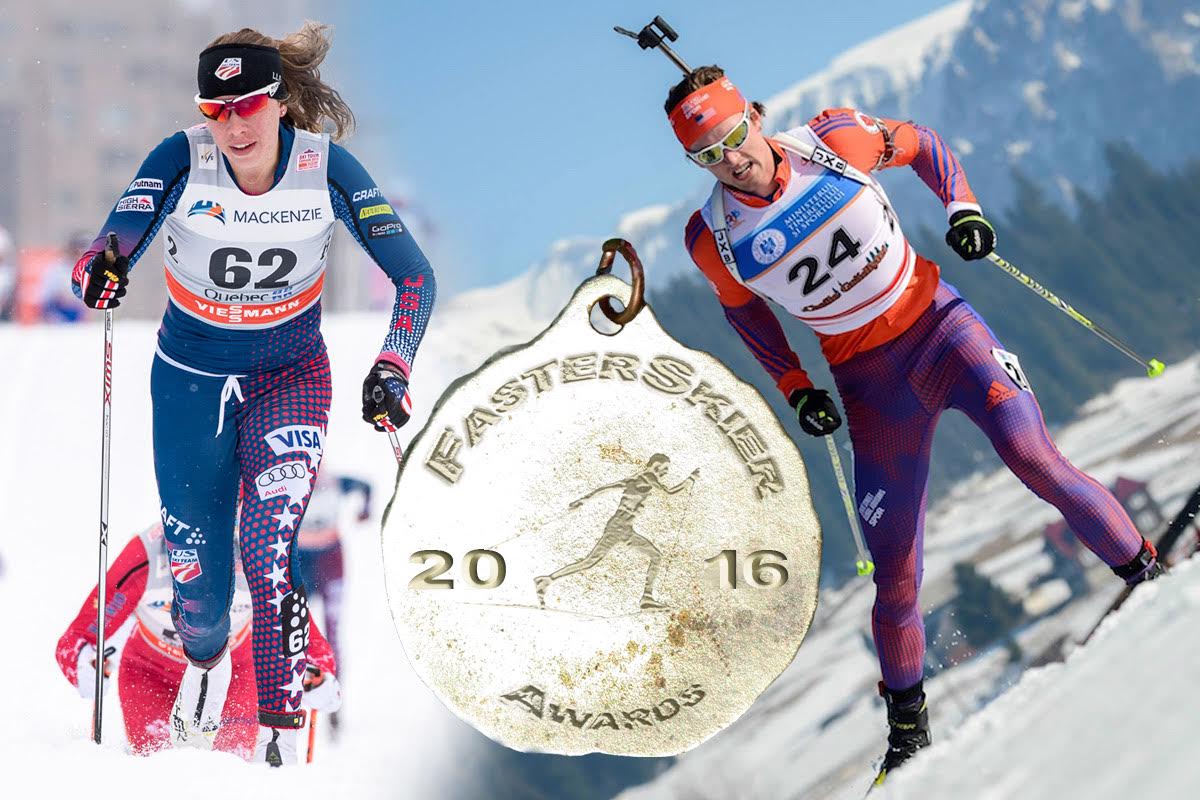
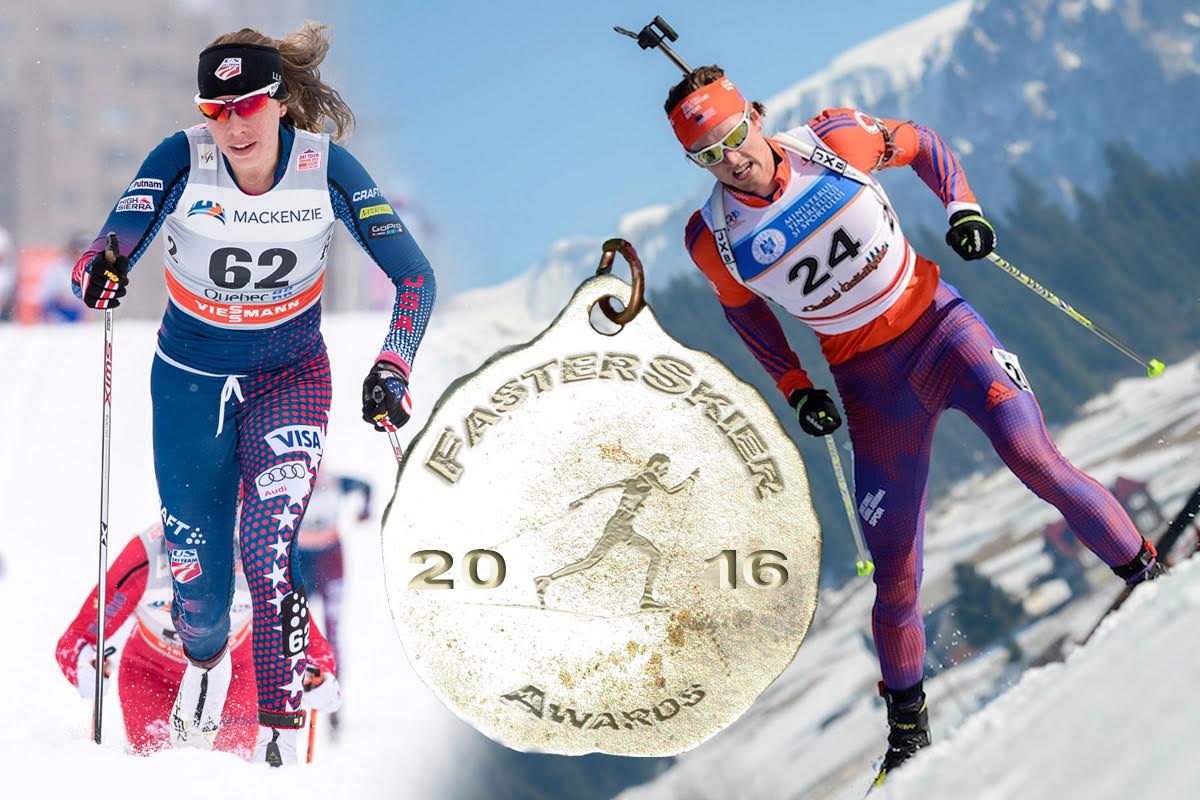
Katharine Ogden (l) of the Stratton Mountain School and U.S. Ski Team (seen racing in Montreal during the second World Cup stage of the Ski Tour Canada) and US Biathlon’s Sean Doherty (racing at 2016 IBU Junior World Championships in Cheile Gradistei, Romania) are FasterSkier’s Junior Skiers of 2016. (Photos: Flying Point Road & IBU YJWCH Cheile Gradistei 2016/Facebook)
With the 2015/2016 season officially in the rearview, FasterSkier is excited to unveil its annual award winners for this past winter. Votes stem from the FS staff, scattered across the U.S. and Canada, and while not scientific, they are intended to reflect a broader sense of the season in review.
***
Sean Doherty, US Biathlon
Pardon if you’ve heard this one before: Sean Doherty, from Center Conway, N.H., is the best U.S. junior biathlete of all time.
The 20 year old proved it yet again this season, picking up another full collection of medals – bronze in the individual, silver in the sprint and gold in the pursuit – at Junior World Championships in Cheile Gradistei, Romania.
Sean Doherty on his way to securing a nearly 30-second win in Sunday’s pursuit at 2016 IBU Junior World Championships in Cheile Gradistei, Romania.
But Doherty went one better: he became the winningest young biathlete of all time, period. The gold medal was his 10th at Youth and Junior World Championships over the course of his career, a feat unmatched in the competitive world of biathlon; the ninth, silver in the sprint, was actually the one that gave him the record.
“I didn’t know I had done it until a good ways after the [sprint] race,” Doherty said in a phone interview from Romania. “I was in the press conference [and a reporter] asked the question, and I didn’t know until that point that I had set a new record.”
But that’s not the only thing her was up to this winter. Doherty continued to make his way as a reliable performer on the World Cup circuit, earning three top-20 finishes including 13th in the sprint on “home” turf in Presque Isle, Maine.
And he anchored the U.S. men’s team to eighth in the World Championships relay in Oslo, Norway – as well as to sixth-place finishes in Ruhpolding, Germany, and Antholz, Italy, and a fifth-place finish in Presque Isle during the regular season.
Coming off a career-best 13th in the sprint, Sean Doherty (US Biathlon) placed 20th in the men’s pursuit at the IBU World Cup in Presque Isle, Maine. (Photo: USBA/NordicFocus)
Doherty has now finished out his junior career, and will be on a diet of straight World Cups next season. His growth into a senior biathlete is one of the things that keeps the men’s team hungry and positive, supplementing the results of longtime veterans Lowell Bailey and Tim Burke, and fellow former top junior Leif Nordgren.
“In the men’s field right now, it’s so strong,” Bailey explained at World Championships. “Every team has a stacked team, it seems like. But I think we’ve put together a really competitive team. We have four guys who are routinely in the points. So on a good day we can be right there. The results have shown that we have improved every year. We’re hoping to build on that, and anything can happen.”
Katharine Ogden, U.S. Ski Team/Stratton Mountain School
Ogden, too, won FasterSkier’s junior of the year accolades last season. But she just kept right on going in 2016.
Starting with the first SuperTours of the season in West Yellowstone, Montana, Ogden put the senior field on notice when she won the 10 k skate by 1.8 seconds over Alaska Pacific University’s Chelsea Holmes.
Katharine Ogden of the Stratton Mountain School and U.S. Ski Team races to a fourth place finish overall (+1:05.1) in the women’s 15 k classic individual start at U.S. nationals in Houghton, Mich. (Photo: Christopher Schmidt)
Then it was on to U.S. nationals, where Ogden was fourth in the 10 k classic, third in the 20 k skate mass start, and eighth in the classic sprint.
Always positive, Ogden says that she’s enjoying being able to hang with the senior women.
“It was awesome skiing with Caitlin [Patterson], Chelsea [Holmes], and Anne Hart,” Ogden said after the U.S. nationals mass start. “Just being able to ski behind them is so nice for me, I can really learn a lot from them and catch a ride on the downhills.”
Ogden finished 13th in both of her individual starts at Junior World Championships, and earned start rights at the Ski Tour Canada. At the end of the eight-stage World Cup series she stood 36th, the seventh American.
“It was pretty intimidating in the beginning but I guess I’m kind of getting used to it,” she said.
Americans Katharine Ogden (front) and Annie Hart (l) during the women’s 15 k skiathlon in Canmore, Alberta, part of the World Cup Ski Tour Canada. (Photo: Fischer/NordicFocus)
Annelies Cook finishing out her international biathlon career, anchoring the U.S. women’s relay team to 13th at 2016 IBU World Championships. (Photo: USBA/NordicFocus)
OSLO, Norway — The women’s 4 x 6-kilometer relay wasn’t just the last race of 2016 World Championships for part of the US Biathlon team, but also the last international race of some of their careers.
With both Hannah Dreissigacker and Annelies Cook set to retire – and neither are attending the final World Cups in Khanty-Mansiysk, Russia – it is the end of an era for the team.
“I’m really sad to be saying goodbye to Annelies and Hannah as teammates,” Clare Egan said. “Really, really sad. They are just great teammates, relay day or not relay day. Summertime, wintertime. We have big shoes to fill.”
But before they could laugh and cry and reminisce about so many training camps and racing trips done together, the women had to get through the relay, and they wanted a good result.
“I said last night in our race meeting, we definitely want to approach every day until the end of the World Championships very professionally,” U.S. women’s national team coach Jonne Kähkönen said. “Sure, there are a lot of emotions. You have to put those on the side, and finish the day first, and then celebrate the retirements. But have a good focus all the way through.”
“We want to have fun on this last day, and we want to put together a good result to have a good memory to go out on,” Susan Dunklee agreed. “When you’re seeking fun, that doesn’t mean that you don’t work hard and it doesn’t mean that you’re unprofessional or you’re not doing the focused work that you need to do. But I think that’s the common misconception when we talk about fun. Fun means keeping yourself motivated to be hungry and to want to do the work.”
Dunklee led things off for the United States, cleaning prone with no spare rounds and going out with the leaders.
“I don’t think I’ve ever seen so much contact in the women’s field in a mass start situation,” she said of the early going. “People were bumping elbows and poles, and stepping on each others’ skis, and I saw a couple different people go down. People were moving back and forth across the trail more than they usually do. It was really difficult to move up today.”
American Susan Dunklee (14) chasing Italy’s Lisa Vittozzi (2) while skiing the first leg of the women’s 4 x 6 k relay at 2016 IBU World Championships in Oslo, Norway. She tagged her team in 10th and the U.S. went on to place 13th. (Photo: JoJo Baldus)
Dunklee tried to attack on the second loop, but was quickly caught.
“I don’t think I felt as sharp on skis,” she said, comparing the effort to her leadoff leg in the mixed relay a week ago, where she tagged off in first place.
“I didn’t have the gas to quite go as hard, and when I did go hard I didn’t recover. I think all this racing is starting to get to me a little bit. I attacked off the front, and then people passed me on that downhill leading into the big hill. They caught right back up, so I thought it was stupid to waste that much energy if I’m not going to make a big break.”
Dunklee then used two spare round in standing and tagged off in tenth place, 28.2 seconds back. Her ski time was the second-fastest of all leadoff skiers.
She tagged off to Dreissigacker, who was in the last relay race of her career. Things didn’t go perfectly, and the team fell to 16th.
“Shooting, I had to use three spares,” Dreissigacker explained. “I am not that happy with my shooting, but it still wasn’t terrible. It’s just a tough competition out there today. There are all kinds of teams at the top.”
Egan moved up to 14th with two spares, before tagging off to Cook.
Cook had only announced her retirement publicly in the last 24 hours, and of all the emotions running rampant on the team, hers were the strongest.
“I was so nervous, oh my god,” she said. “I wanted to be able to finish in a good way, with my team. I had the worst butterflies all day long. But I was just really happy to ski.”
And after being frustrated in the sprint, after a bout of pre-Championships illness, Cook felt her ski speed come back around as the week went on. She used just one spare round on the anchor leg and was left with a performance she could feel happy about. She crossed the line smiling in 13th place, 3:47.1 behind the winning Norwegian team.
“I think Annelies did a great job today,” Kähkönen said. “Cleaning quick in prone, and then just one reserve in standing. That was excellent execution. To her potential, I mean, that’s how Annelies Cook shoots.”
Still, even out on the course there were bits of emotion.
“On the last little bit I saw Hannah, and Susan and Clare, and they are such a great team,” Cook said, tears wellling up in her eyes. “I’m going to miss them so much. It has been a really amazing adventure with a lot of really good people.”
The result wasn’t the best of the season. The U.S. had finished tenth in the last World Cup relay before World Championships, at home in Presque Isle, Maine.
Clare Egan skiing the third leg for the U.S. women in the 4 x 6 k relay at 2016 IBU World Championships. After receiving the tag in 16th, she brought the team to 14th and the U.S. finished 13th. (Photo: JoJo Baldus)
“We maybe just didn’t have the energy on the skis today,” Egan said. “It seemed like some of the other teams were performing extremely well. I don’t think we were performing poorly.”
Kähkönen thought that was a fair assessment.
“At the World Champs, that’s just the level [of competition],” he said. “You need that good shooting, and even better shooting, and the best shape of the day. And as usual, we had a few surprises mixed in there. Like the Slovenian team, and Kazakhstan definitely had a great day today.”
Now, the team is looking forward to Dunklee and Dreissigacker competing in Sunday’s mass start, the first time ever that two American woman qualified for the 30-woman event at a Championships.
From there, Dunklee and Egan will go to Khanty-Mansiysk to finish off the World Cup, while the retirees will go home, and then to North American Championships in Fort Kent, Maine.
After that, it’s time for the team to contemplate life with two fewer members.
“I’m going to miss them so much. It has been a really amazing adventure with a lot of really good people.” — Annelies Cook (US Biathlon) on retiring
“It will be a great challenge,” Kähkönen said. “We’ve talked about this for the last two years now. Ever since Sochi I guess. Just trying to find ways to bring in more resources and effort into development, because it’s a long path. I typically say it’s four, five, six years, depending on where you start from, to get to a true World Cup level. I mean, even Clare [Egan, who started biathlon three years ago], she is doing awesome, but still on the way. She is in the process of getting there.”
Dunklee and Egan both agreed that there is plenty of opportunity for their team, naming Maddie Phaneuf and Joanne Reid as women they are excited to work with more next season.
“We have some candidates,” Dunklee said. “It’s going to be a fun challenge, getting some new people up to speed. There’s hope. We have a bright future.”
Kähkönen sees Dunklee, who has had world class performances each of the last several seasons and turned in a top-ten sprint result earlier in World Championships, as the ‘captain’ of the team going forward.
But team cohesion and a supportive atmosphere are hallmarks of the U.S. women’s team, and he doesn’t see any problem fitting new candidates into that group.
“The others members took Joanne into the team immediately,” Kähkönen said of Reid’s first World Cup experience. “It was good to see. And I must say, it was almost out of the blue that she raced national trials, and then IBU Cup, and then most of the [World Cup] athletes had not seen her, had not even met her. So I think they did a good job, and at the same time that’s just how the team operates.”
Memories of the atmosphere that Cook and Dreissigacker helped create will inform the group moving forward.
“These awesome experiences you have with your teammates, these bonding moments whether it’s training in the mountains in the summer or in the pouring rain when nobody wants to be out but you’re out there and you’re badass, those keep you motivated,” Dunklee said. “Your teammates make it fun.”
Susan Dunklee (US Biathlon) pushes up a climb during Thursday’s mixed relay at 2015 IBU World Championships in Kontiolahti, Finland. (Photo: USBA/NordicFocus)
KONTIOLAHTI, Finland – Slushfest was the word that best described the opening race of the 2015 IBU World Championships. The respective courses in the 2 x 6 + 2 x 7.5 kilometer mixed relay featured soft, wet snow that made even the most experienced skiers look like beginners. Despite the challenging conditions, both the U.S. and Canadian teams skied and shot their way to match their best World Championships results in the event.
Battling the deteriorating course and the above-freezing temperatures, the Czech Republic skied to the victory in the mixed relay with a time of 1:20:27.2. The U.S. team consisting of Susan Dunklee, Hannah Dreissigacker, Lowell Bailey, and Leif Nordgren placed eighth and finished 1:46.6 behind the victors. The Canadian team of Audrey Vaillancourt, Rosanna Crawford, Nathan Smith, and Brendan Green ended their day in 12th, trailing by 2:27.9.
The American squad had a strong start to the relay as the team’s scramble leg, Dunklee, charged in the first meters to bring the U.S. into third. Skiing behind the Czech Republic and France, Dunklee maintained a consistent rhythm in the soft, wet snow. On the 2 k course’s major climb, dubbed “the wall,” Dunklee passed the French team to ski second into prone shooting.
Dunklee used one spare in prone to exit the range in eighth position. She soon made up lost ground on the leaders, however, and was third behind Japan and the Czech Republic by the end of her second 2 k lap.
According to Dunklee, she enjoys chasing down her competitors even if it means her shooting wasn’t perfect.
“That’s kind of my style in the relays,” she said in a post-race interview. “There’s always people to chase, even if I have to use a spare or two. Then I just use the chasing, hunting-down mode to get people. It’s fun.”
Susan Dunklee (US Biathlon) follows Veronika Vitkova of the Czech Republic during Thursday’s mixed relay at the IBU World Championships in Kontiolahti, Finland. (Photo: USBA/NordicFocus)
Dunklee used another spare in standing but exited the range in fifth. Once again using the thrill of the chase, Dunklee skied the second-fastest final lap to tag Dreissigacker in third position.
“One of these days it would be nice to clean without having to use the spare,” Dunklee said. “I haven’t done that this year, but I felt happy that I was within touch of the leaders. I got to ski a lot with Veronika [Vitkova of the Czech Republic] so that was really nice. She’s a good skier.”
Dreissigacker entered the first meters of her race without many skiers around her, but began to navigate the difficult conditions to the best of her abilities.
“It just feels awful, skiing today,” she said of the race. “Even if you’re going fast compared to other people, it’s not going to feel good.”
In prone, Dreissigacker used three spares and had to ski a penalty lap. When the penalty was all said and done, Dreissigacker had fallen to 13th. She maintained her position throughout the second lap and used two spares in standing to eventually tag the team’s third leg, Bailey, in 15th.
Dreissigacker said that she didn’t know why she missed the targets in prone and was curious to get her coaches’ opinions regarding what went wrong. Despite her performance in prone, she said that she was able to pull herself together to have a strong final two laps and shoot well in standing.
“I tried to go back to the basics and shoot normally, which is what I thought I was trying to do in prone too,” she said. “Sometimes it works and sometimes it doesn’t. I got to ski with people for the second two laps. I felt good about my skiing just judging who I was skiing with.”
Hannah Dreissigacker (7) racing the second leg for the U.S. during Thursday’s mixed relay at 2015 IBU World Championships in Kontiolahti, Finland. (Photo: USBA/NordicFocus)
After watching competitors struggle in the deepening snow, Bailey entered the third leg of the relay hoping to ski smoothly and efficiently.
“My goals were to not flounder around and waste energy and to try and stay smooth,” he said. “I just had to try and ski smooth. The ski technique is not pretty out there. It’s more about just gaining ground with every step and trying to move down the track as fast as you can.”
Bailey cleaned both prone and standing to bring the U.S. team to 11th. The 33 year old had the second-fastest shooting and range times of the third leg. Bailey said he was happy to clean both prone and standing given the prior month, during which he was sick and unable to race. He explained that he spent much of the leadup to World Championships visualizing his shooting and skiing.
“It’s been a challenging month for me. I got sick and I haven’t had much racing so this was a good chance to get a race in,” he said. “I really had focused in the last two weeks of training going through World Champs, trying to visualize how they should go. You always like it to go the way you laid it out in your game plan so I was happy with that and hoping to stay in that mode the rest of the time.”
Starting the final leg in 11th, Nordgren’s mission was to pass as many teams as possible in the final 7.5 k of the relay. After skiing a solid first lap and using one spare in prone, he brought the team to ninth. Depsite the gain of two places, Nordgren explained the one miss in prone lost him the chance to ski with a pack he had almost caught. Instead, he skied the majority of his second lap alone.
Leif Nordgren after the finish of the mixed relay at the 2015 IBU World Championships in Kontiolahti, Finland. The U.S. placed eighth to match its best World Championships finish (and last year’s Olympic result) in the mixed relay.
In an attempt to make up as much ground as possible before the third lap, Nordgren “threw caution to the wind” in standing. The 25 year old ultimately cleaned his second shooting, which left him in good position his the final lap.
With just 2.5 k to go Nordgren was in rapid pursuit of the two teams ahead of him – Germany and Italy — and was make up ground. Despite considerable gains on the two teams by the midpoint of the lap, Nordgren said the distance was too much to overcome.
“In the third loop [Germany and Italy] were right there the whole time, but I couldn’t catch them,” he said. “I think I had it down to three or four seconds halfway through the loop, but I could never quite get contact with them. In the end, I just had to let them go.”
Nordgren crossed the line in eighth, happy with his effort and excited to see what the rest of the Championships will bring.
“I feel confident and I’ve had good shooting all year. I think today kept that confidence high,” he said. “The skiing has been coming around the last couple of World Cups and I don’t think today was any worse, so who knows what will happen.”
Overall, the Americans were pleased with their results, but said they believed that on the right day, they could place higher.
“This is an event where we feel we have the potential for a podium as a relay. We’ve got the depth to pull that off if we have a good day so that’s always in the back of the mind,” Dunklee said.
Canadian Brendan Green catches his breath at the finish of the 2015 IBU World Championship mixed relay. Canada finished the race in 12th position.
After Rocky Start, Canada Comes Back for 12th
The Canadian squad had a much different start than the Americans. Due to their lower ranking in the mixed relay, the team wore bib 22 and was placed in the eighth row of competitors.
According to Vaillancourt, the Canadian scrambler, the position made it nearly impossible to move at race pace in the first kilometers due to the soft conditions that accentuated the accordion effect of the pack.
“It was really chaotic on the first lap. Girls were crashing and the first hill I just stood there,” she said. “The first tiny little hill everyone was just tangled and I was just sitting there for five seconds and I was like, ‘Oh my god, I can’t move, I can’t move.’”
She eventually escaped the mayhem to use one spare in both prone and standing to bring Canada to the exchange in 20th position. Crawford, the team’s second leg, entered the course looking to use the flats to her advantage, but struggled on the hills.
“I felt like I was really strong on the flats so I tried to take as much advantage as I could there because I knew I was going to get crushed on the uphill, which I did,” she said. “On the uphill I didn’t even know what to do. I tried coaches’ skating and just tried to do anything I could to get there as fast as possible.”
Vaillancourt was not slated to start Thursday’s mixed relay, but stepped in when Megan Heinicke came down sick.
In the second leg, Crawford used one spare in prone and cleaned standing to move into 12th before her final 2 k lap, but ultimately fell to 15th before the team’s second exchange. She clocked the third-fastest range time of the second leg.
Much like Crawford, the team’s third leg skier, Smith, used one spare in prone and cleaned standing. His range time was the fourth fastest of the first men’s leg. Given his accurate shooting and strong skiing, Smith brought the team to 11th before the final leg. He explained that because he was tagged in 15th, he focused on his individual skiing and shooting more than he would have if the team were fighting for a top position.
“It’s probably the most challenging conditions you’ll ever see,” Smith said. “… Standing was really good. I was a little bit shaky for one shot and then I had the discipline to reset and make sure I hit all those shots.”
Canada’s anchor, Green cleaned both prone and standing but ultimately lost one place to finish 12th. The 28 year old, who has dealt with lingering back problems for several years after surgery, said that a February crash in Oslo left him unable to participate in regular intensity training in the weeks leading up to World Championships. According to Green, Thursday’s main focus was getting the body back into racing form before the sprint.
Much like the Americans, the Canadian team suggested Thursday’s result was far from their true potential.
“I don’t know, the mixed relays for us are kind of cursed,” Green said. “It’s been a few years where we’ve been able to put together a good mixed relay, but it really is one of the races that should be our strongest so I don’t know if we’re a bit jinxed or what.”
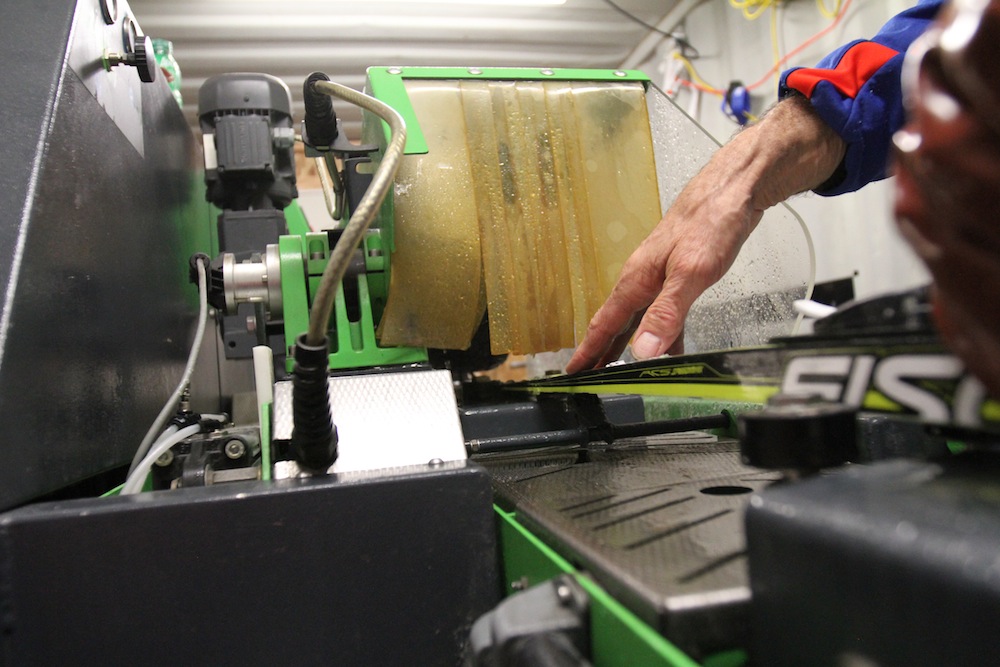
Muck Bauer, a member of the U.S. biathlon team’s service staff, grinds skis in Sochi on Wednesday.
FasterSkier’s coverage is made possible through the generous support of Rudy Project.
SOCHI, Russia – Ski preparation—the strange pseudo-science of applying waxes and structures to the bottom of skis to make them go faster—is such an important component of racing that the powerhouses of cross-country skiing and biathlon, like Norway and Russia, have entire semi trucks at the Sochi Olympic Games housing their workspaces and equipment.
Then, there’s the U.S. biathlon team, which operates here out of a ramshackle orange shipping container cluttered with machinery and coiled extension cords—with a couple of full beer cans propping up their jury-rigged waxing bench.
Inside the container, the American team staff uses a $125,000 machine to grind skis for the Olympic cross-country and biathlon races—running the skis along a rapidly-spinning cylindrical stone that applies a pattern to their plastic bases.
The patterns are tailored to specific snow conditions, and the Americans have adjusted them for different events here, as the weather has changed and the thermometer has spiked—in theory helping to give their athletes an edge over the competition.
A view of the U.S. biathlon team’s container in Sochi.
After placing eighth in the men’s individual race earlier this week, U.S. biathlete Lowell Bailey said that the speed of his skis was a “huge advantage.”
“And that’s due to a few people that have been working specifically for these races,” he said, alluding to the biathlon team’s ski technicians.
A day before that race, Bailey’s skis had been propped up along the wall of the container, with a dozen more pairs belonging to his teammates, and to American cross-country skiers.
Inside, three members of the U.S. biathlon team’s staff were working with the stone grinding machine, churning out skis that would be used in races over the next several days.
The cramped container pales in comparison to the Norwegian and Russian trucks stationed nearby. But it works, as evidenced by Bailey’s eighth-place finish.
“Looks more fancy,” said Bernd Eisenbichler, the high-performance director for the U.S. biathlon team, motioning at the other country’s trailers. “But the outcome, I think, is better here.”
Over the whine of the equipment—which in addition to the grinder includes a pair of heaters, an air compressor, and a generator—Eisenbichler, a German who’s worked for the U.S. since 1999, explained how the team had arranged its Sochi setup.
The container, to which the Americans have added a plywood wall and a door, had been set up in U.S. and shipped to Europe for about $15,000. It cost nearly as much again to rent the space where the container sits in Sochi, below a gondola that runs up to the competition venues, Eisenbichler said.
The money for the initial testing came from the biathlon and cross-country ski teams, which are both using the grinds, while the cost of shipping the container and renting the space was defrayed by the U.S. Olympic Committee.
“They understand the importance of fast skis to be competitive,” Eisenbichler said of the USOC.
As the high-performance director for the biathlon team, the Sochi ski service project falls under Eisenbichler’s responsibility.
But the key to the whole thing is Muck Bauer, the tall, avuncular German who runs the grinding machine.
A 59-year-old former alpine ski racer who hails from Bavaria, Bauer worked for the Germans for five years before being hired by the
Skis inside the U.S. biathlon team’s container at the Sochi Olympic Games.
Americans; he’s now under an exclusive contract that bars him from working with any other teams.
He’s charged with operating the grinder—calibrating, among other things, the thickness of the grinds, the angles, the pressure and speed at which they’re applied. The different settings affect how the skis slide on different types of snow crystals; deeper grinds are used for wetter snow because they can help reduce suction, which would otherwise slow athletes down.
Bauer owns a sports store in Germany, and got his start in the field because, as he put it, he was interested in making his own skis, and his friends’, go faster.
“I want to have good skis under my feet,” he said, with Eisenbichler translating from German.
Under Bauer’s agreement with the Americans, the grinding parameters belong to the U.S. team, but he is allowed to use some of them in his store in Germany, selling the patterns to recreational athletes.
Bauer keeps a book that holds the numbers he plugs into the machine, and they’re also stored on a hard drive. The information is closely guarded: It’s never sent over email, Eisenbichler said, and it’s never left in the container.
“We take all the data with us every day,” he said.
The process of finding the best grinds is not scientific, said Zach Caldwell, who developed patterns for the American cross-country skis leading into the last Olympics, in Vancouver in 2010.
Mostly, it entails testing skis over and over again after they’ve been run through the machine on different settings, he said.
“There’s not a very good way to apply science to it, so you’ve just got to put stuff on the snow and see what works,” he said.
Bauer at work.
Before the Sochi games, the U.S. team tested grinds at three different events here—a string of biathlon, cross-country, and para-nordic races that took place a year ago.
They started with 120 different options, Eisenbichler said, which had been narrowed down to about two dozen when the team’s staff arrived in Sochi a few weeks ago.
By the time the games started, the U.S. had settled on just three grinds: one for dry, newer snow, one for warm, wetter snow, and one for conditions that are somewhere in between.
“You work with a lot of skis at the beginning, then narrow them down,” Eisenbichler said.
On Wednesday, the Americans fired up the grinder at 9 a.m., sent a couple dozen pairs of skis through, and were back up at the venue a few hours later.
The next day, Bailey would be using a pair to race to his historic result in the individual race—the payoff for the many hours of work spent inside the container, and on the testing over the last year.
As to whether the beer cans propping up the wax bench were still full, Eisenbichler responded: “There are two different ones there now.”
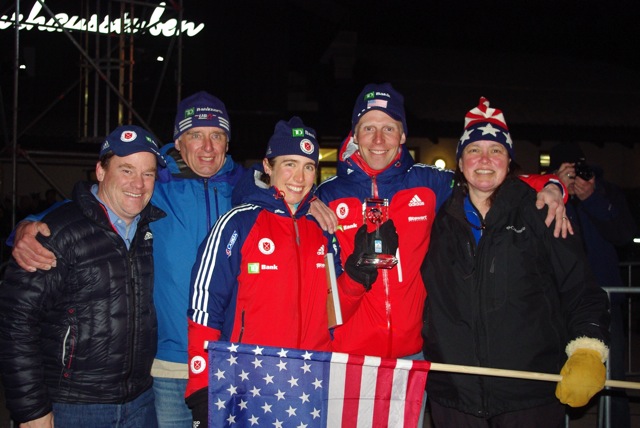
(l-r) USBA President Max Cobb, Stan Dunklee, Susan Dunklee, USBA women's coach Jonne Kahkonen, and Judy Robitaille-Dunklee at the medals ceremony on Wednesday night. Stan (a 1976 and 1980 Olympic skier) and Judy, Dunklee's parents, traveled to Ruhpolding to watch her compete.
RUHPOLDING, Germany – When Susan Dunklee was leading Wednesday’s World Championship 15 k individual race, fans, coaches, and journalists alike were scratching their heads. Who is this Susan Dunklee?
The American World Cup rookie is not unknown on the circuit – coming in to these races she had scored World Cup points eight times and finished in the top 20 in a sprint in Antholz, Itlay – but she wasn’t too familiar, either. While the U.S. has seen four different men place in the top ten this season, the women’s team hasn’t had even one top-ten performance in years.
But the sight of an American at the women’s medal ceremony – Dunklee ended up fifth on the day, the best World Championships result ever by a U.S. woman – would not be nearly as surpring to European audiences as the story of how she got there, which highlights the unique challenges faced by the biathlon in North America. The sport has never had a huge base of athletes to draw on; like cross country skiing, it suffers from a lack of tradition and culture in the U.S. and Canada. Except that for biathlon, it’s even tougher to draw top talent.
In the early 2000’s, the U.S. Biathlon Association (USBA) started a development team to try to fight these issues, with the idea that the program could take talented skiers, turn them into biathletes, and supplement their base of junior biathletes, not all of whom made it through to the senior ranks. It provided a high-level introduction to the sport for many athletes over the last decade, although funding necessitated ending the program after the 2010 season.
Studebaker leading Andrea Henkel (GER) here at World Championships. Studebaker's best finish has been 38th in the individual.
Dunklee, who hadn’t shot a rifle until she decided to pick up biathlon in 2008, when she finished at Dartmouth College, has now become the most successful of that cohort of athletes. But plenty of others have represented the U.S. in international competition as well. Sara Studebaker, who had four World Cup top-twenties last year and one this year, had done biathlon as a junior, but not as her main focus; after graduating from Dartmouth in 2007, she joined the development team and was soon promoted to the national team proper. Dunklee and Studebaker were both NCAA All-Americans and members of their school’s team which won the NCAA Championship in 2007.
Studebaker’s boyfriend Zach Hall also joined the program straight from Dartmouth, and started two World Cup races before retiring at the end of last season. Bill Bowler, a former Northern Michigan University skier, has represented the U.S. in Continental Cup competitions and is now a member of the national “B” team. University of Vermont racer Katrina Howe also joined the program around the same time, and is now a full-time biathlete at the Maine Winter Sports Center.
None of these athletes picked up biathlon until they were in their early 20’s – which definitely can’t be said of the Europeans they are competing against. The broadcast of the men’s individual race here in Ruhpolding reportedly drew four million television viewers, and biathlon is the most popular winter sport for Europeans to watch. With such publicity, national team programs are robust and function like clockwork.
Dunklee and Studebaker’s competition consists of women who have been training for the sport since their mid teens at least, and in many cases even younger. Tora Berger, who won the individual race, has been a member of Norway’s national team since 2002. Second-place Marie Laure Brunet picked up biathlon at age 17. Bronze medalist Helena Ekholm, who was seven seconds ahead of Dunklee after four shooting stages and 15 k, is in her seventh year of senior Championship racing for Sweden. Dunklee is in her first.
USBA High Performance Director Bernd Eisenbichler, a former German skier who is well-acquainted with European development systems, said that it was highly unusual, although not unheard of, for an athlete to be top-ten at a Championship event after only four years of shooting training.
“The only one I can remember is Kati Wilhelm maybe, in two years she was World Champion in Pokljuka in 2001, but other than that, no,” Eisenbichler told FasterSkier.
Wilhelm represented Germany as a cross-country skier at the 1998 Olympics, then picked up biathlon in 1999 and went on to win 21 individual World Cup races.
Dunklee gets a hug from Matthias, her Swedish wax tech.
Wilhelm is probably a once-in-a-lifetime athlete, and Eisenbichler said that even though a successful transition between sports like the German’s is possible, it shouldn’t diminish Dunklee’s accomplishment.
“It was impressive,” he said.
(Dunklee is also an unusual athlete within the centralized, Olympic Training Center-based U.S. system, in that she spends about half her training time as a member of the Craftsbury Green Racing Project in Vermont. She travels to training camps in Lake Placid and elsewhere with the national team, and follows their training plan rather than working closely with Craftsbury coach Pepa Miloucheva, but the arrangement – while ultimately rewarding for everyone – has been hard work for both athlete and coaches.)
Did the U.S. team feel like her result made all the funding and work they had poured into a group of non-biathletes worthwhile?
“It is definitely a validation,” U.S. Biathlon Association President Max Cobb said in a trailside interview. “This is just thrilling, for her to do this today. It’s definitely a clear indicator of some huge potential.”
Eisenbichler thought that Dunklee’s anything-is-possible saga would boost morale on his team, which was slightly deflated after the men’s pursuit and individual races.
“I think that was missing a little, a little surprise performance for everyone,” he said. “We know that we can do it, and Tim [Burke] showed already that he can do it – tenth place was a super result. And now Susan with this sensational result, it will for sure have influence for the whole team and it will kick something positive into the weekend, where we will still have some really exciting racing going on.”
Additional commentary from the U.S. coaches can be seen in the video interviews below.
Disclaimer: The author was a teammate of Dunklee’s and Studebaker’s at Dartmouth College, and also a member of the Craftsbury Green Racing Project, but objectivity is always the priority for FasterSkier.
Note: This is part of an ongoing series on junior and collegiate racers in the U.S. and beyond. The nordic sports are certainly not the largest, but there are still thousands of great stories. We will be picking athletes out of this pack to feature – nominations for outstanding or interesting nordic skiers can be sent to alex@fasterskier.com. We are looking for unique stories, not necessarily the fastest skiers. Nominations should include a brief explanation of why we should profile the athlete.
GLENS FALLS, N.Y. — Sitting inside a coffee shop with an iced drink to divert her attention, Carly Wynn looked down to collect her thoughts. As she toyed with a straw, the 18-year-old from Queensbury, N.Y., smiled. In fewer than three years, the three-time New York State nordic ski champion had learned a lot about herself.
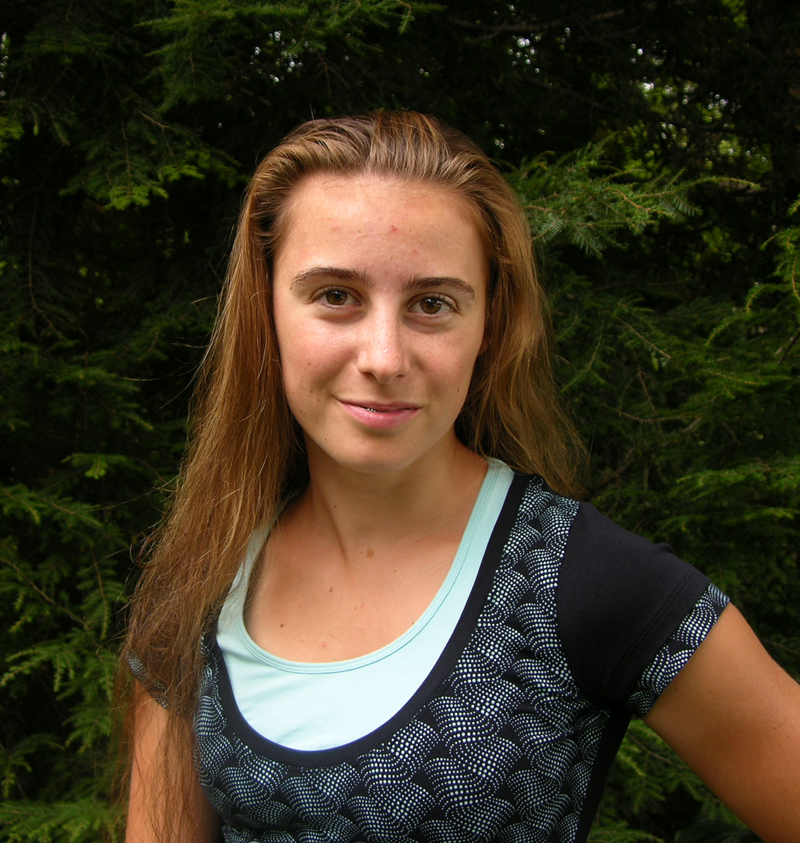
Courtesy photo — Carly Wynn
For one, she wasn’t sure she wanted to stick with nordic — or maybe not in the long run.
With three straight state titles under her belt by her junior year, Wynn decided to switch to biathlon. She had dabbled in the two-pronged sport, but wanted to devote all of her training and resources to it. That meant leaving her high school team for her senior season.
At the time, she dreamt of becoming an Olympian or World Cup competitor. A few weeks ago in August, Wynn as a member of the U.S. Biathlon Junior National Team held similar aspirations, but ultimately wanted to ski in college.
Upon sorting through schools and speaking with several coaches, Wynn discovered biathlon at the collegiate level wasn’t exactly an option. College ski teams wanted cross-country to be the focus and understandably so, she said.
A conversation with the Dartmouth College head women’s coach, Cami Thomson, changed her outlook. Several of Thomson’s skiers practiced biathlon and competed on their own in the past, Wynn said. If she wanted to, she could as well.
“Dartmouth was absolutely the best option because there’s a (shooting) range right there in Hanover, (New Hampshire),” said Wynn, the top U.S. female qualifier at the Youth World Biathlon Championships last year. “It’s an ideal support system.”
With all those options, Wynn emphasized the importance of narrowing her scope. She wanted to make the college’s six-person carnival team and with nearly 20 others vying for spots, she knew it wouldn’t be easy.
After two seasons of biathlon, in which she earned a fully funded trip to the Czech Republic for worlds and won two races at the 2011 Junior Nationals, Wynn resolved to commit to cross-country skiing and she where it takes her over the next year — or four years.
Carly Wynn competes in the Youth World Biathlon Championships in Nove Mesto, Czech Republic, in January 2011. She finished 52nd in the 7.5 k pursuit (shown here), and was 43rd in the 10 k individual race and 53rd in the 6 k sprint. Photo courtesy Judy Geer.
“Every biathlete wants to be a fast skier, so I kind of see that as an added bonus,” Wynn said. “It’s not like gymnastics where you have one shot at making the Olympics and it’s got to be when you’re 17. I’m thinking 2018 right now.”
Her coach, former U.S. Biathlon head coach and five-time Olympian Algis Shalna, hadn’t exactly agreed with her decision to put her Olympic goals on hold, she said. He believed she could continue her biathlon training uninterrupted and shoot for the world trials or 2014 Olympics.
“I just think that if I put the time into that that would be required, I would miss out on the college racing experience,” Wynn said.
So she’s settled, at least for now. The opportunity to practice biathlon is always there, she said, and she planned to keep working with Shalna, a collegiate and regional development coach based out of Vermont.
If the carnival scene doesn’t pan out, she might go back to biathlon entirely. Either way, Shalna said he would support her.
Almost four years after he discovered her at an Eastern Cup race in Lake Placid, N.Y., the 52-year-old former Lithuanian skier said Wynn had the potential to be among the one of the nation’s best biathletes. He remembered the 5-foot-3 sophomore whiz by as he watched a 10 k nordic race. He followed to observe.
“I was really impressed with her ability for endurance and how she was able to … stay in the group and stay with those good skiers,” Shalna said. “I thought she (had) good pain tolerance and I thought, ‘I really want to talk to this girl and see if she wants to do biathlon.’ ”
Once she started training with him and shooting at targets, he saw Wynn was good enough to require more attention. He reached out to the U.S. Biathlon Association and insisted she was worth the time and gas money, and he drove nearly 300 miles round trip from Williston, Vt., to meet her regularly at the Saratoga Biathlon Club in northeastern New York.
“I knew it was going to work,” Shalna said of his intention to turn the fast, athletic skier into a biathlete. “My worry was: is she going to commit to biathlon?”
He learned that her mentality suited the sport. Not only was she calm and confident, but Wynn acted like a professional and took her training seriously, Shalna said. Over time, her shooting improved as did her already-good skating technique.
In the end, Shalna was pleased she chose Dartmouth, but said she needed to keep working on biathlon. Of the seven athletes on the Junior National Team and others he trained in the northeast, he said several joined collegiate nordic teams.
“It’s all a matter of how much training and time she can commit,” he said. “She is going to be a top racer in the country.”
For Wynn, it’s all about the process – a concept that she didn’t readily accept. It wasn’t until she understood the discipline of biathlon that she was able to step back and relax.
Wynn, 18, while hiking Algonquin Peak in the Adirondacks in July. Photo courtesy Elizabeth Izzo.
“I’m learning a lot about how to think in order to get the best out of myself,” she said. “Biathlon’s really taught me how to do that, how to focus on exactly what you’re doing right then and not have expectations.”
Shalna’s advice and Wynn’s willingness to listen helped her in life beyond skiing and biathlon, she said. A few weeks ago, Wynn said she nearly had a panic attack when she considered the high number of valedictorians at Dartmouth. Despite ranking third in her graduating class, she worried she would be overly challenged.
She talked herself down, rationalizing that she didn’t have to decide her major until the spring of her sophomore year. She anticipated studying exercise physiology, but was mostly excited about skiing, first in college and then beyond the NCAA scene.
“It’s worked really well integrating biathlon into my program,” Wynn said. “At this point for my future, I’m thinking that if I take any sport to the Olympic or World Cup level it will definitely be biathlon.”
Five years ago, Sarah Konrad made history as the first U.S. woman to compete in two different sports at the same Winter Olympics.
In Torino, Konrad finished 32nd in the 30 k mass start in cross country and was part of the U.S. relay team. She also contested both the individual and sprint events in biathlon.
In the three-year period from 2005 to 2007, Konrad racked up some of the best results for U.S. women in either sport and appeared at all six World Championship and Olympic events. In 2005, she finished 23rd in the 10 k skate race at World Championships, a sensational result for her at the time. In 2006, besides her strong mass start performance at the Olympics, she also finished 38th at Oslo’s Holmenkollen, the most storied World Cup race on the schedule. Two weeks later, she finished 30th in the sprint at the last biathlon World Cup of the season, also in Oslo.
And, oh yeah: Konrad was 38 years old in Torino, the oldest female Olympian that year.
After retiring from international racing, she returned to Laramie, Wyoming, where she had done her PhD work in geology. She now does research, modeling how mosquitoes act as disease vectors, and coaches a group of masters racers on the side.
But Konrad hasn’t abandoned high-level athletics entirely. She currently serves as the biathlon representative to the Athletes Advisory Council (AAC) of the United States Olympic Committee (USOC), as well as an athlete representative on the United States Biathlon Association (USBA) board and its International Competition Committee (ICC).
FasterSkier called Konrad while she was in Las Vegas, Nevada, at an AAC meeting to talk about what it means to be an advocate for other athletes.
FasterSkier: Could you describe what it is that you do as an athlete rep?
Sarah Konrad: There’s several different levels. I’m the athlete rep for biathlon, which means that I sit on the USBA board of directors, and I’m the biathlon rep to the AAC, which has one rep from every sport.
FS: On the USBA side of things, you’re on the International Competition Committee, too, is that right?
SK: Yes. The ICC has five members and one of them has to be an athlete.
FS: I know that the ICC crafts selection criteria, but what else do you do?
SK: We craft the selection criteria and then make the actual selections if discretion is involved. It’s mostly that – who gets to compete where. There’s selection criteria for individual races and selection criteria for the national team.
FS: It seems like some of the selection criteria are divided up based on age. What was the philosophy on that?
SK: There’s the philosophy – and this is funny for me to talk about, because based on my experience I obviously believe that age should not matter – but the main philosophy is that it’s age for things that are about development. Age comes into it for naming of the teams and training groups, but not so much in terms of who gets to compete in a race. But in terms of development and who needs support for the future, there’s this orientation, and most teams have it, that we need to take the young ones, the promising ones – and it’s not just age, honestly, I know it’s raised that way in the criteria, but the philosophy of Berndt Eisenbichler, the High Performance Director, is that it’s people who have not been in the sport that long, as well. They’re the ones we really want to see develop, because they are the ones who can be on a steep learning curve.
It’s tricky. The whole thing with [Lanny and Tracy] Barnes, and I just know from my own experience, and Susan [Dunklee] has had some of these experiences as well, is that it’s very very hard to write criteria to tell you exactly who the best people are going to be. It’s really difficult. And for me, from an athlete’s perspective, it means to try to make it as objective as possible and not hugely discretionary. When it’s objective, then the athlete knows what they need to do, it’s very clear-cut. And I think that’s important as an athlete, to have goals: okay, I need to do this, and if I do this, then I can do that. Whereas if it’s mostly discretionary, no matter what the athlete does they don’t know if it’s going to be good enough. I think that’s a rough way to go.
Of course, there has to be some discretion, and that’s going to be valuable as well to the athlete who has got everything lined up and everything’s going really well, and they get sick at the key races. There’s got to be some way to deal with that. So we try to take an approach of having discretion make up no more than 25 percent of a team.
FS: It seems like USBA isn’t the best about posting and getting this stuff out in a particularly timely fashion. What’s up with that?
SK: Yeah, I would agree with that.
FS: How can that be improved?
SK: We’re definitely working on that, and improvements are happening, although slowly. The biggest problem at the root of it is that USBA is pretty understaffed. It’s working on a small budget, and so there’s just too much that needs to be done. The other people on the ICC are coaches and everyone has huge time demands, so trying to get that done in a timely manner is somewhat hindered by just trying to keep everything else going. That’s not a good excuse, either. It really needs to get done for the benefit of the athletes.
This whole season at least, is quite clear. All the steps of what needs to be done and what races you can compete in this season and what that will lead to, are posted.
FS: This year there’s more fluidity between the World Cup and IBU Cup [the next level down] circuits. Is that something that was brought up by the athletes, or where did that originate?
SK: Unfortunately all the ICC meetings are confidential, and I can’t really say.
FS: Oh, okay. Well, it seems like it’s a good change, though.
SK: Yeah, I think so. The idea is to give many people the opportunity. Where a lot of Americans are, and where I was when I was competing, doing the World Cup and coming in 70th just isn’t really a fun thing. You get World Cup experience, but the IBU Cup, there is really good competition there, where you can still get that same exact experience of competing against Europeans, but with a little bit better psychological reinforcement. So, I think it’s a really good idea to have a lot of people competing on the IBU Cup because we can get the experience that we can’t get competing in the States, but also not get beaten down too early.
FS: In terms of team criteria, it seems like racing domestically doesn’t have any rewards attached to it, and most of the best biathletes don’t do it. How do you see that affecting development of younger athletes – they don’t even get to race the best people in the U.S.?
SK: From the perspective of the ICC, this is hugely on the radar. For this sport to survive in the United States, we do need to have development, and we do need to have grassroots, and the first obstacle to that is money. It’s obviously a very expensive sport. You need all the ski equipment, but also a rifle, et cetera et cetera. There needs to be some sort of overhead to at least establish the structure. We’re trying to raise some money to start a new position of development director, who would really be looking at all this – how to get younger people, how to get established centers of excellence, to really give a place for that to happen.
And you might have seen this back east, but paintball biathlon is really starting to take off.
FS: Yes, it is in New England too.
SK: And obviously you can’t go directly from paintball biathlon to regular biathlon and be really good, but it does give a flavor of what biathlon is about, so it’s a great way to start increasing interest.
But it’s tough. How do you build a sport pretty much up from nothing and make it what it is in Europe? One thing I think USBA can do better, and we’ve talked about some, is really making use of its alumni, because they’re the people who know the sport and are passionate about it. That’s what needs to happen. You get some rifles for the juniors and if you have someone there who is psyched to start working with the juniors, showing them what it’s about, that’s what makes a program take off. As soon as kids see, ‘hey, that looks fun and here’s someone who enjoys it,’ that’s what makes people get into stuff. It’s not, ‘that thing is kind of weird and it looks difficult.’ It’s making something accessible and making something fun, and the people to do that are really the alumni. There’s a fair number of us out around the country. It takes some motivated ones, though.
FS: It’s cool that with the USBA, you really get to have a big part in some of this stuff.
SK: The thing is, the position is a tough one in some ways, just because it’s volunteer, and to do it well it takes a lot of time. A lot of people don’t have that type of time. I’m lucky in that I’m working half time and am able to support myself on that, so I have more time to be able to put into the athlete rep thing. And also, I really see the need for it and enjoy it. Brian Olsen [another athlete rep] came on at the same time as me and he feels very similarly. He’s quite passionate about it, so between the two of us working together, we’re able to bounce ideas off of each other, and go to [USBA President and CEO] Max Cobb with them.
I think at first Max was a little bit surprised with how forward we were. So really, it’s what the athlete makes of it. And it works well for both Brian and I in that we were both recently retired so we still had good connections with current athletes. Sometimes athlete reps, when they’re done competing, they’re a little bit too far out to really feel that type of connection.
It’s growing, and it’s really give and take. I give to biathlon some, and put energy in, and give them ideas. And they say, ‘wait, wow, she’s really willing to do this, and Brian’s really willing to do this, and they’re not just throwing ideas out there, they’re willing to follow through on them.’ And when biathlon saw that from us, then they started asking us to take on more stuff.
It’s worked really well, and we have a really good relationship with the national governing body. And with the athletes, too. We work really hard to maintain connections with the athletes, and to make contact with them directly, not just always sending out group e-mails, but trying to make time to talk one-on-one and let them know, too, that we’re really engaged. That’s something that we learned, that you can’t always assume that people are going to approach you. You have to reach out; you have to be the one who is creating those paths.
FS: How much longer do you think you’ll do the athlete rep thing?
SK: Well, I’m two years into a four-year term, so I’ll definitely finish that. You can only do it when you’re within the ten-year rule, so you have to have competed in an Olympics or World Championships within those past ten years. So I could be re-elected for another four-year term, and if that’s what the biathletes want, I’d be happy to do it again, just because I think it is a pretty rewarding position. I feel like I’ve accomplished stuff that I’d like to keep doing. And the rule is a great rule, as well, because after that point, I just shouldn’t be there. Even before that point, you get further removed, and I’m not sure it’s ideal. So, if the biathletes wanted to elect someone else, I’d totally understand that, too.
FS: Maybe that just means you need to go to another Olympics.
SK: Exactly! Maybe.
One example of the way that biathlon has reacted and given back to us, is that I was up in Canmore for the team trials in November. I don’t think biathlon has ever done that before, to fly the athlete rep up to be at trials. And that was their idea – they asked me if I wanted to do it, and I thought it was a great idea. So that’s the kind of give and take that is building, that’s making it a better thing. It was a really valuable experience for me just to be there, and to see the athletes and get the chance to interact with them one-on-one, not just on the phone or over e-mail, and really get a feel for where everyone’s at and how people are feeling about the organization, and I thought that was great.
FS: That really is a good relationship.
SK: The funny thing is, within the AAC and the USOC good relationships between athlete reps and national governing boards are recognized, and I was just contacted by some people at the USOC the other day to speak to the board of directors of curling, which I guess is going through some troubles. So they asked me as an athlete rep with an organization that’s doing pretty well, and was in a position a few years back that was not as good – they wanted me to speak to the role of the athlete rep, and how I work with the board and how I work with the staff, just as an example for curling.
It’s great that the USOC sees that it’s working well here, and that they want to share those best practices with another national governing board, and perhaps share some guidelines. The reason to do it is that if curling is having some communication breakdown between the athlete and the governance, then hopefully this will be something that will help the athletes in the long run.
FS: Tell me more about the USOC and the AAC.
SK: That’s a pretty neat organization – it’s been around since the 1970’s, and it was started by athletes to start getting more rights for themselves. That was before the Ted Stevens Olympic and Amateur Sports Act, and they were responsible for that coming around. It’s really been their mandate to work as a group, strength in numbers, with people from different sports to share experiences and best practices and kind of be the conscience of the USOC.
FS: What projects do they do now?
SK: There’s several different divisions. There’s athlete support, U.S. Anti-Doping Agency (USADA), and governance. I’m part of the athlete support division and what we’ve been working on is, there’s a survey that went out today to poll all the Olympic athletes in all sports about things that we can do to help them. So we try to stay open.
But I’m also leading a task force on national governing bodies compliance, so we’re trying to look at how different bodies actually follow bylaws and the Ted Stevens act, to see if they do things they are supposed to do, like have 20 percent athlete representation on all boards and committees and giving athletes rights to hearings before they say, “no you can’t compete.” There’s all sorts of rights there that need to be enforced somehow. We’re not in enforcement, we’re in oversight.
They also do the whole career program, OJOBs. It used to be Home Depot and it’s now going to be with the Hilton.
And with the USADA side of things, we’re the ones who sent out the survey to see how people like the new drug testing plan instituted by the World Anti-Doping Agency (WADA), and people didn’t really like it. So we’ve been working with USADA to talk to WADA about changing some of those things.
FS: How did you get involved with the AAC? Was it when you were still an athlete?
SK: No, not at all. And in fact, that’s a big thing the organization can do better, because most athletes don’t even really know it exists. I didn’t know that it existed, really, until I became elected as the athlete rep. There’s the AAC rep and the AAC alternate, so since I had the most votes in the biathlon election I was named to be the AAC rep, and Brian Olsen was the alternate. So we’re both USBA reps, but I’m the AAC rep. So I was just told, ‘okay, now you’re part of this and you’re going to these meetings,’ and I really had no idea what to expect. But I’ve actually been really impressed. I think it’s lost a little bit of its teeth, compared to where it was in the 1970’s and 80’s, but I think there’s a lot of people there involved who want to make it something, to give it some more teeth. It really exists just for athletes, and there’s a lot that can be done.
Casey Simons racing at the 10th Mountain Ski Club in Fort Kent, Maine, last winter. Fort Kent will host World Cup biathlon races in February, 2011, along with Presque Isle.
AUGUSTA, Maine – Presque Isle, Maine, will get a World Cup weekend of its own next winter, officials announced Wednesday morning.
In a press conference at Maine Governor John Baldacci’s office, Nordic Heritage Sport Club Chairman Tim Vernon said that his organization would be stepping up to the plate to host a second World Cup weekend in Northern Maine, to go along with a previously-scheduled race in Fort Kent.
The competition now set for Presque Isle was originally planned for Lake Placid, at the Mt. Van Hoevenberg venue, but Vernon said that organizers there withdrew their name from consideration.
According to U.S. Biathlon Association Executive Director Max Cobb, the Olympic Regional Development Authority in Lake Placid would have had to make numerous upgrades to its facilities in order to host the event, and with its finances uncertain due to a state budget crisis in New York, “they’re trying to be conservative about the obligations that they get themselves under.”
Presque Isle has never hosted a World Cup before, but with the 2006 World Junior Biathlon Championships and the 2010 U.S. Junior Olympics under its belt, the International Biathlon Union offered them the chance. The Nordic Heritage Sport Club’s trustees subsequently voted to take on the races, Vernon said.
With just eight months to prepare, Presque Isle will have its hands full to pull off the events.
The biggest challenge for the organizers, Cobb said, will be to line up local sponsors over the next two months, which would enable the club to go into its fall planning phase with a good sense of its budget.
In addition, Vernon said that his club would need 500 volunteers. But that infrastructure is already in place after holding the Junior Olympics there this spring, he added.
“We’re just going to put those folks right back to work,” Vernon said.
The physical facility in Presque Isle is already close to world-class. Cobb said that only slight changes will be necessary, to make more room in the stadium for spectators.
The club will hold three races on February 4th, 5th, and 6th: a sprint, a mixed relay (two men and two women from each country), and a pursuit, in that order.
Teams will then compete in three more races in Fort Kent the following weekend: another sprint and pursuit, as well as a mass start.
Logistically, Cobb said, switching the Lake Placid races to Presque Isle should be easier on the athletes, although organizers had previously arranged for a charter flight to go from New York to Northern Maine.
Officials in Maine see the events as a prime opportunity to market the state’s tourism industry to the millions of Europeans that will watch the races on TV. The magnitude of the announcement was underscored by the fact that it took place at the governor’s office.
“We’re looking at somewhere in the neighborhood of 60 million TV impressions per World Cup,” said Andy Shepard, CEO of the Maine Winter Sports Center, which oversees the Presque Isle venue. “Adding another World Cup in Presque Isle—what we’re talking about now is 120 million impressions.”
“A two-week dialogue…allows us to present to [viewers] all the reasons why coming to Maine is a great idea,” Shepard said.
Cobb said that his organization has no plans to bid for bigger events in the U.S., like World Championships. But he said that they do have a goal of bringing the World Cup to the country twice every four years, and Presque Isle is also seeking to host another World Junior Championships in 2014.
To ensure that the Europeans are willing to make the trip back again, Cobb said he wants to make sure that the two events this winter are “outstanding from the athletes’ perspective.”
“We want to try [to] put our best foot forward here,” he said.
Tim Burke capturing the yellow jersey of World Cup overall leader was one of USBA's highlights of the 2009-2010 season (Photo: Nordic Focus/USBA)
For the U.S. Biathlon Association (USBA), the winter of 2010 was one of ups and downs. High points included Tim Burke’s podium performances in the early season, which culminated with his donning of the yellow bib of World Cup overall leader after a race in Slovenia. The Olympics were less successful, with Jeremy Teela’s ninth-place leading the way—but the team’s dissatisfaction with a single top-ten is a testament to how far the program has come in recent years.
Executive Director Max Cobb has worked for USBA on and off for over 20 years, and has been through thick and thin with the organization. He sat down with me in March at the North American Biathlon Championships in Fort Kent to rehash the year and discuss the sport more broadly. As Chief of Range at the Olympics in Vancouver, he had an intimate view of the snafus in the pursuit races there, and with two biathlon World Cup races coming up in the U.S. next year, he was able to give us a few of the details on those. Cobb also discussed some of the challenges of operating a single-sport governing body, as well as development.