From the FasterSkier archive — posts syndicated from athletes’ and coaches’ own blogs between 2004 and 2012, kept online as published. Current coverage is at fasterskier.com.
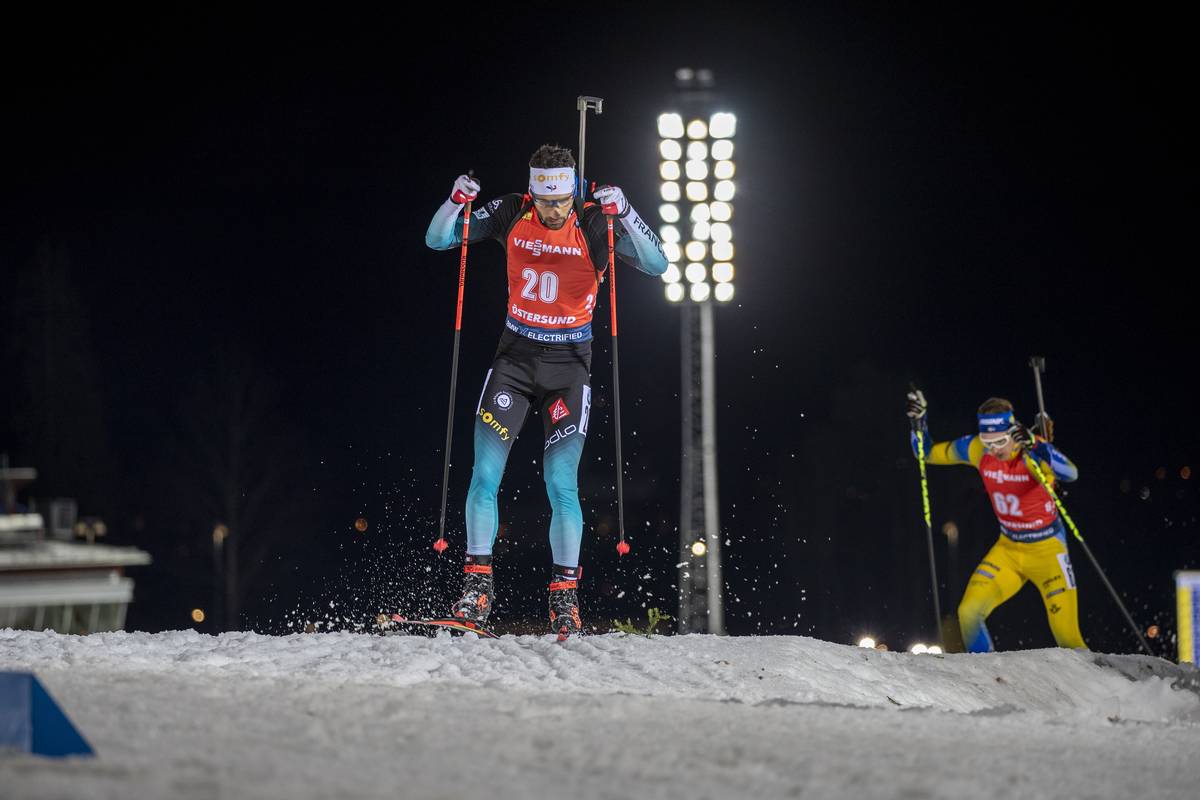
At the first biathlon World Cup races of the 2025/26 season, the biathlon stadium is perched above the small city of Östersund, which is set on a lake. Wind gusts off the lake, pulsing through the stadium. The races take place under the lights, at night – which isn’t saying much. Because in December in northern Sweden, ‘night’ begins at three in the afternoon, when what little sun there might’ve been throughout the day slips below the horizon. It’s in the evenings that the wind is usually at its strongest. The conditions the racers zero their rifles at before the race are rarely the same conditions they find when they come back to the range during the race. Athletes watch the small, red flags in the range, seeing which way they’re moving, deciding whether or not to shift their sights a few clicks, compensating for the changes that happened while the racers skied the course that serpentines up, down, around a 180-degree turn, and back into the stadium where the music plays and the home crowd cheers. Ayyy! As the Swedes hit their targets. A diluted Ney for each Swedish miss.
The mixed relay at the opening stop, Oestersund (SWE), of the 2025/26 IBU World Cup Biathlon season. (Photo: Manzoni/NordicFocus)
Over eight days, the best biathletes in the world raced 10 times. Maybe it was the arduous schedule, or the bit of sharpness that an Olympic year adds, but the Ostersund races didn’t feel like the first of the season. It felt like a break had never happened.
One question lingering from the off-season was answered quickly: What would Norwegian biathlon look like without the Boe Brothers? The dominant duo of Johannes Thingnes and Tarjei Boe – owners of eight Olympic medals – retired at the end of the 2024/25 season. Leaving what one would assume would be a major hole in the program. But when the Norwegian men came out and won the men’s 4 x 7.5km relay at Ostersund, the Norwegian’s roster depth became clear.
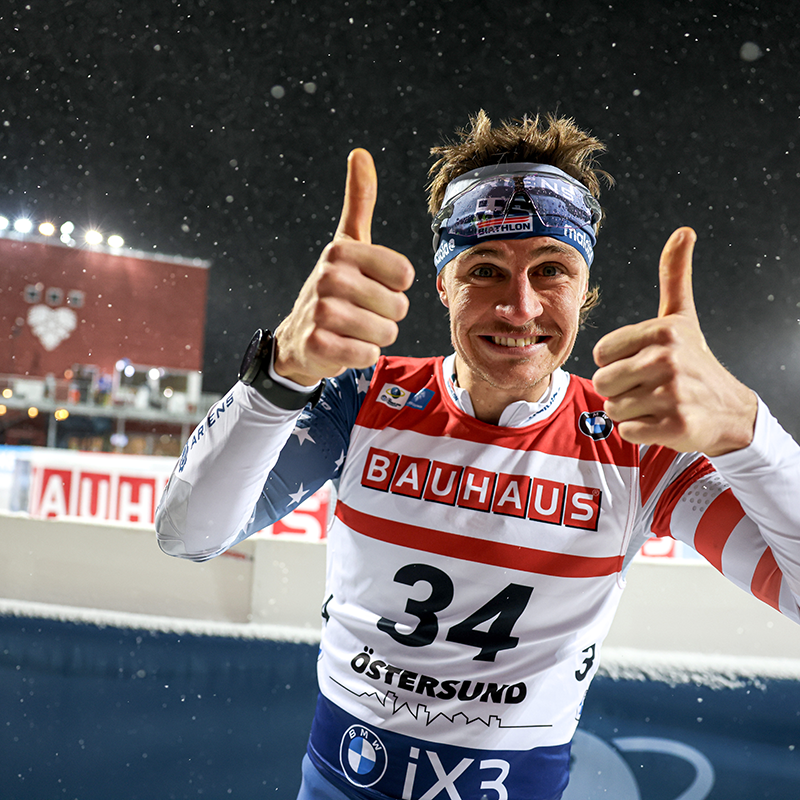
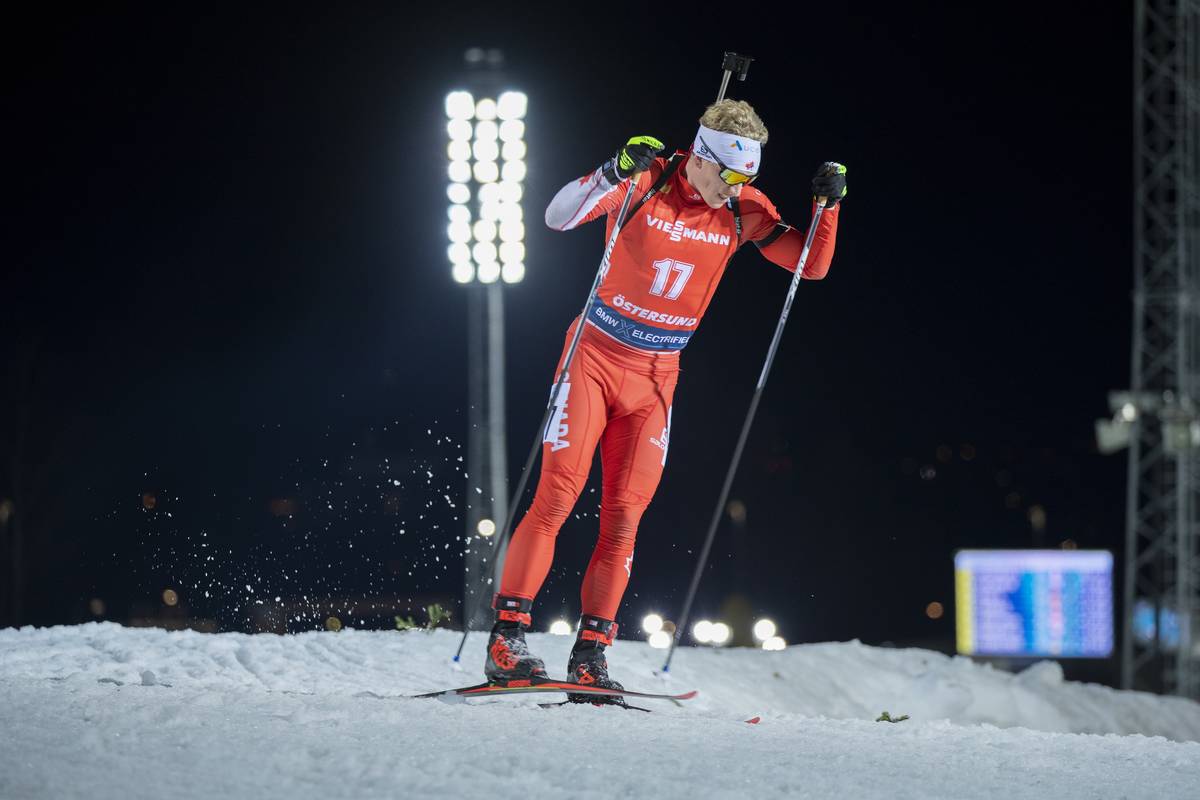
Campbell Wright (USA) during the IBU World Cup Biathlon Men’s Relay in Östersund (SWE). (Photo: Manzoni/NordicFocus)
The men’s relay saw a top result from the U.S. men, as well. Paul Schommer, Campbell Wright, Maxime Germain and Sean Doherty finished fifth, one of the best men’s relay finishes ever for Team USA. The next day, at the mixed relay, Germain, Wright, Chloe Levins and Deedra Irwin placed sixth – which is the best finish for a U.S. mixed relay since 2021.
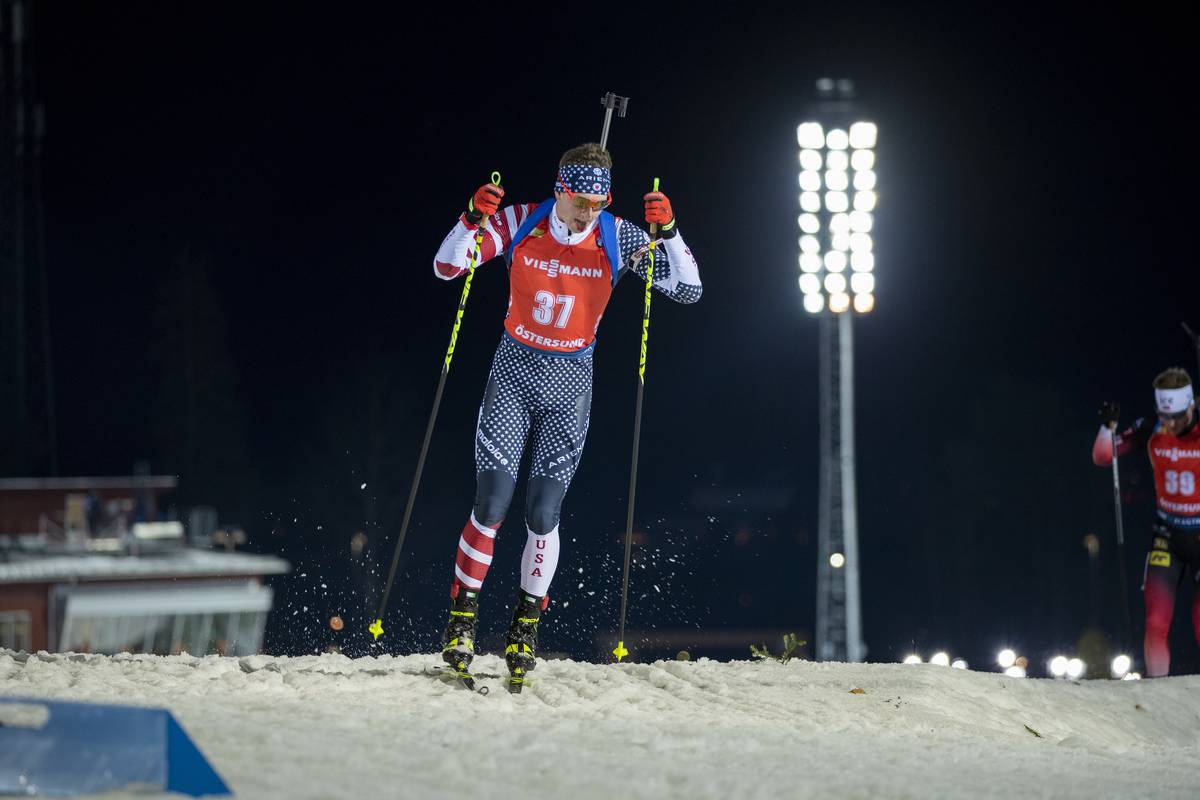
Artem Tyshchenko (UKR) and Paul Schommer (USA), (l-r) during the Men’s Relay in Oestersund (SWE). (Photo: Manzoni/NordicFocus)
Germain and Wright continued to build on their early-week momentum, with Germain placing 11th in the sprint. In the pursuit, Wright hit all 20 targets for the first time in his career and moved up from 18th to 6th. Wright is coming off a stellar 2024/25 season, where he podiumed twice at World Championships, becoming the first American to do so.
Throughout the week, there were highs: Suvi Minkkinen of Finland won her first World Cup sprint. The Norwegian men placed four in the top five in the 20km individual, solidifying their capabilities as a team sans-Boes. And as always in biathlon, some lows: Eric Perrot of France missed his final shot in the pursuit, a devastating moment that cost him the lead. He finished fifth.
Racing wrapped up in Sweden, and teams flew to Austria. In Hochfilzen, a less rigorous racing schedule awaits: sprint, pursuit, and then a men’s and a women’s relay. A few more hours of daylight await, too.
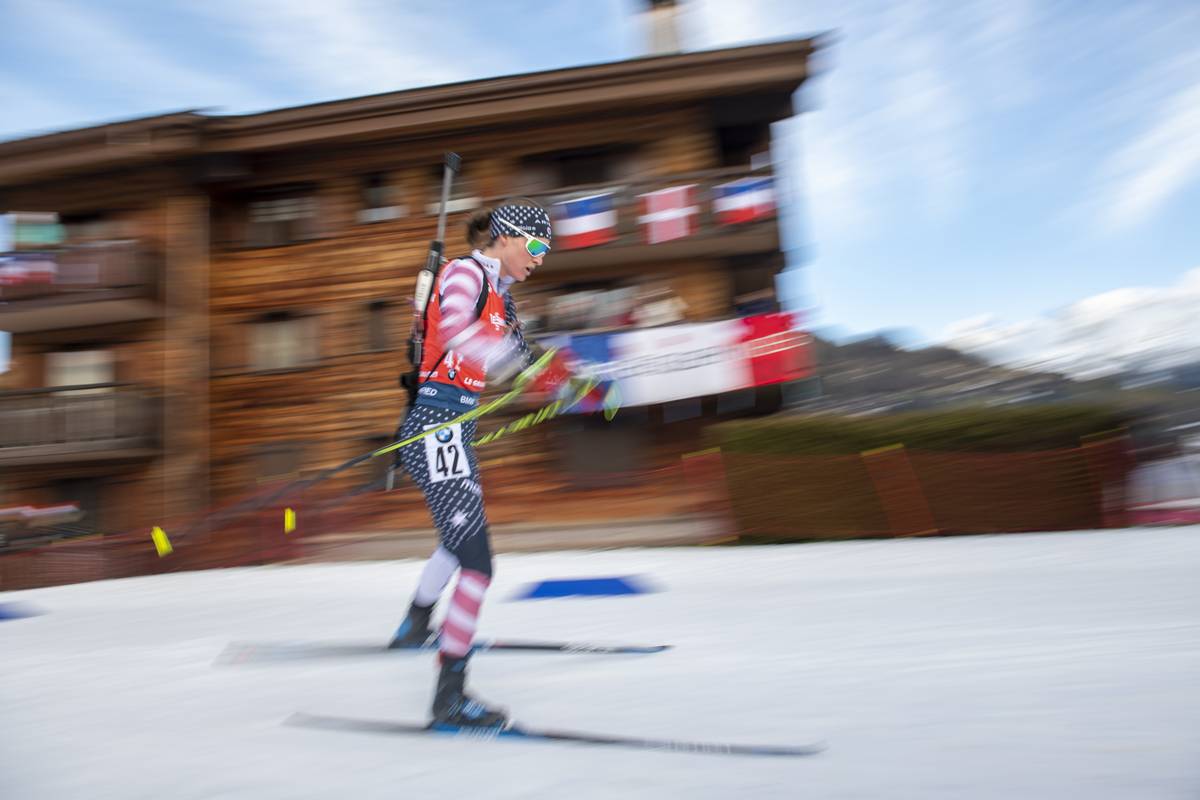
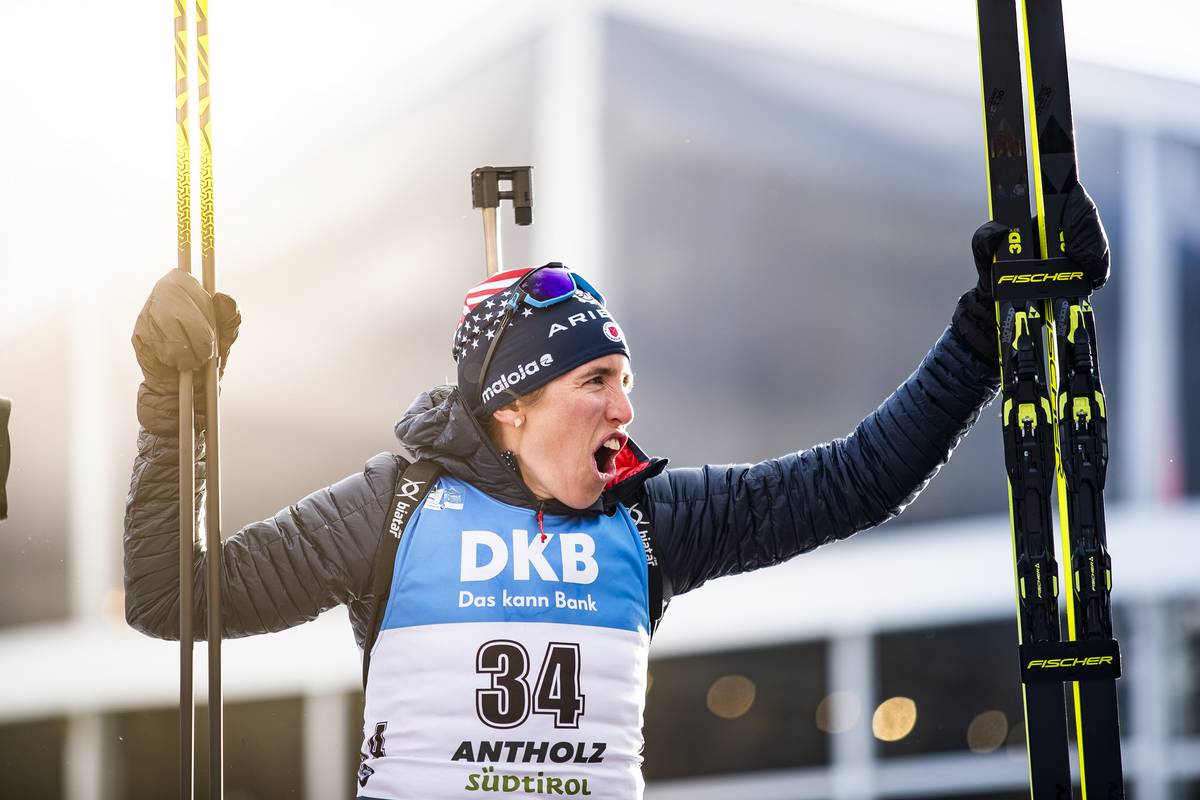
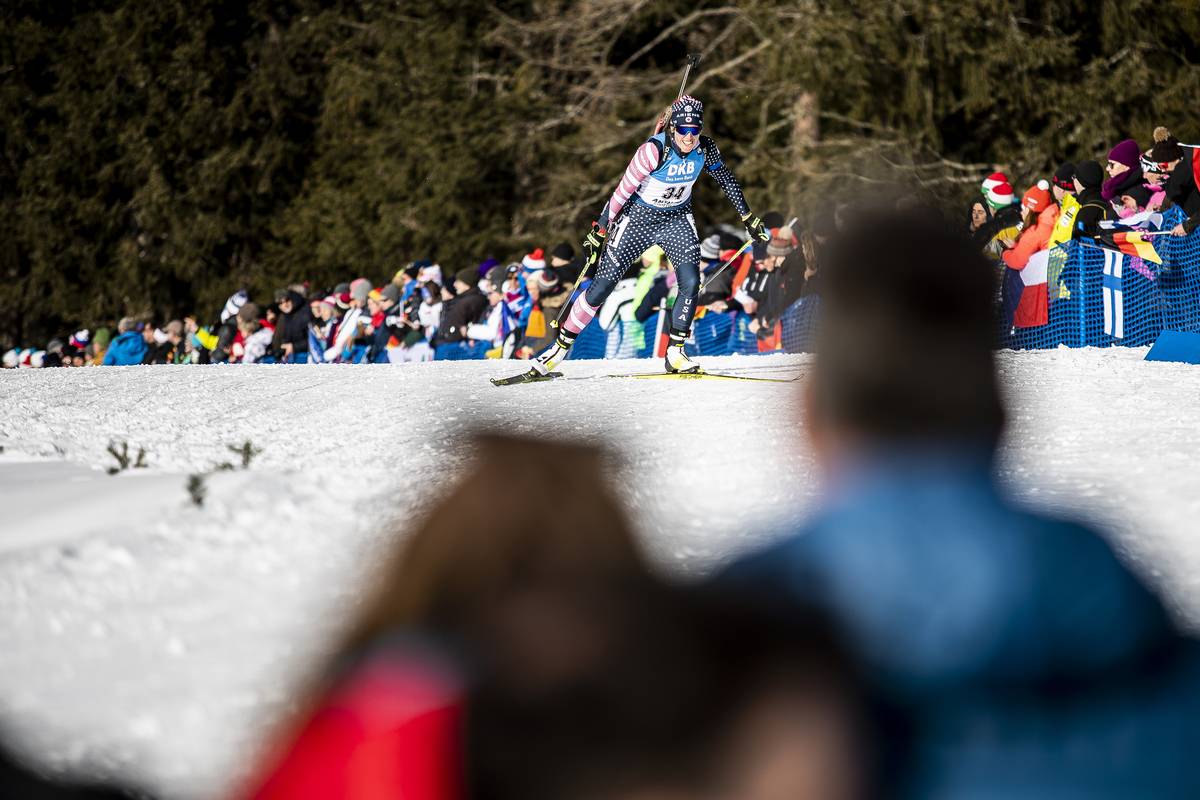
Campbell Wright (USA) and Deedra Irwin (USA), IBU World Cup Biathlon, single mixed relay, Antholz, Italy. (Photo: Manzoni/NordicFocus)
Deedra Irwin (Pulaski, WI/Army World Class Athlete Program) and Campbell Wright (Wanaka, NZL/U.S. Biathlon) skied to a ninth place finish in the single mixed relay at the sixth World Cup of the season in Antholz, Italy. Between the pair, both Irwin and Wright held top-10 ski times throughout the race, finishing only four seconds back from the eighth place Estonia and 30 seconds back from a top-five finish.
“It felt good to ski with everyone today and be in the mix,” said Irwin. “I think we pulled together a great race. The wax techs did an amazing job with the skis. Antholz really showed off her beauty today!”
Despite having to ski a penalty loop each, Irwin and Wright landed just +1.09.5 behind Germany’s leading pair of Vanessa Voigt and Justus Strelow, who used just one spare round. Germany was joined on the podium by Ingrid Landmark Tandrevold and Vetle Sjaastad Christiansen of Norway and Austria’s Lisa Theresa Hauser and Simon Eder.
Of the two single mixed relays this season, Team USA has placed in the top 10 each time. Back in November in Oestersund, Sweden, the pair of Irwin and Sean Doherty (Center Conway, NH/National Guard Biathlon) skied to an eighth place finish, cleaning their prone shoots and only using three spare rounds in standing. Just two months later, Irwin and Wright placed ninth with two added penalty loops, further proving the USA to be dangerous competition.
The third and final single mixed relay of the season will take place on January 15 at the 2024 World Championships in Nove Mesto na Morave, Czech Republic. Team USA will be looking to top their best finish and continue delivering top ski times. For information on how to watch, visit https://usbiathlon.org/how-to-watch. For spectator resources, visit https://usbiathlon.org/spectator-resources.
About U.S. Biathlon
As the Olympic sports organization centered around the sport of biathlon, the United States Biathlon Association, known as U.S. Biathlon, is recognized by the International Biathlon Union (IBU) and the U.S. Olympic and Paralympic Committee (USOPC) as the national federation for biathlon in the United States. Founded in 1980, U.S. Biathlon exists to support and encourage the development of biathlon in the United States, to work with biathlon clubs and regional centers around the country to organize training and competition from the grassroots to elite level, and to prepare athletes for international competition. U.S. Biathlon staffs and finances the U.S. Biathlon national and junior national teams and is a 501 c (3) non-profit organization. For more information, visit usbiathlon.org.
Thirty two years old and wise as wise can be. Clare Egan brings a calm intellect to the sport of biathlon. Speaker of many languages and head of the International Biathlon Union’s athlete committee, Egan is respected by her peers for on-snow performances as well as her leadership in the IBU board room.
U.S. Biathlon’s Clare Egan on her way to 29th in the women’s 10 k pursuit in Annecy-Le Grand Bornand, France. (Photo: NordicFocus)
We spoke to Egan earlier this month as she was training in Antholz, Italy with U.S. women’s head coach Armin Auchentaller. The real gist of the conversation was to determine how she had been coping with the pandemic and making a go of it as the race season nears. Like many of us, there have been ups and downs…but mostly ups. You can hear more on the podcast.
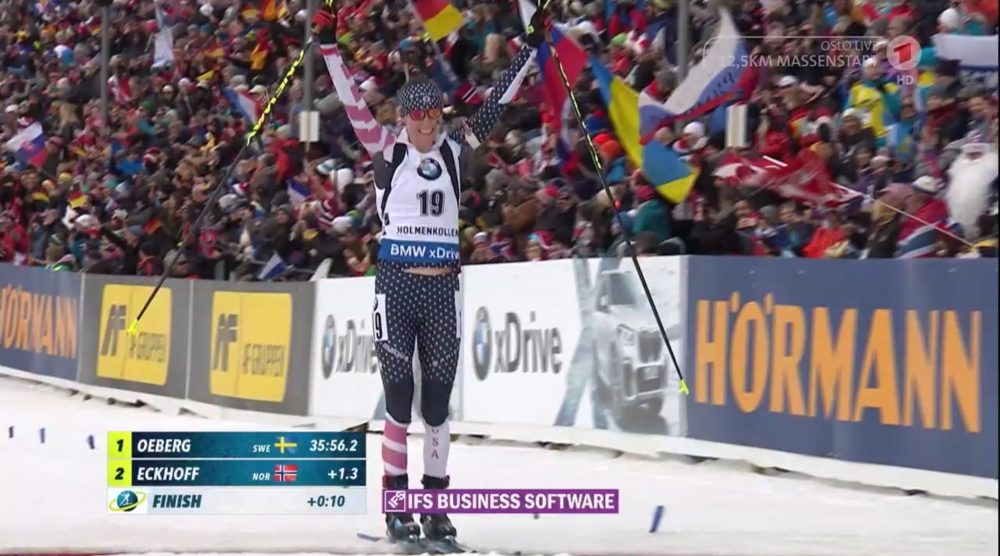
Clare Egan crossing the line in Oslo for third place in the 2019 12.5 k mass start. (Photo: ARD screenshot)
In this episode of Nordic Nation, we speak all things trail design with John Morton. Based in Vermont, and global in perspective, Morton provides insights into the literal ups and downs of trail design and how full-blown nordic centers and small scale trails can bring a modern vibe to an old-school sport. He runs Morton Trails locally but has a global reach with projects based in China.
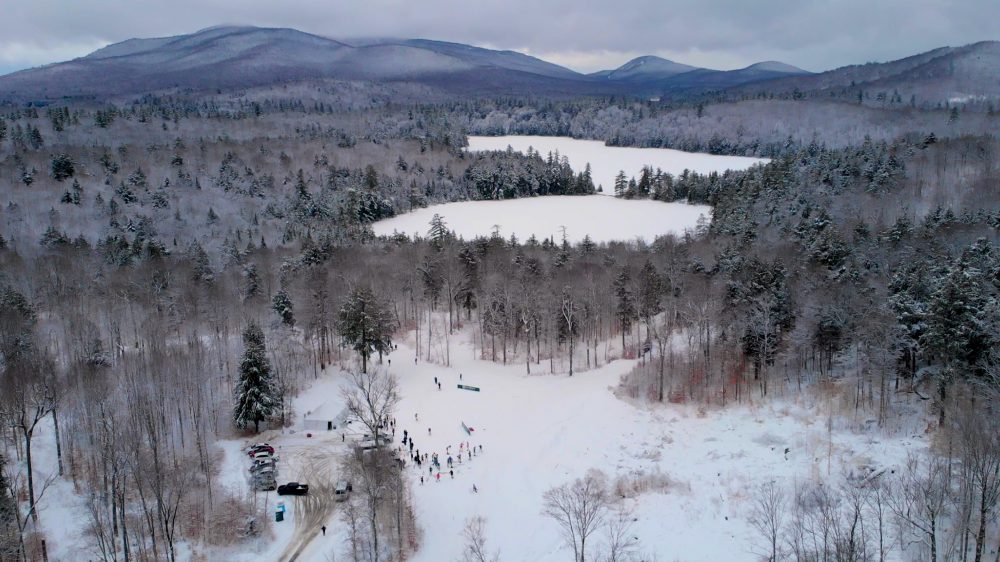
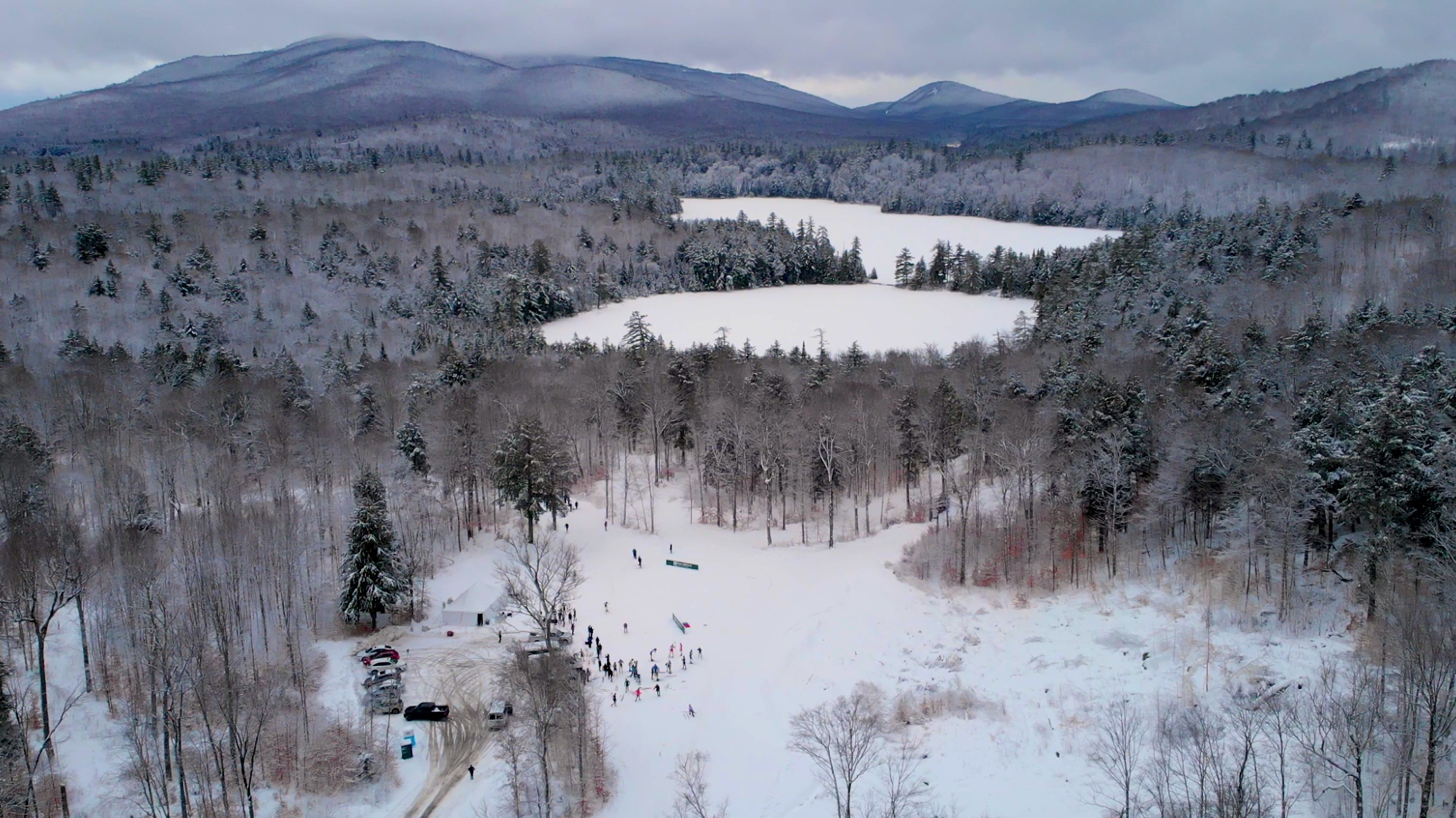
A vision for a nordic sport future – an aerial shot of a portion of Paul Smith’s campus.
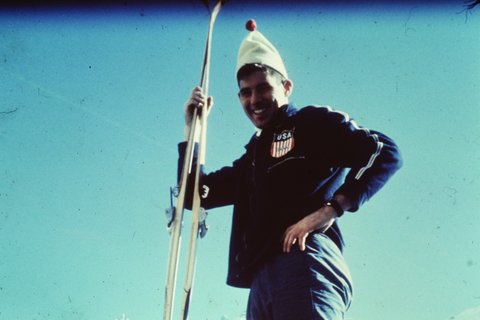
Morton’s ski resume is lengthy. And true to form, Morton stuck to trail design during our conversation. He failed to mention he is a two-time Olympic biathlete, served a tour of duty in South Vietnam, coached collegiate skiing, and remains an all-around ski enthusiast. This is really just the tip of the iceberg.
PARK CITY, Utah (June 15, 2020) – National Governing Body’s and National Sport Organizations (NGB/NSOs), and snow sport organizations from the United States and Canada today are announcing the formation of a Fluorocarbon Free Policy Working Group.
With representation from U.S. Ski & Snowboard, USA Nordic, U.S. Biathlon, USA Para Nordic, USA Para Alpine, Alpine Canada, Canada Snowboard, Freestyle Canada, Nordiq Canada, Biathlon Canada, Nordic Combined Canada and Ski Jumping Canada in addition to industry wax representatives, the working group is tasked with setting a policy to eliminate the use of fluorinated ski wax from all sanctioned levels of snow sports competition in North America beginning with the 2020-21 season.
In 2019, the International Ski Federation (FIS) and International Biathlon Union (IBU) decided that the use of fluorinated ski wax will be banned for all FIS and IBU disciplines beginning with the upcoming 2020-21 season. In addition, U.S. Ski & Snowboard voted to eliminate the use of fluorinated ski wax from all levels of competition at it’s May 2020 meeting. The Canadian Ski Association (CSA) has adopted the FIS Council Ruling and is extending it to all programs that fall under its authority.
Fluorinated wax, and the raw perfluorooctanoic acid (PFOA) compounds that make up these wax products, have been scientifically studied for their negative environmental and health impacts. In the United States, many of the compounds found in fluorinated wax products contain ingredients listed in the Toxic Substances Control Act. In July 2020 the European Chemicals Agency will ban the sale, manufacture, and import of all products containing PFOAs.
The Fluorocarbon Free Policy Working Group began meeting on a regular basis to facilitate the many facets of developing policy and rules that will harmonize all levels of domestic competition and training with FIS and IBU rules and regulations, and will lead to a complete ban of fluorinated wax products at all levels of sanctioned competition. The Working Group is committed to:
Asking manufacturers to work toward providing a list of waxes where the manufacturer represents that the wax is free of fluorinated products
Working with FIS and the IBU to coordinate the testing process and thresholds below the World Championships/World Cup level
Establishing rules, deterrents, and appeals process
Establishing clear and concise stakeholder communications
While key questions remain, including testing, enforcement, and ultimately sanctions for using fluorinated products, all participating NGBs in the United States and Canada are fully committed to banning the use of fluorinated wax from all levels of sanctioned snow sports competition starting with the 2020-21 ski and snowboard season.
The primary role of the U.S. Biathlon Team Assistant Coach is to support a professional training environment for U.S. Biathlon Team Senior, Development, and Junior team athletes training daily out of team headquarters in Lake Placid, NY.
The Assistant Coach will work closely with head coaching staff to understand and support the training goals of each athlete. Duties may include, but are not limited to: collecting data for feedback during and after training, designing details and logistics for quality training sessions, communicating with athletes, and providing motivation in a team environment for daily workouts.
This is a 6-month position (June 1st through November 30th) based in Lake Placid, New York. Experience coaching cross-country at a junior elite level or higher is required; the roles & responsibilities of this position could be extended for a candidate with more extensive elite coaching experience. Biathlon coaching experience is not required.
Responsibilities and Duties
Works With:
● Reports to High Performance Director
● Collaborates closely with U.S. Biathlon Team coaches Primary Responsibilities
● Coordinate and support quality training sessions during summer and autumn months
● Communicate with athletes and staff weekly on training logistics & goals
● Coach ski technique, strength training, and dry fire sessions with athletes, as appropriate
● Maintain shooting range training facility and testing supplies Supporting Duties
● Daily on-the-ground decision making with athletes about training and providing daily training feedback
● Available for daily communication with athletes
● Organize transportation and schedule bookings with local venues for weekly training
● Training data entry, tracking, and analysis
Qualifications & Skills
Expected Qualifications The qualified candidate must have:
Minimum 2-3 years coaching experience
Competency in Microsoft Excel and managing datasets
Passion for creating a positive & professional training environment
Desire to communicate, support, and work with developing athletes
Experience working in extremely goal-oriented and high-performing team environments
Prior experience coaching cross country athletes at a junior elite level or higher is preferred; biathlon coaching experience is not a prerequisite.
Minimum job requirements:
– Valid passport and driver’s license from home country
– Comfortable working in outdoor environment in all weather conditions
– Must be able to begin position starting June 1, 2020 Compensation
– Full room & board at the Olympic & Paralympic Training Center in Lake Placid, NY will be provided
– Compensation commensurate with experience To Apply: Please send your resume and a letter of interest to Lowell Bailey, High Performance Director, at lbailey@usbiathlon.org by April 29, 2020.
A vision for an on-campus nordic sport future – an aerial shot of a portion of Paul Smith’s campus. (Photo: Courtesy PSC)
Running a small liberal arts college is big business. Stress over enrollment. Stress over capital improvements. Stress over staying relevant.
Paul Smith’s College in Paul Smiths, New York is a relative newcomer on the East Coast college scene; founded in 1946 and currently enrolling 745 students. One particular aspect Paul Smith’s makes it stand out – a massive 14,200 acre campus in the foothills of the Adirondack high peaks region. This is perhaps the school’s most unique asset. School administrators see their landholdings as one path to running a more sustainable higher ed business. The broad acreage of the campus is part of the school’s strategy to build infrastructure to attract potential students. In this instance, we are not talking about Paul Smith’s breaking ground on a shiny new student center with amenities like a five star hotel.
Paul Smith’s enterprising strategy to attract future student athletes includes building world class cross-country ski trails and a biathlon range. John F. Morgan, sports initiatives director at the college, shot straight when discussing the motivation for the school’s trail building initiative. “We are not doing this for public relations, we are doing this to entice student athletes to come to campus,” he said over the phone.
The school contracted with the storied Morton Trails to help vision the project and engineer the trails. Morton Trails came on board in October 2018, to begin the process of walking the campus grounds and marking a potential layout.
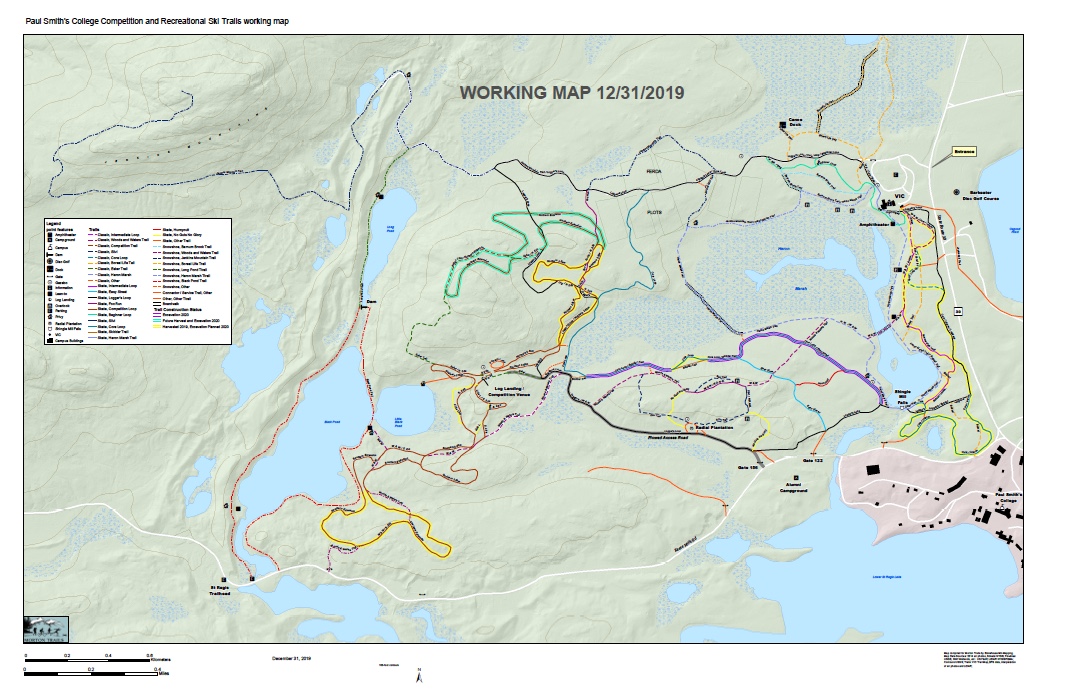
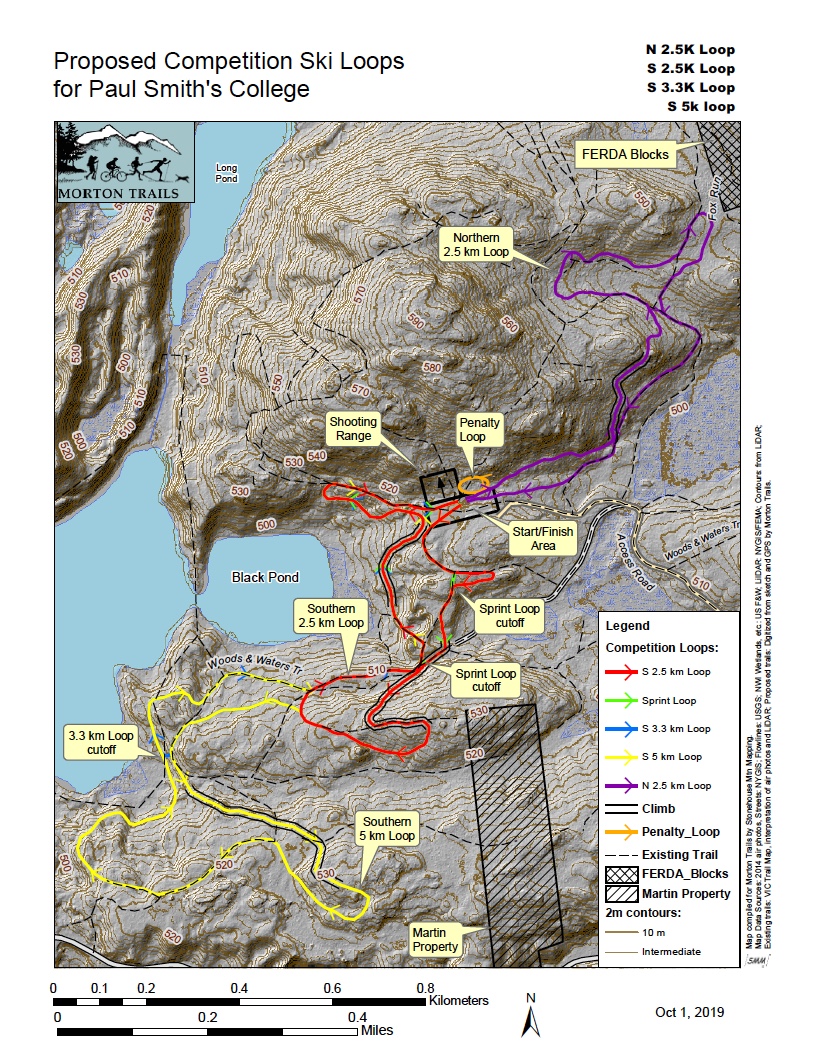
Link to Map PDFProposed Competition Ski Loops at Paul Smith’s.
Morgan explained the campus, situated 25 miles from Lake Placid, sits in the Adirondack snow belt; the terrain is positioned to receive adequate snow pack. The college also boasts a 25 mile pre-existing trail system. In 2010, the college took over what is called the VIC, which functions as an outdoor center and is open to the public. The new project involving Morton Trails is geared towards creating modern International Ski Federation (FIS) homologated trails.
Since the inception of the project, 2.5 miles of trail have been completed. According to Morgan, another 3.5 miles of crafted trails are slated for construction in the next year. Plans for a biathlon range are moving forward as well. And for those seeking dryland training opportunities, Paul Smith’s budgeted for the construction of a modest paved rollerski loop.
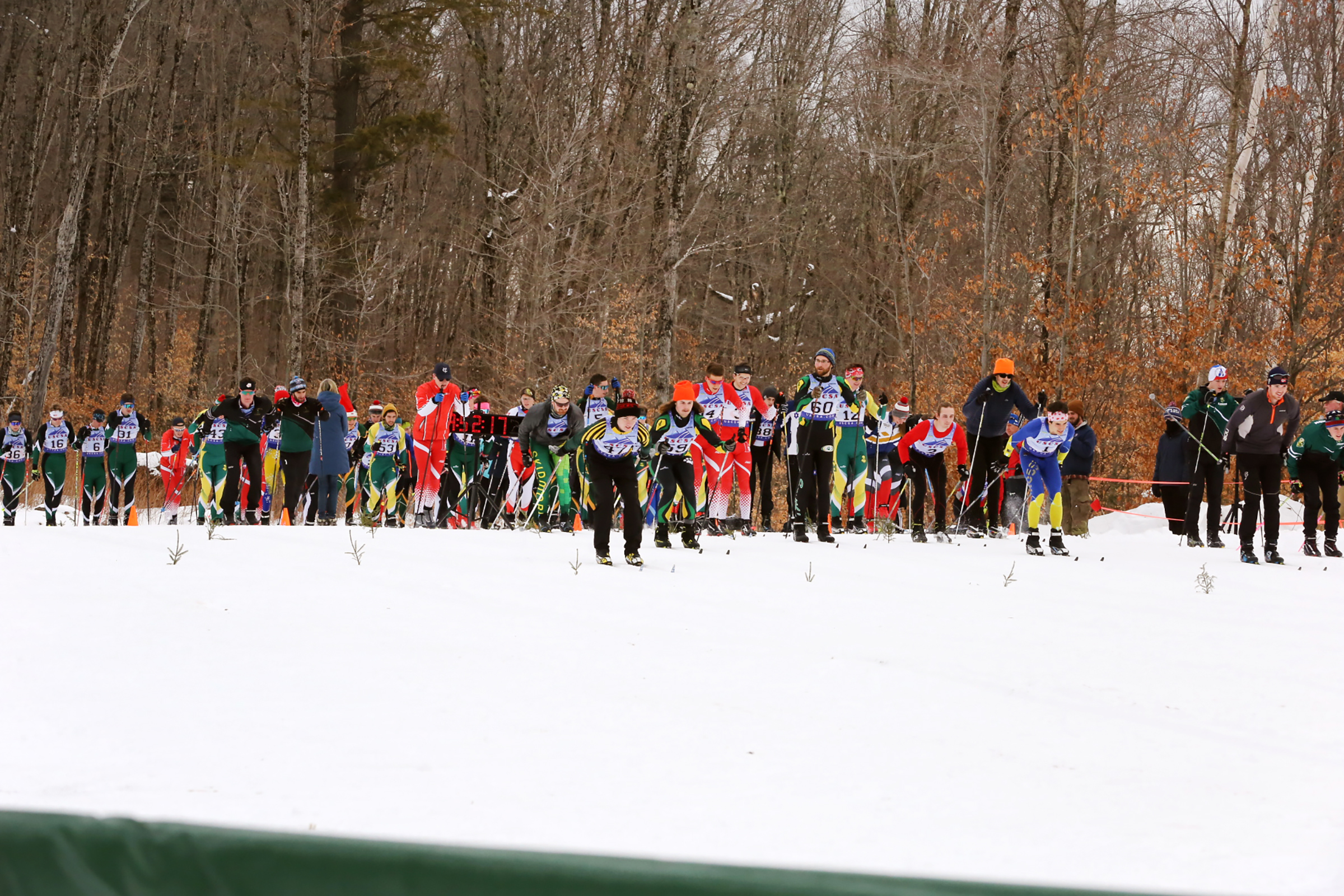
The start of the 2020 PSC Bobcat Invitational. (Photo: Pat Hendrick)
On January 6, Paul Smith’s christened their race worthy ski trails with the PSC Bobcat Invitational. One hundred and ten athletes from 11 colleges competed. According to Morgan, those students racing at Paul Smith’s were the type of clients the college hopes to attract. Morgan understands the risk involved with investing in nordic sport, yet he asserts the college’s outlook is longterm.
“We are doing this, yes,” Morgan said. “Do I have a guarantee that that many people are going to enroll? No. I was standing next to the college president when she dropped the flag on a ceremony for the venue during the race — I looked at her and I said, ‘these are our clients, maybe not these kids, but the kids that follow them.’”
Morgan also said four “grants” will be offered to USA Nordic and four to U.S. Biathlon student-athletes, respectively. “Grant”, it was explained, refers to full room and board, including tuition for a four year degree.
Part of the motivation for investing in the nordic sport facilities are the upcoming 2023 Winter World University Games in neighboring Lake Placid. Morgan envisions some of the grant recipients competing in those events. But Morgan acknowledged that the precise road map leading to a college degree from Paul Smith’s for an elite athlete will be a work in progress. Course work may involve early fall on-campus classes that transitions to online work for those traveling for competitions.
“That is what we are going to try and experiment with,” Morgan said. “Do we have the exact model of how to do it? No. But what we are doing is creating this sport and education culture where USA Nordic recognizes it, and U.S. Biathlon recognizes it. They send these kids in, and we assist them in finding a way to get them an accelerated education — one where they are on campus and they get a chance to experience college campus life and and they are not taking on-line courses when they are 30 or going back to college.”
Roar. Susan Dunklee captures an IBU World Championship silver in the 7.5 k sprint in Antholz, Italy. (Photo: NordicFocus)
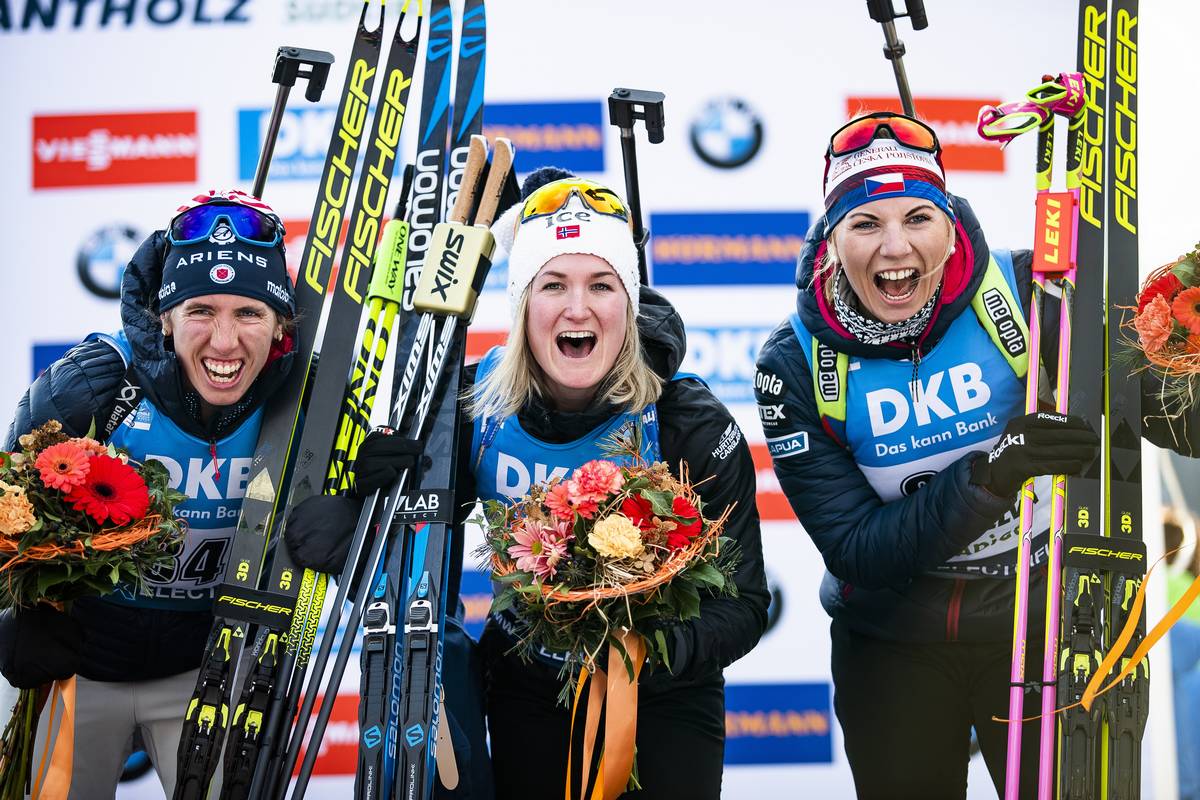
On Friday in Antholz, Italy Susan Dunklee of the US Biathlon team captured second place in the 7.5-kilometer sprint at the 2020 IBU World Championships. The event was won by Norway’s Marta Olsbu Roeiseland in 21:13.1 while shooting 0+1 on the range. Dunklee shot clean and was 6.8 seconds back. The Czech Republic’s Lucie Charvatova was third (+21.3; 1+0).
At thirty-four-years-old, this was Dunklee’s best result of the season. Prior to her second place on Friday, Dunklee’s top 2019-2020 result was a 10th place in Ruhpolding, Germany’s 10 k pursuit. As we learned in a February 3, story in FasterSkier, Dunklee has the temperament to be patient when her performances do not align with what she believes is her best. In her 11 years on the national team she has been both resilient and able to pounce for hardware in high-pressure situations.
Dunklee during the ski portion of her silver medal performance at the 2020 IBU World Championships. (Photo: NordicFocus)
Dunklee’s ski speed Friday kept her in top-10 contention early on — she was the 34th starter. She had the fourth fastest split after her first 2.5 k loop and shooting bout. After her second lap and five shots on the range, she was leading the interval start event. Dunklee was able to knock down targets, harness her patience, and not bleed too much time shooting. She spent 54.2 seconds and 49.8 seconds for her “range time”, respectively, during her two bouts. Those times were 9.1 seconds slower than the fastest shooter in prone and 8.0 seconds slower than the top range time in standing.
However, patience kept her in it. On a day when winds played games with shooting accuracy, taking slightly more time on the range, getting settled prior to pulling the trigger paid dividends for Dunklee. Of the top-nine athletes overall, Dunklee was the only competitor to shoot clean.
“Before the start, I was standing in the start pen watching a lot of the top athletes and noticed a lot of misses. So I knew there was potential for a good result if I could hold it together on the shooting range. So that was my focus, just follow my shooting plan,” Dunkee said in a post-race press conference.
Roeiseland captured gold from Dunklee’s grasp on the final ski loop as she outpaced the American by 19.7 seconds on the lap to move ahead into first.
“Have you ever pushed so hard on the last loop? You looked like you might collapse in the last meters,” Dunklee was asked by a reporter during the press conference.
”Yeah I thought I might too,” replied Dunklee. “I was struggling to keep my balance. I was getting splits that whole last loop and I knew I had a bit of a cushion of time going into it. I think I really lost a lot over the field in that last kilometer, but I gave it everything I had and that’s all I can do. It was a good battle.”
IBU 7.5 k sprint podium at the 2020 IBU World Championships. Susan Dunklee (USA) second, Marte Olsbu Roeiseland (NOR) first, and Lucie Charvatova (CZE), (l-r). (Photo: NordicFocus)
USBA Development Coach Danika Frisbie supports junior athlete Eli Nielsen up the steep climb at Biathlon Youth/Junior World Championships in Lenzerheide, Switzerland. (Photo: Weymuller Photography)
USBA National Team Assistant Coach gets pre-race glitter from women’s team athlete Hallie Grossman on the range in Ridnaun, Italy. (Photo: Weymuller Photography)
Martin Fourcade of France on his way to winning the IBU World Cup 20 k individual in Östersund, Sweden. (Photo: NordicFocus)
In Östersund, Sweden on Wednesday, the IBU World Cup picked up again with the men racing the 20-kilometer individual. The depth of the French team was evident as they swept the top-for spots.
Martin Fourcade won in a time of 53:11.9 minutes — and shooting clean until his final bout, when he missed a single target. Simon Desthieux was second (+12.7; 0+1+0+0), and Quentin Fillon Maillet third (+1:50.8; 2+0+0+1).
Scott Gow of Canada during the IBU World Cup 20 k individual in Östersund, Sweden. (Photo: NordicFocus)
Scott Gow of Canada was the top-placed North American in 33rd (+5:35.1; 2+1+0+0). His brother Christian Gow was 83rd (+9:36.8; 1+1+1+2). Also from Canada, Aidan Millar placed 98th (+13:58.7; 2+2+1+2), and Jules Burnotte did not finish.
Sean Doherty of the U.S. during the IBU World Cup 20 k individual in Östersund, Sweden. (Photo: NordicFocus)
For the Americans, Sean Doherty skied to 63rd (+7:41.7; 0+1+0+2), Leif Nordgren 73rd (+8:52.8; 1+3+0+1), Alex Howe 81st (+9:33.7; 2+1+2+0), and Travis Cooper 96th (+13:16.2; 3+1+1+0).
U.S. Biathlon shooting coach Matt Emmons out on the skis. (Photo: @mattemmonsusa Twitter)
Speaking to Matt Emmons, I was reminded that much of sport remains in the realm of capturing a focused mental state. Emmons, at thirty eight years old, serves as the shooting coach for U.S. biathlon. In as much as he hones body position and breathing techniques on the range, he’s also present to coach clearing the mind when the heart rate thumps and the internal tick-tock of time on the shooting range is part of the biathlon cacophony.
Emmons has survived thyroid cancer and missed medal opportunities at high stake events. Now settled with a family in the Czech Republic, he maintains the ability to understand what matters as his sport career was besotted with Olympic success and near-miss medal opportunities. Emmons was raised in New Jersey and began shooting when a family friend, who served as an FBI firearms instructor, spoke to his father about paying for college. The friend informed Emmons’ dad that several universities offered scholarships for shooting athletes.
“I went over and he had me shoot some rifles and pistols and some shotguns and he was like ‘hey, you are pretty good at the rifle,’ and he asked if I wanted to try this as a sport,” said Emmons in a call during a recent U.S. Biathlon camp outside Midway, Utah.
Emmons earned a scholarship to the University of Alaska-Fairbanks where he excelled in the rifle events. He went on to compete at four Olympics between 2004 and 2016 — earning a bronze, silver, and gold. From a biomechanics perspective, Emmons shooting specialties involved disciplines in both prone and standing. And yes, he did learn to ski during his time in Fairbanks.
For many years, Emmons was based out of the Colorado Springs Olympic Training Center where he worked with sport psychologist Sean McCann. McCann also advised U.S. Biathlon. Through that relationship, Emmons began assisting U.S. Biathlon with their shooting four years ago.
Emmons said the job involves not only creating body awareness when positioning the rifle — inhaling and exhaling, and pulling the trigger — but also developing the proper mental state.
The morning we connected with Emmons, he had concluded a visualization session with the national team. Each athlete was asked to focus on some aspect of their training or racing, and envision that situation being successful.
“Because it all starts there,” said Emmons. “This was a classroom setting. I have my Bluetooth speaker. I have a recording that Sean McCann recorded for me years ago, I have used them pretty much my whole career.”
Emmons also remains zeroed in on the technical principles of effective shooting. For biathlon beginners, he encourages athletes to simply familiarize themselves with the rifle.
“I have them hold the rifle without the sling and get them set up where I think they are in balance, so the body and the rifle are matching,” Emmons said. “It is not like they are trying to adjust their body to the gun, it is the other way around. I have them do it right and then have them adjust the gun to that. That is the first step. Then the same thing with standing — how to use the skeleton correctly, and which muscles you need to be thinking about and using that so they can stand somewhat still and hit the target.”
Emmons explained it remains a steady and slow tempo progression for most. Improving at shooting becomes a periodic revisiting of the fundamentals and adding new biomechanical principles when each athlete is ready. “We revisit and as they increase their skill level we make more adjustments if needed as they get comfortable,” Emmons added. “Shooting is so complex, that you can only introduce them to so much at a time.”
In October, when we spoke to Emmons in the run-up to the 2019 U.S. Biathlon Fall Team Trials, he explained that mid-fall was not the time to introduce significant changes to an athlete’s shooting process.
“At this time of year, unless the house is burning down, what you have at this point in the season is what you got,” said Emmons. “I am not making any big changes and I’ll let them go through the competition season and try to keep it manageable. Basically, every year we see how far we can get during the pre-season with position changes and technical changes to make it easier for them to shoot.”
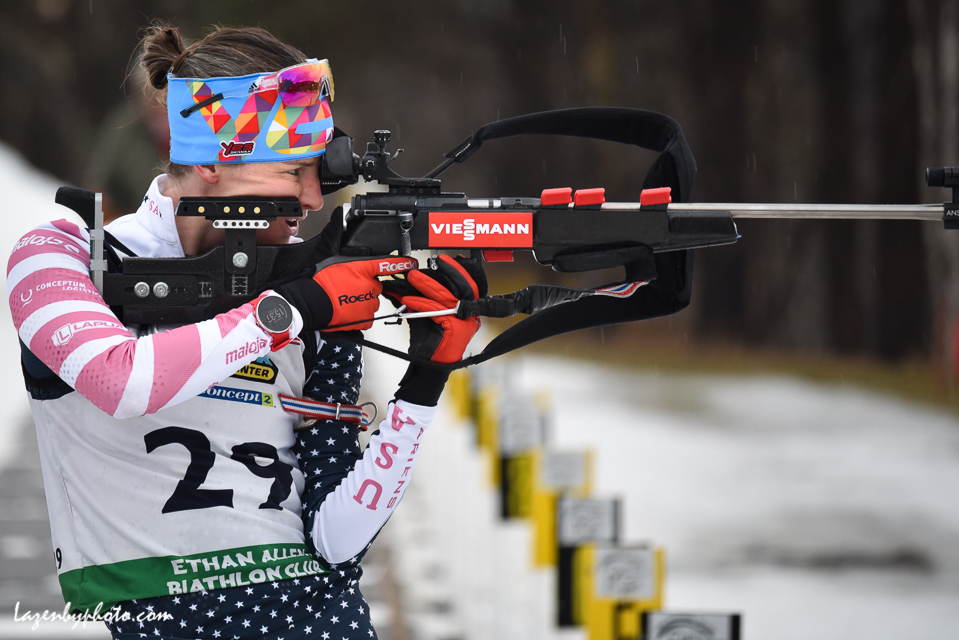
Clare Egan on the range during the women’s 5 k super sprint at the 2019 USBA National Championships. (Photo: John Lazenby/lazenbyphoto.com)
With each athlete possessing a different aptitude for shooting and processing new information, some athletes take a year to absorb technique suggestions, others might take two. The rate of absorbing and incorporating those changes is also impacted by the different torso and arm lengths on the biathlon team added Emmons. Each athlete improves their shooting in a slightly different way. Clare Egan comes to the sport with a long torso and shorter arms, whereas Susan Dunklee’s shooting technique is adjusted for her shorter torso, longer arms, and higher hips. Success does not have a one size fits all mold when it comes to shooting proficiency.
Targets fall on the shooting range when many things align. With the aid of Emmons, it’s the hope that a clear and focused mind along with proper mechanics can allow U.S. athletes to realize their sporting goals. There remains the inexorable ticking away of time with each shooting bout. As much as biathletes would like time to stand still when faced with five tiny targets and an unpredictable crosswind — the seconds elapse.
“With biathlon, a lot of people think speed, speed, speed, speed, speed when shooting,” said Emmons. The faster you’re into the range, the faster you’re is often an untenable dream. Hasty shooting begets missed targets and increases the likelihood of penalty laps. The cycle of coaching returns to remind athletes to build on their strengths.
“With Clare, for example, she has speed on the skis,” said Emmons. “But on the range, it’s about hitting the targets. I don’t care if you shoot standing in 25 seconds and you have three misses. That is over a minute basically when you look at your penalty loops. It is just not worth it. Let us hit the targets consistently and then let’s build on top of that.”
Last year’s success for Egan was built on better fitness and technical improvements for her shooting. Yet Emmons emphasized that taking slightly more time on the range paid dividends. “Clare is probably not going to be the fastest shooter in the world. That is OK. She can ski well. If she is reasonable on the range with her time and hits her targets, we are going to be competitive.”
Egan improved her shooting accuracy in 2019 to 81 percent from 74 percent in 2018. According to the International Biathlon, Egan’s overall ski speed improved by three percent. In her final race last year, she popped her first IBU World Podium with a third place in Oslo. Emmons’ tenant of slowing down on the range, when it came to helping improve Egan’s results, played out.
“Shooting is really nothing more than a skill, and skills can be trained,” said Emmons.
Paul Schommer was named to the IBU Cup roster for the start of the 2019-20 season Photo: Rachelle Weymuller)
(Oct. 28, 2019) — Following the completion of the U.S. Biathlon Fall Festival and IBU Cup Trials held over the weekend in Soldier Hollow, Utah, 15 athletes have been nominated to the U.S. Biathlon teams competing at the opening events of the 2019-20 season.
“We had an impressively competitive trials this season, with several lead changes throughout the competitions,” said U.S. Biathlon Director of High Performance Lowell Bailey. “I feel really good about the teams we are sending and their ability to compete with the world’s best on the international stage.”
Six members of the 2018 U.S. Olympic Team have been selected to compete at the first three International Biathlon Union World Cup events on this year’s calendar, including women’s Olympic Team members Clare Egan (Cape Elizabeth, Maine), Susan Dunklee (Barton, Vt.), Joanne Reid (Grand Junction, Colo.) and Emily Dreissigacker (Morrisville, Vt.). Named to the men’s World Cup team are 2018 Olympians Sean Doherty (Center Conway, N.H.) and Leif Nordgren (Hinesburg, Vt.), along with Travis Cooper (Kenai, Alaska) and Alex Howe (Gilford, N.H.).
The IBU kicks off its 2019-20 World Cup season in Oestersund, Sweden, Nov. 30-Dec. 8. That will be followed by World Cups in Hochfilzen, Austria, Dec. 13-15, and Le Grand Bornand, France, Dec. 19-22.
Named to the U.S. squads competing at the IBU Cup competitions in Ridnaun-Val Ridanna, Italy, Dec. 12-15, and in Obertilliach, Austria, Dec. 18-21, are Kelsey Dickinson (Winthrop, Wash.), Hallie Grossman (South Burlington, Vt.) and Maddie Phaneuf (Old Forge, N.Y.) on the women’s side, and Lars Hammernes Leopold (Truckee, Calif.), Max Durtschi (Ketchum, Idaho), Paul Schommer (Appleton, Wis.) and Jake Brown (St. Paul, Minn.) on the men’s side.
“It’s an exciting time for U.S. Biathlon, with several new names in the mix on our international teams. It will be fun to watch,” Bailey added.
The third and final day of the Soldier Hollow U.S. Biathlon Fall Team Trials was postponed temporarily due to snowfall. An occurrence that normally would not quell the skis, but can make skate rollerskis squirrely.
After a delay, and with the course sufficiently dry, the men and women raced a 10-kilometer and 7.5 k sprint, respectively.
Susan Dunklee (USBA) won the women’s race in a time of 24:16.53 while missing a single target standing. Joanne Reid (USBA) took second in 24:32.06 minutes and shot clean. Emily Dreissigacker (USBA/Craftsbury GRP) raced to third in 25:21.90 (0,1).
Jake Brown (Craftsbury GRP) missed one target in prone and won the men’s race in 27:45.27. Alex Howe (USBA) took second place in a time of 27:59.58 (0,1). Paul Schommer (USBA) was third stopping the clock in 28:00.85 (3,0).
The day’s racing concluded the trial period to determine the group of athletes representing U.S. Biathlon during Period 1 on the IBU World Cup and Period 2 and 3 on the IBU Cup.
FasterSkier will publish a piece early this week with the full rundown of those athletes earning early season international starts.
Five athletes already locked up IBU World Cup starts with top-25 results on the World Cup or World Championships last season. They include Joanne Reid, Clare Egan, Susan Dunklee, Sean Doherty, and Leif Nordgren.
On Thursday, a three race series to help determine international race starts for U.S. biathletes began with a sprint at Soldier Hollow (SoHo) outside Midway, Utah.
For the IBU World Cup, five U.S. athletes have pre-qualified with a top-25 result on the World Cup or World Championships last season. Pre-qualified athletes include Joanne Reid, Clare Egan, Susan Dunklee, Sean Doherty, and Leif Nordgren.
According to the USBA selection criteria, the remaining World Cup Period 1 spots and IBU Cup Period 2 and 3 spots are determined through a series of rollerski races held over the summer in Jericho, Vermont and the current series at SoHo.
Yesterday, the women raced a 7.5-kilometer sprint, the men 10 k.
Susan Dunklee (USBA/CGRP) won the women’s race in 22:31.59 minutes after missing a single shot while shooting prone. Joanne Reid (USBA) was second in 23:31.08 (1,0). Hallie Grossman (USBA/CGRP) placed fourth but was the third American in 24:14.29 (1,1).
Travis Cooper (USBA/National Guard Biathlon) scored the win in the men’s 10 k sprint with a time of 26:13.45 while shooting clean. Lars Hammernes Leopold (U.S. JNT) placed second in 26:21.58 with no misses on the range. Sean Doherty (USBA/National Guard Biathlon) was third in 26:29.50 (1,1).
Racing will continue on Saturday with 10 k/13.5 k mass start race.
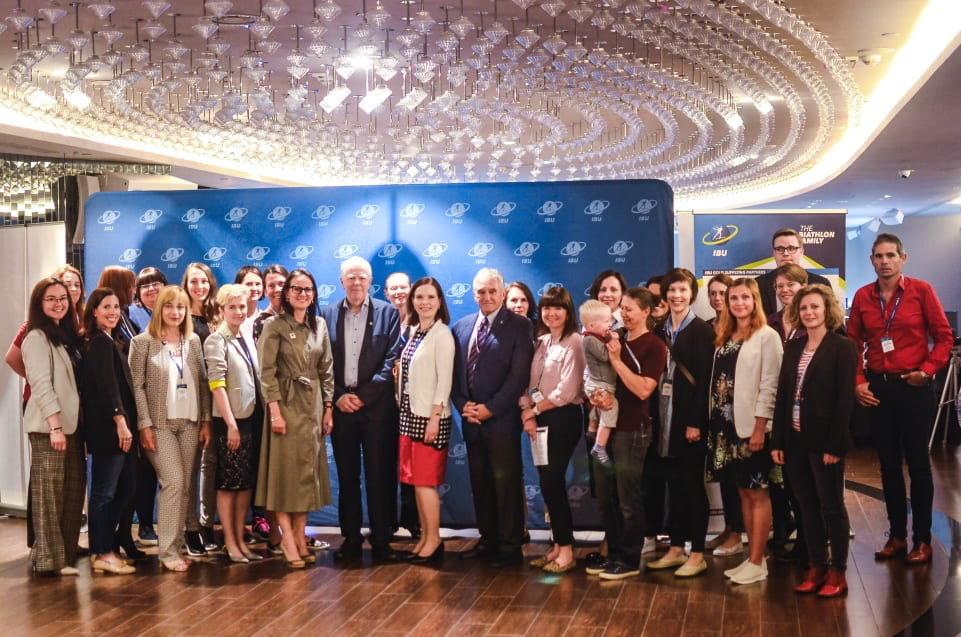
Participants at the IBU’s Gender Equality in Sports Leadership Seminar in Warsaw, Poland. (Photo: IBU/Michał Ostrowski)
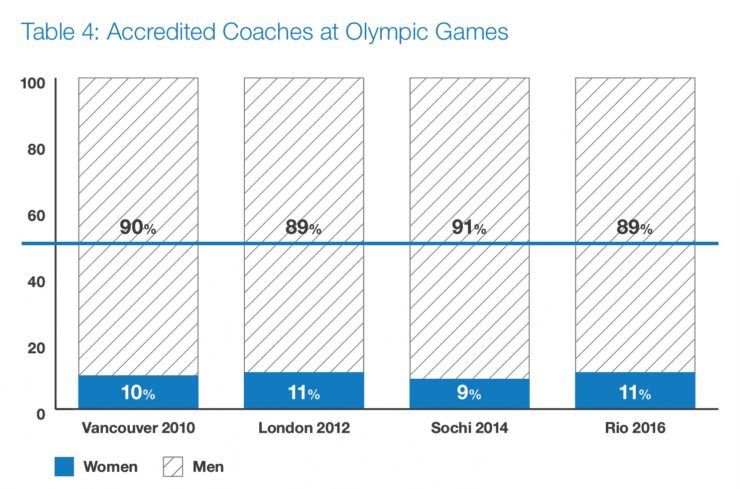
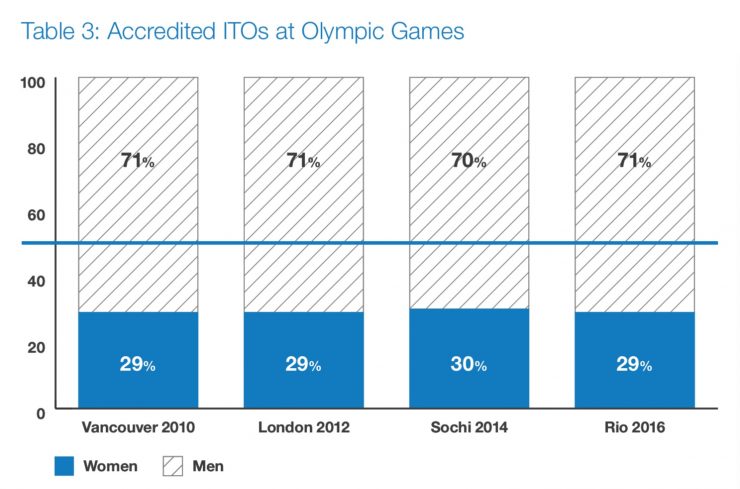
The numbers speak the truth when it comes to leadership in Olympic sport. Let’s take International Technical Officials (ITOs), the people responsible for a range of duties like enforcing rules and race timing protocol during competition. Across four Olympics, including summer and winter Games from 2010-2014, women constituted no greater than 30 percent of ITOs.
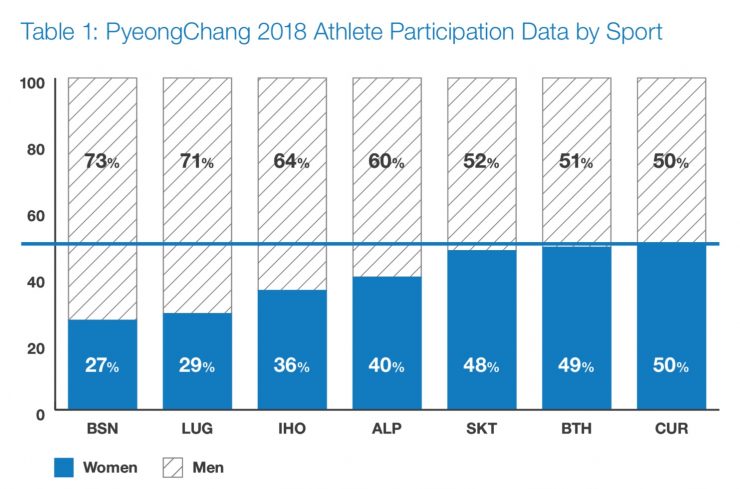
On the coaching side, the numbers were starker. Between 2010 and 2014, female accredited coaches at the Olympics never rose above 11 percent. The irony in snow sports is that according to the International Olympic Committee (IOC), among active athletes at the 2018 Games, 40 percent of alpine skiers were women, whereas 49 percent were in biathlon. Massive gaps remain when considering on-snow athletic opportunities and coaching those same sports at the Olympic level.
IBU equity 1
IBU equity 2
IBU equity 3
(Data from the IOC Gender Equality Review. Double click image to enlarge.)
As part of its attempt to evolve and remain relevant, the IOC released a report titled the IOC Gender Equality Review. The report is a comprehensive document prescribing steps to shift cultural norms, values, and practices to empower women. In total, it details 25 concrete actions. Those 25 “gender equality recommendations” are an attempt to bring change across all aspects of Olympic sport and include funding models, governance, employment, and athlete participation.
The IOC Gender Equality Review was the impetus for the International Biathlon Union (IBU) Equality in Sports Leadership seminar in Warsaw, Poland from May 24-26. According to the IBU, the seminar aimed to, “ensure better visibility of female role models across all areas of biathlon – Executive Boards, National Federations, Organising Committees, and teams, promote women and sport leadership networks, involve mentors and experts to advise women on career progression.”
U.S. Biathlon’s sport program coordinator Danika Frisbie attended.
“We actually believe we have a great amount of equality in terms of athletes rights in biathlon: we have similar prize money for athletes, the same prize money for men and women,” Frisbie said in a call. “We have the same race formats, the same number of events for men and women, we have the same viewership for men and women and equal exposure time on TV. So from an athlete’s perspective, there is a lot of equality as far as sporting goes. But women are not represented in coaching staff or in leadership or in committee positions across governing bodies and at the IBU level.”
Dagmara Garismyk from Poland, who sits on the IBU Executive Committee, was the event’s brainchild. According to Frisbie, Garismyk is a driver for equity in the IBU.
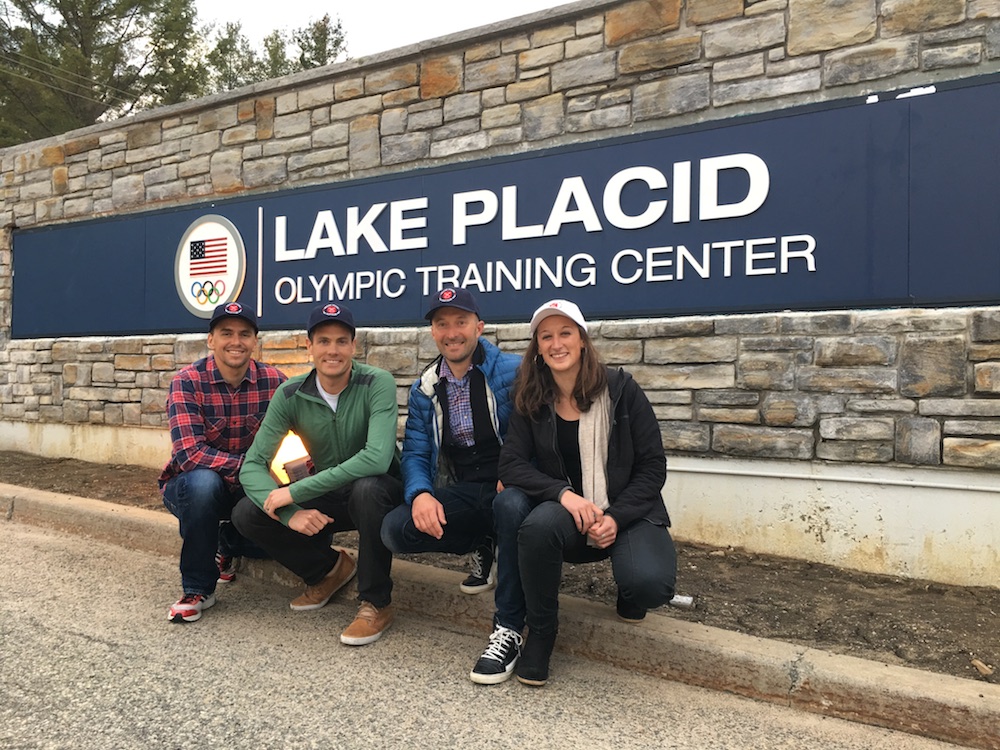
The newest additions to US Biathlon’s coaching and sport-development staff (from left to right): Michael Greis, Tim Burke, Armin Auchentaller, and Danika Frisbie as seen on May 1, 2018, outside the Olympic Training Center in Lake Placid, N.Y. (Photo: US Biathlon)
“This is a passion of hers,” said Frisbie. “She loves working with men and women together and approaches leadership just from such an open, curious, inclusive standpoint and that is why everyone loves working with her and believes in what she does. She is so open in bringing people together always and pushing for the greater good within IBU especially at a critical time.”
Frisbie explained the tone of the conference was about bringing people together, not the airing of grievances pitting one gender against another.
“It was more about recognizing that we are better when we work together in a way that is more representative of the population and there are unconscious biases and systems in place that prevent women from being a part of those conversations naturally,” Frisbie explained. Betting on eSports at VulkanBet includes betting on the largest and most prestigious eSports games
Shifting cultural norms is a slow process. Presenters at the conference explained that teams and organizations with a mix of 50/50 men and women are more productive and innovative and better at adapting to change.
“They produce better results,” said Frisbie. “Apart from their being a gender rights issue, this is also just a performance initiative that if you invest in making sure that women are eventually more represented on technical committees and in leadership positions, we actually will have better results as an international governing body and better results in our national federations, and better development better growth of our sport.”
Some of the changes discussed were mandates. Things like stipulating that an equal number of men and women are sent to coaching seminars. Other methods were geared towards building a culture of equity.
“It centered a lot around looking at the facts behind this issue and just doing education with teams, men and women on the unconscious bias that we have,” said Frisbie.
Frisbie found her time in Poland also focused on meeting other women in biathlon who desire to be leaders. She described a poignant moment when IBU President Olle Dahlin asked the conference attendees to raise their hands if they aspired to be on a technical committee or in a leadership position. Frisbie said every woman in attendance raised her hand.
For the women, Susan Dunklee, Clare Egan, and Joanne Reid all pre-qualified based on last season’s results. Emily Dreissigacker was named to the team on Monday. The women’s World Cup team has three start spots per race in Pokljuka. According to Monday’s announcement, coaches will determine which athletes get specific starts at a later date.
After the Pokljuka races, only three U.S. women will travel to Nove Mesto, Czech Republic, the host of this season’s second IBU World Cup .
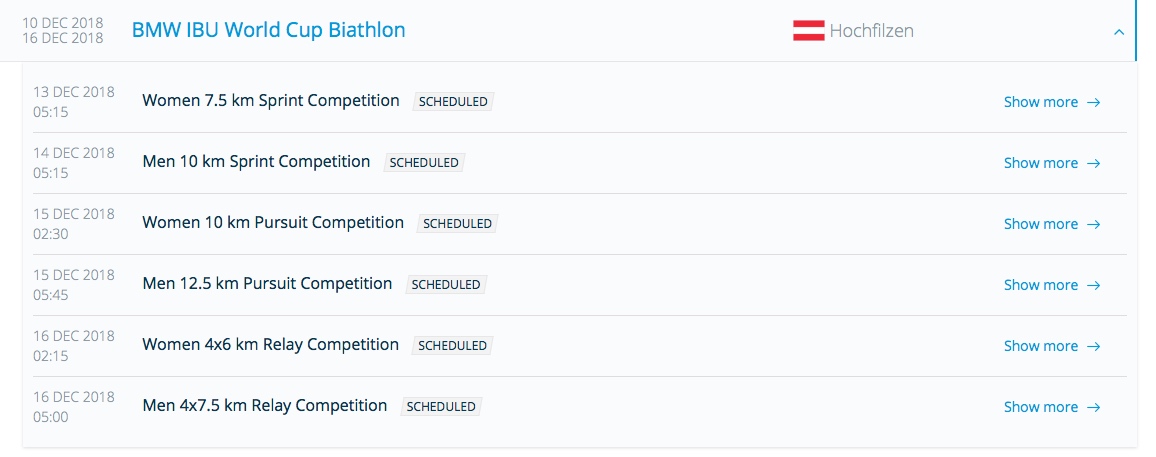
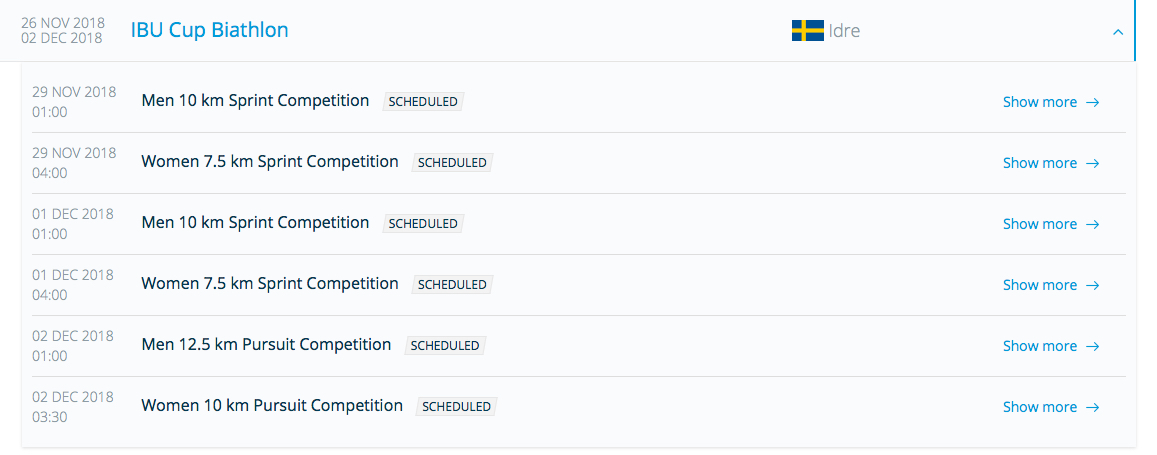
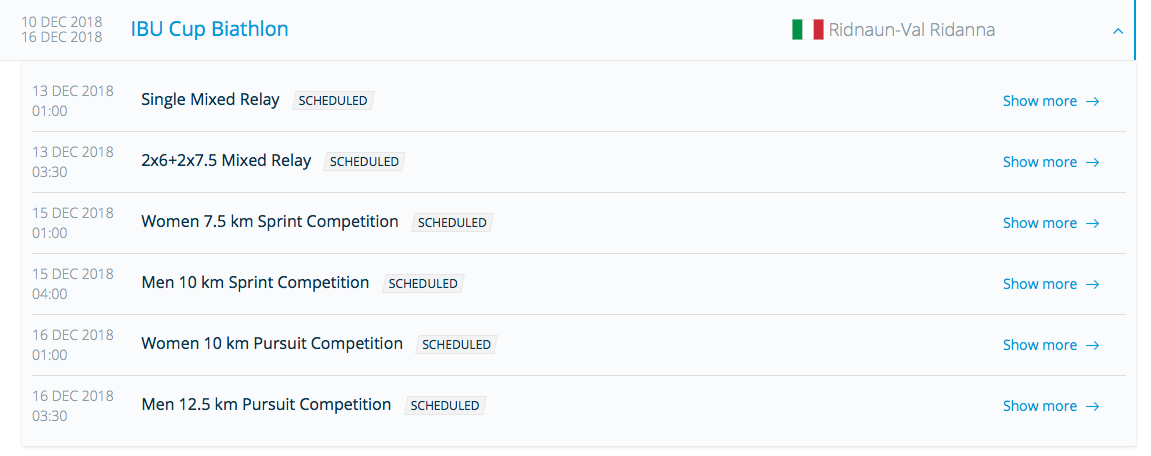
The fourth biathlete will head to Ridnaun-Val Ridanna, Italy to race the second weekend of IBU Cup on Dec. 10-16. (The IBU Cup’s first weekend of racing will take place in Idre, Sweden on Nov. 26-Dec. 2).
Leif Nordgren and Sean Doherty both pre-qualified for the men’s opening World Cup races. The men’s side has four start spots in Pokljuka. Along with Nordgren and Doherty, Paul Schommer and Travis Cooper have been named to the first World Cup team roster.
Cooper’s path to Pokljuka will include a stop at the IBU Cup races in Idre. According to U.S. Biathlon, Cooper must first race in Sweden in order to earn his qualification for the IBU World Cup. Max Durtschi will travel to Pokljuka as a reserve athlete.
IBU Cup Teams
The SoHo and Jericho rollerski trials also served as a springboard to the second series of IBU Cups in Ridnaun-Val Ridanna, Italy. Hallie Grossman, Deedra Irwin, and Kelsey Dickinson were named as U.S. athletes for those races. They will be joined by one member of the women’s IBU World Cup team racing in Pokljuka.
The men also have four start spots at the second IBU Cup. Durtschi, Alex Howe, Jake Brown, and Vasek Cervenka have been named to the team for the Ridnaun-Val Ridanna, Italy competitions.
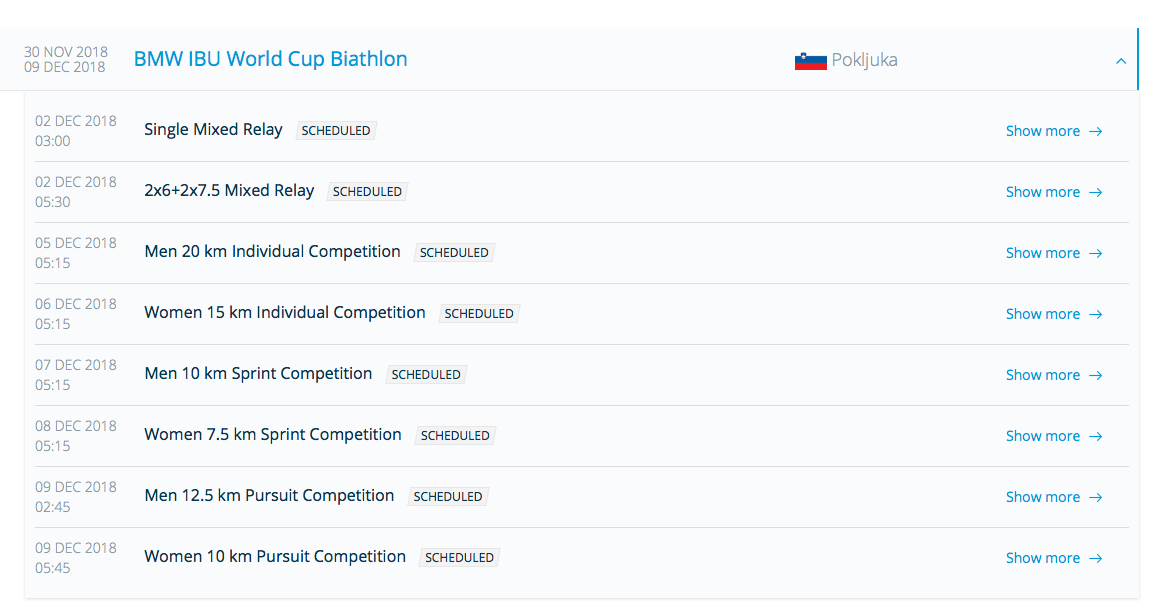
Below is the schedule for the first two IBU World Cup and IBU Cup races.
Schedule for the first IBU World Cup in Pokljuka, Slovenia.
Schedule for the second IBU World Cup in Nove Mesto, Czech Republic.
Schedule for IBU Cup #1 in Idre, Sweden.
Schedule for IBU Cup #2 in Ridnaun-Val Ridanna, Italy.
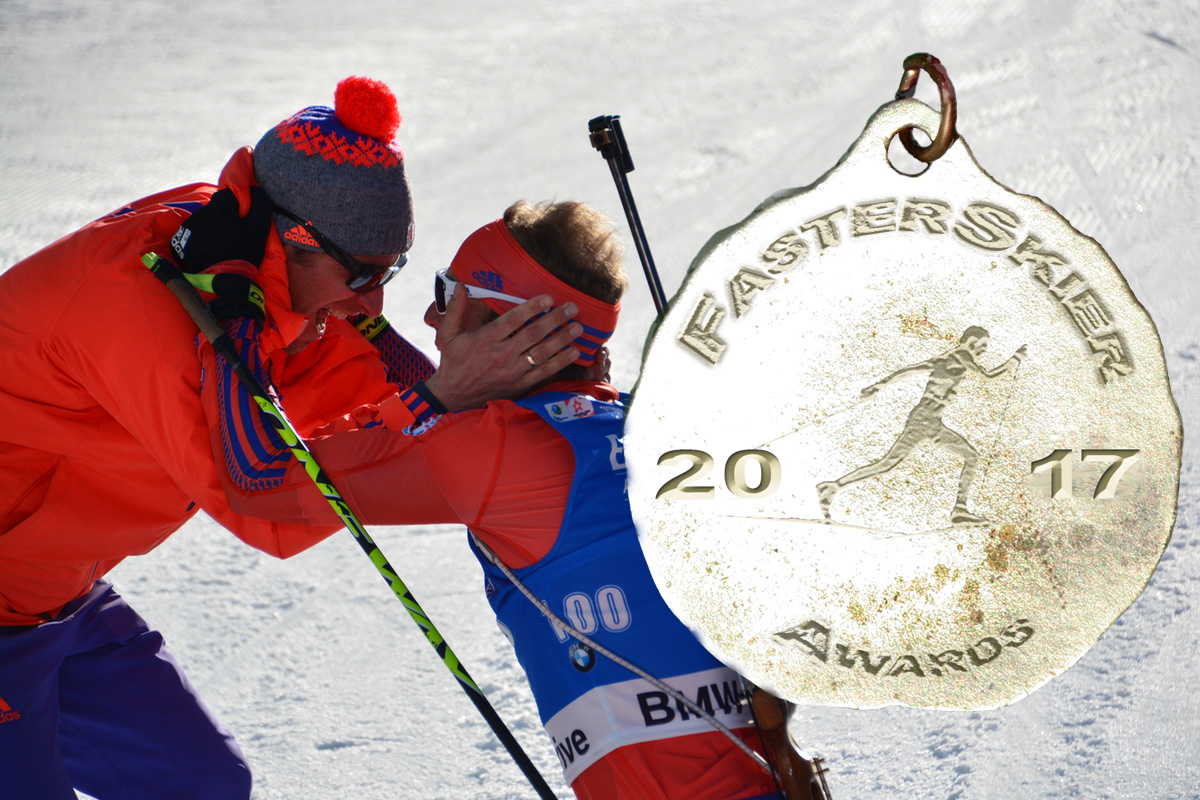
Bernd Eisenbichler embraces Lowell Bailey after Bailey became the first-ever world champion in the history of US Biathlon. (Photo: Glen Crawford)
With the 2016/2017 season officially in the rearview, FasterSkier is excited to unveil its annual award winners for this past winter. Votes stem from the FS staff, scattered across the U.S., Canada, and Europe, and while not scientific, they are intended to reflect a broader sense of the season in review. This set of honors goes to a coach or team director who has particularly contributed to their team’s success.
Despite the title of this award, Bernd Eisenbichler has never really been a coach.
He has been an athlete (in Germany), a ski technician (for Ricco Gross, Kati Wilhelm, and then the American biathlon team), the high-performance director for the US Biathlon Association (USBA), and now its chief of sport.
Such a title might suggest that as Eisenbichler has risen through the ranks to direct both the national team and now also the development pipeline for the U.S. biathlon community, he has become more distant from the nitty-gritty, the details or the athletes.
Not so much. This season, you could still see the 41 year old zooming around on skis, or running back and forth between different parts of a stadium. Eisenbichler isn’t one who is content to stand around, or to distance himself and watch other people do work.
And when Lowell Bailey crossed the finish line in Hochfilzen, Austria, in February to become a world champion in the 20 k individual, one man ran out to grab him by the shoulders, scream and celebrate. You guessed it, it was Eisenbichler.
“Bernd was the first person who greeted me at the finish line, tears in his eyes,” Bailey wrote in an email this week. “[He is] one of the most passionate, hard-working individuals I’ve ever known!”
Eisenbichler testing skis in 2015. (Photo: Jake Ellingson)
Technically, nobody is allowed in the finish zone except the athletes who just finished the race. But Eisenbichler pushed through the scrum of officials and celebrated with an athlete he had met in the same place, Hochfilzen, back at Junior World Championships in 2000. Back then, he was what Bailey called a “hired hand” to make their skis fast.
At that point, did the German envision himself staying with the U.S. team for nearly 20 years (so far)?
“Along the way, I had different offers from different teams,” Eisenbichler admitted in an interview from his office in the Bavarian town of Frasdorf on Monday. “But I enjoy the freedom I get [from USBA] to create a high-performance program. You learn on the way. You make mistakes on the way. Hopefully you do it better next time. What I always see, though, is the potential to get better… I enjoyed working with Lowell and Tim [Burke] for every day of the 18 years. But every new person who came, they added something to the program. It meant, we are not done here. There are things we can do better, to reach higher.”
Bailey’s gold medal, the first ever by an American, and Susan Dunklee’s silver to make her the first U.S. woman to win an individual World Championships medal – together, they make an argument that this was US Biathlon’s best season ever and that the program is entering a new era.
“We have never, before now, had strong men and strong women at the same time,” USBA CEO Max Cobb said after Dunklee’s silver in Hochfilzen. “This is really exciting for us and a good validation that these opportunities, and the pipeline we have, works.”
The World Championships haul didn’t come out of left field.
Tim Burke gets encouragement from US Biathlon’s High Performance Director Bernd Eisenbichler at the beginning of the 12.5 k pursuit in Hochfilzen, Austria, in 2014.
In 2013, Tim Burke earned World Championships silver. Then at the 2014 Olympics, Bailey and Dunklee set best-ever marks for U.S. men and women, respectively: eighth by Bailey, 11th by Dunklee.
Just weeks after that, Bailey and Dunklee began accumulating World Cup podiums, and they haven’t stopped.
Since 2014, three different athletes – Sean Doherty, Maddie Phaneuf and Chloe Levins – have turned in top-five performances at Youth and Junior World Championships.
And this season, two athletes with college degrees in just their second seasons of biathlon – Paul Schommer and Joanne Reid – turned in individual top-35 performances on the World Cup and then teamed up with Sean Doherty and Clare Egan to finish eighth in a mixed relay. Five different athletes on the team, including Burke, Egan and Leif Nordgren, picked up top-20 World Cup results this season.
We asked Cobb, the USBA President and CEO, whether US biathlon would be where it is today without Eisenbichler.
His answer was simple: “No. Bernd is masterful in his leadership of our program.”
“Bernd is one of most passionate people I know, and for decades he has directed all his energies into building up USBA’s program,” Dunklee agreed.
“What was always interesting with Bernd, even at [the beginning], was that even though he was a German, he was extremely passionate about Team USA’s results,” Bailey wrote. “He got to know all of the athletes and was genuinely interested in seeing our team succeed, even if that meant beating the German team… At first, he was just waxing skis; then, he was in charge of stone-grinding and waxing; then he was put in charge of some team logistics. Eventually he became High Performance Director. Since that time, I’ve seen our team go from a mediocre ‘also-ran’ to one of the strongest teams in the world. That success is largely due to Bernd’s role and his tireless drive to win by out-maneuvering instead of out-spending. He embraced this David-and-Goliath struggle from the start.”
Eisenbichler prefers to call it a puzzle, referring to the complexity of the sport and the intricacy of the management required to win.
“We always knew that our program and our approach works, and we also had results to justify that,” Eisenbichler said. “But this year it really culminated in a perfect way… You always add to the puzzle and you try to have the perfect pieces to complete it. This year we just completed the puzzle. I think we proved that all the additions that we made to the program over the last three or four years, we really benefitted from it this year.”
For North American nordic sports teams, having a European at the helm seems to have worked out about as often as it hasn’t. But for US Biathlon, it sure has, and the consensus seems to be that it’s because of Eisenbichler himself. Having a German guiding your biathlon program doesn’t automatically buy you success. It’s not nationality so much as what the guy does.
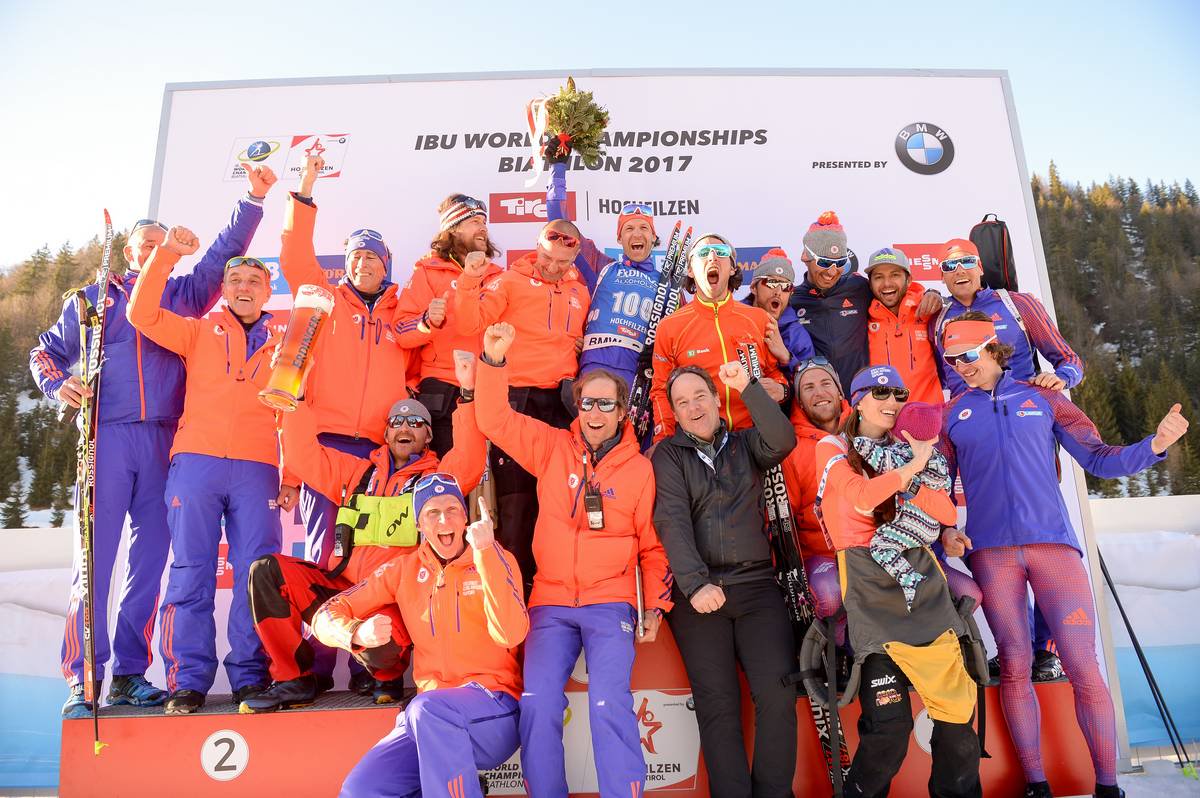
The U.S. team and staff — including Cobb (brown jacket) and Eisenbichler (to his left) — celebrate Lowell Bailey’s gold medal at 2017 World Championships in Hochfilzen, Austria. (Photo: USBA/NordicFocus.com/Twitter)
In Eisenbichler’s case, he assembles a coaching team from Sweden, Finland, and Canada, a service team that includes Germans, Czechs, and an Italian, and brings in a shooting advisor from Austria. Plus, of course, Americans.
“We have eight nations represented on our staff, and they all worked so hard towards one goal, over nearly a decade for some of the staff members,” Eisenbichler said. “To see them so happy after Lowell and Susan’s success was just very, very rewarding for me.”
How does it work, gaining buy-in and loyalty from a staff which can be far-flung in the summer months?
“If I was being arrogant, I would say good management,” Eisenbichler laughed. “No, that’s a joke.”
He admits that there have been a few hires which didn’t work out and didn’t fit in with the team. But they have been “actually few.” Part of the staff’s success, Eisenbichler said, was how it fits together.
“We manage pretty well to give everybody a project where they can really identify themselves as being a very important part of the program,” he explained. “As a result they are really giving more than a normal staff member would do, really giving their heart and their energy into these projects. But at the same time they know they are part of the puzzle. There is nobody who is the only one contributing to the success or failure. I really believe it is like a puzzle, and every staff member has — even if at times their role is more important than other times — but they have the feeling that without them, it would not have been possible to be so successful.”
That’s not to say that there have never been cultural differences between Eisenbichler and his team.
“In my early years on the team, we used to have a slight disagreement about the word ‘fun’,” Dunklee wrote, explaining: “I’ve always made it my goal to keep ‘fun’ at the forefront of all my racing and training because the day that I forget to have fun is the day that I burn out. I think Bernd (and many other European coaches I have met) associate the word ‘fun’ with a carefree and unfocused attitude. However, I’ve never thought of fun and hard work or professionalism as mutually exclusive, in fact they can build on each other. I have been most successful and satisfied with the sport when I am directing every effort possible towards a big goal and remembering to savor and enjoy the goofy, spontaneous and joyful moments along the way. On that point, Bernd could agree. We were talking about the same thing, he just preferred to use the term ‘enjoyment’ rather than fun. But he humors me now and sometimes tells me ‘have fun!’ before my race and I always act so surprised to hear that word coming from him. It’s become a running joke.”
In some ways, Eisenbichler is still a ski technician at heart. He works closely with Muck Bauer, the team’s stonegrinder, who is also based in Germany. The pair test skis all year round, and were developing new grinds right up through World Championships. That meant that skis were getting driven from Hochfilzen to Ruhpolding, stoneground, being driven back, and then skied in for 20 k the next morning before being raced on.
“Bernd was excited about some of the new breakthroughs they’d had,” Bailey wrote. “The night before the individual, it was decided that a couple of pairs of my skis should be sent to Germany and re-ground with some of these new grinds. It was one of those pairs that carried me to victory later that day. It’s hard to say what the difference was for me that day, but it’s hard to overlook that fact that, in a race lasting almost one hour, a 3.3-second margin of victory is about as slim as it gets!”
At the end of this year’s U.S. National Championships, Dunklee and Bailey presented Eisenbichler with USBA’s Medal of Honor. The love and appreciation that Eisenbichler has for his athletes, and vice versa, stands out.
“I was meeting with Bernd in the lead-up up to [the 2014 Olympics] in Sochi and one thing he said stuck out to me,” Dunklee wrote. “We were talking about goals and how of course he wants to see someone on the team bring home a medal. He explained how every bit of the high performance budget and staff were being directed towards that main priority. But then he told me, ‘You know, I’ll really gauge my work with the team as successful if 20 years from now, you athletes and staff decide to travel to Munich for an Oktoberfest Reunion together. Then I’ll know I did a good job.’ ”
“I look forward to that reunion some day,” Dunklee concluded.
Lowell Bailey and Bernd Eisenbichler leave the mixed zone after Bailey finished sixth in the mass start at 2017 IBU World Championships in Hochfilzen, Austria. (Photo: USBA/NordicFocus.com)
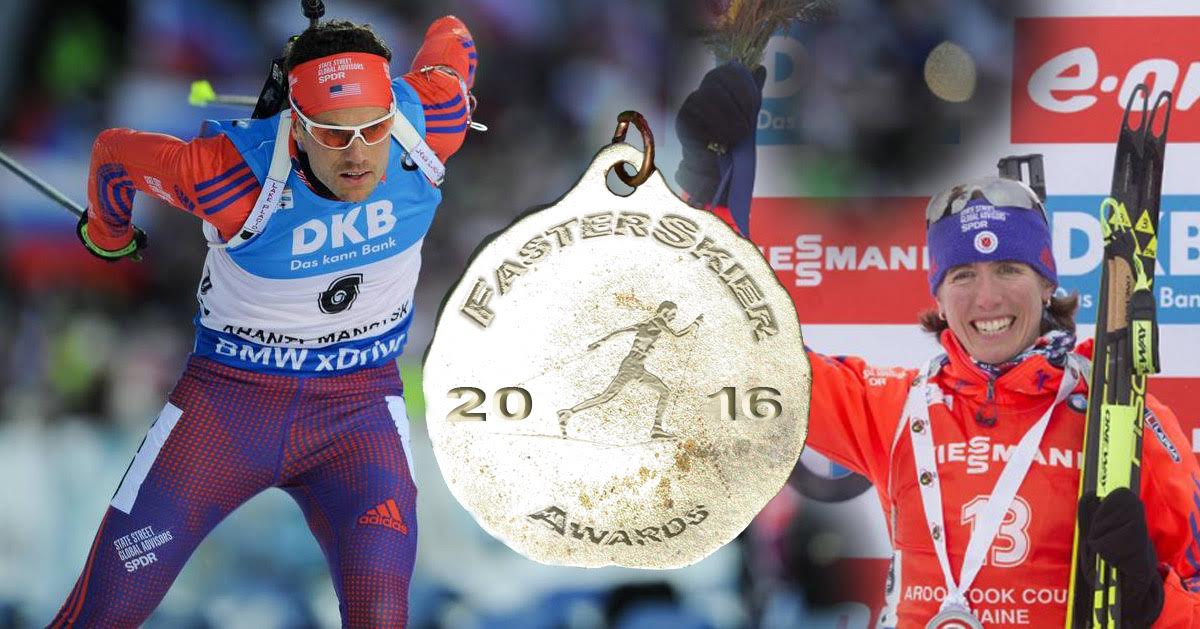
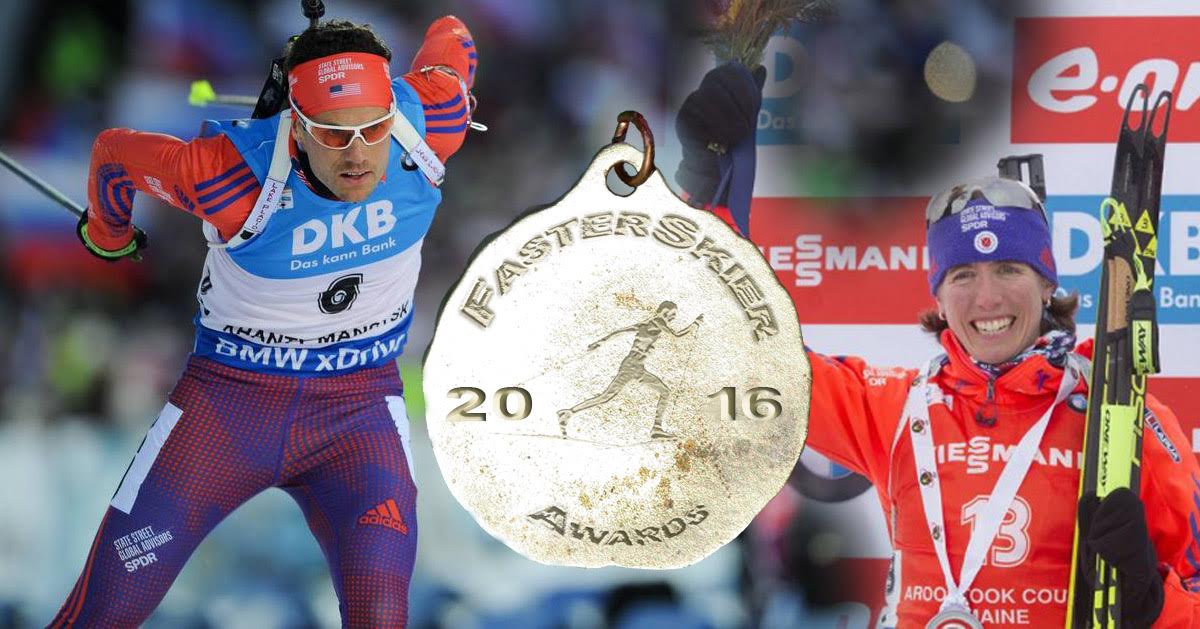
US Biathlon’s Tim Burke (l), seen racing at the end of the season in Khanty-Mansiysk, Russia, and Susan Dunklee (r), after earning silver at the IBU World Cup in Presque Isle, Maine, are FasterSkier’s Biathletes of 2016. (Photos: USBA/NordicFocus)
With the 2015/2016 season officially in the rearview, FasterSkier is excited to unveil its annual award winners for this past winter. Votes stem from the FS staff, scattered across the U.S. and Canada, and while not scientific, they are intended to reflect a broader sense of the season in review.
***
Susan Dunklee, US Biathlon
Susan Dunklee has been on the rise for several years, and this season U.S. fans got to see her potential as a biathlete up close and personal: in Presque Isle, Maine, she placed second in the 10-kilometer World Cup sprint, a career-best performance and the second podium of her career.
“To be able to have a best result on home soil and we only have a North American World Cup every five years, I couldn’t ask for anything better,” Dunklee said on the phone after the race. “It’s just phenomenal.”
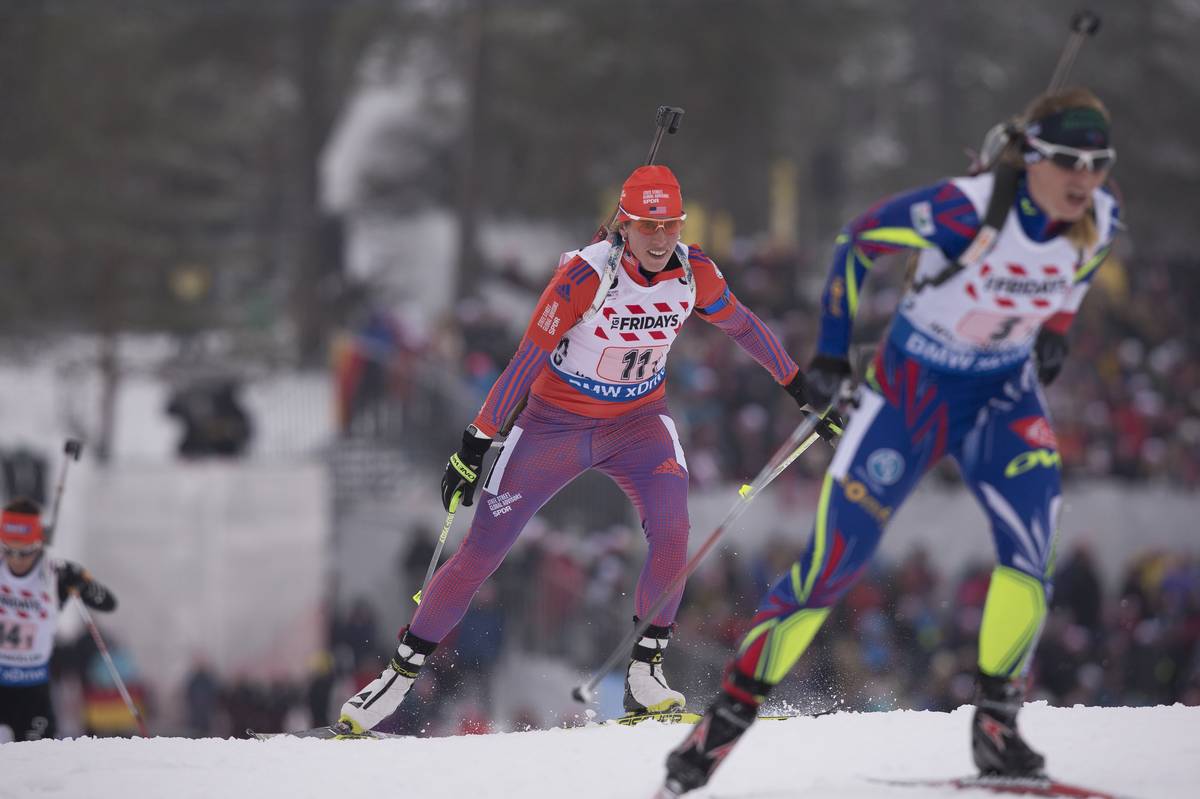
Susan Dunklee (US Biathlon) trails France’s Anais Bescond during the first leg of the mixed relay at 2016 IBU World Championships in Oslo, Norway. Dunklee went on to tag off in first, 1.6 seconds ahead of Norway. (Photo: USBA/NordicFocus)
But that wasn’t Dunklee’s only highlight of the season. Earlier she had placed sixth in both the sprint in Pokljuka, Slovenia, and the mass start in Ruhpolding, Germany.
Then at World Championships in Oslo, Norway, she won the first leg of the mixed relay in thrilling fashion, passing Norway’s Marte Olsbu on the final uphill in the stadium and never looking back.
“I have been close behind the leader tagging off many times, but I have never tagged off in first,” she said at the time. “On the last loop I was hungry to finally win my leg today and I wanted to give Hannah [Dreissigacker] the experience of leaving in the lead in front of a packed Norwegian crowd.”
Dunklee then went on to finish eighth in the sprint, tenth in the pursuit, 11th in the mass start, and 18th in the individual at World Championships. Her season-ending spot of 14th in the World Cup Total Score is the best ever achieved by a U.S. woman.
As teammates Dreissigacker and Annelies Cook are retiring, Dunklee will helm the U.S. women’s team into the future – and seems very able to do so.
Tim Burke, US Biathlon
Tim Burke had a rough 2014/2015, but re-focused his efforts coming into the season and began to return to the form that had kept him as the best U.S. biathlete for many years.
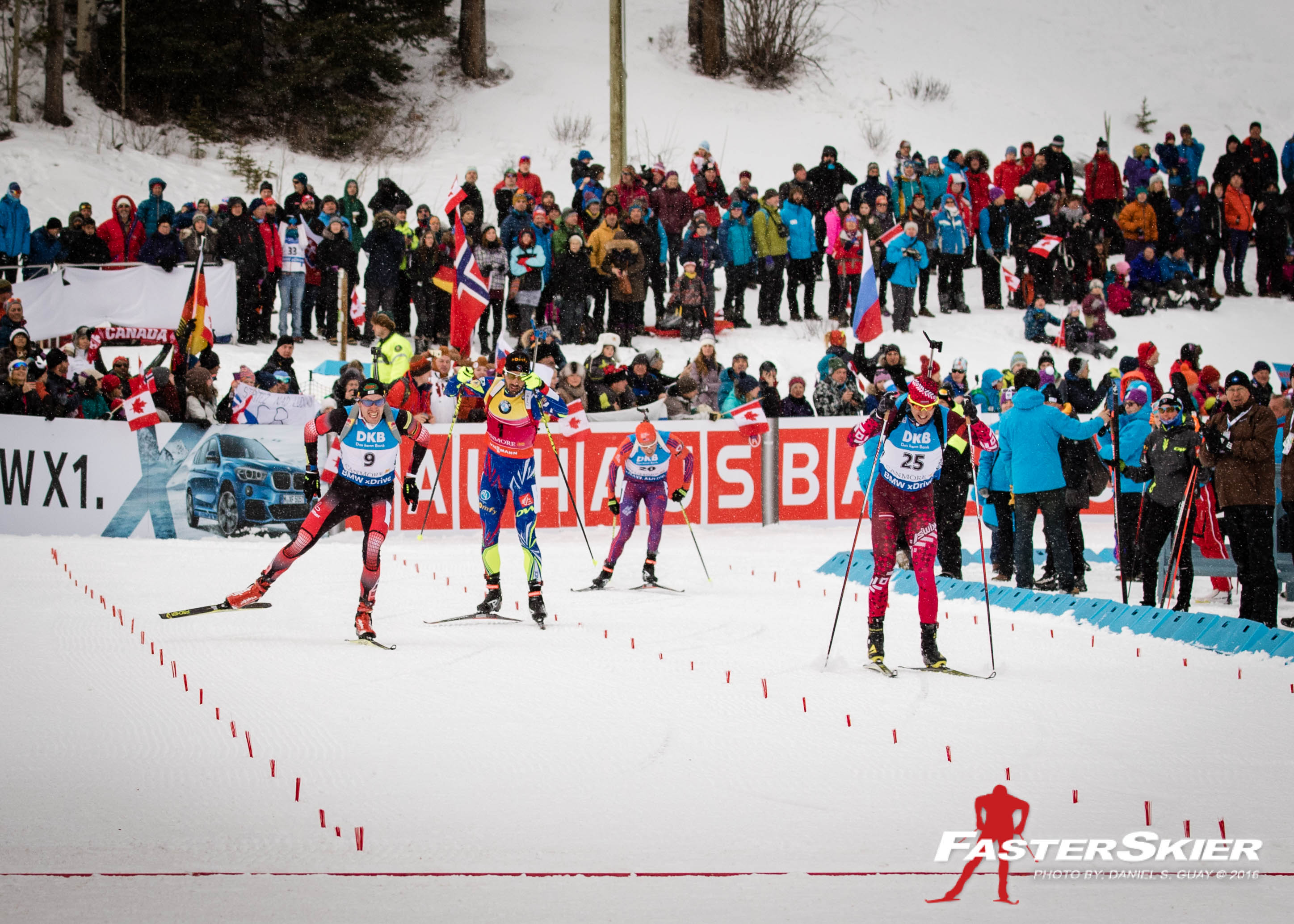
Latvia’s Andrejs Rastorgujevs (25) and Austria’s Dominik Landertinger (9) lead the race for fourth, which Landertinger took by 0.2 seconds. France’s Martin Fourcade (second from l) placed sixth in the mass start, 1.5 seconds ahead of American Tim Burke (behind) on Saturday at the IBU World Cup in Canmore, Alberta. (Photo: Daniel S. Guay)
“I feel like I have performed really well, maybe more consistently than I ever have,” Burke said after finishing 12th in the World Championships mass start. “Last year was so disappointing for me. I was really up and down, more down than up, that I think that this was a really big step back up to where I should be.”
Burke got his first top-10 of the season before Christmas, racing from 14th up to ninth in the pursuit in Pokljuka.
But the fireworks came later: he was seventh in both the mass start at the Canmore World Cup, and the pursuit in Presque Isle.
Then, after finishes of 12th, 14th, and 17th at World Championships, Burke headed to the last World Cups on the season in Khanty-Mansiysk, Russia, where he snagged sixth place in both the sprint and pursuit.
After finishing 15th in the World Cup Total Score, Burke is still hungry.
“These are my two best results of the season so I can’t be too disappointed,” he said after Khanty-Mansiysk. “But I am also like most athletes in that I always want more!”
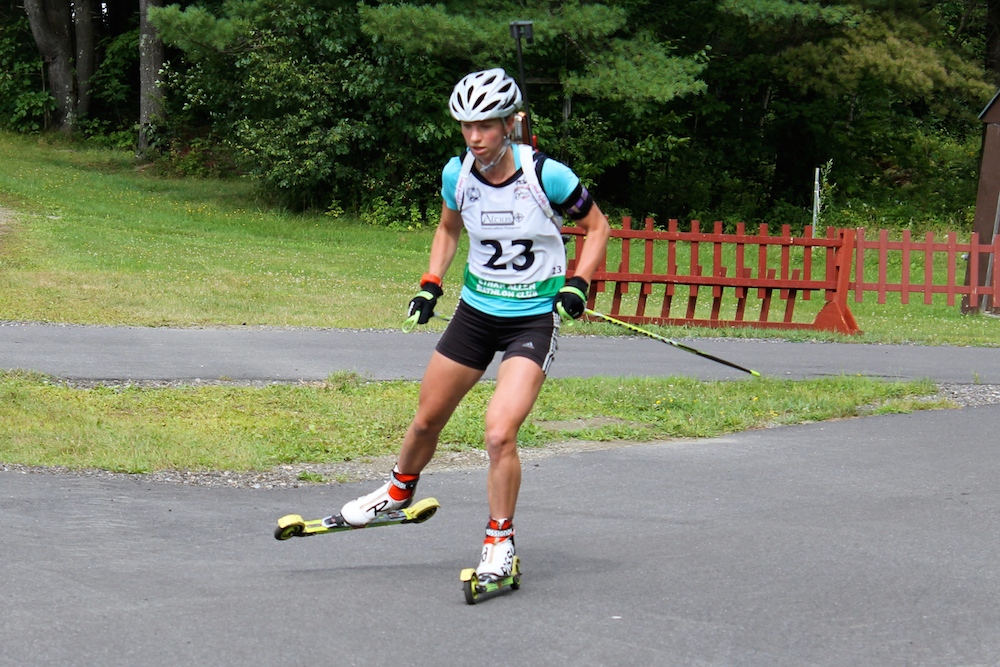
Annelies Cook (USBA A-team) during the women’s 7.5 k sprint at the 2014 North American Rollerski Championships, also the first set of USBA World Cup trials, on Aug. 16 at the Ethan Allen Firing Range in Jericho, Vt.
Note: This article has been updated to include comments from Russell Currier, who was named to U.S. Biathlon’s World Cup squad on Tuesday.
JERICHO, Vt. — Annelies Cook had an inkling she was in a good position for what would likely be the final women’s spot on U.S. Biathlon’s World Cup team to start this season, but she didn’t want to just qualify, she wanted to prove something to herself.
Her two teammates on the women’s A-team, Susan Dunklee and Hannah Dreissigacker, had already prequalified for the early season World Cups (World Cups No. 1, 2 and 3 in late November through December) based on results last season.
Cook had to be the best of the American women in at least three of four rollerski trials held at the Ethan Allen Firing Range in Jericho, Vt. The hitch was, she had to do so one weekend in August and another in October.
The U.S. Biathlon Association (USBA) World Cup trials wrapped up Sunday, Oct. 26, with a sprint. Saturday was a sprint as well, as was the first race of the trials on Aug. 16.
Why so many sprints? Because in biathlon, unlike cross-country skiing, everyone should be a good sprinter; it’s the only way to progress through a World Cup weekend by qualifying for the following pursuit.
Cook placed fourth in the opening sprint of the trials, cleaning prone but missing three standing. In the mass start the next day, she won despite five penalties.
“Having that one win was really nice because it gave me a good cushion,” Cook, 30, said on Sunday. “But these races, in some ways, they aren’t about if you win — you qualify first. It’s like, can you be a professional biathlete and do your job well? So I felt like even though I had good races the first time, kind of, I wasn’t really satisfied with my performance. … I was happy about the points, but I want to do a better job.
“My goal is not to be the best of the Americans on any given day, it’s to actually do a good job,” she continued. “[Then] I can be like, ‘OK, if I did that on the World Cup, it might be a good day.”
Once again, Cook is on her way to the World Cup. She clinched her spot by winning Saturday’s sprint with one miss and placing third on Sunday (with three misses) behind Dunklee and X-team member Clare Egan, respectively.
“This weekend, for me, was this interesting mix of trying to put together a really professional day that I could feel good about,” Cook added. “I’ve been feeling pretty fit and shooting and training has been going well, but I feel like still there’s like a piece missing in the racing sometimes. Every time I do a race and I get frustrated, it’s like, gosh, I just need to practice more. I just need to practice that race feeling and get the confidence that I know I’m hitting my targets in training. I gotta be able to do it in a race, but sometimes to build that confidence you need it to happen.”
All things considered, Cook said her mission was generally accomplished.
After winning Saturday, she drove 2 1/2 hours east to Paul Smiths, N.Y., for teammate Tim Burke’s wedding. Burke, like Lowell Bailey and Leif Nordgren, had already prequalified for the World Cup and instead of racing, took part in the wedding weekend instead. Burke, 32, married Andrea Henkel on Saturday night.
“I really wanted to go to Tim’s wedding and have a good feeling, like, I did my job today and I can relax a little bit and what happens tomorrow, happens tomorrow, and go enjoy myself and enjoy the special moment,” Cook said. “So that added even more pressure and I’m really pleased that I felt like I pulled it off. Today [Sunday] I didn’t really pull off a super-professional race. I had three misses and was a little bit unfocused for sure, but I gave it my all, and I was happy for that.”
Clare Egan racing to first in the junior pursuit at 2014 North American Rollerski Championships in early August at the Ethan Allen Firing Range in Jericho, Vt. (Photo: Gordon Vermeer/Flickr)
Egan, 26, turned heads with three podiums at trials, all in the sprints, including second place on Sunday, third on Saturday, and third in the first sprint on Aug. 16.
But she didn’t feel pressure.
“I really see this whole trials process as not something where I have something to lose, but where I can have something to gain if I perform well,” Egan said Sunday. “I performed well today so that’s good.”
Earlier this month at the team’s recent training camp in Park City, Utah, she learned that — since U.S. Biathlon wasn’t going to bring a team to the IBU Cups until January — she couldn’t qualify for the World Cup even if she won trials. She had never raced an IBU Cup, the tier below World Cup, before.
According to USBA Chief of Sport Bernd Eisenbichler, Egan would’ve had to race the IBU Cup in Beitosteolen to gain World Cup start rights. Discretion could have been used to select a fourth woman to fill out the Americans’ World Cup quota.
“[She has made] very good and fast development and progress … and I am very happy to see that, but we want to go the right development pass with her,” Eisenbichler wrote in an email on Tuesday. “As she never raced internationally so far, the WC participation would have been one step too far to fast in our opinion, but we are sure, we see her soon there.”
Without possible World Cup starts on the line, Egan knew her fall schedule in advance. She would train in Lake Placid before leaving with the rest of the X-team and development group to race NorAms in Canmore, Alberta. Then she’d race at December IBU Cup trials in Mt. Itasca, Minnesota.
“I wasn’t feeling like I have to get this certain percentage back or win in order to qualify for this trip,” Egan explained. “My goal was still to win the race, like I said, I saw it as an opportunity to show my stuff, not to necessarily lose something. … I’m very happy with how I did this weekend and in the trials process overall.”
Sean Doherty (USBA X-team) racing to second in the men’s 10 k sprint at the North American Rollerski Championships, also the first set of USBA World Cup trials, on Aug. 16 in Jericho, Vt.
On the men’s side, Burke, Bailey and Nordgren prequalified — and none of them raced last Saturday or Sunday. Meanwhile, Sean Doherty (X-team) won both sprints, beating runner-up Russell Currier (B-team) by 55 seconds on Saturday, and topping Wynn Roberts in second and Currier in third on Sunday.
“The trials situation with the last day, there was a little more on the line, but it just really came together,” Doherty, 19, said. “A lot of training this summer and it’s just really fun to show it in a race with a bib on.”
Heading into Sunday, it was a close one between Doherty and Currier for the final men’s World Cup spot. (Bailey had won the first two trials races: Doherty placed second in the sprint, Currier was second in the mass start.) In the final sprint on Sunday, Doherty ended up with perfect shooting, while Currier missed four prone and one standing.
Regardless, Doherty said he didn’t worry about anyone but himself.
“You have to just stick with yourself and your own work … [Russell] almost missed his start this morning — you have to take care of your own plan and execute that,” he said.
At the start, Currier scrambled to strap on his poles as he skated off the line.
“I think that’s the second time in my race history that I’ve almost missed the start,” Currier explained in an email. “It didn’t effect the focus too much because I didn’t actually miss my start. It was just very close.”
Doherty earned the World Cup start, but on Tuesday, USBA announced in a press release that he declined.
“Sean Doherty was the winner of the trials and is therefore nominated for the December World Cup team and therefore also to at least the January IBU Cup team,” the release began. “Sean has submitted a petition to decline his nomination to the December World Cup team and focus on additional training and competition opportunities in North America to ensure the best possible preparation for the Junior World Championships. That petition was accepted by the ICC and Sean’s nomination to the January IBU Cup team remains valid.
Russell Currier racing to fourth in the men’s 10 k sprint on Aug. 16 in Jericho, Vt.
“Russell Currier finished second in the trials and was named to the December World Cup team by discretion,” it continued.
“Sean’s decision is in full agreement after discussing with me and his coaches,” Eisenbichler wrote in an email.
Doherty said Sunday that he was looking forward to the possibility of getting more World Cup experience early this winter.
“The last couple World Cup starts I’ve had have been very short notice so it’s fun to know a little further out and begin to prepare and just have that goal already to work towards now,” he said.
At the same time, he said he had couldn’t give a concrete answer where he expected to start his season: in Europe or in Canmore.
From Nov. 16-27, the World Cup team will train and do some tuneup races in Sjusjøen, Norway, before heading to Östersund, Sweden, for the first World Cup starting Nov. 30.
Following Sunday’s race, Currier didn’t think there was much of a chance he’d make that trip. “I did my best to stay positive, but a full blow trimester team naming didn’t seem like a realistic possibility,” he wrote.
“These races are always difficult for me as it’s still training season,” he continued. “The difference between August and October compared to January is a lot. Being on snow, fitness, and fine tuning for shooting is much better at that point in the year.”
At the same time, now that he’s on the team, he felt optimistic.
“The progress made this year is there. It would have been nice to demonstrate this better last weekend, but I’m glad to have a second chance in Sweden now,” Currier wrote. ‘Going to WCs in Europe vs trials in MN is night and day in terms of atmosphere. I was back home in the woods hunting when I got the email on phone letting me know I was in.”