From the FasterSkier archive — posts syndicated from athletes’ and coaches’ own blogs between 2004 and 2012, kept online as published. Current coverage is at fasterskier.com.

Tag: u.s. distance nationals

  • Kris Freeman Retires Leaving a Legacy of Belief and Titles

    Kris Freeman Retires Leaving a Legacy of Belief and Titles

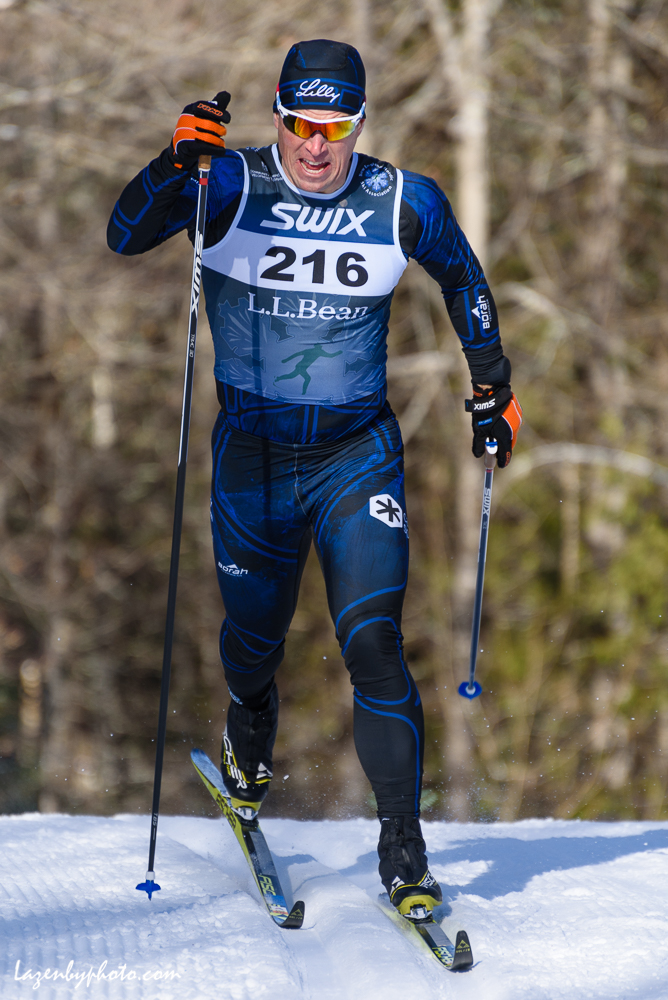
    Kris Freeman (Caldwell Sport) racing to 11th in the SuperTour classic sprint qualifier on Feb. 26 in Craftsbury, Vermont. He went on to place fourth in the final, and two days later, he was fourth in the 10 k freestyle there. (Photo: John Lazenby/Lazenbyphoto.com)

    Chew on this for a minute: who stands as the greatest male U.S. distance skier in the “modern” era (defined by post-Bill Koch) of World Cup skiing?

    Most likely at the top of that list would be 37-year-old Kris Freeman. 

    The New Hampshire native and longtime Granite State resident retired as a professional cross-country skier after this year’s U.S. Distance Nationals 50-kilometer classic race in late March in Craftsbury, Vermont. Freeman finished seventh in that race. A few days earlier, he placed fourth in the 1.3 k classic sprint, which was part of SuperTour Finals, also in Craftsbury.

    “It was a very weird feeling to finish the 50 k in Craftsbury and pack up my skis and be like I am not going to race next year,” Freeman said during a phone call on April 3. “I got home and I have a three-bedroom home. One of the bedrooms is entirely dedicated to my ski stuff, and I am like, I should probably do something else with this room right now. It was a strange feeling.”

    (Freeman and his wife, Amber, have about four months to re-purpose the ski gear room for a nursery. The couple is expecting their first baby in September.)
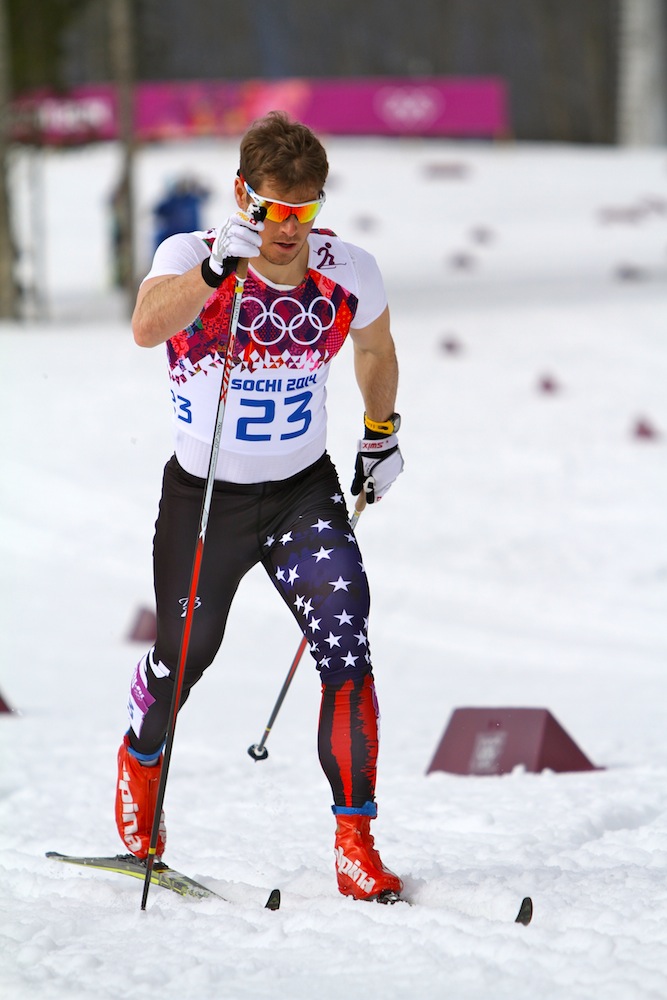
    Kris Freeman skiing in the Sochi Olympics 15 k classic.

    1980. That’s Freeman’s birth year. His nearly 40 trips around the sun don’t make him ancient in terms of athletic relevance on the national stage. It makes him a reminder of one athlete’s incredible longevity and focus. Freeman has never been in it to just finish.

    He raced to win. That maxim held going into his final pro race, not as a sentimental notion, but as podium potential fact. No sane skier lining up with up Freeman could discount the force with “Team Freebird” sublimated on his lycrad backside.

    First, the disappointment. Freeman did not qualify for his fifth Olympic team this year.

    “I knew going in, two years ago or three years ago, that I was past the peak of my performance,” Freeman said. “I knew that I was losing a little bit each year. 2011 was my best season. I believe I was 31 that year, and I held that fitness together for another year and a half, and it has been slowly losing a little bit each year. After Sochi, I said I am going to take it a year at a time. What happened was I was enjoying what I was doing. I love ski racing.”

    That year-by-year plan took Freeman to the cusp of qualifying for PyeongChang this past January. By his own estimation, had he skied 0.8 seconds faster in the U.S. nationals 30 k classic in Anchorage, Alaska, and edged out Eric Packer for second place, the 2018 Olympics would have been a possibility. Freeman was fourth overall and the third American in the 30 k. It is still conjecture, but second place in that race would have positioned Freeman for a potential fifth Olympic berth as a distance-skier selection*. (*For the logic behind that reasoning, see OWG section at end of this article.)

    “I knew it wasn’t a guarantee that I would make the team, and I was damn close to making it,” Freeman reflected. “I was able to put together probably the best race of my year in Anchorage in that 30 k. I came up a half a second short. I don’t have any regrets extending my career another four years. I enjoyed it.”

    Long before coming up a half-second short, Freeman’s quest for podiums and championship-team selection, more often than not, bore fruit. At U.S. nationals alone, he won 17 championship titles (see sidebar), placed second four times and third five times. Between 2006 and 2016, he won 15 SuperTour races and reached the podium eight other times in second or third place. That stat is more impressive considering Freeman didn’t race a single SuperTour between Jan. 4, 2007 and March 29, 2011.

    Freeman’s National Titles:

    1. Soldier Hollow 2000: 30 k classic

    2-3. Rumford 2003: 15 k classic, 30 k classic

    4-5 Soldier Hollow 2006: 15 k classic, 30 k skiathlon

    6. Fort Kent 2006: 50 k classic*

    7-8. Houghton 2007: 10 k skate, 15 k classic

    9-10. Presque Isle 2007: 30 k skiathlon, 50 k skate*

    11-12. Anchorage 2009: 10 k skate, classic sprint

    13. Anchorage 2010: 15 k skate

    14. Sun Valley 2011: 50 k classic*

    15. Craftsbury 2012: 50 k skate*

    16. Tahoe 2013: 50 k classic*

    17. Houghton 2015: 30 k classic

    * = Spring Series/U.S. Distance Nationals

    His first national championship was in 2000 in the 30 k classic. (Freeman placed third overall but was the best placed American). At the 2001 national champs, Freeman proved he’d remain on the podium scene. He was third in a freestyle sprint. Two days later he was second in the 10 k classic. Freeman lost to first-place skier Justin Wadsworth. Otherwise, the 21-year-old Freeman defeated a legacy-rich field, which included his older brother, Justin Freeman. Ultimately, Freeman’s span of distance dominance lasted 16 years at the senior level.

    Internationally, Freeman still sets the high-water mark standard for male distance skiers. He won the 30 k classic at the inaugural U23 World Championships in 2003. He raced at four consecutive Olympics stretching from Salt Lake City in 2002 to Sochi in 2014. His best results were a 22nd place in Salt Lake’s 15 k classic, and 14th in the 20 k skiathlon and 2oth in the 15 k classic, both at the 2006 Torino Games.

    Freeman raced on the U.S. Ski Team (USST) from 2002 to 2013. On the World Cup, Freeman notched 10 individual top-10 results. His best finish was a fourth place in the 15 k classic in Kuusamo, Finland, in 2009.

    He skied in eight consecutive World Championships. At 2003 World Championships in Val di Fiemme, Italy, he placed fourth in the 15 k classic, 10.6 seconds out of first and 2.1 seconds from bronze. It was a repeat at the 2009 World Championships in Liberec, Czech Republic, where Freeman also placed fourth in the 15 k classic, 17.7 seconds out of first and 1.3 seconds from bronze. Such was Freeman’s form that fifth-place skier Jaak Mae of Estonia was another 13 seconds behind Freeman in that 2009 race.

    “Internationally, I think obviously winning Under-23 World Championships was just a great day,” Freeman said of his highlight international moment. “Listening to a scratchy national anthem was really cool. But at the same time, I think that the World Championships in Liberec, just the vibe that we had going on there. We had the nordic combiners sweep the wins that year, all three events. We had Lindsey Van win the ski jumping. Kikkan [Randall] was second. I was fourth. It just seemed we had a run to the podium ceremony every night. So I think Liberec was probably the highlight of my career. That place and that race.”

    As far as the belief-in-medals movement is concerned, Freeman’s performances helped seed that optimism.

    His Greatest Challenge

    And his accomplishments are even more noteworthy considering he achieved them while managing Type 1 diabetes. During his four Olympics and tenure on the World Cup, Freeman’s diabetes was the news peg that exposed him to a broader audience. Since his diagnosis at age 20, he faced the challenges of regulating his blood sugar while competing amongst the world’s most fit athletes.
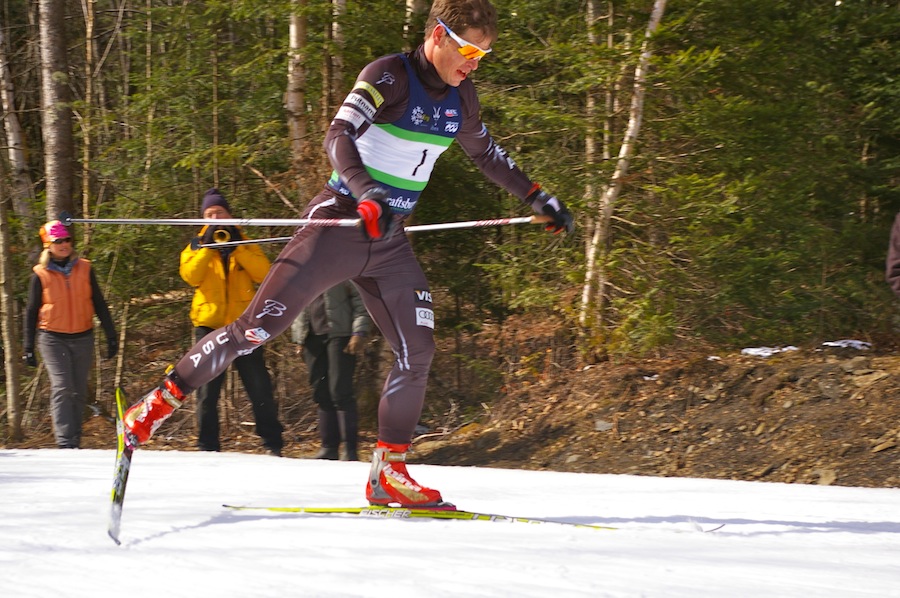
    Kris Freeman on his way to claiming the 2012 US Distance Nationals 50 k freestyle title in Craftsbury, Vt.

    “I had to be pretty resilient to disappointment because there are a lot of factors that go into ski racing,” Freeman explained about his race-day realities. “You’ve got to be fit. You’ve got to have good skis. You’ve got to get the wax right. And on top of that, I had blood-sugar management, and blood sugar is impacted by just about every hormone in your body, especially stress hormones. So when you are under stress they get even more complicated as you try to pinpoint how much insulin to give yourself.”

    In the 30 k pursuit (now called the skiathlon) at the 2010 Olympics, Freeman miscalculated his blood-sugar requirements. The result was a literal hypoglycemic collapse that saw Freeman seeking a quick infusion of sugar before he continued racing. This stark anecdote reflects something that never makes the International Ski Federation’s (FIS) official results: the everyday emotional and physical stress diabetes had on Freeman. His result in that race, 45th place, tells the bare bones story: that 44 other skiers beat him. That would be judging a book by its cover.

    inhalers online

    Forty-fifth place isn’t the story.  

    In 2010, FasterSkier penned a comprehensive article on the lengths Freeman went to bring some normalcy to his training and racing. Zeroing in on the moving bullseye of his race-day blood sugar levels would have sunk most athletes and their support staff. As his primary coach for the bulk of his career, Zach Caldwell, who owns a business dedicated to ski flexes and wax combos, was also fixated on helping Freeman find the perfect recipe of low pre-race stress and dialed blood sugar.
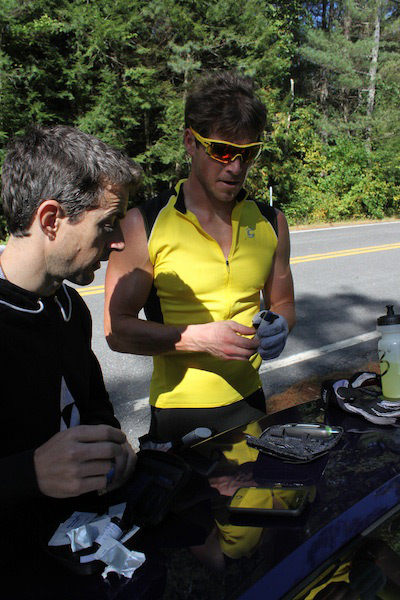
    Zach Caldwell (l) with Kris Freeman getting blood to measure sugar and lactate levels.

    With the benefit of Caldwell’s and Freeman’s fastidiousness, Freeman’s career will be a case study for other diabetic endurance athletes. The simple documentation of his attempts at athletic normalcy is a significant legacy for diabetics in any endurance sport’s pipeline. 

    Asked if he could have replicated his storied career without diabetes, Freeman was quick to state that would be a “wasteful exercise”.   

    “I have had diabetes for so long now I cannot separate what would I be without it,” Freeman said. “I honestly don’t know and it’s a question I don’t try to answer. Would it have been an easier road for me? Absolutely. Would I have stayed with skiing as long as I did? I don’t know. Over time, I became more comfortable talking about some of the real difficulty of it or how it really has impacted certain races or certain seasons or certain aspects of my life. I think for a long time I was just scared of having diabetes and doing what I was doing, and that can close you off.”

    From the K-90 to the Olympics

    Freeman can be terse in his comments. He’s also forthright in his racing style — he’s more inclined to do the intimidating than being intimidated.

    “I am not going to blame all of my cocky behavior on having diabetes,” Freeman clarified. “But, for sure, being cocky is a defense mechanism. It can also be deliberate intimidation, which I am just as guilty of. But, I think, over time, having diabetes has just taught me that being open with people around you and honest with yourself is the key to success in anything.”

    Success began early for Freeman. To his core, Freeman is a cross-country skier. He became aware of that at a young age in Andover, New Hampshire. There, Freeman participated in the nordic-skiing and nordic-combined programs Proctor Academy offered to its students and Andover residents like Freeman.

    Kris Freeman (c), Jed Hinkley (left), and Carl Van Loan (right) in a 1999 photo from the FIS World Junior Championships in Austria. (Photo: courtesy Proctor Academy)

    From the age of 5 or 6, Freeman was going head to head with future nordic combined Olympians Jed Hinkley and Carl Van Loan, who also trained with the Proctor Academy program.

    “We were intensely competitive with each other,” Freeman said of his duels with Hinkley and Van Loan. “So for sure, being in a competitive and well-supported program right from the get-go was huge.”

    Freeman competed in multiple sports as an adolescent.

    “But in the back of my head it was always cross-country skiing that was the most important,” Freeman said of his true passion. “I could win a soccer trophy or a ski-jumping meet, but if I was fifth in that cross-country race, I was going to be pissed off. I needed success there because that is what I identified with.”

    Freeman explained that his last jump as a nordic combiner was after he turned 16. He jumped off the K-90 in Lake Placid, New York, and realized he was afraid while he noted his competitor, Billy Demong, seemed to be having fun high up on the jump tower.

    Freeman’s identification with cross-country skiing took him to the University of Vermont, where he studied and skied during his freshman year. This is around the time Freeman formalized his relationship with Caldwell. Freeman recalled telling Caldwell he wanted to be an Olympian and asking Caldwell how this could happen.

    “I don’t think it’s going to happen,” is how Freeman recalls Caldwell’s staid response. After impressing Caldwell with a tortuous double-pole workout, Caldwell and Freeman paired up. Freeman decided to forgo college and dedicate his energy on training with the USST. 

    While Freeman plans on taking a year or two away from the sport in his retirement, he eventually plans to coach nordic skiers. Freeman said he’ll bring to his coaching the blunt honesty and humility he learned from Caldwell.

    “One thing I always liked about Zach is that when I screw up he tells me, and when he screws up he tells me,” Freeman said. “There is no ego, and there are no protecting feelings.”

    Freeman also mentioned that he’ll bring to his future coaching the power to make athletes believe in their process. In terms of future plans, in the short term, he’s weighing his options and talking to his sponsors. Eventually, he’d like to write a book.

    “When I have been at my most successful is when I have had a support team that makes me believe that what I am doing is right,” he said. “Whether it is or not, they cover my back once things don’t go great, and they just continually believe that what I am doing is the right thing to do. And that psychology makes you believe that you are doing the right thing. Because I have done the exact same training under different coaches and been told that I was doing things great and that I was doing things terribly, and it was the feedback I received that really affected my performance. That applies to more than just sport, but in life, too.”
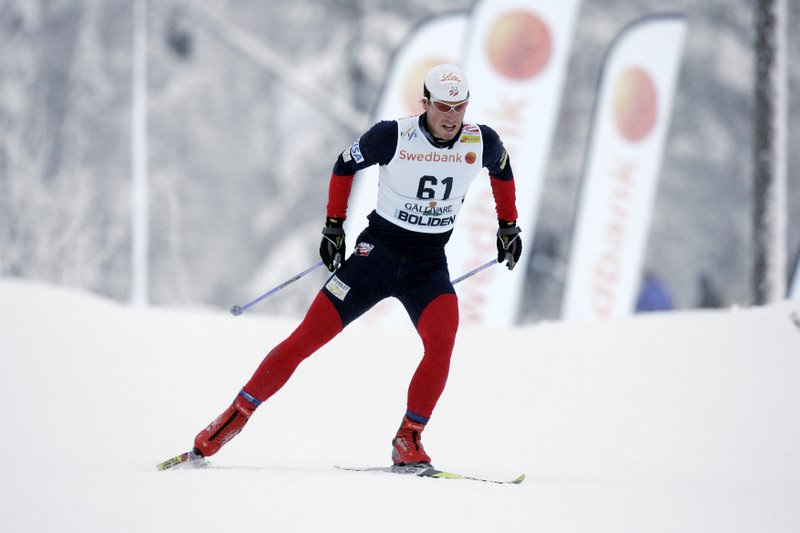
    Kris Freeman racing a 15 k freestyle at the 2008 World Cup in Gällivare, Sweden. (Photo: Fischer/NordicFocus)

    In an Olympic year when Randall and Jessie Diggins cleared the gold-medal hurdle, Freeman explained he wasn’t surprised with the result, just simply relieved. Not being surprised speaks volumes to how far U.S. cross-country skiing has come.

    Freeman, however, came of age as an elite skier during the 42-year-long Olympic medal drought bookended by Koch’s silver and the Randall-Diggins gold.    

    “As a dreamer back in 1997 versus a dreamer now in cross-country skiing, it is a lot easier and more realistic to dream about medals,” he reflected. “You would hear about these Norwegians that skied so fast and they are just this amazing force. Now, they are still really good, but they are beatable. I wonder what it would be like to be a skier growing up now compared to a skier growing up then.”

    Current skiers like Diggins and U.S. women’s coach Matt Whitcomb frequently espouse the power of belief. The current crop of USST athletes are well-trained and certainly better supported than in the past. (wax truck, anybody?). There are now plenty of World Cup podiums and a handful of championship medals worth their weight in belief.

    Freeman is confident. No athlete gets as far as he has without it. Yet, Freeman never brought up on his own that he deserves any credit for why U.S. skiers should have belief.       

    “Are you a reason skiers have belief?” this reporter asked 48 minutes into the interview.

    “I hope that I am,” Freeman said without any hint of hubris. “I certainly came to believe that I could be one of the best in the world in skiing. I cannot say that when I was 16 that I really thought that I was going to be fighting for a medal at the World Championships. At that point, I was hoping to get to the World Championships and put up a good show.”

    Freeman’s professional skiing show ends having inspired a generation of nordic skiers. And he’ll continue to inspire countless diabetic children who know him as a groundbreaker.

    *Freeman and the Olympic Winter Games (OWG) Points List
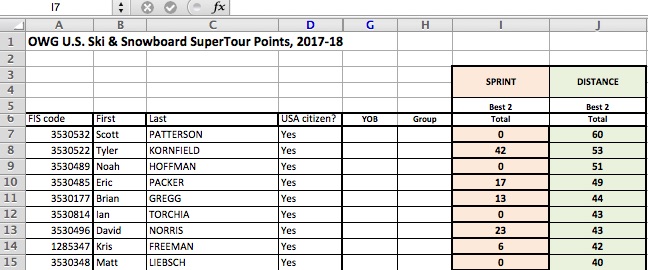
    Men’s OWG points scoring list. This list was in part used to determine the 2018 U.S. Olympic Cross-Country Team. (Screenshot from Excel spreadsheet)

    Disclaimer: this is a mental exercise to illustrate Freeman’s point that he was close to making the 2018 Olympic team. We all know that if Freeman had different results, any of the leaders could have had different results, too.

    For argument’s sake, had Freemen skied 0.8 seconds faster and finished second in the men’s 30 k classic at this year’s nationals, he would have received 35 points. Packer placed second in that race and received the 35 point-allotment. Freeman placed fourth, receiving 26 points as the third Amercian. On the OWG list, Freeman was eighth, with a combined 42 points from his two best distance finishes between the SuperTour and U.S. nationals.

    Had Freeman placed second and nailed down those 35 points, that would have given him 51 points total, and tied him for third on the OWG list with Noah Hoffman. As tie-breakers go, both Hoffman and Freeman would have had a 2nd at U.S. nationals with bonus points and a 5th place. The first tie-breaker would have been each athlete’s third-place result. Hoffman, having skied period 1 on the World Cup, had no domestic third place result. By default, Freeman would have been third on the list.
  • Spring Series Photo Gallery: Mixed Relay

    Spring Series Photo Gallery: Mixed Relay

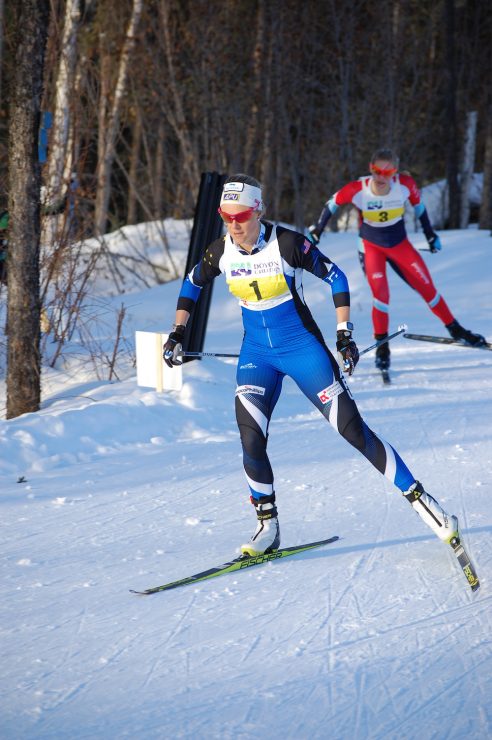
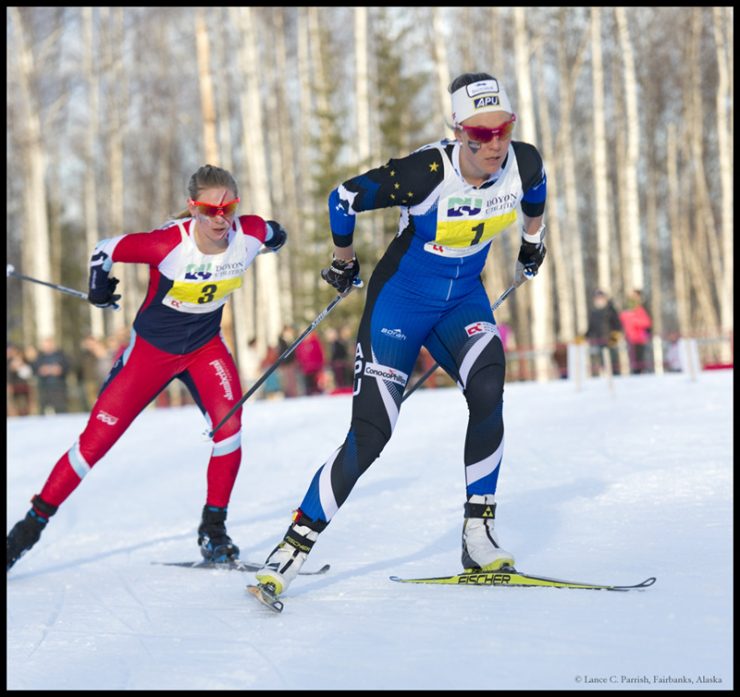
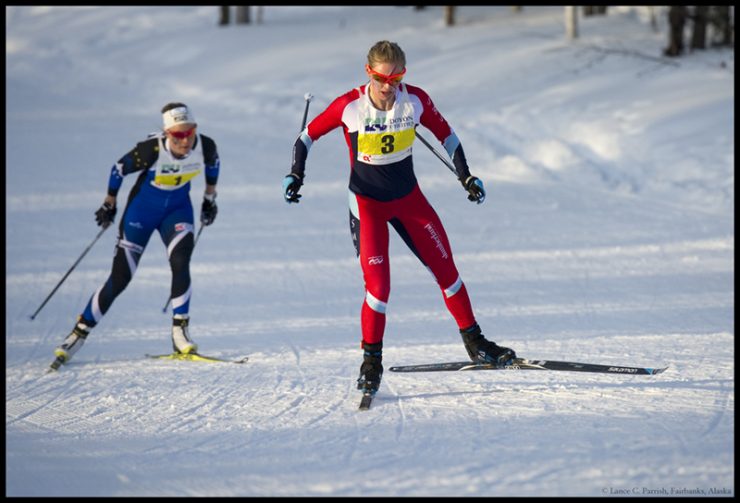
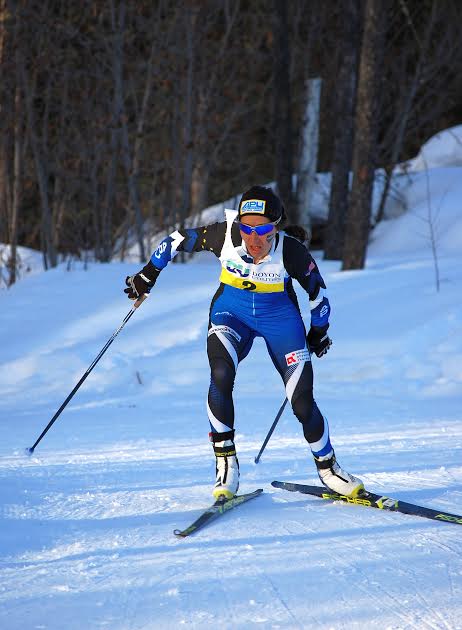
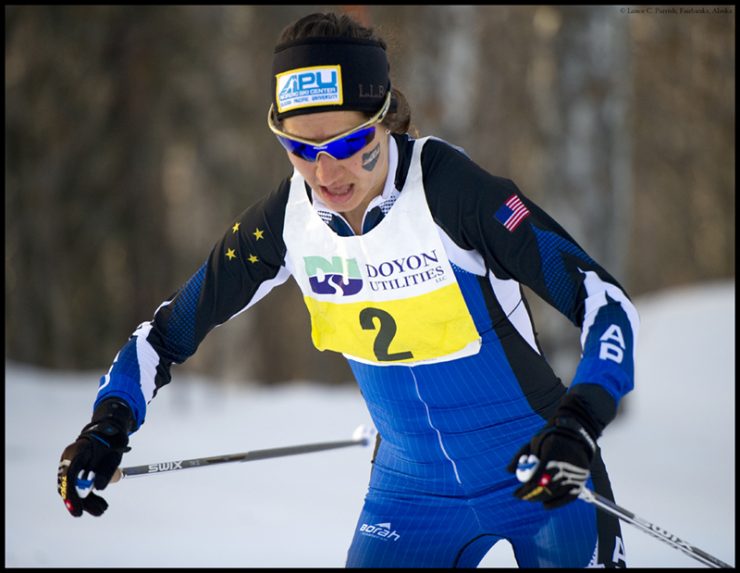
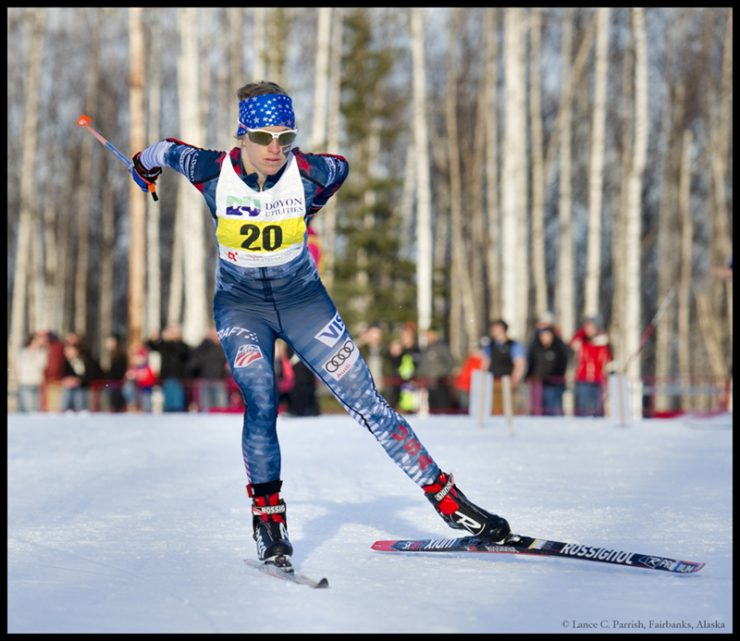
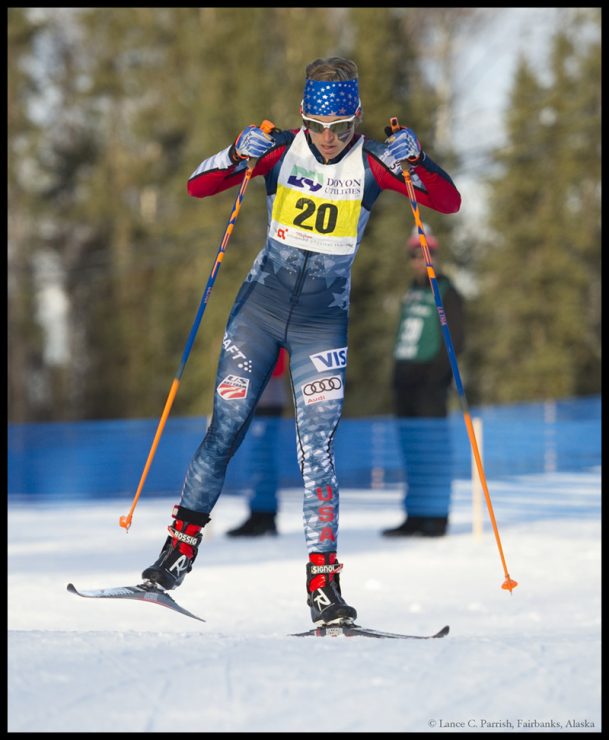
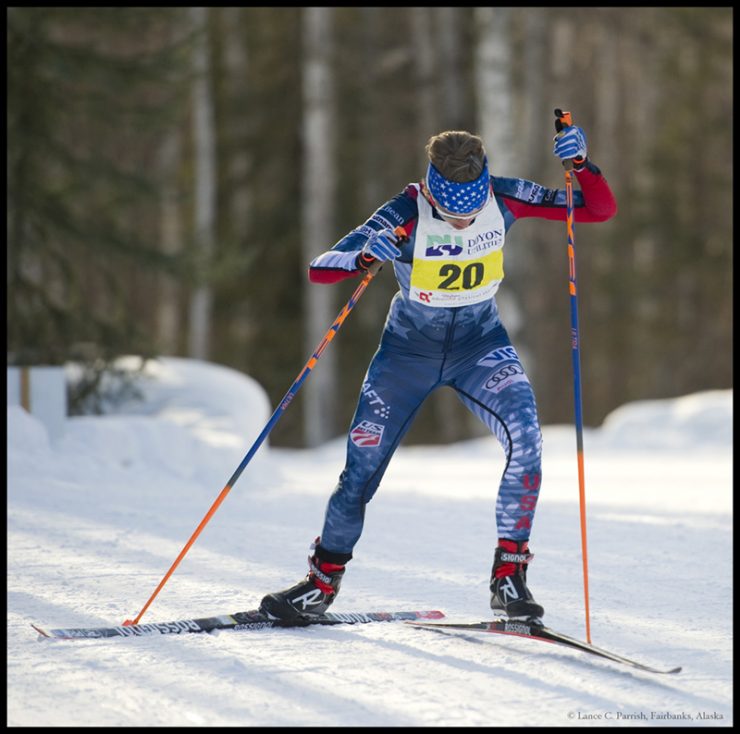
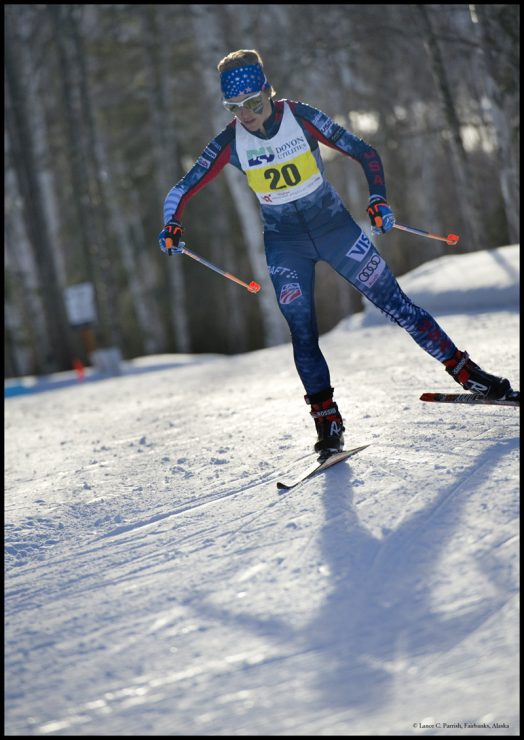
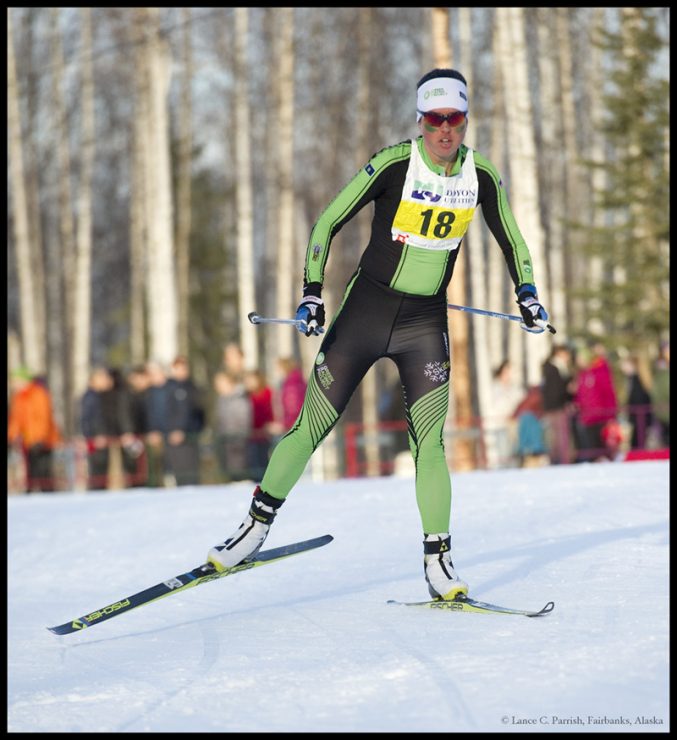
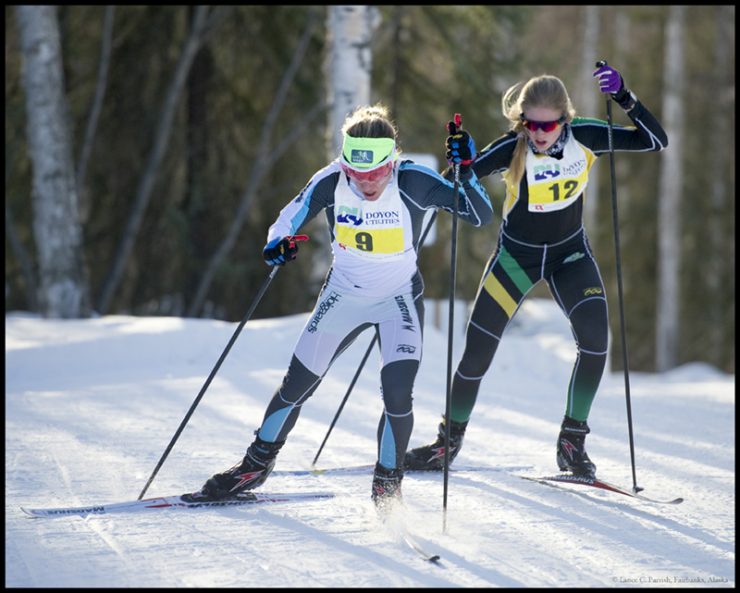
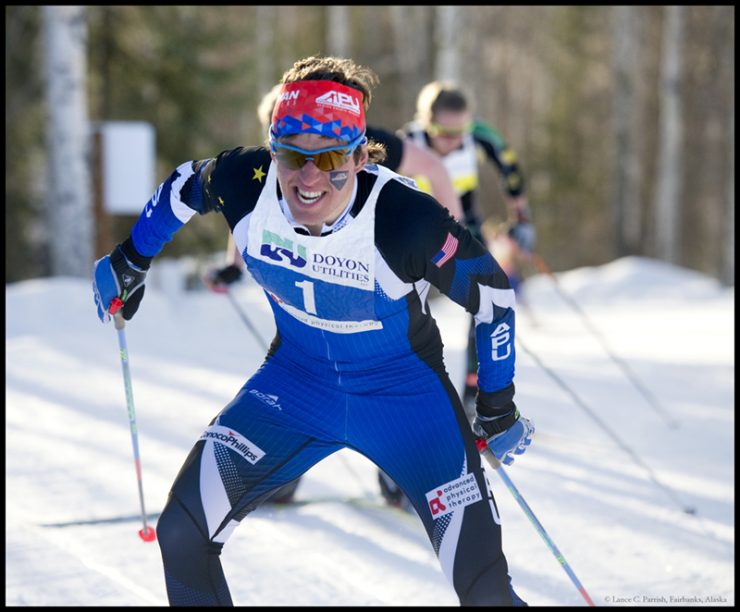
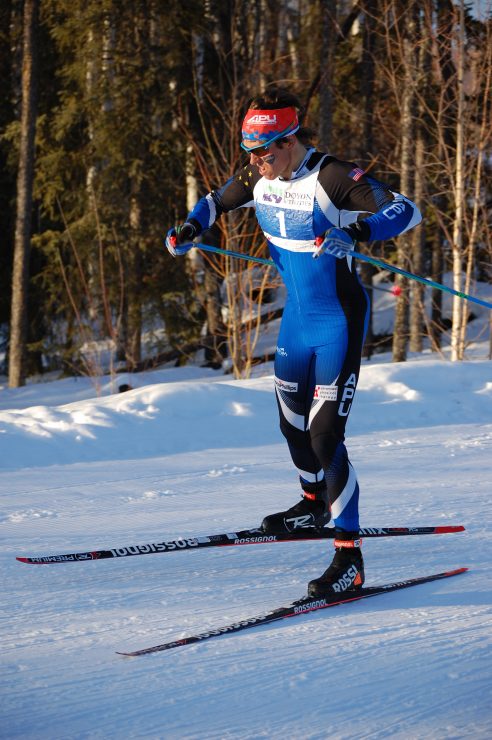
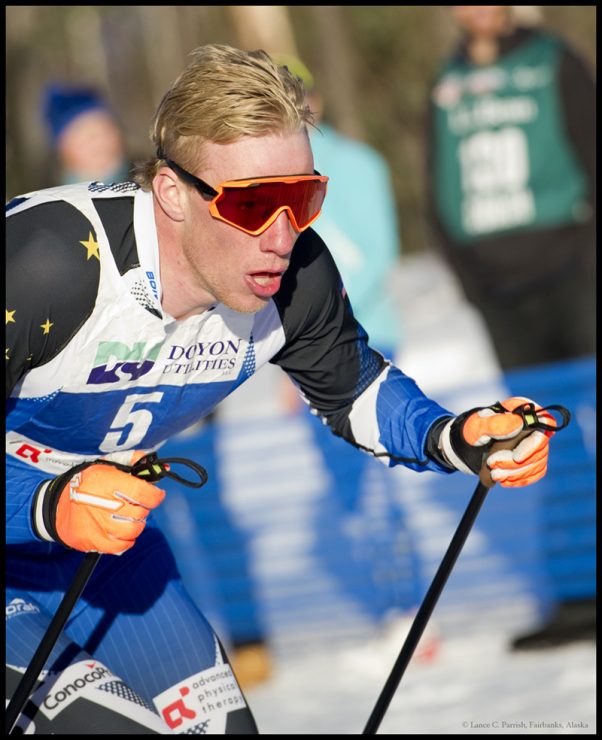
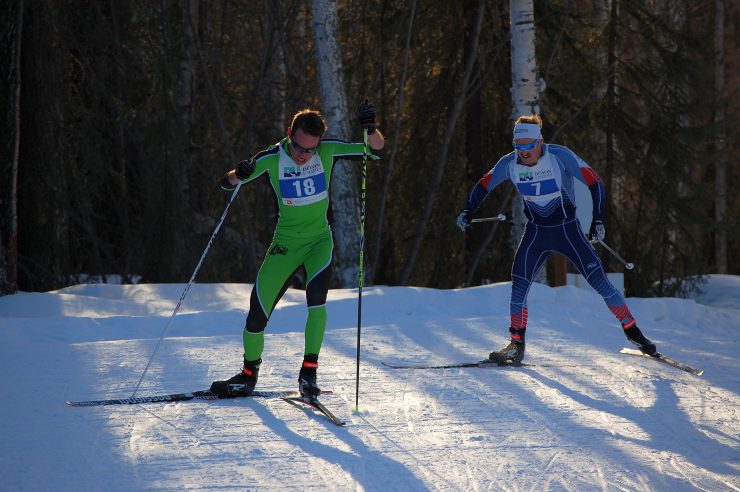
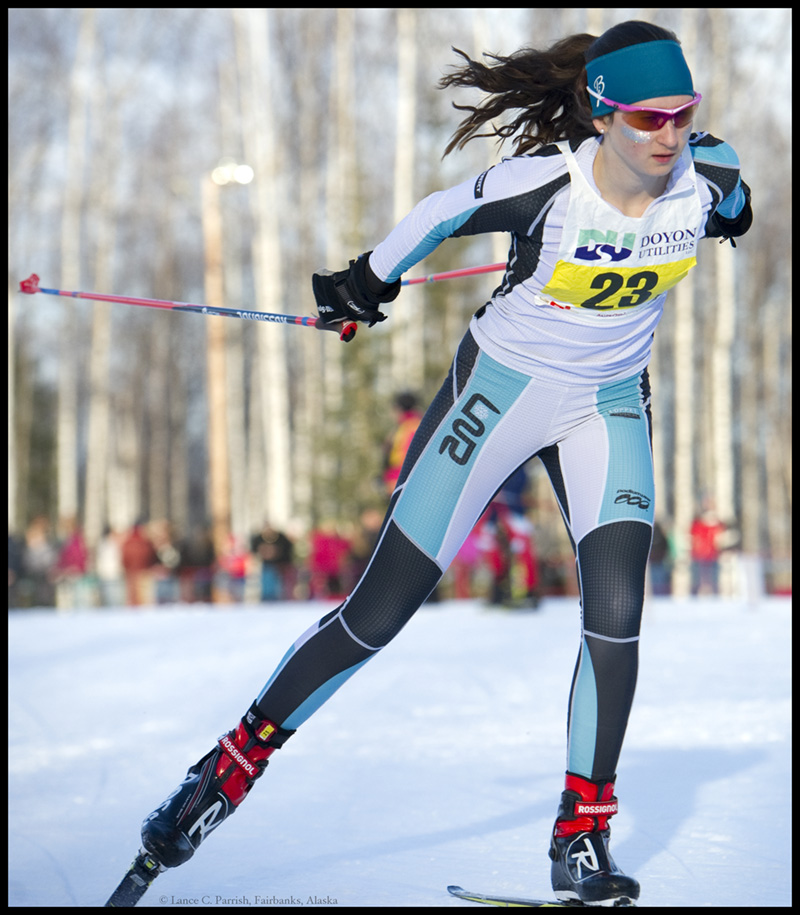
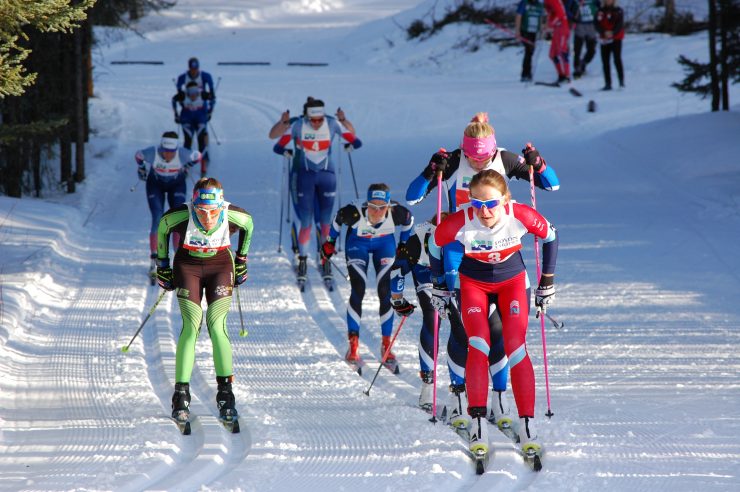
    On Friday at Spring Series in Fairbanks, Alaska, clubs went head to head in the 4 x 5-kilometer co-ed mixed relay at the Birch Hill Recreation Area. Below is a photo gallery, courtesy of Lance Parrish and Max Kaufman. U.S. Distance Nationals and the SuperTour season concludes Sunday with the 30/50 k freestyle mass starts.


  • Spring Series Starts Tonight in Fairbanks

    Spring Series Starts Tonight in Fairbanks

    The Birch Hill Recreation Area stadium last Friday, March 24, where U.S. SuperTour Finals and Distance Nationals will be held March 27-April 2 in Fairbanks, Alaska. (Photo: Gavin Kentch)

    The 2017 U.S. SuperTour Finals and Distance Nationals, also known as Spring Series, opens today with men’s and women’s skiathlons at the Birch Hill Recreation Area in Fairbanks, Alaska. The races will be held late each day to take advantage of the warmest parts of the day and lambent late-afternoon sunlight, as well as to accommodate volunteers and spectators.

    The week’s race schedule is summarized below. For more event info, visit supertourfinals2017fairbanks.us.

    Tune into the race organizers’ live stream at the time of each event and click here for live results.

    FasterSkier is seeking photos from this week’s Spring Series. If you are on site and able to send photos after the events, please email with photo caption and credit info to alex@fasterskier.com.

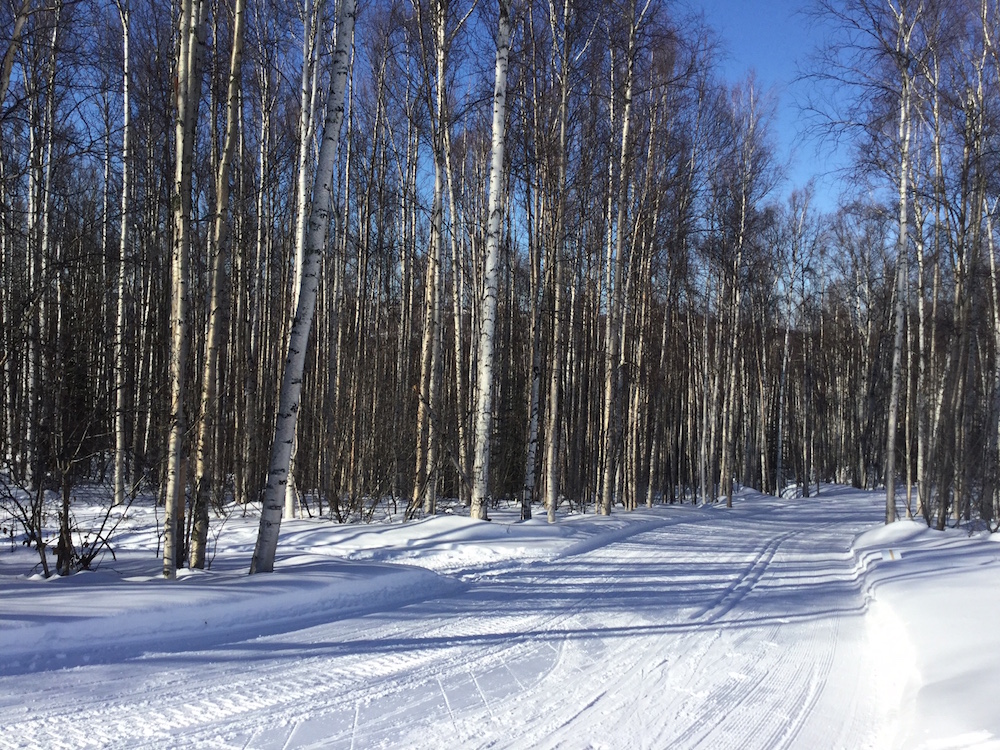
    A look at the trails on Friday, March 24, at Birch Hill Recreation, where U.S. SuperTour Finals and Distance Nationals will be held March 27-April 2 in Fairbanks, Alaska. (Photo: Gavin Kentch)

    Spring Series race schedule: (At start times = Alaska Daylight Time)

    Monday, March 27:

    • Women’s 15 k skiathlon (5 p.m.)
    • Men’s 22.5 k skiathlon (6:15 p.m.)

    Wednesday, March 29:

    • Freestyle sprint qualifier (4 p.m.)
    • Freestyle sprint heats (6 p.m.)

    Friday:

    • Co-ed mixed relay (6:30 p.m.)

    Sunday: U.S. Distance Nationals

    • Women’s 30 k freestyle mass start (10 a.m.)
    • Men’s 50 k freestyle mass start (12:30 p.m.)
  • After Demolishing 30 k Classic, Diggins ‘Pretty Crushed’ at Season’s End

    After Demolishing 30 k Classic, Diggins ‘Pretty Crushed’ at Season’s End

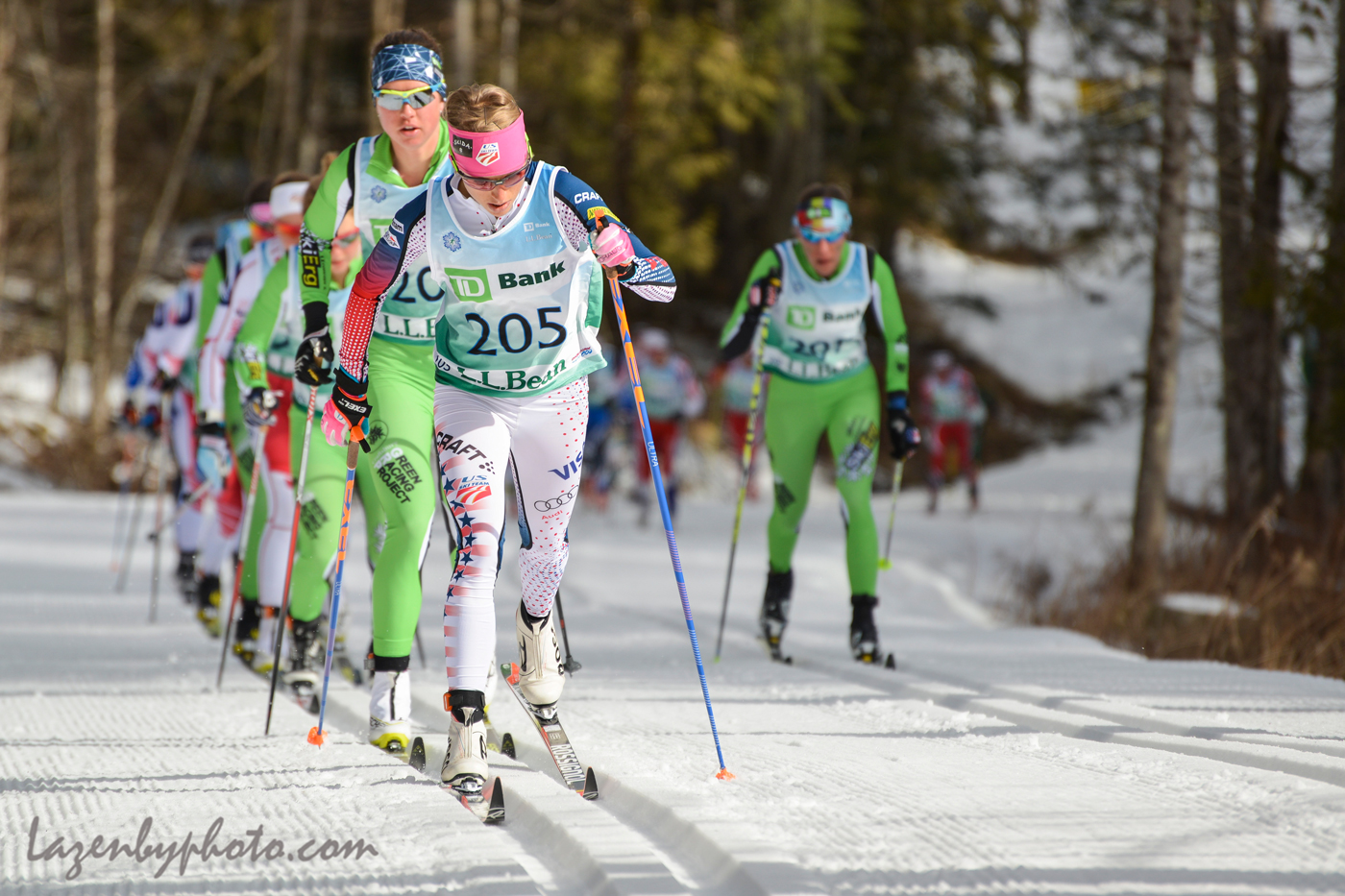
    Jessie Diggins (Stratton Mountain School T2 Team/U.S. Ski Team) celebrates a 1:03-minute victory in the women's 30 k classic at U.S. Distance Nationals on Saturday in Craftsbury, Vt. (Photo: John Lazenby/Lazenbyphoto.com)
    Jessie Diggins (Stratton Mountain School T2 Team/U.S. Ski Team) celebrates a 1:03-minute victory in the women’s 30 k classic at U.S. Distance Nationals on Saturday in Craftsbury, Vt. (Photo: John Lazenby/Lazenbyphoto.com)

    U.S. Ski Team Women’s Coach Matt Whitcomb may have foreshadowed the season in November, saying Jessie Diggins was “just getting started” after dominating the U.S. team’s opening weekend of European racing in Gällivare, Sweden.

    True to Whitcomb’s prediction, the 24-year-old Diggins, of the U.S. Ski Team (USST) and Stratton Mountain School (SMS) T2 Team, maintained momentum through 32 World Cup starts, including two eight-stage Tours. Then, finishing out the season in the U.S., she won both individual races at SuperTour Finals earlier this week and topped it off with a national title in the 30-kilometer classic mass start on Saturday in Craftsbury, Vt.

    And she did so by winning by more than a minute.

    Diggins didn’t waste any time setting her preferred pace on Saturday, breaking away from the 43-woman pack on the first of nine loops around the Craftsbury Outdoor Center’s entirely manmade trails. Despite a severe lack of natural snow in the East this winter, Craftsbury created and stockpiled enough artificial snow to lay out a roughly 3.5 k loop for this week of racing.

    Starting in the stadium at the highest point of the course, the loop wove down to the low point and began climbing again for more than a kilometer back to the stadium. Prime sprint bonuses for the women’s race were at the 3 k mark on the course, about halfway up the long climb, on laps three and six.

    Diggins claimed both $125 bonuses without anyone anywhere near her.*

    With about a 15-second gap on the first lap, she extended her lead to 30 seconds by lap two then 45 seconds by lap three.

    In an in-person post-race interview, Diggins explained she tried to “get as many laps in before the break before it turned to slush,” she said of the conditions, with direct sunlight softening exposed sections of the course as temperatures rose above 40 degrees late Saturday morning. “After the first lap, I was like, ‘OK, I’m going to do this on my own.’ ”

    Jessie Diggins leading with a slight gap on the first of nine laps in the women's 30 k classic mass start on Saturday at U.S. Distance Nationals in Craftsbury, Vt. (Photo: John Lazenby/Lazenbyphoto.com)
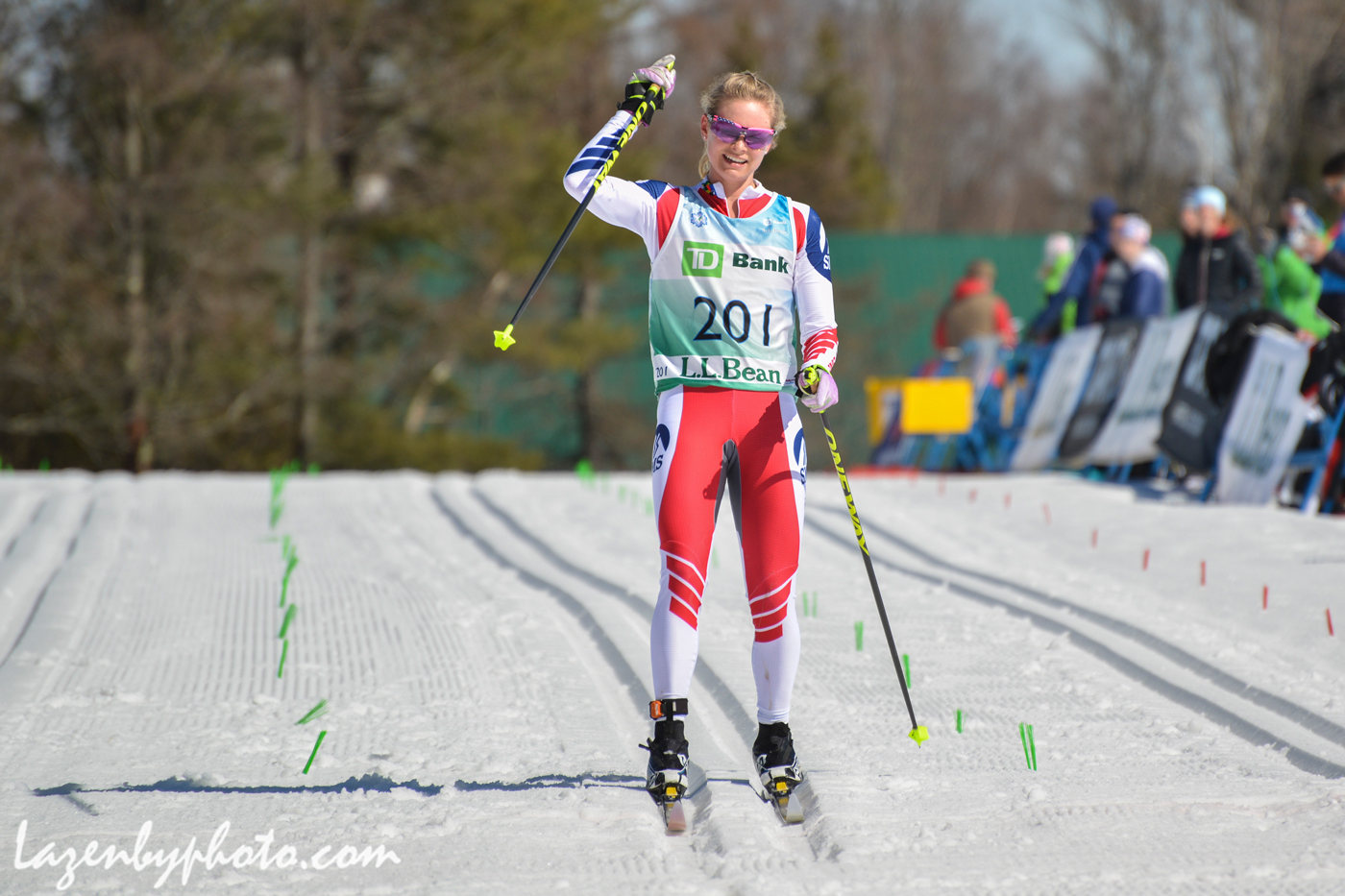
    Jessie Diggins (201) leading with a slight gap on Liz Stephen and the rest of the chase pack on the first of nine laps in the women’s 30 k classic mass start on Saturday at U.S. Distance Nationals in Craftsbury, Vt. (Photo: John Lazenby/Lazenbyphoto.com)

    Although 30 kilometers is a long distance to ski alone, Diggins used the solo racing to her advantage.

    “The way the downhills are, I really like skiing by myself because the best line goes from one side of the track to the other,” she said. “So when I’m by myself I don’t have to worry about getting in anyone else’s way.”

    In addition, the multiple-lap course meant she wasn’t completely alone.

    “It was kind of cool because as I was lapping through I got to ski with some junior girls and that was really motivating,” she recalled.

    Diggins continued to increase the gap while skiing uncontested, and posted the fastest laps on all but the last two laps (where her lap times ranked third and fifth, respectively). By the eighth of nine laps, she was about 1:27 ahead of her USST teammate Ida Sargent, who was leading the chase pack in second. One lap later, Diggins finished first in 1:29:59.4, more than a minute and 3 seconds clear of second place.

    “This was kind of like a dream ending, especially in a classic 30 k, which was never my strongest race,” Diggins said.

    Previously, Diggins had raced about half a dozen 30 k classic races in her career. She didn’t finish two of them, but in her first-ever 30 k, a classic mass start at 2011 Spring Series in Sun Valley, Idaho,  Diggins placed third. Saturday marked her best result in the 30 k classic distance since.

    Although it was the ideal end to an impressive several months, including five World Cup podiums and an overall eighth-place finish in the 2015/2016 World Cup, the biggest motivator for Diggins was putting a period on the season.

    The start of the women's 30 k classic mass start at U.S. Distance Nationals in Craftsbury, Vt., with Jessie Diggins out front in bib 201. (Photo: John Lazenby/Lazenbyphoto.com)
    The start of the women’s 30 k classic mass start at U.S. Distance Nationals in Craftsbury, Vt., with Jessie Diggins out front in bib 201. (Photo: John Lazenby/Lazenbyphoto.com)

    “I’m pretty ready to be done,” she said. “It was a great season and I am really happy with it, but it was also really mentally taxing because of the number of the races I did. I didn’t skip any World Cup races and I would do it again because it is a great opportunity to get some great races in, but now I’m pretty crushed.”

    Behind Diggins, the race for the podium came down to three USST members over the final lap. The chase pack was whittled down lap by lap, largely due to Ida Sargent and Liz Stephen’s repeated surges.

    About 10 racers remained together in pursuit of Diggins on lap three, but that group split in two on lap four, with Kaitlynn Miller — Sargent’s teammate on the Craftsbury Green Racing Project (CGRP) — leading the six-woman chase, and another three hanging slightly behind in a second group.

    By the seventh lap, Sargent led the chase up the long ascent back to the stadium, 1:25 behind Diggins, with Stephen and another CGRP teammate Caitlin Patterson right there with her. Miller hung a few seconds off the back and kept them within reach for the next lap. By lap nine, however, she was out of contention and finished fifth, 1:41 behind Diggins and 26.3 seconds out of fourth place.

    Ahead of her, Sargent threw an attack on the final climb that neither Patterson nor Stephen were able to match. She entered the stadium alone to secure second, 1:03.4 behind Diggins.

    “I was seeded 35th because I’ve struggled with my distance results this year on the World Cup for a variety of reasons so I had a lot of moving up to do out of the start,” Sargent wrote in an email. “I was surprised how quickly I was able to get to the front again, but by the time I made it up there Jessie had already gapped the pack … so I settled in the pack.

    “By the end of the eighth lap I realized I wasn’t going to lose those girls so I decided to just take it easy and wait for a sprint,” she added. “But then when we got to the bottom of the downhill I could feel like I was starting to pull away so I went for it at the bottom of the long climb or about 1.5km out. I’ve been skiing at Craftsbury since I was a little kid so I’ve been up that hill more times than I could begin to count so I knew what to expect. I felt great today and we had awesome skis. It has been so fun to finish out the season on my home course.”

    Ida Sargent (Craftsbury Green Racing Project/CGRP) racing to second in the women's 30 k classic mass start on Saturday at U.S. Distance Nationals in Craftsbury, Vt. (Photo: John Lazenby/Lazenbyphoto.com)
    Ida Sargent (Craftsbury Green Racing Project/CGRP) racing to second in the women’s 30 k classic mass start on Saturday at U.S. Distance Nationals in Craftsbury, Vt. (Photo: John Lazenby/Lazenbyphoto.com)

    Sargent finished 7.9 seconds ahead of Patterson, who took third, and Stephen finished 3.4 seconds later in fourth.

    “Ida and Liz were really strong on the climbs and I was inspired by their tempo and just tried to match them,” Patterson recalled in a post-race interview.

    “Ida deserved that second place in every sense,” Stephen said afterward. “She skied such a strong race, I’m really impressed.”

    Although Stephen had gained a small gap on Patterson when she chased Sargent up the last climb, it left her dangling tantalizingly close to Patterson with not much left in the tank. Patterson seized the opportunity and reeled Stephen in and they crested the final rise to a field before the stadium together. There, Patterson gained some ground, keeping Stephen at bay behind her in the last few hundred meters to the finish.

    “I gave it all on the hill and didn’t save any for the end,” Stephen recalled. “I’m glad I didn’t have to do it [all nine laps] alone today. It was nice to ski with some ladies I don’t ski with very much.”

    For both Stephen and Patterson, it was a solid culmination to the season after battling illness in the last month. Patterson made a last-minute decision to skip the Ski Tour Canada because of illness.

    “It has been a really good season overall, but to have that low point of not being able to race at all was really interesting, but I just had to channel my focus to training for Spring Series,” Patterson said.

    While she came out a little too hot earlier in the week and reflected she might have burnt out early in the 10 k freestyle race, where she placed seventh, Patterson was pleased to end the season with the overall SuperTour win. That will ensure she starts next season on the World Cup as the Continental Cup leader.

    Liz Stephen (U.S. Ski Team) leads Caitlin Patterson (Craftsbury Green Racing Project) and the rest of the chase pack, including Kaitlynn Miller (r), during the women's 30 k classic mass start at U.S. Distance Nationals on Saturday in Craftsbury, Vt. (Photo: John Lazenby/Lazenbyphoto.com)
    Liz Stephen (U.S. Ski Team) leads Caitlin Patterson (Craftsbury Green Racing Project) and the rest of the chase pack, including Kaitlynn Miller (r), during the women’s 30 k classic mass start at U.S. Distance Nationals on Saturday in Craftsbury, Vt. (Photo: John Lazenby/Lazenbyphoto.com)

    Stephen withdrew from the Ski Tour Canada after the Stage 4 classic sprint in Canmore, Alberta, and traveled home early to recover. Overall, she considered Saturday a positive end to a roller-coaster season.

    “I’ve had some struggles this year enjoying all of it,” she said. “It was nice to end it on a beautiful day and with a race I was proud of.”

    As the curtains close on the 2015/2016 season, the athletes are looking forward to some much-needed rest, recovery and time at home for the skiers who have spent the last four months away racing on the World Cup.

    *In addition to a total of $250 in sprint bonuses (awarded by a local sponsor, FairPoint), Diggins earned an additional $1,200 (awarded by USSA) for winning Saturday’s national 30 k. In comparison, the winners of each of the SuperTour individual races earlier this week (10/15 k freestyle and classic sprint) each banked $750.

    Results

    — Alex Kochon contributed reporting

    The women's 30 k classic podium at 2016 U.S. Distance Nationals, with winner Jessie Diggins (c), of the SMST2 Team, and Craftsbury's Ida Sargent (l) and Caitlin Patterson (r) in second and third, respectively. (Photo: John Lazenby/Lazenbyphoto.com)
    The women’s 30 k classic podium at 2016 U.S. Distance Nationals, with winner Jessie Diggins (c), of the SMST2 Team, and Craftsbury’s Ida Sargent (l) and Caitlin Patterson (r) in second and third, respectively. Prize money went to the top three. (Photo: John Lazenby/Lazenbyphoto.com)
  • Treinen Keeps Competition Season Rolling with Victory in Ski to Sea

    Treinen Keeps Competition Season Rolling with Victory in Ski to Sea

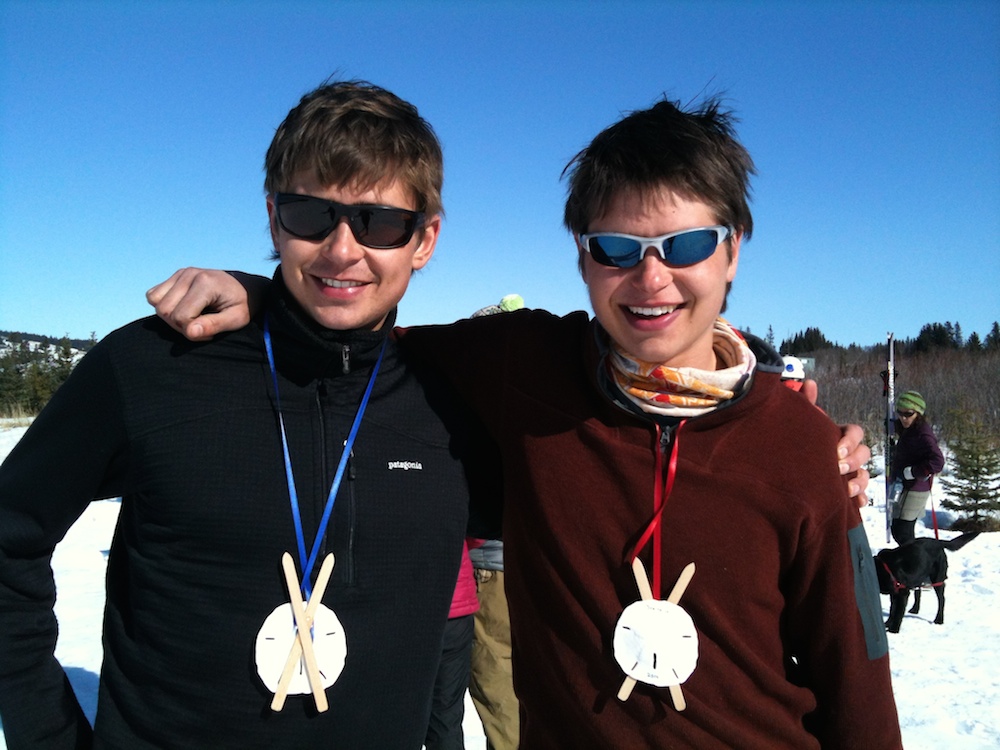
    Lex Treinen and his brother Nick after placing first and second, respectively, at the Ski to Sea on March 30 in Homer, Alaska. (Courtesy photo)
    Lex Treinen and his brother Nick after placing first and second, respectively, at the Ski to Sea on March 30 in Homer, Alaska. (Courtesy photo)

    Note: This article has been updated to reflect the corrected 2013/2014 SuperTour overall standings. Lex Treinen finished fourth behind Reese Hanneman, Erik Bjornsen and Brian Gregg, respectively.

    As if four races in seven days weren’t enough, Lex Treinen, of Alaska Pacific University (APU), signed up for the Ski to Ski in Homer, Alaska, two days after the last day of Spring Series — on a whim.

    He and his brother Nick decided to do so a few days before.

    “I had hardly heard of it, but felt like I needed a little vacation, if you can call it that,” Treinen, 24, explained in an email. “So we jumped in the car after dragging our hottub off the racecourse in the morning, spent a night in Girdwood and finished the drive in the morning.”

    The two left Anchorage last Saturday, a day after the 50-kilometer classic mass start at U.S. Distance Nationals, which for most, was the final race of the season. The drive itself was 220 miles south toward the mouth of the Cook Inlet. In Homer, competitors did a 5 k run, followed by a 7 k bike, and ending with a 5 k ski … to the sea.

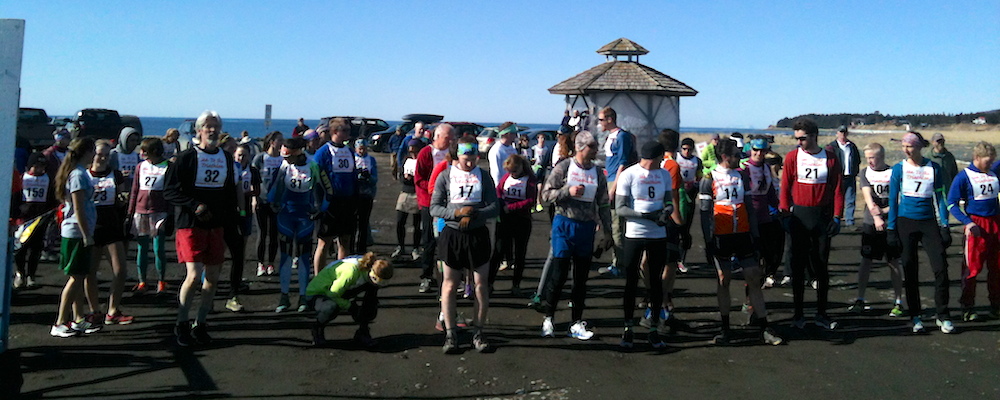
    The start of the 2014 Ski to Sea on Homer Spit at the tip of the Kenai Peninsula in Homer, Alaska. (Photo: Lex Treinen)
    The start of the 2014 Ski to Sea on Homer Spit at the tip of the Kenai Peninsula in Homer, Alaska. (Photo: Lex Treinen)

    Treinen won it in 55:23. His brother Nick took second, 3:03 back, edging third-place finisher Chaz DiMarzid by just four seconds.

    “Nick and I came into the bike one and two, but we stupidly used studded bike tires and had to ride the seven kilometer uphill hearing the sound of grinding asphalt beneath us,” wrote Treinen, who placed fifth in the 50 k and fifth in the 15 k freestyle earlier that week at SuperTour Finals. He finished fourth in the overall 2013/2014 SuperTour, behind teammates Reese Hanneman and Erik Bjornsen, respectively, and Brian Gregg (Team Gregg/Madshus) in third.

    On Sunday, Treinen started the ski a few seconds ahead of DiMarzid, who rode his way up to second.

    “Despite getting on skis and feeling like I forgot how to ski because my legs were so tired, I managed to hold him off,” Treinen wrote. “It felt good to be at a low key race like that after all of the pressure of the season. When we got into town there were signs everywhere since the race went through town, but at the bike drop off there was nobody watching out for bike-thieves, not out of laziness but just because Homer is cool like that.”

    Treinen and his brother received medals made of sand dollars. Local businesses donated prizes as well, and Treinen estimated half of the nearly 100 finishers won raffle prizes.

    Even after Sunday’s race, he thought he had some more skiing in him.

    “Usually at the end of the season I am super excited to go back-country and all that but I woke up the next morning after the race my legs felt like wood so I told my brother I was too tired,” he wrote. “The Sea to Ski was the last hurrah for the season, but I didn’t realize it at the time.”

    Pleased with his most successful season yet, including sixth place in the 30 k skate at U.S. nationals in January and top-10 finish in the American Birkebeiner in February, Treinen is looking to build for next winter.

    “After being [fourth] in the Supertour, I definitely feel I can move up with some better races early in the season and hopefully some wins,” he wrote. “I have never started a World Cup, so I for sure want to qualify for that. As for World Champs, I really would love to qualify but the way to do that is still unclear to me, so I will just do my best and focus on being sharp in the early season.”

    Results

  • Spring Series Photos: U.S. Distance Nationals 50 k Classic

    Spring Series Photos: U.S. Distance Nationals 50 k Classic

    ANCHORAGE, Alaska — A look back at the men’s 50-kilometer classic mass start at U.S. Distance Nationals last Friday, March 28, with the focus on the frontrunners of the five-lap race.

    Read the story here.

    Results

  • Spring Series Photos: U.S. Distance Nationals 30 k Classic

    Spring Series Photos: U.S. Distance Nationals 30 k Classic

    ANCHORAGE, Alaska — Scenes from the front of the pack during the women’s three-lap, 30-kilometer classic mass start at U.S. Distance Nationals last Friday at Hillside trails.

    Read the story here.

    Results

  • Mysterious Man in Red, New Mexico’s Nikander Out-Double Poles Hoffman in 50 k

    Mysterious Man in Red, New Mexico’s Nikander Out-Double Poles Hoffman in 50 k

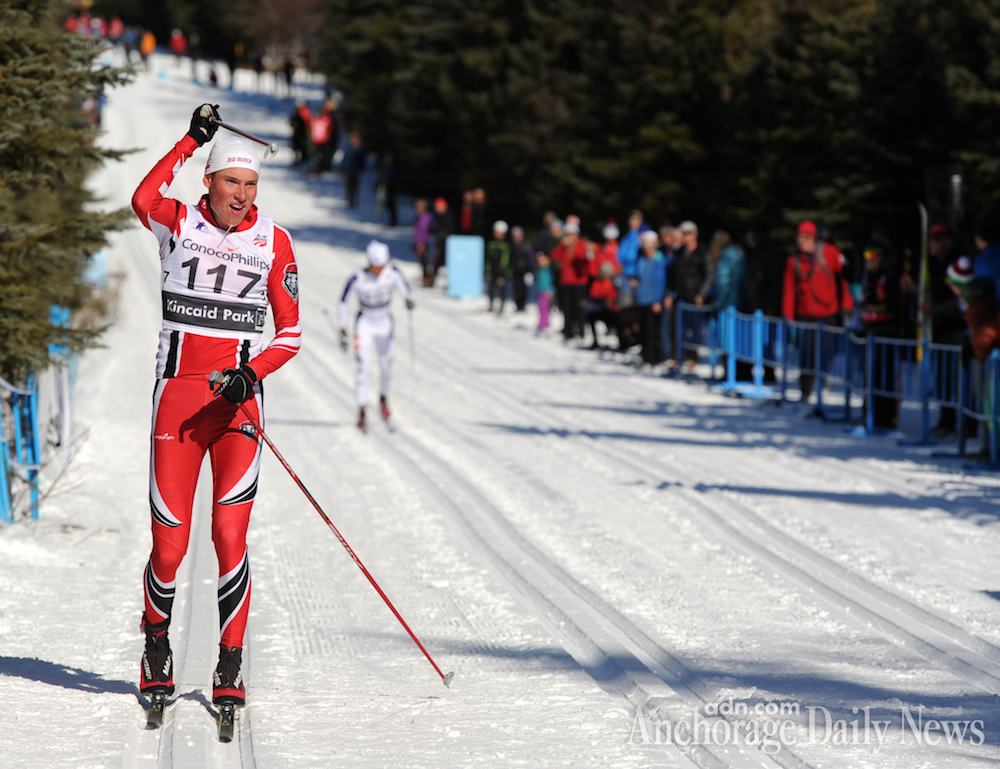
    Finland's Aku Nikander (University of New Mexico) celebrates his win in the 50 k classic mass start at U.S. Distance Nationals on Friday in Anchorage, Alaska. He beat Noah Hoffman (SSCV/Team HomeGrown/USST) by 9 seconds after the two skied together for essentially the entire race. (Photo: Erik Hill/Anchorage Daily News)
    Finland’s Aku Nikander (University of New Mexico) celebrates his win in the 50 k classic mass start at U.S. Distance Nationals on Friday in Anchorage, Alaska. He beat Noah Hoffman (SSCV/Team HomeGrown/USST) by 9 seconds after the two skied together for essentially the entire race. (Photo: Erik Hill/Anchorage Daily News)

    ANCHORAGE, Alaska — Aku Nikander was somewhat a mystery in the men’s 50-kilometer classic mass start on Friday in the last race of the season at U.S. Distance Nationals.

    As far as Noah Hoffman of the U.S. Ski Team (USST), Ski & Snowboard Club Vail and Team HomeGrown was concerned, he was the guy that stood between him and a shot at his second-individual victory of 2014 Spring Series.

    For Nikander, a Finnish student in his first year at the University of New Mexico, a win is a win, no matter what country you’re racing in, and it’s what he wanted.

    It wasn’t until the second of five 10-k loops on the challenging Spencer Loop at Hillside trails that Nikander, a 24-year-old sophomore, emerged as a noticeable contender. Erik Bjornsen, of Alaska Pacific University (APU) and the USST, led through the 10 k checkpoint. Nikander was 2.4 seconds back in 12th, and one lap later, he was up to third, less than two seconds behind leader Reese Hanneman (APU) and Hoffman.

    Finnish skier Aku Nikander (r) of the University of New Mexico leads Noah Hoffman of the U.S. Ski Team around a corner on the Spencer Loop during the final lap of the men's 50 k classic race at the U.S. Distance Nationals at Hillside in Anchorage, Alaska. (Photo: Erik Hill/Anchorage Daily News)
    Finnish skier Aku Nikander (r) of the University of New Mexico leads Noah Hoffman of the U.S. Ski Team around a corner on the Spencer Loop during the final lap of the men’s 50 k classic race at the U.S. Distance Nationals at Hillside in Anchorage, Alaska. (Photo: Erik Hill/Anchorage Daily News)

    With a 16-second gap to fourth place, Nikander began to ramp up the pace, while Hanneman and Hoffman wondered who exactly he was.

    “There’s always those wildcard Europeans at these last races of the year,” Hanneman said with a laugh. “Clearly going into lap three it was just us three and it sounded like we had a pretty decent gap, so I knew, he wouldn’t have been up there if he wasn’t a good skier with good skis and feeling good. I don’t know anything about him, but obviously he’s in contention for the win.”

    Earlier this season, Nikander won a college race in Utah in a 30 k skate.

    “After that I was struggling,” Nikander said. “I was a little bit overtrained because we had been training in the 3,000 meters so I was so tired the whole season practically. I didn’t do so well in NCAA’s so I was really looking forward to this race.”

    On March 6 and 8, he placed ninth in the 10 k classic at NCAA Championships and was 23rd in the 20 k freestyle mass start. Two seasons ago, Nikander finished ninth in the 50 k classic at Finnish Championships, and narrowly missed the podium in two U23 Finnish Championships races in 2012 and 2013.

    He applied to Utah, but then New Mexico head coach Fredrik Landstedt contacted him.

    “I knew a couple Finnish alpiners so I decided to go there,” Nikander said. “It’s a little bit deeper than Finland so I wanted to experience something else. It has worked this season pretty well.”

    This week marked his first time in Alaska; first time at U.S. Spring Series.

    Meanwhile, heading into lap three, Micheal Fehrenbach of the University of Alaska-Fairbanks led the chase with David Norris (Montana State University/APU), Andy Newell of the Stratton Mountain School (SMS) T2 Team and USST, and Brian Gregg (Team Gregg/Madshus).

    One lap earlier, Gregg had raced to the top of the high point of the course, known as Wall Street, to nab the first of two $100-dollar primes at 16 k, but he said the effort cost him. Bjornsen had followed him closely in second, going out hard early in an effort to break up the pack, and Hoffman crested the top with them with a slight gap to Hanneman, Newell and Fehrenbach.

    A former University of Alaska-Anchorage skier, Gregg, 29, recalled doing bounding intervals at the top of Wall Street.

    “Most of our training we did on the Spencer Loop,” he explained. “We’d do three loops, maybe one time we did four, so I’ve never done five so that was pretty hard.”

    On Friday, he saw his college coach Trond Flagstad at the top of the same climb.

    “I got a little fired up, I went for that first prime,” Gregg said. “I was a little tired when the other guys sort of separated so I wasn’t able to quite hang with those guys.”

    By 26 k, Nikander was first to the top for the second $100 bonus. Hoffman was once again right there with him, and Hanneman a few seconds behind by the summit. Norris led the chase with Fehrenbach, Gregg, and University of Vermont (UVM) senior Scott Patterson, while Newell skied slightly behind in eighth.

    “After two laps, I was pretty comfortable,” Nikander said. “We took off with Hoffman and Hanneman. After the uphill sprint we got a gap and I had such good skis.”

    Hoffman was glad it broke up by the halfway point.

    “I didn’t really know anything about Aku, I didn’t even know his name,” he said. “He’s a good skier.”

    Teammates on the U.S. Ski Team and Stratton Mountain School T2 Team, Andy Newell leads Simi Hamilton on one of several hills on the Spencer Loop in the 50 k classic at U.S. Distance Nationals in Anchorage, Alaska. (Photo: Erik Hill/Anchorage Daily News)
    Teammates on the U.S. Ski Team and Stratton Mountain School T2 Team, Andy Newell leads Simi Hamilton on one of several hills on the Spencer Loop in the 50 k classic at U.S. Distance Nationals in Anchorage, Alaska. (Photo: Erik Hill/Anchorage Daily News)

    By the time the leaders reached 30 k, Hoffman led Nikander by 0.5 seconds, and Hanneman was nearly 28 seconds behind in third. He still had nearly a minute separating him from fourth, however, with Patterson leading Fehrenbach, Gregg and Norris. Newell was another 28 seconds behind in eighth, followed by teammate Simi Hamilton (SMST2/USST) and Lex Treinen (APU), respectively.

    The order of the front three stayed the same through the fourth ascent of Wall Street, with Hoffman and Nikander skiing to the top together and Hannemen trailing by about 40 seconds. Gregg led the chase, with Fehrenbach and Norris, and Hamilton was at the front of the second group with Newell and Treinen over the top.

    With one 10 k lap to go, Nikander and Hoffman skied through flatter section of the course as a unit, 48 seconds ahead of Hanneman. The two began to study each other more carefully.

    “I just double poled faster than him,” Nikander said. “I was actually leading a lot in the last lap. I had maybe better kick and better glide.”

    Neither of Nikander nor Hoffman re-waxed in a race that didn’t allow ski changes.

    “I don’t like my chances coming into the final stretch, but part of me was just glad to be with him,” Hoffman said. “I did try a little bit over the final hills, but I just didn’t have a chance getting away from him.”

    Nikander took charge the last time up Wall Street and gapped Hoffman before he caught back up on the backside of the course. With an efficient double pole, Nikander was able to stay ahead, entering the finishing straight almost even with Hoffman.

    There, he unleashed the double pole he had been banking on, passing Hoffman in the last 150 meters. Hoffman strided into the gradual-uphill finish in second, accepting the race for what it was and the effort he’d put toward it.

    “When I saw that Noah can’t keep up in the flat part, in the double-poling part in the last loop I just waited for the final straight and sprint and it was enough for the day,” Nikander said.

    “He was better than me double poling all day,” Hoffman said. “I was struggling and it’s a been long season and he was impressive and I’m glad to be done. … Rarely does the best guy not win in a 50 k. I think execution, which I struggle with day in and day out to really perform the way I want to perform, is easier in a longer race for me.

    “It doesn’t define my season,” he added. “I’m excited to take a break and excited to look to improve for next year.”

    Nikander was excited, although unsure what it would mean to those back home.

    “I don’t know how much they are looking at the results from here. We’ll see,” he said. “I think it can help a little bit for [team selection] and next summer’s training camps. I hope so.”

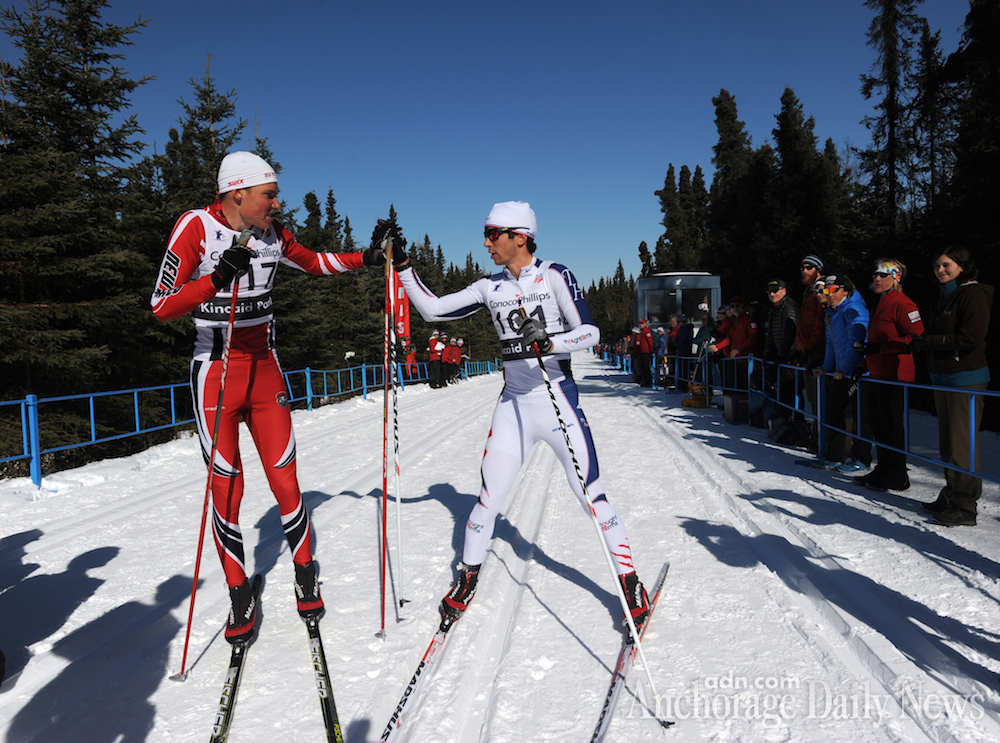
    Winner Aku Nikander of the University of New Mexico (l) and runner-up and first American Noah Hoffman of the U.S. Ski Team congratulate each other after finishing the men's 50 k classic race at U.S. Distance Nationals on Friday. (Photo: Erik Hill/Anchorage Daily News)
    Runner-up and first American Noah Hoffman (r) of the U.S. Ski Team congratulates overall winner Aku Nikander (University of New Mexico) after the men’s 50 k classic race at U.S. Distance Nationals on Friday. (Photo: Erik Hill/Anchorage Daily News)

    The first American, Hoffman finished 9 seconds after Nikander, who won the roughly 51.5 k race in 2:23.08.3. Hanneman locked up third, 1:01.6 behind Nikander. It was his second podium in three individual races this week, and third including a win in the mixed relay.

    “My last two laps, I tried to ski that climb sort of relaxed, just my own pace and not worry how I thought someone else would be skiing it and then try to ski pretty hard on the rest of this stuff,” Hanneman explained.

    “You kind of come into the last week and for the most part have no idea how it’s gonna go. I knew I felt good at the World Cup last week … and I ended up feeling decently good,” the overall men’s SuperTour leader said. It’s been really fun to do well here at home. “It’s hard to beat doing well at home. That was a great way, a little reward at the end of the season.”

    Gregg, who’s wife Caitlin finished the season as the female SuperTour leader, finished more than 3 1/2 minutes later, uncontested in fourth.

    “Last lap, that’s where I tried to make a move to separate from our little pack,” he said after making his move over the top over Wall Street. “I looked back at the corner. I saw Newell, Simi must’ve been there, too — those guys had just caught us and I was like, it’s time to go. I love that downhill we used to do downhill time trials down that from the very top to the bottom. … Those workouts that we did eight, nine years ago really played into this race course.”

    One of the APU skiers that train in Anchorage year-round, Treinen came into the stadium with Newell, then stepped around him at the beginning of the finishing lanes with about 200 meters to go. He out-double poled the Olympic sprinter by 3.1 seconds to finish fifth. Newell placed sixth and Hamilton finished another 11 seconds back in seventh. Norris placed eighth — 13.4 seconds behind Hamilton and 14 seconds ahead of Patterson in ninth, and Fehrenbach was another 27 seconds back in 10th.

    Eleventh place went to Eric Packer (SMST2), who finished more than two minutes later and 8:03.2 behind the winner. Bjornsen placed 36th.

    Results

  • Sadie Bjornsen Tops Stephen, Randall in Season-Ending 30 k Classic

    Sadie Bjornsen Tops Stephen, Randall in Season-Ending 30 k Classic

    Sadie Bjornsen (APU/USST) celebrates her third national title and first of U.S. Distance Nationals in the women's 30 k classic mass start on Friday at Hillside trails in Anchorage, Alaska. She dropped USST teammate Liz Stephen in the final kilometers to do so. (Photo: Erik Hill/Anchorage Daily News)
    Sadie Bjornsen (APU/USST) celebrates her third national title and first of U.S. Distance Nationals in the women’s 30 k classic mass start on Friday at Hillside trails in Anchorage, Alaska. She dropped USST teammate Liz Stephen in the final kilometers to do so. (Photo: Erik Hill/Anchorage Daily News)

    Editor’s Note: This is the first of two race reports on Friday’s classic mass starts, the final races of the season at U.S. Distance Nationals. Please bear with us for the men’s report, as this FasterSkier has a flight to catch. 

    ANCHORAGE, Alaska — Liz Stephen was having a bit of an inward battle on Friday at the last day of U.S. Distance Nationals in the last women’s race of the season.

    Like always, the 27-year-old U.S. Ski Team (USST) member, known as a hill climber and distance skier, really wanted to win the 30-kilometer classic mass start. But as the three-lap race around Spencer Loop at Hillside on the southeast side of the city played out, Stephen started to realize she was going to have to beat Sadie Bjornsen to do so.

    “I was secretly hoping Sadie was gonna win this race,” Stephen said afterward of Bjornsen, a member of both Alaska Pacific University (APU) and the USST. “I had a feeling a few days ago this was going to be her day.”

    Neither had won an individual race at the weeklong Spring Series in Anchorage. Another one of their teammates, Kikkan Randall (APU/USST) had dominated the two earlier events: the 10 k freestyle and classic sprint. On the third day, the first of U.S. Distance Nationals, Randall anchored APU to another victory in the 4 x 5 k mixed relay. While the 30 k classic might not be her strongest event, it was hard to bet against Randall at home on Day 4.

    So as the 30 k unfolded, Randall started off by leading to the top of the longest-and-largest hill known as Wall Street (with 87 meters, or 285 feet, of climb) around 5 1/2 k. She grabbed the first of two $100-dollar primes at the summit in doing so, and went on to follow Bjornsen into the 10 k checkpoint 0.8 seconds back in second.

    Another USST member Jessie Diggins, also of the Stratton Mountain School (SMS) T2 Team, was third at 10 k, 2.4 seconds behind Bjornsen, and Stephen was almost even with her in fourth.

    By lap two, Stephen opted to go big — rather than wonder what could’ve been if she didn’t try — and attacked at the bottom of the multi-tiered climb up Wall Street, the high point of the course around 950 feet above sea level. The move worked, initially, as Stephen took the second money bonus over the top and gapped Bjornsen and Randall slightly by 16 k.

    Bjornsen later said Stephen exposed her weakness on the steepest part of the course.

    “These hills are really good for me because I can stride out quite well, but the top of Wall Street is too steep for me and so I have to run and that’s not what I’m good at,” she said. “I think Liz figured out pretty quickly that’s where she could make time on us. Every time she went there, she came around us and just started hammering.”

    Trailing Stephen by a few seconds at the top, Bjornsen met her own crossroads and decided to push forward in pursuit. She left Randall in doing so and caught Stephen on a series of climbs on the second half of the course.

    “I tried to make a break and I had a little bit of space, but Sadie was able to close it,” Stephen recalled. “We both kind of looked at each other, like, yeah, these girls [Randall and Diggins] are coming back so we gotta go. … I’m terrified when I’m on a downhill and Jessie’s on my tail. The whole time we were like we cannot ever let up on these downhills, these two are gonna work together and come back on us.”

    For the next 12 or so kilometers, Stephen and Bjornsen stuck together, with Stephen leading through 20 k by 2.4 seconds. Randall came through another 18 seconds back in third, followed by Diggins 11.6 seconds later. The fifth-consecutive USST member, Ida Sargent (Craftsbury Green Racing Project) was another 25.4 seconds back at 20 k.

    “We were just pushing so hard out there, making sure nobody was catching us,” Bjornsen said. “You always go into this race, the last race of the season like, ‘Oh, I hope we don’t go as hard as we can the whole time because I’m so tired,’ but when it comes down to it, it’s always more fun to do that anyway.”

    By the time the third lap came around on a sunny morning with temperatures rising rapidly from the teens at the start (and no ski changes allowed), Stephen continued to lead Bjornsen up and down the backside of Wall Street into the last set of kicker climbs. There, Bjornsen made her move, dropping Stephen and racing down into the stadium in first, at least 15 seconds ahead of Stephen.

    “You always go into this race, the last race of the season like, ‘Oh, I hope we don’t go as hard as we can the whole time because I’m so tired,’ but when it comes down to it, it’s always more fun to do that anyway.” — Sadie Bjornsen, 30 k classic champion

    The race turned out to be about 31.5 k, long enough to Bjornsen to extend her gap to 29.1 seconds at the finish. The 24-year-old Washington native, who’s lived in Anchorage for the last several years, won her third national title and first at Spring Series in 1:35:58.1 in front of a hometown crowd. Stephen placed second, and Randall notched another podium in third, 2:08.8 behind Bjornsen.

    Last year at Spring Series in Truckee, Calif., Bjornsen podiumed in four individual events (placing second in the 10 k classic and third in the skate prologue, skate sprint and hill climb). At 2013 U.S. nationals in Midway, Utah, she won both the skate sprint and 20 k classic mass start.

    This race, at home on the trails APU she trains on (when she’s not racing the World Cup circuit overseas), was essentially made for her, which was ironic, because a lot of people previously wrote her off as a sprinter.

    Not APU, and not Stephen.

    “This is probably one that I’m going to remember most for the season, this and Holmenkollen, to do well in a 30 k because I feel like it’s the hardest race,” Bjornsen said. “I was told when I was young that I was only a sprinter. Since joining APU I’ve realized I may be more of a distance skier than a sprinter and, you know, I prefer that. I always want to sprint, but distance skiing is so fun for me.”

    Stephen said she had fun skiing with Bjornsen, who worked the flats and downhills, and Stephen would help on the climbs.

    “I think we were pretty good team out there,” Stephen said.

    Kikkan Randall (APU/USST) racing to third in the women's 30 k classic mass start at U.S. Distance Nationals. Randall led early in the three-lap race, taking the $100 bonus as the first to crest the high point of the course around 5.5 k. (Photo: Erik Hill/Anchorage Daily News)
    Kikkan Randall (APU/USST) racing to third in the women’s 30 k classic mass start at U.S. Distance Nationals. Randall led early in the three-lap race, taking the $100 bonus as the first to crest the high point of the course around 5.5 k. (Photo: Erik Hill/Anchorage Daily News)

    Diggins made the most of her fast skis and downhill skills to catch Randall on the third lap and finish 7.8 seconds behind Randall in fourth.

    “I felt like I needed to go out in the beginning of the race and set a good hard pace and see if I could hold it,” Randall said. “It went pretty well for the first half of the race, and then going up the  major climbs on that second lap, these guys picked up the pace and I started to hit the wall a little bit. Things started to cramp a lot on that last lap.”

    Before that point, she remembered watching Stephen and Bjornsen pull away on final climbs on the second lap — first by five seconds, then 10 seconds.

    “I was really trying to stay on the horse and try to get back in that group but they started to pull out of sight,” she said. “Jessie caught me on the downhill, but then it was great because her and I could work together. She was a little faster on the flats and downhills and when we started climbing again, I felt like I need to ski my own pace. I was able to pull back a little bit, then it was like, it’s the end of the season, it’s the end of the race, just kind of ski as hard as you can up the hills.”

    After falling once when someone rode over her ski from behind, then getting tangled behind a crash involving Becca Rorabaugh (APU) within the first 3 k, Sargent skied alone for most of the race — at least 26 k, she estimated.

    “I finally pulled my way up to the front on the Spencer Loop the first time and they really went for it going over the top,” Sargent recalled. “I wasn’t feeling great at that point so a little gap opened up over the top … and once a gap opens up, it’s just really hard to make it back.”

    Sixteen seconds ahead of Rorabaugh in fifth at 10 k, Sargent maintained her gap on those behind her with a 14-second cushion to Caitlin Gregg (Team Gregg/Madshus) at 20 k.

    “I tried to split it up into little bits, like, OK I’m gonna get up that hill,” Sargent said. “Once I settled into a pace, it felt really good. I think it would’ve been more fun to ski with people, but it was a good, different challenge. Thirty k has always been a tough distance for me — it’s pretty long — so I’m happy to have been able to hold it in there.”

    She held onto fifth, finishing 41.5 seconds after Diggins. The USST swept the top six, with Sophie Caldwell (SMST2) edging Gregg by 1.5 seconds for sixth. Stratton put four in the top nine with Annie Pokorny notching eighth and Erika Flowers taking ninth, 16.4 seconds ahead of Caitlin Patterson (CGRP) in 10th.

    “We were just talking about how all of us have different strengths and how this summer we want to pinpoint where each of us can help the others get better at everything so we can all move up as a team,” Stephen said. “It’s fun because we all have something that’s really strong that somebody else doesn’t have.”

    “I certainly felt like today the caliber is the highest it’s ever been for one of these races,” Randall said. “I know these guys can ski really well on the Word Cup so it’s like, you know you’ve got to bring you’re A-game on a day like this.”

    “It’s really fun to come out and race on these hills we always train on and end things on a good way at home,” she added.

    Results

  • Ultimate Team Event: Anchorage Hosts Coed Relay at National Championships

    Ultimate Team Event: Anchorage Hosts Coed Relay at National Championships

    It's an amiable atmosphere at Spring Series in Anchorage, Alaska. Teams will be competing for a national title on Tuesday in Kincaid Park in the coed 4 x 5 k, the first race of U.S. Distance Nationals. (Photo: Rob Whitney)
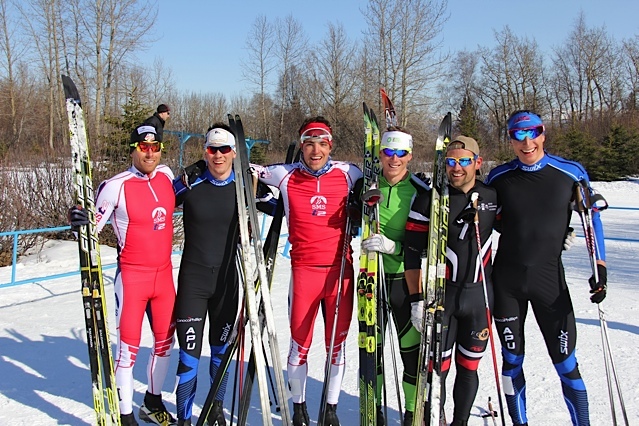
    It’s an amiable atmosphere at Spring Series in Anchorage, Alaska, as seen here after Sunday’s classic-sprint final. Teams will compete for a national title on Tuesday in Kincaid Park in the coed 4 x 5 k, the first race of U.S. Distance Nationals. From left to right: Andy Newell (SMST2/USST), Reese Hanneman (APU/USST), Ben Saxton (SMS), Pat O’Brien (CGRP), Dakota Blackhorse-von Jess (BEA), and Tyler Kornfield (APU). (Photo: Rob Whitney)

    When the U.S. Ski and Snowboard Association (USSA) met last spring, they decided it was time for a bit of a change at the season-ending SuperTour Finals and U.S. Distance Nationals. Instead of a hill climb, they opted for a team relay at the races in Anchorage, Alaska, scheduled for the following March 22-28.

    According to the event’s race director James Southam, a two-time Olympian from Anchorage, athletes brought up the idea of a team event last year. An opening in the schedule made the 4 x 5-kilometer relay possible for 2014.

    But unlike most four-person relays, the one going off Tuesday at 5 p.m. Alaska time will be coed with a male scramble classic leg tagging to a female classic skier, then male freestyle skier, and finally, a female freestyle anchor.

    “I think it’s gonna be fun,” Southam said. “The last distance relay I remember doing was I think in Bend [Ore.] in 1998 or something like that for nationals. I think having the coed is going to be cool. … You don’t need four good guys or four good girls; I think it makes it a little more competitive.”

    Eighteen official teams (including two junior squads), each made up of two males and two females from the same USSA club, will compete for a national title — and $750 dollars in prize money to split four ways. The second-place team will receive $500, and third gets $300.

    It’s the second-to-last competition before Friday’s 30 and 50 k classic mass starts, which will be held at a different venue than the rest of the races at Kincaid Park, at the Hillside Trail System on the east side of town.

    Teams to watch include Alaska Pacific University’s first team, with Reese Hanneman, Sadie Bjornsen, Erik Bjornsen, and Kikkan Randall, in that order. The top team from Stratton Mountain School T2, Andy Newell, Sophie Caldwell, Simi Hamilton, and Jessie Diggins will also contend for the title, along with Craftsbury’s Patrick O’Brien, Ida Sargent, Gordon Vermeer, and Caitlin Patterson, and Sun Valley’s Mikey Sinnott, Mary Rose, Matt Gelso, and Chelsea Holmes.

    Several college teams, such as the University of Vermont, Northern Michigan, New Mexico, and the University of Alaska-Anchorage will also be vying with the best of them.

    There are also few unofficial teams with skiers from different clubs that have a shot at winning for glory rather than cash. Fastest of the Fast Twitch includes Brian Gregg (Team Gregg/Madshus), Liz Stephen of the U.S. Ski Team (USST), Noah Hoffman (SSCV/Team HomeGrown/USST), and Caitlin Gregg (Team Gregg/Madshus). The Vagabonds are Karl Nygren (Podiumwear), Jennie Bender (Bridger Ski Foundation), Mark Iverson (Rossignol), and Cambria McDermott (independent).

    Each competitor will ski two laps of either a roughly 3.3 k classic loop (for 6.6 k total) or a 2.6 k skate loop (for approximately 5.2 k).

    As for the 5 p.m. start? It’s all about getting the best bang for the buck in terms of participation, volunteers and spectators.

    “We want as many of the kids from around town to be able to race in it as well and to come out and watch it,” Southam said. “When you have midweek races at 11 o’clock it’s hard to get the kids out to watch. One of the big reasons we wanted to host these races is, after the Olympics people have been paying attention to skiing all winter long and it’s pretty powerful for kids coming up to be able to watch Olympians and world champions.”

    Of the 26 teams entered in Tuesday’s relay, the two official junior squads are from APU. One unofficial team includes three men and a woman, another has four junior males, and one has three males, which will complete three legs and then call it a race.

    Start list

  • Final Race Extras: U.S. Distance Nationals

    Final Race Extras: U.S. Distance Nationals

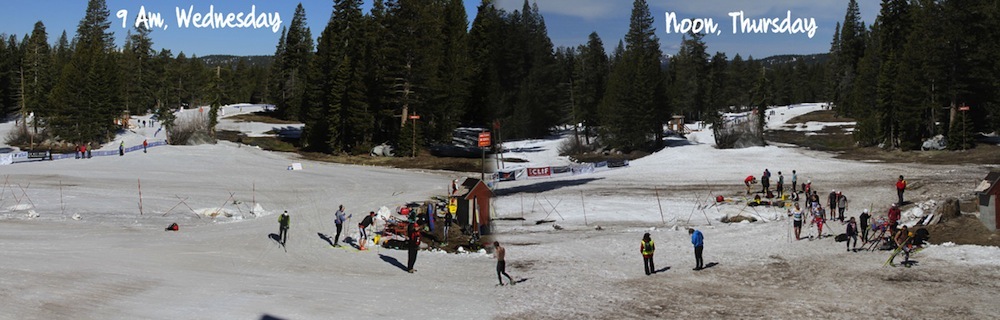
    The stadium at Royal Gorge XC the morning of the 30 k classic on Wendesday and after the 50 k on Thursday. Note no. 1: the season ended just in time. Photo: Mark Nadell/Macbeth Graphics.
    The stadium at Royal Gorge XC the morning of the 30 k classic on Wendesday and just after the 50 k on Thursday. Note no. 1: the season ended just in time. Photo: Mark Nadell/Macbeth Graphics.

    FasterSkier’s coverage of SuperTour Finals and U.S. Distance Nationals was brought to you by the generous support of Concept2, the leading manufacturer of indoor rowers, racing oars, and the SkiErg.


    The season may be over, but there were a few musings left floating around after last week’s 30/50 k National Championship that never made it into our original reports. Presenting the last edition of notes and quotes ‘til November, for the die-hard race junkies.


    On the domestic debut of ski exchanges and penalties:

    “I don’t really understand why they were trying to emulate a test event on the World Cup. In my opinion the course should have gone through the ski exchanges, which would have been an easy adjustment to make.”

    — Kris Freeman (Maine Winter Sports Center/U.S. Ski Team), 1st


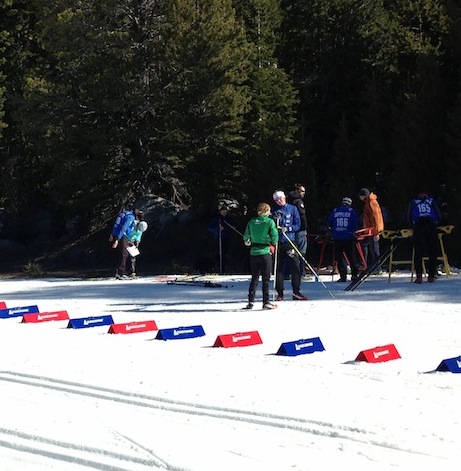
    The ski exchange pit awaits skis prior to the start of the 30 k.
    The ski exchange pit awaits skis prior to the start of the 30 k.

    “I did a ski exchange after 20 k because I felt like they were a bit slick, but I don’t know — the ski exchange too maybe about 40 seconds or so. I don’t really think it was worth it in the end but I don’t think it really affected me that much, either. I think it sped up the skis for a couple k but once it softened up it started to be easier to kick. I don’t think the ski exchange was really worth it because it’s a bit long; it takes a while to do the exchange.”

    — Knute Johnsgaard (Yukon Elite Squad/CAN), 4th


    “When I had the gap it was hard to tell whether my skis were slow or not, because I wasn’t skiing with anybody. I mean, I knew mine were slow but everybody’s were slow, so I kind of had a last-minute, like, ‘Shoot, should I change?’ But then I figured I didn’t know how far it was until the next group of people so it was just kind of a last-minute decision out there.”

    — Liz Stephen (Burke Mountain Academy/U.S. Ski Team), 1st


    “I didn’t [change skis]. I was close enough to Kikkan and Liz to see that they weren’t, so I didn’t want to lose that potential ride. I just kept doing what they did; I figured I should learn from the best.
    “I don’t like dealing with all that stuff, so I’d rather just not have it. It’s too much to think about, but if it had been faster today I think I probably would have [changed].”
    — Rosie Brennan (APU), 3rd


    “You get a new pair of skis and you want it to be so much faster, but it’s just so dirty out here that you forget that it doesn’t make a huge difference. It’s just so wet and sloppy. I knew that I lost time, but once I caught up I was like, ‘OK, back under control.’ But then the group started hammering again, so that was the toughest part of it.”
    — Sadie Bjornsen (APU/USST), 8th


    On posting a good final result:

    “It was ideal. That was the best I’ve felt in a classic 50 k. That and World Champs. I’m happy I ended the season this way — third American, I’ll take it, [I’m] pretty proud of that. Especially behind Kris and Newell, they’re fantastic classic skiers.”

    — Tad Elliott (Ski & Snowboard Club Vail Team HomeGrown), 5th


    On mental strategy:

    “Everybody’s burned out and, I don’t know, I ski my best when I’m relaxed anyway. I wish I could be this relaxed going into World Championships and the Olympics and all those other big races that I tend to get a little bit worked up about.”

    — Liz Stephen


    “I honestly tried to go with my insane mental approach that I did for the hill climb, which was just: absolutely don’t even think about it and just go ski. I didn’t really want to think about the hill climb and I didn’t really want to think about this, so I just kept skiing. The only goal I had for myself was to not ever go anaerobic — like ever, because I thought that would help me. It’s kind of hard to come back from that, for me, at altitude. It worked well and I just kept cruising along.”

    — Reese Hanneman (Alaska Pacific University), 6th


    Mid-interview congratulations:

    “I just want to say congrats (to Liz Stephen). I just want to give her a hug and like, take her sweat and absorb it.”

    — Caitlin Gregg (Central Cross Country), 9th


    “Put that into writing: Reese [Hanneman] is the next Eldar Rønning.”

    — Ben Saxton (F.A.S.T. Performance Training), 6th junior, 20 k classic


    On crashing out of the last race:

    “I was in a pack with Miles [Halvick] and David Norris and I think we were all back there suffering with a little bit of slick skis. Before the last climb on the first lap, coming down that hill there’s a lot of parts that are really icy and sluchy and I think I compressed a soft spot with a straight leg and my skis just went out and I landed right on my stomach. I was moving fast and slid headfirst into the woods. Downhills are where I like to make up my time so I kind of attack them, but I may have been a little aggressive…My legs were all crossed and my poles were underneath me and I was basically underneath the tree well.

    “I really wanted to finish today and I still wanted to finish, but my coach thought it was probably the best idea [to drop out]; I’m not going to catch the pack at this point, so…start celebrating early. It’s OK. I’m happy with the season and looking forward to the Olympic year next year.”

    — Sylvan Ellefson (Ski & Snowboard Club Vail Team HomeGrown), DNF


    On racing for an American university:

    “I’m so old that I only had this year of eligibility; I only came here this year. The reason why I came here is because my study in Norway is master of engineering. You are allowed to take on exchange year and you can go to another school. I got the classes sorted out and I knew I was going to get a year. I knew I was going to get accepted a year from my Norwegian school, then it was a good deal coming here, having fun skiing. I’m getting a little bit tired; like, it hadn’t been that good of a season in Norway. So I was like, ‘Ah, f— this, I’m going to the U.S. and trying to have some more fun with skiing.

    “It was a really fun NCAA Championships, the last day. Having three guys top-five, that was so fun and we got from fourth to second and just crushed it that day. That one and this one was the best experiences this year.”

    — Einar Ulsund (University of Utah/NOR), 3rd


    On finding support with another team:

    “It was really nice of the Craftsbury Green Team to invite me and kind of let me jump in with them, and itw as awesome that they hired four people to make the skis as good as possible. It’s fun to continue working with [USST technician] Randy Gibbs. He’s not my wax tech on the World Cup any more, unfortunately, but he was for many years and it’s nice to be able to work with someone I know and trust. I was part of, like, four different clubs this year, it was awesome. I stayed with APU, waxed with the Green Team, wore the Burke suit, and today I wore the U.S. Ski Team suit.”
    — Liz Stephen


    “I wasn’t very organized coming down here, and I don’t know what I wouldn’t done without APU. Erik Flora’s been a big help. I did a training camp with them on the glacier so I kind of got to know them there, and they’ve been super helpful for the last couple of days.

    “It’s been awesome just to have a change from the NorAm circuit and to race these different guys has just been a great experience — making new friends and it’s been great racing new people. It’s been awesome; it’s really nice down here in Truckee. I’ll definitely be back for spring series next year.”

    — Knute Johnsgaard


    On vacation plans:

    “I’m going surfing in Costa Rica next week and that’s it; [I’ll] take a few weeks off for sure. Running and surfing will probably be my training schedule for the next few weeks and then start back up in May.”

    — Andy Newell


    “It’s going to be a whirlwind. I’m staying here for a few extra days with Liz and Chandra [Crawford] to celebrate my 30th birthday — which actually happened on New Year’s Eve but it was in the middle of the Tour de Ski. Just going to alpine ski for a few days and just enjoy some time together as friends without the pressure of competition on, then home to Alaska. I’m really excited about it, because I haven’t seen it since November 4. Then a few more trips and pretty soon we’ll be in Bend. I’ll be in Maui in the beginning of May; that’s worked really well for me in the past couple years, so I’m just going to keep doing it.”

    — Kikkan Randall (Alaska Pacific University/U.S. Ski Team), 2nd


    “I can’t even tell you how happy I am to be going home. It’s been four and a half months of hard racing. Every race has been hard. It’s been a great season, but now I need a break so bad.”

    — Jessie Diggins (SMS T2/U.S. Ski Team), 4th


    “I’m going to go with my boyfriend to Florida and we’ll have a family reunion. I’m just not going to do anything for 10 days.”

    — Sadie Bjornsen (APU/USST), 8th


    End-of-season reflections:

    “To be fighting for a top-three spot overall was kind of exciting, it made the winter an exciting time for sure. So yeah, I’m psyched for an Olympic year next year.”

    — Andy Newell (SMS T2/U.S. Ski Team), 2nd


    “I’m really happy to be done… Happy to put together a strong one from beginning to end and now looking forward to time to rest, ‘cause next year’s going to be pretty exciting, too.”

    — Kikkan Randall (Alaska Pacific University/U.S. Ski Team), 2nd


    “I think at Springs Series you really never know what you’re going to get. I’ve had years where I’m totally burnt out and ready to be done and this year I’m definitely ready to be done, but I’m not burnt out, so I think that’s a good sign. But also I think you tend to have really good races or really bad races, and I’ve seen some of each of those this week.
    “I’m very happy with how the season went. I didn’t really know what to expect going into it, but I think I exceeded any expectations I did have and I’m still having fun with it. So I’m definitely excited to take a little break and then start training again for next year.”

    — Sophie Caldwell (SMS T2), 5th


    “It’s been different to move back home to Sweden again, but I’m super happy with my season. My goal was to do one or two World Cups representing Sweden and I did almost the whole season, so I’m really happy with that and hopefully I can step it up a little bit for next season.”

  • Stephen Buckles Down on Single Pair of Skis, Wins U.S. Distance Nationals 30 k

    Stephen Buckles Down on Single Pair of Skis, Wins U.S. Distance Nationals 30 k

    Liz Stephen celebrates her second major win of the week at Spring Series in California, winning Wednesday's 30 k classic mass start at U.S. Distance Nationals at Royal Gorge. Two days early, she claimed the SuperTour Finals title. (Photo: Mark Nadell/MacBeth Graphics)
    Liz Stephen celebrates her second major win of the week at Spring Series in California, winning Wednesday’s 30 k classic mass start at U.S. Distance Nationals at Royal Gorge. Two days early, she claimed the SuperTour Finals title. (Photo: Mark Nadell/MacBeth Graphics)

    FasterSkier’s coverage of SuperTour Finals and U.S. Distance Nationals is brought to you by the generous support of Concept2, the leading manufacturer of indoor rowers, racing oars, and the SkiErg.

    NORDEN, Calif. – As the minutes ticked by in Wednesday’s 30-kilometer classic mass start, coaches paced around the start-finish area, checking their phones for updates.

    More than 30 minutes had passed without any sign of the leaders at the end of the first 10 k loop. Temperatures were already soaring into the 50s around 10:30 a.m. at Royal Gorge Ski Resort, making the three-lap endurance test even more of a grind.

    On the first of the two-day U.S. Distance Nationals, team-support staff readied for a surge through the exchange zone, an optional loop estimated to take about 40 seconds. Despite the penalty, most figured their skiers would want to use at least one of their two changes on a new pair.

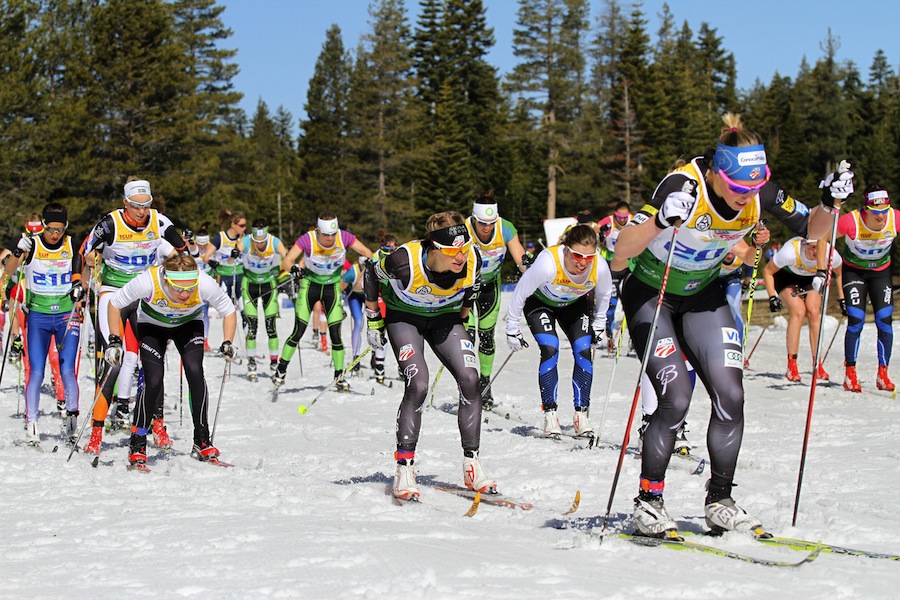
    U.S. Ski Team veterans Kikkan Randall (APU) and Liz Stephen (BMA) take control from the gun in Wednesday's 30 k classic mass start at U.S. Distance Nationals at Royal Gorge in Norden, Calif. Stephen went on to win by more than a minute. (Photo: Mark Nadell/MacBeth Graphics)
    U.S. Ski Team veterans Kikkan Randall (front right) and Liz Stephen (behind) take control from the gun in Wednesday’s 30 k classic mass start at U.S. Distance Nationals at Royal Gorge in Norden, Calif. Stephen went on to win by more than a minute. (Photo: Mark Nadell/MacBeth Graphics)

    Liz Stephen of the U.S. Ski Team (USST) and Burke Mountain Academy emerged out of the woods first, followed closely by USST teammate Kikkan Randall. Without any hesitation, the two began their second lap, skipping the exchange and setting the tone for the rest of the race.

    Randall’s teammate at Alaska Pacific University (APU), Rosie Brennan skied just a few seconds behind in third. If they weren’t going to switch skis in the soft-and-slushy snow, she wasn’t going to either.

    Suddenly, the race became a battle of sheer grit on average-at-best skis. Sixty degrees and sunny wasn’t going to be ideal for classic skiing no matter how you cut it. Might as well keep going.

    “I didn’t think they’d be any faster,” Stephen said of her decision not to change skis. “I tend to kind of be someone who’s pigheaded and just keeps going even if it’s not the fastest way.”

    Stubborn or just strong-willed, Stephen kept on plugging. The 26-year-old Vermont native led Randall by about 15 seconds through the end of the second lap at 20 k. Stephen continued with the same pair, waxed by USST serviceman Randy Gibbs and his support staff with the Craftsbury Green Racing Project, and Randall followed suit.

    Accelerating on the last lap, Stephen went on to finish first uncontested in 1 hour, 41:54.8 minutes. It was her second victory in as many races after Stephen won the SuperTour Finals title on Monday. She went on to take top honors at Distance Nationals in the last race of the season.

    Liz Stephen leading through the second of three laps in Wednesday's 30 k classic mass start at Royal Gorge in Norden, Calif. Stephen went on to beat Kikkan Randall by more than a minute for the U.S. Distance Nationals title. (Photo: Mark Nadell/MacBeth Graphics)
    Stephen leading through the second of three laps in Wednesday’s 30 k classic mass start at Royal Gorge. Stephen went on to win the U.S. Distance Nationals title. (Photo: Mark Nadell/MacBeth Graphics)

    “I’m super happy with it, and I mean, heck, I’m just excited to finish the season,” Stephen said. “As I’ve said before, this is a dream season and … as a U.S. team right now we’re really strong. It’s not just winning SuperTour Finals and U.S. championships. It’s a big deal now. We’re a very fast nation.”

    Unable to match Stephen’s attack up the long A-climb on the second lap, Randall took silver, 1:05.2 behind. Brennan, who skied most of the race alone, held on to third, 2:04.4 after Stephen.

    “On the second lap, last hill, [I] just kind of made a gap on Kikkan, didn’t really mean to make a move, it just kind of happened,” Stephen said. “I wasn’t sure whether I should keep going and try to make it bigger or whether I should chill out a little bit. … When she didn’t catch right back up, I thought, ‘What the heck? Let’s just see if I can hold it.’

    “I knew if she caught me again, it’d be really hard for me to stay with her and then try to beat in the end,” she added. “That’s not gonna happen. She’s got a globe full of jellybeans for a reason. I was telling myself over the tops of hills, ‘Just get over the top so she can’t see you!’ ”

    Cramping and tired after a long-yet-successful season, in which Randall won her second-consecutive Sprint World Cup and accompanying Crystal Globe, the world champion couldn’t respond. Her skis had been fast enough on the downhills and good on the climbs when she could find her kick, but as the race progressed (and her last feed went flying over her head with about 4 k remaining), that became harder for Randall to do.

    “I felt like I had the energy to do it, I just couldn’t,” Randall said. “My arms were starting to cramp and I couldn’t quite get on top of my skis to carry my momentum. For me in these kind of things, it’s such a technique thing, and sometimes I get it and sometimes I don’t.”

    Kikkan Randall (l) congratulates USST teammate Liz Stephen on her victory at U.S. Distance Nationals on Wednesday at Royal Gorge. Stephen won the 30 k classic mass start by more than a minute over Randall. (Photo: Mark Nadell/MacBeth Graphics)
    Kikkan Randall (l) congratulates USST teammate Liz Stephen on her victory at U.S. Distance Nationals on Wednesday at Royal Gorge. Stephen won the 30 k classic mass start by more than a minute over Randall. (Photo: Mark Nadell/MacBeth Graphics)

    Friends and housemates for the week with APU, Randall and Stephen talked about the ski exchange right before the race. Stephen wasn’t as confident in her second pair of skis. Randall felt they should see how the first lap went and make a call.

    “Coming into the exchange, I just decided, ‘No, I’m not gonna change, that’s my vote,’ ” Stephen said. ‘And she said, ‘Yeah, me neither. I’m just gonna keep going.”

    Forty seconds was too much time to waste, and the penalty ended up taking longer than a minute as the snow continued to soften.

    “With this added distance, it really changes the race,” said Randall, an International Ski Federation (FIS) athlete representative.

    “After they tested it out on the World Cup, I would say the majority of athletes didn’t like it. It’s definitely gonna be under review at the FIS meeting this spring. I was a little surprised they were gonna try it here.”

    As for the men’s 50 k classic mass start on Thursday, chief of competition August Teague told coaches they would shorten the zone to make it less of a penalty.

    But on Wednesday, it was an option few of the top finishers explored. After the first lap, Sadie Bjornsen (APU/USST) was the first to change her skis in sixth. She had been trailing Stratton Mountain T2 teammates Sophie Caldwell and Jessie Diggins (USST) in fourth and fifth, respectively. They nearly entered the transition until their coaches called them back, telling them to chase down the top three on the skis they were on instead.

    “I wish I would’ve known that everyone in front of me was not doing it,” Bjornsen said of the exchange. She spent the rest of the race trying to catch the chase group behind Brennan and succeeded on the second lap before falling behind on the third.

    “I think I just did it out of habit because I’ve done a couple ski exchanges in 30 k’s, never that you lose time on,” she added.

    An exhausted Jessie Diggins (SMST2/USST) after outsprinting four others for fourth place in Wednesday's 30 k classic mass start at U.S. Distance Nationals at Royal Gorge. (Photo: Mark Nadell/MacBeth Graphics)
    An exhausted Jessie Diggins (SMST2/USST) after outsprinting four others for fourth place in Wednesday’s 30 k classic mass start at U.S. Distance Nationals at Royal Gorge. (Photo: Mark Nadell/MacBeth Graphics)

    Diggins was one of the few top women who took a pit stop the second time around, rising from 10th to seventh toward the end of the last lap.

    She overtook Swedish B-team member Linn Sömskar, who double poled the first lap on skate skis along with fellow Swedes Lisa Larsen and Hanna Falk.

    Sömskar and Larsen led Randall and Stephen early in the race, but on a tough 10 k course marked by two significant climbs and several gradual hills, they fell behind before the end of the loop and switched to classic skis.

    “After the first lap, there was actually zero rest on the whole course,” Brennan explained of the slowing conditions. “There was not one place you could tuck without losing time.”

    On the last lap, Diggins worked her way up to Bjornsen, Swedish World Cup skier Maria Graefnings, Nicole Deyong (Sun Valley Ski Education Foundation), Caitlin Gregg (Central Cross Country), and Caldwell. She outsprinted them all to the finish, taking fourth 2:03.7 minutes behind Brennan and 1.5 seconds ahead of Caldwell in fifth.

    “It took me the entire nine k to catch them back again,” Diggins said. “Once I caught them, the skis had better glide. It’s kind of a risky, risky move, but I felt like I didn’t have a choice because they were getting slick. I decided I needed to switch.”

    The key to Brennan’s success was effectively not thinking about exchanges, but rather following the two World Cup veterans ahead of her. At the finish, she said it was one of the hardest races she’d ever done.

    “I’m beyond happy. That was one of the best races I’ve had this year,” Brennan said. “I’ve never had a good 30 k so to have it be the last race of the year is pretty awesome.”

     Rosie Brennan (APU) racing to third in Wednesday's 30 k classic mass start at U.S. Distance Nationals at Royal Gorge. (Photo: Mark Nadell/MacBeth Graphics)
    Rosie Brennan (APU) racing to third in Wednesday’s 30 k classic mass start at U.S. Distance Nationals at Royal Gorge. (Photo: Mark Nadell/MacBeth Graphics)

    Not far behind Stephen and Randall, who came through together after the first lap, Brennan remembered what APU head coach Erik Flora told her this season.

    “[He] had talked to me a lot about taking risks because I usually race too timid,” Brennan said. “So I was like, ‘Why the hell not? It’s the last race.’ ”

    With a good start and fast skis, she stuck with the two leaders. Stephen and Randall picked up the pace toward the end of the first lap, and Caldwell worked to stay with them. Brennan latched on as well.

    “I just got in the other track and went for it,” Brennan said. “I was able to catch back up to them, and I skied with them for another half lap.”

    The thought of changing skis hardly entered Brennan’s mind as Flora waved both Randall and her into the third lap behind Stephen.

    “I heard that it took a minute to do [the exchange] and a minute is so long to lose,” Brennan said. “Once you’re out of sight, it’s so hard mentally so I just was like, ‘That’s not worth it.’ ”

    Caldwell didn’t give it much thought, either. Pushing herself outside her comfort zone on the first lap, she said she was “a little worried” heading into the second. She recovered on the second loop while skiing with Diggins and Bjornsen, who had regained contact with them.

    “I figured as long as I stayed in a pack, speed wouldn’t matter as much ’cause I could try to draft,” Caldwell said. “I was afraid if I did change and I lost the group, I’d struggle to catch back up.”

    In search of better skis after the first lap, Graefnings followed Bjornsen into the exchange, and like Bjornsen, spent the rest of the race paying the price. Both worked to regain their spot in the chase group, and once there, Graefnings put on a final attack with what she guessed was “three or four” kilometers to go.

    “I’m a little mad at myself,” Graefnings said after losing the hunt for fourth and placing seventh, 4.7 seconds behind Diggins.

    “I did some tactical mistakes,” she explained. “I was starting with my second pair and that was not a good choice. I should’ve had my first pair all the way … I think the best three girls had their first pair all 30 k.”

    She was right. The top three skied on the same boards from start to finish. Diggins notched fourth with one change, Caldwell was fifth with none, and Deyong placed sixth (1.2 seconds after Caldwell) after switching her skis before lap two.

    “I know I lost some time, but once I realized that I had caught that second pack I just tried to hang on and survive,” Deyong said.

    The 30-year-old Sun Valley coach ended up surprising herself in her first distance race in a month since placing second in the 50 k Rendezvous Race in West Yellowstone, Mont. She also raced Monday’s hill climb up Sugar Bowl Resort, the final event of SuperTour Finals.

    “I hadn’t raced in a while and I jumped into the hill climb and I was like, ‘Why am I doing this?’ ” Deyong said after posting the 17th-fastest time up the mountain. “But I think jumping into that race helped me kind of blow the fumes out and just kind of get into that race mode again.”

    The women's 30 k classic mass start at 2013 U.S. Distance Nationals. From left to right: runner-up Kikkan Randall (APU/USST), winner Liz Stephen (BMA/USST), and bronze medalist Rosie Brennan (APU). (Photo: Mark Nadell/MacBeth Graphics)
    The women’s 30 k classic mass start at 2013 U.S. Distance Nationals. From left to right: runner-up Kikkan Randall (APU/USST), winner Liz Stephen (BMA/USST), and bronze medalist Rosie Brennan (APU). (Photo: Mark Nadell/MacBeth Graphics)

    Graefnings finished 2 seconds behind Deyong on Wednesday, and Bjornsen took eighth, 3.4 seconds behind the Swede. Gregg finished ninth, 8.3 seconds after Bjornsen, and Sömskar was 10th.

    “I was falling off the back, catching back, falling off the back, catching back,” Bjornsen said. “The last kilometer it was just everything you had left in your tank. Mine was a bit limited.”

    Though disappointed, Bjornsen would remember her stellar SuperTour Finals, where she was third overall with four podiums in as many races.

    “Today was more just to test what I could do with what I had left,” she said. “All of us were out there absolutely digging, giving as much as we could, ever last bit of fuel we had. That’s a fun way to end because we dropped at the end. That was everything.”

    Standings outside in T-shirts and sports bras, several of the top women sipped champagne and celebrated the end of the season.

    “Today was kind of epically tough conditions so you really feel like you had to grit it out,” Randall said. “When you get to that finish line, you just feel really satisfied about the race and the whole season.”

    “[It was a] really great way to end it here in California; the volunteers have done great things,” Stephen said. “Big thanks to everybody for the season. It was fun as hell.”

    — Audrey Mangan contributed reporting

    Results | Photos

    Clinking glasses (and plastic water bottles) to celebrate the end of the season at U.S. Distance Nationals on Wednesday at Royal Gorge Ski Resort in California. (Photo: Mark Nadell/MacBeth Graphics)
    Clinking glasses (and Dixie cups and water bottles) to celebrate the end of the season at U.S. Distance Nationals on Wednesday at Royal Gorge Ski Resort in California. (Photo: Mark Nadell/MacBeth Graphics)
  • U.S. Distance Nationals: Mass Start Photos

    U.S. Distance Nationals: Mass Start Photos

    Tad Elliott leads fellow U.S. Ski Team member Kris Freeman as they continue to break away from the pack in Saturday's 50 k freestyle mass start at U.S. Distance Nationals.

    CRAFTSBURY, Vt. — The women endured 20 laps and the men rounded the 1.5-kilometer loop 33 times in their respective 30- and 50-kilometer freestyle mass starts at U.S. Distance Nationals last weekend.

    Wondering how it played out with up to 90 racers on course at once? Take a look at our photo galleries.

    Women’s 30 k

    Men’s 50 k

    Look up racers by start lists: Women’s 30 k | Men’s 50 k

    Results: Women’s | Men’s