Tag: U.S. Nordic Combined Team

  • Under 23 Questions: Stephen Schumann

    Under 23 Questions: Stephen Schumann

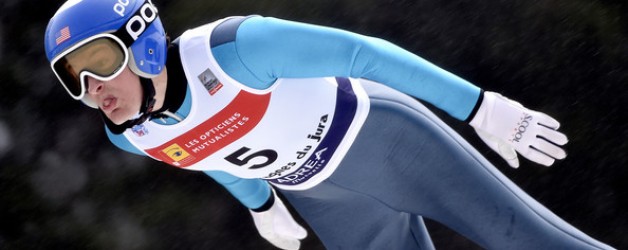
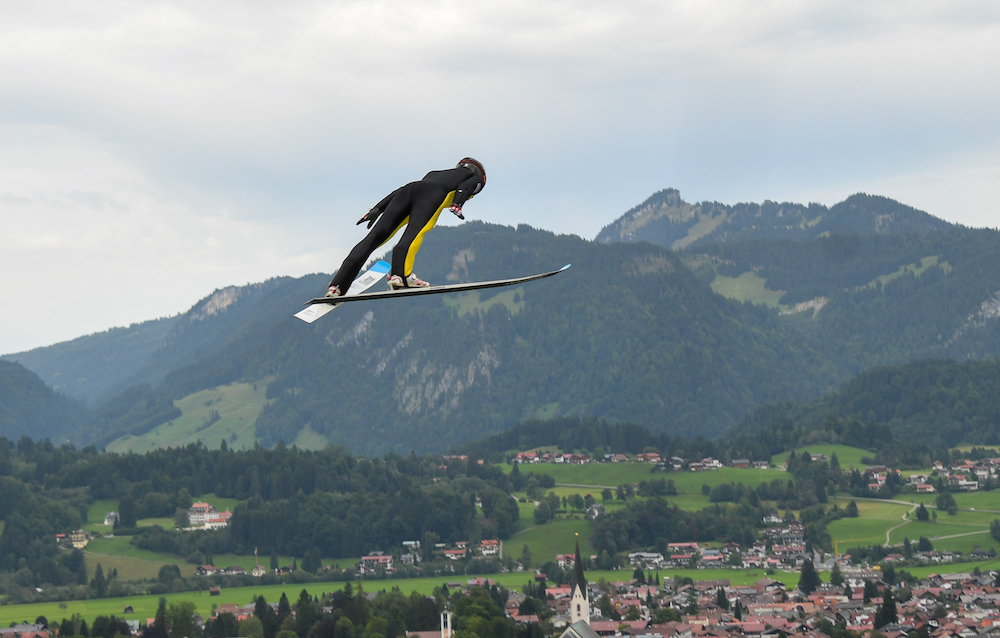
    Stephen Schumann (U.S. Nordic Combined) jumping in Oberstdorf, Germany, in September 2016. (Photo: Romina Eggert)

    In an effort to showcase the North Americans competing at this week’s 2018 Nordic Combined Junior World Championships in Kandersteg, Switzerland, we asked those qualifying athletes several questions about themselves — actually, we had them fill in the blanks. Here we have 17-year-old Stephen Schumann, of the U.S. Nordic Combined Team, who represented the U.S. at his third Junior Worlds. 

    This week in Kandersteg, Schumann placed 13th and 18th in two individual competitions and seventh in the team event. 

    ***

    “My full name is Stephen Schumann, but you can call me Skunk.

    I was born and raised in Park City, Utah, and I learned to ski at Park City Ski and Snowboard.

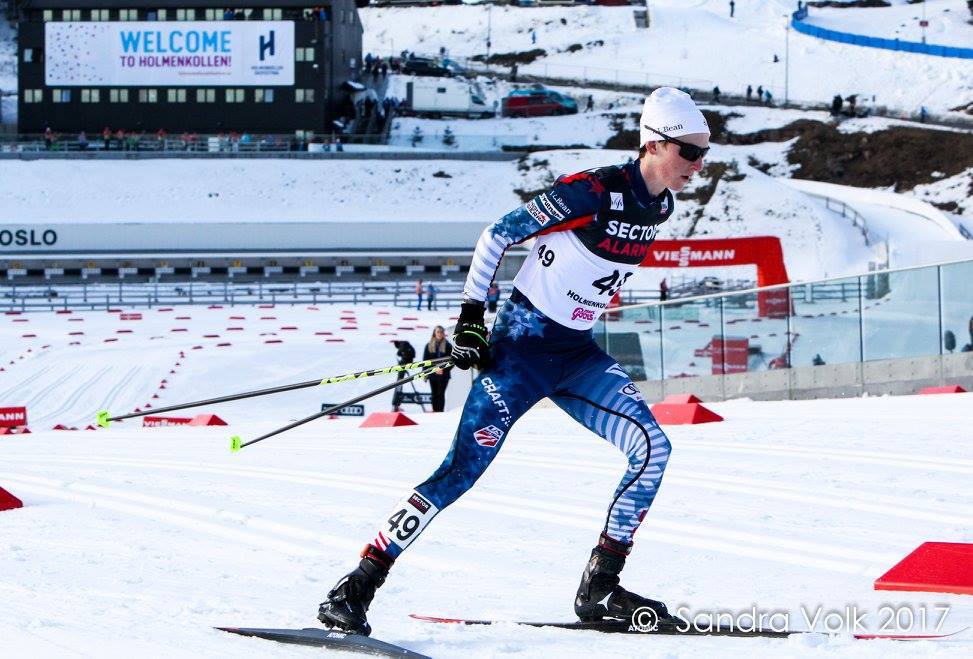
    Stephen Schumann (U.S. Nordic Combined) racing at a World Cup last season in Oslo, Norway. (Photo: Sandra Volk)

    I spent the time between U.S. Olympic team trials in Park City and Junior Worlds in Europe competing in Continental Cup and World Cup races.

    The hardest workout I did in the last training year to prepare for this was 10×8 minute intervals with my whole team.

    This is my second time in Switzerland and 11th time racing internationally, and so far it’s been awesome with a very high level of competition.

    One difference I’ve noticed between Switzerland and the U.S. is that it is different.

    Skiing and racing in the Alps is pretty cool because of the overall scenery. Usually racing at altitude is very helpful for me because I grew up at high elevation in Utah. There are mountains around where I live.

    One of the things I’m most excited about for Junior Worlds in Kandersteg is eating Swiss food.

    One race I’m especially targeting there is the 10 k individual.

    I really hope I can chat/make friends with someone from the Swedish women’s cross country team and ask them for Stina’s Snapchat. Too bad they are all in Goms.

    My favorite thing at the breakfast where we are staying is the coffee.

    Fondue is melted cheese. The cheese here is not melted fondue. And the chocolate is not made of cheese.

    If I had a totally free day here and didn’t have to worry about race fitness or training, I’d wake up eat drink some coffee play some 2K, go to the top of a mountain, eat some lunch, take a shower, then eat some dinner and sleep.

    The best way to follow me on social media is on Instagram @stephen_schumann.”

  • Nordic Nation: Sealing the Olympic Deal with Bryan Fletcher

    Nordic Nation: Sealing the Olympic Deal with Bryan Fletcher

    In this episode of Nordic Nation, we discuss the recent U.S. Nordic Combined Olympic Trials, which were held Dec. 30 in Park City, Utah, with U.S. NoCo’s leading man, Bryan Fletcher. Nerves, pressure, the flying and skiing — those all played a role on Fletcher’s day at Olympic trials. After the jumping portion of the competition, things weren’t so certain for the eventual winner, as Fletcher began the 10-kilometer ski race nearly a minute and a half behind the first starter, Ben Loomis. We connected with Fletcher, a 31-year-old dad, from his home in Heber, Utah, last week on Jan. 3 as he reflected on sealing the Olympic deal.

    Fletcher also discusses the prospects of U.S. Nordic Combined fielding a team of four skiers at the upcoming Olympics in PyeongChang, South Korea. For now, the U.S. is guaranteed two spots. And as Fletcher explains, hope remains for two more athlete spots to open up.

    Trials results: Jumping | Final results

    Note: Since Fletcher’s interview, he and his brother Taylor competed at the first Nordic Combined World Cup of the new year, which took place on Friday, Jan. 12 in Val di Fiemme, Italy. There, Bryan finished 32nd (up from 39th in the jump) and Taylor placed 43rd (up from 49th). Full results here

    (To subscribe to the Nordic Nation podcast channel, download the iTunes app. If you have iTunes, subscribe to Nordic Nation here.)

  • FasterSkier’s Nordic Combined Athlete of the Year: Bryan Fletcher

    FasterSkier’s Nordic Combined Athlete of the Year: Bryan Fletcher

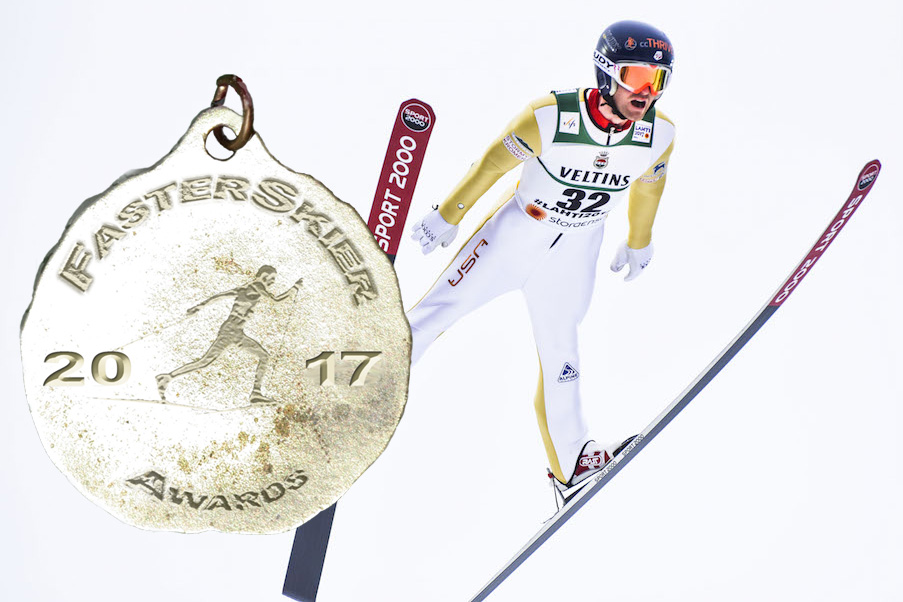
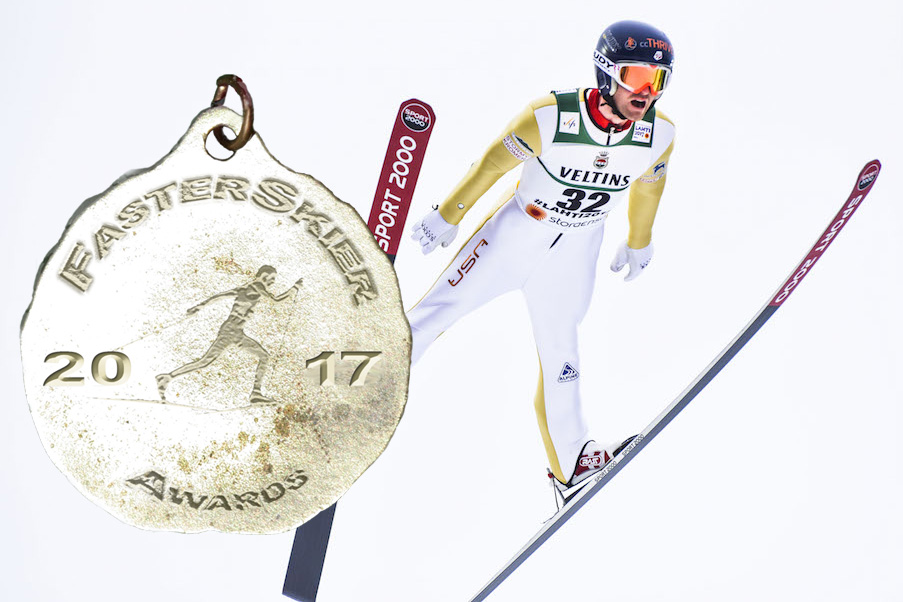
    FasterSkier’s North American Nordic Combined Athlete of the Year — Bryan Fetcher (Photo: John Lazenby/Lazenbyphoto.com)

    With the 2016/2017 season officially in the rearview, FasterSkier is excited to unveil its annual award winners for this past winter. Votes stem from the FS staff, scattered across the U.S. and Canada, and while not scientific, they are intended to reflect a broader sense of the season in review. This honor goes to the outstanding North American Nordic Combined athlete on the World Cup.

    Previous categories: Junior Skiers of the Year | Collegiate Skiers of the Year | Canadian Continental Skiers of the Year | U.S. Continental Skiers of the Year

    The athletic and psychological bar is set high. Imagine a sport where you’re perched hundreds of meters above the ground, the wind whistles, and you’re accelerating down in a tight tuck, and then it’s fleeting moments of flight before a stylish telemark landing.

    That’s followed by a more terrestrial and lung burning feat of racing on cross country skis. It’s a sport where explosive power in jumping is complemented by an elite middle distance runner’s aptitude for high speed endurance.

    Enter Bryan Fletcher as FasterSkier’s North American Nordic Combined Skier of the Year.

    According to the International Ski federation’s (FIS) database, U.S. Nordic Combined team member Bryan Fletcher participated in his first international competition back in 2002. For the 30-year-old based in Park City, Utah that’s a lot of jumps and k’s.

    Fletcher finished the year as the highest ranked American on the World Cup in 34th. (In 2016 Fletcher ranked 20th overall and 15th overall in 2015.) His season best results came on the front and back end of the season: a ninth place on December 4th in Lillehammer, Norway and an 11th place on March, 18th in Schonach, Germany.

    In between was a mix of almost there, not quite there, and a close podium call at the 2017 Lahti, Finland World Championships where Fletcher remained in the hunt until an untimely spill in the closing portion of the Individual Gundersen 10 k — Fletcher finished 14th (+47.4).

    “I think my performance at Worlds was definitely my highlight,” Fletcher wrote in an email. “I wanted to be a contender in that event and I was. I have replayed that race a few times in my head and I think a few different moves in the final lap and I could have been fully in the fight for the medal.”

    With many seasons to reflect upon, Fletcher explained the 2016-2017 season ranked as one of his most difficult.

    “I came into the season ready to go and in really good shape for both XC and jumping,” Fletcher noted. “I think my mistake was I was too eager to get the season underway. I had trouble maintaining that fitness and body composition and ultimately had to reset over the holidays and rebuild in order to prepare for World Championships.”

    Fletcher became ill in early January but his energy rebounded before Worlds.

    “Worlds started strong but again I peaked one week too early.” Fletcher explained. “I was very happy to be in the fight the first week, and I know that I am capable to be in contention in all events.”

    Beyond mitigating illness while on the road, Nordic Combined remains a fickle sport  when it comes to modifying one’s jumping technique. Yet. Fletcher’s year was one where he acknowledged the need for technical changes in his jumping.

    “Yeah jumping was starting to come around at the end of the season a bit more,” Fletcher emailed. “It was still inconsistent but I have learned a lot about myself as a competitor this season especially in regards to my technical skills and abilities. Towards the end of the year I was able to start applying some of the things I have learned about myself to my jumping, and the results were slowly starting to improve. Obviously the level is very high in the sport right now, and so even small mistakes mean you are out of contention.”

    Next year brings an end to the quadrennial cycle that is the Olympics. Like others in the U.S. nordic ski community, Fletcher will be focused on the PyeongChang, South Korea Games. As Fletcher regroups for his off season training, the new dad remains dedicated to improving and bringing his best.

    “The big take away is that I know which areas I need to improve upon and what worked well going into next year,” Fletcher wrote. “Also I am really motivated for next year and my body is feeling good.  The past two seasons I planned to tone things down a bit in my training, so that I could build up a bit stronger for PyeongChang.  In the past I have always had a performance build for the three years prior to the Olympics, but have come into the Olympic season a bit flat.  My goal was to disrupt that cycle to increase performance next season.”

  • Nordic Nation: Jumping Explained, A Podcast with Bryan Fletcher and Clint Jones

    Nordic Nation: Jumping Explained, A Podcast with Bryan Fletcher and Clint Jones

    Bryan Fletcher jumping to 20th on the normal hill at 2015 World Championships in Falun, Sweden.(Photo: FlyingPointRoad)
    Bryan Fletcher (U.S. Nordic Combined) jumping to 20th on the normal hill at 2015 World Championships in Falun, Sweden. (Photo: FlyingPointRoad)

    Nordic combined is exactly that: a combination of the two discrete nordic-sport disciplines. There’s the cross-country side, which if you read FasterSkier regularly, you’re pretty comfortable with in terms of technique, gear, and the nuts and bolts of race dynamics. If you’re like me, the jumping side is a bit more foreign. I took the opportunity in this podcast episode to explore ski jumping.

    For nordic combined competitions, it is the ski jumping portion that dictates the start order for the freestyle pursuit-style race. So to fully understand the discipline, and know why, for example, a skier starts one minute back from the morning’s ski-jump winner, I reached out to Bryan Fletcher, a 30-year-old old U.S. Nordic Combined Team veteran (he’s also a new dad), and Clint Jones, a former U.S. Ski Team jumper and currently a jumping coach and team director for USA Nordic, which encompasses nordic combined and ski jumping.

    From those two we get a jumper’s perspective of a massive ski flying hill in Planica, Slovenia, and firsthand knowledge of jumping technique. Jumping may not be for the faint of heart, but understanding how it sets up the cross-country ski race after the jumps is critical to following nordic combined.

    And when you listen to the podcast, you’ll hear Bryan Fletcher say this: “For me, I’m kind of an adrenaline junkie. I’ve done a lot of stupid adrenaline things in my life. And one of those is base jumping off of the bridge in Twin Falls, [Idaho]. And typically they recommend you have 100 sky dives before you ever go base jumping. Instead I spent two months learning how to pack a parachute, and then went and took six jumps off the bridge. And to give you perspective, base jumping I didn’t know anything about … However with ski jumping, you kind of have those rumors and commentary from other jumpers, I was more nervous getting on the bar of a ski flying hill for the first time than I was crawling over the railing of a bridge to base jump for my first time.”

    You’ll also learn the difference between a ski flying hill — the type of jump Fletcher refers to in his base-jumping quote — and a regular, Olympic-style ski jumping hill. It’s always a good day to learn something new.

    Click the play button to listen below.

  • Summer Grand Prix: Fletcher 15th Overall, Berend and Loomis Jump into Contention (Updated)

    Summer Grand Prix: Fletcher 15th Overall, Berend and Loomis Jump into Contention (Updated)

    Taylor Fletcher in Oberstdorf, Germany during the FIS Nordic Combined Summer Grand Prix where he placed 15th overall in the series. (Photo: FIS/Sandra Volk)
    Taylor Fletcher (U.S. Nordic Combined) in Oberstdorf, Germany, during the FIS Nordic Combined Summer Grand Prix where he placed 15th overall in the series. (Photo: FIS/Sandra Volk)

    (Note: This article has been updated to include comments from Taylor Fletcher.)

    Logging hours: the rollerskiing, the jumping, running, strength and the in-between. For full-time athletes breaking up the quotidian cycle can be a spark. For the U.S. Nordic Combined team, late August and early September were spent racing events in the International Ski Federation (FIS) Nordic Combined Summer Grand Prix.

    The last stop on the condensed three-venue tour was hosted by Oberstdorf, Germany, on Sept. 2 and 3. There, two things of note were evident.

    First: 18-year-old Norwegian phenom Jarl Magnus Riiber flat-out dominated. He was first in  three of the four individual races he contested. (On the second leg of the four Grand Prix individual races, Riiber scored the highest in the jump portion — he did not enter the roller ski leg.) Despite scoring in only three of four events, Riiber won the Grand Prix overall.

    Riiber’s jumping dominance was sustained. In both Oberstdorf races, Riiber was the highest-placed jumper heading into the 10 k ski leg. On Friday’s race, the next closest skier, Germany’s Tobias Simon, started one minute and four seconds back. For Saturday’s race, a modest 59 seconds was Riiber’s head start.

    But analyzing times reveals Riiber is still developing as a skier. He skied the 30th fastest time, winning by 13.7 seconds, on Friday.

    Norway's Jarl Magnus Riiber on his way to the FIS Nordic Combined Summer Grand Prix overall. (Photo FIS/Sandra Volk)
    Norway’s Jarl Magnus Riiber on his way to the FIS Nordic Combined Summer Grand Prix overall. (Photo FIS/Sandra Volk)

    On Day 2, 17.6 seconds was Riiber’s margin of victory. Of the 51 skiers beginning the rollerski portion, Riiber raced only the 36th fastest time on the day. No matter, the young Norwegian prevails.

    Second: the U.S. is showing promise in the jumping rounds and Taylor Fletcher has proven the ski shape is good.

    On the U.S. side, let’s start with Fletcher. He jumped to 29th on Friday and began the rollerski 2:50 behind Riiber. Six laps later on the 1.75 km course, Fletcher had skied the fourth fastest rollerski leg, moving him up in the standings to 18th.

    In a USSA press release, Fletcher made a point that Riiber has changed the jumping game. “The level of jumping is so high right now because of one guy,” Fletcher said. “He is the best jumper in all of Norway and could easily be the top guy on the ski jumping World Cup. That being said, to only start 2:50 behind him is somewhat a success. In the meantime, we are going to continue to jump and work on the technical aspects of jumping to close that gap down.”

    FIS has implemented a rule change that places a higher value on overall jumping distance. Instead of the previous 1.5 points earned per meter jumped, now nordic combined jumpers are given 1.8 points per meter jumped. With a phenom jumper like Riiber, that marginal .3 point / m increase adds up. The time back for start position in the ski phase is decided by total points.

    U.S. Nordic Combined Head Coach Dave Jarrett told USSA that Riiber is a one-man show racing for margin of victory. “Jarl Riiber is jumping on a very high level. He is splitting the field in every competition. And with the new rules changes, it became solely a race for second and third.”

    Fletcher jumped to 35th during Saturday’s competition, flying 113 meters. Again, Fletcher played catch up on the ski. And he did catch up. He skied the third fastest time, strong enough to propel him up the standings to ninth overall (+1:20.8).

    The European trip was a good sign for Fletcher as he finished the Grand Prix series ranked 15th despite being disqualified in Villach, Switzerland, the second leg of the series, due to a jump suit violation.

    In an email, Fletcher described how he plans to challenge Riiber off the hill. “There are a few things that will allow me to close the gap to the leader which will make me closer to podiums for sure,” Fletcher wrote. “One thing is I can lose some weight for the jumping, which I have been doing. When I do this, I need to be careful that I don’t get too light as it will affect my cross country as I won’t have the same power. Another thing that will help is being more explosive and powerful on the take off, to do this I have been in the gym more this summer and reworking my strength and power programs to do this but its a process and you can’t expect it right away.”

    The takeaway for Fletcher as the colder months approach leaves him optimistic. “I am happy with how the performances were in Europe.” Fletcher explained. “I was jumping at a much better level than last year and I was more in the hunt for the top places. Even though I was jumping better, I still don’t think I had my best jumps but they were still good. The cross country is right where I was expecting it to be and I will continue to progress as the summer and fall moves on! I am excited to get ready for winter as I know where I am in the pecking order and what to expect going into the first competitions of the year.”

    The other senior U.S. players along for the Grand Prix ride were 18-year-old Ben Loomis and Ben Berend, 21. Loomis finished Day 1 of the Oberstdorf round in 32nd (+3:07), Berend 35th (+3:25.3).

    Yet both skiers showed moxie off the jump. Loomis jumped to 16th while Berend was a place behind in 17th.

    Day 2 proved another solid day off the jumping hill for Berend and Loomis. With 115 points after the jump, Berend’s effort was good enough for the 12th-best jump. Loomis was 10 spots back in 22nd. After the skiing portion, Loomis finished in 33rd, with Berend in 36th.

    U.S Nordic Combined skier Ben Berend stoked on his jumping in Oberstdorf, Germany. (Photo: FIS/Sandra Volk)
    U.S Nordic Combined skier Ben Berend stoked on his jumping in Oberstdorf, Germany. (Photo: FIS/Sandra Volk)

    In an email exchange with Berend, he explained the team is positive. “I would say that as a team the sensation is that we are moving in the right direction, Berend wrote. “This offseason we hired an Austrian jump coach Nik Huber. He has really given us a lot of confidence on the jump hill. Taylor showed in Oberwiesenthal that he can fight for a podium on the last lap. If Bryan was here, I truly believe he would have been fighting for the podium as well … The goal is to eventually have a strong enough 4 man team to fight for podiums at World Championship and Olympic Events. I think seeing Ben Loomis and I jumping into the top 20 is a huge step in that direction. It seems everyone is happy with where they are at right now. The next step is improving on that form before the winter.”

    (Bryan Fletcher remained in Park City where he welcomed his newborn daughter last month.)

    With a competitor like Riiber, establishing big time gaps with his jumping, it’s paramount that U.S. skiers like Berend attempt to minimize that gap with improved jumping.

    “Throughout the two week Grand Prix Tour I had some of the furthest jumps on the hill,” Berend wrote. “By the time we got to Oberstdorf my confidence was through the roof. It got to the point where I knew I was going to go far even with a bad jump (Saturday’s 17th place was with a bad jump). This took a lot of pressure off of me and I was able to relax and just execute. In the past I have been inconsistent on World Cup. One day I jump to 10th and the next day I would jump to 45th. During the Grand Prix I jumped to 19th, 17th, and 12th. This is definitely the kind of consistency I have been looking for.”

    The Nordic Combined World Cup season begins Nov. 27 in Kuusamo, Finland.

    Results: Day 1 individual 10 k | Day 2 individual 10 k | Overall Grand Prix Standings

  • Wednesday Workout: Taming Compartment Syndrome (with Video and Mini Podcast)

    Wednesday Workout: Taming Compartment Syndrome (with Video and Mini Podcast)

    Taming Compartment Syndrome in this Wednesday Workout
    Bend-based physical therapist and strength/conditioning coach Dave Cieslowski demonstrates an exercise to help tame compartment syndrome.

    BEND, Ore. — Two letters for better or for worse that we often associate with the negative sides of too much skiing are PT— as in physical therapist. Based in Bend, Dave Cieslowski is a licensed physical therapist and certified strength and conditioning coach. He has a core group of cross-country skiers who take his word on injury prevention and treatment — that group includes the U.S. Nordic Combined team.

    One common overuse injury is compartment syndrome, or what specifically is called exertional compartment syndrome. Painful? Yes! If you don’t take my word for it, just read this post from former U.S. Ski Team member and distance skier Kris Freeman.

    OK, it’s painful, but according to Cieslowski, it may be preventable and treatable in some cases without surgery.

    Here are some basics: pain and/or numbness may develop when a muscle becomes swollen during exercise and the compartment containing the muscle does not expand. For skiers, this most often occurs in the lower leg where there are four muscle compartments — commonly, when compartment syndrome is suspected in a skier, symptoms are often evident in either the calf or shin area.

    According to Cieslowski, the onset of compartment syndrome that specifically affects the shin is more likely in skiers who raise their toe up during the return phase (just after the leg push off) while skate skiing. That action, the toe raising, may eventually cause pain in the shin area.

    Here’s a short podcast episode in which Cieslowski describes the reasons for the following exercises (press the play button below).

    What You’ll need for exercise #1:

    • 2 x 3 ft. resistance tubing
    • A secure structure to anchor the resistance tubing
    • Place one piece of tubing around the top of your hips, the other around one ankle
    • Watch the video for more specific details about how to proceed

    What You’ll need for exercise #2:

    • 1 x 2 ft. resistance tubing, both loose ends knotted together to form a circle
    • Step through tubing and position just above the knees
    • Dumbbell and weights appropriate for a single leg step up onto an approximately foot high box
    • Watch the video for more specific details about how to proceed

    For both exercises, use caution and determine the proper number of sets to ensure you are fatiguing the appropriate muscles. You’ll note in the video that Cieslowski’s cycle rate is slow — that is on purpose. These are not meant to be high cycle rate exercises.

  • For U.S. Nordic Combined, Quota Spots and More on the Line as World Cup Restarts

    For U.S. Nordic Combined, Quota Spots and More on the Line as World Cup Restarts

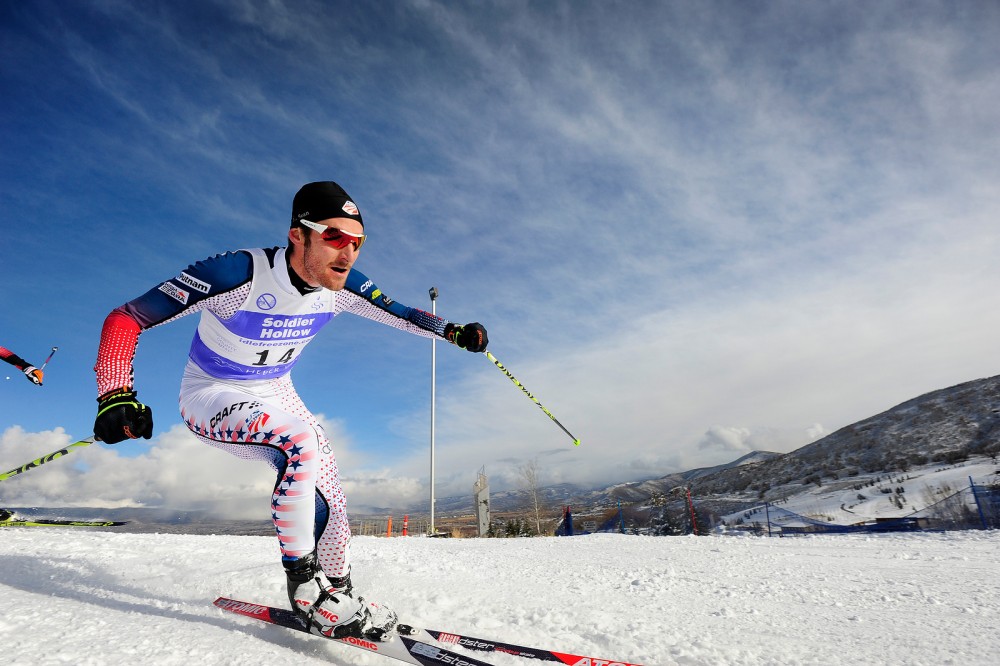
    Taylor Fletcher charges around a corner in a 10k FIS Nordic Combined Continental Cup cross country race at Soldier Hollow. (U.S. Ski Team - Tom Kelly)
    Taylor Fletcher (U.S. Nordic Combined) charges around a corner in a 10 k Nordic Combined Continental Cup cross-country race in December at Soldier Hollow in Midway, Utah. (Photo: U.S. Ski Team/Tom Kelly)

    It will have been since Dec. 20, over one long month, since the last Nordic Combined World Cup event. That lack of high-end competition can take its toll on athletes and on the national organizations and regional clubs constituting the sport’s backbone of support. The U.S. Nordic Combined team is no stranger to the vagaries of where their funds are coming from and when the next high-level competition will take place.

    Unlike its cross-country cousin, nordic combined is not simply snow-dependent — it’s also dependent on calmer atmospheric conditions. In other words, if it’s too windy, or the winds are too swirly, too unpredictable, the jumping can be cancelled. The first scheduled World Cup in Kuusamo, Finland, Nov. 28-29 was canceled due to dicey wind conditions. The next weekend’s races, in Lillehammer, Norway, had a modified schedule on the first day of competition because of winds: judges canceled the jumping, using the provisional jumping results from the day before, to set the cross-country ski portion’s start order.

    The Ramsau World Cup in Austria got off the ground Dec. 19-20, but the cancellation trend continued after holiday break. A lack of snow led organizers to cancel the Jan. 2-3 World Cup races in Klingenthal, Germany. The following weekend’s races Jan. 16-17 in Chaux-Neuve, France, were postponed a week also due to low snow. (Currently, those races are scheduled to be held this weekend, Jan. 23-24.)

    So far this season, three out of five World Cup weekends have been canceled or postponed.

    Lack of snow and periodic cancellations are something U.S. Nordic Combined Head Coach Dave Jarrett must stomach. “It’s a real tough thing because it’s not anything we can control, mother nature which is difficult,” Jarrett said in a phone interview from Park City, Utah.

    Adam Loomis (U.S. Nordic Combined B-team) in a competition jump (Photo: National Nordic Foundation)
    Adam Loomis (U.S. Nordic Combined B-team) in a competition jump (Photo: National Nordic Foundation)

    The U.S. team has taken what they can control and made the best of it. Back in December, the U.S. men entered several skiers in what amounted to a local series of Continental Cup races with jumping at Utah Olympic Park in Park City and skiing at Soldier Hollow in Midway. Their objective: earn enough points to advance more skiers to the World Cup stage.

    Jarrett and the team met that goal. But it remains bittersweet.

    “It also adds a little bit of a sting, we earned a wildcard in the first period, with the results at Soldier Hollow. Every race that we have had the ability to start five guys on the World Cup has been canceled so far, and we are not going to get those chances back. Even if they reschedule them later in the year, they’ll occur in a different period,” Jarrett said. “You now that was the the hard thing, because we really needed to get some new names on the points scoring list that we haven’t had before. We have two more chances though.”

    If the World Cup schedule proceeds as planned, the U.S. can bring five skiers to both the Chaux-Neuve races and to the following week’s races in Seefeld, Austria.

    But getting new names on the list is something Jarret mentioned several times. And with the current period ending after the Seefeld rounds, the pressure is mounting for results; the number of U.S. start positions depends on it.

    “If Adam Loomis, for example, doesn’t get some World Cup points to maintain his spot, then his points will expire, and so we will lose his spot. Bill Demong [who retired this past spring] had points from last year that are set to expire at the end of this period, and we know that he is not going to earn those points back. So we know that that spot is going to expire,” Jarrett explained.

    “So right now, we need to have more different names on that list: the Adam Loomis’, the Ben Berends, the Michael Wards. They need to step up because Bill [Demong] is not around anymore, and Todd [Lodwick] is not around anymore, and Johnny [Spillane] is not around anymore. Adam did it last year, but Adam has not gotten any points this year, so he needs to do that as well. There’s a realistic chance that after Seefeld, if nobody gets enough World Cup points, we will only have the ability to start two guys on World Cup for the next weekend at Oslo.”

    The Oslo race on Feb. 2 begins the new period.

    Training and Maintaining

    After the first post-holiday competition was canceled, Bryan and Taylor Fletcher decided to remain stateside, basing themselves in Park City. Maintaining race fitness hasn’t been as difficult, as both are cross-country racing locally.

    “But there’s definitely that mental edge, that competion edge that you have once the season starts and you are going weekend into weekend, it’s competition time,” remarked Jarrett. “And it’s hard to replace. The good thing is that it’s been the same for everyone. It’s not like somebody’s injured and they are trying to come back,  and there’s been competitions going on. Their hasn’t been competition. We’ve been maintaining fitness as best we can. “

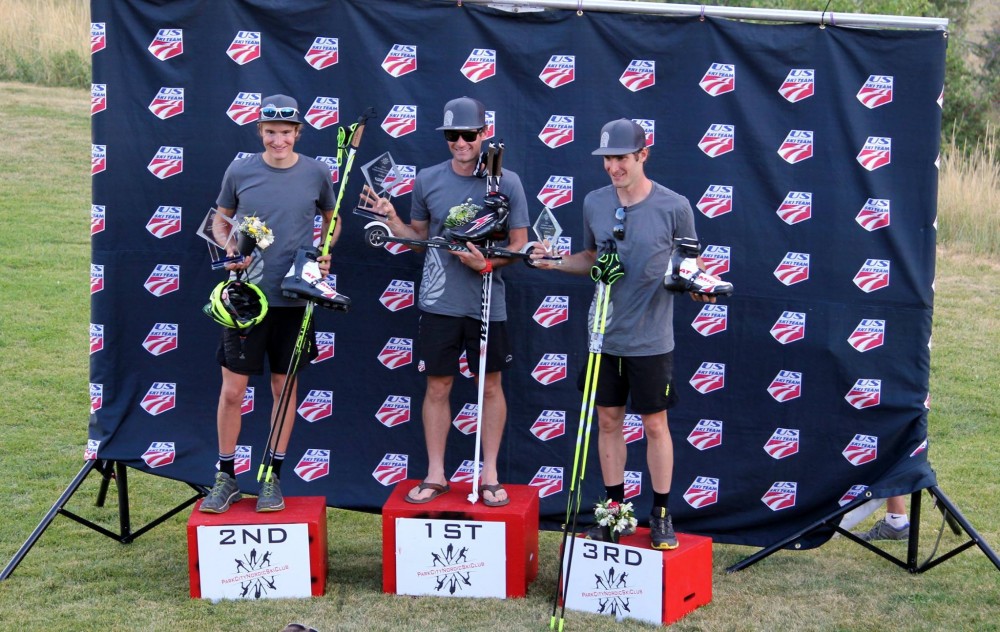
    The podium at the 2015 U.S. Nordic Combined Championships, which were held in Park City and Midway, Utah: with winner Bryan Fletcher (c), second-place finisher Adam Loomis (l) and Taylor Fletcher in third. (Photo: USSA/Tom Kelly)
    The podium at the 2015 U.S. Nordic Combined Championships, which were held in Park City and Midway, Utah: with winner Bryan Fletcher (c), second-place finisher Adam Loomis (l) and Taylor Fletcher in third. (Photo: USSA/Tom Kelly)

    At least for the Fletchers, Park City remains a locale with an upside.

    “We are at an advantage at altitude to be here and living here,” Jarrett said. “And we can assimilate sea level. So I feel pretty good about the way that they are, but it’s more that competition mindset.”

    The remaining four U.S. Nordic Combined skiers, Adam Loomis, Ben Berend, Jasper Good, and Michael Ward, have remained in Europe to train.

    Although race cancellations may impact quota spots, it also impacts the bottom line for his skiers.

    “If we are not there, we are not paying to be there,” Jarrett said of expenditures. “We have had to pay some airline ticket changes, and things like that, but you know if we are not there we are not collecting travel money [from FIS], at the same time we are not spending money on accommodations and things like that.”

    Beyond impacting institutional finances, race cancellations also impact small wallets. “It’s also they are losing the opportunity to make prize money, which also, when you look at the big picture, they have bills to pay and things like that. Certainly, having no event and no opportunity to earn money is another big big piece of the puzzle.”

    With earning potentials compromised, the team must rework how it allocates funds. That puzzle problem is compounded by the team’s insecure quota spots.

    “We project revenue based on quota spots, and collecting travel money based on those quota spots. So when there is cancellation you don’t collect that money and if they. If you have a stable quota then it doesn’t matter, they make it up in the next period, but our quota is going to start fluctuating,” Jarrett said.

    So quota spots, funding and potential sponsorship dollars go hand in hand. Better results corresponds to better publicity, and hopefully in the long term, a more secure financial situation for athletes. This in turn comes back to the season’s races and subsequent cancellations. Jarrett says the lack of races, the lack of opportunities, ripple throughout the U.S Nordic Combined community.

    “We have a bunch of young guys that need to get established on the World Cup list. We are going to lose some spots probably before we get more again. And so, we needed to have as many opportunities to get those extra spots for the next period, and the next period, and the next year. And so when they are cancelled, it has a ripple effect throughout the system. Because if you are starting four or five on World Cup, and then all of a sudden we can only start two, then that knocks two guys down to Continental Cup, and then that knocks two younger skiers out of Continental Cup.”

    Now more than ever, in addition to quota spots, the nordic-combined community must think about money. “What we are faced with now is that all the athletes, all the staff, are full-time fundraisers, and tongue and cheek, part-time athletes. Everybody knows, athlete’s included, that if there’s no funds, it doesn’t matter how much you train, if you can’t get there, you can’t get there. So those guys, the athletes, I know the staff, wake up in the morning and they think about two things: how are we going to raise more money and what are we doing for training today?”

    For the next two weekends Jarrett has his fingers crossed — quota spots and more are on the line.

  • L.L.Bean and CRAFT Sportswear Official Suppliers of the U.S. Ski Team 

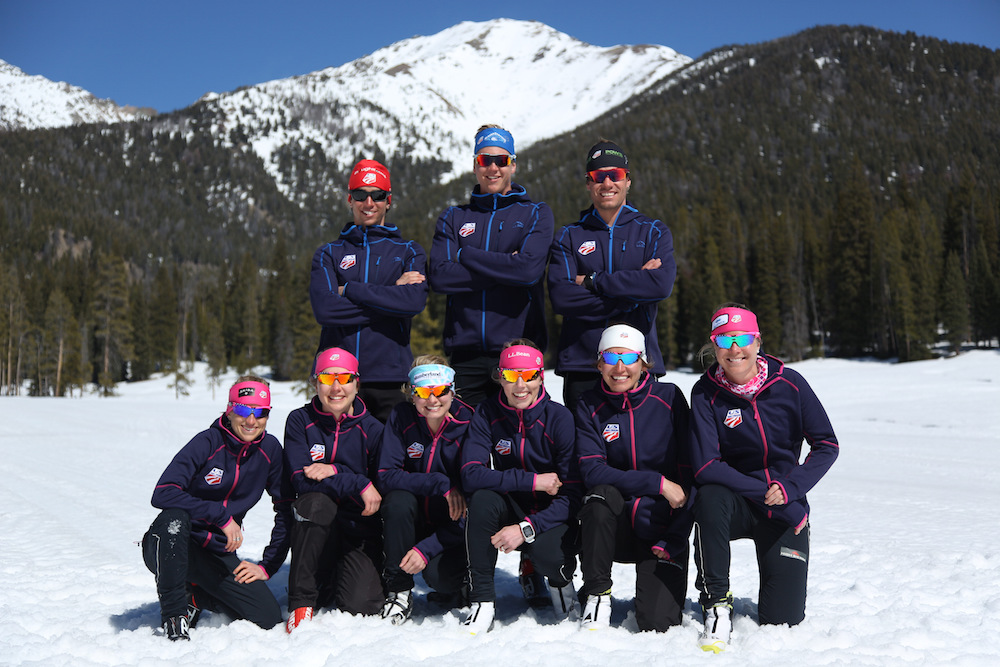
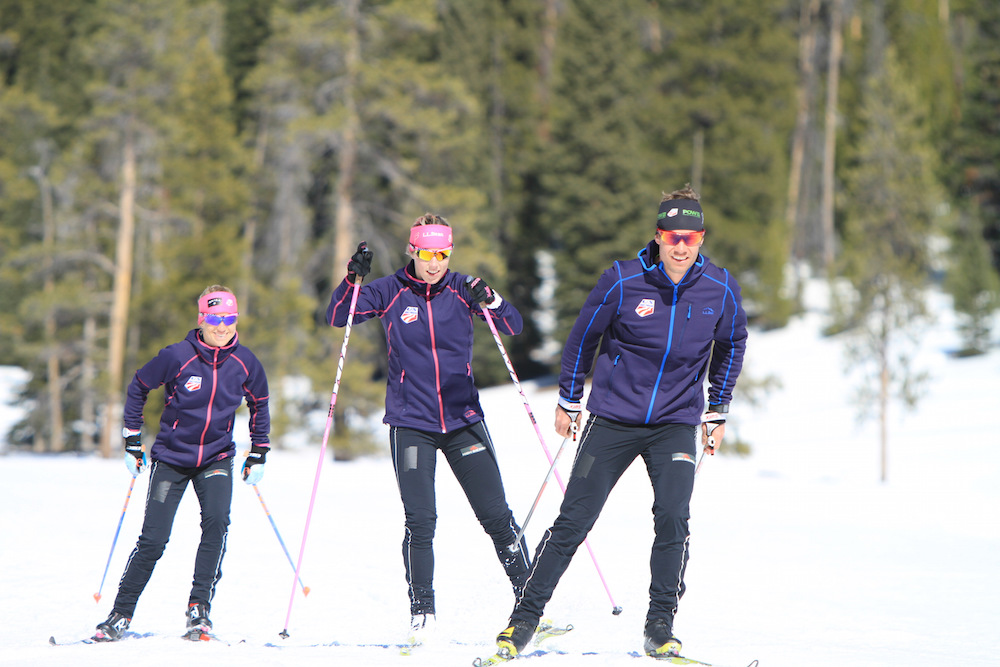
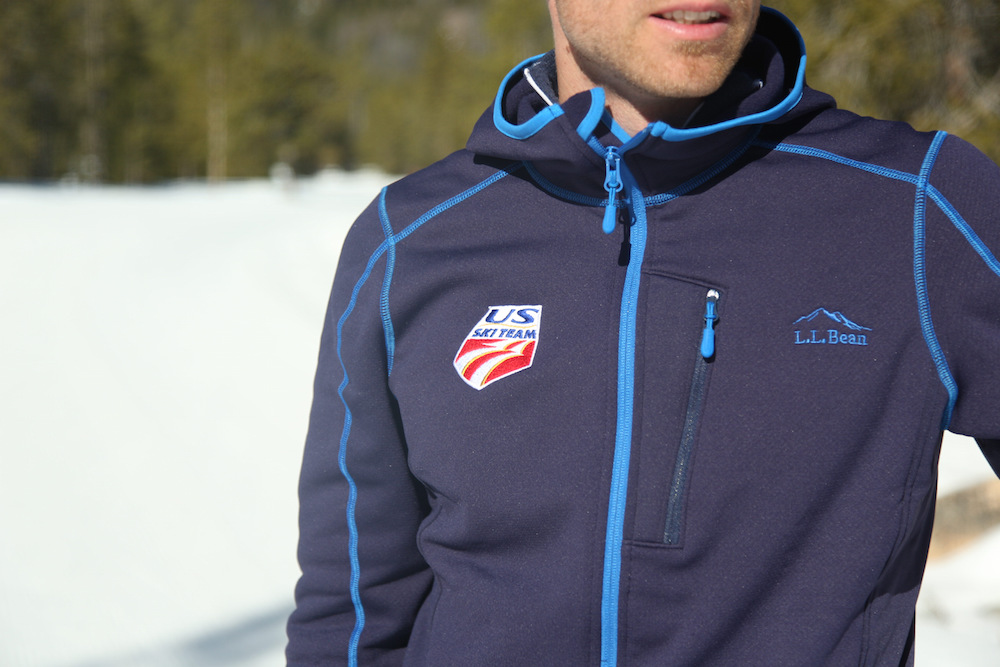
    L.L. Bean and Craft announced a multi-year partnership with the U.S. Cross Country and Nordic Combined teams on Tuesday, March 31. (Courtesy photo)
    L.L. Bean and Craft announced a multi-year partnership with the U.S. Cross Country and Nordic Combined teams on Tuesday, March 31. (Courtesy photo)

    L.L.Bean and CRAFT to design and develop

    new technical and active outerwear for the

    U.S. Cross Country and Nordic Combined Ski Teams

    FREEPORT, ME. and BEVERLY, MA (March 31, 2015) L.L.Bean, a leading outdoor equipment and apparel designer and merchant and CRAFT Sportswear North America, renowned for its cutting edge technology in world class competition and training wear, today announced a multi-year partnership with the U.S. Cross Country Ski Team and U.S. Nordic Combined Ski Team.

    (Photo: L.L. Bean/Craft)
    (Photo: L.L. Bean/Craft)

    As official supplier to the U.S. Ski Team, L.L.Bean will provide insulated outerwear and rainwear, as well as casual products and hats. CRAFT will develop customized World Cup and Olympic race suits and performance jackets and pants. Both companies will share responsibility for summer training products and base layers.

    “We are absolutely thrilled and honored to be an official sponsor of the U.S. Ski Team,” says Eric Schenker, CEO of CRAFT Sportswear North America. “It fires me up to think that Team USA will now join Sweden and other top national teams in representing the CRAFT Sportswear brand on the World Cup and Olympic stage. This confirms that we are producing the world’s most technical and functional apparel and will continue to grow and reinforce this by working closely with these amazing athletes and L.L.Bean.”

    The U.S Nordic Ski Team has historically posted strong performances on World Cup and World Championship circuits. Caitlin Gregg and Jessie Diggins took home silver and bronze medals in the 10K freestyle at this year’s FIS Nordic Ski World Championships in Falun, Sweden. Nordic combined skier Bryan Fletcher scored a personal best at Falun 2015, finishing fifth in the large hill event. Several of the athletes have multiple World Cup podiums, World Championship medals and Olympic medals, including Olympic Champion Billy Demong and 13-time World Cup winner Kikkan Randall.

    (Photo: L.L. Bean/Craft)
    (Photo: L.L. Bean/Craft)

    L.L.Bean has been partnering with Randall, the most decorated cross country skier in U.S. history, for the past two years. “At the urging of Kikkan, the U.S. Ski Team reached out to L.L.Bean to further this partnership with the entire team,” said Steve Fuller, L.L.Bean Chief Marketing Officer. “This is great recognition of our quality outdoor products as well as our mission to get more kids and families outdoors and active.”

    “It’s been great working with L.L.Bean and their development team,” said Randall. “They’ve been really responsive to feedback on products from athletes. Product performance and design is an important aspect of our sport, so we’re lucky to have such great products available through L.L.Bean.”

    “When given the chance to partner on this sponsorship with L.L.Bean, the decision was easy,” Schenker said.CRAFT and L.L.Bean have worked together for over a decade and this will only strengthen that bond. Cross country skiing is in the DNA of our brands and together we will be able to support the athletes with the best possible products from every category.”

    The partnership between L.L.Bean, CRAFT and the U.S. Ski Team will continue through the 2018 Olympic season.

    The combination of the two iconic companies is ideal for the cross country team,” said U.S. Ski Team head cross country coach Chris Grover. “An important part of the athletes’ success on the track depends on the performance of their uniform. With L.L.Bean and CRAFT, we get the experience, the know-how, and the high-end performance that we need to make sure the athletes can ski to their potential. We have big goals in place for Pyeongchang 2018 and L.L.Bean and CRAFT will be important partners in helping us achieve those goals.”

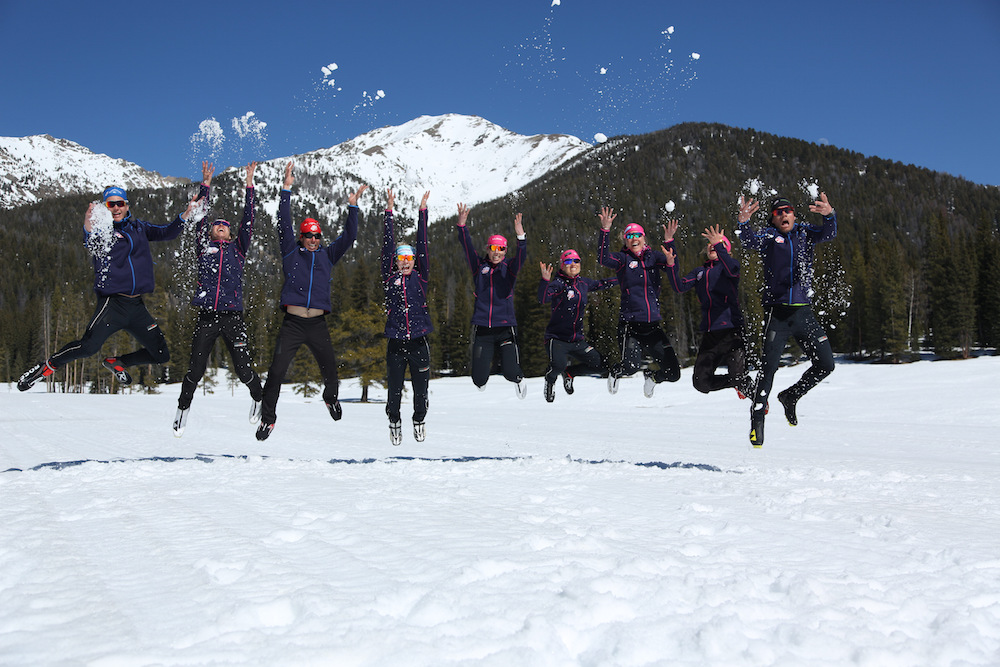
    L.L. Bean and Craft announced a multi-year partnership with the U.S. Cross Country and Nordic Combined teams on Tuesday, March 31. (Courtesy photo)
    L.L. Bean and Craft announced a multi-year partnership with the U.S. Cross Country and Nordic Combined teams on Tuesday, March 31. (Courtesy photo)

    About L.L.Bean, Inc.

    L.L.Bean, Inc. is a leading multi-channel merchant of quality outdoor gear and apparel.  Founded in 1912 by Leon Leonwood Bean, the company began as a one-room operation selling a single product, the Maine Hunting Shoe. While its business has grown substantially, the company remains committed to the same honest principles upon which it was built – a focus on the customer, continuous product improvement and innovation, respect for people, preservation of the natural environment and a 100% satisfaction guarantee. L.L.Bean products are rigorously tested, guaranteed to last and always shipped free. The 220,000 sq. ft. Flagship campus of stores in Freeport, Maine is open 24 hours a day, 365 days a year and welcomes more than three million visitors each year. L.L.Bean can be found worldwide at llbean.com. Join L.L.Bean on Facebook, Twitter and YouTube.

    About CRAFT 

    CRAFT is the pioneer of functional apparel for serious athletes. Since 1977 CRAFT has devoted itself to developing innovative clothing built to withstand extreme weather in all conditions. CRAFT works closely with its many sponsored athletes and national teams, and focuses on designing the highest performance gear. The brand’s foundation is its authentic understanding and love for the sporting culture, reflected in its strong involvement in cross-country skiing, biking, running and alpine skiing. Constantly working on optimizing construction technologies and innovative materials, CRAFT sportswear is the ideal training and competition gear for all activities year-round. For more information on CRAFT in North America, visit www.craftsports.us.

    About U.S. Ski Team

    The U.S. Ski Team, as part of the U.S. Ski and Snowboard Association (USSA), develops and maintains teams of world-class athletes for national and international competition, including the Olympic Winter Games. The U.S. Ski Team selects teams in all sports for major events such as the Olympics and World Championships as well as annual teams in many Olympic disciplines. The U.S. Ski Team coordinates nationwide development and elite programs for all competitive skiing sports while maintaining a strong adherence to core values. For more information, visit http://usskiteam.com/nordic

  • Lynch Contemporary: “I Don’t Know What I Would Have Done”

    As Kerry Lynch’s career was ascending, Walter Malmquist’s career was peaking. Graduating from New Hampshire’s Holderness School, he joined the U.S. nordic combined team in 1974, retiring at the end of the 1980-1981 season. Competing in the 1976 and 1980 Winter Olympics, his best finish was 12th the 15 k nordic combined event in the 1980 Games, in Lake Placid. Today, Malmquist is a volunteer coach at the Holderness School, Proctor Academy, and Andover Outing Club. He spoke with FasterSkier about Lynch, and the nordic combined culture of the late 70’s and early 80’s.

    FasterSkier: You were Kerry Lynch’s teammate for a couple of years, and at least one Olympics?  1980?

    Walter Malmquist: I knew Kerry; I met him in 1978. He was coming on to the scene when I was having the best part of my career.

    When I was a competitor, not many people skied past their college careers. Kerry’s ambition…Kerry was different. He was a person who wanted to be among the best in the world. That was his goal; that was his focus.

    A lot of us only thought about skiing while we could afford to do so, while we were in college, or living at home with our parents, younger than 18, maybe going until 22 to 24 years old. But Kerry knew he was going to [compete] past college age. That made him unique in that time. Maybe [Bill] Koch is an example of another who pursued his career after college.

    Kerry was the first American to pursue the sport as the Europeans did. And the results showed…it was clear to me that Kerry was setting goals to pursue international results until he was in his mid-20s. That enabled him to set up a training program and a competitive program that was a much longer time horizon, and that enabled him to do things that other people didn’t pursue, because they weren’t committed as Kerry was from an early point in their career.

    FS: What was the culture of the U.S. nordic combined program like back then?

    WM: Survival by tooth and nail. Every year, in the mid 70’s, there might be two or three competitors named to the elite team that traveled in Europe for a month or two, came back for national championships, and went back to Europe for a month or two.

    Back then, it was a four- or five-month competitive season, and now it’s year-round…because of summer jumping facilities and summer cross-country training equipment. In those days, throughout the mid 70’s to 1980, there wasn’t very much funding for coaches’ expenses, competitors’ travel expenses, things that were quite expensive as they are…even today. It was a group of individuals that were committed to taking their ability to an international level from a national level. The bottom line is, if you were training on an international level, [you] didn’t know from year to year if there was going to be a nordic combined team.

    We never knew if there would be a one-person or a three-person team named to the Olympics, which was really—and still is—the opportunity for Americans to show their ability at international competitions.

    In the early 80’s, Gary Crawford, Kerry Lynch, and a group of people in Steamboat Springs and Winter Park [CO] got together with coach Steve Gaskill, and they put together a funded team. Those guys had the support of their communities. They were so committed. People believed in not only their talent, but they believed in their commitment.

    They had a real team that had a jumping coach, Jeff Hastings, and a cross-country coach, Doug Peterson. Both [were] former international-caliber competitors who looked at every aspect of the competition, to provide those competitors their…advantages, and to improve on their weaknesses to do the best that they could.

    Where Kerry had the right personality and the right commitment to improve his ability, his talent….His performances improved year after year after year. He kept taking it to the next level. Because he believed in the program, and the people who were helping him out.

    FS: When you were a teammate with Kerry, was he driven, or was he laid back? Was he a team leader?

    WM: He was extremely driven. He wanted to be the best, from day one. Number two:  he was a leader, but he respected people who were older than him, and they respected him, and that was a smart way to be integrated into [the team].

    Everybody liked Kerry. So while he was driven, he was respectful, therefore, he was relaxed and at ease, and therefore he appeared laid-back, even though he was intense.

    Kerry was the kind of guy who loved skiing so much, he never had a bad day. Even when he had a poorer performance than he and other people expected, he would smile, give an explanation for what happened, smile, shake your hand, and say, “Let’s go ski.  Let’s go have some fun. Let’s move on. I’m done with that.”

    FS: Was there ever any sense of ambivalence about doping in the [ski] community back then?

    WM: Great question. It was something that we never thought about. It wasn’t a tool that we considered, because it was on nobody’s radar in the early- to mid-70’s. The late 70’s, or early 80’s, when I was competing. I know there was the blood doping thing with Kerry. In cross-country skiing, there was a lady from Finland named Marja-Liisa Hämäläinen [She later married Harri Kirvesniemi, who tested positive for performance enhancing drugs at the 2001 World Championships in Lahti, Finland.], and her nickname became Marja-Liisa Hemoglobin. She was a multi-time world champion and Olympic champion. And in the 80’s, people were starting to talk about different feeds—actually, as early as 1976 [Olympics] in Innsbruck, at the cross-country events. People were thinking about putting coke syrup in their feeds that would increase their sugar content, that would increase your body’s access to material that you could burn for energy very quickly.

    You know, that kind of stuff in nordic combined, because it was a 15-kilometer event, it really didn’t work its way down. That was because I, as a U.S. athlete, was totally naïve.  Our coaches didn’t think about it; we as athletes didn’t think about it. But in the early 80’s, people started opening their eyes. In biking, in foot running…it really became apparent that people were blood doping. And that was part of the sport.

    And my feeling, friendship with Kerry aside…I respect Kerry, and I think that he must have gleaned that it was part of the sport, that everybody else was doing, and that…physically, it wasn’t like steroids, that it altered your body. It was just your blood being added to your blood—so what’s wrong with that?

    I kind of look at that, and…it’s like lifting weights. You’ve got to do what you have to do to be competitive. And if everyone else is going to do it, and no one is testing for it, then it’s part of the game.  And I can totally understand that.

    It was not something that I had to consider, so I didn’t. And it was because I was naïve. If I had been competing in the 80’s, it would have been a very big decision that I would have had to consider, but I didn’t.

    FS: If you look at the 1984 U.S. Olympic cycling team, about a third of those men—and women—blood doped.  [Sports Illustrated, 21 January 1985, “Triumphs Tainted with Blood; ” authors Bjarne Rostaing; Robert Sullivan]

    WM: That shows that there are two sides to that story. While I respect Kerry, he and whoever else was involved with it made a bad decision. And here’s the reason why.

    Because when it comes out and you’re exposed, then it does some very bad things for the public image of the sport. Is that all that goes into the decision? Hell, no. You have to think about what’s fair. And therefore, it becomes a very personal decision. I kind of have to be totally honest with you. I don’t know what I would have done. I would have liked to have thought that I could have been a world-class competitor without doing things that were forbidden by the rules. But I can’t tell you that that’s the decision that I would have made.

    What I will say is that if I could be honest with you, and say that I could make that decision, it’s probably because I wasn’t committed as much as other athletes to being the best in the world. Another caveat:  because [nordic combined] was not something that I was basing my life upon—it was something I did while I went to school; it was something that I did while I was becoming an adult—it wasn’t something that defined me. It wasn’t something that I did with professional consideration. It wasn’t something that I was trying to make my mark, for the rest of my life, doing. If I had been more dedicated to making a mark for myself with my skiing career, it would have changed the way that I looked at that decision.

    FS: How do you feel about somebody with this background or history coaching kids that are coming up?

    WM: I’ve thought about that for a long time. If I didn’t know the person, it would take me longer to figure out my answer to that. But because I know Kerry Lynch, I’m totally [comfortable with him] coaching kids. And I would say the same thing about any other athlete that you ask me that question about. If I know a guy or a gal, I’ll tell you, ‘yes, I feel comfortable, because that person has the morals, and the ethics and the principles to be a good junior coach.’

    Kerry Lynch is not celebrating performance; he’s celebrating participation, and moving [athletes] from one level to the next, to best of their abilities. And that’s the kind of coach I want my kids to have.

    But if you ask me about another athlete that took steroids—Kerry’s experience has taught me that it’s the person’s morals, the person’s principles, rather than a one-time event, that help me make an opinion about somebody. So if you ask me, would I want Barry Bonds [coaching]–it’s a different scenario, right? That’s how I’d make the decision.

    Is it clear that I think that Kerry Lynch is someone who should be working with development level skiers? I don’t think you’re going to find someone better than Kerry Lynch. I don’t know how I can be any more clear than that.

     

  • Slow Snow and Tough Course Hampered US NoCo in Lillehammer WC

    Hometown favorite Mikko Kokslien (NOR), who started the cross-country in 16th place, 1 minute and 4 seconds behind Braud Francois (FRA), won by 8.4 seconds over Lamy-Chappuis. Francois, who was first after a jump of 138.5 meters, ended up in 20th place overall. In the final kilometer of the race Kokslien dug into the reserves and beat the French Olympian to earn his first WC victory.

    Kokslien jumped into the Norwegian national spotlight when he skied into second place in the World Cup opener in Finland last weekend, only narrowly beaten by Felix Gottwald (AUT). Lamy-Chappuis started the cross-country in third place, 18 seconds behind Francois, after a jump of 137 meters. Gottwald started in 32nd place, 1:50 behind.

    Brett Camerota jumped the longest of the Americans, 126 meters, and started in 22nd place, 1:20 behind Francois. Bryan Fletcher jumped 119.5 meters and started in 35th place, 2:11 behind. Taylor Fletcher was 44th after the jumping (118.5 meters) and 2:30 behind, while Bill Demong (111 meters) started 3:20 behind. Except for Demong, who advanced from 53th to 45th over the 10K course, all had a tough time on the course and dropped spots in the overall.

    Bryan Fletcher, who delivered his career best World Cup result in Finland last week when he hauled into 18th place, was not content with Saturday’s effort.

    “Today was not as good as I hoped. The race was tough today. Slow snow and a course with not a ton of rest so it was a very challenging day for myself and for others,” Bryan Fletcher admitted to FasterSkier, but has already put the race behind him and preparing for the next.

    “I am just focusing on tomorrow. Tomorrow is a new day and we will try again. Hopefully I will have a better go. Oh well,” he said.

    Complete results.

  • Matt Dayton: First Jump at Age 19, Olympics at 25

    Matt Dayton: First Jump at Age 19, Olympics at 25

    Ski jumpers don’t usually begin their careers at age 25. Nor do they progress from their first-ever jump all the way up to an Olympic-sized 90-meter hill in the course of one year. But that’s exactly what Australian cross-country skier Ben Sim is trying to do.

    There aren’t many athletes out there who have taken an approach like Sim’s and met with much success. But in the U.S., there’s one: Matt Dayton, who took up ski jumping at age 19. After graduating high school, Dayton moved from his home in Breckenridge, Colorado, to the ski jumping hotbed of Steamboat Springs, working his way up to the 90-meter hill in less than a year. Eventually, he raced on the American nordic combined squad that placed fourth in the team event at the 2002 Olympics. We caught up with Dayton to talk about his unique path to the sport, his racing career, and the concussions that helped end it.

    FasterSkier: Can you tell me how you got started in nordic combined?

    Matt Dayton: I grew up next door to Pat Ahern, in Breckenridge, who was on the [1984] Sarajevo Olympic team for nordic combined. I grew up watching him do the ski jumping, and it looked like something that I wanted to do. But we didn’t have a jump in our area—the closest one was Steamboat [Springs]. So I kind of put that off, and after graduating high school, I decided that it was something that I really wanted to give a try. So, I moved out to Steamboat and started taking classes out there at the CMC [Colorado Mountain College].

    I went ahead and enrolled in their winter sports club program under Todd Wilson and Gary Crawford, and just got started doing the landing hill, getting used to the equipment. They built a little bump jump for me, and I just went off that for a while, and then progressed up to the 30-meter jump. It was interesting, because I was 19 years old, so here I am, standing at the top of the 30-meter jump with a bunch of nine-year-olds, towering over them, and they all probably had a lot less fear than I did.

    I got going on the 30-meter, moved up to the 50-meter after a while, and things progressed really well. By the end of the season I was going off the big [90-meter] hill. I just took to it really well.

    FS: You were already a fairly good cross-country skier at that point, right?

    MD: Yeah—you know, I did pretty well on the Junior National level, and of course on the state racing level, and stuff like that. I hadn’t gotten into any development team, as far as cross-country goes, or anything like that. But I had good results on the junior standings.

    FS: So, what was your approach like at that point? You just thought it looked like fun, and you wanted to see how far you could take it?

    MD: I didn’t really look at it so much as a means to an end, I don’t think. Like a lot of kids growing up, I had that Olympic dream, and that was certainly something that I wanted to do, but the jumping to me just looked like a lot of fun. More than anything, I just wanted to ski jump. And then from there, I was progressing well at the jumping; I was a faster cross-country skier than most of the junior skiers at that time—of course, I was older.

    Matt Dayton trained with Americans Billy Demong and Johnny Spillane.

    Johnny Spillane, Bill Demong, and Carl Van Loan—there was a good handful of junior athletes that were nordic combined skiers. They were leaps and bounds ahead of me in the jumping. But I was a lot faster in the cross-country skiing, and so I think they saw my potential as a jumper, but they also saw me as somebody that maybe could help bring the level of the group up in cross-country. They brought me onto what was basically a junior-development type team—for lack of a better name, [Coach] Tom Steitz called us “the Blob.” So, the Blob started, and I think there were six or seven of us junior skiers, and that group of guys, for the most part, became the U.S. Nordic Combined Team.

    FS: Were the coaches open to the idea of you joining the program? Or were they pretty skeptical that you could actually do much, starting at your age?

    MD: People were open to the idea. Nobody discouraged me. I think that most people probably thought that it’s kind of silly to start that late—certainly, very untraditional to go about it that route. But despite what they might have felt on the inside, I was always really encouraged. All the coaches at the winter sports club—they were really encouraging to me, and it was cool to get to surprise them by doing well at it. But I never heard any negative talk.

    FS: Do you feel like you have some specific qualities that allowed you to make the progression more quickly than most people?

    MD: I always grew up loving to catch air. I loved jumping on skis. And I think that natural desire helped play a role. And the no-fear—well, I wouldn’t say no-fear attitude—but the less-fear-than-healthy attitude probably helped out some. I was just really excited about the jumping—I spent a lot of extra time on my own trying to do the technique drills that they were teaching me. That definitely helped, as well.

    FS: Having talked with Ben, it sounds like that’s the hard part—jumping with proper technique, rather than just throwing yourself down the hill. Did you ever feel like you got ahead of yourself, in terms of the size of the hill being appropriate for your level of technique?

    MD: You know, I had my fair share of falls. There was no question about that. So, in that sense, yeah—I probably in some ways got ahead of myself. I guess it would be some of that back-up instinct that you need to rely on if you get in a tricky situation—maybe it wasn’t as honed in as kids that had been jumping since they were nine years old.

    FS: So, can you talk about the way that your career unfolded? You had some results on the World Cup, and you made it to the 2002 Olympics?

    MD: I was 18th in the individual, and then I was fourth in the team event. And then, my best World Cup finish was fifth.

    FS: Did you finish your career feeling like, ‘man, I wished I’d started jumping when I was ten?’ Or did you feel like you got to the point where it wasn’t holding you back any more?

    MD: No, I definitely think that I would have benefited from starting earlier. In most cases, on the World Cup circuit, I was skiing from the back part of the pack. [In nordic combined competitions, the jumping round is held first, and it dictates the order for the cross-country ski race that follows.] I think my best jumping results, I was into the low teens or mid-teens. I think I was like 16th after the jumping when I skied to fifth in [a World Cup in] Steamboat, and I think that was probably my best jumping result. Part of that was the grace of God gave me some good air going down the hill, you know? It was just one of those magical days, where everything just came together for me. Had I been able to have a little better position starting after the jumping in the cross-country races, I think that I could have been able to ski into the top-10 on a consistent basis. But when you’re starting three minutes, four minutes back, it’s very difficult. So, I think that would have behooved me quite a bit to start younger.

    FS: But your stopping point wasn’t because of your age, was it? You probably could have kept racing if you had wanted to, right?

    MD: Yeah, I definitely could have. There were a few factors that played into that. Probably one of the largest factors was that I had suffered more than my fair share of concussions over my jumping career. Like I was telling you earlier, you get into difficult situations, or unexpected things happen, and a lot of those guys who have started earlier have the instinct to fall back on. Whereas a guy like Johnny Spillane—I never saw him fall. He hardly ever fell. I didn’t fall a lot, but I did fall some, and when you’re going really fast and you catch an edge, or whatever, things happen really quickly. I had some concussions, the worst of which [was when] I had two in the course of four days in November leading up to the Olympics. And that took me out of jumping for an entire month, and almost a full World Cup period.

    So, basically, having those concussions—and the risk that having more would cause long-term, damaging effects—that was something that was considered, as far as my family. I was engaged at the time, so that also played a factor. And being on the road a lot—you’re constantly traveling, you’re constantly gone from family. I was ready to just get a change of pace, get on with my education, start working towards a career.

    FS: If you had decided to continue on for a few more years, do you think you could have gotten your jumping to the point where you were towards the top of the field? If you were able to get fifth in a World Cup, it must not have been holding you back too much.

    MD: I definitely think about where it might have gone, and what I could’ve done with it—and there’s just no telling. Jumping is such an interesting beast: There’s guys that just never seem to get past a certain point, and then there’s guys that will be hitting that glass ceiling for so long, and all of a sudden they’ll break through, and they’re number one. So, there’s really no telling what might have happened. It could have gone in any direction, really.

    FS: What do you do now?

    MD: My family and I run nordic centers and snowshoe centers in Breckenridge and Frisco, Colorado. We’ve got the trail systems there, and we do lessons and rentals and equipment, and all that.

    FS: Do you still jump?

    MD: No, I haven’t jumped since March, 2002. I’ve had dreams of putting ’em back on and getting back up there. And some people do—I know some people that do later in life—but I don’t know if I ever will. Maybe a small hill.

    FS: One last question: Do you have any advice for Ben Sim, having blazed a similar path to the one that he’s setting out on?

    MD: Two things: flexibility and repetition. Just repeating any of the dryland training, going through the motions just over and over and over again, to get your body to learn that motion so that when you are on the hill, your body will do it. Those would be, probably, the two main things that seemed to help me.

  • Camerota Ninth in Tight Finish

    OBERTSDORF, Germany (Aug. 8) – A pair of brothers represented the U.S. Nordic Combined Team on Sunday in the final Grand Prix staged in Obertsdorf. Brett Camerota (Park City, UT) slid inside the top-10 for the first time, finishing first for the U.S., while Germany’s Johannes Rydzek won the competition.

    The nordic combined competition was tight, with the top nine men separated by 20 seconds as they pushed across the finish line in the cross country portion. Rydzek, who finished second Saturday, picked up his first Grand Prix win of the 2010-11 season with a time of 25:47.90, almost 12 seconds ahead of second place finisher Francois Braud of France.

    The fight for second place was fierce with places second through seventh finishing within a second of each other. Braud crossed the line first in 25:59.80, one-tenth ahead of third place’s Janne Rynnaenen of Finland, who shared the same time as Germany’s Eric Frenzel in fourth.

    “It was another solid day. Both Eric and Brett [Camerota] (Park City, UT) jumped very well and were ninth and 10th after jumping,” said U.S. Nordic Combined Head Coach Dave Jarrett. “Brett skiied a solid race and was looking good the whole time. It was his first ever top-10, which is awesome.”

    Brett Camerota finished in ninth, clocking in at 26:07.40. Brett Camerota was the top U.S. competitor, ending the race less than 20 seconds behind Rydzek and around seven seconds out of third.

    Bryan Fletcher (Steamboat Springs, CO) scored another set of points finishing within the top-30 in 23rd. Taylor Fletcher (Steamboat Springs, CO), who had the fourth fastest cross country time, and Eric Camerota finished respectively in 31st and 48th.

    “We are psyched and moving forward,” said Jarrett.

    The summer Grand Prix series will continue Friday and Saturday, Aug. 13-14 in Oberwiesenthal, Germany.

    OFFICIAL RESULTS
    FIS Grand Prix
    Obertsfdorf, Germany – August, 8, 2010
    Nordic Combined

    1. Johannes Rydzek, Germany, 25:47.90
    2. Francois Braud, France, 25:59.80
    3. Janne Rynnaenen, Finland, 25:59.90
    4. Eric Frenzel, Germany, 25:59.90
    5. Tomaz Druml, Austria, 26:00.30

    9. Brett Camerota, Park City, UT, 26:07.40
    23. Bryan Fletcher, Steamboat Springs, CO, 27.11.50
    31. Taylor Fletcher, Steamboat Springs, CO, 27:41.40
    48. Eric Camerota, Park City, UT, 29:38.20

    Source: USSA