Tag: U.S. Nordic Combined

  • NoCo ‘Adrenaline Junkie’ Since Age 6, Bryan Fletcher Retires

    American Bryan Fletcher after jumping to 18th on the 109-meter normal hill at the 2018 Olympics in PyeongChang, South Korea. He went on to finish 17th in the 10 k later in the day. (Photo: FlyingPointRoad)

    At age 31, Bryan Fletcher estimates he’s dedicated 25 years to the sport of nordic combined. He has been a U.S. national team member for the past 11 years and maintains that first time he flew off a jump on skis occurred at the ripe age of 4. Before that, and before his first steps, Fletcher’s exposure to skiing came from the viewpoint of a child carrier on his father’s back.

    For the first time since his initial national-team naming in 2006, Fletcher’s full-time work will no longer revolve around nordic combined. As of this spring, the U.S. Nordic Combined veteran has retired from World Cup competition, as have a few other internationally notable nordic-combined skiers.

    For any athlete who has devoted as much time as Fletcher, retirement rarely means complete severance from the sport. From the onset of his career, nordic combined (NoCo) served as more than just an athletic pursuit for Fletcher. It was also in a way, a lifeline.

    ***
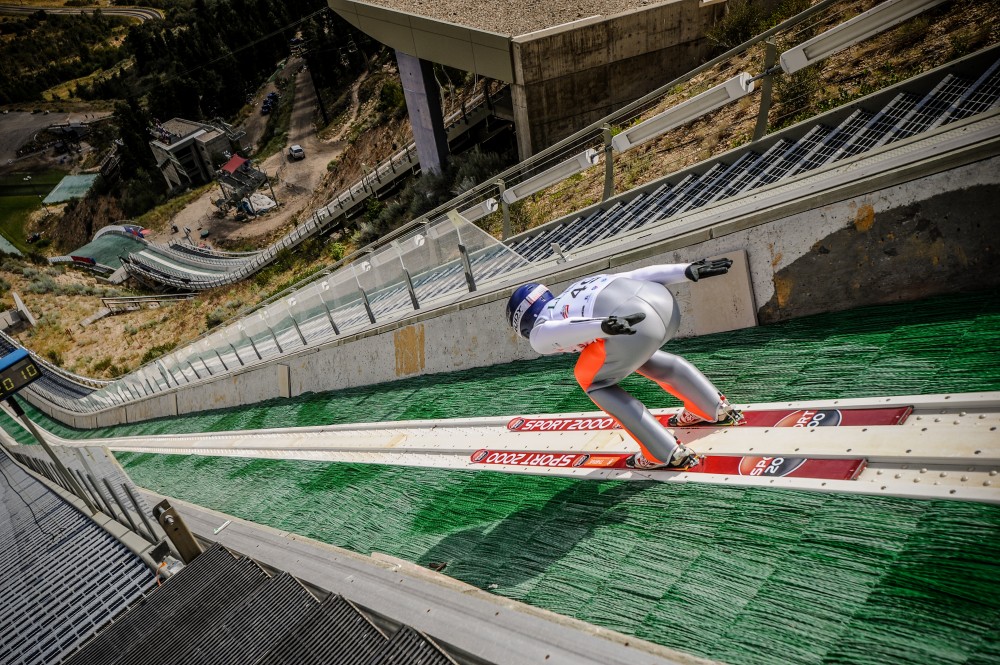
    Bryan Fletcher (U.S. Nordic Combined) at the 2016 U.S. Ski Jumping and Nordic Combined Large Hill Championships in Park City, Utah. (Photo: USSA/Tyler Tate/T Squared Action Sports)

    When he was 6 years old, Fletcher made a special request to his parents. At the time, he was a self-proscribed “adrenaline-junkie kid” living in Steamboat Springs, Colorado — a well-known ski town that is also home to the country’s historical ski jumping venue, Howelsen Hill. Fletcher had heard that his hometown was hosting a “learn-to-ski-jump day” for kids his age.

    Naturally, he wanted to attend.

    But even if Fletcher’s 6-year-old self self showed a fearless gall and a desire to jump, his parents had other reasons to feel nervous about signing him up. His health. Three years earlier, he had been diagnosed with acute lymphoblastic leukemia (ALL)-

    A type of cancer in which the body’s bone marrow overproduces lymphocytes (a type of white blood cell), ALL’s symptoms can range from pain in the bones and joints to fatigue and fever. To treat his condition, Fletcher completed regular chemotherapy sessions three hours away in Denver, Colorado. Some sessions left him without hair.

    “I think it’s very easy for young kids, especially going through cancer, to be pretty down in the dumps and not really get to feel like they’re a normal kid,” Fletcher told FasterSkier on the phone earlier this month. “I don’t know how or why, but I guess I begged my parents enough to sign me up for that learn-to-ski-jump day.”

    With some persuasion, he convinced his parents to let him partake in the event. Instantly, Fletcher was hooked, prompting him to join Steamboat’s youth ski-jumping program. Eventually, he found his way to the cross-country trails and began participating in the youth NoCo program at the Steamboat Springs Winter Sports Club.

    “I think they saw the smile on my face and were like, ‘Holy cow, how are we going to tell him that he can’t do this?’ ” Fletcher recalled of the first time he tried ski jumping.

    NoCo became what Fletcher referred to as the “perfect distraction” from his chemotherapy sessions and childhood cancer. In Denver, he adhered to everything his doctors recommended, especially if it meant getting back to Steamboat, skiing and jumping sooner.

    “I think it was, in hindsight, a great motivator for me,” Fletcher said of his early days in the sport.

    ***
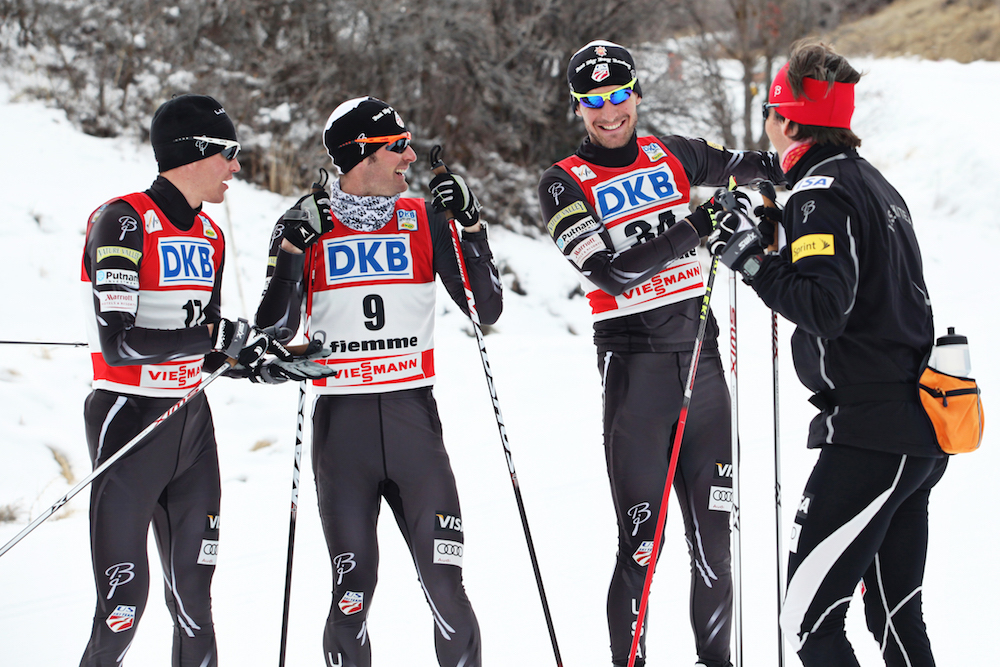
    U.S. Nordic Combined’s 2011/2012 team members (from left to right) Bill Demong, Bryan Fletcher and Taylor Fletcher with head coach Dave Jarrett at Soldier Hollow in Midway, Utah. (Photo: USSA)

    From then on, Nordic Combined became inextricably intertwined with his life, both on the hill and at home. His younger brother, Taylor Fletcher, who was four years younger, also picked up NoCo, and the two shared practices and passion for the sport.

    “Both he and I are fighters, but … he’s always had to work for it a little bit harder than I did,” Taylor said on the phone this month. “That’s what drove him to become as good as he was.”

    When Bryan was a freshman at the Winter Sports School in Park City, Utah, he was selected to be a forejumper for the 2002 Winter Olympics.

    “This honor further solidified my goals and ambitions to become a world-class athlete,”  Bryan wrote on his website. 

    Just two years after his high-school graduation, Bryan earned a spot on the U.S. Ski Team. He was 20 years old. One year later, he qualified for his first World Championships in Sapporo, Japan, racing to 40th in the sprint.

    Six months after his 22nd birthday, Bryan claimed his first Continental Cup podium: third place in an individual large hill/10-kilometer Gundersen at Soldier Hollow near Park City. He competed at his second World Championships in 2009, walking away with two individual top-30 performances (30th in the large hill/10 k and 22nd in the normal hill/10 k).

    By the third competition weekend of the 2010/2011 World Cup season, Bryan had achieved his first individual top 10, placing eighth in the normal hill/10 k in Ramsau, Austria.
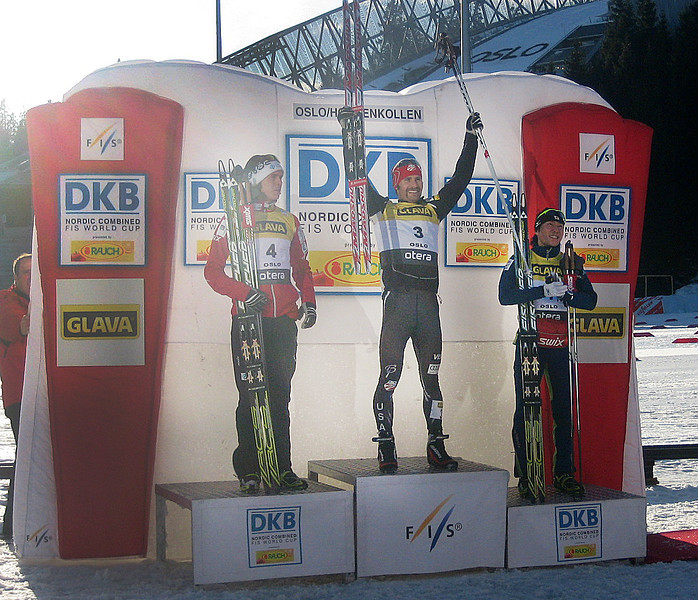
    Bryan Fletcher on the top of the podium in at the 2012 Nordic Combined World Cup in Oslo, Norway. (Photo: Margo Christiansen/USSA)

    But it was the following season, in 2011/2012, that Fletcher really found his form. At the 2012 Holmenkollen World Cup in Oslo, Norway, he became the fifth American to win a Nordic Combined World Cup with a victory in the large hill/10 k. In that season alone, he also finished in the top 10 seven other times.

    “That was kind of a pivotal point,” Fletcher said of his Holmenkollen win. “It was a reinforcing result. … I was like, ‘OK, I do belong here at the top of a World Cup and I have a future in the sport … all the sacrifices and work you’ve put into it are worth it.”

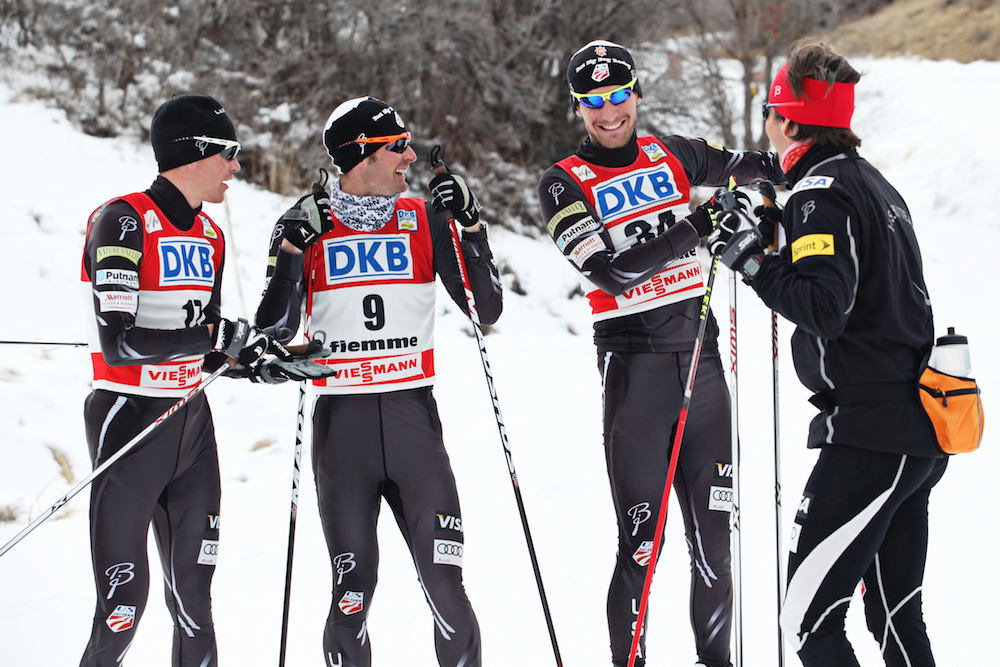
    Bryan once again made the team for 2013 World Championships in Val di Fiemme, Italy, where he and his teammates Billy Demong, Todd Lodwick and his brother Taylor raced to bronze in the 4 x 5 k team event.

    “That was just solid teamwork and great performances by all,” Bryan said. “A happy moment in the career.”
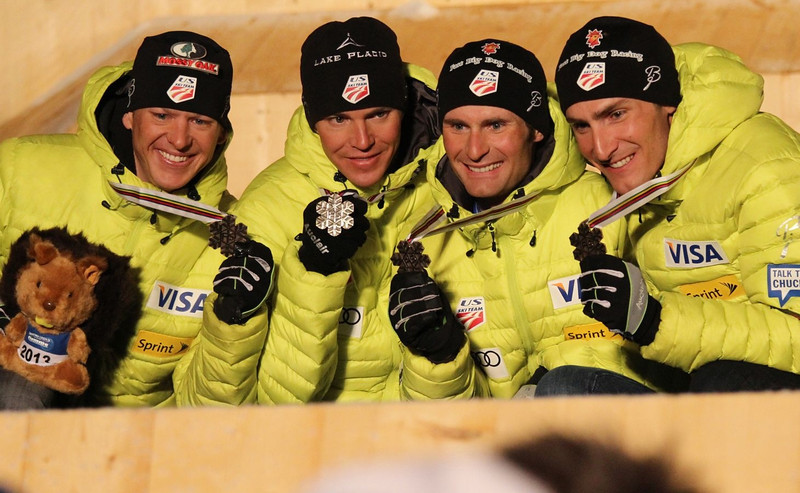
    From left to right: Todd Lodwick, Billy Demong, Bryan Fletcher, and Taylor Fletcher with their bronze medals from the team event at the 2013 Nordic Combined World Championships in Val di Fiemme, Italy. (Photo: Fiemme2013)

    Twelve years after his cameo forerunning appearance at the 2002 Salt Lake Olympics, Bryan found himself at the top of another Olympic jumping hill — this time wearing the Team USA race suit. He had qualified for the 2014 Olympics in Sochi, Russia, where he went on to finish 22nd in the large hill/10 k and 26th in the normal hill/10 k.

    Over the next four years, he would qualify for two more World Championship teams as well as the 2018 Olympics in PyeongChang, South Korea. On top of those achievements, he’d accumulate 10 more individual top-10 World Cup finishes, including two seventh-place results this past winter.

    In PyeongChang, Bryan placed 17th in both individual races: the large hill and normal hill/10 k Gundersen starts.

    “I went into PyeongChang wanting to have a lot of fun, obviously wanting to fight for a medal, and to put my best foot forward,” Bryan explained. “I put together probably some of my best performances on the jump hill I’ve had in several years. Unfortunately my cross-country wasn’t quite as strong as I’d hoped for, but I still felt like I put everything I had in the training going into it.”

    ***

    When it comes to his work, Bryan is all about giving his all, which is one reason he chose to retire from World Cup competitions. It is also one of the reasons why he is not immediately transitioning into coaching, despite his close connection to the sport for so many years.

    inhalers online

    “I am the type of guy who likes to do things 100 percent,” Bryan explained. “The sport is always growing and the level is always rising, and I just felt like I wasn’t going to be able to give the sport all the effort that I needed to give it to be successful [as an athlete]. So I decided that 2018 was the year that I would retire and I would move into finishing my academic career and start a new journey.”
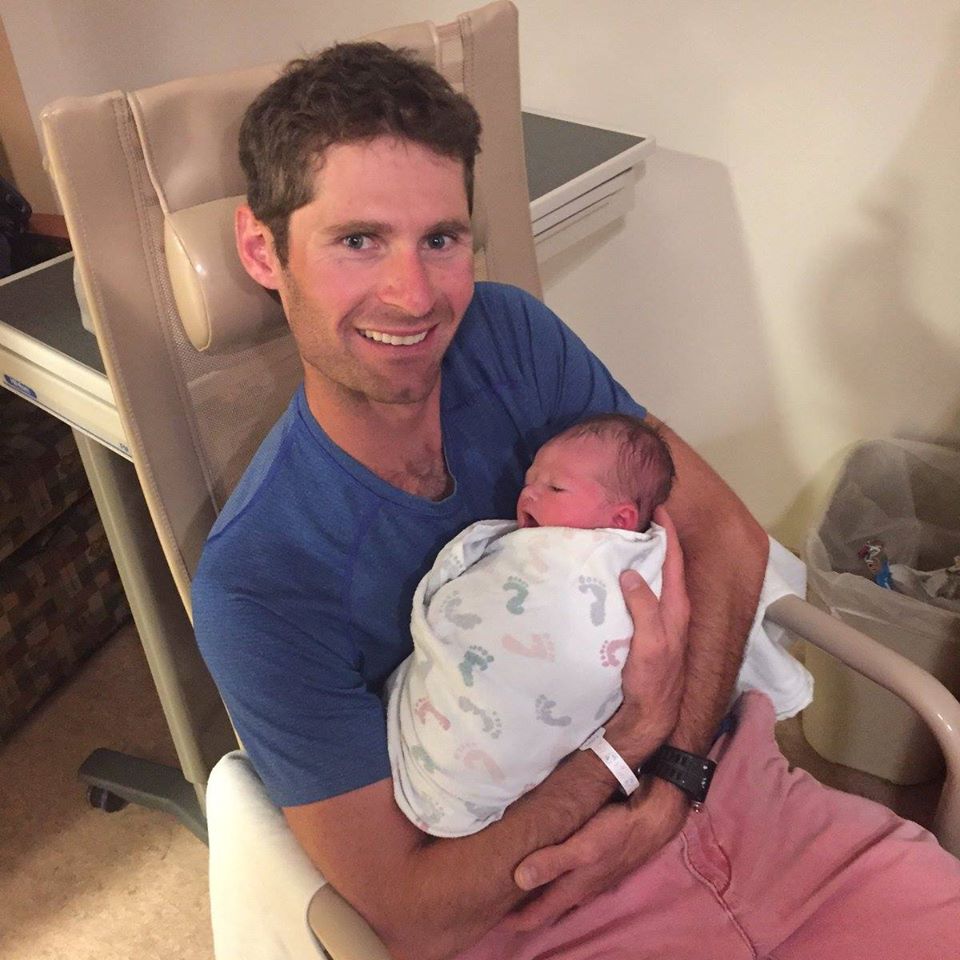
    Bryan Fletcher holding his newborn, Ellery Ardene Fletcher. Fletcher and his wife Nikki welcomed their baby girl on Aug. 29, 2016. (Photo: USSA Nordic)

    His new journey will involve finishing school and spending more time with his wife and 20-month-old daughter, Ellery. Through online courses, he has been working toward a degree in health education and promotion (with an emphasis on health science), which he aims to complete by next year. Graduate school has popped into his mind, as well as the idea of becoming a physician assistant.

    Though coaching may have seemed like the ideal professional avenue for an athlete like Fletcher, the U.S. team veteran sees value in spacing himself from the team before getting too deeply involved.

    “I think that going into coaching is really easy, especially to go straight from your athletic career, but you don’t have that time to expand your knowledge,” he said. “For a number of years, coaching was how I wanted to stay involved in the sport. I’ve since changed that idea.”

    Instead, he hopes to enhance his knowledge of athletics and health science before working with athletes. The idea is to not only allow himself to develop more, but give the current U.S. NoCo team time to develop as well.

    “When you come back to a sport so fresh out of retirement, it’s easy to focus on the same problems that you had as an athlete,” Fletcher explained. “But those issues may not be necessarily what the other athletes are struggling with or what they need to work on.

    inhalers online

    “On our team, we have some athletes that are great jumpers and we also have some athletes that are great cross-country skiers, but we don’t have particularly many of both right now,” he continued. “I think we just need to take some time to let those athletes develop in a new environment. That way you’re not just coaching the strong skiers to be strong skiers and the best jumpers to be the best jumpers, but instead allowing them to find strength in the opposite areas.”

    Though he himself was 20 years old when he joined the team, by the end of his career, most of Fletcher’s teammates were almost a decade younger than him. While the team energy in recent years was one that left him admittedly needing “more naps”, he also sees the younger pool of athletes as an opportunity to foster a new team dynamic for American nordic combined.
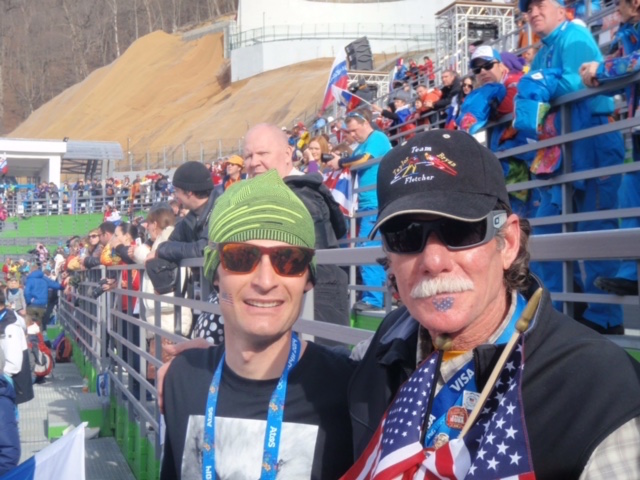
    Bryan Fletcher with his father at the 2014 Winter Olympics in Sochi, Russia: “The biggest lesson I ever learned from my dad was not only how to ski but how to enjoy every single day on skis.”

    “As the younger athletes come up, we have to let them create their own culture and be accommodating of it,” Fletcher said. “I think the way I can have the biggest impact on the team is not by jumping immediately into coaching, but instead taking some time away from the team to broaden my knowledge base and skill sets in different areas. Then several years from now, I can return to the team with a new attitude and new approach and add something different.”

    For the time being, his involvement with NoCo will remain at the administrative level. He was recently elected to Team USA’s Athletes’ Advisory Council and will serve a four-year term on the board of directors.

    Even so, his presence at practice sessions will be missed.

    “It’s going to be weird,” Taylor said of his brother’s departure from the team. “He was always the very level-headed leader.”

    As Taylor, a three-time Olympian, steps into the primary NoCo team-veteran role, Bryan was sage in his advice to those who will continue to hit the trails and the hill.

    “Just have a plan in place, especially when you start to think that you’re heading down that road of retirement,” Bryan said. “I think it’s really easy to kind of get stuck and not know what you want to do, so just make sure that you kind of have some sort of idea, some kind of stepping stone to go forward.”
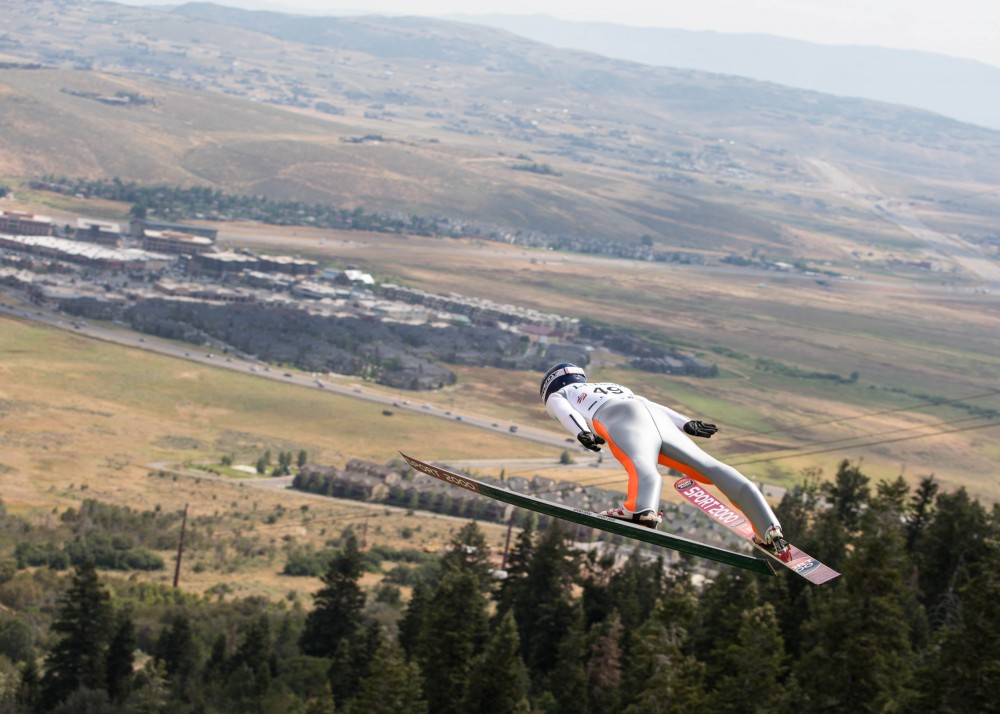
    Bryan Fletcher flying at the 2016 U.S. Ski Jumping Championships at Utah Olympic Park in Park City, Utah. (Photo: USSA/Tyler Tate/T Squared Action Sports)

  • FasterSkier’s Nordic Combined Skier of the Year: Bryan Fletcher

    FasterSkier’s Nordic Combined Skier of the Year: Bryan Fletcher

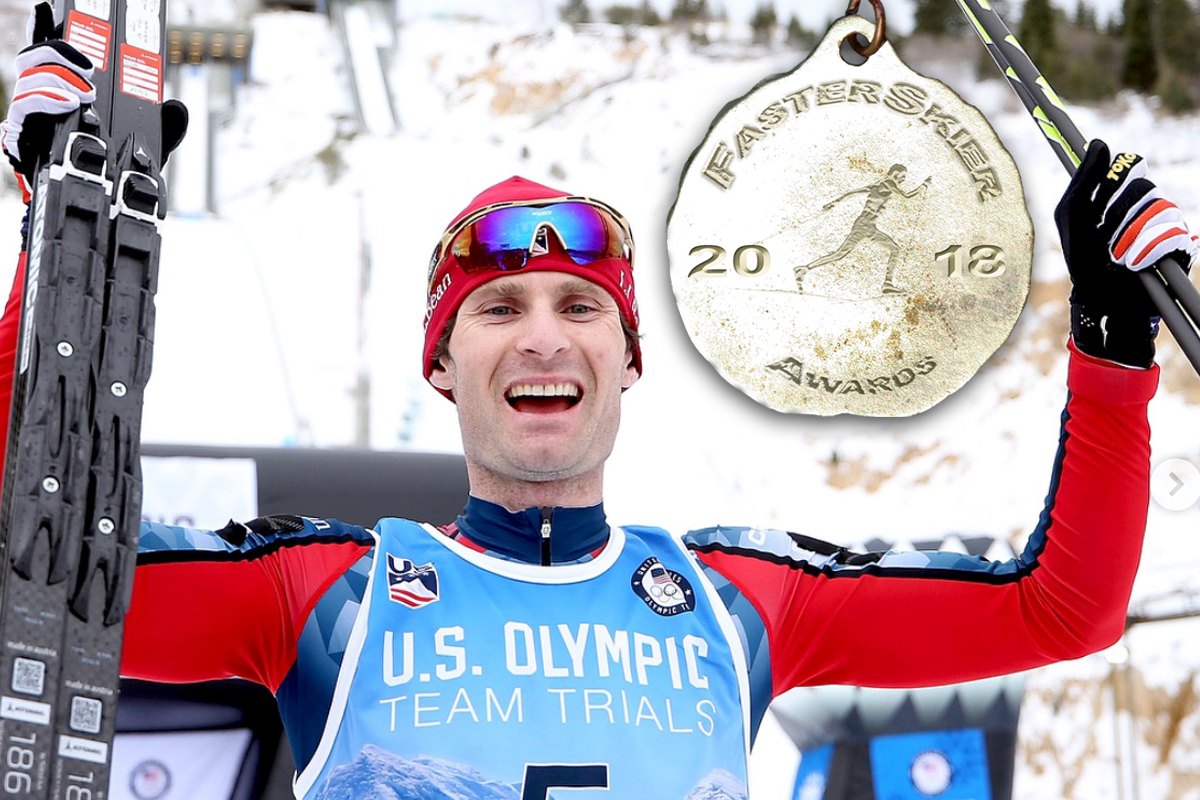
    Bryan Fletcher (U.S. Nordic Combined) is FasterSkier’s 2018 Nordic Combined Skier of the Year. (Photo: US Ski Team)

    With the 2017/2018 season officially in the rearview, FasterSkier is excited to unveil its annual award winners for this past winter. Votes stem from the FS staff, scattered across the U.S., Canada, and Europe, and while not scientific, they are intended to reflect a broader sense of the season in review. This set of honors goes to outstanding North American nordic combined athletes.

    Previous categories: Junior Skiers of the Year | Collegiate Skiers of the Year | Biathletes of the Year| Para-Nordic Skiers of the Year

    ***

    At 31 years old, it’s safe to say U.S. Nordic Combined’s Bryan Fletcher has been a beneficiary of the axiom, “What comes around goes around”. What came around when Fletcher literally jumped and skied onto the scene in 2002 was a cadre of athletes setting the performance bar at a high level. Fletcher followed in the steps of Todd Lodwick, Johnny Spillane, Brett Camerota, and Billy Demong. In his last season as a professional nordic-combined competitor, Fletcher had several standout performances but also allowed himself to bring some of the stability and veteran leadership he learned about years ago to a young U.S. Nordic Combined Team.

    Fletcher was a rock for skiers like 19-year-old Ben Loomis, who earned a bronze at World Juniors. Loomis is one example, but the U.S. team as a whole, trends towards the younger side of twenty. With younger eyes on him as a mentor and athlete, Fletcher navigated performance disappointments and hiccups to score some standout performances on the Nordic Combined World Cup.

    Bryan Fletcher (USA Nordic) jumping to 45th in the Nordic Combined World Cup on Dec. 17 in Ramsau, Austria. In the 10 k that followed, he skied the third-fastest time to finish 14th overall. (Photo: Romina Eggert/USA Nordic Facebook)

    Fletcher entered 12 World Cups, 10 of which were individual races. In only one individual race did he place outside the top 30 (he finished 32nd on Dec. 1 in Val di Fiemme, Italy). Of his remaining individual races, Fletcher was out of the top 20 just one other time (placing 29th on Nov. 26 at the season-opener in Kuusamo, Finland).

    Fletcher’s other eight races were all top 20’s. In Ramsau, Austria, he scored a seventh place. And in his last career World Cup on March 14 in Trondheim, Norway, Fletcher matched his season-best result with another seventh place.

    One can hear any athlete say these weren’t exactly the results they were looking for. That would be true in Fletcher’s case as well. Yet he was more than consistent in terms of keeping himself within striking distance of several podiums. Those opportunities came most often from Fletcher’s skiing rather than his jumping. At season’s end, he was the 42nd-ranked overall jumper on the Nordic Combined World Cup. To prove our point, he was ranked the 15th-best skier. (Overall, he ranked 29th on the World Cup this season.)

    Here are Fletcher’s best cross-country race times (in the 10-kilometer Gundersen starts) of the 2017-2018 World Cup season:

    Nov. 25, Kuusamo, Finland: Fourth fastest time of day

    Dec. 16, Ramsau, Austria: Second fastest time of day

    Dec. 17, Ramsau: Third fastest time of day

    Jan. 14, Val di Fiemme, Italy: Second fastest time of day

    From a domestic perspective, Fletcher proved he’s still the best U.S. nordic combined athlete. During a high-pressure format — the only guaranteed U.S. Nordic Combined Olympic spot was reserved for the winner of U.S. Nordic Combined’s Olympic Trials on Dec. 30 in Park City, Utah — Fletcher found himself in fifth place after the jumping round. A full 1:24 minutes behind the best jumper Ben Loomis. Yet in typical fashion, Fletcher’s podium hunt on skis ended with a first place and a booked trip to PyeongChang for his second Olympic Games. 

    In both individual events in PyeongChang, Fletcher was the best American finisher, placing 17th twice.

    For being the best-performing American nordic combined skier, Fletcher receives the nod for Nordic Combined skier of the year. But don’t forget, Fletcher is the whole package: in the 2017/2018 season, he was a leader, professional role model, and mentor to the young ones chasing his ski tails.

  • Germany Sweeps PyeongChang Large Hill/10 k; Fletcher 17th Once More

    Johannes Rydzek (5) leading his two German teammates, Fabian Rießle (6) and Eric Frenzel, as well as Norway’s Jarl Magnus Riiber toward the finish of the nordic-combined large hill/10 k competition on Tuesday at the 2018 Olympics in PyeongChang, South Korea. They finished in that order, with Germany sweeping the medals. (Photo: FlyingPointRoad)

    FasterSkier would like to thank Fischer Sport USA, Madshus USA, Concept2, Boulder Nordic Sport, and Swix Sport US for their generous support, which made this coverage possible.

    ***

    It was a total team effort on Tuesday for Germany in the second nordic-combined individual event of the 2018 Olympics in PyeongChang, South Korea, with Fabian Rießle, Johannes Rydzek and Eric Frenzel, with the help of Austria’s Wilhelm Denifl, chasing down Japan’s Akito Watabe and Norway’s Jarl Magnus Riiber about 6 kilometers into the 10 k race.

    Earlier on Tuesday, Watabe had put himself in first with the best-ranked jump on PyeongChang’s 142-meter large hill. He started the 10 k Gundersen in first, just 1 second ahead of Riiber, who had jumped to second, just 0.3 points behind Watabe.

    (Riiber had actually jumped farther with a distance of 139 meters, compared to Watabe’s 134-meter jump, and scored identical marks from the judges but lost points for wind compensation.)

    Germany en route to a complete sweep of the podium in the men’s nordic-combined individual large hill/10 k on Tuesday at the 2018 Olympics in PyeongChang, South Korea, with Johannes Rydzek (5) leading Fabian Rießle (6) and Eric Frenzel (4). They went on to place first, second and third, respectively. (Photo: FlyingPointRoad)

    Behind them, Denifl started the 10 k race 16 seconds out of first, Frenzel surged out of the start 24 seconds back, Rydzek 31 seconds behind, and Rießle 34 seconds back.

    While Watabe led Riiber off the front for the first two laps of the four-lap race, the three Germans caught Denifl before lapping through the stadium for the first time at 2.5 k. From there, 16 seconds behind the leaders, the four-man group worked to reel in first and second place and did so by 6 k.

    The lead pack then became six as Riiber and Watabe continued to position themselves up front at the 7.5 k mark.

    On the final lap at the 8.58 k marker, Watabe charged to the front in his move to reclaim first. After taking the lead on an uphill, it wasn’t long after until he found himself skiing with three others alongside him: Riiber, Rydzek and Frenzel.

    Then, Watabe slipped behind Riiber and the group closed in around him. Watabe clipped a ski, apparently with Rießle, who didn’t stumble, but Watabe did and dropped to the back of the pack. For Watabe, that was the end. For Germany, it was the beginning.

    Frenzel led the charge up the final climb with Rydzek and Rießle behind him while Riiber tried to keep pace. Riiber slotted into fourth over the top and the foursome flew down into the stadium, with Rydzek coming out of the draft in first and leading Rießle, Frenzel and Riiber to the finish, respectively.

    They finished in that order, with Rydzek taking gold in 23:52.5 minutes, 0.4 seconds ahead of Rießle in second place and 0.8 seconds ahead of Frenzel in third. Riiber crossed 2.8 seconds back in fourth, and Watabe ended up fifth (+12.5).

    Germany had four in the top seven with Vinzenz Geiger in seventh (+50.1), behind Finland’s Eero Hirvonen in sixth (+22.1).

    “I looked up to the video wall and saw the first three: all Germans,” Geiger recalled in a post-race interview with German broadcaster ARD. “That made me really happy, and of course I can also be happy about my seventh place.”

    Frenzel had previously taken gold and Watabe silver in the first nordic-combined event of the 2018 Olympics, the normal hill/10 k on Feb. 14. Riiber was fourth for the second-straight competition.

    Bryan Fletcher en route to 17th in Tuesday’s large hill/10 k competition, tying his best result at the 2018 Olympics in PyeongChang, South Korea. (Photo: FlyingPointRoad)

    American Bryan Fletcher repeated his result from the normal-hill competition as well, placing 17th on Tuesday, 1:42.9 minutes behind Rydzek in first. Fletcher had started the 10 k 2:04 minutes back in 23rd based on his jump. His teammate Ben Berend started 8 seconds behind him in 24th. Ultimately, Fletcher raced up to 17th with the 10th-fastest course time while Berend slipped to 39th (+4:28.2).

    “The second I was in the air I knew I had a good one,” Berend told FasterSkier after the jumping portion of Tuesday’s competition. “Because when you do it right, you’re just flying, and I was really high and I was pulling away towards the bottom of the hill and so I knew, but I couldn’t feel any wind or anything. I was just so psyched, trying to enjoy every second of it.

    In his first Olympic race, American Ben Berend on his way to 39th in the large hill/10 k competition at the 2018 Olympics in PyeongChang, South Korea. He started the day by jumping to 24th, which he said was his best competition jump of the season. (Photo: FlyingPointRoad)

    “I haven’t had that many good jumps this season so I’ve just been searching for that,” Berend explained. “It’s funny, it’s so easy when you are doing it right and it’s so hard when you’re lost, and so I finally felt like, that might have been my best jump of the season, honestly, so what are the odds of doing that at the Olympics? That’s pretty cool.”

    Tuesday was the 22 year old’s first Olympic competition after he sat out the first individual event because his jumping had been going poorly in training, he said. (Each team can only start four athletes per event. Taylor Fletcher sat out Tuesdsay’s competition.)

    “I definitely was a little nervous for tonight, even though there is no pressure on me,” Berend said. “… Our coach [three-time U.S. Olympic biathlete Jeremy Teela] texted us, he’s actually our cross-county coach, he’s back at home, and he just said, ‘You guys have nothing to lose. Don’t be scared to fail.’ So that’s kind of our mindset here, and it was good; it kind of works for me.”

    American Bryan Fletcher (23) skiing with Norway’s Jørgen Graabak (19) during the cross-country race of Tuesday’s individual large hill/10 k competition at the 2018 Olympics in PyeongChang, South Korea. Fletcher went on to finish 17th while Graabak placed 10th. (Photo: FlyingPointRoad)

    After the race, Bryan Fletcher, who had skied up to 13th by 7.5 k, recalled pulling a chase group for most of the four laps. He ended up 17th, 3.2 seconds shy of 16th place, behind Japan’s Go Yamamoto.

    “I went all in and just tried to make up as much ground as possible,” Fletcher told FasterSkier after. “I was hopeful and optimistic that I’d have the legs at the end. I knew that they were going to come around me with a pretty hard attack, and both of the guys that were with me have great finishing sprints, so I tried to pace myself a little bit, but I also knew that 17th or 10th or whatever you could get up to, it doesn’t really matter unless you’re on the podium so I was really going all in. … Unfortunately it didn’t work out, but I’m happy with how I skied and happy with the performance I had on the course today.”

    American Ben Loomis racing to 40th in the large hill/10 k competition at the 2018 Olympics in PyeongChang, South Korea. (Photo: FlyingPointRoad)

    Just behind Berend, his teammate Ben Loomis finished 40th (+4:38.8), up from 43rd in the jump, and Jasper Good followed in 43rd (+5:50.2), up from 46th.

    “It was kind of tough jumping … [and] hard to start the race at the back, but overall it was a good race by me and I felt pretty good out there,” Loomis said after. “Regardless of how I have and how I continue to do here, there’s a lot to take away and I’m learning a lot about how to better refine my preparations and just stay relaxed out there and just really put my best foot forward.”
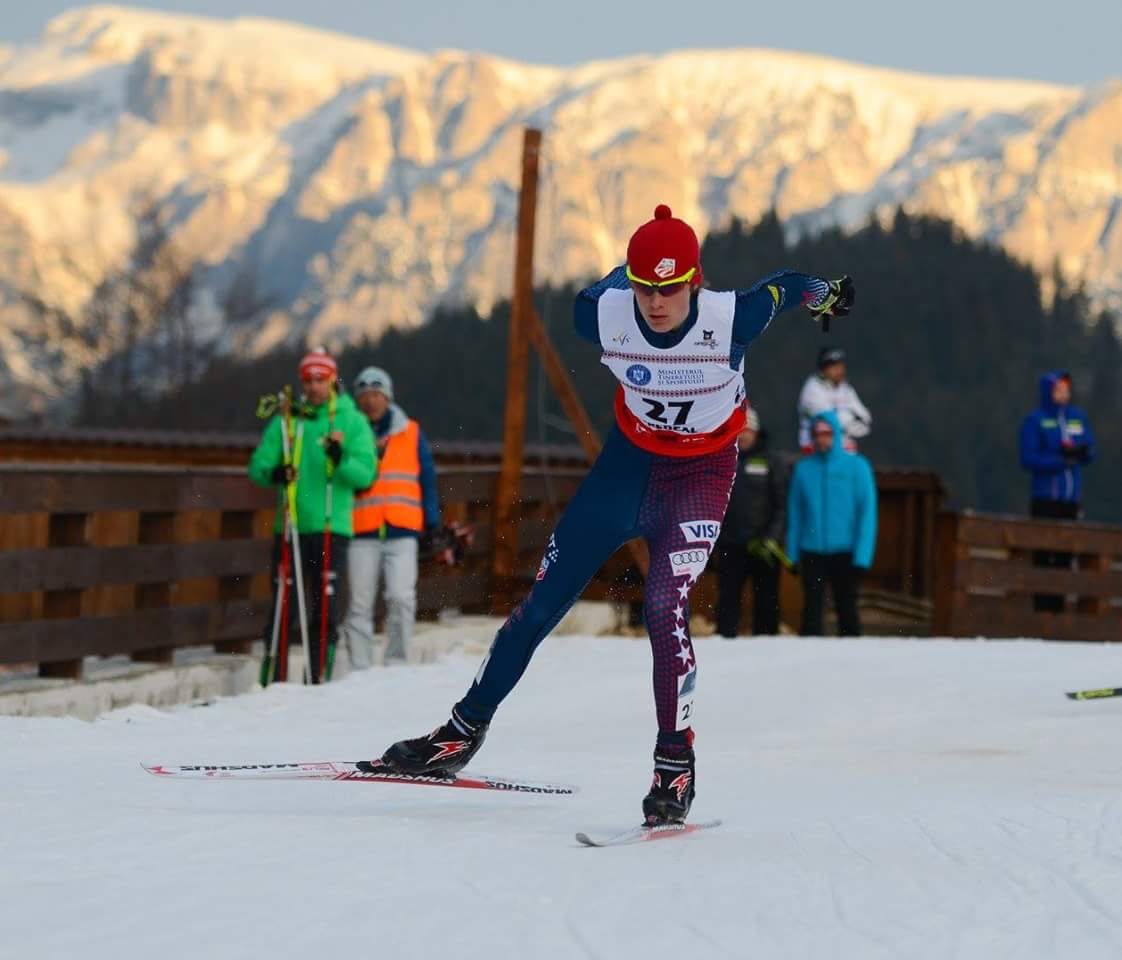
    Nordic combined at the 2018 Games will conclude with the 4 x 5 k team event on Thursday.

    Results: Jumping | Final

    — Jason Albert and Harald Zimmer contributed

    American Jasper Good racing to 43rd in the large hill/10 k competition at the 2018 Olympics in PyeongChang, South Korea. (Photo: FlyingPointRoad)
  • Under 23 Questions: Jared Shumate

    Under 23 Questions: Jared Shumate

    Jared Shumate (Park City Nordic Ski Club) getting some air at 2018 U.S. Nordic Combined Olympic Team Trials in late December at Utah Olympic Park in Park City, Utah. (Photo: U.S. Ski & Snowboard)

    In an effort to showcase the North Americans competing at this week’s International Ski Federation (FIS) 2018 Nordic Combined Junior World Championships in Kandersteg, Switzerland, we asked those qualifying athletes several questions about themselves — actually, we had them fill in the blanks. Here we have 18-year-old Jared Shumate, of the Park City Nordic Ski Club, who’s representing the U.S. at his second Junior Worlds.

    On Thursday, Shumate anchored the U.S. to seventh place in the normal hill/4 x 5 k team event. He previously placed 35th in the individual normal hill/10 k on Tuesday for an individual career best at Junior Worlds.

    ***

    “My full name is Jared Shumate, but you can call me tonight.

    I was born in Atlanta, Georgia, and raised in Park City, Utah, and I learned to ski at Deer Valley Resort.

    I spent the time between U.S. Olympic team trials in Park City and Junior Worlds in Park City mentally preparing myself to get my ass kicked over here in Europe.

    The most tiring workout I did in the last training year to prepare for this was a 4-hour trail run up and down a mountain with lots of boys who ran it way faster than me.

    Jared Shumate (Park City Nordic Ski Club) after finishing a race at the Nordic Combined Continental Cup in Steamboat Springs, Colorado. (Photo: Ben Piepe)

    This is my second time in Switzerland and ninth time racing internationally, and so far it’s been pretty good some days and really bad on others, but I’ve had a blast!

    One difference I’ve noticed between Switzerland and the U.S. is the flags with the crosses on them are not for ski patrol.

    Skiing and racing in the Alps is one of my favorites. Usually racing at altitude is better for me because I’ve lived at over 7,000 feet pretty much my entire life. There are lots of easy-to-climb mountains around where I live.

    One of the things I’m most excited about for Junior Worlds in Kandersteg is the fondue for breakfast, lunch and dinner.

    One race I’m especially targeting there is the 10 k individual nordic combined race.

    I really hope I can chat/make friends with someone from Sweden and ask them if every girl in their country is as beautiful as Stina Nilsson.

    My favorite thing at the breakfast where we are staying is TBD (we’re not in Switzerland yet).

    Fondue is a lot smellier than you think it should be. The cheese here comes in really big blocks. And the chocolate is going to make me overweight.

    If I had a totally free day here and didn’t have to worry about race fitness or training, I’d spend it on a gondola ride with Lara Gut.

    The best way to follow me on social media is on Instagram @jared_shumate.”

  • Under 23 Questions: Ben Loomis

    Under 23 Questions: Ben Loomis

    Ben Loomis (USA Nordic) jumping to 20th in a Continental Cup on Jan. 5 in Klingenthal, Germany. He went on to finish 19th in the 5 k that followed. (Photo: Romina Eggert)

    In an effort to showcase the North Americans competing at next week’s International Ski Federation (FIS) 2018 Nordic Combined Junior World Championships in Kandersteg, Switzerland, we asked those qualifying athletes several questions about themselves — actually, we had them fill in the blanks. Here we have 19-year-old Ben Loomis, of USA Nordic, who’s representing the U.S. at his fourth Junior Worlds.

    Loomis is also headed to his first Olympics in PyeongChang, South Korea, but plans to attend and compete at Junior Worlds “in full force,” Loomis wrote in an email. After his last competition in Kandersteg on Feb. 3, he’ll fly to South Korea on Feb. 6.

    ***

    “My full name is Ben Loomis, but you can call me Sawyer if you know me well.

    I was born and raised in Eau Claire, Wisconsin, and I learned to ski at the Flying Eagles Ski Club. The club or team I currently train with is the US Nordic Combined team in Park City.

    Ben Loomis (USA Nordic) during a training session Dec. 29 in preparation for the U.S. Olympic Trials at the Utah Olympic Park. (Photo: Team USA/Getty Images)

    I spent the time between U.S. Olympic team trials in Park City and Junior Worlds competing in Germany, Italy, and France.

    The hardest workout I did in the last training year to prepare for this was getting my ASS kicked in boot camp by the University of Utah ROTC with the rest of the USA Nordic Team.

    This is my second time in Switzerland and 15th time (I think) racing internationally, and so far it’s been Uber Gucci.

    One difference I’ve noticed between Switzerland and the U.S. is the cows in Switzerland are way louder and Swiss cheese tastes better.

    Skiing and racing in the Alps is amazing. Usually racing at altitude is too slow for me because it’s not my forte, even though there are many mountains around where I live.

    One of the things I’m most excited about for Junior Worlds in Kandersteg is competing on a new hill.

    One race I’m especially targeting there is the women’s nordic combined test event.

    I really hope I can chat with someone from my team and ask them how they slept.

    My favorite thing at the breakfast where we are staying is the black coffee.

    Fondue is DANK. The cheese here is mega DANK. And the chocolate is expensive.

    If I had a totally free day here and didn’t have to worry about race fitness or training, I’d spend it swimming in Lake Geneva.

    The best way to follow me on social media is on Instablam @LenBoomis. “

  • Nordic Nation: Sealing the Olympic Deal with Bryan Fletcher

    Nordic Nation: Sealing the Olympic Deal with Bryan Fletcher

    In this episode of Nordic Nation, we discuss the recent U.S. Nordic Combined Olympic Trials, which were held Dec. 30 in Park City, Utah, with U.S. NoCo’s leading man, Bryan Fletcher. Nerves, pressure, the flying and skiing — those all played a role on Fletcher’s day at Olympic trials. After the jumping portion of the competition, things weren’t so certain for the eventual winner, as Fletcher began the 10-kilometer ski race nearly a minute and a half behind the first starter, Ben Loomis. We connected with Fletcher, a 31-year-old dad, from his home in Heber, Utah, last week on Jan. 3 as he reflected on sealing the Olympic deal.

    Fletcher also discusses the prospects of U.S. Nordic Combined fielding a team of four skiers at the upcoming Olympics in PyeongChang, South Korea. For now, the U.S. is guaranteed two spots. And as Fletcher explains, hope remains for two more athlete spots to open up.

    Trials results: Jumping | Final results

    Note: Since Fletcher’s interview, he and his brother Taylor competed at the first Nordic Combined World Cup of the new year, which took place on Friday, Jan. 12 in Val di Fiemme, Italy. There, Bryan finished 32nd (up from 39th in the jump) and Taylor placed 43rd (up from 49th). Full results here

    (To subscribe to the Nordic Nation podcast channel, download the iTunes app. If you have iTunes, subscribe to Nordic Nation here.)

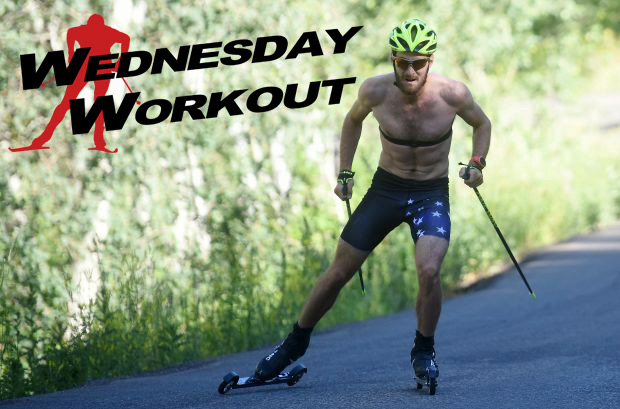
  • Wednesday Workout: Developing an Annual Rollerski Time Trial with USA NoCo

    Wednesday Workout: Developing an Annual Rollerski Time Trial with USA NoCo

    Taylor Fletcher cruising in the 2017 Fish Creek Time Trial in Steamboat Springs, Colo. (Photo: Jasper Good)

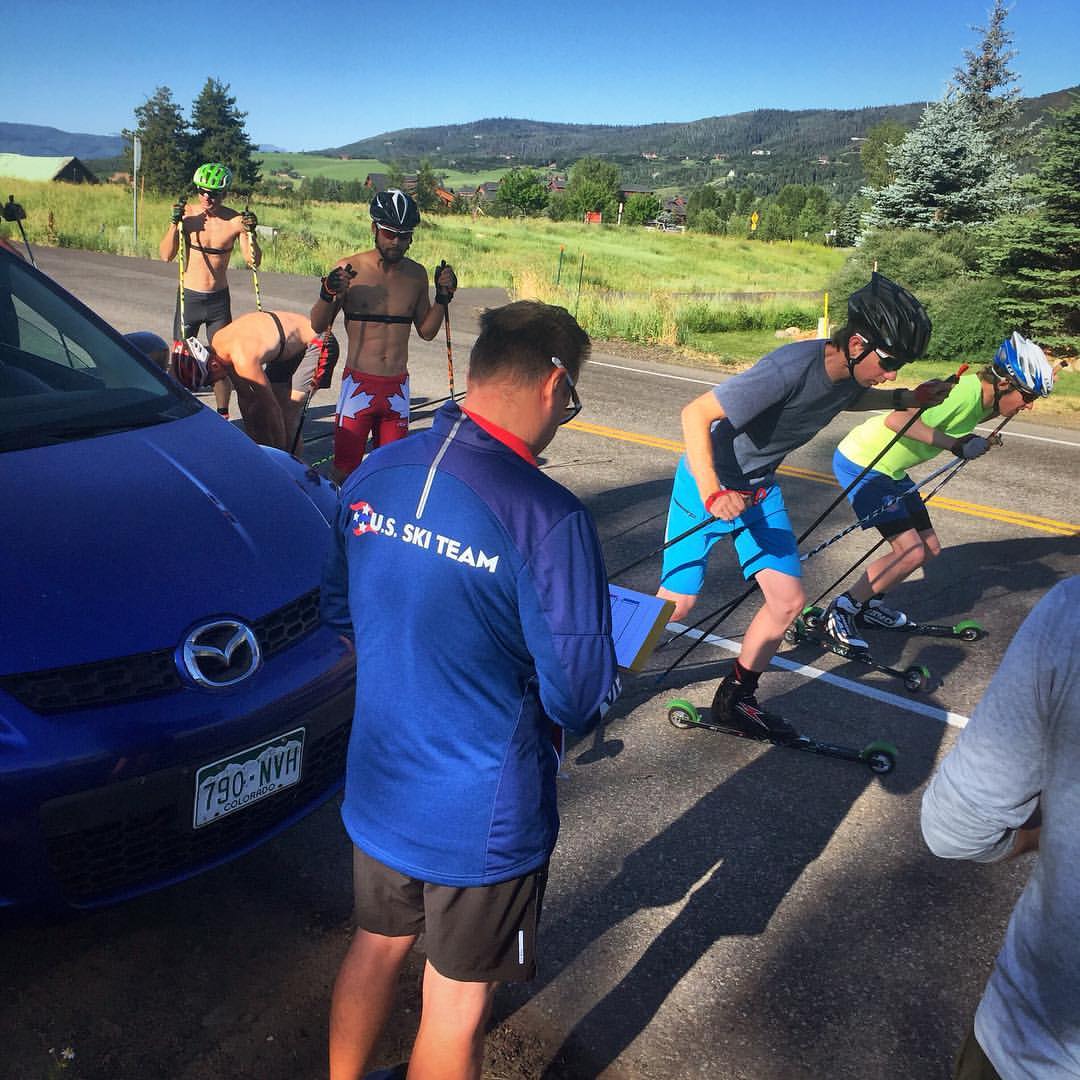
    From late June into early July, U.S. Nordic Combined hosted a major training camp in Steamboat Springs, Colo. Among the sessions was the Fish Creek Time Trial, a skate rollerski race first held in 2007. That year, Johnny Spillane set down the first in a series of course records that would be improved by different athletes in the next decade.

    The time trial is 8 kilometers and gains 885 feet of elevation, starting just south of Steamboat Springs and ending up in the Medicine Bow-Routt National Forest.

    National team member Jasper Good is a Steamboat Springs native and remembers the first time he participated in the now-annual time trial.

    “In 2012 Ben Berend and I miscalculated how long it would take us to get to the start,” he wrote in an email. “We proceeded to show up and were getting yelled at by everyone saying, ‘You’re starting right NOW, GO GO GO!’ Not the best first impression at a time trial with the National Team.”

    A group photo of participants in the 2016 Fish Creek Time Trial, from “young guns” to Olympians. That year, retired gold medalist Billy Demong competed. (Photo: Jasper Good)

    OK, that first start was a snafu, but that’s one of the points of the time trial: getting young racers like Good and Berend were then on the same pavement with the national team veterans and staff. Good is now 21 years old and collected his first Continental Cup top-10 last season, so he’s on his way to being one of those veterans that juniors can measure their progress against.

    “We do the annual Fish Creek Time Trial with everyone from national teams down to young guns,” Good wrote.

    The time trial is a suffer-fest, starting with rolling terrain that must be worked very deliberately, and also featuring a few walls.

    “The first half is a gradual but hard rolling uphill with a lot of V2 gradient, an important part to keep your speed up and use momentum over hills,” Good explained. “About [5.5 k in], you hit the first wall of the race. After the wall there is a false flat with another segment of rolling uphill V2 gradient before you hit the final climb. As it starts to kick up more and more, you hit the second wall where you really don’t want to bonk. Because after the top of that, you only have about 250 meters to the finish. But the last 250 at the very top is a false flat that hurts oh so much. The race finishes with all the racers sprawled out all over the parking lot.”

    Because there are now ten years of data, performances can be compared both between athletes and from year to year for any individual racer.

    “It has been helpful to see the results from this time trial over the years,” Good wrote. “With it being a mid-summer uphill time trial, it is good to see overall fitness and willingness to suffer, but it’s not always a key indicator of how an athlete may race in a NoCo race come winter. It’s more of a checkpoint mid-summer.”

    Other things can change over the years, too: as the “suffer-fest” becomes more and more like a normal race effort over the years, athletes can change how they approach it. For instance, Good’s warmup has changed a lot since that first year when he nearly missed the start.

    “My warm-up now resembles my winter time warm-up more than ever,” he wrote. “When I was younger it was mostly just warmup to the start of the race from downtown and then just send it into the race.”

    How To Make a Great Time Trial Course

    U.S. Nordic Combined Coach Martin Bayer starts athletes at the 2017 Fish Creek Time Trial. (Photo courtesy of Jasper Good)
    U.S. Nordic Combined Coach Martin Bayer starts athletes at the 2017 Fish Creek Time Trial in Steamboat Springs, Colo. (Photo: Jasper Good)

    There are a few things to keep in mind while putting together a rollerski time trial course: just finding the biggest hill with a paved road is not enough. Here are some reminders from Good, who has done Fish Creek for several summers in a row now.

    • Not All Uphill. “The first part is all about pacing it right and not going out to hard,” Good wrote. “If you go too hard at the beginning the two walls [at the end] are absolutely brutal. Technique and momentum is key in the first half.” Choosing a course with a big chunk of rolling terrain will require athletes to use good technique, execute on their transitions, and maintain momentum. That means that finishing times will reflect not only the athlete with the biggest ‘motor’, but also to some extent that they are skiing well.
    • Overall Time.  “Taylor Fletcher set the time trail record this year at 23:02,” Good writes. “But most of us race it in 23:30 to 26:00, so it is very similar to our typical 10 k times [in nordic combined competitions]. I think it is key that it is in a sense the same time as our typical race, and the same sort of mentality.”
    • When the Gun Goes Off. How will you set up your time trial? Mass start? Interval start? For Fish Creek, there’s a very deliberate seeding strategy. “It is an interval start with reverse order and the best skier starting last,” Good writes. “In that regard, it is good for every athlete to have someone to chase, and perhaps a stronger skier to go by them. This is good because everyone can try their best to hang on to faster skier and learn how they ski the time trial.”
    • Pick a Location. If your club is big, this isn’t a big issue — you will always have people to race. But potentially consider whether you can locate your time trial in a place where athletes from surrounding clubs might consider commuting to, or a spot where regional or national teams sometimes host camps. “It is important for all of the NoCo crew to do this time trial together so that every athlete can see where they are at in comparison to the best (i.e. Taylor Fletcher the last few years),” Good writes. “It is also an annual thing so everyone can go out and try and best their time from previous years.”
  • USA Nordic Transitions as Jarrett and Schafer Step Down

    USA Nordic Transitions as Jarrett and Schafer Step Down

    U.S. Nordic Combined’s 2011/2012 team members (from left to right) Billy Demong, Bryan Fletcher and Taylor Fletcher with head coach Dave Jarrett at Soldier Hollow in Midway, Utah. (Photo: USSA)

    Listed at the bottom of a U.S. Ski & Snowboard Association (USSA) press release announcing U.S. Nordic Combined Head Coach Dave Jarrett’s retirement are his coaching highlights. It’s a long list defined by two things: Olympic and World Championship medals and longevity. Jarrett will forever be linked with the iconic names of U.S. nordic combined, including Billy Demong, Johnny Spillane and Todd Lodwick. His coaching legacy rewinds back to the 2002/2003 World Cup season.

    Before that, as a nordic-combined athlete, Jarrett was a member of the U.S. Ski Team from 1992-1996 and is a two-time Olympian. He’s a lifer. And for lifers, separation from what they have always known remains difficult.

    “I have been doing it a long time both as an athlete and and a coach,” Jarrett, 46, told FasterSkier on the phone. “It is now of those things where all of sudden it hits you, like, you are tired. You’re not able to go give everything and do everything. And certainly, it’s hard to justify a lot of time on the road. Missing family things, but also on the athletic side you are not able to give to the athletes everything that you need to give.”

    Until 2014, USSA managed the U.S. Nordic Combined Team. The team is now run by USA Nordic, yet Jarrett’s position has remained under USSA’s umbrella — they continued to pay his salary. With the 2014 split, Jarrett’s responsibilities grew as he took on both coaching duties as well as some of the logistics of running a team.

    Dave Jarrett, head coach of U.S. Nordic Combined, during the 2013/2014 season. (Photo: USSA)

    “Honestly, it’s amazing he lasted as long as he did,” U.S. Nordic Combined A-team member Bryan Fletcher said on the phone from his home in Park City, Utah. “He’s definitely a trooper, for sure. It was pretty intense because he was still employed by USSA and still had bosses there, but he also had bosses on USAN and had obligations on both sides of the coin. That combined with continuing his education research for coaching stuff, it adds up quick. And then doing all the travel logistics for not only World Cup but for World Cup and B-team and then having to be there in person, it was insane.”

    Taylor Fletcher, another longtime U.S. Nordic Combined athlete and Bryan’s younger brother, also noted the stress on Jarrett.

    “He had definitely been challenged … he had to go from a full-time coach to a full-time coach and a team manager,” Taylor explained on the phone. “He was in charge of doing a lot of the fundraising, and all the aspects to keep our sport alive in the U.S. And that really took a toll on him and that was definitely difficult on all of us. But also, I think it put way more weight on his shoulders than he really needed.”

    Diminishing funds correlates to increased non-coaching responsibilities for coaches, less on-snow time and more connecting the non-competitive dots for athletes. Jarrett weathered that type of job description metamorphosis. Ski coaching at the elite international level is an all-encompassing life, and he lived it for 15 years.

    “For me and my wife, we got married while I was still an athlete and so this is a lifestyle, the only lifestyle we have ever really ever known,” Jarrett said. “Both of my children were born in 2002 and 2004. Again this is a lifestyle that’s all they have ever known.”

    Demong, USA Nordic’s executive director for the last year, has spent nearly his entire international-skiing career under Jarrett’s wing. The two became teammates back during the 1996/1997 season when Demong bumped up to national-team status.

    “DJ had a good understanding of physiology, so he and I bonded over that in the beginning,” Demong said. “Especially given the fact at the time we had a really good team culture developing but we didn’t have the physiological expertise in our training programs and that sort frustrated both us. So we sort of found a commonality there right out of the gate.”

    After completing his competitive career, Jarrett went on to earn a degree in exercise physiology and kinesiology from the University of Colorado. He was able to bring his education into play as he joined the coaching ranks.

    The U.S. Nordic Combined team takes a break at the top of the Col de la Madeleine during a 2009 training camp in nearby Courchevel, France. From left to right: Bill Demong, Johnny Spillane, coach Dave Jarrett, and Todd Lodwick (Photo: USSA)

    “When he came back to coaching it was really a breath of fresh air,” Demong said about Jarrett’s academic and nordic-sports knowledge. “We had built this great culture and were all working really hard, but we still didn’t have the plan training-wise that I felt we needed.

    “Going back to my high-school running days, we peaked when we wanted to peak for states and federations, and when we were doing our nordic training I felt like we were sort of doing what other nordic-combined skiers did, which was get up, ski, or get up, go jump, have lunch, go ski, go home,” he continued. “And DJ brought a ton of new ideas and concepts that he had learned in school as well as from networking with other sports. DJ really helped pioneer a lot of things on the physiological side and take our team from good culture, talented hard working athletes, to champions.”

    Jarrett plans to open a strength and agility center in Heber, Utah, where he lives with his wife and children, the youngest of which will be entering eighth grade; his oldest will be a freshman in high school. As with any change, he said he looked forward to what the opportunity might bring and remaining close to his family. Yet looking back, Jarrett said he’d miss the small daily aspects of the sporting life.

    “It’s the everyday victory I’ll miss,” Jarrett said. “I’m psyched to see the work that the athletes are putting in. The work that the coaching staff are putting in to see those everyday victories — those personal best, in testing, first time getting Continental Cup points, or first time getting World Cup points, or a World Cup podium. You can say the hardware is why you do it for sure, but I will miss is the everyday camaraderie and training.”

    U.S. NoCo Moving Forward

    Demong said the program remains stable heading into an Olympic season; Jarrett had been discussing a transition for the past several seasons.

    “It had been something that has been on my radar for awhile and DJ certainly communicated early enough for me to to start planning, and quite honestly, we do have a good safety net,” he said.

    U.S. Nordic Combined Assistant Coach Martin Bayer will step into the role of head coach. Bayer hails from the Czech Republic and began coaching domestically in the U.S. in 2000. He is currently based in Planica, Slovenia.

    Demong said Bayer is entering this position with the institutional knowledge to make the coaching change seamless.

    “Martin has worked his way up through the club system to the development team coach,” he said. “He has basically coached everybody onto the national team with the exception of Bryan, who is just a little bit older. So he has already a great relationship with all the athletes that are on the team. He knows all the athletes in the pipeline. …  He knows the environment and he is familiar with how we operate, and there is a level of trust both from my end and with the athletes.”

    Nick Huber will remain the program’s head ski-jumping coach. On the cross-country side of the sport, former U.S. national-team biathlete Jeremy Teela is advising the team. “He has agreed to come in and help us with domestic cross-country coaching and plan writing,” Demong said.

    Jon Schafer, who had been U.S. Nordic Combined’s high-performance director for the last year, has also stepped down.

    “Jon is a great and a good friend and very very exceptional high-level strategic thinker,” Demong said. “I think our organization is not at the point right now where we can take advantage of his talents and capacities fully, and quite honestly, we just need more boots on the ground. At this point, we are not going to fill that position. He has, however, written us a very detailed plan that we will be using as a road map going forward. It is a living document. For us, it is like everything from recruitment to medals and everything in between as it relates to coaches, education, and national-training centers.”

    A business executive, Schafer brought management experience to USA Nordic, and on the sporting side, he was previously an elite-level rower and coach.

    “My decision to step down was a very difficult one and one that I most certainly did not take lightly,” Shafer wrote in an email. “I loved working with the athletes and even after my departure, I am still very concerned about their success. It can be very difficult working in an environment of highly constrained resources, in particular with almost no support from USSA.

    “Every position or idea simply cannot be funded and every shot has to be a kill,” he continued. “People are going to disagree about the best ways to spend highly limited funds and the tighter the budget, the harder it is to balance all of the different agendas. The organization has a lot of operational needs and the executive director and a few members of the board felt it was more important to have staff selling t-shirts, writing newsletters, marketing copy and other very ‘boots on the ground’ tasks, than a High Performance Director setting strategy and working with coaches and athletes at a higher level. I disagreed with this approach and since they couldn’t afford both, I tendered my resignation. I think this move is good for everyone, as the overall organizational dynamic proved to be a bit too bruising and tumultuous for an honest, easy-going, soft-spoken Midwest boy like me. I want to be very clear here too — my departure was a smooth and respectful one on both sides and I wish them nothing but the best.”

    Always the jokester, Schafer (FasterSkier’s gear-review guru) added, “One big upside of this change for me too, is I now anticipate having much more time to write about how long you can wear your underwear without washing it. And perhaps teaching my Great Dane to finally respond to his name.”

    The U.S. Nordic Combined team will meet in early May for an all-team camp, which will include all staff and any athlete with a chance of qualifying for the Olympics.

    “It’s really going to be focused on learning more about ourselves, learning more about each other, learning how to communicate better and be tougher,” Demong said of the camp.

  • U.S. NoCo Head Coach Jarrett Retires

    U.S. NoCo Head Coach Jarrett Retires

    Dave Jarrett (pictured here during the 201/2012 season) is retiring after a storied career of coaching U.S. Nordic Combined. (Photo: U.S. Ski Team)

    (Press release)

    PARK CITY, UT (April 28, 2017) – Veteran U.S. Ski Team nordic combined coach Dave Jarrett, who led the team to heights of glory at World Championships and Olympics, is retiring after 15 years as a national team coach. Jarrett, a two-time Olympian who is now USA Nordic’s head coach of nordic combined, is leaving the tour to open a sports training center in his hometown of Heber City, UT.

    Jarrett was a U.S. Ski Team athlete from 1992 through 1998, competing in two Olympics and three World Championships. He retired in 1998 and spent several years coaching cross country skiing at the University of Colorado. He moved to Utah after graduation, starting the first team program at Soldier Hollow in 2000 and then began a long tenure as a national team coach. He worked on the Continental Cup tour in 2002 and was elevated to head coach in 2008.

    U.S. Nordic Combined Head Coach Dave Jarrett during the 2015/2016 season. (Photo: L.L.Bean/Lincoln Benedict)

    During his tenure, the team has seen its best results ever produced, including the first-ever U.S. Olympic medals in the sport of nordic combined in Vancouver in 2010. The team won an unprecedented four medals in Vancouver, including one gold and a team event silver. A year earlier at the World Championships in Liberec, Czech Republic, the USA also won four medals including two golds from Todd Lodwick and another from Billy Demong as the Americans swept every individual title. All told, Jarrett played a role in 11 Olympic and World Championship medals won between 2003 and 2013.

    Being on the road as a coach for a decade and a half can be grueling. Jarrett was philosophical in talking about his time spent with the team and what kept him coaching for so many years.

    “I really enjoyed it,” he said. “I liked seeing progress. I liked seeing the athletes come to training motivated every day.”

    When asked if there was a single moment or memory that stood out above the others, Jarrett said: “It’s easy to count the major wins. But I’m more proud of all the time in between—when athletes were rising through the ranks. All of the firsts are always good days.”

    Jarrett was widely acknowledged for his role in U.S. nordic combined.

    “DJ and I worked for nearly 20 years together in various capacities—from being Olympic teammates in 1998 to being coached by him at the 2010 Games,” said Olympic champion Demong, who now heads up USA Nordic. “I have tremendous respect for his track record of pioneering new training methods and continually seeking new ideas from other sports and nations. It is without a doubt his innovative approach that led us to win America’s first medals nordic combined. We thank him for all the invaluable leadership he brought to our program and wish him the very best moving into new opportunities!”

    “It’s always gratifying to see athletes, like Dave Jarrett, give back for so many years,” said U.S. Ski and Snowboard Association Executive Vice President, Athletics Luke Bodensteiner. “DJ was able to build on the platform that was established over many years to lead U.S. nordic combined to its greatest success ever.”

    Amidst all of his own achievements as a coach, Jarrett said that “seeing the return of former athletes, such as Bill Demong and Jed Hinkley, committed to keeping the sport of nordic combined going” was one of the things he was most proud of.

    “After 15 years, there are too many people to name,” said Jarrett. “But thank you to all of the athletes, all the coache, and all the supporters that have been a part of the program and enabled us to achieve what we’ve been able to achieve.”

    Jarrett will be putting his extensive coaching knowledge to work moving forward, opening an Athletic Republic franchise in his hometown of Heber City. The focus will be on speed and agility for those looking to make gains and improvements in their specific sports. Jarrett was clear that the programs are designed for all athletes, all levels, all ages and all genders. The new center is expected to open in summer 2017.

    Jarrett lives in Heber City with his wife, Kelly, and two children, Jack and Lala. USA Nordic expects to make an announcement in the near future of its coaching alignment going into the Olympic season.

    DAVE JARRETT – KEY COACHING MILESTONES

    USSA Coaching Awards
    2007 – USSA International Jumping/Nordic Combined Coach of the Year
    2009 – USSA International Jumping/Nordic Combined Coach of the Year
    2010 – USSA International Jumping/Nordic Combined Coach of the Year
    2010 – USSA International Overall Coach of the Year
    2015 – USSA International Jumping/Nordic Combined Coach of the Year

    Athletic Results

    2013 Nordic World Championships – Val di Fiemme, Italy
    Bronze – Team Event (Taylor Fletcher, Bryan Fletcher, Todd Lodwick, Billy Demong)

    2010 Olympic Winter Games – Vancouver
    Gold – Billy Demong (large hill)
    Silver – Johnny Spillane (normal hill)
    Silver – Johnny Spillane (large hill)
    Silver – Team Event (Brett Camerota, Johnny Spillane, Todd Lodwick, Billy Demong)

    2009 Nordic World Championships – Liberec, Czech Republic
    Gold – Todd Lodwick (mass start)
    Gold – Todd Lodwick (normal hill)
    Gold – Billy Demong (large hill)
    Bronze – Billy Demong (normal hill)

    2007 Nordic World Championships – Sapporo, Japan
    Silver – Billy Demong (normal hill)

    2003 Nordic World Championships – Val di Fiemme, Italy
    Gold – Johnny Spillane (sprint)

    World Cup (2002-03 through 2016-17 seasons)
    11 World Cup wins
    38 World Cup podiums

  • Under 23 Questions with Koby Vargas

    Under 23 Questions with Koby Vargas

    American Koby Vargas (U.S. Nordic Combined) racing to 32nd in the individual normal hill/5 k competition at 2016 Junior World Championships in Rasnov, Romania. (Courtesy photo)
    American Koby Vargas (U.S. Nordic Combined) racing to 32nd in the individual normal hill/5 k competition at 2016 Junior World Championships in Rasnov, Romania. (Courtesy photo)

    In an effort to showcase the North Americans competing at this week’s International Ski Federation (FIS) 2017 USANA Nordic Junior World Championships and U23 Cross Country World Championships at Soldier Hollow in Midway, Utah, we asked those qualifying athletes several questions about themselves — actually, we had them fill in the blanks. Here we have 18-year-old Koby Vargas, of the Park City Nordic Ski Club, who’s representing the U.S. at his third Junior Worlds.

    On Tuesday, Vargas finished 37th in the individual normal hill/10-kilometer Gundersen, the first nordic-combined competition of 2017 Junior Worlds at his home base in Park City, Utah.

    ***

    “My full name is Koby Vargas, but you can call me Pablo. I was born in Steamboat Springs, Colo., raised in Steamboat Springs, and one thing you should know about my hometown is it’s pretty neat.

    Koby Vargas (Park City Nordic Ski Club) jumping at 2016 U.S. nationals in Park City, Utah. (Courtesy photo)
    Koby Vargas (Park City Nordic Ski Club) jumping at 2016 U.S. nationals in Park City, Utah. (Courtesy photo)

    I started skiing when I was 20 months old and jumping when I was five, thanks to my mom. I currently train in Park City, Utah, with PCNSC [Park City Nordic Ski Club].

    If I’m not skiing, you might find me sitting alone watching Netflix. If I had to pick a favorite book, it would be the Justin Bieber: ‘First Step 2 Forever’.

    One of the things I’m most excited about for U23/Junior Worlds at Soldier Hollow is the home course advantage. One race I’m especially targeting there is whatever my coach starts me in.

    The best advice anyone ever gave me about skiing or racing was ‘just draft in’ — Alex Miller. One of the best race memories I have was anchoring the team event at my first World Juniors in Almaty.

    If I could meet one World Cup skier, it would be Benjamin Berend.

    If I don’t end up being a professional skier, I’ll probably be attempting to improve the sport of Nordic Combined in the U.S.

    I’m missing zero of school to be here, and my teachers are probably thinking, ‘Didn’t he graduate last year?‘

    You can follow me on Instagram @kobyvargas and Twitter @kvargaskoby and check out @us_noco_underground.”

  • Under 23 Questions with Stephen Schumann

    Under 23 Questions with Stephen Schumann

    U.S. Nordic Combined's Stephen Schumann (28) passing on the outside, en route to 10th in the nordic-combined normal hill/10 k at 2017 Nordic Junior World Championships on Tuesday at Soldier Hollow in Midway, Utah. (Photo: U.S. Ski Team/Steven Earl)
    U.S. Nordic Combined’s Stephen Schumann (28) passing on the outside, en route to 10th in the nordic-combined normal hill/10 k at 2017 Nordic Junior World Championships on Tuesday at Soldier Hollow in Midway, Utah. (Photo: U.S. Ski Team/Steven Earl)

    In an effort to showcase the North Americans competing at this week’s International Ski Federation (FIS) 2017 USANA Nordic Junior World Championships and U23 Cross Country World Championships at Soldier Hollow in Midway, Utah, we asked those qualifying athletes several questions about themselves — actually, we had them fill in the blanks. Here we have 16-year-old Stephen Schumann, of the Park City Nordic Ski Club and U.S. Nordic Combined/USA Nordic, who’s representing the U.S. at his first Junior Worlds.

    On Tuesday, Schumann raced to 10th to lead the U.S. in the individual normal hill/10-kilometer Gundersen. On Thursday, he was slated to start the nordic-combined 4 x 5 k team event, with teammates Elijah Vargas, Ben Loomis and Grant Andrews. 

    ***

    “My full name is Stephen John Schumann, but you can call me Skunk. I was born in Salt Lake City, raised in Salt Lake.

    I started skiing when I was seven and jumping when I was five, thanks to my dad. I currently train in Park City, Utah, with the US Ski Team/ USA Nordic.

    If I had to pick a favorite book, it would be ‘How the Skunk Learned to Jump‘.

    Stephen Schumann leading a group during the Ruka Nordic Combined Continental Cup 10 k competition on Jan. 15 in Kuusamo, Finland. (Courtesy photo)
    Stephen Schumann leading a group during the Ruka Nordic Combined Continental Cup 10 k competition on Jan. 15 in Kuusamo, Finland. (Courtesy photo)

    One of the things I’m most excited about for U23/Junior Worlds at Soldier Hollow is having a home event.

    One race I’m especially targeting there is the 10 kilometer individual race.

    The best advice anyone ever gave me about skiing or racing was ‘don’t lead’. One of the best race memories I have is skiing my first COC.

    If I don’t end up being a professional skier, I’ll probably be a coach.

    I’m missing zero days of school to be here, and my teachers are probably thinking, ‘Thank god I don’t have to see that kid for a couple more months.’

    You can follow me on Instagram @stephen_schumann or on Twitter @stephen_schu.”

  • Schumann Races to 10th at Home NoCo Junior Worlds

    Schumann Races to 10th at Home NoCo Junior Worlds

    Finland’s Arttu Mäkiaho winning the normal hill/10 k competition on Tuesday, the first day of Nordic Combined Junior World Championships, at Soldier Hollow in Midway, Utah. He won by nearly 22 seconds. (Photo: FlyingPointRoad.com).
    Finland’s Arttu Mäkiaho winning the normal hill/10 k competition on Tuesday, the first day of Nordic Combined Junior World Championships, at Soldier Hollow in Midway, Utah. He won by nearly 22 seconds. (Photo: FlyingPointRoad.com).

    Sixteen-year-old Stephen Schumann knew the drill when it came to Nordic Junior World Championships. He had been to his first Junior Worlds last year in Rasnov and Cheile Gradistei, Romania, and competed in three events: two individual and the team 4 x 5-kilometer relay.

    This year, he’s on his home turf in Park City, Utah. And while most U.S. nordic-combined up-and-comers migrate there to train with the U.S. Ski Team at Utah Olympic Park, Schumann grew up just down the road in Salt Lake City.

    So you could say he had an advantage or at least a good feeling about 2017 Junior World Championships at home in Park City and Midway, Utah. In the first nordic-combined competition of the week, Schumann jumped to 28th on the 100-meter “normal” hill on Tuesday.

    While that didn’t ‘wow’ him, what he did in the 10-kilometer race that followed on Tuesday did — at least for those watching and following along at home.

    The USA’s Stephen Schumann makes a pass on the outside, finishing 10th in the nordic combined 10k at the USANA FIS Junior Nordic World Championships at Soldier Hollow. (U.S. Ski Team - Steven Earl)
    U.S. Nordic Combined’s Stephen Schumann (28) passing on the outside, en route to 10th in the nordic-combined normal hill/10 k at 2017 Nordic Junior World Championships on Tuesday at Soldier Hollow in Midway, Utah. (Photo: U.S. Ski Team/Steven Earl)

    Schumman started 1:23 minutes out of first and posted the fifth-fastest time to clinch 10th at the finish, 55 seconds behind the winner, Finland’s Arttu Mäkiaho. Schumann’s goal going into the championships had been a top 15.

    “This was the event I really wanted to do well in,” Schumann explained in an email. “This course suited me with the amount of climbing in it. … Going into the jumping I knew I was going to need a good jump to have a chance. Then if I had the jump I needed I knew I was going to need to race fast to stay in the running.”

    Jumping to 28th (out of 48) wasn’t exactly what he had been hoping for.

    “I didn’t go as far as I knew I needed to go to start in the top 20. However I got compensation points for the wind and was starting in 28th position,” he explained. “Luckily the points after the jumping competition were tight and I was starting only 1 minute and 26 seconds behind the leader. Looking at the start list I noticed the name right behind me and knew that he was a fast skier. So going into the race my goal was to hang with him if he caught me.”

    The man who started behind him, Austria’s Mika Vermeulen, raced up from 29th and 1:28 back at the start to second at the finish, 21.6 seconds behind Mäkiaho. Vermeulen skied the fastest 10 k time of the day in 24:48.1 (Mäkiaho’s winning time was 25:54.5 and Schumann’s was 25:26.5).

    Schumann recalled “feeling great” for the first of two laps, “not working too hard while making up time on the people in front of me.”

    About halfway through, Vermeulen caught him.

    “I skied with him for about a lap or two and then he took off,” Schumann wrote. “After he was gone I was able to settle into my own pace and keep picking people off in front of me. Going into the fourth lap I knew I was leading a train with some fast skiers so I tried to pick up the pace and space it out. This worked and and I was able to drop some other athletes but I was still in a group with three or four skiers so I sprinted as hard as I could over the last hill and managed to give myself some room over the finishing stretch. Overall I felt good and was able to pull in 18 people in front of me which I was extremely happy with.”

    Schumann led the four U.S. men competing on Tuesday, with Ben Loomis finishing 18th (+1:38.5) after jumping to 15th, Koby Vargas placing 37th (+3:44.0) after jumping to 36th, and Grant Andrews in 44th (+4:25.6) after jumping to 41st.

    Previously, Schumann’s best individual result at Junior Worlds had been 31st in the normal hill/10 k last year in Romania.

    “I was very happy to have a good race and have my family and friends there to see it,” he wrote. “But there is still one more individual event and a team event, so I’m still hoping to improve on the tenth place from today. As well as have a good race as a team and improve on our 6th place result from last year.”

    In his fifth Junior Worlds, 19-year-old Mäkiaho achieved his first gold and podium on Tuesday. He had previously placed fourth with Finland in two team events, and had a best individual result of 13th in 2013.

    Mäkiaho started Tuesday by jumping to ninth and started the race 35 seconds behind France’s Laurent Muhlethaler, the jump leader. While Muhlethaler slipped to 17th by the finish (+1:23.7), Mäkiaho skied the third-fastest 10 k to take the win.

    “Being Junior World Champion simply feels fantastic,” Mäkiaho said, according to a U.S. Ski Team press release. “I’ve been dreaming about this for so long. My jump was good and I expected the cross-country skiing to be a lot harder than it really was. That’s why it just feels great.”

    Vermeulen finished second, and Germany’s Martin Hahn reached the podium in third, finishing 25.6 seconds behind Mäkiaho. Hahn started 16th, 55 seconds out of first, and skied the fourth-fastest 10 k.

    “I’m absolutely speechless,” Vermeulen said, according to the press release. “Everything went good and the way I wanted it to go; so it was roundabout a perfect day for me. The course is so hard and it’s a lot of suffering, but that’s just what I like.”

    Hahn was pleased with his jump, which put him in a position to reach the podium.

    “After a good jump onto 16th place I could close the gap to the guys in front and ended up on a third place, which I’m very happy about,” he said.

    The Nordic Combined Junior Worlds continue with competitions Thursday (team event) and Saturday (normal hill/5 k).

    Results

  • Under 23 Questions with Tucker Hoefler

    Under 23 Questions with Tucker Hoefler

    Tucker Hoefler (Park City Nordic Ski Club/U.S. Nordic Combined development group) jumping at Junior Worlds trials this year. (Photo: Clint Jones)
    Tucker Hoefler (Park City Nordic Ski Club) jumping at Junior Worlds trials this year. (Photo: Clint Jones)

    In an effort to showcase the North Americans competing at this week’s International Ski Federation (FIS) 2017 USANA Nordic Junior World Championships and U23 Cross Country World Championships at Soldier Hollow in Midway, Utah, we asked those qualifying athletes several questions about themselves — actually, we had them fill in the blanks. Here we have 18-year-old Tucker Hoefler, of the Park City Nordic Ski Club and U.S. Nordic Combined development group, who’s representing the U.S. at his first Junior Worlds.

    ***

    “My full name is Tucker Greer Hoefler but you can call me Tucki or Slat Rat. I was born in Burlington, Vt., raised in Williston, Vt., and the one thing you should know about my hometown is the liberal agenda and The Sox.

    I started skiing when I was in the womb, and jumping when I was 10, thanks to my dad who forced me into the sport. I currently train in Park City, Utah, with the Park City Nordic Ski Club/ USA NoCo Development.

    If I’m not skiing, you might find me brapping a sled, skinning a peak, or climbing a rock. If I had to pick a favorite book, it would be the Toyota Highlander Owners Manual.

    American Tucker Hoefler at a Nordic Combined Youth Cup last year in Trondheim, Norway. (Photo: Paul Loomis)
    American Tucker Hoefler at a Nordic Combined Youth Cup last year in Trondheim, Norway. (Photo: Paul Loomis)

    One of the things I’m most excited about for U23/Junior Worlds at Soldier Hollow is driving 27 minutes from my house to the race course. One race I’m especially targeting there is the NoCo 5 k.

    The best advice anyone ever gave me about skiing or racing was ‘Don’t make me look bad’  – Coach. One of the best race memories I have is almost getting 2nd at two World Junior Qualifiers this year.

    If I could meet one World Cup skier, it would be Sabina Berend’s sister.

    If I don’t end up being a professional skier, I’ll probably be a ski bum living alone in a cabin in Montana.

    I’m missing zero days of school to be here, and my teachers are probably thinking, ‘I’m surprised Tucker was able to graduate this fall.‘

    You can follow me on Instagram @tuckerhoefler.”

  • Under 23 Questions with Ben Loomis

    Under 23 Questions with Ben Loomis

    U.S. Nordic Combined's Ben Loomis (45) racing at the World Cup in Lillehammer, Norway, in December 2016. (Photo: Katja Diegler)
    U.S. Nordic Combined’s Ben Loomis (45) racing at the World Cup in Lillehammer, Norway, in December 2016. (Photo: Katja Diegler)

    In an effort to showcase the North Americans competing at this week’s International Ski Federation (FIS) 2017 USANA Nordic Junior World Championships and U23 Cross Country World Championships at Soldier Hollow in Midway, Utah, we asked those qualifying athletes several questions about themselves — actually, we had them fill in the blanks. Here we have 18-year-old Ben Loomis, of the U.S. Nordic Combined Team, who’s representing the U.S. at his third Junior Worlds.

    ***

    “My full name is Benjamin Loomis but you can call me Sawyer. I was born in Eau Claire, Wis., raised in Eau Claire, and one thing you should know about my hometown is it does in fact have ski jumps.

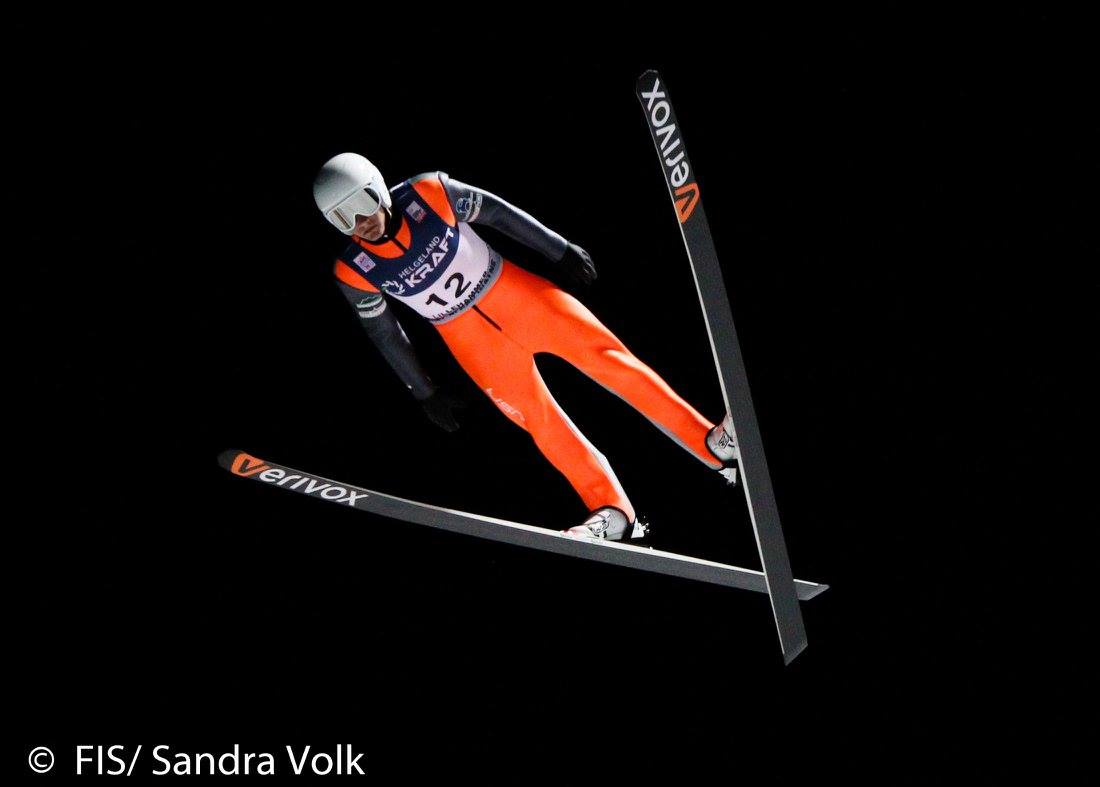
    Ben Loomis (U.S. Nordic Combined) jumping at the World Cup in December 2016 in Lillehammer, Norway. (Photo: Sandra Volk/FIS)
    Ben Loomis (U.S. Nordic Combined) jumping at the World Cup in December 2016 in Lillehammer, Norway. (Photo: Sandra Volk/FIS)

    I started skiing when I was two and jumping when I was five, thanks to my older brother Adam getting me into the sport. I currently train in Park City, Utah, with the US Nordic Combined Team.

    If I’m not skiing, you might find me exploring on my bike. If I had to pick a favorite book, it would be whatever holds my attention.

    One of the things I’m most excited about for U23/Junior Worlds at Soldier Hollow is having my family and home crowd to cheer me on. One race I’m especially targeting there is the 10 k skate.

    The best advice anyone ever gave me about skiing or racing was ‘don’t look back.‘ One of the best race memories I have is finishing second at the [2016] Youth Olympic Games.

    If I could meet one World Cup skier, it would be Dorothea Wierer.

    If I don’t end up being a professional skier, I’ll probably be a master blaster.

    I’m missing zero days of school to be here, and my teachers are probably thinking, ‘Glad he is done with high school.‘

  • Under 23 Questions with Grant Andrews

    Under 23 Questions with Grant Andrews

    Grant Andrews (Park City Nordic Ski Club) jumping in a Junior Worlds qualifier earlier this month in Park City. (Photo: USSA/Tom Kelly)
    Grant Andrews (Park City Nordic Ski Club) jumping in a Junior Worlds qualifier earlier this month in Park City. (Photo: USSA/Tom Kelly)

    In an effort to showcase the North Americans competing at this week’s International Ski Federation (FIS) 2017 USANA Nordic Junior World Championships and U23 Cross Country World Championships at Soldier Hollow in Midway, Utah, we asked those qualifying athletes several questions about themselves — actually, we had them fill in the blanks. Here we have 19-year-old Grant Andrews, of the Park City Nordic Ski Club and U.S. Nordic Combined development group, who’s representing the U.S. at his first Junior Worlds.

    ***

    “My full name is Grant Andrews. I was born in and raised in Steamboat Springs, Colo., the best town in the USA to grow up as a Nordic Combined skier.

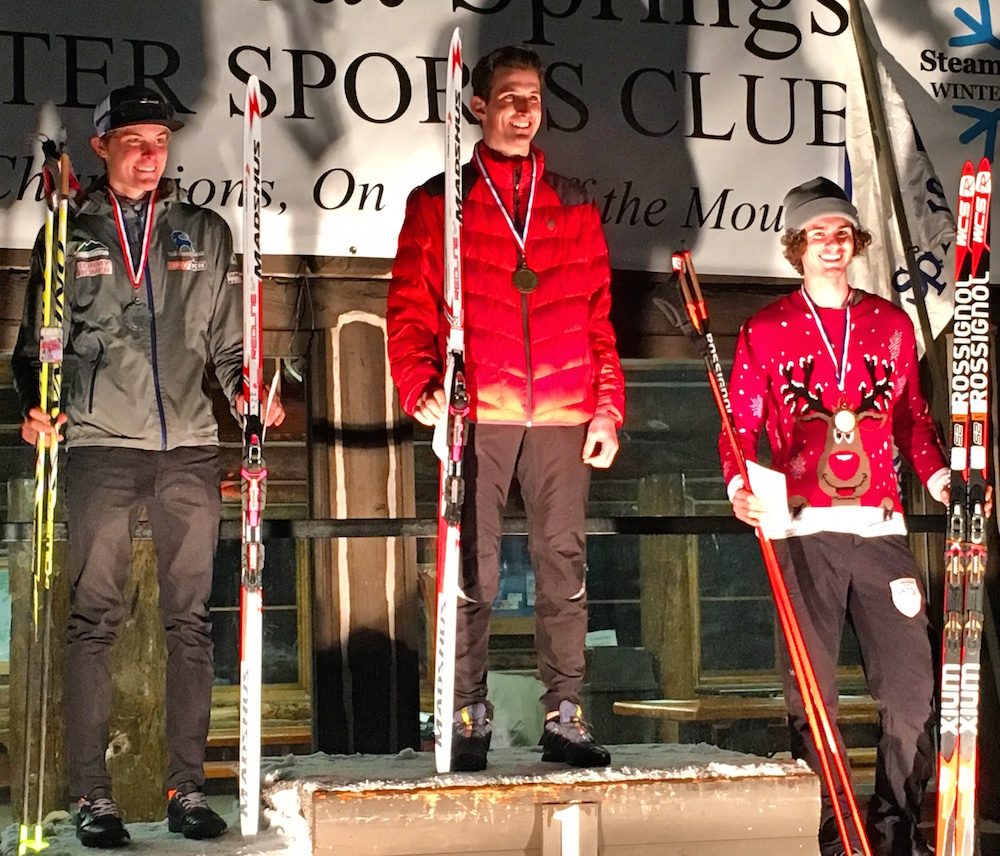
    Grant Andrews (c) on the podium in first at home at the first Junior Worlds qualifier in Steamboat Springs, Colo., with Koby Vargas (l) in second and Tucker Hoefler (r) in third. (Photo: Courtesy photo)
    Grant Andrews (c) on the podium in first at the first Junior Worlds qualifier at his home in Steamboat Springs, Colo., with Koby Vargas (l) in second and Tucker Hoefler (r) in third. (Photo: Courtesy photo)

    I started skiing when I was three and jumping when I was eight, thanks to my dad introducing me to the sport. I currently train in Park City, Utah, with the Park City Nordic Ski Club and lived in Europe for three months this fall for a training camp with the U.S. Ski Team members.

    If I’m not skiing, you might not find me unless you’re with my friends and teammates. If I had to pick a favorite book, it would be ‘Harry Potter and the Deathly Hallows‘.

    One of the things I’m most excited about for U23/Junior Worlds at Soldier Hollow is the hometown advantage. One race I’m especially targeting there is 10 k NC race.

    The best advice anyone ever gave me about skiing or racing is to only worry about yourself.
    One of the best race memories I have is winning the Steamboat Springs World Junior qualifier this last December after feeling overtrained the few weeks before.

    If I could meet one World Cup skier, it would be Jarl Riiber.

    If I don’t end up being a professional skier, I’ll probably end up being a pilot, nothing beats flying.

    I’m missing zero days of school to be here because I graduated in January last year.

    You can follow me on Instagram @grant_andrews_.”

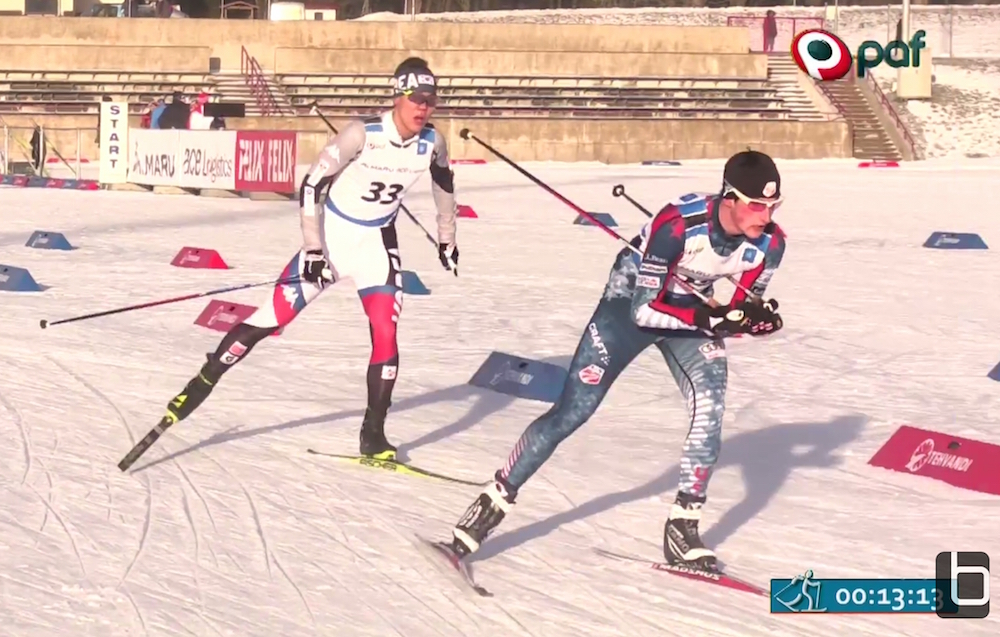
    American Grant Andrews (r) racing in a 10 k at last weekend's Continental Cup in Otepaa, Estonia. He placed 40th on Saturday, Jan. 21, and 44th on Sunday, Jan. 22. (Courtesy photo/screenshot)
    American Grant Andrews (r) racing in a 10 k at last weekend’s Continental Cup in Otepaa, Estonia. He placed 40th on Saturday, Jan. 21, and 44th on Sunday, Jan. 22. (Courtesy photo/screenshot)
  • After October ‘Spring Break’, Taylor Fletcher Jumps Into NoCo Season

    After October ‘Spring Break’, Taylor Fletcher Jumps Into NoCo Season

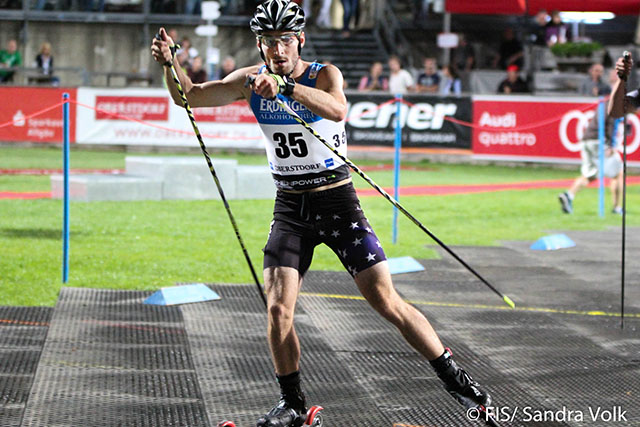
    Taylor Fletcher racing in Oberstdorf, Germany during the 2016 FIS Nordic Combined Summer Grand Prix in September, where he placed 15th overall in the series. (Photo: FIS/Sandra Volk)
    Taylor Fletcher racing in Oberstdorf, Germany during the 2016 FIS Nordic Combined Summer Grand Prix in September, where he placed 15th overall in the series. (Photo: FIS/Sandra Volk)

    Shaking out white, sand-filled training shorts is hardly a thing many skiers find themselves doing prior to an autumn morning interval session. Nor is swimming with sea turtles a typical regular-recovery run substitute.

    However, this past October, U.S. Nordic Combined A-team member Taylor Fletcher did a little of both. The 26 year old’s ‘spring break’ came six or seven months early, or seven months late, depending how one looks at it, with his final days of fall prep for the 2016/2017 season spent beach bumming in Cancun, Mexico.

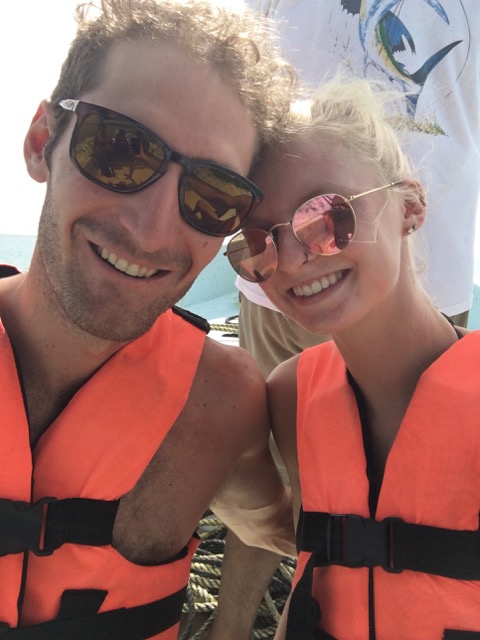
    U.S. nordic combined athlete Taylor Fletcher (l) along with his girlfriend and U.S. freestyle skier, Kiley McKinnon, during a vacation trip to Cancun Mexico this past October. (Photo: Taylor Fletcher)
    U.S. Nordic Combined skier Taylor Fletcher (l) with his girlfriend and U.S. freestyle skier Kiley McKinnon during a vacation trip to Cancun, Mexico, this past October. (Photo: Taylor Fletcher)

    Fletcher, who has been competing for the U.S. Nordic Combined team since the age of 19, was not afraid of the non-traditional preseason training week. Viewing himself (along with his older brother Bryan Fletcher) as “more of a seasoned veteran on the team”, Taylor greeted the vacation as a way to mentally and physically unwind from his biggest training block before bringing in the new season.

    “The hardest part was getting off the plane from the really warm weather in Mexico and realizing it wasn’t much colder [in the U.S.],” Fletcher, originally from Steamboat Springs, Colo., said on the phone in late October.

    The seven days of surf and sun — which he spent with his girlfriend and U.S. freestyle skier Kiley McKinnon — were well-earned by the end of the fall for Fletcher.

    With U.S.A. Nordic Sport’s recent hiring of nordic-combined head jumping coach Nik Huber, who is based in Austria, Fletcher amped up his jumping training.

    “It was no joke that we were definitely on the struggle bus last year with our jumping,” Fletcher said. “We had the opportunity to get a new coach after the organization let go of Greg [Poirier] and we were very fortunate to be contacted by Nik Huber … he brings a new technical edge and gives us new ideas and passion about the jumping side.”

    While the months of June and July were dedicated to jumping for Fletcher, the end of August included travel to Oberwiesenthal, Germany, and Villach, Austria, for the Summer Grand Prix, which included a team sprint and an individual 10-kilometer event in Oberwiesenthal and a 10 k competition in Villach.

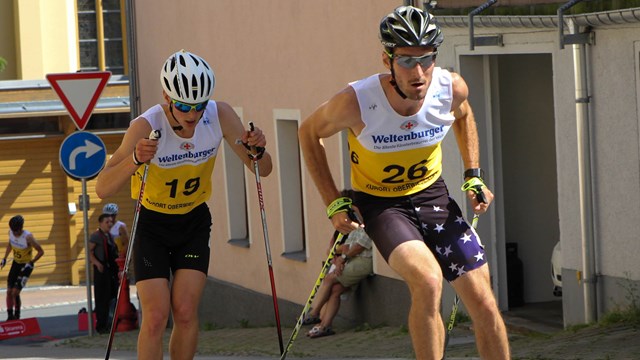
    U.S. Nordic Combined skier Taylor Fletcher (26) racing to the fastest time of the day and seventh overall at the Summer Grand Prix in Oberwiesenthal, Germany. (Photo Sandra Volk/FIS)
    U.S. Nordic Combined skier Taylor Fletcher (26) racing to the fastest time of the day and seventh overall at the Summer Grand Prix in Oberwiesenthal, Germany. (Photo Sandra Volk/FIS)

    Fletcher finished in seventh overall in the Oberwiesenthal 10 k and did not start the Villach 10 k. He and his teammate Ben Berend raced the team sprint together and finished 14th overall.

    “We’ve just been working on the last part of the flight: making sure you’re poling to the bottom of the hill, making sure your tails touch,” Fletcher explained. “Just eking out every meter possible and when you add all those things up it can be ten to fifteen meters.”

    Though 10 to 15 meters may not sound like a lot initially, in a nordic-combined competition, it could be the difference between a one-second versus a nearly two-minute start deficit. For an athlete like Fletcher, who is notorious on the World Cup circuit for his adeptness on the cross-country side of the sport, the prospect of him obtaining even stronger start positions via jumping may bring him closer to the podium.

    “For a guy like me, to be that much closer to the front, it really scares a lot of people,” Fletcher said. “That was kind of the reaction we were getting from the test events this summer.”

    Following the Summer Grand Prix, Fletcher flew back to Park City, Utah where he visited his older brother, Bryan and newborn niece, Ellery Fletcher. After playing uncle, Fletcher returned to Europe for a full month to train in Slovenia, Austria and Germany.

    Taylor Fletcher charges around a corner in a 10k FIS Nordic Combined Continental Cup cross country race at Soldier Hollow. (U.S. Ski Team - Tom Kelly)
    Taylor Fletcher charges around a corner in a 10 k FIS Nordic Combined Continental Cup cross-country race last season at Soldier Hollow in Midway, Utah. (Photo: U.S. Ski Team/Tom Kelly)

    “That was something that I really haven’t done,” Fletcher explained of his decision to live in Europe for a full-month this fall. “It was good to step into the European style, cook my own food and…get in some really quality training there.”

    Fletcher started his NoCo season with the opening World Cup races Kuusamo, Finland, where he finished a 40th in the individual large hill/10 k event.

    The second weekend of World Cup racing in Lillehammer, Norway, saw Fletcher finish with the fastest course time (24:44.7) for 26th overall in the individual 10 k event after he jumped to 48th and started 2:50 back from the leader. He improved the following day, racing to 22nd overall in the individual normal hill/10 k in Ramsau, Austria, after jumping to 46th and starting at a 1:46 deficit.

    While Fletcher indicated that he was “not expecting to go to Ruka and Lillehammer and win every event,” he is confident in his ability to be a regular contender for top-10 finishes and podiums as the season progresses.

    “That’s something that I’m really pushing for, be consistently in the top 10 and fighting for as many podiums as possible this season,” Fletcher said.

    ***

    We asked Fletcher to give our ’17 Questions for 2017′ a go. Here are his responses:

    1. Biggest change in your life in the last five or so months since the ski season ended?

    It a lot has happened since the end of the 2016 season. First of all, I am no longer a member of the U.S. Ski Team. Secondly we have been able to hire a new jump couch from the Norwegian team. This has been the biggest impact as now I have been able to make some big strides in my jumping performance as we head towards Lahti world championships. Most recently, It was the election for the new president. I am in disbelief that Donald Trump is now the leader of our country.

    2. Biggest change in your training?

    I have been focusing a lot on the jumping side again. With Nik Huber and Martin Bayer at the helm for jumping, I have been able to work on parts of my jumping that has struggled for the last couple years. I have been much more consistent on the hill than in years past and I think that is huge for me. We worked hard this summer in the gym, trying to build the strength and speed in the legs to become more explosive on the end of the jump.

    3. Major areas of improvement you’ve seen so far?

    My position on the In-run is much better as I am more compact but long and not so crunched. This is allowing me to generate more power on the takeoff which translates to speed and height at the bottle of the hill.

    4. Whom you’ve been working closest with this offseason (coaches or training partners)?

    I consider my offseason, March 15-April 1st. There I was working closest with the alpine skis and couch. But during the training season, I have been with the team every day essentially. This is one of the best parts about the Nordic Combined team as we all train together and continue to push each other in every session. I live with Ben Berend, so unless it is a team training day, Ben and I will go out and do something together.

    5. Best trip in the last five months (and why)?

    I just returned from Mexico with my girlfriend Kiley. I have never gone on a vacation this late, but It was really nice to unwind and relax before the season starts. We swam with turtles and laid on the beach. I was able to get a bunch of early morning runs in as well which was nice to explore the area.

    6. Favorite cross-training?

    In the spring it is certainly road biking and some races. As the summer processes I put the bike away and went on more hikes. These were a great way for me to get some training in with my GF as she could easily go with me and she really likes to hike.

    7. Favorite non-athletic activity or pastime this summer?

    Anytime I can get out on the golf course I love it.

    8. Song that was your jam this summer?

    She Knows — J Cole

    9. All-time favorite race moment?

    Winning a world championships medal with my brother and Bill Demong in 2013. To share the podium with Bryan is something I will never forget!

    10. First thing you pack in your bag when you leave for Europe?

    Probably socks because that is the first drawer on my dresser. First thing that I think of is my passport which lives in my travel backpack.

    11. Venue/event you’re most excited to visit this season?

    Holmenkollen. no other venue can beat it. But honestly I am most excited to get started and hopefully kick ass.

    12. Who will win the men’s and women’s World Cup titles this year?

    Men’s Nordic combined is being dominated by Eric Frenzel, I think someone else will win and I feel that it will be Johannes Ryzdek from Germany.

    13. Biggest sacrifice you feel you’ve made choosing this career path?

    Not having money from a normal job.

    14. If you could change one thing about your sport, what would it be?

    I would change it so world cups for all nordic events would be more possible in the United States. Anyone I talk to about Nordic seems to love it, but they never get to watch it.

    15. What did you have for breakfast this morning?

    Cinnamon Swirl toast with butter and one poached egg.

    16. In 5 years, I’ll be ____?

    Still loving life.

    17. In 50 years, I’ll be ____?

    Hanging out with my grandkids hopefully.

  • Sunday Rundown: La Clusaz, Nove Mesto, Ramsau, Klingenthal, Obertilliach, & Rossland (Updated x4)

    Sunday Rundown: La Clusaz, Nove Mesto, Ramsau, Klingenthal, Obertilliach, & Rossland (Updated x4)

    Eric Frenzel (r) leads German teammates Vinzenz Geiger (c) and Fabian Rießle (l) toward a sweep of the podium in the Nordic Combined World Cup individual normal hill/10 k on Sunday in Ramsau, Austria. (Photo: FIS Nordic Combined/Facebook)
    Eric Frenzel (r) leads German teammates Vinzenz Geiger (c) and Fabian Rießle (l) toward a sweep of the podium in the Nordic Combined World Cup individual normal hill/10 k on Sunday in Ramsau, Austria. (Photo: FIS Nordic Combined/Facebook)

    Welcome to The Rundown, your quick primer of need-to-know information about the day’s racing. We’ll be updating this digest as the day goes on with additional results, photos and quotes. The Rundown is NOT a race report; stay tuned for complete race reports later today with interviews from the day’s top racers.

    ***

    FIS Nordic Combined Continental Cup in Klingenthal

    [UPDATE] Ben Loomis tallied two top 10’s and his U.S. Nordic Combined teammate Ben Berend notched eighth place this past weekend at the Continental Cup in Klingenthal, Germany.

    Loomis ended the three-day series on Sunday by placing fifth in the large hill/10 k for his second-best result at the Continental Cup level (he finished fourth last year in the normal hill/10 k competition in Park City, Utah). Loomis put himself in position by jumping to sixth then racing to fifth, 49.9 seconds behind Japan’s winner Go Yamamoto, who finished in 24:06.4.

    Florian Dagn of Austria placed second (+6.0) after jumping to first. Yamamoto jumped to second and headed out on the course seven seconds behind him.

    Norway’s Sindre Ure Soetvik placed third (+28.8), after starting the 10 k in third. Germany’s David Welde finished fourth (+36.0), moving up after jumping to eighth.

    Also on Sunday, Berend placed 15th (+2:25.3) and Jasper Good was 35th (+3:07).

    Berend started the long weekend out with an eighth-place finish in the large hill/5 k on Friday. He jumped to fourth and finished the ski race in eighth, 1:09.2 minutes behind Germany’s Maximilian Pfordte, who won in 10:58.9.

    Pfordte posted the best jump to start the 5 k first, then held his lead for a 16.4-second victory over Yamamoto in second. Dagn placed third (+18.3) after jumping to second, and Yamamoto’s jump ranked third.

    Also for the U.S., Good finished 21st (+2:05.8) for his best result of the weekend, Loomis was 28th (+2:50.5) and Stephen Schumann 29th (+2:52.1).

    On Saturday, it was Loomis who tallied another eighth place for the U.S. in the large hill/10 k. He jumped to 10th then improved to eighth, finishing 58 seconds behind German winner Tobias Simon. While Simon dominated the jump as well as the race, winning by 10.1 seconds, Yamamoto repeated in second place and Austria’s Thomas Joebstl reached the podium in third (+38.3).

    Berend finished 25th (+1:45.9) and Good 45th (+3:24.9) on Day 2.

    Results: Day 1 | Day 2 | Day 3

    ***

    FIS Nordic Combined World Cup in Ramsau

    The Nordic Combined World Cup resumed this weekend in Ramsau, Austria, with Germany not only topping but sweeping the podium in both individual normal hill/10 k competitions.
    On Saturday, Team Germany swept the top four, with Johannes Rydzek notching his third individual win of the season, ahead of teammates Fabian Rießle (+1.5) and Eric Frenzel (+8.7). Vinzenz Geiger completed the sweep in fourth (+15.0), a career best for the 19 year old after placing seventh earlier this month in Lillehammer, Norway.
    Frenzel led after the jump on the 98-meter hill, which put him 2 seconds ahead of the second-best jumper, Austria’s Mario Seidl, in the 10 k Gundersen start. (Seidl went on to place seventh.)
    Rydzek posted the third-best jump and started 10 seconds back, while Rießle started another 10 seconds later in seventh. Rydzek went on to ski the fifth-fastest course time and Rießle was third fastest en route to first and second at the finish.
    Americans Taylor Fletcher and Bryan Fletcher finished 27th (+1:17.6) and 29th (+1:18.4), respectively, and Adam Loomis was 47th (+3:16.2).
    Taylor started 41st, 1:18 back, and Bryan started five seconds later in 43rd. Bryan posted the seventh-fastest course time and ended with a photo finish with Finland’s Arttu Maekiaho, which Maekiaho took by 0.1 seconds for 28th. Loomis started 50th.
    Day 2 in Ramsau went to Frenzel, who won the normal hill/10 k in 22:49.4. Rießle repeated in second (+0.8) and Geiger improved on his career best for his first podium in third (+23.4). Seidl again jumped to first and this time ended up fourth (+24.3).
    Frenzel started third and raced to first, Rießle moved up from fourth in the jump to second, and Geiger made the most of his second-best jump.
    Taylor Fletcher skied the third-fastest course time to move up from 46th after the jump to 22nd at the finish (+1:20.2). Bryan Fletcher finished 32nd (+1:33.5), losing one place after starting 31st.
    The Nordic Combined World Cup goes on holiday break until resuming Jan. 7-8 in Lahti, Finland.
    Results: Saturday | Sunday 
    ***

    NorAm Mini Tour in Rossland: Classic pursuits

    The NorAm mini tour in Rossland, British Columbia, wrapped up with a classic pursuit race on Sunday.

    In the women’s 10 k classic, APU’s Chelsea Holmes continued her strong form, winning the mini tour with an aggregate time of 1:08:04.4. Holmes finished the 10 k in 35:35.4 minutes, 6.2 seconds behind fastest woman of the day, Katherine Stewart-Jones (NTDC Thunder Bay).

    SMS Elite’s Erika Flowers continued her podium-filled visit to Canada with the third-fastest ski of the day, 48.1 seconds behind Stewart-Jones, to take second overall, 2:23.9 behind Holmes. AWCA’s Olivia Bouffard-Nesbitt was the fifth fastest in the 10 k to hold on to third overall (+3:25.2), while Stewart-Jones was just 0.5 seconds back in fourth overall.

    NTDC Thunder Bay’s Evan Palmer-Charrette used a fourth-fastest ski in the 15 k to keep the overall title, with an aggregate time of 1:28:54.0. Alexis Dumas (CNEPH) skied 1:14.7 faster than Palmer-Charrette to climb from sixth at the start to second overall (+52.2). AWCA’s Jack Carlyle had the second-fastest time of the day, 29.9 seconds behind Dumas, to climb into third overall (+1:10.1).

    National Para-Nordic guide Erik Carleton had the third-fastest 15 k time, 1:01.3 back, but it wasn’t enough to catch Team R.A.D.’s Russell Kennedy, who placed fourth overall (+1:20.8).

    Full results (with tabs for the overall and time of the day)

    ***

    FIS Cross-Country World Cup in La Clusaz: Men’s and women’s relays

    Team Norway I emerged victorious in Sunday’s men’s 4 x 8 k mixed relay event in La Clusaz, France, with Didrik Tønseth leading the winning group’s first classic leg.

    After crossing in seventh, Tønseth handed off to Martin Johnsrud Sundby for a second classic leg. Sundby dropped a spot, finishing his classic leg in eighth. Sundby tagged off to Anders Gløersen for the first freestyle leg.

    Gløersen rocketed the team to first, and held the position straight through his 7.5 k. The final leg for Norway’s winning team went to Finn Hågen Krogh. The Norwegian men’s team completed the relay event in a total time of 1:11:25.7

    Second place overall, two-tenths of a second behind, was team Russia, led by Evgeniy Belov for the first classic leg. Belov handed off to Alexander Legkov for the second classic leg, with Legkov putting down the third fastest time by the time he returned to the exchange zone.

    The third and first freestyle leg for Russia went to Alexey Chervotkin, who maintained the team’s third place position. Anchoring the team was  Sergey Ustiugov, who managed to maneuver the team from third place to second during his final freestyle leg.

    The men's 4 x 7.5k relay podium on Sunday in La Clusaz, France with Russia in second (left four) Norway first (center four) and France third overall. (Photo: FIS Cross-Country twitter)
    The men’s 4 x 8 k relay podium on Sunday in La Clusaz, France, with Russia in second (left four) Norway first (center four) and France third overall. (Photo: FIS Cross-Country/twitter)

    Rounding out the men’s mixed relay podium on Sunday was France I (+7.7).

    Jean-Marc Gaillard led team France’s first classic leg, racing in a sixth position into the exchange zone. Gaillard handed off to Alexis Jeannerod, who moved up to fifth place by the end of his classic leg.

    Skiing the third and first freestyle leg was Clement Parisse who held onto fifth place and tagged off to Maurice Manificat for the final freestyle leg. Manificat managed to move around Sweden’s Axel Ekstrløm and Germany’s Lucas Bøgl for third place overall.

    Neither Canada or the U.S. entered a men’s relay team due to illness.

    In the women’s 4 x 4 k relay event, it was another Norwegian team who stood atop the podium.

    Ingvild Flugstad Østberg led the women’s first classic leg, skiing in first place until her hand-off to Marit Bjørgen. Bjørgen maintained the first place position during her classic leg, tagging off to Ragnhild Haga.

    Haga completed the first freestyle leg for Norway, handing off to Heidi Weng, who anchored the team’s last freestyle leg. The Norwegian women finished in a total time of 39:23.3.

    In second was team Finland, 50.2 seconds behind Norway’s winning time. Aino-Kaisa Saarinen started the first classic leg for Finland, passing off to Anne Kyllønen.

    The women's 4 x 4 k mixed relay podium on Sunday in La Clusaz, France. Norway (c) took the win ahead of team Finland in second (l) and Sweden in third. (Photo: FIC Cross-Country/Twitter)
    The women’s 4 x 4 k mixed relay podium on Sunday in La Clusaz, France. Norway (c) took the win ahead of team Finland in second (l) and Sweden in third. (Photo: FIC Cross-Country/Twitter)

    Taking on the first freestyle leg for Finland was Riitta-Liisa Roponen, who tagged off to Laura Mononen for the final freestyle leg.

    Rounding out the relay podium in third overall was team Sweden (+1:08.9). Emma Wiken raced the first classic leg, who tagged off to Stina Nilsson for the second classic leg. Maria Rydqvist raced the first freestyle leg and handed off to Anna Dyvik, who anchored the team to third.

    Only one U.S. women’s relay team was entered on Sunday, with both Jessie Diggins and Sadie Bjornsen out due to illness. Sophie Caldwell led the U.S.’s first classic leg, followed by Rosie Brennan. Liz Stephen followed Brennan, taking on the first freestyle leg. Anchoring the team was Kikkan Randall in the final freestyle leg. The Americans finished in seventh overall (+2:26.0).

    Canada also entered a women’s team in Sunday’s relay. Emily Nishikawa led the first classic leg, and handed off to Cendrine Browne for the second classic leg. Dahria Beatty raced the first freestyle leg and tagged off to Sophie Carrier-Laforte, who anchored the team to 12th overall (+4:07.9).

    Results: Men | Women

    ***

    IBU World Cup in Nove Mesto: Men’s and women’s mass starts

    Gabriela Koukalová of the Czech Republic looks to her home crowd as she wins the women's 12.5 k mass start on Sunday at the IBU World Cup in Nove Mesto, Czech Republic. She fended off Germany's Laura Dahlmeier (r), who took second. (Photo: IBU)
    Gabriela Koukalová of the Czech Republic looks to her home crowd as she wins the women’s 12.5 k mass start on Sunday at the IBU World Cup in Nove Mesto, Czech Republic. She fended off Germany’s Laura Dahlmeier (r), who took second. (Photo: IBU)

    Despite skiing in 14th at one point in the men’s 15 k mass start on Sunday, France’s Martin Fourcade came back to win the International Biathlon Union (IBU) World Cup in Nove Mesto, Czech Republic.

    That makes him seven for eight in individual races so far this season.

    Fourcade started with bib 1 as the overall World Cup leader and finished first in 36:18.9 minutes, despite a penalty on his second prone that put him in 14th and 22 seconds back heading out on his third loop.

    He rebounded with a clean third shooting to move into third, 2.5 seconds behind Ukraine’s Dmytro Pidruchnyi in first and 1.3 seconds behind Russia’s Anton Babikov in second.

    By the final shooting stage, Fourcade was back in first with clean shooting (0+1+0+0), 28 seconds clear of Babikov in second. Babikov had his first penalty of the day on the final stage (0+0+0+1) to drop out of contention.

    Germany’s Simon Schempp (1+1+0+0) came out on top of an eight-way battle for second place on the final loop. Schempp took it, 8.3 seconds after Fourcade and 1.1 seconds ahead of Babikov in third (+9.4).

    The Czech Republic’s Ondrej Moravec was 0.3 seconds off the podium in fourth (+9.7), Pidruchnyi placed fifth (+10.2), Russia’s Matvey Eliseev finished sixth (+11.0), Norway’s Ole Einar Bjørndalen was back in the top 10 in seventh (+11.3), France’s Quentin Fillon Maillet notched his second-straight top 10 in eighth (+13.7), and Norway’s Johannes Thingnes Bø finished at the back of that pack in ninth (+19.8).

    American Lowell Bailey missed the top 20 by 10 seconds in 21st (+1:17.1). He had three penalties, two of which came on the last stage (0+1+0+2) to drop him from ninth to 20th at the start of the final loop.

    Bailey retained his spot in ninth in the overall World Cup standings, while Fourcade continues to lead, 158 points ahead of Shipulin in second.

    In the women’s 12.5 k mass start, Gabriela Koukalová delivered to her home fans in Nove Mesto, Czech Republic, racing to her second win of the season in 34:42.1.

    “I was so nervous before the race so it was amazing,”  Koukalová said, according to an IBU press release. “I have so many emotions; it’s even more emotional than at the Olympics. I would like to say thanks to all the spectators and I hope I was able to make a nice Christmas present to all of them.”

    The defending World Cup champion beat the current World Cup leader, Germany’s Laura Dahlmeier, by 3.1 seconds after shooting a single penalty and cleaning the last two stages (0+1+0+0) to move into first. Dahlmeier missed two on the first stage to drop 23rd, but cleaned her last three stages (2+0+0+0) to capture second at the finish. She passed three athletes on the last lap, including Italy’s Dorothea Wierer, who ended up third (+9.7) with one miss (1+0+0+0).

    “I don’t really know what happened with those two misses,” she told German broadcaster ARD. “But in terms of skiing I had a great day on the course, and I had skis that were the bomb. It’s just a lot of fun when you can make the podium reaching the second place despite a large deficit in the beginning. I am overjoyed.”

    Germany’s Vanessa Hinz rebounded from Friday’s sprint (where she placed 73rd) to end up fourth (+15.5) with a single penalty (0+0+1+0). None of the 29 finishers hit every target, and American Susan Dunklee did not start.

    Dahlmeier leads the overall World Cup standings by 98 points over Finland’s Kaisa Mäkäräinen, and Koukalova is third, just seven points behind Mäkäräinen. Dunklee is 11th.

    The IBU World Cup now goes on holiday break until resuming Jan. 5 in Oberhof, Germany.

    Results: Men | Women

    ***

    IBU Cup in Obertilliach

    The third IBU Cup was held on Dec. 16-17 in Obertilliach, Austria. In the men’s 20 k individual on Friday, the top three finishers were France’s Antonin Guigonnat, with a winning time of 49:58.6, Russia’s Yury Shopin in second (+32.2), and Germany’s Florian Graf in third (+35.6). Each of the top three had one miss, and Canada’s Matthew Hudec was the top North American in 34th (+4:11.3) with two penalties (0+2+0+0). Also for Canada, Carsen Campbell finished 38th with three penalties (1+2+0+0), Matthew Neumann was 53rd with three penalties (0+2+0+1) out of 118 finishers.

    In the women’s 15 k individual on Friday, Germany’s Karolin Horchler took the win with clean shooting (0+0+0+0) in 44:54.7. France’s Coline Varcin was 1.1 seconds back in second with one penalty (1+0+0+0), and third went to Russia’s Daria Virolaynen (+30.2), who had one miss as well (0+1+0+0). Canada’s Nadia Moser was the top North American in 35th (+5:10.8) with two penalties (0+1+1+0). Also for Canada, Erin Yungblut placed 66th with five penalties (0+3+0+2).

    In the men’s 10 k sprint on Saturday, two Norwegians took first and second with Henrik L’Abee-Lund winning in 23:29.9, and Vetle Sjastad Christiansen 13.9 seconds back in second. Third was claimed by Germany’s Phillipp Nawrath (+29.5) and all of the top three shot clean. Neumann led Canada in 47th (+2:20) with one miss (1+0). Campbell missed two (1+1) and finished 59th (+2:47.4), and Hudec was 64th (+2:58.9) with two penalties as well (1+1). Canada’s Pearce Hanna finished 87th, with two misses (2+0), out of 125 finishers.

    In the women’s 7.5 k sprint, Russia swept the podium with Virolaynen winning in 20:31.5, followed closely by Uliana Kaisheva (+3.7), and then Anna Nikulina (+23.1). Virolaynen missed one (0+1), Kaisheva cleaned (0+0) and Nikulina had a standing miss as well (0+1).  The top North American was Canada’s Megan Bankes in 30th (+2:08.1), with one prone penalty (1+0). Also for Canada, Sarah Beaudry finished 34th (+2:18.1), with two standing misses (0+2), Yungblut was 45th (+2:40.6) with clean shooting (0+0), and Moser finished 49th (+2:45.5) with two misses (1+1), out of 85 women.

    Results: Men’s individual | Women’s individual | Men’s sprint | Women’s sprint


  • Taylor Fletcher Seventh on Day 2 of Summer Grand Prix

    Taylor Fletcher Seventh on Day 2 of Summer Grand Prix

    Taylor Fletcher racing to the fastest time on the day and 7th overall in Oberwiesenthal, Ger. (Photo Sandra Volk, FIS).
    Taylor Fletcher (26) racing to the fastest time on the day and several overall at the Summer Grand Prix in Oberwiesenthal, Germany. (Photo Sandra Volk/FIS)

    End of August. It’s not quite transition season yet. Leaves are green, there’s still the possibility of sweltering humidity, and if you’re inclined to fly off 100-meter ski jumping hills sans snow, the International Ski Federation (FIS) Nordic Combined Summer Grand Prix has you covered.

    Last weekend, Oberwiesenthal, Germany, hosted the two-day opening round of the Summer Grand Prix. Although months away from on-snow events, jumping and racing on rollerskis against some of the best in the world is an incomparable way to size up dryland training.

    Saturday featured a team sprint (teams of two) with a combined score jump followed by a 15-kilometer (2 x 7.5 k) race. Host Germany took the top prize. Germany I, with Björn Kircheisen and Eric Frenzel, placed first. Norway I (Jan Schmid and Magnus Moan) took second (+18.8), and Austria I (Bernhard Gruber and Philipp Orter) finished third (+19.7).

    The U.S. entered two teams: Taylor Fletcher and Ben Berend for U.S. I and Jasper Good and Stephen Schumann for U.S. II.

    Fletcher and Berend finished the jumping round in 14th; Good and Schumann ranked 19th. U.S. I held its 14th place after the ski portion, finishing 2:24.5 behind the winners. U.S. II ended the day in 18th overall.

    Sunday’s normal hill/individual 10 k was a new day for U.S Nordic Combined’s reigning national champ Taylor Fletcher. (Of note: The race weekend featured half of the Fletcher clan. Taylor’s older brother Bryan remained in Park City, Utah, as he and his wife were expecting their first child. They welcomed their baby girl, Ellery Ardene Fletcher, on Monday, Aug. 29.)

    Best off the jumping hill on Sunday, Aug. 28, was Norway’s Jarl Magnus Riiber. Taylor Fletcher jumped to 26th place. He started the ski portion 2 minutes and 25 seconds after Riiber.

    Reading between the lines, Fletcher made progress in the jump portion. He flew eight meters farther on Sunday compared to his effort the previous day.

    “Today was a good step forward,” Fletcher said Sunday about his Day 2 jump in a USSA press release. “I am pleased, for sure, but know I still have my work to do. I have had some really good jumps lately but haven’t had them in the competition yet. Today I put in a great jump after my miss yesterday (in team sprint) so that was a great feeling. I think this will help me relax knowing that with a jump like this I am in the hunt with my skiing, but of course the goal is to make it easier on the cross country side.”

    Schumann jumped to 31st, while U.S. teammate Ben Loomis was 33rd.

    Making it easier on the cross-country side was Fletcher’s performance trademark of tracking down early starters. On Sunday, he was true to form and strategy.

    Norway's Jarl Riiber rolls in first. (Photo: Sandra Volk FIS)
    Norway’s Jarl Magnus Riiber crosses the line first last weekend for Day 2 of the Summer Grand Prix in Oberwiesenthal, Germany. (Photo: Sandra Volk/FIS)

    Fletcher’s 24:28.9 marked the fastest rollerski time of the day, and brought him within 10.2 seconds of race winner Riiber, who finished in 26:43.7 . The hard-charging effort earned Fletcher seventh-place overall.

    “I was happy with the weekend for sure,” Fletcher wrote in an email to FasterSkier. “I have been focusing on the jumping way more this year and with the addition of our new jump coach and philosophy I have been able to improve way more. I had pretty solid jumps in Oberwiesenthal but still not my best jumps so that is exciting knowing I can still jump better. I will try to keep those feelings with me as we get ready for competition [on Wednesday] in Villach, Austria.”

    Behind Riiber on the podium were Austria’s Mario Seidl (+2.8) in second and Germany’s Kircheisen in third.

    For the U.S., Schumann finished 42nd (+3:23.3), Ben Loomis was 45th (+4:11.7), while Adam Loomis did not start the ski portion after being disqualified for a suit violation during the jumping portion.

    Asked why the team headed to Europe for the Grand Prix, Fletcher explained the race series provides a fitness litmus test against some of the best in the world.

    “We come to Europe for these races to see where our form is at the moment, but also to get some competition and practice in,” he wrote. “These races are no different than the World Cups in the winter with the exception that a few people may be absent. Another reason we come over is for the equipment. All the jumping manufacturers are based in Europe and it is difficult to get equipment sent the USA. Also, every year the rules for jumping are changed and unless you are at a competition, it is hard to know if you bindings, suits, skis, gloves, helmets, undersuits are legal or not. Coming to Summer Grand Prix allows us to check out our equipment with the officials so we know we are inline with the rules and won’t get disqualified for unknown reasons.”

    Fletcher elaborated on how jumping differs in the summer compared to jumping in colder, more dense, wintertime air. “The only thing that is different in the summer and winter is the air pressure really,” he wrote. “The surface is different but over time it starts to feel more like snow and the landing and in-run start to feel close. In the summer the temp is high causing the pressure to drop a little, especially in Park City and that makes the jumping a little harder. So without the air pressure, it sometimes feels like you are falling instead of flying through the air. The best jumping happens when the temperature is very cold(-F) as the air is very thick and you feel way more pressure under neath you! The speed is relatively the same as, the slope the hill doesn’t change from summer to winter.”

    Bryan Fletcher holding his newborn, Ellery Ardene Fletcher. Fletcher and his wife Nikki welcomed their baby girl on Monday. (Photo: USSA Nordic)
    Bryan Fletcher holding his newborn, Ellery Ardene Fletcher. Fletcher and his wife Nikki welcomed their baby girl on Monday. (Photo: USSA Nordic/Facebook)

    On Wednesday in Villach, Fletcher did not start the normal hill/10 k competition and final day of the Grand Prix. His teammate Berend led the U.S. in 33rd after posting the 19th-best jump, Ben Loomis finished 42nd after jumping to 31st, and Adam Loomis was 50th, improving upon his 57th-ranked jump.

    Austria’s Seidl won at home with a 12.9-second victory over Germany’s Fabian Riessle, and Norway’s Håvard Klemetsen placed third (+15.1).

    Now an uncle, Fletcher planned to head home to Park City after the Grand Prix series and spend the month prior to the start of the winter season training in Europe.

    Results: Day 1 team sprint | Day 2 individual 10 k | Day 3 individual 10 k

  • Wednesday Workout: Taming Compartment Syndrome (with Video and Mini Podcast)

    Wednesday Workout: Taming Compartment Syndrome (with Video and Mini Podcast)

    Taming Compartment Syndrome in this Wednesday Workout
    Bend-based physical therapist and strength/conditioning coach Dave Cieslowski demonstrates an exercise to help tame compartment syndrome.

    BEND, Ore. — Two letters for better or for worse that we often associate with the negative sides of too much skiing are PT— as in physical therapist. Based in Bend, Dave Cieslowski is a licensed physical therapist and certified strength and conditioning coach. He has a core group of cross-country skiers who take his word on injury prevention and treatment — that group includes the U.S. Nordic Combined team.

    One common overuse injury is compartment syndrome, or what specifically is called exertional compartment syndrome. Painful? Yes! If you don’t take my word for it, just read this post from former U.S. Ski Team member and distance skier Kris Freeman.

    OK, it’s painful, but according to Cieslowski, it may be preventable and treatable in some cases without surgery.

    Here are some basics: pain and/or numbness may develop when a muscle becomes swollen during exercise and the compartment containing the muscle does not expand. For skiers, this most often occurs in the lower leg where there are four muscle compartments — commonly, when compartment syndrome is suspected in a skier, symptoms are often evident in either the calf or shin area.

    According to Cieslowski, the onset of compartment syndrome that specifically affects the shin is more likely in skiers who raise their toe up during the return phase (just after the leg push off) while skate skiing. That action, the toe raising, may eventually cause pain in the shin area.

    Here’s a short podcast episode in which Cieslowski describes the reasons for the following exercises (press the play button below).

    What You’ll need for exercise #1:

    • 2 x 3 ft. resistance tubing
    • A secure structure to anchor the resistance tubing
    • Place one piece of tubing around the top of your hips, the other around one ankle
    • Watch the video for more specific details about how to proceed

    What You’ll need for exercise #2:

    • 1 x 2 ft. resistance tubing, both loose ends knotted together to form a circle
    • Step through tubing and position just above the knees
    • Dumbbell and weights appropriate for a single leg step up onto an approximately foot high box
    • Watch the video for more specific details about how to proceed

    For both exercises, use caution and determine the proper number of sets to ensure you are fatiguing the appropriate muscles. You’ll note in the video that Cieslowski’s cycle rate is slow — that is on purpose. These are not meant to be high cycle rate exercises.

  • Demong Back Leading U.S. NoCo as Executive Director of USA Nordic Sport

    Billy Demong jumping to 10th on the normal hill at 2015 World Championships in Falun, Sweden. (Photo: FlyingPointRoad)
    Billy Demong, a former U.S. Nordic Combined skier and five-time Olympian, jumping at 2015 World Championships in Falun, Sweden. (Photo: FlyingPointRoad)

    Twenty-two World Cup podiums and five Olympics later, Billy Demong can’t leave what’s in his blood behind; he was born to jump and ski fast. No, Demong, 36, is not announcing a comeback — he retired from international competitions after the 2014/2015 Nordic Combined World Cup season. For a year he stayed away. Post-retirement, Demong worked in marketing for Utah-based Reynolds Cycling. He’s back as executive director of USA Nordic Sport. 

    Let’s turn back the clock for a moment to gain some perspective. Beyond Bill Koch’s 1976 Olympic medal, the U.S. Nordic Combined team remains the only other nordic discipline to win a coveted Olympic medal. In 2010, Demong won an individual gold and was part of the team relay silver in Vancouver, British Columbia.

    There’s a reason to reference past Olympic glory — as part of this narrative, it matters.

    A scant four years after the Vancouver Games and two months after the 2014 Sochi Olympics, the U.S. Ski and Snowboard Association (USSA), once the primary funder and governing body responsible for U.S. Nordic Combined, dropped most of its funding for nordic combined. It was a seismic event that most insiders had a feeling was coming. Current U.S. Nordic Combined Head Coach Dave Jarrett said at the time, “Based on [USSA’s] study in 2010 that eliminated jumping in other sports, they didn’t think nordic combined was a podium-potential sport for 2018 or 2022.”

    Looking back, Demong voiced his understanding of USSA’s decision.

    “At the end of the day it really comes down to resources,” Demong, now in his full-time role with USA Nordic Sport, said on the phone late last month. “Resource allocation is a tough thing. USSA, they are successful organization — I have watched them grow and develop. But there are a lot of teams and a lot of athletes. There were a lot of hard choices that needed to be made, but I believe in the potential of the athletes we have in the pipeline today and the opportunity for long term sustainable success with strong leadership in both ski jumping and nordic combined.”

    The defunding setback also served up an opportunity for the primary nordic-combined stakeholders to take ownership over the sport’s viability.

    “The community of ski jumping and nordic combined athletes and alumni have historically really leaned on USSA to develop athletes and I think now over the last six-seven years, we have taken a lot of that back onto our community,” Demong explained. “And it’s been successful. I think we have some of the best athletes in the pipeline right now that we have had in a long time in ski jumping. We have some great up and coming talent in nordic combined. And we have a growing base.  Last year we developed a study that indicates about 800 kids put bibs on or participated in a program. So it is a healthy number for a sport that is not big anywhere.”

    The community Demong referenced was not beginning from scratch. An organization named USA Ski Jumping — founded originally by past ski jumping and nordic combined Olympic athletes and coaches including Rex Bell, Jim Holland, Jeff Hastings and Alan Johnson — was already carrying the ski jumping torch. With their help over time, Demong said during the interview, that group worked to grow and develop the scope of the organization. In the spring of 2015 they adopted new bylaws and became committed to assisting the nordic combined community. With the more inclusive snow sport focus, the organization was renamed USA Nordic Sport. And two months ago, Demong was named its Executive Director.

    Back to Demong’s World Cup and Olympic credentials. Demong offers proof that the US can develop nordic combined skiers ranging from kids soaring off small-scale jumps to international champions. He also comes with the cache of Olympic hardware: that can be a draw when soliciting funds and volunteers.

    Demong - Victory! Vancouver 2010 - Nordic Combined Individual Large Hill - Billy Demong, podium
    Billy Demong soaking up his victory atop the podium after winning the individual large hill competition at the 2010 Vancouver Winter Olympics.

    The whirlwind of a new job and mission have given Demong a fresh perspective of what endurance means beyond chasing elite skiers around a loop.

    “The first two months here have been exciting,” Demong said of his appointment as Executive Director. “I feel very passionate about what I am doing and there is a lot going on every day. Because this isn’t simply going out and raising some money and spending it. We’ve got ten staff. We’ve got a lot people and we are working together and making sure that everybody’s efforts are moving the sports in the right direction together. That requires a lot of time and energy as well as raising funds and keeping our audience and community engaged.”

    Ski jumping and nordic combined are not completely devoid of USSA’s support and input. Demong noted that USSA is the National Governing Body. Therefore, nordic combined’s FIS representatives are appointed by USSA. And sponsors like LL Bean and Craft — both sponsors of the U.S. Cross Country Ski Team — also uniform the nordic combined team. Additionally, team USA’s head nordic combined coach remains Dave Jarrett and his position, as well as a grant for sport development, are funded by USSA. In this fashion, a quasi partnership has emerged between USA Nordic and USSA.

    USA Nordic Sport (USANS) operates much of the day to day business of the U.S. Nordic Combined and U.S. Men’s Ski Jumping teams (women’s ski jumping has been its own entity since 2003, Women’s Ski Jumping USA). It’s also tasked with growing the sports of ski jumping and nordic combined, fielding competitive elite and international teams and building a pipeline of athletes for the future. This last part of the equation, Demong said, is where USANS is placing much of its effort as they support their pre-existing athletes and clubs while building a broader community.

    “We are focusing a lot of our efforts on the operating clubs we have, adding new clubs as opportunities arise, establishing and disseminating best practices to those clubs so they can develop,” Demong said. “They can recruit more athletes, they can engage those athletes and those communities, and develop higher-quality experiences and opportunities. Ultimately, that is really our big goal right now, basically one team, one community, where all of our nordic combined and ski jumping clubs, and athletes, coaches and parents feel like they are part of something bigger. And athletically, we are really focused upon recruit, retain, and engage.”

    “That is really our big goal right now, basically one team, one community.” — Billy Demong, USA Nordic Sport’s executive director

    Specifically, Demong said that USANS has a detailed plan to execute the mission. They can assist clubs with building low-tech jumps made of snow and absent any permanent jumping structure. For more ambitious clubs, USANS will provide building plans, detailed architectural drawings of jumps, and the tools to build and operate a facility.

    “The medium-range goal is to take these small feeder clubs, and if there is local desire and a champion, to help them drive a fundraising effort to build a more sizable hill,” he added. “We would like to be able to help accomplish that, and additionally, provide opportunity and a pathway for athletes that want to take it to the next level.”

    Taking it to the next level could mean higher-end jumping equipment and travel assistance to places like Park City, Utah, that host events for aspiring jumpers and skiers. One Park City-based summertime event is called Springer Tournee — it doubles as the US Large Hill Ski Jumping and Nordic Combined Championships. USANS also organizes what they call Virtual Nationals. It’s a low-cost low barrier of entry competition allowing juniors to participate in a nationwide event without leaving their local jumping hill.

    “What we do is we ask the kids and parents to send in videos of their children jumping and then they are broken into classes like U-10 girls, U-12 boys, etc.” Demong said. “Last year, we had a group of judges like Sarah Hendrickson and Clint Jones … that basically allowed the kids to compete in their peer group around the country. So that’s been really effective in getting everybody engaged together.”

    Norwegian national team member Mikko Kokslien took a photo of the U.S. nordic-combined jumping facility in Park City, Utah.
    The U.S. nordic combined and ski jumping hills in Park City, Utah (Photo: Mikko Kokslien)

    Demong said nordic combined has suffered from a lack of record keeping when it came to junior development. He hopes things like Virtual Nationals will help change that dynamic.

    “That has been one of the struggles historically — we have some clubs with quite a few athletes but nobody has really been keeping records,” Demong explained. “Does U-12 usually make to U-16? We know that we have attrition along the pipeline just like any sport, but how can we have less? How can we retain more? How can we have a more complete pipeline from first jump on a 10-meter to a World Cup team?”

    Demong insists the health of jumping and nordic combined are way beyond life-support status. On the contrary, Demong believes his beloved sports are poised for growth. That may, in some part, be attributed to the roughly fifty percent of the population — women — traditionally unable to participate in jumping and nordic combined. Although opportunities to jump internationally are not on par with those afforded to men, 2014 marked the first time women’s ski jumping was an official Olympic sport.

    On the nordic-combined side, Demong mentioned this winter will be the first for women’s international nordic-combined competitions without an age limit.

    “In the past couple years, when women’s nordic-combined has been brought online, it has been age limited to mostly junior competitions, and now all of sudden there is going to be open class, senior-level events. It will not be in PyeongChang [South Korea for the 2018 Olympics], but certainly I think it is tracking to be in Beijing [in 2022]. And so that is something Dave Jarrett has definitely been a proponent of at the FIS level and is also preparing to gear up to develop a national-team program for that as well.”

    With new ventures moving forward, Demong also mentioned the links cross-country skiing and nordic jumping sports share. In his eyes, they each possess attributes that benefit the other.

    “Cross country is an amazing sport. It’s so difficult, it teaches so much discipline and perseverance and work ethic, and a host of other core values. They obviously have the same heritage,” he said. “And there is a whole other set of values ski jumping offers for personal growth, like courage: the ability to stand on top of the in-run, even to stand on top of the 40-meter [hill] and look down as a good skier and know that if you let go to the bar there is no backing out. It is a skill set unto itself. If I had one vision for our nordic communities, it is that we will continue to work together to provide as many participants as possible the opportunity to experience all that the nordic sports have to offer… I think there is a tremendous opportunity there … to add some additional skills to the cross country side by participating at whatever level in some ski jumping activity and vice versa.”