From the FasterSkier archive — posts syndicated from athletes’ and coaches’ own blogs between 2004 and 2012, kept online as published. Current coverage is at fasterskier.com.

Tag: u.s. olympic cross-country team

  • Hunter Wonders, Flying by Instrument

    Hunter Wonders, Flying by Instrument

    This article was made possible through the generous support of our voluntary subscribers.  If you value coverage like this, please support FasterSkier with a voluntary subscription.  

    Hunter Wonders (USA) racing the Skiathlon at the 2023 World Championships in Planica, Slovenia. (Photo: Modica/NordicFocus)

    When U.S. Ski & Snowboard released its roster for the 2026 Olympic Winter Games, Hunter Wonders’ name appeared without emphasis. No asterisk. No parenthetical explanation. Just another line in a list that had already absorbed months of speculation, anxiety, and arithmetic.

    To most readers, the name represented a straightforward outcome: an athlete peaking at the right moment, a season resolved by results. But the roster line masked a career that did not move in a single direction. Wonders’ path bent, paused, and restarted. At one point, it appeared to end entirely.

    Understanding how he arrived at the Olympics requires starting far from the Games themselves — in a place where progress is quiet, repetition matters more than recognition, and development happens long before it is visible.

    Hunter canoe racing with his dad in Michigan. (Photo: Courtesy Photo)

    Alaska, Not Michigan

    Hunter Wonders is sometimes misidentified as a Midwestern skier. His parents are from Michigan — his father from Grayling, his mother from Traverse City — and the family returned there most summers to visit grandparents. Wonders spent long stretches canoe racing in Michigan and maintaining close ties to extended family.

    But Alaska is home.

    “My parents were originally from Michigan… And yeah, they moved to Alaska. It was supposed to be like a two-year thing for my dad’s work,” Wonders said. “And he just knew, like, nope, we’re not going back. I’m staying here.”

    That decision happened decades before Wonders had any agency of his own. By the time he was born, Alaska was already permanent.

    “I’m definitely from Alaska and have lived there my whole life,” he said.

    In American cross-country skiing, place is not just a backdrop. It is infrastructure. Alaska exists at the edge of the domestic system — geographically distant from centralized camps, expensive to travel from, and easy to overlook. Athletes there develop without constant reference points, often without external validation.

    For Wonders, that isolation became formative.

    Hunter Wonders, Hailey Swirbul, and Chip Schoff (former APU skier and wax tech) on a multi-day hut trip. (Photo: Courtesy Photo)

    Alaska, Off the Circuit

    In Alaska, training is often solitary. Progress is built through lifestyle and repetition rather than comparison, and improvement is measured internally long before it is confirmed externally.

    The winters matter. So does the darkness. Training extends into hours when daylight is no longer guaranteed, when motivation cannot depend on atmosphere or audience. You go out because it’s how you choose to live and enjoy your life.

    That rhythm shaped Wonders’ relationship to skiing early. He did not grow up racing for recognition. He learned to train for alignment — the quiet sense that body, terrain, and effort were moving together. Alaska not only accelerated his trajectory. It birthed it.

    Hunter Wonders (APU/Alaska) takes the lead in the U16 Boys Mass Start Freestyle race at the US Junior National Championship in Stowe, Vermont in 2014. (Photo: Voisin/FasterSkier)

    A Childhood of Rotation

    Wonders grew up chasing his older siblings — twin brother and sister, five years ahead — through a constantly shifting landscape of sports. Alpine skiing. Motocross. Soccer. Ski jumping. Biathlon. Mountain biking.

    “Anytime I started getting into a sport, my family shifted away from that one,” he said.

    The pattern was not neglect, but necessity. Supporting multiple competitive sports for multiple children eventually became unsustainable.

    “My parents were like, all right, we can’t do all this stuff. We gotta limit it. And they chose to Nordic ski. And so naturally, I was kind of dragged into that scene.”

    Nordic skiing, at least initially, was not a calling. It was what remained once the family consolidated its energy.

    Wonders’ first encounter with skis reflects that informality.

    “It was my dad playing with me on my back deck in 2001. And I’m not really skiing that much, but that was kind of my first encounter with it.”

    There was no mythology attached to that moment. No sense of destiny. Skiing entered his life as play, then habit, then gradually — almost without announcement — as a central structure.

    Hunter Wonders (APU/Alaska) winning the U16 Boys Mass Start Freestyle race at the 2014 US Junior National Championship in Stowe, Vermont. (Photo: Voisin/FasterSkier)

    Stowe, Vermont

    The first moment when that structure revealed competitive meaning came far from Alaska.

    Wonders qualified for Junior Nationals in Stowe, Vermont, in 2014. He did so narrowly, selected as the fifth or sixth skier on Team Alaska.

    “I barely made Team Alaska. But it was a big goal for me as a U16,” he said.

    What followed surprised nearly everyone, including Wonders himself.

    “And just out of nowhere, I ended up getting a second place in the individual start race and first place in the mass start. And that was just like, whoa, where did that come from?”

    The results did not instantly rewrite his trajectory. But they altered his internal calculus.

    “I think it kind of clicked for me that, okay, I can do this. I can be competitive.”

    The significance of that realization was not the result itself, but permission. Permission to imagine a longer horizon.
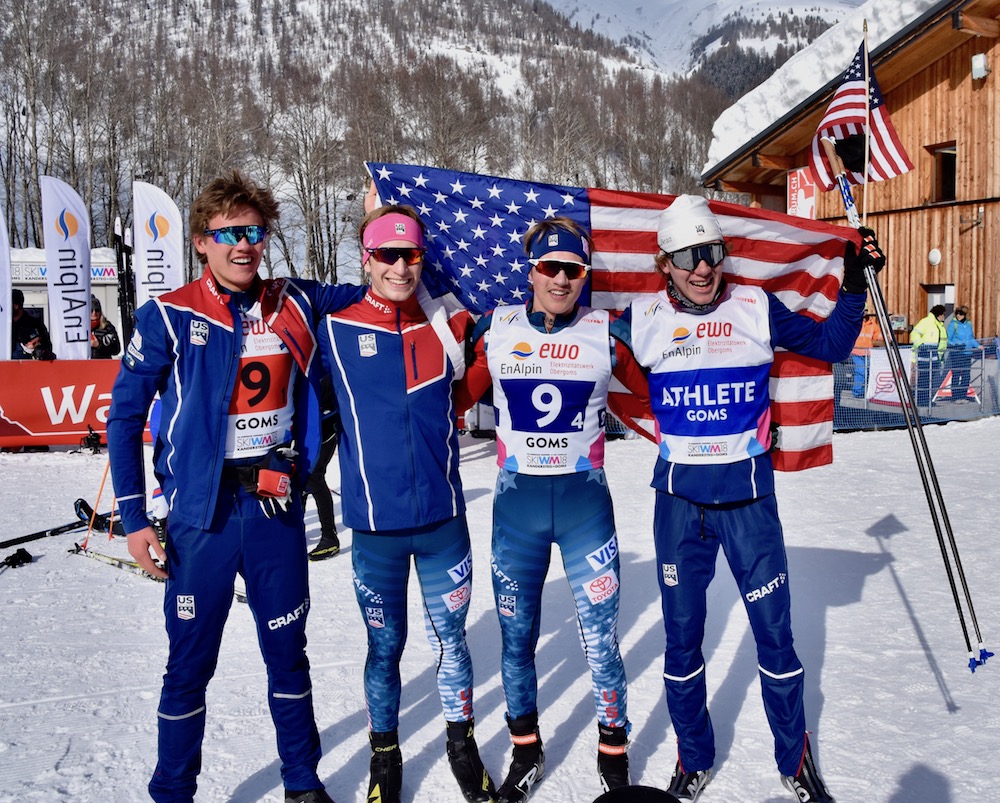
    The U.S. men’s silver-medal relay at the 2018 Junior World Championships in Goms, Switzerland, with (from left to right) Luke Jager, Hunter Wonders, Gus Schumacher, and Ben Ogden. (Photo: Julia Kern)

    The Long Middle Begins

    What followed was not a rapid ascent, but a prolonged middle years defined by steady development, incremental gains, and results that suggested promise without announcing arrival.

    On the World Cup, Wonders often raced from the margins. Finishes in the 50s and 60s gave way slowly to finishes in the 30s. The progress was real, but it did not demand attention.

    In American men’s skiing, where depth is both strength and complication, that middle can be unforgiving. Selection is rarely guaranteed. Criteria shift. Opportunity compresses.

    Wonders responded the way he had learned to respond in Alaska: by focusing inward. Training remained central.

    “For me, training has always been kind of the fun part… The training and living that lifestyle is really, really big to me.”

    That orientation would become essential later — when the question was no longer how to improve, but whether improvement was still worth pursuing.
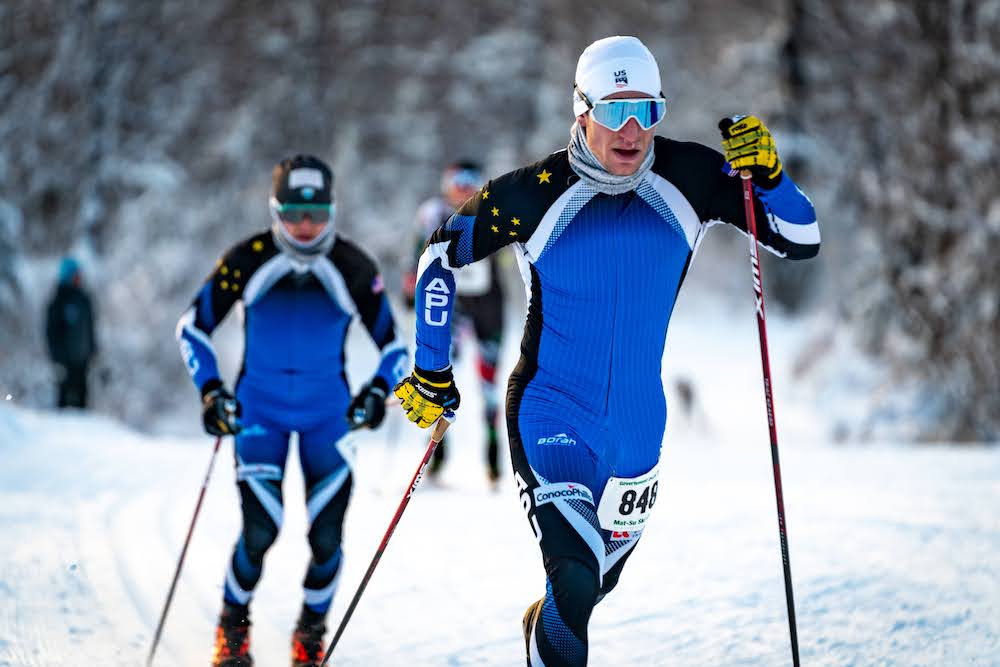
    Hunter Wonders races at Government Peak Recreation Area, Palmer, Alaska, Nov. 14, 2021, in the season-opening Race to the Outhouse #1. (photo: Eric Strabel for APUNSC)

    APU and Staying Put

    Alaska Pacific University provided continuity during those years. It was neither a junior factory nor a national-team satellite. Its athletes often arrived through unconventional paths and stayed longer than expected.

    For Wonders, APU offered stability without stagnation. Coaching relationships endured. Autonomy was preserved. Expectations were internal before they were external.

    Progress was allowed to be slow.

    That patience would later prove critical — because when Wonders eventually left the sport, and then considered returning, there was no system to rebuild, no trust to reestablish. The ground remained where he had left it.

    Hunter Wonders (USA) on his way to 16th place in the 10 k Classic in Beitostolen, Norway in 2022. (Photo: NordicFocus)

    Proof, Finally

    The breakthrough season arrived quietly, without spectacle or announcement.

    During the 2022–23 World Cup season, Wonders recorded the strongest international results of his career: a 16th-place finish in Beitostølen, Norway an 11th-place finish in Oberstdorf, Germany and a 23rd-place finish at Holmenkollen. The trajectory was unmistakable, even if it did not demand attention.

    “For me, that was a big jump from spending my time in the 50s, 60s,” he said.

    The significance of those results was not external. They did not alter his standing overnight or change how the sport viewed him. Their impact was internal.

    “It felt good. To prove to myself that I could ski with some of the best out there.”

    For years, that belief had existed as conviction rather than certainty. Now it had evidence. The question of whether he belonged — the one that had quietly governed training blocks, selections, and seasons — no longer needed answering.

    What remained was not ambition, but choice.

    Hunter Wonders (USA) on his way to 23rd place in the Holmenkollen 50 k Freestyle in Oslo, Norway in 2023. (Photo: Modica/NordicFocus)

    Leaving Without Collapse

    Retirement in endurance sport is often framed as inevitable. Bodies fail. Results decline. Motivation erodes. The decision arrives trailing visible causes.

    Hunter Wonders’ retirement did not follow that pattern.

    When he stepped away from World Cup racing in the spring of 2023, his career was not unraveling. It was consolidating. The season behind him had not forced his hand; it had freed it.

    “My planned last World Cup… it was right after a really good season for me,” he said.

    The timing mattered. He was not leaving with questions unanswered. He was leaving with a sense of completion.

    For a long time, Wonders had believed he could compete at that level. Now he knew it. And that knowledge altered the logic of staying.

    With the central doubt resolved, the future opened in unexpected ways. Instead of sharpening ambition, success created space to consider what life beyond skiing might look like, and whether the cost of continuing still made sense.

    “I thought I was content. I thought I was, you know… ready to move on.”

    The decision was not driven by exhaustion or dissatisfaction. It was driven by certainty — and by the rare freedom that certainty can bring.

    Crust ski in the spring time (Wonders’ all time favorite form of skiing). (Photo: Courtesy Photo)

    What It Means to Leave While Improving

    Leaving while things are going well carries a specific psychological weight. There is no obvious decline to explain the decision. No external force to blame. The athlete leaves not because the door is closing, but because it remains open.

    Improvement, once experienced, does not fade quietly. The body remembers what alignment feels like — when training, racing, and confidence converge. Walking away at that moment does not resolve ambition; it suspends it.

    Wonders framed his retirement as closure. But closure in elite sport is rarely permanent. The unanswered questions tend to return first, often in subtler forms.

    In his case, the unresolved question was not whether he could ski at the highest level. That had been answered. The question was whether he wanted to continue building a life that revolved so completely around it.

    From Seasons to Paychecks

    After stepping away, Wonders entered a different rhythm entirely.

    “That whole following summer, I worked construction, learned a lot of new skills. That’s when I got my pilot’s license.”

    The change was not symbolic. It was practical. Construction offered tangible progress — work that produced visible results and predictable compensation.

    “Even when skiing was going well, I just wanted to get out of it and work a normal job, get the normal paycheck, things like that.”

    The appeal of normalcy was not rooted in dissatisfaction with skiing. It was rooted in adulthood. After years of living season to season, the idea of stability carried weight.

    At the same time, Wonders had recently completed his degree at Alaska Pacific University.

    “I graduated with a bachelor’s in business administration,” he said.

    What followed was a transition many elite athletes experience but rarely articulate.

    “I found a really hard transition when I graduated from being a student athlete to just an athlete. I felt like I wasn’t progressing elsewhere in life. And that was pretty hard for me.”

    Without coursework, semesters, or academic milestones, skiing existed in isolation. Progress on snow no longer corresponded to progress in life. The imbalance unsettled him.

    The Second Discipline

    Aviation entered that gap not as a hobby, but as a parallel discipline.

    “I have my pilot’s license now, and I’ve been working on my instrument rating,” Wonders said.

    He described the training with precision.

    “Being able to fly only using what’s on the dashboard of the plane. Basically, no looking outside the plane.”

    Instrument flight is unforgiving. It demands trust in systems over instinct, procedure over perception. For Wonders, it offered a structure that mirrored elite sport without duplicating it.

    “It’s been giving me something to work on outside of skiing, which has been really nice.”

    More importantly, it offered psychological margin.

    “It’s a very important thing for me, I think, to not feel trapped.”

    The word matters. Trapped implies more than fatigue or burnout. It implies a loss of agency — the sense that leaving would erase identity rather than expand it.

    Aviation gave Wonders a way to be committed to skiing without being consumed by it.

    A Life That Almost Fit

    For a time, the other life worked.

    Construction days were long and direct. Progress was visible. Paychecks arrived on schedule. Flight training offered complexity, mastery, and forward motion.

    The pace was different. The stakes were different. The feedback was immediate.

    Skiing receded into the background — not as a regret, but as a completed chapter.

    Yet even in that distance, the sport did not disappear entirely. It remained embedded in routine, in memory, in the body’s sense of what effort felt like.

    Wonders did not describe missing racing. He described missing the calendar.

    In November of 2022 Hunter Wonders (USA) was on his way to 30th place at the opening World Cup weekend in Ruka, Finland, but a year later he was home in Alaska. (Photo: NordicFocus)

    November

    “When everyone started peacing out to go race, I was like, man, what am I doing?”

    November arrived the way it always does in elite skiing — as a turning point. Training blocks gave way to travel. Preparation became exposure.

    For athletes still inside the system, November is movement. For those who have stepped away, it is absence.

    The routines disappear first. Then the shared language. Eventually, the calendar itself feels unfamiliar.

    Wonders’ realization was not emotional. It was logistical.

    “I can always be installing insulation in some random house someday, but I can’t be skiing forever.”

    November clarified something Wonders had not fully confronted while working construction or studying flight manuals: skiing was not just a job he had left. It was a window with an expiration date.

    The question was no longer whether another life was possible. That had been answered. The question was whether he was prepared to let the skiing life close while it remained viable.

    APU Head Coach Erik Flora, Chip Schoff, and Oscar Flora after getting the PistenBully running on Eagle Glacier last spring. (Photo: Courtesy Photo)

    The Conversation That Changed the Direction

    Wonders began talking again with his APU coach, Erik Flora. The conversations were not urgent.

    “He was very enthusiastic about my getting back into skiing. And so that just made that step a little easier.”

    There was no pressure to return immediately. No demand for proof. The space remained open.

    What followed was not an impulsive comeback, but a deliberate reconstruction.

    Fishing trip on the Gulkana river this last September with close friends. (Photo: Courtesy Photo)

    A Three-Year Calendar

    Rather than simply resuming his previous life, Wonders built a framework designed to prevent the same tension from reemerging.

    “I just planned out this three-year calendar kind of to right now,” he said.

    The calendar was not about training volume or race targets.

    “I blocked off weeks that I was like, okay, these chunks of time, I’m not going to be thinking about ski racing.”

    Those blocks were non-negotiable.

    Moose hunting with his father and brother. Fishing weekends on the Kenai Peninsula. Commitments that anchored him to a life beyond snow.

    “There are certain things I was willing to give up and certain things I wasn’t.”

    The decision to return was conditional. Skiing would be central again, but not all-consuming.

    Moose hunting camp with his dad and brother in interior Alaska. (Photo: Courtesy Photo)

    The Return, Without Announcement

    When Hunter Wonders returned to full-time racing, there was no formal reintroduction. No narrative reset. No expectation that the sport should receive him differently than it had before.

    He did not return as a project. He returned as a person who had already tested the alternative.

    The first season back was uneven by his own account — fitness arriving in pieces, rhythm coming and going — but the framework held. The calendar he had built remained intact. The boundaries were not abandoned under pressure.

    “Coming back from retirement wasn’t the easiest. Not… not the most productive thing,” he said.

    The difference this time was not performance. It was posture. He no longer treated each result as a referendum on identity. He had already stepped outside the system once and learned what waited there.

    That knowledge altered how he handled uncertainty.

    Hunter Wonders (USA) during the 10 k Freestyle in Les Rousses, France of January of 2025. (Photo: Authamayou/NordicFocus)

    Progress Without Urgency

    As the return season unfolded, improvement came incrementally — the way it always had for Wonders. There was no single race that announced transformation. Instead, there was accumulation: training blocks completed, races absorbed, effort normalized.

    The quiet confidence that had once been provisional now appeared settled. Racing no longer felt like a test of belonging. It felt like execution.

    That distinction matters in Olympic years, when urgency can distort judgment. Athletes often feel pressure to force form, to manufacture moments that prove readiness. Wonders did not describe that impulse. He described a narrowing focus.

    “I really tried to narrow the focus. And limit some distractions in the last year. I just wanted to go all in.”

    The phrase carried none of its earlier desperation. “All in” now meant presence rather than sacrifice — committing fully to skiing while refusing to let it consume everything else.

    Hunter Wonders (#369 – APU) on his way to winning the opening race, a 10 k Individual Start Classic, at the US National Championships in Lake Placid, New York, at the beginning of January. (Photo: Nancie Battaglia)

    The Olympic Winter, Reframed

    Olympic selection seasons tend to magnify everything. Results are scrutinized more closely. Criteria are parsed more aggressively. Small margins carry exaggerated meaning.

    For athletes who have never stepped outside the system, that pressure can feel total. For Wonders, it did not.

    He had already lived the other version of his life — the one with construction hours, flight manuals, and normal paychecks. He knew that version was viable. He also knew it was incomplete.

    That knowledge changed how the Olympic Winter Games landed.

    The selection process did not define him. It tested him.

    Hunter Wonders (USA) racing the 10 k Classic in Oberhof, Germany on the final weekend of racing that was considered for making the US Olympic Team. (Photo: Authamayou/NordicFocus)

    Selection as Consequence

    When the Olympic team was named, Wonders’ response did not resemble arrival. It resembled recognition.

    “My parents are coming over. I’m very excited about that,” he said.

    Their presence mattered more than the announcement itself.

    “Regardless of whether I made the Olympics or not, they were going to be supportive and proud.”

    That certainty allowed the moment to settle without drama.

    Still, the meaning was clear.

    “To me, making the Olympics is kind of like paying them back… like, I finally made it.”

    The phrasing was not triumphant. It was relational. The Olympics were not framed as destiny fulfilled, but as acknowledgment earned — proof that the years of logistics, travel, and patience had resolved into something concrete.

    Hunter Wonders (USA) during the 20 k Classic Mass Start in Goms, Switzerland, the weekend after he had been named to the US Olympic Team. (Photo: Authamayou/NordicFocus)

    After the Goal

    The days after selection often reveal more than the selection itself. For many athletes, the achievement creates a vacuum. The central question disappears, replaced by a quieter one: Now what?

    Wonders articulated that shift immediately.

    “Now it’s hard. I’ve been kind of thinking about now, what are my goals going forward?”

    Qualification had resolved the season’s largest uncertainty. It also removed the shelter of pursuit.

    “I don’t want to look like a bum at the Olympics… that’s not why I came here.”

    The bluntness mattered. Making the team had never been the end of the story. It was a threshold — one that demanded a different kind of clarity.

    Wonders taking his friend, who’s also a pilot, on a flight while he visits Alaska. (Photo: Courtesy Photo)

    Flying by Instruments

    The metaphor that runs quietly through Wonders’ story — though he never names it as such — is aviation.

    “Being able to fly only using what’s on the dashboard of the plane,” he said, describing his instrument rating.

    Instrument flight requires a specific discipline. When visibility disappears, instinct becomes unreliable. The pilot must trust systems rather than sensation, training rather than impulse.

    That discipline mirrors the way Wonders has navigated his return. He has learned not to chase feelings — not to react to noise — but to trust the structures he has built.

    In an Olympic year defined by margins, criteria, and scrutiny, that trust is rare.

    When these two embrace each other next, they will have gone from this first ski on the back deck all the way to the Olympics. (Photo: Courtesy Photo)

    A Different Kind of Olympic Story

    Hunter Wonders will arrive at the Olympic Games as a first-time Olympian. He will not arrive as someone who chased the Olympics at all costs.

    He has already lived the alternative. He knows what it means to step away, to build another life, to find meaning beyond the sport. That knowledge changes how the Olympics function in his story.

    The arc matters because it resists simplification. It does not fit neatly into the narratives elite sport prefers — prodigy, burnout, comeback. It occupies a quieter space: adulthood.

    Wonders did not return because he had nothing else. He returned because he chose skiing again — deliberately, with boundaries intact, with the instruments checked and trusted.

    In endurance sport, where careers are often defined by urgency and fear of loss, that choice may be the rarest qualification of all.


    Help Support Our Olympic Coverage!

    FasterSkier will have our own Nat Herz on the ground at the Olympics, which, to be honest, is a very big financial lift for us. If you value the thoughtful work and access FasterSkier provides at championships like this one, please consider becoming a Voluntary Subscriber. Your support directly fuels the work we do to cover the people, places, and moments that make our sport special.

    Join the FasterSkier community!


    If Hunter Wonders (#302) earns an Olympic start this February, hopefully, it will be a little less chaotic than the start of the US Junior National Championship in Stowe, Vermont, in 2014. (Photo: Voisin/FasterSkier)
  • (Press Release) U.S. Ski & Snowboard Nominates Cross Country Team Roster For Olympic Winter Games Beijing 2022

    (Press Release) U.S. Ski & Snowboard Nominates Cross Country Team Roster For Olympic Winter Games Beijing 2022

    PARK CITY, UTAH (January 20, 2022) — U.S. Ski & Snowboard announced today its nominations for the U.S. Olympic Cross Country Team to represent Team USA at the Olympic Winter Games Beijing 2022 from February 4-19, 2022. Nominations are to be confirmed by the United States Olympic & Paralympic Committee when it formally announces the U.S. Olympic Team.
    Fourteen athletes were nominated to Team USA, including the 2018 Olympic gold medalist and defending World Cup overall and distance champion Jessie Diggins, and two-time World Cup winner Rosie Brennan. Brother and sister Caitlin and Scott Patterson, both 2018 Olympians, are also nominated to return to the Games. The 10 remaining nominated athletes will be competing in their first Olympic Winter Games.
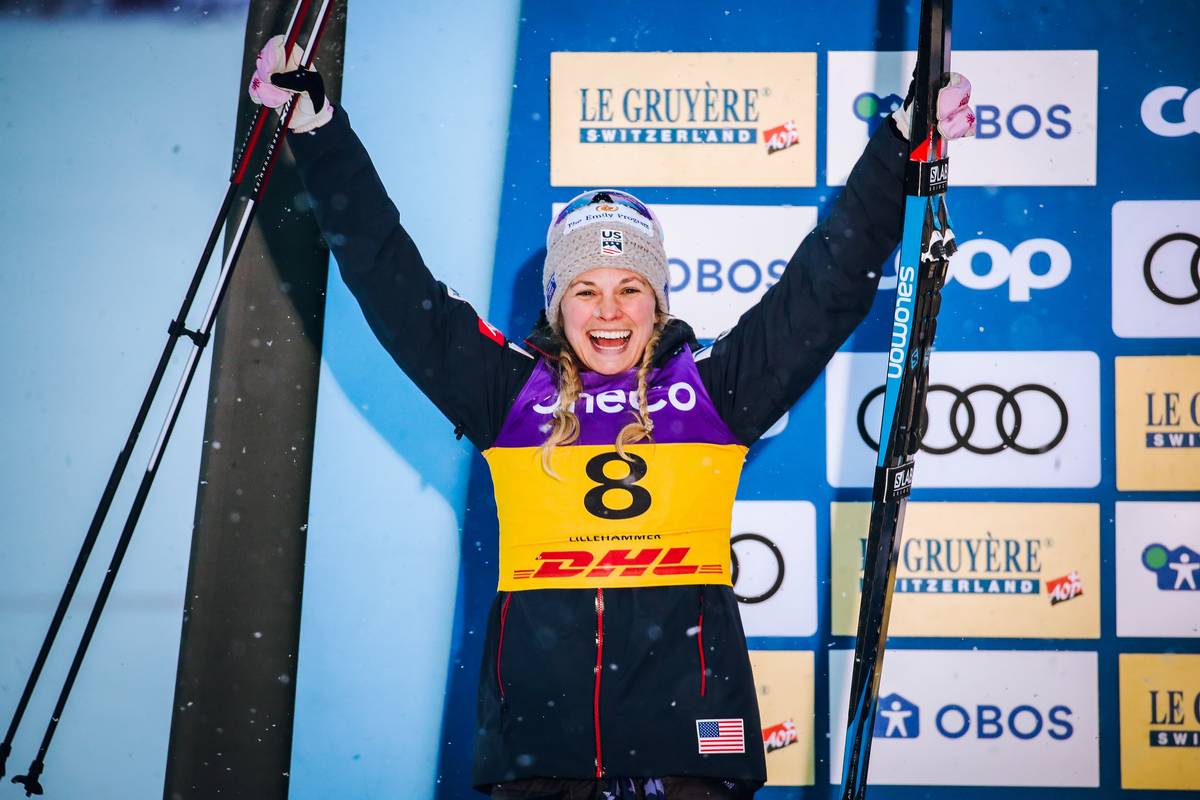
    Jessie Diggins on her first podium of the season after finishing 2nd in the freestyles sprint in Lillehammer www.nordicfocus.com © Modica/NordicFocus.
    “We are incredibly excited to be welcoming so many athletes to their first Olympic team,” said U.S. Ski & Snowboard Cross Country Director Chris Grover. “We’ve been watching this American talent emerge at World Juniors for the past five seasons, and now these very same athletes that have brought home so much hardware are populating the Olympic team. Beijing will be such a valuable experience for them as they progress towards being medal contenders at the highest level. We are also lucky to have the experience, leadership, and professionalism of athletes like Jessie Diggins and Rosie Brennan to show these young athletes what it takes to be successful at this level.”
    Athletes were selected based upon World Cup results, World Cup rankings, SuperTour results, and the recently completed U.S. Cross Country Championships.
    The 2022 Olympic Winter Games will feature 12 cross country events, including four individual events for both men and women and two team events for each gender, including the team sprint and the team relay. At each Olympics, disciplines swap between freestyle and classic techniques. For example, Diggins and Kikkan Randall won the freestyle team sprint at the 2018 Games—the first-ever Olympic gold medal for the USA in cross country skiing. The team sprint hosted at the 2022 Games will be held in the classic technique.
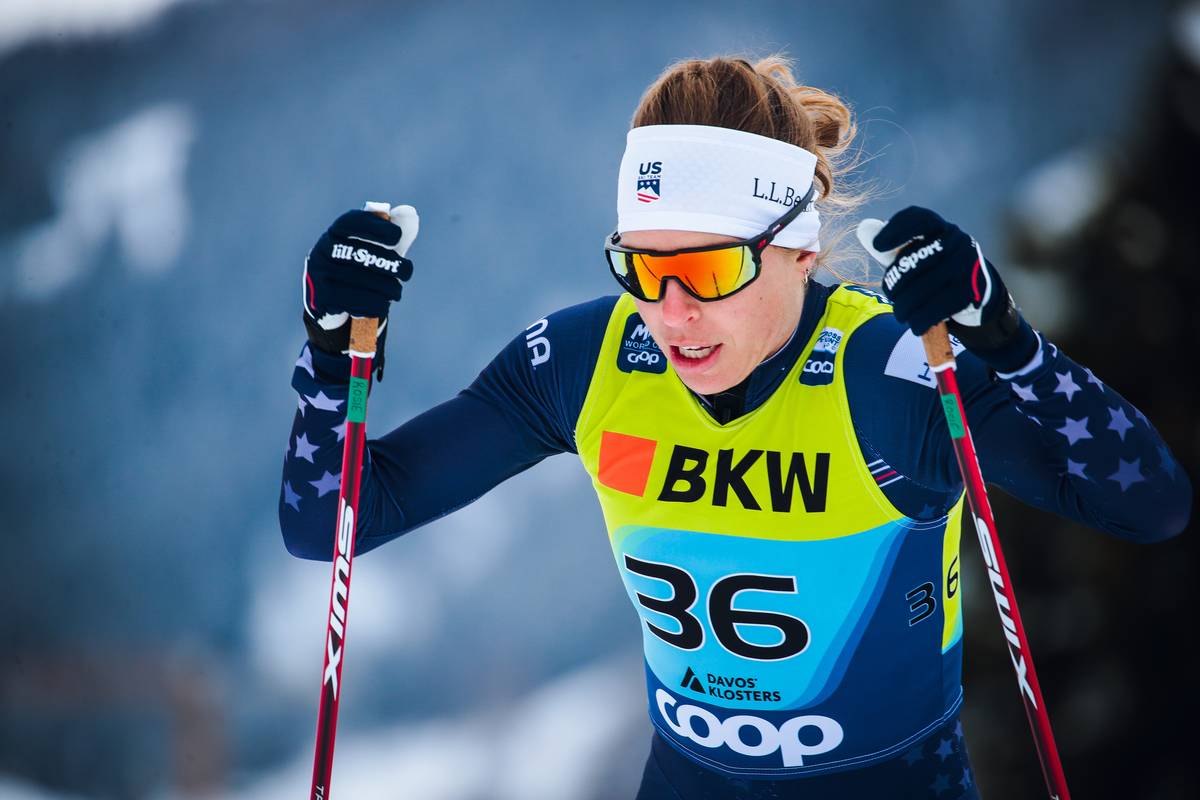
    JC Schoonmaker was the top U.S. qualifier in the Davos sprint, placing 5th. (Photo: Nordic Focus)
    Cross country kicks off the 2022 Games with its first medal event, the women’s 15k skiathlon on Saturday, February 5. The event features two 7.5k legs, with the athletes skiing the classic technique for the first 7.5k, then switching to the freestyle technique for the second 7.5k. The men will compete in the 30k skiathlon on Sunday, February 6— a 15k classic followed by 15k freestyle. The complete Olympic cross country program is listed below.
    2022 U.S. OLYMPIC CROSS COUNTRY TEAM
    (Name, Hometown; Birth Date; Club; Past Olympics)
    Women
    • Jessie Diggins, Afton, Minnesota and Stratton, Vermont; 8/26/91; Stratton Mountain School Elite Team (Olympics: 2014, 2018)
    • Rosie Brennan, Park City, Utah; 12/2/88; Alaska Pacific University Nordic Ski Center (Olympics: 2018)
    • * Julia Kern, Waltham, Massachusetts 9/12/97; Stratton Mountain School Elite Team
    • * Hailey Swirbul, El Jebel, Colorado; 7/10/98; Alaska Pacific University Nordic Center
    • * Sophia Laukli, Yarmouth, Maine; 6/8/2000; University of Utah
    • * Novie McCabe, Winthrop, Washington; 12/15/2001; Methow Valley Nordic Team
    • * Hannah Halvorsen, Truckee, California; 2/19/1998; Alaska Pacific University Nordic Ski Center
    • Caitlin Patterson, Craftsbury, Vermont; 1/30/90; Craftsbury Green Racing Project (Olympics: 2018)
    Putting together another highlight weekend in Davos, Rosie Brennan skis to 4th in the 10k individual start skate. (Photo: NordicFocus)
    Men
    • * JC Schoonmaker, Tahoe City, California; 8/12/2000; University of Alaska Anchorage
    • * Kevin Bolger, Minocqua, Wisconsin; 4/11/93; Sun Valley Ski Education Foundation
    • * Ben Ogden, Landgrove, Vermont; 2/13/2000; University of Vermont / Stratton Mountain School Elite Team
    • * Luke Jager, Anchorage, Alaska; 1/7/2000; University of Utah/Alaska Pacific University
    • * Gus Schumacher, Anchorage, Alaska; 7/25/2000; Alaska Winter Stars
    • Scott Patterson, Anchorage, Alaska; 1/28/92; Alaska Pacific University Nordic Center (Olympics: 2018)
    *Denotes first-time Olympian 
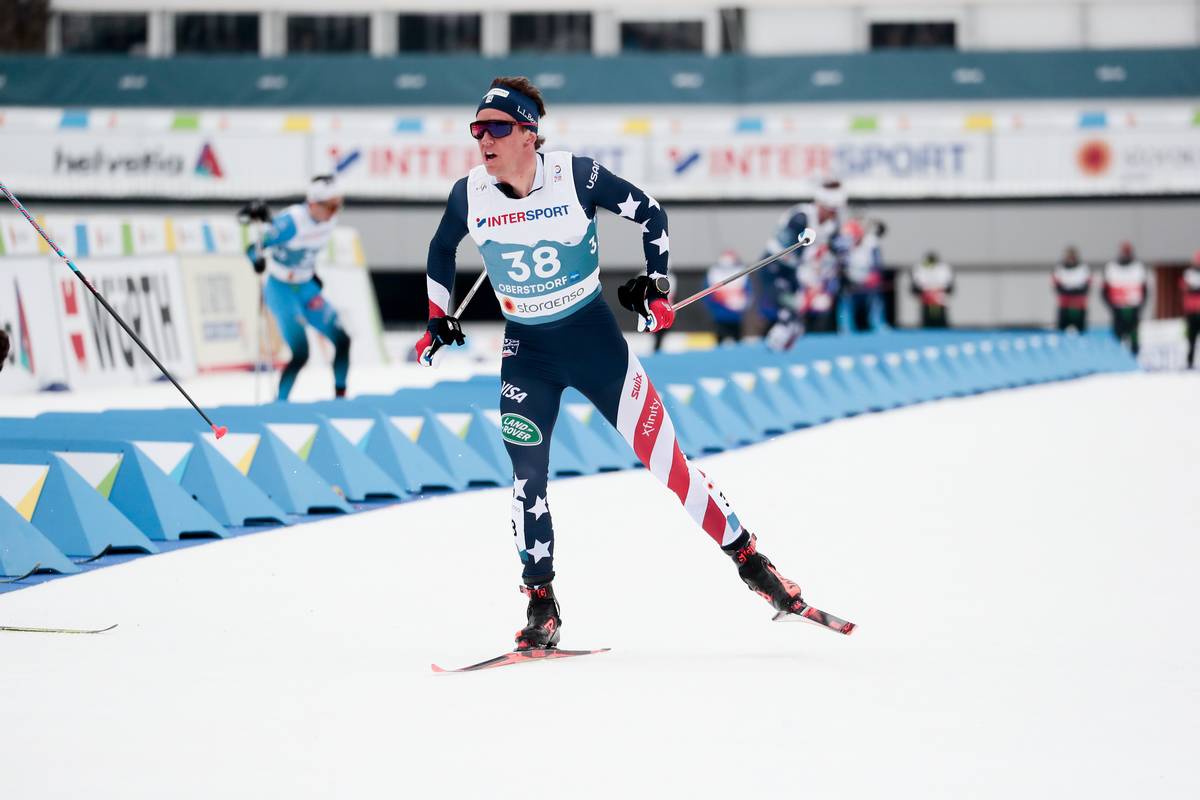
    Scott Patterson skis to 14th in the World Championship 30k skiathlon in Oberstdorf, Germany. (Photo: NordicFocus)
    Watch Team USA compete on the networks of NBC throughout the Olympics, February 4-20, 2022.
    Follow the team throughout the Beijing Olympics:
    Instagram @usskiteam
    Twitter @usskiteam
    QUOTES
    Jessie Diggins
    “I’m honored and excited to be representing my country once more as a member of the 2022 Olympic team! This will be my third Olympics and I’m so proud of all the hard work and dedication from all our athletes to make this team. I’m also incredibly thankful for the support from so many people who have helped me prepare for the Games! I won’t be racing for just myself out there.”
    Julia Kern
    “I am very excited to be named to the Olympic team, it is a dream come true! I believe the team we are bringing is really strong and will do great things at the Olympics. It takes a massive support system to get there and I am extremely thankful for all of the people who have been a part of this journey.”
    Rosie Brennan
    “I am honored to be representing Team USA in another Olympic Games. I am very excited to be on this team and to be in a place where we can fight with the best. I am looking forward to getting there and getting the races started.”
    Hailey Swirbul skis to 6th place in the 10k individual start skate in Davos. (Photo: NordicFocus)
    Hailey Swirbul
    “More than anything, I feel honored to represent my country on the world stage at the Olympics. I have dreamed of the opportunity to do this since I was a kid and it hasn’t totally set in for me yet! I think it won’t feel real to me until we actually arrive in Zhangjiakou. I am really looking forward to finishing my preparations knowing I am ready to fight with everything I have out on the race courses. Going into my first Olympics, I’m not sure what to expect, but I am going to try to stay true to myself and do what I know how to do!”
    Novie McCabe
    “I am super excited! The Olympics have always been the dream and it’s surreal to have actually made the team! Going into this season I was very uncertain of what it would hold, but it’s been full of so many great experiences and it’s pretty hard to believe that I also get to go to the Olympics. Just overall, I’m feeling quite happy about things and very thankful for everyone who has helped make all of it possible!”
    Sophia Laukli
    “I’m so so excited. It’s pretty incredible to actually be named to the Olympic team and I still haven’t fully wrapped my mind around it. Even just a year ago, the Olympics seemed far-fetched, so it feels pretty surreal. That being said, I am so excited and grateful for the opportunity. It’s definitely a proud moment and I’m looking forward to the whole experience and learning a lot from it, and I especially can’t wait to see what the U.S. team can do this year!”
    Caitlin Patterson
    “I’m very excited to be heading to my second Olympic Games! The U.S. is bringing a strong group of cross-country athletes and I’m looking forward to seeing what we can do!”
    Hannah Halvorsen
    “All of my emotions are on overload. I am beyond proud, beyond grateful, and beyond excited and honored to be on the 2022 Olympic Team.”
    JC Schoonmaker
    “I’m super pumped to be named to my first Olympics! Pretty crazy feeling. It’s still kinda hard to believe it! Can’t wait to get over there, enjoy the experience and race the best I can!”
    Kevin Bolger
    “It’s every kid’s dream come true. It’s something I’ve been shooting for and dreaming of for a long time. And to be able to call my family and give them the news is just as satisfying as getting the news myself—they are just as much a part of this journey as anyone. So now making the team is the last stepping stone to my ultimate goal and that is to return from Beijing with the result I want! And I couldn’t be more excited about the men’s team I get to travel there with. It goes without saying the men’s team is putting up big results on the World Cup, and now I think we can expect some big results at the Olympics! Time to go have some fun!”
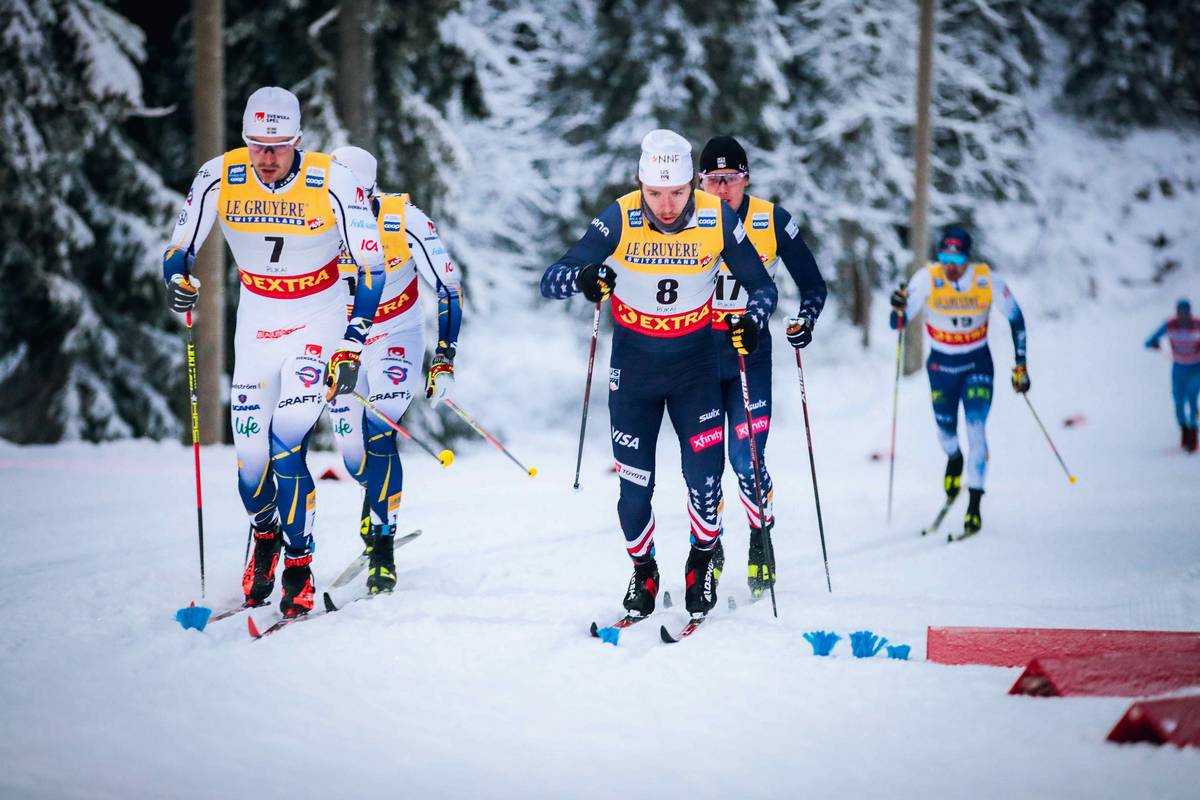
    Ben Ogden leads teammate Luke Jager up the first climb during the quarterfinal of the classic sprint in Ruka. (Photo: NordicFocus)
    Ben Ogden
    “I’m really excited to be named to the Olympic team. Growing up in southern Vermont, I have been inspired by Olympians my whole life, and becoming one myself has always been a dream. I am excited to race hard and have some fun in China.”
    Gus Schumacher
    “I really have to stop and give myself some credit because it’s a lifelong dream coming to fruition, but at the same time my goals keep coming, and just making the team isn’t the end of the road. I wanna race fast! But overall I’m very excited for the opportunity to represent the U.S. on the highest level in my sport.”
    Luke Jager
    “This is a dream come true for me! I remember being a little kid watching Kikkan (Randall) and Andy (Newell), Simi (Hamilton), and crew at the Olympics and getting so fired up. Feels pretty crazy to get to be here now a few years later with my best friends. I feel so thankful for all the people that have worked so hard over the years to help us get here!”
    Scott Patterson
    “Races at the 2022 Olympics have been on my goal list for a long time. I’m excited to return to the Olympics and build on the successes I had in 2018. We have a strong contingent of U.S. athletes and I look forward to being a part of it!”
    2022 Olympic Winter Games Cross Country Schedule
    Saturday, Feb. 5
    Women’s 15k Skiathlon
    Sunday, Feb, 6
    Men’s 30k Skiathlon
    Tuesday, Feb. 8
    Men and Women’s Freestyle Sprint
    Thursday, Feb. 10
    Women’s 10k Classic
    Friday, Feb. 11
    Men’s 15k Classic
    Saturday, Feb 12
    Women’s 4x5k Relay
    Sunday, Feb. 13
    Men’s 4x10k Relay
    Wednesday, Feb. 16
    Men and Women’s Classic Team Sprint
    Saturday, Feb. 19
    Men’s 50k Freestyle Mass Start
    Sunday, Feb. 20
    Women’s 30k Freestyle Mass Start
    Jessie Diggins celebrates a podium effort with team sprint partner, Julia Kern, who anchored the team to 2nd place in Dresden, GER. (Photo: NordicFocus)
    About U.S. Ski & Snowboard
    U.S. Ski & Snowboard is the Olympic National Governing Body (NGB) of ski and snowboard sports in the USA, based in Park City, Utah. Tracing its roots directly back to 1905, the organization represents nearly 200 elite skiers and snowboarders in 2021, competing in seven teams; alpine, cross country, freeski, freestyle, snowboard, nordic combined and ski jumping. In addition to the elite teams, U.S. Ski & Snowboard also provides leadership and direction for tens of thousands of young skiers and snowboarders across the USA, encouraging and supporting them in achieving excellence. By empowering national teams, clubs, coaches, parents, officials, volunteers and fans, U.S. Ski & Snowboard is committed to the progression of its sports, athlete success and the value of team. For more information, visit www.usskiandsnowboard.org
    FOR MORE INFORMATION CONTACT:
    Tom Horrocks
    U.S. Cross Country Team Olympic Press Officer
  • Olympic State of Mind: Hoffman ‘Introspective’ Before First Games

    Olympic State of Mind: Hoffman ‘Introspective’ Before First Games

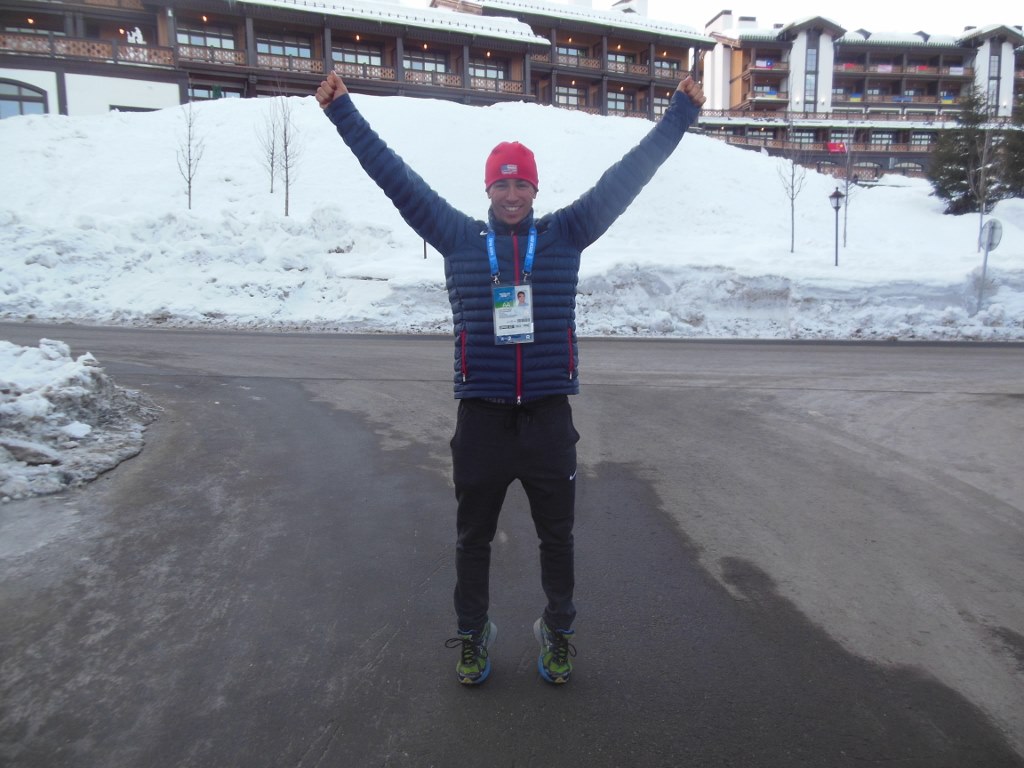
    Noah Hoffman at his first Olympics in Krasnaya Polyana near Sochi, Russia. (Photo: Noah Hoffman) http://noahhoffman.com/olympic-life-day-3/
    Noah Hoffman two days before his first race at his first Olympics in Krasnaya Polyana near Sochi, Russia. (Photo: NoahHoffman.com)

    A week ago, Noah Hoffman was in Toblach, Italy, nearly 3,000 kilometers away from the site of the 2014 Winter Olympics in Sochi, Russia, resting up and recouping for one last weekend of World Cup racing.

    After his last pre-Olympic race on Feb. 1, the 24-year-old Aspen, Colo., native would have seven days to gear up for his first Games. One of seven Olympic rookies on the U.S. cross-country team’s 14-athlete roster (along with Erik Bjornsen, Sadie Bjornsen, Sophie Caldwell, Jessie Diggins, Ida Sargent, and Brian Gregg), Hoffman wasn’t alone in the nuance and whirlwind of the massive leadup, which intensified after the athletes flew to Munich on Monday for processing, where they received their credentials and uniforms.

    “Uniforming was like shopping in a giant apartment store with really helpful employees where everything was free and you can’t say no,” Hoffman wrote on his blog. “We were handed checklists of all the stations we had to visit, and we could go in any order we liked. The whole thing was in a big warehouse.” The next day, the team arrived in Russia.

    FasterSkier caught up with Hoffman, of Ski & Snowboard Club Vail/Team HomeGrown, on Jan. 30 to talk about everything from his training to his mentality and goals before the Olympics. Hoffman plans to compete in four events: the 30-kilometer skiathlon, 15 k classic individual start, 4 x 10 k relay, and 50 k freestyle, respectively.

    Noah Hoffman (r) chases the the overall World Cup leader,  Martin Johnsrud Sundby of Norway, during training at the 2014 Winter Olympics at the Laura cross-country center on Friday. "I tucked by him going at least 30 mph," Hoffman wrote on his blog. (Photo: NoahHoffman.com)
    Noah Hoffman (r) chases the the overall World Cup leader, Martin Johnsrud Sundby of Norway, during training at the 2014 Winter Olympics at the Laura cross-country center on Friday in Krasnaya Polyana near Sochi, Russia. “I tucked by him going at least 30 mph,” Hoffman wrote on his blog. (Photo: NoahHoffman.com)

    FasterSkier: So the taper has begun?

    Noah Hoffman: Oh yeah, I’ve hardly trained at all. I took the last two days off and today [last Thursday] I think I skied for 30 minutes. It is definitely that time of year.

    FS: How does that feel? Are you restless?

    NH: I’m pretty restless, for sure. I’m glad to be out of Seiser Alm [Italy] because there was not a lot going on up there. It was actually a tough place to be tapering, but it would be a great place to train five hours a day and be really tired when all you want to do is eat, sleep and ski, but when you don’t have much going on I was struggling to stay happy just because there was so little to do and so little going on.

    FS: When did the Olympics start to feel real?

    NH: I read a bunch of stuff to get psyched about the Games. Until then I’d been stockpiling it and putting it off to the side. I went through and looked at the maps of the villages … and it’s coming right up … it’s crazy.

    FS: How are you keeping nerves in check?

    NH: Honestly, I don’t feel like getting too excited has been an issue for me. Like I said, I was dealing with staying happy in Seiser Alm which means that I wasn’t worrying. I was being a little more introspective. I honestly haven’t been that focused on the Games. I’ve been working on a little trip I’m taking after the Games, like a little vacation. Looking beyond them has helped a little bit in terms of not taking them totally out of proportion in my own mind. I think that the best thing I can do is treat them as another race, because I give it my all in every race. I just need to go there and execute my plan. The reason I should ski better in these races is because my training plan is tailored to them, not because I do anything different once I’m on the start line.

    FS: How do you feel about where you’re at?

    NH: It’s up and down, as always. There are many, many races that I wish I had back. There are some races where I just didn’t have it, but the true standouts: the best time of the day in the last race of the Kuusamo Triple and the second-best time of the day in the point-to-point race in the Tour. Those are really high, highs, those are better races than I anticipated coming into this season. It gives me a ton of confidence, especially in my skate skiing. I continue to be frustrated in my classic skiing and I believe I’m a better classic skier than I’ve shown this year. But I’m really excited about my skate skiing, and I think it’s an indicator that my fitness is really good and that the work that I did through my surgery last spring was really good, and that the work that I’ve done with Zach Caldwell on my skate technique has gone really well.

    I’m really excited to take confidence in the process because I have clear indicators that it’s going in the right direction and I really believe that anytime I’m on the start line I can be top-10 in the World Cup, which is something that I have not had in the past. I haven’t had a really disappointing skate race all season. There haven’t been that many skate races … There’s basically been three: two that I was top three in and the one in Davos where I was good, but not great. And so there’s a lot of skating coming up in the Olympics, the second half of the [skiathlon] pursuit next week and then the 50 k and I’ll probably do a skate leg of the relay. I feel like I’m on track in my goals being among the best skiers in the world in a couple of years.

    FS: Which of those events are you most focused on?

    NH: [The skiathlon and 50 k skate] bookend the games; they’re two weeks apart. I am confident in my classic skiing. I feel like it’s not that far away and I believe I can easily stay with the group through the classic portion of that skiathlon, and then it just becomes a mass start skate race. At that point, I’ve proven this year that I’m one of the best skaters in the world and I think that’s a really, really good opportunity for me. And then of course the 50 k skate is on the hardest course in the world, it’s a long distance race, it’s at a little bit of altitude [around 6,000 feet], all of which plays right to my strengths. That is gonna be an amazing experience and I’m really looking forward to that race. I feel like the 15k classic; I can accomplish other goals in that race. I have an outside chance at a medal in the two mass start races but not in the classic race.  A top 15 or top 20 result is very achievable in that race and if I achieve something along those lines I’ll be very happy.

    FS: How did prequalifying for the Olympics affect your confidence?

    NH: I was happy with my results last season, and going into this season, making the Olympic team was never on my mind. Not making the Olympic team would have been a step in the wrong direction. That probably would have made me question my sole focus on skiing and so I’ve really just been looking forward. Doing well in Sochi was always a step towards my bigger career goals. It’s really nice to be in that position, but there is still a long, long way to go to accomplish my goals, and so I’m just looking forward.

    FS: How has it been being the lone distance guy on the team for most of the season, until now?

    NH: I like to train by myself anyway and I have a lot of faith and trust in my personal coaches and I really believe that working with them, especially working with [1992 Olympian] John Callahan out of Aspen has been critical to my success. So I think it would actually be more challenging if I were on a team with more really high-end distance skiers because I would feel definitely torn – do we want to train more in a German style as a big group and really push each other, or do we want to train more in a Norwegian style and hope that we all each do well independently? And so I’m not really left with that choice, but I think that doing it independently is my choice anyway.

    Having guys like Newell and Simi on the team is really, really good for me to be able to work on my weaknesses and I can learn a ton from them and I respect them and their skiing immensely and I really enjoy spending time around them as well, but I think that not having them be directly competitive with me in most races and having them be on slightly different schedules works really well and is a really nice balance. I’m looking forward to having more distance guys in the future to push me, you know having Erik Bjornsen and Brian Gregg and of course [Kris] Freeman who’s been a mentor for me on the distance side of things. Really important to have those guys around for me I can learn a lot from them also.

    FS: And your parents will be watching you at the Olympics from home? 

    NH: They came to the last few days of the Tour de Ski and we took a little vacation afterwards, but it was just a little too expensive and a little too logistically challenging to get to Sochi. They’re very excited to be able to follow it from home and I think NBC is gonna have good coverage.

    Note: Hoffman broke down the Olympic TV schedule on his blog.

    Also on his blog, Hoffman confirmed Friday that he would walk in the Opening Ceremony, two days before his first race and the eve of the women’s 15 k skiathlon.

    “I decided to attend, and I’m really excited. I am going to return on the early shuttle departing after we walk in,” he wrote. “I’m bummed to miss the show, but I’m hoping to be in bed by midnight. The bus that stays for the whole ceremony is scheduled to return at three in the morning.”