From the FasterSkier archive — posts syndicated from athletes’ and coaches’ own blogs between 2004 and 2012, kept online as published. Current coverage is at fasterskier.com.

Tag: U.S. Para Nordic

  • Masters and Gretsch Prepare for Two Paralympic Cycles After Postponement of Tokyo Games

    Masters and Gretsch Prepare for Two Paralympic Cycles After Postponement of Tokyo Games

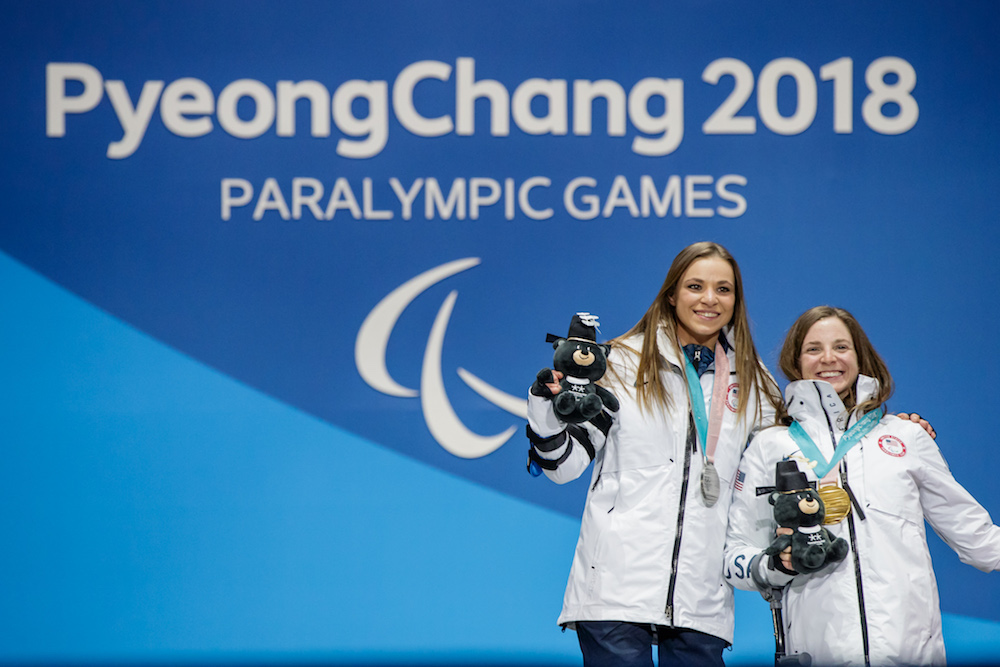
    Kendall Gretsch (r) and Oksana Masters at the 2018 Paralympics medal ceremony for the women’s sitting 6 k biathlon sprint after winning gold and silver, respectively, on the first day of competition in PyeongChang, South Korea. (Photo: U.S. Paralympics/Joe Kusumoto)

    Of the members of the U.S. Para Nordic team, more than half compete at the highest level in both summer and winter sports. Instead of quadrennial, their training is designed for biennial Paralympic cycles, oscillating between sports each year with an overall focus shift toward whichever Games is approaching fastest. 

    And the goal is not simply to compete in both rounds of the Games, it is to bring home medals. 
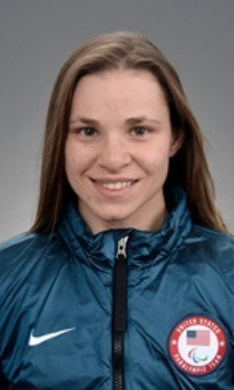
    Oksana Masters is an elite multisport athlete who competes in hand-cycling, para nordic and para biathlon . (Photo: Screenshot teamusa.org)

    Illinois based Oksana Masters is a four-time Paralympian with eight medals; she earned two gold, three gold, and two bronze medals in cross country and biathlon, and a bronze medal in rowing — the first American medal in the trunk and arms mixed double scull category. After a back injury in 2014, she switched from rowing to cycling, and went on to qualify for the 2016 Paralympic Games in Rio de Janeiro, Brazil where she walked away just shy of the medals, finishing 4th and 5th and hungry for more. 
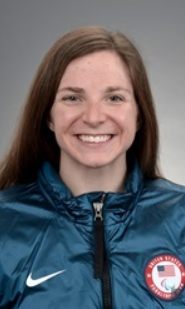
    Kendall Gretsch is an elite multisport athlete who competes with Team USA Paratriathlon, Para Nordic and Para Biathlon . (Photo: Screenshot teamusa.org)

    Her teammate, Kendall Gretsch, took home two gold medals from the 2018 Paralympics in cross country and biathlon and is a three time world champion and five time national champion in paratriathlon, an event that was not part of the Summer Paralympics for her category until the upcoming Games in Tokyo. Gretsch has been living and training at the Olympic Training Center (OTC) in Colorado Springs since March of 2019. 

    Under normal circumstances, there would be an 18-month gap between the summer Paralympics in Tokyo and the winter Games in Beijing. However, on March 24th it was announced that the Tokyo Games would be pushed back to August of 2021 due to health and safety concerns surrounding the global COVID-19 pandemic. For athletes also competing in Beijing in February 2022, this leaves roughly six months to change gears and prepare to again be at peak fitness, which is no small challenge. 

    Let’s take a step back. In mid-March when the scope of the pandemic became apparent and Europe and the United States began to rapidly shut down, Masters was in Östersund, Sweden about to compete at the World Championships in biathlon. The team had arrived a few days prior to the start for training, but plans changed at the last minute. 

    “Instead of waking up to a message from your coach saying, ‘Hey, it’s race day!’ Instead, it was, ‘Bad News: Sweden is cancelling all events that are 500 people or more,’” Masters told FasterSkier in a call.
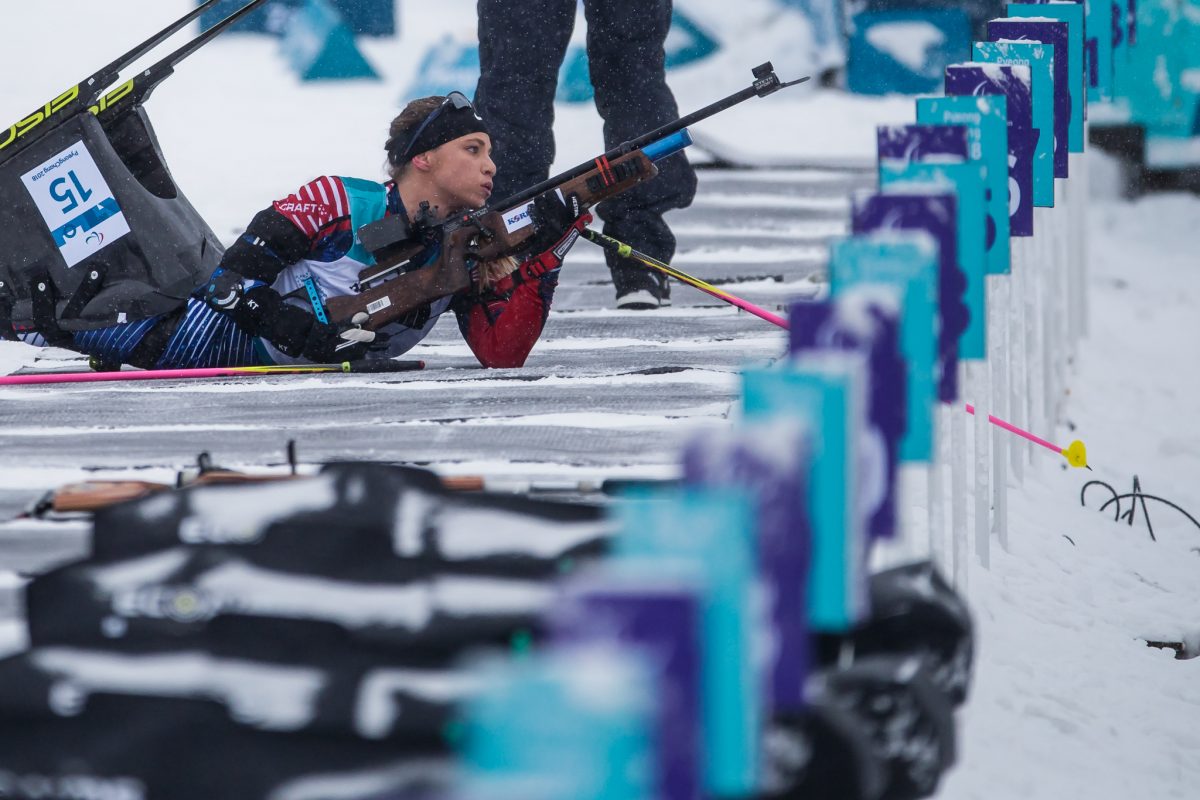
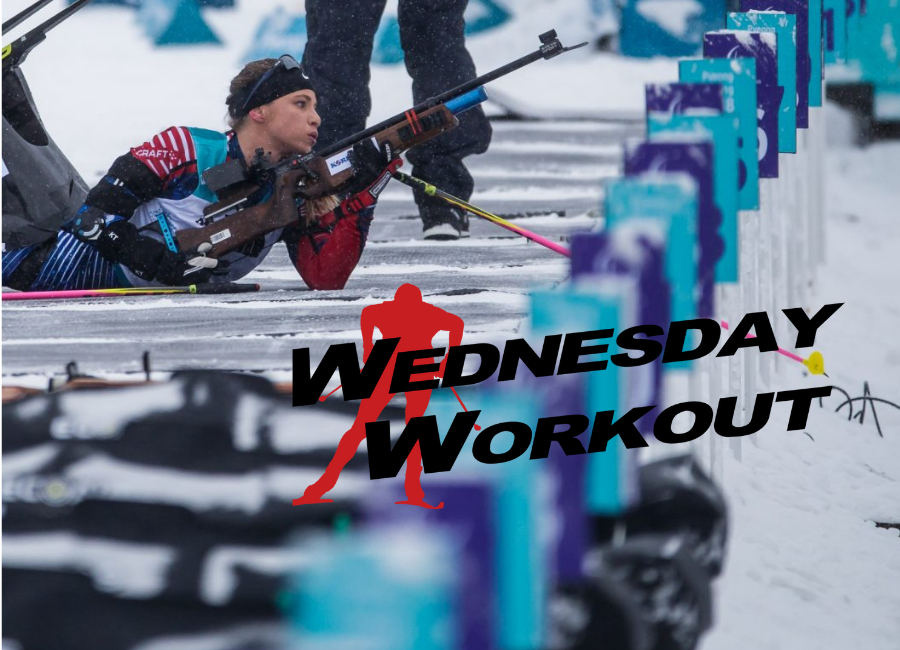
    Oksana Masters focused and in the moment on the range during the 2018 Paralympics in PyeongChang, South Korea. (Photo: U.S. Paralympics/Joe Kusumoto)

    She recalled feeling “shocked” as her season ended so abruptly. Her plan had been to leave halfway through the World Championships in order to head to an essential Tokyo qualifying event for cycling. 

    Her initial reaction was frustration that she had missed valuable training time for cycling by staying with the nordic team through mid-March, but with the understanding she now has of the scope and severity of the pandemic, her perspective has shifted. That said, she is also fully aware of the challenge she now faces to peak for two separate sports in such a short period of time. 

    “This is way bigger than sports and the Olympics… [The organizers] made the right call [to postpone] and I’m happy with that, but in my ideal world, I wish that this never happened. I’m sure a lot of people do. Because they postponed to 2021 and my focus is to make it to 2022 as well, it made that transition window from Tokyo to Beijing from over a year to basically six months. My sports are two separate sports — they do not go hand in hand, they are complete opposite motions and I have to basically start over with my fitness, minus the endurance.”

    Finding the silver lining, she added that the Olympic postponement does allow her more time to prepare for cycling. 

    “The good side is that because I was competing full-time on the nordic side and did the World Cup season, I missed a lot of training time on the bike where my competitors were traveling to Spain and all these warm places to get on the road and spend those hours on their bikes. So now this is allowing me to work on my bike that I’m building and at the same time just get more time on the bike and get sport specific strength.”
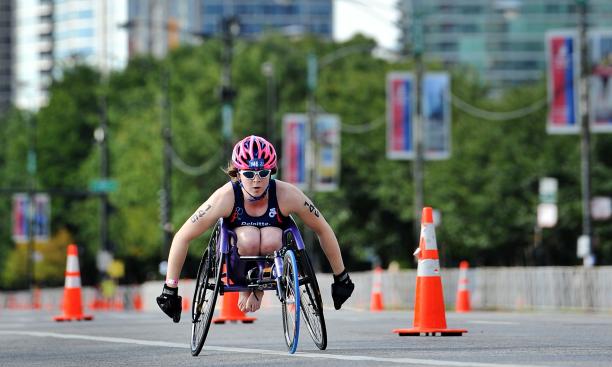
    Kendall Gretsch is a three time World Champion in the women’s PTWC classification. (Photo: International Paralympic Committee)

    Because she too needed to qualify for Tokyo, Gretsch had ended her nordic season before the World Championships and was in Florida at the main triathlon qualifier when the country began to shut down. She was slated to compete on back to back weekends, both of which were cancelled the day prior to the first race. It is currently unclear what Gretsch will need to do in order to make the U.S. triathlon team for Tokyo.  

    “At this point, it’s kind of just waiting to see when we’ll be able to race again. Once that’s solidified more, the international triathlon union will have to come up with new qualification criteria and then, from that, the US will come up with new qualification… I’ll definitely have to compete in a couple more international events to solidify earning a country spot for the US.”

    Aside from the uncertainty regarding travel and the seemingly impossible challenge of holding the 2020 Olympics and Paralympics without furthering the spread of the coronavirus, many athletes were also unable to access facilities and resources they depended on to practice skills and adequately prepare for their sport. For Masters, the inability to access a gym impeded her training routine. 

    “As a Paralympic athlete, in my two sports — especially for skiing — I rely on strength training,” Masters explained. “I lift three times a week. So that took a big toll.” 

    Her normal spring routine would include baseline metabolic testing and training camps with her coach, who is from Germany. Since he is currently unable to leave the country, Masters is not sure when she will be able to meet with him for these measures to evaluate her training. Overall, she is hitting reset on her plan and embracing the time to change gears at a more manageable pace.

    https://www.instagram.com/p/B9IGgiLJSID/?utm_source=ig_web_copy_link

    “In my case, we’re kind of starting all over and making sure the base is good in cycling,” she said. “So it’s a lot of endurance riding, a lot of time on the bike, and just adjusting back to it the right way, as opposed to coming off the nordic season, trying to make the qualifiers in June, it was going to be shortcutting all that, which is really hard to do.”

    Meanwhile, life at the OTC looks significantly different than Gretsch is accustomed to, with less than twenty people remaining on the campus. Apart from not being able to train in the pool or access the biathlon range, she is no longer able to get massage or other sports medicine treatments that she could previously. She does still have access to the OTC cafeteria, but meals are now take-out, meaning the remaining athletes on campus spend much of their day isolated in their rooms.  

    Not being able to swim has been the biggest impact on Gretsch’s training, as this would normally be a time of building volume for triathlon. She explained that she spends ten minutes per day on a stretch band swim trainer, but it is far from replicating the stimulus of the pool. She also borrowed some kettlebells and weights from the gym so she can do some strength training from her room.  

    “I think the good thing is that I’m still able to do two of the three sports in triathlon,” said Gretsch. “So even though I’m not swimming right now, I have been able to bike whether it’s inside on a trainer, or outside when the weather is nice here, and the same in the racing chair.” 
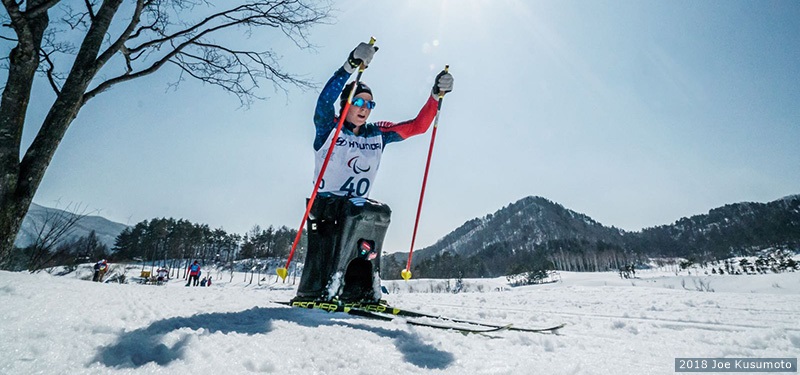
    Kendall Gretsch racing to her second gold medal of the 2018 Winter Paralympics on Sunday in the women’s 12 k sitting cross-country race in PyeongChang, South Korea. (Photo: US Paralympics/Joe Kusumoto)

    Both athletes are feeling uncertainty about what the 2020-2021 nordic season will look like and how cycling or triathlon qualifying events will fit into the mix. Currently, a cross-country World Championship and an Olympic venue test event in Beijing are scheduled for February and March. But, seasons may need to be cut short for Tokyo qualifiers. Both athletes have found solace in the partnership between their two sets of coaches. 

    “I think the really awesome thing is that both my sets of coaches for nordic and triathlon are really good about being open and communicating with each other about the situation,” said Gretsch. “It’s obviously a really unique situation that no one expected to be in, but in such an uncertain time, I have a lot of confidence about the situation going well just because I know that everyone just wants to work well together and are understanding that both of these sports are a priority to me.”

    Interview with Kendall Gretsch following Tokyo 2020 Paralympics postponement.

    Masters echoed the sentiment, adding that no one really knows how to handle the situation.

    “They’ve been really flexible,” said Masters. “Knowing each of our different circumstances and just waiting to see what the new race schedule is going to be and what the key events and races are for me to go to before they start sending workouts. It’s a little bit playing it by ear and making it up as you go.” 

    Moving forward, she is staying positive and doing her best to adapt with the changes as they come.

    “I try to keep it in perspective. For the most part, everyone is in the same boat… You can lose energy by focusing on all the things you cannot control. It is what it is. For me, I’m just trying to do my part for this whole coronavirus outbreak and just be home, be smart with my training, and just make each day count still and get stronger in some way.”

    Interview with Oksana Masters following Tokyo 2020 Paralympics postponement.
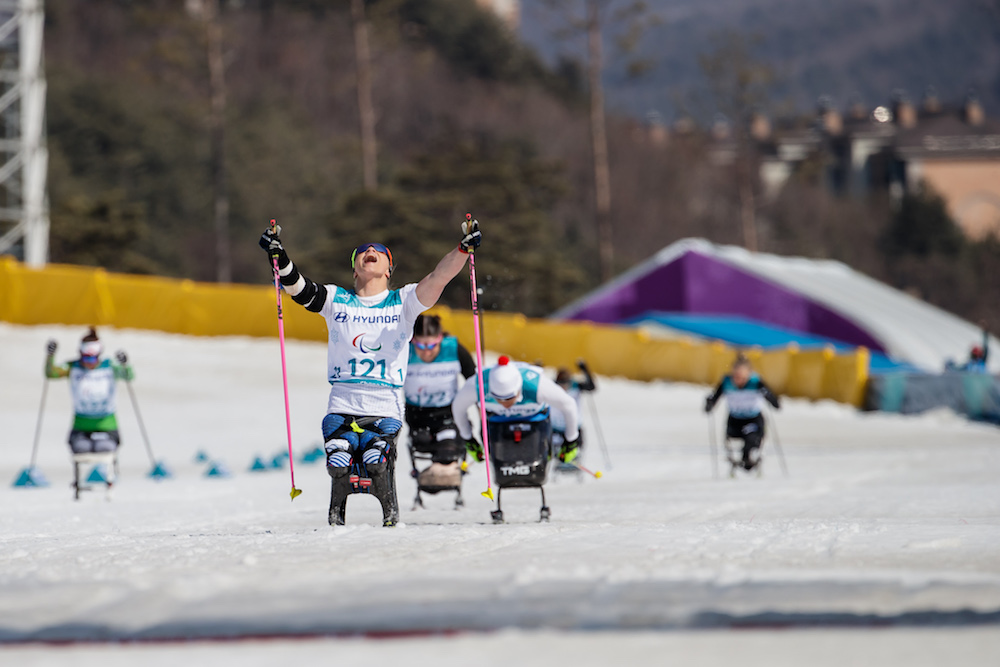
    American Oksana Masters reacting to her first gold medal in her third Paralympics, after winning the women’s 1.1 k sitting sprint in PyeongChang, South Korea. (Photo: U.S. Paralympics/Joe Kusumoto)
  • Wednesday Workout: Hitting the Trails with U.S. Para-Nordic and Head Coach Martin Benes

    Wednesday Workout: Hitting the Trails with U.S. Para-Nordic and Head Coach Martin Benes

    Oskana Masters focused and in the moment on the range during the 2018 Paralympics in PyeongChang, South Korea. (Photo: U.S. Paralympics/Joe Kusumoto)

    For this week’s Wednesday Workout, FasterSkier reached out to Martin Benes, the newest addition to the U.S. Para-Nordic coaching staff. Benes joined U.S. Para-Nordic this August, after five years working as the nordic skiing director and head coach at Sugar Bowl Academy in Norden, California. He is still currently living in California.

    Benes’s primary work is with the Para-Nordic national team: A-team members Oksana Masters, Kendall Gretsch, and Dan Cnossen, as well as B-team member, Aaron Pike. Many of those athletes compete in sports outside nordic skiing–Masters also competes in handcycling, Gretsch in para-triathlon–permitting Benes to coach remotely fairly easily through the fall.

    “In the summer/fall, we’re kind of operating on a camp schedule,” Benes said during a phone conversation indicating that since late August, his primary role has been writing athlete training plans. He has also facilitated three camps for U.S. Para-Nordic national team athletes.

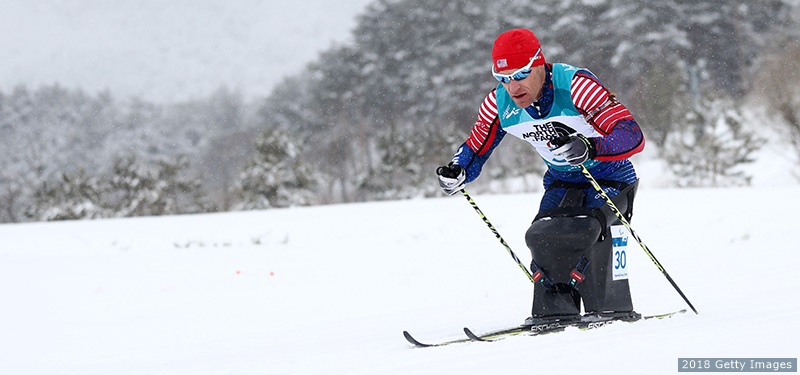
    American Dan Cnossen racing to second in the men’s 15 k sitting biathlon individual at the 2018 Paralympics in PyeongChang, South Korea. (Photo: U.S. Paralympics/ Maddie Meyer-Getty Images)

    This first camp was in Torsby, Sweden, where national team athletes made use of the city’s ski tunnel from late September to early October.

    “Then we had a camp out in Lake Placid, [New York]” Benes said. “They used their snowmaking to make us a small loop, which was really awesome of them. Obviously, with this level of athlete, it’s nice to be able to get on snow at least once a month, especially in the fall. We had a big group of development athletes there.”

    Following the Lake Placid camp in late October, the athletes gathered once again, this time in West Yellowstone, Mont., for the Rendezvous Ski Festival held Nov. 20 until Nov. 24. Before returning to California, Benes stayed in Bozeman to work with the national team athletes for a week after the festival.

    “I’ll be spending chunks of time up in Bozeman and be able to work with athletes up there going into race series,” Benes said.   

    The International Paralympic Committee’s first series of World Cup races kicks off Wednesday, Dec. 12 in Vuokatti, Finland. (For the International Paralympic Committee’s complete calendar of cross-country and biathlon competitions, click here). 

    Prior to this year, Benes’s primary coaching work has been with junior ski racers (he’s coached for Far West, Auburn Ski Club and Sugar Bowl Academy) and college-age athletes (he spent two years as the assistant coach for Bates College, his alma mater). On being an able-bodied coach for Para-athletes, Benes indicated that at its core, the philosophy of coaching is the same. At present, there are no former Para-Nordic athletes coaching with the program.

    “The training principles don’t really change,” Benes said. “Yes there are things to be aware of physiologically, but in terms of the core principles, it’s not that different.”

    Benes said that paralympic standing athletes’ development often mirrors fairly closely, that of able-bodied athletes.

    “In terms of that athlete is going to have started skiing pretty young and probably trained with their club with some modifications,” he said.

    There are currently two college athletes in the Para-Nordic program’s development program, Grace Miller (University of Alaska Fairbanks) and Mia Zutter (College of St. Scholastica).

    Kendall Gretsch takes aim during the women’s 6-kilometer sitting biathlon at the 2018 Paralympic Winter Games on Saturday in PyeongChang, South Korea. She won the race to become the first American woman to medal in a biathlon event at the Paralympics (or Olympics). (Photo: US Paralympics/Getty)

    “For the sit skiers, the biggest difference there is tactical and a little bit technical approach has to shift a little bit,” Benes continued. “It’s obviously a little bit different, but the principles are the same. And I think that obviously I’m pretty new to this program, but they’ve done a good job of codifying a lot of what has worked.”

    “So I think there’s actually kind of a system in place of, these are the things that we need to deal with when people first start sit skiing and these are kind of the things that we’re looking for in potential sit-ski athletes,” he said. “I kind of had this luxury of coming into this program that has been successful in a lot of ways and has established itself as a program that’s doing a lot of things right. I  have the opportunity to build on that with a strong staff in place.”

    Like any other athlete-coach relationship, the biggest role Benes has is to facilitate the athlete’s own self-sufficiency within the sport.

    www.vteabp.org, www.ethings.org

    “With this level of athlete, you’re individualizing more than maybe you would with able-bodied athletes in terms of training plans, in terms of strength plans, he said. “But ultimately you’re…helping guide them and giving them the framework to be successful and helping them be their own best coaches.”

    With a little less than four years before the next Paralympics, Benes said that for now, his focus will be “taking the opportunity to try some new things and explore some new things without forgetting the pieces that have worked and building on those.”

    “That’s kind of a vague answer, somewhat on purpose,” he added. “Basically this is a really good year for us to try some new things, without letting go of what has worked.”

    The following text is a workout written by Benes.

    ***

    Here is a workout I’ve used in the past at various points in the year with different levels of athletes. It was a staple with some of the senior-level athletes I’ve worked with during the summer and fall and I’ve also found it to be an effective workout during the race season if athletes are starting to feel flat racing. It’s a great workout for older juniors and up. For younger skiers, play some games instead.

    The goal is to have a steady effort threshold effort and then mix in some surges/speeds where athletes are sprinting and forcing themselves to change gears and tempo from what is already a hard effort. In that respect, it is similar to a race effort where you have to change gears and respond to accelerations, especially in mass start or sprint racing. What separates it from just an all-out race effort is that the steady effort is more controlled and therefore guarantees that the athletes are able to increase tempo and speed.

    I’ve used a few different modes but running with poles/bounding, roller skiing, and skiing all are great options. Obviously, the mode depends on the time of year a little. Ideally, you have some rolling terrain so that in addition to the surges/speeds there are also some built-in recovery sections. So, onto how to set this workout up:

    Find a suitable loop for running with poles, roller skiing, or skiing. Ideally, it is gently rolling terrain. No hills that are too steep/long but with some good variety. The length doesn’t matter too much but if it’s too short it will get boring too fast. A loop that will take the athletes 4-6 minutes at threshold is good.

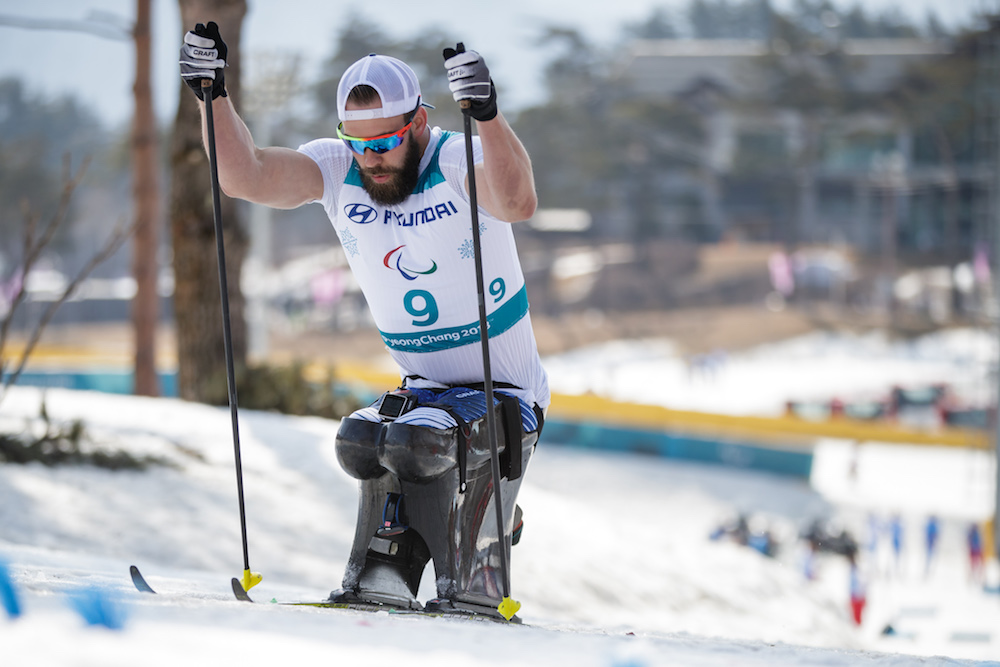
    Aaron Pike (U.S. Paralympics Nordic) racing at the 2018 Winter Paralympics on a balmy day in PyeongChang, South Korea. (Photo: U.S. Paralympics/Joe Kusumoto)

    On the loop, mark out (with cones, chalk, or dye) 2-4 short sections where the athletes will accelerate, do a speed, etc. You can mix up the specifics of the speeds. They could be forced technique, all-out speeds, accelerations, or any other variation. You’re looking for sections that should take approximately 10-20 seconds at speed.

    You’re good to go. Depending on the athletes, you’re typically looking for 15-35 minutes of on time.

    So, once it’s set up, have the athletes do a basic warm-up of 20 minutes of L1 activity, followed by 4 to 6 10-second speeds. Then decide how long the athletes will have for on-time. Typically, you would want to emulate a 5- to 10–kilometer race. So, in other words about 15-35 minutes of on time. Once they’re done, have them do a short cool-down and get their recovery on. Here is the step-by-step:

    20-minute L1-L2 warm up.

    4-6 by 10-second speeds. The focus here is quick movements.

    15-35 minutes of threshold on the loop, with speeds on the marked sections. Speeds should be recognizable as a significant change in tempo/pace.

    10- to 15-minute cool down.

    Recover.

  • U.S. Paralympics Stoked But Not Quite Satisfied: Sights Set on Korea

    U.S. Paralympics Stoked But Not Quite Satisfied: Sights Set on Korea

    Oksana Masters training in Edebäck, Sweden, near the Torsby ski tunnel, where three U.S. Paralympic Nordic skiers trained with two coaches for a week in September. (Photo: U.S. Paralympics Nordic/Facebook) https://www.facebook.com/USParalympicsNordic/photos/pcb.535129713287388/535129139954112/?type=1&theater
    Oksana Masters (r) during a rollerski in Edebäck, Sweden, near the Torsby ski tunnel, where three U.S. Paralympic Nordic skiers trained with two coaches for a week in September. (Photo: U.S. Paralympics Nordic/Facebook)

    The second day of the 2014 Winter Paralympics in Sochi, Russia, Oksana Masters — a bronze-medal rower from Louisville, Ky. — broke the ice and a 20-year barrier for the U.S. Paralympics Nordic Program.

    Twenty-four at the time with just over a year of skiing experience, she captured silver in the 12-kilometer sit-ski cross-country race, becoming the first U.S. woman to win a medal for her team in the last 20 years.

    Three days later, another sit skier and Winter Paralympics rookie, Tatyana McFadden racked up another silver for the U.S. in the 1 k sprint. Then on the final day of the Games, Masters closed the books with a bronze in the 5 k.

    Three medals left U.S. Paralympics High-Performance Director John Farra a lot to be excited about, especially after the team took home one medal from the Paralympics four years earlier in Vancouver, British Columbia. He wasn’t at the helm then, when Andy Soule won bronze and six athletes represented the U.S. at the 2010 Paralympics.

    But less than three years after he started with the program in the summer of 2011, Farra helped it more than double in size. The U.S. brought 16 nordic-and-biathlon skiers to Sochi and grew from five full-time athletes in 2011 to six national-team members (including Masters as its first A-teamer) and nine development-team athletes.

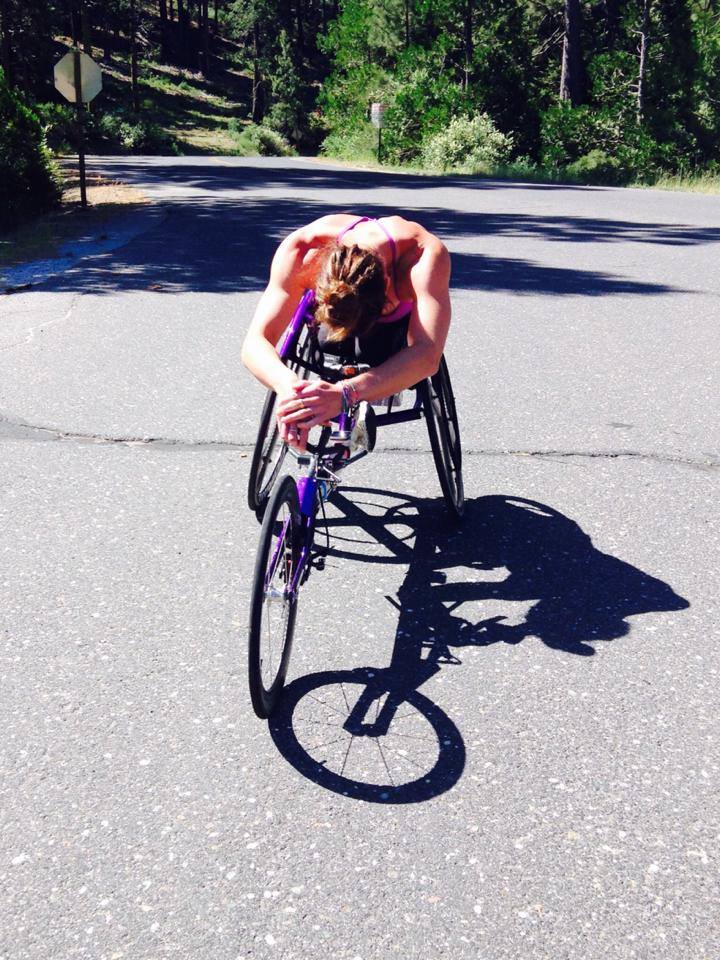
    Tatyana McFadden while training in July for U.S. nationals in her summer sport,  wheelchair racing, of which she's a three-time Paralympic and 10-time World Championship gold medalist in track and field. (Photo: U.S. Paralympics Nordic/Facebook) https://www.facebook.com/ParalympianTatyanaMcFadden/photos/pcb.597862103645740/597861653645785/?type=1&theater
    Tatyana McFadden while training in July for U.S. nationals in her summer sport, wheelchair racing, of which she’s a three-time Paralympic and 10-time World Championship gold medalist in track and field. (Photo: U.S. Paralympics Nordic/Facebook)

    Out of the 16 in Russia, two of them won three medals, yes, but Farra also likes to point out all of their fourth-, fifth- and sixth-place finishes as well.

    “[Those are] maybe a better sign of the health of our program,” he said on the phone from his office in Park City, Utah, last week. “I was prepared for the possibility that we might win [no medals]. I wasn’t worried, but I will say there was some sense of relief, but more importantly, it was just fun.”

    Take Soule, for instance, who finished in the top five of all but one of his six races in Sochi. A biathlete as well as a cross-country sit-skier, the team veteran shot perfectly at the Games — hitting all his targets in three races.

    Then there was Jake Adicoff, an 18-year-old visually impaired skier, who placed sixth in the 20 k distance race in his first Paralympics.

    Those kinds of performances, paired with a few medals (which Farra says they “stole”), better define the strength of their program, he said. And when his bosses in the U.S. Olympic Committee (USOC) Paralympics division decided on his team’s budget for this 2014/2015 season, Farra believed they took that into consideration.

    “Our numbers went up in terms of participants and our performance,” he said, adding that they also increased the size of their full-time staff. “I think we’re in a really good place. … I didn’t get what I requested in terms of my high-performance request, but we’re getting enough to do the job, for sure. We’re getting really supported by the USOC, and we’re earning the support that we get because we’re running a really high-level program.”

    U.S. Paralympics oversees five winter sports: nordic, alpine, snowboarding, sled hockey and wheelchair curling. Every four years, Farra explained that it’s essential for U.S. Paralympics’ summer sports (like cycling, swimming, and track and field) to cut back and support them in the months leading up to the Winter Games. They do so with the understanding that now, two years before the Summer Paralympics in Rio de Janeiro, Brazil, the winter sports will do the same.

    “We’re spending less this year and appropriately so based on that design,” Farra said. “I think that’s fine.”

    He pointed out that more than half of the available medals at the Winter Paralympics come from cross-country or biathlon events.

    “[U.S. Paralympics] needs nordic to be successful,” he said. “Is it pressure? You bet it’s pressure because it doesn’t happen without us, but that’s the whole idea.”

    Last year, his program was allowed to overspend to a certain degree, Farra explained, and the budget he has to work with this season — while down from last season — is still higher than it was three years ago.

    “There were some elite strategies that I identified to my boss that I felt were really important going into Sochi and my boss allowed me to do what I needed to do,” he said.

    That included their Fast Skis program in collaboration with U.S. Biathlon.

    “I honestly feel that we had the fastest skis in Sochi of any team in the Paralympics because of that partnership, because we shared information,” Farra said. “We bought into that process and for two years we tested it. That’s the piece that we have and we’re going to keep that going, but now, what else can we do?”

    “[U.S. Paralympics] needs nordic to be successful. Is it pressure? You bet it’s pressure because it doesn’t happen without us, but that’s the whole idea.” — John Farra, U.S. Paralympics Nordic high-performance director and coach

    Standing in the hallway of the Olympic Training Center during a camp two weeks ago in Lake Placid, N.Y., Farra pointed to a five-year-old, steel-frame sit ski. That need to be three pounds lighter by switching to carbon fiber, and so did the frames of every sit skier on his team, he said. To dial in that equipment perfectly before the 2018 Paralympics in Pyeongchang, South Korea, they’ll likely have to test several versions years before. So they need to start now.

    “Medals are good, but they’re not critical; I think they’re going to be more critical in Pyeongchang,” Farra said of building on his team’s established success.

    He told his bosses this was going to be a process. “[I said], ‘I don’t want to get fired if we don’t win medals in Sochi,” he reflected with a laugh. “They said, no, no, we understand.”

    Rethinking staff structure

    While in Russia, Farra spent some time like he did when he started the job three years ago, asking questions and gathering ideas. He got talking to USA Bobsled and Skeleton and was inspired by the federation’s creativity when it came to reviewing staff. Each year, they surveyed their athletes and employees to get an honest sense of how everyone felt about the team, its structure and staffing, etc., and looked at the results collectively to make changes.

    U.S. Paralympics Nordic director and coach John Farra (l) briefs Oksana Masters before her first-ever time on a treadmill at the Olympic Training Center on Sept. 16 in Lake Placid, N.Y.
    U.S. Paralympics Nordic director and coach John Farra (l) briefs Oksana Masters before her first-ever time on a treadmill at the Olympic Training Center on Sept. 16 in Lake Placid, N.Y. See the video and read more here.

    He jotted the idea down at the breakfast table one morning in Sochi and vowed to try it in the spring. Then he wondered, did his team need a clearly defined director, head coach, assistants and/or development coaches? Or were there other ways to go about assigning responsibilities?

    When he met with the USOC at the end of the season, he asked how other teams under its umbrella structured their respective teams from a staffing perspective.

    “I was really shocked at how many sports did it in a unique way, and it validated my instincts that there’s not just one design,” Farra said.

    In the spring, he went back to USA Bobsled’s idea and created a staff review using SurveyMonkey, a free-online polling tool. He encouraged his athletes and coworkers to participate, not withholding any criticism nor fearing repercussions for sharing their thoughts. He’d be the only one reading the results, and he invited criticism of himself as well.

    “It really drew out some interesting responses where we found some flashes of our brilliance, but we have some flaws in our design,” Farra said.

    The good news was the results were in line with what he had already been thinking.

    Before this spring, Farra was the U.S. Paralympics Nordic’s lone full-timer. Three development coaches, Eileen Carey, BethAnn Chamberlain and Rob Rosser, worked with the team as U.S. Biathlon employees. Head coach James Upham worked as an independent contractor.

    Farra said he sat down with that core crew this spring and shared the overall takeaways from the survey. Mostly he asked if they were willing to be part of a collaborative and different-looking staff structure: with a director/coach, who splits his time between administrative and instructive duties, plus several multifaceted coaches, who work with developing as well as elite athletes.

    “While we need to win medals, we’re more of a development organization,” he said. “We’re still not there in terms of having all kinds of high-performance athletes that we need to care for. … Everybody needs to be a development coach, including a director.”

    He challenged his own job, asking whether the team’s dollars were being wisely spent on a director who mostly sits at a desk. That wasn’t smart, he reasoned, so he needed to get more involved with day-to-day coaching, building sit skis and helping athletes learn to navigate corners. He would do so with Carey, also a high-performance coach, and Chamberlain and Rosser, all of which are now full-time team employees. But they no longer needed a head coach.

    Upham had been a head coach for a long time, Farra pointed out, and if he had wanted to stay, the program would have had to consider if they could afford his pay scale. Salaries and budgets aside, Farra explained that it was more about a coaching style he had to sell his staff, and those that were interested stuck around. Upham left to become an assistant coach at Bates College.

    “It was not a relaxing spring, but I think in the end the people that signed up for being a part of this collaborative coaching style are 100-percent onboard,” Farra said. “… Collaboratively we’re all responsible for our overall success. I’m psyched for James that he found something that’s going to work for him and I think he’d say the same for us.

    “There was really no drama,” he added. “… I definitely can’t afford to hire lots of full-time coaches, but it wasn’t about money, it was more about being able to take the blinders off and sort of say, OK, can we do this in a different way?”

    U.S. Paralympics Nordic held its annual weeklong training camp in Lake Placid, N.Y., earlier this month. Eleven athletes attended, plus five coaches and three to four support staff. (Photo: U.S. Paralympics Nordic/Facebook) https://www.facebook.com/USParalympicsNordic/photos/pcb.539270726206620/539269649540061/?type=1&theater
    U.S. Paralympics Nordic held its annual weeklong training camp in Lake Placid, N.Y., earlier this month. Eleven athletes attended, plus five coaches and three to four support staff. (Photo: U.S. Paralympics Nordic/Facebook)

    Throughout the last several months, Chamberlain, now in her second season with the team, and Rosser have been primarily working with developing athletes — both biathletes and cross-country skiers. While Farra and Carey are mostly responsible for the high-performance athletes (a.k.a. national-team members), the four coaches trade off when it comes to training camps based on their geographic proximity to those venues.

    “It makes no sense to fly BethAnn and Rob to Utah to work with a couple newbies,” Farra said, considering he lives there.

    At the same time, he needed to skip the October national-team camp in Oberhof, Germany, to take care of paperwork and meetings. Carey and Rosser will fly overseas with the team, while Chamberlain works on military and non-military recruiting stateside. The team includes several part-time contractors, including physiologist Jason Kask — brought on to help lead the training-plan process for the next Olympic cycle.

    “We have regular meetings and go over the hundreds of responsibilities that exist with developing a high-performance and a development program,” Farra explained. “You get one chance every four years to build something that’s going to be successful.”

    IPC World Champs in Cable

    This winter, the world-famous host of the American Birkebeiner and back-to-back International Paralympic Committee (IPC) World Cups: Cable, Wis., will host the IPC Nordic Skiing World Championships from Jan. 22-Feb. 1.

    That’s an exciting prospect for U.S. as the home team, with Farra largely crediting its success in the last three years to being able to bring numerous developing athletes to the Cable World Cups in 2012 and 2013.

    At the last World Championships in 2013, the U.S. had four athletes and three coaches in Solleftea, Sweden.

    “It was just so cost prohibitive,” Farra explained. “Every time you bring more athletes you need to bring a lot more staff. We expect [Cable] to be a decent size team, similar to what we saw in Sochi and hopefully some new faces so it’s a really good opportunity.”

    The qualifying standards are still more selective than a World Cup, which will keep the team size around 16 or so, plus a couple guides, he predicted. It’s also cheaper than traveling overseas, but “not an inexpensive proposition,” he explained, when you consider the cost of food and lodging, plus participation fees.

    But would having more athletes compete boost their chances?

    “I’m not worried about medals,” Farra said. “I feel the support from the USOC and U.S. Paralympics. I don’t feel that we need to cash in a bunch of medals in Cable to get support for Pyeongchang. That would be icing on the cake but … we’re not worried about that, we’re worried about doing a great job.”

    ***