From the FasterSkier archive — posts syndicated from athletes’ and coaches’ own blogs between 2004 and 2012, kept online as published. Current coverage is at fasterskier.com.

Tag: U.S. Paralympics Nordic

  • Cnossen, Masters Win Three of Four Races at U.S. Paralympics Nationals

    Cnossen, Masters Win Three of Four Races at U.S. Paralympics Nationals

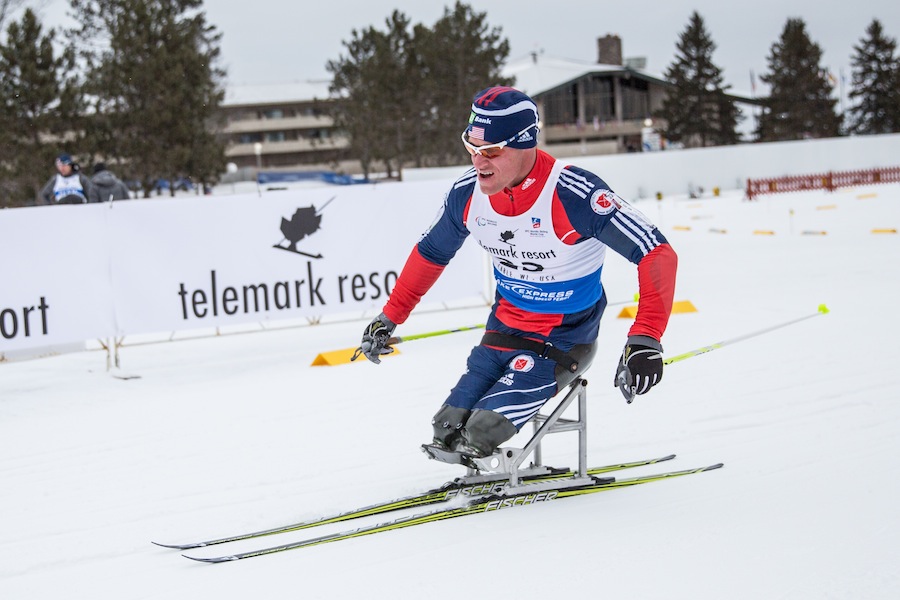
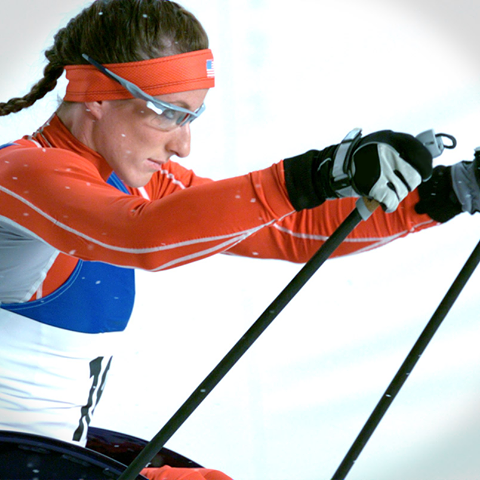
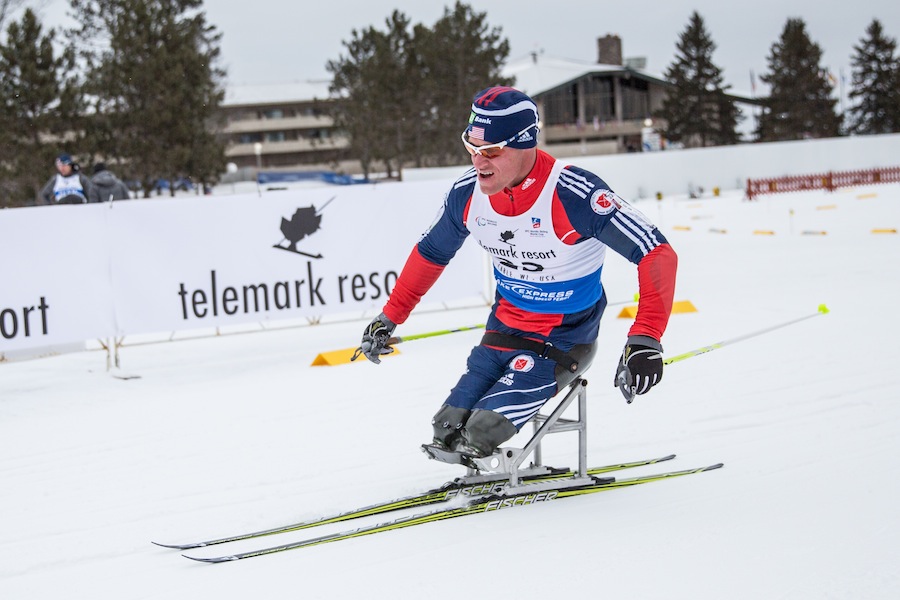
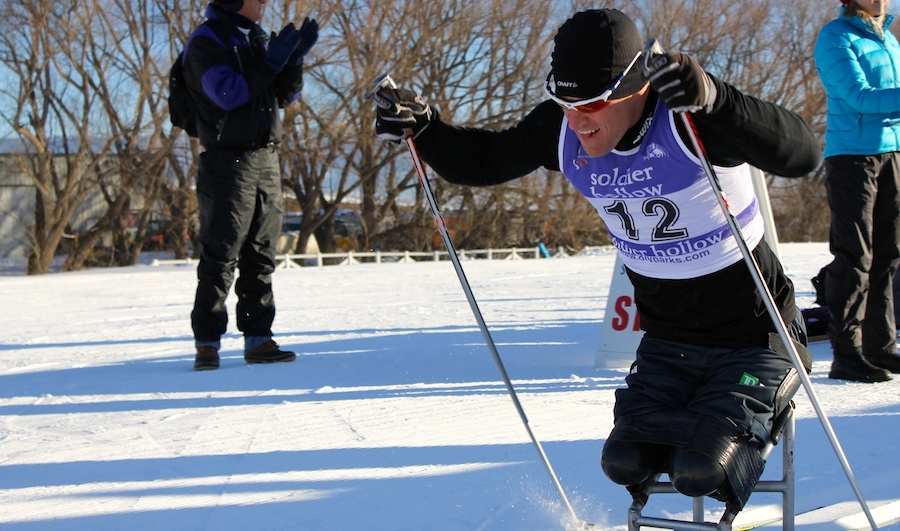
    Lt. Dan Cnossen on his way to winning Tuesday's 10 k sit-ski at 2014 U.S. Paralympics Nordic Skiing Nationals at Soldier Hollow in Midway, Utah.
    Lt. Dan Cnossen (U.S. Paralympics) out of the start in Tuesday’s 10 k sit-ski at 2014 U.S. Paralympics Nordic Skiing Nationals at Soldier Hollow in Midway, Utah. He won by 18.2 seconds in 32:21.9.

    FasterSkier’s coverage of the 2014 U.S. Cross Country Championships is brought to you through the generous support of The Memory Clinic in Bennington, Vt.

    MIDWAY, Utah — Rounding Soldier Hollow’s 2.5-kilometer sit-ski course on Tuesday, Oksana Masters and Lt. Dan Cnossen muscled through methodically, powerfully.

    Even with two victories apiece behind them from earlier in the week at U.S. Paralympics Nordic Skiing Nationals, these two had business to tend to: take care of some optimal conditions in Utah, then get ready for the Jan. 16-19 World Cup in Oberstdorf, Germany.

    Sochi was undoubtedly on their minds, with the 2014 Winter Paralympics exactly 60 days away from Tuesday’s 5- and 10-kilometer sit-ski races, but neither Masters or Cnossen were getting ahead of themselves.
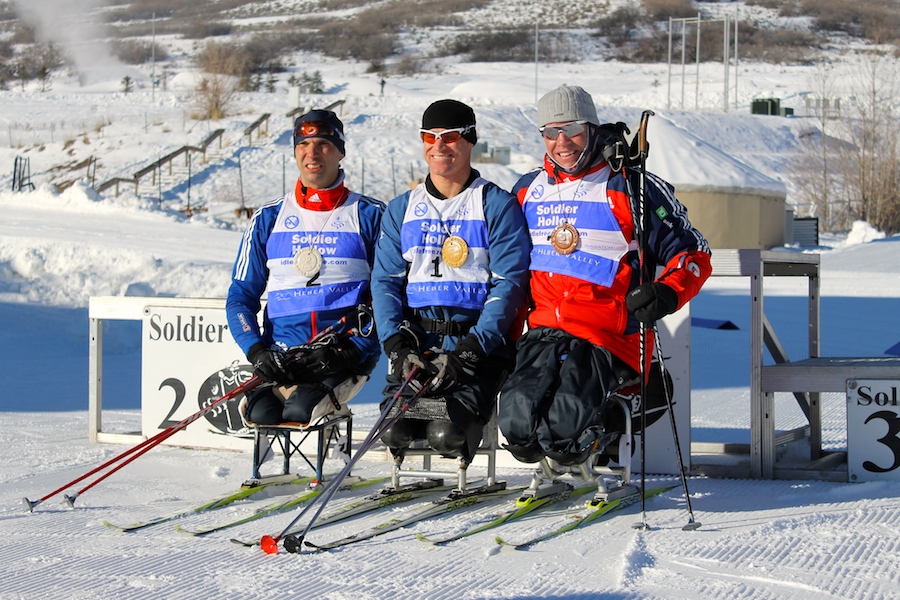
    Men's 10 k sit-ski podium at 2014 U.S. Paralympics Nordic Nationals on Tuesday, with winner Dan Cnosson (c), who won three out of four events this week, Andy Soule (l) in second, and Sean Halsted (r) in third.
    Men’s 10 k sit-ski podium at 2014 U.S. Paralympics Nordic Nationals on Tuesday, with winner Dan Cnosson (c), who won three out of four events this week, Andy Soule (l) in second, and Sean Halsted (r) in third.

    “I’m just gonna focus on the next step which is the World Cup right now and then being named to the team hopefully, and go from there,” said Cnossen, 33, after winning his third out of four races at nationals in 32:21.9 minutes, 18.2 seconds ahead of U.S. Paralympics teammate Andy Soule (Army) in second.

    A Navy SEAL who lost his legs in an explosion in Afghanistan in 2009, Cnossen is one of the team’s frontrunners in the leadup to Sochi, yet he was looking forward to seeing how he fares on internationally before turning his focus toward what would be his first Paralympics.

    Last year, he won silver in the first race of the International Paralympic Committee (IPC) Nordic Skiing World Cup in Cable, Wis., in the 10 k. At the IPC World Cup in Canmore, Alberta, from Dec. 9-16, Cnossen notched a couple top 10s and put himself 11th in the Cross-Country World Cup standings. As of Dec. 15, he was 14th on the Biathlon World Cup list.

    In Soldier Hollow from Jan. 2-6, Cnossen opened with a victory in the 7.5 k biathlon race, then went on to win the 15 k distance race, place fourth in the sprint, and ultimately finish with a 10 k title.

    “Had some good races; the courses were awesome,” Cnossen said. “They’re really similar to what we’ll be experiencing in Sochi, definitely the altitude is.”

    While the temperature was a little cooler than what’s expected in Sochi, with the men and women racing on a just-above-freezing morning on Tuesday, Cnossen said the slower snow worked to his favor.
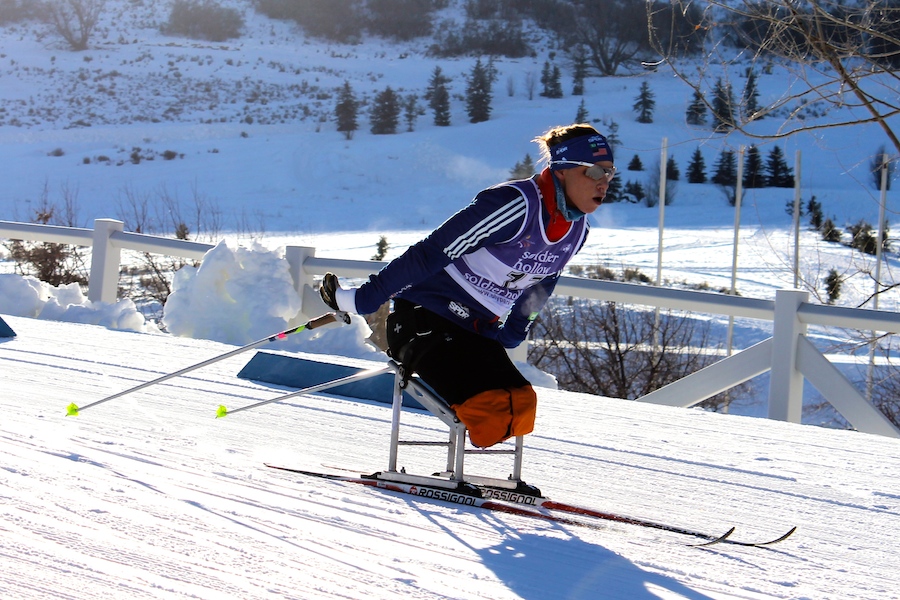
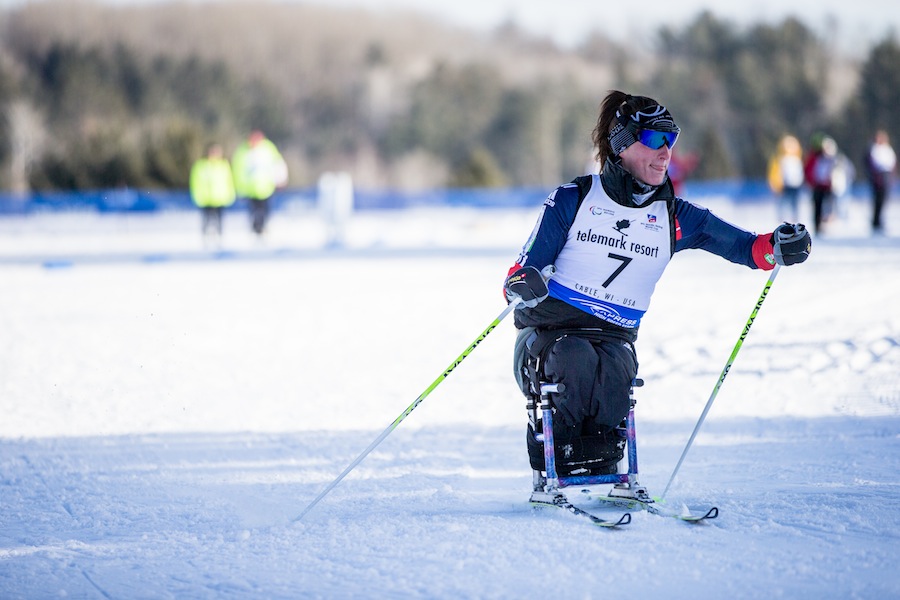
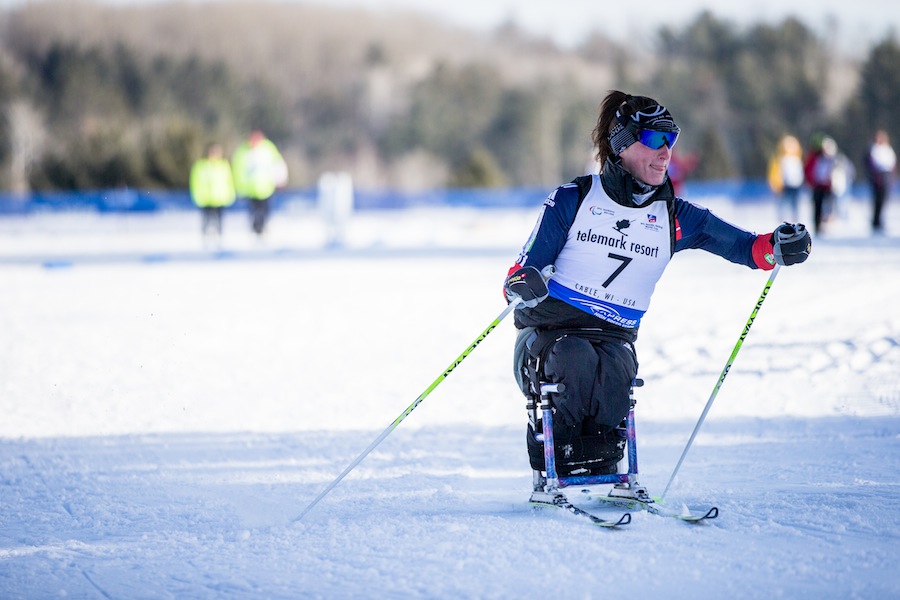
    Oksana Masters en route to winning Tuesday's 5 k sit-ski at 2014 U.S. Paralympics Nordic Skiing Nationals at Soldier Hollow in Midway, Utah.
    Oksana Masters (U.S. Paralympics) en route to winning Tuesday’s 5 k sit-ski at 2014 U.S. Paralympics Nordic Skiing Nationals at Soldier Hollow in Midway, Utah.

    A Paralympic bronze medalist in rowing, Masters, 24, raced to her third championship of the week as well, winning the women’s 5 k in 18:13.2, about 2 1/2 minutes faster than Monica Bascio in second.

    In Canmore, Masters opened with a bronze in the World Cup 5 k and placed fourth in the sprint. She finished the series ranking fourth in the Cross-Country World Cup and eighth in biathlon.

    “Hopefully it continues,” Masters said on Tuesday. “Last year I kind of had an injury going into it starting out and also lack of on-snow experience. I was on snow for a total of two days before going out here last year to nationals … I think I was just trying to hammer it too hard instead of try to slow down and learn the technique to it.”

    With her rib injury healed and breathing easier at some 5,500 feet above sea level, Masters was looking forward to returning to Germany after training in the Oberhof ski tunnel in October.

    “I love the competitiveness; I really like the fact that it’s something that I can grow myself as an athlete and I can broaden that spectrum of my athleticism,” the U.S. Development Team skier said. “The team camaraderie is really cool. Everyone, the girls, the guys, have their unique personalities and it wouldn’t be the same team without one person.”
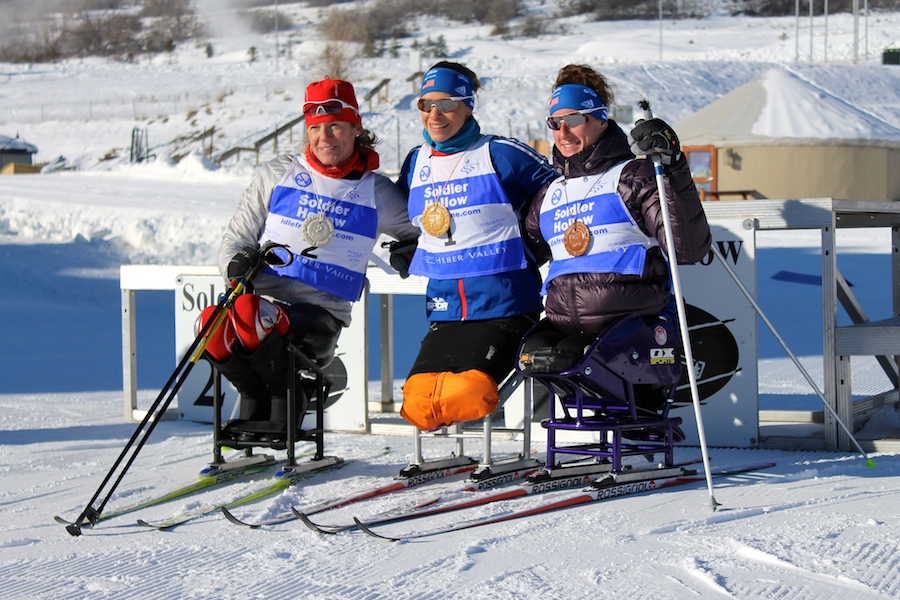
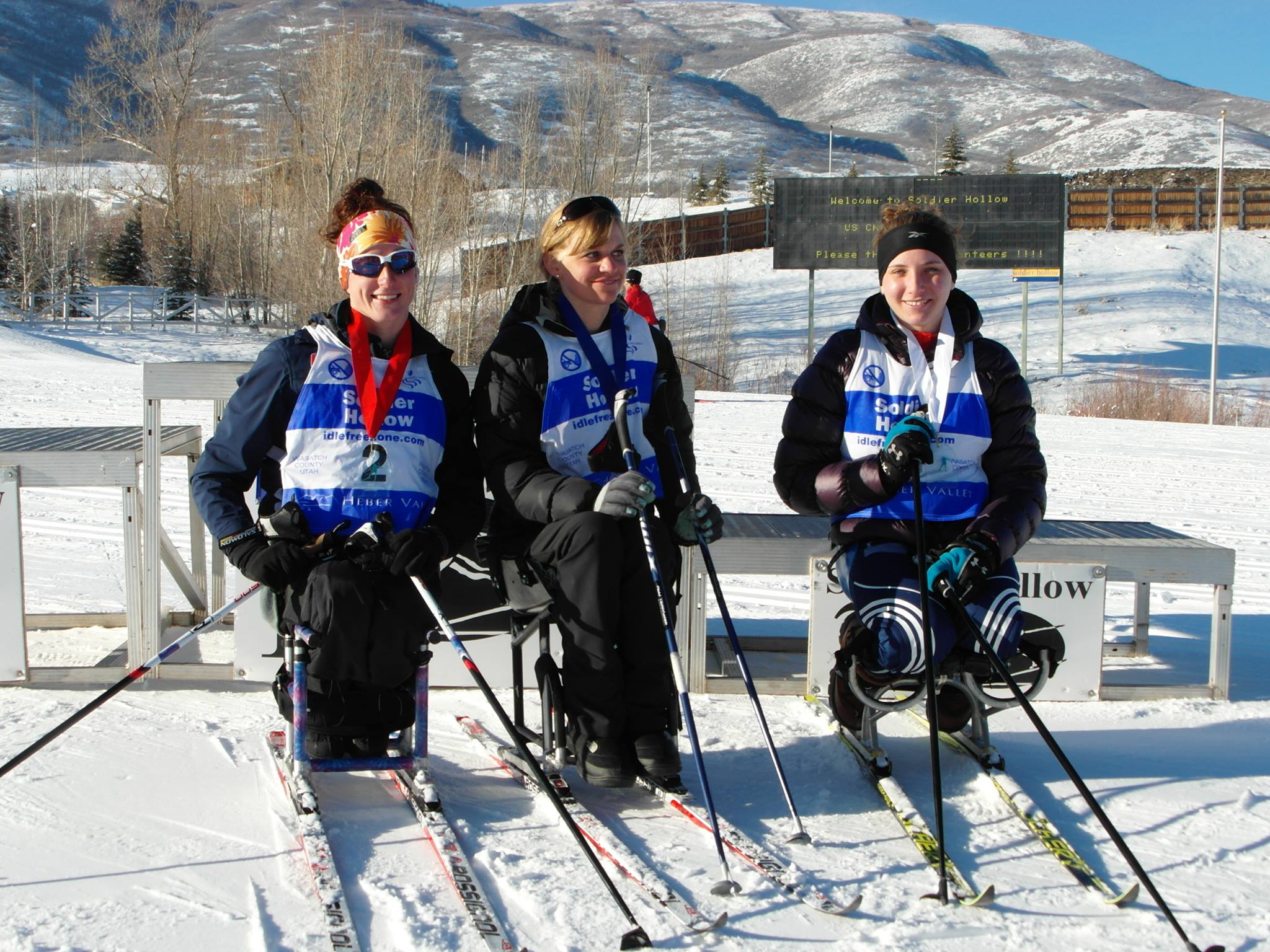
    Women's 5 k sit-ski podium at 2014 U.S. Paralympics Nordic Nationals, with winner Oksana Masters (c), who won three of four events this week, Monica Bascio (l) in second, and Tatyana McFadden (r) in third.
    Women’s 5 k sit-ski podium at 2014 U.S. Paralympics Nordic Nationals, with winner Oksana Masters (c), who won three of four events this week, Monica Bascio (l) in second, and Tatyana McFadden (r) in third.

    As for the transition from rowing, Masters said the pulling motion is similar, but the winter weather had been a tough adjustment.

    “I think it helped to come from a sport background where it was an endurance sport also along with strength,” she said. “My biggest challenge from rowing would be the variety of an 800-meter sprint to a 12 1/2 k or 10 k, so I have to build that up.”

    As for her Winter Paralympics aspirations, Masters said set on not giving up.

    “I’m a perfectionist, and I strive to be the best I can in whatever I do,” she said. “I’m not going to start something and just stop it.”

    The men’s 10 k runner-up, Soule called this year’s nationals “a good race experience.”

    “Nationals always is a good little prep period before going over to compete World Cup,” he said.

    Sean Halsted (Navy) placed third after miscounting his laps and coming into the finish one loop too soon. He had to turn around and head backward down the finishing straight to get to the lap lane, ultimately finishing 50 seconds behind Soule.

    “I didn’t realize we were on the course that we were on I thought we were going three laps of 3 k,” Halsted said with a laugh.

    Either way, the national-team member said nationals were a good tuneup before they resume international racing.

    “It’s all about prep trying to get that race experience in,” Halsted said. “It’s not just, ‘Hey you might be first or second,’ well, you don’t hold on to that. … You use that to motivate you for when you’re going on the international [scene].”

    In the women’s race, Tatyana McFadden placed third, about 45 seconds after Bascio, and Beth Requist was fourth.

    Results | Complete 2014 U.S. Paralympics Nationals Results

    Jan. 2: Biathlon 6/7.5 k

    Jan. 3: Sit-ski 10/15 k

    Jan. 4: Sit-ski sprint; Standing 5/10 k classic

    Jan. 5: Standing sprint freestyle

    Jan. 6: Sit-ski 5/10 k

    Jan. 8: Standing 5/10 freestyle mass start

    Photo Gallery (through first three days)

  • In Third Season, Cnossen Aims to Lead U.S. Paralympics Nordic, Starting in Canmore

    In Third Season, Cnossen Aims to Lead U.S. Paralympics Nordic, Starting in Canmore

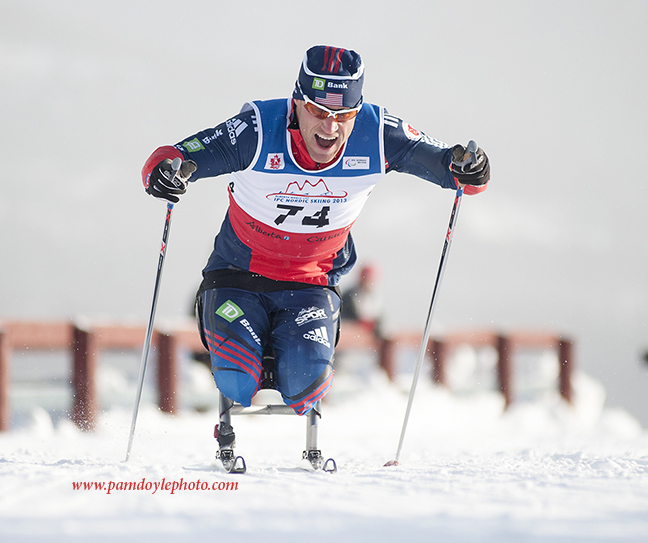
    Lt. Dan Cnossen (U.S. Paralympics) racing to 11th in Tuesday's sit-ski sprint at the IPC World Cup in Canmore, Alberta. (Photo: Pam Doyle)
    Lt. Dan Cnossen (U.S. Paralympics) racing to 11th in Tuesday’s sit-ski sprint at the IPC World Cup in Canmore, Alberta. (Photo: Pam Doyle)

    One of the most successful men on the U.S. Paralympics Nordic Team last season,  Lt. Dan Cnossen cut right to the chase when asked about his training this summer and fall.

    “I think we’re going to find out real quick when I go up against the Russians,” Cnossen responded in a phone interview before the first International Paralympic Committee (IPC) World Cup in Canmore, Alberta, from Dec. 9 to 17.

    According to U.S. Paralympics High Performance Director John Farra, Cnossen, originally from Topeka, Kansas, is relatively new to the sport.  He joined the team after the 2010 Winter Paralympics, and in the three years since he’s been living and training in Winter Park, Colo., Cnossen has risen to lead the U.S. men’s sit-ski team.

    Dan Cnossen (Navy) goes out hard from the start of the 15 k sit ski at U.S. Adaptive Championships in Soldier Hollow on Saturday.
    Lt. Dan Cnossen (Navy) racking up one of three national titles at U.S. Adaptive Championships last season in Midway, Utah.

    “He trains unbelievably professionally,” Farra said. “He really puts everything into it.”

    A Navy SEAL who lost both his legs in an Afghanistan explosion in 2009, the first day he was promoted to lieutenant, Cnossen, 33, has full use of his core.

    “He is a ‘V’ cut, super-strong … looking guy,” Farra said.

    Last year, Cnossen excelled on the domestic and international scene, notching podiums at U.S. nationals and the IPC World Cup in Cable, Wis.

    This summer, he ventured down to Argentina to train and race the 21-kilometer Marchablanca and 42 k Ushuaia Loppet. “That trip really reinvigorated my training,” Cnossen said.

    Skiing on snow is important to Cnossen, because he describes his mountain board (a sit skier’s equivalent to rollerskis) as a “strength machine.”

    “It’s very hard to work my cardio on it because it doesn’t roll very fast,” he said.

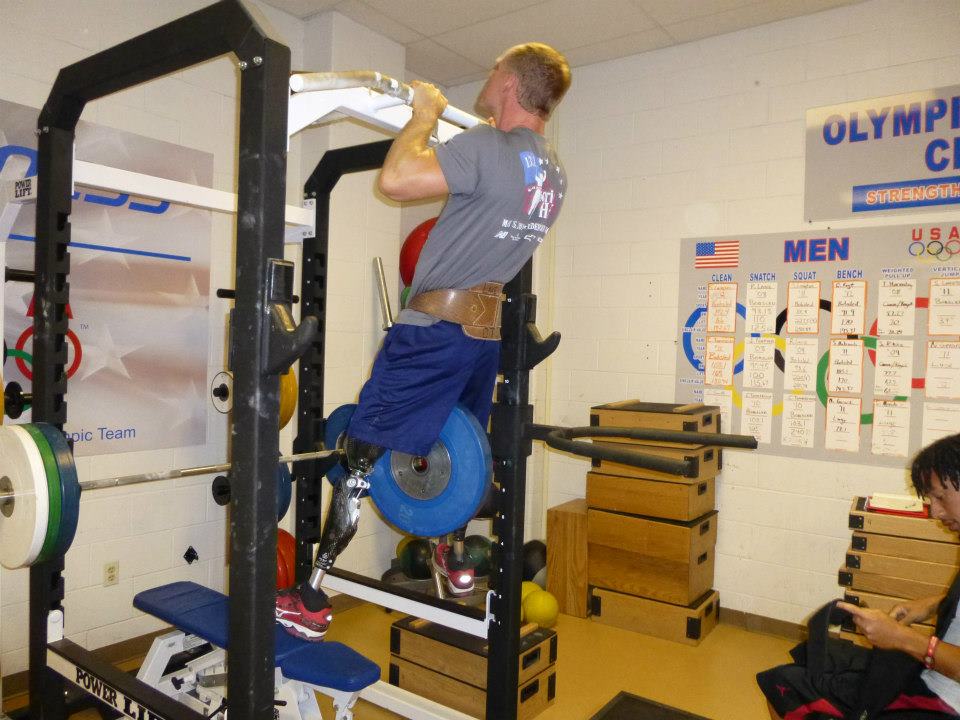
    Lt. Dan Cnossen of the U.S. Paralympics Nordic National Team doing loaded pull-ups during a strength session at the Lake Placid Olympic Training Center. (Photo: www.facebook.com/USParalympicsNordic)
    Lt. Cnossen of the U.S. Paralympics Nordic National Team doing loaded pull-ups during a strength session at the Lake Placid Olympic Training Center two summers ago. (Photo: U.S. Paralympics Nordic/Facebook)

    Using prosthetic legs, Cnossen has devised other ways to raise his heart rate.

    “You do what you can, and for me, I was a big runner before my injury,” he said. “I’m very lucky that I can do it, and I’m really lucky that I can walk too. ”

    He mostly runs 5- and 10-k races, which helps with his nordic training.

    “Plus, running gives me a chance to rest my shoulders,” he said.

    Cnossen is testing in a new custom sit ski this year, a lighter model that he hopes will help him ski faster.

    “It’s a really important part of the sport; you have to be comfortable, you have to be well secured … not only for power transfer, but for ski control,” he said. “I found a group of engineers who were willing to work with me and they’ve done a great job.”

    Summing up his thoughts about the season ahead, Cnossen said he was confident in his skiing abilities.

    “I’m hoping I’m a little better tactician,” he said. “I know I’m stronger physically this year and I have better equipment so it will be exciting to see how I end up on the results list.”

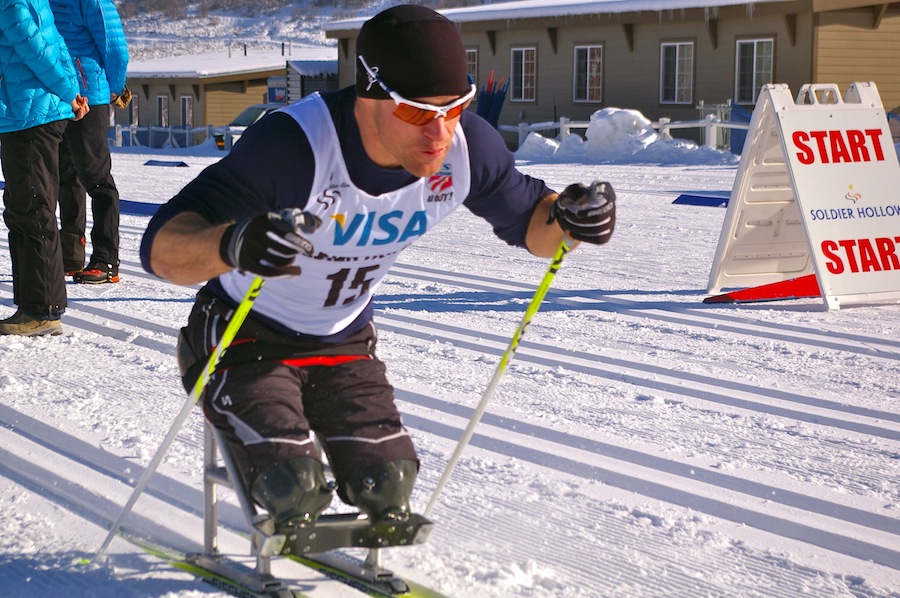
    Lt. Dan Cnossen at the start of a sprint qualifier at a 2013 test event in Sochi, Russia.
    Lt. Dan Cnossen at the start of a sprint qualifier at a 2013 test event in Sochi, Russia.

    In terms of tactics, he said he needs to work on sprinting.

    “I try to be a sponge,” he said. “Since this is only my third year, every time I go to a World Cup I try to watch the Russians and the athletes from other countries.  I watch what lines they take.  Are they in the track are they out of the track? Their rhythm of double poling, the nuances of ski handling. I hope it pays off.”

    Also a biathlete who’s tweaked his training, Cnossen predicts improvement there as well.

    “I think you’ll see some improved hit rates,” he said. “I knew the first couple of years, even if I shot perfectly I wouldn’t ski fast enough, no where near it. First and foremost, I thought the strength and conditioning would take the longest to develop.  I have a background in shooting and I can tweak that in a relatively short amount of time compared to how long it would take do develop the strength to conditioning to be fast enough to keep up with the top guys.”

    So far, he’s notched ninth place in the 10 k at Canmore, leading the U.S. men. On Tuesday, he placed 11th in the sprint behind teammates Sean Halsted and Andy Soule in eighth and ninth, respectively.

    Lt. Dan Cnossen (U.S. Paralympics) tallied multiple podiums at the IPC World Cup in Cable, Wis., in January. (Photo: James Netz)
    Lt. Dan Cnossen (U.S. Paralympics) tallied multiple podiums at the IPC World Cup in Cable, Wis., in January. (Photo: James Netz)

    ***

    What: IPC World Cup at the Canmore Nordic Centre in Canmore, Alberta

    Schedule:
 

    IPC Cross Country World Cup

    • December 9 10:00am Men’s 10km/Women’s 5km Skate
    • December 10 11:00am Sprint Classic (Heats start at 12:00)
    • 
December 12 10:00am Men’s 20km/Women’s 15km Classic

    IPC Biathlon World Cup

    • 
December 14 10:00 Biathlon Sprint
    • December 15 10:00 Biathlon Middle Distance
    • December 17 10:00 Biathlon Long Distance
  • World-Class Wheelchair Racer, McFadden Sets Sights on Sochi

    World-Class Wheelchair Racer, McFadden Sets Sights on Sochi

    Tatyana McFadden competes at the 2013 IPC World Cup in Cable, Wis.(Photo: James Netz)
    Tatyana McFadden competing at one of her first international cross-country ski races at the 2013 IPC World Cup in Cable, Wis.(Photo: James Netz)

    Tatyana McFadden is coming off an impressive couple of years.

    Winning the New York City Marathon last month, the 24-year-old University of Illinois student became the first person to win the Chicago, Boston, London and New York City marathons – the elusive Grand Slam – in a single year.  In July, McFadden became the first athlete to win six gold medals at the International Paralympic Committee (IPC) Athletics World Championships in Lyon, France.  No stranger to elite competition, the three-time Paralympian holds 10 medals in wheelchair racing, three of them gold from the 2012 London Paralympic Games.

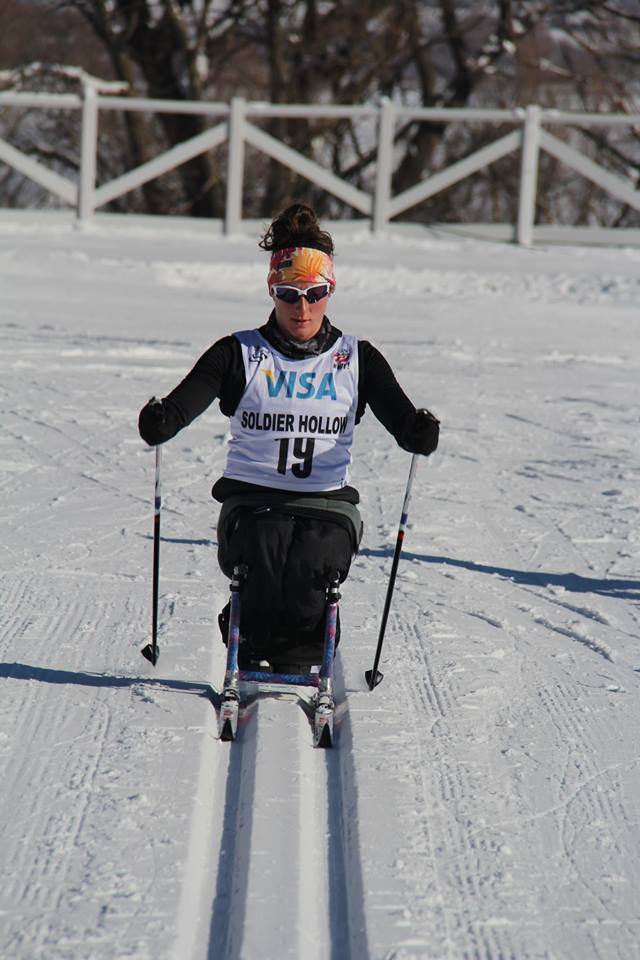
    Tatyana McFadden as 2012 National Adaptive Ski Championships, Soldier Hollow.
    Tatyana McFadden at the 2013 U.S. Adaptive National Championships at Soldier Hollow in Midway, Utah, where McFadden won the sit-ski sprint. (Courtesy photo)

    Now with her track and marathon seasons over for the year and with the 2014 Winter Paralympics in Sochi, Russia, on the horizon, McFadden is days away from beginning her second season as a nordic skier at the IPC World Cup in Canmore, Alberta, starting Dec. 9.

    John Farra, the U.S. Paralympics Nordic high-performance director, tells the story of how McFadden came to his sport.

    “About a year and a half ago I got a text message at midnight from the [U.S. Paralympics] alpine director [Kevin Jardine] saying, ‘Hey, I’m at the ESPYs and Tatyana McFadden wants to be a nordic skier!’ ” Farra said.

    According to the Chicago Tribune, Jardine reportedly told her, “Are you kidding me? No one wants to do nordic. Do you know how hard that is?”

    “I guess you don’t understand anything about me,” McFadden replied.

    “She contacted me and said ‘How can I get into the skiing thing?’ ” Farra explained. “So she comes to the national championships and won the sprint race and was very competitive in the others.  I said, ‘You should come to the World Cup in Cable, Wisconsin. There may be time for you to make the Paralympic Games.’ So she did and she made the national team in just one race.  She’s just so frickin’ strong.”

    In a phone interview last week, McFadden described her busy upcoming month, which starts this week in Canmore.

    “I’ll be there a few days before and I’ll do a competition, then I literally fly back [to Illinois], take a final, graduate, move out, then I head home for Christmas,” she said.

    Majoring in human development and family studies, she will give the graduation speech to her class.

    Born in St. Petersburg, Russia, with spina bifida, a birth defect that paralyzed her from the waist down, McFadden spent her first six years in an orphanage walking on her hands. A disabilities commissioner for the US Health Department, Deborah McFadden visited the orphanage and adopted Tatyana before raising her in Baltimore. Since then, Tatyana has been an activist on several fronts, advocating against a 2012 Russian law prohibiting Americans from adopting Russian children. She was also behind the Maryland Athletics Equity for Students with Disabilities Act, which was passed in 2010.

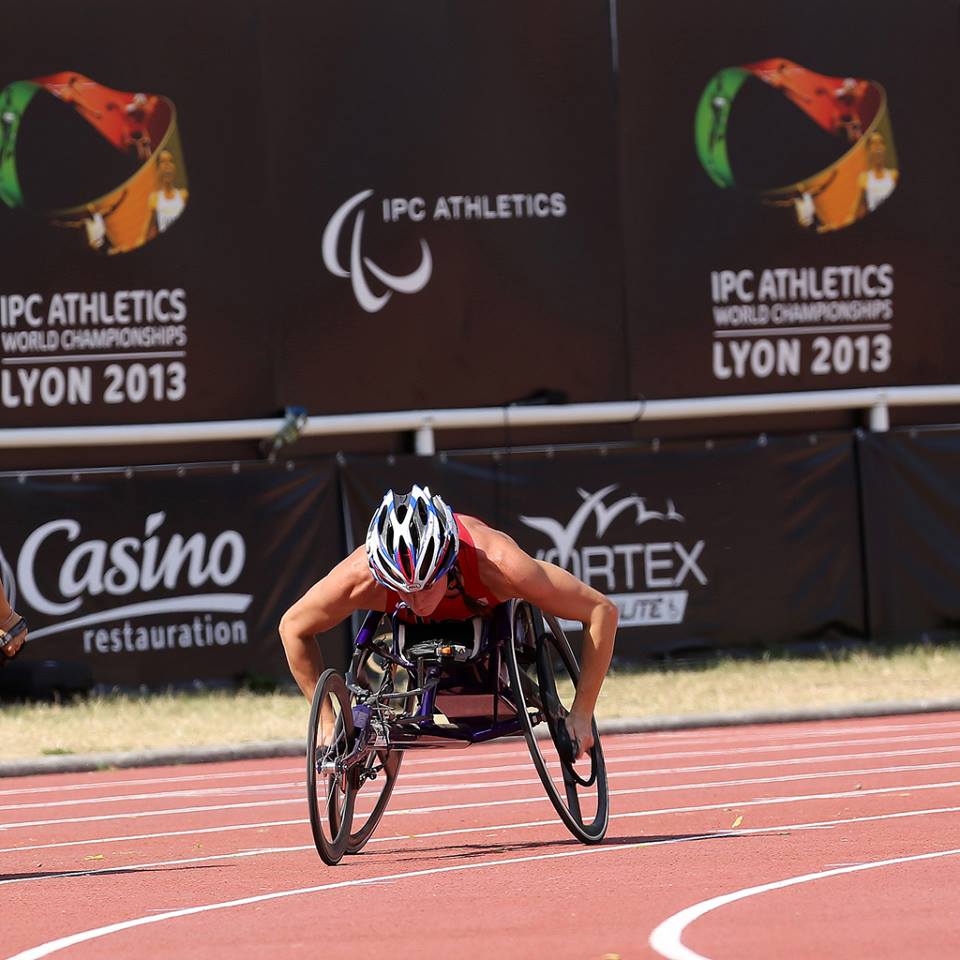
    Tatyana McFadden racing at the 2013  IPC World Cup in Lyon where she won six gold medals.
    McFadden racing at the 2013 IPC Athletics World Championships in Lyon, France, where she won an unprecedented six gold medals. (Courtesy photo)

    For now, she’s focused on getting back to Russia, this time as a Winter Paralympian. To manage the transition from wheelchair racing to skiing, McFadden said she’s been spending a lot of time in the gym on the SkiErg and doing interval training.

    One of her biggest challenges has been learning how to handle the cold. McFadden experienced some issues with frostbite while training, but her enthusiasm toward the sport has made up for the hardships. Nicknamed “The Beast,” it’s no surprise when McFadden says, “I love to train really hard.”

    She is also excited to get on snow in her new sit-ski.  At last season’s U.S. Adaptive Ski Championships at Soldier Hollow in Midway, Utah, McFadden won the sit-ski sprint in a borrowed, ill-fitting sled.

    “[The ski] was too big for me,” she said. “I’m a size 10 1/2 and I was riding in a size 14; it was way too big. I was sitting too high which really threw off my balance. I didn’t have control going down the hill too well and I really wanted to be shorter.”

    Her new sit ski is designed to put her in a more-forward position, similar to her racing wheelchair. McFadden said it feels “a lot more natural and transitions well from wheelchair racing. … [It’s] literally just the bucket and it’s an absolutely beautiful, beautiful bucket. It’s extremely light and it’s purple, my favorite color.  I’m really excited to take it out again.”

    Starting in Canmore, McFadden will have plenty of opportunity to get used to her new setup. At the end of the month, she’ll head to Utah for her second nordic nationals in early January, once again at Soldier Hollow. Then she’ll head to Germany for the IPC World Cup in Oberstdorf from Jan. 16-19, and after that, Winter Park, Colo., for more altitude training.

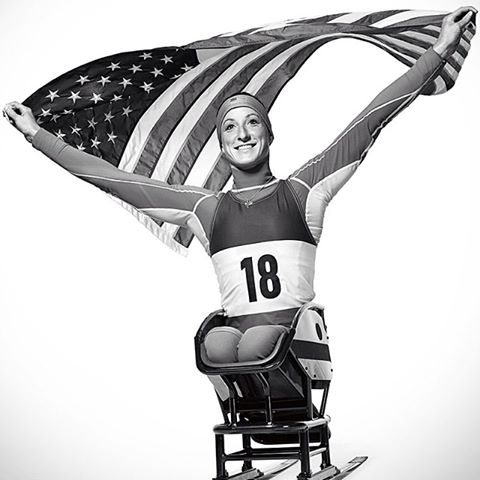
    Tatayan McFadden shows off her new sit ski in a promotional photo from her sponsor BP.   https://www.facebook.com/BPTeamUSA
    Tatayan McFadden shows off her new sit ski in a promotional photo from her sponsor BP. (Photo: BP Team USA/Facebook)

    “As soon as I graduate I’ll be on snow all the way up to Sochi,” McFadden said.

    According to Farra, working with her on snow will the give the U.S. Paralympics Nordic coaches a chance to help her improve her technique.

    “She’s so strong and unbelievably fit,” Farra said. “So she’s got the most important part of being a nordic skier down, and you can’t fake that.”

    McFadden has no illusions about the challenges ahead of her. “I am really new to skiing,” she said. “My goals are, first of all, to make the team and head over.  Then I’ll take it event by event. My goal [in Sochi] is to make the finals.”

    As for her podium potential, Farra said,  “We really don’t know. She’s fired up about it. She’ll have a day or two to train in Canmore before the races and she’ll spend the rest of the winter skiing with us trying to get ready for Sochi to see what she can do there.”

    While Farra can’t predict McFadden’s performance in her new sport, he knows what kind of attention she can bring to the developing sport.

    “When the Games are on, you are going to see Kikkan Randall skiing in a BP commercial and you’re going to see Tatyana McFadden skiing in a sit-ski on these commercials that are run all the time throughout the winter,” he said. In partnership with the U.S. Olympic Committee, NBC has committed to 50 hours of coverage for the 2014 Paralympics.

    Thinking about her first Winter Paralympics, McFadden isn’t sure what to expect.

    Tatayan McFadden shows off her new sit ski in a promotional photo from her sponsor BP.   https://www.facebook.com/BPTeamUSA
    Tatayan McFadden shows off her new sit ski in a promotional photo from her sponsor BP. (Photo: BP Team USA/Facebook)

    “For track, since I’ve been to other races and other Paralympics… I know what to expect between events and the transitions and about getting on the bus and off the bus and into the venue and what its going to feel like,” she said. “For Sochi, I don’t know any of that. I have no idea because everything is so new for me. I have to just be relaxed and go with the transitions and then when it comes time for me to put my skis on the snow, I have to remember everything I’ve learned … and ski as fast as I can and hopefully make people proud.”

    Among the new experiences awaiting McFadden is biathlon racing. Due to a relatively small pool of athletes, adaptive skiers are encouraged to compete in both nordic and biathlon races. Brand new to skiing at nationals last year, she didn’t race biathlon. “I told John [Farra] that I wanted to focus on skiing,” McFadden said.

    However, she did get introduced to the sport and practiced a bit on the shooting range. Despite some archery experience, McFadden said she never shot a gun before trying biathlon last January.

    “It’s going to be a lot of fun,” she said. “I’ll shoot the targets as best I can, and if I miss them all, I know what it feels like to do a lot of laps. In track, doing [laps] is just a normal day for me. I’m not really too concerned about it. What is really different about biathlon is that I’m not used to stopping in a race. I’m used to going hard from start to finish and not having to slow down and take a deep breath and try to hit the targets.”

    When asked what it will mean to her to return to Russia, she said she’s “really excited.”

    “It’s part of my culture, it’s part of who I am, and that will never be apart from me,” she added. “But I’m going to be going and competing for the United States of America.”

    Comparing her two “home” nations, she says the Russians are behind the times when it comes to accepting people with disabilities.

    “[In the U.S.], you can get jobs and you can live a normal life,” she said. “That’s not really the case for Russia. Some places are not accessible, in America places have to be accessible. Just seeing athletes come in and seeing how strong the athletes are and seeing them compete. I think its going to be really good for them.”

    Requist, a first-time contender at nationals, won the women’s 5 k in 25:13.9. Tatyana McFadden repeated her second-place performance from Saturday, finishing just 20.7 seconds behind on Sunday. Kristy Vaughn (U.S. Paralympics Development Team) was third (+2:34.4).
    Now a U.S. Paralympics National Team member, Tatyana McFadden (l) after placing second in the women’s 5 k at 2013 U.S. Adaptive Championships last January. Beth Requist (c) won it in 25:13.9, and Kristy Vaughn (U.S. Paralympics Development Team) was third (+2:34.4).
  • U.S. Paralympics Outlook: Farra’s Vision of a World-Leading Team

    U.S. Paralympics Outlook: Farra’s Vision of a World-Leading Team

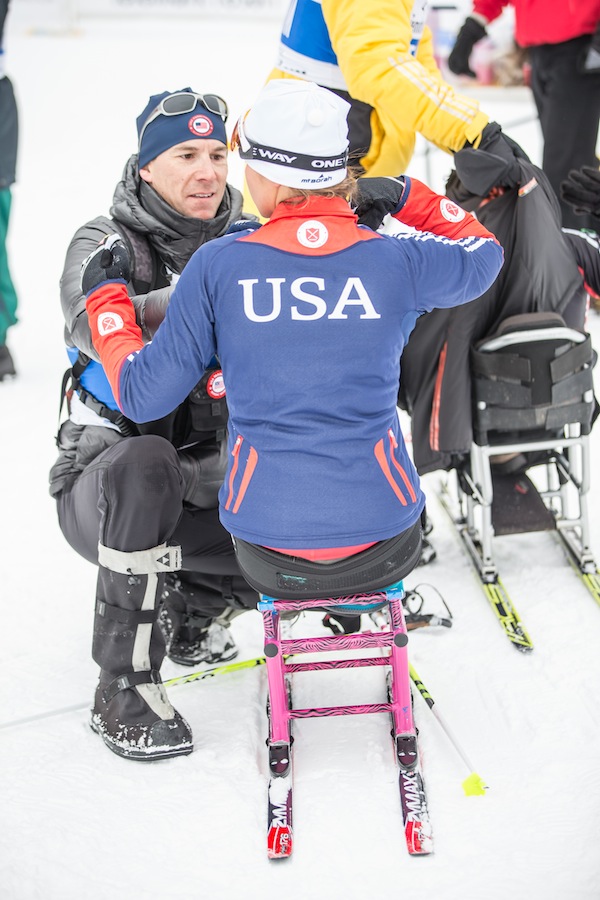
    John Farra, high-performance director of the U.S. Paralympics Nordic Program, helps one of his athletes at last year's IPC World Cup in Cable, Wis. (Photo: James Netz)
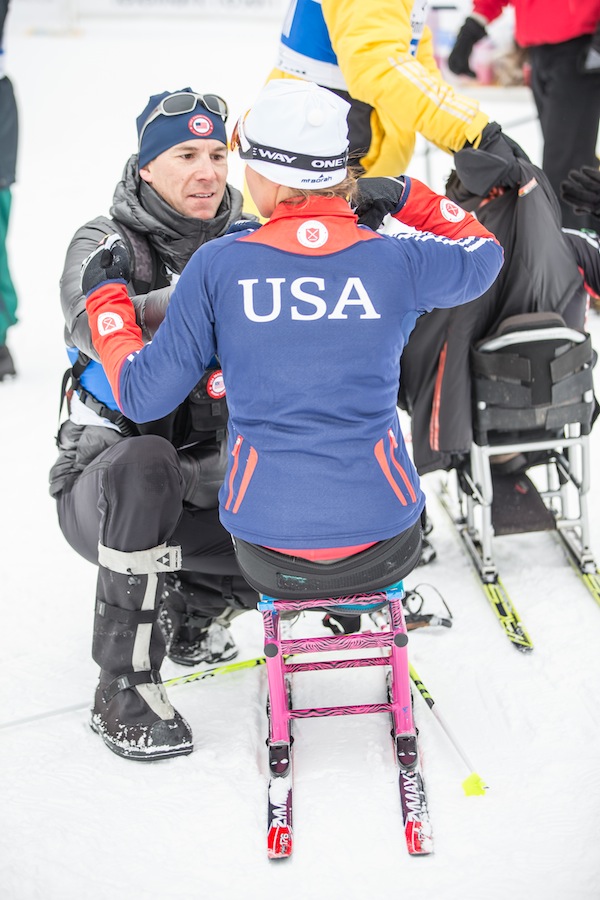
    John Farra, high-performance director of the U.S. Paralympics Nordic Program, helps one of his athletes at last year’s IPC World Cup in Cable, Wis. (Photo: U.S. Paralympics/James Netz)

    At the 2010 Winter Paralympic Games in Vancouver, B.C., the U.S. finished fifth in the overall medal count. A dominant performance by the U.S. alpine team resulted 11 medals, three of them gold.

    Meanwhile, the U.S. Olympic nordic team, including biathlon, consisted of just six athletes and a handful of coaches and support staff. Albeit small, the team was not without success. Andy Soule, an Afghanistan war veteran and double above-the-knee amputee, made history by becoming the first American to medal in biathlon in either Paralympic or Olympic competition.

    At the 2014 Paralympics in Sochi, Russia, nordic skiing and biathlon will account more that half of the available medals.  To improve overall team results, the U.S. Olympic Committee realized that the U.S. needed more focus on these sports.

    In 2011, John Farra, an Olympic cross-country skier and then-U.S. Ski and Snowboard Association (USSA) nordic director, was the man selected as the first high-performance director of the U.S. Paralympics Nordic Program. Today, he leads a team of coaches and staff responsible for building a world-class program.

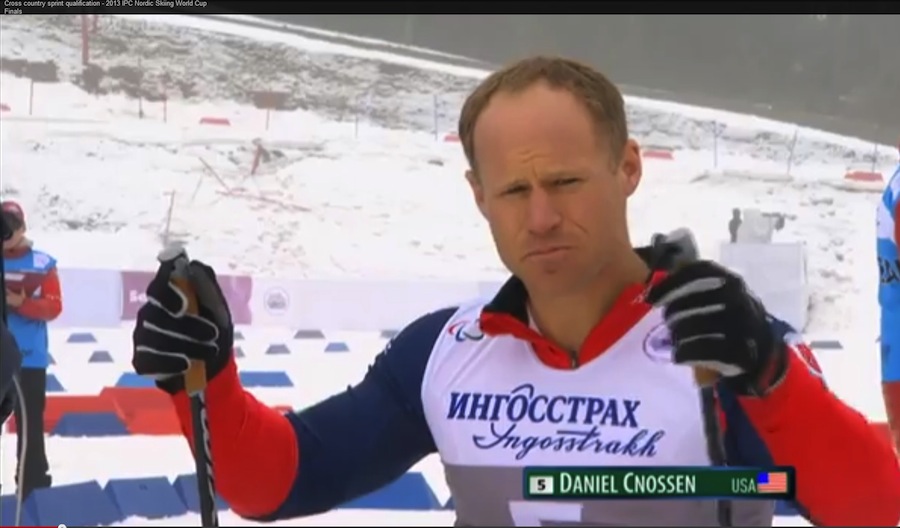
    U.S. Paralympics national-team member Dan Cnossen at the 2013 IPC World Cup in Cable, Wis. (Photo: James Netz)
    U.S. Paralympics national-team member Dan Cnossen at the 2013 IPC World Cup in Cable, Wis. (Photo: U.S Paralympics/James Netz)

    In a recent phone interview, Farra cited growth in the sport as evidence that the U.S. is on its way to that goal.  At the Sochi Paralympics in March, Farra will field a team of 19 athletes, four coaches and 13 support staff. The Russians will max out at the allotted team size of 30 athletes, a goal that Farra has set for his team size for 2018 Winter Games in Pyeongchang, South Korea.

    Assessing the team’s prospects for Sochi, Farra said, “On the men’s side, we have three guys who, on any given day, can be somewhere in the top six in the world.”

    In a test event in Sochi last March, Dan Cnossen,  Soule and Sean Halsted finished fourth, fifth and sixth, respectively. One of the newest and most promising men on the national team, Farra described Cnossen as “a really tough guy who trains unbelievably professionally and really puts everything towards it.”

    “While we are not expected to win any medals, when we are that close we are spending a lot of time and effort to find that extra half percent or 1 percent,” Farra said. “That gets them into the top three to steal a medal from the Russians or the Ukrainians.”

    On the women’s side, Farra saw potential when he spoke with Tatyana McFadden a year and a half ago. A world-class wheelchair racer with nine gold medals between several Paralympics and World Championships, McFadden expressed interest in competitive nordic skiing. On Nov. 3, the 24-year-old University of Illinois student completed an unprecedented marathon “Grand Slam,” winning the Boston, Chicago, London, and New York road marathons in a single year.

    U.S. National Team:

    • Dan Cnossen (Sit ski; Navy)
    • Sean Halsted (Sit ski; ret., Air Force)
    • Andy Soule (Sit ski; ret., Army)
    • Jeremy Wagner (Sit ski; ret., Army reserves)
    • Aaron Pike (Sit ski,;Univ. of Illinois Champaign)
    • Tatyana McFadden (Sit ski; Civ, Univ. of Illinois Champaign)

    Development Team (Emerging & Military)

    • Eric Frazier (Sit ski; ret., Marines, Team Semper Fi)
    • Travis Dodson (Sit ski – ret., Marines, Univ. of Illinois Champaign)
    • Augusto Perez (Sit ski)
    • Kevin Burton (Visually impaired; ret., Navy)
    • Omar Bermejo (Standing; ret., Marines)
    • Jake Adicoff (Visually impaired)
    • Oksana Masters (Sit ski)
    • Beth Requist (Sit ski)

    A multiple ESPY Award (ESPN) nominee, McFadden’s celebrity status is steadily rising, and she was twice featured on the NBC Nightly News for her New York City win. Her sponsor, British Petroleum featured her in its TV promotional spots, and in other positive news, NBC announced it will provide a landmark 100 hours of television coverage for the Winter Paralympics.

    “Next year when the Games are on you’ll be seeing national TV spots featuring Tatyana McFadden sit skiing and Olympian Kikkan Randall skiing,” Farra said.

    Adding to McFadden’s media appeal is her storyline of returning to Russia to where she was born with spina bifida, a birth defect in which bones fails to form properly around the spinal cord. Abandoned in a Russian orphanage, she was adopted by Deborah McFadden and brought to the U.S. at age 6.  Since 2012, Tatyana has actively advocated against a Russian law that prevents Americans from adopting Russian children.

    “We hope she continues to have a good experience [with skiing] and that will drive some interest to our sport,” Farra said. “She has more fans than we’ll ever have, but our job is to not let it become a distraction and to prepare her with the technical skills to get around the course.  She’s a good gal and it’s really fun to have her on the team.”

    On McFadden’s chances for a medal in Sochi, Farra said, “Who knows? She is super strong and unbelievably fit. She has the most important part of nordic skiing down which is the fitness, and that’s impossible to fake. Technical skills will be an issue for her because her racing wheelchair doesn’t slide around corners and have the potential of going off the course and crashing into trees.  It would be a huge challenge for anyone to go from newbie to Paralympic athlete in such a short period of time.”

    McFadden first demonstrated her potential by winning the sprint race at last year’s U.S. Adaptive Cross Country Championships at Soldier Hollow last year in a borrowed and somewhat ill-fitting sit ski. After, Farra contacted a Japanese company that makes sit skis designed to accommodate McFadden’s more forward-leaning position in wheelchair racing.

    “As soon as she slipped in there, and I mean slipped in there because it’s a tight fit, she got this big smile on her face,” he said.  “We’ll see how it works out because her first race in it will be at the IPC [International Paralympic Committee] World Cup races in Canmore in December.”

    Wheelchair-racing superstar Tatyana McFadden at her first IPC World Cup races in Cable, Wis., last season.  (Photo: U.S. Paralympics/James Netz)
    Wheelchair-racing superstar Tatyana McFadden at her first IPC World Cup races in Cable, Wis., last season. (Photo: U.S. Paralympics/James Netz)

    In addition to finalizing the team at World Cup and National Championship races this season, Farra’s strategy is to use these races to get his staff ready for Sochi.

    “We plan to bring a large team and the entire Sochi staff to Canmore [in December] because we’ve had a huge transition from being a country that shows up with only a few athletes,” he said of the early season World Cups.  “We need to make sure we protect the chances of our top athletes to steal a medal and give the appropriate level of service to those developing athletes who are experiencing their first Paralympics. We’re looking forward to getting all those things dialed in.”

    Nationals are held alongside the able-bodied U.S. Cross Country Championships at Soldier Hollow in January, followed by World Cup races in Oberstdorf, Germany.

    In October, national-team coach James Upham accompanied four sit-skiers – Cnossen, Soule, Halsted, and Oksana Masters – at a U.S. Paralympics Nordic camp in Oberhof, Germany. It was the team’s first training camp in the ski tunnel there.

    According to Farra, they’ll take six or seven athletes to Oberstdorf for the World Cup races from January 16-19.

    “We’re going to bring a small elite group … who we feel need to be there to dial in their chances of winning medals in Sochi,” Farra said.  “After Germany the team will hole up in Winter Park Colorado which will be good in terms of an altitude strategy.  After that, we’ll head to Italy a week before the games and stay at a beautiful five-star resort on the top of a mountain with ski in ski out and a biathlon range, to relax a bit and get used to the time change before flying to Sochi.

    “And that’s it,” he added. “We’ll be there and then we’ll be back here in March after we win a bunch of medals.  Then we’ll come home and hang them up and enjoy them!”

    ***

    About the Author:

    FasterSkier’s Para-Nordic contributor, Mark Vosburgh lives in Missoula, Mont., where he works as a Wildfire Scientist for the US Forest Service.  In addition to being a chemical engineer, Mark is a cross -country and backcountry skier, bluegrass musician, and biker. He’s also a freelance writer for numerous publications, including 48 Degrees North and MakeitMissoula.com.

  • U.S. Paralympics Nordic Brings Numbers to Lake Placid

    U.S. Paralympics Nordic Brings Numbers to Lake Placid

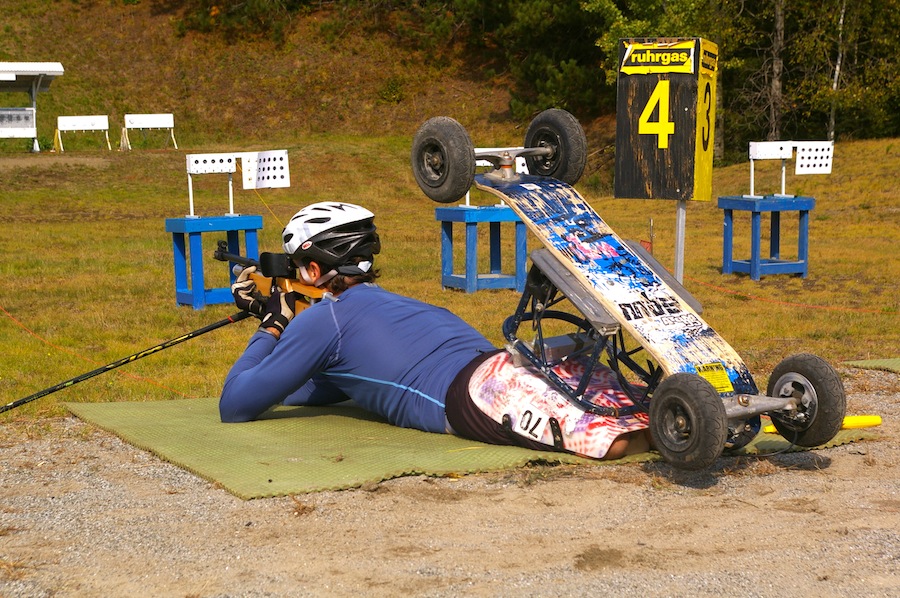
    U.S. Paralympics Nordic National Team member Andy Soule, an Army veteran, shoots at the Mt. Van Hoevenberg biathlon range during time-trial intervals on sit-ski mountain boards on Sept. 21. The national team held a dryland camp in Lake Placid, N.Y., from Sept. 18-28.

    LAKE PLACID, N.Y. — As they hammered out loops at the Mt. Van Hoevenberg biathlon center, several athletes on sit-ski mountain boards put their heads down. Everything they were doing — five or so laps lasting a few minutes each on pavement and grassy trails — required upper-body strength. At the end of each interval, they reentered the stadium for shooting practice, where the adaptive skiers rolled onto their stomachs and aimed at their targets. Then they had to get back up again and start over.

    Of the 14 athletes at the U.S. Paralympics Nordic dryland camp in Lake Placid from Sept. 18-28, two were visually impaired, according to high-performance director John Farra. He prescribed bounding intervals for them.

    Several national-team members, including Jeremy Wagner (l), Sean Halstead (second from left) and Erik Frazier (r), at the start of a sit-ski time trial at the U.S. Paralympics Nordic dryland camp Sept. 21 at Mt. Van Hoevenberg. (Photo: www.facebook.com/USParalympicsNordic)

    Nine coaches also attended the 10-day camp, which Farra said was one of the most-selective to date.

    “An interesting challenge for us now is that we’ve been pretty successful at bringing new people to the sport, so our numbers are going up while our numbers at the OTC [Olympic Training Center] aren’t,” he said during the time-trial session Sept. 21.

    “I guess it’s a good problem for us, that now our high-performance camps are by invitation-only,” Farra added. “Last year was kind of like, ‘Hey anybody shows up,’ [which was] great because there weren’t that many people doing it, but I would say we’ve brought in another 15 to 20 people to the sport and I’ve only got 15 beds at the OTC.”

    Nine members between the U.S. National and Development teams were given priority, and most came to at least part of the camp. Beyond that, Farra said they invited three to five newcomers that they felt deserved the opportunity. Several came from the East, he said, but in a few weeks from Oct. 15-25, they’ll have more western skiers at another dryland camp in Midway, Utah.

    “It’s exciting; it’s definitely working,” Farra said. “We had, what, five adapive [skiers] two years ago at nationals? Last year we had 18, and I expect closer to 30 this year at [U.S. Adaptive Nordic National Championships at Soldier Hollow,] Utah. That’s the right direction that we need to go.”

    Lt. Dan Cnossen of the U.S. Paralympics Nordic National Team doing loaded chin-ups during a strength session at the Lake Placid Olympic Training Center. (Photo: www.facebook.com/USParalympicsNordic)

    As for what the athletes were up to over the last two weeks, New England Nordic Ski Association (NENSA) Adaptive Program Director Eileen Carey wrote on the program’s blog that the athletes had been “dialing in shooting positions, roller-skiing and sit skiing on mountain boards, testing in the weight room and on the SkiErg and learning the physiology and nutrition of training.”

    On Sept. 21 during interval training, Farra said that was a good opportunity for his top athletes to combine a hard effort with shooting experience.

    “It’s a high-performance [camp]. They need to be preparing themselves for competitions,” he said. “That’s why there are time trials. That’s why they’re working hard with each other. With the [athletes] we don’t see as much, it’s really about giving them coaching advice, training and hopefully they get hooked and keep coming back.”

    ***