


Press Release
From the FasterSkier archive — posts syndicated from athletes’ and coaches’ own blogs between 2004 and 2012, kept online as published. Current coverage is at fasterskier.com.

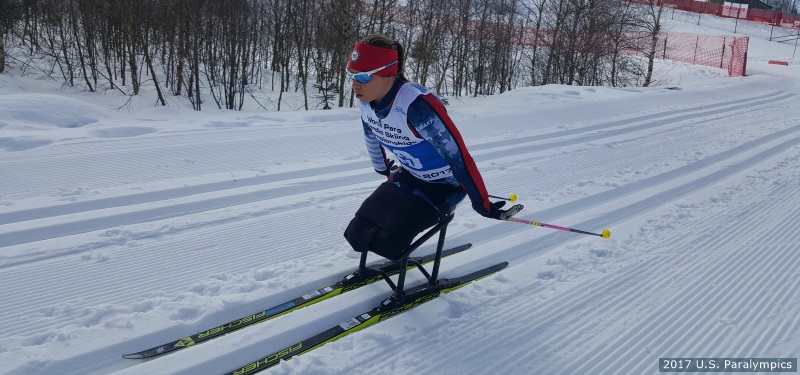
COLORADO SPRINGS, Colo. — Thirteen athletes, including seven U.S. Paralympians in Nordic skiing, were named to the 2017-2018 U.S. Paralympics Nordic Skiing National Team on June 1 by U.S. Paralympics, a division of the United States Olympic Committee.
“The level to which our Nordic skiers have performed already is very inspiring,” said Paralympic Nordic Skiing head coach Eileen Carey. “Our veteran athletes have continued to improve as we approach the Paralympic Winter Games PyeongChang 2018, and the addition of new members on our national and development teams is promising for the future.”
Three-time Paralympic medalist Oksana Masters (Louisville, Kentucky) highlights the team after claiming four world championships titles during the 2016-17 season, including cross-country crowns in sprint, middle and long distances, as well as the sprint biathlon title. She capped off the season by securing her third consecutive overall women’s sitting world cup globe in cross-country at the World Para Nordic Skiing World Cup Finals in Sapporo, Japan. Additionally, Masters finished third in the world cup overall rankings in biathlon.
Kendall Gretsch (Chicago, Illinois), Ruslan Reiter (Manchester, Maine) and Daniel Romanchuk (Mount Airy, Maryland) all make the national and development teams for the first time.
Four military veterans are featured on the roster, including Dan Cnossen (Topeka, Kansas/Navy), Sean Halsted (Rathdrum, Idaho/ Air Force), Bryan Price (Belton, Missouri/Army) and Andy Soule (Pearland, Texas/Army).
Team USA had a record-breaking 2016-17 season that finished with 33 world cup medals by five athletes, setting a record for the Nordic skiing team. Of the 33 world cup medals acquired, 12 were in biathlon. All A- and B-Team athletes reached the podium this past season, including first-time medals for Jake Adicoff (Sun Valley, Idaho) and guide Sawyer Kesselheim (Bozeman, Montana), as well as Aaron Pike (Park Rapids, Minnesota) at the PyeongChang Test Event.
2017-18 U.S. Paralympics Nordic Skiing National Teams
*Denotes U.S. Paralympian in Nordic skiing
# Denotes U.S. Military veterans
A Team
B Team
C Team
Development Team

Note: This article has been updated to include results from Thursday’s road cycling and evening track races, as well as Tatyana McFadden’s selection as recipient of the Whang Youn Dai Achievement Award.
On Tuesday and Wednesday in Rio de Janeiro, Brazil, two Paralympians who also dabble in skiing racked up medals at the Paralympic Games — with Tatyana McFadden winning the women’s 1500 T53/54 track event and Alicia Brelsford Dana placing second in the road-cycling time trial.
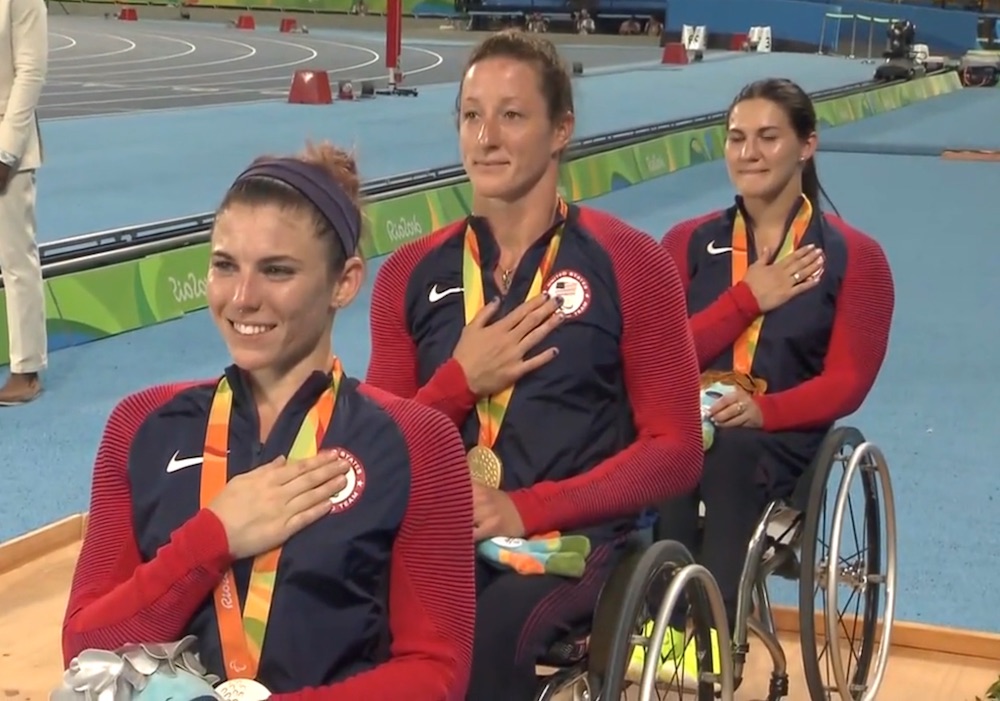
McFadden, 27, of Clarksville, Md., rocketed to her third medal in three races in Rio, leading what the U.S. Olympic Committee (USOC) dubbed a “Mc-sweep” in her event, ahead of fellow Americans Amanda McGrory (+0.11) and Chelsea McClammer (+0.17). It was the first U.S. track-and-field podium sweep at these Games, and McFadden led from the start to capture a Paralympic record of 3:22.50.
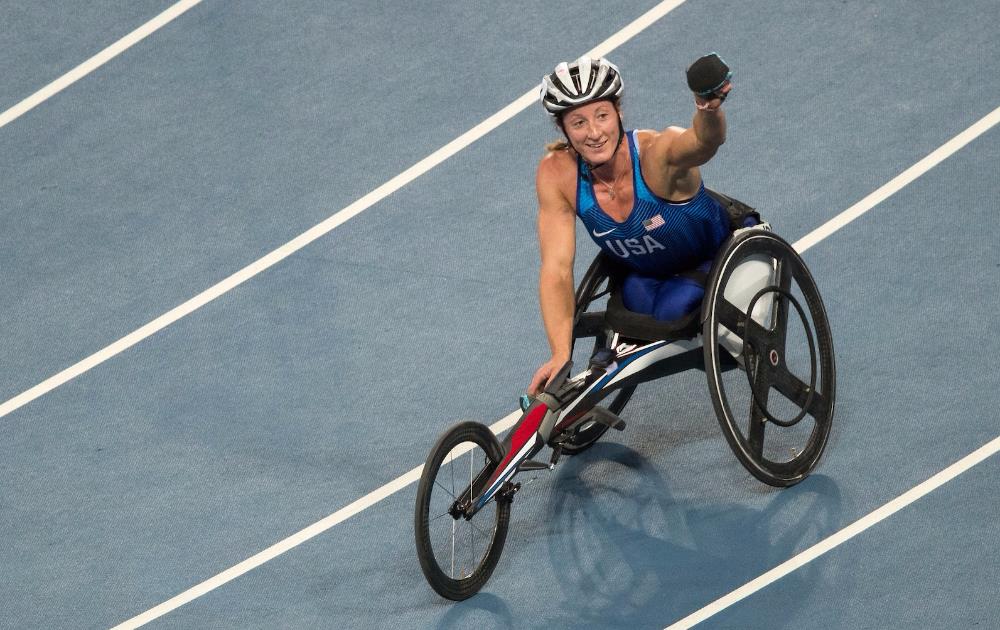
This marks her 13th Paralympic medal in track and field. She also has a silver in sit-skiing at the 2014 Winter Games.
“It’s amazing,” McFadden said, according to a USOC press release. “It’s the first time, I think, in history or in a long, long time since we’ve gotten an American sweep in the 1500 and it happens to be the girls, so it’s really cool.”
“We went into this morning with a pretty good plan and decided we were going to go for it,” McGrory said. “We raced together, we raced smart and we pulled it off.”
(Update: Two days after her latest gold, McFadden was selected to receive another honorary gold medal as one of two recipients of the Whang Youn Dai Achievement Award. According to a International Paralympic Committee (IPC) press release, an independent panel of judges comprised of IPC Governing Board members selected the winners on Thursday — McFadden and Syria’s Ibrahim Al Hussein, a swimmer who is competing independently in Rio. They will each receive a pure gold medal, weighing 75 grams, at the Closing Ceremony.
The panel chose McFadden and Hussein for best exemplifying “the spirit of the Paralympic Games and the Paralympic values.” Seventeen participating countries nominated 21 athletes, and the IPC narrowed the list down to six athletes. McFadden was the only North American among the six finalists.)
On Thursday night, the “Mc-trio” (as the USOC called them) of McFadden, McClammer and McGrory — teammates at the University of Illinois Urbana-Champaign — swept the podium again in the women’s 5000-meter T53/54. McFadden made her move on the final lap to notch her third gold in four individual races in Rio, winning in 11:54:07. McClammer edged McGrory by one-hundredth of a second for silver (+0.26) and McGrory took bronze (+0.27).
“We train together, so we work really, really well together,” McFadden said, according to a USOC press release. “There’s no one I want more on the podium than my teammates. I think the whole world was looking at us and we were looking at them and we said ‘hey, we’re going to work together’. We’re stronger that way and it definitely showed today.”
Two hours later, McFadden and McClammer raced the 4×400 T53/54 relay with McFadden’s younger sister Hannah McFadden and Cheri Madsen. They crossed the line second behind the People’s Republic of China, which smashed the world record of 3:40.66 with a time of 3:32.11. However, according to the final results, the Americans were disqualified (along with Turkey) and relegated to fourth (while Turkey was listed as third). Australia, which had a season-best time of 3:46.63, took silver, and according to the results, no bronze was awarded.
Dana Second in Time Trial, Fourth in Road Race
On Wednesday, the seventh day of the Paralympics and first day of road cycling, Dana, of Putney, Vt., notched silver in the H1-2-3 time trial with a time of 33:57.48, less than 13 seconds behind the winner, Karen Darke of Great Britain.
Four years ago at the Paralympics in London, Dana, now 47, placed fifth in the same event. At 2015 World Championships, she took silver in both the time trial and road race. In 2014, she was a world champion in the time trial.
In all, the U.S. cycling team racked up nine medals on Wednesday (one gold, five silver and three bronze). Oksana Masters finished fifth in the women’s H4-5 time trial with a time of 33:49.7, about 47 seconds off the podium and 2:14.24 behind the winner, Dorothee Vieth of Germany.
On her official Facebook page, Masters, 27, of Louisville, Ky., also a silver medalist in Sochi and a bronze medalist in doubles rowing at the 2012 London Paralympics, summed up her race on Wednesday: “I Finished 5th today in my combined H4-5 category for the TT. Just like skiing I like courses that have climbs in it. Today was the opposite. Flat as a pancake course with high winds which favors bigger people. I gave it everything I had, plus some blood and it was not enough to bring home a medal for team USA. Tomorrow is a new Day and another chance to race and leave everything on the course. It is a Road Race which will be a mass start. I am feeling hopeful for this race. It is my favorite event. I Can’t wait to throw it down tomorrow. I will be racing around noon rio time tomorrow.”
On Thursday, Masters placed fourth in the women’s H5 road race. She is one of two Americans at the Games who has competed in the last three Paralympics in three different sports.
Germany’s Andrea Eskau — a skier and Winter Paralympic medalist in both biathlon and cross-country in Sochi — won the event in 1:37:07. She finished 2 seconds ahead of the Netherlands’ Laura De Vaan and Jennette Jansen, who placed second and third, respectively. Masters was listed with the same time just 2 seconds back in fourth.
“I’m bummed I finished fourth today and came up a little short, but I’m super happy because I feel like I’ve learned so much from this race alone,” Masters said, according to a USOC press release. “I am just so shocked that I am even here competing in my third Paralympic Games in a row.”
Dana also placed fourth in Thursday in the women’s H1-2-3 road race. With a time of 1:16:01, she was 3 seconds off the podium and 5 seconds behind German winner Christiane Reppe (1:15:56). South Korea’s Do-Yeon Lee finished second and Italy’s Francesca Porcellato was third.
Results:
Tuesday: Women’s 1500 T53/54 final
Wednesday: Women’s H1-2-3 time trial | Women’s H4-5 time trial
Thursday: Women’s H1-2-3 road race | Women’s H5 road race | Women’s 5000-meter T53/54 | Women’s 4×400 T53/54 relay

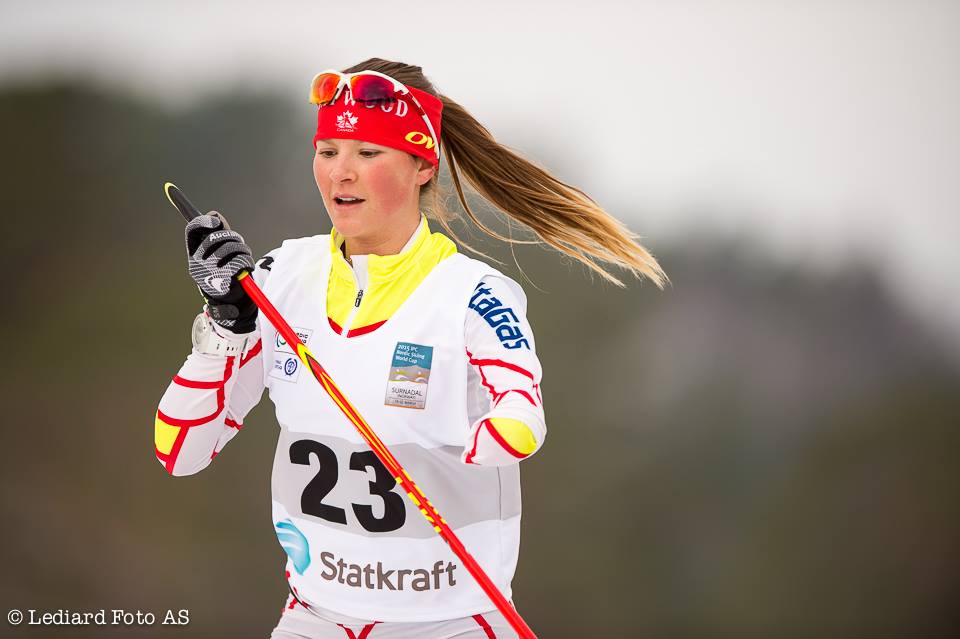
Three North Americans, count ’em, three, topped the 2014/2015 International Paralympic Committee (IPC) Overall World Cup cross-country podiums, ending their seasons on Sunday at IPC World Cup Finals in Surnadal, Norway.
Canada’s 21-year-old Brittany Hudak tallied her third medal of the week on Sunday, taking silver in the women’s 12.5-kilometer biathlon race a day after clinching the women’s overall cross-country title in the standing division by 33 points over Russia’s Ekaterina Rumyantseva.
Hudak placed fourth in Saturday’s 5 k cross-country race then finished second in Sunday’s biathlon distance race, 50.4 seconds behind Ukraine’s Oleksandra Kononova, who won in 39:46.2.
While Kononova missed two — one in each of the last shooting stages — Hudak cleaned every stage except the first, in which she missed one.
“The learning curve has been so huge for me,” Hudak said in a Canadian Para-Nordic team press release.
Two years ago, Canada’s legendary (now-retired) sit skier Colette Bourgonje encouraged her to try skiing while Hudak was working at a Canadian Tire store.
“Having the opportunity to attend national training camps, particularly the New Zealand camp this summer, I have noticed a huge improvement in my technique,” Hudak said. “It has been such an advantage for me to be in the same environment with the high-performance athletes, seeing how the train and learning from them.”
In all, she racked up two golds, two silvers and one bronze medal in IPC cross-country events this season, plus a silver and bronze in biathlon at World Cup Finals.
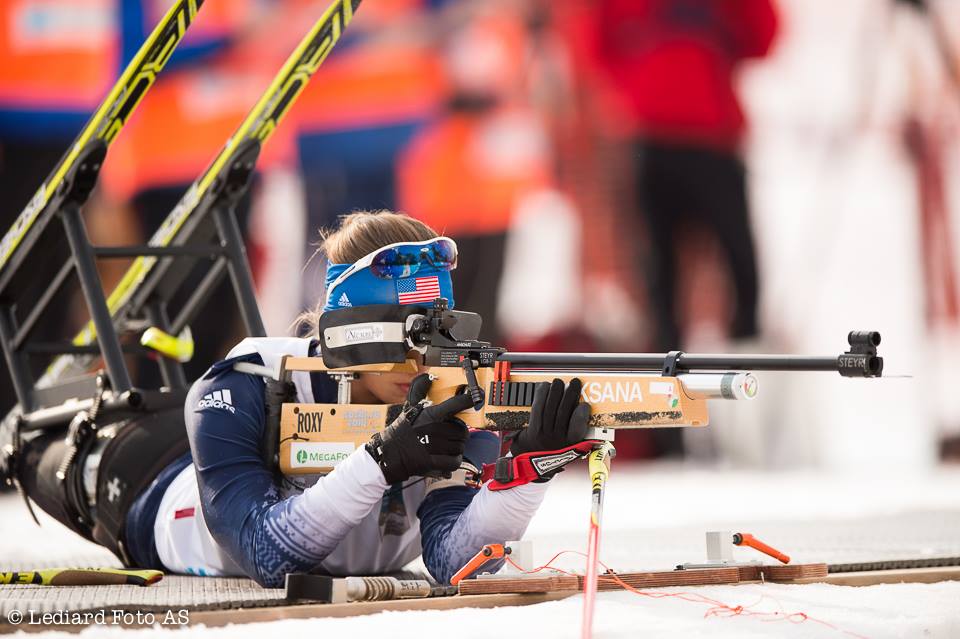
Hailing from south of the Canadian border, two Americans topped the overall IPC World Cup sitting standings, with Oksana Masters and Andy Soule claiming the cross-country crowns on Saturday, which U.S. Paralympics dubbed as a “three-medal day for Team USA.”
Masters and teammate Lt. Dan Cnossen won the women’s 5 k and men’s 10 k cross-country races, respectively, with the former capping her season with the overall win as well. Throughout this season, Masters earned seven World Cup golds and two silvers, plus a silver and bronze at IPC World Championships in January.
“I felt really good today,” Masters told U.S. Paralympics on Saturday. “It was a hard race, but my skis were fast, and I felt good. This is a great way to end the cross-country season. Everything has been pretty perfect here.”
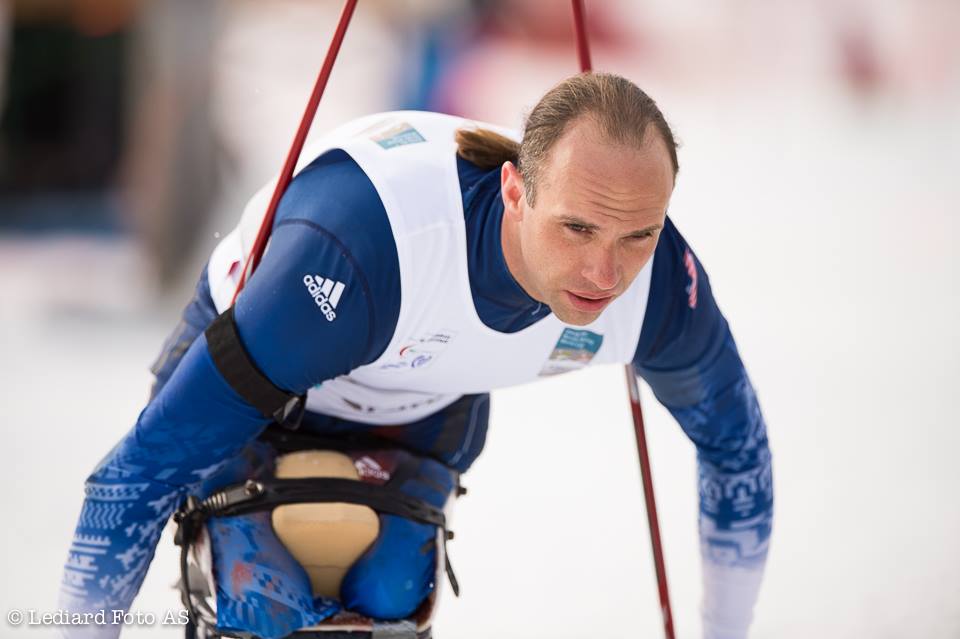
The 25-year-old former Paralympic rower won the women’s 5 k by 28 seconds over Norway’s Mariann Marthinsen in 14:19, and beat Marthinsen in the overall by 160 points.
On Sunday, Masters placed fifth in the final biathlon event: the 12.5 k sitting. While Germany’s Anja Wicker missed two shots to win in 48:46.5, Masters had a total of eight penalties to finish 5:38.2 behind.
Cnossen won Saturday’s cross-country 10 k sitting in 25:37, edging Russia’s Alexey Bychenok by 3.8 seconds. Soule finished third, 19.8 seconds back, to take the men’s overall cross-country title by 155 points over Bychenok. Cnossen ended up fourth in the overall cross-country standings.
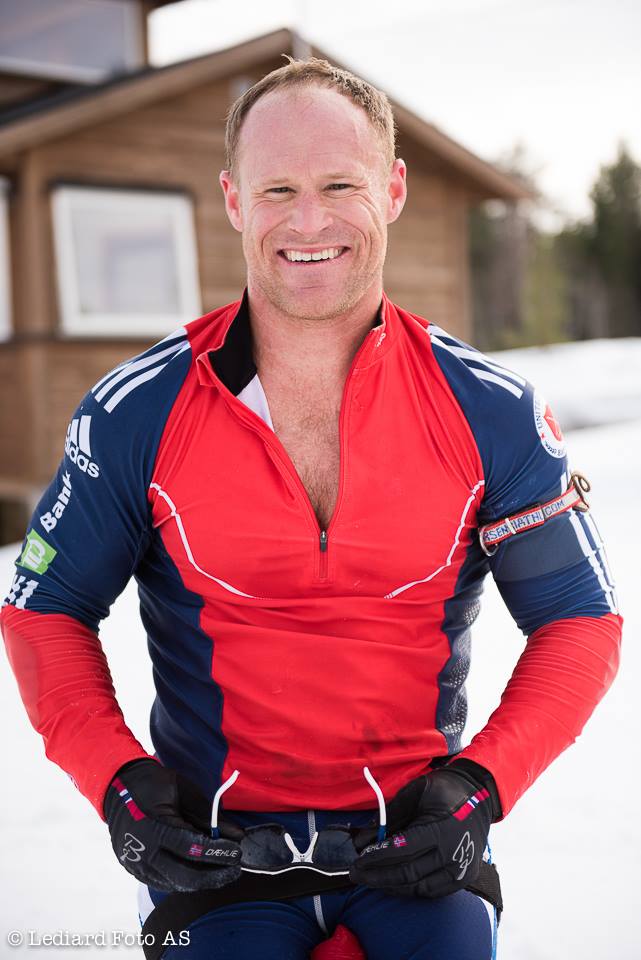
“I was getting updates from the coaches during the race that it was a really tight race between Alexey Bychenok and myself,” Cnossen told U.S. Paralympics on Saturday. “I was really happy for Andy, who came in third and got the World Cup overall win — that is even better. Our team had a great performance today.”
“It is a great feeling and a great finish to the season,” Soule, 35, said after his first podium at World Cup Finals. “This took a lot of hard work by myself, my teammates, my coaches and wax techs. This is just a great end to the season.”
At World Championships, Soule racked up an unprecedented five medals for the U.S., three of which were in cross-country races. Adding to that haul, he totaled four World Cup golds and a bronze this season.
On Sunday, he placed seventh in the 15 k biathlon race with six penalties (1+1+2+2), finishing 4:03.6 behind Germany’s Martin Fleig, who won in 49:32.1. Cnossen was 5.4 seconds off the podium in fourth with five misses (1+2+0+2).
Canada’s Chris Klebl placed fifth in Saturday’s 10 k sitting, 51.3 seconds behind Cnossen. The result helped him secure third overall in the men’s cross-country sitting on the IPC World Cup, 40 points ahead of Cnossen. Klebl did not race on Sunday.
Klebl’s teammate, Mark Arendz finished fifth in the men’s biathlon 15 k standing on Sunday, 3:23.2 behind Ukraine’s Ihor Reptyukh, who won in 42:17.6. While Reptyukh had three penalties (1+0+1+1), Arendz had five (1+1+1+2). The Canadian placed fourth overall in the biathlon World Cup, 161 points behind Reptyukh in third.
Saturday’s cross-country: Women | Men


The second day of the 2014 Winter Paralympics in Sochi, Russia, Oksana Masters — a bronze-medal rower from Louisville, Ky. — broke the ice and a 20-year barrier for the U.S. Paralympics Nordic Program.
Twenty-four at the time with just over a year of skiing experience, she captured silver in the 12-kilometer sit-ski cross-country race, becoming the first U.S. woman to win a medal for her team in the last 20 years.
Three days later, another sit skier and Winter Paralympics rookie, Tatyana McFadden racked up another silver for the U.S. in the 1 k sprint. Then on the final day of the Games, Masters closed the books with a bronze in the 5 k.
Three medals left U.S. Paralympics High-Performance Director John Farra a lot to be excited about, especially after the team took home one medal from the Paralympics four years earlier in Vancouver, British Columbia. He wasn’t at the helm then, when Andy Soule won bronze and six athletes represented the U.S. at the 2010 Paralympics.
But less than three years after he started with the program in the summer of 2011, Farra helped it more than double in size. The U.S. brought 16 nordic-and-biathlon skiers to Sochi and grew from five full-time athletes in 2011 to six national-team members (including Masters as its first A-teamer) and nine development-team athletes.
Out of the 16 in Russia, two of them won three medals, yes, but Farra also likes to point out all of their fourth-, fifth- and sixth-place finishes as well.
“[Those are] maybe a better sign of the health of our program,” he said on the phone from his office in Park City, Utah, last week. “I was prepared for the possibility that we might win [no medals]. I wasn’t worried, but I will say there was some sense of relief, but more importantly, it was just fun.”
Take Soule, for instance, who finished in the top five of all but one of his six races in Sochi. A biathlete as well as a cross-country sit-skier, the team veteran shot perfectly at the Games — hitting all his targets in three races.
Then there was Jake Adicoff, an 18-year-old visually impaired skier, who placed sixth in the 20 k distance race in his first Paralympics.
Those kinds of performances, paired with a few medals (which Farra says they “stole”), better define the strength of their program, he said. And when his bosses in the U.S. Olympic Committee (USOC) Paralympics division decided on his team’s budget for this 2014/2015 season, Farra believed they took that into consideration.
“Our numbers went up in terms of participants and our performance,” he said, adding that they also increased the size of their full-time staff. “I think we’re in a really good place. … I didn’t get what I requested in terms of my high-performance request, but we’re getting enough to do the job, for sure. We’re getting really supported by the USOC, and we’re earning the support that we get because we’re running a really high-level program.”
U.S. Paralympics oversees five winter sports: nordic, alpine, snowboarding, sled hockey and wheelchair curling. Every four years, Farra explained that it’s essential for U.S. Paralympics’ summer sports (like cycling, swimming, and track and field) to cut back and support them in the months leading up to the Winter Games. They do so with the understanding that now, two years before the Summer Paralympics in Rio de Janeiro, Brazil, the winter sports will do the same.
“We’re spending less this year and appropriately so based on that design,” Farra said. “I think that’s fine.”
He pointed out that more than half of the available medals at the Winter Paralympics come from cross-country or biathlon events.
“[U.S. Paralympics] needs nordic to be successful,” he said. “Is it pressure? You bet it’s pressure because it doesn’t happen without us, but that’s the whole idea.”
Last year, his program was allowed to overspend to a certain degree, Farra explained, and the budget he has to work with this season — while down from last season — is still higher than it was three years ago.
“There were some elite strategies that I identified to my boss that I felt were really important going into Sochi and my boss allowed me to do what I needed to do,” he said.
That included their Fast Skis program in collaboration with U.S. Biathlon.
“I honestly feel that we had the fastest skis in Sochi of any team in the Paralympics because of that partnership, because we shared information,” Farra said. “We bought into that process and for two years we tested it. That’s the piece that we have and we’re going to keep that going, but now, what else can we do?”
“[U.S. Paralympics] needs nordic to be successful. Is it pressure? You bet it’s pressure because it doesn’t happen without us, but that’s the whole idea.” — John Farra, U.S. Paralympics Nordic high-performance director and coach
Standing in the hallway of the Olympic Training Center during a camp two weeks ago in Lake Placid, N.Y., Farra pointed to a five-year-old, steel-frame sit ski. That need to be three pounds lighter by switching to carbon fiber, and so did the frames of every sit skier on his team, he said. To dial in that equipment perfectly before the 2018 Paralympics in Pyeongchang, South Korea, they’ll likely have to test several versions years before. So they need to start now.
“Medals are good, but they’re not critical; I think they’re going to be more critical in Pyeongchang,” Farra said of building on his team’s established success.
He told his bosses this was going to be a process. “[I said], ‘I don’t want to get fired if we don’t win medals in Sochi,” he reflected with a laugh. “They said, no, no, we understand.”
Rethinking staff structure
While in Russia, Farra spent some time like he did when he started the job three years ago, asking questions and gathering ideas. He got talking to USA Bobsled and Skeleton and was inspired by the federation’s creativity when it came to reviewing staff. Each year, they surveyed their athletes and employees to get an honest sense of how everyone felt about the team, its structure and staffing, etc., and looked at the results collectively to make changes.

He jotted the idea down at the breakfast table one morning in Sochi and vowed to try it in the spring. Then he wondered, did his team need a clearly defined director, head coach, assistants and/or development coaches? Or were there other ways to go about assigning responsibilities?
When he met with the USOC at the end of the season, he asked how other teams under its umbrella structured their respective teams from a staffing perspective.
“I was really shocked at how many sports did it in a unique way, and it validated my instincts that there’s not just one design,” Farra said.
In the spring, he went back to USA Bobsled’s idea and created a staff review using SurveyMonkey, a free-online polling tool. He encouraged his athletes and coworkers to participate, not withholding any criticism nor fearing repercussions for sharing their thoughts. He’d be the only one reading the results, and he invited criticism of himself as well.
“It really drew out some interesting responses where we found some flashes of our brilliance, but we have some flaws in our design,” Farra said.
The good news was the results were in line with what he had already been thinking.
Before this spring, Farra was the U.S. Paralympics Nordic’s lone full-timer. Three development coaches, Eileen Carey, BethAnn Chamberlain and Rob Rosser, worked with the team as U.S. Biathlon employees. Head coach James Upham worked as an independent contractor.
Farra said he sat down with that core crew this spring and shared the overall takeaways from the survey. Mostly he asked if they were willing to be part of a collaborative and different-looking staff structure: with a director/coach, who splits his time between administrative and instructive duties, plus several multifaceted coaches, who work with developing as well as elite athletes.
“While we need to win medals, we’re more of a development organization,” he said. “We’re still not there in terms of having all kinds of high-performance athletes that we need to care for. … Everybody needs to be a development coach, including a director.”
He challenged his own job, asking whether the team’s dollars were being wisely spent on a director who mostly sits at a desk. That wasn’t smart, he reasoned, so he needed to get more involved with day-to-day coaching, building sit skis and helping athletes learn to navigate corners. He would do so with Carey, also a high-performance coach, and Chamberlain and Rosser, all of which are now full-time team employees. But they no longer needed a head coach.
Upham had been a head coach for a long time, Farra pointed out, and if he had wanted to stay, the program would have had to consider if they could afford his pay scale. Salaries and budgets aside, Farra explained that it was more about a coaching style he had to sell his staff, and those that were interested stuck around. Upham left to become an assistant coach at Bates College.
“It was not a relaxing spring, but I think in the end the people that signed up for being a part of this collaborative coaching style are 100-percent onboard,” Farra said. “… Collaboratively we’re all responsible for our overall success. I’m psyched for James that he found something that’s going to work for him and I think he’d say the same for us.
“There was really no drama,” he added. “… I definitely can’t afford to hire lots of full-time coaches, but it wasn’t about money, it was more about being able to take the blinders off and sort of say, OK, can we do this in a different way?”

Throughout the last several months, Chamberlain, now in her second season with the team, and Rosser have been primarily working with developing athletes — both biathletes and cross-country skiers. While Farra and Carey are mostly responsible for the high-performance athletes (a.k.a. national-team members), the four coaches trade off when it comes to training camps based on their geographic proximity to those venues.
“It makes no sense to fly BethAnn and Rob to Utah to work with a couple newbies,” Farra said, considering he lives there.
At the same time, he needed to skip the October national-team camp in Oberhof, Germany, to take care of paperwork and meetings. Carey and Rosser will fly overseas with the team, while Chamberlain works on military and non-military recruiting stateside. The team includes several part-time contractors, including physiologist Jason Kask — brought on to help lead the training-plan process for the next Olympic cycle.
“We have regular meetings and go over the hundreds of responsibilities that exist with developing a high-performance and a development program,” Farra explained. “You get one chance every four years to build something that’s going to be successful.”
IPC World Champs in Cable
This winter, the world-famous host of the American Birkebeiner and back-to-back International Paralympic Committee (IPC) World Cups: Cable, Wis., will host the IPC Nordic Skiing World Championships from Jan. 22-Feb. 1.
That’s an exciting prospect for U.S. as the home team, with Farra largely crediting its success in the last three years to being able to bring numerous developing athletes to the Cable World Cups in 2012 and 2013.
At the last World Championships in 2013, the U.S. had four athletes and three coaches in Solleftea, Sweden.
“It was just so cost prohibitive,” Farra explained. “Every time you bring more athletes you need to bring a lot more staff. We expect [Cable] to be a decent size team, similar to what we saw in Sochi and hopefully some new faces so it’s a really good opportunity.”
The qualifying standards are still more selective than a World Cup, which will keep the team size around 16 or so, plus a couple guides, he predicted. It’s also cheaper than traveling overseas, but “not an inexpensive proposition,” he explained, when you consider the cost of food and lodging, plus participation fees.
But would having more athletes compete boost their chances?
“I’m not worried about medals,” Farra said. “I feel the support from the USOC and U.S. Paralympics. I don’t feel that we need to cash in a bunch of medals in Cable to get support for Pyeongchang. That would be icing on the cake but … we’re not worried about that, we’re worried about doing a great job.”
***

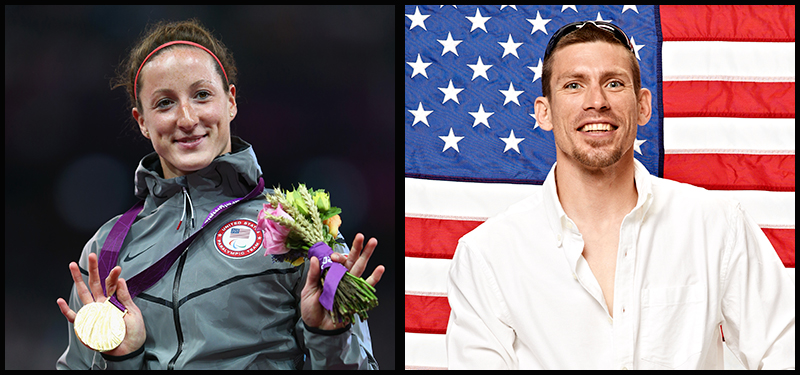
COLORADO SPRINGS – U.S. Paralympics, a division of the United States Olympic Committee, announced Wednesday that 16 Nordic skiing athletes and two guides have been nominated to the 2014 U.S. Paralympic Team to compete in biathlon and cross-country skiing at the 2014 Paralympic Winter Games in Sochi, Russia, March 7-16. The nominations are subject to approval of the USOC.
After sending six athletes to the Vancouver 2010 Paralympic Winter Games, Team USA’s Nordic roster will nearly triple in size with 12 men, four women and two guides for visually impaired athletes.
“We are thrilled to bring such a large team of athletes and professional staff to Sochi,” said John Farra, high performance director for U.S. Paralympics Nordic skiing. “We have made a concerted effort to introduce more athletes to the sports of cross-country skiing and biathlon over the past two-and-a-half seasons, and this growth is a sign of our success in keeping many of them excited about our Nordic sports and working toward becoming internationally competitive.
“In addition to building the numbers with new developing athletes, we have also focused many resources to help our top athletes get close to hitting the podium. Great focus was given towards equipment design for sit skiers, race ski selection and preparation in partnership with the U.S. Biathlon Association, and access to the best training camps and competitions around the world.”
Men
Guides
David Chamberlain (Wilton, Maine)
Reid Pletcher (Ketchum, Idaho)
Three athletes return from the Vancouver 2010 Paralympic Winter Games, including Andy Soule (San Antonio, Texas) who won the first-ever U.S. medal in the Olympic or Paralympic Winter Games in the biathlon with his bronze in the men’s 2.4-kilometer race. Soule will be joined by his 2010 teammates Sean Halsted (Spokane, Wash.) and Monica Bascio (Evergreen, Colo.).
Bascio boasts the most Winter Games experience, with Sochi marking her third Winter Games and fourth Games overall. Having just recently retired from cycling, Bascio is one of three athletes who medaled at the London 2012 Paralympic Games. Other cross-over athletes include Tatyana McFadden (Clarksville, Md.) and Oksana Masters (Louisville, Ky.). McFadden is a 10-time Paralympic medalist in track and field, while Masters partnered with Rob Jones to become the first Americans to win a Paralympic rowing medal in the trunk and arms mixed double sculls event with their third place finish.
More than half of the athletes nominated to the men’s team are military veterans: Omar Bermejo (Marines/Grand Rapids, Mich.), Kevin Burton (Navy/Boulder, Colo.), Travis Dodson (Marines/Deming, N.M.), Halsted (Air Force/Spokane, Wash.), Bryan Price (Army/ Belton, Mo.), Soule (Army) and Jeremy Wagner (Army Reserves/Nanakuli, Hawaii). Lieutenant Commander Dan Cnossen (Topeka, Kan.) is the only active duty member of the team as he currently serves with the United States Navy.
Competition for Nordic skiing will take place March 8-16 with March 13 scheduled as an off-day. Nordic skiing includes both biathlon and cross-country skiing, both of which have three events contested at the Games, in addition to two cross-country relays.
The majority of the U.S. Paralympic Nordic Skiing Team will compete in both sports. A list of events entered by each athlete will be available in February.
The USOC and NBC Olympics have partnered to provide an unprecedented level of coverage to the Paralympic Winter Games. NBC and NBC Sports Network will combine to air 50 hours of television, starting on March 7 with the Opening Ceremony. It will be followed by daily coverage of all five Paralympic sports in the Sochi program, before the Games’ Closing Ceremony is broadcast on March 16. In addition to the unprecedented U.S. television coverage, the USOC and streaming sponsors BMW, BP, Citi, Liberty Mutual Insurance, Procter & Gamble and The Hartford will provide live online coverage at TeamUSA.org.
U.S. Paralympic Team nominees for alpine skiing, biathlon, cross-country skiing, sled hockey, snowboarding and wheelchair curling will be finalized by the USOC no later than Feb. 21, the deadline to submit Sochi 2014 Paralympic Winter Games delegation rosters to the International Paralympic Committee. Selection procedures and dates can be found at TeamUSA.org/ParalympicGames/.

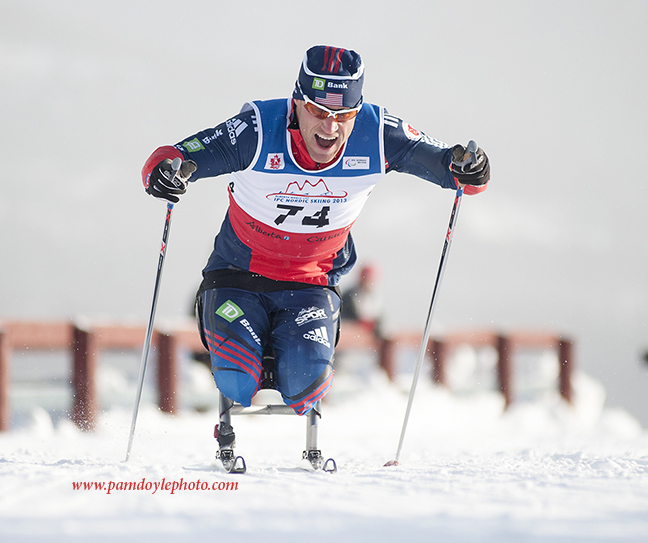
One of the most successful men on the U.S. Paralympics Nordic Team last season, Lt. Dan Cnossen cut right to the chase when asked about his training this summer and fall.
“I think we’re going to find out real quick when I go up against the Russians,” Cnossen responded in a phone interview before the first International Paralympic Committee (IPC) World Cup in Canmore, Alberta, from Dec. 9 to 17.
According to U.S. Paralympics High Performance Director John Farra, Cnossen, originally from Topeka, Kansas, is relatively new to the sport. He joined the team after the 2010 Winter Paralympics, and in the three years since he’s been living and training in Winter Park, Colo., Cnossen has risen to lead the U.S. men’s sit-ski team.
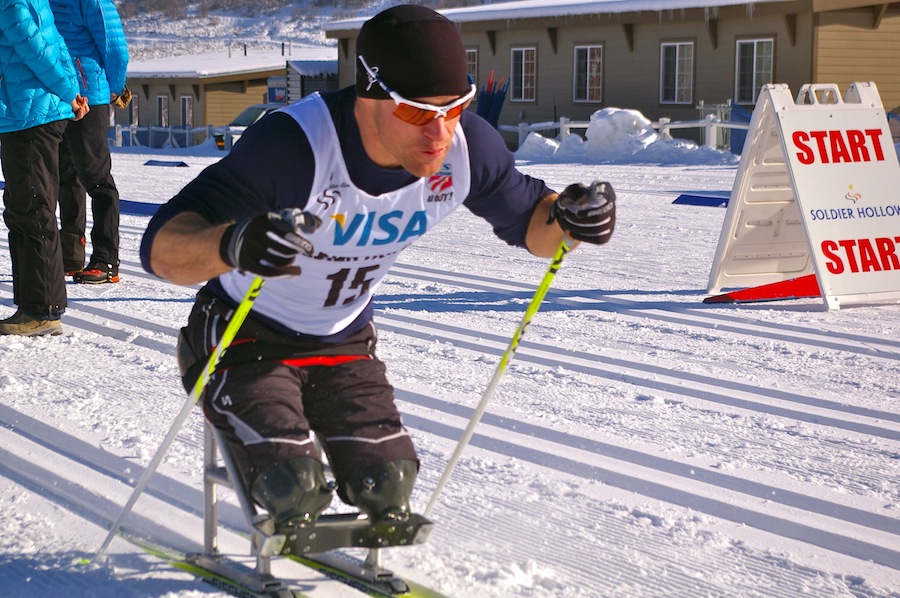
“He trains unbelievably professionally,” Farra said. “He really puts everything into it.”
A Navy SEAL who lost both his legs in an Afghanistan explosion in 2009, the first day he was promoted to lieutenant, Cnossen, 33, has full use of his core.
“He is a ‘V’ cut, super-strong … looking guy,” Farra said.
Last year, Cnossen excelled on the domestic and international scene, notching podiums at U.S. nationals and the IPC World Cup in Cable, Wis.
This summer, he ventured down to Argentina to train and race the 21-kilometer Marchablanca and 42 k Ushuaia Loppet. “That trip really reinvigorated my training,” Cnossen said.
Skiing on snow is important to Cnossen, because he describes his mountain board (a sit skier’s equivalent to rollerskis) as a “strength machine.”
“It’s very hard to work my cardio on it because it doesn’t roll very fast,” he said.
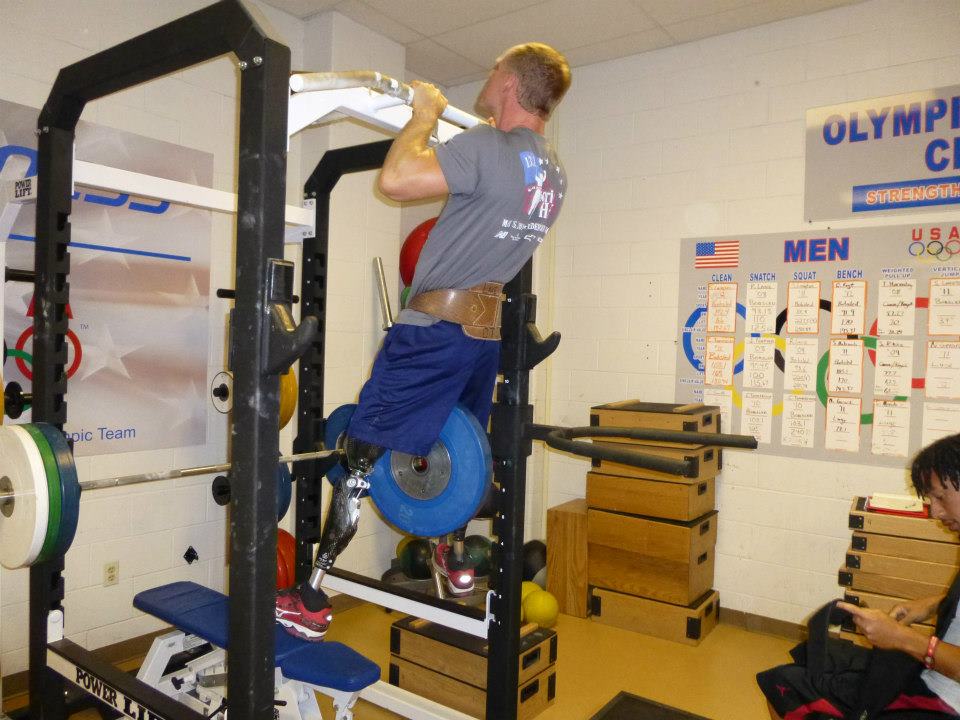
Using prosthetic legs, Cnossen has devised other ways to raise his heart rate.
“You do what you can, and for me, I was a big runner before my injury,” he said. “I’m very lucky that I can do it, and I’m really lucky that I can walk too. ”
He mostly runs 5- and 10-k races, which helps with his nordic training.
“Plus, running gives me a chance to rest my shoulders,” he said.
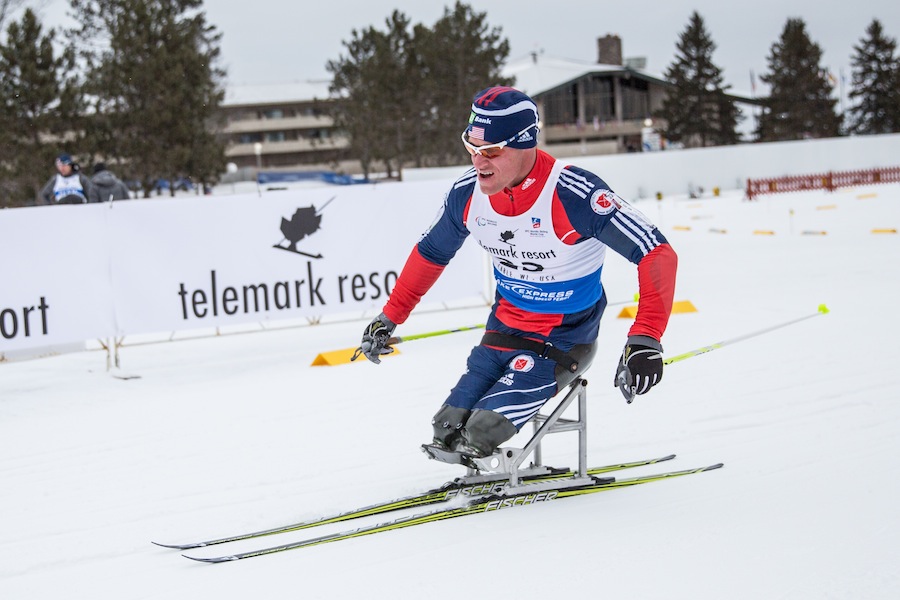
Cnossen is testing in a new custom sit ski this year, a lighter model that he hopes will help him ski faster.
“It’s a really important part of the sport; you have to be comfortable, you have to be well secured … not only for power transfer, but for ski control,” he said. “I found a group of engineers who were willing to work with me and they’ve done a great job.”
Summing up his thoughts about the season ahead, Cnossen said he was confident in his skiing abilities.
“I’m hoping I’m a little better tactician,” he said. “I know I’m stronger physically this year and I have better equipment so it will be exciting to see how I end up on the results list.”
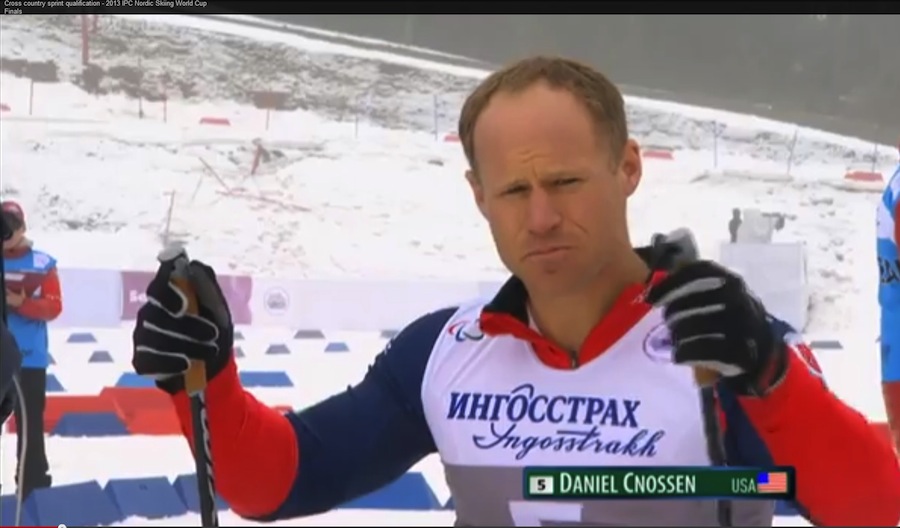
In terms of tactics, he said he needs to work on sprinting.
“I try to be a sponge,” he said. “Since this is only my third year, every time I go to a World Cup I try to watch the Russians and the athletes from other countries. I watch what lines they take. Are they in the track are they out of the track? Their rhythm of double poling, the nuances of ski handling. I hope it pays off.”
Also a biathlete who’s tweaked his training, Cnossen predicts improvement there as well.
“I think you’ll see some improved hit rates,” he said. “I knew the first couple of years, even if I shot perfectly I wouldn’t ski fast enough, no where near it. First and foremost, I thought the strength and conditioning would take the longest to develop. I have a background in shooting and I can tweak that in a relatively short amount of time compared to how long it would take do develop the strength to conditioning to be fast enough to keep up with the top guys.”
So far, he’s notched ninth place in the 10 k at Canmore, leading the U.S. men. On Tuesday, he placed 11th in the sprint behind teammates Sean Halsted and Andy Soule in eighth and ninth, respectively.
***
What: IPC World Cup at the Canmore Nordic Centre in Canmore, Alberta
Schedule:
IPC Cross Country World Cup
IPC Biathlon World Cup

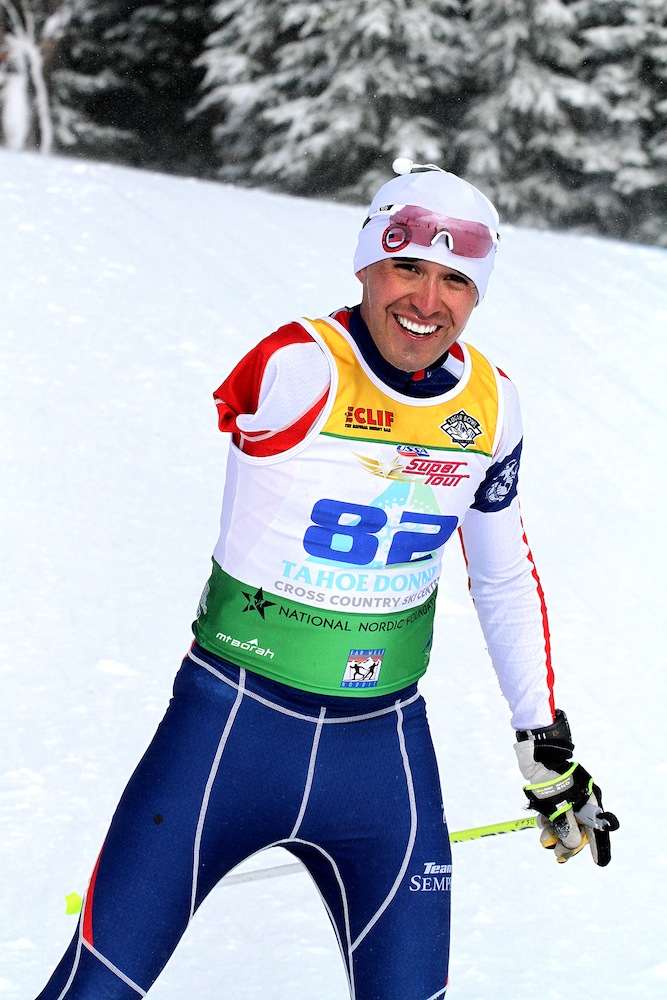
The wind howling sideways across Sugar Bowl’s alpine slopes in Truckee, Calif., skiers and spectators alike at the U.S. SuperTour Finals hill climb in April grimaced in the cold. The Spring Series skate race was mostly a snow squall, with competitors battling a headwind at times as they pushed toward the top.
Rounding one of the last corners into a blustery abyss, Omar Bermejo smiled for the camera. He might as well have been back in San Diego, Calif., where he was stationed with the U.S. Marine Corps; Bermejo appeared in his own world, immune to his frigid surroundings.
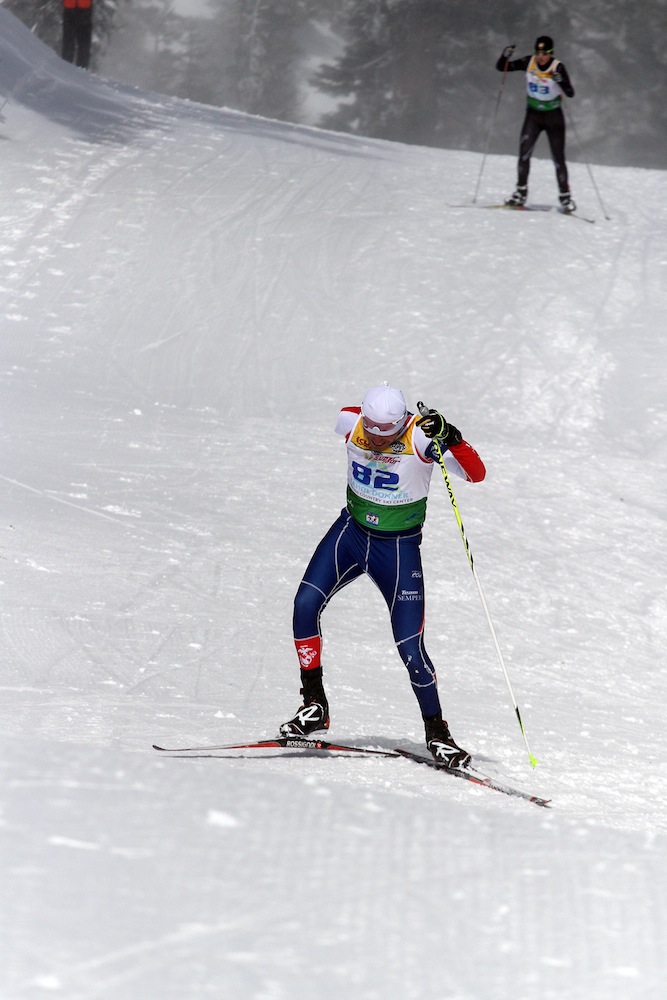
“Being a Marine, you kind of crave those little, like, I-hate-my-life kind of moments,” Bermejo said three days later on April 11. “I don’t know, I liked it.”
Skating was his favorite technique and doing so up a mountain wasn’t awful – even with one arm, the U.S. Paralympics Development Team member explained. A Marine for more than 10 years, Sgt. Bermejo rewarded himself for surviving four deployments in Iraq by buying a motorcycle in 2008. Cruising around that June in San Diego, he hit a patch of dirt on a curve and lost control of the bike, crashed and had his right arm amputated as a result.
Four months later, he started skiing for physical therapy, and it didn’t take long for the U.S. Paralympics Nordic Program to catch wind of his new hobby.
“During my recovery, I had rehab [and the therapists] were like, ‘Hey do you want to try cross-country skiing?’ ” Bermejo, 31, recalled at Spring Series on April 11. “I was like, ‘Yeah, I want to go down some hills.’ And then they were like, ‘All right, go up that hill.’ I was like, ‘Wait a second, you tricked me!’ ”
His voice fluctuated with excitement as he spoke, not long after racing 20 kilometers on the last day of the season. “Actually I started on classic skis and I was like, ‘Oh wow, this is like running. I feel great!’ ”
Bermejo was, and remains, a fiercely competitive athlete. Before his accident, he was a road runner, racing 10 k’s, half marathons, you name it, Bermejo explained on the phone in June. He was just about to leave his hometown of Grand Rapids, Mich., to fly east to live and train with the Maine Winter Sports Center (MWSC) in Caribou, Maine.
Early last season, MWSC head coach Will Sweetser helped Bermejo and Kevin Burton, a U.S. Paralympics visually impaired skier, at the SuperTour in Bozeman, Mont. The relationship continued through U.S. nationals and SuperTour Finals, with Bermejo meeting the team in March for a weeklong training camp in Maine. Ultimately, Sweetser asked Bermejo if he wanted to move there.
“I really jumped at that,” Bermejo said. “I’m a stand-up athlete so I can sort of keep up with the able-bodied guys.”
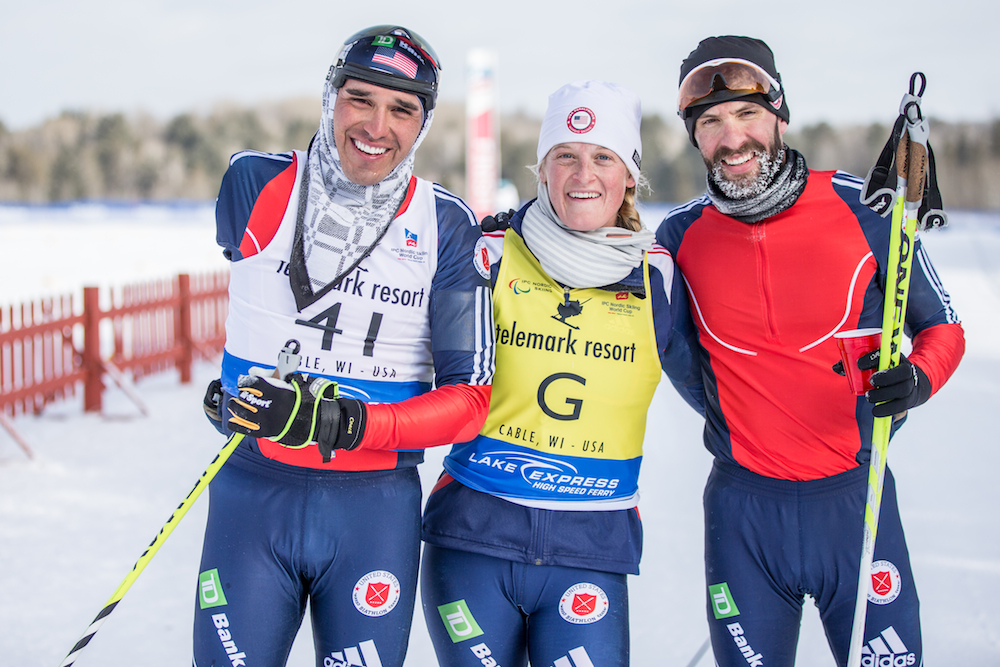
By stand-up, Bermejo meant his adaptive category, which allows him to ski just like anybody else with just one arm. His able-bodied teammates include Kris Freeman, Sam Tarling and Welly Ramsey of MWSC’s Olympic Development Cross-Country Team (ODT).
“We are really excited to have Omar join us as a member of our ODT,” Sweetser wrote in an email. “While working with him last year as a service tech, he and I hit it off. I think that many of the professional clubs can offer a whole lot of help to most stand up adaptive athletes.”
“Pretty psyched to have Omar join us,” he added. “Our junior group love him and really get pumped to train with him.”
Not long after settling into Maine, Bermejo presented to the MWSC juniors. In September, he traveled to Italy with top skiers like Freeman, Tarling and U.S. Ski Team member Noah Hoffman to train at altitude in the Italian Alps.
“Sometimes I feel as if I don’t belong there since in reality I have only been skiing for only two years,” Bermejo wrote in an email. “But whenever those thoughts come around is when I tell myself that I must push myself a little harder or smarter to get through and succeed at my training.”
***
Three days after ascending more than 1,000 feet to the top of Sugar Bowl’s Mt. Disney, nearly 8,000 feet above sea level, Bermejo completed the 20 k classic at U.S. Distance Nationals on a borderline-hot, slushy day. About five kilometers in, he broke his pole. With no one around to hand him a replacement, he skied the next several hills without any use of his upper body. In his first Sprint Series, Bermejo wasn’t about to quit.
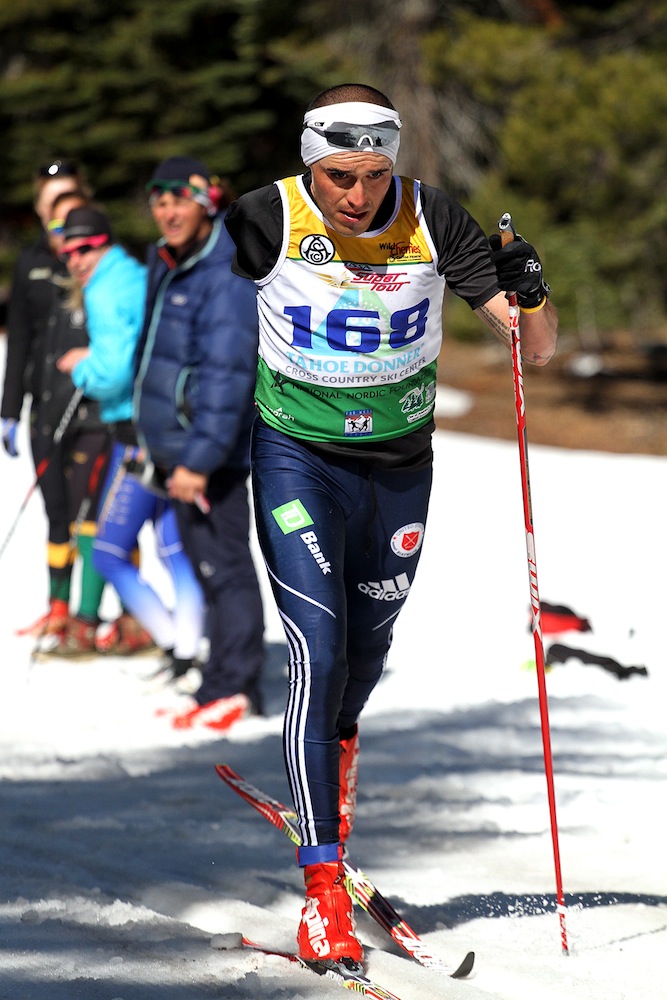
“I had to basically no pole the whole thing,” Bermejo said after finishing in just over an hour and a half. “Towards the way back, somebody gave me a pole so I’m like, ‘OK,’ … it was the last [race] so I had to make it count.”
That kind of grit is what U.S. Paralympics quickly picked up on. Post-rehab, Bermejo moved to Arizona to be with friends and lift his spirits.
“I was trying to deal with my arm being missing,” he said. “I used to be a strong guy, like great runner, so I wanted to get back to that.”
He discovered U.S. Paralympics coach Rob Rosser was hosting a biathlon clinic at the University of Arizona and decided to check it out.
“I was in the mode that I could do anything,” Bermejo said. “[Rosser] invited me to the Empire State Games in upstate New York and I was like, ‘Wow, this is great. I want to continue doing this.’ ”
Arizona, he soon realized, was not the best place for skiing. Bermejo started shopping around for new places to live and train, and Marc Mast in Sun Valley, Idaho, invited him to check out his Wood River Ability Program. In the summer of 2011, Bermejo moved there permanently.
U.S. Paralympics Development Coach Eileen Carey, formerly of the MWSC, wrote in an email that she first worked with Bermejo at a development camp in February 2012 in Lake Placid, N.Y., where he traveled for the Empire State Games.
“Since that time he has been hooked and has dedicated himself to becoming a Paralympic skier and biathlete,” Carey explained. “He has made huge gains in such a short period, which I would attribute to his professional and driven approach. He is introspective and I think that helps him see the small progressions that he makes and keep perspective on the fact that he is not yet the athlete he will one day become.”
“Being a Marine, you kind of crave those little, like, I-hate-my-life kind of moments, but I don’t know, I liked it.” — Bermejo on the 2013 SuperTour Finals hill climb at Sugar Bowl Resort
Last winter, Bermejo competed at the International Paralympic Committee (IPC) World Cup in Cable, Wis., and skied well enough to earn points. That gave him affirmation and hope. In a year, he wondered if he could make the 2014 Paralympics.
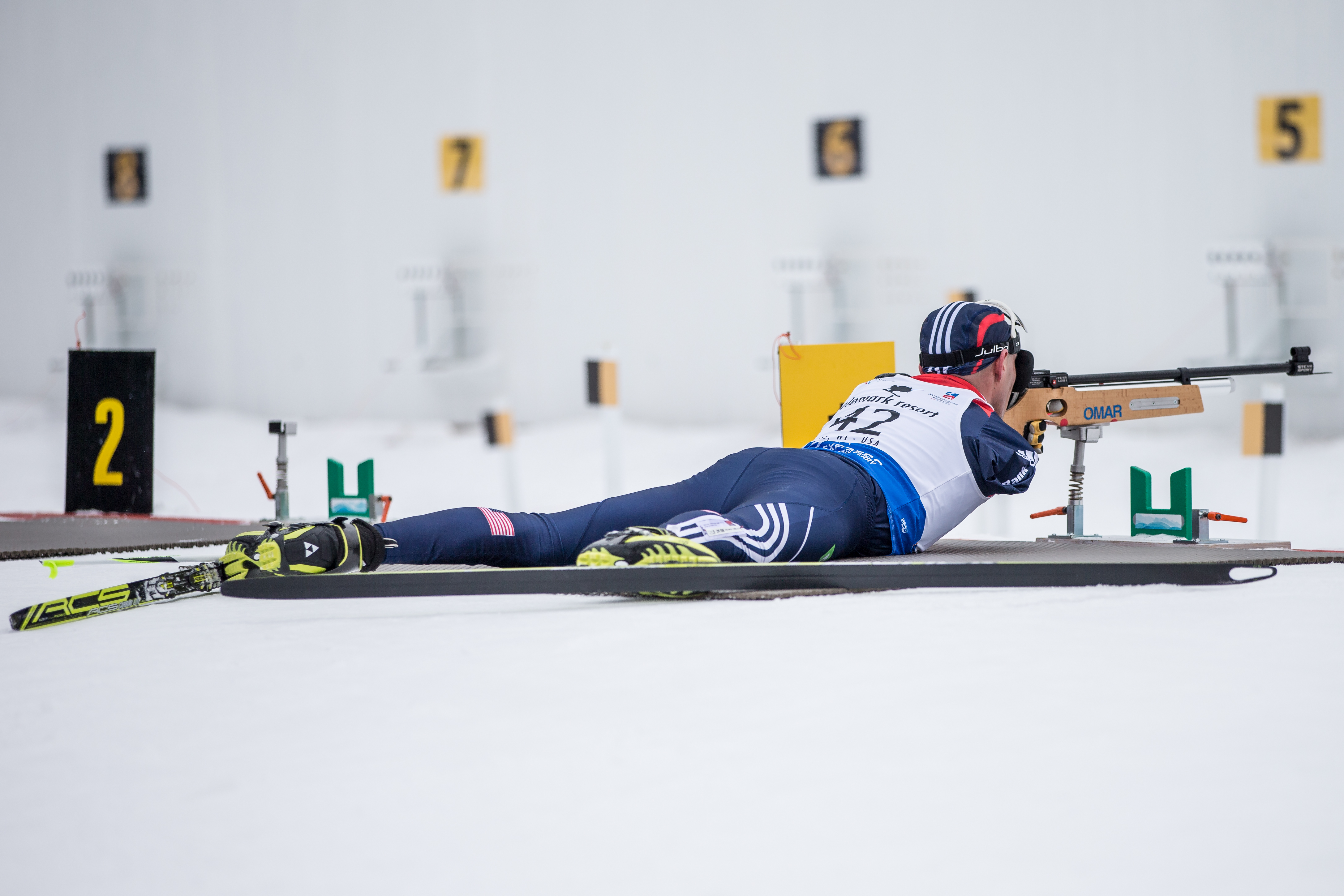
He decided his best shot would be in biathlon. “With my Marine background and the shooting, it’s something that holds near and dear to my heart,” he said.
“Right now on the international level, I’m like a nobody, but I want to get there,” Bermejo added. “They’ll be like, ‘Here comes the American guy; watch out for him.’ Eventually that’s what I want to do, I want to be a force.”
Months after his East-Coast move, Bermejo was already pleased with his progress. Sun Valley was a great start, he explained, but he needed to train with others and follow a specific outline.
“I asked my Paralympic coaches if moving to Maine would be a good idea and they told me it would be great if I was willing to sacrifice my then current social life and my love for the west of the country,” Bermejo wrote in an email. “I must say it was tough and one hell of a move but I have made huge improvements working with all the coaches at MWSC and I believe I am ready to use my newfound skills to work in the upcoming season.”
Along with Carey, U.S. Paralympics Nordic High Performance Director John Farra encourages stand-up athletes to train with an elite club with able-bodied nordic skiers.
“He has made a significant commitment to the sport and it has resulted in impressive improvement for a relative newcomer,” Farra wrote in an email. “We are excited for Omar to integrate into the MWSC program and see how far they can help him progress with his skiing. “
So far, the best thing he’s learned is to “slow down to go fast,” he wrote. “When I first started skiing just freshly out of the Marine Corps my technique was to go as hard and quick as possible and hopefully I would go fast enough, however, after a couple of races I took a beating and I was not going anywhere.”
In Maine, he realized if he relaxed and thought more about smooth skiing and glide, he could suddenly go faster and longer without feeling tired.
Following U.S. nationals in January, U.S. Paralympics will select its national team for the 2014 Winter Games in Sochi, Russia. While Bermejo isn’t a shoe-in for one of the 19 spots, he’s optimistic.
“Omar is one of the athletes who is Sochi ‘Eligible’ and in a good position to be able to qualify for the Team,” Farra wrote, referring to the Paralympic-team criteria. “I would expect he will make the team if he continues to train in a professional way through next winter.”
“Omar has been a great part of our program over the last year or so,” Carey wrote. “He is an A-lister through and through. He is one of those people you meet and hope you will know forever.”
Looking at the strides he’s made since his accident five years ago, Bermejo feels grateful for the opportunities he’s been afforded by the U.S.
“I am proud to have served under our flag in the military and would like to keep serving my country but this time as an inspiration to never quit and never stop dreaming no matter what happens,” he wrote.
“I want people to know that it does not matter how fast I can complete a race, how many people I can beat, what skis or waxes I use, or even how many medals I can accrue in my lifetime.. What matters is achieving happiness.. And I know I have already won at that ever since I started Nordic skiing.”
He has several people to thank for his quick rise within the sport, including Mast, who “was the first person that saw potential in me,” the Hall family in Casper, Wyo., “for opening their doors and allowing me to make my training easier,” and his girlfriend Lindsey Hall “for giving me the inner strength to keep going when the going is tough.”


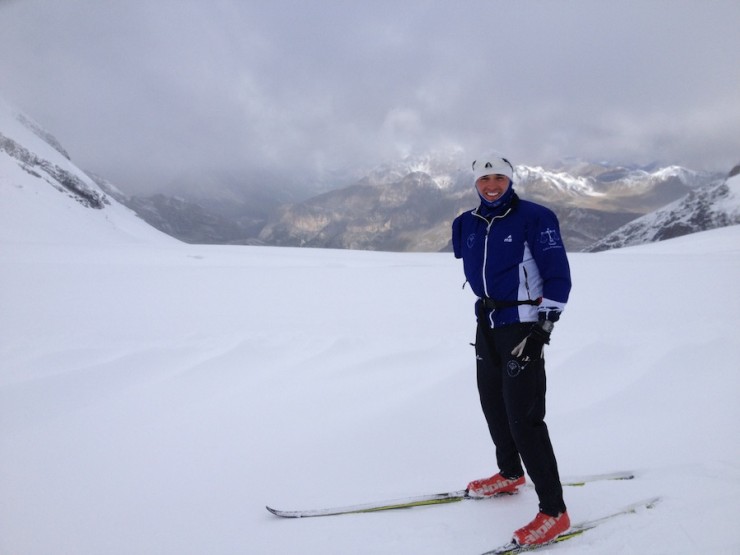
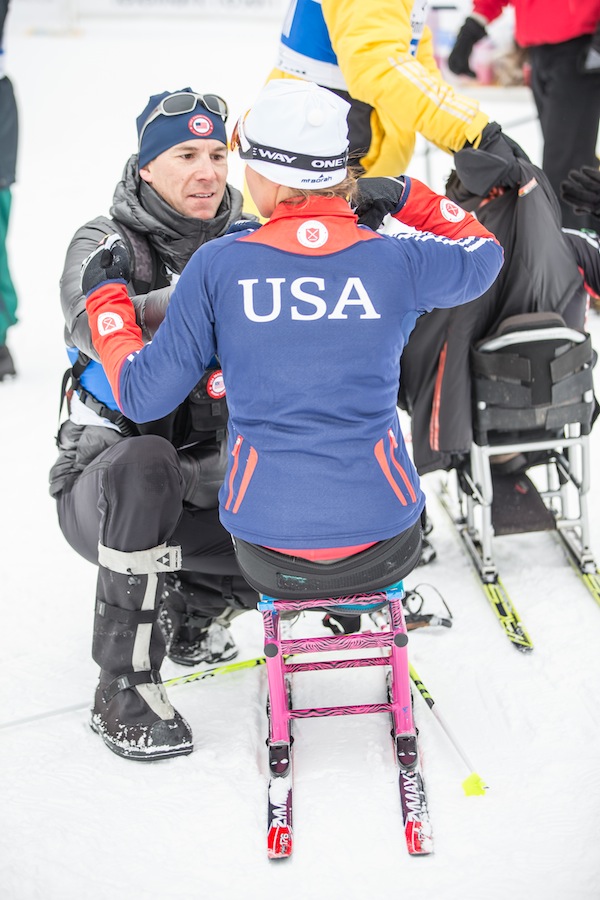
At the 2010 Winter Paralympic Games in Vancouver, B.C., the U.S. finished fifth in the overall medal count. A dominant performance by the U.S. alpine team resulted 11 medals, three of them gold.
Meanwhile, the U.S. Olympic nordic team, including biathlon, consisted of just six athletes and a handful of coaches and support staff. Albeit small, the team was not without success. Andy Soule, an Afghanistan war veteran and double above-the-knee amputee, made history by becoming the first American to medal in biathlon in either Paralympic or Olympic competition.
At the 2014 Paralympics in Sochi, Russia, nordic skiing and biathlon will account more that half of the available medals. To improve overall team results, the U.S. Olympic Committee realized that the U.S. needed more focus on these sports.
In 2011, John Farra, an Olympic cross-country skier and then-U.S. Ski and Snowboard Association (USSA) nordic director, was the man selected as the first high-performance director of the U.S. Paralympics Nordic Program. Today, he leads a team of coaches and staff responsible for building a world-class program.
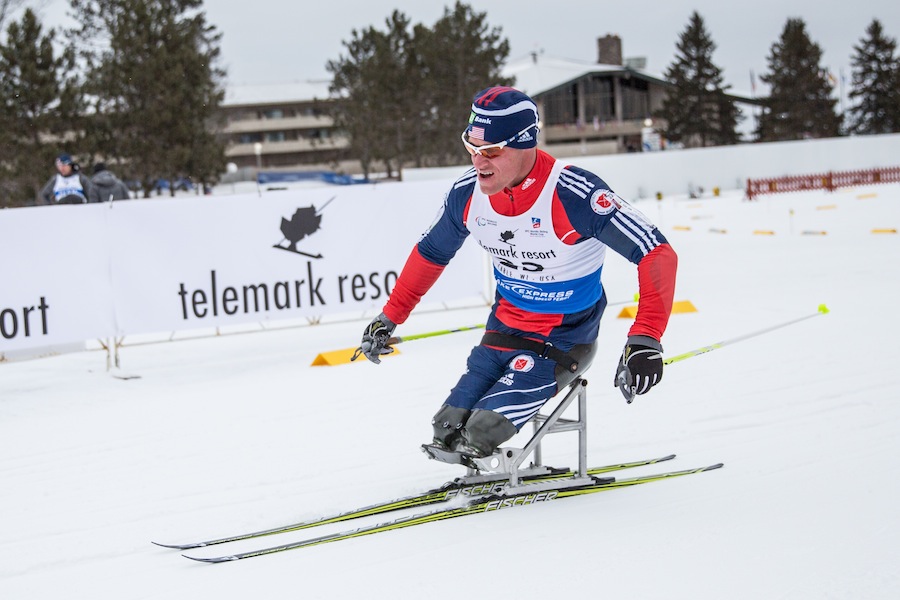
In a recent phone interview, Farra cited growth in the sport as evidence that the U.S. is on its way to that goal. At the Sochi Paralympics in March, Farra will field a team of 19 athletes, four coaches and 13 support staff. The Russians will max out at the allotted team size of 30 athletes, a goal that Farra has set for his team size for 2018 Winter Games in Pyeongchang, South Korea.
Assessing the team’s prospects for Sochi, Farra said, “On the men’s side, we have three guys who, on any given day, can be somewhere in the top six in the world.”
In a test event in Sochi last March, Dan Cnossen, Soule and Sean Halsted finished fourth, fifth and sixth, respectively. One of the newest and most promising men on the national team, Farra described Cnossen as “a really tough guy who trains unbelievably professionally and really puts everything towards it.”
“While we are not expected to win any medals, when we are that close we are spending a lot of time and effort to find that extra half percent or 1 percent,” Farra said. “That gets them into the top three to steal a medal from the Russians or the Ukrainians.”
On the women’s side, Farra saw potential when he spoke with Tatyana McFadden a year and a half ago. A world-class wheelchair racer with nine gold medals between several Paralympics and World Championships, McFadden expressed interest in competitive nordic skiing. On Nov. 3, the 24-year-old University of Illinois student completed an unprecedented marathon “Grand Slam,” winning the Boston, Chicago, London, and New York road marathons in a single year.
Development Team (Emerging & Military)
A multiple ESPY Award (ESPN) nominee, McFadden’s celebrity status is steadily rising, and she was twice featured on the NBC Nightly News for her New York City win. Her sponsor, British Petroleum featured her in its TV promotional spots, and in other positive news, NBC announced it will provide a landmark 100 hours of television coverage for the Winter Paralympics.
“Next year when the Games are on you’ll be seeing national TV spots featuring Tatyana McFadden sit skiing and Olympian Kikkan Randall skiing,” Farra said.
Adding to McFadden’s media appeal is her storyline of returning to Russia to where she was born with spina bifida, a birth defect in which bones fails to form properly around the spinal cord. Abandoned in a Russian orphanage, she was adopted by Deborah McFadden and brought to the U.S. at age 6. Since 2012, Tatyana has actively advocated against a Russian law that prevents Americans from adopting Russian children.
“We hope she continues to have a good experience [with skiing] and that will drive some interest to our sport,” Farra said. “She has more fans than we’ll ever have, but our job is to not let it become a distraction and to prepare her with the technical skills to get around the course. She’s a good gal and it’s really fun to have her on the team.”
On McFadden’s chances for a medal in Sochi, Farra said, “Who knows? She is super strong and unbelievably fit. She has the most important part of nordic skiing down which is the fitness, and that’s impossible to fake. Technical skills will be an issue for her because her racing wheelchair doesn’t slide around corners and have the potential of going off the course and crashing into trees. It would be a huge challenge for anyone to go from newbie to Paralympic athlete in such a short period of time.”
McFadden first demonstrated her potential by winning the sprint race at last year’s U.S. Adaptive Cross Country Championships at Soldier Hollow last year in a borrowed and somewhat ill-fitting sit ski. After, Farra contacted a Japanese company that makes sit skis designed to accommodate McFadden’s more forward-leaning position in wheelchair racing.
“As soon as she slipped in there, and I mean slipped in there because it’s a tight fit, she got this big smile on her face,” he said. “We’ll see how it works out because her first race in it will be at the IPC [International Paralympic Committee] World Cup races in Canmore in December.”
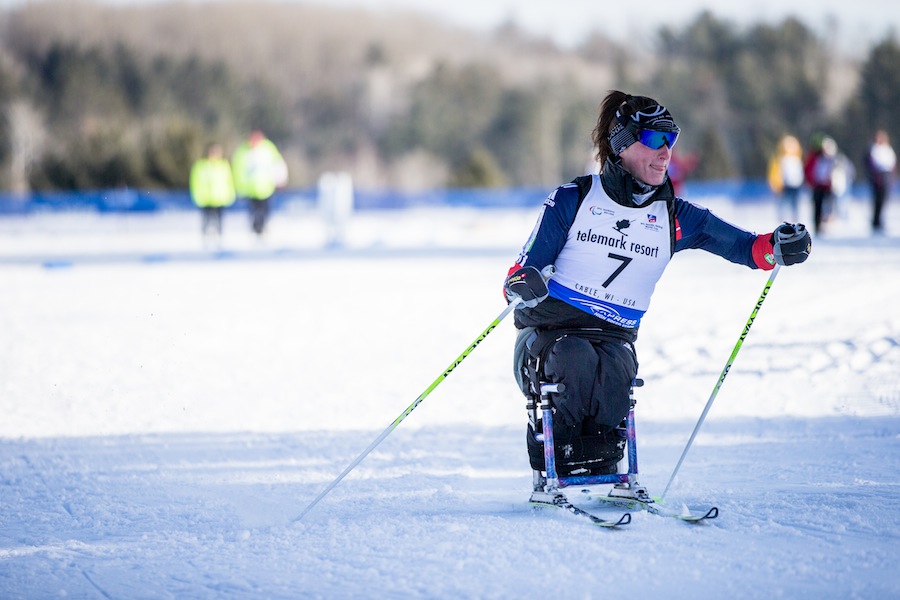
In addition to finalizing the team at World Cup and National Championship races this season, Farra’s strategy is to use these races to get his staff ready for Sochi.
“We plan to bring a large team and the entire Sochi staff to Canmore [in December] because we’ve had a huge transition from being a country that shows up with only a few athletes,” he said of the early season World Cups. “We need to make sure we protect the chances of our top athletes to steal a medal and give the appropriate level of service to those developing athletes who are experiencing their first Paralympics. We’re looking forward to getting all those things dialed in.”
Nationals are held alongside the able-bodied U.S. Cross Country Championships at Soldier Hollow in January, followed by World Cup races in Oberstdorf, Germany.
In October, national-team coach James Upham accompanied four sit-skiers – Cnossen, Soule, Halsted, and Oksana Masters – at a U.S. Paralympics Nordic camp in Oberhof, Germany. It was the team’s first training camp in the ski tunnel there.
According to Farra, they’ll take six or seven athletes to Oberstdorf for the World Cup races from January 16-19.
“We’re going to bring a small elite group … who we feel need to be there to dial in their chances of winning medals in Sochi,” Farra said. “After Germany the team will hole up in Winter Park Colorado which will be good in terms of an altitude strategy. After that, we’ll head to Italy a week before the games and stay at a beautiful five-star resort on the top of a mountain with ski in ski out and a biathlon range, to relax a bit and get used to the time change before flying to Sochi.
“And that’s it,” he added. “We’ll be there and then we’ll be back here in March after we win a bunch of medals. Then we’ll come home and hang them up and enjoy them!”
***
About the Author:
FasterSkier’s Para-Nordic contributor, Mark Vosburgh lives in Missoula, Mont., where he works as a Wildfire Scientist for the US Forest Service. In addition to being a chemical engineer, Mark is a cross -country and backcountry skier, bluegrass musician, and biker. He’s also a freelance writer for numerous publications, including 48 Degrees North and MakeitMissoula.com.


Like most athletic children of a certain era in Putney, Vt., Alicia Dana grew up cross-country skiing. She learned the ropes from the legendary John Caldwell, a Putney School coach who went on to lead the U.S. Ski Team, and took up racing at an early age.
It wasn’t long until Dana, formerly Brelsford, developed an affinity for other sports as well. By the time she was 16, she had competed at two cycling nationals and become a repeat contender at cross-country Junior Nationals. The next year, however, an accident changed her life.
At age 17, Dana fell out of a tree and was paralyzed from the waist down. Twenty-six years later, she’s still in a wheelchair, but has greater athletic aspirations than ever before.
In less than two weeks, she’s headed to London for her first Paralympic Games. Dana, 43, is one of eight women on the U.S. cycling team and one of three competing in handcycling with a recumbent bike.
“I remember as a kid dreaming, ‘Wouldn’t it be great to go to the Olympics someday?’ but I feel like that was a completely different me back then, able-bodied and not having any idea what was in store for me in life,” Dana said in a phone interview on Aug. 3.
She laughed as she thought about her current self, a paraplegic with an 8-year-old daughter, preparing for the Paralympics. As a child, she could not have fathomed it.
What’s even more, Dana could potentially make the 2014 Winter Paralympics as well if she sticks with skiing.
Last season, she jumped back into sit-ski racing in earnest, starting with a gold and a bronze at U.S. nationals in Rumford, Maine. From there, she earned a trip to the International Paralympic Committee (IPC) World Cups in Minneapolis and Cable, Wis., where she represented the U.S. and used her new custom sit-ski.

In the Midwest, Dana finished seventh twice and placed ninth in two other races, and was consistently the top U.S. woman. Her results spoke for themselves, and in late June, U.S. Paralympic Nordic Skiing selected Dana to its development squad.
According to High Performance Director John Farra, Dana met the team’s “emerging” or development criteria by finishing better than 25 percent back in one of the World Cup events.
She made the D-team with Kristy Vaughn and Augusto Perez, and could potentially elevate herself to the national team’s A- or B- standards, which currently provides a higher level of support to six others.
In an email, Farra described the program as fluid and wrote, “athletes can be advanced at any time up to the National Team (given they meet criteria), and in addition, we can choose to invest in anyone we want for any particular project (camp or competition) based on their commitment, performance, & potential.”
Given what he’s seen in Dana so far, he thinks she could reach the next tier. Before she won a national title in the 6-kilometer distance event last January and placed third in the preceding 5 k, Dana had not skied yet that winter. In fact, she hadn’t planned on racing in Rumford.
An email from her coach at Northeast Passage, an adaptive-sports program out of the University of New Hampshire, brought the championships to her attention.
“I came across one of the emails that [Cathy Thompson] had sent, that nationals were that week,” Dana said. “I was like, Oh my God, I’ve gotta go to nationals!”
It wasn’t before the reality of logistics set in. A single mom who lived several hours from Maine, Dana needed to make arrangements for her daughter, Willa. She also had to figure out how to get there, where to stay, and whether it was all worth it.
Her good friend Amy Caldwell, who was already in Rumford at the time, convinced her it was.
“I remember talking to her on the phone and she was like, ‘Get up here, just come!’ ” Dana said. “It was a combination of her encouragement and John Farra; he was going to be there so I suddenly realized there’s more structure to this whole thing … sounds like there could be some good competition and I should really just go and check it out.”
Getting Back on the Bike
About six months earlier in the summer of 2011, Dana had a similar internal conversation and ended up competing at the U.S. Paralympics Road Cycling Nationals in Augusta, Ga. It was her first time back on the handcycling scene since taking nearly a decade off to raise her daughter. A national criterion champion in 2001, she had her daughter a few years later, when handcycling became an Olympic sport in 2004.
When Dana returned to racing last year after going through a divorce, she had the same bike – which by now was painfully outdated.
“It was the biggest race of the year, and I got totally, totally creamed by everybody,” she said. “I remember thinking, ‘OK, now I know what the competition is and what I need to do,’ and it motivated me to really start training. I decided to take the next year and just train as hard as I could.”
That summer, her bike was later stolen when she got a flat and had to leave it on the side of the road. Public outcry in newspaper articles and on websites led to the bike’s return about a week later, but by then, the Putney community had already helped Dana raise some $10,000 dollars for a new one.
She used that money and a few grants from nonprofits like the Challenged Athletes Foundation and the Northeast Disabled Athletic Association to buy an $11,000-dollar Carbonbike designed by a handcyclist in Switzerland. The man who sold her the bike, Ken Bestine from Bike-On.com, offered to coach Dana informally, and the two worked together for a few months.
This past April, Dana tested her training at a cycling race in Montreal, where she made the U.S. team standard in a time trial. Suddenly, she was on the national cycling squad and faced the possibility of making the Paralympics a few months later.
Her national-team status and accompanying funding allowed her to hire a coach, and she chose Jim Cunningham from Greenville Cycle Center in South Carolina, who has worked with able-bodied and disabled athletes across the country. After a month of training with him, Dana and her housemate drove to Augusta in late June for another shot at the U.S. road cycling championships and a trip to London.
“There was one slot that was still open for all the women Paracyclists across all the different categories,” Dana said. “So I was, in a sense, competing with all the blind athletes, the amputee athletes, and managed to get the fastest time.”
One woman, Muffy Davis, beat her in the 19 k time trial, but Davis had prequalified. About 4 ½ minutes back, Dana averaged nearly 20 miles per hour.
“I had thought that I had a pretty decent race, but I had no idea really where I stood,” Dana recalled. “We went to that event that evening where they were going to announce the team and I convinced myself that I hadn’t made it, but we went anyway, like, ‘Oh, I’ll have a good attitude, cheer people on and it’ll be fun to see who gets to go.’ … Next thing I know my name’s being announced as a member of the team. It was pretty awesome. I was surprised and just utterly flabbergasted, like, ‘Wow, I can’t believe I did this.’ ”
With the Paralympics on the horizon from Aug. 29 to Sept. 9, Dana wasn’t sure what to expect. She didn’t watch the London Olympics over the last two weeks because she doesn’t have television. A weeklong U.S. team-training camp, which started Sunday in Buellton, Calif., would likely bring her up to speed.
The newest member on the team, Dana was excited to meet her teammates and get a feel for how things worked. On Sept. 5, she’ll compete in her first Paralympic event: the women’s individual time trial at Brands Hatch, a raceway venue in Kent, England, about a 45-minute drive from London.
Unsure how long the time trial would be, Dana said they are typically between 15 and 19 kilometers. She’ll also compete in the road race on Sept. 7, which she expected to be between 30 and 40 kilometers. If all went well, she might race the team relay on the 8th, but she was unsure of the selection process.
Dana was also recovering from pressure sores, a common and serious ailment among active people in wheelchairs, especially those without feeling below the waist.
“It’s been kind of a hard month for some different reasons,” she said. “I had a cold and flu and then I got a couple of pressure sores on my rear end from riding so much. … They will heal up eventually, but it’s a real inconvenience because I’m going to be traveling a lot in the next month and a half.
“It definitely limits my ability to just function in my everyday life and that’s hard,” she added. “I’m just getting up to train and go to essential appointments and the rest of the time, lie down or I have a standing frame that allows me to be in a standing position, so it’s a real pain.”
An unemployed single mom, she’s had to balance this and full-time training with taking care of her daughter, who’s out of school for the summer. Most recently, Dana had to explain to her 8-year-old why she had to leave for California and then England.
Fortunately, Dana said she has great friends and a community that fully supports her.
“That’s a real energy boost,” she said.

All things considered, she’d love to make the podium at the Paralympics, but had no idea what the international competition was like.
“I know for our team … Davis [is] definitely faster than me, so I’m not looking to get a gold medal,” Dana said. “It would be awesome to get a medal and I think I must at least have potential for that because that was part of their criteria when they chose the team members.”
To prepare, she aimed to heal up and stick with her training plan, watch her nutrition, rest and recovery, and keep a positive attitude. Once she gets there, she’ll try to race as she normally would, focusing on her climbing strengths and strategies without getting wrapped up in what others were doing.
Similar qualities got her on the U.S. Paralympic Nordic Team. According to Farra, he promised to leave Dana alone until after the Paralympics to let her concentrate on cycling. Come mid-September, she expected to attend a ski-team training camp in Lake Placid.
“Clearly she is a natural athlete who knows how to push the limits and can handle the suffering that comes along with a difficult endurance sport,” Farra wrote. “We were very impressed with her results at the USA World Cups, and we are excited to see how far she can take her skiing.”
Dana said he’s already hinted at Sochi.
“Farra’s been holding out some carrots for me in that direction,” she said. “He wants me to set my sights on that so we’ll see.”
Her success so far has kept her dreaming.
“Doing well enough to go to the World Cup and doing well enough at the World Cup to realize, ‘Oh, well, there might be something in this for me,’ it’s just fed my interest and motivation,” she said. “It’s exciting, it’s great. Who would’ve thought, a 43-year-old single mom could have an athletic career ahead of her?”
.