Tag: U.S. Ski and Snowboard Association

  • U.S. Nationals Open This Weekend at SoHo; World Champs Starts on the Line

    U.S. Nationals Open This Weekend at SoHo; World Champs Starts on the Line

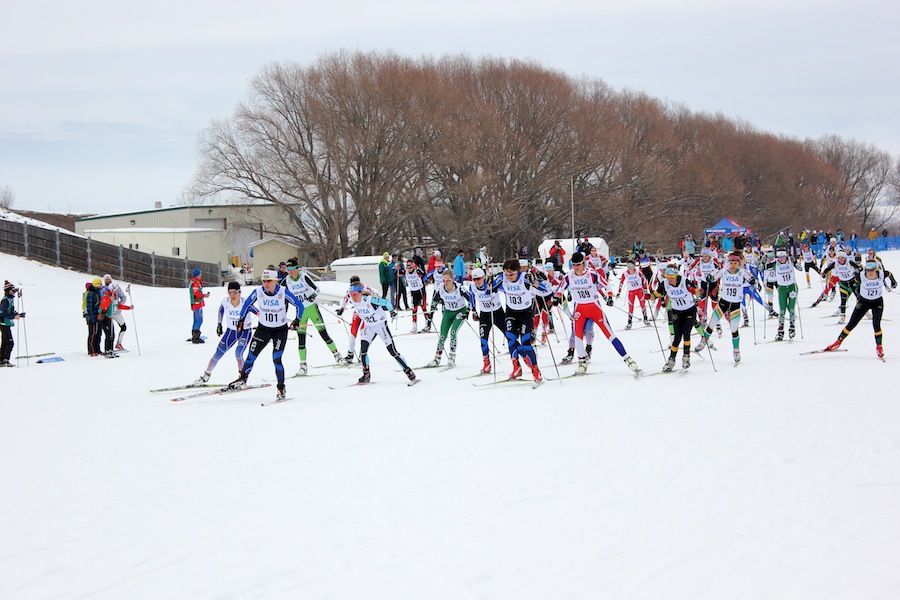
    The last time U.S. Nationals were held at SoHo: Start of the women's 20 k freestyle mass start at 2014 U.S. Cross Country Championships at Soldier Hollow in Midway, Utah. Caitlin Gregg went on to win going away.
    The last time U.S. nationals were held at SoHo: Start of the women’s 20 k freestyle mass start at 2014 U.S. Cross Country Championships at Soldier Hollow in Midway, Utah.

    The domestic trials for the FIS Nordic World Ski Championships team begin at Soldier Hollow on Saturday morning. Not officially, but in practice that’s pretty much the case. That’s one implication of the numbers and points system used to help determine who competes for the U.S. at next month’s races in Lahti, Finland. Here, FasterSkier previews the races and considers the subtle math behind U.S. championship-team selection.

    The races

    The women race a 10-kilometer freestyle individual start at 10 a.m. local time on Saturday, followed by the men in a 15 k freestyle at noon. Sunday brings a full classic sprint (men’s qualifying starting at 10 a.m., women’s qualifying at 11 a.m., and sprint heats starting at 12:30 p.m.). Then Tuesday, Jan. 10, brings classic mass starts, 20 k for women and 30 k for men, starting at 10 a.m.

    A qualification-only, freestyle-sprint type event rounds out the week on Thursday, Jan. 12. (Why no heats? Because of overall demands on local volunteers and an elementary school housed at the venue. The national championship skate sprint will be held at U.S. SuperTour Finals, a.k.a. Spring Series, in March in Fairbanks, Alaska.)

    Social media shows several inches of fresh snow currently on top of a manmade base at Soldier Hollow in Midway, Utah.

    FasterSkier will be on site throughout the week, providing live updates and reports on the races. 

    What’s at stake

    Bragging rights, for one. All racers like to win, and the week’s first three events are all national championships. Also money: $1,200, $600, and $300 for podium spots in each of the distance races and sprint. It’s no Qaniq Challenge money, but it’s no small sum, either.
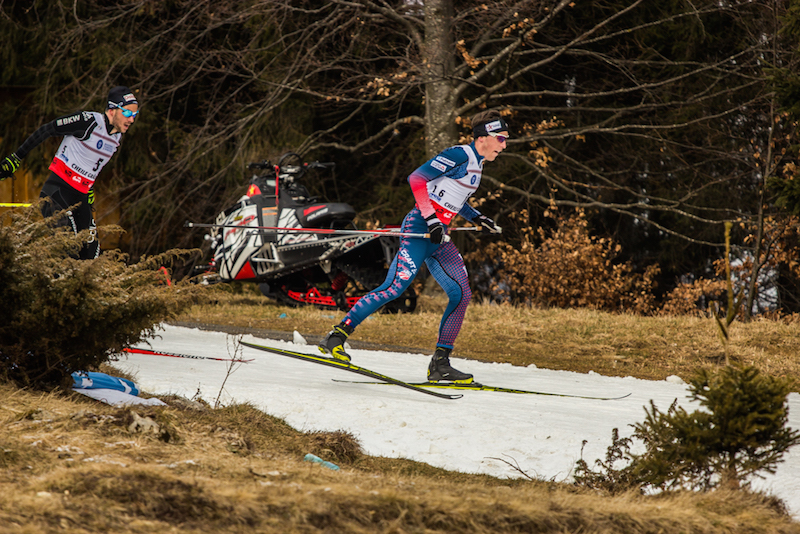
    Paddy Caldwell (Dartmouth/SMS/USST) racing to 21st in the men's 15 k freestyle at U23 World Championships in Rasnov, Romania. (Photo: Logan Hanneman)
    Paddy Caldwell (Dartmouth/SMS/USST) racing to 21st in the men’s 15 k freestyle at 2016 U23 World Championships in Rasnov, Romania. (Photo: Logan Hanneman)

    But beyond who takes home the medals and the money this week, the races are also important for determining who gets to compete in higher-level races later this season. Skiers under 18 are competing for spots on the Scandinavian Cup Team. Skiers slightly older are competing for spots on the U.S. team for U23/Junior World Championships, which will also be held at Soldier Hollow Jan. 30-Feb. 5. And at the highest level, there are spots up for grabs on the World Championships team for Lahti next month. Probably.

    As FasterSkier previously explained, the U.S. Ski and Snowboard Association (USSA) looks first to athletes’ performance on the World Cup in light of objective standards, and then potentially applies discretionary picks. After objective and discretionary selection, then “any remaining positions” for the Lahti team “may be filled by considering the athlete ranking highest on the 2017 Championship Selection List.” (As FasterSkier previously parsed, technically speaking the document says that remaining positions may be filled rather than will or shall be filled, meaning that USSA would not be strictly required to name a leading domestic skier to the team if it did not want to.)

    Filling out the team: Objective and discretionary selections

    So who’s already in from the U.S. Ski Team (USST)? One woman for sure, five more women basically guaranteed, one man basically guaranteed, then one woman and two men on the bubble.

    On the women’s side, Jessie Diggins has automatically qualified for Lahti twice over with her fifth- and sixth-place sprint finishes in Davos and Val Müstair.

    Behind her, five more skiers were well within the top 50 in either the sprint or distance World Cup standings following Wednesday’s pursuit race in Oberstdorf: Sophie Caldwell (12th in sprint standings), Sadie Bjornsen (15th in distance standings and 16th in sprint), Ida Sargent (33rd in sprint), Kikkan Randall (32nd in distance and 38th in sprint), and Liz Stephen (42nd in distance).
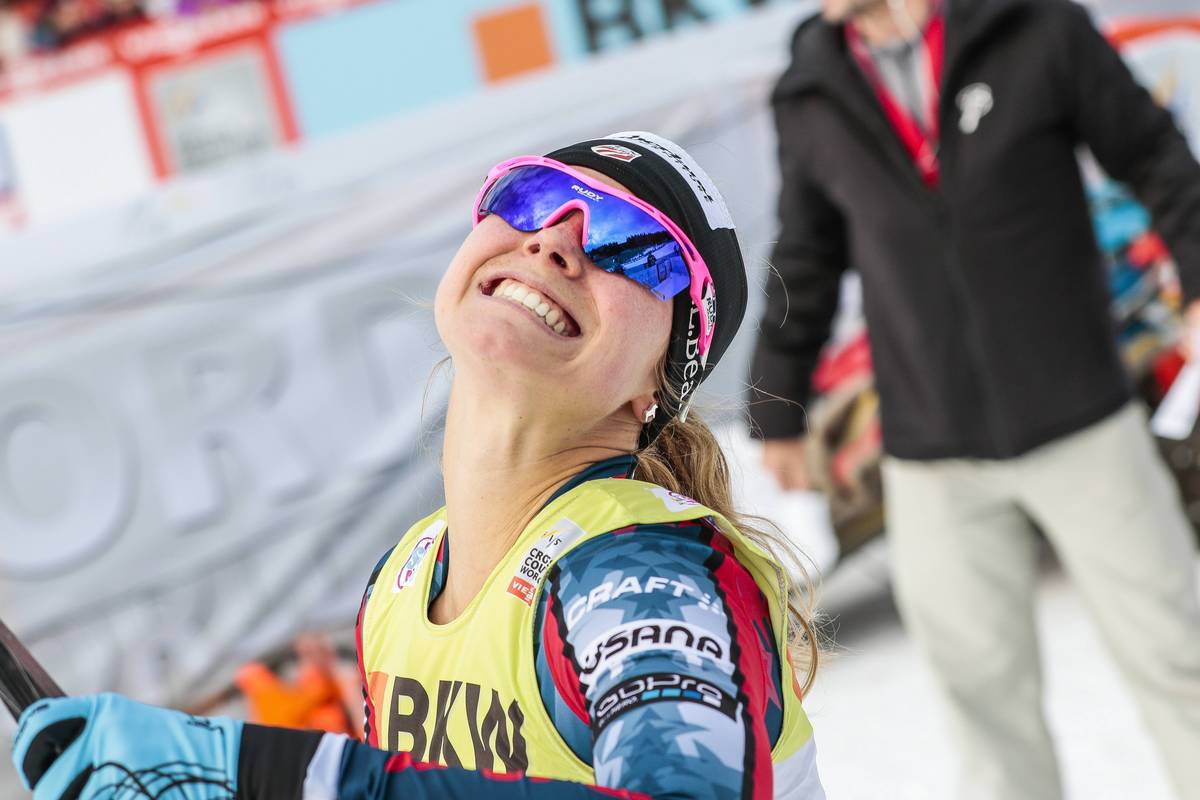
    Jessie Diggins celebrates finishing fifth in the Davos skate sprint. (Photo: Salomon/NordicFocus)
    Jessie Diggins celebrates finishing fifth in the Davos skate sprint. (Photo: Salomon/NordicFocus)

    (In the most strictly technical sense, everyone after Diggins cannot officially qualify this way until they are in the top 50 in those discipline standings that are released on Jan. 16. But – barring some extremely statistically improbable races by all eight women immediately below Stephen in the distance rankings – they should all qualify then with ease.)

    Rosie Brennan was 56th in the distance standings Wednesday, five points – one solid race – away from the top 50. She got that race in Toblach on Friday, moving up to 47th in the distance standings after finishing 23rd in the 5 k skate.

    For the men, Simi Hamilton is currently 41st in the sprint standings, and should be well within the top 50 on Jan. 16.

    As of Wednesday, Erik Bjornsen ranked 53rd for distance, four points out of 50th, and 55th for sprinting. Noah Hoffman was 67th in the distance standings. Hoffman moved up to 60th following his 25th-place finish in the 10 k skate in Toblach on Friday. 

    USST Women’s Coach Matt Whitcomb told FasterSkier in July that athletes who were on the bubble for World Championships selection “going into the Tour de Ski” would “need to make a pretty important decision. And that is whether or not to go back to U.S. championships and qualify domestically, or to take a chance and go with what they know and qualify in the Tour de Ski, and the sprint weekend after the Tour de Ski in Toblach.” Whitcomb added, “And so there are a great number of options both domestically and internationally on the World Cup, that I think we feel is as fair as can be.”

    But in practice, all USST athletes discussed above have remained in Europe rather than race at U.S. nationals. Diggins, both Bjornsens, Stephen, Caldwell, Randall, Hamilton, and Hoffman raced at least the first two stages of the Tour de Ski. Sargent and Andy Newell, joined by Hamilton and Caldwell, will compete in OPA Cup races in Planica, Slovenia, this weekend, USST Head Coach Chris Grover told FasterSkier by email last week.

    APU skier Scott Patterson made roughly the inverse decision in deciding to start the 2016/2017 season in this country (he had hoped for World Cup starts as last year’s SuperTour distance leader, but was not offered them for the first period of racing). Describing conversations between himself, Grover, and APU Coach Erik Flora, Patterson wrote to FasterSkier in November, “One of the most important points brought up was regarding qualification for world championships in Lahti. The selection criteria favors domestic racing for men due to the difficult objective criteria and weaker World Cup performances relative to the women. In accordance with the criteria I will be looking for some extremely strong early season results so that I can hopefully head to Europe in January and not return until after World Cup finals.”

    Regardless of who qualifies off the World Cup via objective standards, USSA may then make discretionary selections. FasterSkier previously surveyed the guidelines for the exercise of this discretion.

    Briefly put, USSA has almost unlimited discretion under the listed criteria. And if those criteria give USSA insufficient discretion, a catch-all provision lets USSA make discretionary selections for nearly any other reason if it feels like the objective criteria won’t work: “Other unanticipated failure of objective criteria to select an athlete likely to achieve competition results consistent with USSA program goals for World Championships.”

    Filling out the team: SuperTour leaders and bonuses for nationals podiums

    After objective and discretionary selections, that leaves this country’s top domestic racers skiing against each other for (probably) one remaining spot per gender.

    Before the season began, FasterSkier wrote in a preview article that “American cross-country skiing does not have a trials system.” Kris Freeman (Team Freebird), a man who has been selected to 12 U.S. Olympic or World Championship teams (up to 15 if you include World Juniors teams) since 1998, politely begged to differ, writing in a comment to the FasterSkier Facebook site after the article was posted (see final two sentences in particular):
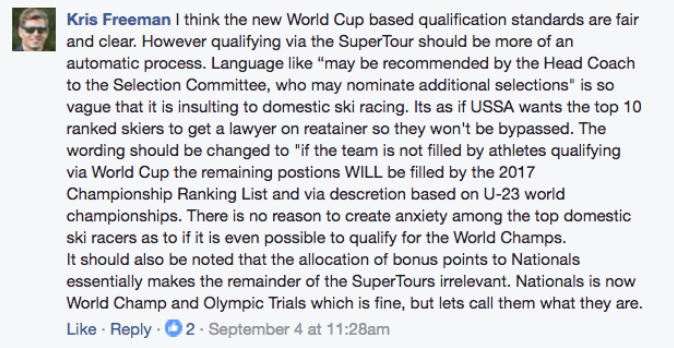
    Kris Freeman comment on FasterSkier Facebook page, Sept. 4, 2016. (photo: screenshot)
    Kris Freeman comment on FasterSkier Facebook page, Sept. 4, 2016. (photo: screenshot)

    Both FasterSkier and Freeman are technically correct. Given the numbers involved, Freeman is probably more correct. That is, there is no official trials system, but U.S. Nationals this year is getting pretty close to one.

    The World Championships Selection List is based on an athlete’s best two finishes in a single discipline, distance or sprint (qualification round only), across the 2016/2017 SuperTour to date, including the four races at U.S. Nationals. But first through third at the December SuperTour races were worth 30, 25, and 21 points, respectively. Because of the additional Nationals-only bonus points that will be awarded this week, first through third in the next four races count for 45, 35, and 26 points, respectively. Best two races, from the entire season to date, wins.

    So Freeman is correct that the “normal” SuperTour events were, if not meaningless, maybe less meaningful in light of the potentially dispositive points available for nationals podium finishes. (There are of course other advantages to being the season-long SuperTour leader, and the December races still count toward that.)

    In practice, two firsts at nationals would be unsurpassable by any combination of other races. Same for a first and second at nationals. Indeed, two seconds at nationals is a better result than two firsts in December. Two thirds at nationals beats two seconds from last month. The bonus points for nationals podiums are certainly significant digits.
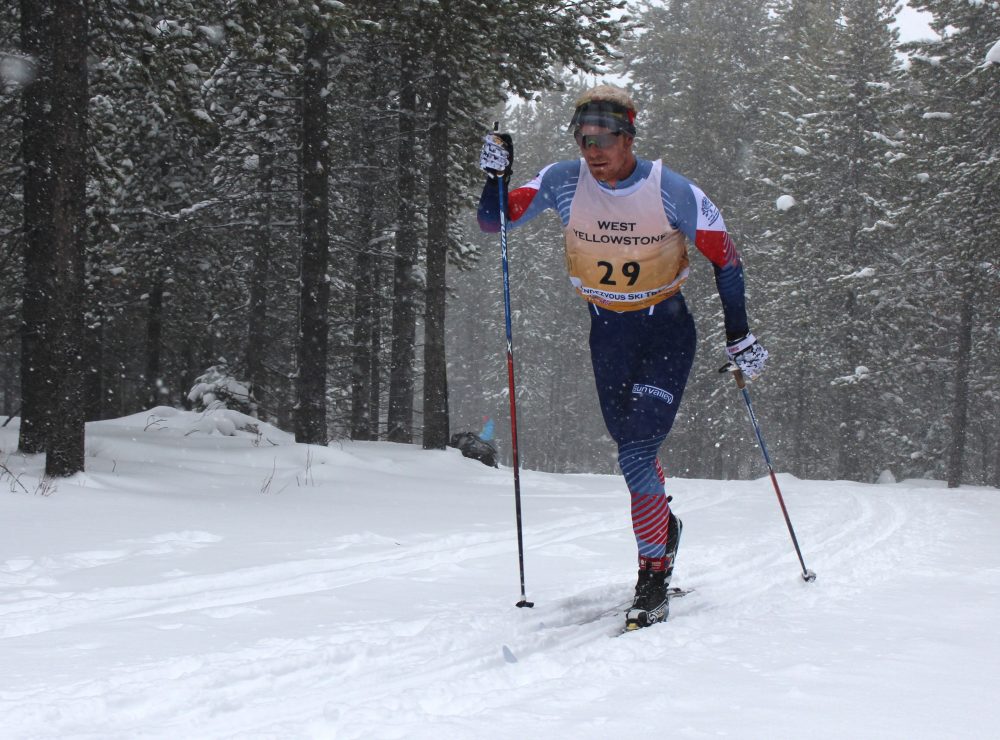
    Matt Gelso (SVSEF) racing to his second-straight victory at the West Yellowstone SuperTour on Sunday in the men’s 15 k classic.
    Matt Gelso (SVSEF) racing to his second-straight victory at the West Yellowstone SuperTour in the men’s 15 k classic in December 2016.

    Matt Gelso (Sun Valley Ski Education Gold Team) and Liz Guiney (Craftsbury Green Racing Project) come into nationals as the SuperTour leaders to date, Gelso by a profound margin. Although both have World Cup start rights in Europe later this month by virtue of that status, both athletes will compete in at least the first three races in Soldier Hollow, Gelso and Guiney told FasterSkier earlier this week.

    The current SuperTour discipline leaders are Gelso for men’s distance, with 55 points, and Ben Saxton (SMST2) for men’s sprint, with 50 points. Jennie Bender (Bridger Ski Foundation) leads the women’s sprint standings with 55 points, while Katharine Ogden (Stratton Mountain School/USST D-Team) has 50 points to lead the women’s distance standings. These are not unimpressive point totals, which may become relevant if no single athlete puts together two podiums at nationals.

    The first race at Soldier Hollow begins at 10 a.m. Saturday morning. The U.S. team for Lahti is tentatively scheduled to be announced on Jan. 23.
  • Looking to Lahti: Inside the USST’s World Champs Selection Criteria

    Looking to Lahti: Inside the USST’s World Champs Selection Criteria

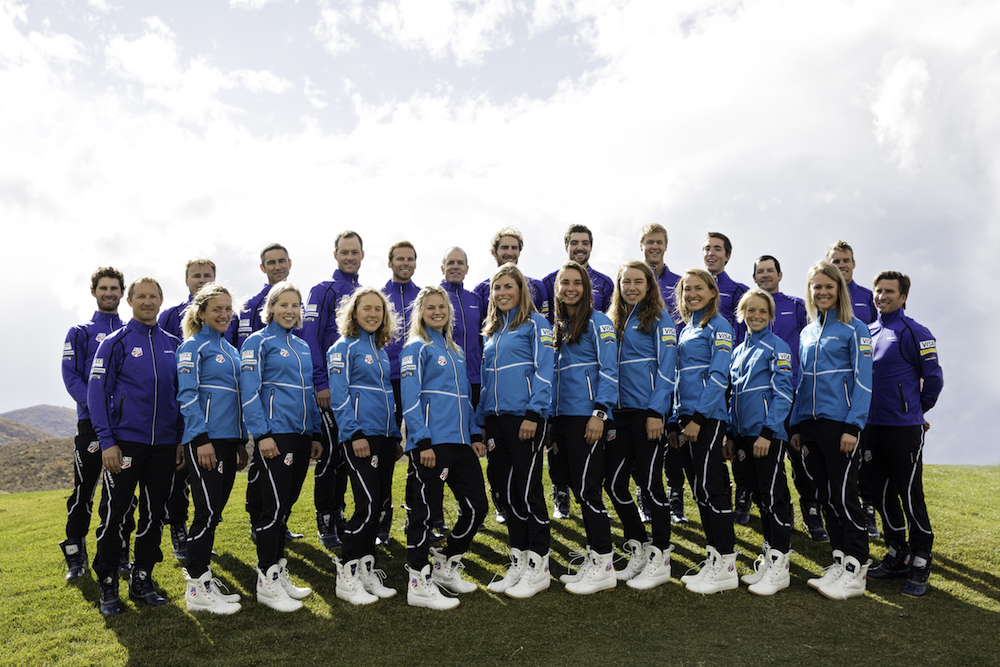
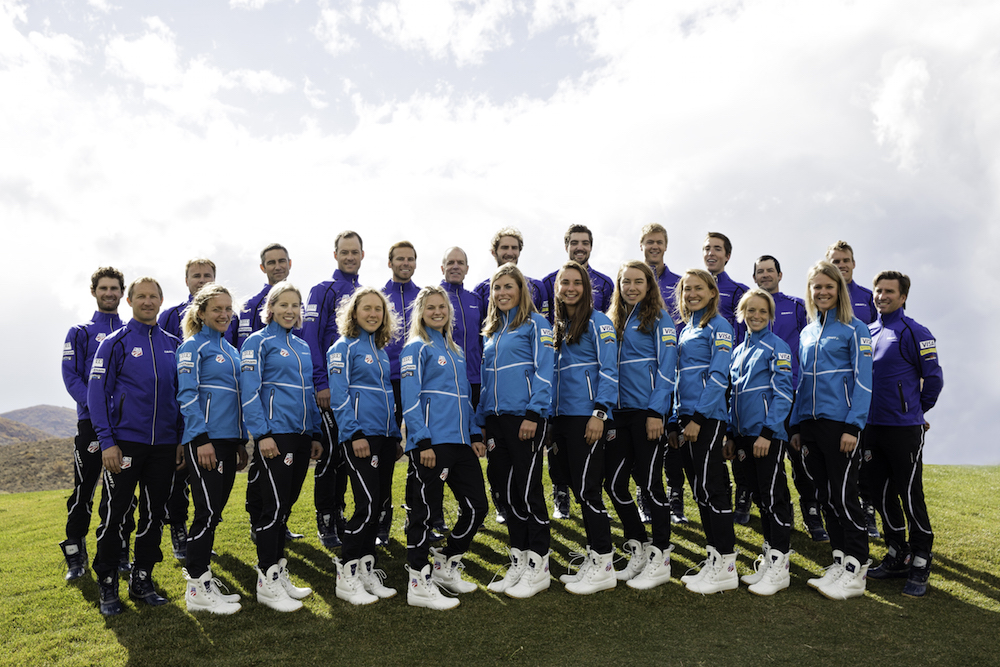
    The 2015/2016 U.S. Nordic Ski and Nordic Combined teams during a team photo shoot in their new uniforms on Monday, Oct. 19, in Park City, Utah. (Photo: USSA)
    Last season’s 2015/2016 U.S. Nordic Ski and Nordic Combined teams pose for a photo shoot in October 2015 in Park City, Utah. (Photo: USSA)

    American cross-country skiing does not have a trials system. That is, selection to the U.S. team for international championship events – the Olympics and World Championships – does not involve having everyone show up in the same race (or race series) on the same day, top finishers make the team. Championship teams used to be picked this way; Luke Bodensteiner writes memorably in Endless Winter: An Olympian’s Journal of his experiences at Anchorage’s Kincaid Park for the 1994 U.S. Olympic Trials. (Spoiler alert: as the subtitle suggests, he made the team.)

    But the current approach is somewhat more elaborate, including ranking lists and points and a variety of criteria that are primarily objective, but are also supplemented by discretionary factors. As we approach the winter of 2016/2017, and the country’s top skiers await the first intervals of fall with dreams of competing at the FIS Nordic World Ski Championships in Lahti, Finland, FasterSkier breaks down the selection criteria that set forth the ways in which a U.S. athlete may be named to the team.

    New selection criteria: Last winter’s results are out, this winter’s results are in

    The U.S. Ski and Snowboard Association’s (USSA) full selection criteria for Lahti are available here. This document reflects the final stage of a long process. In January 2015, shortly after he had shared the selection criteria for the 2015 World Championships in Falun, U.S. Ski Team Head Coach Chris Grover wrote on his blog about his intent to work on updating the criteria before it came time to select athletes for Lahti.

    “I’ve organized a working group of top US coaches this summer and fall to help us create a new selection criterion for Lahti 2017,” Grover wrote in response to a question about the interaction between objective and subjective criteria. “One important aspect of this new criteria is creating a head-to-head format in fall SuperTour racing (including U.S. Nationals) that provides an athlete with a clear path to Championship selection, without the guesswork of looking for races with low points. We are currently running the criteria by our legal department to ensure that, like all of our criteria, it’s fair, clearly understandable, and complies with the Amateur Sports Act.” *

    Eighteen months later, in June 2016, Grover wrote that he was “excited” about the updated selection criteria for the U.S. team for Lahti. He wrote that “the Objective and Discretionary selection procedures in [the new] criteria are very similar to what we have used in the past. The big change, however, comes in how Additional Team Selections are made. In the past, additional selections have been made using FIS or USSA points, which are created by scoring points races on a year-round continuum. This new criteria relies on head-to-head SuperTour and U.S. Nationals racing in the fall/early winter of the season of the Lahti Championships themselves.”

    Grover wrote that the new criteria are intended to reduce the temptation for athletes to chase FIS or USSA points, or even to “willingly manipulate the results of races” with an eye to improving points.

    He added, “This criteria rewards head-to-head competition in the season of the Championships. Athletes who skied fast in the spring of the previous season no longer have a potential advantage over those athletes skiing fast in the current season. The criteria provides a clear path for athletes to the World Championships. The athlete that is winning races is most likely going to make the Team. The guesswork of improving one’s FIS or USSA points is removed.”

    U.S. Ski Team Women’s Coach Matt Whitcomb concurs. As he told FasterSkier earlier this summer, the new focus on results solely from the 2016/2017 race season is “definitely a criterion that focuses more on how athletes are skiing closer to the Championships. It’s a very important concept, I think, that from what I can tell the entire ski community is behind.”

    (Concern over what is effectively a year-long window for the development of USSA points, and the implications of making championship-team selections on this basis, is not of recent vintage. In December 2001, Cory Smith, at the time an elite American skier, blogged about his disfavor with selecting skiers for the 2002 U.S. Olympic team on the basis of the most recent USSA points list, when the relatively low-key races held at Spring Series 2001 ended up having a disproportionate effect on the USSA rankings list used for Olympic selection many months later.)

    Inside the selection criteria: World Cup success as an objective path to selection

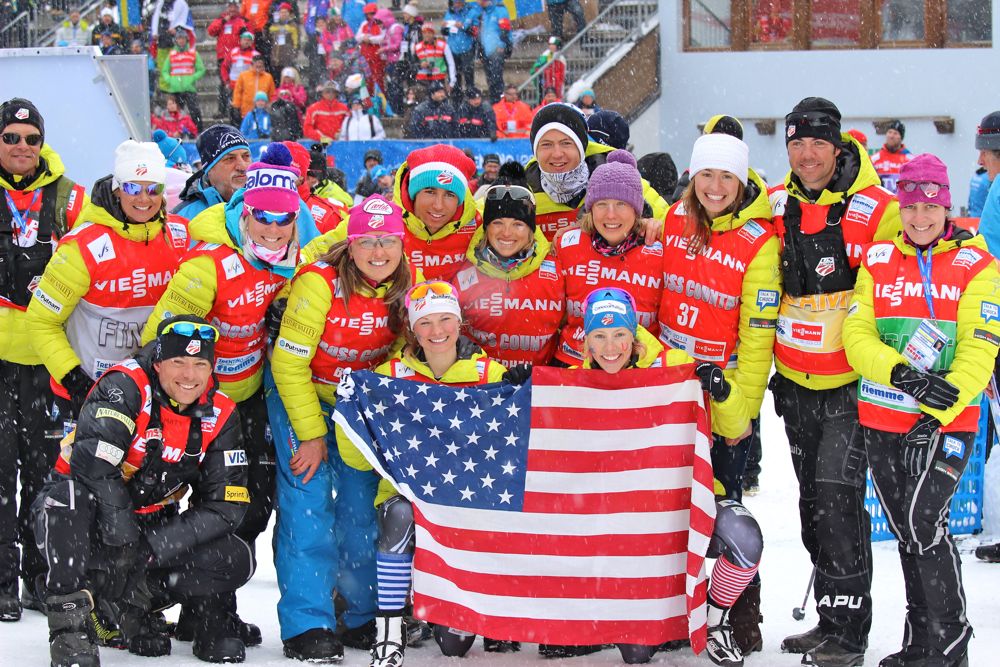
    The 2013 U.S. World Championship team poses in Val di Fiemme, Italy, after Kikkan Randall and Jessie Diggins (front right, and left, with flag) won the women’s freestyle team sprint.
    The 2013 U.S. World Championship team poses in Val di Fiemme, Italy, after Kikkan Randall and Jessie Diggins (front right, and left, with flag) won the women’s freestyle team sprint.

    The selection criteria themselves include a mix of objective standards and discretionary options. Performance on the World Cup is the easiest and most direct way to merit selection to the team, but there is also the option of skiing on via domestic results on the SuperTour. Probably.

    Starting with objective standards: The objective standards look solely to an athlete’s performance on the World Cup. An athlete will be automatically selected to the World Championships team if they have either (1) a “ranking in the top-50 in the Distance World Cup standings or the top-50 in the Sprint World Cup standings as of January 16, 2017,” or (2) a “top-8 individual final World Cup result” in one of three selected race formats between the start of the upcoming World Cup season and Jan. 16, 2017.  (The full document explains various tie-breaking procedures and additional principles; for example, a top-8 individual sprint finish trumps a top-50 sprint points ranking.)

    The three specified race formats in which a top-eight finish will lead to team membership are “Sprint F, individual start 10/15 km C, and 15/30 km Skiathlon.”

    This does not account for all of the individual races in the first half of the World Cup calendar – individual races in other formats include a classic sprint in Ruka, a classic sprint in Lillehammer, a 5/10 k skate in Lillehammer, a 15/30 k skate in Davos, and six of the seven races in the Tour de Ski (all save the opening skate sprint).

    In an email to FasterSkier, Grover explained that this distinction is by design. “Only individual events in the specific format we are racing in Lahti qualify for top-8 automatic qualification,” he wrote. “Classic sprints [which will be held in Lahti in the team sprint format] are not included in this specific part of the criteria because the aerobic and anaerobic demands of team sprint are different enough from individual sprint.”

    Grover addressed the possibility that an athlete could achieve a top-eight individual result on the World Cup, but do so in some race format other than the three designated ones of skate sprint, 10/15 k individual start classic race, and full-distance skiathlon.

    “An athlete that has scored a top-8 in any event will most likely score enough [World Cup] points in that single race to make the top-50 discipline qualification standard,” he wrote. And “at the end of the day, we want any athlete that can finish in the top-8 on the [World Ski Championships] team. We also have discretion to use in the event that a top World Cup performance by a given athlete fails to qualify them outright for the Lahti Team. The top-8 criteria has an element of redundancy in it, but it is important in the event that an athlete only gets 1/2 points for that performance if it comes during the Lillehammer mini-tour [on December 2-4] or the [Tour de Ski].”

    The possibility of discretionary picks

    Grover had alluded to USSA’s discretion to make additional selections. As the criteria document states, “The USSA may select additional athletes to the Team using coaches’ discretion, using factors other than objective criteria.” (This language is unchanged from the criteria that governed selection to the U.S. team for Lahti in 2015.)

    These discretionary factors include everything from results in last season’s races to “attitude,” “illness or injury during the selection period,” and “Indicia of medal potential in future Olympic or World Championship competition, which would be materially enhanced by selection to team.” Finally, a catch-all provision states that USSA may make discretionary selections for nearly any other reason if the objective criteria do not reach the desired goal: “Other unanticipated failure of objective criteria to select an athlete likely to achieve competition results consistent with USSA program goals for World Championships.”

    Whitcomb told FasterSkier in July that making discretionary picks was “one of the harder parts” of his job as a coach, stating, “We love not to do it.” Though he added, “But in any criteria, discretion can often be one of the most important pieces.”

    Inside the selection criteria: SuperTour success as a likely but not guaranteed  path to selection

    After USSA selects athletes via objective criteria based on World Cup performance, then, potentially, via discretionary factors, “any remaining positions” for the Lahti team “may be filled by considering the athlete ranking highest on the 2017 Championship Selection List.” (Technically speaking, the document says that remaining positions may be filled rather than will or shall be filled, meaning that USSA would not be strictly required to name a leading domestic skier to the team if it did not want to.)

    The scoring system for the 2017 Championship Selection List is explained in detail in the full selection criteria document. Briefly put, the list takes an athlete’s two best finishes “in a single discipline (sprint or distance)” and looks for the highest point total, based on awarding SuperTour points on a standard basis plus bonus points for a top-3 podium finish at U.S. Nationals. Notably, the window in which these performances may occur is only the first half of the 2016/2017 season, and does not – unlike the rolling USSA standard points list – include the second half of the 2015/2016 season.

    The highest ranked athlete on this list (who was not otherwise selected via objective criteria or discretionary factors) “may be recommended by the Head Coach to the Selection Committee, who may nominate additional selections.”

    The “Head Coach” is Grover. The “Selection Committee” is not literally defined elsewhere in the selection criteria document, but the document does discuss a “discretionary selection review group comprised of the USSA President and CEO, the Executive Vice President, Athletics, and the athlete representative from that sport who is a member of the USSA Board.” Grover clarified in an email that, in practice, the discretionary selection review group is the same as the “Selection Committee.”

    The USSA President and CEO, Executive Vice President for Athletics, and cross-country skiing athlete representative are currently Tiger Shaw, Luke Bodensteiner, and U.S. Ski Team member Rosie Brennan, respectively.

    Looking back and looking forward

    So how did this all play out in practice when it came time to select the team for Falun? Two years ago, eight athletes qualified objectively via their World Cup results. Another eight athletes were selected based on the most recent USSA points list. Finally, one athlete was selected via discretion.

    Specifically, Sadie Bjornsen, Sophie Caldwell, Jessie Diggins, Kikkan Randall, Ida Sargent, Liz Stephen, Simi Hamilton, and Andy Newell qualified for the U.S. team for Falun via objective criteria based on their World Cup rankings in the 2014/2015 season. Rosie Brennan and Caitlin Gregg for the women, plus Erik Bjornsen, Dakota Blackhorse-von Jess, Kyle Bratrud, Kris Freeman, Matt Gelso, and Noah Hoffman for the men, were then “entirely selected from the fourth publication of the USSA points list,” FasterSkier wrote soon after the selections were released. Finally, Ben Saxton was added to the team a few weeks later following his strong results at 2015 U23 World Championships in Almaty, Kazakhstan.

    “Brennan and Gregg were the top two domestic skiers on both the distance and sprinting lists [as of mid-January 2015],” FasterSkier wrote at the time. “Hoffman, Freeman, Gelso, and Bratrud were the first four skiers in the distance rankings, while Blackhorse-von Jess and Erik Bjornsen were the top skiers (apart from Newell and Hamilton) in the sprint rankings.”

    The U.S. team for Lahti is tentatively scheduled to be announced on Jan. 23, 2017. The first race at World Championships is the skate sprint on Feb. 23.

    * Footnote: The Amateur Sports Act of 1978, officially known as the Ted Stevens Olympic and Amateur Sports Act, 36 U.S.C. §§ 220501 et seq., “establishes a legal framework for protecting the participation opportunities of Olympic sport athletes,” one commenter explains. The Act mandates the creation of an Athletes’ Advisory Council, and describes procedures under which an athlete may submit eligibility disputes to binding arbitration. A related provision, section 9.1 of the Bylaws of the U.S. Olympic Committee (USOC), states that USOC “shall, by all reasonable means, protect the opportunity of an amateur athlete to participate if selected (or to attempt to qualify for selection to participate) as an athlete representing the United States” at the Olympics or World Championships.

  • Demong Back Leading U.S. NoCo as Executive Director of USA Nordic Sport

    Billy Demong jumping to 10th on the normal hill at 2015 World Championships in Falun, Sweden. (Photo: FlyingPointRoad)
    Billy Demong, a former U.S. Nordic Combined skier and five-time Olympian, jumping at 2015 World Championships in Falun, Sweden. (Photo: FlyingPointRoad)

    Twenty-two World Cup podiums and five Olympics later, Billy Demong can’t leave what’s in his blood behind; he was born to jump and ski fast. No, Demong, 36, is not announcing a comeback — he retired from international competitions after the 2014/2015 Nordic Combined World Cup season. For a year he stayed away. Post-retirement, Demong worked in marketing for Utah-based Reynolds Cycling. He’s back as executive director of USA Nordic Sport

    Let’s turn back the clock for a moment to gain some perspective. Beyond Bill Koch’s 1976 Olympic medal, the U.S. Nordic Combined team remains the only other nordic discipline to win a coveted Olympic medal. In 2010, Demong won an individual gold and was part of the team relay silver in Vancouver, British Columbia.

    There’s a reason to reference past Olympic glory — as part of this narrative, it matters.

    A scant four years after the Vancouver Games and two months after the 2014 Sochi Olympics, the U.S. Ski and Snowboard Association (USSA), once the primary funder and governing body responsible for U.S. Nordic Combined, dropped most of its funding for nordic combined. It was a seismic event that most insiders had a feeling was coming. Current U.S. Nordic Combined Head Coach Dave Jarrett said at the time, “Based on [USSA’s] study in 2010 that eliminated jumping in other sports, they didn’t think nordic combined was a podium-potential sport for 2018 or 2022.”

    Looking back, Demong voiced his understanding of USSA’s decision.

    At the end of the day it really comes down to resources,” Demong, now in his full-time role with USA Nordic Sport, said on the phone late last month. “Resource allocation is a tough thing. USSA, they are successful organization — I have watched them grow and develop. But there are a lot of teams and a lot of athletes. There were a lot of hard choices that needed to be made, but I believe in the potential of the athletes we have in the pipeline today and the opportunity for long term sustainable success with strong leadership in both ski jumping and nordic combined.”

    The defunding setback also served up an opportunity for the primary nordic-combined stakeholders to take ownership over the sport’s viability.

    “The community of ski jumping and nordic combined athletes and alumni have historically really leaned on USSA to develop athletes and I think now over the last six-seven years, we have taken a lot of that back onto our community,” Demong explained. “And it’s been successful. I think we have some of the best athletes in the pipeline right now that we have had in a long time in ski jumping. We have some great up and coming talent in nordic combined. And we have a growing base.  Last year we developed a study that indicates about 800 kids put bibs on or participated in a program. So it is a healthy number for a sport that is not big anywhere.”

    The community Demong referenced was not beginning from scratch. An organization named USA Ski Jumping — founded originally by past ski jumping and nordic combined Olympic athletes and coaches including Rex Bell, Jim Holland, Jeff Hastings and Alan Johnson — was already carrying the ski jumping torch. With their help over time, Demong said during the interview, that group worked to grow and develop the scope of the organization. In the spring of 2015 they adopted new bylaws and became committed to assisting the nordic combined community. With the more inclusive snow sport focus, the organization was renamed USA Nordic Sport. And two months ago, Demong was named its Executive Director.

    Back to Demong’s World Cup and Olympic credentials. Demong offers proof that the US can develop nordic combined skiers ranging from kids soaring off small-scale jumps to international champions. He also comes with the cache of Olympic hardware: that can be a draw when soliciting funds and volunteers.

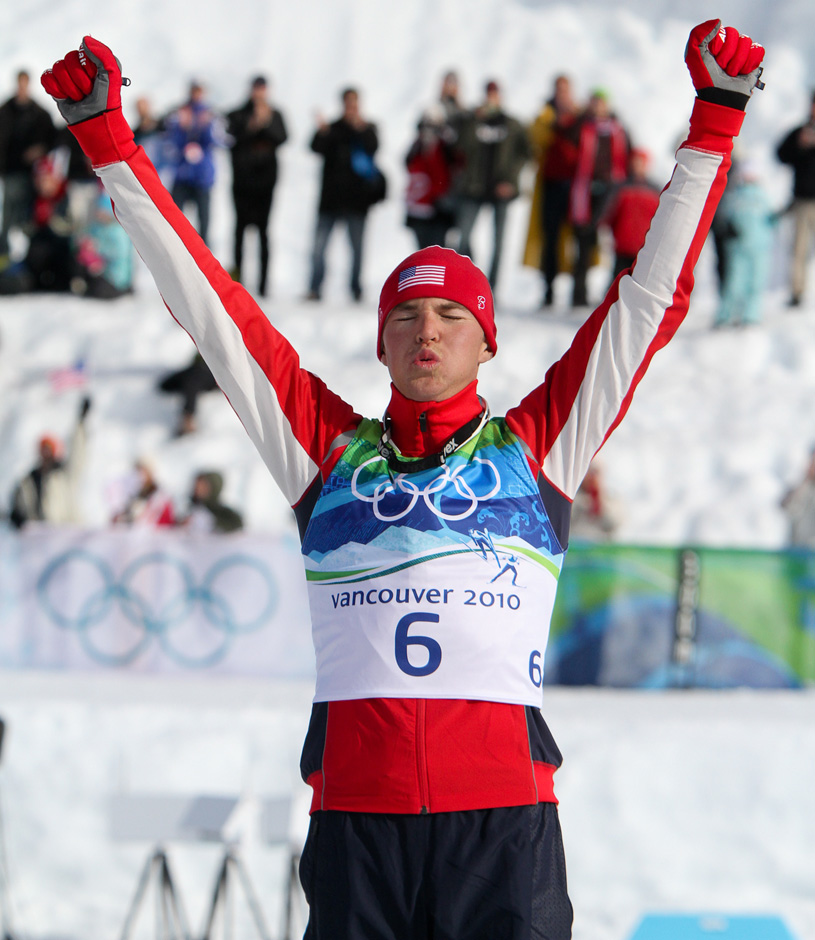
    Demong - Victory! Vancouver 2010 - Nordic Combined Individual Large Hill - Billy Demong, podium
    Billy Demong soaking up his victory atop the podium after winning the individual large hill competition at the 2010 Vancouver Winter Olympics.

    The whirlwind of a new job and mission have given Demong a fresh perspective of what endurance means beyond chasing elite skiers around a loop.

    “The first two months here have been exciting,” Demong said of his appointment as Executive Director. “I feel very passionate about what I am doing and there is a lot going on every day. Because this isn’t simply going out and raising some money and spending it. We’ve got ten staff. We’ve got a lot people and we are working together and making sure that everybody’s efforts are moving the sports in the right direction together. That requires a lot of time and energy as well as raising funds and keeping our audience and community engaged.”

    Ski jumping and nordic combined are not completely devoid of USSA’s support and input. Demong noted that USSA is the National Governing Body. Therefore, nordic combined’s FIS representatives are appointed by USSA. And sponsors like LL Bean and Craft — both sponsors of the U.S. Cross Country Ski Team — also uniform the nordic combined team. Additionally, team USA’s head nordic combined coach remains Dave Jarrett and his position, as well as a grant for sport development, are funded by USSA. In this fashion, a quasi partnership has emerged between USA Nordic and USSA.

    USA Nordic Sport (USANS) operates much of the day to day business of the U.S. Nordic Combined and U.S. Men’s Ski Jumping teams (women’s ski jumping has been its own entity since 2003, Women’s Ski Jumping USA). It’s also tasked with growing the sports of ski jumping and nordic combined, fielding competitive elite and international teams and building a pipeline of athletes for the future. This last part of the equation, Demong said, is where USANS is placing much of its effort as they support their pre-existing athletes and clubs while building a broader community.

    “We are focusing a lot of our efforts on the operating clubs we have, adding new clubs as opportunities arise, establishing and disseminating best practices to those clubs so they can develop,” Demong said. “They can recruit more athletes, they can engage those athletes and those communities, and develop higher-quality experiences and opportunities. Ultimately, that is really our big goal right now, basically one team, one community, where all of our nordic combined and ski jumping clubs, and athletes, coaches and parents feel like they are part of something bigger. And athletically, we are really focused upon recruit, retain, and engage.”

    “That is really our big goal right now, basically one team, one community.” — Billy Demong, USA Nordic Sport’s executive director

    Specifically, Demong said that USANS has a detailed plan to execute the mission. They can assist clubs with building low-tech jumps made of snow and absent any permanent jumping structure. For more ambitious clubs, USANS will provide building plans, detailed architectural drawings of jumps, and the tools to build and operate a facility.

    “The medium-range goal is to take these small feeder clubs, and if there is local desire and a champion, to help them drive a fundraising effort to build a more sizable hill,” he added. “We would like to be able to help accomplish that, and additionally, provide opportunity and a pathway for athletes that want to take it to the next level.”

    Taking it to the next level could mean higher-end jumping equipment and travel assistance to places like Park City, Utah, that host events for aspiring jumpers and skiers. One Park City-based summertime event is called Springer Tournee — it doubles as the US Large Hill Ski Jumping and Nordic Combined Championships. USANS also organizes what they call Virtual Nationals. It’s a low-cost low barrier of entry competition allowing juniors to participate in a nationwide event without leaving their local jumping hill.

    “What we do is we ask the kids and parents to send in videos of their children jumping and then they are broken into classes like U-10 girls, U-12 boys, etc.” Demong said. “Last year, we had a group of judges like Sarah Hendrickson and Clint Jones … that basically allowed the kids to compete in their peer group around the country. So that’s been really effective in getting everybody engaged together.”

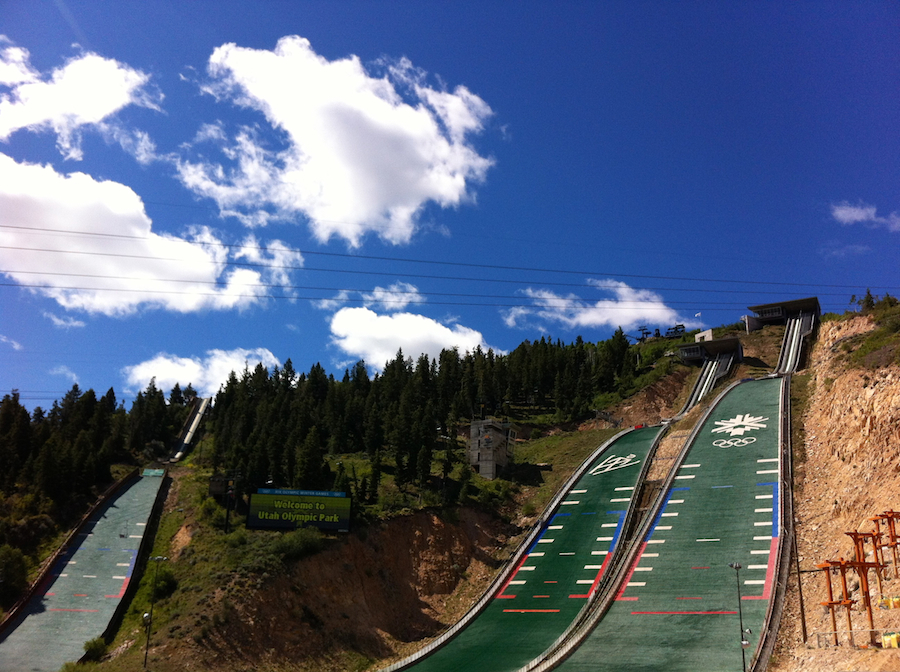
    Norwegian national team member Mikko Kokslien took a photo of the U.S. nordic-combined jumping facility in Park City, Utah.
    The U.S. nordic combined and ski jumping hills in Park City, Utah (Photo: Mikko Kokslien)

    Demong said nordic combined has suffered from a lack of record keeping when it came to junior development. He hopes things like Virtual Nationals will help change that dynamic.

    “That has been one of the struggles historically — we have some clubs with quite a few athletes but nobody has really been keeping records,” Demong explained. “Does U-12 usually make to U-16? We know that we have attrition along the pipeline just like any sport, but how can we have less? How can we retain more? How can we have a more complete pipeline from first jump on a 10-meter to a World Cup team?”

    Demong insists the health of jumping and nordic combined are way beyond life-support status. On the contrary, Demong believes his beloved sports are poised for growth. That may, in some part, be attributed to the roughly fifty percent of the population — women — traditionally unable to participate in jumping and nordic combined. Although opportunities to jump internationally are not on par with those afforded to men, 2014 marked the first time women’s ski jumping was an official Olympic sport.

    On the nordic-combined side, Demong mentioned this winter will be the first for women’s international nordic-combined competitions without an age limit.

    “In the past couple years, when women’s nordic-combined has been brought online, it has been age limited to mostly junior competitions, and now all of sudden there is going to be open class, senior-level events. It will not be in PyeongChang [South Korea for the 2018 Olympics], but certainly I think it is tracking to be in Beijing [in 2022]. And so that is something Dave Jarrett has definitely been a proponent of at the FIS level and is also preparing to gear up to develop a national-team program for that as well.”

    With new ventures moving forward, Demong also mentioned the links cross-country skiing and nordic jumping sports share. In his eyes, they each possess attributes that benefit the other.

    “Cross country is an amazing sport. It’s so difficult, it teaches so much discipline and perseverance and work ethic, and a host of other core values. They obviously have the same heritage,” he said. “And there is a whole other set of values ski jumping offers for personal growth, like courage: the ability to stand on top of the in-run, even to stand on top of the 40-meter [hill] and look down as a good skier and know that if you let go to the bar there is no backing out. It is a skill set unto itself. If I had one vision for our nordic communities, it is that we will continue to work together to provide as many participants as possible the opportunity to experience all that the nordic sports have to offer… I think there is a tremendous opportunity there … to add some additional skills to the cross country side by participating at whatever level in some ski jumping activity and vice versa.”

  • Tax Docs: USSA Chief Got Five Percent Pay Cut in 2010

    United States Ski Association (USSA) Chief Executive Officer Bill Marolt took a five percent cut in base compensation and benefits in the 2010 fiscal year, according to federal tax forms recently released by the Internal Revenue Service.

    In both 2010 and 2009, Marolt received a $250,000 bonus from USSA and its affiliate organizations. In the last fiscal year, however–which ended April 30, 2010–his base pay decreased from $309,947 to $269,258, while his benefits and nontaxable compensation increased from $92,000 to $98,553.

    A spokesperson told FasterSkier that Marolt declined to comment on his salary, and he did not respond to an email.

    But in an interview, USSA Board Chairman Dexter Paine, a former alpine racer who now heads his own $2.7 billion private equity firm, said that the decrease was a reflection of across-the-board salary cuts instituted by the organization in January, 2009, at the peak of the financial crisis.

    Those cuts have since been eliminated, according to Paine. “We actually returned everyone [in 2011] back to the level that they had prior to the pay cuts,” he said.

    But in the mean time, Marolt was buffered from the reductions by his $250,000 bonuses. Marolt also receives non-monetary benefits, like the use of two Audi cars, and the tax forms show that USSA executives are offered first-class or charter travel for themselves and a companion.

    As is the case every year, it was the USSA board that made the decision on how much to pay Marolt.

    “We have a board,” Paine explained. “That board is made up of approximately 20 people, approximately a third athletes, a third people from the industry, and a third outside board members. We [also] have a compensation committee. That compensation committee sets goals and objectives for Bill.”

    If Marolt meets the objectives, then he is rewarded with a sizeable bonus. For the 2010 fiscal year, the goals were to run a budget surplus, and to achieve particular performances at the Olympic Games. Since Marolt accomplished both – thanks in part to the success of the American nordic combined team – he was awarded the $250,000.

    Acording to Paine, USSA settled on that figure, as well as the base salary, using a study that examines the compensation for leaders of other organizations, including CEOs in private industry, athletic directors, and college coaches.

    “That’s what Bill did before he came to us, so we think that’s a quite comparable data point,” Paine said. “We look at compensation for heads of other national governing bodies.”

    Documents from the IRS show that Marolt’s total compensation is higher than that of any other CEO for a winter Olympic sport organization, including that of Dave Ogrean, the executive director of USA Hockey. USA Hockey had 585,000 members to USSA’s 30,000, and collected $33.8 million in revenues in 2010 compared to USSA’s  $19.7 million, while Ogrean received approximately $335,000 for his work.

    As for athletic directors, the best-payed can make in the $1 million range. But salaries fall sharply away from the football- and basketball-centric conferences like the Southeastern Conference, Atlantic Coast Conference, Big 12, and Big 10.

    The University of Utah, for example, has an athletic budget of over 26 million dollars, and employs roughly 160 staff members (USSA employs 200). Despite the big budget, athletic director Chris Hill had a salary of only $314,768 in 2009; the big bucks were reserved for the football coach, who was paid over a million dollars.

    Paine, however, stood by Marolt’s figure.

    “[Marolt] is well compensated—certainly not the highest-compensated national governing body member out there—but in terms of performance, I’d argue that he’s the best-performing CEO of any NGB,” Paine said, citing Marolt’s success as a fundraiser for the U.S. Ski Team.

    “For another example, the head of USA Tennis…made a million three last year. The temporary head of the USOC [U.S. Olympic Committee], Stephanie Streeter, made over a million dollars. Quite frankly, we think that the group I just talked about is a relevant group, in terms of comparisons,” Paine said.

    USSA pays four other employees over $100,000. They are led by Chief Financial Officer Mark Lampe, who receives $112,077 from USSA and $131,596 from related organizations. Others include Vice President of Events Calum Clarke, Controller Chris Sampson, and Vice President of Marketing Edward Morris.

    The Big Picture: Programs

    While Marolt’s compensation decreased slightly, USSA’s overall financial standing appears to have been steadily improving over the last few years. In the 2010 fiscal year, revenues increased from $18,484,671 to $19,766,542, according to tax documents.

    “I think that we started to see revenues come back,” Paine told FasterSkier. “This year, revenues were up, and they are budgeted to be up slightly again next year, but sports marketing dollars remain very tight. I think it’s the last piece that comes back…There have been slight increases, so we’ve been able to increase our athletic spending.”

    In 2010, domestic athletic support decreased from just over $4 million to $3.75 million, while grants to the ski and snowboard national teams dipped to $6.2 million from the previous year’s $6.9 million. However, on the whole, program spending increased by some $400,000.

    One reason that was possible in 2010 was the Vancouver Olympics.

    “The money that we got from the USOC was up slightly last year, because it was an Olympic year,” Paine explained. “But those moneys remain essentially flat.”

    In the future, though, the USOC money will be stretched even more thinly. At least three new ski and snowboard events have been added for the Sochi Olympics: women’s ski jumping, and men’s and women’s ski halfpipe have been approved, while men’s and women’s slopestyle was tabled at the spring meeting of the International Olympic Committee, but could be reconsidered again before 2014.

    “We get new sports and no new money, which means that you end up spreading dollars over more athletes, and it’s just a real challenge,” Paine said. “Every year, we have to figure out where we are going to allocate dollars among all the different programs.”

    Aside from USOC money, USSA generated $3.4 million in revenue from memberships and fees, and as well as some $961,000 from event registration. Sponsorships brought in over $7.4 million–but in its annual report, USSA showed that it spent more than 20 percent of its budget on sponsor and donor fulfillment.

    “It’s certainly a challenging environment, from a revenue perspective,” Paine said. “We continue to work very hard to expand our sales marketing base, and expanding our foundation, which is where we raise money from donors. But certainly, the environment is still challenging out there.”

    Goals for the Future

    In order to continue receiving his large bonuses, Marolt will have to keep meeting USSA’s objectives.

    The main thing, Paine said, is to keep raising money.

    “Our goal is to continue to generate more revenues,” he told FasterSkier.

    Specifically, USSA is focusing on fundraising for two major projects. The first is an early-season training site at Copper Mountain in Colorado, which will serve the alpine, freestyle, and snowboard teams.

    “We are close to putting that deal together. By November 1, we’ll have an automated snow system, and all the necessary safety, communications and timing equipment to have a world-class downhill speed center like no other around,” Marolt told Ski Racing Magazine at the 2011 USSA Congress. “What we will have will be a game changer, to have an opportunity to be on world-class snow by the first of November until the middle of December for the elite programs, and then after that, it will be totally for the development programs.”

    The second focus, which is more relevant to the nordic program, is a continuing commitment to education.

    “One of the areas that Bill has really focused on is getting athletes access to education while they’re competing, through a program we have at Westminster, as well as other universities,” Paine told FasterSkier.

    Several of the nordic athletes are taking classes at Westminster College in Salt Lake City, which provides full tuition to U.S. Ski Team athletes, and Torin Koos is taking advantage of a similar deal with the University of Utah.

    USSA also offers a tuition reimbursement program for athletes attending other schools. For language learning, specifically, athletes have free access to Rosetta Stone online courses, and USSA pays for interested skiers to attend ten-day intensive language classes with Dartmouth College’s Rassias Program in Hanover, NH.

    “We now have 68 athletes who are going to school at the same time that they’re competing, which is a dramatic increase over when Bill [arrived],” Paine said.

    “And we want to increase that even more, so our next step is going to be to raise endowment money to be used for education… The stronger the alumni base of our organization, the stronger our organization will be, going forward. To the extent that we can do more for our athletes, regardless of what sport they’re in, the better job we do serving them.”

    While the combination of education and collegiate skiing has been a hot topic in the nordic community over the last few years, Paine was clear that as far as he’s concerned, there’s no reason to eschew school, and he added that USSA is dedicated to making education possible for its skiers.

    “It keeps athletes from being forced to make that decision of: ‘Do I go to school, or do I compete?’” he said. “I grew up ski racing, and I wasn’t good enough to have to make that decision, but I made the decision to go to school, and certainly knew lots of athletes who were in a difficult position, trying to figure out, ‘geeze, what do I do?’”

    Nathaniel Herz contributed reporting.

  • Sochi 2014: A Tour With USSA’s Luke Bodensteiner

    Sochi 2014: A Tour With USSA’s Luke Bodensteiner

    The view from the gondola to the cross-country skiing venue in Sochi, Russia. All photos, USSA

    With the Sochi Winter Olympics more than three years off, the city still maintains an aura of mystery to most Americans. Not for Luke Bodensteiner, the vice president for athletics at the U.S. Ski and Snowboard Association (USSA), who has already visited the 2014 venues twice.

    Bodensteiner’s first trip to Sochi was with the International Ski Federation (FIS) two years ago, when he helped with a training seminar for some of the initial Olympic volunteers. His latest visit was what he termed a “scouting mission”–looking for ways to give American athletes advantages in 2014. FasterSkier caught up with Bodensteiner upon his return.

    FasterSkier: Can you start out by giving me a general sense of what it’s like in Sochi?
    Luke Bodensteiner: It’s a pretty cool setup. The city of Sochi is big–400,000—and it stretches over 120 kilometers of coastline down the Black Sea. Apparently, they call it Europe’s longest city. They have two million visitors each summer—people from Moscow go down there, Stalin had a dock down there, Putin’s got his summer getaway.

    You fly into the airport, and then going east is the city. West of the airport, you’ve got where the ice venues are going. They’re all going into one massive complex: hockey arenas, skating are down there. It’s 100 meters from the beach, which is pretty wild. Then you go up this river valley for about 25 kilometers, and that’s where all the skiing and snowboarding is.
    They’re building a light rail from the airport—transport-wise it’s going to be really slick. The teams will do the same drill. It’s about 25 minutes up to the little village up there. Basically, [the train] drops you off at a gondola station. About 3,000 people an hour is what they can carry.

    Luke Bodensteiner

    It’s an eight-minute gondola ride up to the gravity sports side, and then the nordic is on an adjacent ridge. The athletes’ villages are up on the mountain as well. It’s pretty unique— the only venue you can [access] from the valley is ski jumping, which is separated from where the cross-country venue is. Everything else is up on the mountain. As a spectator, you take an eight-minute gondola ride up to the venues on top of these mountain ridges.

    FS: And how are things progressing at the mountain venue?

    LB: I was there a couple years ago—it was a quaint, quiet place. I swear there must not have been more than a thousand people living in this mountain valley. The houses were really old, pretty dilapidated, really not much going up there at all. The Russian government decided, based on the Olympic bid, that they could make Sochi a year-round resort. Because [now], it’s basically a summer resort from April until November—the ski season’s going to be November to April. So they’re pumping $15 billion into this kind of infrastructure—the railroad, and they’re building a four-lane highway on the other side of the river from the existing highway. Then they’re really, really, developing this ski area, a lot of development beyond what’s required for the Olympics. They’re going to make a world-class alpine ski resort there. Most of the lifts and gondolas are in there now. [It’s] attracted a bunch of investors that are developing this section of the valley called Rosa Khutor, right along the river. They’ve got about two-dozen

    A view of the loading area for the gondola

    high-end hotels in the works right now, and some are getting pretty close to completion. It’s going to be another little Whistler, basically, being built up there.

    That’s probably going to be the most active place during the Olympics, because it’s all skiing and snowboarding, as opposed to the ice venues, which are actually out of town. The development up in Rosa Khutor is going to be hotels, high-end shops, nice restaurants—there are already pretty cool little restaurants and bars opening up in the town now, as the people start to get settled in there. It’s going to go from this sleepy mountain village into this glitzy mountain ski resort in the course of the next couple years.

    It’s going to be cool—the transportation should be pretty easy for everybody based on the train, and the location of the hotels with the gondolas going up to the venues. It’s an Olympics you’re going be able to do basically without a vehicle.

    Even venue to venue, between alpine, snowboarding, and freestyle, you ski to those venues and they’re all together, and then nordic is on an adjacent ridge. They’re planning on building kind of a peak-to-peak gondola that connects those two venues, so from a spectator’s standpoint, it’s going to be a basically a no-brainer.

    FS: What were you doing in Sochi on this trip?

    LB: This time we were there basically on a scouting mission for our own [USSA’s] purposes, with the USOC. It was Bill Marolt and myself, and one other guy from USSA, and two senior guys from the USOC. What we did really well in Vancouver was to create a really effective performance environment—for our teams, with the except of nordic, we had everybody living outside the village, where we had our own nutrition programs, our own housing. We had a really awesome environment for the athletes, and it’s something we want to carry into Sochi. It’s going to be a much different environment than Sochi, though—in Vancouver we had the home-field advantage because we were basically in the U.S.

    As nice as Sochi’s going to be from a resort perspective, it’s still different—it’s far away. You can still tell you’re in Russia, which is actually pretty cool from an atmosphere perspective. So we want to make sure we’re well-organized going into this, and understand what our strategy is. How we get them fed, how we get them doing their dryland training in the right way. We’re in there pretty early, but we’re also not the first team to go there—the big teams are starting to get organized as well. We also operate a pretty big hospitality program, and we have to get a handle on that for our supporters.

    FS: Have you been to the cross-country venue on either of your trips?

    Construction at the cross-country venue.

    LB: On both trips I’ve been up there, in the area where the stadium is. Right now, they’re just starting to cut trials—they’ve got them all flagged off. When we were there, [Norwegian trail designer] Hermod Bjorkestol was there with [FIS Race Director] Jurg Capol, and they were sort of putting the final stamp of approval on the actual trees they’re going to cut and the dirt they’re going to move. They’re going to be done with that venue by next summer.

    FS: Could you get a sense of what the trails were like?

    LB: Not really—it’s pretty wooded up there, other than the areas they cut for the alpine runs. It’s good cross-country terrain up there—basically, they’re on top of a fairly rounded ridge, so it’s got really good terrain to work with. It’s not skiing on the side of an alpine mountain.

    FS: One of the things we’d heard after Vancouver from a number of athletes and officials was that they’d like to see future Games in an area where the weather is more consistent than it was in 2010. Do you think that will be the case here?

    LB: I have not been there in the winter, so I don’t really know what to expect yet. We looked at the meteorological data, and they get a lot of snow. And it’s fairly high altitude, 1450 meters. It’s fairly far south—it’s on the same latitude basically as Nice, which is why it’s sort of a subtropical getaway. What we’ve heard is that it can be a little bit of a mixed bag. Some fog; it can be wet, with pretty good amount of snow, but we don’t know what kind of snow it is—whether it’s warm and dry, or whether it’s Whistler snow. They’re sort of predicting that it’s a fairly short season there—from late March, they’re pretty unsure as to actually how much snow they’ll have up there. I’m anticipating it’ll be on the warm side. I don’t know what to expect in terms of moisture, or how wet the area’s going to be.

    FS: Will everything be done on time?

    LB: The first time I went there, they were doing construction already up at the cross-country venue. They were using really old equipment, tractors and stuff, and the workers would break for lunch and you’d see them break out a bottle of vodka. You go back there now and they are literally working 24/7—they probably have 20,000 people there on construction. Everywhere you go is just going full speed. They’re making impressive progress—they’ve definitely put it in high gear. From the ice arenas down in the city all the way up this corridor—you drive that whole 25-kilometer distance and it’s one big construction site.

    FS: Did you get a sense of some of the safety concerns? I know that Sochi is not too far from Dagestan and Chechnya—two of the areas where Russia has had unrest.

    LB: They’re in a politically pretty hot area there, and I’ve heard they’ve had some sort of threats already from whatever political factions they have down there. When I looked at it from an athlete security point of view, it’s pretty sweet, particularly in the village. The only way to get up to the village and venues is on skis on a gondola—they’re pretty isolated up in the mountain. They’re going to be pretty well-protected.

    FS: Do the locals seem enthusiastic?

    LB: Down in the city, they’re pretty excited about it—you already see ‘Sochi 2014” all over the place. Having the Olympics has kind of opened up that city’s persona a little bit. They know they’re part of the international community, and the whole world’s coming there. I think you get the sense that people really care about sport, and it’s really, I think, helping to modernize Russian sport, where it used to be so much about winning and national pride, and therefore you’d get some doping. Now, I think they view sport as something that’s positive, something that’s healthy, something for youth. I think having the Olympics is really going to transform how the Russian people view sport, which will be good for everybody.

    FS: It’s interesting, because it sounds like they’re basically putting in a whole ski area in a place where the sport doesn’t really have any tradition.

    LB: They’ve had limited skiing activity there, I guess, in the past, and they’re building it now as a national training center. The way it will be used most, probably, post-Olympics, other than as a national training center, is to leave behind this resort. I don’t know what they anticipate in terms of what kind of impact it might have on local kids getting into the sport, but it will be a nice asset for tourists, that’s for sure.

  • A Homologation How-To Guide (It’s Not as Boring as You Think!)

    A Homologation How-To Guide (It’s Not as Boring as You Think!)

    Kincaid Park in Anchorage recently received its homologation certificates. Photo, Rob Whitney

    What do a GPS, a retired airline pilot, and a Norwegian guru named Hermod Bjorkestol have in common?

    All are key components of a plan to bring many of the U.S.’s biggest venues in line with International Ski Federation (FIS) standards.

    At its annual meetings in Turkey in early June, FIS made it clear to American officials that a longstanding exception would be revoked: starting in the winter of 2011-2012, all races held in the U.S. that are sanctioned and scored by the Federation will have to take place on certified trails—“homologated courses,” in official parlance.

    Since all U.S. SuperTour and national championship events are scored using FIS points, any venue that plans to host a high-caliber race next winter will have to have its courses inspected and certified. And even if a ski area wants to hold scored races this year, FIS is asking that they have a plan to have their trails homologated by 2011-2012, according to U.S. Ski and Snowboard Association (USSA) Nordic Director John Farra.

    Only six ski areas in the country currently have FIS certification, few of which are traditional SuperTour venues, and the U.S. Ski and Snowboard Association (USSA) is spearheading a new effort to bring more trail networks up to speed. What does that entail, exactly? FasterSkier spoke with a handful of experts to find out what this homologation thing is all about. And no, it doesn’t have anything to do with milk.

    What the Heck is Homologation?

    If you really want to know every last detail about the homologation process, you can download and read the fifth edition of the FIS Cross-Country Homologation Manual, a 69-page document that contains terms like “partial height differential,” specific guidelines for creating “undulating terrain,” and an alphabet stew of abbreviations and acronyms.

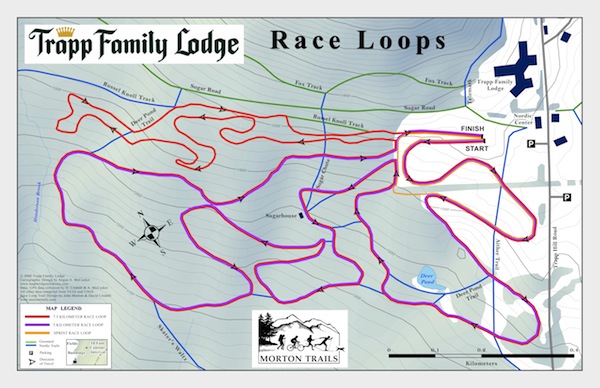
    The Trapp Family Lodge in Stowe, Vermont is another venue that was recently homologated.

    For the rest of the country, there’s Bob Gross, a retired airline pilot and avid marathon skier who represents USSA on the FIS subcommittee for rules and controls.

    Gross got involved in the technical side of skiing in the lead-up to the 2002 Olympics in Salt Lake City, and he now is qualified as a homologation inspector—an official responsible for ensuring that courses meet FIS’s specifications. Along with Farra, Gross will coordinate the homologations of the nation’s major courses.

    In a phone conversation, Gross explained the rationale behind the rules requiring homologation. Because all FIS-sanctioned races award ranking points to finishers—which in turn can determine seeding and start positions in big international races—it’s important for the Federation to maintain consistent standards for courses across different nations.

    Then, there are also more basic logistical issues, like maintaining adequate trail width so that skiers aren’t stepping all over each other, or ensuring that the stadium is well laid-out. Safety is a concern, too—downhills can’t send skiers plunging into trees or ditches—and even details like spectator access are also considered.

    The process sounds complicated, but Gross says it’s not—it boils down to ensuring that courses are “adequate to run, safe and fair.”

    “It’s trying to get the courses so that they are standard…throughout the world. So that a skier who skis on a course here will have a course which is similar to [one] that’s being skied in New Zealand or Japan or Europe,” Gross said. “That is the basic philosophy.”

    Getting Homologated

    According to Gross, the homologation process will unfold differently depending on the status of each venue. If you’re starting from scratch in the woods in your backyard, homologation will obviously be a more arduous process than if you run an established ski area with pre-existing, elite-level trails.

    Regardless of the amount of work that needs to be done at a given venue, the finished product must meet specific FIS standards outlined in the homologation manual—the most important of which concern the course layout.

    If there are trails at a venue that are already close to meeting FIS’s requirements, the certification process can begin promptly. Whenever possible, course designers and venue managers will homologate existing trails rather than constructing new ones, since work like logging and excavating trails can be pricey. At Kincaid Park in Anchorage, which recently had its trails re-homologated, workers got especially creative: they used leftover fill from nearby roadwork to make sure that the steepness of one of their uphills met FIS standards.

    But if a ski area does not have a suitable course to start with, they may have to bring in a trail designer to help lay one out.

    According to John Morton, who along with David Lindahl operates the trail design firm Morton Trails, the backbone of a homologated course is its climbs.

    “The climbs are the very first thing that we look for,” he said. “Then it’s kind of piecing all these other pieces together.”

    FIS’s demands for the uphills are specific. A homologated 5 k, Morton said, must have two major, or “A” climbs, each 30 meters from the low point to the high point—and technically, neither should come in the first or last kilometer of the course. The gradient must average around six percent.

    The profile for the Trapp Family Lodge homologated 5 k course. The yellow bars are the major or "A" climbs, and the orange bars are the smaller, "B" climbs. Graphic courtesy of Morton Trails.

    Morton and Lindahl use a variety of tools to help them measure the uphills and other elements, including highly-sensitive GPS units, computer software like Google Earth, and an instrument called a clinometer, which is used to measure slope.

    Once the major climbs are locked in, there are other aspects of the course design that must be incorporated, like several smaller “B” uphills, downhills, and stadium layout.

    When the courses are close to meeting FIS standards, venue managers are then responsible for producing a sheaf of data and maps on all of the trails’ key characteristics, like distance, width, and elevation changes. How extensive? Morton and Lindahl have been known to create as many as 600 data points, while at Kincaid Park in Anchorage, their information filled a four-inch binder.

    The data is submitted to one of the few FIS homologation inspectors in the U.S.—Gross is one, as are Lindahl and Morton—who enter it into a special computer program that summarizes the course.

    Then, the inspector will make at least one in-person visit (paid for by the venue), to walk the course. This allows them to verify all the data, get a feel for the trails, and make judgments about key characteristics.

    “There’s a lot of art involved in homologating a course.” Gross said. “If you look at a hill, for instance, there could be a break somewhere…where it leveled off or even dropped a little distance. Depending on how the homologation inspector feels that would ski, it could be two B-hills or one A-hill. That’s where the art enters in, and that’s why you have to go out and look at the course, so that you can make a judgment.”

    If the inspector deems that more work needs to be done before a course meets FIS standards, they may even have to pay another visit before the process can proceed further.

    However, there is a decent amount of flexibility in the rules, Gross said, especially for trails that are only being certified for domestic events. (World Cup courses must meet more stringent standards.) For example, if one of a course’s two A climbs isn’t quite tall enough, designers could pump up the other one to make up the difference. And according to Farra, city sprints and uphill climbs are exempt from FIS rules altogether.

    When the inspector deems that the courses are up to snuff, the data is forwarded to FIS, where it eventually makes its way before Hermod Bjorkestol. Bjorkestol, the famed course designer and main editor of the homologation manual, has the final say on every application.

    Courses are homologated at specific distances, and for specific race formats—trails certified for skate sprints have to be much wider than those that are used for individual-start classic races, for example. USSA is requesting that SuperTour venues homologate a sprint course, a 2.5 k loop, and a 5 k loop.

    All told, the process could move as quickly as a month, if courses are already close to meeting FIS’s requirements. The more work that needs to be done to bring the trails in line, the longer it will take—especially if ski areas run into problems with procedural issues, like permits for logging.

    In Anchorage, Kincaid Park made its upgrades slowly, starting with trail work 2006 and 2007, and didn’t finish collecting its data until 2008, according to Matt Pauli, who worked on the homologation process there. The actual FIS certification was issued in 2009.

    The Big Picture

    While the technical details of homologation would make even the most avid ski fan’s eyes glaze over, that’s not the point, according to Morton and Lindahl. Instead, they said, FIS’s goals are simple: to make sure that courses ski well.

    “The whole point of homologation is to embody some of these things that go into…a good course,” Morton said. “Anybody who has done design knows, ‘now it’s time for a good climb.’”

    One issue that arises is whether a push towards homologation might cost trails their character, by turning them all into superhighways—and Gross acknowledged that “something, I guess, is going to get lost.”

    Regardless, Gross said, the U.S. has little choice, due to new race formats like mass starts and sprinting, which have been instituted by FIS to drive up spectator interest.

    Skiers during a mass start race at Kincaid Park. Photo, James Brady.

    “You can’t run a mass start on a narrow track,” he said. “Is that a good thing? That’s a value judgment I’m not making.”

    Another issue is the financial cost. Gross wouldn’t estimate the price of a typical homologation effort, given the wide range of work that might be necessary. But he did say that the more a venue or club can rely on its members and volunteers for help, equipment, and expertise, the lower the price tag would be.

    Since World Cup and other high-level races are always held on homologated courses, Gross went on, bringing America’s trails up to FIS standards will only make the country’s athletes more competitive. Farra, the USSA nordic director, echoed that argument in a press release announcing the homologation effort, pointing out that while Norway has over 40 certified venues, the U.S. has just six.

    Dylan Watts, an Alaska Pacific University coach who wrote an article about the homologation process for the 2010 U.S. Nationals publication, also agreed.

    “If we intend to compete with the world in FIS events such as the Olympics, World Cup, U-23 [World Championships]…we need to be racing domestically on courses that are also that style,” Watts wrote in an e-mail. “You get good at what you do.  If you ski on a golf course, you get good at golf course skiing.  If you ski on a logging road at 8,000 feet, you get good at that.  If you ski on FIS homologated-style trails, you get good at that. That is why the homologation effort is important.”

  • FIS Gives Go-Ahead to New World Tour Championships

    The Czech Republic's Lukas Bauer–pictured here at the 2010 Olympic Games–took the victory in this year's edition of the Tour de Ski.

    With no World Championships or Olympics scheduled for the winter of 2011-2012, some ski fans may be planning on going into hibernation for the year. But they better not buy their sleeping pills just yet.

    During its meetings in Turkey last week, the International Ski Federation (FIS) approved a proposal for a new kind of World Championships: one modeled on the Tour de Ski—the bicycle-style stage race that has taken hold and garnered big TV ratings in Europe since its inception in 2007.

    The championships will inject some excitement into the one “dead” season that comes every four years, in which neither an Olympics or World Championships is scheduled.

    The next dead winter is in 2012, and there’s a chance that FIS could sort out the logistics in time to hold the event then, although U.S. Ski and Snowboard Association (USSA) Nordic Director John Farra said that it’s unlikely. But fans should expect to see a tour championship on the calendar by 2016.

    The details of the format haven’t been settled on yet, but according to Farra, the proposed event will be separate from the existing Tour de Ski—meaning two big stage races in a single season.

    It’s clear that tours are the future: in Turkey, FIS also approved a trial run of another short stage race to open this coming season in Kuusamo, Finland—and that’s on top of the mini-tour that’s taken place at the World Cup finals for the last two years.

    “In the grand scheme of things, this is the direction that we’re going to go,” Farra said.

    Whether it happens in 2012 or 2016, the new tour event will be a boon for the Americans, Farra said, since USSA places a premium on successes at major races like World Championships and the Olympics. A tour championship would be another opportunity for Farra’s skiers to shine.

    While the U.S. team would be hard pressed to find contenders for an overall tour title, Farra said that he plans to push FIS to recognize athletes “that do something impressive in particular events,” when the federation sorts out the details of the tour championships in subsequent meetings. That could mean awarding world titles to winners of individual stages, like Andy Newell or Kikkan Randall in a sprint, or Kris Freeman in a distance race. That concept, Farra said, should appeal to everyone.

    “I can’t imagine one nation arguing against that, given that they’ll all have more opportunities,” he said.

    According to Canadian officials, the Tour of the Rockies—a North American stage race proposed by FIS for the spring of 2012—was being considered as a test run of the tour championships. However, citing financial risks, Cross Country Canada announced last month that it had declined to host the event.