From the FasterSkier archive — posts syndicated from athletes’ and coaches’ own blogs between 2004 and 2012, kept online as published. Current coverage is at fasterskier.com.
The above discretionary selection process will be repeated for each period of World Cup this coming season. As always, if you have questions or concerns about this process, feel free to contact me directly.
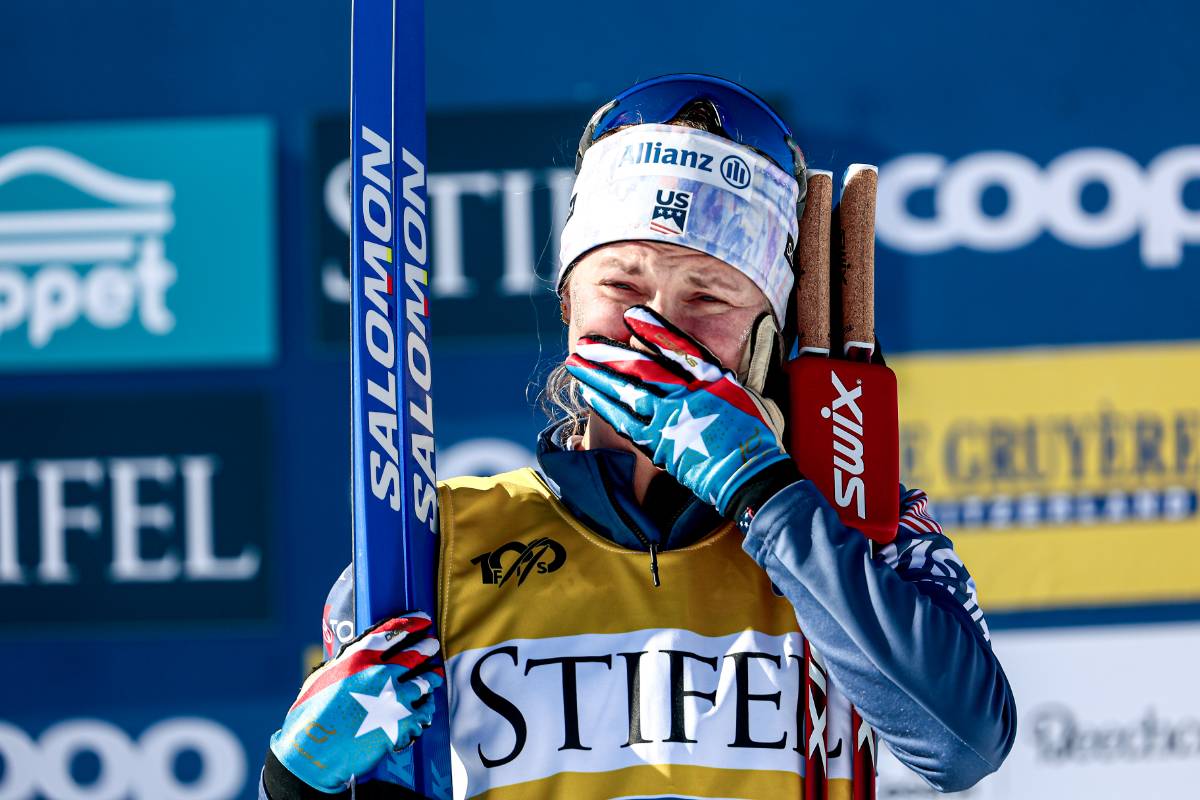
Rosie Brennan (USA) celebrates in Ruka (FIN) in 2023 after finishing 2nd in Saturday’s 10 k classic race. The result was Brennan’s first classic World Cup podium of her career. (Photo: Nordic Focus)
Rosie Brennan has stepped away from the World Cup, though she’s still figuring out exactly how to define the next chapter in her life.
Retirement is the easy word, and in some ways, the accurate one. She is done with the World Cup. She is done with the version of cross-country skiing that demands five months in Europe, constant travel, start lists, team schedules, narrow margins and the unrelenting pressure of measuring a career in seconds.
After more than a decade with the U.S. Ski Team, three Olympic appearances, hundreds of World Cup starts, two World Cup wins and a place among the best all-around skiers the United States has produced, Brennan has stepped away from the highest level of the sport.
But if retirement is supposed to mean the end of something, Brennan is not quite sure the word fits.
“Retirement has been a tough word for me,” Brennan said. “It feels very black and white.”
“One of my friends and older teammates called it rewiring.”
To Brennan, that seems closer. She’s not walking away from skiing so much as trying to build a new relationship with it. The shape of her days may change, and her focus will no longer be “110 percent” on racing, but skiing itself remains too central, too familiar and too joyful to simply leave behind.
“I love skiing and ski racing,” Brennan said. “I want to continue to be able to use my body in ways that challenge and push me in the world of skiing and competition again at some point, maybe sooner than later.”
“Skiing is just not that for me,” Brennan said of the idea of retiring and never doing the thing again. “It’s something that I hope to do till the day I die, honestly.”
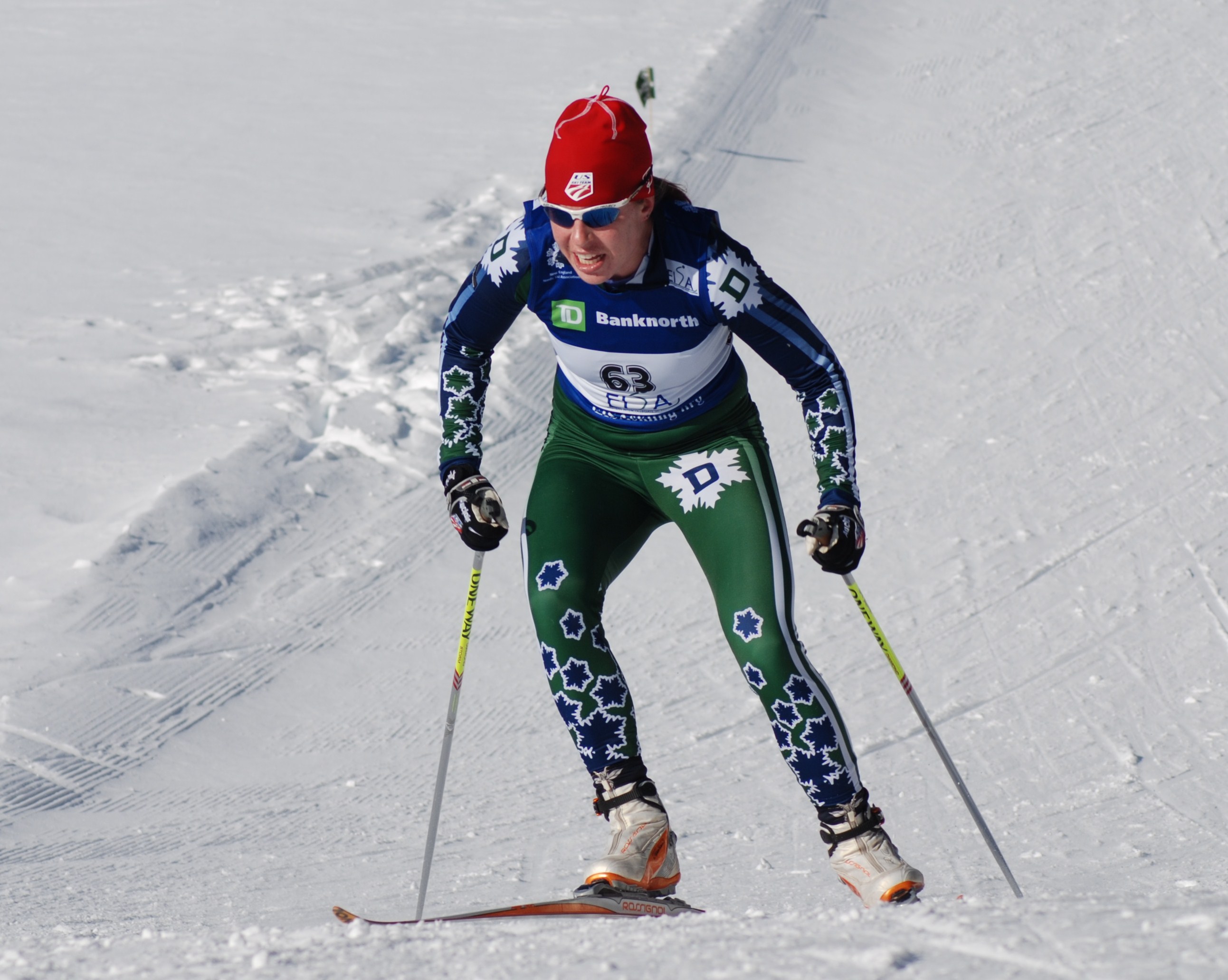
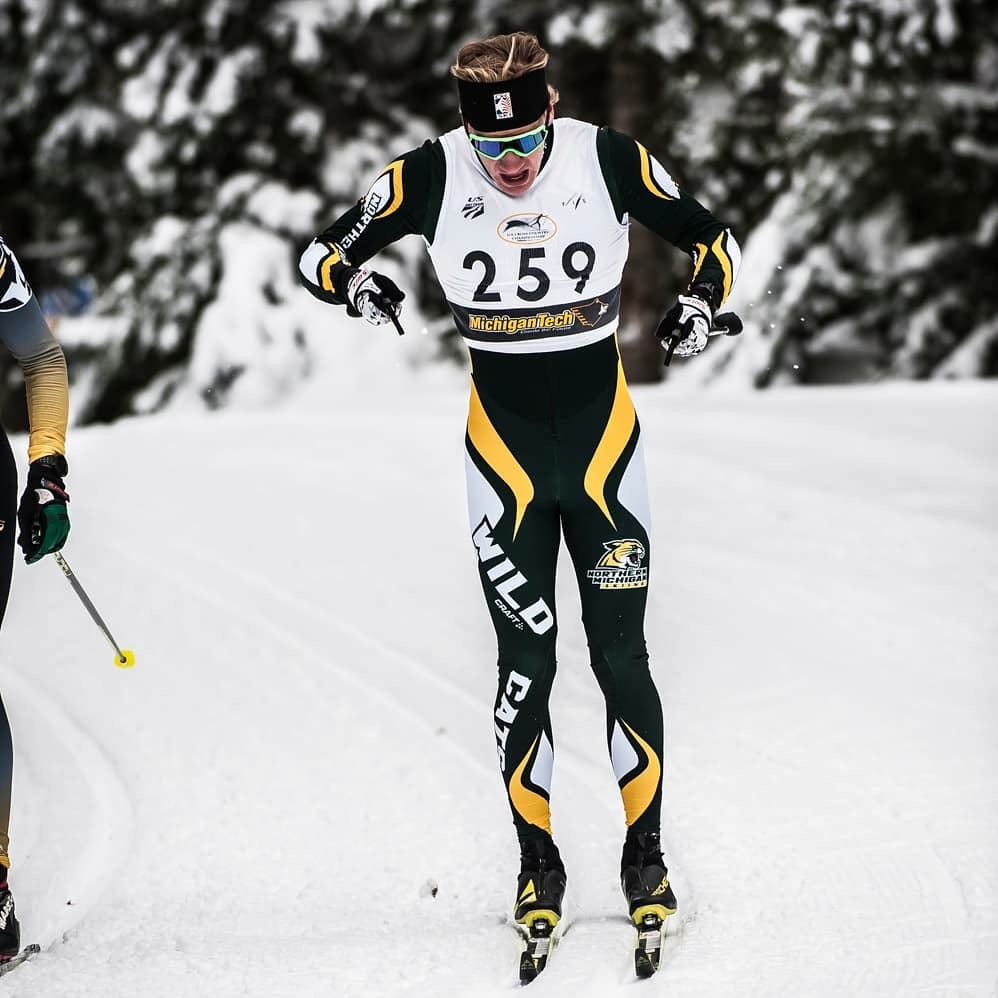
The first uploaded image of Rosie Brennan in the FasterSkier archives after she won both EISA women’s races in Feb. 2009 (Photo: Ruff Patterson)
A Career Built on Perseverance
When Brennan looks back now, the first thing she points to is not a specific race, podium or result sheet, but rather the belief in herself that made all of those things possible.
“I’m really proud of, I guess, the perseverance of my career,” Brennan said. “It takes perseverance to have longevity in a career, to weather the inevitable obstacles that appear throughout a long career, and to find belief when things aren’t going your way.”
That perseverance became the throughline of a career that took time to reveal itself. Brennan was not a teenage prodigy who moved smoothly from junior success to World Cup podiums. She came to skiing later than many of her peers, waited longer for the biggest results and had to weather the doubts that creep in when progress slows, injuries interrupt momentum and other paths begin to look more practical. Then when the results did arrive, those earlier years felt even more meaningful.
In a career defined by patience and progress, one of the things Brennan says she is most proud of is not just that she reached the top level, but that she continued to expand what she could do once she got there. She never settled into one lane as only a distance skier or only a classic specialist. Instead, she kept working to become more complete, finding reward in the challenge of improving across formats, distances and techniques.
“I’m also proud of the range that I maintained throughout my career,” Brennan said. “Continuing to be an all-arounder throughout my career and finding some success in all the disciplines and both techniques throughout — that was something that was just, I don’t know, I guess a personal challenge that I found a lot of reward in.”
That sense of progress extended beyond Brennan’s own results. Her career also unfolded during the strongest era in the history of American women’s cross-country skiing, and as the U.S. team continued to raise its standard internationally, Brennan came to see herself as part of something larger than her own race days.
“I’m proud to have been part of a really amazing wave of American women skiing,” Brennan said, “and to have done my best to carry that wave forward and to help push things forward and pass things on to future generations as well.”
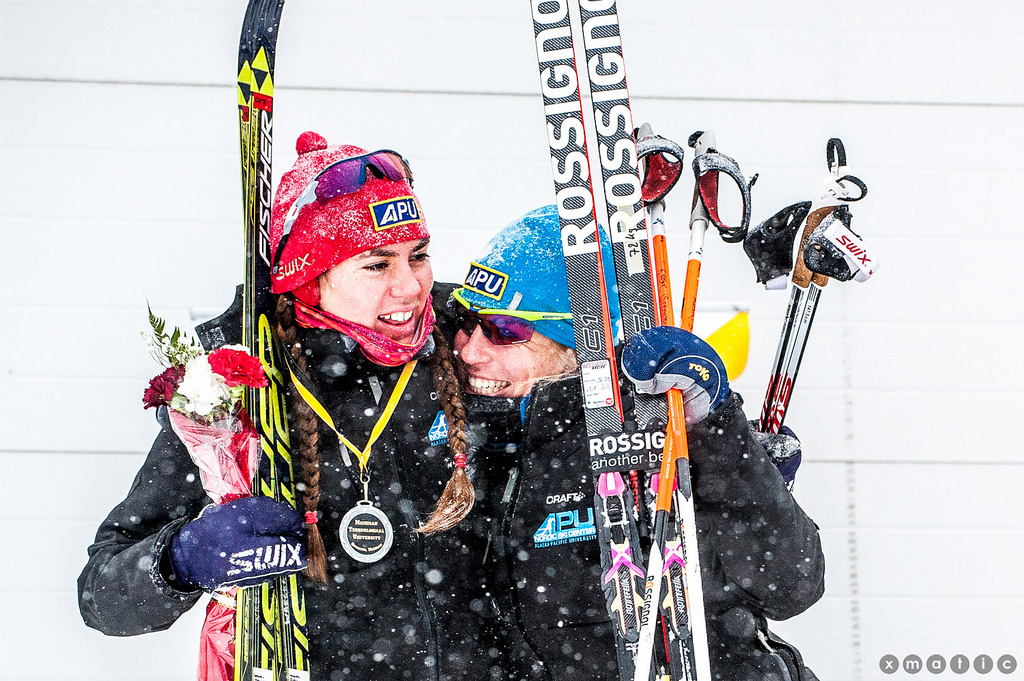
APU’s Rosie Brennan (r) embraces close friend and APU teammate, Becca Rorabaugh (l), after they finish first and second, respectively, in the Women’s 1.5 k Classic Sprint at the 2015 U.S. Cross Country Championships in Houghton, Mich.
Starting Late, Staying Long Enough
Brennan started skiing at 14, late by the standards of an international sport where many athletes first step onto a set of fish scales as young children. But she never saw her development as a simple matter of being behind.
“I was older when I kind of found top-level success in podiums on the World Cup,” Brennan said. “But because I started skiing so late, I guess I never really saw it that way.”
In her mind, the clock did not start with age, but when she first found herself on a pair of skis.
“If you look at when I started at 14 to when I had success, those accumulated hours of skiing and training are probably actually fairly equivalent to somebody who started at eight,” Brennan said. “So I always just chose to look at it that way, as if it was just going to take time to learn those skills, and it was fine that I started late.”
“I’m not good at being patient,” Brennan said.
But skiing gave her little choice. It took time to develop the specific strengths required of the sport, to learn how to race and to absorb the small skills that many skiers pick up almost without realizing it when they start young. Brennan had to build the engine and the instincts at the same time.
There were moments when she wondered whether it was worth it. In college, after injuries and difficult stretches, she decided she was done with skiing when she graduated. She looked toward other paths. At times, she quit, or at least tried to. But the sport kept pulling her back.
“I think what I enjoyed the most that made me keep coming back was just the challenge of it,” Brennan said. “Waking up every day with some purpose to get a little bit better, and to have the challenge of seeing if it was possible.”
Eventually, that challenge became a way of life.
“I just learned to really enjoy and thrive and love the lifestyle of skiing,” Brennan said. “And so that made it a lot easier to just keep coming back.”
Brennan is quick to point out that she did not do that alone. The support systems around her mattered. At Dartmouth and later at Alaska Pacific University, she found teams and coaches that helped her keep believing when she could not quite do it herself.
“There were definitely moments that it’s easy to question, and it’s hard to keep going,” Brennan said. “I was really fortunate to be part of some really, really amazing groups, and have coaches that fostered that belief in me, and made me see things in myself that I couldn’t see on my own.”
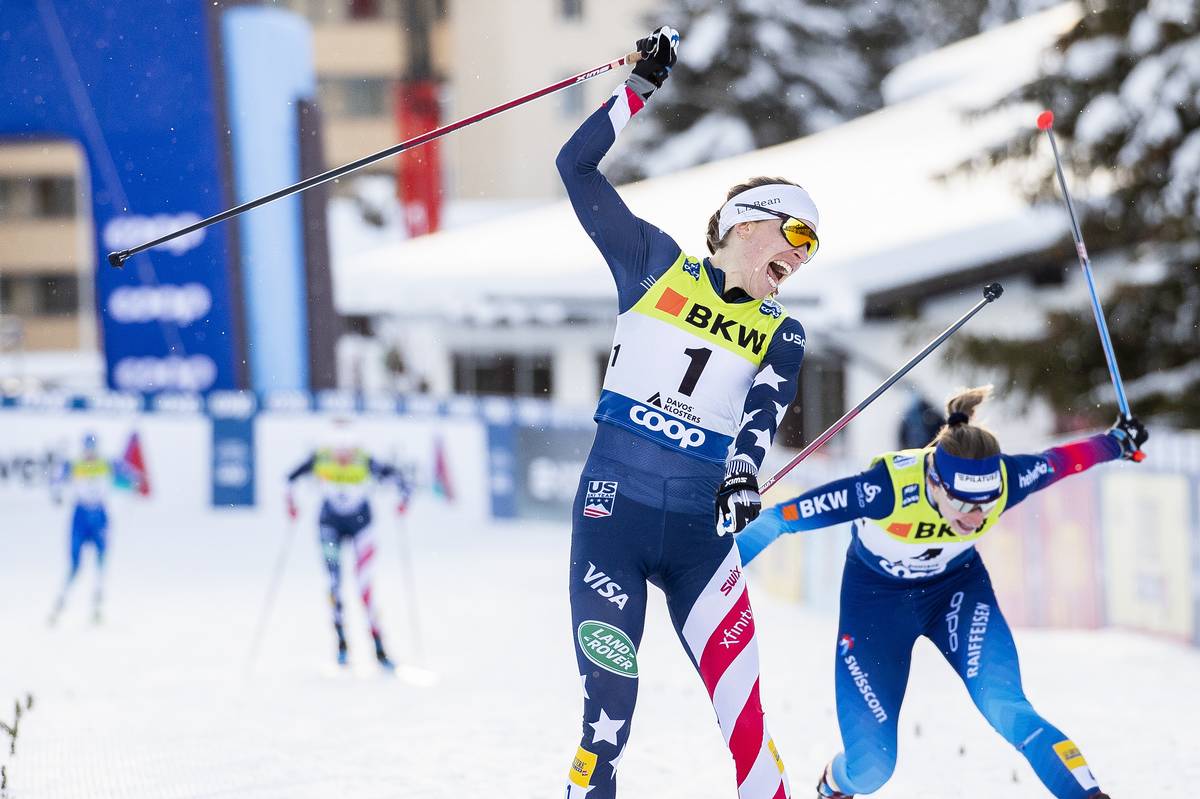
Rosie Brennan celebrates her victory and first World Cup podium after the freestyle sprint in Davos, Switzerland. Photo: NordicFocus
When the World Was Put on Notice
For years, Brennan’s career was a slow and steady build, but then came that famous weekend in Davos.
In December of 2020, during a World Cup season shaped by the uncertainty of the pandemic, Brennan won twice in two days in Switzerland. On Saturday, she claimed her first career World Cup victory, in a freestyle sprint, and then the very next day, she won again in the 10-kilometer freestyle.
From the outside, it looked like a breakthrough and a historic moment for U.S. skiing. Brennan does not dispute that. She says what stays with her the most now is not only the winning, but everything she had to manage in order to ski that way.
“Davos 2020 was definitely a breakthrough moment for me,” Brennan said. “That year was challenging for the whole world, and being a ski racer during that time certainly had its challenges too.”
The uncertainty of that season weighed heavily. Rules changed, travel was complicated and athletes did not always know whether races would happen. The risk of illness carried not just health concerns, but career implications for athletes whose bodies were their livelihoods.
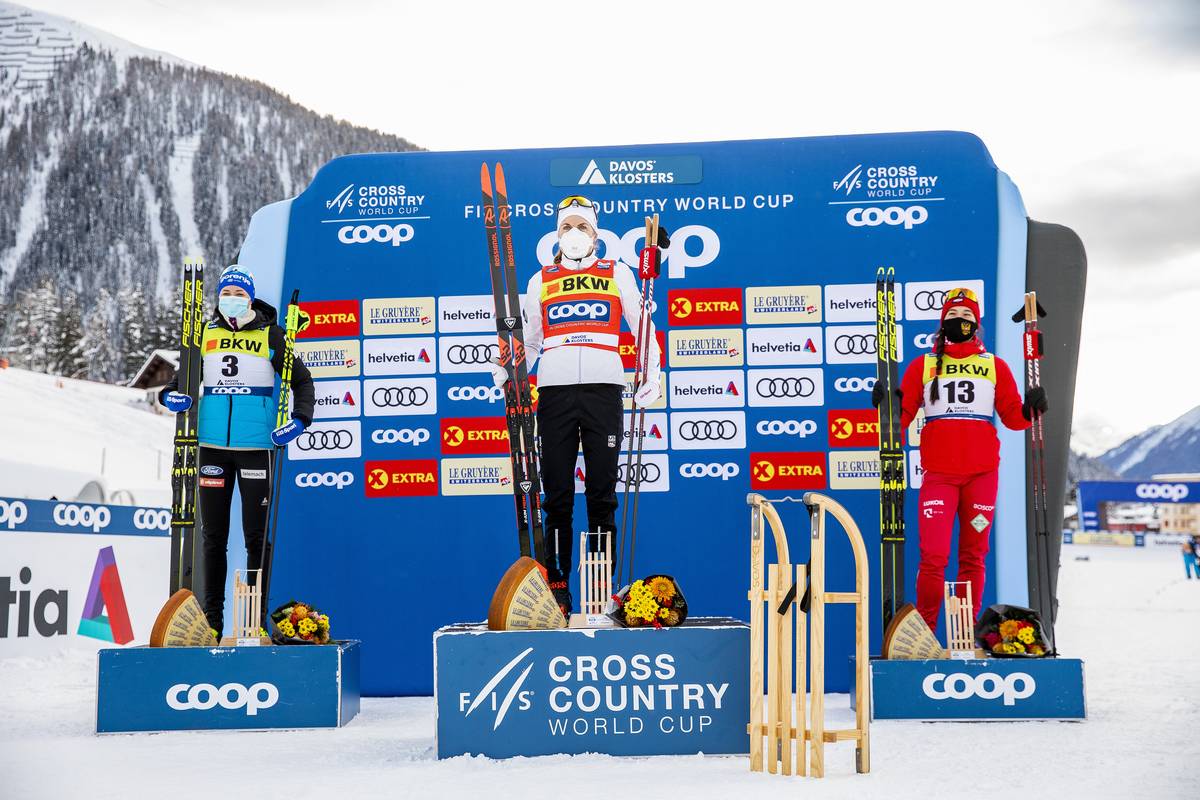
Taking the victory and the sled, Rosie Brennan stands atop the podium in Davos, Switzerland. (Left to right) Anamarija Lampic (SLO) 2nd, Brennan (USA) 1st, Natalia Nepryaeva (RUS) 3rd.
“I really struggled with the anxiety of it all,” Brennan said. “Just never knowing — traveling in foreign countries, where the rules were changing all the time, and you didn’t know what would happen if you got sick.”
Hence why Davos still means something more than two entries on a results page. Brennan was proud of the wins, of course, but she was even more proud of how she managed everything around them.
“It definitely showed me what I was capable of,” Brennan said, “and that I could manage these really high-stress environments and all the uncertainty and thrive in that setting.”
That weekend did not just give Brennan her first World Cup wins. It helped confirm the range she had been building toward for years. Later that season, she became the first American to hold the overall World Cup leader’s bib, sprint leader’s bib and distance leader’s bib at the same time. Which was both a major accomplishment and also a fitting reward for all the work she had put in to become a more complete racer.
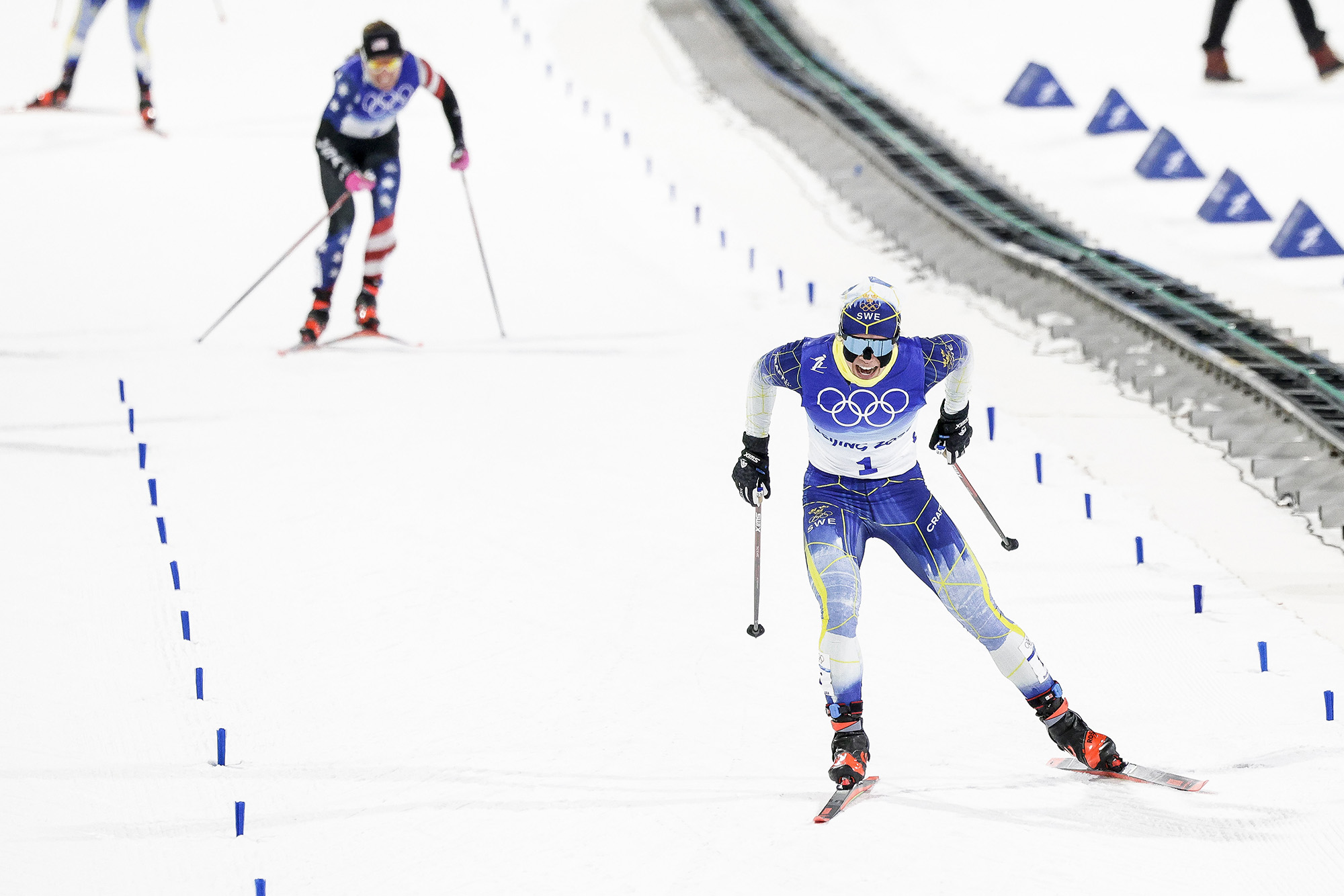
Jonna Sundling (SWE), with a commanding victory in the 2022 Olympic individual freestyle sprint, comes to the finish with Rosie Brennan (USA) in the background on her way to fourth. (Photo: NordicFocus)
What the Career Adds Up To
Brennan will take a step back from her professional career after amassing quite the résumé, representing the United States at the 2018, 2022 and 2026 Winter Olympics. She finished fourth in the freestyle sprint at the Beijing Olympics in 2022, the kind of result that can feel both extraordinary and excruciating, by missing out on an Olympic podium by a single place. She reached World Cup podiums across seasons and disciplines. She became a two-time World Cup winner, a fixture in the American women’s team and one of the athletes who helped move the U.S. from occasional contender to regular presence near the front of international races.
But Brennan’s own accounting of her career is not limited to the results she garnered over the years. She is proud of showing up. Proud of learning. Proud of becoming competitive in every event. Proud of the people who helped her and the younger athletes she helped in return. Proud that a career that could have ended several times kept expanding instead.
That may just be why the end of her World Cup career does not feel like a true breakup. For Brennan, skiing was never just a job. It provided her with structure, challenges, community, identity and gave her something to work toward every day and a way to test what was possible. Even now, when she is no longer organizing her life around World Cup racing, she says she’s not suddenly becoming someone else.
“When you train that many years, it’s hard,” Brennan said. “I’m still going out twice a day most days, because it just feels so normal to me.”
That may change when she starts school again and other commitments begin to fill the space skiing once occupied. Brennan says she plans to pursue new interests and give attention to parts of herself that the World Cup lifestyle did not always allow. But the habits of a skier are not easy to unwind, and she does not seem especially eager to unwind all of them.
“I definitely hope to bring forward a lifestyle that’s active, that treats your body well, that’s also willing to push yourself and see where the limits are,” Brennan said.
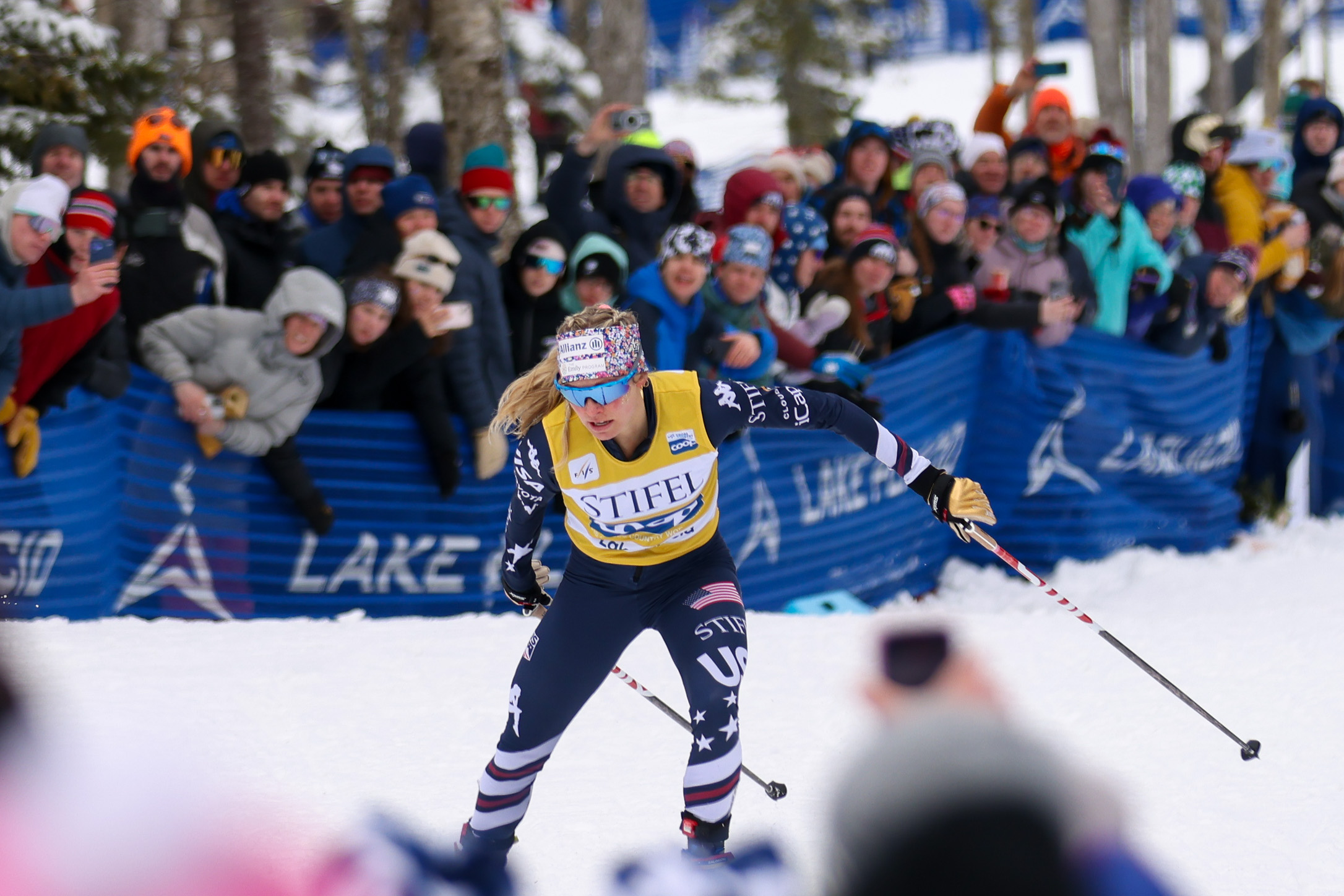
Rosie Brennan (USA) during the individual sprint qualification at the final World Cup weekend this past March in Lake Placid, New York. (Photo: Modica/NordicFocus)
Rewiring, Not Retiring
That is why “rewiring” works. Brennan is not flipping a switch. She is just rearranging the circuitry.
There will be no more full World Cup campaign, no more life built entirely around the next race weekend. But there will still be skiing, there will still be movement and there will still be competition. The habits and lessons of her career that she built through years of resilience and patience are not things Brennan expects to leave behind.
“I’m sure there are countless skills, probably most of the skills I’ve learned in my adult life, that I will have to lean on in any of the various careers that I may pursue, and in my studying as well,” Brennan said. “The lessons that I’ve learned will undoubtedly come with me, along with the character and strength that I’ve built throughout my career.”
Those lessons were built through the less tidy parts of Brennan’s career, from the late start and the years before the podiums to the injuries and doubts that forced her to keep adjusting. But the same career that asked so much of her also gave her something lasting. Skiing was more than a pursuit or a profession, it was the driving rhythm of her adult life, and one she still feels lucky to have followed for so long.
“It’s definitely an incredible lifestyle to be a ski racer,” Brennan said. “I feel insanely lucky to have called that my career, and to have done so for so long.”
That gratitude does not make the transition simple. After so many years of organizing life around training, racing and the rhythm of the World Cup, stepping back from that structure means more than changing a schedule. It means figuring out what skiing looks like when it is no longer the center around which everything else has to turn.
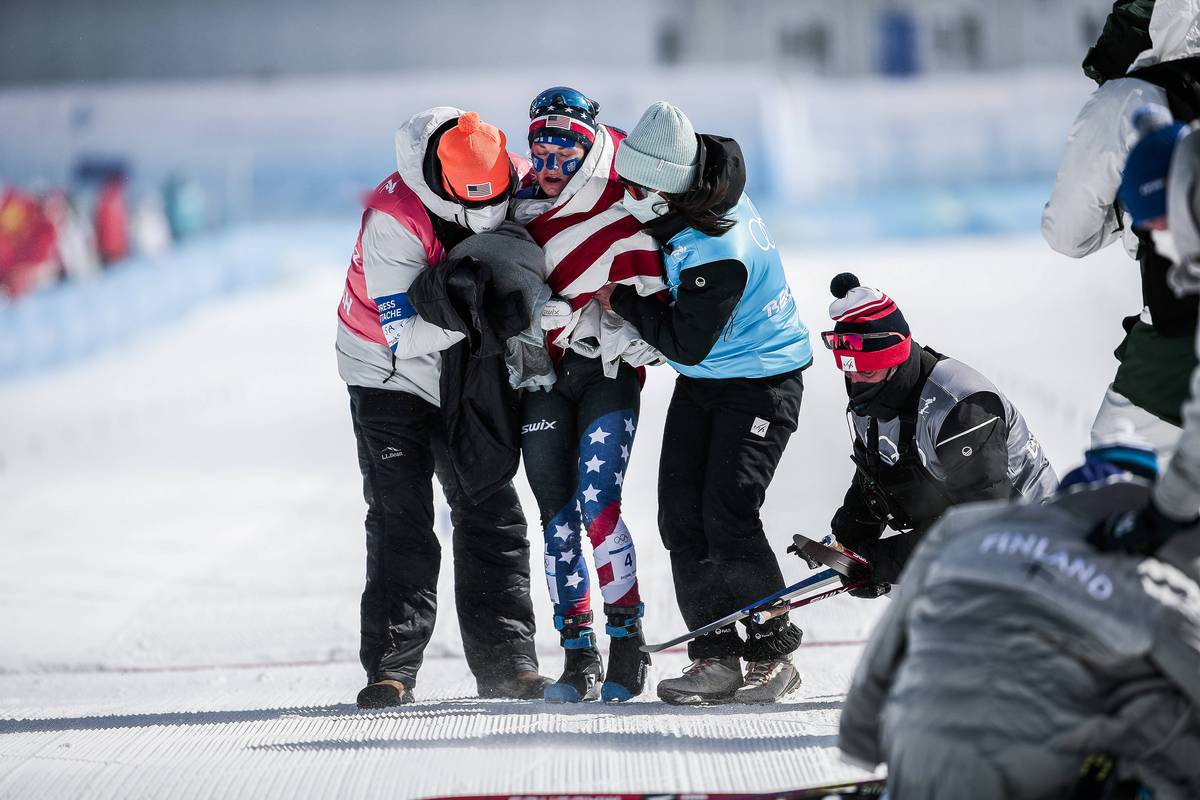
Rosie Brennan (USA) during her final World Cup of her career — the 20 k Freestyle Mass Start in Lake Placid (USA). (Photo: Thibaut/NordicFocus)
But there is also freedom in that. Brennan no longer has to prove she belongs. She already did. And now, instead of defining skiing only through the World Cup, she gets to decide what parts of it she wants to keep.
Maybe that means races. Maybe it means long days outside. Maybe it means testing herself in new settings, with new stakes, away from the circuit that shaped so much of her adult life. Maybe it means all of that.
What seems clear is that Brennan is not disappearing from the sport. She is stepping out of one version of it and into another.
She is retired, if that is the word people want to use. But it is not the sunset kind. Not the final-page kind.
For Rosie Brennan, skiing will always be there, just not in the all-consuming way it once was. Now, she gets the chance to redefine her relationship with the sport as something woven into the life she is building next.
“It’s truly been a dream,” Brennan said.
Help Support Our Coverage!
If you value the thoughtful work and access FasterSkier provides, please consider becoming a Voluntary Subscriber. Your support directly fuels our work to cover the people, places, and moments that make our sport special.
Brennan’s U.S. teammates wait at the line to greet her after her final World Cup race, a 20-kilometer start in Lake Placid on March 22. (Photo: NordicFocus)
This coverage is made possible through the generous support of Marty and Kathy Hall and A Hall Mark of Excellence Award. To learn more about A Hall Mark of Excellence Award, or to learn how you can support FasterSkier’s coverage, please contact info@fasterskier.com.
Jessie Diggins during the quarterfinals of the Freestyle Sprint on Saturday in Lake Placid, New York, USA. (Photo: Voisin / FasterSkier)
Lake Placid, N.Y. — The French coaches had questions. Two days before racing began at Mount Van Hoevenberg, they were standing in Saranac Lake — 55 degrees, windy, woods in every direction — wondering who exactly was going to show up to watch cross-country skiing in the middle of the Adirondacks.
By Saturday, an estimated — rumored to be fair — 14,000 people had answered.
Today, as Jessie Diggins lines up for the 20-kilometer mass start freestyle, the final race of her career, this corner of upstate New York will try to top itself one more time.
Screaming fans, chainsaws, flags, signs, and glitter all over the course in Lake Placid, New York, USA. (Photo: Voisin / FasterSkier)
A Weekend That Kept Building
The first sign that Lake Placid was going to be different came Friday, and it wasn’t entirely smooth. With an initial estimate of 10,000 fans on Friday, the transportation system to and from Van Hoevenberg buckled under the demand. Some fans waited over two hours to get to the venue.
US Head Coach, Matt Whitcomb, after the races yesterday in Lake Placid was really happy because the standout performance was not one of his athletes, but instead the North American ski community that showed up in droves and created an electric atmosphere. (Photo: Voisin / FasterSkier)
“Only Holmenkollen and Minneapolis”
U.S. Ski Team head coach Matt Whitcomb has been on the World Cup circuit for years. He said the only events throughout his career that have ever rivaled the atmosphere here this weekend in Lake Placid are the Holmenkollen in Oslo — the sport’s grand prix if you will — and Minneapolis two years ago.
That’s the company Lake Placid is keeping. And for those who were in Minneapolis, the comparison lands. Diggins said earlier this week that Minneapolis was the most special day of her career.
“It was the most I’ve ever cried,” she said at Wednesday’s press conference. “I got to race in front of some of my grandparents who haven’t been able to travel overseas. They got to see me race for the very first time in a World Cup. And having so many friends and family and getting to share the thing that I love doing with them — that is the most incredible thing ever.”
She paused, then added: “I think this weekend’s probably going to join that.”
College skiers from all over the Northeast came in force to the trailside in Lake Placid, New York, for the races this weekend. (Photo: Voisin / FasterSkier)
The Scene on the Ground
What the numbers don’t capture is the texture. Young kids running around the venue in their NNF fan bibs — the ones with athletes’ faces printed on them — clutching Sharpies, hoping to meet their heroes. Fans who drove and flew from Vermont, from Alaska, from Minnesota, who planned vacations around this weekend months ago. The school buses that became part of the story, ferrying the faithful up the mountain road when the original plan couldn’t hold.
This is what U.S. cross-country skiing looks like when it gets the stage. Not a packed NFL stadium or a sellout basketball arena — but thousands of people standing in the woods, screaming themselves hoarse for athletes from every country, because they love this sport and they know how rare these weekends are.
The fans — especial the college skiers — made it sound like the race was happening in Davos, Switzerland with the chainsaws out on course. (Photo: Voisin / FasterSkier)
One More Race
Diggins has spent this weekend doing exactly what she said she would — being present, soaking it in, putting on a show. She clinched the Crystal Globe on Friday. She raced the sprint on Saturday. And now there’s one more.
At Wednesday’s press conference, she talked about the way her mindset around suffering has evolved — how she’s learned to see the pain cave not as something to dread but as confirmation that she’s doing what she came to do.
“This is what 100 percent feels like,” she said. “And sometimes this is what it looks like, and it’s some ugly scene, but that’s okay. It just has to be all heart and all effort, and that’s what I have to give in that moment.”
She also made one thing clear about the team she’s leaving behind: “The team is going to be just fine without me. And I feel like that’s how I know I did my job.”
Then, with a smile: “I’m excited to be a fan on the other side of the fence and get to cheer for them.”
Today, in just ten minutes, Jessie Diggins will clip into her bindings for the last time as a World Cup racer. The 20-kilometer Mass Start Freestyle.
And based on everything this weekend has shown us, “no one” will be watching.
Love Stories Like This? Help Keep Them Coming.
Feature stories like this one take time, access, and care to produce. If you value thoughtful storytelling and independent ski journalism, please consider becoming a Voluntary Subscriber. Your support directly fuels the work we do to cover the people, places, and moments that make our sport special.
This coverage is made possible through the generous support of Marty and Kathy Hall and A Hall Mark of Excellence Award. To learn more about A Hall Mark of Excellence Award, or to learn how you can support FasterSkier’s coverage, please contact info@fasterskier.com.
Jessie Diggins answering questions at the press conference before the World Cup in Lake Placid, New York. (Photo: Voisin/FasterSkier)
Lake Placid, N.Y. — The eve of the World Cup finals at Mount Van Hoevenberg brought press conferences, sound checks that went sideways, and three American skiers who couldn’t stop making each other smile.
Jessie Diggins, Ben Ogden, and Gus Schumacher sat side by side Wednesday afternoon — the same trio that has turned the 2025-26 season into something U.S. cross-country skiing has never seen before. Between them: Olympic medals, historic podiums, a 50-year drought shattered, and one very good birthday cake.
But with three races left and Diggins’s retirement looming, the mood wasn’t heavy. It was loose, funny, and deeply human — exactly the way this team tends to do things.
“Probably Glitter”
Asked to define her legacy heading into her final World Cup weekend, Diggins did what Diggins does: she went somewhere unexpected.
“I think I define my legacy honestly, completely outside race results,” she said. “I am more proud of the things I have done off the course. I think my legacy is going to be in my advocacy and the way that I have spoken about mental health and eating disorders specifically, and the way I’ve tried to make really hard conversations less hard for people to have.”
She pointed to her work with Protect Our Winters and Share Winter, to the energy she’s poured into the team’s culture over the years. And then she landed the dismount.
“And probably glitter. I think there’s a lot more glitter in ski races now, and that’s always a great thing — as long as it’s biodegradable.”
Diggins has spent the season saying goodbye in pieces — a little cry leaving training camp in Bend, quiet moments at each World Cup stop. She knows what’s probably coming Sunday.
“I suspect it’s probably going to hit like a dump truck on Sunday, and there’s probably going to be a lot of tears.”
But she’s ready. And what she’s ready for is maybe the most Jessie Diggins thing of all: she sees ski racing as performance art, and she wants her final show to leave people wanting to go run up a mountain or sign their family up for ski lessons.
“I realized that I can do that moving forward, but just with my story and with my words, and I don’t have to push my body so hard, but I can still leave people inspired and motivated.”
In the meantime, she’s looking forward to being able to wash her clothes when they’re dirty, cook whatever she wants, and bake cookies on the weekend instead of training and racing all day.
Ben Ogden answering questions at the press conference before the World Cup in Lake Placid, New York. (Photo: Voisin/FasterSkier)
“Your Life Is Not Going to Be the Same”
Ben Ogden grew up in Landgrove, Vermont. American skiing legend Bill Koch lived close by in Peru, Vermont. Same zip code, as Ogden puts it — “not so different.”
Fifty years separated Koch’s 1976 Olympic medal from Ogden’s silver this season, and when Ogden finally got on the phone with his neighbor and mentor after breaking the drought, Koch didn’t mince words.
“Bill just sort of said, ‘Hey, congratulations, and your life is not going to be the same from this point forward.’ And that was kind of crazy to hear.”
Ogden hopes to see Koch at the races this weekend. And racing at Van Hoevenberg carries its own weight for him — not just because of Koch, but because of his father, who was deeply embedded in the New England ski racing community.
“I think it’s really hard for me to come race in the U.S. and look around and not just, like, constantly think about him, because this was his scene,” Ogden said, his voice softening. “He would have been in such paradise on the side of the trail here in Lake Placid. And I’ll be thinking about him a lot this weekend, for sure.”
This is technically Ogden’s first home World Cup — he was sick for Minneapolis — and it’s hitting him right. He grew up racing the NYSEF Festival series at Lake Placid, bringing crews of Vermont kids over for slushy late-season races.
“It’s not my home, but it feels like it.”
Gus Schumacher answering questions at the press conference before the World Cup in Lake Placid, New York. (Photo: Voisin/FasterSkier)
Aspirations, Not Goals
Gus Schumacher has been doing some linguistic rebranding.
“I’ve been calling them aspirations for a few years now,” he said of his season targets, “because I feel like the pressure of goals was kind of weird for me.”
The distinction matters to Schumacher. He sets plenty of small goals — the daily, tactical kind — but the big ones, like winning an Olympic medal or finishing in the top 10 of the overall World Cup standings, he holds more loosely. They’re aspirations: things he wants, things he’ll chase, but things he won’t let crush him if they don’t happen.
“Those are things I want to do, but if they don’t happen, it won’t be because I didn’t try.”
He accomplished the Olympic medal. He entered this final weekend ranked sixth in the world, with a top-10 finish still in play. And he’s approaching Lake Placid the same way he approached Minneapolis, where he won his first World Cup in front of a hometown crowd: just be happy to be racing, and feed off the energy.
“Already today, it was really cool to have people cheering us on in the race prep, which doesn’t really happen much on the World Cup ever.”
Schumacher also dropped maybe the best origin story of the press conference: the formative moment that lit a fire under his career was Luke Jaeger beating him at an Anchorage cup race.
“That kind of put a fire under my belly to really start training, because I didn’t want him beating me anymore.”
The Knitting Club, the Water Pump, and the Greenhouse
The press conference’s best stretch might have been when someone asked the athletes how they decompress.
Schumacher keeps it clean: headphones, 10 to 20 deep breaths — four seconds in, eight seconds out. Standard operating procedure.
Ogden? He knits. And he’s not shy about it.
“After races, I’ve been doing a lot of knitting and stuff like that. Helps me just relax really quick.” After the season, it’s bigger projects: car work. “You can feel like you’re the king of the world after a couple medals, but go and try and replace a water pump on a Forerunner, and that’ll make you feel completely incompetent.”
Diggins revealed there was a full-on knitting club on the team this winter. Her own reset button is simpler: she calls her husband.
“He’s my absolute center of my world. The race could have been amazing, and it could have been also completely horrible. And we’re just talking about what I want to do with the garden, and how I want to start a greenhouse. And he’s like, ‘Uh huh, yeah, sure, I’ll support you in that.’”
One More Thing
Almost as a throwaway, Ogden mentioned that Andy Newell — “the original Nordic ski backflip guy” — is in Lake Placid this weekend. And Ogden himself has had a backflip dialed since he was 17.
“I’m hoping on Sunday we can kick up a little ski jump. I’m looking to take another one Sunday afternoon. So stay tuned.”
Three races to go. A retirement to honor. A culture to celebrate. And maybe a backflip.
It’s going to be a weekend.
Love Stories Like This? Help Keep Them Coming.
Feature stories like this one take time, access, and care to produce. If you value thoughtful storytelling and independent ski journalism, please consider becoming a Voluntary Subscriber. Your support directly fuels the work we do to cover the people, places, and moments that make our sport special.
This coverage is made possible through the generous support of Marty and Kathy Hall and A Hall Mark of Excellence Award. To learn more about A Hall Mark of Excellence Award, or to learn how you can support FasterSkier’s coverage, please contact info@fasterskier.com.
Jessie Diggins (USA) on her way to third place in the 10 k Classic Individual Start in Lahti, Finland. (Photo: Authamayou/NordicFocus)
As Jessie Diggins climbed the final hills in Lahti on Sunday, she could hear something unusual rising above the crowd noise. Scattered along the course were hand-made signs held by Finnish fans and young skiers. Many carried the same simple message: “Thank you, Jessie.”
For Diggins, racing through what has increasingly become a farewell tour of World Cup venues that have defined her career, the moment carried emotional weight. Lahti has not always been a place where the American felt the course played to her strengths, particularly in classic technique. But on Sunday, she delivered one of her most meaningful performances there, skiing to third place in the women’s 10-kilometer classic interval start.
“There were so many people out on the course with signs saying ‘Thank you, Jessie,’ and it was really emotional in the best way,” Diggins said afterward. “It was incredibly touching. Seeing all the little kids in glitter after the race was just really special.”
Frida Karlsson (SWE) on her way to the 10 k Classic win in Lahti, Finland. (Photo: Authamayou/NordicFocus)
Sweden’s Frida Karlsson powered to the victory in 25:57.6, edging teammate Linn Svahn by just over four seconds. Diggins followed in third, 6.2 seconds behind the winner, securing the 90th World Cup podium of her career — a milestone that came in her 375th World Cup start.
The podium also represented a breakthrough for Diggins in a discipline she has spent years working on. Despite her long list of accomplishments, Sunday marked her first World Cup podium in a standalone 10-kilometer classic interval start.
“The Lahti course hasn’t always suited my strengths in classic skiing,” Diggins said. “So it felt really cool to pull it together a bit more today.”
The result allowed Diggins to maintain control of both major season-long competitions. With only three World Cup stops remaining this winter, she continues to lead Sweden’s Moa Ilar by 264 points in the Overall World Cup standings and by 188 points in the Distance standings, positioning herself strongly in the race for the sport’s coveted crystal globes.
Moa Ilar (SWE) and Linn Svahn (SWE), (l-r) reflecting at the finish. (Photo: Authamayou/NordicFocus)
Svahn Sets the Early Benchmark, Karlsson Finishes the Job
With the interval format — one athlete starting every 30 seconds — stretching the field across the Lahti course, the first major time to chase appeared almost immediately.
Sweden’s Linn Svahn, starting with bib 5, was among the earliest contenders onto the course and quickly posted the fastest times through the early checkpoints. Known primarily as one of the World Cup’s dominant sprinters, Svahn skied aggressively over the opening kilometers and established the benchmark that much of the field would spend the next hour chasing.
Her time held atop the standings as racer after racer attempted to match it.
Later in the race, however, another Swede began to close the gap. Frida Karlsson, wearing bib 40, remained within seconds of Svahn through the intermediate checkpoints before edging ahead in the final kilometers.
“I was just trying to stay in my own skiing,” Karlsson said afterward. “I heard it was between me and Linn, and I was super excited to get that fight.”
Karlsson ultimately crossed the line in 25:57.6, securing the victory by 4.1 seconds over her teammate.
The win came after a brief illness, which prevented her from competing in the Olympic 50 k, but Karlsson said she was eager to keep racing despite the setback.
“I was sick after the Olympics, but I was really excited to keep racing and just do what I know best,” she said. “So I’m super glad to be here.”
Diggins, starting shortly after Karlsson, kept herself in contention throughout the race, skiing within striking distance of the Swedish pair at each checkpoint before finishing 6.2 seconds back in third place.
Linn Svahn (SWE) on her way to second place. (Photo: Authamayou/NordicFocus)
Three Different Approaches to the Same Race
The split times revealed three distinct pacing strategies among the podium finishers.
Svahn, starting fifth, set the tone early. She posted the fastest time through the opening 1.1 kilometers and maintained the lead at the 3.4-kilometer checkpoint, immediately putting pressure on the rest of the field as they left the start gate.
Karlsson, starting later in bib 40, remained just seconds behind through the early checkpoints, skiing a controlled opening before gradually closing the gap. By the middle of the race, she had moved into contention, and over the final kilometers, she proved strongest of all, ultimately pulling ahead to secure the victory.
Diggins, meanwhile, delivered perhaps the most evenly paced effort of the three. She remained within striking distance of the leaders at every checkpoint — fifth at 1.1 kilometers, third by 3.4 kilometers, and still in podium position through the final lap.
That steadiness proved decisive in the final standings. While the two Swedes battled for the win, Diggins’ consistent pace allowed her to secure third place and another important podium in the fight for the season-long crystal globes.
Jessie Diggins (USA) sprints for the finish line. (Photo: Authamayou/NordicFocus)
Diggins’ Classic Progress
Diggins’ podium also reinforced one of the season’s quieter developments: the continued evolution of her classic technique.
For much of her career, the American’s greatest moments have come in skating events, where her aggressive pacing and powerful finishing speed often prove decisive. But this season she has shown remarkable consistency in classic distance races, finishing in the top ten in every classic distance event on the World Cup calendar.
Conditions in Lahti — warming temperatures and increasingly soft tracks — placed an additional premium on ski preparation, something Diggins was quick to acknowledge after the race.
“I had great skis, which is a huge part of the equation, especially when the conditions get slushy,” Diggins said. “This podium really belongs to the team. I’m so grateful for all the hard work they put in.”
Rosie Brennan (USA) on her way to 12th place. (Photo: Authamayou/NordicFocus)
Brennan Continues Return to Form
A bit further down the results list, fellow American Rosie Brennan continued a gradual return toward form after a long battle with illness that has affected much of her season.
Brennan finished 12th (+38.6) in Lahti, a result that reflected both solid skiing and a cautious approach early in the race.
“This whole process has really been a game of time,” Brennan said. “There have been many moments when I’ve wondered if I’ll ever feel normal again in my life. But the last three days are the most normal I’ve felt racing since December 2024.”
The Lahti course, known for its steep climbs and technical demands, offered a test of efficiency in classic technique — a challenge Brennan felt she handled well.
“Lahti requires really good technical skiing,” she said. “I felt like if I could relax and focus on my classic technique, that would give me the best chance.”
Kendall Kramer (USA) working her way up one of the many Lahti climbs. (Photo: Authamayou/NordicFocus)
Kramer Finds Lessons in the Lahti Hills
For American Kendall Kramer — 42nd in 27:40.8 (+1:43.2) — the Lahti race presented a different kind of challenge: starting first.
Wearing bib 1, Kramer had the advantage of pristine tracks before the course began to break down as temperatures warmed. But the early start also meant racing without reference splits from the rest of the field.
“I was actually okay starting with bib 1 today, given the state of the tracks,” Kramer said. “They tend to break down as the race goes on, and the corners can get icy, so it was nice to have cleaner conditions early.”
Without other athletes on course to gauge pacing against, Kramer said the race became more about skiing freely and trusting her own effort.
“Racing without reference splits definitely makes pacing tougher, but at the same time it lets you ski freely and focus on your own race.”
The steep Lahti climbs also highlighted the technical demands of classic skiing at the World Cup level.
“The punchy hills were fun because I could really bound up them, which is something I haven’t done much in World Cup racing so far,” Kramer said. “But the sections where it turns into pure power striding showed me I still have a lot to work on.”
Despite the challenges, Kramer described the experience as valuable for understanding the technical standards required to compete consistently at the highest level.
“I’ve learned so much from racing here this season,” she said. “At the World Cup, every strength and every weakness gets highlighted, and that really helps show what to work on heading into the summer.”
Julia Kern (USA) catches a rest from both the climbs and the sunlight. (Photo: Authamayou/NordicFocus)
Kern Heading Home Early to Recover
Julia Kern, who finished 51st — 28:11.4 (+2:13.8) — today, said she will return home early from the World Cup circuit as she continues working through health issues that have lingered since the Olympic races.
“I’ve been battling my body on various fronts since the Olympics,” Kern said in a team media statement. “One of my strengths is showing up and continuing to try and believe despite the challenges, while also being patient and smart.”
Kern added that she will take additional time to recover while seeking answers about her condition, with hopes of returning to competition at the Stifel World Cup Finals in Lake Placid later this month.
“Right now, my body needs more time to recover and is in search of answers, so I’m headed home early with the hopes of being in a place to race in Lake Placid.”
Lauren Jortberg (USA) and Katherine Weaver (CAN), (l-r) charge for the line. (Photo: Authamayou/NordicFocus)
Jortberg Gets a Front-Row Look at Karlsson’s Pace
For American Lauren Jortberg — 55th in 28:32.7 (+2:35.1) — the Lahti race offered a unique opportunity to measure herself against one of the sport’s best.
Early in the race, Jortberg found herself skiing behind Sweden’s Frida Karlsson for several kilometers as the eventual winner was completing her second lap while Jortberg was still on her first.
“I skied with Frida for about three kilometers, which was really cool,” Jortberg said. “She’s obviously a beast, and it was cool to hang with her and get a taste of what that pace actually feels like.”
Jortberg said the experience offered valuable insight into the demands of racing a 10-kilometer interval start at the World Cup level, where pacing often means pushing near maximum effort from the start.
“Ten-k pacing on the World Cup is basically as hard as you can go the whole way,” she said. “It’s about learning how to navigate that kind of effort and still ski your own race.”
She added that the race reinforced both the progress she has made in classic technique and the areas she hopes to continue developing as she gains more experience at the international level.
“I’m really proud of how my classic skiing is coming along,” Jortberg said. “There’s still a lot to work on, but it was definitely a good first start in a distance race.”
Jortberg said she hopes to carry the fitness and lessons from Lahti into the next stop on the World Cup circuit in Drammen, Norway.
Emma Albrecht (USA) giving it everything she can all the way to the finish. (Photo: Authamayou/NordicFocus)
Albrecht Sees the Margins Up Close
Further back in the start order, fellow American Emma Albrecht — 58th in 28:50.7 (+2:53.1) — experienced firsthand just how tight the margins can be in World Cup distance racing.
“The tight margins were shown by skiers finishing at similar times,” Albrcht said after the race. “For me, I was not passed, and I did not pass anyone. Which meant the skiers in front and behind me were skiing at a similar pace to me.”
Like Kramer, Albrecht said the steep Lahti climbs emphasized the technical demands of classic technique, particularly the efficiency required to stride uphill without losing grip.
“The uphill sections are the most technical and demanding here,” she said. “The climbs in Lahti are steep, and striding up efficiently requires really good technique to avoid slipping.”
For Albrecht, the race served as a clear reminder of the areas she hopes to refine moving forward.
“One of my biggest takeaways is that I want to keep working on my striding technique and get better at adjusting my tempo based on the terrain.”
Dariya Nepryaeva (AIN) and Novie Mccabe (USA), (l-r) come to the line. (Photo: Authamayou/NordicFocus)
Other North Americans in the Field
Novie McCabe raced her way to 43rd in 27:45.0 (+1:47.4) in the 64-skier field.
For Canada, Jasmine Drolet led the team in 41st place with a time of 27:39.8 (+1:42.2). Liliane Gagnon finished 46th in 27:56.4 (+1:58.8), and Katherine Weaver placed 59th in 29:00.9 (+3:03.3). Teammate Olivia Bouffard-Nesbitt, who had been listed on the start sheet, did not start the race.
Take a bow, Jessie Diggins (USA) . (Photo: Authamayou/NordicFocus)
The Season’s Final Push
Sunday’s race in Lahti brought us even closer to the end of the season, now with only two sprint races and three distance races remaining until the sport’s biggest prizes will ultimately be decided.
For Diggins, the third-place finish represented more than another podium in an already historic career. It also reinforced the remarkable consistency that has defined her season. With top-10 finishes in every classic distance race this winter, she has transformed what was once considered a relative weakness into one of the foundations of her bid for both the Overall and Distance crystal globes.
Three stops remain on the calendar: the classic city sprint in Drammen, Norway, the iconic 50-kilometer race at Holmenkollen in Oslo, and the Stifel World Cup Finals in Lake Placid, New York.
For Diggins, those races now carry both competitive stakes and emotional significance. As the American continues what has increasingly felt like a farewell tour across the World Cup circuit, the crowds that gathered along the Lahti course on Sunday offered a glimpse of how much her career has meant to fans of the sport, not just in the United States, but all around the world.
And as Diggins pushed across the final climbs toward the stadium — signs waving, glitter-clad children cheering from the side of the course — she did what she has done so often over the past decade: she kept fighting for every second and left everything she had, once again, on the course.
Feature stories like this one take time, access, and care to produce. If you value thoughtful storytelling and independent ski journalism, please consider becoming a Voluntary Subscriber. Your support directly fuels the work we do to cover the people, places, and moments that make our sport special.
Linn Svahn (SWE), Frida Karlsson (SWE), and Jessie Diggins (USA), (l-r) share the 10 k Classic podium in Lahti, Finland. (Photo: Authamayou/NordicFocus)
Ben Ogden (USA) celebrates as he crosses the finish line with an Olympic silver medal, the first medal for the U.S. men in the sport in fifty years. (Photo: Vanzetta/NordicFocus)
This essay by Jim Galanes was written on the evening of the Olympic Men’s Classic Sprint in Val di Fiemme, when Ben Ogden won silver to become the first American man in 50 years to medal in an Olympic cross-country skiing event. It was drafted from the race course that same night and is being published now, several weeks later, as a reflection from someone who has witnessed multiple generations of American skiing.
~ ~ ~ ~ ~
A friend texted and reminded me as we were standing on the course for the sprint race, in Val di Fiemme, that it had been 50 years and five days since Bill Koch won his silver medal in Seefeld, Austria, at the 1976 Olympics.
I was at those Games as a Nordic Combined skier, 20 years old learning the sport, I was trail side 4-5 kilometers from the finish cheering Bill on. In fact, I got so caught up in the moment that I nearly missed my own ski jumping training window and had to hustle back to squeeze in my final practice jumps before competition. Bill’s performance mattered, not just for the result, but for what it signaled about what American skiers could do on the world stage.
Fast forward five decades (and five days), and I found myself in a remarkably similar position, but as a spectator, back on course, watching Ben Ogden put together what I believe was the most complete race of his career , tactically, psychologically, and physiologically, on the same Val di Fiemme tracks that have tested athletes for the past 30 years.
Johannes Hoesflot Klaebo (NOR) and Ben Ogden (USA), (l-r) crest the final climb before descending into the finish during the semifinals. (Photo: Barbieri/NordicFocus)
Let’s be clear. Racing against Johannes Høsflot Klaebo is a different challenge altogether. He is, quite simply, the dominant sprinter of this era. Everyone knows that. But if there is someone willing to challenge him, to pressure him early rather than concede, Ben is one of the few with the courage and competitive instinct to do it.
Ben has always been an aggressive racer. We’ve all seen the pattern before, going out hard, sometimes, too hard in qualification or early rounds, only to lose just enough capacity to not be a factor when it matters most. That’s not an athletic flaw. It’s the learning curve of a young athlete figuring out how to apply fitness in international competition.
This time was different.
With an early start in qualification, Ben laid down a fast, aggressive time that held up until Klaebo edged it. What stood out wasn’t just the speed; it was the control, the discipline, and the focus. Ben skied the lower sections with restraint, clearly managing energy so he could handle the Zorzi climb effectively and carry speed over the top. From our vantage point near the finish, you could see those who had overcooked that climb and the early sections of the course. Those athletes crested without momentum, struggled to accelerate on the descent, and had difficulty navigating the soft, wet corner into the finishing straight.
Ben didn’t have that problem.
We couldn’t see the full climb directly, but the stadium screen told the story. He attacked decisively, created separation, and more importantly, did it without being frantic or over his limits. Still, the coach in me wondered whether that effort would cost him later. History makes me cautious.
As the rounds progressed, it was obvious the conditions were deteriorating. The snow got slower each heat. Times drifted up significantly, and the race began to perhaps reward athletes with deeper aerobic reserves and better efficiency rather than pure power. In softer conditions, maintaining effective kick can become a limiter. Some athletes compensated with excessive upper-body work. Ben, by contrast, maintained clean mechanics and consistent pressure and pace through the race
In the semifinal, Johannes Hoesflot Klaebo (NOR) was first across the line, while Ben Ogden (USA) was outlunged by Lauri Vuorinen (FIN) and needed a lucky loser spot to advance to the finals. (Photo: Vanzetta/NordicFocus)
In the semifinal, we positioned ourselves on the first uphill. Klaebo and Ogden came through side by side. Partway up, Klaebo glanced over, the kind of look experienced racers give when they recognize a real contender, as if to say OK-lets go. The front group, Klaebo, Ogden, and Vuorinen, quickly separated from the field. No one could break it open on the final climb, and it came down to the finishing sprint, where Ben placed third and advanced as a lucky loser out of the faster semifinal.
Not dramatic. Just composed. Exactly what he had to do.
By the final, the track had slowed even more. Once again, Ben committed from the gun, but not recklessly. On the Zorzi climb, he and Klaebo distanced the rest of the field, turning the race into a two-man contest for gold and silver. Over the final roller, Klaebo made the decisive move, a couple of double poles, as he has done here numerous times, and created the separation he needed. Ben held second convincingly ahead of a very strong Norwegian contingent.
Here’s my takeaway.
Ben has adjusted tactically. But this wasn’t just better tactics. This was the performance of an athlete who arrived. The fitness is there. The psychological composure is there. The tactical judgment has caught up to his physiology. At the end of the race he was spent as he should have been. That wasn’t miscalculation; that was full commitment.
Ben Ogden (USA) celebrates on the podium with his Olympic silver medal. (Photo: Vanzetta/NordicFocus)
Fifty years ago, Bill Koch’s medal showed that an American could belong at the front of international cross-country skiing. Performances like this suggest we are entering another period where that idea is no longer an exception.
On the men’s side, athletes like Ogden, Gus Schumacher, Ketterson, Wonders, McMullen, and Schoonmaker, the talent is real. The depth of talent is unquestionable. The question is no longer whether they can compete. The question, as always in endurance sport, is whether they can improve their consistency of their performance, continue to build, stay healthy, and keep progressing.
That part never gets easier. We can do it if we can continue to support and improve the club programs that have developed these athletes.
Jim Galanes, Peter Davis, and Peter’s granddaughter. (Photo: Joyce Allgier)
As a side note, this is the first Olympics I have been to since 1994, more than 30 years. It has sort of been like old home week, bumping into friends who had just skied in the World Masters in Sampada, Italy. Spending an hour with Rick Kapala in the food court line while discussing many of what we both see we need to work on to the keep the sport progressing. Connecting briefly with former Olympians Judy Rabinowitz, Trina Hosmer, and her husband Dave, old ski and bike riding friends from Stowe. On the last day, I was also able to meet with Peter “Giant” Davis and his wife, Nancy, on the side of the trail. Peter was an athlete on the US Ski Team in the 70’s, a coach at Telemark Academy, and later at the Lyndon Nordic Ski Center. The first residential programs for junior cross-country skiers in the country.
Gus Schumacher fans. (Photo: Joyce Allgier)
We also enjoyed meeting some of Gus Schumacher’s friends, family, parents, and others. It is fun to see so many old soldiers of the sport still around and enjoying the time watching U.S. skiers compete on the world stage. It was great to see and know so many other US ski fans who were there that I did not get to see personally. Most of all, having a young APU skier who I had never met come up and thank me for founding the APU program that is giving her the opportunity to pursue her dreams. The success we are seeing today and what we need to do in the future is built upon an understanding of what we have done in the past and a clear vision of what we need to do in the future to move forward.
Picture of Vermonter Bill Koch celebrating his winning the FIS Overall WC crown with a very happy coach, the late Mike Gallagher. A very special moment. (Photo and caption courtesy of Peter Graves)
A clear vision of the future should require an understanding of where we have come from, and what we have done in the past. It is interesting that some of those who have been influential in the past are still engaged in the sport. Maybe a curse of old age, or maybe relevant, that we see the past as a building block for the future. As I look back in my lifetime in the sport, understanding where we are today would not have been possible without the likes of John Caldwell, Sven Wiik, two of the earliest coaches in the sport who helped create coaching for aspiring athletes. Athletes, like Gray, Gallagher, Rockwell and Elliot who laid the foundation in international competition and inspired my generation. The Southern Vermont quad of Koch, Caldwell, Galanes and Dunklee took the next steps, along with women like Spencer, Owen, and Rabinowitz. The next generation of athletes like Kemppel, Bauer, Freeman, and Randall, who, despite a multitude of challenges and inadequate support from the US Ski Team, produced some excellent results.
In 1996 I established Gold 2002 program in Anchorage, later I brought into APU to become APU Nordic Ski Center. I established this program to create a better (a different) or alternative pathway that would provide athletes with full-time coaching and a base level of support to keep athletes skiing after college or have an alternative pathway to the NCAA route. Many more of these so-called pro teams followed in the coming years. We now have strong club programs in every region of the country. Those programs have been critically important to the success we have enjoyed over the last decade or so. We need to support and help those programs to continue to improve and expand so we can have even more athletes ready to perform when they step on the World Cup and Olympic stage. Perhaps the biggest hurdle these days. It is possible that we just need to find the best pathway to make the next steps in developing athletes.
Help Support Our Olympic Coverage!
If you value the thoughtful work and access FasterSkier provides, please consider becoming a Voluntary Subscriber. Your support directly fuels our work to cover the people, places, and moments that make our sport special.
Ben Ogden (USA), Johannes Hoesflot Klaebo (NOR), and Oskar Opstad Vike (NOR), (l-r) share the 2026 Olympic Winter Games Classic Sprint podium in Tesero, Italy. (Photo: Vanzetta/NordicFocus)
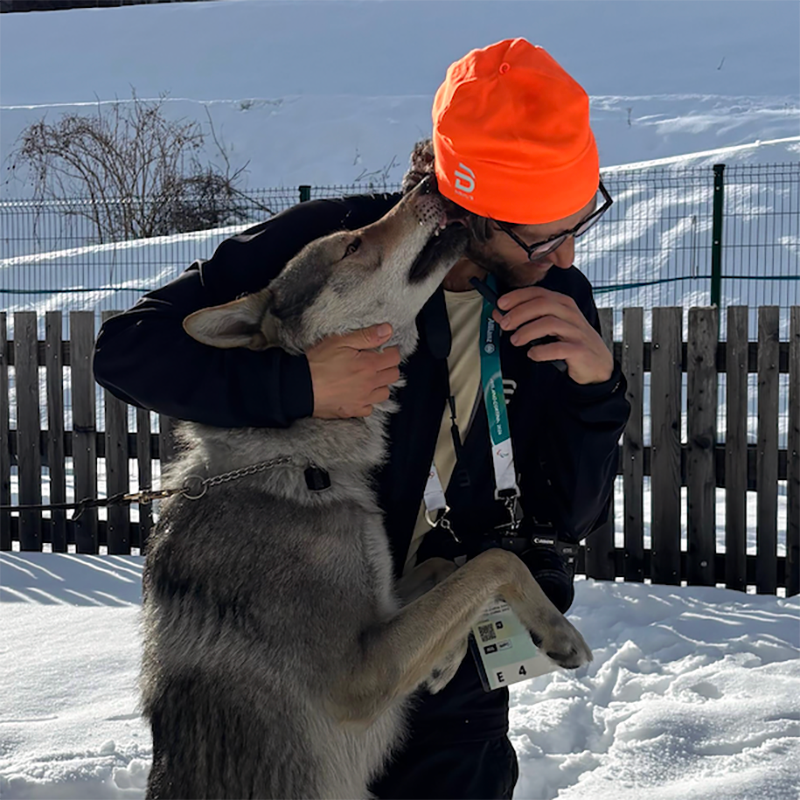
Reporter Nat Herz bonds with Nazgul, the infamous Olympic wolfdog. (Courtesy Alice Varesco)
Ciao a tutti!
Greetings from Torino, where this fatigued Olympics correspondent has retreated to recover through bike rides and repeated doses of pizza with family.
I had the chance to attend the closing ceremonies — mostly as a spectator — in Verona on my trip down from the mountains. After more than a dozen Olympic features, not to mention podcasts and race coverage, I’m now about to unplug for a couple of weeks.
But first, I couldn’t resist one last quick post: a roundup, in abbreviated, Reader’s Digest form, of some of the stories that were still on my list as the Olympics ended.
That’s below. In the meantime, I wanted to reiterate my gratitude to the many readers, fans and news organizations who stepped up to support my on-site Olympic coverage. The money you provided was enough to make a real difference in what I was able to do, and gives me the confidence that there’s the support to do this again in the future.
While the past few weeks were a lot of work, it was also an enormous, ravioli-filled privilege and pleasure — one where I made new friends, drank innumerable espresso macchiatos and got to cross-country ski downhill to the “office” every morning.
As I told a friend yesterday: If anyone ever offers you an assignment in Italy, take it.
With that, and with these brief items, we’ll see you next year. Or maybe, in Lake Placid.
American road warrior ski techs grind on
If you thought the work stopped once the Olympic torch flame was extinguished, think again.
That’s definitely not the case for the indefatigable crews that do the work of waxing, cleaning and tuning skis for Olympic cross-country teams.
Top teams, including the U.S., each have their own massive semi truck that they use as a mobile work quarters while traveling all winter around the European World Cup circuit. Those trucks were all in northern Italy for the Olympics — until the last race ended Sunday afternoon.
Soon afterward, the American truck — named Yolanda, after a character in the cult classic film Pulp Fiction — pulled out of the Olympic venue in Lago di Tesero. Or, at least, it tried to: With the warm weather, the truck got stuck in the mud, and required a tractor from organizers to pull it out, said Chris Hecker, one of the U.S. team’s service crew.
U.S. Ski Team service staff member Tim Baucom at the wheel behind one of the squad’s trucks, and at the table on the crew’s Italy-to-Sweden road trip after the Olympics. (Courtesy Chris Hecker)
After a four-hour drive Sunday through the Dolomites, Yolanda and its three staff members rendezvoused with a secondary truck driven by two other ski service technicians in Munich. A six-hour drive on Monday took them to an overnight ferry from northern Germany to Sweden — which would be followed by a nine-hour drive to the Swedish community of Falun, where the World Cup circuit resumes this coming weekend.
The distance, according to Hecker, adds up to 1,100 miles.
One key pit stop was a McDonald’s in a mountain pass leaving Northern Italy known for its beautiful view.
The trucks were also well-stocked by the U.S. team’s nutritionist, Hecker said: sandwiches, water, gummies, chips, Red Bull and cookies.
“All the important things a tech needs to keep driving throughout the day,” he added.
A diminished Chinese team
The 2022 Winter Olympics in Beijing were marked by an enormous investment by the Chinese government in training and building up the nation’s cross-country ski team.
Well before the Beijing Games, China hired a huge number of veteran European coaches and support staff that included retired Olympic athletes like Russia’s Nikita Kriukov and Norway’s Terje Langli. The country also spent freely on equipment and even built an indoor ski tunnel for summer training.
This time around? China’s Olympic cross-country ski team was a shadow of its former self, with just a single coach in Italy. Wang Qiang, who during the 2022 Olympic season became the first-ever Chinese athlete to stand on the podium in an elite-level World Cup race, placed 37th in his best event, the sprint, at this year’s Games.
Meanwhile, the government has asserted “serious violations of discipline and law” by Zhang Bei, the bureaucrat who led the cross-country ski team effort at the last Olympics, and Chinese news sources report that she’s been “taken away” by police amid an investigation for “suspected economic crimes.”
Meanwhile, Gou Zhongwen, the Chinese sports minister who’d prioritized government investment in cross-country skiing, has been purged from power. In 2024, the government placed Gou — the former chair of the Chinese Olympic Committee and of the 2022 Winter Olympics organizing committee — under investigation, then expelled him from the party.
China’s former sports minister, Gou Zhongwen, stands during court proceedings in this photo published by the Chinese government.
In December, he was sentenced for taking what the government said was more than $30 million in bribes, among other alleged transgressions. Gou’s official sanction was the death penalty, though it comes with a two-year reprieve, and experts say such a sentence is typically converted to life in prison.
A spokesperson at the U.S.-based Chinese embassy said in an email last week that the country has “consistently placed high importance on the development of winter sports.”
“Chinese cross-country skiing and biathlon have achieved and will continue achieving significant progress,” the spokesperson said.
Klaebo’s post-Olympics: a return to World Cup, chicken wings and a trip to America
Norwegian Johannes Høsflot Klæbo, the winningest winter Olympian in history after sweeping six golds in this year’s games, says he plans to compete at the season-ending World Cup races in Lake Placid, New York.
At a news conference Saturday after winning his last event, the 50-kilometer classic race, Klæbo said he needs a “couple of weeks, now, to really recover,” but after that it’s his goal to participate in March in Lake Placid — only the second weekend of World Cup racing in the United States in more than two decades.
“My personal opinion is that we should have a World Cup event (in the U.S.) every single year, but I’m not in charge,” Klæbo said. “I think we are all looking forward for Lake Placid. I think it’s going to be a fun weekend to finish up this amazing season.”
Klæbo is also on the Norwegian team for this upcoming weekend’s World Cup races in Sweden.
But he did let himself indulge, at least briefly, in a break from his notoriously fastidious diet following the Olympic closing ceremonies in Verona, where he acted as Norway’s flag bearer.
Johannes Høsflot Klæbo orders chicken wings at a McDonald’s after the Olympic closing ceremonies in Italy. (Pien Huang/NPR, used with permission)
Afterwards, an NPR reporter, Pien Huang, spotted Klæbo and some teammates “putting in a big order for chicken wings” at a local McDonald’s.
In a text message, Klæbo’s father Haakon confirmed Huang’s report, saying his gluten-intolerant son had turned to fast food “when I said I was not able to order gluten-free pizza.”
An Olympic cheese tour
What’s the point of a reporter traveling to Italy if he can’t con his way into a tour of a cheese factory?
Yes, dear reader, after these Olympics, I am not just a ski correspondent. I am also now an expert on a raw milk cheese called Puzzone, which is native to the area, Val di Fiemme, that hosted the Olympic cross-country ski races.
The backstory: One morning at the competition venue, I was having a chat with an Italian ski industry professional, whom I was told was from the town of Asiago. Ah, I said, you guys have some good cheese. Yes, the guy responded, I’m not really a cheese guy, but here in Val di Fiemme, you should really try the local delicacy called Puzzone — an Italian word that translates roughly to “stinker.”
This being a busy assignment at the Olympics, I filed this fact into the corner of my brain where stories go to die.
A day later, though, I was taking a walk from my apartment to a nearby cross-country ski trail when I stopped dead: There was a sign on the side of the road that said: Puzzone di Moena. (Moena is a nearby village.) It was next to a nondescript building that, upon further inspection, contained a cheese shop and a workspace that looked to me like a cheesemaking area.
I tasted some Puzzone in the store — it was sharp and pungent, especially the more aged varieties — then left with a chunk that I shaved onto eggs and toast. But feeling a little unresolved, the next time I passed the building, I knocked on the door to the workspace, and asked if I could check it out.
Which was how, a few days later, I ended up exchanging some messages with the “boss” — Andrea Morandini, the son of one of the farmers in the local cheese coop. He told me, in his Italian accent, to meet him the next morning at “da place.” I did, where he walked me through the history and current status of Puzzone — which, he said, acquired its name when an agricultural expert, on a national radio program in 1974, was tasting and describing area cheeses.
The inside of the Puzzone cheese factory in Predazzo. (Nathaniel Herz/FasterSkier)
“They are trying and smelling it — the one from Cavalese, the one from Predazzo. And when they are speaking about the one from Moena…they say, ‘Wow, it’s strano (strange), this is Puzzone,’” said Morandini. “So, it’s born live.”
Puzzone, Morandini told me, had its roots in Val di Fiemme’s agrarian history, when families would keep a cow or two and trade milk to local dairies in exchange for a share of the cheese produced. In a diet that otherwise depended on potatoes and polenta, cheese was a welcome addition of flavor, Morandini said.
The particularly stinky character of Puzzone is because it’s what’s known as a “washed rind” cheese — with its rind brushed regularly with salty water that encourages the growth of bacteria.
After my history lesson, Morandini took me backstage. What I thought was a workroom was actually a dressing room, where I donned a hairnet, slippers and vest; we then walked through a cavernous industrial space with vats and tanks, where cheese had been made earlier that morning.
Down a flight of stairs, we found the racks where wheel upon wheel of cheese is stored. In the deepest, darkest room, I hit a wall of ammoniac haze that made my eyes water and my lungs tickle.
The cooperative, Morandini told me, includes 11 farmers, most of whom own some 50 cows each. In the winter, the cows stay close to home, but in the summer, they’re sent outside to feast on grass, which gives the cheese made in that season a special flavor, according to Morandini.
One full wheel of aged Puzzone, a foot or so across, will set you back about 300 euros, or some $350. A wheel of younger cheese goes for some 170 euros, Morandini said. Some 70% of the factory’s production is consumed in the region, while a portion of it goes to customers in the United Kingdom and France, he added.
Andrea Morandini points to a wheel of Puzzone cheese that’s aging on a rack in the factory basement. (Nathaniel Herz/FasterSkier)
In a subsequent taste test I conducted with U.S. Olympic silver medalist cross-country skier Ben Ogden — a Vermonter who grew up eating raw milk cheese — Ogden described the young Puzzone as a solid “daily driver” cheese he could eat on the regular.
The aged stuff?
“Oh, God, that has got a taste,” Ogden said. “Holy crap.”
He added: “There are acquired tastes out there. And this is not one that I’ve acquired; it tastes like compost, a little bit.” “I’m sorry,” he said. “I hope the Italians don’t listen to this.”
Schumacher eyes medal celebrations — and maybe some free drinks
Anchorage’s Gus Schumacher, who last week became only the third ever American man to win an Olympic medal in cross-country skiing, says he’s looking forward to sharing his silver hardware with the next generation of U.S. athletes when he arrives back in Alaska.
“I’ll do whatever anyone asks me to do — but I’m excited to get some wear and tear on that thing,” Schumacher said in an interview a few days after his medal, which he earned with his podium finish in the team sprint with Ogden. “Not that I’ve not been a role model at home, but to have that carry a little more weight is pretty exciting.”
Schumacher, who grew up inspired by Alaska Olympic gold winner Kikkan Randall, said he’s seen how beat up and worn her medal is, along with those won by Jessie Diggins, the star American skier from Minnesota, “and I think that’s the coolest thing ever,” he added.
“I’m really glad they make them heavy — it could be lead in there for all I care,” said Schumacher, 25. “But you feel the weight when you touch it. And I think for people to be able to see it in person is cool.”
Gus Schumacher, left, and Ben Ogden show their silver medals after the Olympic team sprint. (Davide Barbieri/NordicFocus)
Schumacher will also race in Lake Placid before finishing his season, and it’s possible he could take a vacation in Central America after that. But he also likes being home, he said.
His life hasn’t changed much, Schumacher added, and even if a big sponsor showed up at his doorstep, he might still turn it down if it required too much work. He makes enough money from prize money and ski sponsorship, he said, to cover his expenses — especially since he still lives at home with his mom.
One thing he will be accepting: An offer of free water or beers at Creekbend, a popular concert venue in the community of Hope, outside Anchorage, that Schumacher has visited occasionally.
“I’ll definitely be cashing that one in,” he said, adding: “If I’m really milking the whole medal thing, I probably won’t have to pay for a ton of beers this spring.”
Help Support Our Olympic Coverage!
FasterSkier will have our own Nat Herz on the ground at the Olympics, which, to be honest, is a very big financial lift for us. If you value the thoughtful work and access FasterSkier provides at championships like this one, please consider becoming a Voluntary Subscriber. Your support directly fuels the work we do to cover the people, places, and moments that make our sport special.
Norwegian ski testers Pål Trøan Aune, left, and Mats Iversen carry bags back to the country’s service truck at the Olympic cross-country ski venue in Lago di Tesero, Italy. (Nathaniel Herz/FasterSkier)
This article was made possible through the generous support of our voluntary subscribers who have helped put our Nat Herz on the ground at the Olympics. If you value coverage like this, please support FasterSkier with a voluntary subscription.
LAGO DI TESERO, ITALY — A day before Norway’s Johannes Høsflot Klæbo won his fourth straight gold medal in cross-country skiing at the Winter Olympics, a strange sight was unfolding next to the race trails in Northern Italy.
Two figures, dressed in Norwegian team suits, were skiing loop after loop on a tiny test track — in search of the most infinitesimal edge over rivals from France, Finland, Italy and America.
Neither figure was Klæbo: The superstar was back at his hotel room playing video games and resting up for the next day’s race.
Instead, the two men were retired ski racers hired by the Norwegian team for one of the strangest jobs of the Olympics: sprinting for miles over the same small patch of snow to help identify which waxes and other products can be applied to the surface of cross-country skis to make them faster.
While Klæbo spent much of Saturday in bed, one of the testers, Mats Iversen, skied dozens of laps adding up to more than 15 miles. Earlier in the Games, Iversen was skiing even more: as far as 44 miles a day, and just over 200 miles in his first week in Northern Italy, according to numbers he logs on the Strava tracking app.
Screenshots from the Strava workout tracking app that show a map of one of Mats Iversen’s testing days, and some of the times he skied on a test loop.
There’s no question that Iversen is skiing “way more” than the athletes competing at the Olympics, Klæbo said at a news conference Wednesday after winning his fifth straight gold.
Iversen’s one 44-mile day is “close to what I’ve done the whole week,” said Klæbo, whose race Wednesday totaled just over six kilometers, or some 3.5 miles.
“They’re amazing, and they are doing an amazing job to help us have the best possible skis,” Klæbo said. Referring to the winners’ podium, he added: “None of us would be able to sit here if it wasn’t for them.”
In a 45-minute interview after a 22-mile day last week, Iversen, his fellow tester, Pål Trøan Aune and their boss Tord Hegdahl offered a behind-the-scenes glimpse of the huge investment of equipment, technology and manpower that go into preparing the Norwegian team’s skis.
Aune and Iversen relax on the top floor of Norway’s service truck. (Nathaniel Herz/FasterSkier)
They spoke in a lounge area on the upper floor of an enormous, customized truck that houses hundreds of pairs of skis, along with work stations for staff members who prepare them for testing and racing. Iversen and Aune are, essentially, the engines of an intricate machine — with others operating the controls.
“You don’t need a 200 IQ to be a ski tester,” Iversen said. Pointing to the lower floor, where the technicians work, he added: “The brains are in here.”
‘Dizzy’ from all the loops
The Norwegian truck is parked in a big lot beside the competition trails in Italy where other nations like France, Sweden and the Czech Republic have their own vehicles and trailers.
The American team truck cost some $750,000 and is named Yolanda — a reference to a line from actor Samuel L. Jackson’s character in the cult classic film Pulp Fiction, according to NPR.
Inside the trucks, teams of technicians work to identify the skis and products that will slide the fastest given a specific set of snow conditions.
The work has several layers. Each athlete may have dozens of pairs of skis, and teams have to find the best ones for each day. Then, there’s what’s known as the “stone grind” — a pattern of tiny etchings that a machine can apply on the bottom side of a ski to help it move more easily over different types of snow crystals.
Finally, there’s wax, which can be applied to the ski base to give athletes even more of an edge. Dozens of products and brands exist in block, powder and liquid form, which can be melted or rubbed into the skis with waxing irons or obscure tools like a rotating wool brush attached to a drill.
A staff member prepares skis inside the Norwegian service truck. (Nathaniel Herz/FasterSkier)
Testers like Iversen and Aune help identify which combinations of skis, wax and grind work best in a given set of circumstances.
Every country does some level of testing. But Norway’s big budget for staff has afforded the team the luxury of an unusual level of specialization at the Olympics, with Iversen and Aune doing very little other than skiing — while other teams’ can mix testing in with other staff responsibilities, like waxing.
“We are terrible waxers,” Iversen said. Addressing a reporter, he said: “I think you are probably better.”
The Americans, by contrast, sometimes lean on coaches to test waxes on the trails, freeing up their specialized technicians to focus on picking skis with the athletes.
“If you take a look at our skis — we might have three bags and a couple of racks out before the race” for testing, said Matt Whitcomb, one of the U.S. coaches. “Norway will have two or three times that.”
Australian technicians Leopold Hensler and Toni Escher take a break from testing on the Olympic trails in Italy. (Nathaniel Herz/FasterSkier)
Canada’s team, meanwhile, employs two Italian “ski pilots” who, like Aune and Iversen, focus on testing at big events during the winter — often skiing upwards of 15 miles in a day. The rest of the year, one of them, Thea Schwingshakl, is a research biologist, while the other, Sara Hutter, markets Tyrolean apples.
Like Aune and Iversen, they spend their days in the tiny testing area, where Schwingshakl joked that they get “a bit dizzy there, from all the loops.”
But, she added: “It’s good for the whole team. We can just focus on skiing and testing, and they focus more on the product and on the wax and structures.”
Canada’s ski pilots, Sara Hutter, left, and Thea Schwingshakl ski upwards of 15 miles a day. (Nathaniel Herz/FasterSkier)
It’s not so much that the right skis, wax and grind will produce an Olympic medal — though they certainly help — as much as the wrong ones can put an athlete out of contention. After the men’s cross-country relay last weekend, American Johnny Hagenbuch suggested that his inability to keep up with rivals on the downhills had to do with his equipment.
“I was with everyone at the top of the climb and then — yeah, no longer,” he said. “There was nothing I could do.”
‘Simple and boring’ work
Iversen and Aune are part of a larger Norwegian project aimed at boosting numerous Olympic snow sports — not just cross-country skiing, but also Nordic combined and biathlon, said Hegdahl, their boss.
The effort includes a stone grinding machine that Norway operates near the cross-country race trails; Iversen and Aune help test patterns that can be used across those sports.
Another staff member has the sole task during the Games of driving skis over the mountains to the biathlon venue, said Hegdahl, who leads the Norwegian cross-country service staff.
One of the essential tasks that Aune and Iversen perform is the “paired glideout.” At the top of a small hill in the test track, the men stand side by side, then push themselves forward. As they start moving, Iversen equalizes their speed by grabbing ahold of a ski pole that Aune holds firm.
A French team member stands in the testing track at the Olympic trails. (Nathaniel Herz/FasterSkier)
Then, they let go without accelerating or jostling and see which of the different waxes or structures beneath their feet is faster.
Typically, they’re assessing sets of eight pairs of skis that — aside from the products underfoot — have been chosen because they’re perfectly matched. That, in turn, allows the technicians to more precisely measure the impact of the wax and grind patterns on speed.
The testing is set up like a single-elimination tournament, with quarterfinals, semifinals and a final. Results are transmitted back to technicians in the truck via WhatsApp messages or a GPS watch.
The matching of the eight pairs is so precise that, after the final test, Aune and Iversen take extra laps on the skis that are knocked out early to equalize them with the top pairs, to make sure the winning skis aren’t getting extra wear. Which also means that a mishap during a test lap requires three extras, to keep the six other pairs even.
Teams leave skis alongside the race trails for testing. (Nathaniel Herz/FasterSkier)
The whole process — from the unending right turns down to the bending over to take each pair of skis off and put the next set on — is hard on the body. They can ski 200 or more laps of the test track in a day.
But Iversen and Aune are both fit, and capable of the workload, according to Hegdahl.
“Testing is quite simple and boring. But we need guys to do the skiing who have the feeling of the skis,” Hegdahl said. “They’ve done a lot of skiing together with some of the best athletes, as well. So they know a bit.”
Aune and Iversen have also been friendly for years, and enjoy the camaraderie and the chance to participate at a championship event that neither reached as an athlete.
Mats Iversen’s brother Emil has had a standout season this winter. (Vianney Thibaut/NordicFocus)
Iversen’s brother Emil is competing for Norway in Italy, and won a gold medal with the men’s team in the relay.
“It’s very special — it’s our best friends who are racing,” said Aune. “I think they trust that we will do all we can.”
The work can get boring, Iversen conceded. “But it’s nice to be with a friend,” he said.
They’re “better than most” with their team spirit, Iversen added. But Hegdahl, their boss, acknowledged that the testers might need a little time off after three weeks of rooming and working together through the Olympics, which conclude Feb. 22.
“I’m not sure Pål will be at Mats’ place for a glass of wine on the 24th,” said Hegdahl. “But maybe the 28th.”
Help Support Our Olympic Coverage!
FasterSkier will have our own Nat Herz on the ground at the Olympics, which, to be honest, is a very big financial lift for us. If you value the thoughtful work and access FasterSkier provides at championships like this one, please consider becoming a Voluntary Subscriber. Your support directly fuels the work we do to cover the people, places, and moments that make our sport special.
The highs were high and the lows were low in the Olympic team sprint in Italy, with the Ogden-Schumacher men’s team claiming silver and the Diggins-Kern women’s pair finishing out of the medals. Devon and Nat break the whole thing down.
We’ll be back after Saturday’s men’s 50 k. Reach us at devon[at]fasterskier.com and nat[at]fasterskier.com. We’re really grateful for all the support during the Olympics — thanks for notes and encouragement.
A reminder: This is a homegrown podcast done by two guys working long hours and late nights. We’re also paying real money to be here in Italy. If you can, support the show and FasterSkier’s ongoing coverage with a voluntary membership. We’re also offering a bonus during the Olympics: a WhatsApp group with notes on Nat’s experiences in Italy, the food he’s eating, interview transcripts and more.
Send nat[at]northernjournal[dot]com a confirmation of your voluntary membership and the number he should use for WhatsApp and we’ll get you signed up. You can also Venmo him directly at @nat-herz if a membership isn’t for you. We’re suggesting a minimum of $10, but we also won’t turn anyone away who wants to join because of an inability to pay.
Help Support Our Olympic Coverage!
FasterSkier will have our own Nat Herz on the ground at the Olympics, which, to be honest, is a very big financial lift for us. If you value the thoughtful work and access FasterSkier provides at championships like this one, please consider becoming a Voluntary Subscriber. Your support directly fuels the work we do to cover the people, places, and moments that make our sport special.
This article was made possible through the generous support of our voluntary subscribers who have helped us put our Nat Herz on the ground reporting at the Olympics. If you value coverage like this, please support FasterSkier with a voluntary subscription.
Jonna Sundling (SWE) follows Jessie Diggins (USA) during the Olympic Women’s Team Sprint in Tesero, Italy. (Photo: Vanzetta/NordicFocus)
PREDAZZO, ITALY — Eight years ago, on a different continent, the words “Here Comes Diggins!” by Chad Salmela vaulted American cross-country skiing into a new era. On Wednesday in Val di Fiemme, the event that changed everything for the United States returned to the Olympic stage.
The Women’s Freestyle Team Sprint has long been one of the Americans’ signature races. In the PyeongChang 2018 Winter Olympics, Kikkan Randall and Jessie Diggins delivered the nation’s first Olympic gold medal in cross-country skiing. Last March in Trondheim, Diggins and Julia Kern claimed World Championship silver.
On Wednesday, Diggins started the race in the first leg, handing off to Kern for the anchor leg, as they had in their previous medal run. They hoped for one more shared championship moment.
It was not to be. The Americans finished fifth, in a race that required not just fitness but flawless execution. Sweden’s Jonna Sundling and Maja Dahlqvist took gold. Switzerland’s Nadja Kaelin and Nadine Faehndrich secured silver. Germany’s Laura Gimmler and Coletta Rydzek won bronze after a late-race crash by Finland opened the door in the final turn.
For the Americans, the margin was not dramatic. But close, at this level, does not bring home a medal.
Jessie Diggins (USA) and Jonna Sundling (SWE), (l-r) come through the stadium during the Olympic Women’s Team Sprint. (Photo: Vanzetta/NordicFocus)
“Honestly, left it all out there.”
The Team Sprint is one of the sport’s most punishing formats. Two skiers qualify individually; their times are combined to determine which 15 nations reach the final. In that final, the athletes alternate laps — three each — on a course that offers no reprieve.
Often, one skier brings distance strength, and the other sprint speed. For the United States, Diggins and Kern blur those categories. Both are capable of driving pace. Both can finish.
From the gun, Diggins did what she has done throughout her career: she went to the front.
She and Sundling stretched the field immediately, driving into the Zorzi Climb, the race’s defining ascent. The early order — Sweden, the United States, Norway, Canada — hinted at the nations prepared to dictate terms.
Jonna Sundling (SWE) stretches her lead. (Photo: Vanzetta/NordicFocus)
When Sundling surged later in the race, Diggins expected it.
“I knew she was probably going to do that,” Diggins said afterward. “And I was like, just do the best that you can do. You know, like, you can’t control anything except your effort and your heart. And I was like, skiing out of my body, and I just did everything that I could, and I’m proud of that.”
That theme — control what you can — carried through her reflections.
“Honestly, I almost passed out like four different times,” she said. Then, clarifying: “No, from going that hard, no regrets. Honestly, left it all out there. I feel like we did everything we could, and that is the only thing you can control at the end of the day.”
Julia Kern (USA) and Jessie Diggins (USA), (l-r) gather in the finish area after the race, Diggins racing in the US team’s relay socks for the final time. (Photo: Barbieri/NordicFocus)
One final lap with ‘Relay Socks’
By the last exchange, Sweden had carved out daylight. Switzerland began clawing into Finland’s hold on silver. Behind them, Germany, Norway, the United States, and Finland battled for bronze.
On the final descent, Finland’s anchor, Jasmin Kahara, lost her balance in the sweeping right-hand turn and fell, sliding out on her stomach. Germany and Norway slipped past in their tucks. Kern, just meters behind, fought to the line, but the podium had narrowed to two.
Coletta Rydzek (GER) brings home the bronze medal for Germany with Norway’s Julie Bjervig Drivenes just off camera. (Photo: Vanzetta/NordicFocus)
As they drove for the line side by side, aerodynamically no-pole skating with everything they had, it was clear this was going to be close. Germany claimed bronze while Norway left empty-handed in fourth. Just behind, Kern brought the United States to the finish in fifth.
For Diggins, the moment carried a different weight. It was, by her admission, her last Olympic relay leg.
“I love racing with this girl. I’m so, so proud of her,” she said of Kern. “And, yeah, it’s emotional to feel like I’m never gonna pull on those relay socks again.”
When asked whether there was a sense of handing the event forward, she reflected on the arc of her career — from her first team sprint world title in 2013 to the growth of youth programs back home.
“It’s just really cool to be part of the evolution of American skiing,” she said.
Julia Kern (USA) and Nadine Faehndrich (SUI), (l-r) find their lines around a tricky corner. (Photo: Vanzetta/NordicFocus)
Whitcomb knows they can win
For Head Coach Matt Whitcomb, the analysis was candid and clear-eyed.
“Yeah, it was a good race,” Whitcomb said. “Of course, this is an event that we know we can win, and we didn’t today.”
In a format this tight, small imperfections are decisive.
“For even a bronze medal to happen, both legs have to be firing exquisitely,” he said. “We swung as hard as we could. We did our best. We were prepared to win today, and we just didn’t.”
Of Kern’s anchor leg, Whitcomb offered both empathy and affirmation.
“Julia is an incredible performer, and one thing you can always trust from her is that you’re gonna get her absolute best,” he said. “We saw it on the final climb. I was happy with how she climbed. Just didn’t quite have the entire thing today, and that’s okay.”
Jessie Diggins tags Julia Kern (USA), while Jonna Sundling tags Maja Dahlqvist (SWE), (l-r) in the exchange zone between laps. (Photo: Vanzetta/NordicFocus)
Diggins in the best fitness of her life
Diggins has raced these Games managing injury concerns, including rib pain after a fall in the opening Skiathlon. But when asked whether her fitness was lacking, she pushed back.
“I feel like I’ve come into this with the best fitness in my life,” she said. “And that’s one of the only things I could control.”
There is comfort, perhaps, in that certainty — in knowing preparation was not the missing piece.
“I was skiing out of my body,” she said. “And I just did everything that I could.”
In Olympic-level team sprinting, that is sometimes enough. On Wednesday, it was not quite.
But the American women did what Diggins described as the only thing you can in cross-country skiing: you have to leave it all on the course without regret.
FasterSkier will have our own Nat Herz on the ground at the Olympics, which, to be honest, is a very big financial lift for us. If you value the thoughtful work and access FasterSkier provides at championships like this one, please consider becoming a Voluntary Subscriber. Your support directly fuels the work we do to cover the people, places, and moments that make our sport special.
American Gus Schumacher competes in his first race at the 2026 Olympic Games at the cross-country ski venue in Tesero, Italy. (Federica Vanzetta/Nordic Focus)
Gus Schumacher is one of the stars in U.S. cross-country skiing, and he was one of the team’s top medal hopefuls coming into the Winter Olympics in Italy.
Against the same field that competes at the Games, the Alaskan won a World Cup race in Minnesota in 2024. Then, Schumacher, 25, was on the World Cup podium twice more just last month, in Switzerland.
So far, though, his Olympics haven’t gone as planned, with tough results in several races. In his first one, he crashed. In the subsequent sprint — one of the disciplines where Schumacher was on the podium last month — he had another tough day, while his roommate and close friend, Ben Ogden, won a silver medal.
Speaking with media Friday, after his third race, Schumacher bristled, a bit, at a question from a reporter who asked him if, maybe, he was not having the best time at the Olympics. He said he was actually having a good time, and in a good place in spite of his results.
A day later, reporter Nat Herz asked Schumacher if he’d be willing to expand on his comments — but also offered him an out if he didn’t have more to share. He responded quickly by text: “Let’s do it. I’d rather get a story out there than have people make their own conclusions.”
Here’s Schumacher in his own words.
Nat reached out to me yesterday to ask if I was up for an interview. His timing was good, because I almost for sure would’ve said no most of the last six days. The opening of my Olympics has been hard, and processing it has taken time and effort, but I’m so proud to have been able to get through some rough days and be ready to fight again and again.
For context, my hard races have involved a crash, an anomalous sprint qualifier, and a day where I think my skis had me out of the race in the second half. On top of it, my teammate and one of my best friends did something we’ve all wanted to do for years. I’m stoked for Ben, but it’s also still hard, and that’s fine! The real miss would be an inability to talk it out and move forward to race another day.
I’m proud of my team, and I’m proud of myself for how I’ve handled a rough start, because this thing isn’t over and I’ve still got skiing to do!!
Below is a transcript of Schumacher’s conversation with Herz. It’s been lightly edited and condensed for clarity.
Nat: I don’t want to put words in your mouth — so maybe you could start by describing how it’s been for you here?
Gus: I can set the stage for people who are listening. So I finished this (10-kilometer freestyle race Friday) and I wasn’t even on the results board — I knew I was far back. It was not what I wanted. And (a reporter) said, ‘So, I assume you’re having a really bad week here.’ And I was like, ‘Okay.’ First off, I wasn’t in a great mood then. But I’ve had a lot of things I’m really proud of. And I think, just, blanket statement, horrible week — it just goes to show you can’t really assume how people are feeling, because you don’t know.
I understand, obviously, yeah: It’s not how I want to be skiing. In that sense, it hasn’t been great. But I wouldn’t just say I’ve had a horrible week, because these things make you better overall.
Gus Schumacher, left, celebrates his podium finish at a World Cup race in Switzerland last month. (Augustin Authamayou/NordicFocus)
NH: Can you take us back to the beginning of your time here?
GS: I fell in the first lap of the skiathlon (the first Olympic race, which features legs in two different techniques, classical and skating). Someone fell right in front of me. There’s just a chain reaction, and maybe I could have put myself in a bit of a different place. I could have set myself up otherwise. But it was a crazy corner. I crashed there, 30 seconds back pretty quickly, and the pace was hot. In hindsight, I wasn’t going to have a chance of catching the leaders, which is where I wanted to be skiing.
And I skied well — I think the classic went really well. In the skate, I think my motivation flagged a little bit. And I realized I have a lot more racing, and it wasn’t worth it to push super hard to get into 20th or something. But, you know, there were still some good things about how I skied.
But it’s also still hard to really feel good in that situation, because you’re kind of swimming upstream.
I left that, and I was just already on the back foot, needing to refocus — basically, not having a super confidence inspiring race, even if I was skiing pretty well. Objectively, it still wasn’t the result that I wanted. And then two days later, in the classic sprint, I didn’t qualify (as one of the top 30, who move into heat rounds), in an event where I’ve been pretty solidly qualifying lately. And I was really far back. I wasn’t in the realm of where I feel like I’ve been skiing lately. So that was another bummer.
I want to say it was (problems with my) skis. I know there’s not super conclusive evidence of that. But I think that’s the best way for me in a championship to go forward — because I can’t change anything now, and I need to believe in my fitness, and I do. It’s just to say there’s something going on under the feet, and whatever: I’m racing again soon.
And then (teammate and close friend) Ben (Ogden) got a medal (in the sprint). And that was a crazy event for all of us, especially me. Definitely took some thinking and processing to go through — especially given my tough start. I think I did a great job of getting back to a place where I’m just excited to ski and do what I can do.
Ben Ogden celebrates his silver medal in the Olympic sprint Tuesday. (Federica Vanzetta/Nordic Focus)
And then in (Friday’s) 10 k, again, I just really struggled. And I opened well, I feel like I skied really well. And again, something just didn’t line up, didn’t work. And I’m just gonna go with the skis again, basically. I don’t know exactly what it was. I think it probably has something to do with how they were actually pushing, and pressure stuff, which is kind of weird. But for my own sake, for these next races, I do still think I’m skiing well, and my movements are good and my energy is good.
NH: Fair to say this is about as hard an environment as exists to have to deal with this stuff, though?
GS: Yeah. In a normal World Cup weekend — and I had this at the beginning of the season, and it was still hard — you’ve just got another race the next weekend. And it’s easy to just say, ‘Yep, first race of the season. Shit luck. We got time.’
But right now, I’m getting interviewed by NBC before every race. And everything’s going viral on social media. And it’s just a big moment, as people like to say. And it’s when everyone wants to be at their best. Part of what’s so hard about winning the Olympics, or medaling, is just that your timing has to be good. And my timing’s been great before. You know, Minneapolis, I still think, is the craziest timing ever. (In Minneapolis, Schumacher took his first-ever World Cup win when the circuit was on its first swing through the United States in more than two decades.)
But, yeah, it’s really hard place to deal with tough results. Even if they’re not entirely because of me, or they’re a little bit out of my control, it doesn’t really matter.
At the end of the day, to all the people that never watch skiing — it sucks, in my head, to feel like all those people won’t recognize me. And I know that’s somewhat vain — but, you know, a lot of this is vain. And there’s a part of me that’s, just — I want to be a ski star. I want to be really good, and I am, and it’s just through the first half of this championship, it hasn’t worked out amazingly. But there’s still time. At the end of the day, I just want to be skiing fast, in general. Skiing fast is what’s fun to me. And it’s cool if it’s at the Olympics — but it’s also cool if it’s at the Tuesday night race (in Anchorage, Schumacher’s home town), in April.
Gus Schumacher stands with his club coach, Erik Flora, during a training session at the Olympics in Italy. (Nathaniel Herz/FasterSkier)
NH: I talked yesterday with Ben Ogden about how you guys have been navigating since he won the first men’s Olympic medal in cross-country skiing in half a century — which is something that many of you guys on the men’s team are gunning for, but only one of you got.
He spoke about how that’s obviously a challenging dynamic, but said you guys have been navigating it really openly. He’s also your roommate here in Italy.
Can you talk about all that?
GS: I mean, it’s been, honestly, great. It’s super hard. But having it be Ben is so nice. But he’s so good in that situation.
Obviously, it’s really cool and big for all of us. But everyone wants to be the guy to break the drought, right? And I, for sure, wanted to be that guy. But I also wanted to win the green bib (of best under-23 skier on the World Cup). And I didn’t do that, because I wasn’t skiing that fast, and he did. And that was really cool, that he did that. And then, I’m sure he wanted to compete (at the World Cup) in Minneapolis, but he got mono, and I won.
It’s not just Ben and I. (American) JC (Schoonmaker) got the first podium of any of us, and Ben was fourth that day. We all know how it feels to be on the other side.
Ben came back in the room at 5 p.m., after a one o’clock finish — he’d had a crazy afternoon. I know he had interviews lined up, and I’d just been at home, basically stewing about myself and about the whole situation. And I can’t remember exactly what he said, but the first thing he said, basically, when he came in the room, was: I’ve been thinking about you.
And that meant so much to me. That he would go through all of this, and enjoy himself — I know he was really enjoying himself, and I would not want him to not enjoy himself — but to have your teammate just immediately recognizing: Yeah, I know how it feels to be on the other side.
It made it so much easier for me. And I’ve been clear with him, too, that yeah, it’s kind of hard. But I’m also really proud of him, and it’s really cool that he (won silver). One of us needed to do it, and it’s so, so cool that one of us did. And I also really want to be racing faster, and those things can be true together.
It’s hard. But the hard things are what’s cool about sport, and the Olympics. And the hard times are a lot of what I enjoy about what I do, because I think it makes me a better person. It just makes everything else in life feel so much easier.
To have a team like this, that can have those conversations and be real about it is so nice. Because obviously, it’s not sunshine and rainbows, no matter what it is. You can love someone with all your heart, and if they get something that you wanted, that you can’t have, or you didn’t get, it’s hard. And I’m really glad we don’t just say, ‘I’m so happy for you. Nothing but tears.’ Because it’s not always true. At least for me, honesty is the best policy. And to be able to air stuff makes it so much easier to just go on with it, and talk about the real things.
Gus Schumacher and Ben Ogden celebrate a podium finish in a World Cup team sprint event in Switzerland last month. (Augustin Authamayou/NordicFocus)
NH: Maybe this is touchy, but just to put a fine point on it: It’s not just that you and Ben both wanted a medal, any medal. He won this medal in a specific event that you were also racing in, and could very well have won a medal in.
GS: Yeah. I mean, watching him, it felt a lot like what I did two weeks ago. (Schumacher finished second in a World Cup sprint race in Switzerland in late January.) He looked amazing, and I felt really good in (Switzerland), and I didn’t even really get tired — and the other guys were sort of tired in that final, and it was so similar.
So, yeah, it felt like, ‘Fuck, it’d be awesome if that was me.’ But that’s just how it works in sport. Sometimes you’re there, sometimes you’re not. And if it was always the same, it would get boring.
NH: I’ve been thinking back to the Beijing Olympics four years ago. You had a pretty hard time there, but I wonder if you think it’s right to say that you are experiencing things here in a different way — maybe with more resilience based on that past Olympics experience.
GS: For sure. Everything I do, I think, makes it easier. But four years ago is, for sure, different — a different type of disappointment. And I’d rather have this one — I’d so much rather be in a true contender seat, where I feel like I have a shot at medals. I’d so much rather have that than not be recognizing my body — not be, just, super tired going up the hills.
I learned a lot from Beijing, and I got a lot better after that. Mentally, it’s been a really cool experience to go through these emotions, feel them really well, write them down, pay attention to it, and talk to a bunch of people that can think with me. And I can just, sort of, rant, or do whatever, and get through it and be ready for the next one, because that’s what you need to do, when you’re feeling good, especially.
I’m still feeling good. And it would be such a shame to have a couple bad races and mentally throw in the towel, because it’s hard to draw confidence from a race where you fell in. That’s silly. I can draw confidence from so many things, and that’s what I’m doing. The most recent experience I have, which is the easiest one to go on, is not great. But I’ve got a lot more in the tank to draw from, and I’m really excited to go out there and do what I do.
NH: Fair to say you feel like you are mentally prepared to show up on the start line of the men’s relay tomorrow with a clear head and some confidence in your fitness?
GS: Yeah. I think I’m ready to ski with the best, no matter what has happened so far. And that’s where I want to be. And I feel confident that that’s where I am. And I’m really excited to lay it out there for the team tomorrow, because I think we have a really strong team right now. I maybe alluded to, ‘Ben got something that I didn’t get.’ But this Games isn’t over — and we’ve got more Olympics (in four and eight years), too. I feel confident that I’ve still got time, which is nice.
NH: I think I want to print this just as an unadulterated Q&A. Do you feel good about that?
GS: Yeah — I think it’s important to talk about some of the hard things. It’s what makes our team strong. And I think it is something that is often so much more helpful than I even know for people to hear. Because a lot of this stuff is pretty applicable not just to sports, but even just day-to-day life.
Shit happens, and sometimes it happens when you really don’t want it to. You’ve got to move through it, and it’s so much easier said than done. But I think talking about it — and hopefully I shed enough light on it to maybe inspire people, to help them understand — I think it’s a good message. It makes me proud to know that I’m still in the fight because of how I’ve gone about it.
Ben Ogden celebrates his silver medal in the Olympic sprint in Tesero, Italy. (Federica Vanzetta/Nordic Focus)
PREDAZZO, ITALY — Ben Ogden, the U.S. cross-country skier, was ready to celebrate his historic Olympic silver Tuesday with his signature backflip off the podium.
But there was a problem: He had to pee.
After Ogden won the first men’s medal in cross-country skiing in a half-century, doping testers needed a urine sample. So, he did the obvious thing and “drank, like, three bottles of water, immediately,” he said.
The need to relieve himself, he said, was probably the biggest concern on his mind as he contemplated the backflip while the podium ceremony played out. “When I was standing up there, I definitely reconsidered a couple of times,” he said.
Ogden went for the backflip anyway. Afterward, he still had to walk through a maze of reporters called the mixed zone, where — unlike at non-Olympic races — everybody wanted to talk. Then straight to a news conference, and finally, a wait when he arrived at doping control: The other medal-winners had already arrived.
Ben Ogden speaks with media in the mixed zone after his Olympics silver. (Nathaniel Herz/FasterSkier)
“It was really, honestly, pretty miserable. I haven’t had to pee that bad since I was a little kid on a road trip,” Ogden said. “I didn’t really realize the whole situation after you get a medal at the Olympics.”
But Ogden wasn’t complaining.
At a reporter’s request, he was laying out the specifics of what happens in the hours and days immediately following something that many athletes dream of but few actually experience: winning an Olympic medal.
In a conversation Friday at his hotel in Italy — outdoors, to minimize infection risk from a reporter who has been outside the U.S. team’s bubble — Ogden described a phone deluged with messages and a dayslong-sprint of interviews and TV appearances over Zoom. But he also took time the day of the medal to enjoy a sauna with some teammates he’s known for years. He said the time in the sauna was important because it gave him time to process an accomplishment that all of them have aspired to but just one of them has achieved.
“If you win an Olympic medal, it’s like your life changes overnight,” said Jessie Diggins, one of the three other American cross-country skiers in history who can relate to Ogden’s medal-winning experience. “Which is really cool, but it’s a lot of pressure, and it’s a lot of obligations that come afterward.”
She added: “I’m just really proud of him for taking in all of the energy that comes in surrounding that.”
“The toll is real”
Ogden, 26, has had a few podium finishes on the World Cup against Olympic-level competition. But the Vermonter was far from a lock for a medal in Tuesday’s sprint race, where he was nearly eliminated after failing to place in the top two in his semifinal heat and only advanced to the final as a “lucky loser” based on his finish time.
In the finals, though, he made a powerful charge up the final hill and finished trailing only Johannes Høsflot Klæbo of Norway, who’s won all three cross-country events in Italy so far and is widely seen as the greatest athlete his sport has ever produced.
The result was huge not just for Ogden but for his teammates and the American staff – a large group of athletes stayed at the race trails to congratulate him and attend the medals ceremony.
American Olympic cross-country skier Julia Kern takes a selfie with Andrea Ogden, the mother of silver medalist Ben Ogden, just before Tuesday’s medals ceremony. (Nathaniel Herz/FasterSkier)
For some of those athletes, the thrill of Ogden’s medal and their proximity to it left them so exhausted that they scaled back their own workouts the next day, said Chris Grover, the U.S. cross-country’ team’s director.
“It really hit them not only emotionally, but it hit them physically,” he said in an interview Thursday.
The impact on teammates, Grover added, underscores that for Ogden himself, “the toll is real.”
One example: The night of the medal, Ogden said, “it was incredibly hard to wind down, just thinking about everything.” It took until 2 a.m. to fall asleep, and by 7 a.m., he was wide awake, with a “crazy” schedule of media appearances — including Good Morning America, on ABC.
All Ogden had to drink the night before was a little champagne. Still, on TV, he said, “I had some bags under my eyes, I was pretty tired, I hadn’t shaved. And I was looking at myself in the camera and I was like, ‘Oh my God, I’ve got to tighten it up a little bit.’”
“I’m sure that they all wanted me to say I was out drinking and carrying on. And I didn’t say that,” he said. “But they probably thought I was, based on how I looked.”
Ben Ogden celebrates his Olympic medal Tuesday. (Federica Vanzetta/Nordic Focus)
The cross-country team’s press officer, Leann Bentley, coordinated the string of media appearances. She also helped Ogden draft an Instagram post that, he said, was hard to compose.
“It’s so overwhelming to think of all the people who you want to thank,” Ogden said. “You’re just like, ‘Oh, my God, there’s too many. It’s so hard.’”
As for the phone? Ogden had left it in his backpack in the hours immediately following the race. When he picked it up, initially, there were so many messages coming in that it made it difficult to find the threads he needed to use to communicate with his ski technician and his mother.
“Their text exchanges just get buried, immediately,” he said. “Then you start pinning them — but all of a sudden you have 10 pinned messages and that gets confusing. So, I’m sure I’ve missed a lot of important stuff.”
A meeting with Bernie?
On Friday, Ogden was expected to be one of the U.S. team’s four starters in the next Olympic cross-country event, the 10-kilometer freestyle, and he wanted to race.
But amid the intensity of the medal-winning experience, U.S. staff encouraged him to stand down, according to Grover, the team’s director. “He’s just had so much emotion,” Grover said. “And there’s been a lot of media.”
Chris Grover, one of the U.S. Ski Team’s coaches, skis at the Olympic venue in Italy. (Nathaniel Herz/FasterSkier)
Ogden has traditionally been stronger in shorter distances. And the upcoming relay race Sunday — with four 7.5-kilometer legs — and the team sprint scheduled for Wednesday represent “really big opportunities for us,” Grover said.
Ogden, nonetheless, was keen to race Friday, in spite of his coaches’ position.
“They don’t ever make decisions for us. But I think that was the closest I’ll ever get to them telling me they’re not going to start me. They were really adamant that they wanted me to sit it out,” he said. “You kind of train a lot, and you’re trying to put yourself in good shape — and then when you are, it’s nice to race.”
Since those conversations, though, Ogden acknowledged that he’s “crashed a little bit, energy-wise — as they sort of speculated would happen.”
“You can only ride a high for so long before it comes down,” he said. Skipping the event, he added, was ultimately a “good call,” given the upcoming team events.
In the days since the medal, Ogden said, he hasn’t had much time to consider what it means, and how it might affect him. But he did acknowledge that his view of himself and where he sits in his sport has “changed, a little bit.”
Earlier in his career, Ogden said, he felt some awkwardness in describing himself as a “professional skier.” “You’re not getting paid. You’re not really making money, you don’t have results to show for it, too much,” he said. “It’s kind of hard to believe it.”
He added: “Over the years, as you get more established, it starts to be easier. And I think now, it will be really easy.”
Nonetheless, Ogden still has no agent. And no companies have landed in his inbox pitching endorsement deals — unless, he added, they’re in his DMs and he hasn’t seen them yet.
More than anything else, he said, his “peak goal” is leveraging his medal into some time with Bernie Sanders, the populist U.S. senator and former presidential candidate from Ogden’s home state.
“And I really want to meet him and talk to him, too. Not just, like, a handshake,” Ogden said.
“I know it’s political and everything else. But Bernie is just an ambassador for Vermont, and has been for so long. And he’s been someone who I’ve looked up to and respected, and I just couldn’t ask him — he’s a busy man,” Ogden said. “But I think maybe now — maybe now — I can take this medal and figure out a way to meet him.”
The one Jessie Diggins was waiting for: Nat and Devon were both on hand for the Olympic 10-kilometer freestyle and have this recap. It gets pretty heated! But in a good way.
We’ll be back tomorrow after the showdown between Johannes Klaebo and Einar Hedegart in the men’s race. Nat wrote a profile of Klaebo-killer Hedegart — the biggest threat to what could otherwise be a golden sweep of the Olympics by the cross-country skiing king.
Reach us at devon[at]fasterskier.com and nat[at]fasterskier.com. We’ll be back tomorrow.
It’s really expensive to be here in Italy. If you can, support the show and FasterSkier’s ongoing coverage with a voluntary membership. We’re also offering a special bonus to our members during the Olympics: an insider’s WhatsApp group featuring notes on Nat’s experiences in Italy, the food he’s eating, links to international coverage of cross-country skiing and more. Send nat[at]northernjournal[dot]com a confirmation of your voluntary membership and the number he should use for WhatsApp and we’ll get you signed up. You can also Venmo him directly at @nat-herz if a membership isn’t for you. We’re suggesting a minimum of $10, but we also won’t turn anyone away who wants to join because of an inability to pay.
Help Support Our Olympic Coverage!
FasterSkier will have our own Nat Herz on the ground at the Olympics, which, to be honest, is a very big financial lift for us. If you value the thoughtful work and access FasterSkier provides at championships like this one, please consider becoming a Voluntary Subscriber. Your support directly fuels the work we do to cover the people, places, and moments that make our sport special.
This article was made possible through the generous support of our voluntary subscribers who have helped put our Nat Herz on the ground at the Olympics. If you value coverage like this, please support FasterSkier with a voluntary subscription.
Johannes Hoesflot Klaebo (NOR) crosses the line during the Men’s Olympic Classic Sprint semifinal while Ben Ogden (USA) and Lauri Vuorinen (FIN) (l-r) lunge for second during the semifinals of the Olympic Classic Sprint. (Photo: Vanzetta/NordicFocus)
PREDAZZO, ITALY — Ben Ogden finished his semifinal standing upright, his skis still on, lungs burning in the familiar way that meant the work had been done, but the verdict was not. He crossed the line in third place — close enough to matter, not close enough to know if he would advance. As he waited and recovered, on another stretch of the course, the second semifinal was still unfolding, its clock still running, its outcome still capable of undoing everything he had just done.
For a few minutes, the race was no longer about how he skied. Ogden, in this moment, had to wait.
Out on the course, six more skiers were racing for two automatic spots and two chances to survive on time. The math of it was simple, brutal, and final. Either his time would hold, or it wouldn’t.
In the stadium, just above the finish line, Andrea Ogden, Ben’s mother, stood with a friend, phone clenched in her hand, trying to make peace with the day as it already was. She had watched enough sprint races to know how easily they break. She knew what it meant that Ben had been edged into third. A podium was possible, but so was an ending that would look, on paper, entirely ordinary.
“That would have been okay,” she said later. “That would have been a great day.”
This wasn’t resignation. It was realism.
While Ogden waited Jiri Tuz (CZE) and Oskar Opstad Vike (NOR), (l-r) stride their way to the top of the Zorzi Climb. (Photo: Barbieri/NordicFocus)
Men’s sprint racing begins with a time trial that sorts athletes by hundredths of a second, and from there it becomes a sequence of increasingly narrow tests. Thirty advance. More than seventy don’t. On this day in Val di Fiemme, the margins were particularly cruel. Thirty-first place missed the heats by fourteen hundredths of a second. From twenty-second to thirty-first, was separated by just over a second — a slip in a corner, a missed pole plant, a hesitation where there could not be one.
For the United States team, the line had already claimed one of its strongest skiers. Gus Schumacher was that racer who finished thirty-first, out by the smallest of margins. His Olympic sprint ended before it began.
Ogden avoided that fate in the morning. He qualified second-fastest, behind only Johannes Høsflot Klaebo, the Norwegian who arrived at these Games with history in his sights. It was an early signal that Ogden’s form was real — but sprint days are not won in qualification. They are endured through rounds, managed through fatigue, and decided by timing as much as strength.
He moved through his quarterfinal easily after gaining a big lead on the Zorzi Climb. In the semifinal, he held back, once again saving his effort until the final climb. There, he skied next to Klaebo and crossed the line, still unsure whether the result would hold.
Five minutes can feel like an hour when a season or sometimes a career is compressed into a single time.
When the final times from the second semifinal appeared, they came without drama. Ogden’s time held. He was through to the final.
Only then did the day change shape.
Six men would race for medals. Ben Ogden would be one of them.
Johannes Hoesflot Klaebo (NOR) on his way to winning qualification. (Photo: Vanzetta/NordicFocus)
Qualification: The Day Narrows
Sprint days do not unfold evenly. They constrict. After the top 30 advance from the qualification to the heats, the field shrinks heat by heat. First to 12, then to six, and eventually to one.
By the time the men’s classic sprint reached its decisive final, the field had already been reduced by not just the clock but also by the rapidly changing conditions, the soft corners, the hard, long climbs, and a finish stretch that at times required careful and unique tactics. What remained was not simply the fastest skiers, but the ones who had survived a sequence of increasingly challenging tests throughout the day.
Ben Ogden (USA) steadies himself in the starting gate as he gets ready to start his day and chase his dream. (Photo: Barbieri/NordicFocus)
The course at the Olympics is a 1.5 k sprint loop with a grinding climb. Klaebo set the fastest qualifying time with his usual economy, skiing exactly as hard as necessary and no harder. Ogden followed less than three seconds back, skiing with a balance he hadn’t always found earlier in his career, and to be fair, this season.
Behind him, the time gaps shrank again.
Zak Ketterson qualified twenty-third. JC Schoonmaker slipped in at twenty-eighth. Schumacher missed by fourteen hundredths. None of the Canadian men advanced. The difference between safety and elimination felt almost arbitrary, though every athlete on the start list knew it wasn’t.
Johannes Hoesflot Klaebo (NOR) and Ben Ogden (USA), (l-r) crest the final climb before descending into the finish during the semifinals. (Photo: Barbieri/NordicFocus)
The Heats
Once the heats started, the race took on a new feel.
Sprint brackets reward quick decisions and punish hesitation. Six skiers line up, two move on automatically, and the rest hope their times are fast enough to be one of the two Lucky Losers. Drafting is valuable, and position matters. Every downhill section encourages patience and positioning, but every corner can ruin it.
Ogden skied his quarterfinal calmly, not pushing too hard, until the final climb. Ketterson’s race ended suddenly when he fell, his klister sticking at the worst possible time. Schoonmaker made it to the semifinals, but later stated that he just didn’t have what he needed on the final climb.
By the semifinals, the race had stripped itself down to essentials. Like the quarterfinals, six skiers per heat. The top two in each advanced automatically to the finals. And again, two Lucky Losers did so on time as well.
It was here that Ogden’s approach stood out. Earlier in his career, he had raced as if opportunity might vanish at any moment — attacking early, burning energy that never came back. Today, he waited. He skied the lower sections under control and trusted that something would still be there when it mattered.
That restraint didn’t make the racing feel safe. It made the result possible.
Erik Valnes (NOR), Ben Ogden (USA), Oskar Opstad Vike (NOR), Johannes Hoesflot Klaebo (NOR), Jiri Tuz (CZE), and Lauri Vuorinen (FIN), (l-r) start the men’s final. (Photo: Barbieri/NordicFocus)
The Final
Six men lined up for the final, and for the first time all day, everything was clear.
There were no more clocks to watch or other heats to compare. The medals would be decided in one lap, based on position, timing, and nerve.
From the gun, Klaebo and Ogden moved to the front side by side without urgency, setting a pace that revealed nothing until it started to. Norway’s Oskar Opstad Vike hung in the tracks behind the two leaders. The others followed, each solving the same problem: how long to wait until trying to break open the race or at least make a move for a medal.
The course rewarded drafting, especially through the downhill sections and into the finishing straight. The question, however, was whether the medals could be won on the Zorzi Climb with an explosive attack that would open up a large enough margin so the draft wasn’t a factor.
“I was definitely feeling it,” Ogden said later. “The body’s starting to hurt. But I figured that was my one chance.”
Johannes Hoesflot Klaebo (NOR) celebrates as he comes to the line for the gold. (Photo: Barbieri/NordicFocus)
The decisive move did come over the final hill, where Klaebo accelerated with the explosiveness that has made him nearly untouchable. As seen in so many races before, it was a surge meant to drop everyone immediately.
Ogden tried his best to keep up with the attack, just as he had in the semifinal when he skied next to Klaebo.
“I wondered a little bit in the semifinal,” said Haakon Klaebo, Johannes’s father. “They were really looking at each other.”
In the final, though, Klaebo pulled ahead, as he often does. Behind him, the fight for silver became even more intense.
As the climb reached the crest, Ogden gave one last surge that opened up a small enough gap on Vike so the Vermonter could get clear and avoid being overtaken by the Norwegian, as he had been in the semifinal by Finland’s Lauri Vuorinen.
Ben Ogden (USA) double-poles with everything he has down the finish stretch to win silver. (Photo: Vanzetta/NordicFocus)
Ogden stayed tucked down the final descent into the finish stretch before popping up and double-poling for the finish with everything he had left. In sprinting, skiers are often passed in the last hundred meters by someone who has saved just a little more.
“I was double-poling down that final stretch,” Ogden said, “[hoping] no one comes sneaking up behind me.”
No one did.
When he crossed the line, he didn’t look back.
Klaebo took gold. Ogden crossed second, winning the silver. Vike followed for bronze.
Only after he crossed the finish line did Ogden let up.
Ben Ogden (USA) waves to his fans as he celebrates the first American Olympic medal in 50 years. (Photo: Vanzetta/NordicFocus. For editorial use only.
The Weight of What Came Before
Klaebo did not come to Val di Fiemme chasing a single race. His sprint victory was another step in an attempt no skier has ever completed: winning gold in every Olympic cross-country event. Doing so would place him beyond even Marit Bjoergen, whose Olympic record has long defined the sport’s outer limit.
His dominance framed the day, but it did not define it.
Ogden’s silver mattered because of what it represented for American men’s skiing. The last Olympic medal by a U.S. man came in 1976, when Bill Koch won silver in Innsbruck. Since then, generations of skiers had come close without breaking through.
Ogden grew up near that history, not as legend but as geography. He learned to ski on trails threading through maple groves and dirt roads in southern Vermont. Koch lived nearby, as in just a couple of miles away. The connection was literal, not symbolic.
For years, Ogden raced with urgency, as if opportunity might disappear. In Val di Fiemme, he raced differently.
What changed was not his strength, but his patience.
Ben Ogden (USA) jumps on the podium to the delight of all his teammates, coaches, and fans who came to celebrate this moment with him. (Photo: Vanzetta/NordicFocus)
After the Line
Ogden skied through the finish, coasted toward the fencing, and bent forward, hands on knees. The medal was secure. There was nothing left to calculate.
Andrea Ogden was crying in the stands.
“It was overwhelming,” she said. “Just pure joy.”
At the medal ceremony, with the ribbon of the silver medal draped around his neck and over his shoulders, there was just one choreographed celebration waiting for him, a backflip off the podium he had promised himself he would do as a young teenager had the dream been realized. From there, just teammates, coaches, family, and a long exhale of disbelief.
“You know how many things have to go right,” Andrea said. “And how many times they don’t.”
Ogden spoke afterward with excitement, as if the day had been so much more than he had dreamed of for years.
Ben Ogden (USA) captures Olympic silver and realizes a dream a long time in the making. (Photo: Vanzetta/NordicFocus)
What It Means
“A huge goal of mine this year has been an Olympic medal,” Ogden had said months earlier, when he spoke with FasterSkier over Zoom, careful to pair ambition with realism. He talked then about patience, about understanding how foolish it is to expect outcomes in a sport built on margins.
The final played out exactly that way.
Ogden waited when others pressed. He trusted preparation. When it was time to commit, he did so without hesitation.
“This wasn’t something that surprised us,” said Chris Grover, the U.S. program director. “Ben’s been building toward this for a long time.”
Head coach Matt Whitcomb agreed. “He skied like a complete athlete,” he said. “He managed the day.”
The rest of the team felt the other side of the sport. Schumacher was out by just fourteen hundredths. Ketterson went down in a fall. Schoonmaker was eliminated in the semifinals. All prepared. Yet all were impacted by the reality of cross-country skiing, especially sprint racing.
Ben Ogden (USA), Johannes Hoesflot Klaebo (NOR), and Oskar Opstad Vike (NOR), (l-r) share the 2026 Olympic Winter Games Classic Sprint podium in Tesero, Italy. (Photo: Vanzetta/NordicFocus)
That context matters. It keeps the medal from becoming myth.
Ogden will leave Val di Fiemme with more attention than he arrived with, but with the same constraints. Sprint skiing will remain unforgiving. The margins will not soften.
What has changed is clarity.
There is now proof — not theoretical, not historical — that on the right day, with the right decisions, an American man can stand on the Olympic podium again.
Ogden’s moment was born from hours of training on a network of muddy dirt roads in southern Vermont and fueled by the sap running through the lines strung from maple tree to maple tree, which lined those same roads. It will live in the memory of a final hill, a perfectly timed move, and the discipline to wait.
After thousands and thousands of hours of training, and maybe as much time dreaming, what remained was simple. It took a decision not to rush, the nerve to trust that choice and seize the moment when it arrived, and the experience to know that waiting, when done at the right time, was what would make the dream come true.
Olympic Winter Games – Men’s Sprint Qualification – RESULTS
Olympic Winter Games – Men’s Sprint Final – RESULTS
On the ground reporting by FasterSkier’s Nat Herz.
Help Support Our Olympic Coverage!
FasterSkier has our own Nat Herz on the ground at the Olympics, which is a significant financial lift for us. If you value the thoughtful work and access FasterSkier provides at championships like this one, please consider becoming a Voluntary Subscriber. Your support directly fuels our work to cover the people, places, and moments that make our sport special.
Ben Ogden (USA), Johannes Hoesflot Klaebo (NOR), and Oskar Opstad Vike (NOR), (l-r) share the 2026 Olympic Winter Games Classic Sprint podium in Tesero, Italy. (Photo: Vanzetta/NordicFocus)
Jessie Diggins, left, racing at the Olympics in Italy on Saturday. (Davide Barbieri/NordicFocus)
Two years ago, U.S. cross-country skiing star Jessie Diggins was battling a relapse of an eating disorder — an episode that she publicly acknowledged at the time.
What she didn’t share until now, though, was how close it came to derailing a year in which she won cross-country skiing’s season title and celebrated the return of the top-level World Cup circuit to the U.S., in her home city of Minneapolis.
In the middle of that winter, Diggins was still struggling enough that she went in for a scan in Norway to assess her body composition. The results, according to her longtime coach Jason Cork, were “shocking,” with too many red flags — so many that U.S. Ski Team staff was prepared to stop her from racing.
The previously undisclosed mid-season ordeal is featured in a new documentary about Diggins, “Threshold,” which will premiere nationally at the end of the Olympics.
The film doesn’t cover the specifics of what the body scan revealed, other than that important indicators were off.
It depicts Diggins’ subsequent improvement, with support from family members who traveled to Europe to be with her during a scheduled Christmas break from racing.
But the documentary also underscores how persistently the eating disorder continued to plague Diggins after it emerged in her teens — through revealing conversations between her, her coaches and the filmmakers taped in hotel rooms as she traveled across Europe for races.
Jessie Diggins runs through a tunnel in a scene from the movie. (Brinkema Brothers Productions)
The U.S. Ski Team announced the film’s debut in a press release last week.
Diggins is a longtime advocate for destigmatizing eating disorders through public discussion, and she’s written about her fight with bulimia in her autobiography, “Brave Enough.” She said at a news conference in Italy just before the start of the Olympics that she decided making the movie would be worth the cost to her privacy.
“I’m willing to put my story on the line to help change this,” she said. “I hope that it inspires people to have really critical conversations that can end up actually saving lives. And I hope that it inspires coaches to learn more about these serious illnesses and have resources handy to help the athletes that are under their care.”
The documentary’s release on the Peacock streaming service will be the culmination of three years of work by a pair of young cross-country ski racers-turned-filmmakers, brothers Torsten and Lars Brinkema, who, like Diggins, grew up in Minnesota.
TV and movie star Patrick Dempsey, a Diggins fan and an avid skier, is an executive producer.
“Close to the edge”
Torsten and Lars Brinkema were 24 and 20 years old, respectively, when they first showed up at a U.S. Ski Team spring training camp in Oregon in 2023, Torsten said in a phone interview.
They’d come to film at the invitation of U.S. star Ben Ogden, whom Torsten had raced against on the university circuit when Ogden was competing for the University of Vermont and Torsten was at Colby College.
Unlike other videographers who had done work with the team in the past, the brothers could actually keep up on skis and knew how to stay out of the way — making for an easy camaraderie with the athletes, Torsten said.
“I think we just weren’t very intimidating,” he said. “We were just these guys that were hanging out in the sun with our cameras.”
Lars and Torsten Brinkema (Brinkema Brothers Productions)
On a ski with Diggins near the end of the camp, Torsten said, they talked through possibilities for further filming, particularly around Diggins’ upcoming home World Cup race.
“I think she also felt a level of trust pretty soon with us because we’re from Minnesota,” Torsten said. “On both sides, a light bulb kind of went off, thinking: If there’s any season to follow, it’s got to be this one.”
Thus began an odyssey that took the Brinkema brothers around the world with Diggins and the team, through a training camp in New Zealand and races in northern Scandinavia, Canada and Minneapolis.
They considered other ideas for the structure of the project, including a Netflix-style docuseries on the team; a broader focus on the whole international World Cup circuit; and a narrative strand documenting Ogden grappling with the death of his father from cancer.
In the end, though, fitting together an Ogden and Diggins narrative was too much for one movie, Torsten said.
“We ended up picking Jessie’s and really going all the way with it,” he said.
While Diggins had spoken publicly about her relapse before the start of the 2023-2024 season shown in the film, the documentary reveals how she continued to struggle not just in the summer and fall but through the winter — even as she was racking up podium finishes.
One coach, in the film, describes how Diggins had previously warned him about her ability to hide when she’s not doing well — and how he couldn’t trust what she was telling him at the time.
“She got very close to the edge,” Chris Grover, the U.S. cross-country program director, said in an interview. “It was incredibly stressful.”
In the film, another coach said the U.S. staff warned Diggins she was not going to continue to ski.
“A hard message was delivered from a lot of people that really care about her,” Grover said in the interview.
But Diggins, he said, “got the message.” She spent the holiday recovering with her family and “did what she had to do to get back to a healthy space,” Grover said.
After positive results from bloodwork and a bone scan, Diggins returned to racing after the winter break, won the Tour de Ski stage race and then went on to stand on the podium in one of the World Cup races in Minneapolis.
Jessie Diggins stands on the World Cup podium in front of her home crowd in Minneapolis. (Nordic Focus)
The filmmakers ended up with more than 15 interviews with Diggins, all of which were at least two hours — and 400 hours of footage total, Torsten said.
Dempsey, the actor, joined the project after Diggins, knowing he was a fan of hers, sent him a message on Instagram on the Brinkema brothers’ behalf. They didn’t expect a response, Torsten said, but “he got back to her two minutes later and said, ‘Send the brothers to Maine!’”
“We showed up at his house and asked him to be a producer to help us navigate the film world,” Torsten said.
To pay for the work of transforming the raw material and race footage into a fully produced documentary, the brothers raised tax-deductible contributions in partnership with a Minnesota nonprofit that supports local filmmaking. Key financial support also came from one of Diggins’ main sponsors, an eating disorder treatment clinic called the Emily Program.
Diggins had approval power over the final version of the film, which Torsten described as “part of the trust” during the filmmaking process. She watched four different versions over a period of six or so months, mainly giving small notes about things like voiceovers, Torsten said.
Beyond streaming on Peacock, he said, a theatrical release is also planned, with hopes of debuting at this year’s end-of-season World Cup races in Lake Placid, New York. There’s also hope that the movie could play in markets in Europe, where Diggins has a sizeable fan base.
“It’s been three years of our life, and we could not be more proud that our debut feature film is about this sport that we grew up doing and this person that we’ve looked up to our whole life,” Brinkema said. “We’re stoked.”
This reporting costs money. Please support this coverage with a voluntary subscription (below) so FasterSkier can provide this level of access to the sport we all love year-round.
On the eve of the opening event of the Olympic cross-country program, U.S. head coach Matt Whitcomb sounded equal parts energized and grounded. Speaking with FasterSkier’s Nat Herz in the mixed zone, Whitcomb touched on everything from ski exchanges and early-Games logistics to the long arc of the U.S. program—and the feeling inside the team right now.
One technical focus that has drawn attention ahead of the Skiathlon is the ski exchange, especially after Jessie Diggins (USA) and Frida Karlsson (SWE) tangled while lining up for their respective individual exchange boxes in the last World Cup Skiathlon, but Whitcomb emphasized that there’s no single formula.
“It really varies,” he said. “This is a skill that we’ve practiced over a decade and a half in some cases, but each athlete really takes their own initiative.”
Some athletes choose to practice exchanges using the same straps on two pairs of poles; others use separate straps for each pair. The calculus, Whitcomb explained, comes down to risk versus reward.
“The thing that can go wrong in the ski exchange is everything,” he said. “And the thing that can go right is you can gain a second or two. And then the pack’s back together.”
That balance—between chasing marginal gains and avoiding catastrophic mistakes—often reflects an athlete’s mindset. Whitcomb pointed to Diggins, who had been practicing exchanges at full speed the day before, including simulated interference.
“She’s somebody who visualizes things, tries to practice them, goes back to visualizing, and then does it again,” he said. “You try a few different scenarios, and those all become part of your visualization. One thing we can guarantee is that there’ll be a lot of people in a small space. If that’s part of your visualization, you won’t be disappointed.”
Beyond the technical details, Whitcomb acknowledged the peculiar chaos that comes with the opening days of the Olympic Games.
“The schedules in the first few days are a little bit chaotic,” he said. “You’ve got press conferences, headshots—things that are kind of smack in the middle of a complicated schedule. And then on top of that, you’ve got 16 athletes with 16 different workouts.”
That congestion, he noted, eases once racing begins. Only four athletes per country race per day, and there’s a single training window on the course—simplifying logistics and allowing the staff to think about getting athletes off-site for training once the championships settle. Whitcomb mentioned options such as skiing the Marcialonga course or heading to Passo Lavazè or Predazzo for quality terrain and sunshine, but wanted to be careful to avoid too much altitude.
Asked how the team felt in that moment, Whitcomb didn’t hesitate.
“Really excited,” he said. “Very centered. Prepared. Our team is vibing in a really incredible way.”
Despite the athletes coming from different clubs and training backgrounds, he said the atmosphere feels unified.
“It feels like it is Team USA,” Whitcomb said. “It’s not one club versus another club. It’s just this amazing union. And I think the athletes would agree with that.”
Whitcomb also reflected on how much the program—and the sport in the U.S.—has changed over the course of Jessie Diggins’ career. He recalled the early years, when training camps meant homestays and catered enchiladas from a local Mexican restaurant, and waxing operations ran out of two Conex containers that had to be loaded and unloaded before and after every race.
“Now we’re renting houses and bringing a chef,” he said. “We’re in two trucks instead of two Conexes. We’re not moving 2,000 pounds of equipment every time.”
Just as striking, he said, is how expectations have shifted.
“We used to really celebrate a single top-30 on the whole team,” Whitcomb said. “We had a banner where we’d write those results down—29th in a World Cup, that went on the banner. And just the way the standard has changed across the board…”
That evolution, he explained, has been the product of steady, incremental growth rather than dramatic leaps. Whitcomb traced it back to the mid-2000s, when Pete Vordenberg secured funding to build a development team and expand the women’s program.
“I’ve benefited from nearly incremental progress every year with regard to budget,” he said. “And I think more than anything, the stability—not having a huge gap that takes us back five or ten years—has been key.”
Through all that growth, Whitcomb said the program has retained something essential.
“As the level of professionalism and resources has climbed, it’s remained fun and enjoyable, and we haven’t lost a human value,” he said. “That’s perhaps the thing I’m most proud of.”
He credited that culture in part to athletes like Diggins, Rosie Brennan, and Julia Kern—athletes whose long careers have helped define what the team is now.
As the racing is about to begin, Whitcomb’s message was clear: the work is done, the team is ready, and the foundation beneath it has been years in the making.
FasterSkier’s Nat Herz reporting from the Mixed Zone.
Help Support Our Olympic Coverage!
FasterSkier has our own Nat Herz on the ground at the Olympics, which is a significant financial lift for us. If you value the thoughtful work and access FasterSkier provides at championships like this one, please consider becoming a Voluntary Subscriber. Your support directly fuels our work to cover the people, places, and moments that make our sport special.
Zak Ketterson (USA) during the 10 k Classic in Toblach, Italy, as part of the 2026 Tour de Ski. (Photo: Vanzetta/NordicFocus)
On Monday, a clear winter morning in northern Italy, Zak Ketterson skied intervals while his teammates enjoyed a point-to-point on an idyllic pre-Olympic winter day. The sun was out. The snow was good. He was working.
“I did some hard intervals,” he said later. “So it was still nice and sunny and everything, but not as enjoyable.”
That small distinction — between the workout that feels good and the workout that gets you ready — has followed Ketterson for most of his career. He has never been the prodigy. He has never been the junior who arrived early, polished, and inevitable. His path to the Olympic start line has been indirect, uneven, and occasionally fragile. It has also been intentional in ways that only make sense in hindsight.
At 27, Ketterson is preparing to race at his first Olympic Winter Games, starting with the Skiathlon on Sunday, the culmination of a season that has quietly redefined his place in American men’s cross-country skiing. He has been competitive across formats, consistent across weekends, and calm in moments that once rattled him. But none of that came from doing things the “right” way — at least not the way modern development systems tend to define it.
Ketterson arrived here by starting late, resisting structure, leaning into racing before training, and trusting that if he kept showing up long enough, the pieces might eventually fall into place.
They have. Just not quickly.
Ketterson’s favorite sports as a child were football and baseball. (Photo: Courtesy Photo)
A Winter Without a Script
Ketterson grew up in Minnesota, where winter is not an inconvenience so much as a condition. The days shorten. The lakes freeze. School calendars and community life bend around the cold. You don’t opt out of winter there; you adapt to it.
In many households, adaptation means skiing. For Ketterson’s, it meant something else first.
“For me, I was always really into football and baseball,” he said. “That was my fall sport and my spring sport.”
Those sports gave his year shape. Football stretched into late autumn. Baseball pulled him toward summer. They came with teammates, structure, and a clear sense of belonging. Winter, by contrast, arrived as a blank space.
Basketball — his favorite sport to this day — lived somewhere between play and possibility. He loved it but never formally committed to it. Organized winter athletics never quite settled into his life. Not yet.
Before skiing was ever part of his life, Ketterson dreamed of being a pro athlete. (Photo: Courtesy Photo)
Cross-country skiing entered almost accidentally, carried in by family rather than ambition.
“My brother, for whatever reason, was more into cross-country running, track, and cross-country skiing,” Ketterson said. “He kind of convinced me, like, yo, you don’t have anything going on in the winter, you should just try this.”
It wasn’t a calling. It was a solution.
He was thirteen — late by elite skiing standards, but early enough to slip into the margins of the system. In Minnesota, seventh graders could train and travel with high school teams. Ketterson joined at the JV level, young and mostly anonymous.
The draw wasn’t the work. It was the race.
“I really liked racing, especially mass starts and sort of the competitive head-to-head aspect of it,” he said.
Training, on the other hand, felt like an obstacle.
“I absolutely hated that,” he said. “When it came to going into the woods and just doing a two-hour ski or something, I hated it.”
Sometimes, hatred turned into avoidance.
“There were a lot of practices where I would hide in the woods,” he said. “My friends and I would just pretend that we trained, but we were actually just building snow forts.”
If this were a conventional development story, it might end there. Plenty do. A late start, uneven buy-in, resistance to structure — those are often warning signs.
But Ketterson kept finding himself back on start lines.
Early days on skis for Zak Ketterson. (Photo: Courtesy Photo)
Racing as the Through Line
What sustained him through those early years was not discipline, but opportunity. Each step forward offered another race, another environment where effort produced immediate feedback.
Junior Nationals. Then World Juniors. Eventually, college.
“The thing that kept me in the sport initially was just the racing,” he said.
That instinct — to measure himself against others rather than against a stopwatch or a training plan — would define much of his early relationship with the sport.
By the time he reached Northern Michigan University, skiing stopped being seasonal. It became daily. The margin for avoidance narrowed.
“I started to develop more of a relationship with the training aspect of it,” he said. “Especially in college, I began to really enjoy the process of trying to improve and optimize things.”
Sleep. Nutrition. Recovery. The quiet details, that barely registered when skiing was something you fit around football and baseball, suddenly mattered.
The shift wasn’t romantic. It was practical.
That change carried him into a professional career after graduation — not as a finished skier, but as someone finally willing to do the work consistently.
A young Zak Ketterson (Midwest/Loppet Nordic Racing) leads the U16 Boys 5 k Classic Mass Start at the 2013 Junior Nationals in Fairbanks, Alaska. (Photo: bertboyer.zenfolio.com. Proceeds go to NNF)
Northern Michigan, Daily Work
Northern Michigan University didn’t transform Ketterson overnight. It narrowed the margins.
Skiing there demanded repetition. Cold mornings. Tired legs. Routine. Improvement stopped being incidental.
The biggest shift came junior year, when he began dating his now wife, Julie Ensrud, and skiing stopped being something he did mostly alone.
“When I started dating her my junior year in college,” Ketterson said, “that really coincided with when I started doing a lot better in skiing.”
Julie grew up in Norway, in a system that treated sport as something you lived inside rather than something you added on. She attended a specialized Norwegian sports high school. She trained at volume. She understood structure.
“She was kind of living semi-professionally from the age of 16,” Ketterson said.
She noticed the basics first.
“I started going to bed a lot earlier,” he said. “I would always just be on my phone until 11 or 11:30.”
Food followed.
“Not only eating healthier,” he said, “but eating more of the right things. More carbs. The timing of what you eat with training.”
By living together senior year, Ketterson’s bad habits became visible.
“She’s probably the hardest worker and most efficient person I’ve ever met,” he said. “She gets an email and does it immediately.”
Ketterson noticed the contrast.
“I used to be super disorganized,” he said. “I used to lose stuff and leave things everywhere.”
Being around someone who treated time deliberately changed how he approached his own days.
“She comes to basically every interval session I do,” he said. “Takes video. Takes lactates. Gives technique tips.”
What could have felt like a sacrifice became shared life.
“If I were single and just kind of doing this grind alone,” he said, “it would feel like a much bigger sacrifice.”
Ketterson (NMU) racing at the CCSA opener in Houghton, Michigan during his college days at Northern Michigan University. (Courtesy photo)
Learning How to Stay Anyway
Leaving college did not feel like an arrival. It felt like exposure.
Professional skiing offered fewer guarantees. Results came without permanence. Progress was harder to measure.
“This is maybe my fifth year as a professional,” Ketterson said. “I feel like I’ve just been sort of taking small steps each year.”
From the outside, those steps were hard to see. He qualified. He scored points. Then momentum faded.
“I’ve had glimpses here and there of being quite good on the World Cup,” he said. “But it was so inconsistent and few and far between.”
One year, sprint qualification came easily while distance slipped. Another season, the opposite.
“I would qualify every sprint but struggle in distance,” he said. “Or I wouldn’t qualify in sprints, but I’d get a lot of top-30s in distance.”
The belief stayed intact.
“I believed I had that all-around potential,” he said.
Belief, however, doesn’t quiet doubt when seasons stack without resolution.
Ketterson’s wife, Julie Ensrud, assists him with lactate testing during a treadmill session. (Photo: Zak Ketterson)
Choosing a Place That Could Hold the Work
For American skiers, Europe is often something you pass through. For Ketterson, Norway eventually became something else.
Julie’s family lived outside Oslo, close to training venues and the airport. There was also a cabin — quiet, familiar.
“It works out super well,” Ketterson said. “I can just get these three- or four-day stints at the cabin and unpack my bag and feel really at home.”
Most American skiers live out of their bags.
“There are a lot of Americans who just live out of their bag and are constantly in hotels,” he said.
In Norway, life slowed just enough for training to accumulate rather than reset.
“They’re super into skiing,” Ketterson said of Julie’s family. “Her brother skied competitively growing up.”
Her father, especially, was absorbed by the details.
“He’s so into ski waxing and the nitty-gritty stuff,” Ketterson said.
The support wasn’t motivational. It was stabilizing.
“They’ve sort of adopted me,” he said. “Like, how can we support him?”
Norway wasn’t the breakthrough. It was the ground beneath it.
USA I takes the win in a rare World Cup 4 x 5 k mixed relay in 2022. From left to right, Scott Patterson, Rosie Brennan, Zak Ketterson, and Jessie Diggins. (Photo: NordicFocus)
Nothing Fancy, Just Better
With stability in place, the training changed.
“I started working with a coach in Oslo,” Ketterson said.
The relationship was loose.
“He created the framework,” Ketterson said. “But I was still writing probably 90 percent of my training.”
The biggest change was subtraction.
“I used to do strength twice a week, sometimes even three times a week,” he said. “Now it was basically once every ten days.”
The logic was blunt.
“If you want to get better at double pulling,” he said, “you just need to double pull more.”
He replaced strength with ski-specific work. Fitness became the priority.
His training rhythm flattened.
“My training became much more consistent,” he said. “Every week was pretty similar.”
No dramatic rest weeks. No spikes. Stress accumulated steadily.
He returned to the same hills. The same treadmill sessions.
“If something feels way worse than the last six times,” he said, “then you know you need rest.”
Zak Ketterson logs some roller-ski hours in Minneapolis with Team Birkie. (Photo: Instagram @zaketterson)
Toppidrettsveka
Late in August, Ketterson lined up at Toppidrettsveka, Norway’s popular roller-ski stage race.
“I was expecting to be absolute middle of the pack,” he said.
Instead, he stayed with the leaders.
“From the first race — a mass start 50k — I was fighting for the win,” he said.
Three years earlier, he had been dropped halfway.
“That was one of those moments where it’s like, wow,” he said. “This is a really big difference from anything I’ve felt before.”
Across stages, the pattern held.
“That gave me a lot of confidence,” he said. “Like, okay — what we’re doing is really working.”
Still, he waited.
The Ultimatum
By autumn, the feeling hadn’t faded.
“I told Julie that this had been by far my best off-season ever,” Ketterson said.
Then came honesty.
“I told her that if I’m not good this year,” he said, “or if I don’t make a really big jump, then I kind of want to retire.”
It wasn’t dramatic. It was diagnostic.
“If this doesn’t work,” he said, “then I don’t know anything about training.”
Zak Ketterson (USA) and Friedrich Moch (GER) (l-r) lapping through the stadium during the Men’s 20 k Mass Start Freestyle in Ruka, Finland, at the beginning of the 2025/2026 season. (Photo: Modica/NordicFocus)
Ruka
Ketterson finished 14th in the World Cup opener in Ruka.
“I was crying in the finish,” he said.
Not from disappointment.
“It was such an emotional rush,” he said. “All the work that I’d put in, and that my wife had supported — it finally got some validation.”
For the first time since college, the feeling matched the effort.
The season didn’t spike. It held.
“For the first time,” he said, “regardless of whether it’s a sprint or a distance race, I feel like I can compete that day.”
Zak Ketterson (USA) racing on the Olympic Sprint Course in Val di Fiemme, Italy, during the 2026 Tour de Ski last month. (Photo: Vanzetta/NordicFocus)
Arrival Without a Finish Line
Ketterson will start his first Olympic race just days from now — older than most of his teammates, newer to the stage, and unusually calm.
“I’m just treating it like any other race,” he said.
There is no demand for the outcome. Only execution.
“What would haunt me,” he said, “is doing something that was within my power not to do.”
So he will race. He will pace. He will pay attention.
The long way in has given him that luxury.
Help Support Our Olympic Coverage!
FasterSkier has our own Nat Herz on the ground at the Olympics, which is a significant financial lift for us. If you value the thoughtful work and access FasterSkier provides at championships like this one, please consider becoming a Voluntary Subscriber. Your support directly fuels our work to cover the people, places, and moments that make our sport special.
U.S. Olympic men’s cross-country ski team member Ben Ogden, second from left, speaks at a news conference Thursday, Feb. 5 at the competition venue in Tesero, Italy. From left, Ogden’s teammates are Zak Ketterson, JC Schoonmaker and Zanden McMullen. (Nathaniel Herz for FasterSkier)
PREDAZZO, ITALY — The Olympics have traditionally been known as a kind of sports melting pot, where competitors from different backgrounds and countries could share meals and trade pins at tight-knight athletes’ villages.
For winter sports, though, those social traditions ground to a halt at the COVID Olympics in China in 2022. And four years later, it turns out they may not be coming back, at least entirely.
At this year’s Games in Italy, to avoid the risk of illness, multiple cross-country ski teams are skipping the athletes’ village and staying at private hotels — with participants even restricting contact with their own family members and loved ones who have come to watch.
U.S. superstar Jessie Diggins, who’s retiring after this season, said at a news conference Thursday that her husband will be traveling to Italy to spectate — presenting what would otherwise be a precious chance for Diggins, who spends her winters thousands of miles from home racing in Europe, to spend time with him.
Canoodling is not in the cards, though.
The couple can spend unmasked time outdoors together, she said. But inside, “we are still going to be wearing masks,” she added.
“He wants to protect my health too,” Diggins said. “We’ve been waiting for 10 years to have the rest of our lives together all the time and not worrying about sickness. We can wait.”
Masked members of the U.S. women’s Olympic cross-country ski team pose for a photo Thursday, Feb. 5 after a news conference at their competition venue in Tesero, Italy. From left , Jessie Diggins, Hailey Swirbul, Sammy Smith, Julia Kern, Novie McCabe and Rosie Brennan. (Nathaniel Herz for FasterSkier)
The U.S. cross-country team is living outside the Olympic village in an off-site hotel during the entirety of the Games — a substantial financial investment intended to protect “health and wellness” and to keep tabs on who comes in and out of their living space, Kristen Bourne, one of the American coaches, said in a statement.
“Our top priority is making sure our athletes and staff stay healthy for the entirety of the Games,” Bourne said. “It’s also great to have all of our team together in one place.”
Some athletes have famously pushed through illness to deliver transcendent performances in other sports — like Michael Jordan’s legendary “flu game” in the NBA championships in 1997, when he scored 38 points after a miserable night of vomiting and diarrhea that he later blamed on tainted pizza.
Diggins even won a silver medal in a long-distance race at the 2022 Games after what she said was her own case of food poisoning.
After collapsing at the finish line, Diggins is helped off the course following the Olympic 30 k skate, where she pushed through food poisoning to earn a silver medal. (Photo: NordicFocus)
But cross-country skiers are especially vigilant about respiratory viruses like COVID or the flu because of their sport’s dependence on their lungs. Infection could derail an athlete’s hopes for the full Olympics.
“You definitely get impacted more,” said Kendall Kramer, an American team member from Alaska. “Your body has to be definitely 110% to do the sport on any given day.”
The U.S. team, Kramer said in a phone interview Wednesday, has collectively agreed to form, in effect, an Olympic bubble among themselves.
“Worst-case scenario is someone’s a little more loosey goosey because they don’t have as much on the line. And then they would get some hard-hitters sick,” she said.
U.S. coaches Kristen Bourne and Matt Whitcomb wore masks at Thursday’s news conference. (Nathaniel Herz for FasterSkier)
That means athletes will miss out on some of the traditional social aspects of the Games, she acknowledged. But it’s also creating a tighter and more private living experience for the team, Ben Ogden, one of the U.S. men, said at a news conference.
“We’re pretty locked down trying not to get sick,” he said. “But that’s okay — because we have six, seven of our best friends inside the bubble.”
At least one other cross-country ski team is on a similar program. The Swedish tabloid Expressen reported that one of the team’s stars, Ebba Andersson, arrived Tuesday in Italy and will isolate from her teammate and boyfriend, Gustaf Berglund, for the first 48 hours after her arrival.
That’s the most likely window for her to start experiencing viral symptoms if she was exposed during travel, the team’s doctor told Expressen.
Ebba Andersson (SWE) skiing in Val di Fiemme, Italy, during the Individual Sprint of the Tour de Ski on the Olympic course. (Photo: Modica/NordicFocus)
“We have closed our hotel. We don’t want outsiders in, and we don’t want infections to come in,” the doctor, Rickard Noberius, told the newspaper. “So, it’s just us and the family who run the hotel — and they have been given strict restrictions as well.”
The risks of inadequate precautions have become painfully apparent for other athletes in Milan — specifically, the Finnish women’s hockey team. The squad has been hit by an outbreak of norovirus that’s either infected or forced the isolation of 13 players, said Lassi Kuisma, a reporter with Iltalehti, a Finnish newspaper, who’s covering the story from Milan.
Just eight players and two goalies were able to practice Thursday and the team had to postpone its first game, against Canada. Players are currently facing harsh scrutiny in the Finnish press because of a video filmed Sunday that they posted on Instagram of team members singing a Backstreet Boys song at karaoke at a restaurant outside the Olympic village.
“Nobody knows where the virus came from, of course,” Kuisma said in a phone interview. “But the team is putting itself under the microscope because they did a thing like that right before the tournament.”
A columnist at Kuisma’s newspaper contrasted the hockey players’ conduct with that of Finnish cross-country ski star Iivo Niskanen, who’s known for taking strict precautions about his health. Her headline, in a rough translation, said that the women’s hockey team “really screwed up — Iivo Niskanen would never do the same.”
As for the American skiers, it’s not just Diggins who will forgo time with a spouse during the Olympics.
Athlete Zak Ketterson said his time with his wife, who’s traveling to the Games from Minnesota, will also likely amount to outdoor hangs, or possibly with masks indoors.
While it can be difficult for everyone on a personal level to limit time with loved ones, Ketterson, like Diggins, said the restrictions totally make sense given how much athletes and the U.S. team have invested in preparing for the Olympics and booking their hotel.
“The Olympics are just a few weeks every four years,” he said. “So we can lock in a little bit.”
Help Support Our Olympic Coverage!
FasterSkier has our own Nat Herz on the ground at the Olympics, which is a significant financial lift for us. If you value the thoughtful work and access FasterSkier provides at championships like this one, please consider becoming a Voluntary Subscriber. Your support directly fuels our work to cover the people, places, and moments that make our sport special.
This coverage is made possible, in part, through the generous support of Marty and Kathy Hall and A Hall Mark of Excellence Award. To learn more about A Hall Mark of Excellence Award, or to learn how you can support FasterSkier’s coverage, please contact info@fasterskier.com.
Gus Schumacher (USA) and the rest of his heat work their way up and over Toblach’s signature feature during the 5 k Mass Start last week. (Photo: Modica/NordicFocus)
There are days in this sport when the numbers feel like the whole story: a time, a place, a gap. But every so often, cross-country skiing produces a day that can’t be explained by the clock alone — a day that feels bigger than the course, bigger than the snow, bigger than the athlete who happens to win it.
December 31, 2025, was one of those days.
In the space of a few hours at the Tour de Ski in Toblach, Gus Schumacher and Jessie Diggins both climbed onto the top step of the World Cup podium — Schumacher winning the men’s 5 km freestyle heat mass start in 9:35.4, Diggins winning the women’s in 10:51.2.
It’s worth pausing on what that sentence contains.
Not merely that two Americans had strong races on the same day. Not merely that the U.S. team put two athletes in contention. But that the United States — a nation that has spent decades carving out its place in a sport long dominated by Europe — produced two winners, one men’s and one women’s, on the same World Cup day, in the same venue, in a brand-new format that demanded equal parts speed, tactics, and social intelligence.
The official results pages will always show the same clean fact pattern: Schumacher over Austria’s Benjamin Moser by two-tenths, Norway’s Lars Heggen third; Diggins comfortably ahead of Sweden’s Emma Ribom and Moa Ilar.
But inside the U.S. wax room and the mixed zone, the day’s atmosphere was not clinical. It was almost disorienting — a moment that drew a line through American skiing’s past and then, for a beat, let everyone see how far the line had traveled.
“It’s probably going to take us all a little bit to really kind of wrap our heads around it,” U.S. Ski Team Nordic Director Chris Grover said afterward, still sounding like someone trying to describe a thing while standing inside it.
And then he admitted the quiet truth that every program director carries: days like this don’t happen on demand.
“It’s a special moment to see both those athletes on top at the same time,” he said. “It’s going to be hard to replicate. We’ll take it where we can get it for sure.”
U.S. head coach Matt Whitcomb saw it less as lightning and more as follow-through.
“It truly was a great day,” Whitcomb said. “And it was actually better than the results show. Every heat — with the exception of Kevin [Bolger’s] experience — our athletes moved up, finished competitively, and executed the plans they intended to execute.”
What stood out most to him wasn’t just the double victory. “Honestly,” Whitcomb said, “better than the double win is the feeling that we came up with a plan individually and as a team — and executed. It was a big win for everybody.”
Jessie Diggins (USA) wasn’t just the leader of the race and the Tour, but also of the athletes she teamed with in her heat of the 5 k Mass Start. (Photo: Modica/NordicFocus)
A day that didn’t have to happen this way
If you want to understand why Toblach felt like more than an athletic coincidence, it helps to begin with the format, because the format did not reward the simplest kind of superiority.
Stage 3 was a 5-kilometer freestyle race in four separate mass-start heats with staggered start times and a final classification determined by combined times, not by who crossed the line first in any single heat. It was new enough that even veterans were still learning what the race “wanted.”
Whitcomb described the format as genuine unknown territory — not because the course was unfamiliar, but because the distance itself had been largely absent from the World Cup.
“The 5 k hasn’t been part of the World Cup for a while,” he said. “We know historically that we skate well, sprint well, skate 10 k’s well — and we focus a lot on the 5 k as a building block in training. But nobody really knew what to expect.”
The approach, he said, was deliberately simple: stay organized, enjoy the process, and trust the system. “We just operated the way we always do,” Whitcomb said. “Be organized, enjoy each other’s company, and look at the results at the end of the day.”
In a normal interval start, you win by suffering well. In a normal mass start, you win by positioning, conserving, and timing. In this hybrid, the incentives were stranger: the best strategy could be to help your competitors go faster — to create a heat so fast that it swallowed the rest of the field on arithmetic.
That sounds like something coaches dream up in theory and athletes abandon under the first real surge.
And yet, both Diggins and Schumacher described essentially the same decision: race the clock, and don’t be precious about the heat win.
Schumacher put it in his own blunt, funny way when asked about winning on the same day as Diggins: “I think it’s super cool! Jessie had to be a huge favorite today, so it was up to us to hold up our end, haha.”
Diggins, in the mixed zone after her race, was still riding the strange energy of having watched the men first — watched the experiment play out once — and then stepping into the women’s version with a clearer sense of the rules of engagement.
“What’s nice is it was just 5 k,” she said. “After watching the men, you were like, okay, you’re going to gain or lose 10 seconds on the Tour overall. But the big thing was to just have a really fast heat.”
Then she said the thing that makes this day so revealing: she described her heat as a temporary team—a coalition formed not by flags but by incentives.
“I thought it was so cool and fun to feel the camaraderie,” Diggins said. “I was talking to all the girls beforehand, like, okay, team number three, we’re going to do this… we’re going to change leads, and everyone’s like, yeah… We had really great teamwork out there… It was an unexpected delight of the format.”
Gus Schumacher (USA) charges to the finish line to win heat two and post the fastest time of the day. (Photo: Modica/NordicFocus)
Schumacher told a version of the same story — not as delight, but as commitment.
“I think my heat-mates and I realized that having a fast heat was the biggest picture,” he said. “I was prepared to be 10th in the heat if it meant we were fast.”
From the outside, Whitcomb saw something even more deliberate.
“Gus spent time reaching out to Lars Heggen and Ben Moser and came up with a plan,” Whitcomb said. “You saw some really well-orchestrated trading off of the lead in that heat. That led to a fast heat — and it led to those three guys on the podium.”
For Whitcomb, that was the defining trait of the race. “Gus is an incredibly savvy racer,” he said. “He’s a great physical specimen — this distance suits him. But what really made the difference was his willingness to control everything he could. And that meant teaming up with athletes from Austria and Norway.”
He explained how that philosophy became practical: trading leads early, staying disciplined, then continuing to work together deeper into the race than he expected — a heat built like a rotating paceline, but on snow, at World Cup speed.
And then, of course, the part no coalition can hand you: the finish.
Schumacher still had to have enough left to win the stage outright. Diggins still had to be strong enough to make the tactics matter.
The format offered an opening. The athletes still had to ski through it.
Benjamin Moser (AUT), Gus Schumacher (USA), and Lars Heggen (NOR), (l-r) share the Tour de Ski stage podium in Toblach (ITA). (Photo: Modica/NordicFocus)
The numbers, briefly, before the meaning
It’s important in a historical story to keep the results clean and factual.
On the men’s side, Gus Schumacher (USA) won in 9:35.4, with Benjamin Moser (AUT) second at +0.2, and Lars Heggen (NOR) third at +0.6.
On the women’s side, Jessie Diggins (USA) won in 10:51.2, with Emma Ribom (SWE) second at +5.5, and Moa Ilar (SWE) third at +6.9.
Those are the hard edges of the day — the parts that will remain true no matter what story gets written around them.
But what made Toblach feel different was not just that two Americans won; it was who they were, where they were in their respective arcs, and what it implied about the American program’s shape heading into an Olympic season.
Diggins is the established cornerstone — a skier who has spent years normalizing things that once felt improbable for the U.S. program. Schumacher is the next wave, still building the evidence that Minneapolis wasn’t a one-off, that his skillset is durable, that he can win in more than one kind of race.
In the mixed zone, Diggins made it feel personal and immediate. She had the post-win glow, yes, but the first emotion she reached for was pride in Schumacher.
“It was really cool,” she said. “It was super inspiring seeing Gus with his win. I’m so proud of him. So excited for him.”
That’s the moment: the most decorated active American skier on the women’s side, standing in Toblach, still buzzing, describing the men’s win as fuel — not as separate news.
Emma Ribom (SWE), Jessie Diggins (USA), and Moa Ilar (SWE), (l-r) on the Tour de Ski podium for the 5 k Freestyle Mass Start. (Photo: Modica/NordicFocus)
Toblach, of all places
Grover, thinking like a director who has watched years of World Cup logistics and outcomes, pointed to something that has been true long enough to become lore: Toblach has often been a good venue for the U.S. team.
“It’s funny — over the years, I’ve got to say Toblach has probably been the best venue for us of any place on the World Cup,” he said. He cited previous successes there — podiums and performances from different eras and athletes — and he also offered the pragmatic layer: Toblach’s dry, manmade Italian snow can be “easier to wax for,” which matters more than casual fans appreciate.
The location matters for another reason, too: Toblach sits inside the Tour de Ski, a crucible that encourages narratives. Athletes arrive tired. They leave tired. Every result is filtered through what it means for the overall standings and what it costs to achieve it.
This year’s Stage 3 came after a rest day and arrived as a kind of reset: short enough to be explosive, structured enough to be strange, meaningful enough to be remembered.
It was also the kind of stage where the U.S. program’s long-running strengths could express themselves.
Grover offered one of the more interesting explanations for why the U.S. has historically punched above its weight in short freestyle formats: structural adoption.
When sprint racing emerged and became formalized on the World Cup, the U.S. embraced it aggressively, he said — building it into domestic racing pathways early, so the program effectively selected and developed athletes with high anaerobic capacity, then built the aerobic engine on top.
The result, over time, has been athletes who can tolerate the speed of short formats without losing the distance competence required to survive something like the Tour.
Diggins and Schumacher are not identical athletes, but the day in Toblach suggested they share a kind of hybrid competence: fast skating with depth.
And that’s exactly what the new format asked for.
The historical thread: what came before, and why this is still rare
Toblach’s double win is easier to appreciate when you place it alongside earlier American “two-at-once” moments — because it clarifies what is new here and what is part of a longer progression.
Fellow U.S. Ski Team members Kikkan Randall (l) and Sophie Caldwell after finishing an unprecedented first and third, respectively, in the World Cup freestyle sprint in Lahti, Finland in 2014. (Photo: Fischer/Nordic Focus)
Two Americans on the same World Cup podium: the women’s thread
Over the last 15 years, the most frequent American double podiums in individual races have come on the women’s side — and FasterSkier’s archive captures that evolution in chapters.
At the 2015 World Championships in Falun, Jessie Diggins and Caitlin Gregg won silver and bronze in the 10 km freestyle — an all-timer, not only for the medals but for what it did to the American imagination about what was possible in championship distance racing.
If you track those milestones as a line, you can see how the U.S. women’s program went from “breakthrough” to “repeatable.” It also helps explain why Diggins winning in Toblach — while still special — did not feel like a shock.
It felt like the continuation of a normal she helped invent.
Simi Hamilton (l) hugs fellow U.S. Ski Team member Jessie Diggins after both placed third in their respective freestyle sprint finals at the World Cup stage in Gatineau, Quebec. (Photo: John Lazenby/Lazenbyphoto.com)
Men + women on the podium the same day: the precedent
Now add the second thread: men and women both reaching the podium on the same day.
That day is an important historical anchor because it shows how rare cross-gender podium alignment was, even during periods of strong U.S. women’s success.
That alignment has echoed in the recent past, too — most memorably on February 18, 2024, in Minneapolis. Schumacher’s first World Cup victory, a 10-kilometer freestyle individual start on home snow, came on a day when Diggins also climbed onto the podium, finishing third in the women’s race. It was the kind of split-screen moment that hinted at what might be coming: a U.S. program no longer living on isolated miracles, but beginning to stack elite performances across genders on the same afternoon. Toblach sharpened that earlier echo into something rarer still — not a shared podium, but shared victories, on foreign snow, inside the Tour de Ski.
Toblach 2025 goes a step further than Gatineau 2016 — not “podium together,” but win together.
And that is why Grover’s comment — “hard to replicate” — matters. Because even a strong program doesn’t get to schedule these moments. It can only position itself to recognize them when they arrive.
Gus Schumacher (USA) celebrates the victory in Toblach (ITA) with his US Ski Team teammates, coaches, and staff. (Photo: Modica/NordicFocus)
Why the double win felt like a team story
One reason Toblach resonated within the team is that both Diggins and Schumacher narrated their wins with a vocabulary that sounded less like a solitary triumph and more like collective execution.
Diggins led with skis.
“Fast snow, had really fast skis,” she said. “So thank you to our team…”
She emphasized tactics not as personal cleverness but as mutual agreement: “Everyone did their part… Okay, I can pull now, and you can pull now.”
And she framed the day’s broader meaning not as a press-release milestone but as a human reaction: “I’m so proud of Gus and everyone on the team.”
Schumacher, asked to reflect on the same-day symmetry, responded with humor and a little humility — the kind that still acknowledges responsibility.
Jessie Diggins (USA) also celebrates the victory in Toblach (ITA) with her US Ski Team teammates, coaches, and staff. (Photo: Modica/NordicFocus)
Jessie “had to be a huge favorite,” he said. So “it was up to us to hold up our end.”
That sentence contains something important about Schumacher’s emergence: he speaks like someone who believes he belongs in the job.
Not in a boastful way — in a functional way. Like a skier who believes the U.S. men’s team is allowed to contribute to a “historic day” not as an anomaly but as a duty.
Grover, who has watched the U.S. program move through phases in which the women carried the torch while the men tried to catch up, seemed to feel that shift, too.
He described the day as something that bridges eras: there were times when a strong men’s day came without a matching women’s result; times when the women’s team was deep, and the men’s team was still searching for its consistent breakthrough.
Toblach wasn’t just both genders on the podium. It was both on top.
Whitcomb saw the same pattern across the roster.
“Every one of our athletes — men and women — finished competitively in their heats,” he said. “And they executed the plans they came in with.”
That included results beyond the podium: Diggins winning, Schumacher winning, Julia Kern in 10th, Ben Ogden in 20th, and J.C. Schoonmaker in 29th. “It really was an all-around great day,” Whitcomb said. “The execution was better than the results show.”
A program doesn’t change overnight, but it does reveal itself in moments like this — when two separate pipelines deliver winners on the same day, under the same strange rules, in the same high-pressure context.
Jessie Diggins (USA) embracing the excitement in the finish corral. (Photo: Modica/NordicFocus)
The strange beauty of the format: teamwork as the unintended point
FIS likely designed the four-heat format for spectacle: shorter races, more winners crossing lines, more “events” within a day. But Diggins described a different kind of spectacle — not for the cameras, but for the athletes.
The format made cross-country skiing briefly feel like a sport of temporary alliances.
“Maybe that wasn’t the goal,” Diggins said, acknowledging that she was projecting her own values onto a structural experiment. “Maybe that wasn’t the goal to get teamwork across countries. But for me, that was the goal.”
Whitcomb was candid about why formats like this matter beyond athlete preference.
“What’s most important isn’t actually what the athletes think,” he said. “It’s what the fans think. What the fans think dictates whether or not the sport survives in some regards.”
Traditional 10 and 15-kilometer individual starts, he added, can be hard for casual viewers to engage with. “We need some change,” Whitcomb said. “And I think today provided a little bit of life to the sport. Frankly, it needs that.”
Schumacher’s description of his heat was less philosophical but equally revealing: a group of men deciding, in advance, that the only way to win was to make the whole heat fast — even if it meant giving up individual control.
This is an unusual kind of honesty in ski racing, where athletes are trained to reveal as little as possible about tactics.
And it helps explain why the double win felt like a “team day” even though cross-country skiing is, most of the time, one of the most solitary endurance sports in the world.
Both winners described the same phenomenon: speed created by cooperation.
And both wins required the same final act: individual excellence layered atop shared work.
Gus Schumacher (USA) thanks his ‘lucky’ fan club in Toblach (ITA). (Photo: Vanzetta/NordicFocus)
The human detail that made it feel like a story, not a statistic
Near the course, as the day unfolded, there was also the kind of detail that doesn’t appear in official documents but sticks to memory — the four “good luck Alaskans” who have now become part of Schumacher’s mythology.
They were present at his World Juniors victory. They were present in Minneapolis. They were in Toblach again.
They will be at the Olympics, too.
It’s an affectionate superstition, but it also points toward something real: American skiing used to feel like a sport of isolated miracles — one athlete, one day, one surprise.
Now, it is starting to feel like a sport that can sustain its own community momentum — people traveling for it, following it, building rituals around it.
A program becomes a culture not when it wins once, but when it wins often enough that people start to behave like it’s a thing worth following.
Jessie Diggins (USA) and Rosie Brennan (USA), (l-r) skied to second and third place in Davos in 2024. (Photo: NordicFocus)
What to do with a day like this
There is always a temptation, after a historic result, to treat it like a prophecy.
To declare that the U.S. has “arrived,” that the future is guaranteed, that Toblach is the beginning of the next era.
Neither Diggins nor Schumacher offered that kind of certainty. Diggins, even in the glow, stayed practical; Schumacher talked about holding up his end and taking the Tour day by day.
Grover, too, resisted prophecy. He chose something quieter: recognition, gratitude, and the realism that moments like this can’t be manufactured.
But history has its own rules. Even if athletes move on quickly, even if the World Cup continues, even if the next races erases some of last week’s glow, the record will still show: the United States won both races on the same World Cup day in Toblach.
And when future athletes look back through FasterSkier’s archive — through Lahti 2014, Falun 2015, Gällivare 2015, Toblach 2017, the Tour days with Diggins and Brennan, the first men-and-women same-day podium in Gatineau — they will see Toblach 2025 not as a random spike, but as a point that makes the line look continuous.
A story isn’t just an outcome. It’s the shape that outcomes make when you stack them over time.
On December 31, 2025, American cross-country skiing’s shape changed again — not by accident, but by two winners choosing to race the same strange day with the same clear idea of what mattered.
Feature stories like this one take time, access, and care to produce. If you value thoughtful storytelling and independent ski journalism, please consider becoming a Voluntary Subscriber. Your support directly fuels the work we do to cover the people, places, and moments that make our sport special.
It is fitting that Brennan and Diggins were there in Minneapolis to celebrate and lift Schumacher when he won his first World Cup race; it’s easy to imagine Randall, Gregg, Maubet Bjornsen, Caldwell Hamilton, and Hamilton also there lifting all of them because they are all building blocks for what comes next. (Photo: Modica/NordicFocus)
This coverage is made possible through the generous support of Marty and Kathy Hall and A Hall Mark of Excellence Award. To learn more about A Hall Mark of Excellence Award, or to learn how you can support FasterSkier’s coverage, please contact info@fasterskier.com.
Gus Schumacher (USA) and the rest of Heat 2 climb over Toblach’s iconic feature during the 5 K Freestyle. (Photo: Modica/NordicFocus)
The Tour de Ski has always asked skiers to live with imperfect information. You race hard when you’re tired. You make decisions based on feelings and instincts, while coaches are screaming ‘splits.’ You tell yourself the only honest thing in a stage race: don’t do anything you can’t recover from tomorrow.
On Wednesday, the Tour leaned fully into that uncertainty — and then amplified it.
Stage 3, a 5-kilometer freestyle, arrived with a new wrapper: four separate mass-start heats, each sent off at a different time, with final standings determined only after all heats were complete and all times were combined. The spectacle was real — a small parade of high-speed skating races rather than one long pageant — but the competitive implications were sharper than the format’s novelty suggested. Skiers weren’t simply racing the men next to them. They were racing an invisible standard set by athletes they couldn’t see, in heats that could be slower or faster for reasons that had nothing to do with any one skier’s fitness.
If that sounds like chaos, it wasn’t. Not for Gus Schumacher.
Schumacher (USA) didn’t treat the new format as a novelty or a gamble. He treated it like a solvable problem — and in doing so, he won the stage in 9:35.4, claiming the second World Cup victory of his career and stamping his authority on a Tour de Ski day that felt, at times, like a controlled experiment.
Behind Schumacher, Austria’s Benjamin Moser was second (+0.2), and Norway’s Lars Heggen — the U23 skier who helped turn Schumacher’s heat into a metronome — was third (+0.6).
And here is the detail that will define how this stage is remembered: the top seven overall finishers all started in the same second heat, the heat that began at 11:48:45. In a race decided on aggregate time, that start time became a kind of gravitational center — the heat where cooperation, pace, and intention converged into the day’s fastest runway.
Ben Ogden (USA), JC Schoonmaker (USA), Remi Drolet (CAN), and others follow Johannes Hoesflot Klaebo (NOR) during the third heat of the 5 K Freestyle. (Photo: Modica/NordicFocus)
The Format: Four Races, One Result — and a Quiet Incentive to Collaborate
The four start times — 11:30:00, 11:48:45, 12:07:30, and 12:26:15 — didn’t just separate the field. They separated narratives. In one heat, the pace would be relentless and communal; in another, it might be cagey, tactical, or simply a touch less urgent. In a normal mass start, you can afford to be patient. In a normal 5K interval start, you can measure yourself against the clock. On this day, you had to do both — without complete visibility into either.
U.S. head coach Matt Whitcomb framed it simply: the 5K has been absent from the World Cup menu for long enough that today was “unknown territory,” and athletes had to be ready to adapt. “Nobody really knew what to expect,” he said — not because the course was mysterious, but because the format forced a different kind of decision-making.
Whitcomb also emphasized that heat assignments weren’t random theater. They were determined by overall Tour standings after two stages, via a snake-draw system written into the rules — in other words, the groups were structured, and the group you landed in mattered.
That mattered most in the heat Schumacher found himself in — and, crucially, in the way he decided to race it.
Gus Schumacher (USA) leads Heat 2 during Stage 3 of the Tour de Ski in Toblach (ITA). (Photo: Vanzetta/NordicFocus)
Heat 2 Becomes the Day’s Engine
By the time Schumacher’s heat went off at 11:48:45, the day already had shape: one race had happened, a set of times had been posted, and the Tour’s new experiment had revealed its first truth — you could win your heat and still lose the stage.
Schumacher and his heat-mates didn’t merely acknowledge that truth. They embraced it.
“I think my heat-mates and I realized that having a fast heat was the biggest picture,” Schumacher said afterward. “I was prepared to be 10th in the heat if it meant we were fast.”
That sentence — prepared to be 10th if it meant we were fast — is the kind of thing athletes say when they’re not racing for ego. It’s what they say when they’re racing for an outcome.
Schumacher described how the plan became practical: “We were able to trade leads also with Ben Moser’s help and keep the pace fast without too much effort before the hills, then actually continued to work together even better than I thought we would from there into the finish.”
Whitcomb confirmed the same dynamic from the outside: Schumacher “reached out to Lars Hagen and Ben Moser and came up with a plan,” and the result was “well orchestrated trading off of the lead,” the kind of collaboration you don’t often hear described so plainly in a World Cup race. In a typical mass start, you hide. In a typical interval start, you suffer alone. In this format, the fastest solution was neither — it was to share the work early and arrive at the decisive sections with enough fuel to race, not just survive.
And the split data makes the story legible.
At 1.7 km, Schumacher hit 2:54.2. Moser was 2:54.4. Heggen was even quicker at 2:53.5. The heat was not strolling into the race; it was setting terms.
At 2.7 km, Schumacher reached 4:59.6, and the heat’s front remained dense and alive. By 3.1 km, Schumacher was at 6:16.4 — still close enough to the line that the stage would be won in the last two kilometers, but far enough out that the wrong decision on the climb would show up in the final time like a bruise.
Schumacher’s last 1.9 km — from 3.1 km to the finish — was the sharpest of the podium trio, and among the best in the field. He closed in 3:19.0, a finish that wasn’t just a sprint, but a controlled acceleration from a high baseline.
This is what it looked like in practice: a heat that refused to turn into a chess match. A group that made the race fast enough to matter. And a skier — Schumacher — who could do the work and still finish.
Gus Schumacher (USA) and Benjamin Moser (AUT) lead other Stage 3 top finishers to the line in Toblach (ITA). (Photo: Modica/NordicFocus)
The Podium: Schumacher Leads, Moser Hangs, Heggen Announces Himself
Schumacher’s stage win — 9:35.4 — put him at the center of the day’s story, but the day’s podium also revealed how perfectly the format could reward the right combination of collaboration and individual capacity.
Moser (AUT), second at 9:35.6, was integral to the heat’s pace-making. Heggen (NOR), third at 9:36.0, wasn’t a passenger either — he was part of the mechanism.
Schumacher was explicit about what the format rewarded him for. “Sometimes I feel like a jack of all trades and a master of none,” he said, “but high-speed skating with an element of required distance capacity is a place where I can excel. I think Minneapolis had that too.”
It’s the kind of description that links two very different wins — one on home snow in Minneapolis in a 10K Freestyle Interval Start, the other here, in a four-heat 5K puzzle — without pretending they are the same. What connects them, Schumacher suggested, is the ability to ski fast in a way that isn’t fragile: pace you can sustain, not just ignite.
“I’ve been feeling good, but I’m still building momentum,” he said. “Today definitely helped.”
Benjamin Moser (AUT), Gus Schumacher (USA), Mattis Stenshagen (NOR), (l-r) worked together to claim the podium of the 5 K Freestyle. (Photo: Vanzetta/NordicFocus)
Where the Race Was Won: The Climb, the Urge to Go Early, and the Last Kilometer
If Heat 2 was the engine, the course still demanded decisions — and it punished some of them.
J.C. Schoonmaker (USA), who would finish 29th, described the mental load of the format in a way that felt honest rather than polished. “The new format just changed the way I thought about things because I felt I needed to be prepared for lots of different scenarios,” he said. “I probably haven’t done a 5K since high school… I was just trying to be ready for whatever came and be ready to react to it.”
Schoonmaker pinpointed the moment that mattered: “On the big climb, I sensed that things were starting to stretch out a bit, so that was where I decided I needed to make a move. It was a bit early in hindsight because our heat ended up staying together, and I got pretty tired in the very end and lost some positions.”
That’s the stage’s second truth: in a format like this, you can race aggressively and still end up punished by the math. An early move that might win you your heat can also drain the last 400 meters you need to protect your time — the thing that actually counts.
Ben Ogden (USA), 20th, offered the same theme from a different angle. He admitted he didn’t dictate his heat’s tempo — and that, in hindsight, he wished he had done more when he felt capable.
“I didn’t really dictate the pacing in my heat,” Ogden said. “I let Klaebo and Stenshagen really dictate the pacing, and I just held on as best I could.”
Then the key sentence — the one that tells you how easy it was, in this format, to race the wrong race: “It’s hard to remember that it’s sort of us versus them a little bit in that race format rather than just trying to win your group.”
Ogden noted that his heat’s final kilometer became a bit of a one-man chore: “Pellegrino led for most of the last K… down through the corners and stuff. I think it would have been better if we’d been trading off leads.”
In other words, the format quietly rewards heats that turn into rotating pacelines and punishes heats that turn into sprints for pride.
Schumacher’s heat was a paceline that never forgot the clock.
Ben Ogden (USA) and Johannes Hoesflot Klaebo (NOR), (l-r) leading Heat 3 of the 5 K Freestyle in Toblach, Italy. (Photo: Vanzetta/NordicFocus)
The Americans: A Day of Depth Under a Day of Headlines
Schumacher’s win was the headline, but the U.S. team’s men didn’t only deliver a winner. They delivered a set of performances that made the result feel like something sturdier than a single bright point.
Here’s where the Americans landed on the day:
1st: Gus Schumacher (USA) — 9:35.4
20th: Ben Ogden (USA) — 9:45.4
29th: J.C. Schoonmaker (USA) — 9:46.2
41st: Zak Ketterson (USA) — 9:48.9
42nd: Jack Young (USA) — 9:49.1
79th: Kevin Bolger (USA) — 10:08.9
Whitcomb framed the broader men’s story as an execution day — athletes moving up within their heats and carrying out their plans — and in a stage race, that matters. You can’t win a Tour de Ski on one beautiful moment if you give it away everywhere else. You win it by repeatedly doing things that don’t make headlines: staying attached, eating enough, recovering enough, skiing smoothly when you’re cooked.
Schoonmaker, in particular, gave a clear explanation of how the heat system changed the burden of responsibility. “For someone like me, the group I was in played a big part in my result,” he said. “As someone with not a ton of distance prowess, I didn’t have much responsibility to lead, so I was able to sit in the back and wait.”
Then, without making excuses, he told the truth about the dependency built into the format: “That basically made it so my overall time was in the hands of the top guys — but with that being said, it also does take fitness to stay with them.”
It’s a nuanced defense of the format — and also a subtle admission that it can be cruel. It can make your best decision feel like passivity. It can make your best fitness feel like waiting.
Schoonmaker ended with the line the sport’s decision-makers will want to hear: “It’s a cool balance of tactics and fitness, sprinting and distance, and I hope they keep this format around.”
Johannes Hoesflot Klaebo (NOR) was the fastest in Heat 3, but that was only good enough for 12th place overall on the day. (Photo: Modica/NordicFocus)
Norway: The Pressure Cooker Is Always On
Norway, as ever, arrived in Toblach with depth so thick it looks almost unfair from the outside — and with selection pressure that turns every race into a referendum.
Johannes Høsflot Klæbo (NOR) finished 12th in 9:44.0, a day when his 12th place looked strange even when the format explained it. Emil Iversen (NOR) was 8th in 9:42.5. Harald Østberg Amundsen (NOR) finished 17th in 9:44.7. Andreas Fjorden Ree (NOR) was 9th in 9:42.6.
But the real Norwegian story at the sharp end was Heggen — third — and the way his podium was tied to a heat that chose to cooperate rather than conserve. In the Olympic year, Norway’s selection picture isn’t just about who can win on a given day. It’s about who can be trusted to perform across formats, courses, and chaos — and this format delivered chaos with a stopwatch.
If you are a coach trying to build a roster for Milano-Cortina, you probably liked what you saw from athletes who could do the work and still finish — athletes who could be generous early and ruthless late. That’s not a ski cliché. It’s a trait.
Antoine Cyr (CAN) led the way for the Canadian men on a strong day in Toblach (ITA). (Photo: Vanzetta/NordicFocus)
Canada: After Trials, Into the Fire — and Right on the Doorstep of the Top 10
Canada came into the Tour de Ski after holding Olympic trials at home — a different rhythm than many of their European rivals — and Stage 3 gave the Canadian men a tidy set of results that will matter both psychologically and practically.
Antoine Cyr (CAN) led the Canadians in 11th (9:43.8), with Xavier McKeever (CAN) 13th (9:44.2) and Max Hollmann (CAN) 14th (9:44.3).
In a race where the top seven all came from one heat, those placements have extra weight: they suggest Canada wasn’t simply lucky with a draw. They were close enough to the best to make the math uncomfortable. They were within seconds — the kind of seconds that, in a Tour, can turn into minutes if you don’t recover, and can turn into opportunity if you do.
And because this format was so dependent on heat tempo, these results also reinforce a quieter Canadian strength: the ability to race within a fast-moving group and stay composed enough to cash it in at the end.
Benjamin Moser (AUT), Gus Schumacher (USA), Lars Heggen (NOR), (l-r) celebrate the podium in Toblach (ITA). (Photo: Modica/NordicFocus)
A Stage That Felt Like a Debate About the Sport — and a Race That Still Had to Be Won
The Tour de Ski has always been, in some sense, a referendum. It’s a referendum on endurance. On recovery. On whether your season has enough structure to survive a week of high heart rates and thin margins.
This stage was something else too: a referendum on presentation. On whether cross-country skiing can be made to feel urgent to people who don’t already love it.
FIS itself framed Stage 3 as a premiere — the first Heat Mass Start event of its kind at the World Cup level — and pointed directly to fan engagement as a key motivation for the format shift.
Whitcomb put it less diplomatically in his own way: in his view, whether the format stays should be determined by what fans think, because “what the fans think dictates whether or not the sport survives in some regards.” He described traditional, interval starts as difficult for casual viewers — not because the racing isn’t real, but because it can be hard to feel the tension without context.
Wednesday’s format was designed to create tension. You could see the effort. You could see the decisions. You could see the finish. And then you had to wait — which is its own kind of tension — to learn what it meant.
But none of that changes the simplest truth of Stage 3: Schumacher still had to win it.
He had to be strong enough to take pulls. Smart enough to strategize and invest in cooperation. Calm enough to accept a plan that might have left him “10th in the heat” if the math demanded it. And then, at the end, he had to be fast in the most old-fashioned way — a finish that doesn’t care about format innovation, that doesn’t care about start times, that doesn’t care about how clever you were at 1.7 kilometers.
It cares only about what you have left when the line is close enough to hurt.
Three nations working together, one shared podium for Benjamin Moser (AUT), Gus Schumacher (USA), Lars Heggen (NOR), (l-r) in Toblach (ITA). (Photo: Modica/NordicFocus)
The Tour Moves On — and the Final ‘Hill’ Looms
Schumacher, already looking forward, kept his gaze where Tour de Ski veterans always keep it: on what the next stage demands.
“Those time gaps are tight,” he said. “I’ll keep taking it day by day and especially try to ski well tomorrow and keep in mind how important that hill climb will be.”
That’s the Tour in one sentence: tight gaps, day by day, and a hill that doesn’t care how good you felt yesterday.
The new 5K heat format gave the Tour a jolt of spectacle, yes — but it also gave us something more interesting: a day that rewarded not only fitness, but the willingness to race in a way that made sense for the structure of the event.
Schumacher understood it. His heat executed it. The numbers validated it.
And now the Tour moves on with the usual debts: tired legs, shifting standings, and the knowledge that in a stage race, the best days are never purely celebrations. They are also investments — and the bill always comes due tomorrow.
Feature stories like this one take time, access, and care to produce. If you value thoughtful storytelling and independent ski journalism, please consider becoming a Voluntary Subscriber. Your support directly fuels the work we do to cover the people, places, and moments that make our sport special.