From the FasterSkier archive — posts syndicated from athletes’ and coaches’ own blogs between 2004 and 2012, kept online as published. Current coverage is at fasterskier.com.
The seventh edition of the NNF/USSA National U16 Camp will be held Sunday July 24, 2016 (arrival day) to Sunday, July 31 2016(departure day) on the campus of St. Scholastica in Duluth, Minnesota. The NU16 camp brings together the top U16 Boys and Girls from across the USA for a week of intensive training and ski sport education as one of the first steps in the USSA National Development Pipeline. The National Nordic Foundation has designated the NU16 camp as one of its Pillar Projects and the NNF has been instrumental in helping the NU16 Camp grow into one of our country’s key athlete development initiatives. The camp rotates in location throughout the country and this year’s camp will be held in the Midwest on the St. Scholastica Campus in Duluth. MN. St. Scholastica and the surrounding area provide ideal training venues in a beautiful natural setting. US Ski Team staff will lead the camp along with a selection of top regional coaches from across the US. Selection for the camp is based on results from this year’s US Junior Championships, held in Cable, WI. In addition to the top twenty boys and top twenty girls selected via JN results, each USSA Division is afforded two discretionary picks of one boy and one girl(must have competed as a U16 last season). The discretionary selections are in addition to however many skiers may have qualified via the JN selection procedure. It is up to each division to select these discretionary picks and forward those selections onto the camp director, Rick Kapala of the Sun Valley Ski Education Foundation rick@svsef.org. Please provide these divisional selections no later than May 1st, 2016 and also be sure to inform the discretionary picks of their selection.
Attendees are required to organize their own flights or ground transport into Duluth, MN to arrive on Sunday, July 24 by 8pm and to depart on the following Sunday, July 31 by 5pm. Lodging, meals and all associated camp costs are included in the camp fee of $675.00. Skiers who have been selected through the JN selection procedure (see attached list) may immediately confirm their attendance by emailing Camp Director Rick Kapala at rick@svsef.org. Divisional leaders should make their discretionary selections as soon as possible and inform both Rick Kapala and the selected athletes of their naming. Please assist us by disseminating this announcement and selection list to the selected skiers in your divisions so that they are aware of this opportunity.
Once participants have confirmed their participation by emailing Rick Kapala rick@svsef.org, they will receive a registration packet via email with camp forms, schedule, camp info and payment instructions.
THE FINAL DATE for PARTICIPANT CONFIRMATION IS FRIDAY MAY 27TH, 2016
Thank you to all of the committed athletes, coaches, sponsors, race organizers and parents who are helping elevate our sport of Cross Country Ski Racing across the USA.
2016 National U16 Camp Selections based on Junior National Championships, Cable, WI.
(World Cup scoring based on best 2 results, both the sprint qualifier and the final results are scored but a skier may only use either the Qual or the Final)
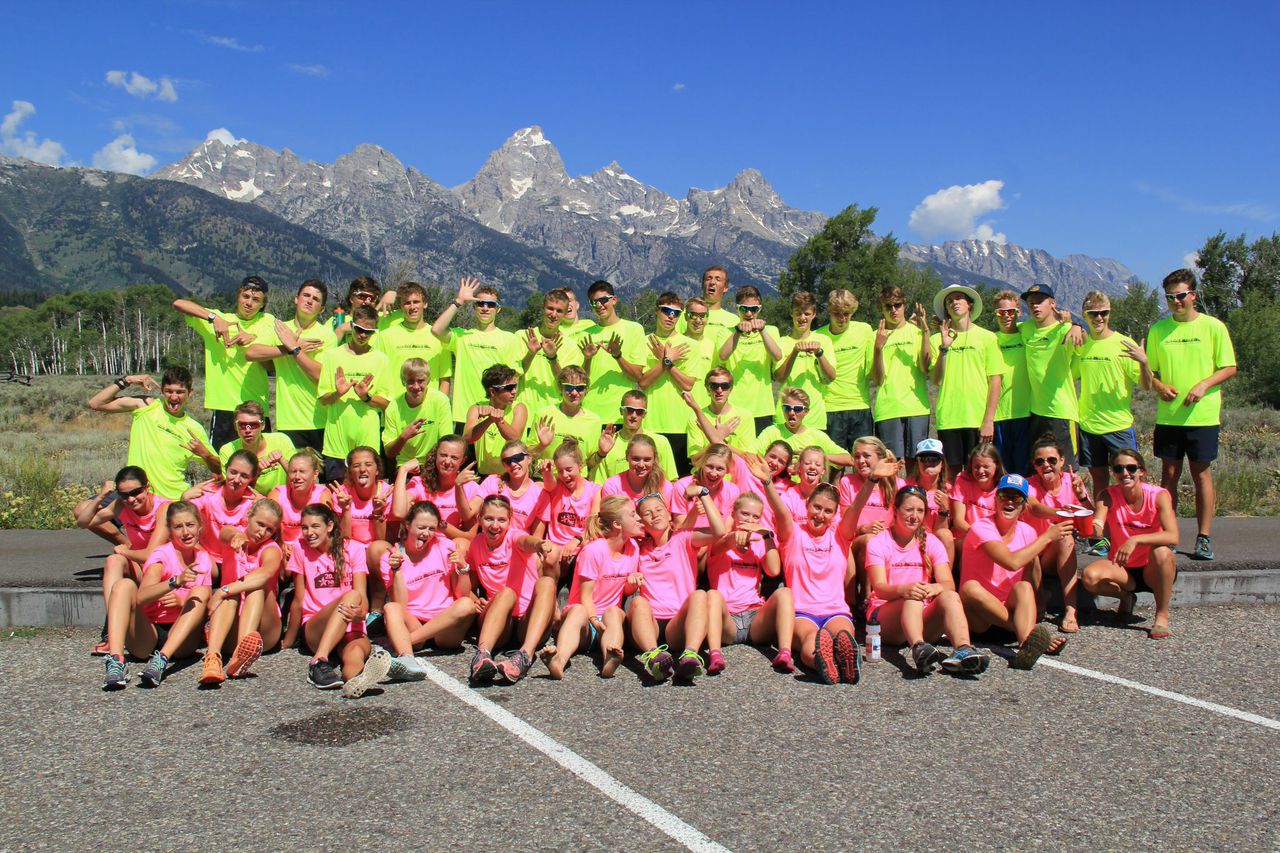
The National Nordic Foundation-supported U16 Camp just wrapped up in Jackson Hole, Wyoming. (The location changes annually.) NNF caught up with one of the camp’s founders, Sun Valley Coach, Rick Kapala on what the U16 Camp does and means in the scope of skiing development. See original article and a video by athlete Skyler Mullings.
***
1. How did the U16 camp come into being? What’s its primary goal?
Six years ago, a group of us – Janice Sibilia, Alison Deines-Sehnert, Josh Smullin and myself decided it would be helpful to get the better U16 juniors together earlier than at the typical REG camps. The idea was that we might be able to help kids get more effective in their training at an earlier age and to get more buy in. Club teams are the foundation of all development but obviously no one club team can match the depth of talent at a national level camp and as such maybe the kids get psyched about being with a group of kids that they race against but who are essentially new faces. The challenge with this age class is that most of these better kids also do other sports and that’s okay up to a point. But for the kids hoping to start making Scando Teams and World Jrs, they need to be encouraged to pick cross country ski racing as their primary sport. In addition the other sports that we compete with for these same talented kids, like xc run, swimming and soccer take this kind of approach which is to say they try to channel motivated kids into their sports. We needed to step up and say “pick Cross Country Ski Racing”. It helps club coaches at home who are also delivering that message when their top kids hear it at a camp like this as well.
2. What goes on at the camp? What do the athletes leave with?
All other nations and all other sports see the value of assembling top kids for training camps. What happens in some ways is very organic in that just putting motivated kids together to train results in a raising of the bar without us even having to say anything. Whether it’s a sports camp or a music or math camp, when you get people together there is an opportunity for accelerated growth – it’s a fertile field. It’s the same as when we get together as coaches at conferences – we get jazzed about coaching and we start brain storming. It’s the same at training camps. The kids get amped . What we think they leave with is a deeper understanding about the physical and technical demands of the sport through the evening educational sessions but more importantly we strive to build team cohesion with that age group of kids so that they see themselves as the next wave. That they understand the power of shared commitment.
3. How is it decided who hosts? What’s the process for hosting?
We set the camp up on a rotation through the country – Midwest, West and East. So far we have been at Michigan Tech in Houghton MI, Sun Valley, Crafstbury , Northern Michigan in Marquette and this year in Jackson Hole Wyoming. 2015 is back East again. The camp has some pretty specific logistical needs that have to be met in order to ensure a high quality experience. Quality lodging and food, safe rollerskiing and really good dryland facilities that are adjacent to the lodging as with a group this large 40-50 kids, we want to minimize travel logistical challenges. We need big sport fields and a large classroom with tech support. Also, ideally an airport with a lot of direct service within ½ hour drive. When you look at those needs right away we start reducing sites just because a camp for 40 is way different to manage than a camp for 10-20. Plus these kids are younger so its has to a camp that has everything we need and we need to be able to provide a safe environment with appropriate supervision For most this will be their first big camp away from their division. Our group of coordinators – now myself, Josh, Janice and Bryan – USST Development Coach start working on next year’s site right after we finish this year’s camp and we hope to have dates and location mid mid Autumn for next year. We shoot for end of July to stay off the REG’s and the start up of Fall sports plus some academies and clubs like to have their final summer camp before school starts.
4. Are there ways that you think talent ID is something coaches can do year round? What do you look for at this camp that others can find?
Right off I’d say that the talent that is most important but is also hard to id is one’s talent or ability to make a goal and commit to the process. Of course all the kids there are already obviously “talented “ because they are there but the talent that is most obvious at this age – skiing fast is not necessarily the best predictor of sustained success. The big message at the camp is 1) you have to love the life of skiing and training and racing to really grow 2) You have to own it – coaches, mentors, parents can help support you but the desire has to come from within 3) There are many, many abilities needed to succeed at the highest levels of this sport so you need to start working now on “the list” – aerobic capacity, anaerobic capacity, allt eh techniques, race tactics, nutrition and recovery etc etc, etc. We try to stress that as coaches we really can’t say who will be the next few kids to maybe make it to the world cup. But what we can do is set up an array of challenges and opportunities for growth (and of course this has to happen in concert with their home teams) that give the truly motivated kids the experiences they need to move ahead. So what critical traits do we see among kids at this camp that MAY predict future progress? Its behavioral stuff mostly – diligence, resilience, optimistic spirit, curiosity, openness, willingness to engage and learn Those traits combined with what may turn out to be a predisposition to develop big physical capacities indicate future growth. But without what we call a Growth Mindset its pretty hard to get to the top.
5. As the founder of this camp and as a long time coach, what are the changes you see in the culture of training with younger (U16) athletes? To what do you credit those changes, if any?
If the camp has done anything hopefully it has helped kids take a step towards cross country skiing at a higher level at an earlier age. Remember we are competing against nations like Norway, Sweden where the last thing they have to do is convince their kids about the value of ski sport at a high level. Those kids over there already believe. I think our kids love the sport but against the cultural backdrop of US mega pro sport culture and hype and the undercurrent of slackerdom that is pervasive in pop culture , its hard for kids to understand its okay to throw it out there – to really love something like cross country skiing and to commit to trying hard. Lest someone think we are a little too intense , we also throw in stuff like whitewater rafting and lip sync contests at the camp to get the point across that you’ll go farther if you are also someone who knows how to have fun when its time to chill.
From an athletic standpoint, we have seen definitive improvement in the aerobic abilities of the group, we have also seen really big improvements improvement in rollerski ability and in foundations of strength. For example, we finished this year with a four hour L1 hike through the Tetons finishing at the top of the Jackson Hole Tram and the group handled the effort no problem. This year we also had a top Norwegian Coach, Bjorn Ilsemann from Hemming at the camp and his observations were that 1) The Norwegians start their kids PLAYING on rollerskis at 10-11 and as such they are still somewhat ahead of us in technique development. It is key to stress that they are not hammering Intervals on rollerskis or doing distance session but playing on rollskis and that this translates into improved confidence and agility on rollskis and as such they are better able to utilize the tools for training when it is time to step it up. 2) He says if anything we are a little ahead on strength – so that is good.
Overall, Bryan and I , who have been at all the camps can unequivocally say that every year the kids are better in base aerobic fitness, rollski skills and strength but the real credit there goes to the club coaches who have all raised the bar within their own programs. The advances have come from daily training at home combined with the carrot of camp opportunities like the National U16, The REG.s and the NTG/NEG programs. Its no one thing and its everything that has helped the steady progress across the country. Every day the camp I learned something new and I came back super energized to put even more to my own program in Sun Valley. That’s what I mean by the idea of creating a fertile field.
6. Anything else folks should know about this? Anything to add?
This camp is a great example of what we can all do to help the big picture. The support from The National Nordic Foundation in funding the camp so that it remains affordable is critical. In addition every year we get coaches and interns from the host region to assist with coaching ; this year we had Martin Benes – Sugarbowl, Paul Smith/Pete Phillips – Jackson, Gordon Lange – Park City, Kate Barton- Burke M.A., Rebecca Watson – Lander as well as college athlete interns Lucy Newman and Jesse Knori – CU, Deedra Irwin – MTU and Sam Wiswell – U of Wyo helping with coaching duties and Bjorn Ilsemann from Norway No one gets paid – we all just chip in. And of course the National Team is all in with Bryan Fish being the guy who helps tie it all together with the other athletic objectives of the Nation al Development System. This same kind of group effort is happening with the REG’s and with divisional camps across the country as well. You know what they say, make the little plays every day like hitting the cut off man, moving the runner over, throwing strikes, and you’ll help the team win. Think process, raise the bar and never ever give up.