From the FasterSkier archive — posts syndicated from athletes’ and coaches’ own blogs between 2004 and 2012, kept online as published. Current coverage is at fasterskier.com.
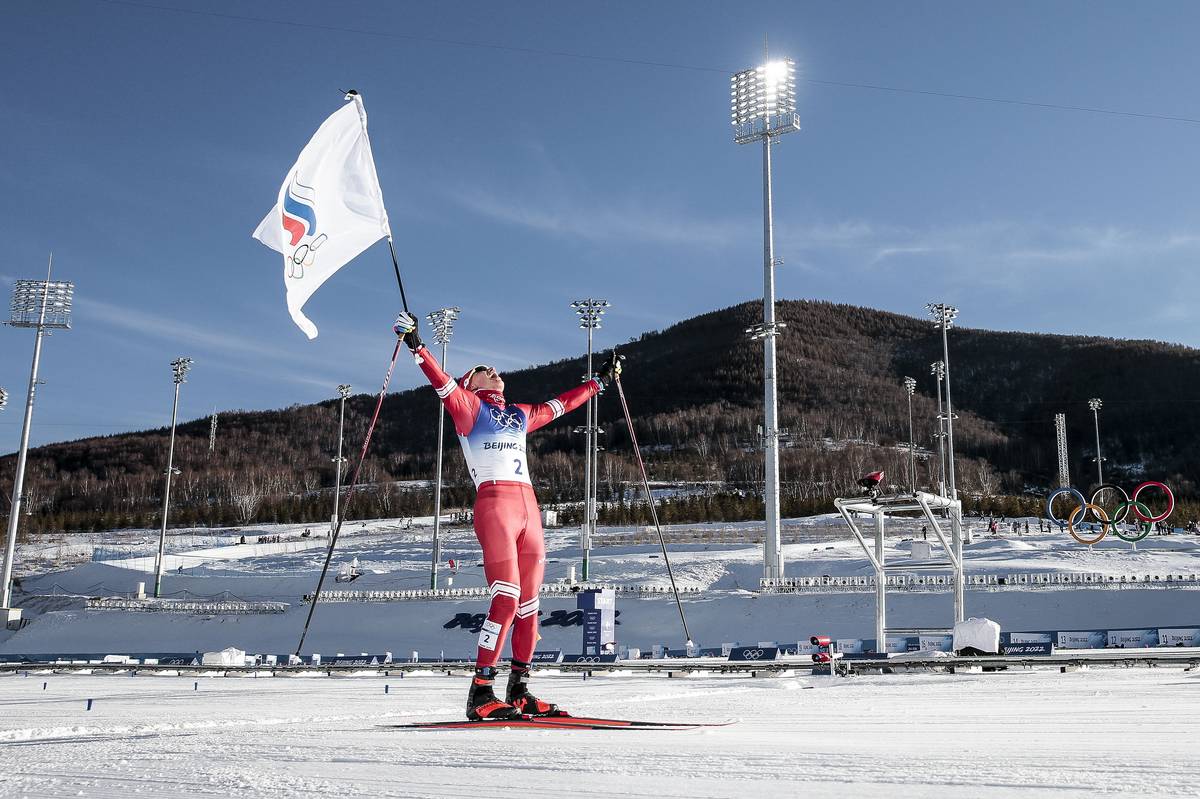
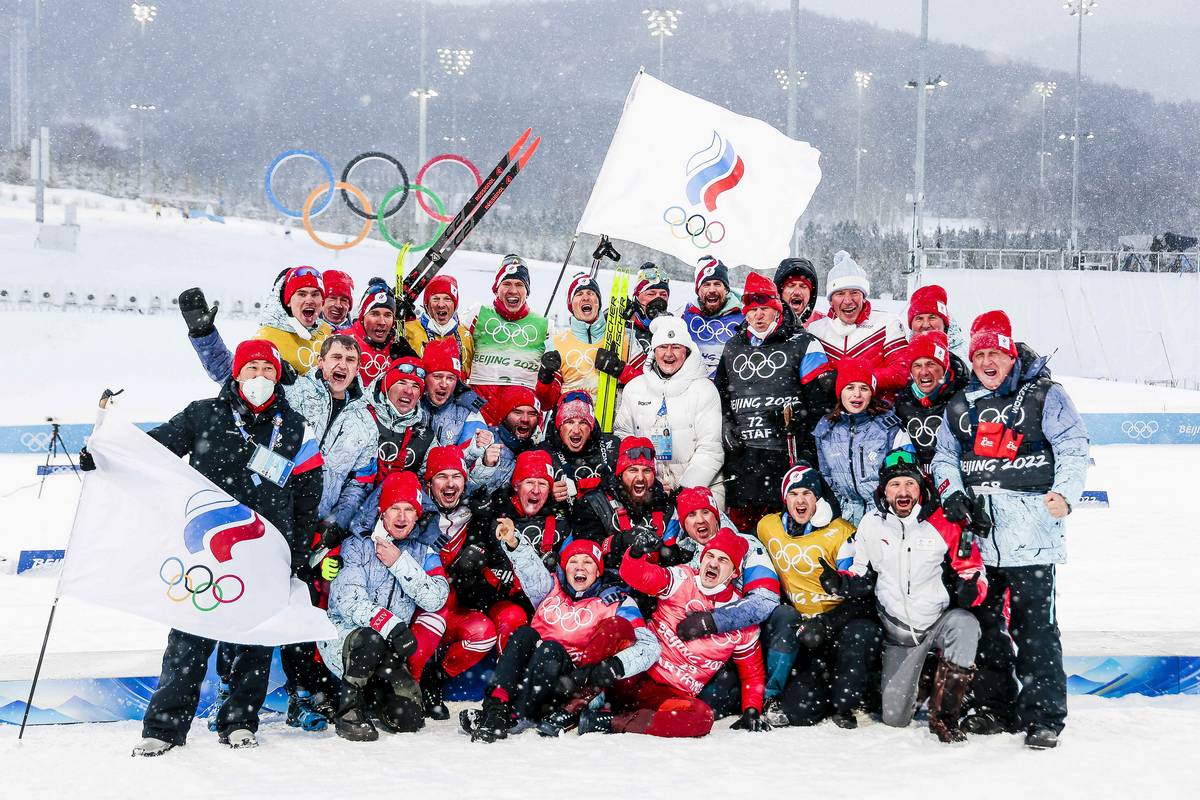
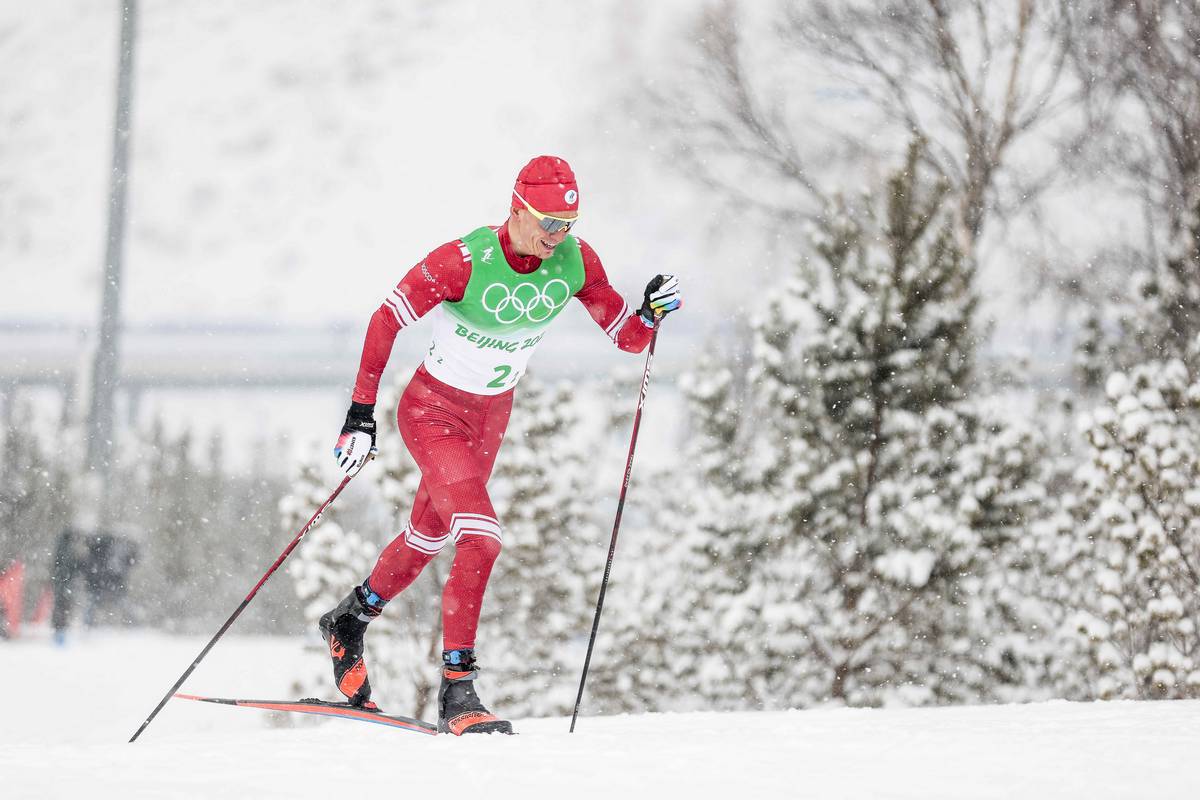
Alexander Bolshunov of Russia celebrates a dominant victory in the Olympic skiathlon in 2022. (Photo: NordicFocus)
TRONDHEIM, NORWAY — On the eve of the first race at the Nordic World Ski Championships, an anonymous source told Swedish national broadcaster SVT that the International Olympic Committee (IOC) has urged both the International Ski Federation (FIS) and the International Biathlon Union (IBU) to allow Russian and Belarussian athletes to return to international competition in time for the 2026 Olympic Games in Italy.
IBU President Olle Dahlin confirmed to SVT that the IOC is encouraging winter sport federations to adopt the same “Individual Neutral Athlete” (AIN) regime used at the Paris Olympics in 2024, which saw 15 Russian and 17 Belarussian athletes take part.
Dahlin, however, stated the IBU is not currently considering a Russian or Belarussian return to racing.
Meanwhile, FIS president Johan Eliasch—who is running to become the new IOC President in a vote later this month—is hopeful that athletes from Russia and Belarus will be back on the start line at the next Winter Olympics.
Both FIS and the IBU have instituted a ban on all Russian and Belarussian athletes and staff from international competition since March of 2022. This decision followed a stand-off between the Norwegian Ski Association—who refused to welcome Russian athletes to their events—and FIS, who initially insisted on Russian participation but changed course after the IOC recommended a ban.
The IOC did not make anyone available for an interview, but shared a written statement with FasterSkierwhich called on international sports federations and event organizers to adopt the Individual Neutral Athlete protocol in time for the 2026 Milano Cortina Olympics.
FIS President Johan Eliasch spoke before the start of the World Ski Championships in Slovenia in 2023. (Nathaniel Herz/FasterSkier)
In a telephone interview with FasterSkier, Eliasch said that the blanket ban on Russian athletes is unfair: “The athletes can’t choose where they were born,” the FIS president said, adding that he would like to see the Individual Neutral Athlete program carried forward to next year’s Games.
Eliasch emphasized that, in order to be invited to the Olympics as an AIN, “Athletes have to fulfill very clear criteria, and there is a process for vetting.” These criteria, based on recommendations from the IOC’s Ethics Board, exclude Russian and Belarussian athletes who are contracted by their nation’s military and security forces, as well as those athletes who actively support the Russian invasion of Ukraine.
“It’s worked well,” said the president about the independent evaluation process, “So I fully support this program.”
Secretary general of the Ski Federation of Ukraine Julia Syparenko says that the AIN scheme has been less effective than Eliasch suggests: “There have been numerous cases where these so-called neutral athletes failed to meet the established requirements,” Syparenko said via email.
A 2024 investigation by Global Right Compliance found that two thirds of Russian athletes who had been invited by the IOC to participate at the Paris Olympics had in fact shown support for the invasion of Ukraine, often by “liking” pro-war posts on social media.
Syparenko was unable to provide exact numbers, but said that many former athletes from the Ski Federation of Ukraine currently serve in the military, and that some have been killed in the fighting. The British Government estimates that up until the Paris 2024 Olympics, 487 Ukrainian athletes had been killed in the war, and that roughly 4,000 Ukrainian athletes continue to serve in the war effort. Similar statistics are not available for Russian athletes.
Syparenko said that Russian attacks have destroyed homes and displaced athletes, coaches, and officials, and competitions can only be held in the west of the country — and only so long as there are bomb shelters in place. Previous reporting from FasterSkier has detailed the risks that Ukrainian athletes have had to face to pursue their sport, and the losses they’ve endured during the war.
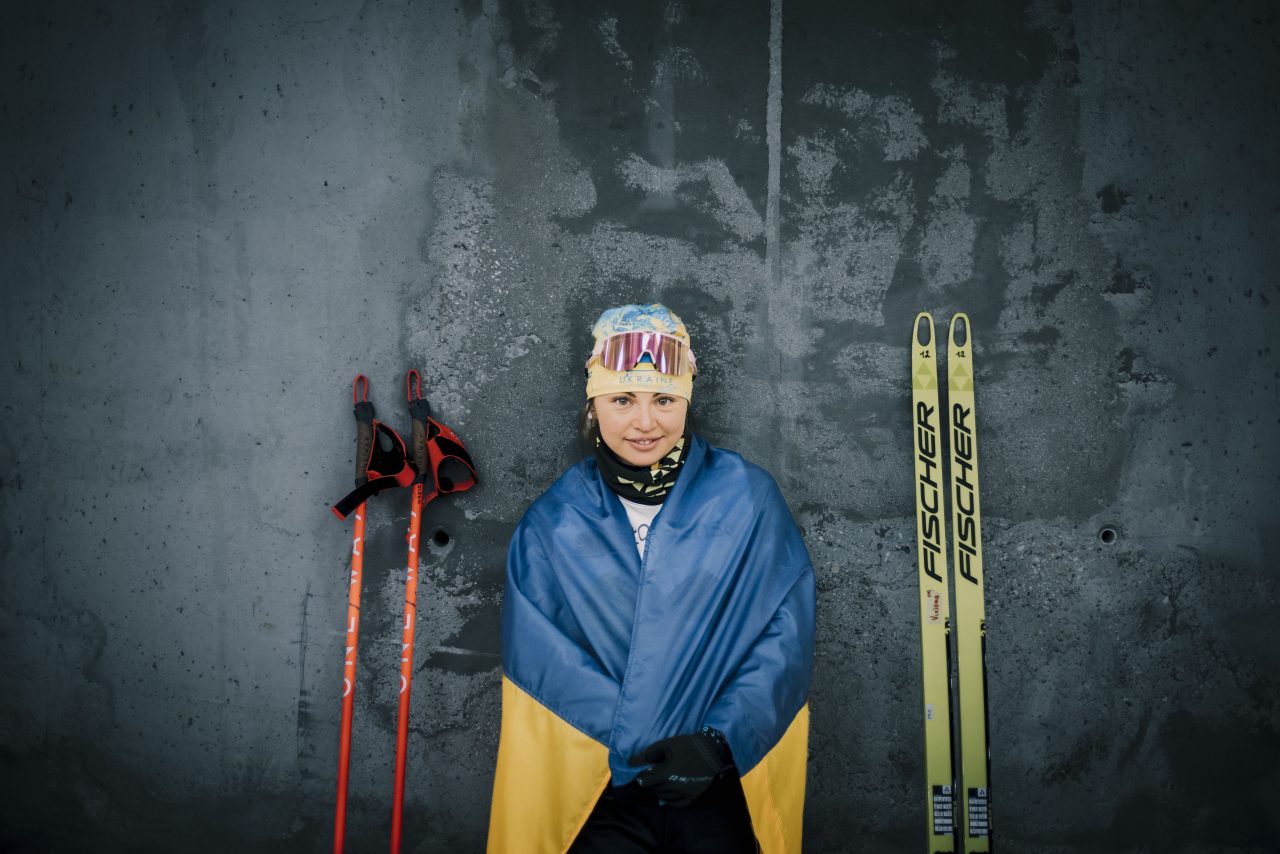
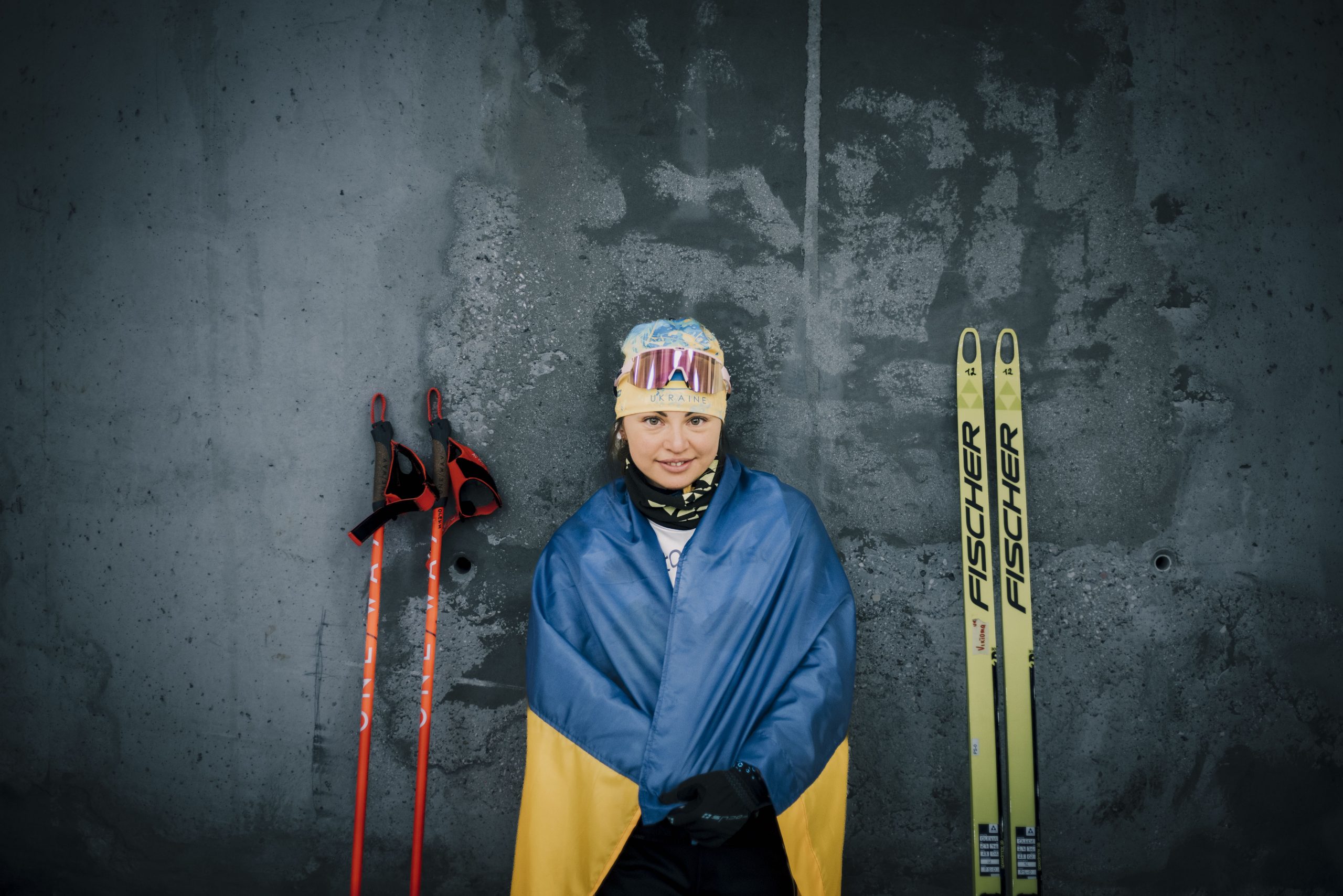
Viktoriia Olekh, a Ukrainian Olympic cross-country skier, posed for a photo at the World Ski Championships in Slovenia in 2023.(Federico Modica)
According to Syparenko, the Individual Neutral Athlete scheme used at the Olympic Games was an inadequate response to the realities of the invasion: “In such questions as war one cannot be neutral,” she said. “Either you don’t support the war and you say it, or otherwise you support the war, saying nothing against it.”
When asked for comment, Nordiq Canada’s acting CEO Megan Begley reiterated the federation’s stated position from 2022, which reads: “Nordiq Canada and its national team athletes fully support the decision by FIS to immediately suspend Russian and Belarusian athletes and officials from participating in FIS-sanctioned competitions.”
U.S. Ski and Snowboard did not respond to an interview request.
Russian powerhouse Alexander Bolshunov had been the main challenger to Norwegian Johannes Høsflot Klæbo until Russia was excluded from all FIS competitions in March 2022, following Russia’s full-scale invasion of Ukraine.
Bolshunov told the Russian website sports.ru in 2023 that he had no intention of returning to international racing following FIS’s ban. “Honestly,” he said, “I’m not interested in how these dirty competitions go.”
“I think it’s better to compete where we are expected,” Bolshunov said. “First you are disappointed, but now in Russia there are excellent competitions, broadcasts are organized, and you forget about it.”
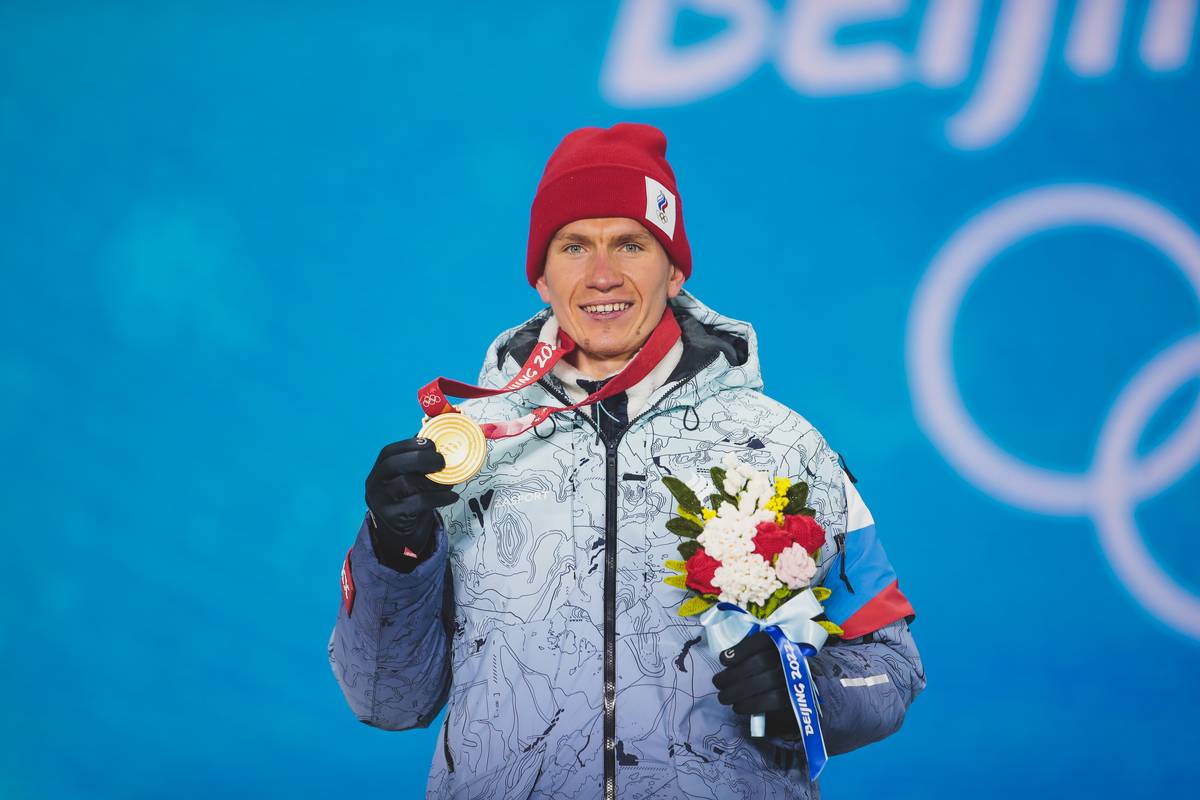
Alexander Bolshunov won five medals at the Beijing Olympics in 2022. (Nordic Focus)
But the nine-time Olympic medallist has since had a change of heart.
Last Friday, Bolshunov told the Russian outlet Match TV: “If there are no Olympics, why train and run? For all-Russian competitions? No, thank you.”
Bolshunov is a captain in the National Guard of Russia and has appeared on stage at public rallies in support of the Russian invasion.
Though he declined to comment on the situation of any particular athlete before they had undergone the vetting process, Eliasch confirmed that an athlete who had been contracted by a Russian national security agency or had participated in state propaganda “would not qualify under the AIN scheme.”
British skier James Clugnet — who is serving as an athlete representative to FIS — understands that his peers are divided on the subject of Russia’s return: “Over 50% of the athletes voted that they didn’t want the Russians to come back,” he said. “And 48% said that they were happy for the Russians to come back with conditions.”
Italian athlete Federico Pellegrino — who, in 2021 joined a Russian Ski Team training group led by coach Markus Cramer — is fed up with questions about the fate of his former training partners: “Again and again, always always. I say the same since four years.”
“In my opinion, sport must unite people, not divide, as it’s many times said in the North,” said the Italian sprint star. “I hope that the institution will do their job without the push from different things that are not right for the good of sport and, hopefully, for the end of the war.”
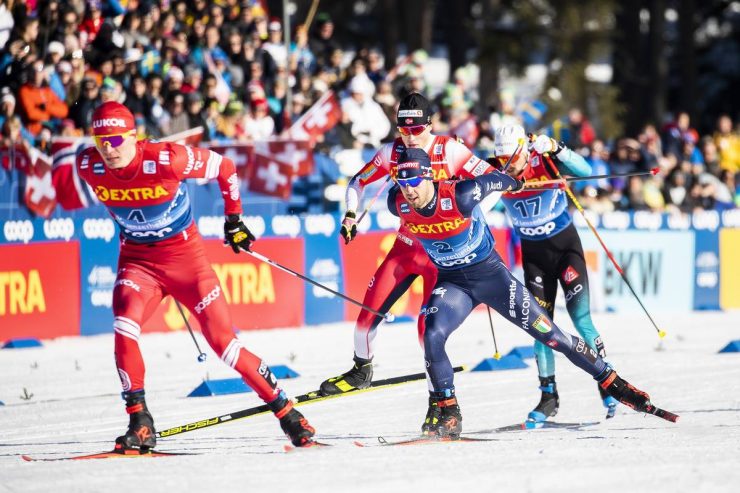
Alexander Bolshunov, left, and Federico Pellegrino, center. (Photo: NordicFocus)
Canadian Katherine Stewart-Jones says that it is important for athletes to stay engaged in the debate surrounding the Russian situation: “We’re the ones that are living the consequences of the decision. So I think it is a fair question to ask.”
As for whether the Russians should be allowed back to FIS and IOC competitions — under a neutral flag or otherwise — Stewart-Jones is concerned that inviting Russian athletes back to racing at this stage would compromise the ethical principles of the Olympic Charter, which are supposed to ensure respectful and meaningful competition. “Sport should be promoting peace and fair play and all those things,” she said, “And I just feel that what Russia is doing right now doesn’t go with the values of sport and the values of the Olympics in general.”
Canada’s Katherine Stewart-Jones after a race at the 2025 World Championships in Norway. (Nordic Focus)
The Canadian skier is wary of what motivates those who advocate for a Russian return: “I think that sport should bring people together,” Stewart-Jones said, “And people sometimes use that as an excuse to have them back.”
Stewart-Jones says that the sport’s international governing body may be motivated to welcome Russian athletes back into the sporting fold out of a desire to draw audiences back to ski racing, rather than in response to a substantive change in the war.
“We know that cross-country skiing is in trouble,” said Stewart-Jones.
She remarks that FIS and the IOC have a financial incentive to allow the Russian competitors to return: “That’s where a lot of the viewership is from, and we’ve been losing a lot of viewership.”
FIS World Cup television ratings have almost halved in the Russian team’s absence. From an international viewership of 1.28 billion in 2021 prior to the full-scale invasion of Ukraine, audiences have since shrivelled to 690 million viewers worldwide.
Reporting from the BBC estimates that at least 70,000 Ukrainian soldiers, and between 160,000 and 235,000 Russian-aligned fighters have been killed in combat since the full-scale invasion began in February 2022.
James Clugnet racing at this year’s World Championships. (Nordic Focus)
Clugnet shares some of Stewart-Jones’ moral concerns, and says that the Federation may have already backed itself into a corner: “If FIS returns the Russians, I think it kind of loses credibility — because why did they ban the Russians in the first place if they’re going to put them back in when there’s been no change in the war?”
While the present bans and the IOC’s Individual Neutral Athlete program each pose their own moral dilemmas, Clugnet says that skiing’s governing body should soften its stance toward the Russian athletes: “I think FIS should follow the IOC guidelines,” said the Brit, “Because I think the sport is actually better with the Russians.”
Whether or not athletes from Russia and Belarus will — or should — be invited to compete for medals at next year’s Olympics is still in question, and as the geopolitical winds seem to shift as wildly as the Trondheim weather, we may not have an answer any time soon.
Viktoriia Olekh, a Ukrainian Olympic cross-country skier, poses for a photo at the World Ski Championships in Planica, Slovenia. She says Russian athletes should not be allowed to return to international competition. ““How can you even look at us when you support a government that’s invaded another country?” she asked. (Federico Modica for FasterSkier)
PLANICA, SLOVENIA — If Victoriia Olekh isn’t having her best showing at the World Ski Championships here, she has a good reason: war.
Olekh is from Ukraine. The Russian invasion of her country started just as she finished racing at the Olympics in Beijing last year.
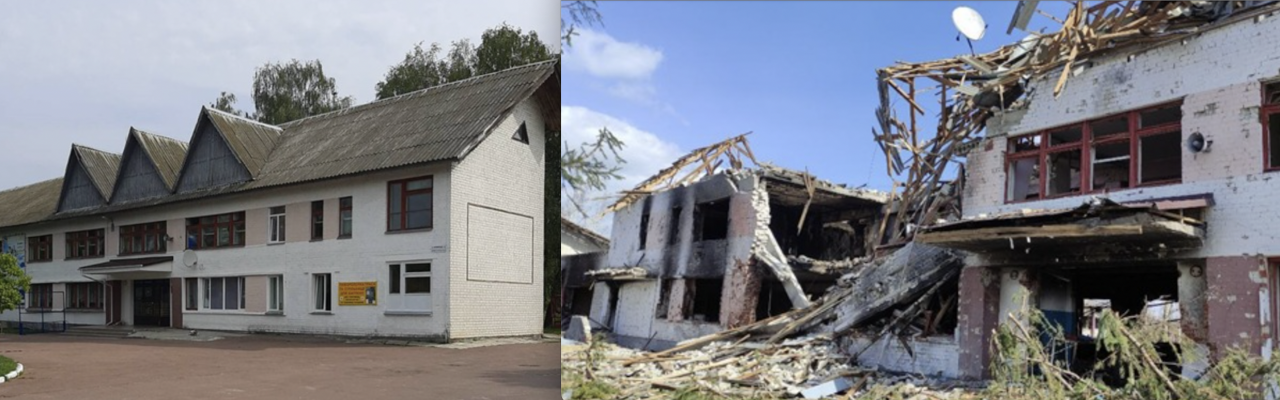
The Russian military has mined the fields and forests where she used to work out, Olekh said. Air raid sirens went off in the middle of running workouts, forcing her indoors, she added. And one of the training centers where Olekh practiced since childhood, in the regional capital of Chernihiv, was destroyed by missiles, Ukrainian officials have said — part of a campaign that, according to human rights advocates, saw Russians kill dozens of civilians in attacks on an apartment complex.
“We go to bed not knowing if we’re going to wake up,” Olekh said. “We’re still feeling panic.”
Nonetheless, Olekh and her Ukrainian teammates have continued training and competing abroad with help from the global skiing community. They’ve fielded a team of six at the World Championships here, where Olekh said she heard cheers of “Slava Ukraini” — glory to Ukraine — during a race and when she carried the flag at the opening ceremony last week.
“I feel solidarity from the other countries,” Olekh said. “I want to thank the world for their support, and I want to thank the Ukrainian military for defending our country.”
That military includes at least three Ukrainians who have competed in the Olympics in snow sports, according to Julia Syparenko, head of the country’s ski federation. Another retired Ukrainian skier, a training buddy of Olekh’s, was killed in the war, she said, and she knows of two other skiers whose homes were destroyed.
Olekh spoke in a 90-minute interview, conducted through a translator, at her residence at World Championships — the first in-depth comments from a Ukrainian athlete here about the war. They come as an intense debate plays out in the global sports world about whether to allow Russian and Belarusian athletes — who have been banned from competing by an array of international sports organizations — to compete at the Olympics under a “neutral” flag.
These before and after photos, provided by Julia Syparenko, the head of the Ukrainian Ski Federation, show what she said is the destruction of a former snow sports training center in the city of Chernihiv during the war with Russia.
Olekh was firm in her opposition, and Syparenko, in a separate phone interview, was too. Olekh said it would be “impossible” for her to compete against people who back the Russian war.
“Open your eyes,” she said. “How can you even look at us when you support a government that’s invaded another country?”
Some — but not all — of Russia’s cross-country’s skiers have publicly endorsed the war and the country’s president, Vladimir Putin.
Alexander Bolshunov, who won three gold medals at the Beijing Olympics, faced a backlash after he appeared on stage with Putin at a rally last March, and his glove sponsor ended endorsement deals with its Russian and Belarusian athletes.
Asked about his position on the exclusion of Russians from International Ski Federation races next year, the federation’s president, Johan Eliasch, told reporters here that “this is a very difficult topic.”
“You can’t choose where you were born. And you can’t separate the nation-state from the athlete,” he said. “On the other hand, we have a very difficult conflict to deal with.”
Eliasch added: “It is vital that we don’t let athletes be weaponized for political purposes — that’s just killing sport, which is supposed to be neutral, non-political.”
Olekh, 29, came from an athletic family: Her mother was a runner and wanted to be a competitive cross-country skier, but her grandfather was worried about the effects of lugging heavy ski bags around.
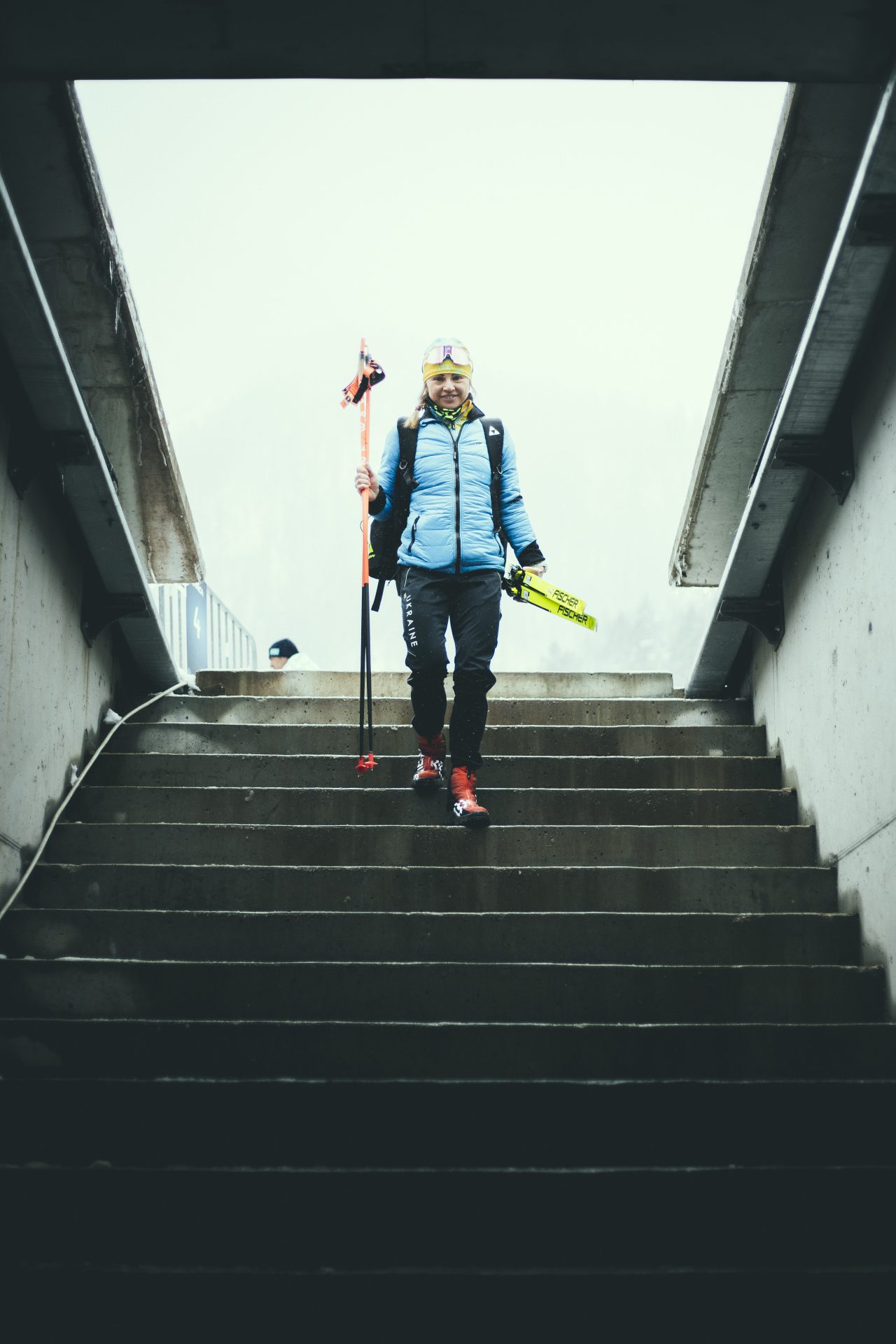
Ukrainian skier Viktoriia Olekh heads into a tunnel at World Championships in Planica, Slovenia, on her way to a training session Wednesday. (Federico Modica for FasterSkier)
Olekh has competed internationally for a decade, though the Beijing Olympics were her first Games. Her best finish was a 58th place; she earned praise from one of her coaches for finishing a race with a bloody nose.
Afterward, the war came to her community, Konotop, where some of the city’s women made headlines for threatening to put a curse on Russian soldiers — one that would render them impotent.
The city isn’t far from the border between the two nations. In the first days of the war, there was a tense standoff as local authorities negotiated with the Russian military over control, Olekh said.
Video posted by the New York Times showed crowds hurling insults at Russian soldiers — one of whom walked by holding a grenade in each hand. Olekh isn’t sure how intense the fighting was in Konotop, and she doesn’t know of any victims, she said — but friends showed her photos of burned cars and dead people inside them.
The Russians ultimately left Konotop. But the war still turned Olekh’s life upside-down.
“We were surrounded from all four sides. There were tanks in the city,” she said. “There was panic, food shortages, blackouts on a regular basis — things were very scary and unstable.”
In the early days of the war, Olekh said, training was difficult. Her mother, she said, would sometimes stand at the front door and block Olekh from going outside to run because of the danger. She kept from going stir-crazy by using a neighbor’s stationary bike.
The Ukrainian national team reorganized in June, after losing roughly a month and a half of training, Olekh said.
Since then, the group has spent much of its time training and racing abroad, with support from other ski associations and training centers in nations like Italy and Estonia. Some of its athletes and their families have completely moved out of Ukraine, said Syparenko, the head of the Ukrainian Ski Federation.
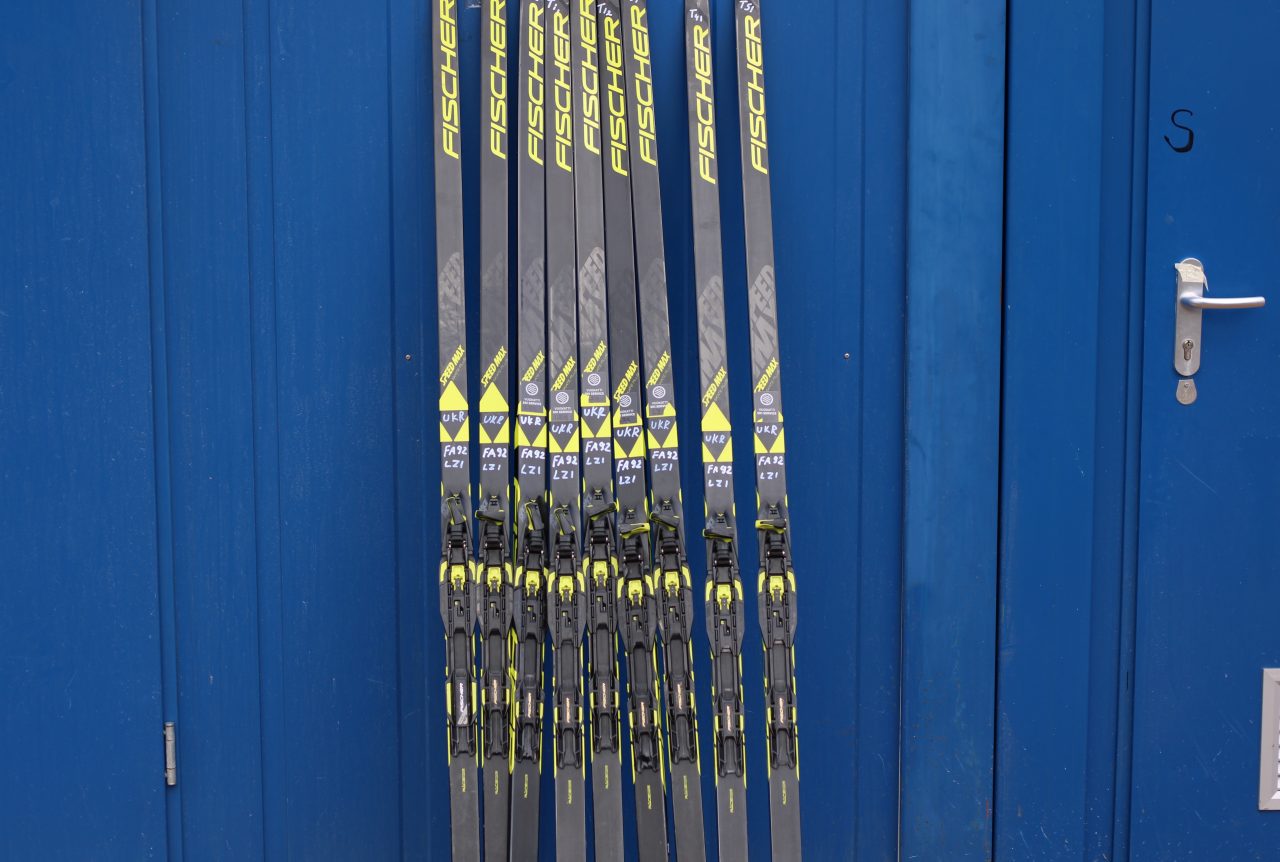
Skis from the Ukrainian team stand alongside a wax trailer at the World Championships in Planica, Slovenia. (Nathaniel Herz/FasterSkier)
She said that aid from other countries, along with a multi-million-dollar solidarity fund from the International Olympic Committee, has been indispensable for all of the sports under her federation’s umbrella, which includes downhill skiing, snowboarding, ski jumping and others.
“Every step of the way, we got as much support as people could provide,” she said.
Estonia shares a border with Russia and was part of the Soviet Union until 1991, so it was natural to try to help the Ukrainian athletes, said Kristjan Koll, the Estonian Ski Association’s executive director.
The Estonian association is still recovering from a doping scandal and is tight on cash. But it worked with the Ukrainians to find inexpensive housing for a training camp in Estonia and also helped them secure visas, Koll said in an interview.
He plans to discuss future partnerships with Syparenko in advance of next season, when perhaps the two nations could hold training camps together for their cross-country ski teams, he said.
“For Estonians and Latvians, Lithuanians, Poland, we understand the immediate threat. What happened to Ukraine, in the same way — it could happen to us,” Koll said. He added: “We 100% support the ban of the Russian athletes.”
Olekh said she’s grateful both for the foreign countries that have hosted the Ukrainian athletes, and for the support staff in her home country who have helped her team with logistics.
That was especially challenging for the male Ukrainian skiers, since the country has barred most men from leaving the country in case they’re needed for military service, Olekh said.
“We’re happy to represent our country, even if we’re not in our best shape,” she said. “We’re doing our best, and we’re so thankful that we’re able to participate.”
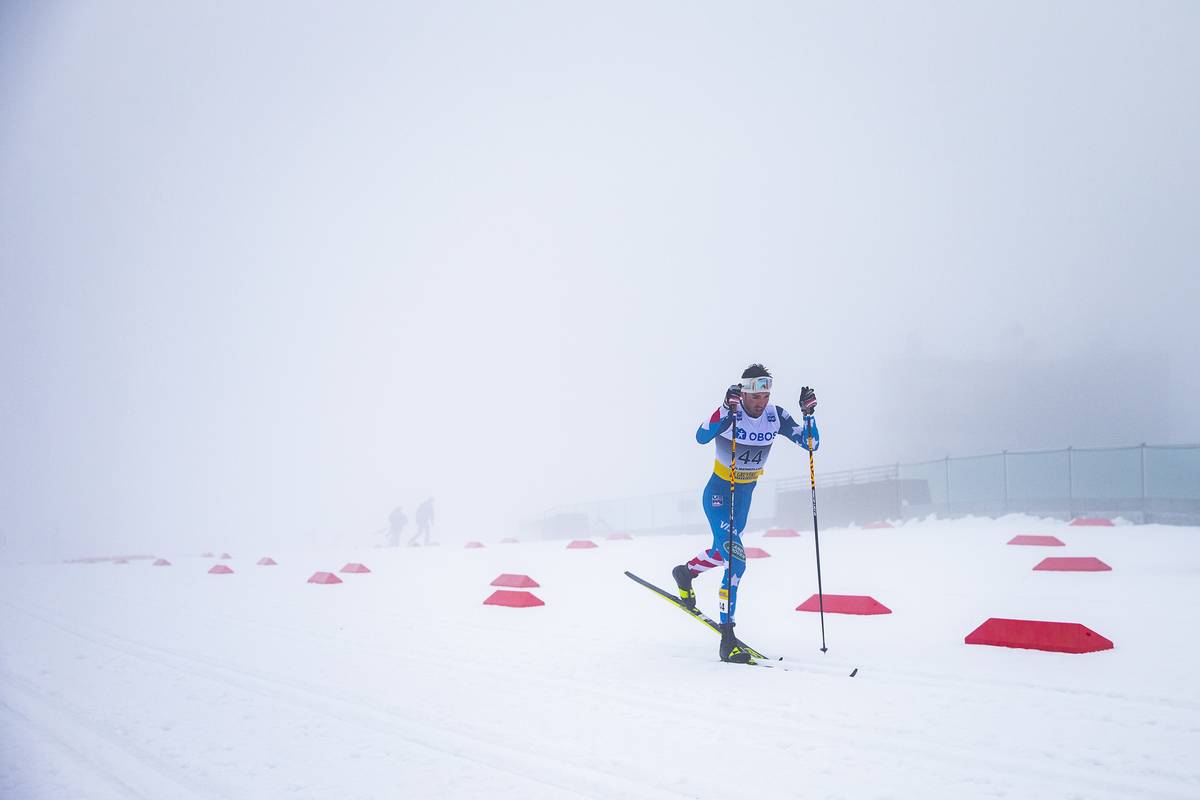
Ian Torchia (SMS T2) races through dense fog at the 50 k classic at Holmenkollen in March, 2020. (Photo: NordicFocus)
Click here to read an account of physical therapist Ned Dowling’s first stint overseas with the US Ski Team in March, 2020.
Holmenkollen, Norway. March 8, 2020 – Men’s 50k Classic World Cup. 33 degrees and raining. The ski jump was engulfed in clouds. Spectators were forbidden from attending the Super Bowl of cross country skiing due to the impending COVID pandemic. My first stint as a physical therapist traveling with the US Ski Team was ending in an Oslo fog.
Salt Lake City, Utah. Late March, 2020 – Buzz kill. In the week following my return from Norway, my son’s school was closed, my clinic was closed, people were fighting over toilet paper and hand sanitizer. It was the end of the world as we knew it. And we didn’t feel fine.
July 6, 2021 – I received an email from Chris Grover asking if I could travel with the ski team again in 2022. We were amidst the calm before the storm. People were getting vaccinated. COVID cases were dropping. We went on vacation. Delta had not yet jumped out from behind the grim reaper. The light at the end of the tunnel was getting brighter and brighter.
I had declined an offer to travel the previous winter. I knew I couldn’t get permission from either the boss at work or the boss at home. And I sure couldn’t tell my kid, who was still doing school remotely, “You keep up with those classes on Zoom while Daddy is off to Europe.”
But now things were looking up. By the time I’d be overseas in March, the COVID thing would be a distant memory. Hell yes! Sign me up Chris.
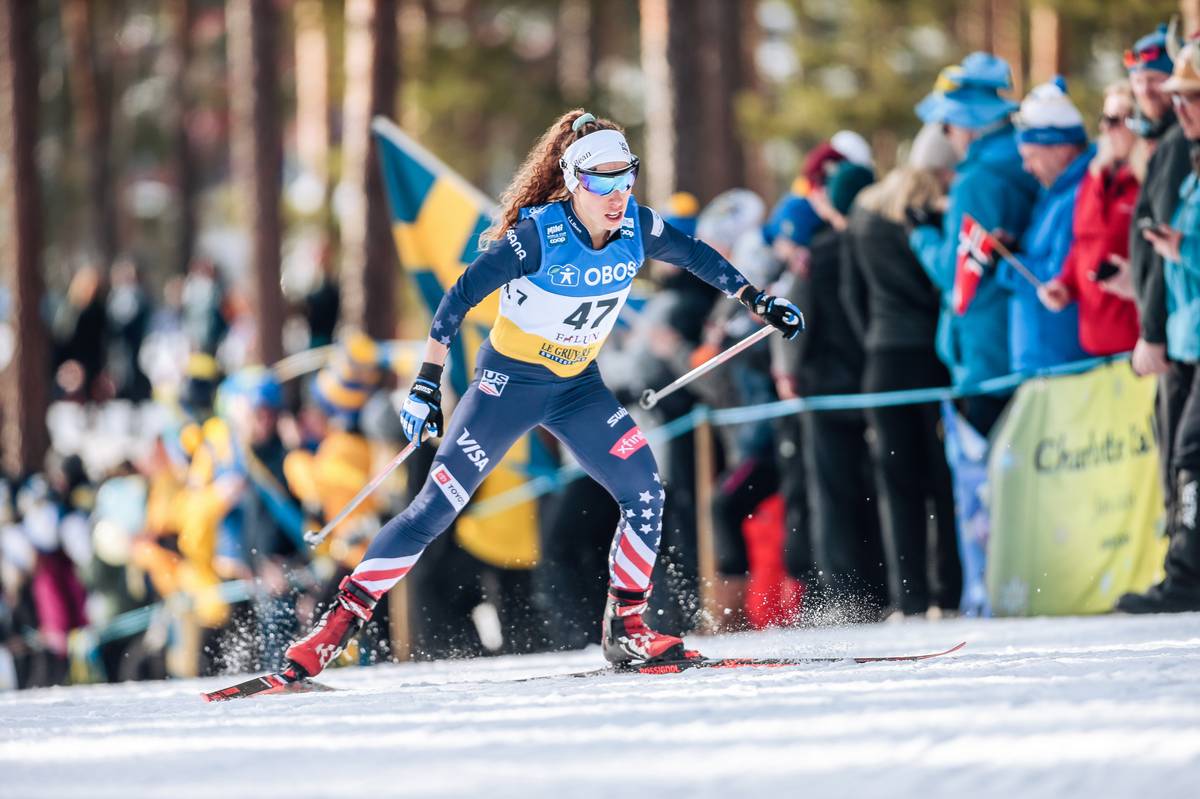
Rosie Frankowski races the 10 k freestyle in Falun, Sweden in March 2022. (Photo: NordicFocus)
Summer, Fall, Winter – We all know what happened next. The light at the end of the tunnel was an oncoming train and the shit hit the fan. Lots of shit hit lots of fans. First, the Delta variant, then Omicron. Through all of that, I did my best to stay optimistic about my opportunity to work the last two weekends of World Cup races in Falun, Sweden and Tyumen, Russia.
Falun was a bit of a known entity, or at least easily researched on the internet. The World Cup had been racing there for years. Trail maps showed a good network of tourist tracks (which is a good thing because the race course is no joke). Videos of old races on YouTube showed huge crowds, which were sorely missed at the pre-COVID Holmenkollen.
Tyumen, the Pearl of Siberia, was going to be much more of an adventure. Much to my relief, the plan was to have a chartered flight from Stockholm to Russia. I really, really didn’t want to fly (or crash) on a commercial Russian plane. With a lot of digging and Google Translate, I could glean some information about the race venue and its environs.
February 9, 2022 – Chris emailed me about getting a Russian visa. He told me to contact someone at the Russian Consulate in Washington: call this guy, do what he says, pay what he says, we’ll reimburse you. The next day I anxiously called Bogdan, to whom I would be entrusting my passport. “You send passport, extra photo, and $250. You complete visa application online and send password for application, so I fix your mistakes. You send postage to mail back.” I had him repeat that three or four times while I nervously scribbled notes to myself. I reminded him that I was flying to Sweden on March 6 and would very much need my passport back by then. “No problem. You get passport.”
The visa application was nerve racking. Employment history. List of all countries traveled to in the last 5 years. “Have you been trained in firearms, artillery, or nuclear warfare?”
With sweaty palms and my heart rate in L4, I mailed off my passport and hopefully everything else I was supposed to. Then I waited.
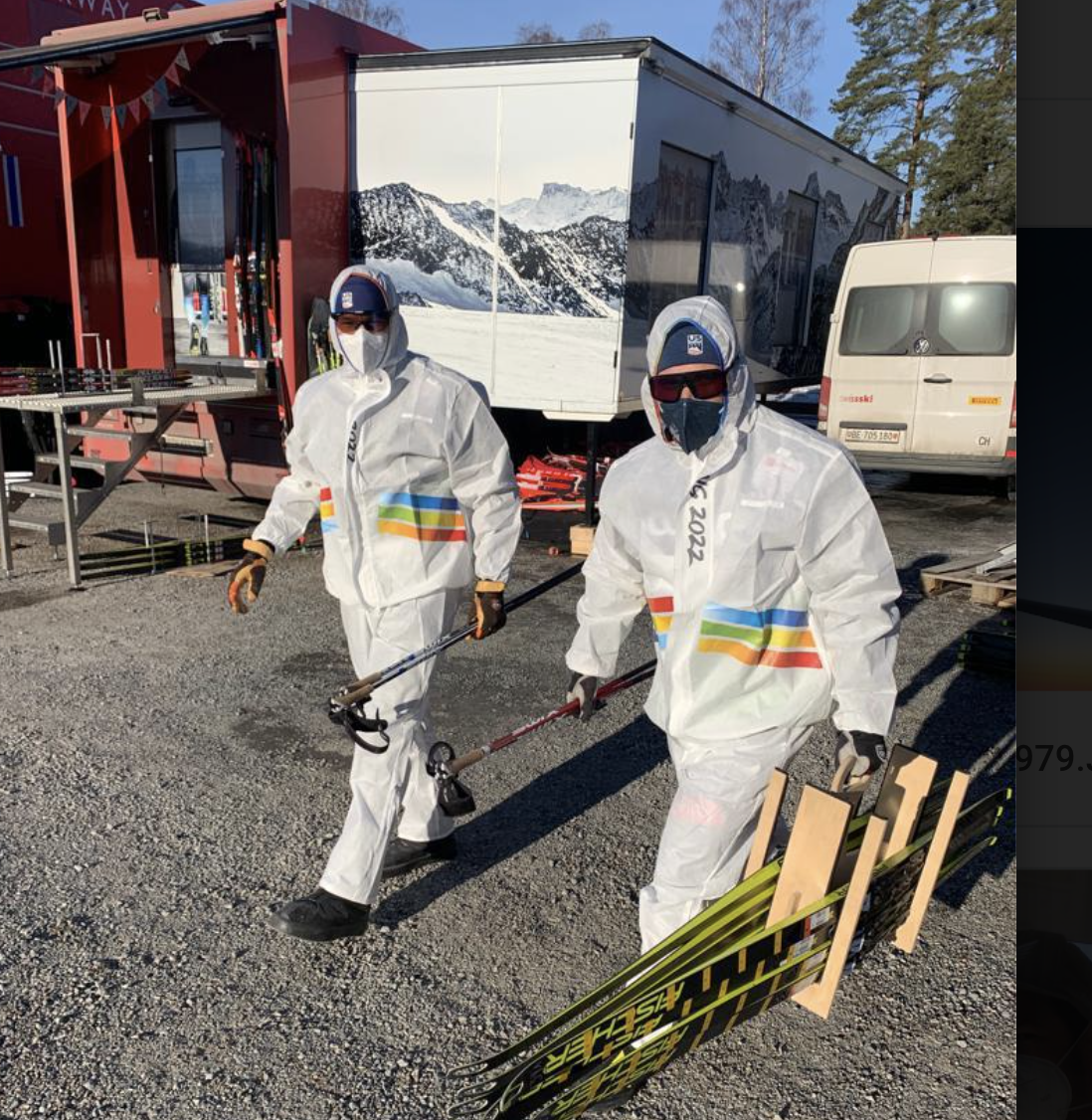
A different kind of Olympic suit: US wax techs take COVID precautions while testing and preparing skis in Falun, SWE. (Courtesy photo)
Thursday, February 24, 2022 – Russia invaded Ukraine. The world as we knew it ended once again. Chris texted me that the trip to Russia was canceled (the US team’s decision not to go to Russia preceded FIS’s decision to cancel the races). “Get your passport back right away.” I called Bogdan, my contact at the Russian Consulate. “We’ve had a change in plans, and I won’t be traveling to Russia. Can you please send my passport right away?” “No. I do not have your passport. Embassy has passport. I cannot get until finished with visa. But I mail it.” I could hear a toddler crying in the background. Bogdan apologized for the crying. I told him he shouldn’t have taken my call at home. He said, “Do not worry with passport. Visa will finish on Monday or Tuesday, then I mail. I call you when I mail.”
Friday, Saturday, Sunday, Monday, Tuesday – Nope. Not going to happen. I’m never going to see my passport again. They’ve all left the embassy. My passport is too low of a priority. They’re just going to be jerks and not send it back. So much for going to Sweden. COVID, war, what’s next?
9:21am, Tuesday, March 1, 2022 – Bogdan called. “Naatan, I mail passport. You get tomorrow.”
I thanked him profusely. And I said a little prayer. This man is living in America, raising a family in America. Yet he works for the Russian government. He is a Russian in a country that, overnight, hates Russians. I spent the last 5 days completely stressed because I didn’t have possession of a passport that would allow me to travel to Sweden for the sake of people skiing around in circles. This man, who must pay at least some attention to Western media, must have spent the last 5 days completely stressed over the safety and ultimate fate of his family and country.
(I do not mean to discredit ski racing or initiate some existential debate. As crazy as it seemed for the World Cup, and even Olympics, to carry on through this pandemic–and now war, I know I found great benefit from the distraction that racing provided. It was a slice of normalcy and vicarious living, which was invaluable to me as so much of what I took for granted was upended. But my little problems did seem very small compared to Bogdan’s.)
Wednesday, March 2, 2022 – Scott, our friendly (seriously, he waves to everyone) neighborhood mail carrier delivered my passport. Huge sigh of relief.
After a series of hurdles, Ned Dowling is wheels up on his way to Sweden. (Courtesy photo)
SLC International Airport. Sunday, March 6, 2022 – I hugged my son, kissed my wife goodbye, and donned my N95 mask which I wore for 18hrs straight. SLC direct to Amsterdam. Enough layover to grab a bottle of Scotch at the duty-free. A packed flight to Stockholm and a 2.5 hr bus ride to Falun. Jet lagged and sleep deprived, I met up with the team as they’d just gotten off their bus from Oslo. We all stood around in LL Bean team gear and N95s awaiting instructions on where to schlep our massive duffles.
Our accommodations for the week were not at the Scandic Hotel, the FIS-provided standard lodging for all of the teams. It was decided that the hotel and its buffet meals were too COVID risky. Instead we stayed two-each in a group of camping cabins equipped with bunk beds and a small kitchen. We were on our own for breakfast and lunch. Dinners were catered by restaurateur parents of Swedish sprint star Maja Dahlqvist (the World Cup circle is pretty close knit).
Cheers for negative COVID tests!
Falun, Sweden. Tuesday, March 7, 2022 – COVID testing. The team was shedding skiers and staff with positive tests. A few soldiers were left behind to wait out quarantine in an Oslo airport hotel. A couple more made it to Sweden but wouldn’t see a race bib. Anxiety was high. A positive test meant no racing, no human interaction, no trip home until the negative. One car load at a time we went to a testing center in Falun for nasal – very, very nasal – PCR tests.
“I think it touched my eyeball!” “I had 31 tests in China and that was the most aggressive one ever!” “Damn, that was legit!”
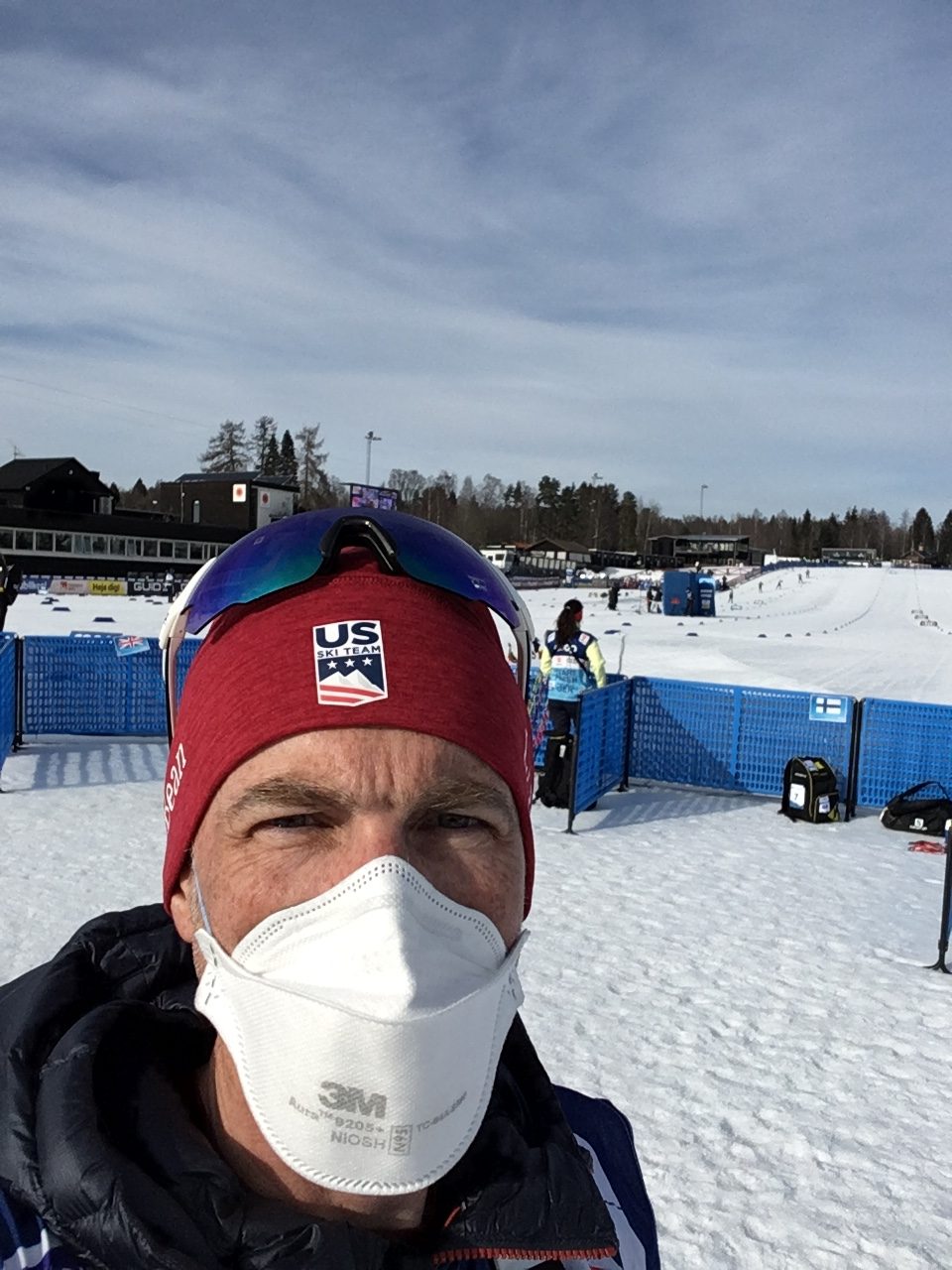
Physical therapist Ned Dowling snaps a masked selfie while supporting the US Ski Team in Falun, SWE. (Courtesy photo)
Wednesday, March 8, 2022 – All tests were negative. Collective sigh of relief. With that reassurance, I finally had some customers on the physio treatment table. Thankfully, everyone’s bodies were holding up reasonably well for being that late in the season. I felt guilty for being over there without much to do, but I figure that my boredom means they don’t need me and if they don’t need me it’s because they’re healthy, which is the goal (or they don’t want me because they’re COVID paranoid – there was plenty of that too, understandably so). So, until the racing began, I didn’t have much to do besides ski every day. Poor me.
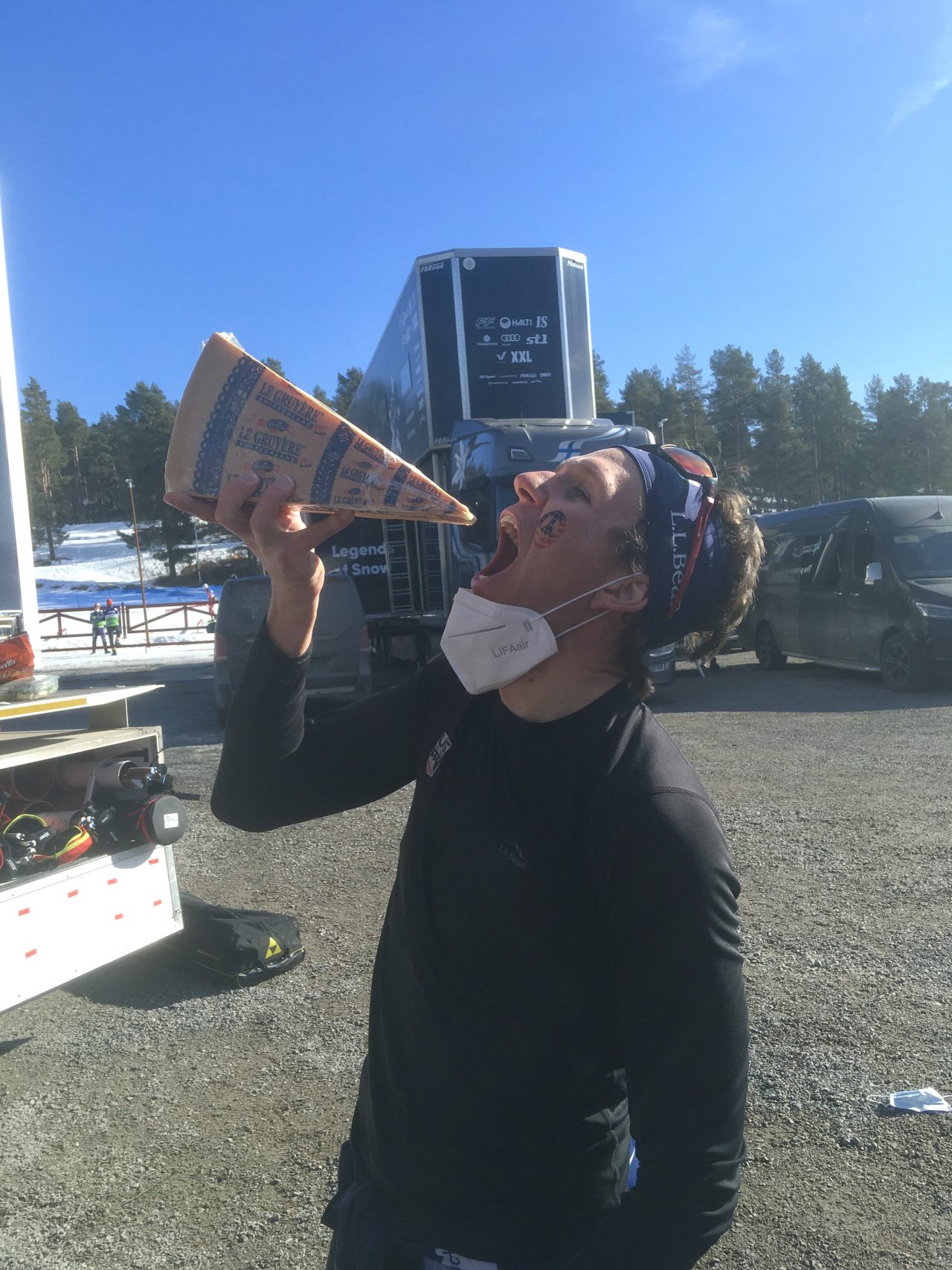
March 11-13, 2022 – Let’s go racing! My experience with the team is that they are always a great group of people to be around, but they’re even more fun with podiums. Lots of good results all around with some “first World Cup points” to some near-misses to some 5.5 lb chunks of Gruyere podium cheese.
Scott Patterson takes a bite of victory cheese after helping the USA 1 team to victory in the 4 x 5 k mixed relay in Falun, Sweden. (Courtesy photo)
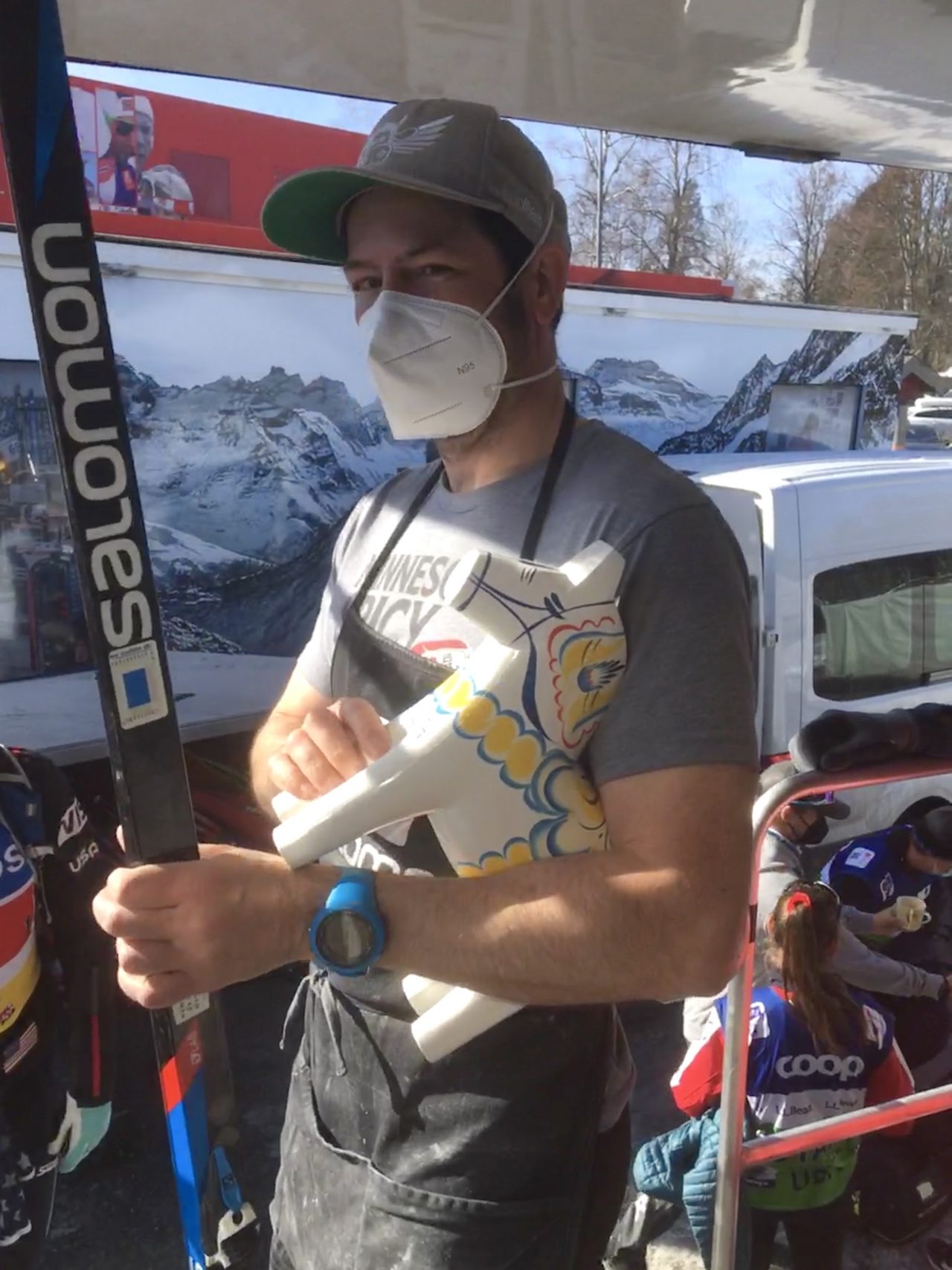
The man behind the fast skis: Jason Cork sports podium goods in Falun. (Courtesy photo)
4:30pm, March 13, 2022 – The final race: antigen testing for entry back into the US. Again, all negative. We’re going home! That night in the bar at a Stockholm airport hotel, I finally saw some faces that’d been hidden behind N95s all week. The poor bartender had a tough time keeping up with the drink orders. Elation, exhaustion, and simple relief that they’d survived another crazy race season and were finally heading home after four months of living out of suitcases, always masked, always nervous.
Maybe next year we can race without a pandemic or war or plague of locusts.
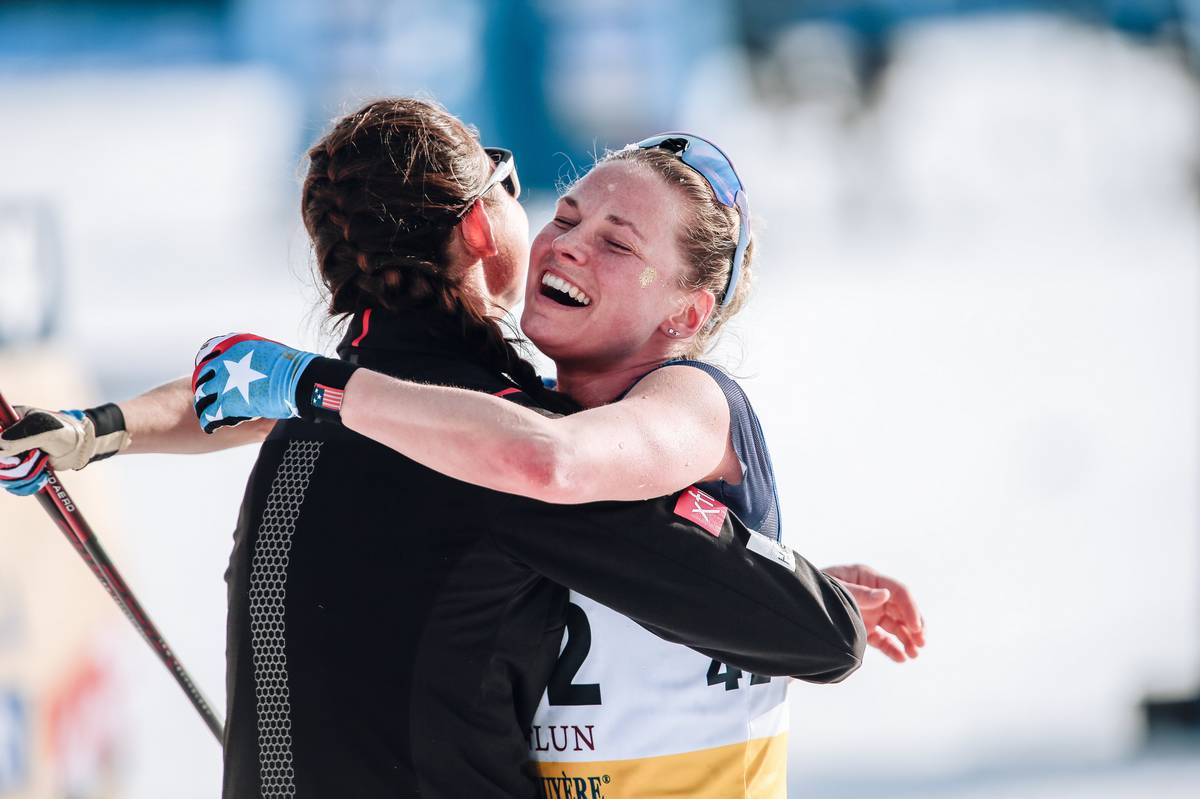
Jessie Diggins hugs teammate Julia Kern at the finish of the 10 k freestyle in Falun. (Photo: NordicFocus)
Today the International Ski Federation (FIS) banned all Russian and Belarusian athletes and officials from taking part in any remaining FIS competitions. The press release stated, “The FIS Council decided unanimously in line with the IOC recommendation, that with immediate effect, no Russian or Belarusian athlete shall participate in any FIS competition at any level through the end of the 2021-2022 season.”
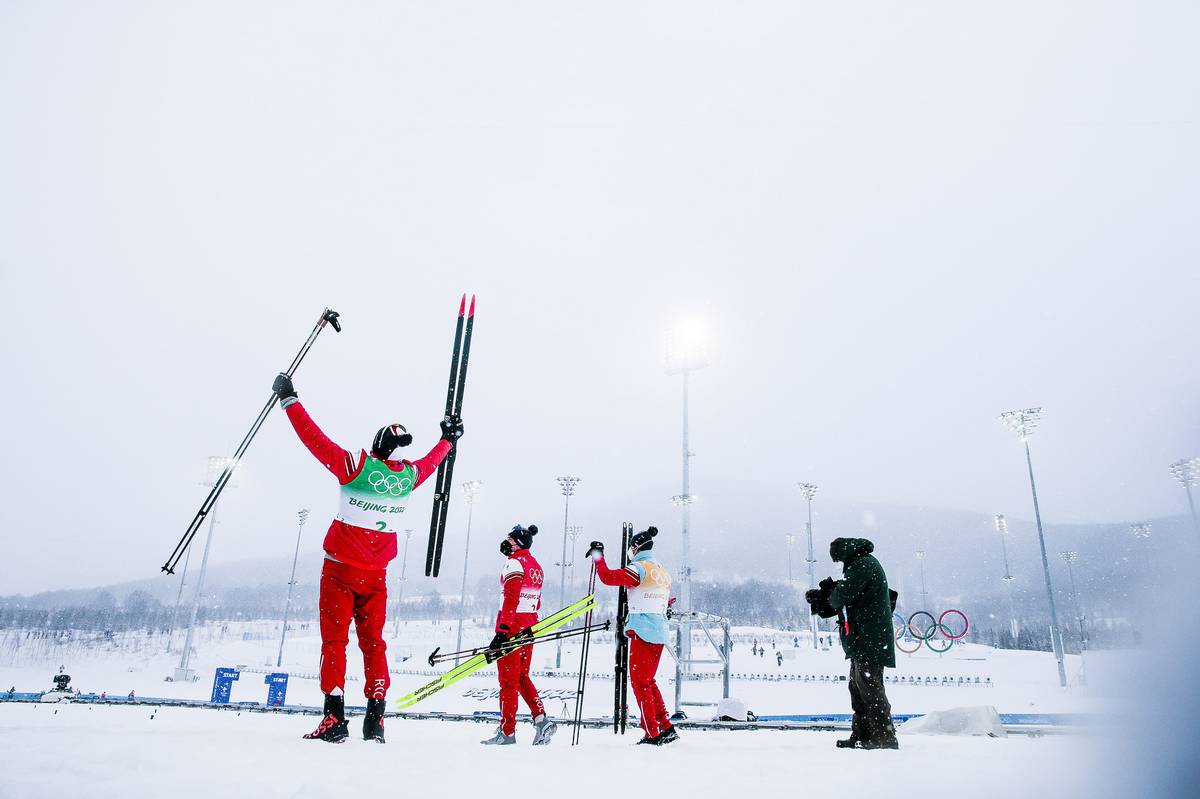
The Russian team celebrates a dominant performance at the men’s 4 x 10 k relay during the 2022 Olympic Winter Games. (Photo: NordicFocus)
On Saturday, February 26th the board of the Norwegian Ski Association decided in a special meeting to uninvite Russian and Belarusian athletes from its upcoming World Cup races in Drammen and Holmenkollen. The position of the Ski Association was clear: “We do not want their participation.”
However, the Norwegian Ski Association and the event organizers lacked the authority to bar athletes, and FIS stood by their position of allowing all athletes to compete, telling NRK “The FIS board has been clear in its approach to Russian athletes in all FIS competitions… national federations and local organizers should not exclude athletes on the grounds of gender, race, nationality or sexual orientation.”
On Monday, February 28 the Russian cross country ski team arrived in Oslo despite their lack of welcome and were met by Norwegian reporters at the Gardermoen airport. The athletes declined to speak, but Bolshunov’s coach, Yuri Borodavko did. “Well, it’s a terrible situation,” Borodavko told NRK. “War is always terrible. No one has ever wanted a war, not even us. Thank God there are sensible people with common sense, who do not give in to the panic that is now spreading throughout the world, and it is the leaders of FIS.”
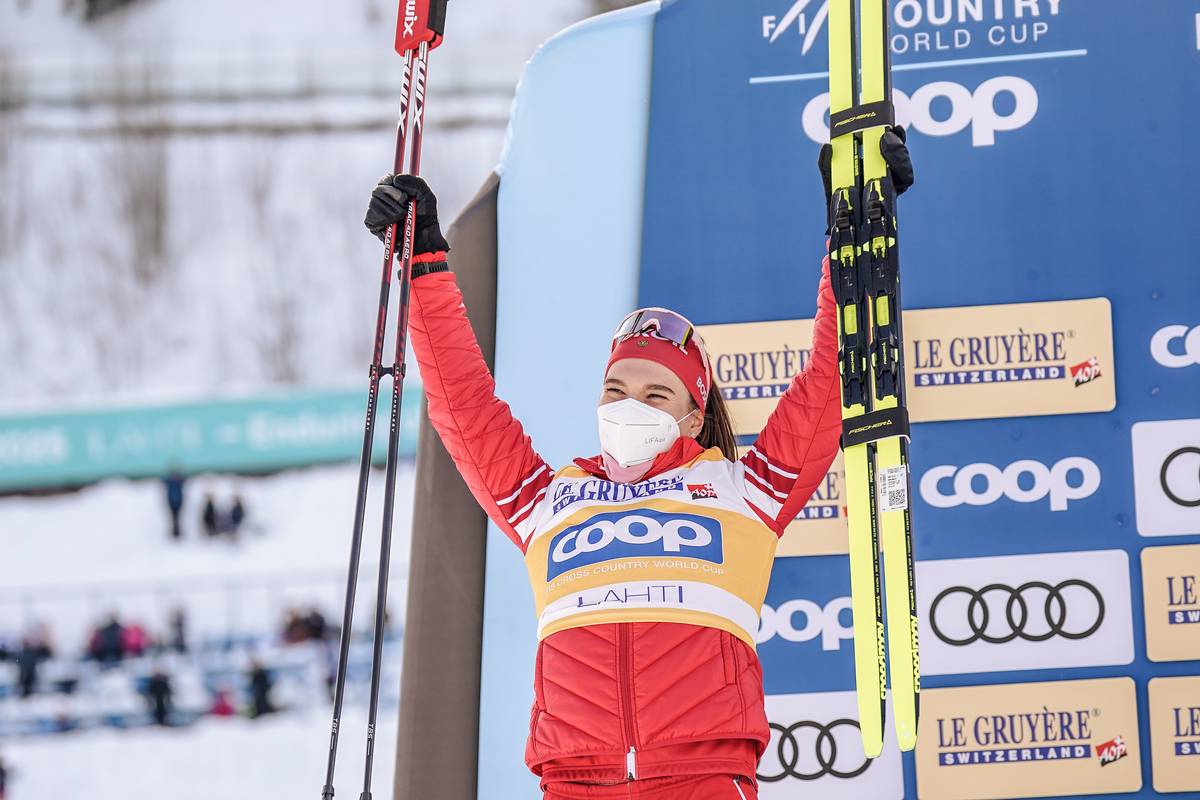
Russia’s Natalia Nepryaeva steps onto the podium following a second place finish in the 10 k classic in Lahti. (Photo: NordicFocus)
On Monday the Ski Associations for Norway, Sweden, and Finlandwrote to FIS to ask for the exclusion of Russian athletes. Later in the day, the International Olympic Committee (IOC) revised their advice and requested the exclusion of Russian and Belarusian athletes.
“[The Ski Associations] letter was somewhat surprising to us,” said FIS Secretary General Michel Vion.
FIS, seemingly unable to move in tandem with events, made no response, and Vegard Ulvang pushed the Norwegian Ski Association to carry through with the refusal to host Russian athletes, saying, “It is a decision that FIS should have made. When they do not take it, it is we [Norway], who own the event, who must take it. If FIS disagrees with the decision, they can take the World Cup from us, it is a risk we should take. Then we will also force FIS to take active action.”
With no word from FIS, the Norwegian Ski Association hosted a series of crisis meetings on Monday night and early Tuesday morning, during which the organization decided to override FIS and ban all Russian and Belarussian athletes from competing, regardless of the consequences of the action.
“We had hoped that FIS would come to that decision on behalf of the entire ski sport,” said Norwegian Ski Association President Erik Røste, “But now the Ski Association can not wait any longer.”
FIS Secretary General Vion dismissed the position of the Norwegians saying, “We received some emails, with inquiries that were not reality-oriented. The Norwegian Ski Association does not have the authority to cancel anything or to exclude athletes. They express a wish that there will be no Russian athletes, but it was just a wish.”
The Russian ski team, training in Holmenkollen on Tuesday morning confirmed that they would leave Norway and not participate in the World Cup. “Let our rivals compete,” Borodavko told VG. “Let’s just say they are not our friends and not comrades.”
With the decision effectively already taken, FIS seized the moment at noon Central European time on Tuesday and banned the Russian and Belarusian athletes and officials. “I am very happy that FIS ended up in that position,” said Røste, adding, “It has taken too long, it could have come earlier.”
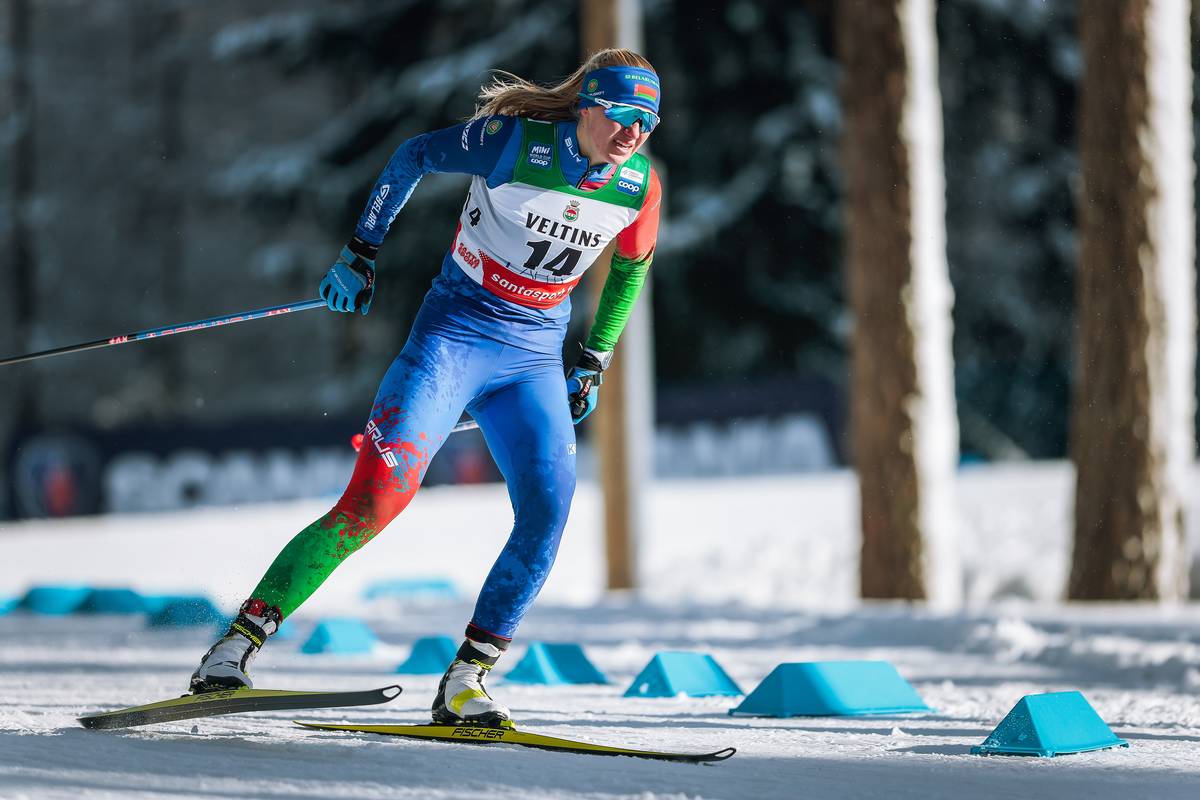
Belarussian athlete Hanna Karaliova races the freestyle sprint qualifier last weekend in Lahti, FIN. (Photo: NordicFocus)
The FIS decision narrowly averted the likely cancellation of the remaining World Cup races and the flight of sponsors.
Geirr Kihle, the event organizer of the Drammen city sprints this Thursday had urged fans to come to the event in the blue and yellow of the Ukrainian colors. He said he hoped the public’s reception to the Russian athletes would be, “to put it a little simply, sour.”
On Tuesday morning, Drammen said they would withdraw from hosting the race if the Russian athletes were not banned.
Pressure on FIS also came from Coop—the title sponsor of the World Cup. “We have given FIS clear guidelines for what we believe,” said Takle Friis, the Director of Communications for Coop to VG. “They must respond immediately. In sympathy and solidarity with Ukraine, we can not accept that the Russian team will go to the World Cup.”
Coop will adopt the Ukrainian colors for their logo on race bibs, and are working to change trailside billboards at Holmenkollen to promote donations to the Red Cross.
Sponsorship deals for Russian athletes also began to evaporate. Brav, the parent company of Swix and Toko announced on Monday that effective immediately, it will end all business in Russia and sever ties with Russian athletes.
The conflict between the sporting associations and FIS is yet another note in a habit of day-too-late decision making by the governing body of world skiing. Following the Russian invasion of Ukraine, the US ski team along with Norway, Sweden, and Finland all declared that they would not send teams to the scheduled World Cup Finals in Tyumen, Russia. After a day of urging FIS to act, the following day FIS canceled all remaining events in Russia. By then, it was already a moot point—no one was going.
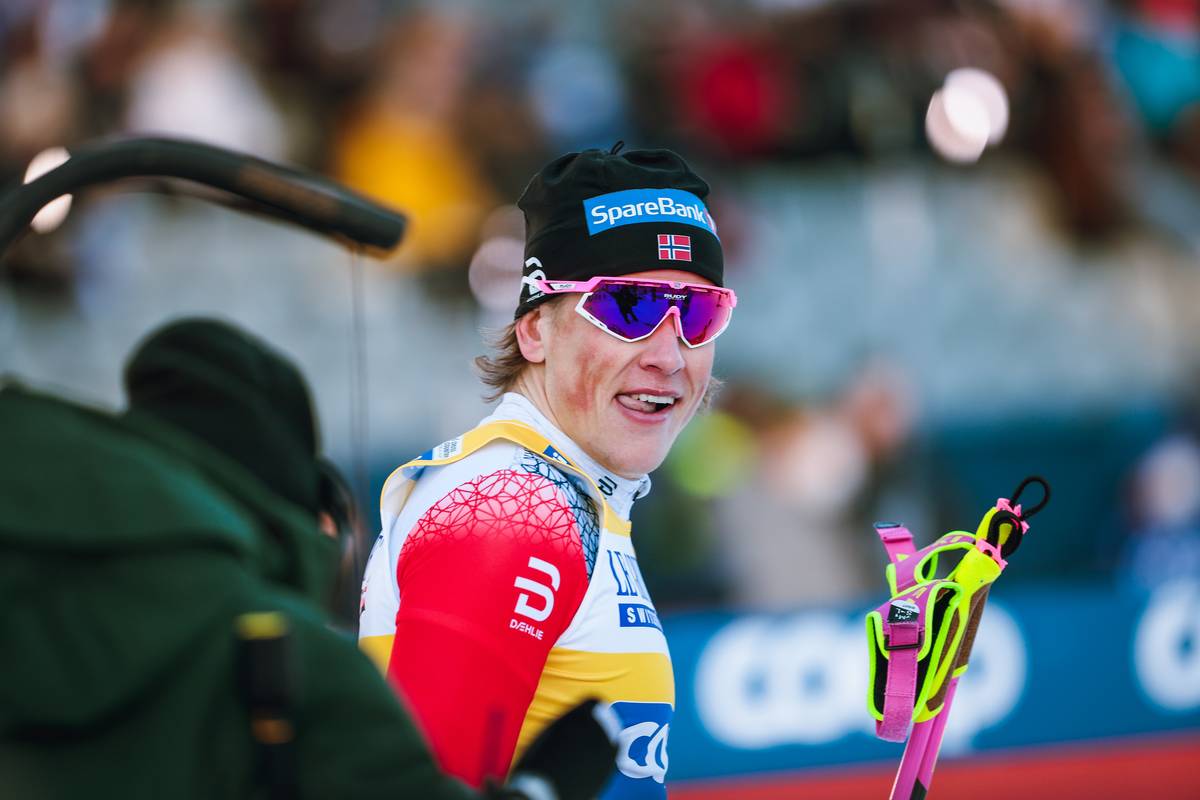
Johannes Høsflot Klæbo enjoys a victory in Lahti’s freestyle sprint. (Photo: NordicFocus)
Johannes Klæbo has been perhaps the most outspoken athlete on the issue. On Monday, he told VG “I think it is both cowardly and weak that FIS does not make the decision to deny Russia participation in Norway and in the World Cup. FIS should have done as Ski Classics [did] – and said no to Russia.”
The Visma Ski Classics, a rival circuit to that of FIS World Cup, moved swiftly on Monday to remove Russian skiers from the Vasaloppet and the season long competition.
The FIS decision came too late for some quarters: Ӧstersund announced that there was no longer sufficient time to get a budget and sponsorship ready to host the World Cup Finals.
A day earlier, the municipality of Ӧstersund, which owns the ski trails, declared that they would bar the use of the ski trails for the event if FIS did not ban Russian athletes.
The World Cup will now likely end a week earlier than scheduled in Falun, Sweden on March 13th.
The late decision from FIS stoked grumbles that the federation may be overly beholden to Russian interests. As Drammen race organizer Geirr Kihle put it about sport federations in general, “Those who are called the ‘high lords’ have a hard time deciding. It is very common for Russians to sit on the boards. They are involved in deciding and will probably almost veto if they do not get what they want.”
Norwegian newspaper Dagbladet also questioned the interests of new FIS President Johan Eliasch, the Swedish-British billionaire and former CEO of the ski company HEAD. Dagbladet challenged Eliasch’s record of supporting Russian tennis star, and HEAD athlete Maria Maria Sharapova, after tested positive in 2016 for banned substance Meldonium. Eliasch at the time said “Has WADA something against Russia? I believe they do.”
The assertion that FIS is biased towards Russia was refuted by Secretary General Vion who replied to the NRK question, “Of course not! How can you say that?” He pointed out that Elena Valbe, the head of Russian skiing, is the only Russian to sit on the 19 member council.
Nevertheless, the situation is far from resolved. NRK commentator Jan Petter Saltvedt rejected the phrasing that FIS used to ban the athletes which focused on athlete safety and in his words, lacked “the essential thing, namely the condemnation of Russia’s invasion.”
“The whole reasoning is untrustworthy and deficient,” argued Saltvedt. “Many questions remain about what kind of power struggle this has been and what FIS leaders really think about this.”
The cautious wording from FIS likely has much to do with an expected appeal by the Russians in the Court of Arbitration for Sport (CAS).
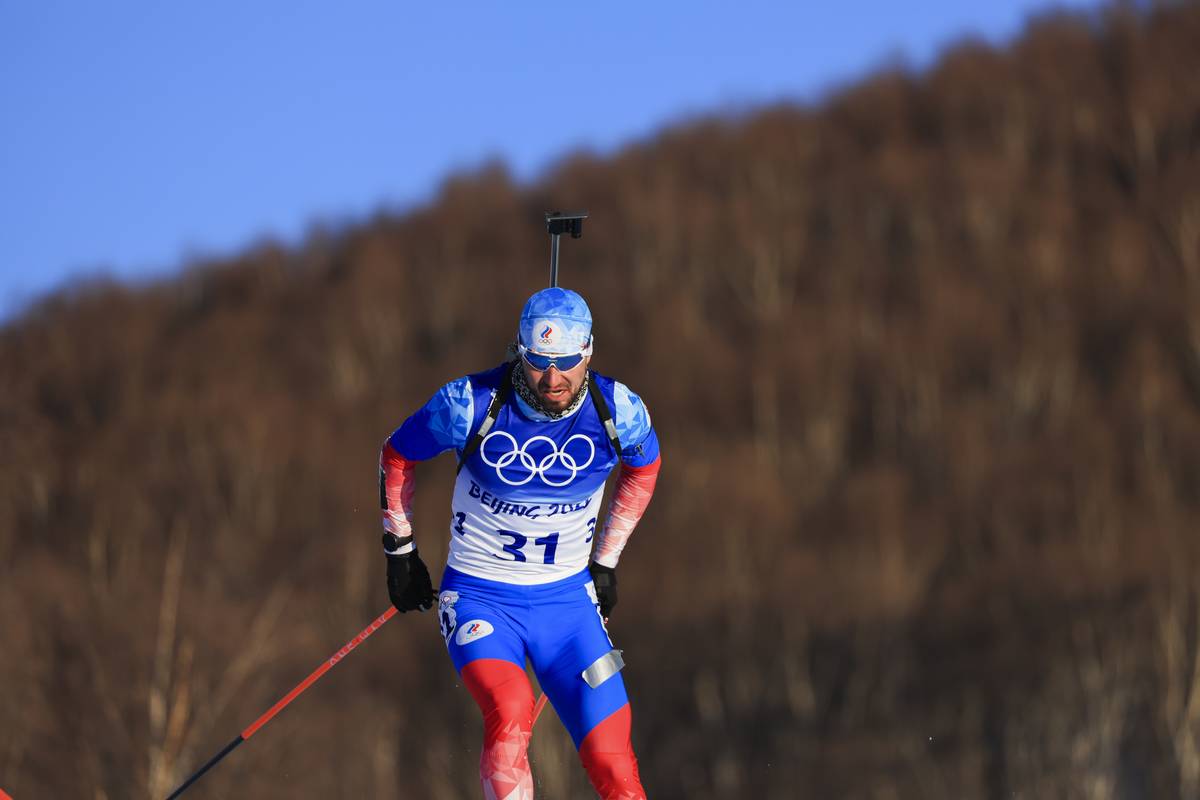
Russian biathlete Alexander Loginov competes in the men’s individual competition during the 2022 Beijing Olympic Winter Games. (Photo: NordicFocus)
When the International Biathlon Union decided on Saturday to require Russian athletes to compete under a neutral flag, their team promptly withdrew from the World Cup, stating, “We are furious at these illegal actions of the IBU and will defend the rights of our athletes and the rights of the RBU as a member of the International Federation.”
The case is expected to end up in CAS, and there is a likelihood that the same will occur in cross country skiing.
The Russian team will leave Norway on Wednesday, reported Borodavko to NRK. “When you start to mix politics into the picture,” Borodavko said, “there is something we can not accept, so therefore we go back.” With no flights between Europe and Russia, their journey home will likely route them through Turkey.
The manner in which FIS came to the decision will likely deal a blow to its credibility, managing in a single stroke to alienate both its Scandinavian and Russian partners. FIS has struggled to rise to the challenge that this season has presented, with previous misses being the COVID related cancellations of World Cup races in France and Slovenia, an impromptu shortening of the men’s Olympic 50 k, and a belated cancelation of the World Cup Finals in Russia.
“Things take time,” Klæbosaid on Friday, adding, “But I certainly think we do not have to wait until the longest every single time.”
Jens Burman of Sweden may have summed it best to Aftenbladet on Tuesday morning before FIS’s announcement. “In principle, everyone has excluded them, but not FIS. You are almost a little ashamed.”
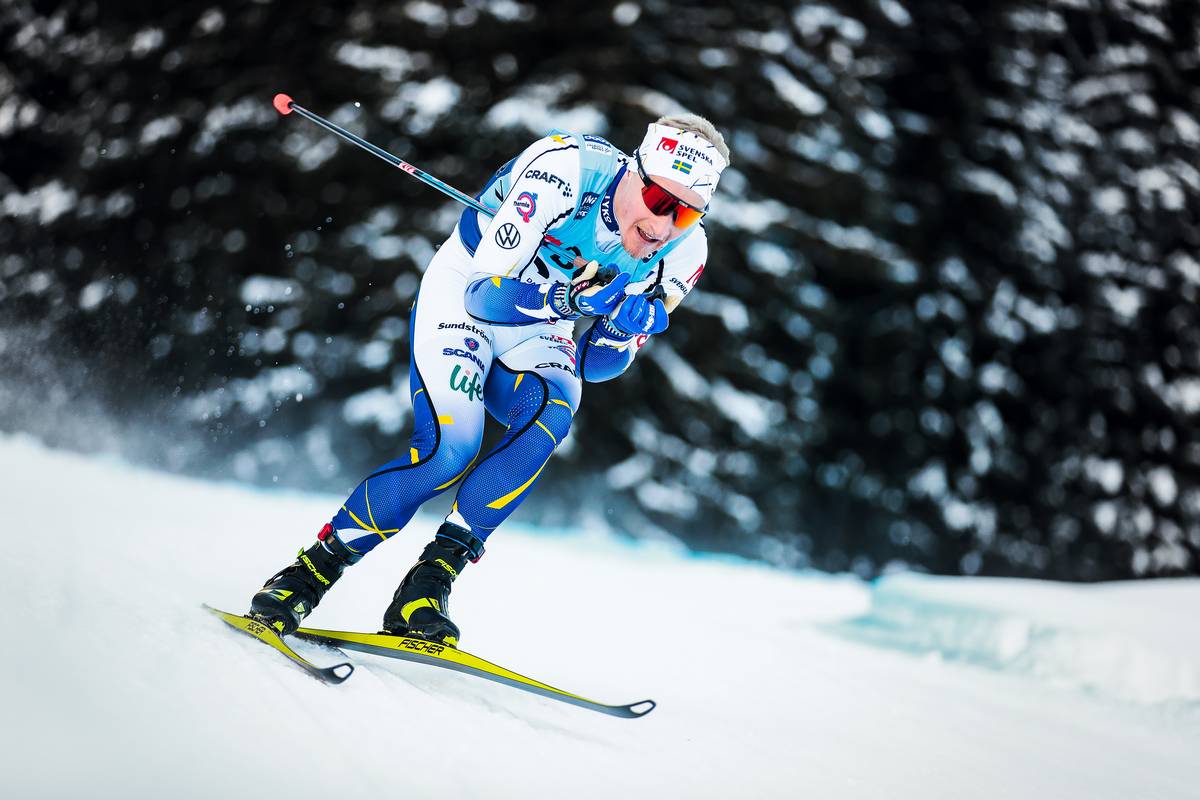
Sweden’s Jens Burman races the 15 k skate during a December 2021 World Cup in Davos, SUI. (Photo: NordicFocus)
Has it really been a week since the Olympics already? The World Cup’s furious schedule forges on with more racing this weekend in Lahti, Finland. Special guest host, Finnish Olympic gold medalist Sami Jauhojaervi, joins us to break down those results and other Finnish highlights from this season.
We also cover results from the World Junior Championships in the early part of the podcast, and finish with a brief discussion of how cross-country skiing is handling Russian participation on the World Cup circuit given the country’s invasion of Ukraine.
On February 26th, the Norwegian Ski Association (NSA) released a statement indicating that in light of the nation’s recent invasion of the Ukraine, Russian participation was not welcome at the upcoming World Cup sprint races in Dramman or the storied Holmenkollen distance races outside of Oslo. In addition to these cross country events, Norway is scheduled to host competitions in alpine, nordic combined, and ski jumping, including the World Ski Flying Championships in Vikersund.
A press release shared by Norwegian news source NRK stated: “The board of the Norwegian Ski Association has today discussed the situation related to Russia’s invasion of Ukraine, and how this affects the upcoming World Cup races and the world championship in Norway. The Norwegian Ski Association’s message to Russia and Russian athletes is crystal clear; We do not want their participation!”
NSA president Erik Røste told NRK that a request had been made to the International Ski Federation (FIS) to officially bar the Russian program from participating, but as of Saturday, FIS had not taken action to comply with the request, instead pointing to the official cancellation of remaining FIS events held in Russia.
“The attack on the Ukrainian people and the great suffering we see pictures of now, the sport can not remain passive and be neutral,” Røste said of the request. “Therefore, the board of the Norwegian Ski Association was clear that this must have consequences beyond what has already been decided. Therefore, we will send a clear and distinct signal to FIS that we do not want Russia and Russian athletes to participate in competitions in Norway in the coming weeks.”
Ultimately, it is up to the board of FIS whether Russia will be allowed to compete in the remainder of World Cup events. A response NRK received via email today stated:
“The FIS board has been clear in its approach to Russian athletes in all FIS competitions. To ensure fair and inclusive competitions at all FIS events, national federations and local organizers should not exclude athletes on the grounds of gender, race, nationality or sexual orientation.”
Alexander Bolshunov (RUS) wins the 2020 Holmenkollen 50 k in the fog, ahead of Norway’s Simen Hegstad Krüger. (Photo: NordicFocus)
As such, no Russian athletes or coaches have been denied entry to Norway, and Stefan Marx, the general manager of Holmenkollen ski festival, indicated there is little more that the organizers can do to prevent Russian participation in the events.
“We must let them participate,” Marx said to NRK. “Those who FIS and the Norwegian Ski Association say must be allowed to participate. We do not have the authority to refuse anyone to participate, but we have supported the Ski Association and the Sports Association’s position. It is up to FIS or the authorities to decide, but we are clear in our support for the Ski Association’s proposal that Russian athletes are not wanted due to violations of international law that have been committed.”
After flying from Helsinki following the Lahti World Cup races, Russian teams have begun to arrive in Norway. When pressed by the media upon his arrival, World Cup distance leader and favorite for the upcoming 50 k classic at the Holmenkollen, Alexander Bolshunov chose to remain silent. NRK did, however, receive comments from multiple Russian coaches, including head coach Marcus Cramer who felt that sport and politics should be kept separate.
“What do sports and athletes have to do with this situation? It’s really tough. I just get sad that the Norwegian association thinks like that. We really have a good communication between us. With everyone who works there. It’s sad to hear this, especially when they take it to the press and not us first,” said Cramer.
Another Russian coach, Jegor Sorin, who had been working at the Junior/U23 World Championships in Lygna, NOR and planned to join the Russian team in Oslo, echoed that Russian athletes should not be held accountable for the
“I am very upset that the Norwegian association wants this,” Sorin told NRK. “I can understand that no one wants to travel to Tyumen for the World Cup, but I do not know what happens to us… We are Russian athletes. We are here, we are not in any war. We are athletes, not soldiers. Maybe they think we have weapons. We want peace and for me this is very strange.”
Alexander Bolshuonv is photographed with his four Olympic medals from the 2022 Games, with one event remaining. He would leave the Games with three gold medals, and a total of nine Olympic medals including those won in 2018. (Photo: NordicFocus)
Though the Russian coaches focused on a separation between sport and politics, others have pointed out the direct ties between sporting success and military recognition. Used as an example, Bolshunov and Denis Spitsov were promoted to the rank of captain in Russia’s National Guard in recognition of their success during the 2022 Olympics. Bolshunov, who has earned a medal in each of his nine Olympic appearances, including three gold medals in Beijing, received additional honors in the form of the Alexander Nevsky Order, given in recognition of “special service for the fatherland.”
FIS cross-country committee leader, Vegard Ulvang told NRK, “Russian athletes are [military] officers. This makes the symbolic value [of their participation] even greater.”
A similar statement was made by Global Athlete representative and former U.S. Ski Team athlete Noah Hoffman.
“While I feel for the individual athletes, all Russian skiers should be banned from the FIS Cross Country World Cup for the rest of the season,” Hoffman tweeted. “Their results are used to drum up nationalism and bolster the Russian State. Allowing them to compete aids Russia. #StandWithUkraine.”
Ulvang is urging a stronger response from the Norwegian Ski Federation, suggesting that they relinquish the FIS World Cup status of the events at the Holmenkollen in order to gain the authority to prohibit Russian participation.
Jan Petter Saltvedt, a Sports Commentator for NRK described Ulvang’s statements as a “moral ultimatum.”
“Ulvang demands an open rebellion from NSF against his own superiors,” Saltvedt said. “And he should get it. Vegard Ulvang puts so much pressure on the Norwegian Ski Association that they can not help but act… At the same time, he expresses a very strong and clear criticism of FIS, where he himself is one of the powerful committee leaders, but still does not feel he is heard at all.”
Norwegian athletes who have been asked for comment have given mixed responses, often acknowledging the complexity of the issue and whether the athletes themselves should be at fault for government decisions.
Among those with a clear stance, Erik Valnes spoke of disallowing Russian participation. “There is a heavy symbolism in it. It would send a signal. Since [Bolshunov] is [a captain of the Russian National Guard], they have already mixed sports and politics in a way. It is difficult. It is a great pity that it will be like that.”
Erik Vales and Johannes Høsflot Klæbo earn gold in the classic team sprint during the 2022 Beijing Games. (Photo: NordicFocus)
Johannes Høsflot Klæbo also spoke in support of the NSA urging FIS to remove Russian athletes from competition.
“As an athlete, you want the best to start. We train all year to compete and then you want the best to participate,” Klæbo said to NRK. “At the same time, I support the attitude of the ski association now. There is no doubt about what is happening in Ukraine, and Russia must be condemned. I strongly condemn it and I think it is good that the association takes a stand.”
Therese Johaug acknowledged that athletes may not have direct involvement in the military actions of Russia, speaking instead to their role in representing their country through sport.
“I feel sorry for the athletes, first and foremost, I understand that they have nothing to do with this,” Therese Johaug told NRK after narrowly winning Lahti’s 10 k classic over Russian Natalia Nepryaeva. “But on the other hand, I think it is completely wrong. They front their country and the flag both on the chest and on the forehead. And that a country should also ravage the sports arena and fight for victories and front their country in the situation we are in – I think that is completely wrong.”
Therese Johaug voices her thoughts on Russian World Cup participation following her win in Lahti’s 10 k classic. (Photo: NordicFocus)
The stance is not unanimous amongst the Norwegian team. Sindre Bjørnestad Skar, who took third in Lahti’s freestyle sprint, spoke to the unfairness for Russian athletes.
“Of course, I am 100 percent against everything that is happening between Russia and Ukraine now. It is completely inconceivable. But then I also do not think that the fact that they have a Russian passport, means that they should be punished and deprived of the opportunity to do their job. In a way, I think that is a bit unfair too,” Skar told NRK.
For the time being, no further changes in Russian participation have been reported. FasterSkier will continue to follow this story as it evolves over the next few days. World Cup classic sprint races are currently scheduled in Drammen Thursday, with the women’s 30 k mass start classic in Oslo happening Saturday March 5th, followed by the men’s 50 k on Sunday.
Yesterday, FasterSkier reported that the U.S. Ski Team would not be attending the World Cup finals scheduled for March 18 – 20 in Tyumen, Russia, given the nation’s invasion of Ukraine on Thursday. At that time, the International Ski Federation (FIS) had not announced whether events scheduled for the remainder of the season in Russia would be held as planned, however, a FIS official had indicated on February 15th that the situation in Russia was being closely monitored and alternative locations for the World Cup finals were being evaluated.
The FIS released the following update today indicating that all remaining season events will be cancelled, including the cross country World Cup finals in Tyumen. Rescheduling remains possible, but has yet to be confirmed. FasterSkier will continue to follow this story and will update readers when more information becomes available.
(FIS MEDIA RELEASE) FIS Cancels all Remaining 2021-22 Season Events in Russia
Oberhofen, Switzerland 25 February 2022
After close consultation with its stakeholders, FIS has decided that in the interest of the safety of all participants and to maintain the integrity of the World Cup, that all remaining World Cup events scheduled to take place in Russia between now and the end of the 2021- 22 season will be canceled or moved to another location.
The impacted events include:
FIS Ski Cross World Cup – 25-27 February, Sunny Valley (RUS)
FIS Aerials World Cup – 26-27 February, Yaroslavl (RUS)
FIS Women’s Ski Jumping World Cup – 18-20 March, Nizhny Tagil (RUS)
FIS Women’s Ski Jumping World Cup – 25-27 March Chaikovsky (RUS)
FIS Cross Country World Cup – 18-20 March, Tyumen (RUS)
Participants are already on site at the two World Cup events that were planned for this weekend (Ski Cross and Aerials) and FIS is working closely with the involved stakeholders to ensure their quick return back home.
FIS will communicate the replacement competitions’ hosts and dates as they are confirmed for the impacted events.
The International Ski Federation hasn’t said whether the races, in the Siberian city of Tyumen, will go off as scheduled next month.
The U.S. cross-country ski team says it will skip upcoming races in Russia amid that country’s invasion of neighboring Ukraine.
A team official said Thursday that the Americans will skip the final weekend of racing on the top-level European World Cup circuit, which is scheduled for next month in the Siberian city of Tyumen.
Athletes take to the course for a 10 k mass start skate in Oberstdorf, Germany during the 2021/22 Tour de Ski. (Photo: NordicFocus)
The International Ski Federation, or FIS, which organizes the World Cup, has not yet said if the races will be held as planned.
But in an email Thursday morning, Chris Grover, the U.S. team’s program director, said American athletes will not attend.
U.S. Ski & Snowboard cross country program director Chris Grover discusses whether the American team will attend the World Cup finals currently scheduled for Tyumen, RUS. (Photo: US Ski & Snowboard)
“We let the FIS and the Tyumen organizing committee know this morning that the U.S.A. would not be coming to Tyumen World Cup finals, given Russia’s attack of Ukraine,” Grover said in a brief email. “We chose to cancel the trip for the USA team because Russia remains in the Level 4 – Do Not Travel status on the State Department website and we were concerned about the safety of USA athletes and staff.”
The U.S. team recently finished competing at the Olympics in China and is scheduled to race in World Cup events in Finland this coming weekend. Grover did not immediately respond to a question about where team members might compete instead of the Tyumen events, which are scheduled for March 18-20.
It’s also possible the races could be moved out of Russia. FIS officials said earlier this month that they were monitoring the political situation in Russia and Ukraine and exploring backup venues in Scandinavia, France and Slovenia.
FIS officials did not immediately respond to a request for comment Thursday.
Alexander Bolshunov helps the ROC to a gold medal in the 4 x 10 k relay during the 2022 Olympic Winter Games. (Photo: NordicFocus)
Alexander Bolshunov, the Russian skier who is the odds on favorite to win Saturday’s 50-kilometer freestyle marathon at the Beijing Olympics, may have more on his mind than a momentous ski race: A potential Russian invasion of Ukraine will likely pass near to his childhood home in the rural village of Podyvot’e, in Russia’s Bryansk region.
Bolshunov grew up in Podyvot’e where his father taught him to ski on a pair of green wooden Malyshokas on trails he built by hand in the fields and forests near their home. “I don’t remember my childhood without skis,” Bolshunov has said in an interview.
When Bolshunov was a kid he could travel by ski or otherwise into Ukraine, whose border is only a couple of kilometers from town. That changed in 2014 when Russian forces and Russian backed separatists invaded the Crimea and Donbas regions of Ukraine. Since 2018, Russian men between the ages of sixteen and sixty are banned from entering Ukraine.
Now, with tensions rising as the Russian military surrounds Ukraine, some analysts have pointed to a potential invasion route of Ukraine that would take Russian forces close to Bolshunov’s family home.
A major arterial highway runs through Troebortnoe. On the Russian side of the border it is called the M3 and leads to Moscow. On the Ukrainian side it is the M2 and runs close to Kiev. A Russian invasion would likely need that highway to move forces quickly toward the Ukrainian capital.
The border crossing at Troebortnoe is only about 14 miles from Podyvot’e, separated by fields and a forest that stretches near to the doorstep of Bolshunov’s family home. “Just 500 meters from the house begins a large forest,” said Bolshunov, “Where there are those [loops] that I always run when I go there – 10 k, 15 k.”
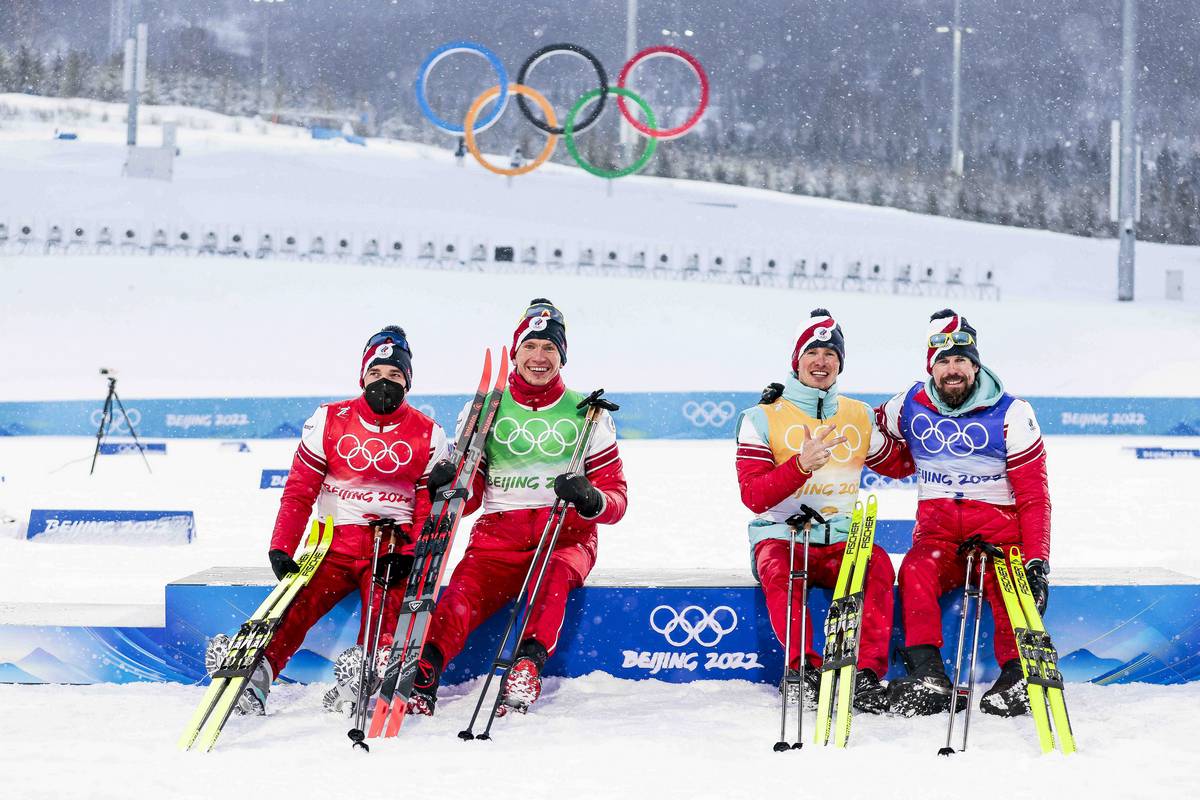
The Olympic gold medal relay team: Alexey Chervotkin, Alexander Bolshunov, Denis Spitsov, and Sergey Ustiugov (l-r) (Photo: NordicFocus)
For Bolshunov, this landscape of birch and pine represents the natural idyllics of his youth. “I love to go to the forest picking mushrooms, [and] also fishing if I have enough time.” Bolshunov said in an interview with FIS.
“Childhood memories of the village—strawberries, for which we often went,” recounted Bolshunov. “Sometimes, 10 liters were collected. Another [were] blueberries—it took six hours to collect a bucket of 5-6 liters. Everything grew near our house.”
For the older residents of Podyvot’e, the forest also carries somber memories: A quiet memorial remembers the 182 villagers that were massacred by the Nazis as they hid in the forest.
Whether conflict will arise again in the area remains to be seen. Should Russian President Vladimir Putin decide to invade this weekend, it would mark the second time he has done so in conjunction with the men’s Olympic 50 k race.
Alexander Bolshunov (ROC) celebrates a gold medal performance as his teammate, Sergey Ustiugov, races the final meters of the 4 x 10 k relay. (Photo: NordicFocus)
In 2014, the night before the final cross country race at the Sochi Olympics—the men’s 50k—Putin held an all night meeting at the Kremlin with his security and defense leaders to discuss the annexation of Crimea.
“We finished about seven in the morning.” Putin told a Russian TV documentary as reported by the BBC. “When we were parting, I told all my colleagues, ‘We are forced to begin the work to bring Crimea back into Russia’.”
Four hours later, the men’s 50 k race kicked off in Sochi and the Russian men notoriously swept the event. Putin would fly back in time for the closing ceremonies where the three skiers received their medals before a packed stadium.
The correlation between the Olympics and Russian military adventures is quite direct. At the Sochi Olympics, the Russian medal haul helped boost Putin’s public approval numbers to record highs, and in his all night war room meeting that February, Putin carefully considered secret polling that showed favor to the annexation issue.
In the Netflix documentary Icarus, former RUSADA head Grigory Rodchenkov who helped to orchestrate the 2014 Russian state sponsored doping program, said of the post Olympic invasion of Crimea, “I felt my personal guilt for such [an] event. [If] Russia had [won] less medals, Putin would not be [so] aggressive.”
Alexander Bolshunov (ROC) celebrates victory in the 30 k skiathlon, the first event of the 2022 Olympic Winter Games. (Photo: NordicFocus)
In terms of medal count, the Russian Olympic Committee (ROC) heads into the final weekend in second place. Their medal haul has been bolstered by the cross country ski team which has won a third of all ROC medals. Of those, four have involved Alexander Bolshunov, who at 25 years old has already become the winningest cross country skier in Russian history. He has won a medal in every Olympic race he has entered and is poised to deliver again in the men’s 50 k on Saturday. For his success, he has been nominated by the State Duma to carry the ROC flag at the closing ceremonies.
For Bolshunov’s father in Podyvot’e, the results of his son have meant more than any economic advantage that his career has provided, and Bolshunov Sr. still prepares his ski trails in the hope that his son might make an unscheduled return. “Neighbors think I’m crazy,” Bolshunov Sr. has said. “But my son has such results. This is worth living for. Money is not manna from heaven, I never needed it.”
Bolshunov Sr. has no plans to leave Podyvot’e. “You can’t kick me out of there with a stick,” Bolshunov’s father said in 2018. “As we lived, so we live. We don’t get into politics. Ukraine is nearby, but no one seems to be coming to us from there. Everything is fine.”
Through no fault of Bolshunov’s own, a possible gold medal in the Olympic 50k could help burgeon feelings of confident nationalism in Russia and put his hometown on the frontlines of what could be the largest European war this century. When it comes to the men’s Olympic 50k race, the stakes are often much greater than gold.
A back-of-the-pack women’s skier competing for Ukraine at the Beijing Olympics has tested positive for banned drugs, according to the agency that’s overseeing testing at the Games.
Valentyna Kaminska tested positive for a banned steroid and stimulants on the day she finished 79th in the 10-kilometer classic event, the International Testing Agency said in a statement Wednesday.
Ukrainian skier Valentyna Kaminska tested positive for banned steroid and stimulants following the 10 k classic event. (Photo: NordicFocus)
Kaminska has been provisionally suspended until the case is resolved and is banned from participating in further Olympic events, the ITA said. She can challenge the suspension at the Court of Arbitration for Sport, and she can also ask authorities to analyze her B-sample.
Kaminska competed at the 2018 and 2014 Olympics for Belarus, where she was born, before moving to the Ukrainian team. She’s never cracked the top 30 in an individual World Cup event, or at the Olympics or World Championships.
She has not responded to a request for comment sent Thursday through her Instagram account.
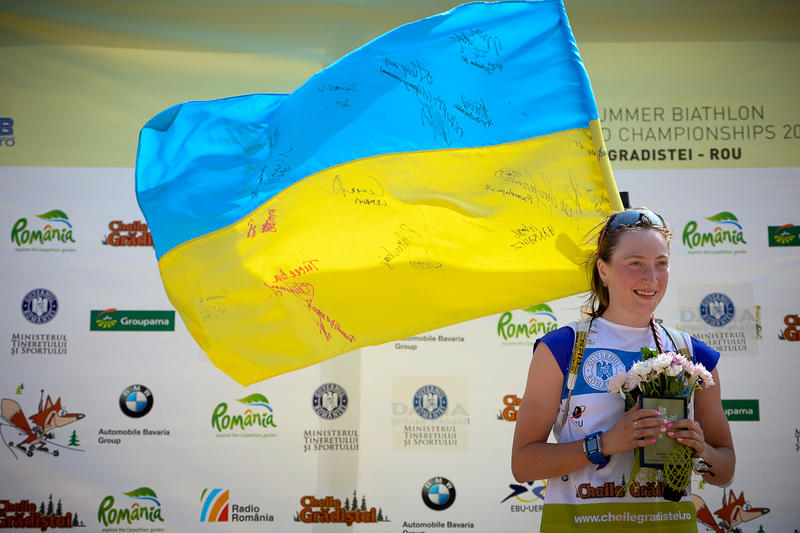
Olga Abramova after winning gold in the pursuit competition at Summer Biathlon World Championships in Romania in August 2015. She had also won the sprint. (Photo: IBU/Evgeny Tumashov)
When Ukrainian biathlete Olga Abramova tested positive for meldonium, a metabolic modulator added to the World Anti-Doping Agency (WADA) Prohibited List, she publicly stated that she had been prescribed the drug in November, 2015.
WADA announced in September, two months before that, that the drug would be prohibited starting January 1. Abramova claimed that she had stopped taking the substance before January 1, but that it must have stayed in her body until January 10, when she was tested at a World Cup in Ruhpolding, Germany.
Both came before an International Biathlon Union Anti-Doping Hearing Panel on March 30, with the two sides agreeing to defer the case.
At issue is Abramova’s claim: that she had stopped taking the drug, but that it had stayed in her body and she could not have known that this would happen.
“The matter of how long it may take for Meldonium to be excreted from the body was essential, as the results of a pilot study conducted by the expert called by the Panel contradicted the present state of literature on Meldonium,” the IBU stated in a press release. “Therefore, IBU and both athletes, by common agreement, requested, first, to suspend the proceedings until a study which was called a WADA-study will be available and second, that the parties will be given the opportunity to comment on the results of the study. According to the information available at the hearing the results of the study are expected for no later than September 2016.”
This may signal that the Panel will be receptive to athletes’ claims that they unknowingly still had banned substances in their bodies.
According to the WADA, intention to dope or cheat is not required to find an athlete in violation of the WADA Code. This is known as “strict liability”, and has been upheld by the Court of Arbitration for Sport in multiple appeals cases.
“Strict Liability: The rule which provides that under Article 2.1 and Article 2.2, it is not necessary that intent, fault, negligence, or knowing use on the athlete’s part be demonstrated by the anti-doping organization in order to establish an anti-doping rule violation.”
The principle of strict liability holds that flexibility may be used when deciding how long an athlete’s sanction must be, but not whether the athlete is sanctioned in the first place.
On the other hand, the IBU may be interested in how long the drug stays in someone’s system because a longer half-life may mean that its performance-enhancing qualities are long-lasting, which might have different implications for sanctions.
The IBU did not clarify the panel’s interest in the potential findings.
The athletes will remain provisionally suspended until the case is picked up again, presumably in September.
The outcome of the WADA study on meldonium half-life in the body has implication for other biathletes as well, as Russia’s Eduard Latypov and another unnamed athlete also tested positive and their Anti-Doping Hearing Panel hearings are pending.
Olga Abramova after winning gold in the pursuit competition at Summer Biathlon World Championships in Romania in August 2015. She had also won the sprint. (Photo: IBU/Evgeny Tumashov)
Olga Abramova, a Ukrainian World Cup biathlete whose “A” sample from a January competition tested positive for the banned hormone mildronate, has waived her right to have the “B” sample examined.
That means that her case will proceed immediately to an International Biathlon Union (IBU) Anti-Doping Hearing Panel, which will decide whether and how to discipline the athlete.
Mildronate was added to the World Anti-Doping Agency’s Prohibited List effective January 1st, and Abramova’s sample was collected just ten days later. Originally designed as a growth-promoting hormone for livestock, mildronate is widely acknowledged to be performance-enhancing and is even advertised as such.
In the press release announcing the advancement of the Abramova case, the IBU also revealed that a second athlete had tested positive for the same substance at an IBU Cup competition in January. As the IBU Cup is a second-tier circuit, it is assumed that this means it is not a star athlete, but the IBU has not revealed the athlete’s name.
“The idea is to protect the right of the athlete until they either declare that they are indeed positive, or a B sample confirms this,” IBU Vice President for Medical Issues Dr. Jim Carrabre wrote in an email to FasterSkier. “Once this occurs then we truly have a positive finding. If we announce the athlete’s personal information before this and they deny the medication and the B sample does not confirm that we have a case, then we have a personal privacy violation.”
Meanwhile, Carrabre told Norwegian broadcaster NRK that he wanted to re-examine anti-doping samples from the 2014 Olympic Games in Sochi, Russia, given ongoing investigations into doping in the country and a WADA investigation which alleged Russian state security interference in the Sochi laboratory. The Russian Anti-Doping Agency, RUSADA, is currently not in compliance with WADA and testing has been outsourced to the United Kingdom.
“My point to NRK was that I would like to overview the tests that were done, the results of those tests, and integrate this as a total picture of things going on around the time of Sochi,” Carrabre explained in an email. “We would be remiss not to do this especially in light of the [WADA] Independent Commission’s findings and recommendations. As you know, there are many issues with Sochi including test sample destruction.”
“I must say that I’ll be very surprised if one laboratory managed to cheat,” Besseberg said.
Carrabre reportedly met with WADA officials to exchange information, however several in the biathlon community are questioning whether the IBU has any jurisdiction to do such an analysis since the International Olympic Committee (IOC) is responsible for testing at all Olympic Games.
Russia is also pushing back on the allegations.
“The International Olympic Committee has previously made a statement that they have no doubts about the transparency of the Olympic Games in Sochi in terms of doping,” Natalia Zhelanova, Advisor to the Russian Minister of Sports, told R-Sport News, according to a translation. “At the Games for anti-doping it should not be RUSADA and our laboratory- doping control was by the IOC.. This occurs at any Olympic games and only the IOC may decide to conduct further analysis of doping tests.”
The former Russian Biathlon Union director Sergey Kuschenko further asserted that his athletes had been clean.
“These charges are baseless,” he told R-Sport. “As for the Russian national team, at the time of the Olympic Games, we were confident that our athletes have no such problems.”
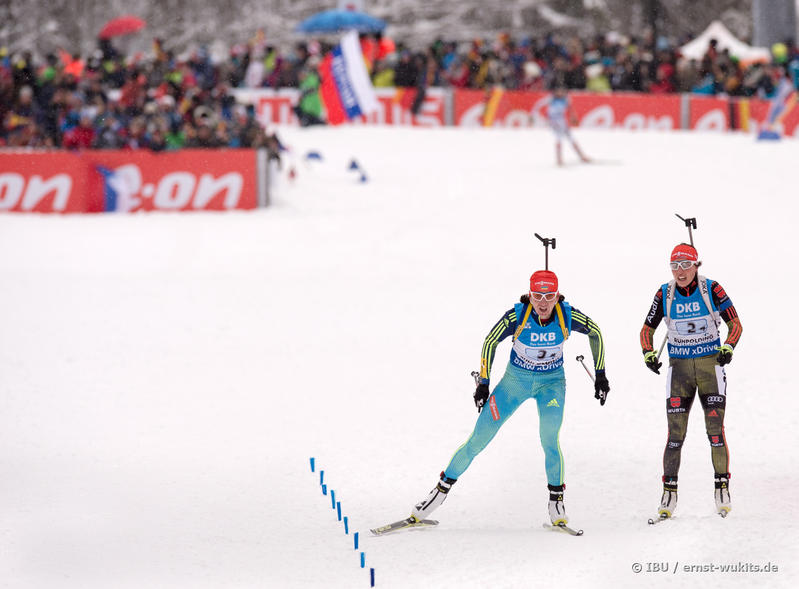
Ukraine’s Olena Pidhrushna (l) boxing out Germany’s Laura Dahlmeier (r) in the final meters of the women’s 4 x 6 k relay in front of a packed Chiemgau Arena at the IBU World Cup in Ruhpolding, Germany. (Photo: IBU/Ernst Wukits)
It’s not often that you can hear catcalls and booing in a ski stadium. A football, basketball or soccer game maybe, but biathlon? On Sunday, 20,000 spectators packed the Chiemgau Arena in Ruhpolding, Germany, and many were not pleased with how the IBU World Cup women’s 4 x 6-kilometer relay played out. Just before the finish, Ukraine’s anchor Olena Pidhrushna, skiing in first, cut off local fan-favorite Germany’s Laura Dahlmeier to claim the ideal left lane in the final stretch. That ended Dahlmeier’s furious chase on the last loop to finish, and Ukraine took the win by 1.2 seconds in 1:16:14.2.
Ukraine, with Iryna Varvynets, Yuliia Dzhyma, Valj Semerenko, and Pidhrushna, incurred one penalty lap and only needed four spare rounds (three prone and one standing), while Germany, with Karolin Horchler, Miriam Gössner, Maren Hammerschmidt and Dahlmeier, had two penalties and required eleven spares (six prone, five standing), but the latter three athletes all skied the fastest course times on their legs to make up the deficit.
Behind them, Dorothea Wierer anchored Italy — which had no penalties and used 10 spares — to third (+43.8), about a second of Russia’s Olga Podchufarova, after the Russians had two penalties and required seven spares. Thus the same teams that had already been on the podium after the first relay of the season December in Hochfilzen, Austria, made it again, except Italy and Ukraine swapped positions.
Teams from 22 countries started on Sunday and 17 finished without being lapped.
Canada, with Julia Ransom, Rosanna Crawford, Megan Tandy, and Zina Kocher, placed ninth (+1:59.5) with no penalties and seven spare rounds, while the U.S., with Annelies Cook, Susan Dunklee, Clare Egan, and Joanne Reid, finished 16th(+5:39.8) with three penalties and eleven spare rounds.
‘Of course you are angry in the moment’
At first, Dahlmeier was visibly annoyed about the end of the race, after she erased a 27.7-second gap on the last leg (and was still 9.2 seconds behind heading into the last loop). After getting blocked she switched back to the middle lane, but once she realized she couldn’t beat Pidhrushna, Dahlmeier stopped pushing and slammed her right pole into the snow across the finish.
“The final loop was really hard. Of course you are angry in that moment, after going at full throttle for 6 kilometers, and then it fails on the last few meters,” said Dahlmeier, who anchored Germany to a relay gold at 2015 World Championships, told TV broadcaster ZDF. “But we can be very, very happy about the second place, especially with the penalty laps that were shot, and with this lineup. I think that’s really nice, and a beautiful finish for the days in Ruhpolding.”
“It was a hard last loop,” Pidhrushna said at the post-race press conference through a translator. “I know Laura is a really good skier, and I knew that I would have to fight for every meter. I am really happy that the team won. I just held the shortest line to the finish. I really wanted to win; it was a big battle but it is sport.”
After seeing a replay again, Dahlmeier agreed in a later interview with ZDF: “That was all correct, you can’t say anything against that. For me, it’s too bad; it didn’t help to switch lanes, and then it was already all over. Maybe I have to train a little bit with the cross-country skiers, pick up some things on how they solve sprints in order to become better.”
“That’s biathlon, that’s the race,” her teammate Hammerschmidt said at the press conference. “It was the same in Hochfilzen [where Germany lost a finishing sprint to Italy], maybe in the next relay we are first. But I think it was OK, and the girls [from Ukraine] make a good job, congratulations to the first place.”
The German athletes did not complain for long, knowing their day could have ended much worse after second leg Gössner incurred two penalty laps earlier in the race, at that time falling back to 15th position with the podium seemingly out of reach.
(Story continues below)
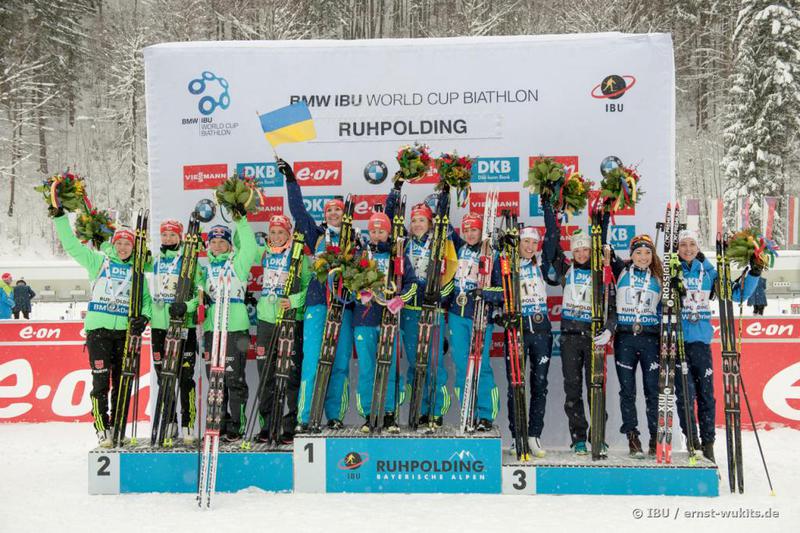
The women’s 4 x 6 k relay podium at the IBU World Cup in Ruhpolding, Germany; with Ukraine (c) in first, Germany (l) in second, and Italy (r) in third. (Photo: IBU/Ernst Wukits)
Race Day
Several teams had opted to rest good athletes for Sunday’s relay at the end of a long block of races, including Germany. Franziska Hildebrand, who already won two World Cups this season, had asked her coaches for a break, and then Vanessa Hinz also had to defer her relay start due to a cold, while teammate Franziska Preuss missed the entire Ruhpolding weekend with a hairline fracture in her tailbone.
That prompted the coaches to change their second-place relay from Hochfilzen on three positions, and make a call to Karolin Horchler, 26, who originally had other plans for Sunday:
“[Saturday] afternoon I had been on my way to Ridnaun, South Tyrol [Italy], because I was supposed to compete there in an IBU Cup mixed relay today,” Horchler told ZDF. “And shortly before the arrival Gerald [Hönig, women’s head coach] called me and said I should please turn around. All in all, it was on the road for five hours… To start here in my second home in Ruhpolding, that’s what I always dreamed of.”
“It’s surely not a very common lineup,” coach Hönig told ZDF before the race. “But in general our expectation is that any relay team we start contends for a spot on the podium.”
Similar to Germany, the Czech Republic chose to rest overall World Cup leader Gabriela Soukalová, France rested Marie Dorin-Habert, currently second place in the World Cup standings, Italy’s Federica Sanfilippo sat out the relay, and Austria’s top skier Lisa Theresa Hauser missed it as well. Finland didn’t enter a team, missing their best athletes Kaisa Mäkäräinen and Marie Laukanen.
The newly called-up Horchler began the race well for her team, skiing at a pace that allowed her to stay in contact with the best and requiring only one spare each in prone and standing. She tagged off in fifth place, 22 seconds behind Norway’s Marte Olsbu in the lead, with Ukraine’s Varvynets in second after shooting clean.
“It was a really crazy day, in the morning I heard that I can start here. The second place is very good for the team. It’s wonderful,” Horchler said in the press conference after the race.
“It’s surely not a very common lineup, but in general our expectation is that any relay team we start contends for a spot on the podium.” — German Women’s Head Coach Gerald Hönig
Germany’s second skier,Gössner skied out fast on her first loop making up positions, but struggled in prone, missing two of her targets and quickly running out of spare rounds.
“Trying to do everything especially well because it’s a relay is a fitting description,” Gössner told ZDF while the race was still going on, with tears welling up in her eyes. “I really can’t explain myself how I can shoot two penalty laps in prone. I didn’t have the feeling that conditions were difficult or that I was shaking… Then I was completely flustered, I didn’t know if that shot went left or right, just didn’t know where to aim.”
After another fast loop, at least she was able to avoid the penalty lap in the standing position after requiring two spare rounds, usually her more shaky discipline, moving up to 13th place.
“Without my two penalty laps a lot more would have been possible today,” a still-disappointed Gössner later told ZDF after the race. “Our luck was that the other nations also shot penalty laps, so the other two [teammates] could make up some time, and that saved us. But my race was absolutely not good.”
“Yeah, she is very annoyed, but that’s relay,” said Hammerschmidt, who lifted Germany from 11th to second on the third leg. “That happens to everyone, but it’s all the better for her that we still got the second place. And I just told her she is allowed to say two more sentences about her shooting, and then we’ll call it a day.”
“I just told her she is allowed to say two more sentences about her shooting, and then we’ll call it a day.” — Germany’s Maren Hammerschmidt, about her teammate Miriam Gössner
While Gössner had been struggling on the range, Ukraine’s Dzhyma shot clean at the top of the field, and while not quite as fast as the German behind her, also skied the sixth-fastest time on her leg.
“Our skis were really good today, thanks to the service team,” she said in the press conference. “I like the new [additional] snow better.”
Hammerschmidt received the tag 1:48.8 minutes behind Ukraine in 11th place, then began a furious chase to get closer to the top again (“one of the best relay performances I can remember in quite a while” ZDF color-commentator Herbert Fritzenwenger commented).
She missed two shots in her prone shooting stage, and then needed one more spare round in standing.
“I have to say, I was a little too cautious there,” Hammerschmidt told ZDF. “I should have turned [on the sights] immediately but thought ‘maybe it will work,’ and when you think that it usually doesn’t. So I should have reacted earlier, I got pretty nervous there after the two misses. In standing I went with full risk, and thankfully only had to reload once.”
Like Gössner, she skied the fastest course time of all athletes on her leg, and handed off to Dahlmeier in second place, 27.7 seconds behind.
“Of course I would have liked to have a better starting position,” Hammerschmidt told ZDF during the race. “But maybe the pressure was off a little. I just wanted to do my own race, and see that I can catch a good pack. I had really good skis today, and felt good on the course. On the last loop I could catch one after another, that was such a great feeling. And then I was really surprised to be second in the finish.”
Ukraine’s Semerenko skied the third leg, and at this point could have secured a large gap over the rest of the field. She narrowly missed her last shot in prone, but then the usually solid shooter was not able to clean the remaining target with her three spares, and had to ski a penalty lap. That opened the race back up as Belarus’ Nadzeya Pisareva overtook her and some other teams moving back within striking distance of the lead.
“I had nothing left but to run faster,” Semerenko joked in the press conference, according to a translator.
How quickly the fortune of a team in a relay can change was demonstrated once again after the next shooting. Pisareva and Semerenko each needed one spare in standing, with Semerenko still trailing by 9.8 seconds as she left the range. Then suddenly Pisareva completely ran out of energy, and could be seen trying to herringbone up the next hill without any glide.
Semerenko quickly passed her, along with several other teams as well. At the bottom of the next climb, Pisareva stopped next to one of her coaches to exchange a few words, seemingly ready to quit the race, before continuing to ski again.
The Belarusian tagged her teammate Darya Yurkevich 1:28.2 minutes behind in 11th place. Yurkevich would end up losing two more positions, finishing 13th (+2:40), despite Belarus posting one of the best shooting performances of the field for Belarus (no penalties, five spares).
With Belarus now out of the picture, the race for the podium on the final leg came down to Ukraine, Germany (+27.7), Norway (+28.6), Italy (+42.4), Sweden (+43.0), Slovakia (+45.3), and Russia (+45.7), with more teams looming shortly behind.
Dahlmeier set out at a fast pace to close the gap to Pidhrushna, and after both shot clean in prone, the lead had been reduced to 18 seconds. On the next loop, Dahlmeier stormed up the climbs and managed to catch Pidhrushna, overtaking her just before the shooting range. But while the Ukrainian stayed clean in the final standing stage, Dahlmeier required one spare, again falling behind by 9.2 seconds as they left the range.
On the final loop, Dahlmeier had more problems catching up to Pidhrushna again, who managed to preserve her lead through the last flat section and descent into the stadium. Then the most talked-about scene of the race happened, and Ukraine prevailed in that final sprint.
“I was pretty down on my strength, but too bad, at the end it went a little poorly,” Dahlmeier told ZDF. “Maybe I should have stayed behind her and then pick the middle lane. A little unfortunate. But still, considering how it looked initially, we are mega-happy about the second place. That was a grandiose success, and you really see what is all possible in a relay race.”
After a number of changes between several countries vying for third place, Italy,
with Lisa Vittozzi, Karin Oberhofer, Alexia Rungaldier and Wierer, beat out Russia’s Ekaterina Shumilova, Daria Virolaynen, Ekaterina Yurlova and Podchufarova in a second exciting finishing sprint by 1.1 seconds.
“I think the relay is the work of the whole team, everybody has to do their best, it’s not only one man or one woman,” Wierer said in the press conference. “I was in the fourth position when I started, and I was a little bit worried because [there were] also Tiril [Eckhoff] and Laura. I hoped that I would shoot well. I was a little too fast in the standing so I missed the first one. But I was lucky that Tiril shot more misses than me. And then behind me was the Russian, and I was really nervous. I was sure that she will pass me on the finish line, but I gave everything and it was the third place, finally.”
Norway was fifth (+1:11.5) with Marte Olsbu, Fanny Horn Birkeland, Synnøve Solemdal and Eckhoff combining for one penalty and 13 spares. Olsbu tagged the team in first after the first leg, and after Birkeland’s penalty on the second leg, Norway still remained in podium contention, picking off the places with Germany, until Eckhoff required all her spares on the last leg — three in prone, three in standing.
Ahead of the upcoming World Championships at home in Oslo, the Norwegian women have not reached the podium since taking bronze at the 2014 Olympics, though they remain hopeful.
“It may not look like we’re there yet, but we are good enough. It’s about getting the final touches in place,” Eckhoff told Norwegian broadcaster NRK.
Canada in Top 10
Canada’s 22-year-old Julia Ransom (116) during the 2014 IBU Junior World Championships pursuit. (Photo: Katrina Howe)
For Canada, Ransom’s day began with tangle out of the start and a resulting broken pole, but she quickly received a replacement.
“It caught me a little by surprise but I quickly realized that I needed to signal to someone for a spare,” Ransom wrote in an email to FasterSkier. “I was on the opposite side of the trail as all of the coaches, but one of our wax techs was somehow able to get a pole to me despite having a few girls between us. Unfortunately that little mishap put me to the back of the pack, but I was able to sneak my way back in there before the first shooting.”
After the field had stayed closely together on the first loop, Ransom shot fast and accurately in the first prone, cleaning all five targets and leaving the range in fifth place. By the next timing point, she even had moved up to third.
“I was stoked to be skiing with the top 3 girls! I felt strong and controlled on skis,” she wrote. “Unfortunately, I struggled with my [standing] spares and lost those leaders. I’m not letting that happen again next relay! “
In her standing stage, Ransom initially missed just one shot, but then required all three spares to clean it and avoid the penalty lap. She fell back a few positions, and tagged off to Crawford in 11th place, 50.7 seconds behind Norway up front.
Crawford shot flawlessly, cleaning both her prone and standing positions, something only 10 other athletes achieved on Sunday. When she left the range after the last stage she had moved her team back up to fifth place (+1:01.5), then only lost only a few more seconds on the final loop tagging Tandy still in fifth (+1:07.7), behind Slovakia and ahead of Norway.
In the prone stage, Tandy missed two targets, then needed all three spares to clean them, leaving the range in 10th place (+1:17.1) with Germany still behind in 12th. In standing, Tandy was able to stay clean, though she could not make up another position. But she also barely lost any more time, tagging off in 10th and 1:17.6 back.
Kocher winning an IBU Cup sprint in Canmore, Alberta, last season. (Photo: Pam Doyle)
Team veteran Kocher anchored the relay, and like her teammates, displayed a strong shooting performance. She cleaned prone, and then had only one miss in the final standing, leaving the range in the vicinity of a number of other teams fighting for position.
“Last laps are usually my strength so I attacked leaving standing,” Kocher wrote in an email. “Unfortunately, just before the uphills the French competitor [Celia Aymonier] stepped on my pole and it broke, costing me metres of time. I got a pole fairly soon from Norway, but it was very short, and then for the last sprint to the finish switched it for my own pole from our coach Matthias [Ahrens]. But that cost us a potential top 6. Two broken poles for our team, crazy!”
In the end, she finished the ninth for Canada, 1:59.5 minutes back, with no penalties and only seven spares. “Excellent momentum for going forward to next week’s relay for our team,” Kocher concluded.
“Our team had a goal of collectively using 8 spares and stay in the top 10… We also wanted to beat Sweden to maintain our current Nation’s Cup position,” Ransom wrote.
They achieved both those goals. The Nations Cup is its own end-of-season award by the IBU, but also determines the number of starting spots a country gets awarded for the next year. Germany is still in the lead after the races of this weekend, with Canada in 10th position and the U.S. in 15th.
“I was proud of our women’s team today. We all had fairly solid races and had the potential for top 6; unfortunately Zina broke a pole on her last lap, which caused a fall and a few positions. I think we are all fired up for another exciting race next weekend,” Ransom added. “The crowds here in Ruhpolding were fantastic. They brought a lot of energy to the races and were devoted fans in even the worst conditions.”
U.S. 16th with three penalties
For the U.S. the relay got off to a difficult start, when Cook incurred a penalty lap in her first prone shooting, leaving the range in 20th position, 58.6 seconds back behind the leaders.
“I was disappointed in myself today because I had a penalty in the first prone shooting that put me in the back of the pack,” Cook said in a US Biathlon press release. “I was unable to get the girls into a good starting position, although I had a lot of confidence in what could happen after that. It was a crazy day with lots of penalty loops happening to great teams and the standings changed a lot through the race.”
After a better standing stage shooting where she only required one spare, Cook about kept her position but lost a few more seconds to the top (despite skiing the 14th best course time on her leg), tagging Dunklee in 21st (+1:38.4).
Susan Dunklee (US Biathlon) skied the second leg for the U.S. women’s relay on Sunday, picking off three places to bring them from 21st for 18th. They ultimately placed 16th. (Photo: USBA/NordicFocus)
Dunklee, who had been the starter for several years, again moved to the second leg, the same order the team had experimented with in the relay in Hochfilzen. After needing one spare in the prone, she had moved up one position, but had lost additional time to the leaders (+1:58.8) despite skiing the fastest first loop.
In standing, she again had to use one spare and left the range in 19th (+2:26.3). Dunklee barely lost more time on the final loop, and tagged Egan in 18th, having made up three positions on her leg, but almost losing another minute to the top, now 2:29.9 behind.
On Sunday, Egan had one of her best recent shooting performances, cleaning prone and only requiring one spare round in standing.
“I made a breakthrough in my standing shooting at the beginning of the winter, and I’m taking advantage of that newfound confidence. I have bad stages now and then but I am learning from each one and improving all the time,” Egan wrote in an email. “For example I missed 1,3 in the first two stages of Thursday’s Individual, but then pulled myself together and finished the race with 0,0 on the last two stages. Today I missed my last (10th) shot, which is a letdown, but I was able to hit it with my first spare round.”
Clare Egan (US Biathlon) skiing the third leg of the 4 x 6 k relay on Sunday, bringing her team from 18th to 16th with just one spare round. (Photo: USBA/NordicFocus)
Out on the loop, Egan skied the 14th-fastest time of her leg, and was able to move her team up two positions, tagging off 2:45.4 minutes behind in 16th.
“The conditions were relatively fast today,” she added. “It snowed a ton last night but we were lucky and it stopped during our race. Our wax staff gave me excellent skis this morning, but unfortunately I was not able to put them to very good use, as my body was not responding well at all.”
In her first week with the World Cup team, Joanne Reid anchored the relay (in place of Hannah Dreissigacker, who skied that leg during the first relay of the season).
“I think the reason the coaches put me last is because I don’t have the consistency or the experience of the rest of the team, and therefore any mistakes I made would be after they had already raced,” Reid wrote in an email.
Reid emerged from prone having used just one spare, but then struggled in the final standing, running out of spare rounds and ultimately having to ski two penalty laps (0+1, 2+3).
“Today I made what I assume is a classic error for a new biathlete coming in from pure skiing, and came into the range too hard in standing,” Reid explained. “I was intensely focused on catching the two teams in front of me, which was going well until I got to the range. It’s always hard to remember in the heat of the moment that your shooting is just as important as your skiing.”
In her first IBU World Cup relay, Joanne Reid anchored the U.S. women’s team to 16th with the 11th-fastest course time on that leg. (Photo: USBA/NordicFocus)
“The pacing on that lap was certainly my mistake, and not just pacing, but the fact that I don’t have the shooting skill to handle as high of a heart rate or shoot at the same speed as the rest of the girls, not to mention I hand load spares much slower.”
Overall, Reid skied the 11th-fastest course time.
“It was definitely a fast course out there, but still very difficult. I can only imagine how tired the athletes are who have raced the entire world cup period, and also qualified for and raced the mass start this weekend,” she wrote. “For Susan to go out there and ski the fastest leg after all those races (and long ones besides) is incredibly inspiring to me, and I wish I could have given her a better performance on my end.”
“I really enjoyed the course out there today — we were much luckier than everyone in the mass start to have such hard-packed conditions,” Reid added. “I think that’s the only 6 km I’ve ever skied in my life, so I wish I could compare it to something, but until I do a few more biathlons I have no reference point.”
Reid finished in 16th for the U.S., ahead of Romania, with the other five teams behind them lapped.
“We wanted to do better than last time (15th) but unfortunately we fell just short of that today,” Egan concluded in her email.
“This team has so much potential and I really believe in that,” Cook said in a US Biathlon press release. “So many of the pieces are there and are also showing, but not quite enough of them to do what we are capable of. It is frustrating but it is also making us hungry to do better and we have another relay coming up next week.”
“I think a team always goes into a relay with the hope that they can improve on their start position,” Reid wrote. “Obviously for us today, that didn’t happen, but I think we have a lot of the pieces right, and I’m certain this team (whether or not in the future it includes me), can have an incredible day.”
The IBU World Cup now moves on to Antholz-Anterselva, Italy, where there will be another relay for the women and men on Sunday.
Ricco Gross of Germany competing in Antholz, Italy, in 2006. (Photo: Goetz Primke via Wikimedia Commons)
German Olympic and World Champion biathlete Ricco Gross will coach the Russian men’s team in the upcoming season. After much discussion and speculation, the appointment was announced on Aug. 12.
Gross won four Olympic gold medals, in the relays at Albertville (1992), Lillehammer (1994), Nagano (1998), and Torino (2006). His eight total Olympic medals place him second on the all-time list, and he has 20 World Championships medals to his name as well.
Gross retired in 2007. Since 2010, hehad since been coaching with the Germans, first with the women’s World Cup team, and most recently with the IBU Cup team.
Gross, 44, will work together with Vladimir Bragin, who had previously been announced in April to head the “B” team for the Russian men. However, he will reportedly work with top athletes like Anton Shipulin, who placed second in the World Cup Total Score last season, and Evgeniy Garanichev.
“We have a very strong team in Russia,” Gross said in a press release from the Russian Biathlon Union. “My main aim is to make this team better… Obviously, my long-term aim is the preparation for the Olympic Winter Games 2018. We have to go step by step to this goal. We have to become better and unlock our potential. I am sure that Olympic Winter Games in South Korea can be successful for us. There are so many strong athletes in Russia.”
After Gross did not continue his contract with the Deutscher Skiverband after the 2014/2015 season, it was initially speculated that he would take a job coaching for Ukraine. Volodimir Bryznak, the president of the Ukraine Biathlon Union even announced the staffing shift.
On April 7, the day the contract was set to be signed, the deal fell through.
“He wrote that the circumstances have changed,” Bryznak said. “I guess he had a much better offer.”
The motivation to leave the German team seems to have come at least partially from a desire to have more control over a training group.
“Becoming the senior coach for the Russian men’s team is a big challenge for me,” Gross said in the press release. “I had been working with the German’s national team; now, I start to work as the senior coach in Russia. It gives me more freedom by making the decisions and the relevant responsibility.”
Gross becomes the second high-profile German to head to Russia. The first, Wolfgang Pichler, worked with the women’s team in what was ultimately an unsuccessful partnership.
Pichler had been an avid critic of Russia’s doping program and was hired ostensibly to provide some respectability to the program.
But Pichler was not given full access to all athletes, with some choosing to train with Vladimir Korolkevich.
The anti-doping effort did not work. Two Russian women who trained with Korolkevich, Irina Starykh and Ekaterina Iourieva, were banned on doping violations in January 2014.
Pichler told The New York Times, among other outlets, that he had been certain Iourieva was doping, and had brought concerns about Korolkevich’s program to the Russian federation. Nothing was done.
Instead, two weeks before the Olympics began in Sochi, Korolkevich was promoted over Pichler to head the women’s team there.
Then in the midst of the Games Pichler was removed from the team, creating chaos and drawing ire from Olga Zaitzeva, one of the team’s biggest stars and a gold medalist from the 2010 Olympics.
“I do not agree that he was removed, and I will fight for Wolfgang,” Zaitseva said between races in Sochi. “We worked with him well, and I will not pour dirt on him. For the results you should be asking the rest of the coaching staff.”
And that was not the only drama at the Olympics. Another athlete who had chosen Pichler’s training group, Ekaterina Glazyrina, was expelled from the team after criticizing Pichler on her website.
The comments were later removed, with Glazyrina stating, “Of course my main mistake was to choose the wrong group and the wrong coach. I did not have a great dialogue with Pichler from day one and therefore we did not get the results we wanted. I regret training with Pichler very much.”
Pichler said in an interview after ending leaving the team at the end of the 2014 season that the worst part about the job was reading terrible things about himself in the press and on the internet. In a separate interview, he spoke of how one journalist relentlessly attacked him every time the two met.
“Very often it looked like a blatant harassment, and was not just me – if I experienced would be easy – but the people who were in my team,” he said.
He pointed out that when his team was compared to the women’s teams of the earlier 2000’s, it was an unfair comparison: those teams were plagued by doping scandals. But he enjoyed working with the women, claimed he had positive relationships with them, and said they never lacked for motivation.
So what does Gross have to look forward to?
“There was no dialogue,” Pichler said in April 2014. “The sports ministry constantly interfered with the work. This is what has become a major problem for me… [Yet] it was clear that none of the so-called ‘experts’ were not going to be responsible for the result.”
And it’s not just fans. Anatoliy Khovantsev, a former national team coach who now works with 2015 World Champion Ekaterina Yurlova outside the national team framework, was also unimpressed with the hiring.
“He has a very positive reputation, which he won as an athlete,” Khovantsev said. “I cannot say anything bad about him, but the euphoria in connection with this appointment I did not feel. For a while, he will have to adapt with the Russian athletes, and only after a long period of time it will be possible to evaluate its performance.”
Ukraine’s Sergui Sednev (l), Russia’s Evgeniy Garanichev (second from l), Tim Burke (second from r) of the U.S., and Germany’s Erik Lesser on the range in a 2013 relay race in Oberhof, Germany. A sample of Sednev’s collected two weeks after this competition was re-tested in December and found to contain the blood-doping drug EPO. (Photo: USBA/NordicFocus.com)
The International Biathlon Union (IUB) enacted bold anti-doping plan last autumn: they took stored blood and urine samples from previous seasons which had been deemed suspicious, and re-tested them using newly available methods to try to catch dopers who had flown under the radar and under detection limits.
That effort yielded two positive results for erythropoietin (EPO), an illicit blood-doping drug. They belonged to Alexander Loginov of Russia and Sergui Sednev of Ukraine. The results from Sednev’s hearing panel have now been released, and the Ukrainian veteran has been banned for two years. He retired four days after the testing result — before it was announced to the public — but if he wished to return to competition he would be allowed to do so in December 2016.
The details of the testing in the case are unremarkable, as using the new method there was little doubt that the sample – which had been considered “suspicious” the first time around – contained EPO. Sednev, a Junior World Championships, European Championships and World Championships medalist, did not seem to have mounted much of a defense. He sent a note to the IBU reading,
“Therefore, I can’t explain this incident since, as I have already indicated, I have never taken prohibited substances and nobody ever has prescribed them to me. So, I am unable to provide with the necessary objective documentary evidence to the contrary … I do hope for a fair decision from the Anti-Doping Hearing Panel.”
Since Sednev couldn’t provide compelling evidence that the test was incorrect, the chain of custody of the sample had been broken, or any other reason for a possible mistest, the IBU’s Anti-Doping Hearing Panel, chaired by Christoph Venner, a Munich law professor panel decided that it was appropriate to give him a standard two-year ban.
In addition, all of his results since January 22, 2013, when the sample was initially collected, were disqualified. That included placing 39th in the sprint at 2013 World Championships; placing 33rd in the sprint and 40th in the pursuit at a World Cup in Oberhof, Germany, in 2014; and finishing 44th in the sprint and 54th in the pursuit at the 2014 Olympic Games, among other results.
One man who might be particularly devastated by that last one? Russell Currier, a U.S. athlete who placed 61st in the Olympic sprint and missed a place in the pursuit competition by 2.6 seconds. Unless Ukraine replaced Sednev with another top-60 competitor, the doper’s presence in the race might have been what kept Currier from getting another Olympic race start under his belt.
“Sounds like the sport is one step closer to being clean,” Currier wrote in an email. “At the end of the day the more doping athletes we can uncover and penalize for the better. It’s hard not too look at past results and wonder what if, but it’s also doesn’t help much either. I just hope that WADA is doing everything in their power to bring the sport up to 100% clean.”
Most of Sednev’s best results, including one World Cup win and three other individual podiums, came from well before the 2013 sample was collected.
Legal Thinking
But even after disqualifying all of Sednev’s results, there was still the question of the suspension. The sample in question was collected in January 2013, but was re-analyzed in December of 2014. So should the two year ban start from 2013? Or 2014?
The panel referred to “cumulative effects” of a retroactive disqualification plus a suspension from the date of the re-test. In addition to the two-year ban beginning on January 15, 2014, when Sednev’s provisional suspension was announced by the IBU, the disqualification of his results would increase the time of the punishment in these cases.
“Retroactive disqualification of the competitive results obtained during the time between sample collection and the suspension imposed after the re-analysis may amount to some years, in the case of the Athlete to more than 22 months,” the panel noted.
The question the panel seemed to mull was, is this OK? In effect, it means that the punishment for athletes who initially get away with doping but are later caught, turns out to be different than for those who are caught immediately. There’s no clear philosophy in the anti-doping rules about these cases, which likely weren’t imagined when the rules were written. And while punishment is supposed to be just that, punishment, it is also supposed to be equal among offenders.
The panel noted that one “obvious option” would be to have the two-year suspension start from the date of sample collection. But in that case, Sednev would have served 22 months of the 24 month suspension by the time he as even caught, and would never have had to actually sit out of competition except during his provisional suspension.
“In such situation, in re-test cases, the athletes, in reality, were free to compete all over the time of the disqualification and only run the risk to lose their results and to be declared ineligible for a period of time which already elapsed in full or partly,” the panel wrote.
Furthermore, they believed that athletes should be aware of this.
“The fact that this ADRV [Anti-Doping Rules Violation] was not detected as an immediate result of the sample collection in January 2013 reveals that the athlete committed the ADRV in such meticulous manner that it remained undetected in the analysis of January 2013. After the failure of that first analysis the Athlete bona fide could not have the belief that he was legally free to compete. On the contrary, he must have been conscious that, due to the possibility of a re-test, the ADRV could be detected at a later stage.”
They concluded that to start the suspension from 2013 would be unfair to clean athletes, and not be much of a deterrent to other dopers.
Thus, Sednev has been suspended for two years, starting with his provisional suspension on December 15, 2014. Sednev has 21 days to appeal the decision, should he wish to.
There is no word yet on the results of the Loginov case, perhaps because Russian athletes in the past have attempted to fight suspensions, while Sednev’s case was straightforward. However, the Sednev case provides a blueprint for the retroactive disqualifications and two-year suspension that are to be expected for Loginov.
Ukraine’s Valj Semerenko (r) celebrates her first World Championships victory on Sunday in the women’s 12.5 k mass start at 2015 IBU World Championships in Kontiolahti, Finland. She beat Germany’s Franziska Preuss by 6.2 seconds. (Photo: Kontiolahden Urheilijat/Risto Kuittinen)
KONTIOLAHTI, Finland — Perfect shooting wins the race, at least that was the adage that summed up the women’s 12.5-kilometer mass start on the final day of 2015 IBU World Championships.
Valj Semerenko, a 28-year-old Ukrainian with an Olympic gold medal from last year’s relay and multiple World Cup podiums, sat quietly in the pack throughout most of Sunday’s mass start. She didn’t charge to the front on the first lap, like Darya Domracheva of Belarus did. Instead, she positioned herself in the top 20 of 30 starters and waited for natural opportunities to move up.
Opportunities like the first prone stage, where she and 17 others cleaned on a bluebird, windless afternoon. Semerenko moved into 11th, 15.3 seconds back from Domracheva in first.
While the Belarusian set off for another blistering lap, leaving the range 8 seconds ahead of Russia’s Ekaterina Yurlova in second, Semerenko squeezed into the top 10 before the second shooting.
There, she cleaned again, along with nine others, including Domracheva. As Domracheva set out again in the lead, 6.5 seconds ahead of Russia’s Daria Virolaynen, it seemed like the race could very well continue along the same lines — with Domracheva jetting off the front.
That is, until Domracheva missed two in the third stage and dropped to eighth.
Ukraine’s Valj Semerenko (r) leads a five-woman chase pack into the range during Sunday’s 12.5 k mass start at 2015 IBU World Championships while chasing Darya Domracheva of Belarus (not shown), with Gabriela Soukalova of the Czech Republic, Germany’s Franziska Hildebrand, Russia’s Daria Virolaynen, and Germany’s Franziska Preuss, respectively.
Behind her, Semerenko led a chase pack of five into the range, with the Czech Republic’s Gabriela Soukalova, Germany’s Franziska Hildebrand, Virolaynen, and Germany’s Franziska Preuss, respectively.
The Ukrainian cleaned the first standing stage the fastest, heading out on her fourth lap two seconds ahead of Hildebrand and Preuss, and three seconds ahead of Soukalova — all of which cleaned as well. Domracheva was left with two penalty loops, emerging 36 seconds behind them.
Soukalova, Preuss and Semerenko took turns leading over the penultimate lap, while Hildebrand fell off the pace. In the final standing, Semerenko hit the last of her targets to complete her perfect 20-for-20 day, sending a clear message to the 29 women behind her. She left the range 19.1 seconds ahead of Preuss, who had her first penalty of the race in that stage, and Hildebrand cleaned her fourth stage to move back into third.
“I left the shooting range with Franziska Hildebrand and I thought, ‘Oh god, it’s going to be a hard loop,’ because she’s really in shape at the moment,’ ” Preuss recalled in a post-race press conference. “When I had a look back, I thought, ‘There are much more athletes now.’ I just wanted to give everything.”
While Preuss pushed to close the gap on the last lap, she couldn’t quite reach Semerenko, who finished 6.2 seconds ahead of her for her first World Championships title in 34:32.9.
“I was thinking that when I win, I’m gonna take the Ukrainian flag,” Semerenko told the IBU through a translator. “But when I got to the end with all the people chasing me, I just forgot with all the stress.”
She added that she was grateful for the support of her sister, Vita Semerenko, who has been sidelined this season with an injury.
“I would like to thank her for her support here, and actually she was at the track at the last hundred meters to give me the flag, but I only noticed her when I passed her,” Semerenko said with a laugh.
“I’m the champion and I’m so happy about it,” she said in the press conference. “It is important not only for me but also for my country. I’m full of emotion.”
While IBU Overall World Cup leader Darya Domracheva (Belarus) led the first half of Sunday’s 12.5 k mass start, she missed two standing targets and placed fourth in her last chance to medal at 2015 IBU World Championships in Kontiolahti, Finland. (Photo: Kontiolahden Urheilijat/Kari Kuninkaanniemi)
On the final lap, Italy’s Karin Oberhofer, Domracheva and Soukalova all caught Hildebrand, overtaking her before 11.8 k.
By the finish, Oberhofer dug deep to hold off Domracheva for bronze, finishing 2.1 seconds ahead of her and 12.6 seconds behind Semerenko. The Italian had rebounded from two early penalties — one on each prone stage.
“I had wonderful skis, I tried to do my best and I’m very, very happy,” Oberhofer said through a translator.
While Domracheva took fourth (+14.7) with the fastest overall course time, Soukalova was another 11.5 seconds behind in fifth (+26.2). Hildebrand finished sixth, 5.5 seconds later, and Germany put three in the top eight with Laura Dahlmeier in eighth (+39.9).
For Preuss, the silver matched her World Cup career best, in which she placed second in the mass start in January in Ruhpolding, Germany. On Friday, she helped the German women’s team achieve gold in the relay.
“The week started really good for me with my [21st] birthday [on March 11], then the gold medal in the relay,” Preuss said. “It was absolutely amazing to stand on top of the podium and unbelievable, and today, the second individual medal in the mass start, it’s really amazing.”
Dunklee 20th, Heinicke 24th
Susan Dunklee (US Biathlon) en route to 20th in the women’s 12.5 k mass start at 2015 IBU World Championships on Sunday in Kontiolahti, Finland. (Photo: USBA/NordicFocus)
Susan Dunklee narrowly qualified for the mass start in the 30th and final spot available after winning a tiebreaker with Finland’s Mari Laukkanen (Dunklee had the single-best individual result between of the two of them in 12th at these World Championships).
Considering that, she was grateful to have made it.
“It was kind of like an icing-on-the-cake moment,” Dunklee said after the race. “I’ve done what I needed to do at these championships, now I can kind of relax and have fun and see what happens. Sometimes I have my best races when I’m in that position. That didn’t happen today, but it could have.”
Dunklee finished 20th, 2:01 behind Semerenko, with five penalties: one on each prone stage, two in the first standing and another in the final standing.
“I haven’t seen where my shots went yet, but I have a feeling I had a couple split-outs,” she explained. “I could’ve sworn one of the standing I had a paddle quiver, but not fall. … I had a couple that felt like good shots, but I don’t know what happened. You miss one, it puts you right away toward 20th place coming into the second shooting, and then if I keep missing one, that holds steady. I knew [I needed to] not miss one if I wanted to move up.”
While the 29-year-old Dunklee left the range in 23rd after the last stage, she skied the fifth-fastest course time overall to finish in the top 20. She ended World Championships with two individual top-20 results, eighth place in the mixed relay, and 12th in the women’s relay.
“I always set really high goals for myself,” Dunklee said of her season overall. “I got a few top 10’s this year. I was hoping for more for sure. I was hoping to get to them earlier in the season, too. I’ve made some huge improvements with my ski technique. My shooting percentage I think has been a little more consistent, and now I’ve got a lot of things I know I want to work on as soon as summer rolls around.”
There is still one more stop on the World Cup circuit, with a sprint, pursuit and mass start in Khanty-Mansiysk, Russia, this coming Thursday through Sunday.
Megan Heinicke (Biathlon Canada) on her way to 24th in the women’s 12.5 k mass start at 2015 IBU World Championships on Sunday in Kontiolahti, Finland. It was only the second mass start of the 26 year old’s career.
Canadian Megan Heinicke qualified for Sunday’s race as well in 26th, for the second mass start in her career. She competed in her first two months ago at the Ruhpolding World Cup, where she placed 23rd.
“When I was zeroing today, I had to look at my coaches like, ‘Um, prone, prone, standing, standing, right?’ ” she said of the shooting order.
Heinicke got that down, hitting 19 of 20 targets with a single prone miss. One of nine women who shot 95 percent or better, she finished 24th, 2:22.2 behind the winner.
“That was a pretty awesome end to the season,” Heinicke said. “That was my last race and I had really good shooting again with just one miss.”
In the last eight days of individual racing, Heinicke tallied four top-30 results (including the mass start), with 21st in the 15 k individual, 23rd in the sprint and 28th in the pursuit. In all of those races and the women’s relay on Friday, she hit at least 90 percent of her targets.
“I guess I had really high expectations shooting-wise because I’ve been shooting so well,” Heinicke said of the mass start. “Skiing, I know to expect it to feel hard. We had really great skis this week so I was kind of trusting the skis to be good, and I just wanted to try to ski smart … and not kill myself the first few runs up the hill and make sure I was kind of settled enough for good shooting.”
Heading into her last lap, after cleaning her third-straight stage, she glanced at the scoreboard and saw that she was 20th.
“I was like, top 20, is it possible?” the 26 year old said. “… Mostly I was like, ‘It’s your last race, be ready to fight. Just kill yourself if you have to.’ ”
Despite a long bout with illness leading up to World Championships, which derailed some of her skiing fitness, Heinicke explained she was excited about the gains she’d made in shooting.
“This year has been a really big step forward for me in terms of shooting and consistency, so every time this keeps happening, I’m just … super happy, super relieved, and really, really motivated for next year,” she said.“I feel like I’m at maybe 60 percent of my potential skiing, with health and training things, so I’m like, ‘Oh, if I have a healthy season next year, if I can maintain the shooting, then I’m just really motivated about the potential.’ ”
She was also inspired by performances she’d witnessed by her teammate, Rosanna Crawford, as well as Dunklee.
“I’m watching … what they’re able to achieve, and I’m just like, ‘OK, I want to fight to be there, too,’ ” Heinicke said.
Germany celebrates their victory in Sunday’s 4×6-kilometer relay. (Photo: IBU/Christian Manzoni)
It would have been oddly quiet on the firing range, given that there were ten women lined up and ready to fire, if it had not been for the howling of the wind.
The dominant theme of the final day of World Cup competition in Antholz, Italy, Sunday was wind. Wind, and lots of it. Three weeks of back-to-back World Cup racing concluded this weekend, capped off with the 4 x 6 k women’s relay. While the men’s competition was plagued by a cold wind, the women’s competition was defined by it, as the wind whipped down the valley during the second leg.
The Czech Republic, which eventually finished second, was the only team in the entire field to escape without a penalty loop; Russia, placing fourth, was the only team with less than 10 spare rounds. Far more common was a tally of two or three penalty loops and 13-16 spares.
At the first handoff, the Czech Republic had the lead, the United States was in second after Susan Dunklee’s phenomenal first leg, and Poland was in third.
“I had some wind in standing,” Dunklee wrote in an email, “but luckily most of the people around me struggled too.”
Shooters struggle to fire in the howling wind. (Photo: IBU/Christian Manzoni)
On the second leg, however, the wind picked up.
During the second shooting stage, ten teams were standing on the mats, and the leader still hadn’t finished firing as all the women waited for the wind to die down. Snow swirled and flags whipped, but no bullets were fired. Gabriela Soukalova, of the Czech Republic, was the first into and out of the range, and her range time was 2:14. In contrast, her time on the previous round – before the wind picked up – was exactly one minute, including loading and shooting a spare round.
After Soukalova finally shot her third spare bullet and knocked over the final target the incentive to speed up firing returned. U.S. biathlete Hannah Dreissigacker, who had been in second place at the start of the standing leg, skied away with three targets left up. By the end of the leg, the U.S. had slipped to 12th.
By the exchange, Czech still had the lead, followed closely by Russia, then Ukraine, then Germany, then Italy.
The third leg was a grab bag of leads and exchanges, as one skier took the lead in prone only to lose it in standing. Tears streamed down the competitors’ cheeks as the wind and snow battered their eyes.
By the end of the third leg, Ekaterina Shumilova of Russia was in first, but barely. Germany’s Luise Kummer and Ukraine’s Olga Abramova were not far behind. And the bottlenecks at the last shooting had compressed the top ten teams to within 1:15, whereas they had been spread out over 2:34 after the prone stage – the wind had actually calmed as later competitors came onto the range, whereas the leaders had taken longer to shoot. At the tag, it was Russia, Germany and then Ukraine.
Dahlmeier, Germany’s anchor leg, ignored the swirling gusts of wind and coolly shot the five targets, leaving the standing leg 23 seconds ahead of Russia’s Ekaterina Glazyrina. After Dahlmeier cleaned standing, it was clear that she would ski away with the win.
Veronika Vitkova of the Czech Republic skied out in second, with Valj Semerenko and Glazyrina leaving the range at nearly the same moment, leaving the final 2 k ski as the battleground for the final spot on the podium. It was a battle won by Vikova.
The North Americans
“I had a great ‘open body’ feeling today on skis and during the last lap went into chase mode with little regard for pacing,” American Susan Dunklee wrote in an email. “It felt great to reel people in.”
Dunklee indeed had a strong final, passing four skiers and posting the fastest lap time for that leg. She tagged Hannah Dreissigacker into second place.
“The wind was unpredictable and hurricane-like at times, and then perfectly still,” Dunlee wrote in an email. “So shooting was a lottery Hannah and [anchor leg Clare Egan] had some bad luck with the timing of the strongest gusts.”
It was Egan’s first appearance on the World Cup – a difficult debut.
“Clare faced some incredibly difficult conditions in her first World Cup, but handled them admirably,” Dunklee continued. “She has a lot of potential and I can’t wait to see what she does once she starts to feel comfortable at this level.”
Annelies Cook skied the third leg, missing some shots but avoided the penalty loop. Cook tagged Egan to bring in the team in. Egan tried to take the day like any other.
“My goals for the day were to do my job well, just like any other day of training,” she wrote in an email. “Of course when I set my poles down on the shooting mat for the prone stage and they almost got blown away by gusting winds, I had to slightly adjust the ‘just like any other day of training’ part of my strategy.”
But her first time on the World Cup, and she had to modify her plans.
“I started shooting prone the same way I always do, in a rhythmic cadence that alternates breathing and pulling the trigger, but after missing the first three shots I took a different approach, waiting with the trigger half-pulled for any tiny break in the wind. That worked for me and I hit my last two targets and then all three spares, so I avoided going in the penalty loop.
“The wind was also a factor on the open parts of the course where snow had blown over the trail making it super slow, and there were strong headwinds. I was trying to channel Lindsey Vonn with a super strong tuck with my elbows in front of my knees at one point.”
The Canadian women placed tenth overall. Led by Megan Heinicke, the team consisted of Julia Ransom, Rosanna Crawford and Audrey Vaillancourt. It was this group’s first time doing a relay together, and they are optimistic:
“I think we can all be proud of our efforts today!” Ransom said, according to a press release from Biathlon Canada. “The wind was quite tricky with huge gusts coming from every direction.
“This was the first time us four girls have been a relay team together. This is a great starting block and I believe good things are going to come from this team!”
Sergui Sednev of Ukraine competing at 2013 World Championships in Nove Mesto, Czech Republic. A sample collected on January 22, 2013 – before the Championships – has been re-analyzed and tested positive for a prohibited substance. All of Sednev’s results after that sample was collected may end up being scrubbed from the record books.
Ukrainian biathlete Sergui Sednev has been issued a provisional suspension after a sample collected January 22, 2013, was re-tested using a new analytical method and detected EPO. Sednev has declined to have his “B” sample opened.
Sednev is a two-time Olympian (2010 and 2014) who finished 10th in the pursuit in the 2010 Olympics in Vancouver, but scored just nine individual World Cup points last season.
The positive test comes as part of an effort to re-test suspicious samples from previous seasons using a newly-available analytical method. It already snared Russia’s Alexander Loginov at the beginning of the season; he was suspended in November for a sample that had been collected almost exactly a year earlier.
IBU President Anders Besserberg told Norway’s NRK broadcaster that at this point, all of the stored samples have been retested. That does not necessarily mean more bans will not be announced; there was a one-month lag between the analytical result for Sednev’s doping offense, and the announcement of his suspension. Many in the biathlon community are speculating that more suspensions may be on the way.
After all, Besseberg had told Norwegian media that doping suspensions from multiple countries were on their way. Technically, this promise has been fulfilled: Russian and Ukrainian athletes have now been issued provisional suspensions. But the buildup in the media after that interview left many fans wondering whether bigger names would be involved, and waiting for bombshell revelations.
The positive test unfortunately does nothing to clarify whether Sednev was doping throughout his career, or only at the end of it – as appeared to be the case for Finnish skier Tero Similä, a former World Cup skier who at age 34 had slid back to the middle of the Continental Cup results pages. Similä was caught using EPO at Finnish National Championships in 2014, where he had a stunning third-place result in the 10 k classic, likely in an attempt to make the Olympic team.
When 30-year-old Sednev started the 20 k individual at the first World Cup weekend in Östersund, Sweden, this season, it marked the start of his 11th year on the World Cup. He finished 83rd with the 90th-fastest course time. Instead it was his teammate Sergey Semenov who stood on the podium, finishing second behind Emil Hegle Svendsen of Norway.
Sednev did not compete again on the World Cup, nor did he appear at second-tier IBU Cup races. His Ukraine teammates continued to earn podiums in World Cup and IBU Cup racing.
But earlier in his career, Sednev had seen considerable success. In January 2010 he won a 20 k individual World Cup competition in Antholz, Italy, and had a dozen top-tens including three other podiums. His best more recent result was back in Antholz, where he finished eighth in the 12.5 k pursuit in January 2013.
Sednev was also part of three World Cup podium relay teams, as well as the bronze-medal men’s relay from 2011 World Championships in Khanty-Mansiysk, Russia.
At that same World Championships, the women’s team won silver in the relay. That medal was taken away when Oksana Khvostenko tested positive for the banned stimulant ephedrine, which she said that she accidentally ingested through cough medicine.
Sednev’s provisional suspension was dated December 15th of 2014; he announced his retirement on December 19th, although nobody made the connection at the time because a name had not been released with the suspension and Sednev was hardly a force to be noticed on the circuit.
Should his provisional ban be made permanent after his hearing with the IBU Anti-Doping Hearing Panel, all results from after the sample was collected in January 2013 would be scrubbed from the record. That includes two World Cup relays, a tenth- and an eleventh-place effort, and participation in the ninth-place mixed relay and the 14th-place men’s relay at 2013 World Championships.
The Biathlon Federation of Ukraine, in their announcement of Sednev’s positive test, implied that he had decided to retire independently, and that was the reason that he did not request to have his “B” sample opened (which would have cost 2,500 Euros): “But as Sednev had finished his career [sic] after the poor results over the past seasons, he decided not to conduct the further analysis,” the federation noted.
Along with Sednev’s test, four other positive samples were noted in the IBU press release. None of the names were new to followers of the sport: Russia’s Alexander Loginov was issued a provisional suspension at the end of November, the first of the re-testing results to be released, and at the same time it was made known that Russian teammates Irina Starykh and Ekaterina Iourieva had also had old samples show positive tests. Those two were already serving doping bans for EPO, which had been announced in January before the 2014 Olympics; the new results proved that they had certainly doped on more than one occasion.
That troubles IBU President Anders Besseberg, who told Norway’s VG news service that the federation might pursue action against the Russian federation.
“Personally I will be very surprised if the Executive Board of the IBU does not want to impose a penalty on Russia’s biathlon federation, given that all three are convicted,” he said, according to a translation. “We have the opportunity to give penance and simultaneously claim to cover legal costs…”
Reportedly, bylaws allow a federation to be fined as much as roughly $250,000 if more than one athlete has a positive test within a 12-month period.
Besseberg linked the four cases through the old Soviet Union.
“This is special because we have three athletes from one nation,” he told VG. “And one cannot hide the fact that 80 to 90 percent of positive doping tests in biathlon are from nations that previously belonged to the Soviet Union. There has been a culture there for so long and such culture one cannot reverse overnight.”
The positive tests are not surprising to German journalist Hajo Seppelt, whose documentaries aired this fall on ZDF and revealed widespread systematic doping and cover-ups in Russian sport, as well as in track and field more generally. He has repeatedly called on the World Anti-Doping Agency and the International Olympic Committee to thoroughly investigate his findings. In a recent interview with Germany’s ARD news service, he noted that IOC President Thomas Bach was in Oberhof this weekend at the biathlon World Cup – but neither Bach nor the IBU took this opportunity to jointly speak about biathlon’s doping problem.
“The question is now out there, whether the IBU is transparent and publicly declares the magnitude to which they can retrospectively analyze which substances,” he said. “Or if you pass statutes of limitations- then, the impression arises that one is not interested in negative publicity, and therefore prefers not too look too hard. The IOC is in this respect a sad example: it takes a billion dollars through television rights, so it would have enough money to retrospectively examine a large number of frozen doping samples again. Why it doesn’t it try to subject all samples to a major retest?”
In this respect, the IBU does appear to be far ahead of its peer federations. Besseberg explained to VG that the federation had held onto samples which, using its blood passport program, seemed suspicious. Then, when new methods were available, they re-tested all the samples.
“I am pleased that we have such a good system, that we manage to weed out those who should not be included in the competitions, and that we protect the clean athletes,” he said.
Olena Pidrushna of Ukraine pushes through the last leg of the women’s biathlon relay, earning Ukraine their first winter Olympic gold medal since 1992.
FasterSkier’s coverage is made possible through the generous support of Swix.
KRASNAYA POLYANA, Russia – It’s not often that a press conference at a sporting event starts with a moment of silence.
But that’s what happened today after Ukraine won gold in the women’s 4 x 6 k biathlon relay. Before she would answer any questions, Olena Pidrhrushna, the sprint World Champion from last season who anchored the team, stood up.
“Because of the events that happened in Ukraine, I would ask you for a minute of silence for those who died there in the last few days,” she said through a translator.
Everyone in the room obeyed, honoring the more than 70 people who have been killed in violent uprisings against the current president. Hundreds more have been wounded and hospitalized; 67 policemen are also reportedly being held hostage.
After the moment of silence, though, the Ukrainian women wanted to move on. But the press did not, asking questions like, who are you dedicating this win to?
“We will dedicate this victory to Ukraine first and foremost,” Pidhrushna said. “This is our first gold in biathlon in the history of Ukraine.”
In fact, it was the country’s first gold medal at all since 1992, when Oksana Baiul won in figure skating.
After a few more questions, Pidhrushna, who seemed to have been elected to speak for her teammates, answered with a more succinct explanation.
Vita Semerenko kicking things off for Ukraine.
“There is not a single question without politics today,” she said. “Actually every journalist asks the same. As for the concentration, we are professionals. We have been training over 15 years for this event. Despite all that is happening at home, we only thought about what we could do, what we should do, and how to do it. Correspondingly it bore fruit.”
Make no mistake: the biathletes care deeply about what is going on in their country. But they had decided that the best thing they could do is win a gold medal.
They were not about to pull a Bogdana Matsoska and leave the Olympics to go support their country. They were going to support it by succeeding in thrilling fashion, as they had done on the World Cup several times before but never in a championship event. Team handlers had been careful not to let them know the full extent of what was happening in Ukraine.
“We only know the minimum about what is happening there, and that is a great thing,” Pidhrushna explained.
So when Vita Semerenko, already a bronze medalist in the sprint, took the starting line, she just did her thing. That happened to be shooting well – just one spare round in two stages – and skiing the fourth-fastest course time. She tagged off in second place, 4.7 seconds behind Russia.
Juliya Dzhyma, up next, shot perfectly and took the lead by ten seconds.
Valj Semerenko, Vita’s twin, took over and built her lead to 45 seconds, but then used all three spare rounds in standing. No matter: she still tagged off with a 23-second margin over Russia.
Then it was down to Pidhrushna, who has not been having a good Olympics so far. This time, she delivered, using a spare in prone and then cleaning standing with no problem. She had just 11 seconds on Olga Vilukhina of Russia.
“As soon as I left the shooting range, it felt very difficult,” Pidhrushna said. “I felt that Olga was right behind me. She shot very fast and I knew she was very strong. I didn’t know where Tora [Berger] was, how far she was behind me. All along the leg the coaches advised me that I could win, and honestly I really felt my legs and hands shake. But I told myself, for everyone. I wanted very much to win.”
Luckily, she could. To be sure, it wasn’t the toughest competition Ukraine has ever faced: it wasn’t like their World Cup win in Hochfilzen, Austria, over strong German and French teams.
Today, German scramble-leg skier Franziska Preuss fell, which resulted in a broken pole and snow crammed into her rifle. She also looked unfocused, likely in part because of the news of a positive doping test by her teammate Evi Sachenbacher-Stehle. After Preuss’s leg, the Germans were in 16th place, almost three minutes back. While the rest of her teammates shot well, using only two spare rounds between the three of them, none skied impressively.
Germany eventually finished 11th.
“We’re talking about very young athletes, especially Preuss and [Laura] Dahlmeier, and they’re under pressure after the Games hasn’t gone as planned,” said U.S. High Performance Director Bernd Eisenbichler, German himself, referring to the single Olympic medal so far by the sport’s usual powerhouse. “If that’s linked to the [doping] case I’m not sure, but a lot of news came out during the day and for sure the girls were probably not unaffected by it… I’m too far away from the team to say how much. But this was probably one of the worst relay performances ever that Germany had at the Olympic Games.”
At least they finished: the French team withdrew after a single loop of skiing, when scramble skier Marie Laure Brunet suffered a vasovagal reaction, with her blood pressure dropping; she collapsed on course and had to be carried out on a stretcher, although she recovered afterwards.
Up-and-coming relay teams of Belarus and Poland took themselves out of competition with crashes and then poor shooting in the first stage; Krystyna Palka of Poland had to ski four penalty loops, while Liudmila Kalinchik of Belarus had one. Poland finished 10th, while Belarus was saved only by the incredible anchor-leg skiing of Darya Domracheva to finish fifth.
Of the other favorites, that left just Russia and Norway in medal contention. And by the final lap, neither was a threat to Pidhrushna.
Vilukhina had sat out a race earlier this week because she was sick. Although she said she was “alive and kicking”, she was in no shape to fight Pidhrushna.
“I can’t remember the last leg,” Vilukhina said. “I could not perceive what I was doing. I gave all of my strength and I really fell as soon as I crossed the finish line. Certainly I wanted to struggle for the gold, but I used one extra round [so I couldn’t]. But the struggle was very interesting. We are happy because silver is like gold for us.”
Norway started the final loop only 25 seconds behind Ukraine and 14 seconds behind Russia. Their anchor leg, Tora Berger, is accustomed to making up huge deficits on her skis. But today she faltered, and also lost time on Pidhrushna.
“I tried to fight as hard as I could today, but it was too long,” said Berger. “They were too far away from me. I had no chance to take Russian and Ukraine. I wasn’t so strong. It was too much seconds behind.”
Nevertheless, Norway claimed bronze over the Czech Republic, which finished almost another minute back.
The FasterSkier countdown continues (and is joined by NordicXplained). Per usual, I like reading about the nations I don’t always follow as closely, like the Ukranians. The distance results for the four skiers mentioned in the FasterSkier article are below:
Roman Leybyuk had a string of strong results between 2002 and 2006, but has been slowly regressing since then. Valentina Shevchenko has been their mainstay for well over a decade, with several WC wins and countless top ten finishes. She too has fallen off slightly the last two seasons, but probably shouldn’t be counted out. Lada Nesterenko I don’t know much about. She’s been very consistently mediocre since 2008. 2007 was an interesting year for her. Her only major international competitions were at World Championships where she racked up a 7th, 17th and 25th in distance events. She did only around 6 other FIS races that year and while she won two of those races, they were Baltic Cups. In the more competitive Scandinavian Cups she was 14th and 25th.
Just to round things out, the sprint results (WC, WSC, etc.) for these four:
No sprinting specialists here, although Shevchenko can occasionally move up through the heats.