
From the FasterSkier archive — posts syndicated from athletes’ and coaches’ own blogs between 2004 and 2012, kept online as published. Current coverage is at fasterskier.com.

Tag: Ulf Morten Aune

  • Jumps, Bumps & Curves, Oh My! International Racers Reflect on Québec World Cup

    Jumps, Bumps & Curves, Oh My! International Racers Reflect on Québec World Cup

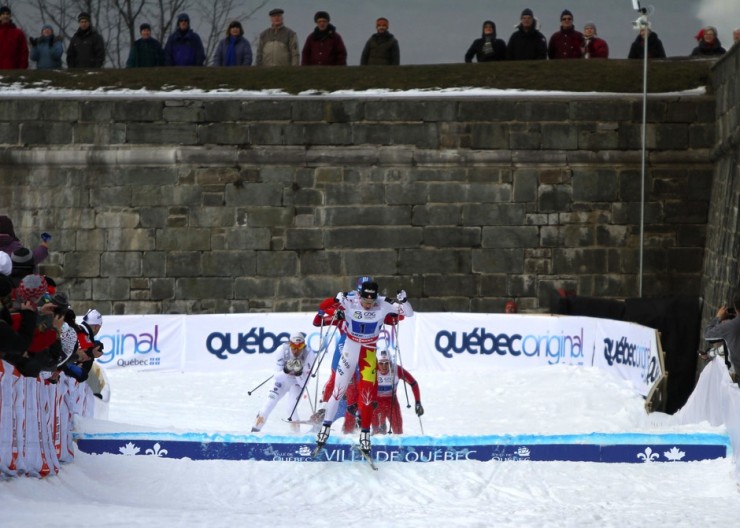
    Canadian Alex Harvey leads racers over the step down/jump, which was used for the first time in a World Cup on Dec. 7 during the 1.6-kilometer team sprints in Quebec City.

    QUÉBEC CITY— It was an unprecedented stop, an unknown to everyone who raced there. Even the Canadians weren’t entirely sure what to expect in Québec City last weekend for the province’s first World Cup city sprints.

    Nobody did. Spectators came out by the thousands. Gestev president and chief organizer Patrice Drouin estimated 50,000 people visited the venue in front of the Parliament building throughout the two days, with team sprints on Friday and individual sprints on Saturday.

    That was a pretty good turnout considering there was little to no snow elsewhere in Québec in the weeks and days leading up to the event. Nearly 140 athletes from 17 nations showed up as well without knowing how competitive the sprints would be. (Top skiers like Marit Bjørgen, Therese Johaug, Petter Northug and Dario Cologna skipped the trip to Canada to prepare for the Tour de Ski.)
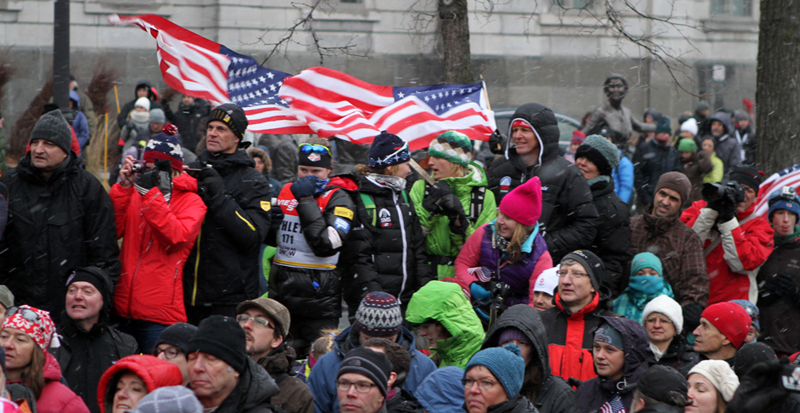
    Spectators got quite the World Cup experience Dec. 7-8 in Quebec City.

    It didn’t really matter. There was enough else going on to keep people entertained and buzzing about the Québec World Cup.

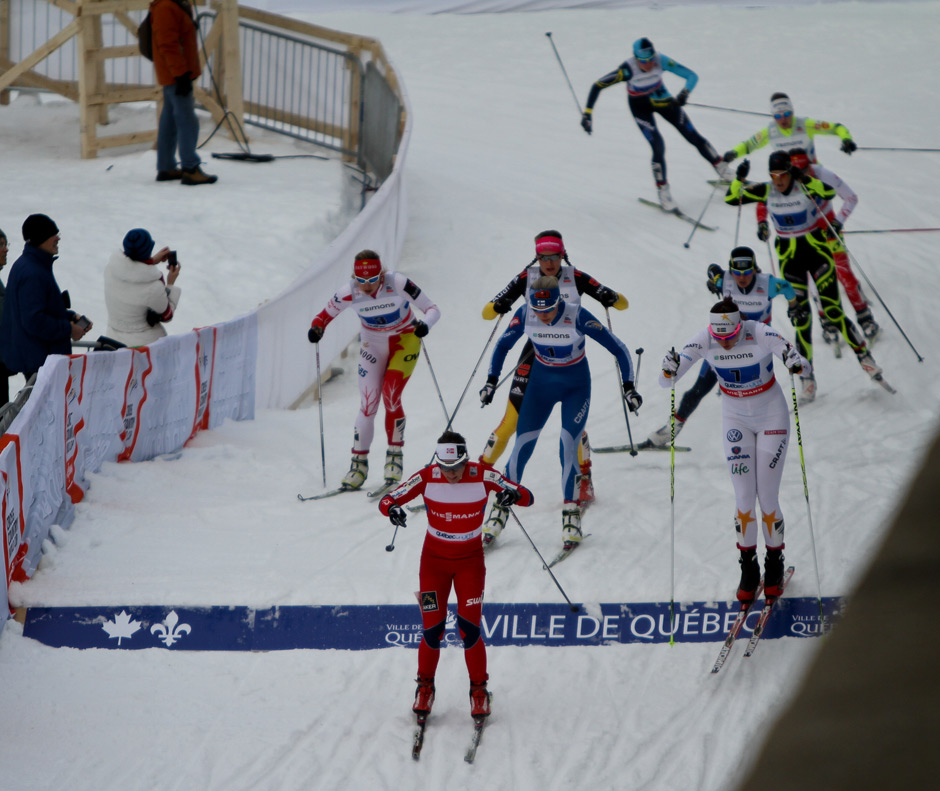
    For one, race organizers introduced a step down, or a jump, at the tail end of the 800-meter sprint course. It wasn’t huge, starting at a height of about 30 centimeters, but it did create enough space for a small “Ville de Québec” banner and a miniature ledge for racers to ski off.

    The brainchild of Drouin, the step down was approved by the International Ski Federation (FIS) last spring to be used for the first time at the Québec World Cup. Coaches and racers had mixed oreactions – some said they didn’t see the point and others wanted it bigger – but in the end, few expressed strong feelings about it.

    “It’s not a jump. It’s a bump,” said former Norwegian skier and Olympic champion Tor-Arne Hetland, a sprint coach for Switzerland.

    “As long as it’s fair, then it’s good,” he added. “It shouldn’t be a problem, but it has to be well done.”

    “It was too small. Bring us on a bigger one,” said Saturday’s individual sprint winner from Sweden, Emil Jönsson. “We don’t want to have a crash race. The strongest man should win, but it can be fun if we do it in a good way. Not a back flip, just a normal jump.”

    The jump, bump, whatever you call it wasn’t really a game changer. A few athletes tumbled on or before it, but that generally happened when they were vying for position after the last downhill curve. Some people took more of an issue with the course’s curviness. Hetland suggested fewer curves and more straightaways, but said overall, “the track is good.”
    The first semifinal of the Quebec World Cup women’s team sprint crests the step down, which was used for the first time in a cross-country World Cup on Dec. 7.

    Norwegian sprint coach Ulf Morten Aune was slightly more animated about the obstacle, calling it an unnecessary spectacle.

    “There are enough curves and other stuff,” he said. “You do not have to do stuff like that. … This is not a circus, it is cross-country.”

    From the standpoint of someone who’s designed mountain-bike courses, Drouin was curious whether it would work in cross-country. Twenty years ago, mountain bike races didn’t incorporate jumps, and now they do. He decided to give it a try and proposed the step down to FIS Cross-Country Race Director Pierre Mignerey, who ran it by homologation experts.

    “They didn’t say no, so that means yes,” Mignerey said. He garnered the approval of FIS and gave Drouin the go-ahead.

    “I know it’s a big deal because the fact that Pierre got out of that commission meeting and just gave me a big slap in the back and said, ‘Your jump is approved,’ I was surprised,” Drouin said. “I didn’t even think it was a case for a commission as technical as cross-country. Before changing things you have to get approval from the whole family.”

    Drouin said FIS Cross-Country requirements were stricter than other world-class sporting events he’s organized (i.e. snowboarding and mountain biking), but he’d do it again without hesitation.

    He created the step down knowing FIS inspectors might shoot down the final product and make him dismantle it before the races. It was ultimately OKed, but Drouin made a few alterations before the races started Friday.

    “Everybody said, ‘If you can take this little uphill out, then we are fine,’ ” he said after hearing from athletes and coaches on Thursday. But the jump wasn’t finished yet; training wasn’t supposed to open until Friday morning so the feedback was based on a work in progress.

    “The jump is was not an issue for us; it was not a deal breaker,” Drouin said. “It was just an additional thing to open up options.”

    Mignerey said also it wasn’t a big deal, just a first step in something that could be used more in the future. The improvements made after Thursday quelled most people’s complaints, and Mignerey was open to seeing more of these jumps perhaps between 40 and 50 centimeters tall. “Why not?” he said, adding that it fits with city sprints.

    At the same time, this doesn’t need to be something FIS standardizes, he added.

    “We already have enough rules,” Mignerey said.

    Some people just don’t understand it. Russia’s Gleb Retivykh said it would be better if Québec didn’t use one again “because it’s not interesting.”

    “He don’t like it,” said Russian wax tech Urmas Vyalbe, who served as Retivykh’s translator. “He asked many times, ‘What is this? Why?’ ”

    Norway’s Maiken Caspersen Falla, who placed third in Saturday’s individual sprint, said she hardly noticed it.

    “I was thinking about it during the warmup, but in the race I just forgot about it,” she said. “I don’t see the point in cross-country skiing to have a jump, but if the crowd and the TV watchers like to see a jump, maybe we should have it.”

    From a revenue point of view, it adds an attractive advertizing space for sponsors.

    “It’s fun,” Slovenian head coach Marko Gracer said. “I think it’s also for the TV promotion.”

    The Big Picture

    Overall, participants’ reactions to Québec’s first World Cup were less divided. Gracer said it was well organized and perfect for a city sprint despite the challenges organizers faced in keeping the snow in tact.

    Hard-packed conditions on Thursday deteriorated to a softer, sugar-like base by the end of Friday’s races. Temperatures above freezing made it difficult for groomers to change the snow structure, which left racers struggling to stay quick and upright in on Saturday.

    “The snow was perfect Thursday and then it dried up when [they] packed the snow over again,” Hetland said. “There was not enough, it was getting soft … so that was too bad.”

    Regardless, he said the course was fair and he’d like to see the World Cup return to Québec or at least Canada every year. Right now, the circuit visits North America every three years.

    “I think it was absolutely something for the future and they should keep on doing this,” Hetland said. “When you get good skiers in Canada and America you should definitely every year have races here. Let’s make the cross-country family big. The World Cup opening should be in Canmore and here and then we should go home and then Tour de Ski.”

    He added that Canada deserves to host the world’s best skiers at home. Having North American World Cups at the beginning of the season would eliminate the timing conflict for those preparing for the Tour de Ski in late December. On the other hand, snow is usually scarce or non-existent in most parts of the U.S. and Canada in November. Just 10 days before the Québec event, organizers were unable to make much snow. One option is to hold the races at the end of the season in March.

    Norwegian Pål Golberg said earlier races in Canada would make adjusting to the time difference easier: once back in Europe, they’d be there for good.

    “I think this works for those who aren’t skiing the Tour de Ski, but if we had this two weekends in November, I think there would be even more skiers here,” Golberg said.

    In his first experience racing in North America, the 22-year-old would like to come back.

    “The crowd is really enthusiastic and I think that’s maybe one of the most important things for the cross-country sport,” Golberg said.

    “This is the best place, this town,” said Vyalbe, who was also visiting Québec for the first time. “When my friend called to me and asked, ‘Where are you?’ I said, ‘I am in Québec [pronounced Koo-bec].’ He said, ‘Ohh, the best place.’ ”

    With the next stop in Canmore, Norway’s Øystein Pettersen said it’ll be hard to leave after the races Dec. 13-16.

    “I love Canada,” Pettersen said. “Canada reminds me of Norway only everything is a lot bigger, people are a lot more open-minded. In Norway we like to focus on ourself and don’t talk, don’t smile. In Canada everybody’s happy.”

    — Nat Herz and Topher Sabot contributed reporting
  • Oslo 2011: Men’s sprint – Norway Considers Americans, Own Chances

    Oslo 2011: Men’s sprint – Norway Considers Americans, Own Chances

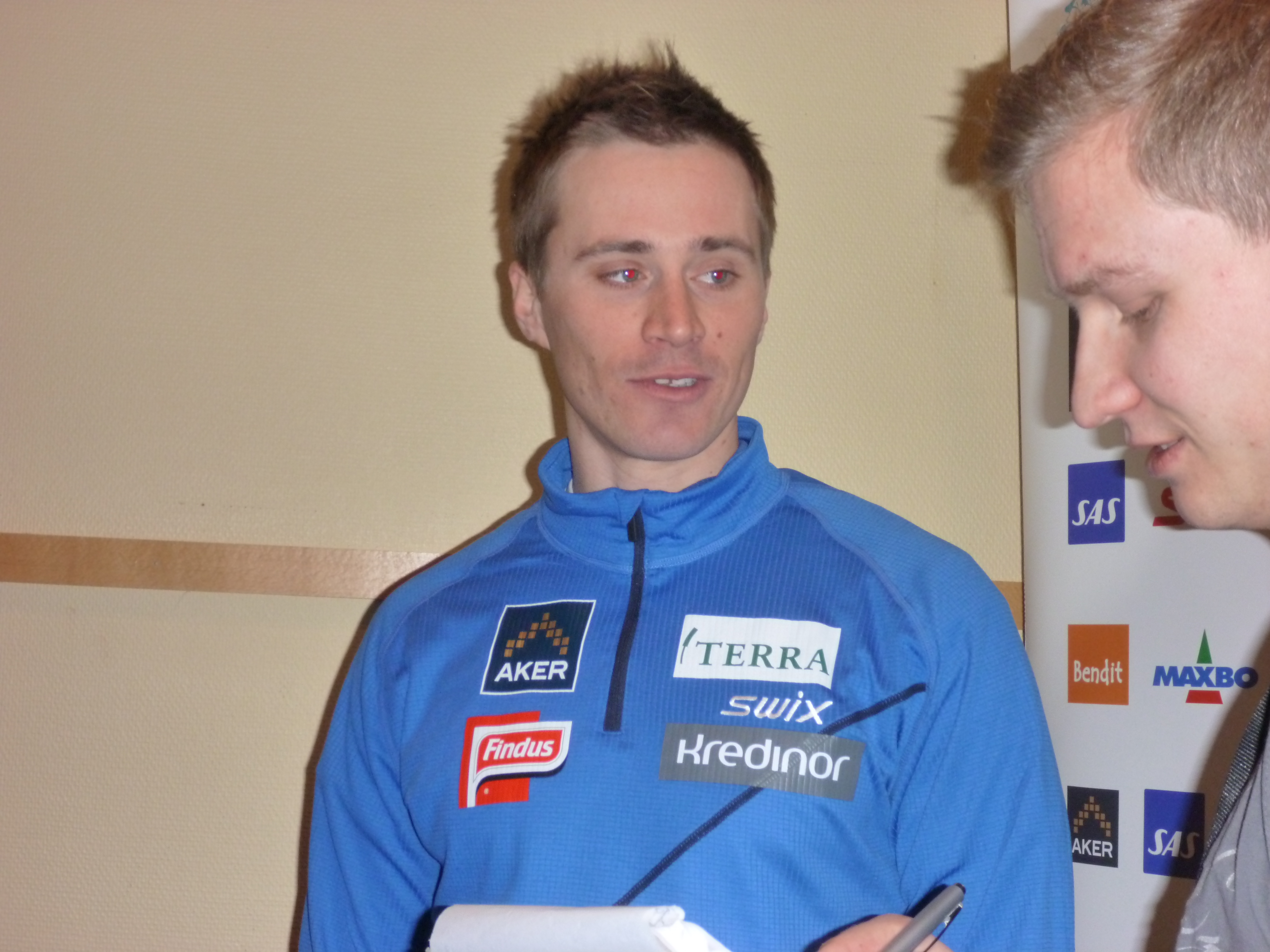
    Ulf Morten Aune, Norwegian sprint team coach, says the sprint podium on Thursday is wide open, and does not rule out Americans in contention for the medals.

    Andy Newell in action on Sunday.

    “Andy Newell is an incredible skier. He is a true performer on skis, he corners like a god and maneuvers the equipment like child’s play. It’s fun to watch,” Aune said at the Norwegian team’s opening press conference.

    “Newell has made the podium in a World Cup sprint before, and once you’ve been there, it’s always possible to repeat in the world championships,” Aune said, noting that Newell is a good fit for the challenging course in Holmenkollen.

    “Newell is very nimble on skis and he handles the high speed well,” Aune said, explaining that the finishing stretch on the Holmenkollen sprint course will create some fast finishes.

    As for the Canadians, Aune would also not be surprised if they finish high on the result lists.

    “Devon Kershaw won the sprint in the Tour de Ski in Toblach, and that was impressive,” Aune said.

    For Alex Harvey, Aune is concerned that the Holmenkollen course profile might be tough. Harvey pulled off a surprise podium finish at Konnerud/Drammen (NOR) last Sunday, the final World Cup sprint before the World Championships. However, Aune considers the Konnerud sprint course an entirely different animal than what the racers will face in Holmenkollen. But on the other side, Holmenkollen success might just be in Harvey’s DNA.

    “Alex might have learned something from his father, Pierre Harvey, who won the 50K in Holmenkollen way back when,” Aune said. For the record, Pierre Harvey won the 50K in Holmenkollen in 1988.

    Experience, confidence and respect

    The Norwegian men’s sprint team consists of defending world champion Ola Vigen Hattestad, Anders Gloersen, Eirik Brandsdal, Øystein “Sausage” Pettersen and Petter Northug. All of them are men who have proven results in the sprint and have trained on the race course as much as anyone. But while they know the course, they also know what it takes to make it on the brutal course, and know they have hours of pain ahead of them.

    “Everyone will open hard, and there will be fighting for positions the whole way, until someone takes a chance and surges, then everyone will try to follow. It will be brutal,” says Eirik Brandsdal, who won the sprint at the Norwegian nationals in January.

    The team is optimistic in terms of their own chances, but also respectful of their competitors.

    Ola Vigen Hattestad is the defending world champion, but he doesn’t let the pressure bother him.

    “I don’t mind, I’d rather be the favorite than the outsider,” said Ola Vigen Hattestad, who pointed out that he felt more pressure leading up to the 2009 World Championships in Liberec (CZE). This season is coming along nicely and according to plan.

    “Since Christmas all the signs are pointing in the right direction, I’ve gotten the feedback I need to feel confident. After all, the one who has a good day and everything falling into place will win,” Vigen Hattestad said.

    Teammate Gloersen did have a good day in Holmenkollen last year at the pre-worlds, when he won both the qualifier and the sprint final.

    “I skied well here at the pre-Worlds last year, and I like this course, but there are plenty of strong competitors, especially (Russian Alexei) Petukhov and (Swede Emil) Joensson,” Gloersen said.

    Northug, who is one of the team members with the least sprint victories to point to, said his goal is to be in the final.

    “I want to prove that I can be right up there among the best on a good day. But there are many strong skiers out there who can win a sprint,” Northug said, noting that the Oslo course suits him well with a long hill in the middle and a fast finish.

    “With the fast finish, you need to be where you want to be before you get into that section. If you are too far back, it will be hard to gain on people on the final stretch. I’ll try to make a push on the long hill, especially in the semifinal and the final, to try get a gap on the field there that they can’t close,” he explained.

    Defending World Champion Ola Vigen Hattestad

    Home turf advantage

    Coach Aune also points out that the course in Oslo is different than all other courses on the World Cup circuit.  “We’ve used the opportunities to train on the course well, and figured out how to solve the technical and tactical challenges it presents. Ola is the defending champion, but I will not be surprised if any of these guys win,” Aune said.

    Brandsdal, Gloersen and Pettersen are all from Oslo and grew up racing on the Holmenkollen trails. Racing in the World Championships on courses they know like their back pockets will be epic, they said.

    “I definitely feel that this will be special. I have a lot of butterflies, but I think it’s good to be on fire like that. It keeps me focused,” Brandsdal said.

    When asked if they are favorites to win, they try not to worry about it.

    “I don’t really think about it too much. I have enough with thinking about the tasks and take care of my own things,” Gloersen said.

    While the sprint course has been criticized by both racers and coaches on several occasions since the pre-Worlds in Holmenkollen last year, the Norwegians are content with the course now. Some thought the course is too narrow, some argued that the last turn is too steep and will cause crashes, and others were concerned about the downhill finish. And then some said fluke incidents will determine the race. Pettersen, who has trained on the course both before and after the adjustments, thinks the fastest skier will win. It’s all about positioning yourself right.

    Øystein "Sausage" Pettersen

    “It’s not luck that determines who’s in position when you get around that turn and into the final stretch. If that was the case, you might as well do a raffle to pick a winner. I don’t think luck determines who wins this sprint, even if a lot of people claim so,” Pettersen said.

  • Dahl, Falla Capture FIS Sprint at Beito, Koos 17th

    BEITOSTØLEN, Norway – “It’s really fun to win here. I won the classic sprint here last year, but you have to handle both techniques. This was a good indication that things are working,” said John Kristian Dahl (NOR) to Norwegian television station NRK after the FIS freestyle sprint.

    Dahl qualified 5th, 2.25 seconds behind Anders Gloersen, before advancing to the finals and defeating the likes of Ola Vigen Hattestad and Oystein Pettersen.  Dahl failed to make the Norwegian Olympic team last year despite winning one World cup sprint and finishing in the top-4 two other times.

    He was followed in the final by Eirik Brandsdal in second and Pettersen in third.  Gloersen took fourth on the 1.4km loop.

    Petter Northug had his second sub-par race in a row. He did not qualify for Saturday’s sprint heats, and considers sitting out the classic race tomorrow to prepare for the World Cup opener in Gällivare (SWE) next week.

    “Petter felt a bit cooked today. You could almost see that he gave up coming into the stadium,” Northug’s personal assistant Eirik Myhr Nossum said to the Norwegian newspaper Aftenposten.

    Torin Koos (USA) was the top foreigner in the race.  He qualified in 17th, 6.48 seconds behind Gloersen, but was eliminated in the quarterfinals, maintaining his spot and ending the day in 17th.

    Harald Wurm (AUT), Oliver Wunsch (GER), and Andrew Musgrave (GBR) in 20th, 22nd, and 29th respectively were the only other non-Norwegians in the top-30.

    Thomas Northug, younger brother of the famous Petter, won the family battle, easily outshining his elder sibling.  Thomas qualified 10th and advanced to the semis, ultimately placing 11th.

    In the women’s race, Maiken Caspersen Falla won wire-to-wire.  She posted the fastest qualifying time by 1.9 seconds over Vesna Fabjan.  The two were clearly a step above the field today, with Fabjan placing second in the final as well.  The women’s course was somewhat shorter, measuring 1.1km.

    Kari Gjeitnes (NOR) rounded out the podium.  Marthe Kristoffersen was 4th, just ahead of veterans Celine Brun Lie and Astrid Jacobson.

    The 20-year-old Falla, a sprint specialist, is looking to improve upon a solid 2010 season where she finished 20th in the classic sprint at the Vancouver Olympics and cracked the top-14 four times on the World Cup.

    With only 25 women in the race, all starters advanced to the heats.  The entire field was made up of Norwegians and Slovenians.

    Racing in Beitostolen continues tomorrow with a 10/15km classic.

    FIS Freestyle Sprint Results (PDFs):

    Men’s 1.4km Sprint – Heats

    Women’s 1.1km Sprint – Heats

    Men’s 1.4km Sprint – Qualification

    Women’s 1.1km Sprint – Qualification