From the FasterSkier archive — posts syndicated from athletes’ and coaches’ own blogs between 2004 and 2012, kept online as published. Current coverage is at fasterskier.com.

Tag: United States Biathlon Association

  • Dickinson Books World Cup Spot; Schommer, Dreissigacker, Reid to National Team Camp

    Dickinson Books World Cup Spot; Schommer, Dreissigacker, Reid to National Team Camp

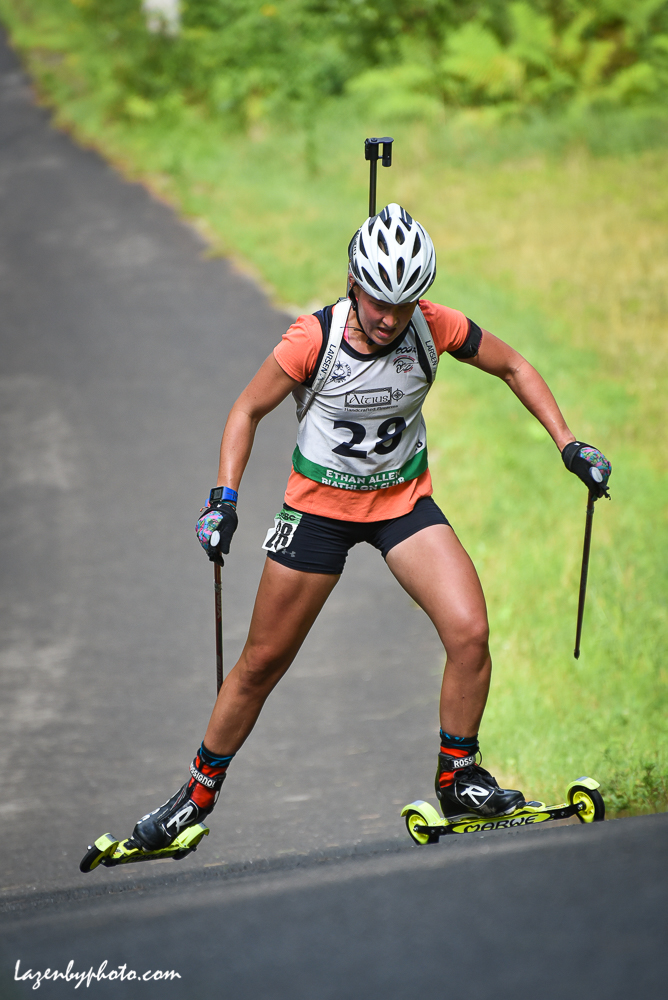
    Kelsey Dickinson (Craftsbury Collegiate Summer Team) racing to third in the women’s sprint at US Biathlon Rollerski Championships on Aug. 12 in Jericho, Vt. Dickinson had more strong performances this past weekend to secure a spot on the World Cup in December. (Photo: John Lazenby/Lazenbyphoto.com)

    For some American biathletes, there was a lot on the line in Jericho, Vermont this past weekend.

    Saturday and Sunday were rollerski biathlon competitions that served as the third and fourth of a four-race team selection series. Six athletes – Susan Dunklee, Clare Egan, Lowell Bailey, Leif Nordgren, Sean Doherty, and Tim Burke – had already booked their places for the first period of World Cup racing thanks to results from last season.

    But between one and three places still needed to be filled on the U.S. team, and the Jericho races – the first two were held at the Vermont biathlon complex in August – would be used to select a team for a pre-season camp in Canmore, Alberta. From there, the squad would be winnowed down for the December World Cup.

    Kelsey Dickinson (College of St. Scholastica) racing to 26th in the women’s 15 k freestyle mass start at 2017 NCAA Skiing Championships on March 11 at the Jackson Ski Touring Center in Jackson, N.H. (Photo: Flyingpointroad.com)

    One College of Saint Scholastica student, Kelsey Dickinson, booked her place on the World Cup. A St. Scholastica alumnus, Paul Schommer, all but did the same – he was selected to the camp, and is highly likely to also go on to the World Cup.

    Two more women, Joanne Reid of Colorado Biathlon and Emily Dreissigacker, of the Craftsbury Green Racing Project, were selected for the camp and will have to compete for the last World Cup spot.

    Even for the pre-qualified athletes, it was a weekend of important competitions, a chance to hone stills practiced over the summer and start visualizing the international competitions that will start in just six weeks.

    “It’s an important marker – it’s not nothing,” U.S. Biathlon Association Chief of Sport Bernd Eisenbichler said in an interview this morning. “We try to really run the trials like a national-level race. The Jericho crew led by John Madigan did an awesome job to put a real race on, not just a time trial. You have a bib number on, you want to perform and you want to execute the things you’ve worked on throughout the summer.”

    The Women: Three Trials Race Winners Heading to Canmore

    With the pre-qualified duo of Dunklee and Egan excluded from ranking results, Dickinson won the trials series in best-three-of-four scoring. Even with Dunklee and Egan in the results, she was only off the podium once in the four-race series.
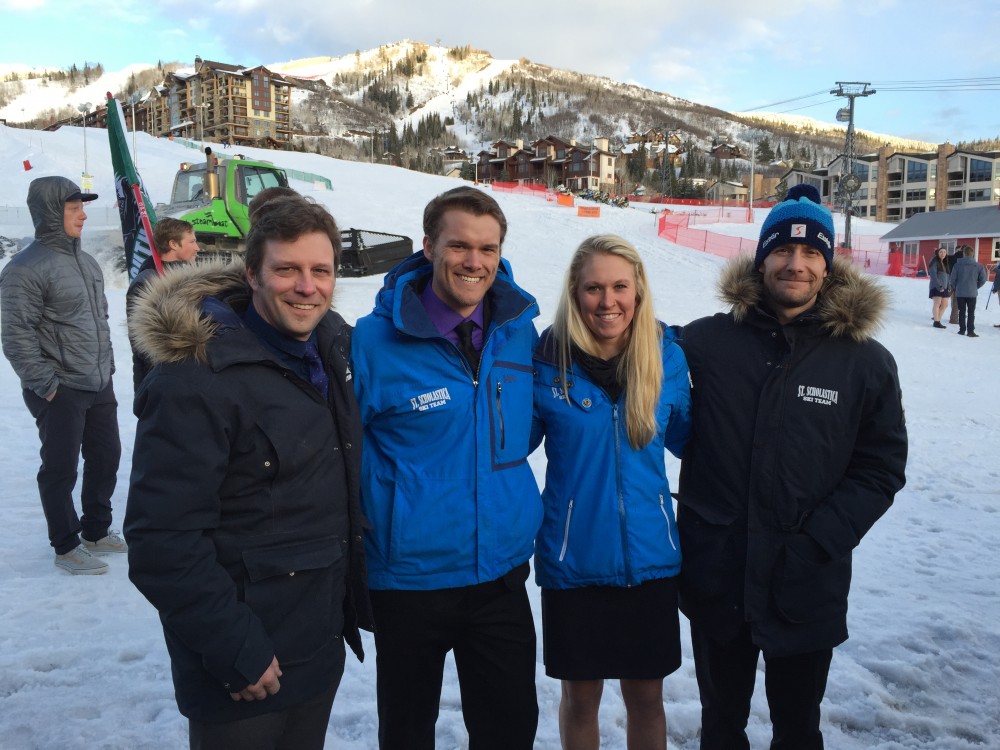
    Chad Salmela (far left) with 2016 NCAA qualifiers Reitler Hodgert and Kelsey Dickinson as well as assistant nordic coach Josh Tesch at 2016 NCAA Championships in Steamboat Springs, Colo. (Photo: Chad Salmela)

    “I’m really pleasantly surprised and impressed also with how she did that, with being outside the team environment,” Eisenbichler said.

    Dickinson was formerly an athlete at the Maine Winter Sport Center (now the Outdoor Sports Institute), but when that program shuttered its senior funding scheme in the spring of 2015 she felt she had no choice but to go back to school. Since then she has worked with coaches Chad Salmela and then Maria Stuber, and become an NCAA qualifier for Saint Scholastica in cross-country skiing.

    Dickinson spent this summer at the Craftsbury Outdoor Center training for biathlon, along with Dreissigacker and other development athletes.

    “I know that she worked quite a bit with the Craftsbury team, which was a smart move, but overall we have to give her a lot of compliments for really doing this development,” Eisenbichler said of the student-athlete. “I just talked very briefly with her on Sunday, to let her know that she won the trials… she told me pretty straightforward that biathlon is first, and she will make it work. So I have no doubt that she will make it work with her school.”

    Dreissigacker and Reid have shorter histories with biathlon, something that Eisenbichler highlighted. Dreissigacker ended up second on the ranking list, after winning Saturday’s 7.5 k sprint outright.

    “She hasn’t been in this sport not such a long time, and her biggest accomplishment right now is that she is so stable with the shooting part now already,” Eisenbichler said. “On the weekend, we had a pretty windy day on Sunday, and she was still able to shoot [just one penalty]. And the same thing on Saturday plus winning that race. I think that she really made the next step towards being a complete biathlete, although there is still some work to do from the physical side and on the skiing side.”

    https://www.instagram.com/p/BaSCsEllKbQ/?taken-by=emdreiss

    Dreissigacker has spent the last two seasons racing on the second-tier IBU Cup, where she scored her first top-20 finish in March.

    Then, there’s Reid, who made a fast jump to the World Cup when she started the sport. Last season, Reid hit the top-30 in the first World Cup competition of the year, and was also a World Championships team member.

    After the Jericho trials, U.S. Biathlon was only supposed to nominate up to two women: the trials winner (which turned out to be Dickinson) would receive an automatic World Cup spot, and one other athlete could be selected by discretion to go to the Canmore camp.

    But the International Competition Committee also selected Reid, who had beaten both Dickinson and Dreissigacker in one of the trials races.

    “It was an extraordinary discretionary choice,” Eisenbichler said. “She had, two times, health issues in the summer. I don’t want to get into details of that, but it was significant health issues that justify a discretionary choice in our eyes. And she was on the whole weekend the fastest skier last weekend.”

    https://www.instagram.com/p/BaSAnRPjQUg/?taken-by=jfiresteel

    So, five women are headed to Canmore, and either Reid or Dreissigacker will go on from there to the World Cup.

    “We are taking all the ladies who were able to win one of the trials races,” Eisenbichler said of the rankings system that excluded pre-qualified Dunklee and Egan. “The decision for the fourth World Cup starting spot… will be made after looking at the training in Canmore and also at the races we will do together with Biathlon Canada at the end of the camp. It’s not trials races. [The decision] is a combination of looking at the training, the performance level, and the racing at the end of the camp.”

    Athletes who didn’t make the cut, like 2017 World Championships team member Maddie Phaneuf, will have another chance to make the World Cup or Olympic team after Christmas based on a separate set of trials races.

    Dunklee qualified for the Olympic team after winning a silver medal in the World Championships mass start. At least one more woman will be picked for the Olympic team based on December World Cup results, but not more than two; that means at least one spot will be up for grabs come January.

    Men: Schommer Shines

    With four men already pre-qualified for the World Cup, there is only one quota spot up for grabs. The trials winner would be sent to Canmore and possibly one more athlete based on discretion.

    After the first two races, in August, both Schommer and National Guard Biathlon’s Travis Cooper had one “win” (excluding the pre-qualified athletes) to their name.
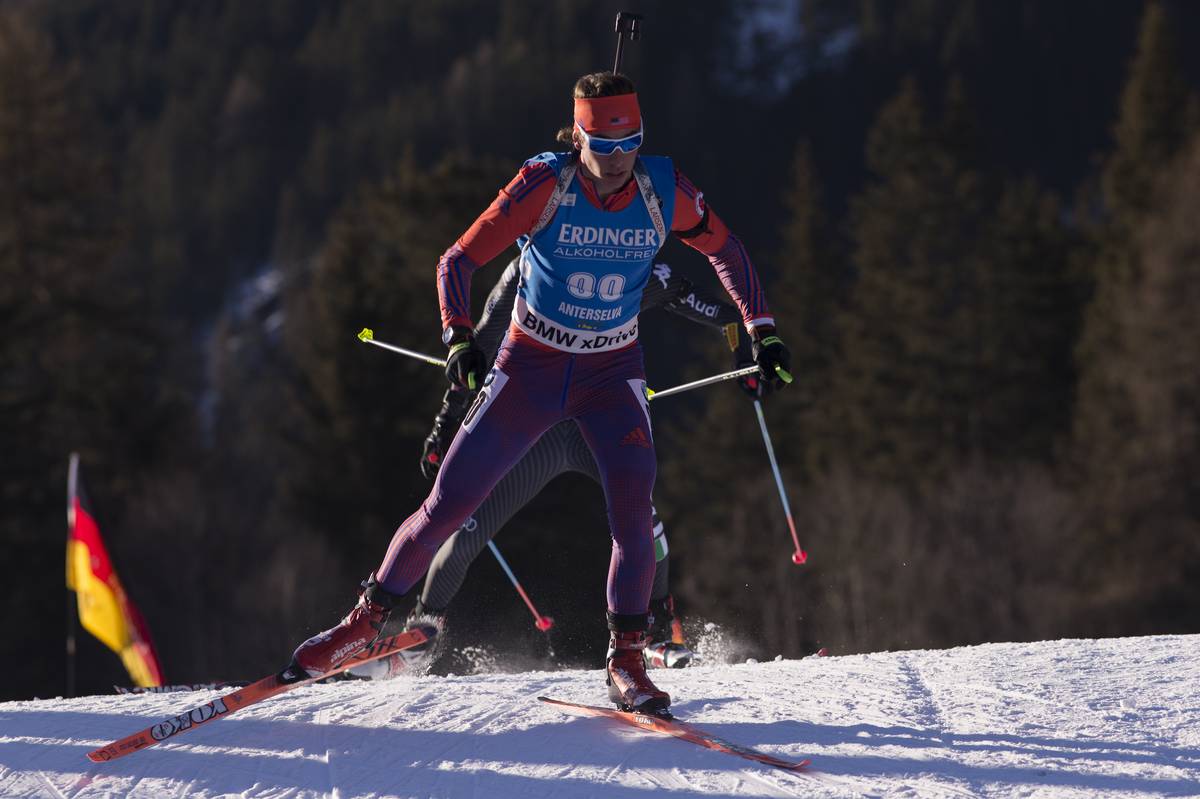
    Paul Schommer, of US Biathlon’s National Development Group, racing to 33rd in his first IBU World Cup race, the men’s 20 k individual in Antholz, Italy, in January 2017. (Photo: USBA/NordicFocus)

    But in the October races, Cooper didn’t continue the streak. Schommer did, placing second on Saturday just four seconds behind Bailey, and fourth on Sunday.

    “Paul is the clear winner of the trials by 5%,” Eisenbichler said. “If we look at the second place in the trial points, this is Russell Currier, and Paul beat him in every race of the four races. So Paul really made a big step forward this summer. He got himself mixed in with the World Cup athletes, the pre-qualified ones. He has a really high performance level right now and I’m really happy to see that… if everything goes normal he will also get the call for the World Cup team in December.”

    Currier was not chosen for the camp on a discretionary basis, so Schommer – who turned in a 33rd-place finish in his World Cup debut last season – is nearly a lock for the December competitions.

    He was new to biathlon after his time at Saint Scholastica, but has quickly made strides in the sport.

    “The goal of bringing this Talent ID project forward in 2014 was to have someone in contention for a relay spot, pushing the other four athletes on the men’s side, and having also a good shot at being very competitive at the Games,” Eisenbichler said. “And I’m again very pleased to see that this project worked.

    “Compliments to Paul with how he approached it,” he continued. “He has done it professionally now for just 2 ½ years. I think he learned a lot last season, being at the World Championships as a reserve athlete, doing some World Cups, and a lot of international races like European Championships and IBU Cups. He learned a lot, absorbed a lot. But he was also able also to put the work in during the spring, summer, and beginning of the fall to get to a higher level. I’m really pleased where he is right now – he will be a very strong contender for the Games.”

    As with the women, Currier and others will have another chance to qualify for World Cup and Olympic racing in January.

    World Cup Athletes On Track

    For these athletes, qualification woes are now mostly behind them. Up next is the camp in Canmore, which will start on October 23.
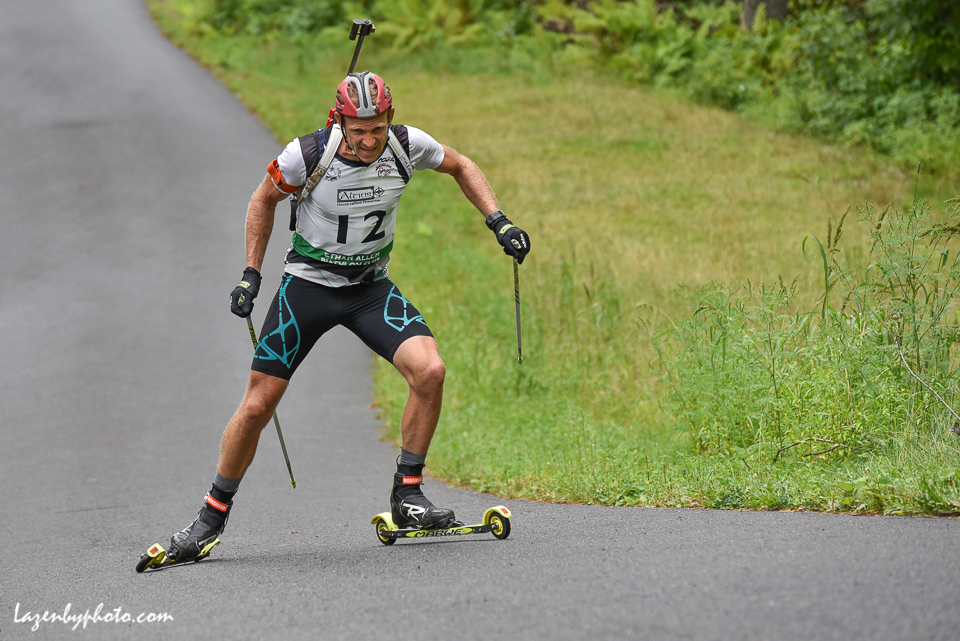
    Lowell Bailey (USBA) en route to second in the men’s mass start at US Biathlon Rollerski Championships on Aug. 13 in Jericho, Vt. (Photo: John Lazenby/Lazenbyphoto.com)

    “It’s most important to have snow kilometers and work on technique,” Eisenbichler said of the camp. “Per Nilsson, our technique guru, will be there for the entire camp so the focus for sure for most of the athletes is to work on technique on skis. Following up from the May work in Bend and the summer work in the Oberhof ski hall. For us it’s really important to have this frequent snow contact in summer and fall.”

    After that, athletes will have about ten days at home before heading over to the World Cup. There, a different kind of qualification may be on their minds. Dunklee and 2017 World Champion Lowell Bailey are qualified for the Olympics already, but one or two more athletes of each gender can make that team through strong performances at the December World Cup.

    And ultimately, they are looking to perform well once they get to the Olympics.

    For the athletes who didn’t have to worry about World Cup qualification last weekend, Eisenbichler said that the races were still an important marker, but also didn’t serve the same function as for those who still needed to snag their spots.

    “These races are kind of markers on the way for these pre-qualified ones, but it’s not really trials races for them,” he explained. “It’s a little bit different to come into the races with full training, compared to preparing at least a little bit for them as you have to if you need to qualify.”

    As a result, some of the World Cup regulars didn’t turn in their best days, but on the whole, that didn’t bother team staff.

    “He came out of a really good and hard block of training,” Eisenbichler said of Tim Burke, who finished fifth and seventh this weekend. “He had super time trials the week before in Lake Placid, so we feel very confident that he is on the right track. This week he was very tired from training, and then racing is not that easy on a high level. For sure he wanted and expected to be on a higher level, especially on the shooting part. But I’m not worried about him.”

    Likewise, Leif Nordgren placed 13th on Saturday with six penalties, but turned things around on Sunday to finish third overall.

    https://www.instagram.com/p/BaR6J7XjCtb/?taken-by=leifcnordgren

    “It was a really bad race on Saturday,” Eisenbichler said. “He really had to put his head down on Sunday. Even if you are pre-qualified, you have a responsibility to be competitive at these races. That’s clear. So he did that on Sunday, and that was good to see, it was really important for us.”

    Bailey won both races over the weekend and shot perfectly on both days. Dunklee didn’t race, as she was getting over a cold. Doherty placed third on Saturday and second on Sunday, and Eisenbichler was pleased with that.

    “Sean showed some really big improvement on the skiing, which was expected after he went through the mono stuff last year,” he said. “So that’s back on track. Still the prone shooting for Sean needs work and improvement for the World Cup. It’s not good enough right now.”

    And Egan won Sunday’s race.

    “We are pretty pleased with what we saw throughout the summer,” Eisenbichler said of her training. “With skiing especially, technique-wise she is getting on a higher level. She didn’t have a super race on Saturday, but had a better day on Sunday. And it’s still for her getting the momentum for a good complex biathlon performance. And that’s pretty normal for mid-October. I think she’s on the right way.”

    Trials race results: Aug. 12 | Aug. 13 | Oct. 14 | Oct. 15

  • U.S. Biathlon Names 11 to 2017/18 National Team, More on Development Squads

    U.S. Biathlon Names 11 to 2017/18 National Team, More on Development Squads

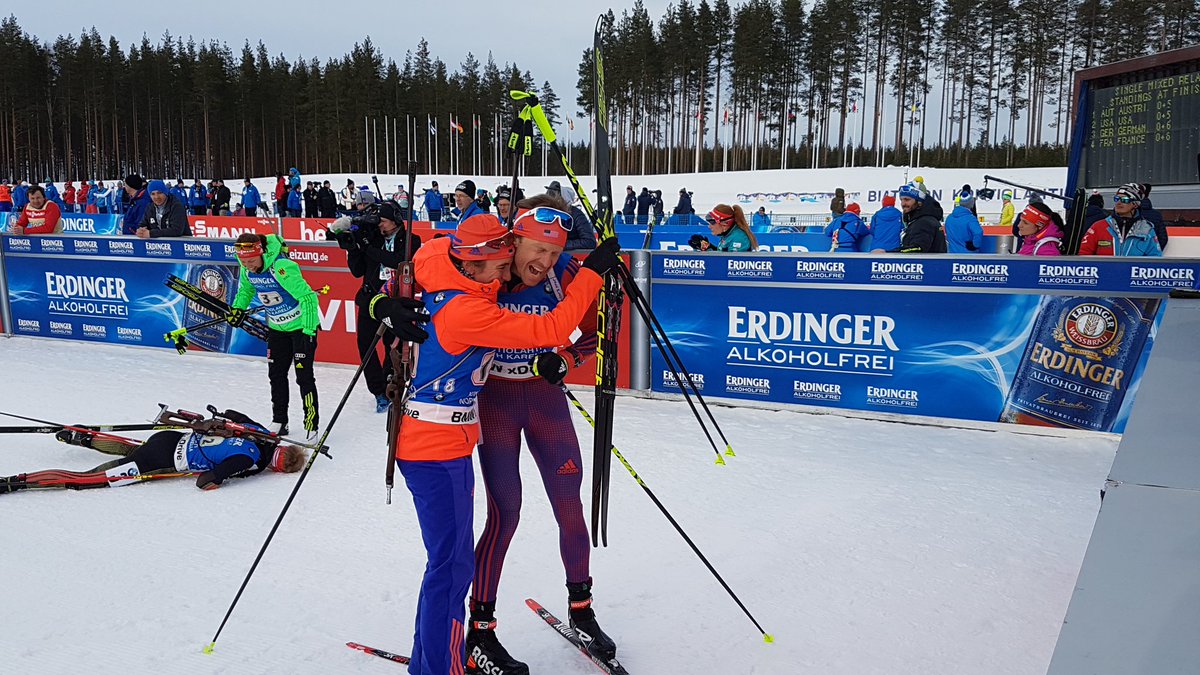
    Susan Dunklee and Lowell Bailey celebrate after finishing second in the World Cup single mixed relay in Kontiolahti, Finland. Austria won the competition. (Photo: IBU/Twitter)

    The U.S. Biathlon Association (USBA) has named five women and six men to its senior national team for the 2017/2018 season, and 14 more athletes to its several development teams.

    The nominations are headlined by Lowell Bailey and Susan Dunklee, both of whom won individual medals at 2017 World Championships in Hochfilzen, Austria. They are joined on the “A” team by their World Championships teammates Clare Egan, Joanne Reid, Maddie Phaneuf, Tim Burke, Leif Nordgren, and Sean Doherty.

    “This year it really culminated in a perfect way,” USBA Chief of Sport Bernd Eisenbichler said. “The best thing about it — besides being so successful and having a dream season — is that the upcoming and younger athletes, like Leif, Sean, Maddie, Joanne, and Clare, they see now that it’s not only the athletes from Norway and Germany succeeding. At some races we took medals and then we also proved it on the Olympic course. It’s giving a lot of confidence to the whole program.”

    Leif Nordgren skiing the second leg of the men’s 4 x 7.5 k relay at the IBU World Cup in Antholz, Italy, where the U.S. finished sixth. (Photo: USBA/NordicFocus)

    The men’s relay team notched sixth- and seventh-place relay efforts this season, and Nordgren picked up four top-30 finishes despite missing almost half the season with an injury. Doherty also missed almost half the season due to illness, but came back to earn a top-20 in the Kontiolahti pursuit at the end of the season. Veteran Burke collected four top-30’s over the course of the year.

    On the women’s side, Egan and Reid picked up two and one top-30 finishes apiece, and Phaneuf had a 10th-place pursuit result on the IBU Cup.

    Also snagging an “A” team nomination is Paul Schommer, who came from the senior development team to land consistent World Cup starts from the middle of the season onwards. Schommer had a top individual finish of 33rd in the individual in Antholz, Italy, and contributed to an eighth-place mixed relay effort in Kontiolahti, Finland.

    “Paul had a great season for his second year in biathlon, and made really big improvements,” Eisenbichler said. “He showed that he can be a really good alternative, or even more than that, for the men’s relay and other relays too. He showed that in Korea and especially in Kontiolahti in the mixed relay there. He had a top-35 result at his first World Cup, so we felt that he is really very close to the big guys and separated himself from the athletes who were performing with him at the beginning of the season in the IBU Cups.”

    Clare Egan racing to 20th place in the women’s 7.5 k sprint at the 2017 IBU World Championships in Hochfilzen, Austria (Photo: USBA/NordicFocus)

    Landing on the “B” team are Emily Dreissigacker (Craftsbury Green Racing Project) and Russell Currier (Outdoor Sports Institute). Currier started the year on the World Cup, finishing 34th in the pursuit in Oberhof, Germany, before moving to the IBU Cup. Dreissigacker racked up five top-30 finishes on the IBU Cup circuit this season.

    “They will get a lot of camp time in Lake Placid,” Eisenbichler said of the “B” team. “They will also get direct coaching from the National Team coaches. In Emily’s regard it’s from Jean Paquet, and in Russell’s regard from Jonas Johansson. So they have not only access to the training plan from the ‘A’ Team, but also their individualized plan from the national team coaches. They will spend about seven to eight weeks in Lake Placid from May to August.”

    Chloe Levins, who finished fourth in the youth women’s pursuit at World Youth and Junior Championships this season, and IBU Cup racer Jake Brown comprise next season’s “X” Team, which is seen as consisting of athletes who are expected to make the jump to the “A” team within two years.

    “The ‘B’ team should be very close to the World Cup, and we expect ‘B’ Team members to be able to really chase the World Cup team for the next season and to have a really good shot for the Olympic Games,” Eisenbichler explained. “That’s the difference between the ‘B’ Team and the ‘X’ Team. The ‘X’ Team is still a development team, for athletes who just started biathlon or young athletes, as we have this year.”

    Chloe Levins (11) with her US Biathlon support team (from left to right: Erik Lewish, Travis Voyer, Mathias Zacherl, Robert Gorgos, and Algis Shalna) after her fourth-place finish in the youth women’s 7.5 k pursuit, her career best in her third IBU Youth World Championships, on Sunday in Osrblie, Slovakia. (Photo: USBA)

    USBA has also named a five-member Senior Development Team, consisting of Hallie Grossman and Alex Howe (Craftsbury Green Racing Project), Siena Ellingson (Mount Itasca), Travis Cooper (National Guard Biathlon), and Max Durtschi.

    And the Junior Development Team consists of athletes with some of the top U.S. results at World Youth and Junior Championships: Vasek Cervenka (Mount Itasca, 16th in youth individual), Cody Johnson (Outdoor Sports Institute, 46th in junior sprint), Jake Pearson (Casper Mountain Biathlon Club, 49th in youth individual), Amanda Kautzer (Michigan Tech/Loppet Nordic Racing, 42nd in youth pursuit), Grace Gilliland (Alaska Biathlon, 46th in youth individual), and Helen Wilson (Alaska Biathlon, 62nd in youth individual). Lexie Madigan of the Auburn Ski Club was also named; she qualified for the World Youth Championships team but was younger than the minimum age set by the International Biathlon Union to compete.

    “The setup is, they are regionally coached with consulting from the National Team coaches,” Eisenbichler said. “They can get access to the training philosophy, but they are coached by their own regional or club coaches. But they are also invited to Lake Placid, the seniors for two camps, and the younger ones for one camp. At the [Rollerski National Championships] in mid-August, we will re-evaluate their performance levels and see who gets more invitations later on towards the fall.”

    The team nominations are as follows:

    National Team Women
    Susan Dunklee (Barton, Vt.), A 1 Team
    Clare Egan (Cape Elizabeth, Maine), A 2 Team
    Joanne Reid (Boulder, Colo.) A 3 Team
    Maddie Phaneuf (Old Forge, N.Y.) A 3 Team
    Emily Dreissigacker (Morrisville, Vt.) B Team
    National Team Men
    Lowell Bailey (Lake Placid, N.Y.), A 1 Team
    Tim Burke (Paul Smiths, N.Y.), A 2 Team
    Leif Nordgren (Marine, Minn.), A 2 Team
    Sean Doherty (Center Conway N.H.) A 2 Team
    Paul Schommer (Appleton, Wis.) A 3 Team
    Russell Currier (Stockholm, Maine) B Team

    X Team 
    Women
    Chloe Levins (Rutland, Vt.)
    X Team Men
    Jake Brown (Houghton, Mich.)
    National Development Group – Senior Women
    Hallie Grossman (South Woodstock, Vt.)
    Siena Ellingson (Minnetonka, Minn.)
    National Development Group – Senior Men
    Max Durtschi (Sun Valley, Idaho)
    Alex Howe (Craftsbury, Vt.)
    Travis Cooper (Kenai, Alaska)
    National Development Group – Youth/Junior Women
    Amanda Kautzer (Plymouth, Minn.)
    Grace Gilliland (Eagle River, Alaska)
    Helen Wilson (Eagle River, Alaska)
    Lexie Maddigan (Truckee, Calif.)
    National Development Group – Youth/Junior Men
    Cody Johnson (Fort Kent, Maine)
    Vasek Cervenka (Grand Rapids, Minn.)
    Jake Pearson (Casper, Wyo.)
    Coaching Staff
    Chief of Sport: Bernd Eisenbichler
    National Team Head Coach: Per Nilsson
    National Team Women’s Coach: Jonne Kahkonen
    National Team Men’s Coach: Jonas Johansson
    National Development Coach: Jean Paquet
    Eastern Regional Coach: Algis Shalna
    Midwestern Regional Coach: Vladimir Cervenka
    Assistant Coach: Erik Lewish
  • 17 Questions for 2017: Lowell Bailey

    17 Questions for 2017: Lowell Bailey


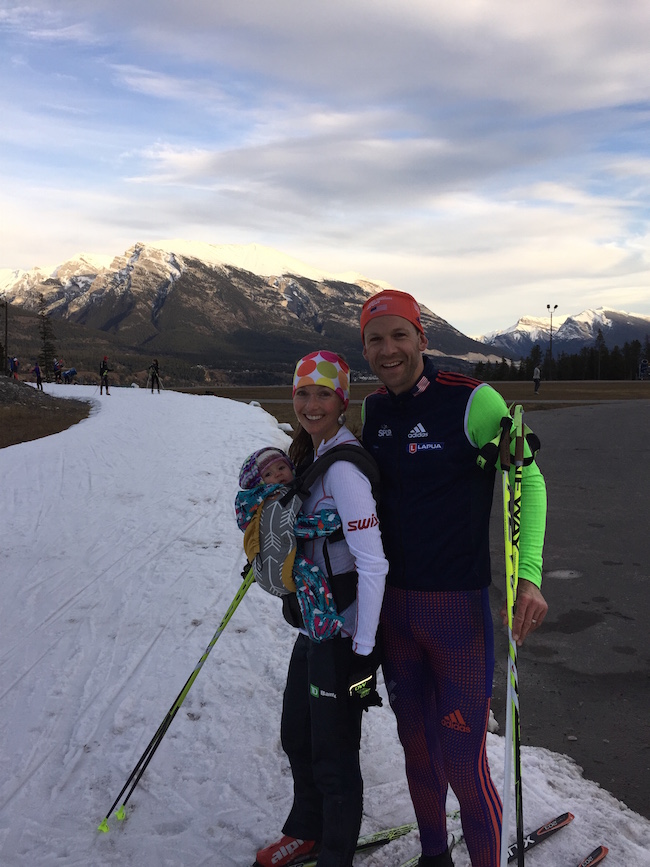
    Lowell and Erika Bailey and baby Ophelia out for a ski on Frozen Thunder in Canmore, Alberta. (Courtesy photo)
    Lowell and Erika Bailey and baby Ophelia out for a ski on Frozen Thunder in Canmore, Alberta. (Courtesy photo)

    Welcome to “17 Questions for 2017″, where we are catching up with American and Canadian national-team members before the beginning of the winter season. 

    ***

    Last year was Lowell Bailey’s 11th season on the competing on the World Cup, and he again proved his big-game chops. Two years after finishing 8th in the 20 k individual at the Sochi Olympics, a best-ever finish for a U.S. biathlete, Bailey notched a tenth-place result in the 15 k mass start at 2016 World Championships in Oslo.

    1. Biggest change in your life in the last five or so months since the ski season ended?

    My wife Erika and I became the parents of a beautiful baby girl, Ophelia, on June 15th 2016!  In addition to that monumental life change, I took a new job helping to fundraise for Crosscut Mountain Sports Center, a yet-to-be-built world-class biathlon/xc training and outdoor recreation center in Bozeman, Montana.

    2. Biggest change in your training?

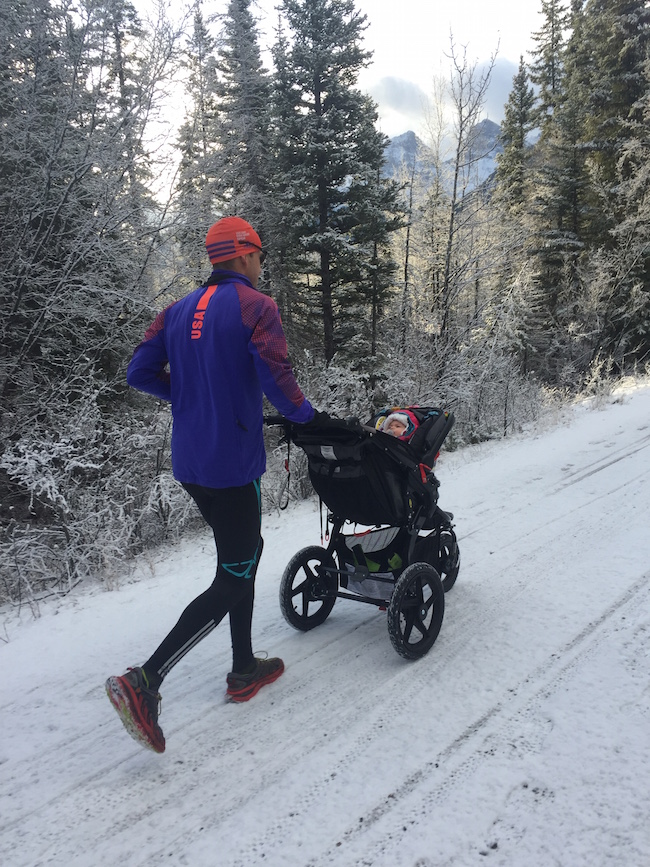
    I’ve worked closely with the USBA coaching staff to create a training plan which allows me to stay closer to home.  I’ve incorporated much more stroller-jogging into my recovery workouts as well 😉

    3. Major areas of improvement you’ve seen so far?

    Bailey doing some kid-friendly training. (Courtesy photo)
    Bailey doing some kid-friendly training. (Courtesy photo)

    I’ve focused on improving my shooting speed and consistency.  Every world cup biathlete has ups and downs in their ski speed throughout the season.  The key to success is maintaining a consistently high level of accuracy on the shooting range so that, when you do hit your peak, you can also rely on your shooting.

    4. Whom you’ve been working closest with this offseason (coaches or training partners)?

    I’ve worked closely (albeit remotely between Lake Placid and Sweden) with Per Nilsson.  On the ground, we have a great group of motivated coaches and athletes in Lake Placid.  It’s a very lively, motivating training center these days!

    5. Best trip in the last five months (and why)?

    I think I’m currently on it!  Erika, Ophelia, and I are in Canmore, Alberta for the National Team pre-season on-snow camp.  Frozen Thunder has been in great shape and I love the area.  It’s been great having the whole family here (see attached pic).

    6. Favorite cross-training?

    Trail running. We have great trail running in the Adirondacks and this summer I was able to explore some new places out west. I did some trail runs with the Bridger Biathlon Club kids and it was amazing to see so many passionate, fun-loving kids hooked on biathlon and enjoying the Great Outdoors.

    7. Favorite non-athletic activity or pastime this summer?

    The family and I spent our free time at my wife’s grandmother’s camp; a tiny little cottage tucked into the trees on the shore of Moose Island on Lake Placid lake.  It is definitely one of those places where time stands still, the iPhone stays in the backpack, and the stars shine a little bit brighter at night.

    8. Song that was your jam this summer?

    “Ophelia” by THE BAND!  I grew up with their music and have always loved the group.  After our daughter was born, I felt obligated to go back and re-discover their entire catalogue.

    9. All time favorite race moment?

    Lowell Bailey finishing 10th in the World Championships mass start in Oslo, Norway, in 2016. (Photo: JoJo Baldus)
    Lowell Bailey en route to finishing 10th in the World Championships mass start in Oslo, Norway, in 2016. (Photo: JoJo Baldus)

    Last year at World Champs in Oslo, Norway.  The Mass Start was one of the races I’ll always remember; staying up front through the entire race until the very end.  It was thrilling, heartbreaking, exhilarating, and confirmed in an instant why I still love this sport after so many years.

    10. First thing you pack in your bag when you leave for Europe?

    Coffee filters and a one-cup coffee maker.

    11. Venue/event you’re most excited to visit this season?

    I always enjoy our time in Antholz, Italy, one of the most beautiful places to race on earth.  I’m also looking forward to seeing the new course changes in Pyeong Chang.

    12. Who will win the World Cup title this year?

    Martin Fourcade is always a safe bet!

    13. Biggest sacrifice you feel you’ve made choosing this career path?

    Biathlon is an incredible career path, but I’ve always understood that it is just one of thousands of incredible career paths.  I think the biggest sacrifice in pursuing anything is that by saying “yes” to that one thing, you are saying “no” to something else.  I’m constantly confronted with situations –  a family reunion, a concert, a fly-fishing trip – that I have to forego on account of my training and competition schedule.  It’s just what you have to do as a full-time professional athlete.

    14. If you could change one thing about your sport, what would it be?

    I would eradicate doping from biathlon.  With the recent McLaren Report findings, we now see just how unscrupulous the actors, how advanced their capabilities, and how pervasive their effect has become on our sport.  We are quickly approaching a watershed moment; the moment when we either decide to take the controversial, albeit necessary, actions required to rid our sport of doping forever, or quietly sit by and watch biathlon descend further into a state of corruption and deceit.

    15. What did you have for breakfast this morning?

    The Nordie Trifecta: Eggs, granola, yogurt!

    16. In 5 years, I’ll be ____?

    Standing on the deck of the newly-built Crosscut Mountain Sports Center, sipping a micro-brew with Erika and the rest of the Crosscut Boardmembers, while smiling youth biathletes and XC skiers race around the Crosscut stadium below!

    17. In 50 years, I’ll be ____?

    Skiing.

  • Bailey’s Tenth Headlines North American Performances in Hochfilzen; Crawford and Heinicke Top-30 for Canadian Women

    Bailey’s Tenth Headlines North American Performances in Hochfilzen; Crawford and Heinicke Top-30 for Canadian Women

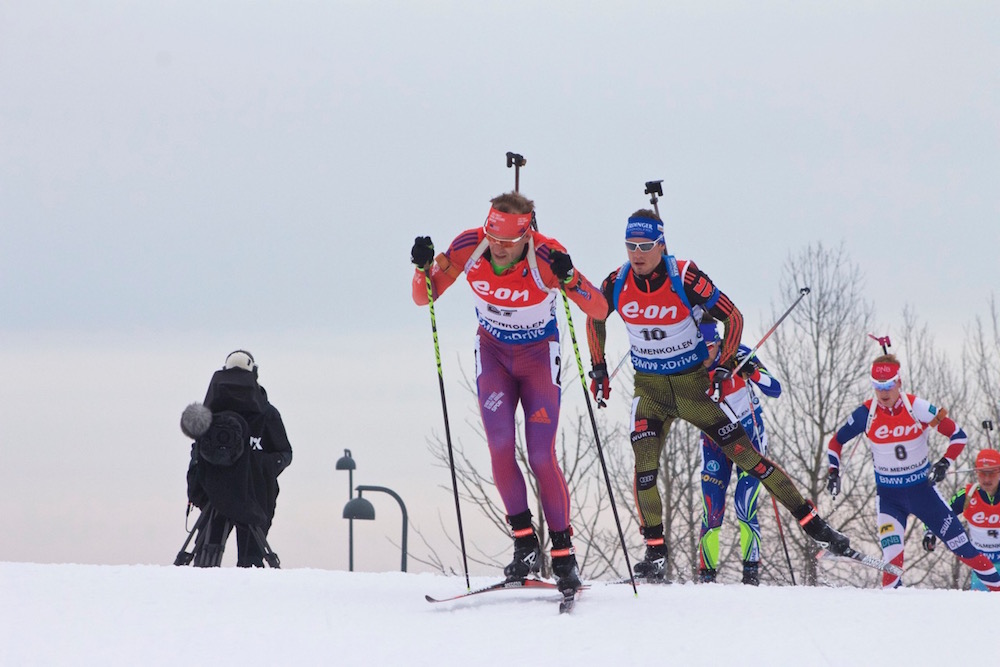
    Lowell Bailey climbed through the pursuit field in Hochfilzen today, missing a single shot and moving from 36th into the top ten for his best result of the season so far. Photo: USBA/NordicFocus.

    Although it was part of the U.S. biathlon team’s plan in the early season to focus on training and build toward World Championships, not worrying too much about the first races, it never feels good to flounder. And after a sensational start to the previous season, Lowell Bailey was perhaps one of those most wishfully thinking that he might start improving.

    Today in Hochfilzen, Austria, it was mission accomplished, as Bailey turned 36th in the sprint into a tenth-place finish in the 12.5 k pursuit.

    “A much better day for me today,” Bailey wrote in an e-mail he sent to several news sources. “I went into the race with the plan to be aggressive on the shooting range and to try and ski within my level at the moment. I was able to work into the race and after two clean prone stages I found myself up in the top twenty-five.”

    In last week’s pursuit in Östersund, Sweden, Bailey faced a similar challenge – moving up through a large chunk of the field. In that race, he faltered on the range and after gaining a good position at the halfway point, slipped back into the 20’s. In fact, that has been a pattern for the American over the last several seasons.

    “The third stage was a bit windy and I think alot of the guys I was around missed so that by the time I came in for the final standing stage, I was in 13th and within sight of the top ten,” Bailey wrote. “It’s interesting because pretty much the exact same thing happened in the pursuit here last year. Except last year, I missed two in my final stage and fell out of the top fifteen. Today the targets went down and I left the range in eighth.”

    He was ultimately unable to hold that position, losing ground to Dominik Landertinger of Austria and Evgeny Ustyugov of Russia on the final 2.5 k loop; those two were on a mission, and wowed the spectators with a sprint for eighth place. Nonetheless, Bailey was able to hold on to the top ten and turn in his best performance of the young season. He was buoyed by a surprising amount of fan support, he said: “The crowds are awesome here – a lot of enthusiastic USA fans! Surprising to see so far from home!”

    To those around him, shooting clean in the final stage was a big accomplishment and hopefully signals that he can overcome the patterns of the past.

    “It was really exciting to see him clean the last standing,” U.S. Biathlon Association President Max Cobb wrote in an e-mail to FasterSkier. “That’s something he’s been working really hard to be able to do. You can ski off a miss early in the race, but if you miss in the last stage there is just not enough skiing left to be able to catch up in the last loop and everyone goes all out to finish the race.”

    Overall, Bailey said it was nice to be back on track, and getting toward race shape instead of just recovering from hard training sessions.

    “’I’m happy with the race and glad to have bounced back from a disappointing sprint,” he wrote. “I’m really looking forward to the relay tomorrow.”

    Tim Burke did not have the same luck in the later rounds of the range, missing four shots in total of which three came in the final two stages. After starting 22nd, he was unable to move into the top-20 and finished 23rd. The third U.S. starter, Russell Currier, gained a few spots to move from 57th up to 52nd.

    Meanwhile, Canada’s Jean Philippe Le Guellec took an opposite trajectory to Bailey’s. After finishing tenth in the sprint and shooting clean through two stages, the race got “odd,” he told FasterSkier.

    “For one, my skis were not great and I ended up being passed a whole lot throughout the race, which was very frustrating,” he wrote in an e-mail. “As much as I felt good today, it felt like everyone was on steroids. Everything derailed even more with my epic three misses standing. I was the last on the range and ended up being the wind blocker. That on top of having to work extra hard to try to even keep up to the field ended up costing in standing. On the second bout I missed my third and jerked the trigger for the fourth round, which went off (over the targets).”

    Despite having “not a very satisfying day,” there were a few good moments for the Canadian. On the third lap, he was in a pack led by Martin Fourcade of France and Ole Einar Bjørndalen of Norway. When asked whether the pace of those stars was what led to his problems in standing shooting, Le Guellec replied that they did not.

    “Paradoxically, the lap with Martin and Ole was my most enjoyable,” he said. “These guys are so smooth, it’s a pleasure to ski behind skiers like that.”

    After a rough November, Le Guellec’s teammate Scott Perras turned in a career-best 25th-place performance in the sprint yesterday. Today, he was unable to hold his position in the sprint, where he was undone by poor shooting. Without a single clean stage and after accumulating six penalties in total, Perras slipped to 43rd.

    It was unlikely to dampen his confidence too much, though.

    “For sure JP’s win [last weekend] sparked some momentum, so I’m just jumping on the band wagon and having fun doing my part,” he wrote in an e-mail Saturday morning. “When you are training with guys like Brendan [Green] and JP and can keep up, you know you should be in the ball park come winter. A huge difference so far this year has been shooting speed and accuracy. Training with Nathan [Smith] and JP who are so quick and often accurate, I knew I had to get there and I put the time in. Come the end of March we will see if it all paid off.”

    More Canadian Success in Women’s Pursuit

    After a huge personal best in the sprint, Rosanna Crawford told FasterSkier that she was nervous going into the pursuit with bib 24. She knew she was in for a different experience.

    As it turned out, it was a better experience.

    “Today was by far the most fun I’ve had racing!” Crawford told FasterSkier in an e-mail. “I’ve never really done a pursuit where there were people around me, I was always fighting for last place, so this was great to be able to ski with a pack and move up.”

    With just three misses after twenty shots, Crawford was able to stay in 25th place, for the second top-30 finish of her career. There was a tight moment after she missed two shots in the first prone stage – never the way a biathlete wants to start a race – but she later regained her confidence.

    “I did have the fastest prone time, and my misses were just splitters, so I made sure to be calm and take it one shot at a time for the next prone,” she said. “Standing was good and I was happy to shoot clean on my last bout.”

    Megan Heinicke joined Crawford by skiing all the way from 57th up to 29th, on the merit of a single penalty. Heinicke only matched that result once last season, at World Championships. All in all, it was a confidence-building day for the team.

    “I feel like this weekend has shown me I can be in the top 30 and with even better shooting I can maybe crack the top 20,” Crawford wrote.

    For the Americans, Sara Studebaker moved from 58th up to 47th with three penalties, a major improvement as, like Bailey and Burke, she seems to be settling into the routine of racing after a tough start in Östersund. Susan Dunklee started in 31st position and was clean through two rounds, but missed a disastrous seven of her last ten shots.

    Dunklee posted a short poem on her facebook and twitter pages:

    Pursuit today started out quite well;
    But the standing targets I could not fell.
    Clean! Clean! Three… Four…
    Tomorrow hoping for a little more.

    International race reports: men / women

  • After ‘Zero Preparation’ Specific to Opening World Cups, Top American Biathletes Satisfied with Results

    After ‘Zero Preparation’ Specific to Opening World Cups, Top American Biathletes Satisfied with Results

    Lowell Bailey (second from left) chases Fredrik Lindstrom of Sweden on the first lap of the men’s 12.5 k pursuit today.

    ÖSTERSUND, Sweden – For two guys who were aiming for the medals last year and ended 2012 ranked in the top 20 of the World Cup, the biathlon season doesn’t, by outward appearance, seem to be off to a great start.

    Neither Lowell Bailey nor Tim Burke made a strong impression in Wednesday’s 20 k individual (they placed in the mid-30’s), then Burke skied from 18th to 15th in today’s pursuit and Bailey from 30th to 21st. Not bad results, but a far cry from last year when Bailey electrified the U.S. biathlon community by placing ninth in the individual and fifth in the sprint.

    This year, though, is different – and the two men know it.

    “For Tim and myself especially, we both kind of planned on training right up to the season, and getting the most out of our training season so that we can hopefully progress through the winter,” Bailey told FasterSkier after the pursuit. “So that was my plan, and so far I’m pretty happy with that and looking forward to Hochfilzen.”

    Burke agreed.

    “I think it was pretty positive considering that leading up we really did zero prep,” he said. “So we’re pretty happy.”

    The rest of the men’s team wasn’t so lucky; Leif Nordgren’s 54th place showing in the sprint was the best of the rest, and he slipped to 59th in the 12.5 k pursuit after a rough day on the range in which he missed eight targets. Jay Hakkinen’s best result was 63rd in the individual, while Russell Currier placed 89th and 80th.

    But the team seemed positive, and cited a few other circumstances they had overcome. Burke, for one, struggled mightily with the cold in today’s race.

    “I was basically curled up in a ball for fifteen minutes afterwards,” he said in the warmth and comfort of his cabin (FasterSkier thought it would be cruel to stop such a visibly frozen athlete in the mixed zone). “It was tough. It wasn’t even that cold, compared to some of the races we did last year, but I don’t know if my body wasn’t used to it or what – I had a hard time!”

    That certainly contributed to Burke’s performance on the trails and the range; he missed two shots, and skied the 21st-fastest time. Again, actually good signs – but after competing at the highest level for so many years, Burke usually expects better. In this race last year, for example, he had the fourth-fasted ski time. This time around, not only was he not at peak recovery and fitness, but he had some extra challenges.

    Leif Nordgren racing to 58th in the pursuit.

    “Basically, I felt like I was just never warmed up on the course,” he said. “My hands, and feet, just to get them moving. And then on the range, I haven’t seen the breakdown yet, but I had a really hard time just loading the rifle and switching clips. And in prone, to get the sling on, I kept missing. I couldn’t get it on. So I took my time.”

    The competition analysis confirmed his suspicions: Burke is never the fastest shooter in the field, but he doesn’t usually lose 53 seconds just on the mat. In his toughest stage today, Burke was 18 seconds behind the fastest shooters. Cold fingers will do that – and two penalties are far from the worst outcome of such a day.

    “Considering that – there’s actually a pattern, that when my hands are really cold I shoot well,” he said. “Really slowly, but well. So it was okay. I was happy with the shooting.”

    Bailey had one slow stage of his own, but in general shot faster than Burke. He, on the other hand, had gotten stuck on the range in the sprint, when the wind was gusting through the stadium and he couldn’t find a good shot.

    “I had the same thing going on in the sprint,” Bailey said. “I had 30 seconds extra of range time that normally I wouldn’t have. But I just had to sit and wait, or stand and wait as it were.”

    Bailey was mainly happy that his ski times seemed to be improving as his body began to absorb the training load from the fall. In the pursuit, he skied the 18th-best time, more on par with his performances last year.

    “Really, I’m pretty happy with the race,” he said. “I executed everything that I wanted to as far as my game plan goes, and there was just one stage unfortunately where I had two missed shots. That set me back a little bit, but it was good to be back up fighting for a top ten. That’s where I want to be. Ski speed was higher today, so I’m happy that it seemed to get faster through the week… and I’m satisfied with the result.”

    The women’s team was left less satisfied, with Susan Dunklee the only American to make the 10 k pursuit. Annelies Cook had a strong individual race, placing 46th and being in an even better position before missing two shots on the final stage, but Sara Studebaker and Lanny Barnes were disappointed; neither made the top 70 in either the individual or the sprint.

    And while Dunklee was glad to be in the pursuit, she was generally ambivalent about her results this weekend. She had placed 45th in the sprint before moving up to 39th in the pursuit, despite missing five shots.

    Susan Dunklee after finishing the 10 k pursuit. Photo: Fischer/NordicFocus.

    “I definitely wasn’t feeling as good on skis today as yesterday,” she told FasterSkier at the finish. “There is a section of no-mans-land after the range where it’s all flat and V2, and I was losing so much time. I couldn’t find that faster gear. The range wasn’t terrible, no really bad stages, but no really good stages either.”

    Like the men, however, she was looking at the big picture and not too worried about results here in the first week of competition.

    “It’s a long season,” Dunklee said. “We have about 30 races over the course of the season, so there’s plenty of time. A lot of these other teams have been racing over the last several weeks, and we just got going at this World Cup. So it’s kind of warming up and easing into things.”

    Part of the reason that the team hasn’t had many race starts, she said, was that they are from a different continent. While the Americans fly to Europe relatively early – more than a week before the Canadians, for instance – they aren’t there early enough to do all of the prep races, and hesitate to come earlier because they already spend so much of their winter away from home.

    For Dunklee in particular, the pursuit was an exciting improvement because she landed in the points, even if she wasn’t happy with any of the individual components. It’s getting more towards the point where she finished last season, placing fifth at World Championships and notching several top-tens in the final weekend of World Cup racing.

    “I think coming into these races, I was so confident all summer that I thought I could just dive in where I left off,” she said. “I’m kind of realizing that I just need to go back to being Susan – having fun racing, and just reacting to whatever is going on. I do best when I’m having fun, so being more relaxed about it. I’m happy that I figured that out the last few days.”

    Next weekend, she hopes, she’ll be able to put the changes into action. The Hochfilzen courses are good for her, with more climbing and less “no-mans-land” flat sections, and the weekend will boast one more feature that she is sure will jump start the U.S. women’s team.

    “I’m really excited because they have a relay there,” Dunklee said. “The whole group is ready to go. Those are some of the most fun races. People are excited about it and we all know that we can do better, and we’re going to be there. It’s just a matter of time.”

    Burke and Bailey were positive about the relay too.

    “I think we’ve got five solid guys, and it looks like Lief was feeling a little better on the skis as the week progressed,” Bailey reported. “Russell will be well-rested and ready to go. So we’ll see.”

    “So much of the relay comes down to shooting and those guys haven’t been feeling the greatest this week, but if they get in a good pack in the relay, I’m sure, they’ll hang,” Burke agreed. “If we have good shooting, we’ll be right in the mix.”

    Bailey: “It all comes down to shooting.”

    International race reports: men / women

    Dunklee follows Tina Bachmann (GER) early in the race on Sunday.